Category: 2012

  • Sustainable Security

    In Africa, former child soldiers are often stigmatized and considered impure by the people they once lived among. But religious rituals, in the form of spiritual purification, can help reintegrate former fighters back into communities.

    Author’s note: The statements cited in the text are a combination of the author’s own experiences as a former child soldier and his investigative research works with former child combatants, ECOMOG Soldiers, refugees, military officers, religious and tribal leaders in Northern Nigeria, Sierra Leone, Liberia, South Sudan, Mali and Côte d’Ivoire. All respondents, including children currently serving prison term in Giwa Barrack and those in 5th Battalion Operational Ground Headquarters, Gubio Northeast Maiduguri, Nigeria; gave consent for the interviews and publication. Most children in Northern Nigeria pleaded that we tell the world what has happened to them; however, the information they have provided will be published in an upcoming publication.

    Introduction

    The involvement of children in armed conflict has raised more questions than answers regarding the future of Africa. Child soldiering is strictly prohibited in international law, yet over 500,000 children in conflict hotspots are exposed to the worst forms of cruelty on the face of the earth. Governments and international bodies have discussed remedial policies, but have largely failed to formulate effective reintegration initiatives to tackle this serious problem. Part of this failure lies with inability of Western approaches to child soldiering, and more generally African conflict resolution, to address the local and religious settings of the people. This is a problem because whilst the highly religious nature of African societies can stigmatize former child soldiers, it can also provide a means to reintegrate them back into societies.

    This article discusses a study conducted by the Charles Wratto Foundation in rural Liberia using local solutions to address local challenges. Among other experiments, indigenous religious purification rites were performed for the acceptance and reintegration of former child soldiers while tribal leaders and youth were trained to discuss tolerance and lead peace-building activities within their respective communities.

    Mental health and child soldiers

    Despite the wealth, security and comfort of stable societies, studies show that, on average, an estimated one million people commit suicide every year worldwide. The reasons for these suicides include, but are not limited to, an inability to deal with extreme emotional pain, divorce, physical and mental violence, low self-esteem and substance abuse. According to the United States Department of Veterans Affairs, an estimated 22 deaths through suicide take place among US service men and women every day. In comparison, regardless being poorly trained or equipped for battle and conscripted to fight in guerrilla armies where they are subjected to serious mental and physical mistreatments, the development of a high suicide rate, if any, is yet to be seen among former child soldiers, particularly in Africa. Indeed, the harsh realities of war, has bestowed on these children the will to survive beyond our imagination.

    Although researchers in the field of mental health eagerly and critically examine the behaviours of those formerly associated with child soldiers, it should be noted here that suicidal ideation, which is a thought, and suicide, meaning the action of taking one’s own life, are distinct and entirely different. Despite the evidence, the idea that a child soldier is scarred with mental disability and in no position to function as a normal human being has come to influence our thoughts, communities and, most importantly, our political and educational philosophies. Regrettably, it is based on this discourse that the youth and children associated with armed groups in post war Africa, are, for the most part, marginalized and excluded from national priorities including sustainable reintegration strategies.

    The relevance of the indigenous approach

    Demobilised child socldiers in Democratic Republic of the Congo. Image credit: L.Rose/Wikimedia.

    Contrary to the imaginative views of non-Africans, the wars on the African continent are not restricted to the uses of small weapons, drugs or alcohol alone; instead, they involve also deep-rooted and extreme tribal rituals practices that demand human or animal sacrifices believed to protect a warrior against an enemy in battle. Against this backdrop, there is no doubt that, from the point of view of a warlord, ritualistic oblations are strategies designed to strike fear and horror into the hearts and minds of their much larger and better-equipped enemy. However, once the gun beat ceases and peace treaties are signed, reintegration becomes a major challenge as the rural communities to which most of these children are returned to, hold religious purification in the highest esteem.

    The returning soldiers are considered unholy, and, as such, required to undertake spiritual cleansing in order to sanctify themselves from the evils of war and appease the spirits of dead victims. These ceremonies are significant and symbolic as they acknowledged the vile practices that have occurred, and thus, serve as a deterrent to future reoccurrences. As is the case, refusal to perform these religious appeasements would be seen to contaminate the entire clan and lead them into misfortune. But there is more to the ritual than this. There is also a fundamental and unshakeable credence that the avenging spirits of those killed during the war, but were denied their place in the ancestral world due to the lack of a proper burial, possess the ability to harm their killers and community members. In this sense, it should be noted here that such impending danger, which includes, but not limited to, the reappearance of a victim’s ghost to his/her killer cannot be prevented or resolved by Western treatments as they are seen to hold no place in the spiritual realm. Undertaking these ritual rites does not necessary mean a child is mentally unstable, but above all else, it is a precondition for readmission into society.

    The indigenous methodology applied

    The traditional purification rites performed for the youth and children with military backgrounds were aimed at dealing with their wartime experiences as well as rebuilding their morality for the re-admission into society. Hence, the rituals performed varied depending on the extent of the child’s involvement in the war. While some rituals addressed those who participated in the war but did not kill, others were focused on murderers.

    During these ceremonies, the former soldiers were isolated from their communities and taken to shrines and secret locations of spiritual significance, where they were given sacred herbal medicine to drink. There, the healers spoke to ancestral spirits who were believed to be unhappy and pleaded forgiveness on behalf of the youth and the community through incantations. Furthermore, they were taken to streams for sanctified baths and were told not to look back upon emerging from the river. Doing so was considered a way of reopening the door to the evil war spirits and inviting them to harm the person. Their clothes and other objects from the war were burnt or washed away in a river to symbolize an end to a life of violence and the beginning of a new peaceful life.

    In addition, the healers pleaded with the spirits of the dead, asking them to forgive the community and the perpetrators which included protecting them from harm and illness. During the Liberian civil war, brutality grew to its worst when every rebel group attempted to instilled terror and wanted be viewed as the most dreaded fighting force in the country. Children lacking military experience were ordered to eat the hearts of their captured enemies if they desired to be invisible to bullets. However, given the scarcity of finding an enemy’s heart, the definition of an “enemy” was redefined from anyone opposing you in battle to those outside your ethnicity. Needless to say, this led to the deaths of many innocent people falsely accused of being “enemies.” Informed of these experiences and aware that the bleeding spirits of those innocent souls will hunt their killers, the healers performed separate ceremonies to appease the dead upon request by each perpetrator.

    Conclusion

    There is nothing wrong with Western approaches to conflict resolution in themselves. Nevertheless, the concepts and contexts under which they are employed to address conflicts in Africa undermine the social and religious settings of the people. Consequently, scarce and precious resources are wasted and achieving the overall objective of sustainable peace in a timely fashion becomes a major challenge. It is a known fact that Africans are extremely religious with each tribe having its own religious structure established on a set of beliefs that is impossible to separate from daily life. That being said, they have welcomed new ideas and foreign assistance.

    However, foreigners could be exploited if they ignored the traditional structures or the systematic realties of the communities they find themselves in. For instance, the assumption by most donors and international organisations that children formerly associated with armed groups are mentally ill and need the help of Western psychiatrists isn’t just a delusion, which deepens the wounds of fragile communities, but more than this, it provides a platform for children, who were never recruited to fight as soldiers, to exploit humanitarian organisations due to a pre-meditated notion of the situation. NGOs will be told what they want to hear by those with no military background in an effort to claim the benefits of a child soldier. After all, they are all victims of war. Lets not forget, Western veterans were born and raised in much more stable societies while the children in armed conflict were born and raised in dreadful environments which they considered normal.

    Here, they mastered the art of survival when serving not only as combat soldiers, but as leaders and strategic decision makers who have developed a high sense of intelligence and a reservoir of knowledge that can be put to constructive use during peace time. For this group of children, reintegration programs organized by representatives of foreign donors are perceived as dangerous and unnecessary given that these programs differentiates them as evil monsters, which doesn’t just ruin the possibility of future career opportunities, but also exposes them to retributions and increases family shame.

    While a few find it challenging to adjust in society, the vast majority, including female fighters, concealed their true identities and reintegrated into society without the help of internal or external bodies. For the girls who wish to have a family, this remains a personal and well-kept secret as associating themselves with armed groups could destroy the chances of having a future husband. In addition, both girls and boys, some of whom may have financial means or a place to stay, do so with the knowledge of being perfectly fine and thus, see no reason to attract stigmatization and societal imagination by seeking medical or psychological assistance.

    Children endure harsh realities during their time in combat, but regardless of the brutality involved, these experiences do not lead all child soldiers into psychological crises. Naturally, we would imagine post-traumatic disorders occuring given that we are so distracted and disconnected from these realities due to the very nature of our lifestyle. As a result, the inability to live without certain preferences limit our vision to either recognize nor connect with those possessing outstanding survival qualities and resilience.

    Charles Wratto is a former child soldier and a Ph.D. candidate whose research focuses on Child Soldiering, Youth Peace-Building and Indigenous Dispute Resolution Mechanisms on Sub Saharan Africa. He is currently a lecturer assistant and an associate researcher at the Babes-Bolyai University’s Conflict Studies Centre, in Romania. As a former child soldier, and now a peace activist, Charles has experience working with youth and children in armed conflicts, victims of war as well as community and religious leaders on issues relating to youth participation in post-conflict reconstructions. He has given public lectures at several universities and organizations across three continents and spoken at numerous conferences on the use of children in war and its impact on our society. He is also the founder of the Charles Wratto Foundation, a non-profit organization dedicated to rescuing and helping war affected youth and children. In January 2014, “Think Outside the Box,” a Romanian New Agency, named Charles one of the four heroes of the year.

  • Sustainable Security

    Community-led counterterrorism presents an untapped opportunity, as it recognises that religiously defined communities have a distinct role to play in responding to growing terrorist recruitment efforts in Europe and North America.

    How is security against terrorism risk with a domestic origin to be created in an effective and sustainable way? The first instinct of many politicians, especially on the populist right, is to turn to the state and its diverse apparatus of police, military, and intelligence agencies as the canonical supplier of protection against violent risk. The so-called “travel ban” recently enacted in the United States is one example; the aggressive use of Section 44 stop and search powers in the United Kingdom is another.

    But a different dynamic is often at play when terrorism incidents are in fact interdicted—a dynamic that the state and its agents are less keen to publicize:

    • In 2008, British police arrested a man named Isa Ibrahim (né Andrew Philip), a convert to Islam, in Bristol, England, on the basis of information from the city’s Muslim community. A detective leading the investigation stated, “He was an unknown. Without the information from the community we may not have got to him. Without the community’s help he could have killed dozens of people.”
    • On February 17, 2015, three teenagers from the Bethnal Green neighborhood of east London boarded flights from London’s Gatwick airport to Turkey with plans to join the Islamic State. Distraught, their families appealed for their return, but also criticized the Metropolitan Police for failing to share information that might have allowed parents and close friends to have intervened and thereby prevented the girls’ departure. Even if the state would have lacked the authority to act coercively against the girls, family members persuasion and appeals from close relations could have mitigated IS’ allure.
    • In 2004, a Jamaican-born imam, Abdullah el-Faisal, was convicted in London of solicitation to murder and provocation of racial hatred. Yet a group of Salafists from Brixton had already brought el‑Faisal’s propaganda in favor of terrorism to the attention of London police some years earlier. The same Brixton-based Salafist group had also attempted (unsuccessfully) to persuade the English-born Richard Reid—later to secure renown as the ‘shoe bomber’—to reject el‑Faisal’s teachings.

    In each of these examples—and they can be multiplied—a nongovernmental actor with ties of some sort to an alleged terrorism suspect independently took an action that mitigated the threat of terrorism without priming or prompting by the state. In almost every case, the sheer fact of daily interaction endowed the relevant actor with an epistemic or credibility advantage in comparison to the government. The resulting intervention, to be sure, was not always a success. Sometimes, it was not forceful enough. Other times, the state failed to follow through. But still, each intervention made a terrorist act less likely in expectation. At a minimum, these examples should provoke an investigation of what I call the social production of counterterrorism—social mechanisms external to state apparatus that are conducive to collective security against terrorism—to ascertain better its magnitude and significance, its causal predicates, and its policy entailments.

    The social production of counterterrorism

    Image credit: Diamond Geezer/Flickr.

    Given the increasing claims made on behalf of state coercion and control, there is a pressing need to explore the potential theoretical or evidentiary foundations for an account of counterterrorism’s social production. In a series of articles, I have identified three causal mechanisms that might underwrite the social production of counterterrorism: ideological competition, ethical anchoring, and cooperative coproduction. Each works by changing the costs of terrorist groups’ action.  The first two involve raising the cost to terrorists of transparency at the moment of recruiting; the last involves raising the cost of opacity downstream.

    First, ideological competition is the possibility that social action can raise the cost of terrorism by providing substitute forms of social solidarity and vehicles of collective political action. The ideological competition mechanism works through the disciplining effect of competition, which, as in any other domain, conduces to higher costs and smaller operating margins. A terrorist organization seeking to attain certain policy goals or appealing on the basis of particular foreign policy disputes must compete in a market of social movements, both political and religious. The greater the competition it faces, the more onerous its task.

    By populating the marketplace of ideas more densely, ideological competition raises terrorism’s propagandizing and recruitment costs. At the same time, this mechanism is not free of risk: Perhaps a plurality of private associations that share the liminal political views—but not the penchant for violence—of terrorist organizations might instead hinder efforts to minimize terrorism risk. Beyond this enabling effect, an increase in the frequency of antiestablishment messaging by quietist but politically radical organizations may have the effect of legitimating terrorist organizations’ calls to arms. Ultimately, the net effect of ideological competition is an empirical question. The important point here is that ideological competition is at least a plausible candidate mechanism through which the social production of terrorism might work, even if its sign and magnitude may well vary according to circumstance.

    A second way in which social action can prevent a person from even considering the possibility of violent political action is through the ethical anchoring effect of close affiliations. This mechanism hinges on the manner in which a network of friends, colleagues, and kin members can impose social pressure on an individual to eschew the use of violence for political ends. Political violence necessitates the violation of generally shared ethical commitments, which in turn can lead to breaches with otherwise close members of familial and social networks. To the extent that members of tight social networks reiterate and reinforce those ethical norms, with the implicit threat of ostracism and social sanction in the background, recruitment costs will be higher. And to the extent that these networks furnish affirmative role models, individuals will feel less need to seek out violent forms of social action in the first instance.

    Finally, the possibility of cooperative coproduction focuses on the manner in which private individuals can substitute more fine-grained epistemic instruments for the blunter investigative methods government otherwise employs. Whereas ideological competition and ethical anchoring raise terrorist organizations’ front-end recruitment costs by increasing the price of effective publicity, this third species of social action against counterterrorism is valuable because it increases the cost of opacity during the period in which a terrorist group seeks to render its activities immune from public, and in particular official, scrutiny.

    For example, members of the public will be better able than the state to interpret ambiguous and fragmentary social cues from otherwise scattered and disconnected individuals in their social milieu. In the case of the Brixton Salafis, there is some reason to believe that they were able to discern the difference between individuals drifting toward violence, as opposed to those becoming more religiously committed but quietist. Even if the state can develop an extensive and deep system of intelligence collection through electronic data, undercover agents, and paid informants, it is still not at all clear that these sources have the same epistemic competence in situating nuanced social actions in context as members of a close-knit community. Moreover, there is always a concern that the state apparatus itself will be captured by elements with a xenophobic or racist agenda.

    Conclusion

    Assuming these causal mechanisms are fruitful, can the state promote them? To date, states have not seriously considered how efforts to promote beneficial social action intersect with other policy efforts. Nor have they seriously considered how efforts to promote counterterrorism’s social production might interact with other security‑related policies.

    The place to start in thinking about how to promote the social production of security is programs like the U.K.’s  Prevent  and the U.S.’s Countering Violent Extremism. These have been subject to considerable criticism, and have not succeeded in the main in fostering healthy relationships between Muslim communities and law enforcement. Often, quite the opposite has occurred. These programs, though, could be reengineered (with considerable effort) to be less directive, more inclusive, and more enabling of a range fof different voices.

    Moreover, any government’s security strategy will inevitably have coercive elements. At times, these may work at cross-purposes with security’s social production. A government that is serious about security (as opposed to mere security theater) will carefully examine any such conflicts, and do its best to mitigate rather than exacerbate them.

    Striving to achieve these policy goals at a moment when political pressures bend in a quite different direction will require vigorous argument and clear thinking in the coming years.

    Aziz Huq is an assistant professor at the University of Chicago Law School.

  • Sustainable Security


    BZ smallTwo new reports surveying the strategic trends that are likely to shape the next few decades of global politics point very clearly to the prospect of a severely resource-constrained world. Released two days apart, both the new Chatham House report on Resource Futures and the US National Intelligence Council report on Global Trends 2030: Alternative Worlds raise a number of important questions relating to conflict and security.
    According to the Chatham House report,

    The spectre of resource insecurity has come back with a vengeance. The world is undergoing a period of intensified resource stress, driven in part by the scale and speed of demand growth from emerging economies and a decade of tight commodity markets. Poorly designed and short-sighted policies are also making things worse, not better. Whether or not resources are actually running out, the outlook is one of supply disruptions, volatile prices, accelerated environmental degradation and rising political tensions over resource access.

    The report outlines what the authors refer to as volatility being “the new normal.” For this reason “High and fluctuating prices are spurring new waves of resource nationalism and making unilateral and bilateral responses more attractive.” This should be cause for concern, especially in relation to the ways in which the response of governments and other actors to scarcity (or at least perceptions of scarcity) can interact with existing tensions and conflicts between and within communities. As the report highlights, “In addition to efforts to reduce demand at home, governments and other actors have moved to ensure access to affordable resources, reshaping the landscape of international politics. The return to largely protectionist and beggar-thy-neighbour manoeuvres – often in reaction to short-term supply bottlenecks or perceptions of scarcities rather than actual ones – can act as fuel to the fire.”

    As well as mapping the consumption and trade trends across a series of important resources, the report also discusses the impact of external variables such as population growth and climate change. These are “multiple stress factors” which “render countries vulnerable to different types of shocks such as environmental disasters, political unrest, violent conflict or economic crises – increasing both local and systemic risks. Such factors can create new tensions and flashpoints as well as exacerbating existing conflicts and divisions along ethnic and political lines.”

    The report includes a section on resource conflict flashpoints (p. 114) which outlines fifteen different potential flashpoints relating to territorial/economic zone disputes in resource-rich areas, shared water resources and transboundary river systems and resource-related rebellion and insurgency. The report is also linked to an interactive website that maps some of these trends and potential flashpoints.

    The day after this report was released, the US National Intelligence Council released their own on the key trends over the next twenty years that the United States will need to adapt to or try and shape in order to “think and plan for the long term so that negative futures do not occur and positive ones have a better chance of unfolding.”

    Among other so-called mega trends such as urbanisation and changing demographics, the report echoes the Chatham House research by pointing to an increasingly complex situation in terms of global resources. The report argues that,

    “We are not necessarily headed into a world of scarcities, but policymakers and their private sector partners will need to be proactive to avoid such a future. Many countries probably won’t have the wherewithal to avoid food and water shortages without massive help from outside. Tackling problems pertaining to one commodity won’t be possible without affecting supply and demand for the others.”

    The key trend or ‘tectonic shift’ as the report calls it is that “demand for food is expected to rise at least 35 percent by 2030 while demand for water is expected to rise by 40 percent. Nearly half of the world’s population will live in areas experiencing severe water stress. Fragile states in Africa and the Middle East are most at risk of experiencing food and water shortages, but China and India are also vulnerable.”

    While this may lead some towards overly pessimistic conclusions about a world defined by instability, human insecurity and geopolitical tensions, it is refreshing to see the NIC emphasising the importance of how the US can respond now. In his forward, the Council’s Chairman Christopher Kojm states that “We are at a critical juncture in human history, which could lead to widely contrasting futures. It is our contention that the future is not set in stone, but is malleable, the result of an interplay among megatrends, game-changers and, above all, human agency.” It is worth noting the deliberate use of the phrase ‘alternative worlds’ in the report.

    While some degree of adaptation to these structural trends mapped out by both Chatham House and the National Intelligence Council will undoubtedly be necessary, the importance of both of these reports is that they remind us of the need for clear and far-sighted thinking on policy responses now. The worst case scenarios that these reports discuss are not inevitable and risks can be mitigated. National security policymakers will do well to study the scenarios outlined in these two impressive reports and to try and understand the drivers and ‘tipping points’ that lead to certain pathways. Both reports offer prescriptions for current decision makers (the Chatham House recommendations on ‘targeted resource dialogues’ and ‘coalitions of the committed’ are particularly worthwhile). While volatility and uncertainty might be the ‘new normal’ in global resource politics, one thing is entirely certain – inaction and ‘business-as-usual’ when facing “a critical juncture in human history” is a recipe for disaster.

    Ben Zala is a Lecturer in International Politics at the University of Leicester.

    Image source: Stayraw

  • Sustainable Security

    El Salvador ArticleEl Salvador’s gang history dates back to the 1960s. At the time, numerous neighbourhood-based groups provided marginalised urban youths with the means to hang out, party, take drugs, and fight their rivals. These gangs constituted a nuisance for the affected residents but did not represent a public security threat. The situation drastically changed when the Central American civil wars ended and the United States stepped up its deportations of offending non-citizens, including members of Mara Salvatrucha (or MS-13) and Calle Dieciocho (18th Street). Both gangs had been formed in Los Angeles’ immigrant barrios, a haven for Central American refugees some of whose children responded to difficult circumstances by joining existing gangs (such as the Dieciocho) or forming their own group (Mara Salvatrucha). Tired of the stresses of gang life, many deportees arrived in their country of origin hoping to make a fresh start. Faced with poor reinsertion opportunities, however, they continued with what they knew best. Their comparatively nice dress, money, and tales of gang exploits held a fascination that local adolescents found hard to resist. Soon the imported gangs absorbed their smaller counterparts and continued to grow, since widespread social exclusion made El Salvador fertile ground for gang proliferation. Over time gang members resorted to greater levels of violence and drug activity, but the country long lacked a full-fledged gang policy.

    In 2003 – eight months before the 2004 presidential elections – President Francisco Flores of the conservative ARENA party launched Plan Mano Dura (“Strong Hand”), ostensibly to dismantle the gangs and curb the number of homicides, most of which had been attributed to these groups. Backed by considerable media publicity, the measure entailed not only area sweeps and joint police-military patrols, but was also accompanied by a temporary anti-gang law that permitted the arrest of suspected gang members on the basis of their physical appearance alone. Both the nature and the timing of the initiative suggested that it had been designed to improve the ruling party’s electoral position rather than to ensure effective gang control. Plan Mano Dura enjoyed huge support among a population that had become weary of permanent insecurity, but human rights defenders, judges, and opposition politicians criticised it for its abuses and neglect of prevention and rehabilitation. The measure helped ARENA win the elections, but the incoming administration of Antonio Saca responded to the earlier criticism by incorporating prevention and rehabilitation into his Plan Super Mano Dura. These alternative approaches, however, were a largely rhetorical concession since suppression remained the dominant strategy. Contrary to the official discourse of success, Mano Dura was spectacularly ineffective: the homicide rate escalated, and the gangs adapted to the climate of repression by toughening their entry requirements, adopting a more conventional look, and using heavier weaponry. More importantly, confinement in special prisons allowed gang members to strengthen group cohesion and structure. Moreover, the large-scale incarceration of gang members fuelled the need for more resources for both the inmates and their families and resulted in an upsurge in extortions, particularly in the transport sector.

    By June 2009, when the government of ex-journalist Mauricio Funes and the FMLN (the former guerrilla army) came into power, the gang problem had become intractable. MS-13 and Dieciocho clicas (subgroups) sprawled hundreds of marginal urban communities, their members committed a variety of crimes – ranging from threats, robbery, injuries, auto theft, and the illegal carrying of firearms to drug sales, extortions, rapes, kidnappings, and homicides – and their violence had become increasingly diffuse and brutal. The Funes government announced a comprehensive crime policy comprising social prevention, law enforcement, rehabilitation, victim support, and institutional and legal reforms. The strategy, however, is underfunded (state coffers had been plundered by previous administrations), and gangs are being tackled through the overall crime policy rather than a specific gang programme. The police – now under a new command – has stopped conducting mass raids in gang-affected zones and begun to strengthen its investigative capacity. These are promising steps, but events on the ground soon pushed policy in another direction. Public demands for a quick reduction of homicides and media coverage alleging government incompetence led President Funes in November 2009 to deploy the army. Military participation in public security tasks is no recent development. At present, however, the army has been given broader powers, permitting it to conduct patrols, perform searches, and arrest criminals caught red-handed as well as to maintain perimeter security at the prisons. In what appears to be a face-saving gesture, the Funes administration adopted a gang strategy that exhibits ominous parallels with the earlier Mano Dura policies. Meanwhile, prevention and rehabilitation have once again taken the backseat.

    Sonja Wolf is a Researcher at the Instituto para la Seguridad y la Democracia in Mexico City, where she conducts research on security and migration issues in Mexico and Central America.

    Image source: VCK xD

  • Sustainable Security

    There are strong calls to give UN peacekeeping operations more robust mandates to engage in counter-terrorism tasks. But the idea of UN peacekeepers conducting counter-terrorism operations is not without its problems.

    Terrorist attacks have been increasing rapidly over the last decade. According to the Global Terrorism Index, 29,376 people were killed in terrorist attacks in 2015. This was the second deadliest year after 2014, when 32,765 people were killed. The spike in 2014 and decline in 2015 is largely a result of the rise and subsequent weakening of Boko Haram and the Islamic State (IS).

    Fatigue after long engagements in Afghanistan and Iraq and the continued impact of the financial crisis has significantly dampened the interest in new out-of-area operations among Western member states. At the same time, the threats of terrorism and migration remain at the top of the foreign policy agenda. It is in this environment that policy makers are turning to the UN, to see what role it can play in the global security burden-sharing. This means a more transactional relationship with the UN, not necessarily considering the longer-term impact of undermining its impartiality and legitimacy.

    UN peacekeeping operations have, during the last decade, been deployed to protect civilians in increasingly unstable conflicts, most often without a peace to keep. However, although the conflicts have been asymmetrical in nature, armed groups have seldom perceived the UN as a party to the conflict, and pursued a strategy of strategic targeting of its troops, police and civilians.

    The Case of Mali

    Image credit: MINUSMA/Flickr.

    In March 2012, a coalition of rebel and Islamist groups took control of the north of Mali in the wake of a coup. On April 6, 2012, the rebels proclaimed the independence of the ‘Republic of Azawad’ and the imposition of sharia law in northern Mali. 412,000 persons had fled their homes and had become internally displaced or moved across the border to Mauritania, the Niger and Burkina Faso. By November 2012, Al Qaida in the Islamic Maghreb (AQIM) had taken control of Timbuktu and Tessalit, the Movement for Unity and Jihad in West Africa (MUJAO) had taken control of Douentza, Gao, Menaka, Ansongo and Gourma, and Kidal was under the control of the Islamist group Ansar Dine (“defenders of the faith”).

    The Islamists and rebel groups were quickly conquered and fled to the far north of Mali after a short and swift intervention in the beginning of 2013 by the French Opération Serval, in cooperation with the African-led International Support Mission in Mali (AFISMA). To avoid being stuck in a long and bloody counterinsurgency, the French had pushed for a swift handover to the UN.

    On 1 July 2013, AFISMA handed over authority to the UN multidimensional integrated stabilisation mission in Mali (MINUSMA). However, the Islamist groups have proven resilient and the operation has been struggling to deploy and implement its mandate. From its inception in 2013 until 31 January 2017, it has endured 72 fatalities due to hostile actions, including suicide attacks, mortar attacks and improvised explosive devices (IEDs). The mission has been given increasingly robust mandates, and its most recent mandate ordered the mission to “…to stabilize the key population centres and other areas where civilians are at risk, notably in the North and Centre of Mali, and, in this regard, to enhance early warning, to anticipate, deter and counter threats, including asymmetric threats…”.

    The mission is actively supporting counter-terrorism actions, as it has been preparing “targeting packs” and has been informally sharing information with the French parallel counter-terrorism operation Barkhane  (the French follow-on mission from Serval). This follows a trend towards peace enforcement that started with MONUSCO, where the UN peacekeeping mission in the Democratic Republic of Congo (DRC) is now being mandated to “neutralize” identified rebel groups.

    Future missions may be deployed to Libya, Syria and Yemen – countries that are also marked by asymmetric conflict and violent religious extremism. Against this backdrop, many member states are now arguing that UN peacekeeping operations need to reform to not only deal better with the challenges it faces in Mali, but also in future operations.

    The high-level panel on peace operations, nominated by former UN Secretary-General Ban Ki-moon, strongly underscored that UN peacekeeping operations should not undertake “counter-terrorism operations”. However, the report left the back-door open, insofar as it argued that “UN peacekeeping missions, due to their composition and character, are not suited to engage in military counter-terrorism operations. They lack the specific equipment, intelligence, logistics, capabilities and specialized military preparation required, among other aspects.” Disregarding the principled arguments against moving UN peacekeeping in such a direction, this could indeed be read as a list of areas where reform is needed to enable UN peacekeeping to take on counter-terrorism tasks.

    A Desirable Shift?

    But what may the consequences be of taking UN peacekeeping operations in such a direction? First, UN peacekeeping missions are not likely to be able to perform counter-terrorism tasks in a satisfactory manner, militarily speaking. They are composed of troops from many different countries, and although they should provide a military deterrent against armed groups, they are not likely to be able to protect themselves against asymmetric attacks. Even small attacks can lead to the withdrawal of troops by troop-contributing countries, as most of these do not have the political interest needed to be able to sustain losses. The exception to this are neighbouring countries, as these may have a political interest in the conflict, but precisely because of this fact they may also be interested to use force only against some and not all parties that threaten the peace.

    The UN has been strongly criticised for not taking action to protect civilians, and the continued inaction has been used as an argument to make the UN more robust, as well as able to take on counter-terrorism tasks. However, this argument confuses the ability of the UN to protect civilians with counter-terrorism. In Mali, the mission is much busier protecting itself than protecting civilians. In fact, the recruitment to the terrorist groups is increasingly moving south in the country, as local populations are not experiencing a peace dividend or improving levels of participation and inclusion after the deployment of MINUSMA. Rather, they are experiencing a government that is continuing to marginalize significant groups of the population such as the Tuaregs in the North and the Fulani (also known as Peul) in the central regions of the country, and employ draconian counter-terrorism tactics.

    The inclusion of neighbouring countries’ troops in UN peacekeeping missions was previously considered a red line. As seen with the example of MINUSMA, as well as UN peacekeeping missions in the Democratic Republic of Congo and South Sudan (to mention a few), this principle has fallen by the wayside. Taken together with the move towards UN peacekeeping missions taking on counter-terrorism tasks, this shows a trend towards a more partial UN in these situations, which may increasingly be rendered unable to play its vital good offices and humanitarian roles, and be a UN for all the people, not only the government of the day. The UN and member states should reverse this trend, and make sure that UN peacekeeping operations can serve in their most effective way – as a tool to keep the peace while institutions, service delivery and an inclusive and participatory state is being built.

    John Karlsrud is the Manager of the Training for Peace program. He is on Twitter at @johnkarlsrud.

  • Sustainable Security

    This article is part of a two-part series discussing Britain’s Trident nuclear programme and the influence it may be having on the country’s energy policy. Read part 2 here.

    Following a majority vote of 355 in the House of Commons  in July 2016, the UK Government took the key decision to renew the Trident nuclear weapons system. Yet the issue remains controversial, with a wide variety of aspects persistently under scrutiny. At the forefront are debates over the costs of Trident renewal, which range from £31 billion (for the lowest estimates of submarine build costs alone) to over £200 billion when lifetime costs are considered.

    With a host of other ethical, technical and strategic issues also abounding, controversy around UK nuclear weapons policy has intensified in recent years and months, including on the future vulnerability of nuclear submarines, the growing influence that the Atomic Weapons Establishment (AWE) has over university research, the malfunction of a Trident missile test, and Theresa May’s decision to withhold this information from parliament ahead of the July 2016 vote. Not for the first time, support for Trident has come into tension with democratic transparency and accountability.

    In this two-part article we focus on another non-military sector in which developments may be strongly – but nearly invisibly – conditioned, by ambitions to renew UK strategic nuclear weapons capabilities. The issue here is a widely identified ‘puzzle’ in UK energy policy – the persistent intensity of UK Government enthusiasm for what is actually in energy terms the seriously under-performing option of civil nuclear power. Based on official defence policy documents, it seems clear that UK commitments to nuclear energy are significantly influenced by pressures to sustain the skills and expertise perceived to be necessary for the country’s naval nuclear propulsion programme. Crucially, these military connections remain almost entirely unacknowledged in energy policy literatures. The implications thus extend beyond military and energy policy alone, to raise questions about British democracy more widely.

     The ‘puzzle’ of UK energy policy

    In September 2016, after many years of setbacks, the decision was finally taken by UK Prime Minster Theresa May to give the green light for the construction of Hinkley Point C (HPC) nuclear power station in Somerset. This £24.5 billion initiative, largely financed by French and Chinese state-owned firms, constitutes one of the largest single infrastructure investments in British history. The announcement came less than a year after enactment of a “new direction” in UK energy policy, withdrawing support from several renewable and energy efficiency schemes and entrenching commitments to nuclear power. The relative scale and intensity of this British nuclear enthusiasm is a point of growing curiosity among international observers. Al Gore is “puzzled” by this and he is not the only one.

    Official UK rationales for these persistent nuclear commitments are indeed puzzling. As government analyses have repeatedly shown, nuclear power is far from being the most favourable low carbon UK energy option. Britain is blessed with what the Department for Energy and Climate Change called “the best wind, wave and tidal resources in Europe”. Official figures repeatedly show HPC to be more expensive than comparable tranches of energy from wind and solar power. Arguments over the value of “base load” generation are repudiated by the National Grid. With nuclear construction times also massively longer and relative costs dropping radically for renewables, the mismatch looks set to exacerbate by the time HPC comes online.

    Originally set for completion by Christmas 2017, HPC is now unlikely even to have started construction by then. Associated plans for a massive 16 GWe programme of new nuclear power by 2025 look even less likely. With UK renewable energy capacities in the meantime burgeoning despite a relative dearth of official support, energy security arguments would logically also favour a switch towards these “Cinderella options” to fill the gap left by nuclear delays. Yet, as prospects for resolving underperforming nuclear plans get ever more distant, increasingly favourable renewable projects remain paradoxically ever more threatened by cut-backs, leading to serious problems in that sector. Taken at face value, these patterns are difficult to explain.

    The comparative weakness of UK civil nuclear

    Image credit: Defence Imagery/Wikimedia.

    Looking at key international comparators, our research has illuminated these anomalies in more detail. The scale of the planned 16 GWe UK “nuclear renaissance” relative to the existing size of the national energy system, is unsurpassed anywhere in the world. With global investments in non-hydro renewables outstripping nuclear and fossil fuels combined, authoritative observers – including a UN Chief Scientist – argue that the world is moving in one direction (towards a renewables future), whilst the UK is moving in another. As a country with an unrivalled record of success in industrial policy, Germany offers a particularly compelling contrast. Despite hosting one of the best-performing nuclear industries in the world, the German Energiewende (energy transition policy) aims entirely to phase out nuclear power by 2022. Why should a country like the UK, with a far more attractive renewable resource and a far less competitive nuclear industry, persist in the reverse strategy?

    Our research also finds that conventional theories concerning innovation and technological transitions predict, on the basis of economic and industrial considerations, Britain (not Germany), would be most expected to phase out nuclear power. Germany was a leader in nuclear innovation with German companies leading in reactor construction projects around the globe. The UK no longer has the industrial capability to construct new conventional civil nuclear reactors. German nuclear reactors have traditionally been some of the best performing in the world, while (as noted by the Environmental Audit Committee), the UK performs badly in international comparisons. The history of UK nuclear power is replete with a number of historic failures including the “major blunder” of the Advanced Gas-cooled Reactor (AGR) programme, a 15 GW new build programme announced in 1979 where only one reactor was built, and the “financial collapse” of privatised nuclear signalled by the bailing out of British Energy.

    Factors that may explain why British and German policies have pursued such counter-intuitive trajectories go well beyond energy-specific issues – involving (for instance) the relative strengths of democracy in the two countries. Disembedding an entrenched industrial system like nuclear power requires enormous political leverage. This is difficult to achieve without strongly democratic institutions and wider capacities for vigorous critical debate. German levels of participation, subsidiarity, civic responsiveness and central accountability are repeatedly rated in international surveys to surpass corresponding qualities of democracy in the UK.

    The UK as a military nuclear power

    There is, however, another key difference between these two countries which arguably helps explain this pattern: the two countries’ contrasting enthusiasm for military nuclear capabilities. Although it hosts US air-launched nuclear weapons under NATO nuclear-sharing agreements, Germany has no apparent commitments or ambitions to develop its own nuclear-armed or nuclear-powered military capabilities. Conversely, the UK has retained a remarkable industrial and technological infrastructure for maintaining a ‘continuous-at-sea-nuclear-deterrent’ since the late 1960s.  Even a cursory familiarity with UK politics shows how essential this capability is perceived to be, under a particular post-colonial vision of an ‘outsized power’ that ‘punches above its weight’ on the world stage.

    This cherished feature of elite UK national identity comes at significant cost. Nuclear-powered submarines are a particularly burdensome element of these ambitions. With their stealth, range and robustness viewed as essential to the military credibility of strategic nuclear weapons, these are among the most complex and demanding of manufactured artefacts – each comparable in complexity to the space shuttle. Yet security sensitivities preclude much of the kind of specialist outsourcing of production that is routine in other industries, as made explicit in the (still current) 2005 Defence Industrial Strategy. So despite a diminishing, ever more globally-integrated manufacturing base, Britain must somehow finance exclusive national capabilities in this most demanding of areas.

    With the sensitive nature of the military nuclear sector, obviously limiting opportunities directly to cover these costs through exports, it is becoming ever more difficult to maintain the national reservoirs of specialist expertise, education, training, skills, production, design and regulatory capacities necessary to sustain UK nuclear submarine infrastructures. It is here that even second- and third-tier roles for British submarine industry firms in parallel supply chains for civilian nuclear power, could make all the difference. Perhaps it is a particular militaristic vision of national prestige on the world stage, then, that might help explain why the UK Government is evidently so relaxed about the otherwise insupportable additional costs of civil nuclear power?

    Here, further illumination may be found in another UK energy policy puzzle: the Blair government’s unexplained ‘U-turn’ on nuclear energy policy where the technology went from being declared “unattractive” in 2003 to being firmly back on the agenda in 2006 in one of the most abrupt policy turnarounds in UK history. It is during this period that the obscure imperatives around national submarine capabilities come to the fore. We explore this critical juncture in Part 2.

    Phil Johnstone is Research Fellow at the Science Policy Research Unit (SPRU),  the University of Sussex. His current research is focussed on disruptive innovation in the energy systems of Denmark, the UK and Germany. Previously Phil worked on the Discontinuity in Technological Systems (DiscGo) project and is a member of the Sussex Energy Group (SEG). 

    Andy Stirling is a professor in SPRU and co-directs the STEPS Centre at Sussex University. An interdisciplinary researcher with a background in natural and social science, he has served on many EU and UK advisory bodies on issues of around science policy and emerging technologies.

  • Sustainable Security

    A version of this article was originally published on Paul Roger’s column on openDemocracy on 11 September 2014.

    Soon after the start of the Iraq war in March 2003, I wrote of the risk of a “thirty-year war” in the Middle East. More than eleven years on – and after thirteen years of the “war on terror” – Barack Obama has now committed the United States to “degrade and ultimately destroy” the Islamic State with “a comprehensive and sustained counter-terrorism strategy”.

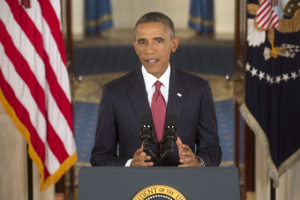
    President Barack Obama delivers an address to the nation on the U.S. Counterterrorism strategy to combat ISIL, in the Cross Hall of the White House, Sept. 10, 2014. (Official White House Photo by Chuck Kennedy)

    President Barack Obama delivers an address to the nation on the U.S. Counterterrorism strategy to combat ISIL, in the Cross Hall of the White House, Sept. 10, 2014. (Official White House Photo by Chuck Kennedy)

    This will be a long-term project that goes way beyond Obama’s own second term, and thus his 10 September Address to the Nation may be the most important speech of his presidency. Beyond that, it is likely to be the prelude to two more decades of war – and perhaps even on to that thirty-year timescale.

    The BBC summarises the strategy as Obama outlined it:

    * A systematic campaign of airstrikes against IS targets “wherever they are”, including in Syria;

    * Increased support for allied ground forces fighting against IS – but not President Assad of Syria;

    * More counter-terrorism efforts to cut off the group’s funding and help stem the flow of fighters into the Middle East;

    * Continuing humanitarian assistance to civilians affected by the IS advance.

    The Iraq element of this strategy has already been underway for a month, with at least 154 airstrikes by 10 September.  An initial analysis of the targets attacked shows that the Islamic State paramilitaries are lightly armed, highly mobile and prone to use commercial vehicles for much of their mobility. They have acquired US weapons, not least from overrunning Iraqi army bases, but they use these sparingly. A Breaking Defense analysis suggests that their capabilities would be limited against well-protected and well-armed defenders, but that their versatility would make it difficult for air-strikes to degrade and ultimately destroy them.

    Tip-toeing back into Iraq

    The United States intention is to work with other states, including the Iraqi government and the Iranian (though that is not admitted in public). Also it already has its own substantial forces in the region, primarily air and naval power. The latter includes the George H W Bush carrier battle-group in the Persian Gulf and the USS Cole cruise-missile-armed destroyer in the eastern Mediterranean. The USS Cole itself was an early victim of an al-Qaida-linked operation when it was bombed in Aden harbour in October 2000, killing seventeen American sailors and injuring thirty-nine.

    The US airforce has even stronger forces available: air-bases in Kuwait, Qatar, the United Arab Emirates and Turkey as well as facilities in Jordan. It could also utilise the large UK base at RAF Akrotiri in Cyprus. President Obama has stated that the US operations will differ greatly from the “boots-on-the-ground” wars in Iraq and Afghanistan, with their deploymernt of huge numbers of ground troops. More indicative of what is intended are the operations in Yemen and Somalia, with their heavy reliance on armed-drones, special forces, and aid to local militias.

    In each of these examples, though, early successes have been followed by regroupings of opponents. The Yemeni government is currently struggling to cope with a resurgent al-Qaida in the Arabian Peninsula (AQAP). Al-Shabaab in Somalia may have been excluded from some of the country’s few large urban areas, but it has influence across swathes of countryside as well as regional abilities through to Kenya and beyond.

    In any case, the US secretary of state John Kerry has acknowledged – in a revealing comment at a Baghdad press conference on 9 September – that in extreme circumstances, the United States might commit combat-troops on the ground in Iraq. Indeed, several hundred more US troops are already heading for Iraq, albeit reportedly for defensive purposes only; but special-forces units are likely to be already in the country, many of them involved directly in combat (though again this would never be acknowledged officially).

    In the labyrinth

    All this raises the issue of why the Islamic State’s paramilitary capabilities have come to the fore so rapidly and lethally. It remains a central question. The answer will determine how deeply the US and its coalition partners gets immersed in a new war, and relates quite strikingly to how the United States conducted the previous war in Iraq before the withdrawal of most of its forces in 2011.

    The well-informed Guardian journalist Martin Chulov reports that at the core of the Islamic State’s paramilitary force is a tightly-knit group around its leader Abu Bakr al-Baghdadi. Many of them are Iraqis who fought the American and British special forces in perhaps the most vicious phase of that singularly dirty war, which lasted for three years from late 2004.

    At that time, the US joint special-operations command (JSOC) under General Stanley McChrystal was facing a relentless and capable insurgency inflicting huge US casualties. In response it developed a new form of network-centric warfare focusing on mobile special-force groups that were highly autonomous yet connected in “real time” to a wide range of intelligence capabilities.

    The operation reached its peak in 2005 in the form of Task Force 145 (TF 145), comprising four groups working in four geographical locations around central Iraq. Three of the groups were based on US forces – SEAL Team 6 from the navy, a Delta squadron and a Ranger battalion. The fourth, Task Force Black, was organised around a British SAS squadron.

    The entire JSOC operation was centred on rapid night-raids that killed or captured insurgent suspects. Those captured would often be subject to intensive interrogation (a.k.a. torture) – the results immediately used, sometimes within hours, to prompt further raids. Steve Niva, in his remarkable academic paper “Disappearing violence: JSOC and the Pentagon’s new cartography of networked warfare” in the journal Security Dialogue (June 2013) recounts: “By the summer of 2005, JSOC teams undertook an estimated 300 raids per month, hitting targets every night, eventually turning their focus to suspected local players and middle managers in insurgent networks”. A further valuable source is Mark Urban’s book Task Force Black (2010).

    The learning game

    The full death-toll among the insurgents is not known but believed to be in the thousands. More significant in this context, however, is that many tens of thousands of insurgents were detained by JSOC units and others. Some of them were kept for years in squalid conditions in huge prison-camps such as Camp Bucca, south of Basra – which at its peak had 20,000 inmates. Some of the prisoner abuse came to light at Abu Ghraib, but other centres were engaged as well in straightforward torture (one was the infamous “Black Room” at Camp Nana near Baghdad).

    By 2009, Barack Obama had been elected president in the US and the war began to wind down. Most of the prisoners were released, including the current Islamic State leader, Abu Bakr al-Baghdadi, who may himself have been radicalised partly by his time in Camp Bucca. Nouri al-Maliki, prime minister of Iraq since 2006, was marginalising the Sunni minority. From the Sunni ranks arose a renewed extreme lslamist group in Iraq which developed into the Islamic State, linking increasingly from 2011 onwards with paramilitaries fighting Bashar al-Assad’s regime in Syria.

    The Islamic State is thus part of a long-term evolution of a process that originated in Iraq in 2003, was badly knocked back by McChrystal’s JSOC forces by 2008, but has now re-emerged to provide the hardline core of a revived movement – veterans of urban conflict against well-trained and heavily-armed US troops, marines, and special forces.

    These are people likely to have an intense hatred of the United States and its forces – coupled with a cold ability to avoid that hatred clouding their judgment. They will be people, including Abu Bakr al-Baghdadi himself, who will positively welcome US military action, especially when it extends to the greater use of special forces and the even more welcome possibility of regular troops. These are individuals who survived intense air-attacks and special-force operations for years in Iraq. They will be prepared for what now, following Obama’s speech, is likely to ensue: a new phase in a very long war.


    Paul Rogers is professor in the department of peace studies at Bradford University and Global Security Consultant at Oxford Research Group.  He is the author of numerous books including Why We’re Losing the War on Terror (Polity, 2007), and Losing Control: Global Security in the 21st Century (Pluto Press, 3rd edition, 2010). He is on twitter at: @ProfPRogers 

    Featured Image: Iraqi troops run through a smoke screen in Baqubah, central Iraq, 22 June 2007, followed by US troops from the 3rd Stryker Brigade Combat Team. The action was part of Operation Arrowhead Ripper against al-Qaida in Iraq (precursor of Islamic State) as part of the 2006-07 Diyala Campaign. Source: Sgt. Armando Monroig, 5th Mobile Public Affairs Detachment, Tikrit (via Wikipedia)

  • Sustainable Security

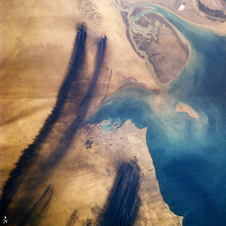
    NASA main1_kuwait-compare670

    Whilst withdrawing from Kuwait at the end of the first Gulf War, Iraqi troops set fire to over 700 oil wells  south of the Iraq border (yellow line). These images show before, during and after the release of 1.5 billion barrels of oil into the environment, the largest oil spill in human history. Image by NASA’s Goddard Space Flight Center.

    February marked the 25th anniversary of the Gulf War’s end. The intensity and magnitude of the allied coalition’s offensive, followed by the systematic destruction of Kuwaiti oil wells by retreating Iraqi troops, led to an unprecedented environmental disaster. Yet within two months, and in a first for international armed conflict, a post-war claims and remediation mechanism ─ the United Nations Compensation Commission (UNCC) ─ was in place. Its aim was to not only help neighbouring states recover from the personal and financial losses inflicted during the war, but also to help repair the environmental damage caused. With protection for the environment in armed conflict under increasing scrutiny, it seems useful to re-examine how this mechanism worked.

    Following the conflict, there was an expectation that reparations were due to neighbouring countries and Iraq’s oil revenues offered a ready source of finance. The UNCC was established and mandated to: “…process claims and pay compensation for losses and damage suffered as a direct result of Iraq’s unlawful invasion and occupation of Kuwait”. The 2.69 million claims it processed were categorised according to claimant and type of compensation sought. These ranged from individuals’ personal injury, deaths and financial losses, to costs incurred to neighbouring countries in housing refugees, to damage to businesses and governmental property. Last but not least, was the “F4” sub-category for “Environmental damage and depletion of natural resources”.

    Using expert panels, the UNCC assessed 170 F4 claims from 12 States (Australia, Canada, Germany, Iran, Jordan, Kuwait, the Netherlands, Saudi Arabia, Syria, Turkey, UK and USA) and awarded US$5,261m ─ just 6.2% of that claimed ─ to 10 States in five instalments over as many years: the Dutch and Turkish claims were unsuccessful. Oversight of payments was strict, with regular reporting to establish that funds were used as specified. All payments have now been completed, although some projects will run until at least 2020.

    Environmental Damage on a Massive Scale

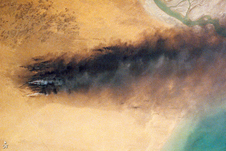
    Black smoke plumes stream into the skies around Kuwait City in April 1991 five weeks after the fires were set. Credit: NASA's Earth Observator

    Smoke plumes in the skies around Kuwait City in April 1991. Image by NASA’s Earth Observator.

    The recognition of the F4 claims for remediation and restoration was unquestionably due to the highly visible environmental damage the conflict caused. Aside from the unexploded ordnance covering 3,500km2, the footprint of the 700,000 allied troops, and the effect of millions of Iraqi, Kuwaiti and other refugees relocating to Jordan, Iran, Turkey and Syria; Kuwait and its neighbours suffered from the unique impact of the calculated use of oil as a weapon of war.

    More than 700 oil wells were blown up, with most igniting, burning 6m barrels per day for nearly ten months. Damaged oil wells spewed crude oil, forming lakes covering at least 50km2. Fallout from dispersing smoke plumes created a thick deposit known as tarcrete over 1,000km2 of Kuwait’s deserts. Meanwhile, 11m barrels of crude oil from storage units, sabotaged pipelines and oil tankers spilled into the Persian Gulf, damaging 800km of coastline. The impact of the oil on air and land quality, terrestrial and marine habitats and biodiversity was immediate, severe and long-lasting, damaging natural resources and threatening human health.

    Putting a Price on the Environment

    Placing a financial value on the environment is no easier than defining what the environment is. As they counted the cost, affected countries submitting UNCC claims were clear that economic, social, public health and biodiversity concerns were all linked to environmental quality. States not only wanted to reinstate pre-war environmental conditions in heavily polluted areas, they also wanted to address the damage to land and natural resources, and the footprints of the military and refugees. Concerned about the health implications for their populations from pollution, they also sought acknowledgment of the risks, and funds for health monitoring.

    The difficulty in assessing the monetary value of the damage was evident throughout the process. Both Iraq and the UNCC demanded that claims be supported by precise estimates, detailed costs and clear scientific evidence. The difficulties this presented, in the absence of an agreed framework to quantify damage, and debates over the quantity and quality of evidence, led to 94% of claims being dismissed.

    The bulk of the claims from Jordan, Iran, Kuwait and Saudi Arabia related to either oil spills or damage from oil well fires. Because of the visibility and immediacy of the damage, and the necessity for data gathering, monitoring and assessment claims were often upheld and remediation claims, which were reviewed later in the process, were considered favourably. Nevertheless the remediation costs, area calculations and baseline comparisons of pre-war environmental conditions were still debated and individually re-negotiated by the UNCC’s experts.

    Claims for the degradation of natural resources such as groundwater, and the loss or damage of habitats due to population displacement proved less successful. This was partly due to the difficulties in quantifying the harm caused, and the uncertainty in assessing refugee numbers and their collective behaviour. The few non-regional States’ claims related to technical and expert services provided to Kuwait and its neighbours; these were just as hotly debated as other claims.

    Claims linking the oil fires to human health risks considered the financial impact of long-term health problems and the additional deaths expected due to inhalation of the fires’ toxic fumes. However, due to the difficulty in meeting the evidentiary standard requiring harms to be the “the direct result of the invasion and occupation” these proved unsuccessful. Health monitoring and assessment projects were awarded funds, although the expert panels contested the methodologies and models they used to assess exposure, morbidity and mortality in Kuwait and Iran. Similarly, other claims relating to the impact of airborne particulates on land and heritage sites, including virtually all Syrian claims under “Transport and Dispersion of Air Pollution”, were also unsuccessful.

    Post-war Remediation and Restoration are Still Incomplete

    NASA 3

    The oily plumes climbed three to five kilometers into the atmosphere and hundreds of kilometers across the horizon. Image by NASA’s Earth Observatory. 

    Although capping the oil wells took only nine months, damage has proved long-lasting. The varied composition of soils caused different contamination problems. Wet oil, dry oil and solid tarcrete remained depending on absorption levels, length and severity of exposure. Oil spills covered coastlines and invaded mudflats, killing wildlife and transforming habitats. Remediation was highly specialised, often complicated by weather and the saline conditions, and necessitated preliminary monitoring and assessment work. The technologies and remediation techniques used varied, including chemical oxidation, soil washing, tilling in mudflats, soil excavation, transportation, landfills and thermal treatment.

    The necessary assessments slowed the claims process; Kuwait was still processing and awarding tender applications in 2013. Often, delays led to natural environmental changes in habitats, for example the colonisation of coastlines by algal mats, preventing their return to pre-war conditions. Such changes led to questions over what constituted successful remediation for these degraded and altered habitats, especially when remediation had not been initiated by the affected States prior to claims being filed – for instance Saudi Arabia’s duty to prevent and mitigate environmental damage was examined.

    Recognising the long-term and technical nature of environmental remediation work, the UNCC mandated further monitoring until 2013 through the Follow-up Programme for Environmental Awards – now completed and wound up. Some national projects are still underway, relating to ordnance removal, the damage and stresses caused by refugee settlements and military camps and health monitoring. Other long-term works, including irrigation improvements, livestock management, soil improvements, re-vegetation, marine reserves, saltmarsh clear-up, wildlife re-introduction and protection continue in Iran, Jordan, Kuwait and Saudi Arabia.

    Learning from the UNCC

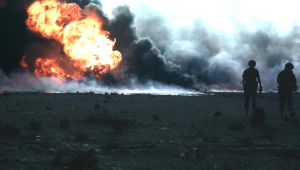
    More than 600 Kuwaiti oil wells were set on fire by retreating Iraqi forces, causing massive environmental and economic damage to Kuwait.

    Image of oil well on fire from the ground by US Army Corps of Enginners.

    That the UNCC process included the F4 environmental damage category at all was a step in the right direction, setting a precedent and demonstrating the importance of post-conflict environmental restoration. Although influenced by well-established peacetime environmental norms, the UNCC claims and awards process had limitations. But could its lessons be developed for environmental restoration after future conflicts?

    One starting point would be to develop a common legal definition of the environment, derived from environmental and humanitarian principles. This could be used to help frame the necessity of preventing harm, and ensuring environmental restoration. Complementing this with a common framework for damage assessment could accelerate recovery and reduce harm by avoiding further damage resulting from delays in remediation. The framework would need to be developed as part of a post-conflict environmental mechanism, with claims and operations processed through an independent institution with a clear mandate.

    To be successful, monitoring and clean-up operations should neither be dependent on the affected State’s finances, nor limited to post-conflict reparations. Ideally an international fund would be established and made available, not only to support public and environmental health monitoring throughout the conflict cycle, but also to ensure that urgent remediation and clean-up operations begin quickly.

    Another lesson from the UNCC is that it is essential to go beyond the purely financial implications of damage and loss. A more comprehensive approach would also consider the direct and indirect consequences of environmental damage, linking environmental health with humanitarian protection, promoting ongoing health monitoring and re-instating post-war environmental governance.

    Most of the UNCC decision-making process was not public, when instead it should have been accessible and transparent. “Non-claimant states, civil society and the media had no access at all. The panel’s proceedings were not open to public scrutiny”[1]. Today such opacity would run counter to the principles of the Aarhus Convention on access to information and participation in environmental decision-making, and act as a barrier to external scrutiny.

    In spite of the UNCC, and the precedent that it set, the fact that 25 years on the environmental legacy of the Gulf War has still not been fully addressed is a stark reminder of the long-term impact that wartime environmental damage can have. Armed conflict not only degrades the natural environment and damages human health, it also harms environmental governance. While the UNCC model may not be applicable to all conflicts, its lessons highlight serious limitations in how the international community currently responds to the environmental consequences of conflict: limitations that must be addressed in the growing debate on strengthening the protection of the environment from the impact and legacy of armed conflict.

    Laurence Menhinick is a research assistant with the Toxic Remnants of War Project, which studies the humanitarian and environmental impact of conflict pollution. The Project is a founding member of the Toxic Remnants of War Network, which advocates for a greater standard of environmental protection in armed conflict: @TRWNetwork. The author thanks Prof. Cymie Payne for her clarifications for this article.

    [1] De Silva, A. L. M. (2014), Conflict Related Environmental Claims – A Critical Analysis of the UN Compensation Commission, Faculty of Law, University of Sydney, Australia p70 http://ses.library.usyd.edu.au/handle/2123/10426

  • Sustainable Security

    Drones continue to play important roles in conflicts around the world. In Africa, drones have been tested for civilian projects, but they have been largely absent from miltary operations. But will this always be the case?

    With the enormous role drones have started playing in conflict areas around the world, it would not be unreasonable to think that, by now, African skies would be buzzing with them. There are many drones being tested for civilian projects in Africa, but for military purposes they are largely absent. Rather than being drones developed in Africa, these eyes in the skies can be traced back to French or American origin, with the occasional imported Chinese drone buzzing by. Why is this? Time for a short assessment on the state of drones in Africa and the challenges that lie ahead for local development and use of military drones.

    Doing Good

    Large parts of Africa are signified by vast distances and large swaths of difficult terrain combined with a lack of infrastructure. No wonder, then, that drones, with their ability to glide in a straight line over the jungles, hills, rivers and deserts for hours on end, have been considered part of a solution to many of Africa’s problems.

    And they have solved some problems. Drones keep an eye out above herds of elephants and rhino’s in order to stop poaching, they help farmers tend their crops, and they deliver blood and medicine to remote hospitals. Even Facebook is using drones to bring internet to dark spots in Sub-Saharan Africa. So what about military purposes?

    Security in Numbers

    Africa’s security problems are heavily influenced by the aforementioned geographic factors. Securing remote villages is an incredibly difficult task. International crime organizations, guerilla movements, and terrorist groups can all cross the long porous borders that many African countries have, only to disappear in enormous areas of seemingly impassable terrain. For security too, the surveillance capabilities of drones can be very beneficial to African states. This idea is supported by UN peacekeeping chief Hervé Ladsous, who expanded the use of drones to peacekeeping missions throughout Africa after testing them above the rainforests of the Democratic Republic of Congo.

    But aside from the UN, a few African states have taken control of their own drone deployment. Using the US Department of Defense categories, which separates drones according to their performance and capabilities, we can summarize the state of drones in Africa as follows:

    • Not one country on the African continent uses drones that have medium altitude, long distance capability, such as the Reaper or Predator drone.
    • Currently, 14 of 54 African states have used so called ‘Tactical’ drones, meaning drones that have low altitude and low endurance. These are mostly used for intelligence, surveillance and reconnaissance, such as the Scan Eagle.
    • Algeria, Tunisia, Egypt, Ethiopia and South Africa have claimed that they are now developing their own drones. South Africa is the only African country with a significant history of developing and deploying them.
    • Egypt, Nigeria and South Africa now have drones with lethal capability, while more states seek to acquire them. Egypt and Nigeria bought these from China, South Africa developed an armed version of its Seeker 400 line.

    For security, then, the use of drones is expanding too, but overall, drone acquisitions remain relatively limited. It might be tempting to explain this lack of wide-spread drone use by pointing to the idea of a cash strapped African government, but the real reason lies with the way in which the money is being spent.

    African Ways

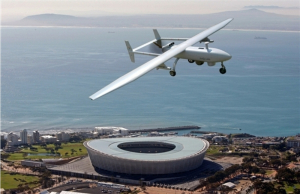
    a_seeker_400_drone-_manufactur

    Image by Times Asi/Wikimedia.

    Military budgets throughout Africa have been expanded significantly in the past eleven years, only to be interrupted by low oil prices. According to SIPRI, Chad and Uganda recently invested in Russian MiG fighter jets, Ethiopia purchased 200 Ukrainian T-72 tanks, and Somalia and Nigeria invested in tanks, planes, armored vehicles and fighter jets. Interestingly enough, investments in military drone systems are largely absent, even though these systems are providing a growing tactical advantage for modern armed forces. Armed drones have seen a particular use in intrastate conflict as their loitering and intelligence capabilities enable forces to effectively monitor areas for insurgents. This choice for conventional weapons can be explained in part by the different solutions African governments have for conflicts, compared to the West.

    According to Prof. Ralph Rotte of the Aachen University, conventional weapons are favored over drones because they are better suited to the ways African governments fight civil wars. Western warfare is usually done by destroying the enemy while winning the ‘hearts and minds’ of the local population. This occurs less often in African civil wars, where military forces focus on outmaneuvering and disrupting each other in order to sap morale and willpower, only to incorporate the exhausted enemy in a system of patronage. This kind of low-intensity fighting does not require the destruction of troops or long-loitering surveillance capability through highly advanced technology. Hence, drones have taken a backseat in military spending in favor of small arms and conventional weaponry.

    Even in the few cases where African countries have tried to employ drones, a lack of maintenance, and limited institutional capability for intelligence sharing have grounded the few drones they had. This restricts the capability African states have in terms of tracking and identifying the locations of terrorist organizations such as Boko Haram, AQIM, ISIS and Al-Shabaab, which subsequently impacts the fight against these terror groups.

    No wonder, then, that Western states have stepped in the counter-insurgency vacuum with their own drones. France now operates drones from Chad, Nigeria and Mali, and the United States (US) flies them from 14 locations throughout Africa, while in the process of constructing a drone base with a 100$ million dollar price-tag in Niger. But the Western drone-monopoly will likely not be a permanent fixture of Africa.

    Drone Troubles

    Despite the shamble state of African drones, it is only a matter of time before they do become widespread and used effectively by African governments. As mentioned previously, five African nations are already developing their own. Several others, such as Algeria, are looking to acquire armed drones from China.

    Interest in using drones in Africa is growing, and the US has recently adopted a joint-statement together with 40 other countries on drone-exports, which will smooth the export of drone-technology. Even if Washington demands high regard for human rights from the countries that seek to acquire armed drones, Beijing won’t. Proliferation, then, either via import or local development, is bound to continue.

    That drones still have a future in Africa is exemplified by Nigeria as well, which, after having its Israeli drones grounded by corruption, and its Chinese drone crashing while carrying missiles, finally committed a successful drone-strike on Boko Haram.

    With the advent of African drones, the flaws of drones will also become a risk to security in Africa. The US has set dangerous precedents with its seemingly unlimited, obscure extra-judicial executions. In fact, UN Special Rapporteur Christof Heyns has warned that US drone strikes are undoing 50 years of international law. African states might be tempted to follow Washington’s lead, sending drones to neighboring states to stop those groups that abuse porous borders, without risking the lives of their own military forces. In turn, this cross-border activity might exacerbate conflict between states. Sounds farfetched? Just a few weeks ago India attacked terrorists in Pakistan-occupied Kashmir, with the help of a drone. This surgical strike worsened the already poor relationship between the two countries.

    Though current advanced strike-capable drones are reliant on a complex technological infrastructure, including satellites, and thus limit the number of States able to use them, other developments in the defense industry are focused on making smaller tactical drones capable for either armed use, or use them as loitering munitions that turn into kamikaze drones. These types of drones are more accessible for States that do not rely on high-tech networks to deploy them.

    It’s also not difficult to imagine what armed drones can do in the hands of oppressive governments. If Barack Obama can take out people without due process, there is no reason why the likes of Omar al-Bashir or Robert Mugabe cannot do the same to their political opponents under the guise of “security”.

    Then there is the question of whether drone-strikes can bring long-term security. New evidence suggests that more innocent civilians are being killed by drone strikes, and that communities are getting traumatized en masse. This might actually lead to an increase in militancy and terrorist activity, and thus only exacerbate the problem. African governments will have to be able to avoid the trap of drones as an ‘easy solution’, in order for drones to become a positive addition to stability and security.

    Drone Danger Ahead

    Drone development and imports are set to rise across Africa. With time, and through cooperation with the West and China, African military forces might develop the necessary technical know-how, organization and doctrine to deploy drones effectively. Because of the drone’s unique features, they might contribute greatly to security and stability across Africa.

    But there is also an incredible risk of escalating conflict if drones are used wrongly. The low threshold for use of force that armed drones bring, combined with the cross-border nature of criminal and terrorist organizations in Africa, can pit countries against each other if drones are used recklessly in each other’s territory. Drones might also appeal to African states that seek to eliminate rebels or dissidents, without full realization that drone strikes can actually worsen a conflict both internally and with neighboring states.

    The current use of drone strikes by the West sets the precedent for future abuse by African governments. The recent Joint Declaration on use and export of armed drones contains too many caveats, and the only African countries to sign it were Nigeria, Malawi, South Africa and the Seychelles. China was not a signatory to this declaration, even though it is the largest exporter of armed drones to Africa. Therefore, it’s imperative that the West becomes transparent about its use of drones, and that it (re-)establishes judicial norms and boundaries through which states can hold each other accountable. Stronger export control regimes, that include China, will be essential too. This will be necessary to prevent drone-chaos that we might otherwise see unfold in Africa in the near-future.

    Foeke Postma works for PAX, a Dutch peace organization, focusing on the subject of drones and the proliferation thereof. He holds a MSc degree in Conflict Analysis & Conflict Resolution from George Mason University, and a MA degree in Conflict Analysis & Mediterranean Security from the University of Malta.

  • Sustainable Security

    by Rebecca Sharkey and Laura Boillot

    International momentum towards a treaty to ban nuclear weapons reached a milestone in the December 2014 Vienna conference. Even assuming that the UK does not initially sign up to such a treaty, it is subject to the pressures of a changing legal and political environment and could find its present position increasingly untenable – not least on the issue of Trident renewal.

    The Vienna Conference on the Humanitarian Impact of Nuclear Weapons, held in December 2014, was the latest conference of the ‘humanitarian initiative’, following previous meetings in Norway and Mexico . Having fully explored the impact of a nuclear weapon detonation as well as the consequences of testing and production, the conference concluded with a pledge from the Austrian government to “fill the legal gap for the prohibition and elimination of nuclear weapons”. Since then, more than 50 countries have associated themselves with the Austrian Pledge and yet more are expected to join over the coming months, signalling readiness to begin negotiations for a treaty that outlaws nuclear weapons.

    A ban treaty could be a straightforward legal instrument with prohibitions on the use, development and production, transfer, stockpiling, deployment of nuclear weapons and on assistance with these prohibited acts. It could require the elimination of nuclear weapons for states that possess them, with the specific processes for elimination being left for these states to agree when they are ready to do so. Treaty negotiations are a logical and compelling next step for states no longer willing to accept the status quo, and no longer prepared to wait for nuclear-armed states to lead on nuclear disarmament. In addition, civil society organisations across the world, under the banner of the International Campaign to Abolish Nuclear Weapons (ICAN) are putting increasing pressure on states to begin treaty negotiations immediately – even if nuclear-armed states may initially not wish to join.

    Legal obligations

    Press conference by the five Nuclear Non-Proliferation Treaty (NPT) nuclear weapon states at the UN Office, Geneva in 2013. Source: United States Mission Geneva

    The UK and other nuclear-armed states have long expressed their desire for a nuclear weapon-free world. Alongside other nuclear-armed states, the UK has a legal obligation under article VI of the Nuclear Non-Proliferation Treaty (NPT) to pursue ‘effective measures’ towards nuclear disarmament and ‘a treaty on general and complete disarmament’.

    Despite this, there has been very slow progress so far towards nuclear disarmament, and nuclear-armed states continue to say that nuclear weapons are essential to their security doctrines. The UK advocates a ‘step-by-step’ approach towards nuclear disarmament, which has been marked by a lack of substantial progress. Most crucially, the UK government has seen this approach as compatible with getting new nuclear weapons. In 2007 UK Prime Minister Tony Blair claimed that “the Non-Proliferation Treaty… makes it absolutely clear that Britain has the right to possess nuclear weapons”. This bad faith reading of the treaty and continued investment in maintaining its arsenal of nuclear weapons raises concerns over the UK’s commitment towards fulfilling these legal obligations under the NPT. A significant recent development and challenge to this position is a Marshall Islands legal case, currently being taken against the UK and other states for failing to act on multilateral nuclear disarmament obligations.

    In the run up to the NPT Review Conference, the UK government has argued vigorously that the proponents of a ban treaty are misguided, and that such a treaty would undermine the NPT. However, the absence of any evidence to substantiate this claim suggests that such an argument will ring hollow against the persistent pursuit of Trident renewal. If the UK government is sincerely committed to pursuing nuclear disarmament then there is no need for it to oppose the development of a treaty with that aim. A ban treaty would actually constitute a long-overdue implementation of the NPT: the momentum towards a ban treaty could be seen as a positive opportunity for the UK to take concrete steps towards nuclear disarmament by creating the right conditions and helping to fulfil its own NPT obligations, even if the UK chose not to sign up immediately.

    Political pressure

    The international humanitarian initiative has sparked interest and debate inside Westminster, even if the government initially claimed the initiative would ‘divert discussion and focus away from… practical steps’ towards nuclear weapons reduction. At a debate on Trident renewal in the House of Commons on 20 January 2015, eleven MPs raised the spectre of the humanitarian consequences of nuclear weapons, with some specifically calling for a ban treaty.

    With the final decision over the renewal of Trident due to be taken in 2016, the incoming 2015 government will be faced with taking a decision over the renewal of the UK’s nuclear weapons – at the same time that other states are most likely to be engaged in treaty negotiations that will rule those weapons illegal. This development will significantly increase the political costs of holding onto nuclear weapons and sinking even more money in their maintenance and modernisation. As Dame Joan Ruddock MP has stated, “a global ban on nuclear weapons would present the greatest challenge to UK renewal of Trident”.

    Military cooperation

    Continued possession of nuclear weapons when other militaries are rejecting them could also put strain on the UK’s relationships with some of its military allies. Whilst a ban treaty would not prevent a state that joins the treaty from being in a military alliance with a nuclear-armed state like the UK, it should require states not to assist in acts that are prohibited under the treaty. As such, it would require states parties to renounce any joint policy that envisions the development, stockpiling, or use of nuclear weapons.

    There is however, no barrier to NATO member states’ adherence to a treaty banning nuclear weapons. The North Atlantic Treaty, which is a legally-binding instrument, makes no reference to nuclear weapons. And although NATO’s Strategic Concept does refer to nuclear weapons capabilities as part of its strategy, this is not a legally-binding document and would not prevent any NATO state from joining the ban treaty. Besides, the document gets revised and could be updated so as not to rely on nuclear weapons. The International Law and Policy Institute (ILPI) points out, “concerns about the political implications of such a treaty for NATO ignore historical variations in member state military policy and underestimate the value of a ban on nuclear weapons for promoting NATO’s ultimate aim: the security of its member states.”

    There has not been a coherent and uniform NATO position towards the humanitarian initiative. All NATO states are members of the NPT and as such are committed to pursue ‘effective measures’ towards disarmament. So far, virtually all NATO states have taken part in one or more of the conferences on the humanitarian impact of nuclear weapons. After all, the humanitarian initiative was spearheaded by a NATO state – Norway. A ban treaty should in fact be seen as a positive step towards NATO’s long-term security goals.

    Finance and investment

    A nuclear weapons ban treaty could also help to increase the stigma and practical difficulties attached to nuclear weapons by prohibiting investment in their development. According to a 2014 report by PAX, 35 financial institutions in the UK invested over US$27bn in 28 nuclear weapons producing companies over the past 3 years. A number of UK companies are involved in the ongoing production and maintenance of the UK’s nuclear arsenal.

    Prohibitions on assistance, such as financing the production of nuclear weapons, would mean that companies that produce nuclear weapons would find difficulty in securing financing to produce these weapons. As financial institutions move towards corporate socially responsible investments, many are anyhow adopting policies prohibiting investments in certain weapons, and this too will impact the producing companies and the states buying their products.

    Even without an international ban treaty there have been successful efforts to promote disinvestment. A well-known example of a nuclear weapons boycott is the campaign initiated in the 1980s by Infact (now Corporate Accountability International) against General Electric (GE). GE had played a major role in nuclear weapons production since the Manhattan Project. The boycott resulted in significant financial losses for the company and damage to its brand. Ultimately, it was compelled to end its involvement in nuclear weapons work. More recently, Allied Irish Bank, named as an investor in the 2013 Don’t Bank on the Bomb report, had fully divested by the time the 2014 report was published.

    A treaty signed by a majority of countries in the world that prohibits investment in the development, production, or testing of nuclear weapons would significantly increase pressure for many UK financial institutions to pull out their investments from companies that develop them. Past experience with the treaty that bans cluster munitions shows that the stigmatizing effect of outlawing weapons significantly reduces available financing for their production.

    Conclusion

    The conferences held as part of the humanitarian initiative have left no doubt over the severe and long-lasting effects that would result from a nuclear weapon detonation, as well as the devastation of lives and environment caused by testing and production. The resulting momentum created among the non nuclear-armed states to achieve a ban treaty is coupled with a conviction held by civil society and many states that a treaty can – and should – be achieved even if the nuclear-armed states do not join immediately. The UK should see the start of a treaty process as a positive development that is helping to foster the right conditions for its own nuclear disarmament, and that of other states too. But official responses notwithstanding, the climate surrounding the perceived status and security of nuclear weapons is changing – whether the UK government likes it or not.

    Rebecca Sharkey is UK Co-ordinator at the International Campaign to Abolish Nuclear Weapons (ICAN). Rebecca has worked on campaigns, communications, research and outreach at NGOs such as Freedom From Torture, the National Secular Society and the National Assembly Against Racism.

    Laura Boillot is a Project Manager for Article 36. Laura previously worked as Campaign Manager and subsequently as Director of the Cluster Munition Coalition (CMC). Prior to that she was a Program Officer for the International Action Network on Small Arms (IANSA).

    Featured Image: Trident Nuclear Submarine HMS Victorious near Faslane, Scotland. Source: Flickr | UK Ministry of Defence