Category: 2012

  • Sustainable Security

    Hybrid warfare has become a popular term in academic, military and policy circles. But what does the term actually mean and how is this approach to warfare harnessed by state and non-state actors in practice?

    The term hybrid warfare (HW) came into prominence in 2014, when Russia annexed the Crimea, part of the Ukraine, proceeded to support autonomist Russian-speakers in the Ukraine, and crushed some Ukrainian regular battalions in border clashes. Barely six months later, hundreds of miles to the southeast, a revitalized non-state actor, the Islamic State of Iraq and Syria (ISIS) trounced the Iraqi Army in a ‘blitzkrieg’ that unraveled four Iraqi army divisions in the most humiliating defeat of an army since the Six Day War of June 1967. ISIS forces seized Iraq’s second largest city, Mosul located in the north, and proclaimed their caliphate there on June 29, 2014. These events were seen by many to be hybrid warfare in practice.

    Since 2014 there has been an explosion of op-eds, policy statements, policy papers and academic papers on the concept of hybrid war. Despite this plethora of literature, there is still a serious need to establish a better definition of HW, to describe its characteristics, assess the term’s relevance, and address the distinction between hybrid warfare as it is practiced by states and by non-state actors. This article addresses such issues.

    What is hybrid warfare?

    Image credit: Vitaly V. Kuzmin/Wikimedia.

    Despite gaining prominence since 2014, HW has been used to describe changes in the character of warfare since around 2005. The term was used to describe Hezbollah’s strategy in the 2006 Lebanon War. But some observers and strategic analysts have even argued that its contemporary origins lie in the Balkan War and the unraveling of Yugoslavia. Others have argued that elements of hybridity have occurred in many wars since the rise of ‘civilized’ warfare. In other words, there is nothing ‘new under the sun,’ except yet another term to describe the familiar.

    Defining HW has also been a matter of debate. While there are not as many definitions of HW as there are gainfully employed strategic thinkers (although at times it feels like it), it would be safe to say that there are as many definitions of the term and concept as there are countries worried by it or seeking to practice it. But even this is contestable too because a number of countries deny that what they actually practice hybrid warfare. Indeed, for Moscow ‘gibridnaya voina’ is what others (Western powers) have done to Russia. The definition I offer here derives largely from the various iterations of it by Frank Hoffman and others and from a variety of doctrinal manuals from the United States of America and those of other countries.  The term hybrid means something heterogeneous, multi-shaped or multi-varied. With respect to warfare, what does this mean? HW occurs when an actor practicing it against an opponent brings into play a ‘cocktail’ of conventional military capabilities, political warfare, terrorism, subversion, guerrilla warfare, organized crime, and, in contemporary times, cyber warfare. It may also include violations of international laws of war by the practitioner of hybrid warfare.

    However, haven’t nations in the past used a ‘cocktail’ of measures against their opponents? Is it not true that Russia, which stands accused of using HW, is successor to a nation, the Union of Soviet Socialist Republics, which used all kinds of measures and ‘skullduggery’ to advance its interests even times of peace? Hoffman argued that even though wars in the past, even the recent past, could also include both regular and irregular elements, these occurred in different places, were not coordinated, and often occurred in sequence or one after the other. In contemporary HW, all the above-listed elements are orchestrated to act in coordinated, coherent and often simultaneous ways. Hence, for the person or persons watching from outside as well as for the enemy, this ‘cocktail’ of measures – some designed to kill and others not to do so but just as deadly to morale and cohesion of the target — may become blurred into a unified force acting in a single and comprehensive battle-space. Thus, the practitioner of hybrid warfare achieves a synergistic effect against which the target is rendered hors de combat in lieu of a shooting war, before a shooting war starts, and during an actual war.

    When the term first appeared to describe what a certain number analysts like Hoffman saw as emerging trends some of their colleagues literally sighed because they wondered – politely and often not so politely — whether the term added anything new to describe wars other than the purely conventional or symmetric force on force clashes between like armies. Others wondered whether the term added much to the existing plethora of terms that describe wars other than purely conventional: irregular, guerrilla, low-intensity, fourth generation, asymmetric, new wars, forever war, etc. I argue that each term has a purpose and most should have a specified life-span before gracefully disappearing into the shadows instead of lingering on like an unwanted guest. Each term brings out certain aspects of indirect war associated with particular technologies, operational art, tactics, environment and cultural context. The same holds true for HW; if it still in existence a decade from now, then strategists are a dull lot indeed. Indeed, HW is not a prediction of what future warfare is going to be like. In this context, we need to avoid the ‘reification’ of HW.

    HW is also ‘transcultural.’ There are ways of warfare to be sure, but HW is not just Eurasian – Russian – or Oriental. This would be strategic ethnocentrism to borrow a recognized term from international relations scholar, Ken Booth. Russia is, indeed, right in arguing that the West, which sees itself as the target of HW, as being as much perpetrators of the genre as they are the victims. Russia perceives the West, rightly or wrongly, as making a ‘big issue’ of it in the last half decade because of the events in Ukraine where Moscow believes it has successfully blocked Western-inspired or even led HW against Russia’s resurgence. Ultimately, HW is a useful term because it draws out/highlights certain characteristics of contemporary warfare by states and non-state actors.

    HW is not replacing inter-state conventional warfare. The dominance of inter-state conventional warfare between roughly 1645 and 1945 has always been buffeted by forms of warfare that have been given various names throughout this three hundred year history. Many of these forms have actually been nothing more than appendages to conventional warfare; and HW is but one of the latest terms to describe certain characteristics of the contemporary conflict environment.

    Ultimately, though, HW is a useful term because it draws out/highlights certain characteristics of contemporary warfare by states and non-state actors.

    State and non-state hybrid war

    There are clear-cut differences between state and non-state hybrid warfare characteristics. Indeed, even the definition for state hybrid warfare might not fit what non-state actors do in terms of hybrid warfare. Russia is not the only state that has developed hybrid warfare capabilities; Iran, North Korea and China come to mind. Even here, we can see wide disparities in military power between these states that are alleged to be at the forefront of hybrid warfare developments. Similarly, IS was not the first to develop non-state hybrid warfare capabilities (nor will it be the last). In fact, when several American theorists, of whom the indefatigable former United States Marine Corps officer, Frank Hoffman, was in the lead in developing the concept, the focus was on groups like Hamas and Hezbollah.

    The output on hybrid warfare in 2014 and thereafter was almost overwhelmingly focused on the alleged hybrid warfare capabilities of these two distinctly different entities. This was, in fact, a huge problem: Russia on the one hand, and Islamic State are certainly not similar entities. Without meaning to state the obvious, one is a large and powerful legitimate state with a military establishment that has come out of the doldrums of the 1990s. Historically, the Russian military has engaged in some very innovative thinking, about which only a few Western experts are cognizant. For example, in the 18th century the great soldier, Frederick the Great of Prussia, was derisive of Russian military prowess. The Russians quickly disabused him of this derision when the Russian army trounced him in a major battle. In the 1920s and 1930s, Soviet officers formulated some very innovative military ideas, which those interested in current Russian military theorizing are revisiting. A considerable amount of literature has appeared in the West to address the matter of Russian hybrid warfare over the course of the past three years. This has elicited some humor and denials on the part of the Russians. Russian commentators argue that Russia, does not wage hybrid warfare, and that it is actually the West that is waging war against Russia. Russia is responding and developing its own approach to contemporary warfare, which Russians refer to as ‘New Generation.’

    For a state like Russia, hybrid warfare entails the composition of different elements of ways to wage war used simultaneously and in a coordinated manner to achieve one’s goals. If the measures work without leading to an extended or large-scale war or indeed lead to the achievement of the goals at stake below the threshold of the legal definition of war with the victim or the victim’s allies all the better as far as the state practitioner of hybrid war is concerned. Though the debate about evidence for Russia seeing contemporary warfare as being hybrid is still ongoing, for the sake of argument Russia’s hybrid capabilities as exhibited in the Ukraine and Crimea can be described as a ‘cocktail’ of measures that were used to achieve one’s goals in lieu of going to full-scale war, in shaping the theater of operations to one’s advantage, and as a force multiplier if need be in an actual exchange of violence with an enemy.

    HW is different for IS and entities like it. The literature on IS is now huge and almost unmanageable. Most of it, however, concentrates on its personalities, ideology and organizational structure. Very little deals with the military ideas or strategy of this entity, which is surprising because there remains the puzzle of explaining its military rise during the first Iraqi insurgency (2003-2011), its demise, which proved to be temporary, and then its rapid re-emergence from 2012 to 2015. Between 2016 and early 2017, it suffered enormous losses and has lost Mosul. However, the consensus is that the collapse of the caliphate in Iraq (and soon in Syria) will not be the end of that entity. How do we explain its military trajectory? Some analysts have argued that this is hybrid threat or hybrid entity. Unfortunately, the analysis of IS as a hybrid warfare has mainly been descriptive rather than analytical in that most of the literature narrates the trajectory of IS’ war fighting over the years without conceptualization or context. The underdevelopment of the literature on the hybrid threat posed by most dangerous current non-state actor then raises the question of how can we distinguish between the hybrid warfare capabilities of a state actor and that of a non-state actor.

    HW for a non-state actor also involves building a ‘cocktail’ of hybrid capabilities. Among these capabilities are political warfare techniques for propaganda against enemies, recruitment of supporters and shaping the ‘human terrain’ on the ground in the conflict zone in their favor. However, while states have the resources to develop robust hybrid capabilities only a few non-state actors in the contemporary conflict environment have been able to develop and maintain effective revolutionary political warfare infrastructures. These include the FARC in Colombia, the LTTE in Sri Lanka, Hezbollah in Lebanon, and of, course, Islamic State in Iraq and Syria. These groups have also incorporated terrorism to target civilians and to intimidate and terrify opponents or even force them to overreact. The practice of terrorism has, of course, been a subject of controversy even among its practitioners, some of whom have even distinguished between discriminate, which targets specific individuals or categories of people, and indiscriminate terrorism, which targets people collectively or whole communities. Indeed, indiscriminate terrorism became a source of contention even within the global constellation of violent jihadist groups such as al-Qaeda and Islamic State during the course of the war in Iraq between 2003 and 2011. These entities also develop robust guerrilla hit and run tactics for attacking small-scale enemy units. Finally, this limited set of non-state actors have moved up the spectrum of warfare to develop impressive semi-conventional forces, which have been able to conduct both offensive and defensive operations against seemingly more formidable conventional forces.

    Conclusion

    For an advanced and well-developed non-state actor hybrid warfare is part and parcel of their arsenal of war whereas for states it can be used in lieu of outright war. For a super-empowered non-state actor, hybrid warfare is scalar manner, defined as having ways of war – terrorism, guerrilla tactics, and semi-conventional war coupled with the requisite capabilities for each – necessary to go up and down the spectrum of conflict in accordance with environmental factors, enemy faced, operational art and tactics needed at a particular time.  When a non-state actor like IS first emerges, it is invariably weak, lacking in resources, personnel, and territory to control. This leads them down the path of using the most primitive and illegitimate form of political violence, namely terrorism. As such an entity develops it moves ‘up the chain’ of violence, as it were, to guerrilla warfare, which is more ‘advanced.’ As it acquires territory, which is both a sanctuary and a base, this enables it to develop semi-conventional ways of war. This has almost Hegelian march up the ladder of progress was, indeed, the trajectory of people’s revolutionary war as espoused by Mao Zedong and Vo Nguyen Giap in China and Vietnam respectively. So what is the difference?

    The key difference with hybrid warfare by contemporary non-state actors, like IS or the Liberation Tigers of Tamil Eelam, and state actors is that the progression towards a higher form of warfare is not one way; the lesser forms are not discarded. Indeed, they remain integral to the entity so that they can slide up and down the spectrum of violence when needed or when necessary. IS has its territory and Mosul, it will now revert to guerrilla warfare and terrorism. The ‘happy days’ of having a quasi-conventional military and a ‘state,’ are over, at least for now.

    The future is likely to witness the further evolution of HW; it will be developed both by states, including powerful and weak ones, as well as non-state actors. If HW is really nothing more than the effective, efficient, and often simultaneous use of a set of measures, military and non-military to achieve one’s goals before or during a war and if the use of these measures ultimately ensures that the lines between peace and war are blurred to the point of irrelevance, then we will see states scrambling to deal with this situation by devised offensive and defensive measures.

    Ahmed S. Hashim is Associate Professor in the Military Studies Programme at the Institute of Defence and Strategic Studies, RSIS, and specialises in Strategic Studies. He received his B.A. in Politics and International Studies from the University of Warwick, Great Britain and his M.Sc and Ph.D from the Massachusetts Institute of Technology (MIT). He has worked extensively in the fields of Strategy and Policy dealing in particular with irregular war and counter-terrorism for the past 20 years prior to taking up his current position at RSIS in 2011 where he teaches courses on insurgency and counterinsurgency, terrorism, and defense policies at RSIS and SAFTI Military Institute (SAFTI MI).


  • Sustainable Security

    Climate change and human migration are often presented as threats to national and international security. But what is the actual link between these phenomena and conflict?

    Author’s Note: This commentary presents key arguments from the articles Christiane J. Fröhlich (2016) Climate migrants as protestors? Dispelling misconceptions about global environmental change in pre-revolutionary Syria, Contemporary Levant, 1:1, 38-50, DOI: 10.1080/20581831.2016.1149355 (available online here), and Michael Brzoska & Christiane Fröhlich (2015): Climate change, migration and violent conflict: vulnerabilities, pathways and adaptation strategies , Migration and Development, DOI: 10.1080/21632324.2015.1022973 (available online here).

    Climate Change and Conflict

    Dry land near Manatuto. Timor-Leste.By 2025 it is expected that 1.8 billion people will be living in countries with absolute water scarcity, with 3.4 billion people living in countries defined as water-scare. Water scarcity can lead to both drought and desertification as well as instigating conflict in communities and between countries. Sunday 22 March is World Water Day, a day to focus attention on the importance of freshwater and advocate for the sustainable management of freshwater resources. Photo by Martine Perret/UNMIT. 20 march 2009.

    Photo by Martine Perret/UNMIT via Flickr.

    Today, climate change is often perceived predominantly as a security risk. The most common argument behind this train of thought is that many societies’ adaptive capacities will be overstretched by the effects of global warming within the short- to midterm, potentially leading to destabilization and violence, and jeopardizing national and international security in a way that is unprecedented (see WBGU, 2007; UNSC, 2007; UNGA, 2009). One additional concern is that, should the international community fail to adopt an effective and globally coordinated climate policy, climate change may deepen pre-existing lines of conflict on the local, national, inter- and transnational levels. Another worry are conflicts over natural resources, since reduced availability and changes in the distribution of water, food and arable land are considered by some to potentially trigger violent conflicts (Hsiang et al., 2013; Burke et al., 2009). Other hypothesized pathways from climate change to the onset of violent conflict are a deterioration of the governance capacities of formal and informal institutions as well as the increase in horizontal inequality among groups (see Gleditsch, 2012; Scheffran et al., 2012).

    Bringing Migration in

    Very much the same is true for human mobility: Large migration movements have frequently been presented as a threat to national and international security, particularly when crossing into the United States and Europe (see Huysmans 2000; Ceccirulli & Labanca, 2014; Adamson, 2006; Alexseev, 2006; Waever, Buzan, Kelstrup, & Lemaitre, 1993). The underlying assumption is that in a globalised world, states enjoy growing benefits and opportunities stemming from increasing human mobility, but are also threatened by an unknown and equally growing potential for crime, trafficking, drugs and terrorism within these new migratory flows. Therefore, human mobility is framed as a matter of security, leading to what has become known as the ‘migration-security nexus’.

    “Climate Migration”

    With global warming well under way, climate change-induced migration has come to the forefront of such risk assessments (see Myers 1998; Myers 2005; Myers and Kent 1995; Brown 2008; Barnett 2003, Smith and Vivekananda 2007; Boano 2008; Hummel et al. 2012; Warner et al. 2013). The underlying assumed causality is that climate change will engender or exacerbate resource scarcities, which in turn might drive migration as well as conflict. In its first assessment report, for instance, the Intergovernmental Panel on Climate Change (IPCC) warned as early as 1990: ‘the gravest effects of climate change may be those on human migration as millions are displaced by shoreline erosion, coastal flooding and severe drought’. This was the basis for predictions of major conflict in receiving regions both within countries suffering from climate change and internationally. In 2008, the European Commission and the EU’s High Representative for the Common Foreign and Security Policy released a report on climate change and international security in which they stressed that as a result of climate change, ‘Europe must expect substantially increased migratory pressure’.

    But reality is much less linear and simple, and empirical data is scant. The underlying imaginaire, which assumes linear causality between global environmental change and conflict via environmentally-induced migration, contains several misconceptions. Firstly, migration decisions are complex and not determined by environmental factors alone. Scholarship has identified five main drivers for (internal and international) human mobility, namely economic, political, demographic, social and environmental factors, which are deeply interconnected and mediated through socially, politically and economically determined institutions and structures. Secondly, chain migration and migration networks need to be taken into account as factors that guide migration streams in certain directions and not others. Thirdly, there are few systematic studies researching the assumed causality between climate change and migration (Reuveny 2007, 2008; Raleigh, 2010; Raleigh et al., 2010) or between (climate) migration movements and (violent) conflict. In fact, there is very limited evidence for both propositions. Fourthly, it remains disputed how many people will leave their habitat due to climate change: So-called maximalists assume a simple, direct relationship between migration and climate change and thus project comparatively large numbers of environmental migrants. Estimates reach from some 200 million up to 1 billion refugees globally by 2050 (Jacobson 1988; Myers 1997, 2002; Stern 2006). Minimalists, on the other hand, underscore the complex nature of migration decisions and stress the respective society’s vulnerability and adaptive capacity as a major factor for reducing the expected number of climate migrants (Suhrke 1994; Castles 2002; Morrissey 2009; Gemenne 2011, Morrissey 2012 gives a good overview). Fifthly, migration has been identified as a potentially powerful adaptation mechanism with regard to global warming, a view which is not reflected by the simple causality cited above. In a nutshell, the theoretical foundation and empirical support for propositions of a causal linearity between climate change, human mobility and conflict are thin. This does not mean that climate change will be irrelevant for future patterns of migration, including migration that may be linked to conflict. But the links are complex and defy simple and sensationalist conclusions.

    Case Study Syria: A Climate War?

    One case in point is Syria. The Syrian Arab Republic, as most of the Middle East and North Africa, has been suffering from long-term environmental changes linked to anthropogenic climate change. In recent years, a particularly long drought period immediately preceding the beginning of the Syrian uprising has negatively impacted what used to be the breadbasket of the Fertile Crescent, with consecutive crop failures in parts of the country, loss of livestock, the demise of whole villages and a distinct increase in internal migration. This has lead an increasing number of commentators to believe that this “century drought” was at least partly responsible for the timing and intensity of social upheaval in Syria (Werrell, Femia, and Sternberg 2015; Kelley et al. 2015, as well as numerous media contributions, for instance in The Independent and The New York Times. From the United States government to the European Union, from American to European think tanks, this powerful supposed ‘pre-story’ of the Syrian revolution is continuously gaining traction and has even been introduced into the overall discussion of the migration flows to Europe by assuming that the timing and magnitude of the current migration flows from the Middle East to Europe was at least partly environmentally motivated.

    However, the existing studies of this link, while having received a lot of public attention, do not present authoritative evidence on the issue. On the contrary, they overstress environmental drivers of migration while tuning out other factors that influence migration decisions. For instance, the Syrian state only created around 36,000 new jobs per year between 2001 and 2007, with the agricultural sector losing 69,000 per annum, making (un)employment a very serious issue in the Syrian economy and powerful driver of migration long before the drought began. Modernisation, rapid de-peasantisation and slow replacement of agricultural employment with waged work in industry or services in the formal sector had taken their toll on both rural and urban environments before the drought even began.

    Also, macro-economic policies of the Syrian government, which had for decades regulated agricultural crops, worked as economic push factor, too. The state-led system which had been imposed on the agricultural sector in the mid-20th century was characterised by subsidies for farm inputs and fuels, especially for strategic crops such as wheat, cotton and barley. These state-led structures introduced strong dependencies into the agricultural sector that became liabilities when Bashar al-Assad started to deregulate the Syrian economy into what the 10th five-year-plan calls “an open competitive economy”. Parallel to his reforms, an economy that had been based on rents from the oil sector started to give way to demographic pressures, a decrease in oil-production, depleting oil reserves and economic stagnation.

    Socio-political drivers for migration also played a role in pre-revolutionary Syria. The rule of law was ambivalent, state institutions were characterized by manipulation and poor performance, the business environment was extremely fragile, corruption abounded, and Syrian citizens had little to no avenue to participate in political decision-making processes. Power and wealth were being distributed along highly informal but extremely resilient patronage networks. But the decade-old strategy of repressing those who advocated taghyir (change), while at the same time attempting to bind those advocating islah (reform) in patronage networks, began to crumble.

    Finally, the assumed causality between climate change induced migration and social unrest is based on the idea that the migrants were the driving force behind the Syrian uprising. However, orchestrating popular protest requires social networks built on trust and at least some kind of organizational structure (McAdam, McCarthy, and Zald 1996; Tarrow 1998; Diani and McAdam 2003; Chesters and Welsh 2011). There is no evidence that new migrants, who were often living below the poverty line, could initiate large-scale, long-lasting popular uprisings, especially in repressive autocratic regimes like Syria.

    Christiane Fröhlich is Mercator-IPC-Fellow at the Istanbul Policy Center of Sabanci University and Research Fellow at the Institute for Peace Research and Security Policy at Hamburg University. Her research focuses on reasons for migration, with a particular focus on environmental drivers. She has done extensive ethnographic field research on the impact of a prolonged and climate change-related drought period in Syria which immediately preceded the Syrian war. Moreover, she inquires into the role of the Global North for current migration movements from the Global South from a Postcolonial Perspective. In the past, she has worked extensively on water conflicts on the international, national and local levels, as well as on the Israeli-Palestinian core conflict and its role for Middle Eastern geopolitics. She holds a PhD from the Center for Conflict Studies at Marburg University, and a Master in Peace Research and Security Policy from Hamburg University. More information is available at www.christianefroehlich.de

  • Sustainable Security

    International Relations scholars, politicians, religious institutions and religious leaders can no longer debate whether religion is relevant to global or national governance issues and they can no longer afford to ignore the roles and functions of religious identity in many violent and nonviolent conflict areas in the world today. From European to South Asian societies, the headlines are related to the potentially destructive role that religion can play in everyday policy making. Those cases include, but are not limited to, the self-declared Islamic State of Iraq and Syria (ISIS); the civil war in the Central African Republic in which religious identity was thrown into the midst of the political conflict; and the ongoing conflict in Myanmar where religious identity is utilized to justify certain governmental policies.

    The issue that practitioners (policy makers, religious institutions and religious leaders) are really struggling to effectively address is how to understand the interreligious dynamics of conflicts and constructively link this to future policies. The response of policy makers in Europe to the ongoing global refugee crisis represents an important case of the need for further linkages between religious leaders and policy makers. Given that the majority of the refugees are Muslims, how are secular European policy makers going to develop an approach to manage or mediate the inherent difference of cultural and religious Islamic ways of living and do so without stereotyping or inciting violence and exclusion towards refuges?  An even more challenging task is facing policy makers in the Muslim world, especially those in the Middle East where religious and sectarian identities have been systematically manipulated to justify political and even inter- and intra-communal violence with brutal effects. Unlike the European reality, in the Middle East, delinking religious identity and institutions from governmental policies and from justifying wars and certain governance frameworks is the primary needed change. In this context, politicians continuously enlist religious leaders in pursuing their own interests.

    President Barack Obama meets with the Dalai Lama in the Map Room of the White House, Feb. 21, 2014. (Official White House Photo by Pete Souza) This official White House photograph is being made available only for publication by news organizations and/or for personal use printing by the subject(s) of the photograph. The photograph may not be manipulated in any way and may not be used in commercial or political materials, advertisements, emails, products, promotions that in any way suggests approval or endorsement of the President, the First Family, or the White House.

    President Barack Obama meets with the Dalai Lama in the Map Room of the White House, Feb. 21, 2014. (Official White House Photo by Pete Souza)

    Despite their problems grasping the issues, there is a growing agreement amongst policy makers and researchers that engaging religious leaders and institutions in peacebuilding on all levels is crucial to bringing the message of tolerance, pluralism and peaceful resolution of conflicts to communities. However, the research on such tools and techniques is still limited. Most studies continue to focus on the theological bases of peace and harmony in different faith groups (See Abu-Nimer’s 2007 book, Unity in Diversity). There are few studies on the mechanism and tools (design, processes, and evaluation of success) of interreligious peacebuilding which will allow policy makers to engage religious leaders and their institutions in a systematic process of mediation, negotiation, or problem solving to respond to a concrete social or political problem. As result of this shortage in experiences, many interreligious peacebuilding activities resort to the traditional and old models of symbolic and ceremonial representation of religious leaders in policy making circles. For example, a prime minster invites Abrahamic faith leaders to bless his/her new policy towards refugees in a certain area. In most cases such blessings take place outside of areas of worship and in the public secular space. The lack of systematic engagement of religious agencies in such peace processes and the instrumentalization of such agencies in a symbolic way only at the end of the process reduces the capacity of religious peacemakers in their own communities.

    This approach of limited (time and resources) and symbolic engagement with religious identity (via leaders, symbols, rituals, etc.) has been around for centuries: a ceremonial role but not genuine engagement as a serious stakeholder in the conflict (using the cross or holy books as part of the ceremony to celebrate a peace agreement in a conflict situation like Northern Ireland, Palestine-Israel, Mindanao Philippines, etc.). In fact, a similar approach is taken by those who use religion to justify their war plans and violence in general (such as the use of religion for justification of violence in the wars in Bosnia in the 1990s, conflict in Northern Ireland, etc). The selective and partisan hijacking of certain religious values to explain the need to exclude, discriminate, dehumanize the “different other.” In both cases, there is an instrumentalization of the religious identity but not deep and nuanced engagement.

    In current interreligious peacebuilding practices there are genuine efforts to move beyond this instrumentalization and bring a more holistic and integrative approach to engage religious leaders and institutions (See the recent 2015 report on CVE). Such trends can be vied in the most recent revisions of the American White House Summit responding to countering violent extremism (CVE) in which a strong call for a community based approach is an integral part of the CVE efforts; the KAICIID campaign, “United Against Violence in the Name of Religion”; Network of Religious and Traditional Peacemakers (launched by Finn Church Aid, Religions for Peace, KAICIID, USIP, OIC, etc.).

    The Main Challenges Ahead

    In spite of such efforts, there are still number of core challenges and potential pitfalls that face the field of interreligious peacebuilding in its development as a recognized field of researchers and practice, these include the following:

    • First, there is the western post Industrial Revolution framework that endorses the cultural assumption (some argue myth) that religion and faith can and should be left outside of public spheres. Thus, bringing faith into academic institutions becomes a major struggle and threatens the foundation of its knowledge generating paradigm. This assumption that dealing with religion and faith is a private matter that ought to be compartmentalized to the Sociology of Religion or Theological Studies has obstructed many international relations and political scientists from systematically exploring the complex relations between religion and peace and war.
    • Second is the assumption that conflicts and their causes reside primarily with material resources and not religion (identity or ideology). Such assumptions can lead many researchers and practitioners to dismiss or underestimate the role that religious identity and ideology can play in both triggering and sustaining conflict, as well as peace. There is no doubt that religion plays a complex and to some extent unique role in many conflict dynamics and outcomes. However, many aspects of this role are similar to other identity-based conflicts in which the stakeholder’s identity is deployed in the process of conflict escalation and de-escalation. Ethnicity, culture, race, gender, and sexual orientation are identities that have also been linked to conflict and violence, often through aggressive parties employing dehumanizing framing of an ‘other’, and there are many studies in both social science and the humanities that have explored the links between these identities and conflict and peace (see From Identity-Based Conflict to Identity-Based Cooperation, edited by Jay Rothman; and Ashmore, Jussim and Wilder of Rutgers University’s Department of Psychology’s publication: Social Identity, Intergroup Conflict, and Conflict Reduction).  The study of interreligious peacebuilding can draw on this wealth of research on conflict and identity and develop its own analytical frameworks and practices (R. Scott Appleby addresses religious identity and documents many of these the conflicts in his book, The Ambivalence of the Sacred: Religion Violence and Reconciliation).
    • Third, resources and support by professional organizations, donors, religious leaders and institutions are limited due to the above perceptions and biases. Thus many interreligious analysts and practitioners are rarely invited to the table as recognized and credible actor or agency who can contribute to the processes of peace or policy managements.
    • The fourth challenge is understanding that religious peacebuilding is not the ultimate solution for all social and political problems in any given society, since religious identity and its manipulation is rarely the main cause of the violence in any conflict situation. In such cases, we should relate to interreligious peacebuilding agencies as serving a complementary role in a wider range of peacebuilding efforts carried out by many other peace agencies (such as media, educators, business sector, civil society, etc.) (See Abu-Nimer)

    Conclusion

    Despite the above challenges, the field of religious peacebuilding has been growing and gradually recognized by policy makers and donors as an important agency to engage with. Also, it is important to recognize that interreligious peacebuilders have been able to create significant progress in relief, development and aid. Faith based Organizations (FBOs) have illustrated that through interreligious cooperation they can significantly contribute to eradication of malaria in West Africa, provide relief to Tsunami victims in Sri Lanka and Indonesia, and fight hunger and poverty around the world in many local communities; and NIFA, a Nigerian interfaith organization that launched a campaign to eradicate malaria; also see the recent International Partnership on Religion and Sustainable Development (PaRD), a network for linking development and religion, which was launched by the German Federal Ministry for Economic Cooperation and Development.

    Nevertheless, the field of interreligious peacebuilding still has a long road ahead in terms of its research and study agenda, especially in producing empirical research that articulates the detailed processes, conditions and dynamics in every conflict and that lead certain communities to be easily mobilized through their religious identities (symbols, rituals, and institutions) to endorse violence or peace.

    Mohammed Abu-Nimer is Senior Advisor Interreligious and Intercultural Dialogue Center (KAICIID); and Prof. of Peace and Conflicts Resolution, American University, Washington DC.

  • Sustainable Security

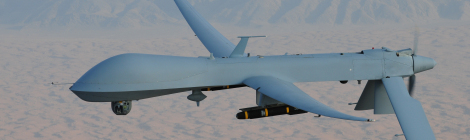
    by Shazad Ali and Chris AbbottMQ1 Predator Drone

    Strikes by unmanned combat air vehicles, or armed drones, have become the tactic of choice in US counterterrorism efforts in Yemen, Somalia and Pakistan. But lack of transparency, dubious effectiveness, civilian casualties and negative consequences for US national security means that Washington needs to re-evaluate its approach.

    It is the controversy over drone strikes in northwest Pakistan that has bought the issue to public attention. Leaving aside the wider issue of the extrajudicial nature of these killings and the questions over the legality of repeatedly breaching Pakistani airspace, it is the level of civilian casualties that is prompting the most concern.

    In a 23 May 2013 national security speech, President Barack Obama asserted that only terrorists are targeted by drones and that ‘there must be near-certainty that no civilians will be killed or injured’ before any strike is taken. However, independent reports contradict his claims.

    From 2004 to date, there have been 376 known US drone strikes in Pakistan. According to the UK-based Bureau of Investigative Journalism (BIJ), 407 to 926 civilians, including 168 to 200 children, have been killed in these strikes. According to a leaked Pakistani government report cited by the BIJ, at least 147 of 746 people killed in the 75 drone strikes in Pakistan between 2006 and 2009 were civilians. Of those killed, about 94 were children.

    Controversial tactics

    The high level of civilian casualties is attributable to two key elements of the US drone strike programme: double-tap strikes and signature strikes.

    Double-tap strikes use follow up strikes to deliberately target rescuers and first responders who are coming to the aid of those injured in an initial strike. The UN special rapporteur on extrajudicial executions, Christof Heyns, and the UN special rapporteur on counterterrorism and human rights, Ben Emmerson, have described the use of double-tap strikes as a possible war crime. Ironically, terrorists in Pakistan are now using their own version of the double-tap strike to target law enforcement personnel in cities such as Karachi: an initial low-intensity blast is used to draw in the emergency services, who are then targeted in a second much larger explosion.

    Signature strikes target individuals based on predetermined ‘signatures’ of behaviour that US intelligence links to militant activity. In other words, people are targeted merely on the basis of their behaviour patterns. This is different to personality strikes, which use intelligence to target specific terror suspects. In a June 2013 report that cited classified documents, NBC News revealed that one in four people killed in drone strikes in Pakistan between 3 September 2010 and 30 October 2011 were classified as ‘other militants’ by CIA. This means the CIA were unable to determine the affiliation, if any, of those killed.

    Intelligence failures

    However, even those strikes directed by intelligence are fallible. Such strikes rely on a mixture of signals intelligence and human intelligence from assets on the ground in Pakistan. The local CIA operatives are notoriously unreliable sources of intelligence.

    The doubts over the accuracy of US intelligence have some credence, as there are several cases in which a militant was reported killed in a drone strike only to be declared dead again following a later strike.

    For example, the alleged al-Qaeda leader in Pakistan, Ilyas Kashmiri, was reportedly killed in a drone strike in January 2009 and then again in September 2009, though he gave an interview to a Pakistani journalist the next month. Civilians are known to have been harmed in these unsuccessful attacks. In the January attack, 14-year-old Fahim Quershi lost an eye and suffered multiple injuries. In the September 2009 attack, 15-year-old Sadaullah Wazir lost his both legs and an eye. Three of his relatives died in the same attack. Kashmiri was again declared dead in July 2011, which is also contested.

    The United States has indeed managed to kill many militants in drone strikes in Pakistan, but these have been mostly low-level targets. According to a September 2012 study by Stanford Law School and New York University’s School of Law, only 2% of militant casualties in drone strikes between 2004 and 2012 were high-value targets.

    Justification

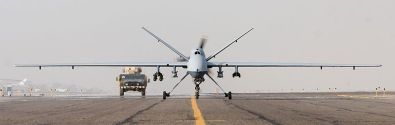
    MQ9 Reaper (used in Pakistan)There is an important question over congressional oversight of US drone strikes. The Obama administration has refused to provide legal justification of drone strikes to the Senate Select Committee on Intelligence despite several requests, according to committee chair Senator Dianne Feinstein. This has created an accountability vacuum and is a significant hurdle in congressional debate on the use of drones.

    Following the 9/11 attacks, the US Congress gave the president sweeping powers through the Authorisation to Use Military Force (AUMF). It allows the president to:

    ‘use all necessary and appropriate force against those nations, organisations, or persons he determines planned, authorised, committed, or aided the terrorist attacks that occurred on September 11, 2001, or harboured such organisations or persons.’

    In that context, drone strikes against al-Qaeda and the Afghan Taliban are authorised under US law. But it is hard to justify under the AUMF attacks in Pakistan against organisations not involved in 9/11, such as the Tehrik-i-Taliban Pakistan and the Haqqani network – notwithstanding the transnational nature of and blurred boundaries between some of these groups.

    It is also difficult to justify such attacks under the right to self-defence, which cannot be applied prospectively without limit. Nor does it warrant the repeated violations of Pakistan’s airspace, as Pakistan has not been shown to be responsible for any attacks against US interests. According to a leaked US diplomatic cable, Pakistan had, at one point, consented to drone strikes but it is not known whether Washington continues the strikes with Islamabad’s tacit agreement. Publicly, the Pakistani government has denounced the drone strikes, saying they are illegal and a violation of their country’s sovereignty. In September 2013, Pakistani Prime Minister Nawaz Sharif told the UN General Assembly that US drone strikes violated his country’s borders and were detrimental to Pakistani counterterrorism efforts. But, in reality, Pakistan has at times been deliberately ambiguous on the issue and the complex nature of civil-military relations in Pakistan and the known links between the ISI and various militant networks make things more complicated.

    Unintended consequences

    Whatever the legal status of the US drone strike programme in Pakistan, it is clear that it risks several unintended consequences. The United States might have made a prudent military choice in using armed drones rather the special forces for counterterrorism strikes in Pakistan. But the use of drones has backfired in a strategic sense and resulted in serious ‘blowback’.

    Chief among these is the radicalising impact US drone strikes are having in Pakistan. Repeated strikes are stoking anti-American sentiments and are a propaganda and recruitment gift to the extremist groups. Pakistan is being destabilised, as the strikes are undermining chances of peace talks between the state and Taliban groups. There are now increasing numbers of terrorist attacks against the Pakistani government by Taliban militants who believe Islamabad has failed to maintain the country’s sovereignty. Furthermore, the United States may be risking further attacks in its own backyard along the lines of the failed 2010 Times Square attack by Pakistani-born US citizen Faisal Shahzad.

    Drone strikes in Pakistan may also be complicating the US withdrawal from Afghanistan, as they have resulted in attacks on US forces. The 2009 Camp Chapman attack is a case in point. The al-Qaeda and Tehrik-i-Taliban Pakistan suicide attack used a double agent to target CIA personnel and contractors inside Forward Operating Base Chapman who were responsible for providing intelligence for drone strikes against targets in Pakistan. The attack on the base in Khost province was in revenge for the deaths of three al-Qaeda and Pakistani Taliban leaders who were killed in US drone strikes.

    The use of drones by the US has increased the danger of proliferation. Seventy six countries are known to have unmanned aerial vehicles, with approximately 20 countries possessing armed drones (though estimates vary widely). The United States has lowered the threshold for the use of lethal force and pushed back the limits of counterterrorism efforts to include the targeted killing of its enemies abroad. In doing so, they have set a dangerous precedent – one that could easily be followed by other countries. In a September 2013 study, Open Briefing identified 29 different models of armed drone in use with China, India, Iran, Israel, Russia and Turkey – each of which have external security concerns that could justify drones strikes under doctrine modelled on the US approach.

    Time for change

    The use of double-tap and signature strikes must be ended, as they result in unjustifiably high numbers of civilian casualties. They are the most controversial elements within the already controversial US drone strike. Beyond that, it is time to begin winding in Washington’s unchecked ability to target individuals around the world without due process. Central to this is the revocation of the post-9/11 Authorisation to Use Military Force. For 12 years this has allowed the spread of US military and intelligence operations around the world without accountability and transparency. These operations are increasingly straying from targeting those who ‘planned, authorised, committed, or aided the terrorist attacks that occurred on September 11, 2001’ to simply targeting suspected militants, regardless of their links to al-Qaeda or the Taliban.

    Washington can address the democratic deficit inherent in its drone programme by moving responsibility for it from the CIA to the usual chain of command within the US Department of Defense. There must also be proper congressional and judicial oversight of the drone programme, with monitoring by Congress’s intelligence and armed services select committees, in order to remove absolute executive power for the targeted killings.

    For its part, Pakistan can retract any tacit approval of US drone strikes and be unequivocal in its opposition to further strikes. This will allow the United Nations and key US allies to use whatever influence they have to press the United States to enact the much needed changes to its drone programme.

    Shazad Ali is a contributing analyst at Open Briefing. He is a journalist in Pakistan and pursuing a PhD in European Studies at the University of Karachi. He has been the assistant editor of the Vienna-based journal Perspectives on Terrorism and now serves as a member of its editorial board.

    Chris Abbott is the founder and executive director of Open Briefing. He is an Honorary Visiting Research Fellow in the School of Social and International Studies at the University of Bradford and the former deputy director of Oxford Research Group. http://www.openbriefing.org

    Featured image: MQ-1 Predator on patrol  Source: Air Force Reserve Command

    Image: An MQ-9 Reaper takes off on a mission from Afghanistan. Source: Wikimedia

  • Sustainable Security

    The Responsibility to Protect (R2P) is a significant, if controversial, development in international affairs. China has proposed its own semi-official version of R2P called “Responsible Protection”.

    Author’s Note: This article highlights issues discussed in more depth in various publications, including Andrew Garwood-Gowers, ‘China’s “Responsible Protection” Concept: Reinterpreting the Responsibility to Protect (R2P) and Military Intervention for Humanitarian Purposes’ (2016) 6 Asian Journal of International Law 89 and Andrew Garwood-Gowers, ‘R2P Ten Years after the World Summit: Explaining Ongoing Contestation over Pillar III’ (2015) 7 Global Responsibility to Protect 300.

    Introduction

    Over the last decade and a half the Responsibility to Protect (R2P) principle has emerged as a significant normative development in international efforts to prevent and respond to genocide and other mass atrocity crimes. Yet it has also been controversial, both in theory and in practice. R2P’s legal status and normative impact continue to be debated in academic and policy circles, while its implementation in Libya in 2011 reignited longstanding concerns among many non-Western states over its potential to be misused as a smokescreen for regime change. These misgivings prompted Brazil to launch its “Responsibility while Protecting” (RwP) concept as a means of complementing and tightening the existing R2P principle. China, too, has proposed its own semi-official version of R2P called “Responsible Protection” (RP). This contribution explores the key features and implications of the lesser known Chinese initiative.

    The R2P Principle

    Peacekeeping - UNAMID

    Image by UN Photo via Flickr.

    R2P first appeared in a 2001 report by the International Commission on Intervention and State Sovereignty (ICISS), a body set up by the Canadian government to consider how the international community should address intra-state humanitarian crises. However, after the initial concept proved contentious a modified version of R2P – labelled “R2P-lite” by one commentator – was unanimously endorsed by states at the 2005 World Summit. In its current form R2P consists of three mutually reinforcing pillars. The first is that each state has a responsibility to protect its populations from the four mass atrocity crimes (genocide, war crimes, crimes against humanity and ethnic cleansing). Pillar two stipulates that the international community should encourage and assist states in fulfilling their pillar one duties. Finally, pillar three provides that if a state is manifestly failing to protect its populations the international community is prepared to take collective action in a timely and decisive manner on a case-by-case basis, in accordance with Chapter VII of the UN Charter.

    Action under pillar three can encompass non-coercive tools such as diplomacy and humanitarian assistance, as well as coercive means including sanctions and the use of force. The international community’s pillar three responsibility is framed in conservative terms, creating only a duty to consider taking appropriate action, rather than a positive obligation to actually respond to a state’s manifest failure to protect. Crucially, the UN Security Council remains the only body that can authorise coercive, non-consensual measures under pillar three. R2P does not grant states a right to undertake unilateral humanitarian intervention outside the Charter’s collective security framework. Overall, R2P is best characterised as a multi-faceted political principle based on existing international law principles and mechanisms.

    The most well-known instance of pillar III action to date is the international community’s rapid and decisive response to the Libyan crisis in early 2011. The Security Council initially imposed sanctions and travel bans on members of the Gaddafi regime before passing resolution 1973 authorising the use of force to “protect civilians and civilian populated areas under threat of attack’’. China, Russia, Brazil and India each abstained on the vote to mandate military force against Libya. As the extent of NATO’s military targets and support for the Libyan rebels became apparent, many non-Western powers criticised the campaign for exceeding the terms of the Security Council resolution. For these states, the eventual removal of the Gaddafi regime confirmed their perception that R2P’s third pillar could be manipulated for the pursuit of ulterior motives such as the replacement of unfriendly governments.

    The post-Libya backlash against R2P was at least partly responsible for Security Council deadlock over Syria. Russia and China have exercised their vetoes on four separate occasions to block resolutions that sought to impose a range of non-forcible measures on the Syrian regime. At the same time, there has been renewed debate about the strengths and weaknesses of R2P’s third pillar. In late 2011 Brazil’s RwP initiative proposed a series of decision-making criteria and monitoring mechanisms to guide the implementation of coercive pillar three measures. While RwP initially attracted significant attention and discussion, Brazil’s foray into norm entrepreneurship was short-lived and R2P has remained unaltered.

    Reframing R2P as “Responsible Protection”

    China’s traditional insistence on a strict interpretation of sovereignty and non-intervention has made it uncomfortable with the coercive, non-consensual aspects of R2P’s third pillar. As a result, Beijing has consistently emphasised the primacy of pillars one and two, while downplaying the scope for pillar three action. In this respect, its decision not to veto resolution 1973 on Libya came as something of a surprise.

    China’s contribution to the post-Libya debate over R2P’s third pillar is less widely documented than Brazil’s efforts. In mid-2012 the notion of “Responsible Protection” was floated by Ruan Zongze, the Vice President of the China Institute for International Studies (CIIS),  which is the official think tank of China’s Ministry of Foreign Affairs. Although China has not explicitly adopted the concept as a formal policy statement on R2P, its implicit endorsement means it can be described as a “semi-official” initiative.

    RP is primarily concerned with R2P’s third pillar and, in particular, providing a set of guidelines to constrain the implementation of non-consensual, coercive measures. It consists of six elements or principles, which are drawn from just war theory and earlier R2P proposals such as the 2001 ICISS report and Brazil’s RwP. In this respect, RP represents a repackaging of previous ideas, rather than an entirely original initiative. However, by reframing these concepts in stricter terms it reflects a distinctive Chinese interpretation of R2P that seeks to narrow the circumstances in which non-consensual use of force can be applied for humanitarian purposes.

    The first element draws on the just war notion of “right intention”. It provides that the purpose of any intervention must be to protect civilian populations, rather than to support “specific political parties or armed forces”. This conveys Beijing’s concerns over the motives and objectives of those intervening under the banner of R2P, as expressed during the Libyan experience. Element two relates to the “right authority” criterion. It reiterates the longstanding Chinese position that only the Security Council can authorise the use of coercive measures, and that there is no right of unilateral humanitarian intervention granted to states.

    RP’s third element is based on the traditional principle that military intervention should be a “last resort”. Its call for “exhaustion of diplomatic and political means of solution” is consistent with Beijing’s broader policy preference for diplomacy and dialogue over forcible measures. However, insisting on a strict, chronological sequencing of responses may deprive the international community of the flexibility needed to ensure timely and decisive action on humanitarian crisis. For this reason, some clarification or refinement of element three may be needed. The fourth element of RP draws on aspects of the just war principles of “right intention” (like element one) and “reasonable prospects”. In relation to the latter, it provides that “it is absolutely forbidden to create greater humanitarian disasters” when carrying out international action. This stipulation reflects Beijing’s position that external intervention often exacerbates humanitarian crises and can ultimately cause more harm than good.

    Element five of RP provides that those who intervene “should be responsible for the post-intervention and post-protection reconstruction of the state concerned”. Although the notion of a responsibility to rebuild appeared in the original 2001 ICISS report it was not included in the text of the World Summit Outcome document in 2005 and therefore does not form a component of the current concept of R2P. It is unclear whether China’s RP concept is explicitly seeking to resurrect this dimension or whether this element is simply intended to emphasise Beijing’s broader perspective on peacebuilding and development in post-conflict societies. Finally, element six calls for greater supervision and accountability of those carrying out UN authorised civilian protection action. This is a similar demand to that made in Brazil’s RwP proposal, though little detail is given as to what form any such monitoring mechanism would take.

    Conclusion

    Overall, the Chinese notion of RP is an attempt to reinterpret and tighten the content of R2P’s third pillar so that it aligns more closely with Beijing’s own normative preferences and foreign policy objectives. Compared to RwP and the ICISS report, RP outlines a narrower set of circumstances in which military intervention for humanitarian purposes would be appropriate. Some aspects of the proposal would certainly benefit from clarification and refinement.

    However, it is notable that despite strongly criticising the way R2P was implemented in Libya, China has chosen to engage with, and actively shape, the future development of the norm. This illustrates the extent to which China, as a permanent member of the Security Council, is enmeshed in the ongoing debate over R2P. In fact, RP is explicitly framed as an example of China “contributing its public goods to the international community”. In the future we can expect China and other non-Western powers to play increasingly influential roles in the development of international security and global governance norms.

    Andrew Garwood-Gowers is a lecturer at the Faculty of Law at Queensland University of Technology (QUT) in Brisbane, Australia. He has written extensively on R2P and the law governing the use of military force, with publications in leading journals including Global Responsibility to Protect, the Asian Journal of International Law, Journal of Conflict and Security Law and the Melbourne Journal of International Law.

  • Sustainable Security

    The Anthropocene denotes the current geological age, in which human activity has had a significant impact on climate and the environment. The pressing issue of this epoch is whether the global consequences of these interactions between humans and the environment can be governed on a global scale.

    The 1972 report to the Club of Rome on “The Limits to Growth” demonstrated the natural boundaries to human expansion which began in the Holocene era, following the end of the last glacial period around 12,000 years ago. The continued growth of human activities since the industrial revolution has become a driving force of reshaping the face of the planet into a new geological epoch, the “Anthropocene”, associated with multiple global consequences such as climate change, land degradation, resource scarcity and biodiversity loss. The Anthropocene is seen as a new geologic epoch in which humankind has emerged as a globally significant force capable of reshaping the face of the planet. The underlying human-environment interactions raise fundamental questions for global governance: Can nature be controlled and shaped on a global scale? Are human interventions a disturbing or regulating global force, avoiding or creating disasters? What are the limits of human expansion in the Anthropocene?

    Human growth and complex crises

    climate-ice

    Image by klem@s via Flickr.

    In the course of its history, the human population has been growing by increasing birth rates and lowering death rates, leading to the expansion of the human sphere in terms of capital, investments, income, technology, energy and resource flows, political power and violent forces of destruction. Despite Malthusian concerns about population growth causing scarcity of natural resources, intolerable pollution, mass starvation and other catastrophes, humans were able to overcome resource constraints and expand into new spaces through problem-solving capabilities, technical and social innovations that generated more wealth on a shrinking natural resource base. Continued pressure on natural resources and ecosystems challenge planetary boundaries in the Anthropocene, raising the question of whether a balance will be established by increased death rates or the reduction of birth rates. While the first pathway implies crisis, disaster and death, the second path may be associated with a sustainability transformation in demographic, economic and societal conditions within natural boundaries.

    These pathways are part of the “complexity turn” in the Anthropocene which is characterized by globalized networks among people, markets and institutions, accelerated processes and flows in transportation and communication, and manifold micro-macro interactions between natural and social systems. While complex systems are often robust against disturbances in the core region of stability, on the edge of critical thresholds between stability and instability, small variations and uncertainties can make a big difference and decide whether systems break down or create new ones, as symbolized by the famous “butterfly effect” in chaos theory.

    Beyond thresholds and tipping points chain reactions and risk cascades may be triggered which propagate in space and time and induce qualitative system changes. These include complex events such as natural disasters, stock market crashes, revolutions, mass exodus or violent conflicts. A world of ever growing complexity where responsibilities and solutions of crises are hidden behind smokescreens, may provoke over-simplifications, religious, populist and nationalist fundamentalisms, rhetoric against science and intellectuals, or resistance against globalized structures.

    With the chaotic breakdown of the East-West conflict in 1989, actions of individuals and groups triggered a chain reaction that within weeks led to the fall of the Berlin Wall and the breakup of the Eastern Block. A new world (dis-)order emerged in which multiple crises interacted in fractal and fragile international landscapes that continue to be unstable and full of surprises (see van Creveld 1991, Kaldor 1998, Münkler 2005, Scheffran 2008). Numerous factors and actors are interrelated, involving national, subnational and transnational actors in complex networks, crises and conflicts. Tight couplings lead to cascading crises that spiral out of control, including September 11, global economic crises, the Arab Spring, the wars in Iraq, Afghanistan, Libya and Syria, the civil war in Ukraine, the Greek debt crisis, the European refugee crisis and terror attacks in many countries. These events are interconnected through multiple channels that are often invisible.

    Climate change as a risk multiplier

    In this complex chain of crises, environmental change is connected with other problem areas through multiple linkages from local to global levels. More tipping points may emerge in the nexus of environmental degradation, climate change, poverty, and hunger which affect the living conditions in many parts of the world and could turn into severe security threats. Climate change is considered a risk multiplier, which disturbs the balance between natural and social systems and amplifies the consequences through complex impact chains. Among key pathways, climate change can affect the functioning of critical infrastructures and supply networks; intensify the nexus of water, energy and food; lead to production losses, price increases and financial crises in other regions through global markets; undermine human security, social living conditions and political stability; and induce or aggravate migration movements and conflict situations.

    In the most affected regions the erosion of social order and state failure may trigger a spiral of corruption, crime and violence. Particularly critical is the situation in fragile and failing states with social fragmentation, weak governance structures and inadequate management capacities. Human insecurity and personal instability interacts with social and political instability. The impact of environmental change could undermine the ability to solve problems and further dissolve state structures, possibly leading to their collapse.

    The Darfur conflict in Sudan has served as a prominent case where climate change is suggested as a threat multiplier in the complex nexus of population pressure, exploitation of land and forests, declining agricultural productivity, food insecurity, and the spread of diseases. While in some studies drought and desertification exacerbate the competition for resources between herders and sedentary farmers, others point to the long-term political roots of instability and violent conflicts, reinforced by national power games, regional struggles and global geopolitics that marginalized the Darfur region and fueled a spiral of violence.

    Similarly, several authors found devastating droughts in the years before the Syrian rebellion that hit the main growing areas of the country and forced many people to move to the cities. These changes combined with many other conflict drivers rooted in the country’s economic, social and demographic conditions, political failures of the Assad regime as well as the events following the US invasion of 2003, the Arab Spring of 2011 and the emergence of the Islamic State which question the role of climate change as a dominant factor.

    Limits to the Anthropocene

    In this complex nexus of overlapping crises and interconnected problem areas, the world may continue on a slippery slope of escalation, running full speed into natural boundaries and their forces. The challenge is to anticipate and avoid risky pathways by counteracting forces that slow down and change course towards a more sustainable, peaceful and viable world which avoids dangerous pathways and interventions (such as risky climate engineering),  allowing for a timely and self-organized system transformation that takes the limits of the Anthropocene into consideration. These include finite natural resources and limits to growth; ethical, social, political and legal constraints; limits of scientific knowledge and uncertainty. In an increasingly interconnected world, stabilization of human–environment interactions under conditions of climate change needs an integrative and interdisciplinary understanding of human–environment interaction to assess destabilizing developments that threaten survival and adapt to changing circumstances to ensure their viability.

    Social systems are not determined to aggravate crises situations but also have the ability to cope with problems like climate change and develop alternative pathways. To succeed, human responses and actions need to be timely and adequate compared to the speed, intensity and complexity of change. Concepts of anticipative and adaptive governance are needed to influence critical decision points and adjust actions along multiple causal chains to protect human security, strengthen societal resilience and sustainable livelihoods, and to develop collective adaptive strategies driving the planet through the complex and foggy landscapes of the future where information is limited and uncertain, but continuously updated. A lack of agreement on the underlying causes, on the risks to be expected and on the actions required is impeding progress.

    Governing transformations to sustainable peace

    Concepts of resilience, security, viability and sustainable peace can strengthen people’s social and economic capabilities in their effective, creative and collective efforts to handle the challenges of the Anthropocene. In a resilient social environment, actors are able to cope with and withstand the disturbances caused by climate change in a dynamic way that will enable them to preserve, rebuild, or transform their livelihood.

    Sustainable development seeks to balance economic, social and ecological issues for present and future generations and integrate the human sphere (socio-sphere) into the boundaries of the natural environment (eco-sphere), making conflicting objectives compatible:

    1. Sustain refers to preservation and upholding of natural resources as the life-enabling base of society and precondition for human existence.
    2. Development means the unfolding of opportunities and abilities to improve human well-being and promote societal progress.

    Peace rests on similar principles regarding the existence and development of human rights:

    1. Preservation and protection of the existence, integrity and identity of each individual by excluding violence.
    2. Self-fulfillment and unfolding of the individual through equal distribution of development opportunities.

    Thus, upholding and unfolding of humans and nature are common principles of sustainable peace, which addresses both the negative interactions between armed conflict, environmental destruction and low levels of development (vicious cycle) as well as positive linkages between human development, environmental protection and peace-building (virtuous cycle).

    In addition to preservation and development (upholding and unfolding), a third task includes the shaping of a viable world, aiming for its “conformation” to fit the current state into  a  proper  shape,  form  or  design,  creating a balanced relationship between the real and the desired world, between human society and nature. In the triangular relationship between sustainability, development and peace, upholding current abilities serves as a basis for unfolding enabling opportunities to facilitate the conformation of human–environment interaction pathways towards a viable world. This approach is compatible with the multi-level-perspective of socio-technical transformations that describe micro-macro transitions between regimes, niches and landscapes.

    Key viability strategies, supporting a “new climate for peace”, include climate mitigation and adaptation; the building of networks, the cultivation of diversity, flexibility and justice; migrant networks that facilitate the exchange of knowledge, income and other resources; new capabilities to manage disasters; arms control, non-proliferation and disarmament; regional security concepts, crisis prevention, conflict resolution and confidence-building; as well as innovative institutional frameworks and legal mechanisms.

    The 2015 Paris Agreement offers a first framework of opportunities through setting boundaries of global warming and national commitments of emission reductions as well as instruments for financial and technology transfer between industrial and developing countries. While the scope and effectiveness of these measures may not yet be sufficient to prevent dangerous climate change, they could lay the foundations and attract political support from local to global levels for a sustainable and peaceful transformation towards governing the Anthropocene.

    Further readings by the author

    Brauch, H.G., Scheffran, J. (2012) Climate Change, Human Security, and Violent Conflict in the Anthropocene. In: J. Scheffran, M. Brzoska, H.G. Brauch, P. M. Link, J. Schilling (Eds.) Climate Change, Human Security and Violent Conflict, Springer, 3-40.

    Lüthje, C., Schäfer, M., Scheffran, J. (2011) Limits to the Anthropocene. What are the challenges and boundaries of science for the post-normal age? Geophysical Research Abstracts, 13, EGU2011-11795.

    Maas, A., Scheffran, J. (2012) Climate Conflicts 2.0? Climate Engineering as Challenge for International Peace and Security, Special Issue, Security and Peace, 30(4): 193-200.

    Scheffran, J. (2008) The complexity of security. Complexity 14(1): 13-21.

    Scheffran, J., Brzoska, M., Kominek, J., Link, P.M., Schilling, J. (2012) Disentangling the Climate-conflict Nexus: Empirical and Theoretical Assessment of Vulnerabilities and Pathways, Review of European Studies, 4(5): 1-13.

    Scheffran, J., Ide, T., Schilling, J. (2014) Violent climate or climate of violence? Concepts and relations with focus on Kenya and Sudan, The International Journal of Human Rights, 18 (3): 369-390.

    Scheffran, J. (2015) Complexity and Stability in Human-Environment Interaction: The Transformation from Climate Risk Cascades to Viable Adaptive Networks. In: Kavalski (ed.), World Politics at the Edge of Chaos, 229-252.

    Scheffran, J. (2016a): Der Vertrag von Paris: Klima am Wendepunkt?, WeltTrends, Nr. 112, 24(2): 4-9.

    Scheffran J. (2016b) From a Climate of Complexity to Sustainable Peace: Viability Transformations and Adaptive Governance in the Anthropocene, in: Brauch et al. (ed.) Handbook on Sustainability Transition and Sustainable Peace, Springer, 305-346.

    Jürgen Scheffran is professor in the Institute of Geography at the University of Hamburg and head of the Research Group Climate Change and Security (CLISEC) which is part of the Excellence Cluster Integrated Climate System Analysis and Prediction (CliSAP) and the Center for Earth System Research and Sustainability (CEN). After his PhD at Marburg University he worked in interdisciplinary research and teaching at Technical University Darmstadt, Potsdam Institute for Climate Impact Research, and the University of Illinois. His fields of interest include: climate change, resource conflicts and human migration; energy security and water-energy-food nexus; land use, rural-urban interactions and river-coastal regions under sea-level change; governance in the Anthropocene (mitigation, adaptation, climate engineering, sustainability transition); technology assessment, arms control and international security; mixed methods in complex systems research (agent-based modelling, social network analysis, field research). He was a Visiting Professor at the University of Paris (Sorbonne), consultant to the United Nations, the Technology Assessment Office of the German Parliament, the Federal Environmental Agency, and the German delegation to the climate negotiations.

  • Sustainable Security

    This article was originally published on openSecurity’s monthly Sustainable Security column on 15 August 2014. Every month, a rotating network of experts from Oxford Research Group’s Sustainable Security programme explore pertinent issues of global and regional insecurity.

    Control of water, including navigation rights, resource extraction and the exploitation of shared watercourses is at the heart of today’s geopolitical tensions in Asia. China’s recent actions in the South China Sea and Himalayas have given rise to further—and at times violent—conflict over the region’s natural resources. So will water insecurity lead to greater partnership in Asia? Or will it lead to a revival of China’s traditional sense of regional dominance and undercut efforts to build a rules-based approach to growing resource conflicts?

    Little by little

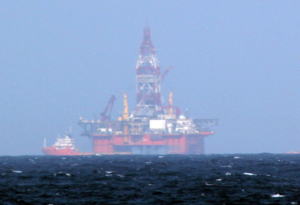
    China National Petroleum Corporation's Haiyang Shiyou-981 oil rig is situated close to the Paracel Islands, which Vietnam claims fall inside its exclusive economic zone. Source: East Asia Forum

    China National Petroleum Corporation’s Haiyang Shiyou-981 oil rig is situated close to the Paracel Islands, which Vietnam claims fall inside its exclusive economic zone. Source: East Asia Forum

    On 15 July, a month earlier than scheduled, the China National Petroleum Corporation (CNPC) announced that it was removing its Haiyang Shiyou-981 oil rig—40 storeys high and worth an estimated $1 billion—from waters close to the Paracel Islands which Vietnam claims fall inside its exclusive economic zone.

    There were four possible explanations. The first was the one the CNPC offered: the rig had completed its work early. The second was the approach of Typhoon Rammasun, signalling an early start to the region’s storm season. A third was that the US-China Strategic Dialogue the previous week had put pressure on China to lower the temperature in the South China Sea and China had taken the opportunity to demonstrate that it was a responsible international player.

    The fourth interpretation was that the rig had accomplished its purpose—not prospecting for hydrocarbons but promoting a steady advance of Chinese claims on the South China Sea through a series of assertive steps, none so provocative as to bring in outside players. With each little step, this story goes, China is building its case for singular rights to navigation and resource extraction there.

    The other players on the regional chessboard—the Philippines, Vietnam, Brunei, Taiwan, Indonesia and Malaysia—have grown increasingly agitated. With the memory of violent clashes between Vietnam and China over the Paracel Islands in 1974 and 1988, the installation of the oil rig in May provoked outbreaks of violence in Vietnam against Chinese citizens and businesses. Vietnamese fishing boats and Chinese ships harassed each other throughout the drilling.

    It is a dangerous ploy, but China calculates that the dangers are containable. If ethnic Chinese or Chinese citizens suffer harm in the backlash, the host country is to blame. If two ships collide in the course of the hazardous games of “chicken” that have become routine in this contest, Chinese citizens can be mobilised to shout their indignation against the “aggressor”.

    Overlapping claims

    A Fililipino protester holds a slogan beside a Philippine flag during a rally outside the Chinese Consulate in suburban Makati, south of Manila, Philippines on Tuesday June 11, 2013. Source: East Asia Forum

    A Fililipino protester holds a slogan beside a Philippine flag during a rally outside the Chinese Consulate in suburban Makati, south of Manila, Philippines on Tuesday June 11, 2013. Source: East Asia Forum

    The waters to which China lays claim are divided under the United Nations Convention on the Law of the Sea (UNCLOS) into exclusive economic zones for Brunei, Indonesia, Malaysia and Taiwan, each of which argues it has been adversely affected by China’s oil rig and claims of sovereignty. The zones, running 200 nautical miles into the South China Sea, allow these states special rights of exploration and exploitation of marine resources in specific areas.

    The sea is a major shipping route and fishing area, accounting for around one-tenth of the global fish catch and believed to have substantial untapped natural resources. Notably, China’s claims (outlined in a map in 1947) overlap a large portion of these zones. Malaysia also lays claim to a small number of islands in the Spratlys archipelago. With such a concentration of multifaceted and overlapping claims, China’s oil-rig foray heightened tensions and raised fears.

    In an attempt to settle its resource conflict with China peacefully , the Philippines has filed a case before the UN Permanent Court of Arbitration in The Hague on its own exclusive economic zone. However, even if, , as Manila expects, the court rules in its favour, China will ignore this—preferring to use its superior weight in bilateral negotiations rather than submit to third-party or multilateral processes where it is the rules that count. Diplomatic efforts by the Philippines to co-ordinate other claimants to take a common position vis-à-vis China have so far met little success.

    China’s behaviour has made its smaller neighbours, including Vietnam, reach out to the US for reassurance. But what can it really offer?

    For the US, the fading Pacific power, the disputes in the South and East China Sea pose a particular dilemma. In the East China Sea, China and Japan have overlapping territorial claims, including to the Diaoyu/Senkaku Islands which Japan controls and does not recognise as contested. The US has maintained neutrality on the islands but has a treaty commitment to defend Japan as the quid pro quo for its post-war pacifism.

    China might be uncertain about the depth of US enthusiasm for that commitment today but limits its provocation, nevertheless, to such moves as the declaration in November 2013, without consultation, of an “air defence identification zone” which covers territory claimed by its neighbours. International flights are now required to report their identity and flight plans to China when crossing the zone, at risk of “defensive emergency measures”.

    The strengths and limitations of the US position were clear in May, at the Shangri-La Dialogue in Singapore, the region’s annual multilateral “track two” security summit, where the US retains the power to mobilise a chorus of allies to uphold rules and laws and to criticise China’s behaviour. A series of speakers, including the Japanese prime minister, Shinzo Abe, and the US defence secretary, Chuck Hagel, condemned the use of muscle to enforce claims to the China seas, calling instead for freedom of navigation and overflight and a system based on international rules.

    General Wang Guanzhong, leader of the Chinese delegation, accused the US and Japan of ganging up on China. He was not sufficiently moved to answer pertinent questions on the rules of engagement for Chinese patrol vessels in the East China Sea, but he did make it clear that China saw no place for the US in 21st-century Asia.

    China is by far the largest trading partner of all the ASEAN members, which are caught in the small-neighbour dilemma, somewhere between the fear that China will come to rule their lives and consume their resources and the fear of giving offence to the region’s most important economic power. For them, the game is to try to stay on good terms with both sides.

    Himalayan watershed

    The dilemma is also evident among a different set of China’s neighbours—those that depend on the rivers that rise in the mountains and on the high plateau of Tibet. China’s largest downstream neighbour is, of course, India. India-China relations are bedevilled by unsettled borders-status rivalries, the subject of relatively recent skirmishes, but their most intractable potential conflict is over the shared resource of the Himalayan watershed.

    In its eagerness to promote new Asian alliances, Beijing dispatched the foreign minister, Wang Yi, to Delhi in June, to reach out early to the administration of the newly-elected Narendra Modi. Wang presented himself as the personal envoy of China’s president, Xi Jinping, and startled the Indian press by claiming that the two countries were ready to settle their long-running border dispute. The announcement was however short on detail—and, since the Indian state of Arunachal Pradesh is claimed by China while China’s Aksai Chin is claimed by India, details matter.

    There has been no further hint of an imminent deal but India, like all of China’s downstream neighbours, is more concerned by the impact Chinese activities are having on the quality and quantity of water that crosses its borders than the exact position of the borders themselves. The Himalayan cryosphere contains the largest store of fresh water outside the two polar regions and is a significant influence on the region’s climate, including its monsoons. As in the polar regions, rising temperatures are affecting the glaciers and snow fields that give birth to Asia’s rivers and future impacts on monsoons, though hard to predict, are highly likely.

    In the shorter term, China’s expansion of development westward is affecting the Qinghai Tibet plateau and everything that flows from it. Increased mineral extraction in Tibet and a renewed frenzy of big-hydro construction on trans-boundary rivers are changing Asia’s water flows for ever. There is increasing awareness of the risk of the downstream disasters that could result from building mega-dams in one of the world’s most active earthquake zones.

    There are no trans-boundary agreements between China and any lower riparian country on the shared use of Asia’s great rivers, even though 1.6 billion people depend on them and China is building dams on all their head waters. For India, dams and threatened water diversions on the Brahmaputra are a particular concern. For the countries of the Mekong, China’s dam-building upstream poses a series of potential dangers. Meanwhile, India and others are running to catch up in the dam race, fearful of allowing de facto rights to be created unchallenged.

    There has been no source-to-sink assessment of the impact on river ecosystems of any single dam—let alone of the massive cascades planned or under construction—and there are no mechanisms for resolving disputes. China has refused to enter into discussions with lower riparian countries, beyond agreeing to share limited water-flow data with India.

    Clear rules

    But, as in the South China Sea, limited bilateral discussions are not enough to ensure that the ecosystems of the watershed are protected and the legitimate interests of all those whose livelihoods depend on the rivers are recognised. From the high Himalaya to the teeming deltas, life will be affected.

    If ever there was a case for clear rules and co-operation, it can be found in the South China Sea and the Himalayan watershed. Both raise the essential question of whether the region’s resource conflicts will be settled by arbitration and law or by force. China’s challenge to US influence is also a challenge to an international order that values arbitration as a way of defending the weak against abuse by the strong.

    Isabel Hilton is the editor of chinadialogue.net, and Advisor to Oxford Research Group’s Sustainable Security Programme. She is a journalist, broadcaster, writer and commentator

  • Sustainable Security

    The world is witnessing unprecedented forced displacement due to conflict, persecution, and human rights violations. The conflict in Syria has been a major source of this displacement, producing over 7.6 million internally displaced persons and over 4.8 million refugees. The escalation of armed conflict in Iraq since 2014 has also contributed to a dire humanitarian and displacement crisis, and recent data indicate that Iraq is one of the three main origin countries—along with Syria and Afghanistan—for asylum seekers and migrants arriving in Europe. The conflicts in Syria and Iraq have been characterized by mass atrocity crimes including war crimes, crimes against humanity, and possible acts of genocide. As the death tolls and casualties associated with attempts to flee these conflicts continue to rise, the failure of the international community to adequately protect civilian populations targeted by violence underscores concerns regarding the international norm of Responsibility to Protect (R2P). Over ten years after its acceptance by all member states at the United Nations World Summit, the framework for collectively responding to mass atrocities when states have manifestly failed to protect their populations remains weakened by critiques of selective use and by its conflation with coercive humanitarian intervention in the aftermath of its application in Libya. R2P’s association with controversial coercive measures threatens to undermine its legitimacy and overlooks important non-coercive opportunities for implementing the human protection principles that are at its core. In particular, in the wake of mass atrocity situations, facilitating access to asylum and other forms of protection for refugees and displaced persons represents an essential step towards fulfilling R2P.

     Linking the Responsibility to Protect and Refugee Protection

    DFID Syrian Camp

    Za’atari refugee camp, Jordan. Image by DFID via Flickr.

    There are strong foundations for emphasizing R2P as refugee protection. First, the international norm is intended to apply to mass atrocity situations where there is evidence of war crimes, crimes against humanity, ethnic cleansing, or genocide. The refugee crises associated with World War II, the Vietnam War, the Rwandan genocide, and the Balkans conflicts of the 1990s underscore the connection between mass displacement and mass atrocity crimes. International indifference or opposition to collective refugee burden-sharing in these cases frequently resulted in further victimization. In his study of mass killings, Benjamin Valentino argues that greater international response to refugees could have helped reduce the death toll of many of the 20th century’s worst genocides.

    An emphasis on R2P as refugee protection also bolsters the non-coercive and non-violent aspects of the human protection norm at a time when significant criticism surrounding the third pillar of the framework regarding forceful intervention threatens to erode its legitimacy and global consensus. Humanitarian interventions raise concerns about selectivity and often pose significant risks with regard to civilian harm. These risks are compounded by the power asymmetries and realpolitik dynamics that typically characterize coercive interventions. Further associations of R2P with forceful interventions will understandably trigger greater contestations of the norm and undermine the potential for its evolution into meaningful legal obligations. As an alternative to the use of force, states can respond to mass atrocity situations with mechanisms of refugee protection like facilitating access to asylum, granting temporary protection, and upholding the principle of non-refoulement, thus addressing R2P’s call for collective international response in a timely and decisive manner to protect civilian populations and prevent further victimization.

    Allocating Responsibility for Refugees

    While there are robust foundations for connecting the human protection norm to mass displacement and refugee response, the implementation of R2P as refugee protection faces significant impediments both in Europe and the United States. One major obstacle is refugee burden-sharing. The 1951 Refugee Convention and its 1967 Protocol do not specify how, in the face of major refugee crises, states should equitably allocate legal, financial, or physical responsibilities for protection. While states are obligated by the principle of non-refoulement not to contribute to refugees’ harm by returning them to their place of persecution, international law grants states the right to retain control over their sovereign borders. As such, states are not compelled to grant asylum. A related problem is that the existing refugee protection regime relies on post-World War II assumptions that forced displacement is a temporary phenomenon and refugees will be able to return to their country of origin following the resolution of the conflict. Despite data indicating that displacement has become increasingly prolonged, the repatriation of refugees to their home countries remains more heavily promoted than their resettlement or local integration in host countries.

    To date, neighboring states in the Middle East have absorbed the vast majority of refugees fleeing atrocities in Syria and Iraq. This disproportionate burden on states in the region is in line with global trends in the distribution of refugees. Because proximity to place of origin has been a key determinant of distribution, developing countries that can least afford to host refugees have assumed the overwhelming responsibility for them. This inequality in refugee burden-sharing emerges not only due to geographical proximity, but also reflects the increased ability of developed countries to prevent refugees from arriving on their territories. In the ongoing crisis, inequitable burden-sharing is also apparent on a regional level within the European Union (EU), as southern European states have continued to bear the primary responsibility for screening and processing asylum claims. While other EU members have partially shared the burden by committing financial resources to assist Greece and Italy and by hosting some refugees through relocation frameworks, as of November 2015 only three states—Germany, Austria, and Sweden—fulfilled their committed quotas for relocating refugees.   Debates over refugee burden-sharing in Europe have underscored tensions between EU principles and individual member states’ willingness to implement norms of equity in refugee protection.

    While discussions of refugee burden-sharing have largely focused on capability—that is, states’ relative capacities to assist refugees based on factors like economic development, population, and territorial size—the criteria that ought to govern the allocation of refugee responsibility remain ambiguous. The EU plan for distributing asylum seekers approved in September of 2015 utilized economic strength, population, unemployment, and the number of asylum applications approved in the last five years as criteria; however, this resettlement plan has faced opposition from central and eastern European states, and Poland announced that it would not participate. Complicating the task of determining how refugee protection responsibilities should be allocated is the notion that a country’s culpability in the creation of the displacement might also shape its obligations to respond.

    The Securitization of Refugees

    Even if consensus can be reached at the international level regarding principles of equitable refugee burden-sharing, policymakers can increasingly expect resistance from their domestic publics rooted in logics that link refugees to fears of terrorism and perceptions of foreigners as threatening. The implementation of R2P as refugee protection thus faces significant hurdles related to the securitization of asylum seekers—particularly those from Muslim-majority countries—as threats to both national security and cultural values in the United States and Europe. Increased fears of terrorist infiltration via refugee flows have produced calls to round up Syrian refugees and resulted in the U.S. House of Representatives passing H.R. 4038, the American Security Against Foreign Enemies (SAFE) Act. Opposition to refugees at the domestic level has also manifested in arson attacks against refugee shelters in Germany and violence against refugees in France. As refugees are increasingly conflated with migrants, and the current crisis emanates largely from the Middle East, perceptions of asylum seekers have become linked to broader debates about immigration and Islam. In this context, domestic political forces in Europe and the US have framed the refugee crisis in ways that undermine the potential for R2P to be successfully reoriented as refugee protection.

    Navigating these obstacles requires grappling with representations of refugees in social and political discourse, as well as articulating how refugee burden-sharing can serve states’ national interests. Organized and predictable responses for allocating refugee responsibilities could, for example, support greater international stability and reinforce principles of cooperative security. In an increasingly interdependent global environment, fulfilling R2P through refugee protection could arguably compliment counterterrorism policies and contribute to an international protective infrastructure that facilitates better coping with transnational threats and humanitarian emergencies.

    Alise Coen is currently Assistant Professor of Political Science at the University of Wisconsin-Sheboygan, USA. Her article, ‘R2P, Global Governance, and the Syrian Refugee Crisis’ was recently published in the International Journal of Human Rights. She is on Twitter at @alise_coen

  • Sustainable Security

    Following the vote to renew the Trident nuclear programme, a former nuclear-armed submarine commander discusses why the UK needs to seriously rethink its attitude to nuclear weapons. 

    Editor’s Note: Commander Forsyth’s explanation as to why he has changed his view on the deterrence value of the now and future Trident weapon system was originally written for family members. It has been edited by the ORG with the full involvement and agreement of Commander Forsyth to be suitable for wider publication. Of particular interest is his alternative proposal for a smaller,  ‘for but not with’ and  more versatile submarine platform as a stepping stone to reducing the level of ready use weapons whilst preserving the ability to resurrect full CSD posture if required.

    In 1972 I became Executive Officer of HMS Repulse, one of the four Polaris A3 missile-carrying submarines based on the Clyde. Based on this experience I can say, without any sentiment or exaggeration, that the use of nuclear weapons during the Cold War would have threatened the existence of humanity.

    I believed that Mutually Assured Destruction (MAD) was at the centre of the UK’s deterrence policy, meaning that if the Soviets fired at us then we (as well as the USA and, latterly, France) would respond in such measure as to immediately annihilate several major cities in the Soviet Union.

    The consequential radiation effects of any nuclear detonation would largely complete the destruction and this would almost certainly have caused a ‘nuclear winter’.

    MAD and the Cold War

    forsyth

    Commander Forsyth on HMS Sceptre.

    The policy of MAD would, we were told, only have been used in retaliation to a Soviet nuclear first strike with missiles en route to Europe or the USA. We were constantly assured that under no circumstances would we fire our Polaris missiles first even if tanks were rolling across the German plain, unless the Soviets had already fired nuclear weapons at us.

    As Paul Rogers notes, the UK’s other tactical nuclear weapons could have been used against such a Soviet offensive. Yet at the time we thought that this would not necessarily start a strategic exchange. Perhaps naively, we tended to consider Polaris in isolation from the tactical battlefield and on a whole different level.

    The UK’s retaliatory only policy (assuring a second strike was possible) let us sleep easily at night during the years that we took 16 Polaris missiles to sea. As Nick Ritchie explains, each of these missiles carried two warheads with an estimated yield of 40kt. Thus, with 16 missiles per boat, just one patrolling submarine could have fired 32 40kt warheads, which would have given a potential explosive yield of 1.28 megatons—hence why we called what would happen if they were used Armageddon.

    Understanding the power of the bomb

    The US had many more submarines, aircraft and land-based missile silos. Our contribution was a gesture of togetherness against a common enemy whose declared policy was assumed to be ‘world domination by any means’.

    Torpedo tracks perishot_enhanced

    Periscope pic of torpedo tracks approaching the target.

    In comparison, the atomic bomb that physically destroyed the Japanese city of Hiroshima in WWII and killed 100,000 people in the process had just a 15 kiloton yield.  So when Prime Minister Theresa May stated in parliament last July that she was prepared to press the button and kill 100,000 people, we should recognise that the number of deaths she was referring to was significantly less than that which Polaris missiles were capable of inflicting—never mind the massive collateral structural and radiation casualties which would result.

    Each Trident warhead has a yield of up to 100 kilotons, which, in terms of destructive power, is equivalent to six or seven Hiroshimas. The UK presently deploys 40 nuclear warheads and not more than eight missiles on its four submarines, meaning that the destructive power on board just one of these submarines, if used at the same time against a densely populated country, would kill considerably more than 100,000 people.

    Justifying nuclear use

    The ownership of this sort of power begs the question: what threat might justify the use of such destructive force? We also need to be clear under what circumstances and at what scale the Prime Minister might authorise a nuclear strike because she could be taking us all with her.

    Two government statements are relevant to this discussion:

    1. Then Secretary of State for Defence, Geoff Hoon, stated in 2002, prior to the invasion of Iraq, that Saddam Hussein could ‘be absolutely confident that in the right conditions we would be willing to use our nuclear weapons’.
    2. A government policy paper of 8th May 2015 stated that ‘it will not rule in or out the first use of nuclear weapons’ to ‘deter and prevent nuclear blackmail and acts of aggression against our vital interests that cannot be countered by other means’. This leaves open the option for the Prime Minister to authorise Trident’s use to deter an aggressor who may be threatening to use nuclear weapons or is using massive conventional forces which we do not have sufficient conventional force to counter. But, importantly, the government deliberately maintains ‘some ambiguity precisely when, how and at what scale we would contemplate use of our nuclear deterrent’.

    Keeping the option open of using nuclear weapons first against an adversary who you judge is threatening your ‘vital interests’ with non-nuclear force is quite different from MAD. This is what makes me question the whole basis of what we may or may not do with Trident. Formerly we would not have fired Polaris missiles until British cities had been totally destroyed by a megalomaniacal action by the Soviets. It would have been a futile gesture by us but the threat of doing so was considered to be a deterrent. Now it is ultimately a matter of the Prime Minister’s judgement as to whether we embark on a nuclear war. This raises the prospect of deliberately causing Armageddon as opposed to a reaction to one already started.

    In which case, I would argue that we have the right seriously (a) to question whether the Government should have that power and (b) if so, to constrain the circumstances in which such power can be used. As Nick Ritchie points out, the UK ‘does not dispute that international humanitarian law applies to the use of nuclear weapons and has incorporated the notion of “extreme circumstances of self-defence” into its declaratory nuclear policy statements’. Yet will all future Prime Ministers follow such guidelines in practice?

    The need to ask these questions, and decide if building a new generation of nuclear weapons is justified and will ‘keep us safe’, is particularly important given that no military case has been made for Trident’s use by its supporters—other than the vague statement that we don’t know what the future holds.

    Reference to the prospective use of nuclear weapons is nearly always qualified by adding that they are a weapon of ‘last resort’. As part of the Prime Minister’s decision making process she has therefore, at the very least, to be satisfied that all other alternative avenues have been exhausted, starting with the political and economic ones, escalating up through the increasing use of conventional military power.

    Rethinking what military capabilities the UK needs

    140602-N-ZZ999-202 ATLANTIC OCEAN (June 2, 2014) A trident II D-5 ballistic missile is launched from the Ohio-class ballistic missile submarine USS West Virginia (SSBN 736) during a missile test at the Atlantic Missile Range. The test flights were part of a demonstration and shakedown operation, which the Navy uses to certify a submarine for deployment after a major overhaul. The missiles were converted into test configurations with kits containing range safety devices and flight telemetry instrumentation. The U.S. Navy supports U.S. Strategic Command's strategic deterrence missions by operating and maintaining Ohio-class ballistic missile submarines to deter regional and strategic threats. The triad, the U.S. strategic nuclear forces of ICBMs, bombers, and ballistic missile submarines, remains the primary deterrent of nuclear attacks against the U.S., our allies, and partners. (U.S. Navy photo/Released)

    Image of Trident missile via Wikimedia.

    When I was at sea in the 1960s and 1970s the UK invested in both the Polaris force and significant conventional armed military forces in all three services. The country was able to send a Task Force as far afield as the Falklands and, more importantly, the armed forces were strong and large enough to withstand the quite considerable attrition—particularly in the Navy—in fighting a full-on war.

    The services have gradually been whittled down to a level in which such a Task Force could not be assembled. By its own admission the Navy does not have enough ships and submarines to meet peacetime commitments—never mind war. The six Type 45 destroyers designed to protect the UK’s two new carriers were victims of over-design and under-funding (albeit costing £1billion each) such that they are now in harbour with major operational limitations which will take some years to be rectified.

    Meanwhile, the next generation of frigates have been delayed. When they do come they will have outdated equipment and there will still not be enough of them to give anti-submarine warfare protection to the carriers—unless they forego other roles of which there are many. The Army and Air Force also have their own tales of woe—soldiers die for lack of body armour and the correct vehicles because the military budget has to cope with the costs of Trident.

    Why is this? To some extent you can blame senior officers for lack of management ability and vision when challenged by the need to meet major commitments with a constantly reducing budget. They should perhaps have been stronger and said we are not well placed to play the role assigned in the Iraq war, be peace keepers afterwards and also embark on a new war in Afghanistan. The ‘can do’ spirit has been counter-productive.

    However, the other budgetary factor is that the cost of building four Successor submarines alone is now set to cost at least £31 billion. You can buy quite a lot of aircraft carriers, frigates and hunter killer submarines for that.

    The consequential reality is that we have very little conventional capability before the use of Trident becomes our last resort—a very dangerous situation for world peace. So who are we likely to need to use our last resort against having said that rogue states and dirty bombers are not likely targets? The answer is no one at the moment. Yes, Russia is acting aggressively, waving their nuclear weapons stick, but Russia has no grand plan for world domination. I must therefore conclude that the Royal Navy is being exploited to operate a political status symbol with no military value at the cost of other important capabilities.

    There is no threat to the UK that justifies our nuclear force

    During the Cold War the UK’s nuclear-armed submarines were at 15 minutes notice to fire. Since 1994 however, following an agreement with Russia, the UK’s nuclear weapons have been de-targeted—although this situation could be quickly reversed. The Trident submarines are lurking on standby ‘just in case’, so there is time to target and arm them if the situation escalates. Saying North Korea is a threat to the UK is not credible. Pyongyang may become a threat to US interests, but even that is unlikely and the US is more than capable of responding.

    Some may argue that now is not the time to lay down our nuclear arms because it might further destabilise our position in Europe and be seen as a further ‘weakness’ post-Brexit. But what does this mean? That the Russians will see an opportunity and seize it? I believe they know, despite the Prime Minister’s words, that we would not fire our nuclear weapons except in retaliation to a major nuclear first strike by them—which they are unlikely to launch.  But I also believe it is possible that Putin could take advantage of our regular Force’s weakness, for example, through giving covert military support and overt political support to ‘popular’ pro-Moscow uprisings in Russia’s near abroad. The calculation here would be that NATO would likely find it difficult to find an effective response to such manoeuvres.

    As for a developing intercontinental threat from elsewhere in the future, if it’s not on the drawing board now (and it’s not) then we have time to consider our options. Designing a submarine today to go to sea in 17 years’ time to counter a future undefined notional threat is really fighting yesterday’s war with yesterday’s technology. By making that decision now it becomes harder to change our posture as more and more money is poured into the Successor programme.

    Is there an alternative? Yes there is. If, despite all the above, the UK decides it needs to have a nuclear weapon system for ‘insurance’ reasons then a submarine platform is probably the best vehicle to carry it because it is considerably less vulnerable (I would not use the word invulnerable now) to counter-detection than cruise missiles, aircraft or land based weapon platforms. However, the problem with the current and future Trident submarines is that they are a single purpose platform, very big—consequentially comparatively slow—and really only have a self-defence capability. They contribute nothing to peacetime surveillance or war-fighting capability in any other area than firing strategic missiles and cost the earth.

    We have already reduced the number of missiles per boat so why not make a further reduction to say four per boat and fit a missile section into existing Astute class hunter-killer submarine hulls?[1] This option could save money, enable a dual role and, by building five, two or even three of them could be at sea at any time in either role and be a useful enhancement to the UK’s broader submarine needs.

    Furthermore, if the Government wished to demonstrate its willingness to comply with the Nuclear Non-proliferation Treaty, then missiles and warheads could be placed in ready-use store. This is justifiable on the basis that there is no threat today that requires the cost of having a submarine at sea at all times employed solely on what is known as Continuous at Sea Deterrence (CASD). Apart from anything else, the maintenance of the ‘invisibility’ of the SSBN on patrol requires additional support from ships, submarines and maritime aircraft taken off other more real time operations. Should it ever begin to become necessary, a CASD posture could, of course, be re-introduced very quickly as a clear signal of the UK’s determination to deter and as a further step up the nuclear ladder.

    Conclusion

    I believe that it is highly unlikely that the UK will ever come under nuclear attack from an enemy remotely susceptible to a threat of nuclear retaliation. I also don’t think first strike nuclear attack should ever be an option for the UK—we should not duck saying that. But if, as some may argue, that now is not the time to scrap the nuclear option because there is a remote chance we need to retain a nuclear weapons capability, then there is an option which cuts the cost significantly, allows for the restoration of our three Services to something resembling useful and still maintains the nuclear deterrent as a capability to be deployed if events ever require. Yet, of course, even this option would not prevent the government of an independent Scotland from forcing the relocation of Trident south of the border at a massive extra cost.


    [1] Trident submarines have 16 missile tubes and the Successor class is due to have 12. Each missile is capable of carrying 12 warheads. The 2010 Strategic Defence and Security Review, unilaterally downgraded the outload per submarine to a maximum of 8 missiles and 40 warheads. There are, therefore, redundant missile tubes in existing and planned submarines. Only 4 missiles are needed to carry 40 warheads.

    Commander Forsyth joined the submarine service in 1961 (aged 22). He subsequently served in conventional and nuclear powered submarines until 1980. During his career he commanded HMS Alliance (diesel powered), was Executive Officer (2nd in command) of HMS Repulse (Starboard Crew) a nuclear powered, Polaris missile firing submarine, Commanding Officer (Teacher) of the Submarine Command Course (aka ‘Perisher’) and Commanded HMS Sceptre a nuclear powered Hunter Killer submarine deployed on Cold War patrols. He created the website www.whytrident.uk with the aim of providing the wider world with answers to the obvious questions not easily obtainable elsewhere.


  • Sustainable Security

    It should come as no surprise that David Cameron and the campaign for the UK to remain in the EU have argued that Britain’s continued membership of the EU will benefit the UK’s security. Britain’s EU membership has always had a security side to it. Membership has never been entirely about trade or jobs. And whatever the result of the referendum, the security relationship with the EU will remain vital for the UK.

    Those campaigning for the UK to leave the EU do not dispute that relations with the EU, along with European security in general, are not of central concern for the UK. For them, however, not only does the EU make the UK and Europe less safe (for example by allowing free movement of criminals and terrorists), but putting international relations ahead of domestic politics, especially economic and democratic needs, weakens Europe’s nation states and their ability to combat the full range of problems facing them.

    The UK government itself is clear that traditional security threats to the UK do not figure as highly as they once did, although they have certainly not disappeared. As successive national security strategies and strategic security and defence reviews have made clear, security challenges to the UK range from nuclear war to environmental disasters, with many not recognising the borders of nation states. While British governments are often reticent to admit to the EU playing a positive role in security cooperation, or admit that the UK has led in such cooperation, there is no denying that tacking these security challenges has been an important part in UK-EU relations.

    From the start, European integration has had a security side to it, whether this be about managing the reintegration into Europe of West Germany and later a united Germany, or integrating former Eastern European Communist or Southern European Fascist states into a liberal European mainstream. The EU itself has not been sufficient to keep the peace. The argument by some Eurosceptics that it has been NATO that has kept the peace in Europe is as selective a reading of history as any pro-European that claims it has all been down to the EU. Nevertheless, for successive British governments, especially at the height of Britain’s retreat from empire in the 1960s, Britain’s declining ability to shape the world and the security challenges it posed meant membership of the European Economic Community and later EU was a necessary step for both British, European and transatlantic security cooperation.

    Today, Cameron and others in the Remain campaign trumpet Britain’s ability to use the EU to boost Britain’s still substantial but reduced economic and military capabilities to give it the full range of tools and opportunities to face the full range of security challenges. Whether in facing a newly assertive Russia, dealing with Iran or tacking climate change, the UK’s EU membership has been cited as crucial to allowing the UK to shape its security. This is not to argue that EU cooperation is without its problems. Finding consensus amongst 28 states is never easy, even when you have the institutions and familiarity that EU membership offers.

    jeffdvevdit

    Image by Djevdet via Flickr.

    The referendum poses the question of what options the UK has beyond working through or with the EU. Talk of the UK rebuilding the Commonwealth is often oblivious to how strategically marginal that organisation can appear to most of its members. Britain’s NATO membership will remain important to it and Europe. NATO, however, is not the whole story when it comes to European security and the UK should not bet on the alliance being as solid as it was once. Close bilateral relations with the likes of the USA or France will remain, not least in the military fields. But this should not blind us to how the US and European states will continue to cooperate through a range of EU-US forums and that this could leave Britain outside the EU as something of an awkward in-betweener in the transatlantic relationship.

    The US in particular is aware of the wider implications of a Brexit for Europe’s geopolitics. As Condoleezza Rice, former Bush Administration Secretary of State and National Security Advisor, told Chatham House: ‘It is a very different Europe if it is a continental one’. Accusations that the UK is a US ‘Trojan Horse’, sent to weaken EU cooperation from within, display an ignorance of how the USA – a European power since 1945 – has had a hand in European integration and security from the very start and doesn’t wholly depend on the UK for relations with the rest of the EU.

    Britain’s departure from the EU could change the Union in any number of ways, with far-reaching geopolitical implications that will shape Europe’s security. That some Leave campaigners such as Michael Gove have spoken of Britain setting an example that could lead other states to follow gives a hint to the wider geopolitical changes to Europe some Eurosceptics hope a Brexit will bring about.

    Such disintegration or radical reconfiguration of the EU has not been set out or anlaysed in any document or strategy. As such this half-baked approach risks a dangerous case of strategic overreach by the UK. Any changes to Europe would rely less on Britain’s willingness to offer the ways and means of managing such changes and more on encouraging a collapse of the EU. Losing control of such a development should not be overlooked. An uncontrolled collapse of the Eurozone, for example, would inflict significant costs on the UK, Europe, the USA and the wider world economy. As HM the Queen warned in June 2015 during a state visit to Germany, Europe’s division is in nobody’s interests.

    It is possible that a Brexit will cause the opposite reaction, with an EU rid of ‘an awkward partner’ going forward by unifying further. One of Britain’s longest standing international aims has been to prevent any single power dominating Europe. The EU would be a benign power compared to previous attempts, but such an outcome warrants careful consideration by the UK. Whatever the outcome, the EU’s status quo is unsustainable. The question for those concerned with Europe’s security is whether changes – whether triggered by Brexit of not – can happen in a stable, cooperative way or bring about a collapse into nationalism and parochialism.

    The best hope for UK and EU security is that whatever the result of the referendum both sides seek ways of cooperating, if only to rebuild trust. The initiative here will rest with the UK whose recent approach to the EU in the eyes of many elsewhere in Europe has been an unwanted distraction from the many other challenges facing the EU. A UK in search of cooperation with its European neighbours will find it can offer little to help with the problems in the Eurozone or Schengen. Instead, whether in or out of the EU, it will find itself playing its only trump card: security and defence cooperation.

    Whether in facing a resurgent Russia – and therefore the continued relevance of hard power in European and international relations – or the more nuanced but potentially far more catastrophic global environmental challenges, the UK and EU could find common ways forward that help both sides realise their mutual interdependence. The UK and the rest of the EU must appreciate that instability or division in Europe limits their options to shape security in the wider world.

    Last, but not least, we should not overlook that if the first priority of any state is its own survival then alarm bells should be ringing about how the referendum could lead to the end or weakening of the UK itself. The vote could throw into doubt the place in the Union of Scotland and Northern Ireland, both bringing with them a host of traditional security concerns whether they be terrorist related or the future of the UK’s nuclear weapons. Tensions within England should not be overlooked. Immigration and economic changes have made London the UK’s undiscovered country, much to the chagrin of some elsewhere in England and Britain who feel a Europeanised and globalised capital city has left them behind. Arguments over identity, immigration, radicalisation, race, equality and standards of living rumble beneath the surface of the EU referendum. A reminder, if any were needed, of how sustaining the UK’s own stability and security will be no easy challenge after the 23 June.

    Dr Tim Oliver is the Dahrendorf Fellow for Europe–North American relations at the London School of Economics and Political Science. He is also a non-resident fellow at the Center for Transatlantic Relations of the Johns Hopkins University Paul H. Nitze School of Advanced International Studies, Washington DC. He has worked in the House of Lords, the European Parliament, the German Institute for International and Security Affairs (SWP), RAND Corporation, and taught at the Royal Military Academy Sandhurst, the London School of Economics and University College London.