Category: 2012

  • Sustainable Security

    In spite of early signs of progress, 2016 saw damaging levels of wartime environmental damage. Will 2017 be any different?

    Marking the UN’s international day on conflict and the environment in November, the Special Rapporteur tasked with reviewing and developing the law protecting the environment before, during and after conflict argued that 2016 was “…set to be a milestone in global efforts to protect the environment in connection with armed conflict.” But it has also been a year where such efforts have seemed more vital and urgent than ever. This blog takes a look back at conflict and the environment in 2016, at the progress made and considers what should come next.

    Fires from burning oil facilities are one of the most visible forms of wartime environmental damage; 2016 began in flames, and it will end in flames. Back in January, facilities in Libya’s oil crescent were being targeted by Islamic State. The smoke plumes from the huge blazes at the storage sites at As Sidr and Ras Lanuf were visible from space, the attacks – branded an economic and environmental disaster by local emergency staff – were intended to help further destabilise the fragile interim government.

    The year will close with another environmental disaster caused by oil, this time in northern Iraq where oil well fires, again started by Islamic State, have burned for months and with no end in sight. As of November, data from UNOSAT showed that 29 fires were burning near Qayyarah, and two oil slicks were travelling down a tributary of the Tigris.
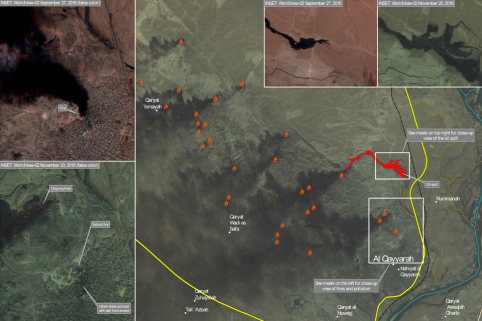
    qayyarah_unosat_images_dec_16

    Map illustrating satellite-detected fires and oil spills between September and November at and around Al Qayyarah, approximately 60km south of Mosul, Iraq. Credit: UNOSAT/UNITAR
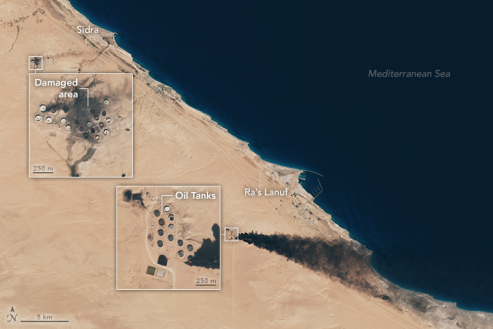
    libya_sn2_2016005

    Satellite photos of fires at oil production and storage facilities near Sidra, Libya. Image credit: NASA


    25 years on from the last time

    The fires in Libya, Iraq and also in Syria – where facilities have been targeted by all sides of the conflict – have served as a perverse marker of the 25th anniversary of the 1991 Gulf War. A reminder, were it needed, that while our understanding of the environmental causes and consequences of conflicts has grown, our formal systems of protection and response appear as weak today as they were 25 years ago.

    But as 2016 began, there were modest signs of progress. States at the preparatory meetings for the second UN Environment Assembly (UNEA-2) were considering three draft resolutions on conflict and the environment: on the environmental consequences of human displacement from the Syrian conflict; on the need to assess Gaza’s environment; and on the protection of the environment in all areas affected by armed conflict.

    After months of mergers, disagreements and redrafts, the last of these, sponsored by Ukraine, was passed by consensus in May. Co-sponsored by a number of conflict-affected and Western States, in some ways it too marked an anniversary, that of the weak UN General Assembly resolution passed in response to the environmental disaster of the Gulf War in 1992. The UNEA-2 resolution is a significant step forward in many ways. Its scope, which includes the humanitarian consequences of environmental degradation, natural resources, displacement, protected areas, human rights, post-conflict assessments and assistance, is a world away from that passed in 1992. Both were products of their time, reflecting the concerns of States and civil society, but also the international community’s knowledge and understanding of the issues at hand.

    Untangling conflict and the environment

    The often complex linkages between conflict, peace, environment and health were visible throughout 2016. For Colombia and its peace agreement, it meant costing up the financial benefits of peace – the health and environmental savings that could accrue if the deal were to pass. But peace seemed likely to also herald new challenges for Colombia’s environment, biodiversity and human rights, from an anticipated expansion of the extractive industries, from accelerated deforestation and conflict over rural land rights.

    In Syria, the health of children and communities is being harmed by pollution from makeshift oil refining. This coping strategy has flourished thanks in part to a chain of events initiated by policies intended to destroy and degrade the country’s oil production and refining capacity, some of which had fallen into the hands of Islamic State. Satellite images have also captured the wholesale collapse of Syria’s agricultural system as a result of displacement and insecurity. The latter completing the closely related story of growing environmental pressures in Syria’s neighbours due to the influx of people fleeing the conflict, a conflict that has now caused local, national and transboundary impacts on the environment.

    Effective policy-making requires that we work to fully understand the causal linkages between conflict and insecurity, and environmental degradation and its impact on human health and ecosystems. While it may be tempting to present simplistic narratives – such as those proposed in relation to Syria and climate change – this year has shown just how important it is to comprehensively document and interrogate the evidence. One powerful example of this has been a new study on conservation in conflict zones, which identified institutional collapse as the single greatest threat to wildlife.

    Legal initiatives contribute to a sense of momentum

    The complexity and scope of conflict and the environment was also apparent in a major legal development this year. The third report from the UN’s International Law Commission’s (ILC) ongoing study into the protection of the environment in relation to armed conflicts primarily dealt with the law applicable after conflicts. The report’s draft principles cover everything from military bases, to peace operations, peace agreements, the rights of indigenous peoples and toxic remnants of war; with still more topics proposed for study by governments. The principles that the ILC is formulating are merging humanitarian, environmental and human rights law in an effort to clarify the disparate norms and practices that could provide a legal framework for enhanced protection.

    Elsewhere, the chief prosecutor of the International Criminal Court announced a new focus on the prosecution of individuals involved in the illegal exploitation of natural resources, deliberate environmental destruction, and land grabbing. All problems associated with armed conflicts and a potentially useful contribution if the court follows through on the decision. Meanwhile the 33rd session of the UN Human Rights Council heard from its Special Rapporteur on the management and disposal of hazardous wastes, on the impact of toxic remnants of war on health and the environment. He recommended that States improve monitoring of such threats and ensure that remediation and assistance takes place.

    These parallel legal and political pathways are providing a long-overdue framework for debate and State engagement on conflict and the environment. The renewed energy around the topic was clear on November 6th this year – the UN’s international day on conflict and the environment. The level of interest this year was a world away from previous years, with compelling statements calling for progress from the UN Secretary General, the heads of UNEP and UNOCHA, governments, experts and civil society.

    Where next for conflict and the environment?

    oil-fires-libya

    Photo of Sirda oil fires. Image credit: NASA/Flickr

    The question of “where next?” is currently being considered by a number of parties. Whatever the outcome, it remains the case that civil society will have an important role to play in working with international organisations and progressive States to encourage further progress. The momentum to date is the result of seven years of work and the conditions for advancing protection for the environment and civilians in relation to conflict come around rarely.

    When this same question was posed to governments in 1992 in the wake of the Kuwaiti oil fires, the response mirrored the situation today: “Some States felt that the existing rules were sufficient and what was needed was ensuring better compliance with them. However, most of the States represented thought it also necessary to clarify and interpret the scope of some of those rules, and even to develop other aspects of the law relating to the protection of the environment in times of armed conflict.”

    But it cannot just be a question of law and compliance. Like that other cross-cutting issue gender, what seems to be required is effective environmental mainstreaming throughout the conflict cycle. Good work has and is being done with regard to peacebuilding and humanitarian response but more is needed. There are also strong arguments in favour of a more robust system of environmental response in the wake of conflicts. And of course more visibility and stigmatisation for the practices that can cause serious harm to the environment and human health. Vague objectives for now maybe, but they perhaps demonstrate one possible direction of travel. Civil society can continue to contribute through research and advocacy, in untangling and communicating complexity, and by engaging at key moments, but achieving substantive progress will require greater capacity and coordination than we have at present.

    Work on conflict and the environment in 2017 should aim to signpost the direction of travel, and make more use of the parallel processes currently in play. If they can be identified and agreed, a clearer destination and mode of transport will allow a greater number of States and civil society to engage, something that will be vital if we are to make use of the momentum that has been created this year.

    Doug Weir manages the Toxic Remnants of War Project.  The project is on Twitter: @detoxconflict

  • Sustainable Security

    Summary

    The appalling attack on concert-goers in Manchester will be the defining news event of the 2017 general election campaign. Yet polls suggest that the attack has not shifted popular opinion in the predictable direction of a “strong” incumbent government characterised by muscular counter-terrorism interventions at home and abroad. After sixteen years of “war on terror” a clear difference has emerged between the leadership of the two main parties on the consequences of this open-ended war. Whoever wins the election, the longer term opening up of space for discussion on Britain’s security narrative can only be good for British democracy and wider security.

    Introduction

    In the middle of April 2017 the British Prime Minister, Theresa May, called a general election when the Conservative Party was more than 20 points ahead of the opposition Labour Party in the opinion polls. Mrs May already had a reasonable working majority in parliament and the election was essentially called over the issue of the Brexit negotiations, the stated aim being to provide a “strong and stable” government before the full negotiations started.

    Given that the Labour Party was riven with divisions over both policy and the leadership, and with leader Jeremy Corbyn widely characterised as unelectable by the majority of the print media, the expectation was that a landslide victory was highly likely. That outcome has diminished during the course of the campaign and at the time of writing (eight days before polling), the Conservatives do seem likely to be returned to power but with a much smaller than expected majority. Even a hung parliament is now regarded by some analysts as possible if rather unlikely.

    Following the Manchester Arena attack this briefing examines the election campaign so far with particular attention to security policy issues and considers whether some of the arguments raised will have a longer-term post-election influence on the debate around security, whichever party wins on 8 June.

    Manchester and after

    Image credit: Pimlico Badger.

    On the evening of 22 May and right in the middle of the election campaign, a bomb was detonated at a popular music concert at the Manchester Arena by a British Islamist of Libyan origins, killing 22 people and injuring over a hundred. Many of the casualties were young girls because the lead performer, Ariana Grande, was particularly popular with such an audience. The attack received world-wide media coverage and was the worst of its kind within the UK since July 2005 when 52 people were killed in four bomb attacks in London on three underground trains and a bus.

    Because of the severity of the attack and the terrible consequences, nation-wide election campaigning was suspended by the main parties for three days, resuming on 26 May. On that day the Prime Minister was at a G7 Summit at Taormina in Sicily and calling for increased support for cyber security, not least in response to terrorism. On the same day Mr Corbyn made a speech in which he suggested that a UK foreign policy involving substantial military interventions across the Middle East, North Africa and South West Asia was not necessarily the right approach and might even increase the risk of attack. The speech was roundly condemned by those of a conservative persuasion, but early opinion polling suggested that Mr Corbyn’s scepticism about the outcome of the war on terror resonates with many voters or, at least, has not been the electoral impediment that conventional wisdom has long assumed.

    Whatever the result of the forthcoming election, the terrible attack in Manchester and the subsequent discussion on how to make Britain more secure will have a long-term impact on security thinking, not just because of this difficult period but more because of a very clear difference that has emerged between the leadership of the two main parties. The Conservative Party has taken a traditional line on the need to maintain strong defences, to work to destroy the main terrorist movements such as the so-called Islamic State (IS) and to increase defence spending, not least in relation to what is seen as an emerging Russian threat. With Britain part of a coalition facing major challenges from IS and from Russia, a re-elected Conservative government is presented as essential.

    This approach is generally popular and would be expected to be a vote-winner, which makes it even more interesting that the Labour Party’s manifesto has put much more emphasis on an increased commitment to peacekeeping, conflict prevention and conflict resolution. Perhaps more significant in the long term was a speech made by Jeremy Corbyn at Chatham House on 12 May. This was his main foreign policy presentation of the whole election campaign – indeed, it followed a long period of near silence from the shadow cabinet on foreign and defence issues – and was notable for taking a very different view to the political norm. His approach was summed up early in the speech:

    “Too much of our debate about defence and security is one-dimensional. You are either for or against what is presented as ‘strong defence’ regardless of what that has meant in practice. Alert citizens or political leaders who advocate other routes to security are dismissed or treated as unreliable.”

    His views on the war on terror were unequivocal:

    “This is the fourth general election in a row to be held while Britain is at war and our armed forces are in action in the Middle East and beyond. The fact is that the ‘war on terror’ which has driven these interventions has not succeeded. They have not increased our security at home – many would say just the opposite. And they have caused destabilization and devastation abroad.”

    Corbyn’s speech represented a radically different position to that of the Conservatives with their very clear approach to international issues encapsulated in that core election theme of “strong and stable”, implying a continuing of the rigorous pursuit of a military victory against IS supported by a robust commitment to a well-funded counter-terrorism system at home. Corbyn’s further speech four days after the Manchester atrocity, while roundly condemning the appalling act, did not stray from the central theme of his Chatham House speech of the urgent need to rethink the UK’s approach to IS and like-minded paramilitary groups.

    In all normal circumstances in the current UK political environment, the government of the day would expect to gain plenty of electoral support for its security posture, and the Conservative government, especially, would expect increased support in the aftermath of the Manchester attack. That may well be the case as the last week or so of the election campaign plays out, but what happens in the longer term may prove to be much more significant.

    Mr Corbyn, essentially, has adopted a very different approach to international security and whether it will open up space for longer-term political discussion may not be dependent on the election result. This is no place to predict outcomes and there are, broadly, three possibilities – Labour gets a disastrous result in line with polls at the start of the campaign and Mr Corbyn stands down; the Conservatives win narrowly in which case he will almost certainly stay; or there is a hung parliament in which case he may succeed in forming a minority administration with a second election in the autumn the outcome.

    In all three cases, including the first, what the Chatham House speech may have done is to open up the debate on UK security in a manner which more truly reflects the unease that many people feel about the approach in recent years to responding to IS, al-Qaida and the like. It is the opening up of space that is significant here, combined with what is clearly the current prospect of very long drawn-out wars from Libya through to Afghanistan.

    Equally in all three electoral outcomes, but particularly the third, a serious reconsideration of the UK’s security narrative would probably receive backing from the other parties of the left and centre. The Greens have a particular interest in conflict resolution. The SNP, though strongly protective of Scottish military units and industries, is overt about combating IS by “more than military means”. The Lib Dems seem torn between counter-terrorism, liberal interventionism and conflict prevention narratives, albeit committed to multilateralism and human rights. There may therefore be something of a consensus across a significant part of the political spectrum that sees itself in different ways as the “progressive” wing of UK politics.

    If IS and like-minded groups were on the verge of a final defeat with no prospect of their being succeeded by other movements, then the current government approach would be largely accepted. Further debate would be unlikely and other approaches to security “dismissed or treated as unreliable” as Mr Corbyn put it.

    There are, though, plenty of indications that IS and the rest are not ceasing to pose a threat to the Levant or the West, the Manchester attack being just one grim example. In Iraq, Mosul has not yet fallen after eight months of intense fighting in spite of the Iraqi government expecting the operation to be finished within three months. In the process, the Iraqi Army’s elite Special Forces have taken severe casualties calling into question the ability of the government to maintain control once Mosul does fall. Elsewhere in central and northern Iraq, the government relies on some very dubious, often sectarian militia allies. In Egypt President Sisi faces a growing IS-linked insurgency, and the Libyan link with the Manchester bomb is a reminder of the parlous state of that country. There remain serious security concerns in at least a dozen countries, not least Afghanistan, Nigeria, Somalia, Yemen, Bangladesh, Thailand, the Philippines and Indonesia. Western coalition states involved in the fight against IS all fear internal attacks.

    Conclusion

    Thus, after more than fifteen years of the war on terror, failed or failing states in Iraq, Afghanistan, Syria, Libya, Yemen and Somalia, close to a million people killed and over eight million people displaced, the argument for some serious rethinking on Western approaches to security is hardly difficult to make.

    This is where Jeremy Corbyn’s Chatham House speech is so significant since it breaks away from a near-universal Western state consensus and may be much more in tune with what many millions of people may be thinking. Whatever the outcome of the general election next week, space has been opened up for much wider debate. Independent organisations such as Oxford Research Group that take a critical but constructive approach to security will have a particular responsibility to aid the quality of that debate.

    Paul Rogers is Global Security Consultant to Oxford Research Group and Professor of Peace Studies at the University of Bradford. His ‘Monthly Global Security Briefings’ are available from our website. His new book Irregular War: ISIS and the New Threats from the Margins will be published by I B Tauris in June 2016. These briefings are circulated free of charge for non-profit use, but please consider making a donation to ORG, if you are able to do so.

  • Sustainable Security

    Bay of bengal Climate InsecurityThere is no region of the world that faces more threats from climate change than South Asia. Of particular concern is the littoral surrounding the Bay of Bengal, including the Eastern Indian states of West Bengal and Odisha, Bangladesh, and coastal Burma. This region is uniquely vulnerable to a changing climate because of a combination of rising sea levels, changing weather patterns, and uncertain transboundary river flows. Away from the seashore, China holds the high ground in the Tibetan Plateau and the Himalayas, and complicates the geopolitical picture further by acting as the source of the region’s fresh water.

    On the Bay of Bengal’s coast these problems of a changing climate combine with already existing social problems like religious strife, poverty, political uncertainty, high population density, and rapid urbanization to create a very dangerous cocktail of already security threats. Climate change has been called a “threat multiplier” or “an accelerant of instability” by military and intelligence communities because of how it will impact these already existing threats. With a population of more than 300 million people (91 million in West Bengal, 42 million in Odisha, 142 million in Bangladesh, 52 million in Burma), tense militarized borders, overlapping ethnic and religious communities, and uncertainty about the future, there is no region in the world that faces a more dangerous combination of threatsfrom climate change than here.

    Rising Sea Levels

    One of the key tenets of national security is the ability of a country to ensure the integrity of its sovereign territory. Yet, as glaciers far from South Asia melt, the sea rises and encroaches upon its farms, villages, and cities. As Hemingway wrote about going bankrupt, sea level rise happens “gradually, then suddenly.” Slowly, a rising ocean brings increasing intrusion of brackish water into groundwater, harming costal agriculture. Moreover, gradual ocean encroachment harms the coast’s natural protections, whether dunes, reefs, barrier islands, or mangrove forests. Then, suddenly, when a major cyclone blows in a storm surge will overcome previously unsurmountable barriers.

    The shorelines of the Bay of Bengal stand to lose swaths of territory from sea level rise. Bangladesh, as a country predominantly composed of river delta, is most at risk. It stands to lose 11% of its territory – home to 15 million people – from a sea level rise of only 1 meter, a level that is not a particularly extreme prediction over the next 4 decades. Few invading armies could do worse damage.

    Oddly enough, the world’s oceans do not rise at the same rate. With rising global sea levels, in some areas the sea level could actually fall while it rises in others. A recent study from the National Center for Atmospheric Research (NCAR) found that sea level rise will be particularly high along the Bay of Bengal, due to changes in currents caused by rapid surface warming of the Indian Ocean.

    In the region, the cities of Dhaka, Kolkata, and Yangon all lie in major river deltas and are vulnerable to storm surges. In its 2007 report, the Intergovernmental Panel on Climate Change (IPCC) specifically listed cities in Asian mega deltas as “hotspots for vulnerability” because of sea level rise and changing patterns of river flow. Already straining at their infrastructure limits, these densely packed cities are becoming more vulnerable in a warming world.

    Changing Transboundary Water Flow

    Water does not stay within lines on a map. Instead, gravity draws it inexorably from the mountains to the sea. China, through its control of Tibet, controls the headwaters of almost all of the major rivers of Asia – only the Ganges lies outside of China’s control, originating in India. Of the major rivers that empty into the Bay of Bengal, all cross borders. Water is only plentiful during the monsoon season, so these rivers provide much-needed sustenance to agriculture, people, and ecosystems throughout their trip to the sea during the dry season – when they are fed by glacier and snow melt. Competition and tension over that flow is evident around the world when water crosses borders.

    This is true of Bangladesh and India, for which the flow of the Ganges are a source of tension. The Farakka Barrage on the Ganges River, just 10 miles upriver from the Bangladesh border, allows India a measure of control over the river. The dam allows India to divert the flow of the Ganges down a canal to the Hooghly River and into the port of Kolkata. Since the dam was built in 1975, there have been allegations from Bangladesh that India diverts water in the dry season and releases too much in the monsoon season. In 1996, the two countries agreed to a 30 year treaty to share the Ganges’ flow, but tensions still remain.

    The Brahmaputra River, meanwhile, provides a source of tension between the two regional powers, India and China. China recently announced that they are building a series of hydroelectric dams along the Brahmaputra’s upper reaches in Tibet, but they have forsworn any attempt to divert or hold back the great river’s flow. However, these assurances have not quieted all voices in India, who point to plans in China’s South-North Water Diversion Project to divert water from the Brahmaputra in order to ensure water for industry and the cities of China’s parched north. China’s leaders have denied these extravagant plans, but their engineers have lobbied for such a project. It would complete a dream of Chairman Mao’s, who said: “Southern water is plentiful, northern water scarce. If at all possible, borrowing some water would be good.”

    Climate change exacerbates these concerns about transboundary water management in the region. Climate change is threatening both the glaciers that sit at the top of these mighty rivers, feeding them during the dry season, and the very viability and predictability of the Indian Monsoon rains. Temperatures in the Tibetan Plateau and the Himalayas have risen 1.5 degrees Celsius since 1982, a rate more than three times as fast as the global average. Meanwhile, changes in weather patterns due to climate change could cause repeated failures in the monsoon. While there is little likelihood of an immediate and total melting of the glaciers, uncertainty about their future flows is enough to stoke tension in the region.

    The Potential for Conflict

    Climate change is altering the environment of the region; the glaciers are retreating, the rivers’ flows are becoming more unpredictable, and the seas are rising. However, whether those changes manifest themselves into either civil or interstate conflict will depend upon how both the populations and the governments in the region react to those changes. How long governments have to adapt depends upon unpredictable weather and climate patterns – but as the Stern Review bore out, earlier action is almost always cheaper and more effective than waiting. How governments adapt is important as whether; some adaptations, like capturing water that would otherwise flow across borders in new reservoirs could actually make the threat of conflict worse. If countries do not work cooperatively, they could stoke conflict.

    Throughout history, one of the most effective ways to deal with climate change has been migration – from a climate that is no longer hospitable to one where living is easier. However, modern borders do not reflect the historical ties between the regions. Migration is a natural response. However, in areas with already high population density and an overlapping patchwork of ethnic and religious communities, new immigrant communities often come into direct conflict with established communities. Last year saw ethnic strife in the Indian state of Assam between indigenous Bodos and immigrant Muslims, many of whom hailed from over the nearby border in Bangladesh. Over 75 people died, and over 400,000 people were temporarily displaced. In this region, it is impossible to say whether a group of migrants are “climate refugees” or simply moving to a place with better economic opportunity, but this is what we should expect in the future.

    It is difficult to find examples of any interstate wars fought directly over water; to the contrary, water has been a catalyzer of cooperation. However, as countries realize that they can control and shape water flow through mega dams and water diversion projects, there is a danger that the claims of downstream countries could be ignored. Along the Mekong River, for example, China has proceeded to dam and control the river’s flow through its territory – leading downstream neighbors to complain that China is causing droughts. Yet because of the power imbalance between China and smaller countries like Laos and Cambodia, the Chinese have little to fear. Similar thinking by Chinese leadership over dam building along the Brahmaputra, their shared river with India, could lead both countries to stumble into a conflict that neither of them want.

    In the age of climate change, conflict is more likely as threats are multiplied. Nowhere is this truer than around the Bay of Bengal. However, war is never pre-ordained. Instead, the threat of conflict is determined by how countries react. Good international governance can encourage countries to not simply pull up the drawbridge and think only of themselves, but will encourage them to see what their actions will mean for regional neighbors. Climate change is increasing the threat of wars and unrest around the Bay of Bengal; but foresight about its impacts can help the region’s leaders work together to solve a problem that knows no boundaries.

    Andrew Holland is Senior Fellow for Energy and Climate at American Security Project, a Washington D.C based think tank. He is an expert on energy, climate change, and infrastructure policy. He has over seven years of experience working at the center of debates about how to achieve sustainable energy security and how to effectively address climate change.

    Image source: amioascension

  • Sustainable Security

    The Lord’s Resistance Army is seriously depleted as a fighting force, but it still continues to exist as an armed group. This resilience is driven by several key factors.  

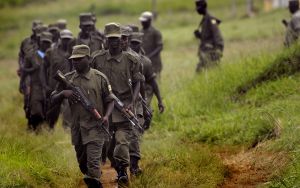
    The Lord’s Resistance Army (LRA) has carved a path of violence and disorder throughout East and Central Africa for nearly three decades. Led by Joseph Kony, the rebel group has directly and indirectly killed more than 100,000 civilians, has abducted upwards of 66,000 children, and has displaced hundreds of thousands more across five countries. While formidable in the past, the LRA is now a threadbare non-threat from a conventional military standpoint. With the group’s numbers at less than 200 (down from at least 5,000 active fighters in the 1990s), attacks and abductions are steadily trending downwards.

    Yet the LRA has also proven to be distinctly resilient, surviving as a collection of semi-autonomous units in sparsely populated peripheries that put up no resistance. Nevertheless, LRA fighters still pose a tangible threat as they loot and harass civilians, while Kony evades detection in Sudan’s Kafia Kinji region. While many observers describe the group’s current behavior as “survival mode,” its complex history shows this to be its modal pattern of organization and behavior based on an on-going ability of the group to adapt to shifts in its politico-military environment through distinct organizational endowments and resource acquisition strategies.

    Understanding LRA Resilience

    Most of the prevailing literature on the LRA has provided key insights into its history, organization, and behavior. However, the research that has focused on the group’s motives and the drivers of its violence has not addressed the distinct question of its resilience. The LRA’s resilience comes down to its organizational structure and shrewd resource strategies that have developed within autonomous bush sanctuaries and vis-à-vis the group’s wider political environment.

    Its organizational structure is based on a distinct combination of two factors. First, LRA recruitment and retention strategies relied on Acholi beliefs in spiritual and cultural symbols, such as viewing Kony as a medium for the “holy spirit,” and the common use of rituals. Such beliefs and practices, undergirded by violence, helped socialize Acholi youths familiar with them into fighters. Second, a more traditional military hierarchy was built around an initial committed core, which formed the basis for a flexible, decentralized structure that, while slowly degrading over time, has remained remarkably sturdy. In addition, the group’s resource acquisition strategies have adapted to periods of both abundance and scarcity. This configuration of factors has remained more-or-less intact for more than three decades as the LRA has interacted with regional geopolitical shifts and in the face of multiple challenges of maintaining an insurgency.

    LRA Resilience Over Three Phases

    Uganda soldiers part of the 2008–09 Garamba offensive against LRA. Image credit: Sgt. Jeremy T. Lock/Wikimedia.

    The LRA grew directly from a homegrown Ugandan People’s Democratic Army (UPDA), made up from the dominant Acholi faction of the national army overthrown by the National Resistance Army (NRA) in 1986. Led by Bazilio Olara-Okello and other military strongmen, the UPDA rebellion ended with the Pece Peace Accord of 1988. Yet senior officer Odong Latek and intransigent junior officers from the former military remained in the bush fearing criminal punishment. While this rump of the UPDA retained a military structure, it began to rely on alternative strategies for mobilization. During the UPDA’s war, head of the Holy Spirit Movement Alice Lakwena and Joseph Kony developed factions that attracted fighters with an appeal to the salvation for the Acholi people through military victory, using unorthodox military practices (e.g. believing shea butter would make fighters bullet-proof and that rocks would explode as hand grenades). Following the 1987 defeat of Lakwena’s Holy Spirit Mobile Forces (HSMF), Kony’s faction became dominant. By late 1988, Latek’s more conventional force merged with the sizable “cosmological” faction controlled by Kony, signaling the rise of his absolutist vision of Acholi society that sought to purify through violence anyone deemed government loyalists. This vision, which drew heavily on elements of elements of Acholi spiritual identity, quickly became an organizing principle and a source of resilience.

    With Latek killed in 1989, Kony asserted authority, rebranding the rebellion several times until it became the LRA in September 1993. Here the group established its organizational structure, with “Control Altar” directing its operational brigades – named Gilva, Sinia, Trinkle, and Stockree – which remained intact for years and adapted to changes in manpower and resource availability. Yet the decline of the LRA’s first phase began as the Ugandan state expanded into northern Uganda. The counterinsurgency campaign Operation North weakened the LRA while militarizing Acholiland. The government also expanded the Resistance Council (RC) administrative system while recruiting Local Defence Units (LDUs) as the RC’s coercive arm. However, when military action failed to eliminate the group, peace talks began in late 1993. These talks broke down in early 1994 amidst boycotts and accusations of dishonesty. Tired of the LRA’s mounting demands, President Museveni gave the group seven days to surrender or face a military solution. Meanwhile, Kony had used the talks to conceal clandestine negotiations with Sudanese intelligence. Following Museveni’s ultimatum, the LRA withdrew into southern Sudanese garrison towns for reorganization and training. By February 18th 1994, the group re-emerged heavily armed and newly equipped.

    Thus began the LRA’s second phase in the mid-1990s when it became part of a proxy war as the Sudanese government provided it with weapons and military training to fight the Sudan People’s Liberation Army and territorial sanctuaries from which to attack Uganda. The LRA’s experience in southern Sudan consolidated the group’s structure, hardened its fighters (largely abducted Acholi youth as young as 12), and taught them how to survive in borderlands for years of operations that kept northern Uganda in almost permanent humanitarian crisis. Yet, while Sudanese support was a decisive factor in the LRA’s military strength and the intensification of the conflict, it was not always seamless. Kony’s priorities in Uganda often put him at odds with Khartoum and this led to periodic ruptures in the LRA’s resource pipeline, and the group was often expected to fend for itself in terms of day-to-day survival. As such, the LRA developed a diversified strategy of resource acquisition – maintaining military stockpiles while creating self-sustaining agrarian communities. These experiences with intermittent access to resources promoted the LRA’s self-sufficiency and resilience.

    The decline of this period began with the December 1999 Nairobi Agreement, which committed Sudan and Uganda to end their proxy war. Attacks in northern Uganda declined, but the LRA remained in southern Sudan. At times, the group received Sudanese support. But Khartoum signaled its commitment to push the LRA from its territory in early 2002 when it authorized the UPDF to launch Operation Iron Fist, designed to dislodge the LRA from its Sudanese bush camps. While Iron Fist delivered some tactical successes, it did not deliver the desired knockout blow to the LRA. Instead, in 2003 the group re-entered Uganda and started a fresh conflict characterized by high profile violence and a humanitarian crisis that the Ugandan government largely outsourced to international aid agencies. The 2005 Comprehensive Peace Agreement (CPA) ended the civil war in Sudan and ejected the LRA while a revitalized UPDF blocked the group’s re-entry into Uganda.

    From 2005, the LRA shifted into its third phase, best described as roving banditry. Facing military threats and the geopolitical closure of northern Uganda and southern Sudan, the group shifted to DRC’s Garamba National Park. For the following two years, the Juba peace process allowed the LRA to regroup while coalescing more tightly around Kony’s security. During this period, there was a relative lull in LRA violence, limited abductions, and the suspension in abductee training. Yet while support from Khartoum had ended, the LRA’s military capacity remained intact. Juba ultimately collapsed in 2008 due to ceasefire violations, walkouts, the LRA’s refusal to gather in the assembly areas, and Kony’s repeated failure to sign the accord’s final documents of the accord. The LRA soon resumed violence in DRC as the UPDF led Operation Lightening Thunder against Kony’s Garamba hideout. Intelligence failures led to an unsuccessful operation, and UPDF ground troops arrived at an empty camp. Shortly thereafter, the LRA unleashed a series of reprisal killings against civilians.

    The LRA’s sanctuaries in DRC, CAR, and Sudan have provided permissive conditions for survival – few state institutions and a new set of resources. As such, the group has since engaged its resilience strategies in two key ways. First, the LRA has managed to maintain its hierarchy despite the outflow senior commanders, extended periods of geographical separation, and sporadic communication between units, which are expected to act independently and fend for themselves. Although this organizational structure is decentralized, core members still carry out Kony’s long-term strategic orders while maintaining an explicit LRA identity. Second, while looting remains a way of obtaining resources, the LRA has become a small player in regional illicit networks in natural resources, particularly ivory, diamonds, and gold. The group’s renewed informal relationship with Sudanese officials in the Kafia Kinji border region shelters Kony and his inner retinue and provides markets for looted items and commodities.

    Conclusion

    In sum, the LRA has survived by virtue of its organizational cohesion, resource use, and the ability to read its political terrain in order to exploit regions without state structures. However, such strategies may not be sufficient to sustain the LRA indefinitely. The Ugandan-led Regional Task Force (RTF) has killed and captured senior commanders from the battlefield and increased fighter defections. To be sure, the hunt for the LRA has been hamstrung by logistical and political difficulties. Above all, RTF operations are currently at risk of losing their logistical support from the U.S. Special Forces, which have larger consequences for regional peace and security in central and eastern Africa.

    Christopher Day is an Associate Professor at the College of Charleston. He joined the Department of Political Science in August 2012. His teaching and research interests are in Comparative Politics, with a particular emphasis on African politics, political violence, and civil wars. His research interests extend to international security, counterinsurgency, proxy warfare, and the institutional role of different armed state actors in Africa. A former disaster relief worker with Médécins Sans Frontières, he is also interested in humanitarian affairs. He offers courses on the Politics of Africa, the Model African Union, Global Political Theory, and World Politics.

  • Sustainable Security

    RC_long_logo_small_4webThis article is part of the Remote Control Warfare series, a collaboration with Remote Control, a project of the Network for Social Change hosted by Oxford Research Group.


    Editor’s note: Remote Warfare and the War on Drugs mini-series: This series of articles explores how remote warfare is being used in the war on drugs. To date, much of the debate on remote warfare has focused on its use in the war on terror. However, the use of drones, private military and security companies (PMSCs), special forces and mass surveillance are all emerging trends found in the US’s other long standing war, the War on Drugs. The articles in this series seek to explore these methods in more depth, looking at what impact and long term consequences they may have on the theatre in which they’re being used. Read other articles in the series.

    In Latin America drones are being used as part of the War on Drugs as both regional governments and the US are using surveillance drones to monitor drug trafficking and find smuggling routes.. However, as drones are increasingly being used by drug cartels themselves to transport drugs between countries, could Latin America find itself at the forefront of emerging drone countermeasures?

    In many Latin American countries, militaries operate as internal security forces because they combat drug traffickers and insurgencies. As a result, regional security agencies are constantly looking for new technologies to support security operations. Indeed, Peruvian Admiral José Cueto Aservi described purchasing drones in 2013 as necessary due to the “asymmetric war” being launched by narco-movement Shining Path that “takes advantage of the complex geography to attack” and thus “all methods” – including “technology” – are needed to defeat them.

    Today, drones are regarded as potential “game changers” by regional security forces, believed to be invaluable “eyes in the sky” that will aid surveillance operations. Hence, it is no surprise that several Latin American countries have acquired them, whilst many others are producing them. At the same time, US drones are carrying out their own operations in Latin America as part of the global War on Drugs and drug cartels themselves have started using drones to smuggle drugs across international borders. As the use of drones looks set to increase, what is the likelihood of armed drones being used in this theatre and what implications could the non-state use of drones have on the region?

    Drones in Latin America

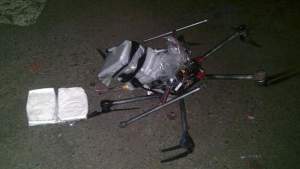
    Crahed Drone

    Crashed drone on Mexican border. Image by Secretaría de Seguridad Pública Tijuana.

    There are currently at least 14 Latin American and Caribbean countries which have used or purchased drones. No Latin American state possesses large numbers of drones in the manner of the US military, rather, regional governments mostly operate just two or three drones of any type. Israel is the largest provider of drone technology to Latin America, having sold some $500 million worth to the region between 2005 and 2012.  Latin American states have also started developing their own drones with Colombia being the first South American nation to have home-built a drone, the Iris, in 2015.

    Unarmed drones carry out Intelligence, Surveillance and Reconnaissance (ISR) roles for a range of different operations in Latin America. Due to the region’s complex topography (a case in point is the Amazon, where drug traffickers from Brazil, Colombia, Bolivia and Peru operate) drones require special features like infrared cameras and have been useful for monitoring vast uninhabited spaces in the region. In Brazil, for example, drones have been used for agricultural reasons, including monitoring the Amazon rainforest. In Belize and Costa Rica too, drones have been used for conservation purposes. In Peru, a municipality police force in Lima,deployed three drones to patrol the Peruvian capital during the last Christmas season to help security officers locate emergency areas if necessary and in Mexico, drones have been used to patrol and secure sensitive areas like the facilities of the state oil company PEMEX.

    Drones and the War on Drugs

    Drones have also been used as part of the War on Drugs in Latin America. In Mexico, National Defense Secretariat, the Federal Police, the Procuradoría General de la República (the Attorney General’s office), as well as the Army and Air Force fly drones to gather intelligence to combat organized crime, mainly drug trafficking. In Brazil, Colombia, Panama and Trinidad and Tobago too, drones are used to monitor drug trafficking and find drug smuggling routes.

    Drones are also being used by non-state actors, in the form of drug cartels, to smuggle drugs between countries. In January 2015, a drone crashed in a supermarket parking lot in Tijuana, Mexico –carrying three kilograms of crystal meth and in August 2015, two Mexican citizens were convicted of utilizing a UAV to fly 13 kilograms of heroin from Baja California, Mexico, into California.This led US authorities to deem drones an “emerging trend” employed by transnational criminal organizations to smuggle narcotics into the US.

    In its long running War on Drugs, the US has also been using its own drones in Latin America. A New York Times article reported that, in 2011, in an effort to step up its involvement in Mexico’s drug war, the Obama administration begun sending its drones deep into Mexican territory to gather intelligence to help locate major traffickers. Furthermore, an official US briefing from 2011 – obtained via the Freedom of Information Act – revealed that the US Air Force is working to make its RQ-4 Global Hawk high altitude long endurance drones available to its allies in Latin America and the Caribbean in order to help “find drugs fields and helping plan offensives against rebel groups”.

    US Customs and Border Protection operates 10 MQ-1 Predator drones, including two based in Cape Canaveral, Florida, that patrol a wide swatches of the Caribbean through the Bahamas and down to south of Puerto Rico as part of the drugs fight, and, in 2013, it was reported that the US Navy was testing a new type of drone that can be hand-launched from a ship’s deck to help detect, track and videotape drug smugglers in action across the Caribbean Sea.

    US drones have also been used for other purposes in the region. US Customs and Border Protection have been flying surveillance drones for nearly a decade, launching them from bases in Texas, Florida, North Dakota and Arizona to detect illegal border-crossing. This activity has been called into question recently as a 2015 report from the Department of Homeland Security’s inspector general found drones to be ineffective in conducting surveillance along the border.

    Towards drone countermeasures?

    As for the future, we can expect drones to continue to be utilized in Latin America, as there has been an increase in the purchasing and development of drones across the region in the last few years. US companies Boeing and Aerovironment, for example, have both declared their intention to increase drone sales to Latin America, with countries like Colombia, Chile, Mexico and Peru interested in purchasing from them and the Swedish firm Unmanned System Groups (USG), showcased its F-330 drone to the Uruguayan armed forces in late 2014.

    More countries in the region are also looking to develop their own drones. Following the building of Colombia’s first drone in 2015, a COHA report found that Peru, Ecuador, Argentina and Brazil are all in the process of developing their own drones. There have also been talks of developing a South American drone, which would be manufactured by the Union of South American Nations (UNASUR, which has as members all twelve South American states).

    With regards to armed drones in the region, a number of states have indicated their desire for them. Peru and Colombia in particular could seek to acquire armed drones as internal security conditions worsen. However, this is unlikely to happen any time soon as countries that possess armed drones, such as the US and Israel, are unlikely to sell them to Latin America in the near future. Hence Latin American militaries would have to look to other potential suppliers, like China or Russia, or construct them themselves. Here, financial barriers, along with limited technological know-how capabilities, even amongst countries that already produce drones, would make this unlikely.

    Even if armed drones are unlikely to be used in the region any time soon, there is a potential for Latin America to become a testing ground for drone technology in other ways. As drones are being increasingly utilized by drug traffickers in the region to transport drugs between countries in ever more sophisticated ways, it is likely that this will lead to regional efforts to develop increasingly advanced drone-detection and interdiction technologies to defend against this threat. At present a number of companies internationally are developing this technology, used to detect, block and destroy drones. This includes the development of early warning systems that can identify and detect drones and signal jamming technology to block drone control frequencies. As well as this, technology is also being advanced to destroy detected drones. This includes both laser and kinetic defence systems, the later using missiles, rockets and bullets capable of shooting drones down. Companies are also looking into nonlethal projectile weapons that fire blunt force rounds, such as bean bags or rubber bullets, or small portable net guns that can ensnare drones. As Latin America finds itself battling against the hostile use of drones by drug cartels it could find itself at the forefront of these emerging drone countermeasures.

    Alejandro Sanchez is a regular contributor for IHS Jane’s Defense Weekly, the Center for International Maritime Security, Blouin News and Living in Peru. He focuses on geopolitics, military and cyber security issues in the Western Hemisphere. His analyses have appeared in numerous refereed journals including Small Wars and Insurgencies, Defence Studies, the Journal of Slavic Military Studies, European Security, Studies in Conflict and Terrorism and Perspectivas. Follow him on Twitter:  @W_Alex_Sanchez

  • Sustainable Security

    Often seen as a tactic harnessed by the weak, guerrilla warfare can also be a employed by the strong. States have at times used guerrillas in inter-state and civil conflict.

    Guerrilla warfare is widely viewed as a weapon of the weak. To Mao Tse-tung, it was the optimum strategy of those “inferior in arms and military equipment.” He drew inspiration from the Russian troops accomplishing, in 1812, what their militarily superior European counterparts could not: drive Napoleon’s Grand Army out of their country. They did this not only by taking advantage of Russia’s distinctive geography and climate, but also by using guerrillas – Cossacks and peasants – to go after the French troops “as unconsciously as dogs bite to death a rabid stray dog.”

    But, guerrilla warfare can also be a weapon of the strong. States with robust conventional military capabilities at times use guerrillas in inter-state and civil conflict.

    Guerrilla Warfare

    pkk-guerilla

    Image by kurdishstruggle via Flickr.

    Guerrillas’ advantages stem from their organization and local ties. They typically operate as small, independent units, thereby exercising more maneuverability, alertness, concealment, and access to the local population than their regular counterparts. Carl von Clausewitz recommended supplementing a regular army with bands of armed civilians. He observed that, when faced with adversity, soldiers typically “cling together like a herd of cattle,” while civilians “scatter and vanish in all directions, without requiring a special plan.” But, he emphasized that the latter should not be used “to pulverize the core but to nibble at the shell and around the edges” of regular armies.

    Both Clausewitz and Mao viewed guerrillas as useful for weakening a conventionally strong rival through harassment and psychological warfare, but recognized that they are “but one step in the total war.” It is the regular troops that must, in the end, directly confront and defeat the enemy. Thus, for example, the recent U.S. strategy of sponsoring local rebels in Syria against Bashar al-Assad’s (Russia-supported) army was likely to fail not least because of the difficulties inherent in using nonstate proxies. The U.S. strategists – presumed students of Clausewitz – failed to recognize the necessary role of the regular forces, or else significantly underestimated their capacity to form a regular army out of irregulars while in the midst of a war. Or, they were simply constrained by the political unfeasibility of setting regular U.S. soldiers’ boots on the ground.

    In addition to weakening (or hopelessly trying to defeat) a rival’s regular forces, states often use guerrillas – or “counter-guerrillas” – against guerrilla rivals. The latter are typically rebels fighting to gain, maintain, or reclaim territorial control from an established government or occupying power. The former are sometimes also referred to as “pro-government militias.”

    In a recent article published in the Journal of Strategic Studies, I closely examine and disaggregate the different types of counter-guerrillas states use in counterinsurgency operations. I identify two types of counter-guerrillas: self-defense militias and death squads. Self-defense militias typically comprise ordinary civilians, such as peasants, while death squads are usually manned by experienced militants, such as turned rebels or violent criminals.

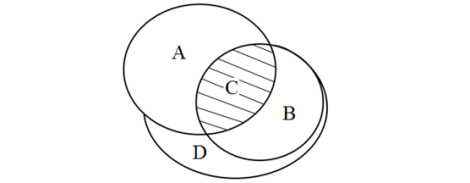
    I argue that states make proxy choices based on the latter’s comparative advantage, availability, and controllability. The state’s ideal partners are highly skilled fighters with deep knowledge of the insurgent network and links to the local population. Regular soldiers are highly skilled fighters, but possess limited local and insurgent knowledge. Partnering with nonstate actors means tackling the classic principal-agent problem, and the state’s capacity to do so is significantly shaped by its spatial reach (i.e. territorial control) across the theater of war. Figure 1 illustrates the different configurations of territorial control.

    Figure 1. Zones of Control

    figure-1-zones-of-control


    In Zone A, the state exercises full control. Zone B represents the insurgent-dominated area, whereas Zone C is the contested region where both sides actively compete for influence. Zone D represents an area that has been largely neglected in the burgeoning civil war literature. It is a zone that is neither fully controlled nor, for the time being, actively contested.

    Among the nonstate alternatives, the ideal partner for the state is a skilled fighter with insider knowledge of the insurgency and its logistics network. The disadvantage of using this type of proxy is that his fighting skills make him dangerous and difficult to control. The cost of losing control of skilled fighters can be unpalatably high. Unless they are weak or collapsed, modern states will prefer to use skilled fighters when and where they can supervise them.

    Nonstate actors that possess the desired local knowledge and have significant experience wielding extra-institutional violence, whether of criminal or rebel nature, may be harnessed to counter the insurgents. Their comparative advantage is in performing specialized, offensive, and highly targeted tasks (e.g. assassinations) that take advantage of their high mobility and combat skills. Consequently, they are likely to be used where the insurgents are actually located (Zones B and C). We should expect them in Zone C, where the state can exercise control over their activities. Using death squads in Zone B requires the state to create robust control mechanisms, such as embedding these groups firmly within special operations units of regular military or police forces. Where the state exercises full control (Zone A), or where the insurgents are not yet present (Zone D), states do not require highly targeted offensive operations and, consequently, death squads.

    While the comparative advantage of death squads is in highly targeted offensive operations, self-defense militias are best at performing static defensive tasks, such as guarding villages, communication lines, transportation networks, and vital installations. They are, consequently, more likely to be used to facilitate the operation of state forces in contested regions (Zone C) or to deny the insurgency access to areas where neither side has effective control (Zone D). In Zone B, self-defense militias are helpless against the insurgents. Not only can their government-provided weapons easily fall into rebel hands, but also, given the high rates of defection in insurgent-dominated areas, they may become a fertile source of rebel recruits. Remnants of self-defense militias (once created in Zone C or D) may persist in Zone A, but only because demobilization of nonstate actors is usually slow and costly.

    The Kashmir Case

    India’s use of counter-guerrillas in Kashmir illustrates the logic of the argument. In response to an insurgency breaking out in the late 1980s in the Indian state of Jammu and Kashmir (here referred to as “Kashmir”), the Indian army used former rebels (i.e. “renegades”) and villagers to combat the insurgents. Initial efforts relied on local police enforcement, treating the insurgency as an issue of “law and order.” However, the local policemen proved ineffective and were supplemented by three paramilitary forces (the Central Reserve Police Force, the Border Security Force, and the Indo-Tibetan Border Police). The Indian army’s role expanded further in 1993 with the introduction of the Rashtriya Rifles, an elite army unit created specifically for counterinsurgency operations.

    Former rebels were used mostly in the contested areas (Zone C) and, under the supervision of the Rashtriya Rifles, in Zone B. Kashmiri ex-insurgents, who were also popularly known as “Ikhwanis,” were used to eliminate rebels and their sympathizers. In Zone D – the mountainous areas of the Jammu region – the state instituted the civilian-manned Village Defense Committee (VDC) system. Figure 2 illustrates the distribution of the “renegades” and the VDCs. Official statements place the number of VDC volunteers at 6,000, but a prominent Kashmiri journalist I interviewed in Srinagar (the summer capital of Kashmir) estimated the figure to be closer to 23,000.

    Figure 2. Zones of Control in Kashmir

    zone-of-control-in-kashmir-figure-2


    Costs of Counter-Guerrillas

    Counter-guerrillas may be good for war, but they are bad for peace. Weaponizing turned rebels, criminals, and civilians offers tempting tactical benefits, but it also carries significant post-conflict costs. The conventional wisdom is that outsourcing violence lowers the cost of conflict and provides states with plausible deniability. However, as I learned from my fieldwork in Kashmir and other conflict zones, the local population quickly becomes aware of the illicit links between the counter-guerrillas and the government, as does the international community.

    The “renegades” may have helped the Indian army achieve military victory over the insurgents, but they also significantly boosted the widespread and enduring resentment against the Indian government. The arming of a select ethnic group (mostly Hindus and some Sikhs) in Jammu generated “intermittent outburst of communal violence” as well as incidents of looting, abduction, and rape.

    Playing local groups against one another is a classic strategy of colonialism, with a lasting impact on the peace and prosperity of many postcolonial states. Perhaps India’s Supreme Court said it best. It described the arming of over 6,000 young men in the tribal tracts by the central Indian state of Chhattisgarh to fight the Naxalite-Maoist insurgents as “tantamount to sowing of suicide pills that could divide and destroy society.”

    Yelena Biberman is an Assistant Professor of Political Science at Skidmore College and Nonresident Fellow at the Atlantic Council’s South Asia Center.

  • Sustainable Security

    Drone strikes have been a core strategy of the so-called global war on terror. But there have also been many questions raised surrounding the effectiveness, transparency, legitimacy, and ethics of their use.

    Technology has fundamentally altered not only how security is defined, but also how it is sustained and even enhanced.  Nowhere is this new reality more apparent than in the so-called “global war on terror,” where there is little agreement about counterterrorism tactics and strategy.  A core part of the so-called war on terror has been the utilization of drone technology.  In the context of warfare, the drone has at least three functions: surveillance, killing, and providing targeting for another weapons system. The significance of the new technology is not so much that drone operators must decide between surveillance and firing but that they can decide.  The drone often removes the need for indirect fire (where the shooter cannot see the target).  Under such circumstances, the use of drones is a significant advantage to the side employing them.

    Analysts point to several factors indicating why targeted killings by the United States (U.S.) are likely to increase in the foreseeable future. Drone strikes put fewer American lives at risk and provides a low-cost alternative to expensive and unwieldy conventional forces, especially given projected cuts in the defense budget and a dwindling public appetite for long wars.  The reasons for the shift to combat drones are obvious:  it lessens the burdens and responsibility on a state’s taxpayers, policymakers, and military.  But drones have drawbacks, too.

    From a broad perspective, the use of armed drones in response to terrorism may actually be counterproductive.  It has at times proved detrimental and terrifying, not just to the targeted individuals but to entire populations, killing innocent civilians and fueling resentment that has fed into terrorist recruitment and radicalization, intensifying the very terrorism that the drones are intended to combat. Those fears have been made ever more real by the surging number of casualties caused by targeting high-value terrorists in Pakistan, Yemen, Somalia, Iraq, Syria, and Afghanistan.  The debate over the proper use of drone strikes abroad remains far from settled and has raised many questions about their effectiveness, transparency, legitimacy, and the ethics surrounding their use.  These issues deserve more attention.

    Legal and Moral Issues

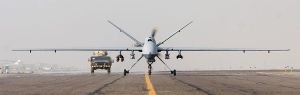
    A Reaper Remotely Piloted Air System (RPAS) comes into land at Kandahar Airbase in Helmand, Afghanistan. Breaking new ground for the RAF, the MQ-9 Reaper has become an invaluable asset in the fight against terrorism in Afghanistan. It is able to spend great lengths of time silently observing the enemy before using a range of precision munitions to defend coalition troops and civilians from danger. This image was a runner-up in the RAF 2011 Photographic Competititon. Photographer: Fg Off Owen Cheverton Image 45153241.jpg from www.defenceimages.mod.uk For latest news visit: www.mod.uk Follow us: www.facebook.com/defenceimages www.twitter.com/defenceimages

    Image by Defence Images/Flickr

    Despite frequent condemnation of the U.S. cross-border drone strikes as patently illegal, the legality question is not so straightforward because international law is not precise.  Even though the U.N. Charter explicitly prohibits states from employing “the threat or use of force against the territorial integrity or political independence of any state” (Article 2(4)), it provides two exceptions, recognizing an “inherent right of individual or collective self-defense if an armed attack occurs against a Member of the United Nations.” (Article 51).  The other exception relates to authorization by the Security Council (Articles 39, 41, 42).  Debate over the breadth of the self-defense exception dates back to the 1950s, focusing on the “inherent” nature of the right, what constitutes an “armed attack,” and when an armed attack “occurs.”  This is the essence of the current controversy over pre-emptive self-defense, which the United States invokes to justify preventing an attack by responding to it before it actually occurs.

    The International Court of Justice (ICJ) has generally treated self-defense as a narrow exception to the prohibition on force.  In the 1985 case of Nicaragua v. United States, for example, it held that to give rise to a right of self-defense, an attack must be a significant one.  The ICJ has also upheld the principles of necessity and proportionality, finding that self-defense is not permissible even against an armed attack if the self-defense is not necessary to accomplish the purpose of defense or if it is disproportionate in terms of civilian lives or property lost.  Perhaps the court’s most important finding is that the prohibition on the use of force and the limited self-defense exception have become a part of customary international law.

    As Rosa Brooks has argued,  ambiguity and vagueness in these core legal concepts of “self-defense” and “armed attack,” as well as related doctrines of “imminence,” “proportionality,” and “necessity,” permit the U.S. to make plausible arguments for legality, while allowing other states simultaneously to condemn the attacks as unlawful.  In the absence of a single overarching international authority and judicial system to declare who is right, the answer, if it ever arrives, will depend on the development of a consensus within the international community, which could take many years to build.

    It is not even clear that use of drones against suspected terrorists is governed by the law of armed conflict (LOAC) in the first place.  If these are more appropriately regarded as law enforcement actions, as some believe, then they should be governed by law-enforcement rules and limited by international human rights law.  The intentional targeting of suspected terrorists poses vexing questions surrounding the legal principle of ‘innocent until proven guilty.’  As a matter of U.S. constitutional law and criminal law, does the executive branch, acting through the military or the intelligence community, have the right to kill a suspected terrorist whose guilt has not been adjudicated in court?  Does it violate the right to life and the prohibition of arbitrary killing, protected by, among other things, Article 6(1) of the International Covenant on Civil and Political Rights?

    In U.S. law, a drone attack, like any other targeted killing, arguably, but not necessarily, violates a ban on assassination by U.S. personnel dating back to an executive order issued by President Gerald Ford in 1976. Until 1975, many high officials inside the U.S. government, including President Ford, did not know that the Central Intelligence Agency (CIA) had ever plotted to kill foreign leaders. All that changed, however, as a result of a series of exposes published in The New York Times by investigative journalist Seymour Hersh. In early 1976, following several disclosures, investigations and public revulsion, President Ford issued the executive order banning the assassinations.  The ban on assassination is still in effect in a later executive order promulgated by President Reagan.

    Another question is how those who employ armed drones can justify ‘collateral damage’ to innocent bystanders who become unintended victims.  The LOAC allows the targeting of enemy combatants and expressly prohibits targeting civilians, but so long as reasonable steps are taken to avoid collateral injuries, and the loss of civilian lives is proportional to the military advantage, the accidental killing of civilians is not a war crime.  But this does not mean that it is morally or politically justified.  More fundamentally, international law raises questions about the right of the U.S. to target individuals without the consent of the government on whose territory the killing occurs.  Does the UN Charter’s Article 2(4) prohibition on the use or threat of force against the territorial integrity or political independence of another state even allow such attacks?

    The U.S. has argued that the attacks are permissible because the targeted state is either unwilling or unable to police its own territory and prevent the targeted individuals from carrying out terrorist acts.  The 2005 ICJ case of Congo v. Uganda appears to weaken the U.S. argument, holding that Uganda’s military incursion into Congo to stop cross-border attacks by Congo-based insurgents was unlawful.  Most scholars and most states appear to adopt the ICJ’s broad understanding of the Article 2(4) prohibition on force and narrow understanding of Article 51’s self-defense exception.  Nevertheless, the debate continues.

    Both the Bush and the Obama administrations have argued that the United States should maintain its ability to use all of the tools in its arsenal, including armed drones, to prevent terrorist organizations and groups from attacking the U.S. homeland.  On September 17, 2001, President Bush signed an executive finding that authorized the CIA to “kill or capture al-Qaeda militants around the globe.”  While some officials within the Bush administration defended the drone strikes as consistent with and conforming to international law, others emphasized their effectiveness rather than their legality, arguing that the use of drones has given the U.S. a new dimension of capability that most other nations lack.  Still, others have added that some limits must be placed on drone strikes against U.S. citizens overseas—that is, Americans should not be targeted without prior approval by a military panel or a federal judge.

    On balance, the U.S. government continues to regard the drone program in Yemen, Somalia, Afghanistan, and the border regions of Pakistan as part of the ongoing U.S. war with al-Qaeda, which has been waged pursuant to the 2001 Authorization for the Use of Military Force by which Congress authorized the president to take military action against nations, organizations, or persons involved in the 9/11 attacks.  As long as the attacks are aimed at individuals associated with al-Qaeda and are for the purpose of preventing future acts of terrorism against the United States, they appear to fall within the scope of the authorization.  The U.S. government contends that international law permits the United States to use force against al-Qaeda and its affiliates in countries where there is an extant armed conflict to which al-Qaeda or its associates are party.  If the drone strikes are part of the war with al-Qaeda, the argument goes, the law of armed conflict applies. The Obama administration has taken the view that the law of armed conflict applies to drone strikes, whether they are part of the war or are used as a separate military strategy such as counterterrorism.

    The ethical and legal issues raised by the rapidly developing drone technology pale in comparison to those presented by the Pentagon’s development of new autonomous weapons systems.  These amount to fully independent robots, guided by artificial intelligence, which can decide on their own whom and when to kill.  These projects, to which the Defense Department has committed billions of research dollars, have prompted an intensifying debate among legal scholars and ethicists:   “Can a machine be trusted with lethal force?”  “Who is at fault if a robot attacks a hospital or a school?”  “Is being killed by a machine a greater violation of human dignity than if the fatal blow is delivered by a human?”  A Pentagon directive requires that autonomous weapons use “appropriate levels of human judgment.”  Scientists and human rights experts have argued that the standard is far too broad, insisting that such weapons be subject to diligent application and “meaningful human control.”

     Transparency and effectiveness

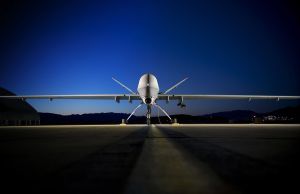
    reaper

    Reaper Drone image by Wikimedia Commons.

    Critics have argued that the U.S. drone program lacks transparency and is largely unknown to the general public and most government officials, including most members of Congress.  There is also little doubt that innocent civilians are dying in drone attacks. Some studies have demonstrated the disconnect between public statements and what researchers have discovered about civilian casualties from U.S. drone strikes. White House counterterrorism advisor John Brennan has often attributed “surgical precision” and “laser-like focus” to the drone program.  Critics argue that stressing the notion of surgical precision in the face of many civilian casualties caused by such attacks is downright misleading.  In some cases, the CIA may not even have known the identity of the people it has killed.  The presumption that all military-age males killed in drone strikes have been “militants” cannot withstand strict scrutiny.

    Several organizations or publications have informed the public debate on civilian deaths from drone strikes.  These include, among others, the New America Foundation (NAF), the Long War Journal (LWJ), the Bureau of Investigative Journalism (BIJ), the Columbia Law School Human Rights Clinic (CHRC), the International Human Rights and Conflict Resolution Clinic at Stanford Law School, and the Global Justice Clinic at the NYU School of Law, which have conducted an investigation into several aspects of the U.S. targeted killing program in Pakistan and have provided a detailed narrative about the law and the policy behind it.

    Despite Brennan’s and the CIA’s denials of unintended civilian deaths, the Bureau of Investigative Journalism in London has reported that 371 drone strikes in Pakistan killed between 2,564 and 3,567 people between 2004 and the first half of 2013.  Between 411 and 890 (12%-35% of the total) were civilians.  Fewer than one-quarter of those killed in drone strikes in Pakistan have been civilians. As of August 2016, President Obama has authorized and confirmed 506 drone strikes, killing an estimated 3,040 military combatants and 391 civilians.

    The lack of government transparency on drone strikes raises serious questions about their effectiveness and accuracy.  If the drone attacks are to be effectively utilized, critics argue, they have to be used for short-term interventions with the intention of using them rarely, selectively, transparently, and only against those who can realistically target the United States.  Absent a realistic threat against the U.S., it is difficult to justify a killing as self-defense and thus permissible under Article 51.  Otherwise it is arguably just an extrajudicial killing of an un-convicted, often unindicted, criminal suspect as well as a violation of the U.N. Charter’s prohibition on the use of force.

     Managing Risks or Seeking Long-Term Solutions

    It is time to think outside the box in which the states fighting terrorism have locked themselves, and to make the case for why the U.N. and other development organizations should be empowered and encouraged to support civic engagement, societal improvement, and low-level civil society rebuilding as a means to battle the unrest and despair that fuels terrorism.  One expert reminds us that drone strikes and the arrest of key leaders can be effective against smaller and more traditional terrorist groups, but not against most radicalized and jihadist groups.  Paradoxically, some U.S. allies, such as Pakistan, who often cooperate with Washington, provoke terrorist activities by their very authoritarian policies and practices.  The U.S. needs as many allies as possible in its military counterterrorism efforts, but some of those allies are likely to prove as problematic as drone strikes in the broader effort to prevent and contain terrorism by winning over the hearts and minds of the people.

    Mahmood Monshipouri, PhD, University of Georgia, is a professor of international relations at San Francisco State University and he is also a visiting professor at UC-Berkeley, teaching Middle Eastern Politics, and editor, most recently, of Information Politics, Protests, and Human Rights in the Digital Age (New York: Cambridge University Press, 2016).

    William V. Dunlap, MPhil, University of Cambridge; JD, Yale University, is a professor of law at the Quinnipiac University School of Law. He teaches constitutional, criminal, national security, counterterrorism, and international law. He is a former associate dean for faculty research and a former associate dean for academic affairs. He has served as chair of the Section on International Law, the Section on Admiralty and Maritime Law, and the Section 3on Internation

  • Sustainable Security

    by Wim Zwijnenburg

    RC_long_logo_small_4webThis article is part of the Remote Control Warfare series, a collaboration with Remote Control, a project of the Network for Social Change hosted by Oxford Research Group.

    While the US and its allies have had a monopoly on drone technology until recently, the uptake of military and civilian drones by a much wider range of state and non-state actors shows that this playing field is quickly levelling. Current international agreements on arms control and use lack efficacy in responding to the legal, ethical, strategic and political problems with military drone proliferation. The huge expansion of this technology must push the international community to adopt strong norms on the use of drones on the battlefield.

    Media outlets around the world reported on a new Islamic State (IS) video in August, which made use of a quad copter surveillance drone to film a military base near Raqqa, Syria. ‘Drones and Da’ash: a new terror threat’, headlines suggested. But that’s old news. Drones have been operated by non-state armed groups for years. Indeed, IS had already put up a drone-filmed video in February 2014 of a convoy with armoured vehicles, SUVs and trucks in Fallujah, and Hezbollah has been investing in their drone arsenal since before the 2006 Lebanon war.

    An MQ-9 Reaper takes off on a mission from Afghanistan. Source: Wikimedia

    An MQ-9 Reaper takes off on a mission from Afghanistan. Source: Wikimedia

    So why the mounting interest in the use of drones by these groups? And why is this a reason for concern? The armed forces of US-allied states are increasingly relying on drones for Intelligence, Surveillance and Reconnaissance (ISR) missions. Intelligence gathering capacity and strike capabilities have both increased hugely with the introduction of unmanned military systems on the battlefield. A handful of states, led by the US, Israel and the UK, have used drones for lethal strike capabilities, including large drones such as the MQ-1 Predator or the MQ-9 Reaper, or smaller, pocketsize kamikaze drones such as the Switchblade.Drone use by the US and its allies has set the stage for others to jump in on these developments and apply this technology in their military operations. This has resulted in a booming multi-billion dollar drone industry and the proliferation of various types of drones, both for civilian and military applications. Over the last few years, the regimes in Iran, Syria, Sudan and groups as Hezbollah, Hamas, and recently the Islamic State have acquired unarmed drones and have actively used them during their operations. The origin of these drones? Iran.

    The further application of drones for a variety of purposes is certain, yet what implications does this have for the military application of drones, and what challenges does this pose to international security and the use of these new types of technologies and weapon systems?

    Concerns

    Although the use of unmanned systems for a range of civilian tasks clearly has its advantages, from checking oil pipelines, wind turbines and agricultural purposes, to name a few, other tasks such as law enforcement and military use deserve close scrutiny. In particular, how will drones have an impact on the use of armed violence, and are they an effective means for counter terrorism operations?

    The expanding use of drones for lethal operations has been met with severe criticism from human rights groups, UN Special Rapporteurs and civilian victims of drone attacks. Drone strikes outside armed conflict have stretched the boundaries of International Humanitarian Law and have violated the right to life of civilian victims. Moreover, due to these civilian casualties, there is concern that drone strikes as a counter-terrorism strategy [PDF] only bolster support for armed or terrorist groups. The recent use of drones over contested air space between China and Japan and over the Persian Gulf between the US and Iran have demonstrated the ‘potential for miscalculation and military escalation’. The absence of transparency over targeting procedures and of an accountability mechanism further clouds proper judgement on the legality and effectiveness of drone strikes in and outside armed conflict. [i]

    Mapping the spread

    Drones, both low-tech and high-tech, have definitively changed the way we wage wars. Added capabilities include improved information gathering, better targeting, and even the option of equipping drones with explosives and using them for strikes against military, but also civilian targets. A Russian expert has even speculated about the possible use of drones armed with chemical and biological weapons in densely populated areas in the West.  Conventional armaments such as explosives are also possible. Finally, there is added psychological value to using drones to frighten a population, which is clear from reports from Pakistan and Yemen. Unsurprisingly, these are assets that various states and groups are keen to expand, and we are seeing more drones being operated by states and groups that are not allied with the US.

    Non-US allied states

    Here are some examples of non-US allied states that have deployed drones during military operations:

    Iran. Iran has long worked on developing its drone arsenal. Although its technological level of expertise may far behind that of the US and Israel, they are able to produce quite some sophisticated drones which have proven effective on a number of battlegrounds. Most notably, its Shahed, Azem, Mohajer, Hamaseh and Sarir drones have been exported to Syria, Sudan, Hezbollah, Hamas and more recently Iraq.

    Syria. The Syrian army has acquired and used Iranian drones for ISR and target acquisition during a couple of battles near Aleppo, Homs and Damascus. Although an accurate overview of their arsenal is lacking, the Syrian Army is know to have a wide variety of drones at their disposal. Rebels reported drone use before artillery shelling started, and Islamist group Jabat Al-Nusra apparently managed to shoot down an Iranian made Yasir drone.  This drone was likely developed by reverse-engineering a US Scan Eagle drone, of which several have been shot down or crashed in Iran. Larger type drones, such as the Shahed-129, similar to the US Predator surveillance and armed drone (though the Syrian one is not armed), have been spotted over Syria.

    Sudan. The extent to which Sudan owns and uses unarmed drones remains unclear, but we do know they deployed Iranian drones over several contested areas. During the operations of the Sudanese army over the Nuba mountains against local rebel groups, different types of Iranian drones have been spotted, minutes before artillery bombardment took place on villages in the Nuba mountains.  The SPLM-A, the South Sudanese armed forces, shot down a Sudanese drone over Southern Kordofan in May 2014, which was apparently used for ISR and targeting operations. Another drone that was captured, the design of which appears to be consistent with an Iranian Pahpad type drone, had Iranian and Irish technology on board. Given that there is an arms embargo to Iran and Sudan, it would be interesting to know how this type of technology, which is probably dual-use, ended up in the hands of the regime. UN Reports on drone use for ISR missions flown by Sudan go back to 2009, when drones were spotted over Darfur.

    China. China is establishing itself as a major producer and exporter of drones. Saudi Arabia has reportedly already made a deal to purchase the Chinese Pterodactyl drone, a design similar to the US Predator drone. China’s aim to explore new markets and build their own UAV industry will presumably also lead to increased cyber espionage on American defense companies, which underlines the sensitivity of keeping this type of technology under control. China is likely to have relatively light restrictions in its export policies, meaning that China will be even less accountable in this regard than the US and its allies. As a US Senate report stated, providing an overview of Chinese developments:

    “Surging domestic and international market demand for UAVs, from both military and civilian customers, will continue to buoy growth of the Chinese industry… As a result, China could become a key UAV proliferator, particularly to developing countries.”

    Non-state actors

    Low-tech drones are cheap, can be assembled from easily accessible materials, fly low and can easily evade air defences, and are able to access restricted areas and reach their target in a short time – making them the ideal weapon of choice for terrorist groups.

    Here are some examples of deployments of drones by non-state actors:

    Footage released by Hamas apparently showing 'armed' drone. Source: Twitter

    From footage released by Hamas apparently showing ‘armed’ Arbabil 1 drone. Source: Twitter

    Hamas. In June 2014, Hamas released footage of an Iranian Arbabil 1 drone flying over the Gaza Strip, which looked as though it was armed. Before it could do any damage, it was shot down by a Patriot.  Although the missiles were likely fake, Hamas is demonstrably able to operate and exploit this new technology, which could have added value for their operations. This recent incident wasn’t the first attempt to use drones against Israel. In October 2013, news outlets reported that the Palestinian Authority had arrested a Hamas cell which was preparing a small drone with explosives to be used in an attack against an Israeli target. The IDF reported that it had previously struck Hamas’ drone capabilities in an airstrike against a drone on a runway in November 2012.

    Hezbollah. Hezbollah has operated drones over their border areas for a number of years. This includes occasionally flying them over Israeli territory, which seeks to probe Israeli defences (and taunt their military supremacy) and in 2006, Hezbollah tried to crash a small drone with explosives on a military site in a kamikaze drone attack. This was part of a broader attempt using three small drones with explosives for attacks on different targets in Israel. In 2012, Hezbollah flew an Iranian-made drone over the Mediterranean Sea, before it was shot down by the Israeli Air Force.  Current estimates are that Hezbollah possesses over 200  unarmed drones, which has led to serious concerns among Israeli military commanders about the potential for armed attack with drones. In particular, existing Israeli air defences seem less capable against smaller drones: “It’s very complicated to defend against the drones, because they’re so difficult to spot,” an Israeli military spokesman said. The United States has already started blacklisting companies selling drone related technology to Lebanon, citing security concerns over Hezbollah’s growing drone capacity.

    Footage from Islamic state surveillance drone showing Syrian military airport.

    Footage apparently from Islamic State surveillance drone showing Syrian military airport. Source [Graphic]: YouTube (Creative Commons)

    Islamic State. The first indication of the use of drones in Fallujah was in February 2014, when Islamic State in Iraq and Syria (ISIS), as it was then called, used drone footage for propaganda purposes. Several videos that went online in August showed that drones were used for ISR operations in Iraq and Syria, and it is likely that these drones are used for their military operations, strengthening Islamic State’s  ISR capabilities and target acquisition. The drones used seem to be quad-copters, which are fairly easy to use and acquire as they can be bought in any hobby shop.  Nonetheless, the use of these drones by Islamic State is an interesting development with regard to the new dynamic in the conflict. It means that states and armed groups such as the Kurdish Peshmerga will need to have additional defence systems to detect and shoot down these drones, adding to the complexity of the conflict in Iraq and Syria.

    Improved controls

    What can be done to limit the proliferation of drone technology? Current arms export control regimes that cover UAV technology are fairly limited both in participants and means. The Missile Technology Control Regime (MTCR) and the Wassenaar Arrangement have a clear set of standards that could be applied to control UAV technology more strictly. However, only 43 States are members of these agreements. Moreover, these agreements are voluntary, making them difficult to enforce. The booming civilian market for UAV technology makes it more difficult to control all the items used to assemble and operate drones, ranging from software, parts, components, and different payloads.  These dual-use items are listed in the  and the European Union’s Common Positions on Arms Export Control’s Munitions List. But states have indicated that it’s close to impossible to make an individual risk assessment for each license.

    As well as encouraging the uptake of existing arms export control regimes, an essential way to limit drone technology is an international push for strong norms on the use of drones on the battlefield. Urgent issues such as extrajudicial killings, the psychological impact of continuous armed drone presence on communities, and the lowering threshold for the use of armed violence in military operations must be addressed through international agreements. Most importantly, there must be a transparency and accountability mechanism ensuring oversight. Though this might place restrictions on the use of armed drones by states, it would not have an impact on non-state actors. Yet it should lead to more awareness that this technology can be used in new ways for both extrajudicial executions and terrorist operations.  Drones are here to stay, and the need for developing global norms on their export and deployment can not be ignored any longer.  States and the broader international community will have to take more responsibility for setting in motion a new process to ensure accountability and solid regulation. Indeed, as former CIA Director John Brennan said in 2012:

    “If we want other nations to use these technologies responsibly, we must use them responsibly. If we want other nations to adhere to high and rigorous standards for their use, then we must do so as well.”


    [i] PAX has outlined some of these concerns and fundamental questions about armed drones, reviewing the impact on military operations and underlining the need for political accountability in its Armed and Dangerous [PDF] policy paper for the Dutch government.

    Wim Zwijnenburg works as Project Leader on Security & Disarmament for Dutch peace organisation PAX on drones, toxic remnants of war, and the international arms trade. He has a MA in International Development and Conflict Studies.

    Featured image: Group photo of aerial demonstrators at the 2005 Naval Unmanned Aerial Vehicle Air Demo. Source: Wikipedia

  • Sustainable Security

    Young people walk past an anti-nuclear weapons protest outside the NPT Review Conference, Geneva, 2008 Source: BANG (Flickr)

    Young people walk past an anti-nuclear weapons protest outside the NPT Review Conference, Geneva, 2008 Source: BANG (Flickr)

    The dropping of atomic weapons on Hiroshima and Nagasaki is now almost 70 years behind us and, current rhetoric over Ukraine aside, the Cold War ended almost a quarter-century ago. This is how we now understand nuclear weapons – as a threat of the past, more important in history class than in the headlines. But this is not the case. While we have made admirable progress on disarming and dismantling, particularly the arsenals of the US and Soviet successor states, thousands of nuclear weapons still exist and progress on disarmament is too sporadic for comfort. The threat of nuclear proliferation is high and many current nuclear weapons exist within hostile regions or on trigger alert. Nuclear risks are more prevalent than we’d like to believe. Whether we like or not, accidents can happen.

    The dramatic decrease in public awareness and engagement in the nuclear weapons debate since the 1980s poses a risk to our future, as younger generations and future policy shapers are less familiar with the challenges posed by nuclear weapons and will be as they start to take over the reins of governance. But nuclear weapons are too dangerous for a disconnect of this magnitude.

    It wasn’t always this way

    Anti-nuclear rally outside the Pennsylvania State Capitol, 1979. Source: Wikipedia

    Anti-nuclear rally Pennsylvania, USA 1979. Source: Wikipedia

    We haven’t always been so disconnected from the bomb. US arms control expert William Hartung describes:

    There was a time when nuclear weapons were a significant part of our national conversation. Addressing the issue of potential atomic annihilation was once described by nuclear theorist Herman Kahn as “thinking about the unthinkable,” but that didn’t keep us from thinking, talking, fantasizing, worrying about it, or putting images of possible nuclear nightmares (often transmuted to invading aliens or outer space) endlessly on screen.

    Perhaps it was the imminent threat during the Cold War that compelled millions across the world to actively protest against nuclear weapons. For example, in the United Kingdom, the Greenham Common Women’s Peace Camp was established in 1981 to protest the deployment of US nuclear-armed cruise missiles at the Greenham Common Air Force base. While in June 1982 in the United States, one million people came together in New York’s Central Park to call for an end to the nuclear arms race in the “Nuclear Freeze” protest.

    The looming nuclear threat seemed to fade away after the Cold War. Progress on arms control led to complacency with the international treaties that were in place to protect us against nuclear dangers. Under the Nuclear Non-Proliferation Treaty (NPT), for example, the nuclear weapon states (UK, US, China, France, Russia) are obligated to work towards disarmament. However, as absurd as it sounds, there is no universal agreement on what that would quite look like, or how to get there.

    Moreover, we’ve witnessed three countries become overtly nuclear armed states since the Cold War: India, Pakistan and North Korea. It’s a small percentage in comparison to states that don’t have the bomb, but when it comes to nuclear weapons, even a small percentage is a terrifying one.

    International norms of non-use and the “nuclear taboo” have led us not to worry about that small percentage of states. Eric Schlosser’s recent book Command and Control, however, alarmingly points out that there have been several nuclear “near misses” in the United States alone that we as a public have little to no knowledge of. Schlosser writes:

    Right now thousands of missiles are hidden away, every one of them is an accident waiting to happen, a potential act of mass murder. They are out there waiting, soulless and mechanical, sustained by our denial – and they work.

    Is it simply that the public is in denial about nuclear weapons? A diverse range of psychological studies conducted in the 1980s – including Nuclear attitudes and reactions: Associations with depression, drug use, and quality of life; Nuclear War as a Source of Adolescent Worry; and Gender, sex roles, and attitudes toward war and nuclear weapons – demonstrate a desire to understand society’s feelings about nuclear weapons at the height of the Cold War.

    In more recent years, there have been similar studies conducted in reference to climate change, another somewhat abstract and imminent global threat. And yet, while the nuclear threat is the still around, we’re not as concerned about nuclear weapons as we were 30 years ago. It could be, as Schlosser suggests, denial. It seems that we have forgotten, don’t understand, or are simply indifferent.

    Why we should care

    Beyond the obvious threat of obliteration posed by nuclear weapons, they also undermine essential international co-operation between states and become a liability in certain situations. For example, in the recent Russian invasion of Ukraine, many media sources were keen to point out that any Western military intervention would put nuclear armed states up against each other. It could be argued that the diplomatic actions taken towards the crisis, resulting in economic sanctions and a recent shift of the G8 meeting away from Sochi, can be partly attributed to the looming presence of nuclear arsenals. As such, the continued presence of these weapons will continue to affect the cooperation and relationship between Russia and the West, for better or for worse.

    Nuclear weapons, or efforts taken to prevent their proliferation, can also affect a range of industries and economies. The threat of nuclear proliferation in Iran led to the implementation of economic sanctions that affected trade in a range of countries (including the UK, US and other European states) and a range of industries such as banking, insurance, oil, pharmaceuticals, and food. UN Resolution 1540 also calls upon states to implement export controls and regulations on materials that could be used for WMD proliferation, which affects such industries as shipping and transport, and manufacturing firms.

    It is naïve to assume that any spending on nuclear weapons or related programmes would or could be simply or entirely allocated to spending in other areas, such as healthcare or other threat reduction initiatives, but the stark contrast in the spending is noteworthy: In 2002, the World Bank estimated that $40-60 billion USD annually would be enough to meet the internationally agreed Millennium Development Goals, which range from providing universal primary education to eradicating poverty and hunger. Between FY2008 – FY2013, the US spent $77 billion to address global climate change in total, with the President’s request for $11.6 billion for FY2014. At the same time, it was estimated in 2012 that the US was on track to spend an average of $64 billion per year on nuclear weapons and related programmes over the following decade.

    Continued reliance on nuclear deterrence is a divisive issue. Whether one believes that it brings security and stability, or that the risks (and monetary costs) are too high, reliance on nuclear weapons for security is among the most pressing issues of our time and we need to be aware that the decisions we make today will have implications on the future and the uncertain threats that we will face. With public interest in nuclear issues waning, policy shapers and the emerging leaders of tomorrow are increasingly focusing their attention elsewhere. As a result, nuclear policy is being pushed back to those who have been making these decisions for decades and the circular debate rooted in Cold War perspectives continues. Fresh perspectives and a renewed interest in the nuclear debate are needed to address these security challenges of the future.

    The way forward

    Now is the time to engage the next generation on these issues if we are ever going to find a long term solution to this long term problem. The debate on nuclear weapons needs new ideas and help to shift nuclear weapons out of their isolated silo and back to the heart of security debate. This requires building a security narrative that includes nuclear weapons in a broader context, approaching them as a part of a bigger problem, and not as the problem itself. This also involves bringing in a wider range of disciplines into the nuclear weapons debate including businesses, creative communities, environmental and health groups, and social scientists, because nuclear weapons have an effect on all of us.

    If we are going to make progress on the nuclear weapons debate, we need continued engagement from all sides, along with a deeper understanding of the motivations behind what drives people to think about (or not think about) nuclear weapons. In essence, we need to reconnect with the nuclear debate and start thinking about a sustainable future.

    BASIC has launched a new Next Generation project to inspire a next generation of thinking on nuclear weapons.

    Rachel Staley is currently the Programme Manager for the British American Security Information Council (BASIC) in their London office. Since 2011, Rachel has managed the operations of the office and assisted in developing the organisation’s programmes working on nuclear non-proliferation and disarmament in the Middle East, as well as engaging directly in the Trident renewal debate in the United Kingdom. Rachel holds an MA with Distinction in Non-Proliferation and International Security from King’s College London and a BA with Honours in International Affairs and Anthropology from Northeastern University.

  • Sustainable Security

    The announcement of fresh counter-terrorism powers in the UK follows assertions that returning foreign fighters present a substantial new threat to national security. But these powers may be counter-productive in the long term, risking a legacy of injustice that will only exacerbate the political tensions of the War on Terror.

    The Counter-terrorism and Security Bill announced in the UK in November includes new powers aiming to limit the flow of people travelling to train and fight with certain rebel groups in Syria and Iraq. The proposals, due to be rushed onto the statute book in January, include the extension of controversial powers to disrupt travel and strip citizenship from terrorism suspects. Life sentences for a greater range of terror offences, including training, are also proposed. The British bill follows a US-drafted UN Security Council resolution to criminalise al-Qaida or Islamic State (IS)-linked foreign fighters which was adopted in November. Similar measures are being debated in other European countries and Australia.

    The reason for this wave of legislation? On the back of reports of unprecedented numbers of foreigners travelling to fight in the Syrian conflict, there has been a near-universal consensus amongst the security and intelligence community that returnees present a heightened national security threat. Returning foreign fighters, it is feared, will be networked, skilled up, and angry. The threat of political violence is ‘inevitable’, according to senior EU counter terrorism officials.

    Despite these fears, there is little in the way of a historical precedent in the UK to indicate that returning foreign fighters do represent an increased national security threat. The lack of evidence to support these claims is one of several legal and practical difficulties. Existing laws are already being used to criminalise foreign fighters in Syria’s conflict. The overwhelming application of such laws to Muslim communities has raised concerns that the legal principle of parity before the law is at risk. There is also a lack of accountability and oversight of these cases due to the use of secret evidence.

    The long term efficacy of such measures is therefore questionable. They may be a distraction from the underlying dynamics driving political violence, which are known to relate primarily to grievances over foreign policy. The abandonment of the principles of justice and equity before the law are likely to exacerbate resentment and the perception that the West is ‘at war with Islam’. The UK’s counter-terrorism policies may be creating a legacy of injustice that risks exacerbating the underlying political antagonisms of the War on Terror.

    Threat level: Severe?

    In response to the risk posed by returning foreign fighters, the UK’s terrorism threat level was again raised to ‘severe’ in late August. Although exact figures are not known, the number of those who have travelled from the UK to fight in the Syrian conflict is estimated to be at least 500 since 2011. The extent to which the Syrian conflict has mobilised fighters from Europe is clearly significant: key to this is the ability of groups such as IS to attract recruits via its propaganda films and social media activities conducted in European languages.

    But not all those who have gone to fight are with IS. The reality of the Syrian conflict is that there are over 2,000 fighting groups in Syria, including some with affiliation to al-Qaida. Little is known about group affiliations of the UK’s foreign fighters. Even individuals that are fighting with proscribed organisations, such as Islamic State or Jabhat al-Nusra, will have varying personal affiliations. Primary source reports collected by journalists and advocacy groups indicate that the primary motivation for those going to fight is a moral duty to fight the Assad regime (See for example, ‘Blowback: Foreign Fighters and the Threat they Pose’, CAGE, July 2014; ‘Joining ISIS: My Meeting with Aseel Muthana’, Huffington Post, 25 June 2014; ‘From Portsmouth to Kobane: the British jihadis fighting for Isis’, New Statesman, 6 November 2014). The reports suggest that, partly due to practical reasons, certain larger groups with more resources such as IS have absorbed the most foreigners. One of these reasons is that some other groups’ vetting procedures present a barrier to foreigners wanting to join.

    There are also legitimate questions over the wisdom of excluding foreign fighters from their countries of residence. Following reports that disillusioned fighters have been caught ‘in limbo’ in Turkey, wanting to leave but afraid to come home, some have called for alternatives, such as pastoral re-integration programmes existing separately from criminal investigation proceedings. A programme in Denmark provides an example of how such a scheme could function.

    Context: Terrorism laws in the UK

    The latest developments have occurred in the context of an increasingly securitised response of the UK to Islamist movements globally. Since 2001, the UK has progressively increased its set of counter-terrorism powers with a succession of laws, most of which have been fast-tracked and introduced as emergency legislation only to be made permanent. The UK’s multi-pronged CONTEST strategy conceives of the battle against terrorism on four fronts: Pursue, Prevent, Protect, and Prepare. The Prime Minister has promised to increase resources to these programmes. Yet intelligence resources dedicated to countering al-Qaida-linked terrorism already dwarf those that were dedicated to countering the threat posed by the Soviet Union and its allies even at the height of the Cold War, as observed by Sir Richard Dearlove, former head of the British Secret Intelligence Services at a Royal United Services Institute talk earlier this year.

    There is nothing in the UK’s legal definitions of ‘terrorism’ that specifies Islamist activity. ‘Terrorism’ was defined in a Supreme Court judgment last year to include “any or all military attacks by a non-state armed group against any or all state or inter-governmental organisation armed forces in the context of a non-international armed conflict”. But the shadow of the 9/11 attack continues to shape the security services’ understanding of national security threats, and to shape the application of these laws, primarily to Muslims. The focus on ideology that can be linked to al-Qaida, and the search for evidence of ‘jihadist worldviews’ conflates the criminal and the non-criminal, the threatening and the non-threatening. It leads to a skewed application of laws to those whose ideas or religious beliefs can be superficially associated with those of the UK’s enemies. By comparison, the resources dedicated to tackling political violence by the far-right are minimal, and similar types of crimes attract lesser sentences. One recent example is a former British soldier who was a supporter of the English Defence League (EDL), handed a two-year sentence after nail bombs were discovered in his house. Despite the UK’s legal definition of “terrorism” that is consistently criticised for being overly broad, the soldier controversially avoided charges under terror legislation, instead he was found guilty of offences under the Explosive Substances Act.

    The Syrian conflict has prompted security services to make increasing use of counter-terrorism powers against UK residents suspected of travelling there, or planning to travel there. A series of high-profile arrests have occurred in the last years, most of which have not made their way through the judicial process. But several recent cases raise further questions over whether these powers are being applied fairly.

    There has been an inconsistent response to those understood to have fought against IS. The estimated dozens of British residents fighting with the Kurdish forces, it has been indicated, will not meet charges upon their return. The Prime Minister stated there was a “clear difference” between fighters with the Kurdish authorities and IS fighters; and stated that “highly trained border staff, police and intelligence services” would be able to distinguish between them. But one man from Derry, who explained he was also fighting against IS, but with the largest Islamic coalition was still arrested by Northern Ireland police upon his return.

    Long prison sentences for crimes under terror legislation are being handed out to returning foreign fighters. Last week, two Birmingham men, Mohammed Ahmed and Yusuf Sarwar, were convicted of engaging in preparation of terrorism acts and sentenced to 12 years in prison; they had spent several weeks in Syria in 2013. The pair were arrested upon their return to the UK in January 2014 after Sarwar’s mother reported him missing to the police. The judge concluded that the pair had not planned any attack in the UK; they received the sentence because they had joined proscribed organisation Kataib al-Muhajireen. According to former Guantanamo Bay detainee Moazzam Begg, who was a fellow inmate in Belmarsh prison, the pair were “young” and “bewildered”, and had not thought what they were doing was a crime. Two brothers were also jailed after attending a Syrian training camp for less than a month. Despite returning without having done any fighting, they were sentenced to four-and-a-half years and three years, respectively.

    Citizenship revocation powers on the grounds of national security have been increasingly deployed in recent years. In November, reports emerged that an entire family (a British-born father and three sons) had been exiled from the UK due to alleged links with al-Qaida-linked groups in Pakistan. The family deny the allegations, and are appealing the ban. A detailed investigation by the Bureau of Investigative Journalism revealed that the number of UK citizenship revocation orders on national security grounds tripled in 2013, taking the number since 2006 to twenty-seven. At least fifteen of these individuals were abroad at the time of the deprivation order.  The Foreign Office has cited the fighters joining the Syrian war as the reason for this increase.

    Where national security reasons are invoked (as they are in virtually all the cases brought under terrorism legislation), the substance of allegations is kept secret. However, police statements saying there is no immediate threat to the British public have accompanied virtually every recent Syria-related arrest (For example: Statement by Hampshire Police 14 October 2014; ‘Anti-terror police arrest five men in Dover and east London’, BBC 1 December 2014; ‘Police arrest man in Slough on suspicion of financing terrorism’ Guardian 13 November 2014; and a statement by the Head Teacher of the school where Jamshed Javeed worked ‘Teacher Jamshed Javeed admits Syria terror offences’ BBC 27 October 2014.)

    Syrian Exceptionalism

    UK citizens fighting in foreign wars are not universally criminalised. The Israeli Defence Force’s ‘Mahal’ programme enables foreign citizens to fight with the army in Israel, and these foreign fighters are not considered to be in breach of British law. The war in former Yugoslavia attracted fighters from Britain, many of whom were Muslims. After the beginning of the uprising against Muammar Gaddafi in Libya, UK nationals were known to be fighting against the regime with Islamist groups. Men who had been previously detained and investigated under counter-terrorism powers in the UK went on to fight against the Gaddafi regime – and were supported by the UK’s security services. Advocacy group CAGE reports a number of UK nationals – more than 100, by their estimates – who met no resistance from UK authorities when leaving the UK, or legal problems when they returned from Libya.

    Guantanamo Bay protest Shaker Aamer

    Protest to free Guantanamo Bay prisoners including Shaker Aaamer, the last British resident in Guantanamo Bay. Aamer has been detained without charge for over twelve years and cleared for release since 2007. Source: Flickr | shriekingtree

    The recent selective criminalisation of foreign fighters in the Syrian conflict points to a deeper flaw within broader US/UK ‘War on Terror’ era military strategy: the enemy is poorly defined. It is often noted that the US’ arming of the Afghan mujahideen rebels during their struggle against the Soviets in the 1980s was a key historical factor in the resulting al-Qaida network. In 2013 the UK was on the brink of going to war with the Assad regime, and came close to fighting on the same side as the rebel groups that it now seeks to vanquish. Fighters who left the UK at the beginning of the Syrian war have been criminalised in their absence and now face a major disincentive to returning to civilian life. The absence of a long-term strategy focused on peace and informed by an ethic of equity and justice has resulted in a confusing picture of shifting alliances.

    This militarised and reactive foreign policy results in shifting definitions of what constitutes terrorist activity at home. It is not only foreign fighters who are meeting overwrought security responses. Lawful activities such as charity work, political organising, membership of radical religious groups, and particular religious beliefs are increasingly caught up in the dragnet of counter-terror measures. The ongoing repression of Muslim charity organisations provides multiple examples of these blurred lines. The recent seven-month detention of Moazzam Begg is another.

    One lesson from the last twelve years is that injustices carried out in the name of counter-terrorism themselves have a deep, global resonance. The enduring resonance within Muslim communities of the well-documented abuse of Guantanamo Bay inmates is indicated precisely by the apparent effectiveness as a recruiting tool by Islamic State. The distinctive orange jumpsuits, as well as imagery from the abuse of Iraqi prisoners in Abu Ghraib jail, have appeared in IS’ videos, recycled as evidence of IS’ own ability to dominate. The UK, along with the US and France, is widely perceived negatively as having a ‘Crusaderist’ or imperialist project to divide and weaken the Muslim world. The selective criminalisation of foreign fighters has great potential to fuel such resentment further.


    Betsy Barkas is Oxford Research Group’s (ORG) Quaker Peace and Social Witness Peaceworker. She works as a Project Officer for ORG’s Sustainable Security programme, and co-edits sustainablesecurity.org.

    Image: Protest to free Guantanamo Bay prisoners including Shaker Aaamer, the last British resident in Guantanamo Bay. Aamer has been detained without charge for over twelve years and cleared for release since 2007. Source: Flickr | shriekingtree