Category: 2012

  • Sustainable Security

    This article is taken from Paul Rogers’ Monthly Global Security Briefings and was originally posted by Oxford Research Group on 12 March, 2014.

    Recent examples of short-term climate disruption have done much to bring the overall issue of climate change up the political agenda. In responding to what will be one of the key challenges of the next decades – well beyond the 15-year lifetime of the post-2015 global development goals currently under discussion – much of the attention has been focused on the need to adapt to those elements of climate change that are already irreversible and also to the need to decarbonise existing high carbon-emitting economies. What needs much greater attention is the fundamental need to ensure that low-carbon emitters in the Global South are enabled to combine effective human development with responding to the challenges of climate change.

    Asymmetric Impacts
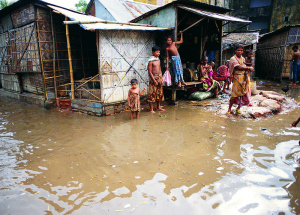
    Floodwaters surround houses in Dhaka, Bangladesh, one of the world's most climate vulnerable countries.

    Floodwaters surround houses in Dhaka, Bangladesh, one of the world’s most climate vulnerable countries. Source: CAPRA Initiative (Flickr)

    The scientific evidence that climate change is happening is now overwhelming and only a tiny handful of scientists question its anthropogenic causes. The most recent decadal report from the World Meteorological Office (WMO), for 2001-2010, confirms that climate change already involves disruption, with the decade seeing a clear increase in impact across the world. Events since 2010, including excessive heat waves, floods, droughts and the strongest land-fall cyclone (Typhoon Haiyan) ever recorded all point to accelerated disruption.

    In recent years there has been a relative pause in the rate of atmospheric warming but research points to aspects of the Southern Oscillation being responsible, temporarily slowing the overall rate of warming of the atmosphere, but not of the oceans. This is expected to change in the second half of the current decade and the effect of this will be that anthropogenic-induced warming and natural cycles will be in synchrony, leading to rapid change and greater climatic disruption.

    Climate change is thus expected to accelerate but there is, in addition, abundant evidence that it is already a markedly asymmetric process. There are many indications that substantial areas of the tropics and sub-tropics will heat up and dry out faster than temperate latitudes. This is significant for four reasons:

    • These regions support the majority of the world’s people and produce the majority of the world’s food, much of it being locally produced in subsistence farming systems.
    • Most of the poorer and more marginalised people live there, with least resilience to climate disruption.
    • These regions also include most of the rapidly growing megacities where infrastructure is not keeping pace with growth, resulting in low urban resilience.
    • They include the vast “carbon sinks” of the Amazonian, African and Southeast Asian rain forests, the diminution of which will accelerate atmospheric carbonisation.

    The other element of asymmetry – relatively faster warming of the near-Arctic – is directly advantageous to some countries, most notably Russia and Canada, both of whom stand to benefit in the short term in three ways:

    • Sea ice will diminish, opening up new commercial sea routes.
    • Arctic fossil and other mineral resources will be easier to exploit.
    • Agriculture will “move North”, opening up new regions for development.

    These two countries are also major fossil fuel producers so they benefit through these revenues, including easier exploitation of Arctic reserves, as well as from the impact of their use since this is likely to enhance Arctic warming. It is hardly surprising that neither government has much interest in controlling carbon emissions. As a Permanent Observer at the Arctic Council, the UK could do much to work with the five Nordic countries, all Main Council Members, on this issue, also involving new observer states, such as China, India, Japan and South Korea that have an interest in new sea routes, but are increasingly aware of the potential direct negative impacts on their own economies of climate change.

    The Changing Political Environment

    The direct denial of climate change as a phenomenon affecting human society still persists and is most clearly seen in two powerful interest groups. One is the fossil fuel industry, especially oil companies and producer countries that have a clear interest in protecting their revenues. There are also major interest groups clustered around those who genuinely believe that the unrestricted free market form of capitalism is the only appropriate system for the global economy. As such they are deeply suspicious of governmental interference in the economy and therefore highly suspicious of a world-wide challenge that demands strong intergovernmental coordination and government action.

    Both groups have been powerful and effective supporters of the denial community and though they are helped by the governmental attitudes of countries such as Russia and Canada, their greatest support came from the Bush administration in the United States in 2001-2009. Their influence is now declining for three broad reasons.

    • One is that the frequency of severe and even extreme weather events is changing public opinion in many countries. The UK is a good example where serious winter flooding was enough to ensure that the Prime Minister, David Cameron, agreed that climate change was of huge concern, even though many in his own party remain doubters. At a global level, the WMO report adds credibility to the view that extreme weather events, like the canary in the coal mine, are harbingers of what is to come.
    • A second element is that the most powerful state, under Barack Obama, acknowledges that climate change is happening, even though powerful denier elements remain resolute in their resistance.
    • Finally, a number of major industrial groups, especially those in the engineering industry, are embracing the prospects for new market opportunities as renewable energy technologies and techniques of storage and conservation come into their own

    Current Responses to Climate Change

    The two main responses to climate change currently envisaged are the progressive decarbonisation of carbon-intensive societies and the adaptation of high- and low- carbon societies to the impacts of climate change that are inevitable given the existing increases in atmospheric carbon. Both of these remain likely to gain in importance given the recognition of the huge challenges ahead. While the action so far is inadequate, it at least now shows signs of some prioritising. Whether the 80% carbon emission requirements of industrial societies can be achieved within twenty years is, at most, questionable, but it is now at least recognised as a worthy aim.

    There is also recognition that adaptation is addressing symptoms rather than responding to causes – improved flood defences in a country such as Britain may well be necessary but unless climate change is halted they are just short-term responses that will progressively be overwhelmed. Similarly, there is already good work going on in aiding the adaptation of less developed economies through, for example, the breeding of robust food grain varieties more able to withstand low rainfall. Such work needs considerable expansion but this, and the progressive decarbonisation of high emitters still misses out a crucial element in responding to climate change.

    The Missing Element

    In relative terms, the missing element is the low level of investment in the evolution of low-carbon economies of societies that have not substantially industrialised, mainly those in the tropical and sub-tropical regions of the Global South. Such countries include most of the most marginalised and poorest people on Earth where there is a deep-rooted desire for far greater life chances, yet these cannot be met through the modes of economic organisation of the industrialised North. If the marginalised majority is to see its development prospects enhanced then this has to be achieved through new forms of low-carbon economic development. Countries have to succeed without following the path taken by industrialised states over the past two hundred years.

    It follows that there is a very strong case for a state such as the UK prioritising any form of development assistance which aids this process. Much of this will centre on any form of low carbon energy use, including a wide range of renewable technologies, with major improvements in energy conservation and storage. Much work is already going on in this area, not least in relation to renewable energy technologies readily available to non-networked societies. It is also notable that when technologies emerge which demonstrate obvious utility, the speed of take-up can be remarkable. The cell-phone revolution in sub-Saharan Africa is just one example.

    Regrettably, UK Department for International Development (DFID) operational plans for 2013-14 indicate that low carbon development (LCD) targets from the Department’s 2011-15 strategy have been reduced or abandoned. The 2015 target for installed clean energy capacity has been reduced by almost 97%, from 3GW to 100MW. The original target to raise $610 million in private finance for LCD has disappeared, having raised $15 million by 2013.

    If the UK development programme was to commit just 20% of its budget to this area of work, the results could be extremely valuable, especially if part of that was to encourage North-South research and development partnerships. Furthermore, while the British development programme has many faults, it has grown to be the world’s second largest and there is sufficient cross-party support for this to be sustained against opposition. Because of the size of this programme, the UK has a more powerful voice than most in intergovernmental fora relating to development. It can use this voice to help ensure that the commitment promoted here is shared by other national and intergovernmental development programmes.

    Conclusion

    Climate disruption is one of the greatest challenges facing humankind, a challenge that is at last becoming recognised as such because of the extreme nature of many recent weather events. Decarbonising major industrial economies and funding adaptation to the already inevitable impact of climate change are essential responses but they must be accompanied by major programmes to ensure that human development in the poorer economies can be fully accomplished through processes of low carbon economic development. This is a critically important task over the coming decades, is insufficiently recognised as such, and should be a priority for any serious political party committed to the world-wide development of human well-being.

    Paul Rogers is Global Security Consultant to Oxford Research Group, for which he writes monthly security briefings.  He is Professor of Peace Studies at the University of Bradford and author of numerous books including ‘Beyond Terror’. Paul writes a weekly column for openDemocracy  and tweets regularly at @ProfPRogers.

  • Sustainable Security

    No Sustainable Peace and Security Without Women

    There will be no sustainable security if we do not equally value the needs, experiences and input of men and women. A new report published by the Institute of Development Studies (IDS), funded by ActionAid and Womankind Worldwide, examines the role women play in local community peacebuilding in Afghanistan, Liberia, Nepal, Pakistan and Sierra Leone. The report states “despite the increased international attention to women’s participation in peacebuilding, the achievements and challenges facing women building peace at the local level have been largely overlooked”.

    Read Article →

    The United States, Niger & Jamaica: Food (In)Security & Violence in a Globalised World

    due to a complex range of interconnected issues from climate change to misguided economic policies, political failure and social marginalisation, over 2 billion people across the world live in constant food insecurity. Anna Alissa hitzemann takes a sustainable security approach to look at the importance of “physical and economic access to basic food” by exploring the links between food insecurity and violence.

    Read Article →

    “Chronic Violence”: toward a new approach to 21st-century violence

    The Norwegian Peacebuilding Resource Centre (NOREF) recently published a Policy brief by Tani Marilena Adams, proposing and outlining the concept of “chronic violence” to “characterise the crisis of escalating social violence that currently affects about one-quarter of the world’s population”. The report approaches “chronic violence” from a sustainable security standpoint, arguing that violence itself should not be seen as the disease to be controlled, but rather as a symptom of many complex underlying issues that need to be addressed.

    Read Article →

    The New Insecurity in a Globalized World

    Writing exclusively for SustainableSsecurity.org, Elizabeth Wilke argues that a new conceptualization of insecurity and instability is needed in a world with greater and freer movement of goods, services and people – both legal and illicit – greater demands on weakening governments and the internationalization of local conflicts. The new insecurity is fundamentally derived from the responses of people and groups to greater uncertainty in an increasingly volatile world. Governments, and increasingly other actors need to recognize this in order to promote sustained stability in the long-term, locally and internationally.

    Read Article →

  • Sustainable Security

    China’s increasing demand for oil and gas means that it is searching abroad to secure new sources of imports. With its rich resources, the Arctic region could serve this purpose, and Chinese oil companies have shown interest in exploration and production opportunities there.

    Decades of high and sustained economic growth have substantially increased China’s need for energy. China is the world’s second largest economy and the world’s largest energy consumer. Importantly, as domestic production has not kept pace with raising consumption levels, China is forced to import most of its oil and natural gas. China today is the world’s second largest oil importer and third largest importer of natural gas. Crucially, China’s oil import dependency is high and increasing. For instance, in 2016 more than 60% of China’s oil demand came from overseas imports, up 3.5% from 2015.

    To meet its growing energy import demand, China has, in the last decade or so, embarked on an energetic effort to search for overseas supplies. A central objective has been to diversify the origin of its oil and natural gas sources, and means of delivery. Today, China imports oil from the Middle East and North Africa, Latin America, Central Asia and Russia, via the sea, railway and oil pipelines. China imports liquefied natural gas (LNG) from a variety of sources (for instance from Qatar, Australia, Indonesia, and Malaysia) but also pipeline natural gas from Central Asia, Myanmar and has contracted large future imports from Russia.

    However, more than 50% of Chinese oil imports originate in the Middle East and North Africa and up to 80% of China’s maritime oil import must travel through the narrow Malacca Strait, a stretch of water between the Malay Peninsula and Sumatra. In the eyes of China’s strategic planners, this makes their country vulnerable to potential disturbances of oil supplies, not only due to volatile political conditions in these regions but also, however unlikely, a potential U.S. naval blockade.

    Enter the Arctic region. According to the widely cited 2008 report by the United States Geological Survey (USGS), 30% of the world’s undiscovered natural gas and 13% of the world’s undiscovered oil is estimated to be in the Arctic region. Energy imports from the Arctic, Chinese strategist calculate, would help mitigate China’s supply and transport vulnerabilities by presenting an alternative to existing import sources and delivery routes.

    Expanded engagement 

    Image credit:  Timo Palo/Wikimedia.

    China is not an Arctic littoral state, but officially defines itself as a “near-Arctic state”. China has in recent years incrementally stepped up its engagement in the Arctic region. China sought, and in 2013 secured, permanent observer status in the Arctic Council (AC), granting Beijing a new platform, albeit with limitations, to participate on issues regarding Arctic governance. Importantly, China acknowledges and respects the sovereignty claims and rights of Arctic states, a pre-condition for observer membership status acceptance in the Arctic Council. China also recognizes the United Nations Convention on the Law of the Sea (UNCLOS) as the legal foundation governing the Arctic. This helped alleviate concerns over China’s growing Arctic presence, which some viewed as potentially challenging the regional Arctic order.

    China is active in scientific research in the Arctic pertaining to global climate change. While such research is sometimes brushed off as a mean to hide China’s other goals, the daunting environmental challenges currently facing China surely motivates genuine international scientific climate work and collaboration in the Arctic. China’s icebreaker, The Snow Dragon (Xuelong), has conducted seven scientific research expeditions as of 2016 and a second icebreaker under construction (ready to sail by 2019). In 2004 the Yellow River Station (Huanghe zhan) research facility in Norway’s Svalbard was established. China is also engaged in numerous scientific bilateral and multilectal cooperation projects with Arctic States, for instance the China-Nordic Arctic Research Center, while simultaneously boosting its domestic polar competence.

    The EU is China’s biggest trading partner and China is the EU’s second biggest. As the Arctic ice-cap continues to retreat, opportunities for new trade links between transiting the Northern Sea Route (NSR) from China to Europe are opening up, shortening the shipping time and fuel savings considerably compared to the conventional route through the Malacca Strait and Suez Canal. There have been some optimistic estimates made by the Chinese. For instance, according to one figure, 5 to 15 of China’s total trade could use the route by 2020, if constructively prepared. China’s largest shipping company, China Ocean Shipping Company (COSCO), has over the years conducted a few, but increasing, intra- and trans-Arctic voyages and announced that it plans to begin with regular trans-Arctic sailings. However, prospects such as the above estimate seem overly optimistic as utilization of the NSR is dependent on variety of factors (commercial, infrastructure, technical, environmental etc.), reflecting  overall low numbers of trans-arctic maritime trade. Importantly, most of the Chinese commercial actors remain hesitant to make large-scale investments and the optimistic scenarios must be taken with caution.

    Energy – a cautious tale

    Natural resources, particularly oil and gas, constitute another area of Chinese interests in the Arctic, according to some the principle motive. While the Chinese government has of late been more open about its economic interests in the Arctic, and also taken steps to promote energy bilateral cooperation with Arctic states, notably with Russia, Chinese commercial players on the ground have been cautious. It is often stated by the industry itself that China lacks the technical skill to operate in harsh Arctic conditions. The goal for Chinese oil companies is instead primarily to learn and obtain technical know-how from more advanced international companies. Western sanctions against Russia, due to the annexation of Crimea in 2014, further complicate the situation. While Russia has turned increasingly to China for capital and investments, the lack of technological skill limits China’s actual participation in exploration and production. Moreover, the current low oil price has made the global energy market a “buyer’s market”. Today’s big buyers such China have more options. In other words, Arctic oil and gas needs to be “cheap” enough to be commercially attractive compared to other available import sources.

    This has undoubtedly impacted on the scope and nature of concrete Chinese Arctic energy projects. Most of what has been done is limited. For instance, the attempt to explore oil and gas in the Dreki area off the coast of Iceland by China National Offshore Oil Corporation (CNOOC) together with Icelandic Eykon Energy and Norwegian Petoro remains uncertain. The often noted purchase by CNOOC of Canadian Nexen in 2013 for 15.1 USD billion and the company’s investments in Canadian oil sand have yielded limited returns so far. Russia’s Rosneft has invited China National Petroleum Corporation (CNPC) to explore three offshore fields in the Barents and Pechora Seas, but open information on progress is scant.

    There is one project, however, which seems to have materialized significantly, namely CNPC’s involvement in the Yamal LNG terminal project in Russia’s Arctic Siberia. The project is one of the Arctic’s most ambitious infrastructure projects with an estimated cost of 27 USD billion. The terminal will supply costumers with LNG gas and aims at being operational by 2017, offering a future annual capacity of around 16.5 million metric tons per year. CNPC entered the project in 2013 in buying a 20% equity stake while committing to import 3 million tons LNG annually for a 20-year period (price so far undisclosed). Then in 2015 China’s Silk Road Fund bought 9,9% making China the project’s second largest investor after Russia’s Novatek with owns 50,1% percent and French Total with remaining 20%. The Export-Import Bank of China and China Development Bank, China’s “political banks”, in 2016 offered loans of a total of 12 USD billion, lending important financial support to the project. Additionally, Chinese companies supply Arctic modules for the construction of the terminal. Finally, Chinese shipping and construction companies are involved in the manufacturing of specialized ice-breaking LNG carriers which will be used for shipping LNG to customers. As of 2015, Chinese shipping companies have been involved in the construction of fourteen of the fifteen commissioned.

    Conclusion

    China’s Arctic energy interests have been limited. The Yamal LNG project is the only significant Chinese project, in part reflecting changing external circumstances as Russia’s isolation due to western sanctions literally opened up for more Chinese capital, and thus involvement. Despite the current modest Chinese concrete involvement, Arctic energy will nevertheless play a part in China’s overall energy strategic outlook in the years to come as demand for oil and especially natural gas will continue to be substantial. Arctic energy imports will not replace any of China’s main energy import sources, but more likely serve as an (limited) additional supply source.

    Christopher Weidacher Hsiung is a researcher at the Asia Centre at the Norwegian Institute for Defence Studies (IFS) and PhD Candidate at the Department for Political Science at Oslo University. His main research areas include China’s foreign and security policy, Sino-Russian relations and China’s Arctic interests.

  • Sustainable Security

    This interview was conducted by the Remote Control project. 

    Tara McCormack is Lecturer in International Politics at the University of Leicester.

    In this interview, Dr McCormack discusses the British military interventions in Libya, Iraq and Syria, the shift that these interventions mark away from the longstanding Royal Prerogative on war-making and how the use of remote warfare is effecting the democratic oversight of the use of military assets in conflict.


    Q. In Britain, the power to declare war and deploy troops in conflict is one of the few remaining Royal Prerogatives. Recently, however, British military interventions in Iraq, Syria and Libya were all first put to a vote in the House of Commons. Did these cases mark a move towards greater democratic oversight of the decision to go to war in Britain?

    The Royal Prerogative (RP) is a set of (not fully defined) powers that used to belong to the Monarch but are exercised by the government and Prime Minister. In essence, the RP allows the Prime Minister to make a decision without consulting Parliament or even his/her Cabinet. The power to commit armed forces to a conflict is one important RP power. Since the end of the Cold War the RP has been seen to be increasingly problematic for a number of reasons to do with a decline in trust in government and broader problems of legitimacy.

    The power to take the country to war has been seen as particularly problematic and during the 90s and 00s there were a number of Parliamentary debates and reports that considered this question of the Prime Minister’s power to declare war without broader Parliamentary authorisation.

    However, historically when Britain has gone to war, although Parliament has not voted on the decision it has been customary for some kind of debate to take place, often as the military action has begun. This was so for the Kosovo (1999) war. In March 2003, under pressure from a number of MPs, Tony Blair agreed to a vote on a motion about British military intervention in Iraq on the eve of the American invasion.

    The Conservative Party pledged that if they came to power would make it a matter of course that Parliament would have a substantive vote on taking Britain to war, and this was done over the Libyan intervention and then Syria. The debate and vote to go to war in Syria received a great deal of media coverage and was reported on hour by hour as indeed was the vote to go to war and even the first military planes that flew.

    This new parliamentary convention on authorising military intervention is now well established.  It is a very important convention as, in principle, this new parliamentary convention gives democratic authority and legitimacy to decisions to commit British armed forces to war.

    However, at the same time there has been another significant trend in warfare, and that is that governments are increasingly using methods of intervention that are in essence ‘off the books’, for example the increasing use of special forces, or drones. Paul Rogers has called these modes of intervention ‘security by remote control’. This is an excellent phase as it highlights the way in which these methods of intervention allow governments to intervene militarily but without the clear lines of public and democratic accountability that more traditional methods entail.

    Q. Why do you think there was this shift towards making the process of going to war more democratic under the Conservative Party?

    The shift away from the Royal Prerogative (RP) has been an on-going process since the end of the Cold War for the reasons I mentioned in my first answer, in particular questions of trust and legitimacy combined with a number of observable changes in voting behaviour, e.g. falling voter turnout, increased voter volatility and so on. What we see from the mid-90s are a number of parliamentary debates and reports about what is perceived to be the problem of the RP in this context. Of course, the decision to take a country to war is something that is particularly problematic in a context in which there seems to be a loss of trust in the government.

    I think that the reason why the Conservative Party made it an explicit pledge was not that Hague and Cameron (for example) were greater democrats than Blair and New Labour, but because of this on-going debate within the political elite about the RP.

    Q. Could the high financial, human and regional geopolitical costs of the Iraq War may have also contributed to the shift away from the Royal Prerogative?

    I do think that the Iraq War has been significant in terms of British politics certainly. The Iraq War, the ‘dodgy dossier’ and Blair’s claims exacerbated the problem of trust and raised a question over British military intervention.

    However, I do want to stress that the underlying dynamics behind the new parliamentary convention are pre-Iraq, e.g. loss of trust in government, as is clear from the debates and discussions in the House of Commons.

    I think it is also worth remembering that many of our politicians have ‘mis-remembered’ the Iraq debate and the immense political support there was for this most disastrous intervention.   Tony Blair did hold a debate and vote on the Iraq intervention (albeit on the eve of military action). There was strong support for the intervention. But there were some brave voices arguing against the intervention whatever the ‘evidence’.

    It is easy now to blame Tony Blair and his ‘dodgy dossier’ for all the ills in British politics.

    Q. So how is this use of ‘remote warfare’ affecting the democratic oversight of armed conflict in the UK?

    I think that the shift towards what Paul Rogers has called ‘remote control warfare’ means that there is less democratic oversight of armed conflict in the UK. This is because methods of intervention such as the use of special forces, drones and also cyber warfare are carried out with little public scrutiny or political debate.

    It is not that information about these methods of intervention is impossible to find out, it can be found out through Freedom of Information requests, and sometimes Parliamentary questions and similar. However, compared to the very public political debate and media coverage about what might be called traditional modes of military intervention, there is very little public knowledge or scrutiny or indeed, crucially, parliamentary debate.

    Q. Due to remote warfare often being highly secretive, public knowledge of the UK’s use of this tactic may be limited. But is there any reliable data on the British public’s views of remote warfare and the democratic oversight of this practice? For example, are there any opinion polls on the British public’s attitudes to security, armed forces and democratic oversight?

    That is a really important question. As far as I am aware this is not something that has been fully investigated yet but it is something that needs to be looked at.

    There are polls and surveys that look at public attitudes to armed conflict. Basically, British people are reluctant to intervene militarily (the idea of the ‘post-heroic’ West is more or less true) in particular for ‘wars of choice’.  So for example, a recent Gallup International poll found that only 27% percent of British people would be willing to fight for their country. A YouGov poll found a minority in favour of Britain attempting to influence events around the world.

    Interestingly, however, the YouGov poll has found that whilst the majority of people oppose sending regular troops to somewhere like Syria, 60% support airstrikes or use of drones (note this is against ISIS not Assad).

    This suggests that public perception is that intervention by remote control is less consequential than conventional intervention. However, I would suggest that this is not the case and that the consequences of warfare by remote control need to be more openly discussed.

    Q. The Foreign Affairs Committee’s (FAC) recent report on the 2011 Libyan military intervention acknowledged the presence of UK special forces currently operating in Libya, which is arguably a surprising move given the ‘culture of no comment’ surrounding UK special forces. Looking to the future, do you feel that this may offer some grounds for optimism or do you think that the erosion of the democratic oversight of Britain’s military actions will continue?

    Yes I noticed that and also that the FAC report specifically mentioned that this is not really publicly scrutinised. The thing about ‘remote control warfare’ is not that it is totally unacknowledged, information does come out in reports (such as the FAC report on Libya), FoI requests (the website Drone Wars is very good on this) but it is very limited. Compare, for example, the high level of debate and discussion given to Britain’s decision to launch airstrikes on Syria, and of course the vote under the new Parliamentary Convention.

    I just do not know the answer to the final part of the question, it depends on so many factors. Certainly it is something that I think is very important to get into the public realm as much as possible.

  • Sustainable Security

    Alex J. Bellamy is professor of peace and conflict studies at the University of Queensland. His books include Kosovo and International Society (2002), Security Communities and Their Neighbours: Regional Fortresses or Global Integrators? (2004), Understanding Peacekeeping (edited with Paul D. Williams and Stuart Griffin, 2004), International Society and Its Critics (editor, 2004), Just Wars: From Cicero to Iraq (2006), and Fighting Terror: Ethical Dilemmas (2008), and Responsibility to Protect (2009). He serves on the editorial board of Ethics & International Affairs.

    In this interview Professor Bellamy discusses the successes and failures of the Responsibility to Protect and the future of this doctrine.

    Q. The Responsibility to Protect (R2P) is commonly understood to be a global political commitment, endorsed by all Member States of the United Nations at the 2005 World Summit, to prevent genocide, war crimes, ethnic cleansing and crimes against humanity. Since the endorsement of this concept in 2005, how successful do you feel the international community has been in honouring this commitment?

    It all, of course, depends on what we mean by ‘success’. To text for underlying progress, I tend to use three measures:

    1. Are states more or less likely to commit atrocities? Here we’ve seen a steady decline that, of course, predates R2P (the commitment to R2P itself being a manifestation of changing international commitment to norms) – there’s been a blip in the past couple of years owing largely to Syria and South Sudan but the overall trends are still downwards and the ‘norm’ is a much lower rate of atrocities than in any other decade since WWII.
    2. Is the international community more, or less, willing to become engaged when atrocities are committed? For this, I’ve used the simple proxy of whether the UNSC passes a resolution in response to atrocity crimes (my dataset works on a threshold of 5,000 deliberately caused civilian deaths). Here we’ve seen clear progress linked to R2P – in the decade prior to R2P the council responded to around three quarters of all qualifying cases (itself up from two thirds in the 1990s), since 2005 that figure has climbed to 100%. In other words, the Council responds in some way or other to every major case of mass atrocity – that is quite a change from past practice.
    3. When the international community responds, is protection a priority? Here the change is still more noticeable. Even when the UNSC did act in times of mass atrocity, until quite recently protection was not a priority. In only around a quarter of its responses to civil wars in the 1990s was some form of protection specifically mandated. That grew to around a half in the 2000s, but has now climbed to somewhere north of 90% – i.e. Since R2P not only is the UNSC likely to respond to atrocities, it is also likely to foreground protection in that response.

    So, I think the underlying evidence is that R2P has been associated with positive shifts in international behaviour with respect to protection. That doesn’t, of course, mean that all of these responses are effective (in some senses since we are talking only of the world’s hardest and most difficult crises, we should expect a low success rate) – but if R2P is understood as a ‘responsibility to try’ to take measures at reasonable cost to protect civilians from atrocities then we have seen positive overall shifts.

    Q. Looking at a specific case of a response by the international community to a humanitarian crisis, the 2011 intervention in Libya was, at the time, heralded as a successful first true test of the R2P. In this instance, the Security Council authorized an intervention to protect civilians citing the R2P. The intervention may have stopped the massacre of civilians, but since 2011 Libya has experienced serious instability. Do you feel that the Libyan case harmed the R2P norm?

    First, I’d start with the caveat that the use of force is always controversial, whether in the name of R2P or not, and it was always going to be the case that the use of force connected to R2P would prove controversial.  Second, it is important to stress how significant Resolution 1973 was not just for R2P but for the UN Security Council – the first time in its history that it had authorised force against a de jure state for human protection purposes – this is an important precedent of principle. Third, that said, this was never going to be a precedent that would be followed very often – it was caused by a range of contingent factors unlikely to be repeated often.

    I’d agree with your assessment of the campaign itself – the intervention prevented a massacre and shortened the civil war. By doing these things, it undoubtedly saved a lot of lives. We need only look at Syria to see what happens when a country falls into protracted civil war. As unstable as Libya is today, it is better than Syria.  The problems with Libya were twofold – first, the linking of R2P with regime change, which was done for understandable domestic political reasons, muddied the international normative waters. Second, the failure to sustain the peace raised questions about the efficacy of the intervention. On the latter point, it should be stressed that the UN developed plans for a follow-on mission but these were rejected by the Libyan authorities themselves. Certainly, however, more pressure should have been brought to bear to get peacekeepers on the ground.

    As for the longer terms impacts on R2P, the effects were paradoxical. On the one hand, there was significant fallout and criticism of the campaign and the link with regime change. On the other hand and at the same time, the use of R2P has become much less controversial in the UN’s political organs. The UNSC has become much more willing to use R2P post-Libya than it was pre-Libya (in fact, subsequent to 1973, the Council issues two more resolutions on Libya itself that contained R2P) and it has even started writing R2P into mission mandates (UNMISS, MINUSMA). Other organs, such as the Human Rights Council and General Assembly have also become more actively engaged (look, for example, at the UNGA’s resolutions on Syria and DPRK).  So, what’s going on here? I think we need to distinguish R2P from the use of force. The former is, by itself, no longer considered controversial and is now a part of common working practice. The latter – whether it is related to R2P or not – remains controversial. What was controversial about Libya was not the invocation of R2P, but the manner in which force was employed. So we have some additional caution on the latter (though I firmly believe that Syria would have panned out exactly as it did had Libya not happened) – in a context where the bar was already set high – but that hasn’t stymied the progress of R2P short of coercive force.

    Q. Obama has recently said that the biggest mistake of his presidency was the lack of planning for the aftermath of Gaddafi’s ouster in Libya. Obviously, effective exit strategies which allow a transition into peace are extremely difficult things to develop. But, aside from putting more pressure on the Libyan authorities to get peacekeepers on the ground, what work could the international community have done to build peace in Libya?

    That’s a good question, that I’m not sufficiently well qualified to answer I’m afraid, being an expert on neither Libya nor peacebuilding. I would say two things, however. First, we need to be more modest in our expectations of what outsiders can achieve – incremental change is possible, but rapid development and political harmony was always going to be unlikely. Second, though, clearly the Western powers dropped the ball too rapidly and dramatically, and more could have been done to support the new authorities to establish and maintain order and facilitate political dialogue. Greater and more sustained political engagement might have helped produce better results. Also, the international community – through the UN or EU – could have looked at better options for civilian support for the new authorities.

    Q. One of the most notable, and perhaps lamentable, changes to R2P since the 2001  International Commission on Intervention and State Sovereignty report, was the dropping of the ‘Responsibility to Rebuild’ – which focused on peacebuilding and exit strategies. Do you feel that getting this component of R2P back on the agenda might help avoid situations like those witnessed in Libya and, if so, how likely do you feel it would be for the international community to commit to this responsibility?   

    Good question. First, I don’t think that Libya panned out the way it did because of the absence of a responsibility to rebuild – it wasn’t that relevant actors ‘forgot’ about peacebuilding, it was simply that the political commitment, strategy and resources from both sides (Libyan and international) were not present. Second, R2P is not a stand alone principle; it exists within a broader framework of international peace and security. The World Summit may not have included a ‘responsibility to rebuild’ but it did say quite a bit about peacebuilding and established an entirely new architecture within the UN system for it — the Peacebuilding Commission. Last year we had the system wide review of that architecture and there are signs that Member States are quite responsive to, for example, broadening the scope of the Peacebuilding Commission’s work.  In terms of understanding post-intervention Libya, I’d suggest that the best lessons to be learned are those from within this peacebuilding architecture and there does seem to be a sense that the key recommendations stemming from the review have purchase in that regard. So that gets me to the third point, which is about political capital. Since 2005, and especially since 2011, the international community’s deeper consensus on R2P has been prefaced on the precise configuration agreed in 2005. I think there’s no will to consider opening that up to include peacebuilding and doing so would, I think, help neither R2P not the peacebuilding architecture. Much better, I think, to see the two as aligned parts of a common whole agreed in 2005 and to focus on learning the lessons of Libya and reforming peacebuilding as fits that rather than trying to reverse engineer the concepts.

    Q. Concerning the legacy of Libya, there have been some analyses that have argued that the Libyan case may have seriously affected the international community’s capacity to respond in a timely and effective fashion to the Syrian crisis. Do you feel that this is the case?

    Simple answer; no. I think the international response to Syria would have been pretty much the same had Libya not happened.  That’s because the factors actually driving Russian thinking, Western thinking and the positions of relevant regional actors are very much driven by Syrian related concerns and interests that would have been in play irrespective of Libya.

    Q. Looking to the future, what do you see as being the greatest challenges for R2P in the next 5-10 years?

    1. Conceptual challenges – clarifying the relationship between R2P and non-state armed groups and the relationship between the R2P, counter-terrorism and countering violent extremism policy agendas.
    2. Political challenges – the ongoing challenge of persuading states to comply with their obligations under international humanitarian law and also commit the resources and personnel needed to protect populations in need. This will be an ongoing political challenge requiring leadership and involves not just persuading cautious states to get on board but also working with committed states to deepen their engagement.
    3. Practical challenges – a) fine tuning early warning and linking it to good understandings of effective early response, so policymakers can be advised of conditions and options with greater confidence; b) developing evidence based guidance on the steps that different sorts of actors (Int Orgs, states, civil society, private sector etc.) can and ought to take to prevent atrocities; c) developing and implementing better strategies for the protection of people from imminent harm, including better approaches to displacement that puts protection at the fore.
  • Sustainable Security

    The types of mediation techniques used by an international organization (IO) to settle an international crisis are crucial.  The North Atlantic Treaty Organization’s (NATO) mediation during the Cod Wars represents an interesting case.

    The Cod Wars were a series of disputes between Britain and Iceland lasting from the 1950s to the 1970s over fishing rights in Icelandic waters. The two states were part of NATO and this was the first time two NATO member states had come close to armed war. During the crisis, NATO adopted a combination of both formal and informal mediation techniques, which proved to be instrumental in resolving the Cod Wars conflict. This episode carries important lessons regarding the role of mediation in international relations and conflict.

    War, mediation and international organisations

    War primarily occurs when states perceive that the likely calculated benefits of combat outweigh the expected costs. In turn, scholars and practitioners have paid extensive attention to identifying the mechanisms that alleviate a crisis. The Democratic Peace, institutionalism, trade agreements and economic cooperation are some of the mechanisms that foster peace, because they tend to improve states’ relations by creating interdependence give incentives to cooperate rather than fight.

    Also, ties that states create between themselves or through third-party actors help in crisis alleviation because of the strong network structure that is thereby created. This is where the role of international organizations (IOs) comes into play. States can lower their military tensions in favor of expectations of future gains, based on the cooperation with their co- members in the same IO. If a crisis escalates between co-members of the same IO, the latter seeks to assist its members and restore peace and thus, the IO is turning to a mediator.

    A member state usually agrees to abide by the rules of the IO. For instance, members in NATO should commit to the following article:

    “The Parties will contribute toward the further development of peaceful and friendly international relations by strengthening their free institutions, by bringing about a better understanding of the principles upon which these institutions are founded, and by promoting conditions of stability and well-being. They will seek to eliminate conflict in their international economic policies and will encourage economic collaboration between any or all of them.”

    (North Atlantic Treaty; official texts; 1949)

    A mediator that enters a conflict aims to become part of the conflict by manipulating the actors’ behavior and, thus, the choices of the opposing parties.

    We do not know what would have happened if NATO had not mediated the Cod Wars. Nonetheless, we learned lessons from NATO’s approach in the Cod Wars that could potentially be used in other instances.

    The Cod Wars

    scylla-odinn

    Image credit: Issac Newton/Wikimedia.

    The UK and Iceland share waters over the Atlantic Ocean in the north. Both the UK and Iceland became charter members of NATO in 1949, with the reservation that they would never take part in offensive action against another NATO nation. Note, though, that the UK and Iceland have had interactions over fishery rights starting even before the 17th century. The Cod Wars comprised of a protracted series of conflicts between Iceland and the UK that began in 1945. The conflict was initially triggered by Iceland’s one-sided extension of its territorial waters.

    There was variation in NATO’s responses towards the crises.  For instance, NATO did not intervene in the first crisis of the Cod Wars (1952-1956). NATO only intervened in later instances, but with different techniques. That is, NATO employed a series of formal and informal mediation techniques over the course of the Cod Wars. A “formal technique” is any official action taken by the mediator that is visible to the public, for instance, all the actors involved in the conflict are aware of that action. Transparency can help the mediator increase their leverage in the conflict and help credibility. An “informal technique” is any action by the mediator that is not visible to the public and to one or both of the disputants. Formal and informal mediation techniques clearly have different advantages.

    Public (formal) actions can pose threats to the disputants’ reputations to convince them to stop fighting. On the other hand, informal techniques can improve parties’ mutual understanding and improve their relationship. This usually occurs when the mediator provides a neutral, low-key, safe, and non-judgmental environment. Informal mediation can also give parties opportunities to have earliest talks before reaching an agreement. But while formal mediation by an IO has more leverage and salience, it can also be restraining because it is limited by the organization’s rules, norms, and regulations. And while informal mediation is more flexible, it lacks credibility and thus leverage, as “power through the public” is not used in informal mediation. Mingling both techniques would then seem to be the most successful strategy.

    The Cod Wars comprised of four distinct crises, with mostly low tensions on both sides. NATO obliges its co-signers to resolve any mutual conflict peacefully. If the parties are not able to resolve the issue bilaterally, NATO intervenes. Different techniques generated different outcomes to a crisis: either recurrence or non-recurrence of the crisis. A failure to sufficiently address the issues arising from the belligerents’ incompatible goals at the post-conflict stage can ultimately lead to a recommencement of conflict. This happened in the case of the Cod Wars in the first three crises. The first pre-conflict incidents occurred between 1945 and 1948 when Iceland gained the control of its territorial waters. The situation then escalated to clash in the 1950s and became a higher-level crisis in 1952, without NATO intervention. In 1952, the crisis was initially “resolved” and the post-conflict period commenced in 1954. The second crisis began in 1955 and was resolved in 1961, following NATO’s use of formal and informal mediation techniques, with peace lasting for almost eleven years. When tensions exploded again in the early 1970s, NATO used informal mediation to resolve the crisis, but peace was short-lived and conflict recurred beginning in 1975. On this occasion, NATO intervened using both formal and informal mediation. The final crisis ended in 1976, and peace has endured.

    A combination of formal and information mediation techniques proved effective for the Cod Wars settlement. When NATO employed formal and informal mediation techniques in a combined manner, it was able to help the parties achieve the most durable resolution. Formal and informal techniques enabled NATO to be flexible (informal) and build trust among the parties but still use the legitimacy (formal) of its organization to gain leverage in the bargaining process.

    Conclusion

    NATO’s mediation efforts in the first three crises can be seen as failures because the peace that followed each intervention was of short duration. Of course, mediation success is not only determined by the mediator’s strategy, but also by the disputants’ desire to end the crisis. In the case of the Cod Wars, the UK faced risks to its international reputation. Iceland arguably had more leverage because of the strategic significance of its military base and because of the Soviet Union’s interest in developing an alliance with the country. Iceland triggered each crisis of the Cod Wars and eventually achieved all its claims. Nonetheless, in the final crisis, it was Iceland — economically troubled and politically volatile — that requested NATO’s intervention.

    Mediation strategies previously employed are to be considered as lessons for future instances, not only to not repeat the same mistakes but also learn from previous success. Take, for example, the Beagle Conflict of 1978 between Argentina and Chile with the Vatican as the eventual mediator. Although the Cod Wars is another isolated conflict that pertains to specific circumstances and features, one could consider relevant generalizations that apply to other/future instances, mostly regarding the mediation strategies used. It is indeed the case that co-members of IOs do not experience frequent conflicts. That said, strategies followed by NATO in the Cod Wars can be employed by individual mediators, countries that act as third party interveners, or other IOs regardless of the shared ties among the countries. Third party interveners who benefit from leverage and resources should have the flexibility to address the issue at stake under different mediation strategies which will depend on the interests, the positions, and the needs of the belligerents.

    Zorzeta Bakaki is a Lecturer in the Government Department at the University of Essex. She studied Political Science and Public Administration at the Law School of the University of Athens. She received a Master of Science in International Relations from the University of Essex.  Zeta also obtained her PhD from the University of Essex. Her research interests are international relations, the quantitative and qualitative analysis of conflict management and resolution, international cooperation and environmental politics.

  • Sustainable Security


    South Sudan smallLast week saw the start of yet another armed anti-government revolt in South Sudan’s Jonglei state.  Reportedly led by Murle militia leader Major General David Yau Yau, there are now fears that the revolt will escalate as a result of longstanding local grievances with the army of South Sudan, the Sudan People’s Liberation Army (SPLA).

    The unrest comes as a result of a widely criticised government-led civilian disarmament campaign in Jonglei state – so-called ‘Operation Restore Peace’ – which was launched after violent clashes between Lou Nuer and Murle communities in January. Carried out by the SPLA, with an additional 15,000 soldiers and 5,000 members of the South Sudan Police Service, the campaign has been condemned by the United Nations Mission in South Sudan and groups such as Human Rights Watch for alleged human rights violations including killings; allegations of torture, simulated drowning and beatings; rape and attempted rape; and abductions. On October 3rd, Amnesty International issued a press statement calling on the government to take immediate action to end these reported human rights violations, launching a new report ‘Lethal Disarmament’ which highlights abuses in Pibor County of Jonglei State.

    Not for the first time, the Government of South Sudan’s  civilian disarmament initiative has failed to improve security in South Sudan. In 2006, as described by the Human Security Baseline Assessment at Small Arms Survey, the SPLA’s forcible civilian disarmament operation in northern Jonglei State succeeded in collecting 3,000 weapons from the local community. However, as a result of the campaign’s focus on the Lou Nuer community and martial and poorly planned approach, as well as a lack of subsequent security guarantees for the community, heavy fighting ensued and more than 1,600 people were killed.

    In 2008, Interim President  of Southern Sudan, Salva Kiir issued a decree to start a six month disarmament period across the country. Conducted by the SPLA, the aim of the operation was to get all civilians to surrender their weapons in a peaceful manner, although ‘appropriate force’ could be used. However, as operational logistics were not outlined after the decree, a lack of centralised strategy resulted in various outcomes and in many places, an increased sense of insecurity. For example, in Lakes State local police had their weapons confiscated and weapons searches became violent as reportedly drunken soldiers stole from people’s homes.

    Thus far, civilian disarmament operations in South Sudan have done little to increase long term security. After decades of war, small arms and light weapons are notoriously rife in the young country, but attempts to solve this problem by confiscating these weapons does little to deal with the root causes of insecurity and communities’ need for self-protection.  Small Arms Survey estimates that prior to the interim separation of Sudan and South Sudan after the Comprehensive Peace Agreement in 2005, there were between 1.9 and 3.2 million small arms in circulation, with about two-thirds of these in civilian hands.  While these weapons come from a number of sources – including the SPLA during the Second Civil War – it is also important to understand why civilians feel they must arm themselves.

    South Sudan’s severe underdevelopment, lack of infrastructure – with only 300km of paved road  – seasonal floods, and subsequent lack of service provision and security capacity, means that there is a considerable absence of established security services across the country.  Persistent, and often deadly, cattle raiding and escalating inter-communal armed conflict between groups such as the Lou Nuer and Murle in Jonglei State leave individuals and communities to seek ways to protect themselves and their property. Subsequently, informal community security structures are common; ranging from community initiatives to groups such as the Lou Nuer’s ‘White Army’, which was originally formed to protect cattle and now constitutes a major threat to Murle communities in Jonglei. In effect, the Government’s inability to ensure security at the community level means that groups are forced to take matters into their own hands, often challenging the state’s right to a monopoly of violence because of a lack of confidence in its ability to provide adequate protection.

    In current approaches to civilian disarmament, communities are often left in a ‘security vacuum’, without the means to protect themselves from immediate security threats but without any guarantees that even short term immediate security assistance will be provided.  This state of vulnerability in turn leads to community backlashes, rapid re-arming or attempts not to turn weapons in.

    As stated in a report by Saferworld in February 2012, ‘on its own, civilian disarmament does virtually nothing to address the factors fuelling demand and supply of these weapons, which requires a much more complex and long-term strategy.’  Reducing and managing the proliferation of civilian use of small arms and light weapons will require the Government of South Sudan to create a holistic strategy that addresses the demand for weapons as well as their supply. As has been proven in efforts until now, addressing the single issue of weapons supply without dealing with the underlying need for guns undermines attempts to decrease proliferation of small arms and light weapons. A government strategy would necessarily address structural issues, including the state’s capacity to provide professional security services that can be relied upon for protection, such that communities feel safe from immediate threats.

    In no small measure, this will involve degrees of security sector reform, particularly with focused training on civilian interaction and ethnic impartiality in operations if the army is to be used for future operations. As the latest Amnesty report demands, the Government must ‘provide security forces carrying out civilian disarmament with the necessary training and resources to enable them to have a clear understanding of how to carry out disarmament in accordance with international human rights standards’. This must also include measures to address the structural issues facilitating civilian arms possession, including sales of weapons to civilians by government security forces because of lack of pay and porous regional borders that allow illicit trade. Such augmentation of basic infrastructure and security capacity in South Sudan will take years, and so attempts to reduce proliferation must also include measures to address immediate security threats, in addition to tackling longer term structural, capacity and training issues.

    Civilian disarmament campaigns in South Sudan currently attempt to tackle one of the many symptoms of the country’s militarised post-war society. Instead, these campaigns must be seen as one aspect of an overarching and sustainable disarmament and security sector reform strategy that must be undertaken long term, while ensuring that the immediate security of communities is safeguarded and that their need for weapons to protect themselves is adequately addressed and reduced.

    Zoë Pelter is a Research Officer of Oxford Research Group’s (ORG) Sustainable Security Programme. 

    Image Source: ENOUGH Project

  • Sustainable Security


    East China Sea smallAs the long running tensions over the set of islands in the East China Sea appear to be coming to a head, the time for thinking through the alternatives to the militarisation of this conflict seems to be well and truly upon us.

    The conflict raises interesting issues about sovereignty claims based on offshore territories, particularly as we face a climate-constrained future as well as the increasing importance of competition over scarce resources. The latter is fast becoming one of the most important global trends if one thinks about the potential ‘drivers’ of conflict and even war.

    Spiralling naval spending in the region has been tracked by analysts for some years now, and flashpoints such as the dispute over the Senkaku/Diaoyu islands could show rampant military spending and arms racing for the dangerous trends that they are if things deteriorate rapidly. Arms racing helps to reinforce security dilemmas (the problems of interpreting the motives of potential adversaries and responding in-kind by arming yourself thus creating a spiral towards ever increasing militarisation). Arms racing also discourages the development of what Ken Booth and Nicholas Wheeler refer to as ‘security dilemma sensibility’ – the ability to “perceive the motives behind, and to show responsiveness towards, the potential complexity of the military intentions of others. In particular, it refers to the ability to understand the role that fear might play in their attitudes and behaviour, including, crucially, the role that one’s own actions may play in provoking that fear.”

    But what is particularly important to note in relation to this crisis is the interaction between the trends of increasing militarisation and competition over resources. The potential hydrocarbon resources beneath the ground around the islands as well as the rich fishing grounds in the surrounding waters gives the competing claims to sovereignty a particular strategic bite.

    Imposed on top of this is the effect of unresolved historical tensions and fierce nationalist sentiment in some quarters of both Japan and China. The coverage of the dispute in the media has been particularly important. Kevin Clements and Ria Shibata have noted that “this might be expected in China, which has a state-run media. In democratic Japan and Taiwan, however, the media have also promoted official and unofficial nationalist positions on the conflict. This has been accompanied by a marginalising or silencing of moderate voices favouring negotiated non-violent solutions to the conflict.” Interestingly, the most constructive voices calling for calm who have been able to cut through the jingoism and sabre rattling have been the business community concerned with the bigger picture issues of losing trade and tourism between China, Taiwan, Japan and South Korea.

    Clements and Shibata have outlined five initial steps that could be used to de-escalate the issue and begin the difficult but unavoidable process of a negotiated solution. In the longer-term, both regional powers and important external players will need to put addressing the inter-linked trends of militarisation and increasing competition over strategic resources at the heart of any attempts to avoid the worst case scenarios playing out.

    Ben Zala is a Lecturer in International Politics at the University of Leicester.

    Image source: Al Jazeera English.

  • Sustainable Security


    There will be no sustainable security if we do not equally value the needs, experiences and input of men and women. A new report published by the Institute of Development Studies (IDS), funded by ActionAid and Womankind Worldwide, examines the role women play in local community peacebuilding in Afghanistan, Liberia, Nepal, Pakistan and Sierra Leone. The report states “despite the increased international attention to women’s participation in peacebuilding, the achievements and challenges facing women building peace at the local level have been largely overlooked”.

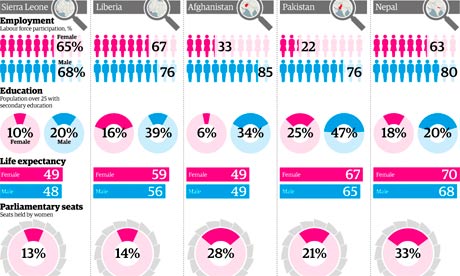
    Last week’s Guardian article entitled Who creates harmony the world over? Women. Who signs peace deals? Men points to some surprising data on female participation in official peacebuilding initiatives. “There have been no female chief mediators in UN-brokered peace talks and fewer than 10% of police officers and 2% of the soldiers sent on UN peacekeeping missions have been women”, reports the article. Furthermore, “fewer than one in 40 of the signatories of major peace agreements since 1992 have been female […] and in 17 out of 24 major accords- including Croatia, Bosnia, Sierra Leone, Burundi, Liberia, Sudan and the Democratic Republic of Congo- there was zero female participation in signing agreements”.

    An excerpt from The Guardian datablog:

    Women and peace deals - key indicators

    The IDS report found that “women are more likely than men to adopt a broad definition of peace which includes the household level and focuses on the attainment of individual rights and freedoms such as education, healthcare and freedom from violence. In contrast, men have a greater tendency to associate peace with the absence of formal conflict and the stability of formal structures such as governance and infrastructure”. It is important to include women in formal peace mediations and agreements as “peace means different things to women and men because of their unique experiences as a result of war”.

    Additionally, the research established that women have a lot of experience, and are principal actors, when it comes to mediating and decision making within the home and the family. Women are also more likely to come together collectively to create change. However, their “experiences building trust and dialogue in their families and communities are frequently dismissed as irrelevant or are not sufficiently valued by national governments, and the international community”.

    Some barriers to women’s participation in peacebuilding include: restrictive social norms and attitudes, violence against women and girls, poverty and economic inequality and inequality in access to education. The report suggests empowering women through access to justice, creating safe spaces for women’s participation and changing attitudes towards peace and valuing women’s contribution as key elements to support women peacebuilding.

    The 2000 United Nations Security Council resolution 1325 calls for “equal participation for women in the maintenance and promotion of sustainable peace”.

    Only yesterday, Foreign Secretary William Hague called upon UN Security Council resolution 1325, announcing to the UN General Assembly that the UK  “will contribute £1 million this financial year to support the Office of the UN Secretary-General’s Special Representative on Sexual Violence in Conflict”. “It’s our purpose in gathering here this morning to ensure that preventing sexual and gender-based crime in conflict and post-conflict situations is an urgent priority for the international community”, William Hague declared, and went on to say “We are convinced in the United Kingdom that we can do more to help […] we can do it as a permanent member of the Security Council, a leading member of NATO, the European Union and the commonwealth and as a nation with one of the most extensive international development programmes in the world.”

    The IDS report states that although Security Council resolution 1325 was passed in 2000, it has since then been almost totally ignored, not least by the UN itself. Hopefully this time, the international community, including the UK government, will take serious steps towards its implementation. At the same time, it is important to commit to preventing sexual and gender-based crimes, not only in “conflict and post-conflict situations”, but also in times of “peace”.

    No sustainable peace and security will ever be possible, if women’s voices are marginalised and if women and men do not work together equally on national and international peace mediations and agreements.

    Anna Alissa Hitzemann is a  Peaceworker with Quaker Peace and Social Witness. She currently works with Oxford Research Group as a Project Officer for the Sustainable Security Programme, with a focus on our ‘Marginalisation of the Majority World’ project.


    IDS, ActionAid, Womankind Worldwide report From the Ground Up can be read here.

    The Guardian, Who creates harmony the world over? Women. Who signs peace deals? Men is available here

    The Guardian, datablog Women’s participation in peace- how does it compare is available here

    Remarks by the Foreign Secretary William Hague to the UN General Assembly can be read here

    UN Security Council resolution 1325 is available here

    Image Source: UNAMID

  • Sustainable Security

    Young people are frequently ‘othered’ in discussions about on conflict. This is a dangerous practice as youths can play a very positive role aiding peacebuilding in societies recovering from conflict.

    The UN World Population Prospects statistics estimate that there are 1.3 billion 15-24 years olds in the world and nearly one billion live in developing countries where conflict is more likely to have taken place.

    In such demographic realities, the potential youths hold for change and positive action is the subject of growing research agenda, and this is particularly the case with the recent wave of social upheavals and humanitarian crises in different parts of the world.

    For much of human social interaction, the category called ‘youth’ has been perceived as a historically constructed social category, a relational concept, and as a group of actors that is far from homogenous. A myriad of factors make childhood and youth highly heterogeneous categories in terms of gender, class, race, ethnicity, political position as well as age.

    They also have multi-faceted roles. Youths can be heroes as well as victims, saviours and courageous in the midst of crisis, as well as criminals in the shantytowns and military entrepreneurs in the war zones. Yet, as a category, youth are often approached as a fixed group or demographic cohort.

    Youth, peace and conflict

    youth-peacebuilding

    Image by CIFOR via Flickr.

    Youths as a conceptual category are frequently ‘othered’ in the discourse on conflict. They are seen as potentially dangerous ‘subjects’ and policy approaches often regard them as ‘a problem’. Often, male youths in the age group 16-30 have been observed as the main protagonists of criminal and political violence. In other words, much of contemporary thinking on youth and conflict tends to be overly negative. It focuses on the dangers posed by disaffected youths as is evident in the negative connotations of the ‘youth bulge’ or ‘at risk youth’ concepts.

    A number of dangerous assumptions about the role, position, and contribution of youths appear to plague thinking among national and international elites driving recovery efforts within societies in transition. The majority of national and international policy pronouncements or security-related programmes in post-conflict and fragile contexts reflect a polarised discourse.

    The young vacillate between the two extremes of ‘infantilizing’ and ‘demonizing’. On the one hand, youths are viewed as vulnerable, powerless and in need of protection. On the other, they are feared as dangerous, violent, apathetic and as threats to security. Youths are subjected to stereotypical images of being angry, drugged and violent and as threat, especially those who participated in armed conflict as combatants.

    On the other hand, recent literature on youth in post-conflict societies marks a shift in thinking about youth. It underlines the agency perspective, and acknowledges the importance of making the connection between youth and peacebuilding for transforming a predominantly negative discourse on the role of youths in societies recovering from conflict.

    Youth as peacebuilders

    The positioning of youth in society has a bearing on their leadership potential and their possible role in peacebuilding. The tension between young and old has been one of the key features of inter-generational shifts pertaining to the control over power, resources and people.

    The tension lies in the palpable impatience of youth, their desire to strive for more, their willingness to be seen as responsible and capable, and the structural barriers to their social mobility. Independence from others and responsibility for others, such as taking care of a family or household, can be seen as defining markers of pre-requisites of social adulthood.

    In this sense, dependency, exclusion, and social or political marginalization become prominent sources of social contest. At the same time, it should be recognised that such societal dynamics, challenges and opportunities vary across different cultural contexts whether it is in Africa, Europe, Asia or Latin America.

    Within the challenging fluidity of post-conflict environments, which are nothing but contexts where the politics of war continue through different means, the young would need to show great ‘navigational skills’ in order to respond to such power dynamics. Their social, political and economic navigation is about their identity transformation as well as the negotiation or re-negotiation of societal norms, values and structures so that they can find a voice and place in the emerging structures of post-conflict environments.

    What needs to be underlined is that youth should be conceptualized and studied as agents of positive peace in terms of addressing not only the challenges of physical violence, but also the challenges of structural and cultural violence, and the broader social change processes to transform violent, oppressive and hierarchical structures, as well as behaviour, relationships and attitudes into more participatory and inclusive ones.

    The key point to remember is that without recognizing youths as political actors, their trajectories in peacebuilding would likely be ignored, wasted and at best, under-utilized. To recognize their agency as a political actor in peacebuilding, there needs to be a comprehensive understanding of their conflict trajectories, and this is particularly important for those young people who have taken direct participation in an armed conflict as combatants.

    To understand the engagement of youth in peacebuilding, first of all, the youth mobilization and reintegration factors such as who they are, what they did before the conflict, how they were recruited, what specific fighting roles they undertook, what they experienced physically, socio-economically and psychologically, during the armed conflict, and what ‘home’ context they will be reintegrating into will all be critical for the youth’s trajectories in peacebuilding.

    Second, the involvement of youth in non-violent politics, and from a wider perspective, the enablement of their political agency in a more positive and peace-oriented role in post-conflict environments, is likely to depend on how these trajectories are shaped by the overall political and governance context.

    Third, the enablement of youth as an active agent in peacebuilding cannot be considered without considering such challenges they tend to face due to the armed conflict such as the loss of education, a lack of employable skills and the destruction of a stable family environment. The wider socio-economic needs of youths are often ignored in post-conflict contexts as they are not seen as a ‘vulnerable’ group.

    Fourth, it is important to provide youths with training opportunities to take an active part in peacebuilding. With their youthful energy and capabilities, and ability of adaptation to new technological trends, for example, youths could act as mediators, community mobilisers, humanitarian workers and peace brokers. Like any particular conflict affected population group, the mobilisation of youths’ capacities requires a targeted and long-term approach.

    At the Centre for Trust, Peace and Social Relations, an annual event called Global Peace Workshop is held in Turkey every year. Around 70-80 young participants from across the world get together in this one-week training, networking and solidarity event, and it is incredible to see the transformation of those young people in a such a short span of time as peacebuilders and start undertaking a wide range of peacebuilding projects in their own communities, schools and work places.

    Fifth, the engagement of youth in peacebuilding in a wider perspective can be ensured through the arts, culture, tourism, sports and education. The innovativeness and creativeness of young people in those areas could be mobilised effectively by connecting them with wider peacebuilding objectives such as building bridges between divided communities and ensuring a viable process of reconciliation.

    There are many examples across the world of the contributions that the young make towards peacebuilding such as the strengthening of community cohesion and reconciliation in South Sudan, civic awareness for peaceful social relations and development programmes in Nepal,  trust-building across different ethno-religious groups in Sri Lanka, and community entrepreneurship and livelihoods programmes in Burundi. Furthermore, the UN Inter-Agency Network on Youth Development  Report entitled ‘Young People’s Participation in Peacebuilding: A Practice Note’ presents a number of policy and programme examples from different conflict affected countries that would facilitate such participation more effectively.

    Finally, in undertaking all of these objectives it is also pivotal to avoid the well-known cliché of referring to youths as the ‘future leaders’. Leadership should not be considered as a factor of age and providing appropriate governance contexts would likely enable young people to flourish as leaders today. In other words, they need to be treated as leaders today without postponing it to an elusive future whether it is in governance in general or peacebuilding programmes specifically.

    To achieve this objective there have recently been a number of critical developments such as the UN Security Council Resolution 2250 on Youth, Peace and Security of December 2015 which makes a clear recognition of positive contributions of youth to peace and sets an overall framework to support their efforts. In May 2016, the UN Peacebuilding Fund started its first Youth Promotion Initiative, which could play a key role to encourage youth leadership in peacebuilding. Therefore, the current trends show that there will be many more similar youth leadership programmes across the world in the near future, but the key point for their successes will depend on whether or not such initiatives can also respond to wider socio-economic, cultural and political barriers that young people face in their quest of becoming an active agent of positive change, peacebuilding and reconciliation.

    Professor Alpaslan Ozerdem is Co-Director of the Centre for Trust, Peace and Social Relations at Coventry University.