Category: 2012

  • Sustainable Security

    The True Finns Party have surged to the forefront of Finnish politics and fundamentally turned the nation’s political discourse in a more nationalist direction. What are the causes of this rise in Finnish populism?

    The populist Finns Party, formerly known in English as the True Finns party (Finnish: Perussomalaiset), rushed to the surface of Finnish politics in the 2011 parliamentary election, snatching a remarkable 19 per cent of the vote. Its charismatic leader Timo Soini positioned himself on the side of the ordinary man and against corrupt elites. Referring to ethno nationalism and Christian social values, Soini emphasized Finnishness and the need to protect the national culture from being contaminated by immigrants and other foreign influences. The Party’s surge to the forefront of Finnish politics has fundamentally turned the political discourse in Finland towards a more nationalist direction. In order to gain a fuller understanding of the drivers behind this growth of Finnish populism, it is necessary to examine Finland’s recent history.

    A sense of suffering

    Traditionally, Finnish society was split on a double axis: urban and rural, landowners and peasants. Through history, it was the bloodiest area in the Nordic region. The Finnish national identity, including a sense of common suffering, was at least partly defined by being locked between powerful and often aggressive neighbours, Sweden and Russia, who repeatedly took turns in dominating Suomi, the Finnish heartland. Nationalistic movements grew strong in the nineteenth and early twentieth centuries and, though it was rather a by-product of the Bolshevik revolution, Finland finally won its independence in 1917. Authoritarian movements soon emerged; for example, the nationalist Lapua movement. Nationalist sentiments were growing fast in the interwar years, but this was also a period of internal conflict, spurring into a full-blown Civil War between authoritarian Nationalists and Social Democratic groups.

    Surviving under constant threat from its eastern neighbour, Finland aligned with Germany for a period in the Second World War. Tensions on the Finnish–Soviet border also grew leading up to the Second World War, breaking into the Winter War between the two in autumn 1939. After showing surprising fighting resilience, Finland had still lost 12 per cent of their land in the war in Karelia. When the Germans invaded Russia in 1941, the Finns fought alongside them, in what is referred to as the Continuation War, in an attempt to regain lost territories in Karelia. They were beaten back by the Soviets once again three years later and devastated by repeated conflicts. Over the course of these repeated and prolonged conflicts a militaristic mentality developed in Finland, still evident in contemporary life.

    Finland emerged humbled from the war, surely with a sense of suffering but also one of perseverance. The country was not only in dire straits economically but also firmly within the sphere of strategic influence of the Soviet Union. Finnish diplomacy revolved around appeasing their powerful eastern neighbour. The geopolitical balancing act, of constructing a Nordic liberal marked orientated welfare state while appeasing the Soviets, paid off, and Finland became a prosperous Nordic state. Crisis, however, hit once again in 1990 when the Scandinavian banking crisis coincided with loss of markets in the East when the Soviet Union dissolved in the wake of collapse of communism.

    Still, Finland emerged from the crisis with a growing self-confidence in international affairs, not only by joining the EU but also by adopting the Euro and seeking a core position with the EU. Finland was a homogeneous country with a low level of immigration. Right-wing nationalist populist politics were thus not prominent in the latter half of the twentieth century. Still, agrarian populist versions existed since the 1960s with a noteworthy support. Right-wing populist parties like those that emerged in Denmark and Norway did not, however, gain much popular support until after the Euro crisis hit in 2009.

    The Finnish Agrarian Party

    Although nationalist extreme-right politics similar to those on the European continent only became prominent in Finland with the surge of the True Finns party in the new millennium, agrarian populism had been present in Finnish politics ever since the beginning of the 1960s. The Finnish Agrarian Party (Suomen Maasedun Puolue – SMP) established in 1959 was founded in opposition to the urban elite and claimed to speak on behalf of the common man in rural Finland, those that they referred to as the ‘forgotten people’ (unohdetun kansa) in town and country, against the detached ruling class in the urban south.

    The SMP exploited the centre-periphery divide in Finland. Its greatest electoral success came in 1970, 1972 and in 1983 when the party won approximately a tenth of the vote each time. Their main appeal was with rural workers and the unemployed, who felt alienated in the fast moving post-war society. In a rapid social structural change, Finland was transformed from being predominantly agricultural to a high-tech communication-based society. The SMP ran into serious financial difficulty and a new nationalist populist party, the True Finns Party, absorbed its remains in 1995. In 2011, the party’s English name was shortened to the Finns Party.

    Timo Soini and the True Finns
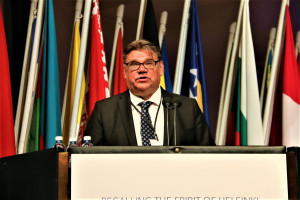
    somio

    Image credit: OSCE Parliamentary Assembly/Flickr.

    In 1997 the charismatic Timo Soini took the helm of the True Finns Party. Soon, the party found increased support, rising from 1.6 per cent in the 2003 parliamentary election to 4.1 per cent in 2007. It was, though, only in wake of the international financial crisis, that the party surged, winning 19.1 per cent of the vote in the 2011 parliamentary election and becoming the third largest party in the country, behind only the right-of-centre conservative National Coalition Party (NCP) and the Social Democrats (SDP). This was also referred to as the ‘change election’ or the ‘big bomb’, when Finnish politics, to a significant degree, came to revolve around the Finns Party and its populist politics.

    The party had increased its vote five fold since the 2007 election, adding full 15 percentage points, which was the biggest ever increase of a party between elections in the Eduskunta, the Finnish Parliament. Its initial rise had, however, started two years earlier, in the European Parliament election of 2009, when the True Finns grabbed 9.8 per cent of the vote. In 2015 the party saw only limited decline in its support, clearly reaffirming its strong position in Finnish politics, and entering coalition government for the first time.

    Previously, the True Finns had been widely dismissed as a joke, a harmless protest movement, and a nuisance on the fringe of Finnish politics. Their discourse was aggressive and rude and the media mostly only saw entertainment value in them. After the 2011 election, however, it had surely become a force to be reckoned with. During the election campaign, they had clashed with the mainstream parties and called for ending of the one-truth cosy consensus politics of the established three parties. The Finns Party had now become a forceful channel for the underclass.

    Contrarily to most similar parties elsewhere, the Finns Party accepted being branded as populist. Soini, however, refused to accept that his party was extreme-right. Contrary to the progressive parties of Denmark and Norway, the Finnish populists never flirted with neo-liberal economic policies. Rather, the Finns Party inherited the centrist economic policy of the SMP. Its right wing populism was thus never socio-economic, but rather socio-cultural.

    Three themes emerged as the main political platform of the Finns Party:

    • First to resurrect the ‘forgotten people’, the ordinary man, to prominence and speaking in their name against the elite;
    • second, to fight against immigration and multiculturalism;
    • thirdly, to stem the Europeanization of Finland.

    The forgotten people

    Finland has been historically prone to polarization; for example between East/West; Socialism/Nationalism; Urban-rich/Rural-poor; Cosmopolitan/Local. Building on the SMP’s politics, the Finns Party kept exploiting the centre-periphery divide, effectively exchanging the agrarian focused populism for a more general cultural divide based on a more ethno-nationalist program. Timo Soini, for example, adopted the phrase of the ‘forgotten people’, which refers to the underprivileged ordinary man, which, he argued, the political elite had neglected.

    The political elite was continuously presented as corrupt and arrogant, having suppressed the ordinary blue-collar man. Positioning themselves against the urban Helsinki-based cosmopolitan political elite consolidated around the south coast, the Finns Party representatives claimed to speak in the name of the ‘forgotten people’, mainly working in rural areas.

    Drawing on traditional Christian values the ‘forgotten people’ were discursively depicted as pure and morally superior to the privileged elite. This sort of moralist stance was widely found in the party’s 2011 election manifesto, including claims of basing their politics on ‘honesty’, ‘fairness’, ‘humaneness’, ‘equality’, ‘respect for work and entrepreneurship’ and ‘spiritual’ concerns.

    The Finns Party was also staunchly socially-conservative on matters such as religion, morality, crime, corruption, law and order. It is thus more authoritarian than libertarian. They are surely anti-elite, but not anti-system. Indeed, it firmly supports the Finnish state, its institutions and democratic processes, including keeping the relatively strong powers of the president to name but one example.

    Finnish ethno-nationalism

    Timo Soini and his followers have offered a clear ethno-nationalist focus, strongly emphasising Finnish national cultural heritage. It was suspicious of Swedish influence, dismissive of the indigenous Sami’s heritage in Suomi – often referred to as Lapps in English – and outright suppressive in regard to the small gypsy population. In a classical populist ‘us’ versus ‘them’ style a running theme of the Finns Party’s disourse was to emphasise Finnishness by distinguishing Finns from others.

    The Finns Party promoted patriotism, strength and the unselfishness of the Finnish people and argued that the Finnish miracle should be taught in school in an heroic depiction; that is, how this poor and peripheral country suppressed by expansionist and powerful neighbours was, through internal strength and endurance, able to fight their way from under their oppressors to become a globally recognised nation of progress and wealth.

    More radical and outright xenophobic factions have also thrived within the party. Jussi Halla-aho, who became perhaps Finland’s most forceful critic of immigration and multiculturalism, led the anti-immigrant faction. He has referred to Islam as a ‘totalitarian fascist ideology’ and for example wrote on his blog in 2008 that, ‘since rapes will increase in any case [with inflow of immigrants], the appropriate people should be raped: in other words, green-leftist do-gooders and their supporters’ He went on to write that prophet Muhammad was a paedophile and that Islam as a religion sanctified paedophilia.

    Many similar examples exist. A well-known party representative, Olli Immonen, for example, posted on Facebook that he was ‘dreaming of a strong, brave nation that will defeat this nightmare called multiculturalism. This ugly bubble that our enemies live in, will soon enough burst into a million little’.

    Many other prominent populist and extreme-right associations also existed in Finland, some including semi-fascist groupings. Indeed, a few MP’s of the Finns Party belonged to the xenophobic organisation Suomen Sisu. In early 2016, in wake of the refugee crisis hitting Europe, mainly from Syria, a group calling themselves Soldiers of Odin took to patrolling the street of several Finnish towns. Dressed in black jackets, decorated with Viking symbolism and the Finnish flag, they claimed to be protecting native Finns from potential violent acts of the foreigners.

    Riding the Euro-crisis

    Finns Party’s rise was helped significantly by their opposition to the EU and the European Central Bank, who seemed powerless in dealing with the Euro-crisis. They depicted the EU as unworkable and claiming that democracy cannot work in the context of supranational EU governance, and that it favoured elites over ordinary citizens in the European countries. There was a clear demand for a EU critical party, a void the Finns Party was happy to fill because the mainstream parties then held a pro-EU stance.

    Leading up to the 2011 elections he Finns Party turned opposition to bailouts for debt-ridden Euro countries into their main issue. That also helped in securing good results in European Parliament elections in 2014, after which they joined the radical-right European Conservatives and Reformists Group (ECR) in the EP.

    After coming into government in 2015 the Finns Party found diminished support in opinion polls. Still, their influence had steadily grown and they had found much greater acceptance than before. They clearly led in the growing anti-EU discourse in the country. Soon, many of the previously pro-EU mainstream parties began to adopt their anti-EU rhetoric, and some, subsequently, also became increasingly anti-immigrant.

    Eirikur Bergmann is Professor of Politics at Bifrost University in Iceland and Visiting Professor at the University of Ljubljana in Slovenia. He is furthermore Director of the Centre for European Studies in Iceland. Professor Bergmann writes mainly on Nationalism, Populism, European Integration, Icelandic Politics and on Participatory Democracy. He has also written two novels which are published in Icelandic.
  • Sustainable Security

    The failure of Pegida to play a direct role in Austrian politics is due to the dominant role that the Freedom Party, with their anti-immigration and Islamophobic discourse, already plays in the Austrian parliament.

    After several rounds to elect the President of Austria, the Austrian electorate recently voted for a president from the Greens with a slight majority of approximately 53% of the votes. The polarized election campaign between a candidate of the right-wing populist Freedom Party of Austria  (FPÖ), Norbert Hofer, and a candidate of the conservative-leftist Greens, Alexander Van der Bellen, was followed by the international press with intense scrutiny. When Van der Bellen, who was backed by the leftist camp and parts of the centrist-right Christian democrats, became president it was largely viewed as a halt to the ongoing success of Europe’s far-right.

    However, the FPÖ was leading in the polls for more than a year as the strongest party-elect, leaving both parties of the coalition, who had ruled the country for 10 years in different coalitions, behind. So in spite of the election defeat, Hofer’s FPÖ remains a formidable force in Austrian politics and gaining 46.7% of the vote represents the party‘s best national election result to date. The strong role of the FPÖ in Austrian parliament since 1999 — which initially had led to a coalition from 2000-2005/7 — was also one of the many reasons, why Pegida, an anti-Islam, far-right political movement originating in Germany, seemed to have not been able to mobilize on Austria’s streets. This is nothing new for Austria’s far right and extreme right.

    Why does Pegida remain marginalised?

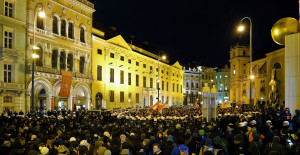
    Image credit: Bwag/Wikimedia.

    Firstly, there is the dominant role the FPÖ already plays in the Austrian parliament. With the help of this central position in national parliament, the FPÖ’s dominance on anti-immigration and Islamophobia issues in the public discourse is uncontested. This is also reflected in policy-making by the ruling parties that attempt to beat the right-wing populist FPÖ by coopting its policy claims. Another reason for the failure of Pegida to mobilize on Austria’s streets was the relative scarcity of individuals capable of mass mobilization outside the spectrum of political parties.

    Similar to Germany, the leadership of Pegida in Austria initially came from the hooligan scene. Although there were some contacts between FPÖ chapters and Pegida and even high-ranking FPÖ politicians participated in the few Pegida marches that only mobilized a few hundred protesters at most, Pegida was not fully supported by the party. The chairman of the FPÖ, Heinz-Christian Strache, even argued publicly: “We are the real Pegida”. Hence, there was no need for a new right-wing movement, goes the logic of the FPÖ. At the same time, Strache embraced the policy claims of Pegida, while clearly stating that these policies had been part of the FPÖ’s program for a long time.

    The FPÖ has been leading in these issues since the 1990s and this has had a lasting effect on the rest of the political parties, especially those in power. The Social Democratic Party as well as the People’s Party, which have both been in power since 2007, have introduced more restrictive policies in the field of immigration, integration, and Islam. And this has shown its effects. For years, the People’s Party has managed to become the first in the polls again, after previously being left behind. A former member of the right-wing populist and leading thinker of the far-right camp, MEP Andres Mölzer, commented on the recent politics of the coalition: “It is very interesting that the Social Democrats and the People’s Party do politics they would have condemned as being racist in the past”. In fact, the current integration law under consideration would introduce a ban of the full-face veil in the public sphere. In addition, the government clarified that it would forbid the wearing of the hijab for Muslim women in the police force, and those working as attorneys in courtrooms.

    Part of a broader trend?

    One could legitimately now ask questions about what the 2016 election, where a far-right presidential candidate was prevented from gaining power, really means for Austrian politics. Considering Trump’s election in the US, an especially pertinent question to ask is if there is some potential for a situation to emerge where those in positions of political power introduce policies in Austria similar to those advocated by Trump in the US. Trump’s racism openly challenges the very foundations of democracy, and yet, as is the case with Pegida in Germany, it managed to mobilize hundreds of thousands of people to protest against this far-right movement. Similarly, Hillary Clinton may have rescued some good politics like Obama’s healthcare, but her presidency would rarely have woken up the people to face the existing problems of racism in the USA. Trump is not a new phenomenon, but rather an outcome of a movement that started long before his rise to power. This is the same in Europe and maybe the risk of having the far right in power will wake people up and force them to reflect upon the normative foundations of their democratic societies.

    Meanwhile, political scientists can observe how formerly fringe positions of right-wing populist parties have become more and more mainstream. In fact, many of the restrictions on immigration, the securitization of Islam, and the cut in social welfare programs have become mainstream politics enacted by so called centrist left- and right parties in power. With this discursive success of right-wing populist politics, one could even argue that their politics can already be seen in many social policies in Western democracies.

    Farid Hafez  Fulbright–Botstiber Visiting Professor for Austrian-American Studies at the University of California, Berkeley. He is a researcher and lecturer at the University of Salzburg, Department of Political Science. Hafez is the founding editor of the Islamophobia Studies Yearbook (www.jahrbuch-islamophobie.de) and since 2015 co-editor of the European Islamophobia Report (www.islamophobiaeurope.com).

  • Sustainable Security

    Aidan Hehir is a Reader in International Relations, and Director of the Security and International Relations Programme, at the University of Westminster. He has published a number of books on humanitarian intervention/R2P including Humanitarian Intervention An Introduction 2nd Edition (Palgrave 2013); Libya, the Responsibility to Protect and the Future of Humanitarian Intervention (with Robert W. Murray, Palgrave 2013); The Responsibility to Protect: Rhetoric, Reality and the Future of Humanitarian Intervention (Palgrave, 2012); and Humanitarian Intervention After Kosovo (Palgrave, 2008).

    In this interview Dr. Hehir discusses the Responsibility to Protect and Libya, post-conflict peacebuilding, the need for UN Security Council reform and the prospect of a UN standing army.

    Q. In 2011, the intervention in Libya was seen as a successful first true test of the Responsibility to Protect (R2P). The Security Council authorized a military intervention citing the R2P and Western leaders justified intervention on the grounds of stopping Gaddafi’s threats of imminent mass murder in Benghazi. However, the recently released House of Commons Foreign Affairs Committee’s report on the Libya intervention has called into question the humanitarian case for intervening. Do you feel that the intervention in Libya ultimately represented more of an abuse of R2P rather than an actual implementation of the doctrine?

    While the 2011 intervention in Libya may well have looked like “R2P in action”, in my view, R2P had negligible influence on the decision to take military action. Naturally, those who believe that R2P influences state behaviour heralded the intervention as evidence for their claims, but I believe they conflated correlation with causation. There is simply no evidence to suggest that the decision of the Security Council was in any way influenced by R2P.

    The reference to R2P in Resolution 1973 mentions only the internal aspect of R2P; in other words, it simply states that the Libyan government has a responsibility to protect its own people. It did not identify R2P as the basis for the action the international community was taking. This determination to avoid using R2P as the justification for intervention, and exclusively referring to it in the context of Pillar I, has been a common theme running through all Security Council Resolutions. Using R2P in this way places the onus on the host state to deal with the issue and thereby enables the Security Council to deflect responsibility away from itself.

    The key influence on the decision to act in 2011 was the statement made by the League of Arab States calling for intervention; this was, as Hilary Clinton declared at the time a “game-changer”. It pushed the previously unwilling President Obama into supporting intervention – albeit in a half-hearted fashion – and also convinced the Russians and Chinese not to block the intervention through the use of their veto. The idea that the League of Arab States was motivated by their commitment to R2P to call for action in Libya is of course implausible; they took this decision on the basis of realpolitik.

    With respect to the French and British position, again a coincidence of factors aligned to convince them to take action; a genuine desire to prevent a slaughter may indeed have been one of these factors, but that in itself was not a sufficiently powerful incentive.

    This is not to suggest that the decision to intervene was inherently wrong or singularly mendacious, but rather that the chorus of delight emitted from R2P supporters was premature. Prior to 2011 there had been instances when collective action was taken in response to a looming or actual intra-state crisis; the problem has always been, however, that these instances are a function of a correlation between national interests and humanitarian suffering. As a result, the record has always been inconsistent. Libya was a case where all the stars aligned so to speak and not evidence of a “new” disposition motivated by a determination to abide by R2P. The manifestly inconsistent record since 2011 highlights this.

    So, the question as to whether it was an “abuse” of R2P is, to my mind, built on a false premise. It had nothing to do with R2P. Of course, the fact that so many of R2P’s proponents declared it to be “R2P in action” has meant that it is widely associated with R2P. Given that the intervening coalition so obviously exceeded the mandate granted by Resolution 1973 – by engaging in “regime change” – and the nature of the chaos in Libya since the intervention, R2P has certainly been tainted by association with the intervention in Libya. But I wouldn’t describe it as an “abuse of R2P” because this gives the concept more credit than it’s due. R2P is a hollow slogan that states insert into speeches every now and again; it’s not in any sense clear what it means, and thus it’s difficult to see how such an inherently malleable, vacuous concept can ever be “abused”.

    Q. Since the intervention, Libya has descended into anarchy and civil war, which the Islamic State is looking to exploit and use as a ‘gateway to Europe’. Do you feel that this situation would have occurred had Gaddafi not been removed?

    The current situation in Libya – the political chaos, the civil war and the presence of ISIS – was certainly avoidable. The manner in which the intervention occurred did not, to my mind, inevitably lead to the post-intervention situation; the fact that the intervening coalition so quickly abandoned Libya, and put their faith in the National Transitional Council, was the key factor in the collapse which followed the intervention. In this sense, I don’t think that Gaddafi’s removal caused the situation we now face; rather the absence of planning for post-Gaddafi Libya was the issue. Obviously his removal left a vacuum that needed to be filled but this was not impossible to do (though it would have required significant political will and expenditure of resources from the intervening states).

    Had Gaddafi not been removed would ISIS have been able to exploit the situation? I think it very much depends. There are two scenarios that could have resulted in him staying in office but really only one is plausible.

    The first scenario that may have seen Gaddafi retain power would have been some form of negotiated settlement; South Africa in particular tried to pursue this during the intervention. The talks were essentially scuppered by the intransigence of both parties; the TNC understandably felt they would achieve more if Gaddafi was forced out of power by NATO, while Gaddafi appeared to be unwilling to cede control. So it’s difficult to imagine that it was in any way possible that a political settlement could have been reached which kept Gaddafi in power.

    The second scenario would have come to pass if there had been no intervention and Gaddafi’s forces had been able to defeat the rebels in Benghazi. While he may have “won” and retained power, the slaughter that would have likely accompanied a Gaddafi victory would surely have generated even more anti-government sentiments and the east of Libya would potentially have become a zone of prolonged civil war. ISIS may well have exploited this and moved into this part of the country. It’s worth remembering that ISIS entered Syria while Assad was in power and therefore the idea that having a “strong man” in power would have prevented ISIS from gaining a foothold in Libya is not necessarily true. Once the uprising in Libya had reached a certain point – certainly by mid-February 2011 – the chances of there being a peaceful return to the previous status quo were negligible. Given Gaddafi’s reluctance to accept that change was necessary, conflict within Libya thus became inevitable and with civil conflict in Libya comes the potential for ISIS to enter the fray.

    That said, it is possible that Gaddafi may have “crushed” dissent in such an emphatic way that rebels fled and “order” was restored. If this had happened then it may well have influenced the Syrian rebels. Given that they were to a large extent encouraged by the experience of the Libyan rebellion – and especially the NATO intervention – a brutal crackdown in Libya may well have tempered their tactics. Obviously, if the Syrian rebels hadn’t engaged in a civil war against Assad, then ISIS would have found it more difficult to enter Syria and naturally that would have meant it would have been more difficult for ISIS to move towards Libya. This “don’t intervene and make the situation worse” is the kind of thinking that Alan Kuperman has advanced. It’s somewhat plausible though it would mean tolerating dictatorship and repression but, given what’s happened in Libya and Syria since 2011 one could certainly make the case that as bad as these are they are preferable to the mass slaughter and prolonged suffering we are now witnessing.

    Q. Ineffective post-intervention planning seems to a recurrent trend and problem. Are there any examples of exit strategies and post-intervention peacebuilding initiates that could be deemed effective?

    It all depends on how one defines “effective” I think. Between 1994 and 2004 expectations regarding the efficacy of post-conflict/intervention statebuilding were ridiculously high. During this period operations were launched in Bosnia, Kosovo, Afghanistan, and Iraq with totally unrealistic aims. Obviously the “reconstruction” in Afghanistan and Iraq failed quite spectacularly but even in Bosnia and Kosovo it would be difficult to class the statebuilding as a success, if judged according to the original aims.

    These experiences were in large part responsible for the far less intrusive statebuilding operation implemented after the intervention in Libya. Yet, while toning down the aims and intrusive nature of post-conflict reconstruction makes sense, in Libya the scaling down clearly went too far. As a result the country spiralled into crisis.

    I think the primary aim for any such operation must be to ensure order; to prevent civil war and provide safety for all groups, ethnicities, religions etc. That naturally requires the presence of foreign troops, which of course raises a number of ethical and logistical dilemmas. But I think the old model of “traditional” UN Peacekeeping where the aim was to simply stop violence – as opposed to new ideas around “peacebuilding” – could work here and it would transfer the operation to the UN rather than ad hoc coalitions of states that – as so apparent in the case of Libya – can become distracted.

    So ultimately, I think we need to be more realistic about what can be achieved after civil war and external military intervention; the key measure of effectiveness should be the suppression of violence and of course maintaining basic welfare provisions such as water, electricity etc.

    Q. Recently, several emerging powers have contributed to the R2P debate with their own versions of global human rights initiatives. What do you feel are the implications of these developments for the future of R2P and, more broadly, global human security?

    None of the BRICS are keen on R2P; each have advanced quite lukewarm positions on it. That said, they have tended to avoid declaring the concept to be “dead” or irrelevant; rather their statements have endorsed those aspects of R2P that cohere with their interests, while ignoring or warning about the others. This has generally manifest as supporting Pillars I and II while rejecting Pillar III (certainly the notion of military intervention).

    I don’t think any state will ever come out and say they think sovereign states don’t have to protect their people from the four crimes, so the BRICS, and others, are happy to declare their support for Pillar I and II as both are predicated on the consent of the host state. In this sense, “declaring support for R2P” actually means reiterating the principle of sovereign inviolability while accepting that the international community should help states that ask for assistance. This is increasingly what R2P has become; an essentially irrelevant reaffirmation of the status quo dressed up to sound ethical.

    Of course, significant differences exist amongst the BRICS; even though Russia and China tend to be lumped together – in large part because of the repeated “double-vetoes” cast over the past five years in the context of Syria – they actually have a quite different approach to these issues. China is a major contributor to UN Peacekeeping missions and has consistently declared its aversion to the use of force; Russia has not had the same level of engagement with Peacekeeping and clearly has a different perspective on the use of force.

    Certainly, as these states become more powerful the likelihood is that R2P will continue its evolution away from anything approximating genuine international regulation of state compliance with human rights; in this sense R2P is likely to continue to exist, but only as an empty phrase used instrumentally.

    Q. You mention Russia and China’s vetoes on Syria, a situation that could be described as one of the worst humanitarian crises of recent times. Does the structure of the Security Council inhibit the consistent application of R2P and, more generally, the enforcement of international human rights law?

    Proponents of R2P often make expansive claims about its transformative impact and revolutionary potential. It is important to remember, however, that R2P has not in any way changed the existing means by which compliance with international human rights law is regulated or enforced. The process by which the international community responds to an intra-state crisis or mass atrocity is exactly the same today as it was prior to R2P. In this sense, the institutional architecture highlighted as problematic by the end of the 1990s – particularly after the intervention in Kosovo – has not been altered.

    In particular, the powers of the Security Council remain unchanged. The Security Council is very obviously a political body; it was designed not as a means by which to ensure justice but rather as a way to maintain order. As a result, the way the Security Council responds to an intra-state crisis – which in effect determines the “international” response – is a product of the P5’s national interests. As a result inconsistency is inevitable; if the P5 are divided there can be no effective coordinated response (as we see in Syria); if the P5 are simply not interested, or indeed support the aggressor state, then there will be no meaningful response (as was the case with Sri Lanka in 2009). Thus, a meaningful, robust response will only ever occur if there is a coincidence between the P5’s national interests and mass human suffering. These are, of course, exceedingly rare occurrences.

    Prior to the emergence of R2P the Security Council’s record was widely criticized as inconsistent; by definition this implies that sometimes the P5 reacted in a meaningful way, but only in exceptional cases. This inconsistency is clearly still in evidence. It is not, therefore, that the Security Council will never – or has never – reacted to a crisis in a timely and effective manner, but rather that they will only ever do so in a highly inconsistent fashion.

    As a result, the scale of the atrocities being committed matters less than who is perpetrating them; some governments will always get away with committing one or more of the four crimes proscribed by R2P as they are allies with one or more of the P5. A good example is Bahrain; it has consistently been shielded from external censure by the US and UK despite its clear record of systematic human rights violations and crimes against humanity since at least 2011.

    When R2P’s more vocal proponents – like Simon Adams – express wounded outrage at the Security Council’s inaction over Syria, their arguments lack credibility; the Security Council was not designed to respond in a timely and consistent manner to intra-state crises. Supporting the systemic status quo while expecting revolutionary change in the behaviour of those who consciously designed the system to enable the realization of their narrow geopolitical interests, is wilfully naive at best. So long as the powers of the Security Council remain unchanged, and the existing international legal order more generally is preserved, there is no way R2P can achieve the highly ambitious goals it has set.

    Q. Reform of the Security Council has arguably been an issue since its inception, but is certainly not an easy matter. Taking into consideration the major obstacles to this process, are there any genuinely plausible pathways to reform?

    As soon as anyone suggests reforming the Security Council there is a collective sigh and a shaking of heads. Clearly it’s been suggested many times and literally hundreds of proposals have been advanced to no avail. It’s not hard, therefore, to be fatalistic about this. Personally, I don’t see the Security Council reforming anytime soon.

    However, I don’t agree that because something is difficult to do or hard to imagine happening it should not be considered; that’s a depressing blueprint for inertia. Historically, there are numerous examples of institutions or governing structures that appeared immutable but later collapsed. Often, existing power structures appeared at their most supremely powerful just before they fell.

    The only hope with respect to the Security Council stems, I think, from the fact that at present there is a huge disjuncture between its behaviour and what is expected of it. During the Cold War few people held out much hope that the Security Council could do anything but that’s changed now; expectations on a number of issues – not least human rights – have been raised considerably in the post-Cold War era. Even with the demise of the West people across the globe still increasingly feel that the “international community” should help free them from oppression. So even the new systemic alignment can’t put that genie back in the box. We are left therefore with a dramatic disconnect between the existing institutions – their remit and behaviour – and the expectations/needs of the people they are established to represent. That is not sustainable in the long-term. In 1945 Hans Kelsen described the UN system as “primitive”; it’s the same system today, but there are some signs that momentum behind change is building, albeit not among the “Great Powers”. It’s important, therefore, to at least consider what the parameters of a new system should be. That’s not utopianism; it’s pragmatic. To scoff at the idea of reform is ultimately to claim that the status quo is in some sense irrevocable; this is both miserably fatalistic and ahistorical.

    Q. You’ve previously discussed the concept of a standing UN army for peacekeeping. What would this force consist of and in what sort of situations would it be deployed?

    People have been writing about a standing UN force since the organisation was established; few in fact realise that this was (and still is) part of the Charter (Article 47). Generally people have written about this in the context of Peacekeeping; as a means to ensure there is a force ready to be deployed when authorisation is given. In certain cases – such as Darfur – the authorisation has been given but the troops have not been volunteered promptly. My suggestion in The Responsibility to Protect: Rhetoric, Reality and the Future of Humanitarian Intervention was to build on the basic idea and mandate the force to also engage in military operations sanctioned without the consent of the host state (in contrast to Peacekeeping deployments). However, simply having an army doesn’t necessarily overcome the problem that its deployment would be a function of the P5’s national interests. There is little point in having a standing army if it can only ever be used if the P5 agree. So my suggestion included the establishment of a judicial body that would be called into action in the event of Security Council paralysis; namely in situations where there is incontrovertible evidence that one or more of the four crimes are being committed by a state, diplomacy has failed and yet the P5 are divided about how to respond. In such situations the matter would be devolved to the alternative body to determine whether a military intervention is warranted. In this sense the body would not take over from the Security Council but rather serve as a substitute for it in particular situations (and only with respects to intra-state mass atrocity crimes).

    Of course, the logistics of this would need to be worked out in detail and I didn’t engage with this in any great depth. My intention, rather, was to defend the principle and outline the contours of the institutional change required. From talking to members of various national militaries, it would seems that there is nothing inherently impossible about forming or deploying a standing international army, in terms of the logistics. The problem of course is the absence of political will. That said, at various General Assembly debates on R2P states have advocated the idea of a standing force and lamented the politicized nature of the current means by which remedial action is authorised. Also, in terms of the P5’s likely response to this, it need not be wholly negative; one could argue that this proposal would not remove their power and status, and in fact in certain cases would take the burden of responding away from them. Obviously, the new body charged with authorising the deployment of this force would never engage in a military action likely to incur the wrath of one or more of the P5; prudence would clearly have to be exercised.

    Ultimately, all legal systems are fundamentally flawed if there is no objective means by which their laws are enforced; there must be a separation between the executive, the judicary and the police/army. Currently, the three are conflated and so it can’t come as a suprise that international law – particularly with respects to human rights – is routinely flouted without censure. This is an unsustainable situation; unless one believes in the immutability of the present system – which, though understandable is as I said earlier ahistorical and fatalistic – it is surely incumbent on those of us unhappy with the present systemic architecture to think about progressive reforms.

  • Sustainable Security

    Green cities smallA recent article on this website entitled The United States, Niger & Jamaica: Food (In)security & Violence in a Globalised World explored some of the possible links between climate change, food insecurity and violence. Many current articles in the media warn of growing food insecurity as global warming and climate change have devastating effects on crops, livestock and even fisheries. A piece in yesterday’s Guardian states that if extreme weather becomes the norm (which it has) then “starvation awaits”.

    Although it is important to recognise that climate change is real and that it is a threat to global security, we should seriously start to focus on what we can do to affect change. Integral to a sustainable security approach is to tackle and address the long-term, root causes of insecurity and conflict. This can easily seem like a daunting task, especially when it concerns “big issues” such as climate change. There are however many things that can be done: some on a policy level, and others on a community level.

    A recent report by the UN Food and Agricultural Organisation (FAO) draws the attention of policymakers to “urban and peri-urban horticulture, and how it can help to grow greener cities in Africa” because “production of fruit and vegetables in and around urban areas has a clear comparative advantage over rural and other sources in supplying urban residents with fresh, nutritious – but highly perishable – produce all year round. It generates local employment, reduces food transport costs and pollution, creates urban green belts, and recycles urban waste as a productive resource.”

    The FAO report says that by the end of this decade, 80% of the world’s fastest growing cities will be African and as more and more people are moving from rural to urban areas in search of a better life, African cities are finding it hard to cope: “more than half of all [African city] residents live in overcrowded slums; up to 200 million survive on less than US$2 a day; poor urban children are as likely to be chronically malnourished as poor rural children”. The report, which draws its conclusions and recommendations from 31 country case studies, suggests that across the Africa continent 40% of residents in cities already have home gardens and “most of these urban farmers are able to meet their nutrition needs and still produce enough to sell in markets”. The commercial production of fruit and vegetables provides livelihoods for thousands of urban Africans and food for millions more. But unfortunately market gardening has grown with little official recognition, regulation or support.

    One way to address food insecurity is definitely to help those most affected by price volatility of food become less dependent on the free market. Formally and institutionally encouraging people to grow some of their own food seems like a great idea, not only for African cities, but for people around the world. London has many community gardens to “support and advocate for food producing gardens and their role in individual and urban food security”.

    Anna Alissa Hitzemann is a Peacework with Quaker Peace and Social Worker, currently placed with the Sustainable Security Programme at Oxford Research Group.

    Image source: Gates Foundation

  • Sustainable Security

    National security and the paradox of sustainable energy systems

    The transition away from a centralised global economy built around conventional energy sources to a decentralised global economy mostly fuelled by renewable resources is one we must make for the sake of our children’s futures and that of our planet. Writing for sustainablesecurity.org, Phillip Bruner asks if national security is at present, deeply concerned with preserving access to conventional energy, then how would national security for a decentralised renewable energy Internet be managed? Who would manage it? And what role, if any, could the public play in helping to alleviate some of the burdens of 21st century threat mitigation?

    Read Article →

    Causes of Conflict: A Strategic Perspective on US–Sino Relations in the Caribbean

    Author and former High Commissioner of Trinidad and Tobago to the Court of St. James, Serena Joseph-Harris writes that China’s increasing regional profile in the Caribbean highlights the challenges now posed to American exceptionalism as Beijing defines its own course in the region. This article focuses on the potential within the Caribbean Basin for the burgeoning proceeds presently derived from increases in the legitimate investment, trade, and commerce emanating from Beijing and Washington to become entwined with illicitly derived funds generated from transnational crime activities, specifically the trafficking of drugs.

    Read Article →

  • Sustainable Security

  • Sustainable Security


    MyanmarPublished last week, Myanmar: Storm Clouds on the Horizon is International Crisis Group’s latest Asia report. It focuses on the potential for political violence and social instability as Mynamar’s leaders are undertaking reforms “to move the country decisively away from its authoritarian past”. For most of the past 50 years, the government of the Republic of the Union of Mynamar (also referred to as Burma) has been under direct or indirect control by the military. Since independence in 1948, the people of Myanmar have suffered civil wars which have mainly been struggles for ethnic and sub-national autonomy. The country has consistently been in the news for human rights violations. Perhaps one of the world’s most well-known political prisoners, the Nobel Peace Prize laureate and opposition politician Aung San Suu Kyi, also chairperson of the National League for Democracy (NLD) was released in 2010 after 21 years under house arrest.



    Thein Sein, current president of Myanmar, has put in place a far-reaching and radical reform agenda. The ICG’s report focuses on what reforms have been achieved and what this may mean for a possible resurrection of violence because “political prisoners have been released, blacklists trimmed, freedom of assembly laws implemented, and media censorship abolished. But widespread ethnic violence in Rakhine State, targeting principally the Rohingya Muslim minority, has cast a dark cloud over the reform process and any further rupturing of intercommunal relations could threaten national stability.” With former political prisoners being released, 2,000 high-profile activists and opposition politicians being allowed to return home, and further liberalization of the media, “social tensions are rising as more freedom allows local conflicts to resurface”.

    The report notes that “The easing of authoritarian controls has created the space for the population to air grievances, the ability to organise in a way that was not possible before, and the opportunity to have a real influence on government policies and decisions” which has led to an “exponential growth in civil society activity”. In order for the transition from authoritarian rule to democracy to be stable, and for peace and security to be sustainable, the government of Myanmar will have to face and resolve major challenges. Widespread militarization and the political and social marginalization (past and present) of ethnic and religious groups will have to be addressed. For example, it has been estimated that the recent 2012 violence between Rohingya Muslims and Rakhine Buddhists in Rakhine State led to an estimated 90,000 displaced people in addition to dozens of casualties. It will not be sufficient to react to past and present violence by allowing more freedom of speech and liberalizing the press. Trying to contain the violence and reducing state repression alone will not address the underlying drivers of insecurity. The government will have to take a sustainable security approach and make great efforts in order to actively address the causes of long-standing grievances. Addressing only the symptoms cannot lead to long-term stability and the rebuilding of trust between communities.

    The ICG offers several options to minimize the risks associated with single party dominance during Myanmar’s political transition. These include changing the electoral system to some form of proportional representation, building coalitions between the NLD and other political parties, and building bridges between the NLD and current president Thein Sein as well as other political forces- particularly the old guard. The ICG recommendations underscore the importance of all parties, and the majority of people, to feel involved in the political process. The marginalization of any political or ethnic/religious groups will most probably lead to further violence and insecurity in the future.

    ICG’s full report and details of the policy recommendations can be read here.

    Anna Alissa Hitzemann is a  Peaceworker with Quaker Peace and Social Witness. She currently works with Oxford Research Group as a Project Officer for the Sustainable Security Programme, with a focus on our ‘Marginalisation of the Majority World’ project.

    Image source: Rusty Steward

  • Sustainable Security

  • Sustainable Security

    Why has the US failed so dramatically in Afghanistan since 2001? Dominant explanations have ignored the impact of bureaucratic divisions and personality conflicts on nation-building in Afghanistan. These divisions meant the battle was virtually lost before it even began.

    This article presents alternative findings about US efforts to construct a stable and prosperous Afghan state. It concentrates on the bureaucratic conflict surging beneath the surface of the mission, which compromised state-building goals and bedevilled the implementation of policies across a wide range of issues linked to law and order, development, governance and counter-narcotics. The fact that internal bureaucratic problems were an important explanation for the lack of progress has been underestimated in the current scholarship. With this in mind it is stressed here that the machinations of the agencies and individuals who make up the US foreign policy bureaucracy must be recognised alongside external factors in order to provide a complete picture of the difficulties and frustrations characteristic of US state-building in Afghanistan.

    Afghanistan: a twenty-first century state-building project

    taskforce-stan

    Image by DVIDSHUB via Flickr.

    Afghanistan has been considered the first major test case for state-building in the twenty-first century. From 2001 onwards, there were some significant achievements as a result of efforts on the part of the United States and its allies. A variety of actors collaborated to sink hundreds of wells and construct many health clinics. According to some estimates, death rates among adult males have declined, and access to clean water has helped to curb disease and improve life expectancy. Millions of Afghan children are now enrolled in schools.

    But given the vast expenditure of the international community these achievements are underwhelming. Close to a quarter of Afghanistan’s population still do not have access to clean water, and nearly half of Afghan children are malnourished. Hunger is widespread and there is rampant unemployment. Schools lack equipment and sometimes even a schoolroom, and sewerage or electricity infrastructure outside of Kabul is practically non-existent.  Corruption is endemic at all levels of government and brutal strongmen, such as the capricious Gulbuddin Hekmatyar, continue to play a central role in national politics. Afghanistan also remains a narcostate that produces an alarming 90% of the world’s heroin with the Taliban now functioning a veritable drug cartel.

    What, then, explains this lack of progress? A smooth transition to Western-style democracy was always an unlikely, given Afghanistan’s ethno-sectarian fissures, economic underdevelopment and institutional fragility. It is now widely accepted that the strength of cultural, religious, and political traditions was underestimated. US insouciance in the years immediately after the invasion, thinly disguised beneath the euphemistic language of having a ‘light footprint’, also contributed to the rise of a ferocious and destabilizing insurgency. This heralded the return of the Taliban as a violent, tenacious and seditious force. In a more general sense, externally generated state-building would have been an ambiguous and difficult process in any country, let alone Afghanistan; the graveyard of empires.

    A bureaucratic tangle

    All of the above issues have been mentioned in media reports and scholarly works. Less attention, however, has been directed to the fact that the responsibilities of the various actors within the US state remained undefined or ambiguous. State-building was compromised by each agency’s unique culture, interests, norms and past experiences; all of which encouraged particular patterns of behaviour. In Afghanistan bureaucratic conflict circumscribed the capacity of the US government to act as a homogeneous and purposeful unit. The impact of this disorder was widespread, but it was particularly problematic in respect to counter-narcotics, law & order and infrastructure projects.

    The US government was not paralysed by the complexity of Afghanistan’s drug problem; however, there was no common conception or understanding of that problem between the relevant parties. During the Bush Administration’s time in office in particular, eradication, interdiction, and the Alternative Livelihoods Program were not subjected to a single calculated counter-narcotics policy, nor was there consensus in regards to the strengths and weaknesses of the three strategies. A lack of leadership from the White House and Congress augmented the capacity of agency rivalry to ensure that the United States failed to pursue a counter-narcotics effort that was united or reflective of Afghanistan’s needs.

    The Bush Administration’s approach to Afghanistan’s drug problem was not only ambiguous but also sporadic, and congressional engagement was not simply selective but also obsessive, advocating short-term solutions that revealed a limited knowledge of the situation on the ground (akin to the 10,000 mile screwdriver). Meanwhile, elements within the civilian wing of the US foreign policy bureaucracy, meanwhile, had their own ideas about Afghanistan’s drug problem. The Bureau of International Narcotics and Law Enforcement Affairs (INL) was influenced by its previous experiences in Columbia and elsewhere, so it prioritized eradication above all else.

    The Drug Enforcement Administration (DEA) favoured interdiction, but much like the INL, the agency struggled to convince other bureaucratic factions that its conceptualization of Afghanistan’s drug problem was the most accurate one. The United States Agency for International Development (USAID) is an actor not normally associated with drug prevention, and it was more concerned with the preservation and protection of its developmental mandate than using agricultural projects to prevent poppy farming. For the US military, counter-narcotics was only valid if it was subordinate to counterinsurgency, and even then both the Defense Department and the US Armed Forces were reluctant to commit resources and manpower to the task.

    The disharmony that plagued the US counter-narcotics program was also characteristic of US efforts to promote the rule of law. US agencies were placed under no significant pressure to initiate rule of law projects by the White House, nor was it in the interest of any agency to spearhead legal reform, given the array of other (often competing) responsibilities that they had already accepted. Other issues took priority: development projects for USAID; diplomacy for the State Department and counterinsurgency for the military. The State Department employed separate contractors and also paid prosecutors on loan from the Department of Justice, who operated independently; while USAID ran its programs through separate contractors. No effort was undertaken by any agency to identify duplicate or conflicting programs and none of them could provide a clear picture of US expenditures.

    Competing ideas about how infrastructure development should be undertaken engendered another web of conflict. Namely, USAID’s perspective clashed with that of the rest of the State Department and US military. USAID considered projects that were conducted by the State Department and the military to be out of tune with the ‘developmental reality.’ Its preference for long-term initiatives coupled with a perceived lack of man-power fostered the impression among military officials that it was ineffective and unreliable. Similarly, the relationship between the State Department and USAID was often characterized by indecision and competing priorities, which precluded the two agencies from establishing a united development front.

    As the insurgency intensified, the US military and the State Department used their influence in Washington to convince USAID to prioritize road-building and agriculture projects in Afghanistan’s most dangerous provinces: Helmand and Kandahar. Often, but not always, USAID yielded to the pressure of more powerful bureaucratic forces and implemented projects that it perceived to be cosmetic. But in order to fulfil these obligations, USAID relied on contractors. These contractors operated in a nebulous area between the private sphere and the foreign policy bureaucracy. They added another layer of confusion to already divided development efforts. Many of the contractors left an array of unfinished school, roads, power supplies and medical clinics. USAID was criticized by the State Department and the US military for delegating projects to Berger, Chemonics and other contractors, but then failing to sufficiently monitor their activities.

    Lessons learned

    No single US official or agency is to blame for the problems outlined in this article, but it meant the battle in Afghanistan was virtually lost before it began. To overcome such bureaucratic conflict, more effort—both in Washington and the field—must be directed toward encouraging a whole-of-government approach to complex foreign policy issues. This should involve staff exchange programs, compulsory inter-departmental meetings and a greater emphasis on aligning interests with policy platforms from senior figures within each agency and, most importantly, the White House. Political will and dedication from the US leadership is certainly essential, but government-based training programs must also infuse prospective US public servants with an understanding of the structure and nuances of the foreign policy bureaucracy in order to promulgate practices that encourage empathy and flexibility. Given the criticism the United States has faced for its state-building efforts in Afghanistan and Iraq, it is unlikely that a similar mission will be attempted in the near future. However, US policy-makers should be careful not to forget these experiences; as was the case following the Vietnam war. The United States still considers ‘fixing’ failed states to be an important foreign policy goal. With is in mind, it is probable a situation will arise requiring the mobilisation of resources and agencies towards state-building. In such a scenario, a cohesive intra-governmental front will be help the US to avoid the bureaucratic disorder that pervaded state-building in Afghanistan.

    Dr Conor Keane has degrees in law and politics, and a doctorate on nation-building in Afghanistan from Macquarie University. His research interests include counter terrorism, state building, bureaucratic politics and US foreign policy. He has published several articles on these topics in journals such as Armed Forces & Society and International Peacekeeping.

  • Sustainable Security

    RC_long_logo_small_4webThis article is part of the Remote Control Warfare series, a collaboration with Remote Control, a project of the Network for Social Change hosted by Oxford Research Group.


    Islamic State (IS) has used aerial drones for reconnaissance and battlefield intelligence in Iraq and Syria and has attempted to use aerial and ground drones with explosive payloads to attack Kurdish troops. IS-directed or -inspired attacks in Australia, Canada, Denmark, the United States and France and failed or foiled attacks elsewhere, including the United Kingdom, have demonstrated the group’s desire to attack targets outside the Middle East. Given that threat is a function of capability and intent, should we therefore be concerned about the possibility of Islamic State or another terrorist group using drones to attack Western cities? A recent report from the Remote Control project and Open Briefing examined this scenario, among others.

    The Drone Threat

    For Hostile drones, the Open Briefing team assessed the capabilities of over 200 commercial and consumer/hobbyist drones capable of operating in the air, on the ground or on or under the sea. Although limited at present, they found that there are consumer drones available today that are capable of delivering an explosive payload equivalent to a pipe bomb (1-4 kilograms) or a suicide vest (4-10 kilograms). Many more could be modified with readily-available components to increase their stated payload capacity. If used in a swarm against the crowd at a major sporting event, for example, they would cause serious injury and multiple fatalities. If one or more of the drones carried on-board cameras to record the event, it would also provide a group such as Islamic State with prime propaganda material.

    Using drones for terrorist attacks has several advantages over conventional methods, including removing the need to convince a suicide bomber to carry out an attack and opening up targets a bomber would not usually be able to access due to security. An attacker would not even necessarily need to weaponise a drone, as the vehicle itself could be used as a projectile to target a light aircraft’s engines on take-off or landing, for example. In addition to attack, Open Briefing identified intelligence gathering as another major capability that drones offer terrorists or insurgents, as demonstrated by Hezbollah, Hamas and Donetsk separatists. For example, Donetsk People’s Republic militias reportedly possess and deploy sophisticated Russian-made Eleron-3SV drones for intelligence, surveillance and reconnaissance (ISR) in eastern Ukraine. Drones provide insurgent groups with an excellent level of battlefield awareness and provide terrorist groups the ability to reconnoitre a target before an attack These same capabilities are also of interest to criminal, corporate and activist threat groups. For example, aerial drones have been used to transport illicit drugs over the Mexico-US border and in April 2015 a man protesting over the Japanese government’s nuclear energy policy landed a drone containing radioactive sand on the roof of the prime minister’s office in Tokyo.

    The same technology Western militaries have been controversially employing to target terrorists in Afghanistan, Pakistan, Yemen, Iraq and elsewhere for years is now being used by various threat groups to target Western interests. This is a prime example of how the tactics and technologies of remote-control warfare have created unintended consequences for those countries that have embraced them.

    Towards Drone Countermeasures

    No single countermeasure is completely effective at limiting the hostile use of drones by non-state actors. Open Briefing therefore proposes the United Kingdom adopt a hierarchy of countermeasures encompassing regulatory, passive and active countermeasures, which provides a layered defence. Regulatory countermeasures include point of sale regulations, civil aviation rules and manufacturing standards and restrictions. Passive countermeasures include early warning systems and signal jamming. Active countermeasures include kinetic defence systems, such as missiles, rockets and bullets, and less-lethal systems, such as projectile weapons and net guns. Each stage of the hierarchy of countermeasures requires government action, but it is the regulatory countermeasures upon which it can affect the greatest change.

    Any changes to the laws surrounding the use of drones need to be proportionate to the risks and balance interests relating to privacy, individual freedoms, safety and commercial interest. In addition to the existing regulations around drones needing to be flown within visual line of sight, below 400 feet and not within 50 metres or a person, vehicle or building, there have been calls from airline pilots and politicians for a registration scheme for consumer drones and for the adoption of firmware limitations that restrict the ability of drones to travel near geofenced no fly zones around sensitive sites, such as airports or nuclear power stations. These are reasonable demands that should be implemented as soon as possible.

    However, these regulations may have limited impact beyond reducing accidental incidents. Unless coupled with some kind of identification/tracking technology built in to drones, a registration scheme would not remove consumer drones from the terrorist arsenal altogether (in any case, such technology would be a step too far in terms of state surveillance and could be easily disabled). What registration would do is impose some control on a presently uncontrolled market and impress upon drone operators the responsibility they must take for their actions. It may also reduce the supply of readily-available drones that could be used for nefarious purposes. In the case of geofenced no fly zones, those wishing to carry out an intentional attack could still purchase open-source controllers that can bypass geofencing, and inertial navigation systems (using dead reckoning) would allow a drone to continue to a static target with reasonable accuracy even if it were possible to jam controller frequencies and GPS signals within the target perimeter. What geofencing would allow is for security to assume that any drone operating within the no fly zone is unauthorised and potentially hostile, allowing them to react appropriately (evacuation and/or deploying active defences).

    Beth Cortez Neavel

    Image of drone by Beth Cortez-Neavel via Flickr.

    There are two further regulations that have received little attention but which should also be considered. Firstly, the payload capacity of the consumer drones available for purchase or import in the United Kingdom without licence should be legally limited to that reasonably required to carry a camera and nothing else. This would mean these types of drones could not be used to carry explosive payloads without further modification. Secondly, owners of commercial drones capable of carrying heavier payloads for legitimate reasons (such as in agriculture or search and rescue) should be legally required to store them securely (in the same way fertiliser must be appropriately secured to prevent its use in homemade bombs, for example). This would prevent the theft and use of drones capable of carrying considerable explosive payloads by terrorists and other threat groups.

    A Layered Defence

    The current regulatory regime around drones in the United Kingdom is very limited. The adoption of the four regulations outlined above would balance the various interests and address specific risks without being unduly restrictive. However, regulations are not a panacea – they would merely limit the ability of terrorists and others to acquire drones with the capabilities needed for attack or intelligence gathering. That is why the government must also work with the police, security services and industry to explore the passive and active countermeasures that are needed to protect VIPs or sensitive sites and ensure that procurement and R&D funding is made available to purchase or develop the required systems. This should include the development of less-lethal systems for destroying or disabling hostile drones in urban environments, where little warning of an attack and the risk of collateral damage limits the usefulness of conventional kinetic countermeasures, such as missiles or bullets. Again, though, this will not be a panacea: the less-lethal systems currently available are of limited effectiveness against one or more fast-moving, small drones. As with all the possible countermeasures, such systems – if coupled with early-warning – would form part of an effective layered defence.

    Ultimately, the regulations and technology needed to reduce the threat from the hostile use of drones are either available now or are under development. The British government has to act now to bring drone regulations up to date and invest in the technologies needed to keep us safe. In the meantime, the threat from the malicious use of civilian drones is only going to increase.

     Chris Abbott is the founder and executive director of Open Briefing (www.openbriefing.org). Matthew Clarke is an associate researcher at Open Briefing. Hostile drones: The hostile use of drones by non-state actors against British targets was published by the Remote Control project on 11 January 2016.