Category: 06

  • Sustainable Security

    Author’s note: In this article, I use the terms “war” and “civil war” interchangeably. They refer to a contested armed incompatibility involving a government and a non-state actor that generates at least 25 battle-related fatalities annually. Whereas ethnic civil wars refer to those armed conflicts that include ethnic challengers that are at odds with the identity of a state, seek to redefine or divide the state itself, or strive for major changes in their relationship with the state ( see Sambanis 2001).

    Under what conditions can religion play a constructive role in peacebuilding and what are the obstacles to this process?

    Religion, war, and peace are among the “thickest” and multifaceted concepts. Thus, tackling the relationship between them is a daunting task and calls for a greater scrutiny.

    A great deal of existing scholarship on civil war, particularly those statistically examining the effects of various social, economic, and political factors on war dynamics, almost exclusively refer to the term “peace” in the negative sense, i.e., the absence of violence. This “narrow” approach to peace is in part driven by its simplicity that allows for large-n cross-national comparison. While useful in reaching generalizable findings, such an approach could potentially mask the underlying causes of war, preventing us from addressing the root causes of conflict eruption.

    Here I refer to peace in the positive sense, or the absence of “structural violence” that calls for going beyond the mere absence of physical violence and points toward “social justice” (see Galtung 1969). This positive or “quality peace,” in the words of Peter Wallensteen, requires the creation of postwar conditions that not only prevent countries from relapsing back into another episode of violence but also allows for security and dignity for the members of the war-torn society.

    How does religion help or hinder the creation of such circumstances? Under what conditions can religion as a powerful, potent force help reinforce and strengthen peace? What are the obstacles to religion playing such a constructive role in peacebuilding?

    A complicated relationship
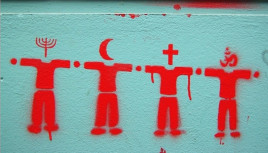
    Photo credit (edited): murdelta/Flickr. 

    A number of scholars have identified religion to be the cause of deadlier, longer, and more intractable civil wars (see Svensson 2007; Fox, James, and Li 2009; Basedau et al. 2011). Yet others have drawn attention to “the seeds of tolerance, justice, compassion, and peace” in religious traditions and argued that religion can help bring about peace and democracy (Johansen 1997, 53; see also Appleby 2000; Driessen 2010).  Religion, as Philpott states, “devastates not only New York skyscrapers but also authoritarian regimes; it constructs not only bellicose communal identities but also democratic civil society.” Thus, this group of scholars concludes that religion can also be used in conflict resolution and peacebuilding processes (see Abu-Nimer 2001; Alger 2002).

    These contradictory findings stem from a number of sources. First and foremost, the literature on the relationship between war, peace, and religion often conceptualizes and measures these concepts from different points of view. In addition to the narrow conceptualization of peace noted above, the question of what entails a civil war and how it should be operationalized has caused much controversy. While scholars often agree on what a civil war is, the casualty threshold used to mark the onset of a civil war, ranging from 25 to 1,000 annual battle-related deaths, has resulted in a number of civil war datasets on which most of empirical findings are based, and that are not always comparable.

    Second, the peacebuilding capacity of religion is applied to cases that are not necessarily analogous. For example, as Nichols argues, religious actors played a positive role in bringing about peace in the conflict between the Sandinistas and East Coast Indians of Nicaragua in the late 1980s through helping to develop a common language of conciliation and infusing Christian values into the negotiating process. Appleby, drawing on the case of Northern Ireland, maintains that religious leaders can gradually “saturate” the society by transforming the conflict environment and issues, condemn violence, and thus foster cross-communal cooperation. However, Appleby warns that such an outcome requires special situations characterized by a strong civil society and democratic tradition as well as assistance from the international community. Partly because of the lack of agreement on the casualty threshold noted above, current literature on civil war often treats the case of the Sandinistas vs. East Coast Indians within the broader conflict between Nicaragua under the Sandinistas and Contras, making it a somewhat “marginal” case. Whereas, the Northern Ireland conflict, as Appleby aptly warns, is characterized by some unique characteristics that are that are rarely present in many war-torn countries.

    Third, existing literature is still in the process of identifying the complex and complicated causal mechanisms between religion and peacebuilding. This is in part due to the ambivalent, contextual nature of religion. Religion and politics are connected in complicated ways that make it nearly impossible to disentangle one from another. A religious tradition as Armstrong summarizes is “never a single, unchanging essence that impels people to act in a uniform way.” Instead, religions and religious interpretations “are susceptible to different readings in different contexts and become entangled in or influenced by newer sociopolitical context”. In the context of civil war, religion often becomes a part of the political arsenal to sustain the fight. As religion turns into another instrument of legitimation and mobilization in the hands of political actors it loses its power as a peacemaker.

    Finally, and relatedly, the politicization of religion is most prevalent in ethnic civil wars in which fighters are lined up along identity lines and rebels are by and large secessionist in goals or desires. Therefore, the effect of religion on conflict processes in a case like Chechnya where Muslim Chechens fought destructive civil wars against Russia dominated by Orthodox Christians needs to be distinguished from the role religion plays in ethnic conflicts that involve groups hailing from the same faith, as in the case of Kurds vs. Turkey. While civil war between groups hailing from different faiths can contribute to identity formation in such a way that fuels the violence, war between co-religionists does not necessarily help foster peace. Instead, religion as the common denominator is often subsumed to ethnic, national identities and interests. The war realities often constrain, if not shape, religion, rendering religion an ineffective peacemaker (Gurses 2015).

    Religion and ethnic civil war

    Nicolas Rost and I have shown that due mainly to this “politicization of religion,” the hypothesized peacemaker role of religion does not hold against a global sample of ethnic civil wars. War and country characteristics, rather than shared religion, are better predictors of peace duration after ethnic civil wars. While the peace duration in our study refers to the absence of violence, in further support of studies that have pointed to discriminatory state policies as the culprit behind ethnic civil war onset and recurrence (Cederman, Wimmer, and Min 2010; Gurses and Rost 2013), we found that the level of discrimination faced by members of ethnic groups that rebelled against their government after the end of the war is the most robust predictor of peace duration. Thus, state policies that address the demands of aggrieved minorities and re-adjust their relationship with the state that could make them a part of the system are more likely to help build sustainable peace. Resorting to a shared religion to help reconcile warring groups without addressing the root causes of conflict is more rhetoric than reality.

    Observations 

    • There is a need to clarify the terms in order to delineate the religion-peacebuilding nexus. The terms war, religion, and peace are multidimensional and hence defy reaching a consensus on the exact nature of religion’s relationship with peacebuilding. Avoiding law-like, general explanations is more likely to be fruitful. Just as religion’s role in identity formation varies, so does the role it plays in conflict onset, duration, outcome, as well as building peace in postwar environments.
    • The role religion plays in peacebuilding should be qualified. Religion in conflicts fought over government, also known as ideological civil wars, could take on a dramatically different role than in conflicts involving competing identities which are often secessionist in nature. While it is much easier for religious actors to mediate between warring groups that share the same ethnicity, speak the same language, and believe in the same “God,” their role is likely to be diminished, tarnished by political considerations in situations where protagonists use religion to either distinguish themselves as a group from one another (e.g., Palestinians vs. Israel) or religion as a common denominator ceases to be a marker that separates members of warring groups (e.g., Acehnese vs. Indonesia, 1976-2005; Kurds vs. Turkey, 1984-Ongoing). Thus sharing the same faith in the context of such ethnic civil wars often results in relegating religion to a secondary role as the war dynamics help bring ethnic identities front and center.
    • Sustainable peace requires addressing structural causes of violence. Merely stressing shared faith as a solution to conflict without undertaking reforms that can re-adjust the warring groups’ relationship with the state is not likely to be effective.

    Conclusion

    Religion is a potent force and can serve as a peacemaker. Its role, however, is contingent upon characteristics of the civil war and the nation in question. It is worthwhile to note that “ethnic conflict remains one of the prevailing challenges to international security in our time” and “conflicts that in some way involve an ethnic dimension can be found across each of the world’s continents”. Furthermore, as Fox notes, of 268 politically active ethnic minorities worldwide for the 1990-1995 period, 163 (61%) are not religiously distinct from the dominant group. Gurses and Rost, building on datasets drawn from two different sources, find that in about half of the ethnic civil wars that started and ended between 1950 and 2006 ethnic rebels shared the same religion as the governing ethnic group. Thus, it is essential to differentiate such cases in which religion is likely to be politicized and used as an instrument of legitimation and mobilization than those cases involving groups hailing from the same ethnicity, culture, and faith.

    Still, religion can serve as a peacemaker by injecting “meaning” and repair social ties that were destroyed during the war. Ideally a change of mind should coincide with a change of heart in order to reach positive or “quality” peace. However, given the discriminatory state policies toward ethno-national minorities that account for armed conflict, concrete measures, a change of mind, should precede a change of heart to build and sustain the peace in the aftermath of seemingly intractable ethnic civil wars. Sustainable peace is a dignified peace. Religion can help bring about sustainable peace only after ethnic minorities’ relations with the state are re-adjusted to a degree that minority groups feel secure and certain of their future.

    Mehmet Gurses is an associate professor of Political Science at Florida Atlantic University. He received his B.A. degree in political science and international relations from Marmara University in Istanbul, Turkey, and his doctorate from University of North Texas. His research interests include democracy and democratization, ethnic and religious conflict, post-civil war peace building, post-civil war democratization, Kurdish politics, and the emergence and evolution of the Islamist parties in the Middle East. His publications have appeared in International Interactions, Social Science Quarterly, Civil Wars, Defense and Peace Economics, Democratization, Party Politics, International Journal of Human Rights, Nationalism and Ethnic Politics, Conflict Management and Peace Science, and Political Research Quarterly.
  • Sustainable Security

    Author’s note: In this article, I use the terms “war” and “civil war” interchangeably. They refer to a contested armed incompatibility involving a government and a non-state actor that generates at least 25 battle-related fatalities annually. Whereas ethnic civil wars refer to those armed conflicts that include ethnic challengers that are at odds with the identity of a state, seek to redefine or divide the state itself, or strive for major changes in their relationship with the state ( see Sambanis 2001).

    Under what conditions can religion play a constructive role in peacebuilding and what are the obstacles to this process?

    Religion, war, and peace are among the “thickest” and multifaceted concepts. Thus, tackling the relationship between them is a daunting task and calls for a greater scrutiny.

    A great deal of existing scholarship on civil war, particularly those statistically examining the effects of various social, economic, and political factors on war dynamics, almost exclusively refer to the term “peace” in the negative sense, i.e., the absence of violence. This “narrow” approach to peace is in part driven by its simplicity that allows for large-n cross-national comparison. While useful in reaching generalizable findings, such an approach could potentially mask the underlying causes of war, preventing us from addressing the root causes of conflict eruption.

    Here I refer to peace in the positive sense, or the absence of “structural violence” that calls for going beyond the mere absence of physical violence and points toward “social justice” (see Galtung 1969). This positive or “quality peace,” in the words of Peter Wallensteen, requires the creation of postwar conditions that not only prevent countries from relapsing back into another episode of violence but also allows for security and dignity for the members of the war-torn society.

    How does religion help or hinder the creation of such circumstances? Under what conditions can religion as a powerful, potent force help reinforce and strengthen peace? What are the obstacles to religion playing such a constructive role in peacebuilding?

    A complicated relationship

    Photo credit (edited): murdelta/Flickr. 

    A number of scholars have identified religion to be the cause of deadlier, longer, and more intractable civil wars (see Svensson 2007; Fox, James, and Li 2009; Basedau et al. 2011). Yet others have drawn attention to “the seeds of tolerance, justice, compassion, and peace” in religious traditions and argued that religion can help bring about peace and democracy (Johansen 1997, 53; see also Appleby 2000; Driessen 2010).  Religion, as Philpott states, “devastates not only New York skyscrapers but also authoritarian regimes; it constructs not only bellicose communal identities but also democratic civil society.” Thus, this group of scholars concludes that religion can also be used in conflict resolution and peacebuilding processes (see Abu-Nimer 2001; Alger 2002).

    These contradictory findings stem from a number of sources. First and foremost, the literature on the relationship between war, peace, and religion often conceptualizes and measures these concepts from different points of view. In addition to the narrow conceptualization of peace noted above, the question of what entails a civil war and how it should be operationalized has caused much controversy. While scholars often agree on what a civil war is, the casualty threshold used to mark the onset of a civil war, ranging from 25 to 1,000 annual battle-related deaths, has resulted in a number of civil war datasets on which most of empirical findings are based, and that are not always comparable.

    Second, the peacebuilding capacity of religion is applied to cases that are not necessarily analogous. For example, as Nichols argues, religious actors played a positive role in bringing about peace in the conflict between the Sandinistas and East Coast Indians of Nicaragua in the late 1980s through helping to develop a common language of conciliation and infusing Christian values into the negotiating process. Appleby, drawing on the case of Northern Ireland, maintains that religious leaders can gradually “saturate” the society by transforming the conflict environment and issues, condemn violence, and thus foster cross-communal cooperation. However, Appleby warns that such an outcome requires special situations characterized by a strong civil society and democratic tradition as well as assistance from the international community. Partly because of the lack of agreement on the casualty threshold noted above, current literature on civil war often treats the case of the Sandinistas vs. East Coast Indians within the broader conflict between Nicaragua under the Sandinistas and Contras, making it a somewhat “marginal” case. Whereas, the Northern Ireland conflict, as Appleby aptly warns, is characterized by some unique characteristics that are that are rarely present in many war-torn countries.

    Third, existing literature is still in the process of identifying the complex and complicated causal mechanisms between religion and peacebuilding. This is in part due to the ambivalent, contextual nature of religion. Religion and politics are connected in complicated ways that make it nearly impossible to disentangle one from another. A religious tradition as Armstrong summarizes is “never a single, unchanging essence that impels people to act in a uniform way.” Instead, religions and religious interpretations “are susceptible to different readings in different contexts and become entangled in or influenced by newer sociopolitical context”. In the context of civil war, religion often becomes a part of the political arsenal to sustain the fight. As religion turns into another instrument of legitimation and mobilization in the hands of political actors it loses its power as a peacemaker.

    Finally, and relatedly, the politicization of religion is most prevalent in ethnic civil wars in which fighters are lined up along identity lines and rebels are by and large secessionist in goals or desires. Therefore, the effect of religion on conflict processes in a case like Chechnya where Muslim Chechens fought destructive civil wars against Russia dominated by Orthodox Christians needs to be distinguished from the role religion plays in ethnic conflicts that involve groups hailing from the same faith, as in the case of Kurds vs. Turkey. While civil war between groups hailing from different faiths can contribute to identity formation in such a way that fuels the violence, war between co-religionists does not necessarily help foster peace. Instead, religion as the common denominator is often subsumed to ethnic, national identities and interests. The war realities often constrain, if not shape, religion, rendering religion an ineffective peacemaker (Gurses 2015).

    Religion and ethnic civil war

    Nicolas Rost and I have shown that due mainly to this “politicization of religion,” the hypothesized peacemaker role of religion does not hold against a global sample of ethnic civil wars. War and country characteristics, rather than shared religion, are better predictors of peace duration after ethnic civil wars. While the peace duration in our study refers to the absence of violence, in further support of studies that have pointed to discriminatory state policies as the culprit behind ethnic civil war onset and recurrence (Cederman, Wimmer, and Min 2010; Gurses and Rost 2013), we found that the level of discrimination faced by members of ethnic groups that rebelled against their government after the end of the war is the most robust predictor of peace duration. Thus, state policies that address the demands of aggrieved minorities and re-adjust their relationship with the state that could make them a part of the system are more likely to help build sustainable peace. Resorting to a shared religion to help reconcile warring groups without addressing the root causes of conflict is more rhetoric than reality.

    Observations 

    • There is a need to clarify the terms in order to delineate the religion-peacebuilding nexus. The terms war, religion, and peace are multidimensional and hence defy reaching a consensus on the exact nature of religion’s relationship with peacebuilding. Avoiding law-like, general explanations is more likely to be fruitful. Just as religion’s role in identity formation varies, so does the role it plays in conflict onset, duration, outcome, as well as building peace in postwar environments.
    • The role religion plays in peacebuilding should be qualified. Religion in conflicts fought over government, also known as ideological civil wars, could take on a dramatically different role than in conflicts involving competing identities which are often secessionist in nature. While it is much easier for religious actors to mediate between warring groups that share the same ethnicity, speak the same language, and believe in the same “God,” their role is likely to be diminished, tarnished by political considerations in situations where protagonists use religion to either distinguish themselves as a group from one another (e.g., Palestinians vs. Israel) or religion as a common denominator ceases to be a marker that separates members of warring groups (e.g., Acehnese vs. Indonesia, 1976-2005; Kurds vs. Turkey, 1984-Ongoing). Thus sharing the same faith in the context of such ethnic civil wars often results in relegating religion to a secondary role as the war dynamics help bring ethnic identities front and center.
    • Sustainable peace requires addressing structural causes of violence. Merely stressing shared faith as a solution to conflict without undertaking reforms that can re-adjust the warring groups’ relationship with the state is not likely to be effective.

    Conclusion

    Religion is a potent force and can serve as a peacemaker. Its role, however, is contingent upon characteristics of the civil war and the nation in question. It is worthwhile to note that “ethnic conflict remains one of the prevailing challenges to international security in our time” and “conflicts that in some way involve an ethnic dimension can be found across each of the world’s continents”. Furthermore, as Fox notes, of 268 politically active ethnic minorities worldwide for the 1990-1995 period, 163 (61%) are not religiously distinct from the dominant group. Gurses and Rost, building on datasets drawn from two different sources, find that in about half of the ethnic civil wars that started and ended between 1950 and 2006 ethnic rebels shared the same religion as the governing ethnic group. Thus, it is essential to differentiate such cases in which religion is likely to be politicized and used as an instrument of legitimation and mobilization than those cases involving groups hailing from the same ethnicity, culture, and faith.

    Still, religion can serve as a peacemaker by injecting “meaning” and repair social ties that were destroyed during the war. Ideally a change of mind should coincide with a change of heart in order to reach positive or “quality” peace. However, given the discriminatory state policies toward ethno-national minorities that account for armed conflict, concrete measures, a change of mind, should precede a change of heart to build and sustain the peace in the aftermath of seemingly intractable ethnic civil wars. Sustainable peace is a dignified peace. Religion can help bring about sustainable peace only after ethnic minorities’ relations with the state are re-adjusted to a degree that minority groups feel secure and certain of their future.

    Mehmet Gurses is an associate professor of Political Science at Florida Atlantic University. He received his B.A. degree in political science and international relations from Marmara University in Istanbul, Turkey, and his doctorate from University of North Texas. His research interests include democracy and democratization, ethnic and religious conflict, post-civil war peace building, post-civil war democratization, Kurdish politics, and the emergence and evolution of the Islamist parties in the Middle East. His publications have appeared in International Interactions, Social Science Quarterly, Civil Wars, Defense and Peace Economics, Democratization, Party Politics, International Journal of Human Rights, Nationalism and Ethnic Politics, Conflict Management and Peace Science, and Political Research Quarterly.
  • Sustainable Security

    Author’s note: This article is a shorter version of a journal article published in the Annual Review of Political Science, 2017. A shorter version of this piece can be read at the Monkey Cage.

    There is a new trend currently underway in the way civil wars are conducted. Dubbed the “new new” civil wars, these conflicts are a source of serious concern for several reasons.

    Something new is happening in the world of civil wars.  After declining in the 1990s, the number of active civil wars has significantly increased since 2003.  Over the past thirteen years, large-scale civil wars have broken out in Iraq, Syria, Libya, Yemen, Chad, the Democratic Republic of Congo, Nigeria, Pakistan, Rwanda, Somalia, Sri Lanka, South Sudan, Chad, Mali, the Central African Republic and Ukraine, while new civil wars threaten to break out in Turkey, Egypt, and Lebanon.

    Post-2003 civil wars are different from previous civil wars in three striking ways. First, most of them are situated in Muslim majority countries.  Second, a majority of the rebel groups fighting these wars espouse radical Islamist ideas and goals.  Third, of the radical groups fighting these wars, most are pursuing transnational rather than national aims.  These three patterns are striking and suggest that we are in the midst of a new wave of civil wars that we do not fully understand.

    In a new article, “The New New Civil Wars”, I argue that these trends are the result of a new and evolving information and communication (ICT) environment.  We now live in a world where citizens and elites operate in an interactive Internet environment, where anyone with a smartphone can easily produce and disseminate material from almost anywhere on the globe.

    The role of the evolving ICT environment

    Image credit: Voice of America News/Wikimedia.

    Instantaneous, global communication is likely to have at least six major implications for civil wars. First, information technology is likely to benefit individual citizens (especially citizens in highly repressive countries) more than political elites in those countries.  Dictators and autocrats will face greater difficulty limiting and controlling the flow of information and the messages their citizens receive. Government elites will also have greater difficulty preventing individuals from coordinating their protest activity.  Citizens are likely to be better informed about the behavior of government officials, the well being of their particular ethnic or sectarian group relative to other groups, and the level and extent of dissatisfaction in society.  The result could be a boon for popular demonstrations and grass roots organizing.

    Second, global Internet campaigns are likely to make it more feasible for rebel groups to form, leading to civil wars with a greater number of warring factions. It used to be that rebel entrepreneurs required a base of local support and financing to make mobilization possible. The Internet has changed this.  Internet media campaigns make it easier for rebel entrepreneurs, especially those with limited local backing, to solicit the soldiers and financing necessary to start a war. This is likely to lead to greater external involvement in civil wars and a larger number of warring factions. The evidence seems to support this: the average number of rebel groups fighting in civil wars has increased over time. In 1950 the average number or rebel groups in civil wars was 8; in 2010 it was 14.

    Third, the new information environment also means that rebel groups are likely to have greater incentives to frame their objectives in global terms, something we have observed with the proliferation of Salafi-Jihadist groups.  First, the Internet allows warring factions to be more ambitious, ignore international borders, and set their sights on affecting large-scale change by drawing on the resources of a globalized world.  Second, the Internet is likely to reward groups such as al Qaida and ISIS with global aims, since they will have a wider audience from which to generate revenue and recruits.  Thus, the new information environment has shifted the advantage from homegrown groups with local bases of support to transnational groups with global networks and connections.

    Fourth, the Internet is likely to make it possible for rebel groups to sustain themselves longer in war.  The decentralized nature of the Internet means that rebel groups will be less dependent on a single source of income or a single patron. If they lose access to one source of income (i.e., coca) or one patron (i.e., Iran), they still have access to millions of potential individual donors.

    Fifth, the Internet is likely to make the spread of civil war more likely. Research has found the civil wars produce a contagion effect (see here, here, and here); once one civil war breaks out, it increases the risk that civil war breaks out in neighboring countries.  One of the implications of a Web 2.0 world is that ideas and ideology are likely to spread more rapidly and more widely.  This occurs in two ways.  The first is directly through the dissemination of information via the web, and the second is indirectly through the recruitment of foreign soldiers.  ISIS and al Qaida, for example, use Internet propaganda to recruit foreign fighters from around the world.  These fighters then receive indoctrination and training, and eventually return home, creating new networks in their native countries.

    Finally, the Internet could potentially eliminate the restraints rebel and government leaders have to target local citizens with abuse.  Studies have found that rebel groups that are reliant on the local population for support or financing are less likely to commit human rights violations.  Conversely, rebel groups that receive significant material support from external patrons are more likely to use violence toward civilians.  Rebel groups in the current civil wars appear to be following this pattern.  In Iraq, ISIS and the al-Mahdi Army both enjoyed significant external financing and all have been significantly more likely to target civilians with violence than groups that did not.  By freeing combatants from the need to solicit local support, the Internet may also be freeing them to engage in more civilian abuse.

    The drivers behind these “new new” civil wars in Muslim countries

    So why has there been a rise in civil wars in Muslim countries, fought by multiple Islamist groups, many seeking transnational aims?  Globally-oriented groups such as al Qa’ida and ISIS formed and prospered in countries that had previously been some of the most information-poor countries of the world.  It was in these countries where the new-found flow of information allowed for an opening for individuals to organize, for rebel groups to link to other groups, and for human capital and war financing to begin to flow.

    Combatants in Muslim countries were also quick to figure out how to exploit ICT to their advantage. They discovered that framing their movement based on an identity that was large (Sunni), wealthy (oil-rich), and ideologically extreme (Salafi-Jihadist) allowed them to utilize the web in ways that brought in more money and recruits than had previously been possible. In fact, the trans-border nature of both the Sunni population and Persian Gulf financing was tailor-made for the Internet age.

    This does not mean that other groups in other regions of the world will not learn how to exploit the advantages of ICT.  My guess is that any group with a large number of international kin (especially wealthy kin) will pursue similar strategies.  Sunnis are leading the way because the benefits of a Web 2.0 world have been easiest for them to tap, but others will follow.

    Conclusion

    The “new new” wars” are characterized by the rise of rebel groups pursuing extreme ideologies, a rise in the number of transnational actors involved in these wars, and the use of goals and strategies directed at global rather than local audiences. These trends are a precursor to a series of changes that are likely to be seen as actors civil war adapt to a new and evolving ICT environment.

    Whilst this piece has outlined the importance of the evolving ICT environment in these “new new” civil wars and theorized about why we are observing the wars in predominantly Muslim countries, much more work needs to be done on this phenomenon.

    Looking forward, a major challenge for scholars and analysts will be to understand the full range of implications that emerging technologies will have on every aspect of civil war and to decipher which groups are most likely to harness this technology, when they are likely to do so, and the conditions under which these new strategies are more or less likely to succeed.

    It is not known exactly how this third wave of civil wars will evolve and which additional groups and countries will best exploit these advances. There is also uncertainty regarding which strategies will turn out to be the most successful and how these strategies are likely to change over time. Nevertheless, what we do know is that the internet will play a bigger, not smaller role, in every decision that is made. Ultimately, gaining a more comprehensive understanding of these “new new” wars be a crucial research enterprise in the future.

    Barbara F. Walter is Professor of Political Science at the School of Global Policy and Strategy at the University of California San Diego. She is an authority on international security, with an emphasis on civil wars, terrorism, and unconventional violence. She received her Ph.D. in political science from the University of Chicago, and held post docs at Harvard University and Columbia University. Walter is on the editorial board of the American Political Science ReviewInternational OrganizationJournal of Politics, Journal of Conflict ResolutionInternational Studies Quarterly, and World Politics. She is also the recipient of numerous grants and fellowships, including awards from the National Science Foundation, Carnegie Corporation of New York, Guggenheim, and Smith Richardson Foundations.

  • Sustainable Security

    Former combatants can play a powerful role in preventing violence, as the case of former combatants in Northern Ireland shows. Former Islamic State fighters could have a role to play in counter-terrorism, however there are potential limits to this.

    The value in re-integrating former combatants in post-conflict environments has been widely recognised in terms of reducing the risk of recidivism and fostering stability in a peace process. While there are examples of former combatant in larger scale post-conflict environments following the path of a de-politicised re-integration into society, there are also examples of former combatants – or ‘former terrorists’ – taking a much more active role in preventing future violence.  Former combatants in Northern Ireland, for example, have had some notable success in delivering restorative justice programmes, de-militarising communities, preventing inter-communal violence and articulating counter-narratives against the use of violence. If former combatants are having some success in preventing terrorism and political violence in Northern Ireland, what are the criteria for successfully utilising former combatants, and does this point to a potential role for former Islamic State combatants in the UK?

    Utilising Former Islamic State Combatants

    The question of utilising former Islamic State combatants is not entirely left-field as there has been a range of voices expression different potential ways of their utilisation to serve preventative ends. One emerging perspective has emphasised how former combatants can play a preventative role, with former MI5 and MI6 chief, Richard Barrett, arguing that they can help explain “why going to fight abroad is a bad idea” and that ex-extremists are often the most successful at “undermining the terrorist narrative.” The ability to use extremists who “renounce violence” and are “genuinely remorseful,” according to this perspective, can provide a credible and persuasive message to stop the flow of people engaging in IS-related terrorism. Terrorism expert Peter Neumann argues that IS defector narratives can encourage others to leave the group and deter others from joining on the basis of their experience and credibility. Subsequently, he has recommended that the U.K. government needs to provide defectors the opportunity to speak out, assist them in their resettlement, and to remove legal disincentives that prevent them going public. An alternative would be to do nothing or continue with the current approach; however former Islamic State combatants are already returning and not all of them are prosecuted. In other words, these former combatant networks exist, they risk solidifying, and will be sharing their views and experiences, therefore it may be more effective in the long-run to co-opt and utilise them for positive ends.

    There is clearly a potential role for former Islamic State combatants in preventing others engaging in such activities. The nature of utilisation could be minimalist (narrative-based), whereby third parties disseminate former combatant narratives. For example, one UK counter-terrorism official mentioned how they have distributed one specific article on Islamic State defector narratives to help people play a preventative role. A more controversial role would be a maximalist approach (narrative and network-based) like in Northern Ireland, whereby former combatants themselves engage in activities with the goal of prevention. Should the UK government consider enabling or facilitating former Islamic State combatants in a preventative capacity?

    Former Combatants as a Conveyor-Belt to Terrorism?

    isis

    Image by Day Donaldson via Flickr.

    One of the potentially biggest arguments against a maximalist approach is that such activities could be counter-productive and could risk serving as a conveyor-belt to engaging in violence rather than act as a fire-wall. A common trend with former combatants is they often do not de-radicalise: while they may disengage from terrorism because of dissatisfaction, disillusionment or burnout, they tend to maintain their ideological views. From this perspective – and endorsed by the UK government’s counter-terrorism policy – even non-violent extremist ideology can encourage others to engage in violence. While the conveyor-belt perspective has been heavily critiqued, the experiences of former combatants in Northern Ireland actually points to a middle-ground between these two perspectives. This consequently contributes to the debate on radicalisation but also on the potential role of former combatants in a preventative capacity.

    The findings of my own research on former combatants in Northern Ireland placed emphasis, not on ideology or attitudes to violence, but the framing process – in other words, how is violence and non-violence represented by actors and how it resonates with an audience, and what structural factors facilitate this resonance. Former combatants in Northern Ireland interact on a regular basis with young people through a number of programmes. Interestingly, despite the former combatants having maintained an ideology similar to violent groups, and despite the former combatants not supporting violence in the current conditions, it was realised that the interaction between former combatants and young people led the latter to view the use of violence positively. However, while this may seem to corroborate the conveyor-belt perspective, it actually showed that it was how former combatants framed violence that produced the conveyor-belt effect, not ideology on its own but also not simply that the former combatants were anti-violence.

    Re-Framing Violence

    In the past, former combatants explained their transition away from violence by framing violence it as conditionally acceptable during the 1960s civil rights protest period and that since these grievances were addressed in today’s conditions that violence was no longer legitimate. There are many reasons why the former combatants re-framed violence in this particular way, and it was particularly effective at ensuring the majority of the Provisional IRA disengaged; however this particular framing of violence to a younger audience without such experiences interpreted the framing as glamourising violence. Reflecting upon this, former combatants actively reframed violence when in dialogue with young people by emphasising the less glamorous aspects of violence more. One study showed that the former combatant reframing of violence in this manner has discouraged young people in engaging in violence. Former combatants were persuasive because they had credibility in the ‘hard to reach’ areas and they maintained narrative fidelity with audiences on ideology and identity.

    The point here is that there is some truth to the conveyor-belt perspective – that former combatants opposed to violence can encourage young people to engage in violence – but it has little to do with the ideology more broadly and much more to do with the framing process between the former combatants and the audience. Those who advocate the conveyor-belt perspective underplay the organisational interests in not having potential members becoming violent. In the Northern Irish case, former combatants had the time to reflect upon the effects of interacting with the younger generation and to engage in a re-framing process. Their reflexivity was encouraged by organisational interest as well as network structures which ensured they would be in regular interaction with young people and an environment in which funding was available to engage in projects.

    Empowering Reflexive Networks

    Thus, ideology is a crude means of determining the success of former combatants in a preventative role. Former combatants can be utilised in this capacity – or at the very least not discouraged – and the enablement of reflexive networks which resonate with young people can act as a firewall to participation in violence. However, there are a number of potential constraints and objections when this is applied to former Islamic State combatants. Working on the assumption that the purpose of counter-terrorism is to ‘counter terrorism’ and not to counter ideologies which a state does not like, and leaving aside the normative dimension of the rights of victims which Alonso excellently covers, the article focuses on two main points on the pragmatism and efficacy of using former combatants to prevent violence.

    Firstly, the UK government’s wholesale adoption of the conveyor-belt perspective makes the provision of funding much more rigid than in Northern Ireland. Interestingly, Northern Ireland’s very own prevent policy in the 1980s curtailed which organisations could receive funding on the basis of their ideology, but this was gradually dropped in recognition that the development of the community route could help to facilitate disengagement. The funding former combatants receive in Northern Ireland is detached from the government, thus increasing buy-in across communities, and the conditions of the funding are pragmatically based (often turning a blind eye to paramilitary behaviour in anticipation that funding and accreditation would incentivise moving away from such behaviour). Ideology is not factored in – alternative identities are strengthened and shown they can be non-violent rather than trying to encourage the ‘centrefication’ of political identities. In the current UK context, similar changes would be required before former combatants and former extremists could be fully utilised.

    A second objection is that the network and community structure – while a crucial factor in determining the efficacy of former combatants in a preventative role – is completely different in the Islamic State context. Former Islamic State combatants are smaller in numbers, they are set apart from their returning communities, and they may be politically disengaged (so why not just leave them like that). However, the size of networks is not important – a network of about a dozen former combatants in Belfast has been sufficient in preventing interface violence. Indeed, following the conveyor-belt logic limits the number of potential partners for the government to work with, in addition to its policies eroding trust through creating the perception of ‘suspect communities’. While the utilisation of former combatants (and extremists) can challenge and disrupt moderate communities, the target audience of these initiatives are individuals this moderate community struggle to meet. Finally, while we don’t know what former Islamic State combatants are doing upon their return, political passivism should not be viewed as a boat not to be rocked. In the case of Northern Ireland, it was the lack of active framing in combination with stories of the Troubles (often told in a social environment) in the context of parents and teachers not actively speaking about the Troubles, which led young people to view violence as attractive.

    Minimalist and Maximalist Roles for Forrmer Combatants

    In conclusion, former combatants can play a powerful role in preventing violence. The factors which determine whether this will be successful is not based on ideology but neither is it solely on whether they are non-violent. The network structure and incentivising environment can enable former combatants to be reflexive of the narratives they impart and how to best re-frame anti-violence narratives to ensure these resonate with young people in ‘hard to reach areas’. Former Islamic State combatants also have a potential role to play, however the lack of an enabling environment would limit this to minimalist interventions in the short term until the infrastructure for maximalist interventions are developed. Maximalist interventions are more effective at resonating with ‘hard to reach’ audiences as they decrease the likelihood of a conveyor belt effect, an effect which is likely to occur without interventions.

    Gordon Clubb is Lecturer in International Security at the University of Leeds and is co-leading the interdisciplinary Radicalisation and Violent Extremism Network. His recent book focuses on Social Movement De-Radicalisation and he has also written on the role of former combatants in preventing violence, how militant groups frame disengagement, and on whether non-violent radical ideology acts as a conveyor-belt to terrorism.

  • Sustainable Security

    Democratic Republic of Congo’s sexual violence epidemic is not only a weapon of ongoing violent conflict but an expression of entrenched systemic problems. Indeed, sexual and gender-based violence (SGBV) is most commonly perpetrated by the security services in place to protect civilians. In Quartier Panzi in South Kivu province, innovative processes of security sector reform and strengthened police-civilian channels of communication may be providing an opportunity for change.   

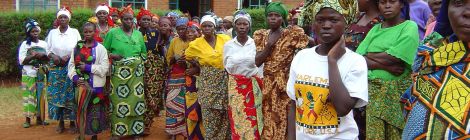
    Meeting of victims of sexual violence in the Walungu, South Kivu in Democratic Republic of the Congo. Source: Wikipedia

    Meeting of victims of sexual violence in South Kivu,  Democratic Republic of the Congo. Source: Wikipedia (from USAID)

    Quartier Panzi—the populous, restive neighborhood of Bukavu, South Kivu province—is renowned in international development circles as the ground zero of the Democratic Republic of Congo’s sexual violence epidemic. Rape as a weapon of war is not so much perpetrated by enemy forces but, most often, by the very parties sent by Kinshasa to protect and serve civilians. Much as Selma, Alabama was to the American civil rights movement, Panzi’s ongoing tragedy has transformed the area into a vibrant arena for grassroots opposition and international solidarity in the fight to restore women’s bodies and lives. Women’s organizations have formed to denounce continued abuses and government denial, to reverse cultural stigmas around female culpability in rape, and to demand trial for Congolese security forces suspected of sexual abuses.

    The courage and commitment of Dr. Denis Mukwege, chief gynecologist at Panzi Hospital and twice nominated for the Nobel Peace Prize, is emblematic of this resilience. International networks like V-Day and Women for Women International support these local actions and fund sanctuaries for survivors, such as the City of Joy. These innovations aim to be restorative and empowering for survivors, focusing on the crisis as experienced by women and girls, offering healing and vocational training options otherwise non-existent. However, the causes of this specific form of cruelty and degradation, rooted in violent masculinities and impunity among security actors, remain unaddressed.

    Rewiring the security sector

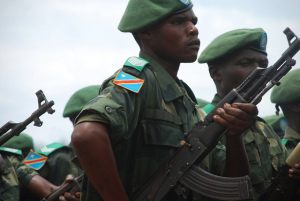
    Congolese soldiers march in Walikale, DRC, 2011. Source: ENOUGH (Flickr)

    Congolese soldiers march in Walikale, DRC, 2011. Source: ENOUGH (Flickr)

    Like any deep malaise, Congo’s rape crisis is but one expression of entrenched, systemic problems. Local witnesses, security analysts and medical professionals who treat survivors present overwhelming evidence that the primary perpetrators are uniformed Congolese security actors. A weak justice system may be responsible for the failure to discipline or punish perpetrators, but the sources of this behavior lie within the security sector itself. Accessing the security elite, Congo’s infamous ‘black box’, is notoriously difficult. As a result, very little analysis exists of the problem from the perpetrators’ perspective: analysis and evidence that deciphers the institutional culture and internal organization of the security sector, or that maps relations between senior officers, politicians and economic actors. By design, opacity reigns supreme.

    A variety of international donors support the national army and police with numerous ‘train and equip’ initiatives, an international cooperation model unchanged since the Cold War.These ‘security development’ partnerships aim to strengthen national capacity through field and classroom training and equipment upgrades; behavior change and public accountability are not part of the approach. Within the security services, there is typically an absence of civilian oversight, and widespread rent-seeking and illicit trade in protected flora, fauna and minerals, but no questions are asked by international partners, as diplomacy and formality dominate.

    Supply-side approaches such as these long pre-date the advent of ‘security sector reform’ among development actors, which does seek behavior change and greater accountability. The older aid modality remains popular with the Congolese leadership because it expressly avoids any calling to account or inculcation of security as a public service and legal right.

    There is state and donor complicity in all of this. Strength without constraint or accountability defines the DRC’s security sector today. Its predatory practices range from unchecked rape and pillage in the East to the repression of free speech and public inquiry, as witnessed by the 2010 murder in Kinshasa of prominent human rights activist, Floribert Chebeya. To placate critics, a military tribunal mounted a kangaroo court in the wake of the murder; the film documenting and exposing its empty theatrics, L’Affaire Chebeya, Un Crime d’Etat, remains banned in Congo.

    Such officially sanctioned practices and attitudes are salient features of the Congolese state since independence, and well known to all Congolese. In the early 1970s, President Mobutu Sese Seko began encouraging civil servants and security forces to ‘feed on the population’ (“Population baza bilanga ya bino). Anecdotes such as these are more than flippant asides; they explain the persistent appeal of this patrimonial compact (across four chapters of Congolese leadership: Mobutu, Kabila père, transitional government, Kabila fils) as a declaration of complicity between political elites and the entire public sector. In its truncated audacity, this single utterance reconfigures and reduces the entire means and ends of the state to elite enrichment and group impunity.

    In Panzi, armed crime and physical/sexual assault reached unprecedented levels in the aftermath of the primary war in South Kivu province. State security had long colluded with local armed gangs, and popular recourse options ranged from individual vengeance to military tribunals, as civil courts are unreliable. Mob justice is also widely practiced. The formation of neighborhood watch groups raised local hopes for improved safety (e.g. SAJECEKForces Vives). Despite their initial popularity, they soon joined local police and armed gangs in perpetrating the very crimes they first sought to oppose.

    How urban police understand this license to extort and harass the population, and the higher interests these practices serve, has been well captured and analyzed by Maria Eriksson Baaz and Ola Olsson. Transforming Congo’s security sector from inside is an elusive challenge, and donors are struggling to develop the programmatic savvy, influence and access to inspire the necessary political will.

    Demand for reform

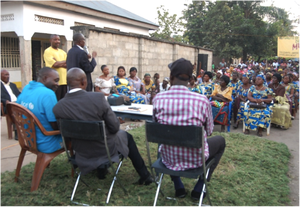
    Community meeting in Kananga, DRC, where security officials and civilian leaders converse directly with local community leaders. Source: DAI Europe (with permission)

    Community meeting in Kananga, DRC, where security officials and civilian leaders converse directly with local community leaders. Source: DAI Europe (with permission)

    The UK’s Department for International Development (DFID) has experimented with alternative supply-and-demand models of public sector reform, and is applying these to the Congolese National Police (PNC). According to this strategy, supply-side ‘train and equip’ assistance targets weak service areas, including the prevention of and response to sexual and gender-based violence (SGBV). This is complemented by efforts to mobilize popular demand for more responsive policing at the community level.

    A particular understanding of the partner institution, the PNC, informed this theory of change. This included the hypothesis that payment of regular salaries would not end extortion and rent-seeking (’tracasseries’) by the PNC, given the scale of these rackets and the enormous sums they generate. With no compelling alternative on offer, and as long as ‘reform’ is understood to involve replacing tracasseries with ‘protecting and serving’, change will elude would-be reformers. Given that such arrangements will not change in the forseeable future, the more nuanced strategy accommodates the reality of low, irregular salaries and uniformed extortion for the foreseeable future, and seeks behavior change through increased public-police interaction. Faster paced improvements in human security and responsive policing began emerging on the demand side of the pilot sites, including Bukavu and Quartier Panzi in particular.

    Launched in Bukavu, Matadi and Kananga in 2009, the Security Sector Accountability and Police Reform Programme (SSAPR) is distinct for coupling its community policing approach with regular neighborhood meetings (forums du quartier) where locally appointed representatives voice their security concerns, identify emerging threats and suspects. It is common for community policing programs to seek a more responsive, service-oriented local police, but SSAPR is distinguished by its effort to cultivate citizen networks at the most local level to identify and articulate their fears, threats and suspicions forward to the actors most able to respond. Police officers, urban administrators, local community and neighborhood leaders then meet regularly in informal, local security councils to discuss proposals for containing a threat or resolving a violent dispute, as equipment and manpower are often lacking. Initiated entirely informally, these experiments in public relations gradually began to change expectations, reinforce collaboration and gain momentum.

    Concurrently, the National Parliament submitted a motion to formalize the Conseils Locaux pour la Sécurité de Proximité(or CLSP, finally passed in late 2013), which recognizes the right of civilian representatives to participate in official security discussions at the municipal level. Over three years, SSAPR legal advisers worked with national parliamentarians to build support and draft a bill. Given the long-standing animosity between politicians and civil society, this new décret was a highly significant opening. The platform has since been incorporated into other police reform efforts (such as the European Union’s EUPOL) that also understand SSR in the Congolese context as primarily a governance challenge requiring civilian involvement.

    SGBV DRC 2

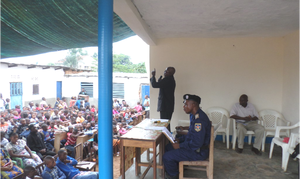
    Community meeting in Kananga, DRC, where security officials and civilian leaders engage directly with local community leaders. Source: DAI Europe (with permission)

    Raising security problems through the CLSP increased dialog between communities and security officials, but who would represent the civilian side? In rough urban neighborhoods like Panzi, citizens experience a host of threats, not all of them equally or in the same way. The SSAPR helped Panzi neighborhood chiefs and community leaders coordinate an informal system whereby youth, women and men would alternately represent their community concerns first to a forum de quartier, then directly on to the CLSP. This neighborhood dynamic continues today across Bukavu’s three communes.

    Making Progress?

    These are small steps toward a more accountable security sector and restored public trust, but has sexual assault around Panzi declined as a result? Recently the SSAPR helped a women’s NGO organize a nocturnal walk through several Bukavu neighborhoods, including Panzi, to record their own safety concerns as well as those of women and girls met along the way. In a recent meeting, NGO members insisted they would never before have visited these neighborhoods, particularly at night, but that the chance to report their findings to a receptive and interested police commisariat justified the risk.

    In response, new light fixtures are planned in darkened alleys where assaults have occurred, and patrols redirected to suspicious areas noted by the NGO delegation. In another pilot city, Kananga (Kasai Occidental), assaults on women and girls who were walking long distances to fetch water, often at night, decreased dramatically after local women lobbied for regular police patrols in these areas. This, in itself, was indicative of a greater local confidence in the police as protectors.

    Community police units are involved in implementing these changes, but they represent a small minority of the PNC. It is unknown if these lower rates of sexual violence are attributable to behavior change among uniformed security or if the increased patrols and better lighting are deterring other possible assailants. Retrospective studies have been conducted, but no consensus exists on the total quantitative extent of SGBV in DRC, where just one in twenty cases is thought to be reported to authorities. Nor are cases raised with the police guaranteed to be registered or pursued. Impunity persists due to a weak national justice system, as well.

    Other insights emerge from this experience, particularly around ‘bottom-up’ approaches to renewed legitimacy in fragile states. In the DRC, where central government continues to stall on commitments to decentralization and provincial institutions exploit this limbo (enrichment via parallel markets; legal and financial opacity) leaving communities in the breach, these small successes show that by investing at the periphery—that most-local interface where citizens and public service providers meet in person—bridges of trust and respect can be built through participatory problem solving. Communities can show resilience and security services can prove they are responsive and effective.

    Edward Rackley is a Security and Governance consultant for the World Bank, based in Washington DC. He provides periodic technical and strategic advice to the SSAPR program via DAI Europe, one of the program’s managing agents. (The views expressed in this article are not necessarily those of these institutions.)

  • Sustainable Security

    Biodiversity conservation is becoming increasingly militarised. Conservationists are learning from the strategies of contemporary warfare, and this is highly problematic for both wildlife and global security.

    Biodiversity conservation and security are becoming increasingly integrated. The recent rises in poaching, especially of high profile charismatic species such as elephants, rhinos and tigers has led to the development of more militarised approaches towards conservation. Rather than producing the claimed win-win-win outcome for wildlife, security and people, it is producing a triple fail. While we are more accustomed to debates around climate change and water wars as the main security risks related to the environment, biodiversity conservation is also increasingly being identified as a critical contributor to national and global security, and biodiversity losses constitute a critical security threat. This is especially the case in current debates about poaching and wildlife trafficking. Conservationists, it seems, are learning from the strategies of contemporary warfare.  This is highly problematic for wildlife and global security.

    Does wildlife trafficking produce threat finance or not?

    Achim Steiner, UN Under-Secretary General and Executive Director of UNEP, recently stated ‘the scale and role of wildlife and forest crime in threat finance calls for much wider policy attention’. The argument that wildlife trafficking constitutes a significant source of ‘threat finance’ takes two forms: first, as a lucrative business for organised crime networks in Europe and Asia, and second as a source of finance for militias and terrorist networks, particularly Al Shabaab, Lord’s Resistance Army and Janjaweed. Yet, a recent report from UNEP and INTERPOL on environmental crime questions the accuracy of the links between ivory and Al Shabaab. The report points out that ivory may be a source of income for some militia groups including Janjaweed and Lord’s Resistance Army; however it also notes that claims Al Shabaab was trafficking 30.6 tonnes of ivory per annum (representing 3600 elephants per year) through southern Somalia are ‘highly unreliable’ and that the main sources of income for Al Shabaab remain charcoal trading and ex-pat finance. In spite of this, the argument persists that there is a link between the illegal wildlife trade and global security.

    Although the value of the global illegal trade in wildlife is difficult to determine due to its clandestine nature, it has been estimated at around US$7.8–$10 billion.  It ranks as the third biggest global illicit activity (after trafficking drugs and weapons). Transnational environmental crimes are often not taken seriously within the broader policy and enforcement community, and so they are perceived as a low-risk and high-reward activity for organised crime networks. However, this is changing, and environmental crimes are rapidly gaining greater attention, and the increasing sophistication of wildlife trafficking networks is a reflection of their link with other serious offences, including theft, fraud, corruption, drugs and human trafficking, counterfeiting, firearms smuggling, and money laundering.

    Major donors are also taking this issue seriously, and funding has been made available for anti-poaching and anti-trafficking initiatives. In 2013 the Clinton Global Initiative announced a commitment to raise US$80 million to combat trafficking and poaching as a security threat in Africa. Private philanthropic foundations have also become involved, as indicated by the US$25 million donation to South Africa from the Howard G. Buffett Foundation to support rhino protection efforts in Kruger National Park. The rise in poaching has also intersected with US security concerns, prompting President Obama to issue Executive Order 13648 on Combating Wildlife Trafficking in July 2013, and in 2014 USAID allocated more than US$55 million for activities to combat wildlife trafficking, up from US$13 million in 2012. These concerns have emerged as a major policy initiative of the UK government, beginning in May 2013 when Prince Charles convened a high level meeting to ‘kick start’ a government response to the rise in elephant and rhino poaching – followed in 2014 by the London Declaration on the Illegal Wildlife Trade, and the development of a DfID/DEFRA £13 million ‘Illegal Wildlife Trade Challenge Fund’.

    Why is conservation being militarised?

    Enough Project Ivory

    Elephant ivory seized from poachers in Garamba. Image by Enough Project via Flickr.

    Conservation practice is being increasingly militarised as a result of this new interest in the security implications of poaching and trafficking. Militarisation can be briefly defined as the extension of military approaches, equipment and techniques to wildlife protection, as well as the deployment of armed forces in conservation activity. Countries with elephant, rhino and tiger populations also regularly invoke the argument that wildlife constitutes an emblematic natural resource, which is central to national heritage. For example, on World Ranger Day in 2015 South African Minister of Environmental Affairs Edna Molewa paid tribute to park rangers by stating that they were protecting rhinos as a key part of the country’s natural heritage. Such appeals to natural or national heritage are also frequently overlain with the argument that states have a moral obligation to protect wildlife. The interesting question is: why is there an increased interest in countering wildlife poaching and trafficking with more militarised responses?

    War on Terror

    First, the integration of security and biodiversity conservation has been extended by the development of a global context centred on security concerns, and this is most obvious in the US-led War on Terror. For states (especially parks and wildlife departments), conservation NGOs, and private conservation organisations, the ability to claim that their activities will contribute to national and global security has provided an important opportunity to justify their continued existence, and to leverage additional funding from donors, governments and private sector. The development of a global context in which security is a leading concern has opened new opportunities to leverage significant resources for conservation. During the 1990s, NGOs in the humanitarian relief sector were increasingly engaged in a competitive market to secure funding and contracts with donors. This dynamic was mirrored in the conservation sector, as detailed by Mac Chapin’s high profile piece for WorldWatch on how the ‘big three’ conservation NGOs of WWF, Conservation International and The Nature Conservancy, had managed to secure the majority of available funding. Competition between NGOs and the dominance of the big three partly explains why conservation NGOs have been so keen to promote the idea that conservation is critical to security. The assumption is that by rendering conservation a security issue, it will allow them to tap in to the greater resources available for security and anti-terrorism initiatives.

    Technological Innovations

    Second, recent innovations in military technology, especially for surveillance purposes, have also driven a demand to find new markets to expand its use (and profitability). This includes the use of drone technology to monitor wildlife populations in areas hit by poaching. The drones can also collect important information on human activity in the area – which is especially welcome in regions where there are concerns about the activity of rebel groups and militias that threaten state (or even international) security. The growing intersections between the two are evident in the development of a new range of surveillance networks which draw together government agencies, international intelligence agencies, wildlife conservation NGOs and private sector risk analysis companies. Such surveillance techniques are used to gather data on individuals and networks suspected of engaging in illegal hunting and trafficking of wildlife products; these use the same techniques associated with counter-insurgency operations, including the extraction of mobile communications data, development of informant networks and use of covert surveillance.

    The rise of private security

    Third, the rise in privatised forms of security in the post-Cold War era is also reflected in biodiversity conservation: private security companies provide training for anti-poaching operations as well as direct enforcement. This can be placed in the context of the growing use of private military companies in international interventions, including Afghanistan and Iraq. This is especially significant because it heralds a new era in conservation, in which national governments permit direct contracts between conservation NGOs and private security companies, with an authorisation to use deadly force under certain circumstances. A good example is the ways WWF has turned to the private sector to deliver security operations in protected areas that they manage on behalf of states. In Dzangha-Sanga National park in Central African Republic, funding from WWF-Netherlands, WWF-US and WWF-International is used to pay for anti-poaching operations and training under the auspices of Maisha Consulting. The company describes itself as a provider of environmental security via special investigations, training and operations in complex security situations. Numerous conservation NGOs have to grapple with complex security situations, especially if they seek to continue their projects and support when conflicts break out, or when militias move into the same area, and PMCs are regarded useful allies.

    The triple fail

    The rise of these approaches is deeply problematic for two reasons: they produce responses that are not effective for countering terrorism and insecurity, and equally they do not help us tackle poaching effectively. Instead they act as counterproductive distractions. The militarisation of anti-poaching including the growth of surveillance techniques and ‘intelligence-led’ approaches, fails to address the dynamics that drive poaching. These include a powerful mix of demand from wealthy communities around the world, poverty, inequality and the lack of opportunities in poorer source countries, the collusion of officials, organised crime networks and private transport companies. Simply focusing on military-style protection of wildlife from poaching is not effective: it can produce short term protection, but ultimately undermines wildlife conservation because it pits local communities against wildlife, reducing support for wildlife amongst people who live with it: the very people conservation ultimately relies on.

    Rosaleen Duffy is professor of the political ecology of development at SOAS, University of London. In September 2016 she joins the Politics Department in the University of Sheffield and will begin a major research project ‘BIOSEC: Biodiversity and Security: understanding environmental crime, illegal wildlife trade and threat finance’, (EURO 1.8 million funded by an ERC Advanced Investigator Award).

  • Sustainable Security

    The Anthropocene denotes a new geological epoch characterized by the unprecedented impact of human activities on the Earth’s ecosystems. While the natural sciences have advanced our understanding of the drivers and processes of global change, the social sciences address the fundamental challenge of governance and politics in the Anthropocene.

    On Monday 29 August 2016, the official Working Group on the Anthropocene reported to the International Geological Congress underway in Cape Town and recommended to adopt the Anthropocene as the official term for our contemporary geological epoch. The suggested term Anthropocene denotes the all-encompassing influence of the human species on our planetary systems. The 35 scientists currently serving on the working group have voted 30 to three in favor of formally designating the Anthropocene, with two abstentions. While this suggestion will be reviewed by further commissions – first by the Subcommission on Quaternary Stratigraphy, then International Commission on Stratigraphy and finally the Executive Committee of the International Union of Geological Sciences – it is a strong signal that something extraordinary is going on.

    When did the Anthropocene begin?

    mongolian-development-bank

    Image by Asian Development Bank/Flickr.

    Geologists of the future might well remember 16 July 1945 as the beginning of the Anthropocene. This day witnessed the explosion of the first nuclear bomb at the White Sands Proving Ground, New Mexico, under the code name ‘Trinity’. The debris from more than 500 above-ground nuclear tests conducted between 1945 and 1963, when the Test Ban Treaty took effect, has created a detectable layer of radioactive elements in sediments all around the planet. However, other potential start dates have been suggested. In their original proposal of the Anthropocene, Crutzen and Stoermer argue for the beginning of the Industrial Revolution in 1750 as an appropriate start date, while others have has suggested an earlier start date around 3000 BC, when agriculture and livestock cultivation intensified and the first centralized political authorities emerged. An intermediary position also exists, for example Lewis and Maslin, who propose the noticeable decline in atmospheric CO2 concentrations between 1570 and 1620 as a good marker for the start of the Anthropocene.

    Beyond its symbolic and metaphoric value, these discussions illustrate the radically different nature of current global environmental change. System Earth is rapidly changing, potentially shifting to life-threatening modes of operation. Climate change, biodiversity loss, disruption of the nitrogen and phosphorous cycles, plastic soup in the oceans and men-made chemicals found in (human) embryos, these are the symptoms and most visible signs of the great acceleration and earth system transformation underway. In other words: space ship earth is on a collision course, and the autopilot has been set by its own crew. The Anthropocene hypothesis has become a rallying call for action in the light of scientific evidence that warns against dangerous global environmental change and the ensuing environmental insecurities produced by systemic tipping-points, feedback-loops and emergent properties of complex systems. The Anthropocene hypothesis also highlights specific challenges for governance: how to deal with the apparent urgency of global change while taking into account scientific and normative uncertainties; how to distribute responsibility in a fair and equitable manner; and finally how to embrace complexity as an ontological category of the Anthropocene.

    Global governance scholars and the Anthropocene

    But how will the field of global governance studies react to the Anthropocene hypothesis? Will scholarship continue down a business-as-usual path, with a disciplinary focus and a narrowly conceived ethical and normative agenda? Or will the field of global governance studies engage in a more radical epistemological and ontological debate? I argue that global environmental governance research is fruitfully challenged by the Anthropocene hypothesis, potentially leading to a reorientation of theory and practice. I see three reasons for this.

    First, the Anthropocene hypothesis calls into question long-held assumptions about the human-nature dualism and has therefore been associated with the end-of-nature discourse. At the heart of most environmental activism over the last five decades lies the conviction that nature exists independent of human agency and that (supposedly) ‘natural’ states of our planet, such as a stable climate system, should be protected. However, if the nature-human dualism is questioned by the advent of the Anthropocene, what does this mean for popular conceptions of conservation, wilderness and sustainability and for environmental politics more generally? In the words of Paul Wapner: “Nature, then, is not a separate realm, as many environmentalists assume but, because it is always interpreted through cultural lenses, is part and parcel of human affairs.” The challenge for global environmental governance scholarship is to scrutinize human agency as part of a broader ‘earth-system’ perspective.

    Second, the notion of the Anthropocene, and the related idea of a unified human force that exerts unprecedented influence on the earth system, challenges governance scholarship in two ways. First, it urges scholars to take a more system-theoretical perspective in order to identify the system-wide drivers of anthropogenic global change and the systemic reactions produced by various social sub-systems. And second, global governance scholarship is urgently needed as a corrective to accounts of the Anthropocene that neglect the fact that human agency is not uniform across the planet, and that contributions to the problem and the distribution of risks and opportunities arising from global environmental change are highly uneven.

    Third, the Anthropocene hypothesis propels governance research to the center of attention, as the question becomes: how can we steer towards socio-natural co-evolution and a resulting safe operating space fur human development? As a result, this position opens up opportunities for genuine interdisciplinarity, in which the social sciences in general and global governance scholarship more specifically are not just a ‘junior partner’ of the sciences, but contribute fundamental insights into drivers, solutions and complex feedbacks between agency, unintended consequences and reactions to these.

    From scholarship to policies

    However, while there are good arguments for adopting the Anthropocene as an official geological epoch and for fruitful engagement from a social sciences and governance perspective, what is less evident is how we will address the challenges associated with the Anthropocene in broader political terms. Governance strategies for the Anthropocene fall roughly into two broad camps: first, a global elitist managerial approach, underpinned by a sense of human ingenuity and epitomized by ever-more vocal calls for geoengineering, an approach that puts some people’s interests before others. Advocates of this vision of the future Anthropocene see potentials rather than threats. On this account, a new glorious epoch is dawning, one of men-made unprecedented progress towards a post-human evolution and eternal future.

    The second vision is more humble and less secure about its eventual success: a bottom-up approach based on cultural and political diversity, equity, fairness and a broader eco-centric ethos. A political vision that favors deliberation over efficiency and fairness over effectiveness and is enshrined already (in broad terms) in the internationally agreed Sustainable Development Goals as part of the global development agenda until 2030.

    While the Anthropocene as a term might be almost universally accepted, the contestations about its political and normative contours have only just begun. The election of the climate change-denier Donald Trump as the 45th President of the United States of America does not leave much room for optimism in this respect. In particular his announcement to withdraw from the international climate change negotiations (in one or another form) calls into question some of the modest signs of progress that we could witness recently. This should motivate everyone interested in shaping the Anthropocene to get involved in the necessary and difficult debates about how we want to shape our common future.

    Philipp Pattberg is professor of transnational environmental governance and policy at VU Amsterdam, The Netherlands. He specializes in the study of global environmental politics, with a focus on climate change governance, biodiversity, forest and fisheries governance, transnational relations, public-private partnerships, network theory and institutional analysis. Pattberg’s current research scrutinizes institutional complexity, functional overlaps and fragmentation across environmental domains (http://fragmentation.eu/). At VU Amsterdam, Pattberg heads the Department of Environmental Policy Analysis, a team of more than 25 researchers that was evaluated in a 2014 international review as ‘world leading’ and as being ‘one of the highest profile academic research groups involved with sustainability governance from around the world’.

  • Sustainable Security

    Since the 9/11 attacks, and the ensuing “war on terrorism,” the U.S. government has engaged in a series of controversial counterterrorism policies. One such policy has been targeted killings, which have been used to try and eliminate the senior leadership of the global jihadist movement. How effective has the practice been?

    The recent high profile terrorist attacks perpetrated in the U.K. have generated a resurgence in the debate surrounding counterterrorism tactics. Targeted killings, defined by Alston as the “intentional, premeditated and deliberate use of lethal force, by States or their agents…against a specific individual who is not in the physical custody of the perpetrator,” are one such tactic; frequently employed, yet extremely controversial.  This practice most often takes two forms: kill/capture missions and unmanned aerial vehicle assaults (UAVs). Certainly the most well known of the former is that of the May 2nd, 2011 Navy SEAL raid on Usama bin Laden’s Pakistan compound. The use of UAVs has become much more common, with a recent Director of National Intelligence report indicating that 473 drone strikes had resulted in the deaths of around 2,500 terrorists and between 64-114 civilians.  Such civilian fatalities, criticized by independent organizations to be a low estimate, illustrate the largest criticism of the policy; that it can be, as it is even from China’s perspective, “a blank space in international law (that is) subject to abuse”.

    These issues have kindled a spirited discussion among scholars, but have yet to influence the policy’s role as a favoured strategy amongst policymakers.  Former President Obama, whose administration was responsible for the program’s significant expansion, declared just last year that “none of ISIL’s leaders were safe” and they were “going to keep going after them”. President Trump has also indicated that he plans to continue with the program, recently noting that “the terrorists and extremists and those who give them aid and comfort must be driven out from our society forever”.

    It would seem that the moral and legal consequences of targeted killings have been, at the very least, overlooked given the intense focus and leeway that has been granted to combating the global jihadist movement (GJM). However, this preference for the use of targeted killings as counterterrorism has become increasingly hard to rectify given the mounting lack of empirical evidence to support its effectiveness.  Indeed, a host of previous investigations into contexts both within and outside of the GJM has yielded a complex picture. This picture is one that does not necessarily indicate resounding ineffectiveness, but one that does not garner particularly strong support for the strategy either. Rather, conclusions regarding the capability of targeted killings vary by how the incident is perceived (discriminate vs. indiscriminate violence), what outcome is studied (group desistance; frequency versus severity), the type of leader killed (position in the group; presence of a tribal elder), and characteristics of the organization (size, structure, and ideology).

    Evaluating effectiveness

    Image credit: U.S. Air Force photo/Lt Col Leslie Pratt.

    Taking into account these nuances, my own work demonstrates that this policy has largely failed to decrease GJM-related terrorism, utilizing the Global Terrorism Database’s definition of, “the threatened or actual use of illegal force and violence to attain a political, economic, religious, or social goal through fear, coercion, or intimidation.” Rather, such killings, in the form of both kill/capture and UAVs, have been unsuccessful at decreasing the especially noxious outcomes resulting from jihadi terrorism; namely, casualties, along with the more detrimental attacks involving high civilian deaths and suicide attackers. Perhaps even more disconcerting, the deaths of certain al Qa’ida leaders like that of al-Awlaki, the infamous cleric responsible for many a terrorist’s radicalization, have led to an increase in incidents, or a backlash effect.

    Examining a slightly varied predictor in the form of monthly killings has yielded similar conclusions, again in the form of an increase in casualties. Still other al Qa’ida leaders’ deaths have produced decreases in terrorism incidents, while at the same time increasing other types of attacks. This displacement phenomenon is not new to studies of crime and terrorism, but adds to the general conclusion that targeted killings have yet to render consistent successes.

    While I have also discovered support for the notion that targeted killings are an effective deterrent, these findings are largely outweighed by the above. It would appear that this tactic, as one of the leading scholars on leadership decapitation Jenna Jordan notes, “is not enough to effectively fight a strong and emboldened terrorist organization.” Nevertheless, it may be too early to designate targeted killings a complete failure.  As Brian Forst has argued, “a failure to find is not at all the same as a finding of failure.” Certainly, other research has noted the short-term benefits like those present in the work of Patrick Johnston and Anoop Sarbahi, the lack of attacks on the U.S. Homeland, and the possibility that there are other purposes to the policy like that of retribution.

    Although not directly assessed in my work, the totality of countermeasure evaluations have become increasingly supporting of Laura Dugan and Erica Chenoweth’s contention that conciliatory, rather than punitive efforts, are the key to fighting terrorism. Actions like that of removing curfews, releasing prisoners, or even meeting to discuss issues have demonstrated their effectiveness in decreasing violence within the Israel-Palestine conflict. Even investigations outside the context of terrorism, like Matthew Dickenson’s study of Mexican drug-traffickers, are similarly reflective of the idea that incentives rather than punishments offer the most promise. Specifically, Dickensen has suggested that improving both the economic and law enforcement environments are better counter-narcos strategies than that of leadership removal. Jordan has also suggested that al Qa’ida’s organization, which tends to be bureaucratic, and its communal support, have been integral to its ability to rebound from killings. While such killings have the potential to affect the former, it is the opinion of this researcher that conciliatory efforts may have the best shot at addressing the latter.

    Conclusion

    All in all, and given the issues surrounding terrorist negotiation coupled with an ideology that is fraught with human rights’ violations, conciliatory actions are likely to remain unpopular. As the U.S. continues to fight a movement that has been responsible for a quarter of all deaths and injuries from terrorism, the policy of targeted killing is likely to remain.  Perhaps, at the very least, this strategy could be coupled with other efforts that address the larger causes and correlates of terrorism, like that of larger macro-level predictors.

    Jennifer Varriale Carson is an Associate Professor of Criminal Justice and the Coordinator of Undergraduate Research at the University of Central Missouri.  She holds a Ph.D. from the University of Maryland in Criminology and Criminal Justice.  Her work focuses on policy evaluation, particularly the use of quasi-experimental methods in assessing counterterrorism efforts, and can be found in a number of outlets including Criminology and Public Policy, Journal of Quantitative Criminology, and Deviant Behavior.

  • Sustainable Security

    One of the leading sources of refugees in Europe is the impoverished east African nation of Eritrea. What role has the international community played in this crisis?

    Eritrea’s relationship with the international community (IC) has always been complicated. Eritreans see the IC’s history with their nation as one fraught with violation, neglect and, perhaps above all else, multiple betrayals. The first betrayal is seen to have taken place during the 1940s decolonisation process when Eritrea, against the wish of its people, was tied with Ethiopia in a UN enacted federal arrangement. The second betrayal occurred when the UN, who sponsored the federal arrangement, looked the other way when the Emperor of Ethiopia annexed Eritrea in violation of the arrangement. This was followed by another betrayal when the IC kept silent during the thirty years Eritrean War for Independence. Yet another betrayal occurred when the guarantors and witnesses of the Eritrea-Ethiopia Boundary Commission abdicated their responsibility to ensure its implementation. The recent imposition of sanctions by the IC on Eritrea added to this feeling of betrayal. All these events have certainly generated a psychology of victimhood among Eritreans and a belief that that the IC have sacrificed the interests of its people for geostrategic interests and politics. The IC’s response to Eritrea’s refuge crisis represents the latest chapter in this history of betrayal.

    This article argues that both the actions taken and those not taken by the IC contributed to the refugee/migration crisis in Eritrea. The actions taken included imposing sanctions and a concerted effort to isolate the country, while actions not taken include failure to implement a binding and final verdict of the International Court of Arbitration.

    Causes of the Exodus from Eritrea

    In recent years, the world has witnessed an unprecedented flow of people from Eritrea. The exodus, which has picked up momentum is the outcome of several factors that have been accumulating over the years. Relative to its population size, Eritrea has produced the largest flow of refugees/migrants in the world. What is driving people to leave the country in such large numbers? There are multiple causes of the exodus.

    • The no-war no-peace situation
    • The implementation of indefinite national service
    • A harsh political environment
    • Major economic difficulties such as mass unemployment
    • A lack of future opportunities and prospects for the country’s youth
    • The imposition of sanctions
    • A blanket asylum provision by host countries

    The rejection of the International Court of Arbitration verdict on the border issue by Ethiopia generated a no-war no-peace situation. The peace agreement was supposed to lead to peaceful coexistence between the Eritrea and Ethiopia. This no-war no-peace situation created constant tensions, a fear of an outbreak of war, and occasional engagement between the armies of the two countries along their common border. This means Eritrea has had to put itself in a constant state of high alert. It also compelled the Eritrean governement to extend its national service indefinitely. The majority of capable labour forces in the country are therefore tied to the national service system. Consequently, the economy suffered immensely because of a lack of a sufficient labour force. The youth who are in the national service have to pay a high price. They do not get proper salary; and they are not able to pursue a normal social and working life which could include education, building and supporting family, accumulating wealth, etc.

    The political environment has also hardened considerably. The country has been under an undeclared state of emergency since 2000. Gradually, the political climate became more authoritarian and less plural: political opposition was not tolerated; deviant views and political differences were perceived as dangers to national unity, stability and survival. Therefore, dissidence was harshly dealt with. Many ended up in prison accused of betraying or endangering the security of the nation. The economy, which was slowly recovering from the thirty years of independence war, suffered immensely from the two-year border war (1998-2000) between Eritrea and Ethiopia and the no-peace no-war situation. A major part of state budget now goes to military expenses and staggering unemployment overshadows the nation. What was primarily a subsistence economy spiralled down due to a shortage of an able workforce.

    The UNSC imposed sanctions further exacerbated the economic difficulties because they discouraged external investment and other bilateral relations with the wider world, particularly the West. The international community’s policy is geared towards isolation in order to force the Eritrean government to change its policy; however it achieved the opposite effect. Eritrea has been described as “hell on earth” and this was used to justify the blanket asylum provided by European governments. This open asylum policy further attracted a greater number of asylum and refugee seekers, even children who are not affected by the national service appeared at the doors of European countries claiming that they were fleeing from national service.

    Abdication of Responsibility

    The international community, represented by the UN, AU, EU and USA, assumed the responsibility of implementating of the of the EEBC’s verdict which it helped broker. The two-year war between Eritrea and Ethiopia was ended through the signing of the Algiers Agreement in December 2000. The UN AU, EU and USA put down their signatures as witnesses to and guarantors of the agreement. The main provisions of the agreement were:

    (i) The establishment of the Eritrea-Ethiopia Border Commission (EEBC). The EEBC consisting of eminent international judges was mandated to demarcate and delineate the border between the two countries. The EEBC was instructed, “The Commission shall not have the power to make decisions ex aequo et bono” (Article 4(2), Algiers Agreement 2000).

    (ii) That the verdict be final and binding. With regards to guaranteeing the implementation, the Cessation of Hostility Agreement of June 2000 notes, “The OAU and the United Nations commit themselves to guarantee the respect for this commitment of the two Parties until the determination of the common border on the basis of pertinent colonial treaties and applicable international laws” (Article 14).

    This guarantee shall be comprised of measures to be taken by the international community should one or both of the parties violate this commitment, including appropriate measures to be taken under Chapter VII of the United Nations Charter by the UN Security Council (Article 14 (a).

    The EEBC, per its mandate, issued its verdict on 13 April 2002 where it was stipulated to be implemented within a year, but to date it is still awaiting acceptance by Ethiopia. The verdict awarded the flashpoint of the conflict, the village of Badme, to Eritrea. Upon realising the decision, Ethiopia rejected it, calling it illegal, irresponsible and unjust. When the EEBC concluded its work in 2007 and announced that the border was virtually demarcated and the issue closed, the Prime Minister of Ethiopia called it legal nonsense and requested a renegotiation. The witnesses and guarantors, instead of honouring their solemn commitment and invoking Chapter II of the United Nation Charter, opted for appeasement. Indeed, US officials actively and systematically engaged in devising ways of renegotiating the verdict, particularly, Jandyi Frazer, George Bush’s Assistant Secretary of African Affairs, and Suzan Rice, Obama’s ambassador to the UN, who both played an important role in undermining the EEBC verdict.

    Eritrea is of the opinion that the border is delineated and demarcated, and therefore feels that Ethiopia should vacate from the Eritrean territories it illegally occupies. The juxtaposing Ethiopian stance is that the border issue can only be settled through bilateral dialogue, a position that declares the EEBC verdict null and void. Ethiopia has violated UNSC resolutions ordering it to implement the verdict without any consequence. This is because the USA tacitly sides with Ethiopia. Following the footsteps of the USA, the UN, AU and EU remain silent on the issue allowing the festering stalemate to continue with all the consequences effecting the people of the two countries and the region as a whole.

    The International Community’s Double Standards

    N0027571 Life in Eritrea, North Africa, refugee ca

    Image credit: Wellcome Images/Flickr.

    After signing the agreement of cessation of hostility in Algiers, in December 2000, the parties directed their attention to conducting proxy wars. Both governments were actively involved in support of opposition to each other’s government in the hope of weakening or even deposing. In addition, they intervened in neighbouring countries. Somalia became the obvious victim of the proxy war between Ethiopia and Eritrea. While Eritrea ended up supporting Union of Islamic Court (UIC), Ethiopia sided with warlords and the Transitional Federal Government (TFG). Finally, Ethiopia invaded Somalia in December 2006 and vanquished the UIC. This contributed to the emergence of al-Shabaab , a radical Islamic extremist group operating in Southern Somalia.

    Proxy war has become a rule rather than exception in the Horn of Africa. What has also become a rule is the international community (IC), mostly driven by geostrategic interest of the big powers, punishing and rewarding regional actors participating in wars highly selectively. Many scholars have purported that the Ethiopia-Eritrea conflict is the epicentre of conflicts in the Horn of Africa. This means settling the Ethiopia-Eritrea conflict would go a a long way in helping the larger endeavour to settle all the intricate conflicts in the region. In this respect, it will be in the interests, as well as part of the moral, political and legal obligation, of the IC to address the conflict. There is an obligation the IC to be even-handed, objective, neutral and balanced in treating its members. The reality is, however, that the IC practices double standards and its dealing with Ethiopia and Eritrea is a vivid testimony to this double standard.

    Eritrea was accused of supporting al-Shabaab and destabilising the region. But most of the evidence for Eritrea’s involvement ironically originates from Ethiopia. For the last five years, the Somalia-Eritrea Monitoring Group (SEMG), established to check that the sanctions are not violated, has not found any evidence that Eritrea is supporting al-Shabaab, yet the sanctions have not been lifted. As stated, Eritrea supports Ethiopian opposition groups as Ethiopia supports Eritrean opposition groups. Eritrea supported UIC when Ethiopia invaded Somalia. Ethiopia frequently attacks targets inside Eritrea; it openly threatens to depose the Eritrean government, which is against international law. Eritrea violates human rights as does Ethiopia. However, it is only Eritrea that is under UNSC sanctions and being subjected to isolation from the international community. Ethiopia is considered an indispensable ally of the US global war on terror, therefore it is excused of whatever misdeeds. This is a double standard that damages the credibility and integrity of IC, particularly the UN.

    Conclusion

    The no-war no-peace situation created a serious sense of insecurity, tension and instability in Eritrea. This in turn necessitated the implementation of indefinite national service in order to not only to defend the country from Ethiopian invasion, but also to ensure the economic and social survival of the nation. Tying the able-bodied Eritreans to national service deprives the economy of vital labour force. This curtails development. The conflict with Ethiopia triggered a chain of causal factors affecting the refugee crisis: constant fear of war, indefinite national service, economic stagnation, political hardship, and hopelessness compelling people to flee the country. It is understandable that few would wish to live under such circumstances.

    If the international community had honored its responsibility and upheld the implementation of the International Court of Arbitration per its commitment in 2002, the chain of causal factors producing the exodus might have been avoided. By now the relationship between the two countries could have been pacified. It would also meant that the actual international pressure on the Eritrean government would have also been effective, morally defensive and legitimate as opposed to hypocritical. The failure of the international community to put pressure on Ethiopia to implement and uphold the final and binding border verdict affects not only Eritrea, but also the region as a whole and, as the recent development demonstrate, Ethiopia. For Eritreans the current behaviour of the IC is déjà vu, and brings back the ghost they have been trying exoricse for the last seventy years.

    Redie Bereketeab is Senior Researcher and Associate Professor at the Nordic Africa Institute.

  • Sustainable Security

    The European Union (EU) has recently emerged as an international peace meditator, but emerging challenges, including the potential exit of the UK from the EU, may prevent it from strengthening its ability to mediate conflicts.  

    Mediation is an instrument of international conflict management through which third parties seek to contribute to a peaceful resolution of (violent) conflicts. While states are the dominant and most frequent providers of mediation, international organizations are not far behind. Recently, the European Union (EU) has emerged as a relatively new player in the field, acting both as a mediator itself and as a member of collective coordination mechanisms to support peace processes such as UN Contact Groups and Groups of Friends. Current initiatives such as the EU-facilitated dialogue between Belgrade and Pristina have demonstrated the EU’s potential as peace mediator.

    However, external and internal crises may prevent the EU from further strengthening its institutional capacities and resources for mediation. Externally, challenges to European security such as the civil war in Syria, the threat posed by the so-called Islamic State and the armed conflict in Eastern Ukraine in the context of rising tensions between NATO and Russia could lead to a shift in the EU’s foreign and security policy back towards a more traditional, “hard security” approach that focuses on the development of military instruments and defence cooperation. Internally, the results of the UK referendum on 23 June 2016 and a potential exit of the UK would certainly open up a debate on the future of EU foreign and security policy without one of its most influential member states. The fact that the EU’s long-awaited Global Strategy on Foreign and Security Policy will be published a week or two after the UK referendum suggests that the EU is well prepared to take the potential effects of a ‘Leave’ vote on this policy field swiftly into account. However, it is nevertheless plausible to assume that a ‘Brexit’ would push the EU towards a decisive crossroads as regards to the future development of its foreign and security policy, also potentially affecting its engagement in the field of peace mediation.

     The EU’s track record in peace mediation

    rock-cohen

    Image by Rock Cohen via Flickr.

    Although the number of EU mediation efforts is still relatively marginal compared to UN mediation involvement, the EU has nevertheless established a considerable track record as mediator in the past ten to fifteen years. During High Representative (HR) Javier Solana’s terms of office, mediation became an increasingly important element of the EU’s foreign and security policy toolbox. For example, in August 2001 the EU together with the US managed to broker the Ohrid Framework Agreement settling the conflict between the Macedonian government and the Albanian minority in 2001. A few months later, the High Representative and his team became involved in a mediation process between Serbia and Montenegro, which led to the Belgrade Agreement on the formation of a state union in March 2002. While the Western Balkans certainly remained one of HR Solana’s key priorities, the EU also played an important role in the multilateral effort to mediate the political crisis in Ukraine in the context of the country’s ‘Orange Revolution’ in 2003 and was a key supporter of the efforts by the Finnish NGO Crisis Management Initiative (CMI) to broker a peace agreement to the conflict in Aceh, Indonesia in 2004-5.

    While the EU had already been very active in the field of mediation when Javier Solana served as High Representative (1999-2009), it sustained its mediation activities during HR Catherine Ashton’s term of office (2009-2014) and continues to be involved in mediation processes since HR Federica Mogherini has taken over. In particular, the EU-facilitated dialogue between Belgrade and Pristina stands out as the most prominent example of EU mediation. Less publicly recognized are the EU’s efforts as co-mediator in the Geneva International Discussions (GID) on Georgia’s Territorial Conflicts that were initiated in October 2008 following the EU Special Representative for the South Caucasus and Crisis in Georgia together with OSCE and UN Special Representatives/Envoys  serving as co-chair in the talks between representatives of Georgia, South Ossetia, Abkhazia, Russia and the US. Apart from its direct involvement as mediator, EU actors have been engaged in a number of mediation support initiatives, often been less visible to a wider public. Examples include the EEAS Mediation Support Team’s efforts to assist Myanmar democratic transition and the EU Delegation’s organizational and financial support to the National Dialogue Conference in Yemen.

    The EU’s institutional framework for mediation

    The increase in EU mediation activities has been accompanied by the evolution of a more strategic and systematic EU approach to mediation, particularly in terms of policy development and capacity-building. A key development in this regard has been the adoption of the Concept on Strengthening EU Mediation and Dialogue Capacities. In this document, the EU formulated the plan to systematically enhance its existing mediation capacities and to strengthen its overall ability to engage in non-military conflict prevention and crisis management missions. It also spells out different roles and guiding principles of EU mediation, thereby addressing the need for greater internal coherence and closer cooperation with its international partners. A major role in mediation is ascribed to the EU Special Representatives, whose mandates often include mediation-related activities and which are often the key EU actors on the ground in the conflict region.

    To implement the Concept and to promote a more systematic approach to mediation, the Mediation Support Team (MST) within the EEAS was established in 2011 and has become a key hub of mediation knowledge and expertise. However, the MST is not the only institutional innovation that followed-up on the 2009 Concept. The establishment of the European Parliament Mediation Support Service to assist mediation initiatives undertaken by Members of the European Parliament and the creation of the European Institute of Peace illustrate that mediation remains a vibrant field of EU foreign policy.

    Is the EU an effective mediator?

    To what extent the EU is effective in its mediation efforts is an issue which still has to be comprehensively addressed in peace and conflict studies research. The answer to the question of EU effectiveness also depends on how one conceptualizes effectiveness and success in international mediation. A brief comparison of the EU-facilitated dialogue between Kosovo and Serbia with the EU’s role as co-chair in the Geneva International Discussions on the conflicts over South Ossetia and Abkhazia may illustrate this. In terms of conflict settlement, the EU-facilitated dialogue between Kosovo and Serbia has been relatively effective, given that it has led to several agreements between the parties, including compromises on previously heavily contested issues such as Kosovo’s participation in regional fora, freedom of movement and trade, and the governance of Northern Kosovo. Most importantly, the EU brokered the First Agreement of Principles Governing the Normalization of Relations in April 2013 that has been widely applauded as ground-breaking and historic. Although the parties are lagging behind when it comes to the implementation of some agreements, the Belgrade-Pristina dialogue still is a success story which can, at least partly, be attributed to the EU’s leverage vis-à-vis with the conflict parties due to their aspirations for EU accession and its mediation strategy that draws on this leverage to move parties toward agreement through the use of positive incentives.

    In case of the Geneva International Discussions, the EUSR and his team have been considerably less effective in brokering agreements between the parties compared to the Kosovo-Serbia case. Apart from the establishment of Incident Prevention and Response Mechanisms to facilitate exchange of information on security incidents at the administrative boundary line (ABL) between South Ossetia/Abkhazia and Georgia proper, the discussions have not resulted in any tangible results yet. However, a focus on conflict settlement alone would not be sufficient to make a comprehensive judgement on the EU’s effectiveness as a co-mediator in this case. The fact that the EU has managed to keep the parties at the negotiation table and stay committed to the mediation process is in itself an achievement, given the fact that the space for compromise between the parties seems to be very limited. In addition to the EU’s effort to stabilize the security situation on the ground through the EU Monitoring Mission (EUMM), the EU’s leading role in the GID has contributed to a stabilization of a conflict which was prone to escalation not that many years ago.

    What can we learn from this comparison about EU effectiveness in mediation? There are at least two lessons that could be drawn here. First, the Kosovo-Serbia case illustrates the great potential of the EU as a mediator in contexts where EU memberships serves as a huge incentive for compromise solutions. Second, the EU’s involvement in the Geneva International Discussions demonstrates that in less favourable contexts – due to a lack of EU leverage or a limited willingness to compromise from the conflict parties – the EU may not be able to achieve more than preserving the status quo and committing the parties to confront one another peacefully in negotiations rather than through violent means. Thus, there may be certain limits to what the EU is able to achieve, but this does not mean automatically that the EU is ineffective. Rather, the main task for the EU will be to fully exploit the potential it has, given the specific circumstances and context of the conflict in which it decides to engage.

    If the EU is able to further strengthen its profile as an international mediator, it will depend on the political will of the Member States. Although EU mediators such as EU Special Representatives enjoy a certain degree of leeway, it is the EU member states who decide on their mandates and the EU’s approach towards a particular conflict more generally. Moreover, individual Member States may provide EU mediation efforts with additional weight. In the Kosovo-Serbia case, for example, the UK and Germany have played a key role in moving Belgrade to compromise in the dialogue with Pristina by making it a condition for further progress on its path towards EU accession. While Germany has been the key driver behind the efforts of putting more pressure on Serbia to move forward in the implementation of agreements reached in the context of the EU-facilitated dialogue at different levels, the UK has played a key role in backing this policy publicly and through diplomatic channels. Given that the UK has been a firm supporter of the EU’s further enlargement, one potential effect of a ‘Brexit’ could be that in cases where enlargement is the key ‘carrot’ the EU can offer to conflict parties, there might be more reluctance to draw on this leverage due to a change to the EU’s internal balance between enlargement supporters and skeptics among the Member States. Thus, although a potential ‘Brexit’ may not inevitably affect and change the EU’s approach to mediation, it may have a long-term negative impact on the EU’s ability to use both pressure and political/economic incentives to spur agreement between conflict parties.

    Julian Bergmann is a research fellow with the Chair of International Politics at the Johannes Gutenberg University Mainz, working on a PhD thesis on the EU’s effectiveness as a peace mediator in secessionist conflicts. Together with Arne Niemann, he is also conducting a research project entitled “A Peacemaker in the Making? The European Union as an Actor in International Mediation”, funded by the German Foundation for Peace Research. Recent publications include Mediating International Conflicts: the European Union as an Effective Peacemaker? (Journal of Common Market Studies 2015, with Arne Niemann) and Reputation, Credibility and Manipulative Negotiation Style – Attributes of Successful Peacemakers? (Zeitschrift für Friedens- und Konfliktforschung 2014; in German).