Category: 06

  • Sustainable Security

    Author’s note: This contribution is partly based on an article published by Weeraratne and Recker in 2016 and provides an updated assessment of the security threat posed by the ADF in the Ugandan/Congolese borderland.

    The Allied Democratic Forces—a militant Islamist group in the Ugandan-Congolese borderland—have been depicted as a serious threat to regional security with links to transnational Jihadist groups. But how accurate is this story and what threat does this group actually pose? 

    The Allied Democratic Forces (ADF), commonly perceived as a “militant Islamist group,” is a violent non-state movement operating in the Ugandan-Congolese borderland. The group has increasingly been in the spotlight and stands accused of carrying out numerous attacks since late 2014, mostly in and around the city of Beni in the northeastern province of North Kivu in the Democratic Republic of Congo (DRC).  According to data from the Global Terrorism Database, the ADF carried out 80 separate attacks against civilians and government/military targets from October 2014 to December 2015, resulting in a cumulative total of 507 fatalities. Similarly, Human Rights Watch and a report published by the UN Group of Experts on the DRC  estimate well over 600 fatalities in attacks attributed to the group over the last two years.

    The Ugandan regime and their Congolese counterparts have been quick to highlight the growing security menace presented by the ADF and often portray the group as a militant Jihadist movement with a litany of ties to transnational Jihadist groups like Al-Qaeda, Al-Shabaab and Boko Haram. However, many analysts caution that the deteriorating security situation in Beni is not entirely due to the ADF and present mounting evidence of complicity of several other actors in the violence. Furthermore, the dogged portrayal of the ADF as a predominantly Islamist militant group with ties to transnational terrorists is a simplistic and overly opportunistic narrative that overplays the role of religion and mischaracterizes the varied objectives of the many disparate elements that increasingly constitute the ADF.

    Origins and evolution of the ADF

    The ideological roots of the ADF grew in the 1980s in central Uganda as a response to the Museveni government’s perceived discrimination towards its Muslim population. The precursor to the ADF was the Ugandan Mujahidin Freedom Fighters, an armed group instituted by The Islamic Salaf Foundation and composed mainly of members of the puritanical Tabliq sect. A controversial decision by the Ugandan Supreme Court in 1992 to rule in favor of a rival Muslim group further radicalized the Tabliq movement. They retaliated violently, fled to western Uganda and engaged the Ugandan military in sustained fighting. After a series of defeats, the Tabliq retreated to the DRC, from where they established the ADF in 1996, under the leadership of Jamil Mukulu.

    Despite its central Ugandan origins, the ADF’s principal theatre of operations has long been the Rwenzori mountainous region straddling western Uganda and the eastern DRC. This choice of location as a base was influenced by the region’s celebrated history of contentious mobilization, weak central government control on either side of the border, similar cross-cultural traits and ample opportunities for collusion with numerous other militant groups embroiled in the larger Congolese war. One such group was the National Liberation Movement for Uganda (NALU), which fled to the DRC following military defeat by the Ugandan army. In 1996, NALU formed an association with the ADF in the city of Beni. Several common denominators united the two groups; distrust of the Museveni regime, their presence on Congolese soil and external support provided by the Sudanese and Congolese governments. The ADF-NALU partnership carried out numerous attacks in the 1990s; conservative estimates indicate that over 1,000 people were killed and over 100,000 displaced from 1996-2001. Prominent targets included police stations, administrative buildings and schools.

    The Ugandan military deployed troops across the border in eastern Congo in 1998 to combat the ADF threat. Multiple leaders were killed or captured and the movement was largely destabilized by 2002. The rebels retreated deeper into the DRC and the departure of the Ugandan troops in 2003 allowed the ADF-NALU alliance to regroup through vigorous recruitment.  The next few years were punctuated by intermittent attacks by the ADF and military offensives launched by the Ugandan army, Congolese army and the UN Mission in the DRC. In 2007, the ADF lost its NALU component as the latter surrendered and acquiesced to a political settlement with the Ugandan government.

    Recent escalation in violence
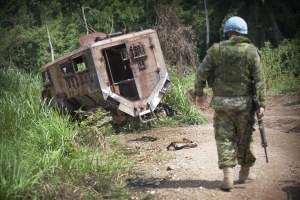
    UN vehicle ambushed by the Allied Democratic Forces (ADF). Image credit: UN Photo/Flickr.

    After a period of relative dormancy from 2007 to 2013 that was interspersed with occasional bouts of violence, there has been a significant resurgence in ADF activity over the last two years. A series of devastating attacks on civilians in the eastern Congo since October 2014 has left over 600 dead, tens of thousands displaced and many of the attacks have been marked by high levels of brutality. Survivors and witnesses have spoken of kidnappings, rape, torture, abduction of children and rampant destruction of property. Furthermore, the ADF was accused of killing Muslim clergy members in Uganda in early 2015. Also contributing to the escalation in violence has been Operation Sukola I, launched against the ADF by the Congolese army and the UN Stabilization Mission in the DRC (MONUSCO), in January 2014. Continued military operations have seen the ADF suffer several battlefield defeats and the militants have been forced to flee into the forest.  It is reported that the ADF fragmented into smaller groups to improve their chances of avoiding detection from the advancing Congolese forces. Many senior commanders are still missing; however, after a protracted search, ADF’s leader, Mukulu, was arrested by the Tanzanian police in Dares Salaam in April 2015 and later extradited to Uganda where he was convicted on charges of treason.

    There is little doubt that the ADF has been responsible for at least some of the attacks in and around Beni. While the ADF did carry out intermittent acts of violence against civilians, the arrangement between the ADF and the local community, at least until 2013, was one of “cooperative (if oftentimes) reluctant coexistence.” In general, the ADF respected the “traditional hierarchy of the host communities” and in 2011, was estimated to command “the popular support of nearly half of the population of Beni territory.”  The increasing focus on civilian targets since 2014 may partly be due to the fact that as the military offensive against the ADF intensified, the group carried out numerous reprisal attacks on civilian informants alleged to have collaborated with the UN and Congolese forces. As one scholar noted, “people are being punished and killed when they don’t want to collaborate” with the ADF.

    While the Ugandan and Congolese governments have portrayed the ADF as the primary culprit (for a variety of instrumental motivations), it is increasingly apparent that other actors have been involved in the massacres in North Kivu, including members of the Congolese armed forces, other rebel groups and communal militia. Moreover, as the ADF fragmented into smaller units, the absence of a centralized chain of command resulted in different groups pursuing diverse agendas. Some ADF factions, accused of violence, formed ties with local militia and outside elements who were then also involved in some of the killings. Indeed, interviews with survivors and witnesses suggest that many attackers spoke languages not normally used in this part of the Congo.  Further, the breadth and the scope of violence as well as the nature of weapons used are suggestive of the involvement of multiple armed actors.  The UN Group also concluded that some Congolese army officers played an overt and covert role in support of certain incidents of violence. While the precise underlying triggers for the violence are not clear, there is evidence that localized conflicts over land and power struggles over leadership contributed to at least some of the attacks. The dominant narrative of blaming the ADF is widely entrenched and largely unquestioned and has hampered efforts to dig deeper into the causes of the violence.

    The “Islamist” character of the ADF

    The ADF are commonly depicted as  an Islamist terrorist organization with a complex array of ties to regional jihadist groups. Consequently, it is seen to pose an existential security threat to the region. The Ugandan government in particular has aggressively peddled this misleading narrative. It is true that ADF’s inception can be traced to a core group of puritanical Muslims from the Salaf Tabliq movement. ADF’s erstwhile leader, Jamil Mukulu, is a strong adherent of Salafi Islam and has indicated his desire to overthrow the government of Uganda and establish an Islamist state based on Sharia law. The ADF has distributed incendiary tape recordings of Mukulu that urge followers to wage a holy Jihad, carried out forcible conversions of non-Muslims, conducted Islamic instruction in training camps and meted punishments in accordance with Islamic law.

    However, Scorgie-Porter argues forcefully that an exclusive focus on the religious aspect provides a limited account of the group’s motives and neglects other important strands to the development of the ADF. Some suggest that the group was mainly driven by a political agenda of removing the Museveni regime and used its Islamic identity instrumentally. A former ADF militant contended that “the agenda of the ADF was purely political…the ADF adapted the grievances of Islam in order to appeal to these people. Islam was a ticket, so the leaders disguised their political motives in religion.” Titeca and Vlassenroot resist reducing the role of Islam to instrumental usage, but suggest that the religious reference co-existed with other agendas such as regime change. They describe the ADF as a “rebellion without cause,” and contend that the movement’s agendas have changed over time.  For instance, during recent peace talks, the principal ADF demands revolved around socioeconomic issues such as reintegration of demobilized soldiers rather than effecting regime change or Islamic governance.

    ADF is often described as a multi-layered entity comprising several different elements with varying agendas. While the Tabliq network served a vital role in recruitment and was largely responsible for securing funds from Islamic charities and foreign countries during the group’s formative stages, ADF is considerably less reliant on the Tabliq now.  Recruitment in the ADF has also been heavily contingent on non-religious factors such as the exploitation of deep-seated perceptions of marginalization, poverty and the lack of alternative opportunity in the Rwenzori borderland. ADF’s economic embeddedness in the local community provides the group with its primary avenues of funding and material support at present and the group’s financial contributions from Islamic sources have considerably dwindled over time. Due to the group’s tendency to seize resources from local populations, some have gone as far as to describe the group as little more than “bandits”.

    Conclusion

    The Ugandan government has consistently attempted to link the ADF to global Jihadi groups and, in turn, depict the group as a serious threat to regional security. Some sources do suggest that elements of Al-Qaeda had sporadic ties with the ADF in the 1990s and provided some financial assistance. Reportedly, Osama bin Laden even met Mukulu while they were both in Sudan in the early 1990s. Similarly, there has been occasional correspondence with Al-Shabaab operatives.  However, such ties have been infrequent and there is little concrete evidence that regional Jihadists have any meaningful ties with the ADF. Indeed, Weeraratne and Recker argue that ideological incongruence, lack of salience to the local community and the fear of attracting more attention from counter-terrorism operatives reduce the likelihood of the ADF forming significant connections with transnational Islamists. Moreover, given that less than 10% of the population is Muslim in ADF’s chief operating environment in eastern Congo (a region that has shown very few signs of radicalization), it is unclear how foreign Jihadists would benefit from a union with the ADF.

    Museveni’s regime has a vested interest in embellishing real or perceived links between the ADF and foreign Jihadists. First, it allows the regime to deflect attention from its authoritarian tendencies and project itself as a key ally in the US led war on terror; in turn, making it easier to attract American military and diplomatic assistance. Second, exaggerating links also justifies the maintenance of high levels of military spending and gives the government a convenient alibi to continue raids on the eastern DRC where it has a range of interests.

    In summation, the portrayal of the ADF as a mainly Jihadist group is incomplete at best and deceptive at worst. It is clear that the ADF is not a monolithic organization with a dominant preference for executing a puritanical Islamist agenda.  The group has moved away from its earlier stated ambition of overthrowing the Museveni regime and replacing it with Islamist governance. The present day ADF constitutes a motely array of disparate interests, many of which are linked to economic and local political issues.  To be clear, this is not to say that the ADF does not pose a security threat. As discussed earlier, the group was responsible for several of the attacks over the last two years. However, at least for the foreseeable future, ADF’s threat is likely to be confined to the rural areas in Beni. Hence, the group is unlikely to pose an existential security threat to either the Ugandan government or their Congolese counterparts.

    Suranjan Weeraratne is a faculty member in the Department of Political Science, Southern Illinois University Edwardsville. His research focuses on various aspects of terrorism, including examining linkages between transnational militant groups and studying patterns of terrorist funding.
  • Sustainable Security

    In peacekeeping missions, peacekeepers live seperated and segregated from the local communities which they are mandated to protect. This wide gulf between the everyday lives of peacekeepers and locals has consequences for peace interventions’ effectiveness and outcomes.

    A truism of international peace interventions is that peacekeepers – and international peacebuilding personnel writ large – live in the same place as local residents, but do not live in the same world. The peacekeeping world is air-conditioned, clean, and well-guarded; it consists of decent housing, generous pay, access to vehicles, domestic help, and, usually, a robust (if limited) social life that revolves around expensive restaurants, hotels, bars, and clubs. In other words, peacekeepers live, work, and socialize in what I call ‘blue helmet havens’, distinct from the spaces most locals inhabit. They are spatially, economically, culturally, and in many cases linguistically separated or segregated from the majority of the local population of the ‘peace-kept’ city. As a Goma-based source put it, peacekeepers are ‘living in Congo’ but not ‘living Congo’.

    The security and safety of peacekeeping personnel and property is the dominant justification for the ‘bubble’ in which peacekeepers live. Notably, this separation is enacted not only by barriers, bunkers, and security guards, but also by various peacekeeping rules, regulations, and norms that mitigate – if not actively discourage – informal or social contact between peacekeepers and locals.

    Thus, peacekeepers’ off-duty movements are circumscribed by the security perimeter zone that is established by the mission’s internal security service, which delineates where peacekeepers can live, shop, and socialize and, in capitals and other urban areas, excludes vast swathes of the host cities. Even within the zone, peacekeepers are advised never to move on foot. They are required to live in gated and guarded compounds; are given black-lists of proscribed social venues; and, besides being prohibited from buying sex while in the mission area, are also strongly discouraged from having any intimate or sexual relationships with locals. These formal rules and regulations are reinforced by informal norms and mission cultures, which are heavily oriented towards keeping the peacekeeping bubble intact and exclusive. Cumulatively, the extremely risk-averse approach that missions take towards peacekeepers’ interactions in and with their surroundings means that the contact between peacekeepers and locals is both sparse and essentially transactional. There exists a wide gulf between the everyday lives of peacekeepers and locals, and very few means to bridge it.

    Peacekeeping-as-enterprise in the peacekeeping ‘bubble’

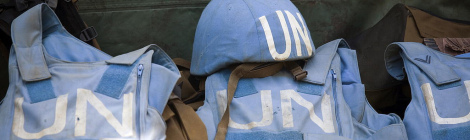
    UN helmets

    Image by UN Photo via Flickr.

    But why is this important? Research shows that the gap in proximity and understanding between the international and the local matters for peace interventions’ effectiveness and outcomes. For example, in her book Peaceland, Séverine Autesserre argues that the shared everyday habits, practices, and narratives of international interveners simultaneously enable international peacebuilders to work in challenging environments, and degrade the effectiveness of peacebuilding interventions. In other words, she asserts a direct link between the peacebuilding bubble and peacebuilding outcomes.

    My own research also deals with the distorting effects of the peacekeeping bubble. Using the analytical lens of the peacekeeping economy – which encompasses the services, establishments, and activities needed to allow peacekeeping and peacekeepers to function, and which to a large extent frames and contains the peacekeeping bubble – I have argued that in areas with robust peacekeeping economies, peacekeeping appears to locals more as an enterprise than protection or development. Where peacekeeping economies flourish, they are as visible and tangible to local citizens as anything else done by peacekeeping missions – maybe even more so. It is thus unsurprising that, when people look around them and see money flowing and where it flows, they conclude that, heroic narratives aside, peacekeeping is not that different after all: it is all about the money. This in turn fosters cynicism and resentment among local citizens towards the peacekeeping mission, from which it is plausible to draw a connection to subpar results. On the peacekeepers’ side, meanwhile, what is striking is the extent to which their arms-length relation to the local reveals a sense of vulnerability – a perception of themselves as potential victims of exploitation, crime, or violence, thus upending the normal framing of peacekeepers as powerful, dominant protectors. On both sides, the strict separation between the peacekeepers and the local encourages, if not fosters, a lack of understanding and trust.

    Taken together, then, this paints a picture of peacekeeping and peacekeepers as purposefully disconnected from the local everyday, apart from the microeconomic transactions contained by, and constitutive of, the peacekeeping economy. When it comes to how peacekeeping really works, the peacekeeping bubble is as relevant and significant as the peacekeeping mandate. Problems associated with this bubble’s existence include local suspicion of missions’ activities and motives; and a dearth of knowledge of, and empathy towards, locals from peacekeepers – each of which could be reasonably conjectured to inhibit the effectiveness and transformative potential of peacekeeping.

    Security, estrangement, and stasis in peacekeeping transformation

    An obvious implication of this contention is that international peace interventions will work better and more empathetically if the prevailing separation and segregation is lessened, such that the international and local ‘everydays’ are more enmeshed and aligned. But how would this work? Is it even possible?

    There are modest proposals that missions could immediately initiate in order to promote an environment of mutual trust and more substantive formal and informal contact between peacekeepers and locals, which could eventually make peacekeeping environments safer for both peacekeepers and locals alike. For example, to mitigate the negative effects of the peacekeeping economy on the local economy and labour market, missions could:

    • implement better scrutiny and oversight of subcontractors employed by missions (with respect to labour standards and protections) and of landlords the mission rents from (to ensure that ill-gotten gains are not rewarded);
    • give guidance to peacekeepers on how to relate to their employees, prioritizing the rights of the employee equal to those of the peacekeeper;
    • make greater efforts to procure goods and supplies locally, working with and monitoring local suppliers to forestall potential negative side-effects on local markets;
    • and use of training methods and materials that do not rely on scare stories and fear to coerce obedience, thus encouraging more receptive attitudes towards locals by peacekeepers.

    The most significant obstacle to peacekeeping transformation lies in the area of security. The tendency in peacekeeping missions to take greater and greater precautions to obviate danger and avoid risk is not without reason: persuading member states to contribute troops and money to peacekeeping is significantly more challenging if the UN is perceived to be reckless, and recruiting civilian peacekeepers also becomes more difficult. But ‘security’ in peacekeeping increasingly seems to mean the elimination of risk – whether stemming from armed groups, organized or ordinary criminals, fraudsters and scam artists, or everyday activities like driving, eating out, having sex, or walking down the street. According to such a standard, peacekeeping missions will never be fully secure. Nor, for that matter, will anything else. Peacekeeping institutions (headquarters and missions) and peacekeepers surely recognize this reality, yet there is little evident willingness at any level to push back against ever-escalating security demands and regulations.

    In this heavily securitised and risk-averse environment, where protection of peacekeepers is (and always has been) mandated equal to protection of civilians, separation is the path of least resistance. This implies that fundamental transformation in how peacekeeping missions situate themselves to local people and communities is unlikely. Missions’ estrangement and alienation from the local community and the local ‘everyday’ is a feature, not a bug; and thus that whatever losses may ensue – of legitimacy or effectiveness – is a price that the peacekeeping apparatus is willing to pay.

    Kathleen Jennings is a senior researcher at the Fafo Research Foundation in Oslo. Her work focuses on UN peacekeeping, gender, and political economy in sub-Saharan Africa. Jennings recently defended her PhD thesis on gendered peacekeeping economies in Liberia and the DR Congo. She has previously worked at the Norwegian Peacebuilding Resource Centre and the Council on Foreign Relations.

  • Sustainable Security

    Mali - Another Long War(This piece was originally published by Channel 4 News on Tuesday 22 January 2013, and is the second of two parts by Ben Zala and Anna Alissa Hitzemann)
    There is a stark warning today the western intervention strategy in Mali is “flawed”. Part two of a special paper also says France and others are likely to be involved in the conflict “for some time”

    Not unlike the United States in both Afghanistan and Iraq, the French government has begun the intervention with talk of short timelines and minimal troops on the ground before quickly changing its tune, write Anna Alissa Hitzemann and Ben Zala for the Oxford Research Group.

    The initial deployment of 800 French troops may end up numbering more than 2,500 and President François Hollande has stated France’s mission is to ensure that “when we end our intervention, Mali is safe, has legitimate  authorities, an electoral process and there are no more terrorists threatening its territory”. This does not seem to tally with the earlier statement by the French Foreign Minister that the current level of French involvement in the country would last for “a matter of weeks”.

    The latest reports are that the Islamist fighters have been preparing for this intervention by carving a network of caves and tunnels into cliff faces to house bases and supplies of fuel and ammunition. This, combined with the concerns about the roles of both the Malian security forces and a number of potential contributors to the ECOWA force in relation to the abuse of civilian populations (and the likely blowback effect of such actions), mean that stability in Mali will be almost impossible achieve with military force alone.

    It is also far from clear whether the African states that are set to join the intervention will be able commit forces for a drawn-out insurgency. After Chad, the second biggest promised contributor of troops is Nigeria, which has pledged a contingent of 900.

    Yet the Nigerian government itself is fighting its own Islamist-inspired insurgency with the Boko Haram group in the country’s north. Despite a relative decline in Boko Haram attacks in recent months and even the potential for Saudi-backed peace talks between the rebels and the government, fighting could easily intensify once more, in which case Nigeria is unlikely to remain involved in Mali in any significant way.

    Without taking serious action to address the sense of marginalisation and disenfranchisement of those who were willing to join one of the rebel groups… there are few reasons to think the current intervention will produce a durable peace in Mali.

    Not only have France and its allies underestimated the difficulty of fighting the northern rebels among civilian populations in which bombing from above is of little use, there appears to be no sign of a plan as to how the factors underlying the uprising (including the original Tuareg rebellion) can be addressed.

    Without taking serious action to address the sense of marginalisation and disenfranchisement of those who were willing to join one of the rebel groups — Tuareg, Islamist or otherwise — there are few reasons to think the current intervention will produce a durable peace in Mali.

    Ongoing conflict

    While military force is considered the only option, feelings of resentment amongst elements of the population of northern Mali are likely to increase. Not only this, it will provide ample encouragement to other anti-Western paramilitary groups across North and Sub-Saharan Africa, the Middle East, and Central, South and Southeast Asia.

    The central lesson of the western interventions and small-scale military operations (including Pakistan, Yemen, Somalia and elsewhere) of the post 9-11 era, has been that reacting to the symptoms of insecurity once they are deeply manifested, and few options other than military force remain, is a fundamentally flawed strategy for global security. This means that France and others are likely to now be involved in an ongoing conflict in Mali for some time.

    Not only do the (so far conspicuously absent) plans for a post-conflict stabilisation process need to be settled between France and its coalition partners now, a serious commitment to assisting the Malian government to going much further in addressing the marginalisation of the north will be crucial.

    Until the focus shifts from military control to working towards solving the root causes of the conflict, no viable sustainable security will be found for Mali.

    Anna Alissa Hitzemann is a  Peaceworker with Quaker Peace and Social Witness. She currently works with Oxford Research Group as a Project Officer for the Sustainable Security Programme, with a focus on our ‘Marginalisation of the Majority World’ project.

    Ben Zala is a Lecturer in International Politics at the University of Leicester.

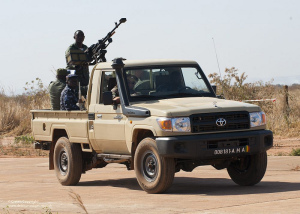
    Image source: Malian Airfield Protection Vehicle and Crew at Bamako, Mali. Source: UK Ministry of Defence.


  • Sustainable Security

    Authors’ Note: The opinions expressed by the writers are theirs alone and not necessarily those of the United States government or any of its departments.

    As a response to the attacks by violent extremists around the world, policymakers have invested considerable effort into comprehending terrorists’ use of the Internet and initiating counter-measures.

    The internet is undeniably an important factor in understanding the radicalization trajectories of many violent extremists. A senior official at the U.S. Department of Homeland Security recently observed that extremists’ “deft use of Internet propaganda, together with that content’s wide availability, has broadened the population of potentially vulnerable individuals, and shortened the timespan of their recruitment.” Supporting this statement, terrorism expert Magnus Ranstorp lists social media as one of nine factors that may exacerbate causes of an individual’s radicalization, including individual and social factors as well as cultural and ideological motivators.

    Research has also shown that the internet facilitates both early engagement with violent ideologies and opportunities for learning and sharing criminal information. For instance, a study by the University of Maryland’s START terrorism consortium found that “the internet played a primary or contributing role in the radicalization of 86%” in the cases of over 200 U.S.-based foreign fighters. These individuals used the internet to “view extremist materials, research conflicts, groups and attack methods, and participated in online communities of like-minded individuals.” Moreover, results from the same dataset show that the internet “may be speeding up the radicalization timeframe” as compared to radicalization before the advent of the internet. Similar findings from a study of over 200 terrorist offenders in the United Kingdom found that 54% of the perpetrators used the internet to learn about their intended criminal activities and, in 44% of the cases, extremist media (e.g., videos, audio lectures and photographs) were found, viewed, or downloaded by the perpetrators.

    The authors of the UK study, however, recognize that terrorists’ use of the internet “is perhaps unsurprising given the ubiquity of Internet usage in the most benevolent activities across wider society.” Indeed, a good deal of research has examined terrorists’ expansive use of the internet, such as the terrorist organization known as the Islamic State of Iraq and Syria (ISIS) to build a network of ideological conformity through social media platforms like Twitter. A report from the Institute for Strategic Dialogue has shown not only how life under the Islamic State is romanticized through social media postings, but also how important digital connectivity can be to those in the field, describing young women in ISIS controlled territory who resort to “climbing pine trees to gain Internet reception.”

    Countering extremism online

    Image credit: Andres Eldh/Flickr.

    These studies shed light on the particular ways that terrorists use the internet and underscore the importance of law enforcement intervention into online criminal activities. However, an ongoing challenge for researchers and policymakers engaged in preventing and countering violent extremism (CVE) is how to proactively address the role of the internet and social media in the context of violent extremism before criminal activity has occurred. To respond to that challenge, two broad policy approaches have emerged.

    One approach advocates for online content removal and account suspension in order to reduce the supply of non-criminal but potentially extremist content. The European Commission recently instituted content-flagging mechanisms modelled after an initiative by the British government’s Counter Terrorism Internet Referral Unit. Outside of government, technology companies also have taken steps to remove terrorist content. In December 2016, social media companies announced their own cooperative efforts to use hashing techniques to quickly identify and take down extremist images and content that violate terms of service agreements. In their latest annual transparency report, Twitter suspended around 636,000 accounts between August 2015 and December 2016 for promoting extremist content.

    Research studies that have assessed whether content removal and account suspension efforts work to curb the propagation of violent extremist messages suggest promising outcomes. For instance, a report from the George Washington’s Program on Extremism found that “over time, individual users who repeatedly created new accounts after being suspended suffered devastating reductions in their followers.” While ISIS users quickly learn how to overcome account suspensions and restore some followers, the study suggests these actions to reestablish followers have only “limited benefits” once a suspension has occurred.

    Yet, as technology companies like Twitter, Microsoft, and Facebook become more effective at detecting extremist content with tools that recognize unique “fingerprints” of extremist content, terror groups have also become more agile in how they use the internet to facilitate their work. Terrorism researcher Audrey Alexander describes how attempts to limit terrorist content online have pushed extremists away from public platforms and to encrypted tools like WhatsApp, Telegram, and ProtonMail. Indeed, Telegram now “appears to be the top choice among both individual jihadists and official jihadist groups.” The covert nature of these platforms poses significant barriers to researchers and authorities seeking to understand, track, and measure the terrorist threat.

    Another method for combatting online violent extremist content suggests creating counter narratives to refute terrorist claims. The idea is to craft messages that will appeal to vulnerable individuals to persuade them that violence is not the answer.  To explore this approach, the U.S. government has sponsored an initiative along with support from Facebook that known as the Peer to Peer: Challenging Violent Extremism program to engage young people, who may be most vulnerable to violent extremist messages, to create credible counter message for their own peers. Since the program launched in 2015, over 5,000 students have taken part. The 2016 winning team from Rochester Institute of Technology developed an awareness campaign called “Ex-Out Extremism” to “open people’s eyes” to violent extremism and to encourage them to take a stand against it. While initiatives like Peer to Peer typically reach broad audiences, foster educational engagement and increase public awareness, researchers have pointed out that continued work is needed to understand what can inoculate or prevent radical ideologies from taking root in the first place.

    A more targeted approach for reaching at-risk individuals online has been piloted at Jigsaw, Alphabet’s technology incubator focusing on geopolitical challenges, to redirect users from ISIS propaganda to curated YouTube videos that credibly debunk ISIS recruiting themes. Similarly, the Institute for Strategic Dialogue conducted a pilot study to direct individualized online intervention services to those demonstrating affinity to violent extremist groups through their online activities. The results found that intervention messages that reached at-risk individuals were “highly likely” to cause behavior change, either by prompting radicalizing individuals to change their privacy settings or to send direct messages to the intervenors for more engagement.  While these results are based on a very small sample, directed intervention programs may offer options for providing “off ramps” to individuals at critical points.

    The value of partnerships

    Whether intervening online to remove content and suspend accounts or developing credible counter messages or intervention options, effectively addressing violent extremism will require innovative partnerships inside and outside government.  To this end, in 2016 the United States government launched an interagency task force to address countering violent extremism with representation from both security and non-security agencies along with engagement from civil society groups.  While these multidisciplinary partnerships are challenging bureaucratically, they underscore the need for developing networked approaches to emerging security challenges. Similar cooperative agreements might span across national boundaries, not only for the purposes of information sharing between law enforcement officials, but also to include cooperation, such as the recent announcement by the Netherlands and Kenya to build a comprehensive partnership around a range of security related issues including deradicalization efforts.

    Although some have suggested that there is little evidence that terrorism prevention works, there is a small but growing literature providing support for the application of prevention science to the problem of violent extremism. Without question, more attention is needed for rigorous assessment of these programs, especially with regard to evaluating the effectiveness of online campaigns. To fill this gap, the RAND Corporation recently released an evaluation toolkit for countering violent extremism, which includes guidelines for assessing programs’ social media metrics. The London-based Royal United Services Institute has published a guide to CVE program design and evaluation, which provides guidance for articulating relevant impact measures. Ultimately, these resources, coupled with innovative public and private sector partnerships, will contribute to preventing radicalization to violence both online and offline.

    Tackling online radicalization will undoubtedly be a major security priority for policymakers in the future. Following the deadly May 22, 2017 bomb explosion in Manchester, leaders of the G7 convened in Taormina, Italy to reaffirm their efforts to counter terrorism and violent extremism.  In a statement, members underscored several areas for continued engagement, not only through traditional counterterrorism measures like “knowledge-sharing” and cutting off “sources and channels of terrorist financing,” but also through technology sector engagement “to substantially increase their efforts to address terrorist content” and well as civil society engagement to promote “alternative and positive narratives rooted in our common values.” The future war against online extremism may prove to be a long and difficult one, but it is a fight that must be won.   

    Dr. Susan Szmania has served in government and academic positions addressing violent extremism.  She is currently a senior research analyst at the U.S. Department of Homeland Security in the Office for Community Partnerships.  In this capacity, she leads the research and analysis line of effort on the U.S. government’s interagency Countering Violent Extremism Task Force.  Prior to this work, Dr. Szmania was a senior researcher at the University of Maryland’s National Consortium for the Study of Terrorism and Responses to Terrorism, and she served in government positions at U.S. Embassies in Sweden and Spain to implement programs to counter violent extremism. She received her Ph.D. in Communication Studies from the University of Texas at Austin in 2004.

    Matthew Conway has served in various research capacities focusing on conflict and extremism, both independently and with two London-based think-tanks. He is currently a research adviser for the Department of Homeland Security’s Office for Community Partnerships, where he focuses on Countering Violent Extremism research. He received his Master’s in Conflict, Security and Development from King’s College London in 2015 and his Bachelor’s in Political Science and International Studies from the University of Wisconsin-Madison in 2013.

  • Sustainable Security

    Whether the UN Security Council should address climate change is a highly politicized issue. But a more fundamental question has been lost in this debate—what exactly could the Council do about climate change?

    Given growing concerns about the links between climate change, instability and conflict, it is no surprise that the issue has spilled over into the UN Security Council. Since 2007, the Council has conducted two formal and several informal (“Arria-formula”) sessions on the topic. Bringing the climate issue into the Council has been contentious: proponents, including several European member-states, small island developing states, and other vulnerable developing countries, have sought to use the Council’s agenda-setting power and inject a sense of urgency into global climate politics, particularly at moments when global progress on climate action seems stalled.

    Opponents have raised a range of concerns, including longstanding objections to the Council’s composition and procedures; fears of stretching the Council’s mandate beyond recognition, such that anything could be regarded as a security issue; and concerns about negatively impacting the “legitimate” forum for climate discussions, the UN Framework Convention on Climate Change (UNFCCC) and the Paris Agreement. These objections almost blocked a 2011 thematic debate on the issue, leading the Obama administration to rebuke reluctant Council members for “dereliction of duty”. Only informal sessions have been held since then. At the most recent, in May of this year, several member-states urged that the Council revisit the issue in formal session.

    Too often lost in such political maneuvering is a fundamental question: what might the Council actually do on climate, peace and global security? Surveying the record, one finds a range of different ideas that have been floated by academics, advocates, and some individual member-states. These include relatively modest add-ons, such as keeping the Council apprised of how climate change affects current peacekeeping operations or developing better early-warning capabilities. Bolder roles have also been floated: engaging the Council in proactive, preventive diplomacy on emergent challenges such as competition for Arctic resources or water in international river basins, or even creating a climate analogue to the Responsibility to Protect. There have also been calls to inject the Council into complex political challenges for which no obvious institutional home exists within the UN system, such as the existential plight facing several small-island states and the challenge of climate-driven displacement and refugees.

    There are real questions about whether the Council, as currently constituted, can play such roles productively. One basic challenge is how the Council manages information. Conceptually, early warning fits well with current Council efforts around issues such as famine and human rights emergencies. But in practice, past efforts to extend the gaze of early warning into new issue areas, such as conflict-related sexual violence, have met with opposition, narrow framing, and poor follow-through. There are also many practical challenges yet to be resolved, including how to effectively incorporate environmental variables into conflict-assessment tools, or even deciding which variables matter and by what mechanisms they operate. For an early-warning mechanism to have foreseen the role of drought in the Syrian conflict (a causal role about which there remains no consensus among scholars), it would have had to be able to see not just rainfall or run-off data, but also the water-policy choices of the Syrian regime and the impacts of declining rural subsidies on smallholder farmers.

    Challenges facing the Security Council on climate change

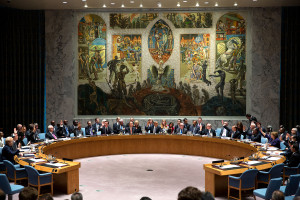
    Image credit: The White House/Wikimedia.

    Even the seemingly straightforward exercise of informing the Council about aspects of climate change directly relevant to its ongoing activities around peacekeeping and fragile states has been challenging. The contentious 2011 session yielded a compromise that called on the Secretary-General to use his reporting function to keep the Council apprised about relevant “contextual information” on climate-conflict links. A review my colleagues and I conducted of 446 subsequent Secretary-General reports to the Council (through January 2016) found only 12 references linking climate change to some aspect of conflict or security (with 11 focused on Africa). Most of the content was highly generalized, noting general contextual trends such as urbanization, land tenure conflicts, or farmer-pastoralist tensions that might bear a climate signature. Even the handful of instances of specific reporting lacked the fine-grained subnational and temporal detail necessary for it to be of any operational or decision-making use. Climate-related references were also highly sporadic, with only one in 2012 and none in 2013.

    A second challenge resides in the Council’s largely reactive nature (when it can agree to react at all). Conflict prevention falls squarely within the Council’s mandate, and the high monetary cost of peacekeeping operations creates a strong incentive for prevention. The concept notes circulated by Council chairs for the 2007 and 2011 thematic debates (the UK and Germany, respectively) stressed conflict prevention as a key rationale for conflict engagement on climate. But for interstate preventive diplomacy, such as might be needed in shared river basins, the Secretary-General’s office has generally been a more effective tool than the Council. And on intrastate conflict, the Council has historically been reluctant to take preventive action. Efforts beginning in 2016 to implement a ‘horizon scan’ briefing from the Secretariat, focused on instability and emergent conflict, revealed the great reluctance of many member-states to appear on the Council agenda as ‘fragile’.

    A third problem is the tricky challenge of managing the political division of labor with the UNFCCC. Proponents of Council climate action have used past debates to try to jump-start sluggish climate diplomacy, even as opponents have warned about encroachment on or perturbation of the institutionalized process of global climate negotiations. Initial optimism around the Paris Agreement cooled such polarization, but was blunted by the Trump administration’s recent withdrawal from the accord. The deeper problem is that the Paris process seems to be half-heartedly engaging some of the critical challenges that would most resonate within the Council: blocking space for the Council while failing to really address the issues. On the looming problem of sea-level rise and the existential threat to small-island nations, the Paris Agreement’s provisions on loss and damage explicitly created an opening to address several relevant challenges, including early warning, emergency preparedness, slow-onset events, risk management, and the resilience of communities, livelihoods, and ecosystems (Article 8.4). This may limit political space for the Council on the issue of small-island statelessness, even as the weakness of the UNFCCC process on “liability and compensation” makes it a poor vehicle for serious movement on the problem. A similar dynamic of blunting political momentum through half-hearted response may be shaping up on climate-induced displacement; the UNFCCC’s 21st Conference of the Parties authorized a task force to develop recommendations on how to address the issue, scheduled to make a preliminary report in 2018.

    What can be done?

    Given such challenges, it may be that the relevant question is not “What climate role for the Council?” but rather “How can climate be part of the process of transforming the Council into a more effective body for sustainable security?” A first step in that direction would be to improve the Secretary-General’s reporting function, as agreed to during the 2011 debate. The most useful information for the Council is probably neither localized crisis briefings nor long-range climate-change scenarios, but rather regional-scale, medium-term assessments. Working on those spatial and temporal scales is most likely to yield forward-looking initiatives that can be supported by those member-states that find themselves most directly affected or vulnerable, as in the case of the Integrated Strategy for the Sahel. The strategy stressed building long-term resilience as one of its three pillars, along with inclusive governance and managing cross-border threats. A Security Council briefing in this context, on links among climate trends, migration, and conflict across the region, was well-received for both its specificity and the backing it had from member states in the region.

    A second step would be to challenge countries seeking a seat on the Council to articulate a specific vision of how the Council should move forward on the issue. Several aspirants for an elected seat have raised the issue in recent campaigns, but the question is also pertinent for those countries aspiring to a permanent seat on an expanded, reformed Council—notably, Japan, Germany, Brazil, and India. How, precisely, do they see the climate issue in relation to the Council’s mandate, with particular reference to preventive diplomacy, disaster vulnerability and displacement?

    Finally, while it may seem challenging in the current political moment, a symbolic gesture from the five permanent members (P5) would acknowledge member-states’ multiple roles across the UN system. Done properly, this could help legitimize an active (but not overreaching) Council role as part of a system-wide response. During the 2011 debate, Nigeria noted the P5’s dual role: “Seated around the table are those who could encourage developed countries to implement their commitments to reducing emissions and supporting developing countries with the requisite technological and financial assistance to address climate change effectively.” Imagine the legitimizing value that would have resulted if the US-China climate deal of 2014 had identified conflict prevention as part of its rationale for cutting emissions. Going forward, such commitments could be incorporated into the Nationally Determined Contributions that states offer under the Paris Agreement, and as action on the Sustainable Development Goals.

    The purpose of such measures is to begin to use climate engagements as a vehicle to transform the Council—into a body that is more capable of legitimate action, more proactive in peacebuilding and conflict prevention, and better able to take the long view of risks and responses.

    Ken Conca is a Professor of International Relations at American University in Washington, DC. His most recent book is An Unfinished Foundation: The United Nations and Global Environmental Governance (Oxford University Press). A more detailed version of the arguments here may be found there, and also in Ken Conca, Joe Thwaites, and Goueun Lee, “Climate Change and the UN Security Council: Bully Pulpit or Bull in a China Shop?” Global Environmental Politics 17/2: 1-20. Conca has been a member of the Scientific Steering Committee on Global Environmental Change and Human Security (GECHS) and is a founding member of the UN Environment Programme’s Expert Advisory Group on Conflict and Peacebuilding. He is, with collaborator Geoffrey Dabelko, the 2017 recipient of the Al-Moumin Environmental Peacebuilding Award.

  • Sustainable Security

    As activists around the world participate in a Global Day of Action against criminalisation of drug use, evidence from the multi-billion dollar War on Drugs in Colombia suggests that militarized suppression of production and supply has displaced millions of people as well as the problem, not least to Mexico. The wrong lessons are being exported to Central America and beyond, but a groundswell of expert and popular opinion internationally is calling for alternative approaches to regulating the use and trade in drugs.

    The arrest of the Mexican drug kingpin Joaquin ‘El Chapo’ Guzman on 22 February was cheered by US and Mexican officials as the most important success against narco-trafficking since the killing of Pablo Escobar two decades earlier. Designated in 2013 by the Chicago Crime Commission as the ‘public enemy number one’ and featured among the ‘most powerful’ by Forbes, he was the leader of the Sinaloa Federation. This is considered the most powerful drug trafficking group worldwide, responsible for around 25% of the cocaine that enters the US market and enjoying connections in various continents.

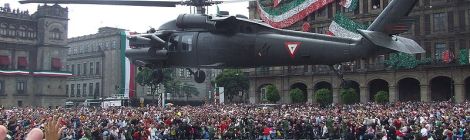
    UH-60 Black Hawk fotografiádo después del desfile militar del 15 de septiembre de 2009 en la ciudad de méxico

    Mexican UH-60 Black Hawk lands in the Zocalo, Mexico City’s main square, 15 September 2009. (Source: Wikipedia)

    If the ‘War on Drugs’ logic is followed, the event should mark the beginning of the end of drug-related violence in Mexico. But the lessons from the elimination of Pablo Escobar and the defeat of the Medellín (and later Cali) cartels in Colombia suggest otherwise. Whether El Chapo continues to run operations from jail, full leadership is assumed by the remaining commander, or the group breaks into smaller factions, the drug business is likely to survive.

    What could be reinforced is the trend to fragmentation already in place, which does not necessarily means less violence, at least in the short and medium term, and could give birth to a decentralized and networked drug business. In this sense, Mexico could well be now where Colombia was 15-20 years ago.

    Colombia’s success narrative

    Despite their different insertion into the global political economy of drugs, both countries are remarkable examples of militarized approaches to the drug war promoted by the US in Latin America (and beyond). The focus is almost entirely on the supply side: criminalization, eradication and aggressive enforcement with the aim to put a halt to the global supply of illegal drugs. The burden is mostly assumed by countries of production and transit that are evaluated on an annual basis against compliance with those prescriptions.

    The terms of the debate about this issue have until recently been limited and based on partial evidence in at least two aspects. Success is measured by the figures of crops eradication, detentions and seizures of drugs, not by net impact on the trade (drug availability and market prices). And the consequences in violence, violations of human rights, marginalization, corruption and institutional failure, have been exclusively attributed to illegal drugs and organized crime and not to the war on drugs itself. Fortunately, those terms are changing and a range of new voices, including at highest political levels, are joining a necessary and urgent discussion.

    Colombia has undertaken an amazing journey in this regard. Once criminalized in the international arena through its identification with the drug trade, in recent years it has been promoted as the brightest example of success in the drug war. The narrative of success is based on two main elements: the defeat of the big cartels in the 1990s and Plan Colombia in the 2000s.

    However, the story has critical under-reported angles. What followed the demise of Medellin and Cali was not elimination of the drug trade but the decentralization and fragmentation of the market into around 300 smaller, flatter and networked groups. The Revolutionary Armed Forces of Colombia (FARC) – and, to a lesser extent, National Liberation Army (ELN) insurgents and United Self-Defense Forces of Colombia (AUC) paramilitaries – furthered their involvement in the drug business and provided the armed ‘muscle’ in order to finance their nation-wide expansions.

    Moreover, the biggest cocaine profits shifted from Colombia to Mexico, contributing to the financial and armed power of its drug trafficking groups as the smaller rings and armed actors in Colombia lacked the power, contacts and/or will to control international logistics and operations, not to mention distribution in the US. The vacuum was filled by the Mexican cartels that established a direct buying presence in Colombia (and later Peru), logistic bases in the Caribbean and Central America for transportation, and distribution networks in the US market.

    Plan Colombia

    The largest counter-drugs programme ever launched, Plan Colombia was funded by the US with more than $7 billion to conduct massive aerial spraying of illicit crops and provide equipment and training to the Colombian armed forces.

    The focus of Plan Colombia was counter-insurgency against the FARC, particularly after the US Congress unblocked in 2002 the use of counter-drug funds for counter-terrorism. The group was weakened by increased state military power and mobility, and is currently involved in peace talks with the government. But it retains 8,000 combatants and has increasingly relied on urban militias. More importantly, despite the propaganda, the FARC was never the only (nor main) group involved in drug trafficking.

    The AUC paramilitaries had a mixed criminal-political character from their beginnings. Born out of an array of self-defence groups and narco-trafficking interests, these two ‘souls’ coexisted for years but the drug trade eventually prevailed. The demobilization of more than 31,000 AUC combatants in 2006 was immediately followed by the emergence of 30 new criminal groups that drew membership from former AUC members and mid-level commanders and sought (and eventually won) control of cultivation and trade in areas and routes formerly under paramilitary control.

    With an estimated initial membership of 4,000 members, these new criminal groups later expanded throughout the territory and are now present in 17 out of 32 departments. Those groups have never been a unified project but an array of decentralized criminal networks. Infighting and shifting alliances are the norm among them and with sectors of the FARC and the ELN also involved in drug trafficking. According to the Colombian police, they were responsible for half the total murders committed in 2010.

    Uncounted costs

    The Colombian success in the war on drugs has been partial at best and come at a high price. Taking the accumulated figures of the US International Narcotics Control Strategy Report, around 2 million hectares have been fumigated to eradicate crops since 2000. Massive herbicide spraying destroyed coca, but also livelihoods and protected natural areas, and impacted food security, health and the environment. The complex marginalization problems of rural communities that resort to coca as a livelihood strategy were addressed through securitization and criminalization (coca farmers have often been identified with the FARC). The result, for many, was forced displacement and further vulnerability. Cultivation expanded to new areas and departments, and fragmented as a result.

    The levels of violence have decreased slightly nowadays, but the homicide rate stayed at 32 for 100,000 in 2013, well above Mexico in its worst year of violence (2011, with 24 for 100,000). Also in 2013, between 140,000 and 219,000 persons (depending on the sources) were forcibly displaced in Colombia. Those figures are lower than in the past but nonetheless immense and add to a total of 6 million people forcibly displaced since 1985. The specialized agency Insight Crime interprets the current high incidence of this phenomenon in the Pacific regions and intra-urban settings as an indicator of displacement by criminal –not political- violence.

    Mexico’s War on Drugs

    Regardless of the real situation on the ground, those policies (and apparently, the high levels of popular support enjoyed by then Colombian president Alvaro Uribe) inspired President Felipe Calderón to launch an all-out war against drugs in Mexico in 2007. Around 100,000 soldiers and thousands of marines were deployed to fight the cartels in an effort to overcome the problems of corruption and ineffectiveness of the police forces, a policy later backed by the US under the Merida Initiative. The strategy got results, with relevant high and mid-level commanders of drug trafficking groups captured or killed, and seizures of illegal drugs soaring amidst the crackdown.

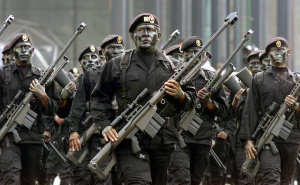
    Mexican Special Forces with Barrett M82 sniper rifles.

    Mexican Special Forces with Barrett M82 sniper rifles. (Source: Wikipedia)

    But the destabilization of the drug market triggered an escalation of violence. Violent competition for power erupted within the groups and coalitions as leaders were eliminated, coupled with fierce battles for territorial control among groups. The response against the state scaled up with the cartels creating militarized wings and using sophisticated military weaponry and tactics to fight the military and the police. The process of fragmentation and decentralization accelerated and the six big cartels of 2006 have split into around 15 today, coupled with a diversification of transnational criminal activities and soaring incidences of kidnapping and extortion. The Sinaloa Federation and the Zetas remain the most powerful cartels but have also suffered splits and setbacks.

    More than 60,000 people have died and 26,000 ‘disappeared’ in just six years. The formerly respected military have been accused of grave human rights violations including extrajudicial killings and forced disappearances. More than 4,000 complaints for human rights violations by military personnel were filed in 2006-2010 This was more than the total figure for the previous 15 years.

    Mexico has come under close scrutiny by the Inter-American Court on Human Rights and other international institutions. On June 12, the UN Special Rapporteur on extrajudicial, summary or arbitrary executions warned about unacceptable levels of violations to the right to life and impunity. Although recognizing some positive steps by the government of Enrique Peña Nieto, he warned that “a heavy-handed military approach is unlikely to improve the situation” and what is needed is “systematic, holistic and comprehensive strengthening of the rule of law”.

    As in Colombia, the Mexican victims of violence face further victimization as the government and sectors of the media dismiss them as criminals. Families and civil society groups claiming for justice may become targeted themselves. Unabated violence and institutional failure are the factors behind the emergence of armed self-defence groups, first in Michoacán and Guerrero and currently in around 10 states, as civilians take up arms to face lawlessness and fight the cartels (and sometimes corrupt authorities). This adds a new layer of armed actors whose evolution may not be easily put under control.

    Challenging the Colombian success narrative

    In Colombia, and later in Mexico, the militarized drug wars have proved ineffective in halting the drug trade but their impact is hugely negative on security and human rights, development and governance. While marginalization feeds the illegal economy, the securitized responses criminalize communities and add abuses and institutional failure to the problem of exclusion. The focus on the military also delays the hugely needed efforts to establish functioning justice systems and effective rule of law. Meanwhile, the drug business learns and adapts, moving from strict hierarchies to networked configurations.

    Despite those evidences, growing international debates about drug policies and a shifting internal public opinion, the US continues to promote a securitized approach to drugs that is most evident now in Central America. The use of Colombia as a symbol of success for Mexico and others, and as an actual ‘proxy’ to provide support in counter-narcotics and counter-insurgency to third parties including West Africa, should raise some basic questions about the premises, effectiveness and potential consequences of those policies.

    This month, the West African Commission on Drugs – an expert panel convened by Kofi Annan and chaired by former Nigerian president Olusegun Obasanjo – has called for decriminalization of drug use and to “avoid militarisation of drug policy and related counter-trafficking measures, of the kind that some Latin American countries have applied at great cost without reducing supply.”

    This potentially brings West Africa into line with the Organisation of American States, which in a report of May 2013 proposed “alternative legal and regulatory regimes” for tackling drugs, starting with cannabis”. Uruguay has already decriminalized cannabis and Colombia’s President Juan Manuel Santos, re-elected this month, has at times advocated drug policy reform. Enrique Peña Nieto has recently called on the US to start an open debate and a revision of ‘failed’ hemispheric policies whose outcome has been the rise of drug production and consumption.

    There are growing calls internationally to open a global debate over drug use and the policies needed to address it, including addressing demand in consumer countries. No less a figure than Sir William Patey, British Ambassador to Afghanistan from 2010 to 2012, has called for legalization of the heroin trade as the war on drugs in Afghanistan fails to address the complex problems at the roots of opium cultivation. Dozens of high profile British individuals and organisations, including the Prison Governors Association, have also called for decriminalization of drug use.

    The debate seems to be reaching a tipping point as the numbers and diversity of the sceptical and critical voices grow worldwide. Now it is the turn of policy makers to listen and act.

    Mabel González Bustelo is a journalist, researcher and international consultant specialized in international peace and security, with a focus on non-state actors in world politics, organized violence, conflict and peacebuilding. You can follow her at her blog The Making of War and Peace, her webpage, and Twitter (@MabelBustelo).

  • Sustainable Security

    Following the 1998 peace agreement, Northern Ireland has been promoted as a model for peacemaking. Human rights discourse played a role as a cause and cure of the conflict.

    Since the civil rights movement of the 1960s, the Northern Irish conflict has captivated imaginations far beyond the island. Following the 1998 peace agreement, the region has been internationally promoted as a model for peace-making. Politicians from the region have shared wisdom of the Northern Ireland peace process in far-flung countries in conflict, including the Philippines, Sri Lanka, Iraq, and Afghanistan. Some of the lessons exported from Northern Ireland’s peace process are general prescriptions, such as the necessity of engaging with enemies or the need for multi-party talks to include even the smallest parties. Broader lessons promoted about Northern Ireland’s peace process are claims about the role of human rights in conflict resolution. During the peace process, a popular history emerged with rights—political, economic, and human— occupying a central role as a cause and cure of the conflict.

    Human Rights as Political Narrative

    The broad outlines of this narrative are: after partition in 1921, the new state in Northern Ireland systematically denied civil and economic rights to Catholics and maintained Protestant dominance. In the late 1960s, when peaceful civil rights demands were met with both loyalist and state violence and state reforms failed, the republican movement was forced into armed struggle. During the conflict, the British state engaged in human rights violations, further compromising the legitimacy of UK governance. In the late 1990s, republicans, unionists, and the British state settled the conflict by agreeing to new political institutions that ensured equal rights for all.

    However, human rights lessons from Northern Ireland’s peace process are not quite as tidy as this narrative suggests. My longstanding ethnographic and historical research in the region suggests caution about the comforting certainties of this causal account. In the 1960s, grassroots advocates protested that nationalists’ civil rights were systematically undermined since partition, and throughout the conflict, “first generation” rights to speech and association, or freedom from torture, were violated and remain deeply contentious. At the same time, human rights were absorbed into the conflict, and became another arena for ethnopolitical contest. In the Good Friday Agreement (GFA), an explicit commitment to human rights was envisioned for the new political arrangements. Yet as the agreement was implemented, rights politics have often been vehicles for the claims of nationalists and unionists, rather than universal human subjects.

    Ethnopolitics and Human Rights

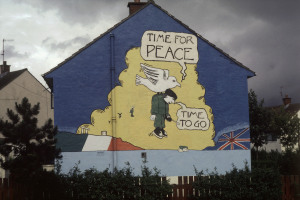
    Time_for_Peace

    “Time for Peace” mural, Whiterock Road, Belfast. Image available under the GNU Free Documentation License via Wikimedia Commons.

    Since the GFA, the tendency to argue ethnopolitical conflicts in terms of human rights has intensified, to the detriment of both wronged parties and broader understandings of human rights. A compelling example of how human rights were an incomplete solution to the conflict emerged early in the post-GFA era, in 2001, when a dispute in Ardoyne, north Belfast, resulted in shocking, violent loyalist protests at the Holy Cross Primary school (a Catholic girls’school). In June 2001, loyalists from the Glenbryn estate began picketing Holy Cross Primary School in nationalist Ardoyne, north Belfast. The school entrance was located just on the Glenbryn side of a famous “peace line.” Police in riot gear were deployed to protect small girls as they walked to school past lines of enraged adults. The dispute continued for four months, with violent conflicts during the summer break and a resumption of the pickets when the new term began in the autumn. Riots spread throughout north Belfast that autumn and winter, along with attacks on children travelling to other schools.

    Families of the distressed children eventually backed an unsuccessful challenge of police conduct under the Police (Northern Ireland) Act 2000, and under Articles 3, 8, 13, and 14 of the European Convention. That case, P.F. and E.F. v. the United Kingdom (Application no. 28326/09), was eventually ruled inadmissible by the European Court of Human Rights. Its long legal journey ended in 2010, when the European declared that, horrific as the protests were, there was no evidence of European convention breach.

    The dispute and legal proceedings very nearly derailed the new Human Rights Commission formed under the GFA.  In 2002-3, six members resigned or withdrew from the commission, citing multiple reasons related to the commission’s lack of authority and resources, its approach to drafting a Bill of Rights, and, most notably, its approach to handling the Holy Cross protests. Although the commission as a whole voted not to become involved, its casework committee committed the commission to supporting the families’ lawsuit. Individual commissioners took contradictory public positions and became increasingly divided. Meanwhile, the commission was perceived as part of an ethnopolitical conflict rather than as public advocates for either the protection of vulnerable people or fundamental rights.

    The Holy Cross protest was not resolved by human rights institutions or advocacy; some might argue that it has never been resolved. The situation revealed several problematic dimensions of treating human rights as a cure for conflict. One difficulty is that human rights laws concern the conduct of state actors. Paramilitary organizations, neighborhood associations, and transnational corporations do not sign human rights treaties.

    Human Rights in the Good Friday Agreement

    Another issue making it difficult for human rights law or advocacy to provide a resolution to conflict was how the GFA itself situates human rights principles in relation to power-sharing as a means to manage conflict. One innovation of the GFA is that it makes human rights central to the settlement, with the entirety of section 6 devoted to “Rights, Safeguards and Equality of Opportunity.” However, the GFA is more strongly oriented by political scientist Arend Lijphart’s consociational model. This model prescribes the management of conflict through power sharing among parties defined in ethnic or communal terms. Thus, the GFA situates human rights within a broader logic that privileges collective political rights. This conceptual maneuver mirrors the way political rhetoric and everyday life absorb human rights claims into regional ethnopolitics, rather than creating a transformative alternative to ethnopolitics.

    In the Holy Cross conflict, protagonists framed the dispute in terms of collective rights and alleged that these rights were being differentially allocated by the state. Families of the girls argued that the protests subjected them to inhuman and degrading treatment—violations of their human rights. Furthermore, they said, police did not use force to stop the protests because the girls were Catholic, but they would have ended any such protest by nationalists. Loyalists claimed that free assembly was an unconditional right, irrespective of sectarian content or whether violence might be a consequence.

    Unfortunately, the kinds of conflicts and challenges for human rights politics raised in the Holy Cross conflict are neither unusual nor uncommon in Northern Ireland. For example, in Donaldson v. the United Kingdom (Application no. 56975/09) the European Court of Human Rights refused to hear the complaint of a republican prisoner that his human rights were violated when the prison service did not allow him to wear a lily (a symbol of the republican struggle for a unified Ireland) outside his cell. Disputes over rights to display emblems may appear frivolous outside the region, but they are part of a broader process, in which human rights laws and institutions have been insufficient to resolve the disputes that emerge from Northern Ireland’s longstanding political conflict.

    Enduring Lessons and the Everyday Life of Rights

    In my 2014 monograph, I explore at length how rights politics have often functioned war by other means over time, rather than providing a comprehensive resolution to conflict. I conclude that advocacy such as the lesbian, gay, bisexual, and transgender (LGBT) equality movement have been more transformative in human rights terms than attempts to balance ethnopolitical rights. This cautionary point about how human rights politics have been received, reinterpreted, and transformed in the Northern Ireland context is not intended to dismiss the peace process’ significant achievements, including the profound diminution of political violence, paramilitary demobilizations, and decommissioning.

    Nevertheless, the successes of the process also require recognition that throughout the fitful implementation of the GFA, political polarization intensified, past violence and political symbols have been repeatedly contested, and riots surrounding parades and symbolic matters like flags have become dangerous and costly recurrent events, intimating, for some, a return to conflict. Violence casts a long shadow across the present peace; prosecutions and re-investigations of past murders and atrocities continue, recent killings like the murder of Kevin McQuigan last summer destabilize power-sharing institutions, and ministers continue to warn of resurgent paramilitary activity – such as a recent upsurge in bomb attacks.

    Understanding the role of human rights in everyday politics in both the past and present is necessary for making nuanced claims for human rights advocacy and law in conflict resolution. Northern Ireland’s tremendous reduction in violence must not be dismissed, but it is important to recognize that the settlement also sustains a form of ethnopolitics that is not always congruent with the goals of human rights advocacy. As the politics of the conflict continue to structure the settlement, it is fair to ask how transformative human rights politics have been. Such an approach can make us conscious of perilous conditions that constrain the present fragile peace, and highlight achievements that are durable and transferrable for the future.

    Dr. Jennifer Curtis is Honorary Fellow in Social Anthropology at the University of Edinburgh. She is the author of Human Rights As War By Other Means:  Peace Politics in Northern Ireland, published by the University of Pennsylvania Press. Her work focuses on how grassroots social movements appropriate and alter rights advocacy and law. She has conducted long-term ethnographic research in Belfast, Northern Ireland and in the United States.  She is currently completing an ethnographic monograph on race, sexuality, and civil rights in red state America, based on fieldwork in Missouri. The book explores the local and national significance of #BlackLivesMatter, movements for LGBT equality, and anti-equality movements, within the broader historical context of racialized violence, slavery, and inequality in the American South.

  • Sustainable Security

    Author’s note: For further analysis on this topic, see the following publications: Kai Michael Kenkel and Cristina Stefan, “Brazil and the ‘responsibility while protecting’ initiative: norms and the timing of diplomatic support”. Global Governance, Vol 22, No. 1 (2016); pp. 41-78; and Kai Michael Kenkel and Felippe De Rosa). “Localization and Subsidiarity in Brazil’s Engagement with the Responsibility to Protect.” Global Responsibility to Protect. Vol. 7, No. 3/4 (2015); pp. 325-349.

    Since Libya, the Responsibility to Protect (R2P) has been a hotly debated concept. Previously a nation exhibiting strict non-interventionist principles, Brazil has recently contributed to the R2P debate with its Responsibility while Protecting initiative.

    Introduction

    Inspired by what it saw as the excesses of NATO’s intervention in Libya and their potentially disastrous effects on the credibility of the “Responsibility to Protect” (R2P) norm, in November 2011 Brazil launched the corollary concept of a “Responsibility while Protecting” (RwP) at the United Nations. While essentially reiterating its endorsement of key principles of R2P, Brazil admonished R2P implementing states to avoid discrediting the norm by exercising restraint while operationalizing R2P. Brazil, itself at that time a rising power seeking more global influence—and particularly participation in shaping the rules of the international system—saw the divisions created by the Libyan intervention as an opportunity to act as a norm entrepreneur. Meant to bridge the gap between R2P supporters in the North and sceptics in the South, RwP was initially criticized by both. Over time, however, certain R2P supporters began to see the concept’s value as a means of reviving R2P after Libya and as a means of attaining crucial Global South buy-in. By this time, however, Brazil—lacking experience in the role of norm entrepreneur—had backed away from its initiative. Though the specific initiative has not been taken forward, RwP has had a clear effect in structuring the contours of subsequent R2P debates at the UN.

    Rising Brazil: between beliefs and expectations     

    UN brazil

    Image by Ben Tavener via Flickr.

    Under the Lula da Silva administration, Brazil began to actively seek a larger profile in international politics, ostensibly with a view to a permanent, veto-endowed seat on an eventually reformed UN Security Council. This presented the country with a conundrum: in UN praxis, particularly among established powers, there is a clear connection between global relevance, military capacity, and the willingness to use force remedially, beyond self-interest, to help those in need—as foreseen by R2P as implemented by the UN. Brazil’s historical normative commitments, however, are rooted in a combination of a highly traditional regional security culture—which equates sovereignty exclusively with non-intervention—and a healthy postcolonial scepticism of multilateral initiatives born in the North. Arguably, the most strongly held of these commitments is a profound aversion to the use of force. Faced with a choice between staying true to its original traditions and fulfilling the expectations placed on global players—as exemplified for example in R2P’s acceptance of the use of force in defence of human life—Brazil launched RwP as an attempt to reconcile these factors, remain active on the international stage, and render R2P both more relevant and less prone to misuse.

    The Libya effect

    NATO’s 2011 Libyan intervention created a trust deficit between its leaders and the BRICS countries, who had been excluded as non-permanent UNSC members from the elaboration process for its enabling Resolution 1973. These states emerged from the experience highly doubtful of Western motives, and they took as a lesson from the Libya intervention that the use of force could have an opposite effect from that intended, effectively distancing a crisis situation from a lasting solution.

    Beyond the immediate concerns related to the intervention’s mandate, the debate over the Libyan case took on contours that resonated with the larger tension between the established powers and emerging players such as the other BRICS countries and Brazil. Substantial divergences remain over R2P’s implementation and particularly its third pillar, which can be used to authorize military force. R2P’s shift in emphasis between understandings of sovereignty has become symbolic of some emerging powers’ resistance to the normative dominance of established powers, making the principle a key rallying point in the ideational skirmishes resulting from a changing global distribution of power. This expands the debate over the RwP initiative beyond its immediate link to the Libyan case and links it firmly to broader issues of global governance. The R2P debate has become a not only a key element of some emerging powers’ challenge to the established distribution of power, but a key locus for increased targeted consultation and cooperation in mounting that challenge. In addition, the intervention debates have become an important stage for emerging powers constructively to give normative content to their challenge to the established order, allowing them to move beyond what some have termed an obstructionist stance.

    The “Responsibility while Protecting” concept

    The RwP concept was launched on 9 November 2011 and floated explicitly as a touchstone for further debate within the United Nations. This targeting would become important later on, as it meant that in characterizing R2P and mobilizing its history, the note limited itself to the concept’s course within the United Nations system, referring for example to its inclusion in paragraphs 138-139 of the World Summit Outcome Document but not to the principle’s original formulation by the International Commission on Intervention and State Sovereignty (ICISS). As such the RwP note was intended less as a normative innovation than as an attempt to shape the norm in terms acceptable to the Global South.

    The primary contribution of the note was its establishment of a set of guidelines to orient the Security Council in contemplating an R2P-based intervention. These guidelines focused on two main topics: limiting the use of force, and the strict chronological sequencing of R2P’s three pillars. The RwP note posits that force should only be used as a last resort (an item already included in the 2011 ICISS Report that launched R2P), and subject to a limited and well-defined mandate implemented under conditions of complete accountability in the field. Brazilian diplomats attempted to appropriate the “do no harm” principle, known from the Hippocratic oath, even arguing that one death from an intervention is too many. These reservations were read correctly by many Western states as a reaction to the perceived excesses of NATO’s foray into Libya, and an attempt to put strict limits on the level and type of force authorizeable under R2P.

    The document’s real element of innovation, and the eventual centre of the debate it created, is its call for the strict political and chronological sequencing of R2P’s three pillars. This was viewed by Western states as too limiting, both in the field, and of the flexible diplomatic responses required of the Council in dealing with a crisis. The threat of force, it was argued, is often subjacent in making diplomatic initiatives work, and taking this option off the table could tie the international community’s hands. Indeed, the note’s Brazilian authors later replaced strict chronological sequencing with the toned-down notion of “prudential sequencing”.

    The reception of RwP

    Initially received coolly by both Western and Southern states, the RwP note nonetheless played a crucial part in both moving R2P forward normatively and in stimulating the inclusion of Southern states into the intervention debate. Despite initial strong criticism, the initiative did shape how established and rising powers interacted in the ensuing UN debates on R2P and intervention more broadly. There are four main criticisms:

    1. that the concept bears little value added, merely repeating provisions already present in the 2001 ICISS Report;
    2. that the initiative was a Trojan horse, designed to limit Western powers’ autonomy and to prevent the further institutionalization of R2P;
    3. specific elements regarding feasibility of RwP’s concrete suggestions, such as sequencing, proactive monitoring, and further limitations on the use of force;
    4. the contention that RwP’s confuses jus ad bellum (R2P’s main focus) and jus in bello (rules for conduct once war has broken out);

    Despite these criticisms and Brazil’s abandonment of its role as a norm entrepreneur, the RwP note has continued to structure global diplomatic debates on intervention, with a focus on reigning in Western action through stricter guidelines in the wake of R2P’s crisis of legitimacy after Libya. It has done so in three main areas:  advancing the importance of some form of relational sequencing of R2P’s pillars; increased restrictions on the use of force; and more proactive monitoring by the Security Council of the following of guidelines by ongoing missions.

    Brazil’s role as a norm entrepreneur on intervention issues remains tied to the RwP concept. The initiative was withdrawn after it did not elicit the desired level of support, and by the time its potential had been realized, internal changes in Brazil and its Foreign Ministry had made continued advocacy politically unviable. Despite attempts to revive a strong role for Brazil in the R2P conversation through efforts in the General Assembly in 2015-2016, crippling fiscal austerity and the paralyzing political crisis which began in April 2016 have temporarily but severely limited Brazil’s ability to proactively advance normative initiatives. Nevertheless, the desire remains to fulfill the country’s natural function as a bridge-builder between North and South on intervention issues, and Brazil is sure not to remain absent for long from the ranks of those crafting R2P’s future contours.

    Kai Michael Kenkel is Associate Professor in the Institute of International Relations at the Pontifical Catholic University of Rio de Janeiro and Associate Researcher at the German Institute of Global and Area Studies. He has published extensively on R2P, with a focus on Brazilian policy, including three edited volumes and articles in Global Governance, Global Responsibility to Protect and  International Peacekeeping.

  • Sustainable Security

    Following President Rouhani’s success in last August’s election, relations between the United States and Tehran have improved substantially, partly because of the election result but also because the Obama administration has a more positive view of Iran. There is no guarantee that the US election in 2016 will result in an administration sympathetic to further progress. This element of uncertainty will be factored into the policy-making process of the Rouhani administration. Even so, prospects for a negotiated settlement to the nuclear issue are the best they have been for a decade and it follows that if an agreement is concluded, this is likely to have a pronounced effect on Iranian foreign policy as it finds itself in a more positive international environment.

    The Ahmadinejad Legacy

    President Luiz Inácio Lula da Silva is greeted by the president of Iran, Mahmoud Ahmadinejad. Source: Wikipedia

    President Luiz Inácio Lula da Silva is greeted by the President of Iran, Mahmoud Ahmadinejad. Source: Wikipedia

    The flamboyance and the sometimes inflammatory rhetoric of the Ahmadinejad administration (2005-13) disguised a pragmatic foreign policy that combined a degree of confrontation on the nuclear issue with the enhancing of contacts with many countries across the global south, including left-leaning states in Latin America and numerous states in sub-Saharan Africa. It also sought to maintain reasonable links with Russia and China while limiting links with the West. While acceptable to much of the “Iranian street”, it was at odds with the liking of elements of western culture by young Iranians and the nuclear issue was deeply problematic in terms of the impact of sanctions.

    While much is made of their role in bringing Rouhani to power and then to the negotiating table, the reality is rather different. Sanctions were effective, in part, because of the parallel impact of internal economic mismanagement by the Ahmadinejad government. Thus, if the Rouhani government improves the management of the economy then even the modest sanctions relief already promised will combine to enable the government to benefit through early respite from recent economic woes.

    One other key factor is that Iran’s standing in the region, including the Arab world, has been damaged by its support for the Assad regime in Syria. Under Ahmadinejad, Iran saw the Assad regime as a strong and necessary ally, especially in combination with the Maliki government in Iraq. But as the war in Syria has worsened, and as the violence in Iraq degenerates towards a civil war, many states blame Iran. Regional powers such as Saudi Arabia and Egypt hold Iran partly responsible for the violent suppression of the Sunni majority in Syria, and states beyond the region believe Iran bears some responsibility not just for that but also for the possible spread of the war to Lebanon.

    Conservative Strategy

    Hassan Rouhani speaks in Mashhad during his presidential campaign

    Hassan Rouhani speaks in Mashhad during his presidential campaign Source: Wikimedia

    Rouhani’s victory was singularly impressive in that he gained an absolute majority on the first ballot against four relatively conservative opponents on a 72% poll turnout. While this has given him considerable authority, most power still lies with the Supreme Leader. However, Ayatollah Khamenei has to be aware of the popularity of Rouhani, a matter made more difficult for him by Rouhani’s preference for avoiding a personality cult. While the election gave Rouhani a clear mandate for negotiating with the US, conservative elements are regrouping.

    For these elements a particular concern is the election of the Assembly of Experts – the parliamentary upper house, which selects the Supreme Leader – that are due in September this year. Their fear is of a buoyant Rouhani government that will damage conservative prospects still further following last year’s reversals. It appears to be for this reason that they have sought to persuade the Supreme Leader to expand the negotiating team at the Syria peace talks in Geneva to include more hard-line elements and to have a Majlis (parliamentary) oversight body for the whole process. This would be dominated by conservatives. Rouhani’s Deputy Foreign Minister, Seyed Abbas Araqchi, has stated officially that the negotiating group remains accountable to the Supreme National Security Council, not a Majlis body, but there are reports of more members recently being appointed to the group.

    What this means is that the Rouhani government will have a strong interest in developing policies that are attractive to the domestic constituency as soon as possible. The emphasis will undoubtedly be on the nuclear issue and getting further sanctions relief which, in combination with better economic management, could ensure palpable improvements in the economy and consequent political popularity. This, though, is not enough and liberalising economic reforms such as removal of subsidies may even exacerbate short-term economic difficulties. It follows that the Rouhani government will be looking closely at ways of increasing Iran’s standing in the region and beyond.

    Developing Foreign Policy: Iran in the world

    A key aspect of the Iranian outlook is a belief in Persia’s very proud history, one that extends over thousands rather than hundreds of years, and the consequent belief that Iran has not been realising its potential as one of the world’s potential great powers. This view of historic greatness transcends religion, even if Iran sees itself also as the centre of the Shi’a Muslim world. Iran has a population of 80 million, a little less than Egypt at 85 million and Turkey at 81 million. Egypt has formidable internal problems and a weak non-oil-based economy; Turkey is far stronger in terms of economy, even if it, too, lacks significant fossil fuel reserves. Since its 2013 counter-revolution, Egypt is also increasingly reliant on Saudi Arabia, Iran’s greatest rival for influence in the Gulf and wider Middle East.

    Iran has all the problems of a near-moribund economy but has remarkable potential for development given that it has close to 10% of world oil reserves and 15% of gas reserves. The latter is largely shared with Qatar because of the huge reserves under the Gulf. There have so far been few problems of delineating boundaries – indeed relations with Qatar remain quite good despite major differences on other issues such as Syria, where Qatar, with Turkey, strongly backs the anti-Assad rebellion.

    Asia or Europe?

    Iran Foreign Minister Javad Zarif walks with EU High Representative Catherine Ashton at the EU +3 and Iran talks, November 2013.

    Iran Foreign Minister Javad Zarif walks with EU High Representative Catherine Ashton at the EU +3 and Iran talks, November 2013. Source: EEAS (Flickr)

    The issue for Iran relates largely to where it seeks to develop its economic and political alliances. To the immediate east the borders with Afghanistan and Pakistan are hugely significant, especially in the case of Afghanistan where opium and refined heroin smuggling across the border has cost the lives of hundreds of Iranian border guards. Iran has close links with the north-west parts of Afghanistan and has no liking for the Taliban. It is suspicious of Pakistan because of radical Sunni Islamist elements within the state, its long-term support for the Taliban, close security ties to Saudi Arabia and the precarious security predicament of the Pakistani Shi’a community, but still seeks to improve relations, not least through exporting gas. The originally planned Iran-Pakistan-India pipeline is going ahead as far as Pakistan. Iran will further increase its links with Afghanistan, where it has greatly increased aid in recent years, especially to projects in the north-west of the country.

    India and China are both significant importers of Iranian oil and gas and China has been particularly useful to Iran in two respects. One has been long-term investment in the development of new oil and gas fields, and it remains much appreciated that China persisted with this when relations with the US were at their lowest. The other has been China’s supply of carefully selected weapons, especially shore-based anti-ship cruise missiles. Iran will maintain close links with China, but will not eschew improved relations with India, seeing it as a useful counter-balance to Pakistan.

    The links with southern and eastern Asia will remain highly significant in terms of Iranian foreign policy but it is already clear that a priority will be to improve relations with neighbouring Turkey, already demonstrated by the meeting between Foreign Ministers Mohammad Javad Zarif and Ahmet Davutoglu in Tehran last November. In spite of considerable differences over Syria, the countries have good relations in other respects, and Turkey’s past role in trying to defuse the nuclear issue remains appreciated. Trade relations between Iran and Turkey have expanded greatly in the past decade.

    It is highly likely that Iran will seek a much closer relationship with Turkey, seeing the two countries together comprising an axis of influence linking Europe and Asia. The Turkish attitude to this is likely to be very positive, seeing it as a useful factor in increasing Turkey’s significance for the European Union. This does mean that the Rouhani government has an added interest in seeing a scaling down of the Syrian War. It is probable that a Turkey/Iran connection is more important to Tehran than the much vaunted Lebanon/Syria/Iraq/Iran “Shi’a crescent”.

    The rivalry with Saudi Arabia remains pervasive and is a crucial proxy element in the Syrian conflict but Rouhani’s personal links with Saudi diplomats in the past, combined with Iran’s need to see the war scaled down, means that even here there may be potential for progress. Further improving relations with the US will be a priority but the Rouhani government recognises the risk of sudden changes in US leadership in less than three years time. This means that European links remain useful but Iran does not look to the west to ensure its standing in the world. Turkey, China and India are more significant and this will remain as long as Rouhani is in power. Of these, Turkey is probably the most important.

    Implications

    Rouhani has barely a year all told to build on the considerable support he gathered last year, and this is against a background of entrenched conservative and theocratic elements that will work hard to limit his capacity. While he will give ground on nuclear issues and may work towards a Syrian settlement, if Iran is allowed to participate in Geneva ll, there is a risk that this can be presented by his opponents as a sign of weakness. Economic progress might blunt this but an additional way forward is to engage in a much more active foreign policy. One consequence of such a shift to the north and east is that Iran may not see Europe as important to its interests to the extent that Europe sees Iran. This is a reflection of more general global changes, bringing its own challenges.

    Paul Rogers is Global Security Consultant to Oxford Research Group, for which he writes monthly security briefings.  He is Professor of Peace Studies at the University of Bradford and author of numerous books including ‘Beyond Terror’. Paul writes a weekly column for openDemocracy  and tweets regularly at @ProfPRogers.

    Featured image: President Rouhani delivers remarks at the Hilton Hotel in New York City, September 2013. Source: Asia Society (Flickr)

  • Sustainable Security

    Western states are growing increasingly reliant on private military and security companies. Fully understanding the privatization of security and its effects on sustainable security requires the inclusion of a critical gender lens.

    Introduction

    In 1999, the American private military contractor Dyncorp hired Kathryn Bolkovac as UN International Police Task Force monitor in Bosnia-Herzegovina. In the course of her work Bolkovac raised allegations that private contractors and UN employees were trafficking and sexually exploiting young girls. In 2002, a UK court acknowledged that Bolkovac was wrongfully dismissed for bringing the story to light, but nobody was ever prosecuted for the alleged sex trafficking.

    Bolkovac’s story — dramatized in the movie The Whistleblower  — captures perfectly some of the challenges to accountability when security functions are outsourced to the private sector and performed by transnational security forces. Security privatization reduces transparency and accountability in ways that exacerbate and make less visible the gender inequalities and gender-based violence that pervade militarized security contexts. Moreover, security privatization increases the profitability of insecurities, making it more difficult to tackle the causes, including gendered causes, of insecurity. Understanding the privatization of security and its effects on sustainable security requires the inclusion of a critical gender lens.

    PMSCs and gender: an emerging challenge

    15245844288_2026206f77_o--1-

    Image by chuck holton via Flickr.

    Over the past three decades a new challenge to sustainable security has emerged: the growing reliance on private military and security companies (PMSCs) by Western states, international organizations, non-governmental organizations, and transnational corporations. PMSCs offer a wide range of services from logistical support, intelligence, training, armed and unarmed guarding and protection, to reconstruction and more. The US-led wars in Afghanistan and Iraq have shown that today waging war is contingent on heavy involvement from the private sector. Private contractor numbers have trailed and at times outpaced US troop levels in the wars in Afghanistan and Iraq. In February 2010, the US DoD employed more than 100,000 private contractors each in Afghanistan and Iraq.

    A number of high-profile cases have highlighted the problems associated with the use of private contractors in Iraq and Afghanistan. Private contractors were involved in the abuse of prisoners at Abu Ghraib and the 2007 shooting and killing of Iraqi civilians in Nisour Square. Allegations of war crimes, poor working conditions, sexual harassment and human trafficking, and disregard for local populations have come to shape the public image of the private security industry over the past two decades.

    In this context, gender has become part of the industry’s attempts to improve its reputation. Gender considerations have made it into the voluntary International Code of Conduct for Private Security Providers that came into effect in November 2010. The International Code of Conduct explicitly addresses gender in three paragraphs on gender-based violence, selection of personnel, and harassment-free work environments. Gender has also been declared ‘good for business‘ by the private security industry. Female employees of PMSCs are seen as useful to conduct security checks on women or to foster positive interactions with local populations, and thus seen as instrumental to operational effectiveness. This attention to gender, while positive on the surface, has mostly served the purpose of creating greater legitimacy for the industry. It has not addressed the larger impacts that outsourcing have on women’s claims to greater and equal participation in the military sphere and the gendered impacts of the use of private forces in local contexts.

    A critical gender lens on private security

    Gender is not just a ‘problem to be solved’ for private contractors, but is fundamental to the reorganization of force through privatization, to the functioning of the private security industry, and to how the industry legitimizes itself. The greater use of private force is part of the broader neoliberal transformation of militarized citizenship that has also entailed a shift from conscription to all-volunteer forces in many Western states. This reorganization of public force has meant an end to the male citizen-soldier model and the greater integration of women into all-volunteer forces. The greater reliance on private security has occurred alongside to the greater integration of women into Western public militaries. While some decry the feminization of public militaries, others have shown how PMSCs actively rely on hyper-masculinity in portraying themselves as more effective security forces vis-a-vis the public sector.

    PMSCs that provide security services primarily recruit from the army and special forces. In doing so, they replicate and even reinforce the gendered division of labour present in the public military sphere. However, PMSCs have also made a concerted effort to distance themselves from the hyper-masculine images of trigger-happy burly ‘cowboys’ and shift towards a softer and more legitimate image of masculinity, shedding the hyper-masculine militarized image for one emphasizing humanitarianism, protection, professionalism, and expertise. At the same time, privatization sidelines and depoliticizes questions of gender equality in the military sphere. There is neither publicly available data on women in the private security industry nor public debate on their marginalization within the industry. By its very logic, profitability drives the private security sector and not questions of citizenship and equal participation.

    Gender also intersects with race and citizenship to shape the division of labour in the globally operating private security sector. A large segment of the workers hired or subcontracted by PMSCs comes from the Global South. The globally operating private security industry can be thought of as a hierarchy of masculinities. Western contractors are at the top of this hierarchy, and so-called third-country nationals (TCNs) from the Global South sit at the bottom. Profitability is in part achieved through the exploitation of this vulnerable migrant labour force.

    The outsourcing of military security functions to private companies has allowed a global rescaling of labour recruitment in support of Western military operations. As data from the US wars in Iraq and Afghanistan show, a majority of contractor labour is made up by ‘third-country’ and host-country nationals and not by US citizens. For example, of the more than 200,000 DoD contractors working in Iraq and Afghanistan in February 2010 (mentioned above), less than 40,000 were US citizens. The racialized hierarchy among contractors of different citizenship is evident not only in pay and working conditions, but also in the kind of work performed. While local and migrant workers perform much of the logistical support work, their proportion is particularly high when it comes to the more dangerous armed security work.

    Conclusion

    Simply bringing consideration of gender into the private security industry is not a sufficient enough means of addressing the problems that security privatization poses for sustainable security. Conflict is often justified and waged by appealing to gendered notions of security: masculinized protectors and defenders, and feminized and vulnerable populations in need of protection. Private actors feed into this gendered discourse, portray themselves as masculinized protectors, and benefit from continuing insecurities and global inequalities. As insecurities create new market opportunities for the private security industry, gendered discourses of protection and gendered divisions of labour are being reinforced while sustainable security becomes more elusive. We need to be mindful of security privatization and the fundamental ways in which it is gendered as we work towards remaking security in more sustainable ways.

    Maya Eichler is Canada Research Chair in Social Innovation and Community Engagement and Assistant Professor of Political Studies and Women’s Studies at Mount Saint Vincent University.