Category: 06

  • Sustainable Security

    RC_long_logo_small_4webThis article is part of the Remote Control Warfare series, a collaboration with Remote Control, a project of the Network for Social Change hosted by Oxford Research Group.

    States’ ability to move forward on the issue of lethal autonomous weapons will depend on not only finding consensus on key concepts but also having the will to find concrete outcomes.

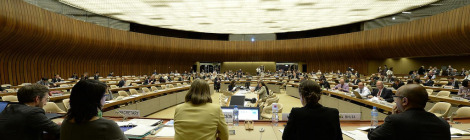
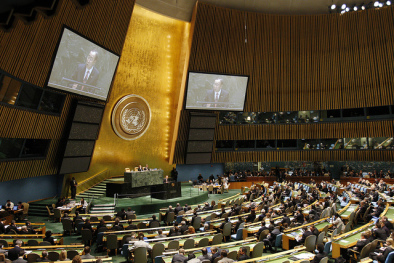
    UN_Meeting_of_Experts_Lethal_Autonomous_Weapons_CCW_April_2015

    UN Meeting of Experts on Lethal Autonomous Weapons in April 2015. Source: Flickr | UN Geneva

    April’s meeting of experts at the UN on lethal autonomous weapons systems (often shortened to LAWS or AWS) set out to consider questions relating to this emerging military technology, a continuation of UN talks begun in May 2014. These meetings took place under the aegis of the Convention on Certain Conventional Weapons (CCW), and brought together state representatives, NGOs and academics. The CCW meetings have demonstrated a divergence of views on the ethical and legal concepts that should be employed, and a complex debate that at times felt detached from reality; moreover, without a negotiating mandate there is a fear that the meetings could simply mire the issue in abstract debate, leaving states free to continue developing the technology in the meantime.

    The UN Convention on Certain Conventional Weapons

    For a long time the CCW was a neglected treaty; regarded by states and NGOs as an overambitious and failed attempt to combine elements of international humanitarian law with arms control. By the end of the 1980’s, the CCW appeared to be floundering with only 29 state parties. Yet in recent years, participation has increased and there are now 121 state parties to the convention. A total of 87 countries sent representatives to the first meeting on autonomous weapons, marking a record high level of participation for the CCW. Eighty-eight countries were present at April’s meeting.

    The purpose of the CCW is explicitly “to ban or restrict the use of specific types of weapons that are considered to cause unnecessary or unjustifiable suffering to combatants or to affect civilians indiscriminately.” The CCW is an evolving body of international humanitarian law, with a framework that is dynamically structured to be responsive to the concerns raised by the international community. The recognition that the law is not static is therefore a particular strength, indeed a cornerstone of the CCW.

    The CCW’s talks in May 2014 and April 2015 were undertaken with a mandate “to discuss the questions related to emerging technologies in the area of lethal autonomous weapons systems, in the context of the objectives and purposes of the convention.” A ban on autonomous weapons would join five other CCW protocols on non-detectable fragments, landmines, incendiary weapons, laser weapons and explosive remnants of war. The uptake of the issue of lethal autonomous weapons by the CCW has been unprecedented in its speed, and could indicate a move towards prohibition. However, because there is no negotiating mandate, it could also be a strategic move to engage in these discussions on the part of states keen to engage in the debate of abstract principles, while at the same time continuing to develop the technology. The annual meeting of the CCW in November 2015 will decide formally whether to continue the talks, based largely on the content of the April meeting.

    Autonomy

    The most contentious issue discussed so far is the issue autonomous weapons pose with regard to human control. This issue was discussed through reference to the contested concepts of ‘autonomy’ and ‘meaningful human control’. The United States, the UK, France and Germany are all in favor of the notion of autonomy as a guiding principle. The US was one of the first states to advocate for this concept when its Department of Defense issued the first policy announcement by any country on autonomous weapons systems in November 2012, just three days after Human Rights Watch had brought the issue into the global spotlight.  Interestingly, the directive refers not to ‘fully autonomous’, but to ‘autonomous weapon systems’ that include human supervision. This supports the view advocated by the US at April’s CCW meeting: as long as humans are ‘in the loop’, weapons systems are not fully autonomous and therefore compliant with international humanitarian law. The UK, France and Germany attach human involvement to autonomous weapons systems as well. In a general exchange of views the UK representative assured, “there will be human oversight in this new territory where lethal autonomous weapons systems can go […] Autonomous systems do not exist, and will never exist” (author’s own transcription).

    However, some objected that this was a ‘knockdown’ argument intended to rhetorically shut down the controversy about the lack of human control. The International Committee for Robot Arms Control (ICRAC) is an international association of experts that was sat up with the specific goal of getting governments to talk to each other about the continuous automation of warfare, and was present at both the 2014 and 2015 meetings. ICRAC’s interpretation of the DoD policy was that it was designed to “green-light” weapon systems able to select and engage human targets. Together with 272 experts in computer science, engineering, artificial intelligence, robotics, and related disciplines from 37 countries, ICRAC issued ‘The Scientists’ Call’,  stating: “[G]iven the limitations and unknown future risks of autonomous robot weapons technology, we call for a prohibition on their development and deployment. Decisions about the application of violent force must not be delegated to machines”. Their message was clear, that within such systems, human control would not be ‘meaningful’.

    Meaningful human control

    India and Pakistan expressed confusion over this idea of meaningful human control, observing that the presence of meaningful human control would mean the weapons systems would not then be ‘autonomous’. In their opinion the question should be whether or not independent weapon systems can comply with international humanitarian law: whether they can distinguish between civilians and combatants, make proportionality assessments, and comply with other time-tested legal principles. A counter-argument was raised by Richard Moyes from Article 36 that if discussion is too focused on undefined hypothetical systems’ ability to comply with international humanitarian law, then legal arguments could become separated from reality. In particular, he argued that the law is a human framework applied to humans. A state representative from Greece agreed, saying that autonomous weapons should be addressed ethically rather than legally or technically, as the question is whether or not humans should delegate life and death decisions to a machine. The debate around autonomous weapons’ ability to comply with international humanitarian law is a misguided one if it fails to grapple with the bigger, underlying issues that would be raised. Banning such systems, in fact, is about maintaining something unique in the decision-making process: a human with intent behind the act of killing. Cuba, Ecuador, Pakistan, Sri Lanka and Palestine agreed with this argument and called for a prohibition.

    Potential for convergence

    Consensus was reached on the undesirability of fully autonomous weapons systems. Ambassador Michael Biontino of Germany, who chaired the April meeting, wrote in his report that the following area of common understanding had emerged: “machines or systems tasked with making fully autonomous decisions on life and death without any human intervention, were they to be developed, would be in breach of international humanitarian law, unethical and to possibly even pose a risk to humanity itself.” However, because parties largely disagree about what constitutes human intervention, this statement is of limited value. The contradictory definitions used at the CCW meetings have created a lack of clarity for policymakers; it remains largely undecided what the world would look like if autonomous weapons came into existence.

    The April talks not only give some idea of the shape of the debate going forward, but also of the potential limitations of the CCW talks themselves, as a forum for discussion, but without a negotiating mandate. One significant milestone would be the establishment of a broad, representative and universal Group of Governmental Experts (GGE) next year that would move the discussion from an informal to a formal setting. It has been suggested that the current lack of common language makes this discussion challenging, and that it is critical to avoid rushing into formal discussions. However, it does not seem premature for prohibition to be on the agenda in a body that has been designed to create prohibitions. A GGE seems a necessary next step to keep states focused on a practical outcome.

    Lene Grimstad served as an observer at the 2014 and 2015 Geneva Meetings of Experts on Lethal Autonomous Weapons Systems, and holds a MA in Society, Science and Technology in Europe from the University of Oslo and ESST (European Inter-University Association on Society, Science & Technology) .

    Featured Image: Meeting of Experts on Lethal Autonomous Weapons Systems in April 2015. Source: Flickr | UN Geneva

  • Sustainable Security

    Does military integration make renewed civil wars less likely? Evidence from several cases of postwar military integration over four decades reveal little evidence that it contributes to the durability of postwar peace.

    Author’s Note: This article derives from a larger project which was intellectually indebted to the Security Sector Reform Workgroup of the Folke Bernadotte Academy and funded by grant BCS 0904905 from the Social and Behavioral Dimensions of National Security, Conflict, and Cooperation, a joint program of the National Science Foundation and the Department of Defense/Department of the Army/Army Research Office (the Minerva program). That grant funded a conference on military integration after civil wars, which the Peacekeeping and Stability Operations Institute of the U.S. Army War College graciously provided hospitality for and supported; special thanks are due to Raymond Millen and Col. Stephen T. Smith. I am especially grateful to all the participants in that conference, whose research and thinking so deeply informed the project.

    Military integration following a civil war is a common practice, evidenced by the fact that nearly 40 percent of peace settlements for the 128 civil wars from 1945 to 2006 called for some form of integration of combatant military forces. It has become accepted wisdom that integration is crucial to preventing a society’s relapse into war and there is much about this that feels like common sense. After all, a professional, communally representative force could conceivably diminish vulnerable groups’ security fears in a post-civil war environment by:

    • serving as a credible signal of the government’s commitment to power sharing which would make an army less likely to employ violence against the society’s constituent communal groups;
    • protecting populations against potentially dangerous militias;
    • providing employment to former fighters from all sides;
    • and facilitating, through symbolic power, popular identification and unity with an inclusive vision of a nation.

    But is this faith regarding military integration and civil wars actually true based on the research or is it fundamentally misplaced?

    The empirical evidence

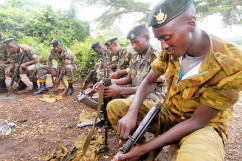
    burundi-peace

    Image credit: US Army Africa/Wikimedia.

    Quantitative studies generally find a correlation between military integration and the likelihood of renewed civil wars (Walter 2002; Hoddie and Hartzell 2003; DeRouen, Lea, and Wallensteen 2009; Toft 2010).  However, aside from one notable dissent (Glassmyer and Sambanis 2008) the studies assumed that all military integration efforts were equivalent. They focused on agreements to integrate rather than their actual implementation, and it was possible that the causal arrow was reversed, that easier cases would allow military integration than those more likely to fail.  Two comparative case study analyses reached opposing conclusions (Knight 2011; Call 2012).

    My study of eleven cases began with the expectation that military integration would be difficult to carry out (bringing people who have been killing one another with considerable skill and enthusiasm and giving them weapons did not seem like a bright idea) but that doing so successfully would reduce the likelihood of renewed civil war.  I ended with precisely the opposite conclusions.

    The study – does military integration make renewed civil wars less likely?

    The study specified five plausible causal mechanisms linking the phenomena:

    1. The willingness of leaders on both sides to commit to this risky strategy persuades others that they are sincere in desiring peace and can be trusted on other difficult issues.
    2. The new force provides security for the elites (and perhaps the masses), allowing them to resolve other issues.
    3. The new force employs substantial numbers of veterans who might otherwise be available for recruitment by spoilers planning to restart the war.
    4. It is a powerful symbol of legitimacy and integration for the new regime—if people who have been killing one another can work together, surely civilians should be able to as well.
    5. The successful negotiation of military integration would build trust among members of the different groups, making it easier to resolve other issues.

    Cases and Authors

    Sudan 1972-1983—Matthew LeRiche

    Rhodesia to Zimbabwe—Paul Jackson

    Lebanon—Florence Gaub

    Rwanda—Stephen Burgess

    Philippines—Rosalie Arcala Hall

    South Africa—Roy Licklider

    Democratic Republic of the Congo—Judith Verweijen

    Mozambique—Andrea Bartoli and Martha Mutisi

    Bosnia-Herzegovina—Rohan Maxwell

    Sierra Leone—Mimmi Söderberg Kovacs

    Burundi 2000-2006—Cyrus Samii

    In lieu of more sophisticated methodologies, case authors were asked whether they had observed these mechanisms in their cases.  The only one which received even a few assents was increased legitimacy of integration in other functional areas, perhaps the most difficult to observe.

    None of our cases collapsed from violence among the new recruits but even successful integrations could not withstand the actions of civilian politicians which created new violence in places like Zimbabwe and Sudan.  Moreover, creating a strong security sector in a weak government is a recipe for military domination and less democracy in places like Rwanda.  So why do combatants adopt this policy after civil wars so often?  The single best predictor that a civil war would end with military integration was international mediation of the conflict (Hartzell 2014).

    Conclusion

    Ronald Krebs and I concluded that this suggests an ethical problem for peacemakers.  Military integration is relatively easy for outsiders to implement; we have substantial numbers of unemployed military to do the work, and it requires much less adaption in the target society than other actions like creating a working justice or taxation system.

    Moreover, in some wars the nature of the postwar military is a critical issue (Burundi is a good example) and in such cases, when the locals have decided they want military integration, internationals can give useful assistance.  But military integration is expensive to implement and support over time and may have regrettable political consequences so outsiders should not actively advocate it.  At this point, the evidence does not support the assumption that military integration will make renewed civil war less likely.

    Roy Licklider is Professor of Political Science at Rutgers University and Adjunct Senior Research Scholar in the Arnold A. Saltzman Institute of War and Peace Studies at Columbia University.

  • Sustainable Security

    Sustainable security and peacebuilding remain elusive in northern Uganda. But gender-relational peacebuilding offers a potential avenue to strengthen post-conflict peacebuilding efforts.

    Sustainable peacebuilding in post-conflict northern Uganda is intricately interwoven into the fabric of regional security. Intrastate conflicts in South Sudan and the Democratic Republic of the Congo, as well as the multidirectional refugee and rebel army flows across borders contribute to destabilizing regional peacebuilding and security efforts. When taking these regional concerns and ongoing internal problems into consideration, it becomes clear that sustainable security and peacebuilding remain elusive in northern Uganda. One avenue to strengthen current post-conflict peacebuilding efforts is to appropriately gender interventions. Implementing appropriately gendered interventions will need to adequately address ongoing gendered violence that has become central to both regional and internal conflicts.

    The Conflict in Uganda

    During active conflict between the Government of Uganda (GoU) and Lord’s Resistance Army (1987-2006), approximately 1.8 million northern Ugandans were internally displaced, many of them into poorly maintained internal displacement (IDP) camps. The conflict, displacement, and subsequent return processes have been deeply gendered. During the conflict, young girls and boys were abducted by the Lord’s Resistance Army (LRA); many were forced to fight, carry LRA cargo long distances, and were subjected to sexual violence. Abductions ended in northern Uganda when the LRA was pushed out of the country, but the LRA continues to be a threat to regional security and peacebuilding. Abductions continue in the Central African Republic and Democratic Republic of the Congo, and the LRA’s regional presence is but one more complex component of ongoing conflicts in South Sudan, the CAR, and the DRC.

    Beyond LRA abductions, women were often subjected to sexual violence both as abductees and while living in IDP camps. During encampment, women, treated as heads of household, were given aid to distribute among their family members; this essentially cut men out of their traditional roles as the breadwinner. The gendered allocation of resources challenged cultural norms – a phenomenon which many rural residents blame as one reason for increasing domestic violence during and after conflict. Many men and women lost access to education and economic productivity during encampment, creating employment crises post-conflict. Simultaneously, people were displaced from their land holdings, devastating their economic livelihoods; this is compounded by the rampant killing and stealing of cattle, a source of economic and social wealth. Thus, displacement decimated men’s ability to be economically productive and their sources of wealth and authority, necessary social capital for rites such as marriage, were all stripped away. Unemployment continues to be a pervasive problem as people lost access to their land and do not have the educational attainment necessary for wage employment.

    Despite the far-reaching gendered dynamics of conflict and the post-conflict return process on economic production, political standing, and kin relations, peacebuilding efforts in the region concentrate on physical forms of violence, such as rape.

    Research conducted in 2013 shows that many rural residents cited economic violence, such as access to land and resources, equitable employment, and social services, as a pervasive and unaddressed concern. When combined with ongoing dissatisfaction with the current government, the result is a suite of peacebuilding approaches that may fail to generate sustainable peace in northern Uganda, with wider implications for regional security.

    Redefining “Gendered” Approaches to Peacebuilding

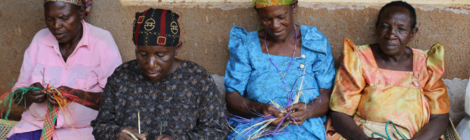
    widows-program-1

    Women from ‘The Widows’ Programme’ making crafts at the Twezimbe Development Centre, Mbikko, Uganda. Photo by Lisa Byrne via Flickr.

    “Gendered” peacebuilding approaches in past years became synonymous with women and conflict-related sexual violence, such as rape and defilement. Such ostensibly gender-sensitive approaches are inherently problematic; they ignore the experiences of men, the diverse experiences of women, and make women’s narratives valuable only insofar as they narrate conflict-related sexual violence. Resolutions, such as UNSCR 1820 and 1325, have made strides towards recognizing the impact of war on women; however, their operationalized emphasis on physical gendered violence continue to reflect this myopic perspective. Resolutions supporting gendered peacebuilding have historically failed to meaningfully include all genders, stereotype or homogenize the experiences of people in conflict, and may reflect non-local cultural values and understandings.

    Sexual violence is a serious concern during and after conflict, especially where it is a wartime tactic, there is little support for survivors of violence, and where local sociocultural norms and communities have broken down. However, homogenizing women as singularly vulnerable, passive, and the subject of violence obscures the diverse experiences of both women and men during and after conflict. These homogenous characterizations are paralleled by only addressing gendered violence among men as conflict is either an assault on or a reflection of masculinity. Both of these perspectives are imbued with often uncritical assumptions that fail to see genders as relational and embedded within complex social, political, and economic contexts.

    Thus, scholars developed a gender-relational approach to analyzing conflict and implementing peacebuilding frameworks. Gender-relational approaches stand in contrast to prior perspectives that rely on gender binaries and homogenous categories. Instead, gender-relational scholars examine gender as an intersectional category that is intimately bound up in social, political, and economic contexts before, during, and after conflict. Utilizing a gender-relational perspective allows researchers and peacebuilders to identify the most vulnerable in society, allowing precisely-targeted interventions and more effective implementation. Gendered peacebuilding in this way shifts the focus from women’s sexuality and sexual experiences and men’s masculinity, to identifying and targeting the contextually specific needs of the most vulnerable in post-conflict societies.

    Appropriately Gendering Peacebuilding to Promote Sustainable Peace

    Gendering peacebuilding in post-conflict northern Uganda must go beyond the censure of physical SGBV, such as rape, to take into account the complex experiences, relationships, and sociopolitical and socioeconomic needs prior to, during, and after conflict. In this local and regional context, gendering peacebuilding appropriately takes into account the various experiences of men and women as they are embedded within ancestral communities pre-conflict, during displacement and in the IDP camps, and post-conflict return process, and as they are affected by age, education, ability, and other intersectional categories.

    Engaging a gender-relational framework for peacebuilding in northern Uganda can illuminate a number of discrepancies between local needs and concerns and ongoing peacebuilding efforts. While traditional political systems, which predominately support and were led by men, degraded, the loss of property and cattle – traditionally for economic productivity, social status, and marriage and kinship – have negatively impacted all genders. Although the degradation of sociopolitical systems and loss of agricultural and pastoral productivity have disempowered men, it has simultaneously empowered women. Women have broken traditional gender roles by entering public workspaces and shouldering normatively male responsibilities. However, these shifts along with pervasive poverty have also contributed to domestic violence and local pushback against the implementation of international human rights standards.

    For example, although conflict-related sexual violence was, and remains, an entrenched concern in northern Uganda and the region more generally, many rural northern Ugandans are deeply concerned about economic forms of gendered violence. Both men and women cite land wrangling or grabbling – the forceful taking of land – as pervasive concerns that inhibit access to economic livelihoods, spiritual fulfillment, political authority, and kin networks. According to one resident in Nwoya District, before the war [SGBV] was there. During, it escalated and after has been added on because of land wrangles.” Although land is often wrangled by neighbors or even relatives, many rural residents fear land grabs from South Sudanese and other foreigners who are reportedly buying up large tracts of land for farming. Widows in particular cite the lack of support for them as they make claims with the legal, local political, or religious authorities to have their case heard and get their land back. Widowhood in rural northern Uganda is precarious – normally women rely on their husband for land ownership (not mandated by law) and when he passes away depend on the community to uphold their right to continue living and producing on the land. However, the unique challenges of the post-conflict region, including ongoing security concerns and a lack of arable land more generally, means that there is less support from elders, the legal system, and religious leaders for widows with land wrangling complaints. This example of widows demonstrates the power of gender-relational approaches to post-conflict peacebuilding.

    Land wrangling disproportionately affects women, widows, and the elderly, and remains a serious security and peace concern for residents throughout the northern reaches of Uganda. These ongoing conflicts are embedded within a nation-state that has consistent human rights violations and political uncertainty, and a region that is beset by internal and regional conflicts. Utilizing such data-driven approaches, we can better develop, implement, and target peacebuilding efforts towards those groups and the leaders that are in positions to help widows resolve such conflicts. As these conflicts are also intricately bound up in ongoing gendered divisions and reconfigurations, appropriately gendering peacebuilding has the potential to open avenues to contribute to regional conflicts and security concerns. Several organizations in the northern Uganda region have been conducting this difficult work, including the Refugee Law Project, Centre for Reparations and Rehabilitation, and the Women’s Advocacy Network. Each of these organizations were generated and are propelled forward by northern Ugandans and each reflects the myriad needs facing residents in the post-conflict period, such as economic violence and insecurity, education, social inequality, and lack of social services. By addressing these points as part of a gendered peacebuilding program, practitioners can grapple with pervasive concerns, such as land conflict, that affect both women and men; thus, they may also begin to unravel some of the regional security concerns tied to inter- and intrastate conflict.

    Amanda J. Reinke specializes in conflict resolution amid displacement. She received her PhD from the University of Tennessee’s Department of Anthropology and Disasters, Displacement, and Human Rights Program. Financial support provided by the W.K. McClure Scholarship and the Minority Health International Research Training Program (MHIRT) at Christian Brothers University (Grant Number T37MD001378; National Institute on Health and Health Disparities). Amanda can be contacted at or @LegalAnthro.

  • Sustainable Security

    The True Finns Party have surged to the forefront of Finnish politics and fundamentally turned the nation’s political discourse in a more nationalist direction. What are the causes of this rise in Finnish populism?

    The populist Finns Party, formerly known in English as the True Finns party (Finnish: Perussomalaiset), rushed to the surface of Finnish politics in the 2011 parliamentary election, snatching a remarkable 19 per cent of the vote. Its charismatic leader Timo Soini positioned himself on the side of the ordinary man and against corrupt elites. Referring to ethno nationalism and Christian social values, Soini emphasized Finnishness and the need to protect the national culture from being contaminated by immigrants and other foreign influences. The Party’s surge to the forefront of Finnish politics has fundamentally turned the political discourse in Finland towards a more nationalist direction. In order to gain a fuller understanding of the drivers behind this growth of Finnish populism, it is necessary to examine Finland’s recent history.

    A sense of suffering

    Traditionally, Finnish society was split on a double axis: urban and rural, landowners and peasants. Through history, it was the bloodiest area in the Nordic region. The Finnish national identity, including a sense of common suffering, was at least partly defined by being locked between powerful and often aggressive neighbours, Sweden and Russia, who repeatedly took turns in dominating Suomi, the Finnish heartland. Nationalistic movements grew strong in the nineteenth and early twentieth centuries and, though it was rather a by-product of the Bolshevik revolution, Finland finally won its independence in 1917. Authoritarian movements soon emerged; for example, the nationalist Lapua movement. Nationalist sentiments were growing fast in the interwar years, but this was also a period of internal conflict, spurring into a full-blown Civil War between authoritarian Nationalists and Social Democratic groups.

    Surviving under constant threat from its eastern neighbour, Finland aligned with Germany for a period in the Second World War. Tensions on the Finnish–Soviet border also grew leading up to the Second World War, breaking into the Winter War between the two in autumn 1939. After showing surprising fighting resilience, Finland had still lost 12 per cent of their land in the war in Karelia. When the Germans invaded Russia in 1941, the Finns fought alongside them, in what is referred to as the Continuation War, in an attempt to regain lost territories in Karelia. They were beaten back by the Soviets once again three years later and devastated by repeated conflicts. Over the course of these repeated and prolonged conflicts a militaristic mentality developed in Finland, still evident in contemporary life.

    Finland emerged humbled from the war, surely with a sense of suffering but also one of perseverance. The country was not only in dire straits economically but also firmly within the sphere of strategic influence of the Soviet Union. Finnish diplomacy revolved around appeasing their powerful eastern neighbour. The geopolitical balancing act, of constructing a Nordic liberal marked orientated welfare state while appeasing the Soviets, paid off, and Finland became a prosperous Nordic state. Crisis, however, hit once again in 1990 when the Scandinavian banking crisis coincided with loss of markets in the East when the Soviet Union dissolved in the wake of collapse of communism.

    Still, Finland emerged from the crisis with a growing self-confidence in international affairs, not only by joining the EU but also by adopting the Euro and seeking a core position with the EU. Finland was a homogeneous country with a low level of immigration. Right-wing nationalist populist politics were thus not prominent in the latter half of the twentieth century. Still, agrarian populist versions existed since the 1960s with a noteworthy support. Right-wing populist parties like those that emerged in Denmark and Norway did not, however, gain much popular support until after the Euro crisis hit in 2009.

    The Finnish Agrarian Party

    Although nationalist extreme-right politics similar to those on the European continent only became prominent in Finland with the surge of the True Finns party in the new millennium, agrarian populism had been present in Finnish politics ever since the beginning of the 1960s. The Finnish Agrarian Party (Suomen Maasedun Puolue – SMP) established in 1959 was founded in opposition to the urban elite and claimed to speak on behalf of the common man in rural Finland, those that they referred to as the ‘forgotten people’ (unohdetun kansa) in town and country, against the detached ruling class in the urban south.

    The SMP exploited the centre-periphery divide in Finland. Its greatest electoral success came in 1970, 1972 and in 1983 when the party won approximately a tenth of the vote each time. Their main appeal was with rural workers and the unemployed, who felt alienated in the fast moving post-war society. In a rapid social structural change, Finland was transformed from being predominantly agricultural to a high-tech communication-based society. The SMP ran into serious financial difficulty and a new nationalist populist party, the True Finns Party, absorbed its remains in 1995. In 2011, the party’s English name was shortened to the Finns Party.

    Timo Soini and the True Finns

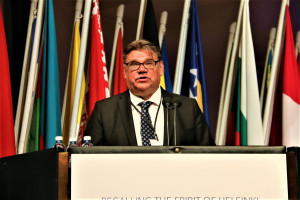
    somio

    Image credit: OSCE Parliamentary Assembly/Flickr.

    In 1997 the charismatic Timo Soini took the helm of the True Finns Party. Soon, the party found increased support, rising from 1.6 per cent in the 2003 parliamentary election to 4.1 per cent in 2007. It was, though, only in wake of the international financial crisis, that the party surged, winning 19.1 per cent of the vote in the 2011 parliamentary election and becoming the third largest party in the country, behind only the right-of-centre conservative National Coalition Party (NCP) and the Social Democrats (SDP). This was also referred to as the ‘change election’ or the ‘big bomb’, when Finnish politics, to a significant degree, came to revolve around the Finns Party and its populist politics.

    The party had increased its vote five fold since the 2007 election, adding full 15 percentage points, which was the biggest ever increase of a party between elections in the Eduskunta, the Finnish Parliament. Its initial rise had, however, started two years earlier, in the European Parliament election of 2009, when the True Finns grabbed 9.8 per cent of the vote. In 2015 the party saw only limited decline in its support, clearly reaffirming its strong position in Finnish politics, and entering coalition government for the first time.

    Previously, the True Finns had been widely dismissed as a joke, a harmless protest movement, and a nuisance on the fringe of Finnish politics. Their discourse was aggressive and rude and the media mostly only saw entertainment value in them. After the 2011 election, however, it had surely become a force to be reckoned with. During the election campaign, they had clashed with the mainstream parties and called for ending of the one-truth cosy consensus politics of the established three parties. The Finns Party had now become a forceful channel for the underclass.

    Contrarily to most similar parties elsewhere, the Finns Party accepted being branded as populist. Soini, however, refused to accept that his party was extreme-right. Contrary to the progressive parties of Denmark and Norway, the Finnish populists never flirted with neo-liberal economic policies. Rather, the Finns Party inherited the centrist economic policy of the SMP. Its right wing populism was thus never socio-economic, but rather socio-cultural.

    Three themes emerged as the main political platform of the Finns Party:

    • First to resurrect the ‘forgotten people’, the ordinary man, to prominence and speaking in their name against the elite;
    • second, to fight against immigration and multiculturalism;
    • thirdly, to stem the Europeanization of Finland.

    The forgotten people

    Finland has been historically prone to polarization; for example between East/West; Socialism/Nationalism; Urban-rich/Rural-poor; Cosmopolitan/Local. Building on the SMP’s politics, the Finns Party kept exploiting the centre-periphery divide, effectively exchanging the agrarian focused populism for a more general cultural divide based on a more ethno-nationalist program. Timo Soini, for example, adopted the phrase of the ‘forgotten people’, which refers to the underprivileged ordinary man, which, he argued, the political elite had neglected.

    The political elite was continuously presented as corrupt and arrogant, having suppressed the ordinary blue-collar man. Positioning themselves against the urban Helsinki-based cosmopolitan political elite consolidated around the south coast, the Finns Party representatives claimed to speak in the name of the ‘forgotten people’, mainly working in rural areas.

    Drawing on traditional Christian values the ‘forgotten people’ were discursively depicted as pure and morally superior to the privileged elite. This sort of moralist stance was widely found in the party’s 2011 election manifesto, including claims of basing their politics on ‘honesty’, ‘fairness’, ‘humaneness’, ‘equality’, ‘respect for work and entrepreneurship’ and ‘spiritual’ concerns.

    The Finns Party was also staunchly socially-conservative on matters such as religion, morality, crime, corruption, law and order. It is thus more authoritarian than libertarian. They are surely anti-elite, but not anti-system. Indeed, it firmly supports the Finnish state, its institutions and democratic processes, including keeping the relatively strong powers of the president to name but one example.

    Finnish ethno-nationalism

    Timo Soini and his followers have offered a clear ethno-nationalist focus, strongly emphasising Finnish national cultural heritage. It was suspicious of Swedish influence, dismissive of the indigenous Sami’s heritage in Suomi – often referred to as Lapps in English – and outright suppressive in regard to the small gypsy population. In a classical populist ‘us’ versus ‘them’ style a running theme of the Finns Party’s disourse was to emphasise Finnishness by distinguishing Finns from others.

    The Finns Party promoted patriotism, strength and the unselfishness of the Finnish people and argued that the Finnish miracle should be taught in school in an heroic depiction; that is, how this poor and peripheral country suppressed by expansionist and powerful neighbours was, through internal strength and endurance, able to fight their way from under their oppressors to become a globally recognised nation of progress and wealth.

    More radical and outright xenophobic factions have also thrived within the party. Jussi Halla-aho, who became perhaps Finland’s most forceful critic of immigration and multiculturalism, led the anti-immigrant faction. He has referred to Islam as a ‘totalitarian fascist ideology’ and for example wrote on his blog in 2008 that, ‘since rapes will increase in any case [with inflow of immigrants], the appropriate people should be raped: in other words, green-leftist do-gooders and their supporters’ He went on to write that prophet Muhammad was a paedophile and that Islam as a religion sanctified paedophilia.

    Many similar examples exist. A well-known party representative, Olli Immonen, for example, posted on Facebook that he was ‘dreaming of a strong, brave nation that will defeat this nightmare called multiculturalism. This ugly bubble that our enemies live in, will soon enough burst into a million little’.

    Many other prominent populist and extreme-right associations also existed in Finland, some including semi-fascist groupings. Indeed, a few MP’s of the Finns Party belonged to the xenophobic organisation Suomen Sisu. In early 2016, in wake of the refugee crisis hitting Europe, mainly from Syria, a group calling themselves Soldiers of Odin took to patrolling the street of several Finnish towns. Dressed in black jackets, decorated with Viking symbolism and the Finnish flag, they claimed to be protecting native Finns from potential violent acts of the foreigners.

    Riding the Euro-crisis

    Finns Party’s rise was helped significantly by their opposition to the EU and the European Central Bank, who seemed powerless in dealing with the Euro-crisis. They depicted the EU as unworkable and claiming that democracy cannot work in the context of supranational EU governance, and that it favoured elites over ordinary citizens in the European countries. There was a clear demand for a EU critical party, a void the Finns Party was happy to fill because the mainstream parties then held a pro-EU stance.

    Leading up to the 2011 elections he Finns Party turned opposition to bailouts for debt-ridden Euro countries into their main issue. That also helped in securing good results in European Parliament elections in 2014, after which they joined the radical-right European Conservatives and Reformists Group (ECR) in the EP.

    After coming into government in 2015 the Finns Party found diminished support in opinion polls. Still, their influence had steadily grown and they had found much greater acceptance than before. They clearly led in the growing anti-EU discourse in the country. Soon, many of the previously pro-EU mainstream parties began to adopt their anti-EU rhetoric, and some, subsequently, also became increasingly anti-immigrant.

    Eirikur Bergmann is Professor of Politics at Bifrost University in Iceland and Visiting Professor at the University of Ljubljana in Slovenia. He is furthermore Director of the Centre for European Studies in Iceland. Professor Bergmann writes mainly on Nationalism, Populism, European Integration, Icelandic Politics and on Participatory Democracy. He has also written two novels which are published in Icelandic.

  • Sustainable Security

    Aidan Hehir is a Reader in International Relations, and Director of the Security and International Relations Programme, at the University of Westminster. He has published a number of books on humanitarian intervention/R2P including Humanitarian Intervention An Introduction 2nd Edition (Palgrave 2013); Libya, the Responsibility to Protect and the Future of Humanitarian Intervention (with Robert W. Murray, Palgrave 2013); The Responsibility to Protect: Rhetoric, Reality and the Future of Humanitarian Intervention (Palgrave, 2012); and Humanitarian Intervention After Kosovo (Palgrave, 2008).

    In this interview Dr. Hehir discusses the Responsibility to Protect and Libya, post-conflict peacebuilding, the need for UN Security Council reform and the prospect of a UN standing army.

    Q. In 2011, the intervention in Libya was seen as a successful first true test of the Responsibility to Protect (R2P). The Security Council authorized a military intervention citing the R2P and Western leaders justified intervention on the grounds of stopping Gaddafi’s threats of imminent mass murder in Benghazi. However, the recently released House of Commons Foreign Affairs Committee’s report on the Libya intervention has called into question the humanitarian case for intervening. Do you feel that the intervention in Libya ultimately represented more of an abuse of R2P rather than an actual implementation of the doctrine?

    While the 2011 intervention in Libya may well have looked like “R2P in action”, in my view, R2P had negligible influence on the decision to take military action. Naturally, those who believe that R2P influences state behaviour heralded the intervention as evidence for their claims, but I believe they conflated correlation with causation. There is simply no evidence to suggest that the decision of the Security Council was in any way influenced by R2P.

    The reference to R2P in Resolution 1973 mentions only the internal aspect of R2P; in other words, it simply states that the Libyan government has a responsibility to protect its own people. It did not identify R2P as the basis for the action the international community was taking. This determination to avoid using R2P as the justification for intervention, and exclusively referring to it in the context of Pillar I, has been a common theme running through all Security Council Resolutions. Using R2P in this way places the onus on the host state to deal with the issue and thereby enables the Security Council to deflect responsibility away from itself.

    The key influence on the decision to act in 2011 was the statement made by the League of Arab States calling for intervention; this was, as Hilary Clinton declared at the time a “game-changer”. It pushed the previously unwilling President Obama into supporting intervention – albeit in a half-hearted fashion – and also convinced the Russians and Chinese not to block the intervention through the use of their veto. The idea that the League of Arab States was motivated by their commitment to R2P to call for action in Libya is of course implausible; they took this decision on the basis of realpolitik.

    With respect to the French and British position, again a coincidence of factors aligned to convince them to take action; a genuine desire to prevent a slaughter may indeed have been one of these factors, but that in itself was not a sufficiently powerful incentive.

    This is not to suggest that the decision to intervene was inherently wrong or singularly mendacious, but rather that the chorus of delight emitted from R2P supporters was premature. Prior to 2011 there had been instances when collective action was taken in response to a looming or actual intra-state crisis; the problem has always been, however, that these instances are a function of a correlation between national interests and humanitarian suffering. As a result, the record has always been inconsistent. Libya was a case where all the stars aligned so to speak and not evidence of a “new” disposition motivated by a determination to abide by R2P. The manifestly inconsistent record since 2011 highlights this.

    So, the question as to whether it was an “abuse” of R2P is, to my mind, built on a false premise. It had nothing to do with R2P. Of course, the fact that so many of R2P’s proponents declared it to be “R2P in action” has meant that it is widely associated with R2P. Given that the intervening coalition so obviously exceeded the mandate granted by Resolution 1973 – by engaging in “regime change” – and the nature of the chaos in Libya since the intervention, R2P has certainly been tainted by association with the intervention in Libya. But I wouldn’t describe it as an “abuse of R2P” because this gives the concept more credit than it’s due. R2P is a hollow slogan that states insert into speeches every now and again; it’s not in any sense clear what it means, and thus it’s difficult to see how such an inherently malleable, vacuous concept can ever be “abused”.

    Q. Since the intervention, Libya has descended into anarchy and civil war, which the Islamic State is looking to exploit and use as a ‘gateway to Europe’. Do you feel that this situation would have occurred had Gaddafi not been removed?

    The current situation in Libya – the political chaos, the civil war and the presence of ISIS – was certainly avoidable. The manner in which the intervention occurred did not, to my mind, inevitably lead to the post-intervention situation; the fact that the intervening coalition so quickly abandoned Libya, and put their faith in the National Transitional Council, was the key factor in the collapse which followed the intervention. In this sense, I don’t think that Gaddafi’s removal caused the situation we now face; rather the absence of planning for post-Gaddafi Libya was the issue. Obviously his removal left a vacuum that needed to be filled but this was not impossible to do (though it would have required significant political will and expenditure of resources from the intervening states).

    Had Gaddafi not been removed would ISIS have been able to exploit the situation? I think it very much depends. There are two scenarios that could have resulted in him staying in office but really only one is plausible.

    The first scenario that may have seen Gaddafi retain power would have been some form of negotiated settlement; South Africa in particular tried to pursue this during the intervention. The talks were essentially scuppered by the intransigence of both parties; the TNC understandably felt they would achieve more if Gaddafi was forced out of power by NATO, while Gaddafi appeared to be unwilling to cede control. So it’s difficult to imagine that it was in any way possible that a political settlement could have been reached which kept Gaddafi in power.

    The second scenario would have come to pass if there had been no intervention and Gaddafi’s forces had been able to defeat the rebels in Benghazi. While he may have “won” and retained power, the slaughter that would have likely accompanied a Gaddafi victory would surely have generated even more anti-government sentiments and the east of Libya would potentially have become a zone of prolonged civil war. ISIS may well have exploited this and moved into this part of the country. It’s worth remembering that ISIS entered Syria while Assad was in power and therefore the idea that having a “strong man” in power would have prevented ISIS from gaining a foothold in Libya is not necessarily true. Once the uprising in Libya had reached a certain point – certainly by mid-February 2011 – the chances of there being a peaceful return to the previous status quo were negligible. Given Gaddafi’s reluctance to accept that change was necessary, conflict within Libya thus became inevitable and with civil conflict in Libya comes the potential for ISIS to enter the fray.

    That said, it is possible that Gaddafi may have “crushed” dissent in such an emphatic way that rebels fled and “order” was restored. If this had happened then it may well have influenced the Syrian rebels. Given that they were to a large extent encouraged by the experience of the Libyan rebellion – and especially the NATO intervention – a brutal crackdown in Libya may well have tempered their tactics. Obviously, if the Syrian rebels hadn’t engaged in a civil war against Assad, then ISIS would have found it more difficult to enter Syria and naturally that would have meant it would have been more difficult for ISIS to move towards Libya. This “don’t intervene and make the situation worse” is the kind of thinking that Alan Kuperman has advanced. It’s somewhat plausible though it would mean tolerating dictatorship and repression but, given what’s happened in Libya and Syria since 2011 one could certainly make the case that as bad as these are they are preferable to the mass slaughter and prolonged suffering we are now witnessing.

    Q. Ineffective post-intervention planning seems to a recurrent trend and problem. Are there any examples of exit strategies and post-intervention peacebuilding initiates that could be deemed effective?

    It all depends on how one defines “effective” I think. Between 1994 and 2004 expectations regarding the efficacy of post-conflict/intervention statebuilding were ridiculously high. During this period operations were launched in Bosnia, Kosovo, Afghanistan, and Iraq with totally unrealistic aims. Obviously the “reconstruction” in Afghanistan and Iraq failed quite spectacularly but even in Bosnia and Kosovo it would be difficult to class the statebuilding as a success, if judged according to the original aims.

    These experiences were in large part responsible for the far less intrusive statebuilding operation implemented after the intervention in Libya. Yet, while toning down the aims and intrusive nature of post-conflict reconstruction makes sense, in Libya the scaling down clearly went too far. As a result the country spiralled into crisis.

    I think the primary aim for any such operation must be to ensure order; to prevent civil war and provide safety for all groups, ethnicities, religions etc. That naturally requires the presence of foreign troops, which of course raises a number of ethical and logistical dilemmas. But I think the old model of “traditional” UN Peacekeeping where the aim was to simply stop violence – as opposed to new ideas around “peacebuilding” – could work here and it would transfer the operation to the UN rather than ad hoc coalitions of states that – as so apparent in the case of Libya – can become distracted.

    So ultimately, I think we need to be more realistic about what can be achieved after civil war and external military intervention; the key measure of effectiveness should be the suppression of violence and of course maintaining basic welfare provisions such as water, electricity etc.

    Q. Recently, several emerging powers have contributed to the R2P debate with their own versions of global human rights initiatives. What do you feel are the implications of these developments for the future of R2P and, more broadly, global human security?

    None of the BRICS are keen on R2P; each have advanced quite lukewarm positions on it. That said, they have tended to avoid declaring the concept to be “dead” or irrelevant; rather their statements have endorsed those aspects of R2P that cohere with their interests, while ignoring or warning about the others. This has generally manifest as supporting Pillars I and II while rejecting Pillar III (certainly the notion of military intervention).

    I don’t think any state will ever come out and say they think sovereign states don’t have to protect their people from the four crimes, so the BRICS, and others, are happy to declare their support for Pillar I and II as both are predicated on the consent of the host state. In this sense, “declaring support for R2P” actually means reiterating the principle of sovereign inviolability while accepting that the international community should help states that ask for assistance. This is increasingly what R2P has become; an essentially irrelevant reaffirmation of the status quo dressed up to sound ethical.

    Of course, significant differences exist amongst the BRICS; even though Russia and China tend to be lumped together – in large part because of the repeated “double-vetoes” cast over the past five years in the context of Syria – they actually have a quite different approach to these issues. China is a major contributor to UN Peacekeeping missions and has consistently declared its aversion to the use of force; Russia has not had the same level of engagement with Peacekeeping and clearly has a different perspective on the use of force.

    Certainly, as these states become more powerful the likelihood is that R2P will continue its evolution away from anything approximating genuine international regulation of state compliance with human rights; in this sense R2P is likely to continue to exist, but only as an empty phrase used instrumentally.

    Q. You mention Russia and China’s vetoes on Syria, a situation that could be described as one of the worst humanitarian crises of recent times. Does the structure of the Security Council inhibit the consistent application of R2P and, more generally, the enforcement of international human rights law?

    Proponents of R2P often make expansive claims about its transformative impact and revolutionary potential. It is important to remember, however, that R2P has not in any way changed the existing means by which compliance with international human rights law is regulated or enforced. The process by which the international community responds to an intra-state crisis or mass atrocity is exactly the same today as it was prior to R2P. In this sense, the institutional architecture highlighted as problematic by the end of the 1990s – particularly after the intervention in Kosovo – has not been altered.

    In particular, the powers of the Security Council remain unchanged. The Security Council is very obviously a political body; it was designed not as a means by which to ensure justice but rather as a way to maintain order. As a result, the way the Security Council responds to an intra-state crisis – which in effect determines the “international” response – is a product of the P5’s national interests. As a result inconsistency is inevitable; if the P5 are divided there can be no effective coordinated response (as we see in Syria); if the P5 are simply not interested, or indeed support the aggressor state, then there will be no meaningful response (as was the case with Sri Lanka in 2009). Thus, a meaningful, robust response will only ever occur if there is a coincidence between the P5’s national interests and mass human suffering. These are, of course, exceedingly rare occurrences.

    Prior to the emergence of R2P the Security Council’s record was widely criticized as inconsistent; by definition this implies that sometimes the P5 reacted in a meaningful way, but only in exceptional cases. This inconsistency is clearly still in evidence. It is not, therefore, that the Security Council will never – or has never – reacted to a crisis in a timely and effective manner, but rather that they will only ever do so in a highly inconsistent fashion.

    As a result, the scale of the atrocities being committed matters less than who is perpetrating them; some governments will always get away with committing one or more of the four crimes proscribed by R2P as they are allies with one or more of the P5. A good example is Bahrain; it has consistently been shielded from external censure by the US and UK despite its clear record of systematic human rights violations and crimes against humanity since at least 2011.

    When R2P’s more vocal proponents – like Simon Adams – express wounded outrage at the Security Council’s inaction over Syria, their arguments lack credibility; the Security Council was not designed to respond in a timely and consistent manner to intra-state crises. Supporting the systemic status quo while expecting revolutionary change in the behaviour of those who consciously designed the system to enable the realization of their narrow geopolitical interests, is wilfully naive at best. So long as the powers of the Security Council remain unchanged, and the existing international legal order more generally is preserved, there is no way R2P can achieve the highly ambitious goals it has set.

    Q. Reform of the Security Council has arguably been an issue since its inception, but is certainly not an easy matter. Taking into consideration the major obstacles to this process, are there any genuinely plausible pathways to reform?

    As soon as anyone suggests reforming the Security Council there is a collective sigh and a shaking of heads. Clearly it’s been suggested many times and literally hundreds of proposals have been advanced to no avail. It’s not hard, therefore, to be fatalistic about this. Personally, I don’t see the Security Council reforming anytime soon.

    However, I don’t agree that because something is difficult to do or hard to imagine happening it should not be considered; that’s a depressing blueprint for inertia. Historically, there are numerous examples of institutions or governing structures that appeared immutable but later collapsed. Often, existing power structures appeared at their most supremely powerful just before they fell.

    The only hope with respect to the Security Council stems, I think, from the fact that at present there is a huge disjuncture between its behaviour and what is expected of it. During the Cold War few people held out much hope that the Security Council could do anything but that’s changed now; expectations on a number of issues – not least human rights – have been raised considerably in the post-Cold War era. Even with the demise of the West people across the globe still increasingly feel that the “international community” should help free them from oppression. So even the new systemic alignment can’t put that genie back in the box. We are left therefore with a dramatic disconnect between the existing institutions – their remit and behaviour – and the expectations/needs of the people they are established to represent. That is not sustainable in the long-term. In 1945 Hans Kelsen described the UN system as “primitive”; it’s the same system today, but there are some signs that momentum behind change is building, albeit not among the “Great Powers”. It’s important, therefore, to at least consider what the parameters of a new system should be. That’s not utopianism; it’s pragmatic. To scoff at the idea of reform is ultimately to claim that the status quo is in some sense irrevocable; this is both miserably fatalistic and ahistorical.

    Q. You’ve previously discussed the concept of a standing UN army for peacekeeping. What would this force consist of and in what sort of situations would it be deployed?

    People have been writing about a standing UN force since the organisation was established; few in fact realise that this was (and still is) part of the Charter (Article 47). Generally people have written about this in the context of Peacekeeping; as a means to ensure there is a force ready to be deployed when authorisation is given. In certain cases – such as Darfur – the authorisation has been given but the troops have not been volunteered promptly. My suggestion in The Responsibility to Protect: Rhetoric, Reality and the Future of Humanitarian Intervention was to build on the basic idea and mandate the force to also engage in military operations sanctioned without the consent of the host state (in contrast to Peacekeeping deployments). However, simply having an army doesn’t necessarily overcome the problem that its deployment would be a function of the P5’s national interests. There is little point in having a standing army if it can only ever be used if the P5 agree. So my suggestion included the establishment of a judicial body that would be called into action in the event of Security Council paralysis; namely in situations where there is incontrovertible evidence that one or more of the four crimes are being committed by a state, diplomacy has failed and yet the P5 are divided about how to respond. In such situations the matter would be devolved to the alternative body to determine whether a military intervention is warranted. In this sense the body would not take over from the Security Council but rather serve as a substitute for it in particular situations (and only with respects to intra-state mass atrocity crimes).

    Of course, the logistics of this would need to be worked out in detail and I didn’t engage with this in any great depth. My intention, rather, was to defend the principle and outline the contours of the institutional change required. From talking to members of various national militaries, it would seems that there is nothing inherently impossible about forming or deploying a standing international army, in terms of the logistics. The problem of course is the absence of political will. That said, at various General Assembly debates on R2P states have advocated the idea of a standing force and lamented the politicized nature of the current means by which remedial action is authorised. Also, in terms of the P5’s likely response to this, it need not be wholly negative; one could argue that this proposal would not remove their power and status, and in fact in certain cases would take the burden of responding away from them. Obviously, the new body charged with authorising the deployment of this force would never engage in a military action likely to incur the wrath of one or more of the P5; prudence would clearly have to be exercised.

    Ultimately, all legal systems are fundamentally flawed if there is no objective means by which their laws are enforced; there must be a separation between the executive, the judicary and the police/army. Currently, the three are conflated and so it can’t come as a suprise that international law – particularly with respects to human rights – is routinely flouted without censure. This is an unsustainable situation; unless one believes in the immutability of the present system – which, though understandable is as I said earlier ahistorical and fatalistic – it is surely incumbent on those of us unhappy with the present systemic architecture to think about progressive reforms.

  • Sustainable Security

    The UK is the state of registration for a large number of land-based and maritime PMSCs. How compatible is the UK regulation model for PMSCs with international norms, especially those concerning human rights?

    Author’s note: this commentary draws upon work found in a previous article written by the author – ‘Regulation of the Private Military and Security Sector: Is the UK Fulfilling its Human Rights Duties?’ in (2016) 16(3) Human Rights Law Review 585-599.

    There are a large number of Private Military and Security Companies (PMSCs) registered in the UK. In 2011 the Security in Complex Environments Group (SCEG) was appointed by the UK government as its partner for the development and accreditation of standards for the UK private security industry when operating overseas. SCEG is a special interest group within Aerospace Defence and Security (ADS), a trade organisation advancing the UK aerospace, defence, and security industries. SCEG lists nearly 60 UK-registered PMSCs as members. Separately, 21 UK-registered PMSCs are currently listed as members of the International Code of Conduct Association (ICoCA), set up in 2013 to oversee the implementation of a non-binding international code for private security companies, although a much larger number of UK PMSCs, over 150, had signed up to the International Code of Conduct for Private Security Providers of 2010. This emerging system of national and international self-regulation was a political choice by the UK government based on free-market thinking and limited resistance to a powerful and profitable industry.

    Options for Regulation

    Image credit: chuck holton/Flickr.

    The post-Cold War peace dividend, which led to a surplus of well-trained former armed forces personnel, combined with the damage done to the UK’s reputation in the late 1990s by Sandline International, led to some soul searching about the regulation of the overseas operations of an emergent private military and security industry. Sandline was a private military company with a previous history of involvement in conflicts in Africa, headed by former British Army Officer Tim Spicer, that had breached a UN and UK arms embargo against Sierra Leone by supplying arms to President Kabbah. The recommendations of the Legg Report of 1998, that the government consider introducing a system of licensing for PMSCs operating out of the UK, were a direct outcome of the ‘Sandline Affair’.  The UK Foreign and Commonwealth Office’s (FCO) Green Paper, ‘Private Military Companies: Options for Regulation’ of 2002, provided a thoughtful examination of the reasons for growth of the industry, including a convincing rationale for regulating what was at the time still a fledgling industry:

    Bringing non-state violence under control was one of the achievements of the last two centuries. To allow it again to become a major feature of the international scene would have profound consequences. Although there is little risk of a return to the circumstances of the 17th and 18th centuries when privateers were hard to distinguish from pirates, and Corporations commanded armies that could threaten states, it would be foolish to ignore the lessons of the past. Were private force to become widespread there would be risks of misunderstanding, exploitation and conflict. It would be safer to bring PMCs and PSCs within a framework of regulation while they are a comparatively minor phenomenon.

    In outlining the options for regulation, the Green Paper clearly favoured a system of government licencing over a system of self-regulation based on a voluntary code of conduct. The Montreux Document (on Pertinent International Legal Obligations and Good Practices for States Related to Operations of Private Military and Security Companies During Armed Conflict) of 2008, a non-binding document agreed to by a number of countries (mainly those with a PMSC industry such as the UK or those that were hoisting significant number of contractors such as Iraq), also expressed a preference for a licensing system. The Montreux Document identifies exiting legal obligations incumbent upon states in their relationships with PMSCs when either acting as the host state, home state (state of registration) or contracting state, but it did not take the form of a binding treaty. It also recommends good practices for governments to adopt when engaging with PMSCs, but there is no supervision or enforcement of any aspect of the Document.

    Given this support, the creation of a system of licensing seemed likely, particularly as such a regime had been introduced for UK domestic private security operators in the 2001 Private Security Industry Act, after a period of ineffective self-regulation. Indeed, when considering the Green Paper later in 2002 the Foreign Affairs Committee stated that, while self-regulation would establish better standards of PMSC conduct, it would not by itself prevent rogue or disreputable UK companies from acting against or, indeed, damaging UK interests or policies. Therefore, the Committee recommended a mixed system of general and specific licences.

    However, the UK’s experience with contractors during its involvement in conflicts in Afghanistan from 2001 and Iraq from 2003 had significant effects. By the time the government came to reconsider the matter in 2009, a much more powerful PMSC industry in terms of reach, capability and lobbying influence, combined with a new climate of austerity following the financial crisis beginning in 2008, to push  the Conservative-led government rapidly towards the least burdensome, least interventionist and, moreover, least expensive option of self-regulation.

    Despite further consultations revealing concern with a system of self-regulation, when the government re-engaged with the issue of regulation, it proceeded to create a system in which government backing for a national system of self-regulation was keyed into voluntary international codes. Concerning the latter, the UK government has been a keen supporter of the Montreux Document 2008, which provides a non-binding framework for states, as well as the International Code of Conduct for Private Security Providers of 2010. The latter contains a set of standards for security companies to respect human rights and humanitarian law, and which provides for a non-binding international form of self-regulation for the companies themselves. On the other hand, the UK has opposed any form of binding treaty requiring states to legislate for the regulation of PMSCs as proposed by the UN Working Group on Mercenaries, an item that has been on the agenda of the UN’s Human Rights Council since 2010.

    Flaws in Self-Regulation

    Ignoring the Rogue Traders

    In 2009 the FCO optimistically estimated that in time 90% of PMSCs would opt-in to a system of voluntary self-regulation. Even if this happened, it would still leave 10% of unregulated rogue companies, potentially trading on their willingness to engage in shady operations rather than on their corporate social responsibility. A voluntary system may raise standards in the industry as a whole but it ignores the central point of regulating the industry: to deter and punish those most likely to commit abuses.

    Nemo Judex in Causa Sua (no-one should be a judge in his own cause)

    Self-regulation in its pure form means that the industry is essentially being given the task of acting as a judge in its own cause. This basic injustice has been partly addressed in the regime within the UK by creating a national system of monitoring, inspection and enforcement through SCEG, separated from the industry association (ADS). This has also been duplicated at the international level, with PMSC membership of the International Code of Conduct being separate from the system of monitoring and enforcement in the hands of the ICoCA. At national level, the SCEG consists of a mixture of PMSCs, with some legal and insurance industry membership, as well as representatives from the FCO and the Department of Transport. At the international level, the ICoCA comprises states (Australia, Norway, Sweden, Switzerland, UK, US), civil society and industry representatives, with equal representation of the three pillars in the Board of Directors. Clearly it is not solely a case of the industry judging the actions of its members, but a truly independent body would not include the industry at all.

    Under the voluntary system put in place in the UK, the auditors comprise individuals from bodies accredited by the UK Accreditation Service (UKAS) as being able to measure the management, performance and activities of PMSCs against national (PSC1 US National Standard, 2012), and international standards (ISO 18788/28007, 2015), and these individuals and bodies are presumably approved because they are independent of PMSCs.

    Limited Sanctions for Non-Compliance

    Sanctions are limited, the main one comprising exclusion of a non-compliant PMSC, a sanction that ultimately does not stop the company in question from trading, as shown by the US experience of transition from ostracised ‘Blackwater’ (responsible for the 2007 Nisour Square lethal shooting of 17 civilians in Iraq), to the renamed ‘Xe Services’ in 2009, and then to ’Acedemi’ in 2011.

    Applicable Standards?

    The question of what standards are to be applied is not as straightforward as the documents (International Code of Conduct, PSC and ISO standards) suggest; that this system will be upholding human rights, humanitarian law and other applicable principles of international law. Given that these laws are not directly applicable to PMSCs, indeed most are designed to cover states not business actors, there is a certain amount of picking and choosing, adapting and interpreting, of standards. This is found at the international level, where the International Code of Conduct (ICoCA) covers some human rights but not others; and in the adoption of PSC1 (2012) as the national standard and ISO 18788/28007 (2015) as the international standards. These standards are not formulated in inter-governmental fora where the development and application of international norms normally take place. PSC1 was formulated by ASIS (an organisation for security professionals), and approved by the American National Standards Institute (ANSI); while ISO 18788/28007 was produced within the International Organization for Standardization (ISO), a non-governmental international organisation consisting of national standard-setting bodies.

    Failure to Close the Accountability Gap

    The UK government shows limited willingness to engage with its positive responsibilities under international law to ensure that private actors within its jurisdiction respect relevant national and international laws in foreign countries in which they operate. Arguably, the government’s presence on both the SCEG at national level and the ICoCA at the international level may address this deficiency, but its critical scrutiny of the practices of PMSCs in these fora is difficult to ascertain or gauge. In any case, it is certainly not as robust as a system of licencing that would require all UK-registered PMSCs to demonstrate to the licensing authorities due diligence in vetting, training, deploying and controlling personnel in conflict zones and other fragile situations. This must be backed up by a system of penalties and fines on companies and their directors for breach of the licence conditions and, ultimately, punishment for individual contractors committing serious crimes over which the UK authorities can, despite government protestations to the contrary, exercise criminal jurisdiction.

    The rapid implementation of soft voluntary standards that might have been expected does not appear to have materialised as the number of certified UK registered companies is low (at just over 40 land and maritime PMSCs according to the SCEG website). This means that a majority of UK-registered companies remain unregulated. Given that such companies often operate in unregulated spaces in other countries, there remains a major accountability gap. In these circumstances it is very difficult to see how the government’s backing for a system of voluntary self-regulation for UK-registered PMSCs, no matter how sophisticated the system appears to be, has worked to close this gap.

    Nigel D. White is Professor of Public International Law at University of Nottingham.

  • Sustainable Security

    In May 2014, Cameroon declared war on Boko Haram at the Paris Summit. Since then, Boko Haram has intensified its activities in the Far North Region of the country, making Cameroon the second most targeted country, in terms of attacks, by the sect. Hans De Marie Heungoup, Cameroon analyst at the International Crisis Group, provides insights on the rise of Boko Haram in Cameroon, the stakes for the country and efforts made by the Government to overcome the jihadist organisation.

    How would you describe the rise of Boko Haram in Cameroon?

    The penetration of Boko Haram in Cameroon took place gradually and in several phases. At each phase, the group has been able to change its modus operandi and adapt to the response of Cameroonian defence forces. While the first frontal attack of Boko Haram against Cameroon dates back to March 2014, the presence of members of the sect in the Far North was signaled as far back as 2009. In fact, in July 2009, after clashes between Boko Haram militants and security forces at Maiduguri in which more than 800 members of the sect were killed, including the founder Mohamed Yusuf, several members of Boko Haram found refuge in and/or transited through the Far North of Cameroon. But up until then, Cameroon had shown only little interest in the Islamist group.

    Boko Soosay

    Artwork of Boko Haram insurgent. Image by Surian Soosay via Flickr.

    Boko Haram’s interest in Cameroon grew between 2011 and 2013. This is an interesting phase because it is during this period that Boko Haram started spreading its religious ideology, mainly in the Logone and Chari and Mayo Sava divisions of the Far North, recruiting Cameroonians as fighters and using this part of the territory as a rear base or safe haven. Specifically, from 2011, in addition to seeking refuge on Cameroonian territory after attacks in Nigeria, members of Boko Haram regularly bought foodstuffs on different markets in the Far North. They also infiltrated former networks involved in trafficking, smuggling of motorbikes, adulterated fuel (zoua-zoua) and Tramol (drug) in the far north. It was also between 2011 and 2013 that they established most of their networks of arms caches on Cameroonian territory, with Kousseri serving as their logistics base. At the same time, like Chad, the Far North of Cameroon served as transit points for weapons bought by Boko Haram from Libya and Sudan. Fotokol in Cameroon has been one of the entry points of these arms into Nigeria.

    While until 2012 the presence of Boko Haram in the Far North was rather passive and unknown to the public, despite a few targeted killings and abductions of Cameroonians in the Mayo Sava and Logone and Chari divisions, the practice of kidnapping of foreigners, adopted from February 2013, marks a shift by Boko Haram to a more active approach on Cameroonian soil. Between 2013 and 2014, the jihadist group abducted 22 foreigners (French, Chinese, Canadians and Italians) in Cameroon and released them each time after the payment of ransoms the total amount of which was at least $11 million and the release of about forty of its members detained in Cameroon. In 2014, Boko Haram moved from the active approach to a frontal approach with attacks on police stations and military bases. Thus, from March 2014 to March 2016, Boko Haram carried out more than 400 attacks and incursions in Cameroon, as well as about fifty suicide bombings that left 92 members of security forces dead, injured more than 120 others and  killed more than 1350 civilians.

    Over the last two years, Boko Haram has been able to alternate between low-intensity attacks requiring only about ten fighters on motorbikes and conventional attacks that can mobilise more than 1000 fighters, as well as armored vehicles and mortars. Up to now, the abduction of the Vice-Prime Minister’s wife in July 2014, the thirty or so conventional attacks on Fotokol, Amchide and Kolofata in 2014 and 2015, as well as a series of suicide attacks that hit Maroua in July and August 2015 are the most spectacular actions carried out by Boko Haram in Cameroon.

    After this peak period, Boko Haram, whose firepower was at its best between July 2014 and March 2015 when it also controlled more than 30 000 square kilometers of territory in northeast Nigeria, gradually declined from January 2015 following renewed engagement of the Nigerian army ahead of the presidential election, and then the coming to power of Muhammadu Buhari who overhauled the apparatus to fight Boko Haram in Nigeria.

    Furthermore, the engagement of Chadian and Cameroonian troops, who inflicted huge losses and setbacks on Boko Haram, significantly weakened the group to the extent that, for the past nine months, it has not been able to carry out any conventional attacks in Cameroon and has lost most of the territories that it was holding in Nigeria (Cameroonian troops declare that they have killed more than 1500 members of Boko Haram in fights and arrested more than 900 suspected members. The Islamist group has also suffered huge logistical losses). Conscious of the new power balance, the jihadist organisation has resorted to purely asymmetric warfare, giving preference to suicide bombings and low-intensity attacks. From July 2015 to March 2016, Boko Haram carried out more than 50 suicide attacks in Cameroon, killing more than 230 people and wounding 500 others. This war has had an adverse effect on the economy of the Far North of Cameroon which was already the poorest and the region with the lowest school enrolment rate in the country before the war. It also led to an influx of 65 000 Nigerian refugees to Cameroon and caused the internal displacement of more than 93 000 people.

    Why did Boko Haram start attacking Cameroon?

    Boko Haram started launching a frontal attack on Cameroon because the Government strengthened the security apparatus in the Far North and dismantled about ten arms caches of the sect, as well as corridors for the transit of weapons. In fact, Cameroonian authorities were in an increasingly untenable situation at the beginning of 2014. Despite the head-in-the-sand policy adopted at the beginning which consisted of turning a blind eye on the presence of Boko Haram members in the Far North in the hope that they would not take on Cameroon, the sect continued to abduct foreigners and Cameroonians. Moreover, the Nigerian Government and press accused Cameroon of serving as a rear base and support for Boko Haram. Faced with such pressures and following the abduction of ten Chinese nationals at Waza, the only rational option for Cameroon was to declare war on the sect. Of course, once war was declared in May 2014, Boko Haram, in turn, increased its attacks in Cameroon to the extent that the country became the second major target of the Islamist group.

    How effective are the Cameroonian government’s counterinsurgency efforts?

    To combat Boko Haram, Cameroon has deployed two military operations, namely Operation EMERGENCE 4 made up of units of the regular army and Operation ALPHA comprising of units of the Rapid Intervention Battalion (BIR), the elite corps of the Cameroonian army. In addition to these operations, we have the multinational joint task force whose first military sector is based in Mora and comprises of 2450 Cameroonian troops. On the whole, about 7000 men have been deployed by Cameroonian defence forces in both operations they and the regional joint task force have efficiently warded off conventional attacks by Boko Haram. However, Cameroonian troops find it more difficult to thwart suicide bombings.

    Moreover, the weakness of Cameroon’s response against Boko Haram is the absence of a policy and measures to combat radicalization and a program for de-radicalization. Similarly, given that this region is the poorest and has the lowest school enrolment rate in the country, and that these factors have facilitated recruitment and indoctrination by Boko Haram, the Government’s response on the socioeconomic development level in the Far North is still fragmented, poor and ill-adapted to the stakes.

    How do you analyse the state of the regional cooperation against Boko Haram?

    To address the threat posed by Boko Haram, the states in the region (Nigeria, Cameroon, Chad, Niger and Benin) under the aegis of the Lake Chad Basin Commission set up a multinational joint task force. The regional task force has been slow to put in place, but after several delays, the multinational task force was set up and only finally went operational later in 2015. However, the multinational force is witnessing financial and logistical difficulties that are affecting its full operationalisation and few donors have so far delivered on their pledges. As such, only the first sector of the force is operational as of now.

    The other specificity of the regional response is that it has assumed more of a bilateral rather than multilateral orientation: like the military cooperation between Chad and Nigeria or Nigeria and Cameroon that, despite the bottlenecks recorded at the beginning, has improved significantly over recent months to the extent that the right of hot pursuit is now a reality. However, the major shortcoming of this regional response is that it focuses on military aspects. No serious brainstorming is done on development issues and the fight against radicalization at the regional level. In the same light, no reflection has been initiated on the ways to end this crisis now that Boko Haram is weakened.

    What do you see as the future of Boko Haram in the region and what will this mean for counterinsurgency efforts?

    The most likely scenario, in my view, is that Boko Haram will become a sort of criminal network with several small independent leaders. This network will comprise of fake religious leaders, real traffickers and criminals and remain in the area for several years until the states of the region resolve to adopt an African Marshall plan to boost trans-regional development: that will require investestment in social sectors such as schools, health centers; and development of high intensity labor force projects in the region to sustain fishing and agriculture around Lake Chad, to support the local industrial sector and build roads between and within provinces of the area. All these should be accompanied by a de-radicalization and counter radicalization project at the transregional level.

    Hans De Marie Heungoup is Cameroon analyst at the International Crisis Group. He conducts field research and provides analysis on prevailing security, social, legal, governance and political issues; proposes policy initiatives for governmental, intergovernmental, political, and nongovernmental stakeholders to address and resolve sources of conflict; and prepares detailed reports and briefing papers setting out relevant research findings and policy recommendations.

  • Sustainable Security

    by Marianne Hanson and Jenny Nielsen

    Deep tensions and frustrations are rising to the fore as the Nuclear Non-Proliferation Treaty Review Conference in New York gets underway. All parties must act bravely to bridge these deep divides if they are to make progress towards a nuclear-free world.

    This year marks several important events in the international nuclear non-proliferation and disarmament regime, including the 2015 Non-Proliferation Treaty Review Conference (NPT RevCon) being held in New York currently, the hoped-for finalization of the Iran deal with the P5 +1 states, and the 70th commemoration of the Hiroshima and Nagasaki bombings. It also marks five years since international humanitarian law was first mentioned explicitly in the NPT process, prompting some states to pursue a ‘humanitarian initiative’, a framing of the discourse on nuclear weapons away from a purely strategic context and towards an emphasis on the catastrophic human, health, resource and environmental consequences which would result from any use of nuclear weapons.

    Opening meeting of the 2010 NPT RevCon in New York. Source: Flickr | IAEA

    The RevCon, held every five years, is an important diplomatic process for international security. It takes stock of what has been done in the preceding period to curb nuclear proliferation and to implement measures for disarmament, but also looks forward and sets goals for driving these processes further. Since the ending of the Cold War, the divide between those NPT member-states which do not have nuclear weapons and the ones which do possess them (the US, Russia, China, Britain and France) has grown, with many in the former camp deeply disillusioned about the prospects for getting the latter group to disarm. The Conference aims to reach consensus in its final outcome document on what actions should be taken, but it is far from assured that such consensus will be possible this month.

    The US administration continues to stress that ‘as long as nuclear weapons exist, the US will maintain a safe, secure, and effective nuclear arsenal’, and this sentiment is echoed by other nuclear weapon states. It is important to note, however, that while we have been lucky in avoiding a nuclear conflict since 1945, given the evidence and research on the risks associated with nuclear arsenals, as long as nuclear weapons exist, there is no guarantee that our luck will hold. As politicians, strategists, diplomats, and civil society groups convene at the UN, they may wish to reflect on what type of brave new nuclear world they want to create.

    Divisive issues

    The 2015 RevCon  takes place  20 years after  the NPT—widely regarded as the cornerstone of the nuclear non-proliferation regime—was indefinitely extended  through a compromise package deal (of three decisions and a Resolution on the Middle East). The Middle East resolution specifically called for efforts towards the establishment of a Middle East zone free of nuclear and all other WMD and their delivery systems. With the elusive Helsinki conference mandated by the 2010 NPT Action Plan yet to be held, due to diverging postures by the regional parties, this issue remains a challenge for states at the New York meeting.

    Not surprisingly, there exists a divergence of views on the pathway and measures needed to work towards the elimination of nuclear weapons, including on which proposals are feasible in today’s strategic and political environment. The nuclear weapon states continue to insist that only an incremental, step-by-step approach, with slow reductions, is realistic, given the security tensions present in many parts of the world today. It seems to many non-nuclear weapon states and civil society groups however that this approach has not produced results, and they fear that disarmament will always be postponed and held hostage to such claims. These advocates of disarmament stress the dangers of continuing to rely on nuclear weapons; for a growing number of them, creating a legal ban against nuclear weapons is seen as desirable and feasible, even if the nuclear states do not sign  up to such an agreement at the outset.

    Any serious efforts to address these divides will require engagement and informed dialogue between the various constituencies involved in the nuclear weapons policy debate. These constituencies include:

    • Strategic nuclear communities of nuclear weapon states who devise, implement and sustain nuclear deterrence policy, and who inevitably argue for continuation of the status quo;
    • Non-nuclear weapon states and civil society groups driving and advocating nuclear disarmament (including those driving the humanitarian initiative);
    • Non-nuclear weapon states – including those in NATO, East Asia and Australia – relying on extended nuclear deterrence.

    It appears very difficult to bridge the diverging views held by these constituencies. A nuclear ban and the stigmatization of nuclear weapons will surely not be acceptable to those individuals and states who still promote nuclear deterrence as a core component of defence doctrines. Some in these strategic communities may perceive the NPT RevCons as merely high-level diplomatic theatrics that take place every five years and which have no direct relevance to infrastructure and ‘real’ policy on nuclear deterrence. Efforts to consolidate a stigmatization of nuclear weapons through a legal framework, such as a proposed nuclear weapons ban treaty—without the engagement of the nuclear weapon possessors and their respective strategic communities will not garner internalized changes. At the 2015 NPT RevCon, the nuclear weapons states will argue that proposals for a nuclear ban at this time will divert focus away from the agreed 2010 Action Plan and the P5 ‘step-by-step’ process.

    But many non-nuclear states and civil society groups argue that the lack of implementation of the 2010 Action Plan is undermining the credibility of the regime and the entire NPT review process. They suggest that a nuclear weapon ban treaty ought to be considered. Their argument is that while this will certainly not create a risk-free world in international security, neither will continuation of the status quo provide us with long-term security and stability. Indeed they argue that the status quo carries with it far higher levels of risk to human security and will inevitably lead to discord in international cooperation on non-proliferation priorities.

    Opportunities

    States parties to the NPT, the nuclear armed states outside the NPT and civil society groups should act bravely to bridge the deep divides on preferred and promoted pathways towards implementing nuclear disarmament, in order to move towards a frank dialogue and progress. This will require balanced assessment by all constituencies of perspectives and priorities. A continuation of the status quo vis-à-vis implementation of Article VI commitments to disarm will not be acceptable to many non-nuclear weapon states whose frustration has been simmering for decades over perceived unfulfilled ‘empty promises’ made in 1995, 2000, and 2010.

    At present, the discourse on nuclear weapons policy remains engaged only in ‘enclave deliberation’, perpetuating the views within and excluding external or opposing views and arguments. Palpable frustration and miscommunication abounds within and between these various constituencies, making it imperative to engage and stimulate meaningful dialogue between them. There is a real need to promote informed, respectful, and frank engagement and dialogue between these camps.

    Perhaps a way to inch closer to establishing such a dialogue would be to convene key stakeholders in a non-binding, Track II forum, with informed individuals from these separate constituencies, and with a progressive yet balanced agenda which addresses the underlying social constructs, assumptions and rationales of the role of nuclear weapons in security strategies and defence doctrines. An informed forum across the spectrum of diverging perspectives could help to bridge these deep divides.

    If the important discussions on framing a humanitarian narrative regarding nuclear weapons which are taking place in New York (as well as in Geneva, and recently in Oslo, Nayarit and Vienna) are to have an actual impact on nuclear deterrence policy, efforts need to be focused on promoting these ideas to the stakeholders within the defence and strategic communities of the nuclear weapon states (as well as to those four nuclear weapon states who remain outside the NPT framework).

    The evidence highlighted so far by the humanitarian initiative describes catastrophic scenarios of devastation and nuclear winter. Such dystopias are not inevitable; we have the means to avert them. A nuclear-free world is surely a worthy goal to aim for, but moving these efforts forward will require an understanding of and engagement with alternatives to nuclear deterrence as well as the courage from all constituencies to engage with one another.

    Marianne Hanson is Associate Professor of International Relations at the School of Political Science and International Studies, University Of Queensland. She has published widely in the field of international security, with a focus on weapons control, and is currently engaged in a book project examining the emergence of the humanitarian initiative in nuclear weapons debates. 

    Jenny Nielsen is a Postdoctoral Research Fellow in the School of Political Science and International Studies. Previously, she was a Research Analyst with the Non-proliferation and Disarmament Programme at the International Institute for Strategic Studies (IISS), a Programme Manager for the Defence & Security Programme at Wilton Park, and a Research Assistant for the Mountbatten Centre for International Studies (MCIS) at the University of Southampton. She holds a PhD from the University of Southampton which focused on U.S. nuclear non-proliferation policy vis-à-vis Iran in the 1970s.

    Featured image: US nuclear test detonation in 1952. Source: WikiMedia

  • Sustainable Security

    Summary

    After three years and over 22,000 air strikes, the Levantine ‘Caliphate’ manifestation of the Islamic State seems destined for destruction in 2017. Yet the revolt of radicalised Sunni Arabs is unlikely to abate in Iraq or Syria, with the battlefield shifting to localised guerrilla insurgency, increasing attacks within western states, and the opening of new fronts in the global margins, not least Asia and Africa. Such revolutions of frustrated expectations will be a major part of the geopolitical landscape for decades to come.

    Introduction

    By 28 June the Iraqi Army had largely re-established control of the city of Mosul which had been taken over by the so-called Islamic State (IS) three years earlier. In the process the army was aided hugely by coalition air power and artillery support, as well as the actions of a number of Shi’a militias and assistance from personnel linked to the Iranian Revolutionary Guards Corps. This closing phase of the Mosul operation coincided with the early stages of an assault on the city of Raqqa in northern Syria by a range of Kurdish and Syrian militias, again supported by the coalition. The two operations seemed likely to mark the end of the IS “caliphate” and raised the question of the future of the movement.

    Oxford Research Group has tracked and analysed the development of IS and its predecessor groups such as al-Qaida in Iraq (AQI) since the early 2000s, and two monthly briefings last summer (July and August 2016) made an initial assessment of the status of IS through a two-part analysis – A World After IS. There was some updating of this analysis in the briefings of January and February 2017, but the rapid changes in the status of the movement make it useful to take a broader view once more.

    The four articles taken together covered the recent experience and the current direction of IS and this briefing seeks to develop the analysis further, with an emphasis on longer term trends in global Jihadist movements, especially the advance of IS affiliates in South and South East Asia.

    Context

    IS as a territorial movement is under severe pressure as a result of the coalition’s extensive use of air power since August 2014. There have so far been over 22,000 air strikes, mostly on multiple targets and using over 80,000 precision bombs and missiles. Six months ago, the US Department of Defence reported that over 50,000 IS personnel had been killed, and the independent AirWars monitoring group has recently given a figure of close to 4,000 civilians killed. That last number will most likely have to be revised upwards substantially when the number of civilian casualties in Mosul is known.

    IS has lost control of most of its territory in Iraq and a substantial part of its territory in Syria. At the time of writing (28 June) the Iraqi government is reporting that the final defeat of IS in Mosul is only days away, albeit not the first time it has made (and revised) such projections. There remain reports of IS personnel staging attacks in parts of Mosul that have supposedly been liberated by government forces. Meanwhile, the battle to retake Raqqa, in Syria, is in its early stages and while Syrian and Kurdish forces backed up by coalition air strikes are reported to be making progress, independent verification is difficult.

    The operation to defeat IS in Mosul has actually taken over eight months rather than the two and a half months planned, and the elite Iraqi Army forces spearheading the attack have taken serious casualties. Since these forces will be crucial in ensuring the stability of the country after IS loses Mosul, the transition of IS from a force controlling territory to an anti-government insurgency will be easier for it.

    That task will further be aided by the near-certain role of Shi’a militias and Iranian forces in maintaining national stability, as well as the creeping advance of the Iraqi Kurdish presence in northern Iraq. These eventualities are deeply worrying to Iraq’s Sunni Arab minority and likely to make some elements of that minority more sympathetic to IS as it re-embraces an insurgent role.

    The Evolving IS Strategy

    It is clear that IS is in the process of re-inventing itself for the post-caliphate era and it is useful to tease out the more significant elements of its post-Mosul and post-Raqqa evolution.

    Firstly, it is probable that it will modify its claim of ruling a caliphate that is, from its perspective, a true exemplar of a new Islamist world order. Instead it will change that to a demonstration of what it was possible to achieve for three years, even against overwhelming force used by regional regimes strongly supported by the western coalition – the “near enemy” allied to the “far enemy”. Thus, the short-lived caliphate will be presented as a rich symbol of another world which will surely develop again and will eventually be victorious.

    IS propagandists will most likely focus on this approach and will also make much of the numbers of young people who were willing to die for the cause. In relation to that last point it is certainly the case that the Iraqi government and its coalition partners have been shocked and daunted by the sheer numbers of suicide bombers, well over a thousand, that could be gathered together to help defend Mosul. It is strange that the eschatological nature of IS is still not fully appreciated by its opponents.

    While the transition of IS in Iraq and Syria into a guerrilla force is one element of its strategy, the other two are also important. One, which has been much discussed in recent briefings, is the move to encourage, incite and even assist in attacking the far enemy. This is reminiscent of the al-Qaida approach between 2002 and 2006 and differs fundamentally from the IS focus on an actual caliphate prior to 2015. Then it was concentrating on the creation and strengthening of this caliphate and had little interest in attacking the far enemy. The sheer intensity of the coalition’s air assault changed that and one outcome was that attacks on western states increased substantially, as shown first in France, Belgium and Germany and more recently by the Westminster Bridge, Manchester and London Bridge attacks and the failed attempt in Brussels which, had it succeeded, would have killed many people.

    These attacks have three aims. One is demonstrating that IS remains a significant part of the response to what is seen as the western threat to Islam, and another is to show revenge and a capacity for retaliation against the perpetrators of the air assault in Iraq and Syria. Most important, though, is the intention of damaging community relations and catalysing Islamophobia and anti-Muslim bigotry. The aim is to polarise, destabilise and damage western societies by inciting inter-communal violence. In this context the substantial increase in the number of hate crimes in Britain, and especially the recent terror attack on a group of Muslim worshippers during Ramadan at the Finsbury Park Mosque, will have been welcome developments for the IS leadership.

    IS and the Global Margins

    Finally, there is the manner in which the IS outlook is gaining adherents in other parts of the world, especially across the Global South. Again, this trend has been touched on in some recent ORG briefings but may now be the most important element in IS’s revised strategy. As well as Bangladesh, northern Nigeria and the Lake Chad basin, Yemen and Somalia, there are three other countries to watch.

    In Afghanistan the US Department of Defence is concerned at the effectiveness of IS paramilitary groups and sees this as an added reason to deploy several thousand more US troops into the country, reversing the long-term withdrawal undertaken by the previous Obama administration. This ‘Khorasan’ branch of IS is also increasingly active in Pakistan, particularly against civilian Shi’a targets.

    In Egypt the Sisi government is reacting to the increased threat of violence from Islamist groups linked to IS with a firm policy of suppression, but this is being applied to a wide range of Islamic movements, not least the Muslim Brotherhood, and it is highly likely that it will simply increase support for more extreme elements. Egypt’s growing anti-Islamist intervention in Libya has at best dispersed IS elements there into the cities or neighbouring countries.

    Of even greater concern is the Philippines, where a coalition of extreme Islamist groups pledging links to IS took control of the southern city of Marawi in late May. Since then the Philippine Army has struggled to regain control, even though it is being supported by US Special Forces and US and Australian navy surveillance aircraft. The operation is now in its sixth week with mortar fire and air strikes directed largely at paramilitary sniper positions resulting in a rising toll of civilian casualties. Although not much covered in the western media, the Marawi situation has caused consternation across South East Asia, not least in Indonesia and Thailand.

    Conclusion

    As IS loses its caliphate it is making the transition to a guerrilla insurgency in Iraq and Syria, is escalating its attempts to damage social cohesion in western states and it is doing what it can to spread the message and gather supporters across the Global South.

    While the emphasis among western security analysts may be on the first two trends it may actually be the third which is most significant. This is because of underlying demographic and socio-economic trends that have been discussed repeatedly in ORG analyses over nearly two decades. A movement such as IS can successfully draw support from what may be described as the “majority margins” across the Global South – many tens of millions of mostly young people, fairly well-educated but with minimal life prospects. In the Middle East and Africa, in particular, this is exacerbated by the demographic bulge, with an especially high proportion of the population under the age of 30, but this also applies to an extent across South and South East Asia.

    While most of the focus is on IS and a presumed problem with Islam, it is worth noting that neo-Maoist movements persist, not least with the Naxalite rebellion in India. Perhaps the wise conclusion has to be that IS, the Naxalites, Boko Haram and others should all be seen as examples of an evolving era of revolts from the margins, revolts that may simply not be amenable to control and suppression by military action.


    Image credit: Mstyslav Chernov/Wikimedia


    Paul Rogers is Global Security Consultant to Oxford Research Group and Professor of Peace Studies at the University of Bradford. His ‘Monthly Global Security Briefings’ are available from our website. His new book Irregular War: ISIS and the New Threats from the Margins will be published by I B Tauris in June 2016. These briefings are circulated free of charge for non-profit use, but please consider making a donation to ORG, if you are able to do so.

  • Sustainable Security

    This week marks the 69th anniversary of the Hiroshima and Nagasaki bombings, still the only two cases of nuclear weapons use. On these dates each year the media reminds the wider public about the destructive power of these inhumane weapons. The ‘humanitarian dimension’ initiative highlighting the consequences of nuclear weapons is evolving and consolidating itself in the non-proliferation regime. It has been shining a bright and constant light on the catastrophic consequences of nuclear weapons use – whether accidental or deliberate – at multilateral fora on nuclear weapons policy since the last Nuclear Non-Proliferation Treaty (NPT) Review Conference (RevCon) in 2010.

    The initiative has held two international conferences, hosted by Norway and Mexico, addressing issues relating to the impact, consequence management, and risks of nuclear weapons detonation (March 2013 in Oslo and February 2014 in Nayarit). At these conferences, the powerful testimony of the hibakusha (Japanese witnesses to nuclear bombing) served as a solemn reminder of the physical and psychological long-term effects for these survivors.

    The five nuclear weapons states (NWS or P5) under the NPT – China, France, Russia, UK and US – boycotted the first two of these international conferences. The third international Conference on the Humanitarian Consequences of Nuclear Weapons will be held in Vienna on 8-9 December 2014. Below are five reasons why the P5 should consider participating in some capacity in the Vienna conference.

    1. To improve atmospherics before the 2015 NPT RevCon

    The P5 have a vested interest in a smooth and “successful” 2015 NPT RevCon, to be convened at the UN in New York next May. After all, the NPT has conveniently served their security interests by limiting horizontal nuclear proliferation whilst designating them as the only recognized NWS. As various non-nuclear weapons states (NNWS) stressed at the April-May 2014 NPT Preparatory Committee (PrepCom), patience is running incredibly thin with the NWS and the credibility of the regime is in question. Some states starkly warned that a roll-over of the 2010 NPT RevCon Action Plan will not be acceptable at the 2015 NPT RevCon.

    So the pressure lies heavily on the P5 to engage – or at least to show a willingness to engage – more genuinely with the demands of the NNWS towards addressing disarmament commitments. One simple way to improve atmospherics in the regime would be engagement and participation in the Vienna conference by at least some of the NWS. The most detrimental behavior to the regime would be a repeat of the cartel-like approach to decision-making on participation at the Vienna conference by the P5. Such P5 solidarity, as was evidenced in bloc P5 decision-making vis-à-vis the Oslo conference would almost certainly have negative implications for the 2015 NPT RevCon.

    1. To encourage NNWS to affirm humanitarian concern as a non-proliferation pledge

    The active reaffirmations of abhorrence and concern with the catastrophic consequences of nuclear use by NNWS are of positive benefit as commitments both to disarmament and non-proliferation. These formal declarations and affirmations by states parties in the NPT review process and in the UN General Assembly can serve as confidence-building measures. Such declaratory statements could be construed to be affirmations akin to the Iranian fatwa against the development of nuclear weapons. Such formal statements in multilateral diplomatic fora could indeed serve to confirm the declaratory views of states in regard to nuclear weapons.

    1. To engage the non-NPT nuclear-armed states

    Given the cross-regional and cross-grouping support for the humanitarian initiative within both the NPT review process and the broader non-proliferation and disarmament regime, the initiative could help to forge new dialogue channels for the regime. As evidenced by India and Pakistan’s participation in the Oslo and Nayarit conferences, such fora, separate from the NPT review process, can include engagement of nuclear-armed non-NPT states on issues and dialogue relating to nuclear weapons in the broader non-proliferation and disarmament regime.

    Given the continued deadlock at the Conference on Disarmament (CD) in Geneva, processes such as these conferences can circumvent the current stalemate in the CD and facilitate dialogue on these salient issues away from the formal confines and political stages of Geneva and New York.

    1. To showcase consequence-management capabilities

    The five NPT NWS could contribute to the humanitarian impact discussions at the initiative’s conferences by sharing their technical research and insight on emergency and disaster response preparedness and capacity. Then again, these states may find it difficult to participate in conferences which may lead to uncomfortable conclusions about the inability of states or any institution to address the consequences of nuclear use and the associated risks of possession and use. Whilst considering participation options at the earlier international conferences, some NWS apparently suggested narrowing the conference agenda to addressing the consequence management of limited/small-scale nuclear exchanges.

    1. To engage the initiative and attempt to shape the discourse and pathway

    If the P5 wish to shape the discourse and the future aims and agenda of an evolving initiative with increasing momentum and sophistication, they could do so more effectively by participating in its non-binding, non-consensus-reaching international conferences. Not to do so is to miss an opportunity to steer the initiative in or at a more comfortable direction or pace. Whether the momentum and aims of the initiative are now beyond “a point of no return” and heading towards a ban treaty, could be the reality the NWS face.

    One thing is certain, dismissing the initiative and trying to discredit its activities as “diverting” from the P5 step-by-step process will only antagonize those NPT states parties already frustrated by the lack of progress on nuclear disarmament commitments. This would surely make the 2015 NPT RevCon more challenging for all parties.


    Jenny Nielsen is a Postdoctoral Research Fellow in the School of Political Science and International Studies at the University of Queensland. Previously, she was a Research Analyst with the Non-proliferation and Disarmament Programme at the International Institute for Strategic Studies (IISS), a Programme Manager for the Defence & Security Programme at Wilton Park, and a Research Assistant for the Mountbatten Centre for International Studies (MCIS) at the University of Southampton, where she co-edited the 2004-2012 editions of the NPT Briefing Book.

    Featured Image: Aftermath of the 6 August 1945 nuclear bombing of Hiroshima. Source: Wikipedia