Blog

  • Sustainable Security

    Has Paris Opened the Door for a UNSC Climate Court?

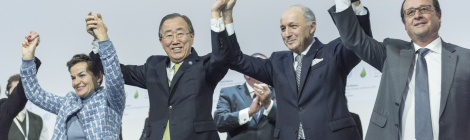
    Historically, permanent members of the UN Security Council have variously rejected the idea that it was the proper venue to address international cooperation on climate change. The notable cooperation between China and the United States to secure the Paris Agreement, however, may signal a greater openness to UNSC climate securitization, including the creation of a UNSC-enforced Climate Court.

    Read Article →

  • Sustainable Security

    The True Finns Party have surged to the forefront of Finnish politics and fundamentally turned the nation’s political discourse in a more nationalist direction. What are the causes of this rise in Finnish populism?

    The populist Finns Party, formerly known in English as the True Finns party (Finnish: Perussomalaiset), rushed to the surface of Finnish politics in the 2011 parliamentary election, snatching a remarkable 19 per cent of the vote. Its charismatic leader Timo Soini positioned himself on the side of the ordinary man and against corrupt elites. Referring to ethno nationalism and Christian social values, Soini emphasized Finnishness and the need to protect the national culture from being contaminated by immigrants and other foreign influences. The Party’s surge to the forefront of Finnish politics has fundamentally turned the political discourse in Finland towards a more nationalist direction. In order to gain a fuller understanding of the drivers behind this growth of Finnish populism, it is necessary to examine Finland’s recent history.

    A sense of suffering

    Traditionally, Finnish society was split on a double axis: urban and rural, landowners and peasants. Through history, it was the bloodiest area in the Nordic region. The Finnish national identity, including a sense of common suffering, was at least partly defined by being locked between powerful and often aggressive neighbours, Sweden and Russia, who repeatedly took turns in dominating Suomi, the Finnish heartland. Nationalistic movements grew strong in the nineteenth and early twentieth centuries and, though it was rather a by-product of the Bolshevik revolution, Finland finally won its independence in 1917. Authoritarian movements soon emerged; for example, the nationalist Lapua movement. Nationalist sentiments were growing fast in the interwar years, but this was also a period of internal conflict, spurring into a full-blown Civil War between authoritarian Nationalists and Social Democratic groups.

    Surviving under constant threat from its eastern neighbour, Finland aligned with Germany for a period in the Second World War. Tensions on the Finnish–Soviet border also grew leading up to the Second World War, breaking into the Winter War between the two in autumn 1939. After showing surprising fighting resilience, Finland had still lost 12 per cent of their land in the war in Karelia. When the Germans invaded Russia in 1941, the Finns fought alongside them, in what is referred to as the Continuation War, in an attempt to regain lost territories in Karelia. They were beaten back by the Soviets once again three years later and devastated by repeated conflicts. Over the course of these repeated and prolonged conflicts a militaristic mentality developed in Finland, still evident in contemporary life.

    Finland emerged humbled from the war, surely with a sense of suffering but also one of perseverance. The country was not only in dire straits economically but also firmly within the sphere of strategic influence of the Soviet Union. Finnish diplomacy revolved around appeasing their powerful eastern neighbour. The geopolitical balancing act, of constructing a Nordic liberal marked orientated welfare state while appeasing the Soviets, paid off, and Finland became a prosperous Nordic state. Crisis, however, hit once again in 1990 when the Scandinavian banking crisis coincided with loss of markets in the East when the Soviet Union dissolved in the wake of collapse of communism.

    Still, Finland emerged from the crisis with a growing self-confidence in international affairs, not only by joining the EU but also by adopting the Euro and seeking a core position with the EU. Finland was a homogeneous country with a low level of immigration. Right-wing nationalist populist politics were thus not prominent in the latter half of the twentieth century. Still, agrarian populist versions existed since the 1960s with a noteworthy support. Right-wing populist parties like those that emerged in Denmark and Norway did not, however, gain much popular support until after the Euro crisis hit in 2009.

    The Finnish Agrarian Party

    Although nationalist extreme-right politics similar to those on the European continent only became prominent in Finland with the surge of the True Finns party in the new millennium, agrarian populism had been present in Finnish politics ever since the beginning of the 1960s. The Finnish Agrarian Party (Suomen Maasedun Puolue – SMP) established in 1959 was founded in opposition to the urban elite and claimed to speak on behalf of the common man in rural Finland, those that they referred to as the ‘forgotten people’ (unohdetun kansa) in town and country, against the detached ruling class in the urban south.

    The SMP exploited the centre-periphery divide in Finland. Its greatest electoral success came in 1970, 1972 and in 1983 when the party won approximately a tenth of the vote each time. Their main appeal was with rural workers and the unemployed, who felt alienated in the fast moving post-war society. In a rapid social structural change, Finland was transformed from being predominantly agricultural to a high-tech communication-based society. The SMP ran into serious financial difficulty and a new nationalist populist party, the True Finns Party, absorbed its remains in 1995. In 2011, the party’s English name was shortened to the Finns Party.

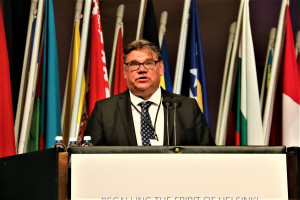
    Timo Soini and the True Finns
    somio

    Image credit: OSCE Parliamentary Assembly/Flickr.

    In 1997 the charismatic Timo Soini took the helm of the True Finns Party. Soon, the party found increased support, rising from 1.6 per cent in the 2003 parliamentary election to 4.1 per cent in 2007. It was, though, only in wake of the international financial crisis, that the party surged, winning 19.1 per cent of the vote in the 2011 parliamentary election and becoming the third largest party in the country, behind only the right-of-centre conservative National Coalition Party (NCP) and the Social Democrats (SDP). This was also referred to as the ‘change election’ or the ‘big bomb’, when Finnish politics, to a significant degree, came to revolve around the Finns Party and its populist politics.

    The party had increased its vote five fold since the 2007 election, adding full 15 percentage points, which was the biggest ever increase of a party between elections in the Eduskunta, the Finnish Parliament. Its initial rise had, however, started two years earlier, in the European Parliament election of 2009, when the True Finns grabbed 9.8 per cent of the vote. In 2015 the party saw only limited decline in its support, clearly reaffirming its strong position in Finnish politics, and entering coalition government for the first time.

    Previously, the True Finns had been widely dismissed as a joke, a harmless protest movement, and a nuisance on the fringe of Finnish politics. Their discourse was aggressive and rude and the media mostly only saw entertainment value in them. After the 2011 election, however, it had surely become a force to be reckoned with. During the election campaign, they had clashed with the mainstream parties and called for ending of the one-truth cosy consensus politics of the established three parties. The Finns Party had now become a forceful channel for the underclass.

    Contrarily to most similar parties elsewhere, the Finns Party accepted being branded as populist. Soini, however, refused to accept that his party was extreme-right. Contrary to the progressive parties of Denmark and Norway, the Finnish populists never flirted with neo-liberal economic policies. Rather, the Finns Party inherited the centrist economic policy of the SMP. Its right wing populism was thus never socio-economic, but rather socio-cultural.

    Three themes emerged as the main political platform of the Finns Party:

    • First to resurrect the ‘forgotten people’, the ordinary man, to prominence and speaking in their name against the elite;
    • second, to fight against immigration and multiculturalism;
    • thirdly, to stem the Europeanization of Finland.

    The forgotten people

    Finland has been historically prone to polarization; for example between East/West; Socialism/Nationalism; Urban-rich/Rural-poor; Cosmopolitan/Local. Building on the SMP’s politics, the Finns Party kept exploiting the centre-periphery divide, effectively exchanging the agrarian focused populism for a more general cultural divide based on a more ethno-nationalist program. Timo Soini, for example, adopted the phrase of the ‘forgotten people’, which refers to the underprivileged ordinary man, which, he argued, the political elite had neglected.

    The political elite was continuously presented as corrupt and arrogant, having suppressed the ordinary blue-collar man. Positioning themselves against the urban Helsinki-based cosmopolitan political elite consolidated around the south coast, the Finns Party representatives claimed to speak in the name of the ‘forgotten people’, mainly working in rural areas.

    Drawing on traditional Christian values the ‘forgotten people’ were discursively depicted as pure and morally superior to the privileged elite. This sort of moralist stance was widely found in the party’s 2011 election manifesto, including claims of basing their politics on ‘honesty’, ‘fairness’, ‘humaneness’, ‘equality’, ‘respect for work and entrepreneurship’ and ‘spiritual’ concerns.

    The Finns Party was also staunchly socially-conservative on matters such as religion, morality, crime, corruption, law and order. It is thus more authoritarian than libertarian. They are surely anti-elite, but not anti-system. Indeed, it firmly supports the Finnish state, its institutions and democratic processes, including keeping the relatively strong powers of the president to name but one example.

    Finnish ethno-nationalism

    Timo Soini and his followers have offered a clear ethno-nationalist focus, strongly emphasising Finnish national cultural heritage. It was suspicious of Swedish influence, dismissive of the indigenous Sami’s heritage in Suomi – often referred to as Lapps in English – and outright suppressive in regard to the small gypsy population. In a classical populist ‘us’ versus ‘them’ style a running theme of the Finns Party’s disourse was to emphasise Finnishness by distinguishing Finns from others.

    The Finns Party promoted patriotism, strength and the unselfishness of the Finnish people and argued that the Finnish miracle should be taught in school in an heroic depiction; that is, how this poor and peripheral country suppressed by expansionist and powerful neighbours was, through internal strength and endurance, able to fight their way from under their oppressors to become a globally recognised nation of progress and wealth.

    More radical and outright xenophobic factions have also thrived within the party. Jussi Halla-aho, who became perhaps Finland’s most forceful critic of immigration and multiculturalism, led the anti-immigrant faction. He has referred to Islam as a ‘totalitarian fascist ideology’ and for example wrote on his blog in 2008 that, ‘since rapes will increase in any case [with inflow of immigrants], the appropriate people should be raped: in other words, green-leftist do-gooders and their supporters’ He went on to write that prophet Muhammad was a paedophile and that Islam as a religion sanctified paedophilia.

    Many similar examples exist. A well-known party representative, Olli Immonen, for example, posted on Facebook that he was ‘dreaming of a strong, brave nation that will defeat this nightmare called multiculturalism. This ugly bubble that our enemies live in, will soon enough burst into a million little’.

    Many other prominent populist and extreme-right associations also existed in Finland, some including semi-fascist groupings. Indeed, a few MP’s of the Finns Party belonged to the xenophobic organisation Suomen Sisu. In early 2016, in wake of the refugee crisis hitting Europe, mainly from Syria, a group calling themselves Soldiers of Odin took to patrolling the street of several Finnish towns. Dressed in black jackets, decorated with Viking symbolism and the Finnish flag, they claimed to be protecting native Finns from potential violent acts of the foreigners.

    Riding the Euro-crisis

    Finns Party’s rise was helped significantly by their opposition to the EU and the European Central Bank, who seemed powerless in dealing with the Euro-crisis. They depicted the EU as unworkable and claiming that democracy cannot work in the context of supranational EU governance, and that it favoured elites over ordinary citizens in the European countries. There was a clear demand for a EU critical party, a void the Finns Party was happy to fill because the mainstream parties then held a pro-EU stance.

    Leading up to the 2011 elections he Finns Party turned opposition to bailouts for debt-ridden Euro countries into their main issue. That also helped in securing good results in European Parliament elections in 2014, after which they joined the radical-right European Conservatives and Reformists Group (ECR) in the EP.

    After coming into government in 2015 the Finns Party found diminished support in opinion polls. Still, their influence had steadily grown and they had found much greater acceptance than before. They clearly led in the growing anti-EU discourse in the country. Soon, many of the previously pro-EU mainstream parties began to adopt their anti-EU rhetoric, and some, subsequently, also became increasingly anti-immigrant.

    Eirikur Bergmann is Professor of Politics at Bifrost University in Iceland and Visiting Professor at the University of Ljubljana in Slovenia. He is furthermore Director of the Centre for European Studies in Iceland. Professor Bergmann writes mainly on Nationalism, Populism, European Integration, Icelandic Politics and on Participatory Democracy. He has also written two novels which are published in Icelandic.

  • Competition over resources

    Competition over resources

    In the environmentally constrained but more populous world that can be expected over the course of this century, there will be greater scarcity of three key resources: food, water and energy. Demand for all three resources is already beyond that which can be sustained at current levels. Once population growth and the effects of climate change are factored in, it is clear that greater competition for such resources should be expected, both within and between countries, potentially leading in extreme cases to conflict.

    Global Responses to Global Threats: Sustainable Security for the 21st Century

    Chris Abbott, Paul Rogers and John Sloboda | Oxford Research Group | June 2006

    Issues:Climate change, Competition over resources, Global militarisation, Marginalisation

    Tag:report

    This major report was the result of an 18-month long research project examining the various threats to global security, and sustainable responses to those threats. Read more »

    Losing Control: Global Security in the Twenty-first Century

    Issues:Climate change, Competition over resources, Global militarisation, Marginalisation

    Tag:book

    Image of Losing Control: Global Security in the Twenty-first Century

    • Purchase from Amazon:
    • Losing Control: Global Security in the Twenty-first Century
    • Author: Paul Rogers
    • Publisher: Pluto Press ()
    • Binding: Paperback, pages
    • Price: £15.99

    Global Security and the War on Terror: Elite Power and the Illusion of Control

    Issues:Climate change, Competition over resources, Global militarisation, Marginalisation

    Tag:book

    Image of Global Security and the War on Terror: Elite Power and the Illusion of Control (Contemporary Security Studies)

    • Purchase from Amazon:
    • Global Security and the War on Terror: Elite Power and the Illusion of Control (Contemporary Security Studies)
    • Author: Paul Rogers
    • Publisher: Routledge ()
    • Binding: Paperback, pages
    • Price: £22.99

    Beyond Terror: The Truth About the Real Threats to Our World

    Chris Abbott, Paul Rogers and John Sloboda | Rider | April 2007

    Issues:Climate change, Competition over resources, Global militarisation, Marginalisation

    Tag:book

    Many leading military analysts in the United States are increasingly alert to the link between security and climate change. Is international terrorism really the single greatest threat to world security? Read more »

  • Sustainable Security

    Shortly after the lunar New Year, UN Secretary-General Ban Ki-moon challenged the Conference on Disarmament to run with the ‘spirit of the blue horse’ towards substantive engagement on multilateral nuclear disarmament in 2014. While the regime may not achieve this speed, there are initiatives underway this year that may well help nuclear disarmament dialogues pick up speed ahead of the 2015 NPT review conference.  

    Secretary-General Ban Ki-Moon speaks at the first plenary session the 2014 Conference on Disarmament. Source: UN Geneva

    Secretary-General Ban Ki-Moon speaks at the first plenary session the 2014 Conference on Disarmament.
    Source: UN Geneva

    On 21 January, on his way to the Geneva Conference on Syria, UN Secretary-General Ban Ki-moon stopped in at the Palais des Nations to address the Conference on Disarmament (CD). In doing so, the UNSG affirmed his support for multilateralism and encouraged the CD—the single multilateral disarmament forum—to break the deadlock and commence substantive negotiations. On the occasion of the lunar New Year, the Secretary-General challenged the CD delegations to ‘arm yourself with the spirit of [the] blue horse and…run fast and run far’.  But instead of running fast or far, the current status of the multilateral global nuclear disarmament dialogue is ‘in piaffe’ – trotting elaborately on the spot.

    However, some, including Angela Kane, the UN’s High Representative for Disarmament Affairs, question whether a nuclear disarmament regime even exists. In her prepared speech to the 2013 EU Non-proliferation and Disarmament Conference, Kane argued that the current “system of institutions and norms to prevent the spread of nuclear weapons, coupled with a promise to pursue the elimination of such weapons at some uncertain but distant time—if ever—subject to preconditions” should be more accurately called a ‘Partial Nuclear Arms Control Regime’ rather than a nuclear disarmament regime.

    Kane posited that the “negotiated ceilings on deployments of strategic nuclear weapons of two countries, with no international verification, and no participation by the other three recognized nuclear-weapons States…or the non-NPT states” are not global, nor constitute disarmament or a regime. The sustainability of the nuclear non-proliferation regime and the credibility of the NPT review process is often questioned in light of efforts which ‘seek just to tighten non-proliferation controls’ and address horizontal proliferation. In her September 2013 speech, Kane warned that such an approach ‘would erode what is left of the legitimacy of the regime’.

    The CD’s impasse continues…

    In 2014, the continuing deadlock in the CD may lead to such erosion of legitimacy, as well as frustration with existing forums for dialogue and progress. This year’s President of the first session of the CD, Israeli Ambassador Eviatar Manor, met with lack of consensus on a programme of work for 2014, due to diverging views. The formal programme of work at the CD remains deadlocked over the inclusion of a call for measures to start negotiation for a Fissile Materials Cut-off Treaty (FMCT), a proposed international agreement that would prohibit the production of highly-enriched uranium and plutonium. Pakistan objects to this as it would cap its fissile material stocks at a disadvantageous level vis-à-vis India.

    As US Acting Under-Secretary of State for Arms Control and International Security, Rose Gottemoeller, declared at the CD on 4 February, the FMCT is ‘the next logical – and necessary – step in creating the conditions for a world without nuclear weapons’ and remains ‘an essential prerequisite for global nuclear disarmament’. Gottemoeller reminded the CD that Action 15 of the 2010 NPT Review Conference (RevCon) Action Plan mandated that the CD begin immediate negotiation of the FMCT. As the 2015 NPT RevCon approaches, this Action seems to remain aspirational.

    The Nayarit Conference on the Humanitarian Impact of Nuclear Weapons

    Many NPT non-nuclear weapon states (NNWS) remain frustrated with the lack of transparency and progress around the P5’s implementation of NPT Article VI commitments. These stipulate that all NPT states parties shall pursue negotiations towards ending the arms race and to nuclear disarmament ‘in good faith’. They see the ‘humanitarian dimension’ initiative on nuclear disarmament and the Open Ended Working Group, a UN General Assembly initiative to develop proposals for multilateral nuclear disarmament, as alternative means to address such concerns. The lack of engagement with —and arguable outright dismissal of – such initiatives by the P5 will continue to widen existing fissures and discord in the NPT review process.

    Oslo nuclear conference

    ICAN and BANg! campaigners thank delegates at the Oslo conference in 2013 Source: Peaceboat

    The Second Conference on the Humanitarian Impact of Nuclear Weapons was held in Nayarit, Mexico on 13-14 February. The conference aimed to deepen ‘our understanding of the effects of nuclear weapons, by approaching the global and long-term consequences of a nuclear detonation, accidental or deliberate, from the perspective and variables of the 21st Century society’. As in its 2013 inaugural conference in Oslo, government officials, IGOs and civil society participated with ‘multi-sectorial delegations, at expert-level, with specialists in areas such as public health, humanitarian assistance, environmental issues, and civilian protection, among others, as well as diplomats and military experts’. As clarified on the official website, the Nayarit Conference did ‘not produce a negotiated outcome, but a factual summary under the responsibility of the Chair’.

    146 states participated in the Nayarit Conference, including India and Pakistan. Notably, as in the Oslo conference, the five NPT nuclear weapons states did not attend.  In 2013, the P5, in solidarity and following consultations amongst each other, boycotted the conference in what could be described as bloc policy, claiming the Oslo conference would ‘divert discussion away from practical steps to create conditions for further nuclear reductions’. This P5 declaratory rationale is also expressed in relation to the Open Ended Working Group and the humanitarian initiative more broadly. Many perceive the lack of P5 engagement with such initiative as a P5 concern that the initiative is a fast-track to a ban on nuclear weapons – as advocated by many civil society groups and some NNWS.

    This concern was confirmed by the UK FCO Minister Hugh Robertson who on 12 February elaborated that the UK remains ‘concerned that some efforts under the humanitarian consequences initiative appear increasingly aimed at pursuing a Nuclear Weapons Convention prohibiting nuclear weapons outright’. UK MPs, including James Arubuthnot, the Chairman of the Commons Defence Committee, and Sir Nick Harvey have already strongly criticized the UK government’s decision not to participate in Nayarit.

    Nayarit

    Chair of the Second Conference on the Humanitarian Impacts of Nuclear Weapons Chair, Juan Manuel Gómez Robledo, presenting his factual summary of the Conference. Source: Ministry of Foreign Affairs, Mexico

    The final five paragraphs of the Chair’s “factual” summary from the Nayarit conference, which veer off to include the chair’s perceptions certainly lend some validity to the perceptions, confusion, and concerns voiced by the P5 about the aims of the initiative. However, to be clear, such support for pre-emptive ‘outlawing’ of nuclear weapons was not representative of views and interventions voiced by several states that participated in the Nayarit conference, including Germany, Australia, the Netherlands and Canada. Such mixed signalling and conflicting narratives about the conferences and the broader purpose of the initiative may have implications for the future continued—and broader engagement—by those NNWS who support the ethos of the humanitarian dimension initiative but who are not on board the ‘ban-express’.

    In a January 2014 statement to the CD by Ambassador Alexey Borodavkin, the Russian perspective is expressed clearly: ‘the catastrophic character and unacceptability of any use of nuclear weapons is self-evident and requires no further discussions’. Ambassdor Borodavkin, further warned that ‘we should not be distracted by the discussion of humanitarian consequences from the primary goal of creating due conditions for further nuclear reductions’. Highlighting the diverse perspectives on what constitutes obstacles to progress towards dialogue on nuclear disarmament, Russia, as outlined by Borodavkin last month, considers plans to build a global missile defence system as a ‘negative factor which is undermining strategic stability’, and ‘the most tremendous challenge standing in the way to [a] nuclear-free world’.

    P5 preference for the ‘step-by-step’ process

    Amb. Rose Gottemoeller, speaking at a joint press conference by the five Nuclear Non-Proliferation Treaty (NPT) nuclear-weapon states at the United Nations. Source: United States Mission Geneva

    Amb. Rose Gottemoeller, speaking at a joint press conference by the five Nuclear Non-Proliferation Treaty (NPT) nuclear-weapon states at the United Nations. Source: United States Mission Geneva

    The consensus among the P5 is that progress in fulfilling NPT Article VI commitments, is via the P5 ‘step-by-step’ process in line with the 2010 NPT Action Plan.  As Rose Gottemoeller, declared in February at the CD, ‘there are no shortcuts to reaching our shared goal of a world without nuclear weapons’ and the pathway is an ‘incremental process’. She describes these P5 conferences as ‘essential means for laying the foundation for future agreements’ that could envelope NWS beyond the bilateral arms control process. The Chinese government will host the fifth conference of the P5 process in April 2014 ahead of the third Preparatory Committee to the 2015 NPT RevCon.

    The P5 are developing a common glossary of nuclear weapons-related terms. Gottemoeller admits this ‘may not sound important or interesting, until you consider that verifiable multilateral nuclear disarmament will require clear agreement on the definitions and concepts for the vital aspects that must be covered in future treaties.’

    Transitioning from piaffe to trot

    While dialogue on nuclear disarmament is currently in piaffe, and Ban Ki-moon’s ‘fast run’ in 2014 may remain aspirational, engagement and confidence-building measures could yet advance dialogue to a forward ‘trot’ ahead of the 2015 NPT Review Conference. Significant regime measures which could catalyse a shift towards improved dialogue and consensus-building on multilateral nuclear disarmament include:

    • Comprehensive Nuclear Test Ban Treaty (CTBT) ratifications (or overtures towards ratification) by Annex 2 states—the eight states remaining (China, Egypt, India, Iran, Israel, North Korea, Pakistan, US) for CTBT entry into force;
    • Adoption of a programme of work at the CD; or even
    • Progress on the Helsinki conference for an establishment for a Weapons of Mass Destruction-Free Zone in the Middle East (including CWC accession by Israel).

    In support of restoring legitimacy and boosting credibility in the non-proliferation regime beyond this NPT review cycle, there is an underlying need to bridge existing divides and boost engagement between the two separate constituencies on the nuclear weapons policy debate: those advocating for nuclear deterrence postures and those advocating for nuclear disarmament. Both constituencies ultimately seek security, but there is a distinct lack of informed, respectful and frank dialogue.

    The two constituencies rarely engage in sincere dialogue on core issues at the basis of each posture, including on how security is provided. Their discourses remain distinct and divergent. One could characterise them as being engaged only in ‘enclaved deliberation’. By addressing key assumptions, social constructs and understandings of each policy posture on the nuclear weapons debate — including an assessment of notions of what constitutes strategic stability and options for security not based on an ultimate reliance on nuclear weapons—perhaps honest dialogue can take shape instead of mere regurgitation and mutual dismissal of postures.

    Jenny Nielsen is a Research Analyst with the Non-proliferation and Disarmament Programme at the International Institute for Strategic Studies (IISS). Previously, she was a Programme Manager for the Defence & Security Programme at Wilton Park and a Research Assistant for the Mountbatten Centre for International Studies (MCIS) at the University of Southampton. At MCIS, Jenny was tasked with the co-editing the 2004-2012 editions of the NPT Briefing Book. She holds a PhD from the University of Southampton which focused on US nuclear non-proliferation policy vis-à-vis Iran in the 1970s.

    Featured image:   UN Secretary-General Ban Ki-Moon speaks at the  High Level review Conference of the Parties to the Treaty on the Non-proliferation on Nuclear Weapons (NPT) Source: United Nations Photo

  • Sustainable Security

  • Sustainable Security

    Kristian Skrede Gleditsch is Professor in the Department of Government at the University of Essex, director of the Michael Nicholson Centre for Conflict and Cooperation, and a research associate at the International Peace Research Institute, Oslo (PRIO). His research interests include conflict and cooperation, democratization, and spatial dimensions of social and political processes. He is the author of All International Politics is Local: The Diffusion of Conflict, Integration, and Democratization (University of Michigan Press, 2002), Spatial Regression Models (Sage, 2008, with Michael D. Ward), Inequality, Grievances, and Civil War (Cambridge University Press, 2013, with Lars-Erik Cederman and Halvard Buhaug), and journal articles in the American Journal of Political Science, American Political Science Review, Annals of the Association of American Geographers, Biological Reviews, Comparative Political Studies, Conflict and Cooperation, Defence and Peace Economics, Economic History Review, European Journal of International Relations, International Interactions, International Organization, Internasjonal Politikk, International Studies Quarterly, Journal of Conflict Resolution, Journal of Peace Research, Journal of Politics, PLOS One, Political Analysis, Political Psychology, R Journal, and World Politics.

    In this interview, Professor Gleditsch discusses the global decline of violence since World War II and some of the challenges to this trend.

    Recently, several authors have declared that there has been a decline in armed conflict since the end of World War II. From your research on this topic, what does the data say about the global patterns of violence and is war really waning?

    On the question, yes, I think war is declining in most common data sources, although the causes remain contested. For civil wars there is at least some evidence that accommodation and conflict management has promoted a decline of war. Although Syria is a sever conflict, it is not by itself sufficient to say that we have a clear reversal. Perhaps the greatest current challenge is the alleged increase in terrorism. However, it is not obvious why we should see an increase in less severe and less organized conflict, and there is also some evidence that ethic terrorism has declined following accommodation in ways similar to civil war.

    You mention that the causes of this decline in war remain contested. What are some of the main explanations offered by scholars for this development and what do you feel are the main areas of disagreement on this issue?

    I think some of the key explanations include more democratization, less ethnic discrimination, globalization/increase in trade, and greater scope for conflict management by the UN and other regional organizations. All of these in my view are plausible and likely to be part of the explanation, but I think it is also fair to say that none of these alone provide a clear explanation for the decline in conflict.

    There has been a great deal of skepticism about some of these factors, especially democratization, as many point to examples where conflict has followed after elections. However, some of this research takes a very binary approach to violence, where any conflict is regarded as a failure even if the level of conflict declines or fewer actors engage in violence. To use another example, although some dissident republicans in Norther Ireland continue to use terrorist tactics, it would be absurd to say that there has been no decline in the volume terrorism after the Good Friday agreement.

    Do you feel that there has been a gradual shift in the attitudes of people towards war and, if so, that this might have also contributed to this decline of war?

    I think there has been a dramatic shift in attitudes to war. At least a 100 years ago it was common to glorify war as heroic and character forming. Countries had ministries of war. Now war tends to be seen as a regrettable last resort, and we have ministries of defense, and literature on the horrors of war. All of this contributes to make war a much harder sell. That is not to say that aversion to war is universal or that people have never approve of conflict, and attitudes can influenced, in both directions. Moreover, attitudes are probably influenced by views on the costs of war and feasibility of alternatives.

    I have been involved in some experiments on support for escalatory actions in territorial conflict with China among Japanese respondents, and there is some evidence that although people are generally quite hard line they become less belligerent when provided with information on the military or economic costs of conflict.

    With regards to democratization, why do you feel that democracy reduces the risk of war?

    For interstate war, then I think it is fairly well established that democracies rarely fight severe wars with each other. Of course, the risk of interstate conflict is low in general, at least for severe conflicts. Moreover, democracies may fight other states, and the democratic major superpowers are much more likely to be involved in conflict. However, I think there is also some evidence that the increased role of public opinion can constrain the use of force more generally, and that democratic states have supported a liberal order with emphasis on stronger international institutions and conflict management approaches that have helped reduce the risk of conflict more generally.

    I also believe that transitions to democracy reduce the risk of civil war, despite widespread pessimism and fears of democracies increasing conflict. Democracies provide alternative political avenues for conflict, and decrease the motivation to use violence compared to autocracies. Transitions to democracy may not eradicate all domestic violence. Many democracies have inherited ethnic separatist conflicts that started before democratization, and established organizations may remain active after transitions (ETA in Spain and the IRA can be interpreted in this perspective). Moreover, we may see violence around elections, under a climate of mistrust. However, the overall magnitude of civil violence tends to be lower under democracies.

    Whilst civil war is in decline, it became the principle form of armed conflict after the end of the Second World War. What were the main drivers for civil war becoming the main form of conflict?

    Civil wars became particularly common with decolonialization. Some anti-colonial movements turned violent, and, in some cases, competing factions continued to fight each other after independence (e.g., Angola). Moreover, after independence, many colonial states were prone to violence for a host of reasons. One the one hand, state weakness can by itself encourage violence as the barriers for taking on the state are lower. Moreover, the post-colonial states often had various features that could encourage violence such as ethnic nepotism, poor governance, or lack of legitimacy. Finally, although the Cold War did not escalate to a direct confrontation between the superpowers, many civil wars escalated as the opposing sides could obtain support from the superpowers.

    The end of the Cold War coincided with a spike in civil wars for somewhat similar reasons. Many weak states faced a loss of external support that weakened the central government (e.g., Somalia), and some larger federal units faced challenges form ethnic groups who sought independence and who might be willing to use violence (e.g., former USSR and Yugoslavia). However, other factors such as democratizations, decrease ethnic discrimination and powersharing, as well as more active UN conflict management efforts have likely all helped reduce the incidence of civil war from the immediate post cold war peak.

    Some studies have discussed an apparent revolution in warfare in the post-Cold War world, described using terms such as ‘new wars’, ‘hybrid wars’, and ‘post-modern wars’. Some of the characteristics of these wars include blurred distinctions between public and private combatants, warlords, and criminals; regular targeting of civilians and other war atrocities; war economies sustained by illegal trade in drugs, weapons, resources such as oil or diamonds; and violence being driven more by identity than ideology. Do you feel that these so called ‘new wars’ represent a revolution in warfare and have they also marked a shift in the nature of warfare?

    I am actually very skeptical of whether the concept of new wars is very helpful or whether the alleged trends exist at all. It is certainly not the case that targeting of civilians is a new feature – recall the shelling of cities during sieges in the 30 years war. The opium war was thus named for a reason. And the blurred lines between criminal gangs and warfare cannot be a new thing – the North African coast was known as the barbary coast due to the endemic piracy and the Mongol hordes probably picked up some things along the way too.

    I suppose this raises the question of why some find this concept so compelling. I can only speculate on this since I do not share this myself, but I believe that the decline of a master narrative of conflict after the Cold War increases people’s sense of new wars as different from old war. However, all systematic research that I have seen raises serious question over this.

    In addition to the alleged increase in terrorism, what do you see as the other greatest challenges to the decline in violence in the near and distant future?

     I actually think the long-term outlooks is relatively favorable, but I can imagine some cases that may contribute to long-term challenges

    1. increasing tension between the major power is unlikely to lead to direct conflict, but it may increase support to opposing sides in civil war and decrease the prospects for the UN to become involved.
    2. globalization has in all likelihood increased the costs of conflict and increased the value of peace, but there is a chance that globalization could be rolled back with increasing protectionism. This can make it more difficult to contain some territorial conflicts, such as the ones seen in Asia
    3. global challenges such as refugees change require cooperation, and if states fail to cooperate on these then poorer relations may weaken the ties that prevent conflict
    4. the consequences of climate change could increase the risk of conflict by undermining livelihoods and increasing competition between states. My own reading of the evidence says that there is little evidence of this happening so far, but skeptics would argue that dramatic consequences would move us into a new scenario.

    These are serious concerns, but at best indicate risk, and none of them imply that the decline of violence must be reversed.

  • Bridging the North-South divide: Sustainable Security for all

    Bridging the North-South divide: Sustainable Security for all

    Hannah Brock | Oxford Research Group | January 2011

    Issues:Climate change, Competition over resources, Global militarisation, Marginalisation

    For some years, the Oxford Research Group (ORG) has been analysing the likely underlying drivers of global insecurity over the coming years, and ways to develop sustainable responses to these threats. This analysis has focused on four trends that are expected to foster substantial global and regional instability, and large-scale loss of life, of a magnitude unmatched by other potential threats. These are climate change, competition over resources, marginalisation of the ‘majority world’ and global militarisation.

    What has become known as a ‘sustainable security’ paradigm rests on an understanding that we cannot successfully control all the consequences of these threats, but must instead work to resolve the causes. 

     The current security discourse in the West is dominated by what might be called the ‘control paradigm’: an approach based on the false premise that insecurity can be controlled through military force or balance of power politics and containment, thus maintaining the status quo. Such approaches to national, regional and international security are deeply flawed, and are distracting the world’s politicians from developing realistic and sustainable solutions to the most pressing threats facing the world.

    Sustainable security focuses on the interconnected, long-term drivers of insecurity, including: 

    • Climate change: loss of infrastructure, resource scarcity and the mass displacement of peoples, leading to civil unrest, intercommunal violence and international instability. 

    • Competition over resources: competition for increasingly scarce resources – including food, water and energy – especially from unstable parts of the world. 

    • Marginalisation of the majority world: increasing socio-economic divisions and the political, economic and cultural marginalisation of the vast majority of the world’s population. 

    • Global militarisation: the increased use of military force as a security measure and the further spread of military technologies (including chemical, biological, radiological and nuclear weapons). 

    In a globalised world in which no nation’s security is independent of their region or of the wider international community, the opinions of the majority world can no longer be neglected by global powers who seek to dictate global security policies. The likely future drivers of insecurity do not respect national boundaries, and will not be sustainably addressed by unilateral approaches. For example, as competition over energy resources increases with depleting supplies of fossil fuels, it will become more vital that positive collaboration between consumer nations in  the West and resource-rich nations in the South occurs. 

    It is in the interests of all parties, including Western superpowers, for the voices of the majority world to be brought to the table. To this end, ORG initiated four consultations to explore the reactions of analysts in the global South to the sustainable security framework: one each covering Latin America and the Caribbean, Asia and Australasia, the Middle East and North Africa, and Sub-Saharan Africa. This paper synthesises the results of these four consultations, uncovering areas of commonality, and highlighting issues peculiar to their regional context.

    Read the full article here.

    Author: Hannah Brock

    Image source: WorldIslandInfo.com

    Comments

    Post new comment


  • Sustainable Security

    This piece by sustainablesecurity.org’s Zoë Pelter and Richard Reeve was originally published on 5 September, 2013 on openDemocracy 

    4815774738_b9962f4875_b

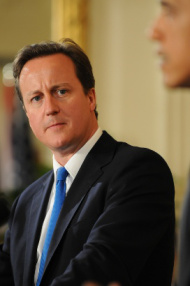
    Image: The Prime Minister during a joint press conference with US President Barack Obama. Source: The Prime Minister’s Office

    The narrow defeat on 29th August of the UK government’s parliamentary motion on support in principle for military action against the Syrian regime has forced Prime Minister David Cameron to concede that Britain will play no part in any direct attack on Syria. If the UK is to play no military role in ‘punitive’ responses to the regime’s alleged use of chemical weapons, what options are open to the UK in terms of resolving the Syrian conflict, protecting civilians and punishing those responsible for war crimes there? And how does Cameron’s overt preference for the military option, with or without UN mandate, condition these non-military options?

    Pushing for peace

    The possibility of a negotiated peace in Syria should not be dismissed. Neither the regime’s military, militia and foreign allies, nor the variety of armed factions ranged against them (and, increasingly, each other) are exhausted. Nor do the Assad regime’s mid-year successes in central Syria presage any imminent likelihood of it regaining control of the north and east. The strategic stalemate that appeared to set in to the conflict in June, after pro-Assad forces retook al-Qusayr, arguably presented a breathing space for negotiations and the so-called Geneva II conference, proposed by the US and Russia, with UN and Arab League backing, the previous month. As recently as mid-August, the Geneva talks were expected to resume in September.

    But even convening these talks will now prove far harder. Expectation of Western intervention against President Bashar al-Assad, as well as their own increasing divisions, gives the Western-backed armed opposition groups an incentive to delay talks. Jihadist groups that have proved effective militarily are largely excluded. US and Russian facilitation of the Geneva process, however fraught, also tends to exclude the voices of regional actors like Turkey, Iran, Iraq and Saudi Arabia, each of which feels its interests very directly threatened in Syria and gives active support to one or more armed faction.

    This calls for a rethinking of the Geneva process, if not the 2012 transition roadmap, to bring in the full range of actors, not the abandonment of peace talks. Threat of US-led intervention and its own increasing international marginalisation, should it be proved to have launched a chemical attack on 21st August, could incline the Assad regime towards a negotiated settlement, perhaps even an exit and exile strategy.

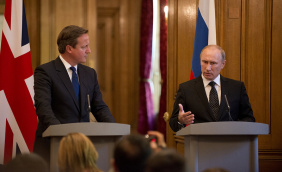
    Cameron and Putin

    Image: The Prime Minister welcomes President Vladimir Putin to Downing Street ahead of the G8 Summit. Source: The Prime Minister’s Office

    This will not happen without pressure from Iran and Russia. Both have much to lose in Syria, but neither is entirely closed. Iran is still in its post-electoral opening and under severe economic pressure, looking to cut a wider deal with the West. Russia may not be comfortable with its isolated position defending the alleged user of chemical weapons. Like the US, it fears the growing influence of jihadi groups while the current stalemate continues. While there is little hope of Moscow abandoning its Security Council veto over action against Syria, it will be embarrassed if it stands almost alone defending Assad in the Council or against a General Assembly resolution. Neutrally collected and analysed evidence of Syrian regime culpability for chemical weapons attack will be crucial to shifting Russia’s position.

    Having made clear its preference for ‘punitive’ military action, and been frustrated by parliament in pursuing such action, the UK government is not ideally placed to broker negotiations. Yet the UK does have influence with Syrian opposition groups, in the Gulf States and, when it acts in concert with its less interventionist EU partners, with Russia, Turkey and Iran.

    Fighting impunity

    Again, the importance of due investigative and legal process through UN Fora is crucial. When asked on 29 August if he agreed that Assad should be prosecuted at the International Criminal Court (ICC), David Cameron replied curtly that these processes take time. Yes, the wheels of institutional responses turn slowly, not least justice institutions. Yet the most obvious response to any breach of customary international law on the use of chemical weapons (Syria is one of just five states not to have signed the 1993 Chemical Weapons Convention) is a war crimes prosecution through the ICC. It is not important that Syria has not signed the Court’s establishing Rome Statute. Assad and any responsible commanders could still be subject to international prosecution if the Security Council referred Syria formally to the ICC.

    The UN has been investigating a wide range of alleged crimes committed by both sides with a view to future prosecutions. Clearly, the presence on the Security Council of Syrian allies and a majority of non-signatories to the Rome Statute presents obstacles to referral, but the Council has overcome such obstacles before, notably China’s reluctance to see its Sudanese allies prosecuted over actions in Darfur. With France and other allies, the UK should take the lead within the Security Council in pushing to refer Syria to the ICC based on the same ‘moral minimum’ or red line that has been deployed in favour of armed intervention. This, in turn, may provide leverage to persuade pro- and anti-Assad factions alike to take peace negotiations more seriously.

    Notwithstanding the heavy shadow of its past action in Iraq, the UK’s moral standing is bolstered by commitment to legal and democratic process. The UK should take a breath, step back from punitive reaction and recommit itself to a multilateral, inclusive and legally rigorous approach to resolving the war in Syria and its many affiliated regional conflicts. No other form of intervention will effectively protect the lives and rights of Syrian civilians either in the current war or the difficult peace that must follow.

    Richard Reeve is the Director of Oxford Research Group’s Sustainable Security Programme. He works across a wide range of defence and security issues and has particular expertise in Sub-Saharan Africa, peace and conflict analysis, and the security role of regional organisations.

    Zoë Pelter is the Research Officer of Oxford Research Group’s Sustainable Security Programme. She works on a number of projects across the programme, including Rethinking UK Defence and Security Policies and Sustainable Security and the Global South.

  • Sustainable Security

    This piece by sustainablesecurity.org’s Zoë Pelter and Richard Reeve was originally published on 5 September, 2013 on openDemocracy 

    4815774738_b9962f4875_b

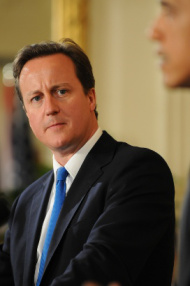
    Image: The Prime Minister during a joint press conference with US President Barack Obama. Source: The Prime Minister’s Office

    The narrow defeat on 29th August of the UK government’s parliamentary motion on support in principle for military action against the Syrian regime has forced Prime Minister David Cameron to concede that Britain will play no part in any direct attack on Syria. If the UK is to play no military role in ‘punitive’ responses to the regime’s alleged use of chemical weapons, what options are open to the UK in terms of resolving the Syrian conflict, protecting civilians and punishing those responsible for war crimes there? And how does Cameron’s overt preference for the military option, with or without UN mandate, condition these non-military options?

    Pushing for peace

    The possibility of a negotiated peace in Syria should not be dismissed. Neither the regime’s military, militia and foreign allies, nor the variety of armed factions ranged against them (and, increasingly, each other) are exhausted. Nor do the Assad regime’s mid-year successes in central Syria presage any imminent likelihood of it regaining control of the north and east. The strategic stalemate that appeared to set in to the conflict in June, after pro-Assad forces retook al-Qusayr, arguably presented a breathing space for negotiations and the so-called Geneva II conference, proposed by the US and Russia, with UN and Arab League backing, the previous month. As recently as mid-August, the Geneva talks were expected to resume in September.

    But even convening these talks will now prove far harder. Expectation of Western intervention against President Bashar al-Assad, as well as their own increasing divisions, gives the Western-backed armed opposition groups an incentive to delay talks. Jihadist groups that have proved effective militarily are largely excluded. US and Russian facilitation of the Geneva process, however fraught, also tends to exclude the voices of regional actors like Turkey, Iran, Iraq and Saudi Arabia, each of which feels its interests very directly threatened in Syria and gives active support to one or more armed faction.

    This calls for a rethinking of the Geneva process, if not the 2012 transition roadmap, to bring in the full range of actors, not the abandonment of peace talks. Threat of US-led intervention and its own increasing international marginalisation, should it be proved to have launched a chemical attack on 21st August, could incline the Assad regime towards a negotiated settlement, perhaps even an exit and exile strategy.

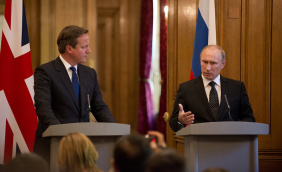
    Cameron and Putin

    Image: The Prime Minister welcomes President Vladimir Putin to Downing Street ahead of the G8 Summit. Source: The Prime Minister’s Office

    This will not happen without pressure from Iran and Russia. Both have much to lose in Syria, but neither is entirely closed. Iran is still in its post-electoral opening and under severe economic pressure, looking to cut a wider deal with the West. Russia may not be comfortable with its isolated position defending the alleged user of chemical weapons. Like the US, it fears the growing influence of jihadi groups while the current stalemate continues. While there is little hope of Moscow abandoning its Security Council veto over action against Syria, it will be embarrassed if it stands almost alone defending Assad in the Council or against a General Assembly resolution. Neutrally collected and analysed evidence of Syrian regime culpability for chemical weapons attack will be crucial to shifting Russia’s position.

    Having made clear its preference for ‘punitive’ military action, and been frustrated by parliament in pursuing such action, the UK government is not ideally placed to broker negotiations. Yet the UK does have influence with Syrian opposition groups, in the Gulf States and, when it acts in concert with its less interventionist EU partners, with Russia, Turkey and Iran.

    Fighting impunity

    Again, the importance of due investigative and legal process through UN Fora is crucial. When asked on 29 August if he agreed that Assad should be prosecuted at the International Criminal Court (ICC), David Cameron replied curtly that these processes take time. Yes, the wheels of institutional responses turn slowly, not least justice institutions. Yet the most obvious response to any breach of customary international law on the use of chemical weapons (Syria is one of just five states not to have signed the 1993 Chemical Weapons Convention) is a war crimes prosecution through the ICC. It is not important that Syria has not signed the Court’s establishing Rome Statute. Assad and any responsible commanders could still be subject to international prosecution if the Security Council referred Syria formally to the ICC.

    The UN has been investigating a wide range of alleged crimes committed by both sides with a view to future prosecutions. Clearly, the presence on the Security Council of Syrian allies and a majority of non-signatories to the Rome Statute presents obstacles to referral, but the Council has overcome such obstacles before, notably China’s reluctance to see its Sudanese allies prosecuted over actions in Darfur. With France and other allies, the UK should take the lead within the Security Council in pushing to refer Syria to the ICC based on the same ‘moral minimum’ or red line that has been deployed in favour of armed intervention. This, in turn, may provide leverage to persuade pro- and anti-Assad factions alike to take peace negotiations more seriously.

    Notwithstanding the heavy shadow of its past action in Iraq, the UK’s moral standing is bolstered by commitment to legal and democratic process. The UK should take a breath, step back from punitive reaction and recommit itself to a multilateral, inclusive and legally rigorous approach to resolving the war in Syria and its many affiliated regional conflicts. No other form of intervention will effectively protect the lives and rights of Syrian civilians either in the current war or the difficult peace that must follow.

    Richard Reeve is the Director of Oxford Research Group’s Sustainable Security Programme. He works across a wide range of defence and security issues and has particular expertise in Sub-Saharan Africa, peace and conflict analysis, and the security role of regional organisations.

    Zoë Pelter is the Research Officer of Oxford Research Group’s Sustainable Security Programme. She works on a number of projects across the programme, including Rethinking UK Defence and Security Policies and Sustainable Security and the Global South.

  • Sustainable Security

    Due to a conflict within policy circles between those who want more inclusive approaches to resolving conflict in Africa and those who want robust responses to violent jihadism, a problematic imbalance in African security governance is being created.

    Introduction

    African peace and security policy-makers and intellectuals within and beyond the continent are calling for more inclusive political approaches to resolving conflict in Africa. Yet, patterns of decision-making, most evidently by the African Union (AU) Peace and Security Council, indicate that proactive, robust and joint responses to jihadist terrorism and radicalized armed non state actors are preferred because these threats pose particularly urgent challenges to Africa’s security and political order. This argument has important transnational echoes and an imbalance in African security governance is being created as a result of these developments. The more implementation of the African peace and security architecture (APSA) is measured by how well the AU together with global partners fight global terrorism, the more likely an excessive over-reliance on military responses to political problems seems. Such over-reliance risks militarizing the people, ideas and institutions of Africa’s security governance. Many voices in AU peace and security circles are pulling in a de-militarizing direction and are attempting to mobilize behind an enhanced prevention and mediation-agenda, and a value-driven vision of African ownership.

    The preventive pivot

    AMISON

    Image by AMISON Public Information via Flickr.

    Preventing armed conflicts is a strategic priority for the African Union Peace and Security Architecture (APSA) as seen in APSA Roadmap 2016-2020. This follows on from the Windhoek Declaration and AU-adopted commitment to end all wars and ‘Silencing the Guns in Africa by 2020’ which forms part of the continent-wide Agenda 2063. The Agenda 2063 document, adopted by the AU Assembly of African Heads of state and government in May 2013, sets forth a value-based vision of a united and prosperous Africa. Understood as one leg of the pan-African political body, the APSA should arguably first and foremost facilitate Africa’s unity, development and prosperity through early conflict prevention.

    The Roadmap sets out the objective for the AU and the Regional Economic Communities (REC) and Regional Mechanisms (RM) to contribute to the prevention of conflicts and crises. Early warning systems with state of the art data collection and monitoring tools exist at continental and regional levels. Enhancing capacity means that they must coordinate and collaborate better with each other and other relevant component parts of APSA. The sometimes sensitive information that these early warning bodies gather is only as good as the use decision-makers and the AUPSC make of it.

    The use of special envoys, senior mediation panels and networks of elders is one of the AU’s ‘best kept secrets’.  To underscore their importance, the APSA Roadmap sets out as one objective to show evidence of frequency, relevance and efficacy of preventive diplomatic missions undertaken by the AU and the RECs. On a case by case basis, it has always been possible to gather knowledge about the roles and outcomes of preventive mediation efforts. Only a select few can claim to have the overall picture of their scales, roles and achievements. Most often mediation missions are set up rapidly and with an ad hoc initial role. At times, the AU Panel of the Wise is used, yet in other conflicts a high-level panel is tailored to the specific conflict by comprising former heads of state with high moral standing in the eyes of the conflicting parties.

    The Roadmap notes that early warning capacity and inclusive mediation-capacity must be connected with the strategic security priorities of decision-makers. Early warning systems cannot collect equally in-depth and actionable data on all forms of conflict in Africa. However, concerning the most geo-strategically sensitive conflicts their reports are not likely to be as welcome or as frequently used by decision-makers. Might intellectuals and policy experts help change the mindset of decision-makers if they could point to research and verified information showing that prevention at early stages of conflict is most sustainable and effective? There exist examples of early warning/information sharing mechanisms which bridge the ‘soft’ approach with ‘hard’ security issues. For instance, the ‘Nouakchott process’ aims to enhance security cooperation between intelligence and security-services of states in the Sahelo-Sahara region. However, the political oversight and support of this process must be ensured. Early warning data can otherwise of course be narrowly used towards the military approach of regional states.

    The preventive mediation tool has been used extensively, especially in the most geo-strategically important conflicts. However, their tasks, roles and achievements are less well known outside APSA’s decision-making circle. Often, references are made to Africa’s rich tradition of culturally aware and dialogue-centered ‘Baobab tree’ meetings. But it remains hard to access best practices and the gold standard of AU’s recruitment, support, as well as linking its preventive mediation to other external mediation initiatives. Changing this should be a key priority, especially since high-level gatherings and summits on Africa’s peace and security argue that prevention is the most cost-effective and the most successful form of conflict management for Africa. References are often made to the vital importance of inclusivity in African mediation culture. Dialogue must occur with all conflict actors. Talking to terrorists and non-state radicalized actors is therefore not excluded. The Windhoek Declaration argues that reflection is needed on the direction of the counter-terrorism agenda in Africa and importantly forefronts the value of Africa’s rich tradition of mediation. This offers a possible bridge between ethical-political arguments (advocates of the preventive pivot) and interest-based arguments (advocates of robust action on global terrorism).

    Reflection is required on how to calibrate prevention as a core phase in traditional conflict resolution with emerging specialized notions such as preventing mass atrocities (in line with the Responsibility to Protect), preventing acts of terrorism, and perhaps also preventing electoral violence. Diverging prevention agendas under conditions of resource scarcity might otherwise compete and bring with them rivalling perspectives and bureaucratic silos on prevention. More strategic discussions are needed about conflict patterns and structural as well as direct causes of wars and security threats. The Windhoek Declaration discusses how state fragility when considered a structural cause of radicalization of youth indicates that efforts aimed at enhancing democratic governance, security sector reform and state-society relations will prevent radicalization more effectively than military efforts because these only focus on ‘symptoms’ of state fragility.

    A preventive turn might also be detected in global policymaking. The UN Secretary-General has placed prevention of atrocity crimes and the roles of regional actors in achieving this as a core priority in his July 2015 report on the Responsibility to Protect (R2P). The UN General Assembly and UN Security Council on 27 April this year endorsed as a framing concept ‘sustaining peace’ in the recognition of the finding by the advisory group of experts’ review of the peacebuilding architecture that peacebuilding must be an inclusive endeavor, and necessitates holistic approaches and global commitment starting with preventive mediation efforts.  At the 24 May UN Security Council meeting on UN cooperation with regional and sub-regional organisations, a number of state representatives actually referred to the concept of ‘sustaining peace’ and/or the crucial role of UN-regional partnerships as glimmers of hope at this time of heightened pressure on global institutions to respond to several extremely complex conflicts. Some argued that the current global security situation requires a new mind set, even a ‘paradigm shift’ in global affairs.

    Militarized institutional narratives and practices

    The joint fight against violent extremism featured primarily at the first ever Africa-based core group meeting of the Munich Security Conference in April this year. The framing of the discussion was that global terrorism in North Africa, East Africa and the Sahel needed urgent, robust and joint action. The readiness of Africa’s own peace and security institutions to lead on terrorism and other sources of insecurity was emphasized. The dominant position was starkly defensive: a strong perception is that the sovereign’s role as main provider of territorial order and security is under unacceptable assault by non-democratic forces. Given the importance attached to stable African governments, such a perceived assault justifies military responses short term. ‘Combat’, ‘fight against’, and ‘counter’ violent terrorism and extremism were the common terms used at this event, and further echoed in relevant AU PSC meeting communiqués (for example on 29 Jan 2016), as well as at the 5th Tana Security Forum in April 2016.

    Present were representatives of academic institutions and CSOs that objected to the dominant trope and the prioritization of heavy handedness. These actors preferred to talk about historical and structural causes of terrorism (such as weak state-society relations, demographic challenges and unemployment rates). Or, they raised the acute absence of knowledge surrounding radicalization and recruitment into extremist groupings. Additionally, it was argued that strengthening or stabilizing central government and its ruling capacity by itself would not change the structural causes of marginalization and exclusion in many African societies.

    It might be argued based on the assumption that global terrorism requires a global fight that it is a lesser ill that hard approaches overshadow alternative political, developmental and humanitarian-based approaches. Certainly, part of the global push towards strategic partnerships with African regional actors is linked to seeing African states and institutions as playing specific useful roles in world order. France and the US have most candidly expressed that the AU and certain African states play very useful combat roles in active conflicts, and that partnerships are strategic in so far as they help all involved partners identify and secure their respective interests. Partnerships offer one way to strengthen a global hybrid coalition of counter-terrorism. This is the predominant trend, even as counter-strategies and counter- arguments exist and will hopefully take hold. Prevention and responding to terrorism-rationales are not mutually exclusive, but are better understood as mirror images. The trick for the foreseeable future is how to rebalance APSA, and develop legitimate and sustainable ways to prevent/respond to terrorism.

    There is a serious danger that context-driven, root-cause based values embedded in AU foundational documents and the APSA are being pulled in a direction to serve short-sighted militaristic values. In the medium to long term this will favor autocratic modes of governance on the continent and already extends a level of international legitimacy to autocratic leaders (for example Chad’s Idriss Déby, Djibouti’s Ismail Omar Guelleh and Uganda’s Yoweri Museveni). This will also infer the AU with legitimacy and capacity building packages chiefly on basis of counter-terrorism practices. Consequently, other APSA programmes rank lower on the global priority ladder unless they are coupled with the ‘fight’ on terrorism. Adding to the pressures on APSA policy mechanisms to demonstrate capacity is the argument by certain African leaders and external partners that the African Standby Force and its rapid reaction capability must become more efficient. This line of argument has increased incentives for states to favor state-to-state relations and hybrid regimes to enable rapid and more efficient forms of political and security cooperation.

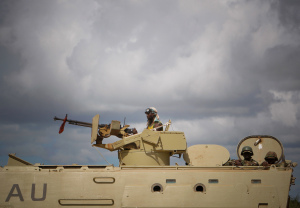
    African peace operations receive external recognition due to their militarized characteristics. Most AU peace operations are stabilization missions, using combat operations against specific aggressors (sometimes terrorist groups) in bounded conflict theatres. The troop contributing countries to the AU Mission in Somalia (AMISOM) have been commended and supported by the international community for the willingness to combat Al-Shabab fighters. As noted by Yvonne Akpasom in a book on Africa-led peace operations while this combat readiness may be necessary, it is crucial for APSA and for host populations in conflict-affected states that these stabilization missions are always linked to a political objective. AU-led missions to date have demonstrated operational readiness, but have been insufficiently streamlined with political strategic-level direction. In need of development are: realization of protection of civilians policies and guidelines, human resources to plan for, for example, policing components and human rights observers, reflection on security sector reform and law and order efforts.

    Conclusion

    For AU member states and APSA policy organs, the first strategic priority is really the achievement of full ownership over regional security governance. The counter-terrorism developments referred to do not aim to settle whether global terrorism poses the biggest security threat to Africa’s societies and populations. What is at stake is Africa’s political authority to define conflicts and threats on the continent. To achieve a bigger impact on global governance, the AU has to balance the different pressures on it to demonstrate authority and capacity to manage security threats in Africa.

    Linnéa Gelot is a Senior Researcher at the Nordic Africa Institute (NAI), Sweden and a Senior Lecturer at the School of Global Studies, Gothenburg University, Sweden. Her most recent publication is The Future of African Peace Operations: From Janjaweed to Boko Haram, co-edited with Cedric de Coning and John Karlsrud, with Zed Books. She is currently leading the project ‘AU Waging Peace? Explaining the Militarization of the African Peace and Security Architecture’ in which the concept of militarization and security practice theory are employed to study militarizing/de-militarizing institutional discourses and practices. Additionally, she has worked as a consultant and substance matter expert (African peace and security and the protection of civilians in UN peace operations) for UNITAR in Geneva, as well as other consultancy firms.