Category: 17

  • Sustainable Security

    With right-wing populism growing across Europe, Germany was thought to be an exemption to this trend. However, the rise of Alternative for Germany could potentially change this.

    While far right parties have been on the rise throughout Europe for decades, it seemed like Germany was immune to the seduction of the far-right. Whereas, among others, the National Front in France, the Dansk Folkeparti, Flemish Interest in Belgium and the Freedom Party in Austria recorded growing electoral results, parties such as the Republicans (REP), the National Democratic Party (NPD) or the German People’s Union (DVU) were unable to overcome the electoral threshold. Although successful at the national level and represented in several regional parliaments (Landtage), no party to the right of the Christian Democrats has managed to gain seats in the Bundestag since 1949. Why has this been the case in Germany?

    Germany’s “special status”

    Political scientists and other observers both in and outside the country were puzzled by the ‘special status’ of the German party system, all the more so because the key conditions for the electoral success of right-wing populist and radical right parties were not that different from the European neighbors. Several studies have shown a small but relatively stable presence of nativist, even xenophobic attitudes within the German society. However, although right-wing populist parties profited from these preconditions in several state elections – e.g. in Baden-Württemberg in the early 1990s and some East German states from the beginning the new millennium onwards – they were not able to establish at the federal level. One can hardly identify one single reason for this mismatch, but according to most scholars, the answer lies in three German characteristics.

    Firstly, the German political right was divided and fractioned. While in France, Austria, Switzerland and other European countries, major far right parties were able to unify the right beyond the Conservatives, the right spectrum in Germany was distinguished by a high degree of competition. For instance, with NPD and DVU, two main players of the extreme right competed against each other in several Land elections until their consolidation in 2011. At the same time, the populist radical right spectrum was marked by the coexistence of various small parties, such as The Freedom or the so-called ‘Pro’ Movement, a minuscule group that basically operates in North Rhine-Westphalia.

    Secondly, the yearlong strategy of the Christian Democrats, which consisted in the integration of conservative streams within the German society, might have had a negative impact on newcomers on the right. Especially the Bavarian CSU, an autonomous party that is embedded in the Christian Democratic Union at the federal level—the CDU, in turn, holds no regional branch in Bavaria—was able to address conservative voters beyond the Bavarian borders and helped to maintain the strategy of the Union.

    The third reason relates to German history. Since the end of World War II, radical or extreme right parties have been dealing with stigmatization and exclusion from the political discourse.  While far right parties are treated as outsiders in almost all countries, in Germany, they are suspected of standing in the tradition of historical Nazism and thus barred. For instance, when the NPD found its way into the state parliament of Mecklenburg-West Pomerania in 2006, the other parties decided to not to support any of the NPD’s parliamentary initiatives (so-called ‘Schweriner Weg’ – ‘Way of Schwerin’).

    These unfavorable conditions contributed a great deal to keeping far right parties out of the German party system for more than six decades. At the beginning of 2017, however, it seems like the ‘anti-fascist consensus’ of the German post-war era has begun to totter. Violent acts against refugees have risen. In 2015, the German Federal Office of Criminal Investigation (Bundeskriminalamt) had registered a right-wing populist political movement (‘Pegida’), although solely a regional phenomenon in the city of Dresden, has dominated media coverage on East Germany. The most impressive evidence for the establishment of a far right stream is the ongoing success of a new right-wing populist party: the Alternative for Germany (AfD).

    Accounting for the AfD’s rise
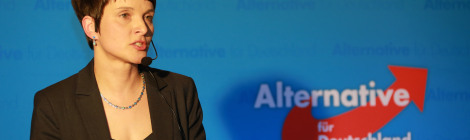
    afd

    Image credit: Metropollco.org/Flickr.

    Since its foundation in the first quarter of 2013, the AfD has been denoting growing electoral support. Whereas it had failed to jump over the electoral threshold in the 2013 general election, the party won seats in every state election since that time. With partly extremely high results—such as 24.3 percent in Saxony-Anhalt and 20.8 percent in Mecklenburg-West Pomerania—the AfD is already the most successful new party in the history of the Federal Republic.

    To some scholars—including the author of this piece—one crucial reason for the popularity of the AfD are the arbitrary features of its ideology in the first two years of its existence. While clearly Eurosceptic and populist in terms of its anti-elitist appeal, the official program of the AfD in 2013/2014 did not include any nativist or xenophobic components.

    However, studies diagnose a clearly right-wing populist profile for both the sympathizers and the members of the AfD from the start. Other inquiries illustrate that in 2013, the public opinion as well as the first studies on the party located the AfD firmly at the right of CDU and CSU but did not imply a far right profile. The party therefore profited from its moderate but populist program while at the same time, as it was slightly more conservative than the Christian Democrats, the AfD was attractive for far right voters and activists from the very beginning. At the same time, the success of the AfD mirrors the evolution of the Christian Democrats, which have turned to a more liberal party under the leadership of Chancellor Angela Merkel. While this strategy has clearly marginalized the SPD, which scores just under 21 percent in the national polls, it has annoyed a great deal of more conservative voters, who now lean towards the AfD.

    It is not surprising that that the agenda of the AfD changed after the 2014 European election. Whereas anti-Euro and anti-EU positions had dominated its program until May or so, the party highlighted its conservative social values in the face of the state elections in autumn 2014. During this phase of the party’s history, growing tensions about the leadership of its founder Bernd Lucke, an economist from the University of Hamburg and the ideological direction of the AfD, including its relationship to Pegida, occurred. In summer 2015, Mr Lucke lost the election to the party executive against the leader of the Saxonian regional branch and parliamentary party, Frauke Petry, who chairs the party until today together with co-speaker Jörg Meuthen. Even though scandals and internal conflicts have been shattering the party, some observers’ expectation that the party will break down did not prove true. At the beginning of the election year 2017, the polls indicate high electoral support (around 12 percent) for the AfD at the general election in September.

    While it is right that a successful far right party in Germany mirrors a normalcy in Europe, it is also a benchmark for the crisis of representative democracy and the elites and the parties that underpin it. Populist far right parties—including Donald Trump in the United States by the way—benefit from growing contempt towards the political elites and the perception of individual powerlessness in the political process. In that sense, parties like the FPÖ in Austria, the French Front National or the AfD in Germany are phenomena of modernization, although they do not directly profit from its negative economic consequences (e.g. unemployment), as scholars have argued for years.

    Not surprisingly, recent studies show that electoral support for the AfD is not entirely based on protest—in fact, there is a great deal of convergence between the political positions of the voters and the ideology of the party. Empirical results also illustrate that the share of losers of the modernization process within the AfD electorate is high, but they do not represent the majority of their voters. In other words, the AfD is at least as much the exponent of a latent new right movement as it is the vehicle of discontent. At the same time, it represents to a certain extent an invisible coalition of middle-class and lower-class voters.

    In contrast to its predecessors in the far right spectrum, the AfD faces hardly any competitors in its niche. Founded by both neo-liberal, Eurosceptical economists (e.g. former party leader Bernd Luck and Joachim Starbatty) and socially conservative activists (e.g. Beatrix von Storch), the AfD became the center of attraction for right-wing networks without being right-wing extremist on its own terms. Due to its electoral successes, the AfD became a much more attractive player in the spectrum than other, much less successful parties did.

    The political public, especially the established parties, still seem somehow paralyzed and helpless. Strategies oscillate between stigmatization—the approach that embossed the exposure to the far right for sixty years—and dispute. While some argue that the—in part—extreme ideology of the party prohibits its inclusion in the democratic discourse, approaches that are more pragmatic allude to three crucial facts.

    First, they highlight the ‘normative power of the factual’: by being represented in more than half of the state parliaments and likely to master the electoral threshold in the upcoming federal election, the AfD is already an established actor, at least in the medium term. Ignoring is thus no strategic option. Secondly, while it was easy to demonize other right-wing parties, such as the NPD, due to their extremist ideology and appeal, the AfD, although clearly part of the far right, is not a fascist party. Even if the party has evolved from a moderate conservative-Eurosceptic to a far right party, it still lacks a clear racist and anti-system agenda. Neither its anti-elitist appeal to the people nor its Islamophobia resemble the neo-Nazi agenda of the NPD or other parties of this spectrum. It is thus not surprising that the anti-fascist reflexes of the political public failed.

    Finally, the common strategy of demonization (or stigmatization) could even prove to be counterproductive: populist far right parties feed on their perception as political outsiders. Therefore, any attempt to exclude the AfD from the political discourse can be interpreted as another move by the ‘aloof’ political class and strengthen the bond between the party and its supporters.

    Outlook

    In the face of the increasing establishment of the AfD and constantly high results in the polls, the prospects for the newcomer party are auspicious. The AfD will almost certainly be represented in the next German Bundestag. This will pose a challenge to the established parties. As to parliamentary strategies, a strong far right fraction could prevent the realization of preferred coalitions. While the SPD is unlikely to gain enough seats to claim the chancellorship, the CDU/CSU might become the strongest party but without the perspective of a two-party alliance other than a grand coalition. However, the only possible outcome might as well be the worst.

    Not only is the grand coalition highly unpopular among Social Democrats. As the case of Austria shows, grand coalitions in persistence lead to the increasing perception of the ‘cartelization’ of the political class, which fosters support for the far right. Considering the options of government formation after the 2017 general election, the AfD might well become the beneficiary of the situation it contributed to: political sclerosis. In that case, Germany might face a long period of bounded competition between the major mainstream parties and growing polarization in terms of increasing successes of the far right.

    Dr. Marcel Lewandowsky (* 1982) is a political scientist and research fellow and the University of the Federal Armed Forces in Hamburg, Germany. His current research focuses on right-wing populism in Europe with special consideration to the AfD in Germany.

  • Sustainable Security


    BZ smallTwo new reports surveying the strategic trends that are likely to shape the next few decades of global politics point very clearly to the prospect of a severely resource-constrained world. Released two days apart, both the new Chatham House report on Resource Futures and the US National Intelligence Council report on Global Trends 2030: Alternative Worlds raise a number of important questions relating to conflict and security.
    According to the Chatham House report,

    The spectre of resource insecurity has come back with a vengeance. The world is undergoing a period of intensified resource stress, driven in part by the scale and speed of demand growth from emerging economies and a decade of tight commodity markets. Poorly designed and short-sighted policies are also making things worse, not better. Whether or not resources are actually running out, the outlook is one of supply disruptions, volatile prices, accelerated environmental degradation and rising political tensions over resource access.

    The report outlines what the authors refer to as volatility being “the new normal.” For this reason “High and fluctuating prices are spurring new waves of resource nationalism and making unilateral and bilateral responses more attractive.” This should be cause for concern, especially in relation to the ways in which the response of governments and other actors to scarcity (or at least perceptions of scarcity) can interact with existing tensions and conflicts between and within communities. As the report highlights, “In addition to efforts to reduce demand at home, governments and other actors have moved to ensure access to affordable resources, reshaping the landscape of international politics. The return to largely protectionist and beggar-thy-neighbour manoeuvres – often in reaction to short-term supply bottlenecks or perceptions of scarcities rather than actual ones – can act as fuel to the fire.”

    As well as mapping the consumption and trade trends across a series of important resources, the report also discusses the impact of external variables such as population growth and climate change. These are “multiple stress factors” which “render countries vulnerable to different types of shocks such as environmental disasters, political unrest, violent conflict or economic crises – increasing both local and systemic risks. Such factors can create new tensions and flashpoints as well as exacerbating existing conflicts and divisions along ethnic and political lines.”

    The report includes a section on resource conflict flashpoints (p. 114) which outlines fifteen different potential flashpoints relating to territorial/economic zone disputes in resource-rich areas, shared water resources and transboundary river systems and resource-related rebellion and insurgency. The report is also linked to an interactive website that maps some of these trends and potential flashpoints.

    The day after this report was released, the US National Intelligence Council released their own on the key trends over the next twenty years that the United States will need to adapt to or try and shape in order to “think and plan for the long term so that negative futures do not occur and positive ones have a better chance of unfolding.”

    Among other so-called mega trends such as urbanisation and changing demographics, the report echoes the Chatham House research by pointing to an increasingly complex situation in terms of global resources. The report argues that,

    “We are not necessarily headed into a world of scarcities, but policymakers and their private sector partners will need to be proactive to avoid such a future. Many countries probably won’t have the wherewithal to avoid food and water shortages without massive help from outside. Tackling problems pertaining to one commodity won’t be possible without affecting supply and demand for the others.”

    The key trend or ‘tectonic shift’ as the report calls it is that “demand for food is expected to rise at least 35 percent by 2030 while demand for water is expected to rise by 40 percent. Nearly half of the world’s population will live in areas experiencing severe water stress. Fragile states in Africa and the Middle East are most at risk of experiencing food and water shortages, but China and India are also vulnerable.”

    While this may lead some towards overly pessimistic conclusions about a world defined by instability, human insecurity and geopolitical tensions, it is refreshing to see the NIC emphasising the importance of how the US can respond now. In his forward, the Council’s Chairman Christopher Kojm states that “We are at a critical juncture in human history, which could lead to widely contrasting futures. It is our contention that the future is not set in stone, but is malleable, the result of an interplay among megatrends, game-changers and, above all, human agency.” It is worth noting the deliberate use of the phrase ‘alternative worlds’ in the report.

    While some degree of adaptation to these structural trends mapped out by both Chatham House and the National Intelligence Council will undoubtedly be necessary, the importance of both of these reports is that they remind us of the need for clear and far-sighted thinking on policy responses now. The worst case scenarios that these reports discuss are not inevitable and risks can be mitigated. National security policymakers will do well to study the scenarios outlined in these two impressive reports and to try and understand the drivers and ‘tipping points’ that lead to certain pathways. Both reports offer prescriptions for current decision makers (the Chatham House recommendations on ‘targeted resource dialogues’ and ‘coalitions of the committed’ are particularly worthwhile). While volatility and uncertainty might be the ‘new normal’ in global resource politics, one thing is entirely certain – inaction and ‘business-as-usual’ when facing “a critical juncture in human history” is a recipe for disaster.

    Ben Zala is a Lecturer in International Politics at the University of Leicester.

    Image source: Stayraw

  • Sustainable Security

    The European Union (EU) has recently emerged as an international peace meditator, but emerging challenges, including the potential exit of the UK from the EU, may prevent it from strengthening its ability to mediate conflicts.  

    Mediation is an instrument of international conflict management through which third parties seek to contribute to a peaceful resolution of (violent) conflicts. While states are the dominant and most frequent providers of mediation, international organizations are not far behind. Recently, the European Union (EU) has emerged as a relatively new player in the field, acting both as a mediator itself and as a member of collective coordination mechanisms to support peace processes such as UN Contact Groups and Groups of Friends. Current initiatives such as the EU-facilitated dialogue between Belgrade and Pristina have demonstrated the EU’s potential as peace mediator.

    However, external and internal crises may prevent the EU from further strengthening its institutional capacities and resources for mediation. Externally, challenges to European security such as the civil war in Syria, the threat posed by the so-called Islamic State and the armed conflict in Eastern Ukraine in the context of rising tensions between NATO and Russia could lead to a shift in the EU’s foreign and security policy back towards a more traditional, “hard security” approach that focuses on the development of military instruments and defence cooperation. Internally, the results of the UK referendum on 23 June 2016 and a potential exit of the UK would certainly open up a debate on the future of EU foreign and security policy without one of its most influential member states. The fact that the EU’s long-awaited Global Strategy on Foreign and Security Policy will be published a week or two after the UK referendum suggests that the EU is well prepared to take the potential effects of a ‘Leave’ vote on this policy field swiftly into account. However, it is nevertheless plausible to assume that a ‘Brexit’ would push the EU towards a decisive crossroads as regards to the future development of its foreign and security policy, also potentially affecting its engagement in the field of peace mediation.

     The EU’s track record in peace mediation

    rock-cohen

    Image by Rock Cohen via Flickr.

    Although the number of EU mediation efforts is still relatively marginal compared to UN mediation involvement, the EU has nevertheless established a considerable track record as mediator in the past ten to fifteen years. During High Representative (HR) Javier Solana’s terms of office, mediation became an increasingly important element of the EU’s foreign and security policy toolbox. For example, in August 2001 the EU together with the US managed to broker the Ohrid Framework Agreement settling the conflict between the Macedonian government and the Albanian minority in 2001. A few months later, the High Representative and his team became involved in a mediation process between Serbia and Montenegro, which led to the Belgrade Agreement on the formation of a state union in March 2002. While the Western Balkans certainly remained one of HR Solana’s key priorities, the EU also played an important role in the multilateral effort to mediate the political crisis in Ukraine in the context of the country’s ‘Orange Revolution’ in 2003 and was a key supporter of the efforts by the Finnish NGO Crisis Management Initiative (CMI) to broker a peace agreement to the conflict in Aceh, Indonesia in 2004-5.

    While the EU had already been very active in the field of mediation when Javier Solana served as High Representative (1999-2009), it sustained its mediation activities during HR Catherine Ashton’s term of office (2009-2014) and continues to be involved in mediation processes since HR Federica Mogherini has taken over. In particular, the EU-facilitated dialogue between Belgrade and Pristina stands out as the most prominent example of EU mediation. Less publicly recognized are the EU’s efforts as co-mediator in the Geneva International Discussions (GID) on Georgia’s Territorial Conflicts that were initiated in October 2008 following the EU Special Representative for the South Caucasus and Crisis in Georgia together with OSCE and UN Special Representatives/Envoys  serving as co-chair in the talks between representatives of Georgia, South Ossetia, Abkhazia, Russia and the US. Apart from its direct involvement as mediator, EU actors have been engaged in a number of mediation support initiatives, often been less visible to a wider public. Examples include the EEAS Mediation Support Team’s efforts to assist Myanmar democratic transition and the EU Delegation’s organizational and financial support to the National Dialogue Conference in Yemen.

    The EU’s institutional framework for mediation

    The increase in EU mediation activities has been accompanied by the evolution of a more strategic and systematic EU approach to mediation, particularly in terms of policy development and capacity-building. A key development in this regard has been the adoption of the Concept on Strengthening EU Mediation and Dialogue Capacities. In this document, the EU formulated the plan to systematically enhance its existing mediation capacities and to strengthen its overall ability to engage in non-military conflict prevention and crisis management missions. It also spells out different roles and guiding principles of EU mediation, thereby addressing the need for greater internal coherence and closer cooperation with its international partners. A major role in mediation is ascribed to the EU Special Representatives, whose mandates often include mediation-related activities and which are often the key EU actors on the ground in the conflict region.

    To implement the Concept and to promote a more systematic approach to mediation, the Mediation Support Team (MST) within the EEAS was established in 2011 and has become a key hub of mediation knowledge and expertise. However, the MST is not the only institutional innovation that followed-up on the 2009 Concept. The establishment of the European Parliament Mediation Support Service to assist mediation initiatives undertaken by Members of the European Parliament and the creation of the European Institute of Peace illustrate that mediation remains a vibrant field of EU foreign policy.

    Is the EU an effective mediator?

    To what extent the EU is effective in its mediation efforts is an issue which still has to be comprehensively addressed in peace and conflict studies research. The answer to the question of EU effectiveness also depends on how one conceptualizes effectiveness and success in international mediation. A brief comparison of the EU-facilitated dialogue between Kosovo and Serbia with the EU’s role as co-chair in the Geneva International Discussions on the conflicts over South Ossetia and Abkhazia may illustrate this. In terms of conflict settlement, the EU-facilitated dialogue between Kosovo and Serbia has been relatively effective, given that it has led to several agreements between the parties, including compromises on previously heavily contested issues such as Kosovo’s participation in regional fora, freedom of movement and trade, and the governance of Northern Kosovo. Most importantly, the EU brokered the First Agreement of Principles Governing the Normalization of Relations in April 2013 that has been widely applauded as ground-breaking and historic. Although the parties are lagging behind when it comes to the implementation of some agreements, the Belgrade-Pristina dialogue still is a success story which can, at least partly, be attributed to the EU’s leverage vis-à-vis with the conflict parties due to their aspirations for EU accession and its mediation strategy that draws on this leverage to move parties toward agreement through the use of positive incentives.

    In case of the Geneva International Discussions, the EUSR and his team have been considerably less effective in brokering agreements between the parties compared to the Kosovo-Serbia case. Apart from the establishment of Incident Prevention and Response Mechanisms to facilitate exchange of information on security incidents at the administrative boundary line (ABL) between South Ossetia/Abkhazia and Georgia proper, the discussions have not resulted in any tangible results yet. However, a focus on conflict settlement alone would not be sufficient to make a comprehensive judgement on the EU’s effectiveness as a co-mediator in this case. The fact that the EU has managed to keep the parties at the negotiation table and stay committed to the mediation process is in itself an achievement, given the fact that the space for compromise between the parties seems to be very limited. In addition to the EU’s effort to stabilize the security situation on the ground through the EU Monitoring Mission (EUMM), the EU’s leading role in the GID has contributed to a stabilization of a conflict which was prone to escalation not that many years ago.

    What can we learn from this comparison about EU effectiveness in mediation? There are at least two lessons that could be drawn here. First, the Kosovo-Serbia case illustrates the great potential of the EU as a mediator in contexts where EU memberships serves as a huge incentive for compromise solutions. Second, the EU’s involvement in the Geneva International Discussions demonstrates that in less favourable contexts – due to a lack of EU leverage or a limited willingness to compromise from the conflict parties – the EU may not be able to achieve more than preserving the status quo and committing the parties to confront one another peacefully in negotiations rather than through violent means. Thus, there may be certain limits to what the EU is able to achieve, but this does not mean automatically that the EU is ineffective. Rather, the main task for the EU will be to fully exploit the potential it has, given the specific circumstances and context of the conflict in which it decides to engage.

    If the EU is able to further strengthen its profile as an international mediator, it will depend on the political will of the Member States. Although EU mediators such as EU Special Representatives enjoy a certain degree of leeway, it is the EU member states who decide on their mandates and the EU’s approach towards a particular conflict more generally. Moreover, individual Member States may provide EU mediation efforts with additional weight. In the Kosovo-Serbia case, for example, the UK and Germany have played a key role in moving Belgrade to compromise in the dialogue with Pristina by making it a condition for further progress on its path towards EU accession. While Germany has been the key driver behind the efforts of putting more pressure on Serbia to move forward in the implementation of agreements reached in the context of the EU-facilitated dialogue at different levels, the UK has played a key role in backing this policy publicly and through diplomatic channels. Given that the UK has been a firm supporter of the EU’s further enlargement, one potential effect of a ‘Brexit’ could be that in cases where enlargement is the key ‘carrot’ the EU can offer to conflict parties, there might be more reluctance to draw on this leverage due to a change to the EU’s internal balance between enlargement supporters and skeptics among the Member States. Thus, although a potential ‘Brexit’ may not inevitably affect and change the EU’s approach to mediation, it may have a long-term negative impact on the EU’s ability to use both pressure and political/economic incentives to spur agreement between conflict parties.

    Julian Bergmann is a research fellow with the Chair of International Politics at the Johannes Gutenberg University Mainz, working on a PhD thesis on the EU’s effectiveness as a peace mediator in secessionist conflicts. Together with Arne Niemann, he is also conducting a research project entitled “A Peacemaker in the Making? The European Union as an Actor in International Mediation”, funded by the German Foundation for Peace Research. Recent publications include Mediating International Conflicts: the European Union as an Effective Peacemaker? (Journal of Common Market Studies 2015, with Arne Niemann) and Reputation, Credibility and Manipulative Negotiation Style – Attributes of Successful Peacemakers? (Zeitschrift für Friedens- und Konfliktforschung 2014; in German).

  • Sustainable Security

    Historically, permanent members of the UN Security Council have variously rejected the idea that it was the proper venue to address international cooperation on climate change. The notable cooperation between China and the United States to secure the Paris Agreement, however, may signal a greater openness to UNSC climate securitization, including the creation of a UNSC-enforced Climate Court.

    Paris and Binding-Voluntary Climate Obligations

    The UNFCCC was finalized at the 1992 Rio Summit amidst significant North/South contestation. The 1997 Kyoto Protocol codified this arrangement with legally binding obligations for the global North, and no clear schedule for obligations for the global South. The US Senate made it clear, however, that it would not agree to treaty obligations that exempted the emerging economies. This, coupled with the continued refusal by the developing world to accept legal obligations, produced an entrenched diplomatic gridlock.

    Initiated by the voluntary 2009 Copenhagen Accord, the 2011 Durban Platform saw agreement on the need for obligations “applicable to all,” which framed the 2015 negotiations that culminated in Paris this past December.

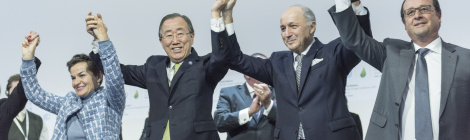
    UN Photo

    Image of closing ceremony of the twenty-first session of the UN Framework Convention on Climate Change, December 2015. Image by UN Photos.

    Agreed by a consensus of 196 nations at the 21st Conference of the Parties to the UNFCCC, the Paris Agreement (COP 21) provides no legally binding emissions reduction obligations. However, it did produce a hybrid agreement (with a mix of voluntary and binding obligations) that is applicable to all parties (breaking the firewall between developed and developing states) for the post-Paris climate regime.

    The architecture is remarkably simple; all states are asked to volunteer the emissions targets they are able to meet, and then agree to be bound by transparency obligations and to take stock of their commitments at regular intervals. These legal responsibilities provide a ratchet mechanism for states to increase ambition in the knowledge their competitors’ commitments will also be monitored.

    The Paris Agreement creates a solid foundation upon which to build a strong climate regime because it assumes that all states finally share an interest in participating in the reduction of global carbon emissions.

    Frustration, Securitization, and the Judicial Route to Climate Obligations

    In response to the frustration of many years of gridlock, norm entrepreneurs have argued that the security threat from climate change is sufficiently large that we should impose obligations on uncooperative polluters. The international community should, in other words, set aside traditional notions of sovereignty (not unlike the Responsibility to Protect) and impose international obligations on the domestic regulatory policies of nation states.

    With multilateral negotiations unable to allocate a suitable distribution of climate rights and responsibilities, numerous proposals have argued that we should delegate that legislative authority to international courts.

    Bolivia, for example, proposes a Climate Justice Tribunal that punishes climate criminals for their historic carbon emissions. It would strenuously enforce the “common but differentiated responsibilities” approach of the UNFCCC and the Kyoto Protocol. As such, China and the other high-emitting emerging economies would remain exempt from prosecution.

    There are a number of groups calling for the crime of Ecocide to be included in the Rome Statute of the ICC. This mechanism would seek to prosecute individual corporations, and potentially states, for environmental damage and presumably excessive carbon emissions. Jurisdiction over corporations garners support for this initiative from many in the environmental movement, but as it would apply equally to state-owned enterprises in the developing world this amendment is unlikely to be ratified by two thirds of the ICC membership. Crucially, of course, the largest carbon emitters (the United States and China) are not parties to the ICC.

    As an alternative to contentious cases, the ICJ may be called upon to provide advisory opinions at the request of the UN General Assembly. In theory, this route may offer valuable clarification of general principles of international law, but advisory opinions are not considered binding, perhaps especially on great powers.

    The geopolitical reality ignored by these proposals is that, unless states consent to be bound, the only existing international institution with the power to impose binding obligations on all states and enforce them in a credible manner is the UNSC.

    Climate Securitization and UNSC Legislation

    While unable to force states to ratify entire treaties, the UNSC is able to impose binding obligations on the global community as a response to threats to international peace and security. This ability to act as a climate legislator offers a solution to the horizontal nature of the international legal order, if the P-5 can agree to securitize climate obligations.

    Much of the gridlock of climate diplomacy has been a result of the US and China disagreeing on an equitable distribution of responsibility for addressing climate mitigation. As such, the Paris Agreement represents considerable diplomatic efforts to overcome calcified negotiating positions between these major powers.

    It is worth noting that Russia remains a UNSC wild card on climate change. Kyoto offered Russia an allocation far in excess of its post-Soviet needs and the recent Russian INDC voluntary pledge is to reduce carbon emission 30% below a 1990 baseline. A conservative assessment that they are currently at 35% below baseline suggests a weak commitment to mitigation.

    However, Russian leadership in reducing the production of oil within the G-20 may become a necessary condition for similar coordination among OPEC states. Credible coordination of global production quotas is increasingly a high priority of Russian foreign policy, as it is for the future of the climate regime.

    If the P-5 could agree on a suitable regulatory standard, obstacles to G-7 and NATO members accepting binding obligations would be greatly reduced. If the G-20 could be persuaded to voluntarily accept this proposed agreement, this would represent 76 percent of global carbon emissions and the combined market power of 85 percent of global GDP.

    Forced to respond to an unanticipated climatic disaster the interests of the P-5 could align even further to initiate an institutional response to the crisis. Although doing so may stretch its delegatory powers, to increase the legitimacy of any UNSC climate legislation, it could, and perhaps should, create a Climate Court to address non-compliance within the post-Paris climate regime.

    A UNSC-enforced Climate Court

    Created by the UNSC, a legitimate and effective Climate Court would benefit from (1) compulsory jurisdiction; (2) a specialized judiciary able to digest complex scientific evidence and supported by issue-area expert advisors; and (3) legal standing for both state and non-state actors to challenge the non-compliance of state obligations.

    • Compulsory jurisdiction is rare in international law but in theory as the cost of legal obligations grow, so do incentives to shirk responsibility. States making good faith sacrifices to comply with specific obligations will only support strong enforcement mechanisms as long they see standards enforced on everyone. The UNSC has more tools than any other international institution to credibly ensure the enforcement of international legal obligations.
    • When environmental disputes arise, a scientifically literate judiciary is better able to weigh the importance of scientific evidence among competing factors: economic, human rights, security, etc… In the same way that complex biotechnology litigation requires very specific judicial expertise, so will transboundary climate disputes.
    • Regarding standing, the potential fallout from a weaker state pursuing litigation against a great power is significant. Allowing non-state actors standing to bring cases before an international court begins to address this problem, as long as there are minimum thresholds to prevent spurious litigation. Moreover, this “access to justice” approach supports the concept of erga omnes obligations (“owed to all”). If all states have clear, specific, and actionable climate obligations, litigation needn’t be bilateral. Each state’s responsibility is owed to the international community.

    Judicial determinations of willful non-compliance would be enforced by the UNSC acting in the interests of the international community to address a collective threat to international peace and security.

    Conclusion

    Historically, mirroring the firewall between developed and developing states in the UNFCCC negotiations, there has been considerable resistance within the P-5 to using the power of the UNSC to securitize the climate regime. However, with increasing recognition of climate change as a significant human and systemic security threat multiplier, the likelihood of UNSC intervention in the enforcement of the climate regime may now be moving from impossibility to inevitability. The increased alignment within the P-5, as reflected in the Paris Agreement, may represent a clearer path to the UNSC acting as a climate legislator and creating a corresponding Climate Court.

    The Paris Agreement, in other words, may have broken the UNSC climate firewall.

    Murray Carroll is a co-founder and director of the International Court for the Environment Coalition. He has a law degree from the London School of Economics, and is a graduate student of international relations at Harvard University and international law at the University of London. Responsibility for the views expressed in this commentary rest exclusively with the author. An expanded version of this commentary is available in the latest issue of the Journal of Energy and Natural Resources Law.

  • Sustainable Security

    The Somali fishermen’s registration programme was lauched to help Somalia’s fisheries management and to secure its waters against piracy. Though commendable, the programme has yielded serious problems.

    Following the end of the civil war, the fisheries sector re-emerged as an important economic activity in Somalia, evidenced by the increase in the number of artisanal fishermen operating in the Puntland, Galmudug, and Somaliland regions. The exact number of these fishermen is unknown since neither the respective Ministries of Fisheries nor the District Fishing Associations register Somalis who fish. The lack of information on the number of fishermen, fishing fleet, services, the state of marine resources, and landings reduces the ability of decision makers to make informed decisions regarding the establishment of a robust fisheries management structure in Somalia.

    In support of the various Ministries, the United Nations Food & Agriculture Organization (FAO) is involved in projects to improve the understanding of Somalia’s fisheries sector. One of these activities is the development of a biometrics-based, artisanal fishermen -specific, registration system (Biometric Information Technology System or BITS) for the Ministry of Fisheries and Marine Resources in Puntland, Galmudug, and Somaliland.

    The data collected using BITS is expected to help formulate a more nuanced understanding of fishermen livelihoods in Somalia—which is necessary for effective fisheries management at the regional and national levels. The information can also prove useful for the government and international naval forces in the attempt to secure Somali waters against piracy and enable legitimate fishermen to operate more freely at sea.

    Piracy and Somalia

    Somali piracy and illegal, unreported, and underreported (IUU) fishing are two issues that have long been entangled in rhetoric and practice. According to the grand narrative of Somali piracy, without a government to police the coastline or prosecute offenders, Somali waters and resources were vulnerable to foreign illegal fishers. In order to protect their livelihoods, Somali fishermen took up arms against the illegal fishers as a form of retribution and/or taxation for plundering their fish and natural resources (see also Hansen, 2011; Bueger, 2013; Gilmer 2016).

    More than a decade after the perceived beginnings of Somali piracy, the grand narrative is still invoked by pirates and members of the Somali public. As artisanal fishermen, pirates, and foreign illegal fishers continue to operate within the same vast maritime spaces, inevitably, accusations of mistaken arrests began to emerge. Coastal communities claimed their fishermen were being picked up by foreign navies. Piracy prisoners held in foreign prisons maintained they were innocent fishermen who were mistaken as pirates. These stories not only raised questions of possible injustices, but they also spotlighted the issue that other than the members of Somalia’s coastal communities and local fishing organizations, no one could say for certain (or prove) who was or was not a pirate/fishermen/illegal fisher.

    Establishing a system for identifying Somalia’s maritime community, and sharing that information with international naval forces, was imagined as a starting point for more objective monitoring of Somalia’s waters (i.e., protecting against further potential injustices).

    The Somalia fishermen’s registration programme

    From 2013 to 2015, FAO utilized the BITS while conducting the Somalia fishermen’s registration programme (hereinafter referred to as the registration programme). The program is/was funded by the Trust Fund to Support the Initiatives of States to Counter Piracy off the Coast of Somalia of The Contact Group on Piracy off the Coast of Somalia (CGPCS). Collectively, the registration program consisted of three Trust Fund to Support Initiatives of States to Counter Piracy off the Coast of Somalia projects: Project #55 Fishermen Identification Database System; Project #69 Galmudug and Jubbaland Fishermen Fleet Registration; Project #70 “Somaliland” Fishermen and Fleet Registration.

    Via field officers, the Ministries collected basic information about more than 5,000 fishermen from all associations within Puntland, Galmudug, and Somaliland during face-to-face structured interviews. This data was entered into a database held by the Ministries. In 2016, a data analysis workshop was conducted in Bossaso, Somalia to “ground truth” the collected data and to discuss the overall successes and challenges of the registration program. Discussions revealed how the registration program became part of a broader struggle over the power to (re)construct the identities of people, labor niches, and maritime spaces of Somalia.

    The registration programme helped shift the site for identifying legitimate fishermen from at sea to onshore in Somalia at the various fishing landing sites where the registration exercises took place. Consequently, landing sites became the new key political sites in the struggle to define and identify legitimate fishermen. More specifically, the process of submitting/entering an individual’s data into the BITS was overseen by the heads of the local fishing associations.

    By discouraging the field officers from registering the data of pastoralists and pirates, the heads of the local fishing associations helped create a new group of maritime “others”. These “others” are considered potential criminals (i.e., pirates or illegal fishers) nand will not be afforded the same freedoms of mobilities at sea as legitimate fishermen. Indeed, by not having their data registered, these individuals were also rendered ineligible for future development programming geared towards registered fishermen.

    The data linked to those labeled legitimate fishermen is used to design future fisheries sector development programming. Those labeled legitimate fishermen become a target group for future FAO- or other agency-facilitated fisheries development projects. Maritime others, however, are left out of this development target group. As a result, the heads of the local fishing associations not only reshaped future development to exclude pirates (former or current) and pastoralists, but they may also have contributed to a future increase in piracy activity by pushing certain maritime “others” back out to sea without the occupational legitimacy/protections provided by a fishermen identification card (See Gilmer, 2017).

    Because who they are and what they are doing in maritime space remains an unknown, they must remain under the watchful eye of law enforcement. Although some individuals do, indeed, return to the sea with the intent to commit crimes, most do not. Thus, this reveals the paradox that the programme that set out to simultaneously develop and decriminalize Somali fishermen has only effectively displaced the criminalization onto a more specific maritime population of Somalis.

    Beyond the politics of submitting/entering data, the process of distributing fishermen identification cards also played an important role in reshaping future geographies of development and mobilizing certain bodies. In Puntland, government officials utilized the distribution of fishermen identification cards as leverage to bargain with FAO representatives for future planning meetings in Somalia. By securing these future planning meetings, Puntland officials were also able to secure future patronage in exchange for all-expenses-paid trips for the heads of the local fishing associations.

    The future planning meetings were also relocated from the coastline to the inland city of Garowe to maximize the FAO-provided daily service allowance each attendee (i.e., head of the local fishing association) would receive. However, moving the meetings away from the coastline greatly diminishes the likelihood that fishermen will be able to participate in any of the meetings. Thus, the fishermen and their respective communities remain on the margins of development planning for Somalia’s fisheries sector.

    Conclusion

    The Somali fishermen registration programme is commendable in that it is the first cross-regional attempt to collect data on Somalia’s artisanal fishermen and fishing livelihoods since prior to the Somalia civil war. FAO will continue to support the Ministries but the expectation at this point is that the Ministries continue to register fishermen and collect basic information. Furthermore, FAO in partnership with the Ministries, will roll out additional information systems, such as the landing site and sale system, and vessel registration system.

    These initiatives will add to the information gained from the Somalia fishermen’s registration program and continue to develop the knowledge of the fishing sector in Puntland, Galmudug, and Somaliland. However, it is also imperative to analyze the processes involved in these data collection projects to understand the politics of identity as they play out at various sites. These politics and local struggles play a key role in shaping the institutionalization of Somalia’s maritime identities and broader access to future fisheries development aid.

    Brittany Gilmer is an assistant professor in the Department of Criminal Justice at Florida International University