Category: 08

  • Sustainable Security

    The ban on women serving in close combat units in the British military was recently lifted by former Prime Minister David Cameron. This marks a step towards bringing the British military into the modern age. 

    Background

    On 08 July 2016 at the NATO summit in Warsaw, then British Prime Minister David Cameron publicly announced a long awaited decision by the British military to remove all effective barriers for women to participate in combat jobs in the British Military. The decision came after a two-year in-depth study that examined multiple facets of the issue of women serving in combat related vocations, such as physiological problems, unit cohesion, recruiting, combat effectiveness, deployability, and survivability.

    The study determined that female physiology created a scenario that resulted in higher musculoskeletal injuries in physical training situations, but it also posited a solution.  The study further found that a decrease in injuries related to training has a direct impact on the ability for units to deploy and survive in combat situations. Moreover, the majority of injuries would be prevented by changing the way physical training is conducted and the way that combat gear is carried and used.  In an effort to “make the most of all their [women’s] talent”, while still retaining the high quality of the training of military forces, the British Military Service Chiefs have determined that operational standards will not be lowered to suit females who want to serve in combat roles.  They propose rigorous communication between soldiers and supervisors, specific training adapted to the physiology of all soldiers, the implementation of cultural change and cultural training, leadership training to increase unit cohesion, and a phased implementation of women in combat units.

    The move was hailed by many as a progressive step, bringing Britain into the 21st century while aligning the British military with their Canadian, Australian, and United States allies who have already moved to allow women to serve in combat roles.  Some critics, however, have cited long-held arguments, now largely disproven, as to why women should not serve in combat roles in the British military.  Retired Colonel Richard Kemp, former Commander of the British Forces in Afghanistan in 2003, claimed in several recent interviews that the inclusion of women in combat roles in the British Military will, inevitably, result in a lowering of training standards to ensure adequate female participation, despite definitive statements made to the contrary by the British Military Service Chiefs.  Critics of the move argue that currently only 4.5-5% of British women would be able to pass the requisite physical standards.  However, there is no comparable percentage for British males in the general population that would be able to meet the same standards.  Kemp further supposes that those women able to pass the inevitably lower training standards will “become the weak link in an infantry team” thus fostering resentment among their male colleagues, another claim that does not appear to hold up under serious and critical scrutiny.

    Arguments Women in Combat

    Servicewomen of the Army Air Corps are pictured on parade at Middle Wallop airfield in Hampshire. The Army Air Corps (AAC) operates alongside the other Combat Arms of the Infantry and Royal Armoured Corps. Combat Arms are those forces that use fire and manoeuvre to engage with the enemy with direct fire systems. The forces providing fire support and operational assistance to the Combat Arms are called Combat Support Forces. ------------------------------------------------------- © Crown Copyright 2013 Photographer: Peter Davies Image 45156340.jpg from www.defenceimages.mod.uk Use of this image is subject to the terms and conditions of the MoD News Licence at www.defenceimagery.mod.uk/fotoweb/20121001_Crown_copyright_MOD_News_Licence.pdf For latest news visit www.gov.uk/government/organisations/ministry-of-defence Follow us: www.facebook.com/defenceimages www.twitter.com/defenceimages

    Servicewomen of the Army Air Corps on parade. Image (cropped) via Flickr.

    The first type of argument against women serving in combat roles cites the biological limitations of the female body in combat operations.  In the case of the British military, criticisms of the biological limitations of women are frequently related to physiology.  Essentially, the arguments against women serving in combat relate to the frequency of musculoskeletal injuries caused by disproportionate upper body strength and lower load bearing ability seen in training.  While raw data obtained from a two-year study tends to support the assertion that females are more prone to musculoskeletal injuries during training, the solution to the issue is not to deny women the opportunity to serve in combat roles, but to modify physical fitness training so that the potential for injury is minimized while the benefit to physical fitness is maximized.  Studies of modified physical fitness training has shown to reduce injuries by over 47% among both men and women.

    The second type of argument against women serving in combat roles cites the psychological limitations of female psyche in combat operations.  In particular, these arguments stress the sensitivity of women, their “natural” tendency to nurture, and an asserted inability to perform under intense pressure.  Setting aside the fact not all women are nurturers, it has been proven time and again that women can and do perform well in combat.  Women have seen combat in both Iraq and Afghanistan, largely due to guerilla warfare and insurgency tactics, and have performed well in those instances.  In one case, USMC 2nd Lieutenant Rebecca Turpin was directing a convoy that fell victim to multiple IEDs and an ambush but successfully escaped the situation with her convoy, receiving the Navy and Marine Corps Commendation Medal with a distinction for valor.  In another case, US Army PFC Monica Lin Brown was awarded the Silver Star for providing lifesaving medical care under direct mortar fire (6 women who fought in direct combat). Furthermore, studies in the US have shown that women and men who experience combat develop Post-Traumatic Stress Disorder (PTSD) at similar rates, but note that males disproportionately deal with this trauma by turning to alcohol and violence while females tend to take advantage of available mental health resources.

    A third type of argument against women serving in combat roles cites the biological effects that the physical presence of women will have on male soldiers.  Critics like Colonel Kemp have claimed that the presence of a female in a combat unit will distract male soldiers because the development of romantic feelings is inevitable in such circumstances.  These arguments rest on a few critical assumptions: 1) that all male soldiers are heterosexual (and not attracted to their male colleagues), 2) that male soldiers will find any female in their combat unit romantically attractive, and 3) that male soldiers will not be able to control their own desires when they encounter female soldiers.  Biological effects arguments also include arguments claiming that the inclusion of women in combat roles will increase incidences of sexual assault in combat units.  Some arguments further claim that, because many of the military actions in the world today are occurring in cultures that prize heteronormativity, female soldiers will not be accorded the same respect as male soldiers, and in fact, may be victims of sexual assault if captured.  This phenomenon that has anecdotally and repeatedly been shown to be a false assumption not based on an understanding of cultural practices in these regions that view all soldiers, regardless of sex, in a masculine sense.  These arguments are a shrouded attempt at victim blaming, in which it is the fault of the sexual assault victim that she (or he) was assaulted in the first place, rather than placing the onus for the act on the perpetrator.  The remedy for the phenomenon of combat rape is two-fold: develop reporting procedures that not only protect the victim but also vigorously prosecute cases of sexual assault if and when they occur, and work to change the pervasive masculinist and sexist culture that is pervasive in military units.

    The final strand of arguments against women serving in combat roles cites the psychological effects that the physical presence of women will have on male soldiers in combat.  These arguments tend to assume that males will see themselves in a chivalrously protective role over their fellow female soldiers, and will experience significant stress when and if those female soldiers are injured or killed in combat.  Given the large portion of male combat soldiers returning home with PTSD related to the trauma of seeing their male colleagues injured or killed, it may be that the issue with psychological trauma is not so much the biological sex of the injured soldier but the effect of witnessing the trauma happen in the first place.

    Notable Criticism

    Kemp’s arguments follow four familiar strands of objection that have been argued in all countries where the participation of women in combat has been the subject of consideration.  They assert rather archaic notions of physical and mental inability of women to work effectively with their male counterparts, and emphasize how the well-intentioned male combat soldiers will be forced to change their ways to accommodate females in combat.  Notwithstanding the fact that the basis of each of his arguments has been refuted by an intensive, multi-modal, scientific study of the effects of the participation of women in combat, Kemp and others sharing his sentiments continue arguing against proponents of inclusion considered to be “politicians desperate to be seen as ‘progressive’, feminist zealots, and ideologues hell-bent on equality of opportunity without exception”.

    Current Studies

    A study by Ellen Haring (What Women Bring) found that collective unit intelligence increased with an increase in the percentage of women in the military unit.  Her study further showed that, in cases where women were allowed to participate in combat vocations, they performed just as well as, or even better than their male colleagues, earning high distinctions while under direct fire from enemy combatants.

    Allowing and encouraging women to take on combat vocations in military units is a large step towards reducing rampant sexism and misogyny in the military.  But again, it is only one step.  Additional work will need to be done to change a military culture that is traditionally sexist and even misogynistic.  Time will tell if the British military will have the same success of integrating female soldiers into combat vocations as Australia, Canada, and to a lesser extent, the United States.  Two things are certain, however: The British military is well informed on how to make the transition as easy and as effective as possible, and they are not afraid of making the changes necessary to bring the British military into the modern age.

    Lisa DeLance is a Ph.D. Candidate at the University of California, Riverside studying Mesoamerican Archaeology. Her dissertation project examines the social and political implications for the use and deposition of ceramic figurines at the site of Cahal Pech, Belize. As a graduate student, she authored the entry for “Women in Combat” for the international Encyclopedia of Gender and Sexuality Studies, published in 2016. She obtained her Bachelor’s degree from the University of Minnesota in Sociology of Law, Crime, and Deviance where her research focused on gendered power relations during the Chinese Cultural Revolution. An Iraq War veteran, DeLance is especially interested in the institutionalized use of power and the intersections between the use of power, gender, and sexuality.

  • Sustainable Security

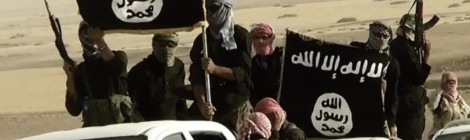
    Former combatants can play a powerful role in preventing violence, as the case of former combatants in Northern Ireland shows. Former Islamic State fighters could have a role to play in counter-terrorism, however there are potential limits to this.

    The value in re-integrating former combatants in post-conflict environments has been widely recognised in terms of reducing the risk of recidivism and fostering stability in a peace process. While there are examples of former combatant in larger scale post-conflict environments following the path of a de-politicised re-integration into society, there are also examples of former combatants – or ‘former terrorists’ – taking a much more active role in preventing future violence.  Former combatants in Northern Ireland, for example, have had some notable success in delivering restorative justice programmes, de-militarising communities, preventing inter-communal violence and articulating counter-narratives against the use of violence. If former combatants are having some success in preventing terrorism and political violence in Northern Ireland, what are the criteria for successfully utilising former combatants, and does this point to a potential role for former Islamic State combatants in the UK?

    Utilising Former Islamic State Combatants

    The question of utilising former Islamic State combatants is not entirely left-field as there has been a range of voices expression different potential ways of their utilisation to serve preventative ends. One emerging perspective has emphasised how former combatants can play a preventative role, with former MI5 and MI6 chief, Richard Barrett, arguing that they can help explain “why going to fight abroad is a bad idea” and that ex-extremists are often the most successful at “undermining the terrorist narrative.” The ability to use extremists who “renounce violence” and are “genuinely remorseful,” according to this perspective, can provide a credible and persuasive message to stop the flow of people engaging in IS-related terrorism. Terrorism expert Peter Neumann argues that IS defector narratives can encourage others to leave the group and deter others from joining on the basis of their experience and credibility. Subsequently, he has recommended that the U.K. government needs to provide defectors the opportunity to speak out, assist them in their resettlement, and to remove legal disincentives that prevent them going public. An alternative would be to do nothing or continue with the current approach; however former Islamic State combatants are already returning and not all of them are prosecuted. In other words, these former combatant networks exist, they risk solidifying, and will be sharing their views and experiences, therefore it may be more effective in the long-run to co-opt and utilise them for positive ends.

    There is clearly a potential role for former Islamic State combatants in preventing others engaging in such activities. The nature of utilisation could be minimalist (narrative-based), whereby third parties disseminate former combatant narratives. For example, one UK counter-terrorism official mentioned how they have distributed one specific article on Islamic State defector narratives to help people play a preventative role. A more controversial role would be a maximalist approach (narrative and network-based) like in Northern Ireland, whereby former combatants themselves engage in activities with the goal of prevention. Should the UK government consider enabling or facilitating former Islamic State combatants in a preventative capacity?

    Former Combatants as a Conveyor-Belt to Terrorism?

    isis

    Image by Day Donaldson via Flickr.

    One of the potentially biggest arguments against a maximalist approach is that such activities could be counter-productive and could risk serving as a conveyor-belt to engaging in violence rather than act as a fire-wall. A common trend with former combatants is they often do not de-radicalise: while they may disengage from terrorism because of dissatisfaction, disillusionment or burnout, they tend to maintain their ideological views. From this perspective – and endorsed by the UK government’s counter-terrorism policy – even non-violent extremist ideology can encourage others to engage in violence. While the conveyor-belt perspective has been heavily critiqued, the experiences of former combatants in Northern Ireland actually points to a middle-ground between these two perspectives. This consequently contributes to the debate on radicalisation but also on the potential role of former combatants in a preventative capacity.

    The findings of my own research on former combatants in Northern Ireland placed emphasis, not on ideology or attitudes to violence, but the framing process – in other words, how is violence and non-violence represented by actors and how it resonates with an audience, and what structural factors facilitate this resonance. Former combatants in Northern Ireland interact on a regular basis with young people through a number of programmes. Interestingly, despite the former combatants having maintained an ideology similar to violent groups, and despite the former combatants not supporting violence in the current conditions, it was realised that the interaction between former combatants and young people led the latter to view the use of violence positively. However, while this may seem to corroborate the conveyor-belt perspective, it actually showed that it was how former combatants framed violence that produced the conveyor-belt effect, not ideology on its own but also not simply that the former combatants were anti-violence.

    Re-Framing Violence

    In the past, former combatants explained their transition away from violence by framing violence it as conditionally acceptable during the 1960s civil rights protest period and that since these grievances were addressed in today’s conditions that violence was no longer legitimate. There are many reasons why the former combatants re-framed violence in this particular way, and it was particularly effective at ensuring the majority of the Provisional IRA disengaged; however this particular framing of violence to a younger audience without such experiences interpreted the framing as glamourising violence. Reflecting upon this, former combatants actively reframed violence when in dialogue with young people by emphasising the less glamorous aspects of violence more. One study showed that the former combatant reframing of violence in this manner has discouraged young people in engaging in violence. Former combatants were persuasive because they had credibility in the ‘hard to reach’ areas and they maintained narrative fidelity with audiences on ideology and identity.

    The point here is that there is some truth to the conveyor-belt perspective – that former combatants opposed to violence can encourage young people to engage in violence – but it has little to do with the ideology more broadly and much more to do with the framing process between the former combatants and the audience. Those who advocate the conveyor-belt perspective underplay the organisational interests in not having potential members becoming violent. In the Northern Irish case, former combatants had the time to reflect upon the effects of interacting with the younger generation and to engage in a re-framing process. Their reflexivity was encouraged by organisational interest as well as network structures which ensured they would be in regular interaction with young people and an environment in which funding was available to engage in projects.

    Empowering Reflexive Networks

    Thus, ideology is a crude means of determining the success of former combatants in a preventative role. Former combatants can be utilised in this capacity – or at the very least not discouraged – and the enablement of reflexive networks which resonate with young people can act as a firewall to participation in violence. However, there are a number of potential constraints and objections when this is applied to former Islamic State combatants. Working on the assumption that the purpose of counter-terrorism is to ‘counter terrorism’ and not to counter ideologies which a state does not like, and leaving aside the normative dimension of the rights of victims which Alonso excellently covers, the article focuses on two main points on the pragmatism and efficacy of using former combatants to prevent violence.

    Firstly, the UK government’s wholesale adoption of the conveyor-belt perspective makes the provision of funding much more rigid than in Northern Ireland. Interestingly, Northern Ireland’s very own prevent policy in the 1980s curtailed which organisations could receive funding on the basis of their ideology, but this was gradually dropped in recognition that the development of the community route could help to facilitate disengagement. The funding former combatants receive in Northern Ireland is detached from the government, thus increasing buy-in across communities, and the conditions of the funding are pragmatically based (often turning a blind eye to paramilitary behaviour in anticipation that funding and accreditation would incentivise moving away from such behaviour). Ideology is not factored in – alternative identities are strengthened and shown they can be non-violent rather than trying to encourage the ‘centrefication’ of political identities. In the current UK context, similar changes would be required before former combatants and former extremists could be fully utilised.

    A second objection is that the network and community structure – while a crucial factor in determining the efficacy of former combatants in a preventative role – is completely different in the Islamic State context. Former Islamic State combatants are smaller in numbers, they are set apart from their returning communities, and they may be politically disengaged (so why not just leave them like that). However, the size of networks is not important – a network of about a dozen former combatants in Belfast has been sufficient in preventing interface violence. Indeed, following the conveyor-belt logic limits the number of potential partners for the government to work with, in addition to its policies eroding trust through creating the perception of ‘suspect communities’. While the utilisation of former combatants (and extremists) can challenge and disrupt moderate communities, the target audience of these initiatives are individuals this moderate community struggle to meet. Finally, while we don’t know what former Islamic State combatants are doing upon their return, political passivism should not be viewed as a boat not to be rocked. In the case of Northern Ireland, it was the lack of active framing in combination with stories of the Troubles (often told in a social environment) in the context of parents and teachers not actively speaking about the Troubles, which led young people to view violence as attractive.

    Minimalist and Maximalist Roles for Forrmer Combatants

    In conclusion, former combatants can play a powerful role in preventing violence. The factors which determine whether this will be successful is not based on ideology but neither is it solely on whether they are non-violent. The network structure and incentivising environment can enable former combatants to be reflexive of the narratives they impart and how to best re-frame anti-violence narratives to ensure these resonate with young people in ‘hard to reach areas’. Former Islamic State combatants also have a potential role to play, however the lack of an enabling environment would limit this to minimalist interventions in the short term until the infrastructure for maximalist interventions are developed. Maximalist interventions are more effective at resonating with ‘hard to reach’ audiences as they decrease the likelihood of a conveyor belt effect, an effect which is likely to occur without interventions.

    Gordon Clubb is Lecturer in International Security at the University of Leeds and is co-leading the interdisciplinary Radicalisation and Violent Extremism Network. His recent book focuses on Social Movement De-Radicalisation and he has also written on the role of former combatants in preventing violence, how militant groups frame disengagement, and on whether non-violent radical ideology acts as a conveyor-belt to terrorism.

  • Sustainable Security

    Democratic Republic of Congo’s sexual violence epidemic is not only a weapon of ongoing violent conflict but an expression of entrenched systemic problems. Indeed, sexual and gender-based violence (SGBV) is most commonly perpetrated by the security services in place to protect civilians. In Quartier Panzi in South Kivu province, innovative processes of security sector reform and strengthened police-civilian channels of communication may be providing an opportunity for change.   

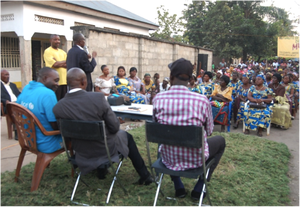
    Meeting of victims of sexual violence in the Walungu, South Kivu in Democratic Republic of the Congo. Source: Wikipedia

    Meeting of victims of sexual violence in South Kivu,  Democratic Republic of the Congo. Source: Wikipedia (from USAID)

    Quartier Panzi—the populous, restive neighborhood of Bukavu, South Kivu province—is renowned in international development circles as the ground zero of the Democratic Republic of Congo’s sexual violence epidemic. Rape as a weapon of war is not so much perpetrated by enemy forces but, most often, by the very parties sent by Kinshasa to protect and serve civilians. Much as Selma, Alabama was to the American civil rights movement, Panzi’s ongoing tragedy has transformed the area into a vibrant arena for grassroots opposition and international solidarity in the fight to restore women’s bodies and lives. Women’s organizations have formed to denounce continued abuses and government denial, to reverse cultural stigmas around female culpability in rape, and to demand trial for Congolese security forces suspected of sexual abuses.

    The courage and commitment of Dr. Denis Mukwege, chief gynecologist at Panzi Hospital and twice nominated for the Nobel Peace Prize, is emblematic of this resilience. International networks like V-Day and Women for Women International support these local actions and fund sanctuaries for survivors, such as the City of Joy. These innovations aim to be restorative and empowering for survivors, focusing on the crisis as experienced by women and girls, offering healing and vocational training options otherwise non-existent. However, the causes of this specific form of cruelty and degradation, rooted in violent masculinities and impunity among security actors, remain unaddressed.

    Rewiring the security sector

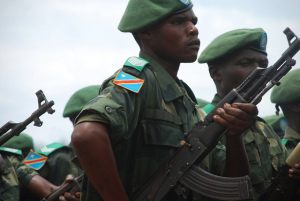
    Congolese soldiers march in Walikale, DRC, 2011. Source: ENOUGH (Flickr)

    Congolese soldiers march in Walikale, DRC, 2011. Source: ENOUGH (Flickr)

    Like any deep malaise, Congo’s rape crisis is but one expression of entrenched, systemic problems. Local witnesses, security analysts and medical professionals who treat survivors present overwhelming evidence that the primary perpetrators are uniformed Congolese security actors. A weak justice system may be responsible for the failure to discipline or punish perpetrators, but the sources of this behavior lie within the security sector itself. Accessing the security elite, Congo’s infamous ‘black box’, is notoriously difficult. As a result, very little analysis exists of the problem from the perpetrators’ perspective: analysis and evidence that deciphers the institutional culture and internal organization of the security sector, or that maps relations between senior officers, politicians and economic actors. By design, opacity reigns supreme.

    A variety of international donors support the national army and police with numerous ‘train and equip’ initiatives, an international cooperation model unchanged since the Cold War.These ‘security development’ partnerships aim to strengthen national capacity through field and classroom training and equipment upgrades; behavior change and public accountability are not part of the approach. Within the security services, there is typically an absence of civilian oversight, and widespread rent-seeking and illicit trade in protected flora, fauna and minerals, but no questions are asked by international partners, as diplomacy and formality dominate.

    Supply-side approaches such as these long pre-date the advent of ‘security sector reform’ among development actors, which does seek behavior change and greater accountability. The older aid modality remains popular with the Congolese leadership because it expressly avoids any calling to account or inculcation of security as a public service and legal right.

    There is state and donor complicity in all of this. Strength without constraint or accountability defines the DRC’s security sector today. Its predatory practices range from unchecked rape and pillage in the East to the repression of free speech and public inquiry, as witnessed by the 2010 murder in Kinshasa of prominent human rights activist, Floribert Chebeya. To placate critics, a military tribunal mounted a kangaroo court in the wake of the murder; the film documenting and exposing its empty theatrics, L’Affaire Chebeya, Un Crime d’Etat, remains banned in Congo.

    Such officially sanctioned practices and attitudes are salient features of the Congolese state since independence, and well known to all Congolese. In the early 1970s, President Mobutu Sese Seko began encouraging civil servants and security forces to ‘feed on the population’ (“Population baza bilanga ya bino). Anecdotes such as these are more than flippant asides; they explain the persistent appeal of this patrimonial compact (across four chapters of Congolese leadership: Mobutu, Kabila père, transitional government, Kabila fils) as a declaration of complicity between political elites and the entire public sector. In its truncated audacity, this single utterance reconfigures and reduces the entire means and ends of the state to elite enrichment and group impunity.

    In Panzi, armed crime and physical/sexual assault reached unprecedented levels in the aftermath of the primary war in South Kivu province. State security had long colluded with local armed gangs, and popular recourse options ranged from individual vengeance to military tribunals, as civil courts are unreliable. Mob justice is also widely practiced. The formation of neighborhood watch groups raised local hopes for improved safety (e.g. SAJECEKForces Vives). Despite their initial popularity, they soon joined local police and armed gangs in perpetrating the very crimes they first sought to oppose.

    How urban police understand this license to extort and harass the population, and the higher interests these practices serve, has been well captured and analyzed by Maria Eriksson Baaz and Ola Olsson. Transforming Congo’s security sector from inside is an elusive challenge, and donors are struggling to develop the programmatic savvy, influence and access to inspire the necessary political will.

    Demand for reform

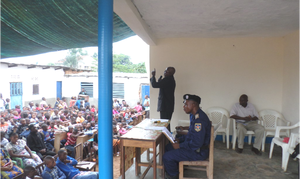
    Community meeting in Kananga, DRC, where security officials and civilian leaders converse directly with local community leaders. Source: DAI Europe (with permission)

    Community meeting in Kananga, DRC, where security officials and civilian leaders converse directly with local community leaders. Source: DAI Europe (with permission)

    The UK’s Department for International Development (DFID) has experimented with alternative supply-and-demand models of public sector reform, and is applying these to the Congolese National Police (PNC). According to this strategy, supply-side ‘train and equip’ assistance targets weak service areas, including the prevention of and response to sexual and gender-based violence (SGBV). This is complemented by efforts to mobilize popular demand for more responsive policing at the community level.

    A particular understanding of the partner institution, the PNC, informed this theory of change. This included the hypothesis that payment of regular salaries would not end extortion and rent-seeking (’tracasseries’) by the PNC, given the scale of these rackets and the enormous sums they generate. With no compelling alternative on offer, and as long as ‘reform’ is understood to involve replacing tracasseries with ‘protecting and serving’, change will elude would-be reformers. Given that such arrangements will not change in the forseeable future, the more nuanced strategy accommodates the reality of low, irregular salaries and uniformed extortion for the foreseeable future, and seeks behavior change through increased public-police interaction. Faster paced improvements in human security and responsive policing began emerging on the demand side of the pilot sites, including Bukavu and Quartier Panzi in particular.

    Launched in Bukavu, Matadi and Kananga in 2009, the Security Sector Accountability and Police Reform Programme (SSAPR) is distinct for coupling its community policing approach with regular neighborhood meetings (forums du quartier) where locally appointed representatives voice their security concerns, identify emerging threats and suspects. It is common for community policing programs to seek a more responsive, service-oriented local police, but SSAPR is distinguished by its effort to cultivate citizen networks at the most local level to identify and articulate their fears, threats and suspicions forward to the actors most able to respond. Police officers, urban administrators, local community and neighborhood leaders then meet regularly in informal, local security councils to discuss proposals for containing a threat or resolving a violent dispute, as equipment and manpower are often lacking. Initiated entirely informally, these experiments in public relations gradually began to change expectations, reinforce collaboration and gain momentum.

    Concurrently, the National Parliament submitted a motion to formalize the Conseils Locaux pour la Sécurité de Proximité(or CLSP, finally passed in late 2013), which recognizes the right of civilian representatives to participate in official security discussions at the municipal level. Over three years, SSAPR legal advisers worked with national parliamentarians to build support and draft a bill. Given the long-standing animosity between politicians and civil society, this new décret was a highly significant opening. The platform has since been incorporated into other police reform efforts (such as the European Union’s EUPOL) that also understand SSR in the Congolese context as primarily a governance challenge requiring civilian involvement.

    SGBV DRC 2

    Community meeting in Kananga, DRC, where security officials and civilian leaders engage directly with local community leaders. Source: DAI Europe (with permission)

    Raising security problems through the CLSP increased dialog between communities and security officials, but who would represent the civilian side? In rough urban neighborhoods like Panzi, citizens experience a host of threats, not all of them equally or in the same way. The SSAPR helped Panzi neighborhood chiefs and community leaders coordinate an informal system whereby youth, women and men would alternately represent their community concerns first to a forum de quartier, then directly on to the CLSP. This neighborhood dynamic continues today across Bukavu’s three communes.

    Making Progress?

    These are small steps toward a more accountable security sector and restored public trust, but has sexual assault around Panzi declined as a result? Recently the SSAPR helped a women’s NGO organize a nocturnal walk through several Bukavu neighborhoods, including Panzi, to record their own safety concerns as well as those of women and girls met along the way. In a recent meeting, NGO members insisted they would never before have visited these neighborhoods, particularly at night, but that the chance to report their findings to a receptive and interested police commisariat justified the risk.

    In response, new light fixtures are planned in darkened alleys where assaults have occurred, and patrols redirected to suspicious areas noted by the NGO delegation. In another pilot city, Kananga (Kasai Occidental), assaults on women and girls who were walking long distances to fetch water, often at night, decreased dramatically after local women lobbied for regular police patrols in these areas. This, in itself, was indicative of a greater local confidence in the police as protectors.

    Community police units are involved in implementing these changes, but they represent a small minority of the PNC. It is unknown if these lower rates of sexual violence are attributable to behavior change among uniformed security or if the increased patrols and better lighting are deterring other possible assailants. Retrospective studies have been conducted, but no consensus exists on the total quantitative extent of SGBV in DRC, where just one in twenty cases is thought to be reported to authorities. Nor are cases raised with the police guaranteed to be registered or pursued. Impunity persists due to a weak national justice system, as well.

    Other insights emerge from this experience, particularly around ‘bottom-up’ approaches to renewed legitimacy in fragile states. In the DRC, where central government continues to stall on commitments to decentralization and provincial institutions exploit this limbo (enrichment via parallel markets; legal and financial opacity) leaving communities in the breach, these small successes show that by investing at the periphery—that most-local interface where citizens and public service providers meet in person—bridges of trust and respect can be built through participatory problem solving. Communities can show resilience and security services can prove they are responsive and effective.

    Edward Rackley is a Security and Governance consultant for the World Bank, based in Washington DC. He provides periodic technical and strategic advice to the SSAPR program via DAI Europe, one of the program’s managing agents. (The views expressed in this article are not necessarily those of these institutions.)

  • Sustainable Security


    BZ smallTwo new reports surveying the strategic trends that are likely to shape the next few decades of global politics point very clearly to the prospect of a severely resource-constrained world. Released two days apart, both the new Chatham House report on Resource Futures and the US National Intelligence Council report on Global Trends 2030: Alternative Worlds raise a number of important questions relating to conflict and security.


    According to the Chatham House report,

    The spectre of resource insecurity has come back with a vengeance. The world is undergoing a period of intensified resource stress, driven in part by the scale and speed of demand growth from emerging economies and a decade of tight commodity markets. Poorly designed and short-sighted policies are also making things worse, not better. Whether or not resources are actually running out, the outlook is one of supply disruptions, volatile prices, accelerated environmental degradation and rising political tensions over resource access.

    The report outlines what the authors refer to as volatility being “the new normal.” For this reason “High and fluctuating prices are spurring new waves of resource nationalism and making unilateral and bilateral responses more attractive.” This should be cause for concern, especially in relation to the ways in which the response of governments and other actors to scarcity (or at least perceptions of scarcity) can interact with existing tensions and conflicts between and within communities. As the report highlights, “In addition to efforts to reduce demand at home, governments and other actors have moved to ensure access to affordable resources, reshaping the landscape of international politics. The return to largely protectionist and beggar-thy-neighbour manoeuvres – often in reaction to short-term supply bottlenecks or perceptions of scarcities rather than actual ones – can act as fuel to the fire.”

    As well as mapping the consumption and trade trends across a series of important resources, the report also discusses the impact of external variables such as population growth and climate change. These are “multiple stress factors” which “render countries vulnerable to different types of shocks such as environmental disasters, political unrest, violent conflict or economic crises – increasing both local and systemic risks. Such factors can create new tensions and flashpoints as well as exacerbating existing conflicts and divisions along ethnic and political lines.”

    The report includes a section on resource conflict flashpoints (p. 114) which outlines fifteen different potential flashpoints relating to territorial/economic zone disputes in resource-rich areas, shared water resources and transboundary river systems and resource-related rebellion and insurgency. The report is also linked to an interactive website that maps some of these trends and potential flashpoints.

    The day after this report was released, the US National Intelligence Council released their own on the key trends over the next twenty years that the United States will need to adapt to or try and shape in order to “think and plan for the long term so that negative futures do not occur and positive ones have a better chance of unfolding.”

    Among other so-called mega trends such as urbanisation and changing demographics, the report echoes the Chatham House research by pointing to an increasingly complex situation in terms of global resources. The report argues that,

    “We are not necessarily headed into a world of scarcities, but policymakers and their private sector partners will need to be proactive to avoid such a future. Many countries probably won’t have the wherewithal to avoid food and water shortages without massive help from outside. Tackling problems pertaining to one commodity won’t be possible without affecting supply and demand for the others.”

    The key trend or ‘tectonic shift’ as the report calls it is that “demand for food is expected to rise at least 35 percent by 2030 while demand for water is expected to rise by 40 percent. Nearly half of the world’s population will live in areas experiencing severe water stress. Fragile states in Africa and the Middle East are most at risk of experiencing food and water shortages, but China and India are also vulnerable.”

    While this may lead some towards overly pessimistic conclusions about a world defined by instability, human insecurity and geopolitical tensions, it is refreshing to see the NIC emphasising the importance of how the US can respond now. In his forward, the Council’s Chairman Christopher Kojm states that “We are at a critical juncture in human history, which could lead to widely contrasting futures. It is our contention that the future is not set in stone, but is malleable, the result of an interplay among megatrends, game-changers and, above all, human agency.” It is worth noting the deliberate use of the phrase ‘alternative worlds’ in the report.

    While some degree of adaptation to these structural trends mapped out by both Chatham House and the National Intelligence Council will undoubtedly be necessary, the importance of both of these reports is that they remind us of the need for clear and far-sighted thinking on policy responses now. The worst case scenarios that these reports discuss are not inevitable and risks can be mitigated. National security policymakers will do well to study the scenarios outlined in these two impressive reports and to try and understand the drivers and ‘tipping points’ that lead to certain pathways. Both reports offer prescriptions for current decision makers (the Chatham House recommendations on ‘targeted resource dialogues’ and ‘coalitions of the committed’ are particularly worthwhile). While volatility and uncertainty might be the ‘new normal’ in global resource politics, one thing is entirely certain – inaction and ‘business-as-usual’ when facing “a critical juncture in human history” is a recipe for disaster.

    Ben Zala is a Lecturer in International Politics at the University of Leicester.

    Image source: Stayraw

  • Sustainable Security

    Biodiversity conservation is becoming increasingly militarised. Conservationists are learning from the strategies of contemporary warfare, and this is highly problematic for both wildlife and global security.

    Biodiversity conservation and security are becoming increasingly integrated. The recent rises in poaching, especially of high profile charismatic species such as elephants, rhinos and tigers has led to the development of more militarised approaches towards conservation. Rather than producing the claimed win-win-win outcome for wildlife, security and people, it is producing a triple fail. While we are more accustomed to debates around climate change and water wars as the main security risks related to the environment, biodiversity conservation is also increasingly being identified as a critical contributor to national and global security, and biodiversity losses constitute a critical security threat. This is especially the case in current debates about poaching and wildlife trafficking. Conservationists, it seems, are learning from the strategies of contemporary warfare.  This is highly problematic for wildlife and global security.

    Does wildlife trafficking produce threat finance or not?

    Achim Steiner, UN Under-Secretary General and Executive Director of UNEP, recently stated ‘the scale and role of wildlife and forest crime in threat finance calls for much wider policy attention’. The argument that wildlife trafficking constitutes a significant source of ‘threat finance’ takes two forms: first, as a lucrative business for organised crime networks in Europe and Asia, and second as a source of finance for militias and terrorist networks, particularly Al Shabaab, Lord’s Resistance Army and Janjaweed. Yet, a recent report from UNEP and INTERPOL on environmental crime questions the accuracy of the links between ivory and Al Shabaab. The report points out that ivory may be a source of income for some militia groups including Janjaweed and Lord’s Resistance Army; however it also notes that claims Al Shabaab was trafficking 30.6 tonnes of ivory per annum (representing 3600 elephants per year) through southern Somalia are ‘highly unreliable’ and that the main sources of income for Al Shabaab remain charcoal trading and ex-pat finance. In spite of this, the argument persists that there is a link between the illegal wildlife trade and global security.

    Although the value of the global illegal trade in wildlife is difficult to determine due to its clandestine nature, it has been estimated at around US$7.8–$10 billion.  It ranks as the third biggest global illicit activity (after trafficking drugs and weapons). Transnational environmental crimes are often not taken seriously within the broader policy and enforcement community, and so they are perceived as a low-risk and high-reward activity for organised crime networks. However, this is changing, and environmental crimes are rapidly gaining greater attention, and the increasing sophistication of wildlife trafficking networks is a reflection of their link with other serious offences, including theft, fraud, corruption, drugs and human trafficking, counterfeiting, firearms smuggling, and money laundering.

    Major donors are also taking this issue seriously, and funding has been made available for anti-poaching and anti-trafficking initiatives. In 2013 the Clinton Global Initiative announced a commitment to raise US$80 million to combat trafficking and poaching as a security threat in Africa. Private philanthropic foundations have also become involved, as indicated by the US$25 million donation to South Africa from the Howard G. Buffett Foundation to support rhino protection efforts in Kruger National Park. The rise in poaching has also intersected with US security concerns, prompting President Obama to issue Executive Order 13648 on Combating Wildlife Trafficking in July 2013, and in 2014 USAID allocated more than US$55 million for activities to combat wildlife trafficking, up from US$13 million in 2012. These concerns have emerged as a major policy initiative of the UK government, beginning in May 2013 when Prince Charles convened a high level meeting to ‘kick start’ a government response to the rise in elephant and rhino poaching – followed in 2014 by the London Declaration on the Illegal Wildlife Trade, and the development of a DfID/DEFRA £13 million ‘Illegal Wildlife Trade Challenge Fund’.

    Why is conservation being militarised?

    Enough Project Ivory

    Elephant ivory seized from poachers in Garamba. Image by Enough Project via Flickr.

    Conservation practice is being increasingly militarised as a result of this new interest in the security implications of poaching and trafficking. Militarisation can be briefly defined as the extension of military approaches, equipment and techniques to wildlife protection, as well as the deployment of armed forces in conservation activity. Countries with elephant, rhino and tiger populations also regularly invoke the argument that wildlife constitutes an emblematic natural resource, which is central to national heritage. For example, on World Ranger Day in 2015 South African Minister of Environmental Affairs Edna Molewa paid tribute to park rangers by stating that they were protecting rhinos as a key part of the country’s natural heritage. Such appeals to natural or national heritage are also frequently overlain with the argument that states have a moral obligation to protect wildlife. The interesting question is: why is there an increased interest in countering wildlife poaching and trafficking with more militarised responses?

    War on Terror

    First, the integration of security and biodiversity conservation has been extended by the development of a global context centred on security concerns, and this is most obvious in the US-led War on Terror. For states (especially parks and wildlife departments), conservation NGOs, and private conservation organisations, the ability to claim that their activities will contribute to national and global security has provided an important opportunity to justify their continued existence, and to leverage additional funding from donors, governments and private sector. The development of a global context in which security is a leading concern has opened new opportunities to leverage significant resources for conservation. During the 1990s, NGOs in the humanitarian relief sector were increasingly engaged in a competitive market to secure funding and contracts with donors. This dynamic was mirrored in the conservation sector, as detailed by Mac Chapin’s high profile piece for WorldWatch on how the ‘big three’ conservation NGOs of WWF, Conservation International and The Nature Conservancy, had managed to secure the majority of available funding. Competition between NGOs and the dominance of the big three partly explains why conservation NGOs have been so keen to promote the idea that conservation is critical to security. The assumption is that by rendering conservation a security issue, it will allow them to tap in to the greater resources available for security and anti-terrorism initiatives.

    Technological Innovations

    Second, recent innovations in military technology, especially for surveillance purposes, have also driven a demand to find new markets to expand its use (and profitability). This includes the use of drone technology to monitor wildlife populations in areas hit by poaching. The drones can also collect important information on human activity in the area – which is especially welcome in regions where there are concerns about the activity of rebel groups and militias that threaten state (or even international) security. The growing intersections between the two are evident in the development of a new range of surveillance networks which draw together government agencies, international intelligence agencies, wildlife conservation NGOs and private sector risk analysis companies. Such surveillance techniques are used to gather data on individuals and networks suspected of engaging in illegal hunting and trafficking of wildlife products; these use the same techniques associated with counter-insurgency operations, including the extraction of mobile communications data, development of informant networks and use of covert surveillance.

    The rise of private security

    Third, the rise in privatised forms of security in the post-Cold War era is also reflected in biodiversity conservation: private security companies provide training for anti-poaching operations as well as direct enforcement. This can be placed in the context of the growing use of private military companies in international interventions, including Afghanistan and Iraq. This is especially significant because it heralds a new era in conservation, in which national governments permit direct contracts between conservation NGOs and private security companies, with an authorisation to use deadly force under certain circumstances. A good example is the ways WWF has turned to the private sector to deliver security operations in protected areas that they manage on behalf of states. In Dzangha-Sanga National park in Central African Republic, funding from WWF-Netherlands, WWF-US and WWF-International is used to pay for anti-poaching operations and training under the auspices of Maisha Consulting. The company describes itself as a provider of environmental security via special investigations, training and operations in complex security situations. Numerous conservation NGOs have to grapple with complex security situations, especially if they seek to continue their projects and support when conflicts break out, or when militias move into the same area, and PMCs are regarded useful allies.

    The triple fail

    The rise of these approaches is deeply problematic for two reasons: they produce responses that are not effective for countering terrorism and insecurity, and equally they do not help us tackle poaching effectively. Instead they act as counterproductive distractions. The militarisation of anti-poaching including the growth of surveillance techniques and ‘intelligence-led’ approaches, fails to address the dynamics that drive poaching. These include a powerful mix of demand from wealthy communities around the world, poverty, inequality and the lack of opportunities in poorer source countries, the collusion of officials, organised crime networks and private transport companies. Simply focusing on military-style protection of wildlife from poaching is not effective: it can produce short term protection, but ultimately undermines wildlife conservation because it pits local communities against wildlife, reducing support for wildlife amongst people who live with it: the very people conservation ultimately relies on.

    Rosaleen Duffy is professor of the political ecology of development at SOAS, University of London. In September 2016 she joins the Politics Department in the University of Sheffield and will begin a major research project ‘BIOSEC: Biodiversity and Security: understanding environmental crime, illegal wildlife trade and threat finance’, (EURO 1.8 million funded by an ERC Advanced Investigator Award).

  • Sustainable Security

    This article was originally published on openSecurity’s monthly Sustainable Security column on 7 August 2014. Every month, a rotating network of experts from Oxford Research Group’s Sustainable Security programme explore pertinent issues of global and regional insecurity.

    RC_long_logo_small_4webThis article is part of the Remote Control Warfare series, a collaboration with Remote Control, a project of the Network for Social Change hosted by Oxford Research Group.

    Obama USAfrica Summit

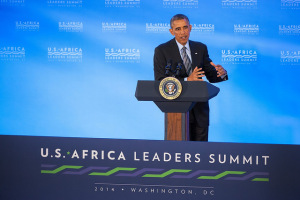
    President Obama Holds a News Conference at Conclusion of U.S.-Africa Leaders Summit. Source: US State Department (Flickr)

    This week, Africa’s leaders have congregated in Washington, D.C. for the first US-Africa Leaders Summit, with talks on trade, investment and security aimed at establishing stronger ties between the US and countries across the continent. President Obama has been widely criticised for the late timing of this summit, 14 years after China started holding its regular Africa summits, and his failure to prioritise the continent earlier in his presidency. In the eyes of many commentators, this is Obama’s attempt to etch out a legacy in Africa.

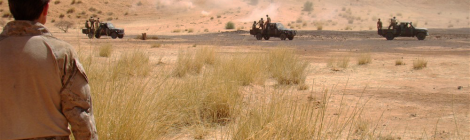
    But, as African leaders sit down to discuss peace and stability, the Obama administration need not fear a lack of a legacy. Indeed, as a recent report from Oxford Research Group and the Remote Control project shows, for all the talk of the US lacking engagement with Africa, military forces under the new US Africa Command (AFRICOM, a legacy of the late Bush administration) have been pursuing a quiet but sustained “pivot to Africa” under the Obama administration. In the wake of recurrent security crises in the region this decade, the remote Sahel-Sahara region of northwest Africa has become the laboratory for experiments that will define counter-terrorism operations in the 21st century.

    The global ‘war on terror’ has come to the Sahel, but not with the lengthy, embedded military campaigns we have seen in Iraq and Afghanistan. Instead, AFRICOM and its allies are testing an open-ended, “light-touch” approach, with few boots-on-the-ground and a reliance on special forces, drones and private military companies.  This emphasis on covert and deniable operations makes it inherently difficult to gauge the full extent of the war in the Sahel-Sahara. It also raises many questions about its effectiveness in countering violent extremism and what the long-term impact will be on regional stability.

    The Quiet Pivot to Africa

    SusSec_cover-image_2_darker

    A U.S. Navy SEAL advisor watches a Malian special operations vehicle unit run through immediate action drills for counter-terrorism missions during training, February 26, 2010 near Gao, Mali. Source: Max R. Blumenfeld, Joint Special Operations Task Force Trans-Sahara, via AFRICOM.

    The evolving importance of the Sahel-Sahara in the counter-terrorism strategies of the US, France and other western states cannot be understated. Following the 2011 Arab uprisings, NATO-assisted overthrow of Libya’s Gaddafi regime and 2012-13 Mali crisis, the Sahel-Sahara has become the “new frontier” in global counter-terrorism operations. With three main active jihadist groups – Al-Qaida in the Islamic Maghreb (AQIM), Boko Haram and Ansar al-Shari’a – it has risen high in US priorities.

    September 11 is the key date for US engagement in the Sahel-Sahara, but 2012 not 2001. This was the date that jihadist militants stormed US diplomatic compounds in Benghazi, Libya, killing the US Ambassador and three other citizens. The result of Benghazi has been a battle over blame in the US Congress and a profound rethinking of crisis response capabilities in remoter, high threat parts of the world. Called the “New Normal”, the new US concept calls for heavily armed air-mobile Marines to be able to deploy anywhere within hours to respond to threats to US citizens and interests.

    US Marines already operate out of bases in Spain, Italy and Djibouti but, since Africa is a vast continent with scores of “high risk” US facilities, more bases will be needed to support the “New Normal”. Recent visits by Marines in their MV-22 Osprey vertical landing aircraft to Senegal and Ghana were part of this base-scouting process.

    The US is also likely to seek more facilities to operate its intelligence, surveillance and reconnaissance (ISR) drones in the Sahel-Sahara, both to track terrorists and to support the “New Normal”. Its one drone base in Niamey, Niger can cover most of West Africa – and North Africa is covered by drones operating from Sicily – but there are gaps, notably around Senegal and Chad. Responding to the humanitarian outcry over Boko Haram’s kidnapping of schoolgirls from Chibok, Nigeria, has already seen US drones deployed from Chad. A web of drone bases in and off the Horn of Africa already surrounds Somalia.

    Covert Operations

    These are the kind of current and future operations that we can broadly expect to know about because their bases and impacts are highly visible. The “New Normal” has already been tested in embassy evacuations in South Sudan (December 2013) and Libya (late July). But there is much more happening beneath the radar. Covert operations using Special Operations Forces appear to be an increasing feature of the US approach in the Sahel-Sahara. Several hundred are believed to be present in the region on undisclosed “contingency operations”.

    Increased ISR capabilities have also depended on use of private military and security contractors (PMSCs), who have run key elements of AFRICOM’s covert counter-terrorism operations in the region. Using unmarked, civilian-registered aircraft, they provide ISR operations, transport special operations forces, and provide medical evacuation and search and rescue capacities.

    Partnerships and Alliances

    Finally, US influence on counter-terrorism in the region extends to training regional security forces under AFRICOM’s Trans-Sahara Counterterrorism Partnership (TSCTP) and is likely to be expanded significantly under the Counterterrorism Partnerships Fund, announced by Obama in May, and as more Special Operations Forces are released from duty in Afghanistan. The EU, Canada and a number of more controversial US allies like Israel, Colombia and Morocco are also increasingly involved in counter-terrorism training programmes in the Sahel.

    But it is France – the old colonial power, Saharan gendarme or legionnaire – that has most at stake in the Sahel-Sahara and on which the US so-far depends. Last week, France formally redeployed its military forces under Opération Barkhane, which sees French land, air and special forces establish an indefinite regional presence at eight bases and several other forward operating locations across five or more Sahel states. US forces and aircraft have a presence at least three of these bases (Niamey, N’Djamena and Ouagadougou) and probably use several others for “contingencies”.

    Barkhane and the recently renewed mandate of the UN Multidimensional Stabilization Mission in Mali (MINUSMA) entrench the presence of over 9,000 external security forces in the Sahel-Sahara with mission and mandate to combat terrorist groups. Remarkably, Dutch special forces and intelligence agents are embedded in MINUSMA with responsibility to track jihadist groups. UN-mandated French forces have carte blanche to seek and destroy whomever they decide is a threat to security in Mali. Not surprisingly, AQIM and its allies rarely distinguish in their targets between France and the UN.

    Repercussions

    Just as there is little mention of this rapidly expanding presence, so too is there little discussion of the effectiveness this new approach to counterterrorism and the impact it will have on stability, governance, and accountability in a fragile region.

    The 2013 French and African intervention in Mali stopped the southwards advance of jihadist groups and returned control of much of the north to the Malian government. However, this displaced AQIM and its allies into Libya, Niger and possibly Nigeria, threatening wider regional stability. Moreover, the intervention has done little to address the political and social nature of Mali’s northern rebellion and French and African forces have limited ability to protect civilians against a terrorist rather than insurgent threat. The heightened visibility of US and French forces in the Sahel-Sahara and the strengthening of Islamist militia during the Libyan civil war have significantly increased the profile and activity of jihadist groups. As the foreign militarisation of the region continues, the motivation for retaliatory attacks is likely to increase.

    While AFRICOM and Washington have established a regular military presence in all regional countries through its TSCTP, there is little recognition of the often toxic nature of these partnerships. The US has made sure this week not to be seen to engage with selected authoritarian African regimes, withholding invitations to Sudan’s ICC indicted Omar el Bashir, Zimbabwe’s Robert Mugabe and Eritrea’s Somalia-meddling Isaias Afewerki. Yet, in a nod to similarly uncritical alliances of the Cold War era, its expanding military engagement across Africa has depended on relationships with similarly dubious governments. Djibouti, Uganda and Ethiopia, the increasingly undemocratic pillars of US campaigns against Somalia’s al-Qaida franchise, are the most blatant examples.

    In the Sahel-Sahara, the US and, to a larger extent, France, rely hugely on Chad’s authoritarian government for basing and combat support. Military-based governments in Algeria and Mauritania have also been able to normalise their international relations, including arms imports, as crucial partners in Saharan counter-terrorism operations. To be fair, the US is choosier than France where it locates its overt bases – Niger and, potentially, Senegal and Ghana are among the best ruled West African states – but its covert operations and military-to-military partnerships span every country in the region.

    Perceived international protection may discourage some regional governments from seeking internal political settlements. The elected Malian government seems to have interpreted its post-2013 French and UN guarantees of security enforcement as reason not to pursue a peace process with northern separatists. Similarly, Côte d’Ivoire’s President Alassane Ouattara has shown no urgency in seeking reconciliation with supporters of the former regime since French and UN troops helped him to power in 2011. Governance, human rights and non-military solutions to existing conflict are thus considerably undermined by the securitisation of policy in the Sahel-Sahara.

    A lasting legacy

    With all of this in mind, US outreach efforts at this week’s Summit seem readily undermined by the lack of ability to monitor – and thus hold accountable – its military expansion across Africa. While President Obama has stated that partnership with Africa must be ‘grounded in mutual responsibility and mutual respect’, his willingness to leave a legacy of low accountability and low-key military support for undemocratic regimes suggests that this responsibility and respect is not intended for the people of Africa.

    Outside of the limits of this week’s Summit, the trend towards covert or “plausibly deniable” counter-terrorism – PMSCs, drones, rapid reaction special forces – and barely restrained mandates to wage war is indicative of the real and increasing power over Africa policy exercised by Defense departments in both Washington and Paris. In turn, securitisation of approaches to the region will undermine non-military approaches to insecurity and conflict resolution, moving regional autocrats further from domestic accountability and buoying the extremist ideology it seeks to discredit. For all the west may seek to tread lightly, there is a large footprint in the sands of the Sahara – one which will not be erased any time soon.

    Richard Reeve and Zoë Pelter are authors of From New Frontier to New Normal: Counter-terrorism in the Sahel-Sahara, released on 5 August.

    Zoë Pelter is the Research Officer of the Sustainable Security Programme at Oxford Research Group. Previously, she worked with the International Security Research Department at Chatham House and the Associate Parliamentary Group for Sudan and South Sudan in the UK Parliament.

    Richard Reeve is Director of the Sustainable Security Programme at Oxford Research Group. He has worked as an analyst of conflict and security issues in Africa since 2000, including for Jane’s Information Group, Chatham House, King’s College London and as Head of Research at International Alert. He has worked on conflict prevention, warning and management systems with ECOWAS, the African Union, the Arab League and many local organisations.

  • Sustainable Security

    Donald Trump’s victory in the US presidential elections has raised serious questions about whether the Joint Comprehensive Plan of Action, a landmark nuclear accord signed in July 2015, has a future.

    The election of Donald Trump as US President potentially means very uncertain times for the future of US-Iranian relations. For example, during his presidential campaign trail, Trump declared—“My number one priority is to dismantle the disastrous deal with Iran”. If the Trump administration acts on his campaign rhetoric, there is a distinct possibility that it will be overwhelmed by multiple contradictions and problems.

    The Iran Nuclear Deal

    The deal, formally known as the Joint Comprehensive Plan of Action (JCPOA), stripped Iran of the ability to develop a nuclear weapon system into the next decade in exchange for the gradual lifting of crippling sanctions.  The deal holds Iran to agree to cap enrichment levels of uranium at 3.67 percent for the next fifteen years, which will cut the Iranian enrichment capacity by two-thirds. Under the agreement, Iran ended up shipping the lion’s share of its 20 percent enriched uranium abroad. The deal also provided for more intrusive monitoring by the International Atomic Energy Agency (IAEA), the UN’s nuclear watchdog, and for the heavy water reactor at Arak to not produce weapons grade plutonium. On November 20th 2016, as a gesture of good will, Iran shipped its remaining heavy water abroad as well. Thus, the breakout capability of Iran to potentially make a nuclear bomb was noticeably extended from two-months to a year, giving further assurance to the international community that the Islamic Republic will not be closer to making a bomb any time soon.

    In exchange, Iran would be relieved from the nuclear-related sanctions, and if it violates the agreement, the sanctions will be re-imposed through a snap-back mechanism built in to the agreement.  Since the signing of the agreement, all the reports by the monitoring agencies, including the IAEA, indicate that Iran has abided by its end of the bargain. Seen in this context, it is easy to understand the expression of concern and apprehension surrounding Trump’s ascent to power among many members of Iran’s ruling elite.

    What President Trump could mean for US-Iran relations

    Two very different futures in US-Iran relations may lie ahead.

    • Withdrawal
    trump

    Image by Matt Johnson/Flickr.

    First, the Trump administration may decide to withdraw from the nuclear deal, impose further sanctions on, and try to isolate Iran.  Trump may seek better ties with Russia and tolerate the Assad regime in Syria in an attempt to defeat and dismantle the Islamic State in Iraq and Syria (ISIS). Trump has declared the defeat of ISIS to be his number one priority in the Middle East and seeks to partner with the anti-ISIS coalition. Yet Iran has been actively involved in the war against ISIS in Syria in alliance with Russia.. It thus remains to be seen how the Trump administration could resolve this contradiction if it tries to defeat ISIS whilst simultaneously escalating tensions with Iran.

    Since the Republicans currently control both houses of Congress and many of their members were opposed to the deal when it was signed, bolstered by their electoral victory, they may introduce new bills demanding the renegotiation of the agreement, or prevent sanctions relief, and propose the imposition of new US unilateral sanctions on Iran. In November 2017, the US Senate passed a bill with a vote of 99 to 0 to extend the Iran sanctions for another decade, and the Obama administration—which previously had threatened to veto such a bill— has stated that the president is not likely to veto it. In addition, the Trump foreign policy team has stated that they plan to impose new sets of sanctions on Iran for its missile defense system. These new political developments are certain to evoke a reaction from Tehran in kind. If such an escalation of the anti-Iran campaign in Washington continues, despite the Islamic Republic fulfilling its obligations under the nuclear deal, absent new diplomatic breakthroughs between Tehran and Washington, in all likelihood, the deal as we know it now would be dead and Washington’s tensions with Tehran would grow. If this outcome materializes, it would undermine the Rouhani administration and the moderates and would strengthen the position of hardliners in Iran’s factional politics.

    President-elect Trump, who identified the nuclear pact as “disastrous” and “the worst deal ever” and labeled the Islamic Republic as “the foremost terrorist state” is less likely to oppose further congressional sanctions on Iran. Hence, while the newly appointed Secretary of Defense, General James Matthis, has stated that he would not be inclined to scrap the nuclear deal, he has also stated publically that it is not ISIS but Iran that is the single most critical security threat to the United States. dditionally, the powerful pro-Israeli lobby group, the American Israel Public Affairs Committee, the neo-conservatives and influential foreign policy voices on the right—like the National Security Adviser, General Michael Flynn, John Bolton, James Woolsey, and Newt Gingrich— have been pushing hard for further containment of and confrontation with Iran.

    From the Netanyahu administration’s standpoint, discarding the nuclear deal would have a dual impact. On the one hand, such an initiative would prevent the Islamic Republic from reaping the benefit of sanctions relief, thus allowing it to expand its economic and political influence in the region- an undesirable outcome for the Israeli leadership.–On the other hand, unilaterally tearing up the deal would remove all the inhibitions on the part of Iranian leaders to develop a nuclear arsenal, another undesirable outcome for Israel. To prevent this from happening, US/Israeli cyberattacks on Iran’s nuclear program, using sophisticated worms such as Stuxnet, or even military strikes, could be ordered in future.

    The Israeli leadership would therefore most likely favor an option in which the current nuclear agreement would stand, but with a new interpretation which would prevent Iran from receiving the full economic and political benefit of sanctions relief. In other words, the nuclear agreement should not lead to normalization of relations with Tehran and the policy of containment of the Islamic Republic with the ultimate goal of regime change should persist. It is also important to note that, since Trump’s cabinet is so far is dominated by hard-liners, they are likely to be in favor of accelerating pressure on Tehran and ensuring that it does not reap the benefit of sanctions relief and expand its regional power.

    • Limited Rapprochement

    The second option offers a different outlook, one that serves both countries’ national interests, whereby the Trump administration could consider seeking a limited rapprochement with Iran, holding out the prospect of future diplomatic—if not commercial—ties between the two countries.  This option uses the nuclear deal as a way to ease tensions between Tehran and Washington on other longstanding problems. This approach will also render Iran more responsive to cooperation on specific issues of regional conflict such as the fight against ISIS and the Taliban while at the same time making progress toward possible venues for cooperation, such as shaping the future of Syria, Iraq, Yemen, and Afghanistan.

    The advantages of this approach will outweigh its costs, as Tehran and Washington are likely to find several overlaps in pursuit of their foreign policy interests. Moreover, this approach would allow Washington to build up a new momentum to accommodate Tehran’s emerging economic interests while also using its leverage over the country’s regional role to mitigate the negative impact of instability in the Middle East. The challenge is to recognize that building trust and sustainable cooperation between Tehran and Washington is the key first step to reversing the troubled and tumultuous status quo of tensions and enmity between the two nations.

    While Trump may not seek a new sanctions regime against Iran so long as the latter abides by its obligations, the influence of neo-conservatives in his administration probably means that the removal of first-order sanctions, imposed by the US, is unlikely to happen any time soon.

    Tehran’s Reaction

    Iran’s President Hassan Rouhani has noted that the election of Donald Trump as the US president will have no effect on Iran’s foreign policy conduct. Rouhani has also stated that the nuclear deal is independent of the new US administrations’ decision and cannot be rescinded by the government’s change in Washington. “Iran’s sagacity,” Rouhani has asserted, “was in having the nuclear deal endorsed as a resolution by the UN Security Council and not just an agreement with a single country or administration, so it cannot be changed by decisions of one government,”.  A recent US Senate vote to extend the sanctions on Iran for ten more years is likely to undermine Rouhani’s position, who sees that his chances of getting re-elected in May 2017 are quickly vanishing under the threat of further sanctions by the United States.  Sensing that, given these sanctions, he cannot ultimately make good on his promise of an economic renaissance after the nuclear deal, Rouhani was emphatic: “If the Iran Sanction Act is carried out, it will be a clear and obvious violation of the [nuclear] agreement and will be met with a very harsh response from us.”  The Obama administration has said that the new round of sanctions did not violate the nuclear agreement.

    The United States, one observer notes, cannot unilaterally unravel or amend the agreement without violating international law. Any attempt to directly undermine the deal or even renegotiate it will isolate the United States- not Iran.  Beyond Iran, pulling out of the deal would also risk intensifying tensions in the region, most notably in Syria, Yemen, Iraq, and Afghanistan, countries in which Iran has played a significant role. This choice is equally fraught with difficulties in part because several key nations have signed off on this agreement. Thus, unilaterally negating or sabotaging the nuclear agreement is likely to have serious international implications beyond the region. The United States is likely to emerge out of step with the UN resolution and all the signatories to this agreement.

    Furthermore, such a policy is imbued with so many deep uncertainties that it may backfire.  The real question is, then, what exactly can the United States do if Iran continues to abide by its obligations under the nuclear deal and continue its rapprochement with the European Union by simply deepening their commercial and trade ties with those countries?  Cognizant of the unpredictability surrounding the future of US policy toward Iran, the Islamic Republic has kept the option of walking away from the deal open, while not abandoning its “Eastern Strategy” that is predicated on maintaining its extensive bilateral ties with Beijing and Moscow. The Islamic Republic is likely to continue to maintain these ties as an insurance policy against the possible continuation or escalation of Washington’s policy of containment and confrontation. Along the same lines, should Trump adopt hostile policies toward Iran, this will likely empower the Islamic Republic’s hardliners, creating more political pressure on the moderates there, thus complicating their chances of winning the 2017 presidential elections. Should this scenario materialize, Tehran is likely to assume a more aggressive regional policy posture in response to Washington’s belligerence.

     The Future: which option will Trump take?

    In an interview with CNN in September of 2015, Trump the businessman revealed his concern about America being shot out of the Iranian market, while the Chinese, the Russians and the Europeans have expanded their trade and commercial ties with Iran since the signing of the agreement in July of 2015. Trump should know that the US cannot hope to emerge as a major economic partner for Iran by imposing a new set of sanctions or ratcheting up political pressure on Tehran. It may turn out that Trump, like his Republican predecessors, would conclude that US bilateral trade, military and political ties with its Arab Gulf Cooperation Council (GCC) allies are much more significant than Iran.

    It is also likely that Trump, the candidate of the Republican Party, who had to appeal to that conservative constituency, would turn out to be different from the Trump the president. He may find it necessary to move ideologically to the center and heed the centrist logic of power politics. His past record as a businessman, who regularly funded the political campaigns of both Democrat and Republican politicians, and repeatedly changed his position on political issues during the presidential campaign, may predispose him toward adopting an erratic as well as a pragmatic course with no clear political vision. This may lead to a foreign policy style that would be more transactional rather than ideological.

    However, having won the presidency as a Republican candidate, he could be captured by the very party establishment that he derided during his campaign.  So far his campaign promise of “draining the swamp” has turned out, in practice, to involve filling his administration with hawks from the Republican Party, Washington insiders and the Wall Street establishment. Therefore, it is possible that he will decide to outsource his Iran policy to a cabinet dominated by conservative hardliners. In that case, the anti-Iran agenda discussed above would become ascendant. In the past, many Republican politicians have stated that the complete political capitulation of Tehran is the only acceptable outcome that they would support. However, if he chooses to play an active role in formulating his administration’s Iran policy, then Trump the pragmatist may have the sway.

    While the early signs are not promising, it is simply too early to know which option the Trump administration will choose and what the details of his future policies might be, but there is no reason to believe that things will improve beyond present conditions, and more than likely, there is reason to believe that Trump may be a far better ally to Israeli Prime Minister Netanyahu and the Saudi Royal family than was the Obama administration, a realistic possibility for which Tehran has surely a contingency. How these emerging realities will play out in coming months and years remains to be seen. The choice for the Trump administration—engaging or isolating Iran—couldn’t be more stark and profound.

    Mahmood Monshipouri, PhD, teaches Middle Eastern Politics at San Francisco State University and the University of California at Berkeley.  He is the editor, most recently, of Inside the Islamic Republic: Social Change in the Post-Khomeini Iran.

    Manochehr Dorraj, PhD, is professor of International Affairs and Middle Eastern Studies at Texas Christian University (TCU).  He is the author of From Zarathustra to Khomeini: Populism and Dissent in Iran and coeditor of Iran Today: An Encyclopedia of Life in the Islamic Republic.

  • Sustainable Security

    The Anthropocene denotes a new geological epoch characterized by the unprecedented impact of human activities on the Earth’s ecosystems. While the natural sciences have advanced our understanding of the drivers and processes of global change, the social sciences address the fundamental challenge of governance and politics in the Anthropocene.

    On Monday 29 August 2016, the official Working Group on the Anthropocene reported to the International Geological Congress underway in Cape Town and recommended to adopt the Anthropocene as the official term for our contemporary geological epoch. The suggested term Anthropocene denotes the all-encompassing influence of the human species on our planetary systems. The 35 scientists currently serving on the working group have voted 30 to three in favor of formally designating the Anthropocene, with two abstentions. While this suggestion will be reviewed by further commissions – first by the Subcommission on Quaternary Stratigraphy, then International Commission on Stratigraphy and finally the Executive Committee of the International Union of Geological Sciences – it is a strong signal that something extraordinary is going on.

    When did the Anthropocene begin?

    mongolian-development-bank

    Image by Asian Development Bank/Flickr.

    Geologists of the future might well remember 16 July 1945 as the beginning of the Anthropocene. This day witnessed the explosion of the first nuclear bomb at the White Sands Proving Ground, New Mexico, under the code name ‘Trinity’. The debris from more than 500 above-ground nuclear tests conducted between 1945 and 1963, when the Test Ban Treaty took effect, has created a detectable layer of radioactive elements in sediments all around the planet. However, other potential start dates have been suggested. In their original proposal of the Anthropocene, Crutzen and Stoermer argue for the beginning of the Industrial Revolution in 1750 as an appropriate start date, while others have has suggested an earlier start date around 3000 BC, when agriculture and livestock cultivation intensified and the first centralized political authorities emerged. An intermediary position also exists, for example Lewis and Maslin, who propose the noticeable decline in atmospheric CO2 concentrations between 1570 and 1620 as a good marker for the start of the Anthropocene.

    Beyond its symbolic and metaphoric value, these discussions illustrate the radically different nature of current global environmental change. System Earth is rapidly changing, potentially shifting to life-threatening modes of operation. Climate change, biodiversity loss, disruption of the nitrogen and phosphorous cycles, plastic soup in the oceans and men-made chemicals found in (human) embryos, these are the symptoms and most visible signs of the great acceleration and earth system transformation underway. In other words: space ship earth is on a collision course, and the autopilot has been set by its own crew. The Anthropocene hypothesis has become a rallying call for action in the light of scientific evidence that warns against dangerous global environmental change and the ensuing environmental insecurities produced by systemic tipping-points, feedback-loops and emergent properties of complex systems. The Anthropocene hypothesis also highlights specific challenges for governance: how to deal with the apparent urgency of global change while taking into account scientific and normative uncertainties; how to distribute responsibility in a fair and equitable manner; and finally how to embrace complexity as an ontological category of the Anthropocene.

    Global governance scholars and the Anthropocene

    But how will the field of global governance studies react to the Anthropocene hypothesis? Will scholarship continue down a business-as-usual path, with a disciplinary focus and a narrowly conceived ethical and normative agenda? Or will the field of global governance studies engage in a more radical epistemological and ontological debate? I argue that global environmental governance research is fruitfully challenged by the Anthropocene hypothesis, potentially leading to a reorientation of theory and practice. I see three reasons for this.

    First, the Anthropocene hypothesis calls into question long-held assumptions about the human-nature dualism and has therefore been associated with the end-of-nature discourse. At the heart of most environmental activism over the last five decades lies the conviction that nature exists independent of human agency and that (supposedly) ‘natural’ states of our planet, such as a stable climate system, should be protected. However, if the nature-human dualism is questioned by the advent of the Anthropocene, what does this mean for popular conceptions of conservation, wilderness and sustainability and for environmental politics more generally? In the words of Paul Wapner: “Nature, then, is not a separate realm, as many environmentalists assume but, because it is always interpreted through cultural lenses, is part and parcel of human affairs.” The challenge for global environmental governance scholarship is to scrutinize human agency as part of a broader ‘earth-system’ perspective.

    Second, the notion of the Anthropocene, and the related idea of a unified human force that exerts unprecedented influence on the earth system, challenges governance scholarship in two ways. First, it urges scholars to take a more system-theoretical perspective in order to identify the system-wide drivers of anthropogenic global change and the systemic reactions produced by various social sub-systems. And second, global governance scholarship is urgently needed as a corrective to accounts of the Anthropocene that neglect the fact that human agency is not uniform across the planet, and that contributions to the problem and the distribution of risks and opportunities arising from global environmental change are highly uneven.

    Third, the Anthropocene hypothesis propels governance research to the center of attention, as the question becomes: how can we steer towards socio-natural co-evolution and a resulting safe operating space fur human development? As a result, this position opens up opportunities for genuine interdisciplinarity, in which the social sciences in general and global governance scholarship more specifically are not just a ‘junior partner’ of the sciences, but contribute fundamental insights into drivers, solutions and complex feedbacks between agency, unintended consequences and reactions to these.

    From scholarship to policies

    However, while there are good arguments for adopting the Anthropocene as an official geological epoch and for fruitful engagement from a social sciences and governance perspective, what is less evident is how we will address the challenges associated with the Anthropocene in broader political terms. Governance strategies for the Anthropocene fall roughly into two broad camps: first, a global elitist managerial approach, underpinned by a sense of human ingenuity and epitomized by ever-more vocal calls for geoengineering, an approach that puts some people’s interests before others. Advocates of this vision of the future Anthropocene see potentials rather than threats. On this account, a new glorious epoch is dawning, one of men-made unprecedented progress towards a post-human evolution and eternal future.

    The second vision is more humble and less secure about its eventual success: a bottom-up approach based on cultural and political diversity, equity, fairness and a broader eco-centric ethos. A political vision that favors deliberation over efficiency and fairness over effectiveness and is enshrined already (in broad terms) in the internationally agreed Sustainable Development Goals as part of the global development agenda until 2030.

    While the Anthropocene as a term might be almost universally accepted, the contestations about its political and normative contours have only just begun. The election of the climate change-denier Donald Trump as the 45th President of the United States of America does not leave much room for optimism in this respect. In particular his announcement to withdraw from the international climate change negotiations (in one or another form) calls into question some of the modest signs of progress that we could witness recently. This should motivate everyone interested in shaping the Anthropocene to get involved in the necessary and difficult debates about how we want to shape our common future.

    Philipp Pattberg is professor of transnational environmental governance and policy at VU Amsterdam, The Netherlands. He specializes in the study of global environmental politics, with a focus on climate change governance, biodiversity, forest and fisheries governance, transnational relations, public-private partnerships, network theory and institutional analysis. Pattberg’s current research scrutinizes institutional complexity, functional overlaps and fragmentation across environmental domains (http://fragmentation.eu/). At VU Amsterdam, Pattberg heads the Department of Environmental Policy Analysis, a team of more than 25 researchers that was evaluated in a 2014 international review as ‘world leading’ and as being ‘one of the highest profile academic research groups involved with sustainability governance from around the world’.

  • Sustainable Security


    Bay of bengal Climate InsecurityThere is no region of the world that faces more threats from climate change than South Asia. Of particular concern is the littoral surrounding the Bay of Bengal, including the Eastern Indian states of West Bengal and Odisha, Bangladesh, and coastal Burma. This region is uniquely vulnerable to a changing climate because of a combination of rising sea levels, changing weather patterns, and uncertain transboundary river flows. Away from the seashore, China holds the high ground in the Tibetan Plateau and the Himalayas, and complicates the geopolitical picture further by acting as the source of the region’s fresh water.

    On the Bay of Bengal’s coast these problems of a changing climate combine with already existing social problems like religious strife, poverty, political uncertainty, high population density, and rapid urbanization to create a very dangerous cocktail of already security threats. Climate change has been called a “threat multiplier” or “an accelerant of instability” by military and intelligence communities because of how it will impact these already existing threats. With a population of more than 300 million people (91 million in West Bengal, 42 million in Odisha, 142 million in Bangladesh, 52 million in Burma), tense militarized borders, overlapping ethnic and religious communities, and uncertainty about the future, there is no region in the world that faces a more dangerous combination of threatsfrom climate change than here.

    Rising Sea Levels

    One of the key tenets of national security is the ability of a country to ensure the integrity of its sovereign territory. Yet, as glaciers far from South Asia melt, the sea rises and encroaches upon its farms, villages, and cities. As Hemingway wrote about going bankrupt, sea level rise happens “gradually, then suddenly.” Slowly, a rising ocean brings increasing intrusion of brackish water into groundwater, harming costal agriculture. Moreover, gradual ocean encroachment harms the coast’s natural protections, whether dunes, reefs, barrier islands, or mangrove forests. Then, suddenly, when a major cyclone blows in a storm surge will overcome previously unsurmountable barriers.

    The shorelines of the Bay of Bengal stand to lose swaths of territory from sea level rise. Bangladesh, as a country predominantly composed of river delta, is most at risk. It stands to lose 11% of its territory – home to 15 million people – from a sea level rise of only 1 meter, a level that is not a particularly extreme prediction over the next 4 decades. Few invading armies could do worse damage.

    Oddly enough, the world’s oceans do not rise at the same rate. With rising global sea levels, in some areas the sea level could actually fall while it rises in others. A recent study from the National Center for Atmospheric Research (NCAR) found that sea level rise will be particularly high along the Bay of Bengal, due to changes in currents caused by rapid surface warming of the Indian Ocean.

    In the region, the cities of Dhaka, Kolkata, and Yangon all lie in major river deltas and are vulnerable to storm surges. In its 2007 report, the Intergovernmental Panel on Climate Change (IPCC) specifically listed cities in Asian mega deltas as “hotspots for vulnerability” because of sea level rise and changing patterns of river flow. Already straining at their infrastructure limits, these densely packed cities are becoming more vulnerable in a warming world.

    Changing Transboundary Water Flow

    Water does not stay within lines on a map. Instead, gravity draws it inexorably from the mountains to the sea. China, through its control of Tibet, controls the headwaters of almost all of the major rivers of Asia – only the Ganges lies outside of China’s control, originating in India. Of the major rivers that empty into the Bay of Bengal, all cross borders. Water is only plentiful during the monsoon season, so these rivers provide much-needed sustenance to agriculture, people, and ecosystems throughout their trip to the sea during the dry season – when they are fed by glacier and snow melt. Competition and tension over that flow is evident around the world when water crosses borders.

    This is true of Bangladesh and India, for which the flow of the Ganges are a source of tension. The Farakka Barrage on the Ganges River, just 10 miles upriver from the Bangladesh border, allows India a measure of control over the river. The dam allows India to divert the flow of the Ganges down a canal to the Hooghly River and into the port of Kolkata. Since the dam was built in 1975, there have been allegations from Bangladesh that India diverts water in the dry season and releases too much in the monsoon season. In 1996, the two countries agreed to a 30 year treaty to share the Ganges’ flow, but tensions still remain.

    The Brahmaputra River, meanwhile, provides a source of tension between the two regional powers, India and China. China recently announced that they are building a series of hydroelectric dams along the Brahmaputra’s upper reaches in Tibet, but they have forsworn any attempt to divert or hold back the great river’s flow. However, these assurances have not quieted all voices in India, who point to plans in China’s South-North Water Diversion Project to divert water from the Brahmaputra in order to ensure water for industry and the cities of China’s parched north. China’s leaders have denied these extravagant plans, but their engineers have lobbied for such a project. It would complete a dream of Chairman Mao’s, who said: “Southern water is plentiful, northern water scarce. If at all possible, borrowing some water would be good.”

    Climate change exacerbates these concerns about transboundary water management in the region. Climate change is threatening both the glaciers that sit at the top of these mighty rivers, feeding them during the dry season, and the very viability and predictability of the Indian Monsoon rains. Temperatures in the Tibetan Plateau and the Himalayas have risen 1.5 degrees Celsius since 1982, a rate more than three times as fast as the global average. Meanwhile, changes in weather patterns due to climate change could cause repeated failures in the monsoon. While there is little likelihood of an immediate and total melting of the glaciers, uncertainty about their future flows is enough to stoke tension in the region.

    The Potential for Conflict

    Climate change is altering the environment of the region; the glaciers are retreating, the rivers’ flows are becoming more unpredictable, and the seas are rising. However, whether those changes manifest themselves into either civil or interstate conflict will depend upon how both the populations and the governments in the region react to those changes. How long governments have to adapt depends upon unpredictable weather and climate patterns – but as the Stern Review bore out, earlier action is almost always cheaper and more effective than waiting. How governments adapt is important as whether; some adaptations, like capturing water that would otherwise flow across borders in new reservoirs could actually make the threat of conflict worse. If countries do not work cooperatively, they could stoke conflict.

    Throughout history, one of the most effective ways to deal with climate change has been migration – from a climate that is no longer hospitable to one where living is easier. However, modern borders do not reflect the historical ties between the regions. Migration is a natural response. However, in areas with already high population density and an overlapping patchwork of ethnic and religious communities, new immigrant communities often come into direct conflict with established communities. Last year saw ethnic strife in the Indian state of Assam between indigenous Bodos and immigrant Muslims, many of whom hailed from over the nearby border in Bangladesh. Over 75 people died, and over 400,000 people were temporarily displaced. In this region, it is impossible to say whether a group of migrants are “climate refugees” or simply moving to a place with better economic opportunity, but this is what we should expect in the future.

    It is difficult to find examples of any interstate wars fought directly over water; to the contrary, water has been a catalyzer of cooperation. However, as countries realize that they can control and shape water flow through mega dams and water diversion projects, there is a danger that the claims of downstream countries could be ignored. Along the Mekong River, for example, China has proceeded to dam and control the river’s flow through its territory – leading downstream neighbors to complain that China is causing droughts. Yet because of the power imbalance between China and smaller countries like Laos and Cambodia, the Chinese have little to fear. Similar thinking by Chinese leadership over dam building along the Brahmaputra, their shared river with India, could lead both countries to stumble into a conflict that neither of them want.

    In the age of climate change, conflict is more likely as threats are multiplied. Nowhere is this truer than around the Bay of Bengal. However, war is never pre-ordained. Instead, the threat of conflict is determined by how countries react. Good international governance can encourage countries to not simply pull up the drawbridge and think only of themselves, but will encourage them to see what their actions will mean for regional neighbors. Climate change is increasing the threat of wars and unrest around the Bay of Bengal; but foresight about its impacts can help the region’s leaders work together to solve a problem that knows no boundaries.

    Andrew Holland is Senior Fellow for Energy and Climate at American Security Project, a Washington D.C based think tank. He is an expert on energy, climate change, and infrastructure policy. He has over seven years of experience working at the center of debates about how to achieve sustainable energy security and how to effectively address climate change.

    Image source: amioascension

  • Sustainable Security

    Author’s Note: This article is expanded from a piece originally published on Defence Report on August 3rd.

    Russia’s recent bombing of a Syrian base used by UK and US Special Forces exposes the flaws in the UK’s blanket “no comment” approach. The differences in the US and UK responses to the incident reveal that this policy is neither desirable nor standard practice amongst the UK’s allies.

    The Wall Street Journal (WSJ) has recently revealed that, in June, a Russian aircraft targeted a garrison in Southeastern Syria which was used by American and British Special Forces in their fight against ISIS. The attack missed 20 British Special Forces by just 24 hours and killed four US-backed rebels.

    US and UK reactions to the strike

    Much of the subsequent discussion has been on the specifics of the attack and its implications for future intelligence sharing with Russia; however, few have considered massive difference in the US and UK response. Given that the two allies shared use of the base, one may expect both countries to have shared a sense of outrage at the attack. However, their responses have been hugely different.

    The US has very publicly criticised the actions of Russia. After a similar attack in July, “US military and intelligence officials” gave a number of details about the two strikes and argued that it was part of a continued attempt by Russia to pressure the Obama administration into agreeing closer cooperation over the skies of Syria. Many officials, albeit anonymously, also shared their concerns over implications of the strike for the pending intelligence sharing agreements between the two countries. After the attack, Secretary of State John Kerry went to Moscow in a “hastily organized and very secretive” meeting to try to avoid similar incidents from happening again.

    In stark contrast, the UK has remained silent. In response, the Ministry of Defence (MOD) simply stated: “We do not comment on Special Forces”. In fact, even as this WSJ article marks the second article in two months documenting the presence of UK Special Forces in Syria the UK Government remains silent and refuses to acknowledge they are operating in the country.

    The UK’s “no comment” policy

    The MOD’s “long-held policy” of not commenting on Special Forces is well established. This most recent revelation adds to a long list of other incidents where, against mounting evidence, the UK has continued to avoid acknowledging their presence. For example, in March this year, when a story emerged that a British Special Forces Operative had fired on and destroyed an ISIS suicide truck, the response was: “The Ministry of Defence does not comment on Special Forces.” Similarly, in June 2016, when it was reported that British Special Forces are on the front line in Syria in the fight against ISIS, the MOD responded that: “It is our longstanding policy that we don’t comment on Special Forces operation”.

    Given the changing nature of these conflicts this approach may no longer be feasible. Special Forces are increasingly sent on long-term deployments to coordinate local forces and take part in combat in conflict zones, rather than the traditional “sharply in, sharply out” approach. For example, reports from Iraq, Libya and Syria indicate that Special Forces are now being used to train, advise and fight alongside local forces. Not only does this mean the presence of Special Forces is more likely to be exposed but it means that the justification of a blanket “no comment” approach – to avoid compromising the mission – are no longer as applicable.

    The approaches of the UK’s allies

    Soukhoï_frappant_une_position_ennemie_en_Syrie

    Image of Russian aircraft via Flickr.

    Moreover, as the US’s public criticisms of Russia reveal, this blanket “no comment” approach is also not standard practice. A recent report by Dr Jon Moran found that a number of the UK’s allies are far more accountable for their use of Special Forces. In the US, for instance, the deployment of Special Forces from the CIA now requires the notice of “the eight leaders of the relevant intelligence committees in Congress” and “JSOC is accountable via the JSOC commander to the Chiefs of Staff and the Secretary of State for Defense or the President”. There is also greater accountability in Australia which, rather than investing the authority to commit forces to military action in one man, shares responsibility among the Cabinet and the National Security committee through a need for “consensus decision-making”. Similarly, in Canada, the decision is taken at the highest political and military levels but Special Forces are accountable to the head of the Canadian Special Operations Forces Command, who in turn is accountable to the Minister of Defence and Prime Minister. Unfortunately, the UK’s no comment policy led Moran to argue that, amongst these allies, “[t]he British government is the most tightlipped of all”.

    Remote Control’s recent work also documents a number of instances that the US, Canada and Australia have discussed the deployment of Special Forces. For example in 2015 a US spokesperson announced the deployment of US Special Forces in Syria. He reported the number (50) and their purpose (to strengthen anti-ISIS forces) and defended the decision against accusations of mission creep. Similarly, in November 2015, the then-Australian Prime Minister Tony Abbott announced the deployment of 200 Australian Special Forces “to advise and assist local security forces” in Iraq. The same month, Canadian Prime Minister Justin Trudeau announced the deployment of 69 Canadian Special Forces to undertake a training mission, again, in Iraq. While none of the countries gave a lot of detail, they acknowledged the presence – and number – of Special Forces, defined their mission and allowed some room for discussion and debate around their deployment.

    The need for change

    The UK’s current policy is not only embarrassing when stories such as this surface but could have negative implications for the quality of UK intervention abroad. First, better accountability and transparency around Special Forces would mean they are used because they are the best solution rather than the easiest solution to a problem. In 2013, a leaked UK Ministry of Defence document argued that one way to continue conducting military operations despite the risk-averse nature of the British public was “investing in greater numbers of [special forces]” – indicating that the danger of the UK prioritising easy above best is real. Second, it is crucial for the success of any security strategy that its effectiveness can be assessed and adjustments made on the basis of that assessment.

    The reaction of US scholars, policy makers and journalists in the wake of the recent Russian strike is a case in point. The US’s decision to announce the deployment and the purpose of Special Forces in Syria from the outset, and decision to announce this most recent strike, give these groups a chance to debate its implications for relations with Russia, the US’s operations in Syria more generally and assess whether the US’s stated goals are being met. In contrast, the UK lacks such a debate because most scholars, journalists and policymakers do not know the extent of UK involvement in the country and have not been informed of the mission’s stated purpose. Without the level of discussion possible in countries such as the US, the UK lacks the same sounding board and its policies may suffer as a result.

    Russia’s recent strike points to the flaws in the UK’s continued “no comment” policy. When Special Forces rarely stay secret in a country, and fewer of the UK’s allies take the same blanket “no comment” approach, we should be asking why the UK continues to.

    Abigail Watson is Research Officer at Remote Control Project. Abigail holds an MA (with Distinction) in Contemporary European Studies, with a trans-Atlantic track, from the University of Bath and a BA in Politics from the University of York. Abigail writes on issues such as the new challenges to international humanitarian law and Britain’s foreign, security and defence policy.