Category: 08

  • Sustainable Security

    Climate change and human migration are often presented as threats to national and international security. But what is the actual link between these phenomena and conflict?

    Author’s Note: This commentary presents key arguments from the articles Christiane J. Fröhlich (2016) Climate migrants as protestors? Dispelling misconceptions about global environmental change in pre-revolutionary Syria, Contemporary Levant, 1:1, 38-50, DOI: 10.1080/20581831.2016.1149355 (available online here), and Michael Brzoska & Christiane Fröhlich (2015): Climate change, migration and violent conflict: vulnerabilities, pathways and adaptation strategies , Migration and Development, DOI: 10.1080/21632324.2015.1022973 (available online here).

    Climate Change and Conflict

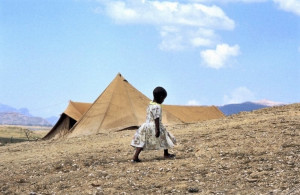
    Dry land near Manatuto. Timor-Leste.By 2025 it is expected that 1.8 billion people will be living in countries with absolute water scarcity, with 3.4 billion people living in countries defined as water-scare. Water scarcity can lead to both drought and desertification as well as instigating conflict in communities and between countries. Sunday 22 March is World Water Day, a day to focus attention on the importance of freshwater and advocate for the sustainable management of freshwater resources. Photo by Martine Perret/UNMIT. 20 march 2009.

    Photo by Martine Perret/UNMIT via Flickr.

    Today, climate change is often perceived predominantly as a security risk. The most common argument behind this train of thought is that many societies’ adaptive capacities will be overstretched by the effects of global warming within the short- to midterm, potentially leading to destabilization and violence, and jeopardizing national and international security in a way that is unprecedented (see WBGU, 2007; UNSC, 2007; UNGA, 2009). One additional concern is that, should the international community fail to adopt an effective and globally coordinated climate policy, climate change may deepen pre-existing lines of conflict on the local, national, inter- and transnational levels. Another worry are conflicts over natural resources, since reduced availability and changes in the distribution of water, food and arable land are considered by some to potentially trigger violent conflicts (Hsiang et al., 2013; Burke et al., 2009). Other hypothesized pathways from climate change to the onset of violent conflict are a deterioration of the governance capacities of formal and informal institutions as well as the increase in horizontal inequality among groups (see Gleditsch, 2012; Scheffran et al., 2012).

    Bringing Migration in

    Very much the same is true for human mobility: Large migration movements have frequently been presented as a threat to national and international security, particularly when crossing into the United States and Europe (see Huysmans 2000; Ceccirulli & Labanca, 2014; Adamson, 2006; Alexseev, 2006; Waever, Buzan, Kelstrup, & Lemaitre, 1993). The underlying assumption is that in a globalised world, states enjoy growing benefits and opportunities stemming from increasing human mobility, but are also threatened by an unknown and equally growing potential for crime, trafficking, drugs and terrorism within these new migratory flows. Therefore, human mobility is framed as a matter of security, leading to what has become known as the ‘migration-security nexus’.

    “Climate Migration”

    With global warming well under way, climate change-induced migration has come to the forefront of such risk assessments (see Myers 1998; Myers 2005; Myers and Kent 1995; Brown 2008; Barnett 2003, Smith and Vivekananda 2007; Boano 2008; Hummel et al. 2012; Warner et al. 2013). The underlying assumed causality is that climate change will engender or exacerbate resource scarcities, which in turn might drive migration as well as conflict. In its first assessment report, for instance, the Intergovernmental Panel on Climate Change (IPCC) warned as early as 1990: ‘the gravest effects of climate change may be those on human migration as millions are displaced by shoreline erosion, coastal flooding and severe drought’. This was the basis for predictions of major conflict in receiving regions both within countries suffering from climate change and internationally. In 2008, the European Commission and the EU’s High Representative for the Common Foreign and Security Policy released a report on climate change and international security in which they stressed that as a result of climate change, ‘Europe must expect substantially increased migratory pressure’.

    But reality is much less linear and simple, and empirical data is scant. The underlying imaginaire, which assumes linear causality between global environmental change and conflict via environmentally-induced migration, contains several misconceptions. Firstly, migration decisions are complex and not determined by environmental factors alone. Scholarship has identified five main drivers for (internal and international) human mobility, namely economic, political, demographic, social and environmental factors, which are deeply interconnected and mediated through socially, politically and economically determined institutions and structures. Secondly, chain migration and migration networks need to be taken into account as factors that guide migration streams in certain directions and not others. Thirdly, there are few systematic studies researching the assumed causality between climate change and migration (Reuveny 2007, 2008; Raleigh, 2010; Raleigh et al., 2010) or between (climate) migration movements and (violent) conflict. In fact, there is very limited evidence for both propositions. Fourthly, it remains disputed how many people will leave their habitat due to climate change: So-called maximalists assume a simple, direct relationship between migration and climate change and thus project comparatively large numbers of environmental migrants. Estimates reach from some 200 million up to 1 billion refugees globally by 2050 (Jacobson 1988; Myers 1997, 2002; Stern 2006). Minimalists, on the other hand, underscore the complex nature of migration decisions and stress the respective society’s vulnerability and adaptive capacity as a major factor for reducing the expected number of climate migrants (Suhrke 1994; Castles 2002; Morrissey 2009; Gemenne 2011, Morrissey 2012 gives a good overview). Fifthly, migration has been identified as a potentially powerful adaptation mechanism with regard to global warming, a view which is not reflected by the simple causality cited above. In a nutshell, the theoretical foundation and empirical support for propositions of a causal linearity between climate change, human mobility and conflict are thin. This does not mean that climate change will be irrelevant for future patterns of migration, including migration that may be linked to conflict. But the links are complex and defy simple and sensationalist conclusions.

    Case Study Syria: A Climate War?

    One case in point is Syria. The Syrian Arab Republic, as most of the Middle East and North Africa, has been suffering from long-term environmental changes linked to anthropogenic climate change. In recent years, a particularly long drought period immediately preceding the beginning of the Syrian uprising has negatively impacted what used to be the breadbasket of the Fertile Crescent, with consecutive crop failures in parts of the country, loss of livestock, the demise of whole villages and a distinct increase in internal migration. This has lead an increasing number of commentators to believe that this “century drought” was at least partly responsible for the timing and intensity of social upheaval in Syria (Werrell, Femia, and Sternberg 2015; Kelley et al. 2015, as well as numerous media contributions, for instance in The Independent and The New York Times. From the United States government to the European Union, from American to European think tanks, this powerful supposed ‘pre-story’ of the Syrian revolution is continuously gaining traction and has even been introduced into the overall discussion of the migration flows to Europe by assuming that the timing and magnitude of the current migration flows from the Middle East to Europe was at least partly environmentally motivated.

    However, the existing studies of this link, while having received a lot of public attention, do not present authoritative evidence on the issue. On the contrary, they overstress environmental drivers of migration while tuning out other factors that influence migration decisions. For instance, the Syrian state only created around 36,000 new jobs per year between 2001 and 2007, with the agricultural sector losing 69,000 per annum, making (un)employment a very serious issue in the Syrian economy and powerful driver of migration long before the drought began. Modernisation, rapid de-peasantisation and slow replacement of agricultural employment with waged work in industry or services in the formal sector had taken their toll on both rural and urban environments before the drought even began.

    Also, macro-economic policies of the Syrian government, which had for decades regulated agricultural crops, worked as economic push factor, too. The state-led system which had been imposed on the agricultural sector in the mid-20th century was characterised by subsidies for farm inputs and fuels, especially for strategic crops such as wheat, cotton and barley. These state-led structures introduced strong dependencies into the agricultural sector that became liabilities when Bashar al-Assad started to deregulate the Syrian economy into what the 10th five-year-plan calls “an open competitive economy”. Parallel to his reforms, an economy that had been based on rents from the oil sector started to give way to demographic pressures, a decrease in oil-production, depleting oil reserves and economic stagnation.

    Socio-political drivers for migration also played a role in pre-revolutionary Syria. The rule of law was ambivalent, state institutions were characterized by manipulation and poor performance, the business environment was extremely fragile, corruption abounded, and Syrian citizens had little to no avenue to participate in political decision-making processes. Power and wealth were being distributed along highly informal but extremely resilient patronage networks. But the decade-old strategy of repressing those who advocated taghyir (change), while at the same time attempting to bind those advocating islah (reform) in patronage networks, began to crumble.

    Finally, the assumed causality between climate change induced migration and social unrest is based on the idea that the migrants were the driving force behind the Syrian uprising. However, orchestrating popular protest requires social networks built on trust and at least some kind of organizational structure (McAdam, McCarthy, and Zald 1996; Tarrow 1998; Diani and McAdam 2003; Chesters and Welsh 2011). There is no evidence that new migrants, who were often living below the poverty line, could initiate large-scale, long-lasting popular uprisings, especially in repressive autocratic regimes like Syria.

    Christiane Fröhlich is Mercator-IPC-Fellow at the Istanbul Policy Center of Sabanci University and Research Fellow at the Institute for Peace Research and Security Policy at Hamburg University. Her research focuses on reasons for migration, with a particular focus on environmental drivers. She has done extensive ethnographic field research on the impact of a prolonged and climate change-related drought period in Syria which immediately preceded the Syrian war. Moreover, she inquires into the role of the Global North for current migration movements from the Global South from a Postcolonial Perspective. In the past, she has worked extensively on water conflicts on the international, national and local levels, as well as on the Israeli-Palestinian core conflict and its role for Middle Eastern geopolitics. She holds a PhD from the Center for Conflict Studies at Marburg University, and a Master in Peace Research and Security Policy from Hamburg University. More information is available at www.christianefroehlich.de
  • Sustainable Security

    Today’s younger generations of Palestinians desperately need to become more engaged in community peacebuilding activities to end the division of Palestinian society.

    The engagement of the younger generation in civil society work to promote peacebuilding concepts and practices at both grassroots and political levels is necessary for restoring order and security in societies divided by conflict and violence. This is particularly true of Gaza in Palestine where the inhabitants live in an environment where there is violence, extreme poverty and a lack of freedom.

    Palestinian youth and civil society face many challenges related to the harsh circumstances imposed by a lack of peace, security and economic development since the failure of the so called ‘Peace Process’ in 2000 between the Palestine Liberation Organization (PLO) and Israel. There have, however, been a variety of projects and programmes installed to raise youth awareness and the importance of civil society values and practices to achieve human rights, peacebuilding and good governance that help bring hope to a young generation, despite some of the local cynicism.

    Cynicism towards youth

    I always remember the cynical questions raised by many Palestinian citizens while engaging in civil society activities at different levels: “What kind of civil society under occupation are you talking about?” “How will civil society promote and advocate the values of peacebuilding under a territory experiencing foreign occupation?” There are still some Palestinian intellectuals, leaders and activists who do not believe in education for peacebuilding in a country under occupation, but they believe strongly in community peacebuilding to restore the order and security of their own society, after years of division and the failure of the ‘peace process’.

    They also go beyond just cynicism and move into absolute pessimism and defeatism by asking: “How can empowering youth in peacebuilding be effective, while they still suffer from the violence under Israeli occupation and a lack of freedom?” “How will civil society organisations promote and persuade youth to become engaged in activities while an overwhelming majority are poor, jobless and losing hope in the future?”

    An example is often raised that during the last five years, several young people committed suicide in the Gaza Strip, owing to the harsh economic and social circumstances. This society, however, has little experience of suicide, as it is known for its spirit of religious education and social solidarity, which have always prevailed and are considered to be the highest in the region.

    Cynics believe that talking about the empowerment of youth involvement in peacebuilding activities in Gaza is a matter of ‘idealism’ and ‘luxury’, a waste of resources and time because they see such pursuits as being only achievable through  concurrently obtaining freedom and national independence in a viable Palestinian state. Cynics often point out that there were many peacebuilding activities implemented in the Green Line between 1995 and 2000.

    Many Palestinian citizens from the various health, NGOs and environmental sector participated at capacity building development courses inside the Green Line. They enjoyed education, trips and nice food, but not sustained peace or security, as the main cause of the problems, the need to establish of a Palestinian state, had not yet been solved. These activities passed without any glimpse of hope or peace after the failure of the ‘peace process’ that led to the breakout of various cycles of violence including the latest war in the Gaza Strip in the summer of 2014 and changed both the context and style of life, after massive destruction.

    Life Style

    Image credit: UN Photo/Flickr.

    The Palestinian people are used to the daily life style of suffering and the absence of human security; they lost their top priority of securing their own basic human, needs during the failure of the 2000 ‘peace process’ and the collective punishment policies exercised by the occupation. They have lost their own economic, food, health, environmental, personal, community, political and human security. In 1994, the UNDP defined human security, which is achieved when people can exercise their choices safely and freely, and when they can be relatively confident that the opportunities they have today will not be entirely lost tomorrow.

    The Gazan people cannot plan their own day without any interruption, owing to the circumstances imposed by a lack of electricity, pollution and a devastated economy. As Mohammed Srour, a field researcher at a human rights organisation in Gaza says

    “The Palestinian people now busy with their own daily affairs, living without electricity and facing the entire closure on the strip and the invasion of pollution of their environment and beaches, owing to the lack of electricity. The citizens have no place to go in Gaza to escape the heat of the summer because of the lack of electricity. The sewage flows into the sea as the pumps and wasting stations do not work without electricity. The beaches are fully polluted and people cannot enjoy swimming in the sea to escape from the extreme heat any more in most coastal areas”.

    Gaza’s economy has actually been virtually stagnant for the past ten years, with an average annual real GDP growth rate over the decade not exceeding 1.44%, while Gaza’s population has grown by 38.4% over the same period.

    Today’s younger generations of Palestinians desperately need to become more engaged in community peacebuilding activities to end the division of Palestinian society. But the dire circumstances have deepened the wounds of Gazan society and made the life of the younger generation almost unbearable and impossible. Consequently, many young Palestinians have decided to leave rather than stay and help build peace.

    The Brain Drain of Palestinian Youth

    Many young minds have already left Palestine to find a new environment and hope. More than 21 young people who attempted to find their way to Europe lost their lives in the Mediterranean in 2014 when one of their boats was wrecked and their fate is still unknown to this day. However, the rest of the youth who could not leave after the full closure of the tunnels between the Gaza Strip and Egypt spend their time navigating social media and the internet.

    They enjoy their chats which help them escape from the harsh politics and economic realities, attempting to watch any developments posted by other fellows or friends online. Facebook, in particular, is considered their own ideal ‘city’ of information and it is a way of ‘killing the time’, as many young people are always informing me when I have a conversation with them. They have lost hope in local politicians, political groups, the international community and civil society organisations in helping them to change their circumstances. There are many who accuse these actors of lying, trading off and using the suffering of the Gazans to increase their power, wealth and business. But not all have abandoned hope.

    Resilience and Hope

    Despite the seemingly dire straits of life, the youths of Palestine are still resilient enough to try change the de facto situation, by engaging in community initiatives. They have, for example, on different occasions, engaged in non-violent and peaceful protests to contribute to the ending of the circumstances in the West Bank and the Gaza Strip. For example, the youth march movement in 2012 during ‘the Arab Spring’ to end the Palestinian division. After 2014 war in Gaza, they also participated actively, in non-violent activities to end the siege in the Gaza Strip by protesting close to the ‘buffer zone’ or in front of the ‘security fence’ with Israel in the Gaza Strip.

    Now, in 2017, the Palestinian youth, across their homeland, have seized the initiative again to protest peacefully against the closure of Al Aqsa. They are still seeking a better future and attempting to find any opportunity for hope and change. They attempt to find out about the latest leaks of reconciliation between Hamas and a Fatah wing in the Gaza Strip to end the conflict between the two sides that has divided the Palestinian house. If reconciliation takes place between the two sides, it will contribute to changing the social and political circumstances of the entire society and of youth in particular.

    In addition to these political developments, there have been a number of community activities to help keep youth hopeful for a better future. For example, the Gaza youth UNRWA Football team that won the Norway Cup last year continued preparation and already left the Strip for Denmark and Norway to participate in two different international football tournaments in the last week of July and the First week of August. This kind of participation always gives youth and the whole society hope that there is still a bright future coming soon where they can achieve justice, peace and freedom.

    Dr Ibrahim Natil is a Fellow at the Institute for International Conflict Resolution and Reconstruction, Dublin City University http://iicrr.ie/people/fellows/dr-ibrahim-natil/. He is an international human rights campaigner, nominee for the Tällberg Foundation Global Leadership Prize, 2016 and the founder of Society Voice Foundation http://www.mbialumniassociation.org/alumni-news/news-folder/year-of-publication/2016/qa-ibrahim-natil/

  • Sustainable Security

    Since the 9/11 attacks, and the ensuing “war on terrorism,” the U.S. government has engaged in a series of controversial counterterrorism policies. One such policy has been targeted killings, which have been used to try and eliminate the senior leadership of the global jihadist movement. How effective has the practice been?

    The recent high profile terrorist attacks perpetrated in the U.K. have generated a resurgence in the debate surrounding counterterrorism tactics. Targeted killings, defined by Alston as the “intentional, premeditated and deliberate use of lethal force, by States or their agents…against a specific individual who is not in the physical custody of the perpetrator,” are one such tactic; frequently employed, yet extremely controversial.  This practice most often takes two forms: kill/capture missions and unmanned aerial vehicle assaults (UAVs). Certainly the most well known of the former is that of the May 2nd, 2011 Navy SEAL raid on Usama bin Laden’s Pakistan compound. The use of UAVs has become much more common, with a recent Director of National Intelligence report indicating that 473 drone strikes had resulted in the deaths of around 2,500 terrorists and between 64-114 civilians.  Such civilian fatalities, criticized by independent organizations to be a low estimate, illustrate the largest criticism of the policy; that it can be, as it is even from China’s perspective, “a blank space in international law (that is) subject to abuse”.

    These issues have kindled a spirited discussion among scholars, but have yet to influence the policy’s role as a favoured strategy amongst policymakers.  Former President Obama, whose administration was responsible for the program’s significant expansion, declared just last year that “none of ISIL’s leaders were safe” and they were “going to keep going after them”. President Trump has also indicated that he plans to continue with the program, recently noting that “the terrorists and extremists and those who give them aid and comfort must be driven out from our society forever”.

    It would seem that the moral and legal consequences of targeted killings have been, at the very least, overlooked given the intense focus and leeway that has been granted to combating the global jihadist movement (GJM). However, this preference for the use of targeted killings as counterterrorism has become increasingly hard to rectify given the mounting lack of empirical evidence to support its effectiveness.  Indeed, a host of previous investigations into contexts both within and outside of the GJM has yielded a complex picture. This picture is one that does not necessarily indicate resounding ineffectiveness, but one that does not garner particularly strong support for the strategy either. Rather, conclusions regarding the capability of targeted killings vary by how the incident is perceived (discriminate vs. indiscriminate violence), what outcome is studied (group desistance; frequency versus severity), the type of leader killed (position in the group; presence of a tribal elder), and characteristics of the organization (size, structure, and ideology).

    Evaluating effectiveness

    Image credit: U.S. Air Force photo/Lt Col Leslie Pratt.

    Taking into account these nuances, my own work demonstrates that this policy has largely failed to decrease GJM-related terrorism, utilizing the Global Terrorism Database’s definition of, “the threatened or actual use of illegal force and violence to attain a political, economic, religious, or social goal through fear, coercion, or intimidation.” Rather, such killings, in the form of both kill/capture and UAVs, have been unsuccessful at decreasing the especially noxious outcomes resulting from jihadi terrorism; namely, casualties, along with the more detrimental attacks involving high civilian deaths and suicide attackers. Perhaps even more disconcerting, the deaths of certain al Qa’ida leaders like that of al-Awlaki, the infamous cleric responsible for many a terrorist’s radicalization, have led to an increase in incidents, or a backlash effect.

    Examining a slightly varied predictor in the form of monthly killings has yielded similar conclusions, again in the form of an increase in casualties. Still other al Qa’ida leaders’ deaths have produced decreases in terrorism incidents, while at the same time increasing other types of attacks. This displacement phenomenon is not new to studies of crime and terrorism, but adds to the general conclusion that targeted killings have yet to render consistent successes.

    While I have also discovered support for the notion that targeted killings are an effective deterrent, these findings are largely outweighed by the above. It would appear that this tactic, as one of the leading scholars on leadership decapitation Jenna Jordan notes, “is not enough to effectively fight a strong and emboldened terrorist organization.” Nevertheless, it may be too early to designate targeted killings a complete failure.  As Brian Forst has argued, “a failure to find is not at all the same as a finding of failure.” Certainly, other research has noted the short-term benefits like those present in the work of Patrick Johnston and Anoop Sarbahi, the lack of attacks on the U.S. Homeland, and the possibility that there are other purposes to the policy like that of retribution.

    Although not directly assessed in my work, the totality of countermeasure evaluations have become increasingly supporting of Laura Dugan and Erica Chenoweth’s contention that conciliatory, rather than punitive efforts, are the key to fighting terrorism. Actions like that of removing curfews, releasing prisoners, or even meeting to discuss issues have demonstrated their effectiveness in decreasing violence within the Israel-Palestine conflict. Even investigations outside the context of terrorism, like Matthew Dickenson’s study of Mexican drug-traffickers, are similarly reflective of the idea that incentives rather than punishments offer the most promise. Specifically, Dickensen has suggested that improving both the economic and law enforcement environments are better counter-narcos strategies than that of leadership removal. Jordan has also suggested that al Qa’ida’s organization, which tends to be bureaucratic, and its communal support, have been integral to its ability to rebound from killings. While such killings have the potential to affect the former, it is the opinion of this researcher that conciliatory efforts may have the best shot at addressing the latter.

    Conclusion

    All in all, and given the issues surrounding terrorist negotiation coupled with an ideology that is fraught with human rights’ violations, conciliatory actions are likely to remain unpopular. As the U.S. continues to fight a movement that has been responsible for a quarter of all deaths and injuries from terrorism, the policy of targeted killing is likely to remain.  Perhaps, at the very least, this strategy could be coupled with other efforts that address the larger causes and correlates of terrorism, like that of larger macro-level predictors.

    Jennifer Varriale Carson is an Associate Professor of Criminal Justice and the Coordinator of Undergraduate Research at the University of Central Missouri.  She holds a Ph.D. from the University of Maryland in Criminology and Criminal Justice.  Her work focuses on policy evaluation, particularly the use of quasi-experimental methods in assessing counterterrorism efforts, and can be found in a number of outlets including Criminology and Public Policy, Journal of Quantitative Criminology, and Deviant Behavior.

  • Sustainable Security

    One of the leading sources of refugees in Europe is the impoverished east African nation of Eritrea. What role has the international community played in this crisis?

    Eritrea’s relationship with the international community (IC) has always been complicated. Eritreans see the IC’s history with their nation as one fraught with violation, neglect and, perhaps above all else, multiple betrayals. The first betrayal is seen to have taken place during the 1940s decolonisation process when Eritrea, against the wish of its people, was tied with Ethiopia in a UN enacted federal arrangement. The second betrayal occurred when the UN, who sponsored the federal arrangement, looked the other way when the Emperor of Ethiopia annexed Eritrea in violation of the arrangement. This was followed by another betrayal when the IC kept silent during the thirty years Eritrean War for Independence. Yet another betrayal occurred when the guarantors and witnesses of the Eritrea-Ethiopia Boundary Commission abdicated their responsibility to ensure its implementation. The recent imposition of sanctions by the IC on Eritrea added to this feeling of betrayal. All these events have certainly generated a psychology of victimhood among Eritreans and a belief that that the IC have sacrificed the interests of its people for geostrategic interests and politics. The IC’s response to Eritrea’s refuge crisis represents the latest chapter in this history of betrayal.

    This article argues that both the actions taken and those not taken by the IC contributed to the refugee/migration crisis in Eritrea. The actions taken included imposing sanctions and a concerted effort to isolate the country, while actions not taken include failure to implement a binding and final verdict of the International Court of Arbitration.

    Causes of the Exodus from Eritrea

    In recent years, the world has witnessed an unprecedented flow of people from Eritrea. The exodus, which has picked up momentum is the outcome of several factors that have been accumulating over the years. Relative to its population size, Eritrea has produced the largest flow of refugees/migrants in the world. What is driving people to leave the country in such large numbers? There are multiple causes of the exodus.

    • The no-war no-peace situation
    • The implementation of indefinite national service
    • A harsh political environment
    • Major economic difficulties such as mass unemployment
    • A lack of future opportunities and prospects for the country’s youth
    • The imposition of sanctions
    • A blanket asylum provision by host countries

    The rejection of the International Court of Arbitration verdict on the border issue by Ethiopia generated a no-war no-peace situation. The peace agreement was supposed to lead to peaceful coexistence between the Eritrea and Ethiopia. This no-war no-peace situation created constant tensions, a fear of an outbreak of war, and occasional engagement between the armies of the two countries along their common border. This means Eritrea has had to put itself in a constant state of high alert. It also compelled the Eritrean governement to extend its national service indefinitely. The majority of capable labour forces in the country are therefore tied to the national service system. Consequently, the economy suffered immensely because of a lack of a sufficient labour force. The youth who are in the national service have to pay a high price. They do not get proper salary; and they are not able to pursue a normal social and working life which could include education, building and supporting family, accumulating wealth, etc.

    The political environment has also hardened considerably. The country has been under an undeclared state of emergency since 2000. Gradually, the political climate became more authoritarian and less plural: political opposition was not tolerated; deviant views and political differences were perceived as dangers to national unity, stability and survival. Therefore, dissidence was harshly dealt with. Many ended up in prison accused of betraying or endangering the security of the nation. The economy, which was slowly recovering from the thirty years of independence war, suffered immensely from the two-year border war (1998-2000) between Eritrea and Ethiopia and the no-peace no-war situation. A major part of state budget now goes to military expenses and staggering unemployment overshadows the nation. What was primarily a subsistence economy spiralled down due to a shortage of an able workforce.

    The UNSC imposed sanctions further exacerbated the economic difficulties because they discouraged external investment and other bilateral relations with the wider world, particularly the West. The international community’s policy is geared towards isolation in order to force the Eritrean government to change its policy; however it achieved the opposite effect. Eritrea has been described as “hell on earth” and this was used to justify the blanket asylum provided by European governments. This open asylum policy further attracted a greater number of asylum and refugee seekers, even children who are not affected by the national service appeared at the doors of European countries claiming that they were fleeing from national service.

    Abdication of Responsibility

    The international community, represented by the UN, AU, EU and USA, assumed the responsibility of implementating of the of the EEBC’s verdict which it helped broker. The two-year war between Eritrea and Ethiopia was ended through the signing of the Algiers Agreement in December 2000. The UN AU, EU and USA put down their signatures as witnesses to and guarantors of the agreement. The main provisions of the agreement were:

    (i) The establishment of the Eritrea-Ethiopia Border Commission (EEBC). The EEBC consisting of eminent international judges was mandated to demarcate and delineate the border between the two countries. The EEBC was instructed, “The Commission shall not have the power to make decisions ex aequo et bono” (Article 4(2), Algiers Agreement 2000).

    (ii) That the verdict be final and binding. With regards to guaranteeing the implementation, the Cessation of Hostility Agreement of June 2000 notes, “The OAU and the United Nations commit themselves to guarantee the respect for this commitment of the two Parties until the determination of the common border on the basis of pertinent colonial treaties and applicable international laws” (Article 14).

    This guarantee shall be comprised of measures to be taken by the international community should one or both of the parties violate this commitment, including appropriate measures to be taken under Chapter VII of the United Nations Charter by the UN Security Council (Article 14 (a).

    The EEBC, per its mandate, issued its verdict on 13 April 2002 where it was stipulated to be implemented within a year, but to date it is still awaiting acceptance by Ethiopia. The verdict awarded the flashpoint of the conflict, the village of Badme, to Eritrea. Upon realising the decision, Ethiopia rejected it, calling it illegal, irresponsible and unjust. When the EEBC concluded its work in 2007 and announced that the border was virtually demarcated and the issue closed, the Prime Minister of Ethiopia called it legal nonsense and requested a renegotiation. The witnesses and guarantors, instead of honouring their solemn commitment and invoking Chapter II of the United Nation Charter, opted for appeasement. Indeed, US officials actively and systematically engaged in devising ways of renegotiating the verdict, particularly, Jandyi Frazer, George Bush’s Assistant Secretary of African Affairs, and Suzan Rice, Obama’s ambassador to the UN, who both played an important role in undermining the EEBC verdict.

    Eritrea is of the opinion that the border is delineated and demarcated, and therefore feels that Ethiopia should vacate from the Eritrean territories it illegally occupies. The juxtaposing Ethiopian stance is that the border issue can only be settled through bilateral dialogue, a position that declares the EEBC verdict null and void. Ethiopia has violated UNSC resolutions ordering it to implement the verdict without any consequence. This is because the USA tacitly sides with Ethiopia. Following the footsteps of the USA, the UN, AU and EU remain silent on the issue allowing the festering stalemate to continue with all the consequences effecting the people of the two countries and the region as a whole.

    The International Community’s Double Standards

    N0027571 Life in Eritrea, North Africa, refugee ca

    Image credit: Wellcome Images/Flickr.

    After signing the agreement of cessation of hostility in Algiers, in December 2000, the parties directed their attention to conducting proxy wars. Both governments were actively involved in support of opposition to each other’s government in the hope of weakening or even deposing. In addition, they intervened in neighbouring countries. Somalia became the obvious victim of the proxy war between Ethiopia and Eritrea. While Eritrea ended up supporting Union of Islamic Court (UIC), Ethiopia sided with warlords and the Transitional Federal Government (TFG). Finally, Ethiopia invaded Somalia in December 2006 and vanquished the UIC. This contributed to the emergence of al-Shabaab , a radical Islamic extremist group operating in Southern Somalia.

    Proxy war has become a rule rather than exception in the Horn of Africa. What has also become a rule is the international community (IC), mostly driven by geostrategic interest of the big powers, punishing and rewarding regional actors participating in wars highly selectively. Many scholars have purported that the Ethiopia-Eritrea conflict is the epicentre of conflicts in the Horn of Africa. This means settling the Ethiopia-Eritrea conflict would go a a long way in helping the larger endeavour to settle all the intricate conflicts in the region. In this respect, it will be in the interests, as well as part of the moral, political and legal obligation, of the IC to address the conflict. There is an obligation the IC to be even-handed, objective, neutral and balanced in treating its members. The reality is, however, that the IC practices double standards and its dealing with Ethiopia and Eritrea is a vivid testimony to this double standard.

    Eritrea was accused of supporting al-Shabaab and destabilising the region. But most of the evidence for Eritrea’s involvement ironically originates from Ethiopia. For the last five years, the Somalia-Eritrea Monitoring Group (SEMG), established to check that the sanctions are not violated, has not found any evidence that Eritrea is supporting al-Shabaab, yet the sanctions have not been lifted. As stated, Eritrea supports Ethiopian opposition groups as Ethiopia supports Eritrean opposition groups. Eritrea supported UIC when Ethiopia invaded Somalia. Ethiopia frequently attacks targets inside Eritrea; it openly threatens to depose the Eritrean government, which is against international law. Eritrea violates human rights as does Ethiopia. However, it is only Eritrea that is under UNSC sanctions and being subjected to isolation from the international community. Ethiopia is considered an indispensable ally of the US global war on terror, therefore it is excused of whatever misdeeds. This is a double standard that damages the credibility and integrity of IC, particularly the UN.

    Conclusion

    The no-war no-peace situation created a serious sense of insecurity, tension and instability in Eritrea. This in turn necessitated the implementation of indefinite national service in order to not only to defend the country from Ethiopian invasion, but also to ensure the economic and social survival of the nation. Tying the able-bodied Eritreans to national service deprives the economy of vital labour force. This curtails development. The conflict with Ethiopia triggered a chain of causal factors affecting the refugee crisis: constant fear of war, indefinite national service, economic stagnation, political hardship, and hopelessness compelling people to flee the country. It is understandable that few would wish to live under such circumstances.

    If the international community had honored its responsibility and upheld the implementation of the International Court of Arbitration per its commitment in 2002, the chain of causal factors producing the exodus might have been avoided. By now the relationship between the two countries could have been pacified. It would also meant that the actual international pressure on the Eritrean government would have also been effective, morally defensive and legitimate as opposed to hypocritical. The failure of the international community to put pressure on Ethiopia to implement and uphold the final and binding border verdict affects not only Eritrea, but also the region as a whole and, as the recent development demonstrate, Ethiopia. For Eritreans the current behaviour of the IC is déjà vu, and brings back the ghost they have been trying exoricse for the last seventy years.

    Redie Bereketeab is Senior Researcher and Associate Professor at the Nordic Africa Institute.

  • Sustainable Security

    The European Union (EU) has recently emerged as an international peace meditator, but emerging challenges, including the potential exit of the UK from the EU, may prevent it from strengthening its ability to mediate conflicts.  

    Mediation is an instrument of international conflict management through which third parties seek to contribute to a peaceful resolution of (violent) conflicts. While states are the dominant and most frequent providers of mediation, international organizations are not far behind. Recently, the European Union (EU) has emerged as a relatively new player in the field, acting both as a mediator itself and as a member of collective coordination mechanisms to support peace processes such as UN Contact Groups and Groups of Friends. Current initiatives such as the EU-facilitated dialogue between Belgrade and Pristina have demonstrated the EU’s potential as peace mediator.

    However, external and internal crises may prevent the EU from further strengthening its institutional capacities and resources for mediation. Externally, challenges to European security such as the civil war in Syria, the threat posed by the so-called Islamic State and the armed conflict in Eastern Ukraine in the context of rising tensions between NATO and Russia could lead to a shift in the EU’s foreign and security policy back towards a more traditional, “hard security” approach that focuses on the development of military instruments and defence cooperation. Internally, the results of the UK referendum on 23 June 2016 and a potential exit of the UK would certainly open up a debate on the future of EU foreign and security policy without one of its most influential member states. The fact that the EU’s long-awaited Global Strategy on Foreign and Security Policy will be published a week or two after the UK referendum suggests that the EU is well prepared to take the potential effects of a ‘Leave’ vote on this policy field swiftly into account. However, it is nevertheless plausible to assume that a ‘Brexit’ would push the EU towards a decisive crossroads as regards to the future development of its foreign and security policy, also potentially affecting its engagement in the field of peace mediation.

     The EU’s track record in peace mediation

    rock-cohen

    Image by Rock Cohen via Flickr.

    Although the number of EU mediation efforts is still relatively marginal compared to UN mediation involvement, the EU has nevertheless established a considerable track record as mediator in the past ten to fifteen years. During High Representative (HR) Javier Solana’s terms of office, mediation became an increasingly important element of the EU’s foreign and security policy toolbox. For example, in August 2001 the EU together with the US managed to broker the Ohrid Framework Agreement settling the conflict between the Macedonian government and the Albanian minority in 2001. A few months later, the High Representative and his team became involved in a mediation process between Serbia and Montenegro, which led to the Belgrade Agreement on the formation of a state union in March 2002. While the Western Balkans certainly remained one of HR Solana’s key priorities, the EU also played an important role in the multilateral effort to mediate the political crisis in Ukraine in the context of the country’s ‘Orange Revolution’ in 2003 and was a key supporter of the efforts by the Finnish NGO Crisis Management Initiative (CMI) to broker a peace agreement to the conflict in Aceh, Indonesia in 2004-5.

    While the EU had already been very active in the field of mediation when Javier Solana served as High Representative (1999-2009), it sustained its mediation activities during HR Catherine Ashton’s term of office (2009-2014) and continues to be involved in mediation processes since HR Federica Mogherini has taken over. In particular, the EU-facilitated dialogue between Belgrade and Pristina stands out as the most prominent example of EU mediation. Less publicly recognized are the EU’s efforts as co-mediator in the Geneva International Discussions (GID) on Georgia’s Territorial Conflicts that were initiated in October 2008 following the EU Special Representative for the South Caucasus and Crisis in Georgia together with OSCE and UN Special Representatives/Envoys  serving as co-chair in the talks between representatives of Georgia, South Ossetia, Abkhazia, Russia and the US. Apart from its direct involvement as mediator, EU actors have been engaged in a number of mediation support initiatives, often been less visible to a wider public. Examples include the EEAS Mediation Support Team’s efforts to assist Myanmar democratic transition and the EU Delegation’s organizational and financial support to the National Dialogue Conference in Yemen.

    The EU’s institutional framework for mediation

    The increase in EU mediation activities has been accompanied by the evolution of a more strategic and systematic EU approach to mediation, particularly in terms of policy development and capacity-building. A key development in this regard has been the adoption of the Concept on Strengthening EU Mediation and Dialogue Capacities. In this document, the EU formulated the plan to systematically enhance its existing mediation capacities and to strengthen its overall ability to engage in non-military conflict prevention and crisis management missions. It also spells out different roles and guiding principles of EU mediation, thereby addressing the need for greater internal coherence and closer cooperation with its international partners. A major role in mediation is ascribed to the EU Special Representatives, whose mandates often include mediation-related activities and which are often the key EU actors on the ground in the conflict region.

    To implement the Concept and to promote a more systematic approach to mediation, the Mediation Support Team (MST) within the EEAS was established in 2011 and has become a key hub of mediation knowledge and expertise. However, the MST is not the only institutional innovation that followed-up on the 2009 Concept. The establishment of the European Parliament Mediation Support Service to assist mediation initiatives undertaken by Members of the European Parliament and the creation of the European Institute of Peace illustrate that mediation remains a vibrant field of EU foreign policy.

    Is the EU an effective mediator?

    To what extent the EU is effective in its mediation efforts is an issue which still has to be comprehensively addressed in peace and conflict studies research. The answer to the question of EU effectiveness also depends on how one conceptualizes effectiveness and success in international mediation. A brief comparison of the EU-facilitated dialogue between Kosovo and Serbia with the EU’s role as co-chair in the Geneva International Discussions on the conflicts over South Ossetia and Abkhazia may illustrate this. In terms of conflict settlement, the EU-facilitated dialogue between Kosovo and Serbia has been relatively effective, given that it has led to several agreements between the parties, including compromises on previously heavily contested issues such as Kosovo’s participation in regional fora, freedom of movement and trade, and the governance of Northern Kosovo. Most importantly, the EU brokered the First Agreement of Principles Governing the Normalization of Relations in April 2013 that has been widely applauded as ground-breaking and historic. Although the parties are lagging behind when it comes to the implementation of some agreements, the Belgrade-Pristina dialogue still is a success story which can, at least partly, be attributed to the EU’s leverage vis-à-vis with the conflict parties due to their aspirations for EU accession and its mediation strategy that draws on this leverage to move parties toward agreement through the use of positive incentives.

    In case of the Geneva International Discussions, the EUSR and his team have been considerably less effective in brokering agreements between the parties compared to the Kosovo-Serbia case. Apart from the establishment of Incident Prevention and Response Mechanisms to facilitate exchange of information on security incidents at the administrative boundary line (ABL) between South Ossetia/Abkhazia and Georgia proper, the discussions have not resulted in any tangible results yet. However, a focus on conflict settlement alone would not be sufficient to make a comprehensive judgement on the EU’s effectiveness as a co-mediator in this case. The fact that the EU has managed to keep the parties at the negotiation table and stay committed to the mediation process is in itself an achievement, given the fact that the space for compromise between the parties seems to be very limited. In addition to the EU’s effort to stabilize the security situation on the ground through the EU Monitoring Mission (EUMM), the EU’s leading role in the GID has contributed to a stabilization of a conflict which was prone to escalation not that many years ago.

    What can we learn from this comparison about EU effectiveness in mediation? There are at least two lessons that could be drawn here. First, the Kosovo-Serbia case illustrates the great potential of the EU as a mediator in contexts where EU memberships serves as a huge incentive for compromise solutions. Second, the EU’s involvement in the Geneva International Discussions demonstrates that in less favourable contexts – due to a lack of EU leverage or a limited willingness to compromise from the conflict parties – the EU may not be able to achieve more than preserving the status quo and committing the parties to confront one another peacefully in negotiations rather than through violent means. Thus, there may be certain limits to what the EU is able to achieve, but this does not mean automatically that the EU is ineffective. Rather, the main task for the EU will be to fully exploit the potential it has, given the specific circumstances and context of the conflict in which it decides to engage.

    If the EU is able to further strengthen its profile as an international mediator, it will depend on the political will of the Member States. Although EU mediators such as EU Special Representatives enjoy a certain degree of leeway, it is the EU member states who decide on their mandates and the EU’s approach towards a particular conflict more generally. Moreover, individual Member States may provide EU mediation efforts with additional weight. In the Kosovo-Serbia case, for example, the UK and Germany have played a key role in moving Belgrade to compromise in the dialogue with Pristina by making it a condition for further progress on its path towards EU accession. While Germany has been the key driver behind the efforts of putting more pressure on Serbia to move forward in the implementation of agreements reached in the context of the EU-facilitated dialogue at different levels, the UK has played a key role in backing this policy publicly and through diplomatic channels. Given that the UK has been a firm supporter of the EU’s further enlargement, one potential effect of a ‘Brexit’ could be that in cases where enlargement is the key ‘carrot’ the EU can offer to conflict parties, there might be more reluctance to draw on this leverage due to a change to the EU’s internal balance between enlargement supporters and skeptics among the Member States. Thus, although a potential ‘Brexit’ may not inevitably affect and change the EU’s approach to mediation, it may have a long-term negative impact on the EU’s ability to use both pressure and political/economic incentives to spur agreement between conflict parties.

    Julian Bergmann is a research fellow with the Chair of International Politics at the Johannes Gutenberg University Mainz, working on a PhD thesis on the EU’s effectiveness as a peace mediator in secessionist conflicts. Together with Arne Niemann, he is also conducting a research project entitled “A Peacemaker in the Making? The European Union as an Actor in International Mediation”, funded by the German Foundation for Peace Research. Recent publications include Mediating International Conflicts: the European Union as an Effective Peacemaker? (Journal of Common Market Studies 2015, with Arne Niemann) and Reputation, Credibility and Manipulative Negotiation Style – Attributes of Successful Peacemakers? (Zeitschrift für Friedens- und Konfliktforschung 2014; in German).

  • Sustainable Security

    This article was originally published on openSecurity’s monthly Sustainable Security column on 15 August 2014. Every month, a rotating network of experts from Oxford Research Group’s Sustainable Security programme explore pertinent issues of global and regional insecurity.

    Control of water, including navigation rights, resource extraction and the exploitation of shared watercourses is at the heart of today’s geopolitical tensions in Asia. China’s recent actions in the South China Sea and Himalayas have given rise to further—and at times violent—conflict over the region’s natural resources. So will water insecurity lead to greater partnership in Asia? Or will it lead to a revival of China’s traditional sense of regional dominance and undercut efforts to build a rules-based approach to growing resource conflicts?

    Little by little

    China National Petroleum Corporation's Haiyang Shiyou-981 oil rig is situated close to the Paracel Islands, which Vietnam claims fall inside its exclusive economic zone. Source: East Asia Forum

    China National Petroleum Corporation’s Haiyang Shiyou-981 oil rig is situated close to the Paracel Islands, which Vietnam claims fall inside its exclusive economic zone. Source: East Asia Forum

    On 15 July, a month earlier than scheduled, the China National Petroleum Corporation (CNPC) announced that it was removing its Haiyang Shiyou-981 oil rig—40 storeys high and worth an estimated $1 billion—from waters close to the Paracel Islands which Vietnam claims fall inside its exclusive economic zone.

    There were four possible explanations. The first was the one the CNPC offered: the rig had completed its work early. The second was the approach of Typhoon Rammasun, signalling an early start to the region’s storm season. A third was that the US-China Strategic Dialogue the previous week had put pressure on China to lower the temperature in the South China Sea and China had taken the opportunity to demonstrate that it was a responsible international player.

    The fourth interpretation was that the rig had accomplished its purpose—not prospecting for hydrocarbons but promoting a steady advance of Chinese claims on the South China Sea through a series of assertive steps, none so provocative as to bring in outside players. With each little step, this story goes, China is building its case for singular rights to navigation and resource extraction there.

    The other players on the regional chessboard—the Philippines, Vietnam, Brunei, Taiwan, Indonesia and Malaysia—have grown increasingly agitated. With the memory of violent clashes between Vietnam and China over the Paracel Islands in 1974 and 1988, the installation of the oil rig in May provoked outbreaks of violence in Vietnam against Chinese citizens and businesses. Vietnamese fishing boats and Chinese ships harassed each other throughout the drilling.

    It is a dangerous ploy, but China calculates that the dangers are containable. If ethnic Chinese or Chinese citizens suffer harm in the backlash, the host country is to blame. If two ships collide in the course of the hazardous games of “chicken” that have become routine in this contest, Chinese citizens can be mobilised to shout their indignation against the “aggressor”.

    Overlapping claims

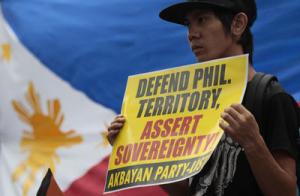
    A Fililipino protester holds a slogan beside a Philippine flag during a rally outside the Chinese Consulate in suburban Makati, south of Manila, Philippines on Tuesday June 11, 2013. Source: East Asia Forum

    A Fililipino protester holds a slogan beside a Philippine flag during a rally outside the Chinese Consulate in suburban Makati, south of Manila, Philippines on Tuesday June 11, 2013. Source: East Asia Forum

    The waters to which China lays claim are divided under the United Nations Convention on the Law of the Sea (UNCLOS) into exclusive economic zones for Brunei, Indonesia, Malaysia and Taiwan, each of which argues it has been adversely affected by China’s oil rig and claims of sovereignty. The zones, running 200 nautical miles into the South China Sea, allow these states special rights of exploration and exploitation of marine resources in specific areas.

    The sea is a major shipping route and fishing area, accounting for around one-tenth of the global fish catch and believed to have substantial untapped natural resources. Notably, China’s claims (outlined in a map in 1947) overlap a large portion of these zones. Malaysia also lays claim to a small number of islands in the Spratlys archipelago. With such a concentration of multifaceted and overlapping claims, China’s oil-rig foray heightened tensions and raised fears.

    In an attempt to settle its resource conflict with China peacefully , the Philippines has filed a case before the UN Permanent Court of Arbitration in The Hague on its own exclusive economic zone. However, even if, , as Manila expects, the court rules in its favour, China will ignore this—preferring to use its superior weight in bilateral negotiations rather than submit to third-party or multilateral processes where it is the rules that count. Diplomatic efforts by the Philippines to co-ordinate other claimants to take a common position vis-à-vis China have so far met little success.

    China’s behaviour has made its smaller neighbours, including Vietnam, reach out to the US for reassurance. But what can it really offer?

    For the US, the fading Pacific power, the disputes in the South and East China Sea pose a particular dilemma. In the East China Sea, China and Japan have overlapping territorial claims, including to the Diaoyu/Senkaku Islands which Japan controls and does not recognise as contested. The US has maintained neutrality on the islands but has a treaty commitment to defend Japan as the quid pro quo for its post-war pacifism.

    China might be uncertain about the depth of US enthusiasm for that commitment today but limits its provocation, nevertheless, to such moves as the declaration in November 2013, without consultation, of an “air defence identification zone” which covers territory claimed by its neighbours. International flights are now required to report their identity and flight plans to China when crossing the zone, at risk of “defensive emergency measures”.

    The strengths and limitations of the US position were clear in May, at the Shangri-La Dialogue in Singapore, the region’s annual multilateral “track two” security summit, where the US retains the power to mobilise a chorus of allies to uphold rules and laws and to criticise China’s behaviour. A series of speakers, including the Japanese prime minister, Shinzo Abe, and the US defence secretary, Chuck Hagel, condemned the use of muscle to enforce claims to the China seas, calling instead for freedom of navigation and overflight and a system based on international rules.

    General Wang Guanzhong, leader of the Chinese delegation, accused the US and Japan of ganging up on China. He was not sufficiently moved to answer pertinent questions on the rules of engagement for Chinese patrol vessels in the East China Sea, but he did make it clear that China saw no place for the US in 21st-century Asia.

    China is by far the largest trading partner of all the ASEAN members, which are caught in the small-neighbour dilemma, somewhere between the fear that China will come to rule their lives and consume their resources and the fear of giving offence to the region’s most important economic power. For them, the game is to try to stay on good terms with both sides.

    Himalayan watershed

    The dilemma is also evident among a different set of China’s neighbours—those that depend on the rivers that rise in the mountains and on the high plateau of Tibet. China’s largest downstream neighbour is, of course, India. India-China relations are bedevilled by unsettled borders-status rivalries, the subject of relatively recent skirmishes, but their most intractable potential conflict is over the shared resource of the Himalayan watershed.

    In its eagerness to promote new Asian alliances, Beijing dispatched the foreign minister, Wang Yi, to Delhi in June, to reach out early to the administration of the newly-elected Narendra Modi. Wang presented himself as the personal envoy of China’s president, Xi Jinping, and startled the Indian press by claiming that the two countries were ready to settle their long-running border dispute. The announcement was however short on detail—and, since the Indian state of Arunachal Pradesh is claimed by China while China’s Aksai Chin is claimed by India, details matter.

    There has been no further hint of an imminent deal but India, like all of China’s downstream neighbours, is more concerned by the impact Chinese activities are having on the quality and quantity of water that crosses its borders than the exact position of the borders themselves. The Himalayan cryosphere contains the largest store of fresh water outside the two polar regions and is a significant influence on the region’s climate, including its monsoons. As in the polar regions, rising temperatures are affecting the glaciers and snow fields that give birth to Asia’s rivers and future impacts on monsoons, though hard to predict, are highly likely.

    In the shorter term, China’s expansion of development westward is affecting the Qinghai Tibet plateau and everything that flows from it. Increased mineral extraction in Tibet and a renewed frenzy of big-hydro construction on trans-boundary rivers are changing Asia’s water flows for ever. There is increasing awareness of the risk of the downstream disasters that could result from building mega-dams in one of the world’s most active earthquake zones.

    There are no trans-boundary agreements between China and any lower riparian country on the shared use of Asia’s great rivers, even though 1.6 billion people depend on them and China is building dams on all their head waters. For India, dams and threatened water diversions on the Brahmaputra are a particular concern. For the countries of the Mekong, China’s dam-building upstream poses a series of potential dangers. Meanwhile, India and others are running to catch up in the dam race, fearful of allowing de facto rights to be created unchallenged.

    There has been no source-to-sink assessment of the impact on river ecosystems of any single dam—let alone of the massive cascades planned or under construction—and there are no mechanisms for resolving disputes. China has refused to enter into discussions with lower riparian countries, beyond agreeing to share limited water-flow data with India.

    Clear rules

    But, as in the South China Sea, limited bilateral discussions are not enough to ensure that the ecosystems of the watershed are protected and the legitimate interests of all those whose livelihoods depend on the rivers are recognised. From the high Himalaya to the teeming deltas, life will be affected.

    If ever there was a case for clear rules and co-operation, it can be found in the South China Sea and the Himalayan watershed. Both raise the essential question of whether the region’s resource conflicts will be settled by arbitration and law or by force. China’s challenge to US influence is also a challenge to an international order that values arbitration as a way of defending the weak against abuse by the strong.

    Isabel Hilton is the editor of chinadialogue.net, and Advisor to Oxford Research Group’s Sustainable Security Programme. She is a journalist, broadcaster, writer and commentator

  • Sustainable Security

    Author’s note: This contribution is partly based on an article published by Weeraratne and Recker in 2016 and provides an updated assessment of the security threat posed by the ADF in the Ugandan/Congolese borderland.

    The Allied Democratic Forces—a militant Islamist group in the Ugandan-Congolese borderland—have been depicted as a serious threat to regional security with links to transnational Jihadist groups. But how accurate is this story and what threat does this group actually pose? 

    The Allied Democratic Forces (ADF), commonly perceived as a “militant Islamist group,” is a violent non-state movement operating in the Ugandan-Congolese borderland. The group has increasingly been in the spotlight and stands accused of carrying out numerous attacks since late 2014, mostly in and around the city of Beni in the northeastern province of North Kivu in the Democratic Republic of Congo (DRC).  According to data from the Global Terrorism Database, the ADF carried out 80 separate attacks against civilians and government/military targets from October 2014 to December 2015, resulting in a cumulative total of 507 fatalities. Similarly, Human Rights Watch and a report published by the UN Group of Experts on the DRC  estimate well over 600 fatalities in attacks attributed to the group over the last two years.

    The Ugandan regime and their Congolese counterparts have been quick to highlight the growing security menace presented by the ADF and often portray the group as a militant Jihadist movement with a litany of ties to transnational Jihadist groups like Al-Qaeda, Al-Shabaab and Boko Haram. However, many analysts caution that the deteriorating security situation in Beni is not entirely due to the ADF and present mounting evidence of complicity of several other actors in the violence. Furthermore, the dogged portrayal of the ADF as a predominantly Islamist militant group with ties to transnational terrorists is a simplistic and overly opportunistic narrative that overplays the role of religion and mischaracterizes the varied objectives of the many disparate elements that increasingly constitute the ADF.

    Origins and evolution of the ADF

    The ideological roots of the ADF grew in the 1980s in central Uganda as a response to the Museveni government’s perceived discrimination towards its Muslim population. The precursor to the ADF was the Ugandan Mujahidin Freedom Fighters, an armed group instituted by The Islamic Salaf Foundation and composed mainly of members of the puritanical Tabliq sect. A controversial decision by the Ugandan Supreme Court in 1992 to rule in favor of a rival Muslim group further radicalized the Tabliq movement. They retaliated violently, fled to western Uganda and engaged the Ugandan military in sustained fighting. After a series of defeats, the Tabliq retreated to the DRC, from where they established the ADF in 1996, under the leadership of Jamil Mukulu.

    Despite its central Ugandan origins, the ADF’s principal theatre of operations has long been the Rwenzori mountainous region straddling western Uganda and the eastern DRC. This choice of location as a base was influenced by the region’s celebrated history of contentious mobilization, weak central government control on either side of the border, similar cross-cultural traits and ample opportunities for collusion with numerous other militant groups embroiled in the larger Congolese war. One such group was the National Liberation Movement for Uganda (NALU), which fled to the DRC following military defeat by the Ugandan army. In 1996, NALU formed an association with the ADF in the city of Beni. Several common denominators united the two groups; distrust of the Museveni regime, their presence on Congolese soil and external support provided by the Sudanese and Congolese governments. The ADF-NALU partnership carried out numerous attacks in the 1990s; conservative estimates indicate that over 1,000 people were killed and over 100,000 displaced from 1996-2001. Prominent targets included police stations, administrative buildings and schools.

    The Ugandan military deployed troops across the border in eastern Congo in 1998 to combat the ADF threat. Multiple leaders were killed or captured and the movement was largely destabilized by 2002. The rebels retreated deeper into the DRC and the departure of the Ugandan troops in 2003 allowed the ADF-NALU alliance to regroup through vigorous recruitment.  The next few years were punctuated by intermittent attacks by the ADF and military offensives launched by the Ugandan army, Congolese army and the UN Mission in the DRC. In 2007, the ADF lost its NALU component as the latter surrendered and acquiesced to a political settlement with the Ugandan government.

    Recent escalation in violence

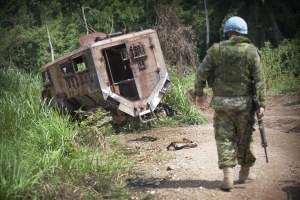
    UN vehicle ambushed by the Allied Democratic Forces (ADF). Image credit: UN Photo/Flickr.

    After a period of relative dormancy from 2007 to 2013 that was interspersed with occasional bouts of violence, there has been a significant resurgence in ADF activity over the last two years. A series of devastating attacks on civilians in the eastern Congo since October 2014 has left over 600 dead, tens of thousands displaced and many of the attacks have been marked by high levels of brutality. Survivors and witnesses have spoken of kidnappings, rape, torture, abduction of children and rampant destruction of property. Furthermore, the ADF was accused of killing Muslim clergy members in Uganda in early 2015. Also contributing to the escalation in violence has been Operation Sukola I, launched against the ADF by the Congolese army and the UN Stabilization Mission in the DRC (MONUSCO), in January 2014. Continued military operations have seen the ADF suffer several battlefield defeats and the militants have been forced to flee into the forest.  It is reported that the ADF fragmented into smaller groups to improve their chances of avoiding detection from the advancing Congolese forces. Many senior commanders are still missing; however, after a protracted search, ADF’s leader, Mukulu, was arrested by the Tanzanian police in Dares Salaam in April 2015 and later extradited to Uganda where he was convicted on charges of treason.

    There is little doubt that the ADF has been responsible for at least some of the attacks in and around Beni. While the ADF did carry out intermittent acts of violence against civilians, the arrangement between the ADF and the local community, at least until 2013, was one of “cooperative (if oftentimes) reluctant coexistence.” In general, the ADF respected the “traditional hierarchy of the host communities” and in 2011, was estimated to command “the popular support of nearly half of the population of Beni territory.”  The increasing focus on civilian targets since 2014 may partly be due to the fact that as the military offensive against the ADF intensified, the group carried out numerous reprisal attacks on civilian informants alleged to have collaborated with the UN and Congolese forces. As one scholar noted, “people are being punished and killed when they don’t want to collaborate” with the ADF.

    While the Ugandan and Congolese governments have portrayed the ADF as the primary culprit (for a variety of instrumental motivations), it is increasingly apparent that other actors have been involved in the massacres in North Kivu, including members of the Congolese armed forces, other rebel groups and communal militia. Moreover, as the ADF fragmented into smaller units, the absence of a centralized chain of command resulted in different groups pursuing diverse agendas. Some ADF factions, accused of violence, formed ties with local militia and outside elements who were then also involved in some of the killings. Indeed, interviews with survivors and witnesses suggest that many attackers spoke languages not normally used in this part of the Congo.  Further, the breadth and the scope of violence as well as the nature of weapons used are suggestive of the involvement of multiple armed actors.  The UN Group also concluded that some Congolese army officers played an overt and covert role in support of certain incidents of violence. While the precise underlying triggers for the violence are not clear, there is evidence that localized conflicts over land and power struggles over leadership contributed to at least some of the attacks. The dominant narrative of blaming the ADF is widely entrenched and largely unquestioned and has hampered efforts to dig deeper into the causes of the violence.

    The “Islamist” character of the ADF

    The ADF are commonly depicted as  an Islamist terrorist organization with a complex array of ties to regional jihadist groups. Consequently, it is seen to pose an existential security threat to the region. The Ugandan government in particular has aggressively peddled this misleading narrative. It is true that ADF’s inception can be traced to a core group of puritanical Muslims from the Salaf Tabliq movement. ADF’s erstwhile leader, Jamil Mukulu, is a strong adherent of Salafi Islam and has indicated his desire to overthrow the government of Uganda and establish an Islamist state based on Sharia law. The ADF has distributed incendiary tape recordings of Mukulu that urge followers to wage a holy Jihad, carried out forcible conversions of non-Muslims, conducted Islamic instruction in training camps and meted punishments in accordance with Islamic law.

    However, Scorgie-Porter argues forcefully that an exclusive focus on the religious aspect provides a limited account of the group’s motives and neglects other important strands to the development of the ADF. Some suggest that the group was mainly driven by a political agenda of removing the Museveni regime and used its Islamic identity instrumentally. A former ADF militant contended that “the agenda of the ADF was purely political…the ADF adapted the grievances of Islam in order to appeal to these people. Islam was a ticket, so the leaders disguised their political motives in religion.” Titeca and Vlassenroot resist reducing the role of Islam to instrumental usage, but suggest that the religious reference co-existed with other agendas such as regime change. They describe the ADF as a “rebellion without cause,” and contend that the movement’s agendas have changed over time.  For instance, during recent peace talks, the principal ADF demands revolved around socioeconomic issues such as reintegration of demobilized soldiers rather than effecting regime change or Islamic governance.

    ADF is often described as a multi-layered entity comprising several different elements with varying agendas. While the Tabliq network served a vital role in recruitment and was largely responsible for securing funds from Islamic charities and foreign countries during the group’s formative stages, ADF is considerably less reliant on the Tabliq now.  Recruitment in the ADF has also been heavily contingent on non-religious factors such as the exploitation of deep-seated perceptions of marginalization, poverty and the lack of alternative opportunity in the Rwenzori borderland. ADF’s economic embeddedness in the local community provides the group with its primary avenues of funding and material support at present and the group’s financial contributions from Islamic sources have considerably dwindled over time. Due to the group’s tendency to seize resources from local populations, some have gone as far as to describe the group as little more than “bandits”.

    Conclusion

    The Ugandan government has consistently attempted to link the ADF to global Jihadi groups and, in turn, depict the group as a serious threat to regional security. Some sources do suggest that elements of Al-Qaeda had sporadic ties with the ADF in the 1990s and provided some financial assistance. Reportedly, Osama bin Laden even met Mukulu while they were both in Sudan in the early 1990s. Similarly, there has been occasional correspondence with Al-Shabaab operatives.  However, such ties have been infrequent and there is little concrete evidence that regional Jihadists have any meaningful ties with the ADF. Indeed, Weeraratne and Recker argue that ideological incongruence, lack of salience to the local community and the fear of attracting more attention from counter-terrorism operatives reduce the likelihood of the ADF forming significant connections with transnational Islamists. Moreover, given that less than 10% of the population is Muslim in ADF’s chief operating environment in eastern Congo (a region that has shown very few signs of radicalization), it is unclear how foreign Jihadists would benefit from a union with the ADF.

    Museveni’s regime has a vested interest in embellishing real or perceived links between the ADF and foreign Jihadists. First, it allows the regime to deflect attention from its authoritarian tendencies and project itself as a key ally in the US led war on terror; in turn, making it easier to attract American military and diplomatic assistance. Second, exaggerating links also justifies the maintenance of high levels of military spending and gives the government a convenient alibi to continue raids on the eastern DRC where it has a range of interests.

    In summation, the portrayal of the ADF as a mainly Jihadist group is incomplete at best and deceptive at worst. It is clear that the ADF is not a monolithic organization with a dominant preference for executing a puritanical Islamist agenda.  The group has moved away from its earlier stated ambition of overthrowing the Museveni regime and replacing it with Islamist governance. The present day ADF constitutes a motely array of disparate interests, many of which are linked to economic and local political issues.  To be clear, this is not to say that the ADF does not pose a security threat. As discussed earlier, the group was responsible for several of the attacks over the last two years. However, at least for the foreseeable future, ADF’s threat is likely to be confined to the rural areas in Beni. Hence, the group is unlikely to pose an existential security threat to either the Ugandan government or their Congolese counterparts.

    Suranjan Weeraratne is a faculty member in the Department of Political Science, Southern Illinois University Edwardsville. His research focuses on various aspects of terrorism, including examining linkages between transnational militant groups and studying patterns of terrorist funding.

  • Sustainable Security

    In peacekeeping missions, peacekeepers live seperated and segregated from the local communities which they are mandated to protect. This wide gulf between the everyday lives of peacekeepers and locals has consequences for peace interventions’ effectiveness and outcomes.

    A truism of international peace interventions is that peacekeepers – and international peacebuilding personnel writ large – live in the same place as local residents, but do not live in the same world. The peacekeeping world is air-conditioned, clean, and well-guarded; it consists of decent housing, generous pay, access to vehicles, domestic help, and, usually, a robust (if limited) social life that revolves around expensive restaurants, hotels, bars, and clubs. In other words, peacekeepers live, work, and socialize in what I call ‘blue helmet havens’, distinct from the spaces most locals inhabit. They are spatially, economically, culturally, and in many cases linguistically separated or segregated from the majority of the local population of the ‘peace-kept’ city. As a Goma-based source put it, peacekeepers are ‘living in Congo’ but not ‘living Congo’.

    The security and safety of peacekeeping personnel and property is the dominant justification for the ‘bubble’ in which peacekeepers live. Notably, this separation is enacted not only by barriers, bunkers, and security guards, but also by various peacekeeping rules, regulations, and norms that mitigate – if not actively discourage – informal or social contact between peacekeepers and locals.

    Thus, peacekeepers’ off-duty movements are circumscribed by the security perimeter zone that is established by the mission’s internal security service, which delineates where peacekeepers can live, shop, and socialize and, in capitals and other urban areas, excludes vast swathes of the host cities. Even within the zone, peacekeepers are advised never to move on foot. They are required to live in gated and guarded compounds; are given black-lists of proscribed social venues; and, besides being prohibited from buying sex while in the mission area, are also strongly discouraged from having any intimate or sexual relationships with locals. These formal rules and regulations are reinforced by informal norms and mission cultures, which are heavily oriented towards keeping the peacekeeping bubble intact and exclusive. Cumulatively, the extremely risk-averse approach that missions take towards peacekeepers’ interactions in and with their surroundings means that the contact between peacekeepers and locals is both sparse and essentially transactional. There exists a wide gulf between the everyday lives of peacekeepers and locals, and very few means to bridge it.

    Peacekeeping-as-enterprise in the peacekeeping ‘bubble’

    UN helmets

    Image by UN Photo via Flickr.

    But why is this important? Research shows that the gap in proximity and understanding between the international and the local matters for peace interventions’ effectiveness and outcomes. For example, in her book Peaceland, Séverine Autesserre argues that the shared everyday habits, practices, and narratives of international interveners simultaneously enable international peacebuilders to work in challenging environments, and degrade the effectiveness of peacebuilding interventions. In other words, she asserts a direct link between the peacebuilding bubble and peacebuilding outcomes.

    My own research also deals with the distorting effects of the peacekeeping bubble. Using the analytical lens of the peacekeeping economy – which encompasses the services, establishments, and activities needed to allow peacekeeping and peacekeepers to function, and which to a large extent frames and contains the peacekeeping bubble – I have argued that in areas with robust peacekeeping economies, peacekeeping appears to locals more as an enterprise than protection or development. Where peacekeeping economies flourish, they are as visible and tangible to local citizens as anything else done by peacekeeping missions – maybe even more so. It is thus unsurprising that, when people look around them and see money flowing and where it flows, they conclude that, heroic narratives aside, peacekeeping is not that different after all: it is all about the money. This in turn fosters cynicism and resentment among local citizens towards the peacekeeping mission, from which it is plausible to draw a connection to subpar results. On the peacekeepers’ side, meanwhile, what is striking is the extent to which their arms-length relation to the local reveals a sense of vulnerability – a perception of themselves as potential victims of exploitation, crime, or violence, thus upending the normal framing of peacekeepers as powerful, dominant protectors. On both sides, the strict separation between the peacekeepers and the local encourages, if not fosters, a lack of understanding and trust.

    Taken together, then, this paints a picture of peacekeeping and peacekeepers as purposefully disconnected from the local everyday, apart from the microeconomic transactions contained by, and constitutive of, the peacekeeping economy. When it comes to how peacekeeping really works, the peacekeeping bubble is as relevant and significant as the peacekeeping mandate. Problems associated with this bubble’s existence include local suspicion of missions’ activities and motives; and a dearth of knowledge of, and empathy towards, locals from peacekeepers – each of which could be reasonably conjectured to inhibit the effectiveness and transformative potential of peacekeeping.

    Security, estrangement, and stasis in peacekeeping transformation

    An obvious implication of this contention is that international peace interventions will work better and more empathetically if the prevailing separation and segregation is lessened, such that the international and local ‘everydays’ are more enmeshed and aligned. But how would this work? Is it even possible?

    There are modest proposals that missions could immediately initiate in order to promote an environment of mutual trust and more substantive formal and informal contact between peacekeepers and locals, which could eventually make peacekeeping environments safer for both peacekeepers and locals alike. For example, to mitigate the negative effects of the peacekeeping economy on the local economy and labour market, missions could:

    • implement better scrutiny and oversight of subcontractors employed by missions (with respect to labour standards and protections) and of landlords the mission rents from (to ensure that ill-gotten gains are not rewarded);
    • give guidance to peacekeepers on how to relate to their employees, prioritizing the rights of the employee equal to those of the peacekeeper;
    • make greater efforts to procure goods and supplies locally, working with and monitoring local suppliers to forestall potential negative side-effects on local markets;
    • and use of training methods and materials that do not rely on scare stories and fear to coerce obedience, thus encouraging more receptive attitudes towards locals by peacekeepers.

    The most significant obstacle to peacekeeping transformation lies in the area of security. The tendency in peacekeeping missions to take greater and greater precautions to obviate danger and avoid risk is not without reason: persuading member states to contribute troops and money to peacekeeping is significantly more challenging if the UN is perceived to be reckless, and recruiting civilian peacekeepers also becomes more difficult. But ‘security’ in peacekeeping increasingly seems to mean the elimination of risk – whether stemming from armed groups, organized or ordinary criminals, fraudsters and scam artists, or everyday activities like driving, eating out, having sex, or walking down the street. According to such a standard, peacekeeping missions will never be fully secure. Nor, for that matter, will anything else. Peacekeeping institutions (headquarters and missions) and peacekeepers surely recognize this reality, yet there is little evident willingness at any level to push back against ever-escalating security demands and regulations.

    In this heavily securitised and risk-averse environment, where protection of peacekeepers is (and always has been) mandated equal to protection of civilians, separation is the path of least resistance. This implies that fundamental transformation in how peacekeeping missions situate themselves to local people and communities is unlikely. Missions’ estrangement and alienation from the local community and the local ‘everyday’ is a feature, not a bug; and thus that whatever losses may ensue – of legitimacy or effectiveness – is a price that the peacekeeping apparatus is willing to pay.

    Kathleen Jennings is a senior researcher at the Fafo Research Foundation in Oslo. Her work focuses on UN peacekeeping, gender, and political economy in sub-Saharan Africa. Jennings recently defended her PhD thesis on gendered peacekeeping economies in Liberia and the DR Congo. She has previously worked at the Norwegian Peacebuilding Resource Centre and the Council on Foreign Relations.

  • Sustainable Security

    Following the vote to renew the Trident nuclear programme, a former nuclear-armed submarine commander discusses why the UK needs to seriously rethink its attitude to nuclear weapons. 

    Editor’s Note: Commander Forsyth’s explanation as to why he has changed his view on the deterrence value of the now and future Trident weapon system was originally written for family members. It has been edited by the ORG with the full involvement and agreement of Commander Forsyth to be suitable for wider publication. Of particular interest is his alternative proposal for a smaller,  ‘for but not with’ and  more versatile submarine platform as a stepping stone to reducing the level of ready use weapons whilst preserving the ability to resurrect full CSD posture if required.

    In 1972 I became Executive Officer of HMS Repulse, one of the four Polaris A3 missile-carrying submarines based on the Clyde. Based on this experience I can say, without any sentiment or exaggeration, that the use of nuclear weapons during the Cold War would have threatened the existence of humanity.

    I believed that Mutually Assured Destruction (MAD) was at the centre of the UK’s deterrence policy, meaning that if the Soviets fired at us then we (as well as the USA and, latterly, France) would respond in such measure as to immediately annihilate several major cities in the Soviet Union.

    The consequential radiation effects of any nuclear detonation would largely complete the destruction and this would almost certainly have caused a ‘nuclear winter’.

    MAD and the Cold War

    forsyth

    Commander Forsyth on HMS Sceptre.

    The policy of MAD would, we were told, only have been used in retaliation to a Soviet nuclear first strike with missiles en route to Europe or the USA. We were constantly assured that under no circumstances would we fire our Polaris missiles first even if tanks were rolling across the German plain, unless the Soviets had already fired nuclear weapons at us.

    As Paul Rogers notes, the UK’s other tactical nuclear weapons could have been used against such a Soviet offensive. Yet at the time we thought that this would not necessarily start a strategic exchange. Perhaps naively, we tended to consider Polaris in isolation from the tactical battlefield and on a whole different level.

    The UK’s retaliatory only policy (assuring a second strike was possible) let us sleep easily at night during the years that we took 16 Polaris missiles to sea. As Nick Ritchie explains, each of these missiles carried two warheads with an estimated yield of 40kt. Thus, with 16 missiles per boat, just one patrolling submarine could have fired 32 40kt warheads, which would have given a potential explosive yield of 1.28 megatons—hence why we called what would happen if they were used Armageddon.

    Understanding the power of the bomb

    The US had many more submarines, aircraft and land-based missile silos. Our contribution was a gesture of togetherness against a common enemy whose declared policy was assumed to be ‘world domination by any means’.

    Torpedo tracks perishot_enhanced

    Periscope pic of torpedo tracks approaching the target.

    In comparison, the atomic bomb that physically destroyed the Japanese city of Hiroshima in WWII and killed 100,000 people in the process had just a 15 kiloton yield.  So when Prime Minister Theresa May stated in parliament last July that she was prepared to press the button and kill 100,000 people, we should recognise that the number of deaths she was referring to was significantly less than that which Polaris missiles were capable of inflicting—never mind the massive collateral structural and radiation casualties which would result.

    Each Trident warhead has a yield of up to 100 kilotons, which, in terms of destructive power, is equivalent to six or seven Hiroshimas. The UK presently deploys 40 nuclear warheads and not more than eight missiles on its four submarines, meaning that the destructive power on board just one of these submarines, if used at the same time against a densely populated country, would kill considerably more than 100,000 people.

    Justifying nuclear use

    The ownership of this sort of power begs the question: what threat might justify the use of such destructive force? We also need to be clear under what circumstances and at what scale the Prime Minister might authorise a nuclear strike because she could be taking us all with her.

    Two government statements are relevant to this discussion:

    1. Then Secretary of State for Defence, Geoff Hoon, stated in 2002, prior to the invasion of Iraq, that Saddam Hussein could ‘be absolutely confident that in the right conditions we would be willing to use our nuclear weapons’.
    2. A government policy paper of 8th May 2015 stated that ‘it will not rule in or out the first use of nuclear weapons’ to ‘deter and prevent nuclear blackmail and acts of aggression against our vital interests that cannot be countered by other means’. This leaves open the option for the Prime Minister to authorise Trident’s use to deter an aggressor who may be threatening to use nuclear weapons or is using massive conventional forces which we do not have sufficient conventional force to counter. But, importantly, the government deliberately maintains ‘some ambiguity precisely when, how and at what scale we would contemplate use of our nuclear deterrent’.

    Keeping the option open of using nuclear weapons first against an adversary who you judge is threatening your ‘vital interests’ with non-nuclear force is quite different from MAD. This is what makes me question the whole basis of what we may or may not do with Trident. Formerly we would not have fired Polaris missiles until British cities had been totally destroyed by a megalomaniacal action by the Soviets. It would have been a futile gesture by us but the threat of doing so was considered to be a deterrent. Now it is ultimately a matter of the Prime Minister’s judgement as to whether we embark on a nuclear war. This raises the prospect of deliberately causing Armageddon as opposed to a reaction to one already started.

    In which case, I would argue that we have the right seriously (a) to question whether the Government should have that power and (b) if so, to constrain the circumstances in which such power can be used. As Nick Ritchie points out, the UK ‘does not dispute that international humanitarian law applies to the use of nuclear weapons and has incorporated the notion of “extreme circumstances of self-defence” into its declaratory nuclear policy statements’. Yet will all future Prime Ministers follow such guidelines in practice?

    The need to ask these questions, and decide if building a new generation of nuclear weapons is justified and will ‘keep us safe’, is particularly important given that no military case has been made for Trident’s use by its supporters—other than the vague statement that we don’t know what the future holds.

    Reference to the prospective use of nuclear weapons is nearly always qualified by adding that they are a weapon of ‘last resort’. As part of the Prime Minister’s decision making process she has therefore, at the very least, to be satisfied that all other alternative avenues have been exhausted, starting with the political and economic ones, escalating up through the increasing use of conventional military power.

    Rethinking what military capabilities the UK needs

    140602-N-ZZ999-202 ATLANTIC OCEAN (June 2, 2014) A trident II D-5 ballistic missile is launched from the Ohio-class ballistic missile submarine USS West Virginia (SSBN 736) during a missile test at the Atlantic Missile Range. The test flights were part of a demonstration and shakedown operation, which the Navy uses to certify a submarine for deployment after a major overhaul. The missiles were converted into test configurations with kits containing range safety devices and flight telemetry instrumentation. The U.S. Navy supports U.S. Strategic Command's strategic deterrence missions by operating and maintaining Ohio-class ballistic missile submarines to deter regional and strategic threats. The triad, the U.S. strategic nuclear forces of ICBMs, bombers, and ballistic missile submarines, remains the primary deterrent of nuclear attacks against the U.S., our allies, and partners. (U.S. Navy photo/Released)

    Image of Trident missile via Wikimedia.

    When I was at sea in the 1960s and 1970s the UK invested in both the Polaris force and significant conventional armed military forces in all three services. The country was able to send a Task Force as far afield as the Falklands and, more importantly, the armed forces were strong and large enough to withstand the quite considerable attrition—particularly in the Navy—in fighting a full-on war.

    The services have gradually been whittled down to a level in which such a Task Force could not be assembled. By its own admission the Navy does not have enough ships and submarines to meet peacetime commitments—never mind war. The six Type 45 destroyers designed to protect the UK’s two new carriers were victims of over-design and under-funding (albeit costing £1billion each) such that they are now in harbour with major operational limitations which will take some years to be rectified.

    Meanwhile, the next generation of frigates have been delayed. When they do come they will have outdated equipment and there will still not be enough of them to give anti-submarine warfare protection to the carriers—unless they forego other roles of which there are many. The Army and Air Force also have their own tales of woe—soldiers die for lack of body armour and the correct vehicles because the military budget has to cope with the costs of Trident.

    Why is this? To some extent you can blame senior officers for lack of management ability and vision when challenged by the need to meet major commitments with a constantly reducing budget. They should perhaps have been stronger and said we are not well placed to play the role assigned in the Iraq war, be peace keepers afterwards and also embark on a new war in Afghanistan. The ‘can do’ spirit has been counter-productive.

    However, the other budgetary factor is that the cost of building four Successor submarines alone is now set to cost at least £31 billion. You can buy quite a lot of aircraft carriers, frigates and hunter killer submarines for that.

    The consequential reality is that we have very little conventional capability before the use of Trident becomes our last resort—a very dangerous situation for world peace. So who are we likely to need to use our last resort against having said that rogue states and dirty bombers are not likely targets? The answer is no one at the moment. Yes, Russia is acting aggressively, waving their nuclear weapons stick, but Russia has no grand plan for world domination. I must therefore conclude that the Royal Navy is being exploited to operate a political status symbol with no military value at the cost of other important capabilities.

    There is no threat to the UK that justifies our nuclear force

    During the Cold War the UK’s nuclear-armed submarines were at 15 minutes notice to fire. Since 1994 however, following an agreement with Russia, the UK’s nuclear weapons have been de-targeted—although this situation could be quickly reversed. The Trident submarines are lurking on standby ‘just in case’, so there is time to target and arm them if the situation escalates. Saying North Korea is a threat to the UK is not credible. Pyongyang may become a threat to US interests, but even that is unlikely and the US is more than capable of responding.

    Some may argue that now is not the time to lay down our nuclear arms because it might further destabilise our position in Europe and be seen as a further ‘weakness’ post-Brexit. But what does this mean? That the Russians will see an opportunity and seize it? I believe they know, despite the Prime Minister’s words, that we would not fire our nuclear weapons except in retaliation to a major nuclear first strike by them—which they are unlikely to launch.  But I also believe it is possible that Putin could take advantage of our regular Force’s weakness, for example, through giving covert military support and overt political support to ‘popular’ pro-Moscow uprisings in Russia’s near abroad. The calculation here would be that NATO would likely find it difficult to find an effective response to such manoeuvres.

    As for a developing intercontinental threat from elsewhere in the future, if it’s not on the drawing board now (and it’s not) then we have time to consider our options. Designing a submarine today to go to sea in 17 years’ time to counter a future undefined notional threat is really fighting yesterday’s war with yesterday’s technology. By making that decision now it becomes harder to change our posture as more and more money is poured into the Successor programme.

    Is there an alternative? Yes there is. If, despite all the above, the UK decides it needs to have a nuclear weapon system for ‘insurance’ reasons then a submarine platform is probably the best vehicle to carry it because it is considerably less vulnerable (I would not use the word invulnerable now) to counter-detection than cruise missiles, aircraft or land based weapon platforms. However, the problem with the current and future Trident submarines is that they are a single purpose platform, very big—consequentially comparatively slow—and really only have a self-defence capability. They contribute nothing to peacetime surveillance or war-fighting capability in any other area than firing strategic missiles and cost the earth.

    We have already reduced the number of missiles per boat so why not make a further reduction to say four per boat and fit a missile section into existing Astute class hunter-killer submarine hulls?[1] This option could save money, enable a dual role and, by building five, two or even three of them could be at sea at any time in either role and be a useful enhancement to the UK’s broader submarine needs.

    Furthermore, if the Government wished to demonstrate its willingness to comply with the Nuclear Non-proliferation Treaty, then missiles and warheads could be placed in ready-use store. This is justifiable on the basis that there is no threat today that requires the cost of having a submarine at sea at all times employed solely on what is known as Continuous at Sea Deterrence (CASD). Apart from anything else, the maintenance of the ‘invisibility’ of the SSBN on patrol requires additional support from ships, submarines and maritime aircraft taken off other more real time operations. Should it ever begin to become necessary, a CASD posture could, of course, be re-introduced very quickly as a clear signal of the UK’s determination to deter and as a further step up the nuclear ladder.

    Conclusion

    I believe that it is highly unlikely that the UK will ever come under nuclear attack from an enemy remotely susceptible to a threat of nuclear retaliation. I also don’t think first strike nuclear attack should ever be an option for the UK—we should not duck saying that. But if, as some may argue, that now is not the time to scrap the nuclear option because there is a remote chance we need to retain a nuclear weapons capability, then there is an option which cuts the cost significantly, allows for the restoration of our three Services to something resembling useful and still maintains the nuclear deterrent as a capability to be deployed if events ever require. Yet, of course, even this option would not prevent the government of an independent Scotland from forcing the relocation of Trident south of the border at a massive extra cost.


    [1] Trident submarines have 16 missile tubes and the Successor class is due to have 12. Each missile is capable of carrying 12 warheads. The 2010 Strategic Defence and Security Review, unilaterally downgraded the outload per submarine to a maximum of 8 missiles and 40 warheads. There are, therefore, redundant missile tubes in existing and planned submarines. Only 4 missiles are needed to carry 40 warheads.

    Commander Forsyth joined the submarine service in 1961 (aged 22). He subsequently served in conventional and nuclear powered submarines until 1980. During his career he commanded HMS Alliance (diesel powered), was Executive Officer (2nd in command) of HMS Repulse (Starboard Crew) a nuclear powered, Polaris missile firing submarine, Commanding Officer (Teacher) of the Submarine Command Course (aka ‘Perisher’) and Commanded HMS Sceptre a nuclear powered Hunter Killer submarine deployed on Cold War patrols. He created the website www.whytrident.uk with the aim of providing the wider world with answers to the obvious questions not easily obtainable elsewhere.


  • Sustainable Security

    Remote Warfare series intro – read other articles in the series.

    RC_long_logo_small_4web

    This article is part of the Remote Control Warfare series, a collaboration with Remote Control, a project of the Network for Social Change hosted by Oxford Research Group.


    Editor’s note:
    Remote Warfare and the War on Drugs mini-series: This series of articles explores how remote warfare is being used in the war on drugs. To date, much of the debate on remote warfare has focused on its use in the war on terror. However, the use of drones, private military and security companies (PMSCs), special forces and mass surveillance are all emerging trends found in the US’s other long standing war, the War on Drugs. The articles in this series seek to explore these methods in more depth, looking at what impact and long term consequences they may have on the theatre in which they’re being used.

    US drug policy has become increasingly privatised in recent years as the US government contracts private military and security companies (PMSCs) to provide intelligence, logistical support and training to state security forces in drug-producing and –transit states. As the cases of Colombia and Mexico illustrate, this privatisation strategy is having a damaging impact on these already fragile environments.

    Since the mid-1970s, the US government has invested billions of dollars in anti-drug assistance programmes. The main objective is to reduce the flow of Latin American-sourced illicit drugs to the US. At the beginning of this so-called War on Drugs, the US treated the fight against drugs as a police problem, providing equipment and supplies to civilian law enforcement for counter-narcotic efforts. Since the 1980s, however, US drug policy has been militarised and, more recently, privatised: the US government provides military-grade equipment and training to police forces and contracts private military and security companies (PMSCs) to provide intelligence, logistical support, and training to state security forces in drug-producing and -transit states, such as Colombia and Mexico.

    The privatisation of the War on Drugs has had a significant impact in countries where it is waged, adding further complexity to these already complicated environments. As states often fail to properly control PMSCs’ activities, this tends to increase the risk of human rights violations and impunity in contexts where the application of the rule of law is already uneven. The use of PMSCs in the War on Drugs often weakens the rule of law and so is counterproductive. The cases of Colombia, where the use of PMSCs takes place largely under the guise of Plan Colombia, and Mexico, where PMSCs have been used since the implementation of the Merida Initiative, illustrate these issues well.

    Colombia: Human rights violations and impunity

    Colombia is experiencing an armed conflict where the Colombian government fights against several armed groups, such as Fuerzas Armadas Revolucionarias de Colombia—Ejército del Pueblo (FARC, Revolutionary Armed Forces of Colombia) and Ejército de Liberación Nacional (ELN, National Liberation Army) that are well-organized and heavily linked with drug trafficking. Since the 1960s, the US has collaborated militarily with Colombia in the fight against those armed groups, as well as drug traffickers. In 2000, Colombia and the US agreed on a new plan of cooperation called Plan Colombia: Plan for Peace, Prosperity, and the Strengthening of the State (usually referred to as Plan Colombia).

    street art

    Image of Mexican Drug War-themed street art. Picture entitled: The Mexican Dead by Suslan Soosay via Flickr

    Although Colombia and the US had long cooperated in fighting drug trafficking, Plan Colombia represented a shift. Since its implementation, the US State and Defense Departments have contracted PMSCs to carry out activities related to US military and police aid to Colombia. For example, the 2007 Reports to Congress On Certain Counternarcotics Activities in Colombia–partly reproduced here–mention that Telford Aviation provided logistical support for reconnaissance airplanes and ITT and ARINC were responsible for operating radar stations. Furthermore, in 2006, Chenega Federal Systems was in charge of maintaining an intelligence database, and Oakley Networks was responsible for Internet surveillance. Other sources reported that Military Professional Resources Incorporated (MPRI) helped restructure the Colombian armed forces to aid their fight against drugs; Northrop Grumman, under its contract, flew over the Colombian jungle with aircraft equipped with infrared cameras in order to track illegal activities related to drugs or guerrilla movements; and DynCorp has been in charge of the fumigation of coca plants since 2000.

    The concern about human rights violations by PMSCs is particularly acute in Colombia because all US personnel, including PMSC employees, working in Colombia through Plan Colombia have been granted immunity from Colombian jurisdiction by bilateral treaty with the US.

    The lack of control and supervision has been observed on many occasions, including by US authorities. A report on contracting oversight by the United States Senate Committee on Homeland Security and Governmental Affairs concluded that the “State Department, which has awarded over $1 billion in counternarcotics contracts in Latin America to one company, DynCorp, has conducted sporadic oversight of that company.”

    There have been numerous allegations of human rights violations at the hands of PMSCs operating under Plan Colombia, but, so far, none of these violations have been brought to justice. For example, in 2004, a pornographic movie went public that included US contractors from the Colombian base Tolemaida sexually abusing minors. No investigation took place and no one was ever punished. DynCorp’s activities, particularly the fumigation of coca plants, have also caused concern. In 2008, Ecuador filed suit against Colombia at the International Court of Justice, arguing “Colombia has violated its obligations under international law by causing or allowing the deposit on the territory of Ecuador of toxic herbicides that have caused damage to human health, property and the environment.” In August 2013, the governments of Colombia and Ecuador announced an agreement ending the dispute, with Colombia paying reparations for the damage caused.

    Mexico: Increasing violence and a lack of state control

    The drug-related violence in Mexico that has captured so many headlines in recent years is not new to the country. Although drug traffickers have operated in Mexico for more than half a century, serious violence related to drug activity started around the 1990s, when the drug market became more lucrative and the centralized power of the Mexican government started to slip. Mexico is now a major supplier of all kind of illegal drugs—heroin, methamphetamine, marijuana, and cocaine—to the US drug market: the drug market between US and Mexico is estimated by US government reports as ranging between US $18 and 39 billion in profits annually.

    In 2007, following President Calderón’s lead to crack down on the drug cartels, the US and Mexico cemented a plan to cooperate in fighting drug trafficking and increasing security in the region. This plan, called the Merida Initiative: Expanding the US/Mexico Partnership (hereinafter the Merida Initiative), established full cooperation between the two countries, with the US providing an anti-crime and counter-drug assistance package to Mexico that included training and equipping Mexican forces. The provision of Merida Initiative assistance to Mexico has included contracting PMSCs to train local forces.

    As in Colombia, the human rights situation in Mexico is complicated. Militarizing the War on Drugs in Mexico has been severely criticized due to the resulting human rights abuses. For instance, Human Rights Watch (HRW) reported in 2011 “credible evidence of torture in more than 170 cases across the five states surveyed” and documented “39 ‘disappearances’ where evidence strongly suggests the participation of security forces.” HRW concluded that “rather than strengthening public security in Mexico, Calderón’s [and now Peña Nieto’s] ‘war’, has exacerbated a climate of violence, lawlessness, and fear in many parts of the country.”

    In this scenario, the activities of PMSCs, which are hired by the US, raise additional concerns about the respect of human rights. In fact, contractors have been accused of training Mexican police in torture techniques. As is the case in Colombia, the use of PMSCs by the US government to perform security tasks in another country tends to adversely affect human rights, when the purpose should be the contrary.

    A worrying (and growing) strategy

    The privatization of the “war on drugs” is one more element endangering human rights in an already complex environment. Privatization is often resorted to as a strategy when the use of public resources is seen as risky. Indeed, in both Colombia and Mexico, public forces have been involved in massive human rights violations. Given their past history of human rights violations in Colombia and Mexico, the unrestrained use of PMSCs is not the best strategy for improving security and upholding the rule of law. Unfortunately, the trend of privatizing the War on Drugs is not diminishing: following the Plan Colombia and Merida Initiative, the US government implemented the Central American Regional Security Initiative (CARSI) to fight against drugs in Central America, and PMSCs are a key actor in its execution.

    Antoine Perret is visiting research fellow at Columbia Law School. He holds an LLM and a PhD in Law from the European University Institute (Florence), an MA in International Affairs from the Universidad Externado de Colombia (Bogotá) in collaboration with Sciences Po (Paris) and Columbia University (New York), and a Licence in International Relations from the Graduate Institute of International and Development Studies (Geneva). He was a lecturer and researcher at Universidad Externado de Colombia (Bogotá) and research fellow at the Center for Latin American and Latino Studies at American University (Washington, DC). Through his work on PMSCs he has collaborated with the Geneva Center for Democratic Control of Armed Forces (DCAF), the UN Working Group on Mercenaries, and the UN Regional Centre for Peace, Disarmament and Development (UNLIREC).