Category: 08

  • Sustainable Security

    Bay of bengal Climate InsecurityThere is no region of the world that faces more threats from climate change than South Asia. Of particular concern is the littoral surrounding the Bay of Bengal, including the Eastern Indian states of West Bengal and Odisha, Bangladesh, and coastal Burma. This region is uniquely vulnerable to a changing climate because of a combination of rising sea levels, changing weather patterns, and uncertain transboundary river flows. Away from the seashore, China holds the high ground in the Tibetan Plateau and the Himalayas, and complicates the geopolitical picture further by acting as the source of the region’s fresh water.

    On the Bay of Bengal’s coast these problems of a changing climate combine with already existing social problems like religious strife, poverty, political uncertainty, high population density, and rapid urbanization to create a very dangerous cocktail of already security threats. Climate change has been called a “threat multiplier” or “an accelerant of instability” by military and intelligence communities because of how it will impact these already existing threats. With a population of more than 300 million people (91 million in West Bengal, 42 million in Odisha, 142 million in Bangladesh, 52 million in Burma), tense militarized borders, overlapping ethnic and religious communities, and uncertainty about the future, there is no region in the world that faces a more dangerous combination of threatsfrom climate change than here.

    Rising Sea Levels

    One of the key tenets of national security is the ability of a country to ensure the integrity of its sovereign territory. Yet, as glaciers far from South Asia melt, the sea rises and encroaches upon its farms, villages, and cities. As Hemingway wrote about going bankrupt, sea level rise happens “gradually, then suddenly.” Slowly, a rising ocean brings increasing intrusion of brackish water into groundwater, harming costal agriculture. Moreover, gradual ocean encroachment harms the coast’s natural protections, whether dunes, reefs, barrier islands, or mangrove forests. Then, suddenly, when a major cyclone blows in a storm surge will overcome previously unsurmountable barriers.

    The shorelines of the Bay of Bengal stand to lose swaths of territory from sea level rise. Bangladesh, as a country predominantly composed of river delta, is most at risk. It stands to lose 11% of its territory – home to 15 million people – from a sea level rise of only 1 meter, a level that is not a particularly extreme prediction over the next 4 decades. Few invading armies could do worse damage.

    Oddly enough, the world’s oceans do not rise at the same rate. With rising global sea levels, in some areas the sea level could actually fall while it rises in others. A recent study from the National Center for Atmospheric Research (NCAR) found that sea level rise will be particularly high along the Bay of Bengal, due to changes in currents caused by rapid surface warming of the Indian Ocean.

    In the region, the cities of Dhaka, Kolkata, and Yangon all lie in major river deltas and are vulnerable to storm surges. In its 2007 report, the Intergovernmental Panel on Climate Change (IPCC) specifically listed cities in Asian mega deltas as “hotspots for vulnerability” because of sea level rise and changing patterns of river flow. Already straining at their infrastructure limits, these densely packed cities are becoming more vulnerable in a warming world.

    Changing Transboundary Water Flow

    Water does not stay within lines on a map. Instead, gravity draws it inexorably from the mountains to the sea. China, through its control of Tibet, controls the headwaters of almost all of the major rivers of Asia – only the Ganges lies outside of China’s control, originating in India. Of the major rivers that empty into the Bay of Bengal, all cross borders. Water is only plentiful during the monsoon season, so these rivers provide much-needed sustenance to agriculture, people, and ecosystems throughout their trip to the sea during the dry season – when they are fed by glacier and snow melt. Competition and tension over that flow is evident around the world when water crosses borders.

    This is true of Bangladesh and India, for which the flow of the Ganges are a source of tension. The Farakka Barrage on the Ganges River, just 10 miles upriver from the Bangladesh border, allows India a measure of control over the river. The dam allows India to divert the flow of the Ganges down a canal to the Hooghly River and into the port of Kolkata. Since the dam was built in 1975, there have been allegations from Bangladesh that India diverts water in the dry season and releases too much in the monsoon season. In 1996, the two countries agreed to a 30 year treaty to share the Ganges’ flow, but tensions still remain.

    The Brahmaputra River, meanwhile, provides a source of tension between the two regional powers, India and China. China recently announced that they are building a series of hydroelectric dams along the Brahmaputra’s upper reaches in Tibet, but they have forsworn any attempt to divert or hold back the great river’s flow. However, these assurances have not quieted all voices in India, who point to plans in China’s South-North Water Diversion Project to divert water from the Brahmaputra in order to ensure water for industry and the cities of China’s parched north. China’s leaders have denied these extravagant plans, but their engineers have lobbied for such a project. It would complete a dream of Chairman Mao’s, who said: “Southern water is plentiful, northern water scarce. If at all possible, borrowing some water would be good.”

    Climate change exacerbates these concerns about transboundary water management in the region. Climate change is threatening both the glaciers that sit at the top of these mighty rivers, feeding them during the dry season, and the very viability and predictability of the Indian Monsoon rains. Temperatures in the Tibetan Plateau and the Himalayas have risen 1.5 degrees Celsius since 1982, a rate more than three times as fast as the global average. Meanwhile, changes in weather patterns due to climate change could cause repeated failures in the monsoon. While there is little likelihood of an immediate and total melting of the glaciers, uncertainty about their future flows is enough to stoke tension in the region.

    The Potential for Conflict

    Climate change is altering the environment of the region; the glaciers are retreating, the rivers’ flows are becoming more unpredictable, and the seas are rising. However, whether those changes manifest themselves into either civil or interstate conflict will depend upon how both the populations and the governments in the region react to those changes. How long governments have to adapt depends upon unpredictable weather and climate patterns – but as the Stern Review bore out, earlier action is almost always cheaper and more effective than waiting. How governments adapt is important as whether; some adaptations, like capturing water that would otherwise flow across borders in new reservoirs could actually make the threat of conflict worse. If countries do not work cooperatively, they could stoke conflict.

    Throughout history, one of the most effective ways to deal with climate change has been migration – from a climate that is no longer hospitable to one where living is easier. However, modern borders do not reflect the historical ties between the regions. Migration is a natural response. However, in areas with already high population density and an overlapping patchwork of ethnic and religious communities, new immigrant communities often come into direct conflict with established communities. Last year saw ethnic strife in the Indian state of Assam between indigenous Bodos and immigrant Muslims, many of whom hailed from over the nearby border in Bangladesh. Over 75 people died, and over 400,000 people were temporarily displaced. In this region, it is impossible to say whether a group of migrants are “climate refugees” or simply moving to a place with better economic opportunity, but this is what we should expect in the future.

    It is difficult to find examples of any interstate wars fought directly over water; to the contrary, water has been a catalyzer of cooperation. However, as countries realize that they can control and shape water flow through mega dams and water diversion projects, there is a danger that the claims of downstream countries could be ignored. Along the Mekong River, for example, China has proceeded to dam and control the river’s flow through its territory – leading downstream neighbors to complain that China is causing droughts. Yet because of the power imbalance between China and smaller countries like Laos and Cambodia, the Chinese have little to fear. Similar thinking by Chinese leadership over dam building along the Brahmaputra, their shared river with India, could lead both countries to stumble into a conflict that neither of them want.

    In the age of climate change, conflict is more likely as threats are multiplied. Nowhere is this truer than around the Bay of Bengal. However, war is never pre-ordained. Instead, the threat of conflict is determined by how countries react. Good international governance can encourage countries to not simply pull up the drawbridge and think only of themselves, but will encourage them to see what their actions will mean for regional neighbors. Climate change is increasing the threat of wars and unrest around the Bay of Bengal; but foresight about its impacts can help the region’s leaders work together to solve a problem that knows no boundaries.

    Andrew Holland is Senior Fellow for Energy and Climate at American Security Project, a Washington D.C based think tank. He is an expert on energy, climate change, and infrastructure policy. He has over seven years of experience working at the center of debates about how to achieve sustainable energy security and how to effectively address climate change.

    Image source: amioascension
  • Sustainable Security

    Author’s note: For further analysis on this topic, see the following publications: Kai Michael Kenkel and Cristina Stefan, “Brazil and the ‘responsibility while protecting’ initiative: norms and the timing of diplomatic support”. Global Governance, Vol 22, No. 1 (2016); pp. 41-78; and Kai Michael Kenkel and Felippe De Rosa). “Localization and Subsidiarity in Brazil’s Engagement with the Responsibility to Protect.” Global Responsibility to Protect. Vol. 7, No. 3/4 (2015); pp. 325-349.

    Since Libya, the Responsibility to Protect (R2P) has been a hotly debated concept. Previously a nation exhibiting strict non-interventionist principles, Brazil has recently contributed to the R2P debate with its Responsibility while Protecting initiative.

    Introduction

    Inspired by what it saw as the excesses of NATO’s intervention in Libya and their potentially disastrous effects on the credibility of the “Responsibility to Protect” (R2P) norm, in November 2011 Brazil launched the corollary concept of a “Responsibility while Protecting” (RwP) at the United Nations. While essentially reiterating its endorsement of key principles of R2P, Brazil admonished R2P implementing states to avoid discrediting the norm by exercising restraint while operationalizing R2P. Brazil, itself at that time a rising power seeking more global influence—and particularly participation in shaping the rules of the international system—saw the divisions created by the Libyan intervention as an opportunity to act as a norm entrepreneur. Meant to bridge the gap between R2P supporters in the North and sceptics in the South, RwP was initially criticized by both. Over time, however, certain R2P supporters began to see the concept’s value as a means of reviving R2P after Libya and as a means of attaining crucial Global South buy-in. By this time, however, Brazil—lacking experience in the role of norm entrepreneur—had backed away from its initiative. Though the specific initiative has not been taken forward, RwP has had a clear effect in structuring the contours of subsequent R2P debates at the UN.

    Rising Brazil: between beliefs and expectations     

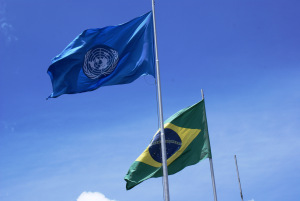
    UN brazil

    Image by Ben Tavener via Flickr.

    Under the Lula da Silva administration, Brazil began to actively seek a larger profile in international politics, ostensibly with a view to a permanent, veto-endowed seat on an eventually reformed UN Security Council. This presented the country with a conundrum: in UN praxis, particularly among established powers, there is a clear connection between global relevance, military capacity, and the willingness to use force remedially, beyond self-interest, to help those in need—as foreseen by R2P as implemented by the UN. Brazil’s historical normative commitments, however, are rooted in a combination of a highly traditional regional security culture—which equates sovereignty exclusively with non-intervention—and a healthy postcolonial scepticism of multilateral initiatives born in the North. Arguably, the most strongly held of these commitments is a profound aversion to the use of force. Faced with a choice between staying true to its original traditions and fulfilling the expectations placed on global players—as exemplified for example in R2P’s acceptance of the use of force in defence of human life—Brazil launched RwP as an attempt to reconcile these factors, remain active on the international stage, and render R2P both more relevant and less prone to misuse.

    The Libya effect

    NATO’s 2011 Libyan intervention created a trust deficit between its leaders and the BRICS countries, who had been excluded as non-permanent UNSC members from the elaboration process for its enabling Resolution 1973. These states emerged from the experience highly doubtful of Western motives, and they took as a lesson from the Libya intervention that the use of force could have an opposite effect from that intended, effectively distancing a crisis situation from a lasting solution.

    Beyond the immediate concerns related to the intervention’s mandate, the debate over the Libyan case took on contours that resonated with the larger tension between the established powers and emerging players such as the other BRICS countries and Brazil. Substantial divergences remain over R2P’s implementation and particularly its third pillar, which can be used to authorize military force. R2P’s shift in emphasis between understandings of sovereignty has become symbolic of some emerging powers’ resistance to the normative dominance of established powers, making the principle a key rallying point in the ideational skirmishes resulting from a changing global distribution of power. This expands the debate over the RwP initiative beyond its immediate link to the Libyan case and links it firmly to broader issues of global governance. The R2P debate has become a not only a key element of some emerging powers’ challenge to the established distribution of power, but a key locus for increased targeted consultation and cooperation in mounting that challenge. In addition, the intervention debates have become an important stage for emerging powers constructively to give normative content to their challenge to the established order, allowing them to move beyond what some have termed an obstructionist stance.

    The “Responsibility while Protecting” concept

    The RwP concept was launched on 9 November 2011 and floated explicitly as a touchstone for further debate within the United Nations. This targeting would become important later on, as it meant that in characterizing R2P and mobilizing its history, the note limited itself to the concept’s course within the United Nations system, referring for example to its inclusion in paragraphs 138-139 of the World Summit Outcome Document but not to the principle’s original formulation by the International Commission on Intervention and State Sovereignty (ICISS). As such the RwP note was intended less as a normative innovation than as an attempt to shape the norm in terms acceptable to the Global South.

    The primary contribution of the note was its establishment of a set of guidelines to orient the Security Council in contemplating an R2P-based intervention. These guidelines focused on two main topics: limiting the use of force, and the strict chronological sequencing of R2P’s three pillars. The RwP note posits that force should only be used as a last resort (an item already included in the 2011 ICISS Report that launched R2P), and subject to a limited and well-defined mandate implemented under conditions of complete accountability in the field. Brazilian diplomats attempted to appropriate the “do no harm” principle, known from the Hippocratic oath, even arguing that one death from an intervention is too many. These reservations were read correctly by many Western states as a reaction to the perceived excesses of NATO’s foray into Libya, and an attempt to put strict limits on the level and type of force authorizeable under R2P.

    The document’s real element of innovation, and the eventual centre of the debate it created, is its call for the strict political and chronological sequencing of R2P’s three pillars. This was viewed by Western states as too limiting, both in the field, and of the flexible diplomatic responses required of the Council in dealing with a crisis. The threat of force, it was argued, is often subjacent in making diplomatic initiatives work, and taking this option off the table could tie the international community’s hands. Indeed, the note’s Brazilian authors later replaced strict chronological sequencing with the toned-down notion of “prudential sequencing”.

    The reception of RwP

    Initially received coolly by both Western and Southern states, the RwP note nonetheless played a crucial part in both moving R2P forward normatively and in stimulating the inclusion of Southern states into the intervention debate. Despite initial strong criticism, the initiative did shape how established and rising powers interacted in the ensuing UN debates on R2P and intervention more broadly. There are four main criticisms:

    1. that the concept bears little value added, merely repeating provisions already present in the 2001 ICISS Report;
    2. that the initiative was a Trojan horse, designed to limit Western powers’ autonomy and to prevent the further institutionalization of R2P;
    3. specific elements regarding feasibility of RwP’s concrete suggestions, such as sequencing, proactive monitoring, and further limitations on the use of force;
    4. the contention that RwP’s confuses jus ad bellum (R2P’s main focus) and jus in bello (rules for conduct once war has broken out);

    Despite these criticisms and Brazil’s abandonment of its role as a norm entrepreneur, the RwP note has continued to structure global diplomatic debates on intervention, with a focus on reigning in Western action through stricter guidelines in the wake of R2P’s crisis of legitimacy after Libya. It has done so in three main areas:  advancing the importance of some form of relational sequencing of R2P’s pillars; increased restrictions on the use of force; and more proactive monitoring by the Security Council of the following of guidelines by ongoing missions.

    Brazil’s role as a norm entrepreneur on intervention issues remains tied to the RwP concept. The initiative was withdrawn after it did not elicit the desired level of support, and by the time its potential had been realized, internal changes in Brazil and its Foreign Ministry had made continued advocacy politically unviable. Despite attempts to revive a strong role for Brazil in the R2P conversation through efforts in the General Assembly in 2015-2016, crippling fiscal austerity and the paralyzing political crisis which began in April 2016 have temporarily but severely limited Brazil’s ability to proactively advance normative initiatives. Nevertheless, the desire remains to fulfill the country’s natural function as a bridge-builder between North and South on intervention issues, and Brazil is sure not to remain absent for long from the ranks of those crafting R2P’s future contours.

    Kai Michael Kenkel is Associate Professor in the Institute of International Relations at the Pontifical Catholic University of Rio de Janeiro and Associate Researcher at the German Institute of Global and Area Studies. He has published extensively on R2P, with a focus on Brazilian policy, including three edited volumes and articles in Global Governance, Global Responsibility to Protect and  International Peacekeeping.

  • Sustainable Security

    Following President Rouhani’s success in last August’s election, relations between the United States and Tehran have improved substantially, partly because of the election result but also because the Obama administration has a more positive view of Iran. There is no guarantee that the US election in 2016 will result in an administration sympathetic to further progress. This element of uncertainty will be factored into the policy-making process of the Rouhani administration. Even so, prospects for a negotiated settlement to the nuclear issue are the best they have been for a decade and it follows that if an agreement is concluded, this is likely to have a pronounced effect on Iranian foreign policy as it finds itself in a more positive international environment.

    The Ahmadinejad Legacy

    President Luiz Inácio Lula da Silva is greeted by the president of Iran, Mahmoud Ahmadinejad. Source: Wikipedia

    President Luiz Inácio Lula da Silva is greeted by the President of Iran, Mahmoud Ahmadinejad. Source: Wikipedia

    The flamboyance and the sometimes inflammatory rhetoric of the Ahmadinejad administration (2005-13) disguised a pragmatic foreign policy that combined a degree of confrontation on the nuclear issue with the enhancing of contacts with many countries across the global south, including left-leaning states in Latin America and numerous states in sub-Saharan Africa. It also sought to maintain reasonable links with Russia and China while limiting links with the West. While acceptable to much of the “Iranian street”, it was at odds with the liking of elements of western culture by young Iranians and the nuclear issue was deeply problematic in terms of the impact of sanctions.

    While much is made of their role in bringing Rouhani to power and then to the negotiating table, the reality is rather different. Sanctions were effective, in part, because of the parallel impact of internal economic mismanagement by the Ahmadinejad government. Thus, if the Rouhani government improves the management of the economy then even the modest sanctions relief already promised will combine to enable the government to benefit through early respite from recent economic woes.

    One other key factor is that Iran’s standing in the region, including the Arab world, has been damaged by its support for the Assad regime in Syria. Under Ahmadinejad, Iran saw the Assad regime as a strong and necessary ally, especially in combination with the Maliki government in Iraq. But as the war in Syria has worsened, and as the violence in Iraq degenerates towards a civil war, many states blame Iran. Regional powers such as Saudi Arabia and Egypt hold Iran partly responsible for the violent suppression of the Sunni majority in Syria, and states beyond the region believe Iran bears some responsibility not just for that but also for the possible spread of the war to Lebanon.

    Conservative Strategy

    Hassan Rouhani speaks in Mashhad during his presidential campaign

    Hassan Rouhani speaks in Mashhad during his presidential campaign Source: Wikimedia

    Rouhani’s victory was singularly impressive in that he gained an absolute majority on the first ballot against four relatively conservative opponents on a 72% poll turnout. While this has given him considerable authority, most power still lies with the Supreme Leader. However, Ayatollah Khamenei has to be aware of the popularity of Rouhani, a matter made more difficult for him by Rouhani’s preference for avoiding a personality cult. While the election gave Rouhani a clear mandate for negotiating with the US, conservative elements are regrouping.

    For these elements a particular concern is the election of the Assembly of Experts – the parliamentary upper house, which selects the Supreme Leader – that are due in September this year. Their fear is of a buoyant Rouhani government that will damage conservative prospects still further following last year’s reversals. It appears to be for this reason that they have sought to persuade the Supreme Leader to expand the negotiating team at the Syria peace talks in Geneva to include more hard-line elements and to have a Majlis (parliamentary) oversight body for the whole process. This would be dominated by conservatives. Rouhani’s Deputy Foreign Minister, Seyed Abbas Araqchi, has stated officially that the negotiating group remains accountable to the Supreme National Security Council, not a Majlis body, but there are reports of more members recently being appointed to the group.

    What this means is that the Rouhani government will have a strong interest in developing policies that are attractive to the domestic constituency as soon as possible. The emphasis will undoubtedly be on the nuclear issue and getting further sanctions relief which, in combination with better economic management, could ensure palpable improvements in the economy and consequent political popularity. This, though, is not enough and liberalising economic reforms such as removal of subsidies may even exacerbate short-term economic difficulties. It follows that the Rouhani government will be looking closely at ways of increasing Iran’s standing in the region and beyond.

    Developing Foreign Policy: Iran in the world

    A key aspect of the Iranian outlook is a belief in Persia’s very proud history, one that extends over thousands rather than hundreds of years, and the consequent belief that Iran has not been realising its potential as one of the world’s potential great powers. This view of historic greatness transcends religion, even if Iran sees itself also as the centre of the Shi’a Muslim world. Iran has a population of 80 million, a little less than Egypt at 85 million and Turkey at 81 million. Egypt has formidable internal problems and a weak non-oil-based economy; Turkey is far stronger in terms of economy, even if it, too, lacks significant fossil fuel reserves. Since its 2013 counter-revolution, Egypt is also increasingly reliant on Saudi Arabia, Iran’s greatest rival for influence in the Gulf and wider Middle East.

    Iran has all the problems of a near-moribund economy but has remarkable potential for development given that it has close to 10% of world oil reserves and 15% of gas reserves. The latter is largely shared with Qatar because of the huge reserves under the Gulf. There have so far been few problems of delineating boundaries – indeed relations with Qatar remain quite good despite major differences on other issues such as Syria, where Qatar, with Turkey, strongly backs the anti-Assad rebellion.

    Asia or Europe?

    Iran Foreign Minister Javad Zarif walks with EU High Representative Catherine Ashton at the EU +3 and Iran talks, November 2013.

    Iran Foreign Minister Javad Zarif walks with EU High Representative Catherine Ashton at the EU +3 and Iran talks, November 2013. Source: EEAS (Flickr)

    The issue for Iran relates largely to where it seeks to develop its economic and political alliances. To the immediate east the borders with Afghanistan and Pakistan are hugely significant, especially in the case of Afghanistan where opium and refined heroin smuggling across the border has cost the lives of hundreds of Iranian border guards. Iran has close links with the north-west parts of Afghanistan and has no liking for the Taliban. It is suspicious of Pakistan because of radical Sunni Islamist elements within the state, its long-term support for the Taliban, close security ties to Saudi Arabia and the precarious security predicament of the Pakistani Shi’a community, but still seeks to improve relations, not least through exporting gas. The originally planned Iran-Pakistan-India pipeline is going ahead as far as Pakistan. Iran will further increase its links with Afghanistan, where it has greatly increased aid in recent years, especially to projects in the north-west of the country.

    India and China are both significant importers of Iranian oil and gas and China has been particularly useful to Iran in two respects. One has been long-term investment in the development of new oil and gas fields, and it remains much appreciated that China persisted with this when relations with the US were at their lowest. The other has been China’s supply of carefully selected weapons, especially shore-based anti-ship cruise missiles. Iran will maintain close links with China, but will not eschew improved relations with India, seeing it as a useful counter-balance to Pakistan.

    The links with southern and eastern Asia will remain highly significant in terms of Iranian foreign policy but it is already clear that a priority will be to improve relations with neighbouring Turkey, already demonstrated by the meeting between Foreign Ministers Mohammad Javad Zarif and Ahmet Davutoglu in Tehran last November. In spite of considerable differences over Syria, the countries have good relations in other respects, and Turkey’s past role in trying to defuse the nuclear issue remains appreciated. Trade relations between Iran and Turkey have expanded greatly in the past decade.

    It is highly likely that Iran will seek a much closer relationship with Turkey, seeing the two countries together comprising an axis of influence linking Europe and Asia. The Turkish attitude to this is likely to be very positive, seeing it as a useful factor in increasing Turkey’s significance for the European Union. This does mean that the Rouhani government has an added interest in seeing a scaling down of the Syrian War. It is probable that a Turkey/Iran connection is more important to Tehran than the much vaunted Lebanon/Syria/Iraq/Iran “Shi’a crescent”.

    The rivalry with Saudi Arabia remains pervasive and is a crucial proxy element in the Syrian conflict but Rouhani’s personal links with Saudi diplomats in the past, combined with Iran’s need to see the war scaled down, means that even here there may be potential for progress. Further improving relations with the US will be a priority but the Rouhani government recognises the risk of sudden changes in US leadership in less than three years time. This means that European links remain useful but Iran does not look to the west to ensure its standing in the world. Turkey, China and India are more significant and this will remain as long as Rouhani is in power. Of these, Turkey is probably the most important.

    Implications

    Rouhani has barely a year all told to build on the considerable support he gathered last year, and this is against a background of entrenched conservative and theocratic elements that will work hard to limit his capacity. While he will give ground on nuclear issues and may work towards a Syrian settlement, if Iran is allowed to participate in Geneva ll, there is a risk that this can be presented by his opponents as a sign of weakness. Economic progress might blunt this but an additional way forward is to engage in a much more active foreign policy. One consequence of such a shift to the north and east is that Iran may not see Europe as important to its interests to the extent that Europe sees Iran. This is a reflection of more general global changes, bringing its own challenges.

    Paul Rogers is Global Security Consultant to Oxford Research Group, for which he writes monthly security briefings.  He is Professor of Peace Studies at the University of Bradford and author of numerous books including ‘Beyond Terror’. Paul writes a weekly column for openDemocracy  and tweets regularly at @ProfPRogers.

    Featured image: President Rouhani delivers remarks at the Hilton Hotel in New York City, September 2013. Source: Asia Society (Flickr)

  • Sustainable Security

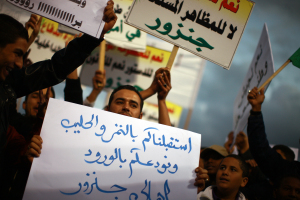
    A crowd of demonstrators participating in a protest against the ongoing use of weapons by rebel militias inside Tripoli and accompanying atmosphere of lawlessness wave banners demanding disarmament and the creation of a national army. The newly-formed Libyan government is struggling to assert itself over the disparate power actors who emerged over the past year.

    A crowd of demonstrators participating in a protest against the ongoing use of weapons by rebel militias inside Tripoli and accompanying atmosphere of lawlessness wave banners demanding disarmament and the creation of a national army. The newly-formed Libyan government is struggling to assert itself over the disparate power actors who emerged over the past year.

    As the price of oil goes down, the pace of freedom goes up… As the price of oil goes up, the pace of freedom goes down…” So says New York Times columnist Thomas Friedman, who argues that the first law of ‘petropolitics’ is that the price of oil and the pace of freedom are inversely correlated in countries “totally dependent on oil” for economic growth. Friedman’s attempt to link economic oil dependency and political freedom is an interesting one, which could go some way towards explaining why many of the world’s top oil-exporting countries are governed by heavy-handed authoritarian regimes. However, the correlation between recent oil price spikes and anti-authoritarian action – particularly in the Arab Spring – challenges Friedman’s assessment.

    Rather than being driven by drops in oil revenues for authoritarian regimes, popular unrest and armed resistance  in countries such as Libya may in fact be correlated with the price of oil remaining high. Inward pressure caused by oil price spikes on petroleum-fuelled supply chains for basic commodities can exacerbate already harsh living conditions, galvanising rebel factions to form a unified anti-authoritarian front against a regime that can no longer ensure price stability for essential goods. This seems true of the 2011 uprising in Egypt (the world’s largest wheat importer), as bread prices rose drastically following the doubling of global wheat prices between June 2010 and February 2011. The impact of high oil prices on the production, shipping and distribution of staple commodities such as corn and wheat – both of which saw severe price escalations of near 40% in 2008 – can lead to social unrest and, in the case of Egypt, the toppling of an authoritarian regime.

    High oil prices mean freedom on the rise?

    Since December 2010, when mass protests began gathering steam in Tunisia, oil prices have remained consistently high, hovering at $82 per barrel. Is it a coincidence that in September 2011, when rebels overtook the coastal town of Bani Walid, one of Colonel Gaddafi’s last strongholds, oil was just above $82 per barrel and the FAO food price index had reached a ten-year high? While oil revenues may be a temporary source of political stability for some authoritarian regimes, the pressure of increasing price volatility on supply chains, due to scarcity in supply, can convert to instability downstream as oil prices have a compounding impact on food prices. Indeed, in December 2010 just a week before the self-immolation of Tunisian food vendor Mohamed Bouazizi, New England Complex Systems Institute a Cambridge-based organisation comprised of faculty from Harvard, MIT and Brandeis, warned the US government that global food prices were about to cross a socially dangerous threshold. If anti-authoritarian action is any indication of freedom ‘on the rise’ then high oil prices in oil-dependent states are at least one major factor.

    Of those countries mentioned in the International Energy Agency’s 2011 list of top oil exporters, ten out of fifteen are classed by Freedom House as ‘Not Free’. Freedom House, ‘an independent watchdog organisation dedicated to the expansion of freedom around the world’, base their rankings on two broad categories: political rights and civil liberties. The former they define by a country’s electoral process, degree of political pluralism and level of participation/ functioning of government; the latter by degree of freedom of expression and belief, associational and organisational rights, rule of law, and personal autonomy and individual rights. The irony, according to Friedman, is that Western dependence on oil imports from countries which are ‘Not Free’ has channelled revenues to authoritarian regimes that oppose freedom. This paradox undermines Western credibility as champions of democracy. In a post-9/11 world, where militant extremists reportedly seek safe harbour in oil-exporting states like Saudi Arabia, the consequences of Western oil dependency undermine the West’s long-term security goals. But, when it comes to Friedman’s equation for ‘petropolitics’, the reverse may actually be true. Recent events such as the Arab Spring demonstrate that as the price of oil rises, impacting staple commodity prices, so too does the need for change – change that is blocked by Western dependence on remaining regimes.

    Bottom-of-the-barrel security

    Western countries reliant on fossil fuel imports from nations ruled by authoritarian regimes are suffering from a crisis of legitimacy – a crisis which could render us more insecure in the long term. In Algeria, where the Arab Spring has not resulted in full on revolution, violent extremists recently made their presence felt at the ‘In Amenas’ gas plant, brutally murdering 37 expatriate workers. The plant, which is jointly operated by BP, Norway’s Statoil and Algerian state oil and gas company Sonatrach, is a major supply source for Western markets. Algeria is responsible for roughly 12.2 billion barrels of crude oil reserves. 85% of Algeria’s oil exports are destined for European and North American markets. Under the leadership of Abdelaziz Bouteflika, whose five year executive terms are renewable indefinitely, Algeria certainly does not rate highly on the list of Freedom House ‘Freedom Ratings’. Military and intelligence services strictly monitor and interfere with open elections. But the Arab Spring may not ever reach Algeria precisely because of the stability brought to the country by a Western-funded heavy-handed regime, which goes to great lengths to protect the general population from militant Islamist extremists and pro-democracy activists alike. Saudi Arabia and UAE are governed by similarly oppressive regimes; regimes which subvert democracy in favour of ‘stability’. Both supply oil and gas to the West. Both benefit from revenues gained through Western dependence in spite of their heavy-handedness.

    Interests versus values

    The Arab Spring has been full of unfortunate surprises linking former and current administrations to corrupt leaders. Photos of a smiling Tony Blair, getting up close and personal with much maligned Colonel Gaddafi, were a hit in the mainstream press as well as online following the collapse of his regime. Not long before that, the Bush Family’s close ties to the Saudi royal family did little to lend credence to their Middle East pro-democracy campaigns in the early 90s and 2000s.

    Germany is in a similarly awkward position as the the largest energy consumer in Europe, with oil making up 38% of Europe’s overall consumption in 2011. Germany is Russian state-controlled energy giant Gazprom’s biggest European customer with 34% of total sales volume of Russian ‘blue fuel’ destined for German markets last year. There was therefore more than a hint of hypocrisy in Angela Merkel’s recent remarks during a visit by Vladimir Putin to a trade fair in Hanover that Russia ‘needs more NGOs’. The statement was made in regards to a Russian law passed last year requiring all NGOs that receive overseas funding to register as  ‘foreign agents’. Topless Ukrainian activists from the pro women’s rights group ‘Femen’ made their presence felt at the trade fair, drawing attention to  Russia’s crackdown on civil society groups and independent media organisations. Russia’s authoritarianism is a key element of the Putin government, but the issue arguably receives little mainstream coverage in the West compared to the Middle East.

    Germany and, by extension, Europe’s de facto dependence on Gazprom to meet their energy needs provides yet another example of why Western countries need to seek develop a more sustainable energy security strategy. It is difficult to legitimately champion broad concerns about upholding civil protections, when some of your largest business partners engage in the shadowy practice of denying basic freedoms to their own citizens.

    Renewable energy… and freedom?

    In light of the above we can welcome new approaches to energy security, which are aimed at reducing dependence on fossil fuel imports from authoritarian states. The Obama Administration’s ‘All of the Above’ energy strategy, as well as the pragmatism which the European Union, led by Germany, has shown in pushing forward a low carbon agenda are both steps in the right direction. Obama has pledged to double American energy efficiency by 2030, setting aside $2 billion over 10 years to support research into ‘a range of cost-effective technologies’, including electric vehicles, domestically-sourced biofuels, fuel cells, and domestically-produced natural gas. The plan also includes scope for reducing oil imports, while boosting renewable electricity generation from wind, solar and geothermal sources. Although Obama’s plan is far from low carbon, it shows promise. By comparison the UK Government, which at one time pledged to be the ‘greenest government ever’, has attempted to push forward its nationwide low carbon transition through the establishment of a Green Investment Bank. However, fairly recent public squabbles in the UK between Ed Davey, Secretary of State for Energy and Climate Change and Chancellor George Osborne the UK’s finance minister, have called that agenda into question.

    Friedman’s claim of an inverse correlation between high oil prices and authoritarianism is flawed. But his point about ‘petropolitics’ is still crucial to security, not only because he tries to link oil price fluctuations to authoritarian politics, but also because he highlights how Western dependence on foreign oil provides significant revenue streams on which remaining authoritarian governments can rely. It is also important to point out that as the global price of oil becomes more volatile due to price instability (see: ‘peaky behaviour’) the economic stability of authoritarian regimes that have consolidated their power bases around fossil fuels will almost certainly erode. Moreover, as the impact of oil prices continue to destabilise staple commodity prices, authoritarian regimes will almost certainly come under increasing pressure from their own populations to step down. Western countries that have formed dubious partnerships with these regimes in order to meet their energy security needs will risk further embarrassment when these regimes are toppled by the inevitable anti-authoritarian movements. Western leaders might then stand by and wait to pick a winner – a dubious strategy at best – in order to ensure that supply shipments are not further destabilised. But is this sustainable?

    Renewable energy is not the most obvious factor for bolstering the strength of nations. But it is fast becoming clear that Western dependency on fossil fuel imports from countries governed by heavy-handed regimes cannot go on. The International Energy Agency has recently announced that power generation from renewable sources worldwide will exceed that from gas and be twice that from nuclear by 2016. That’s a positive sign. As for oil, we will have to wait and see. But if the restoration of Western legitimacy as champions of the “free world” is a top priority for Western leaders, then more support for domestic renewable energy growth is essential.

    Phillip Bruner is Founder of the Green Investment Forum and a guest lecturer in global political economy at the University of Edinburgh

    Image source: United Nations Photo

  • Sustainable Security

    Western states are growing increasingly reliant on private military and security companies. Fully understanding the privatization of security and its effects on sustainable security requires the inclusion of a critical gender lens.

    Introduction

    In 1999, the American private military contractor Dyncorp hired Kathryn Bolkovac as UN International Police Task Force monitor in Bosnia-Herzegovina. In the course of her work Bolkovac raised allegations that private contractors and UN employees were trafficking and sexually exploiting young girls. In 2002, a UK court acknowledged that Bolkovac was wrongfully dismissed for bringing the story to light, but nobody was ever prosecuted for the alleged sex trafficking.

    Bolkovac’s story — dramatized in the movie The Whistleblower  — captures perfectly some of the challenges to accountability when security functions are outsourced to the private sector and performed by transnational security forces. Security privatization reduces transparency and accountability in ways that exacerbate and make less visible the gender inequalities and gender-based violence that pervade militarized security contexts. Moreover, security privatization increases the profitability of insecurities, making it more difficult to tackle the causes, including gendered causes, of insecurity. Understanding the privatization of security and its effects on sustainable security requires the inclusion of a critical gender lens.

    PMSCs and gender: an emerging challenge

    15245844288_2026206f77_o--1-

    Image by chuck holton via Flickr.

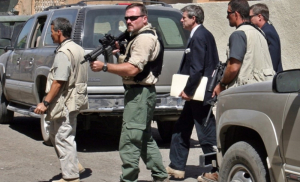
    Over the past three decades a new challenge to sustainable security has emerged: the growing reliance on private military and security companies (PMSCs) by Western states, international organizations, non-governmental organizations, and transnational corporations. PMSCs offer a wide range of services from logistical support, intelligence, training, armed and unarmed guarding and protection, to reconstruction and more. The US-led wars in Afghanistan and Iraq have shown that today waging war is contingent on heavy involvement from the private sector. Private contractor numbers have trailed and at times outpaced US troop levels in the wars in Afghanistan and Iraq. In February 2010, the US DoD employed more than 100,000 private contractors each in Afghanistan and Iraq.

    A number of high-profile cases have highlighted the problems associated with the use of private contractors in Iraq and Afghanistan. Private contractors were involved in the abuse of prisoners at Abu Ghraib and the 2007 shooting and killing of Iraqi civilians in Nisour Square. Allegations of war crimes, poor working conditions, sexual harassment and human trafficking, and disregard for local populations have come to shape the public image of the private security industry over the past two decades.

    In this context, gender has become part of the industry’s attempts to improve its reputation. Gender considerations have made it into the voluntary International Code of Conduct for Private Security Providers that came into effect in November 2010. The International Code of Conduct explicitly addresses gender in three paragraphs on gender-based violence, selection of personnel, and harassment-free work environments. Gender has also been declared ‘good for business‘ by the private security industry. Female employees of PMSCs are seen as useful to conduct security checks on women or to foster positive interactions with local populations, and thus seen as instrumental to operational effectiveness. This attention to gender, while positive on the surface, has mostly served the purpose of creating greater legitimacy for the industry. It has not addressed the larger impacts that outsourcing have on women’s claims to greater and equal participation in the military sphere and the gendered impacts of the use of private forces in local contexts.

    A critical gender lens on private security

    Gender is not just a ‘problem to be solved’ for private contractors, but is fundamental to the reorganization of force through privatization, to the functioning of the private security industry, and to how the industry legitimizes itself. The greater use of private force is part of the broader neoliberal transformation of militarized citizenship that has also entailed a shift from conscription to all-volunteer forces in many Western states. This reorganization of public force has meant an end to the male citizen-soldier model and the greater integration of women into all-volunteer forces. The greater reliance on private security has occurred alongside to the greater integration of women into Western public militaries. While some decry the feminization of public militaries, others have shown how PMSCs actively rely on hyper-masculinity in portraying themselves as more effective security forces vis-a-vis the public sector.

    PMSCs that provide security services primarily recruit from the army and special forces. In doing so, they replicate and even reinforce the gendered division of labour present in the public military sphere. However, PMSCs have also made a concerted effort to distance themselves from the hyper-masculine images of trigger-happy burly ‘cowboys’ and shift towards a softer and more legitimate image of masculinity, shedding the hyper-masculine militarized image for one emphasizing humanitarianism, protection, professionalism, and expertise. At the same time, privatization sidelines and depoliticizes questions of gender equality in the military sphere. There is neither publicly available data on women in the private security industry nor public debate on their marginalization within the industry. By its very logic, profitability drives the private security sector and not questions of citizenship and equal participation.

    Gender also intersects with race and citizenship to shape the division of labour in the globally operating private security sector. A large segment of the workers hired or subcontracted by PMSCs comes from the Global South. The globally operating private security industry can be thought of as a hierarchy of masculinities. Western contractors are at the top of this hierarchy, and so-called third-country nationals (TCNs) from the Global South sit at the bottom. Profitability is in part achieved through the exploitation of this vulnerable migrant labour force.

    The outsourcing of military security functions to private companies has allowed a global rescaling of labour recruitment in support of Western military operations. As data from the US wars in Iraq and Afghanistan show, a majority of contractor labour is made up by ‘third-country’ and host-country nationals and not by US citizens. For example, of the more than 200,000 DoD contractors working in Iraq and Afghanistan in February 2010 (mentioned above), less than 40,000 were US citizens. The racialized hierarchy among contractors of different citizenship is evident not only in pay and working conditions, but also in the kind of work performed. While local and migrant workers perform much of the logistical support work, their proportion is particularly high when it comes to the more dangerous armed security work.

    Conclusion

    Simply bringing consideration of gender into the private security industry is not a sufficient enough means of addressing the problems that security privatization poses for sustainable security. Conflict is often justified and waged by appealing to gendered notions of security: masculinized protectors and defenders, and feminized and vulnerable populations in need of protection. Private actors feed into this gendered discourse, portray themselves as masculinized protectors, and benefit from continuing insecurities and global inequalities. As insecurities create new market opportunities for the private security industry, gendered discourses of protection and gendered divisions of labour are being reinforced while sustainable security becomes more elusive. We need to be mindful of security privatization and the fundamental ways in which it is gendered as we work towards remaking security in more sustainable ways.

    Maya Eichler is Canada Research Chair in Social Innovation and Community Engagement and Assistant Professor of Political Studies and Women’s Studies at Mount Saint Vincent University.

  • Sustainable Security


    NPT Double Standards 4President John F. Kennedy once said:

    “You cannot negotiate with people who say what’s mine is mine and what’s yours is negotiable.”

    However a small group of states (including the state of which Kennedy was President) have done just this in relation to the possession of nuclear weapons for decades. Five of them (China, France, Russia, the United Kingdom and the United States) have held the position of being the privileged few allowed to possess nuclear weapons under the terms of the 1968 Treaty on the Non-Proliferation of Nuclear Weapons (NPT)  while all others agree to forego developing the ‘ultimate weapon’ in return for access to civilian nuclear technology. Three others have refused to sign the treaty (India, Israel and Pakistan) and instead developed their own nuclear weapons (overtly in the cases of India and Pakistan after 1998 and covertly in the case of Israel from the late 1960s) happy to free-ride on the lack of global proliferation ensured by the treaty. To paraphrase Kennedy, the decision of these eight states (nine if you include North Korea from 2003 onwards) to inflict mass destruction on an adversary is theirs, but everyone else’s decision to acquire the same capability can be negotiated away.

    What is perhaps most extraordinary about the NPT ‘grand bargain’, as it is often called (although given that the five nuclear weapon states have exactly the same access to civil nuclear technology as the rest of the signatories, ‘bargain’ here really is a polite term for ‘scam’), is that it has remained largely intact for so long. For something built on such a seemingly unsustainable basis as an institutionalised double standard (particularly one that relates to the ultimate survival of nation states), the fact that its indefinite extension was negotiated in 1995 and that the treaty is still with us defies most conventional wisdoms about the ‘dog-eat-dog’ nature of self-help politics in an anarchical international system. Yes, the treaty may have been abused by some states and used as a cover to develop covert weapons programmes (Iraq, Libya, North Korea and possibly Iran) and one state has even withdrawn from the treaty under Article X (North Korea in 2003), but these are four cases in a treaty that boasts 189 signatories.

    Challenging sustainable security

    In many ways the success of the treaty regime provides one of the most robust challenges to the whole concept of sustainable security. Why bother addressing the root causes and underlying drivers of nuclear proliferation if you can effectively stem the flow of nukes by maintaining a treaty which promotes a ‘norm’ of non-proliferation as good international behaviour, and allows you to deflect charges of hypocrisy as long as you make encouraging noises about ‘eventual’ nuclear disarmament at some unspecified point in the future?

    However, like a building with rotten foundations, it may be that what has appeared to be a relatively sustainable global non-proliferation regime is far less stable than many believe it to be. Recently, Egyptian negotiators walked out of the UN talks that are held in the lead-up to each five yearly review conference of the NPT. This dramatic move from Egypt was a public expression of the long-held private frustrations of its diplomats who, after being effectively promised serious negotiations towards a Middle East Weapons of Mass Destruction Free Zone (WMDFZ), in return for their support for the indefinite extension of the Treaty in 1995 (and re-affirmed explicitly at the review conference in 2010), face the continued postponement of such talks. The problem is, Israel has no interest at all in such a zone – why would it? A combination of the NPT and Western action against would-be proliferators such as Iraq, Libya and Iran have meant that the construction of a WMDFZ in the Middle East would mean that Israel would either have to join and give up its position as the only state in the region with nuclear weapons, or be the one state in the region that refuses to join. Either way, it would also mean attracting global attention to its nuclear weapons arsenal, something Israel has managed to successfully avoid of late in all the focus on the weaponisation concerns over Iran’s civil programme.

    Calling it like it is

    Before leaving the NPT preparatory talks, Egypt’s Ambassador Hisham Badr explicitly referred to the resolution passed in 1995 that called for negotiations on a Middle Eastern WMDFZ, and called out those that thought they could get away with Egypt sticking to its side of the bargain and getting little in return. His comments challenged the idea that the double standard could be maintained indefinitely when he stated clearly that “we cannot wait forever for this resolution to be implemented.”

    Perhaps the most worrying signs here are the responses to Egypt’s move. Israeli diplomats have effectively said that with the security situation in Syria, in Egypt itself and elsewhere in the region, a WMDFZ is the least of its concerns. The United States has referred to the episode as “theatrics” and in the meantime has pushed on with negotiating a nuclear trade pact with Saudi Arabia. These trade deal talks are taking place at a time when experts are tracking an increase in the acquisition of strategic ballistic and cruise missiles by the Kingdom. The other nuclear weapons states have been conspicuously quiet throughout.

    So rather than seeing this as a sign of the potential unravelling of an unsustainable regime based on a double standard, those who have most to gain from the NPT arrangement (both inside and outside the regime), are betting on this being just another ‘NPT in crisis’ – a moment they assume will pass. Whether this storm will blow over (like a mushroom cloud over the Pacific Ocean…no, sorry that bad pun is stopping right there!) is now THE big question for those concerned about nuclear threats. If the regime falls apart and 189 states are no longer happy to give up nuclear weapons, the simple days of dealing with Iranian and North Korean nuclear ‘crises’ will be looked back upon with great fondness.

    Time for regime change?

    While the NPT regime story is one of a continuing death foretold, it is difficult to see how the all-important 2015 review conference can outrun the double standard that sits at the heart of the regime without all signatories applying some degree of what could be called a ‘sustainable security’ approach. As Egypt’s actions make clear, anything less than a regime specifically geared towards addressing the reasons why some states seek nuclear weapons  – including regional insecurity, conventional weapons imbalances and the prestige attached to nuclear arsenals by their possessors – is a regime existing on borrowed time.

    Ben Zala is a Lecturer in International Politics at the University of Leicester.

    Image source: Wikimedia

  • Sustainable Security

    RC_long_logo_small_4webThis article is part of the Remote Control Warfare series, a collaboration with Remote Control, a project of the Network for Social Change hosted by Oxford Research Group.

    States’ ability to move forward on the issue of lethal autonomous weapons will depend on not only finding consensus on key concepts but also having the will to find concrete outcomes.

    UN_Meeting_of_Experts_Lethal_Autonomous_Weapons_CCW_April_2015

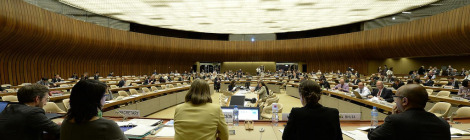
    UN Meeting of Experts on Lethal Autonomous Weapons in April 2015. Source: Flickr | UN Geneva

    April’s meeting of experts at the UN on lethal autonomous weapons systems (often shortened to LAWS or AWS) set out to consider questions relating to this emerging military technology, a continuation of UN talks begun in May 2014. These meetings took place under the aegis of the Convention on Certain Conventional Weapons (CCW), and brought together state representatives, NGOs and academics. The CCW meetings have demonstrated a divergence of views on the ethical and legal concepts that should be employed, and a complex debate that at times felt detached from reality; moreover, without a negotiating mandate there is a fear that the meetings could simply mire the issue in abstract debate, leaving states free to continue developing the technology in the meantime.

    The UN Convention on Certain Conventional Weapons

    For a long time the CCW was a neglected treaty; regarded by states and NGOs as an overambitious and failed attempt to combine elements of international humanitarian law with arms control. By the end of the 1980’s, the CCW appeared to be floundering with only 29 state parties. Yet in recent years, participation has increased and there are now 121 state parties to the convention. A total of 87 countries sent representatives to the first meeting on autonomous weapons, marking a record high level of participation for the CCW. Eighty-eight countries were present at April’s meeting.

    The purpose of the CCW is explicitly “to ban or restrict the use of specific types of weapons that are considered to cause unnecessary or unjustifiable suffering to combatants or to affect civilians indiscriminately.” The CCW is an evolving body of international humanitarian law, with a framework that is dynamically structured to be responsive to the concerns raised by the international community. The recognition that the law is not static is therefore a particular strength, indeed a cornerstone of the CCW.

    The CCW’s talks in May 2014 and April 2015 were undertaken with a mandate “to discuss the questions related to emerging technologies in the area of lethal autonomous weapons systems, in the context of the objectives and purposes of the convention.” A ban on autonomous weapons would join five other CCW protocols on non-detectable fragments, landmines, incendiary weapons, laser weapons and explosive remnants of war. The uptake of the issue of lethal autonomous weapons by the CCW has been unprecedented in its speed, and could indicate a move towards prohibition. However, because there is no negotiating mandate, it could also be a strategic move to engage in these discussions on the part of states keen to engage in the debate of abstract principles, while at the same time continuing to develop the technology. The annual meeting of the CCW in November 2015 will decide formally whether to continue the talks, based largely on the content of the April meeting.

    Autonomy

    The most contentious issue discussed so far is the issue autonomous weapons pose with regard to human control. This issue was discussed through reference to the contested concepts of ‘autonomy’ and ‘meaningful human control’. The United States, the UK, France and Germany are all in favor of the notion of autonomy as a guiding principle. The US was one of the first states to advocate for this concept when its Department of Defense issued the first policy announcement by any country on autonomous weapons systems in November 2012, just three days after Human Rights Watch had brought the issue into the global spotlight.  Interestingly, the directive refers not to ‘fully autonomous’, but to ‘autonomous weapon systems’ that include human supervision. This supports the view advocated by the US at April’s CCW meeting: as long as humans are ‘in the loop’, weapons systems are not fully autonomous and therefore compliant with international humanitarian law. The UK, France and Germany attach human involvement to autonomous weapons systems as well. In a general exchange of views the UK representative assured, “there will be human oversight in this new territory where lethal autonomous weapons systems can go […] Autonomous systems do not exist, and will never exist” (author’s own transcription).

    However, some objected that this was a ‘knockdown’ argument intended to rhetorically shut down the controversy about the lack of human control. The International Committee for Robot Arms Control (ICRAC) is an international association of experts that was sat up with the specific goal of getting governments to talk to each other about the continuous automation of warfare, and was present at both the 2014 and 2015 meetings. ICRAC’s interpretation of the DoD policy was that it was designed to “green-light” weapon systems able to select and engage human targets. Together with 272 experts in computer science, engineering, artificial intelligence, robotics, and related disciplines from 37 countries, ICRAC issued ‘The Scientists’ Call’,  stating: “[G]iven the limitations and unknown future risks of autonomous robot weapons technology, we call for a prohibition on their development and deployment. Decisions about the application of violent force must not be delegated to machines”. Their message was clear, that within such systems, human control would not be ‘meaningful’.

    Meaningful human control

    India and Pakistan expressed confusion over this idea of meaningful human control, observing that the presence of meaningful human control would mean the weapons systems would not then be ‘autonomous’. In their opinion the question should be whether or not independent weapon systems can comply with international humanitarian law: whether they can distinguish between civilians and combatants, make proportionality assessments, and comply with other time-tested legal principles. A counter-argument was raised by Richard Moyes from Article 36 that if discussion is too focused on undefined hypothetical systems’ ability to comply with international humanitarian law, then legal arguments could become separated from reality. In particular, he argued that the law is a human framework applied to humans. A state representative from Greece agreed, saying that autonomous weapons should be addressed ethically rather than legally or technically, as the question is whether or not humans should delegate life and death decisions to a machine. The debate around autonomous weapons’ ability to comply with international humanitarian law is a misguided one if it fails to grapple with the bigger, underlying issues that would be raised. Banning such systems, in fact, is about maintaining something unique in the decision-making process: a human with intent behind the act of killing. Cuba, Ecuador, Pakistan, Sri Lanka and Palestine agreed with this argument and called for a prohibition.

    Potential for convergence

    Consensus was reached on the undesirability of fully autonomous weapons systems. Ambassador Michael Biontino of Germany, who chaired the April meeting, wrote in his report that the following area of common understanding had emerged: “machines or systems tasked with making fully autonomous decisions on life and death without any human intervention, were they to be developed, would be in breach of international humanitarian law, unethical and to possibly even pose a risk to humanity itself.” However, because parties largely disagree about what constitutes human intervention, this statement is of limited value. The contradictory definitions used at the CCW meetings have created a lack of clarity for policymakers; it remains largely undecided what the world would look like if autonomous weapons came into existence.

    The April talks not only give some idea of the shape of the debate going forward, but also of the potential limitations of the CCW talks themselves, as a forum for discussion, but without a negotiating mandate. One significant milestone would be the establishment of a broad, representative and universal Group of Governmental Experts (GGE) next year that would move the discussion from an informal to a formal setting. It has been suggested that the current lack of common language makes this discussion challenging, and that it is critical to avoid rushing into formal discussions. However, it does not seem premature for prohibition to be on the agenda in a body that has been designed to create prohibitions. A GGE seems a necessary next step to keep states focused on a practical outcome.

    Lene Grimstad served as an observer at the 2014 and 2015 Geneva Meetings of Experts on Lethal Autonomous Weapons Systems, and holds a MA in Society, Science and Technology in Europe from the University of Oslo and ESST (European Inter-University Association on Society, Science & Technology) .

    Featured Image: Meeting of Experts on Lethal Autonomous Weapons Systems in April 2015. Source: Flickr | UN Geneva

  • Sustainable Security

    Islamic State (IS) appear to attach considerable importance to dreams and have started publishing dream accounts of martyred jihadists. Do IS see this as a way of ‘calling’ potential lone wolf jihadists to action?

    Over the last decade, several studies have shown that militant Islamists make extensive use of reported night dreams to inspire, announce, and validate violent jihad. Bin Laden himself brought up dreams in one of the first videos released after 9/11. Mullah Omar was understood by his followers to have founded the Taliban, and run his campaign, inspired and even guided by his dreams. Dream accounts can be found of numerous other well-known militants, including Richard Reid, the failed shoe bomber, the two core 9/11 planners, Ramzi bin al-Shibh and Khalid Sheikh Muhammad, and the ‘20th’ suicide bomber, Zacarious Moussaoui.

    This tradition has continued with Islamic State (IS) members and sympathisers who appear to attach considerable importance to dreams. This article updates the discussion and analysis of the role of dreams for IS jihadists, and, through looking at some recent case studies, asks whether IS is publishing martyred jihadist dreams as a way of ‘calling’ potential lone wolf jihadists to action.

    Dreaming in Islam

    mosque-night

    Image by four12 via Flickr

    To understand the jihadi appreciation for dreams, it is important to first understand that dreams are both historically and contemporaneously important in Islam. Indeed, today, Arabic TV programs are replete with dream interpretation programs and the internet is awash with Islamic dream interpretation websites.

    The dream tradition is similar across all the main branches of Islam: Sunni, Shia, Salafi and Sufi, as well as amongst the minority Alevi and Ahmadiyya sects. In the Sufi mystical traditions, dreaming is highly regarded. While Sufis have traditionally paid the most attention to dreams, the more literalist Salafis appear to have become more interested in them over time.

    The Islamic tradition distinguishes between three types of dreams: the true dream (al-ru’ya), the false dream, which may come from the devil (shatan), and the meaningless everyday dream (hulm) which could be caused by what has been eaten by the dreamer and comes from the nafs (ego, or lower self).  The interpretive tradition regarding the “true dream” (al-ru’ya) is a fundamental feature of Islamic theology. The true dream tradition is reported more extensively in the hadith. 

    Islamic dream interpretation differs from Western attitudes to dreams, which, being largely shaped by a scientific materialist outlook of the world, generally see dreams as bearing little or no relevance for people. But in Islam, dreams are understood as, on occasion, offering a portal to the divine will, and are seen as the only appropriate form of future divination. Dreams have a special authority as they are believed to communicate truth from the supernatural world (dar al-haq).  Lamoreux summarises the importance of dreaming in Islamic societies:

    Dream interpretation offered Muslims a royal road that led not inward but outward, providing insight not into the dreamer’s psyche but into the hidden affairs of the world. In short, the aim of dream interpretation was not diagnosis, but divination.

    Based on his anthropological research in Egypt, Gilsenan offers further insights:

    In dreams began responsibilities. Judgements were made. Commands issues. Justifications provided. Hope renewed. Conduct was commented on by holy figures, by the Prophet himself, by the founding Sheik who had died some years before but who appeared with his son and successor.

    Dreams were public goods, circulated in conversational exchanges, valorizing the person, authoring and authorizing experience, at once unique and collective visual epiphanies. Dreams thus constituted a field of force and framed interchange between the living and the only apparently dead.

    There is extensive literature on the art and science of dream interpretation in Islam going back over a thousand years, and scholars like Sirriyeh are emphatic about the importance of the Prophet Mohammed’s God-guided interpretation of dreams. Mohammed’s and his companions’ dreams played a significant role before, during and after the Qur’anic revelation. In the six months before the  revelation began, his wife Aisha said his dreams came true like the ocean’s waves. The Prophet’s famous night journey from Mecca to Jerusalem (Laylat ul-isra wal miraj), in which Muhammed ascended to heaven and was initiated into the mysteries of the cosmos, is understood by many Muslims, though not all, as being in a dream vision (al-ruya can refer to vision and or dream). Mohammed would start the day asking about his companions’ dreams as a source of possible illumination and spiritual guidance. The Prophet’s companion, Abd Allah b. Zayd, is understood to have dreamt the Islamic call to prayer. There are three dream reports in the Qur’an, two reported as received by the Prophet Mohammed. One of these directly relates to the decisive Battle of Badr  (624 CE). The Joseph Sura contains the reported dream experiences of the Prophet Joseph, such as that of the seven fat and seven lean cows.

    The continued vitality and relevance of dreams in the Islam is well shown in the following examples of Islamic State fighters drawn from Dabiq, the Islamic State magazine.

    Recent dream accounts published by Islamic State

    In April 2016 (issue 14) Dabiq published three dream accounts purporting to have inspired Khalid El Bakraoui in his martyrdom operation on the Brussels metro killing 14 people. Khalid’s first dream was a ‘life-changing’ dream in prison in which he fought alongside the Prophet Mohammed against unbelievers. After the Paris 2016 attacks he is reported in the same Dabiq as having had two further motivational dreams. In the second, he ‘arose to a high place, as if I was in space, surrounded by stars; but the sky was the blue of night’. He says he heard a voice telling him he was only created to worship Allah and ordering him to fight for his cause and make his word supreme’. The third dream follows on almost in a sequence as Khalid dreams of his own martyrdom:

    I saw myself on a boat along with Abu Sulayman and another brother. Each of us had a Turkish soldier as a hostage. I had a pistol and Abu Sulayman had a belt. I told him to give me his belt, as I would feel better having it. So he gave me the belt and I gave him my pistol. I then quickly advanced with the Turkish hostage in order to close in other soldiers, two of whom were in front of us. I detonated my belt, killing the soldiers. My head then descended to the ground. One of the brothers working on the operation and Shaykh al-Adnani took my head and said, ‘check to see if he is smiling or not’. I then saw my soul and those of the three soldiers. All of a sudden, the soldiers souls burned and vanished and, suddenly, the banner of Islam – represented in the dream by the flag of the Islamic State – came out of the earth and was shining brightly. My soul then became full of light’.

    He then claimed he heard a voice telling him he had achieved deliverance.

    This tripartite dream account sequence evokes familiar Islamic dream tropes, images and ideas. In the first dream we see the dreamt and visualised conversion to violent jihad, including the ‘presence’ of the Prophet Mohammed which is understood in Islam as denoting a holy dream if the dream message is congruent with the teachings of the Qur’an and hadiths. Prison surroundings are famous, or infamous, for religious conversion dreams as many customary behaviours are circumscribed.

    The second dream report reads as almost from an ancient holy text; high places and mountain tops are traditionally sites of vision. Indeed Attar’s famous C12 epic Sufi poem ‘The Conference of the Birds’ (Farid ud-Din Attar, 1984 (written 1177) is a tale of Islamic revelation and enlightenment, symbolised by the human journey to the mountain top from where and from within Allah/God can be directly known and joined. The instruction to worship, fight and ‘make his word supreme’ would make excellent sense to a pious Muslim as long as the notion of fighting was referenced to the greater jihad of fighting the lower self, the nafs or selfishly orientated ego. Khalid’s membership of IS and the bloody and relentless killing of all peoples of a different religious persuasion (or none) by IS will have been experienced and apparently shared by militant jihadists as an example of the highest call to arms and martyrdom.

    The third dream completes the sequence from the first calling dream to his visualised death and the spiritual testing of the martyrdom operation. Authorisation and sanctity are communicated via the imagery of Khalid’s soul being composed of, or infused with, light while the enemies (Turkish soldiers) clearly have weaker or non-existent souls which may help validate (to themselves and others) their killing even though they are also Muslims. The dream also conveniently defines Islam as Islamic State. And then ‘deliverance’ is signified at the end of this epic dream narration sequence. As propaganda, now to be read by thousands of jihadist and interested potential recruits, almost all of whom may be aware of the potentially sacred nature in Islam of at least some dreams as being divine emanations and commands, this dream story is a classic. Remove the IS context and many Muslims would feel blessed to have received such dreams.

    In the following Dabiq (no 15) a future paradise dream example is quoted:

    Abul-Muthanna as-Sumali (Ali Dirie) was a man of great character and worship. After being imprisoned by the Crusaders for seven years, he was able to flee Canada despite being banned from travel. Upon the official expansion of the Islamic State to the Levant, he rushed to revive the Muslim Jama’ah through his bay’ah. Several weeks later, he had a dream in which the Hur (the maidens of Paradise) gave him glad tidings of martyrdom on a specific date (one which I have forgotten). A week before his martyrdom, several of our friends decided to go shopping for new military attire. He told them he wouldn’t be going with them, because he was expecting martyrdom soon, and narrated to them his dream. When that day arrived ….Abul-Muthanna rushed to battle ….fighting, until he was severely wounded, bleeding until he surrendered his soul to his Lord….May Allah accept him and add the blessing of caliphate we enjoy today to the scroll of his good deeds and that of all other martyrs.

    These issues are the first times Dabiq has contained personal dream reports of significant IS members intending to demonstrate the glorious Allah inspired sacrifice of their martyrs.

    Dreams may also feature in decision-making processes at different levels in the Islamic State organization. It was reported that Abu Bakr al-Baghdadi’s decision to withdraw forces from Mosul in late 2014 was inspired by a dream in which Prophet Mohammed ordered al-Baghdadi to evacuate the city.

    Both IS leaders and members strongly relate to their night dreams and IS have started recently publishing them. Is there a particular purpose to this new propaganda practice using dreams?

    The transpersonal communication of night dreams in Islam

    ‘Heroic’ (in an Islamic form/genre) dream accounts are now being ‘weaponised’ to influence other IS members, followers and jihadi wannabees. We know the media has enormous effect on our dreams. We also know, though this is maybe irrelevant as IS hate Sufis due to their shrine and Shaykh workship, that in the mystical Sufi Islamic groups it is normative for the top Shaykhs to ‘send’ dreams to their followers.

    In April 2005 I interviewed Shaykh Nazim, a famous Naqshbandi Shaykh, who is now deceased, following numerous reports by his UK followers that he was sending them night dreams of spiritual advice. He told me, “Yes, sometimes I send my power in dreams, when necessary.” I asked how he did this, and he said, “First you must take a step, even half a step, away from the material world, and we Sufis have ways to do this”; enigmatic indeed!. Can dreams be implicitly or even explicitly ‘sent’ in some form, or maybe just believed to be so communicated? Such a thought may well seem farfetched and fanciful to Western post-enlightenment minds, but certainly many Sufis think so and such practices have a long history in Sufism.

     Conclusion

    The last two Dabiqs have contained personal dream reports of significant IS members seemingly for the first time. IS recognise and value some kinds of night dream accounts and see a role for them in their movement’s public propaganda war; so why now for this high tech, high media skills Caliphate-named organisation? IS are slowly being degraded from without and are ruthlessly striking at Western symbolic soft population centres; IS are now strongly encouraging their followers to attack western centres; we see a rise in the self-inspired, via the internet and perhaps dreams, of the lone wolf who is previous to their attack, untraceable. A few lone wolves in summer 2016 seem to have responded to IS media exhortations to attack western targets and some seem clearly to have a history of prior mental illness. Does this make them more vulnerable to being influenced by dreams? We don’t know yet. But vulnerable young people on the net who spend a lot of time reading about the ‘heroic’ caliphate and its actions may well start having related dreams.

    Intelligence agents have spoken to me (2012) of the critical role of dreams in motivating potential jihadis from contemplation to decisive action. I was once told of a jihadi dreaming of his future death during anticipated jihad in Somalia, and another agent told me about a prospective jihadist experiencing two different peoples’ contradictory voices debating with him in his dream about whether he should go on jihad. Such uninterpreted and undigested dream images and accounts may conceivably convince a vulnerable young person, possibly after their consulting an IS dream interpretation twitter account and/or their baqiya (IS ‘family’), that their holy mission is through violent jihad. Is it possible then that potential lone wolves, perhaps with histories of mental health problems, believe themselves as being ‘called’ and then in part recruited not only through the internet, but through the sublime power of ‘glorious’ dream accounts of recent jihadi martyrs? We will have to wait for more autobiographical, media and trial accounts to emerge to know.

    Dr Iain R. Edgar is Emeritus Reader at the Department of Anthropology, University of Durham, UK.

  • Sustainable Security

    This post is based on Paul Rogers’ Monthly Global Security Briefings for Oxford Research Group and was originally posted  on 31 July, 2014. At the time of writing (31 July), Israeli Operation Protective Edge had exceeded the previous major operation, Cast Lead of 2008-9. Both operations have involved intensive use of air strikes combined with major ground incursions. The current war is already longer than the 2008-9 war, with no end in sight. Indeed, by the end of July, positions were hardening and prospects for anything longer than brief further humanitarian pause seemed remote. This briefing provides some context for the conflict together with a preliminary analysis of possible consequences.

    The War So Far

    Iron Dome in Operation Protective Edge Source: Wikipedia

    Iron Dome in Operation Protective Edge Source: Wikipedia

    The current war started on 8 July with intensive Israeli air and artillery assaults on Hamas paramilitary targets, intended primarily to destroy or greatly limit the Hamas ability to fire unguided rockets over much of Israel. In spite of the level of force used, the rocket fire continued, amidst growing concern within the Israeli Defence Forces (IDF) that paramilitaries had constructed many more infiltration tunnels than had been realised. A ground assault followed the initial air assault, with this being intended to destroy rocket launch facilities and stores and also interdict tunnels. As a consequence of this assault, the IDF suffered many casualties, including the deaths of 13 men from the elite Golani Brigade in a single day (20 July). Even after 10 days of conflict, with intensive IDF operations against the infiltration tunnels, Hamas paramilitaries managed to get under the border and in a brief attack killed five young IDF sergeants on a leadership training course. One Hamas paramilitary was killed but others appear to have returned to Gaza. Over the course of the war so far, Israeli forces have struck at over 3,700 targets in Gaza while more than 2,700 rockets have been launched by Hamas and other groups from Gaza towards Israel. The death toll among Palestinians exceeds 1,350 and is rising markedly each day. At least 6,000 people have been injured. Israel has lost 56 soldiers and three civilians, and more than 400 soldiers have been wounded. On 31 July, the 24th day of the war, Israel announced the calling up of a further 16,000 reservists, to bring the total call-up to 86,000. There has been considerable controversy over the numbers of civilian casualties in Gaza, especially the hitting of schools, hospitals and a market. UN figures indicate that at least 70% of those killed are civilians, and nongovernmental international support for Hamas has increased substantially. Public opinion in Israel remains very strongly in favour of continuing the war as a means of stopping the rockets and destroying the infiltration tunnels.

    Support for the Adversaries

    Hamas: In the past three years, Hamas has lost much of its international support from governments in the region, even though Gaza has existed in what amounts to an open prison controlled by Israel. The Egyptian government of President Sisi is strongly opposed to the Muslim Brotherhood and regards Hamas as a part of this wider movement. The consequent near-total closure of the common border with Gaza and the control of access tunnels has had a marked economic effect on Gaza, exacerbating its siege status. Furthermore, Hamas’s support for Islamist paramilitaries in Syria has lost it the support of the Assad regime in Syria and, to an extent, of the Iranian government. The recent rapprochement between Hamas and Fatah survives, if currently strained, but causes the Israeli government considerable concern. In spite of all the limitations, Hamas’s paramilitary wing has been able to assemble many thousands of rockets and mortar rounds and has also built a network of robust infiltration tunnels that has greatly exceeded Israel’s pre-war estimates. Hamas as a movement retains considerable support in Gaza, with even the impact of the Israeli air and ground assaults having little effect. Israel: Israel retains a measure of support of many western governments but there are growing concerns at the civilian losses in Gaza. The IDF and the defence industry as a whole have very close connections with their US counterparts. The key missile defence system, Iron Dome, is essentially a US-Israeli joint production, including current plans to set up a new production line in the US. Israel is also able to use US munitions stored in Israel. The US is in a position to put very heavy pressure on Israel but is deeply reluctant to do this at present, mainly because of domestic support for Israel. This support remains high but is declining

    Cast Lead and Protective Edge

    Both the 2008-09 and 2014 Israeli operations have had similar aims – to so damage Hamas that it is massively restricted as a threat to Israeli security. A comparison of the operations so far is indicative. Cast Lead lasted 23 days and ended with a ceasefire brokered largely by Egypt. During that period, Hamas and other groups launched 750 rockets and mortars, all relatively short-range. Israelis lost 13 lives, four of them to friendly fire. Israel killed 1,440 people in Gaza, claiming that half were militants, though Hamas denied this. Since the 2008-09 operation, Israel has deployed the Iron Dome system, and this has intercepted the great majority of approximately 2,700 rockets and mortars fired during Protective Edge.  Hamas has, though, hugely increased its capabilities over the past six years, in spite of its recent political isolation, and has exacted a much higher toll on IDF soldiers during the current ground assault than in 2008-09: 56 so far compared with 13 before. In this sense, the aim of Cast Lead – to substantially degrade Hamas’s crude offensive systems – was a singular failure. Even with the Iron Dome system, vulnerabilities have been demonstrated by the closure of Ben Gurion Airport to several international carriers for several days last week, following a rocket which penetrated the missile shield and landed within a mile of what is Israel’s gateway airport. The loss of so many Israeli soldiers may still seem small compared with the huge losses in Gaza, but the IDF is held in very high regard in Israel.  Indeed, support for the war has likely increased because of these losses and the partial closure of the airport. These appear to have combined to convince many Israelis that, though Hamas is weak and hugely restricted in its location, it represents such a threat to Israel that a protracted war is, if need be, fully justified. The phrase “impregnable in its insecurity” has sometimes been applied to Israel and it is useful in understanding the outlook of a very powerful country that still feels vulnerable.

    The home of the Kware' family, bombed by IDF forces. 8 civilians, including 6 minors, were killed. Gaza, 8 July, 2014. Source: B’Tselem

    The home of the Kware’ family, bombed by IDF forces. 8 civilians, including 6 minors, were killed. Gaza, 8 July, 2014. Source: B’Tselem

    What Now?

    At the time of writing (31 July) it is possible that another humanitarian pause might be agreed and might lead to something more substantial. Assuming that this does now happen, the indications are that the IDF will continue its operations to destroy rockets and tunnels, and Hamas paramilitaries will resist. Given the IDF casualties to date, a pattern is likely to emerge in which urban counter-paramilitary operations will prove both difficult and costly, and the IDF will rely much more on its huge firepower advantage. This is very much what happened with US and coalition forces in Iraq from 2003, and even more so with the Israeli siege of West Beirut in 1982 when at least 10,000 people were killed, the great majority of them civilians. It is already evident that targeting has moved on to the more general Hamas infrastructure, but the very nature of the densely populated Gaza Strip means that the infrastructure for the whole community is also hugely affected. Given the existing impoverishment of the area, the human consequences will be severe, as UN staff have been pointing out repeatedly.

    Consequences

    In all of its operations against Hamas – Cast Lead in 2008-09, the more limited air assault in 2012, and the current war – Israel has sought to severely damage Hamas’s paramilitary capabilities, and decrease its domestic support. In the first two conflicts that objective was not achieved, and it is unlikely that Israel’s current operation will succeed this time around. In spite of Hamas’s greater international isolation, its paramilitaries have this time had a substantial impact on the IDF, and the movement retains domestic support. Moreover, international public opinion has moved heavily against Israel. One of the major changes in comparing the current war with the two previous wars is that the use of social media has hugely expanded, resulting in graphic images being distributed across the region and beyond in near-real time. One effect of this, in turn, is that the more conventional western media reporting is itself becoming more graphic. In spite of a very efficient Israeli information operation, this change is working against Israel’s interests. It also means that Islamist propagandists across the Middle East and beyond are easily able to present the war as a further example of “Zionist aggression”. Indeed, they will also relentlessly point to close US-Israel links, further developing their long-term image of a “Crusader-Zionist war on Islam”, in spite of Secretary of State Kerry’s undoubted personal commitment to achieving a ceasefire. The long-term consequences of this are difficult to read, but could give a boost to radicalisation well beyond Israel and the occupied territories. That alone is an added reason why a ceasefire at the earliest opportunity is not only desirable but essential.

  • Sustainable Security

    Does military integration make renewed civil wars less likely? Evidence from several cases of postwar military integration over four decades reveal little evidence that it contributes to the durability of postwar peace.

    Author’s Note: This article derives from a larger project which was intellectually indebted to the Security Sector Reform Workgroup of the Folke Bernadotte Academy and funded by grant BCS 0904905 from the Social and Behavioral Dimensions of National Security, Conflict, and Cooperation, a joint program of the National Science Foundation and the Department of Defense/Department of the Army/Army Research Office (the Minerva program). That grant funded a conference on military integration after civil wars, which the Peacekeeping and Stability Operations Institute of the U.S. Army War College graciously provided hospitality for and supported; special thanks are due to Raymond Millen and Col. Stephen T. Smith. I am especially grateful to all the participants in that conference, whose research and thinking so deeply informed the project.

    Military integration following a civil war is a common practice, evidenced by the fact that nearly 40 percent of peace settlements for the 128 civil wars from 1945 to 2006 called for some form of integration of combatant military forces. It has become accepted wisdom that integration is crucial to preventing a society’s relapse into war and there is much about this that feels like common sense. After all, a professional, communally representative force could conceivably diminish vulnerable groups’ security fears in a post-civil war environment by:

    • serving as a credible signal of the government’s commitment to power sharing which would make an army less likely to employ violence against the society’s constituent communal groups;
    • protecting populations against potentially dangerous militias;
    • providing employment to former fighters from all sides;
    • and facilitating, through symbolic power, popular identification and unity with an inclusive vision of a nation.

    But is this faith regarding military integration and civil wars actually true based on the research or is it fundamentally misplaced?

    The empirical evidence

    burundi-peace

    Image credit: US Army Africa/Wikimedia.

    Quantitative studies generally find a correlation between military integration and the likelihood of renewed civil wars (Walter 2002; Hoddie and Hartzell 2003; DeRouen, Lea, and Wallensteen 2009; Toft 2010).  However, aside from one notable dissent (Glassmyer and Sambanis 2008) the studies assumed that all military integration efforts were equivalent. They focused on agreements to integrate rather than their actual implementation, and it was possible that the causal arrow was reversed, that easier cases would allow military integration than those more likely to fail.  Two comparative case study analyses reached opposing conclusions (Knight 2011; Call 2012).

    My study of eleven cases began with the expectation that military integration would be difficult to carry out (bringing people who have been killing one another with considerable skill and enthusiasm and giving them weapons did not seem like a bright idea) but that doing so successfully would reduce the likelihood of renewed civil war.  I ended with precisely the opposite conclusions.

    The study – does military integration make renewed civil wars less likely?

    The study specified five plausible causal mechanisms linking the phenomena:

    1. The willingness of leaders on both sides to commit to this risky strategy persuades others that they are sincere in desiring peace and can be trusted on other difficult issues.
    2. The new force provides security for the elites (and perhaps the masses), allowing them to resolve other issues.
    3. The new force employs substantial numbers of veterans who might otherwise be available for recruitment by spoilers planning to restart the war.
    4. It is a powerful symbol of legitimacy and integration for the new regime—if people who have been killing one another can work together, surely civilians should be able to as well.
    5. The successful negotiation of military integration would build trust among members of the different groups, making it easier to resolve other issues.

    Cases and Authors

    Sudan 1972-1983—Matthew LeRiche

    Rhodesia to Zimbabwe—Paul Jackson

    Lebanon—Florence Gaub

    Rwanda—Stephen Burgess

    Philippines—Rosalie Arcala Hall

    South Africa—Roy Licklider

    Democratic Republic of the Congo—Judith Verweijen

    Mozambique—Andrea Bartoli and Martha Mutisi

    Bosnia-Herzegovina—Rohan Maxwell

    Sierra Leone—Mimmi Söderberg Kovacs

    Burundi 2000-2006—Cyrus Samii

    In lieu of more sophisticated methodologies, case authors were asked whether they had observed these mechanisms in their cases.  The only one which received even a few assents was increased legitimacy of integration in other functional areas, perhaps the most difficult to observe.

    None of our cases collapsed from violence among the new recruits but even successful integrations could not withstand the actions of civilian politicians which created new violence in places like Zimbabwe and Sudan.  Moreover, creating a strong security sector in a weak government is a recipe for military domination and less democracy in places like Rwanda.  So why do combatants adopt this policy after civil wars so often?  The single best predictor that a civil war would end with military integration was international mediation of the conflict (Hartzell 2014).

    Conclusion

    Ronald Krebs and I concluded that this suggests an ethical problem for peacemakers.  Military integration is relatively easy for outsiders to implement; we have substantial numbers of unemployed military to do the work, and it requires much less adaption in the target society than other actions like creating a working justice or taxation system.

    Moreover, in some wars the nature of the postwar military is a critical issue (Burundi is a good example) and in such cases, when the locals have decided they want military integration, internationals can give useful assistance.  But military integration is expensive to implement and support over time and may have regrettable political consequences so outsiders should not actively advocate it.  At this point, the evidence does not support the assumption that military integration will make renewed civil war less likely.

    Roy Licklider is Professor of Political Science at Rutgers University and Adjunct Senior Research Scholar in the Arnold A. Saltzman Institute of War and Peace Studies at Columbia University.