Category: 13

  • Sustainable Security

    After four years of peace negotiations, the 52-year-long civil war between the Colombian government and the left wing guerrilla FARC-EP recently came to an end. What will happen now to the thousands of combatants who are laying down their arms and what are the challenges to their reintegration? Could a gender aware reintegration programme hold the key to long-term peace?

    On November 30, 2016 the Colombian government formally ratified a revised Peace Agreement after a national plebiscite rejected the original peace accord. The agreement ended the longest armed conflict in the western hemisphere and in Latina America.

    The FARC-EP (Fuerzas Armadas Revolucionarias de Colombia – Ejército del Pueblo) started the demobilisation process in January 2017. The combatants are currently gathered in 23 transitory areas (zonas veredales transitorias de normalización) and 7 camps that will be in force for 180 days. The government is expecting around 6.300 combatants to reach the areas. In relation to children associated with the armed group, the High Commissioner said that the delivery´s protocols will be activated upon FARC´s arrival in the zones: as FARC combatants enter the zones they will be delivering the minors and UNICEF will receive them.

    The FARC´s demobilisation and disarmament is supported by the United Nations Special Mission in Colombia. The mission has the mandate to monitor and verify the disarmament, and be part of the tripartite mechanism that will control and verify the definitive bilateral ceasefire and cessation of hostilities.

    Once the FARC´s members are settled in the transitory areas, the first step will be for arms and weapons to be laid down and registered. Unstable armaments will be destroyed on site and the UN Mission will remove all the weapons from the camp after 180 days.

    After the demobilisation and disarmament, the former combatants will also go through a reintegration process that, at present, is based on the current legal framework implemented by the Colombian Agency for Reintegration (Agencia Colombian para la Reintegración: ACR). The Colombian government agency ACR is the institution in charge of the reintegration process. The ACR was created on 3 November 2011 as a new state agency ascribed to the Administrative Department of the Presidency of the Republic.

    Overview of the Colombian reintegration process

    The reintegration of former combatants is a formidable challenge for Colombia. In addition to the FARC´s members that will soon reintegrate, data from the ACR shows that there are currently 15.043 persons taking part in the governmental reintegration process and a further 15.478 former combatants have completed the reintegration programme since the ACR´s creation. Among the persons currently going through the reintegration programme, 47% are former paramilitaries, 42% are former FARC´s combatants who demobilized before the peace agreement and most of the remaining former combatants were enrolled with the guerrilla ELN (Ejercito de Liberacion Nacional).

    Additionally, if the on-going negotiation between the ELN and the Colombian government succeeds there will be another collective demobilization of about 2.500 combatants. This figure includes both men and women but not children. Although it is impossible to know with certainty how many children and adolescents are currently linked to the armed groups or have been demobilised in the last few decades, between 1999 and 2013 the Colombian Family Welfare Institute (ICBF) assisted 5,417 children and adolescents who were separated from illegal armed groups (28 percent of them are girls and 72 percent boys).

    The ACR takes into account national and international guidelines on DDR, such as the United Nations Integrated Standards for Disarmament, Demobilization and Reintegration (IDDRS). The main components of the reintegration process are social and economic assistance (such as payments for basic living expenses), psychosocial care, vocational training, and access to the national health system. The reintegration model includes eight dimensions: personal, productive, family, habitability, health, educational, civic and security.

    Challenges to the reintegration process

    Revolutionary Armed Forces of Colombia (FARC) guerrillas guard the location of talks between Manuel Marulanda, Marxist rebel chief of the FARC, and Colombian President Andres Pastrana in Los Pozos, Caqueta, 750 km (466 miles) south of Bogota, 09 February 2001. The two began 09 February a second day of talks that could relaunch the fragile peace process in the violence-torn South American country. AFP PHOTO/Luis ACOSTA

    Image credit: Silvia Andrea Moreno/Flickr.

    The reintegration of former combatants is a key factor in the stabilisation of countries that are transitioning from conflict to peace. Unsuccessful reintegration could lead to the creation of new armed groups, the expansion of criminal activities and the recurrence of violence. In transitional and violent settings “unemployed, demobilized young men, socialized to violence and brutality during war, are more likely than others to form gangs, particularly in urban areas, and pose a constant threat to the security of women and children” (De Watteville, 2002: ix). As it has been acknowledged by the international agencies working in reintegration, creating alternative livelihoods and jobs opportunities is exceptionally difficult in post-conflict or conflict settings. The high number of former combatants to reintegrate into the civilian life poses an arduous challenge for the second most economically unequal country in Latin America, with an estimated unemployment rate of 8.3 and one of the highest and most inequitable concentrations of land ownership in the world.

    Colombia has already experienced the consequences of an incomplete reintegration process. After the demobilization of the paramilitary group United Self-Defense Forces of Colombia (Spanish: Autodefensas Unidas de Colombia: AUC) in 2005 and 2006, new armed groups emerged. Those groups are referred to as Las Bandas emergentes en Colombia o bandas criminales emergentes (BACRIM), meaning emerging criminal gangs, by the Colombian government but it has shown similar continuity with the previous AUC structure and often some mid-level paramilitary commanders have joined this new groups.

    There is a risk that many demobilized combatants will receive recruitment offers or will be threatened into joining the new organizations and narcotraffic groups, as has happened in the past. A recent Wall Steet Journal article reported that the Brazilian gang Primer Comando is recruiting FARC´s members in order to extend its drug network and routes. Since one of the main factors that can jeopardize the reintegration of former combatants is the enormous Colombian drugs trafficking market, the government launched a comprehensive strategy against illegal crops with the goal to substitute and clean about 50,000 hectares of illicit crops in 2017.

    One of the main challenges for former combatants is to find a sustainable and decent employment. Most of the ex-combatants have an extremely limited education level and it will be very challenging for them to succeed in the increasingly competitive job market. Many of them joined the armed groups as teenagers and did not complete a formal school education. The governmental reintegration programme developed learning programs for adults and it offers education opportunities. However, adults’ education has many challenges and not all former combatants succeed in completing the studies. Among those who took part in the reintegration programme, 21.875 passed the primary level of elementary school, 8.064 passed the second grade of elementary education, 14.967 graduated from the high school and 2.763 attended further education. Most of the jobs that are accessible with a low education level are paid the national minimum wage, which in 2017 is about 240 euro (737,717 Colombian pesos). Without doubt, the drugs cartels and the armed groups offer payments that are much higher than those of the regular job market for unschooled persons.

    Additionally, the former combatants have to overcome the trauma generated by the war. It has been estimated that in Colombia 90% of the people who enter the reintegration process have some kind of psychosocial affectation.There are also gender specific risks and challenges effecting the reintegration phase. Demobilised women may face stigma and discrimination. In Colombia, where gender roles and patriarchal models are very strong, female combatants that have transgressed traditional gender norms – by joining the armed groups – face difficulties in their personal lives and for many of them returning to their families is not an option. It has been reported that 87% of individually demobilised women choose to leave in anonymous urban environments like Bogotá and Medellín, instead of their native towns.

    The gender dimension of reintegration programmes

    The importance of a gender mainstreaming approach during the reintegration processes is widely recognized today and many manuals and guidelines have been designed to reflect this (United Nations 2014, UN Women 2012). Also, the literature emerging in the conflict resolution field examining masculinities and transitional justice shows the importance of addressing militarized and hegemonic identities as a key step toward peace (see Specht 2013; Enloe 2008; Cockburn 2010). However, the demobilization and reintegration of ex-combatants frequently overlooks the relationship between masculinities and the construction of peace (see Flisi 2016). Still there is limited knowledge on how to deconstruct wartime masculinities and too few attempts to promote non-violent ideals of manhood.

    In Colombia different initiatives are emerging that focus on the gender dimensions of the transition to the civilian life, with a special focus on family relationship, positive masculinities and gender roles. In this sense, the Colombian ACR´s reintegration programme has elaborated a gender strategy. The strategy promotes non-violent gender relations, both in the reintegration process and in the families. This is done through the implementation of psychosocial activities that include a gender and new masculinities perspective. To this extent, competencies such as non-violent conflict resolution and assertive relationships are encouraged by cultivating the ability to identify and generate constructive relationships. The focus is on effective communication, tolerance, empathy, emotional assertiveness and the demilitarization of masculinities and femininities.

    Many of the challenges of a reintegration programme are related to the community, family and domestic spheres. The anthropologist Kimberly Theidon, who researched the reintegration of former combatants in Colombia, highlights the risk of an increase and “domestication” of violence. Similarly, researchers showed an increase in sexual violence against women and girls as well as other forms of violence after the reintegration of paramilitaries (see Caicedo Delgado 2007; Londoño & Ramírez 2007). Tackling gender based violence is an important component of a holistic and integral reintegration programme. A successful gender strategy is not limited to a focus on womens’ needs and should also consider the gender dynamics and the relationship within the family and the community. A transformative gender reintegration programme should include activities that are able to tackle gender stereotypes such as initiatives to promote the role of men as care givers, equal redistribution of the childcare responsibilities and womens’ economic and political empowerment, among many others examples. Since the end of 2011 the ACR designed and implemented a special focus on tackling interfamily violence that is composed of 24 activities aimed to address both men and women. But the effectiveness of those activities is not known and further research is needed to identify the impact in the long term.

    Conclusions

    In Colombia fighting narcotraffic and criminal armed groups should be at the forefront of the government strategies to ensure a successful reintegration. However, there other many other aspects of the reintegration that are equally important and should not be overlooked such as technical and professional education, employment generation, psychosocial caring, family and community support, domestic violence and gender specific needs. There is important evidence of the Colombian Government´s efforts to incorporate a gender approach into the reintegration programme. Colombia could provide valuable examples in elaborating strategies to tackle violence against women and deconstructing militarized masculinities as part of the reintegration process but further evidence on this needs to be collected.

    Isabella Flisi is an international development worker and researcher with almost 10 years of experience working on human rights in Colombia and in Latin America. She has worked with different international organizations: Peace Brigades International, Christian Aid, War Child Holland, FAO and KIT-Royal Tropical Institute. She is currently a Ph.D. candidate at the Ulster University Transitional Justice Institute, where she is researching child soldiers´ reintegration and reparations programs from a gender perspective. Flisi has both a master’s degree in international cooperation and a B.A. in anthropology from the University of Bologna, Italy. Her expertise covers conflict transformation, peace-building, DDR, gender-based violence and human rights with a strong focus on women and child rights. She has published the article The reintegration of former combatants in Colombia: addressing violent masculinities in a fragile context in Gender & Development. She wrote about the reparations for victims of sexual violence in Colombia in PassBlue.
  • Sustainable Security

    Over 10 years ago, the Cathedral Peak Hotel, which nestles among the peaks of South Africa’s majestic Drakensburg Mountains, played host to what was, at the time, a unique gathering. Scholars from around the globe (the United States, Britain, Switzerland, Australia, Germany, South Africa, and Israel) met with representatives of international NGOs (the International committee of the Red Cross and the Geneva Center for the Democratic Study of Armed Forces, among others) and members of the private military and security industry to discuss and debate the growing role of private contractors in contemporary conflict zones. I was the convener of that conference and co-editor of the subsequent volume of the same title, Private Military and Security Companies: Ethics, Policies and Civil-Military Relations (Routledge 2008).

    Though the modern private military company can be traced back to companies such as David Stirling’s WatchGuard International in the 1960’s, and though there was some related early scholarly research, it was the massive use of contractors by the United States in Iraq in the civil war that emerged after the 2003 invasion which ultimately sparked serious public and scholarly interest in the sector. Just a year before the conference, the killing and gruesome mutilation of four Blackwater contractors by insurgents had been a major cause of the bloody and ultimately fruitless first battle of Fallujah. Given the context, it’s particularly interesting that Doug Brooks – then the President of the largest industry body for PMSCs, the International Peace Operations Association (now the International Stability Operations Association) – chose to focus his contribution to the conference, and his co-authored contribution to the book, on peacekeeping operations.

    Brooks argued then that, with the growth of what he called ‘Westernless peacekeeping’ (i.e. UN and African Union peacekeeping operations carried out without major support from NATO and ‘NATO-class’ military forces) PMSCs should have an increasing role in peacekeeping operations, contributing capabilities not possessed by the military forces of developing world countries like Bangladesh, Ethiopia, Nepal, Indonesia and Rwanda, who contribute the bulk of peacekeepers for UN operations.  Contractors, Brooks contended, offer ‘faster, better and cheaper’ solutions to capability challenges in peacekeeping operations, operate with a smaller and less culturally sensitive footprint than equivalent military forces, and act as a force-multiplier through the provision of specialist and niche capabilities.

    private-miltary

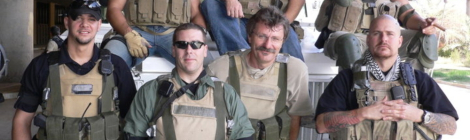
    Private military contractors in Baghdad, Iraq. Image by Babeltravel via Flickr.

    A decade on and Iraq is still in the news, but Western boots on the ground are largely absent, and the previously booming market for contractors there and in Afghanistan has shrunk dramatically. As Molly Dunigan and Ulrich Petersohn and their collaborators show in a recent edited collection, the once-championed ‘global market for force’ has proven itself to be, in fact, a conglomeration of quite different markets for force, and it is a mistake to conflate the legitimate with the illegitimate. The United States, Britain and other nations continue to employ the services of private military contractors for lower priority tasks where doing so is (or at least appears to be) cost and manpower effective.

    The US State Department’s five-year $10.2 billion Worldwide Protective Services contract, the next phase of which was announced in mid February, is distributed largely among companies like SOC, Triple Canopy and Aegis Services which made their names during the Iraq post-invasion boom. And the old stomping ground is showing signs of a revival – according to a report by Bloomberg Business week, “Operation Inherent Resolve, the Pentagon’s anti-Islamic State initiative, employed 7,773 contractors in the second quarter of 2016, up from 5,000 in the first quarter of 2015.” Many of those contracts are for logistical, training and advisory roles in conflict and post-conflict environments in Africa and the developed world. And, quietly, the United Nations has also become a significant employer of PMSCs, as a careful reading of the UN Department of Procurement’s list of registered vendors reveals. As long ago as 2011 the Geneva Center for the Democratic Control of Armed Forces (DCAF) released a report showing that, despite the sensitivities involved, “the UN has increasingly paid private military and security companies (PMSCs) for a range of services in the areas of humanitarian affairs, peacebuilding and development.” The companies themselves have become increasingly corporatized and professional in their structures and practices, an evolutionary necessity for those companies which survived the ‘gold rush’ days of post-invasion Iraq.

    The more dramatic pronouncements by both proponents and opponents of the PMSC industry have failed to come to pass. Contractors have neither rendered state-based peacekeeping and stability operations obsolete, nor have they radically undermined the monopoly on force of the states that employ them or created greater instability in the international sphere.

    Looking to the future, what might we expect regarding the involvement of PMSCs in peacekeeping and stabilization operations? Despite their popularity as ‘bad guys’ in television dramas and Hollywood films, and an uncomfortable legacy of past serious human rights abuses committed by contractors, the evidence suggests that in the real world the use of PMSCs is increasingly becoming normalized, and that in policy circles there is a growing understanding of the potential value contractors can provide if properly employed. While there are still contractors operating in the global periphery who better fit the old ‘mercenary’ moniker, we can expect this process of normalization to lead to an increase in the employment, and more open employment, of PMSC’s in peacekeeping operations (though the term ‘PMSC’ will likely decline in usage).

    The improved clarity about the status and responsibilities of contractors in zones of armed conflict that resulted from the publication of the ICRC sponsored Montreaux Document of 2008 has played an important role in this process of normalization. Though this was unquestionably not the intended purpose of the creation of the document (which carries no legal weight but summarizes the status of contractors under international law and gives recommendations to both PMSCs and the states that contract them), the Montreaux process cleared up numerous misconceptions and provided a firm framework to which companies could attach their claims to legitimacy.

    Over the past decade there has been much debate and discussion over what functions ought to be considered by states to be ‘inherently governmental’ and which therefore ought not to be contracted out. A similar discussion will likely occur as the outsourcing of peacekeeping functions becomes more publicly acknowledge. However, it will likely be pragmatic factors which establish the limits of outsourcing.  Whatever those limits turn out to be in practice, it is certain that there will be limits. Even in today’s complex and spoiler afflicted environment, effective peacekeeping relies heavily on the perception of legitimacy, and that means blue UN helmets or the green berets of the African Union, not beards and Oakley sunglasses.

    Dr Deane-Peter Baker is a Senior Lecturer in the School of Humanities and Social Sciences at UNSW Canberra, located at the Australian Defence Force Academy. He is also a Researcher in the Australian Center for the Study of Armed Conflict and Society. His research interests include military ethics, private military and security companies, special operations, military strategy and the ethics of public policy. He is the author of Just Warriors Inc.: The Ethics of Privatized Force and Citizen Killings: Liberalism, State Policy and Moral Risk.

  • Sustainable Security

    One year on from the French intervention in Mali, Saharan jihadist groups continue to threaten not only Mali but Algeria, Libya, Niger, Nigeria and Tunisia. Will French and US plans to expand their military presence in the Sahel combat, contain or exacerbate the threat from militants displaced from Mali?

    Fragmentation, Displacement and Reconsolidation:  The AQIM Threat in 2014

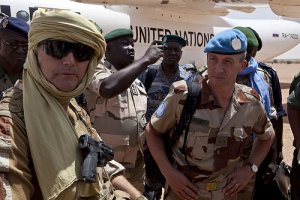
    French General Pillet, Chief of Staff of the MINUSMA Kidal, during the visit of the Joint Security Committee in charge of the observance of the cease-fire between the Malian army and armed groups from the north. Source: MINUSMA (Flickr)

    French General Pillet, Chief of Staff of MINUSMA, Kidal, during the visit of the Joint Security Committee in charge of the observance of the cease-fire between the Malian army and armed groups from the north. Source: MINUSMA (Flickr)

    Last January, the French military, supported by African troops and 10 non-African air forces, intervened militarily in Mali at the request of its transitional government. Over the following four weeks they recaptured all of the towns in the northern half of Mali. This vast desert region had been seized by Islamist and separatist militia in March-April 2012 and declared independent as the ‘State of Azawad’, the Tuareg name for their homeland in northeast Mali. Since then, French troops have continued to conduct security operations across northern Mali to locate and ‘neutralise’ militants associated with Al-Qaida in the Islamic Maghreb (AQIM), a jihadist group of Algerian origin, and its West African splinter groups. Reduced numbers of French forces now support Malian and African forces within the United Nations Multidimensional Integrated Stabilization Mission in Mali (MINUSMA).                                                                                                                                                                                                                                                                                                                                                                                                                                                                                                                                                                                                                                                                                             However, the final quarter of 2013 saw an increase in violence in northern Mali, including terrorist attacks, violent protests and inter-communal violence. Moreover, the French advance into northern Mali displaced rather than destroyed AQIM and its two local allies, the Movement for Unity and Jihad in West Africa (MUJAO) and Ansar Dine, a Tuareg Islamist group. Their impact has been particularly felt in Niger and Libya and may also have bolstered jihadist groups operating in northern Nigeria, Tunisia and Egypt’s Sinai. The lawless desert of southwest Libya is believed to be the new stronghold of AQIM.

    A new group, al-Murabitun, combining MUJAO and the most active elements of AQIM’s Saharan front, now appears to pose more of a threat to western and West African interests than AQIM. This is because its strategic direction is towards the weak states of West Africa, including Niger, Mali and Mauritania, where critical infrastructure and individuals are more difficult to protect. It is also better connected to the kidnapping and trafficking enterprises that fund Saharan militancy, and more deadly. During 2013, its militants were behind frequent raids on Gao (northern Mali’s main town), on a prison, garrison and French-owned mine in Niger, and on the Algerian gas plant at In-Amenas. These audacious operations attest to its range, training, discipline and cosmopolitan membership. If it finds common purpose with the larger jihadist groups in northern Niger, as some analysts suggest, it could represent a severe threat to stability in the already shaky regional power.

    French Repositioning in the Sahel

    In recognition of the expansion of jihadist groups, France announced a major repositioning of its forces in Africa in January. The new French military posture will refocus from large coastal bases, designed to train, transport and supply African Union and regional rapid reaction forces, to smaller forward deployments in the Sahel and Sahara. 3,000 French troops will now be based indefinitely in Mali, Niger and Chad.

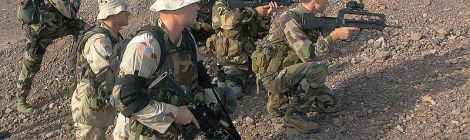
    U.S. soldiers and French commandos marine conduct a reconnaissance patrol during a joint-combined exercise in Djibouti. Source: Wikipedia

    U.S. soldiers and French commandos marine conduct a reconnaissance patrol during a joint-combined exercise in Djibouti. Source: Wikipedia

    The new posture is heavily influenced by US ‘War on Terror’ strategy in Africa, Yemen and south-west Asia, relying heavily on Special Forces, air strike capacities and unmanned aerial vehicles (UAVs). French and US forces (including contractors) already share facilities in Djibouti, Niger, Burkina Faso and Mauritania, and there is a small US liaison detachment with the French Combined Air Operations Centre in Chad. The French repositioning is explicit about confronting Islamist terrorist groups and the threat to regional security posed by the security vacuum in southern Libya. While the repositioning focuses on Mali, Niger and Chad, supplied via a coastal base in Côte d’Ivoire, it will actually include deployments to over a dozen small bases and elite detachments in the Sahel and Sahara, covering at least seven countries. In some cases it will mean French Special Forces reoccupying desert forts long abandoned by the Foreign Legion.

    There will also be greater use of aerial reconnaissance and targeting. French Navy patrol aircraft already criss-cross the Sahara and two MQ-9 Reaper UAVs arrived with French forces at Niamey airport in December after the US fast-tracked French acquisition of and training on these ‘hunter-killer’ drones. These double the effective range of the Harfang target-acquisition UAVs formerly used by the French in the Sahel, bringing all of Mali, Niger, almost all of the rest of West Africa and much of Algeria, Chad and southwest Libya into range.

    France also makes greater use of combat aircraft in the Sahel-Sahara, deploying fighter aircraft from its long-term base in N’Djamena, Chad to Bamako and Niamey airports. This brings northern Mali into range. Since October, French fighter-reconnaissance aircraft have deployed to Faya-Largeau in northern Chad, which brings southern Libya well within range. French Special Forces and armed helicopters have also operated from Burkina Faso, Niger and Mauritania in pursuit of AQIM.

    US and China Extend Their Presence

    French and US Reapers now operate from the same facility at Niamey airport, set up by the US in February 2013. While US UAVs in Niger are unarmed, it is unclear if French Reapers will be used for strike missions. US armed UAV bases in Djibouti, Ethiopia and Seychelles currently bring all of the Horn of Africa, East Africa and most of Arabia within range. US private military contractors have also flown unarmed, unmarked light aircraft on surveillance flights all across the Sahel belt since at least 2007. Using covert hubs in Burkina Faso and Uganda and smaller airfields in Mauritania, Niger and South Sudan, they have sought AQIM and the Ugandan Lord’s Resistance Army (LRA).

    Since 2011, US Special Forces have established small bases in the Central African Republic (CAR), South Sudan and the Democratic Republic of Congo (DRC) to assist Ugandan forces seeking the LRA there. They also provide training to several African militaries countering the LRA. As with programmes in Mauritania, Mali, Niger and Chad, these programmes have focused on creating elite counter-terrorism units. Unfortunately, all of these countries plus the CAR and South Sudan have experienced coups d’état or major army mutinies since this assistance began.

    In order to combat Boko Haram, a Nigerian Special Operations Command was announced on 14 January with the US military providing advice, training and equipment. Massive attacks by Boko Haram since December suggest that the Nigerian army’s use of indiscriminate force in the northeast has not weakened the insurgency. Rather, the state of emergency is likely to have strengthened the recruitment base of Boko Haram since May.

    China and Japan are also increasingly active in the Sahel. Chinese parastatals are the dominant actors in the oil industries of Sudan/South Sudan, Chad/Cameroon and Niger. They also mine uranium in Niger, and China is the primary buyer of iron ore from Mauritania’s vast desert complexes. So far, China is the only non-African state to deploy more than a few dozen troops with MINUSMA.  Japan, which saw ten of its nationals killed in the January 2013 militant attack on Algeria’s In-Amenas gas plant, has pledged $1 billion to stabilise the Sahel, including training of counter-terrorism units.

    Compromised Alliances

    This expansion of deployments and offensive operations relies on the status of forces agreements between western powers and’ friendly’ states such as Algeria. France, for example, depends on an air corridor across the Algerian Sahara. Securing such access puts host governments in a position of greater power. The highly authoritarian regime in Algiers – the world’s fifth or sixth largest arms importer – no longer faces western pressure to improve its dismal human rights record. Indeed, it has received friendly visits from the leaders of France and the UK and the US Secretary of State since late 2012. Mauritania’s military-based government faced little criticism over its unfair elections in November.

    Chad, Uganda and Ethiopia may be the biggest regional beneficiaries of the militarisation of the Sahel. Each has been governed for a quarter-century by a former armed movement. They face little censure of their authoritarian and undemocratic internal policies and have become more assertive as regional military powers. Ethiopia has forces in Somalia while Uganda now has combat troops in operation (by agreement) in Somalia (under AU command), South Sudan, the DRC and the CAR.

    Boosted by expanding oil revenues, French alliance and the demise of Libya’s Gaddafi regime, Chad has greatly expanded its military reach into Mali, Niger and the CAR, where its troops and citizens now face a violent backlash. It is also a Security Council member for the next two years and will be expected to help guide decisions on UN peacekeeping operations in Mali, South Sudan and potentially the CAR and Libya.

    Burkina Faso, long relied on by Paris to negotiate with armed groups in francophone West Africa, is also facing unaccustomed turbulence in 2014 as its president seeks to permit himself an additional term of office. Algeria, which is wary of France’s military deployments on its southern border, is set to take over from Burkina the mediation of talks between Mali’s government and secular Tuareg and Arab rebels.

    Foundations in Sand

    In some respects, the eviction of AQIM and its allies from northern Mali has made the wider Sahara a less safe place, without obviously impeding the capacity of jihadist groups to threaten Europe. In 2014, southwest Libya and parts of Niger are not necessarily less safe havens than northern Mali was in 2012. The insurgency has moved closer to the Mediterranean and closer to critical European energy infrastructure in Algeria, Libya, Tunisia and Niger (uranium). Unlike heterodox Mali, controlling Libya’s chaotic state is likely to be of interest to Arab Salafist groups, including AQIM.

    As elsewhere, the western military approach to countering Islamist insurgency in the Sahel rests on very unsteady foundations. This applies to the political legitimacy of allied regimes, the stability and security of locations hosting French and US bases, the traumatic historical legacy of France as the former colonial power, and the potential for counter-insurgency tactics to provoke wider alienation and radicalisation. However asymmetric its military technology, reinforcing a new line of castles in the Saharan sand may be as futile a gesture in France’s long retreat from empire as the UK’s last stand in Afghanistan.

    Richard Reeve is the Director of the Sustainable Security Programme at Oxford Research Group. He has researched African peace and security issues since 2000, including work with ECOWAS and the AU. Richard’s most recent security briefing ‘Security in the Sahel (Part II): Militarisation of the Sahel is available here.

  • Sustainable Security

    Author’s Note: This contribution is a shorter version of the article “Assessment of Transboundary River Basins for Potential Hydro-political Tensions” by De Stefano et al. 2017.

    The impacts of new dams and diversions are felt across borders, and the development of new water infrastructure can increase political tensions in transboundary river basins. International water treaties and river basin organizations serve as a framework to potentially deescalate hydro-political tensions across borders.

    The availability of freshwater in the right quantity and quality at the right times for dependent systems is required for human security, environmental security, and economic growth. As populations and economies have grown, water has become scarcer and more variable in certain locations, leading to concerns over how water may lead to conflict. Though violent conflicts over water occur more often at the local level, disputes over water are also possible at the international level, particularly as impacts of water use spill across international borders.

    Dams and other water infrastructure help manage water variability—providing water in times of drought and dampening the effects of floods. With these benefits come ecological impacts as large-scale water infrastructure effects the hydrologic function of the basin in which they are built. This includes altering the timing and/or magnitude of flows, altering aquatic migratory patterns, and preventing sediments from moving downstream. Thus, the construction of large-scale water infrastructure such as dams and water diversions can become significant sources of tension between countries sharing a river basin.

    The significance of new dams and water diversions is increasing across the world as many countries have begun construction on large infrastructure projects in internationally shared river basins. This is evident in places such as the Nile Basin, where the Ethiopian government’s construction of the Grand Ethiopian Renaissance Dam has been occurring without an agreement with downstream Egypt, and the news of its construction has been met with violent protests and strong rhetoric from Egyptian politicians. Water diversions are not the only factor potentially creating tension between countries over shared waters. Other factors including high population growth, urbanization, increasing water pollution, over-abstraction of groundwater, climate change and water-related disasters can contribute to tensions.

    Building institutional capacity (treaties and river basin organizations) is a crucial factor in decreasing the likelihood of conflict over shared waters – particularly if the agreements contain mechanisms that reduce uncertainty and increase flexibility in water management. Past research suggests that a basin will be more resilient to conflict if a basin has international mechanisms able to manage effects of rapid or extreme physical or institutional change. However, the mere presence of institutions does not necessarily indicate that a basin is resilient, nor does it indicate that water-related conflict will be absent.

    Countries can exploit treaties since they are not easily enforceable. Treaties can also be structured in a way that exploits (or worsens) already-existing inequities between countries. Treaties can not only solidify power imbalances, but can also lock out public participation or even become a source of conflict themselves. This can lead to a lack of participating by some countries.

    Previous studies in analyzing potential future conflict in river basins at a global scale have identified basins at future risk through predictive and forecasting methods, treaty analysis, and climate change. Our recent study aims to contribute to those types of analyses through examining multiple issues – stressors on political relationships due to the development of dams and water diversions, how treaties/river basin organizations can mitigate these stresses, and external socio-environmental factors that could exacerbate these tensions in the near future. We integrate these multi-faceted data to map the risk of potential tensions regarding water and politics in transboundary basins across the globe.

    Findings

    We found several basins to be vulnerable to tensions over water, particularly in Southeast Asia, South Asia, Central America, the northern part of the South American continent, the southern Balkans as well as different parts of Africa (Table 1). New dams and diversions is ongoing or planned in at least 57 basins worldwide. The new dams are highly concentrated in very few geographic areas, including regions in Nepal, Brazil, and India. Most international river basins were found to have a moderate risk of tensions over water (see Figure 1). Twenty-two basins were classified as having a very high risk, and 14 basins were classified as having a high risk of tensions. Many basins of higher risk are concentrated in Sub-Saharan Africa and in Central and Southeast Asia. These basins at higher risk are experiencing a combination of factors lending them vulnerable to conflict, including high rates of dam development, limited, weak, or nonexistent treaty coverage, high water variability, and low gross national income per capita.

    Concluding remarks

    The indicator-based analysis (Figure 1) uses a combination of environmental, political, and economic metrics, including high or increased climate-driven water variability, presence of armed conflicts, and low gross national income per capita, to identify vulnerability and resilience to tensions brought forth by water resources development in international watersheds at a global scale. The development of new dams and water diversions is very unevenly distributed.

    Certain basins will be much more impacted than others. Most of the new water infrastructure is in upstream portions of river basins, with many dams being built in emerging or developing economies that require increased hydropower and water regulation to sustain their economic development. Many of these areas still lack well-developed instruments and institutions that would contribute towards transboundary cooperation.

    The ability to understand when (and where) these variables combine to potentially create conflict is critical to managing and transforming future conflict in transboundary basins. Understanding where conflict might occur can contribute towards guiding policy interventions, focusing capacity-building efforts where needed, and actualizing worldwide initiatives of integrated water resources management. This includes achieving the United Nations’ Sustainable Development Goal Target 6.5 (“By 2030, implement integrated water resources management at all levels, including through transboundary cooperation as appropriate.”).

    Jacob D. Petersen-Perlman is a Research Analyst at the University of Arizona Water Resources Research Center. His research areas of interest include transboundary water conflict and cooperation, water security, and water governance.

    Lucia De Stefano is Deputy Director of the Water Observatory of the Botín Foundation and Associate Professor at Complutense University of Madrid (Spain). Her main fields of interest are multilevel water planning, drought management, groundwater governance, transboundary waters, and the assessment of good governance attributes from different disciplinary perspectives.

    Eric Sproles is a hydrologist at the Centro de Estudios Avanzados en Zonas Áridas in La Serena, Chile and a Courtesy faculty member at Oregon State University. His research areas of interest include climate change impacts on hydrology, particularly on mountain snowpack and streamflow, and remote sensing of terrestrial water storage.

    Aaron T. Wolf is a professor of geography in the College of Earth, Ocean, and Atmospheric Sciences at Oregon State University and directs the Program in Water Conflict Management and Transformation, through which he has offered workshops, facilitations, and mediation in basins throughout the world. His research focuses on issues relating transboundary water resources to political conflict and cooperation.

  • Sustainable Security

    One year on from the French intervention in Mali, Saharan jihadist groups continue to threaten not only Mali but Algeria, Libya, Niger, Nigeria and Tunisia. Will French and US plans to expand their military presence in the Sahel combat, contain or exacerbate the threat from militants displaced from Mali?

    Fragmentation, Displacement and Reconsolidation:  The AQIM Threat in 2014

    French General Pillet, Chief of Staff of the MINUSMA Kidal, during the visit of the Joint Security Committee in charge of the observance of the cease-fire between the Malian army and armed groups from the north. Source: MINUSMA (Flickr)

    French General Pillet, Chief of Staff of MINUSMA, Kidal, during the visit of the Joint Security Committee in charge of the observance of the cease-fire between the Malian army and armed groups from the north. Source: MINUSMA (Flickr)

    Last January, the French military, supported by African troops and 10 non-African air forces, intervened militarily in Mali at the request of its transitional government. Over the following four weeks they recaptured all of the towns in the northern half of Mali. This vast desert region had been seized by Islamist and separatist militia in March-April 2012 and declared independent as the ‘State of Azawad’, the Tuareg name for their homeland in northeast Mali. Since then, French troops have continued to conduct security operations across northern Mali to locate and ‘neutralise’ militants associated with Al-Qaida in the Islamic Maghreb (AQIM), a jihadist group of Algerian origin, and its West African splinter groups. Reduced numbers of French forces now support Malian and African forces within the United Nations Multidimensional Integrated Stabilization Mission in Mali (MINUSMA).                                                                                                                                                                                                                                                                                                                                                                                                                                                                                                                                                                                                                                                                                             However, the final quarter of 2013 saw an increase in violence in northern Mali, including terrorist attacks, violent protests and inter-communal violence. Moreover, the French advance into northern Mali displaced rather than destroyed AQIM and its two local allies, the Movement for Unity and Jihad in West Africa (MUJAO) and Ansar Dine, a Tuareg Islamist group. Their impact has been particularly felt in Niger and Libya and may also have bolstered jihadist groups operating in northern Nigeria, Tunisia and Egypt’s Sinai. The lawless desert of southwest Libya is believed to be the new stronghold of AQIM.

    A new group, al-Murabitun, combining MUJAO and the most active elements of AQIM’s Saharan front, now appears to pose more of a threat to western and West African interests than AQIM. This is because its strategic direction is towards the weak states of West Africa, including Niger, Mali and Mauritania, where critical infrastructure and individuals are more difficult to protect. It is also better connected to the kidnapping and trafficking enterprises that fund Saharan militancy, and more deadly. During 2013, its militants were behind frequent raids on Gao (northern Mali’s main town), on a prison, garrison and French-owned mine in Niger, and on the Algerian gas plant at In-Amenas. These audacious operations attest to its range, training, discipline and cosmopolitan membership. If it finds common purpose with the larger jihadist groups in northern Niger, as some analysts suggest, it could represent a severe threat to stability in the already shaky regional power.

    French Repositioning in the Sahel

    In recognition of the expansion of jihadist groups, France announced a major repositioning of its forces in Africa in January. The new French military posture will refocus from large coastal bases, designed to train, transport and supply African Union and regional rapid reaction forces, to smaller forward deployments in the Sahel and Sahara. 3,000 French troops will now be based indefinitely in Mali, Niger and Chad.

    U.S. soldiers and French commandos marine conduct a reconnaissance patrol during a joint-combined exercise in Djibouti. Source: Wikipedia

    U.S. soldiers and French commandos marine conduct a reconnaissance patrol during a joint-combined exercise in Djibouti. Source: Wikipedia

    The new posture is heavily influenced by US ‘War on Terror’ strategy in Africa, Yemen and south-west Asia, relying heavily on Special Forces, air strike capacities and unmanned aerial vehicles (UAVs). French and US forces (including contractors) already share facilities in Djibouti, Niger, Burkina Faso and Mauritania, and there is a small US liaison detachment with the French Combined Air Operations Centre in Chad. The French repositioning is explicit about confronting Islamist terrorist groups and the threat to regional security posed by the security vacuum in southern Libya. While the repositioning focuses on Mali, Niger and Chad, supplied via a coastal base in Côte d’Ivoire, it will actually include deployments to over a dozen small bases and elite detachments in the Sahel and Sahara, covering at least seven countries. In some cases it will mean French Special Forces reoccupying desert forts long abandoned by the Foreign Legion.

    There will also be greater use of aerial reconnaissance and targeting. French Navy patrol aircraft already criss-cross the Sahara and two MQ-9 Reaper UAVs arrived with French forces at Niamey airport in December after the US fast-tracked French acquisition of and training on these ‘hunter-killer’ drones. These double the effective range of the Harfang target-acquisition UAVs formerly used by the French in the Sahel, bringing all of Mali, Niger, almost all of the rest of West Africa and much of Algeria, Chad and southwest Libya into range.

    France also makes greater use of combat aircraft in the Sahel-Sahara, deploying fighter aircraft from its long-term base in N’Djamena, Chad to Bamako and Niamey airports. This brings northern Mali into range. Since October, French fighter-reconnaissance aircraft have deployed to Faya-Largeau in northern Chad, which brings southern Libya well within range. French Special Forces and armed helicopters have also operated from Burkina Faso, Niger and Mauritania in pursuit of AQIM.

    US and China Extend Their Presence

    French and US Reapers now operate from the same facility at Niamey airport, set up by the US in February 2013. While US UAVs in Niger are unarmed, it is unclear if French Reapers will be used for strike missions. US armed UAV bases in Djibouti, Ethiopia and Seychelles currently bring all of the Horn of Africa, East Africa and most of Arabia within range. US private military contractors have also flown unarmed, unmarked light aircraft on surveillance flights all across the Sahel belt since at least 2007. Using covert hubs in Burkina Faso and Uganda and smaller airfields in Mauritania, Niger and South Sudan, they have sought AQIM and the Ugandan Lord’s Resistance Army (LRA).

    Since 2011, US Special Forces have established small bases in the Central African Republic (CAR), South Sudan and the Democratic Republic of Congo (DRC) to assist Ugandan forces seeking the LRA there. They also provide training to several African militaries countering the LRA. As with programmes in Mauritania, Mali, Niger and Chad, these programmes have focused on creating elite counter-terrorism units. Unfortunately, all of these countries plus the CAR and South Sudan have experienced coups d’état or major army mutinies since this assistance began.

    In order to combat Boko Haram, a Nigerian Special Operations Command was announced on 14 January with the US military providing advice, training and equipment. Massive attacks by Boko Haram since December suggest that the Nigerian army’s use of indiscriminate force in the northeast has not weakened the insurgency. Rather, the state of emergency is likely to have strengthened the recruitment base of Boko Haram since May.

    China and Japan are also increasingly active in the Sahel. Chinese parastatals are the dominant actors in the oil industries of Sudan/South Sudan, Chad/Cameroon and Niger. They also mine uranium in Niger, and China is the primary buyer of iron ore from Mauritania’s vast desert complexes. So far, China is the only non-African state to deploy more than a few dozen troops with MINUSMA.  Japan, which saw ten of its nationals killed in the January 2013 militant attack on Algeria’s In-Amenas gas plant, has pledged $1 billion to stabilise the Sahel, including training of counter-terrorism units.

    Compromised Alliances

    This expansion of deployments and offensive operations relies on the status of forces agreements between western powers and’ friendly’ states such as Algeria. France, for example, depends on an air corridor across the Algerian Sahara. Securing such access puts host governments in a position of greater power. The highly authoritarian regime in Algiers – the world’s fifth or sixth largest arms importer – no longer faces western pressure to improve its dismal human rights record. Indeed, it has received friendly visits from the leaders of France and the UK and the US Secretary of State since late 2012. Mauritania’s military-based government faced little criticism over its unfair elections in November.

    Chad, Uganda and Ethiopia may be the biggest regional beneficiaries of the militarisation of the Sahel. Each has been governed for a quarter-century by a former armed movement. They face little censure of their authoritarian and undemocratic internal policies and have become more assertive as regional military powers. Ethiopia has forces in Somalia while Uganda now has combat troops in operation (by agreement) in Somalia (under AU command), South Sudan, the DRC and the CAR.

    Boosted by expanding oil revenues, French alliance and the demise of Libya’s Gaddafi regime, Chad has greatly expanded its military reach into Mali, Niger and the CAR, where its troops and citizens now face a violent backlash. It is also a Security Council member for the next two years and will be expected to help guide decisions on UN peacekeeping operations in Mali, South Sudan and potentially the CAR and Libya.

    Burkina Faso, long relied on by Paris to negotiate with armed groups in francophone West Africa, is also facing unaccustomed turbulence in 2014 as its president seeks to permit himself an additional term of office. Algeria, which is wary of France’s military deployments on its southern border, is set to take over from Burkina the mediation of talks between Mali’s government and secular Tuareg and Arab rebels.

    Foundations in Sand

    In some respects, the eviction of AQIM and its allies from northern Mali has made the wider Sahara a less safe place, without obviously impeding the capacity of jihadist groups to threaten Europe. In 2014, southwest Libya and parts of Niger are not necessarily less safe havens than northern Mali was in 2012. The insurgency has moved closer to the Mediterranean and closer to critical European energy infrastructure in Algeria, Libya, Tunisia and Niger (uranium). Unlike heterodox Mali, controlling Libya’s chaotic state is likely to be of interest to Arab Salafist groups, including AQIM.

    As elsewhere, the western military approach to countering Islamist insurgency in the Sahel rests on very unsteady foundations. This applies to the political legitimacy of allied regimes, the stability and security of locations hosting French and US bases, the traumatic historical legacy of France as the former colonial power, and the potential for counter-insurgency tactics to provoke wider alienation and radicalisation. However asymmetric its military technology, reinforcing a new line of castles in the Saharan sand may be as futile a gesture in France’s long retreat from empire as the UK’s last stand in Afghanistan.

    Richard Reeve is the Director of the Sustainable Security Programme at Oxford Research Group. He has researched African peace and security issues since 2000, including work with ECOWAS and the AU. Richard’s most recent security briefing ‘Security in the Sahel (Part II): Militarisation of the Sahel is available here.

  • Sustainable Security

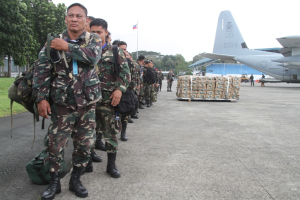
    Philippine Army servicemembers stand alongside a pallet of bottled water as they prepare to board a U.S. Marine Corps KC-130J to support victims of Super Typhoon Haiyan at Villamor Air Base, Manila, Republic of the Philippines Nov. 11. Source: U.S. Marine Corps. (Photo by Lance Cpl. Stephen D. Himes/Released)

    Philippine Army servicemembers stand alongside a pallet of bottled water as they prepare to board a U.S. Marine Corps KC-130J to support victims of Super Typhoon Haiyan at Villamor Air Base, Manila, Republic of the Philippines Nov. 11.
    Source: U.S. Marine Corps. (Photo by Lance Cpl. Stephen D. Himes/Released)

    US Defense Secretary Chuck Hagel has ordered the USS George Washington and her battle group from Hong Kong to the Philippines to provide humanitarian assistance in the aftermath of the Typhoon. Already, about 90 U.S. Marines and sailors have deployed from Okinawa to the Philippines and are on the ground providing support. UK Prime Minister David Cameron has ordered the Royal Navy’s HMS Daring to the region as well. This disaster response mission is part of the Department of Defense’s growing humanitarian response mission to help affected regions. Simply put, if the U.S. military and allies did not provide fast-acting logistical support to relief missions like this, there are no other entities that can provide the heavy lift or logistical expertise necessary to get large quantities of aid to a region in time.

    Last week, prior to the storm, in reference to Pacific Command’s disaster response mission and capability, the PACOM Commander Admiral Locklear said:

    It’s the right thing to do… Also, if something is going to happen in the Pacific that is going to create a churn in the security environment, the most likely thing will be a humanitarian disaster problem of some kind – whether it is horrific typhoons or tsunamis or floods or something else.

    He’s right. Beyond the clear threats to the human security of the residents of the affected area – loss of life, home, food, electricity, and clean water – natural disasters can act as a clear threat to national security, especially when the government is unable to respond effectively. That’s because a government failure can create the opportunity for other security threats to develop, ranging from crime and corruption to insurgency or terrorism. Unfortunately, we may already be seeing this in the Philippines; there are reports of massive looting after the storm passed over, and unverified reports that the Filipino military has engaged and killed a group from the New People’s Army, a communist rebel group in Leyte, as they tried to attack a government relief convoy.

    I’m not going to spend much time debating whether or not man-made climate change was responsible for this storm in particular.  There is an ongoing debate about whether climate change will both increase the number of tropical cyclones as well as their intensity. The latest IPCC report only expressed a ‘low confidence’ in the impact of climate change on tropical cyclones – that doesn’t mean there’s no impact, but it means we don’t know. What we do know is that the water in the Pacific has been warmer than average –and that warmer water is an important part of cyclone intensity. Phil Plait’s blog, Bad Astronomy, has a good explanation of the climate-cyclone link. Suffice it to say that climate change is another risk that must be considered when planning for security threats in the region.

    These are precisely the reasons that the U.S. Department of Defense has labeled climate change as an “accelerant of instability” in the 2010 QDR. PACOM, which has responsibility for all American forces in the Pacific region, has operationalized that guidance from the QDR to include real and significant planning for the many natural disasters that happen around the Pacific Rim. Admiral Locklear has stated that climate change “is probably the most likely thing that is going to happen . . . that will cripple the security environment, probably more likely than the other scenarios we all often talk about.”

    As ASP has determined in our Global Security Defense Index on Climate Change, the U.S. is not the only country that is planning for the security threats of climate change; over 70% of the world also deems climate change to be a security threat. The Philippines’s National Security Policy specifically gives the security forces the mission to “Help Protect the Country’s Natural Resources and Reduce the Risks of Disasters” and goes on to say that “the government must focus on establishing disaster and calamity preparedness and effective response mechanisms.” Clearly, Typhoon Haiyan has overwhelmed the ability of the Filipino security services to effectively respond to this calamity; it is appropriate for the U.S. and international community to help as much as possible.

    Climate change acts as a threat multiplier and an accelerant of instability. Whether this storm was ‘caused’ by climate change is a moot point now. Even with concerted international action to reduce greenhouse gas emissions, like those proposed at the UNFCCC negotiations in Warsaw, the Pacific will likely see these disasters for decades to come. Efforts to reduce risk should include military preparations for response, readiness that increases the capacity to prevent such harm, as well as greenhouse gas mitigation to reduce the chance of future storms. The net effect, unfortunately will be that the military is likely to have many opportunities to practice disaster response: it should be treated as a key mission.

    Andrew Holland is Senior Fellow for Energy and Climate at American Security Project, a Washington D.C based think tank. He is an expert on energy, climate change, and infrastructure policy. He has over seven years of experience working at the center of debates about how to achieve sustainable energy security and how to effectively address climate change. He tweets regularly via @TheAndyHolland.

  • Sustainable Security

    The Gacaca courts were set up in the aftermath of the Rwandan genocide to try and help Rwandans live together in peace. But research suggests that this system has been used as a tool for vengeance, and political and economic gain. 

    In the aftermath of the 1994 Rwandan genocide, the Rwandan Patriotic Front (RPF) government was faced with the task of bringing justice and reconciliation to a divided and devastated country. Gacaca, meaning “justice amongst the grass”, a traditional justice system once used to try local disputes between neighbours, was restored to relieve the overwhelmed prison system.

    Initially, it was well received. For those accused of genocide crimes, it was a long awaited step towards justice, an opportunity for the truth to be heard and them to be judged (see Tertsakian 2008: 376).  For the survivors, it meant that they would be able to tell their story and have justice for their loved ones.

    Between 2001 and 2012, gacaca processed nearly two million cases.  Most, if not all have involved Hutu as defendants. Gacaca was set up to try only genocide crimes. Crimes committed by RPF and out of revenge were excluded from the mandate. Waldorf notes that:

    Early on Penal Reform International warned that the implementation of gacaca was emphasizing legalistic retribution over socio-political reconciliation.  Since then, gacaca has become increasingly retributive, both in design and practice

    As a result, the legal system is perceived as being used against Hutu to not only criminalize them, but to obtain their wealth and resources. This paper examines the ways in which gacaca has been used as a tool for vengeance and to serve political or economic interests.

    The misuse of gacaca

    Beginning in March 2008, I carried out ethnographic research in Gisenyi and Cyangugu Rwanda as well as Goma and Bukavu Democratic Republic of the Congo (DRC). My research has emphasised that Hutu participants did not outright reject gacaca, rather they rejected how the system was being misused, as Zach, a Hutu participant, argued

    Gacaca is good idea, but those who work in the government are bad. The rules are written in a book but they are not obeyed. …Gacaca would be very good, if the government didn’t influence the decisions.  But this is not the case; judges are influenced by soldiers, genocide survivors and others.

    According to another Hutu participant, Huey:

    Some Hutu begin a business and the government will stop them.  There are many example of this.  One man had a very successful business of selling materials for repairing cars.  However, people took him to gacaca because he had lots of money.  He gave them money even though he wasn’t guilty.  He gave them lots of money.  Now he had to change the way he conducts business.  He doesn’t like to show the materials he has, because he’s scared that he will get dragged back to gacaca.

    Alphonse, another Hutu participant, agreed “They (the government) like to charge rich Hutu. When they don’t find anything, they take that Hutu to a different district and charge him with the same crimes there.” Robert was a Hutu participant arrested for genocide crimes in 1997 and for ‘genocide ideology’ in 2008. He believes the underlining cause for both arrests centred on property disputes:

    I was accused of killing my neighbour by his brother.  During the genocide, my neighbour was caught at a roadblock.  I explained to the men there that this man was my brother, but he didn’t have his identity card to prove it.  They told me they wouldn’t kill him, but to find some way to prove his identity.  I went to the District Office and paid for an identity card that said my neighbour was Hutu and my brother.  It was a lot of money. They released my neighbour, who fled to Congo.  When he arrived at the border, the Interahamwe killed him.  I fled with my family to Congo after the genocide.  When I returned, I was arrested on genocide crimes for this man’s death.  I had spent years in prison when the formal courts found me innocent.  I told them everything and they found that my neighbour’s brother had lied. Next the brother brought me in front of gacaca for the same crimes [killing his brother]. The gacaca judges were confused as to why this case was in front of them.  They agreed with the previous ruling and I was released.  [Why was your neighbour’s brother going to all these lengths to charge you?] Because, while I was in Congo, my neighbours had moved into my house and did not want to give it back.  When I returned, I reclaimed my house, but it was stripped of all windows and doors.  Two days later I was arrested for the death of his brother.

    Robert was in fact lucky. According to Human Rights Watch (HRW), Rwandan law protects an individual from double jeopardy. However, the practice has been allowed due to a loophole in the 2004 Gacaca law. HRW reported a case that was nearly identical to Robert’s, where a man was cleared by the formal courts and then given a thirty-year sentence in gacaca. He was released upon a successful appeal. In another case, in the district of Huye, a gacaca judge told how there were two cases where the men were acquitted in conventional courts, but convicted with lengthy prison sentences through gacaca (ibid).

    Coercion within gacaca

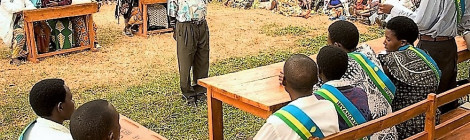
    gacaca

    Image credit: Elisa Finocchiaro/Flickr.

    According to Douglas, a Hutu participant, who was also a RPF member and gacaca official, guilt and innocence are often determined by the government. He told me “For those Hutu who are rich, the decision is always made before he is charged, before the judges reach a decision.” The involvement of the government became evident when I was allowed to attend a gacaca proceeding in Douglas’s jurisdiction.

    The accused was a former leader, who had been convicted by the formal courts of killing someone during the genocide. Upon appeal to the Supreme Court, the man’s conviction was overturned. He was finally released from prison and freed for only one night, when the police arrested him again. People from surrounding areas had accused him of killing and stealing a motorcycle during the genocide. However, some of those murder charges were the same accusations that the Supreme Court had previously overturned.

    Douglas explained that a genocide survivors’ organisation had initiated a campaign to mobilise survivors to accuse those who were ‘guilty’ of genocide crimes. However, the organisation and gacaca officials were unable to find anyone to accuse this particular man. As a result, the trial was cancelled and the case was postponed for a month. I asked Douglas if this was a form of coercion:

    Oh for sure, I’ve already been contacted. …I was told that I have to convince the judges and that we must charge this former leader and find him guilty.  We have to do this.  This is a heavy burden… As a team, we say that he is guilty. But in private we know this prisoner is innocent, we have no choice.  That prisoner was my neighbour.  I had seen everything that happened.  A former local leader took him to the market, where those Tutsi were.  He did nothing! He didn’t kill or hurt anybody!

    Genocide ideology, a tool for vengeance

    In all likelihood the ending of gacaca will not offset the misuse of the legal system as a tool for vengeance. In 2008, the Rwandan government passed Law No. 18/2008 that defined genocide ideology as:

    an aggregate of thoughts characterized by conduct, speeches, document and other acts aiming at exterminating or inciting others to exterminate people basing on ethnic group, origin, nationality, region, colour, physical appearance, sex, language, religion or political opinion, committed in normal periods or during war.

    Human rights organisations have been concerned with the imprisonment of Rwandans on vague accusations of ‘genocide ideology.’ Amnesty International argues that ‘genocide ideology’ legislation, like gacaca, ‘is compounded by the reality and perception that most accused come from one ethnic group.’  Furthermore, it is not uncommon for individuals to use ‘genocide ideology’ laws for personal gain.

    In fact, Amnesty was only able to find one case where a Hutu attempted to bring ‘genocide ideology’ charges against a Tutsi. The individual was offended after a Tutsi neighbour had called him a Hutu. The case was dropped by the prosecution. Robert believed that in connection with gacaca, ‘genocide ideology’ becomes a weapon that is used to discriminate and imprison innocent Hutu:

    Gacaca is used for stopping those Hutu who are rising up in society.  It allows Tutsi to take their property.  It helps to promote young Tutsi to occupy jobs.  A Tutsi can claim genocide ideology as a way of forcing a Hutu out of their post. It is like a business, anyone who gets into an argument at work can be accused of genocide ideology. Then they get put into prison.  Just ask why charges of genocide ideology only exist against Hutu, but Tutsi have genocide ideology as well.

    In 2008, Robert was arrested on allegations of ‘genocide ideology’ made by the same man who accused him of murder. Robert felt that having failed to obtain his property through accusations of genocide crimes, the man now turned to ‘genocide ideology.’

    I decided to rebuild a granary, after a few days the community leader came to me and told me that I must destroy the granary, because it was in the road.  I told him he didn’t have the authority… My neighbours sent that official, the same ones who had me arrested before, those that accused me before. They called the police and told them I had insulted them [a way of saying that a racial/ethnic epithet was used].  It was planned! The leader had told them that I had beaten him.  I am an old man; the leader is a young man. I cannot beat him!  When I got to prison, they charged me with crimes of genocide ideology and opposition to the government’s programmes. My wife’s brother came to intervene on my behalf.  He told me that I must be quiet; because they have many things they could charge me with.  The Police Commissioner also told me to go home and keep quiet.  Now I’m quiet.

    The other man involved was a neighbour, with whom Robert was having a boundary dispute with.  According to Robert, the men believe that if Robert returned to prison, he wouldn’t be able to pay back a bank loan and his house would be repossessed, solving both problems. Robert’s testimony highlights how the misuse of the legal system through gacaca and genocide ideology presents challenges to reconciliation. While, at the same time, demonstrating that there is a desire and a demand for it, he states,

    Those Tutsi were looking for any reason to condemn me to prison.  I didn’t do anything.  If I say anything, they will get me again and put me in prison. Everyday they accuse me.  Their (genocide survivors) agenda is like revenge there was no reason for them to do what they did.   They see me and their hearts accuse themselves.  When I was released (the first time) they were not happy to see me…In 2002, after I was released, I had electricity and water and my neighbours didn’t.  They came to me asking me for water.  They say, “This Hutu has TV, water, we have nothing”.  They think of me as being rich.  They say, “this Hutu, who has all these things, how can he get these things”? It’s a major reason why they want to punish me.  I put myself in Allah’s hands. …The best thing for all Rwandans would be to share power and forget.  To work for the nation, forget about the divisions or favouritism and use the same Arusha Accords as a power sharing agreement.  Only then can Rwanda be one house with one parent, to care for all children.

    Conclusion

    Much has been written and debated about whether or not gacaca has achieved reconciliation in Rwanda. While most would agree and recognize that gacaca was “one of the most ambitious transitional justice experiments in history”, it was also developed and carried out within the context of “deep political and ethnic division, fear, suspicion, intimidation and corruption” (see Tertsakian 2008: 362). The consequences of this is that gacaca was never going to be able to bring about reconciliation for all Rwandan, but rather contributed further wounds of mistrust and division.

    Larissa R. Begley received her PhD in Social Anthropology from the University of Sussex. She is currently a lecturer in African and African American Studies at Iowa State University. Her research focuses on understanding the implication of genocide ideology laws as a form of state violence in Rwanda.