Category: 16

  • Sustainable Security

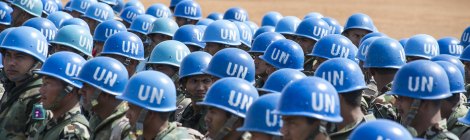
    Following civil war, re-establishing the legitimacy of a state’s army is a crucial part of security sector reform and international actors can aid this process. The capacity-building work of the United Nations Interim Force in Lebanon provides a useful example of this.

    Rebuilding a national army after civil war is an important part of security sector reform (SSR) to help ensure the survival of the institution and its effectiveness in the long-term. Based on a recent article in Contemporary Politics, this blog post discusses the strategies used by an international actor, the United Nations Interim Force in Lebanon (UNIFIL), to contribute to the capacity and legitimacy of a local institution, the Lebanese Armed Forces (LAF). This case study revealed that a sustainable strategy for SSR requires a long-term, flexible, and pragmatic approach; and that successful capacity building can take place when the normative values of the SSR project are accepted by key stakeholders and the local population.

    The United Nations Interim Force in Lebanon

    The UNIFIL mission has been present in South Lebanon since 1978. United Nations Security Council (UNSC) Resolution 1701 (11 August 2006) is the mandate under which UNIFIL has operated since 2006 after the July war between Hezbollah and Israel. It clearly states that a key objective of the mission is assisting with the reintroduction of LAF throughout Lebanon; prevent violations of the line of withdrawal ‒ called the Blue Line ‒ that borders Israel and Lebanon, and clear unauthorised weapons from the area of operations.

    UNIFIL has targeted three main areas in capacity building the LAF: building relationships through regular liaison and communication; lobbying for money and resources from the international community; and conducting a comprehensive strategic review of LAF’s operational capabilities. One of the biggest challenges has also been handling the political situation which UNIFIL has negotiated with a combination of flexibility and pragmatism. But underscoring UNIFIL’s success is the fact that the army is considered legitimate in Lebanon by the local population and at the national political level. Furthermore, the LAF share the normative assumptions of the international community in terms of how they wish to rebuild.

    Whilst LAF was not present in the south until 2006, its popularity has increased since the Syrian withdrawal in 2005. The Lebanese Armed Forces is the only national institution that is genuinely regarded as non-sectarian, and has an approval rating of over 75 per cent amongst the Lebanese population. A survey of civilians in the south of Lebanon found that 91.5 per cent of civilians stated that they thought that LAF should be responsible for national security.

    The Political Challenges
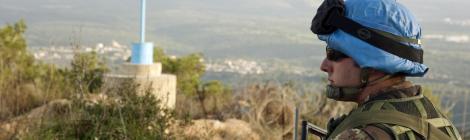
    An Italian peacekeeper of the United Nations Interim Force in Lebanon (UNIFIL) patrols the "Blue Line" that demarcates the border between Lebanon and Israel. 17/Jan/2009. UN Photo/Eskinder Debebe. www.unmultimedia.org/photo/

    An Italian peacekeeper of UNIFIL patrols the “Blue Line” that demarcates the border between Lebanon and Israel. Image credit: UN Photo

    The main challenge to both LAF and UNIFIL authority in South Lebanon is the presence of Hezbollah. LAF and UNIFIL must respect the legacy of Hezbollah’s military success in not losing the 2006 war, and its important role in ejecting Israel from Lebanon in 2000. Whilst Hezbollah agreed in 2006 to withdraw to positions north of the Litani River (outside the area of operations), it is commonly believed by many Lebanese, the Israel Defence Forces (IDF), and the Israeli government, that Hezbollah retains weapons caches within the area of operation.

    For many Lebanese citizens, the continued presence of Hezbollah’s armed faction ‒ who use a combination of traditional and guerrilla warfare techniques ‒ is considered a necessary deterrent to Israeli aggression. LAF, whilst respected is regarded as underfunded and under-equipped and therefore not able to be fully in control of the security situation at the present time. Interviews for this case study, however, revealed that after years of living under foreign occupation, southern Lebanese are happy to see LAF patrolling the area with UNIFIL.

    Whilst UNIFIL’s mandate requires the mission to rid the area of operations of all weapons not belonging to the Lebanese Armed Forces, it is not possible for either UNIFIL or LAF to aggressively hunt for weapons stored in the area without risking the loss of local support. Hence UNIFIL is pragmatic when negotiating the tension between its mandate and local perceptions of its role in relation to local security. When unauthorised weapons are found, UNIFIL interprets the mandate on this issue by asking LAF to retrieve the weapons. They report the findings to LAF and then wait for them to arrive and deal with the recovery. This means that UNIFIL does not have to deal directly with the removal of illegal weapons which may or may not belong to Hezbollah but which can be a contentious issue with the local population.

    Building relationships

    UNIFIL contributes to re-establishing LAF’s presence by conducting joint patrols, helping to build LAF’s CIMIC activities and ensuring LAF takes the lead in local disputes and in highly politicised situations. When patrolling alongside LAF, UNIFIL is careful to play the role of observer as much as possible. LAF is deliberately placed at the forefront of any Blue Line violations involving local civilians in order to empower LAF to deal with any situation in its own way and to help build its credibility. Furthermore, as UNIFIL is not allowed to physically restrain anyone who is violating the Blue Line, LAF plays a key role in deciding what measures (physical or verbal) they wish to take in regard to Lebanese citizens on Lebanese territory.

    Time has played an important role in maintaining good UNIFIL‒LAF relations. Interviews with LAF officers indicate that long-term UNIFIL staff who understand the local political and social culture in the region are valued highly. Constant staff rotations frustrate the LAF as personal relationships are considered highly important to successful liaison and cooperation. Flexibility has also been of benefit in helping UNIFIL build strong relationships with LAF, officers gave very positive reports of their relationship with UNIFIL staff and in particular their commitment to helping to resolve problems when they arose.

    Building capacity

    UNIFIL works to try and build LAF’s operational capabilities in a number of ways as this is regarded as an essential part of UNIFIL’s eventual exit strategy.  First of all it lobbies the international community independently to gain support and donations for LAF and requests donations from current battalions for example UNIFIL vehicles at the end of their lifecycle. UNIFIL also seeks funding from the EU and internationally for LAF battalions based throughout Lebanon, not in the area of operations.  Since the Syrian withdrawal from Lebanon in 2005, the EU has been supportive of UNIFIL’s efforts to capacity build LAF. Furthermore, since the emergence of IS in 2014, Lebanon has been seen as a key buffer state, so interest in providing assistance to LAF has further increased.

    Another example of UNIFIL’s flexible approach to interpreting its mandate is a joint project entitled the Strategic Dialogue. In recent years, UNIFIL Political Affairs Officers and LAF engaged in a full analysis of LAF’s structure and capabilities and produced a joint report that identified gaps in LAF’s structure. UNIFIL Political Affairs Officers have since organised a coordinating mechanism with UNSCOL and now work jointly to seek contributions from the US and European states to specifically fill these gaps. Finally, battalions within UNIFIL conduct joint exercises with the LAF which can include shooting, artillery, administrative tasks and computer exercises.

    Future lessons

    Lebanon’s SSR may carry useful lessons for the international community when looking to help other post-conflict countries transition into peace – namely Iraq, where the security environment remains both complex and challenging. The rise and territorial gains of so-called Islamic State in Iraq reflects a failed security sector reform policy which has seen 100 billion US Dollars invested in it. Implementing a more effective SSR policy in Iraq will be a crucial prerequisite for both long-term stability and peace.

    When rebuilding a national army after internecine warfare, obtaining support from the domestic constituency is as important as capacity building the force in order to present as a credible deterrent. The Lebanese Army has worked very hard to minimalize sectarian differences within the institution both during and after the civil war and this has been very helpful in enabling it to build a largely positive image amongst the people of Lebanon itself. But the sectarian nature of the armed forces in Iraq will make the rebuilding of the army a great deal more challenging in terms of winning broad popular support in Iraq.  A key task therefore will therefore be for the Iraqi national army to become openly inclusive of multiple ethnicities and religious sects as quickly as possible.

    Long term planning in SSR is crucial. One challenge faced in rebuilding the national army in Lebanon is ensuring a regular budget flow to the army and national political cover from politicians. Whilst UNIFIL has been successful in terms of identifying the gaps in LAF expertise and in seeking funding and training to assist in capacity building, the lack of a regular budget for the army still hampers the LAF’s ability to make long term plans for growth and development.

    In addition, politicians in Lebanon are broadly supportive of the LAF, but ongoing political cover remains important especially when the national military is faced with domestic disturbances, particularly outbreaks of sectarian violence. It is imperative the LAF are viewed as impartial by the Lebanese to avoid being drawn into domestic political conflict and thus far the LAF have managed this extremely well. These are considerations that Iraq may face in the future.

    Since the peace deal of 2006, UNIFIL has been successful in re-introducing LAF into the south of Lebanon. But this has required a nuanced approach because there is a delicate balance between the imposition of an agenda and local agency in peacebuilding projects. Ultimately the success of SSR depends on the degree to which the reforms resonate with institutional and local interests and ideas.

    Faced with the aforementioned myriad of sectarian and security challenges, any future attempts to capacity-build the Iraqi army would do well to take a pragmatic approach and be prepared to sacrifice quick wins for the sake of long-term objectives. The first step will involve a careful focus on making the army representative of the Iraqi people and beyond that ensuring national financial and political support is maintained to allow the army the political space to rebuild trust with the all-important domestic constituency of the Iraqi public.

    Vanessa Newby is a Research Fellow at the Australian National University. research focus is peacebuilding and peacekeeping in the Middle East. She has published on the normalisation of peace through everyday security practices, the role of time in successful peacebuilding and the use of technocracy and credibility to negotiate the politics of peacekeeping.  She holds a Masters and PhD in International Relations from Griffith University in Australia. She is an Arabic speaker and has spent over three years conducting research in Lebanon and Syria.  In 2013 she was a visiting researcher at the American University of Beirut.  Her undergraduate degree is in Psychology from the University of Westminster and she is trained in conducting quantitative and qualitative research methods for the social sciences. Dr Newby is currently writing up her book: Mission Impossible? Negotiating the Politics of Peacekeeping in the Middle East.

  • Sustainable Security

    Community-led counterterrorism presents an untapped opportunity, as it recognises that religiously defined communities have a distinct role to play in responding to growing terrorist recruitment efforts in Europe and North America.

    How is security against terrorism risk with a domestic origin to be created in an effective and sustainable way? The first instinct of many politicians, especially on the populist right, is to turn to the state and its diverse apparatus of police, military, and intelligence agencies as the canonical supplier of protection against violent risk. The so-called “travel ban” recently enacted in the United States is one example; the aggressive use of Section 44 stop and search powers in the United Kingdom is another.

    But a different dynamic is often at play when terrorism incidents are in fact interdicted—a dynamic that the state and its agents are less keen to publicize:

    • In 2008, British police arrested a man named Isa Ibrahim (né Andrew Philip), a convert to Islam, in Bristol, England, on the basis of information from the city’s Muslim community. A detective leading the investigation stated, “He was an unknown. Without the information from the community we may not have got to him. Without the community’s help he could have killed dozens of people.”
    • On February 17, 2015, three teenagers from the Bethnal Green neighborhood of east London boarded flights from London’s Gatwick airport to Turkey with plans to join the Islamic State. Distraught, their families appealed for their return, but also criticized the Metropolitan Police for failing to share information that might have allowed parents and close friends to have intervened and thereby prevented the girls’ departure. Even if the state would have lacked the authority to act coercively against the girls, family members persuasion and appeals from close relations could have mitigated IS’ allure.
    • In 2004, a Jamaican-born imam, Abdullah el-Faisal, was convicted in London of solicitation to murder and provocation of racial hatred. Yet a group of Salafists from Brixton had already brought el‑Faisal’s propaganda in favor of terrorism to the attention of London police some years earlier. The same Brixton-based Salafist group had also attempted (unsuccessfully) to persuade the English-born Richard Reid—later to secure renown as the ‘shoe bomber’—to reject el‑Faisal’s teachings.

    In each of these examples—and they can be multiplied—a nongovernmental actor with ties of some sort to an alleged terrorism suspect independently took an action that mitigated the threat of terrorism without priming or prompting by the state. In almost every case, the sheer fact of daily interaction endowed the relevant actor with an epistemic or credibility advantage in comparison to the government. The resulting intervention, to be sure, was not always a success. Sometimes, it was not forceful enough. Other times, the state failed to follow through. But still, each intervention made a terrorist act less likely in expectation. At a minimum, these examples should provoke an investigation of what I call the social production of counterterrorism—social mechanisms external to state apparatus that are conducive to collective security against terrorism—to ascertain better its magnitude and significance, its causal predicates, and its policy entailments.

    The social production of counterterrorism

    Image credit: Diamond Geezer/Flickr.

    Given the increasing claims made on behalf of state coercion and control, there is a pressing need to explore the potential theoretical or evidentiary foundations for an account of counterterrorism’s social production. In a series of articles, I have identified three causal mechanisms that might underwrite the social production of counterterrorism: ideological competition, ethical anchoring, and cooperative coproduction. Each works by changing the costs of terrorist groups’ action.  The first two involve raising the cost to terrorists of transparency at the moment of recruiting; the last involves raising the cost of opacity downstream.

    First, ideological competition is the possibility that social action can raise the cost of terrorism by providing substitute forms of social solidarity and vehicles of collective political action. The ideological competition mechanism works through the disciplining effect of competition, which, as in any other domain, conduces to higher costs and smaller operating margins. A terrorist organization seeking to attain certain policy goals or appealing on the basis of particular foreign policy disputes must compete in a market of social movements, both political and religious. The greater the competition it faces, the more onerous its task.

    By populating the marketplace of ideas more densely, ideological competition raises terrorism’s propagandizing and recruitment costs. At the same time, this mechanism is not free of risk: Perhaps a plurality of private associations that share the liminal political views—but not the penchant for violence—of terrorist organizations might instead hinder efforts to minimize terrorism risk. Beyond this enabling effect, an increase in the frequency of antiestablishment messaging by quietist but politically radical organizations may have the effect of legitimating terrorist organizations’ calls to arms. Ultimately, the net effect of ideological competition is an empirical question. The important point here is that ideological competition is at least a plausible candidate mechanism through which the social production of terrorism might work, even if its sign and magnitude may well vary according to circumstance.

    A second way in which social action can prevent a person from even considering the possibility of violent political action is through the ethical anchoring effect of close affiliations. This mechanism hinges on the manner in which a network of friends, colleagues, and kin members can impose social pressure on an individual to eschew the use of violence for political ends. Political violence necessitates the violation of generally shared ethical commitments, which in turn can lead to breaches with otherwise close members of familial and social networks. To the extent that members of tight social networks reiterate and reinforce those ethical norms, with the implicit threat of ostracism and social sanction in the background, recruitment costs will be higher. And to the extent that these networks furnish affirmative role models, individuals will feel less need to seek out violent forms of social action in the first instance.

    Finally, the possibility of cooperative coproduction focuses on the manner in which private individuals can substitute more fine-grained epistemic instruments for the blunter investigative methods government otherwise employs. Whereas ideological competition and ethical anchoring raise terrorist organizations’ front-end recruitment costs by increasing the price of effective publicity, this third species of social action against counterterrorism is valuable because it increases the cost of opacity during the period in which a terrorist group seeks to render its activities immune from public, and in particular official, scrutiny.

    For example, members of the public will be better able than the state to interpret ambiguous and fragmentary social cues from otherwise scattered and disconnected individuals in their social milieu. In the case of the Brixton Salafis, there is some reason to believe that they were able to discern the difference between individuals drifting toward violence, as opposed to those becoming more religiously committed but quietist. Even if the state can develop an extensive and deep system of intelligence collection through electronic data, undercover agents, and paid informants, it is still not at all clear that these sources have the same epistemic competence in situating nuanced social actions in context as members of a close-knit community. Moreover, there is always a concern that the state apparatus itself will be captured by elements with a xenophobic or racist agenda.

    Conclusion

    Assuming these causal mechanisms are fruitful, can the state promote them? To date, states have not seriously considered how efforts to promote beneficial social action intersect with other policy efforts. Nor have they seriously considered how efforts to promote counterterrorism’s social production might interact with other security‑related policies.

    The place to start in thinking about how to promote the social production of security is programs like the U.K.’s  Prevent  and the U.S.’s Countering Violent Extremism. These have been subject to considerable criticism, and have not succeeded in the main in fostering healthy relationships between Muslim communities and law enforcement. Often, quite the opposite has occurred. These programs, though, could be reengineered (with considerable effort) to be less directive, more inclusive, and more enabling of a range fof different voices.

    Moreover, any government’s security strategy will inevitably have coercive elements. At times, these may work at cross-purposes with security’s social production. A government that is serious about security (as opposed to mere security theater) will carefully examine any such conflicts, and do its best to mitigate rather than exacerbate them.

    Striving to achieve these policy goals at a moment when political pressures bend in a quite different direction will require vigorous argument and clear thinking in the coming years.

    Aziz Huq is an assistant professor at the University of Chicago Law School.

  • Sustainable Security

    ‘Cultural peacekeeping’ has emerged as a new task for international peace operations. The inclusion of a cultural component in the mandates of peacekeeping interventions is a desirable move. But it is an extremely complex political-military exercise. 

    We are currently witnessing the most dramatic attack on cultural properties since the large-scale destruction and misappropriation of cultural heritage seen in World War II. Since summer 2014, Daesh has deliberately and systematically damaged, destroyed and looted significant portions of the exceptional cultural heritage of Mesopotamia, the ‘cradle of civilization’, from Mosul to Niniveh, from Nimrud to Khorsabad, from Hatra to Palmyra.

    Reacting to Daesh’s iconoclastic fury, the UNESCO 38th General Conference of Paris, 3–18 November 2015, passed a resolution to establish – adopting an effective slogan often used by both media and diplomats – the ‘Blue Helmets for Culture’. Building on the positive experience of the ‘United Nations Multidimensional Integrated Stabilization Mission in Mali’ (MINUSMA), which was mandated to ensure the safeguarding of cultural heritage sites in collaboration with UNESCO, the resolution adopts a new strategy founded on two key elements: the inclusion of a cultural component in the mandates of peacekeeping interventions where cultural heritage is at risk; the creation of a task force of experts in the protection of cultural heritage.

    As a direct contribution to the actualization of the resolution, UNESCO and the Italian Government signed an agreement on 16 February 2016 in Rome for the establishment of the first task force. Named ‘Unite4Heritage’, the task force is largely based on the Italian Carabinieri ‘Command for the Protection of Cultural Heritage’ (Comando Carabinieri Tutela Patrimonio Culturale ), which is internationally renowned as of the most competent and effective military policing force for protecting works of art and archaeological property. The Director-General of UNESCO, Irina Bokova, urged other countries to establish and make available similarly specialized units to strengthen and enforce the existing cultural heritage protection regime, expressing her confidence that ‘this Task Force, and the agreement signed in Rome with the Italian Government, will become a model for other countries’. The urgency of the issue was also recently taken up by the UN Security Council, which approved Resolution 2437 on 24 March 2017, providing for the engagement of a cultural component in UN peace-keeping missions.

    While the process of implementing and defining the operational aspects of the Blue Helmets for Culture’s initiative is underway, this article provides an initial assessment of the politico-military significance of ‘cultural peacekeeping’ (CPK) as a new task for international peace operations, considering both its strengths and weaknesses, opportunities and challenges. Still lacking actual case studies, this exercise is highly theoretical, but it is solidly grounded in the literature on heritage studies, peacekeeping, terrorism and armed violence.

    Opportunities and prospects

    Image credit: US Army.

    CPK can serve multiple and interrelated cultural, political and military objectives.

    First of all, it is hoped that CPK will contribute to protecting cultural heritage from damage and destruction by helping the enforcement of the international protection regime and, in particular, giving teeth to the implementation of the 1954 ‘Convention for the Protection of Cultural Property in the Event of Armed Conflict’, which has shown many inadequacies and proven to be minimally effective and difficult to enforce as political and legal instrument.

    Secondly, the integration of cultural heritage protection in the mandate of a peacekeeping mission can have a significant impact on the mission’s broader immediate and long-term objectives. On the ground, the mission’s efforts to save cultural heritage can help to ‘win the hearts and minds’ of local populations and increase their acceptance and support for the peacekeepers. CPK can also contribute to cutting off the funding generated by looting and selling artefacts, which fuels and prolongs conflicts by providing revenues for armed groups and terrorists. At the end of hostilities, it can help to ensure quicker recovery and stabilization by promoting societal and economic regeneration for a long-lasting peace.

    From a broader political perspective, CPK can gather and sustain international support and mobilization for the mission. Cultural heritage is widely appreciated, respected and prized for its universal value, and its protection and preservation are deemed the collective responsibility of the entire international community. It follows that engagement in CPK has the potential to win support more easily and with less political controversy than other types of international interventions. It can be presented (and ‘marketed’) to an internal and/or external audience as an intervention for a very noble, principled and apolitical goal that unites the international community in a ‘war for civilization’ against extremism.

    Finally, CPK has the merit of simplifying very complex realities and issues, which is again key in building political and public support for an international intervention and for clearly defining its objectives. While sorting out and taking sides in the complex geopolitical, religious, and ethnic Middle Eastern dynamics is a very difficult undertaking, understanding what an ancient cultural item or site is, and siding against those who want to destroy it, is rather straightforward and politically less controversial.

    Challenges and risks

    In theory, the proposed integration of the protection of cultural heritage and cultural diversity in peacekeeping mandates can be considered an important and welcomed novelty with multiple strengths. In practice CPK is, however, bound to incur serious challenges and risks that should not be underestimated.

    At the military and operational level, it should be emphasized that cultural heritage sites often have important military and strategic value, which is one of the reasons they become deliberate targets during armed conflicts. Many cultural heritage sites are not ‘soft targets’ but represent highly valued and militarily sensitive objectives for the warring parties. If CPK is deployed as a preventative mission in precarious pre-conflict situations or in post-conflict situations even before complete stability has been achieved, those sites will require heavily armed and mandated international forces for their protection. When intervening in such a context, an international operation might find it difficult to strike a balance between military necessity and its mandate of cultural protection.

    Moreover, if a mandate for cultural heritage protection can help mobilize support for international intervention, it is equally true that the moment things go wrong and the mission starts suffering casualties, public support could evaporate very rapidly, which could promptly rescind its initial backing with the argument that the protection of cultural heritage is not worth the lives of the intervening country’s ‘ boys’ and that those ‘ boys’ should immediately brought back home.

    Most importantly, CPK can entail the grave risk of transforming from a ‘civilisation war’  to save the world’ s cultural heritage into a ‘clash of civilisations’. If CPK is not well planned or wrong decisions are made, a group such as Daesh could exploit the situation to its own advantage by presenting the well-intentioned protection of cultural heritage in terms of a war against Islam. Through a well-orchestrated propaganda campaign, ‘cultural peacekeepers’ could be depicted as ‘invaders’ if not ‘crusaders’ who occupy and violate the sacred soil of the Prophet. At the very least, CPK can risk the accusation of ‘mission civilisatrice’ or ‘civilizing mission’, especially if it involves Western contingents whose past history of colonial rule, imperial domination, and ‘colonial archaeology’ which will be promptly highlighted by adversaries.

    Again, deployment of ‘boots on the ground’, and especially ‘Western boots’, may serve Daehs’s military strategy. It is not a coincidence that Western countries and especially the United States have to date strongly resisted sending ground troops to Syria, fearing being bogged down in another costly and extended Middle Eastern military fiasco, which is what Daesh hopes to achieve. The dilemma is that ground forces are indispensable to protecting cultural heritage ‘in situ’, be it in Syria, Iraq or Libya.

    Another non-trivial problem is the inherent difficulty of maintaining civil/military relations. CPK will necessarily involve extended cooperation between military and civilian personnel, such as archaeologists, historians, and anthropologists. However, cooperation can be particularly challenging between diverse working communities with very different educational backgrounds, mindsets, training, sensibilities, work habits and customs. On the ground, cooperation between warriors, peacekeepers, archaeologists and humanitarians may turn into a very complex exercise, and their respective primary concerns may become hard to reconcile.

    A risky but necessary business

    In conclusion, CPK should be not be mistaken as a minor, light and inexpensive international intervention (in all senses, in economic terms and in terms of possible human losses). Although badly needed, CPK is an extremely complex and hazardous major politico-military exercise that can face serious challenges and risks of unintended consequences. Before becoming involved in any CPK mission, a sound, realistic and legally accurate assessment is needed along with planning of the mission’s objectives and the capabilities required to meet those objectives. This would avoid gaps between the mandates and the reality on the ground, which could very negatively impact the mission’s execution.

    Paolo Foradori is Associate Professor of Political Science at the School of International Studies, University of Trento, Italy. He previously worked with the United Nations in Russia, Kosovo, and Afghanistan. This paper extensively draws from his recent articles: ‘Protecting cultural heritage during armed conflict: the Italian contribution to ‘cultural peacekeeping’’, Modern Italy (2017) and (with Paolo Rosa) ‘Expanding the peacekeeping agenda. The protection of cultural heritage in war-torn societies’, Global Change, Peace and Security (2017).

  • Sustainable Security

    International Relations scholars, politicians, religious institutions and religious leaders can no longer debate whether religion is relevant to global or national governance issues and they can no longer afford to ignore the roles and functions of religious identity in many violent and nonviolent conflict areas in the world today. From European to South Asian societies, the headlines are related to the potentially destructive role that religion can play in everyday policy making. Those cases include, but are not limited to, the self-declared Islamic State of Iraq and Syria (ISIS); the civil war in the Central African Republic in which religious identity was thrown into the midst of the political conflict; and the ongoing conflict in Myanmar where religious identity is utilized to justify certain governmental policies.

    The issue that practitioners (policy makers, religious institutions and religious leaders) are really struggling to effectively address is how to understand the interreligious dynamics of conflicts and constructively link this to future policies. The response of policy makers in Europe to the ongoing global refugee crisis represents an important case of the need for further linkages between religious leaders and policy makers. Given that the majority of the refugees are Muslims, how are secular European policy makers going to develop an approach to manage or mediate the inherent difference of cultural and religious Islamic ways of living and do so without stereotyping or inciting violence and exclusion towards refuges?  An even more challenging task is facing policy makers in the Muslim world, especially those in the Middle East where religious and sectarian identities have been systematically manipulated to justify political and even inter- and intra-communal violence with brutal effects. Unlike the European reality, in the Middle East, delinking religious identity and institutions from governmental policies and from justifying wars and certain governance frameworks is the primary needed change. In this context, politicians continuously enlist religious leaders in pursuing their own interests.

    President Barack Obama meets with the Dalai Lama in the Map Room of the White House, Feb. 21, 2014. (Official White House Photo by Pete Souza) This official White House photograph is being made available only for publication by news organizations and/or for personal use printing by the subject(s) of the photograph. The photograph may not be manipulated in any way and may not be used in commercial or political materials, advertisements, emails, products, promotions that in any way suggests approval or endorsement of the President, the First Family, or the White House.

    President Barack Obama meets with the Dalai Lama in the Map Room of the White House, Feb. 21, 2014. (Official White House Photo by Pete Souza)

    Despite their problems grasping the issues, there is a growing agreement amongst policy makers and researchers that engaging religious leaders and institutions in peacebuilding on all levels is crucial to bringing the message of tolerance, pluralism and peaceful resolution of conflicts to communities. However, the research on such tools and techniques is still limited. Most studies continue to focus on the theological bases of peace and harmony in different faith groups (See Abu-Nimer’s 2007 book, Unity in Diversity). There are few studies on the mechanism and tools (design, processes, and evaluation of success) of interreligious peacebuilding which will allow policy makers to engage religious leaders and their institutions in a systematic process of mediation, negotiation, or problem solving to respond to a concrete social or political problem. As result of this shortage in experiences, many interreligious peacebuilding activities resort to the traditional and old models of symbolic and ceremonial representation of religious leaders in policy making circles. For example, a prime minster invites Abrahamic faith leaders to bless his/her new policy towards refugees in a certain area. In most cases such blessings take place outside of areas of worship and in the public secular space. The lack of systematic engagement of religious agencies in such peace processes and the instrumentalization of such agencies in a symbolic way only at the end of the process reduces the capacity of religious peacemakers in their own communities.

    This approach of limited (time and resources) and symbolic engagement with religious identity (via leaders, symbols, rituals, etc.) has been around for centuries: a ceremonial role but not genuine engagement as a serious stakeholder in the conflict (using the cross or holy books as part of the ceremony to celebrate a peace agreement in a conflict situation like Northern Ireland, Palestine-Israel, Mindanao Philippines, etc.). In fact, a similar approach is taken by those who use religion to justify their war plans and violence in general (such as the use of religion for justification of violence in the wars in Bosnia in the 1990s, conflict in Northern Ireland, etc). The selective and partisan hijacking of certain religious values to explain the need to exclude, discriminate, dehumanize the “different other.” In both cases, there is an instrumentalization of the religious identity but not deep and nuanced engagement.

    In current interreligious peacebuilding practices there are genuine efforts to move beyond this instrumentalization and bring a more holistic and integrative approach to engage religious leaders and institutions (See the recent 2015 report on CVE). Such trends can be vied in the most recent revisions of the American White House Summit responding to countering violent extremism (CVE) in which a strong call for a community based approach is an integral part of the CVE efforts; the KAICIID campaign, “United Against Violence in the Name of Religion”; Network of Religious and Traditional Peacemakers (launched by Finn Church Aid, Religions for Peace, KAICIID, USIP, OIC, etc.).

    The Main Challenges Ahead

    In spite of such efforts, there are still number of core challenges and potential pitfalls that face the field of interreligious peacebuilding in its development as a recognized field of researchers and practice, these include the following:

    • First, there is the western post Industrial Revolution framework that endorses the cultural assumption (some argue myth) that religion and faith can and should be left outside of public spheres. Thus, bringing faith into academic institutions becomes a major struggle and threatens the foundation of its knowledge generating paradigm. This assumption that dealing with religion and faith is a private matter that ought to be compartmentalized to the Sociology of Religion or Theological Studies has obstructed many international relations and political scientists from systematically exploring the complex relations between religion and peace and war.
    • Second is the assumption that conflicts and their causes reside primarily with material resources and not religion (identity or ideology). Such assumptions can lead many researchers and practitioners to dismiss or underestimate the role that religious identity and ideology can play in both triggering and sustaining conflict, as well as peace. There is no doubt that religion plays a complex and to some extent unique role in many conflict dynamics and outcomes. However, many aspects of this role are similar to other identity-based conflicts in which the stakeholder’s identity is deployed in the process of conflict escalation and de-escalation. Ethnicity, culture, race, gender, and sexual orientation are identities that have also been linked to conflict and violence, often through aggressive parties employing dehumanizing framing of an ‘other’, and there are many studies in both social science and the humanities that have explored the links between these identities and conflict and peace (see From Identity-Based Conflict to Identity-Based Cooperation, edited by Jay Rothman; and Ashmore, Jussim and Wilder of Rutgers University’s Department of Psychology’s publication: Social Identity, Intergroup Conflict, and Conflict Reduction).  The study of interreligious peacebuilding can draw on this wealth of research on conflict and identity and develop its own analytical frameworks and practices (R. Scott Appleby addresses religious identity and documents many of these the conflicts in his book, The Ambivalence of the Sacred: Religion Violence and Reconciliation).
    • Third, resources and support by professional organizations, donors, religious leaders and institutions are limited due to the above perceptions and biases. Thus many interreligious analysts and practitioners are rarely invited to the table as recognized and credible actor or agency who can contribute to the processes of peace or policy managements.
    • The fourth challenge is understanding that religious peacebuilding is not the ultimate solution for all social and political problems in any given society, since religious identity and its manipulation is rarely the main cause of the violence in any conflict situation. In such cases, we should relate to interreligious peacebuilding agencies as serving a complementary role in a wider range of peacebuilding efforts carried out by many other peace agencies (such as media, educators, business sector, civil society, etc.) (See Abu-Nimer)

    Conclusion

    Despite the above challenges, the field of religious peacebuilding has been growing and gradually recognized by policy makers and donors as an important agency to engage with. Also, it is important to recognize that interreligious peacebuilders have been able to create significant progress in relief, development and aid. Faith based Organizations (FBOs) have illustrated that through interreligious cooperation they can significantly contribute to eradication of malaria in West Africa, provide relief to Tsunami victims in Sri Lanka and Indonesia, and fight hunger and poverty around the world in many local communities; and NIFA, a Nigerian interfaith organization that launched a campaign to eradicate malaria; also see the recent International Partnership on Religion and Sustainable Development (PaRD), a network for linking development and religion, which was launched by the German Federal Ministry for Economic Cooperation and Development.

    Nevertheless, the field of interreligious peacebuilding still has a long road ahead in terms of its research and study agenda, especially in producing empirical research that articulates the detailed processes, conditions and dynamics in every conflict and that lead certain communities to be easily mobilized through their religious identities (symbols, rituals, and institutions) to endorse violence or peace.

    Mohammed Abu-Nimer is Senior Advisor Interreligious and Intercultural Dialogue Center (KAICIID); and Prof. of Peace and Conflicts Resolution, American University, Washington DC.

  • Sustainable Security

    South Sudan, the world’s newest country, currently risks slipping into a violent malaise. The crisis in South Sudan highlights very clearly some of the key problems surrounding the practical implementation of the Responsibility to Protect. 

    Five years after seceding from Sudan, South Sudan is about to collapse into its second civil war since 2013. Marauding bands of informally constituted ethnic groups contribute to a climate of vigilantism.  UN diplomats debate the utility of an arms embargo in a state awash in arms.  The threat is meant to leverage Juba’s permission to allow a four thousand peacekeeper regional protection force into the country.  But Juba’s complaint about its exclusion from negotiations, contributes to a climate of distrust about the international community and its intentions. The crisis represents a serious challenge for the Responsibility to Protect (R2P) doctrine and the international community to forestall a humanitarian disaster that is well underway.

    The Responsibility to Protect

    A 2001 report by the International Commission on Intervention and State Sovereignty introduced the idea of R2P, creating a new international norm that made the formerly autonomous allowances of absolute sovereignty contingent on each state’s responsibility to protect its population from genocide, war crimes, crimes against humanity, and ethnic cleansing.  Its controversial pillar two seized the international community with subject matter jurisdiction to intervene as the residual stop-gap agency to prevent internal abuse when states were incapable or unwilling to do the same.  Two other pillars addressed a responsibility to prevent (addressing root causes of catastrophe) and a responsibility to rebuild (to assist with reconstruction and reconciliation).

    The development of the norm has been controversial and it has been reworked, principally along lines of nurturing states to live up to their internal responsibilities and tethering it to actions of the UN Security Council.  But its proactive charge of intervention has also been embraced by scholars and norm entrepreneurs as a progressive development. In its 2007 judgment in the Prevention and Punishment of Genocide Case, the International Court of Justice (ICJ) supported the duty of states to prevent atrocity beyond their borders if they have the capacity to influence persons likely to commit such acts; the ICJ acknowledged that this obligation extended beyond the competent organs of the UN.  The International Law Commission’s 2001 Draft Articles on State Responsibility provided that states cooperate to end through lawful means serious and systematic breaches of peremptory norms.  R2P’s normative development indicates that the idea of a collective responsibility to protect now informs the legalect of international courts and tribunals, suggesting a growing receptivity to and maturation of the doctrine.

    R2P, Africa and South Sudan

    UN Juba

    Image of peacekeepers in Juba by UN Photo via Flickr.

    Africa was the first region where the R2P was meant to be applied.  It grew out of the idea of responsible sovereignty, first articulated by Francis Deng and others in 1996.  Responsible sovereignty suggested benefits to cooperation among states.  These benefits went beyond the avoidance of international conflict or the mere ‘tending to’ of sovereign fences.  Responsible sovereignty suggested sovereignty could imply joint action and joint benefits.  It grew into the idea of R2P.

    Nowhere has R2Ps reception been stronger than in Africa, having been well received by the African Union, the Economic Community of West African States, (ECOWAS), the Southern African Development Community (SADC), and a litany of African elites, including South Africa’s Thabo Mbeki, Nigeria’s Olusegun Obasanjo, Tanzania’s Salim Ahmed Salim, South Sudan’s Francis Deng, Ghana’s former UN Secretary-General Kofi Anan, and Algeria’s Mohamed Sahnoun.  Cases within the African context indicated its time had come: The UN Security Council validated ECOWAS’ interventions in Liberia (1990/92) and Sierra Leone (1997), offering praise in the face of its own inaction to these humanitarian crises.  R2P received the unanimous support of one hundred and seventy Heads of State in two provisions of the 2005 UN World Summit final document, presaging the incorporation of the doctrine by the African Union in its 2005 Ezulwini Consensus report.

    But nowhere has its implementation been more problematic than in the world’s newest country, South Sudan.  Sudan, and now South Sudan, have been beset by internecine violence over the last sixty years.  South Sudan teetered on implosion almost immediately after achieving statehood in July 2011.  South Sudan devolved into civil war in December 2013, when its President Salva Kiir Mayardit accused former Vice President Riek Machar of plotting against the regime.  An improbable rapprochement, fortified by an internationally mediated agreement, was signed in August 2015, resulting in Machar’s much delayed return to the capital, Juba in April 2016, and the formation of a most tenuous unity government, which collapsed in July in a wave of bloodshed and atrocity in Juba.  Kiir has now rejected a US proposal to insert the four thousand peacekeepers, claiming it is an attempt to turn South Sudan into a UN protectorate.

    Kiir and Machar’s mutual distrust until the most recent violence in July was outweighed only by a common need for more money to support their factions and a mutual interest in avoiding a personal accounting of atrocities allegedly committed by their respective factions.  Interpreted alternatively as an explanation or a threat to the international community, the two allegedly wrote on the Op Ed page of the New York Times in June 2016 that any disciplinary justice meted out “even under international law” would destabilize unity efforts.  Translation:  If you try to bring us to justice, we will bring back war.  They invoked the name of the international community, calling on it to back their non-punitive plan for a mediated reconciliation.   Four days after publication, the New York Times appended an Editor’s Note to the South Sudan leaders’ world-wide call for reconciliation; Machar had disavowed the Op Ed piece, claiming his views had been fabricated. But not completely.  One month later, he and Kiir brought back bloodshed.

    The episode highlights the complexities facing South Sudan.  If the international community is to facilitate a solution to the ongoing crisis, only cosmetically concealed by an unravelling claim of unity, the fundamental normative problem of R2P must be addressed:  where in the international community does R2P reside?

    Transmuting the international community’s abstract but coercive cause of action to prevent domestic abuse into something other than high-minded rhetoric requires either a fully functioning UN Security Council or another agency with the legitimacy and authority to pierce sovereignty’s veil.  The UN Charter system created a jus ad bellum regime that placed monopoly power over all uses and threats of force (except in cases of self-defense) in the hands of the Security Council.  But that authority is often addled by inaction due to the veto-wielding interests of the big powers, exposing the fundamental weakness of the UN system and provoking the elusive international legal and political pursuit for a better or supplementary normative solution.

    Internationalists have wrestled with the poor choice between supporting the legality of the Charter system, which often stood silent in the face of atrocity, or supporting the legitimacy of humanitarian intervention, which only problematized consideration of hidden agendas pertaining to regime change, remedial secession, and self-determination.  Establishing the international community as the ex ante entity vested with such a remedial power came as something of a surprise, and, after fifteen years of ontological development, remains in dispute.  In theoretical terms, R2P marked a return to and modern expression of Christian Wolff’s eighteenth century Republican idea of the civitas maxima (a ‘grand republic’ of nations), the meta-expression of community virtue that upholds the common good, secures the pluralistic interests of the state, and protects the solidarist interests of humanity by presenting a means to prevent internal atrocity.  But even Wolff, who had no understanding of the modern state system as we know it, thought it could not function without a rector.

    Kiir and Machar embrace this much of Wolff’s eighteenth century mindset; they view the international community as a rhetorical trope that lacks a headmaster; they invoke its name to lend a fictive air of moral authority to their pieties on reconciliation, when they do not employ it as blackmail.  Much of the doctrinal disarray surrounding R2P’s non-appearance in South Sudan conforms to an uncertainty about the international community itself:  Is it an unwitting continuation of the mission civilisatrice – the persistently failed and resented attempt to make sub-Saharan Africa more European; does it embrace or dismiss African notions of community, which present a humanistic understanding different than contractarian models of liberal institutionalism (Ubuntu); is it an updated form of colonialism?  Perhaps it is an expression of Carl Schmitt’s Political Theology (1922), allowing its claimants the power to decide on the exceptions to legal rules.  Schmitt was wary of the keepers of humanity’s interests.  Paraphrasing Proudhon, he wrote:  whoever invokes humanity’s name wants to cheat.  Kiir and Machar would doubtless agree.

    Equally problematic has been locating the international community’s headmaster amid South Sudan’s turmoil.  Does the international community fundamentally reduce to a sanctions policy orchestrated by the US and its allies?  Should it claim a regional identity in the form of mediations sponsored by the Intergovernmental Authority for Development (IGAD) or IGAD-Plus (an amalgam of states associated with the African Union Peace and Security Council), or non-African agencies of the EU, the so-called Troika (US, UK, and Norway), or perhaps China?

    An Emergent Dark Side

    South Sudan’s misery teaches us something about the emergent dark side of R2P.  It reveals a heteronomous will of a fragmented international community, which, in South Sudan’s case finds expression in a variety of cross-cutting alliances.  Tensions exist within IGAD, certainly between Uganda and Sudan and possibly due to reports of Eritrean and Sudanese military support of South Sudanese opposition forces.  These tensions diminish IGAD’s mediation efforts and reputation as an honest broker.  Key sectors of South Sudan’s limited civil society (specifically Church leaders) are overlooked; an array of venues and sponsors compete for influence, contributing to complaints of forum-shopping, which allow Kiir and Machar to play components of the international community against each other.  The center of this unity government in South Sudan has not held; war is around the corner and famine is spreading.

    Conclusion

    Locating R2P within the international community would be daunting enough were questions of its authorization or operationalization in South Sudan settled matters of fact; but its non-appearance in the continuing misery of the country suggests the doctrine, fifteen years in the making, is neither thickly representative of historical process nor thinly embodied as an aspiration.  R2P, in the context of South Sudan, turns the international community into an ethical referent, a conceptual archetype that satisfies saints and sinners alike.

    Christopher Rossi has a Ph.D. in international relations from The Johns Hopkins University School of Advanced International Studies and an LL.M in public international law from the University of London.  He lectures on international law and relations at the University of Iowa College of Law.

  • Sustainable Security

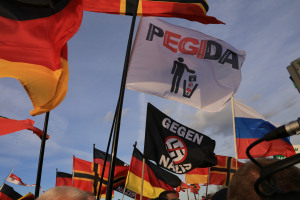
    Since October 2014, thousands of people have gathered weekly in Dresden to protest against immigration and Islam which are both perceived by them as deadly threats to German society. What is the background of this unique mobilisation known as PEGIDA and what are the drivers behind its growth?

    Since 20 October 2014, the East-German city of Dresden, capital of the state Saxony, has hosted rallies organized by a group named PEGIDA (German: Patriotische Europäer gegen die Islamisierung des Abendlandes, English: Patriotic Europeans Against the Islamisation of the West). While PEGIDA attracted some hundred supporters to its earliest rallies, numbers quickly peaked in late January 2015 with 25,000 attending. Up until the end of 2016, at least some 2,000 followers showed up week-on-week.

    With the number of refugees seeking refuge in Germany rising since 2013, the extent of anti-immigrant protest, often organised by extreme right groups such as the National Democratic Party of Germany, has increased. For example, in the Saxon town Schneeberg, mobilization brought more than 1,500 people to the streets three weeks in a row in late 2013 at the accommodation used for hosting refugees. Speakers at such rallies depicted asylum seekers as a threatening Other in xeno-racial terms by arguing that Muslims cannot adopt to ‘Western civilized standards as they are not hygienic’, and that there is a ‘jihad of births’. Following a call for action by a group named Hooligans Against Salafists, 4,500 gathered in Cologne on 26 October 2014 with a significant minority clashing heavily with the local police. While these activities remained occasional events, Dresden became the location of the most successful extra-parliamentary right-wing mobilization in post-war Germany.

    Pegida’s formation and growth

    pegida

    Image credit: Metropolico.org/Flickr.

    In Dresden, a group of close friends, some of them soccer fans, others already known for their racist and derogatory remarks on refugees, Muslims, and people from Turkey and Kurdistan on the Internet, started weekly rallies mid-October 2014. The initiators of PEGIDA, Lutz Bachmann being primus inter pares and other founding members such as Siegfried Däbritz and Thomas Tallacker, had understood that there was potential for street protests against migration, intercultural coexistence and religious diversity. Speakers again and again invoked the destruction of Germany as a result of the refugees coming to Germany, and accused the media for false reporting on the situation. They accused the government in general, but chancellor Angela Merkel especially, of being traitors to the German people. Quite often, references to ›1989‹ were made. By referring to the mass demonstrations that contributed to the overthrow of the socialist regime in the former German Democratic Republic (GDR) in 1989, PEGIDA tries to strengthen the belief that it would once again be possible to overthrow a political regime by mass action.

    Like many social movements, conflicts related to leadership, competing concepts of strategy and framing, and narcissistic behaviour started to play a role within PEGIDA effecting its unity,  capacity for mobilization and outreach. The original plan of the Dresden group to directly control the many offshoot splinter groups that appeared in many German cities did not work. By the end of 2016 there have been racist and anti-Islamic rallies in hundreds of cities and smaller towns organized by groups such as Mönchengladbach – Get up, Commitment for Germany, Eichsfeld fights back, People’s Movement North Thuringia, or Together Strong Germany. While it is true that Dresden was the only place where this right-wing mobilization reached numbers above 20,000 with an astonishing regularity, the many other rallies also contributed to spreading racist and Islamophobic hate speech, and inflaming acts of aggression not only against those belonging to minority groups but also against social workers and volunteers who supported refugees.

    The importance of Saxony

    Scientific studies and surveys show that there is a relevant minority of the German population holding hostile attitudes against asylum seekers, homeless people, Roma, and long-term unemployed. The exceptional mobilization capability of PEGIDA Dresden is the result of the specific political culture of the city and the state of Saxony. It consists of several narratives such as the belief about a unique and phenomenal cultural heritage, the beauty of the landscape, and urban cleanliness; and other stories that emphasize a distinct Saxon identity comprising of a special self-confidence, astuteness, and avant-garde action. Finally, it is argued, a strong feeling of solidarity exists among Saxons, this togetherness was demonstrated by the floods in 2002 and 2013 both of which had caused major damage in the country. The Christian Democratic Union (CDU) that has ruled the country continuously since 1990 labels itself as the Saxon Union contributing to a kind of regional nationalism and solidarity.

    It is also noteworthy that the CDU in Saxony belongs to the decidedly conservative part of the party regularly speaking up for a German patriotic self-awareness. Leading representatives of the CDU in Saxony have publicly blamed the same political forces, developments and ideas as being responsible for the decline of morals in the same way that PEGIDA speakers have. Not surprisingly, then, appeasing the far-right has a long tradition in Saxony going back into the early 1990s when Kurt Biedenkopf the then-Prime Minister in Saxony claimed, in light of pogrom-like violence in the Saxon town Hoyerswerda, that the citizens of Saxony are immune to right-wing extremism. Despite ten years of parliamentary representation of the neo-Nazi National Democratic Party of Germany (NPD) in the state parliament of Saxony, leading politicians from the Saxon CDU like Frank Kupfer, chairman of the Christian Democratic faction in the Saxon parliament, argued that people from outside Saxony cannot understand the situation, overestimate the problem and intend to purposely discredit the political course of the regional branch of the Christian Democrats.

    Another dimension which helps explain the PEGIDA phenomena is the fact that the population in Saxony played a major role in the final phase of the GDR’s fall. Leipzig and, to a lesser extent, Dresden hosted Monday demonstrations in late 1989 bringing huge numbers to the streets and contributed to the downfall of the socialist regime. Public statements of the time, especially the ones given by then chancellor Helmut Kohl on the evening of 19 December 1989 contributed to a nationalist interpretation of events. In the 1990s and 2000s, Dresden also became the site of several heavily attended neo-Nazi rallies, where the Allied bombing of the city in mid February 1945 which killed some 24,000 people was framed as another kind of holocaust. This re-framing of the Allied bombing, which was actually created by the Nazi propaganda machine in the aftermath of the bombing, was used by the former GDR government in the Cold War.

    Discourses of victimization by protest organizations exist in several variations in the city. Some lament the political and economic consequences of German reunification which caused fundamental structural and demographic changes especially in the more rural East Saxon regions. Open borders with Poland and the Czech Republic has changed the perception of crime. Rising levels of theft and burglary is attributed by many to the opening of German borders, which, some argue, allows foreign criminals to easily return after committing crimes on German territory. In both cases, the idea of ‘Germans as victims’ is given discoursive empirical evidence and fosters exclusionist interpretations.

    PEGIDA’s future

    In early January 2017, the Leipzig branch of PEGIDA declared that it had decided to not hold any more demonstrations. While relieving police forces was given as the reason, media comments and political observers widely agreed that the decreasing number of participants has been the real reason behind this decision. With only a few places left in which weekly rallies are organised, albeit with not more than a hundred people taking part, PEGIDA in Dresden is still the most important site of action. Yet, the weekly meetings have become a mere ritual with the same content of the speeches, the same faces and no idea of new impetus. With Lutz Bachmann meanwhile living in Tenerife only to fly in for the Monday rallies and growing criticism of the transparency of the use of donations, it might well be the case that PEGIDA Dresden will die a slow death toll in 2017.

    Dr. Fabian Virchow is Professor of Social Theory and Theories of Political Action at the University of Applied Sciences Düsseldorf where he also directs the Research Unit on Right Wing Extremism. He has published numerous books and articles on worldview, strategy and political action of the far right.

  • Sustainable Security

    Islamic State is one of the most revolutionary and dangerous political movements of modern times, but its attraction it often highly misunderstood. How and why does Islamic State appeal to some?

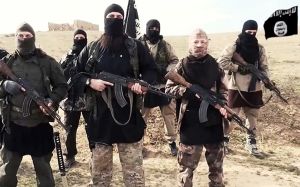
    The Islamic State (also known as ISIS and Daesh), seemingly enjoyed a meteoric rise to power and infamy. ISIS was simultaneously an entity that was admired and/or feared, as this new force attracted vast media attention and reporting. It appeared an unstoppable force, sweeping aside armed forces opposing them in Iraq, Syria and Libya. During 2015, 15 vast tracts of territory in Iraq and Syria were taken. But there was another side to ISIS, some kind of attraction that lured a wide variety of people, including those from the West, to their cause. It was something that many found difficult to understand, let alone adequately explain. When trying to analyse this from the point of view of competing norms and values, between the West and ISIS it may superficially  seem to be an ‘obvious’ choice between the projection of freedom and liberty in the West, and oppression and violence by ISIS. However, the realities of this case, both actual and perceived, are more complex. Understanding the lure of ISIS requires some critical self-reflection from the West, and not only on what has been done by ISIS. How and why does ISIS appeal to some Western publics?

    ISIS as a Brand

    A brand is a psychological and emotional short-cut that creates immediate associations and expectations in an audience with a product, service, person or organisation. Although the brand aspect of ISIS is not totally ignored, it is still under rated by many. Viewing ISIS not simply as an illegal terrorist organisation that needs to be wiped out, or extreme nihilists, but as something more than its tangible form and deeds is necessary. Otherwise, the task of understanding and ultimately countering ISIS becomes more problematic as it ignores the intangible and emotionally significant aspects of ISIS’s appeal.

    In a recent global brand rankings index, there was a great deal of surprise and shock expressed by those that had compiled the index. The 2016 rankings showed that ISIS was a more recognised brand than the Vatican! In 2016, ISIS stood at 107 on the Western Perception index, which was up 56 places from 2015. This does not mean that the ISIS brand has a better reputation than other country and organisation brands, but it does mean that it is more widely recognised. Even though ISIS is shown to be mostly hated in countries with large Muslim populations, there are sufficient potential recruits there and in the West to lure with different grievances or causes. This process will be made easier if a backlash against Muslims in general is precipitated as a result of various terror attacks that have been occurring in Belgium, France and other countries. Some other polls seem to contradict the mentioned trends and show that there is support for the terror group, which was shown in an Al Jazeera poll, where 80 per cent of respondents seemed to support them.

    Signature atrocities and war crimes by ISIS are widely disseminated in video format by media outlets that are associated with or sympathetic to ISIS or by Western media covering a ‘newsworthy’ soundbite that is given in an infotainment format. The ISIS logo has been used widely to increase brand recognition and association. It is full of political and social (such as an equal and ideal society in the making) symbolism, which places and positions the organisation within an environment of competing jihadist organisations. Part of ISIS’ means to project itself in terms of its brand and reputation, to attract attention, supporters and recruits is through one of its means of public relations, the Internet-based magazine Dabiq. This magazine is produced in a very familiar glossy magazine format that is commonly found in the West, yet the content is extremist in nature, attempting to appeal to a variety or discontent or angry individuals and groups. Its message may not only appeal to Muslims, but those isolated and discontent individuals or groups that find the ISIS messages of revenge , building a new society or becoming socially significant appealing. This is the means of public outreach to turn its propaganda of the act into the propaganda of the word, to rhetorically publicise what it stands for and against, and to convert the idea of ISIS into some form of political movement.

    ISIS as a Political Movement

    Currently the nature of politics and political relationships is evolving. Traditionally politics has been measured by using a left-right political scale. This is a now somewhat obsolete way to accurately understand the events and processes that are currently taking place in global political environments. Politics in its current form is the result of a culmination of time periods of discontent and disconnection with mainstream political and public policy. Various people and groups have gradually become increasing discontent, frustrated and seek alternatives in political movements, something that breaks the status quo. Those political movements are able to offer something different and situate themselves as being opposed to the incumbent political elite that can resonate with some of those groups and individuals. This does not mean that ISIS is ‘simply’ a political movement (which is the basis for forming its political relationships), but it is also a revolutionary one that seeks to alter existing political, social and economic relationships through violent means. They are attracted to messages that offer an alternative, pledge resistance to the current political environment, and offer a new and inclusive society. These messages and visions of a promised utopia attract many, and these groups and individuals create what they believe to be mutually reinforcing and ‘beneficial’ political relationships with the likes of ISIS. The realisation of the ISIS Caliphate gave tangible visualisation to a previously intangible set of ideas and ideals. Underlying reasons can be found in human needs for self-actualisation, esteem and a sense of belonging that is explained in Maslow’s Hierarchy of Needs.

    Events and Processes that Influence the ISIS Appeal

    isis-again

    Image by Wikimedia.

    There are a mixture of internal and external influences – processes and events – that combine to influence the level of appeal of ISIS to different individuals and groups. These form a mixture of push and pull factors that can make an organisation with such a brutal track record as ISIS appealing. In the sum of things, it is not only a matter of what ISIS says and does that makes it attractive to some individuals or groups, but also what the West says and does. This is an example of negative politics and political interaction at its worst. ISIS has made very effective use of the Internet and social media to spread its message and influence around the globe, rendering the old geopolitical constraints of time and space ineffective. This has enabled them to bypass the traditional gatekeepers of the information space. It has also enabled them to enact three significant geopolitical shifts: 1) from states to individuals/organisations; 2) real world to virtual world mobilisation and power; 3) old media to new media.

    In the West

    Politics and policy in the West has had profound, and often negative, effects on the issue of equality of its citizens. There is a growing disparity of economic and political opportunity in many countries, which is problematic when there is a growing sense of alienation and outrage in society, and those higher human needs that Maslow discussed remain unfulfilled. The United Kingdom received a shock on 7 July 2005 when domestic terrorists attacked. It was not the first time the UK had been attacked by terrorism, the IRA ran a long campaign. Within the Global War On Terrorism that the UK joined the United States after the September 11, 2001 attacks, it was assumed that any kind of Islamic-based terrorism was simply happening somewhere else.

    However, the New Public Management policies had created an ideal environment. Social services (such as health, education and policing) were gradually withdrawn from marginalised communities. The British state withdrew its presence and care of these people in the name of budget cuts. This political and social vacuum was soon filled by non-state actors, including some radical ones, which offered basic health and ‘policing’ services, educated children in madrassas. This is not to say there is necessarily a link between madrassas and violent extremism, but when one form of government vacates territory the resulting vacuum is soon filled by other forms and sources of social and political order that move in to occupy that space. The social and political relationships were created, which can also form mutually reinforcing trends, such as the rise of right-wing populism that feeds sets of radicalisation (in the Muslim and right-wing groups).Thus the different forces try to politically mobilise their constituent audiences through fear of the other. However, some research shows that there has been little impact so far.

    In a similar tone to the Western understanding of the practice of Hearts and Minds, there are the five aspects of Jihad. There is Jihad of the sword, hand, tongue, knowledge and heart. Jihad of the Sword (combat) carries the least weight, of more importance are Jihad of the Tongue (including propaganda) and Hand (humanitarian operations).

    When looking at recruits that have fought and died for ISIS, it has included some ‘surprising’ individuals, drawn from very non-Islamic backgrounds. There are those that have been recruited to fight for the ISIS cause. From 2011 onwards, an estimated 27, 000 – 31, 000 foreign recruits have gone to Syria and Iraq. There are those that have gone for a sense of ‘adventure’, because they feel there are personal opportunities for them or to be part of a community and to build something significant and special. In their home communities they felt left out, isolated, marginalised, held back or somehow insignificant. Audiences from Western countries have followed the news in disbelief as various stories of young men and women have been leaving, what they believe is a comfortable life, straight to the dangers of joining ISIS in Syria and Iraq.

    ISIS makes a sustained and deliberate effort to attract youth to its cause. The attraction has not been only about destruction and death, but the promise or hope to build a special community. This has been spread by some very slick advertising and public relations, such as the example provided by someone claiming to be an Australian doctor recruiting professionals to join him.

    When one thinks of Islamic-based terrorism, immediate associations normally revolve around concepts of brutality and violence as being the key elements. However, this is not the case. In terms of how information is used by these organisations, military operations are subordinate to information operations. The importance is found in the value of the information that is derived from an action. This differs from most Western governments, where information operations are secondary to military operations, information is used to try and legitimise those military ventures.

    In the Middle East and North Africa

    One of the now seemingly defunct stereotypes of ISIS recruits from the Middle East and North Africa was that they were poorly educated and highly religious. However, field research conducted by Dr Noha Bakr from Cairo, reveals that they are in fact well educated and from well-to-do families in the Middle East/North Africa region. Research also confirms this trend among Western recruits. Those factors that motivated them to join ISIS included a deep rooted sense of different injustices (political, social and economic inequalities) experienced in the Middle East and North Africa. It should be noted that ISIS attempt to project themselves as fighting a defensive war, in the defence of Islam and Muslims, which more likely appeals to those dispossessed and disconnected individuals and groups. This narrative differs greatly from the Western narrative of an aggressive and offensive ISIS.

    Those senses of injustice have been further compounded by decades of self-destructive US-led foreign policy in the region. Regime changes that were nominally fought in the name of peace and freedom have brought anything but these qualities. Some of those dictators, as brutal as they were, kept terrorism in check and generally people enjoyed a greater level of collective human security, with Iraq and Libya providing good examples. A lot of anger has also been generated in the Muslim world concerning the occupation of Muslim lands by Western armies. To some extent, the damage done by Western foreign policy and its long-term effects have been privately spoken about, but rarely publicly acknowledged. An example of this was found in the August 2012 report by the US Defence Intelligence Agency that gave a confidential assessment of the security situation in Iraq and Syria that was (and still is) very much at odds with what key political and military officials publicly stated. The regime changes have also unleashed massive waves of refugees and ethnic cleansing and persecution in those newly ‘liberated’ areas. This in turn is likely to create fertile grounds for further disconnected and vulnerable groups that are susceptible to the subversive propaganda of groups, such as ISIS. Not to mention the gradually escalating counter-reactions from citizens in the West.

    What Does the Future Hold?

    When ISIS transformed itself and its way of waging war, moving from irregular warfare to regular warfare and declaring a Caliphate after the capture of Mosul, it was both a tangible and intangible symbolic change. It was likely intended to signal itself as an emerging power with a physical state-like structure. In the long-run this seems to have been a strategic miscalculation as the tangible military power of the multiple military forces arrayed against ISIS is much stronger.

    Since the Russian military began their direct involvement in Syria from September 2015, ISIS has become increasingly pressured and their territory held is shrinking. It is likely that they may very well be defeated in this regular style of warfare, however, it is unlikely to be the finish of ISIS. There seems to be a move back towards irregular forms of warfare and an increasing reliance on the use of terrorism in core Western countries as a means to offset their tangible disadvantage, and to try and create a political demand among Western publics to cease military action against them.

    ISIS’s strength is found in its intangible qualities and abilities and not in the tangible world where it is challenging a much stronger opponent, and where it is very likely to lose an openly fought military-style of conflict. Thus reverting to an intangible basis in order to create doubts in the publics concerning their confidence in their political and military leadership, and degrading the will to fight seems to be a logical path to follow. They are also likely to continue exploiting any forms of existing weaknesses or divisions that are to be found in Western society or even to create new ones in order to attract the next generations of recruits, supporters and sympathisers.

    Currently, the number of foreign recruits to ISIS seems to be declining. This may well be a reaction to the military setbacks that ISIS has been experiencing recently. The territory it had previously gained is now shrinking under increasing military pressure from different forces arrayed against them which has shattered their reputation as an unstoppable force. Success breeds greater operational possibilities and popularity, and the reverse seems to have an opposite effect. Assad’s fall in Syria would have rapid and significantly negative consequences for political and security developments in the region, Europe and the wider world. It is too early to say if the soft strategies employed by the coalitions against ISIS have been successful as these means usually are medium to long-term enterprises. The military defeats inflicted upon ISIS, which have shaken the brand and reputation of the group, have also made it more physically difficult to join them. Therefore, a continued combination of hard and soft strategies need to be maintained.

    Associate Professor Greg Simons is a researcher at the Centre for Asymmetric Threat Studies (CATS) at the Swedish Defence University. He specialises in research on Information Operations and hybrid warfare.