Category: 24

  • Sustainable Security

    In Africa, former child soldiers are often stigmatized and considered impure by the people they once lived among. But religious rituals, in the form of spiritual purification, can help reintegrate former fighters back into communities.

    Author’s note: The statements cited in the text are a combination of the author’s own experiences as a former child soldier and his investigative research works with former child combatants, ECOMOG Soldiers, refugees, military officers, religious and tribal leaders in Northern Nigeria, Sierra Leone, Liberia, South Sudan, Mali and Côte d’Ivoire. All respondents, including children currently serving prison term in Giwa Barrack and those in 5th Battalion Operational Ground Headquarters, Gubio Northeast Maiduguri, Nigeria; gave consent for the interviews and publication. Most children in Northern Nigeria pleaded that we tell the world what has happened to them; however, the information they have provided will be published in an upcoming publication.

    Introduction

    The involvement of children in armed conflict has raised more questions than answers regarding the future of Africa. Child soldiering is strictly prohibited in international law, yet over 500,000 children in conflict hotspots are exposed to the worst forms of cruelty on the face of the earth. Governments and international bodies have discussed remedial policies, but have largely failed to formulate effective reintegration initiatives to tackle this serious problem. Part of this failure lies with inability of Western approaches to child soldiering, and more generally African conflict resolution, to address the local and religious settings of the people. This is a problem because whilst the highly religious nature of African societies can stigmatize former child soldiers, it can also provide a means to reintegrate them back into societies.

    This article discusses a study conducted by the Charles Wratto Foundation in rural Liberia using local solutions to address local challenges. Among other experiments, indigenous religious purification rites were performed for the acceptance and reintegration of former child soldiers while tribal leaders and youth were trained to discuss tolerance and lead peace-building activities within their respective communities.

    Mental health and child soldiers

    Despite the wealth, security and comfort of stable societies, studies show that, on average, an estimated one million people commit suicide every year worldwide. The reasons for these suicides include, but are not limited to, an inability to deal with extreme emotional pain, divorce, physical and mental violence, low self-esteem and substance abuse. According to the United States Department of Veterans Affairs, an estimated 22 deaths through suicide take place among US service men and women every day. In comparison, regardless being poorly trained or equipped for battle and conscripted to fight in guerrilla armies where they are subjected to serious mental and physical mistreatments, the development of a high suicide rate, if any, is yet to be seen among former child soldiers, particularly in Africa. Indeed, the harsh realities of war, has bestowed on these children the will to survive beyond our imagination.

    Although researchers in the field of mental health eagerly and critically examine the behaviours of those formerly associated with child soldiers, it should be noted here that suicidal ideation, which is a thought, and suicide, meaning the action of taking one’s own life, are distinct and entirely different. Despite the evidence, the idea that a child soldier is scarred with mental disability and in no position to function as a normal human being has come to influence our thoughts, communities and, most importantly, our political and educational philosophies. Regrettably, it is based on this discourse that the youth and children associated with armed groups in post war Africa, are, for the most part, marginalized and excluded from national priorities including sustainable reintegration strategies.

    The relevance of the indigenous approach

    Demobilised child socldiers in Democratic Republic of the Congo. Image credit: L.Rose/Wikimedia.

    Contrary to the imaginative views of non-Africans, the wars on the African continent are not restricted to the uses of small weapons, drugs or alcohol alone; instead, they involve also deep-rooted and extreme tribal rituals practices that demand human or animal sacrifices believed to protect a warrior against an enemy in battle. Against this backdrop, there is no doubt that, from the point of view of a warlord, ritualistic oblations are strategies designed to strike fear and horror into the hearts and minds of their much larger and better-equipped enemy. However, once the gun beat ceases and peace treaties are signed, reintegration becomes a major challenge as the rural communities to which most of these children are returned to, hold religious purification in the highest esteem.

    The returning soldiers are considered unholy, and, as such, required to undertake spiritual cleansing in order to sanctify themselves from the evils of war and appease the spirits of dead victims. These ceremonies are significant and symbolic as they acknowledged the vile practices that have occurred, and thus, serve as a deterrent to future reoccurrences. As is the case, refusal to perform these religious appeasements would be seen to contaminate the entire clan and lead them into misfortune. But there is more to the ritual than this. There is also a fundamental and unshakeable credence that the avenging spirits of those killed during the war, but were denied their place in the ancestral world due to the lack of a proper burial, possess the ability to harm their killers and community members. In this sense, it should be noted here that such impending danger, which includes, but not limited to, the reappearance of a victim’s ghost to his/her killer cannot be prevented or resolved by Western treatments as they are seen to hold no place in the spiritual realm. Undertaking these ritual rites does not necessary mean a child is mentally unstable, but above all else, it is a precondition for readmission into society.

    The indigenous methodology applied

    The traditional purification rites performed for the youth and children with military backgrounds were aimed at dealing with their wartime experiences as well as rebuilding their morality for the re-admission into society. Hence, the rituals performed varied depending on the extent of the child’s involvement in the war. While some rituals addressed those who participated in the war but did not kill, others were focused on murderers.

    During these ceremonies, the former soldiers were isolated from their communities and taken to shrines and secret locations of spiritual significance, where they were given sacred herbal medicine to drink. There, the healers spoke to ancestral spirits who were believed to be unhappy and pleaded forgiveness on behalf of the youth and the community through incantations. Furthermore, they were taken to streams for sanctified baths and were told not to look back upon emerging from the river. Doing so was considered a way of reopening the door to the evil war spirits and inviting them to harm the person. Their clothes and other objects from the war were burnt or washed away in a river to symbolize an end to a life of violence and the beginning of a new peaceful life.

    In addition, the healers pleaded with the spirits of the dead, asking them to forgive the community and the perpetrators which included protecting them from harm and illness. During the Liberian civil war, brutality grew to its worst when every rebel group attempted to instilled terror and wanted be viewed as the most dreaded fighting force in the country. Children lacking military experience were ordered to eat the hearts of their captured enemies if they desired to be invisible to bullets. However, given the scarcity of finding an enemy’s heart, the definition of an “enemy” was redefined from anyone opposing you in battle to those outside your ethnicity. Needless to say, this led to the deaths of many innocent people falsely accused of being “enemies.” Informed of these experiences and aware that the bleeding spirits of those innocent souls will hunt their killers, the healers performed separate ceremonies to appease the dead upon request by each perpetrator.

    Conclusion

    There is nothing wrong with Western approaches to conflict resolution in themselves. Nevertheless, the concepts and contexts under which they are employed to address conflicts in Africa undermine the social and religious settings of the people. Consequently, scarce and precious resources are wasted and achieving the overall objective of sustainable peace in a timely fashion becomes a major challenge. It is a known fact that Africans are extremely religious with each tribe having its own religious structure established on a set of beliefs that is impossible to separate from daily life. That being said, they have welcomed new ideas and foreign assistance.

    However, foreigners could be exploited if they ignored the traditional structures or the systematic realties of the communities they find themselves in. For instance, the assumption by most donors and international organisations that children formerly associated with armed groups are mentally ill and need the help of Western psychiatrists isn’t just a delusion, which deepens the wounds of fragile communities, but more than this, it provides a platform for children, who were never recruited to fight as soldiers, to exploit humanitarian organisations due to a pre-meditated notion of the situation. NGOs will be told what they want to hear by those with no military background in an effort to claim the benefits of a child soldier. After all, they are all victims of war. Lets not forget, Western veterans were born and raised in much more stable societies while the children in armed conflict were born and raised in dreadful environments which they considered normal.

    Here, they mastered the art of survival when serving not only as combat soldiers, but as leaders and strategic decision makers who have developed a high sense of intelligence and a reservoir of knowledge that can be put to constructive use during peace time. For this group of children, reintegration programs organized by representatives of foreign donors are perceived as dangerous and unnecessary given that these programs differentiates them as evil monsters, which doesn’t just ruin the possibility of future career opportunities, but also exposes them to retributions and increases family shame.

    While a few find it challenging to adjust in society, the vast majority, including female fighters, concealed their true identities and reintegrated into society without the help of internal or external bodies. For the girls who wish to have a family, this remains a personal and well-kept secret as associating themselves with armed groups could destroy the chances of having a future husband. In addition, both girls and boys, some of whom may have financial means or a place to stay, do so with the knowledge of being perfectly fine and thus, see no reason to attract stigmatization and societal imagination by seeking medical or psychological assistance.

    Children endure harsh realities during their time in combat, but regardless of the brutality involved, these experiences do not lead all child soldiers into psychological crises. Naturally, we would imagine post-traumatic disorders occuring given that we are so distracted and disconnected from these realities due to the very nature of our lifestyle. As a result, the inability to live without certain preferences limit our vision to either recognize nor connect with those possessing outstanding survival qualities and resilience.

    Charles Wratto is a former child soldier and a Ph.D. candidate whose research focuses on Child Soldiering, Youth Peace-Building and Indigenous Dispute Resolution Mechanisms on Sub Saharan Africa. He is currently a lecturer assistant and an associate researcher at the Babes-Bolyai University’s Conflict Studies Centre, in Romania. As a former child soldier, and now a peace activist, Charles has experience working with youth and children in armed conflicts, victims of war as well as community and religious leaders on issues relating to youth participation in post-conflict reconstructions. He has given public lectures at several universities and organizations across three continents and spoken at numerous conferences on the use of children in war and its impact on our society. He is also the founder of the Charles Wratto Foundation, a non-profit organization dedicated to rescuing and helping war affected youth and children. In January 2014, “Think Outside the Box,” a Romanian New Agency, named Charles one of the four heroes of the year.

  • Sustainable Security

    Plan Colombia was an initiative aimed at combating drug cartels and left-wing insurgent groups and fostering economic development in Colombia. How effective was Plan Colombia in terms of decreasing drug production, generating economic development and reducing violence?

    In November 2016, the Colombian government signed and ratified a peace agreement with the Fuerzas Armadas Revolucionarias de Colombia (Revolutionary Armed Forces of Colombia, FARC), which officially brought an end to Colombia’s 53-year-long civil war. With this historic step towards peace, it is advisable to analyse and learn from some of the security policies Colombia implemented in the past. In a context where truth, justice and reconciliation are central aspects to achieving a sustainable and durable peace, it is particularly pertinent to look at the country’s largest, most extensive and controversial security, military and development policy programme: Plan Colombia.

    The plan

    The US $7.5 billion policy programme of Plan Colombia, which was implemented between 2000 and 2006, was an initiative to eliminate the production of illegal drugs, end violence, foster economic development and achieve social justice. Backed and financed by the United States and implemented largely during the presidency of the far-right populist Álvaro Uribe, Plan Colombia went well beyond being just a mere national security strategy. It was also an extensive programme borne out of the strong political conviction held by certain policymakers and leaders that Colombia’s security problems could only be solved through increased militarisation and attacks against FARC leaders and commandos (even if it meant risking the violation of international law).

    But what were the exact impacts of this militarised security and development imitative? What effects did the Plan have on reducing violence and illicit drug production in order to achieve development? And what lessons can be learned from the programme for building a society in which peace can be durably sustained?

    Plan Colombia had three main objectives: a) to diminish the cultivation, production and trafficking of illicit drugs by 50%; b) to bring an end to the violent conflict; and c) to spur economic growth and development in rural parts of Colombia that have been historically marginalised.

    The effects

    Image credit: Public domain.

    The policy programme largely failed in all of its three objectives. Despite the allocated US $3.8 billion to eradication efforts, Plan Colombia was only effective in reducing the cultivation coca crops from 160,000 hectares in 2000 to 74,000 in 2006. The intensified aerial spraying, however, did not have any significant effects on cocaine production, which only decreased by 5.3% in the period of implementation. Innovative production processes increased the productivity of coca per hectare and the increased coca supply from Bolivia and Peru provided input-substitutes for Colombian producers of illicit drugs.

    Plan Colombia’s effects on violence reduction were also rather ambiguous: the increased militarisation meant that violence from illegal armed groups decreased substantially over the time of implementation. FARC violence decreased from 489 cases of human rights violations in 2000 to 168 in 2006, similar to paramilitary violence, which went down from 1,191 cases to 510 in the same time span. These decreases in human rights violations by the illegal armed groups, as well as dramatic decreases in some of the main violence indicators, such as the homicide rate (43% decrease), the number of kidnappings (95% decrease) and the number of massacres (71.4% decrease) are arguments for the Colombian and the US governments to call Plan Colombia a success in reducing violence. However, human rights violations of the public forces (military and police) increased substantially from 270 cases in 2000 to 758 cases in 2006. For example, between 2004 and 2008, army troops extrajudicially executed more than 3,000 peasants, farmers, activists and community leaders to dress them in FARC uniforms and claimed they were killed in battle.

    Furthermore and linked to the aerial spraying and the increased human rights violations of the public forces, Plan Colombia caused various unintended costs as it directly led to an intensification of social and economic problems. While the GINI index stagnated at a high 0.59 between 2000 and 2006, the concentration of land ownership increased. In 2000 3.7% of the Colombian population possessed 40.7% of land, whereas in 2009 3.8% owned 41.1%. This is inter alia a result of as well as a factor for continued forced displacement in Colombia, which has increased by an estimated 300,000 internally displaced people per year since the beginning of the implementation of Plan Colombia in 2000. Rural poverty remains a major barrier for development and security with 65% of rural households living in poverty and 33% in extreme poverty without access to viable public services. These continued high levels of inequality, displacement, and poverty in agricultural regions are a major barrier for Colombia’s rural population to break out of the vicious cycle of poverty, dependence on drug income, and violence

    Despite these facts, during his tenure as Minister of National Defence (or “señor de la guerra”) Juan Manuel Santos was one of the main architects of this militarised initiative for peace, security and development, and his policy approach changed dramatically once he was elected president in 2010. His decision to embark on peace negotiations with the FARC also reflects a political realisation that effective security in Colombia cannot be achieved and sustained with a militarised approach à la Plan Colombia. However, while the strategy of the Santos government reflects a major shift in the country’s security strategy, there are many lessons yet to be learnt from the failures of Plan Colombia for the building of a peaceful future Colombia.

    Lessons learned

    Through its aerial spraying and the militarisation strategy, Plan Colombia had its most disastrous effects in geopolitically strategic areas of the country, many of which have been at the epicentre of the decades-long conflict such as the structurally marginalized regions of Cauca, Chocó and Urabá in the west and Putumayo and Nariño in the south. FARC commandos who controlled some of these areas for many years are now demobilising.

    Rather than witnessing a decrease in violence, these areas have experienced a recent spike in assassinations and forced disappearances, as paramilitary groups move in to fill the vacuum left behind by the demobilised FARC. This recent increase in violence is also linked to the historically weak state presence in rural Colombia. And the killings of community leaders, peasants and civil rights activists (35 since the beginning of the implementation process) are significantly diminishing chances of a secure and durable peace for Colombia.

    However, a call for a stronger presence of the state is oversimplified and misleading, as it disregards the lessons that need to be learnt from the failures of Plan Colombia – which after all was a state-driven strengthening of the military and its presence in these areas. Human rights violations of the military and the continued close ties between sections of the public armed forces and paramilitary groups make those who have been at the receiving end of violence suspicious of the state-backed security measures.

    Instead, security policy efforts should focus on supporting community organisations that for years have been building demilitarised spaces, such as Peace Communities or Comunidades de Paz, in which peasants, social leaders, indigenous communities, female and LGBT+ activists protect themselves from state, guerrilla, and paramilitary violence. As such, the current government faces the great challenge to go from fighting an enemy to protecting its most marginalised citizens who have turned away from the state in the search for security and peace.

    However, the challenge to achieve a sustained peace goes beyond the state’s capacity to provide protection. Much of the past failures to achieve increased security and peace (including Plan Colombia) are linked with structural failures to achieve wider socio-economic changes in Colombia. For too long, illegal armed groups, marginalised communities and peasants have relied and continue to rely on incomes of the illicit drug industry. Particularly in rural parts of the country where Plan Colombia’s aerial spraying of coca and poppy plants also heavily affected farmland for licit crops, the illicit economy remains the only viable option. This is particularly true given that the monthly minimum wage in Colombia is only 737,717 pesos (US $250), which is less than half of the average income of farmers working for the drug cartels and paramilitary groups (which is estimated at 1.8 million pesos/US $620 per month).

    And while the current peace treaty to some extent focuses on creating new markets and supporting farmers in marginalised areas, these plans for investments in many cases have been nothing but empty promises. The failure to commit to investment in farmland, fisheries, and infrastructure and to provide basic services of water, healthcare and education has recently resulted in new tensions between state forces and striking citizens.

    Conclusion

    Amid various struggles for a swift and thorough implementation, the current peace treaty truly represents a positive shift away from past militarised strategies for peace and security. However, the current situation following the ratification of the peace deal shows that the disastrous militarisation strategy Plan Colombia has left the country a painful aftermath. In order to break out of the vicious cycle of underdevelopment, dependence on drug income, and violence, Colombia needs a structural economic and social development plan that commits to long-term investments in infrastructure and basic services, that creates decent and well-paid jobs in the licit economy, and that provides security for communities and farmers who are being persecuted and killed by paramilitary groups.

    Tobias Franz is a postdoctoral researcher at the Centro Interdisciplinario de Estudios sobre Desarrollo (Interdisciplinary Centre for Development Studies, Cider), Universidad de los Andes, in Bogotá, Colombia. He holds a PhD in Economics from SOAS, University of London. His research focuses on the political economy of growth and development in Latin America, with a particular emphasis on institutions and organisations underpinning national and sub-nation economies in Colombia. His recent publications include Plan Colombia: illegal drugs, economic development and counterinsurgency – a political economy analysis of Colombia’s failed war (Development Policy Review) and Urban Governance and Economic Development in Medellín: An “Urban Miracle”? (Latin American Perspectives).

  • Sustainable Security

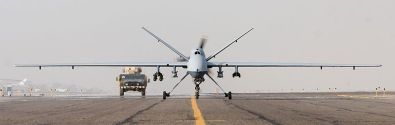
    by Shazad Ali and Chris AbbottMQ1 Predator Drone

    Strikes by unmanned combat air vehicles, or armed drones, have become the tactic of choice in US counterterrorism efforts in Yemen, Somalia and Pakistan. But lack of transparency, dubious effectiveness, civilian casualties and negative consequences for US national security means that Washington needs to re-evaluate its approach.

    It is the controversy over drone strikes in northwest Pakistan that has bought the issue to public attention. Leaving aside the wider issue of the extrajudicial nature of these killings and the questions over the legality of repeatedly breaching Pakistani airspace, it is the level of civilian casualties that is prompting the most concern.

    In a 23 May 2013 national security speech, President Barack Obama asserted that only terrorists are targeted by drones and that ‘there must be near-certainty that no civilians will be killed or injured’ before any strike is taken. However, independent reports contradict his claims.

    From 2004 to date, there have been 376 known US drone strikes in Pakistan. According to the UK-based Bureau of Investigative Journalism (BIJ), 407 to 926 civilians, including 168 to 200 children, have been killed in these strikes. According to a leaked Pakistani government report cited by the BIJ, at least 147 of 746 people killed in the 75 drone strikes in Pakistan between 2006 and 2009 were civilians. Of those killed, about 94 were children.

    Controversial tactics

    The high level of civilian casualties is attributable to two key elements of the US drone strike programme: double-tap strikes and signature strikes.

    Double-tap strikes use follow up strikes to deliberately target rescuers and first responders who are coming to the aid of those injured in an initial strike. The UN special rapporteur on extrajudicial executions, Christof Heyns, and the UN special rapporteur on counterterrorism and human rights, Ben Emmerson, have described the use of double-tap strikes as a possible war crime. Ironically, terrorists in Pakistan are now using their own version of the double-tap strike to target law enforcement personnel in cities such as Karachi: an initial low-intensity blast is used to draw in the emergency services, who are then targeted in a second much larger explosion.

    Signature strikes target individuals based on predetermined ‘signatures’ of behaviour that US intelligence links to militant activity. In other words, people are targeted merely on the basis of their behaviour patterns. This is different to personality strikes, which use intelligence to target specific terror suspects. In a June 2013 report that cited classified documents, NBC News revealed that one in four people killed in drone strikes in Pakistan between 3 September 2010 and 30 October 2011 were classified as ‘other militants’ by CIA. This means the CIA were unable to determine the affiliation, if any, of those killed.

    Intelligence failures

    However, even those strikes directed by intelligence are fallible. Such strikes rely on a mixture of signals intelligence and human intelligence from assets on the ground in Pakistan. The local CIA operatives are notoriously unreliable sources of intelligence.

    The doubts over the accuracy of US intelligence have some credence, as there are several cases in which a militant was reported killed in a drone strike only to be declared dead again following a later strike.

    For example, the alleged al-Qaeda leader in Pakistan, Ilyas Kashmiri, was reportedly killed in a drone strike in January 2009 and then again in September 2009, though he gave an interview to a Pakistani journalist the next month. Civilians are known to have been harmed in these unsuccessful attacks. In the January attack, 14-year-old Fahim Quershi lost an eye and suffered multiple injuries. In the September 2009 attack, 15-year-old Sadaullah Wazir lost his both legs and an eye. Three of his relatives died in the same attack. Kashmiri was again declared dead in July 2011, which is also contested.

    The United States has indeed managed to kill many militants in drone strikes in Pakistan, but these have been mostly low-level targets. According to a September 2012 study by Stanford Law School and New York University’s School of Law, only 2% of militant casualties in drone strikes between 2004 and 2012 were high-value targets.

    Justification

    MQ9 Reaper (used in Pakistan)There is an important question over congressional oversight of US drone strikes. The Obama administration has refused to provide legal justification of drone strikes to the Senate Select Committee on Intelligence despite several requests, according to committee chair Senator Dianne Feinstein. This has created an accountability vacuum and is a significant hurdle in congressional debate on the use of drones.

    Following the 9/11 attacks, the US Congress gave the president sweeping powers through the Authorisation to Use Military Force (AUMF). It allows the president to:

    ‘use all necessary and appropriate force against those nations, organisations, or persons he determines planned, authorised, committed, or aided the terrorist attacks that occurred on September 11, 2001, or harboured such organisations or persons.’

    In that context, drone strikes against al-Qaeda and the Afghan Taliban are authorised under US law. But it is hard to justify under the AUMF attacks in Pakistan against organisations not involved in 9/11, such as the Tehrik-i-Taliban Pakistan and the Haqqani network – notwithstanding the transnational nature of and blurred boundaries between some of these groups.

    It is also difficult to justify such attacks under the right to self-defence, which cannot be applied prospectively without limit. Nor does it warrant the repeated violations of Pakistan’s airspace, as Pakistan has not been shown to be responsible for any attacks against US interests. According to a leaked US diplomatic cable, Pakistan had, at one point, consented to drone strikes but it is not known whether Washington continues the strikes with Islamabad’s tacit agreement. Publicly, the Pakistani government has denounced the drone strikes, saying they are illegal and a violation of their country’s sovereignty. In September 2013, Pakistani Prime Minister Nawaz Sharif told the UN General Assembly that US drone strikes violated his country’s borders and were detrimental to Pakistani counterterrorism efforts. But, in reality, Pakistan has at times been deliberately ambiguous on the issue and the complex nature of civil-military relations in Pakistan and the known links between the ISI and various militant networks make things more complicated.

    Unintended consequences

    Whatever the legal status of the US drone strike programme in Pakistan, it is clear that it risks several unintended consequences. The United States might have made a prudent military choice in using armed drones rather the special forces for counterterrorism strikes in Pakistan. But the use of drones has backfired in a strategic sense and resulted in serious ‘blowback’.

    Chief among these is the radicalising impact US drone strikes are having in Pakistan. Repeated strikes are stoking anti-American sentiments and are a propaganda and recruitment gift to the extremist groups. Pakistan is being destabilised, as the strikes are undermining chances of peace talks between the state and Taliban groups. There are now increasing numbers of terrorist attacks against the Pakistani government by Taliban militants who believe Islamabad has failed to maintain the country’s sovereignty. Furthermore, the United States may be risking further attacks in its own backyard along the lines of the failed 2010 Times Square attack by Pakistani-born US citizen Faisal Shahzad.

    Drone strikes in Pakistan may also be complicating the US withdrawal from Afghanistan, as they have resulted in attacks on US forces. The 2009 Camp Chapman attack is a case in point. The al-Qaeda and Tehrik-i-Taliban Pakistan suicide attack used a double agent to target CIA personnel and contractors inside Forward Operating Base Chapman who were responsible for providing intelligence for drone strikes against targets in Pakistan. The attack on the base in Khost province was in revenge for the deaths of three al-Qaeda and Pakistani Taliban leaders who were killed in US drone strikes.

    The use of drones by the US has increased the danger of proliferation. Seventy six countries are known to have unmanned aerial vehicles, with approximately 20 countries possessing armed drones (though estimates vary widely). The United States has lowered the threshold for the use of lethal force and pushed back the limits of counterterrorism efforts to include the targeted killing of its enemies abroad. In doing so, they have set a dangerous precedent – one that could easily be followed by other countries. In a September 2013 study, Open Briefing identified 29 different models of armed drone in use with China, India, Iran, Israel, Russia and Turkey – each of which have external security concerns that could justify drones strikes under doctrine modelled on the US approach.

    Time for change

    The use of double-tap and signature strikes must be ended, as they result in unjustifiably high numbers of civilian casualties. They are the most controversial elements within the already controversial US drone strike. Beyond that, it is time to begin winding in Washington’s unchecked ability to target individuals around the world without due process. Central to this is the revocation of the post-9/11 Authorisation to Use Military Force. For 12 years this has allowed the spread of US military and intelligence operations around the world without accountability and transparency. These operations are increasingly straying from targeting those who ‘planned, authorised, committed, or aided the terrorist attacks that occurred on September 11, 2001’ to simply targeting suspected militants, regardless of their links to al-Qaeda or the Taliban.

    Washington can address the democratic deficit inherent in its drone programme by moving responsibility for it from the CIA to the usual chain of command within the US Department of Defense. There must also be proper congressional and judicial oversight of the drone programme, with monitoring by Congress’s intelligence and armed services select committees, in order to remove absolute executive power for the targeted killings.

    For its part, Pakistan can retract any tacit approval of US drone strikes and be unequivocal in its opposition to further strikes. This will allow the United Nations and key US allies to use whatever influence they have to press the United States to enact the much needed changes to its drone programme.

    Shazad Ali is a contributing analyst at Open Briefing. He is a journalist in Pakistan and pursuing a PhD in European Studies at the University of Karachi. He has been the assistant editor of the Vienna-based journal Perspectives on Terrorism and now serves as a member of its editorial board.

    Chris Abbott is the founder and executive director of Open Briefing. He is an Honorary Visiting Research Fellow in the School of Social and International Studies at the University of Bradford and the former deputy director of Oxford Research Group. http://www.openbriefing.org

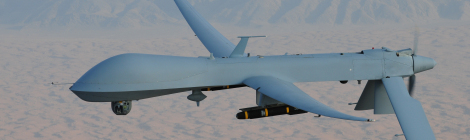
    Featured image: MQ-1 Predator on patrol  Source: Air Force Reserve Command

    Image: An MQ-9 Reaper takes off on a mission from Afghanistan. Source: Wikimedia

  • Sustainable Security

    by Amira Armenta

    Colombia 2011 article smallIn Colombia there are many regions where poverty and the absence, or weak presence, of the state has facilitated the emergence of violence by armed groups. Among these are the Afro-Colombian communities of the Curvaradó and Jiguamiandó in the Urabá region

    The Urabá is located in the Northwest of Colombia, near the border with Panama. It is a region of great biodiversity, rich in minerals, oil, water, and timber, amongst other natural resources. Urabá is also one of the regions with the highest poverty rates, and lowest rates of schooling in the country. The region is inhabited by many indigenous peoples and Afro-Colombians, who are the traditional owners of hundreds of thousands of hectares of land. Collective ownership of these territories is supported by Colombian Law 70 of 1993.

    With the rise of drug trafficking in the country in the 80s, the region became a point of export of illegal narcotic drugs. At the same time, the illegal import of weapons soared to meet the growing demand of Colombian armed groups. Various increasingly powerful criminal groups (known as ‘paramilitaries’) began to invest money earned from their illegal activities in profitable lawful sectors such as the agribusiness – palm oil, bananas and cattle. In a few years Urabá went from being a marginal and sparsely populated region to a place where settlers converged, and multinational corporations and armed groups of all stripes were vying for control of territory and a stake in the business.

    In this context, poor rural communities such as bold”>Curvaradó and Jiguamiandó were sucked into the violence unleashed between the different armed groups. As the collective ownership of land was an obstacle to the economic interests of the new sectors (farmers and landowners whose funds often had an illicit origin), these groups used threats and harassment to banish the native people and appropriate their land. This violence and banishment was possible given the state of marginalization of the population, totally unprotected by the central government. Large palm oil plantations installed since then in the area have been financed largely with the laundered drug money. They use land violently obtained by the forced displacement.

    Since the 1990s, the Curvaradó and Jiguamiandó communities have specifically been the target of violence and subsequent displacement. They have lost their few belongings and have helplessly seen the powerful economic groups systematically seize their land.

    The Colombian government has recently begun a process of returning land to the inhabitants of the river basins of Curvaradó and Jiguamiandó and reparation for victims of violence. The move is encouraging, but it might not be enough to solve the problems. The history of violence can repeat itself any moment, as long as the causes that led to the banishment and violence are not addressed and those responsible are not punished. Standards of justice must apply, not just to those still operating outside the law, but also to those who now operate legally but whose past is murky.

    Whilst the Colombian government fails to fully develop social development programs (including education, health and infrastructure) and sustainable economic development policies to assist marginalised communities, the people of Curvaradó and Jiguamiandó will remain poor, uneducated, vulnerable, and at risk of lose their territories once again.

    Amira Armenta is a Researcher with the Drugs & Democracy Programme of the Transnational Institute (TNI), with a particular focus on Colombia.

    Image source: Yuliam Gutierrez

    Some Useful References

    Murder in Curvaradó: http://www.cipcol.org/?p=682  Bajo Atrato

    UNHCR on the situation of Colombian Afro Descendants: http://www.acnur.org/t3/fileadmin/scripts/doc.php?file=t3/fileadmin/Documentos/RefugiadosAmericas/Colombia/EN/Colombia_Situation_-_2011_International_Year_of_Afrodescendants

    Alternative Developments, Economic Interests and Paramilitaries in Uraba : http://www.tni.org/sites/www.tni.org/files/download/brief27fin.pdf

    El caso de Jiguamiandó y Curvaradó: http://www.lasillavacia.com/historia-invitado/22660/yamile-salinas-abdala/el-caso-de-jiguamiando-y-curvarado-estrategia-criminal

    Coca y violencia en el Chocó BiogeográficoL: http://www.tni.org/es/archives/archives_armenta_cocachoco

    Comisión Intereclesial de Justicia y Paz – Jiguamiandó y Curvaradó: http://justiciaypazcolombia.com/-Consejo-comunitario-de-Jiguamiando-

    Las tierra de Curvaradó de nuevo invadidas – Verdad Abierta : http://www.verdadabierta.com/paraeconomia/tierras/2944-las-tierras-de-curvarado-de-nuevo-invadidas

    Bajo Atrato se resiste a la violencia y a la pobreza: http://www.elcolombiano.com/BancoConocimiento/B/bajo_atrato_se_resiste_a_la_violencia_y_a_la_pobreza/bajo_atrato_se_resiste_a_la_violencia_y_a_la_pobreza.asp

  • Sustainable Security

    RC_long_logo_small_4webThis article is part of the Remote Control Warfare series, a collaboration with Remote Control, a project of the Network for Social Change hosted by Oxford Research Group.

    Editor’s note: Remote Warfare and the War on Drugs mini-series: This series of articles explores how remote warfare is being used in the war on drugs. To date, much of the debate on remote warfare has focused on its use in the war on terror. However, the use of drones, private military and security companies (PMSCs), special forces and mass surveillance are all emerging trends found in the US’s other long standing war, the War on Drugs. The articles in this series seek to explore these methods in more depth, looking at what impact and long term consequences they may have on the theatre in which they’re being used. Read other articles in the series.

    Ever advancing remote warfare technology is being increasingly used by law enforcement agencies to counter drug trafficking. In response, drug cartels are also adopting new technology to smuggle and distribute drugs. However, the technological superiority of law enforcement-military actors is also causing criminal and militant groups to adapt by employing the very opposite tactic, by resorting to highly primitive technology and methods. In turn, society is doing the same thing, adopting its own back-to-the-past response to drug trafficking and crime.

    The history of drug trafficking and crime more broadly is a history of adaptation on the part of criminal groups in response to advances in methods and technology on the part of law enforcement agencies, and vice versa. Sometimes, technology trumps crime: The spread of anti-theft devices in cars radically reduced car theft. The adoption of citadels (essentially saferooms) aboard ships, combined with intense naval patrolling, radically reduced the incidence of piracy off Somalia. Often, however, certainly in the case of many transactional crimes such as drug trafficking, law enforcement efforts have tended to weed out the least competent traffickers, and to leave behind the toughest, meanest, leanest, and most adaptable organized crime groups.

    Increasingly, organized crime actors have adopted advanced technologies, such as semi-submersible and fully-submersible vehicles to carry drugs and other contraband, and cybercrime and virtual currencies for money-laundering. Adaptations in the technology of smuggling by criminal groups in turn lead to further evolution and improvement of methods by law enforcement agencies. However, the use of ever fancier-technology is only a part of the story. The future lies as much behind as ahead (to paraphrase J.P. Wodehouse), with the asymmetric use of primitive technologies and methods by criminal groups to counter the advanced technologies used by law enforcement.

    The Seduction of SIGINT and HVT

    The improvements in signal intelligence (SIGINT) (information gained by the collection and analysis of the electronic signals and communications of a given target) and big-data mining (the extracting of useful information from large datasets or streams of data) over the past two decades have dramatically increased tactical intelligence flows to law enforcement agencies and military actors, creating a more transparent anti-crime, anti-terrorism, and counterinsurgency battlefield than before. The bonanza of communications intercepts of targeted criminals and militants that SIGINT has come to provide over the past decades in Colombia, Mexico, Iraq, Pakistan, Afghanistan, and other parts of the world has also strongly privileged high-value targeting (HVT) and decapitation policies-i.e., principally targeting the presumed leaders of criminal and militant organizations.

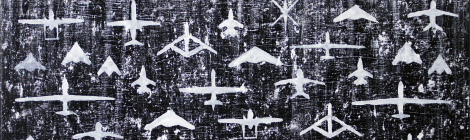
    JJprogects

    Artwork of drone warfare by JJprojegts.

    The proliferation of SIGINT and advances in big-data trawling, combined with some highly visible successes of HVT, has come with significant downsides. Although high-value targeting has been effective, this has only occurred under certain circumstances. In many contexts, such as in Mexico, HVT has been counterproductive, fragmenting criminal groups without reducing their proclivity to violence; in fact, exacerbating violence in the market. Other interdiction (the targeting of opponent’s organizational structures or disrupting their logistical chains) patterns and postures, such as middle-level targeting and focused-deterrence, would be more effective policy choices.

    A large part of the problem is that the allure of signal intelligence has led to the discounting of other key intelligence techniques, including developing a strategic understanding of criminal groups’ decision-making in order to anticipate the responses of targeted nonstate actors to law enforcement actions (here Mexico provides a disturbing example). It also requires the cultivation of human intelligence assets (sorely lacking in Somalia, for example) and obtaining a broad and comprehensive understanding of the motivations and interests of local populations that interact with criminal and insurgent groups (notably deficient in Iraq, Afghanistan, and Pakistan). Finally, establishing good relationships with local populations to advance anti-crime and counterinsurgency policies is essential. In Colombia, for example, drug eradication policy antagonized local populations from national government and strengthened the bonds between them and rebel groups.

    In other words, the tactical tool, technology – in the form of signal intelligence and big-data mining – has trumped strategic analysis. Instead, strategic intelligence analysis needs to be brought back, to drive interdiction targeting patterns, instead of letting the seduction of signal data drive intelligence, analysis and targeting action. Indeed, the political effects, as well as the anticipated responses by criminal and militant groups, and any other outcomes of targeting patterns, need to be incorporated into the strategic analysis. Questions to be assessed need to include: Can interdiction hope to incapacitate – arrest and kill – all of the enemy or should it seek to shape the enemy? What kind of criminals and militants, such as how fractured or unified, how radicalized or restrained in their ambitions, and how closely aligned with local populations against the state, does interdiction want to produce?

    Dogs Fights or Drone Fights: Remote Lethal Action by Criminals

    Criminal groups have used technology not merely to foil law enforcement actions, but also to fight each other and dominate the criminal markets and control local populations. In response to the so-called Pacification (UPP) policy in Rio de Janeiro through which the Rio government has sought to wrestle control over slums from violent criminal gangs, the Comando Vermelho (one of such gangs), for example, claimed to deploy remote-sensor cameras in the Complexo do Alemão slum to identify police collaborators, defined as those who went into newly-established police stations. Whether this specific threat was credible or not, the UPP police units have struggled to establish a good working relationship with the locals in Alemão.

    The new radical remote-warfare development on the horizon is for criminal groups to start using drones and other remote platforms not merely to smuggle and distribute contraband, as they are starting to do already, but to deliver lethal action against their enemies – whether government officials, law enforcement forces, or rival crime groups.

    Eventually, both law enforcement and rival groups will develop defenses against such remote lethal action, perhaps also employing remote platforms (drones to attack the drones). Even so, the proliferation of lethal remote warfare capabilities among criminal groups will undermine deterrence, including deterrence among criminal groups themselves over the division of the criminal market and its turfs. This is because remotely delivered hits will complicate the attribution problem – i.e., who authorized the lethal action — and hence the certainty of sufficiently painful retaliation against the source and thus a stable equilibrium.

    More than before, criminal groups will be tempted to instigate wars over the criminal market with the hope that they will emerge as the most powerful criminal actors and able to exercise even greater power over the criminal market – the way the Sinaloa Cartel has attempted to do in Mexico even without the use of fancy technology. Stabilizing a highly violent and contested – dysfunctional – criminal market will become all the more difficult the more remote lethal platforms have proliferated among criminal groups.

    Back to the Past: The Ewoks of Crime and Anti-Crime

    In addition to adopting ever-advancing technologies, criminal and militant groups also adapt to the technological superiority of law enforcement-military actors by the very opposite tactic — resorting asymmetrically to highly primitive deception and smuggling measures. Thus, both militant and criminal groups have adapted to signal intelligence not just by using better encryption, but also by not using cell phones and electronic communications at all, relying instead on personal couriers, for example, or by flooding the e-waves with a lot of white noise. Similarly, in addition to loading drugs on drones, airplanes, and submersibles, drug trafficking groups are going back to very old-methods such as smuggling by boats (including through the Gulf of Mexico), by human couriers, or through tunnels.

    Conversely, society sometimes adapts to the presence of criminal groups and intense, particularly highly violent criminality by adopting its own back-to-the-past response – i.e., by standing up militias (which in a developed state should have been supplanted by state law enforcement forces). The rise of anti-crime militias in Mexico, in places such as Michoacán and Guerrero, provides a rich example of such populist responses and the profound collapse of official law enforcement. The inability of law enforcement there to stop violent criminality – and in fact, the inadvertent exacerbation of violence by criminal groups as a result of HVT – and the distrust of citizens toward highly corrupt law enforcement agencies and state administrations led to the emergence of citizens’ anti-crime militias. The militias originally sought to fight extortion, robberies, theft, kidnapping, and homicides by criminal groups and provide public safety to communities. Rapidly, however, most of the militias resorted to the very same criminal behavior they purported to fight – including extortion, kidnapping, robberies, and homicides. The militias were also appropriated by criminal groups themselves: the criminal groups stood up their own militias claiming to fight crime, where in fact, they were merely fighting the rival criminals. Just as when external or internal military forces resort to using extralegal militias, citizens’ militias fundamentally weaken the rule of law and the authority and legitimacy of the state. They may be the ewoks’ response to the crime empire, but they represent a dangerous and slippery slope to greater breakdown of order.

    In short, technology, including remote warfare, and innovations in smuggling and enforcement methods are malleable and can be appropriated by both criminal and militant groups as well as law enforcement actors. Often, however, such adoption and adaptation produces outcomes that neither criminal groups nor law enforcement actors have anticipated and can fully control. Technology cannot fix defecting anti-crime and anti-drug policies, such as preoccupation with drug seizures , or absent rule of law and culture of lawfulness. Advances in technology do not obviate the need to strengthen bonds between citizens and the state and to create law enforcement and socio-economic conditions which allow citizens to internalize laws. Nonetheless, crime and some illegal economies will always persist and law enforcements and criminals will compete with each other in adopting improving technologies and finding measures to counter them, including most primitive but effective ones. The criminal landscape and military battlefields will thus increasingly resemble the Star Wars moon of Endor: drone and remote platforms battling it out with sticks, stones, and ropes.

    Dr. Vanda Felbab-Brown is a senior fellow in Foreign Policy at the Brookings Institution and co-director of the Brookings projects on Improving Global Drug Policy: Comparative Perspectives and UNGASS 2016 and Reconstituting Local Orders. Dr. Felbab-Brown is an expert on illicit economies and organized crime and international and internal conflicts and their management, including counterinsurgency and statebuilding. Her research focuses particularly on South Asia, Burma, the Andean region, Mexico, and Somalia, and she has conducted fieldwork in some of the most dangerous parts of the world. Dr. Felbab-Brown has an extensive publication list of books, policy reports, academic articles, and opinion pieces, including Poached: Combating Wildlife Trafficking, with Lessons from the War on Drugs (forthcoming 2016); Narco Noir: Mexico’s Cartels, Cops, and Corruption (forthcoming 2016); Aspiration and Ambivalence: Strategies and Realities of Counterinsurgency and State-building in Afghanistan (2013); and Shooting Up: Counterinsurgency and the War on Drugs (2010). Dr. Felbab-Brown is a frequent consultant for national, multilateral, and non-governmental organizations and a frequent commentator in U.S. and international media. She also regularly provides expert testimony to the US Congress. Prior to joining the Brookings Institution, Dr. Felbab-Brown was an Assistant Professor at the Georgetown University School for Foreign Service. She received her PhD in political science from MIT and her BA from Harvard University.

  • Sustainable Security

    Increasingly, non-traditional threats to maritime security are linked to resource scarcity and conflict. An overriding challenge for policymakers is how to address these threats.

    The relatively new concept of ‘maritime security’ has received increasingly greater attention both within the marine resource management and national security communities, particularly since the early 2000s.  While definitions of maritime security vary, there is broad agreement that maritime security generally encompasses the policies, regulations, and operations designed to secure the governance and management of a nation’s maritime jurisdiction (e.g., exclusive economic zones or territorial waters). This definition is broad enough to attract the relevant interest of and contributions from several fields of study, including: global policy; defense and security; natural resource economics; criminal justice; international development; and environmental management.

    During the last two decades, a number of investigations have been conducted into the threats facing maritime security, particularly within the transnational waters of three regions: the Gulf of Aden and Horn of Africa in East Africa (see Sumaila and Bawumia 2014; Bueger 2013; Hansen 2011; Gilmer 2017); the Gulf of Guinea in West Africa (see Jacobsen 2017); and the South China Sea and Sulu-Sulawesi Seas of Southeast Asia (see Pomeroy et al. 2016; Chapsos and Malcolm 2017; Pomeroy et al. 2007).

    Such research has encouraged careful analysis by the international community to identify relationships between relevant political, socioeconomic, and environmental factors with regional stability and maritime security.  Such investigations are of increasing interest to those addressing national security, international policy, and sustainable development concerns.

    Linking Marine Resource Scarcity and Maritime Security

    Maritime security can be viewed as a non-traditional security threat, defined by Caballero-Anthony as “challenges to the survival and well-being of peoples and states that arise primarily out of nonmilitary sources, such as climate change, environmental degradation and resource depletion, infectious diseases, natural disasters, irregular migration, food shortages, people smuggling, drug trafficking, and other forms of transnational crime”. Increasingly, non-traditional security threats are linked to natural resource scarcity. Whether considering energy, food, or freshwater shortages, such resource scarcities exhibit common attributes.

    • First, they share common drivers, or factors that influence and cause or exacerbate scarcity, such as poverty, food insecurity, ecological degradation, human population growth, and ineffective governance and enforcement.
    • Second, they are linked to each other through feedback loops, which create a major risk of unintended consequences when one scarcity issue is tackled without reference to other scarcity issues.
    • Third, they have common impacts. That is, they disproportionately impact poor and fragile states, cause economic stress, and result in the potential for increased and strategically-targeted resource competition and conflict.

    Bueger identifies four, interrelated concepts as an analytical foundation of maritime security: national security; human security; economic development; and the marine environment.  Building from this economic-environment-security framework, other research has investigated the relationship between the relative abundance (or scarcity) of available marine resources, the type and degree of extractive effort for such marine resources, and the level of resource competition and conflict (see Pomeroy et al. 2016; Bueger 2015b; Pomeroy et al. 2007).  These studies highlight how various political, socioeconomic, institutional, and cultural factors are linked to and cumulatively influence maritime security.  This research also illustrates how maritime insecurity can influence broader trends related to civil unrest (nationally or locally) and regional peace and order.

    In this work, there is growing recognition of how increasing fisheries scarcity, competition, and conflict exacerbates rates of illegal, unreported, and unregulated (IUU) fishing in central Indonesia, Liberia, eastern Malaysia (Sabah), the southern Philippines, and Somalia.  In turn, IUU fishing further increases scarcity, competition, and conflict over remaining resources, eroding peace and order and decreasing maritime security.  Declining marine resource availability and decreasing maritime security also threaten the conservation and sustainable management of in situ marine biodiversity within these regions.

    The Role of Non-State Actors and Transnational Crime

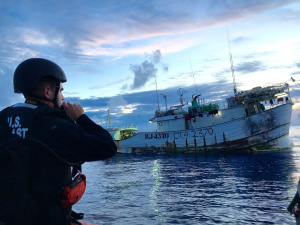
    Image credit: U.S. Coast Guard. Photo by Chief Petty Officer Sara Mooers.

    Investigations into marine resource scarcity, competition, and conflict have also highlighted how non-state actors and non-traditional threats are influencing maritime security.  Transnational crime has a notable influence on both marine resource scarcity and maritime security.  For example, illicit maritime commerce (such as human trafficking and the smuggling of narcotics or small arms via ocean vessels in Southeast Asia and West Africa) and piracy (including armed robbery at-sea, kidnapping for ransom, and oil bunkering off Indonesia, Malaysia, Nigeria, the Philippines, Somalia, and Yemen) committed by non-state (and in some cases, stateless) actors are linked both to marine resource scarcity (via both illegal fishing and piracy of post-harvest fishing vessels) and increased armed conflict and civil unrest (via increased rates of armed conflict/violence at sea and logistical and supply support for insurgencies and acts of terrorism).

    As highlighted recently by an INTERPOL study (2016), 80% of the world’s nations today recognize environmental crime as one of their nation’s highest national security priorities (INTERPOL and UN 2016).  INTERPOL investigations reveal how environmental crimes are linked to both transnational criminal networks and terrorism.  Such crimes include the illegal exploitation of high-value natural resources from conflict areas (and in some cases, to fuel or sustain conflict in such areas).

    Criminal supply chains trafficking in high-value natural resources (e.g., timber, oil, fisheries, diamonds, and gold) are documented as often converging under broader, networked operations of organized transnational crime.  Such transnational crime networks include actors operating within high-value fishery supply chains, including those for tuna, shark fins, and live reef fish.  Such criminal supply chains illustrate how closely linked marine resource scarcity and maritime security are.

    Moving from Investigation to Prediction and Intervention

    Building upon the recommendations outlined by INTERPOL and the UN, we propose that the international community move beyond investigating the relationships between political, socioeconomic, and cultural factors with maritime security (now documented), and move toward supporting three, focused interventions to bolster maritime security, particularly in sensitive or destabilized regions of transnational waters.

    First, we propose the development of a predictive model of observed versus forecasted changes to the relative level of maritime security within a specific nation or region.  To do this, an empirical approach must be taken to build a predictive, multivariate model of national and regional maritime security trends (as the dependent or outcome variable), based on observable, real-time data related to political, socioeconomic, and cultural factors that are known to be correlated (independent variables).

    By periodically monitoring such multivariate models at the national and regional levels, ‘tipping points’ in maritime security and regional stability can be identified prior to being reached, thus allowing opportunities for timely and focused interventions.  Such a model would require identification and measurement of an adequate, sensitive, reliable, and practical set of maritime security indicators across relevant dimensions; for example, Germond identifies geopolitical indicators of maritime security.

    Next, we argue that current and future maritime security operations be redesigned from being largely specialized, narrowly-defined efforts to becoming broader, multidisciplinary efforts that account for the correlation and interdependence of relevant political, socioeconomic, institutional, and cultural factors present.  This will require the deliberate and focused recruitment, consultation, and active participation of non-traditional actors (e.g., fisheries managers; resource economists; rural development experts) into national security operations and defense policy.

    By redesigning such maritime security activities, they can interfere with the ability of such factors to converge and cumulatively exacerbate civil and environmental insecurity.  Such maritime security activities include: coastal defense and security operations or missions; national marine resource management policies and actions; ‘good’ governance programs relating to nautical jurisdictions; economic development programs for coastal and marine industries; international foreign aid and development programs.

    To be effective, redesigned security activities must address a broad suite of relevant factors rather than narrowly focus in on a specific aspect of maritime security; e.g., redesigning counterterrorism activities within coastal areas of unrest to include targeted marine resource livelihood and community-supported enforcement projects.  Case studies of successful models of broader, multidisciplinary maritime security operations can be documented and shared across nations and regions.

    Finally, we propose that maritime security operations move away from being largely single country-specific efforts that are driven by national security agendas to that of collaborative, multinational efforts that are driven by a mutual, regional maritime security strategy.  Addressing transnational maritime threats and regional criminal networks in the seafood supply chain requires a collaborative approach that relies on coalition building and shared (negotiated) tactical objectives.

    In some cases, such regional processes and multinational policy fora already exist, and can serve as a platform for targeted, collaborative, multinational maritime security operations; e.g., transnational security forces patrolling regional seas under the Regional Plan of Action to Combat IUU Fishing by the Association of Southeast Asian Nations (ASEAN).  Such collaborative, multinational efforts to reduce marine resource conflicts and improve maritime security would be a logical, strategic, and high-value approach commensurate with addressing the multiple operating conditions.

    Conclusion

    Maritime security is an important but often overlooked dimension of the broader “sustainable security” framework.  A complex web of multivariate drivers influencing maritime security are increasingly documented and recognized as being interconnected with the emerging security challenges of the 21st century, including by non-state actors through non-traditional threats.  Addressing the contributions of marine resource scarcity, competition, and conflict in eroding maritime security is an important step that must be taken to uphold the rule of law, strengthen national security, and promote regional peace and order.

    Robert Pomeroy is currently a Professor in the Department of Agricultural and Resource Economics and Connecticut Sea Grant College Fisheries Extension Specialist at the University of Connecticut – Avery Point in Groton, Connecticut USA. Dr. Pomeroy has his PhD in Resource Economics from Cornell University. His areas of professional interest are marine resource economics and policy, specifically small-scale fisheries management and development, coastal zone management, aquaculture economics, international development, policy analysis, and seafood marketing. Dr. Pomeroy has worked on research and development projects in over 70 countries in Asia, Africa, the Caribbean and Latin America.

    John Parks has worked, for more than twenty years, with local communities, indigenous leaders, resource users, government agencies, non-governmental groups, and donors to design and implement marine resource management solutions that strengthen both environmental and civil security within coastal communities around the world. He has served in a number of non-government and government organizations, including as a federal officer with the United States National Oceanic and Atmospheric Administration and as senior staff with the Nature Conservancy, the World Resources Institute, and World Wildlife Fund. John assists government and non-government clients around the world design and implement marine management solutions, including for fisheries management, marine protected area design and management, citizen-supported maritime enforcement, and climate change adaptation in coastal communities. John earned his undergraduate and graduate degrees from the Rosenstiel School of Marine and Atmospheric Science at the University of Miami, with a dual focus on behavioral science and tropical coastal ecology. He is a member of the IUCN World Commission on Protected Areas, and has been a contributing or lead author on numerous peer-reviewed journal articles, books, and other publications.