Category: 14

  • Sustainable Security

    There are strong calls to give UN peacekeeping operations more robust mandates to engage in counter-terrorism tasks. But the idea of UN peacekeepers conducting counter-terrorism operations is not without its problems.

    Terrorist attacks have been increasing rapidly over the last decade. According to the Global Terrorism Index, 29,376 people were killed in terrorist attacks in 2015. This was the second deadliest year after 2014, when 32,765 people were killed. The spike in 2014 and decline in 2015 is largely a result of the rise and subsequent weakening of Boko Haram and the Islamic State (IS).

    Fatigue after long engagements in Afghanistan and Iraq and the continued impact of the financial crisis has significantly dampened the interest in new out-of-area operations among Western member states. At the same time, the threats of terrorism and migration remain at the top of the foreign policy agenda. It is in this environment that policy makers are turning to the UN, to see what role it can play in the global security burden-sharing. This means a more transactional relationship with the UN, not necessarily considering the longer-term impact of undermining its impartiality and legitimacy.

    UN peacekeeping operations have, during the last decade, been deployed to protect civilians in increasingly unstable conflicts, most often without a peace to keep. However, although the conflicts have been asymmetrical in nature, armed groups have seldom perceived the UN as a party to the conflict, and pursued a strategy of strategic targeting of its troops, police and civilians.

    The Case of Mali

    Image credit: MINUSMA/Flickr.

    In March 2012, a coalition of rebel and Islamist groups took control of the north of Mali in the wake of a coup. On April 6, 2012, the rebels proclaimed the independence of the ‘Republic of Azawad’ and the imposition of sharia law in northern Mali. 412,000 persons had fled their homes and had become internally displaced or moved across the border to Mauritania, the Niger and Burkina Faso. By November 2012, Al Qaida in the Islamic Maghreb (AQIM) had taken control of Timbuktu and Tessalit, the Movement for Unity and Jihad in West Africa (MUJAO) had taken control of Douentza, Gao, Menaka, Ansongo and Gourma, and Kidal was under the control of the Islamist group Ansar Dine (“defenders of the faith”).

    The Islamists and rebel groups were quickly conquered and fled to the far north of Mali after a short and swift intervention in the beginning of 2013 by the French Opération Serval, in cooperation with the African-led International Support Mission in Mali (AFISMA). To avoid being stuck in a long and bloody counterinsurgency, the French had pushed for a swift handover to the UN.

    On 1 July 2013, AFISMA handed over authority to the UN multidimensional integrated stabilisation mission in Mali (MINUSMA). However, the Islamist groups have proven resilient and the operation has been struggling to deploy and implement its mandate. From its inception in 2013 until 31 January 2017, it has endured 72 fatalities due to hostile actions, including suicide attacks, mortar attacks and improvised explosive devices (IEDs). The mission has been given increasingly robust mandates, and its most recent mandate ordered the mission to “…to stabilize the key population centres and other areas where civilians are at risk, notably in the North and Centre of Mali, and, in this regard, to enhance early warning, to anticipate, deter and counter threats, including asymmetric threats…”.

    The mission is actively supporting counter-terrorism actions, as it has been preparing “targeting packs” and has been informally sharing information with the French parallel counter-terrorism operation Barkhane  (the French follow-on mission from Serval). This follows a trend towards peace enforcement that started with MONUSCO, where the UN peacekeeping mission in the Democratic Republic of Congo (DRC) is now being mandated to “neutralize” identified rebel groups.

    Future missions may be deployed to Libya, Syria and Yemen – countries that are also marked by asymmetric conflict and violent religious extremism. Against this backdrop, many member states are now arguing that UN peacekeeping operations need to reform to not only deal better with the challenges it faces in Mali, but also in future operations.

    The high-level panel on peace operations, nominated by former UN Secretary-General Ban Ki-moon, strongly underscored that UN peacekeeping operations should not undertake “counter-terrorism operations”. However, the report left the back-door open, insofar as it argued that “UN peacekeeping missions, due to their composition and character, are not suited to engage in military counter-terrorism operations. They lack the specific equipment, intelligence, logistics, capabilities and specialized military preparation required, among other aspects.” Disregarding the principled arguments against moving UN peacekeeping in such a direction, this could indeed be read as a list of areas where reform is needed to enable UN peacekeeping to take on counter-terrorism tasks.

    A Desirable Shift?

    But what may the consequences be of taking UN peacekeeping operations in such a direction? First, UN peacekeeping missions are not likely to be able to perform counter-terrorism tasks in a satisfactory manner, militarily speaking. They are composed of troops from many different countries, and although they should provide a military deterrent against armed groups, they are not likely to be able to protect themselves against asymmetric attacks. Even small attacks can lead to the withdrawal of troops by troop-contributing countries, as most of these do not have the political interest needed to be able to sustain losses. The exception to this are neighbouring countries, as these may have a political interest in the conflict, but precisely because of this fact they may also be interested to use force only against some and not all parties that threaten the peace.

    The UN has been strongly criticised for not taking action to protect civilians, and the continued inaction has been used as an argument to make the UN more robust, as well as able to take on counter-terrorism tasks. However, this argument confuses the ability of the UN to protect civilians with counter-terrorism. In Mali, the mission is much busier protecting itself than protecting civilians. In fact, the recruitment to the terrorist groups is increasingly moving south in the country, as local populations are not experiencing a peace dividend or improving levels of participation and inclusion after the deployment of MINUSMA. Rather, they are experiencing a government that is continuing to marginalize significant groups of the population such as the Tuaregs in the North and the Fulani (also known as Peul) in the central regions of the country, and employ draconian counter-terrorism tactics.

    The inclusion of neighbouring countries’ troops in UN peacekeeping missions was previously considered a red line. As seen with the example of MINUSMA, as well as UN peacekeeping missions in the Democratic Republic of Congo and South Sudan (to mention a few), this principle has fallen by the wayside. Taken together with the move towards UN peacekeeping missions taking on counter-terrorism tasks, this shows a trend towards a more partial UN in these situations, which may increasingly be rendered unable to play its vital good offices and humanitarian roles, and be a UN for all the people, not only the government of the day. The UN and member states should reverse this trend, and make sure that UN peacekeeping operations can serve in their most effective way – as a tool to keep the peace while institutions, service delivery and an inclusive and participatory state is being built.

    John Karlsrud is the Manager of the Training for Peace program. He is on Twitter at @johnkarlsrud.

  • Sustainable Security

    by Rebecca Sharkey and Laura Boillot

    International momentum towards a treaty to ban nuclear weapons reached a milestone in the December 2014 Vienna conference. Even assuming that the UK does not initially sign up to such a treaty, it is subject to the pressures of a changing legal and political environment and could find its present position increasingly untenable – not least on the issue of Trident renewal.

    The Vienna Conference on the Humanitarian Impact of Nuclear Weapons, held in December 2014, was the latest conference of the ‘humanitarian initiative’, following previous meetings in Norway and Mexico . Having fully explored the impact of a nuclear weapon detonation as well as the consequences of testing and production, the conference concluded with a pledge from the Austrian government to “fill the legal gap for the prohibition and elimination of nuclear weapons”. Since then, more than 50 countries have associated themselves with the Austrian Pledge and yet more are expected to join over the coming months, signalling readiness to begin negotiations for a treaty that outlaws nuclear weapons.

    A ban treaty could be a straightforward legal instrument with prohibitions on the use, development and production, transfer, stockpiling, deployment of nuclear weapons and on assistance with these prohibited acts. It could require the elimination of nuclear weapons for states that possess them, with the specific processes for elimination being left for these states to agree when they are ready to do so. Treaty negotiations are a logical and compelling next step for states no longer willing to accept the status quo, and no longer prepared to wait for nuclear-armed states to lead on nuclear disarmament. In addition, civil society organisations across the world, under the banner of the International Campaign to Abolish Nuclear Weapons (ICAN) are putting increasing pressure on states to begin treaty negotiations immediately – even if nuclear-armed states may initially not wish to join.

    Legal obligations

    Press conference by the five Nuclear Non-Proliferation Treaty (NPT) nuclear weapon states at the UN Office, Geneva in 2013. Source: United States Mission Geneva

    The UK and other nuclear-armed states have long expressed their desire for a nuclear weapon-free world. Alongside other nuclear-armed states, the UK has a legal obligation under article VI of the Nuclear Non-Proliferation Treaty (NPT) to pursue ‘effective measures’ towards nuclear disarmament and ‘a treaty on general and complete disarmament’.

    Despite this, there has been very slow progress so far towards nuclear disarmament, and nuclear-armed states continue to say that nuclear weapons are essential to their security doctrines. The UK advocates a ‘step-by-step’ approach towards nuclear disarmament, which has been marked by a lack of substantial progress. Most crucially, the UK government has seen this approach as compatible with getting new nuclear weapons. In 2007 UK Prime Minister Tony Blair claimed that “the Non-Proliferation Treaty… makes it absolutely clear that Britain has the right to possess nuclear weapons”. This bad faith reading of the treaty and continued investment in maintaining its arsenal of nuclear weapons raises concerns over the UK’s commitment towards fulfilling these legal obligations under the NPT. A significant recent development and challenge to this position is a Marshall Islands legal case, currently being taken against the UK and other states for failing to act on multilateral nuclear disarmament obligations.

    In the run up to the NPT Review Conference, the UK government has argued vigorously that the proponents of a ban treaty are misguided, and that such a treaty would undermine the NPT. However, the absence of any evidence to substantiate this claim suggests that such an argument will ring hollow against the persistent pursuit of Trident renewal. If the UK government is sincerely committed to pursuing nuclear disarmament then there is no need for it to oppose the development of a treaty with that aim. A ban treaty would actually constitute a long-overdue implementation of the NPT: the momentum towards a ban treaty could be seen as a positive opportunity for the UK to take concrete steps towards nuclear disarmament by creating the right conditions and helping to fulfil its own NPT obligations, even if the UK chose not to sign up immediately.

    Political pressure

    The international humanitarian initiative has sparked interest and debate inside Westminster, even if the government initially claimed the initiative would ‘divert discussion and focus away from… practical steps’ towards nuclear weapons reduction. At a debate on Trident renewal in the House of Commons on 20 January 2015, eleven MPs raised the spectre of the humanitarian consequences of nuclear weapons, with some specifically calling for a ban treaty.

    With the final decision over the renewal of Trident due to be taken in 2016, the incoming 2015 government will be faced with taking a decision over the renewal of the UK’s nuclear weapons – at the same time that other states are most likely to be engaged in treaty negotiations that will rule those weapons illegal. This development will significantly increase the political costs of holding onto nuclear weapons and sinking even more money in their maintenance and modernisation. As Dame Joan Ruddock MP has stated, “a global ban on nuclear weapons would present the greatest challenge to UK renewal of Trident”.

    Military cooperation

    Continued possession of nuclear weapons when other militaries are rejecting them could also put strain on the UK’s relationships with some of its military allies. Whilst a ban treaty would not prevent a state that joins the treaty from being in a military alliance with a nuclear-armed state like the UK, it should require states not to assist in acts that are prohibited under the treaty. As such, it would require states parties to renounce any joint policy that envisions the development, stockpiling, or use of nuclear weapons.

    There is however, no barrier to NATO member states’ adherence to a treaty banning nuclear weapons. The North Atlantic Treaty, which is a legally-binding instrument, makes no reference to nuclear weapons. And although NATO’s Strategic Concept does refer to nuclear weapons capabilities as part of its strategy, this is not a legally-binding document and would not prevent any NATO state from joining the ban treaty. Besides, the document gets revised and could be updated so as not to rely on nuclear weapons. The International Law and Policy Institute (ILPI) points out, “concerns about the political implications of such a treaty for NATO ignore historical variations in member state military policy and underestimate the value of a ban on nuclear weapons for promoting NATO’s ultimate aim: the security of its member states.”

    There has not been a coherent and uniform NATO position towards the humanitarian initiative. All NATO states are members of the NPT and as such are committed to pursue ‘effective measures’ towards disarmament. So far, virtually all NATO states have taken part in one or more of the conferences on the humanitarian impact of nuclear weapons. After all, the humanitarian initiative was spearheaded by a NATO state – Norway. A ban treaty should in fact be seen as a positive step towards NATO’s long-term security goals.

    Finance and investment

    A nuclear weapons ban treaty could also help to increase the stigma and practical difficulties attached to nuclear weapons by prohibiting investment in their development. According to a 2014 report by PAX, 35 financial institutions in the UK invested over US$27bn in 28 nuclear weapons producing companies over the past 3 years. A number of UK companies are involved in the ongoing production and maintenance of the UK’s nuclear arsenal.

    Prohibitions on assistance, such as financing the production of nuclear weapons, would mean that companies that produce nuclear weapons would find difficulty in securing financing to produce these weapons. As financial institutions move towards corporate socially responsible investments, many are anyhow adopting policies prohibiting investments in certain weapons, and this too will impact the producing companies and the states buying their products.

    Even without an international ban treaty there have been successful efforts to promote disinvestment. A well-known example of a nuclear weapons boycott is the campaign initiated in the 1980s by Infact (now Corporate Accountability International) against General Electric (GE). GE had played a major role in nuclear weapons production since the Manhattan Project. The boycott resulted in significant financial losses for the company and damage to its brand. Ultimately, it was compelled to end its involvement in nuclear weapons work. More recently, Allied Irish Bank, named as an investor in the 2013 Don’t Bank on the Bomb report, had fully divested by the time the 2014 report was published.

    A treaty signed by a majority of countries in the world that prohibits investment in the development, production, or testing of nuclear weapons would significantly increase pressure for many UK financial institutions to pull out their investments from companies that develop them. Past experience with the treaty that bans cluster munitions shows that the stigmatizing effect of outlawing weapons significantly reduces available financing for their production.

    Conclusion

    The conferences held as part of the humanitarian initiative have left no doubt over the severe and long-lasting effects that would result from a nuclear weapon detonation, as well as the devastation of lives and environment caused by testing and production. The resulting momentum created among the non nuclear-armed states to achieve a ban treaty is coupled with a conviction held by civil society and many states that a treaty can – and should – be achieved even if the nuclear-armed states do not join immediately. The UK should see the start of a treaty process as a positive development that is helping to foster the right conditions for its own nuclear disarmament, and that of other states too. But official responses notwithstanding, the climate surrounding the perceived status and security of nuclear weapons is changing – whether the UK government likes it or not.

    Rebecca Sharkey is UK Co-ordinator at the International Campaign to Abolish Nuclear Weapons (ICAN). Rebecca has worked on campaigns, communications, research and outreach at NGOs such as Freedom From Torture, the National Secular Society and the National Assembly Against Racism.

    Laura Boillot is a Project Manager for Article 36. Laura previously worked as Campaign Manager and subsequently as Director of the Cluster Munition Coalition (CMC). Prior to that she was a Program Officer for the International Action Network on Small Arms (IANSA).

    Featured Image: Trident Nuclear Submarine HMS Victorious near Faslane, Scotland. Source: Flickr | UK Ministry of Defence

  • Sustainable Security

    Despite being strictly prohibited in international humanitarian law, child soldiering remains a serious global problem. How effective has the international community’s response to this phenomenon been?

    Constituting one of the most egregious child rights violations, many children are currently actively involved in violent conflict as members of armed organizations, states and non-state actors. They can be found on every continent, but sub-Saharan Africa is the epicenter of the phenomenon. These recruited children perform a range of different tasks; they participate in combat, lay mines and explosives, are scouting, spying, and acting as decoys, couriers or guards. Others are used for logistics and supporting functions such as cooking and cleaning.

    The 1977 Additional Protocols to the Geneva Conventions were the first international treaties to try and tackle the problem of child soldiering. They prohibit the recruitment and participation in hostilities of children under the age of 15. The 1989 Convention on the Rights of the Child, which has achieved almost universal ratification, also included the 15 age limit. An optional protocol to this Convention, in May 2000, lifted the age to 18. It insisted that armed groups should not use children under 18 in any circumstances and called on states to criminalize such practices. However, although the use of children by armed groups is prohibited and defined as a war crime, child soldiering remains a pressing global issue.

    A “time bomb”?

    omo_river_valley_img_0463

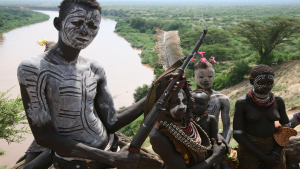
    Child soldiers in Ethiopia. Image by Vittorio Bianchi via Flickr.

    The most commonly cited figure for the number of children involved in conflicts is 300,000. This estimate is, however, not necessarily the most accurate one as information on child soldier usage is difficult to obtain. Children are often employed in remote conflict zones away from public view and the media, no record is kept of their number and ages, and those who employ them often deny their existence or claim that these were isolated cases. Besides, they often ‘vanish’ after the conflict ends; they are rarely as visible among the demobilised troops as they were among the combatants at the height of hostilities.

    The number of children active in armed groups is clearly nominal when compared to the millions of children who do not participate directly as soldiers but are profoundly affected by war. Nonetheless, this group is a tangible, visible, and dramatic example of the deprivation of the human rights of children. It has been empirical proven that using children as active participants in armed conflict has severe consequences not only for the child and their family, but also for society in general. For instance, at a recent Paris conference on child soldiering, the keynote speaker, the former French foreign minister Philippe Douste-Blazy, warned that the use of child soldiers is “a time bomb that threatens stability and growth in Africa and beyond.” They are “lost children,” he argued, “lost for peace and lost for the development of their countries”. Also, a New York Times editorial stated: “They are walking ghosts, damaged, uneducated pariahs.” Ultimately, if subscribing to these statements, child soldiering may be thought to contribute to the well-known ‘conflict trap’, i.e. they might increase the likelihood that conflict recurs.

    There are at least two avenues that link former child soldiers to conflict recurrence. First, it is argued that former child soldiers have often limited skills besides killing and being able to fieldstrip weapons after the conflict has ceased. This is primarily due to the fact that they experience little to no education while being in the bush. This lack of education impedes their labour market success: they earn less and are less likely to be engaged in skilled work in comparison to those that were not recruited by armed groups. This may significantly raise the willingness to rejoin armed groups again, which might assure them of at least the basic necessities, such as food and perhaps even a bit of money.

    Second, although child soldiers are far from the only ones who are affected as a result of their experiences in war, they suffer the most and have the least capacity to recover. Typically former child soldiers have witnessed, experienced and/or perpetrated shocking and disturbing violent actions during their time with the armed group. This can create great difficulties both for the children and their interface with society. It can lead to both physical symptoms, such as headaches, stomach pains, sleep disorders, and mental symptoms, like depression, anxiety, and extreme levels of pessimism.

    One of the most worrying symptoms connected to children’s war participation is a supposed increase in the child’s level of aggression. Due to the fact that they often do not have the capacities and experiences to disengage themselves from these violent and aggressive behavioral norms established during their time in the armed groups, difficulties arise when peace is restored. For instance, they often display on-going aggressiveness within their families and communities: they also often use physical violence to resolve conflicts, reflecting an absence of adequate social skills.

    These skills are not easily acquired by former child soldiers since they often encounter broken families once they are back that could have provided a better regulation of the use of violence. Hence, some scholars have argued that the phenomenon of child soldiers feeds upon itself: each round of fighting creates a new cohort, traumatized by the war and bereft of economical skills, who then become a potential pool and catalyst for the next spate of violence. Or as Wessells describes it: “A society that mobilizes and trains its young for war weaves violence into the fabric of life, increasing the likelihood that violence and war will be its future. Children who have been robbed of education and taught to kill often contribute to further militarization, lawlessness, and violence”.

    International response

    The response of the international community to counter child recruitment falls usually in two categories: (1) punishing perpetrators by ‘naming and shaming’ practices and by prosecution; and (2) mitigating some of the damage done to children once they leave the armed group by implementing child-centred Disarmament Demobilization and Reintegration (DDR) programs.

    Concerning the ‘naming and shaming’ policies, the United Nations often publishes reports mentioning particular governments and non-state actors that use children. Some have argued that this has an effect, especially on governments, although there is little empirical evidence to back this up. The largest degree of child recruitment is, however, carried out by non-state actors and it seems that media exposure, public pressure, and pressure of international organizations and governments have little to no effect, with perhaps the exception of rebel groups who strive for secession.

    Besides ‘naming and shaming’ campaigns, the international community has also started to shift its focus to the criminalization of child soldier recruitment. Thomas Lubanga Dyilo, a warlord from the Democratic Republic of the Congo who led the Union of Congolese Patriots, was the first rebel leader convicted by the International Criminal Court for the use of children in military operations. More recently, Charles Taylor, the former president of Liberia, was found guilty of conscripting and enlisting children. It is, however, unclear whether this criminalization has a deterrent effect on child soldier recruitment.

    Once children are out of the armed groups, the international community attempts to mitigate the damage done to them and the potential consequences for society by implementing DDR programs. Initially children were often excluded from these programs, as it was argued that they did not pose a post-conflict threat. Moreover, since children cannot be legally recruited, child-centered DDR program elements were not viewed as a routine component of peacemaking. Fortunately, this has changed in recent times, and most DDR programs now have their own imperatives focused on rehabilitating former child soldiers. Usually these programs consist of three components.

    First, former child soldiers are gathered at pick-up points, moved to disarmaments sites, and, whenever necessary, disarmed. During the demobilization part of the program, eligibility for the DDR program is determined through a screening process in which they receive identity and discharge documents. Reintegration is the third component of the DDR program, which starts at care centers – transit facilities which help prepare former child soldiers for going home and give non-governmental organizations time for the preparation of families and communities to receive the children. During their time at the center, emphasis is placed on educational activities, recreational activities, psychological support and counselling, and several different life skills trainings. Once the parents or extended family members are traced, the children will be taken home to their family and will join an appropriate educational program.

    The effectiveness of these programs in reducing recidivism and establishing post-conflict stability is, however, not always affirmed. Some scholars conclude that these programs are generally inefficient at disarming ex-combatants, reducing the likelihood of recidivism, and addressing their economic and security concerns. This lack of supporting evidence might be due to conceptual and operational problems with defining the outcome of these programs (and how to measure this), and a lack of information on the existing DDR programs (money, personnel, mission statements, etc.). But it might also be due to the content of these programs and how they approach child soldiering. Many of these child-centered DDR programs, for instance, are put in place under enormous time pressure, are often disconnected from the perception of local communities, and are based on a one approach fits all children principle. Consequently, some scholars have called for more flexibility within these programs to enhance is effectiveness. Only then can efforts to promote social reconstruction bear its fruits.

    Roos Haer (PhD, University of Konstanz, Germany) is a postdoctoral researcher at the University of Konstanz at the chair of International Relations and Conflict Management. Her current research interests include the role of children in conflict, child soldier recruitment by state and non-state actors, Disarmament Demobilisation and Reintegration programs, and survey methodology in less developed (conflict) countries. Her research is often based on quantitative field research conducted in Africa. She has published in (a.o) the European Journal of International Relations, Conflict Management and Peace Science, Third World Quarterly, and has published a book with Routledge publisher.

  • Sustainable Security

    Acclaimed military historian Dr. Mark Moyar discusses the history and current use of US special operations forces, America’s most elite soldiers.

    This interview was originally conducted for the Remote Control project.

    Q. Your book Oppose Any Foe was recently published. The book examines the history of U.S. special operations forces. What are the origins of America’s special operations forces and why were they created?

    Most of America’s special operations forces trace their roots to World War II. The Army Rangers were created in 1942 as a means of collaborating with the British Commandos, at a time when the Commandos were a central element of Winston Churchill’s raiding strategy. The Rangers were disbanded after World War II and again after the Korean War, but they were reincarnated in the 1970s and have been a part of the US Army ever since. President Franklin Roosevelt created the US Marine Corps Raiders in 1942 because his son, who was enamored with commando-type forces, convinced him to form Marine special operations forces despite objections from the head of the Marine Corps. Marine special operations forces were dissolved in 1944, not to be reconstituted until 2006, and eventually the new organization took on the Raider name.

    The US Navy fielded Frogmen in WWII as a means of clearing channels for amphibious landings, and retained some of the units after the war. In 1961, some of the Frogmen were converted into members of Sea, Air, Land Teams (SEALs). The Office of Strategic Services, the primary US intelligence agency during World War II, created special operations forces such as the Jedburghs and Operational Groups, which in the 1950s became the model for the US Army Special Forces.

    Q. In the early years, how strategically effective were US special operations forces?

    During both World War II and the Korean War, the United States formed special operations forces for the purpose of raids on enemy “soft spots.” In both cases, the Americans soon discovered that opportunities for such missions were few and far between. Given the need for regular infantry in these wars of grinding attrition, the special operations units were routinely employed in conventional infantry missions. For the purposes of stealth and speed, these units carried less heavy equipment than other line units, which proved to be a major handicap in conventional combat.

    The heavy losses sustained in battle led to the dissolution of most special operations units prior to the ends of both World War II and the Korean War. The special units of the Office of Strategic Services were somewhat more effective in their role of supporting resistance movements behind enemy lines, but for the most part they had little impact on the tide of battle, and they too were disbanded after the war. The US Navy Frogmen were a notable exception to the general trend, as their performance in clearing obstacles prior to amphibious landings was deemed so successful that they were retained after war’s end.

    Q. In your book, you describe how the future of special operations forces at the end of the 1950s looked bleak, but that the Vietnam War seemed to mark a turning point. What roles were US special operations forces used for during the Vietnam campaign and how did this experience effect their organisational structure and future use?

    President John F. Kennedy was more interested in special operations forces than any other US President, before or since. He enlarged the Army Special Forces and created new units in order to counter insurgencies in Vietnam and other third-world countries. The largest Special Forces program, the Civilian Irregular Defense Groups (CIDGs), performed both guerrilla and counterguerrilla missions, as they shifted from defending their villages to attacking infiltrating North Vietnamese Army units.

    In addition, the Special Forces attempted to insert intelligence collectors and saboteurs into North Vietnam, but most of the people they sent were compromised or killed. Special operations units also carried out reconnaissance missions in Laos and Cambodia, advised paramilitary forces, and conducted raids. After the war, conventional forces and special operations forces blamed each other for failures in Vietnam, based largely on inaccurate perceptions of the war, and those accusations would remain a source of friction for decades to come. Because conventional officers had greater clout, the special operations forces suffered the greater loss in resources after the war.

    Q. In the post-Vietnam era, there was a rise in hostage taking by Islamic terrorists which created the need for soldiers who could take out terrorists quickly and effectively without harm coming to hostages. How did this demand change U.S. special operations forces?

    In the post-Vietnam era, as in other post-conflict eras, special operations forces sought new missions to keep them occupied and demonstrate their worth. An upsurge in hostage taking by Islamic terrorists in the early 1970s led to the reconstitution of the US Army Rangers in 1974 and the formation of Delta Force in 1977 and SEAL Team Six in 1980. The Delta Force mission to rescue US hostages in Tehran in April 1980 failed spectacularly, but it led to a series of reforms with far-reaching implications for special operations forces.

    In the aftermath of the abortive raid, the US government formed the Joint Special Operations Command to alleviate the command problems that arose during the operation, as well as the 160th Special Operations Aviation Battalion to prevent recurrence of aviation mishaps. The Iran calamity also gave impetus to the reforms of 1986, which included creation of Special Operations Command, appointment of an Assistant Secretary of Defense for Special Operations, and authorization of a separate funding line for special operations forces. The inception of Delta Force and SEAL Team Six gave special operations forces permanent raiding capabilities, which would be used for different ends in the early twenty-first century.

    Q. Moving into the twenty-first century, the post-9/11 era has seen a significant increase in the use and numbers of US special operations forces. During the Afghanistan campaign, U.S. special operations forces played an important role in the overthrow of the Taliban. How much did the Afghanistan experience and its perceived successes influence the strategic thinking behind the U.S. military campaigns which would follow?    

    The Northern Alliance militias defeated the much larger Taliban armed forces in 2001 thanks to US Special Forces advisers, whose chief task was the guiding of precision munitions onto Taliban targets. It was the first time that American SOF played a role that could be characterized as strategically decisive, and thus encouraged the view that SOF were a strategic instrument. That view in turn fueled decisions to enlarge SOF and employ them in isolation from conventional forces. Efforts to rely primarily or solely on SOF, however, did not yield the anticipated successes.

    The use of SOF to support local actors failed twice in Afghanistan shortly after the fall of the Taliban- at Tora Bora at the end of 2001 and in Operation Anaconda in early 2002. SOF would also come up short when the Obama administration charged them with the task of building an army of Syrian rebels. Both George W. Bush and Barack Obama attempted to achieve strategic success through SOF surgical strike operations against the leaders of insurgent and terrorist organizations, but the elimination of large numbers of leaders failed to destroy these organizations.

    Q. What were some of the reasons for these failures you mention?

    SOF did not achieve their objectives at Tora Bora because their Afghan partners were not as competent or reliable as the Northern Alliance had been. The Afghan militiamen at Tora Bora failed to pursue Bin Laden aggressively, ensuring that he would escape. In Operation Anaconda, the Afghan partners panicked at the first setback and abandoned the battlefield. In the case of Syria, American special operators were unable to recruit substantial numbers of rebels because the White House put unrealistic constraints on recruitment and because most of the moderate rebels had been wiped out by the time the United States was prepared to back them.

    The many tactical achievements of surgical strike operations did not produce strategic success because the enemy was able to replace lost personnel with competent individuals, in part as the result of popular dissatisfaction with the surgical strikes.

    Q. As you previously mentioned, US special operations forces have expanded much since 9/11. Do you think the US is over-reliant on special operations forces and, if so, why has the US become so dependent on them?

    After 9/11, the Bush administration built up special operations forces for “manhunting” operations against extremist leaders, in the hope that extremist organizations could be destroyed through decapitation. Those organizations proved capable of withstanding the precision strikes, which led the United States to the use of special operations forces against lower levels of insurgent groups. Whereas the Bush administration sought to employ the special operators in concert with conventional forces in Iraq and Afghanistan, the Obama administration began seeking ways to use them as low-cost substitutes for large conventional forces.

    The Obama administration also decided to send more special operations forces into failed and failing states such as Somalia, Yemen, and Iraq to support friendly governments or insurgents. There is now general recognition in the US SOF community that the operators have more work than they can handle with their existing manpower base, and hence some of their work must be shifted to other military forces or civilian agencies.

    Since 9/11, the demands for SOF have exceeded the supply, which explains why the stresses on the forces have become unsustainable. Rectifying the problem will require reducing the deployment pace of special operations forces, which means that some tasks will either have to be performed by other forces, or not performed at all. US conventional forces have the capacity to perform some of those tasks, so the best solution is to shift duties to the conventional forces.

    Q. How much transparency and accountability has there been regarding the use of special operations forces in the US? 

    From their inception, US special operations forces have functioned under conditions of greater secrecy than other military forces. The primary reason has been the need to conceal their activities from the enemy–the more that was known about them, the better the enemy could combat them. Secrecy, though, has also shielded special operations forces from the scrutiny of the American public, media, and Congress

    Lack of transparency has at times made it more difficult to hold special operations forces accountable. Congress, which for decades held special operations forces in high esteem, turned against Special Operations Command in the latter part of the Obama administration as a result of the command’s unwillingness to share information with Congress. Ultimately, Congress used its authority over funding to compel greater transparency.

    Q. One of the many interesting things about your book is that it highlights how important certain presidents were in deciding the types of roles that special operations forces were used for. Thus far, has the use of special operations forces under Trump differed from their use under Obama? 

    It is too early to tell how the use of special operations forces will differ under the Trump administration. The Defense Department is still fleshing out strategy, and has yet to fill key positions. Given the heavy involvement of special operations forces in a multitude of pressing tasks, a certain amount of continuity is inevitable.

    About the interviewee

    Mark Moyar is director of the Project on Military and Diplomatic History at CSIS. The author of six books and dozens of articles, he has worked in and out of government on national security affairs, international development, foreign aid, and capacity building. Dr. Moyar’s newest book is Oppose Any Foe: The Rise of America’s Special Operations Forces (Basic Books, 2017), the first comprehensive history of U.S. special operations forces. He is currently writing the sequel to his book Triumph Forsaken: The Vietnam War, 1954-1965. Moyar has served as a professor at the US Marine Corps University and a senior fellow at the Joint Special Operations University and has advised the senior leadership of several US military commands. He holds a BA summa cum laude from Harvard and a PhD from Cambridge.

  • Sustainable Security

    Many have argued that civil wars are more likely to occur along religious divisions. But evidence indicates that intrastate conflict is actually more likely within linguistic dyads than among religious ones.

    In the 1990s Samuel Huntington argued that conflict across civilizational or religious lines would replace the ideological divisions that had defined political struggles during the Cold War period. Opining that Islam has ‘bloody borders’, he believed that conflicts would be particularly prevalent between ‘Muslims’ and ‘non-Muslims’. This led Huntington to further suggest that a future clash between ‘Islamic civilization’ and the West might occur.

    Since September 11th 2001 and the subsequent proclamation of the “War on Terror,” Huntington’s thesis has gained widespread attention among political leaders and citizens around the world. In 2014, for example, Tony Blair asserted that “religious difference will fuel this century’s battles.” During the 2016 US presidential campaign, President-elect Donald Trump seemingly subscribed to Huntington’s ideas when calling for “a total and complete shutdown of Muslims” entering the country to prevent violent attacks on US citizens.

    Whereas many social scientists would agree that ideological conflict between communism and capitalism, both between and within states, has declined since the end of the Cold War, no agreement exists about what, if anything, replaced ideology. Most scholars who study internal conflict or civil war would not distinguish between linguistic, religious, and racial markers but rather classify these categories as part of the larger concept of ethnicity. Yet some conflict researchers follow Huntington and identify religious differences as particularly conflict-prone. In doing so, important alternatives such as ethno-nationalist mobilization based on linguistic identities often receive too little attention.

    Are internal conflicts mostly about religion or language?

    azaz_syria

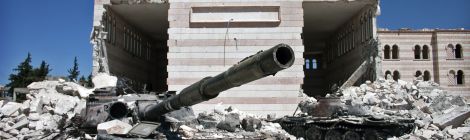
    Image by Christiaan Triebert/Flickr.

    In a study that is forthcoming in the Journal of Conflict Resolution, I and my co-authors Lars-Erik Cederman (ETH Zürich) and Manuel Vogt (Princeton University) conduct such a comparison. We analyse the probability of internal armed conflict between linguistically and religiously distinctive groups between 1946 and 2009.

    Contrary to Huntington’s thesis, linguistic differences show a strong and robust relationship with the outbreak of intrastate conflicts. In fact, we find that linguistic divisions are more conflict-prone than religious differences.

    These findings continue to hold when we focus only on the years since 1990 – the period to which Huntington’s thesis should be the most relevant. Our results further suggest that in no world region are religious differences more likely to be associated with internal armed conflict than linguistic divisions. We find the strongest support for a greater conflict-proneness of language compared to religion in Eastern Europe and Asia.

    Even in the Middle East, we find a slightly higher, if uncertain, probability of armed conflict across linguistic than religious lines. The Middle Eastern finding at least in part results from multiple Kurdish rebellions in Turkey, Iraq, and more recently Syria as well as smaller uprisings of linguistic minorities in Iran.

    When focusing only on conflicts that involve Muslim groups, we do not find substantial differences to other world religions. Although the majority of all armed internal conflicts today take place within Muslim-majority states, the majority of Muslim groups do not engage in violent rebellion. Our analyses also reject the thesis that Muslim groups disproportionately engage in conflict with non-Muslim groups.

    Why Linguistic Differences?

    Instead linguistic differences continue to be more frequently related to armed uprisings within states. While the brutal civil war in Syria captured headlines over the past years in many Western countries, destructive conflicts across linguistic lines haunt South Sudan, Burma, and Turkey.

    Of course, linguistic differences are more widespread than religious divisions. In other words, ethnic groups in any given country are more likely to be divided by language than by religion. Notwithstanding these differences in frequency, our results indicate that linguistic divisions are disproportionately more often related to armed conflict than religious distinctions.

    In our forthcoming article, we argue that it is the power of nationalism that makes linguistic divisions more conflict-prone than religious ones. Language gained political relevance in the late 18th century when the French Revolution transferred political authority from absolutist rulers to the people. About the same time that political power became vested in European peoples, the industrial revolution created incentives to further homogenize European nation-states. Mass schooling and mass newspapers laid the basis for imagined national communities.

    These developments provided both motive and opportunity for violent conflict across linguistic boundaries. Where members of ethnic groups are barred from having their children taught in their native language or experience linguistic discrimination in the job market and their interaction with the state, some of them will voluntarily assimilate into the dominant culture, but others develop grievances and may even refuse assimilation.

    The elites of such discriminated groups can voice these grievances through publications in their own language and use it to express nationalist aspirations and demands. When the host state is unable or unwilling to address these demands, violent conflict becomes more likely. These dynamics are illustrated by Sri Lanka’s decades-long civil war between Singhalese and Tamils, and recurrent Kurdish rebellions in Turkey.

    Given the link between industrial advancement and language-based nationalism it is unsurprising that we find higher rates of linguistic conflict in the relatively highly developed regions of Eastern Europe and Asia rather than in Sub-Saharan Africa. Central and Eastern Europe may even be considered as the cradle of linguistically-based nationalism.

    The multi-ethnic Austro-Hungarian and Ottoman empires did not fulfil the modern creed of “one people, one state,” and violently disintegrated during World War I. The Soviet Union and Yugoslavia followed suit in the early 1990s. To this day, Turkey has not come to terms with its Kurdish minority, and once more experiences internal conflict.

    Yet the idea of nationalism did not remain contained to Europe. A highly flexible concept, it informed the national liberation struggles of former colonial subjects against the European colonial powers. The lines of division here were usually race and language rather than religion. For decades, the Israeli-Palestinian conflict was a conflict between Hebrew-speakers of European origin and Arab speakers, who had lived in Palestine for centuries. Only in the past two decades has it taken on more religious undertones.

    Policy Solutions?

    Linguistic and religious differences will remain with us for the foreseeable future. However, very few of these fault lines can be expected to erupt in violent conflict. Whether linguistic differences transform into seemingly incompatible nationalist projects, or whether religious divisions into ostensibly intractable positions, depends on how political leaders from different groups interact with one another.

    Frequently armed rebellion emerges in politically highly exclusive and discriminatory contexts. Where political leaders with specific linguistic or religious backgrounds are barred from decision-making that affects their groups, conflict is more likely to break out than in states where they have some influence in government circles. Exclusion along ethnic lines creates clear insiders and outsiders, fosters grievances among the excluded, and suggests that there is “no other way out” but violent resistance. Zimbabwe, both under Smith and Mugabe, Iraq under Saddam Hussein, and Burma to the present day are examples of ethnically exclusionary regimes. Each of these states also experienced violent rebellion by excluded groups.

    In another joint study published in “Peace and Conflict 2016”, we show that excluding political elites with different linguistic or religious backgrounds from governmental power is pervasive in the Middle East and North Africa. So is political discrimination that denies the Palestinians in Gaza citizenship rights, keeps the Shia from voting in Qatar, or persecutes Kurds for political reasons in Turkey.

    ethnic-conflict-graph

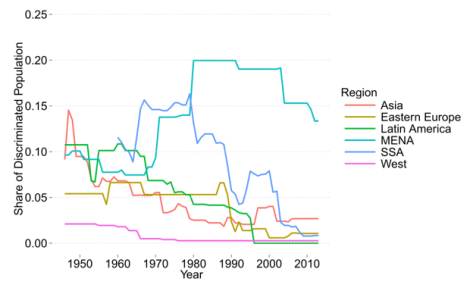
    Figure 1 displays the average population share that experiences discrimination for different world regions and years. The data derives from the Ethnic Power Relations (EPR) dataset available at https://growup.ethz.ch/pfe.

    Figure 1 reveals that ethnic discrimination remains staggeringly high in the Middle East although the region has experienced some improvements over the past twenty years. That religious differences in the Middle East erupt into violent conflict may be less of a surprise once this context is taken into account.

    Our research thus suggests that avoiding ethnic exclusion and discrimination through power-sharing in multi-ethnic governmental coalitions will reduce the likelihood of armed conflict across both linguistic and religious lines. Elite accommodation in power-sharing coalitions has contributed to greater stability in such diverse places as Bosnia, Nigeria, Burundi, and Malaysia regardless of the type of ethnic differences. Although no panacea, power-sharing is associated with a substantial decrease in the likelihood of internal armed conflicts compared to exclusive environments.

    While there has been a trend towards ethnic accommodation since the end of the Cold War, we do not know enough about its origin. Future research needs to investigate the causes of accommodation in greater detail and pay particular attention to appropriate solutions for violent conflict across linguistic lines relative to religious differences.


    Nils-Christian Bormann is lecturer and Humanities and Social Science Fellow in the Politics Department at the University of Exeter.

    Manuel Vogt is a visiting postdoctoral research associate at Princeton University and senior researcher at ETH Zürich.

    Lars-Erik Cederman is Professor of International Conflict Research at ETH Zürich and the author of Inequality, Grievances, and Civil War (Cambridge University Press, 2013).

  • Sustainable Security

    Raphael Cohen-Almagor received his DPhil in political theory from Oxford University. He is Professor/Chair in Politics, and Founder and Director of the Middle East Study Group, University of Hull. He was the Director of the Center for Democratic Studies, University of Haifa, Fulbright-Yitzhak Rabin Visiting Professor at UCLA School of Law, Visiting Professor at Johns Hopkins University, and Fellow at the Woodrow Wilson International Center for Scholars.  Raphael is the author of more than 200 publications in politics, law, media and ethics, including most recently Confronting the Internet’s Dark Side (NY and Washington DC.: Woodrow Wilson Center Press and Cambridge University Press, 2015), the first comprehensive book on social responsibility on the Internet. https://www.wilsoncenter.org/book/confronting-the-internets-dark-side-moral-and-social-responsibility-the-free-highway. Blog: http://almagor.blogspot.com Twitter: @almagor35

    This interview examines the rise of hate speech on the Internet, how it can be countered and how the battle against hate speech can be balanced with freedom of expression.

    Q. Your recent book, Confronting the Internet’s Dark Side: Moral and Social Responsibility on the Free Highway, examines the dark side of the internet and the issue of social responsibility on the net. Why did you choose to examine this subject as a research project?  

    In answering the question, I will explain three issues: Why I chose to write about the Internet? Why I emphasise the concept of responsibility? Why the themes of terrorism, child pornography, hate and cyberbullying are at the center of attention? 

    Why the Internet?

    This is my fifth book in a series of books in the fields of tolerance, freedom of expression and media ethics. It started with The Boundaries of Liberty and Tolerance (1994) continued with Speech, Media and Ethics: The Limits of Free Expression (2001) and then The Scope of Tolerance (2006) and The Democratic Catch (2007). Upon completing my research for the last two books in 2006, it was clear to me that my next big project would concern the Internet, a fascinating growing phenomenon that required close probing. I wished to examine the extent to which the mode of communication makes a difference, and whether the Internet constitutes a totally different issue that makes the theory that I have been developing over the years, the Democratic Catch, irrelevant.

    Why responsibility?

    I have done the majority of research during 2007-2008, when I was a Fellow at The Woodrow Wilson International Center for Scholars in Washington DC. The United States puts great emphasis on freedom of expression. The First Amendment is enshrined in the nation’s psyche. I was looking for a way to connect with my American colleagues in addressing the very delicate issue of boundaries to Internet’s freedom of expression. My book acknowledges the great importance assigned to the value of freedom of expression and supports balancing it against no less important value: social responsibility.

    The forefathers of the Internet had the vision of creating a free highway, a public space where everyone can say what he or she has in mind. This wonderful innovation of unfettered platform has backfired. The Internet is open for use but unfortunately also for abuse. We should provide and promote responsible use and we should also fight against those who abuse. The abuse corrupt public space and has posed many challenges on all levels: individual, the community, the state and the international community. We are in the early stages of learning how to cope and how to combat Internet abuse. Slowly we are developing the necessary tools to enjoy innovation and freedom while, at the same time, we are adopting safeguards and rules of responsible conduct.

    Confronting the Internet’s Dark Side makes a distinction between Netusers and Netcitizens. The term “Netuser” refers to people who use the Internet. It is a neutral term. It does not convey any clue as to how people use the Internet. It does not suggest any appraisal of their use. On the other hand, the term “netcitizen” is not neutral. It describes a responsible use of the Internet. Netcitizens are people who use the Internet as an integral part of their real life. That is to say, their virtual life is not separated from their real life.

    Even if they invent an identity for themselves on social networks, they do it in a responsible manner. They still hold themselves accountable for the consequences of their Internet use. In other words, netcitizens are good citizens of the Internet. They contribute to the Internet’s use and growth while making an effort to ensure that their communications and Net use are constructive. They foster free speech, open access and social culture of respecting others, and of not harming others. Netcitizens are Netusers with a sense of responsibility.

    Why the themes of terrorism, child pornography, hate and cyberbullying are at the center of attention?

    At the outset, it was clear to me that I cannot possibly tackle all the problematic information that we find on the Internet. I asked myself: What troubles you the most, and what issues may present a compelling case for social responsibility? I thought that if I am able to reach some conclusions and suggestions about confronting some highly problematic issues, maybe the discussion can then serve as a spring-board to drive forward a motion for Internet social responsibility. After long and careful probing I decided to concentrate attention on violent, anti-social forms of Internet expression: hate speech and racism, use of the Internet by terrorist organizations, and child pornography. Later, another concern was added: Cyberbullying.

    When I started my research for this book in 2006, cyberbullying was not on my radar. In 2010, I could no longer ignore it. Cyberbullying became a major concern. I changed the book structure to accommodate comprehensive research on this sensitive and most tragic topic.

    Q. Sometimes the line between free speech and hate speech is not as clear cut as we would like it to be. How do you identify hate speech?

    There is no single definition of hate speech and hate speech legislation varies from one country to another. The same speech might be illegal in the United Kingdom and legal in the United States. The United Kingdom passed the Public Order Act 1936 to protect minorities from hate speech and harassment while the United States permits the American Nazi Party and allowed them to march in Skokie, a Jewish neighbourhood that was heavily populated with Holocaust survivors. I find it hard to believe that such a march would be allowed in the UK. My definition of hate speech is: Bias-motivated, hostile, malicious speech aimed at a person or a group of people because of some of their actual or perceived innate characteristics. Hate speech expresses discriminatory, intimidating, disapproving, antagonistic and/or prejudicial attitudes toward those characteristics which include sex, race, religion, ethnicity, colour, national origin, disability, or sexual orientation. Hate speech is intended to injure, dehumanize, harass, debase, degrade, and/or victimise the targeted groups, and to foment insensitivity and brutality towards them.

    Q. There could be a counter argument made that much information could be interpreted as “bias-motivated, hostile, malicious”. So, for example, a person could publish a study or statistics on the internet which claims that a certain racial, ethnic or religious group is less intelligent or commits more crime than another group. It is highly likely that some individuals would see this as “bias-motivated, hostile, malicious” behaviour. Yet the publisher of the data might simply claim that they are merely presenting their evidence and that they had no intention to “injure, dehumanize, harass, debase, degrade, and/or victimise the targeted groups”.  Where would a case such as this fall in the hate speech/free speech distinction?

    This is a very interesting question. Let me answer it with an example. For many years, I have related in my teaching on freedom of expression the case of Jean-Philippe Rushton, a Canadian psychology professor who has argued about hierarchy of races: Asians are smarter than whites, who are in turn smarter than blacks. In his 1999 book Race, Evolution, and Behavior, Rushton explained that brain and genital size are inversely related, and that races differ in brain size, intelligence, sexual behaviour, fertility, personality, maturation, lifespan, crime and in family stability. He explained that blacks are less intelligent than Orientals and Whites and they are more involved in criminal activities. While the IQ of Orientals is about 106, the IQ of Black people is around 70 to 75. Black people are also more sexually promiscuous and they lack social organization.

    The science behind these assertions is debatable. Rushton’s theory evoked much criticism and has been perceived as racist. His theory attempts to explain everything by the sole criterion of race. It ignores social circumstances and social construction. It does not take into account other, no less important factors, such as individual abilities, class, poverty, education and family infrastructure. But is it hate speech?

    In the spirit of the liberal marketplace of ideas, the search for the truth and open disputation of ideas with contrasting ideas, one may think that Rushton’s theory is problematic but it should be tolerated and debated. Its scientific facade needs to be exposed and simultaneously the true motives that guide Rushton should be explored. This, indeed, is my belief. Rushton’s theory is a hard case. It is opened to interpretations but it should not be silenced.

    I also believe that Rushton’s theory was not guided only by scientific methods, that it had underpinning agenda which was not innocent, that it was motivated by other reasons rather than the urge to discover a scientific truth. Rushton was asked “Weren’t theories about race differences the reason for racism, genocide and the Holocaust?” Rushton answered: “The Nazis and others used their supposed racial superiority to justify war and genocide. But just about every idea – nationalism, religion, egalitarianism, even self-defence – has been used as an excuse for war, oppression or genocide. Science, however, is objective. It can’t give us our goals, but it can tell us how easy or difficult it will be to reach our goal. Knowing more about race differences may help us to give every child the best possible education and help us to understand some of our chronic social problems better”.

    With this answer, Rushton was trivializing the Nazi crimes. Nazism was equated with nationalism, religion, egalitarianism, “even self-defence”. Rushton says nothing about the evil ideas of Nazism per se but how they were used for evil deeds, in the same way that other ideas, including noble ideas such as egalitarianism and well-established ideas such as self-defence, have been used for evil deeds. Then Rushton declares that his science is objective. His commitment is to scientific truth, no matter how crude that truth might be. And then he goes on to argue that his ideas may better children education. But surely not the education of every child. No matter how much you invest in the education of black children, they would not be able to escape their lot. They belong to the inferior race and therefore they are doomed to suffer the consequences of their brute luck.

    What can help us understand Rushton’s reasoning is his behaviour and conduct outside the scientific world. Rushton was embraced by anti-black associations, by racists and bigots. Rushton not only did not flinch; he accepted their attention and the honour of being their star scientist.

    In 2002, Rushton was appointed president of the Pioneer Fund, which has for decades funded dubious studies linking race to characteristics like criminality, sexuality and intelligence. Pioneer has long promoted eugenics, or the “science” of creating “better” humans through selective breeding. Set up in 1937 and headed by Nazi sympathizers, the Pioneer Fund’s mission was “to advance the scientific study of heredity and human differences”. It strove to improve the character of the American people through eugenics and procreation by people of white colonial stock. Rushton has spoken on the alleged IQ deficiencies of minorities at conferences of the racist American Renaissance magazine and website, and he has published a number of articles in the group’s newsletter. His work is often published on racist websites, including the anti-immigrant hate site, Vdare.com.

    While appearing before and in support of racist groups, the above-mentioned sensitive and debatable statements then amount to hate speech. The context, as we learned from JS Mill’s theory On Liberty makes a great difference. A questionable race theory when invoked in Nazi and other radical extremist rallies is the fuel for their raging hatred, the validating force for their twisted beliefs, the scientific cloth that legitimized crude beliefs about hierarchy of races. Expressed in such forums, Rushton’s ideas become hate speech.

    Q. Staying with the distinction between hate speech and free speech, religious criticism is commonly seen as an area where the lines become blurred. For example, sometimes actual bigotry towards religious minorities is dressed up as critique of religious beliefs and scripture. Where do you see the line being drawn on this issue?   

    Two separate issues are relevant:

    1. A speaker uses religion to incite violence against others.
    2. A speaker defames and offends a certain minority because of its religion.

    Both have taken place in Britain. As for the first scenario:

    The state cannot sit idly by while religious authorities incite violence. Such public figures need to decide: either they are public servants who adhere to the laws and values of the state or they incite to violence. If they chose the latter, they should resign immediately. And if they do not see the necessity in doing so, then the state should discharge them from all public responsibilities. This is true for all religious authorities and more so for popular public figures with a large crowd of adherents. The justice system should act and crack down on the phenomena that might lead to violence. Violent religious preachers might pose a real danger to the well-being of society.

    As for the second scenario, I think offence should be taken more seriously than it is considered today. Much blood was shed unnecessarily because of the Danish cartoons. We should be respectful of all religions, understand and appreciate the power of religion to bring about change, positive and negative. One of Karl Marx’s greatest mistakes was underestimating the power of religion. Religion can motivate people to help others, and it can motivate people to destroy. This is true for any religion. Pushed to its extreme, fundamental religion can create a lot of damage. As extremes tend to feed each other, speakers should be cautious of the power of the word and avoid inflaming tensions, emphasising those things that bring people together, not that divides them, creating bridges rather than obstacles and alienation.

    In this age, many terrorists were Muslim. But, of course, not all Muslims are terrorists. Only a small number of Muslims are terrorists and they represent Islam to the same extent that the KKK represents Christianity and the Kahane movement represents Judaism. To tag Islam as a terrorist religion is to defame religion unjustly. Such statements are unwarranted and only inflame an already tense environment.

    Let me mention the work of organisations such as ‘TELL MAMA’, an Anti-Muslim Hatred group that seeks to consider and takes forward proposals to tackle anti-Muslim hatred. Its action plan aims to create an environment that prevents hate crime from happening.

    Free expression is not a recipe for lawlessness. The balance between free speech and protecting the public should not, on such matters, lean to the former. Liberal democracies have an obligation to secure the well-being of its population, especially vulnerable minorities. Indeed, the litmus test of a decent or civilized liberal democracy is the status of minorities.

    Q. In your research, have you observed a connection between hate speech and violent acts?

    Yes, I did.

    In 1999, 21-year-old Benjamin Nathaniel Smith, an avowed Aryan supremacist, went on a racially-motivated shooting spree in Illinois and Indiana over the July 4th weekend. Targeting Jews, African-Americans, and Asian-Americans, Smith killed two and wounded eight before taking his own life, just as law enforcement officers prepared to apprehend him. Smith embarked on his killing spree after being exposed to Internet racial propaganda. He regularly visited the World Church of the Creator (WCOTC) website, a notorious racist and hateful organisation founded in Florida in the early 1970s. Smith was so consumed by the hate rhetoric of WCOTC that he was willing to murder and to take his own life in pursuit of his debased hate devotion.

    The same year there were two other hate-motivated murders. Buford Furrow used to visit hate sites, including Stormfront.org and a macabre site called Gore Gallery, on which explicit photos of brutal murders were posted. Whether inspirational or instructional, the Internet supplied information that clearly helped fuel the explosion of a ticking human time bomb. Furrow decided to move to action. He drove to the North Valley Jewish Community Center and shot an elderly receptionist and a teenage girl who cared for the young students attending the summer day school. He continued shooting, hitting three children, one as young as 5 years old, before leaving the facility. Shortly thereafter Furrow fatally shot a Filipino American postal delivery worker because he worked for the federal government and was not White.

    In turn, Matthew Williams, a solitary student at the University of Idaho, turned to the Internet in search of a new spiritual path. Described as a “born fanatic” by acquaintances, Williams reportedly embraced a number of the radical-right philosophies he encountered online, from the anti-government views of militias to the racist and anti-Semitic beliefs of the Identity movement. He regularly downloaded pages from extremist sites and continually used printouts of these pages to convince his friends to also adopt these beliefs. At age 31, Matthew Williams and his 29-year-old brother, Tyler, were charged with murdering a gay couple, Gary Matson and Winfield Mowder, and with involvement in setting fire to three Sacramento-area synagogues. The police discovered boxes of hate literature at the home of the brothers.

    In early 2001, Richard Baumhammers, another Aryan supremacist, shot down six people, all members of minorities, in suburban Philadelphia, inspired by material on the Internet. Tim Haney of the Allegheny County Police Department in Pennsylvania testified that computer records confiscated at Baumhammers’ home indicated his frequent visits to white supremacist Internet sites.

    Michael Brad Magleby burned a cross on an interracial couple’s property. He also visited hate sites prior transmitting this hateful message. In 2002, Michael Kenneth Faust, a  white supremacist who spent several hours a day on the Internet soliciting teens to take his classes on firearm use, shot and killed a teenager.

    More recently, a 22-year-old man Keith Luke murdered two black people, and raped and nearly killed a third, on the morning after Barack Obama was inaugurated as president (January 21, 2009). When he was captured, Luke told police that he intended to go to a synagogue that night and kill as many Orthodox Jews as possible. Luke told the police that he had been reading white power websites for about six months (in other words, from about the time that Obama won the Democratic nomination) and had concluded that the white race was being subjected to a genocide in America. Therefore he had to act. This is a clear-cut case of propaganda translating directly into criminal violence.

    Later the same year, on June 10, 2009, James von Brunn entered the U.S. Holocaust Memorial Museum in Washington DC and opened fire, killing Security Guard Stephen Tyrone Johns before he was stopped by other security guards. Von Brunn, a die-hard white supremacist anti-Semite, was an active neo-Nazi for decades long before the Internet became a viable public platform during the early 1990s. He utilized the Internet to publish his tracts and to spew hatred. Von Brunn ran a hate website called holywesternempire.org and had a long history of associations with prominent neo-Nazis and Holocaust deniers. For a period of time, he was employed by Noontide Press, a part of the Holocaust denying Institute of Historical Review, which was then run by Willis Carto, one of America’s most prominent anti-Semites.

    In Canada, Craig Harrison was found guilty of an assault causing bodily harm to an individual whose race he did not like and was sentenced to two years less a day in jail. Observing the content of messages posted on the Net by him, the Canadian Human Rights Commission concluded that the materials were likely to expose those of the Jewish faith, Aboriginal peoples, francophones, blacks and others to hatred and contempt: “They are undoubtedly as vile as one can imagine and not only discriminatory but threatening to the victims they target”.

    In 2014, The Southern Poverty Law Center (SPLC) published a two-year study that details incidents in which active users on one website, Stormfront.org, murdered nearly 100 people in the last five years. These incidents include: (a) the killing of three Pittsburgh police officers by Richard Poplawski in 2009. (b) Two years later, in 2011, Anders Behring Breivik’s murderous journey in which he detonated a truck bomb in front of a government building in Oslo, killing eight, and then went on a shooting spree in Utoya Island, murdering 69 others. (c) In May 2012, Jason Todd Ready killed four people before killing himself. (d) That same month, Eric Clinton Kirk Newman, also known as Luca Rocco Magnotta, was accused of torturing and dismembering a Chinese immigrant; (e) three months later, Wade Michael Page shot and killed six people at a Sikh temple before killing himself during a shootout with police.

    Q. What practical actions can be taken to counter hate on the Internet and are there any promising initiatives currently underway to tackle this issue?

    Speech v. Speech – This is the favourite American response, espoused by many Internet experts and human rights activists who argue that the way to tackle hate on the Net is by more communication, by openness and by exposing the problem. We need to show that all human beings deserve respect and concern, all have dignity, and that a racially based society negates liberal-democratic values that we all hold dear: pluralism, diversity, individuality, liberty, equality, tolerance, justice. Counter-speech includes expressive support for the targets of hate, highlighting the values of tolerance, pluralism, individualism and respect for others.

    Education – activity at primary and high schools alerting about hate on the Internet; its forms and attractions (music, video games, activities for kids); why racism is logically incoherent, empirically unattainable, anti-democratic and inhumane; why it is harmful; who is targeted; history of hate and the connection between hate and some of the most horrific human catastrophes men inflicted upon other men.

    In the USA, Partners Against Hate, an innovative collaboration of the Anti-Defamation League, the Leadership Conference on Civil Rights Education Fund, and the Center for the Prevention of Hate Violence, offers promising education and counteraction strategies for young people and the wide range of community-based professionals who work and interact with youth, including parents, law enforcement officials, educators, and community/business leaders. In turn, Family Online Safety Institute focuses on making the online safer for kids through the promotion of best practices, tools and education.

    Adopting and enforcing school, university and workplace policies – institutions and organizations should adopt policies that exclude hate and bigotry off and online. They should ascertain that their computers are not used for purposes that are incompatible with these policies. Students and workers should not abuse their time at the education system and at the workplace and exploit the technology that is made available to them to preach hatred against others, or to engage in expressions that contravene and undermine civility and respect for others. Hate is destructive. There is no reason to provide scope for hate speech in schools and the workplace.

    Netcitizenship – the term “Netcitizenship” means good citizenship on the Internet. It is about developing responsible modes of conduct when surfing the Internet which include positive contributions to debates and discussions, and raising caution and alarm against dangerous Net expressions. Netcitizenship encourages counter-speech against hate speech, working together to provide a safe and comfortable virtual community, free of intimidation and bigotry. One example is Wipeout Homophobia (WHOF) which was originated as a response to gay hatred on the Internet. Wipeout Homophobia provides communal support and promotes a vision of a more tolerant and just world. In 2012, this Facebook page had more than 300,000 members and 6 million visitors.

    ISPs’ responsibility – ISPs and web-hosting companies should develop standards for responsible and acceptable practices for Net users. They should adopt clear and transparent hate speech policies and include them in their terms of service. ISPs should also devise friendly and easy-to-use mechanisms for Netusers to report violations of their terms of service. With continued development of technical solutions and innovation and with increased awareness of and adherence to basic Corporate Social Responsibility (CSR) we will assure a certain security level on the Internet, like in any other industry. What is required is more structure. CSR should be part of the web company’s strategy, in the frame of mind of the day-to-day operations. Indeed, CSR is a continuous living process.

    Social media companies have teams of only a few hundred employees to monitor networks of billions of accounts. This is insufficient and it is also irresponsible. Social media companies need to address the problem far more seriously. Each company should have a group of highly-talented software engineers to devise a search algorithm that would flag out a string of words that may indicate that a person is engaged with anti-social and dangerous expressions. Facebook has such a team of specialists to deal with suspected fake identities. Facebook takes this issue very seriously. It is suggested to adopt a similar attitude to combat radical, extremist expressions as human lives are no less significant than fake identities. After flagging a string of violent words, a team of people who monitor social networks will then look at the context and, if they come to believe that the speech is dangerous, they will swiftly intervene, remove the dangerous content and block the extremist from continuing the dangerous activity. By such proactivity, social media companies can save many lives.

    Affecting search engines results — If you Google the words “Martin Luther King”, one of the results you will receive is http://www.martinlutherking.org/, a hate site masquerading as an objective historical source about the American human rights leader. High school students who are asked to conduct research on the life and leadership of Mr King are likely to come across this site. Some of them might think this is a legitimate site, with credible eye-opener information. The Google algorithm used to determine search ranking does not evaluate the accuracy of information thus the site’s high ranking can potentially mislead many users, especially young users who conduct their very first research.

    Google was under pressure to manipulate its search engine so as to boost or reduce websites’ page ranking. The controversy revolved around a clearly anti-Semitic website, http://www.jewwatch.com/, which sometimes was ranked first if you searched the word “Jew”. Thousands of netusers petitioned Google to remove the site.

    Labelling, naming and shaming – Web-hosting companies like First Amendment, Go Daddy and Xanga.com (blog hosting) that are friendly to racial propaganda should be named and shamed.

    International cooperation – In Europe, a continent that suffered a great deal from the horror of hate and bigotry, much less tolerance is afforded to such phenomenon compared to the United States. In 1996, a governmental organization in Germany, Jugendschutz.net, and a non-governmental organization in the Netherlands, Stichting Magenta, were the first organizations in the world to start a dedicated team to address the problems of racism, anti-Semitism, hate against Muslims, gays, and other discrimination or incitement to hatred, each in their own country.

    In 2002, they founded the International Network Against Cyber Hate (INACH) whose vision is the international co-operation between complaints bureaus against discrimination, which allows the sharing of knowledge, the exchange of best practices and coordinated measures against hate speech, promoting respect, citizenship and responsibility, enabling Internet users to exercise their right of freedom of speech with respect for the rights and reputations of others, and to freely use the Internet without experiencing cyber hate. The mission of INACH is to unite and empower organizations fighting cyber hate, to create awareness and promote attitude change about on-line discrimination and to reinforce the rights of all Internet users. INACH monitors the Internet and publishes overviews and reports about the situation in different countries. INACH acts as an umbrella organization for hotlines specializing in racist and hateful content.

    Other notable organizations fighting against hate are LICRA.org and the Dutch Centre Information and Documentation on Israel (CIDI). LICRA is the French International League against Racism and Anti-Semitism (Ligue Internationale Contre le Racisme et l’Antisémitisme). It was created in May 1926 in Paris. LICRA fights discrimination, racism and xenophobia especially as they are manifested on the electronic and print media. CIDI is the Netherlands’ prime source of information about Israel and the Jewish people. CIDI has published instructions explaining how to get anti-Semitic material removed from the Internet. CIDI believes that individual surfers have a responsibility to take action against hate.

    Publishing overviews and reports on a regular basis –- publishing names of hate sites, highlights of their content, their locations, their ISPs, both successful and unsuccessful attempts to curtail their activities.

    Law and adherence to international conventions — On global issues such as hate there is a need for international cooperation to respond to global concerns. As the Internet is an international medium, countries realize the urgency for transnational coordination. The Ministerial Council Decision 9/09 of the Organization for Security and Co-operation in Europe (OSCE) of December 2, 2009, on Combating Hate Crimes calls on the participating States to seek opportunities to co-operate and thereby address the increasing use of the Internet to advocate views constituting an incitement to bias-motivated violence including hate crimes and, in so doing, to reduce the harm caused by the dissemination of such material, while ensuring that any relevant measures taken are in line with OSCE commitments, in particular with regard to freedom of expression.

    Further research may analyse the ways social media apps are used in spreading hate speech, the way modern technologies are exploited to spread hate speech and whether search engines and social networking sites should continue to assist hate groups in their agenda.

    Future research may also compare between the utilization of the Internet to spout hatred to the way the Internet is being utilized to other anti-social groups: criminals, paedophiles and terrorists. There seem to be many commonalities between the modes of operation of these groups. Such comparative studies may help security agencies in the fighting against these phenomena.

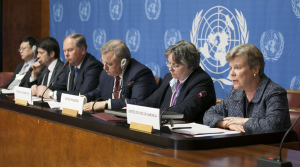
  • Sustainable Security


    BZ Bushfire smallWhen does a serious environmental problem become a security threat?

    Professor Tim Flannery, a leading scientist and public intellectual in Australia wrote a piece in the Guardian newspaper a few days ago reflecting on the links between climate change and the extreme temperatures and bushfires ravaging Australia at present. He notes that “Australians are used to hot summers. We normally love them. But the conditions prevailing now are something new. Temperature records are being broken everywhere.” What is important for thinking about the security consequences of climate change is that towards the end of the article, Flannery reflects:

    “Australia’s average temperature has increased by just 0.9 of a degree celsius over the past century. Within the next 90 years we’re on track to warm by at least another three degrees. Having seen what 0.9 of a degree has done to heatwaves and fire extremes, I dread to think about the kind of country my grandchildren will live in. Even our best agricultural land will be under threat if that future is realised. And large parts of the continent will be uninhabitable, not just by humans, but by Australia’s spectacular biodiversity as well.”

    Conditions in which large parts of the continent are threatened in such a way would appear to raise some pretty serious questions about Australia’s national security (let alone the human security of those individuals living in areas where agriculture has failed or fires threaten homes and livelihoods). Yet recently a number of commentators have become particularly concerned about the so-called ‘securitisation’ of climate change, largely due to a sense of there being “alarmist views about climate change on conflict risk.” This has led some to argue that rather than helping to raise the profile of the issue in terms of the need for urgent policy change, we in fact now need to “disconnect security and climate change.” According to Professor Betsy Hartmann of Hampshire College, “A fear of imminent doom runs deep in popular culture and, like the grim reaper, stalks the environmental movement.” This, she argues allows “security agencies and analysts” to distract us from feelings of empathy towards those affected by climate change and to instead cause us to fear them and to “turn to the military to protect us.” According to Professor Mike Hulme of the University of East Anglia,

    “What climate change means to us and means to the world is conditioned by what we do, by the way we govern, by the stories we tell. Presenting climate change as the ultimate security crisis is crudely deterministic, detached from the complexities of our world, and invites new and dangerous forms of military intervention.”

    All of this matters as the potential world in which Flannery is imagining that his grandchildren might have to live in is becoming more and more likely the longer multilateral efforts drag on. Richard Haass, the President of the Council on Foreign Relations, when asked to look ahead to the big global governance challengers for 2013 recently stated that: “It is becoming increasingly clear that efforts at mitigation are not just falling short but that the gap between what is needed and what is likely to happen is widening.”

    The whole notion of the ‘securitisation’ of climate change pre-supposes that we get to choose whether climate change is a security threat or not – it emphasises what political scientists refer to as human agency. Of course we can choose to label something as a threat or not (yes, perhaps it may even not be the end of the world if we use the dreaded T word!). But in the face of increasingly extreme weather and related natural disasters (let alone serious discussions about whether states such as Kiribati can survive within their own national borders), it does seem that we can sensibly talk about the security threats posed by climate change in the decades to come regardless of whether we can specifically link particular instances of conflict and climate change in the past.

    The point is that simply because something may pose a security threat does not mean that we have to respond in the traditional way – to throw military force at it. It’s abundantly clear that there is no military solution to climate change and that addressing the problem at source means changing (among other things) the ways we use energy. But that doesn’t mean that our current energy policies are not a fundamental security threat. They are. And why can’t we use better energy policies to ensure our security?

    Ben Zala is a Lecturer in International Politics at the University of Leicester.

  • Sustainable Security

    The beginning of the Arab Awakening and its mass-based social and political mobilizations has spurred a dynamic debate about whether and how the international community should support and back the revolutions across the Middle East and North Africa region. An especially thorny and controversial issue has been that of armed intervention: are there circumstances under which external parties should become militarily involved on the ground? If yes; with what goal? Debates over the legitimacy of direct external intervention have been widely discussed in the past few years; often with a specific reference to the emerging ‘responsibility to protect’ (R2P) norm.

    The concept itself began to be employed in the early 2000s as a term of reference to replace the more ambiguous and controversial ‘humanitarian intervention’ framework. The idea of R2P broadly posits that sovereignty, beyond rights, also encompasses duties; and specifically the obligation for each state to guarantee the safety and protection of its citizens. If the state is unable or unwilling to do so, the international community has a responsibility to assist it, and if these efforts also fail, outside intervention—including but by no means limited to military action—can become justifiable. Since the endorsement of the concept within the international community, first by the United Nations General Assembly and then by the UN Security Council (UNSC), the principle of R2P has been used to both stress individual countries’ obligations towards their own people, as well as to argue in favor of international intervention to uphold the principle.

    In this context, the UNSC’s authorization of the use of force in Libya is often cited as a watershed moment in the development of R2P. But did military intervention in Libya assist or hinder in the strengthening of a global ‘responsibility to protect’ norm?

    A Royal Air Force Typhoon pilot enters the cockpit as the sun sets over Gioia del Colle, southern Italy. As RAF Typhoon aircraft play a greater part in deliberate targeting operations, where targets are pre-planned, more are carrying four of the 1000lb Enhanced Paveway II bombs. The aircraft's ability to use its Litening III targeting pod to direct the highly accurate bombs means that a single Typhoon can have a devastating effect on Qadhafi regime targets. This image is available for non-commercial, high resolution download at www.defenceimages.mod.uk subject to terms and conditions. Search for image number 45152844.jpg ---------------------------------------------------------------------------- Photographer: Sgt Pete Mobbs Image 45152844.jpg from www.defenceimages.mod.uk

    Image of RAF Typhoon pilot climbing into the cockpit before a mission over Libya by Defence Images via Flickr.

    To some observers, the Libyan intervention gave R2P the boost it needed. They argue that the principle itself was invoked to support external military intervention. Accordingly, this gave R2P ‘teeth’ whilst showing its growing international legitimacy and acceptance. Yet, a closer reading of the international community’s reliance on R2P in the weeks preceding Operation Unified Protector may lead to lesser enthusiastic evaluation. On the one hand, it is true that both UNSC 1970 (2011) and 1973 (2011) urged the government of Libya ‘to meet its responsibility to protect its population’ thus openly referring to R2P. On the other hand, when it came to justifying the use of force, the UN Security Council grounded its authorization on Chapter VII of the UN Charter, after labeling the violence taking place in Libya a threat to international peace and security.

    On balance, while the period leading up to NATO’s Operation Unified Protector did show a growing role and relevance for the R2P norm in the international arena; still it would be an exaggeration to say that military intervention was grounded solely (or even predominantly) on R2P. This is the case even though it is possible to justify Operation Unified Protector according the ‘R2P’ criteria: the intervention came in response to the Qaddafi government’s manifest brutality and unwillingness to halt targeting of its population and it was encouraged not only by prominent internal defections but also backed by significant regional support. The use of force was also directly authorized by the UNSC, though Resolution 1973 (2011). Finally, the official mandate of the operation, which included employing all ‘necessary means’ to protect ‘civilians and civilian populated areas under threat of attack’ was—despite being quite broad in its scope—was similarly in line with the R2P framework.

    But whether it would be correct to state that R2P was revitalized in the discussions leading up to the beginning of Operation Unified Protector, it is important to look at both the conduct and the legacy of the intervention to make a more long term assessment of its impact on R2P.

    Here the record is decidedly mixed. Operation Unified Protector’s mandate was about civilian protection, while explicitly excluding a military occupation of Libya and reiterating the international community’s commitment to ‘Libya’s ‘sovereignty, independence, territorial integrity and national unity.’ Yet in its actual military operations it is possible to see how the military mandate was gradually stretched beyond the original (or intended) boundaries, leading to the de facto pursuing of regime change in Libya. By the spring of 2011, military sorties against the regime’s military and communication gradually went beyond merely disabling the government’s capacity to harm the civilian population and directly focused on weakening the regime’s military capabilities, in turn key to shifting the balance of power against Qaddafi. This is especially the case as NATO’s military operations, including air-cover provision for opposition forces, went hand-in-hand with coalition members, like France or the UK, active train and equip programs of rebel groups.

    While these actions were not blatantly disregarding UNSC Resolution 1973—they indeed be seen as necessary to prevent and halt targeting of the civilian population—still they certainly stretched the mandate to ‘the absolute limit’—as argued by Gareth Evans. While such ‘mission creep might have been inevitable and dictated by the changing realities on the ground, still in NATO’s gradual expansion of its operations went de facto well beyond the UNSC 1973.

    In turn, this fueled criticism from countries like Russia or China, states that were already skeptical about the merits of the R2P framework and championing a much stricter interpretation of state sovereignty and the right to non-interference. Put simply, the ‘generous’ interpretation of the mandate in Libya contributed to further curb the international enthusiasm for the emerging R2P norm. It allowed countries like China to become even more skeptical and reluctant to authorize future ‘R2P’ operations, citing the risk that the limited mandate will be then extra-judicially expanded to pursue regime change. Criticism has also come from countries lacking a strong pro-state sovereignty stance. For example, Brazil has argued for the creation of stricter guidelines and monitoring mechanisms to prevent future unauthorized expansion of the norm.

    In this context, the Libyan experience has certainly not helped making the case for R2P or strengthening its popularity on the global stage. The general skepticism towards R2P in Libya undermined the level of international consensus for the R2P norm and laid the basis for the reluctance to authorize a similar mission in Syria. At the same time, it is important not to over-emphasize the link between Libya and Syria. Geopolitics explains the lack of R2P intervention and UNSC agreement on Syria better than international law. Here factors like the Syrian regime’s better air-defense system and military apparatus, the strong economic and political interests of countries like Russia in supporting the Assad regime, the more fractionalized nature of the anti-Assad opposition, and the far less prominent direct national interests of NATO member countries in Syria all help understanding the lack of agreement and decisive strategy to deal with the protracted and blood conflict.

    Still, Operation Unified Protector did not strengthen the overall stance of R2P on the global arena, while underlining some of the pre-existing dilemma related to humanitarian intervention, including how to prevent its politicization (or whether that is possible at all); how to ensure strict adherence to the mandate and how to remain engaged in the ‘day after’—another key shortcoming of the Libyan intervention.

    Dr. Benedetta Berti is a foreign policy and security researcher, analyst, consultant, author and lecturer. Her work focuses on human security and internal conflicts, as well as on post-conflict stabilization (specifically integration of armed groups, democracy/governance and crisis management and prevention) and peacebuilding. Dr. Berti is the author of three books, including Armed Political Organizations. From Conflict to Integration (Johns Hopkins University Press, 2013) and her work and research have appeared, among others, in Al-Jazeera, Foreign Policy, Foreign Affairs, the Wall Street Journal and The New York Times. She is a fellow at INSS, a TED Senior Fellow, a FPRI Senior fellow, a Young Atlanticist Fellow, a Körber Foundation’s Munich Young Leader and a member of the UN Alliance of Civilizations “Global Experts.” In 2015 the Italian government awarded her the Order of the Star of Italy (order of Knighthood).