Category: 28

  • Sustainable Security

    This article was first posted on 15 October 2012 and has been featured this week in light of renewed tensions in the region.

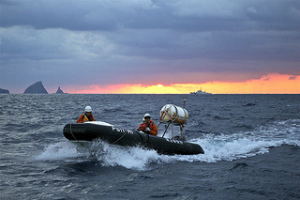
    East China Sea smallAs the long running tensions over the set of islands in the East China Sea appear to be coming to a head, the time for thinking through the alternatives to the militarisation of this conflict seems to be well and truly upon us.

    The conflict raises interesting issues about sovereignty claims based on offshore territories, particularly as we face a climate-constrained future as well as the increasing importance of competition over scarce resources. The latter is fast becoming one of the most important global trends if one thinks about the potential ‘drivers’ of conflict and even war.

    Spiralling naval spending in the region has been tracked by analysts for some years now, and flashpoints such as the dispute over the Senkaku/Diaoyu islands could show rampant military spending and arms racing for the dangerous trends that they are if things deteriorate rapidly. Arms racing helps to reinforce security dilemmas (the problems of interpreting the motives of potential adversaries and responding in-kind by arming yourself thus creating a spiral towards ever increasing militarisation). Arms racing also discourages the development of what Ken Booth and Nicholas Wheeler refer to as ‘security dilemma sensibility’ – the ability to “perceive the motives behind, and to show responsiveness towards, the potential complexity of the military intentions of others. In particular, it refers to the ability to understand the role that fear might play in their attitudes and behaviour, including, crucially, the role that one’s own actions may play in provoking that fear.”

    But what is particularly important to note in relation to this crisis is the interaction between the trends of increasing militarisation and competition over resources. The potential hydrocarbon resources beneath the ground around the islands as well as the rich fishing grounds in the surrounding waters gives the competing claims to sovereignty a particular strategic bite.

    Imposed on top of this is the effect of unresolved historical tensions and fierce nationalist sentiment in some quarters of both Japan and China. The coverage of the dispute in the media has been particularly important. Kevin Clements and Ria Shibata have noted that “this might be expected in China, which has a state-run media. In democratic Japan and Taiwan, however, the media have also promoted official and unofficial nationalist positions on the conflict. This has been accompanied by a marginalising or silencing of moderate voices favouring negotiated non-violent solutions to the conflict.” Interestingly, the most constructive voices calling for calm who have been able to cut through the jingoism and sabre rattling have been the business community concerned with the bigger picture issues of losing trade and tourism between China, Taiwan, Japan and South Korea.

    Clements and Shibata have outlined five initial steps that could be used to de-escalate the issue and begin the difficult but unavoidable process of a negotiated solution. In the longer-term, both regional powers and important external players will need to put addressing the inter-linked trends of militarisation and increasing competition over strategic resources at the heart of any attempts to avoid the worst case scenarios playing out.

    Ben Zala is a Lecturer in International Politics at the University of Leicester.

    Image source: Al Jazeera English.

  • Sustainable Security

    michael-photo-low-res-jpeg2Dr Michael Nest has expertise in political and social issues around mining. He is also an anti-corruption expert and formerly worked for the Independent Commission Against Corruption in Sydney, Australia. He has recently focused on building capacity to prevent corruption in community development programmes, including a research paper on corruption in local-level development schemes funded by mineral revenues.  Michael is the author of Coltan (Polity Press, 2011), which is about the changing global supply chain for the mineral ‘coltan’ (or tantalum), the new US legislation focused on conflict minerals, and China’s emerging role in the market for this mineral. In 2012 and 2014, Michael advised African governments on the new certification mechanism for tin, tantalum, tungsten and gold being established to prevent conflict minerals from Central Africa entering the supply chain.  His latest co-authored book, Still a Pygmy: the unique struggle of one man’s fight to save his identity from extinction (Finch, 2015) is the first memoir by a Pygmy ever published.

    In this interview, Dr. Nest discusses the political, environmental, ethical and social issues surrounding the mining of columbite–tantalite (coltan).

    Q. In the past, arguably very few had heard of coltan. Yet in the past two decades it has entered into discussions in the UN and featured in several international media outlets’ reports. What is coltan and what is it used for?

    Coltan is the nickname for the mineral ‘tantalite’.  When processed, the mineral tantalite is called tantalum – so tantalum is the metal.

    Coltan – or properly speaking, the metal ‘tantalum’ – has a wide application.  About two-thirds of coltan is used in a device called a ‘capacitor’.  Capacitors are found in electronic products, especially consumer electronic products such as mobile phones, laptops, gaming platforms, and ipads, and are used to store and regulate the flow of electricity from the source of power (such as a battery) to the working parts of the device.  Capacitors have a crucial role in ensuring there is no power surge or fluctuations to the device that could disable or break it.  Coltan is also used for special alloys (mixtures of different metals), in memory chips for electronic consumer goods, and special coatings (such as on camera lenses).

    Q. In which parts of the world is coltan mined?

    Coltan comes from three sources: as a by-product of tin slag (20% of supply) – ‘slag’ is the waste material that sits in dumps around historic tin mines; recycling (30% of supply); and mines (50% of supply).

    Coltan is extracted from tin slag in Brazil, Malaysia and Thailand.  Coltan that comes from recycled scrap materials is extracted at metal recycling plants in many countries around the world.

    In terms of mines producing coltan/tantalite, these are found around the world.  In 2016, according to the US Geological Survey, the biggest producers of coltan are Rwanda, D.R. Congo, Brazil, China, and Australia (in this order), although historically Canada and Ethiopia have also been significant producers, and Australia was the largest producer until the global financial crisis in 2008.  There are lower levels of mine production in Mozambique, Namibia, Nigeria, and Zimbabwe.  Tantalite deposits have been identified and are being explored in Canada, Colombia, Egypt, Greenland, Madagascar, Namibia, Saudi Arabia, Sierra Leone, South Africa, Tanzania, Venezuela, and Zimbabwe.

    Q. There has been some literature examining the relationship between coltan extraction and violence with a fair amount of discussion focused on the Democratic Republic of the Congo (DRC). What role did coltan play in the DRC’s war?
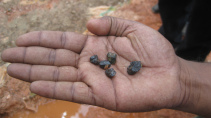
    coltan

    Image of coltan via Responsible Sourcing Network/Flickr

    The allegation made by activist organisations focused on reducing conflict in the D.R. Congo is that profits from coltan mining were a primary source of funding for armed militias waging war against the government.  These militias, so the argument goes, used coltan profits to buy weapons and food, which allowed them to wage war.  Militias in the DRC are notorious for their attacks on civilian populations, so the argument was not just that coltan profits perpetuated conflict against the government, but also that these profits were a chief cause of massacres of civilians, systemic rape and widespread destruction of property of civilians who live in Eastern DRC where coltan mines are located.

    In the late 1990s and early 2000s, activist organisations – as well as some media, academics and the UN – made connections between coltan profits and conflict in Eastern DRC, and focused overwhelmingly on coltan and not other minerals.  Many journalists continue to portray coltan as a major cause of conflict, although other commentators have now backed away from such simplistic claims and talk more broadly about ‘conflict minerals’ and acknowledge that conflict in the DRC occurs for a complex range of reasons.

    Conflict in Eastern DRC occurs for multiple reasons, including:

    • Local level struggles by powerful individuals for political domination
    • Competition for land for agricultural purposes
    • Ethnic rivalry
    • For control of natural resources, especially minerals
    • To protect land from outsiders seeking to exploit it (e.g., miners and loggers)
    • Poor men waging war as a means of making a living through theft and looting

    There were also broader factors around national-level conflict over the past 20 years that have drawn in local level actors and created incentives for war, including: military campaigns in DRC territory by the Rwandan and Ugandan armies (supposed by their local Congolese allies) focused on security concerns regarding opponents of their respective governments; defensive military campaigns by the DRC armed forces and government-allied local forces against the Rwandans and Ugandans and their proxies in the DRC, including retribution against civilian populations when they have regained territory; and armed groups with regional political agendas that oppose the DRC national government.  Fighting over mineral deposits was a minor element in all of these conflicts (a UN estimate of 1,500 local-level conflicts in the early 2000s was that fighting over natural resources accounted for only 8% of all conflicts), and conflict over coltan deposits was even less significant.

    As I argue in my book Coltan (Polity 2011), some armed groups did, however, profit from coltan and undoubtedly these profits were used to buy weapons, food and other material used to wage war.  These profits were gained in four ways: armed groups stole coltan stocks from mine sites and mining companies’ depots; armed groups directly controlled production of coltan by controlling mines themselves; armed groups taxed the trade of coltan into and out of territory they controlled (as they did for other minerals and goods); and armed groups became directly involved in the export of coltan from Central Africa to the buyers on the international minerals market.  Calculating profits made from coltan is difficult, but I estimate that the total amount made by the Rwandan army from coltan in 1999 was approximately US$62m; by the Rwandan army and its Congolese-based ally (the RCD-Goma) in 2000 approximately US$10m; and by all armed groups in 2008 approximately US$11.8m.  Note that the high total in 1999 was largely because the price of coltan on the international market boomed that year and in 2000.

    In sum, the war in the DRC was never just about minerals, and was certainly never just about coltan (gold, tin and tungsten were also importance sources of mineral revenue in the 2000s).  Tracing the role of coltan in war in the DRC, however, can tell us a lot about the connections between natural resources and conflict generally and research into these connections have helped broaden our understanding of the relationships between these natural resources and war.

    Q. Were any Western corporations responsible for indirectly financing armed groups during the war in the DRC through purchasing coltan from the country?
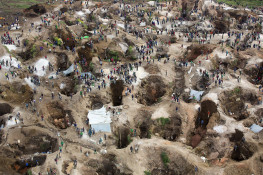
    Luwowo Coltan mine near Rubaya, North Kivu the 18th of March 2014. © MONUSCO/Sylvain Liechti Luwowo is one of several validated mining site that respect CIRGL-RDC norms and guaranties conflict free minerals.

    Luwowo coltan mine near Rubaya, North Kivu, DRC. Image by MONUSCO/Sylvain Liechti/Flickr

    During the wars between 1998 and 2003 companies from many different countries were involved in the coltan trade, including Western corporations.  The UN’s Report of the Panel of Experts on the Illegal Exploitation of Natural Resources and other Forms of Wealth in the D. R. Congo (April 2001) identified scores of private trading, brokerage, banking and transportation firms that participated in the illegal exploitation of natural resources from the DRC by trading or importing coltan from the DRC.

    While almost none of these transactions were directly with armed groups (with the probable exception of some transactions involving Rwandan and Congolese firms), foreign firms were an important element of the coltan commodity chain that enabled armed groups in the DRC to profit from the production and export of illegally mined coltan to the rest of the world.

    Because of the conflicted and dangerous conditions in Eastern DRC at the time, few foreign companies sent representatives into the country.  Instead, smaller Congolese or Rwandan trading firms bought and transported coltan into Rwanda, from where international minerals trading companies then imported it.  The UN identified twenty-seven firms from the following countries that imported coltan from the DRC via Rwanda: Rwanda (2 firms), Malaysia (1 firm), Germany (3 firms), Belgium (10 firms), Switzerland (1 firm), Netherlands (4 firms), UK (2 firms), Kenya (1 firm), India (1 firms), Pakistan (1 firm), and Russia (1 firm).  These firms sold the coltan they imported on to other minerals trading firms, or they sold it directly to processing plants.

    Three big minerals processing plants bought much of the coltan that was exported via Rwanda during the early phase of the Congo Wars: Cabot from Canada, HC Starck from Germany and Ningxia Non-Ferrous Metals Smelter from China.  After 2001, Cabot and HC Starck released statements saying they no longer bought Congolese coltan.

    Several airlines were involved in flying coltan out of Rwanda to second destinations, including Alliance Express (then 49% owned by South African Airways and 51% owned by the Rwandan government), Kencargo International (20% owned by Martinair), Airflo, Astral Aviation, and Martinair Holland, as well as the former Swissair and Sabena before these airlines collapsed.

    The UN’s final report into the illegal exploitation of natural resources in the DRC (published October 2002), recommended placing financial sanctions on 29 companies from Belgium, South Africa, Zimbabwe, Rwanda, Uganda and the DRC itself, that were identified as being involved in the illegal coltan trade.  The same report identified businesses from OECD countries that the UN considered to be in violation of the OECD Guidelines for Multinational Enterprises, including from the UK, USA, Belgium, Switzerland, and Germany.  Firms from non-OECD countries that were also identified as having violated these guidelines were from Malaysia, China, Hong Kong, South Africa, and St Kitts.  The UN did not recommend sanctions on these OECD and non-OECD firms.  Rather, it brought attention to the firms’ breaches of these guidelines, presumably with a view to the companies then being reported to the national reporting contact point for such breaches in the relevant OECD country.

    Q. In addition to the human rights issues attached to the coltan industry, is the mining process itself environmentally harmful?
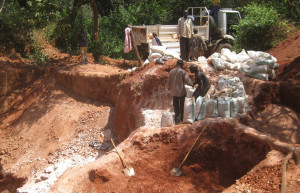
    coltan-miners

    Workers in a coltan mine in DRC. Image (cropped) via Responsible Sourcing Network/Flickr.

    Yes, there are environmental harms associated with coltan mining.  In the DRC, coltan mining overwhelmingly uses artisanal and small-scale (and occasionally medium scale) methods, although the harms these methods cause to the environment are not distinctive in that there is nothing specific about mining coltan that creates a different kind of harm to, for example, tin or tungsten.  Compare this to gold, where there are harms associated with the use of mercury.


    In the DRC when a coltan deposit is found, miners rush in to exploit the site, regardless of whether it is on agricultural land or in a national park, and the mining destroys the potential for the land to be used for grazing or cropping, or as a biological reserve for fauna and flora.  Like other artisanal mining of minerals, artisanal coltan mining involves stripping forest and bush cover, then any topsoil, and digging pits to a depth of about 6m to get access to the ore deposit.  Water, provided through a pump system where a generator can be used, or by diverting a creek or river if a generator is not available, is used to soften the earth and rock, to break it up, and then to separate mineral ore from soil and to wash away the soil.  Water use is a major factor in the environmental harm caused by mining.

    As I outlined in my book Coltan on pp.49-50, specific environmental effects of artisanal coltan mining include the following:

    • Forest clearance to expose soil for mining;
    • Cutting of timber to build worker camps;
    • Cutting of firewood;
    • Removing the bark from trees to make panning trays to wash coltan;
    • Pollution of streams by silt from washing process;
    • Diversion of streams from their original course;
    • Cutting lianas to make baskets to carry coltan;
    • Hunting animals, including for food, ivory and other body parts;
    • Animals injured after escaping snares;
    • Disturbance of fauna due to people resident in, and moving through, reserves;
    • Reduced population of invertebrates and reduced photosynthesis in aquatic plants due to silting of streams;
    • Reduced fish stocks in lakes and rivers affected by silt pollution;
    • Erosion, including landslides, of unprotected ground during rains;
    • Ecological changes due to loss of key species, such as elephants;
    • Long-term changes in watershed due to rapid run-off in deforested areas;

    There have been some studies that document these impacts.  A study of mining communities in the Kahuzi Biéga National Park in 1999 found that they ate elephants, gorillas, chimpanzees, buffalo, and antelope – all poached from the park.  However, a subsequent report in 2001 found that tortoises, birds, small antelope, and monkeys were being eaten because all the big animals had been killed.

    Q. Do you feel that there are any plausible ways for companies to be certain that the coltan they use in manufacturing their products is not from a conflict zone or unethically produced?

    A company can improve certainty around the origins of any coltan used in its products, if it sources metals directly through a smelter that has an exclusive long-term contract with a coltan producer in a country such as Brazil, China, or Mozambique.  In such smelters, supply from these producers is so consistent there is virtually no likelihood of it being ‘contaminated’ by ore from other destinations.  The conflict-free smelter programme, which works with over 200 smelters, has safeguards in place to verify the origins of minerals processed by its members.  While there is always a chance that these consignments of minerals could be mixed with ore from militia-controlled mines in the D.R. Congo, this would be fairly unlikely as the reputation of the smelter (and the programme) is at stake and there is considerable due diligence around the provenance of minerals.

    The challenge of sourcing ethically produced coltan is complicated when companies are buying components, especially components manufactured from yet other components, to manufacture their final goods, e.g., electronic items.  It is impracticable for an end-manufacturer to check the origin of all the metals that are used in all components – because literally thousands of components may be involved – and unrealistic to think that companies are able to do this.  The best they can do, is try to identify component manufacturers that have declared they will abide by ethical standards for sourcing minerals and have systems in place this claim to be verified – and of course end-product manufacturers should insist on seeing evidence of such checks.

    It is important that all D.R. Congo coltan is not seen as being a ‘conflict mineral’, in a way that become common after the US Government first passed its conflict minerals Dodd-Frank legislation in 2010.  Civilian Congolese producers of coltan should be allowed to sell their product on the world market, and such production and trade is one of the few economic opportunities available to many Congolese.  The emphasis in terms of due diligence around ethical production of coltan should be on determining if coltan comes from conflict zones and is produced by armed groups, rather than if it comes from the DRC itself – this is an important distinction.  There are various schemes in place, or being established, in the DRC to ensure civilian-produced coltan is traced through to export.  The most well-known of these is the industry traceability and due diligence programme for coltan, tin and tungsten, which is managed by the International Tin Research Institute.

    Q. As you mention, there have been a range of international efforts that have endeavoured to address the ethics surrounding coltan mining. Overall, do you feel that current efforts are succeeding or falling short?

    Efforts have brought attention to ongoing violence and instability in the DRC, which is a good thing.  The problem is that the focus of activists, and even government initiatives such as the US Dodd-Frank legislation, has often been solely on conflict minerals as a cause of violence rather than a range of factors.  Thus, while there is heightened attention, there is also a simplified narrative being propagated that is detrimental to understanding the causes and consequences of the conflicts.

    There is no doubt that international efforts have had an effect on the mining industry in DRC, but also Rwanda.  The passing of US legislation and consequence temporary embargo by the DRC government in late 2011 on any exports of conflict minerals, severely curtailed mining and trading of these minerals in eastern provinces (it was business as usual for mining in other provinces, such as Katanga).  This showed that international efforts can definitely have an impact (presumably President Kabila of the DRC felt that he had to impose the embargo to appear to be doing something about the conflict minerals trade).  New OECD regulations, the conflict-free smelter program and the International Tin Research Institute’s ‘tag and bag’ scheme for tin and coltan in Rwanda and some mines in DRC are also closing opportunities for ‘laundering’ conflict minerals through civilian-controlled supply chains, while also guaranteeing opportunities for civilian-produced and traded minerals.

    There are criticisms of these schemes, especially ITRI’s tracking scheme which is expensive for participants, and regional governments and officials feel they are excluded from its data or operations.  Nevertheless, in a complex and difficult political and economic environment, the combination of regional and international efforts have resulted in more mines and more mineral transactions coming under civilian control, and therefore generated economic opportunities for Congolese civilians.  This said, anti-government militias and the DRC army are still involved in some mining and trading of the 3Ts and gold.

    The big question is whether current political tensions around President Kabila’s possible election to a third term, will cause the ITRI scheme to be suspended, see renewed militias activity in Eastern provinces, and a resumption of widespread smuggling of minerals out of Eastern Congo into Uganda, Rwanda and Burundi.

    Q. Do you think China will complement the efforts of Western organizations and the DRC’s own efforts at cracking down on the conflict mineral trade or will China’s status as the world’s largest coltan refiner make matters more difficult?

    sea_of_phones

    Coltan is used in electronic devices such as mobile phones. Image via Wikimedia.

    To answer this question properly, we have to pull apart the idea of ‘China’.  The Chinese government may have some interest in protecting its international reputation by participating in or publicly supporting international government initiatives to control the production and trade of conflict minerals.  This might include passing some minimal regulation on its own industry (possibly that it has no intention of enforcing).  It will have no interest in supporting activist initiatives, as it will not to want to fuel or strengthen independent civil society, let alone one that might actually have influence over aspects of international commerce.  The Chinese minerals industry, on the other hand, is aware of its strong and growing position in the global mining and minerals sector – a sector that the Chinese government itself sees as strategic.  Without pressure from its own government to desist from importing, smelting or otherwise trading in conflict minerals, the Chinese minerals industry will see no reason to change the current situation.  Some Chinese consumer product manufacturers, especially in the electronics sector, will be aware of the potential for boycotts by Western consumers to damage their sales and reputation, but Western consumers are not significant for some electronics manufacturers.  Asian (especially Chinese), African and Latin American consumers will be far more important, and awareness or concern by these consumers about conflict minerals is low.  In sum, while Chinese actors may be interested in some international efforts to regulate the trade of certain products, conflict minerals will be low on the list of priorities and there is unlikely to be any Chinese effort in this regard.

    Q. Looking to the future, what impact do you feel Donald Trump’s presidency may have on talking the problem of conflict minerals?

    Trump made it clear during his campaign that he is in favour of minimal regulation for business and that the US should be more isolationist in terms of spending less time and effort worrying about global affairs.  Given that responses to conflict minerals are based around additional regulations for business (regulations that everyone agrees have a cost in terms of compliance), which also represent an effort by OECD governments to shape conflict minerals production and trade in Central Africa, a Trump administration is highly unlikely to have much, if any, interest in such initiatives.  US business groups have already contested the regulations of the Dodd-Frank Act, and they will see a Trump presidency as creating another opportunity to exert pressure and have the regulations pared back or abolished.  A Trump administration is also likely to cut funding for USAID projects focused on capacity building for Central African governments to regulate production and trade of the mining industry.
  • Sustainable Security

    Summary

    After three years and over 22,000 air strikes, the Levantine ‘Caliphate’ manifestation of the Islamic State seems destined for destruction in 2017. Yet the revolt of radicalised Sunni Arabs is unlikely to abate in Iraq or Syria, with the battlefield shifting to localised guerrilla insurgency, increasing attacks within western states, and the opening of new fronts in the global margins, not least Asia and Africa. Such revolutions of frustrated expectations will be a major part of the geopolitical landscape for decades to come.

    Introduction

    By 28 June the Iraqi Army had largely re-established control of the city of Mosul which had been taken over by the so-called Islamic State (IS) three years earlier. In the process the army was aided hugely by coalition air power and artillery support, as well as the actions of a number of Shi’a militias and assistance from personnel linked to the Iranian Revolutionary Guards Corps. This closing phase of the Mosul operation coincided with the early stages of an assault on the city of Raqqa in northern Syria by a range of Kurdish and Syrian militias, again supported by the coalition. The two operations seemed likely to mark the end of the IS “caliphate” and raised the question of the future of the movement.

    Oxford Research Group has tracked and analysed the development of IS and its predecessor groups such as al-Qaida in Iraq (AQI) since the early 2000s, and two monthly briefings last summer (July and August 2016) made an initial assessment of the status of IS through a two-part analysis – A World After IS. There was some updating of this analysis in the briefings of January and February 2017, but the rapid changes in the status of the movement make it useful to take a broader view once more.

    The four articles taken together covered the recent experience and the current direction of IS and this briefing seeks to develop the analysis further, with an emphasis on longer term trends in global Jihadist movements, especially the advance of IS affiliates in South and South East Asia.

    Context

    IS as a territorial movement is under severe pressure as a result of the coalition’s extensive use of air power since August 2014. There have so far been over 22,000 air strikes, mostly on multiple targets and using over 80,000 precision bombs and missiles. Six months ago, the US Department of Defence reported that over 50,000 IS personnel had been killed, and the independent AirWars monitoring group has recently given a figure of close to 4,000 civilians killed. That last number will most likely have to be revised upwards substantially when the number of civilian casualties in Mosul is known.

    IS has lost control of most of its territory in Iraq and a substantial part of its territory in Syria. At the time of writing (28 June) the Iraqi government is reporting that the final defeat of IS in Mosul is only days away, albeit not the first time it has made (and revised) such projections. There remain reports of IS personnel staging attacks in parts of Mosul that have supposedly been liberated by government forces. Meanwhile, the battle to retake Raqqa, in Syria, is in its early stages and while Syrian and Kurdish forces backed up by coalition air strikes are reported to be making progress, independent verification is difficult.

    The operation to defeat IS in Mosul has actually taken over eight months rather than the two and a half months planned, and the elite Iraqi Army forces spearheading the attack have taken serious casualties. Since these forces will be crucial in ensuring the stability of the country after IS loses Mosul, the transition of IS from a force controlling territory to an anti-government insurgency will be easier for it.

    That task will further be aided by the near-certain role of Shi’a militias and Iranian forces in maintaining national stability, as well as the creeping advance of the Iraqi Kurdish presence in northern Iraq. These eventualities are deeply worrying to Iraq’s Sunni Arab minority and likely to make some elements of that minority more sympathetic to IS as it re-embraces an insurgent role.

    The Evolving IS Strategy

    It is clear that IS is in the process of re-inventing itself for the post-caliphate era and it is useful to tease out the more significant elements of its post-Mosul and post-Raqqa evolution.

    Firstly, it is probable that it will modify its claim of ruling a caliphate that is, from its perspective, a true exemplar of a new Islamist world order. Instead it will change that to a demonstration of what it was possible to achieve for three years, even against overwhelming force used by regional regimes strongly supported by the western coalition – the “near enemy” allied to the “far enemy”. Thus, the short-lived caliphate will be presented as a rich symbol of another world which will surely develop again and will eventually be victorious.

    IS propagandists will most likely focus on this approach and will also make much of the numbers of young people who were willing to die for the cause. In relation to that last point it is certainly the case that the Iraqi government and its coalition partners have been shocked and daunted by the sheer numbers of suicide bombers, well over a thousand, that could be gathered together to help defend Mosul. It is strange that the eschatological nature of IS is still not fully appreciated by its opponents.

    While the transition of IS in Iraq and Syria into a guerrilla force is one element of its strategy, the other two are also important. One, which has been much discussed in recent briefings, is the move to encourage, incite and even assist in attacking the far enemy. This is reminiscent of the al-Qaida approach between 2002 and 2006 and differs fundamentally from the IS focus on an actual caliphate prior to 2015. Then it was concentrating on the creation and strengthening of this caliphate and had little interest in attacking the far enemy. The sheer intensity of the coalition’s air assault changed that and one outcome was that attacks on western states increased substantially, as shown first in France, Belgium and Germany and more recently by the Westminster Bridge, Manchester and London Bridge attacks and the failed attempt in Brussels which, had it succeeded, would have killed many people.

    These attacks have three aims. One is demonstrating that IS remains a significant part of the response to what is seen as the western threat to Islam, and another is to show revenge and a capacity for retaliation against the perpetrators of the air assault in Iraq and Syria. Most important, though, is the intention of damaging community relations and catalysing Islamophobia and anti-Muslim bigotry. The aim is to polarise, destabilise and damage western societies by inciting inter-communal violence. In this context the substantial increase in the number of hate crimes in Britain, and especially the recent terror attack on a group of Muslim worshippers during Ramadan at the Finsbury Park Mosque, will have been welcome developments for the IS leadership.

    IS and the Global Margins

    Finally, there is the manner in which the IS outlook is gaining adherents in other parts of the world, especially across the Global South. Again, this trend has been touched on in some recent ORG briefings but may now be the most important element in IS’s revised strategy. As well as Bangladesh, northern Nigeria and the Lake Chad basin, Yemen and Somalia, there are three other countries to watch.

    In Afghanistan the US Department of Defence is concerned at the effectiveness of IS paramilitary groups and sees this as an added reason to deploy several thousand more US troops into the country, reversing the long-term withdrawal undertaken by the previous Obama administration. This ‘Khorasan’ branch of IS is also increasingly active in Pakistan, particularly against civilian Shi’a targets.

    In Egypt the Sisi government is reacting to the increased threat of violence from Islamist groups linked to IS with a firm policy of suppression, but this is being applied to a wide range of Islamic movements, not least the Muslim Brotherhood, and it is highly likely that it will simply increase support for more extreme elements. Egypt’s growing anti-Islamist intervention in Libya has at best dispersed IS elements there into the cities or neighbouring countries.

    Of even greater concern is the Philippines, where a coalition of extreme Islamist groups pledging links to IS took control of the southern city of Marawi in late May. Since then the Philippine Army has struggled to regain control, even though it is being supported by US Special Forces and US and Australian navy surveillance aircraft. The operation is now in its sixth week with mortar fire and air strikes directed largely at paramilitary sniper positions resulting in a rising toll of civilian casualties. Although not much covered in the western media, the Marawi situation has caused consternation across South East Asia, not least in Indonesia and Thailand.

    Conclusion

    As IS loses its caliphate it is making the transition to a guerrilla insurgency in Iraq and Syria, is escalating its attempts to damage social cohesion in western states and it is doing what it can to spread the message and gather supporters across the Global South.

    While the emphasis among western security analysts may be on the first two trends it may actually be the third which is most significant. This is because of underlying demographic and socio-economic trends that have been discussed repeatedly in ORG analyses over nearly two decades. A movement such as IS can successfully draw support from what may be described as the “majority margins” across the Global South – many tens of millions of mostly young people, fairly well-educated but with minimal life prospects. In the Middle East and Africa, in particular, this is exacerbated by the demographic bulge, with an especially high proportion of the population under the age of 30, but this also applies to an extent across South and South East Asia.

    While most of the focus is on IS and a presumed problem with Islam, it is worth noting that neo-Maoist movements persist, not least with the Naxalite rebellion in India. Perhaps the wise conclusion has to be that IS, the Naxalites, Boko Haram and others should all be seen as examples of an evolving era of revolts from the margins, revolts that may simply not be amenable to control and suppression by military action.


    Image credit: Mstyslav Chernov/Wikimedia


    Paul Rogers is Global Security Consultant to Oxford Research Group and Professor of Peace Studies at the University of Bradford. His ‘Monthly Global Security Briefings’ are available from our website. His new book Irregular War: ISIS and the New Threats from the Margins will be published by I B Tauris in June 2016. These briefings are circulated free of charge for non-profit use, but please consider making a donation to ORG, if you are able to do so.

  • Sustainable Security

    In the UK, tens of thousands of deer are poached annually. This has significant implications for the sustainability of British deer populations and human health.

    Recessions and economic slumps have effects on various aspects of people’s security and presumably, people’s food security is a part of this. In order to cope with food insecurity, some people may steal food or other items for money to buy food, but there is also the possibility that some people will turn to poaching. The British Deer Society places the number of poached deer in the UK as high as 50,000 each year yet in 2009 only 335 incidents were reported to the police.

    In 2013, I undertook a study to gather information as to whether deer poaching in the UK is linked purely to economics or if people who poach deer have other motivations beyond food or money. I sent online questionnaires to all police constabularies and the questionnaire was advertised in the monthly publication of the British Association for Shooting and Conservation. I received responses from 27 wildlife crime officers and six gamekeepers. Drawing on Nurse’s (2013) typologies of wildlife crime offenders, I asked respondents about the change in poaching around the time of the 2008 recession and about their perspective on the motivations of poachers. The four typologies consist of traditional profit motive, external economic pressure, masculinity and as a hobby. In particular, the traditional profit-driven motivation of offenders was explored by attempting to uncover if there is, as suspected, a black market in venison. From this data, I hoped to create a more detailed picture of deer poaching and to further inform wildlife law and poaching prevention.

    UK deer poaching: why it matters

    Image credit: Peter Trimming

    Understanding more about deer poaching is important for two main reasons. The first is in relation to human health. Presumably, experienced hunters are trained to inspect the deer they kill or poach for diseases. There is the possibility though of poachers infecting themselves with Bovine Tuberculosis or Foot and Mouth disease, which are known to occur in deer in the UK, though no data indicating deer meat has been found with these diseases. Additionally, if the poacher is selling the meat on the black market, there is the further possibility that any disease could be passed on to other people and the public.

    The respondents suspected some poached deer meat makes it way to pubs and restaurants, so disease transmission to the public, whilst unlikely, is not impossible. The second point is in regards to the sustainability of deer populations. It is difficult to manage wildlife populations where there is a significant amount of poaching, such as is suspected in the UK. Hunting licences and potentially other management strategies, like culling, need to be grounded in accurate population numbers in order to not over exploit the species in question. If too many individuals are killed through hunting and poaching, this could endanger the stability and survival of the population. With tens of thousands of deer potentially being poached each year, it is difficult to see how deer populations can be properly estimated and therefore managed.

    The police and gamekeepers who responded stated there are individual poachers and groups of poachers who do so for profit and financial reasons. As suspected, poachers personally consume the poached deer, but probably also sell the meat to make money. This fits Nurse’s (2013) first typology, ‘Model A’, where offenders are driven by traditional profit motives. ‘Model B’ wildlife crime offenders are also financially driven, but the pressure on the offender is from an external source like an employer. In the context of deer poaching, this helps to explain the poaching undertaken by some gamekeepers. Landowners pressure gamekeepers to maintain the landscape in particular way. The respondents indicated though there is more driving poaching than simply economics. Nurse (2013) proposes there are also offenders who do so to maintain or assert their masculinity, ‘Model C’, and those who offend as a hobby, ‘Model D’. The data confirm these typologies. Men carry out nearly all poaching. Apparently, often these men poach together as a form of male bonding, as a form of ‘sport’, or as one respondent stated ‘just for the hell of it!’.

    Each of Nurse’s (2013) typologies then were found within the respondents’ answers. The implications of this are two-fold. First, deer poaching, and presumably other poaching, is not only driven by food insecurity and money and therefore the motivations, and uncovering those motivations, are complex. Even when money is at the heart of the motivation, there are further distinctions to be made. The food and/or profit from the poaching may be for an individual, for an organized crime group or for an employer. For non-profit driven poaching such as for status, sport and/or fun, the motivations can be equally challenging to uncover.  Uncovering motivations though is an important and useful endeavour as this data can be used to improve policy and prevention strategies. Second, that motivations are varied means that policy and prevention strategies also need to be varied. To have policy interventions and wildlife law enforcement strategies targeted solely at food insecurity or profit motivations are likely to be ineffective.

    Addressing the problem

    Poaching, of deer and other non-human animals, must then be addressed through a multi-faceted approach. In the first instance, the punishment for poaching in the UK is not a deterrent and the risk of being caught or prosecuted is low (Nurse 2013). This is partly because wildlife crime is not a concern for most police constabularies and not an offense that is prioritized. Making the fines higher, sentences harsher and confiscation of poaching equipment mandatory may help to address this aspect. Nurse (2013) suggests banning hunters and gamekeepers who are caught poaching from being able to receive licences in the future and/or from working in the industry. Second, wildlife crime is viewed as a victimless crime. This is not the case. Deer are shot by bullets and arrows, trapped in snares and/or torn apart by dogs. People can potentially eat uninspected diseased venison.

    The environment as a whole or at least the ecosystem where deer live can be disrupted by overexploitation – people and non-human animals are victims of this too from the loss of a healthy environment. Public awareness needs to be raised through concentrated media campaigns as to the value and impact of biodiversity and the environment. Whereas regard for the environment has increased in recent years, there is still much more to be done to increase the knowledge of our connection to the planet. Additionally, there should be wide spread information about the danger of consuming uninspected meat and venison. In conjunction with these strategies in times of particular economic hardship, extra support should be put in place to assist people who may poach because of food insecurity. Addressing the enforcement side of deer poaching can help to impact upon economic motivations. Changing the view that poaching is victimless may help to alter motivations related to status and sport.

    Deer poaching and wildlife crime are worthy of being made more of a priority not only because of the victimisation to the non-human animals and the environment, but also because these crimes impact upon people and communities. A multi-faceted approach increasing the attention on and penalties for wildlife crime as well as educating the public to the nature and risks associated with wildlife crime are necessary first steps to reducing the harm and suffering linked to wildlife crime in general and poaching in particular.

    Tanya Wyatt is a lecturer at the University of Northumbria.

  • Sustainable Security

    After decades of largely unsuccessful military interventions against a long-standing Maoist insurgency, India’s large-scale labor market program MGNREGS has helped reduce conflict dramatically.

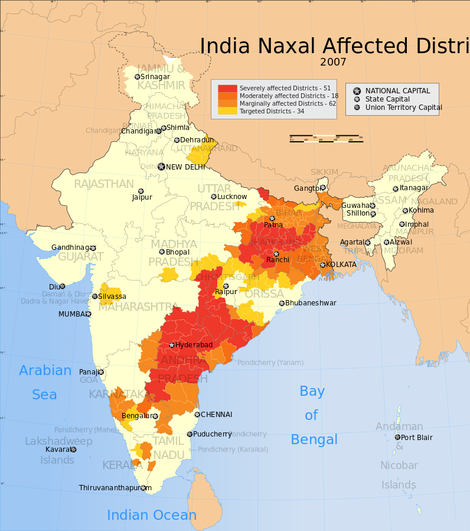
    Other than the conflict in Kashmir, Maoist violence is India’s longest-standing internal national security threat. The Maoists are predominantly active in the eastern parts of India, with strongholds in forest areas and places with substantial tribal populations who have seen little improvement in their living conditions since Indian independence 70 years ago. Over time, more than 160 districts have been affected by Maoist violence, and decades of military force by the Indian government have been largely unsuccessful. Conflict intensity escalated in the mid-2000s, but since then Maoist-related deaths have seen an unprecedented decline to reach the lowest level of violence in The number of districts severely affected by Maoist violence fell from 51 districts in 2007 to 12 districts in 2013, and the total number of Maoist-affected districts declined from 165 to 120 districts in the same time period.

    Areas with Naxalite activity in 2007. Image credit: Wikimedia.


    Areas with Naxalite activity in 2013. Image credit: Wikimedia.


    The Naxalite-Maoist insurgency in India

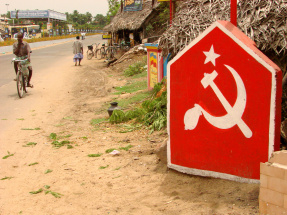
    The conflict started with a peasant revolt in the village of Naxalbari in the state of West Bengal in 1967, which led to a rising insurgency called the Naxalite movement. Naxalites use guerilla tactics in their fight against the government, and aim to overthrow the Indian state to create a liberated zone in central India. They wanted to improve the living conditions of the local population through redistribution of land and the revenue from mining activities.

    The intensity of the Maoist conflict rose dramatically in the mid-2000s, when previously competing Naxalite groups came together to create the Communist Party of India (Maoist). Large parts of east India were heavily affected by that violence, and the Indian government lost de facto territorial control over a number of districts. Civilians were often caught in between the Maoists and government security forces, since both sides had to rely on the local population for information and assistance in remote forest areas.

    In 2006, the Indian Prime Minister Manmohan Singh referred to the Maoist insurgency as the “single biggest internal security challenge ever faced by our country.” Maoist-related deaths rose rapidly, peaking with a large attack in 2009-10 that killed 76 policemen in Dantewada district. In recent years, fatalities have fallen to some of the lowest levels in decades, and the Maoists have been pushed out of many traditional areas of their control. According to government statistics, Naxalite deaths have risen by 65% and surrenders by 185% between 2014 and 2016. Maoist activities are now almost exclusively limited to 35 districts, although the insurgents retain a presence in 68 districts across 10 states.

    What factors explain this sharp rise and fall in violence?

    The Indian central and state governments responded to the increased violence after the creation of the Communist Party of India (Maoist) with a variety of measures. Personnel and spending on security forces were increased, and central and state paramilitary forces started operations against the Maoists that came to be referred to as Operation Green Hunt by the media. At the same time, expenditures on development programs were increased as well, with the hope of improving the living conditions of the local population and thereby the traditionally strained relationship between civilians and the government in Maoist-affected areas.

    One of the first development programs in Maoist-affected areas in this time period was MGNREGS (Mahatma Gandhi National Rural Employment Guarantee Scheme), rolled out across India between 2006 and 2008. MGNREGS guarantees 100 days of employment per year for each household at the minimum wage in public-works programs. The work projects focus on drought-proofing, irrigation and infrastructure improvements in Indian villages.

    The only eligibility criterion is that a household lives in a rural area and is prepared to work full-time in manual jobs at the minimum wage. This allows households to self-select into the program when they need it and covers about 70 percent of the population, making it the world’s largest public-works program. The annual expenditures under the scheme amount to about one percent of India’s GDP. In addition to its size, the program is unprecedented in India and worldwide because the program provides a legal guarantee for employment, which is enforceable in courts. It was rolled out in three separate phases, and the first implementation phase of the program was targeted to 200 of India’s poorest districts, many of which are in Maoist-affected areas, such as Dantewada and Bastar districts in Chattisgarh, and Anantapur district in Andhra Pradesh.

    What role did MGNREGS play in tackling Maoist violence?

    Image credit: Adam Jones/Wikimedia.

    Comparing districts that received MGNREGS to very similar districts that did not receive the program until later, in our research we find police attacks on Maoists intensified after MGNREGS came into effect. This is consistent with an improvement in the relationship of civilians with the government as a result of the program. Since civilians may have important information about the location of the Maoists, who rely on them for shelter and information on police movements, MGNREGS seems to have helped win civilians over and encourage them to share that information with the security forces. The Indian Home Ministry also attributes the increased success of catching Maoists to better intelligence gathering.

    In concurrence with the increase in police-initiated attacks, we find that the Maoists started retaliating against civilians. The rebels traditionally concentrated on attacking government forces rather than civilians, which makes this shift an important change in behavior. In leaflets and other documents, Maoists claim that the killed civilians were police informants and threaten to attack other civilians cooperating with the police.

    MGNREGS therefore appears to have contributed to the effectiveness of government forces by winning the “hearts and minds” of the local population. While this improved effectiveness lead to a short-run increase in violence as government forces become more pro-active, violence declined over time as security forces won more battles against the insurgents.

    This matches the recent substantial decline in Maoist-related violence. Up until around 2010 when MGNREGS was a relatively new program, Maoist fatalities increased substantially, and many top leaders surrendered. Since then, India has seen an impressive decline in Maoist-related deaths and areas under Maoist control. Anti-poverty programs like MGNREGS can therefore support more traditional counter-insurgency strategies if they manage to improve the local population’s relationship with the government. Since civilians take on large risks when choosing to share information on insurgents with government forces, this strategy will only be successful if civilians believe that the benefits from the program are large and long-lasting enough to be worth potential retaliation by the insurgents.

    MGNREGS was set up to be a more permanent program than other initiatives because of the legal guarantee and was enacted partly due to pressure from NGOs and social activists, who also played an important role in monitoring implementation quality. This buy-in from government and NGOs makes the program very different from similar programs elsewhere, and is likely to have contributed to its success.  Lower actual benefits than promised by the government remain a challenge in many developing countries, including India, however. If governments do not ensure a high level of implementation quality, transitory programs and broken promises will sow distrust with citizens, making future investments less effective.

    Authors’ Note: This text is based on our article “Guns and Butter? Fighting Violence with the Promise of Development”, published in the Journal of Development Economics in January 2017.

    Gaurav Khanna is an assistant professor of Economics at the School of Global Policy and Strategy, University of California – San Diego. His research focusses on conflict and the markets for education and labor in developing countries. 

    Laura Zimmermann is an assistant professor in Economics and International Affairs at the University of Georgia. Her research focuses on the labor-market and political economy impacts of government programs in developing countries, and she has worked widely on effects of MGNREGS in India.  

  • Sustainable Security

    Summary

    April has seen the inexperienced Trump Administration further escalate US military activities from Iraq and Syria to Afghanistan and Yemen. Attacking Syrian regime targets for the first time sent a clear signal of muscular change from the Obama era and suggested to President Trump a means to reverse his negative domestic approval ratings. However, it is the crisis over North Korea’s nuclear missile programme that has the greatest potential to escalate suddenly and disastrously into a conflict of global significance.

    Introduction

    Last month’s briefing, Sustainable Security in the Trump Era, discussed the outlook for the sustainable security approach in terms of the incoming Trump administration, concluding that in all three major areas of concern – economic, environmental and military – the Trump prospect was not positive. It would maintain a highly sceptical approach to climate change even if it might end up getting left behind technologically and economically, and its economic policies would do nothing to reduce the widening wealth/poverty inequalities that cleave American society.

    In terms of US security policy, the indications after two months in office were that Trump would expand the military budget and armed forces, give military commanders greater freedom of action, was willing to support an expanded global military posture and saw this as integral to “making America great again”. This briefing continues the overall theme in relation to the military outlook, the main emphasis being on the potential for a crisis involving North Korea.

    The Military Posture

    The March briefing identified a number of areas where the military posture was being expanded. These included an increased use of air power in supporting Iraqi troops attempting to take control of Mosul, the expanded use of Special Forces in Yemen, more powers for US forces to initiate action against militias in Somalia, and the deployment of additional ground troops to Iraq. In the past month there have been further indications of a military expansion.

    • In Iraq, the use of air power in Mosul has increased still further, although the so-called Islamic State (IS) remains entrenched in the western heart of the city.
    • In northern Syria, the US Air Force has been establishing an airfield between Kobane and Raqqa to support the looming offensive against this other stronghold of IS. Up to 1,000 more US troops are anticipated to join the 950 US Special Forces, Rangers and Marines already bolstering the mainly Kurdish Syrian Democratic Forces militia for this offensive.
    • In western Syria, the US Navy carried out a major sea-launched cruise missile raid on an Assad-regime air base in response to a suspected government attack on rebel-held Khan Sheikhoun that used chemical agents and killed many civilians.
    • In Yemen there have been 85 armed drone and strike aircraft attacks since President Trump’s inauguration, more than President Obama approved in 2015 and 2016 combined.
    • In Afghanistan the US Air Force used the world’s most powerful conventional bomb, the GBU-43/B Massive Ordnance Air Burst (MOAB), for the first time against an IS faction.
    • Also in Afghanistan, Trump’s National Security Advisor, General H R McMaster, arrived on a surprise visit that coincided with the deployment of several hundred US Marines to bolster the Afghan National Army, which was suffering increasing losses from attacks by Taliban and other armed opposition groups. There were calls for a further major increase in US military forces in the country at the start of the so-called “fighting season”.
    • Reports at the end of the month that the Trump administration has decided to hand more authority to the Pentagon in terms of how it conducts the wars in Iraq and Syria.
    • Trump diverted a ‘powerful armada’, including a carrier battle group and a nuclear submarine, towards North East Asia and says he fears a “major, major conflict” with North Korea.

    It is in this context that the burgeoning crisis with North Korea requires specific analysis.

    A Crisis out of Nowhere?

    During the course of the past month the issue of North Korea’s nuclear and missile development programmes has come to the fore for reasons which are not easy to pinpoint. It is true that there have been some additional tests of steadily more advanced missiles (one of which failed completely) and there is a possibility that a new nuclear test is being readied. Beyond this, though, little has changed on the North Korean side, and it is the Trump administration that has started to rethink policy, with this stemming from two factors.

    One, as already mentioned, is that Trump’s attitude to security is to focus far more on the use of military force and far less on diplomacy, in marked contrast to the Obama administration. In a sense this harks back to the George W Bush administration after the 9/11 attacks and the subsequent termination of the Taliban regime in Afghanistan. In his January 2002 State of the Union Address to Congress, Bush extended the war against al-Qaida and the Taliban to a conflict with the “axis of evil” centred on Iraq, Iran and North Korea. In the past 15 years, the Iraqi regime of Saddam Hussein has been terminated and the Trump White House is taking a harsh line over the recent Iran nuclear deal. This leaves North Korea and it is here that the second factor comes into play.

    Until a few months ago, US policy was to use sanctions and diplomacy in dealing with North Korea, not least in collaboration with China as the one state with serious influence over Pyongyang. This was based on an assessment that North Korea’s progress towards a functioning nuclear force capable of targeting the United States was still quite a few years off.

    There are credible reports that recent US intelligence analysis indicates that this is no longer the case and, specifically, that North Korea is progressing to the point where it could produce seven or eight nuclear weapons each year, compared with the previous assumption of one a year. It is also believed to be having success in shrinking the size and weight of warheads so that they can be carried by long-range missiles and that it is within a very few years of producing reliable intercontinental ballistic missiles (ICBMs) that could reach the United States. On a worst case assessment the belief is that North Korea might have up to 40 nuclear weapons by the end of President Trump’s first term, as well as being able to deploy the first of a number of ICBMs.

    The extent to which this is an exaggeration is simply not clear but that is not entirely relevant since President Trump and his advisors believe that the time to act is now. As he put it a few days ago: “People put blindfolds on for decades, and now it’s time to solve the problem”. This is because the worst case assessment is very much dependent on a very intensive programme of testing of missiles and of warheads and without this the progress of North Korea’s whole nuclear programme will be hugely limited.

    How to Act

    At the time of writing (28 April) the approach of the Trump administration appears still to be one of seeking much tougher sanctions in order to change the policies of the North Korean regime, but these will have minimal effect without severe sanctions on North Korea’s ability to import fuel. Since China is the dominant supplier, cooperation between Washington and Beijing has to be forthcoming but there are both generic and specific reasons why Beijing is not too sympathetic to putting further pressure on North Korea. The first are that any action which precipitates a collapse of the regime could lead to a war of survival by the regime, including the risk of nuclear use, it would certainly lead to a huge influx of refugees into China and even if the regime collapsed without social catastrophe, the prospect of a unified pro-Western regime on its borders does not appeal to Beijing.

    The specific reasons revolve around the manner in which the United States is using its military power in the expectation that the Pyongyang regime will change its policies, and there is a particular concern that the radar linked to the Terminal High Altitude Area Defence (THAAD) anti-missile system now being deployed in South Korea has the capacity to gain considerable intelligence on some of China’s key defence capabilities.

    China is also likely to be far more aware of the psychology of the North Korean regime and the way it sees its nuclear force as essential to state survival. Like some other states, it is only too well aware that not long after Gaddafi’s Libya gave up its WMD programme the regime was terminated with considerable NATO military support.

    In short, rapid action to effect a change in North Korea’s nuclear and missile plans has no chance of success – only longer-term careful diplomatic action may work. If not, then China, the United States and others will have to get used to the idea that a nuclear-armed North Korea will be a feature of the security of the region. It is worth noting that some leading Western military figures from the Cold War era that had experienced the dangers of the East-West nuclear confrontation ended their careers supporting the idea of global nuclear disarmament. That opportunity was lost and the world may have to get used to the consequences, at least in the case of North Korea.

    Conclusion

    Such a prospect, though, will not appeal to the Trump White House, and given that his administration is already putting far more emphasis on military thinking and options, there really is a risk that in the coming months the decision may be taken to undertake pre-emptive military action against North Korea’s warhead and missile production facilities. This is a highly unwelcome and potentially disastrous prospect but Trump has said that North Korea has to curb its ambitions. In effect he has drawn a red line and, since he criticised Mr Obama for doing so over Syrian chemical weapons and then failing to carry out his threat, President Trump may feel he can hardly afford the opprobrium that would follow should he fail to respond in this case.

    Moreover, this has a particular relevance for the UK, where the Foreign Secretary, Boris Johnson, has said that the UK would support further US action in Syria. With the Royal Air Force having conducted its first ever exercises with South Korean and US counterparts in Korea last November, this raises the issue of whether the same would apply in the case of North Korea, an interesting question at the start of a general election campaign.


    Image credit: Uri Tours/Flickr

    Paul Rogers is Global Security Consultant to Oxford Research Group and Professor of Peace Studies at the University of Bradford. His ‘Monthly Global Security Briefings’ are available from our website. His new book Irregular War: ISIS and the New Threats from the Margins will be published by I B Tauris in June 2016. These briefings are circulated free of charge for non-profit use, but please consider making a donation to ORG, if you are able to do so.