Category: 07

  • Sustainable Security

    Author’s Note: This contribution is a shorter version of the article “Resilience and environmental security: towards joint application in peacebuilding” by Schilling et al. 2017

    Resilience is a widely used concept among development, environmental, security and peacebuilding organisations. However, it has rarely been applied together with the concept of environmental security, despite the obvious ways in which the concepts complement each other. These concepts can be jointly applied in the peacebuilding sector. Environmental security sharpens the scope of resilience, while resilience allows for taking issues into account that a traditional environmental security perspective might miss.

    ‘Resilient communities’, ‘climate-resilient pathways’, ‘resilient future’, ‘resilient planet’: there are hardly any key terms in the development, climate change, security, and peacebuilding sectors that have not been combined with ‘resilience’. Due to the malleability of and enthusiasm for this concept, it has been depicted as the ‘new superhero in town’ replacing sustainability as the key guiding concept and buzzword in the international development community.

    Less prominent but still widely used, at least implicitly, is the concept of environmental security. The term can relate to the absence of risks posed by environmental changes or events to individuals, groups or nations. But it can also focus on the environment itself and how human behaviour, including conflict, affects the security and integrity of the environment.

    Several international organisations, including International Alert, adelphi, and the United States Agency for International Development (USAID) are working on combined approaches to environment, conflict and security issues. However, resilience has hardly ever been applied in conjunction with the concept of environmental security, despite their potential complementarity. Particularly in the peacebuilding sector, joint application of the concepts is promising because it could help to create an understanding of the extent to which people are at risk due to environmental factors (environmental security), and the extent to which people are able to adapt to environmental risks (resilience).  Further, a joint application could help to understand the impacts of environmental factors on conflict dynamics and vice versa. Against this background, develop a framework which allows non-governmental organisations (NGOs) working to implement peacebuilding projects in developing countries to jointly apply resilience and environmental security.

    Joint framework for environmental security and resilience in peacebuilding

    Natural resources and the environment are the key elements linking environmental security and resilience to peacebuilding (see figure). Based on a six-step process, we combine the key strength of environmental security, its emphasis on the importance of the environment, and the key strength of resilience, namely the appreciation of complexity and local agency. The purpose of the process is to identify the states, changes, risks and disturbances, drivers and mechanisms, impacts, and measures and responses from an environmental security and resilience perspective to gain a better understanding of conflict dynamics and identify entry points for peacebuilding.
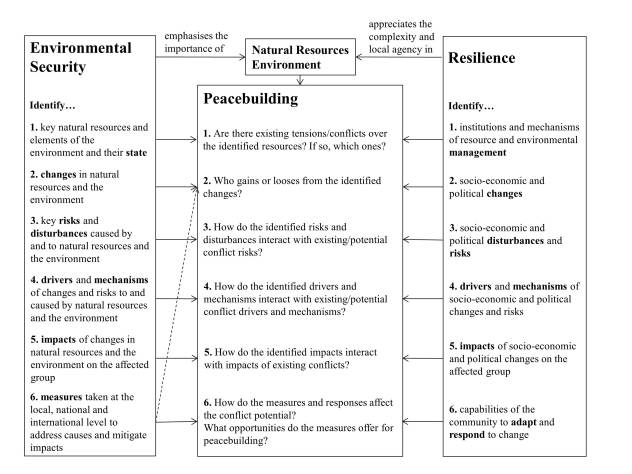
    Figure 1 – Framework for Environmental Security and Resilience in Peacebuilding.

    In step one we use the environmental security perspective to determine the key elements of the environment and natural resources that are important to a specific community or group of people, while the resilience perspective identifies how and by whom natural resources and the environment are managed. Together the environmental security and resilience perspectives help to answer the question of whether tensions or conflicts over the identified resources exist.

    In step two, we determine changes in natural resources and the environment before identifying the losers and winners of these changes. The resilience perspective allows us to take the overall complexity of the socio-economic and political context into account.

    The objective of step three is to understand the interaction of different risks. The environmental security perspective pays particular attention to risks to the environment as well as risks caused by the environment. The resilience perspective adds socio-economic and political considerations, such as strong increases in food prices, regime changes and social instability.

    Step four aims to identify the key drivers and mechanisms of the changes and risks, identified under step 2 and 3. For example, if a reduction of rainfall is identified under step 2 and in step 3 an increased drought risk is noted, then step 4 explores whether the reduction of rainfall and drought risk can be attributed to global climate change or local factors such as deforestation.

    Step five focuses on impacts. For example, one can ask whether the droughts and loss of harvest identified on the environmental security side and/or the increases in food prices identified on the resilience side, lead to hunger and how hunger in turn interacts with impacts of existing conflicts identified in the peacebuilding column.

    Step six is particularly important because at that point we consider the actual measures and responses to environmental, socio-economic and political changes at different scales in order to determine the effects on conflict potential as well as to identify entry points for peacebuilding.

    For example, if we identify hunger as a key impact under step five, the government could invest into irrigation schemes or (temporarily) subsidise staple food. This could reduce the conflict potential and strengthen the social contract between the government and the affected communities. However, for each measure taken, consideration must be given to who is affected, either positively or negatively (see dashed arrow connecting step six and two). On the resilience side, the capabilities (including knowledge, technology, networks and financial assets) and responses of the communities strongly depend on the social capital of the group concerned. For example, a loss of harvest might not result in hunger because the affected community might receive remittances from family members living outside the drought affected area. Our framework enables peacebuilding organisations and other stakeholders from development organisations and humanitarian assistance to identify core risks to environmental security without losing sight of the wider political and cultural structures into which these insecurities are embedded.

    In Practice: Palestine’s Good Water Neighbor’s Project

    The Good Water Neighbors (GWN) project in Palestine shows the advantages of combining a resilience and an environmental security perspective in peacebuilding. Palestine suffers from a number of environmental insecurities, most of which are related to water scarcity and pollution. But these insecurities are embedded in and interact with wider political contexts, such as the Israeli occupation of the West Bank, tensions between various Palestinian groups, and dominance of technocratic, liberal peacebuilding approaches. In order to address this complex reality, GWN facilitates cooperation on environmental issues between Israeli and various Palestinian groups, thus increasing resilience to socio-political and environmental shocks simultaneously. Examples of such activities include transnational environmental education, establishing water infrastructure shared between both sides, and common protests against environmentally harmful infrastructure (such as the Israeli separation barrier).

    Conclusion

    Image credit: Traynor Tumwa.

    Overall, the framework offers a possibility for environmental security to sharpen the scope of resilience, while resilience allows for taking issues such as governance into account that a traditional environmental security perspective might miss. The framework helps identifying the states, changes, risks and disturbances, drivers and mechanisms, impacts, and measures and responses from an environmental security and resilience perspective to gain a better understanding of conflict dynamics. However, when applying the framework continuous attention should be also paid to ambivalent effect of depoliticisation which is a risk both concepts entail.

    On the one hand, steering away from contentious political debates, such as those related to the wider Israeli-Palestinian conflict, provides an entry point for peacebuilding projects. Social groups and even official actors can be involved without taking a stance on contentious political questions. On the other hand, avoiding discussions on structural inequalities means that some root causes of environmental insecurities, such as the unequal distribution of water resources between Israel and Palestine, are difficult to address. When applying the framework further attention needs to be paid to other pitfalls of resilience and environmental security, namely the redistribution of responsibility to the local level and potentially justifying external intervention. If these issues are kept in mind, the framework can be a useful tool, especially when analysing conflicts where natural resources and the environment play key roles.

    Rebecca Froese is a PhD candidate in the Department of Earth System Sciences at the University of Hamburg and a member of the research group Climate Change and Security (CLISEC) at the University of Hamburg. Her research focuses on development cooperation and the role of non-party stakeholders in implementing and financing climate action.

    Janpeter Schilling holds a Klaus Töpfer Junior Professorship for Landuse Conflicts at the University of Koblenz-Landau. He is an associated researcher at the research group Climate Change and Security (CLISEC) at the University of Hamburg, the peacebuilding organisation International Alert in London and the Peace Academy Rhineland-Palatinate in Landau. His research focuses on environmental security, conflict and resilience.  

    Tobias Ide is head of the Research Field Peace and Conflict at the Georg Eckert Institute and currently a visiting researcher at the School of Geography, University of Melbourne. He is an associated researcher with the reserach group Climate Change and Security (CLISEC) at the University of Hamburg. He works on environmental conflicts, climate security, environmental peacebuilding, and the representation of peace and conflict, especially in school textbooks.

    Sarah Louise Nash is a 2016/17 Mercator-IPC fellow at Istanbul Policy Center, Sabanci University and an associated researcher with the research group Climate Change and Security (CLISEC) at the University of Hamburg. Her research focuses on the politics of climate change and human mobility.

    Jürgen Scheffran is professor of geography and head of the Research Group Climate Change and Security (CLISEC) at the University of Hamburg, Cluster of Excellence ‘Integrated Climate System Analysis and Prediction (CliSAP) and the Center for Earth System Research and Sustainability (CEN). His research specialities are climate and conflict research, sustainability science, resilience and energy and human security.

  • Sustainable Security

    There are strong calls to give UN peacekeeping operations more robust mandates to engage in counter-terrorism tasks. But the idea of UN peacekeepers conducting counter-terrorism operations is not without its problems.

    Terrorist attacks have been increasing rapidly over the last decade. According to the Global Terrorism Index, 29,376 people were killed in terrorist attacks in 2015. This was the second deadliest year after 2014, when 32,765 people were killed. The spike in 2014 and decline in 2015 is largely a result of the rise and subsequent weakening of Boko Haram and the Islamic State (IS).

    Fatigue after long engagements in Afghanistan and Iraq and the continued impact of the financial crisis has significantly dampened the interest in new out-of-area operations among Western member states. At the same time, the threats of terrorism and migration remain at the top of the foreign policy agenda. It is in this environment that policy makers are turning to the UN, to see what role it can play in the global security burden-sharing. This means a more transactional relationship with the UN, not necessarily considering the longer-term impact of undermining its impartiality and legitimacy.

    UN peacekeeping operations have, during the last decade, been deployed to protect civilians in increasingly unstable conflicts, most often without a peace to keep. However, although the conflicts have been asymmetrical in nature, armed groups have seldom perceived the UN as a party to the conflict, and pursued a strategy of strategic targeting of its troops, police and civilians.

    The Case of Mali

    Image credit: MINUSMA/Flickr.

    In March 2012, a coalition of rebel and Islamist groups took control of the north of Mali in the wake of a coup. On April 6, 2012, the rebels proclaimed the independence of the ‘Republic of Azawad’ and the imposition of sharia law in northern Mali. 412,000 persons had fled their homes and had become internally displaced or moved across the border to Mauritania, the Niger and Burkina Faso. By November 2012, Al Qaida in the Islamic Maghreb (AQIM) had taken control of Timbuktu and Tessalit, the Movement for Unity and Jihad in West Africa (MUJAO) had taken control of Douentza, Gao, Menaka, Ansongo and Gourma, and Kidal was under the control of the Islamist group Ansar Dine (“defenders of the faith”).

    The Islamists and rebel groups were quickly conquered and fled to the far north of Mali after a short and swift intervention in the beginning of 2013 by the French Opération Serval, in cooperation with the African-led International Support Mission in Mali (AFISMA). To avoid being stuck in a long and bloody counterinsurgency, the French had pushed for a swift handover to the UN.

    On 1 July 2013, AFISMA handed over authority to the UN multidimensional integrated stabilisation mission in Mali (MINUSMA). However, the Islamist groups have proven resilient and the operation has been struggling to deploy and implement its mandate. From its inception in 2013 until 31 January 2017, it has endured 72 fatalities due to hostile actions, including suicide attacks, mortar attacks and improvised explosive devices (IEDs). The mission has been given increasingly robust mandates, and its most recent mandate ordered the mission to “…to stabilize the key population centres and other areas where civilians are at risk, notably in the North and Centre of Mali, and, in this regard, to enhance early warning, to anticipate, deter and counter threats, including asymmetric threats…”.

    The mission is actively supporting counter-terrorism actions, as it has been preparing “targeting packs” and has been informally sharing information with the French parallel counter-terrorism operation Barkhane  (the French follow-on mission from Serval). This follows a trend towards peace enforcement that started with MONUSCO, where the UN peacekeeping mission in the Democratic Republic of Congo (DRC) is now being mandated to “neutralize” identified rebel groups.

    Future missions may be deployed to Libya, Syria and Yemen – countries that are also marked by asymmetric conflict and violent religious extremism. Against this backdrop, many member states are now arguing that UN peacekeeping operations need to reform to not only deal better with the challenges it faces in Mali, but also in future operations.

    The high-level panel on peace operations, nominated by former UN Secretary-General Ban Ki-moon, strongly underscored that UN peacekeeping operations should not undertake “counter-terrorism operations”. However, the report left the back-door open, insofar as it argued that “UN peacekeeping missions, due to their composition and character, are not suited to engage in military counter-terrorism operations. They lack the specific equipment, intelligence, logistics, capabilities and specialized military preparation required, among other aspects.” Disregarding the principled arguments against moving UN peacekeeping in such a direction, this could indeed be read as a list of areas where reform is needed to enable UN peacekeeping to take on counter-terrorism tasks.

    A Desirable Shift?

    But what may the consequences be of taking UN peacekeeping operations in such a direction? First, UN peacekeeping missions are not likely to be able to perform counter-terrorism tasks in a satisfactory manner, militarily speaking. They are composed of troops from many different countries, and although they should provide a military deterrent against armed groups, they are not likely to be able to protect themselves against asymmetric attacks. Even small attacks can lead to the withdrawal of troops by troop-contributing countries, as most of these do not have the political interest needed to be able to sustain losses. The exception to this are neighbouring countries, as these may have a political interest in the conflict, but precisely because of this fact they may also be interested to use force only against some and not all parties that threaten the peace.

    The UN has been strongly criticised for not taking action to protect civilians, and the continued inaction has been used as an argument to make the UN more robust, as well as able to take on counter-terrorism tasks. However, this argument confuses the ability of the UN to protect civilians with counter-terrorism. In Mali, the mission is much busier protecting itself than protecting civilians. In fact, the recruitment to the terrorist groups is increasingly moving south in the country, as local populations are not experiencing a peace dividend or improving levels of participation and inclusion after the deployment of MINUSMA. Rather, they are experiencing a government that is continuing to marginalize significant groups of the population such as the Tuaregs in the North and the Fulani (also known as Peul) in the central regions of the country, and employ draconian counter-terrorism tactics.

    The inclusion of neighbouring countries’ troops in UN peacekeeping missions was previously considered a red line. As seen with the example of MINUSMA, as well as UN peacekeeping missions in the Democratic Republic of Congo and South Sudan (to mention a few), this principle has fallen by the wayside. Taken together with the move towards UN peacekeeping missions taking on counter-terrorism tasks, this shows a trend towards a more partial UN in these situations, which may increasingly be rendered unable to play its vital good offices and humanitarian roles, and be a UN for all the people, not only the government of the day. The UN and member states should reverse this trend, and make sure that UN peacekeeping operations can serve in their most effective way – as a tool to keep the peace while institutions, service delivery and an inclusive and participatory state is being built.

    John Karlsrud is the Manager of the Training for Peace program. He is on Twitter at @johnkarlsrud.

  • Sustainable Security

    This article is part of a two-part series discussing Britain’s Trident nuclear programme and the influence it may be having on the country’s energy policy. Read part 2 here.

    Following a majority vote of 355 in the House of Commons  in July 2016, the UK Government took the key decision to renew the Trident nuclear weapons system. Yet the issue remains controversial, with a wide variety of aspects persistently under scrutiny. At the forefront are debates over the costs of Trident renewal, which range from £31 billion (for the lowest estimates of submarine build costs alone) to over £200 billion when lifetime costs are considered.

    With a host of other ethical, technical and strategic issues also abounding, controversy around UK nuclear weapons policy has intensified in recent years and months, including on the future vulnerability of nuclear submarines, the growing influence that the Atomic Weapons Establishment (AWE) has over university research, the malfunction of a Trident missile test, and Theresa May’s decision to withhold this information from parliament ahead of the July 2016 vote. Not for the first time, support for Trident has come into tension with democratic transparency and accountability.

    In this two-part article we focus on another non-military sector in which developments may be strongly – but nearly invisibly – conditioned, by ambitions to renew UK strategic nuclear weapons capabilities. The issue here is a widely identified ‘puzzle’ in UK energy policy – the persistent intensity of UK Government enthusiasm for what is actually in energy terms the seriously under-performing option of civil nuclear power. Based on official defence policy documents, it seems clear that UK commitments to nuclear energy are significantly influenced by pressures to sustain the skills and expertise perceived to be necessary for the country’s naval nuclear propulsion programme. Crucially, these military connections remain almost entirely unacknowledged in energy policy literatures. The implications thus extend beyond military and energy policy alone, to raise questions about British democracy more widely.

     The ‘puzzle’ of UK energy policy

    In September 2016, after many years of setbacks, the decision was finally taken by UK Prime Minster Theresa May to give the green light for the construction of Hinkley Point C (HPC) nuclear power station in Somerset. This £24.5 billion initiative, largely financed by French and Chinese state-owned firms, constitutes one of the largest single infrastructure investments in British history. The announcement came less than a year after enactment of a “new direction” in UK energy policy, withdrawing support from several renewable and energy efficiency schemes and entrenching commitments to nuclear power. The relative scale and intensity of this British nuclear enthusiasm is a point of growing curiosity among international observers. Al Gore is “puzzled” by this and he is not the only one.

    Official UK rationales for these persistent nuclear commitments are indeed puzzling. As government analyses have repeatedly shown, nuclear power is far from being the most favourable low carbon UK energy option. Britain is blessed with what the Department for Energy and Climate Change called “the best wind, wave and tidal resources in Europe”. Official figures repeatedly show HPC to be more expensive than comparable tranches of energy from wind and solar power. Arguments over the value of “base load” generation are repudiated by the National Grid. With nuclear construction times also massively longer and relative costs dropping radically for renewables, the mismatch looks set to exacerbate by the time HPC comes online.

    Originally set for completion by Christmas 2017, HPC is now unlikely even to have started construction by then. Associated plans for a massive 16 GWe programme of new nuclear power by 2025 look even less likely. With UK renewable energy capacities in the meantime burgeoning despite a relative dearth of official support, energy security arguments would logically also favour a switch towards these “Cinderella options” to fill the gap left by nuclear delays. Yet, as prospects for resolving underperforming nuclear plans get ever more distant, increasingly favourable renewable projects remain paradoxically ever more threatened by cut-backs, leading to serious problems in that sector. Taken at face value, these patterns are difficult to explain.

    The comparative weakness of UK civil nuclear

    Image credit: Defence Imagery/Wikimedia.

    Looking at key international comparators, our research has illuminated these anomalies in more detail. The scale of the planned 16 GWe UK “nuclear renaissance” relative to the existing size of the national energy system, is unsurpassed anywhere in the world. With global investments in non-hydro renewables outstripping nuclear and fossil fuels combined, authoritative observers – including a UN Chief Scientist – argue that the world is moving in one direction (towards a renewables future), whilst the UK is moving in another. As a country with an unrivalled record of success in industrial policy, Germany offers a particularly compelling contrast. Despite hosting one of the best-performing nuclear industries in the world, the German Energiewende (energy transition policy) aims entirely to phase out nuclear power by 2022. Why should a country like the UK, with a far more attractive renewable resource and a far less competitive nuclear industry, persist in the reverse strategy?

    Our research also finds that conventional theories concerning innovation and technological transitions predict, on the basis of economic and industrial considerations, Britain (not Germany), would be most expected to phase out nuclear power. Germany was a leader in nuclear innovation with German companies leading in reactor construction projects around the globe. The UK no longer has the industrial capability to construct new conventional civil nuclear reactors. German nuclear reactors have traditionally been some of the best performing in the world, while (as noted by the Environmental Audit Committee), the UK performs badly in international comparisons. The history of UK nuclear power is replete with a number of historic failures including the “major blunder” of the Advanced Gas-cooled Reactor (AGR) programme, a 15 GW new build programme announced in 1979 where only one reactor was built, and the “financial collapse” of privatised nuclear signalled by the bailing out of British Energy.

    Factors that may explain why British and German policies have pursued such counter-intuitive trajectories go well beyond energy-specific issues – involving (for instance) the relative strengths of democracy in the two countries. Disembedding an entrenched industrial system like nuclear power requires enormous political leverage. This is difficult to achieve without strongly democratic institutions and wider capacities for vigorous critical debate. German levels of participation, subsidiarity, civic responsiveness and central accountability are repeatedly rated in international surveys to surpass corresponding qualities of democracy in the UK.

    The UK as a military nuclear power

    There is, however, another key difference between these two countries which arguably helps explain this pattern: the two countries’ contrasting enthusiasm for military nuclear capabilities. Although it hosts US air-launched nuclear weapons under NATO nuclear-sharing agreements, Germany has no apparent commitments or ambitions to develop its own nuclear-armed or nuclear-powered military capabilities. Conversely, the UK has retained a remarkable industrial and technological infrastructure for maintaining a ‘continuous-at-sea-nuclear-deterrent’ since the late 1960s.  Even a cursory familiarity with UK politics shows how essential this capability is perceived to be, under a particular post-colonial vision of an ‘outsized power’ that ‘punches above its weight’ on the world stage.

    This cherished feature of elite UK national identity comes at significant cost. Nuclear-powered submarines are a particularly burdensome element of these ambitions. With their stealth, range and robustness viewed as essential to the military credibility of strategic nuclear weapons, these are among the most complex and demanding of manufactured artefacts – each comparable in complexity to the space shuttle. Yet security sensitivities preclude much of the kind of specialist outsourcing of production that is routine in other industries, as made explicit in the (still current) 2005 Defence Industrial Strategy. So despite a diminishing, ever more globally-integrated manufacturing base, Britain must somehow finance exclusive national capabilities in this most demanding of areas.

    With the sensitive nature of the military nuclear sector, obviously limiting opportunities directly to cover these costs through exports, it is becoming ever more difficult to maintain the national reservoirs of specialist expertise, education, training, skills, production, design and regulatory capacities necessary to sustain UK nuclear submarine infrastructures. It is here that even second- and third-tier roles for British submarine industry firms in parallel supply chains for civilian nuclear power, could make all the difference. Perhaps it is a particular militaristic vision of national prestige on the world stage, then, that might help explain why the UK Government is evidently so relaxed about the otherwise insupportable additional costs of civil nuclear power?

    Here, further illumination may be found in another UK energy policy puzzle: the Blair government’s unexplained ‘U-turn’ on nuclear energy policy where the technology went from being declared “unattractive” in 2003 to being firmly back on the agenda in 2006 in one of the most abrupt policy turnarounds in UK history. It is during this period that the obscure imperatives around national submarine capabilities come to the fore. We explore this critical juncture in Part 2.

    Phil Johnstone is Research Fellow at the Science Policy Research Unit (SPRU),  the University of Sussex. His current research is focussed on disruptive innovation in the energy systems of Denmark, the UK and Germany. Previously Phil worked on the Discontinuity in Technological Systems (DiscGo) project and is a member of the Sussex Energy Group (SEG). 

    Andy Stirling is a professor in SPRU and co-directs the STEPS Centre at Sussex University. An interdisciplinary researcher with a background in natural and social science, he has served on many EU and UK advisory bodies on issues of around science policy and emerging technologies.

  • Sustainable Security


    Bay of bengal Climate InsecurityThere is no region of the world that faces more threats from climate change than South Asia. Of particular concern is the littoral surrounding the Bay of Bengal, including the Eastern Indian states of West Bengal and Odisha, Bangladesh, and coastal Burma. This region is uniquely vulnerable to a changing climate because of a combination of rising sea levels, changing weather patterns, and uncertain transboundary river flows. Away from the seashore, China holds the high ground in the Tibetan Plateau and the Himalayas, and complicates the geopolitical picture further by acting as the source of the region’s fresh water.

    On the Bay of Bengal’s coast these problems of a changing climate combine with already existing social problems like religious strife, poverty, political uncertainty, high population density, and rapid urbanization to create a very dangerous cocktail of already security threats. Climate change has been called a “threat multiplier” or “an accelerant of instability” by military and intelligence communities because of how it will impact these already existing threats. With a population of more than 300 million people (91 million in West Bengal, 42 million in Odisha, 142 million in Bangladesh, 52 million in Burma), tense militarized borders, overlapping ethnic and religious communities, and uncertainty about the future, there is no region in the world that faces a more dangerous combination of threatsfrom climate change than here.

    Rising Sea Levels

    One of the key tenets of national security is the ability of a country to ensure the integrity of its sovereign territory. Yet, as glaciers far from South Asia melt, the sea rises and encroaches upon its farms, villages, and cities. As Hemingway wrote about going bankrupt, sea level rise happens “gradually, then suddenly.” Slowly, a rising ocean brings increasing intrusion of brackish water into groundwater, harming costal agriculture. Moreover, gradual ocean encroachment harms the coast’s natural protections, whether dunes, reefs, barrier islands, or mangrove forests. Then, suddenly, when a major cyclone blows in a storm surge will overcome previously unsurmountable barriers.

    The shorelines of the Bay of Bengal stand to lose swaths of territory from sea level rise. Bangladesh, as a country predominantly composed of river delta, is most at risk. It stands to lose 11% of its territory – home to 15 million people – from a sea level rise of only 1 meter, a level that is not a particularly extreme prediction over the next 4 decades. Few invading armies could do worse damage.

    Oddly enough, the world’s oceans do not rise at the same rate. With rising global sea levels, in some areas the sea level could actually fall while it rises in others. A recent study from the National Center for Atmospheric Research (NCAR) found that sea level rise will be particularly high along the Bay of Bengal, due to changes in currents caused by rapid surface warming of the Indian Ocean.

    In the region, the cities of Dhaka, Kolkata, and Yangon all lie in major river deltas and are vulnerable to storm surges. In its 2007 report, the Intergovernmental Panel on Climate Change (IPCC) specifically listed cities in Asian mega deltas as “hotspots for vulnerability” because of sea level rise and changing patterns of river flow. Already straining at their infrastructure limits, these densely packed cities are becoming more vulnerable in a warming world.

    Changing Transboundary Water Flow

    Water does not stay within lines on a map. Instead, gravity draws it inexorably from the mountains to the sea. China, through its control of Tibet, controls the headwaters of almost all of the major rivers of Asia – only the Ganges lies outside of China’s control, originating in India. Of the major rivers that empty into the Bay of Bengal, all cross borders. Water is only plentiful during the monsoon season, so these rivers provide much-needed sustenance to agriculture, people, and ecosystems throughout their trip to the sea during the dry season – when they are fed by glacier and snow melt. Competition and tension over that flow is evident around the world when water crosses borders.

    This is true of Bangladesh and India, for which the flow of the Ganges are a source of tension. The Farakka Barrage on the Ganges River, just 10 miles upriver from the Bangladesh border, allows India a measure of control over the river. The dam allows India to divert the flow of the Ganges down a canal to the Hooghly River and into the port of Kolkata. Since the dam was built in 1975, there have been allegations from Bangladesh that India diverts water in the dry season and releases too much in the monsoon season. In 1996, the two countries agreed to a 30 year treaty to share the Ganges’ flow, but tensions still remain.

    The Brahmaputra River, meanwhile, provides a source of tension between the two regional powers, India and China. China recently announced that they are building a series of hydroelectric dams along the Brahmaputra’s upper reaches in Tibet, but they have forsworn any attempt to divert or hold back the great river’s flow. However, these assurances have not quieted all voices in India, who point to plans in China’s South-North Water Diversion Project to divert water from the Brahmaputra in order to ensure water for industry and the cities of China’s parched north. China’s leaders have denied these extravagant plans, but their engineers have lobbied for such a project. It would complete a dream of Chairman Mao’s, who said: “Southern water is plentiful, northern water scarce. If at all possible, borrowing some water would be good.”

    Climate change exacerbates these concerns about transboundary water management in the region. Climate change is threatening both the glaciers that sit at the top of these mighty rivers, feeding them during the dry season, and the very viability and predictability of the Indian Monsoon rains. Temperatures in the Tibetan Plateau and the Himalayas have risen 1.5 degrees Celsius since 1982, a rate more than three times as fast as the global average. Meanwhile, changes in weather patterns due to climate change could cause repeated failures in the monsoon. While there is little likelihood of an immediate and total melting of the glaciers, uncertainty about their future flows is enough to stoke tension in the region.

    The Potential for Conflict

    Climate change is altering the environment of the region; the glaciers are retreating, the rivers’ flows are becoming more unpredictable, and the seas are rising. However, whether those changes manifest themselves into either civil or interstate conflict will depend upon how both the populations and the governments in the region react to those changes. How long governments have to adapt depends upon unpredictable weather and climate patterns – but as the Stern Review bore out, earlier action is almost always cheaper and more effective than waiting. How governments adapt is important as whether; some adaptations, like capturing water that would otherwise flow across borders in new reservoirs could actually make the threat of conflict worse. If countries do not work cooperatively, they could stoke conflict.

    Throughout history, one of the most effective ways to deal with climate change has been migration – from a climate that is no longer hospitable to one where living is easier. However, modern borders do not reflect the historical ties between the regions. Migration is a natural response. However, in areas with already high population density and an overlapping patchwork of ethnic and religious communities, new immigrant communities often come into direct conflict with established communities. Last year saw ethnic strife in the Indian state of Assam between indigenous Bodos and immigrant Muslims, many of whom hailed from over the nearby border in Bangladesh. Over 75 people died, and over 400,000 people were temporarily displaced. In this region, it is impossible to say whether a group of migrants are “climate refugees” or simply moving to a place with better economic opportunity, but this is what we should expect in the future.

    It is difficult to find examples of any interstate wars fought directly over water; to the contrary, water has been a catalyzer of cooperation. However, as countries realize that they can control and shape water flow through mega dams and water diversion projects, there is a danger that the claims of downstream countries could be ignored. Along the Mekong River, for example, China has proceeded to dam and control the river’s flow through its territory – leading downstream neighbors to complain that China is causing droughts. Yet because of the power imbalance between China and smaller countries like Laos and Cambodia, the Chinese have little to fear. Similar thinking by Chinese leadership over dam building along the Brahmaputra, their shared river with India, could lead both countries to stumble into a conflict that neither of them want.

    In the age of climate change, conflict is more likely as threats are multiplied. Nowhere is this truer than around the Bay of Bengal. However, war is never pre-ordained. Instead, the threat of conflict is determined by how countries react. Good international governance can encourage countries to not simply pull up the drawbridge and think only of themselves, but will encourage them to see what their actions will mean for regional neighbors. Climate change is increasing the threat of wars and unrest around the Bay of Bengal; but foresight about its impacts can help the region’s leaders work together to solve a problem that knows no boundaries.

    Andrew Holland is Senior Fellow for Energy and Climate at American Security Project, a Washington D.C based think tank. He is an expert on energy, climate change, and infrastructure policy. He has over seven years of experience working at the center of debates about how to achieve sustainable energy security and how to effectively address climate change.

    Image source: amioascension

  • Sustainable Security

    RC_long_logo_small_4webThis article is part of the Remote Control Warfare series, a collaboration with Remote Control, a project of the Network for Social Change hosted by Oxford Research Group.

    Following a recent Remote Control Project briefing paper, Mass surveillance: security by ‘remote control’ – consequences and effectiveness, this piece explores the hidden costs of government mass surveillance programmes.

    Last week the new UN privacy chief said UK surveillance was “worse than [George Orwell’s novel] 1984”. In the two years since the Snowden leaks revealed the existence of bulk internet and phone surveillance by US intelligence services and their partners, including the UK, the British government continues to engage in the mass collection of citizens’ communications data.

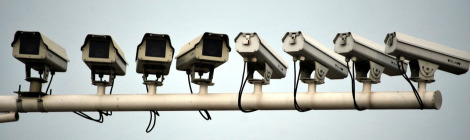
    camera-19223_1280

    Image Credit: https://pixabay.com/en/camera-cameras-traffic-watching-19223/

    Whilst the US Congress barred the National Security Agency (NSA) from collecting US phone data in bulk in June this year after the US court of appeals ruled it to be unlawful, in the UK the mass collection of communications data was found by both the parliamentary Intelligence and Security Committee and David Anderson QC, who is responsible for reviewing UK terrorism legislation, to be legal and should be maintained. Furthermore, the Investigatory Powers Bill, dubbed the “Snooper’s Charter”, which was blocked by the Liberal Democrats party three years ago, has re-emerged under the Conservative majority government. Now firmly back on the agenda, it would move to strengthen the security services’ powers for the bulk interception of communications data.

    To date, the debate around mass communications surveillance has focused primarily on the infringement of privacy it entails. But, beyond privacy implications, government mass surveillance programmes come at further costs.

    Proliferation, public trust and internet security

    A major concern with the development of mass surveillance tools is that they can be used by authoritarian regimes to suppress freedom of information and expression and track down political opponents.  There is evidence that this is already happening: Privacy International’s publicly available database on the private surveillance sector has found that surveillance companies are selling powerful and invasive surveillance technologies, with the potential for the mass interception of communications, to a number of authoritarian regimes globally, including Bahrain, Ethiopia, Libya and Pakistan. Much of this technology is at pace with the capabilities of the NSA and its UK equivalent, GCHQ, which is having clearly visible consequences. In Ethiopia, for example, mass surveillance technology was found to be used to regularly arrest and detain citizens, in particular as a tool to silence dissenting voices, targeting the ethnic Oromo population. The widespread use of torture and other ill-treatment against political detainees in Ethiopian detention centre makes the use of these technologies even more troubling.

    Another cost of mass surveillance is the weakening of public trust in national governments. An erosion of public trust in government in general (see this report from President Obama’s own Review Group on Intelligence and Communications), coupled with a weakening of trust in governments for citizens online security in particular, was found to have occurred since the Snowden leaks. The steep increase in the use of Tor (an open source network that allows users to obscure their online activity) which went from 500,000 daily users worldwide to more than 4 million following the Snowden leaks, as well as an increase in other internet privacy platforms since the leaks seem to confirm this.

    Furthermore, the weakening of internet security is another cost of mass surveillance programmes. These programmes rely on creating and maintaining vulnerabilities in communications networks that undermine the communications infrastructures that we all rely on (see this report from The Council of Europe). The creation of “back doors”, for example, along with other weaknesses in security standards and implementation could easily be exploited by non-state groups.

    In May this year, a group of tech companies, including Facebook, Google and Yahoo (as well as civil society groups and academics) signed a letter to President Obama urging him to oppose efforts that would force companies to build in ways for law enforcement to access products and services protected by encryption. The letter warned that introducing intentional vulnerabilities into secure products for the government’s use will make those products “less secure against other attackers”, including street and computer criminals, repressive or dangerous regimes and foreign intelligence agencies.

    Is mass surveillance stopping terror attacks?

    Beyond the risk of proliferation, the weakening of government trust and the threat to internet security, the UK government’s reliance on mass surveillance could also come at a cost to its citizens’ physical security. The use of data-mining and automated data-analysis techniques used to filter down the vast amounts of data acquired in mass surveillance programmes comes with a high risk of false positives. It has been suggested that data-mining for counter-terrorism in particular comes with a higher risk of false positives than when used in other settings (such as credit card fraud detection) due to the quality of data available and the rarity of terror attacks. This high number of false positives associated with counter-terrorism will, in turn, cause an overload of data, swamping analysts and thus taking resources and attention away from more appropriate counter-terrorism methods.[1]

    Recent evidence suggests that mass surveillance may not be an effective tool for foiling terror plots. A number of reports from the US, including a declassified 2009 report from the US government and a report from a review group appointed by President Obama, have shed doubt on the supposed effectiveness of mass surveillance programmes. One in particular, from Washington based think-tank New America Foundation, found traditional investigative methods played a far greater role than mass surveillance in initiating investigations into the majority of terror cases reviewed. In one case (a 2009 plot to attack the Danish newspaper Jyllands-Posten), the US government was found to have exaggerated the role mass surveillance played in thwarting the plot.

    Recent terror attacks have further exposed the limits of surveillance. In the Boston Marathon bombing in 2013, for example, it was revealed that the failure to foil the bomb plot was due to a failure in sharing and coordination of information between departments, rather than the bombers being unknown to intelligence agencies prior to the attack. Similarly, the 2014 Charlie Hebdo and French grocery store attackers in Paris were not only known to French and US authorities but one had a prior terrorism conviction and another was monitored for years by French authorities. In both cases the attackers were known to authorities and had been under surveillance.

    Security by ‘remote control’

    The use of mass surveillance programmes by government must not be seen in isolation but should be viewed as part of the trend towards maintaining security by ‘remote control’, the global shift towards countering threats at a distance without the need to deploy large military force. As technological advances have increased governments’ digital intelligence gathering capabilities, mass surveillance techniques demonstrate the interdependence between intelligence and surveillance and the growing relationship between intelligence, technology and modern combat.

    Like the use of drones, special forces and private military companies, the secretive nature of mass surveillance programmes means they operate in an accountability vacuum, with little transparency or oversight, rendering the public unable not only to hold government to account, but to assess these techniques’ perceived effectiveness. In the UK, recent Anderson, ISC and RUSI reports all stressed the need for greater transparency and oversight with regards to government mass surveillance programmes.

    Like other remote control methods, mass surveillance of citizens’ communications data is appealing as it is perceived as cost-free and plays to Western states’ technological strengths. The perceived ease of remote control has, however, blinded policy makers from considering its broader and long term implications. There is a need for greater transparency and accountability with regards to government mass surveillance in the UK, along with a robust regulatory framework for private security companies which are trading surveillance technologies globally. As well as this, far more consideration must be given to the unforeseen and long-term costs of mass surveillance in order to evaluate its utility for long-term sustainable peace and security.


    The Remote Control project recently published a briefing paper “Mass surveillance: security by ‘remote control’ – consequences and effectiveness”, read it here.

    [1] For more information please see report by the Committee on Technical and Privacy Dimensions of Information for Terrorism Prevention and Other National Goals, National Research Council, “Protecting Individual Privacy in the Struggle Against Terrorists: A framework for program assessment”, William Binney in “NSA Struggles to Make Sense of Flood of Surveillance Data”, Wall Street Journal, December 2015 http://www.wsj.com/articles/SB10001424052702304202204579252022823658850, and Bruce Schneier, “Why Mass Surveillance Can’t, Won’t, And Never Has Stopped A Terrorist”, digg, March 2015 http://digg.com/2015/why-mass-surveillance-cant-wont-and-never-has-stopped-a-terrorist


    Esther Kersley is the Research and Communications Officer for the Remote Control project. Prior to joining ORG, Esther worked in Berlin for the anti-corruption NGO Transparency International as an editorial and online communications officer. She has a particular interest in counter-terrorism and conflict resolution in the Middle East, having previously worked with the Quilliam Foundation and IPCRI (Israel/Palestine Center for Research and Information), a Jerusalem based think tank.

  • Sustainable Security

    NASA main1_kuwait-compare670

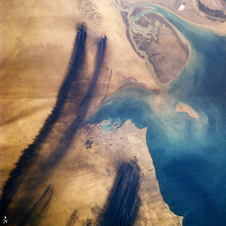
    Whilst withdrawing from Kuwait at the end of the first Gulf War, Iraqi troops set fire to over 700 oil wells  south of the Iraq border (yellow line). These images show before, during and after the release of 1.5 billion barrels of oil into the environment, the largest oil spill in human history. Image by NASA’s Goddard Space Flight Center.

    February marked the 25th anniversary of the Gulf War’s end. The intensity and magnitude of the allied coalition’s offensive, followed by the systematic destruction of Kuwaiti oil wells by retreating Iraqi troops, led to an unprecedented environmental disaster. Yet within two months, and in a first for international armed conflict, a post-war claims and remediation mechanism ─ the United Nations Compensation Commission (UNCC) ─ was in place. Its aim was to not only help neighbouring states recover from the personal and financial losses inflicted during the war, but also to help repair the environmental damage caused. With protection for the environment in armed conflict under increasing scrutiny, it seems useful to re-examine how this mechanism worked.

    Following the conflict, there was an expectation that reparations were due to neighbouring countries and Iraq’s oil revenues offered a ready source of finance. The UNCC was established and mandated to: “…process claims and pay compensation for losses and damage suffered as a direct result of Iraq’s unlawful invasion and occupation of Kuwait”. The 2.69 million claims it processed were categorised according to claimant and type of compensation sought. These ranged from individuals’ personal injury, deaths and financial losses, to costs incurred to neighbouring countries in housing refugees, to damage to businesses and governmental property. Last but not least, was the “F4” sub-category for “Environmental damage and depletion of natural resources”.

    Using expert panels, the UNCC assessed 170 F4 claims from 12 States (Australia, Canada, Germany, Iran, Jordan, Kuwait, the Netherlands, Saudi Arabia, Syria, Turkey, UK and USA) and awarded US$5,261m ─ just 6.2% of that claimed ─ to 10 States in five instalments over as many years: the Dutch and Turkish claims were unsuccessful. Oversight of payments was strict, with regular reporting to establish that funds were used as specified. All payments have now been completed, although some projects will run until at least 2020.

    Environmental Damage on a Massive Scale

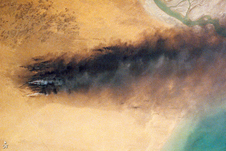
    Black smoke plumes stream into the skies around Kuwait City in April 1991 five weeks after the fires were set. Credit: NASA's Earth Observator

    Smoke plumes in the skies around Kuwait City in April 1991. Image by NASA’s Earth Observator.

    The recognition of the F4 claims for remediation and restoration was unquestionably due to the highly visible environmental damage the conflict caused. Aside from the unexploded ordnance covering 3,500km2, the footprint of the 700,000 allied troops, and the effect of millions of Iraqi, Kuwaiti and other refugees relocating to Jordan, Iran, Turkey and Syria; Kuwait and its neighbours suffered from the unique impact of the calculated use of oil as a weapon of war.

    More than 700 oil wells were blown up, with most igniting, burning 6m barrels per day for nearly ten months. Damaged oil wells spewed crude oil, forming lakes covering at least 50km2. Fallout from dispersing smoke plumes created a thick deposit known as tarcrete over 1,000km2 of Kuwait’s deserts. Meanwhile, 11m barrels of crude oil from storage units, sabotaged pipelines and oil tankers spilled into the Persian Gulf, damaging 800km of coastline. The impact of the oil on air and land quality, terrestrial and marine habitats and biodiversity was immediate, severe and long-lasting, damaging natural resources and threatening human health.

    Putting a Price on the Environment

    Placing a financial value on the environment is no easier than defining what the environment is. As they counted the cost, affected countries submitting UNCC claims were clear that economic, social, public health and biodiversity concerns were all linked to environmental quality. States not only wanted to reinstate pre-war environmental conditions in heavily polluted areas, they also wanted to address the damage to land and natural resources, and the footprints of the military and refugees. Concerned about the health implications for their populations from pollution, they also sought acknowledgment of the risks, and funds for health monitoring.

    The difficulty in assessing the monetary value of the damage was evident throughout the process. Both Iraq and the UNCC demanded that claims be supported by precise estimates, detailed costs and clear scientific evidence. The difficulties this presented, in the absence of an agreed framework to quantify damage, and debates over the quantity and quality of evidence, led to 94% of claims being dismissed.

    The bulk of the claims from Jordan, Iran, Kuwait and Saudi Arabia related to either oil spills or damage from oil well fires. Because of the visibility and immediacy of the damage, and the necessity for data gathering, monitoring and assessment claims were often upheld and remediation claims, which were reviewed later in the process, were considered favourably. Nevertheless the remediation costs, area calculations and baseline comparisons of pre-war environmental conditions were still debated and individually re-negotiated by the UNCC’s experts.

    Claims for the degradation of natural resources such as groundwater, and the loss or damage of habitats due to population displacement proved less successful. This was partly due to the difficulties in quantifying the harm caused, and the uncertainty in assessing refugee numbers and their collective behaviour. The few non-regional States’ claims related to technical and expert services provided to Kuwait and its neighbours; these were just as hotly debated as other claims.

    Claims linking the oil fires to human health risks considered the financial impact of long-term health problems and the additional deaths expected due to inhalation of the fires’ toxic fumes. However, due to the difficulty in meeting the evidentiary standard requiring harms to be the “the direct result of the invasion and occupation” these proved unsuccessful. Health monitoring and assessment projects were awarded funds, although the expert panels contested the methodologies and models they used to assess exposure, morbidity and mortality in Kuwait and Iran. Similarly, other claims relating to the impact of airborne particulates on land and heritage sites, including virtually all Syrian claims under “Transport and Dispersion of Air Pollution”, were also unsuccessful.

    Post-war Remediation and Restoration are Still Incomplete

    NASA 3

    The oily plumes climbed three to five kilometers into the atmosphere and hundreds of kilometers across the horizon. Image by NASA’s Earth Observatory. 

    Although capping the oil wells took only nine months, damage has proved long-lasting. The varied composition of soils caused different contamination problems. Wet oil, dry oil and solid tarcrete remained depending on absorption levels, length and severity of exposure. Oil spills covered coastlines and invaded mudflats, killing wildlife and transforming habitats. Remediation was highly specialised, often complicated by weather and the saline conditions, and necessitated preliminary monitoring and assessment work. The technologies and remediation techniques used varied, including chemical oxidation, soil washing, tilling in mudflats, soil excavation, transportation, landfills and thermal treatment.

    The necessary assessments slowed the claims process; Kuwait was still processing and awarding tender applications in 2013. Often, delays led to natural environmental changes in habitats, for example the colonisation of coastlines by algal mats, preventing their return to pre-war conditions. Such changes led to questions over what constituted successful remediation for these degraded and altered habitats, especially when remediation had not been initiated by the affected States prior to claims being filed – for instance Saudi Arabia’s duty to prevent and mitigate environmental damage was examined.

    Recognising the long-term and technical nature of environmental remediation work, the UNCC mandated further monitoring until 2013 through the Follow-up Programme for Environmental Awards – now completed and wound up. Some national projects are still underway, relating to ordnance removal, the damage and stresses caused by refugee settlements and military camps and health monitoring. Other long-term works, including irrigation improvements, livestock management, soil improvements, re-vegetation, marine reserves, saltmarsh clear-up, wildlife re-introduction and protection continue in Iran, Jordan, Kuwait and Saudi Arabia.

    Learning from the UNCC

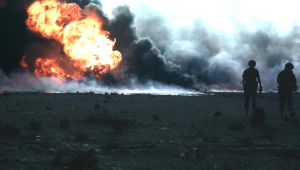
    More than 600 Kuwaiti oil wells were set on fire by retreating Iraqi forces, causing massive environmental and economic damage to Kuwait.

    Image of oil well on fire from the ground by US Army Corps of Enginners.

    That the UNCC process included the F4 environmental damage category at all was a step in the right direction, setting a precedent and demonstrating the importance of post-conflict environmental restoration. Although influenced by well-established peacetime environmental norms, the UNCC claims and awards process had limitations. But could its lessons be developed for environmental restoration after future conflicts?

    One starting point would be to develop a common legal definition of the environment, derived from environmental and humanitarian principles. This could be used to help frame the necessity of preventing harm, and ensuring environmental restoration. Complementing this with a common framework for damage assessment could accelerate recovery and reduce harm by avoiding further damage resulting from delays in remediation. The framework would need to be developed as part of a post-conflict environmental mechanism, with claims and operations processed through an independent institution with a clear mandate.

    To be successful, monitoring and clean-up operations should neither be dependent on the affected State’s finances, nor limited to post-conflict reparations. Ideally an international fund would be established and made available, not only to support public and environmental health monitoring throughout the conflict cycle, but also to ensure that urgent remediation and clean-up operations begin quickly.

    Another lesson from the UNCC is that it is essential to go beyond the purely financial implications of damage and loss. A more comprehensive approach would also consider the direct and indirect consequences of environmental damage, linking environmental health with humanitarian protection, promoting ongoing health monitoring and re-instating post-war environmental governance.

    Most of the UNCC decision-making process was not public, when instead it should have been accessible and transparent. “Non-claimant states, civil society and the media had no access at all. The panel’s proceedings were not open to public scrutiny”[1]. Today such opacity would run counter to the principles of the Aarhus Convention on access to information and participation in environmental decision-making, and act as a barrier to external scrutiny.

    In spite of the UNCC, and the precedent that it set, the fact that 25 years on the environmental legacy of the Gulf War has still not been fully addressed is a stark reminder of the long-term impact that wartime environmental damage can have. Armed conflict not only degrades the natural environment and damages human health, it also harms environmental governance. While the UNCC model may not be applicable to all conflicts, its lessons highlight serious limitations in how the international community currently responds to the environmental consequences of conflict: limitations that must be addressed in the growing debate on strengthening the protection of the environment from the impact and legacy of armed conflict.

    Laurence Menhinick is a research assistant with the Toxic Remnants of War Project, which studies the humanitarian and environmental impact of conflict pollution. The Project is a founding member of the Toxic Remnants of War Network, which advocates for a greater standard of environmental protection in armed conflict: @TRWNetwork. The author thanks Prof. Cymie Payne for her clarifications for this article.

    [1] De Silva, A. L. M. (2014), Conflict Related Environmental Claims – A Critical Analysis of the UN Compensation Commission, Faculty of Law, University of Sydney, Australia p70 http://ses.library.usyd.edu.au/handle/2123/10426

  • Sustainable Security

    by Rebecca Sharkey and Laura Boillot

    International momentum towards a treaty to ban nuclear weapons reached a milestone in the December 2014 Vienna conference. Even assuming that the UK does not initially sign up to such a treaty, it is subject to the pressures of a changing legal and political environment and could find its present position increasingly untenable – not least on the issue of Trident renewal.

    The Vienna Conference on the Humanitarian Impact of Nuclear Weapons, held in December 2014, was the latest conference of the ‘humanitarian initiative’, following previous meetings in Norway and Mexico . Having fully explored the impact of a nuclear weapon detonation as well as the consequences of testing and production, the conference concluded with a pledge from the Austrian government to “fill the legal gap for the prohibition and elimination of nuclear weapons”. Since then, more than 50 countries have associated themselves with the Austrian Pledge and yet more are expected to join over the coming months, signalling readiness to begin negotiations for a treaty that outlaws nuclear weapons.

    A ban treaty could be a straightforward legal instrument with prohibitions on the use, development and production, transfer, stockpiling, deployment of nuclear weapons and on assistance with these prohibited acts. It could require the elimination of nuclear weapons for states that possess them, with the specific processes for elimination being left for these states to agree when they are ready to do so. Treaty negotiations are a logical and compelling next step for states no longer willing to accept the status quo, and no longer prepared to wait for nuclear-armed states to lead on nuclear disarmament. In addition, civil society organisations across the world, under the banner of the International Campaign to Abolish Nuclear Weapons (ICAN) are putting increasing pressure on states to begin treaty negotiations immediately – even if nuclear-armed states may initially not wish to join.

    Legal obligations

    Press conference by the five Nuclear Non-Proliferation Treaty (NPT) nuclear weapon states at the UN Office, Geneva in 2013. Source: United States Mission Geneva

    The UK and other nuclear-armed states have long expressed their desire for a nuclear weapon-free world. Alongside other nuclear-armed states, the UK has a legal obligation under article VI of the Nuclear Non-Proliferation Treaty (NPT) to pursue ‘effective measures’ towards nuclear disarmament and ‘a treaty on general and complete disarmament’.

    Despite this, there has been very slow progress so far towards nuclear disarmament, and nuclear-armed states continue to say that nuclear weapons are essential to their security doctrines. The UK advocates a ‘step-by-step’ approach towards nuclear disarmament, which has been marked by a lack of substantial progress. Most crucially, the UK government has seen this approach as compatible with getting new nuclear weapons. In 2007 UK Prime Minister Tony Blair claimed that “the Non-Proliferation Treaty… makes it absolutely clear that Britain has the right to possess nuclear weapons”. This bad faith reading of the treaty and continued investment in maintaining its arsenal of nuclear weapons raises concerns over the UK’s commitment towards fulfilling these legal obligations under the NPT. A significant recent development and challenge to this position is a Marshall Islands legal case, currently being taken against the UK and other states for failing to act on multilateral nuclear disarmament obligations.

    In the run up to the NPT Review Conference, the UK government has argued vigorously that the proponents of a ban treaty are misguided, and that such a treaty would undermine the NPT. However, the absence of any evidence to substantiate this claim suggests that such an argument will ring hollow against the persistent pursuit of Trident renewal. If the UK government is sincerely committed to pursuing nuclear disarmament then there is no need for it to oppose the development of a treaty with that aim. A ban treaty would actually constitute a long-overdue implementation of the NPT: the momentum towards a ban treaty could be seen as a positive opportunity for the UK to take concrete steps towards nuclear disarmament by creating the right conditions and helping to fulfil its own NPT obligations, even if the UK chose not to sign up immediately.

    Political pressure

    The international humanitarian initiative has sparked interest and debate inside Westminster, even if the government initially claimed the initiative would ‘divert discussion and focus away from… practical steps’ towards nuclear weapons reduction. At a debate on Trident renewal in the House of Commons on 20 January 2015, eleven MPs raised the spectre of the humanitarian consequences of nuclear weapons, with some specifically calling for a ban treaty.

    With the final decision over the renewal of Trident due to be taken in 2016, the incoming 2015 government will be faced with taking a decision over the renewal of the UK’s nuclear weapons – at the same time that other states are most likely to be engaged in treaty negotiations that will rule those weapons illegal. This development will significantly increase the political costs of holding onto nuclear weapons and sinking even more money in their maintenance and modernisation. As Dame Joan Ruddock MP has stated, “a global ban on nuclear weapons would present the greatest challenge to UK renewal of Trident”.

    Military cooperation

    Continued possession of nuclear weapons when other militaries are rejecting them could also put strain on the UK’s relationships with some of its military allies. Whilst a ban treaty would not prevent a state that joins the treaty from being in a military alliance with a nuclear-armed state like the UK, it should require states not to assist in acts that are prohibited under the treaty. As such, it would require states parties to renounce any joint policy that envisions the development, stockpiling, or use of nuclear weapons.

    There is however, no barrier to NATO member states’ adherence to a treaty banning nuclear weapons. The North Atlantic Treaty, which is a legally-binding instrument, makes no reference to nuclear weapons. And although NATO’s Strategic Concept does refer to nuclear weapons capabilities as part of its strategy, this is not a legally-binding document and would not prevent any NATO state from joining the ban treaty. Besides, the document gets revised and could be updated so as not to rely on nuclear weapons. The International Law and Policy Institute (ILPI) points out, “concerns about the political implications of such a treaty for NATO ignore historical variations in member state military policy and underestimate the value of a ban on nuclear weapons for promoting NATO’s ultimate aim: the security of its member states.”

    There has not been a coherent and uniform NATO position towards the humanitarian initiative. All NATO states are members of the NPT and as such are committed to pursue ‘effective measures’ towards disarmament. So far, virtually all NATO states have taken part in one or more of the conferences on the humanitarian impact of nuclear weapons. After all, the humanitarian initiative was spearheaded by a NATO state – Norway. A ban treaty should in fact be seen as a positive step towards NATO’s long-term security goals.

    Finance and investment

    A nuclear weapons ban treaty could also help to increase the stigma and practical difficulties attached to nuclear weapons by prohibiting investment in their development. According to a 2014 report by PAX, 35 financial institutions in the UK invested over US$27bn in 28 nuclear weapons producing companies over the past 3 years. A number of UK companies are involved in the ongoing production and maintenance of the UK’s nuclear arsenal.

    Prohibitions on assistance, such as financing the production of nuclear weapons, would mean that companies that produce nuclear weapons would find difficulty in securing financing to produce these weapons. As financial institutions move towards corporate socially responsible investments, many are anyhow adopting policies prohibiting investments in certain weapons, and this too will impact the producing companies and the states buying their products.

    Even without an international ban treaty there have been successful efforts to promote disinvestment. A well-known example of a nuclear weapons boycott is the campaign initiated in the 1980s by Infact (now Corporate Accountability International) against General Electric (GE). GE had played a major role in nuclear weapons production since the Manhattan Project. The boycott resulted in significant financial losses for the company and damage to its brand. Ultimately, it was compelled to end its involvement in nuclear weapons work. More recently, Allied Irish Bank, named as an investor in the 2013 Don’t Bank on the Bomb report, had fully divested by the time the 2014 report was published.

    A treaty signed by a majority of countries in the world that prohibits investment in the development, production, or testing of nuclear weapons would significantly increase pressure for many UK financial institutions to pull out their investments from companies that develop them. Past experience with the treaty that bans cluster munitions shows that the stigmatizing effect of outlawing weapons significantly reduces available financing for their production.

    Conclusion

    The conferences held as part of the humanitarian initiative have left no doubt over the severe and long-lasting effects that would result from a nuclear weapon detonation, as well as the devastation of lives and environment caused by testing and production. The resulting momentum created among the non nuclear-armed states to achieve a ban treaty is coupled with a conviction held by civil society and many states that a treaty can – and should – be achieved even if the nuclear-armed states do not join immediately. The UK should see the start of a treaty process as a positive development that is helping to foster the right conditions for its own nuclear disarmament, and that of other states too. But official responses notwithstanding, the climate surrounding the perceived status and security of nuclear weapons is changing – whether the UK government likes it or not.

    Rebecca Sharkey is UK Co-ordinator at the International Campaign to Abolish Nuclear Weapons (ICAN). Rebecca has worked on campaigns, communications, research and outreach at NGOs such as Freedom From Torture, the National Secular Society and the National Assembly Against Racism.

    Laura Boillot is a Project Manager for Article 36. Laura previously worked as Campaign Manager and subsequently as Director of the Cluster Munition Coalition (CMC). Prior to that she was a Program Officer for the International Action Network on Small Arms (IANSA).

    Featured Image: Trident Nuclear Submarine HMS Victorious near Faslane, Scotland. Source: Flickr | UK Ministry of Defence

  • Sustainable Security

    It has been over a year since the Saudi bombardment of Yemen began. In that time a humanitarian catastrophe has been unfolding, killing over 6000 people and leaving millions without access to vital infrastructure, clean water or electricity, leaving the country on “the precipice of disaster.” The destruction on the ground has exacerbated the ongoing civil war between Yemeni forces and Houthi rebels, helping to create a power vacuum that has allowed the expansion of Al-Qaeda and ISIS with reports describing the latter making serious territorial gains, such as around the port city of Mukalla.

    The price has also been felt in Saudi Arabia, where mortars and rockets being fired by Houthi groups in Yemen are also killing civilians. Saudi sources claim 375 civilians have been killed since hostilities began. The Saudi regime has said that the conflict is being downscaled, but the death toll is increasing. It claims that it is only striking legitimate military targets, and that much of its work is to spread humanitarian aid, but many of the sites being hit are civilian. A recent air strike on a busy market place killed over 100 people, with witnesses reporting two missiles being fired from the air. According to UN officials 22 children were killed in the strike. The violence has been rightfully condemned by a range of campaign groups and NGOs, with a growing number of voices suggesting the intervention has not just been immoral, it has also been illegal.

    In July 2015 the European Parliament passed a motion to “Condemn the air strikes by the Saudi-led coalition and the naval blockade it has imposed on Yemen.” The motion went on to state that “air strikes by the Saudi-led military coalition in Yemen have killed civilians, in violation of international humanitarian law, which requires all possible steps to be taken to prevent or minimise civilian casualties.” One month later, Stephen O’Brien, Under-Secretary-General for Humanitarian Affairs and Emergency Relief at the United Nations, reported to the UN Security Council, that the “scale of human suffering [in Yemen] is almost incomprehensible.” Condemning “attacks on residential areas and civilian infrastructure” he asserted that the Saudi attacks are “in clear contravention of international humanitarian law.”

    These condemnations have been supported by a growing number of NGOs. Human Rights Watch, Oxfam and Médecins Sans Frontières (MSF) have all accused Saudi Arabia of breaking international humanitarian law. Amnesty International and Saferworld also recently commissioned a legal opinion from Philip Sands QC, which accused Saudi forces of breaking international humanitarian law. Since then, both the European Parliament and the UN have taken their concerns further. This January, a UN panel accused Saudi Arabia of “widespread and systematic” attacks on civilian targets. Its 51 page report “documented 119 sorties relating to violations of international humanitarian law” and reported starvation being used as a war tactic. The report concluded by stating that “not a single humanitarian pause to alleviate the suffering of the Yemeni people has been fully observed by any Yemeni party or by the coalition.”

    Last month, despite a concentrated lobbying operation from Saudi Arabia, parliamentarians in Brussels went further, voting overwhelmingly to support an arms embargo against Saudi Arabia. The vote was not legally binding, but it sent a strong political statement and set an important precedent. Commenting on the destruction of the first of three hospital facilities it has lost in the last year, Hassan Boucenine, Country Director of MSF, said “the fact of the matter is it’s a war crime. There’s no reason to target a hospital. We provided [the Coalition] with all of our GPS coordinates.” Since then MSF has announced the closure of its fourth and final hospital in the country, following air strikes in the area. Despite all of these widespread and credible criticisms and allegations, there is no solid evidence of Saudi forces taking any meaningful action to minimize harm to civilians, or making any serious attempts to investigate the deadly consequences of the bombing.

    To this backdrop you would hope that the international community would be applying pressure to the Saudi government and calling for meaningful peace negotiations. Unfortunately the exact opposite has happened, with governments like the UK fuelling the devastation by providing political support and selling large quantities of arms to Saudi Arabia. The Foreign Secretary, Philip Hammond, made the UK’s position very clear from the outset, when he pledged to “support the Saudis in every practical way short of engaging in combat.” Unfortunately he has stayed true to his word.

    The UK government has licensed over £2.8 billion of arms to Saudi since air strikes began last March. UK fighter jets and bombs have been central to the bombing campaign, with Eurofighter aircraft taking part in air strikes and UK-supplied Paveway IV bombs being dropped from the skies. Last year the UK sent bombs that were originally earmarked for the RAF to Saudi forces to be used against Yemen. UK arms export law is very clear. It says that licences for military equipment should not be granted if there is a “clear risk” that it “might” be used in violation of international humanitarian law. By any reasonable interpretation these criteria should surely prohibit all arms sales to Saudi Arabia that could be used in Yemen. The support has gone beyond arming Saudi forces. Earlier this year, the Saudi Foreign Minister confirmed that UK military personnel have been in Saudi control rooms assisting with the bombing and helping to train Saudi forces.

    Air_strike_in_Sana'a_11-5-2015

    Air strike in Sana’a. Image via Wikimedia Commons.

    In response to growing concerns, the House of Commons Committee on Arms Export Controls has called an investigation into the use of UK arms in the conflict. The first sessions have taken place and the Committee is expected to report later this year. The government’s response has been to discard the growing body of evidence and argue that is has not seen any sufficient evidence to conclude that Saudi is breaching international law. It argues that the UK is in constant dialogue with the Saudis while parroting the tired old line that it has some of the most ‘rigorous’ and ‘robust’ arms export controls in the world. One of the arguments for this approach is that the UK can use a positive influence over Saudi forces and ensure that they are following international law. This is an implicit theme when government spokespeople use lines such as “We regularly raise with Saudi Arabian-led coalition and the Houthi the need to comply with International Humanitarian Law in Yemen.” However there is no evidence that the UK has ever reined in Saudi aggression. When it comes to arms sales the power in the relationship lies almost entirely with the buyer.

    Of course the relationship is nothing new. For decades now successive UK governments, of all political colours, have given an uncritical level of support to the Saudi regime. One outcome of this partnership has been the high level of integration between UK and Saudi military programmes. Around 240 UK Ministry of Defence civil servants and military personnel work to support the contracts through the Ministry of Defence Saudi Armed Forces Programme (MODSAP) and the Saudi Arabia National Guard Communications Project (SANGCOM).

    The last time the UK relationship with Saudi was put under the microscope as much as it is today was in 2006, when the Serious Fraud office began looking into corruption relating to arms sales to Riyadh. The investigation threatened to unearth a litany of embarrassing details, but, after a concerted lobbying effort, including interventions by Tony Blair and the Attorney General, it was dropped. Shortly after the investigation was stopped a major deal on fighter jets was agreed, one that would be worth over £4.4 billion. This pattern of trading arms deals and political favours has only continued. In the last few months serious allegations have emerged that the UK helped to lobby behind the scenes to secure Saudi Arabia’s election to the UN Human Rights Council; a membership which would be laughable if the on-going consequences weren’t so serious. Furthermore, it is perhaps no surprise that Saudi was the only major state with the death penalty to be omitted from the UK’s anti-death penalty strategy.

    Earlier this month, CAAT and our lawyers at Leigh Day submitted a claim for a Judicial Review into the arms sales. We are calling on the Department of Business, Innovation & Skills to suspend all extant licences and stop issuing further licences for arms exports to Saudi Arabia while it holds a full review into whether the exports are compatible with UK and EU legislation. It is likely to be a long process, but it is also a very important one. The action is specific to Yemen, but it will expose the hypocrisies at the heart of UK foreign policy, particularly concerning human rights. The longer that this hypocrisy goes on the more victims there will be. If UK arms export law is worth anything then the government must finally stop arming Saudi Arabia.

    Andrew Smith is a spokesperson for Campaign Against Arms Trade (CAAT). You can follow CAAT on Twitter at @CAATuk.

  • Sustainable Security

    One year after violent conflict began, information is now emerging on the specific environmental impact of war in Ukraine’s highly industrialised Donbas region. Although obtaining accurate data is difficult, indications are that the conflict has resulted in a number of civilian health risks, and potentially long-term damage to its environment. In order to mitigate these long-term risks, international and domestic agencies will have to find ways to coordinate their efforts on documenting, assessing and addressing the damage.

    The environmental legacy of conflict and military activities is rarely prioritised in post-conflict response, in spite of the short and long-term impact of damage on civilian health and livelihoods. At times relationships between incidents and harm may be complex, often requiring detailed and lengthy analysis. Warfare in highly industrialised areas has the potential to generate new pollution incidents and exacerbate existing problems; the conflict in Ukraine has done both, as well as damaging the area’s natural environment.

    The chronology of the Donbas conflict is widely accessible and there is no need to repeat it here. More important is the current uncertainty. With the signing of the second round of Minsk agreements in February 2015, hope re-emerged that a peaceful solution might be possible. For the moment the truce is holding but remains fragile. Should it collapse, it is likely that new and grave risks to the region’s people and environment will emerge.

    Scope of environmentally damaging incidents

    Prior to the outbreak of the war, more than 5,300 industrial enterprises were operating in the pre-war Donetsk and Luhansk oblasts (provinces). Damage to the region’s industry is widespread, and ranges from direct damage to industrial installations, to enterprises simply stopping production because of the lack of raw materials, energy, workforce or distribution channels.

    A map produced by Geneva’s Zoi environment network and the East Ukraine Environment Institute based on official information, media reports, assessments and interviews shows environmental damage in the region. Click here to view full size map

    It is this disruption of the region’s industry that is likely to be primarily responsible for the environmental side-effects of the conflict. In some cases, the disruption has led to accidental releases of pollutants from shelled or bombed facilities. In others, facilities have been forced to shift to more polluting technologies that have impacted regional air quality. Among dozens of facilities damaged by fighting are the Zasyadko coal mine, a chemicals depot at Yasynivskyi, coke and chemical works in Makiyvka, the Lysychyansk oil refinery, an explosives factory at Petrovske and a fuel-oil storage facility at Slavyansk thermal power plant.

    Coal mining has been the backbone of the economy of the Donbas region since the nineteenth century. With the intermittent collapse of the electricity supply across the entire conflict area, ventilation systems and water pumps in coal mines failed, resulting in the release of accumulated gases after ventilation restarted. The often irreparable flooding of mines not only damages installations but also waterlogs adjacent areas and pollutes groundwater. At the time of writing, permanent or temporary flooding has been reported at more than ten mines, yet due to the lack of uninterrupted monitoring and fieldwork to assess the damage, the exact extent of the risks to environmental and public health is unclear.

    The Zasyadko mine in Donetsk used to produce 4 million tonnes of coal annually and was one of the region’s economic flagships. A release and explosion of methane in March 2015 killed 33 of the 200 miners underground at the time. Even though this was not the first such accident at the mine (it is considered among the most lethal in the area’s risky mining industry), the chair of the mine’s board attributed the incident to heavy shelling at nearby Donetsk airport, where fighting continued until late January 2015.

    There have been numerous media reports about war damage caused to Donbas’ water supply, including in and around Luhansk and Donetsk – cities that had a combined pre-war population of 1.5 million. Repair work to the water infrastructure is still carried out, often under direct fire, but periods of irregular supply are common. Less well documented is the impact of the conflict on drinking water quality but one can reasonably assume widespread deterioration as a result of the disruption.

    At the moment, relatively little is known about the direct chemical impact of the war on the environment and people. Limited sampling by the Ukraine-based NGO Environment-People-Law confirmed the expected range of some ‘war chemicals’ from the use of conventional weapons in impact zones. Similarly, large quantities of damaged military equipment and potentially hazardous building rubble will require disposal. The Ukrainian Ministry of Defence also raised concerns that depleted uranium weapons may have been used in the fighting around Donetsk airport, and proposed to determine whether this was the case when conditions allowed.

    The region’s nature has also suffered. Already prone to fires because of the dry summer climate, steppes and forests have burnt more often than would have been expected. According to an as yet unpublished analysis of NASA satellite data, the Eastern European branch of the Global Fire Monitoring Centre showed that in 2014, the incidence per unit area of forest and grass fires in the Donetsk oblast was up to two to three times higher than in the surrounding regions of Ukraine and Russia.

    The conflict has also damaged the region’s numerous nature protection areas, from armed groups occupying their administrative buildings to the impact of fighting and the movement of heavy vehicles within nature reserves. The restoration of large tracts of agricultural and other land for normal cultivation and use will require considerable effort too, and will be complicated by the presence of new minefields and unexploded ordnance.

    Challenges in determining the extent of damage

    The prevailing media narrative over environmental damage from the conflict has sought to link it directly to the fighting, but the information currently available is too fragmented to fully confirm the extent of the relationship. Such simplifications can also mask the indirect effects of warfare on environmental quality.

    Graphs produced by the East-Ukraine Environment Institute shows a decrease in air quality in eastern Ukraine in summer 2014. Click here to view full size graphs

    As is common for armed conflicts in heavily developed areas, a large proportion of the pollution impact may not come directly from the fighting but from damage to industrial infrastructure and to the disruption of everyday economic activities. A good example from the Donbas region can be seen in data from its only functioning (until November 2014) automated air quality monitoring station. Located in the town of Schastya in the Luhansk oblast, the data demonstrate that peak concentrations are not obviously associated with periods of combat; instead, they correlate with a reduction in the supply of high-grade coal for the Luhanska power plant in August 2014.

    Coal supplies were first restricted when a bridge in Kondrashevskaya-Novaya was destroyed. Then an electrical substation was shelled, which disconnected the area from the rest of Ukraine’s electricity grid. As a result, the Luhanska power plant, which was responsible for supplying more than 90% of the oblasts’ electricity, was forced to simultaneously increase production while turning to lower-grade coal from its reserve stock. This caused a clear deterioration in air quality.

    Coverage of the conflict has also claimed that the fighting has caused 20 times more wildfires than in 2013. While 2014 had seen more fires in comparison to the previous year, 2013 was relatively wet so this comparison is hardly informative. Assessing the exact area affected by fires in the territories remains difficult and imprecise, requiring the use of more refined data and techniques. The task is further complicated by the fact that forest fire statistics, which would normally be used to verify the findings from satellite data, are not being collected at the moment as the conflict has rendered large areas unsafe for ground surveys.

    What next?

    In spite of the fragile Minsk agreement, the half-frozen conflict continues. At present it is impossible to predict whether further damage will be wrought on the people and the environment of Donbas. Insecurity continues to impact basic environmental governance on both sides of the line of contact, while cooperation across the frontline, even on urgent humanitarian issues, remains a remote prospect. Therefore expectations for cooperation over environmental issues at the current stage in the conflict are low.

    Based on the available evidence, it is clear that there is great potential for long-term civilian health risks from the pollution generated by the conflict. Efforts to collect systematic data on both pollution and health outcomes should start immediately, as must preparations for remediation. The financial and technical requirements for the comprehensive assessment and remediation of contaminated sites are considerable.

    These are problems common to many conflicts affected by toxic remnants of war and, as the ICRC noted in 2011, consideration should be given to whether a new system that ensures environmental assistance is required in order to protect both civilians and the environment from conflict pollution:

    “given the complexity, for example, of repairing damaged plants and installations or cleaning up polluted soil and rubble, it would also be desirable to develop norms on international assistance and cooperation… Such norms would open new and promising avenues for handling the environmental consequences of war.

    The broader context for the eventual remediation of the environmental damage should include the radical modernisation of the region’s notoriously unsustainable industry, much of which has for years presented direct and grave risks for its environment and people (see Zoi’s 2011 report Coalland). In this way, quite unexpectedly, the highly unwelcome conflict may in the end offer a rare and welcome opportunity to eventually ‘green’ the black and brown coalfields of Donbas.

    This blog was prepared by Nickolai Denisov and Otto Simonett of Zoi environment network together with Doug Weir of the Toxic Remnants of War Project and Dmytro Averin of the East-Ukrainian Environment Institute. The authors thank Serhiy Zibtsev, Victor Mironyuk and Vadym Bohomolov, National University of Life and Environmental Sciences of Ukraine / Regional Eastern European Fire Monitoring Center, for help with the analysis of forest and grassland fires data.

    Zoi environment network is a non-profit organisation in Geneva, Switzerland, with the mission to reveal, explain and communicate connections between the environment and society and a long record of working on environmental issues in and with the countries of Eastern Europe.

    Featured image: A barricade burns in Kiev, Ukraine in January 2014. Source: Flickr | Sasha Maksymenko

  • Sustainable Security

    Another year has confronted us with yet another tragedy in another European Capital – Madrid in 2004, London in 2007, Paris last year – and, most recently, Brussels. The litany of such incidents, augmented by countless other atrocities further afield and perpetrated originally by those claiming connections to Al Qaeda but now eclipsed by similarly asserted affiliations to ISIS, seems set to continue. Accordingly, it makes sense for a publication called Sustainable Security to ask what, if anything, has been sustainable about responses to terrorism worldwide since 9/11?

    After Brussels, many of the usual suspects with connections to the world of security have been wheeled out as usual to offer advice on the need for ever greater scrutiny at airports. But, having made air-side a challenge to reach through a panoply of checks and scanners, it seemed inevitable to those who understood displacement that attacks would simply migrate to the less scrutinised entrance spaces. We could turn these into fortified complexes too – only for the locus of atrocities to move on again – or we could begin to ask more challenging questions of our authorities.

    Of course, none of us wishes to sit next to a deluded individual about to detonate their device on a plane or Metro train. In that regard, security and intelligence gathering are absolutely necessary. But they are clearly not sufficient as, despite the billions spent in hardening private facilities and civic spaces, including transport hubs since 2001, the evidence still serves to remind us that determined individuals – and even a few chancers – will get through. It is simply not possible to secure all of society, all of the time. Prevention – in this sense at least – is far too limited a goal.

    What’s more it has often been the authorities who have ended up ‘doing the terrorists’ job for them’. To call for three days of national mourning after the latest disasters may seem sensitive to those who lost a loved one – but it flies in the face of the rhetoric of resilience and those who claim the need for a rapid return to normalcy. In that respect, the public often display considerably greater courage by determinedly meeting together for vigils in open spaces, whilst the authorities advise against collective gatherings and look to cancel concerts and sporting events.

    Brussels_after_the_attacks_(4)

    Image of Bourse, Brussels after terrorist attacks in March 2016. Image by Romaine via Wikimedia Commons.

    There can never be security solutions to social problems. At best, these conceal the underlying challenges that lie ahead. Worse, operational fixations allow those in charge to evade articulating a broader vision for their societies. This latter aspect shapes both the perpetrators – who appear sometimes to almost drift into becoming radicalised through their being disengaged from a world that offers them (and others) little by way of vision or ambition – and the respondents – who are lulled into a phoney sense of knowing what they are doing and why, when in fact they have little appreciation for, or understanding of, the dynamic they seek to redress.

    In such a situation, it may indeed only be the public who can maintain a modicum of humanity through their determination – albeit unavoidable in most instances – to get on with life. They are also apparently not so readily fooled by the rhetoric of the self-styled ‘jihadists’ who represent no-one and whose actions in the name of Islam most Muslims deplore, nor by the actions of the authorities who, by securitising the world, hope to make their task easier whilst providing themselves with a flimsy – if largely unconscious – sense of purpose in an age when they seem to lack any other.

    But there are others, critical of the authorities, whose narrative and interpretative framework we should be just as critical of and interrogate too. If, as we are often told, alienated individuals in corroded communities in run-down districts have a supposedly understandable sense of grievance – at the racist hostility they encounter, as well as with regards to Western foreign policy – then why is it that not all brought up under such conditions respond the same way, or that the terrorists target civilians, including children as in Lahore, rather than government ministries?

    In the aftermath of the Cold War, security increasingly became represented through the prism of human security whereby the referent for security shifted from the state to the individual and, in particular, the latter’s assumed existential sense of vulnerability. This, in turn, opened the door to securitisation – the possibility that the state and other actors might transform specific problems into security-related concerns in the pursuit of their agendas. Foremost among these have been the securitisation of health and the securitisation of development. So might there now be a securitisation of education too?

    Securitisation allows challenges to be ‘constructed as a matter of national security’, encouraging a demands for perpetual preparedness, constant surveillance and eternal vigilance. It offers unfocused authorities clear actions to engage in, thereby making ‘an uncertain future available to intervention in the present’. This coincides with the rise of risk management that also readily become an organising framework in periods lacking clear direction. Worse, by promoting an emphasis on procedural management through expert knowledge these both disenfranchise people from the possibility of solving their own problems and allows the authorities ‘to become fixated on external threats rather than examining their own internal confusions’.

    Another critical factor here appears to be the race to the bottom that best describes identity politics today. The end of the Cold War, and with it the gradual erosion of the politics of Left and Right that had defined it, left a big gap where collective social discourse, debate and deliberation ought to be. It is this hole in values and vision that the use of identity as a claim on resources – particularly through attempts to define particular groups as being the most oppressed or victimised – has sought to fill. Many campaigners have now learnt to play this game. There is evidence to suggest that today’s terrorists do so too.

    But, rather than challenge such approaches, governments the world over have often indulged the claims and patronised the claimants accordingly. Far better to deal with individuals and groups prostrating themselves to you and making claims for remedy or therapy than having to confront those who are being Bolshie and demanding more. In an age when the authorities are not so sure of whom they are themselves – having sought to disown aspects of their imperialist past to the point of self-loathing and confusion – as well as sensing themselves isolated, it makes for a perfect match.

    While campaigners understandably concern themselves with government moves to introduce a Communications Data Bill – the so-called ‘Snoopers’ Charter’, now renamed the Investigatory Powers Bill – what many fail to recognise is the extent to which such a push from above has been facilitated by erosions to absolute freedom of expression down below. The notion, for instance, that students are vulnerable and need to be protected by the authorities, whilst appearing in the new Prevent Duty, first emerged as the gradual extension of various campaigns for ‘no platform’, ‘safe space’ and ‘trigger warnings’ promoted by Students’ Unions across the UK and US.

    Prevent is an affront to liberty, not least in its infringements on academic freedom, but the notion that everyday social relations are ‘toxic’ and ought to be scrutinised by the powers-that-be is entirely mainstream. This latter has served as a mechanism whereby febrile individuals and institutions, as well as directionless authorities have been able to catch up with the popular mood that fears active engagement and robust exchanges of opinion by playing the ‘victim card’ and looking for protection. Notably, the language is one that presumes a passive, innocent and sponge-like public – young people and others are (it would seem) simply ‘drawn into terrorism’ by those who groom them, thereby diminishing their agency and, inadvertently, absolving them of accountability for their actions.

    At a recent dissemination session I attended relating to the Prevent Duty at which an eager regional coordinator presented upon its trajectory and implications, I was particularly struck by this use of the language of protection. Authorities are merely implementing a ‘duty of care’ we were advised, for people who might be ‘influenced by’ ideology. The notion that it might be the specific role of Higher Education to influence young people, or of the state to inspire us all with ideas, was not countenanced. And, ironically for institutions now driven by the need for so-called evidence-based policies, the positivist ‘what is’ question was replaced by a speculative ‘what if’?

    As I have also noted elsewhere, we were advised that Prevent had now shifted ‘from a moral duty to a legal duty’. In that regards, the presenter, who described themselves (and us) as a practitioner (as opposed to a planner maybe) was at least refreshingly honest. But that we now invoke the law to attempt to prevent terror should alert us more significantly to the failure of the authorities to win the moral argument or to engage their own public. Free speech and privacy are messy matters of course, as is real life. But attempts to shy away from this are worse for us all.

    That is the real challenge ahead – one that no amount of legislation or intelligence and security can by-pass. Academics will continue to debate what the real causes of terrorism today are, as well as how best to address these. In the meantime, the authorities, following the cue of a nervous culture and lacking any coherent vision for society of their own have assumed that they know what to do and are acting accordingly through their enthusiastic practitioners.

    It is what we want for society beyond the terror and our responses to it that really needs debating.

    Professor Bill Durodie is Chair of International Relations and Head of the Department of Politics, Languages and International Studies at the University of Bath. His most recent journal article was ‘Securitising Education to Prevent Terrorism or Losing Direction?’ published in the British Journal of Educational Studies in March 2016. His work focuses on risk, resilience, radicalisation and the politics of fear.