Category: 07

  • Sustainable Security

    In this talk for the Food Systems Academy, Paul Rogers puts the challenges of transforming food systems in a global, human security context. He argues that food is at the centre of the third great transition humankind has to go through.

    Running order:

    Part 1. Why 1945?: 0 – 2 minutes 45 seconds

    Part 2. Proxy wars to the end of the cold war: 2 min 45 sec – 5 min 42 sec

    Part 3. The big issues: 5 min 42 sec – 20 min 45 sec

    Part 4.  The third great transition: 20 min 45 sec – 28 min 49 sec

    Part 5 – Looking ahead: 28 min 49 sec – end

    Paul Rogers is professor in the department of peace studies at Bradford University and Global Security Consultant at Oxford Research Group.  He is the author of numerous books including Why We’re Losing the War on Terror (Polity, 2007), and Losing Control: Global Security in the 21st Century (Pluto Press, 3rd edition, 2010). He is on twitter at: @ProfPRogers 

    The Food Systems Academy is an open educational resource aiming to transform our food systems. This video can also be viewed on their website.

    Featured Image: U.S. Army Huey helicopter spraying Agent Orange over Vietnamese agricultural land (Originally from U.S. Army Operations in Vietnam R.W. Trewyn, Ph.D. , (11) Huey Defoliation National Archives: 111-CC-59948, originally found in Box 1 Folder 9 of Admiral Elmo R. Zumwalt, Jr. Collection: Agent Orange Subject Files. – Item Number: VA042084; via Wikipedia)

  • Sustainable Security

    One of the negative aspects of China’s increasing engagement with African states is the spread of small arms and/or light weapons especially in conflict zones and were opposition is violently suppressed. These weapons have undoubtably contributed to the enhancement of closer ties between China and authoritarian regimes and served as an instrument for consolidating its presence in the continent.

    China has developed an extensive presence in Africa through infrastructure such as airports, roads, hospitals,  convention centers,  media investment, agricultural  and health education, among many other  activities that seemingly put China in a good light.  At the same time many of China’s seemingly worthwhile activities by have not consolidated its ties to the African political elite and incumbent regimes as much as its arms sales to authoritarian regimes have.  Its positive contributions in the continent have been offset by the lure of the benefits that are associated with arms sales to African states despite their negative consequences in growing African states.

    Chinese small arms have been implicated in ethnic violence and war crimes in Sudan, South Sudan and the Democratic Republic of Congo (DRC) among others.  They have also been instrumental in the suppression of democratic progress in Zimbabwe, and at the same time expanding its influence and political economic ties with the authoritarian regime of President Robert Mugabe. China’s worldview which puts social and economic rights over individual liberties and political rights is often quick to supply weapons to authoritarian African states because it does not make human rights observance a condition for arms sales to any country. Incumbent African regimes that face severe threats to their survival are therefore quick to turn to China as a source of arms supply in the struggle to preserve their power.

    Apart from the lure of profits for China’s arms sales to Africa, there is also the added benefit of China finding employment opportunities for its skilled Chinese citizens. This contributes to spreading its technical and personnel   influence in the continent. At times, an arms supply relationship also involves establishing an arms factory in a recipient state that requires the expertise of skilled Chinese scientists, engineers, and industrial managers. Such a relationship for China leads to a long term business and security relationship with the African country. This is one reason why China’s influence in Sudan is so strong. However, what happens is that weapons that are sold by China or produced by China in Africa end up fueling and feeding the conflicts in countries such as the DRC, Sudan, South Sudan, and the Central African Republic, among others.  Regime survival or incumbent regime power consolidation efforts fuel arms transfers in South Sudan and Burundi. Chinese arms are often implicated in these conflicts because of China’s aggressive arms sales strategy w is based on the following:

    • A “catch all” customers strategy that has established an arms transfer or military relationship with several large  African states such as Egypt, Nigeria, Ethiopia, Zimbabwe, and South Africa, as well as smaller states like the Republic of Congo, Equatorial Guinea, Eritrea,  Burundi, and Sierra Leone, among others;
    • A favorable  financing strategy especially for African countries that cannot afford to buy sophisticated weapons and  afford to pay the market price for small or light weapons; and
    • China’s use of frequent and aggressive small arms marketing of its and more sophisticated military hardware at annual arms exhibits in various states within the continent. The wide array of Chinese arms enables China to sell weapons to both rich authoritarian African states as well as poorer smaller ones. The Chinese policy of placing no human rights or democracy conditions on arms sales as well its overall policy of non-interference in the politics of African states translates into the availability and affordability of Chinese arms in many African states.

    The bloody footprints of China’s arm sales in Africa

    Image credit: Lance Corporal Jad Sleiman/Wikimedia.

    It is not therefore surprising that arms from China have been implicated in the Ethiopian-Eritrean conflict in which China is known to have supplied arms to both sides in the conflict. It is also well documented that Chinese weapons were used in Sudan’s suppression of rebels in Darfur following a revolt in 2003 which led to a genocide against the region’s people.  It is alleged that the light weapons used in the massacres in eastern DRC were of Chinese origin. There, children as young as 11 years old were given weapons  by warlord Thomas Lubanga, and forced to participate in interethnic killings in the early 2000s. Furthermore, Chinese trained Congolese troops have been implicated on several occasions in ethnic killings of innocent civilians in the eastern DRC.  Similarly, in 2009 Chinese-trained Guinean Commando units were responsible for the killings of about 150 people during a protest against authoritarian and undemocratic rule in the country.

    According to the Stockholm International Peace Research Institute ( SIPRI) report of 2010, China was found to be the foremost exporter of arms to Africa. The Chinese Type 56 which is China’s version of the Russian Kalashnikov (AK47) assault rifle is much easier to use as a light weapon.  The argument could be made that in spite of China’s claim that it does not interfere in the internal affairs of other countries, the fact that it supplies weapons to warring factions within a sovereign nation is itself inherently interventionist by nature. Such interference produces consequences such as gross human rights violations, murder, rapes, tortures, and extra-judicial killings. China’s arms sales to Africa attract negative attention especially because they are made available to states like Sudan and Zimbabwe and the DRC, known for blatant human rights violations in Africa. This often means that China is reaping the profits of selling weapons to both incumbent regimes and rebel groups. The general outcome is the consolidation and expansion of its ties and presence in the continent.

    Looking forward: an unsustainable arrangement

    China’s propensity to spread small arms and light weapons (SALW) among African states will end up undermining whatever positive perception it has generated in the continent as well as taint its goals to support sustainable development and contribute to the national development goals of individual African states.  In particular,  it will cast doubt on its  willingness to support Millenium Development Goals, and other specific  development goals in the continent such as the Program for Infrastructure Development in Africa and similar such programs.

    So far, China’s military to military ties with African states has been a source of frustration for the United Nations.While it China contributes to peacekeeping efforts  in the continent, the United Nations does not know details of its military engagement, or specific  military ties,  with the countries in which its peacekeepers  are deployed such has the DRC, South Sudan, Liberia, Mali, among others. In other words, the expanding military ties with African states, and perhaps the access by rebels to Chinese arms are factors that are likely to undermine UN peacekeeping functions of disarmament of ex-combatants. It is difficult to know whether Chinese arms complement or undermine the efforts to enhance security in fragile African states. It is a question of whether China is willing to ensure that its military ties with countries of concern such as the DRC, Sudan, South Sudan, and Zimbabwe, complement peacekeeping activities there or help to promote peace, stability, democracy and development.

    Human rights organizations have often called attention to the destabilizing role that Chinese arms play in conflict zones in Africa. China so far seems determined to support and forge closer ties with authoritarian regimes in their goals of power consolidation, oppression of the opposition. China on the other hand is preoccupied with spreading its influence, consolidating its ties and deepening its engagement with every African state regardless of whether it is democratic or authoritarian. Accordingly, Chinese SALWs are supplied to both national armies in Africa as well as to rebel groups in the DRC, Chad and Uganda, and now the warring factions in South Sudan.

    China’s supply of arms to both rebels and national armies is often a violation of embargoes as well as a blatant case of economic self-interested behavior. The glimmer of hope in all this is that China has at times bowed to international pressure to cease supplying weapons in areas of gross human rights violations such as was the case with Darfur. But overall China still gives priority to concern over sovereignty and often defers  to incumbent regimes such that human rights  observance and non-proliferation of SALWs  are relegated a secondary role in China’s foreign policy rights towards Africa states.

    Earl Conteh-Morgan is Professor of International Studies in the School of Interdisciplinary Global Studies at the University of South Florida, Tampa, Florida. He is currently working on a book-length manuscript on Sino-African relations from a Political Economy Approach.

  • Sustainable Security

    Introduction

    The international community is currently underperforming when it comes to integrating the environment into matters of peace and security. Climate change and contemporary armed conflicts are forcing a re-evaluation of this at times complex relationship but in general, the environment remains under-prioritised – as evidenced by its absence from Goal 16 of the Sustainable Development Goals (SDGs). But could the process towards the SDGs as a whole finally encourage greater consideration of the environment throughout the conflict cycle – as both a question of state security, and human security?

    Goal 16 of the SDGs seeks to promote peaceful and inclusive societies for sustainable development, provide access to justice for all and build effective, accountable and inclusive institutions at all levels. Like many other investigations before and since, a 2011 study by the World Bank clearly showed that conflict and insecurity hamper sustainable development. It would, therefore, have been unusual for peace and security not to be included in the SDGs. Russia nevertheless objected to their inclusion on the grounds that it would introduce an “artificial politicization” and that “…peace-building, rule of law and human rights have their own well-established intergovernmental processes”. For their part, NGOs were adamant that the SDGs, like peace itself, required the attainment and assurance of fundamental human rights. They would receive a major endorsement when Ban Ki-moon’s High-Level Panel of Eminent Persons made “peace and effective, open and accountable institutions for all” one of their five key objectives for the SDGs.

    Whither the environment?

    SDG16_environmental_960

    The environment may be absent from SDG 16 but the path towards the SDGs should encourage governments and civil society to more fully consider the role that the environment plays throughout the conflict cycle. Image by Doug Weir.

    Interpreted loosely, the targets comprising SDG 16 could relate reasonably well to some of the environmental dimensions of armed conflicts. However, the performance indicators currently being developed by a UN committee will introduce a level of specificity that could preclude this. A proposal that governments must record all conflict-related deaths is welcome, but what of ill health or lost livelihoods caused by conflict pollution or wartime environmental degradation? Similarly, the environment is absent from any indicator for the promotion of the rule of law and access to justice – for example, on land rights or resource management. For natural resources in conflict settings, the only directly relevant draft indicator is the requirement on governments to improve the recording of illicit financial flows.

    On participatory rights, which are crucial elements of environmental human rights, the indicators simply require States to record the diversity of individuals in public institutions, rather than empowering communities to participate in environmental decision-making. Meanwhile, the goal of ensuring access to information – be it environmental or otherwise, will only be tested by measuring the rates of detention and arbitrary killings of media representatives and human rights defenders. Of environmental rights defenders, there is no mention.

    Does this matter?

    Naturally, some may argue that the environment is dealt with by the other SDGs, such as those dealing with terrestrial and marine ecosystems, chemicals or health. Yet here again, few of the proposed indicators under these SDGs relate specifically to armed conflict. But it is the environment’s absence from SDG 16 which is perhaps most symptomatic of the low priority afforded to the environment in matters of peace and security. This is a troubling oversight as UNEP has found that at least 40 per cent of all violent conflicts in the last 60 years have been linked to natural resources, resources that are set to be further degraded by climate change and increasingly intense natural disasters. During the development of the SDGs, this led UNEP to argue that the sound stewardship of “…resources, including access to information, inclusive decision-making, equitable benefit sharing, and rule of law are essential to mitigate these risks and help create resilient and peaceful societies.”

    Is there a reason for the environment’s apparent exclusion from SDG 16? Reviewing the recommendations from many of the leading human rights and development NGOs that advocated for the inclusion of a strong SDG on peace and security, it’s clear that its environmental dimensions were low on their agendas; whereas for the environmental NGOs, attention was largely focused elsewhere – on marine life, forests or conservation. This siloing was unfortunate because current crises continue to highlight the importance of integrating the environment more fully into our thinking about the causes and consequences of conflicts.

    Lessons from Syria on the environment and security

    The Syrian crisis is a clear demonstration of why we must better integrate the environment into peace and security policy-making and practice. When researchers argued that climate change and an ensuing drought had played a role in creating the instability that led to the conflict in the run up to the Paris COP21 climate talks last year, the world’s media took note. For some, Syria was merely the latest stage in a process to securitise climate change, and in so doing help create a compelling state-centric narrative for global action. This was a process initiated by military think-tanks and which has now seen climate change defined as a “threat multiplier” – rather than a direct cause of conflict in and of itself. Meanwhile those opposed to the securitisation of climate change argue that this framing risks overwhelming humanitarian priorities such as adaptation, mitigation, resilience and justice for affected communities.

    The attempt to link climate change with the Syrian conflict, as earlier with the conflict in Darfur, elicited a backlash from some climate scientists, particularly when public figures like Al Gore and Prince Charles promoted the idea. Opponents argued that the studies were speculative, that the data were incomplete and that the political context of the urgency behind the Paris deal was skewing interpretations. The scientific jury remains out, with some arguing that the link between climate and conflict is clear, others that it is yet to be conclusively proven based on the historical record. Studies have shown that the region has suffered a drought more intense than could be expected by natural variation alone but the data linking this to the outbreak of the conflict are less clear. Beyond the specifics of the Syrian conflict, it is inescapable that climate change is happening and that the effects that are predicted have the potential to negatively influence the socio-political conditions in affected countries. Therefore in all likelihood, climate change will interfere with the objectives set out in SDG 16.

    Human displacement and migration allow the consequences of environmental problems associated with conflicts, climatic change and variability to be transmitted locally and regionally. This can translate into environmental consequences for neighbouring countries, as well as political instability for governments far removed conflict-affected areas. This is a pattern of connectivity that seems likely to become ever more apparent as climate change intensifies; as UNEP’s Disasters and Conflict Coordinator Oli Brown recently observed: “When you look to the root causes of migration, more often than not environmental change or mismanagement is in there somewhere.”

    For Jordan and Lebanon, rapid urbanisation, fragile and resource-scarce ecosystems and huge refugee populations are combining to create environmental risks that threaten stability. As its population has surged in the wake of the Syrian conflict, Jordan has seen rapid increases in illegal timber collection, overgrazing and wildlife poaching. Levels of air pollution from vehicle and industrial emissions have risen and its waste management sector has been stretched by growing levels of hazardous waste. The government has made tackling these issues a priority so as to minimise threats to public health and environmental quality and defuse community grievances.

    Within Syria, the precise extent of the damage to the resources upon which the civilian population depends for life and livelihoods is yet to be fully assessed, although early indications show that the environmental degradation caused by the conflict has been significant. When coupled with the pollution caused by the widespread destruction of urban and industrial areas, the collapse of environmental management and services and the future health and economic inequalities this will create, it seems inevitable that environmental quality and access to resources will strongly influence Syria’s chances of recovery and its eventual transition into a peaceful and inclusive society.

    The jury may still be out on the precise role that climate change played in Syria but it seems impossible to exclude it as a risk factor for future conflicts. Climate aside, it’s clear that displacement and the direct environmental damage caused by the conflict within Syria will have repercussions for the goals and spirit of SDG 16. These are not problems unique to the Syrian conflict and serve to underscore the importance of the environmental dimensions not only of peace and security but also of sustainable development itself.

    Sustainable development: not just a set of targets

    That the proposed SDG 16 indicators risk failing to specifically address many of the environmental dimensions of armed conflicts and insecurity, be they on resource management, migration, human rights or environmental degradation, is unfortunate. All the more so because for many countries it will be conflicts that invariably present the greatest challenge to them achieving the SDGs.

    But the true value of the SDGs is unlikely to be found in their rigid targets or indicators. Their greatest strength could instead be as a framework through which to understand and communicate the interconnectedness of all these themes. The path towards the SDGs should therefore encourage governments and civil society to more fully consider the role that the environment plays throughout the conflict cycle – from trigger to victim – and how the consequences of environmental change care little for national borders.

    In this respect, while the SDG indicators may lack the precision necessary to fully articulate the environmental dimensions of peace and security, as a process the SDGs should serve to encourage the long-overdue mainstreaming of the environment in this field. However, because of the low prioritisation afforded to the environment across many sectors, but particularly in peace and security, there will inevitably be a temptation to present the environment as part of a traditional state-centric security threat, rather than a question of human security. While this could help increase visibility and engagement in the short-term, as with the securitisation of climate change, it could also risk ignoring the needs of the communities and individuals who bear the brunt of the environmental causes and consequences of conflicts.

    Doug Weir manages the Toxic Remnants of War Project, part of a global coalition of NGOs advocating for a greater standard of environmental and civilian protection before, during and after armed conflict. The project is on Twitter: @detoxconflict

  • Sustainable Security

    by Isabelle Geuskens, Executive Director of Women Peacemakers Program

    Almost 15 years after the first resolution to address women, peace and security, the agenda’s implementation is increasingly subverted by the militarised security paradigm. Implementing UNSCR 1325 has been interpreted as being about fitting women into the current peace and security paradigm and system; rather than about assessing and redefining peace and security through a gender lens. As a result, the opportunity to create a new recipe for peace and security, based on taking women’s perspectives into account, is being lost.

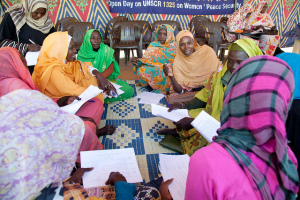
    North Darfur Committee on Women session on the UN Security Council Resolution 1325 on women, peace and security in Dar El Salaam, Darfur Source: UNAMID (Flickr)

    North Darfur Committee on Women session on the UN Security Council Resolution 1325 on women, peace and security in Dar El Salaam, Darfur, 2011 Source: UNAMID (Flickr)

    Next year we will be celebrating the 15th anniversary of United Nations Security Council Resolution (UNSCR) 1325, the first resolution of seven addressing Women, Peace & Security. In 2000, UNSCR provided the world with a groundbreaking message – providing an important recognition of the crucial role that women have to play in processes of conflict prevention, resolution and peacebuilding, as well as the specific impact of war on women’s and girls’ lives.

    The years following its adoption have borne witness to an increase in the amount of interest in the Resolution, as well as in the number of activities dedicated to “1325”, both at civil society and governmental level. However, almost 15 years into actual implementation of UNSCR 1325, we are still facing many challenges. Women’s participation in peace negotiations and peace agreements has remained low. Though some progress has been made in the adoption of UNSCR 1325 National Action Plans (NAPs) and in terms of legal and judicial reforms in some countries; implementation of these policies is often not enforced. Conflict related sexual violence as a deliberate weapon of war still occurs on a large scale and with impunity

    Peace and security from a holistic gender perspective

    Analyzing and addressing these challenges requires us to go back to the bigger picture. Over the years, the women’s peace movement has observed a growing, and worrying, trend. To a large extent, implementing UNSCR 1325 seems to be interpreted as being about fitting women into the current peace and security paradigm and system; rather than about assessing and redefining peace and security through a gender lens. In other words, “Just Add Women and Stir” has become the maxim as the way to move forward, instead of coming up with a new recipe for peace and security altogether, based on taking women’s perspectives into account.

    Such a new recipe would not only impact the lives of women, it would also provide important alternatives for men. The dominant peace and security paradigm is heavily militarized, normalizing the use of armed force and violence as a means to address conflict. This process of militarization incorporates specific gender dynamics, among others pushing men to engage in armed and violent action to solve conflict. Redefining this peace & security paradigm from a holistic gender perspective not only brings in women’s perspectives of what makes up real human security, it also addresses the normalization of violence in patriarchal society and prioritizes conflict prevention as well as nonviolent conflict resolution.

    Militarization of Women, Peace & Security

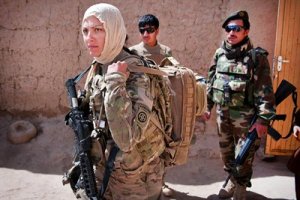
    Member of a female engagement team, Ghazni province, Afghanistan. Source: US Department of Defense

    Member of a US Marine Female Engagement Team, Ghazni province, Afghanistan. Source: US Department of Defense

    UNSCR 1325 is increasingly being used as a tool to support women’s recruitment into militarized institutions and environments. Though some actors in the women’s movement view the increase of women’s participation in the armed forces as a sign of women’s empowerment and emancipation, others see it as a sign of the increased militarization of society. It is not the question whether women are capable of taking up arms and engaging in military action; for many of us, the discussion is about whether the militarization of women’s lives is beneficial for women and society in general.

    Often, the call to increase women’s participation in militarized institutions is backed up by essentialist arguments. One of the arguments given is that “adding women” will somehow challenge its hyper-masculine culture and contribute to both a more humane and a more women-friendly environment. The assumption at work here is that women are naturally less violent than men, and hence might have a soothing effect on the inside and the outside. However, using violence against the enemy is part and parcel of every militarist system. Some of the women combatants WPP has spoken to over the years – whether active within state armies or guerrilla movements – indicated that in order to be taken seriously as a woman fighter, they often presented an even tougher front towards the enemy. They made it clear: a woman in the armed forces is, first and foremost, a fighter. Within any military system – state or non-state – unity is key, and many women in armed forces most certainly do not want to be viewed as special category, because they are working hard to be taken seriously in their role of fighters.

    It is also often argued that women’s inclusion will benefit the military mission, as their presence provides access to previously untapped sources of intelligence: women in the community. However, referring to local women in such a manner can be dangerous, as in many situations of conflict, anyone (and in particular women’s groups, whose women’s rights activism might already challenge existing traditional notions around gender) seen interacting closely with (foreign) armed forces is at risk of being labelled a traitor or enemy agent.

    A major concern for us is that the above lines of argumentation completely instrumentalize women’s lives and experiences. The arguments also fail to challenge the – patriarchal – status quo by any means: conflict continues to be framed and solved by armed intervention, hence promoting the use of violence to overcome and dominate the enemy “other”.

    Missing an opportunity for change

    With the 15th anniversary of UNSCR 1325 around the corner, there are some big questions to be asked. Is the world becoming a safer place if UNSCR 1325 implementation merely focuses on integrating the female half of the population in upholding and promoting militarization? If the focus is narrowed to embedding women firmly within existing systems, are we not missing out on an opportunity for real change? Should UNSCR 1325 not also be about stretching the current peace and security paradigms, about addressing the gendered way that humanity frames and addresses conflict itself, and about investing in disarmament, conflict prevention, human security and alternative conflict resolution mechanisms? As UNSCR 1325 is about gender and peacebuilding, should we not also explore and address men’s gendered experiences of violence and war? Is it not time to  lay bare the connections between war and hyper-masculinity, and thereby show the importance of investing in alternative masculinities to address violent conflict at its roots?

    Many women peace activists – some of whom laid the ground work for UNSCR 1325 via the Beijing Declaration and Platform for Action and their continued mobilizing during the late 90s – have presented us with powerful feminist perspectives on peace and security that challenge current patriarchal paradigms. Their peace work is inextricably linked to calls for disarmament; investment in nonviolent conflict resolution and the prevention of policies of aggression; the need to divert excessive military expenditures to social development, and the promotion of women’s leadership in order to advance a culture of peace.

    Now is the time for their claims to be taken serious: violent intervention is not bringing about the desired impact. In their publication “Gender, Conflict and Peace” (2013), Dyan Mazurana and Keith Proctor state: “Contrary to popular belief, the academic literature increasingly argues that a strategy of non-violence is more effective than violence in achieving policy goals. According to data analyzed by Stephan and Chenoweth, between 1900 to 2006 non-violent campaigns were successful in achieving their policy goals 53 percent of the time, whereas violent campaigns only had a success rate of 26 percent.

    Nonviolence provides an important alternative to our current thinking about peace and security. Often also referred to as “people power” or “civil courage”, it recognizes that conflict is a fact of life, and can even provide an important opportunity for positive change. The challenge lies in how to frame and address conflict. Instead of the current “Power Over” security model – which is rooted in the use and legitimacy of armed violence to overcome and eliminate the opponent – nonviolence operates on the principle of “Power With”: empowering the people with the idea that peace and security ultimately has to come from the people, which implies that injustice can be successfully addressed when people organize themselves into a nonviolent collective.

    For decades now, women peace activists have presented us with feminist analysis and viable alternatives to secure peace for all, challenging the current patriarchal security and peace paradigm. Despite their efforts, their claims and peace work tend to still be largely overlooked– even after 15 years of USNCR 1325. If we truly want to engender peace, we need to broaden and diversify UNSCR 1325 implementation. For only by going back to the bigger picture and applying a holistic gender analysis to peace and security, can we become successful in securing peace and security for all.

    Isabelle Geuskens serves as Executive Director of  Women’s Peacemakers Program, a Dutch NGO that works for the nonviolent resolution of conflict, and the inclusion of women’s voice and leadership in nonviolent conflict resolution processes. From 2002-12, she acted as program Manager of WPP at the International Fellowship of Reconciliation (IFOR). Under her leadership, WPP started pioneering a program on engaging men for gender sensitive peacebuilding. Prior to taking up this position, Isabelle was active in peacebuilding initiatives in Belfast and in Srebrenica, where she worked for the Working Group Netherlands-Srebrenica. Isabelle holds a Master of Arts from the University of Maastricht.

    Featured Image: Female soldier at a shooting range during IDF training, southern Israel  Source: Wikipedia

  • Sustainable Security

    by Amira Armenta

    Colombia 2011 article smallIn Colombia there are many regions where poverty and the absence, or weak presence, of the state has facilitated the emergence of violence by armed groups. Among these are the Afro-Colombian communities of the Curvaradó and Jiguamiandó in the Urabá region

    The Urabá is located in the Northwest of Colombia, near the border with Panama. It is a region of great biodiversity, rich in minerals, oil, water, and timber, amongst other natural resources. Urabá is also one of the regions with the highest poverty rates, and lowest rates of schooling in the country. The region is inhabited by many indigenous peoples and Afro-Colombians, who are the traditional owners of hundreds of thousands of hectares of land. Collective ownership of these territories is supported by Colombian Law 70 of 1993.

    With the rise of drug trafficking in the country in the 80s, the region became a point of export of illegal narcotic drugs. At the same time, the illegal import of weapons soared to meet the growing demand of Colombian armed groups. Various increasingly powerful criminal groups (known as ‘paramilitaries’) began to invest money earned from their illegal activities in profitable lawful sectors such as the agribusiness – palm oil, bananas and cattle. In a few years Urabá went from being a marginal and sparsely populated region to a place where settlers converged, and multinational corporations and armed groups of all stripes were vying for control of territory and a stake in the business.

    In this context, poor rural communities such as bold”>Curvaradó and Jiguamiandó were sucked into the violence unleashed between the different armed groups. As the collective ownership of land was an obstacle to the economic interests of the new sectors (farmers and landowners whose funds often had an illicit origin), these groups used threats and harassment to banish the native people and appropriate their land. This violence and banishment was possible given the state of marginalization of the population, totally unprotected by the central government. Large palm oil plantations installed since then in the area have been financed largely with the laundered drug money. They use land violently obtained by the forced displacement.

    Since the 1990s, the Curvaradó and Jiguamiandó communities have specifically been the target of violence and subsequent displacement. They have lost their few belongings and have helplessly seen the powerful economic groups systematically seize their land.

    The Colombian government has recently begun a process of returning land to the inhabitants of the river basins of Curvaradó and Jiguamiandó and reparation for victims of violence. The move is encouraging, but it might not be enough to solve the problems. The history of violence can repeat itself any moment, as long as the causes that led to the banishment and violence are not addressed and those responsible are not punished. Standards of justice must apply, not just to those still operating outside the law, but also to those who now operate legally but whose past is murky.

    Whilst the Colombian government fails to fully develop social development programs (including education, health and infrastructure) and sustainable economic development policies to assist marginalised communities, the people of Curvaradó and Jiguamiandó will remain poor, uneducated, vulnerable, and at risk of lose their territories once again.

    Amira Armenta is a Researcher with the Drugs & Democracy Programme of the Transnational Institute (TNI), with a particular focus on Colombia.

    Image source: Yuliam Gutierrez

    Some Useful References

    Murder in Curvaradó: http://www.cipcol.org/?p=682  Bajo Atrato

    UNHCR on the situation of Colombian Afro Descendants: http://www.acnur.org/t3/fileadmin/scripts/doc.php?file=t3/fileadmin/Documentos/RefugiadosAmericas/Colombia/EN/Colombia_Situation_-_2011_International_Year_of_Afrodescendants

    Alternative Developments, Economic Interests and Paramilitaries in Uraba : http://www.tni.org/sites/www.tni.org/files/download/brief27fin.pdf

    El caso de Jiguamiandó y Curvaradó: http://www.lasillavacia.com/historia-invitado/22660/yamile-salinas-abdala/el-caso-de-jiguamiando-y-curvarado-estrategia-criminal

    Coca y violencia en el Chocó BiogeográficoL: http://www.tni.org/es/archives/archives_armenta_cocachoco

    Comisión Intereclesial de Justicia y Paz – Jiguamiandó y Curvaradó: http://justiciaypazcolombia.com/-Consejo-comunitario-de-Jiguamiando-

    Las tierra de Curvaradó de nuevo invadidas – Verdad Abierta : http://www.verdadabierta.com/paraeconomia/tierras/2944-las-tierras-de-curvarado-de-nuevo-invadidas

    Bajo Atrato se resiste a la violencia y a la pobreza: http://www.elcolombiano.com/BancoConocimiento/B/bajo_atrato_se_resiste_a_la_violencia_y_a_la_pobreza/bajo_atrato_se_resiste_a_la_violencia_y_a_la_pobreza.asp

  • Sustainable Security

    This interview was conducted by the Remote Control project. 

    Sascha Dov Bachmann, Assessor Jur, LLM (Stel) LLD (UJ), is an Associate Professor in International Law (Bournemouth University, UK), Extraordinary Associate Professor in War Studies (Swedish Defence University, Sweden) and Guest Speaker at NATO School. Outside academics, he served in various capacities as Lieutenant Colonel (German Army Reserve) taking part in peacekeeping missions in operational and advisory capacities. Sascha acted as NATO’s Rule of Law Subject Matter Expert (SME) in NATO’s Hybrid Threat Experiment of 2011 and in related workshops at NATO and national level. He would like to thank Brigadier (Rtd) Anthony Paphiti, former ALS officer, for his insightful comments and discussions.

    In this interview, Dr. Bachmann discusses hybrid warfare, its use in Ukraine and Crimea by Russia, and whether NATO is adequately prepared to formulate effective responses to this method of warfare.


    Q. What is ‘hybrid warfare’?

    Hybrid warfare as a warfare concept is not new among those practising the art of war. However, contemporary events lead us to argue that today’s hybrid warfare “has the potential to transform the strategic calculations of potential belligerents [because it has become] increasingly sophisticated and deadly”.

    Hybrid war is a concept that has emerged shortly after the end of the Cold War and sums up the complexities of modern warfare, which go beyond conventional military tactics, often involving cyberwarfare, propaganda and a fluid, non-state adversary.

    The concept of hybrid warfare has been discussed by (mostly US) military writers since the beginning of the 21st century and its recognition as a theory in formal military doctrinal thinking is still not settled. Hybrid warfare may use elements from four existing methods and categories of full spectrum warfare, namely:

    • conventional warfare;
    • irregular warfare (such as terrorism and counter-insurgency);
    • related asymmetric warfare (unconventional warfare such partisan warfare);
    • and compound warfare (where irregular forces are used simultaneously against an opponent while being employed by state actors to augment their otherwise conventional warfare approach).

    Hybrid warfare builds on existing doctrinal elements and adds the following: evolving war-fighting capacities in the fifth dimension such as “cyber-warfare”; and activities in the so- called information sphere.

    Q. Who were the first actors to utilize hybrid warfare and why?

    According to Hoffman’s seminal work “Conflict in the 21st Century: The Rise of Hybrid Wars”, it was Hezbollah in its 2006 war with the IDF. Here, a non-state actor (NSA) did utilise war fighting capabilities normally not used by non-state actors such as blending conventional warfighting on the ground and activities in the information sphere. Other examples are Islamic State/Daesh which show a blend of capabilities which blur the line of traditional warfighting: such as the use of suicide bombers, improvised explosive devices, and the use of ‘ground troops’ in a conventional manoeuvre context augmented by strong propaganda/information sphere activities.

    Why: because these capabilities are available. Hezbollah (and IS) had and has a substantial potential of rockets/military hardware and is aptly using the possibilities available through social media in the information sphere unknown before. Both non-state actors are also utilising the opportunities of informing public opinion in the West thanks to a growing Muslim population in the West who have cultural and lingual access/connection to these conflicts/the nature of the conflict.

    Q. Is hybrid warfare something that states have used?

    Russia has used hybrid warfare.

    How:

    In a Keynote speech at the opening of the NATO Transformation Seminar on 25 March 2015, NATO Secretary General Jens Stoltenberg remarked:

    “Russia has used proxy soldiers, unmarked Special Forces, intimidation and propaganda, all to lay a thick fog of confusion; to obscure its true purpose in Ukraine; and to attempt deniability.  So NATO must be ready to deal with every aspect of this new reality from wherever it comes. And that means we must look closely at how we prepare for; deter; and if necessary defend against hybrid warfare.”

    Michael Kofman and Matthew Rojansky described Russia’s 2010 Military Doctrine of modern warfare:

    “…… as entailing “the integrated  utilization of military force and forces and resources of a non-military character,” and, “the prior implementation of measures of information warfare in order to achieve political objectives without the utilization of military force and, subsequently, in the interest of shaping a favourable response from the world community to the utilization of military force.”

    The employment of hybrid methods has been evident from Russia’s activities in Crimea and the Donbas region of Ukraine, with its deployment of “little green men”, namely, soldiers wearing unmarked uniforms that make direct state attribution difficult. According to Mark Galeotti, Professor of Global Affairs at New York University’s Center for Global Affairs:

    “The conflict in Ukraine has demonstrated that Moscow, in a bid to square its regional ambitions with its sharply limited resources, has assiduously and effectively developed a new style of ‘guerrilla geopolitics’ which leverages its capacity for misdirection, bluff, intelligence operations, and targeted violence to maximise its opportunities.”

    While there may be limitations to the way in which these methods were used in Ukraine, the use of non-attributable military personnel provides expert assistance to an enemy and, even if not directly engaged in hostile acts, provides advice and assistance to those who carry out such acts. Nevertheless, the seriousness of the threat posed by such forces should not be under-estimated. General Breedlove, currently Commander, US EUCOM and the Supreme Allied Commander Europe (SACEUR), is reported as saying,

    “if Russia does what it did in Crimea to a NATO state, it would be considered an act of war against the alliance.”

    In Ukraine, Russia employed a hybrid strategy by combining irregular warfare and cyber warfare to achieve its strategic objectives. Reuben F Johnson, writing in IHS Jane’s Defence Weekly, on 26 February 2015, considered that “Russia’s hybrid war in Ukraine ‘is working’.” They had combined a substantial ground force of 14,400 Russian troops supported by tanks and armoured fighting vehicles, backing up the 29,300 illegally armed formations of separatists in eastern Ukraine.

    Q. Does hybrid warfare hold military advantages for states over conventional warfare?

    Russia is winning the hybrid war in Ukraine: it has successfully annexed Crimea, and effectively turned Ukraine into a state on the brink of wider failure. In the process, Russia has successfully divided Western countries on how to respond to this act of aggression. Russia also successfully reactivated its Cold War disinformation mechanisms, successfully blurring reality and fiction for global observers. Russia has uncovered the West’s inability to find a common policy to respond to the unfolding events in Ukraine.

    Q. How does hybrid warfare relate to international law? Is this way of waging war covered in current international legal paradigms?

    Generally speaking, hybrid warfare does not change the international legal paradigms such as Article 2(4), 51 UN Charter and in the context of NATO, Article V of the NATO Treaty. Whether any form of hybrid attack, alone or cumulatively, amounts to a use of force and, if so, reaches the threshold of an “armed attack” to justify a military response under Article 51 – and what form that response would take – are very difficult questions to answer. They are situation/fact specific. Moreover, attribution may be problematic. In addition, hybrid warfare – with its possible elements of cyber, terrorism, asymmetric warfare etc. – might not reach the threshold of such an attack and hence allow affected states to ‘deny’ the existence of such warfare in order to continue with their diplomatic relations, trade  etc with the ‘aggressor’ state. Such behaviour might undermine existing alliances and weaken international comity.

    Q. How prepared, or perhaps unprepared, are NATO for formulating effective responses to hybrid warfare?

    NATO is in my opinion well prepared to formulate effective responses given its substantial work undertaken in the context of hybrid threats. NATO recognized as early as 2010 hybrid threats were a new security risk and designed a new NATO Bi-Strategic Command Capstone Concept, describing hybrid threats as emanating from an adversary who combines both conventional and unconventional – military methods to achieve its goals.

    In the two years following 2010, NATO drew up a specific threat catalogue, which identifies security-specific risks beyond conventional warfare threats: nuclear proliferation, terrorism, cybercrime and cyber-war, organized crime and its role in drugs, arms and human trafficking, migration, ethnic and religious conflicts, population conflicts due to resource scarcity and globalization.

    NATO recognized that these may amount to a concrete threat to the alliance or that it could be authorized by the United Nations, because of their capacity, to intervene. Recognizing this, NATO worked on a related global approach (Comprehensive Approach) in order to counter these risks. This approach envisaged involving state and non-state actors in a comprehensive defence strategy that combines political, diplomatic, economic, military technical and scientific initiatives. Despite intensive work on this approach as part of a “Countering Hybrid Threats” experiment in 2011, the NATO project work in 2012 had to stop due to lack of support from their members. (From our submission to the UK DC)

    Given this existing framework/ capstone on how to respond to hybrid threats and the inter-related nature of hybrid threats and warfare, I would like to argue with some confidence that NATO has the capability to formulate an effective doctrinal approach, notwithstanding the initial discontinuation of the work on the hybrid threat concept.

    Q. Do you think that hybrid warfare will be the main method of waging war in the future and how do you see the use of this form of warfare evolving?

    Hybrid warfare with its various forms such as cyber-attacks, the use and abuse of the information sphere, the use of a holistic mix of conventional and irregular warfare, the exploitation of country specific vulnerabilities, law fare etc, is here to stay due to its obvious benefits to the using power/state/actor: deniability and the possibility of staying under the threshold of an armed attack which would in a likeliness trigger a military/kinetic response. I am convinced that the elements of hybrid warfare will evolve further and will eventually be used by state and non-state actors alike. Whether the overall term “hybrid warfare” for such multi-modal forms of warfare/threats is to stay we will see. Hybrid war’s impact on international law and comity is significant and it will question some of our established doctrines/concepts.
  • Sustainable Security

    Scarred in recent years by questionable involvements in the likes of Afghanistan and Iraq – and by the casualties they wrought – risk-averse Western governments have begun to look to others to do the shedding of blood in their ‘wars of choice’. The risky boots-on-the-ground role that was once the proud preserve of NATO armies anxious to showcase their abilities is now politically unpalatable. Proxies appear to be the answer. Biddable local allies who are of a mind to work in collaboration with Western militaries are very much in demand: the former supply the troops, the latter the training and the technological support – if not, indeed, the weapons as well. A symbiosis based on the principle that my-enemy’s-enemy-is-my-friend is the goal. This simple formula, though, is one that is not always bound to produce positive results. Proxies should always carry a health warning; they tend not to be as biddable as hoped.

    Take the Kurds. They are an ethnic group inhabiting a region – Iraq and Syria – where suitable proxies for Western powers are very much in demand for use against Islamic State (IS). The Kurds appear to be ideal candidates as proxy fighters: they are numerous; of a warrior-caste; are politically acceptable to Western audiences, and have a natural enemy in IS. As a militant group intent on territorial expansion, IS threatens Kurdish communities. The case for synergy is thus obvious: Western militaries and the Kurds can work together for mutual benefit. Not quite so obvious, however, are the various reasons why the relationship between Kurd and Western militaries is one that has the ready capacity to go awry. The chief driver of any breakdown is that Kurdish proxies can and will have their own priorities that clash with those of their sponsors.

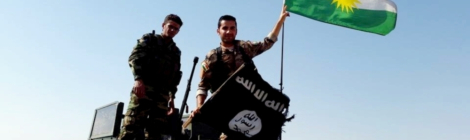
    Image of Peshmerga replacing the ISIS flag with  the Kurdish flag by Kurdishstruggle via Flickr.

    The first point to note here is that the Kurds are a people divided. A fractiousness has historically long been evident between the various clans, tribes and families that make up this nation. These differences may have now mellowed but they have never completely dissipated. And then there are the differences created by linguistic schisms – Sorani and Kurmanji – and sectarianism – Sunni and Shia. Differences also developed due to the politics of whichever state the Kurds found themselves in after the demise of the Ottoman Empire. The Kurds within Syria developed under the tutelage firstly of French colonial rulers and then under a succession of socialist governments in Damascus. Both influences – or rather impositions – shaped a Kurdish community that was very much secular in make-up. It was the same in Turkey; Kemalist policies pushed secularism. In contrast, however, in Iraq, the laissez-faire approach of British colonial masters and then the inability of Iraqi governments to penetrate and shape attitudes in its northern Kurdish region left in place a largely tribal-based, conservative structure that is still today strong on religious (Sunni) influences.

    Today, the Kurdish area of northern Iraq, known as the Kurdish Regional Government (KRG), is riven by a split between a Western region dominated by the party of President Masoud Barzani – the Kurdish Democratic Party (KDP) – and an eastern region where the party of former Iraqi president, Jalal Talabani – the Patriotic Union of Kurdistan (PUK) – holds sway. The KDP, dominated by the Barzani tribe and with strong links north to its political patron, Turkey, maintains the strings of power in the KRG. It is based in the ‘capital’ of Erbil. The PUK, more left-of-centre, modernist and leaning towards Iran, holds sway around Suleimaniyeh. These two parties, indeed, and using their peshmerga forces, fought a civil war in the 1990s. And while there is currently what might be seen as a national KRG peshmerga force, these two parties still maintain their own peshmerga units and there is thus always the possibility that tensions may lead to some renewed clashes. Moreover, with future independence in mind, one eye is constantly being kept on the need to prepare for a possible future conflict with the Iraqi army and its associated Shia militia. Here is one particular problem for the Kurds of Iraq – who is the real enemy? Is it IS; is it fellow Kurds, or is it Baghdad? This then also becomes a problem for any power that seeks to use these Iraqi Kurds as proxies against IS – as the United States and others do. Can they be made to keep their eyes focused on IS and not elsewhere? And will the training and weapons they might be supplied with be directed at IS, or could they be used against other US proxies – such as other groups of Kurds and/or the Iraqi army?

    In Iraq, for instance, any future push on IS-held Mosul will, the US military hopes, involve the KRG’s peshmerga forces supported by US artillery and air power. Washington does not want the Shia-dominated Iraqi army to be seizing, on its own, the Sunni city of Mosul. Re-occupation of the city should be leavened, ideally from the US viewpoint, by the employment of Sunni Kurds. As things stand, however, there is a reluctance on the part of Erbil to push forward. The KRG has now, to a large degree, stabilised its own ‘borders’ (including the internal one within Iraq), which they see forming the basis of a future independent Kurdistan. Assaulting the Arab city of Mosul will doubtless involve a major loss of life and of treasure (in a cash-strapped KRG) that will produce little in the way of obvious gain for the Kurds while there is a bigger prize in mind.

    Then there are the Kurds in Turkey. The Kurdistan Workers’ Party (Kurdish: Partiya Karkerên Kurdistanê‎, PKK) is a left-wing Kurdish militant group that has long been fighting for more autonomy for the Kurdish-majority region of south-east Turkey. Ankara looks upon the PKK, not unnaturally, as a terrorist group. Recently, during the IS-generated chaos in northern Iraq, battle-hardened PKK units moved across the area and have proved to be some of the best fighters against IS; certainly better than the peshmerga. So here, logically, should be the ultimate proxy of choice for the US inside Iraq – the PKK. The idea, though, that US forces should assist the PKK in any way would bring paroxysms of protest from Turkey – a NATO ally. The KDP government in Erbil (with its own allies in Ankara in mind) is itself ardently agitating to prevent the PKK from setting up any zones within Iraq that it will come to control politically (such as around Sinjar). The PUK, on the other hand, has long supported the PKK, mostly because of the commonality of their left-wing politics.

    There are also the Kurds in northern Syria to consider. There are dozens of bickering Kurdish political parties jockeying for control there. The only force there that is armed, though, is the militia – the People’s Protection Units (Kurdish: Yekîneyên Parastina Gel, YPG) – of the main party, the Democratic Union Party (Kurdish: Partiya Yekîtiya Demokrat‎, PYD). The PYD – again, avowedly secular and actively left-wing – was formed mainly from PKK members who had fled from Turkey in the 1990s. The PYD is thus looked upon by Turkey as just an offshoot of the PKK and is, therefore, also a ‘terrorist’ group. But again, its YPG militia have proved very effective – certainly more effective than US-allied Arab groups in Syria – at confronting and besting IS. The YPG have also shown a penchant for actually taking the fight to IS by moving into Arab-majority areas of Syria (something the peshmerga in Iraq are reluctant to do). Here is another proxy that seems ideal. But how is the US to support the YPG effectively without incurring the wrath of Ankara? Moreover, there will probably come a time soon when Turkey will try and seize Kurdish areas of northern Syria in order to eliminate what it sees as the PYD’s terrorist threat. The PYD’s main enemy would then be Turkey, and not IS. What would the US do then?

    And then there is the cross-border relationship between the Iraqi and Syrian Kurds. It would seem natural for the Kurds in Iraq to support their ‘compatriots’ in Syria. Beyond natural kinship would also be the fact that both are fighting IS. But the KDP in the KRG, having allied itself with Turkey and being more tribal and religiously conservative, wants no truck with the ‘communist’ PYD. Indeed, it has even tried to prevent any assistance reaching the PYD across the Euphrates. To this end, a large trench system has been built by KDP peshmerga to act as a physical barrier designed to prevent any help from the PUK – who do support the PYD (mostly, again, for ideological reasons) – being sent across the border into Syria. Thus the US military is providing assistance to two armed Kurdish groups – the YPG and the KDP’s peshmerga – who are highly likely to one day become engaged in combat with one another.

    Thus when Western military organisations look to the Kurds to provide suitable proxies against IS, problems abound. The notion of a symbiosis created by a common enemy is tempered by the fact that the Kurds, of whatever ilk, tend to have more than just one enemy. This is not a good basis for the role of reliable proxy. But apart from the Kurds, who else is there?


    Rod Thornton is a Senior Lecturer at King’s College London based in Qatar. He spent nine years in the British Army before moving into academia. His research interests focus on terrorism, low-intensity warfare and new forms of warfare – particularly, as a Russian-speaker, on Russian hybrid warfare.  He has lived in the Middle East for four years, including one year at the University of Hewler in Erbil, Kurdish region of Iraq. He is the author of many articles and a book, Asymmetric Warfare: Threat and Response in the 21st Century (Polity Press 2007).

  • Sustainable Security

    The Lord’s Resistance Army is seriously depleted as a fighting force, but it still continues to exist as an armed group. This resilience is driven by several key factors.  

    The Lord’s Resistance Army (LRA) has carved a path of violence and disorder throughout East and Central Africa for nearly three decades. Led by Joseph Kony, the rebel group has directly and indirectly killed more than 100,000 civilians, has abducted upwards of 66,000 children, and has displaced hundreds of thousands more across five countries. While formidable in the past, the LRA is now a threadbare non-threat from a conventional military standpoint. With the group’s numbers at less than 200 (down from at least 5,000 active fighters in the 1990s), attacks and abductions are steadily trending downwards.

    Yet the LRA has also proven to be distinctly resilient, surviving as a collection of semi-autonomous units in sparsely populated peripheries that put up no resistance. Nevertheless, LRA fighters still pose a tangible threat as they loot and harass civilians, while Kony evades detection in Sudan’s Kafia Kinji region. While many observers describe the group’s current behavior as “survival mode,” its complex history shows this to be its modal pattern of organization and behavior based on an on-going ability of the group to adapt to shifts in its politico-military environment through distinct organizational endowments and resource acquisition strategies.

    Understanding LRA Resilience

    Most of the prevailing literature on the LRA has provided key insights into its history, organization, and behavior. However, the research that has focused on the group’s motives and the drivers of its violence has not addressed the distinct question of its resilience. The LRA’s resilience comes down to its organizational structure and shrewd resource strategies that have developed within autonomous bush sanctuaries and vis-à-vis the group’s wider political environment.

    Its organizational structure is based on a distinct combination of two factors. First, LRA recruitment and retention strategies relied on Acholi beliefs in spiritual and cultural symbols, such as viewing Kony as a medium for the “holy spirit,” and the common use of rituals. Such beliefs and practices, undergirded by violence, helped socialize Acholi youths familiar with them into fighters. Second, a more traditional military hierarchy was built around an initial committed core, which formed the basis for a flexible, decentralized structure that, while slowly degrading over time, has remained remarkably sturdy. In addition, the group’s resource acquisition strategies have adapted to periods of both abundance and scarcity. This configuration of factors has remained more-or-less intact for more than three decades as the LRA has interacted with regional geopolitical shifts and in the face of multiple challenges of maintaining an insurgency.

    LRA Resilience Over Three Phases

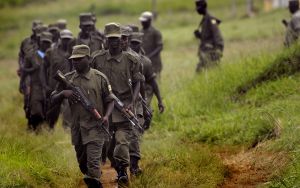
    Uganda soldiers part of the 2008–09 Garamba offensive against LRA. Image credit: Sgt. Jeremy T. Lock/Wikimedia.

    The LRA grew directly from a homegrown Ugandan People’s Democratic Army (UPDA), made up from the dominant Acholi faction of the national army overthrown by the National Resistance Army (NRA) in 1986. Led by Bazilio Olara-Okello and other military strongmen, the UPDA rebellion ended with the Pece Peace Accord of 1988. Yet senior officer Odong Latek and intransigent junior officers from the former military remained in the bush fearing criminal punishment. While this rump of the UPDA retained a military structure, it began to rely on alternative strategies for mobilization. During the UPDA’s war, head of the Holy Spirit Movement Alice Lakwena and Joseph Kony developed factions that attracted fighters with an appeal to the salvation for the Acholi people through military victory, using unorthodox military practices (e.g. believing shea butter would make fighters bullet-proof and that rocks would explode as hand grenades). Following the 1987 defeat of Lakwena’s Holy Spirit Mobile Forces (HSMF), Kony’s faction became dominant. By late 1988, Latek’s more conventional force merged with the sizable “cosmological” faction controlled by Kony, signaling the rise of his absolutist vision of Acholi society that sought to purify through violence anyone deemed government loyalists. This vision, which drew heavily on elements of elements of Acholi spiritual identity, quickly became an organizing principle and a source of resilience.

    With Latek killed in 1989, Kony asserted authority, rebranding the rebellion several times until it became the LRA in September 1993. Here the group established its organizational structure, with “Control Altar” directing its operational brigades – named Gilva, Sinia, Trinkle, and Stockree – which remained intact for years and adapted to changes in manpower and resource availability. Yet the decline of the LRA’s first phase began as the Ugandan state expanded into northern Uganda. The counterinsurgency campaign Operation North weakened the LRA while militarizing Acholiland. The government also expanded the Resistance Council (RC) administrative system while recruiting Local Defence Units (LDUs) as the RC’s coercive arm. However, when military action failed to eliminate the group, peace talks began in late 1993. These talks broke down in early 1994 amidst boycotts and accusations of dishonesty. Tired of the LRA’s mounting demands, President Museveni gave the group seven days to surrender or face a military solution. Meanwhile, Kony had used the talks to conceal clandestine negotiations with Sudanese intelligence. Following Museveni’s ultimatum, the LRA withdrew into southern Sudanese garrison towns for reorganization and training. By February 18th 1994, the group re-emerged heavily armed and newly equipped.

    Thus began the LRA’s second phase in the mid-1990s when it became part of a proxy war as the Sudanese government provided it with weapons and military training to fight the Sudan People’s Liberation Army and territorial sanctuaries from which to attack Uganda. The LRA’s experience in southern Sudan consolidated the group’s structure, hardened its fighters (largely abducted Acholi youth as young as 12), and taught them how to survive in borderlands for years of operations that kept northern Uganda in almost permanent humanitarian crisis. Yet, while Sudanese support was a decisive factor in the LRA’s military strength and the intensification of the conflict, it was not always seamless. Kony’s priorities in Uganda often put him at odds with Khartoum and this led to periodic ruptures in the LRA’s resource pipeline, and the group was often expected to fend for itself in terms of day-to-day survival. As such, the LRA developed a diversified strategy of resource acquisition – maintaining military stockpiles while creating self-sustaining agrarian communities. These experiences with intermittent access to resources promoted the LRA’s self-sufficiency and resilience.

    The decline of this period began with the December 1999 Nairobi Agreement, which committed Sudan and Uganda to end their proxy war. Attacks in northern Uganda declined, but the LRA remained in southern Sudan. At times, the group received Sudanese support. But Khartoum signaled its commitment to push the LRA from its territory in early 2002 when it authorized the UPDF to launch Operation Iron Fist, designed to dislodge the LRA from its Sudanese bush camps. While Iron Fist delivered some tactical successes, it did not deliver the desired knockout blow to the LRA. Instead, in 2003 the group re-entered Uganda and started a fresh conflict characterized by high profile violence and a humanitarian crisis that the Ugandan government largely outsourced to international aid agencies. The 2005 Comprehensive Peace Agreement (CPA) ended the civil war in Sudan and ejected the LRA while a revitalized UPDF blocked the group’s re-entry into Uganda.

    From 2005, the LRA shifted into its third phase, best described as roving banditry. Facing military threats and the geopolitical closure of northern Uganda and southern Sudan, the group shifted to DRC’s Garamba National Park. For the following two years, the Juba peace process allowed the LRA to regroup while coalescing more tightly around Kony’s security. During this period, there was a relative lull in LRA violence, limited abductions, and the suspension in abductee training. Yet while support from Khartoum had ended, the LRA’s military capacity remained intact. Juba ultimately collapsed in 2008 due to ceasefire violations, walkouts, the LRA’s refusal to gather in the assembly areas, and Kony’s repeated failure to sign the accord’s final documents of the accord. The LRA soon resumed violence in DRC as the UPDF led Operation Lightening Thunder against Kony’s Garamba hideout. Intelligence failures led to an unsuccessful operation, and UPDF ground troops arrived at an empty camp. Shortly thereafter, the LRA unleashed a series of reprisal killings against civilians.

    The LRA’s sanctuaries in DRC, CAR, and Sudan have provided permissive conditions for survival – few state institutions and a new set of resources. As such, the group has since engaged its resilience strategies in two key ways. First, the LRA has managed to maintain its hierarchy despite the outflow senior commanders, extended periods of geographical separation, and sporadic communication between units, which are expected to act independently and fend for themselves. Although this organizational structure is decentralized, core members still carry out Kony’s long-term strategic orders while maintaining an explicit LRA identity. Second, while looting remains a way of obtaining resources, the LRA has become a small player in regional illicit networks in natural resources, particularly ivory, diamonds, and gold. The group’s renewed informal relationship with Sudanese officials in the Kafia Kinji border region shelters Kony and his inner retinue and provides markets for looted items and commodities.

    Conclusion

    In sum, the LRA has survived by virtue of its organizational cohesion, resource use, and the ability to read its political terrain in order to exploit regions without state structures. However, such strategies may not be sufficient to sustain the LRA indefinitely. The Ugandan-led Regional Task Force (RTF) has killed and captured senior commanders from the battlefield and increased fighter defections. To be sure, the hunt for the LRA has been hamstrung by logistical and political difficulties. Above all, RTF operations are currently at risk of losing their logistical support from the U.S. Special Forces, which have larger consequences for regional peace and security in central and eastern Africa.

    Christopher Day is an Associate Professor at the College of Charleston. He joined the Department of Political Science in August 2012. His teaching and research interests are in Comparative Politics, with a particular emphasis on African politics, political violence, and civil wars. His research interests extend to international security, counterinsurgency, proxy warfare, and the institutional role of different armed state actors in Africa. A former disaster relief worker with Médécins Sans Frontières, he is also interested in humanitarian affairs. He offers courses on the Politics of Africa, the Model African Union, Global Political Theory, and World Politics.

  • Sustainable Security

    Introduction

    The acknowledgement of gender issues through the Women, Peace and Security (WPS) agenda marked a watershed moment for women’s rights. Despite this, the Responsibility to Protect (R2P) framework remains gender-blind. I argue that R2P and the WPS agenda share overlapping commitments and mutually beneficial and reinforcing protection mandates. Through three intersecting commitments – prevention and early warning systems, gender protection in peacekeeping, and women’s participation in post-conflict reconstruction – careful alignment between R2P and the WPS agenda could overcome this silence and move towards achieving more sustainable security.

    The Responsibility to Protect and Women Peace and Security

    Systematic human rights atrocities perpetrated against individuals based on their ethnicity, gender, and race have framed contemporary political discourses. With the international community’s inability to collectively respond to prevent mass atrocities and other severe humanitarian emergencies, former United Nations (UN) Secretary-General Kofi Annan spearheaded the challenge to create a norm permitting states to intervene in another sovereign state in the event of ‘gross and systematic violations of human rights that affect every precept of our common humanity’. Spurred on by  failures of the international community to prevent genocides in Rwanda (1994) and Srebrenica (1995), the International Commission on Intervention and State Sovereignty (ICISS) was established in September 2000 to address how and when the international community should act to prevent genocide, war crimes, ethnic cleansing and crimes against humanity. The report entitled “The Responsibility to Protect” (R2P) was released in December 2001. The unanimous adoption of R2P at the World Summit in 2005 established its prominence as a normative framework within the international community. The use of R2P as rhetorical backdrop to the Libyan intervention in 2011 via UNSC Resolutions 1970 and 1973 and the inaction in responding to the crisis in Syria demonstrates the prevalence of R2P in international discourse. Furthermore, R2P is interwoven with existing international principles, obligations, and peacebuilding initiatives. UN Secretary-General Ban Ki Moon asserts that R2P rests upon three interrelated, central pillars – responsibilities of the state to protect its population from mass atrocities; international capacity building to ensure states meet their protection responsibilities and prevent mass atrocities; and collective and timely responses through diplomatic, humanitarian and political means with coercive military action as a last resort.

    Female United Nations police officers of the United Nations Mission in Timor-Leste (UNMIT). 29/Nov/2007. UN Photo/Martine Perret. www.unmultimedia.org/photo/

    Female United Nations police officers of the United Nations Mission in Timor-Leste (UNMIT). Image by UN photo via Flickr.

    The Women, Peace and Security (WPS) agenda gained traction on the international peace and security platform following the adoption of UN Security Council Resolution 1325 in October 2000. The WPS agenda is the most comprehensive articulation of women’s rights and gender issues in international peace and security. It establishes a nexus between conflict prevention and women’s rights, highlighting the relationship between gender inequality and conflict. Resulting from the Fourth World Conference on Women in 1995 in Beijing, and the pivotal Beijing Platform for Action which named ‘Women and Armed Conflict’ as one of twelve areas of critical concern, the NGO Working Group on Women, Peace and Security was formed to advocate a UNSC Resolution focused on women’s unique contribution and experiences of conflict. Through lobbying and advocacy, the NGO Working Group played a vital role in drafting the resolution and through UN Resolution 1325 successfully complicated the popular narratives that stereotyped women as either victims or inclusive peacebuilders. UN Resolution 1325 directs policymakers to consider all of women’s experiences in conflict and links women’s rights to international peace and security. The adoption of an additional seven resolutions builds upon 1325 and make up the WPS agenda. It rests upon a four-pillar mandate; prevention of violence and derogation of rights; protection from violence; participation in peacebuilding and post-conflict reconstruction; and relief and recovery. Laura Shepherd and Jacqui True broaden ‘relief and recovery’, to include identifying the structural social, political and economic conditions required for sustainable and lasting peace. Specifically the WPS agenda addresses sexual and gender-based violence (SGBV) in conflict, measures to ensure women’s participation in decision-making processes and post-conflict programs, gender mainstreaming in UN activities and peacekeeping operations, and gender-sensitive prevention frameworks. The WPS agenda provides basis for international engagement with gender issues. With R2P, the WPS shares a commitment to improve human security and revealing and preventing women’s human rights abuses through international engagement. Disappointingly, despite both frameworks emerging sharing similar underpinnings, R2P and its community continue to fail to address gender issues encompassed within the WPS agenda.

    R2P did not embrace the central messages of Resolution 1325 nor were points of synergies explored where there was a lack of dialogue and acknowledgement towards gender issues. From the outset, gender was excluded from the original formulation of R2P with only one of the 12 commissioners being a woman and only seven of 2000 sources consulted including gender. Women within the original R2P document were framed in terms of vulnerable populations in need of protection. ‘Women’ were mentioned three times only in reference to ‘rape and sexual violence’, which was mentioned seven times, where SGBV falls under crimes against humanity, war crimes and ethnic cleansing. No reference was made of women being active participants and agents in conflict prevention, protection and post-conflict reconstruction. This is despite the transformative possibilities of including aspects of the WPS agenda. R2P disregards WPS as a paradigm for conflict prevention and its centrality to peace and security. Here, as discussed below, three common intersecting commitments could overcome this disconnect.

    Intersecting Commitments

    • Prevention and early warning systems

    The inclusion of gender issues into existing early-warning frameworks and systems may illuminate potential and/or existing R2P situations. Studying macro- and micro-level changes to women’s lives reveals the escalation of violence and derogation of individual rights in hyper-masculinised and militarised societies. Gender-sensitive indicators include average levels of female education, impunity towards SGBV, increased kidnappings, sex work, female heads of households and domestic violence. Moreover, gender-sensitive indicators are not synonymous with women-sensitive indicators, but can monitor aggression and militarisation within a society, such as the persecution of men that do not take up arms. UN Women implemented several context-specific programs that have resulted in a comprehensive how-to guide of 85 gender-sensitive indicators that provide a holistic early warning system. Furthermore, through empirical analysis Sara Davies and Jacqui True found strong connections between systemic gender inequality and discrimination and the use of SGBV in conflict and non-conflict settings.

    Despite the benefits of including gender-sensitive indicators, gaps in women’s participation in early-warning initiatives have not been overcome. The UN Office of the Special Adviser on the Prevention of Genocide and the Responsibility to Protect have not addressed the role of gender inequality or gendered violence in early warning systems. A recent framework of analysis on the prevention of R2P crimes continues to situate women in the narrative of ‘vulnerable population’ with children and the elderly, and in regards to sexual violence and reproductive rights. This is despite, as Davies and True argue, systemic and structural gender inequality is a potential early warning factor for preventing mass SGBV.

    Since gender inequality increases the likelihood of R2P crimes any strategy of prevention must address gender norms that oppress and marginalise women. Gender-sensitive indicators highlight structural political, economic and social inequalities that maintain gender inequality in a given society that impacts post-conflict reconstruction and conflict protection.

    • Gender-sensitive Protection in Peacekeeping Operations

    The protection pillar of WPS stresses the full involvement and participation of women in the maintenance and promotion of international peace and security. This includes gender mainstreaming in all peacekeeping missions and the addition of gender units and advisers. Providing an official female presence in conflict areas, refugee and Internally Displaced Persons (IDPs) camps is essential to improve access and support for local women to communicate in an official capacity. Women can approach each other more easily in female-only settings where women may be prohibited to talk to male strangers. Moreover, SGBV is more likely to be reported between women. However, as of February 2016, only 3.34 per cent of military and 9 per cent of police were female. Although there is at least one female in every peacekeeping force, the number varies from 1 woman out of 17 deployed in the UN mission in Afghanistan to 799 women out of 17,453 deployed in the UN-African Union Mission in Darfur. Of 105,315 deployed peacekeepers, women only comprise 4.05 per cent. Although numbers have improved since the adoption of UN Resolution 1325, increases have been marginal and reflect the low number of women included in UN peace building efforts.

    Furthermore, implementation of gender-sensitive protection needs to move beyond the ‘add women and stir’ policy. Rather, WPS knowledge needs to be utilised in peacekeeping operations and wider UN peacebuilding efforts. For instance, the assumption that men are heads of households and therefore assistance being distributed to mainly men does not reflect post-conflict realities. Women are often widowed during and after conflict and adopt non-traditional roles such as heads of households. Since post-conflict programs and assistance does not recognise this, women are forced to take drastic measures to support their family and may take part in exploitive aspects of peacekeeping economies, like the sex industry. The misconception could be countered through gender units, gender-awareness training on more than an ad hoc basis and extensive comprehension of WPS.

    • Women’s participation in post-conflict reconstruction.

    The post-conflict phase is complex with many overlaps where the WPS agenda would assist states and the international community in post-conflict responsibilities. However, here I will focus on women’s participation in peace processes. Women’s involvement in peace processes is mentioned in every resolution of the WPS agenda. Evidence suggests that the inclusion of women at the peace table as witnesses, signatories, negotiators and mediators makes it 35 per cent more likely a peace agreement will last. Nevertheless, women’s quality participation in official capacities remains insufficient. Women and gender provisions have slowly started to be incorporated into peace agreements with a textual increase since the passing of Resolution 1325.

    However, by essentialising women as mothers, caregivers and victims, women are excluded from peace negotiations where, ironically, the cessation of hostilities is reliant on those who took up arms. I am not arguing that women are better peacemakers, but that their participation is vital to ensure that their experiences of conflict are acknowledged. Around the world, women lobby for participation to ensure their needs and security concerns are addressed. In Somalia, the Sixth Clan was formed in response to the five traditional Somali clans failure to include women in negotiating teams. Asha Hagi Elmi became the representative of the Sixth Clan in 2000 and in peace talks in 2002, becoming the first female signatory to a peace agreement in 2004. Peace processes must include women as more than lip service to inclusivity.

    Conflict transition provides a chance to create a more equal society by transforming the gendered relationships and identities that contributed to the production of violence. Women’s participation is essential to represent half the population during peace negotiations, to ensure explicit inclusion of women’s rights and gender provisions, and could have major implications for women’s social, political and economic status, and involvement in wider post-conflict initiatives. It is imperative that women are involved during that critical post-conflict transition to be enabled to affect positive changes.

    Conclusion

    Despite these areas of common engagement, R2P remains silent towards analysis and discourse surrounding the WPS platform. Both frameworks emerged at similar times and share central tenets of prevention, participation and protection, however women’s involvement in R2P has been grossly deficient. I have briefly demonstrated here, and examine in depth elsewhere, three areas of common engagement between R2P and the WPS agenda. I identify three common intersecting commitments – prevention and early warning frameworks, protection and gender-sensitive peacekeeping, and women’s participation in peace processes. Implementing gender-sensitive policies, legislations and programs will highlight the different lived experiences of men and women and the insecurities that arise during conflict and post-conflict reconstruction. R2P has much to gain from the WPS agenda and vice versa, where alliance with R2P and its community could aid the WPS agenda in addressing major gaps in its implementation. Alignment, both practical and normative, could provide an inclusive and holistic protection platform and encourage sustainable peace.

    Sarah Hewitt is a PhD candidate at Monash University, Australia with the Monash Gender, Peace and Security Centre. Her article,  ‘Overcoming the Gender gap: The Possibilities of Alignment between the Responsibility to Protect and the Women, Peace and Security Agenda’, was recently published in the Global Responsibility to Protect Journal. Sarah has also posted on Protection Gateway.

  • Sustainable Security

    Western states are growing increasingly reliant on private military and security companies. Fully understanding the privatization of security and its effects on sustainable security requires the inclusion of a critical gender lens.

    Introduction

    In 1999, the American private military contractor Dyncorp hired Kathryn Bolkovac as UN International Police Task Force monitor in Bosnia-Herzegovina. In the course of her work Bolkovac raised allegations that private contractors and UN employees were trafficking and sexually exploiting young girls. In 2002, a UK court acknowledged that Bolkovac was wrongfully dismissed for bringing the story to light, but nobody was ever prosecuted for the alleged sex trafficking.

    Bolkovac’s story — dramatized in the movie The Whistleblower  — captures perfectly some of the challenges to accountability when security functions are outsourced to the private sector and performed by transnational security forces. Security privatization reduces transparency and accountability in ways that exacerbate and make less visible the gender inequalities and gender-based violence that pervade militarized security contexts. Moreover, security privatization increases the profitability of insecurities, making it more difficult to tackle the causes, including gendered causes, of insecurity. Understanding the privatization of security and its effects on sustainable security requires the inclusion of a critical gender lens.

    PMSCs and gender: an emerging challenge

    15245844288_2026206f77_o--1-

    Image by chuck holton via Flickr.

    Over the past three decades a new challenge to sustainable security has emerged: the growing reliance on private military and security companies (PMSCs) by Western states, international organizations, non-governmental organizations, and transnational corporations. PMSCs offer a wide range of services from logistical support, intelligence, training, armed and unarmed guarding and protection, to reconstruction and more. The US-led wars in Afghanistan and Iraq have shown that today waging war is contingent on heavy involvement from the private sector. Private contractor numbers have trailed and at times outpaced US troop levels in the wars in Afghanistan and Iraq. In February 2010, the US DoD employed more than 100,000 private contractors each in Afghanistan and Iraq.

    A number of high-profile cases have highlighted the problems associated with the use of private contractors in Iraq and Afghanistan. Private contractors were involved in the abuse of prisoners at Abu Ghraib and the 2007 shooting and killing of Iraqi civilians in Nisour Square. Allegations of war crimes, poor working conditions, sexual harassment and human trafficking, and disregard for local populations have come to shape the public image of the private security industry over the past two decades.

    In this context, gender has become part of the industry’s attempts to improve its reputation. Gender considerations have made it into the voluntary International Code of Conduct for Private Security Providers that came into effect in November 2010. The International Code of Conduct explicitly addresses gender in three paragraphs on gender-based violence, selection of personnel, and harassment-free work environments. Gender has also been declared ‘good for business‘ by the private security industry. Female employees of PMSCs are seen as useful to conduct security checks on women or to foster positive interactions with local populations, and thus seen as instrumental to operational effectiveness. This attention to gender, while positive on the surface, has mostly served the purpose of creating greater legitimacy for the industry. It has not addressed the larger impacts that outsourcing have on women’s claims to greater and equal participation in the military sphere and the gendered impacts of the use of private forces in local contexts.

    A critical gender lens on private security

    Gender is not just a ‘problem to be solved’ for private contractors, but is fundamental to the reorganization of force through privatization, to the functioning of the private security industry, and to how the industry legitimizes itself. The greater use of private force is part of the broader neoliberal transformation of militarized citizenship that has also entailed a shift from conscription to all-volunteer forces in many Western states. This reorganization of public force has meant an end to the male citizen-soldier model and the greater integration of women into all-volunteer forces. The greater reliance on private security has occurred alongside to the greater integration of women into Western public militaries. While some decry the feminization of public militaries, others have shown how PMSCs actively rely on hyper-masculinity in portraying themselves as more effective security forces vis-a-vis the public sector.

    PMSCs that provide security services primarily recruit from the army and special forces. In doing so, they replicate and even reinforce the gendered division of labour present in the public military sphere. However, PMSCs have also made a concerted effort to distance themselves from the hyper-masculine images of trigger-happy burly ‘cowboys’ and shift towards a softer and more legitimate image of masculinity, shedding the hyper-masculine militarized image for one emphasizing humanitarianism, protection, professionalism, and expertise. At the same time, privatization sidelines and depoliticizes questions of gender equality in the military sphere. There is neither publicly available data on women in the private security industry nor public debate on their marginalization within the industry. By its very logic, profitability drives the private security sector and not questions of citizenship and equal participation.

    Gender also intersects with race and citizenship to shape the division of labour in the globally operating private security sector. A large segment of the workers hired or subcontracted by PMSCs comes from the Global South. The globally operating private security industry can be thought of as a hierarchy of masculinities. Western contractors are at the top of this hierarchy, and so-called third-country nationals (TCNs) from the Global South sit at the bottom. Profitability is in part achieved through the exploitation of this vulnerable migrant labour force.

    The outsourcing of military security functions to private companies has allowed a global rescaling of labour recruitment in support of Western military operations. As data from the US wars in Iraq and Afghanistan show, a majority of contractor labour is made up by ‘third-country’ and host-country nationals and not by US citizens. For example, of the more than 200,000 DoD contractors working in Iraq and Afghanistan in February 2010 (mentioned above), less than 40,000 were US citizens. The racialized hierarchy among contractors of different citizenship is evident not only in pay and working conditions, but also in the kind of work performed. While local and migrant workers perform much of the logistical support work, their proportion is particularly high when it comes to the more dangerous armed security work.

    Conclusion

    Simply bringing consideration of gender into the private security industry is not a sufficient enough means of addressing the problems that security privatization poses for sustainable security. Conflict is often justified and waged by appealing to gendered notions of security: masculinized protectors and defenders, and feminized and vulnerable populations in need of protection. Private actors feed into this gendered discourse, portray themselves as masculinized protectors, and benefit from continuing insecurities and global inequalities. As insecurities create new market opportunities for the private security industry, gendered discourses of protection and gendered divisions of labour are being reinforced while sustainable security becomes more elusive. We need to be mindful of security privatization and the fundamental ways in which it is gendered as we work towards remaking security in more sustainable ways.

    Maya Eichler is Canada Research Chair in Social Innovation and Community Engagement and Assistant Professor of Political Studies and Women’s Studies at Mount Saint Vincent University.