Blog

  • Sustainable Security

    Belize: challenges and contradictions in gang policy

    Like its neighbours in the northern triangle (El Salvador, Honduras and Guatemala), Belize has a high murder rate that is closely connected to the strong presence of gangs. But the character of gang activity in Belize is quite different from its Central American neighbours. Belize has pioneered some innovative solutions to the problem it is facing. But it will need to overcome the challenges of internal resistance and an acute lack of resources in order to address the political, economic and social issues that marginalise Belize’s large youth population.

    Read Article →

    Countering Militarised Public Security in Latin America: Lessons from Nicaragua

    Facing a myriad of public security challenges that have provoked some of the highest indices of crime and violence in the world, authorities in Central America have followed a variety of different responses, ranging from repressive and reactive policies to grass roots prevention. Of these approaches, the Nicaraguan National Police’s Proactive Community Policing model stands out due to the results it has achieved. In the second of our two-part discussion, ‘Countering Militarisation of Public Security in Latin America’, Matt Budd explores the lessons that Latin American countries can extract from Nicaragua’s unique approach to public security.

    Read Article →

  • Sustainable Security

    RC_long_logo_small_4webThis article is part of the Remote Control Warfare series, a collaboration with Remote Control, a project of the Network for Social Change hosted by Oxford Research Group.

    This article by Esther Kersley, Katherine Tajer and Alberto Muti originally appeared on openDemocracy on 7 November 2014.

    Cyber space is a confusing place. As current discussions highlight the possibility of “major” cyber attacks causing a significant loss of life or large scale destruction, it is becoming harder to determine whether these claims are hype or are in fact justified fears. A new report by VERTIC, commissioned by the Remote Control project, offers some clarity on the subject by assessing the major issues in cyber security today to help better inform the debate and assess what threats and challenges cyber issues really do pose to international peace and security.

    How much of a threat are cyber attacks?

    Cyber attacks have been identified as one of the greatest threats facing developed nations. Indeed, the US is spending $26 billion over the next five years on cyber operations and building a 6,000 strong cyber force by 2016 and the UK has earmarked £650 million over four year to combat cyber threats. This level of investment suggests that states view issues of cyber security as a question of national security. But how much of a threat do cyber attacks pose to national security and how much damage have they caused?

    There is a need for caution when assessing the risk posed to national security by cyber threats. Indeed, although states are heavily investing in cyber security, to date, the majority of cyber incidents that have made the news have not directly impacted a state’s sovereignty, or threatened a state’s survival. For that to happen, an attack would have to significantly affect a government’s ability to control its territory, inflict damage to critical infrastructure or, potentially, cause mass casualties.

    Nevertheless, some notable instances of cyber attacks have had a significant impact on international relations over the past decades. These are ‘Stuxnet’, the cyber attack targeting Iranian uranium centrifuges (allegedly launched by a combined US-Israeli operation), the ‘Nashi’ attacks on Estonian government and private sector websites and web-based services, and the many instances of cyber-espionage that form the so-called ‘Cool War’ currently taking place between China and the US. Furthermore, cyber attacks have also been used as instruments of war in conjunction with conventional military operations, for example during the Russo-Georgian conflict in 2008 and most significantly during in the Israeli air raid against a nuclear reactor facility in Syria in 2007.

    However, to date no attack has led to large scale destruction or fatality, suggesting that the potential for this is unlikely. This is due to the great amounts of technological expertise, material resources and target intelligence required to carry out such an attack. These resources are currently only in the hands of states, that might hesitate in using cyber attacks in such a way, when other means are available. This could of course change, especially if different political actors acquired the necessary means.

    What should we be concerned about?

    This is not to say we have nothing to be concerned about. Although a large scale cyber attack that inflicts mass casualties is unlikely to occur in the near future, cyber activities can still affect civilian lives in other ways. The hyperbolic language used to describe the potential consequences of cyber attacks, combined with a lack of reliable, concrete information on the real risks posed by cyber threats has contributed to the ‘securitisation’ of the debate around cyber security issues. It is feared that this process will lead to possible dangers being overestimated, and vulnerabilities cast as national security threats of immediate concern. States’ reactions to these perceived risks may cause negative implications on both citizens and international peace and security.

    Already we are seeing a potential consequence of securitisation as governments turn to surveillance as a preventative measure against cyber attacks. In addition, the difficulty of attributing cyber attacks, as well as the widespread fear that other countries will constantly engage in cyber espionage, has led some to claim that the ‘cyber realm’ favours the attacker. This, in turn, may lead states to engage in a ‘cyber arms race’, as well as foster a ‘Cool War’ dynamic of continuous attrition and escalation between states. This erosion of trust between states, as well as the diminishing of civil liberties, are two serious concerns with regards to the militarization of cyber space.

    Cyber attacks also pose serious transparency and accountability issues due to the above-mentioned technical complexities of cyber attack attributions, as well as the ambiguous relationship between state and non-state actors (in the ‘Nashi’ attack in Estonia for example, the relation between the youth group responsible for the attack and the Russian government remains an ambiguous one).  The lack of legal clarity in this area is also worrying, meaning attackers will often not face consequences for their actions.

    The only existing international legislation in the field – the Budapest Convention – solely addresses cybercrime and no further issues (such as military use of cyberspace). The Convention also does not have enough support to provide enforcement of its objectives, has no monitoring regime and has not been signed by Russia or China. Furthermore, an attempt to set out ‘rules’ on the legal implications of cyber war – in The Tallinn Manual – found that the complexities of cyber conflict means there are many instances that do not easily adhere to current legislative standards. The speed of technology evolution further hampers drafting of law and international legislation.

    Growth of remote control warfare

    The rise in cyber activities cannot be examined in isolation. Its growth is part of a broader trend of warfare increasingly being conducted indirectly, or at a distance. This global trend towards ‘remote control’ warfare has seen an increasing use of drones, special forces, private military and security companies as well as cyber activities and intelligence and surveillance methods by governments in the last decade.

    Indeed the global export market for drones is predicted to grow nearly three-fold over the next decade, and a broader range of states are now using drones, including France, Britain, Germany, Italy, Russia, Algeria and Iran. The US has more than doubled the size of its Special Operations Command since 2001, and private military and security companies are playing an increasingly important role in both Afghanistan and Iraq, with over 5, 000 contractors employed in Iraq this year.

    The idea of countering threats at a distance, without the use of large military forces, is a relatively attractive proposition as the general public is increasingly hostile to ‘boots on the ground’. However, the concerns highlighted in this latest report with regards to cyber activities are echoed in all ‘remote’ warfare methods as their covert nature means there are serious transparency and accountability vacuums. As well as this, wider negative implications have been identified where these methods are in use, from the detrimental impact of drone strikes in Pakistan to instability caused by special forces and private military companies in Sub-Saharan Africa. The militarisation of cyber space is part of this growing trend and, like these other new methods of warfare, increased transparency and accurate information is essential in order to assess the real impact they are likely to have.


    Esther Kersley is the Research and Communications Officer for the Remote Control project of the Network for Social Change. The project, hosted by Oxford Research Group and affiliated with its Sustainable Security programme, examines changes in military engagement, in particular the use of drones, special forces, private military and security companies, cyber warfare and surveillance.

    Katherine Tajer is a Research Assistant for the Verification Research, Training and Information Centre (VERTIC).

    Alberto Muti is a Research Assistant for the Verification Research, Training and Information Centre (VERTIC).


    Featured image: The command line environment in MS-DOS. Source: Flickr. Available under Creative Commons v2.0.

  • WEF examines the Risks of Global Marginalisation

    WEF examines the Risks of Global Marginalisation

    World Economic Forum | Global Risks 2012 | January 2012

    Issue:Marginalisation

    A new report from the World Economic Forum highlights the increasing importance of marginalisation as a security issue over the coming decades. The seventh edition of the WEF’s Global Risks report describes what they see as the ‘seeds of dystopia’ threatening both social and political stability across the world.

    The report describes dystopia as “the opposite of a utopia, describes a place where life is full of hardship and devoid of hope.” The reality is that after years of unequal growth and a growing divide between elites and non-elites both between and within countries, this description has become a reality for the majority of the world’s population. It would seem that the neoliberal economic consensus which has dominated the WEF’s own discussions for years has finally caught up with the long-term consequences of a global free market unable to effectively price externalities be they social, environmental or even strategic.

    The report’s analysis of the interconnections between a number of risks reveals “a constellation of fiscal, demographic and societal risks signalling a dystopian future for much of humanity.”

    Yet this is not just a problem for the developing world which the West can view from afar. The report warns that the states that could make up this dystopian future could be “developed economies where citizens lament the loss of social entitlements, emerging economies that fail to provide opportunities for their young population or to redress rising inequalities, or least-developed economies where wealth and social gains are declining.”

    The report is part of a growing awareness of the linkages between seemingly unrelated events and flashpoints such as the Arab Awakening, the “Occupy” movements worldwide and civil unrest in countries from Thailand to Chile, to Israel to India. The link according to a report is a common and “growing frustration among citizens with the political and economic establishment, and the rapid public mobilization enabled by greater technological connectivity.” The importance of this is that what appear to be simply isolated national problems may in fact be the symptoms of a much larger global trend (or more accurately a series of interlinking trends). This means that ad-hoc national approaches are insufficient for genuinely addressing the challenges of a marginalised majority world, as the WEF report puts it, “A macro and longer-term interpretation of these events highlights the need to improve the management of global economic and demographic transformations that stand to increasingly define global social trends in the decade to come.”

    Perhaps the most worrying finding of the report is that “As the world grows increasingly complex and interdependent, the capacity to manage the systems that underpin our prosperity and safety is diminishing.” As the tagline of this website says, we need global responses to global threats. 

    The full report can be read here. 


    Image source: ectopic (ibandera). 

    Comments

    Post new comment


  • Sustainable Security

    Losing control over the use of force: fully autonomous weapons systems and the international movement to ban them

    Later this month, governments will meet in Geneva to discuss lethal autonomous weapons systems. Previous talks – and growing pressure from civil society – have not yet galvanised governments into action. Meanwhile the development of these so-called “killer robots” is already being considered in military roadmaps. Their prohibition is therefore an increasingly urgent task.

    Read Article →

  • Sustainable Security

  • Policies for Renewable Energy in Developing Countries

    Policies for Renewable Energy in Developing Countries

    Issue:Climate change

    Q&A, December 2010

    Last month, the Heinrich Boell Foundation and WRI convened a group of international experts to discuss policies and incentives for increasing the use of renewable energy in the developing world. WRI’s Davida Wood and Lutz Weischer discuss the key lessons learned at the workshop and their work on helping developing countries make the transition to renewable energy.

    What are some of the key renewable energy success stories in developing countries?

    Lutz: There are many success stories, as many developing countries have scaled up renewable power in recent years. Of course, China gets a lot of attention, but the trend is much broader than that. The Renewables 2010 Global Status Report counts 45 developing countries with renewable energy targets and 42 with some sort of promotion policy.

    One approach that has worked well in many countries is the so-called “feed-in-tariff,” which is a guarantee that renewable energy producers will be able to sell the electricity they generate at a price set in advance by the government. To date, there are 78 countries, states, and provinces that have passed feed-in-tariffs for renewable energy, including a rising number of developing countries. These include major emerging economies such as China and India, as well as smaller countries such as Tanzania and Thailand. In all of them, the feed-in-tariffs have led to more investment in renewable energy generation and an increased share of renewables in the electricity mix.

    Davida: In India, electricity regulators at the state level have a mandate to set feed-in tariffs for a range of renewable energy technologies. Some of these state regulators have been very active and have succeeded in attracting considerable investment. For example, in the state of Gujarat, the regulatory commission set a tariff in January 2010 for photovoltaic solar power. Power purchase agreements for 500 megawatts (MW) were signed in just six months, backed up by financial guarantees.

    But there are other approaches. In Brazil, after experimenting with various incentive schemes for increasing investments in renewable energy, the National Agency for Electrical Energy held the country’s first wind-only power auction in December 2009. More than 1800 MW of wind power was contracted for.

    Lutz: One thing I’d like to add on India is that this has also been a success story for industry development and employment. India’s use of policies to create stable demand for wind power has led to development of a successful manufacturing base, making India the fifth largest wind power market in the world. An Indian company, Suzlon, which began in 1995 with just 25 people, is now the third largest wind turbine manufacturer in the world, employing over 16,000 people globally.

    What are the barriers to increased development of renewable energy in the developing world?

    Lutz: The number one barrier to renewable energy scale-up in the developing world is cost. Access to modern forms of electricity is crucial for both basic improvements in quality of life and for being able to develop a robust, modern economy. But most people in developing countries simply cannot afford the cost of electricity with increased renewables. They need policies that drive down the costs and increase the deployment of these technologies. Until clean power technologies reach full price parity with fossil fuels, even the best policies will come at an additional cost that can’t be borne by poor ratepayers in developing countries. That’s why international support is needed. For an international donor like the World Bank that’s committed to increasing energy access, you will get more renewable energy if instead of investing in individual wind farms, you invest in the policy environment that makes people want to build wind farms.

    Davida: An important element for this approach is access to data and methodologies. While feed-in-tariffs are widely adopted, regulators do not have sufficient access to information about the costs of renewable energy, and are dependent on project developers to provide these figures. At a forum convened by WRI and Prayas Energy Group, a commissioner from the Indian state of Gujarat I mentioned previously described the process by which his state’s tariff had arrived: a combination of technical inputs, public consultations, and artful guesswork. Participants at the renewable energy policy workshop we recently held at WRI also stressed that access to methodologies, benchmarking data and performance metrics, and techniques of competitive bidding are badly needed to support development of renewable energy resources. Independent oversight from civil society is a key ingredient here.

    Lutz: That’s right; feed-in-tariffs can be quite successful, but they’re only successful if you’re doing a good job in setting your rates. If you set rates too low, you get no deployment, but if you only rely on information from developers, you end up setting your rate too high and providing windfall profits. Even if there’s good policy in place, developing countries often don’t have the domestic investment capital for these projects. So, you need an international mechanism that mobilizes finance and investment for these projects at affordable interest rates.

    Davida: Furthermore, from a planning perspective, much more could be done to design off-grid renewable energy systems–in rural areas for example–that take advantage of the synergies between different forms of renewable energy. For energy on the grid, building capacity on integrated resource planning is key to integrating renewable and conventional energy sources.

    Lutz: Yes, that’s true; the challenge of managing a national grid with multiple intermittent sources of energy is greatest in developing countries. You need engineers who are able to install renewable energy technologies, maintain them, and manage the grid.

    Finally, some countries simply have not been able to replicate these success stories because they don’t know about them, or don’t know how to implement them in their own countries. So, one priority is facilitating the exchange between countries that have policies and those that don’t.

    What is WRI doing to help overcome these barriers?

    Lutz: We’re working with the World Bank on reforming their energy strategy, so that in the future, renewables will play a larger role in the Bank’s portfolio. We are also helping to disseminate information on successful policies, for example by convening a renewable energy policy workshop together with the Heinrich Boell Foundation North America. The workshop brought together 20 experts from developing countries that have implemented these policies or are currently considering them.

    In the context of the United Nations climate change negotiations, we are advocating for a technology mechanism that will support capacity building and knowledge sharing on regulatory and policy incentives for renewables. We’re also working with negotiators in parallel processes such as the Clean Energy Ministerial and bilateral initiatives. In the coming months, we’ll also be working closely with major emerging economies to develop low-carbon development strategies for their power sector.

    Davida: WRI’s Electricity Governance Initiative [EGI] is a joint project of WRI and Prayas Energy Group that works with civil society organizations in developing countries to analyze policy and regulatory decision-making processes. We are increasingly turning our attention to renewable energy. We have convened three forums that have brought regulators and civil society together to share experiences. Prayas has written a seminal paper on attempts to promote clean energy in five Indian states that holds lessons relevant to other countries. And our partners in South Africa and Thailand have used EGI methodology to intervene in national planning processes.

    What’s next for this issue? What signs of progress should we look for in the near future?

    Lutz: One thing we should look for is an increase in the number of countries that use these policies. There are also international moves in the works. Deutsche Bank has proposed a global feed-in-tariff mechanism. It will be interesting to see how that develops. The revised World Bank energy strategy will come out in 2011, and will hopefully give more weight to renewable energy. We should also look towards the technology mechanism that came out of the climate conference in Cancun, which will create a network of experts and clean technology centers that will help share experiences and build capacity. I’m also optimistic that the Clean Energy Ministerial next year in the United Arab Emirates will produce some more ambitious initiatives on renewable energy.

    Davida: There are a lot of promising signs to look for: countries developing a better understanding of best practices in clean energy regulation. These include standardized power purchase agreements; increased transparency of the methodologies used to assess resource capacity, costs, and performance (which will benefit both governments and civil society organizations); harmonization of renewable and conventional energy policy and planning. Most of all, though, the way you’ll know that these policies are working is when you see falling prices and improved reliability for electricity from renewable sources. Ultimately, that’s the real test of these policies.

    For further information see: the Heinrich Boell Foundation website.


    Comments

    Post new comment


  • Sustainable Security

    A version of this article was originally published on Paul Roger’s column on openDemocracy on 11 September 2014.

    Soon after the start of the Iraq war in March 2003, I wrote of the risk of a “thirty-year war” in the Middle East. More than eleven years on – and after thirteen years of the “war on terror” – Barack Obama has now committed the United States to “degrade and ultimately destroy” the Islamic State with “a comprehensive and sustained counter-terrorism strategy”.

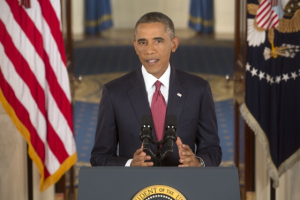
    President Barack Obama delivers an address to the nation on the U.S. Counterterrorism strategy to combat ISIL, in the Cross Hall of the White House, Sept. 10, 2014. (Official White House Photo by Chuck Kennedy)

    President Barack Obama delivers an address to the nation on the U.S. Counterterrorism strategy to combat ISIL, in the Cross Hall of the White House, Sept. 10, 2014. (Official White House Photo by Chuck Kennedy)

    This will be a long-term project that goes way beyond Obama’s own second term, and thus his 10 September Address to the Nation may be the most important speech of his presidency. Beyond that, it is likely to be the prelude to two more decades of war – and perhaps even on to that thirty-year timescale.

    The BBC summarises the strategy as Obama outlined it:

    * A systematic campaign of airstrikes against IS targets “wherever they are”, including in Syria;

    * Increased support for allied ground forces fighting against IS – but not President Assad of Syria;

    * More counter-terrorism efforts to cut off the group’s funding and help stem the flow of fighters into the Middle East;

    * Continuing humanitarian assistance to civilians affected by the IS advance.

    The Iraq element of this strategy has already been underway for a month, with at least 154 airstrikes by 10 September.  An initial analysis of the targets attacked shows that the Islamic State paramilitaries are lightly armed, highly mobile and prone to use commercial vehicles for much of their mobility. They have acquired US weapons, not least from overrunning Iraqi army bases, but they use these sparingly. A Breaking Defense analysis suggests that their capabilities would be limited against well-protected and well-armed defenders, but that their versatility would make it difficult for air-strikes to degrade and ultimately destroy them.

    Tip-toeing back into Iraq

    The United States intention is to work with other states, including the Iraqi government and the Iranian (though that is not admitted in public). Also it already has its own substantial forces in the region, primarily air and naval power. The latter includes the George H W Bush carrier battle-group in the Persian Gulf and the USS Cole cruise-missile-armed destroyer in the eastern Mediterranean. The USS Cole itself was an early victim of an al-Qaida-linked operation when it was bombed in Aden harbour in October 2000, killing seventeen American sailors and injuring thirty-nine.

    The US airforce has even stronger forces available: air-bases in Kuwait, Qatar, the United Arab Emirates and Turkey as well as facilities in Jordan. It could also utilise the large UK base at RAF Akrotiri in Cyprus. President Obama has stated that the US operations will differ greatly from the “boots-on-the-ground” wars in Iraq and Afghanistan, with their deploymernt of huge numbers of ground troops. More indicative of what is intended are the operations in Yemen and Somalia, with their heavy reliance on armed-drones, special forces, and aid to local militias.

    In each of these examples, though, early successes have been followed by regroupings of opponents. The Yemeni government is currently struggling to cope with a resurgent al-Qaida in the Arabian Peninsula (AQAP). Al-Shabaab in Somalia may have been excluded from some of the country’s few large urban areas, but it has influence across swathes of countryside as well as regional abilities through to Kenya and beyond.

    In any case, the US secretary of state John Kerry has acknowledged – in a revealing comment at a Baghdad press conference on 9 September – that in extreme circumstances, the United States might commit combat-troops on the ground in Iraq. Indeed, several hundred more US troops are already heading for Iraq, albeit reportedly for defensive purposes only; but special-forces units are likely to be already in the country, many of them involved directly in combat (though again this would never be acknowledged officially).

    In the labyrinth

    All this raises the issue of why the Islamic State’s paramilitary capabilities have come to the fore so rapidly and lethally. It remains a central question. The answer will determine how deeply the US and its coalition partners gets immersed in a new war, and relates quite strikingly to how the United States conducted the previous war in Iraq before the withdrawal of most of its forces in 2011.

    The well-informed Guardian journalist Martin Chulov reports that at the core of the Islamic State’s paramilitary force is a tightly-knit group around its leader Abu Bakr al-Baghdadi. Many of them are Iraqis who fought the American and British special forces in perhaps the most vicious phase of that singularly dirty war, which lasted for three years from late 2004.

    At that time, the US joint special-operations command (JSOC) under General Stanley McChrystal was facing a relentless and capable insurgency inflicting huge US casualties. In response it developed a new form of network-centric warfare focusing on mobile special-force groups that were highly autonomous yet connected in “real time” to a wide range of intelligence capabilities.

    The operation reached its peak in 2005 in the form of Task Force 145 (TF 145), comprising four groups working in four geographical locations around central Iraq. Three of the groups were based on US forces – SEAL Team 6 from the navy, a Delta squadron and a Ranger battalion. The fourth, Task Force Black, was organised around a British SAS squadron.

    The entire JSOC operation was centred on rapid night-raids that killed or captured insurgent suspects. Those captured would often be subject to intensive interrogation (a.k.a. torture) – the results immediately used, sometimes within hours, to prompt further raids. Steve Niva, in his remarkable academic paper “Disappearing violence: JSOC and the Pentagon’s new cartography of networked warfare” in the journal Security Dialogue (June 2013) recounts: “By the summer of 2005, JSOC teams undertook an estimated 300 raids per month, hitting targets every night, eventually turning their focus to suspected local players and middle managers in insurgent networks”. A further valuable source is Mark Urban’s book Task Force Black (2010).

    The learning game

    The full death-toll among the insurgents is not known but believed to be in the thousands. More significant in this context, however, is that many tens of thousands of insurgents were detained by JSOC units and others. Some of them were kept for years in squalid conditions in huge prison-camps such as Camp Bucca, south of Basra – which at its peak had 20,000 inmates. Some of the prisoner abuse came to light at Abu Ghraib, but other centres were engaged as well in straightforward torture (one was the infamous “Black Room” at Camp Nana near Baghdad).

    By 2009, Barack Obama had been elected president in the US and the war began to wind down. Most of the prisoners were released, including the current Islamic State leader, Abu Bakr al-Baghdadi, who may himself have been radicalised partly by his time in Camp Bucca. Nouri al-Maliki, prime minister of Iraq since 2006, was marginalising the Sunni minority. From the Sunni ranks arose a renewed extreme lslamist group in Iraq which developed into the Islamic State, linking increasingly from 2011 onwards with paramilitaries fighting Bashar al-Assad’s regime in Syria.

    The Islamic State is thus part of a long-term evolution of a process that originated in Iraq in 2003, was badly knocked back by McChrystal’s JSOC forces by 2008, but has now re-emerged to provide the hardline core of a revived movement – veterans of urban conflict against well-trained and heavily-armed US troops, marines, and special forces.

    These are people likely to have an intense hatred of the United States and its forces – coupled with a cold ability to avoid that hatred clouding their judgment. They will be people, including Abu Bakr al-Baghdadi himself, who will positively welcome US military action, especially when it extends to the greater use of special forces and the even more welcome possibility of regular troops. These are individuals who survived intense air-attacks and special-force operations for years in Iraq. They will be prepared for what now, following Obama’s speech, is likely to ensue: a new phase in a very long war.


    Paul Rogers is professor in the department of peace studies at Bradford University and Global Security Consultant at Oxford Research Group.  He is the author of numerous books including Why We’re Losing the War on Terror (Polity, 2007), and Losing Control: Global Security in the 21st Century (Pluto Press, 3rd edition, 2010). He is on twitter at: @ProfPRogers 

    Featured Image: Iraqi troops run through a smoke screen in Baqubah, central Iraq, 22 June 2007, followed by US troops from the 3rd Stryker Brigade Combat Team. The action was part of Operation Arrowhead Ripper against al-Qaida in Iraq (precursor of Islamic State) as part of the 2006-07 Diyala Campaign. Source: Sgt. Armando Monroig, 5th Mobile Public Affairs Detachment, Tikrit (via Wikipedia)

  • Sustainable Security

  • Competition over resources

    Competition over resources

    In the environmentally constrained but more populous world that can be expected over the course of this century, there will be greater scarcity of three key resources: food, water and energy. Demand for all three resources is already beyond that which can be sustained at current levels. Once population growth and the effects of climate change are factored in, it is clear that greater competition for such resources should be expected, both within and between countries, potentially leading in extreme cases to conflict.

    Turning swords into ploughshares: Environmental degradation and water poverty are reaching a tipping point after which serious instability and suffering will be unavoidable

    Prince El Hassan Bin Talal, Chairman of the West Asia-North Africa Forum | www.gulfnews.com | April 2010

    Issues:Climate change, Competition over resources, Marginalisation

    Good news does not sell newspapers. Nor, it seems, does the idea of respect for human dignity. In West Asia, where the majority of people have known little other than outright war or simmering conflict, it should come as little surprise that people have lost their faith in the possibility of real peace. Real peace can be a frightening prospect; it means burying the hatchet and beating swords into the proverbial ploughshares. No easy task when we are all burdened by historical and psychological baggage.

    Source: www.gulfnews.com

    Image source: Nino Jose Heredia/Gulf News


    Read more »

    Elaborating on the Nexus Between Energy and Water

    Jakob Granit | Journal of Energy Security | March 2010

    Issue:Competition over resources


    During the past hundred years the world’s population has tripled and the use of water has increased six fold during the same time. Recent data indicates that a global 40% water supply gap of accessible and reliable water supply for economic development is expected by 2030. Against this  background, it comes as no surprise that the political economy behind the allocation of  scarce water resources for different purposes, including for vital ecosystem functions, is beginning to shape public policy writes Jakob Granit.


    Read more »

    Global Warring

    Issues:Climate change, Competition over resources

    In Global Warring: how environmental, economic and political crises will redraw the world map, Cleo Paskal combines climate research and interviews with geopolitical strategists and military planners, to identify the environmental problems that are most likely to start wars, destroy economies and create failed states.  Read more »

    Himalayan Sub-regional Cooperation for Water Security

    Issues:Climate change, Competition over resources

    Trans-boundary collaboration over the issue of shared water is critical since water is scarce in most areas. Today, the Himalayan region is facing severe water stresses. To overcome the challenge, there is a need to promote Himalayan Sub-Regional cooperation to ensure water security and a climate of peace and progress. There is no alternative to cooperation in view of the retreat of glaciers, resulting decline in river flows in parts of the region and flooding in other parts, tectonic changes in the Himalayan region, threat to food security and the risk of increase in inequity. Read more »

    Iraq: the path of war

    Paul Rogers | open Democracy | December 2009

    Issues:Competition over resources, Global militarisation

    Tagss:global security, globalisation, Iraq

    Most analysts agree that the security situation across Iraq as a whole has improved in 2008-09. The lower incidence of violence owes something to the consolidated sectarian geography of Baghdad and its environs as a result of the ferocious conflict of the mid-2000s. In any event the decline is relative rather than absolute, for Iraq continues to be a perilous place for many of its citizens.

    In conjunction with the opening of the official inquiry in Britain into the circumstances of the then prime minister Tony Blair’s decision to join the United States-led military campaign against Saddam Hussein’s regime in 2003, the persistent violence in Iraq reopens the question of the impulse of the war and whether other decisions with better outcomes could have been taken.


    Originally published in openDemocracy.

    Read more »

    Climate change, conflict and fragility: understanding the linkages, shaping balanced responses

    Janani Vivekananda | Exclusively written for sustainablesecurity.org | December 2009

    Issues:Climate change, Competition over resources

    In this recent article, Janani Vivekananda, International Alert’s Senior Climate Policy Advisor on climate change and security, turns her attention to the negotiations in  Copenhagen. She argues that any global agreement must address the links between climate, conflict, governance and development; yet issues three cautions in doing so.

    Photograph: Opening Ceremony of UN Climate Change Conference, Miguel Villagran/Getty Images

    Read more »

  • The Arab Uprising and the Implications for Western Policies

    The Arab Uprising and the Implications for Western Policies

    Frederick Bowie | openDemocracy | February 2011

    Issue:Marginalisation

    Europeans just cannot seem to get Islam, or more properly, Islamism, out of their heads. This seems to be particularly true of Europeans who have not spent much time in the Islamic world, and whose idea of immersion journalism is to spend an afternoon wandering round an immigrant neighbourhood in the European capital city of their choice with a view to chatting up a few swarthy-looking men over a cup of mint tea.

    And even some more serious writers have ended up falling into the same trap over the last few weeks. Take Timothy Garton Ash, for instance, whose reporting of the decline of the Soviet empire in Eastern Europe in the 1980s was exemplary in its combination of in-depth research and first-hand experience. In a series of articles in The Guardian, Garton Ash has been greeting the wave of insurrections sweeping across the Arab world with a wall of worry. In his latest piece, published last week, a visit to the Calle de Tribulete in Madrid plunged him into new depths of anxiety. Despite garnering some half-hearted expressions of ill-defined hope, it was not long before he and his interlocutors were overtaken by the memories of terrorism past. He even managed to run into a young man at a bus stop spouting Wahhabi-inspired anti-semitic conspiracy theories to casual passers-by. Needless to say, the overall effect was far from encouraging.

    “Only a fool would fail to recognise that this is a moment of danger, as well as opportunity,” he concludes. “The path forward for Tunisia and Egypt is far less clear than it was for east European countries – and there is no warm, safe house of EU membership beckoning at the end of the road.”

    The leitmotiv of Garton Ash’s fears is that the threat of Islamic fundamentalism is real, however it may have been instrumentalised by western democrats and their client dictators, and that the task now falls to Europe to do something to prevent this menace from bring translated into reality. Without our help and guidance, the current upheaval in our Arab neighbours is likely to install regimes more oppressive for their citizens, and more dangerous for us than those which they have replaced.

    The problem with this scenario is not just that it depends on a faulty reading of history, one which minimises or ignores the role of the western powers in supporting the rise of Islamism in the first place, and in particular in installing a theocratic regime in Iran in order to ensure ‘stability’ and preempt a genuinely progressive revolution[1]. Even if history did agree with Garton Ash, his argument would still be undermined by the present. For it is entirely contradicted by everything we know about what is happening today in Egypt, the only one of these revolutions so far to have reached a point where, at least provisionally, the balance of power seems to have given the revolutionaries some measure of control.

    All the reports we have concur that once this particular Arab street had liberated itself, its first instinct was not to revert to some authoritarian moralistic Golden Age, the mediaeval theme park of Orientalist imagination, but rather to create an entirely new kind of society symbolised by and embodied in the occupation of Tahrir Square. The result, as Yasmine El-Rashidi has described it, was something like a cross between a vernacular religious festival (the kind of joyfully chaotic carnival which textbook Islamists generally cannot stand), and an anarchist commune. A space that was self-organising, self-securing, self-policing, self-recycling, and in which people were constantly devolving power back to one another – devout Muslims to Christians and to ‘godless’ youth[2], has-been and potential leaders to the mass of the people, and soldiers (up to fairly senior officer rank) to civilians.

    In other words, absent outside intervention, whether positive or negative, the most likely course of the Arab revolutions now in progress would be to produce creative forms of political organisation and social conviviality which, while rooted in the long histories of their indigenous cultures, and in the more recent civilisational traditions that overlay them, are as unprecedented in the experience of those now living through them as they are unpredictable for external observers.

    The problem, then, is not what Europe can do to help them, but how we Europeans can keep our governments safely out of their way, and ensure that our political and financial elites do not try to subvert these movements for their own purposes. (This is a practical problem, and it requires practical solutions – that is, things we can do, not just things we can demand that others do.) The greatest problem facing Egypt today is not the Muslim Brotherhood, or high levels of poverty and illiteracy, but the vicious co-dependency that exists between the upper echelons of the Egyptian army, the Israeli military-political complex and the bi-partisan US establishment, and of which the most obscene symbol is the US armament casings that littered the streets of Cairo after the insurrection’s blackest days[3]

    “Friends of the family”

    Led by the Egyptians and the Tunisians, the Arab world stands on the brink of inventing forms of democracy and participation that should not only destroy the dominant Orientalist image of the region once and for all, but from which the people of the US and Europe have much to learn, too. What is not clear is whether the leaders of the west, and their paranoid courtiers in the media, are ready to let us benefit from this inspiration.

    The good news, however, is that it is probably already too late for them to stop us. The people of the west have already had ample opportunity to see both what real democracy in action looks like over the last month – what it is like, that is, when people take their rights for themselves, rather than voluntarily down-converting them into “privileges” to be granted by a higher authority – and how our so-called democratic leaders react when confronted with this kind of behaviour. From Tony Blair’s description of Mubarak as “a force for good”, to Hillary Clinton’s admission that she and her husband counted the dictator of Egypt and his wife as “friends of the family”, or the revelations that half the French cabinet seems to have been relying on North African tyrants for cut-rate holidays and last-minute travel plans, we have been reminded of something that should have been obvious from the beginning. The attitude of our elected leaders towards the bullies, torturers and thieves who still continue to run a large part of the tragically misnamed “developing world” is not just one of uncomfortable tolerance. These are their friends, their allies, their co-conspirators. Though the ways in which they have risen to power may differ, the culture which that power confers upon them is essentially the same.

    The problem with Blair and Clinton is not that they are prepared to compromise their Enlightenment values for the sake of political expediency – in order to protect Israel, to ensure access to cheap energy resources, or to take advantage of a police force that is happy to torture their prisoners for them while they keep their own hands clean. The real problem with ‘our’ leaders is that they have more in common with ‘their’ leaders than they do with the vast majority of the people whom they are widely, if implausibly, supposed to ‘represent’. And that, in the end, is why we need laws: not to govern us, but to restrain them.

    Of course, the web of ties which binds together the internally violent and corrupt police states that still run most of the extractive zones of the world economy, and the externally violent and corrupt oligarchies-by-consent which are the ornament (and, increasingly, not much else) of those zones where consumption is the dominant form of oppression, is structural in nature, as well as personal. This is not just about Tony and Hillary sipping drinks by the pool with Hosni and Suzanne. Our governments and corporations sell their armies and police forces “non-lethal” weapons, and then train them in how to use them to create maximum terror among their populations. And we do this, not out of the kindness of our hearts, but precisely so that they can sell us in return their countries’ natural resources at a discount to the rate that would have to be applied if it was recognised that these resources belonged to all the people of that country, collectively and indivisibly, and not just to some tiny tyrannical minority that has managed to grab hold of the levers of former colonial power, and re-purpose them for the post-colonial era.

    In this context, David Cameron’s decision to surf the wave of people power by stopping over in Egypt on Monday looks particularly opportunistic, on the part of a man whose government has managed in the space of a few months to authorize sales of tear gas to Bahrain, crowd-control ammunition to Libya, combat helicopters to Algeria and armoured personnel carriers to Saudi Arabia. Wherever we shouldn’t have been selling weapons this winter, we have been doing it. And our role in equipping dictators and their goons seems set to continue this week at the International Defence Exhibition and Conference (IDEX), the largest arms trade exhibition in the Middle East, which opened in Abu Dhabi Sunday. The Middle East remains a ‘priority market’ for the UK industry, supported by UKTI, and one in ten of the exhibitors at IDEX are UK-based companies[4].

    Bringing Tahrir to Kensington

    One of Garton Ash’s more implausible claims is that Europe has a duty to help the Arab nations determine their path going forwards, because we have a particularly rich experience of achieving successful transitions from dictatorship to democracy. It could equally well be said, however, that our power elites have a particularly rich experience of ensuring that the transition from colonial dependency to independent state in Africa, the Middle East, Latin American and large parts of Asia, turned out entirely compatible with the continuation and intensification of the old colonial circuits of exploitation and oppression.

    Indeed, even within Europe itself, our leaders have always tried to ensure that any transition from authoritarianism to democracy, while openly welcomed, was effectively emptied of any real substance. In the process, ‘democracy’ was transformed from the real lived participation of all in the government of everyday life, into a pure spectacle – a system of propaganda that exists principally to make injustice and inequality far more ‘bearable’ than could any explicitly authoritarian regime (as Saroj Giri recently suggested, in the course of comparing the events in Egypt to the situation in India). Seen in this way, the advice of our governments on how to manage the ‘transition’ to democracy is probably something the Arab world will want to do without.

    But that does not mean that Europe and the Arab world have nothing to learn from each other. On the contrary. If the revolutions now underway across the region are indeed able to deliver on their promise of reempowering their people, without being subverted by the combined economic and military power of the USA, the EU, Israel and Saudi Arabia, then it may be that the new Arab nations which emerge from this process will need and want to share their experience with us. Indeed, they may see it as vital to their own interests to help us, the people of Europe, retake control over our own economies and our own societies, not simply in order to export their revolution, but as the minimum condition for transforming us into a good neighbour for the rest of the region, rather than the source of chronic instability and insecurity we have been over the past several centuries.

    Ongoing protests and actions in places from Madison, Wisconsin, to Central London have already appealed to the Egyptian experience, both explicitly, and symbolically. American public service workers last week brandished Egyptian flags to express their rejection of the state’s attempts to deprive them of their union rights, while British activists have called for a day of action in March to “bring Tahrir Square to Hyde Park”. While the nature of every act of human revolt is specific and, at some level, untranslatable, the energy of empowerment which it releases is by its nature infectious, and transgressive. How long before here, in the West, our own governments’ politically-motivated “austerity” programmes create the conditions in which a thousand Tahrirs can bloom? Looking back to recent events in France and Greece, we may feel that day is perhaps not so far away.

    Noam Chomsky recently claimed that what western leaders are really afraid of is not an Islamist takeover in the Arab region, but the emergence of genuinely independent and democratic Arab states which will no longer kow-tow to Washington and do its bidding. That is surely part of the story. But I believe that what they are most afraid of is not just the emergence of democracy in the Arab world. However uncomfortable and embarrassing that may be, they know they can live with it. What they are most afraid of is that, having slept through the last 60 years of democracy, their own citizens/subjects may be about to wake up again to their own power: that, having seen what it is like when a people dictate to their government what it should do for them, rather than the reverse, we might start to take our own rights back, wholesale, rather than waiting for our rulers to grant us them in homeopathic doses – or fob us off with a placebo.

    The victory of the revolutionaries of Tahrir Square, however partial and provisional, reminds us that we once started our own revolution, and that we failed to finish it. Maybe this is our time that has come again, too.

    [1] See Serge Bricianer, Une étincelle dans la nuit – Sur la révolution iranienne 1978-1979, Ab Irato, Paris, 2002, for an account of how Iranian workers’ movements were sidelined and ultimately defeated in 1979.

    [2] See Omar Kamel, “Regarding the Brotherhood…”, for a particularly moving illustration of this phenomenon.

    [3] See Pratap Chaterjee, “Egypt’s military-industrial complex”, The Guardian, 4 February 2011.

    [4] See “CAAT condemns empty words from Government as arms sale drive continues” and “UK arms sales to Middle East include tear gas and crowd control ammunition to Bahrain and Libya” for more details.

    Frederick Bowie is an independent journalist. He has spent many years living and working in the Middle East, and was a regular contributor to Al-Ahram Weekly (Cairo). The original version of this article appeared on openDemocracy. 

    Comments

    Post new comment