Blog

  • Greener Cities: what we can do

  • Human Rights as Conflict Resolution in Northern Ireland

    Following the 1998 peace agreement, Northern Ireland has been promoted as a model for peacemaking. Human rights discourse played a role as a cause and cure of the conflict.

    Since the civil rights movement of the 1960s, the Northern Irish conflict has captivated imaginations far beyond the island. Following the 1998 peace agreement, the region has been internationally promoted as a model for peace-making. Politicians from the region have shared wisdom of the Northern Ireland peace process in far-flung countries in conflict, including the Philippines, Sri Lanka, Iraq, and Afghanistan. Some of the lessons exported from Northern Ireland’s peace process are general prescriptions, such as the necessity of engaging with enemies or the need for multi-party talks to include even the smallest parties. Broader lessons promoted about Northern Ireland’s peace process are claims about the role of human rights in conflict resolution. During the peace process, a popular history emerged with rights—political, economic, and human— occupying a central role as a cause and cure of the conflict.

    Human Rights as Political Narrative

    The broad outlines of this narrative are: after partition in 1921, the new state in Northern Ireland systematically denied civil and economic rights to Catholics and maintained Protestant dominance. In the late 1960s, when peaceful civil rights demands were met with both loyalist and state violence and state reforms failed, the republican movement was forced into armed struggle. During the conflict, the British state engaged in human rights violations, further compromising the legitimacy of UK governance. In the late 1990s, republicans, unionists, and the British state settled the conflict by agreeing to new political institutions that ensured equal rights for all.

    However, human rights lessons from Northern Ireland’s peace process are not quite as tidy as this narrative suggests. My longstanding ethnographic and historical research in the region suggests caution about the comforting certainties of this causal account. In the 1960s, grassroots advocates protested that nationalists’ civil rights were systematically undermined since partition, and throughout the conflict, “first generation” rights to speech and association, or freedom from torture, were violated and remain deeply contentious. At the same time, human rights were absorbed into the conflict, and became another arena for ethnopolitical contest. In the Good Friday Agreement (GFA), an explicit commitment to human rights was envisioned for the new political arrangements. Yet as the agreement was implemented, rights politics have often been vehicles for the claims of nationalists and unionists, rather than universal human subjects.

    Ethnopolitics and Human Rights
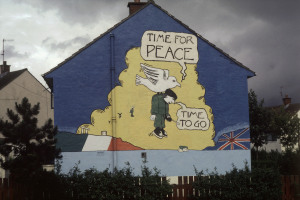
    Time_for_Peace

    “Time for Peace” mural, Whiterock Road, Belfast. Image available under the GNU Free Documentation License via Wikimedia Commons.

    Since the GFA, the tendency to argue ethnopolitical conflicts in terms of human rights has intensified, to the detriment of both wronged parties and broader understandings of human rights. A compelling example of how human rights were an incomplete solution to the conflict emerged early in the post-GFA era, in 2001, when a dispute in Ardoyne, north Belfast, resulted in shocking, violent loyalist protests at the Holy Cross Primary school (a Catholic girls’school). In June 2001, loyalists from the Glenbryn estate began picketing Holy Cross Primary School in nationalist Ardoyne, north Belfast. The school entrance was located just on the Glenbryn side of a famous “peace line.” Police in riot gear were deployed to protect small girls as they walked to school past lines of enraged adults. The dispute continued for four months, with violent conflicts during the summer break and a resumption of the pickets when the new term began in the autumn. Riots spread throughout north Belfast that autumn and winter, along with attacks on children travelling to other schools.

    Families of the distressed children eventually backed an unsuccessful challenge of police conduct under the Police (Northern Ireland) Act 2000, and under Articles 3, 8, 13, and 14 of the European Convention. That case, P.F. and E.F. v. the United Kingdom (Application no. 28326/09), was eventually ruled inadmissible by the European Court of Human Rights. Its long legal journey ended in 2010, when the European declared that, horrific as the protests were, there was no evidence of European convention breach.

    The dispute and legal proceedings very nearly derailed the new Human Rights Commission formed under the GFA.  In 2002-3, six members resigned or withdrew from the commission, citing multiple reasons related to the commission’s lack of authority and resources, its approach to drafting a Bill of Rights, and, most notably, its approach to handling the Holy Cross protests. Although the commission as a whole voted not to become involved, its casework committee committed the commission to supporting the families’ lawsuit. Individual commissioners took contradictory public positions and became increasingly divided. Meanwhile, the commission was perceived as part of an ethnopolitical conflict rather than as public advocates for either the protection of vulnerable people or fundamental rights.

    The Holy Cross protest was not resolved by human rights institutions or advocacy; some might argue that it has never been resolved. The situation revealed several problematic dimensions of treating human rights as a cure for conflict. One difficulty is that human rights laws concern the conduct of state actors. Paramilitary organizations, neighborhood associations, and transnational corporations do not sign human rights treaties.

    Human Rights in the Good Friday Agreement

    Another issue making it difficult for human rights law or advocacy to provide a resolution to conflict was how the GFA itself situates human rights principles in relation to power-sharing as a means to manage conflict. One innovation of the GFA is that it makes human rights central to the settlement, with the entirety of section 6 devoted to “Rights, Safeguards and Equality of Opportunity.” However, the GFA is more strongly oriented by political scientist Arend Lijphart’s consociational model. This model prescribes the management of conflict through power sharing among parties defined in ethnic or communal terms. Thus, the GFA situates human rights within a broader logic that privileges collective political rights. This conceptual maneuver mirrors the way political rhetoric and everyday life absorb human rights claims into regional ethnopolitics, rather than creating a transformative alternative to ethnopolitics.

    In the Holy Cross conflict, protagonists framed the dispute in terms of collective rights and alleged that these rights were being differentially allocated by the state. Families of the girls argued that the protests subjected them to inhuman and degrading treatment—violations of their human rights. Furthermore, they said, police did not use force to stop the protests because the girls were Catholic, but they would have ended any such protest by nationalists. Loyalists claimed that free assembly was an unconditional right, irrespective of sectarian content or whether violence might be a consequence.

    Unfortunately, the kinds of conflicts and challenges for human rights politics raised in the Holy Cross conflict are neither unusual nor uncommon in Northern Ireland. For example, in Donaldson v. the United Kingdom (Application no. 56975/09) the European Court of Human Rights refused to hear the complaint of a republican prisoner that his human rights were violated when the prison service did not allow him to wear a lily (a symbol of the republican struggle for a unified Ireland) outside his cell. Disputes over rights to display emblems may appear frivolous outside the region, but they are part of a broader process, in which human rights laws and institutions have been insufficient to resolve the disputes that emerge from Northern Ireland’s longstanding political conflict.

    Enduring Lessons and the Everyday Life of Rights

    In my 2014 monograph, I explore at length how rights politics have often functioned war by other means over time, rather than providing a comprehensive resolution to conflict. I conclude that advocacy such as the lesbian, gay, bisexual, and transgender (LGBT) equality movement have been more transformative in human rights terms than attempts to balance ethnopolitical rights. This cautionary point about how human rights politics have been received, reinterpreted, and transformed in the Northern Ireland context is not intended to dismiss the peace process’ significant achievements, including the profound diminution of political violence, paramilitary demobilizations, and decommissioning.

    Nevertheless, the successes of the process also require recognition that throughout the fitful implementation of the GFA, political polarization intensified, past violence and political symbols have been repeatedly contested, and riots surrounding parades and symbolic matters like flags have become dangerous and costly recurrent events, intimating, for some, a return to conflict. Violence casts a long shadow across the present peace; prosecutions and re-investigations of past murders and atrocities continue, recent killings like the murder of Kevin McQuigan last summer destabilize power-sharing institutions, and ministers continue to warn of resurgent paramilitary activity – such as a recent upsurge in bomb attacks.

    Understanding the role of human rights in everyday politics in both the past and present is necessary for making nuanced claims for human rights advocacy and law in conflict resolution. Northern Ireland’s tremendous reduction in violence must not be dismissed, but it is important to recognize that the settlement also sustains a form of ethnopolitics that is not always congruent with the goals of human rights advocacy. As the politics of the conflict continue to structure the settlement, it is fair to ask how transformative human rights politics have been. Such an approach can make us conscious of perilous conditions that constrain the present fragile peace, and highlight achievements that are durable and transferrable for the future.

    Dr. Jennifer Curtis is Honorary Fellow in Social Anthropology at the University of Edinburgh. She is the author of Human Rights As War By Other Means:  Peace Politics in Northern Ireland, published by the University of Pennsylvania Press. Her work focuses on how grassroots social movements appropriate and alter rights advocacy and law. She has conducted long-term ethnographic research in Belfast, Northern Ireland and in the United States.  She is currently completing an ethnographic monograph on race, sexuality, and civil rights in red state America, based on fieldwork in Missouri. The book explores the local and national significance of #BlackLivesMatter, movements for LGBT equality, and anti-equality movements, within the broader historical context of racialized violence, slavery, and inequality in the American South.

  • NATO’s Mediation During The Cod Wars: The Lessons Learned

    The types of mediation techniques used by an international organization (IO) to settle an international crisis are crucial.  The North Atlantic Treaty Organization’s (NATO) mediation during the Cod Wars represents an interesting case.

    The Cod Wars were a series of disputes between Britain and Iceland lasting from the 1950s to the 1970s over fishing rights in Icelandic waters. The two states were part of NATO and this was the first time two NATO member states had come close to armed war. During the crisis, NATO adopted a combination of both formal and informal mediation techniques, which proved to be instrumental in resolving the Cod Wars conflict. This episode carries important lessons regarding the role of mediation in international relations and conflict.

    War, mediation and international organisations

    War primarily occurs when states perceive that the likely calculated benefits of combat outweigh the expected costs. In turn, scholars and practitioners have paid extensive attention to identifying the mechanisms that alleviate a crisis. The Democratic Peace, institutionalism, trade agreements and economic cooperation are some of the mechanisms that foster peace, because they tend to improve states’ relations by creating interdependence give incentives to cooperate rather than fight.

    Also, ties that states create between themselves or through third-party actors help in crisis alleviation because of the strong network structure that is thereby created. This is where the role of international organizations (IOs) comes into play. States can lower their military tensions in favor of expectations of future gains, based on the cooperation with their co- members in the same IO. If a crisis escalates between co-members of the same IO, the latter seeks to assist its members and restore peace and thus, the IO is turning to a mediator.

    A member state usually agrees to abide by the rules of the IO. For instance, members in NATO should commit to the following article:

    “The Parties will contribute toward the further development of peaceful and friendly international relations by strengthening their free institutions, by bringing about a better understanding of the principles upon which these institutions are founded, and by promoting conditions of stability and well-being. They will seek to eliminate conflict in their international economic policies and will encourage economic collaboration between any or all of them.”

    (North Atlantic Treaty; official texts; 1949)

    A mediator that enters a conflict aims to become part of the conflict by manipulating the actors’ behavior and, thus, the choices of the opposing parties.

    We do not know what would have happened if NATO had not mediated the Cod Wars. Nonetheless, we learned lessons from NATO’s approach in the Cod Wars that could potentially be used in other instances.

    The Cod Wars

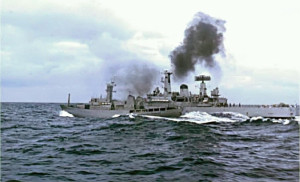
    scylla-odinn

    Image credit: Issac Newton/Wikimedia.

    The UK and Iceland share waters over the Atlantic Ocean in the north. Both the UK and Iceland became charter members of NATO in 1949, with the reservation that they would never take part in offensive action against another NATO nation. Note, though, that the UK and Iceland have had interactions over fishery rights starting even before the 17th century. The Cod Wars comprised of a protracted series of conflicts between Iceland and the UK that began in 1945. The conflict was initially triggered by Iceland’s one-sided extension of its territorial waters.

    There was variation in NATO’s responses towards the crises.  For instance, NATO did not intervene in the first crisis of the Cod Wars (1952-1956). NATO only intervened in later instances, but with different techniques. That is, NATO employed a series of formal and informal mediation techniques over the course of the Cod Wars. A “formal technique” is any official action taken by the mediator that is visible to the public, for instance, all the actors involved in the conflict are aware of that action. Transparency can help the mediator increase their leverage in the conflict and help credibility. An “informal technique” is any action by the mediator that is not visible to the public and to one or both of the disputants. Formal and informal mediation techniques clearly have different advantages.

    Public (formal) actions can pose threats to the disputants’ reputations to convince them to stop fighting. On the other hand, informal techniques can improve parties’ mutual understanding and improve their relationship. This usually occurs when the mediator provides a neutral, low-key, safe, and non-judgmental environment. Informal mediation can also give parties opportunities to have earliest talks before reaching an agreement. But while formal mediation by an IO has more leverage and salience, it can also be restraining because it is limited by the organization’s rules, norms, and regulations. And while informal mediation is more flexible, it lacks credibility and thus leverage, as “power through the public” is not used in informal mediation. Mingling both techniques would then seem to be the most successful strategy.

    The Cod Wars comprised of four distinct crises, with mostly low tensions on both sides. NATO obliges its co-signers to resolve any mutual conflict peacefully. If the parties are not able to resolve the issue bilaterally, NATO intervenes. Different techniques generated different outcomes to a crisis: either recurrence or non-recurrence of the crisis. A failure to sufficiently address the issues arising from the belligerents’ incompatible goals at the post-conflict stage can ultimately lead to a recommencement of conflict. This happened in the case of the Cod Wars in the first three crises. The first pre-conflict incidents occurred between 1945 and 1948 when Iceland gained the control of its territorial waters. The situation then escalated to clash in the 1950s and became a higher-level crisis in 1952, without NATO intervention. In 1952, the crisis was initially “resolved” and the post-conflict period commenced in 1954. The second crisis began in 1955 and was resolved in 1961, following NATO’s use of formal and informal mediation techniques, with peace lasting for almost eleven years. When tensions exploded again in the early 1970s, NATO used informal mediation to resolve the crisis, but peace was short-lived and conflict recurred beginning in 1975. On this occasion, NATO intervened using both formal and informal mediation. The final crisis ended in 1976, and peace has endured.

    A combination of formal and information mediation techniques proved effective for the Cod Wars settlement. When NATO employed formal and informal mediation techniques in a combined manner, it was able to help the parties achieve the most durable resolution. Formal and informal techniques enabled NATO to be flexible (informal) and build trust among the parties but still use the legitimacy (formal) of its organization to gain leverage in the bargaining process.

    Conclusion

    NATO’s mediation efforts in the first three crises can be seen as failures because the peace that followed each intervention was of short duration. Of course, mediation success is not only determined by the mediator’s strategy, but also by the disputants’ desire to end the crisis. In the case of the Cod Wars, the UK faced risks to its international reputation. Iceland arguably had more leverage because of the strategic significance of its military base and because of the Soviet Union’s interest in developing an alliance with the country. Iceland triggered each crisis of the Cod Wars and eventually achieved all its claims. Nonetheless, in the final crisis, it was Iceland — economically troubled and politically volatile — that requested NATO’s intervention.

    Mediation strategies previously employed are to be considered as lessons for future instances, not only to not repeat the same mistakes but also learn from previous success. Take, for example, the Beagle Conflict of 1978 between Argentina and Chile with the Vatican as the eventual mediator. Although the Cod Wars is another isolated conflict that pertains to specific circumstances and features, one could consider relevant generalizations that apply to other/future instances, mostly regarding the mediation strategies used. It is indeed the case that co-members of IOs do not experience frequent conflicts. That said, strategies followed by NATO in the Cod Wars can be employed by individual mediators, countries that act as third party interveners, or other IOs regardless of the shared ties among the countries. Third party interveners who benefit from leverage and resources should have the flexibility to address the issue at stake under different mediation strategies which will depend on the interests, the positions, and the needs of the belligerents.

    Zorzeta Bakaki is a Lecturer in the Government Department at the University of Essex. She studied Political Science and Public Administration at the Law School of the University of Athens. She received a Master of Science in International Relations from the University of Essex.  Zeta also obtained her PhD from the University of Essex. Her research interests are international relations, the quantitative and qualitative analysis of conflict management and resolution, international cooperation and environmental politics.

  • Mano Dura: Gang Suppression in El Salvador

    El Salvador ArticleEl Salvador’s gang history dates back to the 1960s. At the time, numerous neighbourhood-based groups provided marginalised urban youths with the means to hang out, party, take drugs, and fight their rivals. These gangs constituted a nuisance for the affected residents but did not represent a public security threat. The situation drastically changed when the Central American civil wars ended and the United States stepped up its deportations of offending non-citizens, including members of Mara Salvatrucha (or MS-13) and Calle Dieciocho (18th Street). Both gangs had been formed in Los Angeles’ immigrant barrios, a haven for Central American refugees some of whose children responded to difficult circumstances by joining existing gangs (such as the Dieciocho) or forming their own group (Mara Salvatrucha). Tired of the stresses of gang life, many deportees arrived in their country of origin hoping to make a fresh start. Faced with poor reinsertion opportunities, however, they continued with what they knew best. Their comparatively nice dress, money, and tales of gang exploits held a fascination that local adolescents found hard to resist. Soon the imported gangs absorbed their smaller counterparts and continued to grow, since widespread social exclusion made El Salvador fertile ground for gang proliferation. Over time gang members resorted to greater levels of violence and drug activity, but the country long lacked a full-fledged gang policy.
    In 2003 – eight months before the 2004 presidential elections – President Francisco Flores of the conservative ARENA party launched Plan Mano Dura (“Strong Hand”), ostensibly to dismantle the gangs and curb the number of homicides, most of which had been attributed to these groups. Backed by considerable media publicity, the measure entailed not only area sweeps and joint police-military patrols, but was also accompanied by a temporary anti-gang law that permitted the arrest of suspected gang members on the basis of their physical appearance alone. Both the nature and the timing of the initiative suggested that it had been designed to improve the ruling party’s electoral position rather than to ensure effective gang control. Plan Mano Dura enjoyed huge support among a population that had become weary of permanent insecurity, but human rights defenders, judges, and opposition politicians criticised it for its abuses and neglect of prevention and rehabilitation. The measure helped ARENA win the elections, but the incoming administration of Antonio Saca responded to the earlier criticism by incorporating prevention and rehabilitation into his Plan Super Mano Dura. These alternative approaches, however, were a largely rhetorical concession since suppression remained the dominant strategy. Contrary to the official discourse of success, Mano Dura was spectacularly ineffective: the homicide rate escalated, and the gangs adapted to the climate of repression by toughening their entry requirements, adopting a more conventional look, and using heavier weaponry. More importantly, confinement in special prisons allowed gang members to strengthen group cohesion and structure. Moreover, the large-scale incarceration of gang members fuelled the need for more resources for both the inmates and their families and resulted in an upsurge in extortions, particularly in the transport sector.

    By June 2009, when the government of ex-journalist Mauricio Funes and the FMLN (the former guerrilla army) came into power, the gang problem had become intractable. MS-13 and Dieciocho clicas (subgroups) sprawled hundreds of marginal urban communities, their members committed a variety of crimes – ranging from threats, robbery, injuries, auto theft, and the illegal carrying of firearms to drug sales, extortions, rapes, kidnappings, and homicides – and their violence had become increasingly diffuse and brutal. The Funes government announced a comprehensive crime policy comprising social prevention, law enforcement, rehabilitation, victim support, and institutional and legal reforms. The strategy, however, is underfunded (state coffers had been plundered by previous administrations), and gangs are being tackled through the overall crime policy rather than a specific gang programme. The police – now under a new command – has stopped conducting mass raids in gang-affected zones and begun to strengthen its investigative capacity. These are promising steps, but events on the ground soon pushed policy in another direction. Public demands for a quick reduction of homicides and media coverage alleging government incompetence led President Funes in November 2009 to deploy the army. Military participation in public security tasks is no recent development. At present, however, the army has been given broader powers, permitting it to conduct patrols, perform searches, and arrest criminals caught red-handed as well as to maintain perimeter security at the prisons. In what appears to be a face-saving gesture, the Funes administration adopted a gang strategy that exhibits ominous parallels with the earlier Mano Dura policies. Meanwhile, prevention and rehabilitation have once again taken the backseat.

    Sonja Wolf is a Researcher at the Instituto para la Seguridad y la Democracia in Mexico City, where she conducts research on security and migration issues in Mexico and Central America.

    Image source: VCK xD

  • US Drone Strikes in Pakistan: ineffective and illegitimate

    US Drone Strikes in Pakistan: ineffective and illegitimate

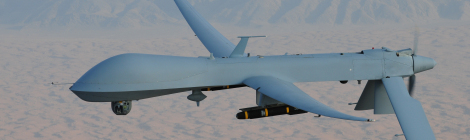
    Strikes by unmanned combat air vehicles, or armed drones, have become the tactic of choice in US counterterrorism efforts in Yemen, Somalia and, the topic of current controversy, Pakistan. The lack of transparency, dubious effectiveness, civilian casualties and negative consequences for US national security being highlighted by current debate means that Washington needs to re-evaluate its approach.

    Read Article →

  • Brexit and the Irish Nationalist Reaction

    Brexit has called into question Britain’s relationship with Northern Ireland. Whilst the possibility of sporadic inter-communal violence in Northern Ireland is small, the Brexit vote has certainly placed a strain upon the hard-won stability of British-Irish relations.

    Introduction

    Whilst the full implications of so-called ‘Brexit’ for the future of the United Kingdom (UK)’s relationship (if any) with the European Union (EU) remain profoundly uncertain, it is also the case that the UK-wide vote to Leave has exacerbated the already existing sense of fluidity regarding the future constitutional relationships between the constituent parts of the multi-national UK state. Of course, the majority votes to Remain in Scotland and Northern Ireland do not, of themselves, create a new constitutional arrangement, but if the new Conservative administration of Theresa May were to decide to push on with a UK-wide ‘hard Brexit’, perhaps involving leaving the single market in a bid to establish control over the free movement of persons, then it is difficult to see how the stability of the UK’s constitutional status quo could be guaranteed. As Brendan O’Leary has argued, ‘those who insist that a 52-48 vote is good enough to take the entire UK out of the EU would trigger a serious legitimacy crisis.’  A key lesson that needs to be understood by Westminster in the coming months or years of negotiation (with Brussels and the EU member states, particularly the Republic of Ireland, but also within the divided UK) is that, as O’Leary puts it, multi-national states are not usually ‘destroyed by secessionists alone’ (Ibid.). It is the ‘unilateral adjustment of the terms of the union by the centre’ that can provoke such an outcome. This may be an unintended consequence of such unilateralism, even if some at the centre profess the view (as David Cameron did after the Scottish referendum on independence in 2014) that the multi-national union is ‘precious beyond words’.

    Great Britain and Northern Ireland: A ‘Place Apart’

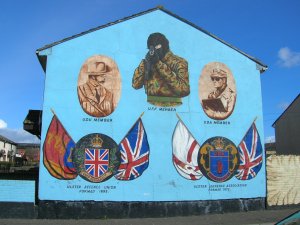
    unionist mural

    Image by Miss Copenhagen via Flickr

    It is unsurprising that during the campaign neither the public nor the political class in Great Britain (GB) appeared to give much serious consideration to the effect of a Brexit vote upon three crucial interlocking relationships: the fragile state of communal relations within Northern Ireland in the post-Good Friday Agreement (GFA) era; the North-South relationships on the island of Ireland, and the questions Brexit was likely to raise concerning the 300-mile land border; the wider UK relationship with its closest neighbour. This ‘reflexive forgetfulness’ of the GB public with regard to the unloved province of Northern Ireland may have been unsurprising, but it was lamentable, and possibly destabilising, nonetheless. If there was engagement with the potential repercussions of a Leave vote on the internal, already fragile, relations between the constituent parts of the UK, the focus tended to be on Scotland, rather than Northern Ireland. This neglect, by no means benign, reflects a deep-rooted sense that Northern Ireland is, in Dervla Murphy’s phrase, a ‘place apart’.  In the short and medium-term the ‘peace process’ has not been jeopardised directly, and there is no immediate prospect of a return to widespread violent confrontation between Irish nationalists and British unionists in Northern Ireland. Aside from a number of weak and fragmented ‘dissident’ republican groups, there is no appetite for the resumption of an armed campaign among ‘mainstream’ republicans. There is always a possibility of sporadic inter-communal violence in Northern Ireland, but this looks remote at present. Nevertheless the Brexit vote has certainly placed a strain upon the hard-won stability of these relationships since 1998.

    The Republic of Ireland and ‘Brexit’

    For the Dublin government of Fine Gael (supported by several independent TDs), there was a fear that the critically important trading relationships with the UK would be damaged, and that any imposition of a ‘hard’ border (involving customs posts and possibly restrictions upon free movement) would further complicate and hamper economic activity. Allied to this hard-nosed economic concern, Dublin was also anxious that Northern Ireland’s fragile community relations and the institutional balance reflected in the GFA could be under threat, as ‘the border’ and potential constitutional change were placed, once again, on the agenda. Related to this anxiety was, perhaps, the unspoken fear of Taoiseach Enda Kenny that Dublin’s sense of being an equal partner with the UK in the lengthy years of the peace process might be compromised. The harmonious co-operation between the Dublin and London governments, built up over several decades stretching back to the Anglo-Irish Agreement of 1985, might begin to unravel, if London took the Brexit vote as a green light to marginalise the concerns of the Irish. Those concerns were three-fold: maintaining the open border between the Republic and Northern Ireland; keeping the ‘common travel area’ between Ireland and the UK (first agreed in the aftermath of partition in 1922); and, safeguarding the trading relationships (worth approximately £1 billion a week). As Pat Leahy argued in the Irish Times, ‘underpinning all these was the need above all else to protect the peace process.’

    Kenny was keen to confirm that this bilateralism, and the ‘special relationship’ between the two states would survive Brexit, and his meeting with Theresa May in late July assuaged these doubts somewhat. But, as with that other fabled ‘special relationship’ between London and Washington, this one is also fundamentally asymmetrical, intrinsically of more significance for one side than the other. When it comes to tackling the enormous fallout from the Brexit decision, neither the relationship with Dublin, nor indeed the impact upon Northern Ireland, are at the top of London’s to-do list. It may even be the case that these issues are closer to the bottom of that list. Having said this, the new Prime Minister’s willingness to meet with Kenny, and her declaration in Belfast that ‘no-one wants to return to the borders of the past’ have calmed these fears to at least some extent.

    However, hard choices remain to be made, and there is no guarantee that May’s government will be able to square the circle between impatient Conservative back-benchers and pragmatists in Whitehall who are concerned about softening the impact of the decision, both economically and diplomatically. The former group, buoyed by the momentum of victory, believe that Brexit should be swift, complete and irrevocable; they are watching hawkishly for any signs of back-tracking. This is the context in which Enda Kenny made a speech at the MacGill summer school in Co. Donegal, which speculated on the prospect, at some time in the indeterminate future (perhaps ‘10, 15 or 20 years from now’), that Northern Ireland might vote to join with the Republic. Of course, this was ‘controversial’, but almost certainly was designed to ensure that others, in the UK and Europe, take seriously the concerns of the Dublin administration. More parochially, Kenny perhaps felt that he needed to respond to the pressure being applied by opposition parties Fianna Fáil and Sinn Féin (SF).

    Sinn Féin and ‘Brexit’

    Having campaigned for a Remain vote, on the basis of its ‘critical engagement’ position with respect to the EU, SF’s first response to the referendum result was to demand a border poll in Northern Ireland, as provided for in the GFA, if there is a realistic prospect of a majority vote in favour of constitutional change. Gerry Adams, SF President, claimed that the result meant that the ‘British government had forfeited the claim to represent the North at an EU level. Its policy has been rejected by the people.’ When this demand was predictably dismissed by the outgoing Secretary of State for Northern Ireland, Theresa Villiers, SF quietly moved on, instead focusing its attention on a mooted ‘national forum’ (modelled on the New Ireland Forum of the early 1980s and the Forum for Peace and Reconciliation of the early years of the peace process) to discuss how ‘the vote of the clear majority of citizens in the North who want to remain in the EU can be respected and defended.’ Although this proposal was effectively adopted by the Dublin government, it was also immediately rejected by Arlene Foster, the Democratic Unionist First Minister of Northern Ireland. Nevertheless, SF senses that Brexit could present republicans with a real opportunity to break out of the sterile impasse that had threatened its ‘project of transformation’ in Northern Ireland. SF has always characterised the GFA as ‘transitional’ and the peace process as ‘dynamic’, reflecting the party’s teleological belief that the ‘natural’ end-point of the process will be a united Ireland. It remains to be seen whether or not Brexit helps to make this vision any more realistic, but for the moment it has certainly breathed new life into the notion that the ‘border’ continues to be a key issue for the peoples of the island.

    Since June 23rd, there have been emollient words and symbolic gestures from Theresa May, but sooner or later some difficult and potentially painful choices will have to be taken. In a joint letter on August 10th to Theresa May, Arlene Foster and Martin McGuinness, the First and Deputy First Minister of the Northern Ireland Executive, argued that the UK government should take into full account four issues of particular significance for Northern Ireland: the border should not become an impediment to the movement of goods, people and services; both private and public sectors need to retain access to unskilled as well as skilled labour; the energy requirements of Northern Ireland should not be affected; the potential loss of EU funds (over 3.5 billion Euros during 2014-2020) needs to be addressed.  The Dublin government, and the parties in Northern Ireland, will be hoping to have a genuine input into this decision-making, but it looks highly improbable that all the political forces in play will, or can, be satisfied simultaneously. Despite the constructive initial discussions, the Foster/McGuinness letter recognises that ‘it cannot be guaranteed that outcomes that suit our common interests are ultimately deliverable.’ Will the centre hold, and if so, how?

    Stephen Hopkins is Lecturer in Politics in the Department of Politics and International Relations at the University of Leicester, UK. His book, The Politics of Memoir and the Northern Ireland Conflict, was published in 2013 by Liverpool University Press.

  • Gender and Private Security

    Drugs and Drones: The Crime Empire Strikes Back

    Ever advancing remote warfare technology is being increasingly used by law enforcement agencies to counter drug trafficking. In response, drug cartels are also adopting new technology to smuggle and distribute drugs. However, the technological superiority of law enforcement-military actors is also causing criminal and militant groups to adapt by employing the very opposite tactic, by resorting to highly primitive technology and methods. In turn, society is doing the same thing, adopting its own back-to-the-past response to drug trafficking and crime.

    Read Article →

    From Surveillance to Smuggling: Drones in the War on Drugs

    In Latin America drones are being used as part of the War on Drugs as both regional governments and the US are using surveillance drones to monitor drug trafficking and find smuggling routes.. However, as drones are increasingly being used by drug cartels themselves to transport drugs between countries, could Latin America find itself at the forefront of emerging drone countermeasures?

    Read Article →

    Privatising the War on Drugs: PMSCs in Colombia and Mexico

    US drug policy has become increasingly privatised in recent years as the US government contracts private military and security companies (PMSCs) to provide intelligence, logistical support and training to state security forces in drug-producing and –transit states. As the cases of Colombia and Mexico illustrate, this privatisation strategy is having a damaging impact on these already fragile environments.

    Read Article →

    Beyond Privacy: The Costs and Consequences of Mass Surveillance

    Last week the new UN privacy chief said UK surveillance was “worse than [George Orwell’s novel] 1984”. In the two years since the Snowden leaks revealed the existence of bulk internet and phone surveillance by US intelligence services and their partners, including the UK, the British government continues to engage in the mass collection of citizens’ communications data.

    Read Article →

    Losing control over the use of force: fully autonomous weapons systems and the international movement to ban them

    Later this month, governments will meet in Geneva to discuss lethal autonomous weapons systems. Previous talks – and growing pressure from civil society – have not yet galvanised governments into action. Meanwhile the development of these so-called “killer robots” is already being considered in military roadmaps. Their prohibition is therefore an increasingly urgent task.

    Read Article →

  • From The Great War to Drone Wars: The imperative to record casualties

    The centenary of the First World War also marks the anniversary of the practice of recording and naming casualties of war. But a century on, new forms of ‘shadow warfare’ limit the ability to record casualties of conflict and thus threaten to allow states a free hand to employ dangerous new tactics without threat of individual or international accountability. Without verifiable casualty figures – including information on who is being killed and how – we cannot evaluate the acceptability, effectiveness or impact of ‘remote control’ tactics as they are rolled out among civilian populations.

    A Humanizing Legacy

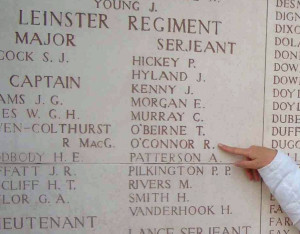
    Image of the name of Sgt. Robert O'Connor of The Leinster Regiment on the Menin Gate wall, who was killed on 31 July 1917 during the First World War. Source: Wikipedia

    Image of the name of Sgt. Robert O’Connor of The Leinster Regiment on the Menin Gate wall, killed on 31 July 1917 during the WWI. WWI saw the start of practice of recognizing by name each and every soldier killed during battle. Source: Wikipedia

    As the world marks the centenary of the commencement of the First World War,  we remember not the war that ended all wars, but instead the war that changed them forever. Introducing new forms of mechanized warfare – including the machine gun, u-boat, tank and airplane – WWI increased exponentially the lethal force of the individual soldier, bringing about an era of death and destruction on an industrial scale.  Yet, even as it ushered in the means of mass and impersonal killing, the ‘Great War’ also initiated the humanizing practice of recognizing by name each and every soldier who lost their lives, burying them in marked graves alongside those of their officers. Not only does such identification and public acknowledgement of victims dignify their memory, in today’s conflicts it can also provide vital information for humanitarian response and for monitoring compliance with – or tracking violations of – international law.

    Today we are again witnessing the introduction of new forms of warfare – including armed drones, lethal autonomous weapons, special operations forces and use of private military and security companies.  Like their WWI counterparts, these new tactics will reshape the face of conflict, yet as they do so they also threaten to destroy the humanizing legacy of casualty recording. Pushing global warfare deep into the shadows, these new ‘remote-control’ tactics are replacing public military campaigns with covert and contracted force. This shift to a ‘light-footprint’ approach, primarily by the United States, but also by France, Russia and the United Kingdom, reflects not only the changing nature of security threats, which have become mercurial at best, but also the lessening appetite for long military campaigns with high military casualties. A recent report from the Every Casualty Programme at Oxford Research Group and the Remote Control Project finds that the prioritisation of ‘remote control’ tactics presents serious obstacles to the recording of casualties, and subsequently, accountability for the civilians impacted by their use.

    Issues of capacity, political will, and access challenge efforts to record the casualties of any type of conflict. Yet, in conventional warfare, where identifiable or recognised conflict parties conduct attacks, such recording is not impossible: militaries generally record their own fatalities in these instances, while civilian deaths are often recorded by small civil society organizations around the world.  One need only look to the names of the hundreds of civilians killed in recent conflict in Gaza published by major news outlets to see the result of such efforts. In covert conflicts, however, or in conflicts where ‘remote control’ tactics are used, the ability to record casualties – including information on who is killed and how – is greatly diminished.

    The merging of intelligence operations with the use of force – seen currently in countries such as Yemen, Pakistan and Afghanistan with the use of armed drones and special operations forces by the United States – is a particularly problematic trend for casualty recorders. By greatly increasing the opacity – or outright deniability – of state force, covert operations erect a seemingly impenetrable wall of ‘classified information’, impeding recorders’ ability to conduct field investigations and verify their data. In 2010, the United Nations Mission in Afghanistan (UNAMA), which has conducted systematic casualty recording since 2007, reported that due to “tactical reasons and deliberate lack of information about such operations” they found it “very difficult to monitor and adequately document the activities of Special Forces” operating in the country. Gathering data on civilian and combatant casualties of drone strikes has also proved problematic – with ORG’s report finding that recorders are challenged by a lack of official disclosure of information about strikes, blocking of access to strike sites, and a near monopoly of information by anonymous officials on information coming from affected areas.

    The consequent lack of reliable casualty data impedes the impartial evaluation of the tactics’ impacts on civilian populations. It also limits the ability to scrutinise the tactics acceptability and effectiveness using evidence-based analysis. The United States – the primary user of armed drones – has repeatedly claimed that drones allow for precision targeting, capable of surgically eliminating targets with minimal civilian casualties. Yet, as a recent report from the Bureau of Investigate Journalism on drone use in Afghanistan has shown, “the armed forces that operate drones publish no data on casualties to corroborate these claims.” Although the United States claims to record data on casualties itself, its failure to make such records transparent not only prevents an analysis of the acceptability of drone strikes, but also denies the victims and their families the opportunity for accountability or redress.

    Bringing Remote-Control warfare out of the shadows

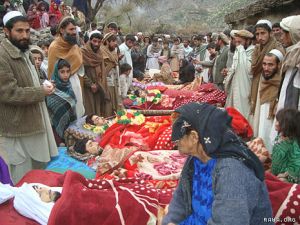
    People of Narang district mourning for the students killed in a night raid in the village Ghazi Khan on December 27, 2009. Although the operation was authorised by NATO, it is still not publicly known who carried out the attack. Source: Wikipedia

    People of Narang district mourning for the students killed in a night raid in the village Ghazi Khan on December 27, 2009. Although the operation was authorised by NATO, it is still not publicly known who carried out the attack. Source: Wikipedia

    Data documenting the casualties of particular weapons – from chemical gas in WW1 to landmines and cluster munitions more recently – has been instrumental in evaluating these weapons’ impact and acceptability, and ultimately ensuring their regulation through international treaty. Yet, as new tactics are employed under the cloak of ‘covert action’, the ability of the international community to measure and regulate their impact is increasingly limited. Without verifiable casualty figures, states may be given a free hand to employ dangerous new tactics without threat of individual or international accountability. Indeed a recent report from Amnesty International has found that as a result of an almost complete lack of transparency from the US government regarding civilian casualties in Afghanistan – specifically around those killed in night raids by SOFs or by missiles from drones strikes – victims are already facing a major accountability vacuum.

    States must take greater responsibility for recording and acknowledging the casualties – both civilian and combatant – of these new tactics. They must not seek to block public investigation and accountability, even though these tactics may be adopted for the lower profile they afford armed force. Furthermore the United Nations, alongside civil society groups or other entities, must enhance their recording efforts so as to provide independently verifiable data on casualties. Such data is essential for developing an accurate, complete and impartial record, and for facilitating scrutiny in circumstances where casualties are highly politicized. Civil society-led casualty recording and analysis, despite its limitations, has already highlighted policies within the use of remote control tactics that need greater examination: for example, the practice of ‘double-tap’ or rescuer drone strikes in Pakistan on those coming to the assistance of individuals at the site of a previous strike. Only by ensuring that casualty recording is conducted systematically and to a high standard can we bring the impact of remote control warfare out of the shadows and into the public eye.

    If we are to take a lesson from the commemoration ceremonies resounding across Europe it is simply that to learn from the past, and to honor it, we must first know that past. Details regarding the identites of those killed in conflict, both on the battlefield and in their homes, are essential to understanding the impact of violence, and to telling the full story of a conflict, to both current and future generations. The risks, then, of wars waged in secret, their battles and casualties concealed, are profound. Not only will there be no monuments at which to mourn their dead, there will be no lessons to be gleaned from their history: the wisdom of hindsight – both for policymakers deploying force and the public – may be lost completely.

    Kate Hofstra is Research and Communications Consultant of the Every Casualty Programme at Oxford Research Group and co-author of Losing Sight of the Human Cost: Casualty Recording and Remote Control Warfare. Kate previously worked for TLG,a London-based communications consultancy, where she was the editor of a digital magazine on business and development. She has also worked with the OSCE Mission to Bosnia and Herzegovina in Sarajevo and hasa background in transitional justice. Kate has an MSc in Human Rights from the London School of Economics.

    Featured Image: Deputy chief minister of Pakistan’s North West Frontier Province and tribesmen offer funeral prayers in front of dead bodies who were killed in army operation in Khar, the main town in Bajaur tribal agency, 30 October 2006. Source: The Bureau of Investigative Journalism, Naming the Dead Project