Category: 2014

  • Sustainable Security

    Introduction

    The acknowledgement of gender issues through the Women, Peace and Security (WPS) agenda marked a watershed moment for women’s rights. Despite this, the Responsibility to Protect (R2P) framework remains gender-blind. I argue that R2P and the WPS agenda share overlapping commitments and mutually beneficial and reinforcing protection mandates. Through three intersecting commitments – prevention and early warning systems, gender protection in peacekeeping, and women’s participation in post-conflict reconstruction – careful alignment between R2P and the WPS agenda could overcome this silence and move towards achieving more sustainable security.

    The Responsibility to Protect and Women Peace and Security

    Systematic human rights atrocities perpetrated against individuals based on their ethnicity, gender, and race have framed contemporary political discourses. With the international community’s inability to collectively respond to prevent mass atrocities and other severe humanitarian emergencies, former United Nations (UN) Secretary-General Kofi Annan spearheaded the challenge to create a norm permitting states to intervene in another sovereign state in the event of ‘gross and systematic violations of human rights that affect every precept of our common humanity’. Spurred on by  failures of the international community to prevent genocides in Rwanda (1994) and Srebrenica (1995), the International Commission on Intervention and State Sovereignty (ICISS) was established in September 2000 to address how and when the international community should act to prevent genocide, war crimes, ethnic cleansing and crimes against humanity. The report entitled “The Responsibility to Protect” (R2P) was released in December 2001. The unanimous adoption of R2P at the World Summit in 2005 established its prominence as a normative framework within the international community. The use of R2P as rhetorical backdrop to the Libyan intervention in 2011 via UNSC Resolutions 1970 and 1973 and the inaction in responding to the crisis in Syria demonstrates the prevalence of R2P in international discourse. Furthermore, R2P is interwoven with existing international principles, obligations, and peacebuilding initiatives. UN Secretary-General Ban Ki Moon asserts that R2P rests upon three interrelated, central pillars – responsibilities of the state to protect its population from mass atrocities; international capacity building to ensure states meet their protection responsibilities and prevent mass atrocities; and collective and timely responses through diplomatic, humanitarian and political means with coercive military action as a last resort.

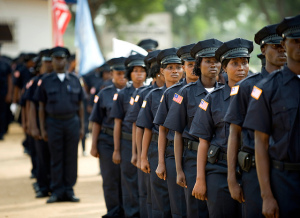
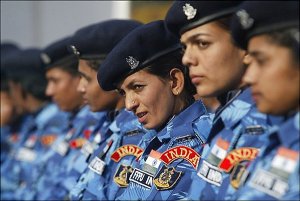
    Female United Nations police officers of the United Nations Mission in Timor-Leste (UNMIT). 29/Nov/2007. UN Photo/Martine Perret. www.unmultimedia.org/photo/

    Female United Nations police officers of the United Nations Mission in Timor-Leste (UNMIT). Image by UN photo via Flickr.

    The Women, Peace and Security (WPS) agenda gained traction on the international peace and security platform following the adoption of UN Security Council Resolution 1325 in October 2000. The WPS agenda is the most comprehensive articulation of women’s rights and gender issues in international peace and security. It establishes a nexus between conflict prevention and women’s rights, highlighting the relationship between gender inequality and conflict. Resulting from the Fourth World Conference on Women in 1995 in Beijing, and the pivotal Beijing Platform for Action which named ‘Women and Armed Conflict’ as one of twelve areas of critical concern, the NGO Working Group on Women, Peace and Security was formed to advocate a UNSC Resolution focused on women’s unique contribution and experiences of conflict. Through lobbying and advocacy, the NGO Working Group played a vital role in drafting the resolution and through UN Resolution 1325 successfully complicated the popular narratives that stereotyped women as either victims or inclusive peacebuilders. UN Resolution 1325 directs policymakers to consider all of women’s experiences in conflict and links women’s rights to international peace and security. The adoption of an additional seven resolutions builds upon 1325 and make up the WPS agenda. It rests upon a four-pillar mandate; prevention of violence and derogation of rights; protection from violence; participation in peacebuilding and post-conflict reconstruction; and relief and recovery. Laura Shepherd and Jacqui True broaden ‘relief and recovery’, to include identifying the structural social, political and economic conditions required for sustainable and lasting peace. Specifically the WPS agenda addresses sexual and gender-based violence (SGBV) in conflict, measures to ensure women’s participation in decision-making processes and post-conflict programs, gender mainstreaming in UN activities and peacekeeping operations, and gender-sensitive prevention frameworks. The WPS agenda provides basis for international engagement with gender issues. With R2P, the WPS shares a commitment to improve human security and revealing and preventing women’s human rights abuses through international engagement. Disappointingly, despite both frameworks emerging sharing similar underpinnings, R2P and its community continue to fail to address gender issues encompassed within the WPS agenda.

    R2P did not embrace the central messages of Resolution 1325 nor were points of synergies explored where there was a lack of dialogue and acknowledgement towards gender issues. From the outset, gender was excluded from the original formulation of R2P with only one of the 12 commissioners being a woman and only seven of 2000 sources consulted including gender. Women within the original R2P document were framed in terms of vulnerable populations in need of protection. ‘Women’ were mentioned three times only in reference to ‘rape and sexual violence’, which was mentioned seven times, where SGBV falls under crimes against humanity, war crimes and ethnic cleansing. No reference was made of women being active participants and agents in conflict prevention, protection and post-conflict reconstruction. This is despite the transformative possibilities of including aspects of the WPS agenda. R2P disregards WPS as a paradigm for conflict prevention and its centrality to peace and security. Here, as discussed below, three common intersecting commitments could overcome this disconnect.

    Intersecting Commitments

    • Prevention and early warning systems

    The inclusion of gender issues into existing early-warning frameworks and systems may illuminate potential and/or existing R2P situations. Studying macro- and micro-level changes to women’s lives reveals the escalation of violence and derogation of individual rights in hyper-masculinised and militarised societies. Gender-sensitive indicators include average levels of female education, impunity towards SGBV, increased kidnappings, sex work, female heads of households and domestic violence. Moreover, gender-sensitive indicators are not synonymous with women-sensitive indicators, but can monitor aggression and militarisation within a society, such as the persecution of men that do not take up arms. UN Women implemented several context-specific programs that have resulted in a comprehensive how-to guide of 85 gender-sensitive indicators that provide a holistic early warning system. Furthermore, through empirical analysis Sara Davies and Jacqui True found strong connections between systemic gender inequality and discrimination and the use of SGBV in conflict and non-conflict settings.

    Despite the benefits of including gender-sensitive indicators, gaps in women’s participation in early-warning initiatives have not been overcome. The UN Office of the Special Adviser on the Prevention of Genocide and the Responsibility to Protect have not addressed the role of gender inequality or gendered violence in early warning systems. A recent framework of analysis on the prevention of R2P crimes continues to situate women in the narrative of ‘vulnerable population’ with children and the elderly, and in regards to sexual violence and reproductive rights. This is despite, as Davies and True argue, systemic and structural gender inequality is a potential early warning factor for preventing mass SGBV.

    Since gender inequality increases the likelihood of R2P crimes any strategy of prevention must address gender norms that oppress and marginalise women. Gender-sensitive indicators highlight structural political, economic and social inequalities that maintain gender inequality in a given society that impacts post-conflict reconstruction and conflict protection.

    • Gender-sensitive Protection in Peacekeeping Operations

    The protection pillar of WPS stresses the full involvement and participation of women in the maintenance and promotion of international peace and security. This includes gender mainstreaming in all peacekeeping missions and the addition of gender units and advisers. Providing an official female presence in conflict areas, refugee and Internally Displaced Persons (IDPs) camps is essential to improve access and support for local women to communicate in an official capacity. Women can approach each other more easily in female-only settings where women may be prohibited to talk to male strangers. Moreover, SGBV is more likely to be reported between women. However, as of February 2016, only 3.34 per cent of military and 9 per cent of police were female. Although there is at least one female in every peacekeeping force, the number varies from 1 woman out of 17 deployed in the UN mission in Afghanistan to 799 women out of 17,453 deployed in the UN-African Union Mission in Darfur. Of 105,315 deployed peacekeepers, women only comprise 4.05 per cent. Although numbers have improved since the adoption of UN Resolution 1325, increases have been marginal and reflect the low number of women included in UN peace building efforts.

    Furthermore, implementation of gender-sensitive protection needs to move beyond the ‘add women and stir’ policy. Rather, WPS knowledge needs to be utilised in peacekeeping operations and wider UN peacebuilding efforts. For instance, the assumption that men are heads of households and therefore assistance being distributed to mainly men does not reflect post-conflict realities. Women are often widowed during and after conflict and adopt non-traditional roles such as heads of households. Since post-conflict programs and assistance does not recognise this, women are forced to take drastic measures to support their family and may take part in exploitive aspects of peacekeeping economies, like the sex industry. The misconception could be countered through gender units, gender-awareness training on more than an ad hoc basis and extensive comprehension of WPS.

    • Women’s participation in post-conflict reconstruction.

    The post-conflict phase is complex with many overlaps where the WPS agenda would assist states and the international community in post-conflict responsibilities. However, here I will focus on women’s participation in peace processes. Women’s involvement in peace processes is mentioned in every resolution of the WPS agenda. Evidence suggests that the inclusion of women at the peace table as witnesses, signatories, negotiators and mediators makes it 35 per cent more likely a peace agreement will last. Nevertheless, women’s quality participation in official capacities remains insufficient. Women and gender provisions have slowly started to be incorporated into peace agreements with a textual increase since the passing of Resolution 1325.

    However, by essentialising women as mothers, caregivers and victims, women are excluded from peace negotiations where, ironically, the cessation of hostilities is reliant on those who took up arms. I am not arguing that women are better peacemakers, but that their participation is vital to ensure that their experiences of conflict are acknowledged. Around the world, women lobby for participation to ensure their needs and security concerns are addressed. In Somalia, the Sixth Clan was formed in response to the five traditional Somali clans failure to include women in negotiating teams. Asha Hagi Elmi became the representative of the Sixth Clan in 2000 and in peace talks in 2002, becoming the first female signatory to a peace agreement in 2004. Peace processes must include women as more than lip service to inclusivity.

    Conflict transition provides a chance to create a more equal society by transforming the gendered relationships and identities that contributed to the production of violence. Women’s participation is essential to represent half the population during peace negotiations, to ensure explicit inclusion of women’s rights and gender provisions, and could have major implications for women’s social, political and economic status, and involvement in wider post-conflict initiatives. It is imperative that women are involved during that critical post-conflict transition to be enabled to affect positive changes.

    Conclusion

    Despite these areas of common engagement, R2P remains silent towards analysis and discourse surrounding the WPS platform. Both frameworks emerged at similar times and share central tenets of prevention, participation and protection, however women’s involvement in R2P has been grossly deficient. I have briefly demonstrated here, and examine in depth elsewhere, three areas of common engagement between R2P and the WPS agenda. I identify three common intersecting commitments – prevention and early warning frameworks, protection and gender-sensitive peacekeeping, and women’s participation in peace processes. Implementing gender-sensitive policies, legislations and programs will highlight the different lived experiences of men and women and the insecurities that arise during conflict and post-conflict reconstruction. R2P has much to gain from the WPS agenda and vice versa, where alliance with R2P and its community could aid the WPS agenda in addressing major gaps in its implementation. Alignment, both practical and normative, could provide an inclusive and holistic protection platform and encourage sustainable peace.

    Sarah Hewitt is a PhD candidate at Monash University, Australia with the Monash Gender, Peace and Security Centre. Her article,  ‘Overcoming the Gender gap: The Possibilities of Alignment between the Responsibility to Protect and the Women, Peace and Security Agenda’, was recently published in the Global Responsibility to Protect Journal. Sarah has also posted on Protection Gateway.

  • Sustainable Security

    Following President Rouhani’s success in last August’s election, relations between the United States and Tehran have improved substantially, partly because of the election result but also because the Obama administration has a more positive view of Iran. There is no guarantee that the US election in 2016 will result in an administration sympathetic to further progress. This element of uncertainty will be factored into the policy-making process of the Rouhani administration. Even so, prospects for a negotiated settlement to the nuclear issue are the best they have been for a decade and it follows that if an agreement is concluded, this is likely to have a pronounced effect on Iranian foreign policy as it finds itself in a more positive international environment.

    The Ahmadinejad Legacy

    President Luiz Inácio Lula da Silva is greeted by the president of Iran, Mahmoud Ahmadinejad. Source: Wikipedia

    President Luiz Inácio Lula da Silva is greeted by the President of Iran, Mahmoud Ahmadinejad. Source: Wikipedia

    The flamboyance and the sometimes inflammatory rhetoric of the Ahmadinejad administration (2005-13) disguised a pragmatic foreign policy that combined a degree of confrontation on the nuclear issue with the enhancing of contacts with many countries across the global south, including left-leaning states in Latin America and numerous states in sub-Saharan Africa. It also sought to maintain reasonable links with Russia and China while limiting links with the West. While acceptable to much of the “Iranian street”, it was at odds with the liking of elements of western culture by young Iranians and the nuclear issue was deeply problematic in terms of the impact of sanctions.

    While much is made of their role in bringing Rouhani to power and then to the negotiating table, the reality is rather different. Sanctions were effective, in part, because of the parallel impact of internal economic mismanagement by the Ahmadinejad government. Thus, if the Rouhani government improves the management of the economy then even the modest sanctions relief already promised will combine to enable the government to benefit through early respite from recent economic woes.

    One other key factor is that Iran’s standing in the region, including the Arab world, has been damaged by its support for the Assad regime in Syria. Under Ahmadinejad, Iran saw the Assad regime as a strong and necessary ally, especially in combination with the Maliki government in Iraq. But as the war in Syria has worsened, and as the violence in Iraq degenerates towards a civil war, many states blame Iran. Regional powers such as Saudi Arabia and Egypt hold Iran partly responsible for the violent suppression of the Sunni majority in Syria, and states beyond the region believe Iran bears some responsibility not just for that but also for the possible spread of the war to Lebanon.

    Conservative Strategy

    Hassan Rouhani speaks in Mashhad during his presidential campaign

    Hassan Rouhani speaks in Mashhad during his presidential campaign Source: Wikimedia

    Rouhani’s victory was singularly impressive in that he gained an absolute majority on the first ballot against four relatively conservative opponents on a 72% poll turnout. While this has given him considerable authority, most power still lies with the Supreme Leader. However, Ayatollah Khamenei has to be aware of the popularity of Rouhani, a matter made more difficult for him by Rouhani’s preference for avoiding a personality cult. While the election gave Rouhani a clear mandate for negotiating with the US, conservative elements are regrouping.

    For these elements a particular concern is the election of the Assembly of Experts – the parliamentary upper house, which selects the Supreme Leader – that are due in September this year. Their fear is of a buoyant Rouhani government that will damage conservative prospects still further following last year’s reversals. It appears to be for this reason that they have sought to persuade the Supreme Leader to expand the negotiating team at the Syria peace talks in Geneva to include more hard-line elements and to have a Majlis (parliamentary) oversight body for the whole process. This would be dominated by conservatives. Rouhani’s Deputy Foreign Minister, Seyed Abbas Araqchi, has stated officially that the negotiating group remains accountable to the Supreme National Security Council, not a Majlis body, but there are reports of more members recently being appointed to the group.

    What this means is that the Rouhani government will have a strong interest in developing policies that are attractive to the domestic constituency as soon as possible. The emphasis will undoubtedly be on the nuclear issue and getting further sanctions relief which, in combination with better economic management, could ensure palpable improvements in the economy and consequent political popularity. This, though, is not enough and liberalising economic reforms such as removal of subsidies may even exacerbate short-term economic difficulties. It follows that the Rouhani government will be looking closely at ways of increasing Iran’s standing in the region and beyond.

    Developing Foreign Policy: Iran in the world

    A key aspect of the Iranian outlook is a belief in Persia’s very proud history, one that extends over thousands rather than hundreds of years, and the consequent belief that Iran has not been realising its potential as one of the world’s potential great powers. This view of historic greatness transcends religion, even if Iran sees itself also as the centre of the Shi’a Muslim world. Iran has a population of 80 million, a little less than Egypt at 85 million and Turkey at 81 million. Egypt has formidable internal problems and a weak non-oil-based economy; Turkey is far stronger in terms of economy, even if it, too, lacks significant fossil fuel reserves. Since its 2013 counter-revolution, Egypt is also increasingly reliant on Saudi Arabia, Iran’s greatest rival for influence in the Gulf and wider Middle East.

    Iran has all the problems of a near-moribund economy but has remarkable potential for development given that it has close to 10% of world oil reserves and 15% of gas reserves. The latter is largely shared with Qatar because of the huge reserves under the Gulf. There have so far been few problems of delineating boundaries – indeed relations with Qatar remain quite good despite major differences on other issues such as Syria, where Qatar, with Turkey, strongly backs the anti-Assad rebellion.

    Asia or Europe?

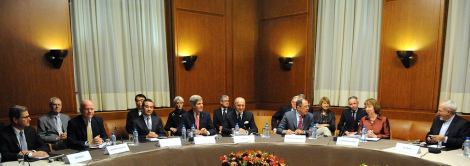
    Iran Foreign Minister Javad Zarif walks with EU High Representative Catherine Ashton at the EU +3 and Iran talks, November 2013.

    Iran Foreign Minister Javad Zarif walks with EU High Representative Catherine Ashton at the EU +3 and Iran talks, November 2013. Source: EEAS (Flickr)

    The issue for Iran relates largely to where it seeks to develop its economic and political alliances. To the immediate east the borders with Afghanistan and Pakistan are hugely significant, especially in the case of Afghanistan where opium and refined heroin smuggling across the border has cost the lives of hundreds of Iranian border guards. Iran has close links with the north-west parts of Afghanistan and has no liking for the Taliban. It is suspicious of Pakistan because of radical Sunni Islamist elements within the state, its long-term support for the Taliban, close security ties to Saudi Arabia and the precarious security predicament of the Pakistani Shi’a community, but still seeks to improve relations, not least through exporting gas. The originally planned Iran-Pakistan-India pipeline is going ahead as far as Pakistan. Iran will further increase its links with Afghanistan, where it has greatly increased aid in recent years, especially to projects in the north-west of the country.

    India and China are both significant importers of Iranian oil and gas and China has been particularly useful to Iran in two respects. One has been long-term investment in the development of new oil and gas fields, and it remains much appreciated that China persisted with this when relations with the US were at their lowest. The other has been China’s supply of carefully selected weapons, especially shore-based anti-ship cruise missiles. Iran will maintain close links with China, but will not eschew improved relations with India, seeing it as a useful counter-balance to Pakistan.

    The links with southern and eastern Asia will remain highly significant in terms of Iranian foreign policy but it is already clear that a priority will be to improve relations with neighbouring Turkey, already demonstrated by the meeting between Foreign Ministers Mohammad Javad Zarif and Ahmet Davutoglu in Tehran last November. In spite of considerable differences over Syria, the countries have good relations in other respects, and Turkey’s past role in trying to defuse the nuclear issue remains appreciated. Trade relations between Iran and Turkey have expanded greatly in the past decade.

    It is highly likely that Iran will seek a much closer relationship with Turkey, seeing the two countries together comprising an axis of influence linking Europe and Asia. The Turkish attitude to this is likely to be very positive, seeing it as a useful factor in increasing Turkey’s significance for the European Union. This does mean that the Rouhani government has an added interest in seeing a scaling down of the Syrian War. It is probable that a Turkey/Iran connection is more important to Tehran than the much vaunted Lebanon/Syria/Iraq/Iran “Shi’a crescent”.

    The rivalry with Saudi Arabia remains pervasive and is a crucial proxy element in the Syrian conflict but Rouhani’s personal links with Saudi diplomats in the past, combined with Iran’s need to see the war scaled down, means that even here there may be potential for progress. Further improving relations with the US will be a priority but the Rouhani government recognises the risk of sudden changes in US leadership in less than three years time. This means that European links remain useful but Iran does not look to the west to ensure its standing in the world. Turkey, China and India are more significant and this will remain as long as Rouhani is in power. Of these, Turkey is probably the most important.

    Implications

    Rouhani has barely a year all told to build on the considerable support he gathered last year, and this is against a background of entrenched conservative and theocratic elements that will work hard to limit his capacity. While he will give ground on nuclear issues and may work towards a Syrian settlement, if Iran is allowed to participate in Geneva ll, there is a risk that this can be presented by his opponents as a sign of weakness. Economic progress might blunt this but an additional way forward is to engage in a much more active foreign policy. One consequence of such a shift to the north and east is that Iran may not see Europe as important to its interests to the extent that Europe sees Iran. This is a reflection of more general global changes, bringing its own challenges.

    Paul Rogers is Global Security Consultant to Oxford Research Group, for which he writes monthly security briefings.  He is Professor of Peace Studies at the University of Bradford and author of numerous books including ‘Beyond Terror’. Paul writes a weekly column for openDemocracy  and tweets regularly at @ProfPRogers.

    Featured image: President Rouhani delivers remarks at the Hilton Hotel in New York City, September 2013. Source: Asia Society (Flickr)

  • Sustainable Security

    Western states are growing increasingly reliant on private military and security companies. Fully understanding the privatization of security and its effects on sustainable security requires the inclusion of a critical gender lens.

    Introduction

    In 1999, the American private military contractor Dyncorp hired Kathryn Bolkovac as UN International Police Task Force monitor in Bosnia-Herzegovina. In the course of her work Bolkovac raised allegations that private contractors and UN employees were trafficking and sexually exploiting young girls. In 2002, a UK court acknowledged that Bolkovac was wrongfully dismissed for bringing the story to light, but nobody was ever prosecuted for the alleged sex trafficking.

    Bolkovac’s story — dramatized in the movie The Whistleblower  — captures perfectly some of the challenges to accountability when security functions are outsourced to the private sector and performed by transnational security forces. Security privatization reduces transparency and accountability in ways that exacerbate and make less visible the gender inequalities and gender-based violence that pervade militarized security contexts. Moreover, security privatization increases the profitability of insecurities, making it more difficult to tackle the causes, including gendered causes, of insecurity. Understanding the privatization of security and its effects on sustainable security requires the inclusion of a critical gender lens.

    PMSCs and gender: an emerging challenge

    15245844288_2026206f77_o--1-

    Image by chuck holton via Flickr.

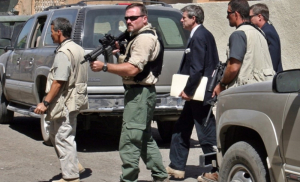
    Over the past three decades a new challenge to sustainable security has emerged: the growing reliance on private military and security companies (PMSCs) by Western states, international organizations, non-governmental organizations, and transnational corporations. PMSCs offer a wide range of services from logistical support, intelligence, training, armed and unarmed guarding and protection, to reconstruction and more. The US-led wars in Afghanistan and Iraq have shown that today waging war is contingent on heavy involvement from the private sector. Private contractor numbers have trailed and at times outpaced US troop levels in the wars in Afghanistan and Iraq. In February 2010, the US DoD employed more than 100,000 private contractors each in Afghanistan and Iraq.

    A number of high-profile cases have highlighted the problems associated with the use of private contractors in Iraq and Afghanistan. Private contractors were involved in the abuse of prisoners at Abu Ghraib and the 2007 shooting and killing of Iraqi civilians in Nisour Square. Allegations of war crimes, poor working conditions, sexual harassment and human trafficking, and disregard for local populations have come to shape the public image of the private security industry over the past two decades.

    In this context, gender has become part of the industry’s attempts to improve its reputation. Gender considerations have made it into the voluntary International Code of Conduct for Private Security Providers that came into effect in November 2010. The International Code of Conduct explicitly addresses gender in three paragraphs on gender-based violence, selection of personnel, and harassment-free work environments. Gender has also been declared ‘good for business‘ by the private security industry. Female employees of PMSCs are seen as useful to conduct security checks on women or to foster positive interactions with local populations, and thus seen as instrumental to operational effectiveness. This attention to gender, while positive on the surface, has mostly served the purpose of creating greater legitimacy for the industry. It has not addressed the larger impacts that outsourcing have on women’s claims to greater and equal participation in the military sphere and the gendered impacts of the use of private forces in local contexts.

    A critical gender lens on private security

    Gender is not just a ‘problem to be solved’ for private contractors, but is fundamental to the reorganization of force through privatization, to the functioning of the private security industry, and to how the industry legitimizes itself. The greater use of private force is part of the broader neoliberal transformation of militarized citizenship that has also entailed a shift from conscription to all-volunteer forces in many Western states. This reorganization of public force has meant an end to the male citizen-soldier model and the greater integration of women into all-volunteer forces. The greater reliance on private security has occurred alongside to the greater integration of women into Western public militaries. While some decry the feminization of public militaries, others have shown how PMSCs actively rely on hyper-masculinity in portraying themselves as more effective security forces vis-a-vis the public sector.

    PMSCs that provide security services primarily recruit from the army and special forces. In doing so, they replicate and even reinforce the gendered division of labour present in the public military sphere. However, PMSCs have also made a concerted effort to distance themselves from the hyper-masculine images of trigger-happy burly ‘cowboys’ and shift towards a softer and more legitimate image of masculinity, shedding the hyper-masculine militarized image for one emphasizing humanitarianism, protection, professionalism, and expertise. At the same time, privatization sidelines and depoliticizes questions of gender equality in the military sphere. There is neither publicly available data on women in the private security industry nor public debate on their marginalization within the industry. By its very logic, profitability drives the private security sector and not questions of citizenship and equal participation.

    Gender also intersects with race and citizenship to shape the division of labour in the globally operating private security sector. A large segment of the workers hired or subcontracted by PMSCs comes from the Global South. The globally operating private security industry can be thought of as a hierarchy of masculinities. Western contractors are at the top of this hierarchy, and so-called third-country nationals (TCNs) from the Global South sit at the bottom. Profitability is in part achieved through the exploitation of this vulnerable migrant labour force.

    The outsourcing of military security functions to private companies has allowed a global rescaling of labour recruitment in support of Western military operations. As data from the US wars in Iraq and Afghanistan show, a majority of contractor labour is made up by ‘third-country’ and host-country nationals and not by US citizens. For example, of the more than 200,000 DoD contractors working in Iraq and Afghanistan in February 2010 (mentioned above), less than 40,000 were US citizens. The racialized hierarchy among contractors of different citizenship is evident not only in pay and working conditions, but also in the kind of work performed. While local and migrant workers perform much of the logistical support work, their proportion is particularly high when it comes to the more dangerous armed security work.

    Conclusion

    Simply bringing consideration of gender into the private security industry is not a sufficient enough means of addressing the problems that security privatization poses for sustainable security. Conflict is often justified and waged by appealing to gendered notions of security: masculinized protectors and defenders, and feminized and vulnerable populations in need of protection. Private actors feed into this gendered discourse, portray themselves as masculinized protectors, and benefit from continuing insecurities and global inequalities. As insecurities create new market opportunities for the private security industry, gendered discourses of protection and gendered divisions of labour are being reinforced while sustainable security becomes more elusive. We need to be mindful of security privatization and the fundamental ways in which it is gendered as we work towards remaking security in more sustainable ways.

    Maya Eichler is Canada Research Chair in Social Innovation and Community Engagement and Assistant Professor of Political Studies and Women’s Studies at Mount Saint Vincent University.

  • Sustainable Security

    Authors Note: This article summarises key findings of my book Malte Brosig (2015) Cooperative Peacekeeping in Africa: Exploring Regime Complexity. London & New York: Routledge.

    Introduction

    Peacekeeping enjoys an unprecedented popularity amongst policymakers at the moment. At no point in history have there been more peacekeepers deployed worldwide. The United Nations (UN) and regional organisations are currently deploying more than 100,000 troops and police in missions around the globe but most are located in Africa. The challenges individual missions are facing are well-discussed among experts. Much of the relevant literature focusses on dos and don’ts of peacekeeping practices. Regardless of individual cases we can observe the emergence of a larger inter-organisational peacekeeping system which I refer to as African peacekeeping regime complex in which the most relevant organisations such as the UN, the African Union (AU), Regional Economic Communities (RECs) and European Union (EU) are intimately inter-connected. Thus, the challenges actors are facing are not only individual ones and so solutions to these challenges are increasingly based on multi-actor coordination. How the peacekeeping regime complex emerged and how actors are positioned within it will be explored in this contribution.

    Peacekeeping Today

    Modern peacekeeping is confronted with high expectations and an enormous task complexity. Peacekeeping activities reach far beyond ceasefire monitoring, and also involve countering rebel and terror groups, protecting the civilian population, disarming combatants, supporting elections, reforming the security apparatus, state building and engaging in humanitarian relief. In sum, the expectation is that peacekeepers are not simply administering fragile peace, but also working to prevent a relapse into conflict by addressing its root causes. Naturally, these activities are conducted under considerable insecurity in a fragile environment where conflict has not often ceased, but is instead suppressed. Progress is uncertain and backlashes are likely.

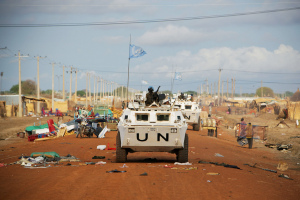
    Zambian peacekeepers from the United Nations Mission in Sudan (UNMIS) patrol streets lined with looted items awaiting collection in Abyei, the main town of the disputed Abyei area on the border of Sudan and newly independent South Sudan. In a statement yesterday, the United Nations strongly condemned the burning and looting currently being perpetrated by armed elements in the area, following the seizure of Abyei town by Sudanese Government troops on 20 March.

    Zambian peacekeepers from the United Nations Mission in Sudan. Image by United Nations Photo via Flickr.

    The demand for peacekeepers and the existing complexity and high expectations peacekeeping is confronted with in practice lead to an overburdening of single actors. For the African continent, we can identify a group of relevant organisations which play a central role within the African peacekeeping regime complex. These are the UN, AU, RECs and EU. None of these actors are capable of dominating the regime complex fully. They all are facing the harsh realities of resource scarcity. Resources can be material goods (financial, military) or social kinds like competences or political (in) capacities or deployment doctrines.

    Examples of this resource scarcity and its effects are easy to find. While the UN remains the most essential actor, it does not have command over the resources which would allow it to outperform regional organisations. This becomes very clear when looking at deployment times and/or the issue of peace enforcement. With its heavy bureaucracy in the background, the UN’s response times are on average around six months which is far from a rapid response. Issues of peace enforcement and counter-terrorism are also politically controversial within the UN and thus the UN’s missions find it difficult to engage in this kind of activity. In practice, there remains a considerable gap in the UN response to severe crises.

    On the part of African actors, much has been achieved within the last decade. An African Peace and Security Architecture (APSA) has been erected which builds on close cooperation between the AU’s headquarters in Ethiopia and RECs. Considerable efforts have been made to establish the African Standby Force (ASF). Indeed, the AU is now actively involved in practically all emerging conflicts on the continent. Still, it falls short of being able to independently respond to crises in a sustainable and comprehensive manner. The design of the ASF which consists of around 25,000 troops only makes up a minority of all deployments to the African continent. While the AU is willing to deploy in situations where the UN is reluctant to do so, the AU’s resource constraints are significant. The lack of funding is a compelling example. Despite efforts of the Commission chair to reduce external dependencies, the peacekeeping budget is predominately being financed by international donors. AU peacekeeping missions are not sustainable to maintain and can only operate with much reduced task complexity. Thus, because of resource constraints, they are neither long-term nor comprehensive in nature.

    In the case of the EU, the situation is different. It is the most well-resourced organisation of all but does not have a global mandate. While the EU has deployed around 17 missions to Africa since 2003, these have been rather small in ambition, scale and duration. Most missions train security forces, but only a few are actively engaging in operational peacekeeping. This does not result from an absence of resources but is wanted politically.

    How the Multi-Actor Approach is Shaping Modern Peace Operations

    Given the very visible limitation of each single actor, it is hardly surprising that peacekeeping today is a multi-actor game forming a regime complex. A regime complex can be characterised as a form of decentralised and non-hierarchically organised governance. Actors are overlapping with regard to their membership and/or operational ambit and are tightly interconnected which makes it difficult to decompose the system into individual units. What a regime complex constitutes is mostly defined in terms of the relationship of its constituent parts which are constantly interacting with one another. In the case of peacekeeping in Africa, we can detect such a system.

    In the overwhelming number of cases, we can observe forms of cooperative peacekeeping in which actors are pooling their resources. The most pervasive forms of cooperation are the sequential and co-deployment of troops. This has also led to a division of labour and institutional specialisation between the involved actors. For example, the AU often functions as a first-deployer, sending out troops in situations which are not consolidated and remain hostile and fragile. These deployments which are rather short-term oriented aim to prepare the ground for a larger more comprehensive and longer-term engagement from the UN. The UN’s response is often slower but more sustainable and also covers complex peace building tasks and stays in countries for an extended period of time. The role of the EU is less ambitious, but not less important. In the operational peacekeeping theatre, the EU contributed a high number of missions which are targeted and confined in terms of deployment times (short-term) and tasks (usually training missions). They aim from the beginning not to take over comprehensive tasks but are designed to fill in functional niches other actors leave. Financially, the EU is one of the main donors for AU peacekeeping missions. Since 2004, the EU’s African Peace Facility has provided €1.9bn for institutional capacity building and peacekeeping missions. Recent peacekeeping missions deployed to the Central African Republic (CAR) and Mali broadly follow this track of interaction.

    However, the exchange of resources between the AU-EU-UN which forms the backbone of the peacekeeping regime complex is not a simple functional mechanism. The exchange of resources is, for example, also influenced by peacekeeping doctrines. These are not automatically complementary. In the case of the AU and UN, the AU’s exit strategy is not necessarily compatible with the UN’s entry strategy. While the AU deploys in situations of continuing hostilities and aims at stabilising the situation, the UN takes a more conservative approach aiming to deploy only in situations where at least a ceasefire is in place. What happens if the AU stabilisation efforts do not lead to tangible progress can be seen in Somalia. Although the AU has called for UN take over since the deployment of AMISOM in 2007, no UN takeover occurred.

    Doctrinal divisions also exist with regards to robust peacekeeping in already deployed missions. While the AU and African states often accept that within peacekeeping missions the use of force is sometimes needed to actively deter and encounter rebels or terrorists, this view is mostly not shared by the UN and EU. As a consequence, active peace enforcement in cases of deployed UN missions (CAR, Mali, DRC) tend to be outsourced. In case of the DRC, a Force Intervention Brigade (FIB) was set up and staffed by African countries or France continued its military operations hunting down terrorists in Mali.

    Apart from questions of doctrinal complementarity, the supply and demand for resources varies significantly between actors. An organisation which is stronger on the supply side can chose how to design its involvement in peacekeeping while an organisation which is experiencing a strong demand but little supply is in an inferior position. This can be seen when comparing the EU and AU. The EU is in the position to provide what it deems adequate (many small scale targeted missions), the AU is in the complete opposite situation. It cannot maintain longer-term missions on its own and relies both on external funding and operational handover to the UN.

    Conclusion

    Modern peacekeeping operates in a multi-actor environment which displays decentred governance structures to which we can refer as a regime complex. Apart from the fact that the UN Security Council bears a general responsibility for peace, there is no overarching or strict hierarchy between the UN-AU-EU. Despite the absence of externally delegated roles within the regime complex, assumed roles emerged as a consequence of individual institutional resource scarcity, doctrinal compatibility and the size of demand vs supply of resources. Certainly politics is not missing in this system. There is no formally agreed script according to which organisations can be expected to act and thus the exact mode of interaction varies between cases. Domestic conflict dynamics leave their imprint too.

    In the end, taking an inter-organisational perspective to peacekeeping is not a trivial under-taking because it constitutes a form of global governance which transcends the individual organisation. While we have long accepted that the classical nation state has lost parts of its domestic sovereignty to the forces of globalisation we also have to recognise that the same is true for international organisations. In this regard actorness and governance qualities do not exclusively rest in actors themselves but also in how they organise interaction with one another. The peacekeeping regime complex is one example and one that is shaping the lives of millions who live in some of the most vulnerable situations.

    Malte Brosig is Associate Professor in International Relations at the Department of International Relations at the University of the Witwatersrand in Johannesburg. He joined the Department in 2009 after he received his PhD from the University of Portsmouth. His main research interests focus on issues of international organization interplay and peacekeeping in Africa. He is the author of Cooperative Peacekeeping in Africa: Exploring Regime Complexity which was published at Routledge. Prof Brosig is a rostered consultant for the United Nations University’s Centre for Policy Research in Tokyo and holds fellowships at the Canadian Centre for R2P at the University of Toronto, the European Centre for Minority Issues in Flensburg and the German Institute for Global and Area Studies in Hamburg.

  • Sustainable Security

    One year on from the French intervention in Mali, Saharan jihadist groups continue to threaten not only Mali but Algeria, Libya, Niger, Nigeria and Tunisia. Will French and US plans to expand their military presence in the Sahel combat, contain or exacerbate the threat from militants displaced from Mali?

    Fragmentation, Displacement and Reconsolidation:  The AQIM Threat in 2014

    French General Pillet, Chief of Staff of the MINUSMA Kidal, during the visit of the Joint Security Committee in charge of the observance of the cease-fire between the Malian army and armed groups from the north. Source: MINUSMA (Flickr)

    French General Pillet, Chief of Staff of MINUSMA, Kidal, during the visit of the Joint Security Committee in charge of the observance of the cease-fire between the Malian army and armed groups from the north. Source: MINUSMA (Flickr)

    Last January, the French military, supported by African troops and 10 non-African air forces, intervened militarily in Mali at the request of its transitional government. Over the following four weeks they recaptured all of the towns in the northern half of Mali. This vast desert region had been seized by Islamist and separatist militia in March-April 2012 and declared independent as the ‘State of Azawad’, the Tuareg name for their homeland in northeast Mali. Since then, French troops have continued to conduct security operations across northern Mali to locate and ‘neutralise’ militants associated with Al-Qaida in the Islamic Maghreb (AQIM), a jihadist group of Algerian origin, and its West African splinter groups. Reduced numbers of French forces now support Malian and African forces within the United Nations Multidimensional Integrated Stabilization Mission in Mali (MINUSMA).                                                                                                                                                                                                                                                                                                                                                                                                                                                                                                                                                                                                                                                                                             However, the final quarter of 2013 saw an increase in violence in northern Mali, including terrorist attacks, violent protests and inter-communal violence. Moreover, the French advance into northern Mali displaced rather than destroyed AQIM and its two local allies, the Movement for Unity and Jihad in West Africa (MUJAO) and Ansar Dine, a Tuareg Islamist group. Their impact has been particularly felt in Niger and Libya and may also have bolstered jihadist groups operating in northern Nigeria, Tunisia and Egypt’s Sinai. The lawless desert of southwest Libya is believed to be the new stronghold of AQIM.

    A new group, al-Murabitun, combining MUJAO and the most active elements of AQIM’s Saharan front, now appears to pose more of a threat to western and West African interests than AQIM. This is because its strategic direction is towards the weak states of West Africa, including Niger, Mali and Mauritania, where critical infrastructure and individuals are more difficult to protect. It is also better connected to the kidnapping and trafficking enterprises that fund Saharan militancy, and more deadly. During 2013, its militants were behind frequent raids on Gao (northern Mali’s main town), on a prison, garrison and French-owned mine in Niger, and on the Algerian gas plant at In-Amenas. These audacious operations attest to its range, training, discipline and cosmopolitan membership. If it finds common purpose with the larger jihadist groups in northern Niger, as some analysts suggest, it could represent a severe threat to stability in the already shaky regional power.

    French Repositioning in the Sahel

    In recognition of the expansion of jihadist groups, France announced a major repositioning of its forces in Africa in January. The new French military posture will refocus from large coastal bases, designed to train, transport and supply African Union and regional rapid reaction forces, to smaller forward deployments in the Sahel and Sahara. 3,000 French troops will now be based indefinitely in Mali, Niger and Chad.

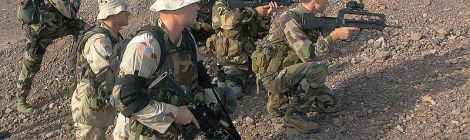
    U.S. soldiers and French commandos marine conduct a reconnaissance patrol during a joint-combined exercise in Djibouti. Source: Wikipedia

    U.S. soldiers and French commandos marine conduct a reconnaissance patrol during a joint-combined exercise in Djibouti. Source: Wikipedia

    The new posture is heavily influenced by US ‘War on Terror’ strategy in Africa, Yemen and south-west Asia, relying heavily on Special Forces, air strike capacities and unmanned aerial vehicles (UAVs). French and US forces (including contractors) already share facilities in Djibouti, Niger, Burkina Faso and Mauritania, and there is a small US liaison detachment with the French Combined Air Operations Centre in Chad. The French repositioning is explicit about confronting Islamist terrorist groups and the threat to regional security posed by the security vacuum in southern Libya. While the repositioning focuses on Mali, Niger and Chad, supplied via a coastal base in Côte d’Ivoire, it will actually include deployments to over a dozen small bases and elite detachments in the Sahel and Sahara, covering at least seven countries. In some cases it will mean French Special Forces reoccupying desert forts long abandoned by the Foreign Legion.

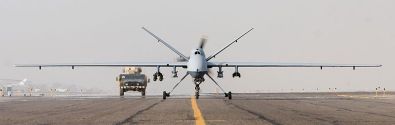
    There will also be greater use of aerial reconnaissance and targeting. French Navy patrol aircraft already criss-cross the Sahara and two MQ-9 Reaper UAVs arrived with French forces at Niamey airport in December after the US fast-tracked French acquisition of and training on these ‘hunter-killer’ drones. These double the effective range of the Harfang target-acquisition UAVs formerly used by the French in the Sahel, bringing all of Mali, Niger, almost all of the rest of West Africa and much of Algeria, Chad and southwest Libya into range.

    France also makes greater use of combat aircraft in the Sahel-Sahara, deploying fighter aircraft from its long-term base in N’Djamena, Chad to Bamako and Niamey airports. This brings northern Mali into range. Since October, French fighter-reconnaissance aircraft have deployed to Faya-Largeau in northern Chad, which brings southern Libya well within range. French Special Forces and armed helicopters have also operated from Burkina Faso, Niger and Mauritania in pursuit of AQIM.

    US and China Extend Their Presence

    French and US Reapers now operate from the same facility at Niamey airport, set up by the US in February 2013. While US UAVs in Niger are unarmed, it is unclear if French Reapers will be used for strike missions. US armed UAV bases in Djibouti, Ethiopia and Seychelles currently bring all of the Horn of Africa, East Africa and most of Arabia within range. US private military contractors have also flown unarmed, unmarked light aircraft on surveillance flights all across the Sahel belt since at least 2007. Using covert hubs in Burkina Faso and Uganda and smaller airfields in Mauritania, Niger and South Sudan, they have sought AQIM and the Ugandan Lord’s Resistance Army (LRA).

    Since 2011, US Special Forces have established small bases in the Central African Republic (CAR), South Sudan and the Democratic Republic of Congo (DRC) to assist Ugandan forces seeking the LRA there. They also provide training to several African militaries countering the LRA. As with programmes in Mauritania, Mali, Niger and Chad, these programmes have focused on creating elite counter-terrorism units. Unfortunately, all of these countries plus the CAR and South Sudan have experienced coups d’état or major army mutinies since this assistance began.

    In order to combat Boko Haram, a Nigerian Special Operations Command was announced on 14 January with the US military providing advice, training and equipment. Massive attacks by Boko Haram since December suggest that the Nigerian army’s use of indiscriminate force in the northeast has not weakened the insurgency. Rather, the state of emergency is likely to have strengthened the recruitment base of Boko Haram since May.

    China and Japan are also increasingly active in the Sahel. Chinese parastatals are the dominant actors in the oil industries of Sudan/South Sudan, Chad/Cameroon and Niger. They also mine uranium in Niger, and China is the primary buyer of iron ore from Mauritania’s vast desert complexes. So far, China is the only non-African state to deploy more than a few dozen troops with MINUSMA.  Japan, which saw ten of its nationals killed in the January 2013 militant attack on Algeria’s In-Amenas gas plant, has pledged $1 billion to stabilise the Sahel, including training of counter-terrorism units.

    Compromised Alliances

    This expansion of deployments and offensive operations relies on the status of forces agreements between western powers and’ friendly’ states such as Algeria. France, for example, depends on an air corridor across the Algerian Sahara. Securing such access puts host governments in a position of greater power. The highly authoritarian regime in Algiers – the world’s fifth or sixth largest arms importer – no longer faces western pressure to improve its dismal human rights record. Indeed, it has received friendly visits from the leaders of France and the UK and the US Secretary of State since late 2012. Mauritania’s military-based government faced little criticism over its unfair elections in November.

    Chad, Uganda and Ethiopia may be the biggest regional beneficiaries of the militarisation of the Sahel. Each has been governed for a quarter-century by a former armed movement. They face little censure of their authoritarian and undemocratic internal policies and have become more assertive as regional military powers. Ethiopia has forces in Somalia while Uganda now has combat troops in operation (by agreement) in Somalia (under AU command), South Sudan, the DRC and the CAR.

    Boosted by expanding oil revenues, French alliance and the demise of Libya’s Gaddafi regime, Chad has greatly expanded its military reach into Mali, Niger and the CAR, where its troops and citizens now face a violent backlash. It is also a Security Council member for the next two years and will be expected to help guide decisions on UN peacekeeping operations in Mali, South Sudan and potentially the CAR and Libya.

    Burkina Faso, long relied on by Paris to negotiate with armed groups in francophone West Africa, is also facing unaccustomed turbulence in 2014 as its president seeks to permit himself an additional term of office. Algeria, which is wary of France’s military deployments on its southern border, is set to take over from Burkina the mediation of talks between Mali’s government and secular Tuareg and Arab rebels.

    Foundations in Sand

    In some respects, the eviction of AQIM and its allies from northern Mali has made the wider Sahara a less safe place, without obviously impeding the capacity of jihadist groups to threaten Europe. In 2014, southwest Libya and parts of Niger are not necessarily less safe havens than northern Mali was in 2012. The insurgency has moved closer to the Mediterranean and closer to critical European energy infrastructure in Algeria, Libya, Tunisia and Niger (uranium). Unlike heterodox Mali, controlling Libya’s chaotic state is likely to be of interest to Arab Salafist groups, including AQIM.

    As elsewhere, the western military approach to countering Islamist insurgency in the Sahel rests on very unsteady foundations. This applies to the political legitimacy of allied regimes, the stability and security of locations hosting French and US bases, the traumatic historical legacy of France as the former colonial power, and the potential for counter-insurgency tactics to provoke wider alienation and radicalisation. However asymmetric its military technology, reinforcing a new line of castles in the Saharan sand may be as futile a gesture in France’s long retreat from empire as the UK’s last stand in Afghanistan.

    Richard Reeve is the Director of the Sustainable Security Programme at Oxford Research Group. He has researched African peace and security issues since 2000, including work with ECOWAS and the AU. Richard’s most recent security briefing ‘Security in the Sahel (Part II): Militarisation of the Sahel is available here.

  • Sustainable Security

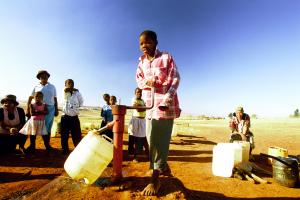
    Tackling South African water insecurity will require addressing the technical deficiencies, governance gaps and social inequality that are currently having a dangerous and environmentally devastating impact. The links between environmental health and socio-political stability are clear in South Africa, where there has been an exponential increase in violent protests over poor or privatized service delivery, social marginalization, and unequal access to water. South Africa must act  to solidify the links between resilient societies and resilient ecosystems.

    Rural water pump near Ulundi, South Africa. Source: Trevor Samson / World Bank (via Flickr)

    Rural water pump near Ulundi, South Africa. Source: Trevor Samson / World Bank (via Flickr)

    Last month, the Intergovernmental Panel on Climate Change (IPCC) unveiled the third and final Working Groupreport from its from its landmark Fifth Assessment. This, together with the Second Working Group Report released on 31 March, 2014, is required reading for those wishing to examine the societal impacts of climate change and the potential pathways for twenty-first century resilience. For the first time, the IPCC included a chapter on human security. This is a significant achievement that should increase understanding of the increased threat and impacts on individual livelihoods that climate change is bringing, particularly in the developing world. It is clear that the connections between environmental security and human security run deep, but it is less clear just how societies can build resilience and whether the political will exists to pursue it.

    Adding to the complexity is the fact that these challenges manifest themselves uniquely across the world. Due to factors of geography, history, politics, and social development, each region and country experiences climate change in a distinctive way. For Africa, the picture is predictably bleak. The region as a whole has contributed the least to greenhouse gas emissions, faces some of the worst consequences of climate change, and has the weakest capacity to cope with the impacts.

    The country of South Africa provides a fascinating example of how difficult building ecological resilience can be. Already the 30th driest country in the world, it is expected to experience further drying trends, and an increase in extreme weather events, including cycles of extreme drought and sudden excessive rains. In relative terms, the country has in fact been a significant contributor to global climate change due to its energy-intensive economy. As such, the country has a global responsibility to engage fully with the IPCC reports and begin developing robust responses to environmental insecurity. However, doing so presents major challenges for a country that remains a “dual economy” with one of the highest rates of income inequality (and inequality of opportunity) in the world.

    This is all the more troubling given the country’s progressive stance on environmental issues. In fact, environmental security has been, and will remain, a vital component of the evolving South African identity following the end of apartheid in 1994. The issue of environmental security in South Africa is one that has for years resonated across diverse sections of the population. There are strong cultures of conservation and environmentalism running throughout the country. However, the “Rainbow Nation” continues to suffer from sustained environmental degradation in ways that alter the natural landscape, destroy necessary biodiversity, and hinder social development.

    Promises to Keep: water legislation and service delivery

    Take for instance the issue of water security. South Africa has long been seen as a world leader in progressive water policy, particularly given its need to address unequal water policies of the Apartheid era. Its Constitution and its National Water Act explicitly declares the human right to water, guaranteeing a minimum allocation of 6000 litres of free, clean water a month for every South African. Nelson Mandela championed the cause, claiming that access to water is “central in the social, economic and political affairs of the country, [African] continent and the world. It should be a lead sector of cooperation for world development.” The guiding vision for South African water policy is eloquently summed up by the former slogan for the Department of Water Affairs and Forestry: “some, for all, forever.” The progressive language of water rights enshrined in the country’s legal frameworks is a point of pride amongst South African citizens, but also a flashpoint around which grievances often converge.

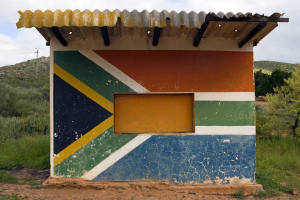
    Unused farm stall on the road between Clanwilliam and Citrusdal. Source: John Hogg/World Bank (via Flickr)

    Unused farm stall on the road between Clanwilliam and Citrusdal. Source: John Hogg/World Bank (via Flickr)

    However, while the Constitution and the National Water Act overturned the discriminatory water policies of the Apartheid era, they remain vague and non-committal on the delivery of their lofty promises. Given all the competing priorities and demands for investment, the country has neglected to invest the necessary resources to create, maintain and upgrade its water infrastructure and to adequately promote water conservation in the face of increased demands on the precious resource.

    In addition, the continued failure of sustainable agricultural practices and the promotion of economic growth in a business-as-usual and water-intensive manner have severely degraded South Africa’s water resources. All told, 48% of South Africa’s wetlands are critically endangered. Another telling example comes from the province of KwaZulu-Natal, where the pursuit of economic development and social advancement has led to a rapid rate of environmental transformation. The rate of loss of unprotected natural areas is approximately 1% per annum, meaning that if it continues at this rate they (and all of the attendant services they provide) will be lost by 2050. Pushing back against these trends requires significant efforts on the part of many different actors. This will be, of course, a very difficult task.

    Beyond technical deficiencies and economic tradeoffs, there remains a governance gap within the country that exacerbates the problems. The management of its water is largely disjointed and erratic. The various levels of government and the disparate non-state actors involved in water conservation and distribution are often arranged in Unsurprisingly, this leads to the multiplication of environmental stresses because stakeholders often lack technical knowledge, fail to adapt best environmental practices, contribute to spoiling common-pool resources, and contribute to social alienation from the natural world. This impedes economic development and hardens social cleavages between the rich, whose water flows freely and cheaply, and the poor, who suffer the debilitating effects brought upon by a lack of access to adequate water supplies. Thus, what is often lost in the discussion are the ways in which healthy ecosystems deliver valuable services to people. In essence, we are surrounded by ecological infrastructure.

    The social component of South African water security combines with technical deficiencies and governance gaps to create a dangerous and environmentally devastating impact. This reflects the connections between environmental health with socio-political stability. Unfortunately, for South Africa, the picture is troubling. Non-violent resistance has been a common tactic, but even more concerning has been the recent exponential increase in violent protests over poor service delivery, privatization of service delivery, social marginalization, and the persistent inequality in access to water. One of the ways that could assist the country avoid further civil strife is to significantly increase sustainable environmental management and adjust its governance priorities to deliver upon the laudatory promises of its environmental legislation.

    The Resilience of South Africa

    On May 7th, 2014, South Africans will head to the polls for national elections. This will be the fourth election since the fall of Apartheid, and the first for the “born frees” – the generation of young South Africans born and raised in a democratic South Africa. Most opinion polls indicate that the ruling African National Congress (ANC) party will be re-elected by a sizeable margin, though its support has dropped significantly in recent years. This is due in part to widening perceptions that the ANC has grown entrenched in its own privilege, reflected by ongoing corruption scandals and ineffective economic policies.

    As South Africa moves further away from the legacy of Apartheid, it must confront continued social alienation, the pervasive effects of deep inequality, and the monumental challenge of building ecological resilience and sustainability. As service delivery protests increase, it is clear how the social cleavages of modern-day South Africa often manifest themselves around issues of water, sanitation, the environment, and human dignity.

    The latest IPCC reports are remarkable achievements for a number of reasons. Not least, they clearly acknowledge the continued connections between human and environmental security. In this sense they reflect the growing awareness that to build resilient societies means to invest in resilient ecosystems, and vice versa. For South Africa, in possession of arguably the most progressive water legislation in the world, this requires actively investing in the ecological systems that builds and sustains human dignity. This will require the country to reconcile its rhetoric with its practice. A tall order to be sure, but one that is absolutely crucial for the country to fulfill the promise of its recent past.

    Cameron Harrington is a Post-Doctoral Fellow in the Global Risk Governance Programme at the University of Cape Town. His work is based upon research supported by the National Research Foundation of South Africa. Any opinion, findings and conclusions or recommendations expressed in this material are those of the author(s) and therefore the NRF does not accept any liability in regard thereto.


  • Sustainable Security

    This article was originally published on openSecurity’s monthly Sustainable Security column on 26th February 2014. Every month, a rotating network of experts from Oxford Research Group’s Sustainable Security programme explore pertinent issues of global and regional insecurity.

    Prime Minister David Cameron visits British troops in South Afghanistan, 10 June 2010. Source: No. 10 (Flickr)

    Prime Minister David Cameron visits British troops in South Afghanistan, 10 June 2010. Source: No. 10 (Flickr)

    The 100th anniversary of the start of the First World War has kick-started a period of national self-reflection for the British public and political establishment. The timing seems almost scripted: as the country prepares to look back at the tragic events of 100 years ago, so we prepare for the first incidence of peace in a century. Following final pull-out from Afghanistan later this year, the UK should cease to be engaged in combat operations anywhere in the world for the first time since 1914.

    This “strategic pause”, as Ministry of Defence (MoD) insiders are calling it, comes on the heels of last summer’s controversial parliamentary vote against possible military intervention in Syria. Public and Parliament alike seem wearied by the diminishing returns of a “fight first, fix later” strategic approach. With national elections and scheduled reviews of defence and security strategies fast approaching, this national mood for reflection is an opportunity to reframe British thinking on national and international security – and get it right in 2015.

    Limits of military action

    The threats facing the UK today are a world away from those that instigated the First World War. A century on, a distinct lack of interstate war, the rise of global networks of terrorists and organised criminals, and the inability of many fragile states to respond to such challenges characterise an increasingly complex security landscape. There is also growing recognition of the role of a number of “non-traditional” drivers of global insecurity which act to multiply other threats. As with the localised devastation seen in the UK this winter, climate change is exacerbating economic, social and resource stresses. Thanks to the communications revolution, the world’s marginalised majority is suddenly and drastically aware of its inequality. Such risks highlight the increasing implausibility of military force being effective in tackling insecurity. What use are armies and navies in reducing the gap between elites and a disenfranchised underclass that is both local and global?  How can air forces address the myriad impacts of concentrated greenhouse gases in the atmosphere?

    As much as the global security landscape has changed, there remains an exceptional continuity in the British response to insecurity: a dogged, increasingly ineffective – and recently highly counter-productive – militarised approach. Given that, like World War I, the operation to dislodge the Taliban was originally intended to be “over by Christmas” in 2001, the war in Afghanistan is a case in point. The war has lasted 13 years, resulting in the deaths of 447 British troops, serious injury of thousands more, and costing the UK over £37bn, according to recent estimates from former Helmand adviser Frank Ledwidge.

    Moreover, Ledwidge estimates that British troops in Helmand province have killed at least 500 non-combatants and the Costs of War project estimates that at least 16,725 Afghan civilians have been killed directly by the war’s violence, not including indirect deaths from reduced access to health care, malnutrition and lack of clean drinking water that have been exacerbated in the country’s war zones. For all these costs, military action has done little to decrease Taliban influence or stabilise Afghanistan. A recent review by CNA on behalf of the Pentagon’s policy directorate predicts a sharp post-withdrawal resurgence of Taliban influence and would require far more Afghan troops and police capacity than planned for.

    Learning something from the Afghanistan and Iraq debacles, the UK has shifted towards a more streamlined version of the same interventionist thinking. This “no boots on the ground” approach, such as we saw in Libya (2011), also comes with unforeseen consequences. While NATO operations in Libya were deemed successful within the narrow definitions of the UN mandate, limited intervention there sowed the seeds of further intervention in Mali as weapons and fighters spread south, prompting the declaration of commitment by the prime minister, David Cameron, to the next “generational struggle” against Islamist terrorism.

    A similar rhetoric of limited intervention was noticeable last summer during debates on possible military action in Syria, when the prime minister assured the British public that intended air strikes would be strictly “punitive”. Again, considerations of the potential ineffectiveness and future blowback of military action – on the people of Syria as well as the UK – took a back seat to the political visibility of military action as British agency.

    Room to reflect?

    There is a clear need for more nuanced approaches to tackle insecurity in the coming decades. The struggle against violent extremism, for example, requires approaches which seek to address the conditions that allow such ideologies and instability to thrive. However, the overarching message from British leaders is that we can expect more of the same. Earlier this month, the UK Government confirmed the upcoming purchase of fourteen F-35B Joint Strike Fighter jets, with a price tag of £2.5bn, in addition to new aircraft carriers costing at least £6.2bn. Neither system will be operational before 2019, almost a decade after the last British carriers were retired. Similarly, plans to renew the Trident nuclear deterrent with a like-for-like system will cost at least £25bn, with whole-life costs of replacement exceeding £100bn.

    Decision is due in 2016. Such heavy budgetary weighting in defence spending towards nuclear deterrence and offensive force projection limit the country’s ability to assess strategic balance and diminish the opportunity to develop a wider range of security management options for the UK on the international stage. Investing over half a billion pounds on armed Reaper drones by 2015 predisposes the UK to this form of military action while the jury is still out on its legitimacy, ethics, legality and long term impact. The possibilities for constructive debate on alternatives to the current offensive defence approach are constrained by such massive forward commitments to next generation equipment that prioritises force projection.

    There is also uncertainty over the review of the National Security Strategy (NSS), which defines the threat environment that UK defence and security policy responds to through the Strategic Defence and Security Review (SDSR). Both documents are scheduled to be reviewed and updated following the May 2015 general election. While thinking on changes to the next SDSR is already underway, National Security Adviser Sir Kim Darroch indicated to the House of Commons on 11 September “no precise timetable” for the next NSS. On 30 January, Cameron told the parliamentary Joint Committee on the National Security Strategy that the NSS review process – led by his Cabinet Office – was “now beginning” but implied that the SDSR was further advanced.

    The 2010 NSS made a number of important observations about the changing nature of British security challenges – including climate change and the importance of conflict prevention – but these failed to translate into actionable policy prescriptions in the SDSR. This was in part the result of poor timing; while the SDSR should be a subsidiary document informed by the NSS, the documents were released a day apart in October 2010 after a rushed four month process.

    If the UK is to engage in meaningful debate on approaching complex security challenges and subsequently turn that debate into relevant policy options, it must avoid the mistiming of 2010 and be open to dialogue with UK civil society and foreign partners on the nature of threats and opportunities. With uncertainty over the timing and scope of the NSS review it is difficult to see what room exists for UK to develop policies that genuinely reflect changes in international security.

    Getting it right ahead of 2015

    If British approaches are to respond effectively to changing security threats, the scheduled 2015 SDSR process will need to rebalance priorities, with a shift towards conflict prevention and provision of early and non-combat security support in fragile states. Progressive thinking in the current NSS and initiatives, such as the 2011 Building Stability Overseas Strategy, must now translate into a change of priorities in British security, including spending, decisions on deterrence and intervention.

    The coinciding anniversary of the First World War and final withdrawal from Afghanistan may well provide a much overdue period of reflection on past lessons and future approaches to British security and defence. But if the UK is to learn the lessons of the past century – that unparalleled military interventionism cannot yield long term national nor global security – it must make 2014 a year of genuine consideration of the threats it faces in the next years. In turn, committing to an open process of reflection will allow the decisions of 2015-16 to positively contribute to sustainable peace and security for years to come.

    Zoë Pelter is the Research Officer of Oxford Research Group’s (ORG) Sustainable Security programme. She works on a number of projects across the programme, including ‘Rethinking UK Defence and Security Policies’ and ‘Sustainable Security and the Global South’. Zoë  co-authored ORG’s recent submission to the House of Commons Defence Select Committee inquiry ‘Towards the Next Defence and Security Review’.

  • Sustainable Security

    This post is based on Paul Rogers’ Monthly Global Security Briefings for Oxford Research Group and was originally posted  on 31 July, 2014. At the time of writing (31 July), Israeli Operation Protective Edge had exceeded the previous major operation, Cast Lead of 2008-9. Both operations have involved intensive use of air strikes combined with major ground incursions. The current war is already longer than the 2008-9 war, with no end in sight. Indeed, by the end of July, positions were hardening and prospects for anything longer than brief further humanitarian pause seemed remote. This briefing provides some context for the conflict together with a preliminary analysis of possible consequences.

    The War So Far

    Iron Dome in Operation Protective Edge Source: Wikipedia

    Iron Dome in Operation Protective Edge Source: Wikipedia

    The current war started on 8 July with intensive Israeli air and artillery assaults on Hamas paramilitary targets, intended primarily to destroy or greatly limit the Hamas ability to fire unguided rockets over much of Israel. In spite of the level of force used, the rocket fire continued, amidst growing concern within the Israeli Defence Forces (IDF) that paramilitaries had constructed many more infiltration tunnels than had been realised. A ground assault followed the initial air assault, with this being intended to destroy rocket launch facilities and stores and also interdict tunnels. As a consequence of this assault, the IDF suffered many casualties, including the deaths of 13 men from the elite Golani Brigade in a single day (20 July). Even after 10 days of conflict, with intensive IDF operations against the infiltration tunnels, Hamas paramilitaries managed to get under the border and in a brief attack killed five young IDF sergeants on a leadership training course. One Hamas paramilitary was killed but others appear to have returned to Gaza. Over the course of the war so far, Israeli forces have struck at over 3,700 targets in Gaza while more than 2,700 rockets have been launched by Hamas and other groups from Gaza towards Israel. The death toll among Palestinians exceeds 1,350 and is rising markedly each day. At least 6,000 people have been injured. Israel has lost 56 soldiers and three civilians, and more than 400 soldiers have been wounded. On 31 July, the 24th day of the war, Israel announced the calling up of a further 16,000 reservists, to bring the total call-up to 86,000. There has been considerable controversy over the numbers of civilian casualties in Gaza, especially the hitting of schools, hospitals and a market. UN figures indicate that at least 70% of those killed are civilians, and nongovernmental international support for Hamas has increased substantially. Public opinion in Israel remains very strongly in favour of continuing the war as a means of stopping the rockets and destroying the infiltration tunnels.

    Support for the Adversaries

    Hamas: In the past three years, Hamas has lost much of its international support from governments in the region, even though Gaza has existed in what amounts to an open prison controlled by Israel. The Egyptian government of President Sisi is strongly opposed to the Muslim Brotherhood and regards Hamas as a part of this wider movement. The consequent near-total closure of the common border with Gaza and the control of access tunnels has had a marked economic effect on Gaza, exacerbating its siege status. Furthermore, Hamas’s support for Islamist paramilitaries in Syria has lost it the support of the Assad regime in Syria and, to an extent, of the Iranian government. The recent rapprochement between Hamas and Fatah survives, if currently strained, but causes the Israeli government considerable concern. In spite of all the limitations, Hamas’s paramilitary wing has been able to assemble many thousands of rockets and mortar rounds and has also built a network of robust infiltration tunnels that has greatly exceeded Israel’s pre-war estimates. Hamas as a movement retains considerable support in Gaza, with even the impact of the Israeli air and ground assaults having little effect. Israel: Israel retains a measure of support of many western governments but there are growing concerns at the civilian losses in Gaza. The IDF and the defence industry as a whole have very close connections with their US counterparts. The key missile defence system, Iron Dome, is essentially a US-Israeli joint production, including current plans to set up a new production line in the US. Israel is also able to use US munitions stored in Israel. The US is in a position to put very heavy pressure on Israel but is deeply reluctant to do this at present, mainly because of domestic support for Israel. This support remains high but is declining

    Cast Lead and Protective Edge

    Both the 2008-09 and 2014 Israeli operations have had similar aims – to so damage Hamas that it is massively restricted as a threat to Israeli security. A comparison of the operations so far is indicative. Cast Lead lasted 23 days and ended with a ceasefire brokered largely by Egypt. During that period, Hamas and other groups launched 750 rockets and mortars, all relatively short-range. Israelis lost 13 lives, four of them to friendly fire. Israel killed 1,440 people in Gaza, claiming that half were militants, though Hamas denied this. Since the 2008-09 operation, Israel has deployed the Iron Dome system, and this has intercepted the great majority of approximately 2,700 rockets and mortars fired during Protective Edge.  Hamas has, though, hugely increased its capabilities over the past six years, in spite of its recent political isolation, and has exacted a much higher toll on IDF soldiers during the current ground assault than in 2008-09: 56 so far compared with 13 before. In this sense, the aim of Cast Lead – to substantially degrade Hamas’s crude offensive systems – was a singular failure. Even with the Iron Dome system, vulnerabilities have been demonstrated by the closure of Ben Gurion Airport to several international carriers for several days last week, following a rocket which penetrated the missile shield and landed within a mile of what is Israel’s gateway airport. The loss of so many Israeli soldiers may still seem small compared with the huge losses in Gaza, but the IDF is held in very high regard in Israel.  Indeed, support for the war has likely increased because of these losses and the partial closure of the airport. These appear to have combined to convince many Israelis that, though Hamas is weak and hugely restricted in its location, it represents such a threat to Israel that a protracted war is, if need be, fully justified. The phrase “impregnable in its insecurity” has sometimes been applied to Israel and it is useful in understanding the outlook of a very powerful country that still feels vulnerable.

    The home of the Kware' family, bombed by IDF forces. 8 civilians, including 6 minors, were killed. Gaza, 8 July, 2014. Source: B’Tselem

    The home of the Kware’ family, bombed by IDF forces. 8 civilians, including 6 minors, were killed. Gaza, 8 July, 2014. Source: B’Tselem

    What Now?

    At the time of writing (31 July) it is possible that another humanitarian pause might be agreed and might lead to something more substantial. Assuming that this does now happen, the indications are that the IDF will continue its operations to destroy rockets and tunnels, and Hamas paramilitaries will resist. Given the IDF casualties to date, a pattern is likely to emerge in which urban counter-paramilitary operations will prove both difficult and costly, and the IDF will rely much more on its huge firepower advantage. This is very much what happened with US and coalition forces in Iraq from 2003, and even more so with the Israeli siege of West Beirut in 1982 when at least 10,000 people were killed, the great majority of them civilians. It is already evident that targeting has moved on to the more general Hamas infrastructure, but the very nature of the densely populated Gaza Strip means that the infrastructure for the whole community is also hugely affected. Given the existing impoverishment of the area, the human consequences will be severe, as UN staff have been pointing out repeatedly.

    Consequences

    In all of its operations against Hamas – Cast Lead in 2008-09, the more limited air assault in 2012, and the current war – Israel has sought to severely damage Hamas’s paramilitary capabilities, and decrease its domestic support. In the first two conflicts that objective was not achieved, and it is unlikely that Israel’s current operation will succeed this time around. In spite of Hamas’s greater international isolation, its paramilitaries have this time had a substantial impact on the IDF, and the movement retains domestic support. Moreover, international public opinion has moved heavily against Israel. One of the major changes in comparing the current war with the two previous wars is that the use of social media has hugely expanded, resulting in graphic images being distributed across the region and beyond in near-real time. One effect of this, in turn, is that the more conventional western media reporting is itself becoming more graphic. In spite of a very efficient Israeli information operation, this change is working against Israel’s interests. It also means that Islamist propagandists across the Middle East and beyond are easily able to present the war as a further example of “Zionist aggression”. Indeed, they will also relentlessly point to close US-Israel links, further developing their long-term image of a “Crusader-Zionist war on Islam”, in spite of Secretary of State Kerry’s undoubted personal commitment to achieving a ceasefire. The long-term consequences of this are difficult to read, but could give a boost to radicalisation well beyond Israel and the occupied territories. That alone is an added reason why a ceasefire at the earliest opportunity is not only desirable but essential.

  • Sustainable Security

    Many have argued that civil wars are more likely to occur along religious divisions. But evidence indicates that intrastate conflict is actually more likely within linguistic dyads than among religious ones.

    In the 1990s Samuel Huntington argued that conflict across civilizational or religious lines would replace the ideological divisions that had defined political struggles during the Cold War period. Opining that Islam has ‘bloody borders’, he believed that conflicts would be particularly prevalent between ‘Muslims’ and ‘non-Muslims’. This led Huntington to further suggest that a future clash between ‘Islamic civilization’ and the West might occur.

    Since September 11th 2001 and the subsequent proclamation of the “War on Terror,” Huntington’s thesis has gained widespread attention among political leaders and citizens around the world. In 2014, for example, Tony Blair asserted that “religious difference will fuel this century’s battles.” During the 2016 US presidential campaign, President-elect Donald Trump seemingly subscribed to Huntington’s ideas when calling for “a total and complete shutdown of Muslims” entering the country to prevent violent attacks on US citizens.

    Whereas many social scientists would agree that ideological conflict between communism and capitalism, both between and within states, has declined since the end of the Cold War, no agreement exists about what, if anything, replaced ideology. Most scholars who study internal conflict or civil war would not distinguish between linguistic, religious, and racial markers but rather classify these categories as part of the larger concept of ethnicity. Yet some conflict researchers follow Huntington and identify religious differences as particularly conflict-prone. In doing so, important alternatives such as ethno-nationalist mobilization based on linguistic identities often receive too little attention.

    Are internal conflicts mostly about religion or language?

    azaz_syria

    Image by Christiaan Triebert/Flickr.

    In a study that is forthcoming in the Journal of Conflict Resolution, I and my co-authors Lars-Erik Cederman (ETH Zürich) and Manuel Vogt (Princeton University) conduct such a comparison. We analyse the probability of internal armed conflict between linguistically and religiously distinctive groups between 1946 and 2009.

    Contrary to Huntington’s thesis, linguistic differences show a strong and robust relationship with the outbreak of intrastate conflicts. In fact, we find that linguistic divisions are more conflict-prone than religious differences.

    These findings continue to hold when we focus only on the years since 1990 – the period to which Huntington’s thesis should be the most relevant. Our results further suggest that in no world region are religious differences more likely to be associated with internal armed conflict than linguistic divisions. We find the strongest support for a greater conflict-proneness of language compared to religion in Eastern Europe and Asia.

    Even in the Middle East, we find a slightly higher, if uncertain, probability of armed conflict across linguistic than religious lines. The Middle Eastern finding at least in part results from multiple Kurdish rebellions in Turkey, Iraq, and more recently Syria as well as smaller uprisings of linguistic minorities in Iran.

    When focusing only on conflicts that involve Muslim groups, we do not find substantial differences to other world religions. Although the majority of all armed internal conflicts today take place within Muslim-majority states, the majority of Muslim groups do not engage in violent rebellion. Our analyses also reject the thesis that Muslim groups disproportionately engage in conflict with non-Muslim groups.

    Why Linguistic Differences?

    Instead linguistic differences continue to be more frequently related to armed uprisings within states. While the brutal civil war in Syria captured headlines over the past years in many Western countries, destructive conflicts across linguistic lines haunt South Sudan, Burma, and Turkey.

    Of course, linguistic differences are more widespread than religious divisions. In other words, ethnic groups in any given country are more likely to be divided by language than by religion. Notwithstanding these differences in frequency, our results indicate that linguistic divisions are disproportionately more often related to armed conflict than religious distinctions.

    In our forthcoming article, we argue that it is the power of nationalism that makes linguistic divisions more conflict-prone than religious ones. Language gained political relevance in the late 18th century when the French Revolution transferred political authority from absolutist rulers to the people. About the same time that political power became vested in European peoples, the industrial revolution created incentives to further homogenize European nation-states. Mass schooling and mass newspapers laid the basis for imagined national communities.

    These developments provided both motive and opportunity for violent conflict across linguistic boundaries. Where members of ethnic groups are barred from having their children taught in their native language or experience linguistic discrimination in the job market and their interaction with the state, some of them will voluntarily assimilate into the dominant culture, but others develop grievances and may even refuse assimilation.

    The elites of such discriminated groups can voice these grievances through publications in their own language and use it to express nationalist aspirations and demands. When the host state is unable or unwilling to address these demands, violent conflict becomes more likely. These dynamics are illustrated by Sri Lanka’s decades-long civil war between Singhalese and Tamils, and recurrent Kurdish rebellions in Turkey.

    Given the link between industrial advancement and language-based nationalism it is unsurprising that we find higher rates of linguistic conflict in the relatively highly developed regions of Eastern Europe and Asia rather than in Sub-Saharan Africa. Central and Eastern Europe may even be considered as the cradle of linguistically-based nationalism.

    The multi-ethnic Austro-Hungarian and Ottoman empires did not fulfil the modern creed of “one people, one state,” and violently disintegrated during World War I. The Soviet Union and Yugoslavia followed suit in the early 1990s. To this day, Turkey has not come to terms with its Kurdish minority, and once more experiences internal conflict.

    Yet the idea of nationalism did not remain contained to Europe. A highly flexible concept, it informed the national liberation struggles of former colonial subjects against the European colonial powers. The lines of division here were usually race and language rather than religion. For decades, the Israeli-Palestinian conflict was a conflict between Hebrew-speakers of European origin and Arab speakers, who had lived in Palestine for centuries. Only in the past two decades has it taken on more religious undertones.

    Policy Solutions?

    Linguistic and religious differences will remain with us for the foreseeable future. However, very few of these fault lines can be expected to erupt in violent conflict. Whether linguistic differences transform into seemingly incompatible nationalist projects, or whether religious divisions into ostensibly intractable positions, depends on how political leaders from different groups interact with one another.

    Frequently armed rebellion emerges in politically highly exclusive and discriminatory contexts. Where political leaders with specific linguistic or religious backgrounds are barred from decision-making that affects their groups, conflict is more likely to break out than in states where they have some influence in government circles. Exclusion along ethnic lines creates clear insiders and outsiders, fosters grievances among the excluded, and suggests that there is “no other way out” but violent resistance. Zimbabwe, both under Smith and Mugabe, Iraq under Saddam Hussein, and Burma to the present day are examples of ethnically exclusionary regimes. Each of these states also experienced violent rebellion by excluded groups.

    In another joint study published in “Peace and Conflict 2016”, we show that excluding political elites with different linguistic or religious backgrounds from governmental power is pervasive in the Middle East and North Africa. So is political discrimination that denies the Palestinians in Gaza citizenship rights, keeps the Shia from voting in Qatar, or persecutes Kurds for political reasons in Turkey.

    ethnic-conflict-graph

    Figure 1 displays the average population share that experiences discrimination for different world regions and years. The data derives from the Ethnic Power Relations (EPR) dataset available at https://growup.ethz.ch/pfe.

    Figure 1 reveals that ethnic discrimination remains staggeringly high in the Middle East although the region has experienced some improvements over the past twenty years. That religious differences in the Middle East erupt into violent conflict may be less of a surprise once this context is taken into account.

    Our research thus suggests that avoiding ethnic exclusion and discrimination through power-sharing in multi-ethnic governmental coalitions will reduce the likelihood of armed conflict across both linguistic and religious lines. Elite accommodation in power-sharing coalitions has contributed to greater stability in such diverse places as Bosnia, Nigeria, Burundi, and Malaysia regardless of the type of ethnic differences. Although no panacea, power-sharing is associated with a substantial decrease in the likelihood of internal armed conflicts compared to exclusive environments.

    While there has been a trend towards ethnic accommodation since the end of the Cold War, we do not know enough about its origin. Future research needs to investigate the causes of accommodation in greater detail and pay particular attention to appropriate solutions for violent conflict across linguistic lines relative to religious differences.


    Nils-Christian Bormann is lecturer and Humanities and Social Science Fellow in the Politics Department at the University of Exeter.

    Manuel Vogt is a visiting postdoctoral research associate at Princeton University and senior researcher at ETH Zürich.

    Lars-Erik Cederman is Professor of International Conflict Research at ETH Zürich and the author of Inequality, Grievances, and Civil War (Cambridge University Press, 2013).

  • Sustainable Security

    Several diplomatic efforts have been made both domestically and internationally to enhance peaceful unity since the start of the Cyprus Problem. Despite the shortcomings of past efforts, it is still desirable not only to resolve the issue, but also to do so in a timely manner.

    The Cyprus Problem

    Cyprus, the third largest island in the Mediterranean Sea, is home to 1.1 million and has a tempestuous history involving many actors ranging from different empires and nations of the past to regional and global actors of today, including the UN, EU and NATO. As George Christou highlights, the history of Cyprus “has been characterised by tension and conflict due to the diametrically opposed interests of Greece and the Greek-Cypriots on the one hand, and Turkey and the Turkish-Cypriots on the other”. If we add the colonial heritage, proximity to the Suez Canal and interests of Great Britain, remnants of Cold War paranoia that the island was to become a Russian satellite or a ‘Cuba in the Mediterranean’, the British Sovereign Base Areas that host one of the biggest intelligence infrastructures in the region and the close links between the Greek and Russian Orthodox churches to the equation, the protracted conflict on the island starts looking multi-layered, multi-factored and multi-faceted.

    The United Nations Buffer Zone, also known as the Green Line, a demilitarised zone patrolled by the United Nations Peacekeeping Force in Nicosia,  Cyprus. Image credit: Marco Fieber/Flickr.

    Historically, the Cyprus conflict is usually boiled down to competing ethno-nationalisms between Turkish-Cypriot and Greek-Cypriot communities; it is usually read in tandem with the ‘motherland’ nationalism in Turkey and Greece, is entrenched in the 1960s constitution along consociational lines and traced back to the decolonisation period in the 1950s. At one time or another, both communities in Cyprus have linked their destinies to those of their ethnic kin, to that of the large-group outside the island. Due to the pursuit of mutually exclusive destinies, Cyprus suffered from inter-communal violence from late 1950s until its decolonisation and independence in 1960. However, the newly founded Republic of Cyprus was only ephemeral, and inter-communal conflict erupted once again only after 3 years in 1963. Since 1964, the island hosts one of the longest-standing peacekeeping missions – The United Nations Peacekeeping Force in Cyprus (UNFICYP). The next 50 years witnessed a long and frustrating process of inter-communal talks and several UN settlement plans, turning the island into a ‘graveyard of diplomats’. As a result, the communities, who were psychologically divided under the new federation, would soon become physically and demographically divided. As such, following the Turkish intervention in response to the Greek coup on the island in 1974, Cyprus has effectively been divided in two, with Greek-Cypriots living in the southern part under the legally recognised Republic of Cyprus (RoC) and Turkish-Cypriots living in the northern part under the unrecognised, self-declared, administration called the ‘Turkish Republic of Northern Cyprus’ (TRNC).

    Despite the cease-fire and the protracted conflict, Cyprus is a safe place. This safety may be a common characteristic of small communities where social control is prevalent because of close familial and social relationships, but Cypriots are generally and unarguably non-violent people, demonstrated by low crime rates. In spite of the daily frustrations of the conflict, and its economic, social and political cost to Cypriots, it is hard to deny that the situation is ‘comfortable’ and ‘normalised’. Not only does Cyprus remain a popular holiday destination for many Europeans, but it officially became an EU member state with all its ‘anomalies’ in 2004. At times, Cyprus markets itself as the home for the last divided capital of Europe—at other times, as the furthest Eastern corner of Europe that offers pristine and exotic beaches—or as the multi-cultural holiday resort that is simultaneously European, Middle-Eastern and Mediterranean.

    The Cyprus Problem operates on local, regional and international levels. The local entails the relationship between the two ‘ethnically’ categorised communities. Owing to Turkey and Greece’s involvement since its early stages, the conflict has also had a distinct regional dimension for many years. This regional dimension is also the product of islands geography as a bridge between 3 continents and due to the history and demographics of the region. At the international level, the problem has preoccupied the UN since 1964 and involved NATO, the United States and since 2004, the EU became more directly embroiled when Cyprus acceded the Union without a peace settlement.

    Solving the Problem

    Numerous diplomatic efforts have been made both domestically and internationally to enhance different forms of peaceful unity since the conception of the Cyprus Problem. Over the decades, myriad negotiations and peace-talks have also begun and have been later halted, fast-tracked, and revisited. Nevertheless, it is still imperative to find a comprehensive solution to the Cyprus Problem.

    Such a solution, which would also advance the wider cause of peacebuilding and reconciliation, is crucial for several main reasons:

    • The prolongation of the conflict presents a myriad of human rights violations for the communities of Cyprus. While the RoC enjoys full EU membership, Turkish-Cypriots—who are also EU citizens—live in the northern part of Cyprus where the RoC does not exercise effective control and where the Acquis Communautaire is suspended. The Acquis Communautaireis the accumulated body of European Union (EU) law and obligations from 1958 to the present day. It comprises all the EU’s treaties and laws (directives, regulations and decisions), declarations and resolutions, international agreements and the judgments of the Court of Justice. The unrecognised status of the northern administration also amounts to a violation of the human rights of those Greek-Cypriots who became internally displaced people during 1974 and had lost access to their properties. As such, Cyprus is an explicit case of legality and politics persistently challenging each other, a situation which creates inherent contradictions for the EU project.
    • The accession of the RoC to the EU without the inclusion of the Turkish-Cypriots also presents a significant challenge for EU governance across a diverse range of issues, including the EU objective of achieving stability in the eastern Mediterranean. The EU accession also creates a state of exception that galvanises Cyprus’ ‘special status’ that is in reality not that special. As Harry Anastasiou eloquently puts it, Cyprus was “… the first EU member country that was ethnically divided; that was represented at EU level exclusively by members of one of the rival ethnic communities; that was partially occupied by the military forces of an EU candidate state; that had the institutional means to apply the Acquis Communautaire in one part of its territory but not in another; that had a cease-fire line and a buffer zone manned by UN peacekeepers; and that had one portion of its citizens deprived of the right to their property and residence and another portion of its citizens deprived of the right of access to and participation in the EU economy and EU political institutions. Moreover, Cyprus was the only EU member where its major ethnic communities recognise the EU law while simultaneously rejecting each other’s law; where its major ethnic communities accept the legitimacy of the EU while rejecting each other’s legitimacy within their own shared island”.
    • The ramifications of the conflict on the NATO–EU relationship and European energy policy is disconcerting due to newly discovered natural gas resources in Cyprus, competing claims over these resources and the fact that Turkey’s geographical location makes it an important corridor- particularly for gas and oil for the EU. When we look at regional alliances and hydrocarbon interests, we can see a highly intricate web of relationships. These include the hyper-securitisation, where threats are constructed and legitimised through security speech acts, of Turkey in the RoC, the latter’s close links with Russia and Greece, Turkey’s significance for NATO, and the fact that Russia and Cyprus are not part of the alliance. Such dynamics clearly add further tension to Turkey-EU, EU-Russia and Russia-Turkey relations, and create further instability in the region. Thus, solving the Cyprus problem can ease tensions in the region and positively influence the regional dynamics particularly those about regional energy policies.
    • Even though the intentions of Turkey’s Justice and Development Party (AKP) regarding full EU membership are highly questionable, non-resolution of the Cyprus Problem presents an obstacle for Turkey’s EU accession as well as being a persistent and bitter thorn in Turkey–EU relations. Solving the Cyprus Problem may also help normalise Turkey’s relationship with its neighbours. Considering the deteriorating diplomatic relationships between Turkey and the ‘West’, deep polarisation among different groups in Turkey, crumbling economy and intra-state violence, conflict and terrorism, Cyprus can help relieve much pressure off Turkey and restore its diplomatic stance.
    • Considering Cyprus’ geographical proximity to Syria and Iraq and to the Middle East and North Africa, it could be argued that the instability in the region (including Turkey)—and the subsequent ‘refugee’ crisis—are factors that add to the urgency of finding a comprehensive solution to the protracted conflict. The Cyprus Problem is a non-violent, ‘normalised’, and ‘comfortable’ conflict (see Adamides and Constantinou 2011), thus the regional dynamics can help cultivate a sense of urgency for reaching a comprehensive solution, which may contribute to eventual increased stability in the region, as it would not only ‘reconcile’ Greek-Cypriots and Turkish-Cypriots but ease much pressure off Turkey, Greece and the EU as well.

    What’s more, it is not only pertinent to solve the Cyprus Problem, but to do so in a timely manner too. In 2004, Cypriots came close to finding a solution to their intractable problem. A comprehensive settlement plan (a.k.a The Annan Plan) on a bi-zonal bi-communal federal state with single citizenship was accepted by the Turkish-Cypriot community but rejected by the Greek-Cypriot community in a simultaneous referenda in April 2004. Following the disappointment of the peace referenda, Cypriots became disengaged from the peace process, which was further exacerbated by the global economic crisis. Following the financial crises that hit the RoC in 2012, the economic concerns of communities have gradually pushed the Cyprus Problem behind other concerns and priorities, specifically unemployment, inflation and increasing crime rates.

    The peace negotiations resumed in 2008 but failed again in 2011. After independent left-wing Turkish Cypriot presidential candidate Mustafa Akıncı assumed office in the northern part of Cyprus in April 2015, hopes were revitalised. Known for his pro-solution and Turkey-defying stance and surprisingly clean political slate, many accounts argue that the centre-right Nicos Anastasiades, who has been the President of Republic of Cyprus since 2013 from the only party that supported the Annan Plan, and Akıncı duo has created a very favourable environment and that the stars are perfectly aligned this time, bringing the island closer than ever to reaching a comprehensive settlement. This gave birth to increasing public engagement in the peace process, which contributed to the ‘favourable’ environment by supporting and legitimising the mandate of the negotiation teams and creating a more convincing and prosperous ‘vision’ for the future of Cyprus without ‘the Problem’.

    Unfortunately however, this trend was showing signs of reversal. Following the Geneva summit disappointment, lack of convergence on the security dossier of the negotiations is reproducing sense of insecurity and triggering historic traumas, which underpins highly polarised internal narratives based on zero-sum discourse. Especially after the parliamentary Enosis commemoration vote in the RoC and Turkey’s four freedoms demand in Cyprus, the ‘peace fatigue’ is starting to set in once again. Frustration over lack of progress and impetus showing itself in low hope: While 53% of Greek Cypriots and 48% of Turkish Cypriots wish for the peace process to succeed, 43% and 50% respectively express no hope that the peace process will produce results. As the new security architecture proposal of SeeD Security Dialogue Initiative provides a four-step road map to break the current deadlock:

    Step 1: Shift the focus away from hard security and guarantees that only emphasize on last resort, deterrence and worse case scenarios to soft security and preventative measures that emphasize on sustainability and viability, by broadening the concept to include human security, economic, social and ontological security. The underlying objective should be to achieve an endogenously resilient Federal Cyprus that relies on its own institutions to guarantee the security of its citizens.

    Step 2: Acknowledge that a transitional period will be required before Federal Cyprus can be endogenously resilient and secure, where special arrangements and external support will be necessary to build the capacity of Cypriot institutions and provide a sense of security to all citizens and communities. Focus on benchmarks and performance indicators that can ensure a smooth implementation period.

    Step 3: Negotiate and agree those aspects of transitional arrangements that are less controversial (e.g. timelines for implementation of the settlement, what support will be provided by an international mission) in order to prevent deadlock, increase points of convergence and reinforce hope and public engagement in the process before negotiating those aspects of transitional arrangements that are more controversial (e.g. ‘last resort’ provisions, role of historic guarantors).

    Step 4: Enshrine all agreements and steps in a Treaty of Implementation, which will outline a robust bridge from the current status quo, to the ultimate vision of an endogenously resilient Federal Cyprus.

    What is needed to revitalise the peace process in Cyprus is innovation and reflection both on the process and on the content. Specifically relating to the security dossier, we need a different approach that broadens the concept of security beyond the realpolitik regional bargaining and beyond the narrow understanding that talking about the security of a federal Cyprus is talking about military arrangements and guarantees. It is crucial to capitalise on these proposals and regional dynamics and add a success story to the world’s peacemaking and peacebuilding record.

    İlke Dağlı, a Senior Researcher for the international think-tank SeeD (The Center for Sustainable Peace and Democratic Development), completed her PhD in Politics and International Studies at the University of Warwick, focusing on “Securitisation of Identities in Conflict Environments and its Implications on Ontological Security”.  She has a degree in European and International Politics and completed her MSC in Bristol on Security and Development. Since 2006 she has been working closely with CSOs and SMEs in Cyprus as a project coordinator, project developer, consultant and facilitator. She co-authored and coordinated many local projects such as The Civil Society Dialogue Project, Cyprus Community Media Centre initiative, Access Info Cyprus Project and Play for Peace Project and is closely involved with the ENGAGE Do Your Part for Peace project.

  • Sustainable Security

    Authors’ note: This piece presents a summary of the article: Gëzim Visoka and John Doyle, ‘Neo-Functional Peace: The European Union Way of Resolving Conflicts’, Journal of Common Market Studies. Vol. 54, No. 4, 2016, pp. 862-877. Free access link: http://onlinelibrary.wiley.com/doi/10.1111/jcms.12342/epdf.

    Today, the European Union (EU) plays an important role in preventing conflicts, as the EU’s role facilitating dialogue between Kosovo and Serbia shows. But the EU’s role as regional peacebuilder could suffer drawbacks as a result of internal turbulences cases by the Brexit and other lingering disintegrationalist forces.

    Introduction

    The European Union has expanded its role in preventing conflicts and building peace, but its institutional practices remain insufficiently conceptualized. In this piece we argue that, drawing from a strong self-perception toward a neo-functionalist interpretation of its own history, the EU has started to use its own internal model of governance as an approach for resolving protracted disputes, through deconstructing highly political issues into technical meanings in order to achieve mutually acceptable agreements. We illustrate this by examining the EU’s approach in facilitating a dialogue for normalising relations between Kosovo and Serbia. However, the EU’s role as regional peacebuilder can suffer drawbacks as a result of internal turbulences cases by the Brexit and other lingering disintegrationalist forces.

    The EU’s approach to resolving conflicts and building peace

    Nicolas Raymond

    Image by Nicolas Raymond via Flickr.

    In the past ten years, the European Union (EU) has increased its role in resolving conflicts and building peace in its neighbouring regions and beyond. However, analysis of the EU peacebuilding work has placed EU practice almost entirely within traditional instruments of security governance, such as conflict prevention and mediation, crisis management, post-conflict stabilization and normative frameworks, such as human rights, human security and civilian protection. This is largely because scholars have argued that the EU’s peacebuilding framework does not yet represent a coherent intellectual project and relies on existing liberal peacebuilding frameworks affiliated with restoring security, strengthening the rule of law, supporting democratic processes, delivering humanitarian assistance, and supporting economic recovery. Yet the EU’s peace support operations should not only be studied through the lens of liberal peacebuilding, but should also be seen as self-mirroring its internal dynamics of neo-functional integration and consolidation. Thus, the EU’s external actions are partly based on the externalization of its own model of integration, especially neo-functionalism which accounts for the incremental convergence of self-interest through economic and technocratic co-operation in a particular sector, which then can spill over to other sectors and enable broader political co-operation and integration.

    The EU’s peacebuilding approach is different to that of other international actors, mainly due to the contextual factors regarding how it has transformed internally, how its complex institutional and multi-layered governance works and what capacities, norms and practices it invokes in dealing with external situations. The domination of new alternative accounts, such as liberal intergovernmentalism, in explaining the EU’s common foreign and security policy, as well as the complex unfolding of EU enlargement, development, and peacebuilding policies, have overshadowed neo-functionalism’s space in exploring developments in EU peacebuilding. Liberal intergovernmentalism grants more agency to the national preferences of member states than the EU institutions in shaping internal and external policy.

    In peacebuilding studies, there is a tendency to avoid neo-functionalism, because it can be associated with technocracy – the rule of experts and bureaucratic procedures, based on universal blueprints, privileging of external knowledge and imposition of frameworks for governing societies.

    Despite its overshadowed academic relevance, neo-functionalism continues to be an underlining frame of reference and culture of practice among EU policy-makers and bureaucrats. Neo-functionalism accounts for the incremental convergence of self-interest through economic and technocratic co-operation in a particular sector, which can spill over to other sectors and enable broader political co-operation and integration. The increased role of the EU in merging peace, development and security speaks to the neo-functionalist evaluation of EU governance of external security. Neo-functionalism, therefore, is not only relevant for theorizing regional integration, but can also help us understand the EU’s peace support practices.

    Neo-functional peace: Kosovo-Serbia Dialogue

    The EU’s neo-functionalist approach has played a crucial role in normalizing relations between Kosovo and Serbia, and in resolving a range of outstanding political disputes. In policy discourse, the Kosovo–Serbia dialogue was presented as a major success of European foreign policy and evidence that the EU was a reliable partner of the UN. But, how has the EU managed to resolve one of the protracted conflicts in Europe?

    First, as prescribed by neo-functionalists, background conditions need to be conducive for a peace process to work. In the case of Kosovo and Serbia, the background conditions were ripe for both sides to initiate a peace process, whereby the normalization of relations between Kosovo and Serbia emerged as a key condition for advancing the stalled EU integration process for both countries. The peace processes between Kosovo and Serbia in the past two decades are marked by several missed opportunities. The EU’s integration perspective for Kosovo and Serbia has been the driving force for both sides to engage in dialogue. Hence, despite its unpopularity now in Europe, the enlargement of the EU in the Western Balkans is key to transforming protracted conflicts.

    Second, neo-functionalist approaches prefer technical dialogue and agreements in areas of ‘low politics’, which permit confidence-building, socialization and development of mutual commitments. A key feature of Kosovo–Serbia Dialogue was the conversion of sensitive political issues into technocratic process. The essence of this process was to find a mutually agreeable solution, leading to Serbia’s removal of its parallel institutions in Kosovo and de facto acceptance of Kosovo’s legal and political authority territory Kosovan territory, but also as an independent state in the region. Equally important and sensitive was Serbia’s demand to expand political rights and the scope of local self-governance of the Serb community living in Kosovo. The technical dialogue has resulted in a number of important agreements on regional co-operation and representations, integrated border management, regulation of customs steps, return of cadastral records and civil registry and recognition of university diplomas. The agreements were written in technical language but had far-reaching political implications.

    Third, in neo-functionalist logic, technical agreements had a spill over effect which launched a high-level political dialogue and resolved numerous outstanding sensitive political issues. After each agreement, the EU outlined the need for continuing dialogue, for pragmatism and for new agreements. The technical dialogue has facilitated a high-level political dialogue and in turn, the political dialogue later allowed new technical agreements.  In fact, technical dialogue proved to be insufficient without upgrading the process to the highest political level that would ensure stronger political commitment, domestic legitimacy and faster progress in implementing the outcomes of the dialogue. The key breakthrough in the Kosovo–Serbia Dialogue was the negotiation of the ‘First Agreement Governing the Principles for Normalisation of Relations’, which permitted progress on sensitive political issues, such as sovereignty and regional membership, without negatively affecting the self-interest and domestic legitimacy of parties.

    Fourth, neo-functionalist interactions are often embedded in multi-meaning liminalities to enable each party to interpret agreements in their own terms. While Kosovo utilized them to strengthen sovereignty, Serbia utilized the agreements to improve and advance the rights of Serbs in Kosovo and enhance its EU accession agenda.  If, however, a highly political vocabulary was used to describe the contentious issues, neither party would have been able to reach any agreement. Liminality was chosen to reduce the potential politicization of these issues and create space for both parties to sell to their domestic audiences these technical agreements as favourable deals in their national interest. For instance, the agreement on the freedom of movement provides that citizens of Kosovo and Serbia would cross the border not with passports but with ID cards, accompanied only by a written entry/exit. In this way the question of recognizing the Kosovo passport was avoided, by using alternative national documents.

    Another interesting example is the IBM agreement, which for Kosovo is referred to as integrated border management, while Serbia refers to it as integrated boundary management. The substance of this agreement is in favour of Kosovan sovereignty, as it is a de facto demarcation of the border, setting the permanent border crossing between two countries where each party recognizes the jurisdiction on their respective sides.

    Fifth and final feature, as the EU’s desire to reward intentions and rhetorical commitments, rather than tangible results and outcomes of the peace process, which does not exclude the possibility for encapsulation, spillback and retrenchment of all sides in the peace process. From the EU’s perspective, just the fact that the parties are talking to each other and the dialogue has not failed completely constitutes a promising basis for success. The EU has tried to promote positive conditionality and delivered some benefits irrespective of actual implementation. The facilitative role of the EU has proven to be more effective than the previous imposing nature of UNMIK in Kosovo. Nevertheless, conditionality and incentives for EU integration have certainly been key ingredients that have transformed the conflicting positions of actors.

    Conclusion

    Despite numerous achievements, the dialogue between Kosovo and Serbia was not without challenges. The agreements deriving from technical dialogue have only partially been implemented. Each side has delayed the implementation of certain parts of agreements that were not seen to be in their best interests. Both Kosovo and Serbia ran into domestic legal and institutional complications, especially in cases which required legislative change. There is some evidence (but still limited to date) that the agreements have improved people’s lives. The main critical uncertainty is how the implementation of agreements will reshape political and institutional life in Kosovo and what role it will have in fostering local peacebuilding and ethnic reconciliation. Another critical uncertainty is the EU integration dynamics of Serbia and Kosovo, which serve as a key incentive for both sides’ engagement in the normalization dialogue. The rise of euroscepticism, refugee crises and regional instability has made enlargement unpopular within the European Union. Most importantly, Brexit and other internal challenges can hold back EU’s role as regional peacebuilder. Moreover, it remains uncertain what the endgame of the dialogue will be, especially the regulation of diplomatic relations between Kosovo and Serbia. Despite these difficulties, the progress made since 2011 compared to previous international engagement is clear, especially in opening the prospects for resolving key outstanding issues. Nevertheless, these future uncertainties show that this neo-functional peace could experience setbacks, but is a promising approach through which to view the EU’s engagement in the resolution of protracted conflicts.

    The key principles of neo-functionalism, such as the interplay between technical and political, deconstructing of larger political issues into smaller technical decisions, spillover effects and shifting grounds of interests – when decontextualized and modified from their original usage to describe the EU integration process – are a useful means to conceptualize how the EU addressed the protracted conflict around the sensitive questions of sovereignty, recognition and political autonomy. This neo-functional approach does not seek to make progress by avoiding sensitive issues and focusing on something else; rather, it seeks to deconstruct the contentious issues into acceptable technical and everyday decisions. Another distinct feature of EU’s neo-functionalist approach is the extensive involvement of local actors and ownership of the process. While liberal and technocratic peacebuilding is often associated with the imposition of external blueprints and template-like solutions, and suppressing local alternative dispute resolution approaches, EU’s approach can be different. It can be a situational strategy, where the local actors are the main parties that decide on the form and substance of agreements and implementation.

    EU’s neo-functionalist distinctiveness lies in its ability to transform disagreement by deconstructing language and practice and translating their meaning differently, by providing facilitative space through third parties. This sequential approach to the peace process has been first and foremost a practice and process-driven approach. Technocracy in this context does not depoliticize issues, but it helps reframe, temporarily at least, the meaning of things in such a fashion that it enables the transformation of hostilities and building of interdependent co-operation. It is this logic from its own history which makes neo-functional approach again a useful way to think about EU peace support practices. This approach deserves more merit and needs to explore how it can be utilised in contemporary peace-making and mediation efforts, especially in frozen and protracted conflicts.

    Dr Gëzim Visoka is a Lecturer in Peace and Conflict Studies at Dublin City University. His latest book entitled “Peace Figuration after International Intervention: Intentions, Events, and Consequences of Liberal Peacebuilding” is out this month with Routledge.

    Professor John Doyle is Director of the Institute for International Conflict Resolution and Reconstruction and the Executive Dean in the Faculty of Humanities and Social Sciences at Dublin City University.

  • Sustainable Security

    by Wim Zwijnenburg

    RC_long_logo_small_4webThis article is part of the Remote Control Warfare series, a collaboration with Remote Control, a project of the Network for Social Change hosted by Oxford Research Group.

    While the US and its allies have had a monopoly on drone technology until recently, the uptake of military and civilian drones by a much wider range of state and non-state actors shows that this playing field is quickly levelling. Current international agreements on arms control and use lack efficacy in responding to the legal, ethical, strategic and political problems with military drone proliferation. The huge expansion of this technology must push the international community to adopt strong norms on the use of drones on the battlefield.

    Media outlets around the world reported on a new Islamic State (IS) video in August, which made use of a quad copter surveillance drone to film a military base near Raqqa, Syria. ‘Drones and Da’ash: a new terror threat’, headlines suggested. But that’s old news. Drones have been operated by non-state armed groups for years. Indeed, IS had already put up a drone-filmed video in February 2014 of a convoy with armoured vehicles, SUVs and trucks in Fallujah, and Hezbollah has been investing in their drone arsenal since before the 2006 Lebanon war.

    An MQ-9 Reaper takes off on a mission from Afghanistan. Source: Wikimedia

    An MQ-9 Reaper takes off on a mission from Afghanistan. Source: Wikimedia

    So why the mounting interest in the use of drones by these groups? And why is this a reason for concern? The armed forces of US-allied states are increasingly relying on drones for Intelligence, Surveillance and Reconnaissance (ISR) missions. Intelligence gathering capacity and strike capabilities have both increased hugely with the introduction of unmanned military systems on the battlefield. A handful of states, led by the US, Israel and the UK, have used drones for lethal strike capabilities, including large drones such as the MQ-1 Predator or the MQ-9 Reaper, or smaller, pocketsize kamikaze drones such as the Switchblade.Drone use by the US and its allies has set the stage for others to jump in on these developments and apply this technology in their military operations. This has resulted in a booming multi-billion dollar drone industry and the proliferation of various types of drones, both for civilian and military applications. Over the last few years, the regimes in Iran, Syria, Sudan and groups as Hezbollah, Hamas, and recently the Islamic State have acquired unarmed drones and have actively used them during their operations. The origin of these drones? Iran.

    The further application of drones for a variety of purposes is certain, yet what implications does this have for the military application of drones, and what challenges does this pose to international security and the use of these new types of technologies and weapon systems?

    Concerns

    Although the use of unmanned systems for a range of civilian tasks clearly has its advantages, from checking oil pipelines, wind turbines and agricultural purposes, to name a few, other tasks such as law enforcement and military use deserve close scrutiny. In particular, how will drones have an impact on the use of armed violence, and are they an effective means for counter terrorism operations?

    The expanding use of drones for lethal operations has been met with severe criticism from human rights groups, UN Special Rapporteurs and civilian victims of drone attacks. Drone strikes outside armed conflict have stretched the boundaries of International Humanitarian Law and have violated the right to life of civilian victims. Moreover, due to these civilian casualties, there is concern that drone strikes as a counter-terrorism strategy [PDF] only bolster support for armed or terrorist groups. The recent use of drones over contested air space between China and Japan and over the Persian Gulf between the US and Iran have demonstrated the ‘potential for miscalculation and military escalation’. The absence of transparency over targeting procedures and of an accountability mechanism further clouds proper judgement on the legality and effectiveness of drone strikes in and outside armed conflict. [i]

    Mapping the spread

    Drones, both low-tech and high-tech, have definitively changed the way we wage wars. Added capabilities include improved information gathering, better targeting, and even the option of equipping drones with explosives and using them for strikes against military, but also civilian targets. A Russian expert has even speculated about the possible use of drones armed with chemical and biological weapons in densely populated areas in the West.  Conventional armaments such as explosives are also possible. Finally, there is added psychological value to using drones to frighten a population, which is clear from reports from Pakistan and Yemen. Unsurprisingly, these are assets that various states and groups are keen to expand, and we are seeing more drones being operated by states and groups that are not allied with the US.

    Non-US allied states

    Here are some examples of non-US allied states that have deployed drones during military operations:

    Iran. Iran has long worked on developing its drone arsenal. Although its technological level of expertise may far behind that of the US and Israel, they are able to produce quite some sophisticated drones which have proven effective on a number of battlegrounds. Most notably, its Shahed, Azem, Mohajer, Hamaseh and Sarir drones have been exported to Syria, Sudan, Hezbollah, Hamas and more recently Iraq.

    Syria. The Syrian army has acquired and used Iranian drones for ISR and target acquisition during a couple of battles near Aleppo, Homs and Damascus. Although an accurate overview of their arsenal is lacking, the Syrian Army is know to have a wide variety of drones at their disposal. Rebels reported drone use before artillery shelling started, and Islamist group Jabat Al-Nusra apparently managed to shoot down an Iranian made Yasir drone.  This drone was likely developed by reverse-engineering a US Scan Eagle drone, of which several have been shot down or crashed in Iran. Larger type drones, such as the Shahed-129, similar to the US Predator surveillance and armed drone (though the Syrian one is not armed), have been spotted over Syria.

    Sudan. The extent to which Sudan owns and uses unarmed drones remains unclear, but we do know they deployed Iranian drones over several contested areas. During the operations of the Sudanese army over the Nuba mountains against local rebel groups, different types of Iranian drones have been spotted, minutes before artillery bombardment took place on villages in the Nuba mountains.  The SPLM-A, the South Sudanese armed forces, shot down a Sudanese drone over Southern Kordofan in May 2014, which was apparently used for ISR and targeting operations. Another drone that was captured, the design of which appears to be consistent with an Iranian Pahpad type drone, had Iranian and Irish technology on board. Given that there is an arms embargo to Iran and Sudan, it would be interesting to know how this type of technology, which is probably dual-use, ended up in the hands of the regime. UN Reports on drone use for ISR missions flown by Sudan go back to 2009, when drones were spotted over Darfur.

    China. China is establishing itself as a major producer and exporter of drones. Saudi Arabia has reportedly already made a deal to purchase the Chinese Pterodactyl drone, a design similar to the US Predator drone. China’s aim to explore new markets and build their own UAV industry will presumably also lead to increased cyber espionage on American defense companies, which underlines the sensitivity of keeping this type of technology under control. China is likely to have relatively light restrictions in its export policies, meaning that China will be even less accountable in this regard than the US and its allies. As a US Senate report stated, providing an overview of Chinese developments:

    “Surging domestic and international market demand for UAVs, from both military and civilian customers, will continue to buoy growth of the Chinese industry… As a result, China could become a key UAV proliferator, particularly to developing countries.”

    Non-state actors

    Low-tech drones are cheap, can be assembled from easily accessible materials, fly low and can easily evade air defences, and are able to access restricted areas and reach their target in a short time – making them the ideal weapon of choice for terrorist groups.

    Here are some examples of deployments of drones by non-state actors:

    Footage released by Hamas apparently showing 'armed' drone. Source: Twitter

    From footage released by Hamas apparently showing ‘armed’ Arbabil 1 drone. Source: Twitter

    Hamas. In June 2014, Hamas released footage of an Iranian Arbabil 1 drone flying over the Gaza Strip, which looked as though it was armed. Before it could do any damage, it was shot down by a Patriot.  Although the missiles were likely fake, Hamas is demonstrably able to operate and exploit this new technology, which could have added value for their operations. This recent incident wasn’t the first attempt to use drones against Israel. In October 2013, news outlets reported that the Palestinian Authority had arrested a Hamas cell which was preparing a small drone with explosives to be used in an attack against an Israeli target. The IDF reported that it had previously struck Hamas’ drone capabilities in an airstrike against a drone on a runway in November 2012.

    Hezbollah. Hezbollah has operated drones over their border areas for a number of years. This includes occasionally flying them over Israeli territory, which seeks to probe Israeli defences (and taunt their military supremacy) and in 2006, Hezbollah tried to crash a small drone with explosives on a military site in a kamikaze drone attack. This was part of a broader attempt using three small drones with explosives for attacks on different targets in Israel. In 2012, Hezbollah flew an Iranian-made drone over the Mediterranean Sea, before it was shot down by the Israeli Air Force.  Current estimates are that Hezbollah possesses over 200  unarmed drones, which has led to serious concerns among Israeli military commanders about the potential for armed attack with drones. In particular, existing Israeli air defences seem less capable against smaller drones: “It’s very complicated to defend against the drones, because they’re so difficult to spot,” an Israeli military spokesman said. The United States has already started blacklisting companies selling drone related technology to Lebanon, citing security concerns over Hezbollah’s growing drone capacity.

    Footage from Islamic state surveillance drone showing Syrian military airport.

    Footage apparently from Islamic State surveillance drone showing Syrian military airport. Source [Graphic]: YouTube (Creative Commons)

    Islamic State. The first indication of the use of drones in Fallujah was in February 2014, when Islamic State in Iraq and Syria (ISIS), as it was then called, used drone footage for propaganda purposes. Several videos that went online in August showed that drones were used for ISR operations in Iraq and Syria, and it is likely that these drones are used for their military operations, strengthening Islamic State’s  ISR capabilities and target acquisition. The drones used seem to be quad-copters, which are fairly easy to use and acquire as they can be bought in any hobby shop.  Nonetheless, the use of these drones by Islamic State is an interesting development with regard to the new dynamic in the conflict. It means that states and armed groups such as the Kurdish Peshmerga will need to have additional defence systems to detect and shoot down these drones, adding to the complexity of the conflict in Iraq and Syria.

    Improved controls

    What can be done to limit the proliferation of drone technology? Current arms export control regimes that cover UAV technology are fairly limited both in participants and means. The Missile Technology Control Regime (MTCR) and the Wassenaar Arrangement have a clear set of standards that could be applied to control UAV technology more strictly. However, only 43 States are members of these agreements. Moreover, these agreements are voluntary, making them difficult to enforce. The booming civilian market for UAV technology makes it more difficult to control all the items used to assemble and operate drones, ranging from software, parts, components, and different payloads.  These dual-use items are listed in the  and the European Union’s Common Positions on Arms Export Control’s Munitions List. But states have indicated that it’s close to impossible to make an individual risk assessment for each license.

    As well as encouraging the uptake of existing arms export control regimes, an essential way to limit drone technology is an international push for strong norms on the use of drones on the battlefield. Urgent issues such as extrajudicial killings, the psychological impact of continuous armed drone presence on communities, and the lowering threshold for the use of armed violence in military operations must be addressed through international agreements. Most importantly, there must be a transparency and accountability mechanism ensuring oversight. Though this might place restrictions on the use of armed drones by states, it would not have an impact on non-state actors. Yet it should lead to more awareness that this technology can be used in new ways for both extrajudicial executions and terrorist operations.  Drones are here to stay, and the need for developing global norms on their export and deployment can not be ignored any longer.  States and the broader international community will have to take more responsibility for setting in motion a new process to ensure accountability and solid regulation. Indeed, as former CIA Director John Brennan said in 2012:

    “If we want other nations to use these technologies responsibly, we must use them responsibly. If we want other nations to adhere to high and rigorous standards for their use, then we must do so as well.”


    [i] PAX has outlined some of these concerns and fundamental questions about armed drones, reviewing the impact on military operations and underlining the need for political accountability in its Armed and Dangerous [PDF] policy paper for the Dutch government.

    Wim Zwijnenburg works as Project Leader on Security & Disarmament for Dutch peace organisation PAX on drones, toxic remnants of war, and the international arms trade. He has a MA in International Development and Conflict Studies.

    Featured image: Group photo of aerial demonstrators at the 2005 Naval Unmanned Aerial Vehicle Air Demo. Source: Wikipedia

  • Sustainable Security

    Implementation of the interim deal with Iran, which freezes the country’s nuclear enrichment in exchange for limited sanctions relief, began last week. As an initial outcome of this deal, we are witnessing a substantial shift in diplomatic relations and relationships between Iran and its regional neighbours – some positive, some not. This deal marks a significant step for the international non-proliferation regime, but will it achieve the trust and confidence-building goals intended? As the US and Iran face increasing domestic pushback on the terms of the agreement, questions remain on the interim deal’s impact on relations in the region and abroad, and the effect these relations may have on the prospects of coming to a full comprehensive follow-up agreement between Iran and the P5+1 countries.

    The Interim Deal

    P5 + 1 Iran 2

    P5+1 foreign ministers — as well as European Union High Representative Catherine Ashton and Iranian Foreign Minister Javad Zarif — at the United Nations Headquarters in Geneva, Switzerland, after the group concluded negotiations about Iran’s nuclear capabilities on November 24, 2013. Source: US State Department (Flickr)

    The current deal, in which Iran will halt further progress on its nuclear programme and roll back key elements in return for temporary and limited sanctions relief from the P5+1, was originally negotiated at the end of November in Geneva, but the details of implementation were confirmed in early January. After a decade of negotiations to solve the Iranian “nuclear crisis”, the implementation of this deal marks a significant step forward for the international non-proliferation regime, and is an important success story for international diplomacy. Despite the misgivings of a number of sceptics, this six-month interim deal brings countries together to work towards developing assurances around Iran’s nuclear programme, acting as a trust and confidence building exercise with the intention to create opportunity and space for a more ambitious longer term agreement in the future.

     A Positive Impact on Diplomatic Relations…

    As an initial outcome of this deal, we are witnessing a substantial shift in diplomatic relations and relationships between Iran and its regional neighbours. While the outset of the interim deal saw a number of sceptics, encouraging reactions have developed, including positive official responses from Kuwait, Qatar, Bahrain and Oman. Even the Prime Minister of the UAE officially welcomed the deal and called for lifting sanctions and a partnership with Iran.

    Relationships between Iran and Western partners have also begun to restore themselves as a result of the deal. After three decades of no sustained direct contact, back channels were set up prior to and early on during Rouhani’s presidency to help unlock the negotiations and in a pinnacle moment in September, Barack Obama and Hassan Rouhani spoke on the phone after the UN General Assembly.

    The United Kingdom also hasn’t had bilateral diplomatic relations with the Islamic Republic since 2011, when the British Embassy in Tehran was stormed.  However, the UK and Iran agreed to renew direct diplomatic links during November’s Geneva talks and shortly thereafter, a newly appointed British chargé d’affaires, Ajay Sharma, travelled to Iran as the first British envoy since 2011. It was announced on the 28th of January that a delegation of Iranian parliamentarians will visit London during the summer months. This follows a visit by British Members of Parliament, led by former Foreign Secretary Jack Straw MP, to Tehran that took place in early January.

    This overall confidence-building between regional states and diplomatic restoration between Iran and the P5+1 negotiating partners promises to improve the chances of negotiating a comprehensive nuclear deal next month.

    …But Not for Everyone

    Netanyahu and Obama

    US President Obama with Israeli Prime Minister Netanyahu Source: The Israel Project

    However, the possible détente between Iran and Western countries – the US in particular – may be a game changer for some regional states and parties. Israel’s response to the interim deal has been continuously vocal and disapproving from the start, with Israeli Prime Minister Benjamin Netanyahu condemning the deal as a “historic mistake”. It comes as somewhat of a personal defeat for the Israeli Prime Minister, who has been campaigning to strip Iran from all of its enrichment capability. Some analysts have hinted that this deal will damage the prospects for the Weapons of Mass Destruction Free Zone in the Middle East as it will pull Israel even further away from the negotiation table. Perhaps, though, the fear of losing US interest will bring them even closer to it.

    Responses in Saudi Arabia have also been less than enthusiastic: while the official response labelled the deal as a good solution to the Iranian nuclear programme, the unofficial response fears proliferation in the region and the enhancement of Iran’s role as a regional power. Members of the Saudi royal family have labelled Obama’s strategy with Iran as flawed and claimed that sanctions relief was a huge mistake that will now give Iran the upper hand. The Saudis see this deal as giving Iran more power, which threatens their status as a regional hegemon. In an unusual turn of events, this sees Saudi Arabia’s and Israel’s interests aligning—both feeling disappointed and outraged towards the US and fearing Iran’s potential.

    Hints of a rift between Gulf Cooperation Council (GCC) states have also been noticed as a result of this deal. Unlike Saudi Arabia, most of these states have signalled their modification in policy to match US goodwill towards Iran. This is especially seen in Oman, a state with strong historic ties to Iran and which helped broker the initial back channels established between the Islamic Republic and US in early 2013. At the IISS Manama Dialogue in December 2013, Omani Foreign Minister Youssef bin Alawi candidly spoke out against the Saudi proposal to upgrade the GCC union. The Sultanate state has always intended to pursue an independent foreign policy path, careful to balance relationships on both sides of the Gulf. The proposal, which strengthens the union of the GCC, was rejected by the Omani Sultanate on the grounds that there is a failure to agree on the foundations of the GCC and economic integration, but it would also force Oman to align more closely with Saudi Arabia which might in turn antagonise Oman’s relationship with Iran. With the complex combination of global and regional structural shifts and intersecting economic interests, this is perhaps the first of many small fissures between the Gulf States and regional partners that will come as unintended consequences of this deal.

    Hurting at home

    Even within Iran, the reaction has been mixed, and Rouhani has faced criticism for being too close to the West. Since his election in June of last year, he and his administration have been leading a public relations campaign to repair relations with the West, but he has faced problems with hardliners who are sceptical of US motivations or hold on to historical grudges.  While this deal helps to relieve some of Iran’s economic hardship, Rouhani has gone out on a limb in easing off enrichment, a capability which is seen by many within Iran to be entrenched within their national identity.

    Obama faces similar problems in Washington, as lawmakers in the Congress come dangerously close to causing the collapse of the deal by supporting the Nuclear Weapons Free Iran Act (S.1881) in the Senate. This bill, introduced in December by New Jersey Democratic Senator, Robert Menendez, imposes additional financial sanctions against Iran if it were to default on the terms of the interim deal, or if a long term deal was not agreed to after the end of the six months. Terms of the initial deal with Iran stipulates there will be no new nuclear related sanctions but core sanctions will remain intact for now and Iran will continue to lose $4-$5 billion in revenue per month.

    Crucially,  the Nuclear Weapons Free Iran Act would require zero enrichment from Iran, which is a red line for Iranians. Under the terms of the Non-Proliferation Treaty, all Parties have the inalienable right “to develop research, production and use of nuclear energy for peaceful purposes without discrimination”. Blatant discrimination against these rights is a deal breaker for Iran and in response (or perhaps retaliation) to Menendez’s bill, Iranian parliament has proposed new legislation that would allow for Iran to increase uranium enrichment to 60 percent, enough for weapons grade uranium. Iranian Foreign Minister Mohammad Javad Zarif has threatened that if bill S.1881 is passed in Congress, “the entire [interim] deal is dead”.

    Moving Forward

    The next round of talks between Iran and the P5+1 to negotiate a more comprehensive nuclear deal is reportedly to be held in New York in mid-February. However, with domestic and regional backlash from the deal threatening to collapse the interim deal – and worse, threatening to prohibit the agreement of a more sustainable deal in February – the chance of achieving further negotiations now depends on successful physical implementation of the interim deal Joint Plan of Action.

    While many remain sceptical of the parties involved or the implications on the region and beyond, this interim deal is a positive breakthrough for the international non-proliferation regime, which has needed a major boost like this for some time. We have a major opportunity ahead of us for restoring trust and strengthening Iran’s partnership on the global non-proliferation and disarmament agenda. This potential for such positive outcomes must now be the focus of the next month, because losing the momentum of this deal and starting from scratch would be a setback that global security cannot afford.

    Rachel Staley is currently the Programme Manager for the British American Security Information Council (BASIC) in their London office. Since 2011, Rachel has managed the operations of the office and assisted in developing the organisation’s programmes working on nuclear non-proliferation and disarmament in the Middle East, as well as engaging directly in the Trident renewal debate in the United Kingdom. Rachel holds an MA with Distinction in Non-Proliferation and International Security from King’s College London and a BA with Honours in International Affairs and Anthropology from Northeastern University.

    Featured image: British Foreign Secretary William Hague, German Foreign Minister Guido Westerwelle, EU foreign policy chief Catherine Ashton, Iranian Foreign Minister Mohammad Javad Zarif, Chinese Foreign Minister Wang Yi, US Secretary of State John Kerry, on early November 24, 2013 in Geneva. Source: European External Action Service (Flickr)

  • Sustainable Security

    Young people walk past an anti-nuclear weapons protest outside the NPT Review Conference, Geneva, 2008 Source: BANG (Flickr)

    Young people walk past an anti-nuclear weapons protest outside the NPT Review Conference, Geneva, 2008 Source: BANG (Flickr)

    The dropping of atomic weapons on Hiroshima and Nagasaki is now almost 70 years behind us and, current rhetoric over Ukraine aside, the Cold War ended almost a quarter-century ago. This is how we now understand nuclear weapons – as a threat of the past, more important in history class than in the headlines. But this is not the case. While we have made admirable progress on disarming and dismantling, particularly the arsenals of the US and Soviet successor states, thousands of nuclear weapons still exist and progress on disarmament is too sporadic for comfort. The threat of nuclear proliferation is high and many current nuclear weapons exist within hostile regions or on trigger alert. Nuclear risks are more prevalent than we’d like to believe. Whether we like or not, accidents can happen.

    The dramatic decrease in public awareness and engagement in the nuclear weapons debate since the 1980s poses a risk to our future, as younger generations and future policy shapers are less familiar with the challenges posed by nuclear weapons and will be as they start to take over the reins of governance. But nuclear weapons are too dangerous for a disconnect of this magnitude.

    It wasn’t always this way

    Anti-nuclear rally outside the Pennsylvania State Capitol, 1979. Source: Wikipedia

    Anti-nuclear rally Pennsylvania, USA 1979. Source: Wikipedia

    We haven’t always been so disconnected from the bomb. US arms control expert William Hartung describes:

    There was a time when nuclear weapons were a significant part of our national conversation. Addressing the issue of potential atomic annihilation was once described by nuclear theorist Herman Kahn as “thinking about the unthinkable,” but that didn’t keep us from thinking, talking, fantasizing, worrying about it, or putting images of possible nuclear nightmares (often transmuted to invading aliens or outer space) endlessly on screen.

    Perhaps it was the imminent threat during the Cold War that compelled millions across the world to actively protest against nuclear weapons. For example, in the United Kingdom, the Greenham Common Women’s Peace Camp was established in 1981 to protest the deployment of US nuclear-armed cruise missiles at the Greenham Common Air Force base. While in June 1982 in the United States, one million people came together in New York’s Central Park to call for an end to the nuclear arms race in the “Nuclear Freeze” protest.

    The looming nuclear threat seemed to fade away after the Cold War. Progress on arms control led to complacency with the international treaties that were in place to protect us against nuclear dangers. Under the Nuclear Non-Proliferation Treaty (NPT), for example, the nuclear weapon states (UK, US, China, France, Russia) are obligated to work towards disarmament. However, as absurd as it sounds, there is no universal agreement on what that would quite look like, or how to get there.

    Moreover, we’ve witnessed three countries become overtly nuclear armed states since the Cold War: India, Pakistan and North Korea. It’s a small percentage in comparison to states that don’t have the bomb, but when it comes to nuclear weapons, even a small percentage is a terrifying one.

    International norms of non-use and the “nuclear taboo” have led us not to worry about that small percentage of states. Eric Schlosser’s recent book Command and Control, however, alarmingly points out that there have been several nuclear “near misses” in the United States alone that we as a public have little to no knowledge of. Schlosser writes:

    Right now thousands of missiles are hidden away, every one of them is an accident waiting to happen, a potential act of mass murder. They are out there waiting, soulless and mechanical, sustained by our denial – and they work.

    Is it simply that the public is in denial about nuclear weapons? A diverse range of psychological studies conducted in the 1980s – including Nuclear attitudes and reactions: Associations with depression, drug use, and quality of life; Nuclear War as a Source of Adolescent Worry; and Gender, sex roles, and attitudes toward war and nuclear weapons – demonstrate a desire to understand society’s feelings about nuclear weapons at the height of the Cold War.

    In more recent years, there have been similar studies conducted in reference to climate change, another somewhat abstract and imminent global threat. And yet, while the nuclear threat is the still around, we’re not as concerned about nuclear weapons as we were 30 years ago. It could be, as Schlosser suggests, denial. It seems that we have forgotten, don’t understand, or are simply indifferent.

    Why we should care

    Beyond the obvious threat of obliteration posed by nuclear weapons, they also undermine essential international co-operation between states and become a liability in certain situations. For example, in the recent Russian invasion of Ukraine, many media sources were keen to point out that any Western military intervention would put nuclear armed states up against each other. It could be argued that the diplomatic actions taken towards the crisis, resulting in economic sanctions and a recent shift of the G8 meeting away from Sochi, can be partly attributed to the looming presence of nuclear arsenals. As such, the continued presence of these weapons will continue to affect the cooperation and relationship between Russia and the West, for better or for worse.

    Nuclear weapons, or efforts taken to prevent their proliferation, can also affect a range of industries and economies. The threat of nuclear proliferation in Iran led to the implementation of economic sanctions that affected trade in a range of countries (including the UK, US and other European states) and a range of industries such as banking, insurance, oil, pharmaceuticals, and food. UN Resolution 1540 also calls upon states to implement export controls and regulations on materials that could be used for WMD proliferation, which affects such industries as shipping and transport, and manufacturing firms.

    It is naïve to assume that any spending on nuclear weapons or related programmes would or could be simply or entirely allocated to spending in other areas, such as healthcare or other threat reduction initiatives, but the stark contrast in the spending is noteworthy: In 2002, the World Bank estimated that $40-60 billion USD annually would be enough to meet the internationally agreed Millennium Development Goals, which range from providing universal primary education to eradicating poverty and hunger. Between FY2008 – FY2013, the US spent $77 billion to address global climate change in total, with the President’s request for $11.6 billion for FY2014. At the same time, it was estimated in 2012 that the US was on track to spend an average of $64 billion per year on nuclear weapons and related programmes over the following decade.

    Continued reliance on nuclear deterrence is a divisive issue. Whether one believes that it brings security and stability, or that the risks (and monetary costs) are too high, reliance on nuclear weapons for security is among the most pressing issues of our time and we need to be aware that the decisions we make today will have implications on the future and the uncertain threats that we will face. With public interest in nuclear issues waning, policy shapers and the emerging leaders of tomorrow are increasingly focusing their attention elsewhere. As a result, nuclear policy is being pushed back to those who have been making these decisions for decades and the circular debate rooted in Cold War perspectives continues. Fresh perspectives and a renewed interest in the nuclear debate are needed to address these security challenges of the future.

    The way forward

    Now is the time to engage the next generation on these issues if we are ever going to find a long term solution to this long term problem. The debate on nuclear weapons needs new ideas and help to shift nuclear weapons out of their isolated silo and back to the heart of security debate. This requires building a security narrative that includes nuclear weapons in a broader context, approaching them as a part of a bigger problem, and not as the problem itself. This also involves bringing in a wider range of disciplines into the nuclear weapons debate including businesses, creative communities, environmental and health groups, and social scientists, because nuclear weapons have an effect on all of us.

    If we are going to make progress on the nuclear weapons debate, we need continued engagement from all sides, along with a deeper understanding of the motivations behind what drives people to think about (or not think about) nuclear weapons. In essence, we need to reconnect with the nuclear debate and start thinking about a sustainable future.

    BASIC has launched a new Next Generation project to inspire a next generation of thinking on nuclear weapons.

    Rachel Staley is currently the Programme Manager for the British American Security Information Council (BASIC) in their London office. Since 2011, Rachel has managed the operations of the office and assisted in developing the organisation’s programmes working on nuclear non-proliferation and disarmament in the Middle East, as well as engaging directly in the Trident renewal debate in the United Kingdom. Rachel holds an MA with Distinction in Non-Proliferation and International Security from King’s College London and a BA with Honours in International Affairs and Anthropology from Northeastern University.

  • Sustainable Security

    Contrary to the claims of analysts and pundits, the China-Russia relationship is not as friendly as it seems and there is mistrust between Beijing and Moscow. But changes to Sino-Russian border security could help alleviate tensions between the two powers. 

    Seeking to build their own respective influence in East Asia, China and Russia have entered into an ostensible mutual embrace. For Russia, this is part of its so-called “pivot to the East”. The two sides have sought to increase their cooperation in the defense and economic realms, especially in terms of closer economic integration, joint military exercises, and coordinating responses on issues of global concern such as placing restrictions on arms proliferation and militarization. In May 2015, Russian Ambassador to China Andrei Denisov highlighted the need for a Sino-Russian relationship built on the basis of economic development and sustainable security.

    At present, the China-Russia relationship is not as profound as many analysts and pundits suggest. Such is the nature of a relationship built on oil markets and the whims of global politics. Nevertheless, no matter what shifts or weaknesses in China-Russia ties may occur, one thing that the two countries cannot escape is the reality of geographic proximity. The Russian Far East’s closeness to the economic powerhouses of China and Japan opens the region to investment from these areas. The Russian Far East’s sparse population combined with a wealth of natural resources presents Moscow with a unique quandary. For Russia, the task at hand is to develop the Russian Far East to a sufficient degree while also securitizing it from external exploitation.

    Geopolitics casts a shadow over the border

    Manzhouli_Gate_01

    Manzhouli Gate on Sino-Russian border. Image by Quatro Valvole via Wikimedia.

    One of the major stumbling blocks to a culture of sustainable security is persistent mistrust at the highest levels of government in Beijing and Moscow. Despite public displays of solidarity at the diplomatic level in China and Russia, the two countries remain wary of one another. Internal and external observers often view the China-Russia relationship through the lens of geopolitics, namely, that the China-Russia relationship is driven by rivalries both within their bilateral relationship, as well as outside, in terms of a desire to contain the United States’ power in global affairs.

    Much of the modern China-Russia relationship, despite the alarmism propagated by some observers, remains opportunistic for both parties. No number of agreements-neither on the energy trade nor economic initiatives such as the agreement to jointly develop China’s “New Silk Road” economic initiative with the Russia-led Eurasian Economic Union integration structure- can assuage the lingering feelings of strategic mistrust between the two countries, be it in the economic or military realm.

    Despite the post-Cold War drawdown of armed forces on the frontier, the Sino-Russian border remains militarized, exemplified by the deployment of 12,000 Chinese troops to the border in 2014, possibly in response to Russian nuclear drills near the border due to take place later that month. The failure to move beyond a geopolitical worldview in the China-Russia relationship will make sustainable security all the more difficult. Not only will persistent mistrust between China and Russia perpetuate fears based on traditional, military security, but it will also make it more difficult for the two sides to cooperate on border security. Indeed, security tensions on the Sino-Russian border are nothing new, as the two sides engaged in a border conflict that lasted throughout 1969. Despite the end of open conflict after approximately six months, the tense atmosphere on the border persisted until 1991 when the two sides finally resolved their border demarcation disagreement.

    In spite of the ostensible resolution of border disagreements between the two countries in 2001, anger arose among Chinese netizens in late 2015 when news reports highlighted the construction of border markers signifying the return of 4.7 square kilometers of land from Russia to China. The anger came from what appeared to be China’s inability to demand more land from Russia, which Chinese nationalists believe to be rightfully theirs in light of acquisition of land belonging to the Chinese Empire by the former Russian Empire in the 19th century.

    Necessity overrides high politics

    Far removed from the mechanism of high politics at the official level is the day-to-day reality of cross-border interaction between Chinese and Russians living along the border, as well as the issue of Chinese migration to the Russian Far East.  According to a report on life in the Russian Far East many Russians remain skeptical and wary of Chinese consumption of Russian land and material assets. But many locals also protest the heavy-handed and centralized nature in which Moscow conducts its governance over the Far East. The region’s increasing economic dependence on China and continuing political subjugation to Moscow means that many local residents are increasingly turning to China for their everyday needs, which includes engaging in shuttle trading and importing Chinese cars.

    Two major changes in the management of Sino-Russian border security should therefore occur. One is a move away from a strict dependence on reactive measures, to a more proactive approach, explained below. A second is to divorce the happenings of high geopolitics between the two nations’ capitals from realities on the ground, especially by building interethnic relations so as to create a culture of trust and cooperation during times of geopolitical uncertainty in the China-Russia relationship.

    Aside from regular border patrol and law enforcement activities along Russia’s Far Eastern borders, Russian security authorities also utilize the concept of Border Security Zones. Dating back to the Soviet era, these are essentially small, barely-populated areas along the Russian borders with several countries, including China and North Korea prohibited from entry without permission from the local FSB (Russia’s federal domestic security service). Nevertheless, with not only the existing and growing presence of Chinese living in Russia but also the increased trade relationship between the two countries, border security based strictly and exclusively on prevention and interception on the part of Russian law enforcement is not a viable means of border security. One solution to this problem is concentrating on developing the interrelationship between the Chinese and Russian border communities.

    Community relations in border enforcement and security

    Russian authorities could potentially pursue a border security policy based in the concept of community policing. The concept of community policing is based on the notion of building working relationships between law enforcement and local communities. Instead of trying to catch and apprehend criminals, community policing entails interaction between civilians and law enforcement as part of the latter’s patrol duties. This has been implemented with relative success in American cities with high racial tensions such as Philadelphia. Not only does it increase public trust in the police, but it makes communities more willing to be forthcoming about criminal activity in their areas.

    One particular fear for Sino-Russian border security is the potential for organized crime groups to exploit cross-border activity and border communities. It can be easy for criminal elements, ranging from petty smugglers to larger criminal enterprises to blend into local Chinese border communities. In fact, Chinese organized crime groups such as the triads have become increasingly more powerful in the Russian Far East than the traditional Russian mafiya. While that is not a problem specific to border security, a Sino-Russian boundary line that is difficult to protect can only make the jobs of criminals operating in the region easier. Many Chinese migrants in the region end up being caught up in the machinations of criminal organizations as a way of contending with racial discrimination and the possibility of deportation.

    Through members of Russian law enforcement in border areas interacting with members of the Chinese communities in Russia’s borderlands, trust between the two sides can be built. Over the long term, if mutual feelings of respect and good working relationships between law enforcement and the community are established, the ability for the two sides to cooperate on the prevention and interdiction of criminal activities such as drug smuggling and human trafficking can hopefully weather any major potential shifts in geopolitical realities. Elsewhere, Tadaatsu Mohri, writing for the Brookings Institution, asserts that Japan-Russia cooperation on combating trans-national crime can be a way of reducing the greater strategic tensions inherent in the Japan-Russia bilateral relationship due to the ongoing territorial dispute over the Kuril Islands/Northern Territories. Mohri specifically cites existing cooperation on the Sino-Russian border as a case of successful trans-boundary collaboration.

    Yet while this relative success with respect to the Chinese-Russian border may have helped to alleviate tensions on the strategic level, the distance of the common Sino-Russian border and their respective populations from officials in Beijing and Moscow necessitates an even more community-focused approach. This will require the development of language and cultural skills among members of the Russian law enforcement community. For example, Russian education officials are working to implement Chinese language study as a component of education in preparation for Russia’s United State Examination.

    The establishment of working relationships between Russian law enforcement and members of the Sino-Russian border community will take time. Yet in the long term interests of Russia’s far eastern border security, it is a worthy endeavor for Russian border security services to pursue. While political relations between states at the elite level are often unstable or at least inconsistent, ties between populations are often more stable. Given the distance between the Sino-Russian border populations and the governments in Beijing and Moscow, an approach distanced from high politics will likely provide a better solution for sustainable border security. Such an approach would entail fostering relationships between law enforcement and border communities, particularly among immigrant and ethnic minority groups on the frontier.

    Anthony V. Rinna is a specialist on Russian security policy in East Asia with the Sino-NK scholarly research group. He currently resides in South Korea. 

  • Sustainable Security

    The announcement of fresh counter-terrorism powers in the UK follows assertions that returning foreign fighters present a substantial new threat to national security. But these powers may be counter-productive in the long term, risking a legacy of injustice that will only exacerbate the political tensions of the War on Terror.

    The Counter-terrorism and Security Bill announced in the UK in November includes new powers aiming to limit the flow of people travelling to train and fight with certain rebel groups in Syria and Iraq. The proposals, due to be rushed onto the statute book in January, include the extension of controversial powers to disrupt travel and strip citizenship from terrorism suspects. Life sentences for a greater range of terror offences, including training, are also proposed. The British bill follows a US-drafted UN Security Council resolution to criminalise al-Qaida or Islamic State (IS)-linked foreign fighters which was adopted in November. Similar measures are being debated in other European countries and Australia.

    The reason for this wave of legislation? On the back of reports of unprecedented numbers of foreigners travelling to fight in the Syrian conflict, there has been a near-universal consensus amongst the security and intelligence community that returnees present a heightened national security threat. Returning foreign fighters, it is feared, will be networked, skilled up, and angry. The threat of political violence is ‘inevitable’, according to senior EU counter terrorism officials.

    Despite these fears, there is little in the way of a historical precedent in the UK to indicate that returning foreign fighters do represent an increased national security threat. The lack of evidence to support these claims is one of several legal and practical difficulties. Existing laws are already being used to criminalise foreign fighters in Syria’s conflict. The overwhelming application of such laws to Muslim communities has raised concerns that the legal principle of parity before the law is at risk. There is also a lack of accountability and oversight of these cases due to the use of secret evidence.

    The long term efficacy of such measures is therefore questionable. They may be a distraction from the underlying dynamics driving political violence, which are known to relate primarily to grievances over foreign policy. The abandonment of the principles of justice and equity before the law are likely to exacerbate resentment and the perception that the West is ‘at war with Islam’. The UK’s counter-terrorism policies may be creating a legacy of injustice that risks exacerbating the underlying political antagonisms of the War on Terror.

    Threat level: Severe?

    In response to the risk posed by returning foreign fighters, the UK’s terrorism threat level was again raised to ‘severe’ in late August. Although exact figures are not known, the number of those who have travelled from the UK to fight in the Syrian conflict is estimated to be at least 500 since 2011. The extent to which the Syrian conflict has mobilised fighters from Europe is clearly significant: key to this is the ability of groups such as IS to attract recruits via its propaganda films and social media activities conducted in European languages.

    But not all those who have gone to fight are with IS. The reality of the Syrian conflict is that there are over 2,000 fighting groups in Syria, including some with affiliation to al-Qaida. Little is known about group affiliations of the UK’s foreign fighters. Even individuals that are fighting with proscribed organisations, such as Islamic State or Jabhat al-Nusra, will have varying personal affiliations. Primary source reports collected by journalists and advocacy groups indicate that the primary motivation for those going to fight is a moral duty to fight the Assad regime (See for example, ‘Blowback: Foreign Fighters and the Threat they Pose’, CAGE, July 2014; ‘Joining ISIS: My Meeting with Aseel Muthana’, Huffington Post, 25 June 2014; ‘From Portsmouth to Kobane: the British jihadis fighting for Isis’, New Statesman, 6 November 2014). The reports suggest that, partly due to practical reasons, certain larger groups with more resources such as IS have absorbed the most foreigners. One of these reasons is that some other groups’ vetting procedures present a barrier to foreigners wanting to join.

    There are also legitimate questions over the wisdom of excluding foreign fighters from their countries of residence. Following reports that disillusioned fighters have been caught ‘in limbo’ in Turkey, wanting to leave but afraid to come home, some have called for alternatives, such as pastoral re-integration programmes existing separately from criminal investigation proceedings. A programme in Denmark provides an example of how such a scheme could function.

    Context: Terrorism laws in the UK

    The latest developments have occurred in the context of an increasingly securitised response of the UK to Islamist movements globally. Since 2001, the UK has progressively increased its set of counter-terrorism powers with a succession of laws, most of which have been fast-tracked and introduced as emergency legislation only to be made permanent. The UK’s multi-pronged CONTEST strategy conceives of the battle against terrorism on four fronts: Pursue, Prevent, Protect, and Prepare. The Prime Minister has promised to increase resources to these programmes. Yet intelligence resources dedicated to countering al-Qaida-linked terrorism already dwarf those that were dedicated to countering the threat posed by the Soviet Union and its allies even at the height of the Cold War, as observed by Sir Richard Dearlove, former head of the British Secret Intelligence Services at a Royal United Services Institute talk earlier this year.

    There is nothing in the UK’s legal definitions of ‘terrorism’ that specifies Islamist activity. ‘Terrorism’ was defined in a Supreme Court judgment last year to include “any or all military attacks by a non-state armed group against any or all state or inter-governmental organisation armed forces in the context of a non-international armed conflict”. But the shadow of the 9/11 attack continues to shape the security services’ understanding of national security threats, and to shape the application of these laws, primarily to Muslims. The focus on ideology that can be linked to al-Qaida, and the search for evidence of ‘jihadist worldviews’ conflates the criminal and the non-criminal, the threatening and the non-threatening. It leads to a skewed application of laws to those whose ideas or religious beliefs can be superficially associated with those of the UK’s enemies. By comparison, the resources dedicated to tackling political violence by the far-right are minimal, and similar types of crimes attract lesser sentences. One recent example is a former British soldier who was a supporter of the English Defence League (EDL), handed a two-year sentence after nail bombs were discovered in his house. Despite the UK’s legal definition of “terrorism” that is consistently criticised for being overly broad, the soldier controversially avoided charges under terror legislation, instead he was found guilty of offences under the Explosive Substances Act.

    The Syrian conflict has prompted security services to make increasing use of counter-terrorism powers against UK residents suspected of travelling there, or planning to travel there. A series of high-profile arrests have occurred in the last years, most of which have not made their way through the judicial process. But several recent cases raise further questions over whether these powers are being applied fairly.

    There has been an inconsistent response to those understood to have fought against IS. The estimated dozens of British residents fighting with the Kurdish forces, it has been indicated, will not meet charges upon their return. The Prime Minister stated there was a “clear difference” between fighters with the Kurdish authorities and IS fighters; and stated that “highly trained border staff, police and intelligence services” would be able to distinguish between them. But one man from Derry, who explained he was also fighting against IS, but with the largest Islamic coalition was still arrested by Northern Ireland police upon his return.

    Long prison sentences for crimes under terror legislation are being handed out to returning foreign fighters. Last week, two Birmingham men, Mohammed Ahmed and Yusuf Sarwar, were convicted of engaging in preparation of terrorism acts and sentenced to 12 years in prison; they had spent several weeks in Syria in 2013. The pair were arrested upon their return to the UK in January 2014 after Sarwar’s mother reported him missing to the police. The judge concluded that the pair had not planned any attack in the UK; they received the sentence because they had joined proscribed organisation Kataib al-Muhajireen. According to former Guantanamo Bay detainee Moazzam Begg, who was a fellow inmate in Belmarsh prison, the pair were “young” and “bewildered”, and had not thought what they were doing was a crime. Two brothers were also jailed after attending a Syrian training camp for less than a month. Despite returning without having done any fighting, they were sentenced to four-and-a-half years and three years, respectively.

    Citizenship revocation powers on the grounds of national security have been increasingly deployed in recent years. In November, reports emerged that an entire family (a British-born father and three sons) had been exiled from the UK due to alleged links with al-Qaida-linked groups in Pakistan. The family deny the allegations, and are appealing the ban. A detailed investigation by the Bureau of Investigative Journalism revealed that the number of UK citizenship revocation orders on national security grounds tripled in 2013, taking the number since 2006 to twenty-seven. At least fifteen of these individuals were abroad at the time of the deprivation order.  The Foreign Office has cited the fighters joining the Syrian war as the reason for this increase.

    Where national security reasons are invoked (as they are in virtually all the cases brought under terrorism legislation), the substance of allegations is kept secret. However, police statements saying there is no immediate threat to the British public have accompanied virtually every recent Syria-related arrest (For example: Statement by Hampshire Police 14 October 2014; ‘Anti-terror police arrest five men in Dover and east London’, BBC 1 December 2014; ‘Police arrest man in Slough on suspicion of financing terrorism’ Guardian 13 November 2014; and a statement by the Head Teacher of the school where Jamshed Javeed worked ‘Teacher Jamshed Javeed admits Syria terror offences’ BBC 27 October 2014.)

    Syrian Exceptionalism

    UK citizens fighting in foreign wars are not universally criminalised. The Israeli Defence Force’s ‘Mahal’ programme enables foreign citizens to fight with the army in Israel, and these foreign fighters are not considered to be in breach of British law. The war in former Yugoslavia attracted fighters from Britain, many of whom were Muslims. After the beginning of the uprising against Muammar Gaddafi in Libya, UK nationals were known to be fighting against the regime with Islamist groups. Men who had been previously detained and investigated under counter-terrorism powers in the UK went on to fight against the Gaddafi regime – and were supported by the UK’s security services. Advocacy group CAGE reports a number of UK nationals – more than 100, by their estimates – who met no resistance from UK authorities when leaving the UK, or legal problems when they returned from Libya.

    Guantanamo Bay protest Shaker Aamer

    Protest to free Guantanamo Bay prisoners including Shaker Aaamer, the last British resident in Guantanamo Bay. Aamer has been detained without charge for over twelve years and cleared for release since 2007. Source: Flickr | shriekingtree

    The recent selective criminalisation of foreign fighters in the Syrian conflict points to a deeper flaw within broader US/UK ‘War on Terror’ era military strategy: the enemy is poorly defined. It is often noted that the US’ arming of the Afghan mujahideen rebels during their struggle against the Soviets in the 1980s was a key historical factor in the resulting al-Qaida network. In 2013 the UK was on the brink of going to war with the Assad regime, and came close to fighting on the same side as the rebel groups that it now seeks to vanquish. Fighters who left the UK at the beginning of the Syrian war have been criminalised in their absence and now face a major disincentive to returning to civilian life. The absence of a long-term strategy focused on peace and informed by an ethic of equity and justice has resulted in a confusing picture of shifting alliances.

    This militarised and reactive foreign policy results in shifting definitions of what constitutes terrorist activity at home. It is not only foreign fighters who are meeting overwrought security responses. Lawful activities such as charity work, political organising, membership of radical religious groups, and particular religious beliefs are increasingly caught up in the dragnet of counter-terror measures. The ongoing repression of Muslim charity organisations provides multiple examples of these blurred lines. The recent seven-month detention of Moazzam Begg is another.

    One lesson from the last twelve years is that injustices carried out in the name of counter-terrorism themselves have a deep, global resonance. The enduring resonance within Muslim communities of the well-documented abuse of Guantanamo Bay inmates is indicated precisely by the apparent effectiveness as a recruiting tool by Islamic State. The distinctive orange jumpsuits, as well as imagery from the abuse of Iraqi prisoners in Abu Ghraib jail, have appeared in IS’ videos, recycled as evidence of IS’ own ability to dominate. The UK, along with the US and France, is widely perceived negatively as having a ‘Crusaderist’ or imperialist project to divide and weaken the Muslim world. The selective criminalisation of foreign fighters has great potential to fuel such resentment further.


    Betsy Barkas is Oxford Research Group’s (ORG) Quaker Peace and Social Witness Peaceworker. She works as a Project Officer for ORG’s Sustainable Security programme, and co-edits sustainablesecurity.org.

    Image: Protest to free Guantanamo Bay prisoners including Shaker Aaamer, the last British resident in Guantanamo Bay. Aamer has been detained without charge for over twelve years and cleared for release since 2007. Source: Flickr | shriekingtree

  • Sustainable Security

    This article is taken from Paul Rogers’ Monthly Global Security Briefings and was originally posted by Oxford Research Group on 12 March, 2014.

    Recent examples of short-term climate disruption have done much to bring the overall issue of climate change up the political agenda. In responding to what will be one of the key challenges of the next decades – well beyond the 15-year lifetime of the post-2015 global development goals currently under discussion – much of the attention has been focused on the need to adapt to those elements of climate change that are already irreversible and also to the need to decarbonise existing high carbon-emitting economies. What needs much greater attention is the fundamental need to ensure that low-carbon emitters in the Global South are enabled to combine effective human development with responding to the challenges of climate change.

    Asymmetric Impacts

    Floodwaters surround houses in Dhaka, Bangladesh, one of the world's most climate vulnerable countries.

    Floodwaters surround houses in Dhaka, Bangladesh, one of the world’s most climate vulnerable countries. Source: CAPRA Initiative (Flickr)

    The scientific evidence that climate change is happening is now overwhelming and only a tiny handful of scientists question its anthropogenic causes. The most recent decadal report from the World Meteorological Office (WMO), for 2001-2010, confirms that climate change already involves disruption, with the decade seeing a clear increase in impact across the world. Events since 2010, including excessive heat waves, floods, droughts and the strongest land-fall cyclone (Typhoon Haiyan) ever recorded all point to accelerated disruption.

    In recent years there has been a relative pause in the rate of atmospheric warming but research points to aspects of the Southern Oscillation being responsible, temporarily slowing the overall rate of warming of the atmosphere, but not of the oceans. This is expected to change in the second half of the current decade and the effect of this will be that anthropogenic-induced warming and natural cycles will be in synchrony, leading to rapid change and greater climatic disruption.

    Climate change is thus expected to accelerate but there is, in addition, abundant evidence that it is already a markedly asymmetric process. There are many indications that substantial areas of the tropics and sub-tropics will heat up and dry out faster than temperate latitudes. This is significant for four reasons:

    • These regions support the majority of the world’s people and produce the majority of the world’s food, much of it being locally produced in subsistence farming systems.
    • Most of the poorer and more marginalised people live there, with least resilience to climate disruption.
    • These regions also include most of the rapidly growing megacities where infrastructure is not keeping pace with growth, resulting in low urban resilience.
    • They include the vast “carbon sinks” of the Amazonian, African and Southeast Asian rain forests, the diminution of which will accelerate atmospheric carbonisation.

    The other element of asymmetry – relatively faster warming of the near-Arctic – is directly advantageous to some countries, most notably Russia and Canada, both of whom stand to benefit in the short term in three ways:

    • Sea ice will diminish, opening up new commercial sea routes.
    • Arctic fossil and other mineral resources will be easier to exploit.
    • Agriculture will “move North”, opening up new regions for development.

    These two countries are also major fossil fuel producers so they benefit through these revenues, including easier exploitation of Arctic reserves, as well as from the impact of their use since this is likely to enhance Arctic warming. It is hardly surprising that neither government has much interest in controlling carbon emissions. As a Permanent Observer at the Arctic Council, the UK could do much to work with the five Nordic countries, all Main Council Members, on this issue, also involving new observer states, such as China, India, Japan and South Korea that have an interest in new sea routes, but are increasingly aware of the potential direct negative impacts on their own economies of climate change.

    The Changing Political Environment

    The direct denial of climate change as a phenomenon affecting human society still persists and is most clearly seen in two powerful interest groups. One is the fossil fuel industry, especially oil companies and producer countries that have a clear interest in protecting their revenues. There are also major interest groups clustered around those who genuinely believe that the unrestricted free market form of capitalism is the only appropriate system for the global economy. As such they are deeply suspicious of governmental interference in the economy and therefore highly suspicious of a world-wide challenge that demands strong intergovernmental coordination and government action.

    Both groups have been powerful and effective supporters of the denial community and though they are helped by the governmental attitudes of countries such as Russia and Canada, their greatest support came from the Bush administration in the United States in 2001-2009. Their influence is now declining for three broad reasons.

    • One is that the frequency of severe and even extreme weather events is changing public opinion in many countries. The UK is a good example where serious winter flooding was enough to ensure that the Prime Minister, David Cameron, agreed that climate change was of huge concern, even though many in his own party remain doubters. At a global level, the WMO report adds credibility to the view that extreme weather events, like the canary in the coal mine, are harbingers of what is to come.
    • A second element is that the most powerful state, under Barack Obama, acknowledges that climate change is happening, even though powerful denier elements remain resolute in their resistance.
    • Finally, a number of major industrial groups, especially those in the engineering industry, are embracing the prospects for new market opportunities as renewable energy technologies and techniques of storage and conservation come into their own

    Current Responses to Climate Change

    The two main responses to climate change currently envisaged are the progressive decarbonisation of carbon-intensive societies and the adaptation of high- and low- carbon societies to the impacts of climate change that are inevitable given the existing increases in atmospheric carbon. Both of these remain likely to gain in importance given the recognition of the huge challenges ahead. While the action so far is inadequate, it at least now shows signs of some prioritising. Whether the 80% carbon emission requirements of industrial societies can be achieved within twenty years is, at most, questionable, but it is now at least recognised as a worthy aim.

    There is also recognition that adaptation is addressing symptoms rather than responding to causes – improved flood defences in a country such as Britain may well be necessary but unless climate change is halted they are just short-term responses that will progressively be overwhelmed. Similarly, there is already good work going on in aiding the adaptation of less developed economies through, for example, the breeding of robust food grain varieties more able to withstand low rainfall. Such work needs considerable expansion but this, and the progressive decarbonisation of high emitters still misses out a crucial element in responding to climate change.

    The Missing Element

    In relative terms, the missing element is the low level of investment in the evolution of low-carbon economies of societies that have not substantially industrialised, mainly those in the tropical and sub-tropical regions of the Global South. Such countries include most of the most marginalised and poorest people on Earth where there is a deep-rooted desire for far greater life chances, yet these cannot be met through the modes of economic organisation of the industrialised North. If the marginalised majority is to see its development prospects enhanced then this has to be achieved through new forms of low-carbon economic development. Countries have to succeed without following the path taken by industrialised states over the past two hundred years.

    It follows that there is a very strong case for a state such as the UK prioritising any form of development assistance which aids this process. Much of this will centre on any form of low carbon energy use, including a wide range of renewable technologies, with major improvements in energy conservation and storage. Much work is already going on in this area, not least in relation to renewable energy technologies readily available to non-networked societies. It is also notable that when technologies emerge which demonstrate obvious utility, the speed of take-up can be remarkable. The cell-phone revolution in sub-Saharan Africa is just one example.

    Regrettably, UK Department for International Development (DFID) operational plans for 2013-14 indicate that low carbon development (LCD) targets from the Department’s 2011-15 strategy have been reduced or abandoned. The 2015 target for installed clean energy capacity has been reduced by almost 97%, from 3GW to 100MW. The original target to raise $610 million in private finance for LCD has disappeared, having raised $15 million by 2013.

    If the UK development programme was to commit just 20% of its budget to this area of work, the results could be extremely valuable, especially if part of that was to encourage North-South research and development partnerships. Furthermore, while the British development programme has many faults, it has grown to be the world’s second largest and there is sufficient cross-party support for this to be sustained against opposition. Because of the size of this programme, the UK has a more powerful voice than most in intergovernmental fora relating to development. It can use this voice to help ensure that the commitment promoted here is shared by other national and intergovernmental development programmes.

    Conclusion

    Climate disruption is one of the greatest challenges facing humankind, a challenge that is at last becoming recognised as such because of the extreme nature of many recent weather events. Decarbonising major industrial economies and funding adaptation to the already inevitable impact of climate change are essential responses but they must be accompanied by major programmes to ensure that human development in the poorer economies can be fully accomplished through processes of low carbon economic development. This is a critically important task over the coming decades, is insufficiently recognised as such, and should be a priority for any serious political party committed to the world-wide development of human well-being.

    Paul Rogers is Global Security Consultant to Oxford Research Group, for which he writes monthly security briefings.  He is Professor of Peace Studies at the University of Bradford and author of numerous books including ‘Beyond Terror’. Paul writes a weekly column for openDemocracy  and tweets regularly at @ProfPRogers.

  • Sustainable Security

    The Higaonon, an indigenous tribe in Northern Mindanao in the southern Philippines, have preserved an ancient system of conflict resolution which has enabled them to be a truly peaceful community. However, there is a need to ensure that this knowledge is not lost in the future.

    The Higaonon described as “people of living mountains” and “people of the wilderness” are one of the lumads (indigenous peoples) in the mountainous areas of Northern Mindanao in southern Philippines, who have resisted assimilation or acculturation, with their traditional systems, practices, beliefs remaining relatively intact (Tri-people Consortium for Peace, Progress and Development in Mindanao, 1998).

    They have continuously lived as an organized community on communally bounded and defined territory, and have, under claims of ownership since time immemorial, possessed customs, traditions and other distinctive cultural traits. They are one of the indigenous people (IPs) recognized as the true natives of the islands, who at one time occupied and controlled a substantial portion of Mindanao and Sulu archipelago (Tri-people Consortium for Peace, Progress and Development in Mindanao, 1998).

    Mercado (1998) has argued that unlike the early IPs who embraced Christianity, the lumads have retained their original primal religion because they refused to accept either Islam or Christianity at the early times of colonization. Though a Christian sect penetrated the  communities in Bukidnon in 2007 and baptized at least 50 members from a tribe in Kagahuman area, these members still practice their original religion while at the same time joining weekly worship with their Christian group.

    Higaonon at Kaamulan Festiva 2016. Image credit: Costantin Agustin.

    One of the indigenous practices that the Higaonons have retained up to this day is their system of conflict resolution, locally called paghusay (meaning “to settle”). With its tribal council composed of a Supreme Datu (chieftain), 11 delegates, 3 baes (women delegates), and 25 alimaong (tribal police), they resolve all kinds of conflicts as long as they take place within their jurisdiction. Cases that reach the tribal authorities for possible resolution include thievery, fighting, murder, misunderstandings, adultery, land conflicts, contempt against rituals and conflicts involving rebels.

    The ability of the Higaonon to effectively solve internal conflicts has led to them being described as a genuinely peace loving community and the “weavers of peace“.

    Cases of Higaonon Tribal Conflicts: Adultery and Land Disputes

    The Alimaongs of the tribe (tribal soldiers). Image credit: Primitivo III Ragandang.

    Adultery and land disputes are the most prevalent form of conflict in the tribe and are often the root causes of other conflicts. For instance, misunderstanding, fighting, and even murder are sometimes due to adultery and disputes concerning the land.

    Concerning adultery, the tribal chieftain has said that the practice is considered a serious crime in the tribe because the Higaonons believe that it actually brings bad luck. During a wedding, the datu (the one performing religious duty as the Babaylan of the tribe), inculcates in the couple’s minds the sanctity of marriage, which would become impure when a wife or a husband practices adultery (personal communication, May 24, 2008).

    Though pagduway (or having two wives) is allowed in the tribe, the consent of the original wife is required; otherwise, the husband could not engage in duway (have two wives). A man intending to have two wives must see to it that he can afford to provide the basic needs of his wives and their children. However, the respondents revealed that there was no such case when a wife allowed her husband to have two wives; there were reported cases of adultery instead. These cases of adultery led to lido or war between families. This was due to the fact that the Higaonons are by nature protective of their family.

    Thus, in cases like this, the wrongdoers disrespect their own families and the family of the betrayed partner. The Higaonons believe that in due time, the spirits of their ancestors would punish them, thus “magabaan” (cursed). As an old Filipino remarked, “kay ang gaba muduol dili magsaba” [bad karma comes without warning]. Gaba is quite similar to the doctrine of karma in Hinduism and in Buddhism. It is also similar to the biblical doctrine of reaping what one sows and is considered a form of immanent justice (Mercado, 1993).

    As to conflicts involving lands, the Higaonons consider the soil not just their material property. It is actually regarded as their life and part of their legacy from their ancestors. They inhibited over 150 hectares of lands in Bukidnon Province with the boundaries marked by either a tree alone or by just a butig (big stone). Even if the original occupant of the land is not occupying or tilling the territory, the land can no longer be owned by anybody else.

    Today, the Higaonons do not have land titles. Fortunately, the chieftain commented that the Impahanong Amosig Higaonon Tribal Community Organization (IAHTCO) through the National Commission on Indigenous Peoples-10 (NCIP-10) is actually working towards the grant of Certificate of Ancestral Domain Title (CADT) for the Higaonons. Chapter 2, Section 3 (c) of the IPRA Law of 1997 referred CADT to a title formally recognizing the rights, possession and ownership of IPs over their ancestral domain.  The lack of clear boundary usually led to conflicts between the Higaonons in the tribe who own adjacent land. It is really a source of conflict when somebody extends his boundary.

    The Higaonon’s System of Conflict Resolution

    A tribal chieftan. Image credit: Primitivo III Ragandang.

    The Higaonon tribal council inherited the procedures of resolving conflicts from their ancestors who bestowed it through stories alone. Through stories, the procedures were transferred from generation to generation. Even up to the present, they do not have any written documents about their system of resolving conflicts, yet they are assured that their tradition and culture will continue. According to one member of the tribal council, “even my four-year-old son knows what are to continue in the tribe. We told them stories of our tradition before bedtime and in the morning too. They also witness the rituals in the tribe.”

    The process of conflict resolution starts with the submission of the case to a member of the tribal council who is delegated in a particular area. A complaint may be lodged in the house of the datu or wherever the complainant meets him. Moreover, lodging a complaint can be done anytime of the week. Wherever disputes arise, especially concerning a single or a particular group of individuals only, the council waits until someone refers the case to them for possible resolution. However, in cases where the general population is involved, the council acts right away. It is a traditional practice which actually best describes the principle of motu proprio (by one’s own motion or initiative).

    Cases like rebels threatening the people and destroying their properties, or a drunkard inflicting hazard on the community requires no prior submission to the tribal council. Once a complainant has referred a case, it is considered filed. As a general requirement, a ritual must be performed at all times prior to the hearing of the case being filed. A conflict resolution session is considered legitimate only when there is a ritual. In the ritual, one or two live chickens are offered to appeal the Halangdong Magbabaya (God) and the spirits of their ancestors to arrive a good resolution of the dispute.  Therefore, the absence of a ritual in conflict resolution processes invalidates all the agreements or decisions made in that session.

    The referral of the case in the Higaonon tribe of Kagahuman is hierarchical in nature. Thus, no case is brought to the Supreme Datu prior to its hearing in the lower body. All cases must be brought first to a member of the tribal council who is delegated in a particular area. If the case is not resolved, that is, the complainant is not satisfied with the decision and therefore appeals to the higher body, the case is then forwarded to the Vice Supreme Datu.

    At this level, this higher body explores all possible alternatives in order to resolve the dispute. If the decision has been rendered and both parties are satisfied, the case is closed; otherwise, the case is brought to the highest judicial body of the tribe, the Supreme Datu. The latter will then schedule the time and place of the hearing. Once the Supreme Datu has rendered his decision, it is considered final. In case a party fails to come to the hearing scheduled, a summons is served through the assistance of the alimaong (tribal police).

    Locally known as sala, the Higaonon justice system of punishment generally varies depending on the nature, motive and incidence of the crime. Through the years, the form and nature of sala in the tribe have undergone a number of amendments already. Among others, the abolition of death penalty was agreed upon by the tribal chieftains of the eight (8) talugans (villages) during a tagulambong datu (chieftains summit) in 1969 through the initiative of Datu Indangag of Impahanong. Also, the respondents recalled that pigs were never used as payment before, until the time when the people learned to raise pigs. Penalties include payments in the form of animals, tibod, money, non- inheritance of ancestral domain and banishment from the tribe. Tibod is a special kind of jar made from clay and is believed to be plated with gold in the internal portion (Sagayna, 2007).

    A chieftain performing a prayer. Image credit: Primitivo III Ragandang.

    It can be inferred that the penalties imposed in the Higaonon tribe of Kiabo is restorative in nature since “the application of punitive sanctions such as death penalty would,” according to the Chieftain “make the situation worse.” This traditional system is recognized as providing a win-win situation to all parties involved. It is a condition which would best describe the theoretical point of Stewart (1990) that in the early stage of struggle, one possible outcome is the accommodated agreement between parties which may lead to both parties being satisfied. Moreover, the abolition of the death penalty in 1969 is an indication that the Higaonons cherish the value of a person’s life.

    After the ritual is performed, the hearing procedure begins. It can be inferred further that the tribal council plays a very crucial role in maintaining the peace and order of the tribe. Also, the hierarchical nature of conflict resolution can also lead to a more egalitarian practice since a case can be forwarded whenever a party is not satisfied with the decision of only one judicial entity. Also, the credence for a Divine Intervention is seen to be an important preliminary habit in a resolution process – both in the Higaonon tribal council and in the barangay as manifested in the opening ritual and prayer, respectively.

    The ritual and the whole paghusay system is so effective because the Higaonons have high regard for the spirits and it is part of their belief system. Also, in day-to-day activities – planting, harvesting, child delivery, making a house, and paghusay – they must start with a ritual for the spirits in order for the spirits to help them and bring them success in their endeavors.

    The Future of the  Higaonon’s system

    There are some serious issues with the conflict resolution system which need to be addressed. Firstly, it is desirable for a functional tribal hall within the Higaonon tribe of Kagahuman to be built. Establishing a tribal hall for conflict resolution is very necessary for two reasons: first, there is a fixed place for settling disputes; second, it actually develops the sense of justice, peace, and belongingness among the Higaonons in the tribe.

    Another important issue that needs to be addressed is gender. The female representation in the tribal council, though accounting for only 20% of the populace, is a good sign of gender-awareness and development in the tribe. However, the role of women in the resolution process is actually very limited. They must therefore have a higher role so their voices can be heard.

    Moreover, based on the observation that the tribe does not document every case being resolved, it is highly recommended that the tribal council should have a record in every paghusay. These records will contain the date, time, venue, present persons during the hearing, and also agreements or decisions made. More importantly, a secretary must be appointed to perform the recording tasks. Also, a written document on the resolution processes and penalties imposed is necessary to have clear and detailed presentation of their traditional methods of settling disputes. Penalties must be presented in a very detailed manner, especially on murder cases wherein self-defense does not warrant any penalty.

    Perhaps the most immediate concern, though, is the need to ensure that this knowledge of conflict resolution is not lost and becomes sustainable. Due to forces of modernization in the Philippines, it is very likely that not codifying this indigenous system of conflict resolution among the Higaonons will lead to extinction of this useful system. This is not impossible as the pattern of migration (especially among the younger Higaonons) is increasing, where the young leave the tribe and head towards the cities for the quest of greener pastures and opportunities. Unfortunately, maintaining the minutes of paghusay proceedings is a challenge for the tribe for two reasons.

    Firstly, the Higaonons are not used to writing. There are literate tribal members, but they are no longer staying in the tribe — they either work in the city or are busy with their own business. Secondly, they are not equipped with the basics of writing minutes of case hearings. It is in this light that the intervention of the local government and other civil society organizations is crucial in empowering the Higaonons, especially the young who are left in the tribe.

    It is important that they are taught the basics of making paghusay proceedings, codifying them for future purposes, and being able to share it with other communities who might find their system as effective for replication. Young Higaonons must preserve and continue to practice their lumad tradition and culture. To make this happen, they must put into practice the teachings and activities that are conferred to them by the older tribal members.

    The Higaonons of Bukidnon province in the Philippines are teaching us the lessons that upholding community security, respecting all members of a community and adhering to the traditions of cultural heritage are crucial to building a peace in the community.

    Some References and Suggested Additional Readings

     Abu- Nimer, M. (1999). Dialogue, conflict resolution, and change: Arab- Jewish encounter in Israel. Albany: State University of New York Press.

    Barcenas, T. B. (1985). Maranao traditional system: structure and roles. Mindanao Journal, XI: 1- 4, 113- 158.

    Indigenous Peoples Rights Act, Philippine Republic Act 8371 § Section 15.

    Mercado, L. N. (1993). Elements of Filipino philosophy. Tacloban City: Divine Word University Publications.

    Pailig Development Foundation, Inc. (2007). Rido: A traditional conflict in modern times. Iligan City: PDIF.

    Rodil, B. R. (1994). The minoritization of indigenous communities of Mindanao and the Sulu archipelago. Davao City: AFRIM.

    Starr, H. (1992). Why don’t democracies fight one another: Evaluating the theory-findings feedback loop. Jerusalem Journal of International Relations, 14 (1), 41-59.

    Stewart, J. (ed.). (1990). Bridges not walls. (5th ed.). New York City:   McGraw- Hill, Inc.

    Tri-People Consortium for Peace, Progress and Development of Mindanao (1998). Defending the land: Lumad and Moro peoples’ struggle for ancestral domain in Mindanao. Manila: TRICOM 

    Valmores, C. (2008). The Higaunon people of Northern Mindanao. Retrieved from: http://www.philippines.hvu.nl/higaunon1.htm

    Primitivo Cabanes Ragandang III is Philippine Director of Move This World, Inc and a PhD candidate in Sustainable Development Studies at Mindanao State University-Iligan Institute of Technology.


  • Sustainable Security

    Music and dance can be useful means to engage youth in a dialogue for peace.  Music and dance can also provide many unique insights into transforming conflicts and achieving change.


    “As a musician who works for peace, “unity” holds less interest for me than “harmony.” Unity is when we all sing the same note. Harmony is when we sing different notes, and they are beautiful together.”

    – David Lamotte, musician and peace activist

    At the same time, as David goes on to say in his book World Changing 101, “Harmony is not homogeneity.” Moreover, he says, “Of course, it is also true that many notes playing together may clearly not be in harmony with one another. Creating that confluence takes attention, patience, and work. It is a beautiful thing when we achieve it, though. And it is not achieved by eliminating difference, but instead by finding ways to work together that are mutually nourishing, that honor and reveal each other’s gifts.” (LaMotte 2014: 113).

    In these ways, artistic approaches to building peace like music and dance can offer us the means to embrace pluralism through working together to co-create knowledge rather than attempting to determine one ‘right’ way upheld by those a particular society may deem to be experts.

    On Music and Peacebuilding

    Image credit: Hernan Pinera/Flickr.

    In the research for my first book, Youth Peacebuilding: Music, Gender and Change I used qualitative case comparison to explore the use of music as a tool for engaging youth in reducing and preventing violence.  More specifically, the research for that book included participant observation and semi-structured interviews with young people involved in musical peacebuilding programs in Australia and Northern Ireland, providing a uniquely deep look at young people’s experiences of everyday violence and how they approached peacebuilding in their local cultural contexts.

    In Australia this involved a peace program in a major city engaging Indigenous, non-Indigenous, and migrant and refugee background young people in a collaborative process of music making in order to build understanding across difference, challenge racism, and create safe spaces for recovering from violence already experienced. Similarly, the program in Northern Ireland shared similar goals around addressing both racism and sectarianism in its efforts at peacebuilding through participatory music practice.

    This project contributed to theoretical and practical debates and discussions around: youth political participation, the gendered landscape of conflict environments, and creative approaches to pursuing peace. In particular, I explored how music could foster peacebuilding through offering an alternative means for dialogue, helping people create and recreate identities of themselves and others, and offering a tool that could help create safe spaces for such dialogue and identity work, often in challenging circumstances.

    While my research has taken me in many directions in the decade since I began the study that underpinned that first book, I always feel drawn to return to reflections on creative approaches to peace, especially the ways they can engage youth. At present, this has taken the form of working to further analyse and share the findings from my research on dance and peacebuilding. While my earlier work dealt with dance to a degree as part of a broader range of musical practices for peacebuilding, since then I have taken up opportunities to explore dance more specifically.

    Researching Dance and Peacebuilding

     As Nicole Krauss writes in her latest book,

    “More and more it seems to me…that when I write, what I am really trying to do is dance, and because it is impossible, because dancing is free of language, I am never satisfied with writing…to dance is to make oneself available  (for pleasure, for an explosion, for stillness)…The abstract connections it provokes in its audience, of emotion with form, and the excitement from one’s world of feelings and imagination—all of this derives from its vanishing…But writing, whose goal is to achieve a timeless meaning, has to tell itself a lie about time; in essence, it has to believe in some form of immutability…” (Krauss 2017: 136).

    While recognizing these challenges, I continue to find meaning in attempting to write about dance or perhaps to dance writing. As such, during my time as a McKenzie Research Fellow at the University of Melbourne I designed and embarked on a comparative study looking at the use of dance in peacebuilding programs across a range of contexts, including Colombia (now commonly deemed a post-conflict site); the US (in inner city locations in Washington, DC and Baltimore, MD where violence is commonly seen as widespread) and in the Philippines, which, despite a peace agreement being signed, continues to face conflict in Mindanao.

    Using ethnographically informed methods, including participant observation, interviews, and document analysis, I designed the project and methodological approach and gathered data in the US and Colombia, while a research assistant gathered the data in the Philippines case. This type of intensive data gathering, which included participating in the full global training of the trainers for the program involved, as well as months of participant observation of the programs, offered rich insights into how dance and creative movement can and does engage young people in peacebuilding across a range of diverse contexts.

    While the process of writing this into a book proposal and eventually a book is ongoing, over the past several years of working on the project some key themes have started to emerge.

    The role of dance in peacebuilding

    How, if at all, did dance function as a useful way for youth to take part in peacebuilding? Firstly, participant statements indicated, “that dance can be useful in engaging youth in peacebuilding but that it must be applied in sensitive, reflexive and culturally relevant ways to appeal to and include both young men and young women.” Most if not all participants articulated one or more ways dance had been useful for peacebuilding. Some noted, for example, that dance could serve as a nonviolent means of communication and a way to connect with one’s feelings in a peace education context. Moreover, dance was seen as something that is culturally relevant and familiar, thus many youth could relate to it, and it was also something that did not require lots of expensive equipment or training. At the same time, dance was also seen as a way to release and reduce stress, an important aspect of recovering from violence already witnessed or experienced.

    Of course, participants also noted a variety of limitations to what dance could do and how, including pointing to how short term funding cycles, which are common across global peacebuilding initiatives, can at times mean short sighted programs. They also noted that without attention to access and inclusion, efforts to engage youth in dance and creative movement for peacebuilding might overlook the needs of people with disability or people who speak a different language from the one deployed in the dance programs. Still these limitations are not inherent to dance or always present, as seen by the work of VisAbility in Sri Lanka, a country recovering from conflict and where dance programming has been used to engage people with and without disabilities in coordination with a rights empowerment initiative.

    Conclusion

    Overall, it appears music and dance, when applied in thoughtful ways, can help foster peacebuilding. This is not to say they may not also be used ineffectively or to create exclusions, but when used appropriately they can have much to offer. As one facilitator in programs using dance and creative movement for peacebuilding the Washington, DC and Baltimore programs said when speaking about stepping out of one’s comfort zone to engage within a group:

    “When one person takes a positive risk, it shows the rest of us that we can take a positive risk and encourages us to do that also.  So hopefully, after a while they will be able to see that if they can just do one thing that makes them uncomfortable or kind of step outside their comfort zone that it actually helps other people to do the same and get the most out of the experience.”

    Surely such steps can be a useful means for reflecting on ways of finding harmony in the dissonance of conflict.

    Author’s Note: The research assistant involved with the Philippines work, Erica Rose Jeffrey is a fantastic scholar and dance practitioner in her own right and will soon be awarded her PhD for her own practice-led research in Fiji and the Philippines. More on her work can be found at: http://peacemoves.org

    Lesley Pruitt is a Senior Lecturer in International Relations at Monash University and a member of the Monash GPS (Gender, Peace and Security) Centre. Lesley’s research focuses on peace and conflict studies, especially recognising and enhancing youth participation in peacebuilding and advancing gender equity in peacekeeping. A Truman Scholar and Rotary Ambassadorial Scholar, Lesley received her Masters & PhD from the University of Queensland. Lesley’s books include The Women in Blue Helmets: Gender, Policing & the UN’s First All-Female Peacekeeping Unit and Youth Peacebuilding: Music, Gender & Change. She is also an author of Young People, Citizenship and Political Participation: Combatting Civic Deficit?

  • Sustainable Security

    This article was originally published on openSecurity’s monthly Sustainable Security column on 25th April 2014. Every month, a rotating network of experts from Oxford Research Group’s Sustainable Security programme explore pertinent issues of global and regional insecurity.

    If the past 12 months have taught us anything it is that, despite the predictions of many, the potential for conflict between the major powers is still one of the defining characteristics of world politics. From the tensions between Japan and China over the Senkaku/Diaoyu islands (with the United States waiting in the wings as ever) to the proxy confrontation between Russia and the US over the future of Ukraine (with its European allies desperately trying not to be forgotten in the diplomatic chest-beating), crisis diplomacy and inter-state rivalry are back on the global agenda.

    Dress rehearsal of Russian Victory Day parade, May 2013. Source: EnglishRussia.com

    Dress rehearsal of Russian Victory Day parade, May 2013. Source: EnglishRussia.com

    One of the legacies of the “war on terror” years is that the focus of most organisations and analysts working on the concept of sustainable security—an approach to policy-making which downplays the reaction to immediate symptoms of insecurity in favour of addressing the factors that underlie them—has been on terrorism, insurgency and “non-traditional” security issues. Of late the large-scale trends of climate change and the division of the world between a global elite and a non-elite, combined with resource scarcity and the challenge of paramilitarism, have absorbed most of the focus of those concerned with conflict prevention.

    Yet recent events suggest that the sustainable-security framework which NGOs, scholars and policy-makers increasingly deploy in their analyses and prescriptions needs equally to be applied to the traditional “high politics” of relations between the great powers–from geopolitical flashpoints and the politics of crisis diplomacy to the seemingly old-fashioned world of strategic-arms-control negotiations.

    The long shadow of Vienna

    Although security analysts have spent much of the past two decades concerned with “small” wars and counter-terrorism, inter-state rivalry and great-power politics never went away. Even in Syria, where the brutality of urban-guerrilla warfare and competition between paramilitary factions appear to be defining characteristics, the competing desires of regional and global powers have played a major part in the nature and longevity of the fighting. Moreover, the only serious attempts to end the war have been the multilateral negotiations in which Washington and Moscow have been key players.

    Major powers descending on a capital city to sort out—among themselves—the fate of vulnerable individuals caught in cycles of violence is a trope reminiscent of the Concert of Europe meetings in Vienna in 1853 and 1855 on the “eastern question” or even Paris in 1860 on the Syrian revolution. But it is not the only sign that great-power politics is back. So too is the concern over “flashpoints” and the traditional response of crisis diplomacy.

    In the East China Sea, Japan and China have been jostling over the remote rocks of what the Japanese call the Senkaku and the Chinese the Diaoyu islands. Those predicting unparalleled eastern economic prosperity in the “Asian century” have become increasingly concerned over the downward spiral in relations between these two north-east Asian (and at least to some extent global) heavyweights.

    The announcement of an air-defence identification zone over the islands late last year by China’s increasingly assertive regime, led by Xi Jinping, met an undiplomatic and extremely defensive response from the Abe government in Japan. Tokyo of course looked to its major military ally, the US, to join it in talking tough to Beijing, leading to a tense stalemate in which Japan is scrambling F-15 fighter jets from the Naha airbase in Okinawa almost daily.

    If this was not enough of a gold-plated gift to those keen to make historical analogies with the great-power rivalry and security-dilemma dynamics of 1914 and the outbreak of the first world war, the increasing tensions between Russia and the west over influence in Ukraine have created a European crisis to rival the brinkmanship in north-east Asia.

    The drama in Ukraine has prompted much talk of a renewed cold war. Moscow’s effective annexation of Crimea, its 40,000 troops along the border and mid-April’s four-way crisis talks among Ukraine, Russia, the US and the EU all reinforce the idea that old-fashioned “power politics” is alive and well.

    These two developments, involving two members of the BRICS coalition of rising (or in Russia’s case re-emerging) powers, come against the backdrop of a predicted global power transition and “rise of the rest”. One need not entirely accept Robert Kagan’s argument about the “return of history” to appreciate the importance of new centres of power challenging Washington’s dominance—in economic, diplomatic and, perhaps eventually, even military terms.

    Echoing their voting behaviour at the UN Security Council on the intervention in Libya in 2011, all Russia’s BRICS counterparts abstained from the recent UN General Assembly vote denouncing the Crimea referendum (Russia voted against). And when the Australian foreign minister announced that the Russian president, Vladimir Putin, might be banned from the G20 summit in Brisbane in November, the foreign ministers of the BRICS released a dissenting statement.

    All this makes predictions of a world without inter-state rivalry—even a “nonpolar” world—more than a little premature. The task then is to think through what a sustainable-security approach can highlight, as diagnosis and prescription, for the seemingly inescapable world of great-power politics.

    Militarisation, flashpoints, brinkmanship

    A number of drivers of global insecurity stand out. First, the specific nature of great-power politics can create the conditions for crisis and instability. (And of course one could argue that the distinction between great and lesser powers itself helps to marginalise the views of most of the world’s population and is therefore a driver of insecurity.)

    In his classic 1977 work on the social foundations of international order, the late international-relations scholar Hedley Bull argued that a degree of order could be provided by the great powers, but only if these states balanced their “special rights” with the concomitant “special responsibility” to manage their relations with each other peacefully and avoid crises. The art of great-power management appears lost on the current leaders in Beijing, Tokyo, Moscow and Washington—and this makes for dangerous times.

    The drama in Ukraine has prompted much talk of a renewed cold war.

    Secondly, existing work on sustainable security already provides some clear guidance on the drivers of inter-state insecurity through a focus on militarisation. Trends in arms transfers and spending are worrying when combined with a move away from a western-dominated world.

    Recent research from the Stockholm International Peace Research Institute concluded: “The increase in military spending in emerging and developing countries continues unabated.” Although global spending on arms fell by 1.9 per cent in real terms last year, China and Russia’s spending increased by 7.4 and 4.8 per cent respectively and the US, Russia and China were three of the five largest spenders. Not only are the leaderships of the major powers neglecting their great-power responsibilities—they are also upping their spending on the means to turn a crisis into deadly warfare.

    Such spending raises the stakes in any crisis situation and makes such crises more likely by diminishing trust and souring diplomatic relations. There is little doubt that the controversial US missile-defence and Prompt Global Strike programmes have helped give the Russians the impression of being backed into a corner and made the already difficult Sino-Japanese relationship even more fraught.

    Broadening the sustainable-security approach

    And what policy priorities follow if these underlying drivers of insecurity are to be addressed? The first is demilitarisation, beyond the human-security/small-arms agenda.

    In recent years significant gains have been made in the disarmament, demobilisation and reintegration of former combatants in war zones and on security-sector reform, as well as the eventual conclusion of the Arms Trade Treaty. The same cannot however be said of large-scale strategic weaponry. The Nuclear Non-proliferation Treaty risks being seriously undermined by the glacial progress of the P5 states in living up to their article VI obligations on disarmament. And the chances of serious headway on the Comprehensive Test Ban Treaty or the Fissile Material Cut-off Treaty are slim at best.

    The ultimately futile trend towards trying to achieve security via superiority in strategic conventional weapons (as well as armed drones), rather than the much harder task of trust-building, is only making matters worse. A renewed effort to negotiate long-term, sustainable, strategic arms control is needed to reverse this trend, no matter how difficult immediate progress will be.

    The second priority is to move beyond crisis diplomacy in the major interactions between the great powers. By definition reactive rather than preventive, this can only ever provide limited opportunities to address the root causes of mistrust and insecurity between states.

    While a far from perfect arrangement—questions of justice were frequently overlooked in a quest instead for “order”—the regular meetings of the Concert of Europe powers throughout most of the 19th century could provide some inspiration. This arrangement did have a clear sense of the purpose of being a great power: it was not just a privileged position in the hierarchy of states but carried a responsibility to manage relations with other major powers in ways that avoided, where possible, the downward spiral of military brinkmanship. This unavoidably involves a willingness to consider the world from the position of one’s adversary and to take seriously the perceptions and worldviews of one’s peers, even when disagreeing with them.

    Yet breaking the moulds of entrenched diplomatic practice will not be easy. As the diplomat-turned-scholar E.H. Carr remarked over 70 years ago, “The bureaucrat, perhaps more explicitly than any other class of the community, is bound up with the existing order, the maintenance of tradition, and the acceptance of precedence as the ‘safe’ criterion of action.” The task seems so enormous as to be overwhelming.

    But if policy-makers, analysts and civil-society actors are to come up with ways of reversing the trend towards an increasingly competitive, militarised and crisis-driven inter-state order, thinking through the implications of a sustainable-security approach to great-power politics is the most useful path to follow.

    Benjamin Zala is a Lecturer in International Politics at the University of Leicester, UK and an Advisor to the Sustainable Security Programme at the Oxford Research Group. He is on Twitter at @DrBeeZee

  • Sustainable Security

    Since the September 11 attacks, the NYPD has seen a rapid expansion into counterterrorism activities. But how effective have these practices been in keeping New York safe?

    The New York City Police Department (NYPD) is America’s largest police force and emulated by agencies across the globe. For many, the NYPD represents innovative and effective policing. But in the decade following the September 11, 2001 attacks, the NYPD’s rapid expansion into new counterterrorism practices under ex-Commissioner Raymond Kelly raises important questions about the programme’s effectiveness and the potential harms caused to the department’s legitimacy.

    Expanding into Counterterrorism

    NYPD

    Image by mpeake via Flickr.

    Kelly’s tenure as Commissioner from 2002 to 2013 was in large part defined by the creation of an aggressive counterterrorism programme to combat Al Qaeda (and now ISIS) inspired terrorism. While supporters assert the NYPD counterterrorism programme’s effectiveness during this period is self-evident because it stopped numerous post-9/11 terror attacks in New York, critics counter that the programme was ineffective, involved significant infringements on civil liberties, made New York City much more militarised, and contributed to the further erosion of police legitimacy in targeted communities. One thing that can be agreed is that the NYPD became the first American police force to spend over a billion dollars and countless man-hours to implement a host of new terrorism fighting measures in the wake of the 9/11 attacks.

    How then did the NYPD become seen as the national leader in domestic counterterrorism? The reasons appear straightforward – after the Al Qaeda attacks in 1993 and 2001, and Kelly and his supporters vowed that New Yorkers would be kept safe from future terror attacks. But the evidence suggests the situation was more complex. Indeed, the NYPD adopted a significant role in defending New York City against terrorism amidst already strained relations with the Federal Bureau of Investigation (FBI), America’s traditional lead agency on counterterrorism. Kelly and others asserted that the FBI could not be solely responsible for protecting New York City, which paved the way for the NYPD’s vast expansion into counterterrorism.

    Building an NYPD Counterterrorism Model

    Insights from former colleagues show Kelly believed the NYPD could create the foot soldiers of its new counterterrorism programme building from the ground up. The programme was structured around what has been described as Kelly’s confidence that effective counterterrorism work was not ‘rocket science’. According to one former NYPD official, Kelly thought effective counterterrorism required neither primary reliance on specially trained elite terrorism personnel nor community-based countering violent extremism officers, but could instead be accomplished through old fashioned police work like recruiting sources, using confidential informants, chasing leads, obtaining search warrants, and following anywhere their information might lead. The NYPD’s initial post-9/11 counterterrorism programme therefore focused significantly on using hard-nosed police work to address the complexities of Al Qaeda inspired radicalisation and plot disruption.

    And what NYPD officers did not know about counterterrorism, they could learn. Kelly’s counterterrorism programme was forged through close links with then-current or recent members of the Central Intelligence Agency, including 35-year veteran David Cohen, who sought to blend NYPD know-how with high policing intelligence tradecraft. The data shows that changes within the NYPD’s Intelligence Division and Counterterrorism Bureau included stationing officers overseas from London to Hamburg to Amman, and sending detectives to gather intelligence in Afghanistan, Egypt, Yemen, Pakistan, and Guantánamo Bay, Cuba, among others. The hiring of intelligence analysts with language skills in from Arabic, to Pashto, to Urdu also allowed the NYPD to monitor communications and media accounts that might signal terror threats to New York City. The Intelligence Division also developed independent strategies for identifying vulnerable individuals and potential terrorists. The Intelligence Division also engaged in additional covert surveillance and infiltration operations, the scope and effectiveness of which remain unclear. However, documents leaked in 2011 suggest that the Intelligence Division’s Demographics Unit was likely involved in monitoring and sometimes infiltrating mosques, Muslim-owned businesses, Muslim university associations, community meetings and public libraries, among others. The Demographics Unit was scrapped by Kelly’s successor in 2014. Supporters and critics within and outside law enforcement offer varying opinions about how successful Kelly’s counterterrorism model proved to be.

    Measuring Effectiveness

    Measuring the true effectiveness of Kelly’s programme is difficult. Much of the information about the scope of potential terror attacks or numbers of vulnerable individuals in New York City remains confidential. But Kelly and his supporters have frequently pointed to 16 allegedly foiled terrorism plots between 2002 and 2013 as evidence of his programme’s effectiveness (as of July 2016 the number stands at 20). Specifics of the thwarted plots cited include plans to detonate explosives on the New York City subway, Times Square, John F. Kennedy Airport, local synagogues, and on the Brooklyn Bridge. Critics, however, have disputed these figures, arguing that the numbers are grossly inflated given that many of these so-called plots did not involve suspects taking substantial actions to put them in motion, and frequently involved entrapment.

    Community responses to Kelly’s decade of hard-nosed post-9/11 counterterrorism tactics have been sharply divided. While many New Yorkers supported the NYPD’s aggressive counterterrorism practices, vocal critics including members of New York City’s South Asian, Arab and Muslim American communities, civil liberties groups and even law enforcement officials at other agencies, have argued that the NYPD’s initial counterterrorism model was poorly conceived and ineffective because it was discriminatory, violated civil liberties, and alienated communities with important roles to play in fighting terrorism. Indeed, some went so far as to argue that the NYPD’s approach had actually made New York City less safe from terrorism. The limited data lends support for some of these assertions, as it shows that some members of New York area South Asian, Arab and Muslim American communities became less trusting of the NYPD, less willing to cooperate with NYPD investigations, activities, or less willing to report crimes or suspicious behaviour related to terrorism to the NYPD as a result of its counterterrorism practices during this period.

    Conclusion

    While the first decade of the NYPD’s post-9/11 counterterrorism programme created under Raymond Kelly remains controversial, it undoubtedly opened the door for local police departments across America to take much more active roles in counterterrorism, roles they will continue to play for the foreseeable future. But the experience of the NYPD’s first decade of its counterterrorism programme should give pause to local policing agencies expanding their duties to include greater terrorism fighting efforts, for it important that they not lose sight of the core Peelian policing tenets of community engagement and community service. For as much as we all share a collective desire to fight terrorism, without police legitimacy across communities, cities may potentially become more vulnerable to terrorism in the longer term.

    Dr. Quinlan is a Lecturer in Law and Diversity at University of Sheffield’s School of Law. Dr. Quinlan’s research focuses on policing, terrorism, security and criminal justice, and often involves comparative research between the United Kingdom and the United States. Dr. Quinlan recently completed an empirical study comparing the development of post-9/11 counterterrorism policing programmes in London and New York City. Prior to taking up a role in academia, Dr. Quinlan practiced law in New York City. Dr. Quinlan earned her Doctorate at the London School of Economics and Political Science, her Master of Laws from King’s College London, and her Juris Doctor from Northeastern University School of Law.

  • Sustainable Security

    In considering security sector reform, questions of affordability have often been subordinated to questions of effectiveness and expediency.  A recent series of reviews of security expenditures by the World Bank and other actors in Liberia, Mali, Niger and Somalia has highlighted several emerging issues around the (re)construction of security institutions in fragile and conflict-affected states.

    Afghan National Army soldiers march during the 3rd term graduation oath ceremony at Ghazi Military Training Center in Kabul, Afghanistan, Sept. 6, 2010. During the ceremony 379 non-commissioned officers graduated and joined the Afghan Army. Source: ISAF Media (Flickr)

    Afghan National Army soldiers march during the 3rd term graduation oath ceremony at Ghazi Military Training Center in Kabul, Afghanistan, Sept. 6, 2010. During the ceremony 379 non-commissioned officers graduated and joined the Afghan Army. Source: ISAF Media (Flickr)

    When in late 2005 a team of international financial experts in Kabul put the numbers together on how much the Afghanistan security sector was costing they were astounded by the results. So were the Afghan government and its partners. Running at some $1.3 billion per year, or 23 % of GDP, just over three-quarters of it financed by donors, Afghan security spending (not including counter-narcotics) exceeded domestic revenues by over 500%.

    Simple number crunching put into stark focus the unsustainability of the security sector and the need to look at options for changing the posture of the military and police (the two largest spenders) and bringing costs under control. This analysis did not even touch the international costs of ongoing conflict (such as the NATO-led International Security Assistance Force – ISAF) in the country.

    Such a financial perspective is increasingly being added to emerging practice on internationally driven security sector reform (SSR) with interesting results. One particular aspect that has largely been missing from the international SSR agenda since its beginning in the 1990s has been the nexus between financial resources and security. While general aspirations for affordability are often stressed with regard to SSR, there has been little guidance supporting governments to better understand whether security sector financing is sustainable, let alone efficiently and effectively allocated.

    National budgets are, after all, the most important policy vehicle for articulating and ultimately meeting a country’s priorities within scarce public resources; it is through the budget process that competing priorities are reconciled and implemented. One of the core priorities for many countries is security and justice provision and yet to date there has not been much work on the composition of security sector budgets as well as the processes of how they are planned and managed.

    This is beginning to change for a number of possible reasons, not least that the ‘suits’ responsible for the national purse rather than those ‘in uniform’ are advocating change. A quick overview of a number of recent exercises in conflict-affected African states suggests a number of different contexts in which such scrutiny is being requested.

    Transitions and UN peacekeeping drawdowns: Liberia

    The thirty-third class of police officers of the Liberian National Police (LNP) participate in a graduation ceremony. Source: Africa Renewal (Flickr)

    Police officers of the Liberian National Police (LNP) participate in a graduation ceremony. Source: Africa Renewal (Flickr)

    In a recent example of United Nations, World Bank and government collaboration, a public expenditure review was undertaken for Liberia in mid-2013 in order to identify the funding requirements necessary for a national security strategy to be put in place in anticipation of the gradual reduction and exit of the UN peacekeeping operation (UNMIL).

    What this immediately revealed was that there was a financing gap between domestic revenues, anticipated foreign assistance and the targets set by the national strategy. In the short term, recommendations focused upon savings through strengthening public financial management systems as well as mobilising additional resources.

    More significantly, the joint review raised questions about the effectiveness of a strategy that relied on the establishment of regional ‘law and order’ hubs which could deploy law enforcement personnel as well as extend the reach of judicial services. Was this the best way to use scarce resources? Were such regional hubs the solution to providing accessible security and justice services to a general public that held in distrust the state and particularly those in uniform? In turn, were there more effective ways to use those scarce resources to address some of the underlying structural causes of grievance and disorder, such as contestation over land and land concessions?

    The debates around those policy tensions and trade-offs continue;  but this was an interesting example of how the money question – whether a proposed security and justice model could be paid for – raised more fundamental questions about the effectiveness and ultimately the purpose of the security and justice system.

    Interestingly, an important side-question was not asked: the affordability of the national army. The review was simply focused on public order and internal security and not on the small (and largely US funded) Armed Forces of Liberia. Indeed, this omission was characteristic of the bifurcated Liberian SSR process, with US (military) and UN (police and justice) pursuing separate programmes since 2004.

    Domestic resource constraints vs existential threats: the Sahel

    Long a focus of international support to national militaries and counter-terrorist capacity, the western Sahel region suffered a major crisis in 2012 with a coup in Mali precipitating the take-over of the country’s north by regional jihadist and local Tuareg and Arab nationalist armed groups.

    As part of the return to ‘normalcy’ and seeking to address historical concerns relating to public mismanagement, the Malian transitional government requested a review of the defence sector in early 2013. This was in part to respond to grievances that had resulted in the coup, particularly relating to reports of an inflated senior officer corps and poor equipping of frontline troops. In turn, donors that had long treated Mali as an ‘aid-darling’ were becoming super sensitive to reports of public sector corruption.

    Nigerien soldiers from the 322nd Parachute Regiment march to a training site during Operation Flintlock 2007. Source: US Navy (Wikipedia)

    Nigerien soldiers from the 322nd Parachute Regiment march to a training site during Operation Flintlock 2007. Source: US Navy (Wikipedia)

    Across the border, Niger, which to date has managed its ‘northern problem’ and the Libyan ‘spillover’ by ways of political accommodation, was also seeking an expanded security sector and additional resources. In so doing, the Nigerien government realised that the quid pro quo was to conduct a review of its security sector.

    Both country reviews were undertaken by the World Bank working on its own; and for its own mandate reasons the Bank reviews were focused exclusively on the public financial management of the sector. This meant that more fundamental policy issues about the effectiveness of the respective militaries and the complementary roles played by key bilateral and multilateral (in Mali’s case) security actors were left aside. However, the reviews did serve to push for more accountable and transparent use of such resources as well as identifying resourcing gaps.

    Management of external financial flows and shaping an emerging security sector: Somalia

    Somalia in many senses confronts all of the challenges outlined above; the newly selected Federal Government (FGS) faces the existential threat posed by the al-Shabab insurgency while also hosting the African Union’s largest peacekeeping force (AMISOM) as well as a number of other onshore and offshore security interventions, such as by US and French forces. At the same time, the FGS is undergoing its own constitutional review process on how it relates to other entities within Somalia on key questions regarding the nature of the state and in particular the very scope, shape and purpose of a formal security and justice system.

    The FGS is keen to take on greater responsibility, expand its remit beyond Mogadishu, and put a variety of external financial flows into the security forces on budget. It is also conscious of the significant resources going to external security providers, such as AMISOM, and would like increasingly to take over the functions of those actors as well as some of their funding.

    For this reason it has turned to the World Bank and the UN Assistance Mission (UNSOM) for support in trying to strengthen public financial management systems, particularly but not exclusively for the Somali National Army and Somali Police Force, as well as to examine some scenarios for the sector and issues of affordability. This review is still ongoing but it is clear that Somalia faces similar questions posed in Kabul about what is a sustainable security sector, and are there alternative ‘cost-effective’ means to reach political settlement with other regional entities in Somalia while tackling an ongoing insurgency.

    Emerging Issues

    It is too early to say whether these recent government requests are turning into a systemic trend; there remain many countries for which such an opening-up of books would be out of the question. However, what this body of work does point to is a number of challenging issues particularly relating to the peace- and state-building agenda.

    Accountability of external support: While many African militaries and security forces are still receiving significant external support, little of this is being formalised within the national budget and in turn discussed with parliaments and civil society. While transparent, accountable and open government is part of the official development discourse, foreign bilateral security arrangements are still kept more often closed and off the books. Foreign governments are not speaking with one voice: foreign assistance is coupled with calls for good-governance that can often be trumped or undermined by bilateral security arrangements.

    Transparency as a process: Budget amounts to policy; it reflects what states actually do and are accountable for. Such reviews are critical entry points for the civilian side of governments to be more empowered in looking at various financing gaps and pose questions about how those gaps can be filled. Security budgets in developed countries often remain opaque and weakly scrutinised, no less than those in the developing world. There is no doubt that security expenditures can remain secret as they touch upon sensitive issues of national security; yet the sector can also harbour serious corruption, off-budget expenditure and unclear procurement practice. Transparency is therefore a bit-by-bit process. Better use of domestic resources could be one prize of greater scrutiny; another could ultimately be greater sharing of data at the regional level in order to build confidence amongst neighbours.

    Revenues, security functions and state-building: Too often, classic SSR approaches can be a Weberian analysis of what a security apparatus should look like in any given country and how external actors can support the establishment of such a system. This is often blind to the actual functions of domestic security actors and their access to resources and exaction of revenues. A political economic inquiry can obtain a better understanding of how security forces raise revenues, from large-scale exploitation of natural resources to illicit taxation, and in turn what the functions of such forces are in practice. A greater understanding of these dynamics enables a clearer policy dialogue around, first, what is affordable in relation to revenues being exacted and, second, what incentives are required to transform those functions into provision of a public good – security.

    Two examples come to mind. At the more micro-level, in 2008, a study on checkpoints in Côte d’Ivoire revealed that the military, gendarmerie and police were raising up to $100 million a year in illicit taxes on local traffic. This study enabled a more open discussion on what steps were needed to clear the checkpoints and remove the burden on commerce and public alike.

    Somaliland Shillings, Hargeisa, 2008. Source: Tristam Sparks (Flickr)

    Somaliland Shillings, Hargeisa, 2008. Source: Tristam Sparks (Flickr)

    The more meta-level example is that of Somaliland in which security sector reform without external support has ‘worked,’ in the sense of providing stability and the conditions for successful democratic transitions of power. Local business and political elites forged a co-dependent coalition in the mid-1990s that allowed sufficient funds (initially some $6m) to pay for the stand-down and demoblisation of the clan militias. To this day some 30-50% of the regular budget is estimated to be payments to these forces; the high price for peace. Analysts have remarked on the way in which domestic revenue (business donations) were utilised to pay off militias (to stand-down and secure stability) that, in turn, no-longer exacted revenues from infrastructure points such as air or seaports. This allowed the government to raise its own revenues (albeit with the largest share of expenditures to pay for the army or demobilised militia) and the business sector to flourish.

    Standards of affordability and effectiveness: ultimately this work asks questions around what is affordable and what is an effective security and justice sector. The former US Secretary for Defense (1961-68, when US military spending averaged over 8% of GDP) and President of the World Bank (1968-81), Robert McNamara, famously posited the idea of an ideal ceiling of 2% of GDP for security. Although that is a standard no longer referred to, the international financial institutions continue to discuss with client governments the size of the public sector in relation to the fiscal framework (revenues vs spending) and, in turn, the sectoral trade-offs such as those between national defence and provision of basic social services such as health or education.

    A more important question is: what is effective security? This relates to a more rigorous management of public finances, greater accountability, transparency and measures against corruption. Yet, it also points to value-for-money performance standards for security and justice providers such as the police. Ultimately, it can potentially pave the way to a more participatory discussion among end-users (citizens) and providers (the state) about how to be cost-effective, which may include sustainable approaches to violence and conflict prevention, including addressing underlying causes of grievance and disorder.

    Afghanistan is now going through another turbulent electoral cycle while donors seek some $3.5 billion to meet the costs of the Afghan army and police – now estimated at over $4 billion per year, or 20% of GDP – as the US and ISAF forces exit by the end of 2014. External security imperatives have superseded questions around affordability and effectiveness: and what is working and what is not. However, a number of African governments have at least started asking the right questions to obtain information to begin to address the challenge of creating affordable and effective security systems for citizens.

    Bernard Harborne is lead of the Violence Prevention Team in the World Bank, having joined in 2004. He has worked for over 20 years on conflict-affected countries for the UN, World Bank, NGOs and the British Government. He has a background in law, including a Masters in International Law from the LSE, and is an adjunct professor at George Washington University. Opinions expressed in this article represent his personal views and not those of the World Bank.

  • Sustainable Security


    South Sudan smallLast week saw the start of yet another armed anti-government revolt in South Sudan’s Jonglei state.  Reportedly led by Murle militia leader Major General David Yau Yau, there are now fears that the revolt will escalate as a result of longstanding local grievances with the army of South Sudan, the Sudan People’s Liberation Army (SPLA).

    The unrest comes as a result of a widely criticised government-led civilian disarmament campaign in Jonglei state – so-called ‘Operation Restore Peace’ – which was launched after violent clashes between Lou Nuer and Murle communities in January. Carried out by the SPLA, with an additional 15,000 soldiers and 5,000 members of the South Sudan Police Service, the campaign has been condemned by the United Nations Mission in South Sudan and groups such as Human Rights Watch for alleged human rights violations including killings; allegations of torture, simulated drowning and beatings; rape and attempted rape; and abductions. On October 3rd, Amnesty International issued a press statement calling on the government to take immediate action to end these reported human rights violations, launching a new report ‘Lethal Disarmament’ which highlights abuses in Pibor County of Jonglei State.

    Not for the first time, the Government of South Sudan’s  civilian disarmament initiative has failed to improve security in South Sudan. In 2006, as described by the Human Security Baseline Assessment at Small Arms Survey, the SPLA’s forcible civilian disarmament operation in northern Jonglei State succeeded in collecting 3,000 weapons from the local community. However, as a result of the campaign’s focus on the Lou Nuer community and martial and poorly planned approach, as well as a lack of subsequent security guarantees for the community, heavy fighting ensued and more than 1,600 people were killed.

    In 2008, Interim President  of Southern Sudan, Salva Kiir issued a decree to start a six month disarmament period across the country. Conducted by the SPLA, the aim of the operation was to get all civilians to surrender their weapons in a peaceful manner, although ‘appropriate force’ could be used. However, as operational logistics were not outlined after the decree, a lack of centralised strategy resulted in various outcomes and in many places, an increased sense of insecurity. For example, in Lakes State local police had their weapons confiscated and weapons searches became violent as reportedly drunken soldiers stole from people’s homes.

    Thus far, civilian disarmament operations in South Sudan have done little to increase long term security. After decades of war, small arms and light weapons are notoriously rife in the young country, but attempts to solve this problem by confiscating these weapons does little to deal with the root causes of insecurity and communities’ need for self-protection.  Small Arms Survey estimates that prior to the interim separation of Sudan and South Sudan after the Comprehensive Peace Agreement in 2005, there were between 1.9 and 3.2 million small arms in circulation, with about two-thirds of these in civilian hands.  While these weapons come from a number of sources – including the SPLA during the Second Civil War – it is also important to understand why civilians feel they must arm themselves.

    South Sudan’s severe underdevelopment, lack of infrastructure – with only 300km of paved road  – seasonal floods, and subsequent lack of service provision and security capacity, means that there is a considerable absence of established security services across the country.  Persistent, and often deadly, cattle raiding and escalating inter-communal armed conflict between groups such as the Lou Nuer and Murle in Jonglei State leave individuals and communities to seek ways to protect themselves and their property. Subsequently, informal community security structures are common; ranging from community initiatives to groups such as the Lou Nuer’s ‘White Army’, which was originally formed to protect cattle and now constitutes a major threat to Murle communities in Jonglei. In effect, the Government’s inability to ensure security at the community level means that groups are forced to take matters into their own hands, often challenging the state’s right to a monopoly of violence because of a lack of confidence in its ability to provide adequate protection.

    In current approaches to civilian disarmament, communities are often left in a ‘security vacuum’, without the means to protect themselves from immediate security threats but without any guarantees that even short term immediate security assistance will be provided.  This state of vulnerability in turn leads to community backlashes, rapid re-arming or attempts not to turn weapons in.

    As stated in a report by Saferworld in February 2012, ‘on its own, civilian disarmament does virtually nothing to address the factors fuelling demand and supply of these weapons, which requires a much more complex and long-term strategy.’  Reducing and managing the proliferation of civilian use of small arms and light weapons will require the Government of South Sudan to create a holistic strategy that addresses the demand for weapons as well as their supply. As has been proven in efforts until now, addressing the single issue of weapons supply without dealing with the underlying need for guns undermines attempts to decrease proliferation of small arms and light weapons. A government strategy would necessarily address structural issues, including the state’s capacity to provide professional security services that can be relied upon for protection, such that communities feel safe from immediate threats.

    In no small measure, this will involve degrees of security sector reform, particularly with focused training on civilian interaction and ethnic impartiality in operations if the army is to be used for future operations. As the latest Amnesty report demands, the Government must ‘provide security forces carrying out civilian disarmament with the necessary training and resources to enable them to have a clear understanding of how to carry out disarmament in accordance with international human rights standards’. This must also include measures to address the structural issues facilitating civilian arms possession, including sales of weapons to civilians by government security forces because of lack of pay and porous regional borders that allow illicit trade. Such augmentation of basic infrastructure and security capacity in South Sudan will take years, and so attempts to reduce proliferation must also include measures to address immediate security threats, in addition to tackling longer term structural, capacity and training issues.

    Civilian disarmament campaigns in South Sudan currently attempt to tackle one of the many symptoms of the country’s militarised post-war society. Instead, these campaigns must be seen as one aspect of an overarching and sustainable disarmament and security sector reform strategy that must be undertaken long term, while ensuring that the immediate security of communities is safeguarded and that their need for weapons to protect themselves is adequately addressed and reduced.

    Zoë Pelter is a Research Officer of Oxford Research Group’s (ORG) Sustainable Security Programme. 

    Image Source: ENOUGH Project

  • Sustainable Security

    With conflict causing much political instability and human suffering in parts of the world, there is a need for preventive diplomacy which stops the outbreak, relapse or escalation of organized violence. Frontline diplomats have potentially crucial roles to play in early preventive efforts.

    Conflict prevention is popular in international political circles these days. In April 2016, the UN Security Council and General Assembly passed concurring resolutions on the review of the UN peacebuilding architecture in which they confirmed the essential role of the UN in “preventing the outbreak, escalation, continuation and recurrence of conflict”. On 5 July, the German Federal Foreign Office launched a public outreach process for the development of new guidelines on civilian crisis prevention, an area for which it increased its funds by 260% from 2015 to 2016 to 248.5 million €. Last year, the British government announced plans to increase its Conflict, Stability and Security Fund from 1 to 1.3 billion pounds by 2019/20.

    The political reasoning behind the call for prevention is simple: if the escalation of political disputes into organized violence or even outright civil war can be stopped in its tracks, it not only saves lives, but also keeps refugee flows created by war at bay and helps leaders avoid making difficult and potentially unpopular decisions about whether to launch military interventions to quell conflicts. Despite what seemed like a long-term decline of organized violence, the number of armed conflicts has ticked up again in the past few years: 2014 saw 40 armed conflicts, the highest number since 1999, and 126,059 conflict-related fatalities, the highest number since 1994, according to the Uppsala Conflict Data Program. At the end of 2015, 65.3 million people were either internally displaced or international refugees, the highest number since the Second World War. Yet many UN member states tend to view conflict prevention with suspicion, as they fear international meddling in what they perceive to be their domestic political affairs.

    Putting high-flying international commitments to conflict prevention into practice and “sustaining peace” throughout the conflict cycle, as the SC and GA affirmed in their parallel resolutions, requires an astute handling of sensitive matters with intelligence and tact, prudence and patience. In short: diplomacy. While government ministries can, of course, reach out to their foreign counterparts directly and permanent representatives negotiate mandates for international organisations in New York or Geneva, frontline diplomats, i.e. members of the foreign service posted abroad, have potentially crucial roles to play in early preventive efforts. Preventive diplomacy aims at the short- to medium-term prevention of the outbreak, relapse or escalation of organized violence, through both coercive and non-coercive means serving a political purpose. Taking preventive diplomacy seriously requires a different, more active and principled kind of diplomacy. In order to do adjust to this profile, frontline diplomats need to be better equipped, trained, and organisationally empowered.

    Frontline preventive diplomacy: benefits and risks

    100612-F-7713A-171

    Image via U.S. Army via Flickr.

    Frontline diplomats may be able to resort to thematic expertise, funds or international networks that they can employ to tweak political dynamics in a country. As some diplomats are repeatedly posted to conflict regions, they may draw comparative conclusions and show domestic parties the risky trajectories of their actions. And diplomats are, theoretically at least, trained in the very skills of facilitation, brokering and negotiation that might be needed to cool down heated tensions.

    As the International Crisis Group lays out in an excellent recent report, preventive diplomacy is fraught with dilemmas and considerable challenges. Usually, the elites in a given country carry the main responsibility for the escalation of political conflicts, and even high-level officials of major powers have limited entry points when positions have become deeply polarized and parties are entrenched in a zero-sum logic. As the Crisis Group succinctly observes: “Outsiders must tread carefully when pursuing these goals. All early action involves engaging in fluid political environments. There is a high chance of political friction, with misunderstandings and miscalculations derailing plans. No form of crisis response is neutral.”

    Frontline diplomats may grant insurgent groups unwarranted legitimacy simply by meeting them. Officially mediating between parties may raise expectations about peaceful conflict resolution, that, when disappointed, may embolden domestic actors to pursue their goals by violent means. Short-term goals of stabilization may conflict with long-term goals of democratisation and transitional justice. Thus, preventive engagements must be based on continuing political analysis and do-no-harm principles.

    A different diplomacy

    More fundamentally, an active pursuit of conflict prevention requires a different kind of diplomacy. Conventionally, diplomats pursue a narrowly conceived “national interest”, acting on explicit instructions from the capital. They concentrate on the governing authorities as official partners in their bilateral relations. As a result, their engagement is reactive and ad hoc, while preventive diplomacy requires a forward-looking and principled approach, as David Hamburg already wrote in 2003.

    “I am not the person who sits all day at the office. I want to see how people live out there,” is how German Ambassador to South Africa Walter Lindner introduces himself in a video message on the embassy’s website. It sums up the kind of spirit diplomats need to embrace are they to further the ambitious objective of conflict prevention. Christopher J. Stevens, the US Ambassador to Libya murdered in 2012, represented the skills of a “guerrilla diplomat” (Daryl Copeland): multilingual, frequently speaking to people on the street, and showing respect and compassion for local cultures, traits which President Obama highlighted in his speech at the UN General Debate in September 2012.

    Yet these diplomats are usually seen as “unconventional”. If governments want to take their stated objective of crisis prevention seriously, they need to embrace the following policies that support and empower their agents in the field. Political leaders and senior officials need to foster an organisational culture that grants ambassadors and other frontline diplomats more autonomy, based on frequent reporting on their activities. Leaders need to highlight bold behaviour, even when diplomats encounter hostility from host governments despite their most sensitive efforts; rewarding best practices can start horizontal socialization processes. Ministries need to provide frontline diplomats with the authority to quickly disperse small development funds and include them in internal discussions on government-wide country strategies.

    Lastly, they need to offer training to their diplomats in conflict analysis, mediation and critical thinking. The German Federal Foreign Office, for example, only started to provide dedicated mediation courses to its attachés and more senior diplomats a few weeks ago. Similarly, a recent reform report of the British Foreign and Commonwealth Office argued to increase training in stabilisation and mediation as core skills for diplomats posted to fragile areas. Many intra-state conflicts are based on disputes within a country’s political elite; foreign diplomats trained in peace mediation may be able to facilitate conversations between polarized parties. As external third parties, they may help local stakeholders to identify mutually acceptable ways that lead out of their conflicts.

    Conclusion

    Historically, Western biases and wilful ignorance of domestic politics and cultures have marred international engagement in conflict prevention and resolution. A healthy dose of scepticism towards a renewed push for preventive diplomacy is therefore warranted. Diplomats need to overcome a rigid binary of local stakeholders whose actions need to be prevented and international actors who conduct preventive diplomacy.

    If foreign services embrace a bolder, innovative style of (preventive) diplomacy that rewards local sensitivity, autonomy and innovation, however, they may improve the implementation of their foreign policy overall. Frontline diplomats need to travel in their host country extensively, collecting information about local grievances through first-hand observation. They need to reach out to the host population directly, through personal use of social media, as many British diplomats already do. And they need to maintain reliable relationships with key political actors that continue to function in crisis situations. If diplomats do that, they will find that an increased attention towards conflict prevention entails benefits – a deeper understanding of elite politics, influence beyond the capital and credibility with a broad spectrum of a country’s society – that continue to exist when a crisis ends.

    Gerrit Kurtz is a postgraduate research student at the War Studies Department of King’s College London, where he researches the role of frontline diplomats in conflict prevention. He is also a non-resident fellow with the Global Public Policy Institute in Berlin, where he worked between 2012 and 2015 on the policies of emerging powers on a responsibility to protect populations from mass atrocity crimes. He also conducted research in South Sudan on local conflict management by UN peace operations. Aside from preventive diplomacy, conflict management and peacekeeping, his research interests include protection of civilians, transitional justice in the conflict in Sri Lanka, the conflict in South Sudan, as well as German and Indian foreign policy.

  • Sustainable Security

    Author’s Note: This post is based on a journal article which first appeared in International Peacekeeping in 2016.

    During the Cold War, Denmark was a staunch supporter of UN peacekeeping. Following the fall of the Berlin Wall, however, Denmark gradually turned its back on peacekeeping. More recently, Denmark has given priority to NATO- and US-led operations. This shift was driven by a number of interweaving factors. 

    In its 2015 input to the High-Level Independent Panel on Peace Operations (HIPPO) chaired by Ramos-Horta, Denmark characterized itself as ‘a dedicated and engaged contributor to United Nations (UN) Peace Operations’. It also stated that ‘UN peace operation activities remain a central pillar of Denmark’s foreign and security policy’, and that Denmark since 1948 has provided more than 84,000 soldiers and staff members to more than 30 UN peacekeeping operations. The input to HIPPO did not mention that since 2001 Denmark has primarily made symbolic contributions of some 40-60 military observers, staff officers and advisors to UN operations, or that Denmark since 1995 has prioritized military operations led by other actors, notably the North Atlantic Treaty Organization (NATO) and the United States (US).

    Two drivers have shaped Denmark’s evolving support for UN-led blue helmet peace operations since the beginning: a national interest in preserving Denmark’s security and welfare and an altruistic desire to do good. The mutually reinforcing interaction between interests and altruism meant that peacekeeping became internalized into Denmark’s foreign policy identity. As a result, a third driver materialized by the late 1950s: an identity-driven urge to contribute to peacekeeping because it was the ‘natural’ thing, which constituted a source of national pride and made Danish policy makers feel good.

    When these three drivers “clicked” and reinforced one another, support for UN peace operations was strong and internalized as a major component of Danish foreign policy. When they stopped doing that, support for UN peacekeeping fell dramatically. This is the situation now, and it seems unlikely to change in the near future.

    Denmark’s history of peacekeeping during and after the Cold War

    Image credit: Danish Government.

    Denmark began supporting UN peacekeeping during the Cold War because it allowed Danish decision makers to promote their interests and values at the same time. UN peacekeeping was regarded as good for national security because it lowered international tension and provided a way of supporting Denmark’s key NATO allies without angering the Soviet Union. UN peacekeeping was also good for Danish values as it supported Denmark’s vison of a rule-based international society characterized by peaceful conflict resolution. The successful peacekeeping operation launched in 1956 in order to defuse the Suez crisis strengthened Denmark’s support for peacekeeping.

    The praise earned for the participation in this mission made Danish decision-makers realize that UN peacekeeping also provided an effective way of enhancing Denmark’s international prestige and influence. By the late 1950s peacekeeping had been internalized as part of Denmark’s foreign policy identity. Danish governments now portrayed UN peacekeeping as something ‘natural’ that Denmark should be proud to support. In 1964, Danish Foreign Minister Per Haekkerup even stated that it was a ‘duty’ for small nations like Denmark to support UN peacekeeping. This was not mere rhetoric. A feeling that one could not turn down a UN request thus influenced the 1964-decision to provide 1,000 personnel for a new UN peacekeeping operation on Cyprus.

    This mutually reinforcing interaction between interests, values and identity meant that Danish support for UN peacekeeping operations became routine. The absence of operational setbacks and casualties allowed this routine to produce a steady supply of Danish peacekeepers for the remainder of the Cold War. 34,100 Danish soldiers served on UN operations in the 1948-1989 period. Denmark had an average of 811 soldiers continuously deployed abroad and contributed eight percent of the total number of UN peacekeepers (419,100) during this period, making it one of the largest UN troop contributors per capita.

    The operational difficulties that the UN encountered in the Balkans in the early 1990s broke this routine. They served as an external shock undermining Denmark’s positive perception of UN peace operations. NATO’s successful bombing campaign and subsequent takeover of the UN operation in Bosnia in 1995 made the UN less attractive from an interest perspective. Denmark had always used UN peacekeeping as a way supporting its great power allies in NATO, and when they chose to abandon the UN in favour of NATO, Denmark followed suit.

    The strategic failure of the UN operation in Bosnia, culminating in the Srebrenica massacre, also gave rise to the perception in Denmark that UN peacekeeping was ill-suited for ‘doing good’ in the post-Cold War era. The tactical success enjoyed by the Danish tank squadron in Bosnia in 1994 reinforced this perception. One engagement (Operation Hooligan Buster) made international headlines. On 29 April 1994, the Danish tanks successfully fought their way out of a Serb ambush firing their 105 mm canons 72 times. They also blew up an ammunitions depot killing an estimated 150 Serb soldiers. This skirmish became a watershed. Denmark’s great power allies showered Denmark with praise, and the Danish use of tanks influenced NATO’s and UN approaches to ‘robust peacekeeping’. The charismatic Danish tank commander, Lars R. Møller, became a national hero, and Danish decision makers became convinced that peacekeeping was best conducted with combat capable units; a perception subsequently reinforced by NATO’s successful enforcement missions in the Balkans.

    Operation Hooligan Buster set in motion a process that in the course of the next two decades transformed Denmark’s foreign policy identity. The Danish peacekeeper, hailed for his ability to keep the peace without firing his weapon, was replaced by a new hero: the Danish warrior who made a difference on the battlefield. After Operation Hooligan Buster Danish politicians displayed far greater willingness to use force beyond self-defence. Denmark made large army contributions to NATO’s enforcement operations in the Balkans, advocated military invention in Albania as OSCE chairman in 1997, and allowed Danish fighter aircraft to conduct strike missions during NATO’s Kosovo War in 1999. Public support for the Kosovo war was higher in Denmark than anywhere else, and a large majority favoured contributing to a land war in case the air campaign failed. The strong public support for the war took Danish decision makers by surprise. Danish Minister of Defence Hans Haekkerup interpreted it as ‘a breakthrough in the history of Denmark’ and as proof that the Danish foreign policy identity had changed.

    Denmark and the War on Terror

    The US-led war on terror launched in response to the September 11 attacks in 2001 reinforced the Danish preference for NATO- and US-led operations and the emerging warrior identity. Denmark provided forces for the US-led wars against the Taleban and Iraq as well as the subsequent stabilization missions. The lion’s share of the approximately 20,000 Danish military personnel serving on international missions in the decade following 9/11 served in these two missions.

    The Danish participation in the NATO and US missions in Afghanistan proved very costly. Denmark lost more soldiers in Afghanistan (43) than on all other international missions conducted by the Danish armed forces since World War Two, and a 20 billion DDK price tag (2001-2017) made it the most expensive international operation ever conducted by Denmark.

    Surprisingly, the high costs and the less than satisfactory outcome of the Afghanistan war did not undermine domestic support for the mission. By 2011 when all 43 fatalities had occurred and it was clear that the mission would not succeed, 46% of the Danish population and a large majority in parliament continued to support it.

    The predominant understandings of Danish interests, altruism and foreign policy identity explain why. The government narrative portrayed the war as being in Denmark’s interest because it supported the United States and NATO and reduced the risk of terror attacks on Danish soil. The narrative also emphasized that the operation enhanced Denmark’s standing and influence in NATO and in Washington. The mission was portrayed as the right thing to do in altruistic terms, because it helped the Afghan people and in particular the Afghan women. Finally, the war reinforced the warrior ethos in the armed forces and their martial prowess, highlighted in a series of bestselling books, was a source of considerable national pride.

    Conclusion

    The current high level of Danish support for NATO- and US-led operations is driven by a mutually reinforcing combination of interest, altruism and identity that resembles the one that underpinned Denmark’s strong support for UN peace operations during the Cold War. An interest in supporting Denmark’s great power allies was an important driver then and now. A major Danish return to UN peace operations NATO has enhanced its military presence in Eastern Europe significantly since then, and it is currently asking Denmark to make a greater army commitment to deter Russia in Eastern Europe than it ever made in Afghanistan. This makes it impossible for Denmark to contribute to UN-led operations with anything but small personnel contributions officers and critical enables. In sum, all indications are that Denmark’s military support for UN peacekeeping will remain at the low level that has characterized it since 2001.

    Dr. Peter Viggo Jakobsen is an Associate Professor at the Royal Danish Defence College and a Professor (part-time) at the Center for War Studies at University of Southern Denmark. His is the author of Nordic Approaches to Peace Operations: A New Model in the Making? (London and New York: Routledge, 2009) and several other publications on (UN) peace and stabilization operations.

  • Sustainable Security

    michael-photo-low-res-jpeg2Dr Michael Nest has expertise in political and social issues around mining. He is also an anti-corruption expert and formerly worked for the Independent Commission Against Corruption in Sydney, Australia. He has recently focused on building capacity to prevent corruption in community development programmes, including a research paper on corruption in local-level development schemes funded by mineral revenues.  Michael is the author of Coltan (Polity Press, 2011), which is about the changing global supply chain for the mineral ‘coltan’ (or tantalum), the new US legislation focused on conflict minerals, and China’s emerging role in the market for this mineral. In 2012 and 2014, Michael advised African governments on the new certification mechanism for tin, tantalum, tungsten and gold being established to prevent conflict minerals from Central Africa entering the supply chain.  His latest co-authored book, Still a Pygmy: the unique struggle of one man’s fight to save his identity from extinction (Finch, 2015) is the first memoir by a Pygmy ever published.

    In this interview, Dr. Nest discusses the political, environmental, ethical and social issues surrounding the mining of columbite–tantalite (coltan).

    Q. In the past, arguably very few had heard of coltan. Yet in the past two decades it has entered into discussions in the UN and featured in several international media outlets’ reports. What is coltan and what is it used for?

    Coltan is the nickname for the mineral ‘tantalite’.  When processed, the mineral tantalite is called tantalum – so tantalum is the metal.

    Coltan – or properly speaking, the metal ‘tantalum’ – has a wide application.  About two-thirds of coltan is used in a device called a ‘capacitor’.  Capacitors are found in electronic products, especially consumer electronic products such as mobile phones, laptops, gaming platforms, and ipads, and are used to store and regulate the flow of electricity from the source of power (such as a battery) to the working parts of the device.  Capacitors have a crucial role in ensuring there is no power surge or fluctuations to the device that could disable or break it.  Coltan is also used for special alloys (mixtures of different metals), in memory chips for electronic consumer goods, and special coatings (such as on camera lenses).

    Q. In which parts of the world is coltan mined?

    Coltan comes from three sources: as a by-product of tin slag (20% of supply) – ‘slag’ is the waste material that sits in dumps around historic tin mines; recycling (30% of supply); and mines (50% of supply).

    Coltan is extracted from tin slag in Brazil, Malaysia and Thailand.  Coltan that comes from recycled scrap materials is extracted at metal recycling plants in many countries around the world.

    In terms of mines producing coltan/tantalite, these are found around the world.  In 2016, according to the US Geological Survey, the biggest producers of coltan are Rwanda, D.R. Congo, Brazil, China, and Australia (in this order), although historically Canada and Ethiopia have also been significant producers, and Australia was the largest producer until the global financial crisis in 2008.  There are lower levels of mine production in Mozambique, Namibia, Nigeria, and Zimbabwe.  Tantalite deposits have been identified and are being explored in Canada, Colombia, Egypt, Greenland, Madagascar, Namibia, Saudi Arabia, Sierra Leone, South Africa, Tanzania, Venezuela, and Zimbabwe.

    Q. There has been some literature examining the relationship between coltan extraction and violence with a fair amount of discussion focused on the Democratic Republic of the Congo (DRC). What role did coltan play in the DRC’s war?

    coltan

    Image of coltan via Responsible Sourcing Network/Flickr

    The allegation made by activist organisations focused on reducing conflict in the D.R. Congo is that profits from coltan mining were a primary source of funding for armed militias waging war against the government.  These militias, so the argument goes, used coltan profits to buy weapons and food, which allowed them to wage war.  Militias in the DRC are notorious for their attacks on civilian populations, so the argument was not just that coltan profits perpetuated conflict against the government, but also that these profits were a chief cause of massacres of civilians, systemic rape and widespread destruction of property of civilians who live in Eastern DRC where coltan mines are located.

    In the late 1990s and early 2000s, activist organisations – as well as some media, academics and the UN – made connections between coltan profits and conflict in Eastern DRC, and focused overwhelmingly on coltan and not other minerals.  Many journalists continue to portray coltan as a major cause of conflict, although other commentators have now backed away from such simplistic claims and talk more broadly about ‘conflict minerals’ and acknowledge that conflict in the DRC occurs for a complex range of reasons.

    Conflict in Eastern DRC occurs for multiple reasons, including:

    • Local level struggles by powerful individuals for political domination
    • Competition for land for agricultural purposes
    • Ethnic rivalry
    • For control of natural resources, especially minerals
    • To protect land from outsiders seeking to exploit it (e.g., miners and loggers)
    • Poor men waging war as a means of making a living through theft and looting

    There were also broader factors around national-level conflict over the past 20 years that have drawn in local level actors and created incentives for war, including: military campaigns in DRC territory by the Rwandan and Ugandan armies (supposed by their local Congolese allies) focused on security concerns regarding opponents of their respective governments; defensive military campaigns by the DRC armed forces and government-allied local forces against the Rwandans and Ugandans and their proxies in the DRC, including retribution against civilian populations when they have regained territory; and armed groups with regional political agendas that oppose the DRC national government.  Fighting over mineral deposits was a minor element in all of these conflicts (a UN estimate of 1,500 local-level conflicts in the early 2000s was that fighting over natural resources accounted for only 8% of all conflicts), and conflict over coltan deposits was even less significant.

    As I argue in my book Coltan (Polity 2011), some armed groups did, however, profit from coltan and undoubtedly these profits were used to buy weapons, food and other material used to wage war.  These profits were gained in four ways: armed groups stole coltan stocks from mine sites and mining companies’ depots; armed groups directly controlled production of coltan by controlling mines themselves; armed groups taxed the trade of coltan into and out of territory they controlled (as they did for other minerals and goods); and armed groups became directly involved in the export of coltan from Central Africa to the buyers on the international minerals market.  Calculating profits made from coltan is difficult, but I estimate that the total amount made by the Rwandan army from coltan in 1999 was approximately US$62m; by the Rwandan army and its Congolese-based ally (the RCD-Goma) in 2000 approximately US$10m; and by all armed groups in 2008 approximately US$11.8m.  Note that the high total in 1999 was largely because the price of coltan on the international market boomed that year and in 2000.

    In sum, the war in the DRC was never just about minerals, and was certainly never just about coltan (gold, tin and tungsten were also importance sources of mineral revenue in the 2000s).  Tracing the role of coltan in war in the DRC, however, can tell us a lot about the connections between natural resources and conflict generally and research into these connections have helped broaden our understanding of the relationships between these natural resources and war.

    Q. Were any Western corporations responsible for indirectly financing armed groups during the war in the DRC through purchasing coltan from the country?

    Luwowo Coltan mine near Rubaya, North Kivu the 18th of March 2014. © MONUSCO/Sylvain Liechti Luwowo is one of several validated mining site that respect CIRGL-RDC norms and guaranties conflict free minerals.

    Luwowo coltan mine near Rubaya, North Kivu, DRC. Image by MONUSCO/Sylvain Liechti/Flickr

    During the wars between 1998 and 2003 companies from many different countries were involved in the coltan trade, including Western corporations.  The UN’s Report of the Panel of Experts on the Illegal Exploitation of Natural Resources and other Forms of Wealth in the D. R. Congo (April 2001) identified scores of private trading, brokerage, banking and transportation firms that participated in the illegal exploitation of natural resources from the DRC by trading or importing coltan from the DRC.

    While almost none of these transactions were directly with armed groups (with the probable exception of some transactions involving Rwandan and Congolese firms), foreign firms were an important element of the coltan commodity chain that enabled armed groups in the DRC to profit from the production and export of illegally mined coltan to the rest of the world.

    Because of the conflicted and dangerous conditions in Eastern DRC at the time, few foreign companies sent representatives into the country.  Instead, smaller Congolese or Rwandan trading firms bought and transported coltan into Rwanda, from where international minerals trading companies then imported it.  The UN identified twenty-seven firms from the following countries that imported coltan from the DRC via Rwanda: Rwanda (2 firms), Malaysia (1 firm), Germany (3 firms), Belgium (10 firms), Switzerland (1 firm), Netherlands (4 firms), UK (2 firms), Kenya (1 firm), India (1 firms), Pakistan (1 firm), and Russia (1 firm).  These firms sold the coltan they imported on to other minerals trading firms, or they sold it directly to processing plants.

    Three big minerals processing plants bought much of the coltan that was exported via Rwanda during the early phase of the Congo Wars: Cabot from Canada, HC Starck from Germany and Ningxia Non-Ferrous Metals Smelter from China.  After 2001, Cabot and HC Starck released statements saying they no longer bought Congolese coltan.

    Several airlines were involved in flying coltan out of Rwanda to second destinations, including Alliance Express (then 49% owned by South African Airways and 51% owned by the Rwandan government), Kencargo International (20% owned by Martinair), Airflo, Astral Aviation, and Martinair Holland, as well as the former Swissair and Sabena before these airlines collapsed.

    The UN’s final report into the illegal exploitation of natural resources in the DRC (published October 2002), recommended placing financial sanctions on 29 companies from Belgium, South Africa, Zimbabwe, Rwanda, Uganda and the DRC itself, that were identified as being involved in the illegal coltan trade.  The same report identified businesses from OECD countries that the UN considered to be in violation of the OECD Guidelines for Multinational Enterprises, including from the UK, USA, Belgium, Switzerland, and Germany.  Firms from non-OECD countries that were also identified as having violated these guidelines were from Malaysia, China, Hong Kong, South Africa, and St Kitts.  The UN did not recommend sanctions on these OECD and non-OECD firms.  Rather, it brought attention to the firms’ breaches of these guidelines, presumably with a view to the companies then being reported to the national reporting contact point for such breaches in the relevant OECD country.

    Q. In addition to the human rights issues attached to the coltan industry, is the mining process itself environmentally harmful?

    coltan-miners

    Workers in a coltan mine in DRC. Image (cropped) via Responsible Sourcing Network/Flickr.

    Yes, there are environmental harms associated with coltan mining.  In the DRC, coltan mining overwhelmingly uses artisanal and small-scale (and occasionally medium scale) methods, although the harms these methods cause to the environment are not distinctive in that there is nothing specific about mining coltan that creates a different kind of harm to, for example, tin or tungsten.  Compare this to gold, where there are harms associated with the use of mercury.


    In the DRC when a coltan deposit is found, miners rush in to exploit the site, regardless of whether it is on agricultural land or in a national park, and the mining destroys the potential for the land to be used for grazing or cropping, or as a biological reserve for fauna and flora.  Like other artisanal mining of minerals, artisanal coltan mining involves stripping forest and bush cover, then any topsoil, and digging pits to a depth of about 6m to get access to the ore deposit.  Water, provided through a pump system where a generator can be used, or by diverting a creek or river if a generator is not available, is used to soften the earth and rock, to break it up, and then to separate mineral ore from soil and to wash away the soil.  Water use is a major factor in the environmental harm caused by mining.

    As I outlined in my book Coltan on pp.49-50, specific environmental effects of artisanal coltan mining include the following:

    • Forest clearance to expose soil for mining;
    • Cutting of timber to build worker camps;
    • Cutting of firewood;
    • Removing the bark from trees to make panning trays to wash coltan;
    • Pollution of streams by silt from washing process;
    • Diversion of streams from their original course;
    • Cutting lianas to make baskets to carry coltan;
    • Hunting animals, including for food, ivory and other body parts;
    • Animals injured after escaping snares;
    • Disturbance of fauna due to people resident in, and moving through, reserves;
    • Reduced population of invertebrates and reduced photosynthesis in aquatic plants due to silting of streams;
    • Reduced fish stocks in lakes and rivers affected by silt pollution;
    • Erosion, including landslides, of unprotected ground during rains;
    • Ecological changes due to loss of key species, such as elephants;
    • Long-term changes in watershed due to rapid run-off in deforested areas;

    There have been some studies that document these impacts.  A study of mining communities in the Kahuzi Biéga National Park in 1999 found that they ate elephants, gorillas, chimpanzees, buffalo, and antelope – all poached from the park.  However, a subsequent report in 2001 found that tortoises, birds, small antelope, and monkeys were being eaten because all the big animals had been killed.

    Q. Do you feel that there are any plausible ways for companies to be certain that the coltan they use in manufacturing their products is not from a conflict zone or unethically produced?

    A company can improve certainty around the origins of any coltan used in its products, if it sources metals directly through a smelter that has an exclusive long-term contract with a coltan producer in a country such as Brazil, China, or Mozambique.  In such smelters, supply from these producers is so consistent there is virtually no likelihood of it being ‘contaminated’ by ore from other destinations.  The conflict-free smelter programme, which works with over 200 smelters, has safeguards in place to verify the origins of minerals processed by its members.  While there is always a chance that these consignments of minerals could be mixed with ore from militia-controlled mines in the D.R. Congo, this would be fairly unlikely as the reputation of the smelter (and the programme) is at stake and there is considerable due diligence around the provenance of minerals.

    The challenge of sourcing ethically produced coltan is complicated when companies are buying components, especially components manufactured from yet other components, to manufacture their final goods, e.g., electronic items.  It is impracticable for an end-manufacturer to check the origin of all the metals that are used in all components – because literally thousands of components may be involved – and unrealistic to think that companies are able to do this.  The best they can do, is try to identify component manufacturers that have declared they will abide by ethical standards for sourcing minerals and have systems in place this claim to be verified – and of course end-product manufacturers should insist on seeing evidence of such checks.

    It is important that all D.R. Congo coltan is not seen as being a ‘conflict mineral’, in a way that become common after the US Government first passed its conflict minerals Dodd-Frank legislation in 2010.  Civilian Congolese producers of coltan should be allowed to sell their product on the world market, and such production and trade is one of the few economic opportunities available to many Congolese.  The emphasis in terms of due diligence around ethical production of coltan should be on determining if coltan comes from conflict zones and is produced by armed groups, rather than if it comes from the DRC itself – this is an important distinction.  There are various schemes in place, or being established, in the DRC to ensure civilian-produced coltan is traced through to export.  The most well-known of these is the industry traceability and due diligence programme for coltan, tin and tungsten, which is managed by the International Tin Research Institute.

    Q. As you mention, there have been a range of international efforts that have endeavoured to address the ethics surrounding coltan mining. Overall, do you feel that current efforts are succeeding or falling short?

    Efforts have brought attention to ongoing violence and instability in the DRC, which is a good thing.  The problem is that the focus of activists, and even government initiatives such as the US Dodd-Frank legislation, has often been solely on conflict minerals as a cause of violence rather than a range of factors.  Thus, while there is heightened attention, there is also a simplified narrative being propagated that is detrimental to understanding the causes and consequences of the conflicts.

    There is no doubt that international efforts have had an effect on the mining industry in DRC, but also Rwanda.  The passing of US legislation and consequence temporary embargo by the DRC government in late 2011 on any exports of conflict minerals, severely curtailed mining and trading of these minerals in eastern provinces (it was business as usual for mining in other provinces, such as Katanga).  This showed that international efforts can definitely have an impact (presumably President Kabila of the DRC felt that he had to impose the embargo to appear to be doing something about the conflict minerals trade).  New OECD regulations, the conflict-free smelter program and the International Tin Research Institute’s ‘tag and bag’ scheme for tin and coltan in Rwanda and some mines in DRC are also closing opportunities for ‘laundering’ conflict minerals through civilian-controlled supply chains, while also guaranteeing opportunities for civilian-produced and traded minerals.

    There are criticisms of these schemes, especially ITRI’s tracking scheme which is expensive for participants, and regional governments and officials feel they are excluded from its data or operations.  Nevertheless, in a complex and difficult political and economic environment, the combination of regional and international efforts have resulted in more mines and more mineral transactions coming under civilian control, and therefore generated economic opportunities for Congolese civilians.  This said, anti-government militias and the DRC army are still involved in some mining and trading of the 3Ts and gold.

    The big question is whether current political tensions around President Kabila’s possible election to a third term, will cause the ITRI scheme to be suspended, see renewed militias activity in Eastern provinces, and a resumption of widespread smuggling of minerals out of Eastern Congo into Uganda, Rwanda and Burundi.

    Q. Do you think China will complement the efforts of Western organizations and the DRC’s own efforts at cracking down on the conflict mineral trade or will China’s status as the world’s largest coltan refiner make matters more difficult?

    sea_of_phones

    Coltan is used in electronic devices such as mobile phones. Image via Wikimedia.

    To answer this question properly, we have to pull apart the idea of ‘China’.  The Chinese government may have some interest in protecting its international reputation by participating in or publicly supporting international government initiatives to control the production and trade of conflict minerals.  This might include passing some minimal regulation on its own industry (possibly that it has no intention of enforcing).  It will have no interest in supporting activist initiatives, as it will not to want to fuel or strengthen independent civil society, let alone one that might actually have influence over aspects of international commerce.  The Chinese minerals industry, on the other hand, is aware of its strong and growing position in the global mining and minerals sector – a sector that the Chinese government itself sees as strategic.  Without pressure from its own government to desist from importing, smelting or otherwise trading in conflict minerals, the Chinese minerals industry will see no reason to change the current situation.  Some Chinese consumer product manufacturers, especially in the electronics sector, will be aware of the potential for boycotts by Western consumers to damage their sales and reputation, but Western consumers are not significant for some electronics manufacturers.  Asian (especially Chinese), African and Latin American consumers will be far more important, and awareness or concern by these consumers about conflict minerals is low.  In sum, while Chinese actors may be interested in some international efforts to regulate the trade of certain products, conflict minerals will be low on the list of priorities and there is unlikely to be any Chinese effort in this regard.

    Q. Looking to the future, what impact do you feel Donald Trump’s presidency may have on talking the problem of conflict minerals?

    Trump made it clear during his campaign that he is in favour of minimal regulation for business and that the US should be more isolationist in terms of spending less time and effort worrying about global affairs.  Given that responses to conflict minerals are based around additional regulations for business (regulations that everyone agrees have a cost in terms of compliance), which also represent an effort by OECD governments to shape conflict minerals production and trade in Central Africa, a Trump administration is highly unlikely to have much, if any, interest in such initiatives.  US business groups have already contested the regulations of the Dodd-Frank Act, and they will see a Trump presidency as creating another opportunity to exert pressure and have the regulations pared back or abolished.  A Trump administration is also likely to cut funding for USAID projects focused on capacity building for Central African governments to regulate production and trade of the mining industry.

  • Sustainable Security

    States recently embraced a new policy regarding the fight against maritime piracy, and many began authorizing their cargo ships to carry private armed guards to help protect them when travelling through pirate-infested waters. Whilst this approach has yielded some success in protecting ships, it has also produced some major problems.  

    Author’s Note: For a more detailed argument about why states should cooperate to regulate armed guards providing anti-piracy protection, see the article “Gunslingers on the High Seas: A Call for More Regulation,” 24 Duke J. Comp. & Int’l Law 105 (2013), written by Yvonne M. Dutton, which is available on SSRN.

    In 2011, the fight against maritime piracy changed. Until then, the world’s navies were primarily charged with providing the bulk of anti-piracy protection, and individual ships were encouraged to do their part in deterring piratical acts by employing the industry’s “best management practices” – a set of primarily passive defense measures.  But, in early 2011, the International Chamber of Shipping (ICS), the main trade association for the shipping industry, announced that it had changed its previous stance opposing the use of armed guards on ships. Instead, it stated that the decision of whether to hire armed guards should be left to ship owners and their flag states.

    States embraced the new policy position, and many began authorizing their cargo ships to carry armed guards to help protect them when travelling through pirate-infested waters. The reason for the change was simple: the world’s navies had managed to prevent many pirate attacks after they began patrolling the Gulf of Aden and Indian Ocean in 2008, but they simply could not control enough of the high seas to make travel safe for all.  By 2012, some 60% of cargo ships employed armed guards. Hiring the guards is not cheap—costing ship owners about $60,000 for a four-person team to accompany travel through the Gulf of Aden. On the other hand, the evidence suggests that no ship protected by private armed guards has been the victim of a successful pirate attack. In 2009, despite the presence of the world’s navies, Somali pirates attacked more than 200 ships, resulting in more than 40 successful hijackings. The contrast with 2015 is significant, with the International Maritime Bureau (IMB) Piracy Reporting Centre showing no attempted or successful Somali pirate attacks.

    Although apparently no ship protected by private armed guards has been successfully attacked, there are reasons to be concerned that the guards will not perform their anti-piracy duties in a way that does not escalate violence, involve unlawful use of force, or cause international incidents.  A March 2011 incident between private armed guards hired to protect the cargo vessel Avocet and alleged pirates in the Gulf of Aden illustrates this point. Video footage shows PMSC personnel firing dozens of shots at an approaching skiff after their team leader ordered them to fire “warning shots.” The guards continued to shoot even after the skiff crashed into the Avocet. The Private Maritime Security Company (PMSC) defended the actions of its personnel as justified, stating that the guards feared for their lives and were acting in self-defense. A maritime industry expert, though, expressed the view that the failure to fire actual warning shots and the rapid and sustained rate of gunfire show the guards used excessive force.

    A recent New York Times report suggests that the risk that private armed guards may mishandle potential pirate attacks has increased, rather than decreased, over the last several years. The report centers on a video showing four unarmed men being gunned down at sea by someone who industry experts believe is a private armed guard wielding a semi-automatic weapon. Other private armed guards interviewed for the article lamented a booming $13 billion-a year security business teeming with untrained guards. They stated that many armed guards employed by a shipping industry concerned with cost-cutting “lack combat experience, speak virtually no English (despite a fluency requirement), and do not know how to clean or fix their weapons.”  And untrained guards can panic and fire too soon or hesitate for so long that they miss the chance to employ preventative measures that could prevent resort to deadly force.

    Pakistan_Navy_Special_Service_Group_member_silhouetted_aboard_Pakistan_Navy_Ship_PNS_Babur

    Image via Wikimedia Commons.

    However, no coordinated set of international guidelines regulates PMSCs and the hiring and training of private armed guards to aid in the fight against piracy. States instead each make their own rules. Germany and France are examples of states that have taken a more hands-on approach, requiring PMSCs to meet certain criteria to help ensure that guards are thoroughly vetted and well-trained in the use of force before the company can obtain a special license or certificate to provide services on the state’s flagged ships.  The Marshall Islands is similarly hands-on, requiring ship owners to hire only from PMSCs that have been certified to the International Organization for Standardization’s (ISO) 2015 Guidelines for PMSCs by an accredited certification body. The United Kingdom takes a different approach and refrains from mandating particular licensing or certification standards. It does, however, encourage its ship owners to employ guards from PMSCs that have been voluntarily accredited under the ISO’s 2015 Guidelines for PMSCs. Finally, some states are more hands-off as regards vetting and training of guards. For example, Singapore states that the decision of whether to hire armed guards is a matter for ship owners to decide. It does warn that the decision should be made “after a thorough risk assessment and after ensuring all other practical means of self-protection have been employed.”

    A Call for More Regulation and Coordination

    States that have employed a more hands-on approach to vetting guards and ensuring that PMSCs meet certain standards of operation and training should be commended. However, unless all states are similarly vigilant, we cannot eliminate the risk that untrained “cowboy” guards will indiscriminately shoot to kill when the law and facts do not warrant that use of force.  All states should accept responsibility for making sure that the world’s oceans are safe from “cowboy” guards by negotiating an international convention establishing one set of regulations to govern PMSCs and the qualifications and training of maritime security personnel. A world where each state’s PMSC standards differ can create an incentive for ship owners concentrating on the bottom line to choose to sail under the flag of a country with looser regulations.  Similarly, absent an agreed-upon international standard, PMSCs may choose to register themselves in a jurisdiction with lax laws.

    Getting states to agree on a regulatory scheme for PMSCs will require effort. On the other hand, states need not start with a blank slate: the ISO has already created guidelines for PMSCs.  The ISO’s 2015 Guidelines for PMSC address security management system elements and operational planning for PMSCs providing armed guards in high-risk areas.  For example, Section 4.2.5 of the Guidelines states that the PMSC “should establish and document its processes for compliance with home state, coastal and flag state laws as regards the procurement, licensing and transshipment of firearms for each transit.”  That same section more precisely also states that the PMSC should “comply with any home or flag state or local requirements in respect of identifying and licensing individuals who will use such firearms, including ‘end user certificates’ where national laws apply.” Section 4.3.2 discusses procedures PMSCs should employ for background screening and vetting of guards, stating that “[s]election of qualified personnel should be based on specific competencies and criteria defined by the organization including knowledge, applicable and relevant military, law enforcement or equivalent experience, skills, abilities and attributes.” Section 4.4.3 states that the PMSC “should establish, implement, and maintain procedures to ensure all security operatives carrying out tasks on its behalf are aware of and receive training” on, among other things (1) the maritime environment; (2) ship security systems and defense arrangements; (3) rules on the use of force generally and as they apply for specific transits; (4) competence with specific firearms and how to properly store arms; (5) the prohibition of consuming alcohol or dugs while on the ship; and (6) procedures to document any incidents involving the use or arms. In terms of operational planning, for example, Section 5.1 states that the PMSC “should establish and document processes and protocols for legal authority and licensing, preparation, deployment, command and control and communication with its security personnel.” (ISO makes the Guidelines available for download from its website for a fee.)

    As noted above, the Marshall Islands now mandates that its shippers hire armed guards only from PMSCs certified to the standards of the 2015 ISO Guidelines by a United Kingdom Accreditation Service (UKAS) authorized certification body.  The United Kingdom encourages its shippers to “use independent third party certification” to the ISO Guidelines “as an important component of their criteria in selecting a PMSC.” States have little excuse not to follow their lead—the ISO standards and certification processes already exist.

    Certification, though, should not be the end of the process. To make certain that PMSCs continue to deliver quality, reputable services, states should create a regular monitoring mechanism that can be implemented by either an existing institution or one that is newly-created. And all states should ensure that the PMSCs their shippers hire are subjected to that regular monitoring mechanism. The process of monitoring PMSCs necessarily will not be without costs. But both ship owners and states should be willing to fund the effort. To continue with a system in which each state creates its own rules or not rules at all puts innocent lives at stake and risks escalating levels of violence at sea. All civilized states should instead work towards making the seas safer for all, not riskier.

    Yvonne M. Dutton is an Associate Professor of Law teaching international criminal law, comparative law, evidence, criminal law, and criminal procedure. Dutton has practiced law as a federal prosecutor in the U.S. Attorney’s Office for the Southern District of New York, where she tried narcotics trafficking and organized crime cases. She also practiced as a civil litigator in law firms in New York and California.  Dutton’s research interests include international criminal law, international human rights law, and maritime piracy. Broadly speaking, her scholarship examines questions about international cooperation and the role and effectiveness of international institutions in deterring and holding accountable those who commit crimes of international concern. Dutton has published a number of law review articles analyzing issues associated with maritime piracy. 

  • Sustainable Security

    Jenny Nielsen and Marianne Hanson

    The first week of the third Preparatory Committee (PrepCom) for the 2015 Review Conference (RevCon, held every five years) of the Nuclear Non-Proliferation Treaty (NPT) has witnessed a heavy emphasis on issues relating to the disarmament pillar. In particular, the humanitarian impact of nuclear weapons, highlighted by a wide-ranging, cross-grouping, multi-aim initiative which continues to consolidate itself in the non-proliferation regime, has come to the fore. Frustrated with the lack of progress towards NPT Article VI commitments to complete nuclear disarmament, the initiative has invigorated attention to the urgency of nuclear disarmament and a need for a change in the status quo. NPT member states and civil society continue to engage actively in publicizing the humanitarian consequences of nuclear weapons as an impetus to progress towards nuclear disarmament.

    The Humanitarian initiative

    Austria has announced the dates of a Third International Conference on the Humanitarian Consequences of Nuclear Weapons, to be held on 8-9 December 2014 in Vienna. This conference will follow the March 2013 Oslo conference and the February 2014 Nayarit conference, which were both notably boycotted by the five NPT nuclear weapons states (NWS: the UN Security Council permanent members, or P5).  Whether any of the five NWS will participate in the Vienna conference, remains to be seen. Given the Chair’s summary of the Nayarit conference, which includes some of the Mexican chair’s personal perceptions on the humanitarian initiative’s aims, the Austrian Ministry of Foreign Affairs may find that appealing to the NWS to attend will be a challenging task.

    UN General Assembly. Source: Wikipedia

    UN General Assembly. Source: Wikipedia

    At the PrepCom, the Mexican delegation explained that the Chair’s Summary of the Nayarit conference, ‘reflects the opinion of the overwhelming majority of delegates, in the sense that these discussions should lead to the commitment by States and civil society to achieve new standards and standards through a legally binding instrument prohibiting nuclear weapons in the same way, as in the past, the weapons that have been eliminated were first banned’. Furthermore, the Mexican delegation to the PrepCom stressed that ‘the time has come to initiate a diplomatic process, to define specific time lines and the most appropriate fora to achieve this work’.

    Since the inclusion of the humanitarian consequences issue in the Final Document of the 2010 NPT RevCon and the reinvigoration of this initiative in the PrepComs since then, the NWS have been cautious of the initiative’s coordinated activities and continue to question the aims of the initiative.  In particular, the NWS will not readily engage in the initiative as long as they interpret or perceive it to be the pathway towards a delegitimization process and, ultimately, a ban on nuclear weapons’ possession and use. For this reason, controlling the initiative’s external communication of its aims and activities will need to be carefully managed in order to sustain its broad, cross-grouping support-base and participation. This, in turn, will enforce its credibility and longevity in the regime towards the goal of progress towards nuclear disarmament.

    Suing for Nuclear Zero

    Cactus Dome, Runit Island, Enewetak Atoll, Marshall Islands - a concrete-capped burial pit for radioactive waste from US nuclear tests.

    Cactus Dome, Runit Island, Enewetak Atoll, Marshall Islands – a concrete-capped burial pit for radioactive waste from US nuclear tests. Source:  US Defense Special Weapons Agency (via Wikipedia)

    On 24 April, a few days before the NPT delegations convened at the UN for the PrepCom, the Republic of the Marshall Islands filed cases in the International Court of Justice and the U.S. Federal District Court claiming that all nuclear-armed states—including the four non-NPT states: India, Israel, DPR Korea, Pakistan—‘have failed to comply with their obligations […] to pursue negotiations for the worldwide elimination of nuclear weapons’.  These cases, referred to as the Nuclear Zero lawsuits, are based on treaty law obligations (for the five NPT NWS) and customary international law (for the four non-NPT member states). The Labour Party of New Zealand (currently in opposition) has pledged support for the lawsuits. Civil society groups at the NPT PrepCom have heralded the motion.

    As a testing ground for U.S. nuclear weapons (between 1946 and 1958), the Republic of the Marshall Islands bears firsthand experience of the effects of radiation. On the first day of the PrepCom, the Minister of Foreign Affairs of the Marshall Islands, Tony de Brum, delivered a powerful statement including a personal account of his own childhood memories of U.S. nuclear testing. Given the close US-Marshall Islands economic and defence ties, including an agreement for use of the U.S. Army Kwajalein Atoll missile test range, it is an interesting bilateral development.

    In her 29 April statement to the 2014 PrepCom, U.S. Under Secretary Rose Gottemoeller asserted that ‘it is the United States’ deep understanding of the consequences of nuclear weapons use—including the devastating health effects—that has guided and motivated our efforts to reduce and ultimately eliminate these most hazardous weapons’. Gottemoeller stressed that ‘it is imperative that we make sure people remember the human impact of nuclear weapons’. In a nod to the Nuclear Zero lawsuits she added that her ‘recent trips to the Marshall Islands and Hiroshima were potent reminders of the need to persevere in confronting this challenge’. The inclusion and attention to these issues in the U.S. statement is an indicator of the prominence and importance of the humanitarian dimension initiative. Notwithstanding universal formal engagement, the initiative is percolating through national statements and embedding itself in discourse widely.

    Article VI commitments

    Strategically timed for impact during the PrepCom and in furtherance of commitments to transparency, on 29 April, the U.S. State Department released newly classified information on the U.S. nuclear weapons stockpile. As noted by the Federation of American Scientists, the new figures revealed by the Obama administration boil down to only 309 warheads fewer than the 5,113 reported in 2010. While underwhelming for some in civil society given high expectations on deliverables under Article VI, the U.S. reporting on stockpile figures should be welcomed and acknowledged as a positive move by one of the five NWS.

    The New Agenda Coalition (NAC, comprising Brazil, Egypt, Ireland, Mexico, New Zealand and South Africa) submitted a meaty working paper on Article VI to the PrepCom. As highlighted by the Irish delegation, this suggests four options for the way forward, outlining ‘prospects for a Nuclear Weapons Convention, a Nuclear Weapons Ban Treaty, a looser framework arrangement of mutually reinforcing instruments, or a hybrid of any or all of the above’. The NAC offers these options for discussion without prescription for one outcome. Ireland argues that discussions must begin immediately in order to identify what is needed and how to frame this. Warning that ‘we will not, under any circumstances, countenance a simple roll-over of the 2010 Action Plan’ at the 2015 RevCon, Ireland stressed that ‘to do so would inflict even further damage on the NPT as a credible driver of disarmament and non-proliferation efforts’.

    Mushroom cloud and water column on Bikini Atoll, Marshall Islands, Operation Crossroads Baker, 25 July 1946. Source: US Department of Defense (via Wikipedia)

    Mushroom cloud and water column on Bikini Atoll, Marshall Islands, Operation Crossroads Baker, 25 July 1946. Source: US Department of Defense (via Wikipedia)

    With 128 states supporting the joint statement on the humanitarian consequences of nuclear weapons at the UN General Assembly First Committee in October 2013, the second week at the PrepCom is likely to witness growing support for the initiative’s statement, but only if its wording can balance the political and strategic needs of all of the wide-ranging states. Notably, at the 2013 PrepCom, Japan opted not to pledge formal support to the statement due to trepidation about a clause in the initiative’s statement which was interpreted as having implications for its strategic alliance and coverage under the US nuclear umbrella. Alienating key states – especially US allies – by expressing views too categorically will not serve the humanitarian initiative well. At the same time, it is hard to deny the frustration felt by most states at the lack of progress towards nuclear disarmament.

    Civil society engagement

    Akin to the wide range of support and engagement for the humanitarian dimension initiative shown by states parties, civil society groups have made many broad-ranging contributions to highlight the initiative’s aims. Chatham House published a thorough report on the risks of inadvertent, accidental or deliberate detonation of nuclear weapons based on an assessment of historical cases of near nuclear use, offering recommendations for mitigating these risks. The European Leadership Network (ELN) released a group statement (supported by 52 high-level signatories) with a list of broad ranging recommendations for necessary steps for a successful 2015 NPT Review Conference. Warning that the humanitarian dimension initiative ‘has become a deeply divided issue among NPT states-parties’ and arguing that ‘this division is damaging the diplomatic atmosphere’, the ELN calls on the P5 to participate in the initiative’s third conference in Vienna in December.

    Across the Atlantic, a coalition of US-based civil society organizations published an open letter to President Obama calling for action on nuclear disarmament, including amongst several suggestions, participation in the Vienna conference. The coalition highlights the deterioration in US-Russia relations, given continuing and foreseeable NATO expansion and in light of the crisis in Ukraine, noting concern for prospects for future bilateral arms reduction negotiations.

    Other disarmament advocacy groups including Reaching Critical Will and ICAN are steadfastly calling for a process of negotiations for a new legal instrument prohibiting nuclear weapons. Demanding a nuclear ban, the Geneva Nuclear Disarmament Initiative, aka Wildfire, continues to head-on challenge and mock the status quo of the NPT review process, exposing inconsistencies in nuclear policies by NPT states, with a focus also on NNWS relying on extended nuclear deterrence, particularly Australiaand those NNWS hosting NATO theater nuclear weapons, such as the Netherlands.

    A major challenge faced by the PrepCom’s Chair, Peruvian Ambassador Roman Morey, will thus be to reconcile these disparate approaches and views while preserving the essential aims of the humanitarian initiative. There is a clear need to engage the NWS and seek their attendance at the Vienna conference in December and to steer diplomacy as well as civil society activism towards an achievable path for the elimination of nuclear weapons. If the PrepCom concludes with recriminations and division, it will bode ill for next year’s NPT Review Conference.


    Jenny Nielsen is a Postdoctoral Research Fellow in the School of Political Science and International Studies at the University of Queensland. Previously, she was a Research Analyst with the Non-proliferation and Disarmament Programme at the International Institute for Strategic Studies (IISS), a Programme Manager for the Defence & Security Programme at Wilton Park, and a Research Assistant for the Mountbatten Centre for International Studies (MCIS) at the University of Southampton, where she co-edited the 2004-2012 editions of the NPT Briefing Book.

    Marianne Hanson is Associate Professor of International Relations at the University Of Queensland and Director of the University’s Rotary Centre for International Studies in peace and conflict resolution. She has published widely in the field of international security, with a focus on weapons control, and is currently engaged in a book project examining the emergence of the humanitarian initiative in nuclear weapons debates.

  • Sustainable Security

    In May 2014, Cameroon declared war on Boko Haram at the Paris Summit. Since then, Boko Haram has intensified its activities in the Far North Region of the country, making Cameroon the second most targeted country, in terms of attacks, by the sect. Hans De Marie Heungoup, Cameroon analyst at the International Crisis Group, provides insights on the rise of Boko Haram in Cameroon, the stakes for the country and efforts made by the Government to overcome the jihadist organisation.

    How would you describe the rise of Boko Haram in Cameroon?

    The penetration of Boko Haram in Cameroon took place gradually and in several phases. At each phase, the group has been able to change its modus operandi and adapt to the response of Cameroonian defence forces. While the first frontal attack of Boko Haram against Cameroon dates back to March 2014, the presence of members of the sect in the Far North was signaled as far back as 2009. In fact, in July 2009, after clashes between Boko Haram militants and security forces at Maiduguri in which more than 800 members of the sect were killed, including the founder Mohamed Yusuf, several members of Boko Haram found refuge in and/or transited through the Far North of Cameroon. But up until then, Cameroon had shown only little interest in the Islamist group.

    Boko Soosay

    Artwork of Boko Haram insurgent. Image by Surian Soosay via Flickr.

    Boko Haram’s interest in Cameroon grew between 2011 and 2013. This is an interesting phase because it is during this period that Boko Haram started spreading its religious ideology, mainly in the Logone and Chari and Mayo Sava divisions of the Far North, recruiting Cameroonians as fighters and using this part of the territory as a rear base or safe haven. Specifically, from 2011, in addition to seeking refuge on Cameroonian territory after attacks in Nigeria, members of Boko Haram regularly bought foodstuffs on different markets in the Far North. They also infiltrated former networks involved in trafficking, smuggling of motorbikes, adulterated fuel (zoua-zoua) and Tramol (drug) in the far north. It was also between 2011 and 2013 that they established most of their networks of arms caches on Cameroonian territory, with Kousseri serving as their logistics base. At the same time, like Chad, the Far North of Cameroon served as transit points for weapons bought by Boko Haram from Libya and Sudan. Fotokol in Cameroon has been one of the entry points of these arms into Nigeria.

    While until 2012 the presence of Boko Haram in the Far North was rather passive and unknown to the public, despite a few targeted killings and abductions of Cameroonians in the Mayo Sava and Logone and Chari divisions, the practice of kidnapping of foreigners, adopted from February 2013, marks a shift by Boko Haram to a more active approach on Cameroonian soil. Between 2013 and 2014, the jihadist group abducted 22 foreigners (French, Chinese, Canadians and Italians) in Cameroon and released them each time after the payment of ransoms the total amount of which was at least $11 million and the release of about forty of its members detained in Cameroon. In 2014, Boko Haram moved from the active approach to a frontal approach with attacks on police stations and military bases. Thus, from March 2014 to March 2016, Boko Haram carried out more than 400 attacks and incursions in Cameroon, as well as about fifty suicide bombings that left 92 members of security forces dead, injured more than 120 others and  killed more than 1350 civilians.

    Over the last two years, Boko Haram has been able to alternate between low-intensity attacks requiring only about ten fighters on motorbikes and conventional attacks that can mobilise more than 1000 fighters, as well as armored vehicles and mortars. Up to now, the abduction of the Vice-Prime Minister’s wife in July 2014, the thirty or so conventional attacks on Fotokol, Amchide and Kolofata in 2014 and 2015, as well as a series of suicide attacks that hit Maroua in July and August 2015 are the most spectacular actions carried out by Boko Haram in Cameroon.

    After this peak period, Boko Haram, whose firepower was at its best between July 2014 and March 2015 when it also controlled more than 30 000 square kilometers of territory in northeast Nigeria, gradually declined from January 2015 following renewed engagement of the Nigerian army ahead of the presidential election, and then the coming to power of Muhammadu Buhari who overhauled the apparatus to fight Boko Haram in Nigeria.

    Furthermore, the engagement of Chadian and Cameroonian troops, who inflicted huge losses and setbacks on Boko Haram, significantly weakened the group to the extent that, for the past nine months, it has not been able to carry out any conventional attacks in Cameroon and has lost most of the territories that it was holding in Nigeria (Cameroonian troops declare that they have killed more than 1500 members of Boko Haram in fights and arrested more than 900 suspected members. The Islamist group has also suffered huge logistical losses). Conscious of the new power balance, the jihadist organisation has resorted to purely asymmetric warfare, giving preference to suicide bombings and low-intensity attacks. From July 2015 to March 2016, Boko Haram carried out more than 50 suicide attacks in Cameroon, killing more than 230 people and wounding 500 others. This war has had an adverse effect on the economy of the Far North of Cameroon which was already the poorest and the region with the lowest school enrolment rate in the country before the war. It also led to an influx of 65 000 Nigerian refugees to Cameroon and caused the internal displacement of more than 93 000 people.

    Why did Boko Haram start attacking Cameroon?

    Boko Haram started launching a frontal attack on Cameroon because the Government strengthened the security apparatus in the Far North and dismantled about ten arms caches of the sect, as well as corridors for the transit of weapons. In fact, Cameroonian authorities were in an increasingly untenable situation at the beginning of 2014. Despite the head-in-the-sand policy adopted at the beginning which consisted of turning a blind eye on the presence of Boko Haram members in the Far North in the hope that they would not take on Cameroon, the sect continued to abduct foreigners and Cameroonians. Moreover, the Nigerian Government and press accused Cameroon of serving as a rear base and support for Boko Haram. Faced with such pressures and following the abduction of ten Chinese nationals at Waza, the only rational option for Cameroon was to declare war on the sect. Of course, once war was declared in May 2014, Boko Haram, in turn, increased its attacks in Cameroon to the extent that the country became the second major target of the Islamist group.

    How effective are the Cameroonian government’s counterinsurgency efforts?

    To combat Boko Haram, Cameroon has deployed two military operations, namely Operation EMERGENCE 4 made up of units of the regular army and Operation ALPHA comprising of units of the Rapid Intervention Battalion (BIR), the elite corps of the Cameroonian army. In addition to these operations, we have the multinational joint task force whose first military sector is based in Mora and comprises of 2450 Cameroonian troops. On the whole, about 7000 men have been deployed by Cameroonian defence forces in both operations they and the regional joint task force have efficiently warded off conventional attacks by Boko Haram. However, Cameroonian troops find it more difficult to thwart suicide bombings.

    Moreover, the weakness of Cameroon’s response against Boko Haram is the absence of a policy and measures to combat radicalization and a program for de-radicalization. Similarly, given that this region is the poorest and has the lowest school enrolment rate in the country, and that these factors have facilitated recruitment and indoctrination by Boko Haram, the Government’s response on the socioeconomic development level in the Far North is still fragmented, poor and ill-adapted to the stakes.

    How do you analyse the state of the regional cooperation against Boko Haram?

    To address the threat posed by Boko Haram, the states in the region (Nigeria, Cameroon, Chad, Niger and Benin) under the aegis of the Lake Chad Basin Commission set up a multinational joint task force. The regional task force has been slow to put in place, but after several delays, the multinational task force was set up and only finally went operational later in 2015. However, the multinational force is witnessing financial and logistical difficulties that are affecting its full operationalisation and few donors have so far delivered on their pledges. As such, only the first sector of the force is operational as of now.

    The other specificity of the regional response is that it has assumed more of a bilateral rather than multilateral orientation: like the military cooperation between Chad and Nigeria or Nigeria and Cameroon that, despite the bottlenecks recorded at the beginning, has improved significantly over recent months to the extent that the right of hot pursuit is now a reality. However, the major shortcoming of this regional response is that it focuses on military aspects. No serious brainstorming is done on development issues and the fight against radicalization at the regional level. In the same light, no reflection has been initiated on the ways to end this crisis now that Boko Haram is weakened.

    What do you see as the future of Boko Haram in the region and what will this mean for counterinsurgency efforts?

    The most likely scenario, in my view, is that Boko Haram will become a sort of criminal network with several small independent leaders. This network will comprise of fake religious leaders, real traffickers and criminals and remain in the area for several years until the states of the region resolve to adopt an African Marshall plan to boost trans-regional development: that will require investestment in social sectors such as schools, health centers; and development of high intensity labor force projects in the region to sustain fishing and agriculture around Lake Chad, to support the local industrial sector and build roads between and within provinces of the area. All these should be accompanied by a de-radicalization and counter radicalization project at the transregional level.

    Hans De Marie Heungoup is Cameroon analyst at the International Crisis Group. He conducts field research and provides analysis on prevailing security, social, legal, governance and political issues; proposes policy initiatives for governmental, intergovernmental, political, and nongovernmental stakeholders to address and resolve sources of conflict; and prepares detailed reports and briefing papers setting out relevant research findings and policy recommendations.

  • Sustainable Security

    Due to a conflict within policy circles between those who want more inclusive approaches to resolving conflict in Africa and those who want robust responses to violent jihadism, a problematic imbalance in African security governance is being created.

    Introduction

    African peace and security policy-makers and intellectuals within and beyond the continent are calling for more inclusive political approaches to resolving conflict in Africa. Yet, patterns of decision-making, most evidently by the African Union (AU) Peace and Security Council, indicate that proactive, robust and joint responses to jihadist terrorism and radicalized armed non state actors are preferred because these threats pose particularly urgent challenges to Africa’s security and political order. This argument has important transnational echoes and an imbalance in African security governance is being created as a result of these developments. The more implementation of the African peace and security architecture (APSA) is measured by how well the AU together with global partners fight global terrorism, the more likely an excessive over-reliance on military responses to political problems seems. Such over-reliance risks militarizing the people, ideas and institutions of Africa’s security governance. Many voices in AU peace and security circles are pulling in a de-militarizing direction and are attempting to mobilize behind an enhanced prevention and mediation-agenda, and a value-driven vision of African ownership.

    The preventive pivot

    AMISON

    Image by AMISON Public Information via Flickr.

    Preventing armed conflicts is a strategic priority for the African Union Peace and Security Architecture (APSA) as seen in APSA Roadmap 2016-2020. This follows on from the Windhoek Declaration and AU-adopted commitment to end all wars and ‘Silencing the Guns in Africa by 2020’ which forms part of the continent-wide Agenda 2063. The Agenda 2063 document, adopted by the AU Assembly of African Heads of state and government in May 2013, sets forth a value-based vision of a united and prosperous Africa. Understood as one leg of the pan-African political body, the APSA should arguably first and foremost facilitate Africa’s unity, development and prosperity through early conflict prevention.

    The Roadmap sets out the objective for the AU and the Regional Economic Communities (REC) and Regional Mechanisms (RM) to contribute to the prevention of conflicts and crises. Early warning systems with state of the art data collection and monitoring tools exist at continental and regional levels. Enhancing capacity means that they must coordinate and collaborate better with each other and other relevant component parts of APSA. The sometimes sensitive information that these early warning bodies gather is only as good as the use decision-makers and the AUPSC make of it.

    The use of special envoys, senior mediation panels and networks of elders is one of the AU’s ‘best kept secrets’.  To underscore their importance, the APSA Roadmap sets out as one objective to show evidence of frequency, relevance and efficacy of preventive diplomatic missions undertaken by the AU and the RECs. On a case by case basis, it has always been possible to gather knowledge about the roles and outcomes of preventive mediation efforts. Only a select few can claim to have the overall picture of their scales, roles and achievements. Most often mediation missions are set up rapidly and with an ad hoc initial role. At times, the AU Panel of the Wise is used, yet in other conflicts a high-level panel is tailored to the specific conflict by comprising former heads of state with high moral standing in the eyes of the conflicting parties.

    The Roadmap notes that early warning capacity and inclusive mediation-capacity must be connected with the strategic security priorities of decision-makers. Early warning systems cannot collect equally in-depth and actionable data on all forms of conflict in Africa. However, concerning the most geo-strategically sensitive conflicts their reports are not likely to be as welcome or as frequently used by decision-makers. Might intellectuals and policy experts help change the mindset of decision-makers if they could point to research and verified information showing that prevention at early stages of conflict is most sustainable and effective? There exist examples of early warning/information sharing mechanisms which bridge the ‘soft’ approach with ‘hard’ security issues. For instance, the ‘Nouakchott process’ aims to enhance security cooperation between intelligence and security-services of states in the Sahelo-Sahara region. However, the political oversight and support of this process must be ensured. Early warning data can otherwise of course be narrowly used towards the military approach of regional states.

    The preventive mediation tool has been used extensively, especially in the most geo-strategically important conflicts. However, their tasks, roles and achievements are less well known outside APSA’s decision-making circle. Often, references are made to Africa’s rich tradition of culturally aware and dialogue-centered ‘Baobab tree’ meetings. But it remains hard to access best practices and the gold standard of AU’s recruitment, support, as well as linking its preventive mediation to other external mediation initiatives. Changing this should be a key priority, especially since high-level gatherings and summits on Africa’s peace and security argue that prevention is the most cost-effective and the most successful form of conflict management for Africa. References are often made to the vital importance of inclusivity in African mediation culture. Dialogue must occur with all conflict actors. Talking to terrorists and non-state radicalized actors is therefore not excluded. The Windhoek Declaration argues that reflection is needed on the direction of the counter-terrorism agenda in Africa and importantly forefronts the value of Africa’s rich tradition of mediation. This offers a possible bridge between ethical-political arguments (advocates of the preventive pivot) and interest-based arguments (advocates of robust action on global terrorism).

    Reflection is required on how to calibrate prevention as a core phase in traditional conflict resolution with emerging specialized notions such as preventing mass atrocities (in line with the Responsibility to Protect), preventing acts of terrorism, and perhaps also preventing electoral violence. Diverging prevention agendas under conditions of resource scarcity might otherwise compete and bring with them rivalling perspectives and bureaucratic silos on prevention. More strategic discussions are needed about conflict patterns and structural as well as direct causes of wars and security threats. The Windhoek Declaration discusses how state fragility when considered a structural cause of radicalization of youth indicates that efforts aimed at enhancing democratic governance, security sector reform and state-society relations will prevent radicalization more effectively than military efforts because these only focus on ‘symptoms’ of state fragility.

    A preventive turn might also be detected in global policymaking. The UN Secretary-General has placed prevention of atrocity crimes and the roles of regional actors in achieving this as a core priority in his July 2015 report on the Responsibility to Protect (R2P). The UN General Assembly and UN Security Council on 27 April this year endorsed as a framing concept ‘sustaining peace’ in the recognition of the finding by the advisory group of experts’ review of the peacebuilding architecture that peacebuilding must be an inclusive endeavor, and necessitates holistic approaches and global commitment starting with preventive mediation efforts.  At the 24 May UN Security Council meeting on UN cooperation with regional and sub-regional organisations, a number of state representatives actually referred to the concept of ‘sustaining peace’ and/or the crucial role of UN-regional partnerships as glimmers of hope at this time of heightened pressure on global institutions to respond to several extremely complex conflicts. Some argued that the current global security situation requires a new mind set, even a ‘paradigm shift’ in global affairs.

    Militarized institutional narratives and practices

    The joint fight against violent extremism featured primarily at the first ever Africa-based core group meeting of the Munich Security Conference in April this year. The framing of the discussion was that global terrorism in North Africa, East Africa and the Sahel needed urgent, robust and joint action. The readiness of Africa’s own peace and security institutions to lead on terrorism and other sources of insecurity was emphasized. The dominant position was starkly defensive: a strong perception is that the sovereign’s role as main provider of territorial order and security is under unacceptable assault by non-democratic forces. Given the importance attached to stable African governments, such a perceived assault justifies military responses short term. ‘Combat’, ‘fight against’, and ‘counter’ violent terrorism and extremism were the common terms used at this event, and further echoed in relevant AU PSC meeting communiqués (for example on 29 Jan 2016), as well as at the 5th Tana Security Forum in April 2016.

    Present were representatives of academic institutions and CSOs that objected to the dominant trope and the prioritization of heavy handedness. These actors preferred to talk about historical and structural causes of terrorism (such as weak state-society relations, demographic challenges and unemployment rates). Or, they raised the acute absence of knowledge surrounding radicalization and recruitment into extremist groupings. Additionally, it was argued that strengthening or stabilizing central government and its ruling capacity by itself would not change the structural causes of marginalization and exclusion in many African societies.

    It might be argued based on the assumption that global terrorism requires a global fight that it is a lesser ill that hard approaches overshadow alternative political, developmental and humanitarian-based approaches. Certainly, part of the global push towards strategic partnerships with African regional actors is linked to seeing African states and institutions as playing specific useful roles in world order. France and the US have most candidly expressed that the AU and certain African states play very useful combat roles in active conflicts, and that partnerships are strategic in so far as they help all involved partners identify and secure their respective interests. Partnerships offer one way to strengthen a global hybrid coalition of counter-terrorism. This is the predominant trend, even as counter-strategies and counter- arguments exist and will hopefully take hold. Prevention and responding to terrorism-rationales are not mutually exclusive, but are better understood as mirror images. The trick for the foreseeable future is how to rebalance APSA, and develop legitimate and sustainable ways to prevent/respond to terrorism.

    There is a serious danger that context-driven, root-cause based values embedded in AU foundational documents and the APSA are being pulled in a direction to serve short-sighted militaristic values. In the medium to long term this will favor autocratic modes of governance on the continent and already extends a level of international legitimacy to autocratic leaders (for example Chad’s Idriss Déby, Djibouti’s Ismail Omar Guelleh and Uganda’s Yoweri Museveni). This will also infer the AU with legitimacy and capacity building packages chiefly on basis of counter-terrorism practices. Consequently, other APSA programmes rank lower on the global priority ladder unless they are coupled with the ‘fight’ on terrorism. Adding to the pressures on APSA policy mechanisms to demonstrate capacity is the argument by certain African leaders and external partners that the African Standby Force and its rapid reaction capability must become more efficient. This line of argument has increased incentives for states to favor state-to-state relations and hybrid regimes to enable rapid and more efficient forms of political and security cooperation.

    African peace operations receive external recognition due to their militarized characteristics. Most AU peace operations are stabilization missions, using combat operations against specific aggressors (sometimes terrorist groups) in bounded conflict theatres. The troop contributing countries to the AU Mission in Somalia (AMISOM) have been commended and supported by the international community for the willingness to combat Al-Shabab fighters. As noted by Yvonne Akpasom in a book on Africa-led peace operations while this combat readiness may be necessary, it is crucial for APSA and for host populations in conflict-affected states that these stabilization missions are always linked to a political objective. AU-led missions to date have demonstrated operational readiness, but have been insufficiently streamlined with political strategic-level direction. In need of development are: realization of protection of civilians policies and guidelines, human resources to plan for, for example, policing components and human rights observers, reflection on security sector reform and law and order efforts.

    Conclusion

    For AU member states and APSA policy organs, the first strategic priority is really the achievement of full ownership over regional security governance. The counter-terrorism developments referred to do not aim to settle whether global terrorism poses the biggest security threat to Africa’s societies and populations. What is at stake is Africa’s political authority to define conflicts and threats on the continent. To achieve a bigger impact on global governance, the AU has to balance the different pressures on it to demonstrate authority and capacity to manage security threats in Africa.

    Linnéa Gelot is a Senior Researcher at the Nordic Africa Institute (NAI), Sweden and a Senior Lecturer at the School of Global Studies, Gothenburg University, Sweden. Her most recent publication is The Future of African Peace Operations: From Janjaweed to Boko Haram, co-edited with Cedric de Coning and John Karlsrud, with Zed Books. She is currently leading the project ‘AU Waging Peace? Explaining the Militarization of the African Peace and Security Architecture’ in which the concept of militarization and security practice theory are employed to study militarizing/de-militarizing institutional discourses and practices. Additionally, she has worked as a consultant and substance matter expert (African peace and security and the protection of civilians in UN peace operations) for UNITAR in Geneva, as well as other consultancy firms.

  • Sustainable Security

    This post is taken from Paul Rogers’ Monthly Global Security Briefings and was originally posted by Oxford Research Group on 31 March, 2014.

    The Russian annexation of Crimea may be in direct contravention of international agreements but is popular in Russia and almost certain to hold. Given tensions within Ukrainian society and its weak transitional government, there remains some risk of further intervention in eastern Ukraine and possibly the Trans-Dniester break-away region of Moldova. Even if there is no further escalation in the crisis, the deterioration in EU/Russian and US/Russian relations is of great concern, not least in relation to two aspects of Middle East security – the Syrian civil war and the Iran nuclear negotiations.

    President Vladimir Putin’s recent actions have been generally popular in Russia where recent political developments in Kiev have been seen as a serious encroachment by the EU into a crucial Russian sphere of influence and a massive setback to Putin’s idea of creating a counter-weight Eurasian Union. Putin’s muscular approach to restoring Russia to its historic greatness, readily seen in the huge expenditure on the recent Winter Olympics as well as the Eurasian Union vision to reconnect former Soviet republics, is well received by many Russians.

    Whether there is further intervention depends very much on the weak government in Kiev’s capacity to limit civil disorder that might be fomented by ultra-nationalists, including around the 25 May presidential election. This will not be easy since it would be in Russia’s interest to be able to respond to just such disorder and it may well seek to encourage local militias in southern and eastern Ukraine. Understanding the perceptions of the Kremlin (and wider Russian society) towards both the rest of Europe and Ukrainian nationalism is critical in understanding how Moscow may act in the coming months.

    The Question of Perceptions

    A key issue in the crisis is the question of perceptions.  At the height of the Cold War, there were very few western analysts and politicians who were able to visualise the world from the Kremlin’s perspective. The so-called “Red Team” studies in NATO defence ministries were primarily concerned with how the Soviet Union might fight a war, not with its wider world view.  There was, for example, little understanding of the enduring impact of the Great Patriotic War on Soviet/Russian attitudes towards Germany and elements, including Ukrainian, Romanian/Moldovan and Baltic nationalists, which cooperated with its invasion of the USSR.

    While Russia sees itself as a once-great superpower that justifiably seeks to re-establish that status, there remains a deep resentment stemming from the experience of the 1990s.  The embrace of “turbo-capitalism”, the near collapse of the economy and, above all, the disdain with which Russia was treated by the West are all still deeply embedded in the political outlook, and it is this which does much to make the “tilt” of Ukraine towards the EU so unacceptable.

    The western perception of Russia, though, is also significant. Anyone over the age of forty, which includes almost the entire western political class, has deep memories of the Cold War era in which the Soviet Union was seen as the head of a hugely powerful bloc that had overwhelming military superiority in Europe, only counter-balanced by NATO’s nuclear forces.  The vision of massed tank armies deployed right into Eastern Europe was deep-seated but it also assumed that there was strength in depth within the Soviet heartland – Russia. Even now, Russia as the successor state of the Soviet Union is seen to retain some of those elements of power, but this is not supported either by its current economic strength or its conventional military capabilities.

    Russia: a Paper Bear?

    Although Russia has enjoyed reasonable economic growth over the past decade this has been from a very low base and does not bring Russia anywhere near the economic power of the United States, China, Japan or even Germany. Russian GDP is less than a seventh of that of the US, a quarter of that of China and much less than half of that of Japan. In spite of its (declining) population being more than double the size of the UK or France, its GDP matches neither country and is not even two-thirds that of Germany.

    Furthermore, much of Russia’s wealth is concentrated in and around Moscow and St Petersburg and is largely in the hands of a small elite. Most of Russia has benefited little from the growth of recent years, but control of the media by the state and its power over political processes limits the extent of the recognition of these divisions and of opposition to Putin.

    While Russia is still a substantial nuclear power, its conventional armed forces are singularly weak, as was shown by the considerable difficulties in mounting air operations against Georgia in August 2008. There is substantial spending now devoted to rebuilding Russia’s conventional armed forces but this is still at an early stage. To put it bluntly, Russia’s impressive array of forces used in Crimea and massed close to Ukraine hide a deep-seated conventional weakness in an economy which is heavily resource-dependent.

    In the short term, Putin can maintain control of Crimea and may increase Russian influence in the rest of Ukraine, but its recent actions actually militate against the development of the Eurasian Community. Furthermore, Western European states will now be far more cautious in their economic dealings with Russia and will work progressively to limit their dependence on Russian gas and oil. In the long term, the recent popular actions in Crimea are likely to damage Russia, and it is most likely that any further western sanctions will be represented by Putin as further proof of the need for Russia to be strong and independent.

    Context Implications for Syria and Iran

    Syria: The war in Syria continues to be bedevilled by the double proxy element, with regime support from Iran and Russia countered by rebel support from Saudi Arabia and the West.

    Western policy is in disarray:

    • Secular elements in the rebellion are weak and disunited, offering limited opposition to the regime.
    • Radical Islamist paramilitaries are offering much stronger resistance to the regime but are not themselves united even if some elements now control substantial territory.
    • The regime is firmly ensconced even if it is presiding over a terribly damaged country.

    Western policy seems now concentrated on providing support for the disunited rebels, especially south of Damascus, while ensuring that advanced weapons do not get into the hands of jihadist elements concentrated in the north and east. This may be so difficult that it is essentially impossible, meaning that the extent of the support will be limited. The Syrian War thus has no prospect of ending unless the major proxy players, the US and Russia, are prepared to work together. The Ukraine crisis makes this far less likely than even a month ago, when the Geneva II peace talks adjourned without progress.

    On present trends the war will continue. The main regime tactic is to use its considerable firepower advantage (in terms of artillery, rockets and air-dropped barrel bombs) to so damage rebel areas that they lose control of territory. Since the regime does not have the reliable ground forces available to hold such territory the policy is one of denial, but the human and economic costs are immense. As the regime continues with this approach, it becomes more likely that Gulf States such as Qatar and Saudi Arabia will resist US pressure and return to their policy of backing a wider range of Islamist rebels.

    Iran: The negotiations on the nuclear issue between the US and Iran are continuing, albeit at a low level, but have so far survived considerable opposition from within Iran and the US. They may be influenced by the domestic economic problems that the Rouhani government is currently experiencing and his honeymoon period is essentially over.

    US/Russian relations are less relevant here but will come to the fore if the negotiations do make progress because this may give Rouhani more room to improve relations with Saudi Arabia. Any improvement in the Saudi/Iranian relationship should be encouraged by any means possible – it is one of the few areas in the region with potential. However, if there is progress and this can serve to diminish the differences over Syria, then Russia’s influence over the Assad regime will become more significant.

    Conclusion

    The crisis that has erupted in Ukraine is an occasion for just the kind of analysis that was so missing in the Cold War period. Russian behaviour over Ukraine – and Crimea in particular – may be entirely unacceptable in the west but, given the nature of the Putin regime and its recognition of deep-seated and enduring Russian sensibilities over the loss of empire twenty years ago, it is entirely understandable. In spite of the problems it causes, there is a real need for caution, not least because Putin may prefer a continuing crisis in order to bolster domestic support. If the Ukraine crisis escalates further, the impact for European security is likely to be substantial but the limiting of prospects for any kind of progress in Syria will be an even greater human disaster.

    European policy-makers can help to mitigate the negative impacts of the crisis in three ways:

    • Urging caution on the part of NATO in response to the Ukraine crisis;
    • Encouraging in-depth analysis by European states of current Russian attitudes;
    • Endeavouring to support improvements in Iranian-Saudi relations in order to bypass the likely new deadlock in US-Russian relations over Iran and Syria.

    None is easy – all are necessary.

    Paul Rogers is Global Security Consultant to Oxford Research Group, for which he writes monthly security briefings.  He is Professor of Peace Studies at the University of Bradford and author of numerous books including ‘Beyond Terror’. Paul writes a weekly column for openDemocracy  and tweets regularly at @ProfPRogers.

    Featured image:Protester wearing Ukraine state flag colors facing the massive fire set by protesters to prevent internal forces from crossing the barricade line  Source: Wikimedia

  • Sustainable Security

    Summary

    After three years and over 22,000 air strikes, the Levantine ‘Caliphate’ manifestation of the Islamic State seems destined for destruction in 2017. Yet the revolt of radicalised Sunni Arabs is unlikely to abate in Iraq or Syria, with the battlefield shifting to localised guerrilla insurgency, increasing attacks within western states, and the opening of new fronts in the global margins, not least Asia and Africa. Such revolutions of frustrated expectations will be a major part of the geopolitical landscape for decades to come.

    Introduction

    By 28 June the Iraqi Army had largely re-established control of the city of Mosul which had been taken over by the so-called Islamic State (IS) three years earlier. In the process the army was aided hugely by coalition air power and artillery support, as well as the actions of a number of Shi’a militias and assistance from personnel linked to the Iranian Revolutionary Guards Corps. This closing phase of the Mosul operation coincided with the early stages of an assault on the city of Raqqa in northern Syria by a range of Kurdish and Syrian militias, again supported by the coalition. The two operations seemed likely to mark the end of the IS “caliphate” and raised the question of the future of the movement.

    Oxford Research Group has tracked and analysed the development of IS and its predecessor groups such as al-Qaida in Iraq (AQI) since the early 2000s, and two monthly briefings last summer (July and August 2016) made an initial assessment of the status of IS through a two-part analysis – A World After IS. There was some updating of this analysis in the briefings of January and February 2017, but the rapid changes in the status of the movement make it useful to take a broader view once more.

    The four articles taken together covered the recent experience and the current direction of IS and this briefing seeks to develop the analysis further, with an emphasis on longer term trends in global Jihadist movements, especially the advance of IS affiliates in South and South East Asia.

    Context

    IS as a territorial movement is under severe pressure as a result of the coalition’s extensive use of air power since August 2014. There have so far been over 22,000 air strikes, mostly on multiple targets and using over 80,000 precision bombs and missiles. Six months ago, the US Department of Defence reported that over 50,000 IS personnel had been killed, and the independent AirWars monitoring group has recently given a figure of close to 4,000 civilians killed. That last number will most likely have to be revised upwards substantially when the number of civilian casualties in Mosul is known.

    IS has lost control of most of its territory in Iraq and a substantial part of its territory in Syria. At the time of writing (28 June) the Iraqi government is reporting that the final defeat of IS in Mosul is only days away, albeit not the first time it has made (and revised) such projections. There remain reports of IS personnel staging attacks in parts of Mosul that have supposedly been liberated by government forces. Meanwhile, the battle to retake Raqqa, in Syria, is in its early stages and while Syrian and Kurdish forces backed up by coalition air strikes are reported to be making progress, independent verification is difficult.

    The operation to defeat IS in Mosul has actually taken over eight months rather than the two and a half months planned, and the elite Iraqi Army forces spearheading the attack have taken serious casualties. Since these forces will be crucial in ensuring the stability of the country after IS loses Mosul, the transition of IS from a force controlling territory to an anti-government insurgency will be easier for it.

    That task will further be aided by the near-certain role of Shi’a militias and Iranian forces in maintaining national stability, as well as the creeping advance of the Iraqi Kurdish presence in northern Iraq. These eventualities are deeply worrying to Iraq’s Sunni Arab minority and likely to make some elements of that minority more sympathetic to IS as it re-embraces an insurgent role.

    The Evolving IS Strategy

    It is clear that IS is in the process of re-inventing itself for the post-caliphate era and it is useful to tease out the more significant elements of its post-Mosul and post-Raqqa evolution.

    Firstly, it is probable that it will modify its claim of ruling a caliphate that is, from its perspective, a true exemplar of a new Islamist world order. Instead it will change that to a demonstration of what it was possible to achieve for three years, even against overwhelming force used by regional regimes strongly supported by the western coalition – the “near enemy” allied to the “far enemy”. Thus, the short-lived caliphate will be presented as a rich symbol of another world which will surely develop again and will eventually be victorious.

    IS propagandists will most likely focus on this approach and will also make much of the numbers of young people who were willing to die for the cause. In relation to that last point it is certainly the case that the Iraqi government and its coalition partners have been shocked and daunted by the sheer numbers of suicide bombers, well over a thousand, that could be gathered together to help defend Mosul. It is strange that the eschatological nature of IS is still not fully appreciated by its opponents.

    While the transition of IS in Iraq and Syria into a guerrilla force is one element of its strategy, the other two are also important. One, which has been much discussed in recent briefings, is the move to encourage, incite and even assist in attacking the far enemy. This is reminiscent of the al-Qaida approach between 2002 and 2006 and differs fundamentally from the IS focus on an actual caliphate prior to 2015. Then it was concentrating on the creation and strengthening of this caliphate and had little interest in attacking the far enemy. The sheer intensity of the coalition’s air assault changed that and one outcome was that attacks on western states increased substantially, as shown first in France, Belgium and Germany and more recently by the Westminster Bridge, Manchester and London Bridge attacks and the failed attempt in Brussels which, had it succeeded, would have killed many people.

    These attacks have three aims. One is demonstrating that IS remains a significant part of the response to what is seen as the western threat to Islam, and another is to show revenge and a capacity for retaliation against the perpetrators of the air assault in Iraq and Syria. Most important, though, is the intention of damaging community relations and catalysing Islamophobia and anti-Muslim bigotry. The aim is to polarise, destabilise and damage western societies by inciting inter-communal violence. In this context the substantial increase in the number of hate crimes in Britain, and especially the recent terror attack on a group of Muslim worshippers during Ramadan at the Finsbury Park Mosque, will have been welcome developments for the IS leadership.

    IS and the Global Margins

    Finally, there is the manner in which the IS outlook is gaining adherents in other parts of the world, especially across the Global South. Again, this trend has been touched on in some recent ORG briefings but may now be the most important element in IS’s revised strategy. As well as Bangladesh, northern Nigeria and the Lake Chad basin, Yemen and Somalia, there are three other countries to watch.

    In Afghanistan the US Department of Defence is concerned at the effectiveness of IS paramilitary groups and sees this as an added reason to deploy several thousand more US troops into the country, reversing the long-term withdrawal undertaken by the previous Obama administration. This ‘Khorasan’ branch of IS is also increasingly active in Pakistan, particularly against civilian Shi’a targets.

    In Egypt the Sisi government is reacting to the increased threat of violence from Islamist groups linked to IS with a firm policy of suppression, but this is being applied to a wide range of Islamic movements, not least the Muslim Brotherhood, and it is highly likely that it will simply increase support for more extreme elements. Egypt’s growing anti-Islamist intervention in Libya has at best dispersed IS elements there into the cities or neighbouring countries.

    Of even greater concern is the Philippines, where a coalition of extreme Islamist groups pledging links to IS took control of the southern city of Marawi in late May. Since then the Philippine Army has struggled to regain control, even though it is being supported by US Special Forces and US and Australian navy surveillance aircraft. The operation is now in its sixth week with mortar fire and air strikes directed largely at paramilitary sniper positions resulting in a rising toll of civilian casualties. Although not much covered in the western media, the Marawi situation has caused consternation across South East Asia, not least in Indonesia and Thailand.

    Conclusion

    As IS loses its caliphate it is making the transition to a guerrilla insurgency in Iraq and Syria, is escalating its attempts to damage social cohesion in western states and it is doing what it can to spread the message and gather supporters across the Global South.

    While the emphasis among western security analysts may be on the first two trends it may actually be the third which is most significant. This is because of underlying demographic and socio-economic trends that have been discussed repeatedly in ORG analyses over nearly two decades. A movement such as IS can successfully draw support from what may be described as the “majority margins” across the Global South – many tens of millions of mostly young people, fairly well-educated but with minimal life prospects. In the Middle East and Africa, in particular, this is exacerbated by the demographic bulge, with an especially high proportion of the population under the age of 30, but this also applies to an extent across South and South East Asia.

    While most of the focus is on IS and a presumed problem with Islam, it is worth noting that neo-Maoist movements persist, not least with the Naxalite rebellion in India. Perhaps the wise conclusion has to be that IS, the Naxalites, Boko Haram and others should all be seen as examples of an evolving era of revolts from the margins, revolts that may simply not be amenable to control and suppression by military action.


    Image credit: Mstyslav Chernov/Wikimedia


    Paul Rogers is Global Security Consultant to Oxford Research Group and Professor of Peace Studies at the University of Bradford. His ‘Monthly Global Security Briefings’ are available from our website. His new book Irregular War: ISIS and the New Threats from the Margins will be published by I B Tauris in June 2016. These briefings are circulated free of charge for non-profit use, but please consider making a donation to ORG, if you are able to do so.

  • Sustainable Security

    RC_long_logo_small_4webThis article is part of the Remote Control Warfare series, a collaboration with Remote Control, a project of the Network for Social Change hosted by Oxford Research Group.


    Islamic State (IS) has used aerial drones for reconnaissance and battlefield intelligence in Iraq and Syria and has attempted to use aerial and ground drones with explosive payloads to attack Kurdish troops. IS-directed or -inspired attacks in Australia, Canada, Denmark, the United States and France and failed or foiled attacks elsewhere, including the United Kingdom, have demonstrated the group’s desire to attack targets outside the Middle East. Given that threat is a function of capability and intent, should we therefore be concerned about the possibility of Islamic State or another terrorist group using drones to attack Western cities? A recent report from the Remote Control project and Open Briefing examined this scenario, among others.

    The Drone Threat

    For Hostile drones, the Open Briefing team assessed the capabilities of over 200 commercial and consumer/hobbyist drones capable of operating in the air, on the ground or on or under the sea. Although limited at present, they found that there are consumer drones available today that are capable of delivering an explosive payload equivalent to a pipe bomb (1-4 kilograms) or a suicide vest (4-10 kilograms). Many more could be modified with readily-available components to increase their stated payload capacity. If used in a swarm against the crowd at a major sporting event, for example, they would cause serious injury and multiple fatalities. If one or more of the drones carried on-board cameras to record the event, it would also provide a group such as Islamic State with prime propaganda material.

    Using drones for terrorist attacks has several advantages over conventional methods, including removing the need to convince a suicide bomber to carry out an attack and opening up targets a bomber would not usually be able to access due to security. An attacker would not even necessarily need to weaponise a drone, as the vehicle itself could be used as a projectile to target a light aircraft’s engines on take-off or landing, for example. In addition to attack, Open Briefing identified intelligence gathering as another major capability that drones offer terrorists or insurgents, as demonstrated by Hezbollah, Hamas and Donetsk separatists. For example, Donetsk People’s Republic militias reportedly possess and deploy sophisticated Russian-made Eleron-3SV drones for intelligence, surveillance and reconnaissance (ISR) in eastern Ukraine. Drones provide insurgent groups with an excellent level of battlefield awareness and provide terrorist groups the ability to reconnoitre a target before an attack These same capabilities are also of interest to criminal, corporate and activist threat groups. For example, aerial drones have been used to transport illicit drugs over the Mexico-US border and in April 2015 a man protesting over the Japanese government’s nuclear energy policy landed a drone containing radioactive sand on the roof of the prime minister’s office in Tokyo.

    The same technology Western militaries have been controversially employing to target terrorists in Afghanistan, Pakistan, Yemen, Iraq and elsewhere for years is now being used by various threat groups to target Western interests. This is a prime example of how the tactics and technologies of remote-control warfare have created unintended consequences for those countries that have embraced them.

    Towards Drone Countermeasures

    No single countermeasure is completely effective at limiting the hostile use of drones by non-state actors. Open Briefing therefore proposes the United Kingdom adopt a hierarchy of countermeasures encompassing regulatory, passive and active countermeasures, which provides a layered defence. Regulatory countermeasures include point of sale regulations, civil aviation rules and manufacturing standards and restrictions. Passive countermeasures include early warning systems and signal jamming. Active countermeasures include kinetic defence systems, such as missiles, rockets and bullets, and less-lethal systems, such as projectile weapons and net guns. Each stage of the hierarchy of countermeasures requires government action, but it is the regulatory countermeasures upon which it can affect the greatest change.

    Any changes to the laws surrounding the use of drones need to be proportionate to the risks and balance interests relating to privacy, individual freedoms, safety and commercial interest. In addition to the existing regulations around drones needing to be flown within visual line of sight, below 400 feet and not within 50 metres or a person, vehicle or building, there have been calls from airline pilots and politicians for a registration scheme for consumer drones and for the adoption of firmware limitations that restrict the ability of drones to travel near geofenced no fly zones around sensitive sites, such as airports or nuclear power stations. These are reasonable demands that should be implemented as soon as possible.

    However, these regulations may have limited impact beyond reducing accidental incidents. Unless coupled with some kind of identification/tracking technology built in to drones, a registration scheme would not remove consumer drones from the terrorist arsenal altogether (in any case, such technology would be a step too far in terms of state surveillance and could be easily disabled). What registration would do is impose some control on a presently uncontrolled market and impress upon drone operators the responsibility they must take for their actions. It may also reduce the supply of readily-available drones that could be used for nefarious purposes. In the case of geofenced no fly zones, those wishing to carry out an intentional attack could still purchase open-source controllers that can bypass geofencing, and inertial navigation systems (using dead reckoning) would allow a drone to continue to a static target with reasonable accuracy even if it were possible to jam controller frequencies and GPS signals within the target perimeter. What geofencing would allow is for security to assume that any drone operating within the no fly zone is unauthorised and potentially hostile, allowing them to react appropriately (evacuation and/or deploying active defences).

    Beth Cortez Neavel

    Image of drone by Beth Cortez-Neavel via Flickr.

    There are two further regulations that have received little attention but which should also be considered. Firstly, the payload capacity of the consumer drones available for purchase or import in the United Kingdom without licence should be legally limited to that reasonably required to carry a camera and nothing else. This would mean these types of drones could not be used to carry explosive payloads without further modification. Secondly, owners of commercial drones capable of carrying heavier payloads for legitimate reasons (such as in agriculture or search and rescue) should be legally required to store them securely (in the same way fertiliser must be appropriately secured to prevent its use in homemade bombs, for example). This would prevent the theft and use of drones capable of carrying considerable explosive payloads by terrorists and other threat groups.

    A Layered Defence

    The current regulatory regime around drones in the United Kingdom is very limited. The adoption of the four regulations outlined above would balance the various interests and address specific risks without being unduly restrictive. However, regulations are not a panacea – they would merely limit the ability of terrorists and others to acquire drones with the capabilities needed for attack or intelligence gathering. That is why the government must also work with the police, security services and industry to explore the passive and active countermeasures that are needed to protect VIPs or sensitive sites and ensure that procurement and R&D funding is made available to purchase or develop the required systems. This should include the development of less-lethal systems for destroying or disabling hostile drones in urban environments, where little warning of an attack and the risk of collateral damage limits the usefulness of conventional kinetic countermeasures, such as missiles or bullets. Again, though, this will not be a panacea: the less-lethal systems currently available are of limited effectiveness against one or more fast-moving, small drones. As with all the possible countermeasures, such systems – if coupled with early-warning – would form part of an effective layered defence.

    Ultimately, the regulations and technology needed to reduce the threat from the hostile use of drones are either available now or are under development. The British government has to act now to bring drone regulations up to date and invest in the technologies needed to keep us safe. In the meantime, the threat from the malicious use of civilian drones is only going to increase.

     Chris Abbott is the founder and executive director of Open Briefing (www.openbriefing.org). Matthew Clarke is an associate researcher at Open Briefing. Hostile drones: The hostile use of drones by non-state actors against British targets was published by the Remote Control project on 11 January 2016.

  • Sustainable Security

    Raphael Cohen-Almagor received his DPhil in political theory from Oxford University. He is Professor/Chair in Politics, and Founder and Director of the Middle East Study Group, University of Hull. He was the Director of the Center for Democratic Studies, University of Haifa, Fulbright-Yitzhak Rabin Visiting Professor at UCLA School of Law, Visiting Professor at Johns Hopkins University, and Fellow at the Woodrow Wilson International Center for Scholars.  Raphael is the author of more than 200 publications in politics, law, media and ethics, including most recently Confronting the Internet’s Dark Side (NY and Washington DC.: Woodrow Wilson Center Press and Cambridge University Press, 2015), the first comprehensive book on social responsibility on the Internet. https://www.wilsoncenter.org/book/confronting-the-internets-dark-side-moral-and-social-responsibility-the-free-highway. Blog: http://almagor.blogspot.com Twitter: @almagor35

    This interview examines the rise of hate speech on the Internet, how it can be countered and how the battle against hate speech can be balanced with freedom of expression.

    Q. Your recent book, Confronting the Internet’s Dark Side: Moral and Social Responsibility on the Free Highway, examines the dark side of the internet and the issue of social responsibility on the net. Why did you choose to examine this subject as a research project?  

    In answering the question, I will explain three issues: Why I chose to write about the Internet? Why I emphasise the concept of responsibility? Why the themes of terrorism, child pornography, hate and cyberbullying are at the center of attention? 

    Why the Internet?

    This is my fifth book in a series of books in the fields of tolerance, freedom of expression and media ethics. It started with The Boundaries of Liberty and Tolerance (1994) continued with Speech, Media and Ethics: The Limits of Free Expression (2001) and then The Scope of Tolerance (2006) and The Democratic Catch (2007). Upon completing my research for the last two books in 2006, it was clear to me that my next big project would concern the Internet, a fascinating growing phenomenon that required close probing. I wished to examine the extent to which the mode of communication makes a difference, and whether the Internet constitutes a totally different issue that makes the theory that I have been developing over the years, the Democratic Catch, irrelevant.

    Why responsibility?

    I have done the majority of research during 2007-2008, when I was a Fellow at The Woodrow Wilson International Center for Scholars in Washington DC. The United States puts great emphasis on freedom of expression. The First Amendment is enshrined in the nation’s psyche. I was looking for a way to connect with my American colleagues in addressing the very delicate issue of boundaries to Internet’s freedom of expression. My book acknowledges the great importance assigned to the value of freedom of expression and supports balancing it against no less important value: social responsibility.

    The forefathers of the Internet had the vision of creating a free highway, a public space where everyone can say what he or she has in mind. This wonderful innovation of unfettered platform has backfired. The Internet is open for use but unfortunately also for abuse. We should provide and promote responsible use and we should also fight against those who abuse. The abuse corrupt public space and has posed many challenges on all levels: individual, the community, the state and the international community. We are in the early stages of learning how to cope and how to combat Internet abuse. Slowly we are developing the necessary tools to enjoy innovation and freedom while, at the same time, we are adopting safeguards and rules of responsible conduct.

    Confronting the Internet’s Dark Side makes a distinction between Netusers and Netcitizens. The term “Netuser” refers to people who use the Internet. It is a neutral term. It does not convey any clue as to how people use the Internet. It does not suggest any appraisal of their use. On the other hand, the term “netcitizen” is not neutral. It describes a responsible use of the Internet. Netcitizens are people who use the Internet as an integral part of their real life. That is to say, their virtual life is not separated from their real life.

    Even if they invent an identity for themselves on social networks, they do it in a responsible manner. They still hold themselves accountable for the consequences of their Internet use. In other words, netcitizens are good citizens of the Internet. They contribute to the Internet’s use and growth while making an effort to ensure that their communications and Net use are constructive. They foster free speech, open access and social culture of respecting others, and of not harming others. Netcitizens are Netusers with a sense of responsibility.

    Why the themes of terrorism, child pornography, hate and cyberbullying are at the center of attention?

    At the outset, it was clear to me that I cannot possibly tackle all the problematic information that we find on the Internet. I asked myself: What troubles you the most, and what issues may present a compelling case for social responsibility? I thought that if I am able to reach some conclusions and suggestions about confronting some highly problematic issues, maybe the discussion can then serve as a spring-board to drive forward a motion for Internet social responsibility. After long and careful probing I decided to concentrate attention on violent, anti-social forms of Internet expression: hate speech and racism, use of the Internet by terrorist organizations, and child pornography. Later, another concern was added: Cyberbullying.

    When I started my research for this book in 2006, cyberbullying was not on my radar. In 2010, I could no longer ignore it. Cyberbullying became a major concern. I changed the book structure to accommodate comprehensive research on this sensitive and most tragic topic.

    Q. Sometimes the line between free speech and hate speech is not as clear cut as we would like it to be. How do you identify hate speech?

    There is no single definition of hate speech and hate speech legislation varies from one country to another. The same speech might be illegal in the United Kingdom and legal in the United States. The United Kingdom passed the Public Order Act 1936 to protect minorities from hate speech and harassment while the United States permits the American Nazi Party and allowed them to march in Skokie, a Jewish neighbourhood that was heavily populated with Holocaust survivors. I find it hard to believe that such a march would be allowed in the UK. My definition of hate speech is: Bias-motivated, hostile, malicious speech aimed at a person or a group of people because of some of their actual or perceived innate characteristics. Hate speech expresses discriminatory, intimidating, disapproving, antagonistic and/or prejudicial attitudes toward those characteristics which include sex, race, religion, ethnicity, colour, national origin, disability, or sexual orientation. Hate speech is intended to injure, dehumanize, harass, debase, degrade, and/or victimise the targeted groups, and to foment insensitivity and brutality towards them.

    Q. There could be a counter argument made that much information could be interpreted as “bias-motivated, hostile, malicious”. So, for example, a person could publish a study or statistics on the internet which claims that a certain racial, ethnic or religious group is less intelligent or commits more crime than another group. It is highly likely that some individuals would see this as “bias-motivated, hostile, malicious” behaviour. Yet the publisher of the data might simply claim that they are merely presenting their evidence and that they had no intention to “injure, dehumanize, harass, debase, degrade, and/or victimise the targeted groups”.  Where would a case such as this fall in the hate speech/free speech distinction?

    This is a very interesting question. Let me answer it with an example. For many years, I have related in my teaching on freedom of expression the case of Jean-Philippe Rushton, a Canadian psychology professor who has argued about hierarchy of races: Asians are smarter than whites, who are in turn smarter than blacks. In his 1999 book Race, Evolution, and Behavior, Rushton explained that brain and genital size are inversely related, and that races differ in brain size, intelligence, sexual behaviour, fertility, personality, maturation, lifespan, crime and in family stability. He explained that blacks are less intelligent than Orientals and Whites and they are more involved in criminal activities. While the IQ of Orientals is about 106, the IQ of Black people is around 70 to 75. Black people are also more sexually promiscuous and they lack social organization.

    The science behind these assertions is debatable. Rushton’s theory evoked much criticism and has been perceived as racist. His theory attempts to explain everything by the sole criterion of race. It ignores social circumstances and social construction. It does not take into account other, no less important factors, such as individual abilities, class, poverty, education and family infrastructure. But is it hate speech?

    In the spirit of the liberal marketplace of ideas, the search for the truth and open disputation of ideas with contrasting ideas, one may think that Rushton’s theory is problematic but it should be tolerated and debated. Its scientific facade needs to be exposed and simultaneously the true motives that guide Rushton should be explored. This, indeed, is my belief. Rushton’s theory is a hard case. It is opened to interpretations but it should not be silenced.

    I also believe that Rushton’s theory was not guided only by scientific methods, that it had underpinning agenda which was not innocent, that it was motivated by other reasons rather than the urge to discover a scientific truth. Rushton was asked “Weren’t theories about race differences the reason for racism, genocide and the Holocaust?” Rushton answered: “The Nazis and others used their supposed racial superiority to justify war and genocide. But just about every idea – nationalism, religion, egalitarianism, even self-defence – has been used as an excuse for war, oppression or genocide. Science, however, is objective. It can’t give us our goals, but it can tell us how easy or difficult it will be to reach our goal. Knowing more about race differences may help us to give every child the best possible education and help us to understand some of our chronic social problems better”.

    With this answer, Rushton was trivializing the Nazi crimes. Nazism was equated with nationalism, religion, egalitarianism, “even self-defence”. Rushton says nothing about the evil ideas of Nazism per se but how they were used for evil deeds, in the same way that other ideas, including noble ideas such as egalitarianism and well-established ideas such as self-defence, have been used for evil deeds. Then Rushton declares that his science is objective. His commitment is to scientific truth, no matter how crude that truth might be. And then he goes on to argue that his ideas may better children education. But surely not the education of every child. No matter how much you invest in the education of black children, they would not be able to escape their lot. They belong to the inferior race and therefore they are doomed to suffer the consequences of their brute luck.

    What can help us understand Rushton’s reasoning is his behaviour and conduct outside the scientific world. Rushton was embraced by anti-black associations, by racists and bigots. Rushton not only did not flinch; he accepted their attention and the honour of being their star scientist.

    In 2002, Rushton was appointed president of the Pioneer Fund, which has for decades funded dubious studies linking race to characteristics like criminality, sexuality and intelligence. Pioneer has long promoted eugenics, or the “science” of creating “better” humans through selective breeding. Set up in 1937 and headed by Nazi sympathizers, the Pioneer Fund’s mission was “to advance the scientific study of heredity and human differences”. It strove to improve the character of the American people through eugenics and procreation by people of white colonial stock. Rushton has spoken on the alleged IQ deficiencies of minorities at conferences of the racist American Renaissance magazine and website, and he has published a number of articles in the group’s newsletter. His work is often published on racist websites, including the anti-immigrant hate site, Vdare.com.

    While appearing before and in support of racist groups, the above-mentioned sensitive and debatable statements then amount to hate speech. The context, as we learned from JS Mill’s theory On Liberty makes a great difference. A questionable race theory when invoked in Nazi and other radical extremist rallies is the fuel for their raging hatred, the validating force for their twisted beliefs, the scientific cloth that legitimized crude beliefs about hierarchy of races. Expressed in such forums, Rushton’s ideas become hate speech.

    Q. Staying with the distinction between hate speech and free speech, religious criticism is commonly seen as an area where the lines become blurred. For example, sometimes actual bigotry towards religious minorities is dressed up as critique of religious beliefs and scripture. Where do you see the line being drawn on this issue?   

    Two separate issues are relevant:

    1. A speaker uses religion to incite violence against others.
    2. A speaker defames and offends a certain minority because of its religion.

    Both have taken place in Britain. As for the first scenario:

    The state cannot sit idly by while religious authorities incite violence. Such public figures need to decide: either they are public servants who adhere to the laws and values of the state or they incite to violence. If they chose the latter, they should resign immediately. And if they do not see the necessity in doing so, then the state should discharge them from all public responsibilities. This is true for all religious authorities and more so for popular public figures with a large crowd of adherents. The justice system should act and crack down on the phenomena that might lead to violence. Violent religious preachers might pose a real danger to the well-being of society.

    As for the second scenario, I think offence should be taken more seriously than it is considered today. Much blood was shed unnecessarily because of the Danish cartoons. We should be respectful of all religions, understand and appreciate the power of religion to bring about change, positive and negative. One of Karl Marx’s greatest mistakes was underestimating the power of religion. Religion can motivate people to help others, and it can motivate people to destroy. This is true for any religion. Pushed to its extreme, fundamental religion can create a lot of damage. As extremes tend to feed each other, speakers should be cautious of the power of the word and avoid inflaming tensions, emphasising those things that bring people together, not that divides them, creating bridges rather than obstacles and alienation.

    In this age, many terrorists were Muslim. But, of course, not all Muslims are terrorists. Only a small number of Muslims are terrorists and they represent Islam to the same extent that the KKK represents Christianity and the Kahane movement represents Judaism. To tag Islam as a terrorist religion is to defame religion unjustly. Such statements are unwarranted and only inflame an already tense environment.

    Let me mention the work of organisations such as ‘TELL MAMA’, an Anti-Muslim Hatred group that seeks to consider and takes forward proposals to tackle anti-Muslim hatred. Its action plan aims to create an environment that prevents hate crime from happening.

    Free expression is not a recipe for lawlessness. The balance between free speech and protecting the public should not, on such matters, lean to the former. Liberal democracies have an obligation to secure the well-being of its population, especially vulnerable minorities. Indeed, the litmus test of a decent or civilized liberal democracy is the status of minorities.

    Q. In your research, have you observed a connection between hate speech and violent acts?

    Yes, I did.

    In 1999, 21-year-old Benjamin Nathaniel Smith, an avowed Aryan supremacist, went on a racially-motivated shooting spree in Illinois and Indiana over the July 4th weekend. Targeting Jews, African-Americans, and Asian-Americans, Smith killed two and wounded eight before taking his own life, just as law enforcement officers prepared to apprehend him. Smith embarked on his killing spree after being exposed to Internet racial propaganda. He regularly visited the World Church of the Creator (WCOTC) website, a notorious racist and hateful organisation founded in Florida in the early 1970s. Smith was so consumed by the hate rhetoric of WCOTC that he was willing to murder and to take his own life in pursuit of his debased hate devotion.

    The same year there were two other hate-motivated murders. Buford Furrow used to visit hate sites, including Stormfront.org and a macabre site called Gore Gallery, on which explicit photos of brutal murders were posted. Whether inspirational or instructional, the Internet supplied information that clearly helped fuel the explosion of a ticking human time bomb. Furrow decided to move to action. He drove to the North Valley Jewish Community Center and shot an elderly receptionist and a teenage girl who cared for the young students attending the summer day school. He continued shooting, hitting three children, one as young as 5 years old, before leaving the facility. Shortly thereafter Furrow fatally shot a Filipino American postal delivery worker because he worked for the federal government and was not White.

    In turn, Matthew Williams, a solitary student at the University of Idaho, turned to the Internet in search of a new spiritual path. Described as a “born fanatic” by acquaintances, Williams reportedly embraced a number of the radical-right philosophies he encountered online, from the anti-government views of militias to the racist and anti-Semitic beliefs of the Identity movement. He regularly downloaded pages from extremist sites and continually used printouts of these pages to convince his friends to also adopt these beliefs. At age 31, Matthew Williams and his 29-year-old brother, Tyler, were charged with murdering a gay couple, Gary Matson and Winfield Mowder, and with involvement in setting fire to three Sacramento-area synagogues. The police discovered boxes of hate literature at the home of the brothers.

    In early 2001, Richard Baumhammers, another Aryan supremacist, shot down six people, all members of minorities, in suburban Philadelphia, inspired by material on the Internet. Tim Haney of the Allegheny County Police Department in Pennsylvania testified that computer records confiscated at Baumhammers’ home indicated his frequent visits to white supremacist Internet sites.

    Michael Brad Magleby burned a cross on an interracial couple’s property. He also visited hate sites prior transmitting this hateful message. In 2002, Michael Kenneth Faust, a  white supremacist who spent several hours a day on the Internet soliciting teens to take his classes on firearm use, shot and killed a teenager.

    More recently, a 22-year-old man Keith Luke murdered two black people, and raped and nearly killed a third, on the morning after Barack Obama was inaugurated as president (January 21, 2009). When he was captured, Luke told police that he intended to go to a synagogue that night and kill as many Orthodox Jews as possible. Luke told the police that he had been reading white power websites for about six months (in other words, from about the time that Obama won the Democratic nomination) and had concluded that the white race was being subjected to a genocide in America. Therefore he had to act. This is a clear-cut case of propaganda translating directly into criminal violence.

    Later the same year, on June 10, 2009, James von Brunn entered the U.S. Holocaust Memorial Museum in Washington DC and opened fire, killing Security Guard Stephen Tyrone Johns before he was stopped by other security guards. Von Brunn, a die-hard white supremacist anti-Semite, was an active neo-Nazi for decades long before the Internet became a viable public platform during the early 1990s. He utilized the Internet to publish his tracts and to spew hatred. Von Brunn ran a hate website called holywesternempire.org and had a long history of associations with prominent neo-Nazis and Holocaust deniers. For a period of time, he was employed by Noontide Press, a part of the Holocaust denying Institute of Historical Review, which was then run by Willis Carto, one of America’s most prominent anti-Semites.

    In Canada, Craig Harrison was found guilty of an assault causing bodily harm to an individual whose race he did not like and was sentenced to two years less a day in jail. Observing the content of messages posted on the Net by him, the Canadian Human Rights Commission concluded that the materials were likely to expose those of the Jewish faith, Aboriginal peoples, francophones, blacks and others to hatred and contempt: “They are undoubtedly as vile as one can imagine and not only discriminatory but threatening to the victims they target”.

    In 2014, The Southern Poverty Law Center (SPLC) published a two-year study that details incidents in which active users on one website, Stormfront.org, murdered nearly 100 people in the last five years. These incidents include: (a) the killing of three Pittsburgh police officers by Richard Poplawski in 2009. (b) Two years later, in 2011, Anders Behring Breivik’s murderous journey in which he detonated a truck bomb in front of a government building in Oslo, killing eight, and then went on a shooting spree in Utoya Island, murdering 69 others. (c) In May 2012, Jason Todd Ready killed four people before killing himself. (d) That same month, Eric Clinton Kirk Newman, also known as Luca Rocco Magnotta, was accused of torturing and dismembering a Chinese immigrant; (e) three months later, Wade Michael Page shot and killed six people at a Sikh temple before killing himself during a shootout with police.

    Q. What practical actions can be taken to counter hate on the Internet and are there any promising initiatives currently underway to tackle this issue?

    Speech v. Speech – This is the favourite American response, espoused by many Internet experts and human rights activists who argue that the way to tackle hate on the Net is by more communication, by openness and by exposing the problem. We need to show that all human beings deserve respect and concern, all have dignity, and that a racially based society negates liberal-democratic values that we all hold dear: pluralism, diversity, individuality, liberty, equality, tolerance, justice. Counter-speech includes expressive support for the targets of hate, highlighting the values of tolerance, pluralism, individualism and respect for others.

    Education – activity at primary and high schools alerting about hate on the Internet; its forms and attractions (music, video games, activities for kids); why racism is logically incoherent, empirically unattainable, anti-democratic and inhumane; why it is harmful; who is targeted; history of hate and the connection between hate and some of the most horrific human catastrophes men inflicted upon other men.

    In the USA, Partners Against Hate, an innovative collaboration of the Anti-Defamation League, the Leadership Conference on Civil Rights Education Fund, and the Center for the Prevention of Hate Violence, offers promising education and counteraction strategies for young people and the wide range of community-based professionals who work and interact with youth, including parents, law enforcement officials, educators, and community/business leaders. In turn, Family Online Safety Institute focuses on making the online safer for kids through the promotion of best practices, tools and education.

    Adopting and enforcing school, university and workplace policies – institutions and organizations should adopt policies that exclude hate and bigotry off and online. They should ascertain that their computers are not used for purposes that are incompatible with these policies. Students and workers should not abuse their time at the education system and at the workplace and exploit the technology that is made available to them to preach hatred against others, or to engage in expressions that contravene and undermine civility and respect for others. Hate is destructive. There is no reason to provide scope for hate speech in schools and the workplace.

    Netcitizenship – the term “Netcitizenship” means good citizenship on the Internet. It is about developing responsible modes of conduct when surfing the Internet which include positive contributions to debates and discussions, and raising caution and alarm against dangerous Net expressions. Netcitizenship encourages counter-speech against hate speech, working together to provide a safe and comfortable virtual community, free of intimidation and bigotry. One example is Wipeout Homophobia (WHOF) which was originated as a response to gay hatred on the Internet. Wipeout Homophobia provides communal support and promotes a vision of a more tolerant and just world. In 2012, this Facebook page had more than 300,000 members and 6 million visitors.

    ISPs’ responsibility – ISPs and web-hosting companies should develop standards for responsible and acceptable practices for Net users. They should adopt clear and transparent hate speech policies and include them in their terms of service. ISPs should also devise friendly and easy-to-use mechanisms for Netusers to report violations of their terms of service. With continued development of technical solutions and innovation and with increased awareness of and adherence to basic Corporate Social Responsibility (CSR) we will assure a certain security level on the Internet, like in any other industry. What is required is more structure. CSR should be part of the web company’s strategy, in the frame of mind of the day-to-day operations. Indeed, CSR is a continuous living process.

    Social media companies have teams of only a few hundred employees to monitor networks of billions of accounts. This is insufficient and it is also irresponsible. Social media companies need to address the problem far more seriously. Each company should have a group of highly-talented software engineers to devise a search algorithm that would flag out a string of words that may indicate that a person is engaged with anti-social and dangerous expressions. Facebook has such a team of specialists to deal with suspected fake identities. Facebook takes this issue very seriously. It is suggested to adopt a similar attitude to combat radical, extremist expressions as human lives are no less significant than fake identities. After flagging a string of violent words, a team of people who monitor social networks will then look at the context and, if they come to believe that the speech is dangerous, they will swiftly intervene, remove the dangerous content and block the extremist from continuing the dangerous activity. By such proactivity, social media companies can save many lives.

    Affecting search engines results — If you Google the words “Martin Luther King”, one of the results you will receive is http://www.martinlutherking.org/, a hate site masquerading as an objective historical source about the American human rights leader. High school students who are asked to conduct research on the life and leadership of Mr King are likely to come across this site. Some of them might think this is a legitimate site, with credible eye-opener information. The Google algorithm used to determine search ranking does not evaluate the accuracy of information thus the site’s high ranking can potentially mislead many users, especially young users who conduct their very first research.

    Google was under pressure to manipulate its search engine so as to boost or reduce websites’ page ranking. The controversy revolved around a clearly anti-Semitic website, http://www.jewwatch.com/, which sometimes was ranked first if you searched the word “Jew”. Thousands of netusers petitioned Google to remove the site.

    Labelling, naming and shaming – Web-hosting companies like First Amendment, Go Daddy and Xanga.com (blog hosting) that are friendly to racial propaganda should be named and shamed.

    International cooperation – In Europe, a continent that suffered a great deal from the horror of hate and bigotry, much less tolerance is afforded to such phenomenon compared to the United States. In 1996, a governmental organization in Germany, Jugendschutz.net, and a non-governmental organization in the Netherlands, Stichting Magenta, were the first organizations in the world to start a dedicated team to address the problems of racism, anti-Semitism, hate against Muslims, gays, and other discrimination or incitement to hatred, each in their own country.

    In 2002, they founded the International Network Against Cyber Hate (INACH) whose vision is the international co-operation between complaints bureaus against discrimination, which allows the sharing of knowledge, the exchange of best practices and coordinated measures against hate speech, promoting respect, citizenship and responsibility, enabling Internet users to exercise their right of freedom of speech with respect for the rights and reputations of others, and to freely use the Internet without experiencing cyber hate. The mission of INACH is to unite and empower organizations fighting cyber hate, to create awareness and promote attitude change about on-line discrimination and to reinforce the rights of all Internet users. INACH monitors the Internet and publishes overviews and reports about the situation in different countries. INACH acts as an umbrella organization for hotlines specializing in racist and hateful content.

    Other notable organizations fighting against hate are LICRA.org and the Dutch Centre Information and Documentation on Israel (CIDI). LICRA is the French International League against Racism and Anti-Semitism (Ligue Internationale Contre le Racisme et l’Antisémitisme). It was created in May 1926 in Paris. LICRA fights discrimination, racism and xenophobia especially as they are manifested on the electronic and print media. CIDI is the Netherlands’ prime source of information about Israel and the Jewish people. CIDI has published instructions explaining how to get anti-Semitic material removed from the Internet. CIDI believes that individual surfers have a responsibility to take action against hate.

    Publishing overviews and reports on a regular basis –- publishing names of hate sites, highlights of their content, their locations, their ISPs, both successful and unsuccessful attempts to curtail their activities.

    Law and adherence to international conventions — On global issues such as hate there is a need for international cooperation to respond to global concerns. As the Internet is an international medium, countries realize the urgency for transnational coordination. The Ministerial Council Decision 9/09 of the Organization for Security and Co-operation in Europe (OSCE) of December 2, 2009, on Combating Hate Crimes calls on the participating States to seek opportunities to co-operate and thereby address the increasing use of the Internet to advocate views constituting an incitement to bias-motivated violence including hate crimes and, in so doing, to reduce the harm caused by the dissemination of such material, while ensuring that any relevant measures taken are in line with OSCE commitments, in particular with regard to freedom of expression.

    Further research may analyse the ways social media apps are used in spreading hate speech, the way modern technologies are exploited to spread hate speech and whether search engines and social networking sites should continue to assist hate groups in their agenda.

    Future research may also compare between the utilization of the Internet to spout hatred to the way the Internet is being utilized to other anti-social groups: criminals, paedophiles and terrorists. There seem to be many commonalities between the modes of operation of these groups. Such comparative studies may help security agencies in the fighting against these phenomena.

  • Sustainable Security


    BZ Bushfire smallWhen does a serious environmental problem become a security threat?

    Professor Tim Flannery, a leading scientist and public intellectual in Australia wrote a piece in the Guardian newspaper a few days ago reflecting on the links between climate change and the extreme temperatures and bushfires ravaging Australia at present. He notes that “Australians are used to hot summers. We normally love them. But the conditions prevailing now are something new. Temperature records are being broken everywhere.” What is important for thinking about the security consequences of climate change is that towards the end of the article, Flannery reflects:

    “Australia’s average temperature has increased by just 0.9 of a degree celsius over the past century. Within the next 90 years we’re on track to warm by at least another three degrees. Having seen what 0.9 of a degree has done to heatwaves and fire extremes, I dread to think about the kind of country my grandchildren will live in. Even our best agricultural land will be under threat if that future is realised. And large parts of the continent will be uninhabitable, not just by humans, but by Australia’s spectacular biodiversity as well.”

    Conditions in which large parts of the continent are threatened in such a way would appear to raise some pretty serious questions about Australia’s national security (let alone the human security of those individuals living in areas where agriculture has failed or fires threaten homes and livelihoods). Yet recently a number of commentators have become particularly concerned about the so-called ‘securitisation’ of climate change, largely due to a sense of there being “alarmist views about climate change on conflict risk.” This has led some to argue that rather than helping to raise the profile of the issue in terms of the need for urgent policy change, we in fact now need to “disconnect security and climate change.” According to Professor Betsy Hartmann of Hampshire College, “A fear of imminent doom runs deep in popular culture and, like the grim reaper, stalks the environmental movement.” This, she argues allows “security agencies and analysts” to distract us from feelings of empathy towards those affected by climate change and to instead cause us to fear them and to “turn to the military to protect us.” According to Professor Mike Hulme of the University of East Anglia,

    “What climate change means to us and means to the world is conditioned by what we do, by the way we govern, by the stories we tell. Presenting climate change as the ultimate security crisis is crudely deterministic, detached from the complexities of our world, and invites new and dangerous forms of military intervention.”

    All of this matters as the potential world in which Flannery is imagining that his grandchildren might have to live in is becoming more and more likely the longer multilateral efforts drag on. Richard Haass, the President of the Council on Foreign Relations, when asked to look ahead to the big global governance challengers for 2013 recently stated that: “It is becoming increasingly clear that efforts at mitigation are not just falling short but that the gap between what is needed and what is likely to happen is widening.”

    The whole notion of the ‘securitisation’ of climate change pre-supposes that we get to choose whether climate change is a security threat or not – it emphasises what political scientists refer to as human agency. Of course we can choose to label something as a threat or not (yes, perhaps it may even not be the end of the world if we use the dreaded T word!). But in the face of increasingly extreme weather and related natural disasters (let alone serious discussions about whether states such as Kiribati can survive within their own national borders), it does seem that we can sensibly talk about the security threats posed by climate change in the decades to come regardless of whether we can specifically link particular instances of conflict and climate change in the past.

    The point is that simply because something may pose a security threat does not mean that we have to respond in the traditional way – to throw military force at it. It’s abundantly clear that there is no military solution to climate change and that addressing the problem at source means changing (among other things) the ways we use energy. But that doesn’t mean that our current energy policies are not a fundamental security threat. They are. And why can’t we use better energy policies to ensure our security?

    Ben Zala is a Lecturer in International Politics at the University of Leicester.

  • Sustainable Security

    This week marks the 69th anniversary of the Hiroshima and Nagasaki bombings, still the only two cases of nuclear weapons use. On these dates each year the media reminds the wider public about the destructive power of these inhumane weapons. The ‘humanitarian dimension’ initiative highlighting the consequences of nuclear weapons is evolving and consolidating itself in the non-proliferation regime. It has been shining a bright and constant light on the catastrophic consequences of nuclear weapons use – whether accidental or deliberate – at multilateral fora on nuclear weapons policy since the last Nuclear Non-Proliferation Treaty (NPT) Review Conference (RevCon) in 2010.

    The initiative has held two international conferences, hosted by Norway and Mexico, addressing issues relating to the impact, consequence management, and risks of nuclear weapons detonation (March 2013 in Oslo and February 2014 in Nayarit). At these conferences, the powerful testimony of the hibakusha (Japanese witnesses to nuclear bombing) served as a solemn reminder of the physical and psychological long-term effects for these survivors.

    The five nuclear weapons states (NWS or P5) under the NPT – China, France, Russia, UK and US – boycotted the first two of these international conferences. The third international Conference on the Humanitarian Consequences of Nuclear Weapons will be held in Vienna on 8-9 December 2014. Below are five reasons why the P5 should consider participating in some capacity in the Vienna conference.

    1. To improve atmospherics before the 2015 NPT RevCon

    The P5 have a vested interest in a smooth and “successful” 2015 NPT RevCon, to be convened at the UN in New York next May. After all, the NPT has conveniently served their security interests by limiting horizontal nuclear proliferation whilst designating them as the only recognized NWS. As various non-nuclear weapons states (NNWS) stressed at the April-May 2014 NPT Preparatory Committee (PrepCom), patience is running incredibly thin with the NWS and the credibility of the regime is in question. Some states starkly warned that a roll-over of the 2010 NPT RevCon Action Plan will not be acceptable at the 2015 NPT RevCon.

    So the pressure lies heavily on the P5 to engage – or at least to show a willingness to engage – more genuinely with the demands of the NNWS towards addressing disarmament commitments. One simple way to improve atmospherics in the regime would be engagement and participation in the Vienna conference by at least some of the NWS. The most detrimental behavior to the regime would be a repeat of the cartel-like approach to decision-making on participation at the Vienna conference by the P5. Such P5 solidarity, as was evidenced in bloc P5 decision-making vis-à-vis the Oslo conference would almost certainly have negative implications for the 2015 NPT RevCon.

    1. To encourage NNWS to affirm humanitarian concern as a non-proliferation pledge

    The active reaffirmations of abhorrence and concern with the catastrophic consequences of nuclear use by NNWS are of positive benefit as commitments both to disarmament and non-proliferation. These formal declarations and affirmations by states parties in the NPT review process and in the UN General Assembly can serve as confidence-building measures. Such declaratory statements could be construed to be affirmations akin to the Iranian fatwa against the development of nuclear weapons. Such formal statements in multilateral diplomatic fora could indeed serve to confirm the declaratory views of states in regard to nuclear weapons.

    1. To engage the non-NPT nuclear-armed states

    Given the cross-regional and cross-grouping support for the humanitarian initiative within both the NPT review process and the broader non-proliferation and disarmament regime, the initiative could help to forge new dialogue channels for the regime. As evidenced by India and Pakistan’s participation in the Oslo and Nayarit conferences, such fora, separate from the NPT review process, can include engagement of nuclear-armed non-NPT states on issues and dialogue relating to nuclear weapons in the broader non-proliferation and disarmament regime.

    Given the continued deadlock at the Conference on Disarmament (CD) in Geneva, processes such as these conferences can circumvent the current stalemate in the CD and facilitate dialogue on these salient issues away from the formal confines and political stages of Geneva and New York.

    1. To showcase consequence-management capabilities

    The five NPT NWS could contribute to the humanitarian impact discussions at the initiative’s conferences by sharing their technical research and insight on emergency and disaster response preparedness and capacity. Then again, these states may find it difficult to participate in conferences which may lead to uncomfortable conclusions about the inability of states or any institution to address the consequences of nuclear use and the associated risks of possession and use. Whilst considering participation options at the earlier international conferences, some NWS apparently suggested narrowing the conference agenda to addressing the consequence management of limited/small-scale nuclear exchanges.

    1. To engage the initiative and attempt to shape the discourse and pathway

    If the P5 wish to shape the discourse and the future aims and agenda of an evolving initiative with increasing momentum and sophistication, they could do so more effectively by participating in its non-binding, non-consensus-reaching international conferences. Not to do so is to miss an opportunity to steer the initiative in or at a more comfortable direction or pace. Whether the momentum and aims of the initiative are now beyond “a point of no return” and heading towards a ban treaty, could be the reality the NWS face.

    One thing is certain, dismissing the initiative and trying to discredit its activities as “diverting” from the P5 step-by-step process will only antagonize those NPT states parties already frustrated by the lack of progress on nuclear disarmament commitments. This would surely make the 2015 NPT RevCon more challenging for all parties.


    Jenny Nielsen is a Postdoctoral Research Fellow in the School of Political Science and International Studies at the University of Queensland. Previously, she was a Research Analyst with the Non-proliferation and Disarmament Programme at the International Institute for Strategic Studies (IISS), a Programme Manager for the Defence & Security Programme at Wilton Park, and a Research Assistant for the Mountbatten Centre for International Studies (MCIS) at the University of Southampton, where she co-edited the 2004-2012 editions of the NPT Briefing Book.

    Featured Image: Aftermath of the 6 August 1945 nuclear bombing of Hiroshima. Source: Wikipedia


  • Sustainable Security

    This article was originally published on openSecurity’s monthly Sustainable Security column on 29 May, 2014. Every month, a rotating network of experts from Oxford Research Group’s Sustainable Security programme explores pertinent issues of global and regional insecurity.

    First Lady Michelle Obama holding a sign with the hashtag

    First Lady Michelle Obama holding a sign with the hashtag “#bringbackourgirls” in support of the 2014 Chibok kidnapping. Posted to the FLOTUS Twitter account on May 7, 2014. Source: Wikipedia

    The abduction of over 200 school girls from Chibok has radically changed not only the popular profile of the Boko Haram insurgency but also the narrative of the war in northeast Nigeria. This was probably not intended by the insurgents or the ham-fisted Nigerian government, neither of which seemed to recognise this apparent gear-shift in the insurgency. After this fumble, it was civil society, through the #BringBackOurGirls social media campaign that picked up and ran with the call for action. Now that the US and its allies have channelled this urge to “do something now” into security assistance, caution is due in monitoring how and why the energy from this new burst of liberal interventionism will be channelled.

    Responding to Chibok

    Boko Haram has a long and undiscriminating record of terrorist violence. My analysis of data compiled by Nigeria Watch suggests that about 9,000 Nigerians (including combatants) have died in related violence since 2009, most of them since the federal government declared a localised state of emergency a year ago. That rate has been rising fast; 1,043 were recorded killed in March 2014 alone. Nevertheless, the 14 April Chibok mass abduction and Boko Haram leader Abubakar Shekau’s subsequent threat to forcibly marry pre-teen girls to his supporters or sell them into slavery were extraordinary, crossing multiple red lines around protection of civilians, girls’ right to education and sexual violence.

    The #BringBackOurGirls campaign has tapped into a social movement last and best exploited through the Stop Kony 2012 viral video campaign. That campaign influenced the African Union to establish its Regional Cooperation Initiative for the Elimination of the Lord’s Resistance Army (LRA) in April 2012 and was a major driver of post-facto public support for the Obama administration’s October 2011 commitment of US special forces to Uganda and central Africa to hunt LRA leader Joseph Kony. Those troops remain in four countries and haverecently been reinforced. Kony has not been caught but the LRA menace to children, women and other civilians has been contained and reduced.

    The state-level response to Chibok has been belated but even stronger. Since 7 May, the US, UK, France, China and Israel have all sent teams to Nigeria to help search for and rescue the abducted girls, and France has hosted a summit of Nigeria, its four neighbours and the US, UK and EU. In fact, all these states already played a role in training, equipping or supporting Nigerian forces against Boko Haram. However, they were reluctant about going public with a counter-insurgency campaign previously linked to the increasingly unpopular and divisive ‘war on terror’, the toxic human rights reputation of the Nigerian security forces, and an entirely reasonable confusion over the political nature and linkages of the ostensibly Islamist rebellion.

    Response and replication

    Whether this foreign assistance is useful in the search for the missing girls is both highly questionable and a moot point. The US certainly has formidable aerial, satellite and signals reconnaissance technology to employ but it is struggling to coordinate with Nigeria, and unwilling to share raw data with the Nigerian security agencies. Other countries’ contributions probably only replicate Nigerian and US capabilities, and risk over-complicating the search.

    French President Francois Hollande greets Nigerian President Goodluck Jonathan. Source: France Diplomatie (Flickr)

    French President Francois Hollande greets Nigerian President Goodluck Jonathan. Source: France Diplomatie (Flickr)

    The French summit on 17 May was a classic case of replicating initiatives in order to bolster perceptions of French concern, consultation and action. Nigeria, which desperately wants to revel in its new status as Africa’s economic superpower, was humiliated that Paris – Abuja’s great rival for influence in West Africa – assumed its regional leadership role. The summit outcome commitments to bolster security cooperation in the Lake Chad basin replicated those that Nigeria and its neighbours had already made. Those sanctioning Boko Haram replicated UN-led measures.

    The Elysée Summit was more useful in redirecting attention to the gendered aspects of Boko Haram’s campaign of violence, issues of particular importance to the EU and the UK, whose Global Summit to End Sexual Violence in Conflictconvenes on 10 June. Both sides of the conflict have made tactical use of abducting and (separately) raping women and children linked to the other side as a means of exerting pressure or retaliation. Nigerian security forces and their civilian allies increasingly harass local women suspected of working for the militants. Boko Haram is accused of abducting girls and women to marry to its young, poor male combatants. Shekau has put his view on video record that girls above puberty should not be educated. This may be the most convincing explanation for the Chibok kidnapping: women as an economic and sexual resource.

    Intervention narratives

    The goal of securing the safe release of the abducted girls – and the security of their peers – must be paramount at this time. But, if the foreign assistance being pledged and provided makes little impact on this task, we must ask whether there are other goals motivating western governments to cooperate with Nigerian forces. Clearly, the political urge to assuage activists by responding with action is one of these, although we should not doubt that the Obama or Cameron families share the revulsion of other families around the world united behind #BringBackOurGirls.

    The social media shaming of the Nigerian and foreign governments’ inactivity and inability to resolve the crisis has propelled foreign military forces across the rubicon. US, and perhaps British, French, Canadian, Israeli and other states’, special forces and reconnaissance aircraft and drones may stay on in Nigeria well beyond the current abduction crisis; this should not be surprising.

    French forces are currently consolidating their redeployment from coastal Africa to a string of remote bases in Mali, Burkina Faso, Niger and Chad. Their main base in N’djamena is just 40 km from Boko Haram’s stronghold in northeast Nigeria. US special and private military forces operate covertly in most countries of the Sahel-Sahara belt. Until this month, Nigeria appeared to be the exception.

    The quiet reinforcement of these several thousand French and US troops across the western Sahel since 2012 – linking up to similar strings of mostly US bases in the eastern Sahel and Horn –is justified through the on-going international campaign against al-Qaida. US African Command openly uses the Operation Enduring Freedom tag for its operations in the Horn and Trans-Sahara. In Mali, Niger and Mauritania, French forces have joined battle against the al-Qaida in the Islamic Maghreb (AQIM), an Algerian-origin group with regional aspirations. Yet Boko Haram is rather different. While it professes a common Salafism, it is not an al-Qaida affiliate and appears uninterested in controlling territory or attacking state assets outside of Nigeria.

    This matters in the Nigerian context for two reasons. The first is in the way that the humanitarian impulse of #BringBackOurGirls – which diplomats can recognise as Protection of Civilians, Responsibility to Protect, or Ending Sexual Violence – shades into the realities of the war on terror. I would count four or five distinct narratives used to justify foreign military interventions in the last 15-20 years:

    1. Liberal interventionism – following the ostensibly humanitarian urge to protect civilians and uphold human rights, notably in Kosovo and Sierra Leone.
    2. The War on Drugs – an old idea reinvigorated with Plan Colombia in 1999.
    3. The War on Terror – the idea that homeland security begins abroad, notably in Afghanistan, but lately in Yemen, Somalia, Pakistan, Mali and elsewhere.
    4. Proliferation of WMDs – actively in Iraq, and as a threat to Iran, Syria and others.
    5. Protection of civilians – controversial used to pursue regime change in Libya, less so in pursuit of Kony thereafter.
    U.S. President George W. Bush and British Prime Minister Tony Blair at the White House, July 2003. Source: White House (via Wikipedia)

    George W. Bush and Tony Blair at the White House, July 2003. Blair’s enthusiasm for foreign military intervention changed in tone after the 9/11 attacks on the US. Source: White House (via Wikipedia)

    Clearly, there are overlaps; the Bush administration’s Axis of Evil concept linked state sponsors of terrorism and WMD. ‘Narco-terrorism’ links the wars on drugs and terrorism. Whatever their muddy political and religious ideologies, Kony and Shekau do lead terrorist movements. With the failed war on terror increasingly unpopular among a cynical and war-weary populace, the post-2011 shift back to humanitarian criteria completes the circle back to liberal interventionism.

    While applauding the global public’s shift from retribution to humanitarianism, we should be wary of politicians’ and generals’ intent in getting involved in northern Nigeria. The signs are that future ‘humanitarian’ interventions will be fought with the tactics of the war on terror, minus its rhetoric. Perhaps we should call these ‘Protection from Terror’ operations?

    Self-fulfilling prophecy

    If this shift in narrative represents the new Anglo-American take on intervention, the second reason for concern about the international fallout from Chibok is the Nigerian and French imperative to rebrand Boko Haram as part of al-Qaida. Nigeria’s successful addition of Boko Haram to the UN Security Council’s Al-Qaida Sanctions Committee list on 22 May was a step in this direction. For Abuja, this may help to isolate Boko Haram and justify the disastrous escalation of the war since France pushed AQIM and its allies out of Mali in early 2013. For France, it creates a common bond and removes a potentially powerful voice of dissent in the AU and regional organisations about its own military presence in the Sahel.

    Yet al-Qaida, for all its strategic interest in Nigeria’s 90 million Muslims, has shown little interest in Boko Haram and its use of indiscriminate violence against mostly Muslim civilians. Boko Haram has, in rhetoric and action, showed limited interest in a wider struggle beyond Islamicising Nigeria. It almost certainly has links to AQIM and splinter groups in Mali and Niger but these are not obviously strong. Al-Qaida and Boko Haram are not natural bedfellows, but post-Chibok dynamics, including US and Israeli military in northern Nigeria, are pushing them together, potentially consolidating a regional insurgency that is as much anti-western as anti-Nigerian.

    Richard Reeve is the Director of Oxford Research Group’s Sustainable Security programme. He has researched African peace and security issues since 2000, including work with ECOWAS and the AU. His most recent security briefing ‘The Internationalisation of Nigeria’s Boko Haram Campaign’ is available here. 

  • Sustainable Security

    This article by Chiara Oriti Niosi and Maud Farrugia originally appeared on openDemocracy on 19 December 2014.

    A spate of violence against women in the eastern DRC shows that there is still a long way to go on effective implementation of the UN Security Council Resolution 1325 on Women, Peace and Security, 14 years after its adoption.

    There are very few roads accessible by car in the South Kivu province of the eastern Democratic Republic of Congo (DRC). One of these is around Bukavu, the provincial capital. The road is used daily by locals, government officials, non-governmental organisations and United Nations agencies, including the United Nations Stabilization Mission for the DRC (MONUSCO), the world’s largest peacekeeping mission.

    In this area, over a few months in 2013, at least 40 women were reportedly attacked, sexually assaulted and robbed of all their goods while taking shortcuts on their way to markets. As often happens, such incidents went unreported for a long time, mainly because survivors feared being stigmatised as victims, and had little faith that their assailants would be prosecuted.

    What was happening? Too poor to afford basic transportation, heavily burdened Congolese women walk long distances to reach markets to sell their products. Congolese Armed Forces had obstructed the road to Bukavu with illegal barriers, forcing women who lacked the money to pay the tolls to choose the forest by-ways, risking attack.

    MONUSCO peacekeeper patrol, South Kivu. Source: Flickr | MONUSCO

    MONUSCO patrol, South Kivu. Source: Flickr | MONUSCO

    But even if unreported, the risk of incidents should have been detected. The presence of illegal barriers was well known, but despite some on-going efforts to stop them, almost no peacekeepers from the government, non-governmental organisations or MONUSCO noticed the absence of women transporting goods along the road. This should have been striking considering how common it is to see women carrying large loads on their shoulders everywhere in this area of the DRC.The presence of illegal barriers was well known, but despite some on-going efforts to stop them, almost no peacekeepers from the government, non-governmental organisations or MONUSCO noticed the absence of women transporting goods along the road.

    This indicates not only a terrible gap in recognising and preventing sexual violence, but also a lack of attention to women’s roles in society, and to women’s potential contributions to security, early warning and early response, and peacemaking. In other words, a lack of concern for what is stated in UN Security Council Resolution 1325 on Women, Peace and Security, which acknowledges the vital role women can and should play in conflict management, conflict resolution and sustainable peace.

    Losing direction: the gaps in adopting a gender perspective

    In spite of growing efforts to raise awareness and knowledge of Resolution 1325 among international actors and national institutions, many peacebuilders are not yet used to applying a gender perspective. On one hand, the importance of gender is underestimated, and its potential to influence peace and conflict is not recognized. This is partly because gender is so rooted in each society’s behaviour that it is often confused with culture, or not even perceived at all–neither in the local peacekeeping environment, nor in the environment of origin of peaceworkers. Peaceworkers take great trouble not to ‘interfere’ with the culture of local people.

    The difficulties associated with discussing gender norms, while remaining sensitive to the cultural autonomy of the local population, end up being used to justify not working with gender at all. On the other hand, those difficulties have also created the perception that working with gender is the exclusive responsibility of specialized experts, with a specific budget. While this can be true for the implementation of gender programs, it is not true for adopting a gender perspective. The transversal nature of gender necessitates acting with a gender perspective.

    What dominates is a misinterpretation of ‘gender’, which for most practitioners is largely linked to reducing sexual violence. A shallow interpretation of gender inhibits this aspect of peacework. Although most strategies of civilian protection take into account threats, vulnerabilities, profiles of aggressors and attacks, and even indicators of conflict-related sexual violence, few consider the social roles assigned through gender alongside these other key elements. For example, if collecting water is a role traditionally taken on by women, and (male) armed actors have a record of sexual violence against women, it is crucial that local water points are secured away from them.

    But understandings of gender are not only about reducing sexual violence; they are crucial to every aspect of peace and conflict life. The transversal nature of gender, just like peace and conflict, means that gender influences women’s and men’s roles and behaviours in practical ways, from the level of the family to the institution. The daily activities conducted by men and women are frequently determined by gender, and can sway and be swayed by conflict and peace contexts.

    For instance, women’s and men’s daily activities will expose them to different knowledge. Where women are tasked with collecting water and wood, cultivating fields, childcare or visiting markets, while men maintain a breadwinner role, they will have access to different kinds of information which can be essential to recognize conflict patterns; information about a particular community’s needs, specific security threats, and local power brokers. Humanitarian situations can also challenge gender norms. It has been widely reported amongst Syrian refugees that, because men have been uncomfortable asking for assistance, women have added to their traditional responsibilities by looking for humanitarian aid outside of the home. Acquiring this breadwinner status has left some women on the receiving end of frustrations of their male partners, expressed through violence.The transversal nature of gender, just like peace and conflict, means that gender influences women’s and men’s roles and behaviours in practical ways, from the level of the family to the institution.

    In other cases, working with women directly can be crucial to achieving a sustainable peace. In reintegration programs especially, working with ex-combatants’ wives can be very helpful. Social connections with the host community, which are crucial for a sustainable reintegration, are often created by women via childcare, visits to the market and so on. In all these senses, a gender perspective can provide opportunities to drive positive changes towards peace and gender equality.

    Yet gender often is not included in peacekeepers’ observations. Why? One explanation is that in conflict situations, “hard issues”, such as armed attacks or massive destruction, are much more visible, easier to monitor and with immediate measurable impact, and so are more easily included in protection strategies. In contrast, gender issues come across as “soft issues”, and are often confined to the domain of “women’s issues”. Gender issues are not seen as priorities that must be considered for stepping towards peace; rather, they are considered ‘consequences’ of the conflict to which provide assistance.

    Commonly, gender is very much associated with women, rather than the gendered roles of women and men; women in conflict situations are mostly seen as vulnerable objects of peacekeeping initiatives. This understanding of gender relegates women to passive victimhood–rather than to persons that are not vulnerable per se, but are in a condition of vulnerability. This misinterpretation is very costly: not only reducing peace operations’ capacity to prevent violence, but also the participation of key active elements able to promote a sustainable peace.

    The implementation of Resolution 1325 suffers from this bias: it is often treated as an appendix to weightier matters, rather than being integral to conflict resolution or sustainable peace. The titular focus of Resolution 1325 on Women (rather than Gender), Peace and Security may itself be problematic. It risks being misinterpreted as advocating that the security of women be dealt with differently (and separately) from that of men; stressing the need to promote protection and participation of women, rather than highlighting the interdependence of women’s and men’s security for lasting peace. The existence of specific security threats towards a targeted group, for example the frequency with which sexual violence is directed against women and girls, or the forced recruitment into armed groups of children, does not mean that consequences will affect only that part of the population. Nor does it follow that the strategies of prevention should focus only on the ‘at risk’ group.

    Rather, the consequences of violations affect the population as a whole, at all levels of society. Attacks against women on routes to market have not only consequences for the victim personally, but on family relationships, where the victim suffers discrimination, and the husbands frustration. The socio-economic stability of the community itself is put at risk when the markets are closed due to declining participation. Consequently, such attacks have consequences also at a regional and national level. Indeed, security does not mean only protection against threats, but the creation of a protected environment at all levels: domestic, community, institutional, and international. Each man and each woman has a role to play in all those levels of security.

    Gender equality has further implications for security. If men and women do not have the same access to opportunities and rights, the security and peace of the society at large is compromised. An imbalance of rights and participation at the family level can have repercussions nationwide. What is essential is the interaction and participation of women and men together to build peace and prevent conflict.

    The greater aim of Resolution 1325 to integrate a gender perspective into all aspects of conflict prevention and resolution is thus missed in many efforts to implement it. Indeed, this tendency to dissociate, as opposed to integrate, gender into security and conflict resolution strategies also risks feeding the idea that the security and protection of women can only be provided for by women as security actors. This is only part of the picture. Training all mission personnel in operating with a gender perspective is more important.

    Indian peacekeepers in UNMIL. Source: Wikimedia

    Indian peacekeepers in UNMIL. Source: Wikigender

    It is true that there is an immediate need to increase the number of women (military, police and civilian) deployed in peace support operations and to elevate their roles to those of their male counterparts. Female peacekeepers can play crucial roles in certain areas, including women’s protection: assisting women victims of violence, and patrols and community engagement in contexts where social norms restrict contacts between women and men. Female peacekeepers challenge broad conceptions around women’s–and men’s–roles in security. For instance, a Uruguayan female helicopter pilot with MONUSCO has aroused enormous interest among Congolese women, which has supported the mission’s engagement with local people. In Liberia, Indian female peacekeepers in the UN Mission in Liberia (UNMIL) have assumed a very high profile role guarding the President’s office. The percentage of women enrolling in the Liberian National Police rose from 13 percent in 2008 to 15 percent in 2009. The tendency to dissociate, as opposed to integrate, gender into security and conflict resolution strategies also risks feeding the idea that the security and protection of women can only be provided for by women as security actors.

    However, the presence of female peacekeepers is often the sole emblem of the UNSC resolution. While this is indeed part of the solution, the key is for each actor–male or female, military or civilian–to learn and to act with a gender perspective in all situations. In order to achieve this, a gender perspective needs to be taught, continuously cultivated and practiced before, during and after peace operations.

    Getting it right: South-South collaboration

    Sharing similar experiences and lessons learned between regions is an excellent way to gradually adopt the gender perspective. Latin America and Africa, for example, are regions that share a number of structural characteristics and face comparable challenges: post-colonial states, corruption, insecurity, inequality, young governments, histories of long-lasting internal conflicts, and post-dictatorial contexts. South-South collaborations between these regions enables a thoughtful approach based on the experiences countries have acquired over the years. Such collaborations, moreover, are all the more pertinent as many Troop Contributing Countries to peace operations deployed in Africa are from Latin American countries. Currently, 12 Latin American and Caribbean states contribute over 1,500 peacekeepers to UN missions in Africa, with the Uruguayan and Guatemalan commitments to MONUSCO being the largest.

    Resolution 1325 was originally neglected at the Latin American level. Since 2007, RESDAL’s investigations on women in the armed forces across the Latin American region have revealed a number of issues, including a lack of data on the subject, and a lack of discussion of gender issues within peace operations. The research papers promote collaboration between civil, military and police actors to improve gender equality within democratic institutions, and are an important resource for Latin American practitioners. As a result of such efforts, Resolution 1325 and related material were incorporated into the regional agenda within three years, notably in the IX Conference of Defense Ministers of the Americas.

    RESDAL has been uniquely positioned to use this regional advocacy experience to progress the Women, Peace and Security agenda in international peace operations. After conducting fieldwork in Haiti, DRC and Lebanon, where Latin American countries participate in United Nations peace operations, it became clear to RESDAL that it was necessary to carry out regular and pre-deployment training for military peacekeeping forces. To this end, RESDAL instigated a programme of classes on gender promotion in peacekeeping operations at various centers across Latin America that consider international legal frameworks and field experiences, as well as local understandings of gender.

    The implementation of Resolution 1325 cannot take shortcuts: the path to adopt is that of a comprehensive, multi-actor and practical gender approach. The 15th anniversary of Resolution 1325 next year provides an opportunity to follow such a path, advocating for an approach based on fieldwork and South-South collaboration to work with women and men towards a lasting peace.

    Chiara Oriti Niosi specializes in reducing sexual violence in conflict, with several years of experience at the United Nations Organization Stabilization Mission in DRC (MONUSCO). She currently works at RESDAL in the Women, Peace and Security program.

    Maud Farrugia holds a degree in Social Anthropology from the University of Cambridge. She is Assistant Researcher for the Women, Peace and Security program of RESDAL. 

    Featured image: A MONUSCO vehicle on patrol in Beni, Democratic Republic of Congo. Source: Flickr | MONUSCO

  • Sustainable Security

    Originally set up the mid-1980s, the temporary village guard system’s purpose was to act as a local militia in towns and villages, protecting against attacks and reprisals from the insurgents of the Kurdistan Workers Party (PKK). Has this system been successful as a counter-terrorism strategy and does it still have a role in the Turkey of today?

    In any counterinsurgency strategy, the separation of “bad guys” from the rest of the population is a significant objective which has a direct impact on the effectiveness of the campaign. To achieve this objective, forming, arming and using local militias may be a viable strategy, particularly in rural, remote, harshly mountainous and tribal contexts in which security forces face difficult challenges to reach the local population. In recent years, the “Sons of Iraq” or the “Anbar Awakening” case in Iraq and the “Tribal Security Forces (Arbakai)” case in Afghanistan are contemporary examples of this strategy.

    Does the strategy of forming local militias yield successful results? The existing, yet limited, literature on this subject has opened the door to speculations and interpretations that are more journalistic than scholarly. To better elucidate the effectiveness of forming local militias, this article presents the case of the “Temporary Village Guard System” (Geçici Köy Koruculuğu Sistemi)” in Turkey, which was first initiated in 1985 and has been fully active since.

    Turkey’s Village Guards System

    armed-guards

    Image via Facebook.

    Since being founded in 1978, Turkey’s Kurdistan Workers’ Party (PKK) has caused approximately 20,000 fatalities, including about 11,000 civilians and 9,000 security personnel. In the meantime, about 20,000 PKK members were killed and about 6000 were captured and imprisoned. In order to thwart PKK-initiated violence, Turkish authorities have implemented many different countermeasures ranging from repressive to accommodative strategies, including the village guard system. As of January 2016, the monthly salary is approximately the equivalent of U.S. $400, along with clothing expenses and some social security benefits that came with passage of the amendments between the 74th article and 82nd article of the Village Law on March 26, 1985.

    With this legally founded, centrally appointed, and state-paid “security force,” the Turkish government created a civilian militia in the Kurdish populated southeast provinces of Turkey. Except for 300 Ulupamir Guards, who immigrated to the Van province from Kyrgyzstan, all village guards are ethnically Kurd. To supplement the employed village guard system, a “voluntary village guard” program was added in 13 more provinces, which led to the expansion of this system to 22 provinces in 1993, the year in which violence reached its peak level over the course of the conflict with the PKK. The difference between the two programs is that, while the employed village guards receive monthly salary and health benefits, the voluntary village guards do not receive a salary but are entitled to health compensation and benefits. The size of temporary and voluntary civilian armed force reached almost 60,000 by the end of the 1990s, accounting for almost one-third of the armed forces in the Kurdish region.

    As of August 2013, Muharrem Güler, then the Interior Minister of Turkey, announced that there are currently 65,456 village guards, 46,113 of whom are employed (interestingly 337 of them are women) and 19,343 of whom are voluntary (161 of them are women). Currently, the village guard system is implemented in 23 provinces. Most of the village guards are employed on the border between Iraq, Iran, and in the extremely mountainous provinces of Hakkari, Sirnak and Van because PKK has been using safe heavens in Iraq and Iran for years.

    All village guards, whether voluntary or hired, work under the supervision of the provincial Gendarmerie Commands and receive two weeks of basic military training from their provincial governor immediately after joining.

    To better understand the debate, it may be useful to examine the existing arguments for and against the Village Guard System.

    Arguments Favoring the System

    1. The village guard system has been seen a success story in Turkey’s strategy against the PKK-initiated violence to such an extent that it has become one of the main pillars of counterterror strategy. If the village guard system had not been initiated, the state authority in the region would have eventually collapsed.
    2. The village guards have first denied the mobility of the PKK both by separating them from the rest of the population as a bottom-up means of isolating them, and then prevented them from gaining territorial control.
    3. The village guards have provided intelligence to the security forces both on the territory and the activities of the PKK.
    4. The village guards have not been forced by the security forces to join this system. The existence of more than 25,000 voluntary village guards, who are not paid by the government, is a proof of this.
    5. PKK’s numbers has never exceeded the number of the village guards, even during the early 1990s, the period in which the number of the armed terrorists reached its peak level of 11,000. This is an indicator showing the low level of popular support to the PKK.

    Arguments against the System

    1. The state pitched brother against brother. If it hadn’t been for the village guards, this conflict would have never reached this intensity.
    2. The village guard system is a typical reflection of state tradition on the Kurdish issue. Enmeshed in the Kurds’ tribal networks, it exacerbated the tensions in the region. The equipping of the village guards, who were without even basic military training, increased instability in the entire region. The guard system introduced virtually extinguished social order in Kurdish daily life.
    3. The village guard system was used by the state officials as a repressive mechanism to recruit villagers.
    4. The village guards are poorly disciplined and inadequately trained.
    5. The village guards have been accused repeatedly in past years of drug trafficking, corruption, theft, rape, and other abuses. Inadequate oversight exacerbated the problem, and in many cases the security forces allegedly protected village guards from prosecution.
    6. Several reports document concerns regarding human rights violations resulting from the village guard system in Turkey.
    7. The village guard system has been responsible for deepening mistrust and ethnic divisions in an already troubled region.
    8. The village guards have moved with their families into villages that were evacuated in the 1990s and now the original villagers are returning to their villages to find the Village Guards already living there.
    9. The establishment of village guards made civilians more vulnerable to attacks.

    Has the village guard system in Turkey really worked as a counterterror strategy?

    In military terms, and despite its drawbacks and unintended consequences, the village guard system in Turkey worked well as a counter-terror strategy between 1985 and 1993 and achieved the objectives of separation of the local population from the terrorists and denying the PKK control of their hoped-for secessionist territory. Early success gained just after the implementation of the militia system needed a follow-up before the insurgency adapts. In the following years, however, it gradually waned in effectiveness when considering the increased number of PKK attacks in the period of 1993-1999, and caused increasing socio-economic and political micro-level cleavages in the region. As the big inertia in a dispersed system means resistance to change, the guards system could not easily be modified, meaning the strengthening of the existing micro-cleavages and the emergence of the new ones.

    Reasons for the decline in effectiveness

    The village guard system in Turkey was originally initiated under the assumption that the emergent threat (PKK bandits) was so local and small that it was not considered to require commitment of national security forces. This perception of PKK fighters as “a few bandits” led the Turkish government officials to the authoritization of the system in a temporally (initially, the system was designed for a two-years long period ) and spatially (only in three provinces) limited setting. However, there emerged many institutional problems as the number of village guards was enormously expanded from 800 men to 40,000 men only within a one-year-long period. The primary sources of these shortfalls would be sorted as follows: the absence of comprehensive vision at the national level and the implementation of the planning and recruitment strategy of the system at the provincial level. The absence of a national-level institutional framework which would standardize the system led to the differentiating practices in the provinces. The dramatic rise within a short period of time, when combined with the attempt of government to micro-manage the village guard system at the provincial level, led not only to confusion about the rights, missions and responsibilities of the village guards but also caused different (sometimes contradicting) practices in the following years. Fast expansion meant both weak control at the national level and different interpretations of the operational use of the guards at the provincial level.

    Furthermore, the formation of local militias may not only have pros and cons in the sphere of security but also may lead to implications in the socio-cultural sphere. The persistent characterization of the village guards as “traitor,” and the prevalent use of the term “Jash” (a Kurdish slang word for donkey) by PKK supporters to refer to Kurdish village guards, indicates the significance of the local political structure when analyzing the local dynamics of the conflict in Turkey. It is not hyperbole to suggest that the system has also changed the nature of conflict by first pushing the conflict into new areas and creating new micro-cleavages (whether tribal or at the family level) in the provinces.  These results, which clearly emphasize the explanatory power of local political structures in an ethnic conflict, confirm Stathis Kalyvas’s theorization. That is, when examining the dynamics of an ethnic conflict in a comparative perspective, Kalyvas points out that local political structures and rivalries among local groups have a great impact on shifting alliances, which are considered as acts of treason by rival factions.

    The allegation of human rights violations by militias seem to be inevitable. The absence or lack of sufficient legal mechanisms to investigate accusations, especially in combination with low levels of transparency and accountability, may lead to structural legal problems and emotional conflicts over justice in the Afghan and Iraq cases as in the Turkish case.

    To demobilize or not to demobilize?

    The Turkish government has been in a dilemma when deciding on the fate of the village guard system. Opinions about this issue highlight two options for the government, each of which can take two forms.

    The first option is demobilization. One form of this option is “honorable demobilization,” which implies that the government will end the guard system after providing all material and social rights and benefits to the retired and serving guards, and publicly elevating the history of the guards for their role in the Turkish state’s armed struggle against the PKK.  The other form, “dishonorable demobilization,” implies that the government will end the guard system with few rights and benefits for retired and serving guares, and will meticulously search the history of the guards to bring to justice those who allegedly committed crimes.  Interviewees who favor dishonorable demobilization argue the need to establish memorial sites for those crimes and brutalities allegedly committed by the guards, with periodic visits by government officials to these sites to keep the collective memory fresh.

    The second option is to maintain and continue the guards system. With this option, there again appear to be two alternative forms.  One form is the maintainance of the system after a comprehensive revision that examinines the strengths, drawbacks and conseuqences of the system in the domains of security, law and politics so as to make it more effective and efficient. The other form is the maintainance of the status-quo which implies the continuation of the village guards as an open-ended commitment not restrained by definite limits, restrictions, or structure.

    Currently, the Turkish government seems to embrace the last altenative; that is, maintainance of the system as it is in an open-ended process. With the information at hand, it is difficult to predict which option the Turkish government will embrace in the near future. Sooner or later, however, when the government decides on the village guard system, this decision will surely be a strategic one which directly affects the evolution of ongoing clashes.

    Metin Gurcan is an Istanbul Policy Center Researcher specializing in security issues.

  • Sustainable Security

    In the UK, tens of thousands of deer are poached annually. This has significant implications for the sustainability of British deer populations and human health.

    Recessions and economic slumps have effects on various aspects of people’s security and presumably, people’s food security is a part of this. In order to cope with food insecurity, some people may steal food or other items for money to buy food, but there is also the possibility that some people will turn to poaching. The British Deer Society places the number of poached deer in the UK as high as 50,000 each year yet in 2009 only 335 incidents were reported to the police.

    In 2013, I undertook a study to gather information as to whether deer poaching in the UK is linked purely to economics or if people who poach deer have other motivations beyond food or money. I sent online questionnaires to all police constabularies and the questionnaire was advertised in the monthly publication of the British Association for Shooting and Conservation. I received responses from 27 wildlife crime officers and six gamekeepers. Drawing on Nurse’s (2013) typologies of wildlife crime offenders, I asked respondents about the change in poaching around the time of the 2008 recession and about their perspective on the motivations of poachers. The four typologies consist of traditional profit motive, external economic pressure, masculinity and as a hobby. In particular, the traditional profit-driven motivation of offenders was explored by attempting to uncover if there is, as suspected, a black market in venison. From this data, I hoped to create a more detailed picture of deer poaching and to further inform wildlife law and poaching prevention.

    UK deer poaching: why it matters

    Image credit: Peter Trimming

    Understanding more about deer poaching is important for two main reasons. The first is in relation to human health. Presumably, experienced hunters are trained to inspect the deer they kill or poach for diseases. There is the possibility though of poachers infecting themselves with Bovine Tuberculosis or Foot and Mouth disease, which are known to occur in deer in the UK, though no data indicating deer meat has been found with these diseases. Additionally, if the poacher is selling the meat on the black market, there is the further possibility that any disease could be passed on to other people and the public.

    The respondents suspected some poached deer meat makes it way to pubs and restaurants, so disease transmission to the public, whilst unlikely, is not impossible. The second point is in regards to the sustainability of deer populations. It is difficult to manage wildlife populations where there is a significant amount of poaching, such as is suspected in the UK. Hunting licences and potentially other management strategies, like culling, need to be grounded in accurate population numbers in order to not over exploit the species in question. If too many individuals are killed through hunting and poaching, this could endanger the stability and survival of the population. With tens of thousands of deer potentially being poached each year, it is difficult to see how deer populations can be properly estimated and therefore managed.

    The police and gamekeepers who responded stated there are individual poachers and groups of poachers who do so for profit and financial reasons. As suspected, poachers personally consume the poached deer, but probably also sell the meat to make money. This fits Nurse’s (2013) first typology, ‘Model A’, where offenders are driven by traditional profit motives. ‘Model B’ wildlife crime offenders are also financially driven, but the pressure on the offender is from an external source like an employer. In the context of deer poaching, this helps to explain the poaching undertaken by some gamekeepers. Landowners pressure gamekeepers to maintain the landscape in particular way. The respondents indicated though there is more driving poaching than simply economics. Nurse (2013) proposes there are also offenders who do so to maintain or assert their masculinity, ‘Model C’, and those who offend as a hobby, ‘Model D’. The data confirm these typologies. Men carry out nearly all poaching. Apparently, often these men poach together as a form of male bonding, as a form of ‘sport’, or as one respondent stated ‘just for the hell of it!’.

    Each of Nurse’s (2013) typologies then were found within the respondents’ answers. The implications of this are two-fold. First, deer poaching, and presumably other poaching, is not only driven by food insecurity and money and therefore the motivations, and uncovering those motivations, are complex. Even when money is at the heart of the motivation, there are further distinctions to be made. The food and/or profit from the poaching may be for an individual, for an organized crime group or for an employer. For non-profit driven poaching such as for status, sport and/or fun, the motivations can be equally challenging to uncover.  Uncovering motivations though is an important and useful endeavour as this data can be used to improve policy and prevention strategies. Second, that motivations are varied means that policy and prevention strategies also need to be varied. To have policy interventions and wildlife law enforcement strategies targeted solely at food insecurity or profit motivations are likely to be ineffective.

    Addressing the problem

    Poaching, of deer and other non-human animals, must then be addressed through a multi-faceted approach. In the first instance, the punishment for poaching in the UK is not a deterrent and the risk of being caught or prosecuted is low (Nurse 2013). This is partly because wildlife crime is not a concern for most police constabularies and not an offense that is prioritized. Making the fines higher, sentences harsher and confiscation of poaching equipment mandatory may help to address this aspect. Nurse (2013) suggests banning hunters and gamekeepers who are caught poaching from being able to receive licences in the future and/or from working in the industry. Second, wildlife crime is viewed as a victimless crime. This is not the case. Deer are shot by bullets and arrows, trapped in snares and/or torn apart by dogs. People can potentially eat uninspected diseased venison.

    The environment as a whole or at least the ecosystem where deer live can be disrupted by overexploitation – people and non-human animals are victims of this too from the loss of a healthy environment. Public awareness needs to be raised through concentrated media campaigns as to the value and impact of biodiversity and the environment. Whereas regard for the environment has increased in recent years, there is still much more to be done to increase the knowledge of our connection to the planet. Additionally, there should be wide spread information about the danger of consuming uninspected meat and venison. In conjunction with these strategies in times of particular economic hardship, extra support should be put in place to assist people who may poach because of food insecurity. Addressing the enforcement side of deer poaching can help to impact upon economic motivations. Changing the view that poaching is victimless may help to alter motivations related to status and sport.

    Deer poaching and wildlife crime are worthy of being made more of a priority not only because of the victimisation to the non-human animals and the environment, but also because these crimes impact upon people and communities. A multi-faceted approach increasing the attention on and penalties for wildlife crime as well as educating the public to the nature and risks associated with wildlife crime are necessary first steps to reducing the harm and suffering linked to wildlife crime in general and poaching in particular.

    Tanya Wyatt is a lecturer at the University of Northumbria.

  • Sustainable Security

    Foreign fighting in Syria is not driven primarily by devotion to Islam, nor is it motivated mainly by socioeconomic grievances. Rather, foreign fighters join the Syrian civil war to defend their Muslim brethren. Framing the war as a threat to the Muslim (Sunni) community, transnational Islamist movements offer alternative identities and a sense of belonging for alienated people from across the Muslim world.

    In recent years the conflict in Syria has become a lodestone for young Muslims who travel to join the fight. According to estimates from the U.S. National Counterterrorism Center, and reports by The Soufan Group (TSG), foreign fighters from more than 90 countries have joined the Syrian civil war since its inception in 2011, and their numbers already exceed the rate of volunteers who went to Afghanistan, Pakistan, Iraq, Yemen or Somalia at any point in the last 20 years. While the actual figures of foreign fighters in these and other sources vary, and though we do not know how many of them actually engage in the fighting, there are consistent estimates of the numbers of volunteering fighters and the distribution of their countries of origin.

    To be sure, volunteering fighters join various parties in the complex war, like Hezbollah combatants who fight for the Syrian army and foreigners who fight for the Kurdish YPG forces, yet, the concept of foreign fighters relates here to those volunteers joining jihadi movements, mainly the Islamic State and Jabhat Fath al-Sham (formerly known as Jabhat al-Nusra) organizations. Special attention is afforded to the growing stream of European Muslims to these jihadi groups in Syria, and their potential extremist actions upon return to their home countries. However, most foreign volunteers have come from Muslim countries in the Middle East and North Africa. The recruitment process is generally conducted on an individual basis. Taking place across the world, the recruitment relies largely on social media, with videos and appeals produced in a range of languages, describing the caliphate as a utopian political venture, and providing young men and women with an adventurous trip. Salafi mosques and associations also seem to take an active role in recruiting and trafficking volunteers to fight the Syrian war in the name of Islam.

    Although by no means a new phenomenon, the causes of the widening spread of foreign fighting remain unclear. As most of these foreigners are utterly detached from the events in the countries to which they journey, and have little political and material benefit to gain from these wars, the opportunity to attain martyrdom in the next life appears to be a major appeal. Yet, Islam in and of itself is not the primary factor behind foreign fighters joining the jihad. Examination at the individual level indicates that many of those who choose to join extremist groups in Syria have only basic knowledge of Sharia. Islamic State entry forms leaked in early 2016, also demonstrate that while some characteristics of the volunteers (like age and marital status) can be traced, there are no discernible demographic and socioeconomic profiles of foreign fighters in Syria.

    An inspection of the foreign fighters’ countries of origin adds to this confusion, as the spate of volunteering warriors does not originate primarily in countries dominated by radical Islamist movements, nor is it confined to countries where economic and political conditions are the worst. Rather, foreign fighters join the Syrian civil war from countries with different profiles in terms of both the role of Islamism in socio-political life, and the political authority of the regime. Four countries are notable among the home countries of the foreign fighters in Syria: Tunisia, Saudi Arabia, Morocco and Jordan. Tunisia, where the “Arab Spring” revolt was initially ignited, has become the largest source of foreign fighters joining the jihadi groups in Syria, with roughly 3,000 Tunisian warriors recorded between 2011 and 2014; Saudi Arabia is next with estimates of 2,500 fighters during that period. On the other hand, countries like Egypt, Yemen and Sudan produced far fewer volunteering fighters.

    The role of identity

    Image (cropped) credit: Freedom House/Flickr.

    Why then do foreign fighters travel from the Muslim world to fight in Syria? Foreign fighters are motivated by the quest for identity and belonging. Their recruitment is based on religious sentiments, sparked by Islamist movements striving to defend cultural and religious values of the Muslim community. Alienated individuals who seek alternative identities and a sense of belonging find them in their transnational communities. The combination of these factors has stimulated the shift from nationalist identities to pan-Islamist orientations, promoted through a fear-provoking discourse.

    This process was coupled with the emergence of transnational jihadi networks, which carried out political activism aimed at defending the Muslim nation. Recruitment of Muslim fighters thus relies on established messaging practices, by which the recruiting groups frame distant civil conflicts as posing a direct threat to the larger transnational community. Interestingly, these messages are most effective in countries like Tunisia and Saudi Arabia where major Islamist movements are co-opted, taking part in negotiated relations with the ruling elite vis-à-vis implementing Islamic norms in socio-political life. In these countries, legal or semi-legal Islamist movements embrace relatively moderate discourses of sectarian identity, remaining pragmatic and non-violent toward the state. Under such restrained relationships, Islamist sentiments of alienated groups evolve into transnationalist inclinations.

    Alienated individuals then aim their rage and frustration at external enemies. That is, restrained relations between the state and Islamist movements at the national level may well explain the relatively large number of foreign fighters recruited from subnational regions that are alienated from the state, as these fighters see transnational jihad as a way to vent socio-political rage and Islamic sentiments that find limited local opportunities for expression.

    Possible solutions

    To counter the appeal of transnationalist messages, home countries need to establish civic identities and offer competing national narratives. Governments should encourage the inclusion of alienated groups in national discourses and strengthen their sense of belonging to the state. To be sure, the establishment of civic identities is conditioned by state effectiveness and legitimacy — it can be achieved only if the state reconstitutes its position as an institution that provides the needs of its citizens.

    Indeed, state ideology and policies also affect people’s choice to join foreign fighting. Preferring to allow troublesome elements to leave the country, some governments turn a blind eye to efforts to recruit their citizens to join transnational wars. Some countries even encourage the phenomenon. Consider for example the dual policy vis-à-vis Islamism which is well-embodied in the Saudi stance toward foreign fighting in the Syrian civil war. While actively involved in the regime’s domestic de-radicalization efforts, Saudi clerics offer contradicting messages about fighting jihad in foreign countries, with some of them openly calling upon the Muslim world to fight Bashar al-Assad’s supporters, including Syrian Alawites, Iran and Hezbollah. Egypt’s clerics, on the other hand, promote clear anti-jihadist ideology, with multiple campaigns launched by Al-Azhar to renounce the radical ideas spread among young people by groups like Islamic State. Directed by Egyptian President al-Sisi, Al-Azhar leaders hold talks with religious leaders in other countries in the region to thwart Islamic State ideology and to diminish the phenomenon of foreign fighters’ volunteering in the Syrian civil war.

    The policy implication from the multifaceted causes of foreign fighting in Syria is that governments in the Muslim world should not only raise the constrains on going to Syria but also take preventive measures including information campaigns aimed at radicalized and alienated young people, offering opportunities for local expression of their socio-political needs and encouraging their sense of belonging to the state.

    Meirav Mishali-Ram is a lecturer at Bar Ilan University. Her research interests focus on international conflict and civil war, particularly in the Middle East and South Asia. She is the author of many articles and a forthcoming book on the Arab-Israel and India-Pakistan protracted conflicts. Her most recent article on foreign fighting in Syria is available at Taylor and Francis Online: “Foreign Fighters and Transnational Jihad in Syria,” Studies in Conflict & Terrorism.

  • Sustainable Security

    The beginning of the Arab Awakening and its mass-based social and political mobilizations has spurred a dynamic debate about whether and how the international community should support and back the revolutions across the Middle East and North Africa region. An especially thorny and controversial issue has been that of armed intervention: are there circumstances under which external parties should become militarily involved on the ground? If yes; with what goal? Debates over the legitimacy of direct external intervention have been widely discussed in the past few years; often with a specific reference to the emerging ‘responsibility to protect’ (R2P) norm.

    The concept itself began to be employed in the early 2000s as a term of reference to replace the more ambiguous and controversial ‘humanitarian intervention’ framework. The idea of R2P broadly posits that sovereignty, beyond rights, also encompasses duties; and specifically the obligation for each state to guarantee the safety and protection of its citizens. If the state is unable or unwilling to do so, the international community has a responsibility to assist it, and if these efforts also fail, outside intervention—including but by no means limited to military action—can become justifiable. Since the endorsement of the concept within the international community, first by the United Nations General Assembly and then by the UN Security Council (UNSC), the principle of R2P has been used to both stress individual countries’ obligations towards their own people, as well as to argue in favor of international intervention to uphold the principle.

    In this context, the UNSC’s authorization of the use of force in Libya is often cited as a watershed moment in the development of R2P. But did military intervention in Libya assist or hinder in the strengthening of a global ‘responsibility to protect’ norm?

    A Royal Air Force Typhoon pilot enters the cockpit as the sun sets over Gioia del Colle, southern Italy. As RAF Typhoon aircraft play a greater part in deliberate targeting operations, where targets are pre-planned, more are carrying four of the 1000lb Enhanced Paveway II bombs. The aircraft's ability to use its Litening III targeting pod to direct the highly accurate bombs means that a single Typhoon can have a devastating effect on Qadhafi regime targets. This image is available for non-commercial, high resolution download at www.defenceimages.mod.uk subject to terms and conditions. Search for image number 45152844.jpg ---------------------------------------------------------------------------- Photographer: Sgt Pete Mobbs Image 45152844.jpg from www.defenceimages.mod.uk

    Image of RAF Typhoon pilot climbing into the cockpit before a mission over Libya by Defence Images via Flickr.

    To some observers, the Libyan intervention gave R2P the boost it needed. They argue that the principle itself was invoked to support external military intervention. Accordingly, this gave R2P ‘teeth’ whilst showing its growing international legitimacy and acceptance. Yet, a closer reading of the international community’s reliance on R2P in the weeks preceding Operation Unified Protector may lead to lesser enthusiastic evaluation. On the one hand, it is true that both UNSC 1970 (2011) and 1973 (2011) urged the government of Libya ‘to meet its responsibility to protect its population’ thus openly referring to R2P. On the other hand, when it came to justifying the use of force, the UN Security Council grounded its authorization on Chapter VII of the UN Charter, after labeling the violence taking place in Libya a threat to international peace and security.

    On balance, while the period leading up to NATO’s Operation Unified Protector did show a growing role and relevance for the R2P norm in the international arena; still it would be an exaggeration to say that military intervention was grounded solely (or even predominantly) on R2P. This is the case even though it is possible to justify Operation Unified Protector according the ‘R2P’ criteria: the intervention came in response to the Qaddafi government’s manifest brutality and unwillingness to halt targeting of its population and it was encouraged not only by prominent internal defections but also backed by significant regional support. The use of force was also directly authorized by the UNSC, though Resolution 1973 (2011). Finally, the official mandate of the operation, which included employing all ‘necessary means’ to protect ‘civilians and civilian populated areas under threat of attack’ was—despite being quite broad in its scope—was similarly in line with the R2P framework.

    But whether it would be correct to state that R2P was revitalized in the discussions leading up to the beginning of Operation Unified Protector, it is important to look at both the conduct and the legacy of the intervention to make a more long term assessment of its impact on R2P.

    Here the record is decidedly mixed. Operation Unified Protector’s mandate was about civilian protection, while explicitly excluding a military occupation of Libya and reiterating the international community’s commitment to ‘Libya’s ‘sovereignty, independence, territorial integrity and national unity.’ Yet in its actual military operations it is possible to see how the military mandate was gradually stretched beyond the original (or intended) boundaries, leading to the de facto pursuing of regime change in Libya. By the spring of 2011, military sorties against the regime’s military and communication gradually went beyond merely disabling the government’s capacity to harm the civilian population and directly focused on weakening the regime’s military capabilities, in turn key to shifting the balance of power against Qaddafi. This is especially the case as NATO’s military operations, including air-cover provision for opposition forces, went hand-in-hand with coalition members, like France or the UK, active train and equip programs of rebel groups.

    While these actions were not blatantly disregarding UNSC Resolution 1973—they indeed be seen as necessary to prevent and halt targeting of the civilian population—still they certainly stretched the mandate to ‘the absolute limit’—as argued by Gareth Evans. While such ‘mission creep might have been inevitable and dictated by the changing realities on the ground, still in NATO’s gradual expansion of its operations went de facto well beyond the UNSC 1973.

    In turn, this fueled criticism from countries like Russia or China, states that were already skeptical about the merits of the R2P framework and championing a much stricter interpretation of state sovereignty and the right to non-interference. Put simply, the ‘generous’ interpretation of the mandate in Libya contributed to further curb the international enthusiasm for the emerging R2P norm. It allowed countries like China to become even more skeptical and reluctant to authorize future ‘R2P’ operations, citing the risk that the limited mandate will be then extra-judicially expanded to pursue regime change. Criticism has also come from countries lacking a strong pro-state sovereignty stance. For example, Brazil has argued for the creation of stricter guidelines and monitoring mechanisms to prevent future unauthorized expansion of the norm.

    In this context, the Libyan experience has certainly not helped making the case for R2P or strengthening its popularity on the global stage. The general skepticism towards R2P in Libya undermined the level of international consensus for the R2P norm and laid the basis for the reluctance to authorize a similar mission in Syria. At the same time, it is important not to over-emphasize the link between Libya and Syria. Geopolitics explains the lack of R2P intervention and UNSC agreement on Syria better than international law. Here factors like the Syrian regime’s better air-defense system and military apparatus, the strong economic and political interests of countries like Russia in supporting the Assad regime, the more fractionalized nature of the anti-Assad opposition, and the far less prominent direct national interests of NATO member countries in Syria all help understanding the lack of agreement and decisive strategy to deal with the protracted and blood conflict.

    Still, Operation Unified Protector did not strengthen the overall stance of R2P on the global arena, while underlining some of the pre-existing dilemma related to humanitarian intervention, including how to prevent its politicization (or whether that is possible at all); how to ensure strict adherence to the mandate and how to remain engaged in the ‘day after’—another key shortcoming of the Libyan intervention.

    Dr. Benedetta Berti is a foreign policy and security researcher, analyst, consultant, author and lecturer. Her work focuses on human security and internal conflicts, as well as on post-conflict stabilization (specifically integration of armed groups, democracy/governance and crisis management and prevention) and peacebuilding. Dr. Berti is the author of three books, including Armed Political Organizations. From Conflict to Integration (Johns Hopkins University Press, 2013) and her work and research have appeared, among others, in Al-Jazeera, Foreign Policy, Foreign Affairs, the Wall Street Journal and The New York Times. She is a fellow at INSS, a TED Senior Fellow, a FPRI Senior fellow, a Young Atlanticist Fellow, a Körber Foundation’s Munich Young Leader and a member of the UN Alliance of Civilizations “Global Experts.” In 2015 the Italian government awarded her the Order of the Star of Italy (order of Knighthood).

  • Sustainable Security

    There are a number of pressing global problems that we need to address in order to attain sustainable security, such as climate change, increasingly scarce resources, and the surge of violence by globally interconnected non-state actors. If not dealt with, these issues will lead to increased regional instability and perpetual political violence. Although these issues are recognized as pressing concerns, we have not been able to find effective solutions. Underlying this failure is the exclusion of the majority of the global community from policy-making processes. This marginalization can lead to ineffective policies as they fail to consider the interests and values of a large part of the world’s population. Furthermore, given the results of social science research examining the role of values in decision making and in motivated action, policies that are ignorant of core values of the stakeholders will not only fail to garner popular support, they may, in fact, spark resistance and ignite violence.

    Background

    Most current approaches to negotiation and policy making assume that people make rational decisions – they weigh the benefits and costs of decisions and act in a way that maximizes their payoff. The values people try to maximize can be different for each party but they are assumed to be fungible: people may give up one value for achieving the other. Following these assumptions, policies and interventions often use incentives (e.g., tax breaks) or disincentives (e.g., sanctions) in order to influence the decision making of the stakeholders.

    This business-like approach to policy making and interventions has led to the successful resolution of many problems, even very difficult ones. For instance, the Egypt-Israel peace treaty of 1979. In general, as long as the values of the stakeholders can be identified, incentives and disincentives can be designed effectively, leading to successful policies.

    However, despite numerous attempts and the best efforts by the parties involved, this approach has been attempted in vain in an increasing number of contexts, and it has failed so frequently that some issues are now assumed to be intractable. A prime example is the Israeli-Palestinian conflict, where the majority of the people involved seem to have lost all hope: according to a 2015 poll by the Konrad-Adenauer-Stiftung, 51% of Israelis and 38% of Palestinians believe that the conflicting parties will not even return to the negotiation table. In other contexts, like the Northern Ireland or Kosovo conflicts, solutions devised with current approaches may prove to be unsustainable as they have neglected to address underlying concerns.

    Sacred Values

    The lack of success of current approaches is due to the underlying assumption that all values are in principal fungible: that they are mutually interchangeable. Social science research over the last 20 years suggests that this is not the case. Instead, people consider some values as so important or absolute that they refuse to even measure them on the same metric as material values. Consider, for instance, how parents may react were one to offer them money for selling their child. Most parents will decline the offer no matter how much money in involved. They will regard even considering the value of their child in monetary terms as immoral. Moreover, they will likely feel insulted and disgusted by the offer. One would get thrown out of the house if not directly reported to the authorities. This result is due to the fact that the offer fails to consider the duty most parents feel towards their child; business-like negotiation will not only be futile but will most likely backfire leading to moral anger and a breakdown of relationships. Such core values that seem to be resistant to tradeoffs with material values (e.g., monetary gains or job security), have been termed “sacred values”.

    As the name suggests, sacred values can be religious (e.g., holy land or sanctity of life) but they need not to be (e.g., equality or racial purity). However, religious ritual can transform material values into sacred ones. For example, when land is transformed from an agricultural and residential resource into “holy land.” This seems to be particularly the case in existential conflict between groups when people feel that their very existence is threatened, as is the case in the conflict between the Israelis and the Palestinians. Studies conducted before the Iran nuclear deal also found that under high pressure from other countries, a politically meaningful minority of Iranians (14%) have come to consider the nuclear program as a sacred right suggesting that material values can become sacralized in a relatively short time. The process of sacralization, however, is not well understood yet.

    When it comes to reasoning over sacred values, neuroscience studies show that decisions relating to sacred values are processed differently in the brain from material cost-benefit calculations. When people reason over sacred values as compared to material values, they are more concerned with the rectitude of their actions than with prospects. In other words, they are more concerned with morality and duties than with expected outcomes. If policy proposals that affect sacred values fail to consider this different mode of reasoning, the expected outcome is not only failure to achieve the intended aims but also resistance by the affected people, which can result in violence.

    Seemingly Intractable Issues

    Boy_and_soldier_in_front_of_Israeli_wall

    A Palestinian boy and Israeli soldier in front of the Israeli West Bank Barrier. Picture taken by Justin McIntosh. Image via Wikimedia Commons.

    Research shows that the core issues in a number of seemingly intractable conflicts are indeed considered sacred values by sizable parts of the populations involved, who show counterintuitive reactions to proposed solutions leading to a failure to resolve the issue. For instance, one research study on the support of peace deals in the Israeli-Palestinian conflict presented a peace proposal that required giving up core demands (e.g., the right of return for Palestinians). It found that “sweetening” deals with material incentives can actually backfire and exacerbate the situation. When presented with the peace deals, only a minority of Palestinians showed increased support when deals were sweetened with material incentives such as compensation payments in the form of development aid for a Palestinian state resulting from the agreement. However, the vast majority of Palestinians (more than 4 in 5) considered their core demands as sacred values and reacted with moral outrage when the deal included material compensation. They also predicted increased violent resistance if such a deal was to be agreed to by their leaders. This “backfire effect” of material incentives has since been demonstrated by Israeli Settlers when asked about giving up settling in Gaza and the West Bank (land they believe was promised to them by God) and in other seemingly intractable conflicts such as the Iranian nuclear ambitions (right to development of nuclear energy), the Hindu-Muslim conflict in India (Kashmir), and militant Jihad in Indonesia (Sharia law).

    In addition, across a number of different contexts, sacred values have been shown to incite strong emotions and spur extreme actions in their defense. People are willing to fight for their sacred values well beyond the prospect of success, seemingly disregarding self-interest. The concern for sacred values seems also to be a driving factor for the droves of young people who have been joining Islamists in Syria and Iraq, exchanging the relative comfort of their home countries for a war zone risking life and limb. For instance, a study among potential Jihadis in Morocco – one of the countries with the highest levels of foreign fighters leaving for Syria and Iraq – showed that people who considered Sharia law as sacred, expressed heightened support for militant Jihad and willingness to fight and die for the implementation of Sharia in Morocco.

    Achieving Sustainable Security

    The reality that sacred values are not fungible with material values and that otherwise reasonable policies and interventions can badly backfire does not mean we need to completely refrain from dealing with sacred values altogether. Conflicts over sacred values are not unsolvable. In fact, the very study that first demonstrated the backfire effect of business-like approaches in the Israeli-Palestinian conflict also found a reason for hope: people who considered the core demands in the conflict as sacred did show willingness to compromise if the other side made some painful concession relating to their deeply held sacred values. In particular, Israelis and Palestinians showed more flexibility regarding their sacred values when the deal included mutual recognition; that is, Palestinians would recognize Israel as a Jewish state and Israelis would recognize the role of Israel in the Nakba (Arabic for “catastrophe,” a term that relates to the expulsion and flight of Palestinians from what now is Israel). However, identifying these kinds of resolutions requires knowledge of the sacred values of all involved parties and thoughtful consideration of them in devising solutions. Unfortunately, our knowledge of sacred values held by communities worldwide is scarce.

    Just like the global clusters of values shown by the recurring World Value Survey, we can expect sacred values to differ considerably across communities and cultures and to change over time. At the minimum, we need to systematically assess sacred values across the world (similar to the World Value Survey), so decision-makers can have access to this knowledge. But for security to be sustainable in the long run, we will also need to bring communities with different sacred values to the table when we seek solutions to the most pressing issues we face today. The world cannot afford a policy-making process with global impact that is dominated by a small exclusive group of countries (e.g., the permanent member states of the UN security council) without regard for the multitude of cultures and values in the world. Because of this ignorance about the core concerns of large parts of the global community, our policies and interventions may not only fail to successfully address the issues at hand, but may actually badly backfire – by accidentally violating sacred values of the people they impact – and lead to more unrest and instability.

    Hammad Sheikh is an ARTIS research fellow at the New School for Social Research and a visiting scholar at the Centre for the Resolution of Intractable Conflicts (Harris Manchester College, Oxford University). He received a Psycholgie Diplom from the Free University of Berlin and a PhD in social psychology from the New School for Social Research. Prior to his studies at the New School, he conducted research at the Max-Planck-Institute for Human Development in Berlin, the University College Dublin, and the Free University of Berlin. His research focuses on the psychology of intergroup conflict, and uniquely brings together field research (e.g., interviews with combatants in war zones) with traditional psychological methods like questionnaires and cognitive experiments. He is currently examining how commitments to groups and values can lead people to become willing to make extremely costly sacrifices for a cause, including fighting and dying for it.

  • Sustainable Security

    by Caroline Donnellan and Esther Kersley

    This article was originally published on openSecurity’s monthly Sustainable Security column on 22 June 2014. Every month, a rotating network of experts from Oxford Research Group’s Sustainable Security programme explore pertinent issues of global and regional insecurity.

    RC_long_logo_small_4webThis article is part of the Remote Control Warfare series, a collaboration with Remote Control, a project of the Network for Social Change hosted by Oxford Research Group.
    An MQ-9 Reaper takes off on a mission from Afghanistan. Source: Wikimedia

    An MQ-9 Reaper takes off on a mission from Afghanistan. Source: Wikimedia

    The past week has marked ten years since the first reported US drone strike in Pakistan. It has also seen the resumption of strikes following a five-month pause. So how effective has the covert programme been and what impact have drones had on Pakistani society?

    Since 2004, the US has launched more than 380 strikes in the Federally Administrated Tribal Areas (FATA). As part of its “war on terror”, they were intended to eliminate mainly al-Qaeda and the Pakistani Taliban from the region. But a report by Dr Wali Aslam, commissioned by the Remote Control project, has found that drone strikes, rather than eliminating “terrorists”, have instead caused militants to leave FATA for other parts of the country to avoid being hit. Although the US deems its programme a success—indeed it has pursued some “high-value” targets and decreased the number of fighters in FATA—this is short-term at best, as drones have simply displaced the problem. In turn, this relocation has brought radicalisation, violence and crime to the regions of Pakistan where the militants have resettled.

    Unintended consequences

    Drones are deeply unpopular in Pakistan, due to the civilian casualties, psychological damage and infringement of sovereignty they entail. Growing anti-American sentiment has provided an effective recruitment tool for extremists, fuelling rather than minimising radicalisation. And relocation as a result of drone strikes has widened that recruitment pool, as militants have spread to regions with which they previously had no connection.

    In the Punjab, for example, there has been increased radicalisation among some Sunni Muslims. In Karachi, countless madrasas have provided a stream of potential recruits, undermining secular political parties such as Muttahida Qaumi Movement (MQM) and the Awami National Party (ANP). The attack on Karachi international airport on 8-9 June, in which at least 28 people were killed—supposedly in retaliation for a US drone attack—is a further example of the penetration of the Pakistani Taliban there.

    There has also been an escalation in violence more broadly in Pakistan since 2007. There have been an estimated 50,000 deaths due to suicide bombings, improvised explosive devices and gun attacks—an incidence of paramilitary activity unprecedented in the country’s history. Is this upsurge linked to US drone strikes? The Remote Control report shows a correlation between violence in Karachi, the FATA’s Kurram Agency and Punjab province since 2007 and US drone attacks in FATA during this period.

    Zooming in, in Karachi, attacks on secular parties, kidnapping and petty crime increased after 2010, coinciding with a dramatic rise in drone attacks in the same year (122, compared with 36 and 54 in 2008 and 2009 respectively). In Kurram Agency, the flight of large numbers of militants from neighbouring North Waziristan coincided with an increase in sectarian violence there (since 2007 the Turi Shia tribe has lost an estimated 2,000 members as a result). And in Punjab, an increase in attacks on Ahmadi, Shia and Christian communities since 2007 again coincided with many militants relocating from FATA.

    Of course, the Pakistan army’s own operations in parts of FATA and the north-west have contributed to the relocation of militants but the role played by US drones has been largely neglected. Yet they have exacerbated a delicate, vulnerable and complex socio-political environment.

    Remote-control warfare

    The decade-long experience can teach us important lessons. It highlights the failure of drone warfare as a “counter-terrorism” strategy and thus the limitations of remote-control methods more broadly to resolve conflict. As armed drones are increasingly used by the US in Somalia, Yemen and Afghanistan—and by the UK in Afghanistan—with more reliance also being placed globally on special forces and private military companies, so the remote-control trend spreads.

    The latest monthly briefing from the civil intelligence agency Open Briefing illustrates the proliferation of drone activity. The US is facing demands for access to drone technology from security partners—such as Algeria, Niger and Iraq—as well as intelligence, surveillance and reconnaissance capacity. Iran has unveiled its reverse-engineered version of the US drone, the RQ-170 Sentinel, and its maturing drone-development programme is benefiting from operations in Syria. Meanwhile, the Israeli Air Force has been carrying out drills to prepare pilots to shoot down more advanced potential Hezbollah and Hamas drones, expected to be faster and able to stay airborne longer.

    The volatile north-east Asia region is also seeing a rapid proliferation of unmanned technologies. The US Air Force will be deploying two Global Hawk drones from Misawa air base in Japan, for surveillance of North Korean and Chinese military activities. The Japanese Air Self-Defence Force is expected to procure three Global Hawks in 2015. South Korean officials have confirmed that drones found near the North Korean border in early April were most likely owned by North Korea. China has a vigorous armed-drone development programme, which appears to be prioritised for maritime security.

    Global insecurity

    As the military technology for remote-control warfare spreads, there is a need to question whether drones provide significant tactical advantage or whether their proliferation could lead to greater long-term global insecurity. A RAND report in April concluded that medium-range, non-stealth drones only deliver advantage in limited military contexts. Yet rapid growth is forecast in the drone market: in the same month, Forecast International predicted expansion of drone exports from $942m to $2.3 billion per year between 2013 and 2023. It estimated that, by 2017, the Aviation Industry Corporation of China would be the largest manufacturer and, by 2030, half of the aircraft fleets of some militaries could consist of drones.

    The use of drones in Pakistan has spread the threat of violence to other parts of the country and detrimentally affected Pakistani society. Rapid drone proliferation raises serious concerns as technological developments and exports widen the range of deployers. Avoiding “boots on the ground” through remote warfare appears an attractive new means of “counter-terrorism”, for obvious reasons. But the unforeseen consequences which could render this counter-productive need to be factored into the equation.

    Caroline Donnellan manages of the Remote Control project of the Network for Social Change, which examines and challenges the new ways of modern warfare, including the use of Unmanned Aerial Vehicles (UAVs), Private Security Companies, Special Forces, aspects of cyber warfare and surveillance methods. Caroline has a background in multilateral diplomacy and has worked on international security and human rights issues for a number of years. Before joining ORG, she was Senior Policy Advisor to the Ambassador, Irish Permanent Representation to the Organization for Security and Cooperation in Europe (OSCE) in Vienna. 

    Esther Kersley is the Communications Assistant for Remote Control. Prior to joining ORG, Esther worked in Berlin for the anti-corruption NGO Transparency International as an editorial and online communications officer. She has a particular interest in counter-terrorism and conflict resolution in the Middle East, having previously worked with the Quilliam Foundation and IPCRI (Israel/Palestine Center for Research and Information), a Jerusalem based think tank.

  • Sustainable Security

    After decades of largely unsuccessful military interventions against a long-standing Maoist insurgency, India’s large-scale labor market program MGNREGS has helped reduce conflict dramatically.

    Other than the conflict in Kashmir, Maoist violence is India’s longest-standing internal national security threat. The Maoists are predominantly active in the eastern parts of India, with strongholds in forest areas and places with substantial tribal populations who have seen little improvement in their living conditions since Indian independence 70 years ago. Over time, more than 160 districts have been affected by Maoist violence, and decades of military force by the Indian government have been largely unsuccessful. Conflict intensity escalated in the mid-2000s, but since then Maoist-related deaths have seen an unprecedented decline to reach the lowest level of violence in The number of districts severely affected by Maoist violence fell from 51 districts in 2007 to 12 districts in 2013, and the total number of Maoist-affected districts declined from 165 to 120 districts in the same time period.

    Areas with Naxalite activity in 2007. Image credit: Wikimedia.


    Areas with Naxalite activity in 2013. Image credit: Wikimedia.


    The Naxalite-Maoist insurgency in India

    The conflict started with a peasant revolt in the village of Naxalbari in the state of West Bengal in 1967, which led to a rising insurgency called the Naxalite movement. Naxalites use guerilla tactics in their fight against the government, and aim to overthrow the Indian state to create a liberated zone in central India. They wanted to improve the living conditions of the local population through redistribution of land and the revenue from mining activities.

    The intensity of the Maoist conflict rose dramatically in the mid-2000s, when previously competing Naxalite groups came together to create the Communist Party of India (Maoist). Large parts of east India were heavily affected by that violence, and the Indian government lost de facto territorial control over a number of districts. Civilians were often caught in between the Maoists and government security forces, since both sides had to rely on the local population for information and assistance in remote forest areas.

    In 2006, the Indian Prime Minister Manmohan Singh referred to the Maoist insurgency as the “single biggest internal security challenge ever faced by our country.” Maoist-related deaths rose rapidly, peaking with a large attack in 2009-10 that killed 76 policemen in Dantewada district. In recent years, fatalities have fallen to some of the lowest levels in decades, and the Maoists have been pushed out of many traditional areas of their control. According to government statistics, Naxalite deaths have risen by 65% and surrenders by 185% between 2014 and 2016. Maoist activities are now almost exclusively limited to 35 districts, although the insurgents retain a presence in 68 districts across 10 states.

    What factors explain this sharp rise and fall in violence?

    The Indian central and state governments responded to the increased violence after the creation of the Communist Party of India (Maoist) with a variety of measures. Personnel and spending on security forces were increased, and central and state paramilitary forces started operations against the Maoists that came to be referred to as Operation Green Hunt by the media. At the same time, expenditures on development programs were increased as well, with the hope of improving the living conditions of the local population and thereby the traditionally strained relationship between civilians and the government in Maoist-affected areas.

    One of the first development programs in Maoist-affected areas in this time period was MGNREGS (Mahatma Gandhi National Rural Employment Guarantee Scheme), rolled out across India between 2006 and 2008. MGNREGS guarantees 100 days of employment per year for each household at the minimum wage in public-works programs. The work projects focus on drought-proofing, irrigation and infrastructure improvements in Indian villages.

    The only eligibility criterion is that a household lives in a rural area and is prepared to work full-time in manual jobs at the minimum wage. This allows households to self-select into the program when they need it and covers about 70 percent of the population, making it the world’s largest public-works program. The annual expenditures under the scheme amount to about one percent of India’s GDP. In addition to its size, the program is unprecedented in India and worldwide because the program provides a legal guarantee for employment, which is enforceable in courts. It was rolled out in three separate phases, and the first implementation phase of the program was targeted to 200 of India’s poorest districts, many of which are in Maoist-affected areas, such as Dantewada and Bastar districts in Chattisgarh, and Anantapur district in Andhra Pradesh.

    What role did MGNREGS play in tackling Maoist violence?

    Image credit: Adam Jones/Wikimedia.

    Comparing districts that received MGNREGS to very similar districts that did not receive the program until later, in our research we find police attacks on Maoists intensified after MGNREGS came into effect. This is consistent with an improvement in the relationship of civilians with the government as a result of the program. Since civilians may have important information about the location of the Maoists, who rely on them for shelter and information on police movements, MGNREGS seems to have helped win civilians over and encourage them to share that information with the security forces. The Indian Home Ministry also attributes the increased success of catching Maoists to better intelligence gathering.

    In concurrence with the increase in police-initiated attacks, we find that the Maoists started retaliating against civilians. The rebels traditionally concentrated on attacking government forces rather than civilians, which makes this shift an important change in behavior. In leaflets and other documents, Maoists claim that the killed civilians were police informants and threaten to attack other civilians cooperating with the police.

    MGNREGS therefore appears to have contributed to the effectiveness of government forces by winning the “hearts and minds” of the local population. While this improved effectiveness lead to a short-run increase in violence as government forces become more pro-active, violence declined over time as security forces won more battles against the insurgents.

    This matches the recent substantial decline in Maoist-related violence. Up until around 2010 when MGNREGS was a relatively new program, Maoist fatalities increased substantially, and many top leaders surrendered. Since then, India has seen an impressive decline in Maoist-related deaths and areas under Maoist control. Anti-poverty programs like MGNREGS can therefore support more traditional counter-insurgency strategies if they manage to improve the local population’s relationship with the government. Since civilians take on large risks when choosing to share information on insurgents with government forces, this strategy will only be successful if civilians believe that the benefits from the program are large and long-lasting enough to be worth potential retaliation by the insurgents.

    MGNREGS was set up to be a more permanent program than other initiatives because of the legal guarantee and was enacted partly due to pressure from NGOs and social activists, who also played an important role in monitoring implementation quality. This buy-in from government and NGOs makes the program very different from similar programs elsewhere, and is likely to have contributed to its success.  Lower actual benefits than promised by the government remain a challenge in many developing countries, including India, however. If governments do not ensure a high level of implementation quality, transitory programs and broken promises will sow distrust with citizens, making future investments less effective.

    Authors’ Note: This text is based on our article “Guns and Butter? Fighting Violence with the Promise of Development”, published in the Journal of Development Economics in January 2017.

    Gaurav Khanna is an assistant professor of Economics at the School of Global Policy and Strategy, University of California – San Diego. His research focusses on conflict and the markets for education and labor in developing countries. 

    Laura Zimmermann is an assistant professor in Economics and International Affairs at the University of Georgia. Her research focuses on the labor-market and political economy impacts of government programs in developing countries, and she has worked widely on effects of MGNREGS in India.  

  • Sustainable Security

    Summary

    April has seen the inexperienced Trump Administration further escalate US military activities from Iraq and Syria to Afghanistan and Yemen. Attacking Syrian regime targets for the first time sent a clear signal of muscular change from the Obama era and suggested to President Trump a means to reverse his negative domestic approval ratings. However, it is the crisis over North Korea’s nuclear missile programme that has the greatest potential to escalate suddenly and disastrously into a conflict of global significance.

    Introduction

    Last month’s briefing, Sustainable Security in the Trump Era, discussed the outlook for the sustainable security approach in terms of the incoming Trump administration, concluding that in all three major areas of concern – economic, environmental and military – the Trump prospect was not positive. It would maintain a highly sceptical approach to climate change even if it might end up getting left behind technologically and economically, and its economic policies would do nothing to reduce the widening wealth/poverty inequalities that cleave American society.

    In terms of US security policy, the indications after two months in office were that Trump would expand the military budget and armed forces, give military commanders greater freedom of action, was willing to support an expanded global military posture and saw this as integral to “making America great again”. This briefing continues the overall theme in relation to the military outlook, the main emphasis being on the potential for a crisis involving North Korea.

    The Military Posture

    The March briefing identified a number of areas where the military posture was being expanded. These included an increased use of air power in supporting Iraqi troops attempting to take control of Mosul, the expanded use of Special Forces in Yemen, more powers for US forces to initiate action against militias in Somalia, and the deployment of additional ground troops to Iraq. In the past month there have been further indications of a military expansion.

    • In Iraq, the use of air power in Mosul has increased still further, although the so-called Islamic State (IS) remains entrenched in the western heart of the city.
    • In northern Syria, the US Air Force has been establishing an airfield between Kobane and Raqqa to support the looming offensive against this other stronghold of IS. Up to 1,000 more US troops are anticipated to join the 950 US Special Forces, Rangers and Marines already bolstering the mainly Kurdish Syrian Democratic Forces militia for this offensive.
    • In western Syria, the US Navy carried out a major sea-launched cruise missile raid on an Assad-regime air base in response to a suspected government attack on rebel-held Khan Sheikhoun that used chemical agents and killed many civilians.
    • In Yemen there have been 85 armed drone and strike aircraft attacks since President Trump’s inauguration, more than President Obama approved in 2015 and 2016 combined.
    • In Afghanistan the US Air Force used the world’s most powerful conventional bomb, the GBU-43/B Massive Ordnance Air Burst (MOAB), for the first time against an IS faction.
    • Also in Afghanistan, Trump’s National Security Advisor, General H R McMaster, arrived on a surprise visit that coincided with the deployment of several hundred US Marines to bolster the Afghan National Army, which was suffering increasing losses from attacks by Taliban and other armed opposition groups. There were calls for a further major increase in US military forces in the country at the start of the so-called “fighting season”.
    • Reports at the end of the month that the Trump administration has decided to hand more authority to the Pentagon in terms of how it conducts the wars in Iraq and Syria.
    • Trump diverted a ‘powerful armada’, including a carrier battle group and a nuclear submarine, towards North East Asia and says he fears a “major, major conflict” with North Korea.

    It is in this context that the burgeoning crisis with North Korea requires specific analysis.

    A Crisis out of Nowhere?

    During the course of the past month the issue of North Korea’s nuclear and missile development programmes has come to the fore for reasons which are not easy to pinpoint. It is true that there have been some additional tests of steadily more advanced missiles (one of which failed completely) and there is a possibility that a new nuclear test is being readied. Beyond this, though, little has changed on the North Korean side, and it is the Trump administration that has started to rethink policy, with this stemming from two factors.

    One, as already mentioned, is that Trump’s attitude to security is to focus far more on the use of military force and far less on diplomacy, in marked contrast to the Obama administration. In a sense this harks back to the George W Bush administration after the 9/11 attacks and the subsequent termination of the Taliban regime in Afghanistan. In his January 2002 State of the Union Address to Congress, Bush extended the war against al-Qaida and the Taliban to a conflict with the “axis of evil” centred on Iraq, Iran and North Korea. In the past 15 years, the Iraqi regime of Saddam Hussein has been terminated and the Trump White House is taking a harsh line over the recent Iran nuclear deal. This leaves North Korea and it is here that the second factor comes into play.

    Until a few months ago, US policy was to use sanctions and diplomacy in dealing with North Korea, not least in collaboration with China as the one state with serious influence over Pyongyang. This was based on an assessment that North Korea’s progress towards a functioning nuclear force capable of targeting the United States was still quite a few years off.

    There are credible reports that recent US intelligence analysis indicates that this is no longer the case and, specifically, that North Korea is progressing to the point where it could produce seven or eight nuclear weapons each year, compared with the previous assumption of one a year. It is also believed to be having success in shrinking the size and weight of warheads so that they can be carried by long-range missiles and that it is within a very few years of producing reliable intercontinental ballistic missiles (ICBMs) that could reach the United States. On a worst case assessment the belief is that North Korea might have up to 40 nuclear weapons by the end of President Trump’s first term, as well as being able to deploy the first of a number of ICBMs.

    The extent to which this is an exaggeration is simply not clear but that is not entirely relevant since President Trump and his advisors believe that the time to act is now. As he put it a few days ago: “People put blindfolds on for decades, and now it’s time to solve the problem”. This is because the worst case assessment is very much dependent on a very intensive programme of testing of missiles and of warheads and without this the progress of North Korea’s whole nuclear programme will be hugely limited.

    How to Act

    At the time of writing (28 April) the approach of the Trump administration appears still to be one of seeking much tougher sanctions in order to change the policies of the North Korean regime, but these will have minimal effect without severe sanctions on North Korea’s ability to import fuel. Since China is the dominant supplier, cooperation between Washington and Beijing has to be forthcoming but there are both generic and specific reasons why Beijing is not too sympathetic to putting further pressure on North Korea. The first are that any action which precipitates a collapse of the regime could lead to a war of survival by the regime, including the risk of nuclear use, it would certainly lead to a huge influx of refugees into China and even if the regime collapsed without social catastrophe, the prospect of a unified pro-Western regime on its borders does not appeal to Beijing.

    The specific reasons revolve around the manner in which the United States is using its military power in the expectation that the Pyongyang regime will change its policies, and there is a particular concern that the radar linked to the Terminal High Altitude Area Defence (THAAD) anti-missile system now being deployed in South Korea has the capacity to gain considerable intelligence on some of China’s key defence capabilities.

    China is also likely to be far more aware of the psychology of the North Korean regime and the way it sees its nuclear force as essential to state survival. Like some other states, it is only too well aware that not long after Gaddafi’s Libya gave up its WMD programme the regime was terminated with considerable NATO military support.

    In short, rapid action to effect a change in North Korea’s nuclear and missile plans has no chance of success – only longer-term careful diplomatic action may work. If not, then China, the United States and others will have to get used to the idea that a nuclear-armed North Korea will be a feature of the security of the region. It is worth noting that some leading Western military figures from the Cold War era that had experienced the dangers of the East-West nuclear confrontation ended their careers supporting the idea of global nuclear disarmament. That opportunity was lost and the world may have to get used to the consequences, at least in the case of North Korea.

    Conclusion

    Such a prospect, though, will not appeal to the Trump White House, and given that his administration is already putting far more emphasis on military thinking and options, there really is a risk that in the coming months the decision may be taken to undertake pre-emptive military action against North Korea’s warhead and missile production facilities. This is a highly unwelcome and potentially disastrous prospect but Trump has said that North Korea has to curb its ambitions. In effect he has drawn a red line and, since he criticised Mr Obama for doing so over Syrian chemical weapons and then failing to carry out his threat, President Trump may feel he can hardly afford the opprobrium that would follow should he fail to respond in this case.

    Moreover, this has a particular relevance for the UK, where the Foreign Secretary, Boris Johnson, has said that the UK would support further US action in Syria. With the Royal Air Force having conducted its first ever exercises with South Korean and US counterparts in Korea last November, this raises the issue of whether the same would apply in the case of North Korea, an interesting question at the start of a general election campaign.


    Image credit: Uri Tours/Flickr

    Paul Rogers is Global Security Consultant to Oxford Research Group and Professor of Peace Studies at the University of Bradford. His ‘Monthly Global Security Briefings’ are available from our website. His new book Irregular War: ISIS and the New Threats from the Margins will be published by I B Tauris in June 2016. These briefings are circulated free of charge for non-profit use, but please consider making a donation to ORG, if you are able to do so.

  • Sustainable Security

    by Janani Vivekananda and Shreya Mitra

    REDD forestry efforts don’t pay enough attention to their influence on local conflict dynamics. For REDD+ to be an effective mechanism to curb deforestation and strengthen peace opportunities, it has to pay more attention to pre-existing land and forest conflicts linked to tenure, take into account the interests of the local communities and be more sensitive to the local context .

    trucks carrying logs in Gunung Lumut, Kalimantan Timur, Indonesia, November 2005. Source: CIFOR (Flickr)

    Trucks carrying logs in Gunung Lumut, Kalimantan Timur, Indonesia, November 2005. Source: CIFOR (Flickr)

    Indonesia has for the first time surpassed Brazil’s historical record of being at the forefront of deforestation suggests a new study published in the journal Nature Climate Change. Despite a government-signed moratorium in 2011 to slow down the pace of deforestation, the study reveals that Indonesia has lost virgin forests of 60,000 sq. km, an area roughly the size of Ireland, over a period of 12 years.

    The accelerated rate of deforestation raises concerns about the governance of forests in Indonesia and the effectiveness of the moratorium. It also highlights the missed opportunities to preserve the forests and bring about greater peace dividends, especially in a context where peace remains fragile and unequal forest rights remain unresolved. In conflict-affected areas, availability and access to forest resources can either make conflict worse or contribute to peace. If you accept the case, as many do, that the impacts of climate change make it harder to build peace, there is also a compelling argument that mitigating climate change by reducing deforestation, if done right, could offer significant peace opportunities by addressing inequalities and grievances of marginalised forest-dependent communities.

    REDD Programmes and Peacebuilding

    Yet despite the importance of forests to both climate change mitigation and peace, deforestation continues at an alarming rate as seen in the case of Indonesia. To combat deforestation and preserve forests as carbon sinks, the United Nations Framework Convention on Climate Change (UNFCCC) in 2005 introduced a mechanism called Reducing Emissions from Deforestation and Forest Degradation (REDD). Under REDD, more developed countries pay for programmes in less developed countries to preserve forests. Later, a ‘plus’ was added to REDD introducing the elements of conservation, sustainable forest management and enhancement of forests as carbon sinks. The financial dimensions are significant. For example, Norway as the biggest contributor has pledged over $1.4 billion to REDD+ funds. Most of the money targets Latin America and the Caribbean, sub-Saharan Africa and Asia. For Indonesia alone, $156 million of REDD+ funding has been approved.

    From a peacebuilding perspective, REDD+ and other efforts to promote sustainable forest management offer both peace opportunities and conflict risks. The conflict risks of REDD+ often have to do with land ownership and forest access. The peace opportunities associated with REDD+ are wider recognition of the multiple economic, social and cultural values of forests and a strengthening of the rights of local communities that depend on the forest. Poverty may also be reduced if the financial benefits of REDD+ are shared, and income opportunities created for local residents, who may work as forest monitors and guards.

    In 2006, in Aceh, Indonesia, initiatives by the newly formed government on forest protection and supporting smallholder plantations, as well as the social opportunities offered by REDD investment, showed real promise for building a sustainable peace in the conflict-affected region. The REDD investment fell through after investors withdrew, but this experience hints at the potential for REDD to exert a positive influence on politics and power relations in a post-conflict context.

    Short-Term Gains

    Patchwork mountain landscape of agriculture, forestry, and deforested terrain, Tianlin County, Guangxi Zhuang Autonomous Region, China. Source: CIFOR (Flickr)

    Patchwork mountain landscape of agriculture, forestry, and deforested terrain, Tianlin County, Guangxi Zhuang Autonomous Region, China. Source: CIFOR (Flickr)

    Yet given the prospect of sums of money to be gained (in the short-run at least), there is a very real risk that communities can make decisions based on short-term profit or be bought off by entrepreneurs hoping to capitalise on REDD+. This means that while community involvement is critical, it alone is not sufficient and should certainly not be viewed as a silver bullet for equitable forestry that supports peace.

    As a member of the Dhankuta District Community Forest Management committee explained during International Alert’s research in Nepal: “Forest-user groups might plant trees but don’t always protect them. How can a forest grow if you just plant trees and don’t protect them? People have begun to misuse resources. There is too much freedom and too little responsibility. Poverty is also a factor. People want an immediate return, instead of a better long-term gain.” In Papua New Guinea, many landowners are not aware of their rights, leaving them vulnerable to exploitation by ‘carbon cowboys’ who gain control of land and forests to capitalise on REDD+ funding. While REDD+ caused this problem, the mechanism also drew international attention to the issue, which in turn helped push the government to improve its policy on revenue-sharing.

    During International Alert’s research in Odisha in India, respondents reported that forest degradation is a key challenge for them. Forest conservation projects could help here to develop a forest management that is beneficial to both communities and carbon reduction. On the other hand, there is a risk that governments use REDD+ as an instrument to restrict the access of local communities to forests and thereby undermine their livelihoods. In addition, incoming finance can fuel existing corrupt structures or cause grievances if it is not shared in a transparent and balanced manner.

    Striking a balance

    Our research in Bangladesh showed that restrictions on access to the Sundarbans mangrove forest may be useful for conservation purposes but local communities perceived them as a direct obstacle to sustain their livelihood, in the short term at least. This highlights the challenge between balancing conservation and community interests. As with the case of Bangladesh, poor Indonesians dependent on forests for their livelihoods have not been provided a viable alternative source of income, which is one reason why deforestation continues.

    Compared with Indonesia, Brazil has been much more proactive on the issue of land and forest tenure and therefore better placed to manage issues of illegal logging and deforestation. Brazil has through REDD+ initiatives been recognising and delineating customary lands and creating new protected areas though these have been beset with some problems.

    For REDD+ to be an effective mechanism to curb deforestation and strengthen peace opportunities in Indonesia, Brazil and elsewhere, it has to pay more attention to pre-existing land and forest conflicts linked to tenure, take into account the interests of the local communities and be more sensitive to the local context

    Janani Vivekananda is Environment, Climate Change and Security Manager at International Alert. Her specific interests include the implications of climate change policies on peace, the links between climate change and community resilience, and opportunities for positive responses to climate and environmental change and disasters.

    Shreya Mitra Programme Officer with the Environment, Climate Change and Security team at International Alert. She previously worked as a Research Consultant for ODI, Save the Children and Social Development Direct. 

    Featured image: Patchwork mountain landscape of agriculture, forestry, and deforested terrain, Tianlin County, Guangxi Zhuang Autonomous Region, China. Source: CIFOR (Flickr)

  • Sustainable Security

    This post by Oxford Research Group’s Global Security Consultant, Paul Rogers, was originally posted by openSecurity on 3 July, 2014.

    An image grab taken from a propaganda video by jihadist group ISIL shows ISIL militants gathering Iraq. Source: Screenshot from World News Online

    An image grab taken from a propaganda video by jihadist group ISIL shows ISIL militants gathering Iraq. Source: Screenshot from World News Online

    The recharged war in Iraq that got underway in June 2014 is moving towards its second month. A remarkable feature of this phase is the formation of a largely unacknowledged coalition of four states opposed to the advance of the extremeSunni paramilitaries across much of northwestern Iraq.

    Iran’s involvement is clear enough: senior Iranian Revolutionary Guard Corps (IRGC) officers are active in Baghdad, and Iranian reconnaissance-drones are being used to aid Iraq’s troubled armed forces. Syria too is active, with Bashar al-Assad’s air-force conducting intermittent (and perhaps largely symbolic) strikes against jihadist Islamic State in Iraq and the Levant (ISIL) targets inside Iraq.

    This reflects a shift in the Assad regime’s position. As long as ISIL could be considered little more than an irritant in Syria (even if occupying substantial ground), the group had a propaganda value for Damascus, which could project an image of being steadfast in the face of radical Islam and even secure tacit acceptance by western governments in the process.

    Now that ISIL is getting stronger and more confident – symbolised in itsdeclaration of an “Islamic State” in the territory it controls – the potential challenge to Damascus’s as well as Baghdad’s security is evident. Assad may therefore continue to encourage periodic cross-border air-raids, but he will also work harder to damage ISIL within Syria.

    The late shift

    The two other states in this extraordinary anti-ISIL confluence are the United States and Russia. United States forces in the region are being steadily expanded, though it remains difficult to discern the full extent of personnel deployment in Iraq. This is partly because several thousand Americans in Iraq were already in Iraq before the new war erupted –  including diplomats, weapons-technicians and private military contractors. It is sure, however, that three further groups of military personnel are now entering Iraq.

    The first is composed of security people (probably around 300 in total) assignedto guard diplomats and civilians; the second (at least 100) to safeguard Baghdad airport, among them probably specialist helicopter-crews available to retrieve aircrew (the potential need is highlighted by the US navy’s regular F-18 reconnaissance sorties off the USS George HW Bush carrier in the Persian Gulf). The third group is troops, mostly special-forces personnel, sent to Baghdad and elsewhere to boost Iraqi government forces in their operations. The key point here is that the overall authority, US Central Command, calculates that its operation is unlikely to yield results for several weeks (see Daniel Wasserbly, “US assesses mission in Iraq, considers military options”, Jane’s Defence Weekly, 2 July 2014). US personnel may already be advising Iraqi army troops in their stalled attempt to retake the city of Tikrit, a political necessity for Nouri al-Maliki’s government to demonstrate that it was seen to be doing something to address a military disaster. But the US military is taking a longer-term view of its work in Iraq.

    Russia completes this unlikely anti-ISIS coalition. Its main involvement so far is the provision of a number of Su-25 Frogfoot ground-attack aircraft. The Su-25 is a robust if relatively slow-flying aircraft of the 1970s, roughly analogous to the US’s A-10 Warthog (though less heavily armed). It was widely deployed by the Iraqi air-force in the war with Iran (1980-88), and used by the Soviet air-force in the two Chechen wars (1994-96 and 1999-2002). Few if any survived in Iraqi air-force service after the 1991 war; so it is close to a quarter-century since any Iraqi pilots flew this aircraft – which like all ground-attack planes requires particular skills and much practice. The implication is that if Su-25s are used against ISIL and other militias in the coming weeks, it is near-certain that Russian pilots will fly them.

    Thus, both US and Russian forces are preparing to aid the Maliki government at a quite significant level, and may even cooperate more closely than either Washington or Moscow will want to acknowledge. Indeed, that may already be happening: the hundred US troops inserted to help protect Baghdad’s airport will be guarding the very same base from which Su-25s are already flying, no doubt with Russian pilots.

    The weeks ahead

    An image grab taken from a propaganda video by the Islamic State of Iraq and the Levant shows the group travelling through Iraq. Source: World News Online (Youtube with Creative Commons license)

    An image grab taken from a propaganda video by the Islamic State of Iraq and the Levant shows the group travelling through Iraq. Source: World News Online (Youtube with Creative Commons license)

    If the war is creating strange alliances, a question of timescales may also become relevant as events unfold. Neither US and Russian support for Iraq, nor any from Iran, will have much effect on the situation until mid-July. This means that ISIL’s planners have a short window of opportunity to consolidate their recent gains. Several sources indicate that ISIL already has groups in place in western Baghdad to aid any assault on the city (see “The Iraq Crisis [Part 111]: Is Baghdad at Risk?“, 30 June 2014).

    The next two weeks, then, are an acutely dangerous period (see Borzou Daragahi, “Iraqi capital nervously awaits Isis attack“, Financial Times, 1 July 2014). The aim of any ISIS attack will not be to take control of the whole city, for Shi’a militias in the eastern Baghdad districts are strong enough to contest that; instead it will be to damage and demoralise the regime to an extent that Baghdad can’t prevent the Islamic State consolidating itself.

    That outcome would give ISIS a further lease of life. It would also be welcomed by many in the region, not least Saudi Arabia. But it would also be no more than a temporary gain in a war which may yet have far more dreadful human consequences.

    Paul Rogers is professor in the department of peace studies at Bradford University and Global Security Consultant at Oxford Research Group.  He is the author of numerous books including Why We’re Losing the War on Terror (Polity, 2007), and Losing Control: Global Security in the 21st Century (Pluto Press, 3rd edition, 2010). He is on twitter at: @ProfPRogers