Category: 2014

  • Sustainable Security

    This post is taken from Paul Rogers’ Monthly Global Security Briefings and was originally posted by Oxford Research Group on 31 March, 2014.

    The Russian annexation of Crimea may be in direct contravention of international agreements but is popular in Russia and almost certain to hold. Given tensions within Ukrainian society and its weak transitional government, there remains some risk of further intervention in eastern Ukraine and possibly the Trans-Dniester break-away region of Moldova. Even if there is no further escalation in the crisis, the deterioration in EU/Russian and US/Russian relations is of great concern, not least in relation to two aspects of Middle East security – the Syrian civil war and the Iran nuclear negotiations.

    President Vladimir Putin’s recent actions have been generally popular in Russia where recent political developments in Kiev have been seen as a serious encroachment by the EU into a crucial Russian sphere of influence and a massive setback to Putin’s idea of creating a counter-weight Eurasian Union. Putin’s muscular approach to restoring Russia to its historic greatness, readily seen in the huge expenditure on the recent Winter Olympics as well as the Eurasian Union vision to reconnect former Soviet republics, is well received by many Russians.

    Whether there is further intervention depends very much on the weak government in Kiev’s capacity to limit civil disorder that might be fomented by ultra-nationalists, including around the 25 May presidential election. This will not be easy since it would be in Russia’s interest to be able to respond to just such disorder and it may well seek to encourage local militias in southern and eastern Ukraine. Understanding the perceptions of the Kremlin (and wider Russian society) towards both the rest of Europe and Ukrainian nationalism is critical in understanding how Moscow may act in the coming months.

    The Question of Perceptions

    A key issue in the crisis is the question of perceptions.  At the height of the Cold War, there were very few western analysts and politicians who were able to visualise the world from the Kremlin’s perspective. The so-called “Red Team” studies in NATO defence ministries were primarily concerned with how the Soviet Union might fight a war, not with its wider world view.  There was, for example, little understanding of the enduring impact of the Great Patriotic War on Soviet/Russian attitudes towards Germany and elements, including Ukrainian, Romanian/Moldovan and Baltic nationalists, which cooperated with its invasion of the USSR.

    While Russia sees itself as a once-great superpower that justifiably seeks to re-establish that status, there remains a deep resentment stemming from the experience of the 1990s.  The embrace of “turbo-capitalism”, the near collapse of the economy and, above all, the disdain with which Russia was treated by the West are all still deeply embedded in the political outlook, and it is this which does much to make the “tilt” of Ukraine towards the EU so unacceptable.

    The western perception of Russia, though, is also significant. Anyone over the age of forty, which includes almost the entire western political class, has deep memories of the Cold War era in which the Soviet Union was seen as the head of a hugely powerful bloc that had overwhelming military superiority in Europe, only counter-balanced by NATO’s nuclear forces.  The vision of massed tank armies deployed right into Eastern Europe was deep-seated but it also assumed that there was strength in depth within the Soviet heartland – Russia. Even now, Russia as the successor state of the Soviet Union is seen to retain some of those elements of power, but this is not supported either by its current economic strength or its conventional military capabilities.

    Russia: a Paper Bear?

    Although Russia has enjoyed reasonable economic growth over the past decade this has been from a very low base and does not bring Russia anywhere near the economic power of the United States, China, Japan or even Germany. Russian GDP is less than a seventh of that of the US, a quarter of that of China and much less than half of that of Japan. In spite of its (declining) population being more than double the size of the UK or France, its GDP matches neither country and is not even two-thirds that of Germany.

    Furthermore, much of Russia’s wealth is concentrated in and around Moscow and St Petersburg and is largely in the hands of a small elite. Most of Russia has benefited little from the growth of recent years, but control of the media by the state and its power over political processes limits the extent of the recognition of these divisions and of opposition to Putin.

    While Russia is still a substantial nuclear power, its conventional armed forces are singularly weak, as was shown by the considerable difficulties in mounting air operations against Georgia in August 2008. There is substantial spending now devoted to rebuilding Russia’s conventional armed forces but this is still at an early stage. To put it bluntly, Russia’s impressive array of forces used in Crimea and massed close to Ukraine hide a deep-seated conventional weakness in an economy which is heavily resource-dependent.

    In the short term, Putin can maintain control of Crimea and may increase Russian influence in the rest of Ukraine, but its recent actions actually militate against the development of the Eurasian Community. Furthermore, Western European states will now be far more cautious in their economic dealings with Russia and will work progressively to limit their dependence on Russian gas and oil. In the long term, the recent popular actions in Crimea are likely to damage Russia, and it is most likely that any further western sanctions will be represented by Putin as further proof of the need for Russia to be strong and independent.

    Context Implications for Syria and Iran

    Syria: The war in Syria continues to be bedevilled by the double proxy element, with regime support from Iran and Russia countered by rebel support from Saudi Arabia and the West.

    Western policy is in disarray:

    • Secular elements in the rebellion are weak and disunited, offering limited opposition to the regime.
    • Radical Islamist paramilitaries are offering much stronger resistance to the regime but are not themselves united even if some elements now control substantial territory.
    • The regime is firmly ensconced even if it is presiding over a terribly damaged country.

    Western policy seems now concentrated on providing support for the disunited rebels, especially south of Damascus, while ensuring that advanced weapons do not get into the hands of jihadist elements concentrated in the north and east. This may be so difficult that it is essentially impossible, meaning that the extent of the support will be limited. The Syrian War thus has no prospect of ending unless the major proxy players, the US and Russia, are prepared to work together. The Ukraine crisis makes this far less likely than even a month ago, when the Geneva II peace talks adjourned without progress.

    On present trends the war will continue. The main regime tactic is to use its considerable firepower advantage (in terms of artillery, rockets and air-dropped barrel bombs) to so damage rebel areas that they lose control of territory. Since the regime does not have the reliable ground forces available to hold such territory the policy is one of denial, but the human and economic costs are immense. As the regime continues with this approach, it becomes more likely that Gulf States such as Qatar and Saudi Arabia will resist US pressure and return to their policy of backing a wider range of Islamist rebels.

    Iran: The negotiations on the nuclear issue between the US and Iran are continuing, albeit at a low level, but have so far survived considerable opposition from within Iran and the US. They may be influenced by the domestic economic problems that the Rouhani government is currently experiencing and his honeymoon period is essentially over.

    US/Russian relations are less relevant here but will come to the fore if the negotiations do make progress because this may give Rouhani more room to improve relations with Saudi Arabia. Any improvement in the Saudi/Iranian relationship should be encouraged by any means possible – it is one of the few areas in the region with potential. However, if there is progress and this can serve to diminish the differences over Syria, then Russia’s influence over the Assad regime will become more significant.

    Conclusion

    The crisis that has erupted in Ukraine is an occasion for just the kind of analysis that was so missing in the Cold War period. Russian behaviour over Ukraine – and Crimea in particular – may be entirely unacceptable in the west but, given the nature of the Putin regime and its recognition of deep-seated and enduring Russian sensibilities over the loss of empire twenty years ago, it is entirely understandable. In spite of the problems it causes, there is a real need for caution, not least because Putin may prefer a continuing crisis in order to bolster domestic support. If the Ukraine crisis escalates further, the impact for European security is likely to be substantial but the limiting of prospects for any kind of progress in Syria will be an even greater human disaster.

    European policy-makers can help to mitigate the negative impacts of the crisis in three ways:

    • Urging caution on the part of NATO in response to the Ukraine crisis;
    • Encouraging in-depth analysis by European states of current Russian attitudes;
    • Endeavouring to support improvements in Iranian-Saudi relations in order to bypass the likely new deadlock in US-Russian relations over Iran and Syria.

    None is easy – all are necessary.

    Paul Rogers is Global Security Consultant to Oxford Research Group, for which he writes monthly security briefings.  He is Professor of Peace Studies at the University of Bradford and author of numerous books including ‘Beyond Terror’. Paul writes a weekly column for openDemocracy  and tweets regularly at @ProfPRogers.

    Featured image:Protester wearing Ukraine state flag colors facing the massive fire set by protesters to prevent internal forces from crossing the barricade line  Source: Wikimedia

  • Sustainable Security

    Summary

    After three years and over 22,000 air strikes, the Levantine ‘Caliphate’ manifestation of the Islamic State seems destined for destruction in 2017. Yet the revolt of radicalised Sunni Arabs is unlikely to abate in Iraq or Syria, with the battlefield shifting to localised guerrilla insurgency, increasing attacks within western states, and the opening of new fronts in the global margins, not least Asia and Africa. Such revolutions of frustrated expectations will be a major part of the geopolitical landscape for decades to come.

    Introduction

    By 28 June the Iraqi Army had largely re-established control of the city of Mosul which had been taken over by the so-called Islamic State (IS) three years earlier. In the process the army was aided hugely by coalition air power and artillery support, as well as the actions of a number of Shi’a militias and assistance from personnel linked to the Iranian Revolutionary Guards Corps. This closing phase of the Mosul operation coincided with the early stages of an assault on the city of Raqqa in northern Syria by a range of Kurdish and Syrian militias, again supported by the coalition. The two operations seemed likely to mark the end of the IS “caliphate” and raised the question of the future of the movement.

    Oxford Research Group has tracked and analysed the development of IS and its predecessor groups such as al-Qaida in Iraq (AQI) since the early 2000s, and two monthly briefings last summer (July and August 2016) made an initial assessment of the status of IS through a two-part analysis – A World After IS. There was some updating of this analysis in the briefings of January and February 2017, but the rapid changes in the status of the movement make it useful to take a broader view once more.

    The four articles taken together covered the recent experience and the current direction of IS and this briefing seeks to develop the analysis further, with an emphasis on longer term trends in global Jihadist movements, especially the advance of IS affiliates in South and South East Asia.

    Context

    IS as a territorial movement is under severe pressure as a result of the coalition’s extensive use of air power since August 2014. There have so far been over 22,000 air strikes, mostly on multiple targets and using over 80,000 precision bombs and missiles. Six months ago, the US Department of Defence reported that over 50,000 IS personnel had been killed, and the independent AirWars monitoring group has recently given a figure of close to 4,000 civilians killed. That last number will most likely have to be revised upwards substantially when the number of civilian casualties in Mosul is known.

    IS has lost control of most of its territory in Iraq and a substantial part of its territory in Syria. At the time of writing (28 June) the Iraqi government is reporting that the final defeat of IS in Mosul is only days away, albeit not the first time it has made (and revised) such projections. There remain reports of IS personnel staging attacks in parts of Mosul that have supposedly been liberated by government forces. Meanwhile, the battle to retake Raqqa, in Syria, is in its early stages and while Syrian and Kurdish forces backed up by coalition air strikes are reported to be making progress, independent verification is difficult.

    The operation to defeat IS in Mosul has actually taken over eight months rather than the two and a half months planned, and the elite Iraqi Army forces spearheading the attack have taken serious casualties. Since these forces will be crucial in ensuring the stability of the country after IS loses Mosul, the transition of IS from a force controlling territory to an anti-government insurgency will be easier for it.

    That task will further be aided by the near-certain role of Shi’a militias and Iranian forces in maintaining national stability, as well as the creeping advance of the Iraqi Kurdish presence in northern Iraq. These eventualities are deeply worrying to Iraq’s Sunni Arab minority and likely to make some elements of that minority more sympathetic to IS as it re-embraces an insurgent role.

    The Evolving IS Strategy

    It is clear that IS is in the process of re-inventing itself for the post-caliphate era and it is useful to tease out the more significant elements of its post-Mosul and post-Raqqa evolution.

    Firstly, it is probable that it will modify its claim of ruling a caliphate that is, from its perspective, a true exemplar of a new Islamist world order. Instead it will change that to a demonstration of what it was possible to achieve for three years, even against overwhelming force used by regional regimes strongly supported by the western coalition – the “near enemy” allied to the “far enemy”. Thus, the short-lived caliphate will be presented as a rich symbol of another world which will surely develop again and will eventually be victorious.

    IS propagandists will most likely focus on this approach and will also make much of the numbers of young people who were willing to die for the cause. In relation to that last point it is certainly the case that the Iraqi government and its coalition partners have been shocked and daunted by the sheer numbers of suicide bombers, well over a thousand, that could be gathered together to help defend Mosul. It is strange that the eschatological nature of IS is still not fully appreciated by its opponents.

    While the transition of IS in Iraq and Syria into a guerrilla force is one element of its strategy, the other two are also important. One, which has been much discussed in recent briefings, is the move to encourage, incite and even assist in attacking the far enemy. This is reminiscent of the al-Qaida approach between 2002 and 2006 and differs fundamentally from the IS focus on an actual caliphate prior to 2015. Then it was concentrating on the creation and strengthening of this caliphate and had little interest in attacking the far enemy. The sheer intensity of the coalition’s air assault changed that and one outcome was that attacks on western states increased substantially, as shown first in France, Belgium and Germany and more recently by the Westminster Bridge, Manchester and London Bridge attacks and the failed attempt in Brussels which, had it succeeded, would have killed many people.

    These attacks have three aims. One is demonstrating that IS remains a significant part of the response to what is seen as the western threat to Islam, and another is to show revenge and a capacity for retaliation against the perpetrators of the air assault in Iraq and Syria. Most important, though, is the intention of damaging community relations and catalysing Islamophobia and anti-Muslim bigotry. The aim is to polarise, destabilise and damage western societies by inciting inter-communal violence. In this context the substantial increase in the number of hate crimes in Britain, and especially the recent terror attack on a group of Muslim worshippers during Ramadan at the Finsbury Park Mosque, will have been welcome developments for the IS leadership.

    IS and the Global Margins

    Finally, there is the manner in which the IS outlook is gaining adherents in other parts of the world, especially across the Global South. Again, this trend has been touched on in some recent ORG briefings but may now be the most important element in IS’s revised strategy. As well as Bangladesh, northern Nigeria and the Lake Chad basin, Yemen and Somalia, there are three other countries to watch.

    In Afghanistan the US Department of Defence is concerned at the effectiveness of IS paramilitary groups and sees this as an added reason to deploy several thousand more US troops into the country, reversing the long-term withdrawal undertaken by the previous Obama administration. This ‘Khorasan’ branch of IS is also increasingly active in Pakistan, particularly against civilian Shi’a targets.

    In Egypt the Sisi government is reacting to the increased threat of violence from Islamist groups linked to IS with a firm policy of suppression, but this is being applied to a wide range of Islamic movements, not least the Muslim Brotherhood, and it is highly likely that it will simply increase support for more extreme elements. Egypt’s growing anti-Islamist intervention in Libya has at best dispersed IS elements there into the cities or neighbouring countries.

    Of even greater concern is the Philippines, where a coalition of extreme Islamist groups pledging links to IS took control of the southern city of Marawi in late May. Since then the Philippine Army has struggled to regain control, even though it is being supported by US Special Forces and US and Australian navy surveillance aircraft. The operation is now in its sixth week with mortar fire and air strikes directed largely at paramilitary sniper positions resulting in a rising toll of civilian casualties. Although not much covered in the western media, the Marawi situation has caused consternation across South East Asia, not least in Indonesia and Thailand.

    Conclusion

    As IS loses its caliphate it is making the transition to a guerrilla insurgency in Iraq and Syria, is escalating its attempts to damage social cohesion in western states and it is doing what it can to spread the message and gather supporters across the Global South.

    While the emphasis among western security analysts may be on the first two trends it may actually be the third which is most significant. This is because of underlying demographic and socio-economic trends that have been discussed repeatedly in ORG analyses over nearly two decades. A movement such as IS can successfully draw support from what may be described as the “majority margins” across the Global South – many tens of millions of mostly young people, fairly well-educated but with minimal life prospects. In the Middle East and Africa, in particular, this is exacerbated by the demographic bulge, with an especially high proportion of the population under the age of 30, but this also applies to an extent across South and South East Asia.

    While most of the focus is on IS and a presumed problem with Islam, it is worth noting that neo-Maoist movements persist, not least with the Naxalite rebellion in India. Perhaps the wise conclusion has to be that IS, the Naxalites, Boko Haram and others should all be seen as examples of an evolving era of revolts from the margins, revolts that may simply not be amenable to control and suppression by military action.


    Image credit: Mstyslav Chernov/Wikimedia


    Paul Rogers is Global Security Consultant to Oxford Research Group and Professor of Peace Studies at the University of Bradford. His ‘Monthly Global Security Briefings’ are available from our website. His new book Irregular War: ISIS and the New Threats from the Margins will be published by I B Tauris in June 2016. These briefings are circulated free of charge for non-profit use, but please consider making a donation to ORG, if you are able to do so.

  • Sustainable Security

    RC_long_logo_small_4webThis article is part of the Remote Control Warfare series, a collaboration with Remote Control, a project of the Network for Social Change hosted by Oxford Research Group.


    Islamic State (IS) has used aerial drones for reconnaissance and battlefield intelligence in Iraq and Syria and has attempted to use aerial and ground drones with explosive payloads to attack Kurdish troops. IS-directed or -inspired attacks in Australia, Canada, Denmark, the United States and France and failed or foiled attacks elsewhere, including the United Kingdom, have demonstrated the group’s desire to attack targets outside the Middle East. Given that threat is a function of capability and intent, should we therefore be concerned about the possibility of Islamic State or another terrorist group using drones to attack Western cities? A recent report from the Remote Control project and Open Briefing examined this scenario, among others.

    The Drone Threat

    For Hostile drones, the Open Briefing team assessed the capabilities of over 200 commercial and consumer/hobbyist drones capable of operating in the air, on the ground or on or under the sea. Although limited at present, they found that there are consumer drones available today that are capable of delivering an explosive payload equivalent to a pipe bomb (1-4 kilograms) or a suicide vest (4-10 kilograms). Many more could be modified with readily-available components to increase their stated payload capacity. If used in a swarm against the crowd at a major sporting event, for example, they would cause serious injury and multiple fatalities. If one or more of the drones carried on-board cameras to record the event, it would also provide a group such as Islamic State with prime propaganda material.

    Using drones for terrorist attacks has several advantages over conventional methods, including removing the need to convince a suicide bomber to carry out an attack and opening up targets a bomber would not usually be able to access due to security. An attacker would not even necessarily need to weaponise a drone, as the vehicle itself could be used as a projectile to target a light aircraft’s engines on take-off or landing, for example. In addition to attack, Open Briefing identified intelligence gathering as another major capability that drones offer terrorists or insurgents, as demonstrated by Hezbollah, Hamas and Donetsk separatists. For example, Donetsk People’s Republic militias reportedly possess and deploy sophisticated Russian-made Eleron-3SV drones for intelligence, surveillance and reconnaissance (ISR) in eastern Ukraine. Drones provide insurgent groups with an excellent level of battlefield awareness and provide terrorist groups the ability to reconnoitre a target before an attack These same capabilities are also of interest to criminal, corporate and activist threat groups. For example, aerial drones have been used to transport illicit drugs over the Mexico-US border and in April 2015 a man protesting over the Japanese government’s nuclear energy policy landed a drone containing radioactive sand on the roof of the prime minister’s office in Tokyo.

    The same technology Western militaries have been controversially employing to target terrorists in Afghanistan, Pakistan, Yemen, Iraq and elsewhere for years is now being used by various threat groups to target Western interests. This is a prime example of how the tactics and technologies of remote-control warfare have created unintended consequences for those countries that have embraced them.

    Towards Drone Countermeasures

    No single countermeasure is completely effective at limiting the hostile use of drones by non-state actors. Open Briefing therefore proposes the United Kingdom adopt a hierarchy of countermeasures encompassing regulatory, passive and active countermeasures, which provides a layered defence. Regulatory countermeasures include point of sale regulations, civil aviation rules and manufacturing standards and restrictions. Passive countermeasures include early warning systems and signal jamming. Active countermeasures include kinetic defence systems, such as missiles, rockets and bullets, and less-lethal systems, such as projectile weapons and net guns. Each stage of the hierarchy of countermeasures requires government action, but it is the regulatory countermeasures upon which it can affect the greatest change.

    Any changes to the laws surrounding the use of drones need to be proportionate to the risks and balance interests relating to privacy, individual freedoms, safety and commercial interest. In addition to the existing regulations around drones needing to be flown within visual line of sight, below 400 feet and not within 50 metres or a person, vehicle or building, there have been calls from airline pilots and politicians for a registration scheme for consumer drones and for the adoption of firmware limitations that restrict the ability of drones to travel near geofenced no fly zones around sensitive sites, such as airports or nuclear power stations. These are reasonable demands that should be implemented as soon as possible.

    However, these regulations may have limited impact beyond reducing accidental incidents. Unless coupled with some kind of identification/tracking technology built in to drones, a registration scheme would not remove consumer drones from the terrorist arsenal altogether (in any case, such technology would be a step too far in terms of state surveillance and could be easily disabled). What registration would do is impose some control on a presently uncontrolled market and impress upon drone operators the responsibility they must take for their actions. It may also reduce the supply of readily-available drones that could be used for nefarious purposes. In the case of geofenced no fly zones, those wishing to carry out an intentional attack could still purchase open-source controllers that can bypass geofencing, and inertial navigation systems (using dead reckoning) would allow a drone to continue to a static target with reasonable accuracy even if it were possible to jam controller frequencies and GPS signals within the target perimeter. What geofencing would allow is for security to assume that any drone operating within the no fly zone is unauthorised and potentially hostile, allowing them to react appropriately (evacuation and/or deploying active defences).

    Beth Cortez Neavel

    Image of drone by Beth Cortez-Neavel via Flickr.

    There are two further regulations that have received little attention but which should also be considered. Firstly, the payload capacity of the consumer drones available for purchase or import in the United Kingdom without licence should be legally limited to that reasonably required to carry a camera and nothing else. This would mean these types of drones could not be used to carry explosive payloads without further modification. Secondly, owners of commercial drones capable of carrying heavier payloads for legitimate reasons (such as in agriculture or search and rescue) should be legally required to store them securely (in the same way fertiliser must be appropriately secured to prevent its use in homemade bombs, for example). This would prevent the theft and use of drones capable of carrying considerable explosive payloads by terrorists and other threat groups.

    A Layered Defence

    The current regulatory regime around drones in the United Kingdom is very limited. The adoption of the four regulations outlined above would balance the various interests and address specific risks without being unduly restrictive. However, regulations are not a panacea – they would merely limit the ability of terrorists and others to acquire drones with the capabilities needed for attack or intelligence gathering. That is why the government must also work with the police, security services and industry to explore the passive and active countermeasures that are needed to protect VIPs or sensitive sites and ensure that procurement and R&D funding is made available to purchase or develop the required systems. This should include the development of less-lethal systems for destroying or disabling hostile drones in urban environments, where little warning of an attack and the risk of collateral damage limits the usefulness of conventional kinetic countermeasures, such as missiles or bullets. Again, though, this will not be a panacea: the less-lethal systems currently available are of limited effectiveness against one or more fast-moving, small drones. As with all the possible countermeasures, such systems – if coupled with early-warning – would form part of an effective layered defence.

    Ultimately, the regulations and technology needed to reduce the threat from the hostile use of drones are either available now or are under development. The British government has to act now to bring drone regulations up to date and invest in the technologies needed to keep us safe. In the meantime, the threat from the malicious use of civilian drones is only going to increase.

     Chris Abbott is the founder and executive director of Open Briefing (www.openbriefing.org). Matthew Clarke is an associate researcher at Open Briefing. Hostile drones: The hostile use of drones by non-state actors against British targets was published by the Remote Control project on 11 January 2016.

  • Sustainable Security

    Raphael Cohen-Almagor received his DPhil in political theory from Oxford University. He is Professor/Chair in Politics, and Founder and Director of the Middle East Study Group, University of Hull. He was the Director of the Center for Democratic Studies, University of Haifa, Fulbright-Yitzhak Rabin Visiting Professor at UCLA School of Law, Visiting Professor at Johns Hopkins University, and Fellow at the Woodrow Wilson International Center for Scholars.  Raphael is the author of more than 200 publications in politics, law, media and ethics, including most recently Confronting the Internet’s Dark Side (NY and Washington DC.: Woodrow Wilson Center Press and Cambridge University Press, 2015), the first comprehensive book on social responsibility on the Internet. https://www.wilsoncenter.org/book/confronting-the-internets-dark-side-moral-and-social-responsibility-the-free-highway. Blog: http://almagor.blogspot.com Twitter: @almagor35

    This interview examines the rise of hate speech on the Internet, how it can be countered and how the battle against hate speech can be balanced with freedom of expression.

    Q. Your recent book, Confronting the Internet’s Dark Side: Moral and Social Responsibility on the Free Highway, examines the dark side of the internet and the issue of social responsibility on the net. Why did you choose to examine this subject as a research project?  

    In answering the question, I will explain three issues: Why I chose to write about the Internet? Why I emphasise the concept of responsibility? Why the themes of terrorism, child pornography, hate and cyberbullying are at the center of attention? 

    Why the Internet?

    This is my fifth book in a series of books in the fields of tolerance, freedom of expression and media ethics. It started with The Boundaries of Liberty and Tolerance (1994) continued with Speech, Media and Ethics: The Limits of Free Expression (2001) and then The Scope of Tolerance (2006) and The Democratic Catch (2007). Upon completing my research for the last two books in 2006, it was clear to me that my next big project would concern the Internet, a fascinating growing phenomenon that required close probing. I wished to examine the extent to which the mode of communication makes a difference, and whether the Internet constitutes a totally different issue that makes the theory that I have been developing over the years, the Democratic Catch, irrelevant.

    Why responsibility?

    I have done the majority of research during 2007-2008, when I was a Fellow at The Woodrow Wilson International Center for Scholars in Washington DC. The United States puts great emphasis on freedom of expression. The First Amendment is enshrined in the nation’s psyche. I was looking for a way to connect with my American colleagues in addressing the very delicate issue of boundaries to Internet’s freedom of expression. My book acknowledges the great importance assigned to the value of freedom of expression and supports balancing it against no less important value: social responsibility.

    The forefathers of the Internet had the vision of creating a free highway, a public space where everyone can say what he or she has in mind. This wonderful innovation of unfettered platform has backfired. The Internet is open for use but unfortunately also for abuse. We should provide and promote responsible use and we should also fight against those who abuse. The abuse corrupt public space and has posed many challenges on all levels: individual, the community, the state and the international community. We are in the early stages of learning how to cope and how to combat Internet abuse. Slowly we are developing the necessary tools to enjoy innovation and freedom while, at the same time, we are adopting safeguards and rules of responsible conduct.

    Confronting the Internet’s Dark Side makes a distinction between Netusers and Netcitizens. The term “Netuser” refers to people who use the Internet. It is a neutral term. It does not convey any clue as to how people use the Internet. It does not suggest any appraisal of their use. On the other hand, the term “netcitizen” is not neutral. It describes a responsible use of the Internet. Netcitizens are people who use the Internet as an integral part of their real life. That is to say, their virtual life is not separated from their real life.

    Even if they invent an identity for themselves on social networks, they do it in a responsible manner. They still hold themselves accountable for the consequences of their Internet use. In other words, netcitizens are good citizens of the Internet. They contribute to the Internet’s use and growth while making an effort to ensure that their communications and Net use are constructive. They foster free speech, open access and social culture of respecting others, and of not harming others. Netcitizens are Netusers with a sense of responsibility.

    Why the themes of terrorism, child pornography, hate and cyberbullying are at the center of attention?

    At the outset, it was clear to me that I cannot possibly tackle all the problematic information that we find on the Internet. I asked myself: What troubles you the most, and what issues may present a compelling case for social responsibility? I thought that if I am able to reach some conclusions and suggestions about confronting some highly problematic issues, maybe the discussion can then serve as a spring-board to drive forward a motion for Internet social responsibility. After long and careful probing I decided to concentrate attention on violent, anti-social forms of Internet expression: hate speech and racism, use of the Internet by terrorist organizations, and child pornography. Later, another concern was added: Cyberbullying.

    When I started my research for this book in 2006, cyberbullying was not on my radar. In 2010, I could no longer ignore it. Cyberbullying became a major concern. I changed the book structure to accommodate comprehensive research on this sensitive and most tragic topic.

    Q. Sometimes the line between free speech and hate speech is not as clear cut as we would like it to be. How do you identify hate speech?

    There is no single definition of hate speech and hate speech legislation varies from one country to another. The same speech might be illegal in the United Kingdom and legal in the United States. The United Kingdom passed the Public Order Act 1936 to protect minorities from hate speech and harassment while the United States permits the American Nazi Party and allowed them to march in Skokie, a Jewish neighbourhood that was heavily populated with Holocaust survivors. I find it hard to believe that such a march would be allowed in the UK. My definition of hate speech is: Bias-motivated, hostile, malicious speech aimed at a person or a group of people because of some of their actual or perceived innate characteristics. Hate speech expresses discriminatory, intimidating, disapproving, antagonistic and/or prejudicial attitudes toward those characteristics which include sex, race, religion, ethnicity, colour, national origin, disability, or sexual orientation. Hate speech is intended to injure, dehumanize, harass, debase, degrade, and/or victimise the targeted groups, and to foment insensitivity and brutality towards them.

    Q. There could be a counter argument made that much information could be interpreted as “bias-motivated, hostile, malicious”. So, for example, a person could publish a study or statistics on the internet which claims that a certain racial, ethnic or religious group is less intelligent or commits more crime than another group. It is highly likely that some individuals would see this as “bias-motivated, hostile, malicious” behaviour. Yet the publisher of the data might simply claim that they are merely presenting their evidence and that they had no intention to “injure, dehumanize, harass, debase, degrade, and/or victimise the targeted groups”.  Where would a case such as this fall in the hate speech/free speech distinction?

    This is a very interesting question. Let me answer it with an example. For many years, I have related in my teaching on freedom of expression the case of Jean-Philippe Rushton, a Canadian psychology professor who has argued about hierarchy of races: Asians are smarter than whites, who are in turn smarter than blacks. In his 1999 book Race, Evolution, and Behavior, Rushton explained that brain and genital size are inversely related, and that races differ in brain size, intelligence, sexual behaviour, fertility, personality, maturation, lifespan, crime and in family stability. He explained that blacks are less intelligent than Orientals and Whites and they are more involved in criminal activities. While the IQ of Orientals is about 106, the IQ of Black people is around 70 to 75. Black people are also more sexually promiscuous and they lack social organization.

    The science behind these assertions is debatable. Rushton’s theory evoked much criticism and has been perceived as racist. His theory attempts to explain everything by the sole criterion of race. It ignores social circumstances and social construction. It does not take into account other, no less important factors, such as individual abilities, class, poverty, education and family infrastructure. But is it hate speech?

    In the spirit of the liberal marketplace of ideas, the search for the truth and open disputation of ideas with contrasting ideas, one may think that Rushton’s theory is problematic but it should be tolerated and debated. Its scientific facade needs to be exposed and simultaneously the true motives that guide Rushton should be explored. This, indeed, is my belief. Rushton’s theory is a hard case. It is opened to interpretations but it should not be silenced.

    I also believe that Rushton’s theory was not guided only by scientific methods, that it had underpinning agenda which was not innocent, that it was motivated by other reasons rather than the urge to discover a scientific truth. Rushton was asked “Weren’t theories about race differences the reason for racism, genocide and the Holocaust?” Rushton answered: “The Nazis and others used their supposed racial superiority to justify war and genocide. But just about every idea – nationalism, religion, egalitarianism, even self-defence – has been used as an excuse for war, oppression or genocide. Science, however, is objective. It can’t give us our goals, but it can tell us how easy or difficult it will be to reach our goal. Knowing more about race differences may help us to give every child the best possible education and help us to understand some of our chronic social problems better”.

    With this answer, Rushton was trivializing the Nazi crimes. Nazism was equated with nationalism, religion, egalitarianism, “even self-defence”. Rushton says nothing about the evil ideas of Nazism per se but how they were used for evil deeds, in the same way that other ideas, including noble ideas such as egalitarianism and well-established ideas such as self-defence, have been used for evil deeds. Then Rushton declares that his science is objective. His commitment is to scientific truth, no matter how crude that truth might be. And then he goes on to argue that his ideas may better children education. But surely not the education of every child. No matter how much you invest in the education of black children, they would not be able to escape their lot. They belong to the inferior race and therefore they are doomed to suffer the consequences of their brute luck.

    What can help us understand Rushton’s reasoning is his behaviour and conduct outside the scientific world. Rushton was embraced by anti-black associations, by racists and bigots. Rushton not only did not flinch; he accepted their attention and the honour of being their star scientist.

    In 2002, Rushton was appointed president of the Pioneer Fund, which has for decades funded dubious studies linking race to characteristics like criminality, sexuality and intelligence. Pioneer has long promoted eugenics, or the “science” of creating “better” humans through selective breeding. Set up in 1937 and headed by Nazi sympathizers, the Pioneer Fund’s mission was “to advance the scientific study of heredity and human differences”. It strove to improve the character of the American people through eugenics and procreation by people of white colonial stock. Rushton has spoken on the alleged IQ deficiencies of minorities at conferences of the racist American Renaissance magazine and website, and he has published a number of articles in the group’s newsletter. His work is often published on racist websites, including the anti-immigrant hate site, Vdare.com.

    While appearing before and in support of racist groups, the above-mentioned sensitive and debatable statements then amount to hate speech. The context, as we learned from JS Mill’s theory On Liberty makes a great difference. A questionable race theory when invoked in Nazi and other radical extremist rallies is the fuel for their raging hatred, the validating force for their twisted beliefs, the scientific cloth that legitimized crude beliefs about hierarchy of races. Expressed in such forums, Rushton’s ideas become hate speech.

    Q. Staying with the distinction between hate speech and free speech, religious criticism is commonly seen as an area where the lines become blurred. For example, sometimes actual bigotry towards religious minorities is dressed up as critique of religious beliefs and scripture. Where do you see the line being drawn on this issue?   

    Two separate issues are relevant:

    1. A speaker uses religion to incite violence against others.
    2. A speaker defames and offends a certain minority because of its religion.

    Both have taken place in Britain. As for the first scenario:

    The state cannot sit idly by while religious authorities incite violence. Such public figures need to decide: either they are public servants who adhere to the laws and values of the state or they incite to violence. If they chose the latter, they should resign immediately. And if they do not see the necessity in doing so, then the state should discharge them from all public responsibilities. This is true for all religious authorities and more so for popular public figures with a large crowd of adherents. The justice system should act and crack down on the phenomena that might lead to violence. Violent religious preachers might pose a real danger to the well-being of society.

    As for the second scenario, I think offence should be taken more seriously than it is considered today. Much blood was shed unnecessarily because of the Danish cartoons. We should be respectful of all religions, understand and appreciate the power of religion to bring about change, positive and negative. One of Karl Marx’s greatest mistakes was underestimating the power of religion. Religion can motivate people to help others, and it can motivate people to destroy. This is true for any religion. Pushed to its extreme, fundamental religion can create a lot of damage. As extremes tend to feed each other, speakers should be cautious of the power of the word and avoid inflaming tensions, emphasising those things that bring people together, not that divides them, creating bridges rather than obstacles and alienation.

    In this age, many terrorists were Muslim. But, of course, not all Muslims are terrorists. Only a small number of Muslims are terrorists and they represent Islam to the same extent that the KKK represents Christianity and the Kahane movement represents Judaism. To tag Islam as a terrorist religion is to defame religion unjustly. Such statements are unwarranted and only inflame an already tense environment.

    Let me mention the work of organisations such as ‘TELL MAMA’, an Anti-Muslim Hatred group that seeks to consider and takes forward proposals to tackle anti-Muslim hatred. Its action plan aims to create an environment that prevents hate crime from happening.

    Free expression is not a recipe for lawlessness. The balance between free speech and protecting the public should not, on such matters, lean to the former. Liberal democracies have an obligation to secure the well-being of its population, especially vulnerable minorities. Indeed, the litmus test of a decent or civilized liberal democracy is the status of minorities.

    Q. In your research, have you observed a connection between hate speech and violent acts?

    Yes, I did.

    In 1999, 21-year-old Benjamin Nathaniel Smith, an avowed Aryan supremacist, went on a racially-motivated shooting spree in Illinois and Indiana over the July 4th weekend. Targeting Jews, African-Americans, and Asian-Americans, Smith killed two and wounded eight before taking his own life, just as law enforcement officers prepared to apprehend him. Smith embarked on his killing spree after being exposed to Internet racial propaganda. He regularly visited the World Church of the Creator (WCOTC) website, a notorious racist and hateful organisation founded in Florida in the early 1970s. Smith was so consumed by the hate rhetoric of WCOTC that he was willing to murder and to take his own life in pursuit of his debased hate devotion.

    The same year there were two other hate-motivated murders. Buford Furrow used to visit hate sites, including Stormfront.org and a macabre site called Gore Gallery, on which explicit photos of brutal murders were posted. Whether inspirational or instructional, the Internet supplied information that clearly helped fuel the explosion of a ticking human time bomb. Furrow decided to move to action. He drove to the North Valley Jewish Community Center and shot an elderly receptionist and a teenage girl who cared for the young students attending the summer day school. He continued shooting, hitting three children, one as young as 5 years old, before leaving the facility. Shortly thereafter Furrow fatally shot a Filipino American postal delivery worker because he worked for the federal government and was not White.

    In turn, Matthew Williams, a solitary student at the University of Idaho, turned to the Internet in search of a new spiritual path. Described as a “born fanatic” by acquaintances, Williams reportedly embraced a number of the radical-right philosophies he encountered online, from the anti-government views of militias to the racist and anti-Semitic beliefs of the Identity movement. He regularly downloaded pages from extremist sites and continually used printouts of these pages to convince his friends to also adopt these beliefs. At age 31, Matthew Williams and his 29-year-old brother, Tyler, were charged with murdering a gay couple, Gary Matson and Winfield Mowder, and with involvement in setting fire to three Sacramento-area synagogues. The police discovered boxes of hate literature at the home of the brothers.

    In early 2001, Richard Baumhammers, another Aryan supremacist, shot down six people, all members of minorities, in suburban Philadelphia, inspired by material on the Internet. Tim Haney of the Allegheny County Police Department in Pennsylvania testified that computer records confiscated at Baumhammers’ home indicated his frequent visits to white supremacist Internet sites.

    Michael Brad Magleby burned a cross on an interracial couple’s property. He also visited hate sites prior transmitting this hateful message. In 2002, Michael Kenneth Faust, a  white supremacist who spent several hours a day on the Internet soliciting teens to take his classes on firearm use, shot and killed a teenager.

    More recently, a 22-year-old man Keith Luke murdered two black people, and raped and nearly killed a third, on the morning after Barack Obama was inaugurated as president (January 21, 2009). When he was captured, Luke told police that he intended to go to a synagogue that night and kill as many Orthodox Jews as possible. Luke told the police that he had been reading white power websites for about six months (in other words, from about the time that Obama won the Democratic nomination) and had concluded that the white race was being subjected to a genocide in America. Therefore he had to act. This is a clear-cut case of propaganda translating directly into criminal violence.

    Later the same year, on June 10, 2009, James von Brunn entered the U.S. Holocaust Memorial Museum in Washington DC and opened fire, killing Security Guard Stephen Tyrone Johns before he was stopped by other security guards. Von Brunn, a die-hard white supremacist anti-Semite, was an active neo-Nazi for decades long before the Internet became a viable public platform during the early 1990s. He utilized the Internet to publish his tracts and to spew hatred. Von Brunn ran a hate website called holywesternempire.org and had a long history of associations with prominent neo-Nazis and Holocaust deniers. For a period of time, he was employed by Noontide Press, a part of the Holocaust denying Institute of Historical Review, which was then run by Willis Carto, one of America’s most prominent anti-Semites.

    In Canada, Craig Harrison was found guilty of an assault causing bodily harm to an individual whose race he did not like and was sentenced to two years less a day in jail. Observing the content of messages posted on the Net by him, the Canadian Human Rights Commission concluded that the materials were likely to expose those of the Jewish faith, Aboriginal peoples, francophones, blacks and others to hatred and contempt: “They are undoubtedly as vile as one can imagine and not only discriminatory but threatening to the victims they target”.

    In 2014, The Southern Poverty Law Center (SPLC) published a two-year study that details incidents in which active users on one website, Stormfront.org, murdered nearly 100 people in the last five years. These incidents include: (a) the killing of three Pittsburgh police officers by Richard Poplawski in 2009. (b) Two years later, in 2011, Anders Behring Breivik’s murderous journey in which he detonated a truck bomb in front of a government building in Oslo, killing eight, and then went on a shooting spree in Utoya Island, murdering 69 others. (c) In May 2012, Jason Todd Ready killed four people before killing himself. (d) That same month, Eric Clinton Kirk Newman, also known as Luca Rocco Magnotta, was accused of torturing and dismembering a Chinese immigrant; (e) three months later, Wade Michael Page shot and killed six people at a Sikh temple before killing himself during a shootout with police.

    Q. What practical actions can be taken to counter hate on the Internet and are there any promising initiatives currently underway to tackle this issue?

    Speech v. Speech – This is the favourite American response, espoused by many Internet experts and human rights activists who argue that the way to tackle hate on the Net is by more communication, by openness and by exposing the problem. We need to show that all human beings deserve respect and concern, all have dignity, and that a racially based society negates liberal-democratic values that we all hold dear: pluralism, diversity, individuality, liberty, equality, tolerance, justice. Counter-speech includes expressive support for the targets of hate, highlighting the values of tolerance, pluralism, individualism and respect for others.

    Education – activity at primary and high schools alerting about hate on the Internet; its forms and attractions (music, video games, activities for kids); why racism is logically incoherent, empirically unattainable, anti-democratic and inhumane; why it is harmful; who is targeted; history of hate and the connection between hate and some of the most horrific human catastrophes men inflicted upon other men.

    In the USA, Partners Against Hate, an innovative collaboration of the Anti-Defamation League, the Leadership Conference on Civil Rights Education Fund, and the Center for the Prevention of Hate Violence, offers promising education and counteraction strategies for young people and the wide range of community-based professionals who work and interact with youth, including parents, law enforcement officials, educators, and community/business leaders. In turn, Family Online Safety Institute focuses on making the online safer for kids through the promotion of best practices, tools and education.

    Adopting and enforcing school, university and workplace policies – institutions and organizations should adopt policies that exclude hate and bigotry off and online. They should ascertain that their computers are not used for purposes that are incompatible with these policies. Students and workers should not abuse their time at the education system and at the workplace and exploit the technology that is made available to them to preach hatred against others, or to engage in expressions that contravene and undermine civility and respect for others. Hate is destructive. There is no reason to provide scope for hate speech in schools and the workplace.

    Netcitizenship – the term “Netcitizenship” means good citizenship on the Internet. It is about developing responsible modes of conduct when surfing the Internet which include positive contributions to debates and discussions, and raising caution and alarm against dangerous Net expressions. Netcitizenship encourages counter-speech against hate speech, working together to provide a safe and comfortable virtual community, free of intimidation and bigotry. One example is Wipeout Homophobia (WHOF) which was originated as a response to gay hatred on the Internet. Wipeout Homophobia provides communal support and promotes a vision of a more tolerant and just world. In 2012, this Facebook page had more than 300,000 members and 6 million visitors.

    ISPs’ responsibility – ISPs and web-hosting companies should develop standards for responsible and acceptable practices for Net users. They should adopt clear and transparent hate speech policies and include them in their terms of service. ISPs should also devise friendly and easy-to-use mechanisms for Netusers to report violations of their terms of service. With continued development of technical solutions and innovation and with increased awareness of and adherence to basic Corporate Social Responsibility (CSR) we will assure a certain security level on the Internet, like in any other industry. What is required is more structure. CSR should be part of the web company’s strategy, in the frame of mind of the day-to-day operations. Indeed, CSR is a continuous living process.

    Social media companies have teams of only a few hundred employees to monitor networks of billions of accounts. This is insufficient and it is also irresponsible. Social media companies need to address the problem far more seriously. Each company should have a group of highly-talented software engineers to devise a search algorithm that would flag out a string of words that may indicate that a person is engaged with anti-social and dangerous expressions. Facebook has such a team of specialists to deal with suspected fake identities. Facebook takes this issue very seriously. It is suggested to adopt a similar attitude to combat radical, extremist expressions as human lives are no less significant than fake identities. After flagging a string of violent words, a team of people who monitor social networks will then look at the context and, if they come to believe that the speech is dangerous, they will swiftly intervene, remove the dangerous content and block the extremist from continuing the dangerous activity. By such proactivity, social media companies can save many lives.

    Affecting search engines results — If you Google the words “Martin Luther King”, one of the results you will receive is http://www.martinlutherking.org/, a hate site masquerading as an objective historical source about the American human rights leader. High school students who are asked to conduct research on the life and leadership of Mr King are likely to come across this site. Some of them might think this is a legitimate site, with credible eye-opener information. The Google algorithm used to determine search ranking does not evaluate the accuracy of information thus the site’s high ranking can potentially mislead many users, especially young users who conduct their very first research.

    Google was under pressure to manipulate its search engine so as to boost or reduce websites’ page ranking. The controversy revolved around a clearly anti-Semitic website, http://www.jewwatch.com/, which sometimes was ranked first if you searched the word “Jew”. Thousands of netusers petitioned Google to remove the site.

    Labelling, naming and shaming – Web-hosting companies like First Amendment, Go Daddy and Xanga.com (blog hosting) that are friendly to racial propaganda should be named and shamed.

    International cooperation – In Europe, a continent that suffered a great deal from the horror of hate and bigotry, much less tolerance is afforded to such phenomenon compared to the United States. In 1996, a governmental organization in Germany, Jugendschutz.net, and a non-governmental organization in the Netherlands, Stichting Magenta, were the first organizations in the world to start a dedicated team to address the problems of racism, anti-Semitism, hate against Muslims, gays, and other discrimination or incitement to hatred, each in their own country.

    In 2002, they founded the International Network Against Cyber Hate (INACH) whose vision is the international co-operation between complaints bureaus against discrimination, which allows the sharing of knowledge, the exchange of best practices and coordinated measures against hate speech, promoting respect, citizenship and responsibility, enabling Internet users to exercise their right of freedom of speech with respect for the rights and reputations of others, and to freely use the Internet without experiencing cyber hate. The mission of INACH is to unite and empower organizations fighting cyber hate, to create awareness and promote attitude change about on-line discrimination and to reinforce the rights of all Internet users. INACH monitors the Internet and publishes overviews and reports about the situation in different countries. INACH acts as an umbrella organization for hotlines specializing in racist and hateful content.

    Other notable organizations fighting against hate are LICRA.org and the Dutch Centre Information and Documentation on Israel (CIDI). LICRA is the French International League against Racism and Anti-Semitism (Ligue Internationale Contre le Racisme et l’Antisémitisme). It was created in May 1926 in Paris. LICRA fights discrimination, racism and xenophobia especially as they are manifested on the electronic and print media. CIDI is the Netherlands’ prime source of information about Israel and the Jewish people. CIDI has published instructions explaining how to get anti-Semitic material removed from the Internet. CIDI believes that individual surfers have a responsibility to take action against hate.

    Publishing overviews and reports on a regular basis –- publishing names of hate sites, highlights of their content, their locations, their ISPs, both successful and unsuccessful attempts to curtail their activities.

    Law and adherence to international conventions — On global issues such as hate there is a need for international cooperation to respond to global concerns. As the Internet is an international medium, countries realize the urgency for transnational coordination. The Ministerial Council Decision 9/09 of the Organization for Security and Co-operation in Europe (OSCE) of December 2, 2009, on Combating Hate Crimes calls on the participating States to seek opportunities to co-operate and thereby address the increasing use of the Internet to advocate views constituting an incitement to bias-motivated violence including hate crimes and, in so doing, to reduce the harm caused by the dissemination of such material, while ensuring that any relevant measures taken are in line with OSCE commitments, in particular with regard to freedom of expression.

    Further research may analyse the ways social media apps are used in spreading hate speech, the way modern technologies are exploited to spread hate speech and whether search engines and social networking sites should continue to assist hate groups in their agenda.

    Future research may also compare between the utilization of the Internet to spout hatred to the way the Internet is being utilized to other anti-social groups: criminals, paedophiles and terrorists. There seem to be many commonalities between the modes of operation of these groups. Such comparative studies may help security agencies in the fighting against these phenomena.

  • Sustainable Security


    BZ Bushfire smallWhen does a serious environmental problem become a security threat?

    Professor Tim Flannery, a leading scientist and public intellectual in Australia wrote a piece in the Guardian newspaper a few days ago reflecting on the links between climate change and the extreme temperatures and bushfires ravaging Australia at present. He notes that “Australians are used to hot summers. We normally love them. But the conditions prevailing now are something new. Temperature records are being broken everywhere.” What is important for thinking about the security consequences of climate change is that towards the end of the article, Flannery reflects:

    “Australia’s average temperature has increased by just 0.9 of a degree celsius over the past century. Within the next 90 years we’re on track to warm by at least another three degrees. Having seen what 0.9 of a degree has done to heatwaves and fire extremes, I dread to think about the kind of country my grandchildren will live in. Even our best agricultural land will be under threat if that future is realised. And large parts of the continent will be uninhabitable, not just by humans, but by Australia’s spectacular biodiversity as well.”

    Conditions in which large parts of the continent are threatened in such a way would appear to raise some pretty serious questions about Australia’s national security (let alone the human security of those individuals living in areas where agriculture has failed or fires threaten homes and livelihoods). Yet recently a number of commentators have become particularly concerned about the so-called ‘securitisation’ of climate change, largely due to a sense of there being “alarmist views about climate change on conflict risk.” This has led some to argue that rather than helping to raise the profile of the issue in terms of the need for urgent policy change, we in fact now need to “disconnect security and climate change.” According to Professor Betsy Hartmann of Hampshire College, “A fear of imminent doom runs deep in popular culture and, like the grim reaper, stalks the environmental movement.” This, she argues allows “security agencies and analysts” to distract us from feelings of empathy towards those affected by climate change and to instead cause us to fear them and to “turn to the military to protect us.” According to Professor Mike Hulme of the University of East Anglia,

    “What climate change means to us and means to the world is conditioned by what we do, by the way we govern, by the stories we tell. Presenting climate change as the ultimate security crisis is crudely deterministic, detached from the complexities of our world, and invites new and dangerous forms of military intervention.”

    All of this matters as the potential world in which Flannery is imagining that his grandchildren might have to live in is becoming more and more likely the longer multilateral efforts drag on. Richard Haass, the President of the Council on Foreign Relations, when asked to look ahead to the big global governance challengers for 2013 recently stated that: “It is becoming increasingly clear that efforts at mitigation are not just falling short but that the gap between what is needed and what is likely to happen is widening.”

    The whole notion of the ‘securitisation’ of climate change pre-supposes that we get to choose whether climate change is a security threat or not – it emphasises what political scientists refer to as human agency. Of course we can choose to label something as a threat or not (yes, perhaps it may even not be the end of the world if we use the dreaded T word!). But in the face of increasingly extreme weather and related natural disasters (let alone serious discussions about whether states such as Kiribati can survive within their own national borders), it does seem that we can sensibly talk about the security threats posed by climate change in the decades to come regardless of whether we can specifically link particular instances of conflict and climate change in the past.

    The point is that simply because something may pose a security threat does not mean that we have to respond in the traditional way – to throw military force at it. It’s abundantly clear that there is no military solution to climate change and that addressing the problem at source means changing (among other things) the ways we use energy. But that doesn’t mean that our current energy policies are not a fundamental security threat. They are. And why can’t we use better energy policies to ensure our security?

    Ben Zala is a Lecturer in International Politics at the University of Leicester.

  • Sustainable Security

    This week marks the 69th anniversary of the Hiroshima and Nagasaki bombings, still the only two cases of nuclear weapons use. On these dates each year the media reminds the wider public about the destructive power of these inhumane weapons. The ‘humanitarian dimension’ initiative highlighting the consequences of nuclear weapons is evolving and consolidating itself in the non-proliferation regime. It has been shining a bright and constant light on the catastrophic consequences of nuclear weapons use – whether accidental or deliberate – at multilateral fora on nuclear weapons policy since the last Nuclear Non-Proliferation Treaty (NPT) Review Conference (RevCon) in 2010.

    The initiative has held two international conferences, hosted by Norway and Mexico, addressing issues relating to the impact, consequence management, and risks of nuclear weapons detonation (March 2013 in Oslo and February 2014 in Nayarit). At these conferences, the powerful testimony of the hibakusha (Japanese witnesses to nuclear bombing) served as a solemn reminder of the physical and psychological long-term effects for these survivors.

    The five nuclear weapons states (NWS or P5) under the NPT – China, France, Russia, UK and US – boycotted the first two of these international conferences. The third international Conference on the Humanitarian Consequences of Nuclear Weapons will be held in Vienna on 8-9 December 2014. Below are five reasons why the P5 should consider participating in some capacity in the Vienna conference.

    1. To improve atmospherics before the 2015 NPT RevCon

    The P5 have a vested interest in a smooth and “successful” 2015 NPT RevCon, to be convened at the UN in New York next May. After all, the NPT has conveniently served their security interests by limiting horizontal nuclear proliferation whilst designating them as the only recognized NWS. As various non-nuclear weapons states (NNWS) stressed at the April-May 2014 NPT Preparatory Committee (PrepCom), patience is running incredibly thin with the NWS and the credibility of the regime is in question. Some states starkly warned that a roll-over of the 2010 NPT RevCon Action Plan will not be acceptable at the 2015 NPT RevCon.

    So the pressure lies heavily on the P5 to engage – or at least to show a willingness to engage – more genuinely with the demands of the NNWS towards addressing disarmament commitments. One simple way to improve atmospherics in the regime would be engagement and participation in the Vienna conference by at least some of the NWS. The most detrimental behavior to the regime would be a repeat of the cartel-like approach to decision-making on participation at the Vienna conference by the P5. Such P5 solidarity, as was evidenced in bloc P5 decision-making vis-à-vis the Oslo conference would almost certainly have negative implications for the 2015 NPT RevCon.

    1. To encourage NNWS to affirm humanitarian concern as a non-proliferation pledge

    The active reaffirmations of abhorrence and concern with the catastrophic consequences of nuclear use by NNWS are of positive benefit as commitments both to disarmament and non-proliferation. These formal declarations and affirmations by states parties in the NPT review process and in the UN General Assembly can serve as confidence-building measures. Such declaratory statements could be construed to be affirmations akin to the Iranian fatwa against the development of nuclear weapons. Such formal statements in multilateral diplomatic fora could indeed serve to confirm the declaratory views of states in regard to nuclear weapons.

    1. To engage the non-NPT nuclear-armed states

    Given the cross-regional and cross-grouping support for the humanitarian initiative within both the NPT review process and the broader non-proliferation and disarmament regime, the initiative could help to forge new dialogue channels for the regime. As evidenced by India and Pakistan’s participation in the Oslo and Nayarit conferences, such fora, separate from the NPT review process, can include engagement of nuclear-armed non-NPT states on issues and dialogue relating to nuclear weapons in the broader non-proliferation and disarmament regime.

    Given the continued deadlock at the Conference on Disarmament (CD) in Geneva, processes such as these conferences can circumvent the current stalemate in the CD and facilitate dialogue on these salient issues away from the formal confines and political stages of Geneva and New York.

    1. To showcase consequence-management capabilities

    The five NPT NWS could contribute to the humanitarian impact discussions at the initiative’s conferences by sharing their technical research and insight on emergency and disaster response preparedness and capacity. Then again, these states may find it difficult to participate in conferences which may lead to uncomfortable conclusions about the inability of states or any institution to address the consequences of nuclear use and the associated risks of possession and use. Whilst considering participation options at the earlier international conferences, some NWS apparently suggested narrowing the conference agenda to addressing the consequence management of limited/small-scale nuclear exchanges.

    1. To engage the initiative and attempt to shape the discourse and pathway

    If the P5 wish to shape the discourse and the future aims and agenda of an evolving initiative with increasing momentum and sophistication, they could do so more effectively by participating in its non-binding, non-consensus-reaching international conferences. Not to do so is to miss an opportunity to steer the initiative in or at a more comfortable direction or pace. Whether the momentum and aims of the initiative are now beyond “a point of no return” and heading towards a ban treaty, could be the reality the NWS face.

    One thing is certain, dismissing the initiative and trying to discredit its activities as “diverting” from the P5 step-by-step process will only antagonize those NPT states parties already frustrated by the lack of progress on nuclear disarmament commitments. This would surely make the 2015 NPT RevCon more challenging for all parties.


    Jenny Nielsen is a Postdoctoral Research Fellow in the School of Political Science and International Studies at the University of Queensland. Previously, she was a Research Analyst with the Non-proliferation and Disarmament Programme at the International Institute for Strategic Studies (IISS), a Programme Manager for the Defence & Security Programme at Wilton Park, and a Research Assistant for the Mountbatten Centre for International Studies (MCIS) at the University of Southampton, where she co-edited the 2004-2012 editions of the NPT Briefing Book.

    Featured Image: Aftermath of the 6 August 1945 nuclear bombing of Hiroshima. Source: Wikipedia


  • Sustainable Security

    This article was originally published on openSecurity’s monthly Sustainable Security column on 29 May, 2014. Every month, a rotating network of experts from Oxford Research Group’s Sustainable Security programme explores pertinent issues of global and regional insecurity.

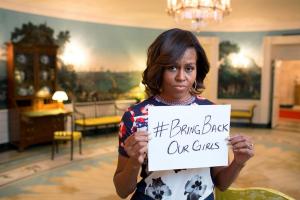
    First Lady Michelle Obama holding a sign with the hashtag

    First Lady Michelle Obama holding a sign with the hashtag “#bringbackourgirls” in support of the 2014 Chibok kidnapping. Posted to the FLOTUS Twitter account on May 7, 2014. Source: Wikipedia

    The abduction of over 200 school girls from Chibok has radically changed not only the popular profile of the Boko Haram insurgency but also the narrative of the war in northeast Nigeria. This was probably not intended by the insurgents or the ham-fisted Nigerian government, neither of which seemed to recognise this apparent gear-shift in the insurgency. After this fumble, it was civil society, through the #BringBackOurGirls social media campaign that picked up and ran with the call for action. Now that the US and its allies have channelled this urge to “do something now” into security assistance, caution is due in monitoring how and why the energy from this new burst of liberal interventionism will be channelled.

    Responding to Chibok

    Boko Haram has a long and undiscriminating record of terrorist violence. My analysis of data compiled by Nigeria Watch suggests that about 9,000 Nigerians (including combatants) have died in related violence since 2009, most of them since the federal government declared a localised state of emergency a year ago. That rate has been rising fast; 1,043 were recorded killed in March 2014 alone. Nevertheless, the 14 April Chibok mass abduction and Boko Haram leader Abubakar Shekau’s subsequent threat to forcibly marry pre-teen girls to his supporters or sell them into slavery were extraordinary, crossing multiple red lines around protection of civilians, girls’ right to education and sexual violence.

    The #BringBackOurGirls campaign has tapped into a social movement last and best exploited through the Stop Kony 2012 viral video campaign. That campaign influenced the African Union to establish its Regional Cooperation Initiative for the Elimination of the Lord’s Resistance Army (LRA) in April 2012 and was a major driver of post-facto public support for the Obama administration’s October 2011 commitment of US special forces to Uganda and central Africa to hunt LRA leader Joseph Kony. Those troops remain in four countries and haverecently been reinforced. Kony has not been caught but the LRA menace to children, women and other civilians has been contained and reduced.

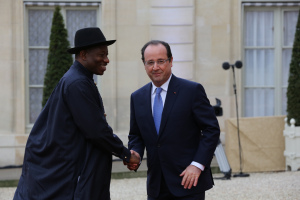
    The state-level response to Chibok has been belated but even stronger. Since 7 May, the US, UK, France, China and Israel have all sent teams to Nigeria to help search for and rescue the abducted girls, and France has hosted a summit of Nigeria, its four neighbours and the US, UK and EU. In fact, all these states already played a role in training, equipping or supporting Nigerian forces against Boko Haram. However, they were reluctant about going public with a counter-insurgency campaign previously linked to the increasingly unpopular and divisive ‘war on terror’, the toxic human rights reputation of the Nigerian security forces, and an entirely reasonable confusion over the political nature and linkages of the ostensibly Islamist rebellion.

    Response and replication

    Whether this foreign assistance is useful in the search for the missing girls is both highly questionable and a moot point. The US certainly has formidable aerial, satellite and signals reconnaissance technology to employ but it is struggling to coordinate with Nigeria, and unwilling to share raw data with the Nigerian security agencies. Other countries’ contributions probably only replicate Nigerian and US capabilities, and risk over-complicating the search.

    French President Francois Hollande greets Nigerian President Goodluck Jonathan. Source: France Diplomatie (Flickr)

    French President Francois Hollande greets Nigerian President Goodluck Jonathan. Source: France Diplomatie (Flickr)

    The French summit on 17 May was a classic case of replicating initiatives in order to bolster perceptions of French concern, consultation and action. Nigeria, which desperately wants to revel in its new status as Africa’s economic superpower, was humiliated that Paris – Abuja’s great rival for influence in West Africa – assumed its regional leadership role. The summit outcome commitments to bolster security cooperation in the Lake Chad basin replicated those that Nigeria and its neighbours had already made. Those sanctioning Boko Haram replicated UN-led measures.

    The Elysée Summit was more useful in redirecting attention to the gendered aspects of Boko Haram’s campaign of violence, issues of particular importance to the EU and the UK, whose Global Summit to End Sexual Violence in Conflictconvenes on 10 June. Both sides of the conflict have made tactical use of abducting and (separately) raping women and children linked to the other side as a means of exerting pressure or retaliation. Nigerian security forces and their civilian allies increasingly harass local women suspected of working for the militants. Boko Haram is accused of abducting girls and women to marry to its young, poor male combatants. Shekau has put his view on video record that girls above puberty should not be educated. This may be the most convincing explanation for the Chibok kidnapping: women as an economic and sexual resource.

    Intervention narratives

    The goal of securing the safe release of the abducted girls – and the security of their peers – must be paramount at this time. But, if the foreign assistance being pledged and provided makes little impact on this task, we must ask whether there are other goals motivating western governments to cooperate with Nigerian forces. Clearly, the political urge to assuage activists by responding with action is one of these, although we should not doubt that the Obama or Cameron families share the revulsion of other families around the world united behind #BringBackOurGirls.

    The social media shaming of the Nigerian and foreign governments’ inactivity and inability to resolve the crisis has propelled foreign military forces across the rubicon. US, and perhaps British, French, Canadian, Israeli and other states’, special forces and reconnaissance aircraft and drones may stay on in Nigeria well beyond the current abduction crisis; this should not be surprising.

    French forces are currently consolidating their redeployment from coastal Africa to a string of remote bases in Mali, Burkina Faso, Niger and Chad. Their main base in N’djamena is just 40 km from Boko Haram’s stronghold in northeast Nigeria. US special and private military forces operate covertly in most countries of the Sahel-Sahara belt. Until this month, Nigeria appeared to be the exception.

    The quiet reinforcement of these several thousand French and US troops across the western Sahel since 2012 – linking up to similar strings of mostly US bases in the eastern Sahel and Horn –is justified through the on-going international campaign against al-Qaida. US African Command openly uses the Operation Enduring Freedom tag for its operations in the Horn and Trans-Sahara. In Mali, Niger and Mauritania, French forces have joined battle against the al-Qaida in the Islamic Maghreb (AQIM), an Algerian-origin group with regional aspirations. Yet Boko Haram is rather different. While it professes a common Salafism, it is not an al-Qaida affiliate and appears uninterested in controlling territory or attacking state assets outside of Nigeria.

    This matters in the Nigerian context for two reasons. The first is in the way that the humanitarian impulse of #BringBackOurGirls – which diplomats can recognise as Protection of Civilians, Responsibility to Protect, or Ending Sexual Violence – shades into the realities of the war on terror. I would count four or five distinct narratives used to justify foreign military interventions in the last 15-20 years:

    1. Liberal interventionism – following the ostensibly humanitarian urge to protect civilians and uphold human rights, notably in Kosovo and Sierra Leone.
    2. The War on Drugs – an old idea reinvigorated with Plan Colombia in 1999.
    3. The War on Terror – the idea that homeland security begins abroad, notably in Afghanistan, but lately in Yemen, Somalia, Pakistan, Mali and elsewhere.
    4. Proliferation of WMDs – actively in Iraq, and as a threat to Iran, Syria and others.
    5. Protection of civilians – controversial used to pursue regime change in Libya, less so in pursuit of Kony thereafter.
    U.S. President George W. Bush and British Prime Minister Tony Blair at the White House, July 2003. Source: White House (via Wikipedia)

    George W. Bush and Tony Blair at the White House, July 2003. Blair’s enthusiasm for foreign military intervention changed in tone after the 9/11 attacks on the US. Source: White House (via Wikipedia)

    Clearly, there are overlaps; the Bush administration’s Axis of Evil concept linked state sponsors of terrorism and WMD. ‘Narco-terrorism’ links the wars on drugs and terrorism. Whatever their muddy political and religious ideologies, Kony and Shekau do lead terrorist movements. With the failed war on terror increasingly unpopular among a cynical and war-weary populace, the post-2011 shift back to humanitarian criteria completes the circle back to liberal interventionism.

    While applauding the global public’s shift from retribution to humanitarianism, we should be wary of politicians’ and generals’ intent in getting involved in northern Nigeria. The signs are that future ‘humanitarian’ interventions will be fought with the tactics of the war on terror, minus its rhetoric. Perhaps we should call these ‘Protection from Terror’ operations?

    Self-fulfilling prophecy

    If this shift in narrative represents the new Anglo-American take on intervention, the second reason for concern about the international fallout from Chibok is the Nigerian and French imperative to rebrand Boko Haram as part of al-Qaida. Nigeria’s successful addition of Boko Haram to the UN Security Council’s Al-Qaida Sanctions Committee list on 22 May was a step in this direction. For Abuja, this may help to isolate Boko Haram and justify the disastrous escalation of the war since France pushed AQIM and its allies out of Mali in early 2013. For France, it creates a common bond and removes a potentially powerful voice of dissent in the AU and regional organisations about its own military presence in the Sahel.

    Yet al-Qaida, for all its strategic interest in Nigeria’s 90 million Muslims, has shown little interest in Boko Haram and its use of indiscriminate violence against mostly Muslim civilians. Boko Haram has, in rhetoric and action, showed limited interest in a wider struggle beyond Islamicising Nigeria. It almost certainly has links to AQIM and splinter groups in Mali and Niger but these are not obviously strong. Al-Qaida and Boko Haram are not natural bedfellows, but post-Chibok dynamics, including US and Israeli military in northern Nigeria, are pushing them together, potentially consolidating a regional insurgency that is as much anti-western as anti-Nigerian.

    Richard Reeve is the Director of Oxford Research Group’s Sustainable Security programme. He has researched African peace and security issues since 2000, including work with ECOWAS and the AU. His most recent security briefing ‘The Internationalisation of Nigeria’s Boko Haram Campaign’ is available here. 

  • Sustainable Security

    This article by Chiara Oriti Niosi and Maud Farrugia originally appeared on openDemocracy on 19 December 2014.

    A spate of violence against women in the eastern DRC shows that there is still a long way to go on effective implementation of the UN Security Council Resolution 1325 on Women, Peace and Security, 14 years after its adoption.

    There are very few roads accessible by car in the South Kivu province of the eastern Democratic Republic of Congo (DRC). One of these is around Bukavu, the provincial capital. The road is used daily by locals, government officials, non-governmental organisations and United Nations agencies, including the United Nations Stabilization Mission for the DRC (MONUSCO), the world’s largest peacekeeping mission.

    In this area, over a few months in 2013, at least 40 women were reportedly attacked, sexually assaulted and robbed of all their goods while taking shortcuts on their way to markets. As often happens, such incidents went unreported for a long time, mainly because survivors feared being stigmatised as victims, and had little faith that their assailants would be prosecuted.

    What was happening? Too poor to afford basic transportation, heavily burdened Congolese women walk long distances to reach markets to sell their products. Congolese Armed Forces had obstructed the road to Bukavu with illegal barriers, forcing women who lacked the money to pay the tolls to choose the forest by-ways, risking attack.

    MONUSCO peacekeeper patrol, South Kivu. Source: Flickr | MONUSCO

    MONUSCO patrol, South Kivu. Source: Flickr | MONUSCO

    But even if unreported, the risk of incidents should have been detected. The presence of illegal barriers was well known, but despite some on-going efforts to stop them, almost no peacekeepers from the government, non-governmental organisations or MONUSCO noticed the absence of women transporting goods along the road. This should have been striking considering how common it is to see women carrying large loads on their shoulders everywhere in this area of the DRC.The presence of illegal barriers was well known, but despite some on-going efforts to stop them, almost no peacekeepers from the government, non-governmental organisations or MONUSCO noticed the absence of women transporting goods along the road.

    This indicates not only a terrible gap in recognising and preventing sexual violence, but also a lack of attention to women’s roles in society, and to women’s potential contributions to security, early warning and early response, and peacemaking. In other words, a lack of concern for what is stated in UN Security Council Resolution 1325 on Women, Peace and Security, which acknowledges the vital role women can and should play in conflict management, conflict resolution and sustainable peace.

    Losing direction: the gaps in adopting a gender perspective

    In spite of growing efforts to raise awareness and knowledge of Resolution 1325 among international actors and national institutions, many peacebuilders are not yet used to applying a gender perspective. On one hand, the importance of gender is underestimated, and its potential to influence peace and conflict is not recognized. This is partly because gender is so rooted in each society’s behaviour that it is often confused with culture, or not even perceived at all–neither in the local peacekeeping environment, nor in the environment of origin of peaceworkers. Peaceworkers take great trouble not to ‘interfere’ with the culture of local people.

    The difficulties associated with discussing gender norms, while remaining sensitive to the cultural autonomy of the local population, end up being used to justify not working with gender at all. On the other hand, those difficulties have also created the perception that working with gender is the exclusive responsibility of specialized experts, with a specific budget. While this can be true for the implementation of gender programs, it is not true for adopting a gender perspective. The transversal nature of gender necessitates acting with a gender perspective.

    What dominates is a misinterpretation of ‘gender’, which for most practitioners is largely linked to reducing sexual violence. A shallow interpretation of gender inhibits this aspect of peacework. Although most strategies of civilian protection take into account threats, vulnerabilities, profiles of aggressors and attacks, and even indicators of conflict-related sexual violence, few consider the social roles assigned through gender alongside these other key elements. For example, if collecting water is a role traditionally taken on by women, and (male) armed actors have a record of sexual violence against women, it is crucial that local water points are secured away from them.

    But understandings of gender are not only about reducing sexual violence; they are crucial to every aspect of peace and conflict life. The transversal nature of gender, just like peace and conflict, means that gender influences women’s and men’s roles and behaviours in practical ways, from the level of the family to the institution. The daily activities conducted by men and women are frequently determined by gender, and can sway and be swayed by conflict and peace contexts.

    For instance, women’s and men’s daily activities will expose them to different knowledge. Where women are tasked with collecting water and wood, cultivating fields, childcare or visiting markets, while men maintain a breadwinner role, they will have access to different kinds of information which can be essential to recognize conflict patterns; information about a particular community’s needs, specific security threats, and local power brokers. Humanitarian situations can also challenge gender norms. It has been widely reported amongst Syrian refugees that, because men have been uncomfortable asking for assistance, women have added to their traditional responsibilities by looking for humanitarian aid outside of the home. Acquiring this breadwinner status has left some women on the receiving end of frustrations of their male partners, expressed through violence.The transversal nature of gender, just like peace and conflict, means that gender influences women’s and men’s roles and behaviours in practical ways, from the level of the family to the institution.

    In other cases, working with women directly can be crucial to achieving a sustainable peace. In reintegration programs especially, working with ex-combatants’ wives can be very helpful. Social connections with the host community, which are crucial for a sustainable reintegration, are often created by women via childcare, visits to the market and so on. In all these senses, a gender perspective can provide opportunities to drive positive changes towards peace and gender equality.

    Yet gender often is not included in peacekeepers’ observations. Why? One explanation is that in conflict situations, “hard issues”, such as armed attacks or massive destruction, are much more visible, easier to monitor and with immediate measurable impact, and so are more easily included in protection strategies. In contrast, gender issues come across as “soft issues”, and are often confined to the domain of “women’s issues”. Gender issues are not seen as priorities that must be considered for stepping towards peace; rather, they are considered ‘consequences’ of the conflict to which provide assistance.

    Commonly, gender is very much associated with women, rather than the gendered roles of women and men; women in conflict situations are mostly seen as vulnerable objects of peacekeeping initiatives. This understanding of gender relegates women to passive victimhood–rather than to persons that are not vulnerable per se, but are in a condition of vulnerability. This misinterpretation is very costly: not only reducing peace operations’ capacity to prevent violence, but also the participation of key active elements able to promote a sustainable peace.

    The implementation of Resolution 1325 suffers from this bias: it is often treated as an appendix to weightier matters, rather than being integral to conflict resolution or sustainable peace. The titular focus of Resolution 1325 on Women (rather than Gender), Peace and Security may itself be problematic. It risks being misinterpreted as advocating that the security of women be dealt with differently (and separately) from that of men; stressing the need to promote protection and participation of women, rather than highlighting the interdependence of women’s and men’s security for lasting peace. The existence of specific security threats towards a targeted group, for example the frequency with which sexual violence is directed against women and girls, or the forced recruitment into armed groups of children, does not mean that consequences will affect only that part of the population. Nor does it follow that the strategies of prevention should focus only on the ‘at risk’ group.

    Rather, the consequences of violations affect the population as a whole, at all levels of society. Attacks against women on routes to market have not only consequences for the victim personally, but on family relationships, where the victim suffers discrimination, and the husbands frustration. The socio-economic stability of the community itself is put at risk when the markets are closed due to declining participation. Consequently, such attacks have consequences also at a regional and national level. Indeed, security does not mean only protection against threats, but the creation of a protected environment at all levels: domestic, community, institutional, and international. Each man and each woman has a role to play in all those levels of security.

    Gender equality has further implications for security. If men and women do not have the same access to opportunities and rights, the security and peace of the society at large is compromised. An imbalance of rights and participation at the family level can have repercussions nationwide. What is essential is the interaction and participation of women and men together to build peace and prevent conflict.

    The greater aim of Resolution 1325 to integrate a gender perspective into all aspects of conflict prevention and resolution is thus missed in many efforts to implement it. Indeed, this tendency to dissociate, as opposed to integrate, gender into security and conflict resolution strategies also risks feeding the idea that the security and protection of women can only be provided for by women as security actors. This is only part of the picture. Training all mission personnel in operating with a gender perspective is more important.

    Indian peacekeepers in UNMIL. Source: Wikimedia

    Indian peacekeepers in UNMIL. Source: Wikigender

    It is true that there is an immediate need to increase the number of women (military, police and civilian) deployed in peace support operations and to elevate their roles to those of their male counterparts. Female peacekeepers can play crucial roles in certain areas, including women’s protection: assisting women victims of violence, and patrols and community engagement in contexts where social norms restrict contacts between women and men. Female peacekeepers challenge broad conceptions around women’s–and men’s–roles in security. For instance, a Uruguayan female helicopter pilot with MONUSCO has aroused enormous interest among Congolese women, which has supported the mission’s engagement with local people. In Liberia, Indian female peacekeepers in the UN Mission in Liberia (UNMIL) have assumed a very high profile role guarding the President’s office. The percentage of women enrolling in the Liberian National Police rose from 13 percent in 2008 to 15 percent in 2009. The tendency to dissociate, as opposed to integrate, gender into security and conflict resolution strategies also risks feeding the idea that the security and protection of women can only be provided for by women as security actors.

    However, the presence of female peacekeepers is often the sole emblem of the UNSC resolution. While this is indeed part of the solution, the key is for each actor–male or female, military or civilian–to learn and to act with a gender perspective in all situations. In order to achieve this, a gender perspective needs to be taught, continuously cultivated and practiced before, during and after peace operations.

    Getting it right: South-South collaboration

    Sharing similar experiences and lessons learned between regions is an excellent way to gradually adopt the gender perspective. Latin America and Africa, for example, are regions that share a number of structural characteristics and face comparable challenges: post-colonial states, corruption, insecurity, inequality, young governments, histories of long-lasting internal conflicts, and post-dictatorial contexts. South-South collaborations between these regions enables a thoughtful approach based on the experiences countries have acquired over the years. Such collaborations, moreover, are all the more pertinent as many Troop Contributing Countries to peace operations deployed in Africa are from Latin American countries. Currently, 12 Latin American and Caribbean states contribute over 1,500 peacekeepers to UN missions in Africa, with the Uruguayan and Guatemalan commitments to MONUSCO being the largest.

    Resolution 1325 was originally neglected at the Latin American level. Since 2007, RESDAL’s investigations on women in the armed forces across the Latin American region have revealed a number of issues, including a lack of data on the subject, and a lack of discussion of gender issues within peace operations. The research papers promote collaboration between civil, military and police actors to improve gender equality within democratic institutions, and are an important resource for Latin American practitioners. As a result of such efforts, Resolution 1325 and related material were incorporated into the regional agenda within three years, notably in the IX Conference of Defense Ministers of the Americas.

    RESDAL has been uniquely positioned to use this regional advocacy experience to progress the Women, Peace and Security agenda in international peace operations. After conducting fieldwork in Haiti, DRC and Lebanon, where Latin American countries participate in United Nations peace operations, it became clear to RESDAL that it was necessary to carry out regular and pre-deployment training for military peacekeeping forces. To this end, RESDAL instigated a programme of classes on gender promotion in peacekeeping operations at various centers across Latin America that consider international legal frameworks and field experiences, as well as local understandings of gender.

    The implementation of Resolution 1325 cannot take shortcuts: the path to adopt is that of a comprehensive, multi-actor and practical gender approach. The 15th anniversary of Resolution 1325 next year provides an opportunity to follow such a path, advocating for an approach based on fieldwork and South-South collaboration to work with women and men towards a lasting peace.

    Chiara Oriti Niosi specializes in reducing sexual violence in conflict, with several years of experience at the United Nations Organization Stabilization Mission in DRC (MONUSCO). She currently works at RESDAL in the Women, Peace and Security program.

    Maud Farrugia holds a degree in Social Anthropology from the University of Cambridge. She is Assistant Researcher for the Women, Peace and Security program of RESDAL. 

    Featured image: A MONUSCO vehicle on patrol in Beni, Democratic Republic of Congo. Source: Flickr | MONUSCO

  • Sustainable Security

    Originally set up the mid-1980s, the temporary village guard system’s purpose was to act as a local militia in towns and villages, protecting against attacks and reprisals from the insurgents of the Kurdistan Workers Party (PKK). Has this system been successful as a counter-terrorism strategy and does it still have a role in the Turkey of today?

    In any counterinsurgency strategy, the separation of “bad guys” from the rest of the population is a significant objective which has a direct impact on the effectiveness of the campaign. To achieve this objective, forming, arming and using local militias may be a viable strategy, particularly in rural, remote, harshly mountainous and tribal contexts in which security forces face difficult challenges to reach the local population. In recent years, the “Sons of Iraq” or the “Anbar Awakening” case in Iraq and the “Tribal Security Forces (Arbakai)” case in Afghanistan are contemporary examples of this strategy.

    Does the strategy of forming local militias yield successful results? The existing, yet limited, literature on this subject has opened the door to speculations and interpretations that are more journalistic than scholarly. To better elucidate the effectiveness of forming local militias, this article presents the case of the “Temporary Village Guard System” (Geçici Köy Koruculuğu Sistemi)” in Turkey, which was first initiated in 1985 and has been fully active since.

    Turkey’s Village Guards System

    armed-guards

    Image via Facebook.

    Since being founded in 1978, Turkey’s Kurdistan Workers’ Party (PKK) has caused approximately 20,000 fatalities, including about 11,000 civilians and 9,000 security personnel. In the meantime, about 20,000 PKK members were killed and about 6000 were captured and imprisoned. In order to thwart PKK-initiated violence, Turkish authorities have implemented many different countermeasures ranging from repressive to accommodative strategies, including the village guard system. As of January 2016, the monthly salary is approximately the equivalent of U.S. $400, along with clothing expenses and some social security benefits that came with passage of the amendments between the 74th article and 82nd article of the Village Law on March 26, 1985.

    With this legally founded, centrally appointed, and state-paid “security force,” the Turkish government created a civilian militia in the Kurdish populated southeast provinces of Turkey. Except for 300 Ulupamir Guards, who immigrated to the Van province from Kyrgyzstan, all village guards are ethnically Kurd. To supplement the employed village guard system, a “voluntary village guard” program was added in 13 more provinces, which led to the expansion of this system to 22 provinces in 1993, the year in which violence reached its peak level over the course of the conflict with the PKK. The difference between the two programs is that, while the employed village guards receive monthly salary and health benefits, the voluntary village guards do not receive a salary but are entitled to health compensation and benefits. The size of temporary and voluntary civilian armed force reached almost 60,000 by the end of the 1990s, accounting for almost one-third of the armed forces in the Kurdish region.

    As of August 2013, Muharrem Güler, then the Interior Minister of Turkey, announced that there are currently 65,456 village guards, 46,113 of whom are employed (interestingly 337 of them are women) and 19,343 of whom are voluntary (161 of them are women). Currently, the village guard system is implemented in 23 provinces. Most of the village guards are employed on the border between Iraq, Iran, and in the extremely mountainous provinces of Hakkari, Sirnak and Van because PKK has been using safe heavens in Iraq and Iran for years.

    All village guards, whether voluntary or hired, work under the supervision of the provincial Gendarmerie Commands and receive two weeks of basic military training from their provincial governor immediately after joining.

    To better understand the debate, it may be useful to examine the existing arguments for and against the Village Guard System.

    Arguments Favoring the System

    1. The village guard system has been seen a success story in Turkey’s strategy against the PKK-initiated violence to such an extent that it has become one of the main pillars of counterterror strategy. If the village guard system had not been initiated, the state authority in the region would have eventually collapsed.
    2. The village guards have first denied the mobility of the PKK both by separating them from the rest of the population as a bottom-up means of isolating them, and then prevented them from gaining territorial control.
    3. The village guards have provided intelligence to the security forces both on the territory and the activities of the PKK.
    4. The village guards have not been forced by the security forces to join this system. The existence of more than 25,000 voluntary village guards, who are not paid by the government, is a proof of this.
    5. PKK’s numbers has never exceeded the number of the village guards, even during the early 1990s, the period in which the number of the armed terrorists reached its peak level of 11,000. This is an indicator showing the low level of popular support to the PKK.

    Arguments against the System

    1. The state pitched brother against brother. If it hadn’t been for the village guards, this conflict would have never reached this intensity.
    2. The village guard system is a typical reflection of state tradition on the Kurdish issue. Enmeshed in the Kurds’ tribal networks, it exacerbated the tensions in the region. The equipping of the village guards, who were without even basic military training, increased instability in the entire region. The guard system introduced virtually extinguished social order in Kurdish daily life.
    3. The village guard system was used by the state officials as a repressive mechanism to recruit villagers.
    4. The village guards are poorly disciplined and inadequately trained.
    5. The village guards have been accused repeatedly in past years of drug trafficking, corruption, theft, rape, and other abuses. Inadequate oversight exacerbated the problem, and in many cases the security forces allegedly protected village guards from prosecution.
    6. Several reports document concerns regarding human rights violations resulting from the village guard system in Turkey.
    7. The village guard system has been responsible for deepening mistrust and ethnic divisions in an already troubled region.
    8. The village guards have moved with their families into villages that were evacuated in the 1990s and now the original villagers are returning to their villages to find the Village Guards already living there.
    9. The establishment of village guards made civilians more vulnerable to attacks.

    Has the village guard system in Turkey really worked as a counterterror strategy?

    In military terms, and despite its drawbacks and unintended consequences, the village guard system in Turkey worked well as a counter-terror strategy between 1985 and 1993 and achieved the objectives of separation of the local population from the terrorists and denying the PKK control of their hoped-for secessionist territory. Early success gained just after the implementation of the militia system needed a follow-up before the insurgency adapts. In the following years, however, it gradually waned in effectiveness when considering the increased number of PKK attacks in the period of 1993-1999, and caused increasing socio-economic and political micro-level cleavages in the region. As the big inertia in a dispersed system means resistance to change, the guards system could not easily be modified, meaning the strengthening of the existing micro-cleavages and the emergence of the new ones.

    Reasons for the decline in effectiveness

    The village guard system in Turkey was originally initiated under the assumption that the emergent threat (PKK bandits) was so local and small that it was not considered to require commitment of national security forces. This perception of PKK fighters as “a few bandits” led the Turkish government officials to the authoritization of the system in a temporally (initially, the system was designed for a two-years long period ) and spatially (only in three provinces) limited setting. However, there emerged many institutional problems as the number of village guards was enormously expanded from 800 men to 40,000 men only within a one-year-long period. The primary sources of these shortfalls would be sorted as follows: the absence of comprehensive vision at the national level and the implementation of the planning and recruitment strategy of the system at the provincial level. The absence of a national-level institutional framework which would standardize the system led to the differentiating practices in the provinces. The dramatic rise within a short period of time, when combined with the attempt of government to micro-manage the village guard system at the provincial level, led not only to confusion about the rights, missions and responsibilities of the village guards but also caused different (sometimes contradicting) practices in the following years. Fast expansion meant both weak control at the national level and different interpretations of the operational use of the guards at the provincial level.

    Furthermore, the formation of local militias may not only have pros and cons in the sphere of security but also may lead to implications in the socio-cultural sphere. The persistent characterization of the village guards as “traitor,” and the prevalent use of the term “Jash” (a Kurdish slang word for donkey) by PKK supporters to refer to Kurdish village guards, indicates the significance of the local political structure when analyzing the local dynamics of the conflict in Turkey. It is not hyperbole to suggest that the system has also changed the nature of conflict by first pushing the conflict into new areas and creating new micro-cleavages (whether tribal or at the family level) in the provinces.  These results, which clearly emphasize the explanatory power of local political structures in an ethnic conflict, confirm Stathis Kalyvas’s theorization. That is, when examining the dynamics of an ethnic conflict in a comparative perspective, Kalyvas points out that local political structures and rivalries among local groups have a great impact on shifting alliances, which are considered as acts of treason by rival factions.

    The allegation of human rights violations by militias seem to be inevitable. The absence or lack of sufficient legal mechanisms to investigate accusations, especially in combination with low levels of transparency and accountability, may lead to structural legal problems and emotional conflicts over justice in the Afghan and Iraq cases as in the Turkish case.

    To demobilize or not to demobilize?

    The Turkish government has been in a dilemma when deciding on the fate of the village guard system. Opinions about this issue highlight two options for the government, each of which can take two forms.

    The first option is demobilization. One form of this option is “honorable demobilization,” which implies that the government will end the guard system after providing all material and social rights and benefits to the retired and serving guards, and publicly elevating the history of the guards for their role in the Turkish state’s armed struggle against the PKK.  The other form, “dishonorable demobilization,” implies that the government will end the guard system with few rights and benefits for retired and serving guares, and will meticulously search the history of the guards to bring to justice those who allegedly committed crimes.  Interviewees who favor dishonorable demobilization argue the need to establish memorial sites for those crimes and brutalities allegedly committed by the guards, with periodic visits by government officials to these sites to keep the collective memory fresh.

    The second option is to maintain and continue the guards system. With this option, there again appear to be two alternative forms.  One form is the maintainance of the system after a comprehensive revision that examinines the strengths, drawbacks and conseuqences of the system in the domains of security, law and politics so as to make it more effective and efficient. The other form is the maintainance of the status-quo which implies the continuation of the village guards as an open-ended commitment not restrained by definite limits, restrictions, or structure.

    Currently, the Turkish government seems to embrace the last altenative; that is, maintainance of the system as it is in an open-ended process. With the information at hand, it is difficult to predict which option the Turkish government will embrace in the near future. Sooner or later, however, when the government decides on the village guard system, this decision will surely be a strategic one which directly affects the evolution of ongoing clashes.

    Metin Gurcan is an Istanbul Policy Center Researcher specializing in security issues.

  • Sustainable Security

    In the UK, tens of thousands of deer are poached annually. This has significant implications for the sustainability of British deer populations and human health.

    Recessions and economic slumps have effects on various aspects of people’s security and presumably, people’s food security is a part of this. In order to cope with food insecurity, some people may steal food or other items for money to buy food, but there is also the possibility that some people will turn to poaching. The British Deer Society places the number of poached deer in the UK as high as 50,000 each year yet in 2009 only 335 incidents were reported to the police.

    In 2013, I undertook a study to gather information as to whether deer poaching in the UK is linked purely to economics or if people who poach deer have other motivations beyond food or money. I sent online questionnaires to all police constabularies and the questionnaire was advertised in the monthly publication of the British Association for Shooting and Conservation. I received responses from 27 wildlife crime officers and six gamekeepers. Drawing on Nurse’s (2013) typologies of wildlife crime offenders, I asked respondents about the change in poaching around the time of the 2008 recession and about their perspective on the motivations of poachers. The four typologies consist of traditional profit motive, external economic pressure, masculinity and as a hobby. In particular, the traditional profit-driven motivation of offenders was explored by attempting to uncover if there is, as suspected, a black market in venison. From this data, I hoped to create a more detailed picture of deer poaching and to further inform wildlife law and poaching prevention.

    UK deer poaching: why it matters

    Image credit: Peter Trimming

    Understanding more about deer poaching is important for two main reasons. The first is in relation to human health. Presumably, experienced hunters are trained to inspect the deer they kill or poach for diseases. There is the possibility though of poachers infecting themselves with Bovine Tuberculosis or Foot and Mouth disease, which are known to occur in deer in the UK, though no data indicating deer meat has been found with these diseases. Additionally, if the poacher is selling the meat on the black market, there is the further possibility that any disease could be passed on to other people and the public.

    The respondents suspected some poached deer meat makes it way to pubs and restaurants, so disease transmission to the public, whilst unlikely, is not impossible. The second point is in regards to the sustainability of deer populations. It is difficult to manage wildlife populations where there is a significant amount of poaching, such as is suspected in the UK. Hunting licences and potentially other management strategies, like culling, need to be grounded in accurate population numbers in order to not over exploit the species in question. If too many individuals are killed through hunting and poaching, this could endanger the stability and survival of the population. With tens of thousands of deer potentially being poached each year, it is difficult to see how deer populations can be properly estimated and therefore managed.

    The police and gamekeepers who responded stated there are individual poachers and groups of poachers who do so for profit and financial reasons. As suspected, poachers personally consume the poached deer, but probably also sell the meat to make money. This fits Nurse’s (2013) first typology, ‘Model A’, where offenders are driven by traditional profit motives. ‘Model B’ wildlife crime offenders are also financially driven, but the pressure on the offender is from an external source like an employer. In the context of deer poaching, this helps to explain the poaching undertaken by some gamekeepers. Landowners pressure gamekeepers to maintain the landscape in particular way. The respondents indicated though there is more driving poaching than simply economics. Nurse (2013) proposes there are also offenders who do so to maintain or assert their masculinity, ‘Model C’, and those who offend as a hobby, ‘Model D’. The data confirm these typologies. Men carry out nearly all poaching. Apparently, often these men poach together as a form of male bonding, as a form of ‘sport’, or as one respondent stated ‘just for the hell of it!’.

    Each of Nurse’s (2013) typologies then were found within the respondents’ answers. The implications of this are two-fold. First, deer poaching, and presumably other poaching, is not only driven by food insecurity and money and therefore the motivations, and uncovering those motivations, are complex. Even when money is at the heart of the motivation, there are further distinctions to be made. The food and/or profit from the poaching may be for an individual, for an organized crime group or for an employer. For non-profit driven poaching such as for status, sport and/or fun, the motivations can be equally challenging to uncover.  Uncovering motivations though is an important and useful endeavour as this data can be used to improve policy and prevention strategies. Second, that motivations are varied means that policy and prevention strategies also need to be varied. To have policy interventions and wildlife law enforcement strategies targeted solely at food insecurity or profit motivations are likely to be ineffective.

    Addressing the problem

    Poaching, of deer and other non-human animals, must then be addressed through a multi-faceted approach. In the first instance, the punishment for poaching in the UK is not a deterrent and the risk of being caught or prosecuted is low (Nurse 2013). This is partly because wildlife crime is not a concern for most police constabularies and not an offense that is prioritized. Making the fines higher, sentences harsher and confiscation of poaching equipment mandatory may help to address this aspect. Nurse (2013) suggests banning hunters and gamekeepers who are caught poaching from being able to receive licences in the future and/or from working in the industry. Second, wildlife crime is viewed as a victimless crime. This is not the case. Deer are shot by bullets and arrows, trapped in snares and/or torn apart by dogs. People can potentially eat uninspected diseased venison.

    The environment as a whole or at least the ecosystem where deer live can be disrupted by overexploitation – people and non-human animals are victims of this too from the loss of a healthy environment. Public awareness needs to be raised through concentrated media campaigns as to the value and impact of biodiversity and the environment. Whereas regard for the environment has increased in recent years, there is still much more to be done to increase the knowledge of our connection to the planet. Additionally, there should be wide spread information about the danger of consuming uninspected meat and venison. In conjunction with these strategies in times of particular economic hardship, extra support should be put in place to assist people who may poach because of food insecurity. Addressing the enforcement side of deer poaching can help to impact upon economic motivations. Changing the view that poaching is victimless may help to alter motivations related to status and sport.

    Deer poaching and wildlife crime are worthy of being made more of a priority not only because of the victimisation to the non-human animals and the environment, but also because these crimes impact upon people and communities. A multi-faceted approach increasing the attention on and penalties for wildlife crime as well as educating the public to the nature and risks associated with wildlife crime are necessary first steps to reducing the harm and suffering linked to wildlife crime in general and poaching in particular.

    Tanya Wyatt is a lecturer at the University of Northumbria.