Blog

  • Mali: Why Western Intervention is destined to fail (Part 1)

     (This piece was originally published by Channel 4 News on  January 22, 2013 and is the first of two parts by Anna Alissa Hitzemann and Ben Zala)
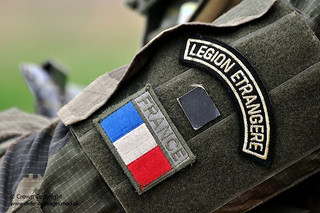
    France Mali smallBritain is on standby and the US is already transporting French troops into Mali. But a new paper says the west is “betting on the wrong horse” by intervening in the region.

    Now well over a decade after the beginning of the so-called war on terror, yet again, another western nation is leading a military intervention against Islamist paramilitaries based in a largely ungoverned region of a state in the Global South, write Anna Alissa Hitzemann and Ben Zala for the Oxford Research Group.

    The hostage situation in Algeria that developed late last week is just the latest in a series of western hostage takings in recent years, demonstrating the increasing radicalisation of elements in the region.

    The French-led intervention in Mali is only one of many in a growing list of attempts to control outbreaks of political violence and terrorism with military means.

    As the intervention gathers pace, it is worth reflecting on the lessons from similar operations over the past decade or so. From the US-led interventions in Afghanistan and Iraq to the attempts to control Islamist-inspired political violence in Yemen, Nigeria and Somalia and separatist rebellions in Burma, Indonesia and elsewhere, the resort to military force has singularly failed to achieve the aims set for it.

    Common to all of these examples is the reluctance to match military operations against rebel groups and insurgents with serious, long-term efforts to address the factors that underlie the feelings of resentment and marginalisation that drive such conflicts.

    As the commentary and analysis of events in Mali follow the fortunes of the military battles of France and its other western and African allies, it is worthwhile examining the political, socio-economic and cultural divisions which have sparked the uprising in the north of Mali.

    Background to the northern uprising

    The factors that led to the current Malian crisis are complex but can largely be attributed to unintended consequences of the war against Gaddafi. It is clear that the 2011 crisis in Libya, followed by foreign intervention and Nato’s military involvement, and the consequent fall of Gaddafi‘s regime, had a crucial role to play.

    After losing the war in Libya, hundreds of Malian mercenaries (many of whom had been recruited among former Tuareg rebels) who had been an integral part of Gaddafi’s army, returned home. They brought with them an arsenal of weapons and ammunition as well as experience.

    These soldiers who returned to Mali from Libya played a key role in the formation of the largely Tuareg-led secular MNLA (Azawad National Liberation Movement), which in a matter of months, took over several key towns in the north of Mali, declaring an independent Azawad state.

    The situation in the north of Mali led to widespread frustration within the military over the government’s incompetence or unwillingness to deal with the issue and reclaim their territory. Ultimately, it led to the April 2012 military coup by Amadou Sanogo against Mali’s elected government and president Amadou Toumanie Touré.

    Interestingly enough, Sanogo himself had received extensive training by the United States as part of the $600m (£380m) spent by the US government in efforts to train military of the region to combat Islamic militancy.

    The actions of the separatist MNLA group and the consequent military coup and inability of the Malian government and military forces to control the situation led to a violent conflict in Mali’s north which includes four main groups: the secular MNLA and the religiously motivated AQMI (Al-Qaeda of the Islamic Maghreb), Ansar Dine and MUJAO (Movement for Unity and Jihad in West Africa).

    AQIM, the group most closely linked to the international terrorist network Al-Qaeda, has been present in Mali for several years now, has taken several European hostages over the last few years and is said to be made up of mostly Algerians and Mauritanians with much financial support from abroad.

    Tuareg rebellion and the paths not taken

    The formation of the Tuareg-led MNLA movement and its desire for an independent Azawad state has in fact deep roots and a history going back to the first Tuareg rebellion of 1963. Tuaregs led significant armed struggle and resistant movements against colonisation by the French and later the central Malian government.

    Long-term sustainable security and stability for Mali will not be possible without seriously addressing the long-standing and deep-seated grievances that stem from the marginalisation of the northern territories and their peoples.

    The political, socio-economic, educational and cultural marginalisation of the north cannot be ignored. With the effects of climate change, increasing desertification and the government’s reluctance to implement meaningful development programmes, Tuareg and other nomadic communities see no viable future and feel abandoned by the Malian state.

    Grievances also stem from past brutal repressions of Tuareg movements, as well as the state’s failure to adhere to the Algerian brokered peace agreements between Tuareg rebels and the government.

    Even after the Tuareg rebellions of the early to mid 1990s, the Malian government still remained unwilling or unable to implement the education programmes and development projects which were promised and are necessary to alleviate poverty and a deep sense of disenfranchisement.

    The political, socio-economic, educational and cultural marginalisation of the North cannot be ignored.

    It would have been wise to negotiate and come to an agreement with the MNLA at the early stages of the current crisis. Both Burkina Faso and Algeria pushed for a diplomatic solution to this crisis instead of military intervention.

    Burkina Faso’s president, Blaise Compaore, West Africa’s mediator on the Malian crisis, had organised talks between MNLA, Ansar Dine and the Malian government in Ouagadougou in December. A ceasefire was agreed and all parties approved to adhere to further peaceful negotiations.

    The talks which had been planned to continue this January have now been interrupted due to the French military intervention in Mali.

    The chance of finding a solution to combating Islamic extremism in northern Mali would be significantly better if the Malian and French military sought a way of collaborating with the Tuaregs. This is a challenging task but a task that is unavoidable over the long-term.

    It is the resentment towards the central government over the marginalisation of the northern territories and its population that in part has helped Islamists gain strength.

    Dr Ben Zala is Ben Zala is a Lecturer in International Politics at the University of Leicester.

    Anna Alissa Hitzemann is a  Peaceworker with Quaker Peace and Social Witness. She currently works with Oxford Research Group as a Project Officer for the Sustainable Security Programme, with a focus on our ‘Marginalisation of the Majority World’ project.

    Image source: Defence Images

  • Climate Change – Migration – Conflict. What’s the Connection?

    Climate change and human migration are often presented as threats to national and international security. But what is the actual link between these phenomena and conflict?

    Author’s Note: This commentary presents key arguments from the articles Christiane J. Fröhlich (2016) Climate migrants as protestors? Dispelling misconceptions about global environmental change in pre-revolutionary Syria, Contemporary Levant, 1:1, 38-50, DOI: 10.1080/20581831.2016.1149355 (available online here), and Michael Brzoska & Christiane Fröhlich (2015): Climate change, migration and violent conflict: vulnerabilities, pathways and adaptation strategies , Migration and Development, DOI: 10.1080/21632324.2015.1022973 (available online here).

    Climate Change and Conflict

    Dry land near Manatuto. Timor-Leste.By 2025 it is expected that 1.8 billion people will be living in countries with absolute water scarcity, with 3.4 billion people living in countries defined as water-scare. Water scarcity can lead to both drought and desertification as well as instigating conflict in communities and between countries. Sunday 22 March is World Water Day, a day to focus attention on the importance of freshwater and advocate for the sustainable management of freshwater resources. Photo by Martine Perret/UNMIT. 20 march 2009.

    Photo by Martine Perret/UNMIT via Flickr.

    Today, climate change is often perceived predominantly as a security risk. The most common argument behind this train of thought is that many societies’ adaptive capacities will be overstretched by the effects of global warming within the short- to midterm, potentially leading to destabilization and violence, and jeopardizing national and international security in a way that is unprecedented (see WBGU, 2007; UNSC, 2007; UNGA, 2009). One additional concern is that, should the international community fail to adopt an effective and globally coordinated climate policy, climate change may deepen pre-existing lines of conflict on the local, national, inter- and transnational levels. Another worry are conflicts over natural resources, since reduced availability and changes in the distribution of water, food and arable land are considered by some to potentially trigger violent conflicts (Hsiang et al., 2013; Burke et al., 2009). Other hypothesized pathways from climate change to the onset of violent conflict are a deterioration of the governance capacities of formal and informal institutions as well as the increase in horizontal inequality among groups (see Gleditsch, 2012; Scheffran et al., 2012).

    Bringing Migration in

    Very much the same is true for human mobility: Large migration movements have frequently been presented as a threat to national and international security, particularly when crossing into the United States and Europe (see Huysmans 2000; Ceccirulli & Labanca, 2014; Adamson, 2006; Alexseev, 2006; Waever, Buzan, Kelstrup, & Lemaitre, 1993). The underlying assumption is that in a globalised world, states enjoy growing benefits and opportunities stemming from increasing human mobility, but are also threatened by an unknown and equally growing potential for crime, trafficking, drugs and terrorism within these new migratory flows. Therefore, human mobility is framed as a matter of security, leading to what has become known as the ‘migration-security nexus’.

    “Climate Migration”

    With global warming well under way, climate change-induced migration has come to the forefront of such risk assessments (see Myers 1998; Myers 2005; Myers and Kent 1995; Brown 2008; Barnett 2003, Smith and Vivekananda 2007; Boano 2008; Hummel et al. 2012; Warner et al. 2013). The underlying assumed causality is that climate change will engender or exacerbate resource scarcities, which in turn might drive migration as well as conflict. In its first assessment report, for instance, the Intergovernmental Panel on Climate Change (IPCC) warned as early as 1990: ‘the gravest effects of climate change may be those on human migration as millions are displaced by shoreline erosion, coastal flooding and severe drought’. This was the basis for predictions of major conflict in receiving regions both within countries suffering from climate change and internationally. In 2008, the European Commission and the EU’s High Representative for the Common Foreign and Security Policy released a report on climate change and international security in which they stressed that as a result of climate change, ‘Europe must expect substantially increased migratory pressure’.

    But reality is much less linear and simple, and empirical data is scant. The underlying imaginaire, which assumes linear causality between global environmental change and conflict via environmentally-induced migration, contains several misconceptions. Firstly, migration decisions are complex and not determined by environmental factors alone. Scholarship has identified five main drivers for (internal and international) human mobility, namely economic, political, demographic, social and environmental factors, which are deeply interconnected and mediated through socially, politically and economically determined institutions and structures. Secondly, chain migration and migration networks need to be taken into account as factors that guide migration streams in certain directions and not others. Thirdly, there are few systematic studies researching the assumed causality between climate change and migration (Reuveny 2007, 2008; Raleigh, 2010; Raleigh et al., 2010) or between (climate) migration movements and (violent) conflict. In fact, there is very limited evidence for both propositions. Fourthly, it remains disputed how many people will leave their habitat due to climate change: So-called maximalists assume a simple, direct relationship between migration and climate change and thus project comparatively large numbers of environmental migrants. Estimates reach from some 200 million up to 1 billion refugees globally by 2050 (Jacobson 1988; Myers 1997, 2002; Stern 2006). Minimalists, on the other hand, underscore the complex nature of migration decisions and stress the respective society’s vulnerability and adaptive capacity as a major factor for reducing the expected number of climate migrants (Suhrke 1994; Castles 2002; Morrissey 2009; Gemenne 2011, Morrissey 2012 gives a good overview). Fifthly, migration has been identified as a potentially powerful adaptation mechanism with regard to global warming, a view which is not reflected by the simple causality cited above. In a nutshell, the theoretical foundation and empirical support for propositions of a causal linearity between climate change, human mobility and conflict are thin. This does not mean that climate change will be irrelevant for future patterns of migration, including migration that may be linked to conflict. But the links are complex and defy simple and sensationalist conclusions.

    Case Study Syria: A Climate War?

    One case in point is Syria. The Syrian Arab Republic, as most of the Middle East and North Africa, has been suffering from long-term environmental changes linked to anthropogenic climate change. In recent years, a particularly long drought period immediately preceding the beginning of the Syrian uprising has negatively impacted what used to be the breadbasket of the Fertile Crescent, with consecutive crop failures in parts of the country, loss of livestock, the demise of whole villages and a distinct increase in internal migration. This has lead an increasing number of commentators to believe that this “century drought” was at least partly responsible for the timing and intensity of social upheaval in Syria (Werrell, Femia, and Sternberg 2015; Kelley et al. 2015, as well as numerous media contributions, for instance in The Independent and The New York Times. From the United States government to the European Union, from American to European think tanks, this powerful supposed ‘pre-story’ of the Syrian revolution is continuously gaining traction and has even been introduced into the overall discussion of the migration flows to Europe by assuming that the timing and magnitude of the current migration flows from the Middle East to Europe was at least partly environmentally motivated.

    However, the existing studies of this link, while having received a lot of public attention, do not present authoritative evidence on the issue. On the contrary, they overstress environmental drivers of migration while tuning out other factors that influence migration decisions. For instance, the Syrian state only created around 36,000 new jobs per year between 2001 and 2007, with the agricultural sector losing 69,000 per annum, making (un)employment a very serious issue in the Syrian economy and powerful driver of migration long before the drought began. Modernisation, rapid de-peasantisation and slow replacement of agricultural employment with waged work in industry or services in the formal sector had taken their toll on both rural and urban environments before the drought even began.

    Also, macro-economic policies of the Syrian government, which had for decades regulated agricultural crops, worked as economic push factor, too. The state-led system which had been imposed on the agricultural sector in the mid-20th century was characterised by subsidies for farm inputs and fuels, especially for strategic crops such as wheat, cotton and barley. These state-led structures introduced strong dependencies into the agricultural sector that became liabilities when Bashar al-Assad started to deregulate the Syrian economy into what the 10th five-year-plan calls “an open competitive economy”. Parallel to his reforms, an economy that had been based on rents from the oil sector started to give way to demographic pressures, a decrease in oil-production, depleting oil reserves and economic stagnation.

    Socio-political drivers for migration also played a role in pre-revolutionary Syria. The rule of law was ambivalent, state institutions were characterized by manipulation and poor performance, the business environment was extremely fragile, corruption abounded, and Syrian citizens had little to no avenue to participate in political decision-making processes. Power and wealth were being distributed along highly informal but extremely resilient patronage networks. But the decade-old strategy of repressing those who advocated taghyir (change), while at the same time attempting to bind those advocating islah (reform) in patronage networks, began to crumble.

    Finally, the assumed causality between climate change induced migration and social unrest is based on the idea that the migrants were the driving force behind the Syrian uprising. However, orchestrating popular protest requires social networks built on trust and at least some kind of organizational structure (McAdam, McCarthy, and Zald 1996; Tarrow 1998; Diani and McAdam 2003; Chesters and Welsh 2011). There is no evidence that new migrants, who were often living below the poverty line, could initiate large-scale, long-lasting popular uprisings, especially in repressive autocratic regimes like Syria.

    Christiane Fröhlich is Mercator-IPC-Fellow at the Istanbul Policy Center of Sabanci University and Research Fellow at the Institute for Peace Research and Security Policy at Hamburg University. Her research focuses on reasons for migration, with a particular focus on environmental drivers. She has done extensive ethnographic field research on the impact of a prolonged and climate change-related drought period in Syria which immediately preceded the Syrian war. Moreover, she inquires into the role of the Global North for current migration movements from the Global South from a Postcolonial Perspective. In the past, she has worked extensively on water conflicts on the international, national and local levels, as well as on the Israeli-Palestinian core conflict and its role for Middle Eastern geopolitics. She holds a PhD from the Center for Conflict Studies at Marburg University, and a Master in Peace Research and Security Policy from Hamburg University. More information is available at www.christianefroehlich.de

  • Intersecting Commitments: the Responsibility to Protect and the Women, Peace and Security Agenda

    Introduction

    The acknowledgement of gender issues through the Women, Peace and Security (WPS) agenda marked a watershed moment for women’s rights. Despite this, the Responsibility to Protect (R2P) framework remains gender-blind. I argue that R2P and the WPS agenda share overlapping commitments and mutually beneficial and reinforcing protection mandates. Through three intersecting commitments – prevention and early warning systems, gender protection in peacekeeping, and women’s participation in post-conflict reconstruction – careful alignment between R2P and the WPS agenda could overcome this silence and move towards achieving more sustainable security.

    The Responsibility to Protect and Women Peace and Security

    Systematic human rights atrocities perpetrated against individuals based on their ethnicity, gender, and race have framed contemporary political discourses. With the international community’s inability to collectively respond to prevent mass atrocities and other severe humanitarian emergencies, former United Nations (UN) Secretary-General Kofi Annan spearheaded the challenge to create a norm permitting states to intervene in another sovereign state in the event of ‘gross and systematic violations of human rights that affect every precept of our common humanity’. Spurred on by  failures of the international community to prevent genocides in Rwanda (1994) and Srebrenica (1995), the International Commission on Intervention and State Sovereignty (ICISS) was established in September 2000 to address how and when the international community should act to prevent genocide, war crimes, ethnic cleansing and crimes against humanity. The report entitled “The Responsibility to Protect” (R2P) was released in December 2001. The unanimous adoption of R2P at the World Summit in 2005 established its prominence as a normative framework within the international community. The use of R2P as rhetorical backdrop to the Libyan intervention in 2011 via UNSC Resolutions 1970 and 1973 and the inaction in responding to the crisis in Syria demonstrates the prevalence of R2P in international discourse. Furthermore, R2P is interwoven with existing international principles, obligations, and peacebuilding initiatives. UN Secretary-General Ban Ki Moon asserts that R2P rests upon three interrelated, central pillars – responsibilities of the state to protect its population from mass atrocities; international capacity building to ensure states meet their protection responsibilities and prevent mass atrocities; and collective and timely responses through diplomatic, humanitarian and political means with coercive military action as a last resort.

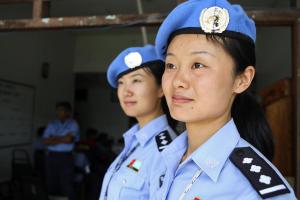
    Female United Nations police officers of the United Nations Mission in Timor-Leste (UNMIT). 29/Nov/2007. UN Photo/Martine Perret. www.unmultimedia.org/photo/

    Female United Nations police officers of the United Nations Mission in Timor-Leste (UNMIT). Image by UN photo via Flickr.

    The Women, Peace and Security (WPS) agenda gained traction on the international peace and security platform following the adoption of UN Security Council Resolution 1325 in October 2000. The WPS agenda is the most comprehensive articulation of women’s rights and gender issues in international peace and security. It establishes a nexus between conflict prevention and women’s rights, highlighting the relationship between gender inequality and conflict. Resulting from the Fourth World Conference on Women in 1995 in Beijing, and the pivotal Beijing Platform for Action which named ‘Women and Armed Conflict’ as one of twelve areas of critical concern, the NGO Working Group on Women, Peace and Security was formed to advocate a UNSC Resolution focused on women’s unique contribution and experiences of conflict. Through lobbying and advocacy, the NGO Working Group played a vital role in drafting the resolution and through UN Resolution 1325 successfully complicated the popular narratives that stereotyped women as either victims or inclusive peacebuilders. UN Resolution 1325 directs policymakers to consider all of women’s experiences in conflict and links women’s rights to international peace and security. The adoption of an additional seven resolutions builds upon 1325 and make up the WPS agenda. It rests upon a four-pillar mandate; prevention of violence and derogation of rights; protection from violence; participation in peacebuilding and post-conflict reconstruction; and relief and recovery. Laura Shepherd and Jacqui True broaden ‘relief and recovery’, to include identifying the structural social, political and economic conditions required for sustainable and lasting peace. Specifically the WPS agenda addresses sexual and gender-based violence (SGBV) in conflict, measures to ensure women’s participation in decision-making processes and post-conflict programs, gender mainstreaming in UN activities and peacekeeping operations, and gender-sensitive prevention frameworks. The WPS agenda provides basis for international engagement with gender issues. With R2P, the WPS shares a commitment to improve human security and revealing and preventing women’s human rights abuses through international engagement. Disappointingly, despite both frameworks emerging sharing similar underpinnings, R2P and its community continue to fail to address gender issues encompassed within the WPS agenda.

    R2P did not embrace the central messages of Resolution 1325 nor were points of synergies explored where there was a lack of dialogue and acknowledgement towards gender issues. From the outset, gender was excluded from the original formulation of R2P with only one of the 12 commissioners being a woman and only seven of 2000 sources consulted including gender. Women within the original R2P document were framed in terms of vulnerable populations in need of protection. ‘Women’ were mentioned three times only in reference to ‘rape and sexual violence’, which was mentioned seven times, where SGBV falls under crimes against humanity, war crimes and ethnic cleansing. No reference was made of women being active participants and agents in conflict prevention, protection and post-conflict reconstruction. This is despite the transformative possibilities of including aspects of the WPS agenda. R2P disregards WPS as a paradigm for conflict prevention and its centrality to peace and security. Here, as discussed below, three common intersecting commitments could overcome this disconnect.

    Intersecting Commitments

    • Prevention and early warning systems

    The inclusion of gender issues into existing early-warning frameworks and systems may illuminate potential and/or existing R2P situations. Studying macro- and micro-level changes to women’s lives reveals the escalation of violence and derogation of individual rights in hyper-masculinised and militarised societies. Gender-sensitive indicators include average levels of female education, impunity towards SGBV, increased kidnappings, sex work, female heads of households and domestic violence. Moreover, gender-sensitive indicators are not synonymous with women-sensitive indicators, but can monitor aggression and militarisation within a society, such as the persecution of men that do not take up arms. UN Women implemented several context-specific programs that have resulted in a comprehensive how-to guide of 85 gender-sensitive indicators that provide a holistic early warning system. Furthermore, through empirical analysis Sara Davies and Jacqui True found strong connections between systemic gender inequality and discrimination and the use of SGBV in conflict and non-conflict settings.

    Despite the benefits of including gender-sensitive indicators, gaps in women’s participation in early-warning initiatives have not been overcome. The UN Office of the Special Adviser on the Prevention of Genocide and the Responsibility to Protect have not addressed the role of gender inequality or gendered violence in early warning systems. A recent framework of analysis on the prevention of R2P crimes continues to situate women in the narrative of ‘vulnerable population’ with children and the elderly, and in regards to sexual violence and reproductive rights. This is despite, as Davies and True argue, systemic and structural gender inequality is a potential early warning factor for preventing mass SGBV.

    Since gender inequality increases the likelihood of R2P crimes any strategy of prevention must address gender norms that oppress and marginalise women. Gender-sensitive indicators highlight structural political, economic and social inequalities that maintain gender inequality in a given society that impacts post-conflict reconstruction and conflict protection.

    • Gender-sensitive Protection in Peacekeeping Operations

    The protection pillar of WPS stresses the full involvement and participation of women in the maintenance and promotion of international peace and security. This includes gender mainstreaming in all peacekeeping missions and the addition of gender units and advisers. Providing an official female presence in conflict areas, refugee and Internally Displaced Persons (IDPs) camps is essential to improve access and support for local women to communicate in an official capacity. Women can approach each other more easily in female-only settings where women may be prohibited to talk to male strangers. Moreover, SGBV is more likely to be reported between women. However, as of February 2016, only 3.34 per cent of military and 9 per cent of police were female. Although there is at least one female in every peacekeeping force, the number varies from 1 woman out of 17 deployed in the UN mission in Afghanistan to 799 women out of 17,453 deployed in the UN-African Union Mission in Darfur. Of 105,315 deployed peacekeepers, women only comprise 4.05 per cent. Although numbers have improved since the adoption of UN Resolution 1325, increases have been marginal and reflect the low number of women included in UN peace building efforts.

    Furthermore, implementation of gender-sensitive protection needs to move beyond the ‘add women and stir’ policy. Rather, WPS knowledge needs to be utilised in peacekeeping operations and wider UN peacebuilding efforts. For instance, the assumption that men are heads of households and therefore assistance being distributed to mainly men does not reflect post-conflict realities. Women are often widowed during and after conflict and adopt non-traditional roles such as heads of households. Since post-conflict programs and assistance does not recognise this, women are forced to take drastic measures to support their family and may take part in exploitive aspects of peacekeeping economies, like the sex industry. The misconception could be countered through gender units, gender-awareness training on more than an ad hoc basis and extensive comprehension of WPS.

    • Women’s participation in post-conflict reconstruction.

    The post-conflict phase is complex with many overlaps where the WPS agenda would assist states and the international community in post-conflict responsibilities. However, here I will focus on women’s participation in peace processes. Women’s involvement in peace processes is mentioned in every resolution of the WPS agenda. Evidence suggests that the inclusion of women at the peace table as witnesses, signatories, negotiators and mediators makes it 35 per cent more likely a peace agreement will last. Nevertheless, women’s quality participation in official capacities remains insufficient. Women and gender provisions have slowly started to be incorporated into peace agreements with a textual increase since the passing of Resolution 1325.

    However, by essentialising women as mothers, caregivers and victims, women are excluded from peace negotiations where, ironically, the cessation of hostilities is reliant on those who took up arms. I am not arguing that women are better peacemakers, but that their participation is vital to ensure that their experiences of conflict are acknowledged. Around the world, women lobby for participation to ensure their needs and security concerns are addressed. In Somalia, the Sixth Clan was formed in response to the five traditional Somali clans failure to include women in negotiating teams. Asha Hagi Elmi became the representative of the Sixth Clan in 2000 and in peace talks in 2002, becoming the first female signatory to a peace agreement in 2004. Peace processes must include women as more than lip service to inclusivity.

    Conflict transition provides a chance to create a more equal society by transforming the gendered relationships and identities that contributed to the production of violence. Women’s participation is essential to represent half the population during peace negotiations, to ensure explicit inclusion of women’s rights and gender provisions, and could have major implications for women’s social, political and economic status, and involvement in wider post-conflict initiatives. It is imperative that women are involved during that critical post-conflict transition to be enabled to affect positive changes.

    Conclusion

    Despite these areas of common engagement, R2P remains silent towards analysis and discourse surrounding the WPS platform. Both frameworks emerged at similar times and share central tenets of prevention, participation and protection, however women’s involvement in R2P has been grossly deficient. I have briefly demonstrated here, and examine in depth elsewhere, three areas of common engagement between R2P and the WPS agenda. I identify three common intersecting commitments – prevention and early warning frameworks, protection and gender-sensitive peacekeeping, and women’s participation in peace processes. Implementing gender-sensitive policies, legislations and programs will highlight the different lived experiences of men and women and the insecurities that arise during conflict and post-conflict reconstruction. R2P has much to gain from the WPS agenda and vice versa, where alliance with R2P and its community could aid the WPS agenda in addressing major gaps in its implementation. Alignment, both practical and normative, could provide an inclusive and holistic protection platform and encourage sustainable peace.

    Sarah Hewitt is a PhD candidate at Monash University, Australia with the Monash Gender, Peace and Security Centre. Her article,  ‘Overcoming the Gender gap: The Possibilities of Alignment between the Responsibility to Protect and the Women, Peace and Security Agenda’, was recently published in the Global Responsibility to Protect Journal. Sarah has also posted on Protection Gateway.

  • Islamic State and Dream Warfare

  • Mali: Another Long War? (Part 2)

    Mali - Another Long War(This piece was originally published by Channel 4 News on Tuesday 22 January 2013, and is the second of two parts by Ben Zala and Anna Alissa Hitzemann)
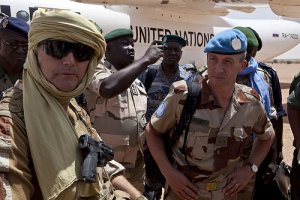

    There is a stark warning today the western intervention strategy in Mali is “flawed”. Part two of a special paper also says France and others are likely to be involved in the conflict “for some time”

    Not unlike the United States in both Afghanistan and Iraq, the French government has begun the intervention with talk of short timelines and minimal troops on the ground before quickly changing its tune, write Anna Alissa Hitzemann and Ben Zala for the Oxford Research Group.

    The initial deployment of 800 French troops may end up numbering more than 2,500 and President François Hollande has stated France’s mission is to ensure that “when we end our intervention, Mali is safe, has legitimate  authorities, an electoral process and there are no more terrorists threatening its territory”. This does not seem to tally with the earlier statement by the French Foreign Minister that the current level of French involvement in the country would last for “a matter of weeks”.

    The latest reports are that the Islamist fighters have been preparing for this intervention by carving a network of caves and tunnels into cliff faces to house bases and supplies of fuel and ammunition. This, combined with the concerns about the roles of both the Malian security forces and a number of potential contributors to the ECOWA force in relation to the abuse of civilian populations (and the likely blowback effect of such actions), mean that stability in Mali will be almost impossible achieve with military force alone.

    It is also far from clear whether the African states that are set to join the intervention will be able commit forces for a drawn-out insurgency. After Chad, the second biggest promised contributor of troops is Nigeria, which has pledged a contingent of 900.

    Yet the Nigerian government itself is fighting its own Islamist-inspired insurgency with the Boko Haram group in the country’s north. Despite a relative decline in Boko Haram attacks in recent months and even the potential for Saudi-backed peace talks between the rebels and the government, fighting could easily intensify once more, in which case Nigeria is unlikely to remain involved in Mali in any significant way.

    Without taking serious action to address the sense of marginalisation and disenfranchisement of those who were willing to join one of the rebel groups… there are few reasons to think the current intervention will produce a durable peace in Mali.

    Not only have France and its allies underestimated the difficulty of fighting the northern rebels among civilian populations in which bombing from above is of little use, there appears to be no sign of a plan as to how the factors underlying the uprising (including the original Tuareg rebellion) can be addressed.

    Without taking serious action to address the sense of marginalisation and disenfranchisement of those who were willing to join one of the rebel groups — Tuareg, Islamist or otherwise — there are few reasons to think the current intervention will produce a durable peace in Mali.

    Ongoing conflict

    While military force is considered the only option, feelings of resentment amongst elements of the population of northern Mali are likely to increase. Not only this, it will provide ample encouragement to other anti-Western paramilitary groups across North and Sub-Saharan Africa, the Middle East, and Central, South and Southeast Asia.

    The central lesson of the western interventions and small-scale military operations (including Pakistan, Yemen, Somalia and elsewhere) of the post 9-11 era, has been that reacting to the symptoms of insecurity once they are deeply manifested, and few options other than military force remain, is a fundamentally flawed strategy for global security. This means that France and others are likely to now be involved in an ongoing conflict in Mali for some time.

    Not only do the (so far conspicuously absent) plans for a post-conflict stabilisation process need to be settled between France and its coalition partners now, a serious commitment to assisting the Malian government to going much further in addressing the marginalisation of the north will be crucial.

    Until the focus shifts from military control to working towards solving the root causes of the conflict, no viable sustainable security will be found for Mali.

    Anna Alissa Hitzemann is a  Peaceworker with Quaker Peace and Social Witness. She currently works with Oxford Research Group as a Project Officer for the Sustainable Security Programme, with a focus on our ‘Marginalisation of the Majority World’ project.

    Ben Zala is a Lecturer in International Politics at the University of Leicester.

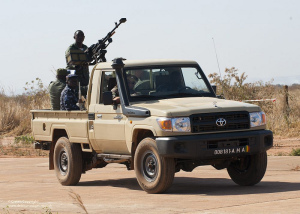
    Image source: Malian Airfield Protection Vehicle and Crew at Bamako, Mali. Source: UK Ministry of Defence.


  • Beaux Gestes and Castles in the Sand: The Militarisation of the Sahara

    One year on from the French intervention in Mali, Saharan jihadist groups continue to threaten not only Mali but Algeria, Libya, Niger, Nigeria and Tunisia. Will French and US plans to expand their military presence in the Sahel combat, contain or exacerbate the threat from militants displaced from Mali?

    Fragmentation, Displacement and Reconsolidation:  The AQIM Threat in 2014

    French General Pillet, Chief of Staff of the MINUSMA Kidal, during the visit of the Joint Security Committee in charge of the observance of the cease-fire between the Malian army and armed groups from the north. Source: MINUSMA (Flickr)

    French General Pillet, Chief of Staff of MINUSMA, Kidal, during the visit of the Joint Security Committee in charge of the observance of the cease-fire between the Malian army and armed groups from the north. Source: MINUSMA (Flickr)

    Last January, the French military, supported by African troops and 10 non-African air forces, intervened militarily in Mali at the request of its transitional government. Over the following four weeks they recaptured all of the towns in the northern half of Mali. This vast desert region had been seized by Islamist and separatist militia in March-April 2012 and declared independent as the ‘State of Azawad’, the Tuareg name for their homeland in northeast Mali. Since then, French troops have continued to conduct security operations across northern Mali to locate and ‘neutralise’ militants associated with Al-Qaida in the Islamic Maghreb (AQIM), a jihadist group of Algerian origin, and its West African splinter groups. Reduced numbers of French forces now support Malian and African forces within the United Nations Multidimensional Integrated Stabilization Mission in Mali (MINUSMA).                                                                                                                                                                                                                                                                                                                                                                                                                                                                                                                                                                                                                                                                                             However, the final quarter of 2013 saw an increase in violence in northern Mali, including terrorist attacks, violent protests and inter-communal violence. Moreover, the French advance into northern Mali displaced rather than destroyed AQIM and its two local allies, the Movement for Unity and Jihad in West Africa (MUJAO) and Ansar Dine, a Tuareg Islamist group. Their impact has been particularly felt in Niger and Libya and may also have bolstered jihadist groups operating in northern Nigeria, Tunisia and Egypt’s Sinai. The lawless desert of southwest Libya is believed to be the new stronghold of AQIM.

    A new group, al-Murabitun, combining MUJAO and the most active elements of AQIM’s Saharan front, now appears to pose more of a threat to western and West African interests than AQIM. This is because its strategic direction is towards the weak states of West Africa, including Niger, Mali and Mauritania, where critical infrastructure and individuals are more difficult to protect. It is also better connected to the kidnapping and trafficking enterprises that fund Saharan militancy, and more deadly. During 2013, its militants were behind frequent raids on Gao (northern Mali’s main town), on a prison, garrison and French-owned mine in Niger, and on the Algerian gas plant at In-Amenas. These audacious operations attest to its range, training, discipline and cosmopolitan membership. If it finds common purpose with the larger jihadist groups in northern Niger, as some analysts suggest, it could represent a severe threat to stability in the already shaky regional power.

    French Repositioning in the Sahel

    In recognition of the expansion of jihadist groups, France announced a major repositioning of its forces in Africa in January. The new French military posture will refocus from large coastal bases, designed to train, transport and supply African Union and regional rapid reaction forces, to smaller forward deployments in the Sahel and Sahara. 3,000 French troops will now be based indefinitely in Mali, Niger and Chad.

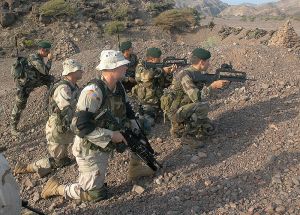
    U.S. soldiers and French commandos marine conduct a reconnaissance patrol during a joint-combined exercise in Djibouti. Source: Wikipedia

    U.S. soldiers and French commandos marine conduct a reconnaissance patrol during a joint-combined exercise in Djibouti. Source: Wikipedia

    The new posture is heavily influenced by US ‘War on Terror’ strategy in Africa, Yemen and south-west Asia, relying heavily on Special Forces, air strike capacities and unmanned aerial vehicles (UAVs). French and US forces (including contractors) already share facilities in Djibouti, Niger, Burkina Faso and Mauritania, and there is a small US liaison detachment with the French Combined Air Operations Centre in Chad. The French repositioning is explicit about confronting Islamist terrorist groups and the threat to regional security posed by the security vacuum in southern Libya. While the repositioning focuses on Mali, Niger and Chad, supplied via a coastal base in Côte d’Ivoire, it will actually include deployments to over a dozen small bases and elite detachments in the Sahel and Sahara, covering at least seven countries. In some cases it will mean French Special Forces reoccupying desert forts long abandoned by the Foreign Legion.

    There will also be greater use of aerial reconnaissance and targeting. French Navy patrol aircraft already criss-cross the Sahara and two MQ-9 Reaper UAVs arrived with French forces at Niamey airport in December after the US fast-tracked French acquisition of and training on these ‘hunter-killer’ drones. These double the effective range of the Harfang target-acquisition UAVs formerly used by the French in the Sahel, bringing all of Mali, Niger, almost all of the rest of West Africa and much of Algeria, Chad and southwest Libya into range.

    France also makes greater use of combat aircraft in the Sahel-Sahara, deploying fighter aircraft from its long-term base in N’Djamena, Chad to Bamako and Niamey airports. This brings northern Mali into range. Since October, French fighter-reconnaissance aircraft have deployed to Faya-Largeau in northern Chad, which brings southern Libya well within range. French Special Forces and armed helicopters have also operated from Burkina Faso, Niger and Mauritania in pursuit of AQIM.

    US and China Extend Their Presence

    French and US Reapers now operate from the same facility at Niamey airport, set up by the US in February 2013. While US UAVs in Niger are unarmed, it is unclear if French Reapers will be used for strike missions. US armed UAV bases in Djibouti, Ethiopia and Seychelles currently bring all of the Horn of Africa, East Africa and most of Arabia within range. US private military contractors have also flown unarmed, unmarked light aircraft on surveillance flights all across the Sahel belt since at least 2007. Using covert hubs in Burkina Faso and Uganda and smaller airfields in Mauritania, Niger and South Sudan, they have sought AQIM and the Ugandan Lord’s Resistance Army (LRA).

    Since 2011, US Special Forces have established small bases in the Central African Republic (CAR), South Sudan and the Democratic Republic of Congo (DRC) to assist Ugandan forces seeking the LRA there. They also provide training to several African militaries countering the LRA. As with programmes in Mauritania, Mali, Niger and Chad, these programmes have focused on creating elite counter-terrorism units. Unfortunately, all of these countries plus the CAR and South Sudan have experienced coups d’état or major army mutinies since this assistance began.

    In order to combat Boko Haram, a Nigerian Special Operations Command was announced on 14 January with the US military providing advice, training and equipment. Massive attacks by Boko Haram since December suggest that the Nigerian army’s use of indiscriminate force in the northeast has not weakened the insurgency. Rather, the state of emergency is likely to have strengthened the recruitment base of Boko Haram since May.

    China and Japan are also increasingly active in the Sahel. Chinese parastatals are the dominant actors in the oil industries of Sudan/South Sudan, Chad/Cameroon and Niger. They also mine uranium in Niger, and China is the primary buyer of iron ore from Mauritania’s vast desert complexes. So far, China is the only non-African state to deploy more than a few dozen troops with MINUSMA.  Japan, which saw ten of its nationals killed in the January 2013 militant attack on Algeria’s In-Amenas gas plant, has pledged $1 billion to stabilise the Sahel, including training of counter-terrorism units.

    Compromised Alliances

    This expansion of deployments and offensive operations relies on the status of forces agreements between western powers and’ friendly’ states such as Algeria. France, for example, depends on an air corridor across the Algerian Sahara. Securing such access puts host governments in a position of greater power. The highly authoritarian regime in Algiers – the world’s fifth or sixth largest arms importer – no longer faces western pressure to improve its dismal human rights record. Indeed, it has received friendly visits from the leaders of France and the UK and the US Secretary of State since late 2012. Mauritania’s military-based government faced little criticism over its unfair elections in November.

    Chad, Uganda and Ethiopia may be the biggest regional beneficiaries of the militarisation of the Sahel. Each has been governed for a quarter-century by a former armed movement. They face little censure of their authoritarian and undemocratic internal policies and have become more assertive as regional military powers. Ethiopia has forces in Somalia while Uganda now has combat troops in operation (by agreement) in Somalia (under AU command), South Sudan, the DRC and the CAR.

    Boosted by expanding oil revenues, French alliance and the demise of Libya’s Gaddafi regime, Chad has greatly expanded its military reach into Mali, Niger and the CAR, where its troops and citizens now face a violent backlash. It is also a Security Council member for the next two years and will be expected to help guide decisions on UN peacekeeping operations in Mali, South Sudan and potentially the CAR and Libya.

    Burkina Faso, long relied on by Paris to negotiate with armed groups in francophone West Africa, is also facing unaccustomed turbulence in 2014 as its president seeks to permit himself an additional term of office. Algeria, which is wary of France’s military deployments on its southern border, is set to take over from Burkina the mediation of talks between Mali’s government and secular Tuareg and Arab rebels.

    Foundations in Sand

    In some respects, the eviction of AQIM and its allies from northern Mali has made the wider Sahara a less safe place, without obviously impeding the capacity of jihadist groups to threaten Europe. In 2014, southwest Libya and parts of Niger are not necessarily less safe havens than northern Mali was in 2012. The insurgency has moved closer to the Mediterranean and closer to critical European energy infrastructure in Algeria, Libya, Tunisia and Niger (uranium). Unlike heterodox Mali, controlling Libya’s chaotic state is likely to be of interest to Arab Salafist groups, including AQIM.

    As elsewhere, the western military approach to countering Islamist insurgency in the Sahel rests on very unsteady foundations. This applies to the political legitimacy of allied regimes, the stability and security of locations hosting French and US bases, the traumatic historical legacy of France as the former colonial power, and the potential for counter-insurgency tactics to provoke wider alienation and radicalisation. However asymmetric its military technology, reinforcing a new line of castles in the Saharan sand may be as futile a gesture in France’s long retreat from empire as the UK’s last stand in Afghanistan.

    Richard Reeve is the Director of the Sustainable Security Programme at Oxford Research Group. He has researched African peace and security issues since 2000, including work with ECOWAS and the AU. Richard’s most recent security briefing ‘Security in the Sahel (Part II): Militarisation of the Sahel is available here.

  • The Legal Case Against the Saudi-Led Intervention in Yemen

  • China’s Arms Sales in Africa

    One of the negative aspects of China’s increasing engagement with African states is the spread of small arms and/or light weapons especially in conflict zones and were opposition is violently suppressed. These weapons have undoubtably contributed to the enhancement of closer ties between China and authoritarian regimes and served as an instrument for consolidating its presence in the continent.

    China has developed an extensive presence in Africa through infrastructure such as airports, roads, hospitals,  convention centers,  media investment, agricultural  and health education, among many other  activities that seemingly put China in a good light.  At the same time many of China’s seemingly worthwhile activities by have not consolidated its ties to the African political elite and incumbent regimes as much as its arms sales to authoritarian regimes have.  Its positive contributions in the continent have been offset by the lure of the benefits that are associated with arms sales to African states despite their negative consequences in growing African states.

    Chinese small arms have been implicated in ethnic violence and war crimes in Sudan, South Sudan and the Democratic Republic of Congo (DRC) among others.  They have also been instrumental in the suppression of democratic progress in Zimbabwe, and at the same time expanding its influence and political economic ties with the authoritarian regime of President Robert Mugabe. China’s worldview which puts social and economic rights over individual liberties and political rights is often quick to supply weapons to authoritarian African states because it does not make human rights observance a condition for arms sales to any country. Incumbent African regimes that face severe threats to their survival are therefore quick to turn to China as a source of arms supply in the struggle to preserve their power.

    Apart from the lure of profits for China’s arms sales to Africa, there is also the added benefit of China finding employment opportunities for its skilled Chinese citizens. This contributes to spreading its technical and personnel   influence in the continent. At times, an arms supply relationship also involves establishing an arms factory in a recipient state that requires the expertise of skilled Chinese scientists, engineers, and industrial managers. Such a relationship for China leads to a long term business and security relationship with the African country. This is one reason why China’s influence in Sudan is so strong. However, what happens is that weapons that are sold by China or produced by China in Africa end up fueling and feeding the conflicts in countries such as the DRC, Sudan, South Sudan, and the Central African Republic, among others.  Regime survival or incumbent regime power consolidation efforts fuel arms transfers in South Sudan and Burundi. Chinese arms are often implicated in these conflicts because of China’s aggressive arms sales strategy w is based on the following:

    • A “catch all” customers strategy that has established an arms transfer or military relationship with several large  African states such as Egypt, Nigeria, Ethiopia, Zimbabwe, and South Africa, as well as smaller states like the Republic of Congo, Equatorial Guinea, Eritrea,  Burundi, and Sierra Leone, among others;
    • A favorable  financing strategy especially for African countries that cannot afford to buy sophisticated weapons and  afford to pay the market price for small or light weapons; and
    • China’s use of frequent and aggressive small arms marketing of its and more sophisticated military hardware at annual arms exhibits in various states within the continent. The wide array of Chinese arms enables China to sell weapons to both rich authoritarian African states as well as poorer smaller ones. The Chinese policy of placing no human rights or democracy conditions on arms sales as well its overall policy of non-interference in the politics of African states translates into the availability and affordability of Chinese arms in many African states.

    The bloody footprints of China’s arm sales in Africa

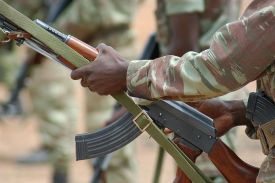
    Image credit: Lance Corporal Jad Sleiman/Wikimedia.

    It is not therefore surprising that arms from China have been implicated in the Ethiopian-Eritrean conflict in which China is known to have supplied arms to both sides in the conflict. It is also well documented that Chinese weapons were used in Sudan’s suppression of rebels in Darfur following a revolt in 2003 which led to a genocide against the region’s people.  It is alleged that the light weapons used in the massacres in eastern DRC were of Chinese origin. There, children as young as 11 years old were given weapons  by warlord Thomas Lubanga, and forced to participate in interethnic killings in the early 2000s. Furthermore, Chinese trained Congolese troops have been implicated on several occasions in ethnic killings of innocent civilians in the eastern DRC.  Similarly, in 2009 Chinese-trained Guinean Commando units were responsible for the killings of about 150 people during a protest against authoritarian and undemocratic rule in the country.

    According to the Stockholm International Peace Research Institute ( SIPRI) report of 2010, China was found to be the foremost exporter of arms to Africa. The Chinese Type 56 which is China’s version of the Russian Kalashnikov (AK47) assault rifle is much easier to use as a light weapon.  The argument could be made that in spite of China’s claim that it does not interfere in the internal affairs of other countries, the fact that it supplies weapons to warring factions within a sovereign nation is itself inherently interventionist by nature. Such interference produces consequences such as gross human rights violations, murder, rapes, tortures, and extra-judicial killings. China’s arms sales to Africa attract negative attention especially because they are made available to states like Sudan and Zimbabwe and the DRC, known for blatant human rights violations in Africa. This often means that China is reaping the profits of selling weapons to both incumbent regimes and rebel groups. The general outcome is the consolidation and expansion of its ties and presence in the continent.

    Looking forward: an unsustainable arrangement

    China’s propensity to spread small arms and light weapons (SALW) among African states will end up undermining whatever positive perception it has generated in the continent as well as taint its goals to support sustainable development and contribute to the national development goals of individual African states.  In particular,  it will cast doubt on its  willingness to support Millenium Development Goals, and other specific  development goals in the continent such as the Program for Infrastructure Development in Africa and similar such programs.

    So far, China’s military to military ties with African states has been a source of frustration for the United Nations.While it China contributes to peacekeeping efforts  in the continent, the United Nations does not know details of its military engagement, or specific  military ties,  with the countries in which its peacekeepers  are deployed such has the DRC, South Sudan, Liberia, Mali, among others. In other words, the expanding military ties with African states, and perhaps the access by rebels to Chinese arms are factors that are likely to undermine UN peacekeeping functions of disarmament of ex-combatants. It is difficult to know whether Chinese arms complement or undermine the efforts to enhance security in fragile African states. It is a question of whether China is willing to ensure that its military ties with countries of concern such as the DRC, Sudan, South Sudan, and Zimbabwe, complement peacekeeping activities there or help to promote peace, stability, democracy and development.

    Human rights organizations have often called attention to the destabilizing role that Chinese arms play in conflict zones in Africa. China so far seems determined to support and forge closer ties with authoritarian regimes in their goals of power consolidation, oppression of the opposition. China on the other hand is preoccupied with spreading its influence, consolidating its ties and deepening its engagement with every African state regardless of whether it is democratic or authoritarian. Accordingly, Chinese SALWs are supplied to both national armies in Africa as well as to rebel groups in the DRC, Chad and Uganda, and now the warring factions in South Sudan.

    China’s supply of arms to both rebels and national armies is often a violation of embargoes as well as a blatant case of economic self-interested behavior. The glimmer of hope in all this is that China has at times bowed to international pressure to cease supplying weapons in areas of gross human rights violations such as was the case with Darfur. But overall China still gives priority to concern over sovereignty and often defers  to incumbent regimes such that human rights  observance and non-proliferation of SALWs  are relegated a secondary role in China’s foreign policy rights towards Africa states.

    Earl Conteh-Morgan is Professor of International Studies in the School of Interdisciplinary Global Studies at the University of South Florida, Tampa, Florida. He is currently working on a book-length manuscript on Sino-African relations from a Political Economy Approach.

  • Gender-Relational Peacebuilding in Uganda

  • How to Respond to the Threat from Hostile Drones in the UK