Category: 05

  • Sustainable Security

    In order to persuade its allies in Israel and Gulf Arab states to support the Iran nuclear deal, the United States is relying on inducements of weaponry sales; this regional militarisation is further destabilising the wider Middle East region.

    The July 2015 international deal on regulating Iran’s nuclear programme, the Joint Comprehensive Plan of Action (JCPOA), looks to be a triumph for international diplomacy in a region that all too often sees diplomacy lose out to military force. However, in order to persuade its allies in Israel, Saudi Arabia and other Gulf Arab states to support the deal, the United States is offering ‘consolation packages’ of ever-higher quantities and qualities of weaponry.  This regional militarisation is further destabilising the wider Middle East region by fuelling an arms race and by increasing the attractiveness of hybrid or proxy warfare.

    16908600218_5cf4667ed9_k

    A Saudi Air Force F-15. Image via Flickr

    Arms Sales to Gulf Arab States

    The six Arab monarchies that comprise the Gulf Cooperation Council (GCC: Bahrain, Kuwait, Oman, Qatar, Saudi Arabia, UAE) are enthusiastic consumers of weaponry, which they overwhelmingly procure from the US, UK and France. Saudi Arabia is by far the largest military spender and arms importer among them. According to the Stockholm International Peace Research Institute (SIPRI), the Kingdom’s record military expenditure of over $80 billion in 2014 made it the fourth highest military spender in the world, overtaking the UK and France. It is now the world’s second largest arms importer. The other GCC states are also major spenders: Oman is probably the world’s highest military spender by percentage of GDP, averaging 12% between 2010 and 2014; last year the United Arab Emirates’ military expenditure reached $23 billion and it has been the world’s fourth largest arms importer for a decade. Together, the GCC states account for about 12% of global arms imports. Only India imports more weapons.

    The Gulf States enjoy a close commercial and strategic relationship with the United States, which is manifested in the huge sums spent on US weaponry, and the fact that the US military overtly uses land, air and naval bases in at least five of the six Gulf Arab states; its ongoing presence in Saudi Arabia is much lower key. Despite this, there are limitations on the quality and quantity of weaponry that the US can sell to GCC states. This is because of the US’ ongoing commitment to maintain Israel’s ‘qualitative military edge’ (QME) over its regional adversaries.

    A term coined by Israel’s founding leader David Ben-Gurion in 1953, QME was formally written into US law by Congress in 2008. Legislation now states that the US President must carry out an ongoing ‘empirical and qualitative assessment’ of Israel’s QME over military threats to Israel, and this must be brought into consideration when assessing applications to provide military hardware or services to other countries in the Middle East. As the GCC states could in the future become adversaries to Israel, whose statehood none currently recognize and which Saudi Arabia and Kuwait opposed in the 1967 and 1973 wars, this has long restricted sales of the highest technology weapons, surveillance and targeting systems to Gulf Arab states.

    QME and anti-Iran Alignments

    Recent regional events, and the JCPOA in particular, have seen Israel and the Gulf States find themselves increasingly aligned against Iran. The Israeli leadership has been consistently critical of the deal while the Gulf States were hesitant to support it because of their fears that an economically, militarily and diplomatically resurgent Iran would dominate the Middle East region and potentially vie with them to become the US’ chief regional ally.

    Relations between Israel and the Gulf have long been shrouded in secrecy, although that does not mean they have not existed. From 1950 until Israel’s invasion of Lebanon in 1982, for instance, there was periodic Israeli involvement in the operation of the ‘Trans-Arabia Pipeline’ (Tapline), and throughout the 1990s Israel and various GCC states began to set up trade offices; various Gulf States have, at different times and to varying extents, had a hand in the Arab-Israeli peace process. In the last few years, Israel and the Gulf States have increasingly found their regional interests aligning; this came to the fore during the 2011 Arab uprisings when they argued that American policy was exacerbating regional instability.

    The coincidence of interests between Israel and the GCC was referenced by Israeli Prime Minister Binyamin Netanyahu in September; in a speech to the UN General Assembly he spent much of his time denigrating the Iran deal, but he also mentioned the ‘common dangers’ faced by Israel and Arab states, and his hope that they could build ‘lasting partnerships’ to counter such dangers. There has predictably been no discussion of any official agreement between Israel and any Gulf State, but rumours of potential partnerships have been germinating: one suggested that Bahrain, an island in the Persian Gulf, was looking to buy Iron Dome anti-missile defence systems from Israel; these reports were hotly denied by Bahraini officials.

    GCC Support for the Iran Deal

    Despite stiff and vocal opposition from the Republican majority in the Senate, Obama has recently signed waivers that would conditionally allow the lifting of US sanctions subject to Iran fulfilling its JCPOA obligations. An altogether different challenge for Obama was placating America’s allies in the Gulf.

    Although Obama was not reliant on the Gulf Arab States to approve the Iran deal, it was sufficiently controversial to dent relations between them and the United States. This was demonstrated in May of this year when Obama invited GCC leaders to Camp David, where he attempted to persuade them personally of the merits of the deal: new Saudi monarch King Salman pulled out of attending at the last minute. Those that remained were hoping for a formal security treaty that would bind the US to support the GCC militarily in the case of an attack, but the Obama administration eventually won their support with promises of ‘support and capacity-building’, which essentially boiled down to bigger, faster arms deals.

    King Salman has played a tough game with the Obama administration. After his no-show in May, the Saudis reminded the US that they do not rely exclusively on the American arms market when in June they conducted extensive talks with France, discussing the potential purchase of French civil nuclear technology and further arms deals, the immediate outcome of which was the French sale of $500 million worth of helicopters. Qatar and Egypt (likely financed by GCC patrons) have also made multi-billion dollar arms deals with France this year; as has Kuwait with Italy. There was also much talk of Saudi interest in Russian equipment during August.

    Salman eventually reconciled with the Obama administration during a lavish state visit to Washington in September. Before talks between the two heads of state, Obama administration officials confirmed that Israel would be the only regional recipient of the forthcoming F-35 stealth fighter; they can thus claim to be considering Israel’s QME. However, officials also said that Obama would discuss ‘a range of other options meant to bolster Saudi defences’. Salman ultimately professed to come away reassured that the Iran deal would ‘contribute to security and stability in the region’. His price for this statement was a reassurance from Obama that US weapons technology and systems would be fast-tracked to Saudi Arabia, and a free hand to use such weapons in the Saudi-led war in Yemen.

    Arms Sales and Geopolitics

    Obama’s solution to winning support for the Iran deal from the Gulf Arab States is inherently flawed. While Gulf Arab leaders, having been promised these deals, professed their conviction that the deal would lead to regional stability, the promise of further military hardware was nevertheless purported to be intended to help states repel potential attacks from Iran. Although the narrative of the Israeli and American right is that Iran wants nuclear weapons to destroy Israel, an alternative explanation is that it is the huge qualitative and quantitative superiority in conventional weapons by US-allied Sunni Arab states that has driven Iran’s desire to develop nuclear weapons capabilities.

    While the Iran nuclear deal may decrease the likelihood of a preemptive attack on Iran by either its Gulf Arab rivals or Israel, the escalating wars in Yemen and Syria indicate that Saudi Arabia and other conservative Arab monarchies (Morocco and Jordan have joined GCC allies in both interventions) are increasingly willing to employ a more interventionist approach in the region, both directly and via proxies, wherever they see the expansion of Iranian interests. This is facilitated by US weaponry, intelligence and diplomatic support.

    The war in Yemen has already had catastrophic humanitarian consequences, with at least 2,615 civilians killed and about 1.5 million people displaced. Reports suggest that larger quantities of US military hardware could be making their way to Syria after a 24 October meeting between US Secretary of State John Kerry and Saudi officials, including King Salman, to discuss greater support for ‘moderate’ Syrian rebels in response to Russian air strikes. The White House has claimed that Russia would not succeed in achieving a military solution to the conflict, but the United States is equally unlikely to enforce a military solution.

    The JCPOA is a diplomatic breakthrough that will likely be far more successful in reducing Iran’s capacity to develop nuclear weapons than air or missile strikes. However, while Iran can no longer look to the nuclear option to give it a military advantage, or parity, it may consider other options. The strategic alignment of Israel and the Gulf States means that Obama has greater leverage to use arms deals to maintain the support of his Gulf allies, but a result of these deals is that a huge amount of conventional weaponry is being poured into the Gulf and from there to regional conflicts.

    Many of these conflicts involve Iranian proxies, and Iran may compensate for its lack of either nuclear or conventional leverage by increasing military support for these proxies, including those in Syria and Yemen. The United States’ method of securing regional support for the JCPOA thus adds fuel to the fire of regional conflicts and humanitarian crises, and makes diplomatic outcomes, whether in Syria or Yemen, ever more distant.

    Finbar Anderson is Communications Intern with Oxford Research Group.  Having lived and studied in Egypt, he has recently completed a Master’s degree in History of International Relations, focusing on the politics of the Middle East, at the London School of Economics. 
  • Sustainable Security

    The Responsibility to Protect (R2P) is a significant, if controversial, development in international affairs. China has proposed its own semi-official version of R2P called “Responsible Protection”.

    Author’s Note: This article highlights issues discussed in more depth in various publications, including Andrew Garwood-Gowers, ‘China’s “Responsible Protection” Concept: Reinterpreting the Responsibility to Protect (R2P) and Military Intervention for Humanitarian Purposes’ (2016) 6 Asian Journal of International Law 89 and Andrew Garwood-Gowers, ‘R2P Ten Years after the World Summit: Explaining Ongoing Contestation over Pillar III’ (2015) 7 Global Responsibility to Protect 300.

    Introduction

    Over the last decade and a half the Responsibility to Protect (R2P) principle has emerged as a significant normative development in international efforts to prevent and respond to genocide and other mass atrocity crimes. Yet it has also been controversial, both in theory and in practice. R2P’s legal status and normative impact continue to be debated in academic and policy circles, while its implementation in Libya in 2011 reignited longstanding concerns among many non-Western states over its potential to be misused as a smokescreen for regime change. These misgivings prompted Brazil to launch its “Responsibility while Protecting” (RwP) concept as a means of complementing and tightening the existing R2P principle. China, too, has proposed its own semi-official version of R2P called “Responsible Protection” (RP). This contribution explores the key features and implications of the lesser known Chinese initiative.

    The R2P Principle

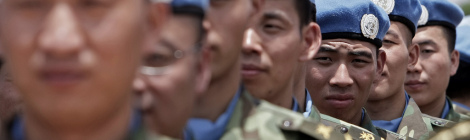
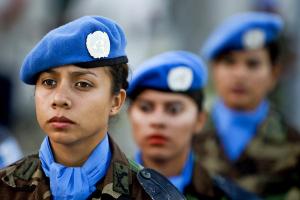
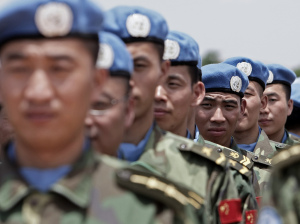
    Peacekeeping - UNAMID

    Image by UN Photo via Flickr.

    R2P first appeared in a 2001 report by the International Commission on Intervention and State Sovereignty (ICISS), a body set up by the Canadian government to consider how the international community should address intra-state humanitarian crises. However, after the initial concept proved contentious a modified version of R2P – labelled “R2P-lite” by one commentator – was unanimously endorsed by states at the 2005 World Summit. In its current form R2P consists of three mutually reinforcing pillars. The first is that each state has a responsibility to protect its populations from the four mass atrocity crimes (genocide, war crimes, crimes against humanity and ethnic cleansing). Pillar two stipulates that the international community should encourage and assist states in fulfilling their pillar one duties. Finally, pillar three provides that if a state is manifestly failing to protect its populations the international community is prepared to take collective action in a timely and decisive manner on a case-by-case basis, in accordance with Chapter VII of the UN Charter.

    Action under pillar three can encompass non-coercive tools such as diplomacy and humanitarian assistance, as well as coercive means including sanctions and the use of force. The international community’s pillar three responsibility is framed in conservative terms, creating only a duty to consider taking appropriate action, rather than a positive obligation to actually respond to a state’s manifest failure to protect. Crucially, the UN Security Council remains the only body that can authorise coercive, non-consensual measures under pillar three. R2P does not grant states a right to undertake unilateral humanitarian intervention outside the Charter’s collective security framework. Overall, R2P is best characterised as a multi-faceted political principle based on existing international law principles and mechanisms.

    The most well-known instance of pillar III action to date is the international community’s rapid and decisive response to the Libyan crisis in early 2011. The Security Council initially imposed sanctions and travel bans on members of the Gaddafi regime before passing resolution 1973 authorising the use of force to “protect civilians and civilian populated areas under threat of attack’’. China, Russia, Brazil and India each abstained on the vote to mandate military force against Libya. As the extent of NATO’s military targets and support for the Libyan rebels became apparent, many non-Western powers criticised the campaign for exceeding the terms of the Security Council resolution. For these states, the eventual removal of the Gaddafi regime confirmed their perception that R2P’s third pillar could be manipulated for the pursuit of ulterior motives such as the replacement of unfriendly governments.

    The post-Libya backlash against R2P was at least partly responsible for Security Council deadlock over Syria. Russia and China have exercised their vetoes on four separate occasions to block resolutions that sought to impose a range of non-forcible measures on the Syrian regime. At the same time, there has been renewed debate about the strengths and weaknesses of R2P’s third pillar. In late 2011 Brazil’s RwP initiative proposed a series of decision-making criteria and monitoring mechanisms to guide the implementation of coercive pillar three measures. While RwP initially attracted significant attention and discussion, Brazil’s foray into norm entrepreneurship was short-lived and R2P has remained unaltered.

    Reframing R2P as “Responsible Protection”

    China’s traditional insistence on a strict interpretation of sovereignty and non-intervention has made it uncomfortable with the coercive, non-consensual aspects of R2P’s third pillar. As a result, Beijing has consistently emphasised the primacy of pillars one and two, while downplaying the scope for pillar three action. In this respect, its decision not to veto resolution 1973 on Libya came as something of a surprise.

    China’s contribution to the post-Libya debate over R2P’s third pillar is less widely documented than Brazil’s efforts. In mid-2012 the notion of “Responsible Protection” was floated by Ruan Zongze, the Vice President of the China Institute for International Studies (CIIS),  which is the official think tank of China’s Ministry of Foreign Affairs. Although China has not explicitly adopted the concept as a formal policy statement on R2P, its implicit endorsement means it can be described as a “semi-official” initiative.

    RP is primarily concerned with R2P’s third pillar and, in particular, providing a set of guidelines to constrain the implementation of non-consensual, coercive measures. It consists of six elements or principles, which are drawn from just war theory and earlier R2P proposals such as the 2001 ICISS report and Brazil’s RwP. In this respect, RP represents a repackaging of previous ideas, rather than an entirely original initiative. However, by reframing these concepts in stricter terms it reflects a distinctive Chinese interpretation of R2P that seeks to narrow the circumstances in which non-consensual use of force can be applied for humanitarian purposes.

    The first element draws on the just war notion of “right intention”. It provides that the purpose of any intervention must be to protect civilian populations, rather than to support “specific political parties or armed forces”. This conveys Beijing’s concerns over the motives and objectives of those intervening under the banner of R2P, as expressed during the Libyan experience. Element two relates to the “right authority” criterion. It reiterates the longstanding Chinese position that only the Security Council can authorise the use of coercive measures, and that there is no right of unilateral humanitarian intervention granted to states.

    RP’s third element is based on the traditional principle that military intervention should be a “last resort”. Its call for “exhaustion of diplomatic and political means of solution” is consistent with Beijing’s broader policy preference for diplomacy and dialogue over forcible measures. However, insisting on a strict, chronological sequencing of responses may deprive the international community of the flexibility needed to ensure timely and decisive action on humanitarian crisis. For this reason, some clarification or refinement of element three may be needed. The fourth element of RP draws on aspects of the just war principles of “right intention” (like element one) and “reasonable prospects”. In relation to the latter, it provides that “it is absolutely forbidden to create greater humanitarian disasters” when carrying out international action. This stipulation reflects Beijing’s position that external intervention often exacerbates humanitarian crises and can ultimately cause more harm than good.

    Element five of RP provides that those who intervene “should be responsible for the post-intervention and post-protection reconstruction of the state concerned”. Although the notion of a responsibility to rebuild appeared in the original 2001 ICISS report it was not included in the text of the World Summit Outcome document in 2005 and therefore does not form a component of the current concept of R2P. It is unclear whether China’s RP concept is explicitly seeking to resurrect this dimension or whether this element is simply intended to emphasise Beijing’s broader perspective on peacebuilding and development in post-conflict societies. Finally, element six calls for greater supervision and accountability of those carrying out UN authorised civilian protection action. This is a similar demand to that made in Brazil’s RwP proposal, though little detail is given as to what form any such monitoring mechanism would take.

    Conclusion

    Overall, the Chinese notion of RP is an attempt to reinterpret and tighten the content of R2P’s third pillar so that it aligns more closely with Beijing’s own normative preferences and foreign policy objectives. Compared to RwP and the ICISS report, RP outlines a narrower set of circumstances in which military intervention for humanitarian purposes would be appropriate. Some aspects of the proposal would certainly benefit from clarification and refinement.

    However, it is notable that despite strongly criticising the way R2P was implemented in Libya, China has chosen to engage with, and actively shape, the future development of the norm. This illustrates the extent to which China, as a permanent member of the Security Council, is enmeshed in the ongoing debate over R2P. In fact, RP is explicitly framed as an example of China “contributing its public goods to the international community”. In the future we can expect China and other non-Western powers to play increasingly influential roles in the development of international security and global governance norms.

    Andrew Garwood-Gowers is a lecturer at the Faculty of Law at Queensland University of Technology (QUT) in Brisbane, Australia. He has written extensively on R2P and the law governing the use of military force, with publications in leading journals including Global Responsibility to Protect, the Asian Journal of International Law, Journal of Conflict and Security Law and the Melbourne Journal of International Law.

  • Sustainable Security

    Environmental changes in the Arctic are making the region more accessible which many believe will lead to competition and conflict over its resources. But is this really the case?

    The Great Game moves North

    A battle to ‘carve up’ the Arctic

    ‘Ice Wars’ heating up the Arctic

    Melting ice caps open up Arctic for ‘white gold rush’

    Warming Arctic opens way to competition for resources

    Conflict ahead in Arctic waters

    The above are just some of the many headlines and titles that have described the state of the Arctic over the last decade. Ever since a Russian flag was planted on the seabed at the North Pole in 2007, media outlets, academics and policy-makers have been pondering the conflict potential of a warming Arctic.

    Their concerns surely have a dramatic background. The Arctic, the region commonly defined as all land and water areas above the Arctic Circle at 66 degrees north, has over the past 50 years warmed twice as fast as the global average. Consequently, the Arctic ice sheet has retreated significantly. In September 2012, the ice extend dropped to around half of what it was in the late 1970s, and is lingering on low extent numbers ever since. The diminishing sea ice has made the resources of the Arctic, such as oil and gas, increasingly accessible for exploration and exploitation.

    This increasing accessibility of the region combined with, thus far, inaccessible and high-in-demand resources and still existing boundary disputes between the Arctic coastal states, made (and still makes) many believe that we are heading towards a region of conflict.

    But is this really so? Should we expect the region in the north to erupt into hot conflicts about access to oil and gas, shipping lanes and fishing grounds that the retreating ice lays open? Does a warming Arctic inevitably mean increasing conflict potential with little hope for cooperation to emerge?

    Cooperation and conflict: a misleading dichotomy

    arctic

    Image credit: Fulbright Arctic Initiative/Flickr.

    Most of the debates aiming to answer these questions circle around the issue of whether the Arctic is a region of “conflict” or “cooperation”. The cardinal error of this debate is that “cooperation” and “conflict” are taken as two sides of the same coin. Taking cooperation and conflict as the two ends of a continuum inadequately twists the empirical perceptions and expectations as to future developments in the Arctic.

    As a matter of fact, cooperation and conflict are part of two different coins. Conflict is first of all a situation in which the interests of two or more actors overlap in the sense that they pursue different goals or that they prefer different means to achieve a specific goal. The opposite of conflict is then harmony, a situation in which actors’ interests do not touch each other. This is one coin.

    If there is a case of conflict, actors can react to this situation in different ways. Roughly speaking, they can either react with “cooperation” or “confrontation”. They can decide to solve the conflict through negotiation and looking for compromises, or they can revert to using force of some kind, such as sanctions or military actions. These possible options for actions in a situation of conflict are the second coin.

    Once one has understood the difference between these two coins, it is possible to analyze how actors have reacted to Arctic conflict cases in the past (like open boundary disputes, of which many have been solved since the 1970s), and which options for resolution exist in response to possible future Arctic conflict cases (like still open boundary disputes, competing interests for access to resources or shipping lanes etc.).

    Unfortunately, in the past and current Arctic conflict debate the existence of a conflict is usually treated the same as a confrontation– a situation in which breakdown of relations and even violent actions are imminent. But if we equalize conflict and confrontation, we face a very alarming situation in the Arctic since there are cases where the interests of Arctic actors (including those from south of the Arctic Circle) overlap. The open maritime delimitations around the area of the North Pole and the question how much of the Arctic is to be legally treated as a common heritage of mankind are just two examples of Arctic conflicts.

    But if we were to conduct a sound analysis with the two-coin understanding as outlined above, we would understand that conflict is the very prerequisite to make cooperation and confrontation happen in the first place. In other words, there is no cooperation or confrontation if there is no conflict (since actors do not interact in a situation of harmony). Then we can look at the Arctic world out there and check which options for action Arctic actors choose to react to conflict situations.

    The Arctic Council – A prime example of Arctic cooperation

    We find a multitude of examples for actors choosing cooperative options for actions, especially among the members of the Arctic Council, which are the eight Arctic states Canada, Denmark, Finland, Iceland, Norway, Russia, Sweden and the United States. Since the flag-planting in 2007, and also since Russia’s more recent assertive actions elsewhere in the world, cooperation in the preeminent political forum of the region, the Arctic Council, has been strengthened. The Council has evolved from a forum for debate to a policy-shaping body through the adoption of several intergovernmental agreements under its auspices. These range from provisions for preparedness and response for oil spills in Arctic waters, a search and rescue cooperation agreement, and will soon be added by an agreement on Arctic scientific cooperation.

    On the international level, an “International Code of Safety for Ships Operating in Polar Waters” or short “Polar Code” has been negotiated under the International Maritime Organization to regulate the increasing shipping activity in the Arctic. Arctic countries are working on their submissions to the UN to verify their extensions of their continental shelves, and have in unison pledged to settle any overlapping claims peacefully and in close consultation with each other.

    All these cooperative actions have included the Arctic states as well as many state and non-state actors beyond the region, for example in the form of observers to the Arctic Council. The short result of this analysis is: Yes, the Arctic is full of conflict but also full of cooperation since across the board actors are reacting cooperatively to cases of conflict.

    The crux is that these instances of cooperation can be observed. In contrast, most foreboding of a confrontation in the Arctic only refers to what could happen now that the Arctic is accessible and its resources up for grasp. In other words, these contributions can only be speculative.

    A lingering problem of the Arctic conflict debate is that a conflict over Arctic issues is usually very easily and quickly proclaimed and seldom reflected upon or questioned again. So once a conflict is said to exist, it is hard to get rid of again, even if observations show that there is no real ground for the conflict or if actors react cooperatively to it. A prominent example is the rising Chinese interest in Arctic issues, which peaked 2013 when China was admitted as an observer to the Arctic Council. Since then, many have depicted Chinese Arctic interests as a “conflict” since China as a powerful player would undermine other Arctic voices and generally would bring turmoil to Arctic affairs. In contrast, when talking to the members and Permanent Participants (the representatives of Indigenous Peoples’ Organizations) of the Council, one hears that after some initial concerns everyone is pretty happy about the presence of important players like China. Not least, China has to be part of the solution to the global climate change problem, which heavily affects the Arctic. And having China present at Arctic Council meetings is a rare opportunity for small, Indigenous organizations to get into a direct conversation with countries like China.

    Conclusion

    In sum, if we consider how often the “next Cold War” in the Arctic has been proclaimed now that we have entered the tenth (!) year after the Russian flag-planting, one keeps wondering why this war has failed to materialize. This may be sign that the assessment of the Arctic as a region of confrontational conflict is not for nothing predominantly based on speculation. In fact, the predication of a next Cold War in the Arctic may be exactly that: a wild guess.

    Dr. Kathrin Keil is Scientific Project Leader at the Institute for Advanced Sustainability Studies (IASS) in Potsdam, Germany, where she is leading the Arctic research work on Sustainable Arctic Futures: A Regional and Global Challenge. She is also Senior Fellow at The Arctic Institute – Center for Circumpolar Security Studies where she regularly writes about and comments on current Arctic developments. Further, Kathrin is part of the official German observer delegation to the Sustainable Development Working Group (SDWG) of the Arctic Council.

  • Sustainable Security

    A recurring feature of Western counter-radicalisation discourse is the ‘Muslim paranoia narrative’, a belief that resentment towards Western societies is motivated by a paranoid and conspiracy-riven worldview. This association between radicalisation and paranoia appears repeatedly through official statements and policy documents.

    Radicalisation is at the forefront of policy debates as ISIS continues to draw recruits from Western democracies. Recent summits in Washington and Sydney on countering violent extremism have highlighted the importance of undermining extremist narratives, mobilising moderate Muslims who oppose ISIS, and working to address underlying drivers of radicalisation. Yet representatives of Muslim communities have met this approach with considerable scepticism, both in Western states and across the Muslim world. A common complaint is that Muslims are singled out and caricatured as a unique danger, which only increases the level of vilification experienced by Muslims.

    The Muslim paranoia narrative

    islamic_center_of_murfreesboro_with_flag

    Image by Saleh M. Sbenaty via Wikimedia.

    In recent research published in Critical Studies on Terrorism, I explore the underlying ideological conditions that work against engagement with Muslim communities thought vulnerable to radicalisation. I examine what I call the “Muslim paranoia narrative”, a recurring feature of Western counter-radicalisation discourse that helpfully captures these underlying ideological dynamics. In the Muslim paranoia narrative, resentment towards Western societies is said to be motivated to some degree by a paranoid and conspiracy-riven worldview, which is thought to thrive in alienated and disempowered communities. Terrorist recruiters exploit distorted outlooks to fuel a sense of injustice about the plight of Muslims abroad. This association between radicalisation and paranoia appears repeatedly through official statements and policy documents, including those associated with ongoing counter-radicalisation strategies like the US State Department’s Digital Outreach Team.

    The Muslim paranoia narrative is worth examining because it is a clear tension point in contemporary radicalisation strategies that are increasingly focused on engagement and collaboration. The negative connotations associated with paranoia connect palpably with the sense of vilification often highlighted by Muslim critics of these programs. And the paranoia narrative can be connected to a broader ideological imaginary. Tracing the Muslim paranoia narrative from its ideological roots provides a window into the assumptions and priorities informing radicalisation discourse and contextualises the reticence of Muslim communities towards it.

    The Muslim paranoia narrative is especially intense in the United States where my research is focused. Richard Hofstadter is widely understood to have established the now commonplace account of political paranoia in his famous essay “The Paranoid Style in American Politics”, which identified a recurring strain in American politics characterised by a “sense of heated exaggeration, suspiciousness, and conspiratorial fantasy”. Hofstadter positioned political paranoia on the periphery of pluralistic American democracy as the irrational pathology of angry extremists, and contrasted it with a rational political centre where sensible politics occurred. Although Hofstadter wrote this seminal piece in 1964, it is difficult to overestimate its traction and influence. This is in large part due to the fact that Hofstadter deployed many of the most common conceptual features of post-War liberalism, which abhorred populism and focused on the mediation of competing interests through bargain and compromise. America was situated as a moderate democracy, pragmatic, centrist and non-ideological, in contrast to the radical politics sweeping the post-War Europe. Although liberalism has evolved significantly over the intervening years, the basic conceptual features set out by Hofstadter have remained pervasive in contemporary perspectives on political paranoia.

    One reason for this is that political extremism is still largely understood through the same centre/periphery framework. This dynamic is at the heart of radicalisation discourse in the US, where the political and religious beliefs of Muslim communities have emerged as a subject of concern. In this context, the Muslim paranoia narrative locates paranoia not just on the fringe of liberal democracies, but also on the periphery of international power and legitimacy from the point of view of political leaders and security experts. Here the pervasive perspective on political paranoia folds together with a long-running orientalist narrative about the supposedly dysfunctional characteristics of Muslim cultures, particularly in the Middle East, which has often framed America’s regional encounters.

    A problematic narrative

    The Muslim paranoia narrative is involved in a powerful process of ideological reproduction that works against engagement and collaboration with Muslim communities. Underlying liberal and orientalist frameworks situate Muslim cultures as dysfunctional and anti-modern, while associating Muslim resentment about Western foreign policies with problematic and potentially pathological modes of thought. Like post-War liberal orthodoxy secured by contrast with paranoid populism, contemporary liberal modernity is secured by contrast with the paranoia of alienated Muslims.

    At the same time, contemporary radicalisation discourse disciplines the wider public against consideration of Muslim grievances and associated criticisms of US policy. For instance, the identification of political paranoia as a subject of concern has the double effect of producing a strong general deterrent against the interrogation of elite power and political controversy, when the personal and professional costs of such engagements are potentially catastrophic. The taint of irrationality can be devastating, even by association – undermining credibility and calling motivations into question.

    In this sense, the Muslim paranoia narrative can be understood in terms of powerful ideological scripts in American political culture, rather than as an objective description of an ideational precursor to radicalisation in Muslim communities. The broader point is that potent narratives around extremism and oriental otherness have undermined the approach of successive US administrations to counter-radicalisation. These scripts have worked against a persuasive encounter with Muslims critical of American foreign policy, when such criticisms are framed as the product of a problematic thoughts and dysfunctional culture.

    This problem is clear enough in the practical setting of counter-radicalisation programs like the US State Department’s Digital Outreach Team (DOT), a group of bloggers tasked with confronting views critical of American policy on foreign language websites, and, more recently, discrediting ISIS affiliated users on social media. For our purposes it is interesting to note that according to the State Department “the Digital Outreach Team contrasts objective facts with the often emotive, conspiracy-laden arguments of US critics in the hope that online users will take a fresh at their opinions of the US”.  And this frame manifested in the online activities of the DOT where time was spent “ridiculing myths and conspiracy theories and calling users with extreme views radicals, but claiming to enjoy engaging with users who post objective views.” Perhaps unsurprisingly, a close analysis of DOT work following President Obama’s 2009 Cairo Address found that a large majority of people who expressed a view about the DOT were negative in their comments, with half openly “ridiculing and condescending”. Although there were no doubt many reasons for the widespread hostility to the DOT, it should be obvious that labelling people paranoid and irrational is highly antagonistic, particularly when considered in the context of the wider set of intimations that have historically been associated with such language.

    Indeed, it is critical to acknowledge that although the identities and relations highlighted in my analysis of the Muslim paranoia narrative exist within a specific policy discourse, they bear no necessary relationship to the lived experience of differentiated Muslim people, who often refuse classification in these terms. Moreover, it is critical to acknowledge that there is still no conclusive evidence for a particular terrorist profile; for a common pathway or pattern to radicalisation; or for predicting which holders of radical views will become violent. Without critical awareness of the ideological conditions identified here and a sustained attempt to move beyond them, the crucial work of engagement, partnership and community building will be likely ineffectual.

    Tim Aistrope is Lecturer in the School of Political Science and International Studies at the University of Queensland.

  • Sustainable Security

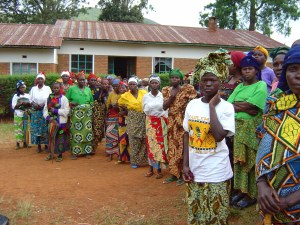
    Much has been written about the prevalence of sexual violence in the Democratic Republic of Congo (DRC), and in particular about the use of rape as a “weapon of war”. The horrific stories of rape and sexual violence published worldwide have led to the DRC being labeled the “worst place in the world for women” and the “rape capital of the world”. Feminists have long decried the silence which has historically surrounded rape and sexual violence during conflict, and so the fact that political leaders and world media are now talking about sexual violence in the DRC and pushing for solutions to this problem should be applauded. However, much of the discourse and reporting reduces this to a simple narrative of “bestial” or uncontrolled soldiers or militias raping the women and girls in villages which they attack. This narrative, in addition to employing colonialist and racist stereotypes about the behaviour of Congolese men and women, fails to grasp the complexities of gender relations in the DRC, the multiple and varied nature of sexual and gender-based violence, and of the social structures and norms which underlie this violence.

    One of the common perceptions about gender-based violence in the DRC, is that rape is the prevalent form of this violence and that sexual violence committed as a direct consequence and/or a strategy of war. It is undeniable that Forces Armées de la République Démocratique du Congo (the official army of the DRC) soldiers as well as numerous other rebel fighting groups have committed acts of sexual violence during the multiple and ongoing conflicts in the country, and continue to do so, as demonstrated by an attack in 2015 on the town of Kikamba in South Kivu during which over 100 women were raped. But to think of gender-based violence only as war rape is to miss the multiple other forms of violence, and the fact that these persist not only in areas of the country most directly affected by the conflict (notably the Eastern Regions) but across the whole country.  Common barriers to reporting GBV, such as stigma and fear of reprisals of the survivors, as well as poor infrastructure within the DRC mean that there is a lack of accurate statistics on GBV. But studies that do exist have shown that most of the incidences of GBV recorded in recent years are committed by civilians and not by soldiers, and that the most prevalent forms of GBV are domestic or intimate partner violence. A recent study by UNFPA listed multiple forms of GBV which are common in DRC including domestic  violence, rape and sexual violence, forced and early marriage, mistreatment of widows, psychological violence, economic violence and deprivation of resources.

    Meeting of victims of Sexual violence in the Democratic Republic of the Congo.

    Meeting of victims of Sexual violence in the Democratic Republic of the Congo. Image by USAID via Wikimedia.

    So although armed conflict has exacerbated gender-based forms of violence in the DRC, it cannot be the only explanation for the existence or persistence of this violence. Instead, we should look to the country’s underlying gender norms, discriminatory laws and policies, and socio-economic structures. Although the new  2006 constitution of the DRC has made some progress towards recognizing gender equality, such as in article 14 which states that the public authorities should ensure the promotion and protection of women’s rights,  discriminatory laws still remain, which reinforce persistent norms and beliefs about the roles of men and women in society. The Family Code of the DRC still maintains that a man is the head of the household who has authority over all other members of the household including his wife who must obey him. Women must obtain their husband’s permission before performing any legal act such as selling or leasing property, opening a bank account or applying for a visa or passport. The idea that men are heads of the household is strongly engrained and supported by many Congolese who see it as a part of the national “family values”. This persistence of a family code which legitimates men’s control over women and the symbolic and normative values which it perpetuates are key barriers to the achievement of gender equality. Further, research has shown that prevalent gender norms seem to accept a certain level of violence within couples as normal and even desirable.

    A new law on sexual violence passed in 2006, showed progress in criminalizing forms of violence not previously recognized such as sexual harassment, sexual slavery or forced pregnancy, but it still fails to recognize marital rape. This reflects that fact that many men and women think it is part of a woman’s duty to have sex with her husband whenever he wishes. And, for many, a certain level of violence within couples is “normal”, so that a man giving a “light tap” to his wife or girlfriend to keep her in line is perfectly acceptable.  Some even share the belief that if a man does not hit his partner, then he does not really love her. This normalization of a certain level of violence in intra-personal relationships is just part of a wider continuum of gender-based violence which is normalized and accepted. There are also various forms of violence which are condoned or encouraged by customary law which remains strong in some areas of the country, such as the rules of sororate and levirate under which women may be forced to marry the brother of their dead husband or the widow of their dead sister.  The continuum of these different forms of violence, which are accepted and normalized within Congolese society, can be seen to provide the context within which the rape and sexual violence, that has occurred during the armed conflicts, should be understood.

    The normalization of GBV also contributes to the continuing impunity of perpetrators, as do the weak police and judicial systems in the country. As noted above, many incidences of GBV are not even recognized as such, and even when it is acknowledged that an act of gender-based violence has been committed, it is unlikely that he perpetrator will be prosecuted or punished. And in the absence of a robust judicial system, many cases are still settled through “amicable” arrangements between perpetrator and victim.

    Gender inequalities are also obvious in many areas of public life, such as the lack of women in decision making positions in the government. Women make up only 8.9% of representatives in the National Assembly, 5.5% of Senators and 14.8% of government ministers (despite a strong recommendation from the national consultation held in Kinshasa in 2013 to appoint at least 30% of women to the government). Although a law on gender parity in political representation was passed by the National Assembly in April 2014, so far it has not had any noticeable impacts. There is still widespread opposition to women’s participation in public and political life because this is equated with a threat to the “traditional” family life and culture of the DRC. Women have also been under-represented in all of the various peace negotiations which have taken place to try and end the conflicts in the DRC, and remain a very small minority in the armed forces, the police and the judiciary.

    Much more can be written about the various forms of gender inequality which persist in the DRC and which provide foundations for the various forms of GBV which exist in the country. The necessary links between broader social gender inequalities and GBV are vital to understand if there is to be any effective response to the problem of GBV, and effective policies for prevention. The Women, Peace and Security agenda, has a focus on not only prevention of violence, but also of increased participation of women in public life and decision making. Increasing participation means considering women not only as “vulnerable victims” of sexual violence, but as actors should be given an equal role in political life.  All of the many complexities and layers of gender inequality need to be taken into account if real solutions to the problem of GBV are to be found, and in doing so Congolese women need to be actively engaged in making decisions and finding the solutions.

    Jane Freedman is Professor at the Université Paris 8, and member of the Centre de recherches sociologiques et politiques de Paris (CRESPPA). She has researched and published widely on issues relating to gender, violence, conflict and forced migration.

  • Sustainable Security

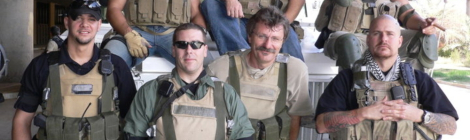
    Over 10 years ago, the Cathedral Peak Hotel, which nestles among the peaks of South Africa’s majestic Drakensburg Mountains, played host to what was, at the time, a unique gathering. Scholars from around the globe (the United States, Britain, Switzerland, Australia, Germany, South Africa, and Israel) met with representatives of international NGOs (the International committee of the Red Cross and the Geneva Center for the Democratic Study of Armed Forces, among others) and members of the private military and security industry to discuss and debate the growing role of private contractors in contemporary conflict zones. I was the convener of that conference and co-editor of the subsequent volume of the same title, Private Military and Security Companies: Ethics, Policies and Civil-Military Relations (Routledge 2008).

    Though the modern private military company can be traced back to companies such as David Stirling’s WatchGuard International in the 1960’s, and though there was some related early scholarly research, it was the massive use of contractors by the United States in Iraq in the civil war that emerged after the 2003 invasion which ultimately sparked serious public and scholarly interest in the sector. Just a year before the conference, the killing and gruesome mutilation of four Blackwater contractors by insurgents had been a major cause of the bloody and ultimately fruitless first battle of Fallujah. Given the context, it’s particularly interesting that Doug Brooks – then the President of the largest industry body for PMSCs, the International Peace Operations Association (now the International Stability Operations Association) – chose to focus his contribution to the conference, and his co-authored contribution to the book, on peacekeeping operations.

    Brooks argued then that, with the growth of what he called ‘Westernless peacekeeping’ (i.e. UN and African Union peacekeeping operations carried out without major support from NATO and ‘NATO-class’ military forces) PMSCs should have an increasing role in peacekeeping operations, contributing capabilities not possessed by the military forces of developing world countries like Bangladesh, Ethiopia, Nepal, Indonesia and Rwanda, who contribute the bulk of peacekeepers for UN operations.  Contractors, Brooks contended, offer ‘faster, better and cheaper’ solutions to capability challenges in peacekeeping operations, operate with a smaller and less culturally sensitive footprint than equivalent military forces, and act as a force-multiplier through the provision of specialist and niche capabilities.

    private-miltary

    Private military contractors in Baghdad, Iraq. Image by Babeltravel via Flickr.

    A decade on and Iraq is still in the news, but Western boots on the ground are largely absent, and the previously booming market for contractors there and in Afghanistan has shrunk dramatically. As Molly Dunigan and Ulrich Petersohn and their collaborators show in a recent edited collection, the once-championed ‘global market for force’ has proven itself to be, in fact, a conglomeration of quite different markets for force, and it is a mistake to conflate the legitimate with the illegitimate. The United States, Britain and other nations continue to employ the services of private military contractors for lower priority tasks where doing so is (or at least appears to be) cost and manpower effective.

    The US State Department’s five-year $10.2 billion Worldwide Protective Services contract, the next phase of which was announced in mid February, is distributed largely among companies like SOC, Triple Canopy and Aegis Services which made their names during the Iraq post-invasion boom. And the old stomping ground is showing signs of a revival – according to a report by Bloomberg Business week, “Operation Inherent Resolve, the Pentagon’s anti-Islamic State initiative, employed 7,773 contractors in the second quarter of 2016, up from 5,000 in the first quarter of 2015.” Many of those contracts are for logistical, training and advisory roles in conflict and post-conflict environments in Africa and the developed world. And, quietly, the United Nations has also become a significant employer of PMSCs, as a careful reading of the UN Department of Procurement’s list of registered vendors reveals. As long ago as 2011 the Geneva Center for the Democratic Control of Armed Forces (DCAF) released a report showing that, despite the sensitivities involved, “the UN has increasingly paid private military and security companies (PMSCs) for a range of services in the areas of humanitarian affairs, peacebuilding and development.” The companies themselves have become increasingly corporatized and professional in their structures and practices, an evolutionary necessity for those companies which survived the ‘gold rush’ days of post-invasion Iraq.

    The more dramatic pronouncements by both proponents and opponents of the PMSC industry have failed to come to pass. Contractors have neither rendered state-based peacekeeping and stability operations obsolete, nor have they radically undermined the monopoly on force of the states that employ them or created greater instability in the international sphere.

    Looking to the future, what might we expect regarding the involvement of PMSCs in peacekeeping and stabilization operations? Despite their popularity as ‘bad guys’ in television dramas and Hollywood films, and an uncomfortable legacy of past serious human rights abuses committed by contractors, the evidence suggests that in the real world the use of PMSCs is increasingly becoming normalized, and that in policy circles there is a growing understanding of the potential value contractors can provide if properly employed. While there are still contractors operating in the global periphery who better fit the old ‘mercenary’ moniker, we can expect this process of normalization to lead to an increase in the employment, and more open employment, of PMSC’s in peacekeeping operations (though the term ‘PMSC’ will likely decline in usage).

    The improved clarity about the status and responsibilities of contractors in zones of armed conflict that resulted from the publication of the ICRC sponsored Montreaux Document of 2008 has played an important role in this process of normalization. Though this was unquestionably not the intended purpose of the creation of the document (which carries no legal weight but summarizes the status of contractors under international law and gives recommendations to both PMSCs and the states that contract them), the Montreaux process cleared up numerous misconceptions and provided a firm framework to which companies could attach their claims to legitimacy.

    Over the past decade there has been much debate and discussion over what functions ought to be considered by states to be ‘inherently governmental’ and which therefore ought not to be contracted out. A similar discussion will likely occur as the outsourcing of peacekeeping functions becomes more publicly acknowledge. However, it will likely be pragmatic factors which establish the limits of outsourcing.  Whatever those limits turn out to be in practice, it is certain that there will be limits. Even in today’s complex and spoiler afflicted environment, effective peacekeeping relies heavily on the perception of legitimacy, and that means blue UN helmets or the green berets of the African Union, not beards and Oakley sunglasses.

    Dr Deane-Peter Baker is a Senior Lecturer in the School of Humanities and Social Sciences at UNSW Canberra, located at the Australian Defence Force Academy. He is also a Researcher in the Australian Center for the Study of Armed Conflict and Society. His research interests include military ethics, private military and security companies, special operations, military strategy and the ethics of public policy. He is the author of Just Warriors Inc.: The Ethics of Privatized Force and Citizen Killings: Liberalism, State Policy and Moral Risk.

  • Sustainable Security

    Sustainable Security programme Director Richard Reeve discusses our latest report ‘From New Frontier to New Normal: Counter-terrorism operations in the Sahel-Sahara’. The report, commissioned by the Remote Control project, finds that 2014 is a critical year for militarisation of the Sahel-Sahara and the entrenchment of foreign powers there.

  • Sustainable Security

    The Internet has become a major arena for modern jihadis. Understanding how militant Islamist groups operate online can help security services devise appropriate methods to forestall jihadist activities. 

    Modern terrorism relies heavily on modern technology. Indeed, modern technology is a defining characteristic of today’s terrorism. Both modern terror and modern technology are diffusive, decentralised, universal, interactive, low cost and chaotic in their respective structures (or lack of structures).

    The Internet has enabled a global jihad based on a loose network of Mujahedeen (people who fight for jihad) transcending the limitations of face-to-face interaction. Jihadis are making the most of the vast information available on the Internet to coordinate, to communicate, and to find essential data in order to wage anti-social, violent operations.

    How jihadis use the internet

    Propaganda, Indoctrination and Recruitment – Most radical and terrorist organizations use the Internet as a vehicle for ideological indoctrination. There are numerous cases of normal, often non-religious citizens becoming radicalized by jihadist websites, leaving them vulnerable to terrorist recruitment. The content of such propaganda usually consists of enemy demonization, justification of violence, and a general background of the jihadi group, its platform and objectives. The sites try to be effective as they compete with each other on the attention of potential followers. Interactive technology is used to connect with those who seem receptive to the jihadi messages and ideology. Recruiters use messaging apps like Kik to communicate with those who seek advice on how to cross into Syria. Terrorists proactively troll social media sites for individuals they believe may be susceptible and sympathetic to their violent messages. Indeed, Internet recruitment by ISIS is a major concern for European countries. Social media it utilised for the most anti-social activities.

    Hizb ut-Tahir, an Islamist extremist group, offers music and computer games to introduce their ideology and to attract young supporters. They depict Islam as under attack, and claim Muslims have a personal duty to fight attackers. Officially, the group distances itself from violence. At the same time, Hizb ut-Tahir, in Danish propaganda leflets, urged Muslims to kill Jews wherever they are. It also supports offensive jihad against Israel.  People affiliated with Hizb ut-Tahir have been linked to violent acts in multiple countries, including coup attempts in the Middle East, the murder of a pro-secularist blogger in Bangladesh, and spreading anti-Western and Muslim-separatist propaganda in the West.

    Al-Qaeda in the Arabian Peninsula (AQAP) publishes its English language jihadist magazine Inspire. The magazine, known for its high production standards, is designed to radicalize English-speaking Muslims, and encourages them to engage in militant activity. Inspire calls upon jihadists to mount attacks in the countries where they live. In December 2015, the Islamic State launched a cyber war magazine for jihadists called Kybernetiq that instructs militants about technology. The Islamic State is exploiting the Internet to the fullest, using social networks such as Facebook and Twitter to communicate with its audiences, and diversifying its reach by also using peer-to-peer apps like Telegram (fast, simple and free messaging service with enhanced security measures), Surespot (a secure mobile messaging app that uses end-to-end encryption for every text, image and voice message) and content sharing such as JustPaste.

    Anwar al-Awlaki was one of the iconic figures of modern terrorism. The American-Yemeni cleric was the leading English-speaking propagandist for al-Qaeda who was embraced also by the Islamic State. He was described by the FBI as the “senior recruiter for al Qaeda”. For his operational and leadership roles with al-Qaeda and for plotting attacks intended to kill Americans, al-Awlaki was killed by an American drone in 2011. But his influence endures beyond the grave.

    al-Awlaki’s propaganda helped radicalize several jihadists, including the terrorist Nidal Hasan from Fort Hood, Texas who murdered 13 people and wounding 32 others in a 2009 shooting rampage; Roshonara Choudhry, a 21-year-old student who stabbed in May 2010 MP Stephen Timms because of his 2003 vote in British parliament in support of the Iraq war; Dzhokhar Tsarnaev and his brother Tamerlan Tsarnaev, the Boston Marathon bombers (April 2013) who murdered three spectators and wounded more than 260 other people; Syed Rizwan Farook and Tashfeen Malik, the San Bernardino terrorists who murdered 14 people and injured 22 others in December 2015; Elton Simpson and Nadir Soofi who aimed to kill people who attended the “Draw Muhammad” cartoon contest in Garland, Texas in May 2015; Mohammad Youssef Abdulazeez who in July 2015 murdered four US marines in attacks on two facilities in Tennessee, and Omar Mateen, who murdered 49 people and wounded 53 others in a June 2016 mass shooting at Pulse nightclub in Orlando.

    Elsewhere, Hamas uses a network of websites targeting many populations. Its Website, the Palestinian Information Center, appears in eight languages. It provides propaganda and updates the Palestinian take on the news.

    The military wing of Hamas, the Ezzedin al Qassam Brigades, has its own website. It provides reports on current affairs, glorifies martyrs, offers interviews with Palestinians and intellectuals who support the armed struggle against Israel, provides information about their prisoners, and offers a comprehensive photo gallery. One of Hamas’s Websites was designed to target children: the site presented, in comic-book style, stories that encouraged children to engage in jihad and to become “martyrs”.

    Online jihadi propaganda can also be a potent form of psychological warfare. ISIS and Al-Qaida regularly publish videos that are designed to evoke fear. Violence plays a key role in the psyche of jihadists. The majority of videos distributed on jihadi forums feature explicit violence. On 19 April 2017 I wrote the words “ISIS violence” on YouTube search engine. The search yielded 706,000 results. The top results warned the viewers of graphic violence and of horrific ISIS executions.

    Networking – The Internet can help bridge the gap from the isolated potential mujahid to the global jihad. Connection between people may start on social networking sites such as Facebook, Twitter, Telegram and Vibe and then may continue on more obscure forums. The anonymity which individuals and groups may enjoy on the Internet, the encrypted capabilities and the international character of the Internet provide terrorists with an easy and effective arena for their destructive interests.

    The dark Internet is a home to illicit jihadi information and communication. Jihadi websites allow isolated young Muslims to engage with a worldwide network of like-minded people striving against what they perceive as a common enemy and with a singular unity of purpose. The forums, where people seem to care for each other, provide them with friends and support. The forums prove the existence of the ummah, or transnational Muslim community.

     Fundraising – Follow the money is a good advice for those who wish to understand the world of terrorism. Terrorist groups raise funds via the Internet by five primary methods:

    1.  Making appeals via e-mail or directly through their websites. Hamas has circulated appeal letters to various newsgroups. Hezbollah supplied bank account information to those who solicit the group by e-mail and it posted its bank account information directly on several of its websites. The Ibn Taymiyya Media Center (ITMC), an online jihadist propaganda unit located in the Gaza Strip, has been using social media to run a fundraising campaign. It is one of the first terrorist groups to publicly use the digital currency bitcoin.
    2. Selling goods. Many sites offer online “gift shops”: visitors can purchase or download free posters, books, videos, pictures, audiocassettes and discs, stickers, badges, symbols, and calendars.
    3. Through side businesses that are not identified as group-owned but are nevertheless associated. There are links between terrorism and organized crime, especially in spheres concerning illegal migration, corruption, economic crime, illicit drugs, arms trafficking and money laundering. The Hezbollah had coordinated the transportation, distribution, and sale of multi-ton bulk shipments of cocaine from South America. Large cash money was smuggled to Lebanon, and several Lebanese exchange houses utilized accounts at the Beirut-based Lebanese Canadian Bank (LCB). The proceeds were laundered through various methods which included the sale of used cars in the United States to African nations, mixing legitimate business with drug money which eventually found its way to the Hezbollah.
    4. Via online organizations that resemble humanitarian charity groups. Some charity organizations in the USA were in the service of Hamas and the Hezbollah until they were closed down. Charities are legitimate front organizations which enable to raise money from across the globe. In 2013, the UK Charity Commission warned of a risk that funds raised in the name of ‘charity’ generally or under the name of a specific charity are misused to support terrorist activities, with or without the charity’s knowledge. In 2017, the Charity Commission reported that alleged links between charities and terrorism or extremism have surged to a record high.
    5. Through fraud, gambling, or online brokering. According to the United Kingdom’s Financial Services Authority (FSA), terrorist groups launder their money through online firms. Online brokerage and spread-betting firms are particularly vulnerable to exploitation by terrorist groups because they are under-regulated and do not perform thorough checks on their investors. Younes Tsouli, Waseem Mughal and Tariq Al-Daour, based in London, worked for al-Qaida in Iraq. They stole money through online gambling sites. With different Trojan viruses, the three terrorists managed to raise more than 3.5 million dollars to buy web hosting services in order to show more influential videos of al-Qaida.

    Spreading tactics, planning of attacks and coordination of activities – Information technology has enabled terrorist organizations to receive and share knowledge globally. Terrorists can easily obtain information on sensitive targets and their potential weaknesses; public transport timetables; building sites, their opening times and their layout. Terrorist organisations maintain extensive databases that contain information about potential American targets.

    Multiple password-protected forums refer to extensive literature on explosives. Terrorists disseminate detailed manuals how to terrorise, kill and create mayhem. There is an immense amount of how-to material: cell phone detonators, how to make flamethrowers and napalm bombs together with violent and terrorist propaganda. There are detailed tutorials in viruses, hacking stratagems, the use of secret codes, encryption methods, Tor and other anonymity tools. Bomb-making knowledge is available on jihadi websites in the form of very detailed step-by-step video instructions showing how to build improvised explosive devices.

    There is strong evidence that such online instructions played a critical role in the March 2004 Madrid bombings, the April 2005 Khan al-Khalili bombings in Cairo, the July 2006 failed attempt to bomb trains in Germany, and the June 2007 plot to bomb London’s West End and Glasgow. The information help radical so-called “lone-wolfs” (who, thanks to the Internet, are never alone) to plan their actions.

    The Internet has proven to be an excellent vehicle by which information about travel, training, targets, tactics and a host of other useful organization details is displayed. Data, instructions, maps, diagrams, photographs, tactical and technical details are often sent in this exchange, often in encrypted format, using onion routers such as Tor that hide the Internet Protocol (IP) address. Gilles de Kerchove, EU Counter-terrorism Coordinator, said: “We have to be vigilant, since the threat posed by the so-called Islamic State (IS) and returning foreign fighters is likely to persist in the coming years”. 

    Al-Qaida members used the Internet in planning and coordinating the attacks of September 11, 2001. Mary E. Galligan, FBI Chief Inspector who supervised PENTTBOM, the FBI’s investigation of the attacks, studied closely the incident that brought about the global war on terror. She said that clearly the Internet was a vital channel for coordination of those attacks. Galligan asserted that al-Qaida terrorists learned the methods used by the US to combat terrorism; they studied the American soft spots and targets.

    Al-Qaida activists refrained from using cell phones, as they knew cell phones could be traced. Instead, they used the Internet, prepaid phone cards, and face-to-face meetings in Spain. Email was used to transmit messages between the terrorists. Al-Qaida activists were looking for American flight schools on the Internet, while they were in Germany.

    The terrorists used public libraries terminals for communications and data. At many public libraries, people can simply walk up to a terminal and access the Internet without presenting any form of identification. Within two weeks of the 9/11 attacks, the US had located hundreds of e-mails linked to the hijackers, in English and Arabic, sent before September 11, some of which included operational details of the planned terrorist assault.

    In 2015, Sid Ahmed Ghlam tried to open fire on a church in Paris. When the police searched his car, they found in his laptop a series of messages showing how he had been guided by a pair of handlers who provided both the weapons and the getaway car. Ghalem was remote-controlled by his handlers with the help of technology.

    The Telegram platform which enables end-to-end encryption was used by terrorists before the attacks on Nice in July 2016 and Berlin in December 2016. It is believed that videos of high profile attacks were posted on Telegram by jihadists to inspire and motivate each other, including the murder of soldier Lee Rigby in Woolwich and the 7/7 London bombings.

    In March 2017, Khalid Masood launched a terror attack near the British Houses of Parliament in which four people died and more than 35 others were injured. Minutes before the attack, Masood communicated with other people via the WhatsApp platform. WhatsApp, owned by Facebook, uses end-to-end encryption which prevents even its own technicians from reading people’s messages. This makes the work of law enforcement agencies particularly difficult.

    Responding to the cyber-jihad

    Law-enforcement agencies throughout the world can learn from each other and cooperate in the fight against illicit and anti-social activities online. Indeed, there are many similarities between counter-online terrorism activities, counter-online child-pornography activities and counter-online racism activities. To have effective results in fighting down terrorism, cooperation is vital. Failure to do so is inexcusable.

    Without responsible cooperation, Internet abusers will prevail, and our children will suffer. Nations, Internet intermediaries and responsible Netcitizens are obliged to ensure that future generations will be able to develop their autonomy, their individuality and their capabilities in a secure environment, both offline and online.

    Raphael Cohen-Almagor received his DPhil in political theory from Oxford University. He is Professor/Chair in Politics, and Founder and Director of the Middle East Study Group, University of Hull, UK. He is the author of hundreds of publications in politics, law, media and ethics, including most recently Confronting the Internet’s Dark Side (NY and Washington DC.: Woodrow Wilson Center Press and Cambridge University Press, 2015), the first comprehensive book on social responsibility on the Internet. https://www.wilsoncenter.org/book/confronting-the-internets-dark-side-moral-and-social-responsibility-the-free-highway.  Website: http://www.hull.ac.uk/rca. Blog: http://almagor.blogspot.com Twitter: @almagor35

  • Sustainable Security

    ‘Cultural peacekeeping’ has emerged as a new task for international peace operations. The inclusion of a cultural component in the mandates of peacekeeping interventions is a desirable move. But it is an extremely complex political-military exercise. 

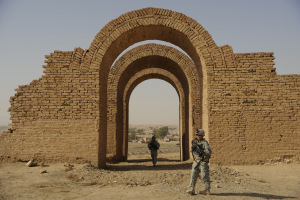
    We are currently witnessing the most dramatic attack on cultural properties since the large-scale destruction and misappropriation of cultural heritage seen in World War II. Since summer 2014, Daesh has deliberately and systematically damaged, destroyed and looted significant portions of the exceptional cultural heritage of Mesopotamia, the ‘cradle of civilization’, from Mosul to Niniveh, from Nimrud to Khorsabad, from Hatra to Palmyra.

    Reacting to Daesh’s iconoclastic fury, the UNESCO 38th General Conference of Paris, 3–18 November 2015, passed a resolution to establish – adopting an effective slogan often used by both media and diplomats – the ‘Blue Helmets for Culture’. Building on the positive experience of the ‘United Nations Multidimensional Integrated Stabilization Mission in Mali’ (MINUSMA), which was mandated to ensure the safeguarding of cultural heritage sites in collaboration with UNESCO, the resolution adopts a new strategy founded on two key elements: the inclusion of a cultural component in the mandates of peacekeeping interventions where cultural heritage is at risk; the creation of a task force of experts in the protection of cultural heritage.

    As a direct contribution to the actualization of the resolution, UNESCO and the Italian Government signed an agreement on 16 February 2016 in Rome for the establishment of the first task force. Named ‘Unite4Heritage’, the task force is largely based on the Italian Carabinieri ‘Command for the Protection of Cultural Heritage’ (Comando Carabinieri Tutela Patrimonio Culturale ), which is internationally renowned as of the most competent and effective military policing force for protecting works of art and archaeological property. The Director-General of UNESCO, Irina Bokova, urged other countries to establish and make available similarly specialized units to strengthen and enforce the existing cultural heritage protection regime, expressing her confidence that ‘this Task Force, and the agreement signed in Rome with the Italian Government, will become a model for other countries’. The urgency of the issue was also recently taken up by the UN Security Council, which approved Resolution 2437 on 24 March 2017, providing for the engagement of a cultural component in UN peace-keeping missions.

    While the process of implementing and defining the operational aspects of the Blue Helmets for Culture’s initiative is underway, this article provides an initial assessment of the politico-military significance of ‘cultural peacekeeping’ (CPK) as a new task for international peace operations, considering both its strengths and weaknesses, opportunities and challenges. Still lacking actual case studies, this exercise is highly theoretical, but it is solidly grounded in the literature on heritage studies, peacekeeping, terrorism and armed violence.

    Opportunities and prospects

    Image credit: US Army.

    CPK can serve multiple and interrelated cultural, political and military objectives.

    First of all, it is hoped that CPK will contribute to protecting cultural heritage from damage and destruction by helping the enforcement of the international protection regime and, in particular, giving teeth to the implementation of the 1954 ‘Convention for the Protection of Cultural Property in the Event of Armed Conflict’, which has shown many inadequacies and proven to be minimally effective and difficult to enforce as political and legal instrument.

    Secondly, the integration of cultural heritage protection in the mandate of a peacekeeping mission can have a significant impact on the mission’s broader immediate and long-term objectives. On the ground, the mission’s efforts to save cultural heritage can help to ‘win the hearts and minds’ of local populations and increase their acceptance and support for the peacekeepers. CPK can also contribute to cutting off the funding generated by looting and selling artefacts, which fuels and prolongs conflicts by providing revenues for armed groups and terrorists. At the end of hostilities, it can help to ensure quicker recovery and stabilization by promoting societal and economic regeneration for a long-lasting peace.

    From a broader political perspective, CPK can gather and sustain international support and mobilization for the mission. Cultural heritage is widely appreciated, respected and prized for its universal value, and its protection and preservation are deemed the collective responsibility of the entire international community. It follows that engagement in CPK has the potential to win support more easily and with less political controversy than other types of international interventions. It can be presented (and ‘marketed’) to an internal and/or external audience as an intervention for a very noble, principled and apolitical goal that unites the international community in a ‘war for civilization’ against extremism.

    Finally, CPK has the merit of simplifying very complex realities and issues, which is again key in building political and public support for an international intervention and for clearly defining its objectives. While sorting out and taking sides in the complex geopolitical, religious, and ethnic Middle Eastern dynamics is a very difficult undertaking, understanding what an ancient cultural item or site is, and siding against those who want to destroy it, is rather straightforward and politically less controversial.

    Challenges and risks

    In theory, the proposed integration of the protection of cultural heritage and cultural diversity in peacekeeping mandates can be considered an important and welcomed novelty with multiple strengths. In practice CPK is, however, bound to incur serious challenges and risks that should not be underestimated.

    At the military and operational level, it should be emphasized that cultural heritage sites often have important military and strategic value, which is one of the reasons they become deliberate targets during armed conflicts. Many cultural heritage sites are not ‘soft targets’ but represent highly valued and militarily sensitive objectives for the warring parties. If CPK is deployed as a preventative mission in precarious pre-conflict situations or in post-conflict situations even before complete stability has been achieved, those sites will require heavily armed and mandated international forces for their protection. When intervening in such a context, an international operation might find it difficult to strike a balance between military necessity and its mandate of cultural protection.

    Moreover, if a mandate for cultural heritage protection can help mobilize support for international intervention, it is equally true that the moment things go wrong and the mission starts suffering casualties, public support could evaporate very rapidly, which could promptly rescind its initial backing with the argument that the protection of cultural heritage is not worth the lives of the intervening country’s ‘ boys’ and that those ‘ boys’ should immediately brought back home.

    Most importantly, CPK can entail the grave risk of transforming from a ‘civilisation war’  to save the world’ s cultural heritage into a ‘clash of civilisations’. If CPK is not well planned or wrong decisions are made, a group such as Daesh could exploit the situation to its own advantage by presenting the well-intentioned protection of cultural heritage in terms of a war against Islam. Through a well-orchestrated propaganda campaign, ‘cultural peacekeepers’ could be depicted as ‘invaders’ if not ‘crusaders’ who occupy and violate the sacred soil of the Prophet. At the very least, CPK can risk the accusation of ‘mission civilisatrice’ or ‘civilizing mission’, especially if it involves Western contingents whose past history of colonial rule, imperial domination, and ‘colonial archaeology’ which will be promptly highlighted by adversaries.

    Again, deployment of ‘boots on the ground’, and especially ‘Western boots’, may serve Daehs’s military strategy. It is not a coincidence that Western countries and especially the United States have to date strongly resisted sending ground troops to Syria, fearing being bogged down in another costly and extended Middle Eastern military fiasco, which is what Daesh hopes to achieve. The dilemma is that ground forces are indispensable to protecting cultural heritage ‘in situ’, be it in Syria, Iraq or Libya.

    Another non-trivial problem is the inherent difficulty of maintaining civil/military relations. CPK will necessarily involve extended cooperation between military and civilian personnel, such as archaeologists, historians, and anthropologists. However, cooperation can be particularly challenging between diverse working communities with very different educational backgrounds, mindsets, training, sensibilities, work habits and customs. On the ground, cooperation between warriors, peacekeepers, archaeologists and humanitarians may turn into a very complex exercise, and their respective primary concerns may become hard to reconcile.

    A risky but necessary business

    In conclusion, CPK should be not be mistaken as a minor, light and inexpensive international intervention (in all senses, in economic terms and in terms of possible human losses). Although badly needed, CPK is an extremely complex and hazardous major politico-military exercise that can face serious challenges and risks of unintended consequences. Before becoming involved in any CPK mission, a sound, realistic and legally accurate assessment is needed along with planning of the mission’s objectives and the capabilities required to meet those objectives. This would avoid gaps between the mandates and the reality on the ground, which could very negatively impact the mission’s execution.

    Paolo Foradori is Associate Professor of Political Science at the School of International Studies, University of Trento, Italy. He previously worked with the United Nations in Russia, Kosovo, and Afghanistan. This paper extensively draws from his recent articles: ‘Protecting cultural heritage during armed conflict: the Italian contribution to ‘cultural peacekeeping’’, Modern Italy (2017) and (with Paolo Rosa) ‘Expanding the peacekeeping agenda. The protection of cultural heritage in war-torn societies’, Global Change, Peace and Security (2017).

  • Sustainable Security

    Women have been leading contributors to ISIS’s strength and capabilities. Female operatives have held influential positions in the group’s proto-state which have been crucial to the advancement of the group’s cause.

    The self-proclaimed caliphate, the Islamic State of Iraq and Syria (ISIS), poses the greatest terrorist threat to the international community today. ISIS’s goal is relatively simple – establish a global caliphate. However, the group’s state-building ambitions have faced recent setbacks due to counter-terrorism successes – the group’s territorial claims in Syria and Iraq and foreign recruitment has declined substantially. Faced with the loss of its caliphate, ISIS has become more reliant on local populations to maintain its stronghold. As a result, many Syrian and Iraqi citizens are left vulnerable to ISIS’s terror tactics, especially women and children.

    ISIS’ treatment of women has placed the organization among the world’s worst perpetrators of gender-based violence. Their brutal tactics include: imprisonment, torture, sexual abuse, and the execution of thousands of Syrian and Iraqi women. Such barbaric treatment is not reserved for non-Muslims; fellow Muslim women are abducted and exposed to horrendous sexual atrocities.   Many women become sex slaves and are sold in markets for a little as $13 USD. Despite their inhumanity towards so many women, ISIS successfully recruits a substantial number of marginalized Syrian and Iraqi females to the caliphate. In fact, ISIS depends on its population of local female to obtain their state-building ambitions.

    Incrementally, Syrian and Iraqi women have attained influential roles in the caliphate despite the inhumane treatment of women in the caliphate. ISIS utilizes the local women residents and their cultural expertise to advance its cause. Their responsibilities include caring for ISIS soldiers as wives, birthing the next generation of jihad fighters, and maintaining order within ISIS’S network of women. Despite their work, international media outlets and counter-terrorism reports have primarily focused on the participation of Western women in ISIS, thereby undermining the role of Syrian and Iraqi women.  To gain better insight on Syrian and Iraqi women’s role in ISIS, delving into the underlying motivations of these women can enable experts to assess and comprehend ISIS’s seduction and lure.

    Motivations of Local Women to Support ISIS

    Image credit: David Dennis Photos

    Women are motivated to support terrorist organizations for multiple reasons. It is important to realize that every woman is motivated for a different, or combination of, reasons. Therefore, it is challenging to determine the exact motivation of any one individual. ISIS’s three year long terror campaign has spread fear and demonstrated its power to control the community. During an ISIS raid on Syrian and Iraqi towns, many households were permanently destroyed – the group harassed, tortured, and murdered individuals that were not compliant. Often, male family members are killed, leaving females to be easily targeted by ISIS. Many women joined the group in order to stay alive.

    The absence of an effective government has allowed ISIS to exploit the local resources and infrastructures. As a result, ISIS is able to operate a quasi-state — developing an Islamic court, a functioning military, and a law enforcement force. Leveraging this advantage, the group controls the local public facilities and services including banks, transportation systems, post offices, grocery markets, etc. ISIS’s ability to rule the land make joining the organization a viable solution for the deprived. Many women turn to support the caliphate for access to basic necessities, such as food, water, and shelter.

    The Roles of Local Women in ISIS

    A) Domestic Roles

    According to ISIS’s Manifesto for Women, a woman’s highest achievement is being a dedicated wife, mother, and nurturer. Her primary functions are to take care of her husband and birth the next generation of jihadists that will continue ISIS’s legacy. Women are expected to remain in the house, hidden and veiled, while they undertake chores such as providing daily meals, cleaning uniforms, and keeping a spotless house. Girls are expected to submit to marriage by sixteen or seventeen years old while they are youthful, pure, and attractive. In the caliphate, younger women are quickly married off to ISIS operatives. However, in true ISIS fashion, the group continues misuse outdated Quranic scriptures to its advantage by legalizing the marriage of nine-year-old girls by glorifying the life of Prophet Mohammed and his young wife. Young girls that are be subjected to this perverted act are locals under ISIS’s rule.

    B) State Building Roles

    While ISIS is notorious for its hardline position on marriage and motherhood, the group’s state-building ambitions permit certain women to undertake jobs outside of the home. Unprecedented in its scopes, ISIS is critical in explaining the importance of recruiting career professionals to help the group attain its objective of creating a jihadi proto-state. In fact, in 2014, an audio recording of ISIS leader Abu Bakr al-Baghdadi surfaced, urging scientists, preachers, judges, doctors, engineers, and scholars to join the caliphate.  Currently, ISIS controls the public and private facilities, which provides them with access to unlimited resources, including existing employees. ISIS’s need for skilled professionals is not limited to men; both genders are responsible for fulfilling their “civil duties”. Nonetheless, regardless of a male’s prior occupation, the majority are placed in ISIS’s military, leaving women to handle the daily activities. Subsequently, there is a larger presence of women undertaking instrumental roles; there are growing numbers of female nurses, educators, and administrators from the area.

    C) Operational roles

    Women of ISIS are also able to participate in offensive combat operations and defensive military activities. In 2014, ISIS created Al Khansaa — an all-female brigade that predominately consisted of Syrian and Iraqi women. The female unit was reportedly formed to enforce ISIS’s strict conception of Islamic morality. ISIS has imposed a dress code requiring all women to wear two gowns to conceal their body shape, black hand gloves, and dark layers of two face veils year-round. No makeup is allowed. To enforce the rules, the brigade patrols towns with AK-47s to ensure that women are compliant. However, the force responsibilities have drastically expanded, which demonstrates how influential women are in the terrorist group. The women perform a variation of activities, including recruiting, intelligence gathering, and overseeing prisoners. ISIS depends on the brigade to lure women; spy on the community and bring in individuals that voice unfavourable sentiment about the organization; and monitor detention camps detention camps where thousands of kidnapped Yazidi Christian and foreign hostages are imprisoned.

    To date, one of the most influential women of ISIS has been a Syrian national, Umm Sayyaf. Before capture by the U.S. military, Sayyaf was a principal advisor to the caliphate leadership on all critical matters relating to women. Her elevated rank highlights how heavily the insurgency has come to rely on certain women to retain soldiers and run day-to-day operations. In her later interrogations by U.S. military personnel, she revealed information regarding the inner-workings of the network including recruitment, intelligence, and sex slavery. Umm Sayyaf also disclosed that the ISIS leader of ISIS, Abu Bakr al-Baghdadi, appointed her to supervise the American hostage Kayla Mueller.

    Conclusion

    Although international news has reported that ISIS has recently faced some setbacks in their territorial claims and foreign recruitment, anticipating the immanent demise of ISIS is a stretch. The group will be maintained for years to come, as a result of its sophisticated network of Syrian and Iraqi women. The participation of local women exponentially raises the threat due to an increasing number of operatives, a unique tactical advantage, and additional technical expertise. Despite their impact, counter-terrorism studies tend to ignore the involvement of Syrian and Iraqi women and in doing so exclusively focus on the participation of foreign recruits. This omission leads to incomplete counterterrorism objectives and possible unbearable consequences.

    ISIS has successfully recognized that empowered women are the foundation of a resilient and stable community. Female operatives will continue to participate at all levels, and the international community must not ignore such contributions. Failure to implement significant changes could lead to the regrowth of ISIS territorial claims and capabilities. By understanding the motivations of, and the roles held by, local women in ISIS this article can help initiatives to counter the group.

    Amanda N. Spencer currently works in the counter-terrorism and anti-financial crime division at Deutsche Bank Securities.  She holds a master’s degree in global affairs from New York University and is passionate about contributing to the world of counter-terrorism. Her research explores the multifaceted roles of women in violent extremism. Her most recent research study on the women of ISIS is available at the Journal of Strategic Security: “The Hidden Face of Terrorism: An Analysis of Women in the Islamic State.”

  • Sustainable Security

    Author’s Note: This contribution is a shorter version of the article “Resilience and environmental security: towards joint application in peacebuilding” by Schilling et al. 2017

    Resilience is a widely used concept among development, environmental, security and peacebuilding organisations. However, it has rarely been applied together with the concept of environmental security, despite the obvious ways in which the concepts complement each other. These concepts can be jointly applied in the peacebuilding sector. Environmental security sharpens the scope of resilience, while resilience allows for taking issues into account that a traditional environmental security perspective might miss.

    ‘Resilient communities’, ‘climate-resilient pathways’, ‘resilient future’, ‘resilient planet’: there are hardly any key terms in the development, climate change, security, and peacebuilding sectors that have not been combined with ‘resilience’. Due to the malleability of and enthusiasm for this concept, it has been depicted as the ‘new superhero in town’ replacing sustainability as the key guiding concept and buzzword in the international development community.

    Less prominent but still widely used, at least implicitly, is the concept of environmental security. The term can relate to the absence of risks posed by environmental changes or events to individuals, groups or nations. But it can also focus on the environment itself and how human behaviour, including conflict, affects the security and integrity of the environment.

    Several international organisations, including International Alert, adelphi, and the United States Agency for International Development (USAID) are working on combined approaches to environment, conflict and security issues. However, resilience has hardly ever been applied in conjunction with the concept of environmental security, despite their potential complementarity. Particularly in the peacebuilding sector, joint application of the concepts is promising because it could help to create an understanding of the extent to which people are at risk due to environmental factors (environmental security), and the extent to which people are able to adapt to environmental risks (resilience).  Further, a joint application could help to understand the impacts of environmental factors on conflict dynamics and vice versa. Against this background, develop a framework which allows non-governmental organisations (NGOs) working to implement peacebuilding projects in developing countries to jointly apply resilience and environmental security.

    Joint framework for environmental security and resilience in peacebuilding

    Natural resources and the environment are the key elements linking environmental security and resilience to peacebuilding (see figure). Based on a six-step process, we combine the key strength of environmental security, its emphasis on the importance of the environment, and the key strength of resilience, namely the appreciation of complexity and local agency. The purpose of the process is to identify the states, changes, risks and disturbances, drivers and mechanisms, impacts, and measures and responses from an environmental security and resilience perspective to gain a better understanding of conflict dynamics and identify entry points for peacebuilding.

    Figure 1 – Framework for Environmental Security and Resilience in Peacebuilding.

    In step one we use the environmental security perspective to determine the key elements of the environment and natural resources that are important to a specific community or group of people, while the resilience perspective identifies how and by whom natural resources and the environment are managed. Together the environmental security and resilience perspectives help to answer the question of whether tensions or conflicts over the identified resources exist.

    In step two, we determine changes in natural resources and the environment before identifying the losers and winners of these changes. The resilience perspective allows us to take the overall complexity of the socio-economic and political context into account.

    The objective of step three is to understand the interaction of different risks. The environmental security perspective pays particular attention to risks to the environment as well as risks caused by the environment. The resilience perspective adds socio-economic and political considerations, such as strong increases in food prices, regime changes and social instability.

    Step four aims to identify the key drivers and mechanisms of the changes and risks, identified under step 2 and 3. For example, if a reduction of rainfall is identified under step 2 and in step 3 an increased drought risk is noted, then step 4 explores whether the reduction of rainfall and drought risk can be attributed to global climate change or local factors such as deforestation.

    Step five focuses on impacts. For example, one can ask whether the droughts and loss of harvest identified on the environmental security side and/or the increases in food prices identified on the resilience side, lead to hunger and how hunger in turn interacts with impacts of existing conflicts identified in the peacebuilding column.

    Step six is particularly important because at that point we consider the actual measures and responses to environmental, socio-economic and political changes at different scales in order to determine the effects on conflict potential as well as to identify entry points for peacebuilding.

    For example, if we identify hunger as a key impact under step five, the government could invest into irrigation schemes or (temporarily) subsidise staple food. This could reduce the conflict potential and strengthen the social contract between the government and the affected communities. However, for each measure taken, consideration must be given to who is affected, either positively or negatively (see dashed arrow connecting step six and two). On the resilience side, the capabilities (including knowledge, technology, networks and financial assets) and responses of the communities strongly depend on the social capital of the group concerned. For example, a loss of harvest might not result in hunger because the affected community might receive remittances from family members living outside the drought affected area. Our framework enables peacebuilding organisations and other stakeholders from development organisations and humanitarian assistance to identify core risks to environmental security without losing sight of the wider political and cultural structures into which these insecurities are embedded.

    In Practice: Palestine’s Good Water Neighbor’s Project

    The Good Water Neighbors (GWN) project in Palestine shows the advantages of combining a resilience and an environmental security perspective in peacebuilding. Palestine suffers from a number of environmental insecurities, most of which are related to water scarcity and pollution. But these insecurities are embedded in and interact with wider political contexts, such as the Israeli occupation of the West Bank, tensions between various Palestinian groups, and dominance of technocratic, liberal peacebuilding approaches. In order to address this complex reality, GWN facilitates cooperation on environmental issues between Israeli and various Palestinian groups, thus increasing resilience to socio-political and environmental shocks simultaneously. Examples of such activities include transnational environmental education, establishing water infrastructure shared between both sides, and common protests against environmentally harmful infrastructure (such as the Israeli separation barrier).

    Conclusion

    Image credit: Traynor Tumwa.

    Overall, the framework offers a possibility for environmental security to sharpen the scope of resilience, while resilience allows for taking issues such as governance into account that a traditional environmental security perspective might miss. The framework helps identifying the states, changes, risks and disturbances, drivers and mechanisms, impacts, and measures and responses from an environmental security and resilience perspective to gain a better understanding of conflict dynamics. However, when applying the framework continuous attention should be also paid to ambivalent effect of depoliticisation which is a risk both concepts entail.

    On the one hand, steering away from contentious political debates, such as those related to the wider Israeli-Palestinian conflict, provides an entry point for peacebuilding projects. Social groups and even official actors can be involved without taking a stance on contentious political questions. On the other hand, avoiding discussions on structural inequalities means that some root causes of environmental insecurities, such as the unequal distribution of water resources between Israel and Palestine, are difficult to address. When applying the framework further attention needs to be paid to other pitfalls of resilience and environmental security, namely the redistribution of responsibility to the local level and potentially justifying external intervention. If these issues are kept in mind, the framework can be a useful tool, especially when analysing conflicts where natural resources and the environment play key roles.

    Rebecca Froese is a PhD candidate in the Department of Earth System Sciences at the University of Hamburg and a member of the research group Climate Change and Security (CLISEC) at the University of Hamburg. Her research focuses on development cooperation and the role of non-party stakeholders in implementing and financing climate action.

    Janpeter Schilling holds a Klaus Töpfer Junior Professorship for Landuse Conflicts at the University of Koblenz-Landau. He is an associated researcher at the research group Climate Change and Security (CLISEC) at the University of Hamburg, the peacebuilding organisation International Alert in London and the Peace Academy Rhineland-Palatinate in Landau. His research focuses on environmental security, conflict and resilience.  

    Tobias Ide is head of the Research Field Peace and Conflict at the Georg Eckert Institute and currently a visiting researcher at the School of Geography, University of Melbourne. He is an associated researcher with the reserach group Climate Change and Security (CLISEC) at the University of Hamburg. He works on environmental conflicts, climate security, environmental peacebuilding, and the representation of peace and conflict, especially in school textbooks.

    Sarah Louise Nash is a 2016/17 Mercator-IPC fellow at Istanbul Policy Center, Sabanci University and an associated researcher with the research group Climate Change and Security (CLISEC) at the University of Hamburg. Her research focuses on the politics of climate change and human mobility.

    Jürgen Scheffran is professor of geography and head of the Research Group Climate Change and Security (CLISEC) at the University of Hamburg, Cluster of Excellence ‘Integrated Climate System Analysis and Prediction (CliSAP) and the Center for Earth System Research and Sustainability (CEN). His research specialities are climate and conflict research, sustainability science, resilience and energy and human security.

  • Sustainable Security

    Author’s Note: This article is expanded from a piece originally published on Defence Report on August 3rd.

    Russia’s recent bombing of a Syrian base used by UK and US Special Forces exposes the flaws in the UK’s blanket “no comment” approach. The differences in the US and UK responses to the incident reveal that this policy is neither desirable nor standard practice amongst the UK’s allies.

    The Wall Street Journal (WSJ) has recently revealed that, in June, a Russian aircraft targeted a garrison in Southeastern Syria which was used by American and British Special Forces in their fight against ISIS. The attack missed 20 British Special Forces by just 24 hours and killed four US-backed rebels.

    US and UK reactions to the strike

    Much of the subsequent discussion has been on the specifics of the attack and its implications for future intelligence sharing with Russia; however, few have considered massive difference in the US and UK response. Given that the two allies shared use of the base, one may expect both countries to have shared a sense of outrage at the attack. However, their responses have been hugely different.

    The US has very publicly criticised the actions of Russia. After a similar attack in July, “US military and intelligence officials” gave a number of details about the two strikes and argued that it was part of a continued attempt by Russia to pressure the Obama administration into agreeing closer cooperation over the skies of Syria. Many officials, albeit anonymously, also shared their concerns over implications of the strike for the pending intelligence sharing agreements between the two countries. After the attack, Secretary of State John Kerry went to Moscow in a “hastily organized and very secretive” meeting to try to avoid similar incidents from happening again.

    In stark contrast, the UK has remained silent. In response, the Ministry of Defence (MOD) simply stated: “We do not comment on Special Forces”. In fact, even as this WSJ article marks the second article in two months documenting the presence of UK Special Forces in Syria the UK Government remains silent and refuses to acknowledge they are operating in the country.

    The UK’s “no comment” policy

    The MOD’s “long-held policy” of not commenting on Special Forces is well established. This most recent revelation adds to a long list of other incidents where, against mounting evidence, the UK has continued to avoid acknowledging their presence. For example, in March this year, when a story emerged that a British Special Forces Operative had fired on and destroyed an ISIS suicide truck, the response was: “The Ministry of Defence does not comment on Special Forces.” Similarly, in June 2016, when it was reported that British Special Forces are on the front line in Syria in the fight against ISIS, the MOD responded that: “It is our longstanding policy that we don’t comment on Special Forces operation”.

    Given the changing nature of these conflicts this approach may no longer be feasible. Special Forces are increasingly sent on long-term deployments to coordinate local forces and take part in combat in conflict zones, rather than the traditional “sharply in, sharply out” approach. For example, reports from Iraq, Libya and Syria indicate that Special Forces are now being used to train, advise and fight alongside local forces. Not only does this mean the presence of Special Forces is more likely to be exposed but it means that the justification of a blanket “no comment” approach – to avoid compromising the mission – are no longer as applicable.

    The approaches of the UK’s allies

    Soukhoï_frappant_une_position_ennemie_en_Syrie

    Image of Russian aircraft via Flickr.

    Moreover, as the US’s public criticisms of Russia reveal, this blanket “no comment” approach is also not standard practice. A recent report by Dr Jon Moran found that a number of the UK’s allies are far more accountable for their use of Special Forces. In the US, for instance, the deployment of Special Forces from the CIA now requires the notice of “the eight leaders of the relevant intelligence committees in Congress” and “JSOC is accountable via the JSOC commander to the Chiefs of Staff and the Secretary of State for Defense or the President”. There is also greater accountability in Australia which, rather than investing the authority to commit forces to military action in one man, shares responsibility among the Cabinet and the National Security committee through a need for “consensus decision-making”. Similarly, in Canada, the decision is taken at the highest political and military levels but Special Forces are accountable to the head of the Canadian Special Operations Forces Command, who in turn is accountable to the Minister of Defence and Prime Minister. Unfortunately, the UK’s no comment policy led Moran to argue that, amongst these allies, “[t]he British government is the most tightlipped of all”.

    Remote Control’s recent work also documents a number of instances that the US, Canada and Australia have discussed the deployment of Special Forces. For example in 2015 a US spokesperson announced the deployment of US Special Forces in Syria. He reported the number (50) and their purpose (to strengthen anti-ISIS forces) and defended the decision against accusations of mission creep. Similarly, in November 2015, the then-Australian Prime Minister Tony Abbott announced the deployment of 200 Australian Special Forces “to advise and assist local security forces” in Iraq. The same month, Canadian Prime Minister Justin Trudeau announced the deployment of 69 Canadian Special Forces to undertake a training mission, again, in Iraq. While none of the countries gave a lot of detail, they acknowledged the presence – and number – of Special Forces, defined their mission and allowed some room for discussion and debate around their deployment.

    The need for change

    The UK’s current policy is not only embarrassing when stories such as this surface but could have negative implications for the quality of UK intervention abroad. First, better accountability and transparency around Special Forces would mean they are used because they are the best solution rather than the easiest solution to a problem. In 2013, a leaked UK Ministry of Defence document argued that one way to continue conducting military operations despite the risk-averse nature of the British public was “investing in greater numbers of [special forces]” – indicating that the danger of the UK prioritising easy above best is real. Second, it is crucial for the success of any security strategy that its effectiveness can be assessed and adjustments made on the basis of that assessment.

    The reaction of US scholars, policy makers and journalists in the wake of the recent Russian strike is a case in point. The US’s decision to announce the deployment and the purpose of Special Forces in Syria from the outset, and decision to announce this most recent strike, give these groups a chance to debate its implications for relations with Russia, the US’s operations in Syria more generally and assess whether the US’s stated goals are being met. In contrast, the UK lacks such a debate because most scholars, journalists and policymakers do not know the extent of UK involvement in the country and have not been informed of the mission’s stated purpose. Without the level of discussion possible in countries such as the US, the UK lacks the same sounding board and its policies may suffer as a result.

    Russia’s recent strike points to the flaws in the UK’s continued “no comment” policy. When Special Forces rarely stay secret in a country, and fewer of the UK’s allies take the same blanket “no comment” approach, we should be asking why the UK continues to.

    Abigail Watson is Research Officer at Remote Control Project. Abigail holds an MA (with Distinction) in Contemporary European Studies, with a trans-Atlantic track, from the University of Bath and a BA in Politics from the University of York. Abigail writes on issues such as the new challenges to international humanitarian law and Britain’s foreign, security and defence policy.

  • Sustainable Security

    Hybrid warfare has become a popular term in academic, military and policy circles. But what does the term actually mean and how is this approach to warfare harnessed by state and non-state actors in practice?

    The term hybrid warfare (HW) came into prominence in 2014, when Russia annexed the Crimea, part of the Ukraine, proceeded to support autonomist Russian-speakers in the Ukraine, and crushed some Ukrainian regular battalions in border clashes. Barely six months later, hundreds of miles to the southeast, a revitalized non-state actor, the Islamic State of Iraq and Syria (ISIS) trounced the Iraqi Army in a ‘blitzkrieg’ that unraveled four Iraqi army divisions in the most humiliating defeat of an army since the Six Day War of June 1967. ISIS forces seized Iraq’s second largest city, Mosul located in the north, and proclaimed their caliphate there on June 29, 2014. These events were seen by many to be hybrid warfare in practice.

    Since 2014 there has been an explosion of op-eds, policy statements, policy papers and academic papers on the concept of hybrid war. Despite this plethora of literature, there is still a serious need to establish a better definition of HW, to describe its characteristics, assess the term’s relevance, and address the distinction between hybrid warfare as it is practiced by states and by non-state actors. This article addresses such issues.

    What is hybrid warfare?

    Image credit: Vitaly V. Kuzmin/Wikimedia.

    Despite gaining prominence since 2014, HW has been used to describe changes in the character of warfare since around 2005. The term was used to describe Hezbollah’s strategy in the 2006 Lebanon War. But some observers and strategic analysts have even argued that its contemporary origins lie in the Balkan War and the unraveling of Yugoslavia. Others have argued that elements of hybridity have occurred in many wars since the rise of ‘civilized’ warfare. In other words, there is nothing ‘new under the sun,’ except yet another term to describe the familiar.

    Defining HW has also been a matter of debate. While there are not as many definitions of HW as there are gainfully employed strategic thinkers (although at times it feels like it), it would be safe to say that there are as many definitions of the term and concept as there are countries worried by it or seeking to practice it. But even this is contestable too because a number of countries deny that what they actually practice hybrid warfare. Indeed, for Moscow ‘gibridnaya voina’ is what others (Western powers) have done to Russia. The definition I offer here derives largely from the various iterations of it by Frank Hoffman and others and from a variety of doctrinal manuals from the United States of America and those of other countries.  The term hybrid means something heterogeneous, multi-shaped or multi-varied. With respect to warfare, what does this mean? HW occurs when an actor practicing it against an opponent brings into play a ‘cocktail’ of conventional military capabilities, political warfare, terrorism, subversion, guerrilla warfare, organized crime, and, in contemporary times, cyber warfare. It may also include violations of international laws of war by the practitioner of hybrid warfare.

    However, haven’t nations in the past used a ‘cocktail’ of measures against their opponents? Is it not true that Russia, which stands accused of using HW, is successor to a nation, the Union of Soviet Socialist Republics, which used all kinds of measures and ‘skullduggery’ to advance its interests even times of peace? Hoffman argued that even though wars in the past, even the recent past, could also include both regular and irregular elements, these occurred in different places, were not coordinated, and often occurred in sequence or one after the other. In contemporary HW, all the above-listed elements are orchestrated to act in coordinated, coherent and often simultaneous ways. Hence, for the person or persons watching from outside as well as for the enemy, this ‘cocktail’ of measures – some designed to kill and others not to do so but just as deadly to morale and cohesion of the target — may become blurred into a unified force acting in a single and comprehensive battle-space. Thus, the practitioner of hybrid warfare achieves a synergistic effect against which the target is rendered hors de combat in lieu of a shooting war, before a shooting war starts, and during an actual war.

    When the term first appeared to describe what a certain number analysts like Hoffman saw as emerging trends some of their colleagues literally sighed because they wondered – politely and often not so politely — whether the term added anything new to describe wars other than the purely conventional or symmetric force on force clashes between like armies. Others wondered whether the term added much to the existing plethora of terms that describe wars other than purely conventional: irregular, guerrilla, low-intensity, fourth generation, asymmetric, new wars, forever war, etc. I argue that each term has a purpose and most should have a specified life-span before gracefully disappearing into the shadows instead of lingering on like an unwanted guest. Each term brings out certain aspects of indirect war associated with particular technologies, operational art, tactics, environment and cultural context. The same holds true for HW; if it still in existence a decade from now, then strategists are a dull lot indeed. Indeed, HW is not a prediction of what future warfare is going to be like. In this context, we need to avoid the ‘reification’ of HW.

    HW is also ‘transcultural.’ There are ways of warfare to be sure, but HW is not just Eurasian – Russian – or Oriental. This would be strategic ethnocentrism to borrow a recognized term from international relations scholar, Ken Booth. Russia is, indeed, right in arguing that the West, which sees itself as the target of HW, as being as much perpetrators of the genre as they are the victims. Russia perceives the West, rightly or wrongly, as making a ‘big issue’ of it in the last half decade because of the events in Ukraine where Moscow believes it has successfully blocked Western-inspired or even led HW against Russia’s resurgence. Ultimately, HW is a useful term because it draws out/highlights certain characteristics of contemporary warfare by states and non-state actors.

    HW is not replacing inter-state conventional warfare. The dominance of inter-state conventional warfare between roughly 1645 and 1945 has always been buffeted by forms of warfare that have been given various names throughout this three hundred year history. Many of these forms have actually been nothing more than appendages to conventional warfare; and HW is but one of the latest terms to describe certain characteristics of the contemporary conflict environment.

    Ultimately, though, HW is a useful term because it draws out/highlights certain characteristics of contemporary warfare by states and non-state actors.

    State and non-state hybrid war

    There are clear-cut differences between state and non-state hybrid warfare characteristics. Indeed, even the definition for state hybrid warfare might not fit what non-state actors do in terms of hybrid warfare. Russia is not the only state that has developed hybrid warfare capabilities; Iran, North Korea and China come to mind. Even here, we can see wide disparities in military power between these states that are alleged to be at the forefront of hybrid warfare developments. Similarly, IS was not the first to develop non-state hybrid warfare capabilities (nor will it be the last). In fact, when several American theorists, of whom the indefatigable former United States Marine Corps officer, Frank Hoffman, was in the lead in developing the concept, the focus was on groups like Hamas and Hezbollah.

    The output on hybrid warfare in 2014 and thereafter was almost overwhelmingly focused on the alleged hybrid warfare capabilities of these two distinctly different entities. This was, in fact, a huge problem: Russia on the one hand, and Islamic State are certainly not similar entities. Without meaning to state the obvious, one is a large and powerful legitimate state with a military establishment that has come out of the doldrums of the 1990s. Historically, the Russian military has engaged in some very innovative thinking, about which only a few Western experts are cognizant. For example, in the 18th century the great soldier, Frederick the Great of Prussia, was derisive of Russian military prowess. The Russians quickly disabused him of this derision when the Russian army trounced him in a major battle. In the 1920s and 1930s, Soviet officers formulated some very innovative military ideas, which those interested in current Russian military theorizing are revisiting. A considerable amount of literature has appeared in the West to address the matter of Russian hybrid warfare over the course of the past three years. This has elicited some humor and denials on the part of the Russians. Russian commentators argue that Russia, does not wage hybrid warfare, and that it is actually the West that is waging war against Russia. Russia is responding and developing its own approach to contemporary warfare, which Russians refer to as ‘New Generation.’

    For a state like Russia, hybrid warfare entails the composition of different elements of ways to wage war used simultaneously and in a coordinated manner to achieve one’s goals. If the measures work without leading to an extended or large-scale war or indeed lead to the achievement of the goals at stake below the threshold of the legal definition of war with the victim or the victim’s allies all the better as far as the state practitioner of hybrid war is concerned. Though the debate about evidence for Russia seeing contemporary warfare as being hybrid is still ongoing, for the sake of argument Russia’s hybrid capabilities as exhibited in the Ukraine and Crimea can be described as a ‘cocktail’ of measures that were used to achieve one’s goals in lieu of going to full-scale war, in shaping the theater of operations to one’s advantage, and as a force multiplier if need be in an actual exchange of violence with an enemy.

    HW is different for IS and entities like it. The literature on IS is now huge and almost unmanageable. Most of it, however, concentrates on its personalities, ideology and organizational structure. Very little deals with the military ideas or strategy of this entity, which is surprising because there remains the puzzle of explaining its military rise during the first Iraqi insurgency (2003-2011), its demise, which proved to be temporary, and then its rapid re-emergence from 2012 to 2015. Between 2016 and early 2017, it suffered enormous losses and has lost Mosul. However, the consensus is that the collapse of the caliphate in Iraq (and soon in Syria) will not be the end of that entity. How do we explain its military trajectory? Some analysts have argued that this is hybrid threat or hybrid entity. Unfortunately, the analysis of IS as a hybrid warfare has mainly been descriptive rather than analytical in that most of the literature narrates the trajectory of IS’ war fighting over the years without conceptualization or context. The underdevelopment of the literature on the hybrid threat posed by most dangerous current non-state actor then raises the question of how can we distinguish between the hybrid warfare capabilities of a state actor and that of a non-state actor.

    HW for a non-state actor also involves building a ‘cocktail’ of hybrid capabilities. Among these capabilities are political warfare techniques for propaganda against enemies, recruitment of supporters and shaping the ‘human terrain’ on the ground in the conflict zone in their favor. However, while states have the resources to develop robust hybrid capabilities only a few non-state actors in the contemporary conflict environment have been able to develop and maintain effective revolutionary political warfare infrastructures. These include the FARC in Colombia, the LTTE in Sri Lanka, Hezbollah in Lebanon, and of, course, Islamic State in Iraq and Syria. These groups have also incorporated terrorism to target civilians and to intimidate and terrify opponents or even force them to overreact. The practice of terrorism has, of course, been a subject of controversy even among its practitioners, some of whom have even distinguished between discriminate, which targets specific individuals or categories of people, and indiscriminate terrorism, which targets people collectively or whole communities. Indeed, indiscriminate terrorism became a source of contention even within the global constellation of violent jihadist groups such as al-Qaeda and Islamic State during the course of the war in Iraq between 2003 and 2011. These entities also develop robust guerrilla hit and run tactics for attacking small-scale enemy units. Finally, this limited set of non-state actors have moved up the spectrum of warfare to develop impressive semi-conventional forces, which have been able to conduct both offensive and defensive operations against seemingly more formidable conventional forces.

    Conclusion

    For an advanced and well-developed non-state actor hybrid warfare is part and parcel of their arsenal of war whereas for states it can be used in lieu of outright war. For a super-empowered non-state actor, hybrid warfare is scalar manner, defined as having ways of war – terrorism, guerrilla tactics, and semi-conventional war coupled with the requisite capabilities for each – necessary to go up and down the spectrum of conflict in accordance with environmental factors, enemy faced, operational art and tactics needed at a particular time.  When a non-state actor like IS first emerges, it is invariably weak, lacking in resources, personnel, and territory to control. This leads them down the path of using the most primitive and illegitimate form of political violence, namely terrorism. As such an entity develops it moves ‘up the chain’ of violence, as it were, to guerrilla warfare, which is more ‘advanced.’ As it acquires territory, which is both a sanctuary and a base, this enables it to develop semi-conventional ways of war. This has almost Hegelian march up the ladder of progress was, indeed, the trajectory of people’s revolutionary war as espoused by Mao Zedong and Vo Nguyen Giap in China and Vietnam respectively. So what is the difference?

    The key difference with hybrid warfare by contemporary non-state actors, like IS or the Liberation Tigers of Tamil Eelam, and state actors is that the progression towards a higher form of warfare is not one way; the lesser forms are not discarded. Indeed, they remain integral to the entity so that they can slide up and down the spectrum of violence when needed or when necessary. IS has its territory and Mosul, it will now revert to guerrilla warfare and terrorism. The ‘happy days’ of having a quasi-conventional military and a ‘state,’ are over, at least for now.

    The future is likely to witness the further evolution of HW; it will be developed both by states, including powerful and weak ones, as well as non-state actors. If HW is really nothing more than the effective, efficient, and often simultaneous use of a set of measures, military and non-military to achieve one’s goals before or during a war and if the use of these measures ultimately ensures that the lines between peace and war are blurred to the point of irrelevance, then we will see states scrambling to deal with this situation by devised offensive and defensive measures.

    Ahmed S. Hashim is Associate Professor in the Military Studies Programme at the Institute of Defence and Strategic Studies, RSIS, and specialises in Strategic Studies. He received his B.A. in Politics and International Studies from the University of Warwick, Great Britain and his M.Sc and Ph.D from the Massachusetts Institute of Technology (MIT). He has worked extensively in the fields of Strategy and Policy dealing in particular with irregular war and counter-terrorism for the past 20 years prior to taking up his current position at RSIS in 2011 where he teaches courses on insurgency and counterinsurgency, terrorism, and defense policies at RSIS and SAFTI Military Institute (SAFTI MI).

  • Sustainable Security

    Authors note: This short contribution is an updated assessment built on a previous article with free access until end of June 2017, among those chosen by Taylor & Francis to commemorate 25 years since the fall of the Soviet Union: http://explore.tandfonline.com/page/pgas/soviet-union-collapse-25-years-on-post-soviet. Tom Røseth, ‘Russia’s China Policy in the Arctic’, Strategic Analysis, 38.6 (2014), 841–59.

    Russia’s policy towards China in the Arctic is pragmatic and opportunistic, and increased collaboration between the two states is expected.

    Russia is destined to be the most significant player in the Arctic. It has the longest Arctic coastline, vast resources and the prospects of a new trade route. China has recently become a key actor in the Arctic. It has displayed an interest in the resources of several Arctic states, an ambition to utilise the Northern Sea Route (NSR), a strong research agenda on climate change in the region and has a permanent observer status in the Arctic Council. How does Russia welcome Chinese interest, and what kind of Russo-Chinese Arctic relationship should other states prepare for?

    Russia has a dual policy towards China in the Arctic. On one hand, Russia’ Arctic focus contains strong security concerns and a sensitivity to issues of sovereignty, which hamper opportunities with China. On the other hand, Moscow seeks to attract Chinese investments integrated in a strategy to promote the region commercially. In short, international euphoria seen 2007-2012 connected to the Arctic as an energy resource base and effective transit route between Asia and Europe has toned down, seeing little Chinese investments and activity. From a long term perspective, Chinese involvement in Russia’s Arctic is expected to raise, depending on continued retracting ice conditions, oil prices, increase infrastructure development and improve Beijing’s developing relationship with Moscow.

    Russia views its own position in the Arctic as privileged. In the Arctic, it has both a “treasure chamber” in the region’s vast resources, and its strong national security interests are protected by the Northern Fleet. Moscow demonstrated, through its Arctic strategies of 2008 and 2013, that developing its Arctic policy is a national priority, with a focus being placed on resource development, ensuring security and stability, developing the NSR and sustainable development. Through Russia’s geopolitical positioning and active Arctic policies, Asian countries such as China depend on the benevolence of Russia if they seek a role in Arctic affairs. China’s growing interest and Russia’s main role in the Arctic makes it paramount to study their relationship in the region, which, by and large, reflects improved general bilateral relations. Scholars tend to inflate Chinese activities and interests in the Arctic by aggregating positive cases over time. However, Chinese interests and expectations in the Arctic actually peaked under the accession process to the Arctic Council around 2010-2013, and then fell as Chinese actors obtained in depth knowledge of climate challenges, sovereignty issues and the lack of infrastructure, combined with hard-hitting external factors in place since 2014, such as low oil prices and Western sanctions over Ukraine. There are three cases which can be raised to illuminate why Russia’s policies towards China show greater potential for cooperation than conflict between the two powers in the Arctic.

    The grounds for Sino-Russian cooperation

    Image credit: Christopher Michel/Flickr.

    First, Chinese scholars and governmental actors had high expectations on shipping along the NSR, which became more realistic around 2013. Chinese commercial actors on shipping have never really embraced the NSR, and performed only test cases of utilizing the route. Currently, the route is important for Russian national shipments, and has the potential to bring resources out of the area both to the East and West. But as a proper transit route its prospects are still limited. Russian Arctic scholars have voiced disappointment on the low level of Chinese infrastructure investments along the route. China might wish for more unrestricted usage without Russian tariffs and special conditions with strict legislation including the exclusive economic zone, but both Beijing and Moscow have common aims in developing and commercialising the route. Russia sees China as a potential partner for making the route more feasible, as long as Beijing does not challenge Russia’s national interests in controlling and regulating the NSR. At the same time, Russia’s renewed focus on military presence in ensuring its sovereignty and security along the NSR indicates a defensive approach moving beyond commercial preparations, and conveys a strong message that it will balance other states’ security interests in the region.

    Second, in its quest to join the Arctic Council as a permanent observer, Beijing overstated the council’s role. While the council is the main forum for arctic affairs – it is not a decision-making body. After being accepted, Beijing seemed bewildered over what to do next and how to make use of this new-won position, treading carefully to see where it could play a constructive role that coincided with its interests. Under the US-chairmanship, China is well integrated into the council’s workgroups. Russia was reluctant to accept China and other applicants that do not border the Arctic as it may challenge Moscow’s position and make the council ineffective. Moscow changed its stance at the Kiruna meeting in 2013, as Canada suddenly changed to a positive position and Russia could not take the cost of standing alone in opposition to Beijing’s accession. Beijing had reassured Moscow over time that its intentions were not to go against Russia’s interest in the Arctic, made formal as the applicants were bound to adhere to the Arctic regime. Russia and China have since cooperated well in the council, and Russia seeks a constructive relationship in the forum, as long as China confines itself to its limited role as an observer and does not challenge Russian interests. The Russia-West conflict over Ukraine brings implications for intergovernmental cooperation although most states have tried to keep business as usual. China joined in a period where some participating states engaged in strong rhetoric over Ukraine, followed by limited cooperation avoiding sensitive issues in the council.

    Third, on Arctic energy, Chinese participation in the Russian Arctic was initially promising, but is now basically limited to the LNG-project at Yamal. The Chinese National Petroleum Company bought 20 percent from Novatek in 2013, with China’s Silk Road Fund acquiring another 9.9 percent in 2015. Other agreed projects between Russian and Chinese energy companies, especially offshore, have been put on hold awaiting a third western partner or higher oil prices. China has capital, but Western companies are main contenders for participating in offshore projects in the Russian Arctic due to their competencies. With the West’s sanctions, deep-water technology is unattainable. Also, Chinese financing is more complicated, as these often were channelled through western institutions. Arctic energy contrasts at the state-to-state level, where Russo-Chinese energy cooperation has turned strategic with large agreements on the delivery of oil and gas to China. Russia’s limited energy cooperation with China in the Arctic is due to more external factors than reluctance towards working with Chinese companies, as Moscow ideally would seek increased Asian investments, to balance Western influence and secure wider marked access and diversity.

    Conclusion

    By allowing China into the Arctic, Moscow signals a willingness to re-evaluate previous positions as it wants to benefit from greater bilateral issues. This change opens up the potential for increased Chinese activity, investments and co-operation in the Arctic. In moving towards a strategic Sino-Russian relationship, more co-operation and Chinese activity is to be expected in the Russian Arctic, as long as China is a proponent of commercial opportunities and does not challenge perceived Russian national interests in the Arctic. Sino-Russian co-operation in the Arctic through shipping, energy projects and investments in infrastructure will incrementally lead Beijing to seek more influence in Arctic matters as it is more affected by it. China’s economic rise might eventually give Beijing leverage over Russia on Arctic matters, as Moscow would become more dependent on Chinese capital and activity to make the region develop. Generally, Russia is initiating a constructive stance on Chinese economic interests in the Arctic, but takes great care in promoting its security interests. Russia’s approach towards China is first and foremost pragmatic, as no special treatment is given to Chinese actors in the Russian Arctic. Russia needs assistance to develop its Arctic and an eastward diversification is opportune both for political support on international issues and economic opportunities. There is therefore a duality in Russia’s China policy in the Arctic, between restrictions connected to security concerns and openness due to commercial interests, which Moscow needs to sort out before embarking a proper strategic relationship with China in the Arctic.

    Tom Røseth is an Assistant Professor at the Defence Command and Staff College, Norwegian Defence University College. His main research areas are Russo-Chinese relations, Arctic security policies, intelligence studies and Russian foreign policy.

  • Sustainable Security

    Plan Colombia was an initiative aimed at combating drug cartels and left-wing insurgent groups and fostering economic development in Colombia. How effective was Plan Colombia in terms of decreasing drug production, generating economic development and reducing violence?

    In November 2016, the Colombian government signed and ratified a peace agreement with the Fuerzas Armadas Revolucionarias de Colombia (Revolutionary Armed Forces of Colombia, FARC), which officially brought an end to Colombia’s 53-year-long civil war. With this historic step towards peace, it is advisable to analyse and learn from some of the security policies Colombia implemented in the past. In a context where truth, justice and reconciliation are central aspects to achieving a sustainable and durable peace, it is particularly pertinent to look at the country’s largest, most extensive and controversial security, military and development policy programme: Plan Colombia.

    The plan

    The US $7.5 billion policy programme of Plan Colombia, which was implemented between 2000 and 2006, was an initiative to eliminate the production of illegal drugs, end violence, foster economic development and achieve social justice. Backed and financed by the United States and implemented largely during the presidency of the far-right populist Álvaro Uribe, Plan Colombia went well beyond being just a mere national security strategy. It was also an extensive programme borne out of the strong political conviction held by certain policymakers and leaders that Colombia’s security problems could only be solved through increased militarisation and attacks against FARC leaders and commandos (even if it meant risking the violation of international law).

    But what were the exact impacts of this militarised security and development imitative? What effects did the Plan have on reducing violence and illicit drug production in order to achieve development? And what lessons can be learned from the programme for building a society in which peace can be durably sustained?

    Plan Colombia had three main objectives: a) to diminish the cultivation, production and trafficking of illicit drugs by 50%; b) to bring an end to the violent conflict; and c) to spur economic growth and development in rural parts of Colombia that have been historically marginalised.

    The effects

    Image credit: Public domain.

    The policy programme largely failed in all of its three objectives. Despite the allocated US $3.8 billion to eradication efforts, Plan Colombia was only effective in reducing the cultivation coca crops from 160,000 hectares in 2000 to 74,000 in 2006. The intensified aerial spraying, however, did not have any significant effects on cocaine production, which only decreased by 5.3% in the period of implementation. Innovative production processes increased the productivity of coca per hectare and the increased coca supply from Bolivia and Peru provided input-substitutes for Colombian producers of illicit drugs.

    Plan Colombia’s effects on violence reduction were also rather ambiguous: the increased militarisation meant that violence from illegal armed groups decreased substantially over the time of implementation. FARC violence decreased from 489 cases of human rights violations in 2000 to 168 in 2006, similar to paramilitary violence, which went down from 1,191 cases to 510 in the same time span. These decreases in human rights violations by the illegal armed groups, as well as dramatic decreases in some of the main violence indicators, such as the homicide rate (43% decrease), the number of kidnappings (95% decrease) and the number of massacres (71.4% decrease) are arguments for the Colombian and the US governments to call Plan Colombia a success in reducing violence. However, human rights violations of the public forces (military and police) increased substantially from 270 cases in 2000 to 758 cases in 2006. For example, between 2004 and 2008, army troops extrajudicially executed more than 3,000 peasants, farmers, activists and community leaders to dress them in FARC uniforms and claimed they were killed in battle.

    Furthermore and linked to the aerial spraying and the increased human rights violations of the public forces, Plan Colombia caused various unintended costs as it directly led to an intensification of social and economic problems. While the GINI index stagnated at a high 0.59 between 2000 and 2006, the concentration of land ownership increased. In 2000 3.7% of the Colombian population possessed 40.7% of land, whereas in 2009 3.8% owned 41.1%. This is inter alia a result of as well as a factor for continued forced displacement in Colombia, which has increased by an estimated 300,000 internally displaced people per year since the beginning of the implementation of Plan Colombia in 2000. Rural poverty remains a major barrier for development and security with 65% of rural households living in poverty and 33% in extreme poverty without access to viable public services. These continued high levels of inequality, displacement, and poverty in agricultural regions are a major barrier for Colombia’s rural population to break out of the vicious cycle of poverty, dependence on drug income, and violence

    Despite these facts, during his tenure as Minister of National Defence (or “señor de la guerra”) Juan Manuel Santos was one of the main architects of this militarised initiative for peace, security and development, and his policy approach changed dramatically once he was elected president in 2010. His decision to embark on peace negotiations with the FARC also reflects a political realisation that effective security in Colombia cannot be achieved and sustained with a militarised approach à la Plan Colombia. However, while the strategy of the Santos government reflects a major shift in the country’s security strategy, there are many lessons yet to be learnt from the failures of Plan Colombia for the building of a peaceful future Colombia.

    Lessons learned

    Through its aerial spraying and the militarisation strategy, Plan Colombia had its most disastrous effects in geopolitically strategic areas of the country, many of which have been at the epicentre of the decades-long conflict such as the structurally marginalized regions of Cauca, Chocó and Urabá in the west and Putumayo and Nariño in the south. FARC commandos who controlled some of these areas for many years are now demobilising.

    Rather than witnessing a decrease in violence, these areas have experienced a recent spike in assassinations and forced disappearances, as paramilitary groups move in to fill the vacuum left behind by the demobilised FARC. This recent increase in violence is also linked to the historically weak state presence in rural Colombia. And the killings of community leaders, peasants and civil rights activists (35 since the beginning of the implementation process) are significantly diminishing chances of a secure and durable peace for Colombia.

    However, a call for a stronger presence of the state is oversimplified and misleading, as it disregards the lessons that need to be learnt from the failures of Plan Colombia – which after all was a state-driven strengthening of the military and its presence in these areas. Human rights violations of the military and the continued close ties between sections of the public armed forces and paramilitary groups make those who have been at the receiving end of violence suspicious of the state-backed security measures.

    Instead, security policy efforts should focus on supporting community organisations that for years have been building demilitarised spaces, such as Peace Communities or Comunidades de Paz, in which peasants, social leaders, indigenous communities, female and LGBT+ activists protect themselves from state, guerrilla, and paramilitary violence. As such, the current government faces the great challenge to go from fighting an enemy to protecting its most marginalised citizens who have turned away from the state in the search for security and peace.

    However, the challenge to achieve a sustained peace goes beyond the state’s capacity to provide protection. Much of the past failures to achieve increased security and peace (including Plan Colombia) are linked with structural failures to achieve wider socio-economic changes in Colombia. For too long, illegal armed groups, marginalised communities and peasants have relied and continue to rely on incomes of the illicit drug industry. Particularly in rural parts of the country where Plan Colombia’s aerial spraying of coca and poppy plants also heavily affected farmland for licit crops, the illicit economy remains the only viable option. This is particularly true given that the monthly minimum wage in Colombia is only 737,717 pesos (US $250), which is less than half of the average income of farmers working for the drug cartels and paramilitary groups (which is estimated at 1.8 million pesos/US $620 per month).

    And while the current peace treaty to some extent focuses on creating new markets and supporting farmers in marginalised areas, these plans for investments in many cases have been nothing but empty promises. The failure to commit to investment in farmland, fisheries, and infrastructure and to provide basic services of water, healthcare and education has recently resulted in new tensions between state forces and striking citizens.

    Conclusion

    Amid various struggles for a swift and thorough implementation, the current peace treaty truly represents a positive shift away from past militarised strategies for peace and security. However, the current situation following the ratification of the peace deal shows that the disastrous militarisation strategy Plan Colombia has left the country a painful aftermath. In order to break out of the vicious cycle of underdevelopment, dependence on drug income, and violence, Colombia needs a structural economic and social development plan that commits to long-term investments in infrastructure and basic services, that creates decent and well-paid jobs in the licit economy, and that provides security for communities and farmers who are being persecuted and killed by paramilitary groups.

    Tobias Franz is a postdoctoral researcher at the Centro Interdisciplinario de Estudios sobre Desarrollo (Interdisciplinary Centre for Development Studies, Cider), Universidad de los Andes, in Bogotá, Colombia. He holds a PhD in Economics from SOAS, University of London. His research focuses on the political economy of growth and development in Latin America, with a particular emphasis on institutions and organisations underpinning national and sub-nation economies in Colombia. His recent publications include Plan Colombia: illegal drugs, economic development and counterinsurgency – a political economy analysis of Colombia’s failed war (Development Policy Review) and Urban Governance and Economic Development in Medellín: An “Urban Miracle”? (Latin American Perspectives).

  • Sustainable Security

    The Responsibility to Protect (R2P) is a significant, if controversial, development in international affairs. China has proposed its own semi-official version of R2P called “Responsible Protection”.

    Author’s Note: This article highlights issues discussed in more depth in various publications, including Andrew Garwood-Gowers, ‘China’s “Responsible Protection” Concept: Reinterpreting the Responsibility to Protect (R2P) and Military Intervention for Humanitarian Purposes’ (2016) 6 Asian Journal of International Law 89 and Andrew Garwood-Gowers, ‘R2P Ten Years after the World Summit: Explaining Ongoing Contestation over Pillar III’ (2015) 7 Global Responsibility to Protect 300.

    Introduction

    Over the last decade and a half the Responsibility to Protect (R2P) principle has emerged as a significant normative development in international efforts to prevent and respond to genocide and other mass atrocity crimes. Yet it has also been controversial, both in theory and in practice. R2P’s legal status and normative impact continue to be debated in academic and policy circles, while its implementation in Libya in 2011 reignited longstanding concerns among many non-Western states over its potential to be misused as a smokescreen for regime change. These misgivings prompted Brazil to launch its “Responsibility while Protecting” (RwP) concept as a means of complementing and tightening the existing R2P principle. China, too, has proposed its own semi-official version of R2P called “Responsible Protection” (RP). This contribution explores the key features and implications of the lesser known Chinese initiative.

    The R2P Principle

    Peacekeeping - UNAMID

    Image by UN Photo via Flickr.

    R2P first appeared in a 2001 report by the International Commission on Intervention and State Sovereignty (ICISS), a body set up by the Canadian government to consider how the international community should address intra-state humanitarian crises. However, after the initial concept proved contentious a modified version of R2P – labelled “R2P-lite” by one commentator – was unanimously endorsed by states at the 2005 World Summit. In its current form R2P consists of three mutually reinforcing pillars. The first is that each state has a responsibility to protect its populations from the four mass atrocity crimes (genocide, war crimes, crimes against humanity and ethnic cleansing). Pillar two stipulates that the international community should encourage and assist states in fulfilling their pillar one duties. Finally, pillar three provides that if a state is manifestly failing to protect its populations the international community is prepared to take collective action in a timely and decisive manner on a case-by-case basis, in accordance with Chapter VII of the UN Charter.

    Action under pillar three can encompass non-coercive tools such as diplomacy and humanitarian assistance, as well as coercive means including sanctions and the use of force. The international community’s pillar three responsibility is framed in conservative terms, creating only a duty to consider taking appropriate action, rather than a positive obligation to actually respond to a state’s manifest failure to protect. Crucially, the UN Security Council remains the only body that can authorise coercive, non-consensual measures under pillar three. R2P does not grant states a right to undertake unilateral humanitarian intervention outside the Charter’s collective security framework. Overall, R2P is best characterised as a multi-faceted political principle based on existing international law principles and mechanisms.

    The most well-known instance of pillar III action to date is the international community’s rapid and decisive response to the Libyan crisis in early 2011. The Security Council initially imposed sanctions and travel bans on members of the Gaddafi regime before passing resolution 1973 authorising the use of force to “protect civilians and civilian populated areas under threat of attack’’. China, Russia, Brazil and India each abstained on the vote to mandate military force against Libya. As the extent of NATO’s military targets and support for the Libyan rebels became apparent, many non-Western powers criticised the campaign for exceeding the terms of the Security Council resolution. For these states, the eventual removal of the Gaddafi regime confirmed their perception that R2P’s third pillar could be manipulated for the pursuit of ulterior motives such as the replacement of unfriendly governments.

    The post-Libya backlash against R2P was at least partly responsible for Security Council deadlock over Syria. Russia and China have exercised their vetoes on four separate occasions to block resolutions that sought to impose a range of non-forcible measures on the Syrian regime. At the same time, there has been renewed debate about the strengths and weaknesses of R2P’s third pillar. In late 2011 Brazil’s RwP initiative proposed a series of decision-making criteria and monitoring mechanisms to guide the implementation of coercive pillar three measures. While RwP initially attracted significant attention and discussion, Brazil’s foray into norm entrepreneurship was short-lived and R2P has remained unaltered.

    Reframing R2P as “Responsible Protection”

    China’s traditional insistence on a strict interpretation of sovereignty and non-intervention has made it uncomfortable with the coercive, non-consensual aspects of R2P’s third pillar. As a result, Beijing has consistently emphasised the primacy of pillars one and two, while downplaying the scope for pillar three action. In this respect, its decision not to veto resolution 1973 on Libya came as something of a surprise.

    China’s contribution to the post-Libya debate over R2P’s third pillar is less widely documented than Brazil’s efforts. In mid-2012 the notion of “Responsible Protection” was floated by Ruan Zongze, the Vice President of the China Institute for International Studies (CIIS),  which is the official think tank of China’s Ministry of Foreign Affairs. Although China has not explicitly adopted the concept as a formal policy statement on R2P, its implicit endorsement means it can be described as a “semi-official” initiative.

    RP is primarily concerned with R2P’s third pillar and, in particular, providing a set of guidelines to constrain the implementation of non-consensual, coercive measures. It consists of six elements or principles, which are drawn from just war theory and earlier R2P proposals such as the 2001 ICISS report and Brazil’s RwP. In this respect, RP represents a repackaging of previous ideas, rather than an entirely original initiative. However, by reframing these concepts in stricter terms it reflects a distinctive Chinese interpretation of R2P that seeks to narrow the circumstances in which non-consensual use of force can be applied for humanitarian purposes.

    The first element draws on the just war notion of “right intention”. It provides that the purpose of any intervention must be to protect civilian populations, rather than to support “specific political parties or armed forces”. This conveys Beijing’s concerns over the motives and objectives of those intervening under the banner of R2P, as expressed during the Libyan experience. Element two relates to the “right authority” criterion. It reiterates the longstanding Chinese position that only the Security Council can authorise the use of coercive measures, and that there is no right of unilateral humanitarian intervention granted to states.

    RP’s third element is based on the traditional principle that military intervention should be a “last resort”. Its call for “exhaustion of diplomatic and political means of solution” is consistent with Beijing’s broader policy preference for diplomacy and dialogue over forcible measures. However, insisting on a strict, chronological sequencing of responses may deprive the international community of the flexibility needed to ensure timely and decisive action on humanitarian crisis. For this reason, some clarification or refinement of element three may be needed. The fourth element of RP draws on aspects of the just war principles of “right intention” (like element one) and “reasonable prospects”. In relation to the latter, it provides that “it is absolutely forbidden to create greater humanitarian disasters” when carrying out international action. This stipulation reflects Beijing’s position that external intervention often exacerbates humanitarian crises and can ultimately cause more harm than good.

    Element five of RP provides that those who intervene “should be responsible for the post-intervention and post-protection reconstruction of the state concerned”. Although the notion of a responsibility to rebuild appeared in the original 2001 ICISS report it was not included in the text of the World Summit Outcome document in 2005 and therefore does not form a component of the current concept of R2P. It is unclear whether China’s RP concept is explicitly seeking to resurrect this dimension or whether this element is simply intended to emphasise Beijing’s broader perspective on peacebuilding and development in post-conflict societies. Finally, element six calls for greater supervision and accountability of those carrying out UN authorised civilian protection action. This is a similar demand to that made in Brazil’s RwP proposal, though little detail is given as to what form any such monitoring mechanism would take.

    Conclusion

    Overall, the Chinese notion of RP is an attempt to reinterpret and tighten the content of R2P’s third pillar so that it aligns more closely with Beijing’s own normative preferences and foreign policy objectives. Compared to RwP and the ICISS report, RP outlines a narrower set of circumstances in which military intervention for humanitarian purposes would be appropriate. Some aspects of the proposal would certainly benefit from clarification and refinement.

    However, it is notable that despite strongly criticising the way R2P was implemented in Libya, China has chosen to engage with, and actively shape, the future development of the norm. This illustrates the extent to which China, as a permanent member of the Security Council, is enmeshed in the ongoing debate over R2P. In fact, RP is explicitly framed as an example of China “contributing its public goods to the international community”. In the future we can expect China and other non-Western powers to play increasingly influential roles in the development of international security and global governance norms.

    Andrew Garwood-Gowers is a lecturer at the Faculty of Law at Queensland University of Technology (QUT) in Brisbane, Australia. He has written extensively on R2P and the law governing the use of military force, with publications in leading journals including Global Responsibility to Protect, the Asian Journal of International Law, Journal of Conflict and Security Law and the Melbourne Journal of International Law.

  • Sustainable Security

    This article was originally published on openSecurity’s monthly Sustainable Security column on 18 May 2015. Every month, a rotating network of experts from Oxford Research Group’s Sustainable Security programme explore pertinent issues of global and regional insecurity.

    The truce declared in 2012 may have been imperfect and controversial but positive lessons must be learned amid the country’s current crisis of violence.

    Violence is escalating again in El Salvador. March 2015 was the most violent month in over a decade, and the government is preparing army and police battalions to fight the gangs. These trends mark the definitive end of a process which started in 2012 with a truce between the two main gangs—MS-13 and Barrio 18—and evolved into a more complex and multidimensional approach to reducing violence, with a degree of international support.

    The process was complicated, imperfect and subject to public controversy but it stands as one of the most significant examples worldwide of an effort to reduce violence through negotiation with criminal groups. With an annual homicide rate of 60 murders per 100,000 inhabitants, El Salvador is one of the most violent countries in the world. It is also a notable example of the trend towards non-conventional, hybrid and criminal violence.

    faces_of_those_disappeared_during_civil_war_el_salvador

    On a march organised by the FMLN, people carry pictures of the faces of those disappeared during El Salvador’s civil war. Source: Flickr | Laura

    A peace agreement reached in 1992 put an end to civil war and initiated a peacebuilding process, which saw rebels of the leftist Farabundo Martí National Liberation Front (FMLN) make a successful transition to civilian and political life. The FMLN finally won the presidency by a tiny margin in 2009, and by an even smaller sliver in 2014, overturning 20 years of rule by the right-wing Nationalist Republican Alliance (ARENA).

    Meanwhile, a complex set of factors triggered a transformation of violence, which became criminal and perpetrated by illegal armed groups, most notably the gangs (maras). A profound crisis of public security has since shaken the country, as well as neighbours Honduras and Guatemala. Successive governments have responded with ‘iron-fist’ approaches focused on crime suppression and militarisation of security. These policies, although of limited effectiveness, have helped to cement the electoral support of a population angered and traumatised by decades of violence.

    Surprise news

    In March 2012 the country was taken by surprise by news of a truce between Barrio 18 and MS-13, facilitated by two mediators (a former insurgent and government advisor, and a Catholic bishop) and tacitly supported by the government of the FMLN president, Mauricio Funes. Imprisoned gang leaders were transferred from a maximum-security prison to other jails in exchange for a reduction in violence. The gangs agreed to end forced recruitment of children and young people, respect schools and buses as zones of peace and reduce attacks on the security forces.

    In the succeeding months, the gangs surrendered limited amounts of weapons and the government acted to address shortcomings in the overcrowded prison system, such as softening visitor searches and removing the army from the task. For the first time since the war, the International Committee of the Red Cross (ICRC) was invited to contribute and in October 2012 it established a special mission to monitor human rights in prison. The drop in homicides was immediate—from 14 per day to five.

    canadian_oas_visit_to quezaltepeque_prison_el_salvador

    Organization of American States (OAS) visit to a prison in Quezaltepeque, 2012. Source: Flickr | Arena Ortega

    The gangs’ leaderships and the mediators were discussing a list of issues to be included in an enlarged process with a wider pacification agenda. Their Proposal for a Framework Agreement for the Recovery of Social Peace in El Salvador included reform of the prison system, a public-private body with gang participation to oversee rehabilitation and reinsertion, derogation of the anti-gang law and removal of the army from public-security duties. Notably absent was any demand for amnesty or reduction of prison sentences. The proposals included suspension of all acts of violence, voluntary surrender to security forces, decommissioning of weapons and explosives, and an end to forced disappearances.

    As more details emerged, however, public opinion about the truce became increasingly polarised. The main opposition came from conservative sectors, parts of the legal establishment and law enforcement, and the media. Contributing to scepticism were unabated extortion and other violent crimes, such as ‘disappearances’—allied to concern about the potential empowerment and legitimisation of criminal structures and a widely-held perception that violence was being rewarded.

    But a second school of thought saw the truce as a way to reduce violence and reintegrate gang members. This vision was shared by segments of civil society and the Organization of American States, which became an observer and guarantor of the process. A formal agreement with the government resulted in the creation of a Technical Committee for the Co-ordination of the Process of Violence Reduction in El Salvador.

    Nevertheless, the government remained equivocal. Funes and other members refused to admit any participation and delivered contradictory statements, which fed distrust and confusion. But the sustained impact on violence and better understanding of the process gradually legitimised it and allowed the government to acknowledge involvement.

    The government’s ambivalence can be contextualised. This was the first FMLN administration and conservatives controlled the National Assembly. The United States prohibits negotiations between a government and a criminal organisation and in November 2012 it so labelled the MS-13. The US is El Salvador’s main trading partner and co-operation in trade and security has resulted in US support and military and police aid from programmes such as the Central America Regional Security Initiative. In what has been described as the performance of “a trapeze artist”, the FMLN has thus tried to develop progressive policies while not antagonising the US, foreign capital and the Salvadoran establishment (in control of the media).

    Transfer of gang leaders

    The truce was supported by the minister of justice and public security, David Munguía, a retired general and former minister of defence. Although his appointment in 2011 (and the removal of FMLN members from those positions) was largely interpreted as a move towards remilitarisation, he surprised his critics by encouraging the first steps of the truce—authorising the transfer of gang leaders to other jails. According to the analyst of Salvadoran politics Paolo Lubers, he and other generals took the initiative after improved intelligence co-ordination convinced them that most violence was gang-driven.

    Opposition came, however, from the Office of the Prosecutor and, later, sections of the police. They alleged that the truce was an opportunity for the gangs to reorganise, and that the drop in homicides was driving other crimes such as ‘disappearances’ and extortion. Some of this was a legacy of the peace accords, which disbanded the old security forces, established the National Civil Police (PNC) and reined in the armed forces.

    The PNC comprised civilians, demobilised guerrilla fighters and vetted members of the prior security forces—whose most authoritarian members, however, were able to secure the most prominent positions in the new service, particularly during the two decades of ARENA governments. The police force is thus politicised and plagued by poor performance, corruption and authoritarian practices. Meanwhile, the Office of the Attorney-General (as with Supreme Court judges) is marked by political appointments by the Legislative Assembly, which have benefited ARENA hitherto.

    More complex

    In 2013, the process entered a more complex second phase, centred on the creation of violence-free municipalities. These ‘peace zones’ were based on agreement among local authorities, gangs and facilitators, with groups committing to cease violence and crime in exchange for a reduction in police operations and raids and reinsertion programmes. The first four municipalities, presented in January 2013, were soon extended to 11, with a combined population of more than 1m (out of 6m in all in El Salvador) and support from the OAS and the European Commission.

    Mayors from both main parties, the FMLN and ARENA, participated in the initiative. Again, an ambivalent government promised, but then failed to deliver, grants and loans for prevention and rehabilitation. In Ilopango, the first peace zone, reduced violence presented an opportunity for the creation of a bakery and a chicken farm to generate employment, and the local government set up education centres and sports fields in marginalised neighbourhoods. But the mayor complained that the municipality had not received any of the $9 million promised by the government. Other cities were also left to their own devices.

    In May 2013, the process suffered a major blow: the Constitutional Court nullified the appointment of Munguía as minister of justice and public security and forced Funes to restructure the security cabinet. The new minister, Ricardo Perdomo, proved a sharp critic of the truce. Amidst a polarised debate leading up to the February 2014 presidential election, his hard-line discourse and the restrictions placed on the mediation mechanisms weakened the process. The downward trend in murder rates began to reverse, amid a turf war between two factions of Barrio 18.

    Support discontinued

    At the beginning of 2015, the new president, the former rebel Salvador Sánchez Ceren, said he would discontinue support for the truce. Leaders of the gangs were returned to the maximum security prison of Zacatecoluca.

    In March 2015 481 homicides were reported by the PNC (16 per day), a 52% increase on a year earlier. There were six massacres and on average 4.5 persons ‘disappeared’ each day.

    A recent report however suggests that the truce has had a lasting effect on the geographical distribution of violence. Murder figures remain lower than average in regions where the truce was strong and coalitions of local actors (such as mayors, churches and NGOs) took advantage of the opportunity to promote new policies. The trend is even more striking in the ‘peace zones’: in seven the drop in murders has been sustained in spite of the setbacks.

    But in other areas violence is soaring and tough positions are gaining a foothold. Sánchez Ceren has announced the creation of three battalions, with more than 1,200 troops, to fight crime in areas most affected by violence. And the rightist business association ANEP has hired the former New York mayor Rudolph Giuliani as an adviser.

    Particular problems

    This truce can be counted among so-called second-generation security promotion activities, which depart from conventional top-down approaches and are forged on “formal and informal cooperation with existing (including customary) sub-national institutions”. But making peace with criminal (as against political) actors poses particular problems.

    As James Cockayne put it, these cases are fraught with moral and political hazards, and there are critical questions. What is the desired end-state of negotiation? Is it a reduction of violence, a reduction of all criminal activities or dissolution of the illegal actor? The response to these questions will largely determine the contours of any negotiation in El Salvador and elsewhere.

    Despite its flaws and shortcomings, the experience can however provide invaluable lessons. Apart from a drastic reduction in homicides, it contributed to a recognition of the social contours of the gang phenomenon and opened discussions at national and international levels about prevention, reintegration and rehabilitation.

    The truce also demonstrated that a vast proportion of the violence afflicting the country was due to inter-gang confrontation. It revealed gang leaderships with a capacity for command-and-control and a sophisticated understanding of their role in society. Their ability to articulate demands surprised many, and to some extent changed conventional thinking.

    But exploitation of public security in electoral politics tends to favour hard-line approaches. As criticism and polarisation grew to politically untenable levels, the government adopted contradictory statements and policies and later distanced itself from the process. An overall lack of planning and co-ordination hampered effectiveness—not least because the civil-society actors with more experience in working with gangs and communities were not involved.

    Fear that the gangs might use the truce to rearm and reorganise, and anger towards perceived preferential treatment, is common in countries in transition from war to peace and with schemes of disarmament, demobilisation and reintegration (DDR) of former combatants. The accumulated experience of the global peacebuilding community can provide useful insights, including the adoption of community-based approaches to reintegration. Similarly, adaptation and use of mechanisms of transitional justice can help find a balance between security, justice and reconciliation.

    The truce in El Salvador has been a lost opportunity to take advantage of reduced violence to strengthen the institutional presence in communities affected by gangs and implement comprehensive approaches to prevention, reintegration and reconciliation. Any future attempt will need stronger political commitment, a long-term strategy and engagement with civil society and public opinion. Given the scope of the problem and an estimated gang membership in the tens of thousands, socio-economic programmes and opportunities are also imperative for sustainability. But, for the time being, the horses of war are riding again.

    Mabel González Bustelo (@MabelBustelo) is a journalist, researcher and international consultant specialising in international peace and security. She is author of Narcotráfico y crimen organizado: ¿Hay alternativas? (Narco-trafficking and Organized Crime: Are There Alternatives?), Icaria, Barcelona, 2014.

    Featured image: Salvadoran police officers. Source: Flickr | Paulien Osse

  • Sustainable Security

    The political changes in certain South American countries, including most notably the case of Bolivia, could act as inspirations in the ongoing search for locally grown, hybrid variants of a post-liberal peace.

    Author’s Note: This article presents key arguments from my article Jonas Wolff (2015) Beyond the liberal peace: Latin American inspirations for post-liberal peacebuilding, Peacebuilding, 3:3, 279-296, DOI: 10.1080/21647259.2015.1040606.

    Responding to the sobering results of international peacebuilding missions around the world, a rich academic debate has emerged that, from different perspectives and with different aims, criticizes the practices and premises of peacebuilding. In particular, critics have suggested that the liberal template of social and political order (‘liberal peace’ and ‘liberal democracy’) which guides peacebuilding is a crucial part of the problem. As a consequence, scholars have started to think about – and empirically study – alternatives to the liberal peace. This idea of a hybrid, peaceful order that develops out of the encounter between external and local efforts at building peace is captured, most prominently, by Oliver Richmond’s notion of ‘post-liberal peace’. The crux of this deliberately ill-defined concept is that it denotes the emergence of hybrid social orders that somehow combine liberal and non-liberal (but not necessarily anti-liberal or non-democratic) norms and practices. Such orders, thereby, go beyond and may also partially contradict liberal principles – but do so without following an established, alternative template. According to Richmond (and other critical peacebuilding scholars), local resistance to, and local appropriation of, international peacebuilding activities will inevitably produce such hybridity. Yet, there is still limited empirical evidence and rather abstract theoretical ideas about what such post-liberal forms of peace could look like.

    With this piece, I bring in experiences that are usually not reflected in the debate about peacebuilding, namely: current political changes in a series of South American countries, including most notably the case of Bolivia. The context in which these processes occur is very different from the so-called post-conflict societies in which peacebuilding takes place. Yet, precisely because of these differences, conditions for locally driven experiments with post-liberalism are arguably better in Latin America.

    While the attempt to move beyond liberal peacebuilding does certainly not need yet another template to be implemented worldwide, these experiences might well serve as inspirations in the ongoing search for locally grown, hybrid variants of a post-liberal peace. Against those that defend liberal peacebuilding by suggesting that there is, simply, no alternative (as Roland Paris has argued), the Latin American experience at the very least shows that there are actual alternatives to liberal mainstream conceptions of political and economic order – even if post-liberal experiments in South America are limited and uncertain, diverse and contradictory.

    Post-liberalism in South America

    1024px-Aymara_ceremony_copacabana_1

    Photos of a traditional Aymara ceremony in Copacabana, on the border of Lake Titicaca in Bolivia. Image via Wikimedia Commons.

    In recent years, scholars working on Latin American politics have noted ‘post-neoliberal’ and ‘post-liberal’ trends in the region. On the one hand, the so-called left turn, i.e. the election and reelection of several left-of-center governments across the region, has been accompanied by attempts to turn away from neoliberal economic policies. On the other, with diverse experiences of participatory democracy at the local level and, in the Andean region, the adoption of new constitutions that partially deviate from the mainstream model of liberal democracy, contours of a possible post-liberal democracy have begun to take shape. These developments are diverse and contradictory, but they share one basic commonality: They are the result of attempts to go beyond liberal, representative democracy and neoliberal, market-oriented economics without entirely replacing the preexisting political or economic order through a new, alternative model of development. The new constitutions in Bolivia and Ecuador, for instance, maintain all the well-known institutions of representative democracy and the usual series of political and civil rights but add or strengthen mechanisms of direct democracy and societal participation, expand the notion of human rights in areas of economic, social and cultural rights and include collective indigenous rights.

    In the area of economic policy, contemporary attempts to strengthen the economic role of the state and expand social policies, to deepen the domestic market and implement some kind of redistributive policies differ from country to country, but in general do not break with the entire neoliberal model. The prefix ‘post’ in both post-liberal democracy and post-neoliberalism is precisely meant to capture this partial, and hybrid, combination of continuity and change.

    Redefining the nation-state and the rule of law

    A core question for international peacebuilding concerns the related task of nation-building. For obvious reasons, most post-conflict societies lack a common national identity. An innovative response that has emerged from Latin America, and particularly from the indigenous movements in Bolivia and Ecuador, is the notion of a ‘plurinational state’. On the one hand, this concept openly breaks with the unitary conception of the nation-state: The state at hand is supposed to not only include different cultures (‘multicultural’) or ethnic communities (‘pluriethnic’), but several nations or peoples that have their own right to self-determination. On the other hand, however, the concept as used and constitutionally recognized in Bolivia and Ecuador is rather a hybrid: It combines an overarching national identity with an acknowledgment of particular indigenous identities. The plurinational state, contradictory as this may seem, is both a unitary nation-state and an umbrella organization that includes partially autonomous indigenous peoples. This formula has been severely contested – and continues to be so – in both countries and is, certainly, far from offering a panacea for the complex problems of nation-building in divided societies. But it may still be worthwhile to take into account.

    Directly related to this, another crucial issue in the peacebuilding debate concerns the rule of law – and, more specifically, the tension between liberal state law that is to be implemented ‘from above’ (but usually does not work very well) and local forms of community justice that exist at the grassroots level (and frequently work much better but exhibit non- or illiberal features). The same kind of tension exists in a series of Latin American countries and concerns the existence of indigenous or community justice at the local level – also not least a result of the factual absence of the state’s judicial institutions especially in rural areas. Responding to this reality and to increasing claims by indigenous movements, several Latin American countries since the 1990s have progressively recognized indigenous customs and practices. In the case of Bolivia, the new constitution goes so far as to place ordinary and indigenous legal jurisdiction on an equal footing.

    In general, research on indigenous community justice in the Andean region shows that it works relative well: When compared to the state’s justice system, which is often hardly pre-sent in rural areas and frequently perceived as alien, community justice provides an important mechanism for resolving a broad range of conflicts in ways that local populations generally regard as much more efficient and legitimate. While studies show that indigenous community justice is not at all arbitrary, but follows specific rationalities, its logic is clearly different from the rationality guiding ordinary state justice: The overall aim is to preserve the social harmony of a given community; its main strategy is some kind of reconciliation. From this perspective, long-term imprisonment is irrational, while what is regarded as physical punishment from a liberal perspective (e.g., whipping with nettles, ice water baths) is considered rather symbolic acts of purification and/or reconciliation.

    Just as in quite a few post-conflict societies legal pluralism in the Andean region is both an empirical reality and a normative challenge – and research on the experiences in Bolivia, Colombia, Ecuador and Peru offers a series of crucial insights about both the diverse practices of indigenous/community justice and about different ways of dealing with legal pluralism in more or less pluralist ways.

    Broadening democratic participation and human rights

    In the mainstream model of liberal democracy, the people do not in fact govern but through elected representatives. In debates about peacebuilding, a common criticism has precisely been directed against an overly focus on (early) elections. In South America, disenchantment with the ways in which real-existing representative democracy worked has led to experiments with more direct and ‘participatory’ forms of democracy. Important innovations in this regard include the introduction of recall referenda that enable the citizens to revoke the mandate of their elected representatives and different types of participatory budgeting and participatory development planning.

    A related criticism of liberal peacebuilding concerns its focus on a relatively narrow, and specifically liberal, set of political and civil rights. Especially when combined with neoliberal recipes of economic reform, this frequently implies a disregard for economic, social and cultural rights, which are equally established as human rights at the international level. Yet, given the existing socioeconomic conditions in the global South, liberal democracy’s emphasis on formal political equality rings quite hollow to many people. As a consequence, across Latin America, the failure of democratic regimes to significantly reduce the dramatic socioeconomic inequalities has led, since the turn of the century, to a reemergence of the ‘social question’ and the ‘left turn’ discussed above.

    Social and economic rights have consequently been strengthened in several countries, but most notably in the new constitutions adopted in Bolivia and Ecuador (but, previously, also in Brazil, Colombia and Venezuela). And, with the ‘leftist turn’ (and the commodity boom), governments have generally started to govern a bit more in line with this notion of socioeconomic rights by expanding social policies, improving basic public services, and reducing poverty. To be sure, nowhere in the region has the constitutional recognition of a broad catalog of human rights led to a consistent policy of guaranteeing universal socioeconomic rights. Still, the constitutional promise of progressive change at least establishes an important normative reference point for those that mobilize in the name of ‘social justice’.

    Caveats

    The experiences indicated above also caution against expecting too much from experiments with alternatives to liberal democracy and neoliberal economics. Most notably for the debate on peacebuilding, the search for (some kind of) post-liberal political order – and, thus, also for post-liberal peace – is itself a conflict-ridden process. While ‘localizing’ peacebuilding may plausibly reduce conflicts between external and local actors, it may well increase intra-local struggle – precisely because local-local interactions then become decisive. If the very fundamentals of the politico-economic order are up for discussion, this plausibly increases the risk of violent conflict. In fact, the process of constitutional change in Bolivia was characterized by an open clash between different conceptions of democracy – and by mutual allegations that what was presented as democratic by the opponent was precisely the opposite (colonial or imperialist, exclusive or secessionist, autocratic or totalitarian).
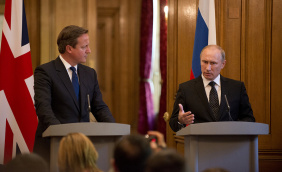
    The Bolivian attempt to construct some kind of post-liberal democracy also brought about more specific risks. On the one hand, the transition process meant dismantling an existing structure of democratic institutions and led to a certain, if temporary, institutional vacuum during which the democratic shape of the future political order was uncertain. On the other hand, features of Bolivia’s new political order such as the emphasis on direct democracy do not only increase the power of the people, but more specifically the power of the majority; at the same time, a popular president can use plebiscitary mechanisms to further increase and consolidate his/her power vis-à-vis the opposition, minorities or other powers and levels of the state.

    Finally, the current economic crisis, triggered by the decrease in international commodity prices, reveals the limitations of the post-neoliberal economic policies in the region – and immediately threatens the advances in the reduction of poverty and inequality.

    Conclusion

    The most important feature of the debates about post-liberal peace, post-neoliberal economics and post-liberal democracy is, arguably, that they are not aimed at identifying yet another universal peacebuilding template. If anything, the main academic and political purpose is to open up discussions that have been too narrow and closed for too long. Thinking about alternatives, however, still requires concrete ideas about elements and characteristics, dynamics and paths that may characterize (different) post-liberal configurations. And while theoretical reflections are certainly needed, the very idea of post-liberalism as something arising ‘bottom up’ from dynamics at least partially driven by local knowledge and local agency points to the need to empirically study developments that point in some post-liberal direction. In this sense, I have argued, recent experiences from Latin America do offer political inspirations as well as important caveats which might be of interest for both scholars of peacebuilding and for those engaged in building whatever kind of hybrid peace in whatever kind of place.

    Jonas Wolff is head of the research department ‘Governance and Societal Peace’ and executive board member of the Peace Research Institute Frankfurt (PRIF) as well as adjunct professor (Privatdozent) at Kassel University. He studied Political Science, Economics and Sociology at University of Frankfurt, where he also received his PhD. He completed his habilitation at the University of Kassel. His research focuses on Latin American politics, international democracy promotion, and the interrelation between social conflict, political transformation and economic development.

  • Sustainable Security


    Demonstration condemning the ongoing use of weapons by rebel militias inside Tripoli.“As the price of oil goes down, the pace of freedom goes up… As the price of oil goes up, the pace of freedom goes down…” So says New York Times columnist Thomas Friedman, who argues that the first law of ‘petropolitics’ is that the price of oil and the pace of freedom are inversely correlated in countries “totally dependent on oil” for economic growth. Friedman’s attempt to link economic oil dependency and political freedom is an interesting one, which could go some way towards explaining why many of the world’s top oil-exporting countries are governed by heavy-handed authoritarian regimes. However, the correlation between recent oil price spikes and anti-authoritarian action – particularly in the Arab Spring – challenges Friedman’s assessment.

    Rather than being driven by drops in oil revenues for authoritarian regimes, popular unrest and armed resistance  in countries such as Libya may in fact be correlated with the price of oil remaining high. Inward pressure caused by oil price spikes on petroleum-fuelled supply chains for basic commodities can exacerbate already harsh living conditions, galvanising rebel factions to form a unified anti-authoritarian front against a regime that can no longer ensure price stability for essential goods. This seems true of the 2011 uprising in Egypt (the world’s largest wheat importer), as bread prices rose drastically following the doubling of global wheat prices between June 2010 and February 2011. The impact of high oil prices on the production, shipping and distribution of staple commodities such as corn and wheat – both of which saw severe price escalations of near 40% in 2008 – can lead to social unrest and, in the case of Egypt, the toppling of an authoritarian regime.

    High oil prices mean freedom on the rise?

    Since December 2010, when mass protests began gathering steam in Tunisia, oil prices have remained consistently high, hovering at $82 per barrel. Is it a coincidence that in September 2011, when rebels overtook the coastal town of Bani Walid, one of Colonel Gaddafi’s last strongholds, oil was just above $82 per barrel and the FAO food price index had reached a ten-year high? While oil revenues may be a temporary source of political stability for some authoritarian regimes, the pressure of increasing price volatility on supply chains, due to scarcity in supply, can convert to instability downstream as oil prices have a compounding impact on food prices. Indeed, in December 2010 just a week before the self-immolation of Tunisian food vendor Mohamed Bouazizi, New England Complex Systems Institute a Cambridge-based organisation comprised of faculty from Harvard, MIT and Brandeis, warned the US government that global food prices were about to cross a socially dangerous threshold. If anti-authoritarian action is any indication of freedom ‘on the rise’ then high oil prices in oil-dependent states are at least one major factor.

    Of those countries mentioned in the International Energy Agency’s 2011 list of top oil exporters, ten out of fifteen are classed by Freedom House as ‘Not Free’. Freedom House, ‘an independent watchdog organisation dedicated to the expansion of freedom around the world’, base their rankings on two broad categories: political rights and civil liberties. The former they define by a country’s electoral process, degree of political pluralism and level of participation/ functioning of government; the latter by degree of freedom of expression and belief, associational and organisational rights, rule of law, and personal autonomy and individual rights. The irony, according to Friedman, is that Western dependence on oil imports from countries which are ‘Not Free’ has channelled revenues to authoritarian regimes that oppose freedom. This paradox undermines Western credibility as champions of democracy. In a post-9/11 world, where militant extremists reportedly seek safe harbour in oil-exporting states like Saudi Arabia, the consequences of Western oil dependency undermine the West’s long-term security goals. But, when it comes to Friedman’s equation for ‘petropolitics’, the reverse may actually be true. Recent events such as the Arab Spring demonstrate that as the price of oil rises, impacting staple commodity prices, so too does the need for change – change that is blocked by Western dependence on remaining regimes.

    Bottom-of-the-barrel security

    Western countries reliant on fossil fuel imports from nations ruled by authoritarian regimes are suffering from a crisis of legitimacy – a crisis which could render us more insecure in the long term. In Algeria, where the Arab Spring has not resulted in full on revolution, violent extremists recently made their presence felt at the ‘In Amenas’ gas plant, brutally murdering 37 expatriate workers. The plant, which is jointly operated by BP, Norway’s Statoil and Algerian state oil and gas company Sonatrach, is a major supply source for Western markets. Algeria is responsible for roughly 12.2 billion barrels of crude oil reserves. 85% of Algeria’s oil exports are destined for European and North American markets. Under the leadership of Abdelaziz Bouteflika, whose five year executive terms are renewable indefinitely, Algeria certainly does not rate highly on the list of Freedom House ‘Freedom Ratings’. Military and intelligence services strictly monitor and interfere with open elections. But the Arab Spring may not ever reach Algeria precisely because of the stability brought to the country by a Western-funded heavy-handed regime, which goes to great lengths to protect the general population from militant Islamist extremists and pro-democracy activists alike. Saudi Arabia and UAE are governed by similarly oppressive regimes; regimes which subvert democracy in favour of ‘stability’. Both supply oil and gas to the West. Both benefit from revenues gained through Western dependence in spite of their heavy-handedness.

    Interests versus values

    The Arab Spring has been full of unfortunate surprises linking former and current administrations to corrupt leaders. Photos of a smiling Tony Blair, getting up close and personal with much maligned Colonel Gaddafi, were a hit in the mainstream press as well as online following the collapse of his regime. Not long before that, the Bush Family’s close ties to the Saudi royal family did little to lend credence to their Middle East pro-democracy campaigns in the early 90s and 2000s.

    Germany is in a similarly awkward position as the the largest energy consumer in Europe, with oil making up 38% of Europe’s overall consumption in 2011. Germany is Russian state-controlled energy giant Gazprom’s biggest European customer with 34% of total sales volume of Russian ‘blue fuel’ destined for German markets last year. There was therefore more than a hint of hypocrisy in Angela Merkel’s recent remarks during a visit by Vladimir Putin to a trade fair in Hanover that Russia ‘needs more NGOs’. The statement was made in regards to a Russian law passed last year requiring all NGOs that receive overseas funding to register as  ‘foreign agents’. Topless Ukrainian activists from the pro women’s rights group ‘Femen’ made their presence felt at the trade fair, drawing attention to  Russia’s crackdown on civil society groups and independent media organisations. Russia’s authoritarianism is a key element of the Putin government, but the issue arguably receives little mainstream coverage in the West compared to the Middle East.

    Germany and, by extension, Europe’s de facto dependence on Gazprom to meet their energy needs provides yet another example of why Western countries need to seek develop a more sustainable energy security strategy. It is difficult to legitimately champion broad concerns about upholding civil protections, when some of your largest business partners engage in the shadowy practice of denying basic freedoms to their own citizens.

    Renewable energy… and freedom?

    In light of the above we can welcome new approaches to energy security, which are aimed at reducing dependence on fossil fuel imports from authoritarian states. The Obama Administration’s ‘All of the Above’ energy strategy, as well as the pragmatism which the European Union, led by Germany, has shown in pushing forward a low carbon agenda are both steps in the right direction. Obama has pledged to double American energy efficiency by 2030, setting aside $2 billion over 10 years to support research into ‘a range of cost-effective technologies’, including electric vehicles, domestically-sourced biofuels, fuel cells, and domestically-produced natural gas. The plan also includes scope for reducing oil imports, while boosting renewable electricity generation from wind, solar and geothermal sources. Although Obama’s plan is far from low carbon, it shows promise. By comparison the UK Government, which at one time pledged to be the ‘greenest government ever’, has attempted to push forward its nationwide low carbon transition through the establishment of a Green Investment Bank. However, fairly recent public squabbles in the UK between Ed Davey, Secretary of State for Energy and Climate Change and Chancellor George Osborne the UK’s finance minister, have called that agenda into question.

    Friedman’s claim of an inverse correlation between high oil prices and authoritarianism is flawed. But his point about ‘petropolitics’ is still crucial to security, not only because he tries to link oil price fluctuations to authoritarian politics, but also because he highlights how Western dependence on foreign oil provides significant revenue streams on which remaining authoritarian governments can rely. It is also important to point out that as the global price of oil becomes more volatile due to price instability (see: ‘peaky behaviour’) the economic stability of authoritarian regimes that have consolidated their power bases around fossil fuels will almost certainly erode. Moreover, as the impact of oil prices continue to destabilise staple commodity prices, authoritarian regimes will almost certainly come under increasing pressure from their own populations to step down. Western countries that have formed dubious partnerships with these regimes in order to meet their energy security needs will risk further embarrassment when these regimes are toppled by the inevitable anti-authoritarian movements. Western leaders might then stand by and wait to pick a winner – a dubious strategy at best – in order to ensure that supply shipments are not further destabilised. But is this sustainable?

    Renewable energy is not the most obvious factor for bolstering the strength of nations. But it is fast becoming clear that Western dependency on fossil fuel imports from countries governed by heavy-handed regimes cannot go on. The International Energy Agency has recently announced that power generation from renewable sources worldwide will exceed that from gas and be twice that from nuclear by 2016. That’s a positive sign. As for oil, we will have to wait and see. But if the restoration of Western legitimacy as champions of the “free world” is a top priority for Western leaders, then more support for domestic renewable energy growth is essential.

    Phillip Bruner is Founder of the Green Investment Forum and a guest lecturer in global political economy at the University of Edinburgh

    Image source: United Nations Photo

  • Sustainable Security

    In peacekeeping missions, peacekeepers live seperated and segregated from the local communities which they are mandated to protect. This wide gulf between the everyday lives of peacekeepers and locals has consequences for peace interventions’ effectiveness and outcomes.

    A truism of international peace interventions is that peacekeepers – and international peacebuilding personnel writ large – live in the same place as local residents, but do not live in the same world. The peacekeeping world is air-conditioned, clean, and well-guarded; it consists of decent housing, generous pay, access to vehicles, domestic help, and, usually, a robust (if limited) social life that revolves around expensive restaurants, hotels, bars, and clubs. In other words, peacekeepers live, work, and socialize in what I call ‘blue helmet havens’, distinct from the spaces most locals inhabit. They are spatially, economically, culturally, and in many cases linguistically separated or segregated from the majority of the local population of the ‘peace-kept’ city. As a Goma-based source put it, peacekeepers are ‘living in Congo’ but not ‘living Congo’.

    The security and safety of peacekeeping personnel and property is the dominant justification for the ‘bubble’ in which peacekeepers live. Notably, this separation is enacted not only by barriers, bunkers, and security guards, but also by various peacekeeping rules, regulations, and norms that mitigate – if not actively discourage – informal or social contact between peacekeepers and locals.

    Thus, peacekeepers’ off-duty movements are circumscribed by the security perimeter zone that is established by the mission’s internal security service, which delineates where peacekeepers can live, shop, and socialize and, in capitals and other urban areas, excludes vast swathes of the host cities. Even within the zone, peacekeepers are advised never to move on foot. They are required to live in gated and guarded compounds; are given black-lists of proscribed social venues; and, besides being prohibited from buying sex while in the mission area, are also strongly discouraged from having any intimate or sexual relationships with locals. These formal rules and regulations are reinforced by informal norms and mission cultures, which are heavily oriented towards keeping the peacekeeping bubble intact and exclusive. Cumulatively, the extremely risk-averse approach that missions take towards peacekeepers’ interactions in and with their surroundings means that the contact between peacekeepers and locals is both sparse and essentially transactional. There exists a wide gulf between the everyday lives of peacekeepers and locals, and very few means to bridge it.

    Peacekeeping-as-enterprise in the peacekeeping ‘bubble’

    UN helmets

    Image by UN Photo via Flickr.

    But why is this important? Research shows that the gap in proximity and understanding between the international and the local matters for peace interventions’ effectiveness and outcomes. For example, in her book Peaceland, Séverine Autesserre argues that the shared everyday habits, practices, and narratives of international interveners simultaneously enable international peacebuilders to work in challenging environments, and degrade the effectiveness of peacebuilding interventions. In other words, she asserts a direct link between the peacebuilding bubble and peacebuilding outcomes.

    My own research also deals with the distorting effects of the peacekeeping bubble. Using the analytical lens of the peacekeeping economy – which encompasses the services, establishments, and activities needed to allow peacekeeping and peacekeepers to function, and which to a large extent frames and contains the peacekeeping bubble – I have argued that in areas with robust peacekeeping economies, peacekeeping appears to locals more as an enterprise than protection or development. Where peacekeeping economies flourish, they are as visible and tangible to local citizens as anything else done by peacekeeping missions – maybe even more so. It is thus unsurprising that, when people look around them and see money flowing and where it flows, they conclude that, heroic narratives aside, peacekeeping is not that different after all: it is all about the money. This in turn fosters cynicism and resentment among local citizens towards the peacekeeping mission, from which it is plausible to draw a connection to subpar results. On the peacekeepers’ side, meanwhile, what is striking is the extent to which their arms-length relation to the local reveals a sense of vulnerability – a perception of themselves as potential victims of exploitation, crime, or violence, thus upending the normal framing of peacekeepers as powerful, dominant protectors. On both sides, the strict separation between the peacekeepers and the local encourages, if not fosters, a lack of understanding and trust.

    Taken together, then, this paints a picture of peacekeeping and peacekeepers as purposefully disconnected from the local everyday, apart from the microeconomic transactions contained by, and constitutive of, the peacekeeping economy. When it comes to how peacekeeping really works, the peacekeeping bubble is as relevant and significant as the peacekeeping mandate. Problems associated with this bubble’s existence include local suspicion of missions’ activities and motives; and a dearth of knowledge of, and empathy towards, locals from peacekeepers – each of which could be reasonably conjectured to inhibit the effectiveness and transformative potential of peacekeeping.

    Security, estrangement, and stasis in peacekeeping transformation

    An obvious implication of this contention is that international peace interventions will work better and more empathetically if the prevailing separation and segregation is lessened, such that the international and local ‘everydays’ are more enmeshed and aligned. But how would this work? Is it even possible?

    There are modest proposals that missions could immediately initiate in order to promote an environment of mutual trust and more substantive formal and informal contact between peacekeepers and locals, which could eventually make peacekeeping environments safer for both peacekeepers and locals alike. For example, to mitigate the negative effects of the peacekeeping economy on the local economy and labour market, missions could:

    • implement better scrutiny and oversight of subcontractors employed by missions (with respect to labour standards and protections) and of landlords the mission rents from (to ensure that ill-gotten gains are not rewarded);
    • give guidance to peacekeepers on how to relate to their employees, prioritizing the rights of the employee equal to those of the peacekeeper;
    • make greater efforts to procure goods and supplies locally, working with and monitoring local suppliers to forestall potential negative side-effects on local markets;
    • and use of training methods and materials that do not rely on scare stories and fear to coerce obedience, thus encouraging more receptive attitudes towards locals by peacekeepers.

    The most significant obstacle to peacekeeping transformation lies in the area of security. The tendency in peacekeeping missions to take greater and greater precautions to obviate danger and avoid risk is not without reason: persuading member states to contribute troops and money to peacekeeping is significantly more challenging if the UN is perceived to be reckless, and recruiting civilian peacekeepers also becomes more difficult. But ‘security’ in peacekeeping increasingly seems to mean the elimination of risk – whether stemming from armed groups, organized or ordinary criminals, fraudsters and scam artists, or everyday activities like driving, eating out, having sex, or walking down the street. According to such a standard, peacekeeping missions will never be fully secure. Nor, for that matter, will anything else. Peacekeeping institutions (headquarters and missions) and peacekeepers surely recognize this reality, yet there is little evident willingness at any level to push back against ever-escalating security demands and regulations.

    In this heavily securitised and risk-averse environment, where protection of peacekeepers is (and always has been) mandated equal to protection of civilians, separation is the path of least resistance. This implies that fundamental transformation in how peacekeeping missions situate themselves to local people and communities is unlikely. Missions’ estrangement and alienation from the local community and the local ‘everyday’ is a feature, not a bug; and thus that whatever losses may ensue – of legitimacy or effectiveness – is a price that the peacekeeping apparatus is willing to pay.

    Kathleen Jennings is a senior researcher at the Fafo Research Foundation in Oslo. Her work focuses on UN peacekeeping, gender, and political economy in sub-Saharan Africa. Jennings recently defended her PhD thesis on gendered peacekeeping economies in Liberia and the DR Congo. She has previously worked at the Norwegian Peacebuilding Resource Centre and the Council on Foreign Relations.

  • Sustainable Security

    It should come as no surprise that David Cameron and the campaign for the UK to remain in the EU have argued that Britain’s continued membership of the EU will benefit the UK’s security. Britain’s EU membership has always had a security side to it. Membership has never been entirely about trade or jobs. And whatever the result of the referendum, the security relationship with the EU will remain vital for the UK.

    Those campaigning for the UK to leave the EU do not dispute that relations with the EU, along with European security in general, are not of central concern for the UK. For them, however, not only does the EU make the UK and Europe less safe (for example by allowing free movement of criminals and terrorists), but putting international relations ahead of domestic politics, especially economic and democratic needs, weakens Europe’s nation states and their ability to combat the full range of problems facing them.

    The UK government itself is clear that traditional security threats to the UK do not figure as highly as they once did, although they have certainly not disappeared. As successive national security strategies and strategic security and defence reviews have made clear, security challenges to the UK range from nuclear war to environmental disasters, with many not recognising the borders of nation states. While British governments are often reticent to admit to the EU playing a positive role in security cooperation, or admit that the UK has led in such cooperation, there is no denying that tacking these security challenges has been an important part in UK-EU relations.

    From the start, European integration has had a security side to it, whether this be about managing the reintegration into Europe of West Germany and later a united Germany, or integrating former Eastern European Communist or Southern European Fascist states into a liberal European mainstream. The EU itself has not been sufficient to keep the peace. The argument by some Eurosceptics that it has been NATO that has kept the peace in Europe is as selective a reading of history as any pro-European that claims it has all been down to the EU. Nevertheless, for successive British governments, especially at the height of Britain’s retreat from empire in the 1960s, Britain’s declining ability to shape the world and the security challenges it posed meant membership of the European Economic Community and later EU was a necessary step for both British, European and transatlantic security cooperation.

    Today, Cameron and others in the Remain campaign trumpet Britain’s ability to use the EU to boost Britain’s still substantial but reduced economic and military capabilities to give it the full range of tools and opportunities to face the full range of security challenges. Whether in facing a newly assertive Russia, dealing with Iran or tacking climate change, the UK’s EU membership has been cited as crucial to allowing the UK to shape its security. This is not to argue that EU cooperation is without its problems. Finding consensus amongst 28 states is never easy, even when you have the institutions and familiarity that EU membership offers.

    jeffdvevdit

    Image by Djevdet via Flickr.

    The referendum poses the question of what options the UK has beyond working through or with the EU. Talk of the UK rebuilding the Commonwealth is often oblivious to how strategically marginal that organisation can appear to most of its members. Britain’s NATO membership will remain important to it and Europe. NATO, however, is not the whole story when it comes to European security and the UK should not bet on the alliance being as solid as it was once. Close bilateral relations with the likes of the USA or France will remain, not least in the military fields. But this should not blind us to how the US and European states will continue to cooperate through a range of EU-US forums and that this could leave Britain outside the EU as something of an awkward in-betweener in the transatlantic relationship.

    The US in particular is aware of the wider implications of a Brexit for Europe’s geopolitics. As Condoleezza Rice, former Bush Administration Secretary of State and National Security Advisor, told Chatham House: ‘It is a very different Europe if it is a continental one’. Accusations that the UK is a US ‘Trojan Horse’, sent to weaken EU cooperation from within, display an ignorance of how the USA – a European power since 1945 – has had a hand in European integration and security from the very start and doesn’t wholly depend on the UK for relations with the rest of the EU.

    Britain’s departure from the EU could change the Union in any number of ways, with far-reaching geopolitical implications that will shape Europe’s security. That some Leave campaigners such as Michael Gove have spoken of Britain setting an example that could lead other states to follow gives a hint to the wider geopolitical changes to Europe some Eurosceptics hope a Brexit will bring about.

    Such disintegration or radical reconfiguration of the EU has not been set out or anlaysed in any document or strategy. As such this half-baked approach risks a dangerous case of strategic overreach by the UK. Any changes to Europe would rely less on Britain’s willingness to offer the ways and means of managing such changes and more on encouraging a collapse of the EU. Losing control of such a development should not be overlooked. An uncontrolled collapse of the Eurozone, for example, would inflict significant costs on the UK, Europe, the USA and the wider world economy. As HM the Queen warned in June 2015 during a state visit to Germany, Europe’s division is in nobody’s interests.

    It is possible that a Brexit will cause the opposite reaction, with an EU rid of ‘an awkward partner’ going forward by unifying further. One of Britain’s longest standing international aims has been to prevent any single power dominating Europe. The EU would be a benign power compared to previous attempts, but such an outcome warrants careful consideration by the UK. Whatever the outcome, the EU’s status quo is unsustainable. The question for those concerned with Europe’s security is whether changes – whether triggered by Brexit of not – can happen in a stable, cooperative way or bring about a collapse into nationalism and parochialism.

    The best hope for UK and EU security is that whatever the result of the referendum both sides seek ways of cooperating, if only to rebuild trust. The initiative here will rest with the UK whose recent approach to the EU in the eyes of many elsewhere in Europe has been an unwanted distraction from the many other challenges facing the EU. A UK in search of cooperation with its European neighbours will find it can offer little to help with the problems in the Eurozone or Schengen. Instead, whether in or out of the EU, it will find itself playing its only trump card: security and defence cooperation.

    Whether in facing a resurgent Russia – and therefore the continued relevance of hard power in European and international relations – or the more nuanced but potentially far more catastrophic global environmental challenges, the UK and EU could find common ways forward that help both sides realise their mutual interdependence. The UK and the rest of the EU must appreciate that instability or division in Europe limits their options to shape security in the wider world.

    Last, but not least, we should not overlook that if the first priority of any state is its own survival then alarm bells should be ringing about how the referendum could lead to the end or weakening of the UK itself. The vote could throw into doubt the place in the Union of Scotland and Northern Ireland, both bringing with them a host of traditional security concerns whether they be terrorist related or the future of the UK’s nuclear weapons. Tensions within England should not be overlooked. Immigration and economic changes have made London the UK’s undiscovered country, much to the chagrin of some elsewhere in England and Britain who feel a Europeanised and globalised capital city has left them behind. Arguments over identity, immigration, radicalisation, race, equality and standards of living rumble beneath the surface of the EU referendum. A reminder, if any were needed, of how sustaining the UK’s own stability and security will be no easy challenge after the 23 June.

    Dr Tim Oliver is the Dahrendorf Fellow for Europe–North American relations at the London School of Economics and Political Science. He is also a non-resident fellow at the Center for Transatlantic Relations of the Johns Hopkins University Paul H. Nitze School of Advanced International Studies, Washington DC. He has worked in the House of Lords, the European Parliament, the German Institute for International and Security Affairs (SWP), RAND Corporation, and taught at the Royal Military Academy Sandhurst, the London School of Economics and University College London. 

  • Sustainable Security

    Summary

    The dramatic recent escalation of rhetoric and military posturing on the Korean peninsula has reawakened suggestions that the United States could use relatively low-yield nuclear weapons in a limited or tactical operation to neutralise North Korea. Indeed, both the idea of nuclear ‘first strike’ and their ‘flexible’ usage on and off the ‘battlefield’ are deeply rooted in historic and current NATO and UK doctrine on nuclear weapons. Given the extraordinarily militarised nature of the inter-Korean border and, increasingly, that between NATO and Russia, the potentially cataclysmic nature of any nuclear exchange must be urgently recalled and avoided at all costs.

    Introduction

    One of the most common misunderstandings about nuclear weapons in general and Britain’s nuclear weapons in particular is that nuclear strategy is solely about deterring an opponent from attacking you by threatening that opponent with all-out destruction in response. Given the growing risk of a nuclear confrontation over North Korea it is appropriate to point out that this has never been the case. Ever since the start of the nuclear age nuclear weapons have been seen as useable weapons and appropriate in certain circumstances for fighting limited nuclear wars.

    As a member of NATO Britain retains the option of using nuclear weapons first and has the means to do so. This briefing is intended to serve as a reminder of this. It will do so by concentrating specifically on British policy, both within NATO and out-of-area, but this applies just as much to the other seven full nuclear powers and, no doubt, to North Korea as well. It applies very much to the United States in particular and its current president, Donal J Trump, who has made it clear that the United States will not allow North Korea to develop the ability to target the continental United States with nuclear weapons.

    Early history

    When Hiroshima and Nagasaki were destroyed in August 1945 these weapons were seen in air force circles as direct descendants of the mass bombing of cities with conventional weapons using a thousand bombers or more. The raids on Hamburg and Dresden and especially the firestorm raid on Tokyo each killed tens of thousands of people so the perception after Hiroshima and Nagasaki was that the primary difference between conventional and nuclear weapons was one of cities being destroyed by one atom bomb from a single plane rather than five thousand tons of high explosive bombs from many planes. Indeed the US Army Air Corps and the nuclear weapon industry had already set in motion the industrial structures to destroy two Japanese cities every month until surrender.

    By 1948 the United States had an arsenal of fifty atom bombs and was already starting to develop the far more powerful thermonuclear weapon or H-bomb. Britain came on the scene rather later. While it first tested a nuclear weapon in 1952, it was not until the late 1950s and early 1960s that it could start deploying its Valiant, Vulcan and Victor strategic bombers in large numbers. These, too, were seen in the context of the British involvement in the area bombing of German cities, but Britain was also an early adherent of the idea of fighting limited nuclear wars, an issue that was seen as particularly relevant in the Middle East and Eastern and South Eastern Asia.

    Thus there were nuclear-capable Canberra bombers and nuclear weapons deployed to RAF Akrotiri in Cyprus from 1961 to 1969 to support the Central Treaty Organisation (CENTO), the South West Asian equivalent of NATO. These were replaced by Vulcans until 1975. From the mid-1960s there were regular detachments of V-bombers to RAF Tengah in Singapore and the Royal Navy had nuclear-capable Scimitar and Buccaneer strike aircraft on aircraft carriers such as Eagle, Ark Royal, Centaur and Victorious over a 16-year period from 1962 to 1978.

    From the early days of the deployment of nuclear weapons  by states such as the Soviet Union, the United States and Britain there is ample evidence that both military and political leaders accepted the possibility of limited nuclear war. It was expressed in Britain, for example, by the then Minister of Defence, Harold Macmillan, speaking in the House of Commons in 1955:

    “…the power of interdiction upon invading columns by nuclear weapons gives a new aspect altogether to strategy, both in the Middle East and the Far East. It affords a breathing space, an interval, a short but perhaps vital opportunity for the assembly, during the battle for air supremacy, of larger conventional forces than can normally be stationed in those areas.” (Hansard, volume 568, column 2182, 2 March 1955).

    NATO and nuclear first use

    As one of the founder members of NATO, and the second to develop nuclear weapons, Britain was involved in NATO nuclear planning from the very early years of the mid-1950s. In those early years and until the late 1960s, NATO nuclear policy was codified in document MC14/2 known as the “tripwire” policy which planned a massive nuclear response to the initiation of war by the Soviet bloc.

    While the United States maintained massively greater nuclear forces, and a wide variety of weapon types, Britain also had a significant arsenal which eventually developed to include an array of strategic and tactical systems. These included the Polaris submarine-launched ballistic missiles, free-fall bombs of variable power and anti-submarine nuclear depth bombs as well as nuclear-capable 155mm and 203mm artillery and Lance short-range nuclear missiles, the last three utilising US nuclear warheads under a dual control system. Thus, for several decades, all three branches of the British Armed Forces focused their operational planning around use of forward-deployed tactical nuclear weapons.

    By the latter part of the 1960s the Soviet Union had developed its own array of tactical systems and NATO responded by modifying “tripwire” and developing “flexible response”. This was encoded in MC14/3 of 16 January 1968 and envisaged the limited use of mostly low-yield warheads early in a conflict against Warsaw Pact troops and their immediate logistic support in the belief that they might be “stopped in their tracks”. If that failed, a more general nuclear response might ensue.

    Britain was very much part of this move, its nuclear forces were normally committed to NATO and UK personnel played significant roles within the NATO Nuclear Planning Group. This move away from deterrence through massive assured destruction was rarely publicised by the British government, one exception being an exposition of the policy offered to the House of Commons Select Committee on Foreign Affairs two decades after the transition to flexible response:

    “The fundamental objective of maintaining the capability for selective sub-strategic use of theatre nuclear weapons is political – to demonstrate in advance that NATO has the capability and will to use nuclear weapons in a deliberate, politically-controlled way with the objective of inducing the aggressor to terminate the aggression and withdraw. The role of TNF [Theatre Nuclear Forces] is not to compensate for any imbalance in conventional forces. The achievement of conventional parity could have very positive consequences for the Alliance’s strategy of deterrence. But it would not, of itself, obviate the need for theatre nuclear forces.”    (Third Report of the House of Commons Select Committee on Foreign Affairs 1987-88, p.35, para. 6.)

    What was very little understood at the time in the public domain was that NATO’s flexible response approach was not just the preparedness to use nuclear weapons first in response to a conventional military attack from the Soviet bloc but to do so at an early stage in such a conflict. This was made clear by SACEUR (the Supreme Allied Commander, Europe), General Bernard Rogers, in an interview published in early 1986:

    “Before you lose the cohesiveness of the alliance – that is, before you are subject to (conventional Soviet military) penetration on a fairly broad scale – you will request, not you may, but you will request the use of nuclear weapons”. (International Defence Review, February 1986)

    NATO’s flexible response policy remains broadly in place to the present day and nuclear planning allows for many different targeting options. This also applies to the United States where such options are constantly updated to allow for changing political situations. In an interesting reflection on relative economic and political strength, Russia also sees nuclear weapons as intrinsically of greater relevance given the low capabilities of its conventional military forces compared with those of the Warsaw Pact at the height of the Cold War.

    Britain’s out-of-area operations and nuclear weapons

    Since the end of the Second World War the United Kingdom has been one of the most active countries to be involved in overseas wars. The majority of these were wars of the late colonial period, but many others have been more broadly based, from Korea through to former Yugoslavia as well as the more recent and intensive post-9/11 conflicts across the Middle East and North Africa. Throughout all this period the UK has maintained its wide-ranging tactical and strategic nuclear options, even though the size of the arsenals is smaller than thirty years ago.

    Two of the most controversial conflicts, the Falklands/Malvinas War of 1982 and the first Gulf War of 1991 have both had a nuclear connection. After Argentina occupied the Falkland Islands in early 1982 the UK government under Margaret Thatcher despatched a substantial naval task force and six days after it left Britain The Observer reported that

    “It is almost certainly carrying tactical nuclear naval weapons – atomic depth charges carried by Sea King helicopters and free-fall bombs carried by Harrier jump jets – as part of NATO equipment.” (11 April 1982)

    Later reports indicated that many of the weapons from the smaller warships were transferred en route to an auxiliary supply ship, the RFA Resource which proceeded to the South Atlantic with the rest of the fleet but was deployed away from the most intense areas of action during the subsequent war. It is not clear whether this also applied to the nuclear weapons that may have been deployed on the two aircraft carriers, HMS Invincible and Hermes and there were also multiple if unconfirmed reports that the Thatcher government was prepared to deploy a Polaris missile submarine to the mid-Atlantic to bring it within range of Argentina. (Paul Rogers, “Sub-Strategic Trident: A Slow Burning Fuse”, London Defence Papers 34, Brasseys, 1996)

    Nine years after that war the UK government committed substantial forces to a US-led multinational military coalition to evict the Iraqi forces that had invaded and occupied Kuwait in August 1990. At the time there was considerable concern that Iraq had a useable arsenal of chemical weapons and a clear indication of UK willingness to use nuclear weapons in response came in an interview with a senior army office attached to the 7th Armoured Brigade which was leaving for the Gulf. He confirmed that an Iraqi chemical attack on UK forces would be met with a tactical nuclear response. (Observer, 30 September 1990).

    Deliberate ambiguity

    During the 1990s, after the end of the Cold War, the UK government, under the leadership of the Conservative Prime Minister John Major, scaled down Britain’s nuclear arsenals in a series of unilateral moves, ceasing to deploy dual-control US nuclear artillery and missiles and withdrawing the WE.177 tactical nuclear bombs and depth bombs between 1992 and 1998. US-owned B61 tactical nuclear bombs continued to be deployed at RAF Lakenheath for another decade and still are based in Belgium, Germany, Italy, Netherlands and Turkey under enduring nuclear sharing arrangements with those host countries.

    In order to preserve a British “sub-strategic” capability, a low-yield variant of the standard high-yield Trident thermonuclear warhead has since been deployed, although terms such as “tactical Trident” or “Sub-Strategic Trident” are no longer used in government publications. Neither is there any specific reference in official publications to the UK maintaining a policy of potential first-use of nuclear weapons.

    Instead a generic description of the UK nuclear posture appears in successive defence white papers, the 2015 statement being an example:

    Only the Prime Minister can authorise the launch of nuclear weapons, which ensures

    that political control is maintained at all times. We would use our nuclear weapons only in extreme circumstances of self-defence, including the defence of our NATO Allies. While our resolve and capability to do so if necessary is beyond doubt, we will remain deliberately ambiguous about precisely when, how and at what scale we would contemplate their use, in order not to simplify the calculations of any potential aggressor. (National Security Strategy and Strategic Defence and Security Review 2015, para 4.68, page 34, November 2015)

    It should be borne in mind that, while British ambiguity on nuclear first use is echoed by its NATO allies in Washington and Paris, as well as its assumed adversary in Moscow, there is nothing intrinsic about such a posture. China has consistently maintained a policy of no first use and normally stores its warheads separately from its delivery systems to prevent any accidental or malicious usage. India and Pakistan are also formally committed to no first use.

    Conclusion

    This brief summary of elements of the UK nuclear posture is intended as a reminder that such a posture is far more complex than simply providing a last-ditch deterrence against nuclear attack. Moreover, this applies very much for the United States which has a far wider array of nuclear weapon types and has been at the forefront of NATO nuclear planning, including the first use posture.

    Should a conflict arise between the United States and North Korea it is by no means certain that Britain would be involved, given public attitudes within the UK, although a joint RAF/US Air Force/Korean Air Force exercise was held in South Korea late last year for the first time in several decades. Even so, at a time of heightened tensions over North Korea’s nuclear ambitions the concern should be that a crisis could escalate to the use of nuclear weapons, especially with an unpredictable incumbent in the White House.

    Given Britain’s propensity for considering the idea of out-of-area nuclear first use and limited nuclear war, one would hope that there is also a full understanding of the considerable dangers of such a posture. If so, what should follow is a determination to do everything possible to advise President Trump against even considering this option in the case of North Korea.


    Image credit: Neil Hinchley. 


    About the Author

    Paul Rogers is Global Security Consultant to Oxford Research Group and Professor of Peace Studies at the University of Bradford. His ‘Monthly Global Security Briefings’ are available from our website. His new book Irregular War: ISIS and the New Threats from the Margins will be published by I B Tauris in June 2016. These briefings are circulated free of charge for non-profit use, but please consider making a donation to ORG, if you are able to do so.


  • Sustainable Security

    Closing Europe’s borders and politicizing the attempt to admit refugees at a time when the growing humanitarian crisis poses mounting human rights challenges to the international community is fundamentally wrongheaded. These approaches only strengthen the hand of Islamic State.

    While violent extremism, terrorism, and civil wars have drawn the most attention, coming to grips with the refugee crisis—emanating mainly from Syria’s civil war, but also more generally from the Middle East and North Africa’s political environment (MENA) in the aftermath of the 2011 Arab uprisings—has never been more essential. The Syrian crisis has propelled a wave of migrants to the neighboring countries of Jordan, Lebanon, Iraq, and Turkey. The Syrian refugee population stands at approximately 4.7 million, of whom 1.7 million live in Lebanon and Jordan and even more in Turkey. It is estimated that Turkey now hosts the world’s largest community of displaced Syrians.

    Defeating the Islamic State in Iraq and Syria (ISIS, also known as ISIL and by its Arabic acronym as Da’esh), while at the same time fulfilling the Responsibility to Protect (R2P) in the Syrian situation, has presented a complex challenge to the international community. The growing threat of ISIS as shown in attacks in Paris (2015) and Brussels (2016), magnified by the increased threat of individual terrorists—the so-called “lone wolves” in San Bernardino, the United States—has stemmed a wave of nationalist, right-wing alarm, reinforcing a general concern about the influx of immigrants and asylum seekers, while underlining the shift from a regional to the international nature of both threat and risk. These security issues have also illustrated the willingness of great powers to support military reactions to ISIS in order to stem the atrocities perpetrated by this group, while putting the departure of the Assad regime on the back burner—at least for now. For all intents and purposes, ISIS poses a much greater threat to Europe than does the current regime in Damascus.

    An Unavoidable Tradeoff

    freedom-house-refugee

    Image by Freedom House via Flickr.

    Confronting and dismantling ISIS need not be achieved by stigmatizing refugees and subjecting them to religious litmus tests. Closing Europe’s porous borders and politicizing the admission of refugees at a time when the growing humanitarian crisis poses mounting human rights challenges to the international community is fundamentally misguided. After all, fortifying European borders, while effective in the short term, strengthens the hands of ISIS and other terrorist groups that portray such policies and practices largely in terms of apocalyptic visions and arcane Islamic prophecies of great battles against Western imperialists.

    Defeating ISIS requires strategic endurance and long-term prudent political decision-making involving internal and external actors in the MENA region. While doing so, it is important to avoid the enemy’s repressive, atavistic, and brutal methods, eschewing certain tactics that could potentially play into ISIS’s hands. It is important to bear in mind that the tactics that terrorist groups like ISIS employ pose mostly political and ideological challenges to the West and that the real fight will be in defeating and destroying the claims and values that these groups assert.  In the end, defeating ISIS requires that its demonic ideology and tactics be confronted and exposed.

    Preventing further refugee crises in the future requires that fighting ISIS be at least temporarily prioritized over the overthrow of the Assad regime.  Seeking a political solution in conjunction with harnessing a multipronged strategy may in fact be among the most effective tools and processes of dealing with current humanitarian crises that the world faces. The possibility of working with the Russians and the Iranians in order to seek a political solution in Syria also raises questions about whether this tradeoff is justified. If the intent is to defeat ISIS, al-Qaeda, and the Levant Conquest Front (formerly known as al-Nusra Front), then this tradeoff is inevitable even as it buttresses the Assad regime in Syria for the foreseeable future. This solution is not problem-free or without significant challenges, however.

    Competing Views

    While the military actions against ISIS are warranted and can be coordinated by both inside and outside actors, the nature of such military missions and their consequences are also subject to further debate and negotiations. The inclusion of Russia and Iran, allies of Assad, in the fight against ISIS raises concerns that their stated goal of curbing ISIS is merely a pretext to prolonging Assad’s rule. Likewise, Turkish participation in air strikes in northern Syria in the war against ISIS has raised the possibility that Ankara will target the Kurds, who have successfully fought against ISIS since the beginning of the conflagration. Turkey’s interest in settling political scores with the Kurds, an interest that it believes is vital to its security, imperils whatever impartiality one might have hoped for in a fight solely against ISIS.

    The massive movement of migrants and refugees to Europe, coupled with the ISIS-led attacks on soft targets in Europe, has created a new urgency among Western leaders to fully confront this new global threat and seriously contemplate the possibility of cooperating with Russia in a coordinated effort. Compromises must at times be made when a multifaceted campaign that includes both countering ISIS and precipitating the removal of the Assad regime is waged. The collapse of the Assad regime would create a significant security void that ISIS and other terrorist groups could easily exploit.

    There is no denying the fact that the Paris, Brussels, and San Bernardino terrorist attacks have heightened the securitization of the refugee threats, as the Islamic State has been using the wave of the migrant influx to infiltrate Europe and North America. The number of terrorists hiding among the refugees is small. ISIS has exploited the flood of refugees to smuggle jihadis into Europe by distributing fake passports in Greek refugee camps to allow its terrorists to travel within Europe. On April 22, 2016, The Washington Post reported that more than three dozen suspected militants who had posed as migrants have been arrested or died while planning or carrying out acts of terrorism.  They included at least seven individuals who were directly linked to the bloody attacks in Paris and Brussels.

    But even a few of these will be highlighted by conservative circles in all Western countries to call for the repatriation or active policing of refugee communities.  Donald Trump Jr.’s notorious analogy between refugees and poisoned Skittles is a case in point. Conservatives rank the issue of terrorism much higher than do liberals in the West, the latter agreeing that one cannot stop all terrorism and that the chances of being caught in a terrorist attack are still quite small. Vigilance and the exclusion of possible threats by governments, however, is prioritized over the compassionate acceptance of refugees.

    The Flaws of the Current Refugee Regime

    The issue remains to be discussed within the core conception of the mandate of the United Nation High Commissioner for Refugees (UNHCR). Remaining at the center of the global refugee regime, UNHCR faces new challenges. Today, for example, most refugees tend to flee from violence and flagrant human rights violations—not necessarily from the threat of persecution, which is a key requirement according to the 1951 Refugee Convention.

    This has resulted in confusion and lack of clarity regarding who qualifies for refugee status and what are the rights to which all refugees are entitled— issues left up entirely to states to interpret. To compound matters further, in the case of Syrian refugee crisis, the neighboring countries of Lebanon, Jordan, and Iraq have never ratified the 1951 Refugee Convention. Now, more than ever, a robust and comprehensive discussion about the future of refugees, whose numbers will only increase with the worsening effects of climate change, is not only timely but necessary, given the tumultuous nature of international politics.

    It is important to bear in mind that refugees can be a destabilizing factor, especially when displaced, alienated, and bitter persons among them are recruited into armed extremist factions. Many studies have shown that the absence of a protective and enabling environment is likely to render more young people vulnerable to racist ideologies and movements and ease the process of their recruitment into the ranks of radical groups like the Islamic State or al-Qaeda. The traditional method of relying on purely humanitarian remedies has proven counterproductive in the face of new influxes of refugees. There is a need for a new thinking that envisions relief and humanitarian aid as fundamentally linked to the granting of work permits to the refugees. To dwell solely on the conventional method of humanitarian aid, and to ignore the importance of wage-earning employment for the refugees, is to wear blinders.

    Shifting Focus from Protection to Empowerment

    The focus of the 1951 refugee protection regime should shift to new ways of dealing with displaced persons that take into account the self-interested reasoning of host countries and the concerns of their citizens regarding competition over jobs. This shift will help to eliminate risks to refugees’ personal security by reducing human smuggling and trafficking by land and sea. Some experts, such as Alexander Betts and Paul Collier, have offered solutions along the line of creating “spaces of opportunity” for the refugees through “special economic zones” that provide jobs, training, and education.

    Helping refugees, I would argue, should begin with technical education and vocational training, coupled with a strategy focused on creating jobs immediately in economic zones from which both host societies and displaced Syrians can benefit. The need to work is inseparable from human security and thus crucial to preserving human dignity. The refugees’ right to legal employment makes good ethical and logical sense. Designing, for example, a vocational skills training program tailored to the needs of women refugees can significantly reduce the incidence of sexual trafficking and abuse. These projects offer a more plausible solution in the long term, not only because they will develop transferable skills that refugees can use in their countries of origin upon return, but also because they create monetary disincentives for refugees to emigrate to Europe in the first place.

    Dr. Mahmood Monshipouri is a professor of international relations at San Francisco State University and he is also a visiting professor at UC-Berkeley, teaching Middle Eastern Politics, and editor, most recently, of Information Politics, Protests, and Human Rights in the Digital Age (New York: Cambridge University Press, 2016).  For more on the perspectives provided here, see Mahmood Monshipouri, Claude Welch Jr., and Khashayar Nikazmrad, “Protecting Human Rights in the Era of Uncertainty: How Not to Lose the War against ISIS,” Journal of Human Rights Online version, July 28, 2016, available at <http://www.tandfonline.com/doi/pdf/10.1080/14754835.2016.1205477>.

  • Sustainable Security

    The Islamic State’s loss of the territory does not mean that has been defeated. Rather, it presents several new challenges to those trying to contain the threat of the Islamic State.

    After months of a sustained, international military campaign against the organization, the Islamic State is now in retreat, relinquishing towns, territories and populations once under its control across Iraq and Syria. At its height, the organization was estimated to control or influence a territorial space between 12,000 to 35,000 square miles, areas approximating the size of Belgium or Jordan, respectively.

    Though the crumbling of a self-proclaimed caliphate represents a victory in many ways to many different actors—the Assad Regime, the Iraqi government, the Russian government and the United States—IS’ significant loss of the territory and populations does not mean that the Islamic State has been defeated. Instead, the loss of territorial control presents several new challenges to those seeking to contain the IS threat.

    The importance of territory in conflict

    Today, as in previous civil wars, control of territory has fundamentally shaped the nature of conflict. Not only is territorial control a preliminary objective and launch pad for many rebel groups globally and historically, it also influences insurgent behavior in several significant ways. From shaping how rebels deploy violence, the targets of said violence, whether rebels provide some sorts of services or develop governing institutions, and the beneficiaries of these services, territorial control, or the lack thereof, is a profound shaper of conflict dynamics. As the Islamic State shifts from being in control of significant swathes of land and peoples, to a landless network of raiders, the organization’s behavior seems increasingly likely to change, and in some ways, has changed already.
    In a recent paper published in the Journal of Politics, my co-author, Yu-Ming Liou, and I argue that the reason for this is that territorial control in and of itself is a military resource. Beyond simply influencing the politics and people in a region or town, the control of territory means the ability to defend and hold a place from counterinsurgent attack. The absence of the state is critical for rebels. With a space for themselves, free of enemy interference, insurgents can train and move around freely. They can begin unhindered propaganda campaigns that may have local or global reach. They can initiate contacts with supportive foreigners or foreign governments abroad. They can stash equipment and materiel for later use. They can recoup and recover in relative safety after a raid or ambush. Territorial control on its own serves to boost the military strength of an insurgent organization.

    But territorial control is not simply about the acquisition of space: it frequently includes the acquisition of people, under control of the rebel group, but not a part of the insurgency. The relationship between rebels and civilians living within the territory rebels control are inherently intertwined, and as Mao famously quipped, civilians are the sea in which the insurgent fish should swim. Where territory is itself a military resource, civilians can also provide intelligence and information, medicine, technical expertise, weapons or financial aid, compliance, and importantly, recruits.

    The resources civilians offer, however, are not always so easily won. Rebels may use coercion or violence to get what they wish from civilians, generating resentment and shrinking the pool of potential recruits and resources providers. On the other hand, insurgents can incentivize cooperation by limiting violence and predation of civilians, as well as providing goods or services, quasi-state institutions, education, health care, security and justice. When rebels control territory and civilians, they move from being roving bandits to stationary bandits, incentivized to provide some form of governance.

    Thus, when rebels capture territory and control civilians, it generally affects their behavior in two key ways: rebel predation of civilians, and rebel governance to civilians. Strong rebels and rebels that control territory are less likely to rely on indiscriminate violence. They also tend to avoid terrorism. Similarly, given that most rebels want to eventually rule over the civilians they control as a legitimate sovereign, many insurgent groups are more likely to provide social services and develop governing institutions once they capture territory and populations. In fact, according to an original dataset on rebel education and health care provision, about one-third of all insurgencies provide some form of governance.

    Among rebel groups that control territory, however, this figure almost doubles. Though not all rebel groups want to rule over all civilians living in the territory they capture (for instance, IS engaged in mass killing and genocide against the Yazidis, and allegedly offered Christians a chance to pay taxes or flee), for those civilians who rebels view as being future citizens of the state its creating or leading, the foundations of governance are frequently established in the roots of war. As an example, those who lived within IS territory claimed they were living in a “golden era,” better than the governance that had preceded the Islamic State’s control. These services ranged from running utilities and hospitals, to building schools and developing a curriculum that comports with the Islamic State’s ideological precepts.

    The Islamic State and territory

    Image credit: Dying Regime/Flickr.

    Over the past several months, the Islamic State has consistently lost territory across both Iraq and Syria. Facing incursions from the Iraqi military as well as the Syrian government and its allies, the Islamic State’s grasp on space and domination over people has diminished. As a result of this change, several IS behaviors may also begin to shift, and the lack of territory does not correspond to a lack of threat.

    The governance IS provides will likely dissipate. It is challenging to provide governance without some form of territorial control, and with the Islamic State on the run from military forces bearing down, IS will increasingly face challenges to providing services within the remaining spaces it controls. Though the lack of services for civilians may not seem particularly consequential, clean water and electricity are essential for healthful and hygienic living and the practice of more advanced medical treatment, like surgeries.

    The rise of the Islamic State and its initial popularity was also tied to the lack of sufficient goods and services—a lack of governance by the Iraqi government. Without the Islamic State’s organization and provision of goods, people’s needs might not only go underserved, triggering a humanitarian crisis, but the governance vacuum could be filled by equally ruthless and dangerous actors, and terrorism expert Bruce Hoffman has suggested that a blow to the Islamic State could be a boon to Al-Qaeda operatives in the region. Foreign governments and domestic actors ought to be acutely aware of making the day-to-day living of civilians as normal as possible, as quickly as possible.

    Second, civilians may increasingly find themselves as the targets of violence, rather than state military or security forces. The underground, clandestine nature frequently associated with a lack of territorial control makes IS movements harder and harder to track, and has been linked to terrorist violence. As an example, the Islamic State, which does not territorial control in Europe, typically relies on attacks on civilian targets by affiliates as a means of attack there. Just last week, the Islamic State killed over a dozen people in Barcelona by using a car to mow down a busy street of pedestrians (a style of attack replicated by white supremacist terrorists in the United States).

    On the other hand, in Syria and Iraq, the Islamic State has been able to rely on conventional or guerrilla tactics to achieve its goals. Consequently, the lack of territorial control and potential increase in the use of terrorism by the Islamic State, civilians may increasingly find themselves in the crossfire of IS attacks. Already, Though the Islamic State endeavors to survive and endure, and can do so by moving its operations online and underground despite territorial losses, it nevertheless keeps the image of the caliphate alive by repurposing videos and media that “depict the ­Islamist state it sought to establish as an idyllic realm destined to be restored.”

    The Islamic State might also create or be given some form of Just like controlling territory in the country a rebel group seeks to one day rule, a sanctuary or foreign base is also a safe space that confers military benefits to the insurgency. However, when rebels have foreign sanctuary, they are removed from the civilians they might some day hope to govern, and incentives to moderate their behavior declines. Ultimately, then, when rebels control territory separated from those they wish to govern, it has all the benefits of acquiring territory, without any of the costs (or benefits) of also acquiring civilians. In our paper, we find that when civilians have access to a sanctuary in a foreign territory, they are more likely to engage in violence against civilians, killing over twice as many civilians than the average rebel group.

    Conclusion

    In sum, as IS transitions from controlling territory to a more clandestine network, civilians’ lives and livelihoods remain in the crosshairs. Weak rebel organizations and rebel organizations that lack territorial control are more likely to engage in terrorism and indiscriminate violence.

    Civilians could lose access to critical goods and infrastructure services, thereby putting them at risk for a humanitarian crisis. Unbound by territorial space, IS could prioritize deadly terrorist attacks outside the realm of Syria and Iraq, focusing instead on Europe and North America, in addition to the Middle East and North Africa. Military forces may have wrested the Islamic State from its self-proclaimed caliphate, but the battle may be far from over.

    Megan A. Stewart, Ph.D., is an Assistant Professor of Transnational and International Security at American University’s School of International Service. Her research lies at the nexus of two distinct areas: civil war processes and state formation. Megan is currently completing her book manuscript, Governing for Revolution, which explains variation in rebel governance and incorporates both quantitative and qualitative methods, including the creation and analysis of an original dataset, elite interviews held in Lebanon, and archival research and fieldwork conducted in East Timor, Australia and the United Kingdom. In 2016, her paper “Civil War as State-Building” received honorable mention for the Best Paper Award by APSA Conflict Processes Section and is forthcoming at International Organization. Her research has been published at Conflict Management and Peace Science and the Journal of Politics, and has also been featured in the Washington Post, Political Violence at a Glance, and the Project on Middle East Political Science (POMEPS).

  • Sustainable Security

    by Isabelle Geuskens, Executive Director of Women Peacemakers Program

    Almost 15 years after the first resolution to address women, peace and security, the agenda’s implementation is increasingly subverted by the militarised security paradigm. Implementing UNSCR 1325 has been interpreted as being about fitting women into the current peace and security paradigm and system; rather than about assessing and redefining peace and security through a gender lens. As a result, the opportunity to create a new recipe for peace and security, based on taking women’s perspectives into account, is being lost.

    North Darfur Committee on Women session on the UN Security Council Resolution 1325 on women, peace and security in Dar El Salaam, Darfur Source: UNAMID (Flickr)

    North Darfur Committee on Women session on the UN Security Council Resolution 1325 on women, peace and security in Dar El Salaam, Darfur, 2011 Source: UNAMID (Flickr)

    Next year we will be celebrating the 15th anniversary of United Nations Security Council Resolution (UNSCR) 1325, the first resolution of seven addressing Women, Peace & Security. In 2000, UNSCR provided the world with a groundbreaking message – providing an important recognition of the crucial role that women have to play in processes of conflict prevention, resolution and peacebuilding, as well as the specific impact of war on women’s and girls’ lives.

    The years following its adoption have borne witness to an increase in the amount of interest in the Resolution, as well as in the number of activities dedicated to “1325”, both at civil society and governmental level. However, almost 15 years into actual implementation of UNSCR 1325, we are still facing many challenges. Women’s participation in peace negotiations and peace agreements has remained low. Though some progress has been made in the adoption of UNSCR 1325 National Action Plans (NAPs) and in terms of legal and judicial reforms in some countries; implementation of these policies is often not enforced. Conflict related sexual violence as a deliberate weapon of war still occurs on a large scale and with impunity

    Peace and security from a holistic gender perspective

    Analyzing and addressing these challenges requires us to go back to the bigger picture. Over the years, the women’s peace movement has observed a growing, and worrying, trend. To a large extent, implementing UNSCR 1325 seems to be interpreted as being about fitting women into the current peace and security paradigm and system; rather than about assessing and redefining peace and security through a gender lens. In other words, “Just Add Women and Stir” has become the maxim as the way to move forward, instead of coming up with a new recipe for peace and security altogether, based on taking women’s perspectives into account.

    Such a new recipe would not only impact the lives of women, it would also provide important alternatives for men. The dominant peace and security paradigm is heavily militarized, normalizing the use of armed force and violence as a means to address conflict. This process of militarization incorporates specific gender dynamics, among others pushing men to engage in armed and violent action to solve conflict. Redefining this peace & security paradigm from a holistic gender perspective not only brings in women’s perspectives of what makes up real human security, it also addresses the normalization of violence in patriarchal society and prioritizes conflict prevention as well as nonviolent conflict resolution.

    Militarization of Women, Peace & Security

    Member of a female engagement team, Ghazni province, Afghanistan. Source: US Department of Defense

    Member of a US Marine Female Engagement Team, Ghazni province, Afghanistan. Source: US Department of Defense

    UNSCR 1325 is increasingly being used as a tool to support women’s recruitment into militarized institutions and environments. Though some actors in the women’s movement view the increase of women’s participation in the armed forces as a sign of women’s empowerment and emancipation, others see it as a sign of the increased militarization of society. It is not the question whether women are capable of taking up arms and engaging in military action; for many of us, the discussion is about whether the militarization of women’s lives is beneficial for women and society in general.

    Often, the call to increase women’s participation in militarized institutions is backed up by essentialist arguments. One of the arguments given is that “adding women” will somehow challenge its hyper-masculine culture and contribute to both a more humane and a more women-friendly environment. The assumption at work here is that women are naturally less violent than men, and hence might have a soothing effect on the inside and the outside. However, using violence against the enemy is part and parcel of every militarist system. Some of the women combatants WPP has spoken to over the years – whether active within state armies or guerrilla movements – indicated that in order to be taken seriously as a woman fighter, they often presented an even tougher front towards the enemy. They made it clear: a woman in the armed forces is, first and foremost, a fighter. Within any military system – state or non-state – unity is key, and many women in armed forces most certainly do not want to be viewed as special category, because they are working hard to be taken seriously in their role of fighters.

    It is also often argued that women’s inclusion will benefit the military mission, as their presence provides access to previously untapped sources of intelligence: women in the community. However, referring to local women in such a manner can be dangerous, as in many situations of conflict, anyone (and in particular women’s groups, whose women’s rights activism might already challenge existing traditional notions around gender) seen interacting closely with (foreign) armed forces is at risk of being labelled a traitor or enemy agent.

    A major concern for us is that the above lines of argumentation completely instrumentalize women’s lives and experiences. The arguments also fail to challenge the – patriarchal – status quo by any means: conflict continues to be framed and solved by armed intervention, hence promoting the use of violence to overcome and dominate the enemy “other”.

    Missing an opportunity for change

    With the 15th anniversary of UNSCR 1325 around the corner, there are some big questions to be asked. Is the world becoming a safer place if UNSCR 1325 implementation merely focuses on integrating the female half of the population in upholding and promoting militarization? If the focus is narrowed to embedding women firmly within existing systems, are we not missing out on an opportunity for real change? Should UNSCR 1325 not also be about stretching the current peace and security paradigms, about addressing the gendered way that humanity frames and addresses conflict itself, and about investing in disarmament, conflict prevention, human security and alternative conflict resolution mechanisms? As UNSCR 1325 is about gender and peacebuilding, should we not also explore and address men’s gendered experiences of violence and war? Is it not time to  lay bare the connections between war and hyper-masculinity, and thereby show the importance of investing in alternative masculinities to address violent conflict at its roots?

    Many women peace activists – some of whom laid the ground work for UNSCR 1325 via the Beijing Declaration and Platform for Action and their continued mobilizing during the late 90s – have presented us with powerful feminist perspectives on peace and security that challenge current patriarchal paradigms. Their peace work is inextricably linked to calls for disarmament; investment in nonviolent conflict resolution and the prevention of policies of aggression; the need to divert excessive military expenditures to social development, and the promotion of women’s leadership in order to advance a culture of peace.

    Now is the time for their claims to be taken serious: violent intervention is not bringing about the desired impact. In their publication “Gender, Conflict and Peace” (2013), Dyan Mazurana and Keith Proctor state: “Contrary to popular belief, the academic literature increasingly argues that a strategy of non-violence is more effective than violence in achieving policy goals. According to data analyzed by Stephan and Chenoweth, between 1900 to 2006 non-violent campaigns were successful in achieving their policy goals 53 percent of the time, whereas violent campaigns only had a success rate of 26 percent.

    Nonviolence provides an important alternative to our current thinking about peace and security. Often also referred to as “people power” or “civil courage”, it recognizes that conflict is a fact of life, and can even provide an important opportunity for positive change. The challenge lies in how to frame and address conflict. Instead of the current “Power Over” security model – which is rooted in the use and legitimacy of armed violence to overcome and eliminate the opponent – nonviolence operates on the principle of “Power With”: empowering the people with the idea that peace and security ultimately has to come from the people, which implies that injustice can be successfully addressed when people organize themselves into a nonviolent collective.

    For decades now, women peace activists have presented us with feminist analysis and viable alternatives to secure peace for all, challenging the current patriarchal security and peace paradigm. Despite their efforts, their claims and peace work tend to still be largely overlooked– even after 15 years of USNCR 1325. If we truly want to engender peace, we need to broaden and diversify UNSCR 1325 implementation. For only by going back to the bigger picture and applying a holistic gender analysis to peace and security, can we become successful in securing peace and security for all.

    Isabelle Geuskens serves as Executive Director of  Women’s Peacemakers Program, a Dutch NGO that works for the nonviolent resolution of conflict, and the inclusion of women’s voice and leadership in nonviolent conflict resolution processes. From 2002-12, she acted as program Manager of WPP at the International Fellowship of Reconciliation (IFOR). Under her leadership, WPP started pioneering a program on engaging men for gender sensitive peacebuilding. Prior to taking up this position, Isabelle was active in peacebuilding initiatives in Belfast and in Srebrenica, where she worked for the Working Group Netherlands-Srebrenica. Isabelle holds a Master of Arts from the University of Maastricht.

    Featured Image: Female soldier at a shooting range during IDF training, southern Israel  Source: Wikipedia

  • Sustainable Security

    Many researchers have focused on how the institutions of the nation-state can help build peace. Though useful, this focus can often ignore how institutions older than those of the nation-state can contribute to peacebuilding processes.

    Can the introduction of “right” institutions facilitate peace in fragile states? Conflict researchers grappling with this question have mostly focused on the institutions of the nation-state. From this perspective, states can exit the conflict trap by introducing fair elections, capable national bureaucracies, independent judiciaries and constitutional protections against misrule. However, this state-centric perspective ignores the reality that national political institutions are far from the “only game in town” in many of the world’s most conflict prone states. Recent research suggests that institutions older than those of the nation-state can contribute to peace.

    African pre-colonial institutions

    ashanti_yam_ceremony_1817

    Image via Public Domain.

    A powerful example of how non-national political institutions contribute to peacemaking is found in the case of pre-colonial “customary” institutions in Africa.  As students of African history should know, post-colonial national institutions were layered on top of a pre-existing mosaic of kingdoms and state-like entitities, many of which have roots to the pre-colonial era.

    Consider the Ashanti Kingdom in Ghana. This political structure existed prior to colonialism, endured numerous conflicts with British colonizers, and was eventually recognized as a subnational political entity with special prerogatives. Today, after decolonization, several Ashanti institutions remain, such as the King, the customary court system and the council of elders. These institutions of the Ashanti Kingdom have served as an important platform for bargaining with the Ghanaian state, as well as in dispute resolution between conflicting parties in Ashantiland.  A similar pattern is found in the Buganda Kingdom in Uganda, where Buganda pre-colonial institutions have been incorporated into the constitution and serve as the main focal point for interactions between the Buganda ethnic group and the government.

    While some have pointed to customary institutions in Africa as a source of ethnic tension and conflict, this view is not correct. Recent research suggests that customary institutions play important roles as arbiters of conflict in state peripheries where central governments are weak. In a recent article in the Journal of Peace Research, I argue and demonstrate that this is an instance of a more general relationship. In Africa, where customary institutions are plentiful and many states have low capacity, strong pre-colonial institutions can serve as tools for peaceful bargaining and thus conflict reduction.

    To evaluate this claim, I collected data on the pre-colonial institutional affiliation of over 243 politically relevant ethnic groups as listed in the Ethnic Power Relations database. The data was collected from the ethnographic atlas, a collection of comparative ethnographic data on over 800 ethnic groups. Combining these data sources enabled a comparison of the degree to which contemporary ethnic groups inherited centralized pre-colonial political institutions such as kingdoms, chieftaincies and empires.

    Within this sample of ethnic groups, I investigated whether groups that were excluded from political power – which a decade of research suggests are the most conflict-prone ethnic groups – were less likely to experience armed conflict if they had inherited strong pre-colonial institutions. The results clearly show that ethnic groups who are excluded from power, but inherit pre-colonial institutions, are less likely to be involved in civil conflict in the period between 1945-2010. This is consistent with the claim that these groups can rely on their pre-colonial institutions to bargain with governments, avoiding armed conflict.

    Reasons for the success

    Why are ethnic groups with inherited political structures more adept at avoiding conflict? I argue that strong centralized customary institutions improve their capacity to engage in non-violent bargaining that avoids costly conflict. When groups have centralized customary institutions they can make their promises to respect agreements more credible by enshrining them in centralized political authorities, such as the Ashanti King (in Ghana). When agreements are guaranteed by a customary institution, such as a king or a traditional legislature, this raises the cost of violating the agreement, since reneging will have reputation costs for the customary institutions themselves, and since customary authorities can sanction violators. Furthermore, having strong centralized authority in customary institutions minimizes the risk of  “spoilers” to an agreement, i.e. factions of the given ethnic group that will not abide by the will of group leaders.

    For these reasons,  groups with decentralized customary institutions face greater constraints on their bargaining credibility since no preeminent authority can be used to guarantee that agreements will be respected. This is exemplified in the roles of centralized customary authorities in striking non-violent bargains with central governments in Africa. In Uganda, the institutions of the Buganda kingdom, such as the traditional authority of the King himself and the traditional Buganda legislature, have been relied on in deals made with the Ugandan regime. In Ghana, the Ashanti Kingdom has been pivotal in brokering with the Ghanean state, and has used its centralized customary court system to ratify land-rights acts and to adjudicate land-disputes in Ashantiland. In South Africa, Zulu authorities have used their customary institutions, such as the office of the Zulu king, to extract concessions from the South African government, regarding their role as traditional rulers in Kwazulu province.

    Conclusion

    This research on pre-colonial institutions has implications for how we approach the link between political institutions and peacebuilding in fragile states. First, it prompts the recognition that political institutions other than those related to national governments are vital to ensuring civil peace at the local level. Instead of seeing national institutions as the most vital to peace, we should see them as one category of a rich institutional mosaic. Crucially, in states where national institutions fail to penetrate the periphery, customary political institutions will be more central to building peace and good governance.  Second, it shows that traditional or “customary” institutions in Africa should not be seen as obsolete remnants of a forgotten era, but as vital parts of Africa’s institutional mosaic when it comes to building peace. Instead of inducing conflict and fueling ethnic antagonisms, these institutions play vital roles in containing conflict. Their local presence and importance to peace should be recognized by policymakers and scholars alike.

    Tore Wig is a post-doctoral fellow at the Department of Political Science at the University of Oslo.  He is currently affiliated with the project Disentangling the Economic Effects of Political Institutions (DEEPI), which seeks to study the historical (and contemporary) causal links between aspects of democratic institutions, economic growth and inequality.

  • Sustainable Security

    The environment has often taken a backseat in discussions about conflict, but an increasing amount of evidence suggests that environmental and wildlife conservation could and should be very useful to post-conflict recovery work.

    The notion that the environment can play a useful role in peacebuilding has been around for a number of decades. The environmental peacebuilding theory emerged after research found that even while countries were engaged in armed conflict they were cooperating over water management. The theory was that water management could establish cooperation and lay a platform for wider peacebuilding initiatives. Peace Parks follow the same principles to use transboundary biodiversity conservation to support peacebuilding. While both are appealing projects, their failure to translate from environmental cooperation into wider scale peacebuilding processes suggest they are of only limited use for peacebuilding and post-war recovery.

    While the above processes have been of limited effectiveness, the shared geography of many areas of armed conflict and biodiversity hotspots suggests that conservation could and should be useful to post-conflict recovery.

    Guerrillas and Gorillas

    Research has found that 80% of modern armed conflicts occurred in biodiversity hotspots, and 90% within countries containing biodiversity hotspots. The use of ‘conflict timber’ and the illegal wildlife trade to finance conflict, and the presence of many armed groups in and around protected areas, creates clear links between conflict and the environment. Conflict also often leads to widespread environmental damage, and the post-conflict period can cause even more damage as short term human needs lead to ungoverned and unsustainable exploitation of the environment. This destroys key ecosystem services, opens opportunities for banditry and corruption, and increases the risk of natural disasters.

    Addressing these threats to security and protecting the environment in the aftermath of conflict is therefore vital to ensure a resilient recovery process. This creates an opportunity for conservation to support the post-conflict recovery effort by simultaneously addressing threats to security and protecting the environment to support economic development. Current approaches to do this are limited, but potential exists for much more work to be carried out. I have therefore proposed the umbrella term of ‘Ecological Development’ to create a framework of methods to actively use conservation as a tool for post-conflict recovery.

    Environmental Peacekeepers

    Virunga_National_Park_Gorilla

    Mountain Gorilla in Virunga National Park, in the Democratic Republic of the Congo. Image via Wikimedia.

    Some work has already been undertaken in this area, such as the proposal to create a ‘green helmets’ UN force, with a mandate for environmental protection. Whether funding for such a force could be obtained, and a mandate agreed upon, is doubtful; even if it was, it is unlikely to be an effective unit. Current UN peacekeeping missions have regularly failed in their roles to protect civilians, so are unlikely to be able to effectively extend their mandate to environmental protection. Peacekeepers have also been caught with illegal fauna and flora. While the UN Peacekeeping operations now have an environment department to reduce the footprint of missions and educate soldiers about the environment, their role in environmental protection is now, and will likely be for the foreseeable future, minimal.

    Using a country’s army to support conservation work has also been trialled, but with limited impact; for example, in the Democratic Republic of Congo the army became involved in poaching ivory. Both this and the proposed green helmets UN force also take a combative approach to conservation, seeking to fight poachers and armed groups in protected areas rather than addressing the underlying causes of poaching and deforestation. A different approach is required.

    Instead, I have proposed the conversion of rebel groups en masse into a ‘Yellow Berets’ force under UN, or other neutral, control; their role would be to support existing wildlife rangers to protect the environment and start to engage in ecosystem regeneration and sustainable exploitation projects. Such a scheme would form a significant contribution to post-conflict recovery in several ways: it would employ ex-combatants, reducing the risk of a relapse into conflict; it would protect critical ecosystems, species and carbon sinks vital for human populations (and arguably worth protecting in their own right); and it would support efforts to develop sustainable natural resource extraction businesses to bring in revenue and create jobs to support post-conflict recovery. Crucially, this process seeks to address security threats with dollars not bullets; engaging rebel groups as paid eco-guards rather than engaging them in battle.

    The DRC provides an example of the necessity and benefits of such a programme. Work is already underway to ensure Virunga National Park brings multiple economic benefits to surrounding populations, including the development of hydropower electricity generation. Security threats remain a major concern in the park, however, and there are too few rangers to address these threats. The ecological development method would offer financial incentives to rebel groups to join the yellow berets unit. This would simultaneously increase the number of conservation personnel and decrease the security threat, opening the way for an expansion of development projects around the park. It would also enable the restoration of forest areas – which could be financed by carbon offset schemes – and the further development of a tourist industry centred not only on gorillas but multiple other attractions in the region. Such a process would not be without challenges: securing the long-term finance required to pay wages; coping with disruptive private interests intent on perpetuating insecurity; and avoiding conflict between Congolese army soldiers and police who receive their wages intermittently or not at all.

    Nevertheless the project holds promise, even in such a difficult operating environment as the DRC. It could also be used in other parts of the world where rebel groups operate in protected areas, as a means to bring an end to conflict and deal with ex-combatants efficiently and at scale.

    Conservation for Development

    The Yellow Beret process would require a large amount of finance to pay the wages of several hundred or even thousand eco-guards that would form it. While donor finance could be mobilised for such a process – combining conservation, security, humanitarian and carbon finance – this would be difficult both to obtain initially and also, critically, to sustain over the long term. Protected areas must therefore become sites of revenue and job creation in order to finance such an initiative.

    The work being undertaken in Virunga, described earlier, is an example of this, but more is required. Projects that support the livelihoods of local communities and also bigger schemes that can generate greater revenues and create jobs on a large scale need to be trialled and refined. Examples of community projects are livestock and micro-finance schemes to provide sources of protein and finance to start small enterprises. These projects alleviate communities’ dependence on protected area natural resources by providing sustainable sources of sustenance and protein, and improving the perception of conservation.

    At the same time, larger schemes are required that seek to create products for sale into international markets; this may be ‘green gold’ projects seeking to make gold mining both sustainable and ethical; sustainable timber exploitation and processing for sale; or the creation of ‘wildlife-friendly’ businesses that could create a range of products from tea to clothing, and help to grow the certification scheme into something akin to the size of the Fairtrade and Rainforest Alliance schemes. The benefit of such schemes is two fold: firstly, they are profit making, so would not be reliant on hard-to-access donor funding; secondly, they would generate jobs and revenue around protected areas that could be taxed and support the yellow beret and other conservation initiatives.

    Traditionally, tourism has been the main, and in many cases sole, commercial method used for conservation to support development. This narrow focus on tourism leads to a lack of innovation and a dependence on an unreliable industry. Particularly in regions of armed conflict, tourism can at best play a small role in development programmes; too few people are willing to visit a dangerous area to make it a viable business model. The other methods described above are therefore necessary.

    Justifying Conservation

    Time and time again I have heard that ‘a hungry man is an angry man’. Indeed, groups of unemployed young men are particularly dangerous. To transition from conflict to a successful post-conflict recovery, peace must be more attractive than conflict; there must be good opportunities for secure, paid employment for actors in conflict. Conservation can and must play a role in providing those opportunities.

    In short, for the environment – and protected areas in particular – to play a useful role in post-conflict recovery, they must be demonstrably beneficial to people. Most crucially, they must be able to help improve security and generate revenue from conservation quickly and to a value in excess of alternative uses such as agriculture. Protected areas must therefore become sites of revenue and job creation in the post-conflict period. This will help to improve security and support post conflict economic recovery while protecting key environmental assets and species; at the same time it would lay a platform for longer term commercial investment in eco-man friendly industries once security has been assured.

    Richard Milburn is Research Co-ordinator and PhD candidate at the Marjan Centre for the Study of Conflict and Conservation, within King’s College London’s Department of War Studies. His research examines the security threats associated with biodiversity loss as well as the opportunities to utilise conservation as a core component of post-war recovery, particularly in the Democratic Republic of Congo. He is also the UK representative of the Pole Pole Foundation, a Congolese conservation charity based in Bukavu.

  • Sustainable Security

    Summary

    The appalling attack on concert-goers in Manchester will be the defining news event of the 2017 general election campaign. Yet polls suggest that the attack has not shifted popular opinion in the predictable direction of a “strong” incumbent government characterised by muscular counter-terrorism interventions at home and abroad. After sixteen years of “war on terror” a clear difference has emerged between the leadership of the two main parties on the consequences of this open-ended war. Whoever wins the election, the longer term opening up of space for discussion on Britain’s security narrative can only be good for British democracy and wider security.

    Introduction

    In the middle of April 2017 the British Prime Minister, Theresa May, called a general election when the Conservative Party was more than 20 points ahead of the opposition Labour Party in the opinion polls. Mrs May already had a reasonable working majority in parliament and the election was essentially called over the issue of the Brexit negotiations, the stated aim being to provide a “strong and stable” government before the full negotiations started.

    Given that the Labour Party was riven with divisions over both policy and the leadership, and with leader Jeremy Corbyn widely characterised as unelectable by the majority of the print media, the expectation was that a landslide victory was highly likely. That outcome has diminished during the course of the campaign and at the time of writing (eight days before polling), the Conservatives do seem likely to be returned to power but with a much smaller than expected majority. Even a hung parliament is now regarded by some analysts as possible if rather unlikely.

    Following the Manchester Arena attack this briefing examines the election campaign so far with particular attention to security policy issues and considers whether some of the arguments raised will have a longer-term post-election influence on the debate around security, whichever party wins on 8 June.

    Manchester and after

    Image credit: Pimlico Badger.

    On the evening of 22 May and right in the middle of the election campaign, a bomb was detonated at a popular music concert at the Manchester Arena by a British Islamist of Libyan origins, killing 22 people and injuring over a hundred. Many of the casualties were young girls because the lead performer, Ariana Grande, was particularly popular with such an audience. The attack received world-wide media coverage and was the worst of its kind within the UK since July 2005 when 52 people were killed in four bomb attacks in London on three underground trains and a bus.

    Because of the severity of the attack and the terrible consequences, nation-wide election campaigning was suspended by the main parties for three days, resuming on 26 May. On that day the Prime Minister was at a G7 Summit at Taormina in Sicily and calling for increased support for cyber security, not least in response to terrorism. On the same day Mr Corbyn made a speech in which he suggested that a UK foreign policy involving substantial military interventions across the Middle East, North Africa and South West Asia was not necessarily the right approach and might even increase the risk of attack. The speech was roundly condemned by those of a conservative persuasion, but early opinion polling suggested that Mr Corbyn’s scepticism about the outcome of the war on terror resonates with many voters or, at least, has not been the electoral impediment that conventional wisdom has long assumed.

    Whatever the result of the forthcoming election, the terrible attack in Manchester and the subsequent discussion on how to make Britain more secure will have a long-term impact on security thinking, not just because of this difficult period but more because of a very clear difference that has emerged between the leadership of the two main parties. The Conservative Party has taken a traditional line on the need to maintain strong defences, to work to destroy the main terrorist movements such as the so-called Islamic State (IS) and to increase defence spending, not least in relation to what is seen as an emerging Russian threat. With Britain part of a coalition facing major challenges from IS and from Russia, a re-elected Conservative government is presented as essential.

    This approach is generally popular and would be expected to be a vote-winner, which makes it even more interesting that the Labour Party’s manifesto has put much more emphasis on an increased commitment to peacekeeping, conflict prevention and conflict resolution. Perhaps more significant in the long term was a speech made by Jeremy Corbyn at Chatham House on 12 May. This was his main foreign policy presentation of the whole election campaign – indeed, it followed a long period of near silence from the shadow cabinet on foreign and defence issues – and was notable for taking a very different view to the political norm. His approach was summed up early in the speech:

    “Too much of our debate about defence and security is one-dimensional. You are either for or against what is presented as ‘strong defence’ regardless of what that has meant in practice. Alert citizens or political leaders who advocate other routes to security are dismissed or treated as unreliable.”

    His views on the war on terror were unequivocal:

    “This is the fourth general election in a row to be held while Britain is at war and our armed forces are in action in the Middle East and beyond. The fact is that the ‘war on terror’ which has driven these interventions has not succeeded. They have not increased our security at home – many would say just the opposite. And they have caused destabilization and devastation abroad.”

    Corbyn’s speech represented a radically different position to that of the Conservatives with their very clear approach to international issues encapsulated in that core election theme of “strong and stable”, implying a continuing of the rigorous pursuit of a military victory against IS supported by a robust commitment to a well-funded counter-terrorism system at home. Corbyn’s further speech four days after the Manchester atrocity, while roundly condemning the appalling act, did not stray from the central theme of his Chatham House speech of the urgent need to rethink the UK’s approach to IS and like-minded paramilitary groups.

    In all normal circumstances in the current UK political environment, the government of the day would expect to gain plenty of electoral support for its security posture, and the Conservative government, especially, would expect increased support in the aftermath of the Manchester attack. That may well be the case as the last week or so of the election campaign plays out, but what happens in the longer term may prove to be much more significant.

    Mr Corbyn, essentially, has adopted a very different approach to international security and whether it will open up space for longer-term political discussion may not be dependent on the election result. This is no place to predict outcomes and there are, broadly, three possibilities – Labour gets a disastrous result in line with polls at the start of the campaign and Mr Corbyn stands down; the Conservatives win narrowly in which case he will almost certainly stay; or there is a hung parliament in which case he may succeed in forming a minority administration with a second election in the autumn the outcome.

    In all three cases, including the first, what the Chatham House speech may have done is to open up the debate on UK security in a manner which more truly reflects the unease that many people feel about the approach in recent years to responding to IS, al-Qaida and the like. It is the opening up of space that is significant here, combined with what is clearly the current prospect of very long drawn-out wars from Libya through to Afghanistan.

    Equally in all three electoral outcomes, but particularly the third, a serious reconsideration of the UK’s security narrative would probably receive backing from the other parties of the left and centre. The Greens have a particular interest in conflict resolution. The SNP, though strongly protective of Scottish military units and industries, is overt about combating IS by “more than military means”. The Lib Dems seem torn between counter-terrorism, liberal interventionism and conflict prevention narratives, albeit committed to multilateralism and human rights. There may therefore be something of a consensus across a significant part of the political spectrum that sees itself in different ways as the “progressive” wing of UK politics.

    If IS and like-minded groups were on the verge of a final defeat with no prospect of their being succeeded by other movements, then the current government approach would be largely accepted. Further debate would be unlikely and other approaches to security “dismissed or treated as unreliable” as Mr Corbyn put it.

    There are, though, plenty of indications that IS and the rest are not ceasing to pose a threat to the Levant or the West, the Manchester attack being just one grim example. In Iraq, Mosul has not yet fallen after eight months of intense fighting in spite of the Iraqi government expecting the operation to be finished within three months. In the process, the Iraqi Army’s elite Special Forces have taken severe casualties calling into question the ability of the government to maintain control once Mosul does fall. Elsewhere in central and northern Iraq, the government relies on some very dubious, often sectarian militia allies. In Egypt President Sisi faces a growing IS-linked insurgency, and the Libyan link with the Manchester bomb is a reminder of the parlous state of that country. There remain serious security concerns in at least a dozen countries, not least Afghanistan, Nigeria, Somalia, Yemen, Bangladesh, Thailand, the Philippines and Indonesia. Western coalition states involved in the fight against IS all fear internal attacks.

    Conclusion

    Thus, after more than fifteen years of the war on terror, failed or failing states in Iraq, Afghanistan, Syria, Libya, Yemen and Somalia, close to a million people killed and over eight million people displaced, the argument for some serious rethinking on Western approaches to security is hardly difficult to make.

    This is where Jeremy Corbyn’s Chatham House speech is so significant since it breaks away from a near-universal Western state consensus and may be much more in tune with what many millions of people may be thinking. Whatever the outcome of the general election next week, space has been opened up for much wider debate. Independent organisations such as Oxford Research Group that take a critical but constructive approach to security will have a particular responsibility to aid the quality of that debate.

    Paul Rogers is Global Security Consultant to Oxford Research Group and Professor of Peace Studies at the University of Bradford. His ‘Monthly Global Security Briefings’ are available from our website. His new book Irregular War: ISIS and the New Threats from the Margins will be published by I B Tauris in June 2016. These briefings are circulated free of charge for non-profit use, but please consider making a donation to ORG, if you are able to do so.

  • Sustainable Security

    Author’s Note: This opinion peace is based on research conducted among South African Peacekeepers, published in the Journal of International Peacekeeping, 19 (2015) 227-248.

    The motivation to increase the number of women in peacekeeping is based on the assumption that women peacekeepers enhance the access of local women to services, improve community relations, reduce the incidence of sexual and gender-based violence, build the capacity of local women and break down traditional views that discriminate and marginalize women. The extent to which women are able to perform these functions needs to be interrogated, as much of this rhetoric does not reflect the realities that women face on the ground. This is reflected in the findings of a study conducted among South African male and female peacekeepers returning from missions in the Democratic Republic of Congo (DRC) and Darfur, Sudan. The findings are revealing, often countering many of the above-mentioned essentialist claims.

    While there was general consensus that women peacekeepers are generally better at interacting with the local community, especially women and children, these claims were mostly context-specific. In the DRC, the female peacekeepers felt that they could reach out to women and children more readily. This was because ‘Sousa’ (as the locals call the South African contingent) tended to interact with the local community more than other contingents because they are mostly black, and could understand Swahili. This was not the case in Darfur, Sudan. Here, it was as if the local population (especially the local women) were afraid to speak to the peacekeepers, whether men or women. What this indicates is that not only gender, but race, the ability to speak the local language, and respect for the local culture are crucial determinants in fostering relations with the local community. Similarly, their ability to serve as norm-breakers, challenging existing stereotypes was met with some misgivings, given the fact that most often their identity was concealed behind their helmets and because of their low numbers.

    In terms of improving the security of local women and children, female peacekeepers felt that locals placed more trust in male soldiers because they do not know how to judge female soldiers. Female peacekeepers also reported that they did not really know what the specific security concerns of women were, because little attention was paid to issues of gender in peacekeepers’ mission-readiness training. Thus, they had little understanding of the underlying gender power relations in the communities. Nor did they know how to address or assist victims of sexual violence. In fact, most knew very little if anything about the gender dynamics in these communities and in some cases there was a general lack of cultural awareness. This influenced their ability to identify what the specific security needs of women were, how to protect them, or where to refer them if they needed to deal with cases of sexual violence.

    Members of the Guatemalan contingent of the United Nations Stabilization Mission in Haiti (MINUSTAH) participate in a medal award ceremony in recognition of their service. 10/Jun/2009. Port au Prince, Haiti. UN Photo/Marco Dormino. www.unmultimedia.org/photo/

    Members of the Guatemalan contingent of the United Nations Stabilization Mission in Haiti participate in a medal award ceremony in recognition of their service. Image by UN Photo via Flickr.

    What this means is that the ability of female peacekeepers to make a difference is limited by their training, which is gender-neutral and where they are expected to act and perform functions ‘just like men’. The rationale for this is that when deployed on peace missions, all have to carry the same equipment, work in the same environment and face the same adversaries in the course of duty. This is specifically the case where they are drawn from the infantry environment and have to perform infantry-like functions. Added to this, women peacekeepers report being ‘othered’ on various levels. Physically, they are ridiculed for their lack of physical strength and endurance, especially on foot patrols. Psychologically and emotionally, the operational environment is seen to be more taxing for women, given the extreme forms of sexual violence against women. Women were also perceived to pose a ‘gendered’ security risk, especially in hyper-masculine contexts where women are seen as sexual objects, are used as weapons of war where they threaten existing gender power relations that affect male dominance.

    This results in female peacekeepers facing many different forms of gender and sexual harassment which are used to denigrate them. Some of the female peacekeepers who served in positions of authority explained how they were often not respected, ignored, undermined and faced frequent sexual advances. Such forms of gender harassment occurred often, but not considered serious enough to evoke punitive action. This was simply explained away in terms of existing patriarchal relations that could not be changed. However, in some cases this evoked open hostility towards them “because in Sudan it is considered disrespectful to their culture for women to be soldiers, carry rifles and wear trousers”. Besides this, the threat of being raped served to further erode women peacekeepers’ agency, especially where they were excluded from certain operations which were considered too dangerous by their commanders. In this way, not only were old gender stereotypes replicated, but they are used to undermine the prospect of an equal partnership between men and women.

    What this shows is that even where national armed forces espouse gender equality, the peacekeeping environment remains hostile to women. Multiple masculinities, patriarchy and sexism undermines the ability of women peacekeepers to imbue alternative ways of dealing with and resolving conflict. The only way to ‘regender’ the military is to stop privileging masculinity over femininity. This is unlikely to happen where peacekeeping remains steeped in the warrior ethos and where the ‘feminine’ is not valued, is suppressed, seen as a threat, or a liability. What is needed is for women to become less complicit and more assertive in making their voices heard. However, military women themselves typically do not embrace feminine values given the ‘nature’ of their work. They typically conform to and assimilate masculine values, norms and practices in order to be judged as capable soldiers. They have to assume what many term as a ‘militarized masculinity’, understood as the ability to ‘demonstrate an absence of emotion and a willingness to use violence’—they must excise all that is perceived to be feminine.

    This makes it difficult to achieve the ideals advocated by UNSC Resolution 1325. The aim of this resolution is not only to increase the number of women serving in the military, but to mainstream gender by bringing about a greater sensitivity to the different effect that war has on men and women. In this regard, there has been little progress as the number of military women serving on peacekeeping missions have remained around 3 per cent. Even in the South African armed forces where women now represent 26 % of uniformed personnel and up to 15% of those deployed on peacekeeping missions, there seems to be little qualitative change in bringing about a more acrogenous military culture. This necessitates a closer introspection in terms of how women are trained, deployed and supported on peacekeeping operations. It raises the question as to whether a gender-neutral approach to gender integration in the military does not in fact perpetuate gender inequality. Clearly one cannot bring about a different perspective to war and peace if women are expected to embrace masculine norms and values and where gender difference is not recognised and valued.

    Lindy Heinecken was formerly a researcher and Deputy Director of the Centre for Military Studies (CEMIS) at the South African Military Academy, where she worked for 17 years. Since 2006 she has been at the Department of Sociology and Social Anthropology, Stellenbosch University, South Africa and is currently Professor of Sociology lecturing in political and industrial sociology. The main focus of her research is in the domain of armed forces and society where she has published widely on a range of issues including military unionism, the management of diversity, gender integration, HIV/AIDS in the military and more recently on the experiences of military personnel on peace operations. She serves on numerous academic boards, including the Council of the Inter-University Seminar on Armed Forces and Society, the Board of the International Sociological Association’s (ISA) Armed Forces and Conflict Resolution Group, and the National Research Foundation (NRF). She serves on the editorial board of the journals Armed Forces and Society and Scientia Militaria: South African Journal of Military Studies. She is a NRF B rated researcher and serves as one of the pool of specialists conducting research for the South African Army.

  • Sustainable Security

    Introduction

    The acknowledgement of gender issues through the Women, Peace and Security (WPS) agenda marked a watershed moment for women’s rights. Despite this, the Responsibility to Protect (R2P) framework remains gender-blind. I argue that R2P and the WPS agenda share overlapping commitments and mutually beneficial and reinforcing protection mandates. Through three intersecting commitments – prevention and early warning systems, gender protection in peacekeeping, and women’s participation in post-conflict reconstruction – careful alignment between R2P and the WPS agenda could overcome this silence and move towards achieving more sustainable security.

    The Responsibility to Protect and Women Peace and Security

    Systematic human rights atrocities perpetrated against individuals based on their ethnicity, gender, and race have framed contemporary political discourses. With the international community’s inability to collectively respond to prevent mass atrocities and other severe humanitarian emergencies, former United Nations (UN) Secretary-General Kofi Annan spearheaded the challenge to create a norm permitting states to intervene in another sovereign state in the event of ‘gross and systematic violations of human rights that affect every precept of our common humanity’. Spurred on by  failures of the international community to prevent genocides in Rwanda (1994) and Srebrenica (1995), the International Commission on Intervention and State Sovereignty (ICISS) was established in September 2000 to address how and when the international community should act to prevent genocide, war crimes, ethnic cleansing and crimes against humanity. The report entitled “The Responsibility to Protect” (R2P) was released in December 2001. The unanimous adoption of R2P at the World Summit in 2005 established its prominence as a normative framework within the international community. The use of R2P as rhetorical backdrop to the Libyan intervention in 2011 via UNSC Resolutions 1970 and 1973 and the inaction in responding to the crisis in Syria demonstrates the prevalence of R2P in international discourse. Furthermore, R2P is interwoven with existing international principles, obligations, and peacebuilding initiatives. UN Secretary-General Ban Ki Moon asserts that R2P rests upon three interrelated, central pillars – responsibilities of the state to protect its population from mass atrocities; international capacity building to ensure states meet their protection responsibilities and prevent mass atrocities; and collective and timely responses through diplomatic, humanitarian and political means with coercive military action as a last resort.

    Female United Nations police officers of the United Nations Mission in Timor-Leste (UNMIT). 29/Nov/2007. UN Photo/Martine Perret. www.unmultimedia.org/photo/

    Female United Nations police officers of the United Nations Mission in Timor-Leste (UNMIT). Image by UN photo via Flickr.

    The Women, Peace and Security (WPS) agenda gained traction on the international peace and security platform following the adoption of UN Security Council Resolution 1325 in October 2000. The WPS agenda is the most comprehensive articulation of women’s rights and gender issues in international peace and security. It establishes a nexus between conflict prevention and women’s rights, highlighting the relationship between gender inequality and conflict. Resulting from the Fourth World Conference on Women in 1995 in Beijing, and the pivotal Beijing Platform for Action which named ‘Women and Armed Conflict’ as one of twelve areas of critical concern, the NGO Working Group on Women, Peace and Security was formed to advocate a UNSC Resolution focused on women’s unique contribution and experiences of conflict. Through lobbying and advocacy, the NGO Working Group played a vital role in drafting the resolution and through UN Resolution 1325 successfully complicated the popular narratives that stereotyped women as either victims or inclusive peacebuilders. UN Resolution 1325 directs policymakers to consider all of women’s experiences in conflict and links women’s rights to international peace and security. The adoption of an additional seven resolutions builds upon 1325 and make up the WPS agenda. It rests upon a four-pillar mandate; prevention of violence and derogation of rights; protection from violence; participation in peacebuilding and post-conflict reconstruction; and relief and recovery. Laura Shepherd and Jacqui True broaden ‘relief and recovery’, to include identifying the structural social, political and economic conditions required for sustainable and lasting peace. Specifically the WPS agenda addresses sexual and gender-based violence (SGBV) in conflict, measures to ensure women’s participation in decision-making processes and post-conflict programs, gender mainstreaming in UN activities and peacekeeping operations, and gender-sensitive prevention frameworks. The WPS agenda provides basis for international engagement with gender issues. With R2P, the WPS shares a commitment to improve human security and revealing and preventing women’s human rights abuses through international engagement. Disappointingly, despite both frameworks emerging sharing similar underpinnings, R2P and its community continue to fail to address gender issues encompassed within the WPS agenda.

    R2P did not embrace the central messages of Resolution 1325 nor were points of synergies explored where there was a lack of dialogue and acknowledgement towards gender issues. From the outset, gender was excluded from the original formulation of R2P with only one of the 12 commissioners being a woman and only seven of 2000 sources consulted including gender. Women within the original R2P document were framed in terms of vulnerable populations in need of protection. ‘Women’ were mentioned three times only in reference to ‘rape and sexual violence’, which was mentioned seven times, where SGBV falls under crimes against humanity, war crimes and ethnic cleansing. No reference was made of women being active participants and agents in conflict prevention, protection and post-conflict reconstruction. This is despite the transformative possibilities of including aspects of the WPS agenda. R2P disregards WPS as a paradigm for conflict prevention and its centrality to peace and security. Here, as discussed below, three common intersecting commitments could overcome this disconnect.

    Intersecting Commitments

    • Prevention and early warning systems

    The inclusion of gender issues into existing early-warning frameworks and systems may illuminate potential and/or existing R2P situations. Studying macro- and micro-level changes to women’s lives reveals the escalation of violence and derogation of individual rights in hyper-masculinised and militarised societies. Gender-sensitive indicators include average levels of female education, impunity towards SGBV, increased kidnappings, sex work, female heads of households and domestic violence. Moreover, gender-sensitive indicators are not synonymous with women-sensitive indicators, but can monitor aggression and militarisation within a society, such as the persecution of men that do not take up arms. UN Women implemented several context-specific programs that have resulted in a comprehensive how-to guide of 85 gender-sensitive indicators that provide a holistic early warning system. Furthermore, through empirical analysis Sara Davies and Jacqui True found strong connections between systemic gender inequality and discrimination and the use of SGBV in conflict and non-conflict settings.

    Despite the benefits of including gender-sensitive indicators, gaps in women’s participation in early-warning initiatives have not been overcome. The UN Office of the Special Adviser on the Prevention of Genocide and the Responsibility to Protect have not addressed the role of gender inequality or gendered violence in early warning systems. A recent framework of analysis on the prevention of R2P crimes continues to situate women in the narrative of ‘vulnerable population’ with children and the elderly, and in regards to sexual violence and reproductive rights. This is despite, as Davies and True argue, systemic and structural gender inequality is a potential early warning factor for preventing mass SGBV.

    Since gender inequality increases the likelihood of R2P crimes any strategy of prevention must address gender norms that oppress and marginalise women. Gender-sensitive indicators highlight structural political, economic and social inequalities that maintain gender inequality in a given society that impacts post-conflict reconstruction and conflict protection.

    • Gender-sensitive Protection in Peacekeeping Operations

    The protection pillar of WPS stresses the full involvement and participation of women in the maintenance and promotion of international peace and security. This includes gender mainstreaming in all peacekeeping missions and the addition of gender units and advisers. Providing an official female presence in conflict areas, refugee and Internally Displaced Persons (IDPs) camps is essential to improve access and support for local women to communicate in an official capacity. Women can approach each other more easily in female-only settings where women may be prohibited to talk to male strangers. Moreover, SGBV is more likely to be reported between women. However, as of February 2016, only 3.34 per cent of military and 9 per cent of police were female. Although there is at least one female in every peacekeeping force, the number varies from 1 woman out of 17 deployed in the UN mission in Afghanistan to 799 women out of 17,453 deployed in the UN-African Union Mission in Darfur. Of 105,315 deployed peacekeepers, women only comprise 4.05 per cent. Although numbers have improved since the adoption of UN Resolution 1325, increases have been marginal and reflect the low number of women included in UN peace building efforts.

    Furthermore, implementation of gender-sensitive protection needs to move beyond the ‘add women and stir’ policy. Rather, WPS knowledge needs to be utilised in peacekeeping operations and wider UN peacebuilding efforts. For instance, the assumption that men are heads of households and therefore assistance being distributed to mainly men does not reflect post-conflict realities. Women are often widowed during and after conflict and adopt non-traditional roles such as heads of households. Since post-conflict programs and assistance does not recognise this, women are forced to take drastic measures to support their family and may take part in exploitive aspects of peacekeeping economies, like the sex industry. The misconception could be countered through gender units, gender-awareness training on more than an ad hoc basis and extensive comprehension of WPS.

    • Women’s participation in post-conflict reconstruction.

    The post-conflict phase is complex with many overlaps where the WPS agenda would assist states and the international community in post-conflict responsibilities. However, here I will focus on women’s participation in peace processes. Women’s involvement in peace processes is mentioned in every resolution of the WPS agenda. Evidence suggests that the inclusion of women at the peace table as witnesses, signatories, negotiators and mediators makes it 35 per cent more likely a peace agreement will last. Nevertheless, women’s quality participation in official capacities remains insufficient. Women and gender provisions have slowly started to be incorporated into peace agreements with a textual increase since the passing of Resolution 1325.

    However, by essentialising women as mothers, caregivers and victims, women are excluded from peace negotiations where, ironically, the cessation of hostilities is reliant on those who took up arms. I am not arguing that women are better peacemakers, but that their participation is vital to ensure that their experiences of conflict are acknowledged. Around the world, women lobby for participation to ensure their needs and security concerns are addressed. In Somalia, the Sixth Clan was formed in response to the five traditional Somali clans failure to include women in negotiating teams. Asha Hagi Elmi became the representative of the Sixth Clan in 2000 and in peace talks in 2002, becoming the first female signatory to a peace agreement in 2004. Peace processes must include women as more than lip service to inclusivity.

    Conflict transition provides a chance to create a more equal society by transforming the gendered relationships and identities that contributed to the production of violence. Women’s participation is essential to represent half the population during peace negotiations, to ensure explicit inclusion of women’s rights and gender provisions, and could have major implications for women’s social, political and economic status, and involvement in wider post-conflict initiatives. It is imperative that women are involved during that critical post-conflict transition to be enabled to affect positive changes.

    Conclusion

    Despite these areas of common engagement, R2P remains silent towards analysis and discourse surrounding the WPS platform. Both frameworks emerged at similar times and share central tenets of prevention, participation and protection, however women’s involvement in R2P has been grossly deficient. I have briefly demonstrated here, and examine in depth elsewhere, three areas of common engagement between R2P and the WPS agenda. I identify three common intersecting commitments – prevention and early warning frameworks, protection and gender-sensitive peacekeeping, and women’s participation in peace processes. Implementing gender-sensitive policies, legislations and programs will highlight the different lived experiences of men and women and the insecurities that arise during conflict and post-conflict reconstruction. R2P has much to gain from the WPS agenda and vice versa, where alliance with R2P and its community could aid the WPS agenda in addressing major gaps in its implementation. Alignment, both practical and normative, could provide an inclusive and holistic protection platform and encourage sustainable peace.

    Sarah Hewitt is a PhD candidate at Monash University, Australia with the Monash Gender, Peace and Security Centre. Her article,  ‘Overcoming the Gender gap: The Possibilities of Alignment between the Responsibility to Protect and the Women, Peace and Security Agenda’, was recently published in the Global Responsibility to Protect Journal. Sarah has also posted on Protection Gateway.

  • Sustainable Security

    This piece by sustainablesecurity.org’s Zoë Pelter and Richard Reeve was originally published on 5 September, 2013 on openDemocracy 

    4815774738_b9962f4875_b

    Image: The Prime Minister during a joint press conference with US President Barack Obama. Source: The Prime Minister’s Office

    The narrow defeat on 29th August of the UK government’s parliamentary motion on support in principle for military action against the Syrian regime has forced Prime Minister David Cameron to concede that Britain will play no part in any direct attack on Syria. If the UK is to play no military role in ‘punitive’ responses to the regime’s alleged use of chemical weapons, what options are open to the UK in terms of resolving the Syrian conflict, protecting civilians and punishing those responsible for war crimes there? And how does Cameron’s overt preference for the military option, with or without UN mandate, condition these non-military options?

    Pushing for peace

    The possibility of a negotiated peace in Syria should not be dismissed. Neither the regime’s military, militia and foreign allies, nor the variety of armed factions ranged against them (and, increasingly, each other) are exhausted. Nor do the Assad regime’s mid-year successes in central Syria presage any imminent likelihood of it regaining control of the north and east. The strategic stalemate that appeared to set in to the conflict in June, after pro-Assad forces retook al-Qusayr, arguably presented a breathing space for negotiations and the so-called Geneva II conference, proposed by the US and Russia, with UN and Arab League backing, the previous month. As recently as mid-August, the Geneva talks were expected to resume in September.

    But even convening these talks will now prove far harder. Expectation of Western intervention against President Bashar al-Assad, as well as their own increasing divisions, gives the Western-backed armed opposition groups an incentive to delay talks. Jihadist groups that have proved effective militarily are largely excluded. US and Russian facilitation of the Geneva process, however fraught, also tends to exclude the voices of regional actors like Turkey, Iran, Iraq and Saudi Arabia, each of which feels its interests very directly threatened in Syria and gives active support to one or more armed faction.

    This calls for a rethinking of the Geneva process, if not the 2012 transition roadmap, to bring in the full range of actors, not the abandonment of peace talks. Threat of US-led intervention and its own increasing international marginalisation, should it be proved to have launched a chemical attack on 21st August, could incline the Assad regime towards a negotiated settlement, perhaps even an exit and exile strategy.

    Cameron and Putin

    Image: The Prime Minister welcomes President Vladimir Putin to Downing Street ahead of the G8 Summit. Source: The Prime Minister’s Office

    This will not happen without pressure from Iran and Russia. Both have much to lose in Syria, but neither is entirely closed. Iran is still in its post-electoral opening and under severe economic pressure, looking to cut a wider deal with the West. Russia may not be comfortable with its isolated position defending the alleged user of chemical weapons. Like the US, it fears the growing influence of jihadi groups while the current stalemate continues. While there is little hope of Moscow abandoning its Security Council veto over action against Syria, it will be embarrassed if it stands almost alone defending Assad in the Council or against a General Assembly resolution. Neutrally collected and analysed evidence of Syrian regime culpability for chemical weapons attack will be crucial to shifting Russia’s position.

    Having made clear its preference for ‘punitive’ military action, and been frustrated by parliament in pursuing such action, the UK government is not ideally placed to broker negotiations. Yet the UK does have influence with Syrian opposition groups, in the Gulf States and, when it acts in concert with its less interventionist EU partners, with Russia, Turkey and Iran.

    Fighting impunity

    Again, the importance of due investigative and legal process through UN Fora is crucial. When asked on 29 August if he agreed that Assad should be prosecuted at the International Criminal Court (ICC), David Cameron replied curtly that these processes take time. Yes, the wheels of institutional responses turn slowly, not least justice institutions. Yet the most obvious response to any breach of customary international law on the use of chemical weapons (Syria is one of just five states not to have signed the 1993 Chemical Weapons Convention) is a war crimes prosecution through the ICC. It is not important that Syria has not signed the Court’s establishing Rome Statute. Assad and any responsible commanders could still be subject to international prosecution if the Security Council referred Syria formally to the ICC.

    The UN has been investigating a wide range of alleged crimes committed by both sides with a view to future prosecutions. Clearly, the presence on the Security Council of Syrian allies and a majority of non-signatories to the Rome Statute presents obstacles to referral, but the Council has overcome such obstacles before, notably China’s reluctance to see its Sudanese allies prosecuted over actions in Darfur. With France and other allies, the UK should take the lead within the Security Council in pushing to refer Syria to the ICC based on the same ‘moral minimum’ or red line that has been deployed in favour of armed intervention. This, in turn, may provide leverage to persuade pro- and anti-Assad factions alike to take peace negotiations more seriously.

    Notwithstanding the heavy shadow of its past action in Iraq, the UK’s moral standing is bolstered by commitment to legal and democratic process. The UK should take a breath, step back from punitive reaction and recommit itself to a multilateral, inclusive and legally rigorous approach to resolving the war in Syria and its many affiliated regional conflicts. No other form of intervention will effectively protect the lives and rights of Syrian civilians either in the current war or the difficult peace that must follow.

    Richard Reeve is the Director of Oxford Research Group’s Sustainable Security Programme. He works across a wide range of defence and security issues and has particular expertise in Sub-Saharan Africa, peace and conflict analysis, and the security role of regional organisations.

    Zoë Pelter is the Research Officer of Oxford Research Group’s Sustainable Security Programme. She works on a number of projects across the programme, including Rethinking UK Defence and Security Policies and Sustainable Security and the Global South.

  • Sustainable Security

    Tackling South African water insecurity will require addressing the technical deficiencies, governance gaps and social inequality that are currently having a dangerous and environmentally devastating impact. The links between environmental health and socio-political stability are clear in South Africa, where there has been an exponential increase in violent protests over poor or privatized service delivery, social marginalization, and unequal access to water. South Africa must act  to solidify the links between resilient societies and resilient ecosystems.

    Rural water pump near Ulundi, South Africa. Source: Trevor Samson / World Bank (via Flickr)

    Rural water pump near Ulundi, South Africa. Source: Trevor Samson / World Bank (via Flickr)

    Last month, the Intergovernmental Panel on Climate Change (IPCC) unveiled the third and final Working Groupreport from its from its landmark Fifth Assessment. This, together with the Second Working Group Report released on 31 March, 2014, is required reading for those wishing to examine the societal impacts of climate change and the potential pathways for twenty-first century resilience. For the first time, the IPCC included a chapter on human security. This is a significant achievement that should increase understanding of the increased threat and impacts on individual livelihoods that climate change is bringing, particularly in the developing world. It is clear that the connections between environmental security and human security run deep, but it is less clear just how societies can build resilience and whether the political will exists to pursue it.

    Adding to the complexity is the fact that these challenges manifest themselves uniquely across the world. Due to factors of geography, history, politics, and social development, each region and country experiences climate change in a distinctive way. For Africa, the picture is predictably bleak. The region as a whole has contributed the least to greenhouse gas emissions, faces some of the worst consequences of climate change, and has the weakest capacity to cope with the impacts.

    The country of South Africa provides a fascinating example of how difficult building ecological resilience can be. Already the 30th driest country in the world, it is expected to experience further drying trends, and an increase in extreme weather events, including cycles of extreme drought and sudden excessive rains. In relative terms, the country has in fact been a significant contributor to global climate change due to its energy-intensive economy. As such, the country has a global responsibility to engage fully with the IPCC reports and begin developing robust responses to environmental insecurity. However, doing so presents major challenges for a country that remains a “dual economy” with one of the highest rates of income inequality (and inequality of opportunity) in the world.

    This is all the more troubling given the country’s progressive stance on environmental issues. In fact, environmental security has been, and will remain, a vital component of the evolving South African identity following the end of apartheid in 1994. The issue of environmental security in South Africa is one that has for years resonated across diverse sections of the population. There are strong cultures of conservation and environmentalism running throughout the country. However, the “Rainbow Nation” continues to suffer from sustained environmental degradation in ways that alter the natural landscape, destroy necessary biodiversity, and hinder social development.

    Promises to Keep: water legislation and service delivery

    Take for instance the issue of water security. South Africa has long been seen as a world leader in progressive water policy, particularly given its need to address unequal water policies of the Apartheid era. Its Constitution and its National Water Act explicitly declares the human right to water, guaranteeing a minimum allocation of 6000 litres of free, clean water a month for every South African. Nelson Mandela championed the cause, claiming that access to water is “central in the social, economic and political affairs of the country, [African] continent and the world. It should be a lead sector of cooperation for world development.” The guiding vision for South African water policy is eloquently summed up by the former slogan for the Department of Water Affairs and Forestry: “some, for all, forever.” The progressive language of water rights enshrined in the country’s legal frameworks is a point of pride amongst South African citizens, but also a flashpoint around which grievances often converge.

    Unused farm stall on the road between Clanwilliam and Citrusdal. Source: John Hogg/World Bank (via Flickr)

    Unused farm stall on the road between Clanwilliam and Citrusdal. Source: John Hogg/World Bank (via Flickr)

    However, while the Constitution and the National Water Act overturned the discriminatory water policies of the Apartheid era, they remain vague and non-committal on the delivery of their lofty promises. Given all the competing priorities and demands for investment, the country has neglected to invest the necessary resources to create, maintain and upgrade its water infrastructure and to adequately promote water conservation in the face of increased demands on the precious resource.

    In addition, the continued failure of sustainable agricultural practices and the promotion of economic growth in a business-as-usual and water-intensive manner have severely degraded South Africa’s water resources. All told, 48% of South Africa’s wetlands are critically endangered. Another telling example comes from the province of KwaZulu-Natal, where the pursuit of economic development and social advancement has led to a rapid rate of environmental transformation. The rate of loss of unprotected natural areas is approximately 1% per annum, meaning that if it continues at this rate they (and all of the attendant services they provide) will be lost by 2050. Pushing back against these trends requires significant efforts on the part of many different actors. This will be, of course, a very difficult task.

    Beyond technical deficiencies and economic tradeoffs, there remains a governance gap within the country that exacerbates the problems. The management of its water is largely disjointed and erratic. The various levels of government and the disparate non-state actors involved in water conservation and distribution are often arranged in Unsurprisingly, this leads to the multiplication of environmental stresses because stakeholders often lack technical knowledge, fail to adapt best environmental practices, contribute to spoiling common-pool resources, and contribute to social alienation from the natural world. This impedes economic development and hardens social cleavages between the rich, whose water flows freely and cheaply, and the poor, who suffer the debilitating effects brought upon by a lack of access to adequate water supplies. Thus, what is often lost in the discussion are the ways in which healthy ecosystems deliver valuable services to people. In essence, we are surrounded by ecological infrastructure.

    The social component of South African water security combines with technical deficiencies and governance gaps to create a dangerous and environmentally devastating impact. This reflects the connections between environmental health with socio-political stability. Unfortunately, for South Africa, the picture is troubling. Non-violent resistance has been a common tactic, but even more concerning has been the recent exponential increase in violent protests over poor service delivery, privatization of service delivery, social marginalization, and the persistent inequality in access to water. One of the ways that could assist the country avoid further civil strife is to significantly increase sustainable environmental management and adjust its governance priorities to deliver upon the laudatory promises of its environmental legislation.

    The Resilience of South Africa

    On May 7th, 2014, South Africans will head to the polls for national elections. This will be the fourth election since the fall of Apartheid, and the first for the “born frees” – the generation of young South Africans born and raised in a democratic South Africa. Most opinion polls indicate that the ruling African National Congress (ANC) party will be re-elected by a sizeable margin, though its support has dropped significantly in recent years. This is due in part to widening perceptions that the ANC has grown entrenched in its own privilege, reflected by ongoing corruption scandals and ineffective economic policies.

    As South Africa moves further away from the legacy of Apartheid, it must confront continued social alienation, the pervasive effects of deep inequality, and the monumental challenge of building ecological resilience and sustainability. As service delivery protests increase, it is clear how the social cleavages of modern-day South Africa often manifest themselves around issues of water, sanitation, the environment, and human dignity.

    The latest IPCC reports are remarkable achievements for a number of reasons. Not least, they clearly acknowledge the continued connections between human and environmental security. In this sense they reflect the growing awareness that to build resilient societies means to invest in resilient ecosystems, and vice versa. For South Africa, in possession of arguably the most progressive water legislation in the world, this requires actively investing in the ecological systems that builds and sustains human dignity. This will require the country to reconcile its rhetoric with its practice. A tall order to be sure, but one that is absolutely crucial for the country to fulfill the promise of its recent past.

    Cameron Harrington is a Post-Doctoral Fellow in the Global Risk Governance Programme at the University of Cape Town. His work is based upon research supported by the National Research Foundation of South Africa. Any opinion, findings and conclusions or recommendations expressed in this material are those of the author(s) and therefore the NRF does not accept any liability in regard thereto.


  • Sustainable Security

    Several diplomatic efforts have been made both domestically and internationally to enhance peaceful unity since the start of the Cyprus Problem. Despite the shortcomings of past efforts, it is still desirable not only to resolve the issue, but also to do so in a timely manner.

    The Cyprus Problem

    Cyprus, the third largest island in the Mediterranean Sea, is home to 1.1 million and has a tempestuous history involving many actors ranging from different empires and nations of the past to regional and global actors of today, including the UN, EU and NATO. As George Christou highlights, the history of Cyprus “has been characterised by tension and conflict due to the diametrically opposed interests of Greece and the Greek-Cypriots on the one hand, and Turkey and the Turkish-Cypriots on the other”. If we add the colonial heritage, proximity to the Suez Canal and interests of Great Britain, remnants of Cold War paranoia that the island was to become a Russian satellite or a ‘Cuba in the Mediterranean’, the British Sovereign Base Areas that host one of the biggest intelligence infrastructures in the region and the close links between the Greek and Russian Orthodox churches to the equation, the protracted conflict on the island starts looking multi-layered, multi-factored and multi-faceted.

    The United Nations Buffer Zone, also known as the Green Line, a demilitarised zone patrolled by the United Nations Peacekeeping Force in Nicosia,  Cyprus. Image credit: Marco Fieber/Flickr.

    Historically, the Cyprus conflict is usually boiled down to competing ethno-nationalisms between Turkish-Cypriot and Greek-Cypriot communities; it is usually read in tandem with the ‘motherland’ nationalism in Turkey and Greece, is entrenched in the 1960s constitution along consociational lines and traced back to the decolonisation period in the 1950s. At one time or another, both communities in Cyprus have linked their destinies to those of their ethnic kin, to that of the large-group outside the island. Due to the pursuit of mutually exclusive destinies, Cyprus suffered from inter-communal violence from late 1950s until its decolonisation and independence in 1960. However, the newly founded Republic of Cyprus was only ephemeral, and inter-communal conflict erupted once again only after 3 years in 1963. Since 1964, the island hosts one of the longest-standing peacekeeping missions – The United Nations Peacekeeping Force in Cyprus (UNFICYP). The next 50 years witnessed a long and frustrating process of inter-communal talks and several UN settlement plans, turning the island into a ‘graveyard of diplomats’. As a result, the communities, who were psychologically divided under the new federation, would soon become physically and demographically divided. As such, following the Turkish intervention in response to the Greek coup on the island in 1974, Cyprus has effectively been divided in two, with Greek-Cypriots living in the southern part under the legally recognised Republic of Cyprus (RoC) and Turkish-Cypriots living in the northern part under the unrecognised, self-declared, administration called the ‘Turkish Republic of Northern Cyprus’ (TRNC).

    Despite the cease-fire and the protracted conflict, Cyprus is a safe place. This safety may be a common characteristic of small communities where social control is prevalent because of close familial and social relationships, but Cypriots are generally and unarguably non-violent people, demonstrated by low crime rates. In spite of the daily frustrations of the conflict, and its economic, social and political cost to Cypriots, it is hard to deny that the situation is ‘comfortable’ and ‘normalised’. Not only does Cyprus remain a popular holiday destination for many Europeans, but it officially became an EU member state with all its ‘anomalies’ in 2004. At times, Cyprus markets itself as the home for the last divided capital of Europe—at other times, as the furthest Eastern corner of Europe that offers pristine and exotic beaches—or as the multi-cultural holiday resort that is simultaneously European, Middle-Eastern and Mediterranean.

    The Cyprus Problem operates on local, regional and international levels. The local entails the relationship between the two ‘ethnically’ categorised communities. Owing to Turkey and Greece’s involvement since its early stages, the conflict has also had a distinct regional dimension for many years. This regional dimension is also the product of islands geography as a bridge between 3 continents and due to the history and demographics of the region. At the international level, the problem has preoccupied the UN since 1964 and involved NATO, the United States and since 2004, the EU became more directly embroiled when Cyprus acceded the Union without a peace settlement.

    Solving the Problem

    Numerous diplomatic efforts have been made both domestically and internationally to enhance different forms of peaceful unity since the conception of the Cyprus Problem. Over the decades, myriad negotiations and peace-talks have also begun and have been later halted, fast-tracked, and revisited. Nevertheless, it is still imperative to find a comprehensive solution to the Cyprus Problem.

    Such a solution, which would also advance the wider cause of peacebuilding and reconciliation, is crucial for several main reasons:

    • The prolongation of the conflict presents a myriad of human rights violations for the communities of Cyprus. While the RoC enjoys full EU membership, Turkish-Cypriots—who are also EU citizens—live in the northern part of Cyprus where the RoC does not exercise effective control and where the Acquis Communautaire is suspended. The Acquis Communautaireis the accumulated body of European Union (EU) law and obligations from 1958 to the present day. It comprises all the EU’s treaties and laws (directives, regulations and decisions), declarations and resolutions, international agreements and the judgments of the Court of Justice. The unrecognised status of the northern administration also amounts to a violation of the human rights of those Greek-Cypriots who became internally displaced people during 1974 and had lost access to their properties. As such, Cyprus is an explicit case of legality and politics persistently challenging each other, a situation which creates inherent contradictions for the EU project.
    • The accession of the RoC to the EU without the inclusion of the Turkish-Cypriots also presents a significant challenge for EU governance across a diverse range of issues, including the EU objective of achieving stability in the eastern Mediterranean. The EU accession also creates a state of exception that galvanises Cyprus’ ‘special status’ that is in reality not that special. As Harry Anastasiou eloquently puts it, Cyprus was “… the first EU member country that was ethnically divided; that was represented at EU level exclusively by members of one of the rival ethnic communities; that was partially occupied by the military forces of an EU candidate state; that had the institutional means to apply the Acquis Communautaire in one part of its territory but not in another; that had a cease-fire line and a buffer zone manned by UN peacekeepers; and that had one portion of its citizens deprived of the right to their property and residence and another portion of its citizens deprived of the right of access to and participation in the EU economy and EU political institutions. Moreover, Cyprus was the only EU member where its major ethnic communities recognise the EU law while simultaneously rejecting each other’s law; where its major ethnic communities accept the legitimacy of the EU while rejecting each other’s legitimacy within their own shared island”.
    • The ramifications of the conflict on the NATO–EU relationship and European energy policy is disconcerting due to newly discovered natural gas resources in Cyprus, competing claims over these resources and the fact that Turkey’s geographical location makes it an important corridor- particularly for gas and oil for the EU. When we look at regional alliances and hydrocarbon interests, we can see a highly intricate web of relationships. These include the hyper-securitisation, where threats are constructed and legitimised through security speech acts, of Turkey in the RoC, the latter’s close links with Russia and Greece, Turkey’s significance for NATO, and the fact that Russia and Cyprus are not part of the alliance. Such dynamics clearly add further tension to Turkey-EU, EU-Russia and Russia-Turkey relations, and create further instability in the region. Thus, solving the Cyprus problem can ease tensions in the region and positively influence the regional dynamics particularly those about regional energy policies.
    • Even though the intentions of Turkey’s Justice and Development Party (AKP) regarding full EU membership are highly questionable, non-resolution of the Cyprus Problem presents an obstacle for Turkey’s EU accession as well as being a persistent and bitter thorn in Turkey–EU relations. Solving the Cyprus Problem may also help normalise Turkey’s relationship with its neighbours. Considering the deteriorating diplomatic relationships between Turkey and the ‘West’, deep polarisation among different groups in Turkey, crumbling economy and intra-state violence, conflict and terrorism, Cyprus can help relieve much pressure off Turkey and restore its diplomatic stance.
    • Considering Cyprus’ geographical proximity to Syria and Iraq and to the Middle East and North Africa, it could be argued that the instability in the region (including Turkey)—and the subsequent ‘refugee’ crisis—are factors that add to the urgency of finding a comprehensive solution to the protracted conflict. The Cyprus Problem is a non-violent, ‘normalised’, and ‘comfortable’ conflict (see Adamides and Constantinou 2011), thus the regional dynamics can help cultivate a sense of urgency for reaching a comprehensive solution, which may contribute to eventual increased stability in the region, as it would not only ‘reconcile’ Greek-Cypriots and Turkish-Cypriots but ease much pressure off Turkey, Greece and the EU as well.

    What’s more, it is not only pertinent to solve the Cyprus Problem, but to do so in a timely manner too. In 2004, Cypriots came close to finding a solution to their intractable problem. A comprehensive settlement plan (a.k.a The Annan Plan) on a bi-zonal bi-communal federal state with single citizenship was accepted by the Turkish-Cypriot community but rejected by the Greek-Cypriot community in a simultaneous referenda in April 2004. Following the disappointment of the peace referenda, Cypriots became disengaged from the peace process, which was further exacerbated by the global economic crisis. Following the financial crises that hit the RoC in 2012, the economic concerns of communities have gradually pushed the Cyprus Problem behind other concerns and priorities, specifically unemployment, inflation and increasing crime rates.

    The peace negotiations resumed in 2008 but failed again in 2011. After independent left-wing Turkish Cypriot presidential candidate Mustafa Akıncı assumed office in the northern part of Cyprus in April 2015, hopes were revitalised. Known for his pro-solution and Turkey-defying stance and surprisingly clean political slate, many accounts argue that the centre-right Nicos Anastasiades, who has been the President of Republic of Cyprus since 2013 from the only party that supported the Annan Plan, and Akıncı duo has created a very favourable environment and that the stars are perfectly aligned this time, bringing the island closer than ever to reaching a comprehensive settlement. This gave birth to increasing public engagement in the peace process, which contributed to the ‘favourable’ environment by supporting and legitimising the mandate of the negotiation teams and creating a more convincing and prosperous ‘vision’ for the future of Cyprus without ‘the Problem’.

    Unfortunately however, this trend was showing signs of reversal. Following the Geneva summit disappointment, lack of convergence on the security dossier of the negotiations is reproducing sense of insecurity and triggering historic traumas, which underpins highly polarised internal narratives based on zero-sum discourse. Especially after the parliamentary Enosis commemoration vote in the RoC and Turkey’s four freedoms demand in Cyprus, the ‘peace fatigue’ is starting to set in once again. Frustration over lack of progress and impetus showing itself in low hope: While 53% of Greek Cypriots and 48% of Turkish Cypriots wish for the peace process to succeed, 43% and 50% respectively express no hope that the peace process will produce results. As the new security architecture proposal of SeeD Security Dialogue Initiative provides a four-step road map to break the current deadlock:

    Step 1: Shift the focus away from hard security and guarantees that only emphasize on last resort, deterrence and worse case scenarios to soft security and preventative measures that emphasize on sustainability and viability, by broadening the concept to include human security, economic, social and ontological security. The underlying objective should be to achieve an endogenously resilient Federal Cyprus that relies on its own institutions to guarantee the security of its citizens.

    Step 2: Acknowledge that a transitional period will be required before Federal Cyprus can be endogenously resilient and secure, where special arrangements and external support will be necessary to build the capacity of Cypriot institutions and provide a sense of security to all citizens and communities. Focus on benchmarks and performance indicators that can ensure a smooth implementation period.

    Step 3: Negotiate and agree those aspects of transitional arrangements that are less controversial (e.g. timelines for implementation of the settlement, what support will be provided by an international mission) in order to prevent deadlock, increase points of convergence and reinforce hope and public engagement in the process before negotiating those aspects of transitional arrangements that are more controversial (e.g. ‘last resort’ provisions, role of historic guarantors).

    Step 4: Enshrine all agreements and steps in a Treaty of Implementation, which will outline a robust bridge from the current status quo, to the ultimate vision of an endogenously resilient Federal Cyprus.

    What is needed to revitalise the peace process in Cyprus is innovation and reflection both on the process and on the content. Specifically relating to the security dossier, we need a different approach that broadens the concept of security beyond the realpolitik regional bargaining and beyond the narrow understanding that talking about the security of a federal Cyprus is talking about military arrangements and guarantees. It is crucial to capitalise on these proposals and regional dynamics and add a success story to the world’s peacemaking and peacebuilding record.

    İlke Dağlı, a Senior Researcher for the international think-tank SeeD (The Center for Sustainable Peace and Democratic Development), completed her PhD in Politics and International Studies at the University of Warwick, focusing on “Securitisation of Identities in Conflict Environments and its Implications on Ontological Security”.  She has a degree in European and International Politics and completed her MSC in Bristol on Security and Development. Since 2006 she has been working closely with CSOs and SMEs in Cyprus as a project coordinator, project developer, consultant and facilitator. She co-authored and coordinated many local projects such as The Civil Society Dialogue Project, Cyprus Community Media Centre initiative, Access Info Cyprus Project and Play for Peace Project and is closely involved with the ENGAGE Do Your Part for Peace project.

  • Sustainable Security

    Authors’ note: This piece presents a summary of the article: Gëzim Visoka and John Doyle, ‘Neo-Functional Peace: The European Union Way of Resolving Conflicts’, Journal of Common Market Studies. Vol. 54, No. 4, 2016, pp. 862-877. Free access link: http://onlinelibrary.wiley.com/doi/10.1111/jcms.12342/epdf.

    Today, the European Union (EU) plays an important role in preventing conflicts, as the EU’s role facilitating dialogue between Kosovo and Serbia shows. But the EU’s role as regional peacebuilder could suffer drawbacks as a result of internal turbulences cases by the Brexit and other lingering disintegrationalist forces.

    Introduction

    The European Union has expanded its role in preventing conflicts and building peace, but its institutional practices remain insufficiently conceptualized. In this piece we argue that, drawing from a strong self-perception toward a neo-functionalist interpretation of its own history, the EU has started to use its own internal model of governance as an approach for resolving protracted disputes, through deconstructing highly political issues into technical meanings in order to achieve mutually acceptable agreements. We illustrate this by examining the EU’s approach in facilitating a dialogue for normalising relations between Kosovo and Serbia. However, the EU’s role as regional peacebuilder can suffer drawbacks as a result of internal turbulences cases by the Brexit and other lingering disintegrationalist forces.

    The EU’s approach to resolving conflicts and building peace

    Nicolas Raymond

    Image by Nicolas Raymond via Flickr.

    In the past ten years, the European Union (EU) has increased its role in resolving conflicts and building peace in its neighbouring regions and beyond. However, analysis of the EU peacebuilding work has placed EU practice almost entirely within traditional instruments of security governance, such as conflict prevention and mediation, crisis management, post-conflict stabilization and normative frameworks, such as human rights, human security and civilian protection. This is largely because scholars have argued that the EU’s peacebuilding framework does not yet represent a coherent intellectual project and relies on existing liberal peacebuilding frameworks affiliated with restoring security, strengthening the rule of law, supporting democratic processes, delivering humanitarian assistance, and supporting economic recovery. Yet the EU’s peace support operations should not only be studied through the lens of liberal peacebuilding, but should also be seen as self-mirroring its internal dynamics of neo-functional integration and consolidation. Thus, the EU’s external actions are partly based on the externalization of its own model of integration, especially neo-functionalism which accounts for the incremental convergence of self-interest through economic and technocratic co-operation in a particular sector, which then can spill over to other sectors and enable broader political co-operation and integration.

    The EU’s peacebuilding approach is different to that of other international actors, mainly due to the contextual factors regarding how it has transformed internally, how its complex institutional and multi-layered governance works and what capacities, norms and practices it invokes in dealing with external situations. The domination of new alternative accounts, such as liberal intergovernmentalism, in explaining the EU’s common foreign and security policy, as well as the complex unfolding of EU enlargement, development, and peacebuilding policies, have overshadowed neo-functionalism’s space in exploring developments in EU peacebuilding. Liberal intergovernmentalism grants more agency to the national preferences of member states than the EU institutions in shaping internal and external policy.

    In peacebuilding studies, there is a tendency to avoid neo-functionalism, because it can be associated with technocracy – the rule of experts and bureaucratic procedures, based on universal blueprints, privileging of external knowledge and imposition of frameworks for governing societies.

    Despite its overshadowed academic relevance, neo-functionalism continues to be an underlining frame of reference and culture of practice among EU policy-makers and bureaucrats. Neo-functionalism accounts for the incremental convergence of self-interest through economic and technocratic co-operation in a particular sector, which can spill over to other sectors and enable broader political co-operation and integration. The increased role of the EU in merging peace, development and security speaks to the neo-functionalist evaluation of EU governance of external security. Neo-functionalism, therefore, is not only relevant for theorizing regional integration, but can also help us understand the EU’s peace support practices.

    Neo-functional peace: Kosovo-Serbia Dialogue

    The EU’s neo-functionalist approach has played a crucial role in normalizing relations between Kosovo and Serbia, and in resolving a range of outstanding political disputes. In policy discourse, the Kosovo–Serbia dialogue was presented as a major success of European foreign policy and evidence that the EU was a reliable partner of the UN. But, how has the EU managed to resolve one of the protracted conflicts in Europe?

    First, as prescribed by neo-functionalists, background conditions need to be conducive for a peace process to work. In the case of Kosovo and Serbia, the background conditions were ripe for both sides to initiate a peace process, whereby the normalization of relations between Kosovo and Serbia emerged as a key condition for advancing the stalled EU integration process for both countries. The peace processes between Kosovo and Serbia in the past two decades are marked by several missed opportunities. The EU’s integration perspective for Kosovo and Serbia has been the driving force for both sides to engage in dialogue. Hence, despite its unpopularity now in Europe, the enlargement of the EU in the Western Balkans is key to transforming protracted conflicts.

    Second, neo-functionalist approaches prefer technical dialogue and agreements in areas of ‘low politics’, which permit confidence-building, socialization and development of mutual commitments. A key feature of Kosovo–Serbia Dialogue was the conversion of sensitive political issues into technocratic process. The essence of this process was to find a mutually agreeable solution, leading to Serbia’s removal of its parallel institutions in Kosovo and de facto acceptance of Kosovo’s legal and political authority territory Kosovan territory, but also as an independent state in the region. Equally important and sensitive was Serbia’s demand to expand political rights and the scope of local self-governance of the Serb community living in Kosovo. The technical dialogue has resulted in a number of important agreements on regional co-operation and representations, integrated border management, regulation of customs steps, return of cadastral records and civil registry and recognition of university diplomas. The agreements were written in technical language but had far-reaching political implications.

    Third, in neo-functionalist logic, technical agreements had a spill over effect which launched a high-level political dialogue and resolved numerous outstanding sensitive political issues. After each agreement, the EU outlined the need for continuing dialogue, for pragmatism and for new agreements. The technical dialogue has facilitated a high-level political dialogue and in turn, the political dialogue later allowed new technical agreements.  In fact, technical dialogue proved to be insufficient without upgrading the process to the highest political level that would ensure stronger political commitment, domestic legitimacy and faster progress in implementing the outcomes of the dialogue. The key breakthrough in the Kosovo–Serbia Dialogue was the negotiation of the ‘First Agreement Governing the Principles for Normalisation of Relations’, which permitted progress on sensitive political issues, such as sovereignty and regional membership, without negatively affecting the self-interest and domestic legitimacy of parties.

    Fourth, neo-functionalist interactions are often embedded in multi-meaning liminalities to enable each party to interpret agreements in their own terms. While Kosovo utilized them to strengthen sovereignty, Serbia utilized the agreements to improve and advance the rights of Serbs in Kosovo and enhance its EU accession agenda.  If, however, a highly political vocabulary was used to describe the contentious issues, neither party would have been able to reach any agreement. Liminality was chosen to reduce the potential politicization of these issues and create space for both parties to sell to their domestic audiences these technical agreements as favourable deals in their national interest. For instance, the agreement on the freedom of movement provides that citizens of Kosovo and Serbia would cross the border not with passports but with ID cards, accompanied only by a written entry/exit. In this way the question of recognizing the Kosovo passport was avoided, by using alternative national documents.

    Another interesting example is the IBM agreement, which for Kosovo is referred to as integrated border management, while Serbia refers to it as integrated boundary management. The substance of this agreement is in favour of Kosovan sovereignty, as it is a de facto demarcation of the border, setting the permanent border crossing between two countries where each party recognizes the jurisdiction on their respective sides.

    Fifth and final feature, as the EU’s desire to reward intentions and rhetorical commitments, rather than tangible results and outcomes of the peace process, which does not exclude the possibility for encapsulation, spillback and retrenchment of all sides in the peace process. From the EU’s perspective, just the fact that the parties are talking to each other and the dialogue has not failed completely constitutes a promising basis for success. The EU has tried to promote positive conditionality and delivered some benefits irrespective of actual implementation. The facilitative role of the EU has proven to be more effective than the previous imposing nature of UNMIK in Kosovo. Nevertheless, conditionality and incentives for EU integration have certainly been key ingredients that have transformed the conflicting positions of actors.

    Conclusion

    Despite numerous achievements, the dialogue between Kosovo and Serbia was not without challenges. The agreements deriving from technical dialogue have only partially been implemented. Each side has delayed the implementation of certain parts of agreements that were not seen to be in their best interests. Both Kosovo and Serbia ran into domestic legal and institutional complications, especially in cases which required legislative change. There is some evidence (but still limited to date) that the agreements have improved people’s lives. The main critical uncertainty is how the implementation of agreements will reshape political and institutional life in Kosovo and what role it will have in fostering local peacebuilding and ethnic reconciliation. Another critical uncertainty is the EU integration dynamics of Serbia and Kosovo, which serve as a key incentive for both sides’ engagement in the normalization dialogue. The rise of euroscepticism, refugee crises and regional instability has made enlargement unpopular within the European Union. Most importantly, Brexit and other internal challenges can hold back EU’s role as regional peacebuilder. Moreover, it remains uncertain what the endgame of the dialogue will be, especially the regulation of diplomatic relations between Kosovo and Serbia. Despite these difficulties, the progress made since 2011 compared to previous international engagement is clear, especially in opening the prospects for resolving key outstanding issues. Nevertheless, these future uncertainties show that this neo-functional peace could experience setbacks, but is a promising approach through which to view the EU’s engagement in the resolution of protracted conflicts.

    The key principles of neo-functionalism, such as the interplay between technical and political, deconstructing of larger political issues into smaller technical decisions, spillover effects and shifting grounds of interests – when decontextualized and modified from their original usage to describe the EU integration process – are a useful means to conceptualize how the EU addressed the protracted conflict around the sensitive questions of sovereignty, recognition and political autonomy. This neo-functional approach does not seek to make progress by avoiding sensitive issues and focusing on something else; rather, it seeks to deconstruct the contentious issues into acceptable technical and everyday decisions. Another distinct feature of EU’s neo-functionalist approach is the extensive involvement of local actors and ownership of the process. While liberal and technocratic peacebuilding is often associated with the imposition of external blueprints and template-like solutions, and suppressing local alternative dispute resolution approaches, EU’s approach can be different. It can be a situational strategy, where the local actors are the main parties that decide on the form and substance of agreements and implementation.

    EU’s neo-functionalist distinctiveness lies in its ability to transform disagreement by deconstructing language and practice and translating their meaning differently, by providing facilitative space through third parties. This sequential approach to the peace process has been first and foremost a practice and process-driven approach. Technocracy in this context does not depoliticize issues, but it helps reframe, temporarily at least, the meaning of things in such a fashion that it enables the transformation of hostilities and building of interdependent co-operation. It is this logic from its own history which makes neo-functional approach again a useful way to think about EU peace support practices. This approach deserves more merit and needs to explore how it can be utilised in contemporary peace-making and mediation efforts, especially in frozen and protracted conflicts.

    Dr Gëzim Visoka is a Lecturer in Peace and Conflict Studies at Dublin City University. His latest book entitled “Peace Figuration after International Intervention: Intentions, Events, and Consequences of Liberal Peacebuilding” is out this month with Routledge.

    Professor John Doyle is Director of the Institute for International Conflict Resolution and Reconstruction and the Executive Dean in the Faculty of Humanities and Social Sciences at Dublin City University.

  • Sustainable Security

    Carefully planned interventions in the water sector can be an integral part to all stages of a successful post-conflict process, from the end of conflict, through recovery and rebuilding, to long-term sustainable development.

    Does the better post-war water resource management contribute to peacebuilding by generating legitimacy within a society and for the state? Research has become increasingly interested in the potential role of natural resources, especially freshwater resources in war affected societies, because the misuse of natural resources is increasingly being seen as one of the key challenges for sustaining and promoting peace. This link has of late received serious traction in research and policy circles as the international community stresses the significance of environment for the peaceful societies by including both in the 2015 UN Sustainable Development Goals.

    Water Management after War

    Post-war countries are among the most difficult policy arenas for international agencies and domestic stakeholders. The challenge is not only to bring an end to the war and prevent violence from reoccurring, but also to help countries reset the dynamic among their internal actors on a peaceful path. The long-term adverse effects of wars further amplify this policy challenge.

    Many of these challenges for post-war countries relate to political and social aspects. Lasting impressions of human rights abuses committed during wars continue to shape the relations among members of societies for decades to come. Both socio-economic crunch and political churning can challenge the stability of post-war countries for many years if not decades. The public health crisis has been found to be especially severe and affect disproportionately the civilian population in post-war countries. Environmental and climate change exposes war affected people further to new risks, exaggerating the human costs of war long after active combat has ceased.

    In order to address public health crisis and to reduce further human costs of war, it is critical for a post-war country to be able to provide access to clean water and sanitation for its population. Often in war times, water storage facilities and installations for water delivery are damaged and sometimes even targeted. Thus, after the end of the war it often needed for the focus to be placed on the rapid restoration of water infrastructure.

    When a war affected country fails to swiftly and smartly manage its water resources it amplifies the vulnerability of post-war communities on water and inevitably exacerbates and prolongs the human costs of war. Increasing demand for freshwater and climate change induced variability of its availability are further adversely affecting the agricultural production and the provision of sustainable livelihood for post-war communities. Thus, addressing the war related damages to the water infrastructure are often key to rebuilding a state after war. Then, it is necessary to develop the increasingly scarce water resources in a sustainable manner, which will bring inclusive development and promote peace in the society.

    Yet, even though the international community is aware of these tasks, — recent research indicates that while addressing water management in post-war period — the emphasis is usually placed on expert-oriented solutions, which bypass the complex and critical political aspects of it. Ignoring political factors might expedite the implementation process in short run, however, it can possibly create worrying challenges not only for the smooth operation of the water projects, but also for the peace itself.

    Lessons from Kosovo and Nepal

    Asian development Bank

    The Kali Gandaki “A” Hydroelectric Project in Nepal. Image by Asian devlopment bank via Flickr.

    A recent analysis of the post-war water resource management in Kosovo shows how the international community, choosing a highly expert driven technocratic approach to rebuild Kosovo’s water sector after the violent conflict came to an end, frequently clashed with political realities in this landlocked and conflict affected territory. The United Nations Interim Administration in Kosovo (UNMIK), which assumed trusteeship of the territory in 1999 until a European Union mission replaced it in 2008, favored technical solutions and bypassed the political realities. Especially the case of the divided city of Mitrovica exemplifies that UNMIK sought to avoid confrontation. As the central political authority in Kosovo, UNMIK rather paid outstanding water bills for Kosovo Serbs, than facilitating the collection of fees for supplied water. Overall, the empirical analysis shows that UNMIK’s technocrat driven management of the water sector in fact impeded the peace process rather than aided it.

    Other recent findings on the water resource development in conflict affected Nepal, show the positive potential of ecologically sensitive service provision as these can yield tremendous socio-economic benefits for rural communities. The provision of energy in Nepal remains a pivotal challenge. In 2010, almost a quarter of the country did not have access to electricity, and even those households that were connected did not receive continuous power. The capital, Kathmandu, experiences scheduled power cuts up to 14 hours a day during the drier winter season, when hydropower ebbs, and two to three hours a day in the water-rich monsoon months. The study of two localities in rural Nepal, shows that micro-hydropower development has had many positive effects for rural communities, especially in regard to socio-economic development. This improved socioeconomic status of households reflects a clear reduction in vulnerability to poverty and even food security as the improved cannels diverting water to the micro-hydropower station have improved irrigation of nearby fields. Though it does not immediately translate into improving the legitimacy of the Nepali state, by helping to bring over all sustainable development of its citizens, the state is most likely going to reap the benefit in the future. The experiences from the study of micro-hydropower development in Nepal show that the state needs to actively pursue and project the ownership of the water sector development process in a post-war period in order to legitimize itself.

    Conclusion

    There is certainly a need to acknowledge the long-term interplay of social, political, and ecological processes in post-war countries and to understand the potential and dynamics of natural resources and environmental issues in this context. The interactions of these processes decisively shape the post-war landscape. It is therefore prudent to help building a peace that is ecologically sensitive and socially and politically relevant and desirable.

    Thus, the carefully planned interventions in the water sector become an integral part to all stages of the post-conflict process, from the end of conflict, through recovery and rebuilding, to long-term sustainable development. A recently published article in the Hydrological Sciences Journal argues that for the best possible use of water resources in the peacebuilding process, there is a need for a comprehensive approach. Both the Nepal and Kosovo cases show the unintended consequences that result from narrow focused interventions in the post-conflict landscape. It is pivotal that the international community engaged in peacebuilding must plan, think and execute with a long-term perspective that sets the conditions for sustainable peace. Drawing on an extensive reading of the current literature, such a comprehensive approach includes a series of measures to be taken in a post-conflict setting: legal reforms and building of sound water institutions; careful planning of water use to achieve sustainable food security; and cooperative involvement of international, national and local stakeholders in the planning and managing of water resources.

    Further reading:

    Swain, A., & Jägerskog, A. 2016. “Emerging Security Threats in the Middle East.” Lanham: Rowman and Littlefield Publishers.

    Krampe, Florian. 2016. “Empowering Peace: Service Provision and State legitimacy in Peacebuilding in Nepal.” Conflict, Security, and Development 16 (1), pp. 53-73.

     Krampe, Florian. 2016. “Water for Peace? Post-Conflict Water Resource Management in Kosovo,” Cooperation and Conflict. DOI: 10.1177/0010836716652428.

     Ashok Swain. 2016. “Water and post-conflict peacebuilding.” Hydrological Sciences Journal  61 (7), pp. 1313-1322.

    Florian Krampe is a political scientist specializing in peace and conflict research, international relations, and political ecology at the Department of Peace and Conflict Research at Uppsala University.

     Ashok Swain is Professor of Peace and Conflict Research and Director of the Research School for International Water Cooperation at the Department of Peace and Conflict Research, Uppsala University. He is also Professor at the Department of Earth Sciences of Uppsala University.

  • Sustainable Security

    Implementation of the interim deal with Iran, which freezes the country’s nuclear enrichment in exchange for limited sanctions relief, began last week. As an initial outcome of this deal, we are witnessing a substantial shift in diplomatic relations and relationships between Iran and its regional neighbours – some positive, some not. This deal marks a significant step for the international non-proliferation regime, but will it achieve the trust and confidence-building goals intended? As the US and Iran face increasing domestic pushback on the terms of the agreement, questions remain on the interim deal’s impact on relations in the region and abroad, and the effect these relations may have on the prospects of coming to a full comprehensive follow-up agreement between Iran and the P5+1 countries.

    The Interim Deal

    P5 + 1 Iran 2

    P5+1 foreign ministers — as well as European Union High Representative Catherine Ashton and Iranian Foreign Minister Javad Zarif — at the United Nations Headquarters in Geneva, Switzerland, after the group concluded negotiations about Iran’s nuclear capabilities on November 24, 2013. Source: US State Department (Flickr)

    The current deal, in which Iran will halt further progress on its nuclear programme and roll back key elements in return for temporary and limited sanctions relief from the P5+1, was originally negotiated at the end of November in Geneva, but the details of implementation were confirmed in early January. After a decade of negotiations to solve the Iranian “nuclear crisis”, the implementation of this deal marks a significant step forward for the international non-proliferation regime, and is an important success story for international diplomacy. Despite the misgivings of a number of sceptics, this six-month interim deal brings countries together to work towards developing assurances around Iran’s nuclear programme, acting as a trust and confidence building exercise with the intention to create opportunity and space for a more ambitious longer term agreement in the future.

     A Positive Impact on Diplomatic Relations…

    As an initial outcome of this deal, we are witnessing a substantial shift in diplomatic relations and relationships between Iran and its regional neighbours. While the outset of the interim deal saw a number of sceptics, encouraging reactions have developed, including positive official responses from Kuwait, Qatar, Bahrain and Oman. Even the Prime Minister of the UAE officially welcomed the deal and called for lifting sanctions and a partnership with Iran.

    Relationships between Iran and Western partners have also begun to restore themselves as a result of the deal. After three decades of no sustained direct contact, back channels were set up prior to and early on during Rouhani’s presidency to help unlock the negotiations and in a pinnacle moment in September, Barack Obama and Hassan Rouhani spoke on the phone after the UN General Assembly.

    The United Kingdom also hasn’t had bilateral diplomatic relations with the Islamic Republic since 2011, when the British Embassy in Tehran was stormed.  However, the UK and Iran agreed to renew direct diplomatic links during November’s Geneva talks and shortly thereafter, a newly appointed British chargé d’affaires, Ajay Sharma, travelled to Iran as the first British envoy since 2011. It was announced on the 28th of January that a delegation of Iranian parliamentarians will visit London during the summer months. This follows a visit by British Members of Parliament, led by former Foreign Secretary Jack Straw MP, to Tehran that took place in early January.

    This overall confidence-building between regional states and diplomatic restoration between Iran and the P5+1 negotiating partners promises to improve the chances of negotiating a comprehensive nuclear deal next month.

    …But Not for Everyone

    Netanyahu and Obama

    US President Obama with Israeli Prime Minister Netanyahu Source: The Israel Project

    However, the possible détente between Iran and Western countries – the US in particular – may be a game changer for some regional states and parties. Israel’s response to the interim deal has been continuously vocal and disapproving from the start, with Israeli Prime Minister Benjamin Netanyahu condemning the deal as a “historic mistake”. It comes as somewhat of a personal defeat for the Israeli Prime Minister, who has been campaigning to strip Iran from all of its enrichment capability. Some analysts have hinted that this deal will damage the prospects for the Weapons of Mass Destruction Free Zone in the Middle East as it will pull Israel even further away from the negotiation table. Perhaps, though, the fear of losing US interest will bring them even closer to it.

    Responses in Saudi Arabia have also been less than enthusiastic: while the official response labelled the deal as a good solution to the Iranian nuclear programme, the unofficial response fears proliferation in the region and the enhancement of Iran’s role as a regional power. Members of the Saudi royal family have labelled Obama’s strategy with Iran as flawed and claimed that sanctions relief was a huge mistake that will now give Iran the upper hand. The Saudis see this deal as giving Iran more power, which threatens their status as a regional hegemon. In an unusual turn of events, this sees Saudi Arabia’s and Israel’s interests aligning—both feeling disappointed and outraged towards the US and fearing Iran’s potential.

    Hints of a rift between Gulf Cooperation Council (GCC) states have also been noticed as a result of this deal. Unlike Saudi Arabia, most of these states have signalled their modification in policy to match US goodwill towards Iran. This is especially seen in Oman, a state with strong historic ties to Iran and which helped broker the initial back channels established between the Islamic Republic and US in early 2013. At the IISS Manama Dialogue in December 2013, Omani Foreign Minister Youssef bin Alawi candidly spoke out against the Saudi proposal to upgrade the GCC union. The Sultanate state has always intended to pursue an independent foreign policy path, careful to balance relationships on both sides of the Gulf. The proposal, which strengthens the union of the GCC, was rejected by the Omani Sultanate on the grounds that there is a failure to agree on the foundations of the GCC and economic integration, but it would also force Oman to align more closely with Saudi Arabia which might in turn antagonise Oman’s relationship with Iran. With the complex combination of global and regional structural shifts and intersecting economic interests, this is perhaps the first of many small fissures between the Gulf States and regional partners that will come as unintended consequences of this deal.

    Hurting at home

    Even within Iran, the reaction has been mixed, and Rouhani has faced criticism for being too close to the West. Since his election in June of last year, he and his administration have been leading a public relations campaign to repair relations with the West, but he has faced problems with hardliners who are sceptical of US motivations or hold on to historical grudges.  While this deal helps to relieve some of Iran’s economic hardship, Rouhani has gone out on a limb in easing off enrichment, a capability which is seen by many within Iran to be entrenched within their national identity.

    Obama faces similar problems in Washington, as lawmakers in the Congress come dangerously close to causing the collapse of the deal by supporting the Nuclear Weapons Free Iran Act (S.1881) in the Senate. This bill, introduced in December by New Jersey Democratic Senator, Robert Menendez, imposes additional financial sanctions against Iran if it were to default on the terms of the interim deal, or if a long term deal was not agreed to after the end of the six months. Terms of the initial deal with Iran stipulates there will be no new nuclear related sanctions but core sanctions will remain intact for now and Iran will continue to lose $4-$5 billion in revenue per month.

    Crucially,  the Nuclear Weapons Free Iran Act would require zero enrichment from Iran, which is a red line for Iranians. Under the terms of the Non-Proliferation Treaty, all Parties have the inalienable right “to develop research, production and use of nuclear energy for peaceful purposes without discrimination”. Blatant discrimination against these rights is a deal breaker for Iran and in response (or perhaps retaliation) to Menendez’s bill, Iranian parliament has proposed new legislation that would allow for Iran to increase uranium enrichment to 60 percent, enough for weapons grade uranium. Iranian Foreign Minister Mohammad Javad Zarif has threatened that if bill S.1881 is passed in Congress, “the entire [interim] deal is dead”.

    Moving Forward

    The next round of talks between Iran and the P5+1 to negotiate a more comprehensive nuclear deal is reportedly to be held in New York in mid-February. However, with domestic and regional backlash from the deal threatening to collapse the interim deal – and worse, threatening to prohibit the agreement of a more sustainable deal in February – the chance of achieving further negotiations now depends on successful physical implementation of the interim deal Joint Plan of Action.

    While many remain sceptical of the parties involved or the implications on the region and beyond, this interim deal is a positive breakthrough for the international non-proliferation regime, which has needed a major boost like this for some time. We have a major opportunity ahead of us for restoring trust and strengthening Iran’s partnership on the global non-proliferation and disarmament agenda. This potential for such positive outcomes must now be the focus of the next month, because losing the momentum of this deal and starting from scratch would be a setback that global security cannot afford.

    Rachel Staley is currently the Programme Manager for the British American Security Information Council (BASIC) in their London office. Since 2011, Rachel has managed the operations of the office and assisted in developing the organisation’s programmes working on nuclear non-proliferation and disarmament in the Middle East, as well as engaging directly in the Trident renewal debate in the United Kingdom. Rachel holds an MA with Distinction in Non-Proliferation and International Security from King’s College London and a BA with Honours in International Affairs and Anthropology from Northeastern University.

    Featured image: British Foreign Secretary William Hague, German Foreign Minister Guido Westerwelle, EU foreign policy chief Catherine Ashton, Iranian Foreign Minister Mohammad Javad Zarif, Chinese Foreign Minister Wang Yi, US Secretary of State John Kerry, on early November 24, 2013 in Geneva. Source: European External Action Service (Flickr)

  • Sustainable Security

    This article was originally published on openSecurity’s monthly Sustainable Security column on 25th April 2014. Every month, a rotating network of experts from Oxford Research Group’s Sustainable Security programme explore pertinent issues of global and regional insecurity.

    If the past 12 months have taught us anything it is that, despite the predictions of many, the potential for conflict between the major powers is still one of the defining characteristics of world politics. From the tensions between Japan and China over the Senkaku/Diaoyu islands (with the United States waiting in the wings as ever) to the proxy confrontation between Russia and the US over the future of Ukraine (with its European allies desperately trying not to be forgotten in the diplomatic chest-beating), crisis diplomacy and inter-state rivalry are back on the global agenda.
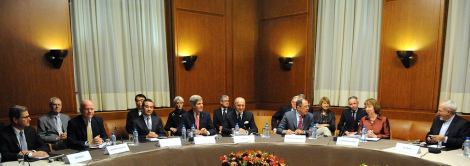
    Dress rehearsal of Russian Victory Day parade, May 2013. Source: EnglishRussia.com

    Dress rehearsal of Russian Victory Day parade, May 2013. Source: EnglishRussia.com

    One of the legacies of the “war on terror” years is that the focus of most organisations and analysts working on the concept of sustainable security—an approach to policy-making which downplays the reaction to immediate symptoms of insecurity in favour of addressing the factors that underlie them—has been on terrorism, insurgency and “non-traditional” security issues. Of late the large-scale trends of climate change and the division of the world between a global elite and a non-elite, combined with resource scarcity and the challenge of paramilitarism, have absorbed most of the focus of those concerned with conflict prevention.

    Yet recent events suggest that the sustainable-security framework which NGOs, scholars and policy-makers increasingly deploy in their analyses and prescriptions needs equally to be applied to the traditional “high politics” of relations between the great powers–from geopolitical flashpoints and the politics of crisis diplomacy to the seemingly old-fashioned world of strategic-arms-control negotiations.

    The long shadow of Vienna

    Although security analysts have spent much of the past two decades concerned with “small” wars and counter-terrorism, inter-state rivalry and great-power politics never went away. Even in Syria, where the brutality of urban-guerrilla warfare and competition between paramilitary factions appear to be defining characteristics, the competing desires of regional and global powers have played a major part in the nature and longevity of the fighting. Moreover, the only serious attempts to end the war have been the multilateral negotiations in which Washington and Moscow have been key players.

    Major powers descending on a capital city to sort out—among themselves—the fate of vulnerable individuals caught in cycles of violence is a trope reminiscent of the Concert of Europe meetings in Vienna in 1853 and 1855 on the “eastern question” or even Paris in 1860 on the Syrian revolution. But it is not the only sign that great-power politics is back. So too is the concern over “flashpoints” and the traditional response of crisis diplomacy.

    In the East China Sea, Japan and China have been jostling over the remote rocks of what the Japanese call the Senkaku and the Chinese the Diaoyu islands. Those predicting unparalleled eastern economic prosperity in the “Asian century” have become increasingly concerned over the downward spiral in relations between these two north-east Asian (and at least to some extent global) heavyweights.

    The announcement of an air-defence identification zone over the islands late last year by China’s increasingly assertive regime, led by Xi Jinping, met an undiplomatic and extremely defensive response from the Abe government in Japan. Tokyo of course looked to its major military ally, the US, to join it in talking tough to Beijing, leading to a tense stalemate in which Japan is scrambling F-15 fighter jets from the Naha airbase in Okinawa almost daily.

    If this was not enough of a gold-plated gift to those keen to make historical analogies with the great-power rivalry and security-dilemma dynamics of 1914 and the outbreak of the first world war, the increasing tensions between Russia and the west over influence in Ukraine have created a European crisis to rival the brinkmanship in north-east Asia.

    The drama in Ukraine has prompted much talk of a renewed cold war. Moscow’s effective annexation of Crimea, its 40,000 troops along the border and mid-April’s four-way crisis talks among Ukraine, Russia, the US and the EU all reinforce the idea that old-fashioned “power politics” is alive and well.

    These two developments, involving two members of the BRICS coalition of rising (or in Russia’s case re-emerging) powers, come against the backdrop of a predicted global power transition and “rise of the rest”. One need not entirely accept Robert Kagan’s argument about the “return of history” to appreciate the importance of new centres of power challenging Washington’s dominance—in economic, diplomatic and, perhaps eventually, even military terms.

    Echoing their voting behaviour at the UN Security Council on the intervention in Libya in 2011, all Russia’s BRICS counterparts abstained from the recent UN General Assembly vote denouncing the Crimea referendum (Russia voted against). And when the Australian foreign minister announced that the Russian president, Vladimir Putin, might be banned from the G20 summit in Brisbane in November, the foreign ministers of the BRICS released a dissenting statement.

    All this makes predictions of a world without inter-state rivalry—even a “nonpolar” world—more than a little premature. The task then is to think through what a sustainable-security approach can highlight, as diagnosis and prescription, for the seemingly inescapable world of great-power politics.

    Militarisation, flashpoints, brinkmanship

    A number of drivers of global insecurity stand out. First, the specific nature of great-power politics can create the conditions for crisis and instability. (And of course one could argue that the distinction between great and lesser powers itself helps to marginalise the views of most of the world’s population and is therefore a driver of insecurity.)

    In his classic 1977 work on the social foundations of international order, the late international-relations scholar Hedley Bull argued that a degree of order could be provided by the great powers, but only if these states balanced their “special rights” with the concomitant “special responsibility” to manage their relations with each other peacefully and avoid crises. The art of great-power management appears lost on the current leaders in Beijing, Tokyo, Moscow and Washington—and this makes for dangerous times.

    The drama in Ukraine has prompted much talk of a renewed cold war.

    Secondly, existing work on sustainable security already provides some clear guidance on the drivers of inter-state insecurity through a focus on militarisation. Trends in arms transfers and spending are worrying when combined with a move away from a western-dominated world.

    Recent research from the Stockholm International Peace Research Institute concluded: “The increase in military spending in emerging and developing countries continues unabated.” Although global spending on arms fell by 1.9 per cent in real terms last year, China and Russia’s spending increased by 7.4 and 4.8 per cent respectively and the US, Russia and China were three of the five largest spenders. Not only are the leaderships of the major powers neglecting their great-power responsibilities—they are also upping their spending on the means to turn a crisis into deadly warfare.

    Such spending raises the stakes in any crisis situation and makes such crises more likely by diminishing trust and souring diplomatic relations. There is little doubt that the controversial US missile-defence and Prompt Global Strike programmes have helped give the Russians the impression of being backed into a corner and made the already difficult Sino-Japanese relationship even more fraught.

    Broadening the sustainable-security approach

    And what policy priorities follow if these underlying drivers of insecurity are to be addressed? The first is demilitarisation, beyond the human-security/small-arms agenda.

    In recent years significant gains have been made in the disarmament, demobilisation and reintegration of former combatants in war zones and on security-sector reform, as well as the eventual conclusion of the Arms Trade Treaty. The same cannot however be said of large-scale strategic weaponry. The Nuclear Non-proliferation Treaty risks being seriously undermined by the glacial progress of the P5 states in living up to their article VI obligations on disarmament. And the chances of serious headway on the Comprehensive Test Ban Treaty or the Fissile Material Cut-off Treaty are slim at best.

    The ultimately futile trend towards trying to achieve security via superiority in strategic conventional weapons (as well as armed drones), rather than the much harder task of trust-building, is only making matters worse. A renewed effort to negotiate long-term, sustainable, strategic arms control is needed to reverse this trend, no matter how difficult immediate progress will be.

    The second priority is to move beyond crisis diplomacy in the major interactions between the great powers. By definition reactive rather than preventive, this can only ever provide limited opportunities to address the root causes of mistrust and insecurity between states.

    While a far from perfect arrangement—questions of justice were frequently overlooked in a quest instead for “order”—the regular meetings of the Concert of Europe powers throughout most of the 19th century could provide some inspiration. This arrangement did have a clear sense of the purpose of being a great power: it was not just a privileged position in the hierarchy of states but carried a responsibility to manage relations with other major powers in ways that avoided, where possible, the downward spiral of military brinkmanship. This unavoidably involves a willingness to consider the world from the position of one’s adversary and to take seriously the perceptions and worldviews of one’s peers, even when disagreeing with them.

    Yet breaking the moulds of entrenched diplomatic practice will not be easy. As the diplomat-turned-scholar E.H. Carr remarked over 70 years ago, “The bureaucrat, perhaps more explicitly than any other class of the community, is bound up with the existing order, the maintenance of tradition, and the acceptance of precedence as the ‘safe’ criterion of action.” The task seems so enormous as to be overwhelming.

    But if policy-makers, analysts and civil-society actors are to come up with ways of reversing the trend towards an increasingly competitive, militarised and crisis-driven inter-state order, thinking through the implications of a sustainable-security approach to great-power politics is the most useful path to follow.

    Benjamin Zala is a Lecturer in International Politics at the University of Leicester, UK and an Advisor to the Sustainable Security Programme at the Oxford Research Group. He is on Twitter at @DrBeeZee

  • Sustainable Security

    Author’s Note: The authors of this comment piece are involved in the scientific project called “Arctic Ocean ecosystems – Applied technology, Biological interactions and Consequences in an era of abrupt climate change” (Arctic ABC). This project is led by the Department of Arctic Marine Biology at University of Tromsø, The Arctic University of Norway, and comprises the development and operation of new technology for biological studies, as well as interdisciplinary components where researchers from the disciplines of Law of the Sea and international relations are deeply involved.

    Climate change has meant that the living resources of the Arctic Ocean have become more accessible. Will this be a source of cooperation or conflict? 

    Global warming is not only increasing temperatures on land and melting glaciers around the globe, but also resulting in rising water temperatures in the oceans. This is particularly true for the Arctic Ocean – the northernmost of the world’s oceans – where temperatures are rising more rapidly than the global average. Warmer temperatures in the Arctic have triggered a northwards expansion of boreal marine organisms, including several commercially harvested fish species. Concomitantly to an increase in Arctic temperatures, the permanent ice cap is shrinking rapidly, possibly leading to ice free summers within a few decades. As the Arctic ice cover diminishes, the resources of the Arctic Ocean become more accessible for exploration and exploitation.

    A scramble for the Arctic?

    arctic-department-state

    Image credit: US Department of State/Flickr.

    The increased accessibility to now ice-free areas has led to speculations about a new “scramble” for potential unclaimed Arctic resources. Although such reports should generally be viewed as exaggerated alarmist warnings, the “high seas” of the Arctic Ocean – defined as areas beyond 200 nautical miles from Arctic costal states northernmost shores – do indeed comprise living resources beyond any state’s national jurisdiction. According to the UN Convention on the Law of the Sea, living resources of high seas belong to no one and could hence be exploited by anyone. The potential for conflicts between states regarding resource harvesting in the Arctic is therefore real. Interstate negotiations on how to regulate living resources in the “high seas” of the Arctic Ocean have been ongoing since 2010. The five Arctic Costal states (USA, Russia, Norway, Canada and Denmark – including Greenland and the Faroe Islands) are actively participating in the negotiations, together with five additional key stakeholders (Iceland, China, South Korea, Japan and the EU) and form the so called 5+5 group. While indigenous peoples have been represented in the delegations from Denmark (Greenland), Canada and the USA, their role have in practice been rather limited as the central part of the Arctic Ocean are very far away from the areas inhabited by these people and no historic rights exists.

    The current format of state negotiations is evolving as a two-tier process, where scientists are actively involved. Because the central Arctic Ocean is, so far, permanently covered by ice and hardly accessible, knowledge of the extent and volume of marine organisms populating this area has been identified as an important data gap. Particularly, there is a need to assess the presence and abundance of both Arctic species adapted to this environment and boreal species migrating northwards. A key task in the negotiation process has therefore been to establish a joint scientific project, with the long-term goal of assessing the potential for future commercial fisheries. Discussions between scientists from the 5+5 stakeholder group have complemented meetings at the diplomatic level, demonstrating a practical example where science plays a major role in a political negotiation process.

    The main fish species known to colonize the high Arctic Ocean is the polar cod Boreogadus saida. Polar cod is a small (<40 cm) mainly benthic fish with low commercial interest and high ecological importance for the ecosystem. Adult specimens seem to be restricted to the shelf region, but younger individuals are frequently encountered in connection with sea ice in the central Arctic Ocean. Despite its relative small size, its ecological importance is great as they can channel up to 75% of the energy between zooplankton and marine birds or mammals. So far, commercial fisheries of polar cod are limited and restricted to Russian waters. Being restricted to shelf regions, it is unlikely that it will extend its distribution into the central Arctic Ocean. As such, its direct economic importance is likely to be low. However, as commercially harvested boreal species, such as Atlantic cod and halibut, expand northwards, the region could possibly become of interest for fishermen from Arctic costal states as well as from other nations with expertise in high-sea fisheries, in particular from Eastern Asia. Through ecological cascading effects, the ecological and economical role of polar cod may also be shifted, with hitherto unknown consequences and influence on future fisheries in the Arctic Ocean.

    Negotiating the Arctic Ocean’s Living resources

    Negotiations to regulate the harvesting of marine living resources in the Arctic Ocean comprise of several conflicting topics. As these negotiations involve resources with potentially significant commercial interest not owned by anyone and a geopolitically important and highly symbolic region, it appears impossible to take for granted that the process will go smoothly. However, thanks to scientific cooperation and responsible state behavior, the negotiations are taking into account ecological vulnerabilities of the region and the need for maintaining peace and stability. While not concluded yet, signals from the negotiators indicate that a common declaration or agreement can be expected soon, perhaps even in 2017.

    In a broader context, these negotiations represent an interesting first example where fisheries regulations could be implemented before harvesting takes place and where the precautionary principle could be applied. This result is also interesting as the participating state actors (+EU) have different interests, and the settlement of an agreement carries a high symbolic value. Why should for example Russia, which through sea and land possessions hold almost 50% of the Arctic, view a tiny stakeholder like Iceland, or the remote high sea fishing nations like S. Korea or China as equal legitimate participants in these negotiations? While the central part of the Arctic Ocean indeed is high seas, great powers like Russia or the US could have acted less constructive in the talks. Similarly, as different national priorities exist with respect to whether the potential resources should be utilized or protected, these obstacles have gradually have diminished. As the years of negotiations have shown, the states have concluded on a multilateral and including approach, giving scientific advice a key role, taking into account the many uncertainties and the vulnerability of the region, rather than only pushing forward narrow national interests. Obviously, further monitoring of the living resources inhabiting the “high seas” of the Arctic Ocean is critically needed to define this precautionary principle.

    Dr. Njord Wegge is Associate Professor- II, Political science, University of Tromsø, The Arctic University of Norway

    Dr. Maxime Geoffroy is Postdoctoral researcher, Department of Arctic and Marine Biology, University of Tromsø, The Arctic University of Norway.

    Dr. Jørgen Berge is Professor, Department of Arctic and Marine Biology, University of Tromsø, The Arctic University of Norway. Project leader Arctic ABC.

  • Sustainable Security

    In an important year for the Women, Peace and Security agenda, women’s civil society organising is increasingly being impacted by global and national counter-terrorism regimes.

    2015 is a key year for women peace activists around the world. United Nations Security Council members will convene a high-level review in October 2015 to assess progress at the global, regional and national levels in implementing Security Council Resolution (UNSCR) 1325, renew commitments, and address obstacles and constraints.

    Women, Peace and Security conference

    North Darfur Committee on Women session on the UNSCR 1325 in Dar El Salaam, Darfur, 2011 Source: Flickr | UNAMID

    Fifteen years since UNSCR 1325 was passed, there are still a lot of challenges to overcome. However, women peacemakers and activists are as resilient as ever. They continue to push the Women, Peace and Security agenda’s important message forward, in environments that can be risky, unsupportive, or outright hostile.

    However, this resilience is closely tied to the existence of a vibrant civil society space. It is therefore important to assess new challenges to the building of peace and women’s rights posed by counter-terrorism measures.  This assessment must overcome the hesitancy that many peacemakers feel about discussing their experiences openly, fearing damage to their reputation as well as other repercussions.

    To this end, in early 2015 the Women Peacemakers Program (WPP), together with Human Security Collective (HSC) contacted a selection of partners in ten countries to gain insight into the multiple ways the counter-terrorism agenda is affecting their work for peace and women’s rights.  This article is based on the perspectives of the respondents from a range of countries worldwide, who were guaranteed anonymity.

    Global framework

    Post 9/11 counter-terrorism measures have impacted on civil society’s operational and political space in several ways. Legislation, although enacted at the national level, is enacted within, and responsive to, a global framework of measures. Terrorist listing regimes and partner vetting systems may hinder peace work in a variety of complex ways.

    One of the most significant areas for peace organizations is the framework that governs the prevention of terrorism financing through the non-profit sector. The Financial Action Task Force (FATF), a highly influential global consortium established in 1989 by the G7, has developed specific recommendations for non-profit organizations (Recommendation 8 – Best Practices: Combating the Abuse of Non-Profit Organisations) in its Anti Money Laundering/Countering Financing of Terrorism standard. This standard assumes that non-profits are vulnerable to abuse for terrorism financing. To date, over 180 countries have endorsed the standard and as such are subject to a peer evaluation by the FATF every 6 to 7 years. Receiving a low FATF rating immediately influences a country’s international financial standing.

    In recent years, a number of countries have started to use the FATF standard, and specifically Recommendation 8, as a pretext to clamp down on civil society space. Although countries often deny that it is the case, evidence is growing that upcoming FATF evaluations can have a preemptive chilling effect on civil society space. This is a direct result of governments’ desire to show the FATF that they are capable of preventing terrorist financing abuse through their non-profit sectors. In addition, some states are starting to pass more restrictive non-profit laws after an FATF evaluation – as if the evaluation itself serves to legitimize the drafting of such laws.

    Shrinking space

    The WPP research indicates that as a result of these mechanisms, a growing number of women activists around the world are experiencing growing pressures on their capacity to undertake peace and human rights activism, including restrictive NGO legislation, suffocating financial regulations, intimidating surveillance practices and exhaustive reporting requirements.

    Many women peace activists engage in civil society work that is critical and political. They often operate in high-risk settings, where they face repercussions because of the very nature of their activist work, which challenges established notions and bastions of patriarchal power. Several respondents reported that their governments are trying to control, limit, or stop critical civil society work through the development and passing of new NGO legislation. This new legislation is impacting on their space to operate, for example by putting restrictions on receiving funding support. As one activist from the Middle East and North Africa (MENA) region shared:

    The Rights and Liberties Committee at the Constitution Drafting Assembly has released their suggestion for the Constitution… namely that local civil society should be banned from receiving any foreign government funds.

    A women’s organisation based in South Asia observed a difference between the difficulties experienced by various organisations:

    There is enough funding for service delivery organizations and those who follow right wing politicians. However, there is no funding for the rights-based organizations, or for those that work towards alternatives.

    Some respondents described nationwide campaigns of invasive NGO inspections undertaken by national governments, using harassment tactics such as personal intimidation and threatening activists with the closing down of their organizations. One respondent reported:

    When I received a grant from one (domestic) Foundation, I was getting calls from the intelligence bureau and had to supply them with three-years of audited statements, a list of Governing Board Members and staff members. […] They visited my home three times, to ask me questions.

    Some women’s groups also faced demanding reporting requirements because of government regulations:

    In some locations, all civil society organizations have to submit a copy of their annual report to the police, armed forces, and intelligence offices of the state.

    Better safe than sorry?

    Aside from the general worsening atmosphere for political or rights-based peace work in many contexts, the FATF standard has also had a great impact on the financial service industry, particularly on banks. Banks can be sanctioned when not abiding by the FATF standard, which may include the withdrawal of their banking license, freezing of assets, or hefty fines.

    There is a growing body of evidence that shows that banks’ risk averse behavior has resulted in the withdrawal of bank services to civil society active in conflict areas. As a result of this “better safe than sorry” attitude of the banks, a growing number of civil society organizations are experiencing great difficulties in making or receiving money transfers. Over the years, many donors have become cautious  with grants. Some donors are avoiding partners in high risk, terrorist prone areas, and a number of others are tightening their own due diligence.

    Women’s peace organizations more easily fall prey to these restrictions. This is partly because women’s organizations usually operate on small budgets, which means they often do not have the leverage to negotiate a solution with their banks, which big donor organizations and charities are often still able to do. Several respondents mentioned facing challenges with their banks, ranging from delays in receiving their funds to banks requesting additional project information before releasing the funds. Some activists reported that certain banks would no longer release foreign funds to their organizations or had refused to provide their organization with a bank account. One activist reported that another organization in her network had had its account closed by the bank. A respondent from the MENA region shared:

    Sometimes we are facing difficulties during the money transfer process, it takes a long time for us to receive the funds, and some correspondent banks reject the amount. Recently a new system has been introduced: there is a limit on the amount we can withdraw on a weekly basis from the bank. This means we cannot pay all our organizational expenses on time, such as staff salary, rent, activity expenses… Everyone is calling us for their money, and we have to promise them that we will pay them next week… Sometimes we are taking loans from other people just to cover our expenses.

    In addition, several reported that direct access to funding is getting more difficult. This is partly due to donors increasingly prefering to channel funds via large organizations capable of producing grant proposals according to their demanding guidelines, as well as able to absorb rigorous reporting and auditing requirements. An organization based in Europe reported significantly increased pressures on human resources regarding donor reporting. Staff found themselves working overtime to meet the requirements of this related additional bureacracy, and on some occasions had to seek external advice.

    Cumulative effect

    Increasingly, these complex and time-consuming requirements are clashing with the reality on the ground: that many women’s organizations are operating on very modest budgets with a combination of limited paid staff capacity and/or volunteer efforts, in a demanding environment that is at best challenging and at worst highly insecure and hostile.

    As such, counter-terrorism measures – whether subtly or bluntly – are having an impact on a number of levels that, in combination, restrict civil society space. As one respondent, whose organization had been severely impacted, summarized:

    We face an increase in expenditure (because we want to avoid targeting, we now travel in groups, which is more costly); increased surveillance of our movement and programs (officials are asking for reports and bank advices, including that of our personal bank accounts); postponing or cancelling of some of our programs or keeping low profile for some time; mental unrest of our members; impact on the reputation of our organization as our work was projected as “anti-national”, which has affected the outreach of our member organizations. Also, a few partner organizations have left the network fearing repercussions by the government.

    The cumulative effect of the range of pressures is that the enabling space for women’s civil society work is shrinking and therefore progressive and pioneering work for inclusive development, peace and women’s rights becomes frustrated. The implications for broader security concerns are worrying. When alternative civil society voices and constructive seeds of change are not provided with the soil to take root, threats to the daily security of people and communities are given free reign. As such, opportunities for actors looking to exploit these vulnerabilities increase.

    It is important for civil society to come together to exchange experiences as well as document and monitor the impact counter-terrorism measures are having on their peace and human rights work, in order to engage in collective advocacy. It is equally important for the Women, Peace and Security community to engage with the different counter-terrorism measures and stakeholders. Conversely, it is crucial to raise awareness about the importance of safeguarding critical civil society space worldwide so that women’s voices and actions for peace and human rights can continue to change the world for the better.

    Isabelle Geuskens serves as Executive Director of the Women’s Peacemakers Program (WPP), a Dutch NGO that works for the nonviolent resolution of conflict, and the inclusion of women’s voice and leadership in nonviolent conflict resolution processes. In early 2015 the WPP, together with Human Security Collective (HSC), contacted a selection of partners in the field, to gain insight into the multiple ways the counter-terrorism agenda is affecting their work for peace and women’s rights. The findings are summarised in WPP’s Policy Brief: Counterterrorism Measures and their Effects on the Implementation of the Women, Peace and Security Agenda.

    Featured Image: Women’s group in Badakhshan, Afghanistan. Source: Flickr | Canada in Afghanistan

  • Sustainable Security


    This piece by sustainablesecurity.org’s Zoë Pelter and Richard Reeve was originally published on 5 September, 2013 on openDemocracy 

    4815774738_b9962f4875_bThe narrow defeat on 29th August of the UK government’s parliamentary motion on support in principle for military action against the Syrian regime has forced Prime Minister David Cameron to concede that Britain will play no part in any direct attack on Syria. If the UK is to play no military role in ‘punitive’ responses to the regime’s alleged use of chemical weapons, what options are open to the UK in terms of resolving the Syrian conflict, protecting civilians and punishing those responsible for war crimes there? And how does Cameron’s overt preference for the military option, with or without UN mandate, condition these non-military options?

    Pushing for peace

    The possibility of a negotiated peace in Syria should not be dismissed. Neither the regime’s military, militia and foreign allies, nor the variety of armed factions ranged against them (and, increasingly, each other) are exhausted. Nor do the Assad regime’s mid-year successes in central Syria presage any imminent likelihood of it regaining control of the north and east. The strategic stalemate that appeared to set in to the conflict in June, after pro-Assad forces retook al-Qusayr, arguably presented a breathing space for negotiations and the so-called Geneva II conference, proposed by the US and Russia, with UN and Arab League backing, the previous month. As recently as mid-August, the Geneva talks were expected to resume in September.

    But even convening these talks will now prove far harder. Expectation of Western intervention against President Bashar al-Assad, as well as their own increasing divisions, gives the Western-backed armed opposition groups an incentive to delay talks. Jihadist groups that have proved effective militarily are largely excluded. US and Russian facilitation of the Geneva process, however fraught, also tends to exclude the voices of regional actors like Turkey, Iran, Iraq and Saudi Arabia, each of which feels its interests very directly threatened in Syria and gives active support to one or more armed faction.

    This calls for a rethinking of the Geneva process, if not the 2012 transition roadmap, to bring in the full range of actors, not the abandonment of peace talks. Threat of US-led intervention and its own increasing international marginalisation, should it be proved to have launched a chemical attack on 21st August, could incline the Assad regime towards a negotiated settlement, perhaps even an exit and exile strategy.

    Cameron and PutinThis will not happen without pressure from Iran and Russia. Both have much to lose in Syria, but neither is entirely closed. Iran is still in its post-electoral opening and under severe economic pressure, looking to cut a wider deal with the West. Russia may not be comfortable with its isolated position defending the alleged user of chemical weapons. Like the US, it fears the growing influence of jihadi groups while the current stalemate continues. While there is little hope of Moscow abandoning its Security Council veto over action against Syria, it will be embarrassed if it stands almost alone defending Assad in the Council or against a General Assembly resolution. Neutrally collected and analysed evidence of Syrian regime culpability for chemical weapons attack will be crucial to shifting Russia’s position.

    Having made clear its preference for ‘punitive’ military action, and been frustrated by parliament in pursuing such action, the UK government is not ideally placed to broker negotiations. Yet the UK does have influence with Syrian opposition groups, in the Gulf States and, when it acts in concert with its less interventionist EU partners, with Russia, Turkey and Iran.

    Fighting impunity

    Again, the importance of due investigative and legal process through UN Fora is crucial. When asked on 29 August if he agreed that Assad should be prosecuted at the International Criminal Court (ICC), David Cameron replied curtly that these processes take time. Yes, the wheels of institutional responses turn slowly, not least justice institutions. Yet the most obvious response to any breach of customary international law on the use of chemical weapons (Syria is one of just five states not to have signed the 1993 Chemical Weapons Convention) is a war crimes prosecution through the ICC. It is not important that Syria has not signed the Court’s establishing Rome Statute. Assad and any responsible commanders could still be subject to international prosecution if the Security Council referred Syria formally to the ICC.

    The UN has been investigating a wide range of alleged crimes committed by both sides with a view to future prosecutions. Clearly, the presence on the Security Council of Syrian allies and a majority of non-signatories to the Rome Statute presents obstacles to referral, but the Council has overcome such obstacles before, notably China’s reluctance to see its Sudanese allies prosecuted over actions in Darfur. With France and other allies, the UK should take the lead within the Security Council in pushing to refer Syria to the ICC based on the same ‘moral minimum’ or red line that has been deployed in favour of armed intervention. This, in turn, may provide leverage to persuade pro- and anti-Assad factions alike to take peace negotiations more seriously.

    Notwithstanding the heavy shadow of its past action in Iraq, the UK’s moral standing is bolstered by commitment to legal and democratic process. The UK should take a breath, step back from punitive reaction and recommit itself to a multilateral, inclusive and legally rigorous approach to resolving the war in Syria and its many affiliated regional conflicts. No other form of intervention will effectively protect the lives and rights of Syrian civilians either in the current war or the difficult peace that must follow.

    Richard Reeve is the Director of Oxford Research Group’s Sustainable Security Programme. He works across a wide range of defence and security issues and has particular expertise in Sub-Saharan Africa, peace and conflict analysis, and the security role of regional organisations.

    Zoë Pelter is the Research Officer of Oxford Research Group’s (ORG) Sustainable Security Programme. She works on a number of projects across the programme, including Rethinking UK Defence and Security Policies and Sustainable Security and the Global South.

    Image sources:

    Image: The Prime Minister welcomes President Vladimir Putin to Downing Street ahead of the G8 Summit. Source: The Prime Minister’s Office

    Image: The Prime Minister during a joint press conference with US President Barack Obama. Source: The Prime Minister’s Office

  • Sustainable Security

    Green cities smallA recent article on this website entitled The United States, Niger & Jamaica: Food (In)security & Violence in a Globalised World explored some of the possible links between climate change, food insecurity and violence. Many current articles in the media warn of growing food insecurity as global warming and climate change have devastating effects on crops, livestock and even fisheries. A piece in yesterday’s Guardian states that if extreme weather becomes the norm (which it has) then “starvation awaits”.

    Although it is important to recognise that climate change is real and that it is a threat to global security, we should seriously start to focus on what we can do to affect change. Integral to a sustainable security approach is to tackle and address the long-term, root causes of insecurity and conflict. This can easily seem like a daunting task, especially when it concerns “big issues” such as climate change. There are however many things that can be done: some on a policy level, and others on a community level.

    A recent report by the UN Food and Agricultural Organisation (FAO) draws the attention of policymakers to “urban and peri-urban horticulture, and how it can help to grow greener cities in Africa” because “production of fruit and vegetables in and around urban areas has a clear comparative advantage over rural and other sources in supplying urban residents with fresh, nutritious – but highly perishable – produce all year round. It generates local employment, reduces food transport costs and pollution, creates urban green belts, and recycles urban waste as a productive resource.”

    The FAO report says that by the end of this decade, 80% of the world’s fastest growing cities will be African and as more and more people are moving from rural to urban areas in search of a better life, African cities are finding it hard to cope: “more than half of all [African city] residents live in overcrowded slums; up to 200 million survive on less than US$2 a day; poor urban children are as likely to be chronically malnourished as poor rural children”. The report, which draws its conclusions and recommendations from 31 country case studies, suggests that across the Africa continent 40% of residents in cities already have home gardens and “most of these urban farmers are able to meet their nutrition needs and still produce enough to sell in markets”. The commercial production of fruit and vegetables provides livelihoods for thousands of urban Africans and food for millions more. But unfortunately market gardening has grown with little official recognition, regulation or support.

    One way to address food insecurity is definitely to help those most affected by price volatility of food become less dependent on the free market. Formally and institutionally encouraging people to grow some of their own food seems like a great idea, not only for African cities, but for people around the world. London has many community gardens to “support and advocate for food producing gardens and their role in individual and urban food security”.

    Anna Alissa Hitzemann is a Peacework with Quaker Peace and Social Worker, currently placed with the Sustainable Security Programme at Oxford Research Group.

    Image source: Gates Foundation

  • Sustainable Security

    The UK is the state of registration for a large number of land-based and maritime PMSCs. How compatible is the UK regulation model for PMSCs with international norms, especially those concerning human rights?

    Author’s note: this commentary draws upon work found in a previous article written by the author – ‘Regulation of the Private Military and Security Sector: Is the UK Fulfilling its Human Rights Duties?’ in (2016) 16(3) Human Rights Law Review 585-599.

    There are a large number of Private Military and Security Companies (PMSCs) registered in the UK. In 2011 the Security in Complex Environments Group (SCEG) was appointed by the UK government as its partner for the development and accreditation of standards for the UK private security industry when operating overseas. SCEG is a special interest group within Aerospace Defence and Security (ADS), a trade organisation advancing the UK aerospace, defence, and security industries. SCEG lists nearly 60 UK-registered PMSCs as members. Separately, 21 UK-registered PMSCs are currently listed as members of the International Code of Conduct Association (ICoCA), set up in 2013 to oversee the implementation of a non-binding international code for private security companies, although a much larger number of UK PMSCs, over 150, had signed up to the International Code of Conduct for Private Security Providers of 2010. This emerging system of national and international self-regulation was a political choice by the UK government based on free-market thinking and limited resistance to a powerful and profitable industry.

    Options for Regulation

    Image credit: chuck holton/Flickr.

    The post-Cold War peace dividend, which led to a surplus of well-trained former armed forces personnel, combined with the damage done to the UK’s reputation in the late 1990s by Sandline International, led to some soul searching about the regulation of the overseas operations of an emergent private military and security industry. Sandline was a private military company with a previous history of involvement in conflicts in Africa, headed by former British Army Officer Tim Spicer, that had breached a UN and UK arms embargo against Sierra Leone by supplying arms to President Kabbah. The recommendations of the Legg Report of 1998, that the government consider introducing a system of licensing for PMSCs operating out of the UK, were a direct outcome of the ‘Sandline Affair’.  The UK Foreign and Commonwealth Office’s (FCO) Green Paper, ‘Private Military Companies: Options for Regulation’ of 2002, provided a thoughtful examination of the reasons for growth of the industry, including a convincing rationale for regulating what was at the time still a fledgling industry:

    Bringing non-state violence under control was one of the achievements of the last two centuries. To allow it again to become a major feature of the international scene would have profound consequences. Although there is little risk of a return to the circumstances of the 17th and 18th centuries when privateers were hard to distinguish from pirates, and Corporations commanded armies that could threaten states, it would be foolish to ignore the lessons of the past. Were private force to become widespread there would be risks of misunderstanding, exploitation and conflict. It would be safer to bring PMCs and PSCs within a framework of regulation while they are a comparatively minor phenomenon.

    In outlining the options for regulation, the Green Paper clearly favoured a system of government licencing over a system of self-regulation based on a voluntary code of conduct. The Montreux Document (on Pertinent International Legal Obligations and Good Practices for States Related to Operations of Private Military and Security Companies During Armed Conflict) of 2008, a non-binding document agreed to by a number of countries (mainly those with a PMSC industry such as the UK or those that were hoisting significant number of contractors such as Iraq), also expressed a preference for a licensing system. The Montreux Document identifies exiting legal obligations incumbent upon states in their relationships with PMSCs when either acting as the host state, home state (state of registration) or contracting state, but it did not take the form of a binding treaty. It also recommends good practices for governments to adopt when engaging with PMSCs, but there is no supervision or enforcement of any aspect of the Document.

    Given this support, the creation of a system of licensing seemed likely, particularly as such a regime had been introduced for UK domestic private security operators in the 2001 Private Security Industry Act, after a period of ineffective self-regulation. Indeed, when considering the Green Paper later in 2002 the Foreign Affairs Committee stated that, while self-regulation would establish better standards of PMSC conduct, it would not by itself prevent rogue or disreputable UK companies from acting against or, indeed, damaging UK interests or policies. Therefore, the Committee recommended a mixed system of general and specific licences.

    However, the UK’s experience with contractors during its involvement in conflicts in Afghanistan from 2001 and Iraq from 2003 had significant effects. By the time the government came to reconsider the matter in 2009, a much more powerful PMSC industry in terms of reach, capability and lobbying influence, combined with a new climate of austerity following the financial crisis beginning in 2008, to push  the Conservative-led government rapidly towards the least burdensome, least interventionist and, moreover, least expensive option of self-regulation.

    Despite further consultations revealing concern with a system of self-regulation, when the government re-engaged with the issue of regulation, it proceeded to create a system in which government backing for a national system of self-regulation was keyed into voluntary international codes. Concerning the latter, the UK government has been a keen supporter of the Montreux Document 2008, which provides a non-binding framework for states, as well as the International Code of Conduct for Private Security Providers of 2010. The latter contains a set of standards for security companies to respect human rights and humanitarian law, and which provides for a non-binding international form of self-regulation for the companies themselves. On the other hand, the UK has opposed any form of binding treaty requiring states to legislate for the regulation of PMSCs as proposed by the UN Working Group on Mercenaries, an item that has been on the agenda of the UN’s Human Rights Council since 2010.

    Flaws in Self-Regulation

    Ignoring the Rogue Traders

    In 2009 the FCO optimistically estimated that in time 90% of PMSCs would opt-in to a system of voluntary self-regulation. Even if this happened, it would still leave 10% of unregulated rogue companies, potentially trading on their willingness to engage in shady operations rather than on their corporate social responsibility. A voluntary system may raise standards in the industry as a whole but it ignores the central point of regulating the industry: to deter and punish those most likely to commit abuses.

    Nemo Judex in Causa Sua (no-one should be a judge in his own cause)

    Self-regulation in its pure form means that the industry is essentially being given the task of acting as a judge in its own cause. This basic injustice has been partly addressed in the regime within the UK by creating a national system of monitoring, inspection and enforcement through SCEG, separated from the industry association (ADS). This has also been duplicated at the international level, with PMSC membership of the International Code of Conduct being separate from the system of monitoring and enforcement in the hands of the ICoCA. At national level, the SCEG consists of a mixture of PMSCs, with some legal and insurance industry membership, as well as representatives from the FCO and the Department of Transport. At the international level, the ICoCA comprises states (Australia, Norway, Sweden, Switzerland, UK, US), civil society and industry representatives, with equal representation of the three pillars in the Board of Directors. Clearly it is not solely a case of the industry judging the actions of its members, but a truly independent body would not include the industry at all.

    Under the voluntary system put in place in the UK, the auditors comprise individuals from bodies accredited by the UK Accreditation Service (UKAS) as being able to measure the management, performance and activities of PMSCs against national (PSC1 US National Standard, 2012), and international standards (ISO 18788/28007, 2015), and these individuals and bodies are presumably approved because they are independent of PMSCs.

    Limited Sanctions for Non-Compliance

    Sanctions are limited, the main one comprising exclusion of a non-compliant PMSC, a sanction that ultimately does not stop the company in question from trading, as shown by the US experience of transition from ostracised ‘Blackwater’ (responsible for the 2007 Nisour Square lethal shooting of 17 civilians in Iraq), to the renamed ‘Xe Services’ in 2009, and then to ’Acedemi’ in 2011.

    Applicable Standards?

    The question of what standards are to be applied is not as straightforward as the documents (International Code of Conduct, PSC and ISO standards) suggest; that this system will be upholding human rights, humanitarian law and other applicable principles of international law. Given that these laws are not directly applicable to PMSCs, indeed most are designed to cover states not business actors, there is a certain amount of picking and choosing, adapting and interpreting, of standards. This is found at the international level, where the International Code of Conduct (ICoCA) covers some human rights but not others; and in the adoption of PSC1 (2012) as the national standard and ISO 18788/28007 (2015) as the international standards. These standards are not formulated in inter-governmental fora where the development and application of international norms normally take place. PSC1 was formulated by ASIS (an organisation for security professionals), and approved by the American National Standards Institute (ANSI); while ISO 18788/28007 was produced within the International Organization for Standardization (ISO), a non-governmental international organisation consisting of national standard-setting bodies.

    Failure to Close the Accountability Gap

    The UK government shows limited willingness to engage with its positive responsibilities under international law to ensure that private actors within its jurisdiction respect relevant national and international laws in foreign countries in which they operate. Arguably, the government’s presence on both the SCEG at national level and the ICoCA at the international level may address this deficiency, but its critical scrutiny of the practices of PMSCs in these fora is difficult to ascertain or gauge. In any case, it is certainly not as robust as a system of licencing that would require all UK-registered PMSCs to demonstrate to the licensing authorities due diligence in vetting, training, deploying and controlling personnel in conflict zones and other fragile situations. This must be backed up by a system of penalties and fines on companies and their directors for breach of the licence conditions and, ultimately, punishment for individual contractors committing serious crimes over which the UK authorities can, despite government protestations to the contrary, exercise criminal jurisdiction.

    The rapid implementation of soft voluntary standards that might have been expected does not appear to have materialised as the number of certified UK registered companies is low (at just over 40 land and maritime PMSCs according to the SCEG website). This means that a majority of UK-registered companies remain unregulated. Given that such companies often operate in unregulated spaces in other countries, there remains a major accountability gap. In these circumstances it is very difficult to see how the government’s backing for a system of voluntary self-regulation for UK-registered PMSCs, no matter how sophisticated the system appears to be, has worked to close this gap.

    Nigel D. White is Professor of Public International Law at University of Nottingham.

  • Sustainable Security


    MyanmarPublished last week, Myanmar: Storm Clouds on the Horizon is International Crisis Group’s latest Asia report. It focuses on the potential for political violence and social instability as Mynamar’s leaders are undertaking reforms “to move the country decisively away from its authoritarian past”. For most of the past 50 years, the government of the Republic of the Union of Mynamar (also referred to as Burma) has been under direct or indirect control by the military. Since independence in 1948, the people of Myanmar have suffered civil wars which have mainly been struggles for ethnic and sub-national autonomy. The country has consistently been in the news for human rights violations. Perhaps one of the world’s most well-known political prisoners, the Nobel Peace Prize laureate and opposition politician Aung San Suu Kyi, also chairperson of the National League for Democracy (NLD) was released in 2010 after 21 years under house arrest.

    Thein Sein, current president of Myanmar, has put in place a far-reaching and radical reform agenda. The ICG’s report focuses on what reforms have been achieved and what this may mean for a possible resurrection of violence because “political prisoners have been released, blacklists trimmed, freedom of assembly laws implemented, and media censorship abolished. But widespread ethnic violence in Rakhine State, targeting principally the Rohingya Muslim minority, has cast a dark cloud over the reform process and any further rupturing of intercommunal relations could threaten national stability.” With former political prisoners being released, 2,000 high-profile activists and opposition politicians being allowed to return home, and further liberalization of the media, “social tensions are rising as more freedom allows local conflicts to resurface”.

    The report notes that “The easing of authoritarian controls has created the space for the population to air grievances, the ability to organise in a way that was not possible before, and the opportunity to have a real influence on government policies and decisions” which has led to an “exponential growth in civil society activity”. In order for the transition from authoritarian rule to democracy to be stable, and for peace and security to be sustainable, the government of Myanmar will have to face and resolve major challenges. Widespread militarization and the political and social marginalization (past and present) of ethnic and religious groups will have to be addressed. For example, it has been estimated that the recent 2012 violence between Rohingya Muslims and Rakhine Buddhists in Rakhine State led to an estimated 90,000 displaced people in addition to dozens of casualties. It will not be sufficient to react to past and present violence by allowing more freedom of speech and liberalizing the press. Trying to contain the violence and reducing state repression alone will not address the underlying drivers of insecurity. The government will have to take a sustainable security approach and make great efforts in order to actively address the causes of long-standing grievances. Addressing only the symptoms cannot lead to long-term stability and the rebuilding of trust between communities.

    The ICG offers several options to minimize the risks associated with single party dominance during Myanmar’s political transition. These include changing the electoral system to some form of proportional representation, building coalitions between the NLD and other political parties, and building bridges between the NLD and current president Thein Sein as well as other political forces- particularly the old guard. The ICG recommendations underscore the importance of all parties, and the majority of people, to feel involved in the political process. The marginalization of any political or ethnic/religious groups will most probably lead to further violence and insecurity in the future.

    ICG’s full report and details of the policy recommendations can be read here.

    Anna Alissa Hitzemann is a  Peaceworker with Quaker Peace and Social Witness. She currently works with Oxford Research Group as a Project Officer for the Sustainable Security Programme, with a focus on our ‘Marginalisation of the Majority World’ project.

    Image source: Rusty Steward

  • Sustainable Security

    Jenny Nielsen and Marianne Hanson

    The first week of the third Preparatory Committee (PrepCom) for the 2015 Review Conference (RevCon, held every five years) of the Nuclear Non-Proliferation Treaty (NPT) has witnessed a heavy emphasis on issues relating to the disarmament pillar. In particular, the humanitarian impact of nuclear weapons, highlighted by a wide-ranging, cross-grouping, multi-aim initiative which continues to consolidate itself in the non-proliferation regime, has come to the fore. Frustrated with the lack of progress towards NPT Article VI commitments to complete nuclear disarmament, the initiative has invigorated attention to the urgency of nuclear disarmament and a need for a change in the status quo. NPT member states and civil society continue to engage actively in publicizing the humanitarian consequences of nuclear weapons as an impetus to progress towards nuclear disarmament.

    The Humanitarian initiative

    Austria has announced the dates of a Third International Conference on the Humanitarian Consequences of Nuclear Weapons, to be held on 8-9 December 2014 in Vienna. This conference will follow the March 2013 Oslo conference and the February 2014 Nayarit conference, which were both notably boycotted by the five NPT nuclear weapons states (NWS: the UN Security Council permanent members, or P5).  Whether any of the five NWS will participate in the Vienna conference, remains to be seen. Given the Chair’s summary of the Nayarit conference, which includes some of the Mexican chair’s personal perceptions on the humanitarian initiative’s aims, the Austrian Ministry of Foreign Affairs may find that appealing to the NWS to attend will be a challenging task.

    UN General Assembly. Source: Wikipedia

    UN General Assembly. Source: Wikipedia

    At the PrepCom, the Mexican delegation explained that the Chair’s Summary of the Nayarit conference, ‘reflects the opinion of the overwhelming majority of delegates, in the sense that these discussions should lead to the commitment by States and civil society to achieve new standards and standards through a legally binding instrument prohibiting nuclear weapons in the same way, as in the past, the weapons that have been eliminated were first banned’. Furthermore, the Mexican delegation to the PrepCom stressed that ‘the time has come to initiate a diplomatic process, to define specific time lines and the most appropriate fora to achieve this work’.

    Since the inclusion of the humanitarian consequences issue in the Final Document of the 2010 NPT RevCon and the reinvigoration of this initiative in the PrepComs since then, the NWS have been cautious of the initiative’s coordinated activities and continue to question the aims of the initiative.  In particular, the NWS will not readily engage in the initiative as long as they interpret or perceive it to be the pathway towards a delegitimization process and, ultimately, a ban on nuclear weapons’ possession and use. For this reason, controlling the initiative’s external communication of its aims and activities will need to be carefully managed in order to sustain its broad, cross-grouping support-base and participation. This, in turn, will enforce its credibility and longevity in the regime towards the goal of progress towards nuclear disarmament.

    Suing for Nuclear Zero

    Cactus Dome, Runit Island, Enewetak Atoll, Marshall Islands - a concrete-capped burial pit for radioactive waste from US nuclear tests.

    Cactus Dome, Runit Island, Enewetak Atoll, Marshall Islands – a concrete-capped burial pit for radioactive waste from US nuclear tests. Source:  US Defense Special Weapons Agency (via Wikipedia)

    On 24 April, a few days before the NPT delegations convened at the UN for the PrepCom, the Republic of the Marshall Islands filed cases in the International Court of Justice and the U.S. Federal District Court claiming that all nuclear-armed states—including the four non-NPT states: India, Israel, DPR Korea, Pakistan—‘have failed to comply with their obligations […] to pursue negotiations for the worldwide elimination of nuclear weapons’.  These cases, referred to as the Nuclear Zero lawsuits, are based on treaty law obligations (for the five NPT NWS) and customary international law (for the four non-NPT member states). The Labour Party of New Zealand (currently in opposition) has pledged support for the lawsuits. Civil society groups at the NPT PrepCom have heralded the motion.

    As a testing ground for U.S. nuclear weapons (between 1946 and 1958), the Republic of the Marshall Islands bears firsthand experience of the effects of radiation. On the first day of the PrepCom, the Minister of Foreign Affairs of the Marshall Islands, Tony de Brum, delivered a powerful statement including a personal account of his own childhood memories of U.S. nuclear testing. Given the close US-Marshall Islands economic and defence ties, including an agreement for use of the U.S. Army Kwajalein Atoll missile test range, it is an interesting bilateral development.

    In her 29 April statement to the 2014 PrepCom, U.S. Under Secretary Rose Gottemoeller asserted that ‘it is the United States’ deep understanding of the consequences of nuclear weapons use—including the devastating health effects—that has guided and motivated our efforts to reduce and ultimately eliminate these most hazardous weapons’. Gottemoeller stressed that ‘it is imperative that we make sure people remember the human impact of nuclear weapons’. In a nod to the Nuclear Zero lawsuits she added that her ‘recent trips to the Marshall Islands and Hiroshima were potent reminders of the need to persevere in confronting this challenge’. The inclusion and attention to these issues in the U.S. statement is an indicator of the prominence and importance of the humanitarian dimension initiative. Notwithstanding universal formal engagement, the initiative is percolating through national statements and embedding itself in discourse widely.

    Article VI commitments

    Strategically timed for impact during the PrepCom and in furtherance of commitments to transparency, on 29 April, the U.S. State Department released newly classified information on the U.S. nuclear weapons stockpile. As noted by the Federation of American Scientists, the new figures revealed by the Obama administration boil down to only 309 warheads fewer than the 5,113 reported in 2010. While underwhelming for some in civil society given high expectations on deliverables under Article VI, the U.S. reporting on stockpile figures should be welcomed and acknowledged as a positive move by one of the five NWS.

    The New Agenda Coalition (NAC, comprising Brazil, Egypt, Ireland, Mexico, New Zealand and South Africa) submitted a meaty working paper on Article VI to the PrepCom. As highlighted by the Irish delegation, this suggests four options for the way forward, outlining ‘prospects for a Nuclear Weapons Convention, a Nuclear Weapons Ban Treaty, a looser framework arrangement of mutually reinforcing instruments, or a hybrid of any or all of the above’. The NAC offers these options for discussion without prescription for one outcome. Ireland argues that discussions must begin immediately in order to identify what is needed and how to frame this. Warning that ‘we will not, under any circumstances, countenance a simple roll-over of the 2010 Action Plan’ at the 2015 RevCon, Ireland stressed that ‘to do so would inflict even further damage on the NPT as a credible driver of disarmament and non-proliferation efforts’.

    Mushroom cloud and water column on Bikini Atoll, Marshall Islands, Operation Crossroads Baker, 25 July 1946. Source: US Department of Defense (via Wikipedia)

    Mushroom cloud and water column on Bikini Atoll, Marshall Islands, Operation Crossroads Baker, 25 July 1946. Source: US Department of Defense (via Wikipedia)

    With 128 states supporting the joint statement on the humanitarian consequences of nuclear weapons at the UN General Assembly First Committee in October 2013, the second week at the PrepCom is likely to witness growing support for the initiative’s statement, but only if its wording can balance the political and strategic needs of all of the wide-ranging states. Notably, at the 2013 PrepCom, Japan opted not to pledge formal support to the statement due to trepidation about a clause in the initiative’s statement which was interpreted as having implications for its strategic alliance and coverage under the US nuclear umbrella. Alienating key states – especially US allies – by expressing views too categorically will not serve the humanitarian initiative well. At the same time, it is hard to deny the frustration felt by most states at the lack of progress towards nuclear disarmament.

    Civil society engagement

    Akin to the wide range of support and engagement for the humanitarian dimension initiative shown by states parties, civil society groups have made many broad-ranging contributions to highlight the initiative’s aims. Chatham House published a thorough report on the risks of inadvertent, accidental or deliberate detonation of nuclear weapons based on an assessment of historical cases of near nuclear use, offering recommendations for mitigating these risks. The European Leadership Network (ELN) released a group statement (supported by 52 high-level signatories) with a list of broad ranging recommendations for necessary steps for a successful 2015 NPT Review Conference. Warning that the humanitarian dimension initiative ‘has become a deeply divided issue among NPT states-parties’ and arguing that ‘this division is damaging the diplomatic atmosphere’, the ELN calls on the P5 to participate in the initiative’s third conference in Vienna in December.

    Across the Atlantic, a coalition of US-based civil society organizations published an open letter to President Obama calling for action on nuclear disarmament, including amongst several suggestions, participation in the Vienna conference. The coalition highlights the deterioration in US-Russia relations, given continuing and foreseeable NATO expansion and in light of the crisis in Ukraine, noting concern for prospects for future bilateral arms reduction negotiations.

    Other disarmament advocacy groups including Reaching Critical Will and ICAN are steadfastly calling for a process of negotiations for a new legal instrument prohibiting nuclear weapons. Demanding a nuclear ban, the Geneva Nuclear Disarmament Initiative, aka Wildfire, continues to head-on challenge and mock the status quo of the NPT review process, exposing inconsistencies in nuclear policies by NPT states, with a focus also on NNWS relying on extended nuclear deterrence, particularly Australiaand those NNWS hosting NATO theater nuclear weapons, such as the Netherlands.

    A major challenge faced by the PrepCom’s Chair, Peruvian Ambassador Roman Morey, will thus be to reconcile these disparate approaches and views while preserving the essential aims of the humanitarian initiative. There is a clear need to engage the NWS and seek their attendance at the Vienna conference in December and to steer diplomacy as well as civil society activism towards an achievable path for the elimination of nuclear weapons. If the PrepCom concludes with recriminations and division, it will bode ill for next year’s NPT Review Conference.


    Jenny Nielsen is a Postdoctoral Research Fellow in the School of Political Science and International Studies at the University of Queensland. Previously, she was a Research Analyst with the Non-proliferation and Disarmament Programme at the International Institute for Strategic Studies (IISS), a Programme Manager for the Defence & Security Programme at Wilton Park, and a Research Assistant for the Mountbatten Centre for International Studies (MCIS) at the University of Southampton, where she co-edited the 2004-2012 editions of the NPT Briefing Book.

    Marianne Hanson is Associate Professor of International Relations at the University Of Queensland and Director of the University’s Rotary Centre for International Studies in peace and conflict resolution. She has published widely in the field of international security, with a focus on weapons control, and is currently engaged in a book project examining the emergence of the humanitarian initiative in nuclear weapons debates.

  • Sustainable Security

    by Marianne Hanson and Jenny Nielsen

    Deep tensions and frustrations are rising to the fore as the Nuclear Non-Proliferation Treaty Review Conference in New York gets underway. All parties must act bravely to bridge these deep divides if they are to make progress towards a nuclear-free world.

    This year marks several important events in the international nuclear non-proliferation and disarmament regime, including the 2015 Non-Proliferation Treaty Review Conference (NPT RevCon) being held in New York currently, the hoped-for finalization of the Iran deal with the P5 +1 states, and the 70th commemoration of the Hiroshima and Nagasaki bombings. It also marks five years since international humanitarian law was first mentioned explicitly in the NPT process, prompting some states to pursue a ‘humanitarian initiative’, a framing of the discourse on nuclear weapons away from a purely strategic context and towards an emphasis on the catastrophic human, health, resource and environmental consequences which would result from any use of nuclear weapons.

    Opening meeting of the 2010 NPT RevCon in New York. Source: Flickr | IAEA

    The RevCon, held every five years, is an important diplomatic process for international security. It takes stock of what has been done in the preceding period to curb nuclear proliferation and to implement measures for disarmament, but also looks forward and sets goals for driving these processes further. Since the ending of the Cold War, the divide between those NPT member-states which do not have nuclear weapons and the ones which do possess them (the US, Russia, China, Britain and France) has grown, with many in the former camp deeply disillusioned about the prospects for getting the latter group to disarm. The Conference aims to reach consensus in its final outcome document on what actions should be taken, but it is far from assured that such consensus will be possible this month.

    The US administration continues to stress that ‘as long as nuclear weapons exist, the US will maintain a safe, secure, and effective nuclear arsenal’, and this sentiment is echoed by other nuclear weapon states. It is important to note, however, that while we have been lucky in avoiding a nuclear conflict since 1945, given the evidence and research on the risks associated with nuclear arsenals, as long as nuclear weapons exist, there is no guarantee that our luck will hold. As politicians, strategists, diplomats, and civil society groups convene at the UN, they may wish to reflect on what type of brave new nuclear world they want to create.

    Divisive issues

    The 2015 RevCon  takes place  20 years after  the NPT—widely regarded as the cornerstone of the nuclear non-proliferation regime—was indefinitely extended  through a compromise package deal (of three decisions and a Resolution on the Middle East). The Middle East resolution specifically called for efforts towards the establishment of a Middle East zone free of nuclear and all other WMD and their delivery systems. With the elusive Helsinki conference mandated by the 2010 NPT Action Plan yet to be held, due to diverging postures by the regional parties, this issue remains a challenge for states at the New York meeting.

    Not surprisingly, there exists a divergence of views on the pathway and measures needed to work towards the elimination of nuclear weapons, including on which proposals are feasible in today’s strategic and political environment. The nuclear weapon states continue to insist that only an incremental, step-by-step approach, with slow reductions, is realistic, given the security tensions present in many parts of the world today. It seems to many non-nuclear weapon states and civil society groups however that this approach has not produced results, and they fear that disarmament will always be postponed and held hostage to such claims. These advocates of disarmament stress the dangers of continuing to rely on nuclear weapons; for a growing number of them, creating a legal ban against nuclear weapons is seen as desirable and feasible, even if the nuclear states do not sign  up to such an agreement at the outset.

    Any serious efforts to address these divides will require engagement and informed dialogue between the various constituencies involved in the nuclear weapons policy debate. These constituencies include:

    • Strategic nuclear communities of nuclear weapon states who devise, implement and sustain nuclear deterrence policy, and who inevitably argue for continuation of the status quo;
    • Non-nuclear weapon states and civil society groups driving and advocating nuclear disarmament (including those driving the humanitarian initiative);
    • Non-nuclear weapon states – including those in NATO, East Asia and Australia – relying on extended nuclear deterrence.

    It appears very difficult to bridge the diverging views held by these constituencies. A nuclear ban and the stigmatization of nuclear weapons will surely not be acceptable to those individuals and states who still promote nuclear deterrence as a core component of defence doctrines. Some in these strategic communities may perceive the NPT RevCons as merely high-level diplomatic theatrics that take place every five years and which have no direct relevance to infrastructure and ‘real’ policy on nuclear deterrence. Efforts to consolidate a stigmatization of nuclear weapons through a legal framework, such as a proposed nuclear weapons ban treaty—without the engagement of the nuclear weapon possessors and their respective strategic communities will not garner internalized changes. At the 2015 NPT RevCon, the nuclear weapons states will argue that proposals for a nuclear ban at this time will divert focus away from the agreed 2010 Action Plan and the P5 ‘step-by-step’ process.

    But many non-nuclear states and civil society groups argue that the lack of implementation of the 2010 Action Plan is undermining the credibility of the regime and the entire NPT review process. They suggest that a nuclear weapon ban treaty ought to be considered. Their argument is that while this will certainly not create a risk-free world in international security, neither will continuation of the status quo provide us with long-term security and stability. Indeed they argue that the status quo carries with it far higher levels of risk to human security and will inevitably lead to discord in international cooperation on non-proliferation priorities.

    Opportunities

    States parties to the NPT, the nuclear armed states outside the NPT and civil society groups should act bravely to bridge the deep divides on preferred and promoted pathways towards implementing nuclear disarmament, in order to move towards a frank dialogue and progress. This will require balanced assessment by all constituencies of perspectives and priorities. A continuation of the status quo vis-à-vis implementation of Article VI commitments to disarm will not be acceptable to many non-nuclear weapon states whose frustration has been simmering for decades over perceived unfulfilled ‘empty promises’ made in 1995, 2000, and 2010.

    At present, the discourse on nuclear weapons policy remains engaged only in ‘enclave deliberation’, perpetuating the views within and excluding external or opposing views and arguments. Palpable frustration and miscommunication abounds within and between these various constituencies, making it imperative to engage and stimulate meaningful dialogue between them. There is a real need to promote informed, respectful, and frank engagement and dialogue between these camps.

    Perhaps a way to inch closer to establishing such a dialogue would be to convene key stakeholders in a non-binding, Track II forum, with informed individuals from these separate constituencies, and with a progressive yet balanced agenda which addresses the underlying social constructs, assumptions and rationales of the role of nuclear weapons in security strategies and defence doctrines. An informed forum across the spectrum of diverging perspectives could help to bridge these deep divides.

    If the important discussions on framing a humanitarian narrative regarding nuclear weapons which are taking place in New York (as well as in Geneva, and recently in Oslo, Nayarit and Vienna) are to have an actual impact on nuclear deterrence policy, efforts need to be focused on promoting these ideas to the stakeholders within the defence and strategic communities of the nuclear weapon states (as well as to those four nuclear weapon states who remain outside the NPT framework).

    The evidence highlighted so far by the humanitarian initiative describes catastrophic scenarios of devastation and nuclear winter. Such dystopias are not inevitable; we have the means to avert them. A nuclear-free world is surely a worthy goal to aim for, but moving these efforts forward will require an understanding of and engagement with alternatives to nuclear deterrence as well as the courage from all constituencies to engage with one another.

    Marianne Hanson is Associate Professor of International Relations at the School of Political Science and International Studies, University Of Queensland. She has published widely in the field of international security, with a focus on weapons control, and is currently engaged in a book project examining the emergence of the humanitarian initiative in nuclear weapons debates. 

    Jenny Nielsen is a Postdoctoral Research Fellow in the School of Political Science and International Studies. Previously, she was a Research Analyst with the Non-proliferation and Disarmament Programme at the International Institute for Strategic Studies (IISS), a Programme Manager for the Defence & Security Programme at Wilton Park, and a Research Assistant for the Mountbatten Centre for International Studies (MCIS) at the University of Southampton. She holds a PhD from the University of Southampton which focused on U.S. nuclear non-proliferation policy vis-à-vis Iran in the 1970s.

    Featured image: US nuclear test detonation in 1952. Source: WikiMedia

  • Sustainable Security

    Author’s Note: All views in this piece are the author’s own and do not reflect her employer’s views or anyone else’s.

    In 1996, the Comprehensive Nuclear-Test-Ban Treaty (CTBT) opened for signature. The CTBT is a multilateral treaty that bans all nuclear explosions on Earth. Its predecessor, the 1963 Partial Test Ban Treaty (PTBT), banned nuclear explosions except for underground testing. Between 1945 and 1996, over 2000 tests were conducted by the five NPT nuclear-weapon states. Since 1996, India, Pakistan and the DPRK have conducted around half a dozen tests. A ban on testing limits further development of nuclear explosive devices. Twenty years since the CTBT opened for signature, the Treaty has not yet entered into force given the pending necessary ratifications by eight Annex 2 states (China, the DPRK, Egypt, India, Iran, Israel, Pakistan and the United States).  Annex 2 states are the 44 states that participated in the negotiations of the CTBT and possessed nuclear power or research reactors at the time.

    Marking the 20th year of the CTBT, I attended the 2016 CTBTO Symposium, including several panel events on the treaty in Vienna, and organized a public panel event at the Vienna Center for Disarmament and Non-Proliferation (VCDNP). Last week, I attended a high-level CTBTO public discussion panel featuring the UN Secretary-General Ban Ki-Moon, among other dignitaries. The following are a few reflections and musings on issues surrounding the CTBT at 20 to stimulate discussion. These include issues and questions which continue to irk me—an analyst—and which remain unanswered.

    Trite but true: political will vs policy priorities

    CBTO

    UN Secretary-General Ban Ki-moon at the CTBTO Symposium. Image by the Official CTBTO Photostream via Flickr. 

    Twenty years on, the bottom line ultimately remains languishing political will. Let’s be honest—the CTBT is not a priority for most states who have yet to sign or ratify this treaty. If this issue had been a policy priority for states, there would have been positive progress towards ratification by now, despite domestic hurdles. Some Annex 2 states may be increasingly perceived to be holding CTBT entry-into-force hostage to other regional issues and priorities.

    Political will is again tested when those few windows of opportunity for exerting political leverage on other states vis-à-vis non-proliferation and disarmament are dismissed for more pressing policy objectives. In bilateral nuclear cooperation deals with India, NPT states who advocate routinely for the entry into force of the CTBT—including the US and Australia—could have used the negotiation of a bilateral commercial cooperation deal to include some requirement for India to progress on its CTBT status. More significantly, if the Nuclear Suppliers Group (NSG) has to take a decision in the future on admitting India into the NSG as a participating government, then the pre-condition of adhering to nuclear non-proliferation conditions such as ratifying the CTBT could be pushed. Yet these small windows of opportunity for bilateral or multilateral leverage on non-proliferation priorities are squandered.

    In a similar vein, one could wonder whether requiring Iran to ratify the CTBT was sacrificed early on in the negotiation process of the multilateral deal seeking to curtail Iran’s nuclear activities. Of course, more pressing objectives vis-à-vis Iran’s nuclear program were at stake. The CTBT and missile development issues were expendable.

    If CTBT entry-into-force is indeed a priority for states of the international community, as oft heard in high-level declarations of support and urgency for this issue, political will and determination for the CTBT should align with policy priorities. It currently doesn’t and, as evidenced by bilateral nuclear cooperation agreements, securing trade policy objectives seem instead to be prioritized.

    With the DPRK’s continued defiance of the nuclear testing moratorium, more than high-level statements of condemnation and expressions of regret need to take place following suspected nuclear tests and missile-related activities. China seems to be finally exerting some pressure on the DPRK in the UNSC and via bilateral channels after all these years of acquiescence. Concerted and united action by the international community and the UN Security Council needs to be taken against the DPRK. Such action should include curtailing bilateral trade relations with the DPRK. Again, this will require policy priorities—trade versus non-proliferation—to be assessed by governments.

    CTBT: is it a disarmament, non-proliferation, or an arms control treaty?

    Throughout the various sessions of the CTBTO Symposium, there were comments and unanswered questions posed by speakers on their views of how to categorize the CTBT. For example, is it a disarmament, non-proliferation or arms control treaty? Or possibly a hybrid of these? There was no clear consensus of views on this issue which was recurrently woven throughout sessions and presentations. An academic assessment of this issue would be useful and may have implications on practicalities.

    During a session on the CTBT and nuclear security, I posed a politically sensitive question which remains unanswered. What are the prospects of the CTBT contributing to issues of the broader nuclear security agenda given the existing apprehension and political sensitivities by IAEA member states to link any aspects of nuclear disarmament in addressing nuclear security issues post the Nuclear Security Summit (NSS) process? The “d” word inside certain corridors of the Vienna International Center (VIC) seems to raise apprehension and discontent, with arguments voiced by member states of certain international organizations that nuclear disarmament is not covered by the mandates. Disarmament seems to traditionally not be a Vienna issue, and belongs to the enclave dialogue in the NPT and First Committee bubbles in Geneva and New York. Until, that is, 2017, when the NPT PrepCom is due to roll into town for the kick-off of the 2020 NPT review cycle. How states parties view the CTBT—as a disarmament, non-proliferation or arms control treaty—may have implications for this question on whether the CTBT can contribute towards the broader nuclear security priorities.

    Is testing necessary?

    During the CTBTO Symposium there was a very interesting panel discussion between scientists elaborating the technical rationale for why states conduct nuclear tests. One passing comment on the Vela Incident—a 1979 event which is believed to be a nuclear test conducted by Israel and South Africa over the ocean between the southern part of Africa and the Antarctic–prompted  me to think the unthinkable quietly to myself. Given the existing moratorium on testing (not including subcritical)—which only the DPRK defies–and based on the technical assessment that testing is not necessary for certain devices, would the potential sharing of nuclear test data amongst allies be a preferable solution to testing?

    Although this would strictly not contravene the testing moratorium and the text of the CTBT, assisting proliferation and nuclear weapons advancement to NPT non-nuclear weapon states and non-NPT states would still contravene the NPT and the spirit of the CTBT. Although states could potentially avoid international condemnation by transgressing the established testing moratorium e.g. by relying on allies for the required testing data and expertise in relation to simple devices, this would still be contradictory to the spirit of the established non-proliferation treaties which underpin the broader nuclear non-proliferation regime. Moreover, some Annex 2 states seem to be debating domestically whether computer simulations, subcritical tests and activities not specifically prohibited by the CTBT are sufficient for the maintenance of their safe, secure and reliable nuclear arsenals. A comment by a Chinese Ambassador at this week’s recent CTBTO discussion panel, alludes to this debate as the National People’s Congress deliberate the Treaty.

    Definitional issue: does nuclear testing constitute nuclear use?

    There is a definitional issue which remains to be addressed adequately: does nuclear testing constitute nuclear use? Individuals affected by nuclear testing definitely consider the testing of nuclear explosives and devices as nuclear use. In his intervention at this week’s CTBTO discussion panel, UN Secretary-General Ban Ki-Moon argued that bringing the CTBT into force would honour the victims of nuclear testing. The Secretary-General noted that nuclear testing poisons water, causes cancers and pollutes the environment with radioactive fallout for generations.

    Whilst most states, academics and analysts would consider the explosion of nuclear devices at Hiroshima and Nagasaki the two instances of nuclear use, many —including victims of nuclear testing— would argue that nuclear testing actually constitutes nuclear use. This is based on the detrimental effects and impact that nuclear testing has had on individuals, communities and the environment where these tests were conducted. In Australia, “nuclear nomads” from aboriginal communities have been forced to leave their spiritual lands. In the South Pacific, including the Marshall Islands, many communities are still living with the long-term reproductive health implications from the nuclear testing that was conducted on their territory.

    During this year, marking the 20th anniversary of the CTBT, it may therefore be fitting to have an honest conversation about whether the international community ought to start considering and reframing our understanding and discourse of what actually constitutes nuclear use. This wouldn’t be politically popular, given the many states who have conducted nuclear tests. Given the highly contentious discord and fractures in the multilateral nuclear non-proliferation and disarmament fora—the NPT review process,the UNGA First Committee and the Open Ended Working Group taking forward multilateral nuclear disarmament negotiations (OEWG)—in multilateral discussions of pathways towards nuclear disarmament and the humanitarian consequences of nuclear weapons, discussions of reframing the discourse on nuclear testing as nuclear use may add further contention. It could, however, also serve to discursively elevate the issue of nuclear testing, and strengthen the case for entry-into-force of the CTBT. Additionally, it would raise the political costs of future nuclear tests. It does however remain an issue—along with several others raised in this short piece—which ought to be assessed and adequately discussed, even if only in wonky academic circles.

    Jenny Nielsen is a Postdoctoral Fellow at the Vienna Center for Disarmament and Non-Proliferation (VCDNP). Previously she was a Visiting Scholar at the NATO Defence College (NDC), Postdoctoral Research Fellow at the University of Queensland (UQ), Research Analyst at the International Institute for Strategic Studies (IISS), and Programme Manager for the Defence & Security Programme at Wilton Park.

  • Sustainable Security

    This article was originally published on openSecurity’s monthly Sustainable Security column on 29 May, 2014. Every month, a rotating network of experts from Oxford Research Group’s Sustainable Security programme explores pertinent issues of global and regional insecurity.

    First Lady Michelle Obama holding a sign with the hashtag

    First Lady Michelle Obama holding a sign with the hashtag “#bringbackourgirls” in support of the 2014 Chibok kidnapping. Posted to the FLOTUS Twitter account on May 7, 2014. Source: Wikipedia

    The abduction of over 200 school girls from Chibok has radically changed not only the popular profile of the Boko Haram insurgency but also the narrative of the war in northeast Nigeria. This was probably not intended by the insurgents or the ham-fisted Nigerian government, neither of which seemed to recognise this apparent gear-shift in the insurgency. After this fumble, it was civil society, through the #BringBackOurGirls social media campaign that picked up and ran with the call for action. Now that the US and its allies have channelled this urge to “do something now” into security assistance, caution is due in monitoring how and why the energy from this new burst of liberal interventionism will be channelled.

    Responding to Chibok

    Boko Haram has a long and undiscriminating record of terrorist violence. My analysis of data compiled by Nigeria Watch suggests that about 9,000 Nigerians (including combatants) have died in related violence since 2009, most of them since the federal government declared a localised state of emergency a year ago. That rate has been rising fast; 1,043 were recorded killed in March 2014 alone. Nevertheless, the 14 April Chibok mass abduction and Boko Haram leader Abubakar Shekau’s subsequent threat to forcibly marry pre-teen girls to his supporters or sell them into slavery were extraordinary, crossing multiple red lines around protection of civilians, girls’ right to education and sexual violence.

    The #BringBackOurGirls campaign has tapped into a social movement last and best exploited through the Stop Kony 2012 viral video campaign. That campaign influenced the African Union to establish its Regional Cooperation Initiative for the Elimination of the Lord’s Resistance Army (LRA) in April 2012 and was a major driver of post-facto public support for the Obama administration’s October 2011 commitment of US special forces to Uganda and central Africa to hunt LRA leader Joseph Kony. Those troops remain in four countries and haverecently been reinforced. Kony has not been caught but the LRA menace to children, women and other civilians has been contained and reduced.

    The state-level response to Chibok has been belated but even stronger. Since 7 May, the US, UK, France, China and Israel have all sent teams to Nigeria to help search for and rescue the abducted girls, and France has hosted a summit of Nigeria, its four neighbours and the US, UK and EU. In fact, all these states already played a role in training, equipping or supporting Nigerian forces against Boko Haram. However, they were reluctant about going public with a counter-insurgency campaign previously linked to the increasingly unpopular and divisive ‘war on terror’, the toxic human rights reputation of the Nigerian security forces, and an entirely reasonable confusion over the political nature and linkages of the ostensibly Islamist rebellion.

    Response and replication

    Whether this foreign assistance is useful in the search for the missing girls is both highly questionable and a moot point. The US certainly has formidable aerial, satellite and signals reconnaissance technology to employ but it is struggling to coordinate with Nigeria, and unwilling to share raw data with the Nigerian security agencies. Other countries’ contributions probably only replicate Nigerian and US capabilities, and risk over-complicating the search.

    French President Francois Hollande greets Nigerian President Goodluck Jonathan. Source: France Diplomatie (Flickr)

    French President Francois Hollande greets Nigerian President Goodluck Jonathan. Source: France Diplomatie (Flickr)

    The French summit on 17 May was a classic case of replicating initiatives in order to bolster perceptions of French concern, consultation and action. Nigeria, which desperately wants to revel in its new status as Africa’s economic superpower, was humiliated that Paris – Abuja’s great rival for influence in West Africa – assumed its regional leadership role. The summit outcome commitments to bolster security cooperation in the Lake Chad basin replicated those that Nigeria and its neighbours had already made. Those sanctioning Boko Haram replicated UN-led measures.

    The Elysée Summit was more useful in redirecting attention to the gendered aspects of Boko Haram’s campaign of violence, issues of particular importance to the EU and the UK, whose Global Summit to End Sexual Violence in Conflictconvenes on 10 June. Both sides of the conflict have made tactical use of abducting and (separately) raping women and children linked to the other side as a means of exerting pressure or retaliation. Nigerian security forces and their civilian allies increasingly harass local women suspected of working for the militants. Boko Haram is accused of abducting girls and women to marry to its young, poor male combatants. Shekau has put his view on video record that girls above puberty should not be educated. This may be the most convincing explanation for the Chibok kidnapping: women as an economic and sexual resource.

    Intervention narratives

    The goal of securing the safe release of the abducted girls – and the security of their peers – must be paramount at this time. But, if the foreign assistance being pledged and provided makes little impact on this task, we must ask whether there are other goals motivating western governments to cooperate with Nigerian forces. Clearly, the political urge to assuage activists by responding with action is one of these, although we should not doubt that the Obama or Cameron families share the revulsion of other families around the world united behind #BringBackOurGirls.

    The social media shaming of the Nigerian and foreign governments’ inactivity and inability to resolve the crisis has propelled foreign military forces across the rubicon. US, and perhaps British, French, Canadian, Israeli and other states’, special forces and reconnaissance aircraft and drones may stay on in Nigeria well beyond the current abduction crisis; this should not be surprising.

    French forces are currently consolidating their redeployment from coastal Africa to a string of remote bases in Mali, Burkina Faso, Niger and Chad. Their main base in N’djamena is just 40 km from Boko Haram’s stronghold in northeast Nigeria. US special and private military forces operate covertly in most countries of the Sahel-Sahara belt. Until this month, Nigeria appeared to be the exception.

    The quiet reinforcement of these several thousand French and US troops across the western Sahel since 2012 – linking up to similar strings of mostly US bases in the eastern Sahel and Horn –is justified through the on-going international campaign against al-Qaida. US African Command openly uses the Operation Enduring Freedom tag for its operations in the Horn and Trans-Sahara. In Mali, Niger and Mauritania, French forces have joined battle against the al-Qaida in the Islamic Maghreb (AQIM), an Algerian-origin group with regional aspirations. Yet Boko Haram is rather different. While it professes a common Salafism, it is not an al-Qaida affiliate and appears uninterested in controlling territory or attacking state assets outside of Nigeria.

    This matters in the Nigerian context for two reasons. The first is in the way that the humanitarian impulse of #BringBackOurGirls – which diplomats can recognise as Protection of Civilians, Responsibility to Protect, or Ending Sexual Violence – shades into the realities of the war on terror. I would count four or five distinct narratives used to justify foreign military interventions in the last 15-20 years:

    1. Liberal interventionism – following the ostensibly humanitarian urge to protect civilians and uphold human rights, notably in Kosovo and Sierra Leone.
    2. The War on Drugs – an old idea reinvigorated with Plan Colombia in 1999.
    3. The War on Terror – the idea that homeland security begins abroad, notably in Afghanistan, but lately in Yemen, Somalia, Pakistan, Mali and elsewhere.
    4. Proliferation of WMDs – actively in Iraq, and as a threat to Iran, Syria and others.
    5. Protection of civilians – controversial used to pursue regime change in Libya, less so in pursuit of Kony thereafter.
    U.S. President George W. Bush and British Prime Minister Tony Blair at the White House, July 2003. Source: White House (via Wikipedia)

    George W. Bush and Tony Blair at the White House, July 2003. Blair’s enthusiasm for foreign military intervention changed in tone after the 9/11 attacks on the US. Source: White House (via Wikipedia)

    Clearly, there are overlaps; the Bush administration’s Axis of Evil concept linked state sponsors of terrorism and WMD. ‘Narco-terrorism’ links the wars on drugs and terrorism. Whatever their muddy political and religious ideologies, Kony and Shekau do lead terrorist movements. With the failed war on terror increasingly unpopular among a cynical and war-weary populace, the post-2011 shift back to humanitarian criteria completes the circle back to liberal interventionism.

    While applauding the global public’s shift from retribution to humanitarianism, we should be wary of politicians’ and generals’ intent in getting involved in northern Nigeria. The signs are that future ‘humanitarian’ interventions will be fought with the tactics of the war on terror, minus its rhetoric. Perhaps we should call these ‘Protection from Terror’ operations?

    Self-fulfilling prophecy

    If this shift in narrative represents the new Anglo-American take on intervention, the second reason for concern about the international fallout from Chibok is the Nigerian and French imperative to rebrand Boko Haram as part of al-Qaida. Nigeria’s successful addition of Boko Haram to the UN Security Council’s Al-Qaida Sanctions Committee list on 22 May was a step in this direction. For Abuja, this may help to isolate Boko Haram and justify the disastrous escalation of the war since France pushed AQIM and its allies out of Mali in early 2013. For France, it creates a common bond and removes a potentially powerful voice of dissent in the AU and regional organisations about its own military presence in the Sahel.

    Yet al-Qaida, for all its strategic interest in Nigeria’s 90 million Muslims, has shown little interest in Boko Haram and its use of indiscriminate violence against mostly Muslim civilians. Boko Haram has, in rhetoric and action, showed limited interest in a wider struggle beyond Islamicising Nigeria. It almost certainly has links to AQIM and splinter groups in Mali and Niger but these are not obviously strong. Al-Qaida and Boko Haram are not natural bedfellows, but post-Chibok dynamics, including US and Israeli military in northern Nigeria, are pushing them together, potentially consolidating a regional insurgency that is as much anti-western as anti-Nigerian.

    Richard Reeve is the Director of Oxford Research Group’s Sustainable Security programme. He has researched African peace and security issues since 2000, including work with ECOWAS and the AU. His most recent security briefing ‘The Internationalisation of Nigeria’s Boko Haram Campaign’ is available here. 

  • Sustainable Security

    For decades, national and international actors have used Disarmament, Demobilization and Reintegration (DDR) programs for combatants as standardized key elements of peace operations, but these programs are not without their problems. 

    There is an African expression: “Softly, softly, catchee monkey!” which means that with patience and perseverance obstacles can be overcome. The saying exemplifies the qualities and skillset needed by peacebuilders in the difficult task of reintegrating combatants through Disarmament Demobilization and Reintegration (DDR) programs. What turns people towards armed mobilization and political violence and how can individuals be steered away from it? These are questions that have vexed governments and international organizations for some time now. Yet nobody seems to have a definite answer to what it takes to reintegrate ex-combatants, insurgents and rebels. What kinds of activities and skills underpin reintegration and more importantly: can they be acquired over time?

    DDR and the Changing Context of Conflict

    DDR programs are designed and intended to facilitate the transformation of combatants into civilians (see below). The understanding that DDR programs are essential in helping to prevent war’s recurrence in post-conflict situations is at the heart of current international aid practice and the academic literature on peacekeeping and stabilization.

    Disarmament is the comprehensive collection, documentation, and disposal of small arms, ammunition, explosives and light and heavy weapons of ex-combatants and the civilian population.

    Demobilization is the formal and controlled discharge of active combatants from armed groups. The first stage involves the processing of combatants in temporary centers. The second stage encompasses a ‘reinsertion’ package.

    Reintegration is the process by which ex-combatants return to civilian life and gain sustainable employment and income during the post-conflict recovery period. Reintegration addresses social and economic issues.

    DDR programming today is frequently mandated in on-going conflict contexts. There are two major challenges for ensuring the implementation of DDR interventions in these settings:

    1. When there is no peace to keep due to on-going hostilities. To this one must add of lack of a political agreement and political buy-in from warring parties. There have been doubts about whether DDR activities will work in such settings (also called non-permissive environments).
    1. When ongoing conflicts lack the stability required to facilitate the economic reconstruction needed to provide ex-combatants jobs entering the labor market, raising questions about how to implement effective DDR programs that prevent conflict relapse.

    The Scale of DDR

    Weapons being burnt during the official launch of the Disarmament, Demobilization, Rehabilitation and Reintegration (DDRR) process in Muramvya, Burundi. Burundian military signed up voluntarily to be disarmed under the auspices of United Nations peacekeepers and observers. 2/Dec/2004. Muramvya, Burundi. UN Photo/Martine Perret. www.un.org/av/photo/

    Weapons being burnt during the official launch of the Disarmament, Demobilization, Rehabilitation and Reintegration process in Muramvya, Burundi. Image by United Nations Photo via Flickr.

    DDR has grown significantly during the last decades. The first UN effort in Central America demobilized 18,000 fighters in the early 1990s. In recent years, 101,000 combatants were demobilized in Liberia.  150,000 combatants were due to be processed through DDR in South Sudan before the outbreak of the ongoing civil war and this number is expected to double or triple with the implementation of the peace agreement between the warring factions.  According to the UN department of Peacekeeping Operations, in 2013 estimated mandated caseloads for on-going DDR operations in peacekeeping contexts alone were over 400,000. DDR efforts, in other words, seem here to stay as long as conflicts around the world show no sign of abating.

    DDR programs comprise a number of elements. They are highly standardized following the introduction in 2006 of the United Nation’s Integrated DDR Standards. Never before have DDR programs been so comprehensive in their scope and areas of competency, comprising an ever expanding field of interventions such as access to land, cash transfers, skills training and job placement.

    Despite the abundant literature on lessons to be learned from previous DDR processes there is little evidence that DDR programs actually produce the desired outcomes, and important loopholes and gaps remain; particularly around the mechanisms at stake in successful social and economic reintegration of former combatants.

    Very few DDR programs aim to achieve a sustainable reintegration of ex-combatants. Arguably, the aim has been to provide a tangible peace dividend and stabilize the situation in the short term (for instance in Sierra Leone, Liberia, South Sudan, Nepal, just to name a few countries). In other words, the theory and policy of DDR is driven by realist and strategic rationalities: security first.

    A dominant assumption underlying academic theory, policy and practice in the field of peacekeeping is the indispensability of DDR in the early transition from war to peace. Indeed, the rather rigid model of DDR that has evolved over the past decade has become part of the orthodoxy of UN peacekeeping, part of a sequencing of programs and activities that UN missions rarely deviate from. In recent years, this orthodoxy has increasingly been questioned, both in terms of the content of the DDR templates along with the outcomes/effectiveness of the intervention and, not least, the very serviceability of the concept to broader processes of peacekeeping. The important questions regarding DDR programs we have to ask ourselves are: Why do we approach these issues the way we do? Is the offer of a DDR program better than no program at all since it is believed that they make a substantial difference to the lives of ex-combatants and community members?

    Vocation Skills Training vs Spending

    The potential success of a DDR programme depends largely on the type, quality and length of the vocational skills training provided to ex-combatants. In practice, though, the type of training carried out often does not even amount to half of the duration required for a civilian in peace circumstances. In other words, training does not lead to jobs, and it might not even provide access to employment at all. More often than not, training is poorly suited to labour market needs. Furthermore, without capital, the returns on skills training could be low. If the outcomes are that meagre, then why are education and skills training still so central to DDR? For some critical observers, vocational training persists because it is what donors and implementing actors know and are willing to fund, and it therefore involves little risk (the measurement of success is straightforward: the number of graduated trainees). If DDR has been ineffective in facilitating economic reintegration for former combatants, the reason may be that the programs’ approach to the problem is wrong because skills training will not be effective in environments characterized by fragility, conflict and violence. In contrast to the poor results of training and education, recent research has shown that capital-centred DDR activities are among the best performing ones. Capital-centric intervention refers to start-up grants, in-kind capital transfers and cash injections.

    In Burundi, for instance, a reinsertion allowance was offered for eighteen months, with the amount depending on rank. A business start-up grant worth about $1200 was also offered. Comparing the results for those who received it with those who did not, researchers found a large reduction in poverty among the former.

    This review of DDR experiences suggests that ex-combatants tend to use the cash received wisely to satisfy their immediate needs and that some manage to save and invest. In Liberia cash transfers had a positive impact on local and national security. This is reflected, for example, in the low levels of violence reported in parts of Liberia, where the Danish Refugee Council ran a dollar-a-day program for ex-combatants after the war ended. Injections of capital – cash, capital, livestock – seem to stimulate self-employment and raise long-term earning potential. The main assumption is that these programs are cost-effective and enable ex-combatants to expand their income generating activities.

    DDR Bureaucracy and the Promise of Peace

    An important assumption of DDR program concerns the special needs of ex-combatants – as opposed to the broader population – for reintegration support in order to leave behind militancy and adopt a civilian life and identity. However, that is not necessarily the case. Ex-combatants are a heterogeneous group, with some of them more at ‘risk’ than others. Some ex-combatants might even share traits with youth at risk of recruitment by radical groups or violent gangs. Programs should be targeted at those at the highest risk of crime, violence, or future insurgency. But increasingly, DDR programs directly target civilians insofar as they have a relation with an ex-combatant (spouses and children), as it is the case in the recently launched DRC reinsertion and reintegration program. This prompts us to ask: are DDR programs faced with a difficult balancing act between equity and security? In other words, is this kind of targeted assistance rewarding violence? The answer seems to be ‘yes’.

    Conclusion

    DDR programs, rather than being value-free, amount to a normative process of change, with the aim of altering the identity from that of a combatant to a civilian, and from individual dependency on military structures to civilian self-resilience. It is believed that DDR programs are able to facilitate this change. DDR as a technocratic intervention amounts to a belief in the ability to arrive at the optimal answer to any discussion through the application of particular practices. In other words, DDR programs keep the promise that disarmament and reintegration can be achieved by bureaucratic means. Bureaucracies require standardization for efficiency and rationalized training.

    Today, however, effective DDR requires greater participation of local populations. DDR activities have still not found ways to adapt and respond to local contexts of armed violence and fragility in sensible, realistic and cost-effective ways.  DDR interventions require locally differentiated analyses rooted in local perceptions and participation, as well as inclusive processes in designing prioritized programs. To be honest: the bulk of the world’s fighters, gang members, insurgents and high risk youth do not want to be reintegrated: but have expectations of physical protection and material support for their own projects. They should have a say in this multimillion dollar enterprise.

    Jairo Munive is a postdoctoral research fellow at the Danish Institute for International Studies in Copenhagen. His research focuses on DDR processes in Africa. Previously worked as a consultant for DANIDA, ILO and UNDP. He has published in various journals such as:  the Journal of Agrarian Change, Conflict Security and Development, and Forced Migration Review.