Category: 25

  • Sustainable Security

    The Islamic State’s loss of the territory does not mean that has been defeated. Rather, it presents several new challenges to those trying to contain the threat of the Islamic State.

    After months of a sustained, international military campaign against the organization, the Islamic State is now in retreat, relinquishing towns, territories and populations once under its control across Iraq and Syria. At its height, the organization was estimated to control or influence a territorial space between 12,000 to 35,000 square miles, areas approximating the size of Belgium or Jordan, respectively.

    Though the crumbling of a self-proclaimed caliphate represents a victory in many ways to many different actors—the Assad Regime, the Iraqi government, the Russian government and the United States—IS’ significant loss of the territory and populations does not mean that the Islamic State has been defeated. Instead, the loss of territorial control presents several new challenges to those seeking to contain the IS threat.

    The importance of territory in conflict

    Today, as in previous civil wars, control of territory has fundamentally shaped the nature of conflict. Not only is territorial control a preliminary objective and launch pad for many rebel groups globally and historically, it also influences insurgent behavior in several significant ways. From shaping how rebels deploy violence, the targets of said violence, whether rebels provide some sorts of services or develop governing institutions, and the beneficiaries of these services, territorial control, or the lack thereof, is a profound shaper of conflict dynamics. As the Islamic State shifts from being in control of significant swathes of land and peoples, to a landless network of raiders, the organization’s behavior seems increasingly likely to change, and in some ways, has changed already.

    In a recent paper published in the Journal of Politics, my co-author, Yu-Ming Liou, and I argue that the reason for this is that territorial control in and of itself is a military resource. Beyond simply influencing the politics and people in a region or town, the control of territory means the ability to defend and hold a place from counterinsurgent attack. The absence of the state is critical for rebels. With a space for themselves, free of enemy interference, insurgents can train and move around freely. They can begin unhindered propaganda campaigns that may have local or global reach. They can initiate contacts with supportive foreigners or foreign governments abroad. They can stash equipment and materiel for later use. They can recoup and recover in relative safety after a raid or ambush. Territorial control on its own serves to boost the military strength of an insurgent organization.

    But territorial control is not simply about the acquisition of space: it frequently includes the acquisition of people, under control of the rebel group, but not a part of the insurgency. The relationship between rebels and civilians living within the territory rebels control are inherently intertwined, and as Mao famously quipped, civilians are the sea in which the insurgent fish should swim. Where territory is itself a military resource, civilians can also provide intelligence and information, medicine, technical expertise, weapons or financial aid, compliance, and importantly, recruits.

    The resources civilians offer, however, are not always so easily won. Rebels may use coercion or violence to get what they wish from civilians, generating resentment and shrinking the pool of potential recruits and resources providers. On the other hand, insurgents can incentivize cooperation by limiting violence and predation of civilians, as well as providing goods or services, quasi-state institutions, education, health care, security and justice. When rebels control territory and civilians, they move from being roving bandits to stationary bandits, incentivized to provide some form of governance.

    Thus, when rebels capture territory and control civilians, it generally affects their behavior in two key ways: rebel predation of civilians, and rebel governance to civilians. Strong rebels and rebels that control territory are less likely to rely on indiscriminate violence. They also tend to avoid terrorism. Similarly, given that most rebels want to eventually rule over the civilians they control as a legitimate sovereign, many insurgent groups are more likely to provide social services and develop governing institutions once they capture territory and populations. In fact, according to an original dataset on rebel education and health care provision, about one-third of all insurgencies provide some form of governance.

    Among rebel groups that control territory, however, this figure almost doubles. Though not all rebel groups want to rule over all civilians living in the territory they capture (for instance, IS engaged in mass killing and genocide against the Yazidis, and allegedly offered Christians a chance to pay taxes or flee), for those civilians who rebels view as being future citizens of the state its creating or leading, the foundations of governance are frequently established in the roots of war. As an example, those who lived within IS territory claimed they were living in a “golden era,” better than the governance that had preceded the Islamic State’s control. These services ranged from running utilities and hospitals, to building schools and developing a curriculum that comports with the Islamic State’s ideological precepts.

    The Islamic State and territory

    Image credit: Dying Regime/Flickr.

    Over the past several months, the Islamic State has consistently lost territory across both Iraq and Syria. Facing incursions from the Iraqi military as well as the Syrian government and its allies, the Islamic State’s grasp on space and domination over people has diminished. As a result of this change, several IS behaviors may also begin to shift, and the lack of territory does not correspond to a lack of threat.

    The governance IS provides will likely dissipate. It is challenging to provide governance without some form of territorial control, and with the Islamic State on the run from military forces bearing down, IS will increasingly face challenges to providing services within the remaining spaces it controls. Though the lack of services for civilians may not seem particularly consequential, clean water and electricity are essential for healthful and hygienic living and the practice of more advanced medical treatment, like surgeries.

    The rise of the Islamic State and its initial popularity was also tied to the lack of sufficient goods and services—a lack of governance by the Iraqi government. Without the Islamic State’s organization and provision of goods, people’s needs might not only go underserved, triggering a humanitarian crisis, but the governance vacuum could be filled by equally ruthless and dangerous actors, and terrorism expert Bruce Hoffman has suggested that a blow to the Islamic State could be a boon to Al-Qaeda operatives in the region. Foreign governments and domestic actors ought to be acutely aware of making the day-to-day living of civilians as normal as possible, as quickly as possible.

    Second, civilians may increasingly find themselves as the targets of violence, rather than state military or security forces. The underground, clandestine nature frequently associated with a lack of territorial control makes IS movements harder and harder to track, and has been linked to terrorist violence. As an example, the Islamic State, which does not territorial control in Europe, typically relies on attacks on civilian targets by affiliates as a means of attack there. Just last week, the Islamic State killed over a dozen people in Barcelona by using a car to mow down a busy street of pedestrians (a style of attack replicated by white supremacist terrorists in the United States).

    On the other hand, in Syria and Iraq, the Islamic State has been able to rely on conventional or guerrilla tactics to achieve its goals. Consequently, the lack of territorial control and potential increase in the use of terrorism by the Islamic State, civilians may increasingly find themselves in the crossfire of IS attacks. Already, Though the Islamic State endeavors to survive and endure, and can do so by moving its operations online and underground despite territorial losses, it nevertheless keeps the image of the caliphate alive by repurposing videos and media that “depict the ­Islamist state it sought to establish as an idyllic realm destined to be restored.”

    The Islamic State might also create or be given some form of Just like controlling territory in the country a rebel group seeks to one day rule, a sanctuary or foreign base is also a safe space that confers military benefits to the insurgency. However, when rebels have foreign sanctuary, they are removed from the civilians they might some day hope to govern, and incentives to moderate their behavior declines. Ultimately, then, when rebels control territory separated from those they wish to govern, it has all the benefits of acquiring territory, without any of the costs (or benefits) of also acquiring civilians. In our paper, we find that when civilians have access to a sanctuary in a foreign territory, they are more likely to engage in violence against civilians, killing over twice as many civilians than the average rebel group.

    Conclusion

    In sum, as IS transitions from controlling territory to a more clandestine network, civilians’ lives and livelihoods remain in the crosshairs. Weak rebel organizations and rebel organizations that lack territorial control are more likely to engage in terrorism and indiscriminate violence.

    Civilians could lose access to critical goods and infrastructure services, thereby putting them at risk for a humanitarian crisis. Unbound by territorial space, IS could prioritize deadly terrorist attacks outside the realm of Syria and Iraq, focusing instead on Europe and North America, in addition to the Middle East and North Africa. Military forces may have wrested the Islamic State from its self-proclaimed caliphate, but the battle may be far from over.

    Megan A. Stewart, Ph.D., is an Assistant Professor of Transnational and International Security at American University’s School of International Service. Her research lies at the nexus of two distinct areas: civil war processes and state formation. Megan is currently completing her book manuscript, Governing for Revolution, which explains variation in rebel governance and incorporates both quantitative and qualitative methods, including the creation and analysis of an original dataset, elite interviews held in Lebanon, and archival research and fieldwork conducted in East Timor, Australia and the United Kingdom. In 2016, her paper “Civil War as State-Building” received honorable mention for the Best Paper Award by APSA Conflict Processes Section and is forthcoming at International Organization. Her research has been published at Conflict Management and Peace Science and the Journal of Politics, and has also been featured in the Washington Post, Political Violence at a Glance, and the Project on Middle East Political Science (POMEPS).

  • Sustainable Security

    Many researchers have focused on how the institutions of the nation-state can help build peace. Though useful, this focus can often ignore how institutions older than those of the nation-state can contribute to peacebuilding processes.

    Can the introduction of “right” institutions facilitate peace in fragile states? Conflict researchers grappling with this question have mostly focused on the institutions of the nation-state. From this perspective, states can exit the conflict trap by introducing fair elections, capable national bureaucracies, independent judiciaries and constitutional protections against misrule. However, this state-centric perspective ignores the reality that national political institutions are far from the “only game in town” in many of the world’s most conflict prone states. Recent research suggests that institutions older than those of the nation-state can contribute to peace.

    African pre-colonial institutions

    ashanti_yam_ceremony_1817

    Image via Public Domain.

    A powerful example of how non-national political institutions contribute to peacemaking is found in the case of pre-colonial “customary” institutions in Africa.  As students of African history should know, post-colonial national institutions were layered on top of a pre-existing mosaic of kingdoms and state-like entitities, many of which have roots to the pre-colonial era.

    Consider the Ashanti Kingdom in Ghana. This political structure existed prior to colonialism, endured numerous conflicts with British colonizers, and was eventually recognized as a subnational political entity with special prerogatives. Today, after decolonization, several Ashanti institutions remain, such as the King, the customary court system and the council of elders. These institutions of the Ashanti Kingdom have served as an important platform for bargaining with the Ghanaian state, as well as in dispute resolution between conflicting parties in Ashantiland.  A similar pattern is found in the Buganda Kingdom in Uganda, where Buganda pre-colonial institutions have been incorporated into the constitution and serve as the main focal point for interactions between the Buganda ethnic group and the government.

    While some have pointed to customary institutions in Africa as a source of ethnic tension and conflict, this view is not correct. Recent research suggests that customary institutions play important roles as arbiters of conflict in state peripheries where central governments are weak. In a recent article in the Journal of Peace Research, I argue and demonstrate that this is an instance of a more general relationship. In Africa, where customary institutions are plentiful and many states have low capacity, strong pre-colonial institutions can serve as tools for peaceful bargaining and thus conflict reduction.

    To evaluate this claim, I collected data on the pre-colonial institutional affiliation of over 243 politically relevant ethnic groups as listed in the Ethnic Power Relations database. The data was collected from the ethnographic atlas, a collection of comparative ethnographic data on over 800 ethnic groups. Combining these data sources enabled a comparison of the degree to which contemporary ethnic groups inherited centralized pre-colonial political institutions such as kingdoms, chieftaincies and empires.

    Within this sample of ethnic groups, I investigated whether groups that were excluded from political power – which a decade of research suggests are the most conflict-prone ethnic groups – were less likely to experience armed conflict if they had inherited strong pre-colonial institutions. The results clearly show that ethnic groups who are excluded from power, but inherit pre-colonial institutions, are less likely to be involved in civil conflict in the period between 1945-2010. This is consistent with the claim that these groups can rely on their pre-colonial institutions to bargain with governments, avoiding armed conflict.

    Reasons for the success

    Why are ethnic groups with inherited political structures more adept at avoiding conflict? I argue that strong centralized customary institutions improve their capacity to engage in non-violent bargaining that avoids costly conflict. When groups have centralized customary institutions they can make their promises to respect agreements more credible by enshrining them in centralized political authorities, such as the Ashanti King (in Ghana). When agreements are guaranteed by a customary institution, such as a king or a traditional legislature, this raises the cost of violating the agreement, since reneging will have reputation costs for the customary institutions themselves, and since customary authorities can sanction violators. Furthermore, having strong centralized authority in customary institutions minimizes the risk of  “spoilers” to an agreement, i.e. factions of the given ethnic group that will not abide by the will of group leaders.

    For these reasons,  groups with decentralized customary institutions face greater constraints on their bargaining credibility since no preeminent authority can be used to guarantee that agreements will be respected. This is exemplified in the roles of centralized customary authorities in striking non-violent bargains with central governments in Africa. In Uganda, the institutions of the Buganda kingdom, such as the traditional authority of the King himself and the traditional Buganda legislature, have been relied on in deals made with the Ugandan regime. In Ghana, the Ashanti Kingdom has been pivotal in brokering with the Ghanean state, and has used its centralized customary court system to ratify land-rights acts and to adjudicate land-disputes in Ashantiland. In South Africa, Zulu authorities have used their customary institutions, such as the office of the Zulu king, to extract concessions from the South African government, regarding their role as traditional rulers in Kwazulu province.

    Conclusion

    This research on pre-colonial institutions has implications for how we approach the link between political institutions and peacebuilding in fragile states. First, it prompts the recognition that political institutions other than those related to national governments are vital to ensuring civil peace at the local level. Instead of seeing national institutions as the most vital to peace, we should see them as one category of a rich institutional mosaic. Crucially, in states where national institutions fail to penetrate the periphery, customary political institutions will be more central to building peace and good governance.  Second, it shows that traditional or “customary” institutions in Africa should not be seen as obsolete remnants of a forgotten era, but as vital parts of Africa’s institutional mosaic when it comes to building peace. Instead of inducing conflict and fueling ethnic antagonisms, these institutions play vital roles in containing conflict. Their local presence and importance to peace should be recognized by policymakers and scholars alike.

    Tore Wig is a post-doctoral fellow at the Department of Political Science at the University of Oslo.  He is currently affiliated with the project Disentangling the Economic Effects of Political Institutions (DEEPI), which seeks to study the historical (and contemporary) causal links between aspects of democratic institutions, economic growth and inequality.

  • Sustainable Security

    Introduction

    The acknowledgement of gender issues through the Women, Peace and Security (WPS) agenda marked a watershed moment for women’s rights. Despite this, the Responsibility to Protect (R2P) framework remains gender-blind. I argue that R2P and the WPS agenda share overlapping commitments and mutually beneficial and reinforcing protection mandates. Through three intersecting commitments – prevention and early warning systems, gender protection in peacekeeping, and women’s participation in post-conflict reconstruction – careful alignment between R2P and the WPS agenda could overcome this silence and move towards achieving more sustainable security.

    The Responsibility to Protect and Women Peace and Security

    Systematic human rights atrocities perpetrated against individuals based on their ethnicity, gender, and race have framed contemporary political discourses. With the international community’s inability to collectively respond to prevent mass atrocities and other severe humanitarian emergencies, former United Nations (UN) Secretary-General Kofi Annan spearheaded the challenge to create a norm permitting states to intervene in another sovereign state in the event of ‘gross and systematic violations of human rights that affect every precept of our common humanity’. Spurred on by  failures of the international community to prevent genocides in Rwanda (1994) and Srebrenica (1995), the International Commission on Intervention and State Sovereignty (ICISS) was established in September 2000 to address how and when the international community should act to prevent genocide, war crimes, ethnic cleansing and crimes against humanity. The report entitled “The Responsibility to Protect” (R2P) was released in December 2001. The unanimous adoption of R2P at the World Summit in 2005 established its prominence as a normative framework within the international community. The use of R2P as rhetorical backdrop to the Libyan intervention in 2011 via UNSC Resolutions 1970 and 1973 and the inaction in responding to the crisis in Syria demonstrates the prevalence of R2P in international discourse. Furthermore, R2P is interwoven with existing international principles, obligations, and peacebuilding initiatives. UN Secretary-General Ban Ki Moon asserts that R2P rests upon three interrelated, central pillars – responsibilities of the state to protect its population from mass atrocities; international capacity building to ensure states meet their protection responsibilities and prevent mass atrocities; and collective and timely responses through diplomatic, humanitarian and political means with coercive military action as a last resort.

    Female United Nations police officers of the United Nations Mission in Timor-Leste (UNMIT). 29/Nov/2007. UN Photo/Martine Perret. www.unmultimedia.org/photo/

    Female United Nations police officers of the United Nations Mission in Timor-Leste (UNMIT). Image by UN photo via Flickr.

    The Women, Peace and Security (WPS) agenda gained traction on the international peace and security platform following the adoption of UN Security Council Resolution 1325 in October 2000. The WPS agenda is the most comprehensive articulation of women’s rights and gender issues in international peace and security. It establishes a nexus between conflict prevention and women’s rights, highlighting the relationship between gender inequality and conflict. Resulting from the Fourth World Conference on Women in 1995 in Beijing, and the pivotal Beijing Platform for Action which named ‘Women and Armed Conflict’ as one of twelve areas of critical concern, the NGO Working Group on Women, Peace and Security was formed to advocate a UNSC Resolution focused on women’s unique contribution and experiences of conflict. Through lobbying and advocacy, the NGO Working Group played a vital role in drafting the resolution and through UN Resolution 1325 successfully complicated the popular narratives that stereotyped women as either victims or inclusive peacebuilders. UN Resolution 1325 directs policymakers to consider all of women’s experiences in conflict and links women’s rights to international peace and security. The adoption of an additional seven resolutions builds upon 1325 and make up the WPS agenda. It rests upon a four-pillar mandate; prevention of violence and derogation of rights; protection from violence; participation in peacebuilding and post-conflict reconstruction; and relief and recovery. Laura Shepherd and Jacqui True broaden ‘relief and recovery’, to include identifying the structural social, political and economic conditions required for sustainable and lasting peace. Specifically the WPS agenda addresses sexual and gender-based violence (SGBV) in conflict, measures to ensure women’s participation in decision-making processes and post-conflict programs, gender mainstreaming in UN activities and peacekeeping operations, and gender-sensitive prevention frameworks. The WPS agenda provides basis for international engagement with gender issues. With R2P, the WPS shares a commitment to improve human security and revealing and preventing women’s human rights abuses through international engagement. Disappointingly, despite both frameworks emerging sharing similar underpinnings, R2P and its community continue to fail to address gender issues encompassed within the WPS agenda.

    R2P did not embrace the central messages of Resolution 1325 nor were points of synergies explored where there was a lack of dialogue and acknowledgement towards gender issues. From the outset, gender was excluded from the original formulation of R2P with only one of the 12 commissioners being a woman and only seven of 2000 sources consulted including gender. Women within the original R2P document were framed in terms of vulnerable populations in need of protection. ‘Women’ were mentioned three times only in reference to ‘rape and sexual violence’, which was mentioned seven times, where SGBV falls under crimes against humanity, war crimes and ethnic cleansing. No reference was made of women being active participants and agents in conflict prevention, protection and post-conflict reconstruction. This is despite the transformative possibilities of including aspects of the WPS agenda. R2P disregards WPS as a paradigm for conflict prevention and its centrality to peace and security. Here, as discussed below, three common intersecting commitments could overcome this disconnect.

    Intersecting Commitments

    • Prevention and early warning systems

    The inclusion of gender issues into existing early-warning frameworks and systems may illuminate potential and/or existing R2P situations. Studying macro- and micro-level changes to women’s lives reveals the escalation of violence and derogation of individual rights in hyper-masculinised and militarised societies. Gender-sensitive indicators include average levels of female education, impunity towards SGBV, increased kidnappings, sex work, female heads of households and domestic violence. Moreover, gender-sensitive indicators are not synonymous with women-sensitive indicators, but can monitor aggression and militarisation within a society, such as the persecution of men that do not take up arms. UN Women implemented several context-specific programs that have resulted in a comprehensive how-to guide of 85 gender-sensitive indicators that provide a holistic early warning system. Furthermore, through empirical analysis Sara Davies and Jacqui True found strong connections between systemic gender inequality and discrimination and the use of SGBV in conflict and non-conflict settings.

    Despite the benefits of including gender-sensitive indicators, gaps in women’s participation in early-warning initiatives have not been overcome. The UN Office of the Special Adviser on the Prevention of Genocide and the Responsibility to Protect have not addressed the role of gender inequality or gendered violence in early warning systems. A recent framework of analysis on the prevention of R2P crimes continues to situate women in the narrative of ‘vulnerable population’ with children and the elderly, and in regards to sexual violence and reproductive rights. This is despite, as Davies and True argue, systemic and structural gender inequality is a potential early warning factor for preventing mass SGBV.

    Since gender inequality increases the likelihood of R2P crimes any strategy of prevention must address gender norms that oppress and marginalise women. Gender-sensitive indicators highlight structural political, economic and social inequalities that maintain gender inequality in a given society that impacts post-conflict reconstruction and conflict protection.

    • Gender-sensitive Protection in Peacekeeping Operations

    The protection pillar of WPS stresses the full involvement and participation of women in the maintenance and promotion of international peace and security. This includes gender mainstreaming in all peacekeeping missions and the addition of gender units and advisers. Providing an official female presence in conflict areas, refugee and Internally Displaced Persons (IDPs) camps is essential to improve access and support for local women to communicate in an official capacity. Women can approach each other more easily in female-only settings where women may be prohibited to talk to male strangers. Moreover, SGBV is more likely to be reported between women. However, as of February 2016, only 3.34 per cent of military and 9 per cent of police were female. Although there is at least one female in every peacekeeping force, the number varies from 1 woman out of 17 deployed in the UN mission in Afghanistan to 799 women out of 17,453 deployed in the UN-African Union Mission in Darfur. Of 105,315 deployed peacekeepers, women only comprise 4.05 per cent. Although numbers have improved since the adoption of UN Resolution 1325, increases have been marginal and reflect the low number of women included in UN peace building efforts.

    Furthermore, implementation of gender-sensitive protection needs to move beyond the ‘add women and stir’ policy. Rather, WPS knowledge needs to be utilised in peacekeeping operations and wider UN peacebuilding efforts. For instance, the assumption that men are heads of households and therefore assistance being distributed to mainly men does not reflect post-conflict realities. Women are often widowed during and after conflict and adopt non-traditional roles such as heads of households. Since post-conflict programs and assistance does not recognise this, women are forced to take drastic measures to support their family and may take part in exploitive aspects of peacekeeping economies, like the sex industry. The misconception could be countered through gender units, gender-awareness training on more than an ad hoc basis and extensive comprehension of WPS.

    • Women’s participation in post-conflict reconstruction.

    The post-conflict phase is complex with many overlaps where the WPS agenda would assist states and the international community in post-conflict responsibilities. However, here I will focus on women’s participation in peace processes. Women’s involvement in peace processes is mentioned in every resolution of the WPS agenda. Evidence suggests that the inclusion of women at the peace table as witnesses, signatories, negotiators and mediators makes it 35 per cent more likely a peace agreement will last. Nevertheless, women’s quality participation in official capacities remains insufficient. Women and gender provisions have slowly started to be incorporated into peace agreements with a textual increase since the passing of Resolution 1325.

    However, by essentialising women as mothers, caregivers and victims, women are excluded from peace negotiations where, ironically, the cessation of hostilities is reliant on those who took up arms. I am not arguing that women are better peacemakers, but that their participation is vital to ensure that their experiences of conflict are acknowledged. Around the world, women lobby for participation to ensure their needs and security concerns are addressed. In Somalia, the Sixth Clan was formed in response to the five traditional Somali clans failure to include women in negotiating teams. Asha Hagi Elmi became the representative of the Sixth Clan in 2000 and in peace talks in 2002, becoming the first female signatory to a peace agreement in 2004. Peace processes must include women as more than lip service to inclusivity.

    Conflict transition provides a chance to create a more equal society by transforming the gendered relationships and identities that contributed to the production of violence. Women’s participation is essential to represent half the population during peace negotiations, to ensure explicit inclusion of women’s rights and gender provisions, and could have major implications for women’s social, political and economic status, and involvement in wider post-conflict initiatives. It is imperative that women are involved during that critical post-conflict transition to be enabled to affect positive changes.

    Conclusion

    Despite these areas of common engagement, R2P remains silent towards analysis and discourse surrounding the WPS platform. Both frameworks emerged at similar times and share central tenets of prevention, participation and protection, however women’s involvement in R2P has been grossly deficient. I have briefly demonstrated here, and examine in depth elsewhere, three areas of common engagement between R2P and the WPS agenda. I identify three common intersecting commitments – prevention and early warning frameworks, protection and gender-sensitive peacekeeping, and women’s participation in peace processes. Implementing gender-sensitive policies, legislations and programs will highlight the different lived experiences of men and women and the insecurities that arise during conflict and post-conflict reconstruction. R2P has much to gain from the WPS agenda and vice versa, where alliance with R2P and its community could aid the WPS agenda in addressing major gaps in its implementation. Alignment, both practical and normative, could provide an inclusive and holistic protection platform and encourage sustainable peace.

    Sarah Hewitt is a PhD candidate at Monash University, Australia with the Monash Gender, Peace and Security Centre. Her article,  ‘Overcoming the Gender gap: The Possibilities of Alignment between the Responsibility to Protect and the Women, Peace and Security Agenda’, was recently published in the Global Responsibility to Protect Journal. Sarah has also posted on Protection Gateway.

  • Sustainable Security

    Authors’ note: This piece presents a summary of the article: Gëzim Visoka and John Doyle, ‘Neo-Functional Peace: The European Union Way of Resolving Conflicts’, Journal of Common Market Studies. Vol. 54, No. 4, 2016, pp. 862-877. Free access link: http://onlinelibrary.wiley.com/doi/10.1111/jcms.12342/epdf.

    Today, the European Union (EU) plays an important role in preventing conflicts, as the EU’s role facilitating dialogue between Kosovo and Serbia shows. But the EU’s role as regional peacebuilder could suffer drawbacks as a result of internal turbulences cases by the Brexit and other lingering disintegrationalist forces.

    Introduction

    The European Union has expanded its role in preventing conflicts and building peace, but its institutional practices remain insufficiently conceptualized. In this piece we argue that, drawing from a strong self-perception toward a neo-functionalist interpretation of its own history, the EU has started to use its own internal model of governance as an approach for resolving protracted disputes, through deconstructing highly political issues into technical meanings in order to achieve mutually acceptable agreements. We illustrate this by examining the EU’s approach in facilitating a dialogue for normalising relations between Kosovo and Serbia. However, the EU’s role as regional peacebuilder can suffer drawbacks as a result of internal turbulences cases by the Brexit and other lingering disintegrationalist forces.

    The EU’s approach to resolving conflicts and building peace

    Nicolas Raymond

    Image by Nicolas Raymond via Flickr.

    In the past ten years, the European Union (EU) has increased its role in resolving conflicts and building peace in its neighbouring regions and beyond. However, analysis of the EU peacebuilding work has placed EU practice almost entirely within traditional instruments of security governance, such as conflict prevention and mediation, crisis management, post-conflict stabilization and normative frameworks, such as human rights, human security and civilian protection. This is largely because scholars have argued that the EU’s peacebuilding framework does not yet represent a coherent intellectual project and relies on existing liberal peacebuilding frameworks affiliated with restoring security, strengthening the rule of law, supporting democratic processes, delivering humanitarian assistance, and supporting economic recovery. Yet the EU’s peace support operations should not only be studied through the lens of liberal peacebuilding, but should also be seen as self-mirroring its internal dynamics of neo-functional integration and consolidation. Thus, the EU’s external actions are partly based on the externalization of its own model of integration, especially neo-functionalism which accounts for the incremental convergence of self-interest through economic and technocratic co-operation in a particular sector, which then can spill over to other sectors and enable broader political co-operation and integration.

    The EU’s peacebuilding approach is different to that of other international actors, mainly due to the contextual factors regarding how it has transformed internally, how its complex institutional and multi-layered governance works and what capacities, norms and practices it invokes in dealing with external situations. The domination of new alternative accounts, such as liberal intergovernmentalism, in explaining the EU’s common foreign and security policy, as well as the complex unfolding of EU enlargement, development, and peacebuilding policies, have overshadowed neo-functionalism’s space in exploring developments in EU peacebuilding. Liberal intergovernmentalism grants more agency to the national preferences of member states than the EU institutions in shaping internal and external policy.

    In peacebuilding studies, there is a tendency to avoid neo-functionalism, because it can be associated with technocracy – the rule of experts and bureaucratic procedures, based on universal blueprints, privileging of external knowledge and imposition of frameworks for governing societies.

    Despite its overshadowed academic relevance, neo-functionalism continues to be an underlining frame of reference and culture of practice among EU policy-makers and bureaucrats. Neo-functionalism accounts for the incremental convergence of self-interest through economic and technocratic co-operation in a particular sector, which can spill over to other sectors and enable broader political co-operation and integration. The increased role of the EU in merging peace, development and security speaks to the neo-functionalist evaluation of EU governance of external security. Neo-functionalism, therefore, is not only relevant for theorizing regional integration, but can also help us understand the EU’s peace support practices.

    Neo-functional peace: Kosovo-Serbia Dialogue

    The EU’s neo-functionalist approach has played a crucial role in normalizing relations between Kosovo and Serbia, and in resolving a range of outstanding political disputes. In policy discourse, the Kosovo–Serbia dialogue was presented as a major success of European foreign policy and evidence that the EU was a reliable partner of the UN. But, how has the EU managed to resolve one of the protracted conflicts in Europe?

    First, as prescribed by neo-functionalists, background conditions need to be conducive for a peace process to work. In the case of Kosovo and Serbia, the background conditions were ripe for both sides to initiate a peace process, whereby the normalization of relations between Kosovo and Serbia emerged as a key condition for advancing the stalled EU integration process for both countries. The peace processes between Kosovo and Serbia in the past two decades are marked by several missed opportunities. The EU’s integration perspective for Kosovo and Serbia has been the driving force for both sides to engage in dialogue. Hence, despite its unpopularity now in Europe, the enlargement of the EU in the Western Balkans is key to transforming protracted conflicts.

    Second, neo-functionalist approaches prefer technical dialogue and agreements in areas of ‘low politics’, which permit confidence-building, socialization and development of mutual commitments. A key feature of Kosovo–Serbia Dialogue was the conversion of sensitive political issues into technocratic process. The essence of this process was to find a mutually agreeable solution, leading to Serbia’s removal of its parallel institutions in Kosovo and de facto acceptance of Kosovo’s legal and political authority territory Kosovan territory, but also as an independent state in the region. Equally important and sensitive was Serbia’s demand to expand political rights and the scope of local self-governance of the Serb community living in Kosovo. The technical dialogue has resulted in a number of important agreements on regional co-operation and representations, integrated border management, regulation of customs steps, return of cadastral records and civil registry and recognition of university diplomas. The agreements were written in technical language but had far-reaching political implications.

    Third, in neo-functionalist logic, technical agreements had a spill over effect which launched a high-level political dialogue and resolved numerous outstanding sensitive political issues. After each agreement, the EU outlined the need for continuing dialogue, for pragmatism and for new agreements. The technical dialogue has facilitated a high-level political dialogue and in turn, the political dialogue later allowed new technical agreements.  In fact, technical dialogue proved to be insufficient without upgrading the process to the highest political level that would ensure stronger political commitment, domestic legitimacy and faster progress in implementing the outcomes of the dialogue. The key breakthrough in the Kosovo–Serbia Dialogue was the negotiation of the ‘First Agreement Governing the Principles for Normalisation of Relations’, which permitted progress on sensitive political issues, such as sovereignty and regional membership, without negatively affecting the self-interest and domestic legitimacy of parties.

    Fourth, neo-functionalist interactions are often embedded in multi-meaning liminalities to enable each party to interpret agreements in their own terms. While Kosovo utilized them to strengthen sovereignty, Serbia utilized the agreements to improve and advance the rights of Serbs in Kosovo and enhance its EU accession agenda.  If, however, a highly political vocabulary was used to describe the contentious issues, neither party would have been able to reach any agreement. Liminality was chosen to reduce the potential politicization of these issues and create space for both parties to sell to their domestic audiences these technical agreements as favourable deals in their national interest. For instance, the agreement on the freedom of movement provides that citizens of Kosovo and Serbia would cross the border not with passports but with ID cards, accompanied only by a written entry/exit. In this way the question of recognizing the Kosovo passport was avoided, by using alternative national documents.

    Another interesting example is the IBM agreement, which for Kosovo is referred to as integrated border management, while Serbia refers to it as integrated boundary management. The substance of this agreement is in favour of Kosovan sovereignty, as it is a de facto demarcation of the border, setting the permanent border crossing between two countries where each party recognizes the jurisdiction on their respective sides.

    Fifth and final feature, as the EU’s desire to reward intentions and rhetorical commitments, rather than tangible results and outcomes of the peace process, which does not exclude the possibility for encapsulation, spillback and retrenchment of all sides in the peace process. From the EU’s perspective, just the fact that the parties are talking to each other and the dialogue has not failed completely constitutes a promising basis for success. The EU has tried to promote positive conditionality and delivered some benefits irrespective of actual implementation. The facilitative role of the EU has proven to be more effective than the previous imposing nature of UNMIK in Kosovo. Nevertheless, conditionality and incentives for EU integration have certainly been key ingredients that have transformed the conflicting positions of actors.

    Conclusion

    Despite numerous achievements, the dialogue between Kosovo and Serbia was not without challenges. The agreements deriving from technical dialogue have only partially been implemented. Each side has delayed the implementation of certain parts of agreements that were not seen to be in their best interests. Both Kosovo and Serbia ran into domestic legal and institutional complications, especially in cases which required legislative change. There is some evidence (but still limited to date) that the agreements have improved people’s lives. The main critical uncertainty is how the implementation of agreements will reshape political and institutional life in Kosovo and what role it will have in fostering local peacebuilding and ethnic reconciliation. Another critical uncertainty is the EU integration dynamics of Serbia and Kosovo, which serve as a key incentive for both sides’ engagement in the normalization dialogue. The rise of euroscepticism, refugee crises and regional instability has made enlargement unpopular within the European Union. Most importantly, Brexit and other internal challenges can hold back EU’s role as regional peacebuilder. Moreover, it remains uncertain what the endgame of the dialogue will be, especially the regulation of diplomatic relations between Kosovo and Serbia. Despite these difficulties, the progress made since 2011 compared to previous international engagement is clear, especially in opening the prospects for resolving key outstanding issues. Nevertheless, these future uncertainties show that this neo-functional peace could experience setbacks, but is a promising approach through which to view the EU’s engagement in the resolution of protracted conflicts.

    The key principles of neo-functionalism, such as the interplay between technical and political, deconstructing of larger political issues into smaller technical decisions, spillover effects and shifting grounds of interests – when decontextualized and modified from their original usage to describe the EU integration process – are a useful means to conceptualize how the EU addressed the protracted conflict around the sensitive questions of sovereignty, recognition and political autonomy. This neo-functional approach does not seek to make progress by avoiding sensitive issues and focusing on something else; rather, it seeks to deconstruct the contentious issues into acceptable technical and everyday decisions. Another distinct feature of EU’s neo-functionalist approach is the extensive involvement of local actors and ownership of the process. While liberal and technocratic peacebuilding is often associated with the imposition of external blueprints and template-like solutions, and suppressing local alternative dispute resolution approaches, EU’s approach can be different. It can be a situational strategy, where the local actors are the main parties that decide on the form and substance of agreements and implementation.

    EU’s neo-functionalist distinctiveness lies in its ability to transform disagreement by deconstructing language and practice and translating their meaning differently, by providing facilitative space through third parties. This sequential approach to the peace process has been first and foremost a practice and process-driven approach. Technocracy in this context does not depoliticize issues, but it helps reframe, temporarily at least, the meaning of things in such a fashion that it enables the transformation of hostilities and building of interdependent co-operation. It is this logic from its own history which makes neo-functional approach again a useful way to think about EU peace support practices. This approach deserves more merit and needs to explore how it can be utilised in contemporary peace-making and mediation efforts, especially in frozen and protracted conflicts.

    Dr Gëzim Visoka is a Lecturer in Peace and Conflict Studies at Dublin City University. His latest book entitled “Peace Figuration after International Intervention: Intentions, Events, and Consequences of Liberal Peacebuilding” is out this month with Routledge.

    Professor John Doyle is Director of the Institute for International Conflict Resolution and Reconstruction and the Executive Dean in the Faculty of Humanities and Social Sciences at Dublin City University.

  • Sustainable Security

    This article was originally published on openSecurity’s monthly Sustainable Security column on 25th April 2014. Every month, a rotating network of experts from Oxford Research Group’s Sustainable Security programme explore pertinent issues of global and regional insecurity.

    If the past 12 months have taught us anything it is that, despite the predictions of many, the potential for conflict between the major powers is still one of the defining characteristics of world politics. From the tensions between Japan and China over the Senkaku/Diaoyu islands (with the United States waiting in the wings as ever) to the proxy confrontation between Russia and the US over the future of Ukraine (with its European allies desperately trying not to be forgotten in the diplomatic chest-beating), crisis diplomacy and inter-state rivalry are back on the global agenda.

    Dress rehearsal of Russian Victory Day parade, May 2013. Source: EnglishRussia.com

    Dress rehearsal of Russian Victory Day parade, May 2013. Source: EnglishRussia.com

    One of the legacies of the “war on terror” years is that the focus of most organisations and analysts working on the concept of sustainable security—an approach to policy-making which downplays the reaction to immediate symptoms of insecurity in favour of addressing the factors that underlie them—has been on terrorism, insurgency and “non-traditional” security issues. Of late the large-scale trends of climate change and the division of the world between a global elite and a non-elite, combined with resource scarcity and the challenge of paramilitarism, have absorbed most of the focus of those concerned with conflict prevention.

    Yet recent events suggest that the sustainable-security framework which NGOs, scholars and policy-makers increasingly deploy in their analyses and prescriptions needs equally to be applied to the traditional “high politics” of relations between the great powers–from geopolitical flashpoints and the politics of crisis diplomacy to the seemingly old-fashioned world of strategic-arms-control negotiations.

    The long shadow of Vienna

    Although security analysts have spent much of the past two decades concerned with “small” wars and counter-terrorism, inter-state rivalry and great-power politics never went away. Even in Syria, where the brutality of urban-guerrilla warfare and competition between paramilitary factions appear to be defining characteristics, the competing desires of regional and global powers have played a major part in the nature and longevity of the fighting. Moreover, the only serious attempts to end the war have been the multilateral negotiations in which Washington and Moscow have been key players.

    Major powers descending on a capital city to sort out—among themselves—the fate of vulnerable individuals caught in cycles of violence is a trope reminiscent of the Concert of Europe meetings in Vienna in 1853 and 1855 on the “eastern question” or even Paris in 1860 on the Syrian revolution. But it is not the only sign that great-power politics is back. So too is the concern over “flashpoints” and the traditional response of crisis diplomacy.

    In the East China Sea, Japan and China have been jostling over the remote rocks of what the Japanese call the Senkaku and the Chinese the Diaoyu islands. Those predicting unparalleled eastern economic prosperity in the “Asian century” have become increasingly concerned over the downward spiral in relations between these two north-east Asian (and at least to some extent global) heavyweights.

    The announcement of an air-defence identification zone over the islands late last year by China’s increasingly assertive regime, led by Xi Jinping, met an undiplomatic and extremely defensive response from the Abe government in Japan. Tokyo of course looked to its major military ally, the US, to join it in talking tough to Beijing, leading to a tense stalemate in which Japan is scrambling F-15 fighter jets from the Naha airbase in Okinawa almost daily.

    If this was not enough of a gold-plated gift to those keen to make historical analogies with the great-power rivalry and security-dilemma dynamics of 1914 and the outbreak of the first world war, the increasing tensions between Russia and the west over influence in Ukraine have created a European crisis to rival the brinkmanship in north-east Asia.

    The drama in Ukraine has prompted much talk of a renewed cold war. Moscow’s effective annexation of Crimea, its 40,000 troops along the border and mid-April’s four-way crisis talks among Ukraine, Russia, the US and the EU all reinforce the idea that old-fashioned “power politics” is alive and well.

    These two developments, involving two members of the BRICS coalition of rising (or in Russia’s case re-emerging) powers, come against the backdrop of a predicted global power transition and “rise of the rest”. One need not entirely accept Robert Kagan’s argument about the “return of history” to appreciate the importance of new centres of power challenging Washington’s dominance—in economic, diplomatic and, perhaps eventually, even military terms.

    Echoing their voting behaviour at the UN Security Council on the intervention in Libya in 2011, all Russia’s BRICS counterparts abstained from the recent UN General Assembly vote denouncing the Crimea referendum (Russia voted against). And when the Australian foreign minister announced that the Russian president, Vladimir Putin, might be banned from the G20 summit in Brisbane in November, the foreign ministers of the BRICS released a dissenting statement.

    All this makes predictions of a world without inter-state rivalry—even a “nonpolar” world—more than a little premature. The task then is to think through what a sustainable-security approach can highlight, as diagnosis and prescription, for the seemingly inescapable world of great-power politics.

    Militarisation, flashpoints, brinkmanship

    A number of drivers of global insecurity stand out. First, the specific nature of great-power politics can create the conditions for crisis and instability. (And of course one could argue that the distinction between great and lesser powers itself helps to marginalise the views of most of the world’s population and is therefore a driver of insecurity.)

    In his classic 1977 work on the social foundations of international order, the late international-relations scholar Hedley Bull argued that a degree of order could be provided by the great powers, but only if these states balanced their “special rights” with the concomitant “special responsibility” to manage their relations with each other peacefully and avoid crises. The art of great-power management appears lost on the current leaders in Beijing, Tokyo, Moscow and Washington—and this makes for dangerous times.

    The drama in Ukraine has prompted much talk of a renewed cold war.

    Secondly, existing work on sustainable security already provides some clear guidance on the drivers of inter-state insecurity through a focus on militarisation. Trends in arms transfers and spending are worrying when combined with a move away from a western-dominated world.

    Recent research from the Stockholm International Peace Research Institute concluded: “The increase in military spending in emerging and developing countries continues unabated.” Although global spending on arms fell by 1.9 per cent in real terms last year, China and Russia’s spending increased by 7.4 and 4.8 per cent respectively and the US, Russia and China were three of the five largest spenders. Not only are the leaderships of the major powers neglecting their great-power responsibilities—they are also upping their spending on the means to turn a crisis into deadly warfare.

    Such spending raises the stakes in any crisis situation and makes such crises more likely by diminishing trust and souring diplomatic relations. There is little doubt that the controversial US missile-defence and Prompt Global Strike programmes have helped give the Russians the impression of being backed into a corner and made the already difficult Sino-Japanese relationship even more fraught.

    Broadening the sustainable-security approach

    And what policy priorities follow if these underlying drivers of insecurity are to be addressed? The first is demilitarisation, beyond the human-security/small-arms agenda.

    In recent years significant gains have been made in the disarmament, demobilisation and reintegration of former combatants in war zones and on security-sector reform, as well as the eventual conclusion of the Arms Trade Treaty. The same cannot however be said of large-scale strategic weaponry. The Nuclear Non-proliferation Treaty risks being seriously undermined by the glacial progress of the P5 states in living up to their article VI obligations on disarmament. And the chances of serious headway on the Comprehensive Test Ban Treaty or the Fissile Material Cut-off Treaty are slim at best.

    The ultimately futile trend towards trying to achieve security via superiority in strategic conventional weapons (as well as armed drones), rather than the much harder task of trust-building, is only making matters worse. A renewed effort to negotiate long-term, sustainable, strategic arms control is needed to reverse this trend, no matter how difficult immediate progress will be.

    The second priority is to move beyond crisis diplomacy in the major interactions between the great powers. By definition reactive rather than preventive, this can only ever provide limited opportunities to address the root causes of mistrust and insecurity between states.

    While a far from perfect arrangement—questions of justice were frequently overlooked in a quest instead for “order”—the regular meetings of the Concert of Europe powers throughout most of the 19th century could provide some inspiration. This arrangement did have a clear sense of the purpose of being a great power: it was not just a privileged position in the hierarchy of states but carried a responsibility to manage relations with other major powers in ways that avoided, where possible, the downward spiral of military brinkmanship. This unavoidably involves a willingness to consider the world from the position of one’s adversary and to take seriously the perceptions and worldviews of one’s peers, even when disagreeing with them.

    Yet breaking the moulds of entrenched diplomatic practice will not be easy. As the diplomat-turned-scholar E.H. Carr remarked over 70 years ago, “The bureaucrat, perhaps more explicitly than any other class of the community, is bound up with the existing order, the maintenance of tradition, and the acceptance of precedence as the ‘safe’ criterion of action.” The task seems so enormous as to be overwhelming.

    But if policy-makers, analysts and civil-society actors are to come up with ways of reversing the trend towards an increasingly competitive, militarised and crisis-driven inter-state order, thinking through the implications of a sustainable-security approach to great-power politics is the most useful path to follow.

    Benjamin Zala is a Lecturer in International Politics at the University of Leicester, UK and an Advisor to the Sustainable Security Programme at the Oxford Research Group. He is on Twitter at @DrBeeZee

  • Sustainable Security

    Author’s Note: The authors of this comment piece are involved in the scientific project called “Arctic Ocean ecosystems – Applied technology, Biological interactions and Consequences in an era of abrupt climate change” (Arctic ABC). This project is led by the Department of Arctic Marine Biology at University of Tromsø, The Arctic University of Norway, and comprises the development and operation of new technology for biological studies, as well as interdisciplinary components where researchers from the disciplines of Law of the Sea and international relations are deeply involved.

    Climate change has meant that the living resources of the Arctic Ocean have become more accessible. Will this be a source of cooperation or conflict? 

    Global warming is not only increasing temperatures on land and melting glaciers around the globe, but also resulting in rising water temperatures in the oceans. This is particularly true for the Arctic Ocean – the northernmost of the world’s oceans – where temperatures are rising more rapidly than the global average. Warmer temperatures in the Arctic have triggered a northwards expansion of boreal marine organisms, including several commercially harvested fish species. Concomitantly to an increase in Arctic temperatures, the permanent ice cap is shrinking rapidly, possibly leading to ice free summers within a few decades. As the Arctic ice cover diminishes, the resources of the Arctic Ocean become more accessible for exploration and exploitation.

    A scramble for the Arctic?

    arctic-department-state

    Image credit: US Department of State/Flickr.

    The increased accessibility to now ice-free areas has led to speculations about a new “scramble” for potential unclaimed Arctic resources. Although such reports should generally be viewed as exaggerated alarmist warnings, the “high seas” of the Arctic Ocean – defined as areas beyond 200 nautical miles from Arctic costal states northernmost shores – do indeed comprise living resources beyond any state’s national jurisdiction. According to the UN Convention on the Law of the Sea, living resources of high seas belong to no one and could hence be exploited by anyone. The potential for conflicts between states regarding resource harvesting in the Arctic is therefore real. Interstate negotiations on how to regulate living resources in the “high seas” of the Arctic Ocean have been ongoing since 2010. The five Arctic Costal states (USA, Russia, Norway, Canada and Denmark – including Greenland and the Faroe Islands) are actively participating in the negotiations, together with five additional key stakeholders (Iceland, China, South Korea, Japan and the EU) and form the so called 5+5 group. While indigenous peoples have been represented in the delegations from Denmark (Greenland), Canada and the USA, their role have in practice been rather limited as the central part of the Arctic Ocean are very far away from the areas inhabited by these people and no historic rights exists.

    The current format of state negotiations is evolving as a two-tier process, where scientists are actively involved. Because the central Arctic Ocean is, so far, permanently covered by ice and hardly accessible, knowledge of the extent and volume of marine organisms populating this area has been identified as an important data gap. Particularly, there is a need to assess the presence and abundance of both Arctic species adapted to this environment and boreal species migrating northwards. A key task in the negotiation process has therefore been to establish a joint scientific project, with the long-term goal of assessing the potential for future commercial fisheries. Discussions between scientists from the 5+5 stakeholder group have complemented meetings at the diplomatic level, demonstrating a practical example where science plays a major role in a political negotiation process.

    The main fish species known to colonize the high Arctic Ocean is the polar cod Boreogadus saida. Polar cod is a small (<40 cm) mainly benthic fish with low commercial interest and high ecological importance for the ecosystem. Adult specimens seem to be restricted to the shelf region, but younger individuals are frequently encountered in connection with sea ice in the central Arctic Ocean. Despite its relative small size, its ecological importance is great as they can channel up to 75% of the energy between zooplankton and marine birds or mammals. So far, commercial fisheries of polar cod are limited and restricted to Russian waters. Being restricted to shelf regions, it is unlikely that it will extend its distribution into the central Arctic Ocean. As such, its direct economic importance is likely to be low. However, as commercially harvested boreal species, such as Atlantic cod and halibut, expand northwards, the region could possibly become of interest for fishermen from Arctic costal states as well as from other nations with expertise in high-sea fisheries, in particular from Eastern Asia. Through ecological cascading effects, the ecological and economical role of polar cod may also be shifted, with hitherto unknown consequences and influence on future fisheries in the Arctic Ocean.

    Negotiating the Arctic Ocean’s Living resources

    Negotiations to regulate the harvesting of marine living resources in the Arctic Ocean comprise of several conflicting topics. As these negotiations involve resources with potentially significant commercial interest not owned by anyone and a geopolitically important and highly symbolic region, it appears impossible to take for granted that the process will go smoothly. However, thanks to scientific cooperation and responsible state behavior, the negotiations are taking into account ecological vulnerabilities of the region and the need for maintaining peace and stability. While not concluded yet, signals from the negotiators indicate that a common declaration or agreement can be expected soon, perhaps even in 2017.

    In a broader context, these negotiations represent an interesting first example where fisheries regulations could be implemented before harvesting takes place and where the precautionary principle could be applied. This result is also interesting as the participating state actors (+EU) have different interests, and the settlement of an agreement carries a high symbolic value. Why should for example Russia, which through sea and land possessions hold almost 50% of the Arctic, view a tiny stakeholder like Iceland, or the remote high sea fishing nations like S. Korea or China as equal legitimate participants in these negotiations? While the central part of the Arctic Ocean indeed is high seas, great powers like Russia or the US could have acted less constructive in the talks. Similarly, as different national priorities exist with respect to whether the potential resources should be utilized or protected, these obstacles have gradually have diminished. As the years of negotiations have shown, the states have concluded on a multilateral and including approach, giving scientific advice a key role, taking into account the many uncertainties and the vulnerability of the region, rather than only pushing forward narrow national interests. Obviously, further monitoring of the living resources inhabiting the “high seas” of the Arctic Ocean is critically needed to define this precautionary principle.

    Dr. Njord Wegge is Associate Professor- II, Political science, University of Tromsø, The Arctic University of Norway

    Dr. Maxime Geoffroy is Postdoctoral researcher, Department of Arctic and Marine Biology, University of Tromsø, The Arctic University of Norway.

    Dr. Jørgen Berge is Professor, Department of Arctic and Marine Biology, University of Tromsø, The Arctic University of Norway. Project leader Arctic ABC.

  • Sustainable Security

    Green cities smallA recent article on this website entitled The United States, Niger & Jamaica: Food (In)security & Violence in a Globalised World explored some of the possible links between climate change, food insecurity and violence. Many current articles in the media warn of growing food insecurity as global warming and climate change have devastating effects on crops, livestock and even fisheries. A piece in yesterday’s Guardian states that if extreme weather becomes the norm (which it has) then “starvation awaits”.

    Although it is important to recognise that climate change is real and that it is a threat to global security, we should seriously start to focus on what we can do to affect change. Integral to a sustainable security approach is to tackle and address the long-term, root causes of insecurity and conflict. This can easily seem like a daunting task, especially when it concerns “big issues” such as climate change. There are however many things that can be done: some on a policy level, and others on a community level.

    A recent report by the UN Food and Agricultural Organisation (FAO) draws the attention of policymakers to “urban and peri-urban horticulture, and how it can help to grow greener cities in Africa” because “production of fruit and vegetables in and around urban areas has a clear comparative advantage over rural and other sources in supplying urban residents with fresh, nutritious – but highly perishable – produce all year round. It generates local employment, reduces food transport costs and pollution, creates urban green belts, and recycles urban waste as a productive resource.”

    The FAO report says that by the end of this decade, 80% of the world’s fastest growing cities will be African and as more and more people are moving from rural to urban areas in search of a better life, African cities are finding it hard to cope: “more than half of all [African city] residents live in overcrowded slums; up to 200 million survive on less than US$2 a day; poor urban children are as likely to be chronically malnourished as poor rural children”. The report, which draws its conclusions and recommendations from 31 country case studies, suggests that across the Africa continent 40% of residents in cities already have home gardens and “most of these urban farmers are able to meet their nutrition needs and still produce enough to sell in markets”. The commercial production of fruit and vegetables provides livelihoods for thousands of urban Africans and food for millions more. But unfortunately market gardening has grown with little official recognition, regulation or support.

    One way to address food insecurity is definitely to help those most affected by price volatility of food become less dependent on the free market. Formally and institutionally encouraging people to grow some of their own food seems like a great idea, not only for African cities, but for people around the world. London has many community gardens to “support and advocate for food producing gardens and their role in individual and urban food security”.

    Anna Alissa Hitzemann is a Peacework with Quaker Peace and Social Worker, currently placed with the Sustainable Security Programme at Oxford Research Group.

    Image source: Gates Foundation

  • Sustainable Security

    For decades, national and international actors have used Disarmament, Demobilization and Reintegration (DDR) programs for combatants as standardized key elements of peace operations, but these programs are not without their problems. 

    There is an African expression: “Softly, softly, catchee monkey!” which means that with patience and perseverance obstacles can be overcome. The saying exemplifies the qualities and skillset needed by peacebuilders in the difficult task of reintegrating combatants through Disarmament Demobilization and Reintegration (DDR) programs. What turns people towards armed mobilization and political violence and how can individuals be steered away from it? These are questions that have vexed governments and international organizations for some time now. Yet nobody seems to have a definite answer to what it takes to reintegrate ex-combatants, insurgents and rebels. What kinds of activities and skills underpin reintegration and more importantly: can they be acquired over time?

    DDR and the Changing Context of Conflict

    DDR programs are designed and intended to facilitate the transformation of combatants into civilians (see below). The understanding that DDR programs are essential in helping to prevent war’s recurrence in post-conflict situations is at the heart of current international aid practice and the academic literature on peacekeeping and stabilization.

    Disarmament is the comprehensive collection, documentation, and disposal of small arms, ammunition, explosives and light and heavy weapons of ex-combatants and the civilian population.

    Demobilization is the formal and controlled discharge of active combatants from armed groups. The first stage involves the processing of combatants in temporary centers. The second stage encompasses a ‘reinsertion’ package.

    Reintegration is the process by which ex-combatants return to civilian life and gain sustainable employment and income during the post-conflict recovery period. Reintegration addresses social and economic issues.

    DDR programming today is frequently mandated in on-going conflict contexts. There are two major challenges for ensuring the implementation of DDR interventions in these settings:

    1. When there is no peace to keep due to on-going hostilities. To this one must add of lack of a political agreement and political buy-in from warring parties. There have been doubts about whether DDR activities will work in such settings (also called non-permissive environments).
    1. When ongoing conflicts lack the stability required to facilitate the economic reconstruction needed to provide ex-combatants jobs entering the labor market, raising questions about how to implement effective DDR programs that prevent conflict relapse.

    The Scale of DDR

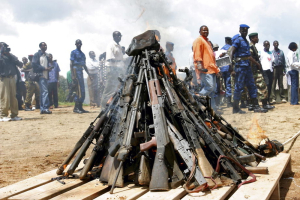
    Weapons being burnt during the official launch of the Disarmament, Demobilization, Rehabilitation and Reintegration (DDRR) process in Muramvya, Burundi. Burundian military signed up voluntarily to be disarmed under the auspices of United Nations peacekeepers and observers. 2/Dec/2004. Muramvya, Burundi. UN Photo/Martine Perret. www.un.org/av/photo/

    Weapons being burnt during the official launch of the Disarmament, Demobilization, Rehabilitation and Reintegration process in Muramvya, Burundi. Image by United Nations Photo via Flickr.

    DDR has grown significantly during the last decades. The first UN effort in Central America demobilized 18,000 fighters in the early 1990s. In recent years, 101,000 combatants were demobilized in Liberia.  150,000 combatants were due to be processed through DDR in South Sudan before the outbreak of the ongoing civil war and this number is expected to double or triple with the implementation of the peace agreement between the warring factions.  According to the UN department of Peacekeeping Operations, in 2013 estimated mandated caseloads for on-going DDR operations in peacekeeping contexts alone were over 400,000. DDR efforts, in other words, seem here to stay as long as conflicts around the world show no sign of abating.

    DDR programs comprise a number of elements. They are highly standardized following the introduction in 2006 of the United Nation’s Integrated DDR Standards. Never before have DDR programs been so comprehensive in their scope and areas of competency, comprising an ever expanding field of interventions such as access to land, cash transfers, skills training and job placement.

    Despite the abundant literature on lessons to be learned from previous DDR processes there is little evidence that DDR programs actually produce the desired outcomes, and important loopholes and gaps remain; particularly around the mechanisms at stake in successful social and economic reintegration of former combatants.

    Very few DDR programs aim to achieve a sustainable reintegration of ex-combatants. Arguably, the aim has been to provide a tangible peace dividend and stabilize the situation in the short term (for instance in Sierra Leone, Liberia, South Sudan, Nepal, just to name a few countries). In other words, the theory and policy of DDR is driven by realist and strategic rationalities: security first.

    A dominant assumption underlying academic theory, policy and practice in the field of peacekeeping is the indispensability of DDR in the early transition from war to peace. Indeed, the rather rigid model of DDR that has evolved over the past decade has become part of the orthodoxy of UN peacekeeping, part of a sequencing of programs and activities that UN missions rarely deviate from. In recent years, this orthodoxy has increasingly been questioned, both in terms of the content of the DDR templates along with the outcomes/effectiveness of the intervention and, not least, the very serviceability of the concept to broader processes of peacekeeping. The important questions regarding DDR programs we have to ask ourselves are: Why do we approach these issues the way we do? Is the offer of a DDR program better than no program at all since it is believed that they make a substantial difference to the lives of ex-combatants and community members?

    Vocation Skills Training vs Spending

    The potential success of a DDR programme depends largely on the type, quality and length of the vocational skills training provided to ex-combatants. In practice, though, the type of training carried out often does not even amount to half of the duration required for a civilian in peace circumstances. In other words, training does not lead to jobs, and it might not even provide access to employment at all. More often than not, training is poorly suited to labour market needs. Furthermore, without capital, the returns on skills training could be low. If the outcomes are that meagre, then why are education and skills training still so central to DDR? For some critical observers, vocational training persists because it is what donors and implementing actors know and are willing to fund, and it therefore involves little risk (the measurement of success is straightforward: the number of graduated trainees). If DDR has been ineffective in facilitating economic reintegration for former combatants, the reason may be that the programs’ approach to the problem is wrong because skills training will not be effective in environments characterized by fragility, conflict and violence. In contrast to the poor results of training and education, recent research has shown that capital-centred DDR activities are among the best performing ones. Capital-centric intervention refers to start-up grants, in-kind capital transfers and cash injections.

    In Burundi, for instance, a reinsertion allowance was offered for eighteen months, with the amount depending on rank. A business start-up grant worth about $1200 was also offered. Comparing the results for those who received it with those who did not, researchers found a large reduction in poverty among the former.

    This review of DDR experiences suggests that ex-combatants tend to use the cash received wisely to satisfy their immediate needs and that some manage to save and invest. In Liberia cash transfers had a positive impact on local and national security. This is reflected, for example, in the low levels of violence reported in parts of Liberia, where the Danish Refugee Council ran a dollar-a-day program for ex-combatants after the war ended. Injections of capital – cash, capital, livestock – seem to stimulate self-employment and raise long-term earning potential. The main assumption is that these programs are cost-effective and enable ex-combatants to expand their income generating activities.

    DDR Bureaucracy and the Promise of Peace

    An important assumption of DDR program concerns the special needs of ex-combatants – as opposed to the broader population – for reintegration support in order to leave behind militancy and adopt a civilian life and identity. However, that is not necessarily the case. Ex-combatants are a heterogeneous group, with some of them more at ‘risk’ than others. Some ex-combatants might even share traits with youth at risk of recruitment by radical groups or violent gangs. Programs should be targeted at those at the highest risk of crime, violence, or future insurgency. But increasingly, DDR programs directly target civilians insofar as they have a relation with an ex-combatant (spouses and children), as it is the case in the recently launched DRC reinsertion and reintegration program. This prompts us to ask: are DDR programs faced with a difficult balancing act between equity and security? In other words, is this kind of targeted assistance rewarding violence? The answer seems to be ‘yes’.

    Conclusion

    DDR programs, rather than being value-free, amount to a normative process of change, with the aim of altering the identity from that of a combatant to a civilian, and from individual dependency on military structures to civilian self-resilience. It is believed that DDR programs are able to facilitate this change. DDR as a technocratic intervention amounts to a belief in the ability to arrive at the optimal answer to any discussion through the application of particular practices. In other words, DDR programs keep the promise that disarmament and reintegration can be achieved by bureaucratic means. Bureaucracies require standardization for efficiency and rationalized training.

    Today, however, effective DDR requires greater participation of local populations. DDR activities have still not found ways to adapt and respond to local contexts of armed violence and fragility in sensible, realistic and cost-effective ways.  DDR interventions require locally differentiated analyses rooted in local perceptions and participation, as well as inclusive processes in designing prioritized programs. To be honest: the bulk of the world’s fighters, gang members, insurgents and high risk youth do not want to be reintegrated: but have expectations of physical protection and material support for their own projects. They should have a say in this multimillion dollar enterprise.

    Jairo Munive is a postdoctoral research fellow at the Danish Institute for International Studies in Copenhagen. His research focuses on DDR processes in Africa. Previously worked as a consultant for DANIDA, ILO and UNDP. He has published in various journals such as:  the Journal of Agrarian Change, Conflict Security and Development, and Forced Migration Review.