Author Archives: Hans De Marie Heungoup
Q&A: Boko Haram in Cameroon
In May 2014, Cameroon declared war on Boko Haram at the Paris Summit. Since then, Boko Haram has intensified its activities in the Far North Region of the country, making […]
There is no region of the world that faces more threats from climate change than South Asia. Of particular concern is the littoral surrounding the Bay of Bengal, including the Eastern Indian states of West Bengal and Odisha, Bangladesh, and coastal Burma. This region is uniquely vulnerable to a changing climate because of a combination of rising sea levels, changing weather patterns, and uncertain transboundary river flows. Away from the seashore, China holds the high ground in the Tibetan Plateau and the Himalayas, and complicates the geopolitical picture further by acting as the source of the region’s fresh water.
On the Bay of Bengal’s coast these problems of a changing climate combine with already existing social problems like religious strife, poverty, political uncertainty, high population density, and rapid urbanization to create a very dangerous cocktail of already security threats. Climate change has been called a “threat multiplier” or “an accelerant of instability” by military and intelligence communities because of how it will impact these already existing threats. With a population of more than 300 million people (91 million in West Bengal, 42 million in Odisha, 142 million in Bangladesh, 52 million in Burma), tense militarized borders, overlapping ethnic and religious communities, and uncertainty about the future, there is no region in the world that faces a more dangerous combination of threatsfrom climate change than here.
One of the key tenets of national security is the ability of a country to ensure the integrity of its sovereign territory. Yet, as glaciers far from South Asia melt, the sea rises and encroaches upon its farms, villages, and cities. As Hemingway wrote about going bankrupt, sea level rise happens “gradually, then suddenly.” Slowly, a rising ocean brings increasing intrusion of brackish water into groundwater, harming costal agriculture. Moreover, gradual ocean encroachment harms the coast’s natural protections, whether dunes, reefs, barrier islands, or mangrove forests. Then, suddenly, when a major cyclone blows in a storm surge will overcome previously unsurmountable barriers.
The shorelines of the Bay of Bengal stand to lose swaths of territory from sea level rise. Bangladesh, as a country predominantly composed of river delta, is most at risk. It stands to lose 11% of its territory – home to 15 million people – from a sea level rise of only 1 meter, a level that is not a particularly extreme prediction over the next 4 decades. Few invading armies could do worse damage.
Oddly enough, the world’s oceans do not rise at the same rate. With rising global sea levels, in some areas the sea level could actually fall while it rises in others. A recent study from the National Center for Atmospheric Research (NCAR) found that sea level rise will be particularly high along the Bay of Bengal, due to changes in currents caused by rapid surface warming of the Indian Ocean.
In the region, the cities of Dhaka, Kolkata, and Yangon all lie in major river deltas and are vulnerable to storm surges. In its 2007 report, the Intergovernmental Panel on Climate Change (IPCC) specifically listed cities in Asian mega deltas as “hotspots for vulnerability” because of sea level rise and changing patterns of river flow. Already straining at their infrastructure limits, these densely packed cities are becoming more vulnerable in a warming world.
Water does not stay within lines on a map. Instead, gravity draws it inexorably from the mountains to the sea. China, through its control of Tibet, controls the headwaters of almost all of the major rivers of Asia – only the Ganges lies outside of China’s control, originating in India. Of the major rivers that empty into the Bay of Bengal, all cross borders. Water is only plentiful during the monsoon season, so these rivers provide much-needed sustenance to agriculture, people, and ecosystems throughout their trip to the sea during the dry season – when they are fed by glacier and snow melt. Competition and tension over that flow is evident around the world when water crosses borders.
This is true of Bangladesh and India, for which the flow of the Ganges are a source of tension. The Farakka Barrage on the Ganges River, just 10 miles upriver from the Bangladesh border, allows India a measure of control over the river. The dam allows India to divert the flow of the Ganges down a canal to the Hooghly River and into the port of Kolkata. Since the dam was built in 1975, there have been allegations from Bangladesh that India diverts water in the dry season and releases too much in the monsoon season. In 1996, the two countries agreed to a 30 year treaty to share the Ganges’ flow, but tensions still remain.
The Brahmaputra River, meanwhile, provides a source of tension between the two regional powers, India and China. China recently announced that they are building a series of hydroelectric dams along the Brahmaputra’s upper reaches in Tibet, but they have forsworn any attempt to divert or hold back the great river’s flow. However, these assurances have not quieted all voices in India, who point to plans in China’s South-North Water Diversion Project to divert water from the Brahmaputra in order to ensure water for industry and the cities of China’s parched north. China’s leaders have denied these extravagant plans, but their engineers have lobbied for such a project. It would complete a dream of Chairman Mao’s, who said: “Southern water is plentiful, northern water scarce. If at all possible, borrowing some water would be good.”
Climate change exacerbates these concerns about transboundary water management in the region. Climate change is threatening both the glaciers that sit at the top of these mighty rivers, feeding them during the dry season, and the very viability and predictability of the Indian Monsoon rains. Temperatures in the Tibetan Plateau and the Himalayas have risen 1.5 degrees Celsius since 1982, a rate more than three times as fast as the global average. Meanwhile, changes in weather patterns due to climate change could cause repeated failures in the monsoon. While there is little likelihood of an immediate and total melting of the glaciers, uncertainty about their future flows is enough to stoke tension in the region.
Climate change is altering the environment of the region; the glaciers are retreating, the rivers’ flows are becoming more unpredictable, and the seas are rising. However, whether those changes manifest themselves into either civil or interstate conflict will depend upon how both the populations and the governments in the region react to those changes. How long governments have to adapt depends upon unpredictable weather and climate patterns – but as the Stern Review bore out, earlier action is almost always cheaper and more effective than waiting. How governments adapt is important as whether; some adaptations, like capturing water that would otherwise flow across borders in new reservoirs could actually make the threat of conflict worse. If countries do not work cooperatively, they could stoke conflict.
Throughout history, one of the most effective ways to deal with climate change has been migration – from a climate that is no longer hospitable to one where living is easier. However, modern borders do not reflect the historical ties between the regions. Migration is a natural response. However, in areas with already high population density and an overlapping patchwork of ethnic and religious communities, new immigrant communities often come into direct conflict with established communities. Last year saw ethnic strife in the Indian state of Assam between indigenous Bodos and immigrant Muslims, many of whom hailed from over the nearby border in Bangladesh. Over 75 people died, and over 400,000 people were temporarily displaced. In this region, it is impossible to say whether a group of migrants are “climate refugees” or simply moving to a place with better economic opportunity, but this is what we should expect in the future.
It is difficult to find examples of any interstate wars fought directly over water; to the contrary, water has been a catalyzer of cooperation. However, as countries realize that they can control and shape water flow through mega dams and water diversion projects, there is a danger that the claims of downstream countries could be ignored. Along the Mekong River, for example, China has proceeded to dam and control the river’s flow through its territory – leading downstream neighbors to complain that China is causing droughts. Yet because of the power imbalance between China and smaller countries like Laos and Cambodia, the Chinese have little to fear. Similar thinking by Chinese leadership over dam building along the Brahmaputra, their shared river with India, could lead both countries to stumble into a conflict that neither of them want.
In the age of climate change, conflict is more likely as threats are multiplied. Nowhere is this truer than around the Bay of Bengal. However, war is never pre-ordained. Instead, the threat of conflict is determined by how countries react. Good international governance can encourage countries to not simply pull up the drawbridge and think only of themselves, but will encourage them to see what their actions will mean for regional neighbors. Climate change is increasing the threat of wars and unrest around the Bay of Bengal; but foresight about its impacts can help the region’s leaders work together to solve a problem that knows no boundaries.
Andrew Holland is Senior Fellow for Energy and Climate at American Security Project, a Washington D.C based think tank. He is an expert on energy, climate change, and infrastructure policy. He has over seven years of experience working at the center of debates about how to achieve sustainable energy security and how to effectively address climate change.
Image source: amioascension

The Somali fishermen’s registration programme was lauched to help Somalia’s fisheries management and to secure its waters against piracy. Though commendable, the programme has yielded serious problems.
Following the end of the civil war, the fisheries sector re-emerged as an important economic activity in Somalia, evidenced by the increase in the number of artisanal fishermen operating in the Puntland, Galmudug, and Somaliland regions. The exact number of these fishermen is unknown since neither the respective Ministries of Fisheries nor the District Fishing Associations register Somalis who fish. The lack of information on the number of fishermen, fishing fleet, services, the state of marine resources, and landings reduces the ability of decision makers to make informed decisions regarding the establishment of a robust fisheries management structure in Somalia.
In support of the various Ministries, the United Nations Food & Agriculture Organization (FAO) is involved in projects to improve the understanding of Somalia’s fisheries sector. One of these activities is the development of a biometrics-based, artisanal fishermen -specific, registration system (Biometric Information Technology System or BITS) for the Ministry of Fisheries and Marine Resources in Puntland, Galmudug, and Somaliland.
The data collected using BITS is expected to help formulate a more nuanced understanding of fishermen livelihoods in Somalia—which is necessary for effective fisheries management at the regional and national levels. The information can also prove useful for the government and international naval forces in the attempt to secure Somali waters against piracy and enable legitimate fishermen to operate more freely at sea.
Piracy and Somalia
Somali piracy and illegal, unreported, and underreported (IUU) fishing are two issues that have long been entangled in rhetoric and practice. According to the grand narrative of Somali piracy, without a government to police the coastline or prosecute offenders, Somali waters and resources were vulnerable to foreign illegal fishers. In order to protect their livelihoods, Somali fishermen took up arms against the illegal fishers as a form of retribution and/or taxation for plundering their fish and natural resources (see also Hansen, 2011; Bueger, 2013; Gilmer 2016).
More than a decade after the perceived beginnings of Somali piracy, the grand narrative is still invoked by pirates and members of the Somali public. As artisanal fishermen, pirates, and foreign illegal fishers continue to operate within the same vast maritime spaces, inevitably, accusations of mistaken arrests began to emerge. Coastal communities claimed their fishermen were being picked up by foreign navies. Piracy prisoners held in foreign prisons maintained they were innocent fishermen who were mistaken as pirates. These stories not only raised questions of possible injustices, but they also spotlighted the issue that other than the members of Somalia’s coastal communities and local fishing organizations, no one could say for certain (or prove) who was or was not a pirate/fishermen/illegal fisher.
Establishing a system for identifying Somalia’s maritime community, and sharing that information with international naval forces, was imagined as a starting point for more objective monitoring of Somalia’s waters (i.e., protecting against further potential injustices).
The Somalia fishermen’s registration programme
From 2013 to 2015, FAO utilized the BITS while conducting the Somalia fishermen’s registration programme (hereinafter referred to as the registration programme). The program is/was funded by the Trust Fund to Support the Initiatives of States to Counter Piracy off the Coast of Somalia of The Contact Group on Piracy off the Coast of Somalia (CGPCS). Collectively, the registration program consisted of three Trust Fund to Support Initiatives of States to Counter Piracy off the Coast of Somalia projects: Project #55 Fishermen Identification Database System; Project #69 Galmudug and Jubbaland Fishermen Fleet Registration; Project #70 “Somaliland” Fishermen and Fleet Registration.
Via field officers, the Ministries collected basic information about more than 5,000 fishermen from all associations within Puntland, Galmudug, and Somaliland during face-to-face structured interviews. This data was entered into a database held by the Ministries. In 2016, a data analysis workshop was conducted in Bossaso, Somalia to “ground truth” the collected data and to discuss the overall successes and challenges of the registration program. Discussions revealed how the registration program became part of a broader struggle over the power to (re)construct the identities of people, labor niches, and maritime spaces of Somalia.
The registration programme helped shift the site for identifying legitimate fishermen from at sea to onshore in Somalia at the various fishing landing sites where the registration exercises took place. Consequently, landing sites became the new key political sites in the struggle to define and identify legitimate fishermen. More specifically, the process of submitting/entering an individual’s data into the BITS was overseen by the heads of the local fishing associations.
By discouraging the field officers from registering the data of pastoralists and pirates, the heads of the local fishing associations helped create a new group of maritime “others”. These “others” are considered potential criminals (i.e., pirates or illegal fishers) nand will not be afforded the same freedoms of mobilities at sea as legitimate fishermen. Indeed, by not having their data registered, these individuals were also rendered ineligible for future development programming geared towards registered fishermen.
The data linked to those labeled legitimate fishermen is used to design future fisheries sector development programming. Those labeled legitimate fishermen become a target group for future FAO- or other agency-facilitated fisheries development projects. Maritime others, however, are left out of this development target group. As a result, the heads of the local fishing associations not only reshaped future development to exclude pirates (former or current) and pastoralists, but they may also have contributed to a future increase in piracy activity by pushing certain maritime “others” back out to sea without the occupational legitimacy/protections provided by a fishermen identification card (See Gilmer, 2017).
Because who they are and what they are doing in maritime space remains an unknown, they must remain under the watchful eye of law enforcement. Although some individuals do, indeed, return to the sea with the intent to commit crimes, most do not. Thus, this reveals the paradox that the programme that set out to simultaneously develop and decriminalize Somali fishermen has only effectively displaced the criminalization onto a more specific maritime population of Somalis.
Beyond the politics of submitting/entering data, the process of distributing fishermen identification cards also played an important role in reshaping future geographies of development and mobilizing certain bodies. In Puntland, government officials utilized the distribution of fishermen identification cards as leverage to bargain with FAO representatives for future planning meetings in Somalia. By securing these future planning meetings, Puntland officials were also able to secure future patronage in exchange for all-expenses-paid trips for the heads of the local fishing associations.
The future planning meetings were also relocated from the coastline to the inland city of Garowe to maximize the FAO-provided daily service allowance each attendee (i.e., head of the local fishing association) would receive. However, moving the meetings away from the coastline greatly diminishes the likelihood that fishermen will be able to participate in any of the meetings. Thus, the fishermen and their respective communities remain on the margins of development planning for Somalia’s fisheries sector.
Conclusion
The Somali fishermen registration programme is commendable in that it is the first cross-regional attempt to collect data on Somalia’s artisanal fishermen and fishing livelihoods since prior to the Somalia civil war. FAO will continue to support the Ministries but the expectation at this point is that the Ministries continue to register fishermen and collect basic information. Furthermore, FAO in partnership with the Ministries, will roll out additional information systems, such as the landing site and sale system, and vessel registration system.
These initiatives will add to the information gained from the Somalia fishermen’s registration program and continue to develop the knowledge of the fishing sector in Puntland, Galmudug, and Somaliland. However, it is also imperative to analyze the processes involved in these data collection projects to understand the politics of identity as they play out at various sites. These politics and local struggles play a key role in shaping the institutionalization of Somalia’s maritime identities and broader access to future fisheries development aid.
Brittany Gilmer is an assistant professor in the Department of Criminal Justice at Florida International University
Contributing an Article
We are always on the lookout for new authors with new perspectives to add to the debate on the blog – especially if you think we’ve missed something!
We aim to address a wide range of evident and emerging security issues and take a broad and integrated approach to the term ‘security’. Generally, we look for insightful pieces which seek to explore, question and suggest solutions for ongoing security situations and the underlying issues which drive them. While we do place an emphasis on our ‘key’ drivers (climate change, marginalisation, competition over resources and militarisation), contributors should not feel limited to these subjects alone.
Please note that, as a nonprofit blog that serves as a resource for interested readers, sustainablesecurity.org does not have the resources to pay contributors.
If you are interested in contributing an article, please get in touch with us using the form to the right.
Guidelines
Would you like to contribute a video?
Our readers would love it if you did! Sustainablesecurity.org deals with an often complex interplay of difficult subjects. We are therefore very interested in presenting analysis of these issues in a range of media for those who wish to interact in different ways with our content.
If you are interested and have the means to produce a video, get in touch with us using the form above with ‘VIDEO’ in the subject line. Thanks!
Legal stuff…
All content and downloads are licensed under a Creative Commons Attribution-NonCommercial-NoDerivs 3.0 Licence unless stated otherwise.
We look forward to hearing from you!
SusSec Team
Authors’ Note: The opinions expressed by the writers are theirs alone and not necessarily those of the United States government or any of its departments.
As a response to the attacks by violent extremists around the world, policymakers have invested considerable effort into comprehending terrorists’ use of the Internet and initiating counter-measures.
The internet is undeniably an important factor in understanding the radicalization trajectories of many violent extremists. A senior official at the U.S. Department of Homeland Security recently observed that extremists’ “deft use of Internet propaganda, together with that content’s wide availability, has broadened the population of potentially vulnerable individuals, and shortened the timespan of their recruitment.” Supporting this statement, terrorism expert Magnus Ranstorp lists social media as one of nine factors that may exacerbate causes of an individual’s radicalization, including individual and social factors as well as cultural and ideological motivators.
Research has also shown that the internet facilitates both early engagement with violent ideologies and opportunities for learning and sharing criminal information. For instance, a study by the University of Maryland’s START terrorism consortium found that “the internet played a primary or contributing role in the radicalization of 86%” in the cases of over 200 U.S.-based foreign fighters. These individuals used the internet to “view extremist materials, research conflicts, groups and attack methods, and participated in online communities of like-minded individuals.” Moreover, results from the same dataset show that the internet “may be speeding up the radicalization timeframe” as compared to radicalization before the advent of the internet. Similar findings from a study of over 200 terrorist offenders in the United Kingdom found that 54% of the perpetrators used the internet to learn about their intended criminal activities and, in 44% of the cases, extremist media (e.g., videos, audio lectures and photographs) were found, viewed, or downloaded by the perpetrators.
The authors of the UK study, however, recognize that terrorists’ use of the internet “is perhaps unsurprising given the ubiquity of Internet usage in the most benevolent activities across wider society.” Indeed, a good deal of research has examined terrorists’ expansive use of the internet, such as the terrorist organization known as the Islamic State of Iraq and Syria (ISIS) to build a network of ideological conformity through social media platforms like Twitter. A report from the Institute for Strategic Dialogue has shown not only how life under the Islamic State is romanticized through social media postings, but also how important digital connectivity can be to those in the field, describing young women in ISIS controlled territory who resort to “climbing pine trees to gain Internet reception.”
Countering extremism online
Image credit: Andres Eldh/Flickr.
These studies shed light on the particular ways that terrorists use the internet and underscore the importance of law enforcement intervention into online criminal activities. However, an ongoing challenge for researchers and policymakers engaged in preventing and countering violent extremism (CVE) is how to proactively address the role of the internet and social media in the context of violent extremism before criminal activity has occurred. To respond to that challenge, two broad policy approaches have emerged.
One approach advocates for online content removal and account suspension in order to reduce the supply of non-criminal but potentially extremist content. The European Commission recently instituted content-flagging mechanisms modelled after an initiative by the British government’s Counter Terrorism Internet Referral Unit. Outside of government, technology companies also have taken steps to remove terrorist content. In December 2016, social media companies announced their own cooperative efforts to use hashing techniques to quickly identify and take down extremist images and content that violate terms of service agreements. In their latest annual transparency report, Twitter suspended around 636,000 accounts between August 2015 and December 2016 for promoting extremist content.
Research studies that have assessed whether content removal and account suspension efforts work to curb the propagation of violent extremist messages suggest promising outcomes. For instance, a report from the George Washington’s Program on Extremism found that “over time, individual users who repeatedly created new accounts after being suspended suffered devastating reductions in their followers.” While ISIS users quickly learn how to overcome account suspensions and restore some followers, the study suggests these actions to reestablish followers have only “limited benefits” once a suspension has occurred.
Yet, as technology companies like Twitter, Microsoft, and Facebook become more effective at detecting extremist content with tools that recognize unique “fingerprints” of extremist content, terror groups have also become more agile in how they use the internet to facilitate their work. Terrorism researcher Audrey Alexander describes how attempts to limit terrorist content online have pushed extremists away from public platforms and to encrypted tools like WhatsApp, Telegram, and ProtonMail. Indeed, Telegram now “appears to be the top choice among both individual jihadists and official jihadist groups.” The covert nature of these platforms poses significant barriers to researchers and authorities seeking to understand, track, and measure the terrorist threat.
Another method for combatting online violent extremist content suggests creating counter narratives to refute terrorist claims. The idea is to craft messages that will appeal to vulnerable individuals to persuade them that violence is not the answer. To explore this approach, the U.S. government has sponsored an initiative along with support from Facebook that known as the Peer to Peer: Challenging Violent Extremism program to engage young people, who may be most vulnerable to violent extremist messages, to create credible counter message for their own peers. Since the program launched in 2015, over 5,000 students have taken part. The 2016 winning team from Rochester Institute of Technology developed an awareness campaign called “Ex-Out Extremism” to “open people’s eyes” to violent extremism and to encourage them to take a stand against it. While initiatives like Peer to Peer typically reach broad audiences, foster educational engagement and increase public awareness, researchers have pointed out that continued work is needed to understand what can inoculate or prevent radical ideologies from taking root in the first place.
A more targeted approach for reaching at-risk individuals online has been piloted at Jigsaw, Alphabet’s technology incubator focusing on geopolitical challenges, to redirect users from ISIS propaganda to curated YouTube videos that credibly debunk ISIS recruiting themes. Similarly, the Institute for Strategic Dialogue conducted a pilot study to direct individualized online intervention services to those demonstrating affinity to violent extremist groups through their online activities. The results found that intervention messages that reached at-risk individuals were “highly likely” to cause behavior change, either by prompting radicalizing individuals to change their privacy settings or to send direct messages to the intervenors for more engagement. While these results are based on a very small sample, directed intervention programs may offer options for providing “off ramps” to individuals at critical points.
The value of partnerships
Whether intervening online to remove content and suspend accounts or developing credible counter messages or intervention options, effectively addressing violent extremism will require innovative partnerships inside and outside government. To this end, in 2016 the United States government launched an interagency task force to address countering violent extremism with representation from both security and non-security agencies along with engagement from civil society groups. While these multidisciplinary partnerships are challenging bureaucratically, they underscore the need for developing networked approaches to emerging security challenges. Similar cooperative agreements might span across national boundaries, not only for the purposes of information sharing between law enforcement officials, but also to include cooperation, such as the recent announcement by the Netherlands and Kenya to build a comprehensive partnership around a range of security related issues including deradicalization efforts.
Although some have suggested that there is little evidence that terrorism prevention works, there is a small but growing literature providing support for the application of prevention science to the problem of violent extremism. Without question, more attention is needed for rigorous assessment of these programs, especially with regard to evaluating the effectiveness of online campaigns. To fill this gap, the RAND Corporation recently released an evaluation toolkit for countering violent extremism, which includes guidelines for assessing programs’ social media metrics. The London-based Royal United Services Institute has published a guide to CVE program design and evaluation, which provides guidance for articulating relevant impact measures. Ultimately, these resources, coupled with innovative public and private sector partnerships, will contribute to preventing radicalization to violence both online and offline.
Tackling online radicalization will undoubtedly be a major security priority for policymakers in the future. Following the deadly May 22, 2017 bomb explosion in Manchester, leaders of the G7 convened in Taormina, Italy to reaffirm their efforts to counter terrorism and violent extremism. In a statement, members underscored several areas for continued engagement, not only through traditional counterterrorism measures like “knowledge-sharing” and cutting off “sources and channels of terrorist financing,” but also through technology sector engagement “to substantially increase their efforts to address terrorist content” and well as civil society engagement to promote “alternative and positive narratives rooted in our common values.” The future war against online extremism may prove to be a long and difficult one, but it is a fight that must be won.
Dr. Susan Szmania has served in government and academic positions addressing violent extremism. She is currently a senior research analyst at the U.S. Department of Homeland Security in the Office for Community Partnerships. In this capacity, she leads the research and analysis line of effort on the U.S. government’s interagency Countering Violent Extremism Task Force. Prior to this work, Dr. Szmania was a senior researcher at the University of Maryland’s National Consortium for the Study of Terrorism and Responses to Terrorism, and she served in government positions at U.S. Embassies in Sweden and Spain to implement programs to counter violent extremism. She received her Ph.D. in Communication Studies from the University of Texas at Austin in 2004.
Matthew Conway has served in various research capacities focusing on conflict and extremism, both independently and with two London-based think-tanks. He is currently a research adviser for the Department of Homeland Security’s Office for Community Partnerships, where he focuses on Countering Violent Extremism research. He received his Master’s in Conflict, Security and Development from King’s College London in 2015 and his Bachelor’s in Political Science and International Studies from the University of Wisconsin-Madison in 2013.
One of the leading sources of refugees in Europe is the impoverished east African nation of Eritrea. What role has the international community played in this crisis?
Eritrea’s relationship with the international community (IC) has always been complicated. Eritreans see the IC’s history with their nation as one fraught with violation, neglect and, perhaps above all else, multiple betrayals. The first betrayal is seen to have taken place during the 1940s decolonisation process when Eritrea, against the wish of its people, was tied with Ethiopia in a UN enacted federal arrangement. The second betrayal occurred when the UN, who sponsored the federal arrangement, looked the other way when the Emperor of Ethiopia annexed Eritrea in violation of the arrangement. This was followed by another betrayal when the IC kept silent during the thirty years Eritrean War for Independence. Yet another betrayal occurred when the guarantors and witnesses of the Eritrea-Ethiopia Boundary Commission abdicated their responsibility to ensure its implementation. The recent imposition of sanctions by the IC on Eritrea added to this feeling of betrayal. All these events have certainly generated a psychology of victimhood among Eritreans and a belief that that the IC have sacrificed the interests of its people for geostrategic interests and politics. The IC’s response to Eritrea’s refuge crisis represents the latest chapter in this history of betrayal.
This article argues that both the actions taken and those not taken by the IC contributed to the refugee/migration crisis in Eritrea. The actions taken included imposing sanctions and a concerted effort to isolate the country, while actions not taken include failure to implement a binding and final verdict of the International Court of Arbitration.
Causes of the Exodus from Eritrea
In recent years, the world has witnessed an unprecedented flow of people from Eritrea. The exodus, which has picked up momentum is the outcome of several factors that have been accumulating over the years. Relative to its population size, Eritrea has produced the largest flow of refugees/migrants in the world. What is driving people to leave the country in such large numbers? There are multiple causes of the exodus.
The rejection of the International Court of Arbitration verdict on the border issue by Ethiopia generated a no-war no-peace situation. The peace agreement was supposed to lead to peaceful coexistence between the Eritrea and Ethiopia. This no-war no-peace situation created constant tensions, a fear of an outbreak of war, and occasional engagement between the armies of the two countries along their common border. This means Eritrea has had to put itself in a constant state of high alert. It also compelled the Eritrean governement to extend its national service indefinitely. The majority of capable labour forces in the country are therefore tied to the national service system. Consequently, the economy suffered immensely because of a lack of a sufficient labour force. The youth who are in the national service have to pay a high price. They do not get proper salary; and they are not able to pursue a normal social and working life which could include education, building and supporting family, accumulating wealth, etc.
The political environment has also hardened considerably. The country has been under an undeclared state of emergency since 2000. Gradually, the political climate became more authoritarian and less plural: political opposition was not tolerated; deviant views and political differences were perceived as dangers to national unity, stability and survival. Therefore, dissidence was harshly dealt with. Many ended up in prison accused of betraying or endangering the security of the nation. The economy, which was slowly recovering from the thirty years of independence war, suffered immensely from the two-year border war (1998-2000) between Eritrea and Ethiopia and the no-peace no-war situation. A major part of state budget now goes to military expenses and staggering unemployment overshadows the nation. What was primarily a subsistence economy spiralled down due to a shortage of an able workforce.
The UNSC imposed sanctions further exacerbated the economic difficulties because they discouraged external investment and other bilateral relations with the wider world, particularly the West. The international community’s policy is geared towards isolation in order to force the Eritrean government to change its policy; however it achieved the opposite effect. Eritrea has been described as “hell on earth” and this was used to justify the blanket asylum provided by European governments. This open asylum policy further attracted a greater number of asylum and refugee seekers, even children who are not affected by the national service appeared at the doors of European countries claiming that they were fleeing from national service.
Abdication of Responsibility
The international community, represented by the UN, AU, EU and USA, assumed the responsibility of implementating of the of the EEBC’s verdict which it helped broker. The two-year war between Eritrea and Ethiopia was ended through the signing of the Algiers Agreement in December 2000. The UN AU, EU and USA put down their signatures as witnesses to and guarantors of the agreement. The main provisions of the agreement were:
(i) The establishment of the Eritrea-Ethiopia Border Commission (EEBC). The EEBC consisting of eminent international judges was mandated to demarcate and delineate the border between the two countries. The EEBC was instructed, “The Commission shall not have the power to make decisions ex aequo et bono” (Article 4(2), Algiers Agreement 2000).
(ii) That the verdict be final and binding. With regards to guaranteeing the implementation, the Cessation of Hostility Agreement of June 2000 notes, “The OAU and the United Nations commit themselves to guarantee the respect for this commitment of the two Parties until the determination of the common border on the basis of pertinent colonial treaties and applicable international laws” (Article 14).
This guarantee shall be comprised of measures to be taken by the international community should one or both of the parties violate this commitment, including appropriate measures to be taken under Chapter VII of the United Nations Charter by the UN Security Council (Article 14 (a).
The EEBC, per its mandate, issued its verdict on 13 April 2002 where it was stipulated to be implemented within a year, but to date it is still awaiting acceptance by Ethiopia. The verdict awarded the flashpoint of the conflict, the village of Badme, to Eritrea. Upon realising the decision, Ethiopia rejected it, calling it illegal, irresponsible and unjust. When the EEBC concluded its work in 2007 and announced that the border was virtually demarcated and the issue closed, the Prime Minister of Ethiopia called it legal nonsense and requested a renegotiation. The witnesses and guarantors, instead of honouring their solemn commitment and invoking Chapter II of the United Nation Charter, opted for appeasement. Indeed, US officials actively and systematically engaged in devising ways of renegotiating the verdict, particularly, Jandyi Frazer, George Bush’s Assistant Secretary of African Affairs, and Suzan Rice, Obama’s ambassador to the UN, who both played an important role in undermining the EEBC verdict.
Eritrea is of the opinion that the border is delineated and demarcated, and therefore feels that Ethiopia should vacate from the Eritrean territories it illegally occupies. The juxtaposing Ethiopian stance is that the border issue can only be settled through bilateral dialogue, a position that declares the EEBC verdict null and void. Ethiopia has violated UNSC resolutions ordering it to implement the verdict without any consequence. This is because the USA tacitly sides with Ethiopia. Following the footsteps of the USA, the UN, AU and EU remain silent on the issue allowing the festering stalemate to continue with all the consequences effecting the people of the two countries and the region as a whole.
The International Community’s Double Standards
Image credit: Wellcome Images/Flickr.
After signing the agreement of cessation of hostility in Algiers, in December 2000, the parties directed their attention to conducting proxy wars. Both governments were actively involved in support of opposition to each other’s government in the hope of weakening or even deposing. In addition, they intervened in neighbouring countries. Somalia became the obvious victim of the proxy war between Ethiopia and Eritrea. While Eritrea ended up supporting Union of Islamic Court (UIC), Ethiopia sided with warlords and the Transitional Federal Government (TFG). Finally, Ethiopia invaded Somalia in December 2006 and vanquished the UIC. This contributed to the emergence of al-Shabaab , a radical Islamic extremist group operating in Southern Somalia.
Proxy war has become a rule rather than exception in the Horn of Africa. What has also become a rule is the international community (IC), mostly driven by geostrategic interest of the big powers, punishing and rewarding regional actors participating in wars highly selectively. Many scholars have purported that the Ethiopia-Eritrea conflict is the epicentre of conflicts in the Horn of Africa. This means settling the Ethiopia-Eritrea conflict would go a a long way in helping the larger endeavour to settle all the intricate conflicts in the region. In this respect, it will be in the interests, as well as part of the moral, political and legal obligation, of the IC to address the conflict. There is an obligation the IC to be even-handed, objective, neutral and balanced in treating its members. The reality is, however, that the IC practices double standards and its dealing with Ethiopia and Eritrea is a vivid testimony to this double standard.
Eritrea was accused of supporting al-Shabaab and destabilising the region. But most of the evidence for Eritrea’s involvement ironically originates from Ethiopia. For the last five years, the Somalia-Eritrea Monitoring Group (SEMG), established to check that the sanctions are not violated, has not found any evidence that Eritrea is supporting al-Shabaab, yet the sanctions have not been lifted. As stated, Eritrea supports Ethiopian opposition groups as Ethiopia supports Eritrean opposition groups. Eritrea supported UIC when Ethiopia invaded Somalia. Ethiopia frequently attacks targets inside Eritrea; it openly threatens to depose the Eritrean government, which is against international law. Eritrea violates human rights as does Ethiopia. However, it is only Eritrea that is under UNSC sanctions and being subjected to isolation from the international community. Ethiopia is considered an indispensable ally of the US global war on terror, therefore it is excused of whatever misdeeds. This is a double standard that damages the credibility and integrity of IC, particularly the UN.
Conclusion
The no-war no-peace situation created a serious sense of insecurity, tension and instability in Eritrea. This in turn necessitated the implementation of indefinite national service in order to not only to defend the country from Ethiopian invasion, but also to ensure the economic and social survival of the nation. Tying the able-bodied Eritreans to national service deprives the economy of vital labour force. This curtails development. The conflict with Ethiopia triggered a chain of causal factors affecting the refugee crisis: constant fear of war, indefinite national service, economic stagnation, political hardship, and hopelessness compelling people to flee the country. It is understandable that few would wish to live under such circumstances.
If the international community had honored its responsibility and upheld the implementation of the International Court of Arbitration per its commitment in 2002, the chain of causal factors producing the exodus might have been avoided. By now the relationship between the two countries could have been pacified. It would also meant that the actual international pressure on the Eritrean government would have also been effective, morally defensive and legitimate as opposed to hypocritical. The failure of the international community to put pressure on Ethiopia to implement and uphold the final and binding border verdict affects not only Eritrea, but also the region as a whole and, as the recent development demonstrate, Ethiopia. For Eritreans the current behaviour of the IC is déjà vu, and brings back the ghost they have been trying exoricse for the last seventy years.
Redie Bereketeab is Senior Researcher and Associate Professor at the Nordic Africa Institute.
The world is witnessing unprecedented forced displacement due to conflict, persecution, and human rights violations. The conflict in Syria has been a major source of this displacement, producing over 7.6 million internally displaced persons and over 4.8 million refugees. The escalation of armed conflict in Iraq since 2014 has also contributed to a dire humanitarian and displacement crisis, and recent data indicate that Iraq is one of the three main origin countries—along with Syria and Afghanistan—for asylum seekers and migrants arriving in Europe. The conflicts in Syria and Iraq have been characterized by mass atrocity crimes including war crimes, crimes against humanity, and possible acts of genocide. As the death tolls and casualties associated with attempts to flee these conflicts continue to rise, the failure of the international community to adequately protect civilian populations targeted by violence underscores concerns regarding the international norm of Responsibility to Protect (R2P). Over ten years after its acceptance by all member states at the United Nations World Summit, the framework for collectively responding to mass atrocities when states have manifestly failed to protect their populations remains weakened by critiques of selective use and by its conflation with coercive humanitarian intervention in the aftermath of its application in Libya. R2P’s association with controversial coercive measures threatens to undermine its legitimacy and overlooks important non-coercive opportunities for implementing the human protection principles that are at its core. In particular, in the wake of mass atrocity situations, facilitating access to asylum and other forms of protection for refugees and displaced persons represents an essential step towards fulfilling R2P.
Linking the Responsibility to Protect and Refugee Protection
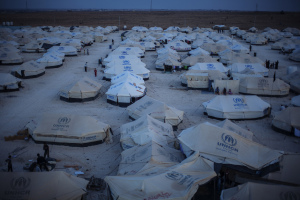
Za’atari refugee camp, Jordan. Image by DFID via Flickr.
There are strong foundations for emphasizing R2P as refugee protection. First, the international norm is intended to apply to mass atrocity situations where there is evidence of war crimes, crimes against humanity, ethnic cleansing, or genocide. The refugee crises associated with World War II, the Vietnam War, the Rwandan genocide, and the Balkans conflicts of the 1990s underscore the connection between mass displacement and mass atrocity crimes. International indifference or opposition to collective refugee burden-sharing in these cases frequently resulted in further victimization. In his study of mass killings, Benjamin Valentino argues that greater international response to refugees could have helped reduce the death toll of many of the 20th century’s worst genocides.
An emphasis on R2P as refugee protection also bolsters the non-coercive and non-violent aspects of the human protection norm at a time when significant criticism surrounding the third pillar of the framework regarding forceful intervention threatens to erode its legitimacy and global consensus. Humanitarian interventions raise concerns about selectivity and often pose significant risks with regard to civilian harm. These risks are compounded by the power asymmetries and realpolitik dynamics that typically characterize coercive interventions. Further associations of R2P with forceful interventions will understandably trigger greater contestations of the norm and undermine the potential for its evolution into meaningful legal obligations. As an alternative to the use of force, states can respond to mass atrocity situations with mechanisms of refugee protection like facilitating access to asylum, granting temporary protection, and upholding the principle of non-refoulement, thus addressing R2P’s call for collective international response in a timely and decisive manner to protect civilian populations and prevent further victimization.
Allocating Responsibility for Refugees
While there are robust foundations for connecting the human protection norm to mass displacement and refugee response, the implementation of R2P as refugee protection faces significant impediments both in Europe and the United States. One major obstacle is refugee burden-sharing. The 1951 Refugee Convention and its 1967 Protocol do not specify how, in the face of major refugee crises, states should equitably allocate legal, financial, or physical responsibilities for protection. While states are obligated by the principle of non-refoulement not to contribute to refugees’ harm by returning them to their place of persecution, international law grants states the right to retain control over their sovereign borders. As such, states are not compelled to grant asylum. A related problem is that the existing refugee protection regime relies on post-World War II assumptions that forced displacement is a temporary phenomenon and refugees will be able to return to their country of origin following the resolution of the conflict. Despite data indicating that displacement has become increasingly prolonged, the repatriation of refugees to their home countries remains more heavily promoted than their resettlement or local integration in host countries.
To date, neighboring states in the Middle East have absorbed the vast majority of refugees fleeing atrocities in Syria and Iraq. This disproportionate burden on states in the region is in line with global trends in the distribution of refugees. Because proximity to place of origin has been a key determinant of distribution, developing countries that can least afford to host refugees have assumed the overwhelming responsibility for them. This inequality in refugee burden-sharing emerges not only due to geographical proximity, but also reflects the increased ability of developed countries to prevent refugees from arriving on their territories. In the ongoing crisis, inequitable burden-sharing is also apparent on a regional level within the European Union (EU), as southern European states have continued to bear the primary responsibility for screening and processing asylum claims. While other EU members have partially shared the burden by committing financial resources to assist Greece and Italy and by hosting some refugees through relocation frameworks, as of November 2015 only three states—Germany, Austria, and Sweden—fulfilled their committed quotas for relocating refugees. Debates over refugee burden-sharing in Europe have underscored tensions between EU principles and individual member states’ willingness to implement norms of equity in refugee protection.
While discussions of refugee burden-sharing have largely focused on capability—that is, states’ relative capacities to assist refugees based on factors like economic development, population, and territorial size—the criteria that ought to govern the allocation of refugee responsibility remain ambiguous. The EU plan for distributing asylum seekers approved in September of 2015 utilized economic strength, population, unemployment, and the number of asylum applications approved in the last five years as criteria; however, this resettlement plan has faced opposition from central and eastern European states, and Poland announced that it would not participate. Complicating the task of determining how refugee protection responsibilities should be allocated is the notion that a country’s culpability in the creation of the displacement might also shape its obligations to respond.
The Securitization of Refugees
Even if consensus can be reached at the international level regarding principles of equitable refugee burden-sharing, policymakers can increasingly expect resistance from their domestic publics rooted in logics that link refugees to fears of terrorism and perceptions of foreigners as threatening. The implementation of R2P as refugee protection thus faces significant hurdles related to the securitization of asylum seekers—particularly those from Muslim-majority countries—as threats to both national security and cultural values in the United States and Europe. Increased fears of terrorist infiltration via refugee flows have produced calls to round up Syrian refugees and resulted in the U.S. House of Representatives passing H.R. 4038, the American Security Against Foreign Enemies (SAFE) Act. Opposition to refugees at the domestic level has also manifested in arson attacks against refugee shelters in Germany and violence against refugees in France. As refugees are increasingly conflated with migrants, and the current crisis emanates largely from the Middle East, perceptions of asylum seekers have become linked to broader debates about immigration and Islam. In this context, domestic political forces in Europe and the US have framed the refugee crisis in ways that undermine the potential for R2P to be successfully reoriented as refugee protection.
Navigating these obstacles requires grappling with representations of refugees in social and political discourse, as well as articulating how refugee burden-sharing can serve states’ national interests. Organized and predictable responses for allocating refugee responsibilities could, for example, support greater international stability and reinforce principles of cooperative security. In an increasingly interdependent global environment, fulfilling R2P through refugee protection could arguably compliment counterterrorism policies and contribute to an international protective infrastructure that facilitates better coping with transnational threats and humanitarian emergencies.
Alise Coen is currently Assistant Professor of Political Science at the University of Wisconsin-Sheboygan, USA. Her article, ‘R2P, Global Governance, and the Syrian Refugee Crisis’ was recently published in the International Journal of Human Rights. She is on Twitter at @alise_coen
This content is password protected. To view it please enter your password below: