Category: 19

  • Sustainable Security

    Droughts can potentially help escalate conflicts, but empirical evidence from the Sahel suggests that the root causes of land disputes are more historical and political than climate driven.

    The climate-conflict narrative
    Oxfam International

    Image by Oxfam International via Flickr.

    The Sahel is often highlighted as a hotspot of violent conflicts, typically occurring between farmers and pastoralists or between the state and armed groups. More recently, jihadist violence, in particular by groups associated with ISIL and Al Qaeda in Mali, Boko Haram in Nigeria and Al-Shabab in Somalia, has also added to this image of the Sahel as a conflict-ridden part of the world.

    With climate change becoming a leading global political issue, a powerful policy narrative has emerged which uses global warming to explain conflicts. In contrast to this narrative, most empirical research points to the role of political and historical factors as the root causes of conflicts in the Sahel.

    Many politicians, international civil servants and climate activists seem attracted to the idea of climate-driven conflicts. For instance, in a newspaper article in 2007 UN Secretary-General Ban Ki-moon made a connection between global warming and the Darfur conflict. In the same year, the idea was also at the crux of the decision to award the Nobel Peace Prize to former US Vice President Al Gore and the Intergovernmental Panel on Climate Change (IPCC). According to the Norwegian Nobel Committee, human-induced climate change is one of the main causes of violent conflict and war in the world today, and violence between farmers and herders in the Sahel are the most typical examples of what the committee calls ‘climate wars’. Also many climate activists champion the idea of climate-driven conflicts – for instance the idea has been repeatedly promoted by former executive director of Greenpeace Kumi Naidoo.

    This narrative about the climate-conflict link in the Sahel consists of two elements. First, it assumes that global climate change leads to drought and desertification, which in turn result in resource scarcity. Secondly, this resource scarcity is believed to cause migration and the emergence of new conflicts, or to trigger existing ones.

    The re-greening of the Sahel

    The claim that rainfall in the Sahel is decreasing is problematic, because the rains have increased again after the drought of the 1980s. Since it is largely rainfall that drives the Sahelian ecosystem, global warming might obviously in the long run produce desertification and resource scarcity – if it reduces rainfall. However, there is currently considerable uncertainty about current rainfall trends and projections in the Sahel. This uncertainty is generally stressed by climate scientists who model how global warming will affect the climate in the Sahel. While some models support the theory that this region will become drier, a majority of models actually suggest not only more abundant, but also possibly more delayed and concentrated rainfall in the future in the Sahel. This might lead to more vegetation over all, and more runoff and floods.

    In fact, because of increased rainfall since the 1980s, instead of desertification, the Sahel became greener again over this period. The re-greening of the Sahel has actually been observed for more than a decade. More recent research by French scientists has also confirmed this trend.  Based on long-term research in northern Mali, this French team observed not only strong resilience and recuperation of the vegetation on sandy soils, but also detected a transformation and thinning of the vegetation on shallow soils. This latter process is linked to stronger and more concentrated run-off resulting in increasing water levels in temporary streams and lakes that in some places have become permanent (see here).

    Hence, while there is a general re-greening of the Sahel caused by stronger rainfall trends since the droughts of the 1980s, there has also been the opposite, a thinning of vegetation on shallow soils, which again leads to more run-off and increased water bodies. In a similar vein and in parallel to the myth of the marching desert, the drying of Lake Chad, the largest lake in the Sahel, is also a myth according to recent research.

    Both these observed and opposing trends are in fact contrary to received wisdom and the dominating policy narrative on the Sahel represented, for instance, by the Great Green Wall Initiative, which aims to make the Sahel green and thereby to fight desertification. This initiative is funded by the Global Environment Facility at the tune of over 100 million USD.

    Political causes of conflicts

    The narrative of climate-driven conflicts first assumes desertification to be a widespread process in the Sahel, and second it postulates such resource scarcity increases conflict levels. This second link cannot be dismissed theoretically, even if empirical results from international research question the validity of this correlation. Most quantitative research undermines the existence of such a general link between climate and conflict, while case studies in central parts of the Sahel indicate that the conflicts have other causes such as rent seeking among government officials as well as policies and legislation that are marginalizing pastoralists.

    In the dry parts of Africa where pastoralism and farming overlap as the main forms of land use, there are continuous conflicts of varying scale. These conflicts have historical and political causes.  For instance, farmer-herder conflicts in Mali are associated with the state’s pastoral and land tenure policies and legislation, which generally are to the disadvantage of pastoralists and tend to lead to their marginalization. Three structural factors can be seen as the main drivers behind these conflicts: agricultural encroachment that has obstructed the mobility of herders and livestock, opportunistic behavior of rural actors as a consequence of an increasing political vacuum following decentralization and the disintegration and withdrawal of state services, and corruption and rent seeking among government officials (see here and here).

    Pastoral marginalization is also at the root of the Tuareg rebellion in Mali. The droughts of the 1970s and 1980s did, however, play an indirect role in the rebellion, because they led to the migration of young men to Algeria and Libya, where they were exposed to revolutionary discourses. There was already a strong feeling among nomads and Tuareg in Mali of being marginalized by state policies of modernization and sedentarization. Embezzlement of drought relief funds by government officials in Bamako added further to the anger felt by young Tuareg in Algeria and Libya who took up arms against the Malian state in 1990. The droughts of the 1970s and 1980s were probably not a necessary condition for the rebellion to take place. The first Tuareg rebellion in Mali took place in 1963 following an unusually humid period.

    Pastoralists are probably the group best adapted to climate variability through their opportunistic and flexible resource use strategies. But at the same time, pastoralists are suffering from state policies favoring settled agriculture in many countries in the Sahel. Even though pastoralists are losing access to land, livestock-keeping remains one of the economically most important activities throughout the Sahel and the large export of live animals to neighboring countries, especially on the West African coast, continues.

    Conclusion

    Even though droughts or flooding may potentially help escalate conflicts, empirical evidence from the Sahel, as well as from other parts of Africa, demonstrates a lack of correlation between climate and conflicts, and suggests that the root causes of land disputes are historical and political in character. While climate change remains a dangerous global challenge, over-stretching its causal responsibility may not only undermine long-term public engagement, but also depoliticize and thereby gloss over the real causes of conflicts, which could hinder the process of finding effective solutions to disputes.

    Tor A. Benjaminsen is Professor at the Department of International Environment and Development Studies, Norwegian University of Life Sciences
  • Sustainable Security

    Author’s note: This article is a shorter version of a journal article published in the Annual Review of Political Science, 2017. A shorter version of this piece can be read at the Monkey Cage.

    There is a new trend currently underway in the way civil wars are conducted. Dubbed the “new new” civil wars, these conflicts are a source of serious concern for several reasons.

    Something new is happening in the world of civil wars.  After declining in the 1990s, the number of active civil wars has significantly increased since 2003.  Over the past thirteen years, large-scale civil wars have broken out in Iraq, Syria, Libya, Yemen, Chad, the Democratic Republic of Congo, Nigeria, Pakistan, Rwanda, Somalia, Sri Lanka, South Sudan, Chad, Mali, the Central African Republic and Ukraine, while new civil wars threaten to break out in Turkey, Egypt, and Lebanon.

    Post-2003 civil wars are different from previous civil wars in three striking ways. First, most of them are situated in Muslim majority countries.  Second, a majority of the rebel groups fighting these wars espouse radical Islamist ideas and goals.  Third, of the radical groups fighting these wars, most are pursuing transnational rather than national aims.  These three patterns are striking and suggest that we are in the midst of a new wave of civil wars that we do not fully understand.

    In a new article, “The New New Civil Wars”, I argue that these trends are the result of a new and evolving information and communication (ICT) environment.  We now live in a world where citizens and elites operate in an interactive Internet environment, where anyone with a smartphone can easily produce and disseminate material from almost anywhere on the globe.

    The role of the evolving ICT environment

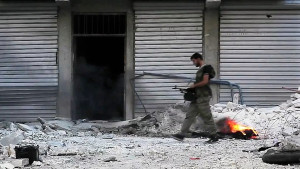
    Image credit: Voice of America News/Wikimedia.

    Instantaneous, global communication is likely to have at least six major implications for civil wars. First, information technology is likely to benefit individual citizens (especially citizens in highly repressive countries) more than political elites in those countries.  Dictators and autocrats will face greater difficulty limiting and controlling the flow of information and the messages their citizens receive. Government elites will also have greater difficulty preventing individuals from coordinating their protest activity.  Citizens are likely to be better informed about the behavior of government officials, the well being of their particular ethnic or sectarian group relative to other groups, and the level and extent of dissatisfaction in society.  The result could be a boon for popular demonstrations and grass roots organizing.

    Second, global Internet campaigns are likely to make it more feasible for rebel groups to form, leading to civil wars with a greater number of warring factions. It used to be that rebel entrepreneurs required a base of local support and financing to make mobilization possible. The Internet has changed this.  Internet media campaigns make it easier for rebel entrepreneurs, especially those with limited local backing, to solicit the soldiers and financing necessary to start a war. This is likely to lead to greater external involvement in civil wars and a larger number of warring factions. The evidence seems to support this: the average number of rebel groups fighting in civil wars has increased over time. In 1950 the average number or rebel groups in civil wars was 8; in 2010 it was 14.

    Third, the new information environment also means that rebel groups are likely to have greater incentives to frame their objectives in global terms, something we have observed with the proliferation of Salafi-Jihadist groups.  First, the Internet allows warring factions to be more ambitious, ignore international borders, and set their sights on affecting large-scale change by drawing on the resources of a globalized world.  Second, the Internet is likely to reward groups such as al Qaida and ISIS with global aims, since they will have a wider audience from which to generate revenue and recruits.  Thus, the new information environment has shifted the advantage from homegrown groups with local bases of support to transnational groups with global networks and connections.

    Fourth, the Internet is likely to make it possible for rebel groups to sustain themselves longer in war.  The decentralized nature of the Internet means that rebel groups will be less dependent on a single source of income or a single patron. If they lose access to one source of income (i.e., coca) or one patron (i.e., Iran), they still have access to millions of potential individual donors.

    Fifth, the Internet is likely to make the spread of civil war more likely. Research has found the civil wars produce a contagion effect (see here, here, and here); once one civil war breaks out, it increases the risk that civil war breaks out in neighboring countries.  One of the implications of a Web 2.0 world is that ideas and ideology are likely to spread more rapidly and more widely.  This occurs in two ways.  The first is directly through the dissemination of information via the web, and the second is indirectly through the recruitment of foreign soldiers.  ISIS and al Qaida, for example, use Internet propaganda to recruit foreign fighters from around the world.  These fighters then receive indoctrination and training, and eventually return home, creating new networks in their native countries.

    Finally, the Internet could potentially eliminate the restraints rebel and government leaders have to target local citizens with abuse.  Studies have found that rebel groups that are reliant on the local population for support or financing are less likely to commit human rights violations.  Conversely, rebel groups that receive significant material support from external patrons are more likely to use violence toward civilians.  Rebel groups in the current civil wars appear to be following this pattern.  In Iraq, ISIS and the al-Mahdi Army both enjoyed significant external financing and all have been significantly more likely to target civilians with violence than groups that did not.  By freeing combatants from the need to solicit local support, the Internet may also be freeing them to engage in more civilian abuse.

    The drivers behind these “new new” civil wars in Muslim countries

    So why has there been a rise in civil wars in Muslim countries, fought by multiple Islamist groups, many seeking transnational aims?  Globally-oriented groups such as al Qa’ida and ISIS formed and prospered in countries that had previously been some of the most information-poor countries of the world.  It was in these countries where the new-found flow of information allowed for an opening for individuals to organize, for rebel groups to link to other groups, and for human capital and war financing to begin to flow.

    Combatants in Muslim countries were also quick to figure out how to exploit ICT to their advantage. They discovered that framing their movement based on an identity that was large (Sunni), wealthy (oil-rich), and ideologically extreme (Salafi-Jihadist) allowed them to utilize the web in ways that brought in more money and recruits than had previously been possible. In fact, the trans-border nature of both the Sunni population and Persian Gulf financing was tailor-made for the Internet age.

    This does not mean that other groups in other regions of the world will not learn how to exploit the advantages of ICT.  My guess is that any group with a large number of international kin (especially wealthy kin) will pursue similar strategies.  Sunnis are leading the way because the benefits of a Web 2.0 world have been easiest for them to tap, but others will follow.

    Conclusion

    The “new new” wars” are characterized by the rise of rebel groups pursuing extreme ideologies, a rise in the number of transnational actors involved in these wars, and the use of goals and strategies directed at global rather than local audiences. These trends are a precursor to a series of changes that are likely to be seen as actors civil war adapt to a new and evolving ICT environment.

    Whilst this piece has outlined the importance of the evolving ICT environment in these “new new” civil wars and theorized about why we are observing the wars in predominantly Muslim countries, much more work needs to be done on this phenomenon.

    Looking forward, a major challenge for scholars and analysts will be to understand the full range of implications that emerging technologies will have on every aspect of civil war and to decipher which groups are most likely to harness this technology, when they are likely to do so, and the conditions under which these new strategies are more or less likely to succeed.

    It is not known exactly how this third wave of civil wars will evolve and which additional groups and countries will best exploit these advances. There is also uncertainty regarding which strategies will turn out to be the most successful and how these strategies are likely to change over time. Nevertheless, what we do know is that the internet will play a bigger, not smaller role, in every decision that is made. Ultimately, gaining a more comprehensive understanding of these “new new” wars be a crucial research enterprise in the future.

    Barbara F. Walter is Professor of Political Science at the School of Global Policy and Strategy at the University of California San Diego. She is an authority on international security, with an emphasis on civil wars, terrorism, and unconventional violence. She received her Ph.D. in political science from the University of Chicago, and held post docs at Harvard University and Columbia University. Walter is on the editorial board of the American Political Science ReviewInternational OrganizationJournal of Politics, Journal of Conflict ResolutionInternational Studies Quarterly, and World Politics. She is also the recipient of numerous grants and fellowships, including awards from the National Science Foundation, Carnegie Corporation of New York, Guggenheim, and Smith Richardson Foundations.

  • Sustainable Security

    Drones continue to play important roles in conflicts around the world. In Africa, drones have been tested for civilian projects, but they have been largely absent from miltary operations. But will this always be the case?

    With the enormous role drones have started playing in conflict areas around the world, it would not be unreasonable to think that, by now, African skies would be buzzing with them. There are many drones being tested for civilian projects in Africa, but for military purposes they are largely absent. Rather than being drones developed in Africa, these eyes in the skies can be traced back to French or American origin, with the occasional imported Chinese drone buzzing by. Why is this? Time for a short assessment on the state of drones in Africa and the challenges that lie ahead for local development and use of military drones.

    Doing Good

    Large parts of Africa are signified by vast distances and large swaths of difficult terrain combined with a lack of infrastructure. No wonder, then, that drones, with their ability to glide in a straight line over the jungles, hills, rivers and deserts for hours on end, have been considered part of a solution to many of Africa’s problems.

    And they have solved some problems. Drones keep an eye out above herds of elephants and rhino’s in order to stop poaching, they help farmers tend their crops, and they deliver blood and medicine to remote hospitals. Even Facebook is using drones to bring internet to dark spots in Sub-Saharan Africa. So what about military purposes?

    Security in Numbers

    Africa’s security problems are heavily influenced by the aforementioned geographic factors. Securing remote villages is an incredibly difficult task. International crime organizations, guerilla movements, and terrorist groups can all cross the long porous borders that many African countries have, only to disappear in enormous areas of seemingly impassable terrain. For security too, the surveillance capabilities of drones can be very beneficial to African states. This idea is supported by UN peacekeeping chief Hervé Ladsous, who expanded the use of drones to peacekeeping missions throughout Africa after testing them above the rainforests of the Democratic Republic of Congo.

    But aside from the UN, a few African states have taken control of their own drone deployment. Using the US Department of Defense categories, which separates drones according to their performance and capabilities, we can summarize the state of drones in Africa as follows:

    • Not one country on the African continent uses drones that have medium altitude, long distance capability, such as the Reaper or Predator drone.
    • Currently, 14 of 54 African states have used so called ‘Tactical’ drones, meaning drones that have low altitude and low endurance. These are mostly used for intelligence, surveillance and reconnaissance, such as the Scan Eagle.
    • Algeria, Tunisia, Egypt, Ethiopia and South Africa have claimed that they are now developing their own drones. South Africa is the only African country with a significant history of developing and deploying them.
    • Egypt, Nigeria and South Africa now have drones with lethal capability, while more states seek to acquire them. Egypt and Nigeria bought these from China, South Africa developed an armed version of its Seeker 400 line.

    For security, then, the use of drones is expanding too, but overall, drone acquisitions remain relatively limited. It might be tempting to explain this lack of wide-spread drone use by pointing to the idea of a cash strapped African government, but the real reason lies with the way in which the money is being spent.

    African Ways

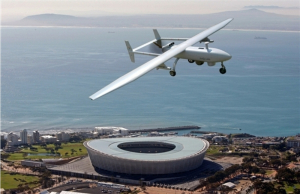
    a_seeker_400_drone-_manufactur

    Image by Times Asi/Wikimedia.

    Military budgets throughout Africa have been expanded significantly in the past eleven years, only to be interrupted by low oil prices. According to SIPRI, Chad and Uganda recently invested in Russian MiG fighter jets, Ethiopia purchased 200 Ukrainian T-72 tanks, and Somalia and Nigeria invested in tanks, planes, armored vehicles and fighter jets. Interestingly enough, investments in military drone systems are largely absent, even though these systems are providing a growing tactical advantage for modern armed forces. Armed drones have seen a particular use in intrastate conflict as their loitering and intelligence capabilities enable forces to effectively monitor areas for insurgents. This choice for conventional weapons can be explained in part by the different solutions African governments have for conflicts, compared to the West.

    According to Prof. Ralph Rotte of the Aachen University, conventional weapons are favored over drones because they are better suited to the ways African governments fight civil wars. Western warfare is usually done by destroying the enemy while winning the ‘hearts and minds’ of the local population. This occurs less often in African civil wars, where military forces focus on outmaneuvering and disrupting each other in order to sap morale and willpower, only to incorporate the exhausted enemy in a system of patronage. This kind of low-intensity fighting does not require the destruction of troops or long-loitering surveillance capability through highly advanced technology. Hence, drones have taken a backseat in military spending in favor of small arms and conventional weaponry.

    Even in the few cases where African countries have tried to employ drones, a lack of maintenance, and limited institutional capability for intelligence sharing have grounded the few drones they had. This restricts the capability African states have in terms of tracking and identifying the locations of terrorist organizations such as Boko Haram, AQIM, ISIS and Al-Shabaab, which subsequently impacts the fight against these terror groups.

    No wonder, then, that Western states have stepped in the counter-insurgency vacuum with their own drones. France now operates drones from Chad, Nigeria and Mali, and the United States (US) flies them from 14 locations throughout Africa, while in the process of constructing a drone base with a 100$ million dollar price-tag in Niger. But the Western drone-monopoly will likely not be a permanent fixture of Africa.

    Drone Troubles

    Despite the shamble state of African drones, it is only a matter of time before they do become widespread and used effectively by African governments. As mentioned previously, five African nations are already developing their own. Several others, such as Algeria, are looking to acquire armed drones from China.

    Interest in using drones in Africa is growing, and the US has recently adopted a joint-statement together with 40 other countries on drone-exports, which will smooth the export of drone-technology. Even if Washington demands high regard for human rights from the countries that seek to acquire armed drones, Beijing won’t. Proliferation, then, either via import or local development, is bound to continue.

    That drones still have a future in Africa is exemplified by Nigeria as well, which, after having its Israeli drones grounded by corruption, and its Chinese drone crashing while carrying missiles, finally committed a successful drone-strike on Boko Haram.

    With the advent of African drones, the flaws of drones will also become a risk to security in Africa. The US has set dangerous precedents with its seemingly unlimited, obscure extra-judicial executions. In fact, UN Special Rapporteur Christof Heyns has warned that US drone strikes are undoing 50 years of international law. African states might be tempted to follow Washington’s lead, sending drones to neighboring states to stop those groups that abuse porous borders, without risking the lives of their own military forces. In turn, this cross-border activity might exacerbate conflict between states. Sounds farfetched? Just a few weeks ago India attacked terrorists in Pakistan-occupied Kashmir, with the help of a drone. This surgical strike worsened the already poor relationship between the two countries.

    Though current advanced strike-capable drones are reliant on a complex technological infrastructure, including satellites, and thus limit the number of States able to use them, other developments in the defense industry are focused on making smaller tactical drones capable for either armed use, or use them as loitering munitions that turn into kamikaze drones. These types of drones are more accessible for States that do not rely on high-tech networks to deploy them.

    It’s also not difficult to imagine what armed drones can do in the hands of oppressive governments. If Barack Obama can take out people without due process, there is no reason why the likes of Omar al-Bashir or Robert Mugabe cannot do the same to their political opponents under the guise of “security”.

    Then there is the question of whether drone-strikes can bring long-term security. New evidence suggests that more innocent civilians are being killed by drone strikes, and that communities are getting traumatized en masse. This might actually lead to an increase in militancy and terrorist activity, and thus only exacerbate the problem. African governments will have to be able to avoid the trap of drones as an ‘easy solution’, in order for drones to become a positive addition to stability and security.

    Drone Danger Ahead

    Drone development and imports are set to rise across Africa. With time, and through cooperation with the West and China, African military forces might develop the necessary technical know-how, organization and doctrine to deploy drones effectively. Because of the drone’s unique features, they might contribute greatly to security and stability across Africa.

    But there is also an incredible risk of escalating conflict if drones are used wrongly. The low threshold for use of force that armed drones bring, combined with the cross-border nature of criminal and terrorist organizations in Africa, can pit countries against each other if drones are used recklessly in each other’s territory. Drones might also appeal to African states that seek to eliminate rebels or dissidents, without full realization that drone strikes can actually worsen a conflict both internally and with neighboring states.

    The current use of drone strikes by the West sets the precedent for future abuse by African governments. The recent Joint Declaration on use and export of armed drones contains too many caveats, and the only African countries to sign it were Nigeria, Malawi, South Africa and the Seychelles. China was not a signatory to this declaration, even though it is the largest exporter of armed drones to Africa. Therefore, it’s imperative that the West becomes transparent about its use of drones, and that it (re-)establishes judicial norms and boundaries through which states can hold each other accountable. Stronger export control regimes, that include China, will be essential too. This will be necessary to prevent drone-chaos that we might otherwise see unfold in Africa in the near-future.

    Foeke Postma works for PAX, a Dutch peace organization, focusing on the subject of drones and the proliferation thereof. He holds a MSc degree in Conflict Analysis & Conflict Resolution from George Mason University, and a MA degree in Conflict Analysis & Mediterranean Security from the University of Malta.

  • Sustainable Security

    One of the negative aspects of China’s increasing engagement with African states is the spread of small arms and/or light weapons especially in conflict zones and were opposition is violently suppressed. These weapons have undoubtably contributed to the enhancement of closer ties between China and authoritarian regimes and served as an instrument for consolidating its presence in the continent.

    China has developed an extensive presence in Africa through infrastructure such as airports, roads, hospitals,  convention centers,  media investment, agricultural  and health education, among many other  activities that seemingly put China in a good light.  At the same time many of China’s seemingly worthwhile activities by have not consolidated its ties to the African political elite and incumbent regimes as much as its arms sales to authoritarian regimes have.  Its positive contributions in the continent have been offset by the lure of the benefits that are associated with arms sales to African states despite their negative consequences in growing African states.

    Chinese small arms have been implicated in ethnic violence and war crimes in Sudan, South Sudan and the Democratic Republic of Congo (DRC) among others.  They have also been instrumental in the suppression of democratic progress in Zimbabwe, and at the same time expanding its influence and political economic ties with the authoritarian regime of President Robert Mugabe. China’s worldview which puts social and economic rights over individual liberties and political rights is often quick to supply weapons to authoritarian African states because it does not make human rights observance a condition for arms sales to any country. Incumbent African regimes that face severe threats to their survival are therefore quick to turn to China as a source of arms supply in the struggle to preserve their power.

    Apart from the lure of profits for China’s arms sales to Africa, there is also the added benefit of China finding employment opportunities for its skilled Chinese citizens. This contributes to spreading its technical and personnel   influence in the continent. At times, an arms supply relationship also involves establishing an arms factory in a recipient state that requires the expertise of skilled Chinese scientists, engineers, and industrial managers. Such a relationship for China leads to a long term business and security relationship with the African country. This is one reason why China’s influence in Sudan is so strong. However, what happens is that weapons that are sold by China or produced by China in Africa end up fueling and feeding the conflicts in countries such as the DRC, Sudan, South Sudan, and the Central African Republic, among others.  Regime survival or incumbent regime power consolidation efforts fuel arms transfers in South Sudan and Burundi. Chinese arms are often implicated in these conflicts because of China’s aggressive arms sales strategy w is based on the following:

    • A “catch all” customers strategy that has established an arms transfer or military relationship with several large  African states such as Egypt, Nigeria, Ethiopia, Zimbabwe, and South Africa, as well as smaller states like the Republic of Congo, Equatorial Guinea, Eritrea,  Burundi, and Sierra Leone, among others;
    • A favorable  financing strategy especially for African countries that cannot afford to buy sophisticated weapons and  afford to pay the market price for small or light weapons; and
    • China’s use of frequent and aggressive small arms marketing of its and more sophisticated military hardware at annual arms exhibits in various states within the continent. The wide array of Chinese arms enables China to sell weapons to both rich authoritarian African states as well as poorer smaller ones. The Chinese policy of placing no human rights or democracy conditions on arms sales as well its overall policy of non-interference in the politics of African states translates into the availability and affordability of Chinese arms in many African states.

    The bloody footprints of China’s arm sales in Africa

    Image credit: Lance Corporal Jad Sleiman/Wikimedia.

    It is not therefore surprising that arms from China have been implicated in the Ethiopian-Eritrean conflict in which China is known to have supplied arms to both sides in the conflict. It is also well documented that Chinese weapons were used in Sudan’s suppression of rebels in Darfur following a revolt in 2003 which led to a genocide against the region’s people.  It is alleged that the light weapons used in the massacres in eastern DRC were of Chinese origin. There, children as young as 11 years old were given weapons  by warlord Thomas Lubanga, and forced to participate in interethnic killings in the early 2000s. Furthermore, Chinese trained Congolese troops have been implicated on several occasions in ethnic killings of innocent civilians in the eastern DRC.  Similarly, in 2009 Chinese-trained Guinean Commando units were responsible for the killings of about 150 people during a protest against authoritarian and undemocratic rule in the country.

    According to the Stockholm International Peace Research Institute ( SIPRI) report of 2010, China was found to be the foremost exporter of arms to Africa. The Chinese Type 56 which is China’s version of the Russian Kalashnikov (AK47) assault rifle is much easier to use as a light weapon.  The argument could be made that in spite of China’s claim that it does not interfere in the internal affairs of other countries, the fact that it supplies weapons to warring factions within a sovereign nation is itself inherently interventionist by nature. Such interference produces consequences such as gross human rights violations, murder, rapes, tortures, and extra-judicial killings. China’s arms sales to Africa attract negative attention especially because they are made available to states like Sudan and Zimbabwe and the DRC, known for blatant human rights violations in Africa. This often means that China is reaping the profits of selling weapons to both incumbent regimes and rebel groups. The general outcome is the consolidation and expansion of its ties and presence in the continent.

    Looking forward: an unsustainable arrangement

    China’s propensity to spread small arms and light weapons (SALW) among African states will end up undermining whatever positive perception it has generated in the continent as well as taint its goals to support sustainable development and contribute to the national development goals of individual African states.  In particular,  it will cast doubt on its  willingness to support Millenium Development Goals, and other specific  development goals in the continent such as the Program for Infrastructure Development in Africa and similar such programs.

    So far, China’s military to military ties with African states has been a source of frustration for the United Nations.While it China contributes to peacekeeping efforts  in the continent, the United Nations does not know details of its military engagement, or specific  military ties,  with the countries in which its peacekeepers  are deployed such has the DRC, South Sudan, Liberia, Mali, among others. In other words, the expanding military ties with African states, and perhaps the access by rebels to Chinese arms are factors that are likely to undermine UN peacekeeping functions of disarmament of ex-combatants. It is difficult to know whether Chinese arms complement or undermine the efforts to enhance security in fragile African states. It is a question of whether China is willing to ensure that its military ties with countries of concern such as the DRC, Sudan, South Sudan, and Zimbabwe, complement peacekeeping activities there or help to promote peace, stability, democracy and development.

    Human rights organizations have often called attention to the destabilizing role that Chinese arms play in conflict zones in Africa. China so far seems determined to support and forge closer ties with authoritarian regimes in their goals of power consolidation, oppression of the opposition. China on the other hand is preoccupied with spreading its influence, consolidating its ties and deepening its engagement with every African state regardless of whether it is democratic or authoritarian. Accordingly, Chinese SALWs are supplied to both national armies in Africa as well as to rebel groups in the DRC, Chad and Uganda, and now the warring factions in South Sudan.

    China’s supply of arms to both rebels and national armies is often a violation of embargoes as well as a blatant case of economic self-interested behavior. The glimmer of hope in all this is that China has at times bowed to international pressure to cease supplying weapons in areas of gross human rights violations such as was the case with Darfur. But overall China still gives priority to concern over sovereignty and often defers  to incumbent regimes such that human rights  observance and non-proliferation of SALWs  are relegated a secondary role in China’s foreign policy rights towards Africa states.

    Earl Conteh-Morgan is Professor of International Studies in the School of Interdisciplinary Global Studies at the University of South Florida, Tampa, Florida. He is currently working on a book-length manuscript on Sino-African relations from a Political Economy Approach.

  • Sustainable Security

    Often seen as a tactic harnessed by the weak, guerrilla warfare can also be a employed by the strong. States have at times used guerrillas in inter-state and civil conflict.

    Guerrilla warfare is widely viewed as a weapon of the weak. To Mao Tse-tung, it was the optimum strategy of those “inferior in arms and military equipment.” He drew inspiration from the Russian troops accomplishing, in 1812, what their militarily superior European counterparts could not: drive Napoleon’s Grand Army out of their country. They did this not only by taking advantage of Russia’s distinctive geography and climate, but also by using guerrillas – Cossacks and peasants – to go after the French troops “as unconsciously as dogs bite to death a rabid stray dog.”

    But, guerrilla warfare can also be a weapon of the strong. States with robust conventional military capabilities at times use guerrillas in inter-state and civil conflict.

    Guerrilla Warfare

    pkk-guerilla

    Image by kurdishstruggle via Flickr.

    Guerrillas’ advantages stem from their organization and local ties. They typically operate as small, independent units, thereby exercising more maneuverability, alertness, concealment, and access to the local population than their regular counterparts. Carl von Clausewitz recommended supplementing a regular army with bands of armed civilians. He observed that, when faced with adversity, soldiers typically “cling together like a herd of cattle,” while civilians “scatter and vanish in all directions, without requiring a special plan.” But, he emphasized that the latter should not be used “to pulverize the core but to nibble at the shell and around the edges” of regular armies.

    Both Clausewitz and Mao viewed guerrillas as useful for weakening a conventionally strong rival through harassment and psychological warfare, but recognized that they are “but one step in the total war.” It is the regular troops that must, in the end, directly confront and defeat the enemy. Thus, for example, the recent U.S. strategy of sponsoring local rebels in Syria against Bashar al-Assad’s (Russia-supported) army was likely to fail not least because of the difficulties inherent in using nonstate proxies. The U.S. strategists – presumed students of Clausewitz – failed to recognize the necessary role of the regular forces, or else significantly underestimated their capacity to form a regular army out of irregulars while in the midst of a war. Or, they were simply constrained by the political unfeasibility of setting regular U.S. soldiers’ boots on the ground.

    In addition to weakening (or hopelessly trying to defeat) a rival’s regular forces, states often use guerrillas – or “counter-guerrillas” – against guerrilla rivals. The latter are typically rebels fighting to gain, maintain, or reclaim territorial control from an established government or occupying power. The former are sometimes also referred to as “pro-government militias.”

    In a recent article published in the Journal of Strategic Studies, I closely examine and disaggregate the different types of counter-guerrillas states use in counterinsurgency operations. I identify two types of counter-guerrillas: self-defense militias and death squads. Self-defense militias typically comprise ordinary civilians, such as peasants, while death squads are usually manned by experienced militants, such as turned rebels or violent criminals.

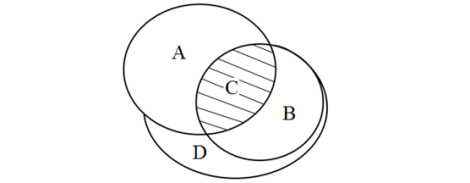
    I argue that states make proxy choices based on the latter’s comparative advantage, availability, and controllability. The state’s ideal partners are highly skilled fighters with deep knowledge of the insurgent network and links to the local population. Regular soldiers are highly skilled fighters, but possess limited local and insurgent knowledge. Partnering with nonstate actors means tackling the classic principal-agent problem, and the state’s capacity to do so is significantly shaped by its spatial reach (i.e. territorial control) across the theater of war. Figure 1 illustrates the different configurations of territorial control.

    Figure 1. Zones of Control

    figure-1-zones-of-control


    In Zone A, the state exercises full control. Zone B represents the insurgent-dominated area, whereas Zone C is the contested region where both sides actively compete for influence. Zone D represents an area that has been largely neglected in the burgeoning civil war literature. It is a zone that is neither fully controlled nor, for the time being, actively contested.

    Among the nonstate alternatives, the ideal partner for the state is a skilled fighter with insider knowledge of the insurgency and its logistics network. The disadvantage of using this type of proxy is that his fighting skills make him dangerous and difficult to control. The cost of losing control of skilled fighters can be unpalatably high. Unless they are weak or collapsed, modern states will prefer to use skilled fighters when and where they can supervise them.

    Nonstate actors that possess the desired local knowledge and have significant experience wielding extra-institutional violence, whether of criminal or rebel nature, may be harnessed to counter the insurgents. Their comparative advantage is in performing specialized, offensive, and highly targeted tasks (e.g. assassinations) that take advantage of their high mobility and combat skills. Consequently, they are likely to be used where the insurgents are actually located (Zones B and C). We should expect them in Zone C, where the state can exercise control over their activities. Using death squads in Zone B requires the state to create robust control mechanisms, such as embedding these groups firmly within special operations units of regular military or police forces. Where the state exercises full control (Zone A), or where the insurgents are not yet present (Zone D), states do not require highly targeted offensive operations and, consequently, death squads.

    While the comparative advantage of death squads is in highly targeted offensive operations, self-defense militias are best at performing static defensive tasks, such as guarding villages, communication lines, transportation networks, and vital installations. They are, consequently, more likely to be used to facilitate the operation of state forces in contested regions (Zone C) or to deny the insurgency access to areas where neither side has effective control (Zone D). In Zone B, self-defense militias are helpless against the insurgents. Not only can their government-provided weapons easily fall into rebel hands, but also, given the high rates of defection in insurgent-dominated areas, they may become a fertile source of rebel recruits. Remnants of self-defense militias (once created in Zone C or D) may persist in Zone A, but only because demobilization of nonstate actors is usually slow and costly.

    The Kashmir Case

    India’s use of counter-guerrillas in Kashmir illustrates the logic of the argument. In response to an insurgency breaking out in the late 1980s in the Indian state of Jammu and Kashmir (here referred to as “Kashmir”), the Indian army used former rebels (i.e. “renegades”) and villagers to combat the insurgents. Initial efforts relied on local police enforcement, treating the insurgency as an issue of “law and order.” However, the local policemen proved ineffective and were supplemented by three paramilitary forces (the Central Reserve Police Force, the Border Security Force, and the Indo-Tibetan Border Police). The Indian army’s role expanded further in 1993 with the introduction of the Rashtriya Rifles, an elite army unit created specifically for counterinsurgency operations.

    Former rebels were used mostly in the contested areas (Zone C) and, under the supervision of the Rashtriya Rifles, in Zone B. Kashmiri ex-insurgents, who were also popularly known as “Ikhwanis,” were used to eliminate rebels and their sympathizers. In Zone D – the mountainous areas of the Jammu region – the state instituted the civilian-manned Village Defense Committee (VDC) system. Figure 2 illustrates the distribution of the “renegades” and the VDCs. Official statements place the number of VDC volunteers at 6,000, but a prominent Kashmiri journalist I interviewed in Srinagar (the summer capital of Kashmir) estimated the figure to be closer to 23,000.

    Figure 2. Zones of Control in Kashmir

    zone-of-control-in-kashmir-figure-2


    Costs of Counter-Guerrillas

    Counter-guerrillas may be good for war, but they are bad for peace. Weaponizing turned rebels, criminals, and civilians offers tempting tactical benefits, but it also carries significant post-conflict costs. The conventional wisdom is that outsourcing violence lowers the cost of conflict and provides states with plausible deniability. However, as I learned from my fieldwork in Kashmir and other conflict zones, the local population quickly becomes aware of the illicit links between the counter-guerrillas and the government, as does the international community.

    The “renegades” may have helped the Indian army achieve military victory over the insurgents, but they also significantly boosted the widespread and enduring resentment against the Indian government. The arming of a select ethnic group (mostly Hindus and some Sikhs) in Jammu generated “intermittent outburst of communal violence” as well as incidents of looting, abduction, and rape.

    Playing local groups against one another is a classic strategy of colonialism, with a lasting impact on the peace and prosperity of many postcolonial states. Perhaps India’s Supreme Court said it best. It described the arming of over 6,000 young men in the tribal tracts by the central Indian state of Chhattisgarh to fight the Naxalite-Maoist insurgents as “tantamount to sowing of suicide pills that could divide and destroy society.”

    Yelena Biberman is an Assistant Professor of Political Science at Skidmore College and Nonresident Fellow at the Atlantic Council’s South Asia Center.

  • Sustainable Security

    Due to the absence of a functioning government, a counterinsurgency in a failed state can be a difficult enterprise. Since Somalia’s state collapse in 1991, various actors have been combating the threat of Al-Shabaab with mixed results.

    Counterinsurgency measures, as the name suggests, are meant to suppress an insurgency and in the long run create an enabling political environment for the establishment of a functional state capable of ensuring sustainable security. These goals are, however, difficult to achieve under conditions of state collapse given the virtual absence of a functional government. As a collapsed state that has had no functional government since the end of Siad Barre’s rule in 1991, Somalia represents an interesting case.

    Since 1991, many of Somalia’s counterinsurgency operations launched have been driven by concerns regarding the impact of Somalia’s conflict on regional security and the desire to create a functional state capable of providing basic human and physical security to its citizens. Given that Somalia is a collapsed state, the initiative of adopting and effecting counterinsurgency measures in the country has been externally driven by regional and international organisations such as the African Union (AU) and the United Nations (UN), as well as Western countries such as the United States (US) rather than by the Federal Government of Somalia (FGS).

    This article focuses on the military component of the peace enforcement African Union Mission in Somalia (AMISOM), which has positioned itself as a counterinsurgency force against the armed insurgency group Harakat Al-Shabaab Al Mujaheddin group, commonly known as Al-Shabaab.

    Somalia’s insurgency and counterinsurgency

    aminson-somalia

    Image of AMISON troop via UN Photo/Flickr.

    The nature of insurgency and counterinsurgency in Somalia is complex as it involves a variety of non-state, state and international actors. The militant Islamist group Al-Shabaab, the most significant armed non state actor, describes and perceives itself as an insurgent movement but is labelled and depicted by the FGS and external actors as a terrorist group as they see it as a transnational violent armed non-state actor. The conceptualisation and labelling of Al-Shabaab both simultaneously as an insurgent and terrorist group only complicates counterinsurgency operations in the country. This is so, in that it is not effective enough to conduct counterinsurgency as counterterrorism to suppress a group that perceives itself and thereby conducts its operations as an insurgent rather than a terrorist one.

    The combination of state collapse with the complexity and paradoxical nature of insurgency and counterinsurgency operations in Somalia has adversely affected human and physical security in the country and has provided Al-Shabaab with new political opportunities to sustain violent action. The AMISOM’s strategic concept of operations (CONOPS) and rules of engagement (ROE) indicate that its short-term repressive security measures are better clarified as counterterrorism rather than counterinsurgency, as they appear to focus on both simultaneously national and transnational terrorist activities, rather than efforts to defeat the insurgency in Somalia and ultimately create a functional state.

    The AMISON’s CONOPS combine all ongoing separate military operations in Somalia into a coordinated and coherent effort against Al-Shabaab so as to extend the authority of the FGS country-wide. It also aims at creating an enabling environment for the effective implementation of AMISOM’s mandate. AMISOM’s CONOPS have, however, been adversely hindered by the mission’s lack of adequate financial, human and military resources, thereby rendering it ineffective in its mandated operations. AMISOM’s ROE are key to ensuring that military operations are conducted in compliance with international humanitarian law obligations in Somalia’s socio-political context.

    Though the ROE are in conformity with the operational realities of the mission, AMISOM continues to operate in extremely volatile conditions created by state collapse, whereby Al-Shabaab’s asymmetrical warfare targets civilians within populated areas. This situation makes it extremely difficult for AMISOM to ensure civilian protection in the conduct of its operations and to consistently apply the mission’s ROE Counterinsurgency operations that cannot consistently sustain themselves for long periods are ineffective and will not achieve the intended outcome of enhancing sustainable security.

    A success or failure?

    The successes or failures of insurgency and counterinsurgency operations in Somalia depend on population support.  So far, the counterinsurgency strategies in Somalia conducted by AMISOM and its coalition forces, especially the Somali National Army, have been unable to gain the support of the people. Al-Shabaab’s led insurgency has gained popular support among the local-level communities, largely due to the social services and more importantly the local-level security governance it provides, in the absence of a functional state. All these strategies of Al-Shabaab, which are aimed at legitimising itself, are implemented through variants of Islamism. The movement was very effective in the provision of alternative governance structures at the local-level prior to the pre-2010 military intervention of AMISOM. The literature on counterinsurgency operations in Somalia indicates that the security vacuum created by Al-Shabaab’s departure as a result of AMISOM’s operations in these areas has led to an increase in the levels of insecurity thereby questioning the legitimacy of the latter’s operations.

    The Somali populace also perceives these counterinsurgency efforts as externally driven and extremely hesitant to engage, positively, with the fundamental Somali socio-political structures such as the clan structure and Islam. In order to be effective counterinsurgency measures, should take into account the legitimacy of these socio-political structures that play a significant role in local-level peacebuilding and governance processes.

    Doomed from the start?

    Counterinsurgency operations in Somalia have also been adversely affected by poor planning and their inability, so far, to create an enabling environment which enhances state capacity. Any credible counterinsurgency operation with a military component requires careful planning before any military incursion begins. A number of indicators suggest that, in the early stages, AMISOM neither planned nor implemented an effective counterinsurgency strategy. The initial objective of Kenya’s military incursion into Somalia through Operation Linda Nchi and subsequent incorporation into AMISOM was not peace enforcement countering the direct physical threats posed by Al-Shabaab on its territory.

    Counterinsurgency measures were later driven by socio-political and economic interests rather than peacebuilding in Somalia. Kenya’s military intervention in Somalia can be perceived as counterterrorism rather than counterinsurgency efforts given that they were initially driven by short-term strategic interests.  The establishment of a functional state has so far not been achieved in Somalia as it has been has been compromised by the manner in which regional and international peacekeeping efforts, have been conducted in the country. Most of these, if not all have been characterised by failures rather than successes. For example, the UN Monitoring Group on Somalia constantly accuses the Kenya Defence Forces component of violating AMISOM’s mandate. AMISOM has not been effectively taking the appropriate measures aimed at supporting the creation of a functionally effective state due to the strategic interests of its member states. This has compromised peacebuilding and security governance in the country.

    The resilience of Al-Shabaab as a transnational violent non-state armed actor, is partly a function of ineffective repressive counterinsurgency measures in Somalia. The repressive counterinsurgency operations conducted largely by external actors in the country are reactive, achieve unintended consequences ande hence counterproductive. A political strategy supported by security operations in the formulation and implementation of counterinsurgency operations is still ideal for any country facing an insurgency.

    Counterinsurgency measures, however, that do not require repressive security operations that focus on causes not symptoms are best suited for Somalia in the medium and long-term.  Since Somalia does not have a functional government capable of providing effective counterinsurgency operations let alone human and physical security, non-repressive measures would best be conducted by non-state actors such clan leaders and clans, and Islamic civil society organisations.

    Non-state actors are appropriate in the implementation of non-repressive counterinsurgency measures in that they not only located within fundamental Somali socio-political structures, but also have the capacity to use informal process oriented means rather than formal goal-oriented ones. Informal process-oriented methods are more appropriate when it comes to addressing the root causes of the insurgency while formal goal-oriented ones are reactive focussing on symptoms. These measures, such as those that focus on countering violent extremism, take into account fundamental Somali socio-political structures, and their corresponding customs norms and traditions thereby gaining population support and subsequently legitimacy. Such counterinsurgency measures will achieve their intended outcome of dealing with insurgency, the grievances of that insurgency and ultimately create the socio-political environment required to establish a functional state.

    Oscar Gakuo Mwangi (PhD) is an Associate Professor at the Department of Political & Administrative Studies National University of Lesotho.