Category: 27

  • Sustainable Security

    The centenary of the First World War also marks the anniversary of the practice of recording and naming casualties of war. But a century on, new forms of ‘shadow warfare’ limit the ability to record casualties of conflict and thus threaten to allow states a free hand to employ dangerous new tactics without threat of individual or international accountability. Without verifiable casualty figures – including information on who is being killed and how – we cannot evaluate the acceptability, effectiveness or impact of ‘remote control’ tactics as they are rolled out among civilian populations.

    A Humanizing Legacy
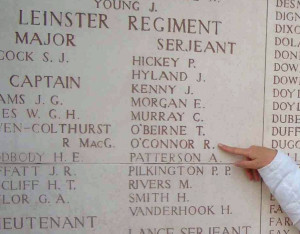
    Image of the name of Sgt. Robert O'Connor of The Leinster Regiment on the Menin Gate wall, who was killed on 31 July 1917 during the First World War. Source: Wikipedia

    Image of the name of Sgt. Robert O’Connor of The Leinster Regiment on the Menin Gate wall, killed on 31 July 1917 during the WWI. WWI saw the start of practice of recognizing by name each and every soldier killed during battle. Source: Wikipedia

    As the world marks the centenary of the commencement of the First World War,  we remember not the war that ended all wars, but instead the war that changed them forever. Introducing new forms of mechanized warfare – including the machine gun, u-boat, tank and airplane – WWI increased exponentially the lethal force of the individual soldier, bringing about an era of death and destruction on an industrial scale.  Yet, even as it ushered in the means of mass and impersonal killing, the ‘Great War’ also initiated the humanizing practice of recognizing by name each and every soldier who lost their lives, burying them in marked graves alongside those of their officers. Not only does such identification and public acknowledgement of victims dignify their memory, in today’s conflicts it can also provide vital information for humanitarian response and for monitoring compliance with – or tracking violations of – international law.

    Today we are again witnessing the introduction of new forms of warfare – including armed drones, lethal autonomous weapons, special operations forces and use of private military and security companies.  Like their WWI counterparts, these new tactics will reshape the face of conflict, yet as they do so they also threaten to destroy the humanizing legacy of casualty recording. Pushing global warfare deep into the shadows, these new ‘remote-control’ tactics are replacing public military campaigns with covert and contracted force. This shift to a ‘light-footprint’ approach, primarily by the United States, but also by France, Russia and the United Kingdom, reflects not only the changing nature of security threats, which have become mercurial at best, but also the lessening appetite for long military campaigns with high military casualties. A recent report from the Every Casualty Programme at Oxford Research Group and the Remote Control Project finds that the prioritisation of ‘remote control’ tactics presents serious obstacles to the recording of casualties, and subsequently, accountability for the civilians impacted by their use.

    Issues of capacity, political will, and access challenge efforts to record the casualties of any type of conflict. Yet, in conventional warfare, where identifiable or recognised conflict parties conduct attacks, such recording is not impossible: militaries generally record their own fatalities in these instances, while civilian deaths are often recorded by small civil society organizations around the world.  One need only look to the names of the hundreds of civilians killed in recent conflict in Gaza published by major news outlets to see the result of such efforts. In covert conflicts, however, or in conflicts where ‘remote control’ tactics are used, the ability to record casualties – including information on who is killed and how – is greatly diminished.

    The merging of intelligence operations with the use of force – seen currently in countries such as Yemen, Pakistan and Afghanistan with the use of armed drones and special operations forces by the United States – is a particularly problematic trend for casualty recorders. By greatly increasing the opacity – or outright deniability – of state force, covert operations erect a seemingly impenetrable wall of ‘classified information’, impeding recorders’ ability to conduct field investigations and verify their data. In 2010, the United Nations Mission in Afghanistan (UNAMA), which has conducted systematic casualty recording since 2007, reported that due to “tactical reasons and deliberate lack of information about such operations” they found it “very difficult to monitor and adequately document the activities of Special Forces” operating in the country. Gathering data on civilian and combatant casualties of drone strikes has also proved problematic – with ORG’s report finding that recorders are challenged by a lack of official disclosure of information about strikes, blocking of access to strike sites, and a near monopoly of information by anonymous officials on information coming from affected areas.

    The consequent lack of reliable casualty data impedes the impartial evaluation of the tactics’ impacts on civilian populations. It also limits the ability to scrutinise the tactics acceptability and effectiveness using evidence-based analysis. The United States – the primary user of armed drones – has repeatedly claimed that drones allow for precision targeting, capable of surgically eliminating targets with minimal civilian casualties. Yet, as a recent report from the Bureau of Investigate Journalism on drone use in Afghanistan has shown, “the armed forces that operate drones publish no data on casualties to corroborate these claims.” Although the United States claims to record data on casualties itself, its failure to make such records transparent not only prevents an analysis of the acceptability of drone strikes, but also denies the victims and their families the opportunity for accountability or redress.

    Bringing Remote-Control warfare out of the shadows
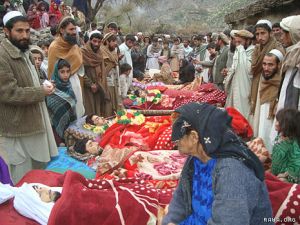
    People of Narang district mourning for the students killed in a night raid in the village Ghazi Khan on December 27, 2009. Although the operation was authorised by NATO, it is still not publicly known who carried out the attack. Source: Wikipedia

    People of Narang district mourning for the students killed in a night raid in the village Ghazi Khan on December 27, 2009. Although the operation was authorised by NATO, it is still not publicly known who carried out the attack. Source: Wikipedia

    Data documenting the casualties of particular weapons – from chemical gas in WW1 to landmines and cluster munitions more recently – has been instrumental in evaluating these weapons’ impact and acceptability, and ultimately ensuring their regulation through international treaty. Yet, as new tactics are employed under the cloak of ‘covert action’, the ability of the international community to measure and regulate their impact is increasingly limited. Without verifiable casualty figures, states may be given a free hand to employ dangerous new tactics without threat of individual or international accountability. Indeed a recent report from Amnesty International has found that as a result of an almost complete lack of transparency from the US government regarding civilian casualties in Afghanistan – specifically around those killed in night raids by SOFs or by missiles from drones strikes – victims are already facing a major accountability vacuum.

    States must take greater responsibility for recording and acknowledging the casualties – both civilian and combatant – of these new tactics. They must not seek to block public investigation and accountability, even though these tactics may be adopted for the lower profile they afford armed force. Furthermore the United Nations, alongside civil society groups or other entities, must enhance their recording efforts so as to provide independently verifiable data on casualties. Such data is essential for developing an accurate, complete and impartial record, and for facilitating scrutiny in circumstances where casualties are highly politicized. Civil society-led casualty recording and analysis, despite its limitations, has already highlighted policies within the use of remote control tactics that need greater examination: for example, the practice of ‘double-tap’ or rescuer drone strikes in Pakistan on those coming to the assistance of individuals at the site of a previous strike. Only by ensuring that casualty recording is conducted systematically and to a high standard can we bring the impact of remote control warfare out of the shadows and into the public eye.

    If we are to take a lesson from the commemoration ceremonies resounding across Europe it is simply that to learn from the past, and to honor it, we must first know that past. Details regarding the identites of those killed in conflict, both on the battlefield and in their homes, are essential to understanding the impact of violence, and to telling the full story of a conflict, to both current and future generations. The risks, then, of wars waged in secret, their battles and casualties concealed, are profound. Not only will there be no monuments at which to mourn their dead, there will be no lessons to be gleaned from their history: the wisdom of hindsight – both for policymakers deploying force and the public – may be lost completely.

    Kate Hofstra is Research and Communications Consultant of the Every Casualty Programme at Oxford Research Group and co-author of Losing Sight of the Human Cost: Casualty Recording and Remote Control Warfare. Kate previously worked for TLG,a London-based communications consultancy, where she was the editor of a digital magazine on business and development. She has also worked with the OSCE Mission to Bosnia and Herzegovina in Sarajevo and hasa background in transitional justice. Kate has an MSc in Human Rights from the London School of Economics.

    Featured Image: Deputy chief minister of Pakistan’s North West Frontier Province and tribesmen offer funeral prayers in front of dead bodies who were killed in army operation in Khar, the main town in Bajaur tribal agency, 30 October 2006. Source: The Bureau of Investigative Journalism, Naming the Dead Project
  • Sustainable Security

    Former combatants can play a powerful role in preventing violence, as the case of former combatants in Northern Ireland shows. Former Islamic State fighters could have a role to play in counter-terrorism, however there are potential limits to this.

    The value in re-integrating former combatants in post-conflict environments has been widely recognised in terms of reducing the risk of recidivism and fostering stability in a peace process. While there are examples of former combatant in larger scale post-conflict environments following the path of a de-politicised re-integration into society, there are also examples of former combatants – or ‘former terrorists’ – taking a much more active role in preventing future violence.  Former combatants in Northern Ireland, for example, have had some notable success in delivering restorative justice programmes, de-militarising communities, preventing inter-communal violence and articulating counter-narratives against the use of violence. If former combatants are having some success in preventing terrorism and political violence in Northern Ireland, what are the criteria for successfully utilising former combatants, and does this point to a potential role for former Islamic State combatants in the UK?

    Utilising Former Islamic State Combatants

    The question of utilising former Islamic State combatants is not entirely left-field as there has been a range of voices expression different potential ways of their utilisation to serve preventative ends. One emerging perspective has emphasised how former combatants can play a preventative role, with former MI5 and MI6 chief, Richard Barrett, arguing that they can help explain “why going to fight abroad is a bad idea” and that ex-extremists are often the most successful at “undermining the terrorist narrative.” The ability to use extremists who “renounce violence” and are “genuinely remorseful,” according to this perspective, can provide a credible and persuasive message to stop the flow of people engaging in IS-related terrorism. Terrorism expert Peter Neumann argues that IS defector narratives can encourage others to leave the group and deter others from joining on the basis of their experience and credibility. Subsequently, he has recommended that the U.K. government needs to provide defectors the opportunity to speak out, assist them in their resettlement, and to remove legal disincentives that prevent them going public. An alternative would be to do nothing or continue with the current approach; however former Islamic State combatants are already returning and not all of them are prosecuted. In other words, these former combatant networks exist, they risk solidifying, and will be sharing their views and experiences, therefore it may be more effective in the long-run to co-opt and utilise them for positive ends.

    There is clearly a potential role for former Islamic State combatants in preventing others engaging in such activities. The nature of utilisation could be minimalist (narrative-based), whereby third parties disseminate former combatant narratives. For example, one UK counter-terrorism official mentioned how they have distributed one specific article on Islamic State defector narratives to help people play a preventative role. A more controversial role would be a maximalist approach (narrative and network-based) like in Northern Ireland, whereby former combatants themselves engage in activities with the goal of prevention. Should the UK government consider enabling or facilitating former Islamic State combatants in a preventative capacity?

    Former Combatants as a Conveyor-Belt to Terrorism?

    isis

    Image by Day Donaldson via Flickr.

    One of the potentially biggest arguments against a maximalist approach is that such activities could be counter-productive and could risk serving as a conveyor-belt to engaging in violence rather than act as a fire-wall. A common trend with former combatants is they often do not de-radicalise: while they may disengage from terrorism because of dissatisfaction, disillusionment or burnout, they tend to maintain their ideological views. From this perspective – and endorsed by the UK government’s counter-terrorism policy – even non-violent extremist ideology can encourage others to engage in violence. While the conveyor-belt perspective has been heavily critiqued, the experiences of former combatants in Northern Ireland actually points to a middle-ground between these two perspectives. This consequently contributes to the debate on radicalisation but also on the potential role of former combatants in a preventative capacity.

    The findings of my own research on former combatants in Northern Ireland placed emphasis, not on ideology or attitudes to violence, but the framing process – in other words, how is violence and non-violence represented by actors and how it resonates with an audience, and what structural factors facilitate this resonance. Former combatants in Northern Ireland interact on a regular basis with young people through a number of programmes. Interestingly, despite the former combatants having maintained an ideology similar to violent groups, and despite the former combatants not supporting violence in the current conditions, it was realised that the interaction between former combatants and young people led the latter to view the use of violence positively. However, while this may seem to corroborate the conveyor-belt perspective, it actually showed that it was how former combatants framed violence that produced the conveyor-belt effect, not ideology on its own but also not simply that the former combatants were anti-violence.

    Re-Framing Violence

    In the past, former combatants explained their transition away from violence by framing violence it as conditionally acceptable during the 1960s civil rights protest period and that since these grievances were addressed in today’s conditions that violence was no longer legitimate. There are many reasons why the former combatants re-framed violence in this particular way, and it was particularly effective at ensuring the majority of the Provisional IRA disengaged; however this particular framing of violence to a younger audience without such experiences interpreted the framing as glamourising violence. Reflecting upon this, former combatants actively reframed violence when in dialogue with young people by emphasising the less glamorous aspects of violence more. One study showed that the former combatant reframing of violence in this manner has discouraged young people in engaging in violence. Former combatants were persuasive because they had credibility in the ‘hard to reach’ areas and they maintained narrative fidelity with audiences on ideology and identity.

    The point here is that there is some truth to the conveyor-belt perspective – that former combatants opposed to violence can encourage young people to engage in violence – but it has little to do with the ideology more broadly and much more to do with the framing process between the former combatants and the audience. Those who advocate the conveyor-belt perspective underplay the organisational interests in not having potential members becoming violent. In the Northern Irish case, former combatants had the time to reflect upon the effects of interacting with the younger generation and to engage in a re-framing process. Their reflexivity was encouraged by organisational interest as well as network structures which ensured they would be in regular interaction with young people and an environment in which funding was available to engage in projects.

    Empowering Reflexive Networks

    Thus, ideology is a crude means of determining the success of former combatants in a preventative role. Former combatants can be utilised in this capacity – or at the very least not discouraged – and the enablement of reflexive networks which resonate with young people can act as a firewall to participation in violence. However, there are a number of potential constraints and objections when this is applied to former Islamic State combatants. Working on the assumption that the purpose of counter-terrorism is to ‘counter terrorism’ and not to counter ideologies which a state does not like, and leaving aside the normative dimension of the rights of victims which Alonso excellently covers, the article focuses on two main points on the pragmatism and efficacy of using former combatants to prevent violence.

    Firstly, the UK government’s wholesale adoption of the conveyor-belt perspective makes the provision of funding much more rigid than in Northern Ireland. Interestingly, Northern Ireland’s very own prevent policy in the 1980s curtailed which organisations could receive funding on the basis of their ideology, but this was gradually dropped in recognition that the development of the community route could help to facilitate disengagement. The funding former combatants receive in Northern Ireland is detached from the government, thus increasing buy-in across communities, and the conditions of the funding are pragmatically based (often turning a blind eye to paramilitary behaviour in anticipation that funding and accreditation would incentivise moving away from such behaviour). Ideology is not factored in – alternative identities are strengthened and shown they can be non-violent rather than trying to encourage the ‘centrefication’ of political identities. In the current UK context, similar changes would be required before former combatants and former extremists could be fully utilised.

    A second objection is that the network and community structure – while a crucial factor in determining the efficacy of former combatants in a preventative role – is completely different in the Islamic State context. Former Islamic State combatants are smaller in numbers, they are set apart from their returning communities, and they may be politically disengaged (so why not just leave them like that). However, the size of networks is not important – a network of about a dozen former combatants in Belfast has been sufficient in preventing interface violence. Indeed, following the conveyor-belt logic limits the number of potential partners for the government to work with, in addition to its policies eroding trust through creating the perception of ‘suspect communities’. While the utilisation of former combatants (and extremists) can challenge and disrupt moderate communities, the target audience of these initiatives are individuals this moderate community struggle to meet. Finally, while we don’t know what former Islamic State combatants are doing upon their return, political passivism should not be viewed as a boat not to be rocked. In the case of Northern Ireland, it was the lack of active framing in combination with stories of the Troubles (often told in a social environment) in the context of parents and teachers not actively speaking about the Troubles, which led young people to view violence as attractive.

    Minimalist and Maximalist Roles for Forrmer Combatants

    In conclusion, former combatants can play a powerful role in preventing violence. The factors which determine whether this will be successful is not based on ideology but neither is it solely on whether they are non-violent. The network structure and incentivising environment can enable former combatants to be reflexive of the narratives they impart and how to best re-frame anti-violence narratives to ensure these resonate with young people in ‘hard to reach areas’. Former Islamic State combatants also have a potential role to play, however the lack of an enabling environment would limit this to minimalist interventions in the short term until the infrastructure for maximalist interventions are developed. Maximalist interventions are more effective at resonating with ‘hard to reach’ audiences as they decrease the likelihood of a conveyor belt effect, an effect which is likely to occur without interventions.

    Gordon Clubb is Lecturer in International Security at the University of Leeds and is co-leading the interdisciplinary Radicalisation and Violent Extremism Network. His recent book focuses on Social Movement De-Radicalisation and he has also written on the role of former combatants in preventing violence, how militant groups frame disengagement, and on whether non-violent radical ideology acts as a conveyor-belt to terrorism.

  • Sustainable Security

    This article was originally published on openSecurity’s monthly Sustainable Security column on 27th January, 2014.  Each month, a rotating network of experts from Oxford Research Group’s Sustainable Security programme and their partners explore on-going issues of global and regional insecurity. 

    Sustainable Security is a concept that has been around for almost a decade now. It was first conceptualised by my colleagues Chris Abbott and Paul Rogers, whose thoughts on the subject have appeared many times in these pages. In 2000, Paul summed up what looked to many commentators like a surprisingly quiet decade of US hegemony as characterised by an unsustainable ‘control paradigm’, in which the symptoms of global insecurity were suppressed with force while their root causes were ignored and left to fester. The 9/11 attacks and subsequent ‘war on terror’ served to confirm Paul’s hypothesis that military domination would not be sufficient to ‘keep a lid’ on security challenges, even in the world’s most powerful states.

    The Sustainable Security paradigm has been developed by the Oxford Research Group as an alternative lens through which to view global security, identifying the underlying drivers of conflict and insecurity rather than its symptoms, such as violence, organised crime or radicalisation. The point is to understand how unmet human needs and feelings of insecurity interrelate and lead to violence, then to work to prevent conflict by addressing its root causes. The aim of this new monthly column on openSecurity is to facilitate precisely this kind of understanding through contributions from the Sustainable Security Programme’s network of experts on non-traditional security issues.

    Taking a sustainable security approach requires some thought about the future of our planet as well as its current unsustainable state. Changes to climate, demography, economic production and consumption, political and national identity, access to information and military technology will all condition the future security of our world. What, then, does 2014 hold in the way of challenges and opportunities?

    2014: the end of the war on terror?

    British Soldier with 1 Welsh Guards returns from patrol in Zarghun Kalay, Afghanistan Source: Ministry of Defence (Flickr)

    By the end of 2014, the last NATO combat troops should have withdrawn from Afghanistan. Does this mean that the alliance’s war on terror will end where it began 13 years earlier? I doubt it. Billions of dollars and thousands of lives later, Afghanistan looks about as stable as Iraq. Pakistan, India, Iran and other powerful actors will continue to play their own cards at the Afghan table and it is barely conceivable that the US and its allies will not seek to use their own military influence and proxies to keep the Taliban down, however appalling the post-Karzai elections this April.

    As much as President Obama has sought to distance himself from the toxic Bush legacy of overt and unilateral interventionism, the nature of the ‘Obama doctrine’ is war on terror-lite. It is covert, stealthy, and still the wrong side of international law. Obama’s strategy relies on the use of ‘remote control’ warfare: special forces, private military contractors and, above all, armed drones, or unmanned combat air vehicles (UCAVs). Since 2009, US drone attacks have escalated dramatically and killed hundreds, including civilians, in Pakistan, Yemen, Somalia and Afghanistan, where the UK also increasingly uses UCAVs. Withdrawing combat units does not mean that NATO states will cease to pursue war by remote control in Afghanistan.

    Arguments that UCAV systems and operators are more offensive or inclined to kill civilians miss the larger legal point that the US is increasingly pursuing undeclared wars and targeted assassinations, whether it employs drones, special forces, mercenaries, manned gunships or cruise missiles. The backlash to such action is demonstrable through the further radicalisation of communities living in fear of constant surveillance and attack from the unseen. It is employing terror against terror.

    2013 was something of a break-out year for UCAVs. Israel set many of the precedents that the US has followed in drone warfare as well as targeted killings. The technology is simple and easy to imitate. While the UK and France invest in US systems and test indigenous prototypes, China and Iran have flown their own first UCAVs. Russia and others are not far behind. Even very modest air forces like Nigeria’s have built their own rudimentary drones. Non-state constructors cannot be far behind. Drone proliferation may define this decade as wireless communications defined the last.

    Militarisation of the greater Middle East

    If 2013 was the year that the democratic hopes of the Arab Spring unravelled, 2014 may be the year that it turns to regional war. Libya appears to be at the vanguard, although there remains a chance that it could follow Yemen’s path of dialogue and isolate its increasingly prominent radical fringe. Egypt’s generals have learned nothing from Algeria’s tragic past and the leaden Mubarak years. Iraq’s Maliki regime still believes it has nothing to learn from Syria’s sectarian implosion, continuing to marginalise a Sunni minority.

    Neither the US, UK nor France is likely to want to overtly intervene in the inferno of Syria or the escalating crises of Iraq, Libya and Egypt; plenty of others will. Meanwhile, the Sahara is becoming steadily more militarised. France has just announced a major repositioning of its forces in Africa out of their urban and coastal bases and into the Sahel to hunt and destroy al-Qaida affiliates. Ever since 2009, US special forces, drone operators and private contractors have been quietly moving from Djibouti across the Sahel and Horn, increasingly sharing facilities with France.

    Transition tensions

    Away from the Middle East, 2014 could be a year of democratic consolidation among rising powers. No less than eight of the 15 largest emerging economies expect to hold elections this year and a couple more are already polarising around polls due in early 2015.

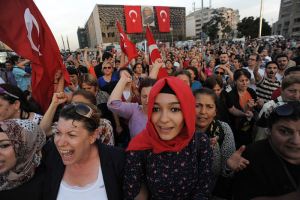
    Taksim Sqaure protestors, 16 June, 2013. Source: Wikimedia

    Taksim Sqaure protestors, Istanbul, Turkey, 16 June, 2013. Source: Wikimedia

    India, Brazil, Turkey, South Africa, Thailand and Egypt all plan to hold elections this year, in the wake of major protest movements in 2013. New parties from the margins are shaking up politics in India and South Africa, potentially increasing instability as the establishment fights back. Thailand is already politically paralysed as its metropolitan establishment lashes back at the populist aspirations of the rural majority. Turkey could see something similar if, as expected, conservative premier Erdogan seeks the presidency in August. Emerging giants Brazil and Indonesia will probably weather their elections better but nonetheless will be distracted.

    While 2014 may not be a peak year for economic growth or political stability among regional powers, overall the longer-term trend looks positive – marginalised groups, whether from the middle or working classes, asserting their rights and taking a stand against corruption and environmental degradation.  With notable exceptions in Egypt, Thailand and perhaps Turkey, there is a deepening of democratic culture, whether or not civil society is fully respected, in many major developing states and significant incidences of demilitarisation and respect for rights.  However, many of the biggest of them – Brazil, Mexico, Indonesia, Argentina to name just the democracies – are major oil, food and timber exporters with structural incentives to resist, for example, international efforts to restrict carbon emissions.

    Elections to the European Parliament in May and the US Congress in November may be less encouraging. The Tea Party trend and the rise of populist nationalism will continue squeezing progressive policy options on both sides of the North Atlantic.

    2014 as prelude to 2015

    Finally, 2014 is the year in which much of the work has to be done to prepare for the potentially landmark policy processes of 2015, each of which will have significant impact on future global security. For the UK, this includes the political parties setting their manifesto commitments ahead of the May 2015 general election and preparations for the ensuing review of National Security Strategy and Defence and Security Review. Three international processes also stand out.

    For arms reduction there is the quinquennial Nuclear Non-Proliferation Treaty Review Conference, due next May. Difficult debates are expected given the Obama administration’s focus on superiority in strategic conventional weapons.

    For climate change the UN Framework Convention on Climate Change is to set a new universal climate agreement to replace the 1997 Kyoto Protocol on carbon emissions after 2020. This will extend emissions targets from industrialised to developing countries but faces huge hurdles in overcoming resistance from energy lobbies and climate change sceptics in the most powerful states.

    To address development there is also the culmination of the Post-2015 Development Agenda process to supersede the Millennium Development Goals and forge a new agenda with the Sustainable Development Goals. This is a massive project and there remains much to be done to ensure that conflict-affected states are not left behind, as they have been by the MDGs, and that the new agenda tackles inequality as a crucial part of achieving sustainable human security and development.

    2014, then, is a time for looking backwards and forwards. While the dynamics of the war on terror are still very much in play, the withdrawal from Afghanistan and the re-escalation of violence in Iraq and Libya present an opportune context for sincere reflections on the disastrous consequences of war without borders. Such inquiry needs to look forward too, to the implications of the current administration’s ‘war-lite’ and the unstoppable proliferation of remote control technologies.

    This is also the year where we have the chance to get the agenda right for the big international policy decisions of 2015. Looming elections may make it a difficult year for politicians in the US, Europe and many emerging powers to show leadership on such controversial issues. Thus, 2014 will be an important year in deciding whether we continue to control the symptoms of global insecurity or whether we begin to address seriously the inequalities and injustices that underlie it.

    Richard Reeve  is the Director of Oxford Research Group’s Sustainable Security programme. He works across a wide range of defence and security issues and is responsible for the strategic direction of the programme. Richard has particular expertise in global security, Sub-Saharan Africa, peace and conflict analysis, and the security role of regional organisations.

  • Sustainable Security

    Another year has confronted us with yet another tragedy in another European Capital – Madrid in 2004, London in 2007, Paris last year – and, most recently, Brussels. The litany of such incidents, augmented by countless other atrocities further afield and perpetrated originally by those claiming connections to Al Qaeda but now eclipsed by similarly asserted affiliations to ISIS, seems set to continue. Accordingly, it makes sense for a publication called Sustainable Security to ask what, if anything, has been sustainable about responses to terrorism worldwide since 9/11?

    After Brussels, many of the usual suspects with connections to the world of security have been wheeled out as usual to offer advice on the need for ever greater scrutiny at airports. But, having made air-side a challenge to reach through a panoply of checks and scanners, it seemed inevitable to those who understood displacement that attacks would simply migrate to the less scrutinised entrance spaces. We could turn these into fortified complexes too – only for the locus of atrocities to move on again – or we could begin to ask more challenging questions of our authorities.

    Of course, none of us wishes to sit next to a deluded individual about to detonate their device on a plane or Metro train. In that regard, security and intelligence gathering are absolutely necessary. But they are clearly not sufficient as, despite the billions spent in hardening private facilities and civic spaces, including transport hubs since 2001, the evidence still serves to remind us that determined individuals – and even a few chancers – will get through. It is simply not possible to secure all of society, all of the time. Prevention – in this sense at least – is far too limited a goal.

    What’s more it has often been the authorities who have ended up ‘doing the terrorists’ job for them’. To call for three days of national mourning after the latest disasters may seem sensitive to those who lost a loved one – but it flies in the face of the rhetoric of resilience and those who claim the need for a rapid return to normalcy. In that respect, the public often display considerably greater courage by determinedly meeting together for vigils in open spaces, whilst the authorities advise against collective gatherings and look to cancel concerts and sporting events.

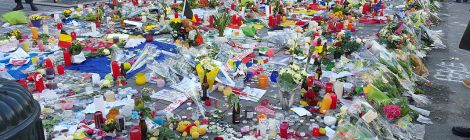
    Brussels_after_the_attacks_(4)

    Image of Bourse, Brussels after terrorist attacks in March 2016. Image by Romaine via Wikimedia Commons.

    There can never be security solutions to social problems. At best, these conceal the underlying challenges that lie ahead. Worse, operational fixations allow those in charge to evade articulating a broader vision for their societies. This latter aspect shapes both the perpetrators – who appear sometimes to almost drift into becoming radicalised through their being disengaged from a world that offers them (and others) little by way of vision or ambition – and the respondents – who are lulled into a phoney sense of knowing what they are doing and why, when in fact they have little appreciation for, or understanding of, the dynamic they seek to redress.

    In such a situation, it may indeed only be the public who can maintain a modicum of humanity through their determination – albeit unavoidable in most instances – to get on with life. They are also apparently not so readily fooled by the rhetoric of the self-styled ‘jihadists’ who represent no-one and whose actions in the name of Islam most Muslims deplore, nor by the actions of the authorities who, by securitising the world, hope to make their task easier whilst providing themselves with a flimsy – if largely unconscious – sense of purpose in an age when they seem to lack any other.

    But there are others, critical of the authorities, whose narrative and interpretative framework we should be just as critical of and interrogate too. If, as we are often told, alienated individuals in corroded communities in run-down districts have a supposedly understandable sense of grievance – at the racist hostility they encounter, as well as with regards to Western foreign policy – then why is it that not all brought up under such conditions respond the same way, or that the terrorists target civilians, including children as in Lahore, rather than government ministries?

    In the aftermath of the Cold War, security increasingly became represented through the prism of human security whereby the referent for security shifted from the state to the individual and, in particular, the latter’s assumed existential sense of vulnerability. This, in turn, opened the door to securitisation – the possibility that the state and other actors might transform specific problems into security-related concerns in the pursuit of their agendas. Foremost among these have been the securitisation of health and the securitisation of development. So might there now be a securitisation of education too?

    Securitisation allows challenges to be ‘constructed as a matter of national security’, encouraging a demands for perpetual preparedness, constant surveillance and eternal vigilance. It offers unfocused authorities clear actions to engage in, thereby making ‘an uncertain future available to intervention in the present’. This coincides with the rise of risk management that also readily become an organising framework in periods lacking clear direction. Worse, by promoting an emphasis on procedural management through expert knowledge these both disenfranchise people from the possibility of solving their own problems and allows the authorities ‘to become fixated on external threats rather than examining their own internal confusions’.

    Another critical factor here appears to be the race to the bottom that best describes identity politics today. The end of the Cold War, and with it the gradual erosion of the politics of Left and Right that had defined it, left a big gap where collective social discourse, debate and deliberation ought to be. It is this hole in values and vision that the use of identity as a claim on resources – particularly through attempts to define particular groups as being the most oppressed or victimised – has sought to fill. Many campaigners have now learnt to play this game. There is evidence to suggest that today’s terrorists do so too.

    But, rather than challenge such approaches, governments the world over have often indulged the claims and patronised the claimants accordingly. Far better to deal with individuals and groups prostrating themselves to you and making claims for remedy or therapy than having to confront those who are being Bolshie and demanding more. In an age when the authorities are not so sure of whom they are themselves – having sought to disown aspects of their imperialist past to the point of self-loathing and confusion – as well as sensing themselves isolated, it makes for a perfect match.

    While campaigners understandably concern themselves with government moves to introduce a Communications Data Bill – the so-called ‘Snoopers’ Charter’, now renamed the Investigatory Powers Bill – what many fail to recognise is the extent to which such a push from above has been facilitated by erosions to absolute freedom of expression down below. The notion, for instance, that students are vulnerable and need to be protected by the authorities, whilst appearing in the new Prevent Duty, first emerged as the gradual extension of various campaigns for ‘no platform’, ‘safe space’ and ‘trigger warnings’ promoted by Students’ Unions across the UK and US.

    Prevent is an affront to liberty, not least in its infringements on academic freedom, but the notion that everyday social relations are ‘toxic’ and ought to be scrutinised by the powers-that-be is entirely mainstream. This latter has served as a mechanism whereby febrile individuals and institutions, as well as directionless authorities have been able to catch up with the popular mood that fears active engagement and robust exchanges of opinion by playing the ‘victim card’ and looking for protection. Notably, the language is one that presumes a passive, innocent and sponge-like public – young people and others are (it would seem) simply ‘drawn into terrorism’ by those who groom them, thereby diminishing their agency and, inadvertently, absolving them of accountability for their actions.

    At a recent dissemination session I attended relating to the Prevent Duty at which an eager regional coordinator presented upon its trajectory and implications, I was particularly struck by this use of the language of protection. Authorities are merely implementing a ‘duty of care’ we were advised, for people who might be ‘influenced by’ ideology. The notion that it might be the specific role of Higher Education to influence young people, or of the state to inspire us all with ideas, was not countenanced. And, ironically for institutions now driven by the need for so-called evidence-based policies, the positivist ‘what is’ question was replaced by a speculative ‘what if’?

    As I have also noted elsewhere, we were advised that Prevent had now shifted ‘from a moral duty to a legal duty’. In that regards, the presenter, who described themselves (and us) as a practitioner (as opposed to a planner maybe) was at least refreshingly honest. But that we now invoke the law to attempt to prevent terror should alert us more significantly to the failure of the authorities to win the moral argument or to engage their own public. Free speech and privacy are messy matters of course, as is real life. But attempts to shy away from this are worse for us all.

    That is the real challenge ahead – one that no amount of legislation or intelligence and security can by-pass. Academics will continue to debate what the real causes of terrorism today are, as well as how best to address these. In the meantime, the authorities, following the cue of a nervous culture and lacking any coherent vision for society of their own have assumed that they know what to do and are acting accordingly through their enthusiastic practitioners.

    It is what we want for society beyond the terror and our responses to it that really needs debating.

    Professor Bill Durodie is Chair of International Relations and Head of the Department of Politics, Languages and International Studies at the University of Bath. His most recent journal article was ‘Securitising Education to Prevent Terrorism or Losing Direction?’ published in the British Journal of Educational Studies in March 2016. His work focuses on risk, resilience, radicalisation and the politics of fear.

  • Sustainable Security

    The political changes in certain South American countries, including most notably the case of Bolivia, could act as inspirations in the ongoing search for locally grown, hybrid variants of a post-liberal peace.

    Author’s Note: This article presents key arguments from my article Jonas Wolff (2015) Beyond the liberal peace: Latin American inspirations for post-liberal peacebuilding, Peacebuilding, 3:3, 279-296, DOI: 10.1080/21647259.2015.1040606.

    Responding to the sobering results of international peacebuilding missions around the world, a rich academic debate has emerged that, from different perspectives and with different aims, criticizes the practices and premises of peacebuilding. In particular, critics have suggested that the liberal template of social and political order (‘liberal peace’ and ‘liberal democracy’) which guides peacebuilding is a crucial part of the problem. As a consequence, scholars have started to think about – and empirically study – alternatives to the liberal peace. This idea of a hybrid, peaceful order that develops out of the encounter between external and local efforts at building peace is captured, most prominently, by Oliver Richmond’s notion of ‘post-liberal peace’. The crux of this deliberately ill-defined concept is that it denotes the emergence of hybrid social orders that somehow combine liberal and non-liberal (but not necessarily anti-liberal or non-democratic) norms and practices. Such orders, thereby, go beyond and may also partially contradict liberal principles – but do so without following an established, alternative template. According to Richmond (and other critical peacebuilding scholars), local resistance to, and local appropriation of, international peacebuilding activities will inevitably produce such hybridity. Yet, there is still limited empirical evidence and rather abstract theoretical ideas about what such post-liberal forms of peace could look like.

    With this piece, I bring in experiences that are usually not reflected in the debate about peacebuilding, namely: current political changes in a series of South American countries, including most notably the case of Bolivia. The context in which these processes occur is very different from the so-called post-conflict societies in which peacebuilding takes place. Yet, precisely because of these differences, conditions for locally driven experiments with post-liberalism are arguably better in Latin America.

    While the attempt to move beyond liberal peacebuilding does certainly not need yet another template to be implemented worldwide, these experiences might well serve as inspirations in the ongoing search for locally grown, hybrid variants of a post-liberal peace. Against those that defend liberal peacebuilding by suggesting that there is, simply, no alternative (as Roland Paris has argued), the Latin American experience at the very least shows that there are actual alternatives to liberal mainstream conceptions of political and economic order – even if post-liberal experiments in South America are limited and uncertain, diverse and contradictory.

    Post-liberalism in South America

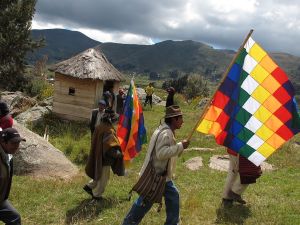
    1024px-Aymara_ceremony_copacabana_1

    Photos of a traditional Aymara ceremony in Copacabana, on the border of Lake Titicaca in Bolivia. Image via Wikimedia Commons.

    In recent years, scholars working on Latin American politics have noted ‘post-neoliberal’ and ‘post-liberal’ trends in the region. On the one hand, the so-called left turn, i.e. the election and reelection of several left-of-center governments across the region, has been accompanied by attempts to turn away from neoliberal economic policies. On the other, with diverse experiences of participatory democracy at the local level and, in the Andean region, the adoption of new constitutions that partially deviate from the mainstream model of liberal democracy, contours of a possible post-liberal democracy have begun to take shape. These developments are diverse and contradictory, but they share one basic commonality: They are the result of attempts to go beyond liberal, representative democracy and neoliberal, market-oriented economics without entirely replacing the preexisting political or economic order through a new, alternative model of development. The new constitutions in Bolivia and Ecuador, for instance, maintain all the well-known institutions of representative democracy and the usual series of political and civil rights but add or strengthen mechanisms of direct democracy and societal participation, expand the notion of human rights in areas of economic, social and cultural rights and include collective indigenous rights.

    In the area of economic policy, contemporary attempts to strengthen the economic role of the state and expand social policies, to deepen the domestic market and implement some kind of redistributive policies differ from country to country, but in general do not break with the entire neoliberal model. The prefix ‘post’ in both post-liberal democracy and post-neoliberalism is precisely meant to capture this partial, and hybrid, combination of continuity and change.

    Redefining the nation-state and the rule of law

    A core question for international peacebuilding concerns the related task of nation-building. For obvious reasons, most post-conflict societies lack a common national identity. An innovative response that has emerged from Latin America, and particularly from the indigenous movements in Bolivia and Ecuador, is the notion of a ‘plurinational state’. On the one hand, this concept openly breaks with the unitary conception of the nation-state: The state at hand is supposed to not only include different cultures (‘multicultural’) or ethnic communities (‘pluriethnic’), but several nations or peoples that have their own right to self-determination. On the other hand, however, the concept as used and constitutionally recognized in Bolivia and Ecuador is rather a hybrid: It combines an overarching national identity with an acknowledgment of particular indigenous identities. The plurinational state, contradictory as this may seem, is both a unitary nation-state and an umbrella organization that includes partially autonomous indigenous peoples. This formula has been severely contested – and continues to be so – in both countries and is, certainly, far from offering a panacea for the complex problems of nation-building in divided societies. But it may still be worthwhile to take into account.

    Directly related to this, another crucial issue in the peacebuilding debate concerns the rule of law – and, more specifically, the tension between liberal state law that is to be implemented ‘from above’ (but usually does not work very well) and local forms of community justice that exist at the grassroots level (and frequently work much better but exhibit non- or illiberal features). The same kind of tension exists in a series of Latin American countries and concerns the existence of indigenous or community justice at the local level – also not least a result of the factual absence of the state’s judicial institutions especially in rural areas. Responding to this reality and to increasing claims by indigenous movements, several Latin American countries since the 1990s have progressively recognized indigenous customs and practices. In the case of Bolivia, the new constitution goes so far as to place ordinary and indigenous legal jurisdiction on an equal footing.

    In general, research on indigenous community justice in the Andean region shows that it works relative well: When compared to the state’s justice system, which is often hardly pre-sent in rural areas and frequently perceived as alien, community justice provides an important mechanism for resolving a broad range of conflicts in ways that local populations generally regard as much more efficient and legitimate. While studies show that indigenous community justice is not at all arbitrary, but follows specific rationalities, its logic is clearly different from the rationality guiding ordinary state justice: The overall aim is to preserve the social harmony of a given community; its main strategy is some kind of reconciliation. From this perspective, long-term imprisonment is irrational, while what is regarded as physical punishment from a liberal perspective (e.g., whipping with nettles, ice water baths) is considered rather symbolic acts of purification and/or reconciliation.

    Just as in quite a few post-conflict societies legal pluralism in the Andean region is both an empirical reality and a normative challenge – and research on the experiences in Bolivia, Colombia, Ecuador and Peru offers a series of crucial insights about both the diverse practices of indigenous/community justice and about different ways of dealing with legal pluralism in more or less pluralist ways.

    Broadening democratic participation and human rights

    In the mainstream model of liberal democracy, the people do not in fact govern but through elected representatives. In debates about peacebuilding, a common criticism has precisely been directed against an overly focus on (early) elections. In South America, disenchantment with the ways in which real-existing representative democracy worked has led to experiments with more direct and ‘participatory’ forms of democracy. Important innovations in this regard include the introduction of recall referenda that enable the citizens to revoke the mandate of their elected representatives and different types of participatory budgeting and participatory development planning.

    A related criticism of liberal peacebuilding concerns its focus on a relatively narrow, and specifically liberal, set of political and civil rights. Especially when combined with neoliberal recipes of economic reform, this frequently implies a disregard for economic, social and cultural rights, which are equally established as human rights at the international level. Yet, given the existing socioeconomic conditions in the global South, liberal democracy’s emphasis on formal political equality rings quite hollow to many people. As a consequence, across Latin America, the failure of democratic regimes to significantly reduce the dramatic socioeconomic inequalities has led, since the turn of the century, to a reemergence of the ‘social question’ and the ‘left turn’ discussed above.

    Social and economic rights have consequently been strengthened in several countries, but most notably in the new constitutions adopted in Bolivia and Ecuador (but, previously, also in Brazil, Colombia and Venezuela). And, with the ‘leftist turn’ (and the commodity boom), governments have generally started to govern a bit more in line with this notion of socioeconomic rights by expanding social policies, improving basic public services, and reducing poverty. To be sure, nowhere in the region has the constitutional recognition of a broad catalog of human rights led to a consistent policy of guaranteeing universal socioeconomic rights. Still, the constitutional promise of progressive change at least establishes an important normative reference point for those that mobilize in the name of ‘social justice’.

    Caveats

    The experiences indicated above also caution against expecting too much from experiments with alternatives to liberal democracy and neoliberal economics. Most notably for the debate on peacebuilding, the search for (some kind of) post-liberal political order – and, thus, also for post-liberal peace – is itself a conflict-ridden process. While ‘localizing’ peacebuilding may plausibly reduce conflicts between external and local actors, it may well increase intra-local struggle – precisely because local-local interactions then become decisive. If the very fundamentals of the politico-economic order are up for discussion, this plausibly increases the risk of violent conflict. In fact, the process of constitutional change in Bolivia was characterized by an open clash between different conceptions of democracy – and by mutual allegations that what was presented as democratic by the opponent was precisely the opposite (colonial or imperialist, exclusive or secessionist, autocratic or totalitarian).

    The Bolivian attempt to construct some kind of post-liberal democracy also brought about more specific risks. On the one hand, the transition process meant dismantling an existing structure of democratic institutions and led to a certain, if temporary, institutional vacuum during which the democratic shape of the future political order was uncertain. On the other hand, features of Bolivia’s new political order such as the emphasis on direct democracy do not only increase the power of the people, but more specifically the power of the majority; at the same time, a popular president can use plebiscitary mechanisms to further increase and consolidate his/her power vis-à-vis the opposition, minorities or other powers and levels of the state.

    Finally, the current economic crisis, triggered by the decrease in international commodity prices, reveals the limitations of the post-neoliberal economic policies in the region – and immediately threatens the advances in the reduction of poverty and inequality.

    Conclusion

    The most important feature of the debates about post-liberal peace, post-neoliberal economics and post-liberal democracy is, arguably, that they are not aimed at identifying yet another universal peacebuilding template. If anything, the main academic and political purpose is to open up discussions that have been too narrow and closed for too long. Thinking about alternatives, however, still requires concrete ideas about elements and characteristics, dynamics and paths that may characterize (different) post-liberal configurations. And while theoretical reflections are certainly needed, the very idea of post-liberalism as something arising ‘bottom up’ from dynamics at least partially driven by local knowledge and local agency points to the need to empirically study developments that point in some post-liberal direction. In this sense, I have argued, recent experiences from Latin America do offer political inspirations as well as important caveats which might be of interest for both scholars of peacebuilding and for those engaged in building whatever kind of hybrid peace in whatever kind of place.

    Jonas Wolff is head of the research department ‘Governance and Societal Peace’ and executive board member of the Peace Research Institute Frankfurt (PRIF) as well as adjunct professor (Privatdozent) at Kassel University. He studied Political Science, Economics and Sociology at University of Frankfurt, where he also received his PhD. He completed his habilitation at the University of Kassel. His research focuses on Latin American politics, international democracy promotion, and the interrelation between social conflict, political transformation and economic development.

  • Sustainable Security

    Author’s note: This contribution is partly based on an article published by Weeraratne and Recker in 2016 and provides an updated assessment of the security threat posed by the ADF in the Ugandan/Congolese borderland.

    The Allied Democratic Forces—a militant Islamist group in the Ugandan-Congolese borderland—have been depicted as a serious threat to regional security with links to transnational Jihadist groups. But how accurate is this story and what threat does this group actually pose? 

    The Allied Democratic Forces (ADF), commonly perceived as a “militant Islamist group,” is a violent non-state movement operating in the Ugandan-Congolese borderland. The group has increasingly been in the spotlight and stands accused of carrying out numerous attacks since late 2014, mostly in and around the city of Beni in the northeastern province of North Kivu in the Democratic Republic of Congo (DRC).  According to data from the Global Terrorism Database, the ADF carried out 80 separate attacks against civilians and government/military targets from October 2014 to December 2015, resulting in a cumulative total of 507 fatalities. Similarly, Human Rights Watch and a report published by the UN Group of Experts on the DRC  estimate well over 600 fatalities in attacks attributed to the group over the last two years.

    The Ugandan regime and their Congolese counterparts have been quick to highlight the growing security menace presented by the ADF and often portray the group as a militant Jihadist movement with a litany of ties to transnational Jihadist groups like Al-Qaeda, Al-Shabaab and Boko Haram. However, many analysts caution that the deteriorating security situation in Beni is not entirely due to the ADF and present mounting evidence of complicity of several other actors in the violence. Furthermore, the dogged portrayal of the ADF as a predominantly Islamist militant group with ties to transnational terrorists is a simplistic and overly opportunistic narrative that overplays the role of religion and mischaracterizes the varied objectives of the many disparate elements that increasingly constitute the ADF.

    Origins and evolution of the ADF

    The ideological roots of the ADF grew in the 1980s in central Uganda as a response to the Museveni government’s perceived discrimination towards its Muslim population. The precursor to the ADF was the Ugandan Mujahidin Freedom Fighters, an armed group instituted by The Islamic Salaf Foundation and composed mainly of members of the puritanical Tabliq sect. A controversial decision by the Ugandan Supreme Court in 1992 to rule in favor of a rival Muslim group further radicalized the Tabliq movement. They retaliated violently, fled to western Uganda and engaged the Ugandan military in sustained fighting. After a series of defeats, the Tabliq retreated to the DRC, from where they established the ADF in 1996, under the leadership of Jamil Mukulu.

    Despite its central Ugandan origins, the ADF’s principal theatre of operations has long been the Rwenzori mountainous region straddling western Uganda and the eastern DRC. This choice of location as a base was influenced by the region’s celebrated history of contentious mobilization, weak central government control on either side of the border, similar cross-cultural traits and ample opportunities for collusion with numerous other militant groups embroiled in the larger Congolese war. One such group was the National Liberation Movement for Uganda (NALU), which fled to the DRC following military defeat by the Ugandan army. In 1996, NALU formed an association with the ADF in the city of Beni. Several common denominators united the two groups; distrust of the Museveni regime, their presence on Congolese soil and external support provided by the Sudanese and Congolese governments. The ADF-NALU partnership carried out numerous attacks in the 1990s; conservative estimates indicate that over 1,000 people were killed and over 100,000 displaced from 1996-2001. Prominent targets included police stations, administrative buildings and schools.

    The Ugandan military deployed troops across the border in eastern Congo in 1998 to combat the ADF threat. Multiple leaders were killed or captured and the movement was largely destabilized by 2002. The rebels retreated deeper into the DRC and the departure of the Ugandan troops in 2003 allowed the ADF-NALU alliance to regroup through vigorous recruitment.  The next few years were punctuated by intermittent attacks by the ADF and military offensives launched by the Ugandan army, Congolese army and the UN Mission in the DRC. In 2007, the ADF lost its NALU component as the latter surrendered and acquiesced to a political settlement with the Ugandan government.

    Recent escalation in violence

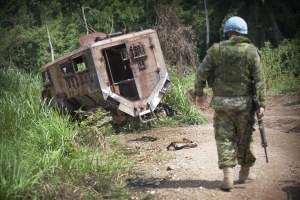
    UN vehicle ambushed by the Allied Democratic Forces (ADF). Image credit: UN Photo/Flickr.

    After a period of relative dormancy from 2007 to 2013 that was interspersed with occasional bouts of violence, there has been a significant resurgence in ADF activity over the last two years. A series of devastating attacks on civilians in the eastern Congo since October 2014 has left over 600 dead, tens of thousands displaced and many of the attacks have been marked by high levels of brutality. Survivors and witnesses have spoken of kidnappings, rape, torture, abduction of children and rampant destruction of property. Furthermore, the ADF was accused of killing Muslim clergy members in Uganda in early 2015. Also contributing to the escalation in violence has been Operation Sukola I, launched against the ADF by the Congolese army and the UN Stabilization Mission in the DRC (MONUSCO), in January 2014. Continued military operations have seen the ADF suffer several battlefield defeats and the militants have been forced to flee into the forest.  It is reported that the ADF fragmented into smaller groups to improve their chances of avoiding detection from the advancing Congolese forces. Many senior commanders are still missing; however, after a protracted search, ADF’s leader, Mukulu, was arrested by the Tanzanian police in Dares Salaam in April 2015 and later extradited to Uganda where he was convicted on charges of treason.

    There is little doubt that the ADF has been responsible for at least some of the attacks in and around Beni. While the ADF did carry out intermittent acts of violence against civilians, the arrangement between the ADF and the local community, at least until 2013, was one of “cooperative (if oftentimes) reluctant coexistence.” In general, the ADF respected the “traditional hierarchy of the host communities” and in 2011, was estimated to command “the popular support of nearly half of the population of Beni territory.”  The increasing focus on civilian targets since 2014 may partly be due to the fact that as the military offensive against the ADF intensified, the group carried out numerous reprisal attacks on civilian informants alleged to have collaborated with the UN and Congolese forces. As one scholar noted, “people are being punished and killed when they don’t want to collaborate” with the ADF.

    While the Ugandan and Congolese governments have portrayed the ADF as the primary culprit (for a variety of instrumental motivations), it is increasingly apparent that other actors have been involved in the massacres in North Kivu, including members of the Congolese armed forces, other rebel groups and communal militia. Moreover, as the ADF fragmented into smaller units, the absence of a centralized chain of command resulted in different groups pursuing diverse agendas. Some ADF factions, accused of violence, formed ties with local militia and outside elements who were then also involved in some of the killings. Indeed, interviews with survivors and witnesses suggest that many attackers spoke languages not normally used in this part of the Congo.  Further, the breadth and the scope of violence as well as the nature of weapons used are suggestive of the involvement of multiple armed actors.  The UN Group also concluded that some Congolese army officers played an overt and covert role in support of certain incidents of violence. While the precise underlying triggers for the violence are not clear, there is evidence that localized conflicts over land and power struggles over leadership contributed to at least some of the attacks. The dominant narrative of blaming the ADF is widely entrenched and largely unquestioned and has hampered efforts to dig deeper into the causes of the violence.

    The “Islamist” character of the ADF

    The ADF are commonly depicted as  an Islamist terrorist organization with a complex array of ties to regional jihadist groups. Consequently, it is seen to pose an existential security threat to the region. The Ugandan government in particular has aggressively peddled this misleading narrative. It is true that ADF’s inception can be traced to a core group of puritanical Muslims from the Salaf Tabliq movement. ADF’s erstwhile leader, Jamil Mukulu, is a strong adherent of Salafi Islam and has indicated his desire to overthrow the government of Uganda and establish an Islamist state based on Sharia law. The ADF has distributed incendiary tape recordings of Mukulu that urge followers to wage a holy Jihad, carried out forcible conversions of non-Muslims, conducted Islamic instruction in training camps and meted punishments in accordance with Islamic law.

    However, Scorgie-Porter argues forcefully that an exclusive focus on the religious aspect provides a limited account of the group’s motives and neglects other important strands to the development of the ADF. Some suggest that the group was mainly driven by a political agenda of removing the Museveni regime and used its Islamic identity instrumentally. A former ADF militant contended that “the agenda of the ADF was purely political…the ADF adapted the grievances of Islam in order to appeal to these people. Islam was a ticket, so the leaders disguised their political motives in religion.” Titeca and Vlassenroot resist reducing the role of Islam to instrumental usage, but suggest that the religious reference co-existed with other agendas such as regime change. They describe the ADF as a “rebellion without cause,” and contend that the movement’s agendas have changed over time.  For instance, during recent peace talks, the principal ADF demands revolved around socioeconomic issues such as reintegration of demobilized soldiers rather than effecting regime change or Islamic governance.

    ADF is often described as a multi-layered entity comprising several different elements with varying agendas. While the Tabliq network served a vital role in recruitment and was largely responsible for securing funds from Islamic charities and foreign countries during the group’s formative stages, ADF is considerably less reliant on the Tabliq now.  Recruitment in the ADF has also been heavily contingent on non-religious factors such as the exploitation of deep-seated perceptions of marginalization, poverty and the lack of alternative opportunity in the Rwenzori borderland. ADF’s economic embeddedness in the local community provides the group with its primary avenues of funding and material support at present and the group’s financial contributions from Islamic sources have considerably dwindled over time. Due to the group’s tendency to seize resources from local populations, some have gone as far as to describe the group as little more than “bandits”.

    Conclusion

    The Ugandan government has consistently attempted to link the ADF to global Jihadi groups and, in turn, depict the group as a serious threat to regional security. Some sources do suggest that elements of Al-Qaeda had sporadic ties with the ADF in the 1990s and provided some financial assistance. Reportedly, Osama bin Laden even met Mukulu while they were both in Sudan in the early 1990s. Similarly, there has been occasional correspondence with Al-Shabaab operatives.  However, such ties have been infrequent and there is little concrete evidence that regional Jihadists have any meaningful ties with the ADF. Indeed, Weeraratne and Recker argue that ideological incongruence, lack of salience to the local community and the fear of attracting more attention from counter-terrorism operatives reduce the likelihood of the ADF forming significant connections with transnational Islamists. Moreover, given that less than 10% of the population is Muslim in ADF’s chief operating environment in eastern Congo (a region that has shown very few signs of radicalization), it is unclear how foreign Jihadists would benefit from a union with the ADF.

    Museveni’s regime has a vested interest in embellishing real or perceived links between the ADF and foreign Jihadists. First, it allows the regime to deflect attention from its authoritarian tendencies and project itself as a key ally in the US led war on terror; in turn, making it easier to attract American military and diplomatic assistance. Second, exaggerating links also justifies the maintenance of high levels of military spending and gives the government a convenient alibi to continue raids on the eastern DRC where it has a range of interests.

    In summation, the portrayal of the ADF as a mainly Jihadist group is incomplete at best and deceptive at worst. It is clear that the ADF is not a monolithic organization with a dominant preference for executing a puritanical Islamist agenda.  The group has moved away from its earlier stated ambition of overthrowing the Museveni regime and replacing it with Islamist governance. The present day ADF constitutes a motely array of disparate interests, many of which are linked to economic and local political issues.  To be clear, this is not to say that the ADF does not pose a security threat. As discussed earlier, the group was responsible for several of the attacks over the last two years. However, at least for the foreseeable future, ADF’s threat is likely to be confined to the rural areas in Beni. Hence, the group is unlikely to pose an existential security threat to either the Ugandan government or their Congolese counterparts.

    Suranjan Weeraratne is a faculty member in the Department of Political Science, Southern Illinois University Edwardsville. His research focuses on various aspects of terrorism, including examining linkages between transnational militant groups and studying patterns of terrorist funding.

  • Sustainable Security

    The vast majority of civil wars occur in a small number of countries. What causes conflicts to geographically cluster in this way?

    Studies of intrastate armed conflicts show that the majority of civil wars cluster in a small number of states. According to the widely-used Uppsala Conflict Data Program’s Armed Conflict Database, 30 states experienced more than 60 percent of all new armed conflict onsets between 1946 and 2013. In this period, Burma, Ethiopia, India, Indonesia, and Sudan alone account for about 30% of the world’s new ethnic conflicts.

    The conflict trap

    Conflict researchers and development economists such as Paul Collier attribute the clustering of internal war to state failure and conflict traps: weak states cannot deter rebellion. Civil war, in turn, impoverishes individuals, destroys institutions, and plants feelings of revenge. All of these factors increase the risk of conflict recurrence.

    Yet neither India and Burma nor Ethiopia and Indonesia qualify as failed states. Moreover, their political regimes cannot explain the frequency of rebellion either. Burma and Sudan have been repressive autocracies for most of the period but India has been democratic for the vast majority of its existence. Existing explanations, then, do not fully account for why armed conflict clusters in these countries.

    Civil war diffusion within states

    In a recent study in International Studies Quarterly, my co-author Jesse Hammond and I highlight an alternative explanation for the concentration of so many conflicts in these multi-ethnic states. We explore the diffusion of ethnic civil wars within one country. Unlike earlier research on the diffusion of armed conflict across international borders, we study how government’s decision to fight one rebel group can trigger additional rebellions by rebels from other ethnic groups.

    To separate diffusion from recurrence dynamics, we move from country-level to ethnic-group-level analysis. Our study includes all states between 1946 and 2009 that (1) experienced at least one civil war and (2) contain at least three distinct ethnic groups – two in conflict, and one potential challenger. This selection leaves us with 49 states, 415 ethnic groups, and 127 ethnic armed conflicts.

    On the basis of this data, we model the yearly probability of a new ethnic conflict breaking out. According to our theory of diffusion, the location of ongoing conflicts as well as the duration and number of armed challengers are the main factors that affect the probability of new conflicts. Nearby conflicts should increase the motivation for additional rebellions; longer conflicts and more rebels should increase the opportunity for fighting.

    To construct those measures of motivation and opportunity, we combined data on the geographic location of ethnic groups’ settlement areas from the Geographic Research of War – Unified Platform at ETH Zurich with data on conflict zones from the Peace Research Institute Oslo. Whereas the left panel in Figure 1 shows the settlement areas of ethnic groups in Chad, the right panel shows the extent of an active armed conflict between 1999 and 2002. For these years, we compute the distance between peaceful ethnic group and the conflicts zones and note whether some groups are directly affected by fighting. We repeat this for all ethnic groups in all states in our sample.

    Figure 1. Examples of ethnic groups’ settlement patterns (left) and conflict zones (right) in Chad


    Equipped with these measures our study argues that there are four pathways of conflict diffusion within states– two that affect the motivation of potential challengers, and two more that increase their opportunity to rebel.

    How armed conflict increases the motivation for additional rebellions

    On the motivation side, ongoing fighting may harm members of nearby but previously neutral ethnic groups. Even if fighting does not directly affect other ethnic groups, increased state repression that results from fear of additional uprisings might. In turn, members of previously peaceful ethnic groups become aggrieved about state violence and decide to take up arms to defend themselves. India’s repressive policy in its Northeastern states may have had exactly this effect.

    Our second motivational mechanism states that an ongoing civil war encourages already disaffected groups to take up rebellion as a strategy. Witnessing nearby groups’ rebellions provides a blueprint on how to potentially overcome political and economic inequalities such as exclusion from state power.

    On its own, political discrimination does not frequently trigger rebellion; disadvantaged groups exist for long periods of time without mobilizing. However, seeing nearby groups with similar political disadvantages rise up against repressive political regimes can provide the spark for additional rebellions.

    Patterns of armed uprising against the Burmese and Indonesian states soon after decolonization exemplify these patterns at the domestic level. Although it goes beyond the scope of our study, we argue that similar mechanisms operate at the international level.  Although the states in North Africa and the Middle East have been among the most repressive and ethnically discriminatory regimes in the world for decades, Arab citizens only rose up their rulers in 2011 after witnessing the Tunisian revolution.

    How armed conflict increases the opportunity for additional rebellions

    unimad-darfur

    Image credit: UNAMID/Flickr.

    Turning to our opportunity mechanisms, we argue that ongoing internal armed conflicts can provide important signals about the government’s repressive capacity. If the government is strong, it will crush any rebellion quickly. If it fails to quickly and decisively defeat one rebel organization, other ethnic groups may perceive the government as weak and rebel to gain concessions from the state.

    While the 2003 rebellion in Sudan’s Darfur region has various causes, our opportunity logic offers a good explanation for its timing. For two decades, the Sudanese government was unable to decisively defeat the Sudan People’s Liberation Army and its various offshoots. As the southern rebellion endured, aggrieved groups in the Darfur region realized that Khartoum might be vulnerable to extending concessions to them when facing additional violence.

    A similar dynamic is at play when the government fights multiple challengers at the same time. The economic and military costs of armed conflict drain governments’ resources. This makes it possible for additional ethnic challengers that were too weak to confront the government alone to join the fray. The increasing number of ethnic challengers in Burma exemplifies this last pathway to domestic conflict diffusion.

    Conclusion

    To summarize, governments that violently confront rebel groups rather than negotiate enter a slippery slope that may lead to even more civil wars. Armed conflicts with one ethnic rebel group have inspired members of other ethnic groups to rebel in Northeast India, Burma, Indonesia, Sudan, or the Democratic Republic of Congo.

    Why then do governments fight rebels rather than accommodate them? One answer may be that government leaders prefer monopolizing power rather than sharing it to extract more resources from the state or to reduce the risk of coups. Where the cost of conflict is not borne by elites but by citizens, such a strategy may pay off.

    Other research shows that giving in to rebel demands makes governments appear weak and potentially triggers additional challenges. Future research will have to uncover the exact conditions under which governments prefer one risk over the other.

    Our study adds to our understanding of countries caught in conflict traps. We believe that our study’s findings are particularly relevant for counterinsurgency and peacekeeping strategies. In addition to ending one civil war and keeping it peaceful, governments and international institutions need to contain armed conflicts in space. Otherwise, they are very likely to infect other ethnic groups in the same country.

    Nils-Christian Bormann is lecturer and Humanities and Social Science Fellow in the Politics Department at the University of Exeter.

    Jesse Hammond is assistant professor in the Department of Defense Analysis at the Naval Postgraduate School in Monterey, California.

  • Sustainable Security

    China’s increasing demand for oil and gas means that it is searching abroad to secure new sources of imports. With its rich resources, the Arctic region could serve this purpose, and Chinese oil companies have shown interest in exploration and production opportunities there.

    Decades of high and sustained economic growth have substantially increased China’s need for energy. China is the world’s second largest economy and the world’s largest energy consumer. Importantly, as domestic production has not kept pace with raising consumption levels, China is forced to import most of its oil and natural gas. China today is the world’s second largest oil importer and third largest importer of natural gas. Crucially, China’s oil import dependency is high and increasing. For instance, in 2016 more than 60% of China’s oil demand came from overseas imports, up 3.5% from 2015.

    To meet its growing energy import demand, China has, in the last decade or so, embarked on an energetic effort to search for overseas supplies. A central objective has been to diversify the origin of its oil and natural gas sources, and means of delivery. Today, China imports oil from the Middle East and North Africa, Latin America, Central Asia and Russia, via the sea, railway and oil pipelines. China imports liquefied natural gas (LNG) from a variety of sources (for instance from Qatar, Australia, Indonesia, and Malaysia) but also pipeline natural gas from Central Asia, Myanmar and has contracted large future imports from Russia.

    However, more than 50% of Chinese oil imports originate in the Middle East and North Africa and up to 80% of China’s maritime oil import must travel through the narrow Malacca Strait, a stretch of water between the Malay Peninsula and Sumatra. In the eyes of China’s strategic planners, this makes their country vulnerable to potential disturbances of oil supplies, not only due to volatile political conditions in these regions but also, however unlikely, a potential U.S. naval blockade.

    Enter the Arctic region. According to the widely cited 2008 report by the United States Geological Survey (USGS), 30% of the world’s undiscovered natural gas and 13% of the world’s undiscovered oil is estimated to be in the Arctic region. Energy imports from the Arctic, Chinese strategist calculate, would help mitigate China’s supply and transport vulnerabilities by presenting an alternative to existing import sources and delivery routes.

    Expanded engagement 

    Image credit:  Timo Palo/Wikimedia.

    China is not an Arctic littoral state, but officially defines itself as a “near-Arctic state”. China has in recent years incrementally stepped up its engagement in the Arctic region. China sought, and in 2013 secured, permanent observer status in the Arctic Council (AC), granting Beijing a new platform, albeit with limitations, to participate on issues regarding Arctic governance. Importantly, China acknowledges and respects the sovereignty claims and rights of Arctic states, a pre-condition for observer membership status acceptance in the Arctic Council. China also recognizes the United Nations Convention on the Law of the Sea (UNCLOS) as the legal foundation governing the Arctic. This helped alleviate concerns over China’s growing Arctic presence, which some viewed as potentially challenging the regional Arctic order.

    China is active in scientific research in the Arctic pertaining to global climate change. While such research is sometimes brushed off as a mean to hide China’s other goals, the daunting environmental challenges currently facing China surely motivates genuine international scientific climate work and collaboration in the Arctic. China’s icebreaker, The Snow Dragon (Xuelong), has conducted seven scientific research expeditions as of 2016 and a second icebreaker under construction (ready to sail by 2019). In 2004 the Yellow River Station (Huanghe zhan) research facility in Norway’s Svalbard was established. China is also engaged in numerous scientific bilateral and multilectal cooperation projects with Arctic States, for instance the China-Nordic Arctic Research Center, while simultaneously boosting its domestic polar competence.

    The EU is China’s biggest trading partner and China is the EU’s second biggest. As the Arctic ice-cap continues to retreat, opportunities for new trade links between transiting the Northern Sea Route (NSR) from China to Europe are opening up, shortening the shipping time and fuel savings considerably compared to the conventional route through the Malacca Strait and Suez Canal. There have been some optimistic estimates made by the Chinese. For instance, according to one figure, 5 to 15 of China’s total trade could use the route by 2020, if constructively prepared. China’s largest shipping company, China Ocean Shipping Company (COSCO), has over the years conducted a few, but increasing, intra- and trans-Arctic voyages and announced that it plans to begin with regular trans-Arctic sailings. However, prospects such as the above estimate seem overly optimistic as utilization of the NSR is dependent on variety of factors (commercial, infrastructure, technical, environmental etc.), reflecting  overall low numbers of trans-arctic maritime trade. Importantly, most of the Chinese commercial actors remain hesitant to make large-scale investments and the optimistic scenarios must be taken with caution.

    Energy – a cautious tale

    Natural resources, particularly oil and gas, constitute another area of Chinese interests in the Arctic, according to some the principle motive. While the Chinese government has of late been more open about its economic interests in the Arctic, and also taken steps to promote energy bilateral cooperation with Arctic states, notably with Russia, Chinese commercial players on the ground have been cautious. It is often stated by the industry itself that China lacks the technical skill to operate in harsh Arctic conditions. The goal for Chinese oil companies is instead primarily to learn and obtain technical know-how from more advanced international companies. Western sanctions against Russia, due to the annexation of Crimea in 2014, further complicate the situation. While Russia has turned increasingly to China for capital and investments, the lack of technological skill limits China’s actual participation in exploration and production. Moreover, the current low oil price has made the global energy market a “buyer’s market”. Today’s big buyers such China have more options. In other words, Arctic oil and gas needs to be “cheap” enough to be commercially attractive compared to other available import sources.

    This has undoubtedly impacted on the scope and nature of concrete Chinese Arctic energy projects. Most of what has been done is limited. For instance, the attempt to explore oil and gas in the Dreki area off the coast of Iceland by China National Offshore Oil Corporation (CNOOC) together with Icelandic Eykon Energy and Norwegian Petoro remains uncertain. The often noted purchase by CNOOC of Canadian Nexen in 2013 for 15.1 USD billion and the company’s investments in Canadian oil sand have yielded limited returns so far. Russia’s Rosneft has invited China National Petroleum Corporation (CNPC) to explore three offshore fields in the Barents and Pechora Seas, but open information on progress is scant.

    There is one project, however, which seems to have materialized significantly, namely CNPC’s involvement in the Yamal LNG terminal project in Russia’s Arctic Siberia. The project is one of the Arctic’s most ambitious infrastructure projects with an estimated cost of 27 USD billion. The terminal will supply costumers with LNG gas and aims at being operational by 2017, offering a future annual capacity of around 16.5 million metric tons per year. CNPC entered the project in 2013 in buying a 20% equity stake while committing to import 3 million tons LNG annually for a 20-year period (price so far undisclosed). Then in 2015 China’s Silk Road Fund bought 9,9% making China the project’s second largest investor after Russia’s Novatek with owns 50,1% percent and French Total with remaining 20%. The Export-Import Bank of China and China Development Bank, China’s “political banks”, in 2016 offered loans of a total of 12 USD billion, lending important financial support to the project. Additionally, Chinese companies supply Arctic modules for the construction of the terminal. Finally, Chinese shipping and construction companies are involved in the manufacturing of specialized ice-breaking LNG carriers which will be used for shipping LNG to customers. As of 2015, Chinese shipping companies have been involved in the construction of fourteen of the fifteen commissioned.

    Conclusion

    China’s Arctic energy interests have been limited. The Yamal LNG project is the only significant Chinese project, in part reflecting changing external circumstances as Russia’s isolation due to western sanctions literally opened up for more Chinese capital, and thus involvement. Despite the current modest Chinese concrete involvement, Arctic energy will nevertheless play a part in China’s overall energy strategic outlook in the years to come as demand for oil and especially natural gas will continue to be substantial. Arctic energy imports will not replace any of China’s main energy import sources, but more likely serve as an (limited) additional supply source.

    Christopher Weidacher Hsiung is a researcher at the Asia Centre at the Norwegian Institute for Defence Studies (IFS) and PhD Candidate at the Department for Political Science at Oslo University. His main research areas include China’s foreign and security policy, Sino-Russian relations and China’s Arctic interests.

  • Sustainable Security


    There will be no sustainable security if we do not equally value the needs, experiences and input of men and women. A new report published by the Institute of Development Studies (IDS), funded by ActionAid and Womankind Worldwide, examines the role women play in local community peacebuilding in Afghanistan, Liberia, Nepal, Pakistan and Sierra Leone. The report states “despite the increased international attention to women’s participation in peacebuilding, the achievements and challenges facing women building peace at the local level have been largely overlooked”.

    Last week’s Guardian article entitled Who creates harmony the world over? Women. Who signs peace deals? Men points to some surprising data on female participation in official peacebuilding initiatives. “There have been no female chief mediators in UN-brokered peace talks and fewer than 10% of police officers and 2% of the soldiers sent on UN peacekeeping missions have been women”, reports the article. Furthermore, “fewer than one in 40 of the signatories of major peace agreements since 1992 have been female […] and in 17 out of 24 major accords- including Croatia, Bosnia, Sierra Leone, Burundi, Liberia, Sudan and the Democratic Republic of Congo- there was zero female participation in signing agreements”.

    An excerpt from The Guardian datablog:

    Women and peace deals - key indicators

    The IDS report found that “women are more likely than men to adopt a broad definition of peace which includes the household level and focuses on the attainment of individual rights and freedoms such as education, healthcare and freedom from violence. In contrast, men have a greater tendency to associate peace with the absence of formal conflict and the stability of formal structures such as governance and infrastructure”. It is important to include women in formal peace mediations and agreements as “peace means different things to women and men because of their unique experiences as a result of war”.

    Additionally, the research established that women have a lot of experience, and are principal actors, when it comes to mediating and decision making within the home and the family. Women are also more likely to come together collectively to create change. However, their “experiences building trust and dialogue in their families and communities are frequently dismissed as irrelevant or are not sufficiently valued by national governments, and the international community”.

    Some barriers to women’s participation in peacebuilding include: restrictive social norms and attitudes, violence against women and girls, poverty and economic inequality and inequality in access to education. The report suggests empowering women through access to justice, creating safe spaces for women’s participation and changing attitudes towards peace and valuing women’s contribution as key elements to support women peacebuilding.

    The 2000 United Nations Security Council resolution 1325 calls for “equal participation for women in the maintenance and promotion of sustainable peace”.

    Only yesterday, Foreign Secretary William Hague called upon UN Security Council resolution 1325, announcing to the UN General Assembly that the UK  “will contribute £1 million this financial year to support the Office of the UN Secretary-General’s Special Representative on Sexual Violence in Conflict”. “It’s our purpose in gathering here this morning to ensure that preventing sexual and gender-based crime in conflict and post-conflict situations is an urgent priority for the international community”, William Hague declared, and went on to say “We are convinced in the United Kingdom that we can do more to help […] we can do it as a permanent member of the Security Council, a leading member of NATO, the European Union and the commonwealth and as a nation with one of the most extensive international development programmes in the world.”

    The IDS report states that although Security Council resolution 1325 was passed in 2000, it has since then been almost totally ignored, not least by the UN itself. Hopefully this time, the international community, including the UK government, will take serious steps towards its implementation. At the same time, it is important to commit to preventing sexual and gender-based crimes, not only in “conflict and post-conflict situations”, but also in times of “peace”.

    No sustainable peace and security will ever be possible, if women’s voices are marginalised and if women and men do not work together equally on national and international peace mediations and agreements.

    Anna Alissa Hitzemann is a  Peaceworker with Quaker Peace and Social Witness. She currently works with Oxford Research Group as a Project Officer for the Sustainable Security Programme, with a focus on our ‘Marginalisation of the Majority World’ project.


    IDS, ActionAid, Womankind Worldwide report From the Ground Up can be read here.

    The Guardian, Who creates harmony the world over? Women. Who signs peace deals? Men is available here

    The Guardian, datablog Women’s participation in peace- how does it compare is available here

    Remarks by the Foreign Secretary William Hague to the UN General Assembly can be read here

    UN Security Council resolution 1325 is available here

    Image Source: UNAMID

  • Sustainable Security

    To understand why some groups fighting in civil conflicts target civilians more than others, it is vital to examine the role of ideology.

    Recent civil wars in Iraq and Syria underscore the fact that different armed groups fighting in the same conflict can adopt strikingly different approaches to the treatment of civilians. While historically about 40 percent of states and rebels have exercised restraint, others’ victimization of civilians has been routine and manifold. Much of the current understanding attributes these differences to armed groups’ material resources, organization, territorial control, and similar factors. While providing important insights, these accounts are incomplete at best because they either neglect or downplay the critical role that ideology plays in targeting civilians.

    Mainstream Explanations of Civilian Victimization

    Many analysts share a key assumption with the classical literature on insurgency and counter-insurgency – such as the works of T.E. Lawrence and Mao Tse-Tung – that securing the support of local populations is critical for fighting groups. Several implications are drawn. For example, groups that enjoy local population’s support may be less prone to victimize civilians, particularly in the communities that serve as their home or recruitment base. Conversely, such support can backfire because the enemy forces can attempt to raise its costs for the local population by targeting civilians in this community.

    Based primarily on the study of the Greek Civil War (1942–1949), another influential account argues that groups with higher degree of control over a territory are likely to selectively target enemy forces rather than indiscriminately attack civilians. In this view, information flows are pivotal: higher degree of territorial control means better information and this makes it possible and expedient to identify and selectively target specific individuals.

    Another assumption is that the fighting groups’ capabilities – their size, training, and experience – relative to their rivals can also affect their targeting patterns. Weak groups can be more prone to victimize civilians than stronger groups as they can fail to limit the collateral damage of their operations to civilians. Alternatively, when they lack resources to secure civilian support through offering benefits, such groups can also deliberately choose to target civilians as an alternative way to coerce such support. An analysis of violence in Afghanistan between 2004 and 2009, disaggregated by province and month, supports this view.

    The amount of material resources at the armed group’s disposal and where it obtains them may also affect its targeting patterns. If groups acquire their resources through exploiting natural resources or through foreign sponsorship, they may be more likely to attack civilians than if they depended on the local population for resources. External donor characteristics can matter as well, with a small number of democratic donors believed to have a more restraining effect than either autocratic donors or many donors.

    A survey of former fighters in Sierra Leone’s civil war (1991–2002) suggests that organizational characteristics are the pivotal factor. According to this view, civilian abuse is likely to be higher if groups rely on material incentives in their recruitment (thus attracting more opportunists), have an ethnically diverse group of fighters (thus lacking ways to control the fighters’ behavior through social pressure), and lack disciplinary mechanisms. This view resonates with Niccolo Machiavelli’s aversion toward mercenaries and Mao Tse-Tung’s insistence that “it is only undisciplined troops who make the people their enemies.”

    More recently, some analysts have drawn attention to the role of political and ethnic cleavages, which had previously been downplayed in large cross-national studies of civil wars. Based on a study of Spanish Civil War (1936–1939), one view maintains that civilians who have mobilized for one belligerent group are likely to be attacked by rivals as they would be considered assets for this group. A study of violence against civilians in African conflicts between 1989 and 2009 holds that ethnic background can serve as a cue for targeting because in an environment of uncertainty about people’s allegiances it serves as a shortcut for identifying potential enemy supporters.

    Much of this thinking on civil wars has tended to relegate ideology to a secondary role, if any at all. Yet, a notable resurgence of attention shows just how consequential ideology can be in understanding civil wars.

     Why Ideology Matters

    Mural in Belfast, Northern Ireland based on the painting “Guernica” by Pablo Picasso. Image credit: Rossographer.

    Research shows that in newly democratizing countries, a combination of nationalist ideology and unconsolidated democracy can help ignite internal and international conflict in the first place. Revolutionary ideologies have historically been critical ingredients for a robust insurgency by fostering strong commitment and mobilization. They can enhance fighting capacity by boosting morale. Although often based on case studies of specific groups or lacking in-depth systematic evidence, qualitative literature on civil wars and traditional research on terrorism historically have pointed at the role of ideology in armed groups’ target selection (one solid case study can be found here).

    In a recent study our working hypothesis is that far from being a mere rhetorical device, ideology can be the key factor that explains civilian victimization patterns across fighting groups in civil wars. We draw on the established concept of ideology which sees it as “shared framework of mental models that groups of individuals possess that provides both an interpretation of the environment and a prescription as to how that environment should be structured”. We argue that its effect on civilian victimization can work through two channels.

    The first is through framing some groups as hostile to the armed groups’ cause. The ideology that an armed group espouses identifies the group’s vision and the sources of threats to achieving this vision. These threat perceptions foster identifying friends and enemies of the cause. The ideology can then frame “enemies” as legitimate targets. Belonging to a certain ethnicity or territory may be a marker, but it need not be just any civilian from within these groups that becomes a legitimate target – only those can be identified as such who are seen through the ideological prism as hostile to the group’s cause.

    However, there is nothing automatic between seeing members of a specific group as hostile and victimizing them. The second channel through which ideology can affect civilian victimization is through determining strategies that the group accepts as legitimate in achieving its vision. Of course, in some cases different types of violence may be included or excluded for strategic reasons. But a group’s ideology can also prescribe adopting a strategy that is costly for the group from the material or organizational point of view. That is, some strategies may be filtered out despite presenting strategic or material advantages. This is probably because they go against the group’s vision or its identity as a certain ideological force. Therefore, some ideologies will see civilian victimization as part of their legitimate repertoire of violence to attain its vision, while others will impose constraints on or even exclude it from the group’s approach.

    It might be tempting to follow this reasoning by drawing a typology of ideologies by their approach to civilian victimization. However, often broad ideological frameworks are adapted to local conditions – they are crystallized into specific ideologies that different groups adopt. In other words, groups in different contexts that seem to share an ideology may develop different approaches, such as European leftist groups in 1970-1990s like Baader-Meinhof Group in West Germany and the Red Brigades in Italy. Instead, we should understand an armed group’s ideology in its particular context.

    Case Study: Northern Ireland

    In our study, we examined these ideas using quantitative and qualitative empirical evidence on armed group violence in Northern Ireland’s conflict between 1969 and 2005.  This conflict provides a fertile ground for this study because it involved a number of groups that differed from one another in several ways and because there were considerable differences in civilian killings across groups, locations and time. Unlike many other conflicts, it has also been well documented on the level of individual fatalities, which makes it possible to test our ideas with more nuance than previous studies. Our dataset provides details on almost all fatalities directly attributed to the conflict (3,702) and allows disaggregating them by perpetrator group, location, victim’s identity, etc. Then we try to see whether different perpetrator group characteristics, such as their size, structure, or ideology, consistently predict whether the victim is civilian or combatant as well as the victim’s ethnic identity. We do this in a framework that simultaneously accounts for all suggested factors.

    While the two main ideologies embraced by the fighting groups – Irish Republicanism and Unionism – shared similarities, such as the focus on nationalism, historically they developed distinct approaches. Drawing on the civic nationalist ideology of the French Revolution, Irish Republicanism stressed the oppression of all Irish people and adopted an anti-colonialist identity that aimed to end imperial control. This entailed a reluctance to target would-be members of the “imagined community” of free Ireland and instead emphasized focusing on combatants who were viewed as struggling to preserve imperial domination.

    Drawing on the historical “Protestant Ascendancy” movement, the ideology of Unionism came to emphasize a defensive settler identity that viewed Catholics as “fifth-columnist” Irish nationalists who intend to dismantle Northern Ireland and its union with Britain. We conjectured that these ideological differences were likely to shape the fighting groups’ targeting patterns. While the group ideologies were further crystallized during the course of the conflict, their key tenets remained.

    Our preliminary findings from statistical analysis suggest that the fighting group ideologies were the strongest and most consistent predictors of civilian victimization patterns. Fighting groups that embraced Unionist ideology, such as Ulster Defence Association (UDA) or Ulster Volunteer Force (UVF), were on average more likely to target civilians and launch cross-ethnic attacks on civilians, while Republican fighting groups, such as the Provisional Irish Republican Army (Provisional IRA) or Irish National Liberation Army (INLA), were on average more likely to focus on combatants. These results hold when we account for all other suggested factors, such as group size or resources. Our qualitative historical study suggests that these differences emerged because of differences in previously adopted norms, patterns of recruitment, and relations with the British state forces.

    While civilian targeting was prevalent in the initial stages of the conflict in early 1970s, over time it decreased in terms of total numbers. Republican groups were responsible for the largest number of total fatalities and Loyalist paramilitaries were responsible for the largest number of civilian killings. After mid-1970s, all three armed blocs – state forces, Unionist groups, and Irish Republican groups – killed fewer civilians than before, but relative proportions (combatant-civilian) remained the same.

    Implications

    Naturally, our study may be limited by its focus on civilian killings rather than civilian abuse more generally or our focus on one civil war. Nonetheless, our tentative findings strongly indicate that ideological factors need to be taken much more seriously than before in trying to understand and hopefully prevent civilian victimization by armed groups in civil wars. Neglecting these factors or downplaying their significance is simply dangerous. This is all the more important at the time when transmission of ideas is considerably enhanced by technology, which does not discriminate between benevolent or harmful ideologies. This, for example, is most drastically illustrated by Isil’s media-savvy, effective propaganda.

    Anar K. Ahmadov is Assistant Professor of Political Economy at Leiden University.

    James Hughes is Professor of Comparative Politics and Director of the Conflict Research Group at the London School of Economics and Political Science (LSE).

  • Sustainable Security

    The significant imbalances in the distribution of aid between different geographical areas in the current Syrian war threaten not only the immediate survival of civilians, but also the future prospects for peace.

    The Syrian crisis counts among the direst of our times, and never has there been a humanitarian emergency reaching comparable volumes of assistance. Formerly a relatively prosperous middle income country of about 21 million people, more than five years of war have plunged Syria into staggering poverty. Having lost their livelihoods, 13.5 million people are dependent on humanitarian aid.

    Irrespective of International Humanitarian Law (IHL), belligerents have targeted residential areas and vital infrastructure such as water and electricity supplies, as well as medical facilities. In a desperate effort to survive, half the country’s population have been forced to leave their homes, not knowing whether they will ever be able to return. Of these, 4.8 million have crossed the borders as refugees, while a further 6.1 million people remain uprooted within the country.

    While humanitarian assistance such as food and water, shelter, and medical aid are indispensable, it is deeply problematic that the distribution of aid in different areas in the country is highly uneven. Needs are estimated to be greatest in territory controlled by opposition forces – yet it is here that least aid is being delivered. In 2015, for example, only 27% of World Health Organisation administered medical aid reached opposition areas, as did the same share of food aid delivered by the World Food Programme only last month. Under the umbrella of the UN, both are the biggest humanitarian actors in their fields. Why are these imbalances occurring, and why are they critical for future peace negotiations and reconstruction?

    The Syrian war

    In Syria, the multitude of armed groups, estimated to number several hundred, complicates the distribution of aid as much as the fact that the country is now engulfed in not one, but two wars. Since 2011, civilians have been caught up in the original conflict between the regime and opposition groups seeking a change of government. But another battle is being fought between these opposition groups and Daesh, which proclaimed the establishment of their so-called Islamic State in July 2014. In areas controlled by the latter, the US-led international alliance is attacking Daesh positions across Syria and Iraq, while the Syrian and Russian air forces target other opposition-held areas.

    Given that the presence of armed groups, their alliances and infighting differ significantly at the local level, humanitarian actors are thus operating in a highly fragmented terrain that requires often daily negotiations and re-evaluation of safety concerns for their own staff.

    An aid system controlled by the government

    eu-aid

    Image credit: IOM Iraq/Flickr.

    To some extent, aid imbalances occur in war zones anywhere in the world. Generally, humanitarian aid can only be delivered when belligerents grant aid organisations permission to access people in need and guarantee for the security of their staff. Syria is exceptional, however, in the severity and persistence of aid imbalances. Although belligerents on all sides have interfered with aid deliveries, the Syrian government still controls about half the Syrian territory, thus presenting the single largest threat to impartial aid. By claiming to uphold Syrian sovereignty, it has quietly retained tight control over the aid system in place.

    Only 17 INGOs are permitted to operate in designated areas of the country with limited reach, and their choice of local partners is limited to NGOs licensed by the government. Even after more than five years, the UN are still not allowed to carry out needs assessments in the country independently of the government, and they have remained obliged to issue the annual Syrian Humanitarian Response Plan (SHARP) – which is the basis for planning and monitoring the response each year – jointly with them. Even if convoys are approved for deliveries into opposition areas through rapidly changing bureaucratic procedures which can stretch over months, they are regularly stripped of surgical equipment and even delivery kits at government checkpoints.

    Contravening the Hippocratic Oath and IHL, anti-terrorism legislation has rendered the medical treatment of anyone associated with the opposition a crime since June 2012. Intimidation, arrests and killings of medical staff, such as ambulance drivers, doctors and nurses were common at the beginning of the war, while medical facilities including hospitals, blood banks and coordination centres are regularly being subjected to targeted attacks.

    Horrifying accounts have emerged from those trapped in such conditions, such as in Eastern Aleppo, where the remaining population was evacuated over the past week after years of heavy assault. By designating all opposition-held areas as being controlled by “terrorists” – an expression which is by no means limited to Daesh – the regime has portrayed the populations in these territories as undeserving of aid. In so doing, it puts the lives of millions in need at risk.

    Fear of losing access

    Although the UN have long denounced the blockade of aid to opposition areas as an illicit  war tactic, they have continued to compromise for fear of losing access, which is becoming more and more restricted. Today, 5.47 million live in hard-to-reach areas and 861,200 are trapped in areas under siege in Syria alone. Although, again, it is not only the government conducting sieges, 15 out of 18 areas are currently besieged by its armed forces. Sieges seek to enforce surrender – just as as Darayya did after 2.5 years without aid to civilians. Where humanitarian aid does reach opposition areas, airstrikes by Syrian and Russian government forces destroy residential neighborhoods and carry out targeted strikes on medical facilities, leaving not only wounded fighters, but also civilians without resort.

    Conversely, not only has the government ensured that the vast majority of aid is channeled towards areas under its own control, but it has also used its leverage to strengthen its economy. Citing a lack of alternatives, the UN have paid tens of millions of US-dollars to implementing organisations and suppliers owned or run by individuals associated with the government who are under EU sanctions. These are not legally binding for the UN – yet current practice render them devoid of meaning. All these measures are without consequences for the government.

    A parallel system: the unofficial humanitarian response

    While opposition areas are systemically being deprived of direly needed humanitarian aid, an unofficial response has quietly emerged in parallel to the UN-led response which is co-ordinated with the government through SHARP. Early in the conflict, hundreds of local NGOs and expat-founded NGOs abroad sought to fill the gap the UN-led response left in opposition-held territory. From the conflict’s onset, the government refused to licence local NGOs in these areas, knowing full well that these are indispensable partners for major INGOs, most of whom had no prior experience of working in the country.

    While it is impossible to establish the actual financial volume of the unofficial deliveries, which are not accounted for in the annual SHARPs, they are highly unlikely to reach levels anywhere near that of the official UN-led response. Although Médecins Sans Frontières (Doctors without Borders) warned that since the beginning of the war that opposition-areas were being strongly disadvantaged in life-saving aid, it took three years until UN resolution 2156 was implemented, which allowed for additional cross-border deliveries mainly from Turkey – with deeply insufficient results, as present figures show. If local NGOs are permitted to work with the official response at all, strict monitoring processes are put in place on money spent, and rightly so. In the view of some, however, the recent revelations on UN-suppliers render these requirements into a farce.

    Why do belligerents seek to control aid?

    Where belligerents can ensure access to aid in areas under their own control, a resemblance of normality can be maintained in which former state services are being replaced by external assistance. Before the war, the Syrian government implemented socialist-inspired welfare programmes over the course of decades, including needs assessments, which aimed to maintain political consent even within a highly repressive dictatorship. It is now drawing on humanitarian aid as a substitute. In a similarly systemic manner, Daesh have sought to control humanitarian actors, of which only very few are managing to uphold access and operational independence. In areas controlled by Kurdish forces and different groups affiliated with the Free Syrian Army, aid deliveries are often facilitated and coordinated by the Local People’s Committees or Local Administrative Councils, respectively.

    While these are often credited for their efficiency, they are nonetheless political bodies who should not seek to monopolise aid deliveries for political gain. Belligerents seek to portray access to aid as a testimony to their ability to fulfill basic needs and protect survival. Where they manage to secure regular access to aid, the result is an order which is functional and might appear as either a continuation of the previous status quo or as a credible alternative to the latter. It is that perception which, by blocking aid deliveries to populations in territories under the control of the enemy, is sought to be destroyed with the aim of undermining their respective quest for legitimacy.

    The dangers of Syria’s aid imbalances

    Aid imbalances are dangerous not only because they raise the question as to who is most disadvantaged in receiving aid, but also because other wars have shown that access to social services and aid influence the directions in which people move. Demographic changes are a decisive factor in the outcome of war. From the viewpoint of belligerents, deserted neighborhoods are more difficult to defend because they lower the morale amongst fighters. For civilians, aid imbalances which privilege areas under the control of a given warring party over others deepen existing divides. Populations in areas less reached – especially if imbalances occur over long periods of time – will be physically and mentally weaker, exposed to poorer living conditions, and with comparatively fewer options to reach out for assistance. Violence, and in the Syrian case aerial bombardments in particular, prompt populations to flee; access to life-saving resources influence where they seek refuge.

    In Syria, data on population movements within the country are still scarce, but the key question is whether those who cannot afford to leave the country are drawn from opposition- into government-held areas out of sheer need. If so, the international aid system threatens to not only enhance social fragmentation, but also further depopulation. In a country where a third of the population has been forced to flee, how will peace negotiations allow for their voices to be heard? For those who remain in the country, in which areas are residents still strong enough to engage, where do factories and business remain functioning that can stem the unfathomable project of future reconstruction, and how will the divides that have been deepening for so long now be bridged?

    Future outlook

    With every day passing, the aid delivered contributes to shaping the conditions under which peace will be concluded and reconstruction will begin. Aid imbalances are no new phenomenon, but the scale at which opposition-held areas are being disadvantaged in the Syrian case is. The present war has plunged organisations in the official response into a most severe crisis.

    In an unprecedented decision, 73 local NGOs declared stopping all collaboration with the UN in October this year in protest against their perceived partiality. It has long been argued that in line with IHL, humanitarian aid must be carried out independently and it must be neutral and impartial in intent, but it is inevitably political in effect. In the Syrian war, however, humanitarian aid has become politicised to the point that it may severely impact on the outcome of the war.

    The idea that delivering some aid is better than no aid at all thus represents a dangerous approach. Although slow progress has been made in raising awareness of government interference over the course of this year, the struggles of the unofficial response in opposition areas in particular remain underestimated and underreported. With added pressures resulting from chronic shortages of funding, humanitarian organisations on all sides are caught up in having to reach as many recipients as possible – regardless of where they are located – to meet donor expectations. As a result, there is little room for self-critical reflection, and internal divides on the present responses remain largely invisible for the public.

    In contrast to these trends, concrete measures to counter present imbalances are urgently required. These could mean greater numbers of aid drops — similar to those recently resumed in Dayr al-Zur — in areas under siege, hard-to-reach areas, and others where ground access cannot be secured. They also require a coherent approach which does not tolerate interference by any warring party – including the government. For cases where belligerents insist on unacceptable compromises, protocols are needed which allow for humanitarian deliveries to be stopped as result.

    If it comes to a point where these measures are being taken, it must be clear that responsibility does not lie with the humanitarian system, but the warring party refusing to abide by the very principles on which humanitarian aid  is based. Addressing these challenges remains an indispensable condition for ensuring even and fair access to humanitarian aid for those in dire need now, and for their prospects of living in the country in the future.

    Dr. Esther Meininghaus is a Senior Researcher at the Bonn International Center for Conversion.