Category: 11

  • Sustainable Security

    The centenary of the First World War also marks the anniversary of the practice of recording and naming casualties of war. But a century on, new forms of ‘shadow warfare’ limit the ability to record casualties of conflict and thus threaten to allow states a free hand to employ dangerous new tactics without threat of individual or international accountability. Without verifiable casualty figures – including information on who is being killed and how – we cannot evaluate the acceptability, effectiveness or impact of ‘remote control’ tactics as they are rolled out among civilian populations.

    A Humanizing Legacy
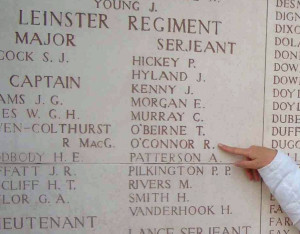
    Image of the name of Sgt. Robert O'Connor of The Leinster Regiment on the Menin Gate wall, who was killed on 31 July 1917 during the First World War. Source: Wikipedia

    Image of the name of Sgt. Robert O’Connor of The Leinster Regiment on the Menin Gate wall, killed on 31 July 1917 during the WWI. WWI saw the start of practice of recognizing by name each and every soldier killed during battle. Source: Wikipedia

    As the world marks the centenary of the commencement of the First World War,  we remember not the war that ended all wars, but instead the war that changed them forever. Introducing new forms of mechanized warfare – including the machine gun, u-boat, tank and airplane – WWI increased exponentially the lethal force of the individual soldier, bringing about an era of death and destruction on an industrial scale.  Yet, even as it ushered in the means of mass and impersonal killing, the ‘Great War’ also initiated the humanizing practice of recognizing by name each and every soldier who lost their lives, burying them in marked graves alongside those of their officers. Not only does such identification and public acknowledgement of victims dignify their memory, in today’s conflicts it can also provide vital information for humanitarian response and for monitoring compliance with – or tracking violations of – international law.

    Today we are again witnessing the introduction of new forms of warfare – including armed drones, lethal autonomous weapons, special operations forces and use of private military and security companies.  Like their WWI counterparts, these new tactics will reshape the face of conflict, yet as they do so they also threaten to destroy the humanizing legacy of casualty recording. Pushing global warfare deep into the shadows, these new ‘remote-control’ tactics are replacing public military campaigns with covert and contracted force. This shift to a ‘light-footprint’ approach, primarily by the United States, but also by France, Russia and the United Kingdom, reflects not only the changing nature of security threats, which have become mercurial at best, but also the lessening appetite for long military campaigns with high military casualties. A recent report from the Every Casualty Programme at Oxford Research Group and the Remote Control Project finds that the prioritisation of ‘remote control’ tactics presents serious obstacles to the recording of casualties, and subsequently, accountability for the civilians impacted by their use.

    Issues of capacity, political will, and access challenge efforts to record the casualties of any type of conflict. Yet, in conventional warfare, where identifiable or recognised conflict parties conduct attacks, such recording is not impossible: militaries generally record their own fatalities in these instances, while civilian deaths are often recorded by small civil society organizations around the world.  One need only look to the names of the hundreds of civilians killed in recent conflict in Gaza published by major news outlets to see the result of such efforts. In covert conflicts, however, or in conflicts where ‘remote control’ tactics are used, the ability to record casualties – including information on who is killed and how – is greatly diminished.

    The merging of intelligence operations with the use of force – seen currently in countries such as Yemen, Pakistan and Afghanistan with the use of armed drones and special operations forces by the United States – is a particularly problematic trend for casualty recorders. By greatly increasing the opacity – or outright deniability – of state force, covert operations erect a seemingly impenetrable wall of ‘classified information’, impeding recorders’ ability to conduct field investigations and verify their data. In 2010, the United Nations Mission in Afghanistan (UNAMA), which has conducted systematic casualty recording since 2007, reported that due to “tactical reasons and deliberate lack of information about such operations” they found it “very difficult to monitor and adequately document the activities of Special Forces” operating in the country. Gathering data on civilian and combatant casualties of drone strikes has also proved problematic – with ORG’s report finding that recorders are challenged by a lack of official disclosure of information about strikes, blocking of access to strike sites, and a near monopoly of information by anonymous officials on information coming from affected areas.

    The consequent lack of reliable casualty data impedes the impartial evaluation of the tactics’ impacts on civilian populations. It also limits the ability to scrutinise the tactics acceptability and effectiveness using evidence-based analysis. The United States – the primary user of armed drones – has repeatedly claimed that drones allow for precision targeting, capable of surgically eliminating targets with minimal civilian casualties. Yet, as a recent report from the Bureau of Investigate Journalism on drone use in Afghanistan has shown, “the armed forces that operate drones publish no data on casualties to corroborate these claims.” Although the United States claims to record data on casualties itself, its failure to make such records transparent not only prevents an analysis of the acceptability of drone strikes, but also denies the victims and their families the opportunity for accountability or redress.

    Bringing Remote-Control warfare out of the shadows
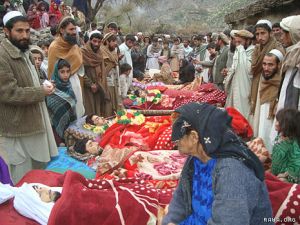
    People of Narang district mourning for the students killed in a night raid in the village Ghazi Khan on December 27, 2009. Although the operation was authorised by NATO, it is still not publicly known who carried out the attack. Source: Wikipedia

    People of Narang district mourning for the students killed in a night raid in the village Ghazi Khan on December 27, 2009. Although the operation was authorised by NATO, it is still not publicly known who carried out the attack. Source: Wikipedia

    Data documenting the casualties of particular weapons – from chemical gas in WW1 to landmines and cluster munitions more recently – has been instrumental in evaluating these weapons’ impact and acceptability, and ultimately ensuring their regulation through international treaty. Yet, as new tactics are employed under the cloak of ‘covert action’, the ability of the international community to measure and regulate their impact is increasingly limited. Without verifiable casualty figures, states may be given a free hand to employ dangerous new tactics without threat of individual or international accountability. Indeed a recent report from Amnesty International has found that as a result of an almost complete lack of transparency from the US government regarding civilian casualties in Afghanistan – specifically around those killed in night raids by SOFs or by missiles from drones strikes – victims are already facing a major accountability vacuum.

    States must take greater responsibility for recording and acknowledging the casualties – both civilian and combatant – of these new tactics. They must not seek to block public investigation and accountability, even though these tactics may be adopted for the lower profile they afford armed force. Furthermore the United Nations, alongside civil society groups or other entities, must enhance their recording efforts so as to provide independently verifiable data on casualties. Such data is essential for developing an accurate, complete and impartial record, and for facilitating scrutiny in circumstances where casualties are highly politicized. Civil society-led casualty recording and analysis, despite its limitations, has already highlighted policies within the use of remote control tactics that need greater examination: for example, the practice of ‘double-tap’ or rescuer drone strikes in Pakistan on those coming to the assistance of individuals at the site of a previous strike. Only by ensuring that casualty recording is conducted systematically and to a high standard can we bring the impact of remote control warfare out of the shadows and into the public eye.

    If we are to take a lesson from the commemoration ceremonies resounding across Europe it is simply that to learn from the past, and to honor it, we must first know that past. Details regarding the identites of those killed in conflict, both on the battlefield and in their homes, are essential to understanding the impact of violence, and to telling the full story of a conflict, to both current and future generations. The risks, then, of wars waged in secret, their battles and casualties concealed, are profound. Not only will there be no monuments at which to mourn their dead, there will be no lessons to be gleaned from their history: the wisdom of hindsight – both for policymakers deploying force and the public – may be lost completely.

    Kate Hofstra is Research and Communications Consultant of the Every Casualty Programme at Oxford Research Group and co-author of Losing Sight of the Human Cost: Casualty Recording and Remote Control Warfare. Kate previously worked for TLG,a London-based communications consultancy, where she was the editor of a digital magazine on business and development. She has also worked with the OSCE Mission to Bosnia and Herzegovina in Sarajevo and hasa background in transitional justice. Kate has an MSc in Human Rights from the London School of Economics.

    Featured Image: Deputy chief minister of Pakistan’s North West Frontier Province and tribesmen offer funeral prayers in front of dead bodies who were killed in army operation in Khar, the main town in Bajaur tribal agency, 30 October 2006. Source: The Bureau of Investigative Journalism, Naming the Dead Project
  • Sustainable Security

    In our two-part discussion ‘Countering Militarised Public Security in Latin America’,  Sarah Kinosian and Matt Budd explore the roots of the increasing trend towards militarisation of  public security across Central and South America and ask what lessons can be learnt from alternative methods. Part 1 is available here.

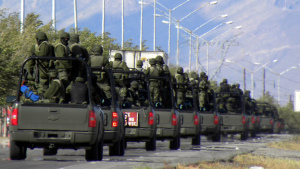
    Armed forces being transported in Mexico, where they are being used to fight the 'war on drugs'. Source: The Daily Gumboot

    Armed forces being transported in Mexico, where they are being used to fight the ‘war on drugs’.
    Source: The Daily Gumboot

    Over the past decade there has been a sharp and sustained increase in crime and violence across Central America. Fuelled by a rise in organised crime, the growth and expansion of domestic gangs, poor socioeconomic conditions and State institutions lacking in terms of their capacity and territorial coverage, crime and violence have rocketed. Homicide rates, taken as the main measure of insecurity in public debates in the region, have soared. In the Northern Triangle, where socioeconomic conditions and institutional capabilities are generally worse, a figure of 85.5 per 100,000 inhabitants makes Honduras the most dangerous country in the world, whilst figures of 34.3 and 41.5 for Guatemala and El Salvador place them within the upper echelons.

    In response to public and media pressure, there has been a notable tendency to resort to militarised responses focused on reactionary and repressive policies that seek immediate short-term results. This is particularly true of the Northern Triangle countries, which have an established history of involving the military in public security tasks. In El Salvador, following the ‘New Dawn’ campaign (Campaña Nuevo Amanecer), initiated in 2009 to reinforce security in response to the high incidence of crime, 39% of the Armed Forces are currently involved in public security tasks. This involves, for example, their collaboration in patrols to increase security in border areas and unofficial border crossings, the provision of perimeter security in penitentiary centres, and task forces that carry out patrols, apprehensions and joint operations with the national police. In Guatemala, the assistance, collaboration and coordination of the Armed Forces in public security has been further institutionalised through the Protocol for Inter-institutional Action, which regulates these activities. This approach is perhaps best epitomised, however, by the case of Honduras. Characterising a lack of political will to fully engage in the long and difficult task of reforming and developing existing police institutions, Honduras has placed its military at the centre of public security, and, with the recent creation of the Military Police of Public Order, located within the Ministry of Defence, a permanent policing role has effectively been handed to the institution. As such, prevention and reconciliation often take a back seat behind reactive and militarised approaches.

    A better way?
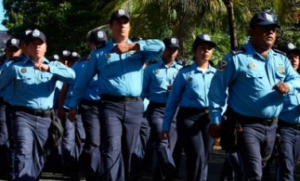
    Nicaragua National Police

    Nicaragua National Police
    Source: Insight crime

    While Nicaragua does not depart from this pattern of engaging the Armed Forces in public security tasks[1], the government has simultaneously invested in the long term development of a policing model that stands out due to its grass roots focus on prevention, and for the results it has achieved as a consequence (in 2010, in Panama, it was pronounced as the best in the region by a panel of public security experts). Closely linked to the Sandinista Revolution out of which it grew, Nicaragua’s community policing model has developed through a process of continual reform in the light of the identification of good police practice. As such, what began as a routine focus on community relations has since developed into a model characterised by broad and deep relations between the community and the police. These permeate not only the actions of individual police officers, but also guide the structure, organisation, deployment and entire philosophy of the institution. This is combined with a proactive focus on attention, which involves the continual identification of social factors driving crime and insecurity combined with the constant evaluation of police competencies to respond to them. By monitoring the relationship between security phenomena and police competences in an anticipated rather than reactive fashion, it allows for a concerted analysis, and response to, the conditions and circumstances that are driving crime and insecurity.

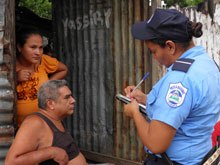
    The decentralised approach of the Nicaraguan National Police (PNN) is one of the keys to its success. It places emphasis on the local drivers and manifestations of both local and national security challenges. It does this by establishing broad and permanent channels of communication with the community, both through participation in community assemblies and maintaining direct links with local residents. One such example is the use of heads of sectors specialised in public security. They are police that are located in a particular territorial area, and their functions include cultivating close community ties through activities such as frequent door-to-door visits to speak to local residents.

    Similarly, the Social Prevention of Crime Committees, which are made up of 40,000 members, and the Cabinets of Citizen Power, which number 143 across the country, also provide a direct link with the community. Amongst their functions, they organise assemblies, work with local public and private institutions to find solutions to security problems, and collaborate on working plans to prevent crime.  These fluid links with the community allow the police to cultivate a close and trusting relationship with them, gain an understanding of the security perceptions of local residents and actors, and extract useful information regarding crimes, particularly regarding drugs, robberies and violence between groups of youths. Community policing therefore provides police with a specialised knowledge of the local situation and the drivers of insecurity.

    Tackling social drivers of crime
    http://www.policia.gob.ni/prensa_nota4.html

    On patrol in the community
    Source: Policía Nacional de Nicaragua

    The prevention of crime requires targeting the social conditions that cause it and instead, cultivating conditions which reduce it. In order to achieve this, the PNN has created specialist bodies that focus on two major causes of insecurity: youth violence and intra-family or sexual violence (20% of crimes).

    Specialised Police Stations for Women and Children were created as specialist units for prevention and attention to victims of intra-family, psychological or sexual violence. To combat these problems, attention is focused on the particular drivers of these forms of violence: the economic and social vulnerability of women and children, the attitudes of males in the community, and the lack of comprehensive victim support, which contributes to an unwillingness to denounce such crimes. Work is therefore carried out in a 3 stage response:

    1)      Transformation of the local environment, using education and training in detection and response to increase awareness of the problems and how to report them;

    2)      comprehensive victim support, through a leading role in coordinating with NGOs, health centres, shelters for victims, state institutions etc,  in the provision of health, psychological and legal support, in addition to the investigation and prosecution of crimes;

    3)      and empowerment of women and children through vocational training and education.

    By combining an understanding of local conditions driving insecurity with an integral response to them, the Police are better placed not only to respond to manifestations of intra-family violence, but to also reduce occurrences through preventive measures.

    The Directorate of Youth Affairs uses the same logic in its attention to at-risk youth, those with established links to gangs, or those who have previously been incarcerated. Through a highly personal and humanistic approach, it seeks to change the attitudes and values of these young people, increase their bonds with the local community, and create opportunities for them to reintegrate into society. Recipients begin by making a commitment to change and handing over any weapons they possess, with social and psychological support applied within the family environment to deal with personal issues, such as low self-esteem or personal identity. Training and education programmes are provided through private and public scholarships, as well as through the National Police’s Centre of Youth Training and Development, through which they gain skills to assist them in finding employment, and that contribute to the development of their community. Recipients also engage in community leisure and social activities and are assisted in finding work as part of their social reintegration. As a result, the number of gangs recorded in Managua has decreased from over 200 to approximately 20, according to the PNN, with a total of 42 gangs registered across the country in February 2012, and reductions in gang-related crime have been registered in neighbourhoods such as Bello Amanecer. By engaging in prevention programmes that focus on those conditions that drive youth into gangs and violence, and by coordinating these programmes within the family and community environment, the PNN has developed a model that seeks to reduce crime and insecurity in a sustainable and long term manner.

    Lessons to guide police reform in Latin America

    Whilst the contextual origins of the model and the particularities unique to each country would make attempts to duplicate the model in the region futile, the Nicaraguan model provides a number of clear lessons that can be extracted. At the foundation of each of these lessons is the community-police relationship, which has come to permeate throughout the institution and its programmes. It acts as a tool to both gain an understanding of the underlying drivers of insecurity and to provide a comprehensive response to them, through a combination of preventive strategies and comprehensive victim attention programmes. While the efficacy of involving special military units to target particular security challenges should not be negated, the benefits of a police force with strong community roots and a community policing philosophy are clear. For lasting gains to be made, these lessons, together with those to be extracted from other successful experiences in the region, should underpin reform processes.

    Matt Budd is a security analyst at RESDAL (Red de Seguridad y Defensa de America Latina – Latin American Security and Defense Network) in Buenos Aires, where he focuses on public security issues in Central America. Matt holds an honours degree in International Relations from the London School of Economics. Matt has most recently been working on RESDAL’s  Public Security Index, which provides information on public security challenges and institutional responses to them in Central America.


    [1] The Armed Forces of Nicaragua engage in a range of public security tasks, including rural security, border security, protection of the coffee harvest, and tasks against organised crime and drug trafficking.

    Featured Image:  Policeman consulting with a member of the local community in Managua, Nicaragua. Source:  John Holman, YouTube

  • Sustainable Security

    Author’s note: This article is a shorter version of a journal article published in the Annual Review of Political Science, 2017. A shorter version of this piece can be read at the Monkey Cage.

    There is a new trend currently underway in the way civil wars are conducted. Dubbed the “new new” civil wars, these conflicts are a source of serious concern for several reasons.

    Something new is happening in the world of civil wars.  After declining in the 1990s, the number of active civil wars has significantly increased since 2003.  Over the past thirteen years, large-scale civil wars have broken out in Iraq, Syria, Libya, Yemen, Chad, the Democratic Republic of Congo, Nigeria, Pakistan, Rwanda, Somalia, Sri Lanka, South Sudan, Chad, Mali, the Central African Republic and Ukraine, while new civil wars threaten to break out in Turkey, Egypt, and Lebanon.

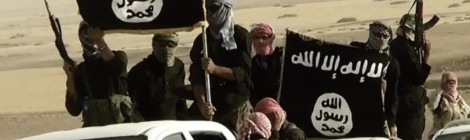
    Post-2003 civil wars are different from previous civil wars in three striking ways. First, most of them are situated in Muslim majority countries.  Second, a majority of the rebel groups fighting these wars espouse radical Islamist ideas and goals.  Third, of the radical groups fighting these wars, most are pursuing transnational rather than national aims.  These three patterns are striking and suggest that we are in the midst of a new wave of civil wars that we do not fully understand.

    In a new article, “The New New Civil Wars”, I argue that these trends are the result of a new and evolving information and communication (ICT) environment.  We now live in a world where citizens and elites operate in an interactive Internet environment, where anyone with a smartphone can easily produce and disseminate material from almost anywhere on the globe.

    The role of the evolving ICT environment

    Image credit: Voice of America News/Wikimedia.

    Instantaneous, global communication is likely to have at least six major implications for civil wars. First, information technology is likely to benefit individual citizens (especially citizens in highly repressive countries) more than political elites in those countries.  Dictators and autocrats will face greater difficulty limiting and controlling the flow of information and the messages their citizens receive. Government elites will also have greater difficulty preventing individuals from coordinating their protest activity.  Citizens are likely to be better informed about the behavior of government officials, the well being of their particular ethnic or sectarian group relative to other groups, and the level and extent of dissatisfaction in society.  The result could be a boon for popular demonstrations and grass roots organizing.

    Second, global Internet campaigns are likely to make it more feasible for rebel groups to form, leading to civil wars with a greater number of warring factions. It used to be that rebel entrepreneurs required a base of local support and financing to make mobilization possible. The Internet has changed this.  Internet media campaigns make it easier for rebel entrepreneurs, especially those with limited local backing, to solicit the soldiers and financing necessary to start a war. This is likely to lead to greater external involvement in civil wars and a larger number of warring factions. The evidence seems to support this: the average number of rebel groups fighting in civil wars has increased over time. In 1950 the average number or rebel groups in civil wars was 8; in 2010 it was 14.

    Third, the new information environment also means that rebel groups are likely to have greater incentives to frame their objectives in global terms, something we have observed with the proliferation of Salafi-Jihadist groups.  First, the Internet allows warring factions to be more ambitious, ignore international borders, and set their sights on affecting large-scale change by drawing on the resources of a globalized world.  Second, the Internet is likely to reward groups such as al Qaida and ISIS with global aims, since they will have a wider audience from which to generate revenue and recruits.  Thus, the new information environment has shifted the advantage from homegrown groups with local bases of support to transnational groups with global networks and connections.

    Fourth, the Internet is likely to make it possible for rebel groups to sustain themselves longer in war.  The decentralized nature of the Internet means that rebel groups will be less dependent on a single source of income or a single patron. If they lose access to one source of income (i.e., coca) or one patron (i.e., Iran), they still have access to millions of potential individual donors.

    Fifth, the Internet is likely to make the spread of civil war more likely. Research has found the civil wars produce a contagion effect (see here, here, and here); once one civil war breaks out, it increases the risk that civil war breaks out in neighboring countries.  One of the implications of a Web 2.0 world is that ideas and ideology are likely to spread more rapidly and more widely.  This occurs in two ways.  The first is directly through the dissemination of information via the web, and the second is indirectly through the recruitment of foreign soldiers.  ISIS and al Qaida, for example, use Internet propaganda to recruit foreign fighters from around the world.  These fighters then receive indoctrination and training, and eventually return home, creating new networks in their native countries.

    Finally, the Internet could potentially eliminate the restraints rebel and government leaders have to target local citizens with abuse.  Studies have found that rebel groups that are reliant on the local population for support or financing are less likely to commit human rights violations.  Conversely, rebel groups that receive significant material support from external patrons are more likely to use violence toward civilians.  Rebel groups in the current civil wars appear to be following this pattern.  In Iraq, ISIS and the al-Mahdi Army both enjoyed significant external financing and all have been significantly more likely to target civilians with violence than groups that did not.  By freeing combatants from the need to solicit local support, the Internet may also be freeing them to engage in more civilian abuse.

    The drivers behind these “new new” civil wars in Muslim countries

    So why has there been a rise in civil wars in Muslim countries, fought by multiple Islamist groups, many seeking transnational aims?  Globally-oriented groups such as al Qa’ida and ISIS formed and prospered in countries that had previously been some of the most information-poor countries of the world.  It was in these countries where the new-found flow of information allowed for an opening for individuals to organize, for rebel groups to link to other groups, and for human capital and war financing to begin to flow.

    Combatants in Muslim countries were also quick to figure out how to exploit ICT to their advantage. They discovered that framing their movement based on an identity that was large (Sunni), wealthy (oil-rich), and ideologically extreme (Salafi-Jihadist) allowed them to utilize the web in ways that brought in more money and recruits than had previously been possible. In fact, the trans-border nature of both the Sunni population and Persian Gulf financing was tailor-made for the Internet age.

    This does not mean that other groups in other regions of the world will not learn how to exploit the advantages of ICT.  My guess is that any group with a large number of international kin (especially wealthy kin) will pursue similar strategies.  Sunnis are leading the way because the benefits of a Web 2.0 world have been easiest for them to tap, but others will follow.

    Conclusion

    The “new new” wars” are characterized by the rise of rebel groups pursuing extreme ideologies, a rise in the number of transnational actors involved in these wars, and the use of goals and strategies directed at global rather than local audiences. These trends are a precursor to a series of changes that are likely to be seen as actors civil war adapt to a new and evolving ICT environment.

    Whilst this piece has outlined the importance of the evolving ICT environment in these “new new” civil wars and theorized about why we are observing the wars in predominantly Muslim countries, much more work needs to be done on this phenomenon.

    Looking forward, a major challenge for scholars and analysts will be to understand the full range of implications that emerging technologies will have on every aspect of civil war and to decipher which groups are most likely to harness this technology, when they are likely to do so, and the conditions under which these new strategies are more or less likely to succeed.

    It is not known exactly how this third wave of civil wars will evolve and which additional groups and countries will best exploit these advances. There is also uncertainty regarding which strategies will turn out to be the most successful and how these strategies are likely to change over time. Nevertheless, what we do know is that the internet will play a bigger, not smaller role, in every decision that is made. Ultimately, gaining a more comprehensive understanding of these “new new” wars be a crucial research enterprise in the future.

    Barbara F. Walter is Professor of Political Science at the School of Global Policy and Strategy at the University of California San Diego. She is an authority on international security, with an emphasis on civil wars, terrorism, and unconventional violence. She received her Ph.D. in political science from the University of Chicago, and held post docs at Harvard University and Columbia University. Walter is on the editorial board of the American Political Science ReviewInternational OrganizationJournal of Politics, Journal of Conflict ResolutionInternational Studies Quarterly, and World Politics. She is also the recipient of numerous grants and fellowships, including awards from the National Science Foundation, Carnegie Corporation of New York, Guggenheim, and Smith Richardson Foundations.

  • Sustainable Security

    Arctic InsecurityGenerally, the Arctic has elicited only minor attention outside the countries whose borders or territories fall within the loosely-defined region. But that is changing rapidly. As Kuupik Kleist, the former Prime Minister of Greenland, put it,
     “The Arctic used to be the last frontier. Now it seems we are at the center of the world.”

    While rapidly deteriorating environmental security in the region poses a grave threat to many regions of the world, the focus on militarized control of the area masks the very real need to mitigate further damage to the climate and increase our adaptive capacities to the inevitable climatic changes that will come in the 21st century.

    Realpolitik or Environmental Security?

    Indeed, much has been made lately about the ongoing and profound changes that are reshaping the Arctic region. There is no shortage of reports that detail the ways that climate change is forcing the region’s physical, social, and political environments into flux. Arctic sea ice is melting at an increasingly rapid rate, with the very real possibility that sometime between 2020-2050, the Arctic will soon experience its first (and undoubtedly not its last) sea ice-free summer. The effects of warming temperatures are likely to be dramatic: it will degrade habitats for vulnerable species, including polar bears and seals, and will accelerate and compound the effects of climate change, like volatile weather patterns and rising sea levels. A recent article in the journal Nature concluded that the long-term economic costs from a warming Arctic could reach $60 trillion, almost equal to the entire economic value of the world economy in 2012.

    But in the face of these worrying trends, discussion has instead focused on the economic opportunities offered by the ‘opening up’ of the Arctic, including the creation of new shipping routes and increasing the accessibility of fossil fuel reserves. The area north of the Arctic Circle is said to contain about 30% of the world’s undiscovered gas and 13% of the world’s undiscovered oil. The Governance of newly opened shipping lanes like the Northwest Passage will remain a contentious political question. While the region has thus far suffered from general neglect and inattention, it is unrealistic to expect that to continue in the future.

    Indeed, it is already becoming clear that the Arctic is the site of ongoing militarization. Recent security maneuvers have increased state control over the farthest reaches of state territory. In 2007, Russia planted its flag underneath the North Pole and resumed strategic bomber patrols over the area, echoing  its Cold War past. Canada’s official Arctic Foreign Policy proclaims “the first and most important pillar towards recognizing the potential of Canada’s Arctic is the exercise of our sovereignty over the far north.” Border disputes in the Arctic have led to strained relations for decades between Canada and Denmark as well as between Russia and Norway. Both cases have been peacefully resolved in the last few years. Yet, sovereignty and security have both been used to justify the proliferation of military ice-breakers, patrol ships, the creation of new deep water ports, and the deployment of military personnel including the Northern Rangers in Canada and the Danish Arctic command (which are both relatively small in terms of active personnel). Joint military operations conducted by Arctic countries (excluding Russia) such as Operation Cold Response and Operation Nanook have also contributed to the militarization of the Arctic.

    It is worthwhile then to examine how sustainable forms of security are useful in the Artic context. What is needed principally is an increased awareness of the integrated connections between the natural environment and security. Large-scale changes to the natural environment are security threats.  Whether through an increase in extreme weather events causing enormous health and economic costs; rising sea levels leading to coastal flooding and climate-induced migration; or desertification, which devastates crop production, the effects of environmental change are severe. The task then in the Arctic is to combat the tendency to view environmental degradation as an opportunity for national gain, which will do little to counter-act the severe global effects. Such conventional, strategic responses inevitably lead only to further suspicion, distrust, and discord. The Arctic is one of the clearest manifestations of this tendency.

    The Arctic will be without question a region of high strategic importance in the 21st century. Unfortunately, countries are likely to view the Arctic with an eye to using the region to bolster domestic support for increased militarization, surveillance, and sovereign control over vast, distant, territorial ‘frontiers’.  All told, Arctic security remains wedded to traditional, state-centric military threats despite the fact that the threat of outright conflict is as remote as the farthest reaches of the Arctic region itself. These approaches may be predictable, but they will contribute little to alleviating the complex, interrelated, and underlying drivers of insecurity in the Arctic region.

    Demilitarizing the Arctic

    So is the goal then to “demilitarize” the Arctic? Would the diverse sets of international issues arising from changes in the Arctic be better positioned in political terms, away from the exceptional demands that military thinking requires? Perhaps strengthening political institutions like the Arctic Council can alleviate the Arctic “rush” and ensure a lawful forum for state and indigenous negotiations in the Arctic. Formed in 1996, the Arctic Council has been the primary diplomatic forum used to facilitate cooperation, discussion, and negotiation. It was formed by eight Arctic countries (Canada, Denmark [Greenland], Finland, Iceland, Norway, Russia, Sweden, and the United States) and includes six Arctic indigenous organizations and other Arctic inhabitants. Recently, the Council accepted six new non-Arctic states as non-voting Observer states, joining six others already granted observer status. The new inclusions, China, India, Italy, Japan, Singapore, and South Korea, may appear at first glance to be curious admissions. Certainly they represent important economic and military powers but most exist far from region itself. However, after initial reticence from members like Canada, the Council accepted their inclusion on the basis of strengthening the Council’s legitimacy by undercutting any emerging alternative organizations, like the Arctic Circle Forum from usurping its authority.

    We should celebrate the decision by Council members to include new observer states: it allows these states to increase their awareness of Arctic issues and vulnerabilities, it opens up new avenues for cooperation and confidence-building measures, and it rightly spreads the responsibility for protecting the Arctic across the world. But while the Arctic Council remains an enduring and hopeful sign for managing political relations, the Council alone should not be expected to transform the underlying logic that continuously renders environmental security in strategic terms, obscuring the practices which have led to Arctic insecurity in the 21st century.

    The driver of Arctic insecurity is not simply the continued militarization or the politicization of the region by its encircling states. The reality is much more complex and multifaceted. In effect, by continuously focusing on security in these strategic terms, we can’t see the forest for the trees. The Arctic “great game” is not simply a metaphor we might use to romanticize geopolitical maneuvers; it is an expression of the profound material environmental shifts that are occurring rapidly and are a result of anthropogenic drivers related to modern carbon-based societies. The continual free-fall in terms of Arctic ice levels and the fact that the region has been warming twice as fast as lower latitudes is likely to have far more important, long-lastingand damaging global effects than a hypothetical, always-over-the-horizon conflict between states competing to protect their localized interests. That is a popular story that obscures the much more difficult and insidious problems related to diagnosing and combatting climate change.

    The fact that most states view the opening up of new Arctic sea lanes as a means to exploit vast and newly accessible energy sources reflects long-dominant understandings of both security and the environment. If our understanding of both Arctic security and the Arctic environment continues to be reduced to the international scramble for untapped resources and for newly opened “shipping lanes” (or melted sea ice, if you will), it is unlikely that the hugely alarming and damaging environmental effects of climate change will ever be truly overcome.

    It is essential then that environmental security in the Arctic is recast away from traditional and dominant security practices of resource development, national sovereignty promotion, and increased surveillance. While these practices will remain in the future, we still should encourage a much more profound rethink that places greater value not simply on increasing cooperative intergrovernmental forums (though these are important), but on greater collaboration with indigenous populations, on studying the global environmental interconnections between the Arctic and other regions, and on aggressively combatting climate change. Adaptation to the inevitable changes occurring in the region will of course require coordination and strategic planning, and the potential for conflict will be ever-present. But an overreliance on familiar narratives of climate change-induced conflict obscures the much more complex drivers of Arctic insecurity, namely our destructive relationship with the environment and its connection to conventional, strategic security logic.

    Cameron Harrington is an Adjunct Professor of Political Science at King’s University College and Brescia University College, at Western University (Canada), where he teaches in the areas of environmental politics and international relations. His Ph.D thesis, (pending completion September 2013) builds a framework to combat water insecurity in the 21st century by focusing on the ethics of security.

    Cameron tweets via @camharrington and can be reached at [email protected] 

    Image source: lafrancevi (HMCS CORNER BROOK on arctic patrol during Operation Nanook)

  • Sustainable Security

    Former combatants can play a powerful role in preventing violence, as the case of former combatants in Northern Ireland shows. Former Islamic State fighters could have a role to play in counter-terrorism, however there are potential limits to this.

    The value in re-integrating former combatants in post-conflict environments has been widely recognised in terms of reducing the risk of recidivism and fostering stability in a peace process. While there are examples of former combatant in larger scale post-conflict environments following the path of a de-politicised re-integration into society, there are also examples of former combatants – or ‘former terrorists’ – taking a much more active role in preventing future violence.  Former combatants in Northern Ireland, for example, have had some notable success in delivering restorative justice programmes, de-militarising communities, preventing inter-communal violence and articulating counter-narratives against the use of violence. If former combatants are having some success in preventing terrorism and political violence in Northern Ireland, what are the criteria for successfully utilising former combatants, and does this point to a potential role for former Islamic State combatants in the UK?

    Utilising Former Islamic State Combatants

    The question of utilising former Islamic State combatants is not entirely left-field as there has been a range of voices expression different potential ways of their utilisation to serve preventative ends. One emerging perspective has emphasised how former combatants can play a preventative role, with former MI5 and MI6 chief, Richard Barrett, arguing that they can help explain “why going to fight abroad is a bad idea” and that ex-extremists are often the most successful at “undermining the terrorist narrative.” The ability to use extremists who “renounce violence” and are “genuinely remorseful,” according to this perspective, can provide a credible and persuasive message to stop the flow of people engaging in IS-related terrorism. Terrorism expert Peter Neumann argues that IS defector narratives can encourage others to leave the group and deter others from joining on the basis of their experience and credibility. Subsequently, he has recommended that the U.K. government needs to provide defectors the opportunity to speak out, assist them in their resettlement, and to remove legal disincentives that prevent them going public. An alternative would be to do nothing or continue with the current approach; however former Islamic State combatants are already returning and not all of them are prosecuted. In other words, these former combatant networks exist, they risk solidifying, and will be sharing their views and experiences, therefore it may be more effective in the long-run to co-opt and utilise them for positive ends.

    There is clearly a potential role for former Islamic State combatants in preventing others engaging in such activities. The nature of utilisation could be minimalist (narrative-based), whereby third parties disseminate former combatant narratives. For example, one UK counter-terrorism official mentioned how they have distributed one specific article on Islamic State defector narratives to help people play a preventative role. A more controversial role would be a maximalist approach (narrative and network-based) like in Northern Ireland, whereby former combatants themselves engage in activities with the goal of prevention. Should the UK government consider enabling or facilitating former Islamic State combatants in a preventative capacity?

    Former Combatants as a Conveyor-Belt to Terrorism?

    isis

    Image by Day Donaldson via Flickr.

    One of the potentially biggest arguments against a maximalist approach is that such activities could be counter-productive and could risk serving as a conveyor-belt to engaging in violence rather than act as a fire-wall. A common trend with former combatants is they often do not de-radicalise: while they may disengage from terrorism because of dissatisfaction, disillusionment or burnout, they tend to maintain their ideological views. From this perspective – and endorsed by the UK government’s counter-terrorism policy – even non-violent extremist ideology can encourage others to engage in violence. While the conveyor-belt perspective has been heavily critiqued, the experiences of former combatants in Northern Ireland actually points to a middle-ground between these two perspectives. This consequently contributes to the debate on radicalisation but also on the potential role of former combatants in a preventative capacity.

    The findings of my own research on former combatants in Northern Ireland placed emphasis, not on ideology or attitudes to violence, but the framing process – in other words, how is violence and non-violence represented by actors and how it resonates with an audience, and what structural factors facilitate this resonance. Former combatants in Northern Ireland interact on a regular basis with young people through a number of programmes. Interestingly, despite the former combatants having maintained an ideology similar to violent groups, and despite the former combatants not supporting violence in the current conditions, it was realised that the interaction between former combatants and young people led the latter to view the use of violence positively. However, while this may seem to corroborate the conveyor-belt perspective, it actually showed that it was how former combatants framed violence that produced the conveyor-belt effect, not ideology on its own but also not simply that the former combatants were anti-violence.

    Re-Framing Violence

    In the past, former combatants explained their transition away from violence by framing violence it as conditionally acceptable during the 1960s civil rights protest period and that since these grievances were addressed in today’s conditions that violence was no longer legitimate. There are many reasons why the former combatants re-framed violence in this particular way, and it was particularly effective at ensuring the majority of the Provisional IRA disengaged; however this particular framing of violence to a younger audience without such experiences interpreted the framing as glamourising violence. Reflecting upon this, former combatants actively reframed violence when in dialogue with young people by emphasising the less glamorous aspects of violence more. One study showed that the former combatant reframing of violence in this manner has discouraged young people in engaging in violence. Former combatants were persuasive because they had credibility in the ‘hard to reach’ areas and they maintained narrative fidelity with audiences on ideology and identity.

    The point here is that there is some truth to the conveyor-belt perspective – that former combatants opposed to violence can encourage young people to engage in violence – but it has little to do with the ideology more broadly and much more to do with the framing process between the former combatants and the audience. Those who advocate the conveyor-belt perspective underplay the organisational interests in not having potential members becoming violent. In the Northern Irish case, former combatants had the time to reflect upon the effects of interacting with the younger generation and to engage in a re-framing process. Their reflexivity was encouraged by organisational interest as well as network structures which ensured they would be in regular interaction with young people and an environment in which funding was available to engage in projects.

    Empowering Reflexive Networks

    Thus, ideology is a crude means of determining the success of former combatants in a preventative role. Former combatants can be utilised in this capacity – or at the very least not discouraged – and the enablement of reflexive networks which resonate with young people can act as a firewall to participation in violence. However, there are a number of potential constraints and objections when this is applied to former Islamic State combatants. Working on the assumption that the purpose of counter-terrorism is to ‘counter terrorism’ and not to counter ideologies which a state does not like, and leaving aside the normative dimension of the rights of victims which Alonso excellently covers, the article focuses on two main points on the pragmatism and efficacy of using former combatants to prevent violence.

    Firstly, the UK government’s wholesale adoption of the conveyor-belt perspective makes the provision of funding much more rigid than in Northern Ireland. Interestingly, Northern Ireland’s very own prevent policy in the 1980s curtailed which organisations could receive funding on the basis of their ideology, but this was gradually dropped in recognition that the development of the community route could help to facilitate disengagement. The funding former combatants receive in Northern Ireland is detached from the government, thus increasing buy-in across communities, and the conditions of the funding are pragmatically based (often turning a blind eye to paramilitary behaviour in anticipation that funding and accreditation would incentivise moving away from such behaviour). Ideology is not factored in – alternative identities are strengthened and shown they can be non-violent rather than trying to encourage the ‘centrefication’ of political identities. In the current UK context, similar changes would be required before former combatants and former extremists could be fully utilised.

    A second objection is that the network and community structure – while a crucial factor in determining the efficacy of former combatants in a preventative role – is completely different in the Islamic State context. Former Islamic State combatants are smaller in numbers, they are set apart from their returning communities, and they may be politically disengaged (so why not just leave them like that). However, the size of networks is not important – a network of about a dozen former combatants in Belfast has been sufficient in preventing interface violence. Indeed, following the conveyor-belt logic limits the number of potential partners for the government to work with, in addition to its policies eroding trust through creating the perception of ‘suspect communities’. While the utilisation of former combatants (and extremists) can challenge and disrupt moderate communities, the target audience of these initiatives are individuals this moderate community struggle to meet. Finally, while we don’t know what former Islamic State combatants are doing upon their return, political passivism should not be viewed as a boat not to be rocked. In the case of Northern Ireland, it was the lack of active framing in combination with stories of the Troubles (often told in a social environment) in the context of parents and teachers not actively speaking about the Troubles, which led young people to view violence as attractive.

    Minimalist and Maximalist Roles for Forrmer Combatants

    In conclusion, former combatants can play a powerful role in preventing violence. The factors which determine whether this will be successful is not based on ideology but neither is it solely on whether they are non-violent. The network structure and incentivising environment can enable former combatants to be reflexive of the narratives they impart and how to best re-frame anti-violence narratives to ensure these resonate with young people in ‘hard to reach areas’. Former Islamic State combatants also have a potential role to play, however the lack of an enabling environment would limit this to minimalist interventions in the short term until the infrastructure for maximalist interventions are developed. Maximalist interventions are more effective at resonating with ‘hard to reach’ audiences as they decrease the likelihood of a conveyor belt effect, an effect which is likely to occur without interventions.

    Gordon Clubb is Lecturer in International Security at the University of Leeds and is co-leading the interdisciplinary Radicalisation and Violent Extremism Network. His recent book focuses on Social Movement De-Radicalisation and he has also written on the role of former combatants in preventing violence, how militant groups frame disengagement, and on whether non-violent radical ideology acts as a conveyor-belt to terrorism.

  • Sustainable Security

    Democratic Republic of Congo’s sexual violence epidemic is not only a weapon of ongoing violent conflict but an expression of entrenched systemic problems. Indeed, sexual and gender-based violence (SGBV) is most commonly perpetrated by the security services in place to protect civilians. In Quartier Panzi in South Kivu province, innovative processes of security sector reform and strengthened police-civilian channels of communication may be providing an opportunity for change.   

    Meeting of victims of sexual violence in the Walungu, South Kivu in Democratic Republic of the Congo. Source: Wikipedia

    Meeting of victims of sexual violence in South Kivu,  Democratic Republic of the Congo. Source: Wikipedia (from USAID)

    Quartier Panzi—the populous, restive neighborhood of Bukavu, South Kivu province—is renowned in international development circles as the ground zero of the Democratic Republic of Congo’s sexual violence epidemic. Rape as a weapon of war is not so much perpetrated by enemy forces but, most often, by the very parties sent by Kinshasa to protect and serve civilians. Much as Selma, Alabama was to the American civil rights movement, Panzi’s ongoing tragedy has transformed the area into a vibrant arena for grassroots opposition and international solidarity in the fight to restore women’s bodies and lives. Women’s organizations have formed to denounce continued abuses and government denial, to reverse cultural stigmas around female culpability in rape, and to demand trial for Congolese security forces suspected of sexual abuses.

    The courage and commitment of Dr. Denis Mukwege, chief gynecologist at Panzi Hospital and twice nominated for the Nobel Peace Prize, is emblematic of this resilience. International networks like V-Day and Women for Women International support these local actions and fund sanctuaries for survivors, such as the City of Joy. These innovations aim to be restorative and empowering for survivors, focusing on the crisis as experienced by women and girls, offering healing and vocational training options otherwise non-existent. However, the causes of this specific form of cruelty and degradation, rooted in violent masculinities and impunity among security actors, remain unaddressed.

    Rewiring the security sector

    Congolese soldiers march in Walikale, DRC, 2011. Source: ENOUGH (Flickr)

    Congolese soldiers march in Walikale, DRC, 2011. Source: ENOUGH (Flickr)

    Like any deep malaise, Congo’s rape crisis is but one expression of entrenched, systemic problems. Local witnesses, security analysts and medical professionals who treat survivors present overwhelming evidence that the primary perpetrators are uniformed Congolese security actors. A weak justice system may be responsible for the failure to discipline or punish perpetrators, but the sources of this behavior lie within the security sector itself. Accessing the security elite, Congo’s infamous ‘black box’, is notoriously difficult. As a result, very little analysis exists of the problem from the perpetrators’ perspective: analysis and evidence that deciphers the institutional culture and internal organization of the security sector, or that maps relations between senior officers, politicians and economic actors. By design, opacity reigns supreme.

    A variety of international donors support the national army and police with numerous ‘train and equip’ initiatives, an international cooperation model unchanged since the Cold War.These ‘security development’ partnerships aim to strengthen national capacity through field and classroom training and equipment upgrades; behavior change and public accountability are not part of the approach. Within the security services, there is typically an absence of civilian oversight, and widespread rent-seeking and illicit trade in protected flora, fauna and minerals, but no questions are asked by international partners, as diplomacy and formality dominate.

    Supply-side approaches such as these long pre-date the advent of ‘security sector reform’ among development actors, which does seek behavior change and greater accountability. The older aid modality remains popular with the Congolese leadership because it expressly avoids any calling to account or inculcation of security as a public service and legal right.

    There is state and donor complicity in all of this. Strength without constraint or accountability defines the DRC’s security sector today. Its predatory practices range from unchecked rape and pillage in the East to the repression of free speech and public inquiry, as witnessed by the 2010 murder in Kinshasa of prominent human rights activist, Floribert Chebeya. To placate critics, a military tribunal mounted a kangaroo court in the wake of the murder; the film documenting and exposing its empty theatrics, L’Affaire Chebeya, Un Crime d’Etat, remains banned in Congo.

    Such officially sanctioned practices and attitudes are salient features of the Congolese state since independence, and well known to all Congolese. In the early 1970s, President Mobutu Sese Seko began encouraging civil servants and security forces to ‘feed on the population’ (“Population baza bilanga ya bino). Anecdotes such as these are more than flippant asides; they explain the persistent appeal of this patrimonial compact (across four chapters of Congolese leadership: Mobutu, Kabila père, transitional government, Kabila fils) as a declaration of complicity between political elites and the entire public sector. In its truncated audacity, this single utterance reconfigures and reduces the entire means and ends of the state to elite enrichment and group impunity.

    In Panzi, armed crime and physical/sexual assault reached unprecedented levels in the aftermath of the primary war in South Kivu province. State security had long colluded with local armed gangs, and popular recourse options ranged from individual vengeance to military tribunals, as civil courts are unreliable. Mob justice is also widely practiced. The formation of neighborhood watch groups raised local hopes for improved safety (e.g. SAJECEKForces Vives). Despite their initial popularity, they soon joined local police and armed gangs in perpetrating the very crimes they first sought to oppose.

    How urban police understand this license to extort and harass the population, and the higher interests these practices serve, has been well captured and analyzed by Maria Eriksson Baaz and Ola Olsson. Transforming Congo’s security sector from inside is an elusive challenge, and donors are struggling to develop the programmatic savvy, influence and access to inspire the necessary political will.

    Demand for reform

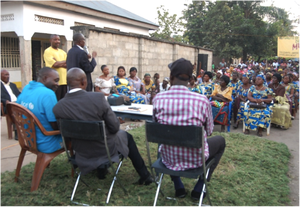
    Community meeting in Kananga, DRC, where security officials and civilian leaders converse directly with local community leaders. Source: DAI Europe (with permission)

    Community meeting in Kananga, DRC, where security officials and civilian leaders converse directly with local community leaders. Source: DAI Europe (with permission)

    The UK’s Department for International Development (DFID) has experimented with alternative supply-and-demand models of public sector reform, and is applying these to the Congolese National Police (PNC). According to this strategy, supply-side ‘train and equip’ assistance targets weak service areas, including the prevention of and response to sexual and gender-based violence (SGBV). This is complemented by efforts to mobilize popular demand for more responsive policing at the community level.

    A particular understanding of the partner institution, the PNC, informed this theory of change. This included the hypothesis that payment of regular salaries would not end extortion and rent-seeking (’tracasseries’) by the PNC, given the scale of these rackets and the enormous sums they generate. With no compelling alternative on offer, and as long as ‘reform’ is understood to involve replacing tracasseries with ‘protecting and serving’, change will elude would-be reformers. Given that such arrangements will not change in the forseeable future, the more nuanced strategy accommodates the reality of low, irregular salaries and uniformed extortion for the foreseeable future, and seeks behavior change through increased public-police interaction. Faster paced improvements in human security and responsive policing began emerging on the demand side of the pilot sites, including Bukavu and Quartier Panzi in particular.

    Launched in Bukavu, Matadi and Kananga in 2009, the Security Sector Accountability and Police Reform Programme (SSAPR) is distinct for coupling its community policing approach with regular neighborhood meetings (forums du quartier) where locally appointed representatives voice their security concerns, identify emerging threats and suspects. It is common for community policing programs to seek a more responsive, service-oriented local police, but SSAPR is distinguished by its effort to cultivate citizen networks at the most local level to identify and articulate their fears, threats and suspicions forward to the actors most able to respond. Police officers, urban administrators, local community and neighborhood leaders then meet regularly in informal, local security councils to discuss proposals for containing a threat or resolving a violent dispute, as equipment and manpower are often lacking. Initiated entirely informally, these experiments in public relations gradually began to change expectations, reinforce collaboration and gain momentum.

    Concurrently, the National Parliament submitted a motion to formalize the Conseils Locaux pour la Sécurité de Proximité(or CLSP, finally passed in late 2013), which recognizes the right of civilian representatives to participate in official security discussions at the municipal level. Over three years, SSAPR legal advisers worked with national parliamentarians to build support and draft a bill. Given the long-standing animosity between politicians and civil society, this new décret was a highly significant opening. The platform has since been incorporated into other police reform efforts (such as the European Union’s EUPOL) that also understand SSR in the Congolese context as primarily a governance challenge requiring civilian involvement.

    SGBV DRC 2

    Community meeting in Kananga, DRC, where security officials and civilian leaders engage directly with local community leaders. Source: DAI Europe (with permission)

    Raising security problems through the CLSP increased dialog between communities and security officials, but who would represent the civilian side? In rough urban neighborhoods like Panzi, citizens experience a host of threats, not all of them equally or in the same way. The SSAPR helped Panzi neighborhood chiefs and community leaders coordinate an informal system whereby youth, women and men would alternately represent their community concerns first to a forum de quartier, then directly on to the CLSP. This neighborhood dynamic continues today across Bukavu’s three communes.

    Making Progress?

    These are small steps toward a more accountable security sector and restored public trust, but has sexual assault around Panzi declined as a result? Recently the SSAPR helped a women’s NGO organize a nocturnal walk through several Bukavu neighborhoods, including Panzi, to record their own safety concerns as well as those of women and girls met along the way. In a recent meeting, NGO members insisted they would never before have visited these neighborhoods, particularly at night, but that the chance to report their findings to a receptive and interested police commisariat justified the risk.

    In response, new light fixtures are planned in darkened alleys where assaults have occurred, and patrols redirected to suspicious areas noted by the NGO delegation. In another pilot city, Kananga (Kasai Occidental), assaults on women and girls who were walking long distances to fetch water, often at night, decreased dramatically after local women lobbied for regular police patrols in these areas. This, in itself, was indicative of a greater local confidence in the police as protectors.

    Community police units are involved in implementing these changes, but they represent a small minority of the PNC. It is unknown if these lower rates of sexual violence are attributable to behavior change among uniformed security or if the increased patrols and better lighting are deterring other possible assailants. Retrospective studies have been conducted, but no consensus exists on the total quantitative extent of SGBV in DRC, where just one in twenty cases is thought to be reported to authorities. Nor are cases raised with the police guaranteed to be registered or pursued. Impunity persists due to a weak national justice system, as well.

    Other insights emerge from this experience, particularly around ‘bottom-up’ approaches to renewed legitimacy in fragile states. In the DRC, where central government continues to stall on commitments to decentralization and provincial institutions exploit this limbo (enrichment via parallel markets; legal and financial opacity) leaving communities in the breach, these small successes show that by investing at the periphery—that most-local interface where citizens and public service providers meet in person—bridges of trust and respect can be built through participatory problem solving. Communities can show resilience and security services can prove they are responsive and effective.

    Edward Rackley is a Security and Governance consultant for the World Bank, based in Washington DC. He provides periodic technical and strategic advice to the SSAPR program via DAI Europe, one of the program’s managing agents. (The views expressed in this article are not necessarily those of these institutions.)

  • Sustainable Security


    BZ smallTwo new reports surveying the strategic trends that are likely to shape the next few decades of global politics point very clearly to the prospect of a severely resource-constrained world. Released two days apart, both the new Chatham House report on Resource Futures and the US National Intelligence Council report on Global Trends 2030: Alternative Worlds raise a number of important questions relating to conflict and security.


    According to the Chatham House report,

    The spectre of resource insecurity has come back with a vengeance. The world is undergoing a period of intensified resource stress, driven in part by the scale and speed of demand growth from emerging economies and a decade of tight commodity markets. Poorly designed and short-sighted policies are also making things worse, not better. Whether or not resources are actually running out, the outlook is one of supply disruptions, volatile prices, accelerated environmental degradation and rising political tensions over resource access.

    The report outlines what the authors refer to as volatility being “the new normal.” For this reason “High and fluctuating prices are spurring new waves of resource nationalism and making unilateral and bilateral responses more attractive.” This should be cause for concern, especially in relation to the ways in which the response of governments and other actors to scarcity (or at least perceptions of scarcity) can interact with existing tensions and conflicts between and within communities. As the report highlights, “In addition to efforts to reduce demand at home, governments and other actors have moved to ensure access to affordable resources, reshaping the landscape of international politics. The return to largely protectionist and beggar-thy-neighbour manoeuvres – often in reaction to short-term supply bottlenecks or perceptions of scarcities rather than actual ones – can act as fuel to the fire.”

    As well as mapping the consumption and trade trends across a series of important resources, the report also discusses the impact of external variables such as population growth and climate change. These are “multiple stress factors” which “render countries vulnerable to different types of shocks such as environmental disasters, political unrest, violent conflict or economic crises – increasing both local and systemic risks. Such factors can create new tensions and flashpoints as well as exacerbating existing conflicts and divisions along ethnic and political lines.”

    The report includes a section on resource conflict flashpoints (p. 114) which outlines fifteen different potential flashpoints relating to territorial/economic zone disputes in resource-rich areas, shared water resources and transboundary river systems and resource-related rebellion and insurgency. The report is also linked to an interactive website that maps some of these trends and potential flashpoints.

    The day after this report was released, the US National Intelligence Council released their own on the key trends over the next twenty years that the United States will need to adapt to or try and shape in order to “think and plan for the long term so that negative futures do not occur and positive ones have a better chance of unfolding.”

    Among other so-called mega trends such as urbanisation and changing demographics, the report echoes the Chatham House research by pointing to an increasingly complex situation in terms of global resources. The report argues that,

    “We are not necessarily headed into a world of scarcities, but policymakers and their private sector partners will need to be proactive to avoid such a future. Many countries probably won’t have the wherewithal to avoid food and water shortages without massive help from outside. Tackling problems pertaining to one commodity won’t be possible without affecting supply and demand for the others.”

    The key trend or ‘tectonic shift’ as the report calls it is that “demand for food is expected to rise at least 35 percent by 2030 while demand for water is expected to rise by 40 percent. Nearly half of the world’s population will live in areas experiencing severe water stress. Fragile states in Africa and the Middle East are most at risk of experiencing food and water shortages, but China and India are also vulnerable.”

    While this may lead some towards overly pessimistic conclusions about a world defined by instability, human insecurity and geopolitical tensions, it is refreshing to see the NIC emphasising the importance of how the US can respond now. In his forward, the Council’s Chairman Christopher Kojm states that “We are at a critical juncture in human history, which could lead to widely contrasting futures. It is our contention that the future is not set in stone, but is malleable, the result of an interplay among megatrends, game-changers and, above all, human agency.” It is worth noting the deliberate use of the phrase ‘alternative worlds’ in the report.

    While some degree of adaptation to these structural trends mapped out by both Chatham House and the National Intelligence Council will undoubtedly be necessary, the importance of both of these reports is that they remind us of the need for clear and far-sighted thinking on policy responses now. The worst case scenarios that these reports discuss are not inevitable and risks can be mitigated. National security policymakers will do well to study the scenarios outlined in these two impressive reports and to try and understand the drivers and ‘tipping points’ that lead to certain pathways. Both reports offer prescriptions for current decision makers (the Chatham House recommendations on ‘targeted resource dialogues’ and ‘coalitions of the committed’ are particularly worthwhile). While volatility and uncertainty might be the ‘new normal’ in global resource politics, one thing is entirely certain – inaction and ‘business-as-usual’ when facing “a critical juncture in human history” is a recipe for disaster.

    Ben Zala is a Lecturer in International Politics at the University of Leicester.

    Image source: Stayraw

  • Sustainable Security

    This article was originally published on openSecurity’s monthly Sustainable Security column on 27th January, 2014.  Each month, a rotating network of experts from Oxford Research Group’s Sustainable Security programme and their partners explore on-going issues of global and regional insecurity. 

    Sustainable Security is a concept that has been around for almost a decade now. It was first conceptualised by my colleagues Chris Abbott and Paul Rogers, whose thoughts on the subject have appeared many times in these pages. In 2000, Paul summed up what looked to many commentators like a surprisingly quiet decade of US hegemony as characterised by an unsustainable ‘control paradigm’, in which the symptoms of global insecurity were suppressed with force while their root causes were ignored and left to fester. The 9/11 attacks and subsequent ‘war on terror’ served to confirm Paul’s hypothesis that military domination would not be sufficient to ‘keep a lid’ on security challenges, even in the world’s most powerful states.

    The Sustainable Security paradigm has been developed by the Oxford Research Group as an alternative lens through which to view global security, identifying the underlying drivers of conflict and insecurity rather than its symptoms, such as violence, organised crime or radicalisation. The point is to understand how unmet human needs and feelings of insecurity interrelate and lead to violence, then to work to prevent conflict by addressing its root causes. The aim of this new monthly column on openSecurity is to facilitate precisely this kind of understanding through contributions from the Sustainable Security Programme’s network of experts on non-traditional security issues.

    Taking a sustainable security approach requires some thought about the future of our planet as well as its current unsustainable state. Changes to climate, demography, economic production and consumption, political and national identity, access to information and military technology will all condition the future security of our world. What, then, does 2014 hold in the way of challenges and opportunities?

    2014: the end of the war on terror?

    British Soldier with 1 Welsh Guards returns from patrol in Zarghun Kalay, Afghanistan Source: Ministry of Defence (Flickr)

    By the end of 2014, the last NATO combat troops should have withdrawn from Afghanistan. Does this mean that the alliance’s war on terror will end where it began 13 years earlier? I doubt it. Billions of dollars and thousands of lives later, Afghanistan looks about as stable as Iraq. Pakistan, India, Iran and other powerful actors will continue to play their own cards at the Afghan table and it is barely conceivable that the US and its allies will not seek to use their own military influence and proxies to keep the Taliban down, however appalling the post-Karzai elections this April.

    As much as President Obama has sought to distance himself from the toxic Bush legacy of overt and unilateral interventionism, the nature of the ‘Obama doctrine’ is war on terror-lite. It is covert, stealthy, and still the wrong side of international law. Obama’s strategy relies on the use of ‘remote control’ warfare: special forces, private military contractors and, above all, armed drones, or unmanned combat air vehicles (UCAVs). Since 2009, US drone attacks have escalated dramatically and killed hundreds, including civilians, in Pakistan, Yemen, Somalia and Afghanistan, where the UK also increasingly uses UCAVs. Withdrawing combat units does not mean that NATO states will cease to pursue war by remote control in Afghanistan.

    Arguments that UCAV systems and operators are more offensive or inclined to kill civilians miss the larger legal point that the US is increasingly pursuing undeclared wars and targeted assassinations, whether it employs drones, special forces, mercenaries, manned gunships or cruise missiles. The backlash to such action is demonstrable through the further radicalisation of communities living in fear of constant surveillance and attack from the unseen. It is employing terror against terror.

    2013 was something of a break-out year for UCAVs. Israel set many of the precedents that the US has followed in drone warfare as well as targeted killings. The technology is simple and easy to imitate. While the UK and France invest in US systems and test indigenous prototypes, China and Iran have flown their own first UCAVs. Russia and others are not far behind. Even very modest air forces like Nigeria’s have built their own rudimentary drones. Non-state constructors cannot be far behind. Drone proliferation may define this decade as wireless communications defined the last.

    Militarisation of the greater Middle East

    If 2013 was the year that the democratic hopes of the Arab Spring unravelled, 2014 may be the year that it turns to regional war. Libya appears to be at the vanguard, although there remains a chance that it could follow Yemen’s path of dialogue and isolate its increasingly prominent radical fringe. Egypt’s generals have learned nothing from Algeria’s tragic past and the leaden Mubarak years. Iraq’s Maliki regime still believes it has nothing to learn from Syria’s sectarian implosion, continuing to marginalise a Sunni minority.

    Neither the US, UK nor France is likely to want to overtly intervene in the inferno of Syria or the escalating crises of Iraq, Libya and Egypt; plenty of others will. Meanwhile, the Sahara is becoming steadily more militarised. France has just announced a major repositioning of its forces in Africa out of their urban and coastal bases and into the Sahel to hunt and destroy al-Qaida affiliates. Ever since 2009, US special forces, drone operators and private contractors have been quietly moving from Djibouti across the Sahel and Horn, increasingly sharing facilities with France.

    Transition tensions

    Away from the Middle East, 2014 could be a year of democratic consolidation among rising powers. No less than eight of the 15 largest emerging economies expect to hold elections this year and a couple more are already polarising around polls due in early 2015.

    Taksim Sqaure protestors, 16 June, 2013. Source: Wikimedia

    Taksim Sqaure protestors, Istanbul, Turkey, 16 June, 2013. Source: Wikimedia

    India, Brazil, Turkey, South Africa, Thailand and Egypt all plan to hold elections this year, in the wake of major protest movements in 2013. New parties from the margins are shaking up politics in India and South Africa, potentially increasing instability as the establishment fights back. Thailand is already politically paralysed as its metropolitan establishment lashes back at the populist aspirations of the rural majority. Turkey could see something similar if, as expected, conservative premier Erdogan seeks the presidency in August. Emerging giants Brazil and Indonesia will probably weather their elections better but nonetheless will be distracted.

    While 2014 may not be a peak year for economic growth or political stability among regional powers, overall the longer-term trend looks positive – marginalised groups, whether from the middle or working classes, asserting their rights and taking a stand against corruption and environmental degradation.  With notable exceptions in Egypt, Thailand and perhaps Turkey, there is a deepening of democratic culture, whether or not civil society is fully respected, in many major developing states and significant incidences of demilitarisation and respect for rights.  However, many of the biggest of them – Brazil, Mexico, Indonesia, Argentina to name just the democracies – are major oil, food and timber exporters with structural incentives to resist, for example, international efforts to restrict carbon emissions.

    Elections to the European Parliament in May and the US Congress in November may be less encouraging. The Tea Party trend and the rise of populist nationalism will continue squeezing progressive policy options on both sides of the North Atlantic.

    2014 as prelude to 2015

    Finally, 2014 is the year in which much of the work has to be done to prepare for the potentially landmark policy processes of 2015, each of which will have significant impact on future global security. For the UK, this includes the political parties setting their manifesto commitments ahead of the May 2015 general election and preparations for the ensuing review of National Security Strategy and Defence and Security Review. Three international processes also stand out.

    For arms reduction there is the quinquennial Nuclear Non-Proliferation Treaty Review Conference, due next May. Difficult debates are expected given the Obama administration’s focus on superiority in strategic conventional weapons.

    For climate change the UN Framework Convention on Climate Change is to set a new universal climate agreement to replace the 1997 Kyoto Protocol on carbon emissions after 2020. This will extend emissions targets from industrialised to developing countries but faces huge hurdles in overcoming resistance from energy lobbies and climate change sceptics in the most powerful states.

    To address development there is also the culmination of the Post-2015 Development Agenda process to supersede the Millennium Development Goals and forge a new agenda with the Sustainable Development Goals. This is a massive project and there remains much to be done to ensure that conflict-affected states are not left behind, as they have been by the MDGs, and that the new agenda tackles inequality as a crucial part of achieving sustainable human security and development.

    2014, then, is a time for looking backwards and forwards. While the dynamics of the war on terror are still very much in play, the withdrawal from Afghanistan and the re-escalation of violence in Iraq and Libya present an opportune context for sincere reflections on the disastrous consequences of war without borders. Such inquiry needs to look forward too, to the implications of the current administration’s ‘war-lite’ and the unstoppable proliferation of remote control technologies.

    This is also the year where we have the chance to get the agenda right for the big international policy decisions of 2015. Looming elections may make it a difficult year for politicians in the US, Europe and many emerging powers to show leadership on such controversial issues. Thus, 2014 will be an important year in deciding whether we continue to control the symptoms of global insecurity or whether we begin to address seriously the inequalities and injustices that underlie it.

    Richard Reeve  is the Director of Oxford Research Group’s Sustainable Security programme. He works across a wide range of defence and security issues and is responsible for the strategic direction of the programme. Richard has particular expertise in global security, Sub-Saharan Africa, peace and conflict analysis, and the security role of regional organisations.

  • Sustainable Security

    Donald Trump’s victory in the US presidential elections has raised serious questions about whether the Joint Comprehensive Plan of Action, a landmark nuclear accord signed in July 2015, has a future.

    The election of Donald Trump as US President potentially means very uncertain times for the future of US-Iranian relations. For example, during his presidential campaign trail, Trump declared—“My number one priority is to dismantle the disastrous deal with Iran”. If the Trump administration acts on his campaign rhetoric, there is a distinct possibility that it will be overwhelmed by multiple contradictions and problems.

    The Iran Nuclear Deal

    The deal, formally known as the Joint Comprehensive Plan of Action (JCPOA), stripped Iran of the ability to develop a nuclear weapon system into the next decade in exchange for the gradual lifting of crippling sanctions.  The deal holds Iran to agree to cap enrichment levels of uranium at 3.67 percent for the next fifteen years, which will cut the Iranian enrichment capacity by two-thirds. Under the agreement, Iran ended up shipping the lion’s share of its 20 percent enriched uranium abroad. The deal also provided for more intrusive monitoring by the International Atomic Energy Agency (IAEA), the UN’s nuclear watchdog, and for the heavy water reactor at Arak to not produce weapons grade plutonium. On November 20th 2016, as a gesture of good will, Iran shipped its remaining heavy water abroad as well. Thus, the breakout capability of Iran to potentially make a nuclear bomb was noticeably extended from two-months to a year, giving further assurance to the international community that the Islamic Republic will not be closer to making a bomb any time soon.

    In exchange, Iran would be relieved from the nuclear-related sanctions, and if it violates the agreement, the sanctions will be re-imposed through a snap-back mechanism built in to the agreement.  Since the signing of the agreement, all the reports by the monitoring agencies, including the IAEA, indicate that Iran has abided by its end of the bargain. Seen in this context, it is easy to understand the expression of concern and apprehension surrounding Trump’s ascent to power among many members of Iran’s ruling elite.

    What President Trump could mean for US-Iran relations

    Two very different futures in US-Iran relations may lie ahead.

    • Withdrawal
    trump

    Image by Matt Johnson/Flickr.

    First, the Trump administration may decide to withdraw from the nuclear deal, impose further sanctions on, and try to isolate Iran.  Trump may seek better ties with Russia and tolerate the Assad regime in Syria in an attempt to defeat and dismantle the Islamic State in Iraq and Syria (ISIS). Trump has declared the defeat of ISIS to be his number one priority in the Middle East and seeks to partner with the anti-ISIS coalition. Yet Iran has been actively involved in the war against ISIS in Syria in alliance with Russia.. It thus remains to be seen how the Trump administration could resolve this contradiction if it tries to defeat ISIS whilst simultaneously escalating tensions with Iran.

    Since the Republicans currently control both houses of Congress and many of their members were opposed to the deal when it was signed, bolstered by their electoral victory, they may introduce new bills demanding the renegotiation of the agreement, or prevent sanctions relief, and propose the imposition of new US unilateral sanctions on Iran. In November 2017, the US Senate passed a bill with a vote of 99 to 0 to extend the Iran sanctions for another decade, and the Obama administration—which previously had threatened to veto such a bill— has stated that the president is not likely to veto it. In addition, the Trump foreign policy team has stated that they plan to impose new sets of sanctions on Iran for its missile defense system. These new political developments are certain to evoke a reaction from Tehran in kind. If such an escalation of the anti-Iran campaign in Washington continues, despite the Islamic Republic fulfilling its obligations under the nuclear deal, absent new diplomatic breakthroughs between Tehran and Washington, in all likelihood, the deal as we know it now would be dead and Washington’s tensions with Tehran would grow. If this outcome materializes, it would undermine the Rouhani administration and the moderates and would strengthen the position of hardliners in Iran’s factional politics.

    President-elect Trump, who identified the nuclear pact as “disastrous” and “the worst deal ever” and labeled the Islamic Republic as “the foremost terrorist state” is less likely to oppose further congressional sanctions on Iran. Hence, while the newly appointed Secretary of Defense, General James Matthis, has stated that he would not be inclined to scrap the nuclear deal, he has also stated publically that it is not ISIS but Iran that is the single most critical security threat to the United States. dditionally, the powerful pro-Israeli lobby group, the American Israel Public Affairs Committee, the neo-conservatives and influential foreign policy voices on the right—like the National Security Adviser, General Michael Flynn, John Bolton, James Woolsey, and Newt Gingrich— have been pushing hard for further containment of and confrontation with Iran.

    From the Netanyahu administration’s standpoint, discarding the nuclear deal would have a dual impact. On the one hand, such an initiative would prevent the Islamic Republic from reaping the benefit of sanctions relief, thus allowing it to expand its economic and political influence in the region- an undesirable outcome for the Israeli leadership.–On the other hand, unilaterally tearing up the deal would remove all the inhibitions on the part of Iranian leaders to develop a nuclear arsenal, another undesirable outcome for Israel. To prevent this from happening, US/Israeli cyberattacks on Iran’s nuclear program, using sophisticated worms such as Stuxnet, or even military strikes, could be ordered in future.

    The Israeli leadership would therefore most likely favor an option in which the current nuclear agreement would stand, but with a new interpretation which would prevent Iran from receiving the full economic and political benefit of sanctions relief. In other words, the nuclear agreement should not lead to normalization of relations with Tehran and the policy of containment of the Islamic Republic with the ultimate goal of regime change should persist. It is also important to note that, since Trump’s cabinet is so far is dominated by hard-liners, they are likely to be in favor of accelerating pressure on Tehran and ensuring that it does not reap the benefit of sanctions relief and expand its regional power.

    • Limited Rapprochement

    The second option offers a different outlook, one that serves both countries’ national interests, whereby the Trump administration could consider seeking a limited rapprochement with Iran, holding out the prospect of future diplomatic—if not commercial—ties between the two countries.  This option uses the nuclear deal as a way to ease tensions between Tehran and Washington on other longstanding problems. This approach will also render Iran more responsive to cooperation on specific issues of regional conflict such as the fight against ISIS and the Taliban while at the same time making progress toward possible venues for cooperation, such as shaping the future of Syria, Iraq, Yemen, and Afghanistan.

    The advantages of this approach will outweigh its costs, as Tehran and Washington are likely to find several overlaps in pursuit of their foreign policy interests. Moreover, this approach would allow Washington to build up a new momentum to accommodate Tehran’s emerging economic interests while also using its leverage over the country’s regional role to mitigate the negative impact of instability in the Middle East. The challenge is to recognize that building trust and sustainable cooperation between Tehran and Washington is the key first step to reversing the troubled and tumultuous status quo of tensions and enmity between the two nations.

    While Trump may not seek a new sanctions regime against Iran so long as the latter abides by its obligations, the influence of neo-conservatives in his administration probably means that the removal of first-order sanctions, imposed by the US, is unlikely to happen any time soon.

    Tehran’s Reaction

    Iran’s President Hassan Rouhani has noted that the election of Donald Trump as the US president will have no effect on Iran’s foreign policy conduct. Rouhani has also stated that the nuclear deal is independent of the new US administrations’ decision and cannot be rescinded by the government’s change in Washington. “Iran’s sagacity,” Rouhani has asserted, “was in having the nuclear deal endorsed as a resolution by the UN Security Council and not just an agreement with a single country or administration, so it cannot be changed by decisions of one government,”.  A recent US Senate vote to extend the sanctions on Iran for ten more years is likely to undermine Rouhani’s position, who sees that his chances of getting re-elected in May 2017 are quickly vanishing under the threat of further sanctions by the United States.  Sensing that, given these sanctions, he cannot ultimately make good on his promise of an economic renaissance after the nuclear deal, Rouhani was emphatic: “If the Iran Sanction Act is carried out, it will be a clear and obvious violation of the [nuclear] agreement and will be met with a very harsh response from us.”  The Obama administration has said that the new round of sanctions did not violate the nuclear agreement.

    The United States, one observer notes, cannot unilaterally unravel or amend the agreement without violating international law. Any attempt to directly undermine the deal or even renegotiate it will isolate the United States- not Iran.  Beyond Iran, pulling out of the deal would also risk intensifying tensions in the region, most notably in Syria, Yemen, Iraq, and Afghanistan, countries in which Iran has played a significant role. This choice is equally fraught with difficulties in part because several key nations have signed off on this agreement. Thus, unilaterally negating or sabotaging the nuclear agreement is likely to have serious international implications beyond the region. The United States is likely to emerge out of step with the UN resolution and all the signatories to this agreement.

    Furthermore, such a policy is imbued with so many deep uncertainties that it may backfire.  The real question is, then, what exactly can the United States do if Iran continues to abide by its obligations under the nuclear deal and continue its rapprochement with the European Union by simply deepening their commercial and trade ties with those countries?  Cognizant of the unpredictability surrounding the future of US policy toward Iran, the Islamic Republic has kept the option of walking away from the deal open, while not abandoning its “Eastern Strategy” that is predicated on maintaining its extensive bilateral ties with Beijing and Moscow. The Islamic Republic is likely to continue to maintain these ties as an insurance policy against the possible continuation or escalation of Washington’s policy of containment and confrontation. Along the same lines, should Trump adopt hostile policies toward Iran, this will likely empower the Islamic Republic’s hardliners, creating more political pressure on the moderates there, thus complicating their chances of winning the 2017 presidential elections. Should this scenario materialize, Tehran is likely to assume a more aggressive regional policy posture in response to Washington’s belligerence.

     The Future: which option will Trump take?

    In an interview with CNN in September of 2015, Trump the businessman revealed his concern about America being shot out of the Iranian market, while the Chinese, the Russians and the Europeans have expanded their trade and commercial ties with Iran since the signing of the agreement in July of 2015. Trump should know that the US cannot hope to emerge as a major economic partner for Iran by imposing a new set of sanctions or ratcheting up political pressure on Tehran. It may turn out that Trump, like his Republican predecessors, would conclude that US bilateral trade, military and political ties with its Arab Gulf Cooperation Council (GCC) allies are much more significant than Iran.

    It is also likely that Trump, the candidate of the Republican Party, who had to appeal to that conservative constituency, would turn out to be different from the Trump the president. He may find it necessary to move ideologically to the center and heed the centrist logic of power politics. His past record as a businessman, who regularly funded the political campaigns of both Democrat and Republican politicians, and repeatedly changed his position on political issues during the presidential campaign, may predispose him toward adopting an erratic as well as a pragmatic course with no clear political vision. This may lead to a foreign policy style that would be more transactional rather than ideological.

    However, having won the presidency as a Republican candidate, he could be captured by the very party establishment that he derided during his campaign.  So far his campaign promise of “draining the swamp” has turned out, in practice, to involve filling his administration with hawks from the Republican Party, Washington insiders and the Wall Street establishment. Therefore, it is possible that he will decide to outsource his Iran policy to a cabinet dominated by conservative hardliners. In that case, the anti-Iran agenda discussed above would become ascendant. In the past, many Republican politicians have stated that the complete political capitulation of Tehran is the only acceptable outcome that they would support. However, if he chooses to play an active role in formulating his administration’s Iran policy, then Trump the pragmatist may have the sway.

    While the early signs are not promising, it is simply too early to know which option the Trump administration will choose and what the details of his future policies might be, but there is no reason to believe that things will improve beyond present conditions, and more than likely, there is reason to believe that Trump may be a far better ally to Israeli Prime Minister Netanyahu and the Saudi Royal family than was the Obama administration, a realistic possibility for which Tehran has surely a contingency. How these emerging realities will play out in coming months and years remains to be seen. The choice for the Trump administration—engaging or isolating Iran—couldn’t be more stark and profound.

    Mahmood Monshipouri, PhD, teaches Middle Eastern Politics at San Francisco State University and the University of California at Berkeley.  He is the editor, most recently, of Inside the Islamic Republic: Social Change in the Post-Khomeini Iran.

    Manochehr Dorraj, PhD, is professor of International Affairs and Middle Eastern Studies at Texas Christian University (TCU).  He is the author of From Zarathustra to Khomeini: Populism and Dissent in Iran and coeditor of Iran Today: An Encyclopedia of Life in the Islamic Republic.

  • Sustainable Security

    Neuroscience, the scientific study of the nervous system, is a rapidly emerging interdisciplinary scientific approach, offering exciting new insights into our understanding of human behaviour. Could it also help us overcome many of the difficulties of peacebuilding?

    Why do violent conflicts arise so easily? Why do groups and nations believe that their own violence is justified but not that of the other sides? How do political or religious fundamentalist ideologies capture the minds and hearts of people and groups, often beyond the value of their own lives?  Why do people often believe, or create, their own versions of ‘truth’? Why does peacebuilding take so long  – and be so darned difficult?

    As a social and political psychologist, these questions have absorbed and challenged me for decades. Then, some years ago I came across a relatively new science – or parts of other sciences – which helped me to re-think many of my ideas about the difficulties of peacebuilding.  These were the emerging ideas that question whether or the not the ways in which we as humans have been physically shaped by the exigencies of evolution, have left us with some body/brain legacies which, if left unattended, seem to hamper our capacities to live together and to resolve our conflicts peacefully. Many of these processes are currently being studied by businesses, educational institutions, governments and others for their possible use in shaping human behavior, but not as yet in any conscious way by social and international conflict resolvers.  These new fields are called variously biopsychology, genopolitics, political physiology, behavioral genetics, cognitive neuroscience, etc. What do they suggest to us that may be of use to those in the peacebuilding professions?

    We are strangers to ourselves

    Contrary to what most of us believe, our human capacity for rational judgment is much (much!)  shallower than we think. We are limited by our nature as human beings whose very existence throughout history was often dependent upon instincts and emotions to survive.  Mostly, it is the emotional brain that drives us, in this case the amygdala, the part of our brain that deals with our memories, pleasures and fears. Millennia of evolution have shaped us to feel first and think (if at all) afterwards. Research using Functional Magnetic Resonance Imaging (fMRI shows) that feelings usually precede the analytic and logical reasoning that comes from our anterior cingulate cortex, which controls our logical thinking, and this is true particularly in times of stress.  Our ‘emotional’ and ‘reasoning’ minds coexist uneasily. Our choices are often instinctual, dictated not only by our brain structures, but also by hormones such as adrenaline, norepinephrine and cortisol, which inform our response to fear messages. Thus when we feel threatened, or someone – and particularly a leader, or would be leader  – tells us that we are being threatened, our amygdala fears overwhelm the cortex thinking that is needed to rationally respond to complex and changing situations. This supremacy of emotions is particularly relevant in situations termed “weak psychological situations” such as crises or situations characterized by uncertainty or conflict.

    Our brains differ

    B0010280 Healthy human brain from a young adult, tractography Credit: Alfred Anwander, MPI-CBS. Wellcome Images images@wellcome.ac.uk http://wellcomeimages.org Coronal view of nerve fibres in the brain of a young healthy adult, which has been virtually sliced down a vertical axis to divide it into front and back. The brain is viewed from behind, with the left side of the brain on the left of the image. This image was created by virtually dissecting the brain using data obtained from diffusion magnetic resonance imaging (MRI). Diffusion weighted imaging is a specialised type of MRI scan which measures water diffusion in many directions in order to reconstruct the orientation of bundles of nerve fibres. Tractography is used to indirectly model these nerve fibres, which transmit information between different regions of the brain. These have been colour-coded to help distinguish between different tracts which pass close to each other. For example, fibres connecting the left and right hemispheres (red), fibres travelling from top to bottom (blue) connecting to the spinal cord, and fibres running from front to back (green) are visible here. Reconstructing these connections between different parts of the brain will aid our understanding of how the brain functions in health and disease, and could ultimately become a tool in the same way as the human genome. Width of image is approximately 165 mm. Magnetic resonance imaging 2015 Published: - Copyrighted work available under Creative Commons by-nc-nd 4.0, see http://wellcomeimages.org/indexplus/page/Prices.html

    Healthy human brain from a young adult, tractography. Image by Wellcome Images via Flickr.

    Genetically, the power of the amygdala can differ from person to person, and enables some of us to tolerate uncertainty more easily, and to be more open to those we see as ‘others’. fMRI scans have shown that these differences in biology, and in genetics, influence differences in attitudes and beliefs.

    At one end of the spectrum, people, often called traditionalists, or conservatives, are influenced more by their amygdala. Having genetically greater sensitivity to fear and uncertainty they are more likely to advocate policies that protect the existing social structure from both external out groups and internal, norm-violator threats. They have a greater need for order, structure, and certainty in their lives, resist change more often, and are less open to risk taking. Researchers have shown that they are usually more supportive of policies that provide them with a sense of security:  hence their greater backing for e.g. military spending, capital punishment, patriotism, and tougher laws on immigration.

    On the other end of the continuum, there are people who are genetically more open to new things, and to new experiences – these are often termed ‘liberals’. fMRI scans have shown that they can better tolerate uncertainty, and cognitive complexity,  take risks more often, and have wider and more diverse friendships.  They often exhibit stronger preferences for social change and for equality when compared with traditionalists. Researchers have identified a variant called DRD4-7R, which affects the neurotransmitter called dopamine and a further 11 genes which are responsible for inclining people towards liberal or conservative beliefs: these are genes involved in the regulation of three neurotransmitters—dopamine, glutamate and serotonin—and also G-protein-coupled. There is speculation that evolutionary wise it may have proved useful to have such varied types of individuals in a society so as to ensure the best survival responses to different sets of societal and group challenges.

    We are ‘groupish” people

    There is a now an increasing, and welcome, body of literature stressing the innate tendencies for cooperation between people, in contrast to the competitiveness that previous evolutionary psychology has suggested is the norm. However, it appears that although biologically humans have evolved for cooperation, it is mainly with those people they perceive as their own group. Experiments have shown that bonding within groups is assisted by the hormone oxytocin, a rise in the level of which appears to provide a ‘glue’ between people, making them demonstrably more generous, trusting and compassionate towards their neighbours.

    Spraying oxytocin into people’s noses increases a sense of belonging, or connectedness to a group, and makes them more willing to cooperate with them. However, research has also shown that while oxytocin can increase levels of cooperation within a group, it can also promote ethnocentric behavior, increase our suspicion and rejection of ‘others’ outside the group, and make people less likely to cooperate with members of an out-group.

    Brain imaging experiments (fMRI) have also shown that our attitude towards out-groups is affected by what scientists call ‘mirror neurons’, which are linked to our capacity for empathy, which helps us to better understand other peoples intentions, feelings and emotions.

    Unfortunately, when we encounter people from groups we perceive as others, the brain often switches off the empathetic neurons and actively resists any emotional connection with the perceived other group. There is also some research from MIT on Israeli/Palestinians and US/Mexican group processes using fMRI scans during group dialogues that suggests it is particularly hard for groups who see themselves as ‘oppressed’ groups to feel any empathy with those they see as having more power than they have.

    Mirror neurons also have the effect of increasing emotional contagion so e.g. during a political landscape where fear is high and emotions are strong, there is quite a bit of emotional contagion occurring between individuals, which will drive them to group behaviour that can be contrary to their ‘normal’ characteristics.

    Truth is as  we see it

    What we see as ‘truth’ is often determined by our innate needs for beliefs and values, our capacity to tolerate uncertainty and fear, and the cultural context in which we live – thus they have often been what is termed  ’groupish’ rather than necessarily true. We often rationalize what our guts tell us rather than care too much about fact checking. The number of would be ISIS recruits who have been caught with a copy of ”Islam for Dummies” and “The Koran for Dummies”  in their rucksacks is legendary. Suggestions that such recruits are conversant with, and committed to Islam, are therefore questionable, suggesting that alternative reasons such as a search for meaning and for a group belonging  in their lives. Once we form our beliefs, we have a tendency to see and find evidence to support them, and ignore evidence that challenges them. When faced with logical contradictions to their very deeply held beliefs, fMRI scans  show that although people may feel negative emotions, there is no actual increase in their reasoning cortex, which becomes quiescent.  Our memories too are also notoriously faulty – they often reframe and edit events so as to create a story that will fit our current situation, conflating the past and present to suggest a story to us that suits what we need to believe today, rather than what is true

    So – what does this mean for peacebuilding?

    For change to happen, people need to be both emotionally and rationally engaged. As peacebuilders we often fail to understand how little actual sway logical thinking has on the actors concerned, and on their constituencies in the field. Peace agreements fall apart because, although the cognitive skills of those involved have crafted clever political and social compromises, constituents fail to feel they are winning through peace agreements.

    Peacebuilding processes need to particularly appeal to traditionalists who are more afraid of change.  For traditionalists, such processes will often involve leaders from trusted faith, community or political leaders who can reassure their constituencies about the advantages of various change measures, and of how such measures can ensure their future security.

    We need to find ways of increasing oxytocin levels between conflicting groups at both individual and social levels.  These include factors such as empathetic responses to others family/national crises, and gestures such as gift giving, meal sharing, alcohol, where such is culturally permitted (just a modicum – too much can make us belligerent!) positive physical gestures, expressions of understanding and appreciation, sharing of family stories, group singing, etc. Note that none, or almost none of these are mentioned in the mediator’s guidebooks, but fMRI and hormonal testing indicate that perhaps they should be. Also, given the challenges of achieving empathy as shown by the patterning of mirror neurons, we need to ensure that dialogue processes address, or promise to address, structural societal differences, as little empathy between perceived victims/oppressor groups can be achieved without such promises.

    We should not get too hung up on issues of ‘factual’ differences, but should try and see why it is important for some people or groups to hold on to a version of facts that seems incontrovertibly incorrect to ‘experts’.  It may be more helpful to see such beliefs as a need for personal or group safety or congruence, or as a lack of trust in the sources and the filters through which people learn about facts, rather than of a lack of intelligence.

    Conclusion

    In recognizing the bio-psychological sciences as important, we need to be careful not to turn the spotlight away from structural and societal contexts that are unfair to certain groups: such contexts often bring out our worst bio-psychological feelings rather than our best. We also need to appreciate that much of the research about these processes is very tentative, and many of the mechanisms used to measure such processes are still in their infancy. Finally, and most importantly, there is nothing determinist about what is revealed by fMRI scans. While our genes can predispose us to certain ideas, they are not predestined: brains can be relatively plastic in their nature, and our bio-psychological and genetic tendencies can be altered (somewhat) by our environments.

    My hope is that a greater appreciation of how our genetic and physical predispositions, allied to environmental factors, can affect our human behaviour, and can help make our work more effective and sustainable. Building our programs on the realities of our neural legacies, rather than ignoring them, may help us to relate more realistically, and more compassionately to conflicted groups whose behavior is often dictated to, and limited by, human physical processes whose consequences we are only just beginning to understand and appreciate.

    Mari  Fitzduff was the founding Chief Executive of the Northern Ireland Community Relations Council (CRC). The CRC was set up in 1990 to fund and work with government, trade unions, community groups, police and army, paramilitaries, prisoners, businesses and politicians on issues of peacebuilding in N Ireland. Mari has also worked on programs on conflict issues  in the Basque Country, the Caucasus, Sri Lanka, Middle East, Indonesia, Russia, Crimea, Cameroon, Philippines, Peru and Columbia. From 1997-2003, she held a Chair of Conflict Studies at the University of Ulster where she was Director of a United Nations University researching peacebuilding program and practice development around the world. She is Founding Director of the MA professional programs in Conflict Resolution and Coexistence at the Heller School at Brandeis University. Her publications include: (2015) An Introduction to Neuroscience for Peacebuilders, Public Policy for Shared Societies Palgrave MacMillan (2013), Fitzduff, M and Stout, C: (Eds) (2006) The Psychology of Resolving Global Conflicts: From War to Peace. 3 Vols Praegar Press and Fitzduff, M and Church (Eds): (2003) NGO’s at the Table Rowan and Littlefield.  She is just finished editing a political psychology book for Praegar Press on the phenomenon of Trumpism, and why it has been so successful in engaging with so many possible voters.