Category: 11

  • Sustainable Security

    Following the 1998 peace agreement, Northern Ireland has been promoted as a model for peacemaking. Human rights discourse played a role as a cause and cure of the conflict.

    Since the civil rights movement of the 1960s, the Northern Irish conflict has captivated imaginations far beyond the island. Following the 1998 peace agreement, the region has been internationally promoted as a model for peace-making. Politicians from the region have shared wisdom of the Northern Ireland peace process in far-flung countries in conflict, including the Philippines, Sri Lanka, Iraq, and Afghanistan. Some of the lessons exported from Northern Ireland’s peace process are general prescriptions, such as the necessity of engaging with enemies or the need for multi-party talks to include even the smallest parties. Broader lessons promoted about Northern Ireland’s peace process are claims about the role of human rights in conflict resolution. During the peace process, a popular history emerged with rights—political, economic, and human— occupying a central role as a cause and cure of the conflict.

    Human Rights as Political Narrative

    The broad outlines of this narrative are: after partition in 1921, the new state in Northern Ireland systematically denied civil and economic rights to Catholics and maintained Protestant dominance. In the late 1960s, when peaceful civil rights demands were met with both loyalist and state violence and state reforms failed, the republican movement was forced into armed struggle. During the conflict, the British state engaged in human rights violations, further compromising the legitimacy of UK governance. In the late 1990s, republicans, unionists, and the British state settled the conflict by agreeing to new political institutions that ensured equal rights for all.

    However, human rights lessons from Northern Ireland’s peace process are not quite as tidy as this narrative suggests. My longstanding ethnographic and historical research in the region suggests caution about the comforting certainties of this causal account. In the 1960s, grassroots advocates protested that nationalists’ civil rights were systematically undermined since partition, and throughout the conflict, “first generation” rights to speech and association, or freedom from torture, were violated and remain deeply contentious. At the same time, human rights were absorbed into the conflict, and became another arena for ethnopolitical contest. In the Good Friday Agreement (GFA), an explicit commitment to human rights was envisioned for the new political arrangements. Yet as the agreement was implemented, rights politics have often been vehicles for the claims of nationalists and unionists, rather than universal human subjects.

    Ethnopolitics and Human Rights
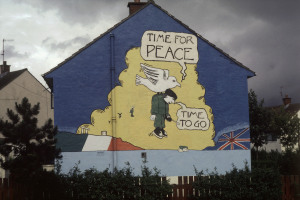
    Time_for_Peace

    “Time for Peace” mural, Whiterock Road, Belfast. Image available under the GNU Free Documentation License via Wikimedia Commons.

    Since the GFA, the tendency to argue ethnopolitical conflicts in terms of human rights has intensified, to the detriment of both wronged parties and broader understandings of human rights. A compelling example of how human rights were an incomplete solution to the conflict emerged early in the post-GFA era, in 2001, when a dispute in Ardoyne, north Belfast, resulted in shocking, violent loyalist protests at the Holy Cross Primary school (a Catholic girls’school). In June 2001, loyalists from the Glenbryn estate began picketing Holy Cross Primary School in nationalist Ardoyne, north Belfast. The school entrance was located just on the Glenbryn side of a famous “peace line.” Police in riot gear were deployed to protect small girls as they walked to school past lines of enraged adults. The dispute continued for four months, with violent conflicts during the summer break and a resumption of the pickets when the new term began in the autumn. Riots spread throughout north Belfast that autumn and winter, along with attacks on children travelling to other schools.

    Families of the distressed children eventually backed an unsuccessful challenge of police conduct under the Police (Northern Ireland) Act 2000, and under Articles 3, 8, 13, and 14 of the European Convention. That case, P.F. and E.F. v. the United Kingdom (Application no. 28326/09), was eventually ruled inadmissible by the European Court of Human Rights. Its long legal journey ended in 2010, when the European declared that, horrific as the protests were, there was no evidence of European convention breach.

    The dispute and legal proceedings very nearly derailed the new Human Rights Commission formed under the GFA.  In 2002-3, six members resigned or withdrew from the commission, citing multiple reasons related to the commission’s lack of authority and resources, its approach to drafting a Bill of Rights, and, most notably, its approach to handling the Holy Cross protests. Although the commission as a whole voted not to become involved, its casework committee committed the commission to supporting the families’ lawsuit. Individual commissioners took contradictory public positions and became increasingly divided. Meanwhile, the commission was perceived as part of an ethnopolitical conflict rather than as public advocates for either the protection of vulnerable people or fundamental rights.

    The Holy Cross protest was not resolved by human rights institutions or advocacy; some might argue that it has never been resolved. The situation revealed several problematic dimensions of treating human rights as a cure for conflict. One difficulty is that human rights laws concern the conduct of state actors. Paramilitary organizations, neighborhood associations, and transnational corporations do not sign human rights treaties.

    Human Rights in the Good Friday Agreement

    Another issue making it difficult for human rights law or advocacy to provide a resolution to conflict was how the GFA itself situates human rights principles in relation to power-sharing as a means to manage conflict. One innovation of the GFA is that it makes human rights central to the settlement, with the entirety of section 6 devoted to “Rights, Safeguards and Equality of Opportunity.” However, the GFA is more strongly oriented by political scientist Arend Lijphart’s consociational model. This model prescribes the management of conflict through power sharing among parties defined in ethnic or communal terms. Thus, the GFA situates human rights within a broader logic that privileges collective political rights. This conceptual maneuver mirrors the way political rhetoric and everyday life absorb human rights claims into regional ethnopolitics, rather than creating a transformative alternative to ethnopolitics.

    In the Holy Cross conflict, protagonists framed the dispute in terms of collective rights and alleged that these rights were being differentially allocated by the state. Families of the girls argued that the protests subjected them to inhuman and degrading treatment—violations of their human rights. Furthermore, they said, police did not use force to stop the protests because the girls were Catholic, but they would have ended any such protest by nationalists. Loyalists claimed that free assembly was an unconditional right, irrespective of sectarian content or whether violence might be a consequence.

    Unfortunately, the kinds of conflicts and challenges for human rights politics raised in the Holy Cross conflict are neither unusual nor uncommon in Northern Ireland. For example, in Donaldson v. the United Kingdom (Application no. 56975/09) the European Court of Human Rights refused to hear the complaint of a republican prisoner that his human rights were violated when the prison service did not allow him to wear a lily (a symbol of the republican struggle for a unified Ireland) outside his cell. Disputes over rights to display emblems may appear frivolous outside the region, but they are part of a broader process, in which human rights laws and institutions have been insufficient to resolve the disputes that emerge from Northern Ireland’s longstanding political conflict.

    Enduring Lessons and the Everyday Life of Rights

    In my 2014 monograph, I explore at length how rights politics have often functioned war by other means over time, rather than providing a comprehensive resolution to conflict. I conclude that advocacy such as the lesbian, gay, bisexual, and transgender (LGBT) equality movement have been more transformative in human rights terms than attempts to balance ethnopolitical rights. This cautionary point about how human rights politics have been received, reinterpreted, and transformed in the Northern Ireland context is not intended to dismiss the peace process’ significant achievements, including the profound diminution of political violence, paramilitary demobilizations, and decommissioning.

    Nevertheless, the successes of the process also require recognition that throughout the fitful implementation of the GFA, political polarization intensified, past violence and political symbols have been repeatedly contested, and riots surrounding parades and symbolic matters like flags have become dangerous and costly recurrent events, intimating, for some, a return to conflict. Violence casts a long shadow across the present peace; prosecutions and re-investigations of past murders and atrocities continue, recent killings like the murder of Kevin McQuigan last summer destabilize power-sharing institutions, and ministers continue to warn of resurgent paramilitary activity – such as a recent upsurge in bomb attacks.

    Understanding the role of human rights in everyday politics in both the past and present is necessary for making nuanced claims for human rights advocacy and law in conflict resolution. Northern Ireland’s tremendous reduction in violence must not be dismissed, but it is important to recognize that the settlement also sustains a form of ethnopolitics that is not always congruent with the goals of human rights advocacy. As the politics of the conflict continue to structure the settlement, it is fair to ask how transformative human rights politics have been. Such an approach can make us conscious of perilous conditions that constrain the present fragile peace, and highlight achievements that are durable and transferrable for the future.

    Dr. Jennifer Curtis is Honorary Fellow in Social Anthropology at the University of Edinburgh. She is the author of Human Rights As War By Other Means:  Peace Politics in Northern Ireland, published by the University of Pennsylvania Press. Her work focuses on how grassroots social movements appropriate and alter rights advocacy and law. She has conducted long-term ethnographic research in Belfast, Northern Ireland and in the United States.  She is currently completing an ethnographic monograph on race, sexuality, and civil rights in red state America, based on fieldwork in Missouri. The book explores the local and national significance of #BlackLivesMatter, movements for LGBT equality, and anti-equality movements, within the broader historical context of racialized violence, slavery, and inequality in the American South.

  • Sustainable Security

    In the Arctic, Indigenous peoples are increasingly seeing their own survival as threatened by environmental change. In this respect, the small Inuit community of Clyde River, Nunavut in Canada represents an interesting case.

    On November 30, 2016 the Supreme Court of Canada heard a highly anticipated legal appeal on behalf of residents of the small Inuit community of Clyde River, Nunavut. The town of 1,100 – supported by interventions from groups like Greenpeace and three organizations representing Inuit people across Canada – argues that the federal government, specifically the National Energy Board (NEB), failed to adequately consult them before granting a license for a Norwegian-based business consortium to conduct seismic testing in nearby coastal waters. The license was granted in 2014 even though consultations with nearby communities exposed significant local concern over the project’s potential impacts on marine mammals such as seals, whales, and other aquatic species, which local residents rely upon for food and cultural practices. The NEB’s initial decision was upheld by a Federal Court in August 2015, but in October of that year Clyde River was granted leave to appeal to the Supreme Court, which offers the last judicial option to stop the seismic testing and protect the marine ecosystem from possible irreparable harm.

    The case of Clyde River has attracted national and international media interest because it reflects a familiar and sympathetic narrative: a small Indigenous community, with support of environmental activities and high profile celebrities, fights for its survival against a corporation abetted by a neo-colonial state committed to extracting hydrocarbon resources for sale on the global market. But the struggle over seismic testing in a tiny community located higher than 70°N latitude represents the intersection of three powerful issues within Canadian and global environmental politics: Indigenous peoples identifying non-renewable resource extraction as a fundamental threat to their survival and well-being; the growing legal and constitutional recognition of the rights of Indigenous peoples to make decisions over resource extraction and other industrial projects within their traditional territories; and emerging alliances between Indigenous communities and non-Indigenous environmental groups to stop such projects. Together, these issues form the latest chapter in the interrelated struggles for human and environmental security, self-determination for Indigenous peoples, and steps towards decarbonizing the global economy.

    Indigenous Peoples’ Insecurity and Climate Change

    iglo-arctic

    Image (cropped) by Emmanuel Milou/Flickr.

    Indigenous peoples in Canada and elsewhere have, for decades, resisted various non-renewable resource extraction projects on the grounds that these often proceed without adequate consultation with local communities or the Indigenous governments on whose lands they occur. Local environmental impacts have worsened as these projects have grown in size, but greater public awareness of the dangers of human-caused climate change have added a new dimension to these struggles. In the Arctic – where climate change is occurring twice as fast as in more southerly regions, causing a range of negative consequences for humans and other animal populations – activities enabling hydrocarbon extraction that will directly contribute to climate change have been met with particular scepticism. In recent years, dozens of Northern organizations, including some representing Indigenous peoples, have signed a Joint Statement of Indigenous Solidarity for Arctic Protection calling for a moratorium on oil drilling in the Arctic. In 2011, the Inuit Circumpolar Council, which represents Inuit in Canada, the United States, Greenland, and Russia, released the Circumpolar Inuit Declaration on Resource Development Principles. The declaration reserves the right of Inuit to benefit from resource development on their traditional territories, but stipulates that “Inuit and others – through their institutions and international instruments – have a shared responsibility to evaluate the risks and benefits of their actions through the prism of global environmental security” (s. 5.1).

    In fact, Inuit have increasingly framed their arguments around climate change and hydrocarbon extraction in explicitly security terms. Survey data indicate that large majorities of Northern Canadians consider the environment to be the most important issue for Arctic security, followed closely by maintenance of Indigenous cultures. For people who rely on traditional country foods for sustenance, and whose culture and identity are premised on reciprocal connections between humans, non-human animals, and the land itself, climate change and local environmental damage are not merely worrisome issues. They are existential threats to the survival of Inuit as Inuit: an Indigenous people defined by their unique environment and the methods of survival and subsistence they have developed over thousands of years of continuous habitation in their Arctic homeland.

    Inuit leaders have articulated the clear and present threats they currently face as a result of environmental changes. Sheila Watt-Cloutier, nominated for the Nobel Peace Prize for her work raising awareness of Arctic climate change and pursuing legal remedies on behalf of Inuit under international law, has stated in no uncertain terms that “climate change is threatening the lives, health, culture and livelihoods of the Inuit.” Terry Audla, who until 2015 was president of Inuit Tapiriit Kanatami (ITK), the national organization representing all Inuit in Canada, has written that “climate change at a rate and of an intensity that appears unprecedented, and well outside Inuit cultural memory, creates insecurities of an entirely new nature, generating concerns about the sustainability of large aspects of our inherited and acquired patterns of life … Our very sense of who and what we are as Inuit.” Mary Simon, another former president of ITK, echoes the threat of Arctic climate change: “The urgency surrounding mitigating the impact of climate change grows with the almost daily news of unprecedented developments in our Arctic environment … Arctic ice is melting three times faster than models had earlier predicted – and the earlier predictions were alarming.  The Arctic is melting, with dramatic consequences for all of us.” In articles, books, speeches, interviews, policy statements, and testimonies before Parliament, the message from Inuit leaders in Canada is clear: climate change is the gravest threat confronting Inuit and all peoples living in the Arctic and beyond, and proposed industrial activities that contribute to climate change should be viewed with the highest concern.

    New Laws and New Allies in Indigenous Environmental Struggles

    These examples of Inuit security claims are recent, but as a phenomenon they are not new: Indigenous peoples have long argued that their wellbeing was undermined by the actions of settler-colonial governments which served to perpetuated their poverty and disenfranchisement. For decades, little changed as politicians and the courts consistently declined to respect or enforce the rights of Indigenous peoples; despite Aboriginal rights being enshrined in Section 35 of the Canada’s Constitution Act 1982, environmental damage affecting nearby communities was considered a cost of doing business and a routine part of Canada’s political economy. In recent years, however, several developments in law and politics have altered the landscape, such that the rights of Indigenous peoples to be consulted about, and possibly consent to, industrial activities on their territories have been established, if not yet fully implemented. Most notable among these is the ruling in the 2014 Tsilhqot’in case, in which the Supreme Court first recognized Aboriginal title over their traditional territories, and the federal government’s 2016 decision to implement the United Nations Declaration on the Rights of Indigenous Peoples (UNDRIP), which codifies international standards for the individual and collective rights of Indigenous peoples, including the rights to land (though the Liberal government’s position on UNDRIP has wavered, with different Cabinet members expressing different views of how, or even whether, UNDRIP can be incorporated into Canadian law). As the case of Clyde River demonstrates, these developments are in the process of being interpreted by policymakers and tested before the courts to establish the new distribution of authority and governance over land use on Indigenous territories.

    The judicial empowerment of Indigenous legal claims in Canada and elsewhere has led to a recognition by many non-Indigenous environmental groups that cooperation and engagement with Indigenous peoples offers the best route to stop extractive projects which they believe will harm local environments, contribute to global climate change, or both. These partnerships have been described as “the native rights-based strategic framework”, an advocacy and campaigning strategy that links the legal and constitutional rights of Indigenous peoples with their normative claims to sovereignty and justice and the fundraising and operational resources of non-Indigenous advocacy groups. Major environmental NGOs have worked to repair relationships with Indigenous peoples that have been harmed by environmentalists’ campaigns targeting certain Indigenous cultural practices, such as Greenpeace indicating its desire to “make amends” for its past opposition to the Inuit seal hunt. Long opponents over their differing views on environmental stewardship and land use, NGOs and Indigenous peoples have increasingly made common cause through their shared view that, with respect to hydrocarbon extraction in particular, “these fights were all life and death situations, not just for local communities, but for the biosphere.”

    Conclusion

    The case of Clyde River is one example of how the threats posed by climate change, now and in the future, are front and centre in the political and legal engagements of Indigenous peoples and environmental organizations. It reflects the fact that many communities are increasingly seeing their own survival as threatened by environmental change, and thus articulate conceptions of what security means to them which highlights the human-caused environmental dangers they face. Such local and Indigenous security claims – statements of what should be protected against certain, identifiable threats – are now part of a global political context where the meaning of security is deeply contested. Longstanding security practices and discourses that privilege states and their national interests are today in direct contradiction with a complex series of security claims made by groups that have been historically and remain adversely affected by the state and its actions. Moreover, in the context of a rapidly changing global environment due to human-caused climate change, struggles to define what security means have deep implications for the future. Environmentalists and others concerned for the prospects of human survival and wellbeing on a warming planet are increasingly prepared to use all available tools at their disposal to secure a stable and sustainable future for themselves and their children. As reflected in recent and ongoing cases of Indigenous peoples and their environmentalist allies resisting the expansion of hydrocarbon extraction and infrastructure – such as the Keystone XL and Dakota Access crude oil pipelines – that struggle continues. In the case of the Arctic, it is currently focused on the small hamlet of Clyde River, and the legal battle over who gets to make decisions over how much environmental damage will be borne to facilitate resource extraction, and what powers Indigenous peoples possess under the law to defend themselves and define the conditions necessary for their own survival.

    Wilfrid Greaves, PhD, is Lecturer at the University of Toronto. His doctoral research examined how in/security and environmental change have been conceptualized by states and Indigenous peoples in the circumpolar Arctic region. An Ontario Graduate Scholar, SSHRC Doctoral Scholar and DFAIT Graduate Student Fellow, he is author of multiple peer-reviewed articles, book chapters, and working papers. He has also taught undergraduate courses in International Relations, global security, peace and conflict studies, and Canadian foreign policy at Ryerson University and the University of Toronto. A graduate of the University of Calgary and Bishop’s University, his research interests include security theory, human and environmental security, natural resource extraction and climate change, Arctic and Indigenous politics, Canadian foreign policy, and complex peacebuilding operations.

  • Sustainable Security

    This interview was conducted by the Remote Control project. 

    Sascha Dov Bachmann, Assessor Jur, LLM (Stel) LLD (UJ), is an Associate Professor in International Law (Bournemouth University, UK), Extraordinary Associate Professor in War Studies (Swedish Defence University, Sweden) and Guest Speaker at NATO School. Outside academics, he served in various capacities as Lieutenant Colonel (German Army Reserve) taking part in peacekeeping missions in operational and advisory capacities. Sascha acted as NATO’s Rule of Law Subject Matter Expert (SME) in NATO’s Hybrid Threat Experiment of 2011 and in related workshops at NATO and national level. He would like to thank Brigadier (Rtd) Anthony Paphiti, former ALS officer, for his insightful comments and discussions.

    In this interview, Dr. Bachmann discusses hybrid warfare, its use in Ukraine and Crimea by Russia, and whether NATO is adequately prepared to formulate effective responses to this method of warfare.


    Q. What is ‘hybrid warfare’?

    Hybrid warfare as a warfare concept is not new among those practising the art of war. However, contemporary events lead us to argue that today’s hybrid warfare “has the potential to transform the strategic calculations of potential belligerents [because it has become] increasingly sophisticated and deadly”.

    Hybrid war is a concept that has emerged shortly after the end of the Cold War and sums up the complexities of modern warfare, which go beyond conventional military tactics, often involving cyberwarfare, propaganda and a fluid, non-state adversary.

    The concept of hybrid warfare has been discussed by (mostly US) military writers since the beginning of the 21st century and its recognition as a theory in formal military doctrinal thinking is still not settled. Hybrid warfare may use elements from four existing methods and categories of full spectrum warfare, namely:

    • conventional warfare;
    • irregular warfare (such as terrorism and counter-insurgency);
    • related asymmetric warfare (unconventional warfare such partisan warfare);
    • and compound warfare (where irregular forces are used simultaneously against an opponent while being employed by state actors to augment their otherwise conventional warfare approach).

    Hybrid warfare builds on existing doctrinal elements and adds the following: evolving war-fighting capacities in the fifth dimension such as “cyber-warfare”; and activities in the so- called information sphere.

    Q. Who were the first actors to utilize hybrid warfare and why?

    According to Hoffman’s seminal work “Conflict in the 21st Century: The Rise of Hybrid Wars”, it was Hezbollah in its 2006 war with the IDF. Here, a non-state actor (NSA) did utilise war fighting capabilities normally not used by non-state actors such as blending conventional warfighting on the ground and activities in the information sphere. Other examples are Islamic State/Daesh which show a blend of capabilities which blur the line of traditional warfighting: such as the use of suicide bombers, improvised explosive devices, and the use of ‘ground troops’ in a conventional manoeuvre context augmented by strong propaganda/information sphere activities.

    Why: because these capabilities are available. Hezbollah (and IS) had and has a substantial potential of rockets/military hardware and is aptly using the possibilities available through social media in the information sphere unknown before. Both non-state actors are also utilising the opportunities of informing public opinion in the West thanks to a growing Muslim population in the West who have cultural and lingual access/connection to these conflicts/the nature of the conflict.

    Q. Is hybrid warfare something that states have used?

    Russia has used hybrid warfare.

    How:

    In a Keynote speech at the opening of the NATO Transformation Seminar on 25 March 2015, NATO Secretary General Jens Stoltenberg remarked:

    “Russia has used proxy soldiers, unmarked Special Forces, intimidation and propaganda, all to lay a thick fog of confusion; to obscure its true purpose in Ukraine; and to attempt deniability.  So NATO must be ready to deal with every aspect of this new reality from wherever it comes. And that means we must look closely at how we prepare for; deter; and if necessary defend against hybrid warfare.”

    Michael Kofman and Matthew Rojansky described Russia’s 2010 Military Doctrine of modern warfare:

    “…… as entailing “the integrated  utilization of military force and forces and resources of a non-military character,” and, “the prior implementation of measures of information warfare in order to achieve political objectives without the utilization of military force and, subsequently, in the interest of shaping a favourable response from the world community to the utilization of military force.”

    The employment of hybrid methods has been evident from Russia’s activities in Crimea and the Donbas region of Ukraine, with its deployment of “little green men”, namely, soldiers wearing unmarked uniforms that make direct state attribution difficult. According to Mark Galeotti, Professor of Global Affairs at New York University’s Center for Global Affairs:

    “The conflict in Ukraine has demonstrated that Moscow, in a bid to square its regional ambitions with its sharply limited resources, has assiduously and effectively developed a new style of ‘guerrilla geopolitics’ which leverages its capacity for misdirection, bluff, intelligence operations, and targeted violence to maximise its opportunities.”

    While there may be limitations to the way in which these methods were used in Ukraine, the use of non-attributable military personnel provides expert assistance to an enemy and, even if not directly engaged in hostile acts, provides advice and assistance to those who carry out such acts. Nevertheless, the seriousness of the threat posed by such forces should not be under-estimated. General Breedlove, currently Commander, US EUCOM and the Supreme Allied Commander Europe (SACEUR), is reported as saying,

    “if Russia does what it did in Crimea to a NATO state, it would be considered an act of war against the alliance.”

    In Ukraine, Russia employed a hybrid strategy by combining irregular warfare and cyber warfare to achieve its strategic objectives. Reuben F Johnson, writing in IHS Jane’s Defence Weekly, on 26 February 2015, considered that “Russia’s hybrid war in Ukraine ‘is working’.” They had combined a substantial ground force of 14,400 Russian troops supported by tanks and armoured fighting vehicles, backing up the 29,300 illegally armed formations of separatists in eastern Ukraine.

    Q. Does hybrid warfare hold military advantages for states over conventional warfare?

    Russia is winning the hybrid war in Ukraine: it has successfully annexed Crimea, and effectively turned Ukraine into a state on the brink of wider failure. In the process, Russia has successfully divided Western countries on how to respond to this act of aggression. Russia also successfully reactivated its Cold War disinformation mechanisms, successfully blurring reality and fiction for global observers. Russia has uncovered the West’s inability to find a common policy to respond to the unfolding events in Ukraine.

    Q. How does hybrid warfare relate to international law? Is this way of waging war covered in current international legal paradigms?

    Generally speaking, hybrid warfare does not change the international legal paradigms such as Article 2(4), 51 UN Charter and in the context of NATO, Article V of the NATO Treaty. Whether any form of hybrid attack, alone or cumulatively, amounts to a use of force and, if so, reaches the threshold of an “armed attack” to justify a military response under Article 51 – and what form that response would take – are very difficult questions to answer. They are situation/fact specific. Moreover, attribution may be problematic. In addition, hybrid warfare – with its possible elements of cyber, terrorism, asymmetric warfare etc. – might not reach the threshold of such an attack and hence allow affected states to ‘deny’ the existence of such warfare in order to continue with their diplomatic relations, trade  etc with the ‘aggressor’ state. Such behaviour might undermine existing alliances and weaken international comity.

    Q. How prepared, or perhaps unprepared, are NATO for formulating effective responses to hybrid warfare?

    NATO is in my opinion well prepared to formulate effective responses given its substantial work undertaken in the context of hybrid threats. NATO recognized as early as 2010 hybrid threats were a new security risk and designed a new NATO Bi-Strategic Command Capstone Concept, describing hybrid threats as emanating from an adversary who combines both conventional and unconventional – military methods to achieve its goals.

    In the two years following 2010, NATO drew up a specific threat catalogue, which identifies security-specific risks beyond conventional warfare threats: nuclear proliferation, terrorism, cybercrime and cyber-war, organized crime and its role in drugs, arms and human trafficking, migration, ethnic and religious conflicts, population conflicts due to resource scarcity and globalization.

    NATO recognized that these may amount to a concrete threat to the alliance or that it could be authorized by the United Nations, because of their capacity, to intervene. Recognizing this, NATO worked on a related global approach (Comprehensive Approach) in order to counter these risks. This approach envisaged involving state and non-state actors in a comprehensive defence strategy that combines political, diplomatic, economic, military technical and scientific initiatives. Despite intensive work on this approach as part of a “Countering Hybrid Threats” experiment in 2011, the NATO project work in 2012 had to stop due to lack of support from their members. (From our submission to the UK DC)

    Given this existing framework/ capstone on how to respond to hybrid threats and the inter-related nature of hybrid threats and warfare, I would like to argue with some confidence that NATO has the capability to formulate an effective doctrinal approach, notwithstanding the initial discontinuation of the work on the hybrid threat concept.

    Q. Do you think that hybrid warfare will be the main method of waging war in the future and how do you see the use of this form of warfare evolving?

    Hybrid warfare with its various forms such as cyber-attacks, the use and abuse of the information sphere, the use of a holistic mix of conventional and irregular warfare, the exploitation of country specific vulnerabilities, law fare etc, is here to stay due to its obvious benefits to the using power/state/actor: deniability and the possibility of staying under the threshold of an armed attack which would in a likeliness trigger a military/kinetic response. I am convinced that the elements of hybrid warfare will evolve further and will eventually be used by state and non-state actors alike. Whether the overall term “hybrid warfare” for such multi-modal forms of warfare/threats is to stay we will see. Hybrid war’s impact on international law and comity is significant and it will question some of our established doctrines/concepts.

  • Sustainable Security

    Authors Note: This article summarises key findings of my book Malte Brosig (2015) Cooperative Peacekeeping in Africa: Exploring Regime Complexity. London & New York: Routledge.

    Introduction

    Peacekeeping enjoys an unprecedented popularity amongst policymakers at the moment. At no point in history have there been more peacekeepers deployed worldwide. The United Nations (UN) and regional organisations are currently deploying more than 100,000 troops and police in missions around the globe but most are located in Africa. The challenges individual missions are facing are well-discussed among experts. Much of the relevant literature focusses on dos and don’ts of peacekeeping practices. Regardless of individual cases we can observe the emergence of a larger inter-organisational peacekeeping system which I refer to as African peacekeeping regime complex in which the most relevant organisations such as the UN, the African Union (AU), Regional Economic Communities (RECs) and European Union (EU) are intimately inter-connected. Thus, the challenges actors are facing are not only individual ones and so solutions to these challenges are increasingly based on multi-actor coordination. How the peacekeeping regime complex emerged and how actors are positioned within it will be explored in this contribution.

    Peacekeeping Today

    Modern peacekeeping is confronted with high expectations and an enormous task complexity. Peacekeeping activities reach far beyond ceasefire monitoring, and also involve countering rebel and terror groups, protecting the civilian population, disarming combatants, supporting elections, reforming the security apparatus, state building and engaging in humanitarian relief. In sum, the expectation is that peacekeepers are not simply administering fragile peace, but also working to prevent a relapse into conflict by addressing its root causes. Naturally, these activities are conducted under considerable insecurity in a fragile environment where conflict has not often ceased, but is instead suppressed. Progress is uncertain and backlashes are likely.

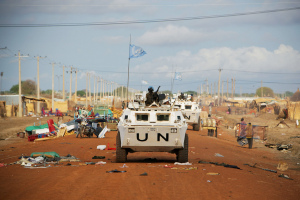
    Zambian peacekeepers from the United Nations Mission in Sudan (UNMIS) patrol streets lined with looted items awaiting collection in Abyei, the main town of the disputed Abyei area on the border of Sudan and newly independent South Sudan. In a statement yesterday, the United Nations strongly condemned the burning and looting currently being perpetrated by armed elements in the area, following the seizure of Abyei town by Sudanese Government troops on 20 March.

    Zambian peacekeepers from the United Nations Mission in Sudan. Image by United Nations Photo via Flickr.

    The demand for peacekeepers and the existing complexity and high expectations peacekeeping is confronted with in practice lead to an overburdening of single actors. For the African continent, we can identify a group of relevant organisations which play a central role within the African peacekeeping regime complex. These are the UN, AU, RECs and EU. None of these actors are capable of dominating the regime complex fully. They all are facing the harsh realities of resource scarcity. Resources can be material goods (financial, military) or social kinds like competences or political (in) capacities or deployment doctrines.

    Examples of this resource scarcity and its effects are easy to find. While the UN remains the most essential actor, it does not have command over the resources which would allow it to outperform regional organisations. This becomes very clear when looking at deployment times and/or the issue of peace enforcement. With its heavy bureaucracy in the background, the UN’s response times are on average around six months which is far from a rapid response. Issues of peace enforcement and counter-terrorism are also politically controversial within the UN and thus the UN’s missions find it difficult to engage in this kind of activity. In practice, there remains a considerable gap in the UN response to severe crises.

    On the part of African actors, much has been achieved within the last decade. An African Peace and Security Architecture (APSA) has been erected which builds on close cooperation between the AU’s headquarters in Ethiopia and RECs. Considerable efforts have been made to establish the African Standby Force (ASF). Indeed, the AU is now actively involved in practically all emerging conflicts on the continent. Still, it falls short of being able to independently respond to crises in a sustainable and comprehensive manner. The design of the ASF which consists of around 25,000 troops only makes up a minority of all deployments to the African continent. While the AU is willing to deploy in situations where the UN is reluctant to do so, the AU’s resource constraints are significant. The lack of funding is a compelling example. Despite efforts of the Commission chair to reduce external dependencies, the peacekeeping budget is predominately being financed by international donors. AU peacekeeping missions are not sustainable to maintain and can only operate with much reduced task complexity. Thus, because of resource constraints, they are neither long-term nor comprehensive in nature.

    In the case of the EU, the situation is different. It is the most well-resourced organisation of all but does not have a global mandate. While the EU has deployed around 17 missions to Africa since 2003, these have been rather small in ambition, scale and duration. Most missions train security forces, but only a few are actively engaging in operational peacekeeping. This does not result from an absence of resources but is wanted politically.

    How the Multi-Actor Approach is Shaping Modern Peace Operations

    Given the very visible limitation of each single actor, it is hardly surprising that peacekeeping today is a multi-actor game forming a regime complex. A regime complex can be characterised as a form of decentralised and non-hierarchically organised governance. Actors are overlapping with regard to their membership and/or operational ambit and are tightly interconnected which makes it difficult to decompose the system into individual units. What a regime complex constitutes is mostly defined in terms of the relationship of its constituent parts which are constantly interacting with one another. In the case of peacekeeping in Africa, we can detect such a system.

    In the overwhelming number of cases, we can observe forms of cooperative peacekeeping in which actors are pooling their resources. The most pervasive forms of cooperation are the sequential and co-deployment of troops. This has also led to a division of labour and institutional specialisation between the involved actors. For example, the AU often functions as a first-deployer, sending out troops in situations which are not consolidated and remain hostile and fragile. These deployments which are rather short-term oriented aim to prepare the ground for a larger more comprehensive and longer-term engagement from the UN. The UN’s response is often slower but more sustainable and also covers complex peace building tasks and stays in countries for an extended period of time. The role of the EU is less ambitious, but not less important. In the operational peacekeeping theatre, the EU contributed a high number of missions which are targeted and confined in terms of deployment times (short-term) and tasks (usually training missions). They aim from the beginning not to take over comprehensive tasks but are designed to fill in functional niches other actors leave. Financially, the EU is one of the main donors for AU peacekeeping missions. Since 2004, the EU’s African Peace Facility has provided €1.9bn for institutional capacity building and peacekeeping missions. Recent peacekeeping missions deployed to the Central African Republic (CAR) and Mali broadly follow this track of interaction.

    However, the exchange of resources between the AU-EU-UN which forms the backbone of the peacekeeping regime complex is not a simple functional mechanism. The exchange of resources is, for example, also influenced by peacekeeping doctrines. These are not automatically complementary. In the case of the AU and UN, the AU’s exit strategy is not necessarily compatible with the UN’s entry strategy. While the AU deploys in situations of continuing hostilities and aims at stabilising the situation, the UN takes a more conservative approach aiming to deploy only in situations where at least a ceasefire is in place. What happens if the AU stabilisation efforts do not lead to tangible progress can be seen in Somalia. Although the AU has called for UN take over since the deployment of AMISOM in 2007, no UN takeover occurred.

    Doctrinal divisions also exist with regards to robust peacekeeping in already deployed missions. While the AU and African states often accept that within peacekeeping missions the use of force is sometimes needed to actively deter and encounter rebels or terrorists, this view is mostly not shared by the UN and EU. As a consequence, active peace enforcement in cases of deployed UN missions (CAR, Mali, DRC) tend to be outsourced. In case of the DRC, a Force Intervention Brigade (FIB) was set up and staffed by African countries or France continued its military operations hunting down terrorists in Mali.

    Apart from questions of doctrinal complementarity, the supply and demand for resources varies significantly between actors. An organisation which is stronger on the supply side can chose how to design its involvement in peacekeeping while an organisation which is experiencing a strong demand but little supply is in an inferior position. This can be seen when comparing the EU and AU. The EU is in the position to provide what it deems adequate (many small scale targeted missions), the AU is in the complete opposite situation. It cannot maintain longer-term missions on its own and relies both on external funding and operational handover to the UN.

    Conclusion

    Modern peacekeeping operates in a multi-actor environment which displays decentred governance structures to which we can refer as a regime complex. Apart from the fact that the UN Security Council bears a general responsibility for peace, there is no overarching or strict hierarchy between the UN-AU-EU. Despite the absence of externally delegated roles within the regime complex, assumed roles emerged as a consequence of individual institutional resource scarcity, doctrinal compatibility and the size of demand vs supply of resources. Certainly politics is not missing in this system. There is no formally agreed script according to which organisations can be expected to act and thus the exact mode of interaction varies between cases. Domestic conflict dynamics leave their imprint too.

    In the end, taking an inter-organisational perspective to peacekeeping is not a trivial under-taking because it constitutes a form of global governance which transcends the individual organisation. While we have long accepted that the classical nation state has lost parts of its domestic sovereignty to the forces of globalisation we also have to recognise that the same is true for international organisations. In this regard actorness and governance qualities do not exclusively rest in actors themselves but also in how they organise interaction with one another. The peacekeeping regime complex is one example and one that is shaping the lives of millions who live in some of the most vulnerable situations.

    Malte Brosig is Associate Professor in International Relations at the Department of International Relations at the University of the Witwatersrand in Johannesburg. He joined the Department in 2009 after he received his PhD from the University of Portsmouth. His main research interests focus on issues of international organization interplay and peacekeeping in Africa. He is the author of Cooperative Peacekeeping in Africa: Exploring Regime Complexity which was published at Routledge. Prof Brosig is a rostered consultant for the United Nations University’s Centre for Policy Research in Tokyo and holds fellowships at the Canadian Centre for R2P at the University of Toronto, the European Centre for Minority Issues in Flensburg and the German Institute for Global and Area Studies in Hamburg.

  • Sustainable Security

    Often seen as a tactic harnessed by the weak, guerrilla warfare can also be a employed by the strong. States have at times used guerrillas in inter-state and civil conflict.

    Guerrilla warfare is widely viewed as a weapon of the weak. To Mao Tse-tung, it was the optimum strategy of those “inferior in arms and military equipment.” He drew inspiration from the Russian troops accomplishing, in 1812, what their militarily superior European counterparts could not: drive Napoleon’s Grand Army out of their country. They did this not only by taking advantage of Russia’s distinctive geography and climate, but also by using guerrillas – Cossacks and peasants – to go after the French troops “as unconsciously as dogs bite to death a rabid stray dog.”

    But, guerrilla warfare can also be a weapon of the strong. States with robust conventional military capabilities at times use guerrillas in inter-state and civil conflict.

    Guerrilla Warfare

    pkk-guerilla

    Image by kurdishstruggle via Flickr.

    Guerrillas’ advantages stem from their organization and local ties. They typically operate as small, independent units, thereby exercising more maneuverability, alertness, concealment, and access to the local population than their regular counterparts. Carl von Clausewitz recommended supplementing a regular army with bands of armed civilians. He observed that, when faced with adversity, soldiers typically “cling together like a herd of cattle,” while civilians “scatter and vanish in all directions, without requiring a special plan.” But, he emphasized that the latter should not be used “to pulverize the core but to nibble at the shell and around the edges” of regular armies.

    Both Clausewitz and Mao viewed guerrillas as useful for weakening a conventionally strong rival through harassment and psychological warfare, but recognized that they are “but one step in the total war.” It is the regular troops that must, in the end, directly confront and defeat the enemy. Thus, for example, the recent U.S. strategy of sponsoring local rebels in Syria against Bashar al-Assad’s (Russia-supported) army was likely to fail not least because of the difficulties inherent in using nonstate proxies. The U.S. strategists – presumed students of Clausewitz – failed to recognize the necessary role of the regular forces, or else significantly underestimated their capacity to form a regular army out of irregulars while in the midst of a war. Or, they were simply constrained by the political unfeasibility of setting regular U.S. soldiers’ boots on the ground.

    In addition to weakening (or hopelessly trying to defeat) a rival’s regular forces, states often use guerrillas – or “counter-guerrillas” – against guerrilla rivals. The latter are typically rebels fighting to gain, maintain, or reclaim territorial control from an established government or occupying power. The former are sometimes also referred to as “pro-government militias.”

    In a recent article published in the Journal of Strategic Studies, I closely examine and disaggregate the different types of counter-guerrillas states use in counterinsurgency operations. I identify two types of counter-guerrillas: self-defense militias and death squads. Self-defense militias typically comprise ordinary civilians, such as peasants, while death squads are usually manned by experienced militants, such as turned rebels or violent criminals.

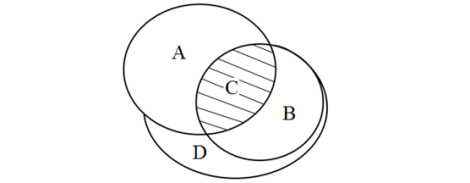
    I argue that states make proxy choices based on the latter’s comparative advantage, availability, and controllability. The state’s ideal partners are highly skilled fighters with deep knowledge of the insurgent network and links to the local population. Regular soldiers are highly skilled fighters, but possess limited local and insurgent knowledge. Partnering with nonstate actors means tackling the classic principal-agent problem, and the state’s capacity to do so is significantly shaped by its spatial reach (i.e. territorial control) across the theater of war. Figure 1 illustrates the different configurations of territorial control.

    Figure 1. Zones of Control

    figure-1-zones-of-control


    In Zone A, the state exercises full control. Zone B represents the insurgent-dominated area, whereas Zone C is the contested region where both sides actively compete for influence. Zone D represents an area that has been largely neglected in the burgeoning civil war literature. It is a zone that is neither fully controlled nor, for the time being, actively contested.

    Among the nonstate alternatives, the ideal partner for the state is a skilled fighter with insider knowledge of the insurgency and its logistics network. The disadvantage of using this type of proxy is that his fighting skills make him dangerous and difficult to control. The cost of losing control of skilled fighters can be unpalatably high. Unless they are weak or collapsed, modern states will prefer to use skilled fighters when and where they can supervise them.

    Nonstate actors that possess the desired local knowledge and have significant experience wielding extra-institutional violence, whether of criminal or rebel nature, may be harnessed to counter the insurgents. Their comparative advantage is in performing specialized, offensive, and highly targeted tasks (e.g. assassinations) that take advantage of their high mobility and combat skills. Consequently, they are likely to be used where the insurgents are actually located (Zones B and C). We should expect them in Zone C, where the state can exercise control over their activities. Using death squads in Zone B requires the state to create robust control mechanisms, such as embedding these groups firmly within special operations units of regular military or police forces. Where the state exercises full control (Zone A), or where the insurgents are not yet present (Zone D), states do not require highly targeted offensive operations and, consequently, death squads.

    While the comparative advantage of death squads is in highly targeted offensive operations, self-defense militias are best at performing static defensive tasks, such as guarding villages, communication lines, transportation networks, and vital installations. They are, consequently, more likely to be used to facilitate the operation of state forces in contested regions (Zone C) or to deny the insurgency access to areas where neither side has effective control (Zone D). In Zone B, self-defense militias are helpless against the insurgents. Not only can their government-provided weapons easily fall into rebel hands, but also, given the high rates of defection in insurgent-dominated areas, they may become a fertile source of rebel recruits. Remnants of self-defense militias (once created in Zone C or D) may persist in Zone A, but only because demobilization of nonstate actors is usually slow and costly.

    The Kashmir Case

    India’s use of counter-guerrillas in Kashmir illustrates the logic of the argument. In response to an insurgency breaking out in the late 1980s in the Indian state of Jammu and Kashmir (here referred to as “Kashmir”), the Indian army used former rebels (i.e. “renegades”) and villagers to combat the insurgents. Initial efforts relied on local police enforcement, treating the insurgency as an issue of “law and order.” However, the local policemen proved ineffective and were supplemented by three paramilitary forces (the Central Reserve Police Force, the Border Security Force, and the Indo-Tibetan Border Police). The Indian army’s role expanded further in 1993 with the introduction of the Rashtriya Rifles, an elite army unit created specifically for counterinsurgency operations.

    Former rebels were used mostly in the contested areas (Zone C) and, under the supervision of the Rashtriya Rifles, in Zone B. Kashmiri ex-insurgents, who were also popularly known as “Ikhwanis,” were used to eliminate rebels and their sympathizers. In Zone D – the mountainous areas of the Jammu region – the state instituted the civilian-manned Village Defense Committee (VDC) system. Figure 2 illustrates the distribution of the “renegades” and the VDCs. Official statements place the number of VDC volunteers at 6,000, but a prominent Kashmiri journalist I interviewed in Srinagar (the summer capital of Kashmir) estimated the figure to be closer to 23,000.

    Figure 2. Zones of Control in Kashmir

    zone-of-control-in-kashmir-figure-2


    Costs of Counter-Guerrillas

    Counter-guerrillas may be good for war, but they are bad for peace. Weaponizing turned rebels, criminals, and civilians offers tempting tactical benefits, but it also carries significant post-conflict costs. The conventional wisdom is that outsourcing violence lowers the cost of conflict and provides states with plausible deniability. However, as I learned from my fieldwork in Kashmir and other conflict zones, the local population quickly becomes aware of the illicit links between the counter-guerrillas and the government, as does the international community.

    The “renegades” may have helped the Indian army achieve military victory over the insurgents, but they also significantly boosted the widespread and enduring resentment against the Indian government. The arming of a select ethnic group (mostly Hindus and some Sikhs) in Jammu generated “intermittent outburst of communal violence” as well as incidents of looting, abduction, and rape.

    Playing local groups against one another is a classic strategy of colonialism, with a lasting impact on the peace and prosperity of many postcolonial states. Perhaps India’s Supreme Court said it best. It described the arming of over 6,000 young men in the tribal tracts by the central Indian state of Chhattisgarh to fight the Naxalite-Maoist insurgents as “tantamount to sowing of suicide pills that could divide and destroy society.”

    Yelena Biberman is an Assistant Professor of Political Science at Skidmore College and Nonresident Fellow at the Atlantic Council’s South Asia Center.

  • Sustainable Security

    Drone strikes have been a core strategy of the so-called global war on terror. But there have also been many questions raised surrounding the effectiveness, transparency, legitimacy, and ethics of their use.

    Technology has fundamentally altered not only how security is defined, but also how it is sustained and even enhanced.  Nowhere is this new reality more apparent than in the so-called “global war on terror,” where there is little agreement about counterterrorism tactics and strategy.  A core part of the so-called war on terror has been the utilization of drone technology.  In the context of warfare, the drone has at least three functions: surveillance, killing, and providing targeting for another weapons system. The significance of the new technology is not so much that drone operators must decide between surveillance and firing but that they can decide.  The drone often removes the need for indirect fire (where the shooter cannot see the target).  Under such circumstances, the use of drones is a significant advantage to the side employing them.

    Analysts point to several factors indicating why targeted killings by the United States (U.S.) are likely to increase in the foreseeable future. Drone strikes put fewer American lives at risk and provides a low-cost alternative to expensive and unwieldy conventional forces, especially given projected cuts in the defense budget and a dwindling public appetite for long wars.  The reasons for the shift to combat drones are obvious:  it lessens the burdens and responsibility on a state’s taxpayers, policymakers, and military.  But drones have drawbacks, too.

    From a broad perspective, the use of armed drones in response to terrorism may actually be counterproductive.  It has at times proved detrimental and terrifying, not just to the targeted individuals but to entire populations, killing innocent civilians and fueling resentment that has fed into terrorist recruitment and radicalization, intensifying the very terrorism that the drones are intended to combat. Those fears have been made ever more real by the surging number of casualties caused by targeting high-value terrorists in Pakistan, Yemen, Somalia, Iraq, Syria, and Afghanistan.  The debate over the proper use of drone strikes abroad remains far from settled and has raised many questions about their effectiveness, transparency, legitimacy, and the ethics surrounding their use.  These issues deserve more attention.

    Legal and Moral Issues

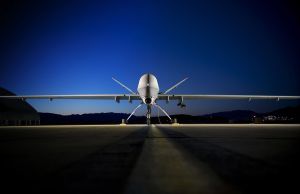
    A Reaper Remotely Piloted Air System (RPAS) comes into land at Kandahar Airbase in Helmand, Afghanistan. Breaking new ground for the RAF, the MQ-9 Reaper has become an invaluable asset in the fight against terrorism in Afghanistan. It is able to spend great lengths of time silently observing the enemy before using a range of precision munitions to defend coalition troops and civilians from danger. This image was a runner-up in the RAF 2011 Photographic Competititon. Photographer: Fg Off Owen Cheverton Image 45153241.jpg from www.defenceimages.mod.uk For latest news visit: www.mod.uk Follow us: www.facebook.com/defenceimages www.twitter.com/defenceimages

    Image by Defence Images/Flickr

    Despite frequent condemnation of the U.S. cross-border drone strikes as patently illegal, the legality question is not so straightforward because international law is not precise.  Even though the U.N. Charter explicitly prohibits states from employing “the threat or use of force against the territorial integrity or political independence of any state” (Article 2(4)), it provides two exceptions, recognizing an “inherent right of individual or collective self-defense if an armed attack occurs against a Member of the United Nations.” (Article 51).  The other exception relates to authorization by the Security Council (Articles 39, 41, 42).  Debate over the breadth of the self-defense exception dates back to the 1950s, focusing on the “inherent” nature of the right, what constitutes an “armed attack,” and when an armed attack “occurs.”  This is the essence of the current controversy over pre-emptive self-defense, which the United States invokes to justify preventing an attack by responding to it before it actually occurs.

    The International Court of Justice (ICJ) has generally treated self-defense as a narrow exception to the prohibition on force.  In the 1985 case of Nicaragua v. United States, for example, it held that to give rise to a right of self-defense, an attack must be a significant one.  The ICJ has also upheld the principles of necessity and proportionality, finding that self-defense is not permissible even against an armed attack if the self-defense is not necessary to accomplish the purpose of defense or if it is disproportionate in terms of civilian lives or property lost.  Perhaps the court’s most important finding is that the prohibition on the use of force and the limited self-defense exception have become a part of customary international law.

    As Rosa Brooks has argued,  ambiguity and vagueness in these core legal concepts of “self-defense” and “armed attack,” as well as related doctrines of “imminence,” “proportionality,” and “necessity,” permit the U.S. to make plausible arguments for legality, while allowing other states simultaneously to condemn the attacks as unlawful.  In the absence of a single overarching international authority and judicial system to declare who is right, the answer, if it ever arrives, will depend on the development of a consensus within the international community, which could take many years to build.

    It is not even clear that use of drones against suspected terrorists is governed by the law of armed conflict (LOAC) in the first place.  If these are more appropriately regarded as law enforcement actions, as some believe, then they should be governed by law-enforcement rules and limited by international human rights law.  The intentional targeting of suspected terrorists poses vexing questions surrounding the legal principle of ‘innocent until proven guilty.’  As a matter of U.S. constitutional law and criminal law, does the executive branch, acting through the military or the intelligence community, have the right to kill a suspected terrorist whose guilt has not been adjudicated in court?  Does it violate the right to life and the prohibition of arbitrary killing, protected by, among other things, Article 6(1) of the International Covenant on Civil and Political Rights?

    In U.S. law, a drone attack, like any other targeted killing, arguably, but not necessarily, violates a ban on assassination by U.S. personnel dating back to an executive order issued by President Gerald Ford in 1976. Until 1975, many high officials inside the U.S. government, including President Ford, did not know that the Central Intelligence Agency (CIA) had ever plotted to kill foreign leaders. All that changed, however, as a result of a series of exposes published in The New York Times by investigative journalist Seymour Hersh. In early 1976, following several disclosures, investigations and public revulsion, President Ford issued the executive order banning the assassinations.  The ban on assassination is still in effect in a later executive order promulgated by President Reagan.

    Another question is how those who employ armed drones can justify ‘collateral damage’ to innocent bystanders who become unintended victims.  The LOAC allows the targeting of enemy combatants and expressly prohibits targeting civilians, but so long as reasonable steps are taken to avoid collateral injuries, and the loss of civilian lives is proportional to the military advantage, the accidental killing of civilians is not a war crime.  But this does not mean that it is morally or politically justified.  More fundamentally, international law raises questions about the right of the U.S. to target individuals without the consent of the government on whose territory the killing occurs.  Does the UN Charter’s Article 2(4) prohibition on the use or threat of force against the territorial integrity or political independence of another state even allow such attacks?

    The U.S. has argued that the attacks are permissible because the targeted state is either unwilling or unable to police its own territory and prevent the targeted individuals from carrying out terrorist acts.  The 2005 ICJ case of Congo v. Uganda appears to weaken the U.S. argument, holding that Uganda’s military incursion into Congo to stop cross-border attacks by Congo-based insurgents was unlawful.  Most scholars and most states appear to adopt the ICJ’s broad understanding of the Article 2(4) prohibition on force and narrow understanding of Article 51’s self-defense exception.  Nevertheless, the debate continues.

    Both the Bush and the Obama administrations have argued that the United States should maintain its ability to use all of the tools in its arsenal, including armed drones, to prevent terrorist organizations and groups from attacking the U.S. homeland.  On September 17, 2001, President Bush signed an executive finding that authorized the CIA to “kill or capture al-Qaeda militants around the globe.”  While some officials within the Bush administration defended the drone strikes as consistent with and conforming to international law, others emphasized their effectiveness rather than their legality, arguing that the use of drones has given the U.S. a new dimension of capability that most other nations lack.  Still, others have added that some limits must be placed on drone strikes against U.S. citizens overseas—that is, Americans should not be targeted without prior approval by a military panel or a federal judge.

    On balance, the U.S. government continues to regard the drone program in Yemen, Somalia, Afghanistan, and the border regions of Pakistan as part of the ongoing U.S. war with al-Qaeda, which has been waged pursuant to the 2001 Authorization for the Use of Military Force by which Congress authorized the president to take military action against nations, organizations, or persons involved in the 9/11 attacks.  As long as the attacks are aimed at individuals associated with al-Qaeda and are for the purpose of preventing future acts of terrorism against the United States, they appear to fall within the scope of the authorization.  The U.S. government contends that international law permits the United States to use force against al-Qaeda and its affiliates in countries where there is an extant armed conflict to which al-Qaeda or its associates are party.  If the drone strikes are part of the war with al-Qaeda, the argument goes, the law of armed conflict applies. The Obama administration has taken the view that the law of armed conflict applies to drone strikes, whether they are part of the war or are used as a separate military strategy such as counterterrorism.

    The ethical and legal issues raised by the rapidly developing drone technology pale in comparison to those presented by the Pentagon’s development of new autonomous weapons systems.  These amount to fully independent robots, guided by artificial intelligence, which can decide on their own whom and when to kill.  These projects, to which the Defense Department has committed billions of research dollars, have prompted an intensifying debate among legal scholars and ethicists:   “Can a machine be trusted with lethal force?”  “Who is at fault if a robot attacks a hospital or a school?”  “Is being killed by a machine a greater violation of human dignity than if the fatal blow is delivered by a human?”  A Pentagon directive requires that autonomous weapons use “appropriate levels of human judgment.”  Scientists and human rights experts have argued that the standard is far too broad, insisting that such weapons be subject to diligent application and “meaningful human control.”

     Transparency and effectiveness

    reaper

    Reaper Drone image by Wikimedia Commons.

    Critics have argued that the U.S. drone program lacks transparency and is largely unknown to the general public and most government officials, including most members of Congress.  There is also little doubt that innocent civilians are dying in drone attacks. Some studies have demonstrated the disconnect between public statements and what researchers have discovered about civilian casualties from U.S. drone strikes. White House counterterrorism advisor John Brennan has often attributed “surgical precision” and “laser-like focus” to the drone program.  Critics argue that stressing the notion of surgical precision in the face of many civilian casualties caused by such attacks is downright misleading.  In some cases, the CIA may not even have known the identity of the people it has killed.  The presumption that all military-age males killed in drone strikes have been “militants” cannot withstand strict scrutiny.

    Several organizations or publications have informed the public debate on civilian deaths from drone strikes.  These include, among others, the New America Foundation (NAF), the Long War Journal (LWJ), the Bureau of Investigative Journalism (BIJ), the Columbia Law School Human Rights Clinic (CHRC), the International Human Rights and Conflict Resolution Clinic at Stanford Law School, and the Global Justice Clinic at the NYU School of Law, which have conducted an investigation into several aspects of the U.S. targeted killing program in Pakistan and have provided a detailed narrative about the law and the policy behind it.

    Despite Brennan’s and the CIA’s denials of unintended civilian deaths, the Bureau of Investigative Journalism in London has reported that 371 drone strikes in Pakistan killed between 2,564 and 3,567 people between 2004 and the first half of 2013.  Between 411 and 890 (12%-35% of the total) were civilians.  Fewer than one-quarter of those killed in drone strikes in Pakistan have been civilians. As of August 2016, President Obama has authorized and confirmed 506 drone strikes, killing an estimated 3,040 military combatants and 391 civilians.

    The lack of government transparency on drone strikes raises serious questions about their effectiveness and accuracy.  If the drone attacks are to be effectively utilized, critics argue, they have to be used for short-term interventions with the intention of using them rarely, selectively, transparently, and only against those who can realistically target the United States.  Absent a realistic threat against the U.S., it is difficult to justify a killing as self-defense and thus permissible under Article 51.  Otherwise it is arguably just an extrajudicial killing of an un-convicted, often unindicted, criminal suspect as well as a violation of the U.N. Charter’s prohibition on the use of force.

     Managing Risks or Seeking Long-Term Solutions

    It is time to think outside the box in which the states fighting terrorism have locked themselves, and to make the case for why the U.N. and other development organizations should be empowered and encouraged to support civic engagement, societal improvement, and low-level civil society rebuilding as a means to battle the unrest and despair that fuels terrorism.  One expert reminds us that drone strikes and the arrest of key leaders can be effective against smaller and more traditional terrorist groups, but not against most radicalized and jihadist groups.  Paradoxically, some U.S. allies, such as Pakistan, who often cooperate with Washington, provoke terrorist activities by their very authoritarian policies and practices.  The U.S. needs as many allies as possible in its military counterterrorism efforts, but some of those allies are likely to prove as problematic as drone strikes in the broader effort to prevent and contain terrorism by winning over the hearts and minds of the people.

    Mahmood Monshipouri, PhD, University of Georgia, is a professor of international relations at San Francisco State University and he is also a visiting professor at UC-Berkeley, teaching Middle Eastern Politics, and editor, most recently, of Information Politics, Protests, and Human Rights in the Digital Age (New York: Cambridge University Press, 2016).

    William V. Dunlap, MPhil, University of Cambridge; JD, Yale University, is a professor of law at the Quinnipiac University School of Law. He teaches constitutional, criminal, national security, counterterrorism, and international law. He is a former associate dean for faculty research and a former associate dean for academic affairs. He has served as chair of the Section on International Law, the Section on Admiralty and Maritime Law, and the Section 3on Internation

  • Sustainable Security

    Many have argued that civil wars are more likely to occur along religious divisions. But evidence indicates that intrastate conflict is actually more likely within linguistic dyads than among religious ones.

    In the 1990s Samuel Huntington argued that conflict across civilizational or religious lines would replace the ideological divisions that had defined political struggles during the Cold War period. Opining that Islam has ‘bloody borders’, he believed that conflicts would be particularly prevalent between ‘Muslims’ and ‘non-Muslims’. This led Huntington to further suggest that a future clash between ‘Islamic civilization’ and the West might occur.

    Since September 11th 2001 and the subsequent proclamation of the “War on Terror,” Huntington’s thesis has gained widespread attention among political leaders and citizens around the world. In 2014, for example, Tony Blair asserted that “religious difference will fuel this century’s battles.” During the 2016 US presidential campaign, President-elect Donald Trump seemingly subscribed to Huntington’s ideas when calling for “a total and complete shutdown of Muslims” entering the country to prevent violent attacks on US citizens.

    Whereas many social scientists would agree that ideological conflict between communism and capitalism, both between and within states, has declined since the end of the Cold War, no agreement exists about what, if anything, replaced ideology. Most scholars who study internal conflict or civil war would not distinguish between linguistic, religious, and racial markers but rather classify these categories as part of the larger concept of ethnicity. Yet some conflict researchers follow Huntington and identify religious differences as particularly conflict-prone. In doing so, important alternatives such as ethno-nationalist mobilization based on linguistic identities often receive too little attention.

    Are internal conflicts mostly about religion or language?

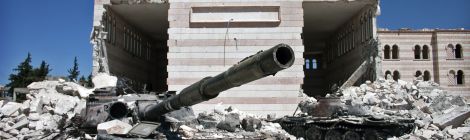
    azaz_syria

    Image by Christiaan Triebert/Flickr.

    In a study that is forthcoming in the Journal of Conflict Resolution, I and my co-authors Lars-Erik Cederman (ETH Zürich) and Manuel Vogt (Princeton University) conduct such a comparison. We analyse the probability of internal armed conflict between linguistically and religiously distinctive groups between 1946 and 2009.

    Contrary to Huntington’s thesis, linguistic differences show a strong and robust relationship with the outbreak of intrastate conflicts. In fact, we find that linguistic divisions are more conflict-prone than religious differences.

    These findings continue to hold when we focus only on the years since 1990 – the period to which Huntington’s thesis should be the most relevant. Our results further suggest that in no world region are religious differences more likely to be associated with internal armed conflict than linguistic divisions. We find the strongest support for a greater conflict-proneness of language compared to religion in Eastern Europe and Asia.

    Even in the Middle East, we find a slightly higher, if uncertain, probability of armed conflict across linguistic than religious lines. The Middle Eastern finding at least in part results from multiple Kurdish rebellions in Turkey, Iraq, and more recently Syria as well as smaller uprisings of linguistic minorities in Iran.

    When focusing only on conflicts that involve Muslim groups, we do not find substantial differences to other world religions. Although the majority of all armed internal conflicts today take place within Muslim-majority states, the majority of Muslim groups do not engage in violent rebellion. Our analyses also reject the thesis that Muslim groups disproportionately engage in conflict with non-Muslim groups.

    Why Linguistic Differences?

    Instead linguistic differences continue to be more frequently related to armed uprisings within states. While the brutal civil war in Syria captured headlines over the past years in many Western countries, destructive conflicts across linguistic lines haunt South Sudan, Burma, and Turkey.

    Of course, linguistic differences are more widespread than religious divisions. In other words, ethnic groups in any given country are more likely to be divided by language than by religion. Notwithstanding these differences in frequency, our results indicate that linguistic divisions are disproportionately more often related to armed conflict than religious distinctions.

    In our forthcoming article, we argue that it is the power of nationalism that makes linguistic divisions more conflict-prone than religious ones. Language gained political relevance in the late 18th century when the French Revolution transferred political authority from absolutist rulers to the people. About the same time that political power became vested in European peoples, the industrial revolution created incentives to further homogenize European nation-states. Mass schooling and mass newspapers laid the basis for imagined national communities.

    These developments provided both motive and opportunity for violent conflict across linguistic boundaries. Where members of ethnic groups are barred from having their children taught in their native language or experience linguistic discrimination in the job market and their interaction with the state, some of them will voluntarily assimilate into the dominant culture, but others develop grievances and may even refuse assimilation.

    The elites of such discriminated groups can voice these grievances through publications in their own language and use it to express nationalist aspirations and demands. When the host state is unable or unwilling to address these demands, violent conflict becomes more likely. These dynamics are illustrated by Sri Lanka’s decades-long civil war between Singhalese and Tamils, and recurrent Kurdish rebellions in Turkey.

    Given the link between industrial advancement and language-based nationalism it is unsurprising that we find higher rates of linguistic conflict in the relatively highly developed regions of Eastern Europe and Asia rather than in Sub-Saharan Africa. Central and Eastern Europe may even be considered as the cradle of linguistically-based nationalism.

    The multi-ethnic Austro-Hungarian and Ottoman empires did not fulfil the modern creed of “one people, one state,” and violently disintegrated during World War I. The Soviet Union and Yugoslavia followed suit in the early 1990s. To this day, Turkey has not come to terms with its Kurdish minority, and once more experiences internal conflict.

    Yet the idea of nationalism did not remain contained to Europe. A highly flexible concept, it informed the national liberation struggles of former colonial subjects against the European colonial powers. The lines of division here were usually race and language rather than religion. For decades, the Israeli-Palestinian conflict was a conflict between Hebrew-speakers of European origin and Arab speakers, who had lived in Palestine for centuries. Only in the past two decades has it taken on more religious undertones.

    Policy Solutions?

    Linguistic and religious differences will remain with us for the foreseeable future. However, very few of these fault lines can be expected to erupt in violent conflict. Whether linguistic differences transform into seemingly incompatible nationalist projects, or whether religious divisions into ostensibly intractable positions, depends on how political leaders from different groups interact with one another.

    Frequently armed rebellion emerges in politically highly exclusive and discriminatory contexts. Where political leaders with specific linguistic or religious backgrounds are barred from decision-making that affects their groups, conflict is more likely to break out than in states where they have some influence in government circles. Exclusion along ethnic lines creates clear insiders and outsiders, fosters grievances among the excluded, and suggests that there is “no other way out” but violent resistance. Zimbabwe, both under Smith and Mugabe, Iraq under Saddam Hussein, and Burma to the present day are examples of ethnically exclusionary regimes. Each of these states also experienced violent rebellion by excluded groups.

    In another joint study published in “Peace and Conflict 2016”, we show that excluding political elites with different linguistic or religious backgrounds from governmental power is pervasive in the Middle East and North Africa. So is political discrimination that denies the Palestinians in Gaza citizenship rights, keeps the Shia from voting in Qatar, or persecutes Kurds for political reasons in Turkey.

    ethnic-conflict-graph

    Figure 1 displays the average population share that experiences discrimination for different world regions and years. The data derives from the Ethnic Power Relations (EPR) dataset available at https://growup.ethz.ch/pfe.

    Figure 1 reveals that ethnic discrimination remains staggeringly high in the Middle East although the region has experienced some improvements over the past twenty years. That religious differences in the Middle East erupt into violent conflict may be less of a surprise once this context is taken into account.

    Our research thus suggests that avoiding ethnic exclusion and discrimination through power-sharing in multi-ethnic governmental coalitions will reduce the likelihood of armed conflict across both linguistic and religious lines. Elite accommodation in power-sharing coalitions has contributed to greater stability in such diverse places as Bosnia, Nigeria, Burundi, and Malaysia regardless of the type of ethnic differences. Although no panacea, power-sharing is associated with a substantial decrease in the likelihood of internal armed conflicts compared to exclusive environments.

    While there has been a trend towards ethnic accommodation since the end of the Cold War, we do not know enough about its origin. Future research needs to investigate the causes of accommodation in greater detail and pay particular attention to appropriate solutions for violent conflict across linguistic lines relative to religious differences.


    Nils-Christian Bormann is lecturer and Humanities and Social Science Fellow in the Politics Department at the University of Exeter.

    Manuel Vogt is a visiting postdoctoral research associate at Princeton University and senior researcher at ETH Zürich.

    Lars-Erik Cederman is Professor of International Conflict Research at ETH Zürich and the author of Inequality, Grievances, and Civil War (Cambridge University Press, 2013).

  • Sustainable Security

    The announcement of fresh counter-terrorism powers in the UK follows assertions that returning foreign fighters present a substantial new threat to national security. But these powers may be counter-productive in the long term, risking a legacy of injustice that will only exacerbate the political tensions of the War on Terror.

    The Counter-terrorism and Security Bill announced in the UK in November includes new powers aiming to limit the flow of people travelling to train and fight with certain rebel groups in Syria and Iraq. The proposals, due to be rushed onto the statute book in January, include the extension of controversial powers to disrupt travel and strip citizenship from terrorism suspects. Life sentences for a greater range of terror offences, including training, are also proposed. The British bill follows a US-drafted UN Security Council resolution to criminalise al-Qaida or Islamic State (IS)-linked foreign fighters which was adopted in November. Similar measures are being debated in other European countries and Australia.

    The reason for this wave of legislation? On the back of reports of unprecedented numbers of foreigners travelling to fight in the Syrian conflict, there has been a near-universal consensus amongst the security and intelligence community that returnees present a heightened national security threat. Returning foreign fighters, it is feared, will be networked, skilled up, and angry. The threat of political violence is ‘inevitable’, according to senior EU counter terrorism officials.

    Despite these fears, there is little in the way of a historical precedent in the UK to indicate that returning foreign fighters do represent an increased national security threat. The lack of evidence to support these claims is one of several legal and practical difficulties. Existing laws are already being used to criminalise foreign fighters in Syria’s conflict. The overwhelming application of such laws to Muslim communities has raised concerns that the legal principle of parity before the law is at risk. There is also a lack of accountability and oversight of these cases due to the use of secret evidence.

    The long term efficacy of such measures is therefore questionable. They may be a distraction from the underlying dynamics driving political violence, which are known to relate primarily to grievances over foreign policy. The abandonment of the principles of justice and equity before the law are likely to exacerbate resentment and the perception that the West is ‘at war with Islam’. The UK’s counter-terrorism policies may be creating a legacy of injustice that risks exacerbating the underlying political antagonisms of the War on Terror.

    Threat level: Severe?

    In response to the risk posed by returning foreign fighters, the UK’s terrorism threat level was again raised to ‘severe’ in late August. Although exact figures are not known, the number of those who have travelled from the UK to fight in the Syrian conflict is estimated to be at least 500 since 2011. The extent to which the Syrian conflict has mobilised fighters from Europe is clearly significant: key to this is the ability of groups such as IS to attract recruits via its propaganda films and social media activities conducted in European languages.

    But not all those who have gone to fight are with IS. The reality of the Syrian conflict is that there are over 2,000 fighting groups in Syria, including some with affiliation to al-Qaida. Little is known about group affiliations of the UK’s foreign fighters. Even individuals that are fighting with proscribed organisations, such as Islamic State or Jabhat al-Nusra, will have varying personal affiliations. Primary source reports collected by journalists and advocacy groups indicate that the primary motivation for those going to fight is a moral duty to fight the Assad regime (See for example, ‘Blowback: Foreign Fighters and the Threat they Pose’, CAGE, July 2014; ‘Joining ISIS: My Meeting with Aseel Muthana’, Huffington Post, 25 June 2014; ‘From Portsmouth to Kobane: the British jihadis fighting for Isis’, New Statesman, 6 November 2014). The reports suggest that, partly due to practical reasons, certain larger groups with more resources such as IS have absorbed the most foreigners. One of these reasons is that some other groups’ vetting procedures present a barrier to foreigners wanting to join.

    There are also legitimate questions over the wisdom of excluding foreign fighters from their countries of residence. Following reports that disillusioned fighters have been caught ‘in limbo’ in Turkey, wanting to leave but afraid to come home, some have called for alternatives, such as pastoral re-integration programmes existing separately from criminal investigation proceedings. A programme in Denmark provides an example of how such a scheme could function.

    Context: Terrorism laws in the UK

    The latest developments have occurred in the context of an increasingly securitised response of the UK to Islamist movements globally. Since 2001, the UK has progressively increased its set of counter-terrorism powers with a succession of laws, most of which have been fast-tracked and introduced as emergency legislation only to be made permanent. The UK’s multi-pronged CONTEST strategy conceives of the battle against terrorism on four fronts: Pursue, Prevent, Protect, and Prepare. The Prime Minister has promised to increase resources to these programmes. Yet intelligence resources dedicated to countering al-Qaida-linked terrorism already dwarf those that were dedicated to countering the threat posed by the Soviet Union and its allies even at the height of the Cold War, as observed by Sir Richard Dearlove, former head of the British Secret Intelligence Services at a Royal United Services Institute talk earlier this year.

    There is nothing in the UK’s legal definitions of ‘terrorism’ that specifies Islamist activity. ‘Terrorism’ was defined in a Supreme Court judgment last year to include “any or all military attacks by a non-state armed group against any or all state or inter-governmental organisation armed forces in the context of a non-international armed conflict”. But the shadow of the 9/11 attack continues to shape the security services’ understanding of national security threats, and to shape the application of these laws, primarily to Muslims. The focus on ideology that can be linked to al-Qaida, and the search for evidence of ‘jihadist worldviews’ conflates the criminal and the non-criminal, the threatening and the non-threatening. It leads to a skewed application of laws to those whose ideas or religious beliefs can be superficially associated with those of the UK’s enemies. By comparison, the resources dedicated to tackling political violence by the far-right are minimal, and similar types of crimes attract lesser sentences. One recent example is a former British soldier who was a supporter of the English Defence League (EDL), handed a two-year sentence after nail bombs were discovered in his house. Despite the UK’s legal definition of “terrorism” that is consistently criticised for being overly broad, the soldier controversially avoided charges under terror legislation, instead he was found guilty of offences under the Explosive Substances Act.

    The Syrian conflict has prompted security services to make increasing use of counter-terrorism powers against UK residents suspected of travelling there, or planning to travel there. A series of high-profile arrests have occurred in the last years, most of which have not made their way through the judicial process. But several recent cases raise further questions over whether these powers are being applied fairly.

    There has been an inconsistent response to those understood to have fought against IS. The estimated dozens of British residents fighting with the Kurdish forces, it has been indicated, will not meet charges upon their return. The Prime Minister stated there was a “clear difference” between fighters with the Kurdish authorities and IS fighters; and stated that “highly trained border staff, police and intelligence services” would be able to distinguish between them. But one man from Derry, who explained he was also fighting against IS, but with the largest Islamic coalition was still arrested by Northern Ireland police upon his return.

    Long prison sentences for crimes under terror legislation are being handed out to returning foreign fighters. Last week, two Birmingham men, Mohammed Ahmed and Yusuf Sarwar, were convicted of engaging in preparation of terrorism acts and sentenced to 12 years in prison; they had spent several weeks in Syria in 2013. The pair were arrested upon their return to the UK in January 2014 after Sarwar’s mother reported him missing to the police. The judge concluded that the pair had not planned any attack in the UK; they received the sentence because they had joined proscribed organisation Kataib al-Muhajireen. According to former Guantanamo Bay detainee Moazzam Begg, who was a fellow inmate in Belmarsh prison, the pair were “young” and “bewildered”, and had not thought what they were doing was a crime. Two brothers were also jailed after attending a Syrian training camp for less than a month. Despite returning without having done any fighting, they were sentenced to four-and-a-half years and three years, respectively.

    Citizenship revocation powers on the grounds of national security have been increasingly deployed in recent years. In November, reports emerged that an entire family (a British-born father and three sons) had been exiled from the UK due to alleged links with al-Qaida-linked groups in Pakistan. The family deny the allegations, and are appealing the ban. A detailed investigation by the Bureau of Investigative Journalism revealed that the number of UK citizenship revocation orders on national security grounds tripled in 2013, taking the number since 2006 to twenty-seven. At least fifteen of these individuals were abroad at the time of the deprivation order.  The Foreign Office has cited the fighters joining the Syrian war as the reason for this increase.

    Where national security reasons are invoked (as they are in virtually all the cases brought under terrorism legislation), the substance of allegations is kept secret. However, police statements saying there is no immediate threat to the British public have accompanied virtually every recent Syria-related arrest (For example: Statement by Hampshire Police 14 October 2014; ‘Anti-terror police arrest five men in Dover and east London’, BBC 1 December 2014; ‘Police arrest man in Slough on suspicion of financing terrorism’ Guardian 13 November 2014; and a statement by the Head Teacher of the school where Jamshed Javeed worked ‘Teacher Jamshed Javeed admits Syria terror offences’ BBC 27 October 2014.)

    Syrian Exceptionalism

    UK citizens fighting in foreign wars are not universally criminalised. The Israeli Defence Force’s ‘Mahal’ programme enables foreign citizens to fight with the army in Israel, and these foreign fighters are not considered to be in breach of British law. The war in former Yugoslavia attracted fighters from Britain, many of whom were Muslims. After the beginning of the uprising against Muammar Gaddafi in Libya, UK nationals were known to be fighting against the regime with Islamist groups. Men who had been previously detained and investigated under counter-terrorism powers in the UK went on to fight against the Gaddafi regime – and were supported by the UK’s security services. Advocacy group CAGE reports a number of UK nationals – more than 100, by their estimates – who met no resistance from UK authorities when leaving the UK, or legal problems when they returned from Libya.

    Guantanamo Bay protest Shaker Aamer

    Protest to free Guantanamo Bay prisoners including Shaker Aaamer, the last British resident in Guantanamo Bay. Aamer has been detained without charge for over twelve years and cleared for release since 2007. Source: Flickr | shriekingtree

    The recent selective criminalisation of foreign fighters in the Syrian conflict points to a deeper flaw within broader US/UK ‘War on Terror’ era military strategy: the enemy is poorly defined. It is often noted that the US’ arming of the Afghan mujahideen rebels during their struggle against the Soviets in the 1980s was a key historical factor in the resulting al-Qaida network. In 2013 the UK was on the brink of going to war with the Assad regime, and came close to fighting on the same side as the rebel groups that it now seeks to vanquish. Fighters who left the UK at the beginning of the Syrian war have been criminalised in their absence and now face a major disincentive to returning to civilian life. The absence of a long-term strategy focused on peace and informed by an ethic of equity and justice has resulted in a confusing picture of shifting alliances.

    This militarised and reactive foreign policy results in shifting definitions of what constitutes terrorist activity at home. It is not only foreign fighters who are meeting overwrought security responses. Lawful activities such as charity work, political organising, membership of radical religious groups, and particular religious beliefs are increasingly caught up in the dragnet of counter-terror measures. The ongoing repression of Muslim charity organisations provides multiple examples of these blurred lines. The recent seven-month detention of Moazzam Begg is another.

    One lesson from the last twelve years is that injustices carried out in the name of counter-terrorism themselves have a deep, global resonance. The enduring resonance within Muslim communities of the well-documented abuse of Guantanamo Bay inmates is indicated precisely by the apparent effectiveness as a recruiting tool by Islamic State. The distinctive orange jumpsuits, as well as imagery from the abuse of Iraqi prisoners in Abu Ghraib jail, have appeared in IS’ videos, recycled as evidence of IS’ own ability to dominate. The UK, along with the US and France, is widely perceived negatively as having a ‘Crusaderist’ or imperialist project to divide and weaken the Muslim world. The selective criminalisation of foreign fighters has great potential to fuel such resentment further.


    Betsy Barkas is Oxford Research Group’s (ORG) Quaker Peace and Social Witness Peaceworker. She works as a Project Officer for ORG’s Sustainable Security programme, and co-edits sustainablesecurity.org.

    Image: Protest to free Guantanamo Bay prisoners including Shaker Aaamer, the last British resident in Guantanamo Bay. Aamer has been detained without charge for over twelve years and cleared for release since 2007. Source: Flickr | shriekingtree

  • Sustainable Security

    This article is taken from Paul Rogers’ Monthly Global Security Briefings and was originally posted by Oxford Research Group on 12 March, 2014.

    Recent examples of short-term climate disruption have done much to bring the overall issue of climate change up the political agenda. In responding to what will be one of the key challenges of the next decades – well beyond the 15-year lifetime of the post-2015 global development goals currently under discussion – much of the attention has been focused on the need to adapt to those elements of climate change that are already irreversible and also to the need to decarbonise existing high carbon-emitting economies. What needs much greater attention is the fundamental need to ensure that low-carbon emitters in the Global South are enabled to combine effective human development with responding to the challenges of climate change.

    Asymmetric Impacts

    Floodwaters surround houses in Dhaka, Bangladesh, one of the world's most climate vulnerable countries.

    Floodwaters surround houses in Dhaka, Bangladesh, one of the world’s most climate vulnerable countries. Source: CAPRA Initiative (Flickr)

    The scientific evidence that climate change is happening is now overwhelming and only a tiny handful of scientists question its anthropogenic causes. The most recent decadal report from the World Meteorological Office (WMO), for 2001-2010, confirms that climate change already involves disruption, with the decade seeing a clear increase in impact across the world. Events since 2010, including excessive heat waves, floods, droughts and the strongest land-fall cyclone (Typhoon Haiyan) ever recorded all point to accelerated disruption.

    In recent years there has been a relative pause in the rate of atmospheric warming but research points to aspects of the Southern Oscillation being responsible, temporarily slowing the overall rate of warming of the atmosphere, but not of the oceans. This is expected to change in the second half of the current decade and the effect of this will be that anthropogenic-induced warming and natural cycles will be in synchrony, leading to rapid change and greater climatic disruption.

    Climate change is thus expected to accelerate but there is, in addition, abundant evidence that it is already a markedly asymmetric process. There are many indications that substantial areas of the tropics and sub-tropics will heat up and dry out faster than temperate latitudes. This is significant for four reasons:

    • These regions support the majority of the world’s people and produce the majority of the world’s food, much of it being locally produced in subsistence farming systems.
    • Most of the poorer and more marginalised people live there, with least resilience to climate disruption.
    • These regions also include most of the rapidly growing megacities where infrastructure is not keeping pace with growth, resulting in low urban resilience.
    • They include the vast “carbon sinks” of the Amazonian, African and Southeast Asian rain forests, the diminution of which will accelerate atmospheric carbonisation.

    The other element of asymmetry – relatively faster warming of the near-Arctic – is directly advantageous to some countries, most notably Russia and Canada, both of whom stand to benefit in the short term in three ways:

    • Sea ice will diminish, opening up new commercial sea routes.
    • Arctic fossil and other mineral resources will be easier to exploit.
    • Agriculture will “move North”, opening up new regions for development.

    These two countries are also major fossil fuel producers so they benefit through these revenues, including easier exploitation of Arctic reserves, as well as from the impact of their use since this is likely to enhance Arctic warming. It is hardly surprising that neither government has much interest in controlling carbon emissions. As a Permanent Observer at the Arctic Council, the UK could do much to work with the five Nordic countries, all Main Council Members, on this issue, also involving new observer states, such as China, India, Japan and South Korea that have an interest in new sea routes, but are increasingly aware of the potential direct negative impacts on their own economies of climate change.

    The Changing Political Environment

    The direct denial of climate change as a phenomenon affecting human society still persists and is most clearly seen in two powerful interest groups. One is the fossil fuel industry, especially oil companies and producer countries that have a clear interest in protecting their revenues. There are also major interest groups clustered around those who genuinely believe that the unrestricted free market form of capitalism is the only appropriate system for the global economy. As such they are deeply suspicious of governmental interference in the economy and therefore highly suspicious of a world-wide challenge that demands strong intergovernmental coordination and government action.

    Both groups have been powerful and effective supporters of the denial community and though they are helped by the governmental attitudes of countries such as Russia and Canada, their greatest support came from the Bush administration in the United States in 2001-2009. Their influence is now declining for three broad reasons.

    • One is that the frequency of severe and even extreme weather events is changing public opinion in many countries. The UK is a good example where serious winter flooding was enough to ensure that the Prime Minister, David Cameron, agreed that climate change was of huge concern, even though many in his own party remain doubters. At a global level, the WMO report adds credibility to the view that extreme weather events, like the canary in the coal mine, are harbingers of what is to come.
    • A second element is that the most powerful state, under Barack Obama, acknowledges that climate change is happening, even though powerful denier elements remain resolute in their resistance.
    • Finally, a number of major industrial groups, especially those in the engineering industry, are embracing the prospects for new market opportunities as renewable energy technologies and techniques of storage and conservation come into their own

    Current Responses to Climate Change

    The two main responses to climate change currently envisaged are the progressive decarbonisation of carbon-intensive societies and the adaptation of high- and low- carbon societies to the impacts of climate change that are inevitable given the existing increases in atmospheric carbon. Both of these remain likely to gain in importance given the recognition of the huge challenges ahead. While the action so far is inadequate, it at least now shows signs of some prioritising. Whether the 80% carbon emission requirements of industrial societies can be achieved within twenty years is, at most, questionable, but it is now at least recognised as a worthy aim.

    There is also recognition that adaptation is addressing symptoms rather than responding to causes – improved flood defences in a country such as Britain may well be necessary but unless climate change is halted they are just short-term responses that will progressively be overwhelmed. Similarly, there is already good work going on in aiding the adaptation of less developed economies through, for example, the breeding of robust food grain varieties more able to withstand low rainfall. Such work needs considerable expansion but this, and the progressive decarbonisation of high emitters still misses out a crucial element in responding to climate change.

    The Missing Element

    In relative terms, the missing element is the low level of investment in the evolution of low-carbon economies of societies that have not substantially industrialised, mainly those in the tropical and sub-tropical regions of the Global South. Such countries include most of the most marginalised and poorest people on Earth where there is a deep-rooted desire for far greater life chances, yet these cannot be met through the modes of economic organisation of the industrialised North. If the marginalised majority is to see its development prospects enhanced then this has to be achieved through new forms of low-carbon economic development. Countries have to succeed without following the path taken by industrialised states over the past two hundred years.

    It follows that there is a very strong case for a state such as the UK prioritising any form of development assistance which aids this process. Much of this will centre on any form of low carbon energy use, including a wide range of renewable technologies, with major improvements in energy conservation and storage. Much work is already going on in this area, not least in relation to renewable energy technologies readily available to non-networked societies. It is also notable that when technologies emerge which demonstrate obvious utility, the speed of take-up can be remarkable. The cell-phone revolution in sub-Saharan Africa is just one example.

    Regrettably, UK Department for International Development (DFID) operational plans for 2013-14 indicate that low carbon development (LCD) targets from the Department’s 2011-15 strategy have been reduced or abandoned. The 2015 target for installed clean energy capacity has been reduced by almost 97%, from 3GW to 100MW. The original target to raise $610 million in private finance for LCD has disappeared, having raised $15 million by 2013.

    If the UK development programme was to commit just 20% of its budget to this area of work, the results could be extremely valuable, especially if part of that was to encourage North-South research and development partnerships. Furthermore, while the British development programme has many faults, it has grown to be the world’s second largest and there is sufficient cross-party support for this to be sustained against opposition. Because of the size of this programme, the UK has a more powerful voice than most in intergovernmental fora relating to development. It can use this voice to help ensure that the commitment promoted here is shared by other national and intergovernmental development programmes.

    Conclusion

    Climate disruption is one of the greatest challenges facing humankind, a challenge that is at last becoming recognised as such because of the extreme nature of many recent weather events. Decarbonising major industrial economies and funding adaptation to the already inevitable impact of climate change are essential responses but they must be accompanied by major programmes to ensure that human development in the poorer economies can be fully accomplished through processes of low carbon economic development. This is a critically important task over the coming decades, is insufficiently recognised as such, and should be a priority for any serious political party committed to the world-wide development of human well-being.

    Paul Rogers is Global Security Consultant to Oxford Research Group, for which he writes monthly security briefings.  He is Professor of Peace Studies at the University of Bradford and author of numerous books including ‘Beyond Terror’. Paul writes a weekly column for openDemocracy  and tweets regularly at @ProfPRogers.

  • Sustainable Security

    The fate of Colombia’s Legión del Afecto as a government-financed peacebuilding program is uncertain, but it looks to endure as an independent social movement. Its persistence is due both to its historical development and to its emphasis on affective relationships.

    Authors Note:  This material is based upon work supported by the United States National Science Foundation under Grant #1452541. Any opinions, findings, and conclusions or recommendations expressed in this material are those of the authors and do not necessarily reflect the views of the National Science Foundation.

    The Legión del Afecto – translated as the Legion of Affection – is a Colombian social network broadly mobilized around peace. It is arguably the most overlooked, yet broadest-based network, for peace in Colombia. Unlike other more-publicized movement networks like the Congreso de los Pueblos or the Marcha Patriotica, the Legión del Afecto was established as intentionally non-polarized with respect to the left/right politics that have long generated conflict in the country and across Latin America.

    Instead, the politics of the Legión del Afecto might best be described as a politics of sentir – a politics of feeling. “Ver, oir, sentir” (to see, to hear, to feel) is one of a few familiar phrases of the Legión del Afecto, which has been echoed in all corners of the country.

    The politics of “feeling”

    Image credit: Legión del Afecto.

    While recognizing and valuing social difference – especially across lines of race, ethnicity, and sexual orientation – the Legión del Afecto has emphasized the bodily capacity to sense and feel as a point of social and political convergence for the country’s youth in the face of seemingly insoluble conflicts at multiple scales; the fact that each individual feels differently (because of distinct biographies, identities, and physical experiences) should not matter as long as a politics could be build around respecting and valuing others’ bodily capacity for feeling.

    In essence, this respect and valuing of the other is what “affection” has come to mean in the network. As a result, non-verbal means of communicating feelings have become highly valued in the Legión del Afecto. So-called ‘alternative languages’ of dance, music, theatre, clowning, acrobatics, fire-blowing and more, along with shared banquets, journeys, festivals and other shared sensorial events have been central to continued mobilization and motivation of legionarios (Legion participants), often youth between the ages of 15 and 25.

    In a country where many have been killed for simply appearing to favor one side or the other, the focus on feeling rather than on political side-taking has been crucial to the survival and thriving of both the network and the leaders within it. Because of this intentional and conspicuous lack of side-taking, the Legión del Afecto has been able to enter and intervene in location and communities across the country where others – e.g., police, military, government – were once unable to go. Of course, it would not be accurate to portray legionarios as lacking political views or direction; the opposite is true. However, as a network the Legión del Afecto has focused on creating space for dialogue and political learning rather than defining or persuading one single way of analyzing current national and global trends.

    These spaces of learning and dialogue have been particularly important as the network grew to include ex-combatants from all sides of the Colombian conflict. Intentionally setting down the conflicts associated with polarized national politics meant that the Legión del Afecto could mobilize ex-guerilla, ex-paramilitary, ex-soldiers, ex-gang members as well as many others affected by violence and by the pervasive lack of opportunity for marginalized youth.  These participants enriched the Legión del Afecto through sharing their differences in lived experience, rather than swallowing or forgetting their pasts.

    Origins and Evolution of the Legión

    The Legión del Afecto began in 2003 (under another name) as a collaboration between different ‘base’ (i.e. grassroots) groups in the city of Medellín, which had many prior years of experience in peaceful social transformation at the community level. In particular, two groups – Casa Mía, a group focused on urban youth, and La Colonia de San Luis, a group serving once-rural families who experienced violent displacement – united their expertise in the formation of the Legión del Afecto. Casa Mía was especially important as many of the Legión del Afecto’s founding antecedents – for example, the focus on afecto or affection – came from its founding leaders’ own collaborative legacy of radically innovative and daring peacebuilding in the Santander neighborhood of Medellín. The earlier peacebuilding of Casa Mia involved building trust and affection among young men pertaining to dueling gangs as well as standing up for justice and non-violence in the face of direct threats from paramilitary groups.  That such strategies were effective in the face of conflict is perhaps best evidenced by the fact that the Legión del Afecto, after first being funded by the UNDP (for methodological development), was scooped up as a government-sponsored program, housed under Acción Social (under president Uribe), and then the Departamento para la Prosperidad Social (DPS) (under Santos).

    As a government program, the Legión del Afecto grew a centralized administration, and new rules and regulations to follow, but it was never “just” a government program. As the Legión del Afecto spread from it’s origins in the city of Medellín to over 40 other cities, towns, and rural municipalities across the country, the network tapped into and drew from existing base community groups in each location. In each place, new leaders were nurtured alongside already-established community leaders who grew and gained new ideas. Existing effective ties were used to strengthen the network and bring in new participants. And in each place, the particularities and challenges of the location brought new strategies for peacebuilding that were focused on the traditions, as well as the problems, of each region: for example, a focus on traditional music (gaitas) in San Jacinto, or a focus on memory and ritual in many rural places where violent acts had occurred.

    The Legión Today

    It is often stated that there are currently “over 2000” young legionarios across the country, but the actual effect of the Legión del Afecto is much larger. behind any official count of participants, there are thousands of families and tens of thousands of friends and community members who have been affected by the peacebuilding efforts of the network. These friends, families, and community members are the ones who came to grand events – like the Carnival del Pan (2009, Cali), or Hip Hop Sin Fronteras (2010, Medellin), which mobilized massive numbers of participants. And these friends, families and community members are also the individuals who know and trust the participants in the Legión del Afecto through their small daily actions, and who therefore have been willing to work together with them in their efforts to build an ‘everyday’ peace in communities across the country.

    Today, this expanded and enduring capacity of the network is more important than ever; despite recent funding uncertainty for the Legión del Afecto as a government program, the Legión del Afecto persists as a grassroots network – a potentially powerful, motivated, and emotionally interconnected movement of young and old, who hold some very significant lessons for the development of a truly post-conflict society.

    Further Information on the Legión

    More information about the Legión del Afecto, its history, activities, and methodologies, is being made available through the grassroots website still-in-progress: www.legiondelafecto.org.

    The Legión del Afecto network is present in the following cities and regions in Colombia: La Macarena, Playa Rica (la Y), San Juan de Lozada, San Vicente del Cagüan, La Catalina, Montañita, Puerto y Florencia, Medellín, San Luis, San Fransísco y Sonsón, Samaná Florencia y Pensilvania, Soacha, Bogotá y Viota, Barrancabemerbeja, San Pablo y Puerto Wilches, Chiquinquirá y San Miguel de Sema,  Cartago, San José del Palmar, Bojayá, Quibdó, Buchadó, Pamplona, Cúcuta, Tibú, La Gabarra, Cali, Buenaventura, Armenia, La Tebaida, Manizales, Cartagena, Montes de María, Magangué y Plato, Puerto Tejada, y Villavicencio, Copey, San Juan del Cesar y Villanueva Guajira, Chibolo, Carepa, Turbo, Acandí, Ungía y Carmen del Darién y Mistrató, Tumaco, Líbano y Natagaima, Ovejas, Santa Rosa del Sur y Simití, Puerto López, El Retorno , San José del Guaviare y Mocoa.

    Allison Hayes-Conroy is an assistant professor of Geography and Urban Studies at Temple University. She has studied the Legion del Afecto as a peacebuilding initiative alongside the other two authors – both participants in the Legión – since 2011. Hayes-Conroy’s has published widely on role of the body in social movements and initiatives. Her work on peace-based social initiatives in Colombia and her work on bio-social pedagogical innovation have both been funded by the U.S. National Science Foundation.

     Cesar Buitrago Arias, is a community leader and law student. He has worked for 20 years to support the needs of displaced families like his own, who come to the city of Medellin, Colombia from rural areas due to violence.

     Alexis Saenz Montoya, is a Ph.D. Student in the Department of Geography and Urban Studies at Temple University. His research interests lie in the intersection of community-based organizations and popular education in Latin America.