Category: 2016

  • Sustainable Security

    Author’s note: For further analysis on this topic, see the following publications: Kai Michael Kenkel and Cristina Stefan, “Brazil and the ‘responsibility while protecting’ initiative: norms and the timing of diplomatic support”. Global Governance, Vol 22, No. 1 (2016); pp. 41-78; and Kai Michael Kenkel and Felippe De Rosa). “Localization and Subsidiarity in Brazil’s Engagement with the Responsibility to Protect.” Global Responsibility to Protect. Vol. 7, No. 3/4 (2015); pp. 325-349.

    Since Libya, the Responsibility to Protect (R2P) has been a hotly debated concept. Previously a nation exhibiting strict non-interventionist principles, Brazil has recently contributed to the R2P debate with its Responsibility while Protecting initiative.

    Introduction

    Inspired by what it saw as the excesses of NATO’s intervention in Libya and their potentially disastrous effects on the credibility of the “Responsibility to Protect” (R2P) norm, in November 2011 Brazil launched the corollary concept of a “Responsibility while Protecting” (RwP) at the United Nations. While essentially reiterating its endorsement of key principles of R2P, Brazil admonished R2P implementing states to avoid discrediting the norm by exercising restraint while operationalizing R2P. Brazil, itself at that time a rising power seeking more global influence—and particularly participation in shaping the rules of the international system—saw the divisions created by the Libyan intervention as an opportunity to act as a norm entrepreneur. Meant to bridge the gap between R2P supporters in the North and sceptics in the South, RwP was initially criticized by both. Over time, however, certain R2P supporters began to see the concept’s value as a means of reviving R2P after Libya and as a means of attaining crucial Global South buy-in. By this time, however, Brazil—lacking experience in the role of norm entrepreneur—had backed away from its initiative. Though the specific initiative has not been taken forward, RwP has had a clear effect in structuring the contours of subsequent R2P debates at the UN.

    Rising Brazil: between beliefs and expectations     
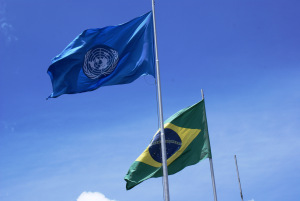
    UN brazil

    Image by Ben Tavener via Flickr.

    Under the Lula da Silva administration, Brazil began to actively seek a larger profile in international politics, ostensibly with a view to a permanent, veto-endowed seat on an eventually reformed UN Security Council. This presented the country with a conundrum: in UN praxis, particularly among established powers, there is a clear connection between global relevance, military capacity, and the willingness to use force remedially, beyond self-interest, to help those in need—as foreseen by R2P as implemented by the UN. Brazil’s historical normative commitments, however, are rooted in a combination of a highly traditional regional security culture—which equates sovereignty exclusively with non-intervention—and a healthy postcolonial scepticism of multilateral initiatives born in the North. Arguably, the most strongly held of these commitments is a profound aversion to the use of force. Faced with a choice between staying true to its original traditions and fulfilling the expectations placed on global players—as exemplified for example in R2P’s acceptance of the use of force in defence of human life—Brazil launched RwP as an attempt to reconcile these factors, remain active on the international stage, and render R2P both more relevant and less prone to misuse.

    The Libya effect

    NATO’s 2011 Libyan intervention created a trust deficit between its leaders and the BRICS countries, who had been excluded as non-permanent UNSC members from the elaboration process for its enabling Resolution 1973. These states emerged from the experience highly doubtful of Western motives, and they took as a lesson from the Libya intervention that the use of force could have an opposite effect from that intended, effectively distancing a crisis situation from a lasting solution.

    Beyond the immediate concerns related to the intervention’s mandate, the debate over the Libyan case took on contours that resonated with the larger tension between the established powers and emerging players such as the other BRICS countries and Brazil. Substantial divergences remain over R2P’s implementation and particularly its third pillar, which can be used to authorize military force. R2P’s shift in emphasis between understandings of sovereignty has become symbolic of some emerging powers’ resistance to the normative dominance of established powers, making the principle a key rallying point in the ideational skirmishes resulting from a changing global distribution of power. This expands the debate over the RwP initiative beyond its immediate link to the Libyan case and links it firmly to broader issues of global governance. The R2P debate has become a not only a key element of some emerging powers’ challenge to the established distribution of power, but a key locus for increased targeted consultation and cooperation in mounting that challenge. In addition, the intervention debates have become an important stage for emerging powers constructively to give normative content to their challenge to the established order, allowing them to move beyond what some have termed an obstructionist stance.

    The “Responsibility while Protecting” concept

    The RwP concept was launched on 9 November 2011 and floated explicitly as a touchstone for further debate within the United Nations. This targeting would become important later on, as it meant that in characterizing R2P and mobilizing its history, the note limited itself to the concept’s course within the United Nations system, referring for example to its inclusion in paragraphs 138-139 of the World Summit Outcome Document but not to the principle’s original formulation by the International Commission on Intervention and State Sovereignty (ICISS). As such the RwP note was intended less as a normative innovation than as an attempt to shape the norm in terms acceptable to the Global South.

    The primary contribution of the note was its establishment of a set of guidelines to orient the Security Council in contemplating an R2P-based intervention. These guidelines focused on two main topics: limiting the use of force, and the strict chronological sequencing of R2P’s three pillars. The RwP note posits that force should only be used as a last resort (an item already included in the 2011 ICISS Report that launched R2P), and subject to a limited and well-defined mandate implemented under conditions of complete accountability in the field. Brazilian diplomats attempted to appropriate the “do no harm” principle, known from the Hippocratic oath, even arguing that one death from an intervention is too many. These reservations were read correctly by many Western states as a reaction to the perceived excesses of NATO’s foray into Libya, and an attempt to put strict limits on the level and type of force authorizeable under R2P.

    The document’s real element of innovation, and the eventual centre of the debate it created, is its call for the strict political and chronological sequencing of R2P’s three pillars. This was viewed by Western states as too limiting, both in the field, and of the flexible diplomatic responses required of the Council in dealing with a crisis. The threat of force, it was argued, is often subjacent in making diplomatic initiatives work, and taking this option off the table could tie the international community’s hands. Indeed, the note’s Brazilian authors later replaced strict chronological sequencing with the toned-down notion of “prudential sequencing”.

    The reception of RwP

    Initially received coolly by both Western and Southern states, the RwP note nonetheless played a crucial part in both moving R2P forward normatively and in stimulating the inclusion of Southern states into the intervention debate. Despite initial strong criticism, the initiative did shape how established and rising powers interacted in the ensuing UN debates on R2P and intervention more broadly. There are four main criticisms:

    1. that the concept bears little value added, merely repeating provisions already present in the 2001 ICISS Report;
    2. that the initiative was a Trojan horse, designed to limit Western powers’ autonomy and to prevent the further institutionalization of R2P;
    3. specific elements regarding feasibility of RwP’s concrete suggestions, such as sequencing, proactive monitoring, and further limitations on the use of force;
    4. the contention that RwP’s confuses jus ad bellum (R2P’s main focus) and jus in bello (rules for conduct once war has broken out);

    Despite these criticisms and Brazil’s abandonment of its role as a norm entrepreneur, the RwP note has continued to structure global diplomatic debates on intervention, with a focus on reigning in Western action through stricter guidelines in the wake of R2P’s crisis of legitimacy after Libya. It has done so in three main areas:  advancing the importance of some form of relational sequencing of R2P’s pillars; increased restrictions on the use of force; and more proactive monitoring by the Security Council of the following of guidelines by ongoing missions.

    Brazil’s role as a norm entrepreneur on intervention issues remains tied to the RwP concept. The initiative was withdrawn after it did not elicit the desired level of support, and by the time its potential had been realized, internal changes in Brazil and its Foreign Ministry had made continued advocacy politically unviable. Despite attempts to revive a strong role for Brazil in the R2P conversation through efforts in the General Assembly in 2015-2016, crippling fiscal austerity and the paralyzing political crisis which began in April 2016 have temporarily but severely limited Brazil’s ability to proactively advance normative initiatives. Nevertheless, the desire remains to fulfill the country’s natural function as a bridge-builder between North and South on intervention issues, and Brazil is sure not to remain absent for long from the ranks of those crafting R2P’s future contours.

    Kai Michael Kenkel is Associate Professor in the Institute of International Relations at the Pontifical Catholic University of Rio de Janeiro and Associate Researcher at the German Institute of Global and Area Studies. He has published extensively on R2P, with a focus on Brazilian policy, including three edited volumes and articles in Global Governance, Global Responsibility to Protect and  International Peacekeeping.
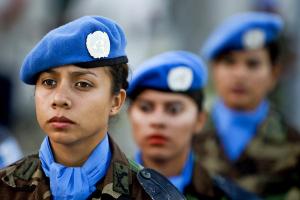
  • Sustainable Security

    Author’s Note: This opinion peace is based on research conducted among South African Peacekeepers, published in the Journal of International Peacekeeping, 19 (2015) 227-248.

    The motivation to increase the number of women in peacekeeping is based on the assumption that women peacekeepers enhance the access of local women to services, improve community relations, reduce the incidence of sexual and gender-based violence, build the capacity of local women and break down traditional views that discriminate and marginalize women. The extent to which women are able to perform these functions needs to be interrogated, as much of this rhetoric does not reflect the realities that women face on the ground. This is reflected in the findings of a study conducted among South African male and female peacekeepers returning from missions in the Democratic Republic of Congo (DRC) and Darfur, Sudan. The findings are revealing, often countering many of the above-mentioned essentialist claims.

    While there was general consensus that women peacekeepers are generally better at interacting with the local community, especially women and children, these claims were mostly context-specific. In the DRC, the female peacekeepers felt that they could reach out to women and children more readily. This was because ‘Sousa’ (as the locals call the South African contingent) tended to interact with the local community more than other contingents because they are mostly black, and could understand Swahili. This was not the case in Darfur, Sudan. Here, it was as if the local population (especially the local women) were afraid to speak to the peacekeepers, whether men or women. What this indicates is that not only gender, but race, the ability to speak the local language, and respect for the local culture are crucial determinants in fostering relations with the local community. Similarly, their ability to serve as norm-breakers, challenging existing stereotypes was met with some misgivings, given the fact that most often their identity was concealed behind their helmets and because of their low numbers.

    In terms of improving the security of local women and children, female peacekeepers felt that locals placed more trust in male soldiers because they do not know how to judge female soldiers. Female peacekeepers also reported that they did not really know what the specific security concerns of women were, because little attention was paid to issues of gender in peacekeepers’ mission-readiness training. Thus, they had little understanding of the underlying gender power relations in the communities. Nor did they know how to address or assist victims of sexual violence. In fact, most knew very little if anything about the gender dynamics in these communities and in some cases there was a general lack of cultural awareness. This influenced their ability to identify what the specific security needs of women were, how to protect them, or where to refer them if they needed to deal with cases of sexual violence.

    Members of the Guatemalan contingent of the United Nations Stabilization Mission in Haiti (MINUSTAH) participate in a medal award ceremony in recognition of their service. 10/Jun/2009. Port au Prince, Haiti. UN Photo/Marco Dormino. www.unmultimedia.org/photo/

    Members of the Guatemalan contingent of the United Nations Stabilization Mission in Haiti participate in a medal award ceremony in recognition of their service. Image by UN Photo via Flickr.

    What this means is that the ability of female peacekeepers to make a difference is limited by their training, which is gender-neutral and where they are expected to act and perform functions ‘just like men’. The rationale for this is that when deployed on peace missions, all have to carry the same equipment, work in the same environment and face the same adversaries in the course of duty. This is specifically the case where they are drawn from the infantry environment and have to perform infantry-like functions. Added to this, women peacekeepers report being ‘othered’ on various levels. Physically, they are ridiculed for their lack of physical strength and endurance, especially on foot patrols. Psychologically and emotionally, the operational environment is seen to be more taxing for women, given the extreme forms of sexual violence against women. Women were also perceived to pose a ‘gendered’ security risk, especially in hyper-masculine contexts where women are seen as sexual objects, are used as weapons of war where they threaten existing gender power relations that affect male dominance.

    This results in female peacekeepers facing many different forms of gender and sexual harassment which are used to denigrate them. Some of the female peacekeepers who served in positions of authority explained how they were often not respected, ignored, undermined and faced frequent sexual advances. Such forms of gender harassment occurred often, but not considered serious enough to evoke punitive action. This was simply explained away in terms of existing patriarchal relations that could not be changed. However, in some cases this evoked open hostility towards them “because in Sudan it is considered disrespectful to their culture for women to be soldiers, carry rifles and wear trousers”. Besides this, the threat of being raped served to further erode women peacekeepers’ agency, especially where they were excluded from certain operations which were considered too dangerous by their commanders. In this way, not only were old gender stereotypes replicated, but they are used to undermine the prospect of an equal partnership between men and women.

    What this shows is that even where national armed forces espouse gender equality, the peacekeeping environment remains hostile to women. Multiple masculinities, patriarchy and sexism undermines the ability of women peacekeepers to imbue alternative ways of dealing with and resolving conflict. The only way to ‘regender’ the military is to stop privileging masculinity over femininity. This is unlikely to happen where peacekeeping remains steeped in the warrior ethos and where the ‘feminine’ is not valued, is suppressed, seen as a threat, or a liability. What is needed is for women to become less complicit and more assertive in making their voices heard. However, military women themselves typically do not embrace feminine values given the ‘nature’ of their work. They typically conform to and assimilate masculine values, norms and practices in order to be judged as capable soldiers. They have to assume what many term as a ‘militarized masculinity’, understood as the ability to ‘demonstrate an absence of emotion and a willingness to use violence’—they must excise all that is perceived to be feminine.

    This makes it difficult to achieve the ideals advocated by UNSC Resolution 1325. The aim of this resolution is not only to increase the number of women serving in the military, but to mainstream gender by bringing about a greater sensitivity to the different effect that war has on men and women. In this regard, there has been little progress as the number of military women serving on peacekeeping missions have remained around 3 per cent. Even in the South African armed forces where women now represent 26 % of uniformed personnel and up to 15% of those deployed on peacekeeping missions, there seems to be little qualitative change in bringing about a more acrogenous military culture. This necessitates a closer introspection in terms of how women are trained, deployed and supported on peacekeeping operations. It raises the question as to whether a gender-neutral approach to gender integration in the military does not in fact perpetuate gender inequality. Clearly one cannot bring about a different perspective to war and peace if women are expected to embrace masculine norms and values and where gender difference is not recognised and valued.

    Lindy Heinecken was formerly a researcher and Deputy Director of the Centre for Military Studies (CEMIS) at the South African Military Academy, where she worked for 17 years. Since 2006 she has been at the Department of Sociology and Social Anthropology, Stellenbosch University, South Africa and is currently Professor of Sociology lecturing in political and industrial sociology. The main focus of her research is in the domain of armed forces and society where she has published widely on a range of issues including military unionism, the management of diversity, gender integration, HIV/AIDS in the military and more recently on the experiences of military personnel on peace operations. She serves on numerous academic boards, including the Council of the Inter-University Seminar on Armed Forces and Society, the Board of the International Sociological Association’s (ISA) Armed Forces and Conflict Resolution Group, and the National Research Foundation (NRF). She serves on the editorial board of the journals Armed Forces and Society and Scientia Militaria: South African Journal of Military Studies. She is a NRF B rated researcher and serves as one of the pool of specialists conducting research for the South African Army.

  • Sustainable Security

    Introduction

    The acknowledgement of gender issues through the Women, Peace and Security (WPS) agenda marked a watershed moment for women’s rights. Despite this, the Responsibility to Protect (R2P) framework remains gender-blind. I argue that R2P and the WPS agenda share overlapping commitments and mutually beneficial and reinforcing protection mandates. Through three intersecting commitments – prevention and early warning systems, gender protection in peacekeeping, and women’s participation in post-conflict reconstruction – careful alignment between R2P and the WPS agenda could overcome this silence and move towards achieving more sustainable security.

    The Responsibility to Protect and Women Peace and Security

    Systematic human rights atrocities perpetrated against individuals based on their ethnicity, gender, and race have framed contemporary political discourses. With the international community’s inability to collectively respond to prevent mass atrocities and other severe humanitarian emergencies, former United Nations (UN) Secretary-General Kofi Annan spearheaded the challenge to create a norm permitting states to intervene in another sovereign state in the event of ‘gross and systematic violations of human rights that affect every precept of our common humanity’. Spurred on by  failures of the international community to prevent genocides in Rwanda (1994) and Srebrenica (1995), the International Commission on Intervention and State Sovereignty (ICISS) was established in September 2000 to address how and when the international community should act to prevent genocide, war crimes, ethnic cleansing and crimes against humanity. The report entitled “The Responsibility to Protect” (R2P) was released in December 2001. The unanimous adoption of R2P at the World Summit in 2005 established its prominence as a normative framework within the international community. The use of R2P as rhetorical backdrop to the Libyan intervention in 2011 via UNSC Resolutions 1970 and 1973 and the inaction in responding to the crisis in Syria demonstrates the prevalence of R2P in international discourse. Furthermore, R2P is interwoven with existing international principles, obligations, and peacebuilding initiatives. UN Secretary-General Ban Ki Moon asserts that R2P rests upon three interrelated, central pillars – responsibilities of the state to protect its population from mass atrocities; international capacity building to ensure states meet their protection responsibilities and prevent mass atrocities; and collective and timely responses through diplomatic, humanitarian and political means with coercive military action as a last resort.

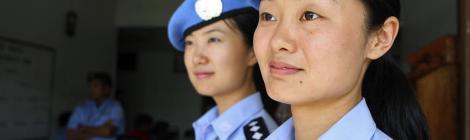
    Female United Nations police officers of the United Nations Mission in Timor-Leste (UNMIT). 29/Nov/2007. UN Photo/Martine Perret. www.unmultimedia.org/photo/

    Female United Nations police officers of the United Nations Mission in Timor-Leste (UNMIT). Image by UN photo via Flickr.

    The Women, Peace and Security (WPS) agenda gained traction on the international peace and security platform following the adoption of UN Security Council Resolution 1325 in October 2000. The WPS agenda is the most comprehensive articulation of women’s rights and gender issues in international peace and security. It establishes a nexus between conflict prevention and women’s rights, highlighting the relationship between gender inequality and conflict. Resulting from the Fourth World Conference on Women in 1995 in Beijing, and the pivotal Beijing Platform for Action which named ‘Women and Armed Conflict’ as one of twelve areas of critical concern, the NGO Working Group on Women, Peace and Security was formed to advocate a UNSC Resolution focused on women’s unique contribution and experiences of conflict. Through lobbying and advocacy, the NGO Working Group played a vital role in drafting the resolution and through UN Resolution 1325 successfully complicated the popular narratives that stereotyped women as either victims or inclusive peacebuilders. UN Resolution 1325 directs policymakers to consider all of women’s experiences in conflict and links women’s rights to international peace and security. The adoption of an additional seven resolutions builds upon 1325 and make up the WPS agenda. It rests upon a four-pillar mandate; prevention of violence and derogation of rights; protection from violence; participation in peacebuilding and post-conflict reconstruction; and relief and recovery. Laura Shepherd and Jacqui True broaden ‘relief and recovery’, to include identifying the structural social, political and economic conditions required for sustainable and lasting peace. Specifically the WPS agenda addresses sexual and gender-based violence (SGBV) in conflict, measures to ensure women’s participation in decision-making processes and post-conflict programs, gender mainstreaming in UN activities and peacekeeping operations, and gender-sensitive prevention frameworks. The WPS agenda provides basis for international engagement with gender issues. With R2P, the WPS shares a commitment to improve human security and revealing and preventing women’s human rights abuses through international engagement. Disappointingly, despite both frameworks emerging sharing similar underpinnings, R2P and its community continue to fail to address gender issues encompassed within the WPS agenda.

    R2P did not embrace the central messages of Resolution 1325 nor were points of synergies explored where there was a lack of dialogue and acknowledgement towards gender issues. From the outset, gender was excluded from the original formulation of R2P with only one of the 12 commissioners being a woman and only seven of 2000 sources consulted including gender. Women within the original R2P document were framed in terms of vulnerable populations in need of protection. ‘Women’ were mentioned three times only in reference to ‘rape and sexual violence’, which was mentioned seven times, where SGBV falls under crimes against humanity, war crimes and ethnic cleansing. No reference was made of women being active participants and agents in conflict prevention, protection and post-conflict reconstruction. This is despite the transformative possibilities of including aspects of the WPS agenda. R2P disregards WPS as a paradigm for conflict prevention and its centrality to peace and security. Here, as discussed below, three common intersecting commitments could overcome this disconnect.

    Intersecting Commitments

    • Prevention and early warning systems

    The inclusion of gender issues into existing early-warning frameworks and systems may illuminate potential and/or existing R2P situations. Studying macro- and micro-level changes to women’s lives reveals the escalation of violence and derogation of individual rights in hyper-masculinised and militarised societies. Gender-sensitive indicators include average levels of female education, impunity towards SGBV, increased kidnappings, sex work, female heads of households and domestic violence. Moreover, gender-sensitive indicators are not synonymous with women-sensitive indicators, but can monitor aggression and militarisation within a society, such as the persecution of men that do not take up arms. UN Women implemented several context-specific programs that have resulted in a comprehensive how-to guide of 85 gender-sensitive indicators that provide a holistic early warning system. Furthermore, through empirical analysis Sara Davies and Jacqui True found strong connections between systemic gender inequality and discrimination and the use of SGBV in conflict and non-conflict settings.

    Despite the benefits of including gender-sensitive indicators, gaps in women’s participation in early-warning initiatives have not been overcome. The UN Office of the Special Adviser on the Prevention of Genocide and the Responsibility to Protect have not addressed the role of gender inequality or gendered violence in early warning systems. A recent framework of analysis on the prevention of R2P crimes continues to situate women in the narrative of ‘vulnerable population’ with children and the elderly, and in regards to sexual violence and reproductive rights. This is despite, as Davies and True argue, systemic and structural gender inequality is a potential early warning factor for preventing mass SGBV.

    Since gender inequality increases the likelihood of R2P crimes any strategy of prevention must address gender norms that oppress and marginalise women. Gender-sensitive indicators highlight structural political, economic and social inequalities that maintain gender inequality in a given society that impacts post-conflict reconstruction and conflict protection.

    • Gender-sensitive Protection in Peacekeeping Operations

    The protection pillar of WPS stresses the full involvement and participation of women in the maintenance and promotion of international peace and security. This includes gender mainstreaming in all peacekeeping missions and the addition of gender units and advisers. Providing an official female presence in conflict areas, refugee and Internally Displaced Persons (IDPs) camps is essential to improve access and support for local women to communicate in an official capacity. Women can approach each other more easily in female-only settings where women may be prohibited to talk to male strangers. Moreover, SGBV is more likely to be reported between women. However, as of February 2016, only 3.34 per cent of military and 9 per cent of police were female. Although there is at least one female in every peacekeeping force, the number varies from 1 woman out of 17 deployed in the UN mission in Afghanistan to 799 women out of 17,453 deployed in the UN-African Union Mission in Darfur. Of 105,315 deployed peacekeepers, women only comprise 4.05 per cent. Although numbers have improved since the adoption of UN Resolution 1325, increases have been marginal and reflect the low number of women included in UN peace building efforts.

    Furthermore, implementation of gender-sensitive protection needs to move beyond the ‘add women and stir’ policy. Rather, WPS knowledge needs to be utilised in peacekeeping operations and wider UN peacebuilding efforts. For instance, the assumption that men are heads of households and therefore assistance being distributed to mainly men does not reflect post-conflict realities. Women are often widowed during and after conflict and adopt non-traditional roles such as heads of households. Since post-conflict programs and assistance does not recognise this, women are forced to take drastic measures to support their family and may take part in exploitive aspects of peacekeeping economies, like the sex industry. The misconception could be countered through gender units, gender-awareness training on more than an ad hoc basis and extensive comprehension of WPS.

    • Women’s participation in post-conflict reconstruction.

    The post-conflict phase is complex with many overlaps where the WPS agenda would assist states and the international community in post-conflict responsibilities. However, here I will focus on women’s participation in peace processes. Women’s involvement in peace processes is mentioned in every resolution of the WPS agenda. Evidence suggests that the inclusion of women at the peace table as witnesses, signatories, negotiators and mediators makes it 35 per cent more likely a peace agreement will last. Nevertheless, women’s quality participation in official capacities remains insufficient. Women and gender provisions have slowly started to be incorporated into peace agreements with a textual increase since the passing of Resolution 1325.

    However, by essentialising women as mothers, caregivers and victims, women are excluded from peace negotiations where, ironically, the cessation of hostilities is reliant on those who took up arms. I am not arguing that women are better peacemakers, but that their participation is vital to ensure that their experiences of conflict are acknowledged. Around the world, women lobby for participation to ensure their needs and security concerns are addressed. In Somalia, the Sixth Clan was formed in response to the five traditional Somali clans failure to include women in negotiating teams. Asha Hagi Elmi became the representative of the Sixth Clan in 2000 and in peace talks in 2002, becoming the first female signatory to a peace agreement in 2004. Peace processes must include women as more than lip service to inclusivity.

    Conflict transition provides a chance to create a more equal society by transforming the gendered relationships and identities that contributed to the production of violence. Women’s participation is essential to represent half the population during peace negotiations, to ensure explicit inclusion of women’s rights and gender provisions, and could have major implications for women’s social, political and economic status, and involvement in wider post-conflict initiatives. It is imperative that women are involved during that critical post-conflict transition to be enabled to affect positive changes.

    Conclusion

    Despite these areas of common engagement, R2P remains silent towards analysis and discourse surrounding the WPS platform. Both frameworks emerged at similar times and share central tenets of prevention, participation and protection, however women’s involvement in R2P has been grossly deficient. I have briefly demonstrated here, and examine in depth elsewhere, three areas of common engagement between R2P and the WPS agenda. I identify three common intersecting commitments – prevention and early warning frameworks, protection and gender-sensitive peacekeeping, and women’s participation in peace processes. Implementing gender-sensitive policies, legislations and programs will highlight the different lived experiences of men and women and the insecurities that arise during conflict and post-conflict reconstruction. R2P has much to gain from the WPS agenda and vice versa, where alliance with R2P and its community could aid the WPS agenda in addressing major gaps in its implementation. Alignment, both practical and normative, could provide an inclusive and holistic protection platform and encourage sustainable peace.

    Sarah Hewitt is a PhD candidate at Monash University, Australia with the Monash Gender, Peace and Security Centre. Her article,  ‘Overcoming the Gender gap: The Possibilities of Alignment between the Responsibility to Protect and the Women, Peace and Security Agenda’, was recently published in the Global Responsibility to Protect Journal. Sarah has also posted on Protection Gateway.

  • Sustainable Security

    Western states are growing increasingly reliant on private military and security companies. Fully understanding the privatization of security and its effects on sustainable security requires the inclusion of a critical gender lens.

    Introduction

    In 1999, the American private military contractor Dyncorp hired Kathryn Bolkovac as UN International Police Task Force monitor in Bosnia-Herzegovina. In the course of her work Bolkovac raised allegations that private contractors and UN employees were trafficking and sexually exploiting young girls. In 2002, a UK court acknowledged that Bolkovac was wrongfully dismissed for bringing the story to light, but nobody was ever prosecuted for the alleged sex trafficking.

    Bolkovac’s story — dramatized in the movie The Whistleblower  — captures perfectly some of the challenges to accountability when security functions are outsourced to the private sector and performed by transnational security forces. Security privatization reduces transparency and accountability in ways that exacerbate and make less visible the gender inequalities and gender-based violence that pervade militarized security contexts. Moreover, security privatization increases the profitability of insecurities, making it more difficult to tackle the causes, including gendered causes, of insecurity. Understanding the privatization of security and its effects on sustainable security requires the inclusion of a critical gender lens.

    PMSCs and gender: an emerging challenge

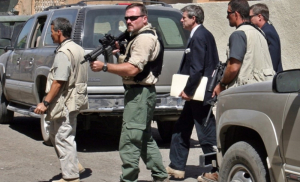
    15245844288_2026206f77_o--1-

    Image by chuck holton via Flickr.

    Over the past three decades a new challenge to sustainable security has emerged: the growing reliance on private military and security companies (PMSCs) by Western states, international organizations, non-governmental organizations, and transnational corporations. PMSCs offer a wide range of services from logistical support, intelligence, training, armed and unarmed guarding and protection, to reconstruction and more. The US-led wars in Afghanistan and Iraq have shown that today waging war is contingent on heavy involvement from the private sector. Private contractor numbers have trailed and at times outpaced US troop levels in the wars in Afghanistan and Iraq. In February 2010, the US DoD employed more than 100,000 private contractors each in Afghanistan and Iraq.

    A number of high-profile cases have highlighted the problems associated with the use of private contractors in Iraq and Afghanistan. Private contractors were involved in the abuse of prisoners at Abu Ghraib and the 2007 shooting and killing of Iraqi civilians in Nisour Square. Allegations of war crimes, poor working conditions, sexual harassment and human trafficking, and disregard for local populations have come to shape the public image of the private security industry over the past two decades.

    In this context, gender has become part of the industry’s attempts to improve its reputation. Gender considerations have made it into the voluntary International Code of Conduct for Private Security Providers that came into effect in November 2010. The International Code of Conduct explicitly addresses gender in three paragraphs on gender-based violence, selection of personnel, and harassment-free work environments. Gender has also been declared ‘good for business‘ by the private security industry. Female employees of PMSCs are seen as useful to conduct security checks on women or to foster positive interactions with local populations, and thus seen as instrumental to operational effectiveness. This attention to gender, while positive on the surface, has mostly served the purpose of creating greater legitimacy for the industry. It has not addressed the larger impacts that outsourcing have on women’s claims to greater and equal participation in the military sphere and the gendered impacts of the use of private forces in local contexts.

    A critical gender lens on private security

    Gender is not just a ‘problem to be solved’ for private contractors, but is fundamental to the reorganization of force through privatization, to the functioning of the private security industry, and to how the industry legitimizes itself. The greater use of private force is part of the broader neoliberal transformation of militarized citizenship that has also entailed a shift from conscription to all-volunteer forces in many Western states. This reorganization of public force has meant an end to the male citizen-soldier model and the greater integration of women into all-volunteer forces. The greater reliance on private security has occurred alongside to the greater integration of women into Western public militaries. While some decry the feminization of public militaries, others have shown how PMSCs actively rely on hyper-masculinity in portraying themselves as more effective security forces vis-a-vis the public sector.

    PMSCs that provide security services primarily recruit from the army and special forces. In doing so, they replicate and even reinforce the gendered division of labour present in the public military sphere. However, PMSCs have also made a concerted effort to distance themselves from the hyper-masculine images of trigger-happy burly ‘cowboys’ and shift towards a softer and more legitimate image of masculinity, shedding the hyper-masculine militarized image for one emphasizing humanitarianism, protection, professionalism, and expertise. At the same time, privatization sidelines and depoliticizes questions of gender equality in the military sphere. There is neither publicly available data on women in the private security industry nor public debate on their marginalization within the industry. By its very logic, profitability drives the private security sector and not questions of citizenship and equal participation.

    Gender also intersects with race and citizenship to shape the division of labour in the globally operating private security sector. A large segment of the workers hired or subcontracted by PMSCs comes from the Global South. The globally operating private security industry can be thought of as a hierarchy of masculinities. Western contractors are at the top of this hierarchy, and so-called third-country nationals (TCNs) from the Global South sit at the bottom. Profitability is in part achieved through the exploitation of this vulnerable migrant labour force.

    The outsourcing of military security functions to private companies has allowed a global rescaling of labour recruitment in support of Western military operations. As data from the US wars in Iraq and Afghanistan show, a majority of contractor labour is made up by ‘third-country’ and host-country nationals and not by US citizens. For example, of the more than 200,000 DoD contractors working in Iraq and Afghanistan in February 2010 (mentioned above), less than 40,000 were US citizens. The racialized hierarchy among contractors of different citizenship is evident not only in pay and working conditions, but also in the kind of work performed. While local and migrant workers perform much of the logistical support work, their proportion is particularly high when it comes to the more dangerous armed security work.

    Conclusion

    Simply bringing consideration of gender into the private security industry is not a sufficient enough means of addressing the problems that security privatization poses for sustainable security. Conflict is often justified and waged by appealing to gendered notions of security: masculinized protectors and defenders, and feminized and vulnerable populations in need of protection. Private actors feed into this gendered discourse, portray themselves as masculinized protectors, and benefit from continuing insecurities and global inequalities. As insecurities create new market opportunities for the private security industry, gendered discourses of protection and gendered divisions of labour are being reinforced while sustainable security becomes more elusive. We need to be mindful of security privatization and the fundamental ways in which it is gendered as we work towards remaking security in more sustainable ways.

    Maya Eichler is Canada Research Chair in Social Innovation and Community Engagement and Assistant Professor of Political Studies and Women’s Studies at Mount Saint Vincent University.

  • Sustainable Security

    Authors Note: This article summarises key findings of my book Malte Brosig (2015) Cooperative Peacekeeping in Africa: Exploring Regime Complexity. London & New York: Routledge.

    Introduction

    Peacekeeping enjoys an unprecedented popularity amongst policymakers at the moment. At no point in history have there been more peacekeepers deployed worldwide. The United Nations (UN) and regional organisations are currently deploying more than 100,000 troops and police in missions around the globe but most are located in Africa. The challenges individual missions are facing are well-discussed among experts. Much of the relevant literature focusses on dos and don’ts of peacekeeping practices. Regardless of individual cases we can observe the emergence of a larger inter-organisational peacekeeping system which I refer to as African peacekeeping regime complex in which the most relevant organisations such as the UN, the African Union (AU), Regional Economic Communities (RECs) and European Union (EU) are intimately inter-connected. Thus, the challenges actors are facing are not only individual ones and so solutions to these challenges are increasingly based on multi-actor coordination. How the peacekeeping regime complex emerged and how actors are positioned within it will be explored in this contribution.

    Peacekeeping Today

    Modern peacekeeping is confronted with high expectations and an enormous task complexity. Peacekeeping activities reach far beyond ceasefire monitoring, and also involve countering rebel and terror groups, protecting the civilian population, disarming combatants, supporting elections, reforming the security apparatus, state building and engaging in humanitarian relief. In sum, the expectation is that peacekeepers are not simply administering fragile peace, but also working to prevent a relapse into conflict by addressing its root causes. Naturally, these activities are conducted under considerable insecurity in a fragile environment where conflict has not often ceased, but is instead suppressed. Progress is uncertain and backlashes are likely.

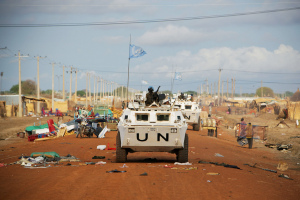
    Zambian peacekeepers from the United Nations Mission in Sudan (UNMIS) patrol streets lined with looted items awaiting collection in Abyei, the main town of the disputed Abyei area on the border of Sudan and newly independent South Sudan. In a statement yesterday, the United Nations strongly condemned the burning and looting currently being perpetrated by armed elements in the area, following the seizure of Abyei town by Sudanese Government troops on 20 March.

    Zambian peacekeepers from the United Nations Mission in Sudan. Image by United Nations Photo via Flickr.

    The demand for peacekeepers and the existing complexity and high expectations peacekeeping is confronted with in practice lead to an overburdening of single actors. For the African continent, we can identify a group of relevant organisations which play a central role within the African peacekeeping regime complex. These are the UN, AU, RECs and EU. None of these actors are capable of dominating the regime complex fully. They all are facing the harsh realities of resource scarcity. Resources can be material goods (financial, military) or social kinds like competences or political (in) capacities or deployment doctrines.

    Examples of this resource scarcity and its effects are easy to find. While the UN remains the most essential actor, it does not have command over the resources which would allow it to outperform regional organisations. This becomes very clear when looking at deployment times and/or the issue of peace enforcement. With its heavy bureaucracy in the background, the UN’s response times are on average around six months which is far from a rapid response. Issues of peace enforcement and counter-terrorism are also politically controversial within the UN and thus the UN’s missions find it difficult to engage in this kind of activity. In practice, there remains a considerable gap in the UN response to severe crises.

    On the part of African actors, much has been achieved within the last decade. An African Peace and Security Architecture (APSA) has been erected which builds on close cooperation between the AU’s headquarters in Ethiopia and RECs. Considerable efforts have been made to establish the African Standby Force (ASF). Indeed, the AU is now actively involved in practically all emerging conflicts on the continent. Still, it falls short of being able to independently respond to crises in a sustainable and comprehensive manner. The design of the ASF which consists of around 25,000 troops only makes up a minority of all deployments to the African continent. While the AU is willing to deploy in situations where the UN is reluctant to do so, the AU’s resource constraints are significant. The lack of funding is a compelling example. Despite efforts of the Commission chair to reduce external dependencies, the peacekeeping budget is predominately being financed by international donors. AU peacekeeping missions are not sustainable to maintain and can only operate with much reduced task complexity. Thus, because of resource constraints, they are neither long-term nor comprehensive in nature.

    In the case of the EU, the situation is different. It is the most well-resourced organisation of all but does not have a global mandate. While the EU has deployed around 17 missions to Africa since 2003, these have been rather small in ambition, scale and duration. Most missions train security forces, but only a few are actively engaging in operational peacekeeping. This does not result from an absence of resources but is wanted politically.

    How the Multi-Actor Approach is Shaping Modern Peace Operations

    Given the very visible limitation of each single actor, it is hardly surprising that peacekeeping today is a multi-actor game forming a regime complex. A regime complex can be characterised as a form of decentralised and non-hierarchically organised governance. Actors are overlapping with regard to their membership and/or operational ambit and are tightly interconnected which makes it difficult to decompose the system into individual units. What a regime complex constitutes is mostly defined in terms of the relationship of its constituent parts which are constantly interacting with one another. In the case of peacekeeping in Africa, we can detect such a system.

    In the overwhelming number of cases, we can observe forms of cooperative peacekeeping in which actors are pooling their resources. The most pervasive forms of cooperation are the sequential and co-deployment of troops. This has also led to a division of labour and institutional specialisation between the involved actors. For example, the AU often functions as a first-deployer, sending out troops in situations which are not consolidated and remain hostile and fragile. These deployments which are rather short-term oriented aim to prepare the ground for a larger more comprehensive and longer-term engagement from the UN. The UN’s response is often slower but more sustainable and also covers complex peace building tasks and stays in countries for an extended period of time. The role of the EU is less ambitious, but not less important. In the operational peacekeeping theatre, the EU contributed a high number of missions which are targeted and confined in terms of deployment times (short-term) and tasks (usually training missions). They aim from the beginning not to take over comprehensive tasks but are designed to fill in functional niches other actors leave. Financially, the EU is one of the main donors for AU peacekeeping missions. Since 2004, the EU’s African Peace Facility has provided €1.9bn for institutional capacity building and peacekeeping missions. Recent peacekeeping missions deployed to the Central African Republic (CAR) and Mali broadly follow this track of interaction.

    However, the exchange of resources between the AU-EU-UN which forms the backbone of the peacekeeping regime complex is not a simple functional mechanism. The exchange of resources is, for example, also influenced by peacekeeping doctrines. These are not automatically complementary. In the case of the AU and UN, the AU’s exit strategy is not necessarily compatible with the UN’s entry strategy. While the AU deploys in situations of continuing hostilities and aims at stabilising the situation, the UN takes a more conservative approach aiming to deploy only in situations where at least a ceasefire is in place. What happens if the AU stabilisation efforts do not lead to tangible progress can be seen in Somalia. Although the AU has called for UN take over since the deployment of AMISOM in 2007, no UN takeover occurred.

    Doctrinal divisions also exist with regards to robust peacekeeping in already deployed missions. While the AU and African states often accept that within peacekeeping missions the use of force is sometimes needed to actively deter and encounter rebels or terrorists, this view is mostly not shared by the UN and EU. As a consequence, active peace enforcement in cases of deployed UN missions (CAR, Mali, DRC) tend to be outsourced. In case of the DRC, a Force Intervention Brigade (FIB) was set up and staffed by African countries or France continued its military operations hunting down terrorists in Mali.

    Apart from questions of doctrinal complementarity, the supply and demand for resources varies significantly between actors. An organisation which is stronger on the supply side can chose how to design its involvement in peacekeeping while an organisation which is experiencing a strong demand but little supply is in an inferior position. This can be seen when comparing the EU and AU. The EU is in the position to provide what it deems adequate (many small scale targeted missions), the AU is in the complete opposite situation. It cannot maintain longer-term missions on its own and relies both on external funding and operational handover to the UN.

    Conclusion

    Modern peacekeeping operates in a multi-actor environment which displays decentred governance structures to which we can refer as a regime complex. Apart from the fact that the UN Security Council bears a general responsibility for peace, there is no overarching or strict hierarchy between the UN-AU-EU. Despite the absence of externally delegated roles within the regime complex, assumed roles emerged as a consequence of individual institutional resource scarcity, doctrinal compatibility and the size of demand vs supply of resources. Certainly politics is not missing in this system. There is no formally agreed script according to which organisations can be expected to act and thus the exact mode of interaction varies between cases. Domestic conflict dynamics leave their imprint too.

    In the end, taking an inter-organisational perspective to peacekeeping is not a trivial under-taking because it constitutes a form of global governance which transcends the individual organisation. While we have long accepted that the classical nation state has lost parts of its domestic sovereignty to the forces of globalisation we also have to recognise that the same is true for international organisations. In this regard actorness and governance qualities do not exclusively rest in actors themselves but also in how they organise interaction with one another. The peacekeeping regime complex is one example and one that is shaping the lives of millions who live in some of the most vulnerable situations.

    Malte Brosig is Associate Professor in International Relations at the Department of International Relations at the University of the Witwatersrand in Johannesburg. He joined the Department in 2009 after he received his PhD from the University of Portsmouth. His main research interests focus on issues of international organization interplay and peacekeeping in Africa. He is the author of Cooperative Peacekeeping in Africa: Exploring Regime Complexity which was published at Routledge. Prof Brosig is a rostered consultant for the United Nations University’s Centre for Policy Research in Tokyo and holds fellowships at the Canadian Centre for R2P at the University of Toronto, the European Centre for Minority Issues in Flensburg and the German Institute for Global and Area Studies in Hamburg.

  • Sustainable Security

    RC_long_logo_small_4webThis article is part of the Remote Control Warfare series, a collaboration with Remote Control, a project of the Network for Social Change hosted by Oxford Research Group.


    Editor’s note: Remote Warfare and the War on Drugs mini-series: This series of articles explores how remote warfare is being used in the war on drugs. To date, much of the debate on remote warfare has focused on its use in the war on terror. However, the use of drones, private military and security companies (PMSCs), special forces and mass surveillance are all emerging trends found in the US’s other long standing war, the War on Drugs. The articles in this series seek to explore these methods in more depth, looking at what impact and long term consequences they may have on the theatre in which they’re being used. Read other articles in the series.

    In Latin America drones are being used as part of the War on Drugs as both regional governments and the US are using surveillance drones to monitor drug trafficking and find smuggling routes.. However, as drones are increasingly being used by drug cartels themselves to transport drugs between countries, could Latin America find itself at the forefront of emerging drone countermeasures?

    In many Latin American countries, militaries operate as internal security forces because they combat drug traffickers and insurgencies. As a result, regional security agencies are constantly looking for new technologies to support security operations. Indeed, Peruvian Admiral José Cueto Aservi described purchasing drones in 2013 as necessary due to the “asymmetric war” being launched by narco-movement Shining Path that “takes advantage of the complex geography to attack” and thus “all methods” – including “technology” – are needed to defeat them.

    Today, drones are regarded as potential “game changers” by regional security forces, believed to be invaluable “eyes in the sky” that will aid surveillance operations. Hence, it is no surprise that several Latin American countries have acquired them, whilst many others are producing them. At the same time, US drones are carrying out their own operations in Latin America as part of the global War on Drugs and drug cartels themselves have started using drones to smuggle drugs across international borders. As the use of drones looks set to increase, what is the likelihood of armed drones being used in this theatre and what implications could the non-state use of drones have on the region?

    Drones in Latin America

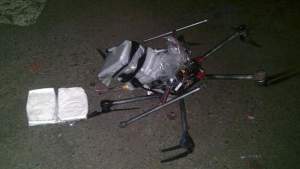
    Crahed Drone

    Crashed drone on Mexican border. Image by Secretaría de Seguridad Pública Tijuana.

    There are currently at least 14 Latin American and Caribbean countries which have used or purchased drones. No Latin American state possesses large numbers of drones in the manner of the US military, rather, regional governments mostly operate just two or three drones of any type. Israel is the largest provider of drone technology to Latin America, having sold some $500 million worth to the region between 2005 and 2012.  Latin American states have also started developing their own drones with Colombia being the first South American nation to have home-built a drone, the Iris, in 2015.

    Unarmed drones carry out Intelligence, Surveillance and Reconnaissance (ISR) roles for a range of different operations in Latin America. Due to the region’s complex topography (a case in point is the Amazon, where drug traffickers from Brazil, Colombia, Bolivia and Peru operate) drones require special features like infrared cameras and have been useful for monitoring vast uninhabited spaces in the region. In Brazil, for example, drones have been used for agricultural reasons, including monitoring the Amazon rainforest. In Belize and Costa Rica too, drones have been used for conservation purposes. In Peru, a municipality police force in Lima,deployed three drones to patrol the Peruvian capital during the last Christmas season to help security officers locate emergency areas if necessary and in Mexico, drones have been used to patrol and secure sensitive areas like the facilities of the state oil company PEMEX.

    Drones and the War on Drugs

    Drones have also been used as part of the War on Drugs in Latin America. In Mexico, National Defense Secretariat, the Federal Police, the Procuradoría General de la República (the Attorney General’s office), as well as the Army and Air Force fly drones to gather intelligence to combat organized crime, mainly drug trafficking. In Brazil, Colombia, Panama and Trinidad and Tobago too, drones are used to monitor drug trafficking and find drug smuggling routes.

    Drones are also being used by non-state actors, in the form of drug cartels, to smuggle drugs between countries. In January 2015, a drone crashed in a supermarket parking lot in Tijuana, Mexico –carrying three kilograms of crystal meth and in August 2015, two Mexican citizens were convicted of utilizing a UAV to fly 13 kilograms of heroin from Baja California, Mexico, into California.This led US authorities to deem drones an “emerging trend” employed by transnational criminal organizations to smuggle narcotics into the US.

    In its long running War on Drugs, the US has also been using its own drones in Latin America. A New York Times article reported that, in 2011, in an effort to step up its involvement in Mexico’s drug war, the Obama administration begun sending its drones deep into Mexican territory to gather intelligence to help locate major traffickers. Furthermore, an official US briefing from 2011 – obtained via the Freedom of Information Act – revealed that the US Air Force is working to make its RQ-4 Global Hawk high altitude long endurance drones available to its allies in Latin America and the Caribbean in order to help “find drugs fields and helping plan offensives against rebel groups”.

    US Customs and Border Protection operates 10 MQ-1 Predator drones, including two based in Cape Canaveral, Florida, that patrol a wide swatches of the Caribbean through the Bahamas and down to south of Puerto Rico as part of the drugs fight, and, in 2013, it was reported that the US Navy was testing a new type of drone that can be hand-launched from a ship’s deck to help detect, track and videotape drug smugglers in action across the Caribbean Sea.

    US drones have also been used for other purposes in the region. US Customs and Border Protection have been flying surveillance drones for nearly a decade, launching them from bases in Texas, Florida, North Dakota and Arizona to detect illegal border-crossing. This activity has been called into question recently as a 2015 report from the Department of Homeland Security’s inspector general found drones to be ineffective in conducting surveillance along the border.

    Towards drone countermeasures?

    As for the future, we can expect drones to continue to be utilized in Latin America, as there has been an increase in the purchasing and development of drones across the region in the last few years. US companies Boeing and Aerovironment, for example, have both declared their intention to increase drone sales to Latin America, with countries like Colombia, Chile, Mexico and Peru interested in purchasing from them and the Swedish firm Unmanned System Groups (USG), showcased its F-330 drone to the Uruguayan armed forces in late 2014.

    More countries in the region are also looking to develop their own drones. Following the building of Colombia’s first drone in 2015, a COHA report found that Peru, Ecuador, Argentina and Brazil are all in the process of developing their own drones. There have also been talks of developing a South American drone, which would be manufactured by the Union of South American Nations (UNASUR, which has as members all twelve South American states).

    With regards to armed drones in the region, a number of states have indicated their desire for them. Peru and Colombia in particular could seek to acquire armed drones as internal security conditions worsen. However, this is unlikely to happen any time soon as countries that possess armed drones, such as the US and Israel, are unlikely to sell them to Latin America in the near future. Hence Latin American militaries would have to look to other potential suppliers, like China or Russia, or construct them themselves. Here, financial barriers, along with limited technological know-how capabilities, even amongst countries that already produce drones, would make this unlikely.

    Even if armed drones are unlikely to be used in the region any time soon, there is a potential for Latin America to become a testing ground for drone technology in other ways. As drones are being increasingly utilized by drug traffickers in the region to transport drugs between countries in ever more sophisticated ways, it is likely that this will lead to regional efforts to develop increasingly advanced drone-detection and interdiction technologies to defend against this threat. At present a number of companies internationally are developing this technology, used to detect, block and destroy drones. This includes the development of early warning systems that can identify and detect drones and signal jamming technology to block drone control frequencies. As well as this, technology is also being advanced to destroy detected drones. This includes both laser and kinetic defence systems, the later using missiles, rockets and bullets capable of shooting drones down. Companies are also looking into nonlethal projectile weapons that fire blunt force rounds, such as bean bags or rubber bullets, or small portable net guns that can ensnare drones. As Latin America finds itself battling against the hostile use of drones by drug cartels it could find itself at the forefront of these emerging drone countermeasures.

    Alejandro Sanchez is a regular contributor for IHS Jane’s Defense Weekly, the Center for International Maritime Security, Blouin News and Living in Peru. He focuses on geopolitics, military and cyber security issues in the Western Hemisphere. His analyses have appeared in numerous refereed journals including Small Wars and Insurgencies, Defence Studies, the Journal of Slavic Military Studies, European Security, Studies in Conflict and Terrorism and Perspectivas. Follow him on Twitter:  @W_Alex_Sanchez

  • Sustainable Security

    Often seen as a tactic harnessed by the weak, guerrilla warfare can also be a employed by the strong. States have at times used guerrillas in inter-state and civil conflict.

    Guerrilla warfare is widely viewed as a weapon of the weak. To Mao Tse-tung, it was the optimum strategy of those “inferior in arms and military equipment.” He drew inspiration from the Russian troops accomplishing, in 1812, what their militarily superior European counterparts could not: drive Napoleon’s Grand Army out of their country. They did this not only by taking advantage of Russia’s distinctive geography and climate, but also by using guerrillas – Cossacks and peasants – to go after the French troops “as unconsciously as dogs bite to death a rabid stray dog.”

    But, guerrilla warfare can also be a weapon of the strong. States with robust conventional military capabilities at times use guerrillas in inter-state and civil conflict.

    Guerrilla Warfare

    pkk-guerilla

    Image by kurdishstruggle via Flickr.

    Guerrillas’ advantages stem from their organization and local ties. They typically operate as small, independent units, thereby exercising more maneuverability, alertness, concealment, and access to the local population than their regular counterparts. Carl von Clausewitz recommended supplementing a regular army with bands of armed civilians. He observed that, when faced with adversity, soldiers typically “cling together like a herd of cattle,” while civilians “scatter and vanish in all directions, without requiring a special plan.” But, he emphasized that the latter should not be used “to pulverize the core but to nibble at the shell and around the edges” of regular armies.

    Both Clausewitz and Mao viewed guerrillas as useful for weakening a conventionally strong rival through harassment and psychological warfare, but recognized that they are “but one step in the total war.” It is the regular troops that must, in the end, directly confront and defeat the enemy. Thus, for example, the recent U.S. strategy of sponsoring local rebels in Syria against Bashar al-Assad’s (Russia-supported) army was likely to fail not least because of the difficulties inherent in using nonstate proxies. The U.S. strategists – presumed students of Clausewitz – failed to recognize the necessary role of the regular forces, or else significantly underestimated their capacity to form a regular army out of irregulars while in the midst of a war. Or, they were simply constrained by the political unfeasibility of setting regular U.S. soldiers’ boots on the ground.

    In addition to weakening (or hopelessly trying to defeat) a rival’s regular forces, states often use guerrillas – or “counter-guerrillas” – against guerrilla rivals. The latter are typically rebels fighting to gain, maintain, or reclaim territorial control from an established government or occupying power. The former are sometimes also referred to as “pro-government militias.”

    In a recent article published in the Journal of Strategic Studies, I closely examine and disaggregate the different types of counter-guerrillas states use in counterinsurgency operations. I identify two types of counter-guerrillas: self-defense militias and death squads. Self-defense militias typically comprise ordinary civilians, such as peasants, while death squads are usually manned by experienced militants, such as turned rebels or violent criminals.

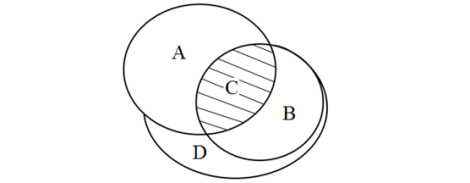
    I argue that states make proxy choices based on the latter’s comparative advantage, availability, and controllability. The state’s ideal partners are highly skilled fighters with deep knowledge of the insurgent network and links to the local population. Regular soldiers are highly skilled fighters, but possess limited local and insurgent knowledge. Partnering with nonstate actors means tackling the classic principal-agent problem, and the state’s capacity to do so is significantly shaped by its spatial reach (i.e. territorial control) across the theater of war. Figure 1 illustrates the different configurations of territorial control.

    Figure 1. Zones of Control

    figure-1-zones-of-control


    In Zone A, the state exercises full control. Zone B represents the insurgent-dominated area, whereas Zone C is the contested region where both sides actively compete for influence. Zone D represents an area that has been largely neglected in the burgeoning civil war literature. It is a zone that is neither fully controlled nor, for the time being, actively contested.

    Among the nonstate alternatives, the ideal partner for the state is a skilled fighter with insider knowledge of the insurgency and its logistics network. The disadvantage of using this type of proxy is that his fighting skills make him dangerous and difficult to control. The cost of losing control of skilled fighters can be unpalatably high. Unless they are weak or collapsed, modern states will prefer to use skilled fighters when and where they can supervise them.

    Nonstate actors that possess the desired local knowledge and have significant experience wielding extra-institutional violence, whether of criminal or rebel nature, may be harnessed to counter the insurgents. Their comparative advantage is in performing specialized, offensive, and highly targeted tasks (e.g. assassinations) that take advantage of their high mobility and combat skills. Consequently, they are likely to be used where the insurgents are actually located (Zones B and C). We should expect them in Zone C, where the state can exercise control over their activities. Using death squads in Zone B requires the state to create robust control mechanisms, such as embedding these groups firmly within special operations units of regular military or police forces. Where the state exercises full control (Zone A), or where the insurgents are not yet present (Zone D), states do not require highly targeted offensive operations and, consequently, death squads.

    While the comparative advantage of death squads is in highly targeted offensive operations, self-defense militias are best at performing static defensive tasks, such as guarding villages, communication lines, transportation networks, and vital installations. They are, consequently, more likely to be used to facilitate the operation of state forces in contested regions (Zone C) or to deny the insurgency access to areas where neither side has effective control (Zone D). In Zone B, self-defense militias are helpless against the insurgents. Not only can their government-provided weapons easily fall into rebel hands, but also, given the high rates of defection in insurgent-dominated areas, they may become a fertile source of rebel recruits. Remnants of self-defense militias (once created in Zone C or D) may persist in Zone A, but only because demobilization of nonstate actors is usually slow and costly.

    The Kashmir Case

    India’s use of counter-guerrillas in Kashmir illustrates the logic of the argument. In response to an insurgency breaking out in the late 1980s in the Indian state of Jammu and Kashmir (here referred to as “Kashmir”), the Indian army used former rebels (i.e. “renegades”) and villagers to combat the insurgents. Initial efforts relied on local police enforcement, treating the insurgency as an issue of “law and order.” However, the local policemen proved ineffective and were supplemented by three paramilitary forces (the Central Reserve Police Force, the Border Security Force, and the Indo-Tibetan Border Police). The Indian army’s role expanded further in 1993 with the introduction of the Rashtriya Rifles, an elite army unit created specifically for counterinsurgency operations.

    Former rebels were used mostly in the contested areas (Zone C) and, under the supervision of the Rashtriya Rifles, in Zone B. Kashmiri ex-insurgents, who were also popularly known as “Ikhwanis,” were used to eliminate rebels and their sympathizers. In Zone D – the mountainous areas of the Jammu region – the state instituted the civilian-manned Village Defense Committee (VDC) system. Figure 2 illustrates the distribution of the “renegades” and the VDCs. Official statements place the number of VDC volunteers at 6,000, but a prominent Kashmiri journalist I interviewed in Srinagar (the summer capital of Kashmir) estimated the figure to be closer to 23,000.

    Figure 2. Zones of Control in Kashmir

    zone-of-control-in-kashmir-figure-2


    Costs of Counter-Guerrillas

    Counter-guerrillas may be good for war, but they are bad for peace. Weaponizing turned rebels, criminals, and civilians offers tempting tactical benefits, but it also carries significant post-conflict costs. The conventional wisdom is that outsourcing violence lowers the cost of conflict and provides states with plausible deniability. However, as I learned from my fieldwork in Kashmir and other conflict zones, the local population quickly becomes aware of the illicit links between the counter-guerrillas and the government, as does the international community.

    The “renegades” may have helped the Indian army achieve military victory over the insurgents, but they also significantly boosted the widespread and enduring resentment against the Indian government. The arming of a select ethnic group (mostly Hindus and some Sikhs) in Jammu generated “intermittent outburst of communal violence” as well as incidents of looting, abduction, and rape.

    Playing local groups against one another is a classic strategy of colonialism, with a lasting impact on the peace and prosperity of many postcolonial states. Perhaps India’s Supreme Court said it best. It described the arming of over 6,000 young men in the tribal tracts by the central Indian state of Chhattisgarh to fight the Naxalite-Maoist insurgents as “tantamount to sowing of suicide pills that could divide and destroy society.”

    Yelena Biberman is an Assistant Professor of Political Science at Skidmore College and Nonresident Fellow at the Atlantic Council’s South Asia Center.

  • Sustainable Security

    Islamic State (IS) appear to attach considerable importance to dreams and have started publishing dream accounts of martyred jihadists. Do IS see this as a way of ‘calling’ potential lone wolf jihadists to action?

    Over the last decade, several studies have shown that militant Islamists make extensive use of reported night dreams to inspire, announce, and validate violent jihad. Bin Laden himself brought up dreams in one of the first videos released after 9/11. Mullah Omar was understood by his followers to have founded the Taliban, and run his campaign, inspired and even guided by his dreams. Dream accounts can be found of numerous other well-known militants, including Richard Reid, the failed shoe bomber, the two core 9/11 planners, Ramzi bin al-Shibh and Khalid Sheikh Muhammad, and the ‘20th’ suicide bomber, Zacarious Moussaoui.

    This tradition has continued with Islamic State (IS) members and sympathisers who appear to attach considerable importance to dreams. This article updates the discussion and analysis of the role of dreams for IS jihadists, and, through looking at some recent case studies, asks whether IS is publishing martyred jihadist dreams as a way of ‘calling’ potential lone wolf jihadists to action.

    Dreaming in Islam

    mosque-night

    Image by four12 via Flickr

    To understand the jihadi appreciation for dreams, it is important to first understand that dreams are both historically and contemporaneously important in Islam. Indeed, today, Arabic TV programs are replete with dream interpretation programs and the internet is awash with Islamic dream interpretation websites.

    The dream tradition is similar across all the main branches of Islam: Sunni, Shia, Salafi and Sufi, as well as amongst the minority Alevi and Ahmadiyya sects. In the Sufi mystical traditions, dreaming is highly regarded. While Sufis have traditionally paid the most attention to dreams, the more literalist Salafis appear to have become more interested in them over time.

    The Islamic tradition distinguishes between three types of dreams: the true dream (al-ru’ya), the false dream, which may come from the devil (shatan), and the meaningless everyday dream (hulm) which could be caused by what has been eaten by the dreamer and comes from the nafs (ego, or lower self).  The interpretive tradition regarding the “true dream” (al-ru’ya) is a fundamental feature of Islamic theology. The true dream tradition is reported more extensively in the hadith. 

    Islamic dream interpretation differs from Western attitudes to dreams, which, being largely shaped by a scientific materialist outlook of the world, generally see dreams as bearing little or no relevance for people. But in Islam, dreams are understood as, on occasion, offering a portal to the divine will, and are seen as the only appropriate form of future divination. Dreams have a special authority as they are believed to communicate truth from the supernatural world (dar al-haq).  Lamoreux summarises the importance of dreaming in Islamic societies:

    Dream interpretation offered Muslims a royal road that led not inward but outward, providing insight not into the dreamer’s psyche but into the hidden affairs of the world. In short, the aim of dream interpretation was not diagnosis, but divination.

    Based on his anthropological research in Egypt, Gilsenan offers further insights:

    In dreams began responsibilities. Judgements were made. Commands issues. Justifications provided. Hope renewed. Conduct was commented on by holy figures, by the Prophet himself, by the founding Sheik who had died some years before but who appeared with his son and successor.

    Dreams were public goods, circulated in conversational exchanges, valorizing the person, authoring and authorizing experience, at once unique and collective visual epiphanies. Dreams thus constituted a field of force and framed interchange between the living and the only apparently dead.

    There is extensive literature on the art and science of dream interpretation in Islam going back over a thousand years, and scholars like Sirriyeh are emphatic about the importance of the Prophet Mohammed’s God-guided interpretation of dreams. Mohammed’s and his companions’ dreams played a significant role before, during and after the Qur’anic revelation. In the six months before the  revelation began, his wife Aisha said his dreams came true like the ocean’s waves. The Prophet’s famous night journey from Mecca to Jerusalem (Laylat ul-isra wal miraj), in which Muhammed ascended to heaven and was initiated into the mysteries of the cosmos, is understood by many Muslims, though not all, as being in a dream vision (al-ruya can refer to vision and or dream). Mohammed would start the day asking about his companions’ dreams as a source of possible illumination and spiritual guidance. The Prophet’s companion, Abd Allah b. Zayd, is understood to have dreamt the Islamic call to prayer. There are three dream reports in the Qur’an, two reported as received by the Prophet Mohammed. One of these directly relates to the decisive Battle of Badr  (624 CE). The Joseph Sura contains the reported dream experiences of the Prophet Joseph, such as that of the seven fat and seven lean cows.

    The continued vitality and relevance of dreams in the Islam is well shown in the following examples of Islamic State fighters drawn from Dabiq, the Islamic State magazine.

    Recent dream accounts published by Islamic State

    In April 2016 (issue 14) Dabiq published three dream accounts purporting to have inspired Khalid El Bakraoui in his martyrdom operation on the Brussels metro killing 14 people. Khalid’s first dream was a ‘life-changing’ dream in prison in which he fought alongside the Prophet Mohammed against unbelievers. After the Paris 2016 attacks he is reported in the same Dabiq as having had two further motivational dreams. In the second, he ‘arose to a high place, as if I was in space, surrounded by stars; but the sky was the blue of night’. He says he heard a voice telling him he was only created to worship Allah and ordering him to fight for his cause and make his word supreme’. The third dream follows on almost in a sequence as Khalid dreams of his own martyrdom:

    I saw myself on a boat along with Abu Sulayman and another brother. Each of us had a Turkish soldier as a hostage. I had a pistol and Abu Sulayman had a belt. I told him to give me his belt, as I would feel better having it. So he gave me the belt and I gave him my pistol. I then quickly advanced with the Turkish hostage in order to close in other soldiers, two of whom were in front of us. I detonated my belt, killing the soldiers. My head then descended to the ground. One of the brothers working on the operation and Shaykh al-Adnani took my head and said, ‘check to see if he is smiling or not’. I then saw my soul and those of the three soldiers. All of a sudden, the soldiers souls burned and vanished and, suddenly, the banner of Islam – represented in the dream by the flag of the Islamic State – came out of the earth and was shining brightly. My soul then became full of light’.

    He then claimed he heard a voice telling him he had achieved deliverance.

    This tripartite dream account sequence evokes familiar Islamic dream tropes, images and ideas. In the first dream we see the dreamt and visualised conversion to violent jihad, including the ‘presence’ of the Prophet Mohammed which is understood in Islam as denoting a holy dream if the dream message is congruent with the teachings of the Qur’an and hadiths. Prison surroundings are famous, or infamous, for religious conversion dreams as many customary behaviours are circumscribed.

    The second dream report reads as almost from an ancient holy text; high places and mountain tops are traditionally sites of vision. Indeed Attar’s famous C12 epic Sufi poem ‘The Conference of the Birds’ (Farid ud-Din Attar, 1984 (written 1177) is a tale of Islamic revelation and enlightenment, symbolised by the human journey to the mountain top from where and from within Allah/God can be directly known and joined. The instruction to worship, fight and ‘make his word supreme’ would make excellent sense to a pious Muslim as long as the notion of fighting was referenced to the greater jihad of fighting the lower self, the nafs or selfishly orientated ego. Khalid’s membership of IS and the bloody and relentless killing of all peoples of a different religious persuasion (or none) by IS will have been experienced and apparently shared by militant jihadists as an example of the highest call to arms and martyrdom.

    The third dream completes the sequence from the first calling dream to his visualised death and the spiritual testing of the martyrdom operation. Authorisation and sanctity are communicated via the imagery of Khalid’s soul being composed of, or infused with, light while the enemies (Turkish soldiers) clearly have weaker or non-existent souls which may help validate (to themselves and others) their killing even though they are also Muslims. The dream also conveniently defines Islam as Islamic State. And then ‘deliverance’ is signified at the end of this epic dream narration sequence. As propaganda, now to be read by thousands of jihadist and interested potential recruits, almost all of whom may be aware of the potentially sacred nature in Islam of at least some dreams as being divine emanations and commands, this dream story is a classic. Remove the IS context and many Muslims would feel blessed to have received such dreams.

    In the following Dabiq (no 15) a future paradise dream example is quoted:

    Abul-Muthanna as-Sumali (Ali Dirie) was a man of great character and worship. After being imprisoned by the Crusaders for seven years, he was able to flee Canada despite being banned from travel. Upon the official expansion of the Islamic State to the Levant, he rushed to revive the Muslim Jama’ah through his bay’ah. Several weeks later, he had a dream in which the Hur (the maidens of Paradise) gave him glad tidings of martyrdom on a specific date (one which I have forgotten). A week before his martyrdom, several of our friends decided to go shopping for new military attire. He told them he wouldn’t be going with them, because he was expecting martyrdom soon, and narrated to them his dream. When that day arrived ….Abul-Muthanna rushed to battle ….fighting, until he was severely wounded, bleeding until he surrendered his soul to his Lord….May Allah accept him and add the blessing of caliphate we enjoy today to the scroll of his good deeds and that of all other martyrs.

    These issues are the first times Dabiq has contained personal dream reports of significant IS members intending to demonstrate the glorious Allah inspired sacrifice of their martyrs.

    Dreams may also feature in decision-making processes at different levels in the Islamic State organization. It was reported that Abu Bakr al-Baghdadi’s decision to withdraw forces from Mosul in late 2014 was inspired by a dream in which Prophet Mohammed ordered al-Baghdadi to evacuate the city.

    Both IS leaders and members strongly relate to their night dreams and IS have started recently publishing them. Is there a particular purpose to this new propaganda practice using dreams?

    The transpersonal communication of night dreams in Islam

    ‘Heroic’ (in an Islamic form/genre) dream accounts are now being ‘weaponised’ to influence other IS members, followers and jihadi wannabees. We know the media has enormous effect on our dreams. We also know, though this is maybe irrelevant as IS hate Sufis due to their shrine and Shaykh workship, that in the mystical Sufi Islamic groups it is normative for the top Shaykhs to ‘send’ dreams to their followers.

    In April 2005 I interviewed Shaykh Nazim, a famous Naqshbandi Shaykh, who is now deceased, following numerous reports by his UK followers that he was sending them night dreams of spiritual advice. He told me, “Yes, sometimes I send my power in dreams, when necessary.” I asked how he did this, and he said, “First you must take a step, even half a step, away from the material world, and we Sufis have ways to do this”; enigmatic indeed!. Can dreams be implicitly or even explicitly ‘sent’ in some form, or maybe just believed to be so communicated? Such a thought may well seem farfetched and fanciful to Western post-enlightenment minds, but certainly many Sufis think so and such practices have a long history in Sufism.

     Conclusion

    The last two Dabiqs have contained personal dream reports of significant IS members seemingly for the first time. IS recognise and value some kinds of night dream accounts and see a role for them in their movement’s public propaganda war; so why now for this high tech, high media skills Caliphate-named organisation? IS are slowly being degraded from without and are ruthlessly striking at Western symbolic soft population centres; IS are now strongly encouraging their followers to attack western centres; we see a rise in the self-inspired, via the internet and perhaps dreams, of the lone wolf who is previous to their attack, untraceable. A few lone wolves in summer 2016 seem to have responded to IS media exhortations to attack western targets and some seem clearly to have a history of prior mental illness. Does this make them more vulnerable to being influenced by dreams? We don’t know yet. But vulnerable young people on the net who spend a lot of time reading about the ‘heroic’ caliphate and its actions may well start having related dreams.

    Intelligence agents have spoken to me (2012) of the critical role of dreams in motivating potential jihadis from contemplation to decisive action. I was once told of a jihadi dreaming of his future death during anticipated jihad in Somalia, and another agent told me about a prospective jihadist experiencing two different peoples’ contradictory voices debating with him in his dream about whether he should go on jihad. Such uninterpreted and undigested dream images and accounts may conceivably convince a vulnerable young person, possibly after their consulting an IS dream interpretation twitter account and/or their baqiya (IS ‘family’), that their holy mission is through violent jihad. Is it possible then that potential lone wolves, perhaps with histories of mental health problems, believe themselves as being ‘called’ and then in part recruited not only through the internet, but through the sublime power of ‘glorious’ dream accounts of recent jihadi martyrs? We will have to wait for more autobiographical, media and trial accounts to emerge to know.

    Dr Iain R. Edgar is Emeritus Reader at the Department of Anthropology, University of Durham, UK.

  • Sustainable Security

    This piece by sustainablesecurity.org’s Zoë Pelter and Richard Reeve was originally published on 5 September, 2013 on openDemocracy 

    4815774738_b9962f4875_b

    Image: The Prime Minister during a joint press conference with US President Barack Obama. Source: The Prime Minister’s Office

    The narrow defeat on 29th August of the UK government’s parliamentary motion on support in principle for military action against the Syrian regime has forced Prime Minister David Cameron to concede that Britain will play no part in any direct attack on Syria. If the UK is to play no military role in ‘punitive’ responses to the regime’s alleged use of chemical weapons, what options are open to the UK in terms of resolving the Syrian conflict, protecting civilians and punishing those responsible for war crimes there? And how does Cameron’s overt preference for the military option, with or without UN mandate, condition these non-military options?

    Pushing for peace

    The possibility of a negotiated peace in Syria should not be dismissed. Neither the regime’s military, militia and foreign allies, nor the variety of armed factions ranged against them (and, increasingly, each other) are exhausted. Nor do the Assad regime’s mid-year successes in central Syria presage any imminent likelihood of it regaining control of the north and east. The strategic stalemate that appeared to set in to the conflict in June, after pro-Assad forces retook al-Qusayr, arguably presented a breathing space for negotiations and the so-called Geneva II conference, proposed by the US and Russia, with UN and Arab League backing, the previous month. As recently as mid-August, the Geneva talks were expected to resume in September.

    But even convening these talks will now prove far harder. Expectation of Western intervention against President Bashar al-Assad, as well as their own increasing divisions, gives the Western-backed armed opposition groups an incentive to delay talks. Jihadist groups that have proved effective militarily are largely excluded. US and Russian facilitation of the Geneva process, however fraught, also tends to exclude the voices of regional actors like Turkey, Iran, Iraq and Saudi Arabia, each of which feels its interests very directly threatened in Syria and gives active support to one or more armed faction.

    This calls for a rethinking of the Geneva process, if not the 2012 transition roadmap, to bring in the full range of actors, not the abandonment of peace talks. Threat of US-led intervention and its own increasing international marginalisation, should it be proved to have launched a chemical attack on 21st August, could incline the Assad regime towards a negotiated settlement, perhaps even an exit and exile strategy.

    Cameron and Putin

    Image: The Prime Minister welcomes President Vladimir Putin to Downing Street ahead of the G8 Summit. Source: The Prime Minister’s Office

    This will not happen without pressure from Iran and Russia. Both have much to lose in Syria, but neither is entirely closed. Iran is still in its post-electoral opening and under severe economic pressure, looking to cut a wider deal with the West. Russia may not be comfortable with its isolated position defending the alleged user of chemical weapons. Like the US, it fears the growing influence of jihadi groups while the current stalemate continues. While there is little hope of Moscow abandoning its Security Council veto over action against Syria, it will be embarrassed if it stands almost alone defending Assad in the Council or against a General Assembly resolution. Neutrally collected and analysed evidence of Syrian regime culpability for chemical weapons attack will be crucial to shifting Russia’s position.

    Having made clear its preference for ‘punitive’ military action, and been frustrated by parliament in pursuing such action, the UK government is not ideally placed to broker negotiations. Yet the UK does have influence with Syrian opposition groups, in the Gulf States and, when it acts in concert with its less interventionist EU partners, with Russia, Turkey and Iran.

    Fighting impunity

    Again, the importance of due investigative and legal process through UN Fora is crucial. When asked on 29 August if he agreed that Assad should be prosecuted at the International Criminal Court (ICC), David Cameron replied curtly that these processes take time. Yes, the wheels of institutional responses turn slowly, not least justice institutions. Yet the most obvious response to any breach of customary international law on the use of chemical weapons (Syria is one of just five states not to have signed the 1993 Chemical Weapons Convention) is a war crimes prosecution through the ICC. It is not important that Syria has not signed the Court’s establishing Rome Statute. Assad and any responsible commanders could still be subject to international prosecution if the Security Council referred Syria formally to the ICC.

    The UN has been investigating a wide range of alleged crimes committed by both sides with a view to future prosecutions. Clearly, the presence on the Security Council of Syrian allies and a majority of non-signatories to the Rome Statute presents obstacles to referral, but the Council has overcome such obstacles before, notably China’s reluctance to see its Sudanese allies prosecuted over actions in Darfur. With France and other allies, the UK should take the lead within the Security Council in pushing to refer Syria to the ICC based on the same ‘moral minimum’ or red line that has been deployed in favour of armed intervention. This, in turn, may provide leverage to persuade pro- and anti-Assad factions alike to take peace negotiations more seriously.

    Notwithstanding the heavy shadow of its past action in Iraq, the UK’s moral standing is bolstered by commitment to legal and democratic process. The UK should take a breath, step back from punitive reaction and recommit itself to a multilateral, inclusive and legally rigorous approach to resolving the war in Syria and its many affiliated regional conflicts. No other form of intervention will effectively protect the lives and rights of Syrian civilians either in the current war or the difficult peace that must follow.

    Richard Reeve is the Director of Oxford Research Group’s Sustainable Security Programme. He works across a wide range of defence and security issues and has particular expertise in Sub-Saharan Africa, peace and conflict analysis, and the security role of regional organisations.

    Zoë Pelter is the Research Officer of Oxford Research Group’s Sustainable Security Programme. She works on a number of projects across the programme, including Rethinking UK Defence and Security Policies and Sustainable Security and the Global South.

  • Sustainable Security

    Tackling South African water insecurity will require addressing the technical deficiencies, governance gaps and social inequality that are currently having a dangerous and environmentally devastating impact. The links between environmental health and socio-political stability are clear in South Africa, where there has been an exponential increase in violent protests over poor or privatized service delivery, social marginalization, and unequal access to water. South Africa must act  to solidify the links between resilient societies and resilient ecosystems.

    Rural water pump near Ulundi, South Africa. Source: Trevor Samson / World Bank (via Flickr)

    Rural water pump near Ulundi, South Africa. Source: Trevor Samson / World Bank (via Flickr)

    Last month, the Intergovernmental Panel on Climate Change (IPCC) unveiled the third and final Working Groupreport from its from its landmark Fifth Assessment. This, together with the Second Working Group Report released on 31 March, 2014, is required reading for those wishing to examine the societal impacts of climate change and the potential pathways for twenty-first century resilience. For the first time, the IPCC included a chapter on human security. This is a significant achievement that should increase understanding of the increased threat and impacts on individual livelihoods that climate change is bringing, particularly in the developing world. It is clear that the connections between environmental security and human security run deep, but it is less clear just how societies can build resilience and whether the political will exists to pursue it.

    Adding to the complexity is the fact that these challenges manifest themselves uniquely across the world. Due to factors of geography, history, politics, and social development, each region and country experiences climate change in a distinctive way. For Africa, the picture is predictably bleak. The region as a whole has contributed the least to greenhouse gas emissions, faces some of the worst consequences of climate change, and has the weakest capacity to cope with the impacts.

    The country of South Africa provides a fascinating example of how difficult building ecological resilience can be. Already the 30th driest country in the world, it is expected to experience further drying trends, and an increase in extreme weather events, including cycles of extreme drought and sudden excessive rains. In relative terms, the country has in fact been a significant contributor to global climate change due to its energy-intensive economy. As such, the country has a global responsibility to engage fully with the IPCC reports and begin developing robust responses to environmental insecurity. However, doing so presents major challenges for a country that remains a “dual economy” with one of the highest rates of income inequality (and inequality of opportunity) in the world.

    This is all the more troubling given the country’s progressive stance on environmental issues. In fact, environmental security has been, and will remain, a vital component of the evolving South African identity following the end of apartheid in 1994. The issue of environmental security in South Africa is one that has for years resonated across diverse sections of the population. There are strong cultures of conservation and environmentalism running throughout the country. However, the “Rainbow Nation” continues to suffer from sustained environmental degradation in ways that alter the natural landscape, destroy necessary biodiversity, and hinder social development.

    Promises to Keep: water legislation and service delivery

    Take for instance the issue of water security. South Africa has long been seen as a world leader in progressive water policy, particularly given its need to address unequal water policies of the Apartheid era. Its Constitution and its National Water Act explicitly declares the human right to water, guaranteeing a minimum allocation of 6000 litres of free, clean water a month for every South African. Nelson Mandela championed the cause, claiming that access to water is “central in the social, economic and political affairs of the country, [African] continent and the world. It should be a lead sector of cooperation for world development.” The guiding vision for South African water policy is eloquently summed up by the former slogan for the Department of Water Affairs and Forestry: “some, for all, forever.” The progressive language of water rights enshrined in the country’s legal frameworks is a point of pride amongst South African citizens, but also a flashpoint around which grievances often converge.

    Unused farm stall on the road between Clanwilliam and Citrusdal. Source: John Hogg/World Bank (via Flickr)

    Unused farm stall on the road between Clanwilliam and Citrusdal. Source: John Hogg/World Bank (via Flickr)

    However, while the Constitution and the National Water Act overturned the discriminatory water policies of the Apartheid era, they remain vague and non-committal on the delivery of their lofty promises. Given all the competing priorities and demands for investment, the country has neglected to invest the necessary resources to create, maintain and upgrade its water infrastructure and to adequately promote water conservation in the face of increased demands on the precious resource.

    In addition, the continued failure of sustainable agricultural practices and the promotion of economic growth in a business-as-usual and water-intensive manner have severely degraded South Africa’s water resources. All told, 48% of South Africa’s wetlands are critically endangered. Another telling example comes from the province of KwaZulu-Natal, where the pursuit of economic development and social advancement has led to a rapid rate of environmental transformation. The rate of loss of unprotected natural areas is approximately 1% per annum, meaning that if it continues at this rate they (and all of the attendant services they provide) will be lost by 2050. Pushing back against these trends requires significant efforts on the part of many different actors. This will be, of course, a very difficult task.

    Beyond technical deficiencies and economic tradeoffs, there remains a governance gap within the country that exacerbates the problems. The management of its water is largely disjointed and erratic. The various levels of government and the disparate non-state actors involved in water conservation and distribution are often arranged in Unsurprisingly, this leads to the multiplication of environmental stresses because stakeholders often lack technical knowledge, fail to adapt best environmental practices, contribute to spoiling common-pool resources, and contribute to social alienation from the natural world. This impedes economic development and hardens social cleavages between the rich, whose water flows freely and cheaply, and the poor, who suffer the debilitating effects brought upon by a lack of access to adequate water supplies. Thus, what is often lost in the discussion are the ways in which healthy ecosystems deliver valuable services to people. In essence, we are surrounded by ecological infrastructure.

    The social component of South African water security combines with technical deficiencies and governance gaps to create a dangerous and environmentally devastating impact. This reflects the connections between environmental health with socio-political stability. Unfortunately, for South Africa, the picture is troubling. Non-violent resistance has been a common tactic, but even more concerning has been the recent exponential increase in violent protests over poor service delivery, privatization of service delivery, social marginalization, and the persistent inequality in access to water. One of the ways that could assist the country avoid further civil strife is to significantly increase sustainable environmental management and adjust its governance priorities to deliver upon the laudatory promises of its environmental legislation.

    The Resilience of South Africa

    On May 7th, 2014, South Africans will head to the polls for national elections. This will be the fourth election since the fall of Apartheid, and the first for the “born frees” – the generation of young South Africans born and raised in a democratic South Africa. Most opinion polls indicate that the ruling African National Congress (ANC) party will be re-elected by a sizeable margin, though its support has dropped significantly in recent years. This is due in part to widening perceptions that the ANC has grown entrenched in its own privilege, reflected by ongoing corruption scandals and ineffective economic policies.

    As South Africa moves further away from the legacy of Apartheid, it must confront continued social alienation, the pervasive effects of deep inequality, and the monumental challenge of building ecological resilience and sustainability. As service delivery protests increase, it is clear how the social cleavages of modern-day South Africa often manifest themselves around issues of water, sanitation, the environment, and human dignity.

    The latest IPCC reports are remarkable achievements for a number of reasons. Not least, they clearly acknowledge the continued connections between human and environmental security. In this sense they reflect the growing awareness that to build resilient societies means to invest in resilient ecosystems, and vice versa. For South Africa, in possession of arguably the most progressive water legislation in the world, this requires actively investing in the ecological systems that builds and sustains human dignity. This will require the country to reconcile its rhetoric with its practice. A tall order to be sure, but one that is absolutely crucial for the country to fulfill the promise of its recent past.

    Cameron Harrington is a Post-Doctoral Fellow in the Global Risk Governance Programme at the University of Cape Town. His work is based upon research supported by the National Research Foundation of South Africa. Any opinion, findings and conclusions or recommendations expressed in this material are those of the author(s) and therefore the NRF does not accept any liability in regard thereto.