Category: 2016

  • Sustainable Security

    Drone strikes have been a core strategy of the so-called global war on terror. But there have also been many questions raised surrounding the effectiveness, transparency, legitimacy, and ethics of their use.

    Technology has fundamentally altered not only how security is defined, but also how it is sustained and even enhanced.  Nowhere is this new reality more apparent than in the so-called “global war on terror,” where there is little agreement about counterterrorism tactics and strategy.  A core part of the so-called war on terror has been the utilization of drone technology.  In the context of warfare, the drone has at least three functions: surveillance, killing, and providing targeting for another weapons system. The significance of the new technology is not so much that drone operators must decide between surveillance and firing but that they can decide.  The drone often removes the need for indirect fire (where the shooter cannot see the target).  Under such circumstances, the use of drones is a significant advantage to the side employing them.

    Analysts point to several factors indicating why targeted killings by the United States (U.S.) are likely to increase in the foreseeable future. Drone strikes put fewer American lives at risk and provides a low-cost alternative to expensive and unwieldy conventional forces, especially given projected cuts in the defense budget and a dwindling public appetite for long wars.  The reasons for the shift to combat drones are obvious:  it lessens the burdens and responsibility on a state’s taxpayers, policymakers, and military.  But drones have drawbacks, too.

    From a broad perspective, the use of armed drones in response to terrorism may actually be counterproductive.  It has at times proved detrimental and terrifying, not just to the targeted individuals but to entire populations, killing innocent civilians and fueling resentment that has fed into terrorist recruitment and radicalization, intensifying the very terrorism that the drones are intended to combat. Those fears have been made ever more real by the surging number of casualties caused by targeting high-value terrorists in Pakistan, Yemen, Somalia, Iraq, Syria, and Afghanistan.  The debate over the proper use of drone strikes abroad remains far from settled and has raised many questions about their effectiveness, transparency, legitimacy, and the ethics surrounding their use.  These issues deserve more attention.

    Legal and Moral Issues

    A Reaper Remotely Piloted Air System (RPAS) comes into land at Kandahar Airbase in Helmand, Afghanistan. Breaking new ground for the RAF, the MQ-9 Reaper has become an invaluable asset in the fight against terrorism in Afghanistan. It is able to spend great lengths of time silently observing the enemy before using a range of precision munitions to defend coalition troops and civilians from danger. This image was a runner-up in the RAF 2011 Photographic Competititon. Photographer: Fg Off Owen Cheverton Image 45153241.jpg from www.defenceimages.mod.uk For latest news visit: www.mod.uk Follow us: www.facebook.com/defenceimages www.twitter.com/defenceimages

    Image by Defence Images/Flickr

    Despite frequent condemnation of the U.S. cross-border drone strikes as patently illegal, the legality question is not so straightforward because international law is not precise.  Even though the U.N. Charter explicitly prohibits states from employing “the threat or use of force against the territorial integrity or political independence of any state” (Article 2(4)), it provides two exceptions, recognizing an “inherent right of individual or collective self-defense if an armed attack occurs against a Member of the United Nations.” (Article 51).  The other exception relates to authorization by the Security Council (Articles 39, 41, 42).  Debate over the breadth of the self-defense exception dates back to the 1950s, focusing on the “inherent” nature of the right, what constitutes an “armed attack,” and when an armed attack “occurs.”  This is the essence of the current controversy over pre-emptive self-defense, which the United States invokes to justify preventing an attack by responding to it before it actually occurs.

    The International Court of Justice (ICJ) has generally treated self-defense as a narrow exception to the prohibition on force.  In the 1985 case of Nicaragua v. United States, for example, it held that to give rise to a right of self-defense, an attack must be a significant one.  The ICJ has also upheld the principles of necessity and proportionality, finding that self-defense is not permissible even against an armed attack if the self-defense is not necessary to accomplish the purpose of defense or if it is disproportionate in terms of civilian lives or property lost.  Perhaps the court’s most important finding is that the prohibition on the use of force and the limited self-defense exception have become a part of customary international law.

    As Rosa Brooks has argued,  ambiguity and vagueness in these core legal concepts of “self-defense” and “armed attack,” as well as related doctrines of “imminence,” “proportionality,” and “necessity,” permit the U.S. to make plausible arguments for legality, while allowing other states simultaneously to condemn the attacks as unlawful.  In the absence of a single overarching international authority and judicial system to declare who is right, the answer, if it ever arrives, will depend on the development of a consensus within the international community, which could take many years to build.

    It is not even clear that use of drones against suspected terrorists is governed by the law of armed conflict (LOAC) in the first place.  If these are more appropriately regarded as law enforcement actions, as some believe, then they should be governed by law-enforcement rules and limited by international human rights law.  The intentional targeting of suspected terrorists poses vexing questions surrounding the legal principle of ‘innocent until proven guilty.’  As a matter of U.S. constitutional law and criminal law, does the executive branch, acting through the military or the intelligence community, have the right to kill a suspected terrorist whose guilt has not been adjudicated in court?  Does it violate the right to life and the prohibition of arbitrary killing, protected by, among other things, Article 6(1) of the International Covenant on Civil and Political Rights?

    In U.S. law, a drone attack, like any other targeted killing, arguably, but not necessarily, violates a ban on assassination by U.S. personnel dating back to an executive order issued by President Gerald Ford in 1976. Until 1975, many high officials inside the U.S. government, including President Ford, did not know that the Central Intelligence Agency (CIA) had ever plotted to kill foreign leaders. All that changed, however, as a result of a series of exposes published in The New York Times by investigative journalist Seymour Hersh. In early 1976, following several disclosures, investigations and public revulsion, President Ford issued the executive order banning the assassinations.  The ban on assassination is still in effect in a later executive order promulgated by President Reagan.

    Another question is how those who employ armed drones can justify ‘collateral damage’ to innocent bystanders who become unintended victims.  The LOAC allows the targeting of enemy combatants and expressly prohibits targeting civilians, but so long as reasonable steps are taken to avoid collateral injuries, and the loss of civilian lives is proportional to the military advantage, the accidental killing of civilians is not a war crime.  But this does not mean that it is morally or politically justified.  More fundamentally, international law raises questions about the right of the U.S. to target individuals without the consent of the government on whose territory the killing occurs.  Does the UN Charter’s Article 2(4) prohibition on the use or threat of force against the territorial integrity or political independence of another state even allow such attacks?

    The U.S. has argued that the attacks are permissible because the targeted state is either unwilling or unable to police its own territory and prevent the targeted individuals from carrying out terrorist acts.  The 2005 ICJ case of Congo v. Uganda appears to weaken the U.S. argument, holding that Uganda’s military incursion into Congo to stop cross-border attacks by Congo-based insurgents was unlawful.  Most scholars and most states appear to adopt the ICJ’s broad understanding of the Article 2(4) prohibition on force and narrow understanding of Article 51’s self-defense exception.  Nevertheless, the debate continues.

    Both the Bush and the Obama administrations have argued that the United States should maintain its ability to use all of the tools in its arsenal, including armed drones, to prevent terrorist organizations and groups from attacking the U.S. homeland.  On September 17, 2001, President Bush signed an executive finding that authorized the CIA to “kill or capture al-Qaeda militants around the globe.”  While some officials within the Bush administration defended the drone strikes as consistent with and conforming to international law, others emphasized their effectiveness rather than their legality, arguing that the use of drones has given the U.S. a new dimension of capability that most other nations lack.  Still, others have added that some limits must be placed on drone strikes against U.S. citizens overseas—that is, Americans should not be targeted without prior approval by a military panel or a federal judge.

    On balance, the U.S. government continues to regard the drone program in Yemen, Somalia, Afghanistan, and the border regions of Pakistan as part of the ongoing U.S. war with al-Qaeda, which has been waged pursuant to the 2001 Authorization for the Use of Military Force by which Congress authorized the president to take military action against nations, organizations, or persons involved in the 9/11 attacks.  As long as the attacks are aimed at individuals associated with al-Qaeda and are for the purpose of preventing future acts of terrorism against the United States, they appear to fall within the scope of the authorization.  The U.S. government contends that international law permits the United States to use force against al-Qaeda and its affiliates in countries where there is an extant armed conflict to which al-Qaeda or its associates are party.  If the drone strikes are part of the war with al-Qaeda, the argument goes, the law of armed conflict applies. The Obama administration has taken the view that the law of armed conflict applies to drone strikes, whether they are part of the war or are used as a separate military strategy such as counterterrorism.

    The ethical and legal issues raised by the rapidly developing drone technology pale in comparison to those presented by the Pentagon’s development of new autonomous weapons systems.  These amount to fully independent robots, guided by artificial intelligence, which can decide on their own whom and when to kill.  These projects, to which the Defense Department has committed billions of research dollars, have prompted an intensifying debate among legal scholars and ethicists:   “Can a machine be trusted with lethal force?”  “Who is at fault if a robot attacks a hospital or a school?”  “Is being killed by a machine a greater violation of human dignity than if the fatal blow is delivered by a human?”  A Pentagon directive requires that autonomous weapons use “appropriate levels of human judgment.”  Scientists and human rights experts have argued that the standard is far too broad, insisting that such weapons be subject to diligent application and “meaningful human control.”

     Transparency and effectiveness
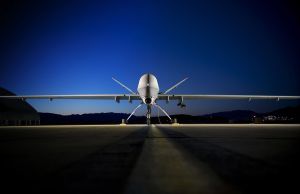
    reaper

    Reaper Drone image by Wikimedia Commons.

    Critics have argued that the U.S. drone program lacks transparency and is largely unknown to the general public and most government officials, including most members of Congress.  There is also little doubt that innocent civilians are dying in drone attacks. Some studies have demonstrated the disconnect between public statements and what researchers have discovered about civilian casualties from U.S. drone strikes. White House counterterrorism advisor John Brennan has often attributed “surgical precision” and “laser-like focus” to the drone program.  Critics argue that stressing the notion of surgical precision in the face of many civilian casualties caused by such attacks is downright misleading.  In some cases, the CIA may not even have known the identity of the people it has killed.  The presumption that all military-age males killed in drone strikes have been “militants” cannot withstand strict scrutiny.

    Several organizations or publications have informed the public debate on civilian deaths from drone strikes.  These include, among others, the New America Foundation (NAF), the Long War Journal (LWJ), the Bureau of Investigative Journalism (BIJ), the Columbia Law School Human Rights Clinic (CHRC), the International Human Rights and Conflict Resolution Clinic at Stanford Law School, and the Global Justice Clinic at the NYU School of Law, which have conducted an investigation into several aspects of the U.S. targeted killing program in Pakistan and have provided a detailed narrative about the law and the policy behind it.

    Despite Brennan’s and the CIA’s denials of unintended civilian deaths, the Bureau of Investigative Journalism in London has reported that 371 drone strikes in Pakistan killed between 2,564 and 3,567 people between 2004 and the first half of 2013.  Between 411 and 890 (12%-35% of the total) were civilians.  Fewer than one-quarter of those killed in drone strikes in Pakistan have been civilians. As of August 2016, President Obama has authorized and confirmed 506 drone strikes, killing an estimated 3,040 military combatants and 391 civilians.

    The lack of government transparency on drone strikes raises serious questions about their effectiveness and accuracy.  If the drone attacks are to be effectively utilized, critics argue, they have to be used for short-term interventions with the intention of using them rarely, selectively, transparently, and only against those who can realistically target the United States.  Absent a realistic threat against the U.S., it is difficult to justify a killing as self-defense and thus permissible under Article 51.  Otherwise it is arguably just an extrajudicial killing of an un-convicted, often unindicted, criminal suspect as well as a violation of the U.N. Charter’s prohibition on the use of force.

     Managing Risks or Seeking Long-Term Solutions

    It is time to think outside the box in which the states fighting terrorism have locked themselves, and to make the case for why the U.N. and other development organizations should be empowered and encouraged to support civic engagement, societal improvement, and low-level civil society rebuilding as a means to battle the unrest and despair that fuels terrorism.  One expert reminds us that drone strikes and the arrest of key leaders can be effective against smaller and more traditional terrorist groups, but not against most radicalized and jihadist groups.  Paradoxically, some U.S. allies, such as Pakistan, who often cooperate with Washington, provoke terrorist activities by their very authoritarian policies and practices.  The U.S. needs as many allies as possible in its military counterterrorism efforts, but some of those allies are likely to prove as problematic as drone strikes in the broader effort to prevent and contain terrorism by winning over the hearts and minds of the people.

    Mahmood Monshipouri, PhD, University of Georgia, is a professor of international relations at San Francisco State University and he is also a visiting professor at UC-Berkeley, teaching Middle Eastern Politics, and editor, most recently, of Information Politics, Protests, and Human Rights in the Digital Age (New York: Cambridge University Press, 2016).

    William V. Dunlap, MPhil, University of Cambridge; JD, Yale University, is a professor of law at the Quinnipiac University School of Law. He teaches constitutional, criminal, national security, counterterrorism, and international law. He is a former associate dean for faculty research and a former associate dean for academic affairs. He has served as chair of the Section on International Law, the Section on Admiralty and Maritime Law, and the Section 3on Internation
  • Sustainable Security

    Many have argued that civil wars are more likely to occur along religious divisions. But evidence indicates that intrastate conflict is actually more likely within linguistic dyads than among religious ones.

    In the 1990s Samuel Huntington argued that conflict across civilizational or religious lines would replace the ideological divisions that had defined political struggles during the Cold War period. Opining that Islam has ‘bloody borders’, he believed that conflicts would be particularly prevalent between ‘Muslims’ and ‘non-Muslims’. This led Huntington to further suggest that a future clash between ‘Islamic civilization’ and the West might occur.

    Since September 11th 2001 and the subsequent proclamation of the “War on Terror,” Huntington’s thesis has gained widespread attention among political leaders and citizens around the world. In 2014, for example, Tony Blair asserted that “religious difference will fuel this century’s battles.” During the 2016 US presidential campaign, President-elect Donald Trump seemingly subscribed to Huntington’s ideas when calling for “a total and complete shutdown of Muslims” entering the country to prevent violent attacks on US citizens.

    Whereas many social scientists would agree that ideological conflict between communism and capitalism, both between and within states, has declined since the end of the Cold War, no agreement exists about what, if anything, replaced ideology. Most scholars who study internal conflict or civil war would not distinguish between linguistic, religious, and racial markers but rather classify these categories as part of the larger concept of ethnicity. Yet some conflict researchers follow Huntington and identify religious differences as particularly conflict-prone. In doing so, important alternatives such as ethno-nationalist mobilization based on linguistic identities often receive too little attention.

    Are internal conflicts mostly about religion or language?

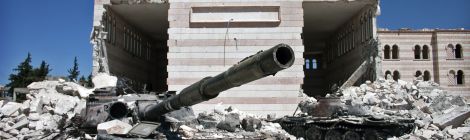
    azaz_syria

    Image by Christiaan Triebert/Flickr.

    In a study that is forthcoming in the Journal of Conflict Resolution, I and my co-authors Lars-Erik Cederman (ETH Zürich) and Manuel Vogt (Princeton University) conduct such a comparison. We analyse the probability of internal armed conflict between linguistically and religiously distinctive groups between 1946 and 2009.

    Contrary to Huntington’s thesis, linguistic differences show a strong and robust relationship with the outbreak of intrastate conflicts. In fact, we find that linguistic divisions are more conflict-prone than religious differences.

    These findings continue to hold when we focus only on the years since 1990 – the period to which Huntington’s thesis should be the most relevant. Our results further suggest that in no world region are religious differences more likely to be associated with internal armed conflict than linguistic divisions. We find the strongest support for a greater conflict-proneness of language compared to religion in Eastern Europe and Asia.

    Even in the Middle East, we find a slightly higher, if uncertain, probability of armed conflict across linguistic than religious lines. The Middle Eastern finding at least in part results from multiple Kurdish rebellions in Turkey, Iraq, and more recently Syria as well as smaller uprisings of linguistic minorities in Iran.

    When focusing only on conflicts that involve Muslim groups, we do not find substantial differences to other world religions. Although the majority of all armed internal conflicts today take place within Muslim-majority states, the majority of Muslim groups do not engage in violent rebellion. Our analyses also reject the thesis that Muslim groups disproportionately engage in conflict with non-Muslim groups.

    Why Linguistic Differences?

    Instead linguistic differences continue to be more frequently related to armed uprisings within states. While the brutal civil war in Syria captured headlines over the past years in many Western countries, destructive conflicts across linguistic lines haunt South Sudan, Burma, and Turkey.

    Of course, linguistic differences are more widespread than religious divisions. In other words, ethnic groups in any given country are more likely to be divided by language than by religion. Notwithstanding these differences in frequency, our results indicate that linguistic divisions are disproportionately more often related to armed conflict than religious distinctions.

    In our forthcoming article, we argue that it is the power of nationalism that makes linguistic divisions more conflict-prone than religious ones. Language gained political relevance in the late 18th century when the French Revolution transferred political authority from absolutist rulers to the people. About the same time that political power became vested in European peoples, the industrial revolution created incentives to further homogenize European nation-states. Mass schooling and mass newspapers laid the basis for imagined national communities.

    These developments provided both motive and opportunity for violent conflict across linguistic boundaries. Where members of ethnic groups are barred from having their children taught in their native language or experience linguistic discrimination in the job market and their interaction with the state, some of them will voluntarily assimilate into the dominant culture, but others develop grievances and may even refuse assimilation.

    The elites of such discriminated groups can voice these grievances through publications in their own language and use it to express nationalist aspirations and demands. When the host state is unable or unwilling to address these demands, violent conflict becomes more likely. These dynamics are illustrated by Sri Lanka’s decades-long civil war between Singhalese and Tamils, and recurrent Kurdish rebellions in Turkey.

    Given the link between industrial advancement and language-based nationalism it is unsurprising that we find higher rates of linguistic conflict in the relatively highly developed regions of Eastern Europe and Asia rather than in Sub-Saharan Africa. Central and Eastern Europe may even be considered as the cradle of linguistically-based nationalism.

    The multi-ethnic Austro-Hungarian and Ottoman empires did not fulfil the modern creed of “one people, one state,” and violently disintegrated during World War I. The Soviet Union and Yugoslavia followed suit in the early 1990s. To this day, Turkey has not come to terms with its Kurdish minority, and once more experiences internal conflict.

    Yet the idea of nationalism did not remain contained to Europe. A highly flexible concept, it informed the national liberation struggles of former colonial subjects against the European colonial powers. The lines of division here were usually race and language rather than religion. For decades, the Israeli-Palestinian conflict was a conflict between Hebrew-speakers of European origin and Arab speakers, who had lived in Palestine for centuries. Only in the past two decades has it taken on more religious undertones.

    Policy Solutions?

    Linguistic and religious differences will remain with us for the foreseeable future. However, very few of these fault lines can be expected to erupt in violent conflict. Whether linguistic differences transform into seemingly incompatible nationalist projects, or whether religious divisions into ostensibly intractable positions, depends on how political leaders from different groups interact with one another.

    Frequently armed rebellion emerges in politically highly exclusive and discriminatory contexts. Where political leaders with specific linguistic or religious backgrounds are barred from decision-making that affects their groups, conflict is more likely to break out than in states where they have some influence in government circles. Exclusion along ethnic lines creates clear insiders and outsiders, fosters grievances among the excluded, and suggests that there is “no other way out” but violent resistance. Zimbabwe, both under Smith and Mugabe, Iraq under Saddam Hussein, and Burma to the present day are examples of ethnically exclusionary regimes. Each of these states also experienced violent rebellion by excluded groups.

    In another joint study published in “Peace and Conflict 2016”, we show that excluding political elites with different linguistic or religious backgrounds from governmental power is pervasive in the Middle East and North Africa. So is political discrimination that denies the Palestinians in Gaza citizenship rights, keeps the Shia from voting in Qatar, or persecutes Kurds for political reasons in Turkey.

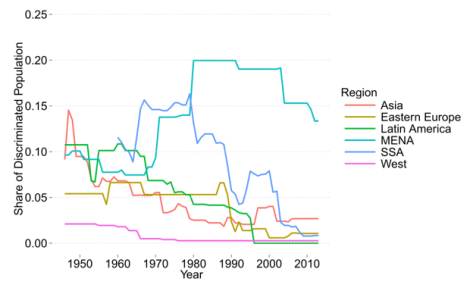
    ethnic-conflict-graph

    Figure 1 displays the average population share that experiences discrimination for different world regions and years. The data derives from the Ethnic Power Relations (EPR) dataset available at https://growup.ethz.ch/pfe.

    Figure 1 reveals that ethnic discrimination remains staggeringly high in the Middle East although the region has experienced some improvements over the past twenty years. That religious differences in the Middle East erupt into violent conflict may be less of a surprise once this context is taken into account.

    Our research thus suggests that avoiding ethnic exclusion and discrimination through power-sharing in multi-ethnic governmental coalitions will reduce the likelihood of armed conflict across both linguistic and religious lines. Elite accommodation in power-sharing coalitions has contributed to greater stability in such diverse places as Bosnia, Nigeria, Burundi, and Malaysia regardless of the type of ethnic differences. Although no panacea, power-sharing is associated with a substantial decrease in the likelihood of internal armed conflicts compared to exclusive environments.

    While there has been a trend towards ethnic accommodation since the end of the Cold War, we do not know enough about its origin. Future research needs to investigate the causes of accommodation in greater detail and pay particular attention to appropriate solutions for violent conflict across linguistic lines relative to religious differences.


    Nils-Christian Bormann is lecturer and Humanities and Social Science Fellow in the Politics Department at the University of Exeter.

    Manuel Vogt is a visiting postdoctoral research associate at Princeton University and senior researcher at ETH Zürich.

    Lars-Erik Cederman is Professor of International Conflict Research at ETH Zürich and the author of Inequality, Grievances, and Civil War (Cambridge University Press, 2013).

  • Sustainable Security

    RC_long_logo_small_4webThis article is part of the Remote Control Warfare series, a collaboration with Remote Control, a project of the Network for Social Change hosted by Oxford Research Group.

    Editor’s note: Remote Warfare and the War on Drugs mini-series: This series of articles explores how remote warfare is being used in the war on drugs. To date, much of the debate on remote warfare has focused on its use in the war on terror. However, the use of drones, private military and security companies (PMSCs), special forces and mass surveillance are all emerging trends found in the US’s other long standing war, the War on Drugs. The articles in this series seek to explore these methods in more depth, looking at what impact and long term consequences they may have on the theatre in which they’re being used. Read other articles in the series.

    Ever advancing remote warfare technology is being increasingly used by law enforcement agencies to counter drug trafficking. In response, drug cartels are also adopting new technology to smuggle and distribute drugs. However, the technological superiority of law enforcement-military actors is also causing criminal and militant groups to adapt by employing the very opposite tactic, by resorting to highly primitive technology and methods. In turn, society is doing the same thing, adopting its own back-to-the-past response to drug trafficking and crime.

    The history of drug trafficking and crime more broadly is a history of adaptation on the part of criminal groups in response to advances in methods and technology on the part of law enforcement agencies, and vice versa. Sometimes, technology trumps crime: The spread of anti-theft devices in cars radically reduced car theft. The adoption of citadels (essentially saferooms) aboard ships, combined with intense naval patrolling, radically reduced the incidence of piracy off Somalia. Often, however, certainly in the case of many transactional crimes such as drug trafficking, law enforcement efforts have tended to weed out the least competent traffickers, and to leave behind the toughest, meanest, leanest, and most adaptable organized crime groups.

    Increasingly, organized crime actors have adopted advanced technologies, such as semi-submersible and fully-submersible vehicles to carry drugs and other contraband, and cybercrime and virtual currencies for money-laundering. Adaptations in the technology of smuggling by criminal groups in turn lead to further evolution and improvement of methods by law enforcement agencies. However, the use of ever fancier-technology is only a part of the story. The future lies as much behind as ahead (to paraphrase J.P. Wodehouse), with the asymmetric use of primitive technologies and methods by criminal groups to counter the advanced technologies used by law enforcement.

    The Seduction of SIGINT and HVT

    The improvements in signal intelligence (SIGINT) (information gained by the collection and analysis of the electronic signals and communications of a given target) and big-data mining (the extracting of useful information from large datasets or streams of data) over the past two decades have dramatically increased tactical intelligence flows to law enforcement agencies and military actors, creating a more transparent anti-crime, anti-terrorism, and counterinsurgency battlefield than before. The bonanza of communications intercepts of targeted criminals and militants that SIGINT has come to provide over the past decades in Colombia, Mexico, Iraq, Pakistan, Afghanistan, and other parts of the world has also strongly privileged high-value targeting (HVT) and decapitation policies-i.e., principally targeting the presumed leaders of criminal and militant organizations.

    JJprogects

    Artwork of drone warfare by JJprojegts.

    The proliferation of SIGINT and advances in big-data trawling, combined with some highly visible successes of HVT, has come with significant downsides. Although high-value targeting has been effective, this has only occurred under certain circumstances. In many contexts, such as in Mexico, HVT has been counterproductive, fragmenting criminal groups without reducing their proclivity to violence; in fact, exacerbating violence in the market. Other interdiction (the targeting of opponent’s organizational structures or disrupting their logistical chains) patterns and postures, such as middle-level targeting and focused-deterrence, would be more effective policy choices.

    A large part of the problem is that the allure of signal intelligence has led to the discounting of other key intelligence techniques, including developing a strategic understanding of criminal groups’ decision-making in order to anticipate the responses of targeted nonstate actors to law enforcement actions (here Mexico provides a disturbing example). It also requires the cultivation of human intelligence assets (sorely lacking in Somalia, for example) and obtaining a broad and comprehensive understanding of the motivations and interests of local populations that interact with criminal and insurgent groups (notably deficient in Iraq, Afghanistan, and Pakistan). Finally, establishing good relationships with local populations to advance anti-crime and counterinsurgency policies is essential. In Colombia, for example, drug eradication policy antagonized local populations from national government and strengthened the bonds between them and rebel groups.

    In other words, the tactical tool, technology – in the form of signal intelligence and big-data mining – has trumped strategic analysis. Instead, strategic intelligence analysis needs to be brought back, to drive interdiction targeting patterns, instead of letting the seduction of signal data drive intelligence, analysis and targeting action. Indeed, the political effects, as well as the anticipated responses by criminal and militant groups, and any other outcomes of targeting patterns, need to be incorporated into the strategic analysis. Questions to be assessed need to include: Can interdiction hope to incapacitate – arrest and kill – all of the enemy or should it seek to shape the enemy? What kind of criminals and militants, such as how fractured or unified, how radicalized or restrained in their ambitions, and how closely aligned with local populations against the state, does interdiction want to produce?

    Dogs Fights or Drone Fights: Remote Lethal Action by Criminals

    Criminal groups have used technology not merely to foil law enforcement actions, but also to fight each other and dominate the criminal markets and control local populations. In response to the so-called Pacification (UPP) policy in Rio de Janeiro through which the Rio government has sought to wrestle control over slums from violent criminal gangs, the Comando Vermelho (one of such gangs), for example, claimed to deploy remote-sensor cameras in the Complexo do Alemão slum to identify police collaborators, defined as those who went into newly-established police stations. Whether this specific threat was credible or not, the UPP police units have struggled to establish a good working relationship with the locals in Alemão.

    The new radical remote-warfare development on the horizon is for criminal groups to start using drones and other remote platforms not merely to smuggle and distribute contraband, as they are starting to do already, but to deliver lethal action against their enemies – whether government officials, law enforcement forces, or rival crime groups.

    Eventually, both law enforcement and rival groups will develop defenses against such remote lethal action, perhaps also employing remote platforms (drones to attack the drones). Even so, the proliferation of lethal remote warfare capabilities among criminal groups will undermine deterrence, including deterrence among criminal groups themselves over the division of the criminal market and its turfs. This is because remotely delivered hits will complicate the attribution problem – i.e., who authorized the lethal action — and hence the certainty of sufficiently painful retaliation against the source and thus a stable equilibrium.

    More than before, criminal groups will be tempted to instigate wars over the criminal market with the hope that they will emerge as the most powerful criminal actors and able to exercise even greater power over the criminal market – the way the Sinaloa Cartel has attempted to do in Mexico even without the use of fancy technology. Stabilizing a highly violent and contested – dysfunctional – criminal market will become all the more difficult the more remote lethal platforms have proliferated among criminal groups.

    Back to the Past: The Ewoks of Crime and Anti-Crime

    In addition to adopting ever-advancing technologies, criminal and militant groups also adapt to the technological superiority of law enforcement-military actors by the very opposite tactic — resorting asymmetrically to highly primitive deception and smuggling measures. Thus, both militant and criminal groups have adapted to signal intelligence not just by using better encryption, but also by not using cell phones and electronic communications at all, relying instead on personal couriers, for example, or by flooding the e-waves with a lot of white noise. Similarly, in addition to loading drugs on drones, airplanes, and submersibles, drug trafficking groups are going back to very old-methods such as smuggling by boats (including through the Gulf of Mexico), by human couriers, or through tunnels.

    Conversely, society sometimes adapts to the presence of criminal groups and intense, particularly highly violent criminality by adopting its own back-to-the-past response – i.e., by standing up militias (which in a developed state should have been supplanted by state law enforcement forces). The rise of anti-crime militias in Mexico, in places such as Michoacán and Guerrero, provides a rich example of such populist responses and the profound collapse of official law enforcement. The inability of law enforcement there to stop violent criminality – and in fact, the inadvertent exacerbation of violence by criminal groups as a result of HVT – and the distrust of citizens toward highly corrupt law enforcement agencies and state administrations led to the emergence of citizens’ anti-crime militias. The militias originally sought to fight extortion, robberies, theft, kidnapping, and homicides by criminal groups and provide public safety to communities. Rapidly, however, most of the militias resorted to the very same criminal behavior they purported to fight – including extortion, kidnapping, robberies, and homicides. The militias were also appropriated by criminal groups themselves: the criminal groups stood up their own militias claiming to fight crime, where in fact, they were merely fighting the rival criminals. Just as when external or internal military forces resort to using extralegal militias, citizens’ militias fundamentally weaken the rule of law and the authority and legitimacy of the state. They may be the ewoks’ response to the crime empire, but they represent a dangerous and slippery slope to greater breakdown of order.

    In short, technology, including remote warfare, and innovations in smuggling and enforcement methods are malleable and can be appropriated by both criminal and militant groups as well as law enforcement actors. Often, however, such adoption and adaptation produces outcomes that neither criminal groups nor law enforcement actors have anticipated and can fully control. Technology cannot fix defecting anti-crime and anti-drug policies, such as preoccupation with drug seizures , or absent rule of law and culture of lawfulness. Advances in technology do not obviate the need to strengthen bonds between citizens and the state and to create law enforcement and socio-economic conditions which allow citizens to internalize laws. Nonetheless, crime and some illegal economies will always persist and law enforcements and criminals will compete with each other in adopting improving technologies and finding measures to counter them, including most primitive but effective ones. The criminal landscape and military battlefields will thus increasingly resemble the Star Wars moon of Endor: drone and remote platforms battling it out with sticks, stones, and ropes.

    Dr. Vanda Felbab-Brown is a senior fellow in Foreign Policy at the Brookings Institution and co-director of the Brookings projects on Improving Global Drug Policy: Comparative Perspectives and UNGASS 2016 and Reconstituting Local Orders. Dr. Felbab-Brown is an expert on illicit economies and organized crime and international and internal conflicts and their management, including counterinsurgency and statebuilding. Her research focuses particularly on South Asia, Burma, the Andean region, Mexico, and Somalia, and she has conducted fieldwork in some of the most dangerous parts of the world. Dr. Felbab-Brown has an extensive publication list of books, policy reports, academic articles, and opinion pieces, including Poached: Combating Wildlife Trafficking, with Lessons from the War on Drugs (forthcoming 2016); Narco Noir: Mexico’s Cartels, Cops, and Corruption (forthcoming 2016); Aspiration and Ambivalence: Strategies and Realities of Counterinsurgency and State-building in Afghanistan (2013); and Shooting Up: Counterinsurgency and the War on Drugs (2010). Dr. Felbab-Brown is a frequent consultant for national, multilateral, and non-governmental organizations and a frequent commentator in U.S. and international media. She also regularly provides expert testimony to the US Congress. Prior to joining the Brookings Institution, Dr. Felbab-Brown was an Assistant Professor at the Georgetown University School for Foreign Service. She received her PhD in political science from MIT and her BA from Harvard University.

  • Sustainable Security

    Several diplomatic efforts have been made both domestically and internationally to enhance peaceful unity since the start of the Cyprus Problem. Despite the shortcomings of past efforts, it is still desirable not only to resolve the issue, but also to do so in a timely manner.

    The Cyprus Problem

    Cyprus, the third largest island in the Mediterranean Sea, is home to 1.1 million and has a tempestuous history involving many actors ranging from different empires and nations of the past to regional and global actors of today, including the UN, EU and NATO. As George Christou highlights, the history of Cyprus “has been characterised by tension and conflict due to the diametrically opposed interests of Greece and the Greek-Cypriots on the one hand, and Turkey and the Turkish-Cypriots on the other”. If we add the colonial heritage, proximity to the Suez Canal and interests of Great Britain, remnants of Cold War paranoia that the island was to become a Russian satellite or a ‘Cuba in the Mediterranean’, the British Sovereign Base Areas that host one of the biggest intelligence infrastructures in the region and the close links between the Greek and Russian Orthodox churches to the equation, the protracted conflict on the island starts looking multi-layered, multi-factored and multi-faceted.

    The United Nations Buffer Zone, also known as the Green Line, a demilitarised zone patrolled by the United Nations Peacekeeping Force in Nicosia,  Cyprus. Image credit: Marco Fieber/Flickr.

    Historically, the Cyprus conflict is usually boiled down to competing ethno-nationalisms between Turkish-Cypriot and Greek-Cypriot communities; it is usually read in tandem with the ‘motherland’ nationalism in Turkey and Greece, is entrenched in the 1960s constitution along consociational lines and traced back to the decolonisation period in the 1950s. At one time or another, both communities in Cyprus have linked their destinies to those of their ethnic kin, to that of the large-group outside the island. Due to the pursuit of mutually exclusive destinies, Cyprus suffered from inter-communal violence from late 1950s until its decolonisation and independence in 1960. However, the newly founded Republic of Cyprus was only ephemeral, and inter-communal conflict erupted once again only after 3 years in 1963. Since 1964, the island hosts one of the longest-standing peacekeeping missions – The United Nations Peacekeeping Force in Cyprus (UNFICYP). The next 50 years witnessed a long and frustrating process of inter-communal talks and several UN settlement plans, turning the island into a ‘graveyard of diplomats’. As a result, the communities, who were psychologically divided under the new federation, would soon become physically and demographically divided. As such, following the Turkish intervention in response to the Greek coup on the island in 1974, Cyprus has effectively been divided in two, with Greek-Cypriots living in the southern part under the legally recognised Republic of Cyprus (RoC) and Turkish-Cypriots living in the northern part under the unrecognised, self-declared, administration called the ‘Turkish Republic of Northern Cyprus’ (TRNC).

    Despite the cease-fire and the protracted conflict, Cyprus is a safe place. This safety may be a common characteristic of small communities where social control is prevalent because of close familial and social relationships, but Cypriots are generally and unarguably non-violent people, demonstrated by low crime rates. In spite of the daily frustrations of the conflict, and its economic, social and political cost to Cypriots, it is hard to deny that the situation is ‘comfortable’ and ‘normalised’. Not only does Cyprus remain a popular holiday destination for many Europeans, but it officially became an EU member state with all its ‘anomalies’ in 2004. At times, Cyprus markets itself as the home for the last divided capital of Europe—at other times, as the furthest Eastern corner of Europe that offers pristine and exotic beaches—or as the multi-cultural holiday resort that is simultaneously European, Middle-Eastern and Mediterranean.

    The Cyprus Problem operates on local, regional and international levels. The local entails the relationship between the two ‘ethnically’ categorised communities. Owing to Turkey and Greece’s involvement since its early stages, the conflict has also had a distinct regional dimension for many years. This regional dimension is also the product of islands geography as a bridge between 3 continents and due to the history and demographics of the region. At the international level, the problem has preoccupied the UN since 1964 and involved NATO, the United States and since 2004, the EU became more directly embroiled when Cyprus acceded the Union without a peace settlement.

    Solving the Problem

    Numerous diplomatic efforts have been made both domestically and internationally to enhance different forms of peaceful unity since the conception of the Cyprus Problem. Over the decades, myriad negotiations and peace-talks have also begun and have been later halted, fast-tracked, and revisited. Nevertheless, it is still imperative to find a comprehensive solution to the Cyprus Problem.

    Such a solution, which would also advance the wider cause of peacebuilding and reconciliation, is crucial for several main reasons:

    • The prolongation of the conflict presents a myriad of human rights violations for the communities of Cyprus. While the RoC enjoys full EU membership, Turkish-Cypriots—who are also EU citizens—live in the northern part of Cyprus where the RoC does not exercise effective control and where the Acquis Communautaire is suspended. The Acquis Communautaireis the accumulated body of European Union (EU) law and obligations from 1958 to the present day. It comprises all the EU’s treaties and laws (directives, regulations and decisions), declarations and resolutions, international agreements and the judgments of the Court of Justice. The unrecognised status of the northern administration also amounts to a violation of the human rights of those Greek-Cypriots who became internally displaced people during 1974 and had lost access to their properties. As such, Cyprus is an explicit case of legality and politics persistently challenging each other, a situation which creates inherent contradictions for the EU project.
    • The accession of the RoC to the EU without the inclusion of the Turkish-Cypriots also presents a significant challenge for EU governance across a diverse range of issues, including the EU objective of achieving stability in the eastern Mediterranean. The EU accession also creates a state of exception that galvanises Cyprus’ ‘special status’ that is in reality not that special. As Harry Anastasiou eloquently puts it, Cyprus was “… the first EU member country that was ethnically divided; that was represented at EU level exclusively by members of one of the rival ethnic communities; that was partially occupied by the military forces of an EU candidate state; that had the institutional means to apply the Acquis Communautaire in one part of its territory but not in another; that had a cease-fire line and a buffer zone manned by UN peacekeepers; and that had one portion of its citizens deprived of the right to their property and residence and another portion of its citizens deprived of the right of access to and participation in the EU economy and EU political institutions. Moreover, Cyprus was the only EU member where its major ethnic communities recognise the EU law while simultaneously rejecting each other’s law; where its major ethnic communities accept the legitimacy of the EU while rejecting each other’s legitimacy within their own shared island”.
    • The ramifications of the conflict on the NATO–EU relationship and European energy policy is disconcerting due to newly discovered natural gas resources in Cyprus, competing claims over these resources and the fact that Turkey’s geographical location makes it an important corridor- particularly for gas and oil for the EU. When we look at regional alliances and hydrocarbon interests, we can see a highly intricate web of relationships. These include the hyper-securitisation, where threats are constructed and legitimised through security speech acts, of Turkey in the RoC, the latter’s close links with Russia and Greece, Turkey’s significance for NATO, and the fact that Russia and Cyprus are not part of the alliance. Such dynamics clearly add further tension to Turkey-EU, EU-Russia and Russia-Turkey relations, and create further instability in the region. Thus, solving the Cyprus problem can ease tensions in the region and positively influence the regional dynamics particularly those about regional energy policies.
    • Even though the intentions of Turkey’s Justice and Development Party (AKP) regarding full EU membership are highly questionable, non-resolution of the Cyprus Problem presents an obstacle for Turkey’s EU accession as well as being a persistent and bitter thorn in Turkey–EU relations. Solving the Cyprus Problem may also help normalise Turkey’s relationship with its neighbours. Considering the deteriorating diplomatic relationships between Turkey and the ‘West’, deep polarisation among different groups in Turkey, crumbling economy and intra-state violence, conflict and terrorism, Cyprus can help relieve much pressure off Turkey and restore its diplomatic stance.
    • Considering Cyprus’ geographical proximity to Syria and Iraq and to the Middle East and North Africa, it could be argued that the instability in the region (including Turkey)—and the subsequent ‘refugee’ crisis—are factors that add to the urgency of finding a comprehensive solution to the protracted conflict. The Cyprus Problem is a non-violent, ‘normalised’, and ‘comfortable’ conflict (see Adamides and Constantinou 2011), thus the regional dynamics can help cultivate a sense of urgency for reaching a comprehensive solution, which may contribute to eventual increased stability in the region, as it would not only ‘reconcile’ Greek-Cypriots and Turkish-Cypriots but ease much pressure off Turkey, Greece and the EU as well.

    What’s more, it is not only pertinent to solve the Cyprus Problem, but to do so in a timely manner too. In 2004, Cypriots came close to finding a solution to their intractable problem. A comprehensive settlement plan (a.k.a The Annan Plan) on a bi-zonal bi-communal federal state with single citizenship was accepted by the Turkish-Cypriot community but rejected by the Greek-Cypriot community in a simultaneous referenda in April 2004. Following the disappointment of the peace referenda, Cypriots became disengaged from the peace process, which was further exacerbated by the global economic crisis. Following the financial crises that hit the RoC in 2012, the economic concerns of communities have gradually pushed the Cyprus Problem behind other concerns and priorities, specifically unemployment, inflation and increasing crime rates.

    The peace negotiations resumed in 2008 but failed again in 2011. After independent left-wing Turkish Cypriot presidential candidate Mustafa Akıncı assumed office in the northern part of Cyprus in April 2015, hopes were revitalised. Known for his pro-solution and Turkey-defying stance and surprisingly clean political slate, many accounts argue that the centre-right Nicos Anastasiades, who has been the President of Republic of Cyprus since 2013 from the only party that supported the Annan Plan, and Akıncı duo has created a very favourable environment and that the stars are perfectly aligned this time, bringing the island closer than ever to reaching a comprehensive settlement. This gave birth to increasing public engagement in the peace process, which contributed to the ‘favourable’ environment by supporting and legitimising the mandate of the negotiation teams and creating a more convincing and prosperous ‘vision’ for the future of Cyprus without ‘the Problem’.

    Unfortunately however, this trend was showing signs of reversal. Following the Geneva summit disappointment, lack of convergence on the security dossier of the negotiations is reproducing sense of insecurity and triggering historic traumas, which underpins highly polarised internal narratives based on zero-sum discourse. Especially after the parliamentary Enosis commemoration vote in the RoC and Turkey’s four freedoms demand in Cyprus, the ‘peace fatigue’ is starting to set in once again. Frustration over lack of progress and impetus showing itself in low hope: While 53% of Greek Cypriots and 48% of Turkish Cypriots wish for the peace process to succeed, 43% and 50% respectively express no hope that the peace process will produce results. As the new security architecture proposal of SeeD Security Dialogue Initiative provides a four-step road map to break the current deadlock:

    Step 1: Shift the focus away from hard security and guarantees that only emphasize on last resort, deterrence and worse case scenarios to soft security and preventative measures that emphasize on sustainability and viability, by broadening the concept to include human security, economic, social and ontological security. The underlying objective should be to achieve an endogenously resilient Federal Cyprus that relies on its own institutions to guarantee the security of its citizens.

    Step 2: Acknowledge that a transitional period will be required before Federal Cyprus can be endogenously resilient and secure, where special arrangements and external support will be necessary to build the capacity of Cypriot institutions and provide a sense of security to all citizens and communities. Focus on benchmarks and performance indicators that can ensure a smooth implementation period.

    Step 3: Negotiate and agree those aspects of transitional arrangements that are less controversial (e.g. timelines for implementation of the settlement, what support will be provided by an international mission) in order to prevent deadlock, increase points of convergence and reinforce hope and public engagement in the process before negotiating those aspects of transitional arrangements that are more controversial (e.g. ‘last resort’ provisions, role of historic guarantors).

    Step 4: Enshrine all agreements and steps in a Treaty of Implementation, which will outline a robust bridge from the current status quo, to the ultimate vision of an endogenously resilient Federal Cyprus.

    What is needed to revitalise the peace process in Cyprus is innovation and reflection both on the process and on the content. Specifically relating to the security dossier, we need a different approach that broadens the concept of security beyond the realpolitik regional bargaining and beyond the narrow understanding that talking about the security of a federal Cyprus is talking about military arrangements and guarantees. It is crucial to capitalise on these proposals and regional dynamics and add a success story to the world’s peacemaking and peacebuilding record.

    İlke Dağlı, a Senior Researcher for the international think-tank SeeD (The Center for Sustainable Peace and Democratic Development), completed her PhD in Politics and International Studies at the University of Warwick, focusing on “Securitisation of Identities in Conflict Environments and its Implications on Ontological Security”.  She has a degree in European and International Politics and completed her MSC in Bristol on Security and Development. Since 2006 she has been working closely with CSOs and SMEs in Cyprus as a project coordinator, project developer, consultant and facilitator. She co-authored and coordinated many local projects such as The Civil Society Dialogue Project, Cyprus Community Media Centre initiative, Access Info Cyprus Project and Play for Peace Project and is closely involved with the ENGAGE Do Your Part for Peace project.

  • Sustainable Security

    Authors’ note: This piece presents a summary of the article: Gëzim Visoka and John Doyle, ‘Neo-Functional Peace: The European Union Way of Resolving Conflicts’, Journal of Common Market Studies. Vol. 54, No. 4, 2016, pp. 862-877. Free access link: http://onlinelibrary.wiley.com/doi/10.1111/jcms.12342/epdf.

    Today, the European Union (EU) plays an important role in preventing conflicts, as the EU’s role facilitating dialogue between Kosovo and Serbia shows. But the EU’s role as regional peacebuilder could suffer drawbacks as a result of internal turbulences cases by the Brexit and other lingering disintegrationalist forces.

    Introduction

    The European Union has expanded its role in preventing conflicts and building peace, but its institutional practices remain insufficiently conceptualized. In this piece we argue that, drawing from a strong self-perception toward a neo-functionalist interpretation of its own history, the EU has started to use its own internal model of governance as an approach for resolving protracted disputes, through deconstructing highly political issues into technical meanings in order to achieve mutually acceptable agreements. We illustrate this by examining the EU’s approach in facilitating a dialogue for normalising relations between Kosovo and Serbia. However, the EU’s role as regional peacebuilder can suffer drawbacks as a result of internal turbulences cases by the Brexit and other lingering disintegrationalist forces.

    The EU’s approach to resolving conflicts and building peace

    Nicolas Raymond

    Image by Nicolas Raymond via Flickr.

    In the past ten years, the European Union (EU) has increased its role in resolving conflicts and building peace in its neighbouring regions and beyond. However, analysis of the EU peacebuilding work has placed EU practice almost entirely within traditional instruments of security governance, such as conflict prevention and mediation, crisis management, post-conflict stabilization and normative frameworks, such as human rights, human security and civilian protection. This is largely because scholars have argued that the EU’s peacebuilding framework does not yet represent a coherent intellectual project and relies on existing liberal peacebuilding frameworks affiliated with restoring security, strengthening the rule of law, supporting democratic processes, delivering humanitarian assistance, and supporting economic recovery. Yet the EU’s peace support operations should not only be studied through the lens of liberal peacebuilding, but should also be seen as self-mirroring its internal dynamics of neo-functional integration and consolidation. Thus, the EU’s external actions are partly based on the externalization of its own model of integration, especially neo-functionalism which accounts for the incremental convergence of self-interest through economic and technocratic co-operation in a particular sector, which then can spill over to other sectors and enable broader political co-operation and integration.

    The EU’s peacebuilding approach is different to that of other international actors, mainly due to the contextual factors regarding how it has transformed internally, how its complex institutional and multi-layered governance works and what capacities, norms and practices it invokes in dealing with external situations. The domination of new alternative accounts, such as liberal intergovernmentalism, in explaining the EU’s common foreign and security policy, as well as the complex unfolding of EU enlargement, development, and peacebuilding policies, have overshadowed neo-functionalism’s space in exploring developments in EU peacebuilding. Liberal intergovernmentalism grants more agency to the national preferences of member states than the EU institutions in shaping internal and external policy.

    In peacebuilding studies, there is a tendency to avoid neo-functionalism, because it can be associated with technocracy – the rule of experts and bureaucratic procedures, based on universal blueprints, privileging of external knowledge and imposition of frameworks for governing societies.

    Despite its overshadowed academic relevance, neo-functionalism continues to be an underlining frame of reference and culture of practice among EU policy-makers and bureaucrats. Neo-functionalism accounts for the incremental convergence of self-interest through economic and technocratic co-operation in a particular sector, which can spill over to other sectors and enable broader political co-operation and integration. The increased role of the EU in merging peace, development and security speaks to the neo-functionalist evaluation of EU governance of external security. Neo-functionalism, therefore, is not only relevant for theorizing regional integration, but can also help us understand the EU’s peace support practices.

    Neo-functional peace: Kosovo-Serbia Dialogue

    The EU’s neo-functionalist approach has played a crucial role in normalizing relations between Kosovo and Serbia, and in resolving a range of outstanding political disputes. In policy discourse, the Kosovo–Serbia dialogue was presented as a major success of European foreign policy and evidence that the EU was a reliable partner of the UN. But, how has the EU managed to resolve one of the protracted conflicts in Europe?

    First, as prescribed by neo-functionalists, background conditions need to be conducive for a peace process to work. In the case of Kosovo and Serbia, the background conditions were ripe for both sides to initiate a peace process, whereby the normalization of relations between Kosovo and Serbia emerged as a key condition for advancing the stalled EU integration process for both countries. The peace processes between Kosovo and Serbia in the past two decades are marked by several missed opportunities. The EU’s integration perspective for Kosovo and Serbia has been the driving force for both sides to engage in dialogue. Hence, despite its unpopularity now in Europe, the enlargement of the EU in the Western Balkans is key to transforming protracted conflicts.

    Second, neo-functionalist approaches prefer technical dialogue and agreements in areas of ‘low politics’, which permit confidence-building, socialization and development of mutual commitments. A key feature of Kosovo–Serbia Dialogue was the conversion of sensitive political issues into technocratic process. The essence of this process was to find a mutually agreeable solution, leading to Serbia’s removal of its parallel institutions in Kosovo and de facto acceptance of Kosovo’s legal and political authority territory Kosovan territory, but also as an independent state in the region. Equally important and sensitive was Serbia’s demand to expand political rights and the scope of local self-governance of the Serb community living in Kosovo. The technical dialogue has resulted in a number of important agreements on regional co-operation and representations, integrated border management, regulation of customs steps, return of cadastral records and civil registry and recognition of university diplomas. The agreements were written in technical language but had far-reaching political implications.

    Third, in neo-functionalist logic, technical agreements had a spill over effect which launched a high-level political dialogue and resolved numerous outstanding sensitive political issues. After each agreement, the EU outlined the need for continuing dialogue, for pragmatism and for new agreements. The technical dialogue has facilitated a high-level political dialogue and in turn, the political dialogue later allowed new technical agreements.  In fact, technical dialogue proved to be insufficient without upgrading the process to the highest political level that would ensure stronger political commitment, domestic legitimacy and faster progress in implementing the outcomes of the dialogue. The key breakthrough in the Kosovo–Serbia Dialogue was the negotiation of the ‘First Agreement Governing the Principles for Normalisation of Relations’, which permitted progress on sensitive political issues, such as sovereignty and regional membership, without negatively affecting the self-interest and domestic legitimacy of parties.

    Fourth, neo-functionalist interactions are often embedded in multi-meaning liminalities to enable each party to interpret agreements in their own terms. While Kosovo utilized them to strengthen sovereignty, Serbia utilized the agreements to improve and advance the rights of Serbs in Kosovo and enhance its EU accession agenda.  If, however, a highly political vocabulary was used to describe the contentious issues, neither party would have been able to reach any agreement. Liminality was chosen to reduce the potential politicization of these issues and create space for both parties to sell to their domestic audiences these technical agreements as favourable deals in their national interest. For instance, the agreement on the freedom of movement provides that citizens of Kosovo and Serbia would cross the border not with passports but with ID cards, accompanied only by a written entry/exit. In this way the question of recognizing the Kosovo passport was avoided, by using alternative national documents.

    Another interesting example is the IBM agreement, which for Kosovo is referred to as integrated border management, while Serbia refers to it as integrated boundary management. The substance of this agreement is in favour of Kosovan sovereignty, as it is a de facto demarcation of the border, setting the permanent border crossing between two countries where each party recognizes the jurisdiction on their respective sides.

    Fifth and final feature, as the EU’s desire to reward intentions and rhetorical commitments, rather than tangible results and outcomes of the peace process, which does not exclude the possibility for encapsulation, spillback and retrenchment of all sides in the peace process. From the EU’s perspective, just the fact that the parties are talking to each other and the dialogue has not failed completely constitutes a promising basis for success. The EU has tried to promote positive conditionality and delivered some benefits irrespective of actual implementation. The facilitative role of the EU has proven to be more effective than the previous imposing nature of UNMIK in Kosovo. Nevertheless, conditionality and incentives for EU integration have certainly been key ingredients that have transformed the conflicting positions of actors.

    Conclusion

    Despite numerous achievements, the dialogue between Kosovo and Serbia was not without challenges. The agreements deriving from technical dialogue have only partially been implemented. Each side has delayed the implementation of certain parts of agreements that were not seen to be in their best interests. Both Kosovo and Serbia ran into domestic legal and institutional complications, especially in cases which required legislative change. There is some evidence (but still limited to date) that the agreements have improved people’s lives. The main critical uncertainty is how the implementation of agreements will reshape political and institutional life in Kosovo and what role it will have in fostering local peacebuilding and ethnic reconciliation. Another critical uncertainty is the EU integration dynamics of Serbia and Kosovo, which serve as a key incentive for both sides’ engagement in the normalization dialogue. The rise of euroscepticism, refugee crises and regional instability has made enlargement unpopular within the European Union. Most importantly, Brexit and other internal challenges can hold back EU’s role as regional peacebuilder. Moreover, it remains uncertain what the endgame of the dialogue will be, especially the regulation of diplomatic relations between Kosovo and Serbia. Despite these difficulties, the progress made since 2011 compared to previous international engagement is clear, especially in opening the prospects for resolving key outstanding issues. Nevertheless, these future uncertainties show that this neo-functional peace could experience setbacks, but is a promising approach through which to view the EU’s engagement in the resolution of protracted conflicts.

    The key principles of neo-functionalism, such as the interplay between technical and political, deconstructing of larger political issues into smaller technical decisions, spillover effects and shifting grounds of interests – when decontextualized and modified from their original usage to describe the EU integration process – are a useful means to conceptualize how the EU addressed the protracted conflict around the sensitive questions of sovereignty, recognition and political autonomy. This neo-functional approach does not seek to make progress by avoiding sensitive issues and focusing on something else; rather, it seeks to deconstruct the contentious issues into acceptable technical and everyday decisions. Another distinct feature of EU’s neo-functionalist approach is the extensive involvement of local actors and ownership of the process. While liberal and technocratic peacebuilding is often associated with the imposition of external blueprints and template-like solutions, and suppressing local alternative dispute resolution approaches, EU’s approach can be different. It can be a situational strategy, where the local actors are the main parties that decide on the form and substance of agreements and implementation.

    EU’s neo-functionalist distinctiveness lies in its ability to transform disagreement by deconstructing language and practice and translating their meaning differently, by providing facilitative space through third parties. This sequential approach to the peace process has been first and foremost a practice and process-driven approach. Technocracy in this context does not depoliticize issues, but it helps reframe, temporarily at least, the meaning of things in such a fashion that it enables the transformation of hostilities and building of interdependent co-operation. It is this logic from its own history which makes neo-functional approach again a useful way to think about EU peace support practices. This approach deserves more merit and needs to explore how it can be utilised in contemporary peace-making and mediation efforts, especially in frozen and protracted conflicts.

    Dr Gëzim Visoka is a Lecturer in Peace and Conflict Studies at Dublin City University. His latest book entitled “Peace Figuration after International Intervention: Intentions, Events, and Consequences of Liberal Peacebuilding” is out this month with Routledge.

    Professor John Doyle is Director of the Institute for International Conflict Resolution and Reconstruction and the Executive Dean in the Faculty of Humanities and Social Sciences at Dublin City University.

  • Sustainable Security

    Carefully planned interventions in the water sector can be an integral part to all stages of a successful post-conflict process, from the end of conflict, through recovery and rebuilding, to long-term sustainable development.

    Does the better post-war water resource management contribute to peacebuilding by generating legitimacy within a society and for the state? Research has become increasingly interested in the potential role of natural resources, especially freshwater resources in war affected societies, because the misuse of natural resources is increasingly being seen as one of the key challenges for sustaining and promoting peace. This link has of late received serious traction in research and policy circles as the international community stresses the significance of environment for the peaceful societies by including both in the 2015 UN Sustainable Development Goals.

    Water Management after War

    Post-war countries are among the most difficult policy arenas for international agencies and domestic stakeholders. The challenge is not only to bring an end to the war and prevent violence from reoccurring, but also to help countries reset the dynamic among their internal actors on a peaceful path. The long-term adverse effects of wars further amplify this policy challenge.

    Many of these challenges for post-war countries relate to political and social aspects. Lasting impressions of human rights abuses committed during wars continue to shape the relations among members of societies for decades to come. Both socio-economic crunch and political churning can challenge the stability of post-war countries for many years if not decades. The public health crisis has been found to be especially severe and affect disproportionately the civilian population in post-war countries. Environmental and climate change exposes war affected people further to new risks, exaggerating the human costs of war long after active combat has ceased.

    In order to address public health crisis and to reduce further human costs of war, it is critical for a post-war country to be able to provide access to clean water and sanitation for its population. Often in war times, water storage facilities and installations for water delivery are damaged and sometimes even targeted. Thus, after the end of the war it often needed for the focus to be placed on the rapid restoration of water infrastructure.

    When a war affected country fails to swiftly and smartly manage its water resources it amplifies the vulnerability of post-war communities on water and inevitably exacerbates and prolongs the human costs of war. Increasing demand for freshwater and climate change induced variability of its availability are further adversely affecting the agricultural production and the provision of sustainable livelihood for post-war communities. Thus, addressing the war related damages to the water infrastructure are often key to rebuilding a state after war. Then, it is necessary to develop the increasingly scarce water resources in a sustainable manner, which will bring inclusive development and promote peace in the society.

    Yet, even though the international community is aware of these tasks, — recent research indicates that while addressing water management in post-war period — the emphasis is usually placed on expert-oriented solutions, which bypass the complex and critical political aspects of it. Ignoring political factors might expedite the implementation process in short run, however, it can possibly create worrying challenges not only for the smooth operation of the water projects, but also for the peace itself.

    Lessons from Kosovo and Nepal

    Asian development Bank

    The Kali Gandaki “A” Hydroelectric Project in Nepal. Image by Asian devlopment bank via Flickr.

    A recent analysis of the post-war water resource management in Kosovo shows how the international community, choosing a highly expert driven technocratic approach to rebuild Kosovo’s water sector after the violent conflict came to an end, frequently clashed with political realities in this landlocked and conflict affected territory. The United Nations Interim Administration in Kosovo (UNMIK), which assumed trusteeship of the territory in 1999 until a European Union mission replaced it in 2008, favored technical solutions and bypassed the political realities. Especially the case of the divided city of Mitrovica exemplifies that UNMIK sought to avoid confrontation. As the central political authority in Kosovo, UNMIK rather paid outstanding water bills for Kosovo Serbs, than facilitating the collection of fees for supplied water. Overall, the empirical analysis shows that UNMIK’s technocrat driven management of the water sector in fact impeded the peace process rather than aided it.

    Other recent findings on the water resource development in conflict affected Nepal, show the positive potential of ecologically sensitive service provision as these can yield tremendous socio-economic benefits for rural communities. The provision of energy in Nepal remains a pivotal challenge. In 2010, almost a quarter of the country did not have access to electricity, and even those households that were connected did not receive continuous power. The capital, Kathmandu, experiences scheduled power cuts up to 14 hours a day during the drier winter season, when hydropower ebbs, and two to three hours a day in the water-rich monsoon months. The study of two localities in rural Nepal, shows that micro-hydropower development has had many positive effects for rural communities, especially in regard to socio-economic development. This improved socioeconomic status of households reflects a clear reduction in vulnerability to poverty and even food security as the improved cannels diverting water to the micro-hydropower station have improved irrigation of nearby fields. Though it does not immediately translate into improving the legitimacy of the Nepali state, by helping to bring over all sustainable development of its citizens, the state is most likely going to reap the benefit in the future. The experiences from the study of micro-hydropower development in Nepal show that the state needs to actively pursue and project the ownership of the water sector development process in a post-war period in order to legitimize itself.

    Conclusion

    There is certainly a need to acknowledge the long-term interplay of social, political, and ecological processes in post-war countries and to understand the potential and dynamics of natural resources and environmental issues in this context. The interactions of these processes decisively shape the post-war landscape. It is therefore prudent to help building a peace that is ecologically sensitive and socially and politically relevant and desirable.

    Thus, the carefully planned interventions in the water sector become an integral part to all stages of the post-conflict process, from the end of conflict, through recovery and rebuilding, to long-term sustainable development. A recently published article in the Hydrological Sciences Journal argues that for the best possible use of water resources in the peacebuilding process, there is a need for a comprehensive approach. Both the Nepal and Kosovo cases show the unintended consequences that result from narrow focused interventions in the post-conflict landscape. It is pivotal that the international community engaged in peacebuilding must plan, think and execute with a long-term perspective that sets the conditions for sustainable peace. Drawing on an extensive reading of the current literature, such a comprehensive approach includes a series of measures to be taken in a post-conflict setting: legal reforms and building of sound water institutions; careful planning of water use to achieve sustainable food security; and cooperative involvement of international, national and local stakeholders in the planning and managing of water resources.

    Further reading:

    Swain, A., & Jägerskog, A. 2016. “Emerging Security Threats in the Middle East.” Lanham: Rowman and Littlefield Publishers.

    Krampe, Florian. 2016. “Empowering Peace: Service Provision and State legitimacy in Peacebuilding in Nepal.” Conflict, Security, and Development 16 (1), pp. 53-73.

     Krampe, Florian. 2016. “Water for Peace? Post-Conflict Water Resource Management in Kosovo,” Cooperation and Conflict. DOI: 10.1177/0010836716652428.

     Ashok Swain. 2016. “Water and post-conflict peacebuilding.” Hydrological Sciences Journal  61 (7), pp. 1313-1322.

    Florian Krampe is a political scientist specializing in peace and conflict research, international relations, and political ecology at the Department of Peace and Conflict Research at Uppsala University.

     Ashok Swain is Professor of Peace and Conflict Research and Director of the Research School for International Water Cooperation at the Department of Peace and Conflict Research, Uppsala University. He is also Professor at the Department of Earth Sciences of Uppsala University.

  • Sustainable Security

    Implementation of the interim deal with Iran, which freezes the country’s nuclear enrichment in exchange for limited sanctions relief, began last week. As an initial outcome of this deal, we are witnessing a substantial shift in diplomatic relations and relationships between Iran and its regional neighbours – some positive, some not. This deal marks a significant step for the international non-proliferation regime, but will it achieve the trust and confidence-building goals intended? As the US and Iran face increasing domestic pushback on the terms of the agreement, questions remain on the interim deal’s impact on relations in the region and abroad, and the effect these relations may have on the prospects of coming to a full comprehensive follow-up agreement between Iran and the P5+1 countries.

    The Interim Deal

    P5 + 1 Iran 2

    P5+1 foreign ministers — as well as European Union High Representative Catherine Ashton and Iranian Foreign Minister Javad Zarif — at the United Nations Headquarters in Geneva, Switzerland, after the group concluded negotiations about Iran’s nuclear capabilities on November 24, 2013. Source: US State Department (Flickr)

    The current deal, in which Iran will halt further progress on its nuclear programme and roll back key elements in return for temporary and limited sanctions relief from the P5+1, was originally negotiated at the end of November in Geneva, but the details of implementation were confirmed in early January. After a decade of negotiations to solve the Iranian “nuclear crisis”, the implementation of this deal marks a significant step forward for the international non-proliferation regime, and is an important success story for international diplomacy. Despite the misgivings of a number of sceptics, this six-month interim deal brings countries together to work towards developing assurances around Iran’s nuclear programme, acting as a trust and confidence building exercise with the intention to create opportunity and space for a more ambitious longer term agreement in the future.

     A Positive Impact on Diplomatic Relations…

    As an initial outcome of this deal, we are witnessing a substantial shift in diplomatic relations and relationships between Iran and its regional neighbours. While the outset of the interim deal saw a number of sceptics, encouraging reactions have developed, including positive official responses from Kuwait, Qatar, Bahrain and Oman. Even the Prime Minister of the UAE officially welcomed the deal and called for lifting sanctions and a partnership with Iran.

    Relationships between Iran and Western partners have also begun to restore themselves as a result of the deal. After three decades of no sustained direct contact, back channels were set up prior to and early on during Rouhani’s presidency to help unlock the negotiations and in a pinnacle moment in September, Barack Obama and Hassan Rouhani spoke on the phone after the UN General Assembly.

    The United Kingdom also hasn’t had bilateral diplomatic relations with the Islamic Republic since 2011, when the British Embassy in Tehran was stormed.  However, the UK and Iran agreed to renew direct diplomatic links during November’s Geneva talks and shortly thereafter, a newly appointed British chargé d’affaires, Ajay Sharma, travelled to Iran as the first British envoy since 2011. It was announced on the 28th of January that a delegation of Iranian parliamentarians will visit London during the summer months. This follows a visit by British Members of Parliament, led by former Foreign Secretary Jack Straw MP, to Tehran that took place in early January.

    This overall confidence-building between regional states and diplomatic restoration between Iran and the P5+1 negotiating partners promises to improve the chances of negotiating a comprehensive nuclear deal next month.

    …But Not for Everyone

    Netanyahu and Obama

    US President Obama with Israeli Prime Minister Netanyahu Source: The Israel Project

    However, the possible détente between Iran and Western countries – the US in particular – may be a game changer for some regional states and parties. Israel’s response to the interim deal has been continuously vocal and disapproving from the start, with Israeli Prime Minister Benjamin Netanyahu condemning the deal as a “historic mistake”. It comes as somewhat of a personal defeat for the Israeli Prime Minister, who has been campaigning to strip Iran from all of its enrichment capability. Some analysts have hinted that this deal will damage the prospects for the Weapons of Mass Destruction Free Zone in the Middle East as it will pull Israel even further away from the negotiation table. Perhaps, though, the fear of losing US interest will bring them even closer to it.

    Responses in Saudi Arabia have also been less than enthusiastic: while the official response labelled the deal as a good solution to the Iranian nuclear programme, the unofficial response fears proliferation in the region and the enhancement of Iran’s role as a regional power. Members of the Saudi royal family have labelled Obama’s strategy with Iran as flawed and claimed that sanctions relief was a huge mistake that will now give Iran the upper hand. The Saudis see this deal as giving Iran more power, which threatens their status as a regional hegemon. In an unusual turn of events, this sees Saudi Arabia’s and Israel’s interests aligning—both feeling disappointed and outraged towards the US and fearing Iran’s potential.

    Hints of a rift between Gulf Cooperation Council (GCC) states have also been noticed as a result of this deal. Unlike Saudi Arabia, most of these states have signalled their modification in policy to match US goodwill towards Iran. This is especially seen in Oman, a state with strong historic ties to Iran and which helped broker the initial back channels established between the Islamic Republic and US in early 2013. At the IISS Manama Dialogue in December 2013, Omani Foreign Minister Youssef bin Alawi candidly spoke out against the Saudi proposal to upgrade the GCC union. The Sultanate state has always intended to pursue an independent foreign policy path, careful to balance relationships on both sides of the Gulf. The proposal, which strengthens the union of the GCC, was rejected by the Omani Sultanate on the grounds that there is a failure to agree on the foundations of the GCC and economic integration, but it would also force Oman to align more closely with Saudi Arabia which might in turn antagonise Oman’s relationship with Iran. With the complex combination of global and regional structural shifts and intersecting economic interests, this is perhaps the first of many small fissures between the Gulf States and regional partners that will come as unintended consequences of this deal.

    Hurting at home

    Even within Iran, the reaction has been mixed, and Rouhani has faced criticism for being too close to the West. Since his election in June of last year, he and his administration have been leading a public relations campaign to repair relations with the West, but he has faced problems with hardliners who are sceptical of US motivations or hold on to historical grudges.  While this deal helps to relieve some of Iran’s economic hardship, Rouhani has gone out on a limb in easing off enrichment, a capability which is seen by many within Iran to be entrenched within their national identity.

    Obama faces similar problems in Washington, as lawmakers in the Congress come dangerously close to causing the collapse of the deal by supporting the Nuclear Weapons Free Iran Act (S.1881) in the Senate. This bill, introduced in December by New Jersey Democratic Senator, Robert Menendez, imposes additional financial sanctions against Iran if it were to default on the terms of the interim deal, or if a long term deal was not agreed to after the end of the six months. Terms of the initial deal with Iran stipulates there will be no new nuclear related sanctions but core sanctions will remain intact for now and Iran will continue to lose $4-$5 billion in revenue per month.

    Crucially,  the Nuclear Weapons Free Iran Act would require zero enrichment from Iran, which is a red line for Iranians. Under the terms of the Non-Proliferation Treaty, all Parties have the inalienable right “to develop research, production and use of nuclear energy for peaceful purposes without discrimination”. Blatant discrimination against these rights is a deal breaker for Iran and in response (or perhaps retaliation) to Menendez’s bill, Iranian parliament has proposed new legislation that would allow for Iran to increase uranium enrichment to 60 percent, enough for weapons grade uranium. Iranian Foreign Minister Mohammad Javad Zarif has threatened that if bill S.1881 is passed in Congress, “the entire [interim] deal is dead”.

    Moving Forward

    The next round of talks between Iran and the P5+1 to negotiate a more comprehensive nuclear deal is reportedly to be held in New York in mid-February. However, with domestic and regional backlash from the deal threatening to collapse the interim deal – and worse, threatening to prohibit the agreement of a more sustainable deal in February – the chance of achieving further negotiations now depends on successful physical implementation of the interim deal Joint Plan of Action.

    While many remain sceptical of the parties involved or the implications on the region and beyond, this interim deal is a positive breakthrough for the international non-proliferation regime, which has needed a major boost like this for some time. We have a major opportunity ahead of us for restoring trust and strengthening Iran’s partnership on the global non-proliferation and disarmament agenda. This potential for such positive outcomes must now be the focus of the next month, because losing the momentum of this deal and starting from scratch would be a setback that global security cannot afford.

    Rachel Staley is currently the Programme Manager for the British American Security Information Council (BASIC) in their London office. Since 2011, Rachel has managed the operations of the office and assisted in developing the organisation’s programmes working on nuclear non-proliferation and disarmament in the Middle East, as well as engaging directly in the Trident renewal debate in the United Kingdom. Rachel holds an MA with Distinction in Non-Proliferation and International Security from King’s College London and a BA with Honours in International Affairs and Anthropology from Northeastern University.

    Featured image: British Foreign Secretary William Hague, German Foreign Minister Guido Westerwelle, EU foreign policy chief Catherine Ashton, Iranian Foreign Minister Mohammad Javad Zarif, Chinese Foreign Minister Wang Yi, US Secretary of State John Kerry, on early November 24, 2013 in Geneva. Source: European External Action Service (Flickr)

  • Sustainable Security

    Contrary to the claims of analysts and pundits, the China-Russia relationship is not as friendly as it seems and there is mistrust between Beijing and Moscow. But changes to Sino-Russian border security could help alleviate tensions between the two powers. 

    Seeking to build their own respective influence in East Asia, China and Russia have entered into an ostensible mutual embrace. For Russia, this is part of its so-called “pivot to the East”. The two sides have sought to increase their cooperation in the defense and economic realms, especially in terms of closer economic integration, joint military exercises, and coordinating responses on issues of global concern such as placing restrictions on arms proliferation and militarization. In May 2015, Russian Ambassador to China Andrei Denisov highlighted the need for a Sino-Russian relationship built on the basis of economic development and sustainable security.

    At present, the China-Russia relationship is not as profound as many analysts and pundits suggest. Such is the nature of a relationship built on oil markets and the whims of global politics. Nevertheless, no matter what shifts or weaknesses in China-Russia ties may occur, one thing that the two countries cannot escape is the reality of geographic proximity. The Russian Far East’s closeness to the economic powerhouses of China and Japan opens the region to investment from these areas. The Russian Far East’s sparse population combined with a wealth of natural resources presents Moscow with a unique quandary. For Russia, the task at hand is to develop the Russian Far East to a sufficient degree while also securitizing it from external exploitation.

    Geopolitics casts a shadow over the border

    Manzhouli_Gate_01

    Manzhouli Gate on Sino-Russian border. Image by Quatro Valvole via Wikimedia.

    One of the major stumbling blocks to a culture of sustainable security is persistent mistrust at the highest levels of government in Beijing and Moscow. Despite public displays of solidarity at the diplomatic level in China and Russia, the two countries remain wary of one another. Internal and external observers often view the China-Russia relationship through the lens of geopolitics, namely, that the China-Russia relationship is driven by rivalries both within their bilateral relationship, as well as outside, in terms of a desire to contain the United States’ power in global affairs.

    Much of the modern China-Russia relationship, despite the alarmism propagated by some observers, remains opportunistic for both parties. No number of agreements-neither on the energy trade nor economic initiatives such as the agreement to jointly develop China’s “New Silk Road” economic initiative with the Russia-led Eurasian Economic Union integration structure- can assuage the lingering feelings of strategic mistrust between the two countries, be it in the economic or military realm.

    Despite the post-Cold War drawdown of armed forces on the frontier, the Sino-Russian border remains militarized, exemplified by the deployment of 12,000 Chinese troops to the border in 2014, possibly in response to Russian nuclear drills near the border due to take place later that month. The failure to move beyond a geopolitical worldview in the China-Russia relationship will make sustainable security all the more difficult. Not only will persistent mistrust between China and Russia perpetuate fears based on traditional, military security, but it will also make it more difficult for the two sides to cooperate on border security. Indeed, security tensions on the Sino-Russian border are nothing new, as the two sides engaged in a border conflict that lasted throughout 1969. Despite the end of open conflict after approximately six months, the tense atmosphere on the border persisted until 1991 when the two sides finally resolved their border demarcation disagreement.

    In spite of the ostensible resolution of border disagreements between the two countries in 2001, anger arose among Chinese netizens in late 2015 when news reports highlighted the construction of border markers signifying the return of 4.7 square kilometers of land from Russia to China. The anger came from what appeared to be China’s inability to demand more land from Russia, which Chinese nationalists believe to be rightfully theirs in light of acquisition of land belonging to the Chinese Empire by the former Russian Empire in the 19th century.

    Necessity overrides high politics

    Far removed from the mechanism of high politics at the official level is the day-to-day reality of cross-border interaction between Chinese and Russians living along the border, as well as the issue of Chinese migration to the Russian Far East.  According to a report on life in the Russian Far East many Russians remain skeptical and wary of Chinese consumption of Russian land and material assets. But many locals also protest the heavy-handed and centralized nature in which Moscow conducts its governance over the Far East. The region’s increasing economic dependence on China and continuing political subjugation to Moscow means that many local residents are increasingly turning to China for their everyday needs, which includes engaging in shuttle trading and importing Chinese cars.

    Two major changes in the management of Sino-Russian border security should therefore occur. One is a move away from a strict dependence on reactive measures, to a more proactive approach, explained below. A second is to divorce the happenings of high geopolitics between the two nations’ capitals from realities on the ground, especially by building interethnic relations so as to create a culture of trust and cooperation during times of geopolitical uncertainty in the China-Russia relationship.

    Aside from regular border patrol and law enforcement activities along Russia’s Far Eastern borders, Russian security authorities also utilize the concept of Border Security Zones. Dating back to the Soviet era, these are essentially small, barely-populated areas along the Russian borders with several countries, including China and North Korea prohibited from entry without permission from the local FSB (Russia’s federal domestic security service). Nevertheless, with not only the existing and growing presence of Chinese living in Russia but also the increased trade relationship between the two countries, border security based strictly and exclusively on prevention and interception on the part of Russian law enforcement is not a viable means of border security. One solution to this problem is concentrating on developing the interrelationship between the Chinese and Russian border communities.

    Community relations in border enforcement and security

    Russian authorities could potentially pursue a border security policy based in the concept of community policing. The concept of community policing is based on the notion of building working relationships between law enforcement and local communities. Instead of trying to catch and apprehend criminals, community policing entails interaction between civilians and law enforcement as part of the latter’s patrol duties. This has been implemented with relative success in American cities with high racial tensions such as Philadelphia. Not only does it increase public trust in the police, but it makes communities more willing to be forthcoming about criminal activity in their areas.

    One particular fear for Sino-Russian border security is the potential for organized crime groups to exploit cross-border activity and border communities. It can be easy for criminal elements, ranging from petty smugglers to larger criminal enterprises to blend into local Chinese border communities. In fact, Chinese organized crime groups such as the triads have become increasingly more powerful in the Russian Far East than the traditional Russian mafiya. While that is not a problem specific to border security, a Sino-Russian boundary line that is difficult to protect can only make the jobs of criminals operating in the region easier. Many Chinese migrants in the region end up being caught up in the machinations of criminal organizations as a way of contending with racial discrimination and the possibility of deportation.

    Through members of Russian law enforcement in border areas interacting with members of the Chinese communities in Russia’s borderlands, trust between the two sides can be built. Over the long term, if mutual feelings of respect and good working relationships between law enforcement and the community are established, the ability for the two sides to cooperate on the prevention and interdiction of criminal activities such as drug smuggling and human trafficking can hopefully weather any major potential shifts in geopolitical realities. Elsewhere, Tadaatsu Mohri, writing for the Brookings Institution, asserts that Japan-Russia cooperation on combating trans-national crime can be a way of reducing the greater strategic tensions inherent in the Japan-Russia bilateral relationship due to the ongoing territorial dispute over the Kuril Islands/Northern Territories. Mohri specifically cites existing cooperation on the Sino-Russian border as a case of successful trans-boundary collaboration.

    Yet while this relative success with respect to the Chinese-Russian border may have helped to alleviate tensions on the strategic level, the distance of the common Sino-Russian border and their respective populations from officials in Beijing and Moscow necessitates an even more community-focused approach. This will require the development of language and cultural skills among members of the Russian law enforcement community. For example, Russian education officials are working to implement Chinese language study as a component of education in preparation for Russia’s United State Examination.

    The establishment of working relationships between Russian law enforcement and members of the Sino-Russian border community will take time. Yet in the long term interests of Russia’s far eastern border security, it is a worthy endeavor for Russian border security services to pursue. While political relations between states at the elite level are often unstable or at least inconsistent, ties between populations are often more stable. Given the distance between the Sino-Russian border populations and the governments in Beijing and Moscow, an approach distanced from high politics will likely provide a better solution for sustainable border security. Such an approach would entail fostering relationships between law enforcement and border communities, particularly among immigrant and ethnic minority groups on the frontier.

    Anthony V. Rinna is a specialist on Russian security policy in East Asia with the Sino-NK scholarly research group. He currently resides in South Korea. 

  • Sustainable Security

    The announcement of fresh counter-terrorism powers in the UK follows assertions that returning foreign fighters present a substantial new threat to national security. But these powers may be counter-productive in the long term, risking a legacy of injustice that will only exacerbate the political tensions of the War on Terror.

    The Counter-terrorism and Security Bill announced in the UK in November includes new powers aiming to limit the flow of people travelling to train and fight with certain rebel groups in Syria and Iraq. The proposals, due to be rushed onto the statute book in January, include the extension of controversial powers to disrupt travel and strip citizenship from terrorism suspects. Life sentences for a greater range of terror offences, including training, are also proposed. The British bill follows a US-drafted UN Security Council resolution to criminalise al-Qaida or Islamic State (IS)-linked foreign fighters which was adopted in November. Similar measures are being debated in other European countries and Australia.

    The reason for this wave of legislation? On the back of reports of unprecedented numbers of foreigners travelling to fight in the Syrian conflict, there has been a near-universal consensus amongst the security and intelligence community that returnees present a heightened national security threat. Returning foreign fighters, it is feared, will be networked, skilled up, and angry. The threat of political violence is ‘inevitable’, according to senior EU counter terrorism officials.

    Despite these fears, there is little in the way of a historical precedent in the UK to indicate that returning foreign fighters do represent an increased national security threat. The lack of evidence to support these claims is one of several legal and practical difficulties. Existing laws are already being used to criminalise foreign fighters in Syria’s conflict. The overwhelming application of such laws to Muslim communities has raised concerns that the legal principle of parity before the law is at risk. There is also a lack of accountability and oversight of these cases due to the use of secret evidence.

    The long term efficacy of such measures is therefore questionable. They may be a distraction from the underlying dynamics driving political violence, which are known to relate primarily to grievances over foreign policy. The abandonment of the principles of justice and equity before the law are likely to exacerbate resentment and the perception that the West is ‘at war with Islam’. The UK’s counter-terrorism policies may be creating a legacy of injustice that risks exacerbating the underlying political antagonisms of the War on Terror.

    Threat level: Severe?

    In response to the risk posed by returning foreign fighters, the UK’s terrorism threat level was again raised to ‘severe’ in late August. Although exact figures are not known, the number of those who have travelled from the UK to fight in the Syrian conflict is estimated to be at least 500 since 2011. The extent to which the Syrian conflict has mobilised fighters from Europe is clearly significant: key to this is the ability of groups such as IS to attract recruits via its propaganda films and social media activities conducted in European languages.

    But not all those who have gone to fight are with IS. The reality of the Syrian conflict is that there are over 2,000 fighting groups in Syria, including some with affiliation to al-Qaida. Little is known about group affiliations of the UK’s foreign fighters. Even individuals that are fighting with proscribed organisations, such as Islamic State or Jabhat al-Nusra, will have varying personal affiliations. Primary source reports collected by journalists and advocacy groups indicate that the primary motivation for those going to fight is a moral duty to fight the Assad regime (See for example, ‘Blowback: Foreign Fighters and the Threat they Pose’, CAGE, July 2014; ‘Joining ISIS: My Meeting with Aseel Muthana’, Huffington Post, 25 June 2014; ‘From Portsmouth to Kobane: the British jihadis fighting for Isis’, New Statesman, 6 November 2014). The reports suggest that, partly due to practical reasons, certain larger groups with more resources such as IS have absorbed the most foreigners. One of these reasons is that some other groups’ vetting procedures present a barrier to foreigners wanting to join.

    There are also legitimate questions over the wisdom of excluding foreign fighters from their countries of residence. Following reports that disillusioned fighters have been caught ‘in limbo’ in Turkey, wanting to leave but afraid to come home, some have called for alternatives, such as pastoral re-integration programmes existing separately from criminal investigation proceedings. A programme in Denmark provides an example of how such a scheme could function.

    Context: Terrorism laws in the UK

    The latest developments have occurred in the context of an increasingly securitised response of the UK to Islamist movements globally. Since 2001, the UK has progressively increased its set of counter-terrorism powers with a succession of laws, most of which have been fast-tracked and introduced as emergency legislation only to be made permanent. The UK’s multi-pronged CONTEST strategy conceives of the battle against terrorism on four fronts: Pursue, Prevent, Protect, and Prepare. The Prime Minister has promised to increase resources to these programmes. Yet intelligence resources dedicated to countering al-Qaida-linked terrorism already dwarf those that were dedicated to countering the threat posed by the Soviet Union and its allies even at the height of the Cold War, as observed by Sir Richard Dearlove, former head of the British Secret Intelligence Services at a Royal United Services Institute talk earlier this year.

    There is nothing in the UK’s legal definitions of ‘terrorism’ that specifies Islamist activity. ‘Terrorism’ was defined in a Supreme Court judgment last year to include “any or all military attacks by a non-state armed group against any or all state or inter-governmental organisation armed forces in the context of a non-international armed conflict”. But the shadow of the 9/11 attack continues to shape the security services’ understanding of national security threats, and to shape the application of these laws, primarily to Muslims. The focus on ideology that can be linked to al-Qaida, and the search for evidence of ‘jihadist worldviews’ conflates the criminal and the non-criminal, the threatening and the non-threatening. It leads to a skewed application of laws to those whose ideas or religious beliefs can be superficially associated with those of the UK’s enemies. By comparison, the resources dedicated to tackling political violence by the far-right are minimal, and similar types of crimes attract lesser sentences. One recent example is a former British soldier who was a supporter of the English Defence League (EDL), handed a two-year sentence after nail bombs were discovered in his house. Despite the UK’s legal definition of “terrorism” that is consistently criticised for being overly broad, the soldier controversially avoided charges under terror legislation, instead he was found guilty of offences under the Explosive Substances Act.

    The Syrian conflict has prompted security services to make increasing use of counter-terrorism powers against UK residents suspected of travelling there, or planning to travel there. A series of high-profile arrests have occurred in the last years, most of which have not made their way through the judicial process. But several recent cases raise further questions over whether these powers are being applied fairly.

    There has been an inconsistent response to those understood to have fought against IS. The estimated dozens of British residents fighting with the Kurdish forces, it has been indicated, will not meet charges upon their return. The Prime Minister stated there was a “clear difference” between fighters with the Kurdish authorities and IS fighters; and stated that “highly trained border staff, police and intelligence services” would be able to distinguish between them. But one man from Derry, who explained he was also fighting against IS, but with the largest Islamic coalition was still arrested by Northern Ireland police upon his return.

    Long prison sentences for crimes under terror legislation are being handed out to returning foreign fighters. Last week, two Birmingham men, Mohammed Ahmed and Yusuf Sarwar, were convicted of engaging in preparation of terrorism acts and sentenced to 12 years in prison; they had spent several weeks in Syria in 2013. The pair were arrested upon their return to the UK in January 2014 after Sarwar’s mother reported him missing to the police. The judge concluded that the pair had not planned any attack in the UK; they received the sentence because they had joined proscribed organisation Kataib al-Muhajireen. According to former Guantanamo Bay detainee Moazzam Begg, who was a fellow inmate in Belmarsh prison, the pair were “young” and “bewildered”, and had not thought what they were doing was a crime. Two brothers were also jailed after attending a Syrian training camp for less than a month. Despite returning without having done any fighting, they were sentenced to four-and-a-half years and three years, respectively.

    Citizenship revocation powers on the grounds of national security have been increasingly deployed in recent years. In November, reports emerged that an entire family (a British-born father and three sons) had been exiled from the UK due to alleged links with al-Qaida-linked groups in Pakistan. The family deny the allegations, and are appealing the ban. A detailed investigation by the Bureau of Investigative Journalism revealed that the number of UK citizenship revocation orders on national security grounds tripled in 2013, taking the number since 2006 to twenty-seven. At least fifteen of these individuals were abroad at the time of the deprivation order.  The Foreign Office has cited the fighters joining the Syrian war as the reason for this increase.

    Where national security reasons are invoked (as they are in virtually all the cases brought under terrorism legislation), the substance of allegations is kept secret. However, police statements saying there is no immediate threat to the British public have accompanied virtually every recent Syria-related arrest (For example: Statement by Hampshire Police 14 October 2014; ‘Anti-terror police arrest five men in Dover and east London’, BBC 1 December 2014; ‘Police arrest man in Slough on suspicion of financing terrorism’ Guardian 13 November 2014; and a statement by the Head Teacher of the school where Jamshed Javeed worked ‘Teacher Jamshed Javeed admits Syria terror offences’ BBC 27 October 2014.)

    Syrian Exceptionalism

    UK citizens fighting in foreign wars are not universally criminalised. The Israeli Defence Force’s ‘Mahal’ programme enables foreign citizens to fight with the army in Israel, and these foreign fighters are not considered to be in breach of British law. The war in former Yugoslavia attracted fighters from Britain, many of whom were Muslims. After the beginning of the uprising against Muammar Gaddafi in Libya, UK nationals were known to be fighting against the regime with Islamist groups. Men who had been previously detained and investigated under counter-terrorism powers in the UK went on to fight against the Gaddafi regime – and were supported by the UK’s security services. Advocacy group CAGE reports a number of UK nationals – more than 100, by their estimates – who met no resistance from UK authorities when leaving the UK, or legal problems when they returned from Libya.

    Guantanamo Bay protest Shaker Aamer

    Protest to free Guantanamo Bay prisoners including Shaker Aaamer, the last British resident in Guantanamo Bay. Aamer has been detained without charge for over twelve years and cleared for release since 2007. Source: Flickr | shriekingtree

    The recent selective criminalisation of foreign fighters in the Syrian conflict points to a deeper flaw within broader US/UK ‘War on Terror’ era military strategy: the enemy is poorly defined. It is often noted that the US’ arming of the Afghan mujahideen rebels during their struggle against the Soviets in the 1980s was a key historical factor in the resulting al-Qaida network. In 2013 the UK was on the brink of going to war with the Assad regime, and came close to fighting on the same side as the rebel groups that it now seeks to vanquish. Fighters who left the UK at the beginning of the Syrian war have been criminalised in their absence and now face a major disincentive to returning to civilian life. The absence of a long-term strategy focused on peace and informed by an ethic of equity and justice has resulted in a confusing picture of shifting alliances.

    This militarised and reactive foreign policy results in shifting definitions of what constitutes terrorist activity at home. It is not only foreign fighters who are meeting overwrought security responses. Lawful activities such as charity work, political organising, membership of radical religious groups, and particular religious beliefs are increasingly caught up in the dragnet of counter-terror measures. The ongoing repression of Muslim charity organisations provides multiple examples of these blurred lines. The recent seven-month detention of Moazzam Begg is another.

    One lesson from the last twelve years is that injustices carried out in the name of counter-terrorism themselves have a deep, global resonance. The enduring resonance within Muslim communities of the well-documented abuse of Guantanamo Bay inmates is indicated precisely by the apparent effectiveness as a recruiting tool by Islamic State. The distinctive orange jumpsuits, as well as imagery from the abuse of Iraqi prisoners in Abu Ghraib jail, have appeared in IS’ videos, recycled as evidence of IS’ own ability to dominate. The UK, along with the US and France, is widely perceived negatively as having a ‘Crusaderist’ or imperialist project to divide and weaken the Muslim world. The selective criminalisation of foreign fighters has great potential to fuel such resentment further.


    Betsy Barkas is Oxford Research Group’s (ORG) Quaker Peace and Social Witness Peaceworker. She works as a Project Officer for ORG’s Sustainable Security programme, and co-edits sustainablesecurity.org.

    Image: Protest to free Guantanamo Bay prisoners including Shaker Aaamer, the last British resident in Guantanamo Bay. Aamer has been detained without charge for over twelve years and cleared for release since 2007. Source: Flickr | shriekingtree

  • Sustainable Security

    This article is taken from Paul Rogers’ Monthly Global Security Briefings and was originally posted by Oxford Research Group on 12 March, 2014.

    Recent examples of short-term climate disruption have done much to bring the overall issue of climate change up the political agenda. In responding to what will be one of the key challenges of the next decades – well beyond the 15-year lifetime of the post-2015 global development goals currently under discussion – much of the attention has been focused on the need to adapt to those elements of climate change that are already irreversible and also to the need to decarbonise existing high carbon-emitting economies. What needs much greater attention is the fundamental need to ensure that low-carbon emitters in the Global South are enabled to combine effective human development with responding to the challenges of climate change.

    Asymmetric Impacts

    Floodwaters surround houses in Dhaka, Bangladesh, one of the world's most climate vulnerable countries.

    Floodwaters surround houses in Dhaka, Bangladesh, one of the world’s most climate vulnerable countries. Source: CAPRA Initiative (Flickr)

    The scientific evidence that climate change is happening is now overwhelming and only a tiny handful of scientists question its anthropogenic causes. The most recent decadal report from the World Meteorological Office (WMO), for 2001-2010, confirms that climate change already involves disruption, with the decade seeing a clear increase in impact across the world. Events since 2010, including excessive heat waves, floods, droughts and the strongest land-fall cyclone (Typhoon Haiyan) ever recorded all point to accelerated disruption.

    In recent years there has been a relative pause in the rate of atmospheric warming but research points to aspects of the Southern Oscillation being responsible, temporarily slowing the overall rate of warming of the atmosphere, but not of the oceans. This is expected to change in the second half of the current decade and the effect of this will be that anthropogenic-induced warming and natural cycles will be in synchrony, leading to rapid change and greater climatic disruption.

    Climate change is thus expected to accelerate but there is, in addition, abundant evidence that it is already a markedly asymmetric process. There are many indications that substantial areas of the tropics and sub-tropics will heat up and dry out faster than temperate latitudes. This is significant for four reasons:

    • These regions support the majority of the world’s people and produce the majority of the world’s food, much of it being locally produced in subsistence farming systems.
    • Most of the poorer and more marginalised people live there, with least resilience to climate disruption.
    • These regions also include most of the rapidly growing megacities where infrastructure is not keeping pace with growth, resulting in low urban resilience.
    • They include the vast “carbon sinks” of the Amazonian, African and Southeast Asian rain forests, the diminution of which will accelerate atmospheric carbonisation.

    The other element of asymmetry – relatively faster warming of the near-Arctic – is directly advantageous to some countries, most notably Russia and Canada, both of whom stand to benefit in the short term in three ways:

    • Sea ice will diminish, opening up new commercial sea routes.
    • Arctic fossil and other mineral resources will be easier to exploit.
    • Agriculture will “move North”, opening up new regions for development.

    These two countries are also major fossil fuel producers so they benefit through these revenues, including easier exploitation of Arctic reserves, as well as from the impact of their use since this is likely to enhance Arctic warming. It is hardly surprising that neither government has much interest in controlling carbon emissions. As a Permanent Observer at the Arctic Council, the UK could do much to work with the five Nordic countries, all Main Council Members, on this issue, also involving new observer states, such as China, India, Japan and South Korea that have an interest in new sea routes, but are increasingly aware of the potential direct negative impacts on their own economies of climate change.

    The Changing Political Environment

    The direct denial of climate change as a phenomenon affecting human society still persists and is most clearly seen in two powerful interest groups. One is the fossil fuel industry, especially oil companies and producer countries that have a clear interest in protecting their revenues. There are also major interest groups clustered around those who genuinely believe that the unrestricted free market form of capitalism is the only appropriate system for the global economy. As such they are deeply suspicious of governmental interference in the economy and therefore highly suspicious of a world-wide challenge that demands strong intergovernmental coordination and government action.

    Both groups have been powerful and effective supporters of the denial community and though they are helped by the governmental attitudes of countries such as Russia and Canada, their greatest support came from the Bush administration in the United States in 2001-2009. Their influence is now declining for three broad reasons.

    • One is that the frequency of severe and even extreme weather events is changing public opinion in many countries. The UK is a good example where serious winter flooding was enough to ensure that the Prime Minister, David Cameron, agreed that climate change was of huge concern, even though many in his own party remain doubters. At a global level, the WMO report adds credibility to the view that extreme weather events, like the canary in the coal mine, are harbingers of what is to come.
    • A second element is that the most powerful state, under Barack Obama, acknowledges that climate change is happening, even though powerful denier elements remain resolute in their resistance.
    • Finally, a number of major industrial groups, especially those in the engineering industry, are embracing the prospects for new market opportunities as renewable energy technologies and techniques of storage and conservation come into their own

    Current Responses to Climate Change

    The two main responses to climate change currently envisaged are the progressive decarbonisation of carbon-intensive societies and the adaptation of high- and low- carbon societies to the impacts of climate change that are inevitable given the existing increases in atmospheric carbon. Both of these remain likely to gain in importance given the recognition of the huge challenges ahead. While the action so far is inadequate, it at least now shows signs of some prioritising. Whether the 80% carbon emission requirements of industrial societies can be achieved within twenty years is, at most, questionable, but it is now at least recognised as a worthy aim.

    There is also recognition that adaptation is addressing symptoms rather than responding to causes – improved flood defences in a country such as Britain may well be necessary but unless climate change is halted they are just short-term responses that will progressively be overwhelmed. Similarly, there is already good work going on in aiding the adaptation of less developed economies through, for example, the breeding of robust food grain varieties more able to withstand low rainfall. Such work needs considerable expansion but this, and the progressive decarbonisation of high emitters still misses out a crucial element in responding to climate change.

    The Missing Element

    In relative terms, the missing element is the low level of investment in the evolution of low-carbon economies of societies that have not substantially industrialised, mainly those in the tropical and sub-tropical regions of the Global South. Such countries include most of the most marginalised and poorest people on Earth where there is a deep-rooted desire for far greater life chances, yet these cannot be met through the modes of economic organisation of the industrialised North. If the marginalised majority is to see its development prospects enhanced then this has to be achieved through new forms of low-carbon economic development. Countries have to succeed without following the path taken by industrialised states over the past two hundred years.

    It follows that there is a very strong case for a state such as the UK prioritising any form of development assistance which aids this process. Much of this will centre on any form of low carbon energy use, including a wide range of renewable technologies, with major improvements in energy conservation and storage. Much work is already going on in this area, not least in relation to renewable energy technologies readily available to non-networked societies. It is also notable that when technologies emerge which demonstrate obvious utility, the speed of take-up can be remarkable. The cell-phone revolution in sub-Saharan Africa is just one example.

    Regrettably, UK Department for International Development (DFID) operational plans for 2013-14 indicate that low carbon development (LCD) targets from the Department’s 2011-15 strategy have been reduced or abandoned. The 2015 target for installed clean energy capacity has been reduced by almost 97%, from 3GW to 100MW. The original target to raise $610 million in private finance for LCD has disappeared, having raised $15 million by 2013.

    If the UK development programme was to commit just 20% of its budget to this area of work, the results could be extremely valuable, especially if part of that was to encourage North-South research and development partnerships. Furthermore, while the British development programme has many faults, it has grown to be the world’s second largest and there is sufficient cross-party support for this to be sustained against opposition. Because of the size of this programme, the UK has a more powerful voice than most in intergovernmental fora relating to development. It can use this voice to help ensure that the commitment promoted here is shared by other national and intergovernmental development programmes.

    Conclusion

    Climate disruption is one of the greatest challenges facing humankind, a challenge that is at last becoming recognised as such because of the extreme nature of many recent weather events. Decarbonising major industrial economies and funding adaptation to the already inevitable impact of climate change are essential responses but they must be accompanied by major programmes to ensure that human development in the poorer economies can be fully accomplished through processes of low carbon economic development. This is a critically important task over the coming decades, is insufficiently recognised as such, and should be a priority for any serious political party committed to the world-wide development of human well-being.

    Paul Rogers is Global Security Consultant to Oxford Research Group, for which he writes monthly security briefings.  He is Professor of Peace Studies at the University of Bradford and author of numerous books including ‘Beyond Terror’. Paul writes a weekly column for openDemocracy  and tweets regularly at @ProfPRogers.