Category: 2016

  • Sustainable Security

    The United Nations Integrated Mission in Timor Leste (UNMIT) represents an interesting case when discussing the impact of local peacekeeping on the overall success, or failure, of peacekeeping operations. Although not without its share of problems, this mission is a good example of the promise of local peacekeeping.

    Timorese policemen used to refer to peacekeepers as ‘really useful cabbies’ whose 4x4s could get you anywhere, which provides a stark contrast with the official United Nations (UN) version that peacekeepers had been building the capacity of the local police. The United Nations Integrated Mission in Timor Leste (UNMIT) is particularly interesting when discussing the impact of local peacekeeping on the overall success, or failure, of peacekeeping operations.  This large mission in a relatively small and, following the departure of Indonesian troops, relatively peaceful country followed an integrative approach to peacekeeping. The UN also strongly supported community policing in Timor Leste, which is a good example of the promise of local or ‘bottom-up’ peacekeeping. Generally seen as successful, the peacekeeping operation ended in December 2012. Although not without its share of problems, Timor Leste has remained relatively stable and secure.

    Local Peacekeeping

    Local peacekeeping refers to the activities of peacekeepers throughout the whole area of operations and thus corrects for a biased focus on a country’s capital and the official, internationally recognized government. It emphasizes interactions between local communities and peacekeepers and considers the improvement of local conditions as crucial to stabilizing post-conflict situations. Communities often experience specific conflict dynamics because of uncertainty about entitlements to land and property, exacerbated by the movements of internally displaced people. A common legacy of the civil conflict is the undermining of traditional authority, leading to generational conflicts, as the experience of Liberia illustrates.

    These parochial, often even partially private conflicts and grievances not only lead to increased insecurity locally, they can also have a wider impact because they are easily exploited to obstruct national peace processes. Recently, Séverine Autesserre highlighted the failures of the international community, among them UN peacekeepers, to adequately deal with such local conflict dynamics in the DRC, and it has become common to talk about the need for bottom-up peacebuilding.

    Bottom-up Peace

    Members of the United Nations Transitional Administration in East Timor (UNTAET) Portuguese contingent are accompanied by a group of local children as they conduct a security patrol in the Becora district of Dili. 1/Mar/2000. Dili, East Timor. UN Photo/Eskinder Debebe. www.unmultimedia.org/photo/

    Image by UN Photo via Flickr.

    Even though they are obviously related, local peacekeeping is not the same as bottom-up peacebuilding, and the differences matter when evaluating possible contributions of local peacekeeping to the overall success of missions. First of all, even when peacekeepers are deployed throughout a larger area, they may still predominantly engage with national tensions, for example, when they monitor possible military activities of the government and rebels. In such cases, local communities may simply be caught in the crossfire between the government and rebel groups, and the interaction between peacekeepers and locals will remain largely of an economic and social nature.

    Secondly, a very large peacebuilding community tends to operate in post-conflict countries, involving representatives of global organizations such as UNICEF and UNHCR, but also from international NGOs such as the Red Cross, as well as local activists and local NGOs. This community, rather than the peacekeepers, initiates and supports local peace initiatives and has more readily accepted the importance of bottom-up peacebuilding. Even when they are not directly involved, the presence of peacekeepers can still matter. for example, by guaranteeing the general security situation. Unfortunately, the record of peacekeepers to effectively protect humanitarian workers remains mixed as illustrated by recent events in South Sudan  and the DRC. To find out whether local peacekeeping works, we need to know where peacekeepers go, what they do, with whom they interact, and how locals respond to them.

    Regardless of the recent attention paid to local peacekeeping, it is important to be aware that peacekeeping remains predominantly ‘top-down’. In our research, we have found that UN peacekeeping missions in Sub-Sahara Africa report mainly on interactions with government representatives. Their collaboration is presented as essential to realizing a key goal of the UN, namely to rebuild central administration. There are not only fewer reports of engagement with rebel groups, but these reports also mention conflict more often. The picture is not uniform: relatively weak rebel groups are more cooperative towards larger UN missions, possibly because the latter are able to offer protection. Even more rare are reports of dealing with independent local authorities; in fact, there are too few to be able to say anything about the quality of the interaction.

    A Strategic Approach to Local Peacekeeping

    Currently, there is also little evidence to suggest that the UN recognizes the relevance of local peacekeeping as a strategy. Instead, peacekeeping operations deal with local violence in response to specific events and mainly at the tactical level to contain such events. Peacekeepers definitely respond to flare ups of violence and they are concerned about protecting civilians. Stories about peacekeepers hanging around hotel pools or spending their time on the beach are largely urban myths. Even though they are commonly positioned near cities, they are deployed to, and more active in, conflict zones. The lack of strategy, however, leads to considerable and systematic delays in their response to violence. Once peacekeepers arrive on the scene, they appear able to largely contain the violence but they may well have missed valuable opportunities to limit damage and save lives.

    Operations also lack high-quality information about local conditions hindering the development of an effective local peacekeeping strategy. At the local level, allegiances and antagonisms are often complex and subtle, and may shift quickly. It is not only necessary to gather intelligence about the local context prior, during and even post deployment, but also to coordinate this intelligence with ongoing operations. Stefano Costalli similarly argues that the United Nations Protection Force (UNPROFOR) failed to develop a strategy for Bosnia based on features of the terrain, warring factions and ethnic composition of the population that would have allowed them to intervene in a timely manner. He also recognizes that creating strategies is particularly difficult for multinational missions.

    Pittfalls and Prospects

    Local peacekeeping thus requires a number of difficult choices. First of all, not all peacekeepers are equally suited for local peacekeeping. Regional peacekeeping forces will often have a better understanding of local conditions, but local actors may also perceive them, rightly or wrongly, as biased. Secondly, local peacekeeping benefits from long-term commitments, allowing contingents to understand local conditions better and to be able to complete the projects they have initiated.  Peacekeeping forces, however, regularly rotate, since they often have to operate in difficult circumstances. The support for community policing in Timor Leste provides several useful lessons. Peacekeepers from New Zealand took prime responsibility for this task throughout the duration of the mission and even following its completion. They were credible because the local population, including local policemen, appreciated their commitment to and understanding of community policing. Interestingly, locals recognized the different approaches to policing taken by police officers from, for example, Portugal, Japan and New Zealand.

    Even though it is too early to say that local peacekeeping has become a strategic approach to peacekeeping, the importance of building good relations between peacekeepers and local communities is by now broadly accepted. The United Kingdom is experimenting with training for its peacekeeping mission within local communities in Malakal and Bentiu in South Sudan. This approach, if successful, can be expected to transform into a new policy looking to improve the interaction and integration of the mission within the communities. There are also initiatives within ongoing peacekeeping missions; for example, while deployed as UN police officer, Kristin Konglevoll Fjell set up a women police support network in Liberia, which created a channel for communication between local women police officers and women UN officers.

    It is important to realize that whether with or without a strategic approach to local peacekeeping, peacekeepers always have had a local impact. First of all, already a modest deployment of peacekeepers shortens the duration of conflict episodes in a particular locality. There is also evidence that it makes attacks against civilians by armed factions less likely. The ‘Blue Helmets’ provide a basic level of security in situations where insecurity is the norm rather than the exception. Peace, however, is more than the absence of conflict. Moreover, the endemic insecurity in post-conflict situations creates a dependency on peacekeepers—even while cooperation with, and appreciation of, peacekeepers declines the longer peacekeepers are present in a particular country.  The need for a peacebuilding, rather than peacekeeping, strategy seems evident, and the value of local peacekeeping may well be that it recognizes the importance of harnessing the local capacity to build peace.

    Han Dorussen (PhD, University of Texas at Austin) is Professor of Government at the University of Essex (UK). He is associate editor of the Journal of Peace Research. Current research interests include peacekeeping and the governance of post-conflict societies, the relationship between trade and conflict, and policy convergence in the European Union. Recently his research has focused on the impact of peacekeeping on local communities and on the perception of insecurity among the local population. The latter research based on fieldwork in Timor Leste. He has published in (a.o) International Organization, World Politics, Journal of Peace Research, Journal of Conflict Resolution, International Peacekeeping, and the British Journal of Political Science. 

  • Sustainable Security

    Author’s Note: The authors of this comment piece are involved in the scientific project called “Arctic Ocean ecosystems – Applied technology, Biological interactions and Consequences in an era of abrupt climate change” (Arctic ABC). This project is led by the Department of Arctic Marine Biology at University of Tromsø, The Arctic University of Norway, and comprises the development and operation of new technology for biological studies, as well as interdisciplinary components where researchers from the disciplines of Law of the Sea and international relations are deeply involved.

    Climate change has meant that the living resources of the Arctic Ocean have become more accessible. Will this be a source of cooperation or conflict? 

    Global warming is not only increasing temperatures on land and melting glaciers around the globe, but also resulting in rising water temperatures in the oceans. This is particularly true for the Arctic Ocean – the northernmost of the world’s oceans – where temperatures are rising more rapidly than the global average. Warmer temperatures in the Arctic have triggered a northwards expansion of boreal marine organisms, including several commercially harvested fish species. Concomitantly to an increase in Arctic temperatures, the permanent ice cap is shrinking rapidly, possibly leading to ice free summers within a few decades. As the Arctic ice cover diminishes, the resources of the Arctic Ocean become more accessible for exploration and exploitation.

    A scramble for the Arctic?

    arctic-department-state

    Image credit: US Department of State/Flickr.

    The increased accessibility to now ice-free areas has led to speculations about a new “scramble” for potential unclaimed Arctic resources. Although such reports should generally be viewed as exaggerated alarmist warnings, the “high seas” of the Arctic Ocean – defined as areas beyond 200 nautical miles from Arctic costal states northernmost shores – do indeed comprise living resources beyond any state’s national jurisdiction. According to the UN Convention on the Law of the Sea, living resources of high seas belong to no one and could hence be exploited by anyone. The potential for conflicts between states regarding resource harvesting in the Arctic is therefore real. Interstate negotiations on how to regulate living resources in the “high seas” of the Arctic Ocean have been ongoing since 2010. The five Arctic Costal states (USA, Russia, Norway, Canada and Denmark – including Greenland and the Faroe Islands) are actively participating in the negotiations, together with five additional key stakeholders (Iceland, China, South Korea, Japan and the EU) and form the so called 5+5 group. While indigenous peoples have been represented in the delegations from Denmark (Greenland), Canada and the USA, their role have in practice been rather limited as the central part of the Arctic Ocean are very far away from the areas inhabited by these people and no historic rights exists.

    The current format of state negotiations is evolving as a two-tier process, where scientists are actively involved. Because the central Arctic Ocean is, so far, permanently covered by ice and hardly accessible, knowledge of the extent and volume of marine organisms populating this area has been identified as an important data gap. Particularly, there is a need to assess the presence and abundance of both Arctic species adapted to this environment and boreal species migrating northwards. A key task in the negotiation process has therefore been to establish a joint scientific project, with the long-term goal of assessing the potential for future commercial fisheries. Discussions between scientists from the 5+5 stakeholder group have complemented meetings at the diplomatic level, demonstrating a practical example where science plays a major role in a political negotiation process.

    The main fish species known to colonize the high Arctic Ocean is the polar cod Boreogadus saida. Polar cod is a small (<40 cm) mainly benthic fish with low commercial interest and high ecological importance for the ecosystem. Adult specimens seem to be restricted to the shelf region, but younger individuals are frequently encountered in connection with sea ice in the central Arctic Ocean. Despite its relative small size, its ecological importance is great as they can channel up to 75% of the energy between zooplankton and marine birds or mammals. So far, commercial fisheries of polar cod are limited and restricted to Russian waters. Being restricted to shelf regions, it is unlikely that it will extend its distribution into the central Arctic Ocean. As such, its direct economic importance is likely to be low. However, as commercially harvested boreal species, such as Atlantic cod and halibut, expand northwards, the region could possibly become of interest for fishermen from Arctic costal states as well as from other nations with expertise in high-sea fisheries, in particular from Eastern Asia. Through ecological cascading effects, the ecological and economical role of polar cod may also be shifted, with hitherto unknown consequences and influence on future fisheries in the Arctic Ocean.

    Negotiating the Arctic Ocean’s Living resources

    Negotiations to regulate the harvesting of marine living resources in the Arctic Ocean comprise of several conflicting topics. As these negotiations involve resources with potentially significant commercial interest not owned by anyone and a geopolitically important and highly symbolic region, it appears impossible to take for granted that the process will go smoothly. However, thanks to scientific cooperation and responsible state behavior, the negotiations are taking into account ecological vulnerabilities of the region and the need for maintaining peace and stability. While not concluded yet, signals from the negotiators indicate that a common declaration or agreement can be expected soon, perhaps even in 2017.

    In a broader context, these negotiations represent an interesting first example where fisheries regulations could be implemented before harvesting takes place and where the precautionary principle could be applied. This result is also interesting as the participating state actors (+EU) have different interests, and the settlement of an agreement carries a high symbolic value. Why should for example Russia, which through sea and land possessions hold almost 50% of the Arctic, view a tiny stakeholder like Iceland, or the remote high sea fishing nations like S. Korea or China as equal legitimate participants in these negotiations? While the central part of the Arctic Ocean indeed is high seas, great powers like Russia or the US could have acted less constructive in the talks. Similarly, as different national priorities exist with respect to whether the potential resources should be utilized or protected, these obstacles have gradually have diminished. As the years of negotiations have shown, the states have concluded on a multilateral and including approach, giving scientific advice a key role, taking into account the many uncertainties and the vulnerability of the region, rather than only pushing forward narrow national interests. Obviously, further monitoring of the living resources inhabiting the “high seas” of the Arctic Ocean is critically needed to define this precautionary principle.

    Dr. Njord Wegge is Associate Professor- II, Political science, University of Tromsø, The Arctic University of Norway

    Dr. Maxime Geoffroy is Postdoctoral researcher, Department of Arctic and Marine Biology, University of Tromsø, The Arctic University of Norway.

    Dr. Jørgen Berge is Professor, Department of Arctic and Marine Biology, University of Tromsø, The Arctic University of Norway. Project leader Arctic ABC.

  • Sustainable Security

    Action sports are increasing in popularity in the Middle East. For youth in conflict zones, these collaborative projects provide space for local voices and means of empowerment.

    In 2001, Kofi Annan founded the United Nations Office on Sport for Development and Peace (SDP), advocating sport as having ‘an almost unmatched role to play in promoting understanding, healing wounds, mobilising support for social causes, and breaking down barriers’. Since then, the SDP movement has continued to proliferate with groups and organizations using sport and physical activity to help improve the health and well-being of individuals and communities around the world.

    Of the 1000+ organizations currently working under the SDP umbrella, many are focused in sites of war and conflict with the aim of peace building, with growing interest in the potential of sports programmes as psycho-social interventions following natural disaster.

    SDP organizations such as Football 4 Peace, Right to Play, Hoops 4 Hope, Skateistan, and Peace Players International have been acclaimed as making valuable contributions to the quality of many individual’s lives in contexts of war, conflict, and poverty.

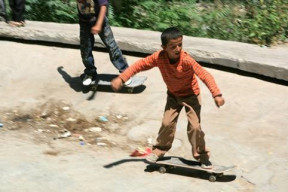
    Afghan boy on a skateboard. Image credit: Skateistan.

    Despite the best intentions, however, too many SDP programmes adopt a ‘deficit model’ that assumes poor youth in war-torn or disaster stricken contexts need ‘our’ western versions of sport for their empowerment. Sport sociologists Douglas Hartmann and Christina Kwauk, for example, are concerned that officials of sport-based intervention programmemes tend to “ignore the ways in which youth interpret and actively and creatively negotiate poverty and inequality as well as the ways in which their sport-based interventions actually commit symbolic acts of violence while reproducing conditions of marginalization”.

    Instead, they advocate a more critical alternative to youth development that pays attention to “local practices, local knowledge, the sociocultural and political-economic contexts as well as the needs and desires of communities themselves”.

    My research (funded by a three-year Marsden, Royal Society grant) has been a direct response to this call by focusing on the multiple and diverse ways youth are actively and creatively engaging with recreational, non-competitive sports in their responses to conditions of war, conflict and post-disaster. The case study of Gaza provides an interesting example of the grassroots approaches being developed by youth in contexts of conflict.

    Youth Engagement with Sport in Conflict Zones: The Case of Gaza

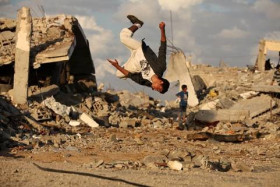
    Youths doing parkour in Gaza Strip. Image credit: PK Gaza.

    Parkour (also known as free running)—the act of running, jumping, leaping through an urban environment as fluidly, efficiently and creatively as possible—reached Gaza in 2005 (shortly after the withdrawal of the Israeli army and the dismantling of Israeli settlements), when unemployed recent university graduate Abdullah watched the documentary Jump London on the Al-Jazeera documentary channel in his over-crowded family home in the Khan Younis refugee camp. He promptly followed this up by searching the Internet for video clips of parkour, before recruiting Mohammed to join him in learning the new sport. Continuing to develop their skills, they soon found parkour to be so much more than a sport, “it is a life philosophy” that encourages each individual to “overcome barriers in their own way”.

    To avoid conflicts with family members, local residents and police, members of PK Gaza (the name chosen by the group) sought out unpopulated spaces where they could train without interruption. Popular training areas included cemeteries, the ruined houses from the Dhraha occupation, UNRWA (United Nations Relief and Works Agency) schools, and on the sandy hills in Nusseirat, formerly an Israeli settlement now deserted in the centre of Gaza City. The latter is particularly meaningful for the youth who proclaim that by practicing parkour in the space, “we demonstrate that this land is our right”.

    As part of the younger generation of technologically savvy Gazan residents, the founders of PK Gaza are explicitly aware of the potential of the Internet for their parkour practices, and for broader political purposes. “We started filming ourselves with mobile phones and putting the videos on YouTube”, explains Mohammed, and have continued to develop more advanced filming techniques using borrowed cameras and editing the footage on a cheap computer.

    Boy doing parkour in Gaza. Image credit: PK Gaza.

    The PK Gaza Freerunning Facebook page has thousands of followers from around the world, their Instagram account has almost 3000 followers, and the group also posts regular YouTube videos that can receive upwards of tens of thousands of views. Each of Facebook, Instagram and YouTube are key spaces for interaction and dialogue with youth beyond the confines of the Gaza strip. In so doing, “we contribute very significantly to raising international awareness of what is happening in Gaza. We offer video clips, photographs and writings related to the situation in which we live in the Gaza strip and deliver the message to all the people’s that’s watching online that there are oppressed people here”, proclaimed Mohammed.

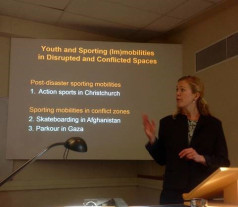
    Professor Holly Thorpe giving a presentation on research findings. Image credit: Holly Thorpe.

    As well as raising awareness of the conditions in Gaza and offering a temporary escape from the harsh realities of everyday life, the PK Gaza team strongly advocates the socio-psychological benefits of their everyday parkour experiences. They proclaim the value of parkour for their resilience and coping with the frustrations, fears, anxieties and pains of living in the Khan Younes refugee camp. As Abdullah explains, “I have witnessed war, invasion and killing. When I was a kid and I saw these things, blood and injuries, I didn’t know what it all meant … this game [parkour] makes me forget all these things”. As the following comments from Gazan psychologist, Eyad Al Sarraj (MD) suggest, some medical and health professionals also acknowledge the value of such activities for young men living in such a stressful environment:

    Many young people in Gaza are angry because they have very few opportunities and are locked in. An art and sports form such as free running gives them an important method to express their desire for freedom and allows them to overcome the barriers that society and politics have imposed on them. It literally sets them free”.

    Such observations are supported by a plethora of research that has illustrated the value of physical play and games for resilience in contexts of high risk and/or ongoing physical and psychological stress (e.g. refugee camps), and the restorative value for children and youth who have experienced traumatic events (e.g. natural disaster, war, forced migration).

    Conclusion

    To conclude, a key finding from my research to date is the need to move away from the ‘deficit model’ that assumes poor youth in developing or war-torn contexts are victims needing ‘our’ versions of sport for their empowerment. If the SDP community can begin with a recognition of the agency, creativity and needs of local youths, then we can better work with them to achieve their self-defined goals in contexts of conflict.

    Dr Holly Thorpe is Associate Professor in the Faculty of Health, Sport and Human Performance at the University of Waikato. As a sociologist of sport and physical culture, she has published widely on youth sport, action sports, and critical sport for development, including six books and over 60 journal articles and chapters. In 2016, she founded Action Sports for Development and Peace (www.actionsportsfordev.org), and gave a Ted talk ‘Action Sports for a Better World’. She continues to work on a Royal Society funded project—Sport in the Red Zone—examining the power (and politics) of sport in sites of conflict and disaster, including Afghanistan, Gaza, New Orleans and Christhcurch. She welcomes your feedback, so please feel free to get in contact:

  • Sustainable Security

    In an important year for the Women, Peace and Security agenda, women’s civil society organising is increasingly being impacted by global and national counter-terrorism regimes.

    2015 is a key year for women peace activists around the world. United Nations Security Council members will convene a high-level review in October 2015 to assess progress at the global, regional and national levels in implementing Security Council Resolution (UNSCR) 1325, renew commitments, and address obstacles and constraints.

    Women, Peace and Security conference

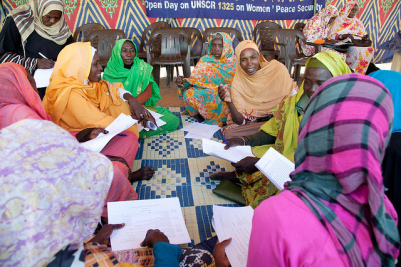
    North Darfur Committee on Women session on the UNSCR 1325 in Dar El Salaam, Darfur, 2011 Source: Flickr | UNAMID

    Fifteen years since UNSCR 1325 was passed, there are still a lot of challenges to overcome. However, women peacemakers and activists are as resilient as ever. They continue to push the Women, Peace and Security agenda’s important message forward, in environments that can be risky, unsupportive, or outright hostile.

    However, this resilience is closely tied to the existence of a vibrant civil society space. It is therefore important to assess new challenges to the building of peace and women’s rights posed by counter-terrorism measures.  This assessment must overcome the hesitancy that many peacemakers feel about discussing their experiences openly, fearing damage to their reputation as well as other repercussions.

    To this end, in early 2015 the Women Peacemakers Program (WPP), together with Human Security Collective (HSC) contacted a selection of partners in ten countries to gain insight into the multiple ways the counter-terrorism agenda is affecting their work for peace and women’s rights.  This article is based on the perspectives of the respondents from a range of countries worldwide, who were guaranteed anonymity.

    Global framework

    Post 9/11 counter-terrorism measures have impacted on civil society’s operational and political space in several ways. Legislation, although enacted at the national level, is enacted within, and responsive to, a global framework of measures. Terrorist listing regimes and partner vetting systems may hinder peace work in a variety of complex ways.

    One of the most significant areas for peace organizations is the framework that governs the prevention of terrorism financing through the non-profit sector. The Financial Action Task Force (FATF), a highly influential global consortium established in 1989 by the G7, has developed specific recommendations for non-profit organizations (Recommendation 8 – Best Practices: Combating the Abuse of Non-Profit Organisations) in its Anti Money Laundering/Countering Financing of Terrorism standard. This standard assumes that non-profits are vulnerable to abuse for terrorism financing. To date, over 180 countries have endorsed the standard and as such are subject to a peer evaluation by the FATF every 6 to 7 years. Receiving a low FATF rating immediately influences a country’s international financial standing.

    In recent years, a number of countries have started to use the FATF standard, and specifically Recommendation 8, as a pretext to clamp down on civil society space. Although countries often deny that it is the case, evidence is growing that upcoming FATF evaluations can have a preemptive chilling effect on civil society space. This is a direct result of governments’ desire to show the FATF that they are capable of preventing terrorist financing abuse through their non-profit sectors. In addition, some states are starting to pass more restrictive non-profit laws after an FATF evaluation – as if the evaluation itself serves to legitimize the drafting of such laws.

    Shrinking space

    The WPP research indicates that as a result of these mechanisms, a growing number of women activists around the world are experiencing growing pressures on their capacity to undertake peace and human rights activism, including restrictive NGO legislation, suffocating financial regulations, intimidating surveillance practices and exhaustive reporting requirements.

    Many women peace activists engage in civil society work that is critical and political. They often operate in high-risk settings, where they face repercussions because of the very nature of their activist work, which challenges established notions and bastions of patriarchal power. Several respondents reported that their governments are trying to control, limit, or stop critical civil society work through the development and passing of new NGO legislation. This new legislation is impacting on their space to operate, for example by putting restrictions on receiving funding support. As one activist from the Middle East and North Africa (MENA) region shared:

    The Rights and Liberties Committee at the Constitution Drafting Assembly has released their suggestion for the Constitution… namely that local civil society should be banned from receiving any foreign government funds.

    A women’s organisation based in South Asia observed a difference between the difficulties experienced by various organisations:

    There is enough funding for service delivery organizations and those who follow right wing politicians. However, there is no funding for the rights-based organizations, or for those that work towards alternatives.

    Some respondents described nationwide campaigns of invasive NGO inspections undertaken by national governments, using harassment tactics such as personal intimidation and threatening activists with the closing down of their organizations. One respondent reported:

    When I received a grant from one (domestic) Foundation, I was getting calls from the intelligence bureau and had to supply them with three-years of audited statements, a list of Governing Board Members and staff members. […] They visited my home three times, to ask me questions.

    Some women’s groups also faced demanding reporting requirements because of government regulations:

    In some locations, all civil society organizations have to submit a copy of their annual report to the police, armed forces, and intelligence offices of the state.

    Better safe than sorry?

    Aside from the general worsening atmosphere for political or rights-based peace work in many contexts, the FATF standard has also had a great impact on the financial service industry, particularly on banks. Banks can be sanctioned when not abiding by the FATF standard, which may include the withdrawal of their banking license, freezing of assets, or hefty fines.

    There is a growing body of evidence that shows that banks’ risk averse behavior has resulted in the withdrawal of bank services to civil society active in conflict areas. As a result of this “better safe than sorry” attitude of the banks, a growing number of civil society organizations are experiencing great difficulties in making or receiving money transfers. Over the years, many donors have become cautious  with grants. Some donors are avoiding partners in high risk, terrorist prone areas, and a number of others are tightening their own due diligence.

    Women’s peace organizations more easily fall prey to these restrictions. This is partly because women’s organizations usually operate on small budgets, which means they often do not have the leverage to negotiate a solution with their banks, which big donor organizations and charities are often still able to do. Several respondents mentioned facing challenges with their banks, ranging from delays in receiving their funds to banks requesting additional project information before releasing the funds. Some activists reported that certain banks would no longer release foreign funds to their organizations or had refused to provide their organization with a bank account. One activist reported that another organization in her network had had its account closed by the bank. A respondent from the MENA region shared:

    Sometimes we are facing difficulties during the money transfer process, it takes a long time for us to receive the funds, and some correspondent banks reject the amount. Recently a new system has been introduced: there is a limit on the amount we can withdraw on a weekly basis from the bank. This means we cannot pay all our organizational expenses on time, such as staff salary, rent, activity expenses… Everyone is calling us for their money, and we have to promise them that we will pay them next week… Sometimes we are taking loans from other people just to cover our expenses.

    In addition, several reported that direct access to funding is getting more difficult. This is partly due to donors increasingly prefering to channel funds via large organizations capable of producing grant proposals according to their demanding guidelines, as well as able to absorb rigorous reporting and auditing requirements. An organization based in Europe reported significantly increased pressures on human resources regarding donor reporting. Staff found themselves working overtime to meet the requirements of this related additional bureacracy, and on some occasions had to seek external advice.

    Cumulative effect

    Increasingly, these complex and time-consuming requirements are clashing with the reality on the ground: that many women’s organizations are operating on very modest budgets with a combination of limited paid staff capacity and/or volunteer efforts, in a demanding environment that is at best challenging and at worst highly insecure and hostile.

    As such, counter-terrorism measures – whether subtly or bluntly – are having an impact on a number of levels that, in combination, restrict civil society space. As one respondent, whose organization had been severely impacted, summarized:

    We face an increase in expenditure (because we want to avoid targeting, we now travel in groups, which is more costly); increased surveillance of our movement and programs (officials are asking for reports and bank advices, including that of our personal bank accounts); postponing or cancelling of some of our programs or keeping low profile for some time; mental unrest of our members; impact on the reputation of our organization as our work was projected as “anti-national”, which has affected the outreach of our member organizations. Also, a few partner organizations have left the network fearing repercussions by the government.

    The cumulative effect of the range of pressures is that the enabling space for women’s civil society work is shrinking and therefore progressive and pioneering work for inclusive development, peace and women’s rights becomes frustrated. The implications for broader security concerns are worrying. When alternative civil society voices and constructive seeds of change are not provided with the soil to take root, threats to the daily security of people and communities are given free reign. As such, opportunities for actors looking to exploit these vulnerabilities increase.

    It is important for civil society to come together to exchange experiences as well as document and monitor the impact counter-terrorism measures are having on their peace and human rights work, in order to engage in collective advocacy. It is equally important for the Women, Peace and Security community to engage with the different counter-terrorism measures and stakeholders. Conversely, it is crucial to raise awareness about the importance of safeguarding critical civil society space worldwide so that women’s voices and actions for peace and human rights can continue to change the world for the better.

    Isabelle Geuskens serves as Executive Director of the Women’s Peacemakers Program (WPP), a Dutch NGO that works for the nonviolent resolution of conflict, and the inclusion of women’s voice and leadership in nonviolent conflict resolution processes. In early 2015 the WPP, together with Human Security Collective (HSC), contacted a selection of partners in the field, to gain insight into the multiple ways the counter-terrorism agenda is affecting their work for peace and women’s rights. The findings are summarised in WPP’s Policy Brief: Counterterrorism Measures and their Effects on the Implementation of the Women, Peace and Security Agenda.

    Featured Image: Women’s group in Badakhshan, Afghanistan. Source: Flickr | Canada in Afghanistan

  • Sustainable Security


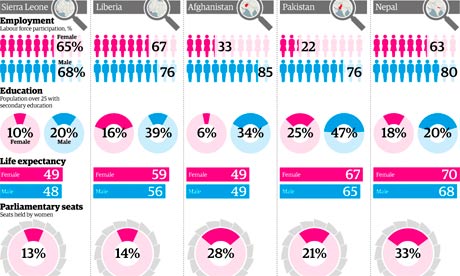
    There will be no sustainable security if we do not equally value the needs, experiences and input of men and women. A new report published by the Institute of Development Studies (IDS), funded by ActionAid and Womankind Worldwide, examines the role women play in local community peacebuilding in Afghanistan, Liberia, Nepal, Pakistan and Sierra Leone. The report states “despite the increased international attention to women’s participation in peacebuilding, the achievements and challenges facing women building peace at the local level have been largely overlooked”.

    Last week’s Guardian article entitled Who creates harmony the world over? Women. Who signs peace deals? Men points to some surprising data on female participation in official peacebuilding initiatives. “There have been no female chief mediators in UN-brokered peace talks and fewer than 10% of police officers and 2% of the soldiers sent on UN peacekeeping missions have been women”, reports the article. Furthermore, “fewer than one in 40 of the signatories of major peace agreements since 1992 have been female […] and in 17 out of 24 major accords- including Croatia, Bosnia, Sierra Leone, Burundi, Liberia, Sudan and the Democratic Republic of Congo- there was zero female participation in signing agreements”.

    An excerpt from The Guardian datablog:

    Women and peace deals - key indicators

    The IDS report found that “women are more likely than men to adopt a broad definition of peace which includes the household level and focuses on the attainment of individual rights and freedoms such as education, healthcare and freedom from violence. In contrast, men have a greater tendency to associate peace with the absence of formal conflict and the stability of formal structures such as governance and infrastructure”. It is important to include women in formal peace mediations and agreements as “peace means different things to women and men because of their unique experiences as a result of war”.

    Additionally, the research established that women have a lot of experience, and are principal actors, when it comes to mediating and decision making within the home and the family. Women are also more likely to come together collectively to create change. However, their “experiences building trust and dialogue in their families and communities are frequently dismissed as irrelevant or are not sufficiently valued by national governments, and the international community”.

    Some barriers to women’s participation in peacebuilding include: restrictive social norms and attitudes, violence against women and girls, poverty and economic inequality and inequality in access to education. The report suggests empowering women through access to justice, creating safe spaces for women’s participation and changing attitudes towards peace and valuing women’s contribution as key elements to support women peacebuilding.

    The 2000 United Nations Security Council resolution 1325 calls for “equal participation for women in the maintenance and promotion of sustainable peace”.

    Only yesterday, Foreign Secretary William Hague called upon UN Security Council resolution 1325, announcing to the UN General Assembly that the UK  “will contribute £1 million this financial year to support the Office of the UN Secretary-General’s Special Representative on Sexual Violence in Conflict”. “It’s our purpose in gathering here this morning to ensure that preventing sexual and gender-based crime in conflict and post-conflict situations is an urgent priority for the international community”, William Hague declared, and went on to say “We are convinced in the United Kingdom that we can do more to help […] we can do it as a permanent member of the Security Council, a leading member of NATO, the European Union and the commonwealth and as a nation with one of the most extensive international development programmes in the world.”

    The IDS report states that although Security Council resolution 1325 was passed in 2000, it has since then been almost totally ignored, not least by the UN itself. Hopefully this time, the international community, including the UK government, will take serious steps towards its implementation. At the same time, it is important to commit to preventing sexual and gender-based crimes, not only in “conflict and post-conflict situations”, but also in times of “peace”.

    No sustainable peace and security will ever be possible, if women’s voices are marginalised and if women and men do not work together equally on national and international peace mediations and agreements.

    Anna Alissa Hitzemann is a  Peaceworker with Quaker Peace and Social Witness. She currently works with Oxford Research Group as a Project Officer for the Sustainable Security Programme, with a focus on our ‘Marginalisation of the Majority World’ project.


    IDS, ActionAid, Womankind Worldwide report From the Ground Up can be read here.

    The Guardian, Who creates harmony the world over? Women. Who signs peace deals? Men is available here

    The Guardian, datablog Women’s participation in peace- how does it compare is available here

    Remarks by the Foreign Secretary William Hague to the UN General Assembly can be read here

    UN Security Council resolution 1325 is available here

    Image Source: UNAMID

  • Sustainable Security


    This piece by sustainablesecurity.org’s Zoë Pelter and Richard Reeve was originally published on 5 September, 2013 on openDemocracy 

    4815774738_b9962f4875_bThe narrow defeat on 29th August of the UK government’s parliamentary motion on support in principle for military action against the Syrian regime has forced Prime Minister David Cameron to concede that Britain will play no part in any direct attack on Syria. If the UK is to play no military role in ‘punitive’ responses to the regime’s alleged use of chemical weapons, what options are open to the UK in terms of resolving the Syrian conflict, protecting civilians and punishing those responsible for war crimes there? And how does Cameron’s overt preference for the military option, with or without UN mandate, condition these non-military options?

    Pushing for peace

    The possibility of a negotiated peace in Syria should not be dismissed. Neither the regime’s military, militia and foreign allies, nor the variety of armed factions ranged against them (and, increasingly, each other) are exhausted. Nor do the Assad regime’s mid-year successes in central Syria presage any imminent likelihood of it regaining control of the north and east. The strategic stalemate that appeared to set in to the conflict in June, after pro-Assad forces retook al-Qusayr, arguably presented a breathing space for negotiations and the so-called Geneva II conference, proposed by the US and Russia, with UN and Arab League backing, the previous month. As recently as mid-August, the Geneva talks were expected to resume in September.

    But even convening these talks will now prove far harder. Expectation of Western intervention against President Bashar al-Assad, as well as their own increasing divisions, gives the Western-backed armed opposition groups an incentive to delay talks. Jihadist groups that have proved effective militarily are largely excluded. US and Russian facilitation of the Geneva process, however fraught, also tends to exclude the voices of regional actors like Turkey, Iran, Iraq and Saudi Arabia, each of which feels its interests very directly threatened in Syria and gives active support to one or more armed faction.

    This calls for a rethinking of the Geneva process, if not the 2012 transition roadmap, to bring in the full range of actors, not the abandonment of peace talks. Threat of US-led intervention and its own increasing international marginalisation, should it be proved to have launched a chemical attack on 21st August, could incline the Assad regime towards a negotiated settlement, perhaps even an exit and exile strategy.

    Cameron and PutinThis will not happen without pressure from Iran and Russia. Both have much to lose in Syria, but neither is entirely closed. Iran is still in its post-electoral opening and under severe economic pressure, looking to cut a wider deal with the West. Russia may not be comfortable with its isolated position defending the alleged user of chemical weapons. Like the US, it fears the growing influence of jihadi groups while the current stalemate continues. While there is little hope of Moscow abandoning its Security Council veto over action against Syria, it will be embarrassed if it stands almost alone defending Assad in the Council or against a General Assembly resolution. Neutrally collected and analysed evidence of Syrian regime culpability for chemical weapons attack will be crucial to shifting Russia’s position.

    Having made clear its preference for ‘punitive’ military action, and been frustrated by parliament in pursuing such action, the UK government is not ideally placed to broker negotiations. Yet the UK does have influence with Syrian opposition groups, in the Gulf States and, when it acts in concert with its less interventionist EU partners, with Russia, Turkey and Iran.

    Fighting impunity

    Again, the importance of due investigative and legal process through UN Fora is crucial. When asked on 29 August if he agreed that Assad should be prosecuted at the International Criminal Court (ICC), David Cameron replied curtly that these processes take time. Yes, the wheels of institutional responses turn slowly, not least justice institutions. Yet the most obvious response to any breach of customary international law on the use of chemical weapons (Syria is one of just five states not to have signed the 1993 Chemical Weapons Convention) is a war crimes prosecution through the ICC. It is not important that Syria has not signed the Court’s establishing Rome Statute. Assad and any responsible commanders could still be subject to international prosecution if the Security Council referred Syria formally to the ICC.

    The UN has been investigating a wide range of alleged crimes committed by both sides with a view to future prosecutions. Clearly, the presence on the Security Council of Syrian allies and a majority of non-signatories to the Rome Statute presents obstacles to referral, but the Council has overcome such obstacles before, notably China’s reluctance to see its Sudanese allies prosecuted over actions in Darfur. With France and other allies, the UK should take the lead within the Security Council in pushing to refer Syria to the ICC based on the same ‘moral minimum’ or red line that has been deployed in favour of armed intervention. This, in turn, may provide leverage to persuade pro- and anti-Assad factions alike to take peace negotiations more seriously.

    Notwithstanding the heavy shadow of its past action in Iraq, the UK’s moral standing is bolstered by commitment to legal and democratic process. The UK should take a breath, step back from punitive reaction and recommit itself to a multilateral, inclusive and legally rigorous approach to resolving the war in Syria and its many affiliated regional conflicts. No other form of intervention will effectively protect the lives and rights of Syrian civilians either in the current war or the difficult peace that must follow.

    Richard Reeve is the Director of Oxford Research Group’s Sustainable Security Programme. He works across a wide range of defence and security issues and has particular expertise in Sub-Saharan Africa, peace and conflict analysis, and the security role of regional organisations.

    Zoë Pelter is the Research Officer of Oxford Research Group’s (ORG) Sustainable Security Programme. She works on a number of projects across the programme, including Rethinking UK Defence and Security Policies and Sustainable Security and the Global South.

    Image sources:

    Image: The Prime Minister welcomes President Vladimir Putin to Downing Street ahead of the G8 Summit. Source: The Prime Minister’s Office

    Image: The Prime Minister during a joint press conference with US President Barack Obama. Source: The Prime Minister’s Office

  • Sustainable Security

    Young people are frequently ‘othered’ in discussions about on conflict. This is a dangerous practice as youths can play a very positive role aiding peacebuilding in societies recovering from conflict.

    The UN World Population Prospects statistics estimate that there are 1.3 billion 15-24 years olds in the world and nearly one billion live in developing countries where conflict is more likely to have taken place.

    In such demographic realities, the potential youths hold for change and positive action is the subject of growing research agenda, and this is particularly the case with the recent wave of social upheavals and humanitarian crises in different parts of the world.

    For much of human social interaction, the category called ‘youth’ has been perceived as a historically constructed social category, a relational concept, and as a group of actors that is far from homogenous. A myriad of factors make childhood and youth highly heterogeneous categories in terms of gender, class, race, ethnicity, political position as well as age.

    They also have multi-faceted roles. Youths can be heroes as well as victims, saviours and courageous in the midst of crisis, as well as criminals in the shantytowns and military entrepreneurs in the war zones. Yet, as a category, youth are often approached as a fixed group or demographic cohort.

    Youth, peace and conflict

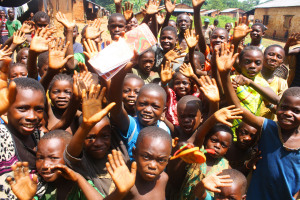
    youth-peacebuilding

    Image by CIFOR via Flickr.

    Youths as a conceptual category are frequently ‘othered’ in the discourse on conflict. They are seen as potentially dangerous ‘subjects’ and policy approaches often regard them as ‘a problem’. Often, male youths in the age group 16-30 have been observed as the main protagonists of criminal and political violence. In other words, much of contemporary thinking on youth and conflict tends to be overly negative. It focuses on the dangers posed by disaffected youths as is evident in the negative connotations of the ‘youth bulge’ or ‘at risk youth’ concepts.

    A number of dangerous assumptions about the role, position, and contribution of youths appear to plague thinking among national and international elites driving recovery efforts within societies in transition. The majority of national and international policy pronouncements or security-related programmes in post-conflict and fragile contexts reflect a polarised discourse.

    The young vacillate between the two extremes of ‘infantilizing’ and ‘demonizing’. On the one hand, youths are viewed as vulnerable, powerless and in need of protection. On the other, they are feared as dangerous, violent, apathetic and as threats to security. Youths are subjected to stereotypical images of being angry, drugged and violent and as threat, especially those who participated in armed conflict as combatants.

    On the other hand, recent literature on youth in post-conflict societies marks a shift in thinking about youth. It underlines the agency perspective, and acknowledges the importance of making the connection between youth and peacebuilding for transforming a predominantly negative discourse on the role of youths in societies recovering from conflict.

    Youth as peacebuilders

    The positioning of youth in society has a bearing on their leadership potential and their possible role in peacebuilding. The tension between young and old has been one of the key features of inter-generational shifts pertaining to the control over power, resources and people.

    The tension lies in the palpable impatience of youth, their desire to strive for more, their willingness to be seen as responsible and capable, and the structural barriers to their social mobility. Independence from others and responsibility for others, such as taking care of a family or household, can be seen as defining markers of pre-requisites of social adulthood.

    In this sense, dependency, exclusion, and social or political marginalization become prominent sources of social contest. At the same time, it should be recognised that such societal dynamics, challenges and opportunities vary across different cultural contexts whether it is in Africa, Europe, Asia or Latin America.

    Within the challenging fluidity of post-conflict environments, which are nothing but contexts where the politics of war continue through different means, the young would need to show great ‘navigational skills’ in order to respond to such power dynamics. Their social, political and economic navigation is about their identity transformation as well as the negotiation or re-negotiation of societal norms, values and structures so that they can find a voice and place in the emerging structures of post-conflict environments.

    What needs to be underlined is that youth should be conceptualized and studied as agents of positive peace in terms of addressing not only the challenges of physical violence, but also the challenges of structural and cultural violence, and the broader social change processes to transform violent, oppressive and hierarchical structures, as well as behaviour, relationships and attitudes into more participatory and inclusive ones.

    The key point to remember is that without recognizing youths as political actors, their trajectories in peacebuilding would likely be ignored, wasted and at best, under-utilized. To recognize their agency as a political actor in peacebuilding, there needs to be a comprehensive understanding of their conflict trajectories, and this is particularly important for those young people who have taken direct participation in an armed conflict as combatants.

    To understand the engagement of youth in peacebuilding, first of all, the youth mobilization and reintegration factors such as who they are, what they did before the conflict, how they were recruited, what specific fighting roles they undertook, what they experienced physically, socio-economically and psychologically, during the armed conflict, and what ‘home’ context they will be reintegrating into will all be critical for the youth’s trajectories in peacebuilding.

    Second, the involvement of youth in non-violent politics, and from a wider perspective, the enablement of their political agency in a more positive and peace-oriented role in post-conflict environments, is likely to depend on how these trajectories are shaped by the overall political and governance context.

    Third, the enablement of youth as an active agent in peacebuilding cannot be considered without considering such challenges they tend to face due to the armed conflict such as the loss of education, a lack of employable skills and the destruction of a stable family environment. The wider socio-economic needs of youths are often ignored in post-conflict contexts as they are not seen as a ‘vulnerable’ group.

    Fourth, it is important to provide youths with training opportunities to take an active part in peacebuilding. With their youthful energy and capabilities, and ability of adaptation to new technological trends, for example, youths could act as mediators, community mobilisers, humanitarian workers and peace brokers. Like any particular conflict affected population group, the mobilisation of youths’ capacities requires a targeted and long-term approach.

    At the Centre for Trust, Peace and Social Relations, an annual event called Global Peace Workshop is held in Turkey every year. Around 70-80 young participants from across the world get together in this one-week training, networking and solidarity event, and it is incredible to see the transformation of those young people in a such a short span of time as peacebuilders and start undertaking a wide range of peacebuilding projects in their own communities, schools and work places.

    Fifth, the engagement of youth in peacebuilding in a wider perspective can be ensured through the arts, culture, tourism, sports and education. The innovativeness and creativeness of young people in those areas could be mobilised effectively by connecting them with wider peacebuilding objectives such as building bridges between divided communities and ensuring a viable process of reconciliation.

    There are many examples across the world of the contributions that the young make towards peacebuilding such as the strengthening of community cohesion and reconciliation in South Sudan, civic awareness for peaceful social relations and development programmes in Nepal,  trust-building across different ethno-religious groups in Sri Lanka, and community entrepreneurship and livelihoods programmes in Burundi. Furthermore, the UN Inter-Agency Network on Youth Development  Report entitled ‘Young People’s Participation in Peacebuilding: A Practice Note’ presents a number of policy and programme examples from different conflict affected countries that would facilitate such participation more effectively.

    Finally, in undertaking all of these objectives it is also pivotal to avoid the well-known cliché of referring to youths as the ‘future leaders’. Leadership should not be considered as a factor of age and providing appropriate governance contexts would likely enable young people to flourish as leaders today. In other words, they need to be treated as leaders today without postponing it to an elusive future whether it is in governance in general or peacebuilding programmes specifically.

    To achieve this objective there have recently been a number of critical developments such as the UN Security Council Resolution 2250 on Youth, Peace and Security of December 2015 which makes a clear recognition of positive contributions of youth to peace and sets an overall framework to support their efforts. In May 2016, the UN Peacebuilding Fund started its first Youth Promotion Initiative, which could play a key role to encourage youth leadership in peacebuilding. Therefore, the current trends show that there will be many more similar youth leadership programmes across the world in the near future, but the key point for their successes will depend on whether or not such initiatives can also respond to wider socio-economic, cultural and political barriers that young people face in their quest of becoming an active agent of positive change, peacebuilding and reconciliation.

    Professor Alpaslan Ozerdem is Co-Director of the Centre for Trust, Peace and Social Relations at Coventry University.

  • Sustainable Security

    The 2011 Libyan intervention and the anarchy which ensued has highlighted an aspect of the responsibility to protect principle that has, to date, been overshadowed by the debates on the use of force; the responsibility to rebuild.

    While the carnage in Syria has dominated policy agendas and newspaper headlines in the recent years, the aftermath of the 2011 Libyan intervention elicited much deserved attention following Obama’s candid review of his foreign policy legacy and, more recently, the UK Foreign Select Committee report on the government’s handling of the intervention. Obama openly accused David Cameron of having become ‘distracted’ over Libya and failing to follow through the military intervention. A similar accusation was levelled against Downing Street by the Foreign Select Committee report on Libya published in August that berated Cameron for having failed to develop a coherent plan for post-intervention Libya. This was evident in the fact that the UK government spending on reconstruction was less than half of its spending on the intervention, the report points out. The report argues further that the intervening governments, with particular focus on Britain and France as the leaders of the intervention, had a distinct responsibility to help to reconstruct the Libyan state. The failure to de-arm and de-mobilise fighters after the ousting of Gaddafi and the subsequent violence rendered the construction of political and economic institutions an impossible task.  Indeed, Libya today has made little headway to becoming a stable state; fighting between militant factions and the emergence of ISIS have left many wondering whether civilians are better off today than they were under the Gaddafi regime.

    The intervention to protect civilians in Libya was hailed by some as an example of successful realisation of the ‘responsibility to protect’ principle that sets out the joint responsibility of states and the international community to protect civilians from so-called atrocity crimes (crimes against humanity, war crimes, genocide and ethnic cleansing). Where governments fail to do so, the international community has the responsibility to assume the duty to protect. The emergence of the principle in the late 1990s and early 2000s stirred much debate. While some rejected it as a thinly-veiled attempt by Western states to legitimize use of force for political purposes, others lauded the principle as a first step in finding consensus on the contentious issue of conducting humanitarian interventions. Libya, as is well-known now, provided few answers to those seeking clarification on issues pertaining to civilian protection and responsibility to protect.

    As I have argued elsewhere, the Libyan intervention has highlighted an aspect of the responsibility to protect principle that has to date been overshadowed by the debates on the use of force; responsibility to rebuild. The responsibility to protect principle was first formulated by the Canadian government-sponsored International Commission on Intervention and State Sovereignty (ICISS). The Commission famously argued in its 2001 report that state sovereignty was no longer an irrevocable right but a responsibility to protect populations from mass atrocities such as genocide and ethnic cleansing. In its initial formulation, responsibility to protect entailed three interlinked duties; to prevent, react and rebuild. While prevention of mass atrocities was the starting point for any government endorsing the principle, rebuilding societies in the aftermath of military interventions was seen to logically follow the ‘reactive’ pillar of the principle.  The rebuilding pillar was seen to consist of providing security in post-intervention states, promoting reconciliation between former enemies and promoting economic development. These measures, it was argued, are crucial for stability and self-sustaining peace in societies targeted by protection interventions.  One of the key aims of the principle was, in other words, to ensure that the need for protection intervention would not arise again as the capacity of domestic authorities to realise their protection responsibility would be augmented through rebuilding assistance.

    This sequential conception of the principle was short-lived, however. While many Western governments were reluctant to commit to costly and often long-drawn out rebuilding missions, some in the Global South saw the notion of responsibility to rebuild as a throwback to imperialist foreign interference. In the light of these and other concerns, the R2P was refashioned along more statist lines; the rebuilding component was dropped from the framework and the responsibilities of states to protect their citizens were emphasised at the expense of the international community’s obligation to protect. This was evident in the 2005 UN World Summit Outcome Document where governments, for the first time, endorsed the R2P principle. This recalibration of the R2P was outlined in detail in the UN Secretary General’s report on the responsibility to protect in 2009. It proposed a three-pronged understanding of the principle, centred on the states’ responsibility to protect their citizens, the international commitment to capacity-building assistance and, finally, the international community’s responsibility to protect. The rebuilding component was, again, notable in its absence; the principle was largely understood in terms of the preventative responsibility of governments. Although preventative and rebuilding measures overlap to a certain extent, lack of attention to specific rebuilding tasks, such as the provision of post-intervention security, was striking in the UN Secretary General’s 2009 report and in those thereafter.

    The Future of the Responsibility to Rebuild

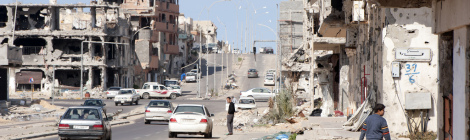
    libya-sirte

    Image by ECHO/DDG/Flickr.

    The Libyan experience indicates that this change in the focus of the responsibility to protect has not been a matter of mere semantics. Although Libyans, eager to take charge of their own affairs after the fall of the Gaddafi regime, rejected plans for UN peacekeepers, they requested capacity-building assistance. Some assistance was provided by the intervening governments – for example the UK government’s Security, Justice and Defence Programme – but on the whole the immediate aftermath of the intervention was marked by the policy of disengagement as Libya observers have argued. The UN reconstruction strategy and donor government policies were premised on the emphasis of domestic ownership, coupled with references to the wealth of the Libyan state that could be utilised for the reconstruction process. It was not until emergence of the ISIS threat in the region that the Libyan authorities’ appeals for assistance gained attention in the Western capitals.

    While it is of course impossible to state with certainty the effects that an alternative course of action (continued engagement in the rebuilding of Libya in the immediate aftermath of the intervention) could have had, it is not hard to see how the rebuilding measures outlined by the ICISS in its 2001 report may have helped to stabilise Libya.  In the absence of the permission to dispatch peacekeepers, more extensive assistance to the Libyan authorities in providing day to day security after the intervention would have not gone amiss. Perhaps more importantly, concentrating international efforts and resources to supporting inter-communal reconciliation would have been vital, given that the precarious security situation in the country following the fall of the Gaddafi regime has been caused by the lack of political solution on how, and by whom, the country should be governed.

    The instability and violence that has plagued Libya since the 2011 intervention suggest that if the aim of protection interventions is to generate self-sustaining peace rather than just carry out regime change operations, re-incorporating the rebuilding pillar into the current responsibility to protect framework is crucial. Doing so would not necessarily mean overhauling the entire principle: many of the measures regarded as ‘pillar II’ responsibilities provide the basis for incorporating rebuilding tasks into the framework. Pillar II, the commitment by the international community to assist the capacity and resilience-building in conflict-affected societies, refers to a range of measures such as fostering dialogue between communities and indigenous conflict resolution skills. Adding measures that address the short-term issues faced by societies in the wake of military interventions would strengthen the pillar and the framework as a whole.  This would inevitably mean increased costs and commitment on behalf of those undertaking protection interventions, something that is likely to be deeply unpopular in the context of the lengthy engagements in Iraq and Afghanistan as well as the increasing pressure on public spending. The alternative, however, as the refugee flows from Libya and the rise of ISIS in the country have shown, may mean having to face even more troublesome questions in the long run.

    Outi Keranen is Teaching Fellow in International Relations at the Department of Political Science, University College London. Her research interests are in post-conflict statebuilding and the responsibility to protect. Her monograph ‘The Contentious Politics of Statebuilding’ (Routledge) is coming out in May 2017. In addition to post-conflict statebuilding, Outi has researched and written on identity-building, symbolic politics and the responsibility to rebuild.

  • Sustainable Security

    Aidan Hehir is a Reader in International Relations, and Director of the Security and International Relations Programme, at the University of Westminster. He has published a number of books on humanitarian intervention/R2P including Humanitarian Intervention An Introduction 2nd Edition (Palgrave 2013); Libya, the Responsibility to Protect and the Future of Humanitarian Intervention (with Robert W. Murray, Palgrave 2013); The Responsibility to Protect: Rhetoric, Reality and the Future of Humanitarian Intervention (Palgrave, 2012); and Humanitarian Intervention After Kosovo (Palgrave, 2008).

    In this interview Dr. Hehir discusses the Responsibility to Protect and Libya, post-conflict peacebuilding, the need for UN Security Council reform and the prospect of a UN standing army.

    Q. In 2011, the intervention in Libya was seen as a successful first true test of the Responsibility to Protect (R2P). The Security Council authorized a military intervention citing the R2P and Western leaders justified intervention on the grounds of stopping Gaddafi’s threats of imminent mass murder in Benghazi. However, the recently released House of Commons Foreign Affairs Committee’s report on the Libya intervention has called into question the humanitarian case for intervening. Do you feel that the intervention in Libya ultimately represented more of an abuse of R2P rather than an actual implementation of the doctrine?

    While the 2011 intervention in Libya may well have looked like “R2P in action”, in my view, R2P had negligible influence on the decision to take military action. Naturally, those who believe that R2P influences state behaviour heralded the intervention as evidence for their claims, but I believe they conflated correlation with causation. There is simply no evidence to suggest that the decision of the Security Council was in any way influenced by R2P.

    The reference to R2P in Resolution 1973 mentions only the internal aspect of R2P; in other words, it simply states that the Libyan government has a responsibility to protect its own people. It did not identify R2P as the basis for the action the international community was taking. This determination to avoid using R2P as the justification for intervention, and exclusively referring to it in the context of Pillar I, has been a common theme running through all Security Council Resolutions. Using R2P in this way places the onus on the host state to deal with the issue and thereby enables the Security Council to deflect responsibility away from itself.

    The key influence on the decision to act in 2011 was the statement made by the League of Arab States calling for intervention; this was, as Hilary Clinton declared at the time a “game-changer”. It pushed the previously unwilling President Obama into supporting intervention – albeit in a half-hearted fashion – and also convinced the Russians and Chinese not to block the intervention through the use of their veto. The idea that the League of Arab States was motivated by their commitment to R2P to call for action in Libya is of course implausible; they took this decision on the basis of realpolitik.

    With respect to the French and British position, again a coincidence of factors aligned to convince them to take action; a genuine desire to prevent a slaughter may indeed have been one of these factors, but that in itself was not a sufficiently powerful incentive.

    This is not to suggest that the decision to intervene was inherently wrong or singularly mendacious, but rather that the chorus of delight emitted from R2P supporters was premature. Prior to 2011 there had been instances when collective action was taken in response to a looming or actual intra-state crisis; the problem has always been, however, that these instances are a function of a correlation between national interests and humanitarian suffering. As a result, the record has always been inconsistent. Libya was a case where all the stars aligned so to speak and not evidence of a “new” disposition motivated by a determination to abide by R2P. The manifestly inconsistent record since 2011 highlights this.

    So, the question as to whether it was an “abuse” of R2P is, to my mind, built on a false premise. It had nothing to do with R2P. Of course, the fact that so many of R2P’s proponents declared it to be “R2P in action” has meant that it is widely associated with R2P. Given that the intervening coalition so obviously exceeded the mandate granted by Resolution 1973 – by engaging in “regime change” – and the nature of the chaos in Libya since the intervention, R2P has certainly been tainted by association with the intervention in Libya. But I wouldn’t describe it as an “abuse of R2P” because this gives the concept more credit than it’s due. R2P is a hollow slogan that states insert into speeches every now and again; it’s not in any sense clear what it means, and thus it’s difficult to see how such an inherently malleable, vacuous concept can ever be “abused”.

    Q. Since the intervention, Libya has descended into anarchy and civil war, which the Islamic State is looking to exploit and use as a ‘gateway to Europe’. Do you feel that this situation would have occurred had Gaddafi not been removed?

    The current situation in Libya – the political chaos, the civil war and the presence of ISIS – was certainly avoidable. The manner in which the intervention occurred did not, to my mind, inevitably lead to the post-intervention situation; the fact that the intervening coalition so quickly abandoned Libya, and put their faith in the National Transitional Council, was the key factor in the collapse which followed the intervention. In this sense, I don’t think that Gaddafi’s removal caused the situation we now face; rather the absence of planning for post-Gaddafi Libya was the issue. Obviously his removal left a vacuum that needed to be filled but this was not impossible to do (though it would have required significant political will and expenditure of resources from the intervening states).

    Had Gaddafi not been removed would ISIS have been able to exploit the situation? I think it very much depends. There are two scenarios that could have resulted in him staying in office but really only one is plausible.

    The first scenario that may have seen Gaddafi retain power would have been some form of negotiated settlement; South Africa in particular tried to pursue this during the intervention. The talks were essentially scuppered by the intransigence of both parties; the TNC understandably felt they would achieve more if Gaddafi was forced out of power by NATO, while Gaddafi appeared to be unwilling to cede control. So it’s difficult to imagine that it was in any way possible that a political settlement could have been reached which kept Gaddafi in power.

    The second scenario would have come to pass if there had been no intervention and Gaddafi’s forces had been able to defeat the rebels in Benghazi. While he may have “won” and retained power, the slaughter that would have likely accompanied a Gaddafi victory would surely have generated even more anti-government sentiments and the east of Libya would potentially have become a zone of prolonged civil war. ISIS may well have exploited this and moved into this part of the country. It’s worth remembering that ISIS entered Syria while Assad was in power and therefore the idea that having a “strong man” in power would have prevented ISIS from gaining a foothold in Libya is not necessarily true. Once the uprising in Libya had reached a certain point – certainly by mid-February 2011 – the chances of there being a peaceful return to the previous status quo were negligible. Given Gaddafi’s reluctance to accept that change was necessary, conflict within Libya thus became inevitable and with civil conflict in Libya comes the potential for ISIS to enter the fray.

    That said, it is possible that Gaddafi may have “crushed” dissent in such an emphatic way that rebels fled and “order” was restored. If this had happened then it may well have influenced the Syrian rebels. Given that they were to a large extent encouraged by the experience of the Libyan rebellion – and especially the NATO intervention – a brutal crackdown in Libya may well have tempered their tactics. Obviously, if the Syrian rebels hadn’t engaged in a civil war against Assad, then ISIS would have found it more difficult to enter Syria and naturally that would have meant it would have been more difficult for ISIS to move towards Libya. This “don’t intervene and make the situation worse” is the kind of thinking that Alan Kuperman has advanced. It’s somewhat plausible though it would mean tolerating dictatorship and repression but, given what’s happened in Libya and Syria since 2011 one could certainly make the case that as bad as these are they are preferable to the mass slaughter and prolonged suffering we are now witnessing.

    Q. Ineffective post-intervention planning seems to a recurrent trend and problem. Are there any examples of exit strategies and post-intervention peacebuilding initiates that could be deemed effective?

    It all depends on how one defines “effective” I think. Between 1994 and 2004 expectations regarding the efficacy of post-conflict/intervention statebuilding were ridiculously high. During this period operations were launched in Bosnia, Kosovo, Afghanistan, and Iraq with totally unrealistic aims. Obviously the “reconstruction” in Afghanistan and Iraq failed quite spectacularly but even in Bosnia and Kosovo it would be difficult to class the statebuilding as a success, if judged according to the original aims.

    These experiences were in large part responsible for the far less intrusive statebuilding operation implemented after the intervention in Libya. Yet, while toning down the aims and intrusive nature of post-conflict reconstruction makes sense, in Libya the scaling down clearly went too far. As a result the country spiralled into crisis.

    I think the primary aim for any such operation must be to ensure order; to prevent civil war and provide safety for all groups, ethnicities, religions etc. That naturally requires the presence of foreign troops, which of course raises a number of ethical and logistical dilemmas. But I think the old model of “traditional” UN Peacekeeping where the aim was to simply stop violence – as opposed to new ideas around “peacebuilding” – could work here and it would transfer the operation to the UN rather than ad hoc coalitions of states that – as so apparent in the case of Libya – can become distracted.

    So ultimately, I think we need to be more realistic about what can be achieved after civil war and external military intervention; the key measure of effectiveness should be the suppression of violence and of course maintaining basic welfare provisions such as water, electricity etc.

    Q. Recently, several emerging powers have contributed to the R2P debate with their own versions of global human rights initiatives. What do you feel are the implications of these developments for the future of R2P and, more broadly, global human security?

    None of the BRICS are keen on R2P; each have advanced quite lukewarm positions on it. That said, they have tended to avoid declaring the concept to be “dead” or irrelevant; rather their statements have endorsed those aspects of R2P that cohere with their interests, while ignoring or warning about the others. This has generally manifest as supporting Pillars I and II while rejecting Pillar III (certainly the notion of military intervention).

    I don’t think any state will ever come out and say they think sovereign states don’t have to protect their people from the four crimes, so the BRICS, and others, are happy to declare their support for Pillar I and II as both are predicated on the consent of the host state. In this sense, “declaring support for R2P” actually means reiterating the principle of sovereign inviolability while accepting that the international community should help states that ask for assistance. This is increasingly what R2P has become; an essentially irrelevant reaffirmation of the status quo dressed up to sound ethical.

    Of course, significant differences exist amongst the BRICS; even though Russia and China tend to be lumped together – in large part because of the repeated “double-vetoes” cast over the past five years in the context of Syria – they actually have a quite different approach to these issues. China is a major contributor to UN Peacekeeping missions and has consistently declared its aversion to the use of force; Russia has not had the same level of engagement with Peacekeeping and clearly has a different perspective on the use of force.

    Certainly, as these states become more powerful the likelihood is that R2P will continue its evolution away from anything approximating genuine international regulation of state compliance with human rights; in this sense R2P is likely to continue to exist, but only as an empty phrase used instrumentally.

    Q. You mention Russia and China’s vetoes on Syria, a situation that could be described as one of the worst humanitarian crises of recent times. Does the structure of the Security Council inhibit the consistent application of R2P and, more generally, the enforcement of international human rights law?

    Proponents of R2P often make expansive claims about its transformative impact and revolutionary potential. It is important to remember, however, that R2P has not in any way changed the existing means by which compliance with international human rights law is regulated or enforced. The process by which the international community responds to an intra-state crisis or mass atrocity is exactly the same today as it was prior to R2P. In this sense, the institutional architecture highlighted as problematic by the end of the 1990s – particularly after the intervention in Kosovo – has not been altered.

    In particular, the powers of the Security Council remain unchanged. The Security Council is very obviously a political body; it was designed not as a means by which to ensure justice but rather as a way to maintain order. As a result, the way the Security Council responds to an intra-state crisis – which in effect determines the “international” response – is a product of the P5’s national interests. As a result inconsistency is inevitable; if the P5 are divided there can be no effective coordinated response (as we see in Syria); if the P5 are simply not interested, or indeed support the aggressor state, then there will be no meaningful response (as was the case with Sri Lanka in 2009). Thus, a meaningful, robust response will only ever occur if there is a coincidence between the P5’s national interests and mass human suffering. These are, of course, exceedingly rare occurrences.

    Prior to the emergence of R2P the Security Council’s record was widely criticized as inconsistent; by definition this implies that sometimes the P5 reacted in a meaningful way, but only in exceptional cases. This inconsistency is clearly still in evidence. It is not, therefore, that the Security Council will never – or has never – reacted to a crisis in a timely and effective manner, but rather that they will only ever do so in a highly inconsistent fashion.

    As a result, the scale of the atrocities being committed matters less than who is perpetrating them; some governments will always get away with committing one or more of the four crimes proscribed by R2P as they are allies with one or more of the P5. A good example is Bahrain; it has consistently been shielded from external censure by the US and UK despite its clear record of systematic human rights violations and crimes against humanity since at least 2011.

    When R2P’s more vocal proponents – like Simon Adams – express wounded outrage at the Security Council’s inaction over Syria, their arguments lack credibility; the Security Council was not designed to respond in a timely and consistent manner to intra-state crises. Supporting the systemic status quo while expecting revolutionary change in the behaviour of those who consciously designed the system to enable the realization of their narrow geopolitical interests, is wilfully naive at best. So long as the powers of the Security Council remain unchanged, and the existing international legal order more generally is preserved, there is no way R2P can achieve the highly ambitious goals it has set.

    Q. Reform of the Security Council has arguably been an issue since its inception, but is certainly not an easy matter. Taking into consideration the major obstacles to this process, are there any genuinely plausible pathways to reform?

    As soon as anyone suggests reforming the Security Council there is a collective sigh and a shaking of heads. Clearly it’s been suggested many times and literally hundreds of proposals have been advanced to no avail. It’s not hard, therefore, to be fatalistic about this. Personally, I don’t see the Security Council reforming anytime soon.

    However, I don’t agree that because something is difficult to do or hard to imagine happening it should not be considered; that’s a depressing blueprint for inertia. Historically, there are numerous examples of institutions or governing structures that appeared immutable but later collapsed. Often, existing power structures appeared at their most supremely powerful just before they fell.

    The only hope with respect to the Security Council stems, I think, from the fact that at present there is a huge disjuncture between its behaviour and what is expected of it. During the Cold War few people held out much hope that the Security Council could do anything but that’s changed now; expectations on a number of issues – not least human rights – have been raised considerably in the post-Cold War era. Even with the demise of the West people across the globe still increasingly feel that the “international community” should help free them from oppression. So even the new systemic alignment can’t put that genie back in the box. We are left therefore with a dramatic disconnect between the existing institutions – their remit and behaviour – and the expectations/needs of the people they are established to represent. That is not sustainable in the long-term. In 1945 Hans Kelsen described the UN system as “primitive”; it’s the same system today, but there are some signs that momentum behind change is building, albeit not among the “Great Powers”. It’s important, therefore, to at least consider what the parameters of a new system should be. That’s not utopianism; it’s pragmatic. To scoff at the idea of reform is ultimately to claim that the status quo is in some sense irrevocable; this is both miserably fatalistic and ahistorical.

    Q. You’ve previously discussed the concept of a standing UN army for peacekeeping. What would this force consist of and in what sort of situations would it be deployed?

    People have been writing about a standing UN force since the organisation was established; few in fact realise that this was (and still is) part of the Charter (Article 47). Generally people have written about this in the context of Peacekeeping; as a means to ensure there is a force ready to be deployed when authorisation is given. In certain cases – such as Darfur – the authorisation has been given but the troops have not been volunteered promptly. My suggestion in The Responsibility to Protect: Rhetoric, Reality and the Future of Humanitarian Intervention was to build on the basic idea and mandate the force to also engage in military operations sanctioned without the consent of the host state (in contrast to Peacekeeping deployments). However, simply having an army doesn’t necessarily overcome the problem that its deployment would be a function of the P5’s national interests. There is little point in having a standing army if it can only ever be used if the P5 agree. So my suggestion included the establishment of a judicial body that would be called into action in the event of Security Council paralysis; namely in situations where there is incontrovertible evidence that one or more of the four crimes are being committed by a state, diplomacy has failed and yet the P5 are divided about how to respond. In such situations the matter would be devolved to the alternative body to determine whether a military intervention is warranted. In this sense the body would not take over from the Security Council but rather serve as a substitute for it in particular situations (and only with respects to intra-state mass atrocity crimes).

    Of course, the logistics of this would need to be worked out in detail and I didn’t engage with this in any great depth. My intention, rather, was to defend the principle and outline the contours of the institutional change required. From talking to members of various national militaries, it would seems that there is nothing inherently impossible about forming or deploying a standing international army, in terms of the logistics. The problem of course is the absence of political will. That said, at various General Assembly debates on R2P states have advocated the idea of a standing force and lamented the politicized nature of the current means by which remedial action is authorised. Also, in terms of the P5’s likely response to this, it need not be wholly negative; one could argue that this proposal would not remove their power and status, and in fact in certain cases would take the burden of responding away from them. Obviously, the new body charged with authorising the deployment of this force would never engage in a military action likely to incur the wrath of one or more of the P5; prudence would clearly have to be exercised.

    Ultimately, all legal systems are fundamentally flawed if there is no objective means by which their laws are enforced; there must be a separation between the executive, the judicary and the police/army. Currently, the three are conflated and so it can’t come as a suprise that international law – particularly with respects to human rights – is routinely flouted without censure. This is an unsustainable situation; unless one believes in the immutability of the present system – which, though understandable is as I said earlier ahistorical and fatalistic – it is surely incumbent on those of us unhappy with the present systemic architecture to think about progressive reforms.
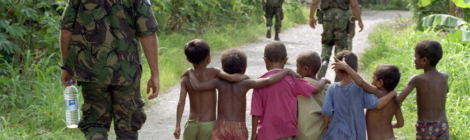
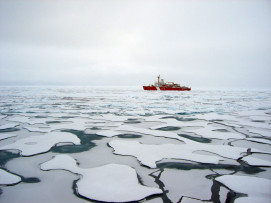
  • Sustainable Security

    Green cities smallA recent article on this website entitled The United States, Niger & Jamaica: Food (In)security & Violence in a Globalised World explored some of the possible links between climate change, food insecurity and violence. Many current articles in the media warn of growing food insecurity as global warming and climate change have devastating effects on crops, livestock and even fisheries. A piece in yesterday’s Guardian states that if extreme weather becomes the norm (which it has) then “starvation awaits”.

    Although it is important to recognise that climate change is real and that it is a threat to global security, we should seriously start to focus on what we can do to affect change. Integral to a sustainable security approach is to tackle and address the long-term, root causes of insecurity and conflict. This can easily seem like a daunting task, especially when it concerns “big issues” such as climate change. There are however many things that can be done: some on a policy level, and others on a community level.

    A recent report by the UN Food and Agricultural Organisation (FAO) draws the attention of policymakers to “urban and peri-urban horticulture, and how it can help to grow greener cities in Africa” because “production of fruit and vegetables in and around urban areas has a clear comparative advantage over rural and other sources in supplying urban residents with fresh, nutritious – but highly perishable – produce all year round. It generates local employment, reduces food transport costs and pollution, creates urban green belts, and recycles urban waste as a productive resource.”

    The FAO report says that by the end of this decade, 80% of the world’s fastest growing cities will be African and as more and more people are moving from rural to urban areas in search of a better life, African cities are finding it hard to cope: “more than half of all [African city] residents live in overcrowded slums; up to 200 million survive on less than US$2 a day; poor urban children are as likely to be chronically malnourished as poor rural children”. The report, which draws its conclusions and recommendations from 31 country case studies, suggests that across the Africa continent 40% of residents in cities already have home gardens and “most of these urban farmers are able to meet their nutrition needs and still produce enough to sell in markets”. The commercial production of fruit and vegetables provides livelihoods for thousands of urban Africans and food for millions more. But unfortunately market gardening has grown with little official recognition, regulation or support.

    One way to address food insecurity is definitely to help those most affected by price volatility of food become less dependent on the free market. Formally and institutionally encouraging people to grow some of their own food seems like a great idea, not only for African cities, but for people around the world. London has many community gardens to “support and advocate for food producing gardens and their role in individual and urban food security”.

    Anna Alissa Hitzemann is a Peacework with Quaker Peace and Social Worker, currently placed with the Sustainable Security Programme at Oxford Research Group.

    Image source: Gates Foundation