Category: 2016

  • Sustainable Security

    Jenny Nielsen and Marianne Hanson

    The first week of the third Preparatory Committee (PrepCom) for the 2015 Review Conference (RevCon, held every five years) of the Nuclear Non-Proliferation Treaty (NPT) has witnessed a heavy emphasis on issues relating to the disarmament pillar. In particular, the humanitarian impact of nuclear weapons, highlighted by a wide-ranging, cross-grouping, multi-aim initiative which continues to consolidate itself in the non-proliferation regime, has come to the fore. Frustrated with the lack of progress towards NPT Article VI commitments to complete nuclear disarmament, the initiative has invigorated attention to the urgency of nuclear disarmament and a need for a change in the status quo. NPT member states and civil society continue to engage actively in publicizing the humanitarian consequences of nuclear weapons as an impetus to progress towards nuclear disarmament.

    The Humanitarian initiative

    Austria has announced the dates of a Third International Conference on the Humanitarian Consequences of Nuclear Weapons, to be held on 8-9 December 2014 in Vienna. This conference will follow the March 2013 Oslo conference and the February 2014 Nayarit conference, which were both notably boycotted by the five NPT nuclear weapons states (NWS: the UN Security Council permanent members, or P5).  Whether any of the five NWS will participate in the Vienna conference, remains to be seen. Given the Chair’s summary of the Nayarit conference, which includes some of the Mexican chair’s personal perceptions on the humanitarian initiative’s aims, the Austrian Ministry of Foreign Affairs may find that appealing to the NWS to attend will be a challenging task.

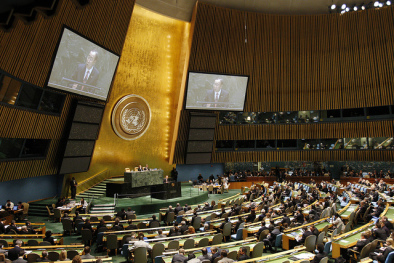
    UN General Assembly. Source: Wikipedia

    UN General Assembly. Source: Wikipedia

    At the PrepCom, the Mexican delegation explained that the Chair’s Summary of the Nayarit conference, ‘reflects the opinion of the overwhelming majority of delegates, in the sense that these discussions should lead to the commitment by States and civil society to achieve new standards and standards through a legally binding instrument prohibiting nuclear weapons in the same way, as in the past, the weapons that have been eliminated were first banned’. Furthermore, the Mexican delegation to the PrepCom stressed that ‘the time has come to initiate a diplomatic process, to define specific time lines and the most appropriate fora to achieve this work’.

    Since the inclusion of the humanitarian consequences issue in the Final Document of the 2010 NPT RevCon and the reinvigoration of this initiative in the PrepComs since then, the NWS have been cautious of the initiative’s coordinated activities and continue to question the aims of the initiative.  In particular, the NWS will not readily engage in the initiative as long as they interpret or perceive it to be the pathway towards a delegitimization process and, ultimately, a ban on nuclear weapons’ possession and use. For this reason, controlling the initiative’s external communication of its aims and activities will need to be carefully managed in order to sustain its broad, cross-grouping support-base and participation. This, in turn, will enforce its credibility and longevity in the regime towards the goal of progress towards nuclear disarmament.

    Suing for Nuclear Zero
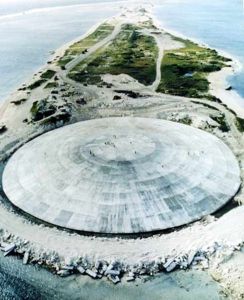
    Cactus Dome, Runit Island, Enewetak Atoll, Marshall Islands - a concrete-capped burial pit for radioactive waste from US nuclear tests.

    Cactus Dome, Runit Island, Enewetak Atoll, Marshall Islands – a concrete-capped burial pit for radioactive waste from US nuclear tests. Source:  US Defense Special Weapons Agency (via Wikipedia)

    On 24 April, a few days before the NPT delegations convened at the UN for the PrepCom, the Republic of the Marshall Islands filed cases in the International Court of Justice and the U.S. Federal District Court claiming that all nuclear-armed states—including the four non-NPT states: India, Israel, DPR Korea, Pakistan—‘have failed to comply with their obligations […] to pursue negotiations for the worldwide elimination of nuclear weapons’.  These cases, referred to as the Nuclear Zero lawsuits, are based on treaty law obligations (for the five NPT NWS) and customary international law (for the four non-NPT member states). The Labour Party of New Zealand (currently in opposition) has pledged support for the lawsuits. Civil society groups at the NPT PrepCom have heralded the motion.

    As a testing ground for U.S. nuclear weapons (between 1946 and 1958), the Republic of the Marshall Islands bears firsthand experience of the effects of radiation. On the first day of the PrepCom, the Minister of Foreign Affairs of the Marshall Islands, Tony de Brum, delivered a powerful statement including a personal account of his own childhood memories of U.S. nuclear testing. Given the close US-Marshall Islands economic and defence ties, including an agreement for use of the U.S. Army Kwajalein Atoll missile test range, it is an interesting bilateral development.

    In her 29 April statement to the 2014 PrepCom, U.S. Under Secretary Rose Gottemoeller asserted that ‘it is the United States’ deep understanding of the consequences of nuclear weapons use—including the devastating health effects—that has guided and motivated our efforts to reduce and ultimately eliminate these most hazardous weapons’. Gottemoeller stressed that ‘it is imperative that we make sure people remember the human impact of nuclear weapons’. In a nod to the Nuclear Zero lawsuits she added that her ‘recent trips to the Marshall Islands and Hiroshima were potent reminders of the need to persevere in confronting this challenge’. The inclusion and attention to these issues in the U.S. statement is an indicator of the prominence and importance of the humanitarian dimension initiative. Notwithstanding universal formal engagement, the initiative is percolating through national statements and embedding itself in discourse widely.

    Article VI commitments

    Strategically timed for impact during the PrepCom and in furtherance of commitments to transparency, on 29 April, the U.S. State Department released newly classified information on the U.S. nuclear weapons stockpile. As noted by the Federation of American Scientists, the new figures revealed by the Obama administration boil down to only 309 warheads fewer than the 5,113 reported in 2010. While underwhelming for some in civil society given high expectations on deliverables under Article VI, the U.S. reporting on stockpile figures should be welcomed and acknowledged as a positive move by one of the five NWS.

    The New Agenda Coalition (NAC, comprising Brazil, Egypt, Ireland, Mexico, New Zealand and South Africa) submitted a meaty working paper on Article VI to the PrepCom. As highlighted by the Irish delegation, this suggests four options for the way forward, outlining ‘prospects for a Nuclear Weapons Convention, a Nuclear Weapons Ban Treaty, a looser framework arrangement of mutually reinforcing instruments, or a hybrid of any or all of the above’. The NAC offers these options for discussion without prescription for one outcome. Ireland argues that discussions must begin immediately in order to identify what is needed and how to frame this. Warning that ‘we will not, under any circumstances, countenance a simple roll-over of the 2010 Action Plan’ at the 2015 RevCon, Ireland stressed that ‘to do so would inflict even further damage on the NPT as a credible driver of disarmament and non-proliferation efforts’.

    Mushroom cloud and water column on Bikini Atoll, Marshall Islands, Operation Crossroads Baker, 25 July 1946. Source: US Department of Defense (via Wikipedia)

    Mushroom cloud and water column on Bikini Atoll, Marshall Islands, Operation Crossroads Baker, 25 July 1946. Source: US Department of Defense (via Wikipedia)

    With 128 states supporting the joint statement on the humanitarian consequences of nuclear weapons at the UN General Assembly First Committee in October 2013, the second week at the PrepCom is likely to witness growing support for the initiative’s statement, but only if its wording can balance the political and strategic needs of all of the wide-ranging states. Notably, at the 2013 PrepCom, Japan opted not to pledge formal support to the statement due to trepidation about a clause in the initiative’s statement which was interpreted as having implications for its strategic alliance and coverage under the US nuclear umbrella. Alienating key states – especially US allies – by expressing views too categorically will not serve the humanitarian initiative well. At the same time, it is hard to deny the frustration felt by most states at the lack of progress towards nuclear disarmament.

    Civil society engagement

    Akin to the wide range of support and engagement for the humanitarian dimension initiative shown by states parties, civil society groups have made many broad-ranging contributions to highlight the initiative’s aims. Chatham House published a thorough report on the risks of inadvertent, accidental or deliberate detonation of nuclear weapons based on an assessment of historical cases of near nuclear use, offering recommendations for mitigating these risks. The European Leadership Network (ELN) released a group statement (supported by 52 high-level signatories) with a list of broad ranging recommendations for necessary steps for a successful 2015 NPT Review Conference. Warning that the humanitarian dimension initiative ‘has become a deeply divided issue among NPT states-parties’ and arguing that ‘this division is damaging the diplomatic atmosphere’, the ELN calls on the P5 to participate in the initiative’s third conference in Vienna in December.

    Across the Atlantic, a coalition of US-based civil society organizations published an open letter to President Obama calling for action on nuclear disarmament, including amongst several suggestions, participation in the Vienna conference. The coalition highlights the deterioration in US-Russia relations, given continuing and foreseeable NATO expansion and in light of the crisis in Ukraine, noting concern for prospects for future bilateral arms reduction negotiations.

    Other disarmament advocacy groups including Reaching Critical Will and ICAN are steadfastly calling for a process of negotiations for a new legal instrument prohibiting nuclear weapons. Demanding a nuclear ban, the Geneva Nuclear Disarmament Initiative, aka Wildfire, continues to head-on challenge and mock the status quo of the NPT review process, exposing inconsistencies in nuclear policies by NPT states, with a focus also on NNWS relying on extended nuclear deterrence, particularly Australiaand those NNWS hosting NATO theater nuclear weapons, such as the Netherlands.

    A major challenge faced by the PrepCom’s Chair, Peruvian Ambassador Roman Morey, will thus be to reconcile these disparate approaches and views while preserving the essential aims of the humanitarian initiative. There is a clear need to engage the NWS and seek their attendance at the Vienna conference in December and to steer diplomacy as well as civil society activism towards an achievable path for the elimination of nuclear weapons. If the PrepCom concludes with recriminations and division, it will bode ill for next year’s NPT Review Conference.


    Jenny Nielsen is a Postdoctoral Research Fellow in the School of Political Science and International Studies at the University of Queensland. Previously, she was a Research Analyst with the Non-proliferation and Disarmament Programme at the International Institute for Strategic Studies (IISS), a Programme Manager for the Defence & Security Programme at Wilton Park, and a Research Assistant for the Mountbatten Centre for International Studies (MCIS) at the University of Southampton, where she co-edited the 2004-2012 editions of the NPT Briefing Book.

    Marianne Hanson is Associate Professor of International Relations at the University Of Queensland and Director of the University’s Rotary Centre for International Studies in peace and conflict resolution. She has published widely in the field of international security, with a focus on weapons control, and is currently engaged in a book project examining the emergence of the humanitarian initiative in nuclear weapons debates.
  • Sustainable Security

    Despite suffering major losses of territory and personnel, Islamic State (ISIS) has continued to produce propaganda. Understanding the strategic role of propaganda in the group’s campaign strategy offers telling insights into the ISIS phenomenon and what it may do next.

    As Islamic State (ISIS) continues to hemorrhage personnel, resources and territory across Syria and Iraq – the heartlands of its so-called ‘Caliphate’ – the world is witnessing another bloody chapter in the group’s ‘boom-bust’ history. ISIS’s propaganda machine has not been immune from this destruction with recent airstrikes killing two crucial figures: the charismatic spokesman Abu Muhammad Al-Adnani on 30 August and the self-declared Minister of Information Wa’il Al-Fayad on 7 September. Nevertheless, ISIS has continued to churn out messaging designed to lure friends and foes alike into exaggerating its waning strengths while deflecting from its mounting losses.

    Just this month, ISIS released a new online magazine called Rumiyah (Rome) – a mix of rehashed content from its Arabic newsletter Al-Naba and segments drawn from Dabiq such as ‘Among the believers are men’ which eulogizes Western foreign fighters. Meanwhile, ISIS videos continue to capture global media attention. In the last fortnight, videos commemorating Eid Al-Adha were released by several ISIS wilayats, including Wilayat al-Khayr’s ‘The making of illusion’ showing captives being slaughtered like animals, while another video (‘But if you return, we will return’) featured child executioners. Whether ISIS’s propaganda efforts are ramping up or down in response to its losses, the central role of propaganda in ISIS’s politico-military campaign strategy will remain unchanged even as messaging themes shift with its fortunes. Understanding the strategic role of propaganda in ISIS’s campaign strategy and how messaging trends reflect this relationship offers telling insights into the ISIS phenomenon and what it may do next.

    ISIS’s war of meaning and control

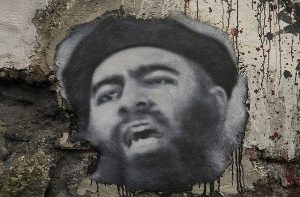
    thierry-ehrman

    Image by thierry ehrman via Flickr.

    ISIS are the great strategic plagiarists of modern asymmetric warfare. As Dr Craig Whiteside’s excellent analysis highlights (also here), whatever is unique about the ISIS phenomenon is significantly outweighed by what it has cannibalized (knowingly or unknowingly) from insurgency/revolutionary war doctrinaires like Mao Tse-Tung, Che Guevara or Abu Musab Al-Suri. Like other modern insurgencies, ISIS’s war is characterized by two interrelated contests: a ‘battle of control’ between opposing politico-military apparatuses (e.g. ISIS versus the Iraqi government) and a ‘battle of meaning’ for the ‘hearts and minds’ of local, regional and even transnational populations. ISIS fights the former battle with a spectrum of politico-military actions that results in the group looking remarkably state-like in its shrinking areas of dominance (i.e. bureaucratized governance, conventional military capabilities), more like a guerrilla warfare movement in contested areas (i.e. informal governance functions, asymmetric warfare) and a terrorist network on the fringes of its regional and global reach (i.e. terrorist violence, no governance initiatives). The ‘battle of meaning’ occurs largely in the ‘information theatre’ and it is a contest for not only the dominant narrative (i.e. how the conflict is described), but to shape the perceptions and polarize the support of audiences (i.e. how the conflict is understood and judged).

    While it may be popular to point to ISIS’s use of social media and flashy production to explain the allure of its propaganda, far more important is how ISIS uses a diversity of messages to leverage powerful psychosocial forces and strategic factors that are pertinent to its audiences. Indeed, ISIS propaganda is characterized by two broad categories of messaging: rational-choice appeals (highlighting how ISIS are pragmatically addressing supporter needs via politico-military actions) and identity-choice appeals (interplaying identity, solution and crisis to influence how the conflict and its actors are perceived). Of course, ISIS’s battles of meaning and control are deeply interrelated and strategic success is often reliant upon how seamlessly both can be intertwined. As Robert Taber argues in War of the Flea: ‘The guerrilla fighter is primarily a propagandist, an agitator, a disseminator of the revolutionary idea, who uses the struggle itself – the actual physical conflict – as an instrument of agitation.’

    Success in modern small wars is largely dependent on winning popular ‘support’. But support operates on a spectrum where, at one end, there is ‘behavioral’ support (compliance with a group’s politico-military system) while, on the other, is a deeper ‘attitudinal’ or ‘perceptual’ support (adherence to a group’s agenda). Research has shown that armed groups are not necessarily strongest where support is highest but rather support tends to be highest in places where armed groups are strongest. This points to a dominance of ‘behavioral’ support under such circumstances. Having conducted dozens of field interviews as part of my research with civilians, migrants and activists, as well as former and current fighters, from Syria, Iraq, Afghanistan and Chechnya, almost all described the civilian population as largely apolitical whose ‘support’ tended to follow whoever was in control. But another trend emerged: interviewees regularly cited the influence of what could be described as ‘decisive minorities’ who had a disproportionate influence – perhaps as a consequence of their social status, access to resources, social connectedness or zeal for the ‘cause’ (i.e. deep attitudinal/perceptual support) – on how the broader population assigned their support.

    This dynamic was particularly prominent amongst those who had lived in or near ISIS-controlled territories. ISIS wanted the behavioral support (acquiescence) of local populations but knew that it would be important to ‘win’  and mobilise their ‘decisive minorities’ while killing those ‘decisive minorities’ that were committed to its opponents (ISIS often describes the latter as ‘harvesting’). ISIS messages to potential foreign fighters and ‘lone wolf’ terrorists globally fundamentally appeals to ‘decisive minorities’. After all, ISIS are broadly despised by Muslim populations, as evidenced by polling, and so their propaganda is often designed to drive wedges between not just friends and enemies but tacit and active supporters. While every violent non-state political group appeals to ‘decisive minorities’ to varying degrees, it seems particularly important in ISIS strategies. Trends in ISIS propaganda offer useful insights into these dynamics.

    The ISIS sirens

    While ISIS messaging regularly draws upon a diverse range of themes and issues, what is given priority and greater emphasis will inevitably depend on strategic calculations and circumstances. In the year after ISIS captured Mosul in mid-2014, certain themes were more pronounced than others in its propaganda. For example, ISIS tended to frame its politico-military successes as manifestations of divine-approval and their enemies’ defeats as proof of divine punishment. A central feature of this messaging was ISIS’s regular promotion of how it was pragmatically addressing the needs of populations under its control thanks to its politico-military prowess and the ineptitude of its opponents: “In the midst of a raging war with multiple fronts and numerous enemies, life goes on in the Islamic State. The soldiers of Allah do not liberate a village, town or city, only to abandon its residents and ignore their needs.” Particularly prominent during this period were communiques showing the variety of ISIS’s bureaucratized governance initiatives and the successes of its hybrid military operations. To local audiences, ISIS promised security, stability and livelihoods. To regional and transnational audiences, ISIS messaging wove together rational- and identity-choice appeals to lure supporters to its ‘caliphate’ or, as a secondary option, to pledge allegiance to ISIS before committing acts of terrorism ‘at home’.

    Since late-2015, however, the themes of ISIS messaging have shifted in ways that may seem subtle but telling. As victories and signs of strength dwindle, a noticeable trend in ISIS messaging, particularly to transnational audiences, has been a greater prioritization of identity- over rational-choice appeals (e.g. see the latest issue of its English-language magazine Dabiq). For instance, an increasingly prominent theme in recent ISIS messaging is that human and material losses are ultimately fleeting and prophesied so should not deter ‘true believers’. Where victory was once framed as proof of God’s blessing, ISIS narratives focus increasingly on the value and honor of the struggle. As al-Adnani declared earlier this year: “And victory is that we live in the might of our religion or die upon it. It is the same, whether Allah blesses us with consolidation or we move into the bare, open desert, displaced and pursued.” Where ISIS once placed primacy on foreigners traveling to support its ‘Caliphate’, it now tends to stress ‘lone wolf’ terrorism.

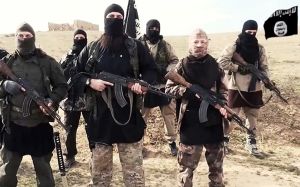
    Sure, ISIS continues to promote how it addresses the needs of its ‘citizens’, especially in ‘offline’ messages for local audiences, but increasing emphasis is being placed on influencing and mobilizing. A powerful strategy ISIS continues to use is the depiction of extreme violence in its propaganda. Such messaging not only helps to coerce complicity from local populations and intimidate rivals, but inevitably works to polarize ‘true believers’ from all others. Reciprocity is a dominant theme in this messaging. Whether it is a Jordanian pilot being burned alive, a captured soldier being run-over by a tank or spies being executed like sheep or by children, the gruesome execution scene is preceded by emotive narratives, jurisprudential justifications and graphic imagery that frames the killing as a reciprocal act, performed by the victim (or their representative) in response to the aggressor’s violence. The calmness on the face of ISIS executioners helps symbolically reinforce these points.

    Conclusion

    The final article in Rumiyah was titled ‘The Kafir’s blood is halal for you, so shed it’ and in the following fortnight ISIS released some of its most graphic messaging. Look beyond the gore, though, and this messaging is in fact quite sophisticated. This is not for the masses. This is for the ‘true believers’. It has and will continue to be partnered by narratives condemning ‘moderate’ Muslim clerics as sell-outs, chastising Western powers for their ‘brutality’ against Muslims and calling for supporters to mobilise. As the antecedents to ISIS demonstrated almost a decade ago, ISIS understands that as areas of control shrink its survival is dependent on using propaganda synchronized with whatever politico-military capabilities remain to keep their ‘decisive minorities’ committed, motivated and ready to mobilise. ISIS may not be able to live up to its slogan of ‘remaining and expanding’ but it understands that so long as it can ‘remain’ the potential to ‘expand’ always exists.

    Haroro J. Ingram is a research fellow with the Australian National University and a research associate with the International Centre for Counter-terrorism – The Hague (ICCT). His Australian Research Council funded project analyses the role of propaganda in the campaign strategies of violent non-state actors with Daesh and the Afghan Taliban as major case studies. Ingram is also a visiting researcher with the Naval Postgraduate School’s Defense Analysis Department. He can be followed on Twitter @haroro_ingram.

  • Sustainable Security

    Jenny Nielsen and Nathalie Osztaskina

    With geopolitics and deterrence doctrines back in the ascendant, the prospects for multilateral nuclear disarmament look worse than for a generation; many options are on the table but whether states will engage constructively and pursue any of these proposals remains an open question.

    Following the failure of the states parties to the NPT to adopt a consensus Final Document at the 2015 RevCon due to significant divisions on key issues, the voting and statements at the UN General Assembly First Committee (which deals with disarmament and threats to peace) highlighted the ‘even stronger polarisation and hardening of positions’ between the non-nuclear weapon states (NNWS) and NWS given the latter’s refusal to make meaningful progress on their disarmament obligations.

    As recently heard at the 2015 EU Non-Proliferation and Disarmament Conference, ‘the First Committee has confirmed the polarisation and also the deep mistrust that is there between nuclear-weapon states and a considerable part of the non-nuclear weapon states’. To aggravate this, no state or group of states seemed to be capable of playing ‘a bridge-building role’. As a result, the world was left without a consensus on how to begin disentangling the tight knot of nuclear politics so that NWS could move towards their NPT commitment to disarmament.

    The re-emergence of nuclear deterrence

    Following Moscow’s aggressive actions in Crimea and eastern Ukraine, the salience of nuclear weapons and the role of nuclear deterrence in security and defence doctrines is re-emerging in European political discussions, particularly regarding NATO’s posture.

    At the 2015 EU Non-Proliferation and Disarmament Conference, Russian analyst Alexei Arbatov stressed the regrettable paradox that despite the lower number of nuclear weapons since the end of the Cold War, ‘the probability of their use is now higher’. Chillingly, Arbatov added ‘it is not only higher than 25 years ago, it is probably higher than at any time since the early 1980s’.

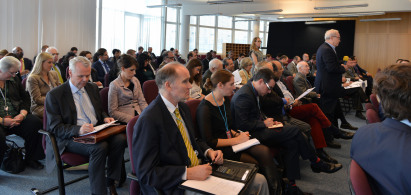
    23128494592_6ee987a7de_k

    Guests at a roundtable organised by the Vienna Center for Disarmament and Non-Proliferation (VCDNP) on November 19, 2015. Image credit: Flickr

    Based on ‘the resurgence of state-based threats’, Professor Wyn Bowen argues that the UK’s recently published 2015 Strategic Defence and Security Review (SDSR) has ‘brought deterrence back to the centre stage for the United Kingdom more than any other time since the end of the Cold War’.

    At the same time, in the UK, the recently elected leader of the Labour Party, Jeremy Corbyn — a long-standing opponent of nuclear weapons and vice president of the Campaign for Nuclear Disarmament (CND) — has stated that he would not condone the use of nuclear weapons if he were elected prime minister. Corbyn’s Trident statements have clearly ruffled feathers amongst some in the military and political establishment, with a parliamentary ‘Main Gate’ decision on renewing the UK’s nuclear weapons system confirmed for 2016.

    Despite Corbyn’s recent statements, elite debates have largely remained limited to discussions of whether the UK should build four new nuclear-armed ballistic missile submarines in order to ensure continuous at sea deterrence (CASD).

    Another key debate within NATO concerns how the alliance might re-articulate, refresh and clearly communicate its nuclear posture to reflect the current geo-strategic environment. NATO’s former Deputy Assistant Secretary General for Weapons of Mass Destruction Policy and Director for Nuclear Policy, Guy Roberts, recently argued that ‘to be fully credible, NATO’s nuclear posture and policy needs to be firmly articulated and communicated to Russia and other would-be adversaries’.

    Furthermore, it was recently argued at the 2015 EU Non-Proliferation and Disarmament Conference that ‘we no longer have a debate about the potential withdrawal of’ the 160-200 theatre nuclear weapons (TNW) still in Europe. The debate instead now focuses on the role of nuclear deterrence in the broader defence posture of the NATO alliance. Guy Roberts argues that ‘if Russia continues to use nuclear threats and intimidation tactics, then the West will need to plan deterrence, response, and escalation control options that are credible and particularly tailored to the mindset of the Russian leadership. Otherwise, Russia may see its own rhetoric as validated and NATO as weak’.

    Possible ways forward

    So, what are possible ways forward vis-à-vis multilateral nuclear disarmament goals as mandated by the NPT in the current security environment? Given the re-ascendance of perceptions of imminent state-based security threats, how can we move from increasing frustrations among NNWS and procrastination or obstruction by states towards constructive engagement? Technical, legal and normative proposals exist to further progress towards nuclear disarmament commitments by NPT member states.

    Legal Approaches

    Many NNWS that are supporting the evolving Humanitarian Initiative are pursuing a legal measure that would ultimately delegitimise nuclear weapons use and possession. Proposals exist for a group of NNWS to pursue such a legal ban on nuclear weapons even without the participation of the five NWS and the other four non-NPT nuclear possessors (Israel, India, Pakistan and North Korea). Proponents argue that by concluding a legal ban, an international norm delegitimising nuclear weapons will be established, regardless of engagement by states with nuclear arsenals. The multilateral fora addressing nuclear disarmament have been subject to intense contention given the postures on this issue.

    As voted for by 135 states at the 2015 session of the First Committee, the 2016 sessions of the Open-Ended Working Group (OEWG) could serve as a multilateral forum for discussions on nuclear disarmament. This is a measure specifically taken to avoid the polarisation that has characterised the Humanitarian Initiative and the refusal of the NWS to engage with it. Since 2009, the five NWS have been pursuing their own discussions on disarmament, known as the P5 Process, with limited results even before the NATO/Russia schisms over Ukraine. It is still unclear whether the five NWS and some NNWS under extended deterrence arrangements (i.e. the other 25 NATO members plus other allies) would participate in the OEWG.

    In 2014, the Marshall Islands initiated a different legal approach towards demanding accountability vis-à-vis nuclear disarmament progress through the Global Zero lawsuits. Whether this approach through the lawsuits filed in the International Court of Justice will bring effective results – other than grabbing headlines and elevating the issue of nuclear disarmament on the international agenda – remains to be seen.

    While a nuclear ban may be a key long-term normative and legal aim for some NNWS, the Comprehensive Nuclear-Test-Ban Treaty (CTBT) (and its sophisticated International Monitoring System) is a realistic short-term objective. The CTBT is a developed and available legal and technical step towards nuclear disarmament. With the 20th anniversary of the CTBT due in 2016, its entry into force should be a policy priority for states looking to bolster the nuclear non-proliferation regime.

    In democracies at least, civil society and disarmament advocacy groups could funnel their energy and passion to promoting the establishment of the CTBT, educating the electorate on this issue and lobbying parliamentarians. With broad declaratory support voiced by NPT states parties (and Israel) for the CTBT, further ratifications of this treaty by states with some nuclear capabilities (called ‘Annex II’, including signatories China, Egypt, Iran, Israel and the US) would significantly strengthen the non-proliferation regime and states’ commitment to disarmament. Recent declaratory support by US officials (including Kerry, Gottemoeller and Moniz) and efforts to re-energise the CTBT debate in the United States are therefore a positive development.

    Technical Approaches

    Another approach to furthering progress vis-a-vis nuclear disarmament is the US-launched International Partnership for Nuclear Disarmament Verification (IPNDV). This initiative aims at addressing the technical challenges of disarmament verification, bridging NNWS’ and NWS’ understanding of the key measures and practical issues involved in verifying disarmament agreements. At a recent Vienna Center for Disarmament and Non-Proliferation event following the IPNDV’s November meeting in Oslo, US Assistant Secretary of State Frank Rose, provided an overview of the IPNDV. The Partnership made progress in establishing three Working Groups and authorised them to move forward with their important technical assignments. Rose believes that, by concentrating on technical tasks, the Partnership ‘can make real and important progress’ in achieving multilateral cooperation and towards realising disarmament goals.

    Several other pragmatic, technical proposals exist in support of reducing nuclear salience in security doctrines, including de-alerting arsenals and reducing stocks of delivery systems. In a recent Washington Post op-ed, former Defense officials William J. Perry and Andy Weber argued against the implementation of a US nuclear-armed cruise missile system which could heighten the risk of miscalculation by an adversary.

    From entrenched postures to dialogue

    Given the current deep divides on how to move forward on nuclear disarmament goals amidst heightened strategic discontents, pragmatic and confidence-building measures, including dialogue and trust-building activities, which enjoy broad support by international actors should be pursued. Frustrations, ineffective criticism and outright obstructions need to be channelled into constructive efforts, at the core of which should be frank and respectful dialogue. This applies to both sides of the debate. Only through unpacking the core assumptions underlying the extreme postures and perspectives on the perceived value of nuclear weapons, can these social constructs begin to be appreciated.

    Effective progress towards a secure world without nuclear weapons as the ultimate security guarantee and ultimate insurance policy remains a long and arduous journey that will require open minds, constructive dialogue and a mix of various technical and legal measures at the right time. The dislodging of deeply entrenched postures and institutional cultures won’t happen in the short-term, even if a normative and legal ban is attained by a group of NNWS.

    Following the outcome of the 2015 NPT RevCon, the five NWS are faced with the challenge of soothing perceptions of their lack of commitment to their Article VI obligation to pursue “a treaty on general and complete [nuclear] disarmament”. Whether the current international tensions between Russia and the West will test the NWS’s solidarity within the NPT P5 Process, as well as bilateral arms control measures, remains to be seen.


    Jenny Nielsen is a Postdoctoral Fellow at the Vienna Center for Disarmament and Non-Proliferation (VCDNP). Previously she was a Visiting Scholar at the NATO Defence College (NDC), Postdoctoral Research Fellow at the University of Queensland (UQ), Research Analyst at the International Institute for Strategic Studies (IISS), and Programme Manager for the Defence & Security Programme at Wilton Park.

    Nathalie Osztaskina is an Intern at the VCDNP. Her research focuses on disarmament efforts and the humanitarian movement, nuclear security, and promotion of CTBT’s entry into force. She worked previously at the Geostrategic Forecasting Corporation, doing research on the Russian-Ukrainian crisis.

  • Sustainable Security

    This article by Sustainable Security’s Richard Reeve was originally published on openDemocracy on 29 November, 2013.

    Syria Rubble 3

    Bab Amro, Homs
    Source: Freedom House (Flickr)

    All wars end, sooner or later. With an interim deal signed on Iran’s nuclear programme, the great powers, Middle Eastern diplomats and the mediators of Geneva are returning their attention to ending the war in Syria. As figures released by Oxford Research Group on 24 November reveal, at least 113,735 Syrians had been killed by August, one-in-ten of them children. No conflict is currently deadlier. The 25 November announcement that the so-called Geneva II conference would finally convene on 22 January is thus overdue but good news. But what are the chances of it bringing peace?

    Securing Syrian participation

    If the responsibility for making peace rests with the Syrian actors to the crisis, the Geneva process has not yet secured domestic participation, let alone commitment. Convened in June 2012, the original Geneva conference was a meeting of the Action Group for Syria, an initiative co-sponsored by the UN and League of Arab States and including the five permanent members of the UN Security Council (‘P5’), the EU, Turkey and, as office-holders within the Arab League, Iraq, Kuwait and Qatar. The ensuing Geneva Communiqué set out a six-step plan to peaceful transition. But this was a commitment of the Action Group, not the Syrian parties to the conflict.

    Geneva II, by contrast, is all about brokering agreement between Syrians. This has become very much more difficult since mid-2012, when up to 25,000 Syrians had died in the conflict. Based on data up to end of August 2013 analysed by ORG and ongoing casualties recorded by Syrian civil society, this casualty figure is now around five times higher. Levels of destruction, displacement and brutality have similarly multiplied.

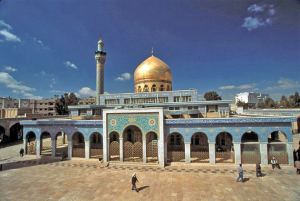
    The Sayyidah Zaynab Mosque south of Damascus is a major pilgrimage site for Shia Muslims from Syria, Lebanon, Iraq, Iran and beyond. Attacks on the shrine in 2013 have reportedly motivated many regional Shia to fight in Syria. Source: Wikimedia

    The Sayyidah Zaynab Mosque south of Damascus is a major pilgrimage site for Shia Muslims from Syria, Lebanon, Iraq, Iran and beyond. Attacks on the shrine in 2013 have reportedly motivated many regional Shia to fight in Syria.
    Source: Wikimedia

    The character of the war has also changed since 2012. It has increasingly become sectarian and internationalised. Sunni militants from across the Arab world and beyond have transformed the nature of the armed resistance. Shi’a militia from Lebanon, Iraq, Iran and Syria’s Alawite community have played a decisive role in recent regime offensives. Secular Kurdish militia control the northeast.

    Healing these divisions may take generations. Peace or a cessation of violence is an immediate imperative. Securing a deal in Geneva is likely to be a case of a ‘good enough’ compromise from an ‘inclusive enough’ coalition of interests. This is likely to have at least three dimensions.

    First is the problem of securing meaningful participation in even initial talks. The largest and most widely recognised opposition political force, the National Coalition insists that President Bashar al-Assad must leave power. The regime insists it will neither ‘talk to terrorists’ nor negotiate surrendering power. The National Coalition faces greater internal resistance to negotiating, while the Assad regime is reassured by negotiating from a position of increasing strength on the battlefield.

    Second is the problem of linking political settlement with battlefield realities: without the buy-in of combatants, no peace deal will be ‘good enough’ to hold. The National Coalition and its Free Syrian Army (FSA) have never coalesced the myriad of armed local resistance units into a capable force. Pulverised by regime armour, artillery and air power, opposition forces have increasingly rallied from secular to Islamist command to access more effective leadership and resources. The Islamic Front merger of the largest such groups on 22 November hugely undermines the National Coalition’s credibility. Conversely, association with the main armed Kurdish party has boosted the National Coordination Body, a moderate coalition of otherwise unarmed opposition parties still operating within Syria. The question of how civil society groups or minorities opposed to armed struggle can be involved in Geneva II remains unresolved. These should not be considered niche perspectives.

    Third, ‘inclusive enough’ probably means side-lining some Jihadist groups that in 2013 have become dominant in the east and major players on the northern (Idlib and Aleppo) and southern (Daraa) fronts. Funded, organised and to a significant extent manned from abroad, the extent to which these groups represent Syrian interests is debatable. Affiliation with al-Qaida suggests these groups’ leaders are opposed to political compromise. As with AQ affiliates in Somalia and Mali, their radicalism may not be shared entirely by the Syrians who fight with them. The consolidation of the Islamic Front could serve to divert resources from al-Qaida affiliates.

    U.S. Secretary of State John Kerry and Russian Foreign Minister Sergey Lavrov on September 12, at beginning of Syrian chemical weapons talks.

    U.S. Secretary of State John Kerry and Russian Foreign Minister Sergey Lavrov on September 12, at beginning of Syrian chemical weapons talks.
    Source: Wikipedia

    Securing international commitment

    If the responsibility for making peace rests with the international actors who have waged a war through armed Syrian proxies, the Geneva process so far looks equally constrained. Global rivals Russia and the United States play a leading role in the Action Group, but this leaves unrepresented the far more heavily committed (in military and financial terms) rivals for influence in the Persian/Arabian Gulf region: Iran and Saudi Arabia. Turkey and Qatar are also key supporters (and hosts) of the armed opposition but their presence adds to the sense that the Action Group is weighted against the Assad regime, which may count only Russia, Iraq and, more loosely, China as allies in Geneva.

    Bringing the Iranians and Saudis into the process is thus crucial to the success of Geneva II. Iran’s opening to the west since the election of President Hassan Rouhani is partly driven by the draining of Iranian resources in Syria. With the Assad regime advancing on the battlefield, and Russia and the western powers sharing its concern over the rapid rise of Sunni extremists on the Syria/Iraq border, Iran is more likely to back peace in Syria. Its interests include a veto on Sunni dominance and continuance of its access to Hezbollah in Lebanon. However, with Shi’as and Alawites representing under 15% of Syria’s population, it is unclear how it can secure these interests without the Assads in charge.

    Saudi Arabia looks a harder sell, not least because it feels its privileged status as US regional ally slipping as Iran pursues rapprochement. Recent Saudi tensions with Turkey and Qatar over influence in Egypt further undermine the unity of foreign pressure on the opposition. Yet reshuffles within the National Coalition and Islamic Front since July suggest that pro-Saudi elements have gained prominence in both. Riyadh may have the influence to bring these rivals together, but only if the Coalition assumes a more overtly Islamist identity. Reconciling Syria’s Sunni Arab majority and an Islamist agenda with either the Assad regime or western expectations is an enormous challenge, although the Geneva Process foresees a National Dialogue followed by constitutional and legal reforms to determine just such issues.

    What way forward, then? It seems axiomatic that the rivalry between Iran and its Gulf Arab neighbours needs to be addressed directly through talks and confidence-building rather than through proxies over Syria. This is of particular urgency as talk re-emerges of a Saudi nuclear weapons programme to counter Iran. It could also be that the National Coalition is overly constrained by its disparate backers’ demands for opposition unity. The divisions that have hampered it in making war may also hamper it in making peace. Representation in Geneva that allows disparate Salafist, Muslim Brotherhood, secularist and pacifist currents to express themselves may be beneficial.

    Judicial pressure

    While the parties and their regional backers remain far apart in their expectations, international judicial mechanisms have potential importance as leverage towards peace, in restraining the behaviour of combatant parties, and eventually pursuing post-conflict justice. Although Syria has not signed the Rome Statute, international war crimes prosecutions could be brought if the UN Security Council refers Syria formally to the International Criminal Court (ICC).

    Due legal process and systematic gathering of evidence, including data on casualties, is crucial if the threat of prosecutions is to be realistic. The UN Commission of Enquiry has been investigating a wide range of alleged crimes committed by both sides, with a view to future prosecutions. Growing P5 consensus on the need for conflict settlement could make referral to the ICC possible in the case of Syria, as it did over Sudan in 2005.

    As with the now dissipated threat of military intervention, at least the threat of prosecutions could increase pressure on Syrian combatants to curb the most egregious atrocities and negotiate peace. With both Iran and Russia appalled at the use of chemical weapons in Syria, pressure of prosecution could even be used to unstick the question of whether Bashar al-Assad presides over any transition government.

    Richard Reeve is the Director of Oxford Research Group’s Sustainable Security programme. He works across a wide range of defence and security issues and is responsible for the strategic direction of the programme. Richard has particular expertise in global security, Sub-Saharan Africa, peace and conflict analysis, and the security role of regional organisations.

  • Sustainable Security

    In May 2014, Cameroon declared war on Boko Haram at the Paris Summit. Since then, Boko Haram has intensified its activities in the Far North Region of the country, making Cameroon the second most targeted country, in terms of attacks, by the sect. Hans De Marie Heungoup, Cameroon analyst at the International Crisis Group, provides insights on the rise of Boko Haram in Cameroon, the stakes for the country and efforts made by the Government to overcome the jihadist organisation.

    How would you describe the rise of Boko Haram in Cameroon?

    The penetration of Boko Haram in Cameroon took place gradually and in several phases. At each phase, the group has been able to change its modus operandi and adapt to the response of Cameroonian defence forces. While the first frontal attack of Boko Haram against Cameroon dates back to March 2014, the presence of members of the sect in the Far North was signaled as far back as 2009. In fact, in July 2009, after clashes between Boko Haram militants and security forces at Maiduguri in which more than 800 members of the sect were killed, including the founder Mohamed Yusuf, several members of Boko Haram found refuge in and/or transited through the Far North of Cameroon. But up until then, Cameroon had shown only little interest in the Islamist group.

    Boko Soosay

    Artwork of Boko Haram insurgent. Image by Surian Soosay via Flickr.

    Boko Haram’s interest in Cameroon grew between 2011 and 2013. This is an interesting phase because it is during this period that Boko Haram started spreading its religious ideology, mainly in the Logone and Chari and Mayo Sava divisions of the Far North, recruiting Cameroonians as fighters and using this part of the territory as a rear base or safe haven. Specifically, from 2011, in addition to seeking refuge on Cameroonian territory after attacks in Nigeria, members of Boko Haram regularly bought foodstuffs on different markets in the Far North. They also infiltrated former networks involved in trafficking, smuggling of motorbikes, adulterated fuel (zoua-zoua) and Tramol (drug) in the far north. It was also between 2011 and 2013 that they established most of their networks of arms caches on Cameroonian territory, with Kousseri serving as their logistics base. At the same time, like Chad, the Far North of Cameroon served as transit points for weapons bought by Boko Haram from Libya and Sudan. Fotokol in Cameroon has been one of the entry points of these arms into Nigeria.

    While until 2012 the presence of Boko Haram in the Far North was rather passive and unknown to the public, despite a few targeted killings and abductions of Cameroonians in the Mayo Sava and Logone and Chari divisions, the practice of kidnapping of foreigners, adopted from February 2013, marks a shift by Boko Haram to a more active approach on Cameroonian soil. Between 2013 and 2014, the jihadist group abducted 22 foreigners (French, Chinese, Canadians and Italians) in Cameroon and released them each time after the payment of ransoms the total amount of which was at least $11 million and the release of about forty of its members detained in Cameroon. In 2014, Boko Haram moved from the active approach to a frontal approach with attacks on police stations and military bases. Thus, from March 2014 to March 2016, Boko Haram carried out more than 400 attacks and incursions in Cameroon, as well as about fifty suicide bombings that left 92 members of security forces dead, injured more than 120 others and  killed more than 1350 civilians.

    Over the last two years, Boko Haram has been able to alternate between low-intensity attacks requiring only about ten fighters on motorbikes and conventional attacks that can mobilise more than 1000 fighters, as well as armored vehicles and mortars. Up to now, the abduction of the Vice-Prime Minister’s wife in July 2014, the thirty or so conventional attacks on Fotokol, Amchide and Kolofata in 2014 and 2015, as well as a series of suicide attacks that hit Maroua in July and August 2015 are the most spectacular actions carried out by Boko Haram in Cameroon.

    After this peak period, Boko Haram, whose firepower was at its best between July 2014 and March 2015 when it also controlled more than 30 000 square kilometers of territory in northeast Nigeria, gradually declined from January 2015 following renewed engagement of the Nigerian army ahead of the presidential election, and then the coming to power of Muhammadu Buhari who overhauled the apparatus to fight Boko Haram in Nigeria.

    Furthermore, the engagement of Chadian and Cameroonian troops, who inflicted huge losses and setbacks on Boko Haram, significantly weakened the group to the extent that, for the past nine months, it has not been able to carry out any conventional attacks in Cameroon and has lost most of the territories that it was holding in Nigeria (Cameroonian troops declare that they have killed more than 1500 members of Boko Haram in fights and arrested more than 900 suspected members. The Islamist group has also suffered huge logistical losses). Conscious of the new power balance, the jihadist organisation has resorted to purely asymmetric warfare, giving preference to suicide bombings and low-intensity attacks. From July 2015 to March 2016, Boko Haram carried out more than 50 suicide attacks in Cameroon, killing more than 230 people and wounding 500 others. This war has had an adverse effect on the economy of the Far North of Cameroon which was already the poorest and the region with the lowest school enrolment rate in the country before the war. It also led to an influx of 65 000 Nigerian refugees to Cameroon and caused the internal displacement of more than 93 000 people.

    Why did Boko Haram start attacking Cameroon?

    Boko Haram started launching a frontal attack on Cameroon because the Government strengthened the security apparatus in the Far North and dismantled about ten arms caches of the sect, as well as corridors for the transit of weapons. In fact, Cameroonian authorities were in an increasingly untenable situation at the beginning of 2014. Despite the head-in-the-sand policy adopted at the beginning which consisted of turning a blind eye on the presence of Boko Haram members in the Far North in the hope that they would not take on Cameroon, the sect continued to abduct foreigners and Cameroonians. Moreover, the Nigerian Government and press accused Cameroon of serving as a rear base and support for Boko Haram. Faced with such pressures and following the abduction of ten Chinese nationals at Waza, the only rational option for Cameroon was to declare war on the sect. Of course, once war was declared in May 2014, Boko Haram, in turn, increased its attacks in Cameroon to the extent that the country became the second major target of the Islamist group.

    How effective are the Cameroonian government’s counterinsurgency efforts?

    To combat Boko Haram, Cameroon has deployed two military operations, namely Operation EMERGENCE 4 made up of units of the regular army and Operation ALPHA comprising of units of the Rapid Intervention Battalion (BIR), the elite corps of the Cameroonian army. In addition to these operations, we have the multinational joint task force whose first military sector is based in Mora and comprises of 2450 Cameroonian troops. On the whole, about 7000 men have been deployed by Cameroonian defence forces in both operations they and the regional joint task force have efficiently warded off conventional attacks by Boko Haram. However, Cameroonian troops find it more difficult to thwart suicide bombings.

    Moreover, the weakness of Cameroon’s response against Boko Haram is the absence of a policy and measures to combat radicalization and a program for de-radicalization. Similarly, given that this region is the poorest and has the lowest school enrolment rate in the country, and that these factors have facilitated recruitment and indoctrination by Boko Haram, the Government’s response on the socioeconomic development level in the Far North is still fragmented, poor and ill-adapted to the stakes.

    How do you analyse the state of the regional cooperation against Boko Haram?

    To address the threat posed by Boko Haram, the states in the region (Nigeria, Cameroon, Chad, Niger and Benin) under the aegis of the Lake Chad Basin Commission set up a multinational joint task force. The regional task force has been slow to put in place, but after several delays, the multinational task force was set up and only finally went operational later in 2015. However, the multinational force is witnessing financial and logistical difficulties that are affecting its full operationalisation and few donors have so far delivered on their pledges. As such, only the first sector of the force is operational as of now.

    The other specificity of the regional response is that it has assumed more of a bilateral rather than multilateral orientation: like the military cooperation between Chad and Nigeria or Nigeria and Cameroon that, despite the bottlenecks recorded at the beginning, has improved significantly over recent months to the extent that the right of hot pursuit is now a reality. However, the major shortcoming of this regional response is that it focuses on military aspects. No serious brainstorming is done on development issues and the fight against radicalization at the regional level. In the same light, no reflection has been initiated on the ways to end this crisis now that Boko Haram is weakened.

    What do you see as the future of Boko Haram in the region and what will this mean for counterinsurgency efforts?

    The most likely scenario, in my view, is that Boko Haram will become a sort of criminal network with several small independent leaders. This network will comprise of fake religious leaders, real traffickers and criminals and remain in the area for several years until the states of the region resolve to adopt an African Marshall plan to boost trans-regional development: that will require investestment in social sectors such as schools, health centers; and development of high intensity labor force projects in the region to sustain fishing and agriculture around Lake Chad, to support the local industrial sector and build roads between and within provinces of the area. All these should be accompanied by a de-radicalization and counter radicalization project at the transregional level.

    Hans De Marie Heungoup is Cameroon analyst at the International Crisis Group. He conducts field research and provides analysis on prevailing security, social, legal, governance and political issues; proposes policy initiatives for governmental, intergovernmental, political, and nongovernmental stakeholders to address and resolve sources of conflict; and prepares detailed reports and briefing papers setting out relevant research findings and policy recommendations.

  • Sustainable Security

    Islamic State is one of the most revolutionary and dangerous political movements of modern times, but its attraction it often highly misunderstood. How and why does Islamic State appeal to some?

    The Islamic State (also known as ISIS and Daesh), seemingly enjoyed a meteoric rise to power and infamy. ISIS was simultaneously an entity that was admired and/or feared, as this new force attracted vast media attention and reporting. It appeared an unstoppable force, sweeping aside armed forces opposing them in Iraq, Syria and Libya. During 2015, 15 vast tracts of territory in Iraq and Syria were taken. But there was another side to ISIS, some kind of attraction that lured a wide variety of people, including those from the West, to their cause. It was something that many found difficult to understand, let alone adequately explain. When trying to analyse this from the point of view of competing norms and values, between the West and ISIS it may superficially  seem to be an ‘obvious’ choice between the projection of freedom and liberty in the West, and oppression and violence by ISIS. However, the realities of this case, both actual and perceived, are more complex. Understanding the lure of ISIS requires some critical self-reflection from the West, and not only on what has been done by ISIS. How and why does ISIS appeal to some Western publics?

    ISIS as a Brand

    A brand is a psychological and emotional short-cut that creates immediate associations and expectations in an audience with a product, service, person or organisation. Although the brand aspect of ISIS is not totally ignored, it is still under rated by many. Viewing ISIS not simply as an illegal terrorist organisation that needs to be wiped out, or extreme nihilists, but as something more than its tangible form and deeds is necessary. Otherwise, the task of understanding and ultimately countering ISIS becomes more problematic as it ignores the intangible and emotionally significant aspects of ISIS’s appeal.

    In a recent global brand rankings index, there was a great deal of surprise and shock expressed by those that had compiled the index. The 2016 rankings showed that ISIS was a more recognised brand than the Vatican! In 2016, ISIS stood at 107 on the Western Perception index, which was up 56 places from 2015. This does not mean that the ISIS brand has a better reputation than other country and organisation brands, but it does mean that it is more widely recognised. Even though ISIS is shown to be mostly hated in countries with large Muslim populations, there are sufficient potential recruits there and in the West to lure with different grievances or causes. This process will be made easier if a backlash against Muslims in general is precipitated as a result of various terror attacks that have been occurring in Belgium, France and other countries. Some other polls seem to contradict the mentioned trends and show that there is support for the terror group, which was shown in an Al Jazeera poll, where 80 per cent of respondents seemed to support them.

    Signature atrocities and war crimes by ISIS are widely disseminated in video format by media outlets that are associated with or sympathetic to ISIS or by Western media covering a ‘newsworthy’ soundbite that is given in an infotainment format. The ISIS logo has been used widely to increase brand recognition and association. It is full of political and social (such as an equal and ideal society in the making) symbolism, which places and positions the organisation within an environment of competing jihadist organisations. Part of ISIS’ means to project itself in terms of its brand and reputation, to attract attention, supporters and recruits is through one of its means of public relations, the Internet-based magazine Dabiq. This magazine is produced in a very familiar glossy magazine format that is commonly found in the West, yet the content is extremist in nature, attempting to appeal to a variety or discontent or angry individuals and groups. Its message may not only appeal to Muslims, but those isolated and discontent individuals or groups that find the ISIS messages of revenge , building a new society or becoming socially significant appealing. This is the means of public outreach to turn its propaganda of the act into the propaganda of the word, to rhetorically publicise what it stands for and against, and to convert the idea of ISIS into some form of political movement.

    ISIS as a Political Movement

    Currently the nature of politics and political relationships is evolving. Traditionally politics has been measured by using a left-right political scale. This is a now somewhat obsolete way to accurately understand the events and processes that are currently taking place in global political environments. Politics in its current form is the result of a culmination of time periods of discontent and disconnection with mainstream political and public policy. Various people and groups have gradually become increasing discontent, frustrated and seek alternatives in political movements, something that breaks the status quo. Those political movements are able to offer something different and situate themselves as being opposed to the incumbent political elite that can resonate with some of those groups and individuals. This does not mean that ISIS is ‘simply’ a political movement (which is the basis for forming its political relationships), but it is also a revolutionary one that seeks to alter existing political, social and economic relationships through violent means. They are attracted to messages that offer an alternative, pledge resistance to the current political environment, and offer a new and inclusive society. These messages and visions of a promised utopia attract many, and these groups and individuals create what they believe to be mutually reinforcing and ‘beneficial’ political relationships with the likes of ISIS. The realisation of the ISIS Caliphate gave tangible visualisation to a previously intangible set of ideas and ideals. Underlying reasons can be found in human needs for self-actualisation, esteem and a sense of belonging that is explained in Maslow’s Hierarchy of Needs.

    Events and Processes that Influence the ISIS Appeal

    isis-again

    Image by Wikimedia.

    There are a mixture of internal and external influences – processes and events – that combine to influence the level of appeal of ISIS to different individuals and groups. These form a mixture of push and pull factors that can make an organisation with such a brutal track record as ISIS appealing. In the sum of things, it is not only a matter of what ISIS says and does that makes it attractive to some individuals or groups, but also what the West says and does. This is an example of negative politics and political interaction at its worst. ISIS has made very effective use of the Internet and social media to spread its message and influence around the globe, rendering the old geopolitical constraints of time and space ineffective. This has enabled them to bypass the traditional gatekeepers of the information space. It has also enabled them to enact three significant geopolitical shifts: 1) from states to individuals/organisations; 2) real world to virtual world mobilisation and power; 3) old media to new media.

    In the West

    Politics and policy in the West has had profound, and often negative, effects on the issue of equality of its citizens. There is a growing disparity of economic and political opportunity in many countries, which is problematic when there is a growing sense of alienation and outrage in society, and those higher human needs that Maslow discussed remain unfulfilled. The United Kingdom received a shock on 7 July 2005 when domestic terrorists attacked. It was not the first time the UK had been attacked by terrorism, the IRA ran a long campaign. Within the Global War On Terrorism that the UK joined the United States after the September 11, 2001 attacks, it was assumed that any kind of Islamic-based terrorism was simply happening somewhere else.

    However, the New Public Management policies had created an ideal environment. Social services (such as health, education and policing) were gradually withdrawn from marginalised communities. The British state withdrew its presence and care of these people in the name of budget cuts. This political and social vacuum was soon filled by non-state actors, including some radical ones, which offered basic health and ‘policing’ services, educated children in madrassas. This is not to say there is necessarily a link between madrassas and violent extremism, but when one form of government vacates territory the resulting vacuum is soon filled by other forms and sources of social and political order that move in to occupy that space. The social and political relationships were created, which can also form mutually reinforcing trends, such as the rise of right-wing populism that feeds sets of radicalisation (in the Muslim and right-wing groups).Thus the different forces try to politically mobilise their constituent audiences through fear of the other. However, some research shows that there has been little impact so far.

    In a similar tone to the Western understanding of the practice of Hearts and Minds, there are the five aspects of Jihad. There is Jihad of the sword, hand, tongue, knowledge and heart. Jihad of the Sword (combat) carries the least weight, of more importance are Jihad of the Tongue (including propaganda) and Hand (humanitarian operations).

    When looking at recruits that have fought and died for ISIS, it has included some ‘surprising’ individuals, drawn from very non-Islamic backgrounds. There are those that have been recruited to fight for the ISIS cause. From 2011 onwards, an estimated 27, 000 – 31, 000 foreign recruits have gone to Syria and Iraq. There are those that have gone for a sense of ‘adventure’, because they feel there are personal opportunities for them or to be part of a community and to build something significant and special. In their home communities they felt left out, isolated, marginalised, held back or somehow insignificant. Audiences from Western countries have followed the news in disbelief as various stories of young men and women have been leaving, what they believe is a comfortable life, straight to the dangers of joining ISIS in Syria and Iraq.

    ISIS makes a sustained and deliberate effort to attract youth to its cause. The attraction has not been only about destruction and death, but the promise or hope to build a special community. This has been spread by some very slick advertising and public relations, such as the example provided by someone claiming to be an Australian doctor recruiting professionals to join him.

    When one thinks of Islamic-based terrorism, immediate associations normally revolve around concepts of brutality and violence as being the key elements. However, this is not the case. In terms of how information is used by these organisations, military operations are subordinate to information operations. The importance is found in the value of the information that is derived from an action. This differs from most Western governments, where information operations are secondary to military operations, information is used to try and legitimise those military ventures.

    In the Middle East and North Africa

    One of the now seemingly defunct stereotypes of ISIS recruits from the Middle East and North Africa was that they were poorly educated and highly religious. However, field research conducted by Dr Noha Bakr from Cairo, reveals that they are in fact well educated and from well-to-do families in the Middle East/North Africa region. Research also confirms this trend among Western recruits. Those factors that motivated them to join ISIS included a deep rooted sense of different injustices (political, social and economic inequalities) experienced in the Middle East and North Africa. It should be noted that ISIS attempt to project themselves as fighting a defensive war, in the defence of Islam and Muslims, which more likely appeals to those dispossessed and disconnected individuals and groups. This narrative differs greatly from the Western narrative of an aggressive and offensive ISIS.

    Those senses of injustice have been further compounded by decades of self-destructive US-led foreign policy in the region. Regime changes that were nominally fought in the name of peace and freedom have brought anything but these qualities. Some of those dictators, as brutal as they were, kept terrorism in check and generally people enjoyed a greater level of collective human security, with Iraq and Libya providing good examples. A lot of anger has also been generated in the Muslim world concerning the occupation of Muslim lands by Western armies. To some extent, the damage done by Western foreign policy and its long-term effects have been privately spoken about, but rarely publicly acknowledged. An example of this was found in the August 2012 report by the US Defence Intelligence Agency that gave a confidential assessment of the security situation in Iraq and Syria that was (and still is) very much at odds with what key political and military officials publicly stated. The regime changes have also unleashed massive waves of refugees and ethnic cleansing and persecution in those newly ‘liberated’ areas. This in turn is likely to create fertile grounds for further disconnected and vulnerable groups that are susceptible to the subversive propaganda of groups, such as ISIS. Not to mention the gradually escalating counter-reactions from citizens in the West.

    What Does the Future Hold?

    When ISIS transformed itself and its way of waging war, moving from irregular warfare to regular warfare and declaring a Caliphate after the capture of Mosul, it was both a tangible and intangible symbolic change. It was likely intended to signal itself as an emerging power with a physical state-like structure. In the long-run this seems to have been a strategic miscalculation as the tangible military power of the multiple military forces arrayed against ISIS is much stronger.

    Since the Russian military began their direct involvement in Syria from September 2015, ISIS has become increasingly pressured and their territory held is shrinking. It is likely that they may very well be defeated in this regular style of warfare, however, it is unlikely to be the finish of ISIS. There seems to be a move back towards irregular forms of warfare and an increasing reliance on the use of terrorism in core Western countries as a means to offset their tangible disadvantage, and to try and create a political demand among Western publics to cease military action against them.

    ISIS’s strength is found in its intangible qualities and abilities and not in the tangible world where it is challenging a much stronger opponent, and where it is very likely to lose an openly fought military-style of conflict. Thus reverting to an intangible basis in order to create doubts in the publics concerning their confidence in their political and military leadership, and degrading the will to fight seems to be a logical path to follow. They are also likely to continue exploiting any forms of existing weaknesses or divisions that are to be found in Western society or even to create new ones in order to attract the next generations of recruits, supporters and sympathisers.

    Currently, the number of foreign recruits to ISIS seems to be declining. This may well be a reaction to the military setbacks that ISIS has been experiencing recently. The territory it had previously gained is now shrinking under increasing military pressure from different forces arrayed against them which has shattered their reputation as an unstoppable force. Success breeds greater operational possibilities and popularity, and the reverse seems to have an opposite effect. Assad’s fall in Syria would have rapid and significantly negative consequences for political and security developments in the region, Europe and the wider world. It is too early to say if the soft strategies employed by the coalitions against ISIS have been successful as these means usually are medium to long-term enterprises. The military defeats inflicted upon ISIS, which have shaken the brand and reputation of the group, have also made it more physically difficult to join them. Therefore, a continued combination of hard and soft strategies need to be maintained.

    Associate Professor Greg Simons is a researcher at the Centre for Asymmetric Threat Studies (CATS) at the Swedish Defence University. He specialises in research on Information Operations and hybrid warfare.

  • Sustainable Security

    by Marianne Hanson and Jenny Nielsen

    Deep tensions and frustrations are rising to the fore as the Nuclear Non-Proliferation Treaty Review Conference in New York gets underway. All parties must act bravely to bridge these deep divides if they are to make progress towards a nuclear-free world.

    This year marks several important events in the international nuclear non-proliferation and disarmament regime, including the 2015 Non-Proliferation Treaty Review Conference (NPT RevCon) being held in New York currently, the hoped-for finalization of the Iran deal with the P5 +1 states, and the 70th commemoration of the Hiroshima and Nagasaki bombings. It also marks five years since international humanitarian law was first mentioned explicitly in the NPT process, prompting some states to pursue a ‘humanitarian initiative’, a framing of the discourse on nuclear weapons away from a purely strategic context and towards an emphasis on the catastrophic human, health, resource and environmental consequences which would result from any use of nuclear weapons.

    Opening meeting of the 2010 NPT RevCon in New York. Source: Flickr | IAEA

    The RevCon, held every five years, is an important diplomatic process for international security. It takes stock of what has been done in the preceding period to curb nuclear proliferation and to implement measures for disarmament, but also looks forward and sets goals for driving these processes further. Since the ending of the Cold War, the divide between those NPT member-states which do not have nuclear weapons and the ones which do possess them (the US, Russia, China, Britain and France) has grown, with many in the former camp deeply disillusioned about the prospects for getting the latter group to disarm. The Conference aims to reach consensus in its final outcome document on what actions should be taken, but it is far from assured that such consensus will be possible this month.

    The US administration continues to stress that ‘as long as nuclear weapons exist, the US will maintain a safe, secure, and effective nuclear arsenal’, and this sentiment is echoed by other nuclear weapon states. It is important to note, however, that while we have been lucky in avoiding a nuclear conflict since 1945, given the evidence and research on the risks associated with nuclear arsenals, as long as nuclear weapons exist, there is no guarantee that our luck will hold. As politicians, strategists, diplomats, and civil society groups convene at the UN, they may wish to reflect on what type of brave new nuclear world they want to create.

    Divisive issues

    The 2015 RevCon  takes place  20 years after  the NPT—widely regarded as the cornerstone of the nuclear non-proliferation regime—was indefinitely extended  through a compromise package deal (of three decisions and a Resolution on the Middle East). The Middle East resolution specifically called for efforts towards the establishment of a Middle East zone free of nuclear and all other WMD and their delivery systems. With the elusive Helsinki conference mandated by the 2010 NPT Action Plan yet to be held, due to diverging postures by the regional parties, this issue remains a challenge for states at the New York meeting.

    Not surprisingly, there exists a divergence of views on the pathway and measures needed to work towards the elimination of nuclear weapons, including on which proposals are feasible in today’s strategic and political environment. The nuclear weapon states continue to insist that only an incremental, step-by-step approach, with slow reductions, is realistic, given the security tensions present in many parts of the world today. It seems to many non-nuclear weapon states and civil society groups however that this approach has not produced results, and they fear that disarmament will always be postponed and held hostage to such claims. These advocates of disarmament stress the dangers of continuing to rely on nuclear weapons; for a growing number of them, creating a legal ban against nuclear weapons is seen as desirable and feasible, even if the nuclear states do not sign  up to such an agreement at the outset.

    Any serious efforts to address these divides will require engagement and informed dialogue between the various constituencies involved in the nuclear weapons policy debate. These constituencies include:

    • Strategic nuclear communities of nuclear weapon states who devise, implement and sustain nuclear deterrence policy, and who inevitably argue for continuation of the status quo;
    • Non-nuclear weapon states and civil society groups driving and advocating nuclear disarmament (including those driving the humanitarian initiative);
    • Non-nuclear weapon states – including those in NATO, East Asia and Australia – relying on extended nuclear deterrence.

    It appears very difficult to bridge the diverging views held by these constituencies. A nuclear ban and the stigmatization of nuclear weapons will surely not be acceptable to those individuals and states who still promote nuclear deterrence as a core component of defence doctrines. Some in these strategic communities may perceive the NPT RevCons as merely high-level diplomatic theatrics that take place every five years and which have no direct relevance to infrastructure and ‘real’ policy on nuclear deterrence. Efforts to consolidate a stigmatization of nuclear weapons through a legal framework, such as a proposed nuclear weapons ban treaty—without the engagement of the nuclear weapon possessors and their respective strategic communities will not garner internalized changes. At the 2015 NPT RevCon, the nuclear weapons states will argue that proposals for a nuclear ban at this time will divert focus away from the agreed 2010 Action Plan and the P5 ‘step-by-step’ process.

    But many non-nuclear states and civil society groups argue that the lack of implementation of the 2010 Action Plan is undermining the credibility of the regime and the entire NPT review process. They suggest that a nuclear weapon ban treaty ought to be considered. Their argument is that while this will certainly not create a risk-free world in international security, neither will continuation of the status quo provide us with long-term security and stability. Indeed they argue that the status quo carries with it far higher levels of risk to human security and will inevitably lead to discord in international cooperation on non-proliferation priorities.

    Opportunities

    States parties to the NPT, the nuclear armed states outside the NPT and civil society groups should act bravely to bridge the deep divides on preferred and promoted pathways towards implementing nuclear disarmament, in order to move towards a frank dialogue and progress. This will require balanced assessment by all constituencies of perspectives and priorities. A continuation of the status quo vis-à-vis implementation of Article VI commitments to disarm will not be acceptable to many non-nuclear weapon states whose frustration has been simmering for decades over perceived unfulfilled ‘empty promises’ made in 1995, 2000, and 2010.

    At present, the discourse on nuclear weapons policy remains engaged only in ‘enclave deliberation’, perpetuating the views within and excluding external or opposing views and arguments. Palpable frustration and miscommunication abounds within and between these various constituencies, making it imperative to engage and stimulate meaningful dialogue between them. There is a real need to promote informed, respectful, and frank engagement and dialogue between these camps.

    Perhaps a way to inch closer to establishing such a dialogue would be to convene key stakeholders in a non-binding, Track II forum, with informed individuals from these separate constituencies, and with a progressive yet balanced agenda which addresses the underlying social constructs, assumptions and rationales of the role of nuclear weapons in security strategies and defence doctrines. An informed forum across the spectrum of diverging perspectives could help to bridge these deep divides.

    If the important discussions on framing a humanitarian narrative regarding nuclear weapons which are taking place in New York (as well as in Geneva, and recently in Oslo, Nayarit and Vienna) are to have an actual impact on nuclear deterrence policy, efforts need to be focused on promoting these ideas to the stakeholders within the defence and strategic communities of the nuclear weapon states (as well as to those four nuclear weapon states who remain outside the NPT framework).

    The evidence highlighted so far by the humanitarian initiative describes catastrophic scenarios of devastation and nuclear winter. Such dystopias are not inevitable; we have the means to avert them. A nuclear-free world is surely a worthy goal to aim for, but moving these efforts forward will require an understanding of and engagement with alternatives to nuclear deterrence as well as the courage from all constituencies to engage with one another.

    Marianne Hanson is Associate Professor of International Relations at the School of Political Science and International Studies, University Of Queensland. She has published widely in the field of international security, with a focus on weapons control, and is currently engaged in a book project examining the emergence of the humanitarian initiative in nuclear weapons debates. 
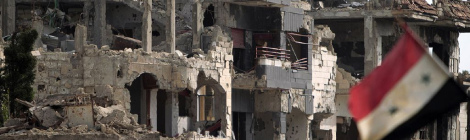
    Jenny Nielsen is a Postdoctoral Research Fellow in the School of Political Science and International Studies. Previously, she was a Research Analyst with the Non-proliferation and Disarmament Programme at the International Institute for Strategic Studies (IISS), a Programme Manager for the Defence & Security Programme at Wilton Park, and a Research Assistant for the Mountbatten Centre for International Studies (MCIS) at the University of Southampton. She holds a PhD from the University of Southampton which focused on U.S. nuclear non-proliferation policy vis-à-vis Iran in the 1970s.

    Featured image: US nuclear test detonation in 1952. Source: WikiMedia

  • Sustainable Security

    Due to a conflict within policy circles between those who want more inclusive approaches to resolving conflict in Africa and those who want robust responses to violent jihadism, a problematic imbalance in African security governance is being created.

    Introduction

    African peace and security policy-makers and intellectuals within and beyond the continent are calling for more inclusive political approaches to resolving conflict in Africa. Yet, patterns of decision-making, most evidently by the African Union (AU) Peace and Security Council, indicate that proactive, robust and joint responses to jihadist terrorism and radicalized armed non state actors are preferred because these threats pose particularly urgent challenges to Africa’s security and political order. This argument has important transnational echoes and an imbalance in African security governance is being created as a result of these developments. The more implementation of the African peace and security architecture (APSA) is measured by how well the AU together with global partners fight global terrorism, the more likely an excessive over-reliance on military responses to political problems seems. Such over-reliance risks militarizing the people, ideas and institutions of Africa’s security governance. Many voices in AU peace and security circles are pulling in a de-militarizing direction and are attempting to mobilize behind an enhanced prevention and mediation-agenda, and a value-driven vision of African ownership.

    The preventive pivot

    AMISON

    Image by AMISON Public Information via Flickr.

    Preventing armed conflicts is a strategic priority for the African Union Peace and Security Architecture (APSA) as seen in APSA Roadmap 2016-2020. This follows on from the Windhoek Declaration and AU-adopted commitment to end all wars and ‘Silencing the Guns in Africa by 2020’ which forms part of the continent-wide Agenda 2063. The Agenda 2063 document, adopted by the AU Assembly of African Heads of state and government in May 2013, sets forth a value-based vision of a united and prosperous Africa. Understood as one leg of the pan-African political body, the APSA should arguably first and foremost facilitate Africa’s unity, development and prosperity through early conflict prevention.

    The Roadmap sets out the objective for the AU and the Regional Economic Communities (REC) and Regional Mechanisms (RM) to contribute to the prevention of conflicts and crises. Early warning systems with state of the art data collection and monitoring tools exist at continental and regional levels. Enhancing capacity means that they must coordinate and collaborate better with each other and other relevant component parts of APSA. The sometimes sensitive information that these early warning bodies gather is only as good as the use decision-makers and the AUPSC make of it.

    The use of special envoys, senior mediation panels and networks of elders is one of the AU’s ‘best kept secrets’.  To underscore their importance, the APSA Roadmap sets out as one objective to show evidence of frequency, relevance and efficacy of preventive diplomatic missions undertaken by the AU and the RECs. On a case by case basis, it has always been possible to gather knowledge about the roles and outcomes of preventive mediation efforts. Only a select few can claim to have the overall picture of their scales, roles and achievements. Most often mediation missions are set up rapidly and with an ad hoc initial role. At times, the AU Panel of the Wise is used, yet in other conflicts a high-level panel is tailored to the specific conflict by comprising former heads of state with high moral standing in the eyes of the conflicting parties.

    The Roadmap notes that early warning capacity and inclusive mediation-capacity must be connected with the strategic security priorities of decision-makers. Early warning systems cannot collect equally in-depth and actionable data on all forms of conflict in Africa. However, concerning the most geo-strategically sensitive conflicts their reports are not likely to be as welcome or as frequently used by decision-makers. Might intellectuals and policy experts help change the mindset of decision-makers if they could point to research and verified information showing that prevention at early stages of conflict is most sustainable and effective? There exist examples of early warning/information sharing mechanisms which bridge the ‘soft’ approach with ‘hard’ security issues. For instance, the ‘Nouakchott process’ aims to enhance security cooperation between intelligence and security-services of states in the Sahelo-Sahara region. However, the political oversight and support of this process must be ensured. Early warning data can otherwise of course be narrowly used towards the military approach of regional states.

    The preventive mediation tool has been used extensively, especially in the most geo-strategically important conflicts. However, their tasks, roles and achievements are less well known outside APSA’s decision-making circle. Often, references are made to Africa’s rich tradition of culturally aware and dialogue-centered ‘Baobab tree’ meetings. But it remains hard to access best practices and the gold standard of AU’s recruitment, support, as well as linking its preventive mediation to other external mediation initiatives. Changing this should be a key priority, especially since high-level gatherings and summits on Africa’s peace and security argue that prevention is the most cost-effective and the most successful form of conflict management for Africa. References are often made to the vital importance of inclusivity in African mediation culture. Dialogue must occur with all conflict actors. Talking to terrorists and non-state radicalized actors is therefore not excluded. The Windhoek Declaration argues that reflection is needed on the direction of the counter-terrorism agenda in Africa and importantly forefronts the value of Africa’s rich tradition of mediation. This offers a possible bridge between ethical-political arguments (advocates of the preventive pivot) and interest-based arguments (advocates of robust action on global terrorism).

    Reflection is required on how to calibrate prevention as a core phase in traditional conflict resolution with emerging specialized notions such as preventing mass atrocities (in line with the Responsibility to Protect), preventing acts of terrorism, and perhaps also preventing electoral violence. Diverging prevention agendas under conditions of resource scarcity might otherwise compete and bring with them rivalling perspectives and bureaucratic silos on prevention. More strategic discussions are needed about conflict patterns and structural as well as direct causes of wars and security threats. The Windhoek Declaration discusses how state fragility when considered a structural cause of radicalization of youth indicates that efforts aimed at enhancing democratic governance, security sector reform and state-society relations will prevent radicalization more effectively than military efforts because these only focus on ‘symptoms’ of state fragility.

    A preventive turn might also be detected in global policymaking. The UN Secretary-General has placed prevention of atrocity crimes and the roles of regional actors in achieving this as a core priority in his July 2015 report on the Responsibility to Protect (R2P). The UN General Assembly and UN Security Council on 27 April this year endorsed as a framing concept ‘sustaining peace’ in the recognition of the finding by the advisory group of experts’ review of the peacebuilding architecture that peacebuilding must be an inclusive endeavor, and necessitates holistic approaches and global commitment starting with preventive mediation efforts.  At the 24 May UN Security Council meeting on UN cooperation with regional and sub-regional organisations, a number of state representatives actually referred to the concept of ‘sustaining peace’ and/or the crucial role of UN-regional partnerships as glimmers of hope at this time of heightened pressure on global institutions to respond to several extremely complex conflicts. Some argued that the current global security situation requires a new mind set, even a ‘paradigm shift’ in global affairs.

    Militarized institutional narratives and practices

    The joint fight against violent extremism featured primarily at the first ever Africa-based core group meeting of the Munich Security Conference in April this year. The framing of the discussion was that global terrorism in North Africa, East Africa and the Sahel needed urgent, robust and joint action. The readiness of Africa’s own peace and security institutions to lead on terrorism and other sources of insecurity was emphasized. The dominant position was starkly defensive: a strong perception is that the sovereign’s role as main provider of territorial order and security is under unacceptable assault by non-democratic forces. Given the importance attached to stable African governments, such a perceived assault justifies military responses short term. ‘Combat’, ‘fight against’, and ‘counter’ violent terrorism and extremism were the common terms used at this event, and further echoed in relevant AU PSC meeting communiqués (for example on 29 Jan 2016), as well as at the 5th Tana Security Forum in April 2016.

    Present were representatives of academic institutions and CSOs that objected to the dominant trope and the prioritization of heavy handedness. These actors preferred to talk about historical and structural causes of terrorism (such as weak state-society relations, demographic challenges and unemployment rates). Or, they raised the acute absence of knowledge surrounding radicalization and recruitment into extremist groupings. Additionally, it was argued that strengthening or stabilizing central government and its ruling capacity by itself would not change the structural causes of marginalization and exclusion in many African societies.

    It might be argued based on the assumption that global terrorism requires a global fight that it is a lesser ill that hard approaches overshadow alternative political, developmental and humanitarian-based approaches. Certainly, part of the global push towards strategic partnerships with African regional actors is linked to seeing African states and institutions as playing specific useful roles in world order. France and the US have most candidly expressed that the AU and certain African states play very useful combat roles in active conflicts, and that partnerships are strategic in so far as they help all involved partners identify and secure their respective interests. Partnerships offer one way to strengthen a global hybrid coalition of counter-terrorism. This is the predominant trend, even as counter-strategies and counter- arguments exist and will hopefully take hold. Prevention and responding to terrorism-rationales are not mutually exclusive, but are better understood as mirror images. The trick for the foreseeable future is how to rebalance APSA, and develop legitimate and sustainable ways to prevent/respond to terrorism.

    There is a serious danger that context-driven, root-cause based values embedded in AU foundational documents and the APSA are being pulled in a direction to serve short-sighted militaristic values. In the medium to long term this will favor autocratic modes of governance on the continent and already extends a level of international legitimacy to autocratic leaders (for example Chad’s Idriss Déby, Djibouti’s Ismail Omar Guelleh and Uganda’s Yoweri Museveni). This will also infer the AU with legitimacy and capacity building packages chiefly on basis of counter-terrorism practices. Consequently, other APSA programmes rank lower on the global priority ladder unless they are coupled with the ‘fight’ on terrorism. Adding to the pressures on APSA policy mechanisms to demonstrate capacity is the argument by certain African leaders and external partners that the African Standby Force and its rapid reaction capability must become more efficient. This line of argument has increased incentives for states to favor state-to-state relations and hybrid regimes to enable rapid and more efficient forms of political and security cooperation.

    African peace operations receive external recognition due to their militarized characteristics. Most AU peace operations are stabilization missions, using combat operations against specific aggressors (sometimes terrorist groups) in bounded conflict theatres. The troop contributing countries to the AU Mission in Somalia (AMISOM) have been commended and supported by the international community for the willingness to combat Al-Shabab fighters. As noted by Yvonne Akpasom in a book on Africa-led peace operations while this combat readiness may be necessary, it is crucial for APSA and for host populations in conflict-affected states that these stabilization missions are always linked to a political objective. AU-led missions to date have demonstrated operational readiness, but have been insufficiently streamlined with political strategic-level direction. In need of development are: realization of protection of civilians policies and guidelines, human resources to plan for, for example, policing components and human rights observers, reflection on security sector reform and law and order efforts.

    Conclusion

    For AU member states and APSA policy organs, the first strategic priority is really the achievement of full ownership over regional security governance. The counter-terrorism developments referred to do not aim to settle whether global terrorism poses the biggest security threat to Africa’s societies and populations. What is at stake is Africa’s political authority to define conflicts and threats on the continent. To achieve a bigger impact on global governance, the AU has to balance the different pressures on it to demonstrate authority and capacity to manage security threats in Africa.

    Linnéa Gelot is a Senior Researcher at the Nordic Africa Institute (NAI), Sweden and a Senior Lecturer at the School of Global Studies, Gothenburg University, Sweden. Her most recent publication is The Future of African Peace Operations: From Janjaweed to Boko Haram, co-edited with Cedric de Coning and John Karlsrud, with Zed Books. She is currently leading the project ‘AU Waging Peace? Explaining the Militarization of the African Peace and Security Architecture’ in which the concept of militarization and security practice theory are employed to study militarizing/de-militarizing institutional discourses and practices. Additionally, she has worked as a consultant and substance matter expert (African peace and security and the protection of civilians in UN peace operations) for UNITAR in Geneva, as well as other consultancy firms.

  • Sustainable Security

    Russia’s conflictual relationship with the West has been described as a Cold War-like confrontation. In reality, these powers are engaged in an asymmetric rivalry, not a Cold War.

    Russia’s relations with the United States and other Western nations have been increasingly conflictual. The Kremlin has challenged the position of American hegemony globally and in regional settings. Following election of Donald Trump as the U.S. President, Russia’s military strategy, cyber activities, and media role have been under particular scrutiny although the Kremlin has acted assertively since the second half of the 2000s.

    While many Western observers place responsibility for the conflict on Russia, some tend to blame the West. However, most observers agree that a Cold War-like confrontation is set to define the two sides’ relations. Today the narrative of a new Cold War commands the attention of political and scholarly circles.

    The Misleading Cold War Framework

    As compelling as it may seem to some observers, the Cold War framework is misleading. In particular, it fails to address the global power shift and transitionary nature of the contemporary international system. In today’s world, the old ideological rivalry is no longer applicable. The new world is no longer divided by the communism-capitalism dichotomy. Instead the competition of ideas is predominantly one between liberal and nationalist principles of regulating the economy and political system. While in the eyes of many the West continues to represent liberalism, the realities of Brexit, Trump, and tightening migration regulations in the European Union demonstrate the global power of nationalist ideas. On the other hand, China, Russia, and other allegedly autocratic and nationalist polities continue to favor preservation of liberal global economy, and oppose regional autarchy and Trump-favored protectionism.

    Instead of reviving old Cold War rules and principles, new rules and expectations about the international system and state behavior are being gradually formed. China, Russia, India, Turkey, Iran, and others are seeking to carve out a new space for themselves in the newly emerging international system, as the United States is struggling to redefine its place and identity in the new world.

    The described changes altered position of the only superpower in the international system. Structurally, it is still the familiar world of American domination with the country’s superiority in military, political, economic and symbolic dimensions. Yet dynamically the world is moving away from its US- and West-centeredness even though the exact direction and result of the identified trajectory remained unclear.

    As a result, many non-Western countries are developing their own rules and arrangements in world. Russia and other non-Western countries increasingly have international options they never had before as new global and regional institutions and areas of development outside the influence of the West gradually emerge.

    This does not mean re-emergence of a new international confrontation. Most non-Western nations are not looking to challenge the superpower directly and continuing to take advantage of relations ties with the West. The U.S.-balancing coalition or a genuine alternative to the West-centered world has not yet emerged. Unlike the previous eras, the contemporary world lacks a rigid alliance structure. The so-called Russia-China-Iran axis is hardly more than a figment of the imagination by American neoconservatives and some Russia conspiracy-minded thinkers. The world remains a space in which international coalitions overlap and are mostly formed on an ad hoc basis depending on issues of interests.

    Partly because of these global developments, the Cold War perspective also misunderstands Russia’s motives and power capabilities. Unlike the old era, Russia does not seek to directly confront or defeat the other side. Rather, the objective is to challenge the rival party for the purpose of gaining recognition and negotiating a greater space within the still largely West-influenced global order.

    Furthermore, Russia is in no position to challenge the Western nations globally given the large – and in some areas widening – gap between the U.S. and Russian capabilities. The importance of defending Russia’s interests and status by limited means has been addressed through the idea of asymmetric capabilities applied on a limited scale and for defensive purposes. When the chief of the Russian General Staff Valery Gerasimov first described the so-called hybrid war he did not mean to provide a template for an offensive military strategy. Rather, as several military analysts noted, he intended to recognize that the West had already being engaged in such war against Russia and that Russia had to be better prepared for the new type of war. While Russia’s President Vladimir Putin is not acquiescing to American pressures, he is engaged in asymmetric rivalry. The latter targets the competitor’s selected vulnerable areas and is designed to put on alert and disorient, rather than achieve a decisive victory. Asymmetric methods of Russian foreign policy include selective use of media and information technology, cyber power, hybrid military intervention, and targeted economic sanctions.

    Finally, the Cold War narrative underestimates a potential for Russia’s cooperation with the West in selected areas. The described asymmetric rivalry does not exclude the possibility of Russia and Western powers cooperating in some areas (nuclear non-proliferation, counter-terrorism, cyber issues) and regions (Middle East and North Korea) while perceiving each other as competitors over preferred rules and structure of the international system. In the increasingly fragmented world, Russia and the West may move beyond viewing each other as predominantly rivals if they learn to focus on issues of common concern and find a way to reframe their values and interests in non-confrontational terms.

    Future Co-operation?

    Cooperation with Russia remains possible and indeed desirable. Russia’s constant attempts to engage the United States and other Western nations in cooperation, including those over Iran and Syria, demonstrate the importance to the Kremlin of being recognized in relations with the outside world. Despite its internal institutional differences from Western nations, Russia sees itself as an indispensable part of the West and will continue to reach out to Western leaders in order to demonstrate Russia’s relevance.

    Although the West continues to possess the power of influence, Western leaders have not been effective in using such power. Instead of devising a strategy of selective engagement and recognition, they largely rely on containment and political confrontation in relations with Russia. The West remains fearful of Russia and wants to force the Kremlin to comply with Western demands to relieve pressures on Ukraine or conduct a more restrained foreign policy.

    These pressures are not likely to work. If the West continues to challenge Russia’s perceived interests, there are indeed reasons to expect that Putin may fight back. Even with a stagnating economy, the Kremlin commands a strong domestic support and an ample range of asymmetric tools for action.

    However, for reasons of psychological and economic dependence on the West, Russia, unless provoked, is not likely to engage in actions fundamentally disruptive of the existing international order. If the United States does not engage in actions that are viewed by Russia as depriving it of its great power status, the Kremlin will refrain from highly destabilizing steps such as abdication of the INF treaty or military occupation of Ukraine or other parts of Eurasia.

    As difficult as it might be to accept for the West, there is hardly an alternative to engaging Russia in a joint effort to stabilize the situation globally as well in various regions including Ukraine and wider Europe. The new policy must be based on understanding that the Kremlin’s “revisionism” is partly a reaction to the West’s refusal to recognize Russia as a potential partner. The alternative to the new engagement is not a compliant Russia, but a continued degradation of regional and global security.

    Andrei P. Tsygankov is professor of political science and international relations at San Francisco State University. He has published widely in the United States, Russia, Europe, and China. His books include Russia’s Foreign Policy and Russia and the West from Alexander to Putin, and he has recently edited the Routledge Handbook of Russian Foreign Policy (to be published in 2018).

  • Sustainable Security

    RC_long_logo_small_4webThis article is part of the Remote Control Warfare series, a collaboration with Remote Control, a project of the Network for Social Change hosted by Oxford Research Group.


    Islamic State (IS) has used aerial drones for reconnaissance and battlefield intelligence in Iraq and Syria and has attempted to use aerial and ground drones with explosive payloads to attack Kurdish troops. IS-directed or -inspired attacks in Australia, Canada, Denmark, the United States and France and failed or foiled attacks elsewhere, including the United Kingdom, have demonstrated the group’s desire to attack targets outside the Middle East. Given that threat is a function of capability and intent, should we therefore be concerned about the possibility of Islamic State or another terrorist group using drones to attack Western cities? A recent report from the Remote Control project and Open Briefing examined this scenario, among others.

    The Drone Threat

    For Hostile drones, the Open Briefing team assessed the capabilities of over 200 commercial and consumer/hobbyist drones capable of operating in the air, on the ground or on or under the sea. Although limited at present, they found that there are consumer drones available today that are capable of delivering an explosive payload equivalent to a pipe bomb (1-4 kilograms) or a suicide vest (4-10 kilograms). Many more could be modified with readily-available components to increase their stated payload capacity. If used in a swarm against the crowd at a major sporting event, for example, they would cause serious injury and multiple fatalities. If one or more of the drones carried on-board cameras to record the event, it would also provide a group such as Islamic State with prime propaganda material.

    Using drones for terrorist attacks has several advantages over conventional methods, including removing the need to convince a suicide bomber to carry out an attack and opening up targets a bomber would not usually be able to access due to security. An attacker would not even necessarily need to weaponise a drone, as the vehicle itself could be used as a projectile to target a light aircraft’s engines on take-off or landing, for example. In addition to attack, Open Briefing identified intelligence gathering as another major capability that drones offer terrorists or insurgents, as demonstrated by Hezbollah, Hamas and Donetsk separatists. For example, Donetsk People’s Republic militias reportedly possess and deploy sophisticated Russian-made Eleron-3SV drones for intelligence, surveillance and reconnaissance (ISR) in eastern Ukraine. Drones provide insurgent groups with an excellent level of battlefield awareness and provide terrorist groups the ability to reconnoitre a target before an attack These same capabilities are also of interest to criminal, corporate and activist threat groups. For example, aerial drones have been used to transport illicit drugs over the Mexico-US border and in April 2015 a man protesting over the Japanese government’s nuclear energy policy landed a drone containing radioactive sand on the roof of the prime minister’s office in Tokyo.

    The same technology Western militaries have been controversially employing to target terrorists in Afghanistan, Pakistan, Yemen, Iraq and elsewhere for years is now being used by various threat groups to target Western interests. This is a prime example of how the tactics and technologies of remote-control warfare have created unintended consequences for those countries that have embraced them.

    Towards Drone Countermeasures

    No single countermeasure is completely effective at limiting the hostile use of drones by non-state actors. Open Briefing therefore proposes the United Kingdom adopt a hierarchy of countermeasures encompassing regulatory, passive and active countermeasures, which provides a layered defence. Regulatory countermeasures include point of sale regulations, civil aviation rules and manufacturing standards and restrictions. Passive countermeasures include early warning systems and signal jamming. Active countermeasures include kinetic defence systems, such as missiles, rockets and bullets, and less-lethal systems, such as projectile weapons and net guns. Each stage of the hierarchy of countermeasures requires government action, but it is the regulatory countermeasures upon which it can affect the greatest change.

    Any changes to the laws surrounding the use of drones need to be proportionate to the risks and balance interests relating to privacy, individual freedoms, safety and commercial interest. In addition to the existing regulations around drones needing to be flown within visual line of sight, below 400 feet and not within 50 metres or a person, vehicle or building, there have been calls from airline pilots and politicians for a registration scheme for consumer drones and for the adoption of firmware limitations that restrict the ability of drones to travel near geofenced no fly zones around sensitive sites, such as airports or nuclear power stations. These are reasonable demands that should be implemented as soon as possible.

    However, these regulations may have limited impact beyond reducing accidental incidents. Unless coupled with some kind of identification/tracking technology built in to drones, a registration scheme would not remove consumer drones from the terrorist arsenal altogether (in any case, such technology would be a step too far in terms of state surveillance and could be easily disabled). What registration would do is impose some control on a presently uncontrolled market and impress upon drone operators the responsibility they must take for their actions. It may also reduce the supply of readily-available drones that could be used for nefarious purposes. In the case of geofenced no fly zones, those wishing to carry out an intentional attack could still purchase open-source controllers that can bypass geofencing, and inertial navigation systems (using dead reckoning) would allow a drone to continue to a static target with reasonable accuracy even if it were possible to jam controller frequencies and GPS signals within the target perimeter. What geofencing would allow is for security to assume that any drone operating within the no fly zone is unauthorised and potentially hostile, allowing them to react appropriately (evacuation and/or deploying active defences).

    Beth Cortez Neavel

    Image of drone by Beth Cortez-Neavel via Flickr.

    There are two further regulations that have received little attention but which should also be considered. Firstly, the payload capacity of the consumer drones available for purchase or import in the United Kingdom without licence should be legally limited to that reasonably required to carry a camera and nothing else. This would mean these types of drones could not be used to carry explosive payloads without further modification. Secondly, owners of commercial drones capable of carrying heavier payloads for legitimate reasons (such as in agriculture or search and rescue) should be legally required to store them securely (in the same way fertiliser must be appropriately secured to prevent its use in homemade bombs, for example). This would prevent the theft and use of drones capable of carrying considerable explosive payloads by terrorists and other threat groups.

    A Layered Defence

    The current regulatory regime around drones in the United Kingdom is very limited. The adoption of the four regulations outlined above would balance the various interests and address specific risks without being unduly restrictive. However, regulations are not a panacea – they would merely limit the ability of terrorists and others to acquire drones with the capabilities needed for attack or intelligence gathering. That is why the government must also work with the police, security services and industry to explore the passive and active countermeasures that are needed to protect VIPs or sensitive sites and ensure that procurement and R&D funding is made available to purchase or develop the required systems. This should include the development of less-lethal systems for destroying or disabling hostile drones in urban environments, where little warning of an attack and the risk of collateral damage limits the usefulness of conventional kinetic countermeasures, such as missiles or bullets. Again, though, this will not be a panacea: the less-lethal systems currently available are of limited effectiveness against one or more fast-moving, small drones. As with all the possible countermeasures, such systems – if coupled with early-warning – would form part of an effective layered defence.

    Ultimately, the regulations and technology needed to reduce the threat from the hostile use of drones are either available now or are under development. The British government has to act now to bring drone regulations up to date and invest in the technologies needed to keep us safe. In the meantime, the threat from the malicious use of civilian drones is only going to increase.

     Chris Abbott is the founder and executive director of Open Briefing (www.openbriefing.org). Matthew Clarke is an associate researcher at Open Briefing. Hostile drones: The hostile use of drones by non-state actors against British targets was published by the Remote Control project on 11 January 2016.