Sustainable Security programme Director Richard Reeve discusses our latest report ‘From New Frontier to New Normal: Counter-terrorism operations in the Sahel-Sahara’. The report, commissioned by the Remote Control project, finds that 2014 is a critical year for militarisation of the Sahel-Sahara and the entrenchment of foreign powers there.
Category: 2016
-
Sustainable Security
Author’s note: This article is a shorter version of a journal article published in the Annual Review of Political Science, 2017. A shorter version of this piece can be read at the Monkey Cage.
There is a new trend currently underway in the way civil wars are conducted. Dubbed the “new new” civil wars, these conflicts are a source of serious concern for several reasons.
Something new is happening in the world of civil wars. After declining in the 1990s, the number of active civil wars has significantly increased since 2003. Over the past thirteen years, large-scale civil wars have broken out in Iraq, Syria, Libya, Yemen, Chad, the Democratic Republic of Congo, Nigeria, Pakistan, Rwanda, Somalia, Sri Lanka, South Sudan, Chad, Mali, the Central African Republic and Ukraine, while new civil wars threaten to break out in Turkey, Egypt, and Lebanon.
Post-2003 civil wars are different from previous civil wars in three striking ways. First, most of them are situated in Muslim majority countries. Second, a majority of the rebel groups fighting these wars espouse radical Islamist ideas and goals. Third, of the radical groups fighting these wars, most are pursuing transnational rather than national aims. These three patterns are striking and suggest that we are in the midst of a new wave of civil wars that we do not fully understand.
In a new article, “The New New Civil Wars”, I argue that these trends are the result of a new and evolving information and communication (ICT) environment. We now live in a world where citizens and elites operate in an interactive Internet environment, where anyone with a smartphone can easily produce and disseminate material from almost anywhere on the globe.
The role of the evolving ICT environment
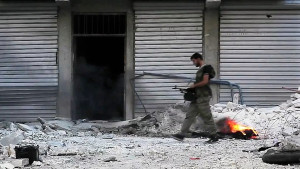
Image credit: Voice of America News/Wikimedia.
Instantaneous, global communication is likely to have at least six major implications for civil wars. First, information technology is likely to benefit individual citizens (especially citizens in highly repressive countries) more than political elites in those countries. Dictators and autocrats will face greater difficulty limiting and controlling the flow of information and the messages their citizens receive. Government elites will also have greater difficulty preventing individuals from coordinating their protest activity. Citizens are likely to be better informed about the behavior of government officials, the well being of their particular ethnic or sectarian group relative to other groups, and the level and extent of dissatisfaction in society. The result could be a boon for popular demonstrations and grass roots organizing.
Second, global Internet campaigns are likely to make it more feasible for rebel groups to form, leading to civil wars with a greater number of warring factions. It used to be that rebel entrepreneurs required a base of local support and financing to make mobilization possible. The Internet has changed this. Internet media campaigns make it easier for rebel entrepreneurs, especially those with limited local backing, to solicit the soldiers and financing necessary to start a war. This is likely to lead to greater external involvement in civil wars and a larger number of warring factions. The evidence seems to support this: the average number of rebel groups fighting in civil wars has increased over time. In 1950 the average number or rebel groups in civil wars was 8; in 2010 it was 14.
Third, the new information environment also means that rebel groups are likely to have greater incentives to frame their objectives in global terms, something we have observed with the proliferation of Salafi-Jihadist groups. First, the Internet allows warring factions to be more ambitious, ignore international borders, and set their sights on affecting large-scale change by drawing on the resources of a globalized world. Second, the Internet is likely to reward groups such as al Qaida and ISIS with global aims, since they will have a wider audience from which to generate revenue and recruits. Thus, the new information environment has shifted the advantage from homegrown groups with local bases of support to transnational groups with global networks and connections.
Fourth, the Internet is likely to make it possible for rebel groups to sustain themselves longer in war. The decentralized nature of the Internet means that rebel groups will be less dependent on a single source of income or a single patron. If they lose access to one source of income (i.e., coca) or one patron (i.e., Iran), they still have access to millions of potential individual donors.
Fifth, the Internet is likely to make the spread of civil war more likely. Research has found the civil wars produce a contagion effect (see here, here, and here); once one civil war breaks out, it increases the risk that civil war breaks out in neighboring countries. One of the implications of a Web 2.0 world is that ideas and ideology are likely to spread more rapidly and more widely. This occurs in two ways. The first is directly through the dissemination of information via the web, and the second is indirectly through the recruitment of foreign soldiers. ISIS and al Qaida, for example, use Internet propaganda to recruit foreign fighters from around the world. These fighters then receive indoctrination and training, and eventually return home, creating new networks in their native countries.
Finally, the Internet could potentially eliminate the restraints rebel and government leaders have to target local citizens with abuse. Studies have found that rebel groups that are reliant on the local population for support or financing are less likely to commit human rights violations. Conversely, rebel groups that receive significant material support from external patrons are more likely to use violence toward civilians. Rebel groups in the current civil wars appear to be following this pattern. In Iraq, ISIS and the al-Mahdi Army both enjoyed significant external financing and all have been significantly more likely to target civilians with violence than groups that did not. By freeing combatants from the need to solicit local support, the Internet may also be freeing them to engage in more civilian abuse.
The drivers behind these “new new” civil wars in Muslim countries
So why has there been a rise in civil wars in Muslim countries, fought by multiple Islamist groups, many seeking transnational aims? Globally-oriented groups such as al Qa’ida and ISIS formed and prospered in countries that had previously been some of the most information-poor countries of the world. It was in these countries where the new-found flow of information allowed for an opening for individuals to organize, for rebel groups to link to other groups, and for human capital and war financing to begin to flow.
Combatants in Muslim countries were also quick to figure out how to exploit ICT to their advantage. They discovered that framing their movement based on an identity that was large (Sunni), wealthy (oil-rich), and ideologically extreme (Salafi-Jihadist) allowed them to utilize the web in ways that brought in more money and recruits than had previously been possible. In fact, the trans-border nature of both the Sunni population and Persian Gulf financing was tailor-made for the Internet age.
This does not mean that other groups in other regions of the world will not learn how to exploit the advantages of ICT. My guess is that any group with a large number of international kin (especially wealthy kin) will pursue similar strategies. Sunnis are leading the way because the benefits of a Web 2.0 world have been easiest for them to tap, but others will follow.
Conclusion
The “new new” wars” are characterized by the rise of rebel groups pursuing extreme ideologies, a rise in the number of transnational actors involved in these wars, and the use of goals and strategies directed at global rather than local audiences. These trends are a precursor to a series of changes that are likely to be seen as actors civil war adapt to a new and evolving ICT environment.
Whilst this piece has outlined the importance of the evolving ICT environment in these “new new” civil wars and theorized about why we are observing the wars in predominantly Muslim countries, much more work needs to be done on this phenomenon.
Looking forward, a major challenge for scholars and analysts will be to understand the full range of implications that emerging technologies will have on every aspect of civil war and to decipher which groups are most likely to harness this technology, when they are likely to do so, and the conditions under which these new strategies are more or less likely to succeed.
It is not known exactly how this third wave of civil wars will evolve and which additional groups and countries will best exploit these advances. There is also uncertainty regarding which strategies will turn out to be the most successful and how these strategies are likely to change over time. Nevertheless, what we do know is that the internet will play a bigger, not smaller role, in every decision that is made. Ultimately, gaining a more comprehensive understanding of these “new new” wars be a crucial research enterprise in the future.
Barbara F. Walter is Professor of Political Science at the School of Global Policy and Strategy at the University of California San Diego. She is an authority on international security, with an emphasis on civil wars, terrorism, and unconventional violence. She received her Ph.D. in political science from the University of Chicago, and held post docs at Harvard University and Columbia University. Walter is on the editorial board of the American Political Science Review, International Organization, Journal of Politics, Journal of Conflict Resolution, International Studies Quarterly, and World Politics. She is also the recipient of numerous grants and fellowships, including awards from the National Science Foundation, Carnegie Corporation of New York, Guggenheim, and Smith Richardson Foundations.
-
Sustainable Security
Brexit has called into question Britain’s relationship with Northern Ireland. Whilst the possibility of sporadic inter-communal violence in Northern Ireland is small, the Brexit vote has certainly placed a strain upon the hard-won stability of British-Irish relations.
Introduction
Whilst the full implications of so-called ‘Brexit’ for the future of the United Kingdom (UK)’s relationship (if any) with the European Union (EU) remain profoundly uncertain, it is also the case that the UK-wide vote to Leave has exacerbated the already existing sense of fluidity regarding the future constitutional relationships between the constituent parts of the multi-national UK state. Of course, the majority votes to Remain in Scotland and Northern Ireland do not, of themselves, create a new constitutional arrangement, but if the new Conservative administration of Theresa May were to decide to push on with a UK-wide ‘hard Brexit’, perhaps involving leaving the single market in a bid to establish control over the free movement of persons, then it is difficult to see how the stability of the UK’s constitutional status quo could be guaranteed. As Brendan O’Leary has argued, ‘those who insist that a 52-48 vote is good enough to take the entire UK out of the EU would trigger a serious legitimacy crisis.’ A key lesson that needs to be understood by Westminster in the coming months or years of negotiation (with Brussels and the EU member states, particularly the Republic of Ireland, but also within the divided UK) is that, as O’Leary puts it, multi-national states are not usually ‘destroyed by secessionists alone’ (Ibid.). It is the ‘unilateral adjustment of the terms of the union by the centre’ that can provoke such an outcome. This may be an unintended consequence of such unilateralism, even if some at the centre profess the view (as David Cameron did after the Scottish referendum on independence in 2014) that the multi-national union is ‘precious beyond words’.
Great Britain and Northern Ireland: A ‘Place Apart’
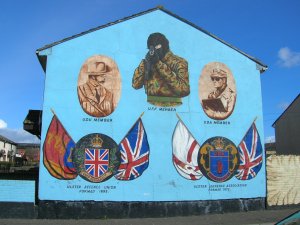
Image by Miss Copenhagen via Flickr
It is unsurprising that during the campaign neither the public nor the political class in Great Britain (GB) appeared to give much serious consideration to the effect of a Brexit vote upon three crucial interlocking relationships: the fragile state of communal relations within Northern Ireland in the post-Good Friday Agreement (GFA) era; the North-South relationships on the island of Ireland, and the questions Brexit was likely to raise concerning the 300-mile land border; the wider UK relationship with its closest neighbour. This ‘reflexive forgetfulness’ of the GB public with regard to the unloved province of Northern Ireland may have been unsurprising, but it was lamentable, and possibly destabilising, nonetheless. If there was engagement with the potential repercussions of a Leave vote on the internal, already fragile, relations between the constituent parts of the UK, the focus tended to be on Scotland, rather than Northern Ireland. This neglect, by no means benign, reflects a deep-rooted sense that Northern Ireland is, in Dervla Murphy’s phrase, a ‘place apart’. In the short and medium-term the ‘peace process’ has not been jeopardised directly, and there is no immediate prospect of a return to widespread violent confrontation between Irish nationalists and British unionists in Northern Ireland. Aside from a number of weak and fragmented ‘dissident’ republican groups, there is no appetite for the resumption of an armed campaign among ‘mainstream’ republicans. There is always a possibility of sporadic inter-communal violence in Northern Ireland, but this looks remote at present. Nevertheless the Brexit vote has certainly placed a strain upon the hard-won stability of these relationships since 1998.
The Republic of Ireland and ‘Brexit’
For the Dublin government of Fine Gael (supported by several independent TDs), there was a fear that the critically important trading relationships with the UK would be damaged, and that any imposition of a ‘hard’ border (involving customs posts and possibly restrictions upon free movement) would further complicate and hamper economic activity. Allied to this hard-nosed economic concern, Dublin was also anxious that Northern Ireland’s fragile community relations and the institutional balance reflected in the GFA could be under threat, as ‘the border’ and potential constitutional change were placed, once again, on the agenda. Related to this anxiety was, perhaps, the unspoken fear of Taoiseach Enda Kenny that Dublin’s sense of being an equal partner with the UK in the lengthy years of the peace process might be compromised. The harmonious co-operation between the Dublin and London governments, built up over several decades stretching back to the Anglo-Irish Agreement of 1985, might begin to unravel, if London took the Brexit vote as a green light to marginalise the concerns of the Irish. Those concerns were three-fold: maintaining the open border between the Republic and Northern Ireland; keeping the ‘common travel area’ between Ireland and the UK (first agreed in the aftermath of partition in 1922); and, safeguarding the trading relationships (worth approximately £1 billion a week). As Pat Leahy argued in the Irish Times, ‘underpinning all these was the need above all else to protect the peace process.’
Kenny was keen to confirm that this bilateralism, and the ‘special relationship’ between the two states would survive Brexit, and his meeting with Theresa May in late July assuaged these doubts somewhat. But, as with that other fabled ‘special relationship’ between London and Washington, this one is also fundamentally asymmetrical, intrinsically of more significance for one side than the other. When it comes to tackling the enormous fallout from the Brexit decision, neither the relationship with Dublin, nor indeed the impact upon Northern Ireland, are at the top of London’s to-do list. It may even be the case that these issues are closer to the bottom of that list. Having said this, the new Prime Minister’s willingness to meet with Kenny, and her declaration in Belfast that ‘no-one wants to return to the borders of the past’ have calmed these fears to at least some extent.
However, hard choices remain to be made, and there is no guarantee that May’s government will be able to square the circle between impatient Conservative back-benchers and pragmatists in Whitehall who are concerned about softening the impact of the decision, both economically and diplomatically. The former group, buoyed by the momentum of victory, believe that Brexit should be swift, complete and irrevocable; they are watching hawkishly for any signs of back-tracking. This is the context in which Enda Kenny made a speech at the MacGill summer school in Co. Donegal, which speculated on the prospect, at some time in the indeterminate future (perhaps ‘10, 15 or 20 years from now’), that Northern Ireland might vote to join with the Republic. Of course, this was ‘controversial’, but almost certainly was designed to ensure that others, in the UK and Europe, take seriously the concerns of the Dublin administration. More parochially, Kenny perhaps felt that he needed to respond to the pressure being applied by opposition parties Fianna Fáil and Sinn Féin (SF).
Sinn Féin and ‘Brexit’
Having campaigned for a Remain vote, on the basis of its ‘critical engagement’ position with respect to the EU, SF’s first response to the referendum result was to demand a border poll in Northern Ireland, as provided for in the GFA, if there is a realistic prospect of a majority vote in favour of constitutional change. Gerry Adams, SF President, claimed that the result meant that the ‘British government had forfeited the claim to represent the North at an EU level. Its policy has been rejected by the people.’ When this demand was predictably dismissed by the outgoing Secretary of State for Northern Ireland, Theresa Villiers, SF quietly moved on, instead focusing its attention on a mooted ‘national forum’ (modelled on the New Ireland Forum of the early 1980s and the Forum for Peace and Reconciliation of the early years of the peace process) to discuss how ‘the vote of the clear majority of citizens in the North who want to remain in the EU can be respected and defended.’ Although this proposal was effectively adopted by the Dublin government, it was also immediately rejected by Arlene Foster, the Democratic Unionist First Minister of Northern Ireland. Nevertheless, SF senses that Brexit could present republicans with a real opportunity to break out of the sterile impasse that had threatened its ‘project of transformation’ in Northern Ireland. SF has always characterised the GFA as ‘transitional’ and the peace process as ‘dynamic’, reflecting the party’s teleological belief that the ‘natural’ end-point of the process will be a united Ireland. It remains to be seen whether or not Brexit helps to make this vision any more realistic, but for the moment it has certainly breathed new life into the notion that the ‘border’ continues to be a key issue for the peoples of the island.
Since June 23rd, there have been emollient words and symbolic gestures from Theresa May, but sooner or later some difficult and potentially painful choices will have to be taken. In a joint letter on August 10th to Theresa May, Arlene Foster and Martin McGuinness, the First and Deputy First Minister of the Northern Ireland Executive, argued that the UK government should take into full account four issues of particular significance for Northern Ireland: the border should not become an impediment to the movement of goods, people and services; both private and public sectors need to retain access to unskilled as well as skilled labour; the energy requirements of Northern Ireland should not be affected; the potential loss of EU funds (over 3.5 billion Euros during 2014-2020) needs to be addressed. The Dublin government, and the parties in Northern Ireland, will be hoping to have a genuine input into this decision-making, but it looks highly improbable that all the political forces in play will, or can, be satisfied simultaneously. Despite the constructive initial discussions, the Foster/McGuinness letter recognises that ‘it cannot be guaranteed that outcomes that suit our common interests are ultimately deliverable.’ Will the centre hold, and if so, how?
Stephen Hopkins is Lecturer in Politics in the Department of Politics and International Relations at the University of Leicester, UK. His book, The Politics of Memoir and the Northern Ireland Conflict, was published in 2013 by Liverpool University Press.
-
Sustainable Security
 Generally, the Arctic has elicited only minor attention outside the countries whose borders or territories fall within the loosely-defined region. But that is changing rapidly. As Kuupik Kleist, the former Prime Minister of Greenland, put it,
“The Arctic used to be the last frontier. Now it seems we are at the center of the world.”
While rapidly deteriorating environmental security in the region poses a grave threat to many regions of the world, the focus on militarized control of the area masks the very real need to mitigate further damage to the climate and increase our adaptive capacities to the inevitable climatic changes that will come in the 21st century.
Realpolitik or Environmental Security?
Indeed, much has been made lately about the ongoing and profound changes that are reshaping the Arctic region. There is no shortage of reports that detail the ways that climate change is forcing the region’s physical, social, and political environments into flux. Arctic sea ice is melting at an increasingly rapid rate, with the very real possibility that sometime between 2020-2050, the Arctic will soon experience its first (and undoubtedly not its last) sea ice-free summer. The effects of warming temperatures are likely to be dramatic: it will degrade habitats for vulnerable species, including polar bears and seals, and will accelerate and compound the effects of climate change, like volatile weather patterns and rising sea levels. A recent article in the journal Nature concluded that the long-term economic costs from a warming Arctic could reach $60 trillion, almost equal to the entire economic value of the world economy in 2012.
But in the face of these worrying trends, discussion has instead focused on the economic opportunities offered by the ‘opening up’ of the Arctic, including the creation of new shipping routes and increasing the accessibility of fossil fuel reserves. The area north of the Arctic Circle is said to contain about 30% of the world’s undiscovered gas and 13% of the world’s undiscovered oil. The Governance of newly opened shipping lanes like the Northwest Passage will remain a contentious political question. While the region has thus far suffered from general neglect and inattention, it is unrealistic to expect that to continue in the future.
Indeed, it is already becoming clear that the Arctic is the site of ongoing militarization. Recent security maneuvers have increased state control over the farthest reaches of state territory. In 2007, Russia planted its flag underneath the North Pole and resumed strategic bomber patrols over the area, echoing its Cold War past. Canada’s official Arctic Foreign Policy proclaims “the first and most important pillar towards recognizing the potential of Canada’s Arctic is the exercise of our sovereignty over the far north.” Border disputes in the Arctic have led to strained relations for decades between Canada and Denmark as well as between Russia and Norway. Both cases have been peacefully resolved in the last few years. Yet, sovereignty and security have both been used to justify the proliferation of military ice-breakers, patrol ships, the creation of new deep water ports, and the deployment of military personnel including the Northern Rangers in Canada and the Danish Arctic command (which are both relatively small in terms of active personnel). Joint military operations conducted by Arctic countries (excluding Russia) such as Operation Cold Response and Operation Nanook have also contributed to the militarization of the Arctic.
It is worthwhile then to examine how sustainable forms of security are useful in the Artic context. What is needed principally is an increased awareness of the integrated connections between the natural environment and security. Large-scale changes to the natural environment are security threats. Whether through an increase in extreme weather events causing enormous health and economic costs; rising sea levels leading to coastal flooding and climate-induced migration; or desertification, which devastates crop production, the effects of environmental change are severe. The task then in the Arctic is to combat the tendency to view environmental degradation as an opportunity for national gain, which will do little to counter-act the severe global effects. Such conventional, strategic responses inevitably lead only to further suspicion, distrust, and discord. The Arctic is one of the clearest manifestations of this tendency.
The Arctic will be without question a region of high strategic importance in the 21st century. Unfortunately, countries are likely to view the Arctic with an eye to using the region to bolster domestic support for increased militarization, surveillance, and sovereign control over vast, distant, territorial ‘frontiers’. All told, Arctic security remains wedded to traditional, state-centric military threats despite the fact that the threat of outright conflict is as remote as the farthest reaches of the Arctic region itself. These approaches may be predictable, but they will contribute little to alleviating the complex, interrelated, and underlying drivers of insecurity in the Arctic region.
Demilitarizing the Arctic
So is the goal then to “demilitarize” the Arctic? Would the diverse sets of international issues arising from changes in the Arctic be better positioned in political terms, away from the exceptional demands that military thinking requires? Perhaps strengthening political institutions like the Arctic Council can alleviate the Arctic “rush” and ensure a lawful forum for state and indigenous negotiations in the Arctic. Formed in 1996, the Arctic Council has been the primary diplomatic forum used to facilitate cooperation, discussion, and negotiation. It was formed by eight Arctic countries (Canada, Denmark [Greenland], Finland, Iceland, Norway, Russia, Sweden, and the United States) and includes six Arctic indigenous organizations and other Arctic inhabitants. Recently, the Council accepted six new non-Arctic states as non-voting Observer states, joining six others already granted observer status. The new inclusions, China, India, Italy, Japan, Singapore, and South Korea, may appear at first glance to be curious admissions. Certainly they represent important economic and military powers but most exist far from region itself. However, after initial reticence from members like Canada, the Council accepted their inclusion on the basis of strengthening the Council’s legitimacy by undercutting any emerging alternative organizations, like the Arctic Circle Forum from usurping its authority.
We should celebrate the decision by Council members to include new observer states: it allows these states to increase their awareness of Arctic issues and vulnerabilities, it opens up new avenues for cooperation and confidence-building measures, and it rightly spreads the responsibility for protecting the Arctic across the world. But while the Arctic Council remains an enduring and hopeful sign for managing political relations, the Council alone should not be expected to transform the underlying logic that continuously renders environmental security in strategic terms, obscuring the practices which have led to Arctic insecurity in the 21st century.
The driver of Arctic insecurity is not simply the continued militarization or the politicization of the region by its encircling states. The reality is much more complex and multifaceted. In effect, by continuously focusing on security in these strategic terms, we can’t see the forest for the trees. The Arctic “great game” is not simply a metaphor we might use to romanticize geopolitical maneuvers; it is an expression of the profound material environmental shifts that are occurring rapidly and are a result of anthropogenic drivers related to modern carbon-based societies. The continual free-fall in terms of Arctic ice levels and the fact that the region has been warming twice as fast as lower latitudes is likely to have far more important, long-lastingand damaging global effects than a hypothetical, always-over-the-horizon conflict between states competing to protect their localized interests. That is a popular story that obscures the much more difficult and insidious problems related to diagnosing and combatting climate change.
The fact that most states view the opening up of new Arctic sea lanes as a means to exploit vast and newly accessible energy sources reflects long-dominant understandings of both security and the environment. If our understanding of both Arctic security and the Arctic environment continues to be reduced to the international scramble for untapped resources and for newly opened “shipping lanes” (or melted sea ice, if you will), it is unlikely that the hugely alarming and damaging environmental effects of climate change will ever be truly overcome.
It is essential then that environmental security in the Arctic is recast away from traditional and dominant security practices of resource development, national sovereignty promotion, and increased surveillance. While these practices will remain in the future, we still should encourage a much more profound rethink that places greater value not simply on increasing cooperative intergrovernmental forums (though these are important), but on greater collaboration with indigenous populations, on studying the global environmental interconnections between the Arctic and other regions, and on aggressively combatting climate change. Adaptation to the inevitable changes occurring in the region will of course require coordination and strategic planning, and the potential for conflict will be ever-present. But an overreliance on familiar narratives of climate change-induced conflict obscures the much more complex drivers of Arctic insecurity, namely our destructive relationship with the environment and its connection to conventional, strategic security logic.
Cameron Harrington is an Adjunct Professor of Political Science at King’s University College and Brescia University College, at Western University (Canada), where he teaches in the areas of environmental politics and international relations. His Ph.D thesis, (pending completion September 2013) builds a framework to combat water insecurity in the 21st century by focusing on the ethics of security.
Cameron tweets via @camharrington and can be reached at [email protected]
Image source: lafrancevi (HMCS CORNER BROOK on arctic patrol during Operation Nanook)
-
Sustainable Security
The Internet has become a major arena for modern jihadis. Understanding how militant Islamist groups operate online can help security services devise appropriate methods to forestall jihadist activities.
Modern terrorism relies heavily on modern technology. Indeed, modern technology is a defining characteristic of today’s terrorism. Both modern terror and modern technology are diffusive, decentralised, universal, interactive, low cost and chaotic in their respective structures (or lack of structures).
The Internet has enabled a global jihad based on a loose network of Mujahedeen (people who fight for jihad) transcending the limitations of face-to-face interaction. Jihadis are making the most of the vast information available on the Internet to coordinate, to communicate, and to find essential data in order to wage anti-social, violent operations.
How jihadis use the internet
Propaganda, Indoctrination and Recruitment – Most radical and terrorist organizations use the Internet as a vehicle for ideological indoctrination. There are numerous cases of normal, often non-religious citizens becoming radicalized by jihadist websites, leaving them vulnerable to terrorist recruitment. The content of such propaganda usually consists of enemy demonization, justification of violence, and a general background of the jihadi group, its platform and objectives. The sites try to be effective as they compete with each other on the attention of potential followers. Interactive technology is used to connect with those who seem receptive to the jihadi messages and ideology. Recruiters use messaging apps like Kik to communicate with those who seek advice on how to cross into Syria. Terrorists proactively troll social media sites for individuals they believe may be susceptible and sympathetic to their violent messages. Indeed, Internet recruitment by ISIS is a major concern for European countries. Social media it utilised for the most anti-social activities.
Hizb ut-Tahir, an Islamist extremist group, offers music and computer games to introduce their ideology and to attract young supporters. They depict Islam as under attack, and claim Muslims have a personal duty to fight attackers. Officially, the group distances itself from violence. At the same time, Hizb ut-Tahir, in Danish propaganda leflets, urged Muslims to kill Jews wherever they are. It also supports offensive jihad against Israel. People affiliated with Hizb ut-Tahir have been linked to violent acts in multiple countries, including coup attempts in the Middle East, the murder of a pro-secularist blogger in Bangladesh, and spreading anti-Western and Muslim-separatist propaganda in the West.
Al-Qaeda in the Arabian Peninsula (AQAP) publishes its English language jihadist magazine Inspire. The magazine, known for its high production standards, is designed to radicalize English-speaking Muslims, and encourages them to engage in militant activity. Inspire calls upon jihadists to mount attacks in the countries where they live. In December 2015, the Islamic State launched a cyber war magazine for jihadists called Kybernetiq that instructs militants about technology. The Islamic State is exploiting the Internet to the fullest, using social networks such as Facebook and Twitter to communicate with its audiences, and diversifying its reach by also using peer-to-peer apps like Telegram (fast, simple and free messaging service with enhanced security measures), Surespot (a secure mobile messaging app that uses end-to-end encryption for every text, image and voice message) and content sharing such as JustPaste.
Anwar al-Awlaki was one of the iconic figures of modern terrorism. The American-Yemeni cleric was the leading English-speaking propagandist for al-Qaeda who was embraced also by the Islamic State. He was described by the FBI as the “senior recruiter for al Qaeda”. For his operational and leadership roles with al-Qaeda and for plotting attacks intended to kill Americans, al-Awlaki was killed by an American drone in 2011. But his influence endures beyond the grave.
al-Awlaki’s propaganda helped radicalize several jihadists, including the terrorist Nidal Hasan from Fort Hood, Texas who murdered 13 people and wounding 32 others in a 2009 shooting rampage; Roshonara Choudhry, a 21-year-old student who stabbed in May 2010 MP Stephen Timms because of his 2003 vote in British parliament in support of the Iraq war; Dzhokhar Tsarnaev and his brother Tamerlan Tsarnaev, the Boston Marathon bombers (April 2013) who murdered three spectators and wounded more than 260 other people; Syed Rizwan Farook and Tashfeen Malik, the San Bernardino terrorists who murdered 14 people and injured 22 others in December 2015; Elton Simpson and Nadir Soofi who aimed to kill people who attended the “Draw Muhammad” cartoon contest in Garland, Texas in May 2015; Mohammad Youssef Abdulazeez who in July 2015 murdered four US marines in attacks on two facilities in Tennessee, and Omar Mateen, who murdered 49 people and wounded 53 others in a June 2016 mass shooting at Pulse nightclub in Orlando.
Elsewhere, Hamas uses a network of websites targeting many populations. Its Website, the Palestinian Information Center, appears in eight languages. It provides propaganda and updates the Palestinian take on the news.
The military wing of Hamas, the Ezzedin al Qassam Brigades, has its own website. It provides reports on current affairs, glorifies martyrs, offers interviews with Palestinians and intellectuals who support the armed struggle against Israel, provides information about their prisoners, and offers a comprehensive photo gallery. One of Hamas’s Websites was designed to target children: the site presented, in comic-book style, stories that encouraged children to engage in jihad and to become “martyrs”.
Online jihadi propaganda can also be a potent form of psychological warfare. ISIS and Al-Qaida regularly publish videos that are designed to evoke fear. Violence plays a key role in the psyche of jihadists. The majority of videos distributed on jihadi forums feature explicit violence. On 19 April 2017 I wrote the words “ISIS violence” on YouTube search engine. The search yielded 706,000 results. The top results warned the viewers of graphic violence and of horrific ISIS executions.
Networking – The Internet can help bridge the gap from the isolated potential mujahid to the global jihad. Connection between people may start on social networking sites such as Facebook, Twitter, Telegram and Vibe and then may continue on more obscure forums. The anonymity which individuals and groups may enjoy on the Internet, the encrypted capabilities and the international character of the Internet provide terrorists with an easy and effective arena for their destructive interests.
The dark Internet is a home to illicit jihadi information and communication. Jihadi websites allow isolated young Muslims to engage with a worldwide network of like-minded people striving against what they perceive as a common enemy and with a singular unity of purpose. The forums, where people seem to care for each other, provide them with friends and support. The forums prove the existence of the ummah, or transnational Muslim community.
Fundraising – Follow the money is a good advice for those who wish to understand the world of terrorism. Terrorist groups raise funds via the Internet by five primary methods:
- Making appeals via e-mail or directly through their websites. Hamas has circulated appeal letters to various newsgroups. Hezbollah supplied bank account information to those who solicit the group by e-mail and it posted its bank account information directly on several of its websites. The Ibn Taymiyya Media Center (ITMC), an online jihadist propaganda unit located in the Gaza Strip, has been using social media to run a fundraising campaign. It is one of the first terrorist groups to publicly use the digital currency bitcoin.
- Selling goods. Many sites offer online “gift shops”: visitors can purchase or download free posters, books, videos, pictures, audiocassettes and discs, stickers, badges, symbols, and calendars.
- Through side businesses that are not identified as group-owned but are nevertheless associated. There are links between terrorism and organized crime, especially in spheres concerning illegal migration, corruption, economic crime, illicit drugs, arms trafficking and money laundering. The Hezbollah had coordinated the transportation, distribution, and sale of multi-ton bulk shipments of cocaine from South America. Large cash money was smuggled to Lebanon, and several Lebanese exchange houses utilized accounts at the Beirut-based Lebanese Canadian Bank (LCB). The proceeds were laundered through various methods which included the sale of used cars in the United States to African nations, mixing legitimate business with drug money which eventually found its way to the Hezbollah.
- Via online organizations that resemble humanitarian charity groups. Some charity organizations in the USA were in the service of Hamas and the Hezbollah until they were closed down. Charities are legitimate front organizations which enable to raise money from across the globe. In 2013, the UK Charity Commission warned of a risk that funds raised in the name of ‘charity’ generally or under the name of a specific charity are misused to support terrorist activities, with or without the charity’s knowledge. In 2017, the Charity Commission reported that alleged links between charities and terrorism or extremism have surged to a record high.
- Through fraud, gambling, or online brokering. According to the United Kingdom’s Financial Services Authority (FSA), terrorist groups launder their money through online firms. Online brokerage and spread-betting firms are particularly vulnerable to exploitation by terrorist groups because they are under-regulated and do not perform thorough checks on their investors. Younes Tsouli, Waseem Mughal and Tariq Al-Daour, based in London, worked for al-Qaida in Iraq. They stole money through online gambling sites. With different Trojan viruses, the three terrorists managed to raise more than 3.5 million dollars to buy web hosting services in order to show more influential videos of al-Qaida.
Spreading tactics, planning of attacks and coordination of activities – Information technology has enabled terrorist organizations to receive and share knowledge globally. Terrorists can easily obtain information on sensitive targets and their potential weaknesses; public transport timetables; building sites, their opening times and their layout. Terrorist organisations maintain extensive databases that contain information about potential American targets.
Multiple password-protected forums refer to extensive literature on explosives. Terrorists disseminate detailed manuals how to terrorise, kill and create mayhem. There is an immense amount of how-to material: cell phone detonators, how to make flamethrowers and napalm bombs together with violent and terrorist propaganda. There are detailed tutorials in viruses, hacking stratagems, the use of secret codes, encryption methods, Tor and other anonymity tools. Bomb-making knowledge is available on jihadi websites in the form of very detailed step-by-step video instructions showing how to build improvised explosive devices.
There is strong evidence that such online instructions played a critical role in the March 2004 Madrid bombings, the April 2005 Khan al-Khalili bombings in Cairo, the July 2006 failed attempt to bomb trains in Germany, and the June 2007 plot to bomb London’s West End and Glasgow. The information help radical so-called “lone-wolfs” (who, thanks to the Internet, are never alone) to plan their actions.
The Internet has proven to be an excellent vehicle by which information about travel, training, targets, tactics and a host of other useful organization details is displayed. Data, instructions, maps, diagrams, photographs, tactical and technical details are often sent in this exchange, often in encrypted format, using onion routers such as Tor that hide the Internet Protocol (IP) address. Gilles de Kerchove, EU Counter-terrorism Coordinator, said: “We have to be vigilant, since the threat posed by the so-called Islamic State (IS) and returning foreign fighters is likely to persist in the coming years”.
Al-Qaida members used the Internet in planning and coordinating the attacks of September 11, 2001. Mary E. Galligan, FBI Chief Inspector who supervised PENTTBOM, the FBI’s investigation of the attacks, studied closely the incident that brought about the global war on terror. She said that clearly the Internet was a vital channel for coordination of those attacks. Galligan asserted that al-Qaida terrorists learned the methods used by the US to combat terrorism; they studied the American soft spots and targets.
Al-Qaida activists refrained from using cell phones, as they knew cell phones could be traced. Instead, they used the Internet, prepaid phone cards, and face-to-face meetings in Spain. Email was used to transmit messages between the terrorists. Al-Qaida activists were looking for American flight schools on the Internet, while they were in Germany.
The terrorists used public libraries terminals for communications and data. At many public libraries, people can simply walk up to a terminal and access the Internet without presenting any form of identification. Within two weeks of the 9/11 attacks, the US had located hundreds of e-mails linked to the hijackers, in English and Arabic, sent before September 11, some of which included operational details of the planned terrorist assault.
In 2015, Sid Ahmed Ghlam tried to open fire on a church in Paris. When the police searched his car, they found in his laptop a series of messages showing how he had been guided by a pair of handlers who provided both the weapons and the getaway car. Ghalem was remote-controlled by his handlers with the help of technology.
The Telegram platform which enables end-to-end encryption was used by terrorists before the attacks on Nice in July 2016 and Berlin in December 2016. It is believed that videos of high profile attacks were posted on Telegram by jihadists to inspire and motivate each other, including the murder of soldier Lee Rigby in Woolwich and the 7/7 London bombings.
In March 2017, Khalid Masood launched a terror attack near the British Houses of Parliament in which four people died and more than 35 others were injured. Minutes before the attack, Masood communicated with other people via the WhatsApp platform. WhatsApp, owned by Facebook, uses end-to-end encryption which prevents even its own technicians from reading people’s messages. This makes the work of law enforcement agencies particularly difficult.
Responding to the cyber-jihad
Law-enforcement agencies throughout the world can learn from each other and cooperate in the fight against illicit and anti-social activities online. Indeed, there are many similarities between counter-online terrorism activities, counter-online child-pornography activities and counter-online racism activities. To have effective results in fighting down terrorism, cooperation is vital. Failure to do so is inexcusable.
Without responsible cooperation, Internet abusers will prevail, and our children will suffer. Nations, Internet intermediaries and responsible Netcitizens are obliged to ensure that future generations will be able to develop their autonomy, their individuality and their capabilities in a secure environment, both offline and online.
Raphael Cohen-Almagor received his DPhil in political theory from Oxford University. He is Professor/Chair in Politics, and Founder and Director of the Middle East Study Group, University of Hull, UK. He is the author of hundreds of publications in politics, law, media and ethics, including most recently Confronting the Internet’s Dark Side (NY and Washington DC.: Woodrow Wilson Center Press and Cambridge University Press, 2015), the first comprehensive book on social responsibility on the Internet. https://www.wilsoncenter.org/book/confronting-the-internets-dark-side-moral-and-social-responsibility-the-free-highway. Website: http://www.hull.ac.uk/rca. Blog: http://almagor.blogspot.com Twitter: @almagor35
-
Sustainable Security
The ban on women serving in close combat units in the British military was recently lifted by former Prime Minister David Cameron. This marks a step towards bringing the British military into the modern age.
Background
On 08 July 2016 at the NATO summit in Warsaw, then British Prime Minister David Cameron publicly announced a long awaited decision by the British military to remove all effective barriers for women to participate in combat jobs in the British Military. The decision came after a two-year in-depth study that examined multiple facets of the issue of women serving in combat related vocations, such as physiological problems, unit cohesion, recruiting, combat effectiveness, deployability, and survivability.
The study determined that female physiology created a scenario that resulted in higher musculoskeletal injuries in physical training situations, but it also posited a solution. The study further found that a decrease in injuries related to training has a direct impact on the ability for units to deploy and survive in combat situations. Moreover, the majority of injuries would be prevented by changing the way physical training is conducted and the way that combat gear is carried and used. In an effort to “make the most of all their [women’s] talent”, while still retaining the high quality of the training of military forces, the British Military Service Chiefs have determined that operational standards will not be lowered to suit females who want to serve in combat roles. They propose rigorous communication between soldiers and supervisors, specific training adapted to the physiology of all soldiers, the implementation of cultural change and cultural training, leadership training to increase unit cohesion, and a phased implementation of women in combat units.
The move was hailed by many as a progressive step, bringing Britain into the 21st century while aligning the British military with their Canadian, Australian, and United States allies who have already moved to allow women to serve in combat roles. Some critics, however, have cited long-held arguments, now largely disproven, as to why women should not serve in combat roles in the British military. Retired Colonel Richard Kemp, former Commander of the British Forces in Afghanistan in 2003, claimed in several recent interviews that the inclusion of women in combat roles in the British Military will, inevitably, result in a lowering of training standards to ensure adequate female participation, despite definitive statements made to the contrary by the British Military Service Chiefs. Critics of the move argue that currently only 4.5-5% of British women would be able to pass the requisite physical standards. However, there is no comparable percentage for British males in the general population that would be able to meet the same standards. Kemp further supposes that those women able to pass the inevitably lower training standards will “become the weak link in an infantry team” thus fostering resentment among their male colleagues, another claim that does not appear to hold up under serious and critical scrutiny.
Arguments Women in Combat

Servicewomen of the Army Air Corps on parade. Image (cropped) via Flickr.
The first type of argument against women serving in combat roles cites the biological limitations of the female body in combat operations. In the case of the British military, criticisms of the biological limitations of women are frequently related to physiology. Essentially, the arguments against women serving in combat relate to the frequency of musculoskeletal injuries caused by disproportionate upper body strength and lower load bearing ability seen in training. While raw data obtained from a two-year study tends to support the assertion that females are more prone to musculoskeletal injuries during training, the solution to the issue is not to deny women the opportunity to serve in combat roles, but to modify physical fitness training so that the potential for injury is minimized while the benefit to physical fitness is maximized. Studies of modified physical fitness training has shown to reduce injuries by over 47% among both men and women.
The second type of argument against women serving in combat roles cites the psychological limitations of female psyche in combat operations. In particular, these arguments stress the sensitivity of women, their “natural” tendency to nurture, and an asserted inability to perform under intense pressure. Setting aside the fact not all women are nurturers, it has been proven time and again that women can and do perform well in combat. Women have seen combat in both Iraq and Afghanistan, largely due to guerilla warfare and insurgency tactics, and have performed well in those instances. In one case, USMC 2nd Lieutenant Rebecca Turpin was directing a convoy that fell victim to multiple IEDs and an ambush but successfully escaped the situation with her convoy, receiving the Navy and Marine Corps Commendation Medal with a distinction for valor. In another case, US Army PFC Monica Lin Brown was awarded the Silver Star for providing lifesaving medical care under direct mortar fire (6 women who fought in direct combat). Furthermore, studies in the US have shown that women and men who experience combat develop Post-Traumatic Stress Disorder (PTSD) at similar rates, but note that males disproportionately deal with this trauma by turning to alcohol and violence while females tend to take advantage of available mental health resources.
A third type of argument against women serving in combat roles cites the biological effects that the physical presence of women will have on male soldiers. Critics like Colonel Kemp have claimed that the presence of a female in a combat unit will distract male soldiers because the development of romantic feelings is inevitable in such circumstances. These arguments rest on a few critical assumptions: 1) that all male soldiers are heterosexual (and not attracted to their male colleagues), 2) that male soldiers will find any female in their combat unit romantically attractive, and 3) that male soldiers will not be able to control their own desires when they encounter female soldiers. Biological effects arguments also include arguments claiming that the inclusion of women in combat roles will increase incidences of sexual assault in combat units. Some arguments further claim that, because many of the military actions in the world today are occurring in cultures that prize heteronormativity, female soldiers will not be accorded the same respect as male soldiers, and in fact, may be victims of sexual assault if captured. This phenomenon that has anecdotally and repeatedly been shown to be a false assumption not based on an understanding of cultural practices in these regions that view all soldiers, regardless of sex, in a masculine sense. These arguments are a shrouded attempt at victim blaming, in which it is the fault of the sexual assault victim that she (or he) was assaulted in the first place, rather than placing the onus for the act on the perpetrator. The remedy for the phenomenon of combat rape is two-fold: develop reporting procedures that not only protect the victim but also vigorously prosecute cases of sexual assault if and when they occur, and work to change the pervasive masculinist and sexist culture that is pervasive in military units.
The final strand of arguments against women serving in combat roles cites the psychological effects that the physical presence of women will have on male soldiers in combat. These arguments tend to assume that males will see themselves in a chivalrously protective role over their fellow female soldiers, and will experience significant stress when and if those female soldiers are injured or killed in combat. Given the large portion of male combat soldiers returning home with PTSD related to the trauma of seeing their male colleagues injured or killed, it may be that the issue with psychological trauma is not so much the biological sex of the injured soldier but the effect of witnessing the trauma happen in the first place.
Notable Criticism
Kemp’s arguments follow four familiar strands of objection that have been argued in all countries where the participation of women in combat has been the subject of consideration. They assert rather archaic notions of physical and mental inability of women to work effectively with their male counterparts, and emphasize how the well-intentioned male combat soldiers will be forced to change their ways to accommodate females in combat. Notwithstanding the fact that the basis of each of his arguments has been refuted by an intensive, multi-modal, scientific study of the effects of the participation of women in combat, Kemp and others sharing his sentiments continue arguing against proponents of inclusion considered to be “politicians desperate to be seen as ‘progressive’, feminist zealots, and ideologues hell-bent on equality of opportunity without exception”.
Current Studies
A study by Ellen Haring (What Women Bring) found that collective unit intelligence increased with an increase in the percentage of women in the military unit. Her study further showed that, in cases where women were allowed to participate in combat vocations, they performed just as well as, or even better than their male colleagues, earning high distinctions while under direct fire from enemy combatants.
Allowing and encouraging women to take on combat vocations in military units is a large step towards reducing rampant sexism and misogyny in the military. But again, it is only one step. Additional work will need to be done to change a military culture that is traditionally sexist and even misogynistic. Time will tell if the British military will have the same success of integrating female soldiers into combat vocations as Australia, Canada, and to a lesser extent, the United States. Two things are certain, however: The British military is well informed on how to make the transition as easy and as effective as possible, and they are not afraid of making the changes necessary to bring the British military into the modern age.
Lisa DeLance is a Ph.D. Candidate at the University of California, Riverside studying Mesoamerican Archaeology. Her dissertation project examines the social and political implications for the use and deposition of ceramic figurines at the site of Cahal Pech, Belize. As a graduate student, she authored the entry for “Women in Combat” for the international Encyclopedia of Gender and Sexuality Studies, published in 2016. She obtained her Bachelor’s degree from the University of Minnesota in Sociology of Law, Crime, and Deviance where her research focused on gendered power relations during the Chinese Cultural Revolution. An Iraq War veteran, DeLance is especially interested in the institutionalized use of power and the intersections between the use of power, gender, and sexuality.
-
Sustainable Security
Former combatants can play a powerful role in preventing violence, as the case of former combatants in Northern Ireland shows. Former Islamic State fighters could have a role to play in counter-terrorism, however there are potential limits to this.
The value in re-integrating former combatants in post-conflict environments has been widely recognised in terms of reducing the risk of recidivism and fostering stability in a peace process. While there are examples of former combatant in larger scale post-conflict environments following the path of a de-politicised re-integration into society, there are also examples of former combatants – or ‘former terrorists’ – taking a much more active role in preventing future violence. Former combatants in Northern Ireland, for example, have had some notable success in delivering restorative justice programmes, de-militarising communities, preventing inter-communal violence and articulating counter-narratives against the use of violence. If former combatants are having some success in preventing terrorism and political violence in Northern Ireland, what are the criteria for successfully utilising former combatants, and does this point to a potential role for former Islamic State combatants in the UK?
Utilising Former Islamic State Combatants
The question of utilising former Islamic State combatants is not entirely left-field as there has been a range of voices expression different potential ways of their utilisation to serve preventative ends. One emerging perspective has emphasised how former combatants can play a preventative role, with former MI5 and MI6 chief, Richard Barrett, arguing that they can help explain “why going to fight abroad is a bad idea” and that ex-extremists are often the most successful at “undermining the terrorist narrative.” The ability to use extremists who “renounce violence” and are “genuinely remorseful,” according to this perspective, can provide a credible and persuasive message to stop the flow of people engaging in IS-related terrorism. Terrorism expert Peter Neumann argues that IS defector narratives can encourage others to leave the group and deter others from joining on the basis of their experience and credibility. Subsequently, he has recommended that the U.K. government needs to provide defectors the opportunity to speak out, assist them in their resettlement, and to remove legal disincentives that prevent them going public. An alternative would be to do nothing or continue with the current approach; however former Islamic State combatants are already returning and not all of them are prosecuted. In other words, these former combatant networks exist, they risk solidifying, and will be sharing their views and experiences, therefore it may be more effective in the long-run to co-opt and utilise them for positive ends.
There is clearly a potential role for former Islamic State combatants in preventing others engaging in such activities. The nature of utilisation could be minimalist (narrative-based), whereby third parties disseminate former combatant narratives. For example, one UK counter-terrorism official mentioned how they have distributed one specific article on Islamic State defector narratives to help people play a preventative role. A more controversial role would be a maximalist approach (narrative and network-based) like in Northern Ireland, whereby former combatants themselves engage in activities with the goal of prevention. Should the UK government consider enabling or facilitating former Islamic State combatants in a preventative capacity?
Former Combatants as a Conveyor-Belt to Terrorism?
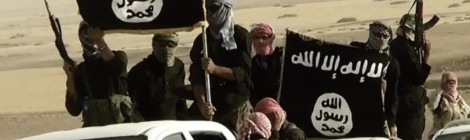
Image by Day Donaldson via Flickr.
One of the potentially biggest arguments against a maximalist approach is that such activities could be counter-productive and could risk serving as a conveyor-belt to engaging in violence rather than act as a fire-wall. A common trend with former combatants is they often do not de-radicalise: while they may disengage from terrorism because of dissatisfaction, disillusionment or burnout, they tend to maintain their ideological views. From this perspective – and endorsed by the UK government’s counter-terrorism policy – even non-violent extremist ideology can encourage others to engage in violence. While the conveyor-belt perspective has been heavily critiqued, the experiences of former combatants in Northern Ireland actually points to a middle-ground between these two perspectives. This consequently contributes to the debate on radicalisation but also on the potential role of former combatants in a preventative capacity.
The findings of my own research on former combatants in Northern Ireland placed emphasis, not on ideology or attitudes to violence, but the framing process – in other words, how is violence and non-violence represented by actors and how it resonates with an audience, and what structural factors facilitate this resonance. Former combatants in Northern Ireland interact on a regular basis with young people through a number of programmes. Interestingly, despite the former combatants having maintained an ideology similar to violent groups, and despite the former combatants not supporting violence in the current conditions, it was realised that the interaction between former combatants and young people led the latter to view the use of violence positively. However, while this may seem to corroborate the conveyor-belt perspective, it actually showed that it was how former combatants framed violence that produced the conveyor-belt effect, not ideology on its own but also not simply that the former combatants were anti-violence.
Re-Framing Violence
In the past, former combatants explained their transition away from violence by framing violence it as conditionally acceptable during the 1960s civil rights protest period and that since these grievances were addressed in today’s conditions that violence was no longer legitimate. There are many reasons why the former combatants re-framed violence in this particular way, and it was particularly effective at ensuring the majority of the Provisional IRA disengaged; however this particular framing of violence to a younger audience without such experiences interpreted the framing as glamourising violence. Reflecting upon this, former combatants actively reframed violence when in dialogue with young people by emphasising the less glamorous aspects of violence more. One study showed that the former combatant reframing of violence in this manner has discouraged young people in engaging in violence. Former combatants were persuasive because they had credibility in the ‘hard to reach’ areas and they maintained narrative fidelity with audiences on ideology and identity.
The point here is that there is some truth to the conveyor-belt perspective – that former combatants opposed to violence can encourage young people to engage in violence – but it has little to do with the ideology more broadly and much more to do with the framing process between the former combatants and the audience. Those who advocate the conveyor-belt perspective underplay the organisational interests in not having potential members becoming violent. In the Northern Irish case, former combatants had the time to reflect upon the effects of interacting with the younger generation and to engage in a re-framing process. Their reflexivity was encouraged by organisational interest as well as network structures which ensured they would be in regular interaction with young people and an environment in which funding was available to engage in projects.
Empowering Reflexive Networks
Thus, ideology is a crude means of determining the success of former combatants in a preventative role. Former combatants can be utilised in this capacity – or at the very least not discouraged – and the enablement of reflexive networks which resonate with young people can act as a firewall to participation in violence. However, there are a number of potential constraints and objections when this is applied to former Islamic State combatants. Working on the assumption that the purpose of counter-terrorism is to ‘counter terrorism’ and not to counter ideologies which a state does not like, and leaving aside the normative dimension of the rights of victims which Alonso excellently covers, the article focuses on two main points on the pragmatism and efficacy of using former combatants to prevent violence.
Firstly, the UK government’s wholesale adoption of the conveyor-belt perspective makes the provision of funding much more rigid than in Northern Ireland. Interestingly, Northern Ireland’s very own prevent policy in the 1980s curtailed which organisations could receive funding on the basis of their ideology, but this was gradually dropped in recognition that the development of the community route could help to facilitate disengagement. The funding former combatants receive in Northern Ireland is detached from the government, thus increasing buy-in across communities, and the conditions of the funding are pragmatically based (often turning a blind eye to paramilitary behaviour in anticipation that funding and accreditation would incentivise moving away from such behaviour). Ideology is not factored in – alternative identities are strengthened and shown they can be non-violent rather than trying to encourage the ‘centrefication’ of political identities. In the current UK context, similar changes would be required before former combatants and former extremists could be fully utilised.
A second objection is that the network and community structure – while a crucial factor in determining the efficacy of former combatants in a preventative role – is completely different in the Islamic State context. Former Islamic State combatants are smaller in numbers, they are set apart from their returning communities, and they may be politically disengaged (so why not just leave them like that). However, the size of networks is not important – a network of about a dozen former combatants in Belfast has been sufficient in preventing interface violence. Indeed, following the conveyor-belt logic limits the number of potential partners for the government to work with, in addition to its policies eroding trust through creating the perception of ‘suspect communities’. While the utilisation of former combatants (and extremists) can challenge and disrupt moderate communities, the target audience of these initiatives are individuals this moderate community struggle to meet. Finally, while we don’t know what former Islamic State combatants are doing upon their return, political passivism should not be viewed as a boat not to be rocked. In the case of Northern Ireland, it was the lack of active framing in combination with stories of the Troubles (often told in a social environment) in the context of parents and teachers not actively speaking about the Troubles, which led young people to view violence as attractive.
Minimalist and Maximalist Roles for Forrmer Combatants
In conclusion, former combatants can play a powerful role in preventing violence. The factors which determine whether this will be successful is not based on ideology but neither is it solely on whether they are non-violent. The network structure and incentivising environment can enable former combatants to be reflexive of the narratives they impart and how to best re-frame anti-violence narratives to ensure these resonate with young people in ‘hard to reach areas’. Former Islamic State combatants also have a potential role to play, however the lack of an enabling environment would limit this to minimalist interventions in the short term until the infrastructure for maximalist interventions are developed. Maximalist interventions are more effective at resonating with ‘hard to reach’ audiences as they decrease the likelihood of a conveyor belt effect, an effect which is likely to occur without interventions.
Gordon Clubb is Lecturer in International Security at the University of Leeds and is co-leading the interdisciplinary Radicalisation and Violent Extremism Network. His recent book focuses on Social Movement De-Radicalisation and he has also written on the role of former combatants in preventing violence, how militant groups frame disengagement, and on whether non-violent radical ideology acts as a conveyor-belt to terrorism.
-
Sustainable Security
Democratic Republic of Congo’s sexual violence epidemic is not only a weapon of ongoing violent conflict but an expression of entrenched systemic problems. Indeed, sexual and gender-based violence (SGBV) is most commonly perpetrated by the security services in place to protect civilians. In Quartier Panzi in South Kivu province, innovative processes of security sector reform and strengthened police-civilian channels of communication may be providing an opportunity for change.
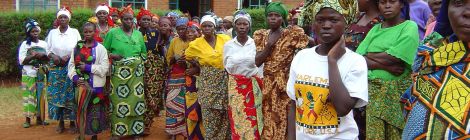
Meeting of victims of sexual violence in South Kivu, Democratic Republic of the Congo. Source: Wikipedia (from USAID)
Quartier Panzi—the populous, restive neighborhood of Bukavu, South Kivu province—is renowned in international development circles as the ground zero of the Democratic Republic of Congo’s sexual violence epidemic. Rape as a weapon of war is not so much perpetrated by enemy forces but, most often, by the very parties sent by Kinshasa to protect and serve civilians. Much as Selma, Alabama was to the American civil rights movement, Panzi’s ongoing tragedy has transformed the area into a vibrant arena for grassroots opposition and international solidarity in the fight to restore women’s bodies and lives. Women’s organizations have formed to denounce continued abuses and government denial, to reverse cultural stigmas around female culpability in rape, and to demand trial for Congolese security forces suspected of sexual abuses.
The courage and commitment of Dr. Denis Mukwege, chief gynecologist at Panzi Hospital and twice nominated for the Nobel Peace Prize, is emblematic of this resilience. International networks like V-Day and Women for Women International support these local actions and fund sanctuaries for survivors, such as the City of Joy. These innovations aim to be restorative and empowering for survivors, focusing on the crisis as experienced by women and girls, offering healing and vocational training options otherwise non-existent. However, the causes of this specific form of cruelty and degradation, rooted in violent masculinities and impunity among security actors, remain unaddressed.
Rewiring the security sector
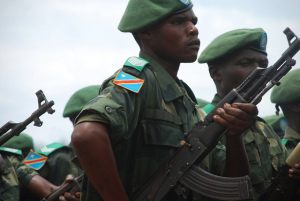
Congolese soldiers march in Walikale, DRC, 2011. Source: ENOUGH (Flickr)
Like any deep malaise, Congo’s rape crisis is but one expression of entrenched, systemic problems. Local witnesses, security analysts and medical professionals who treat survivors present overwhelming evidence that the primary perpetrators are uniformed Congolese security actors. A weak justice system may be responsible for the failure to discipline or punish perpetrators, but the sources of this behavior lie within the security sector itself. Accessing the security elite, Congo’s infamous ‘black box’, is notoriously difficult. As a result, very little analysis exists of the problem from the perpetrators’ perspective: analysis and evidence that deciphers the institutional culture and internal organization of the security sector, or that maps relations between senior officers, politicians and economic actors. By design, opacity reigns supreme.
A variety of international donors support the national army and police with numerous ‘train and equip’ initiatives, an international cooperation model unchanged since the Cold War.These ‘security development’ partnerships aim to strengthen national capacity through field and classroom training and equipment upgrades; behavior change and public accountability are not part of the approach. Within the security services, there is typically an absence of civilian oversight, and widespread rent-seeking and illicit trade in protected flora, fauna and minerals, but no questions are asked by international partners, as diplomacy and formality dominate.
Supply-side approaches such as these long pre-date the advent of ‘security sector reform’ among development actors, which does seek behavior change and greater accountability. The older aid modality remains popular with the Congolese leadership because it expressly avoids any calling to account or inculcation of security as a public service and legal right.
There is state and donor complicity in all of this. Strength without constraint or accountability defines the DRC’s security sector today. Its predatory practices range from unchecked rape and pillage in the East to the repression of free speech and public inquiry, as witnessed by the 2010 murder in Kinshasa of prominent human rights activist, Floribert Chebeya. To placate critics, a military tribunal mounted a kangaroo court in the wake of the murder; the film documenting and exposing its empty theatrics, L’Affaire Chebeya, Un Crime d’Etat, remains banned in Congo.
Such officially sanctioned practices and attitudes are salient features of the Congolese state since independence, and well known to all Congolese. In the early 1970s, President Mobutu Sese Seko began encouraging civil servants and security forces to ‘feed on the population’ (“Population baza bilanga ya bino”). Anecdotes such as these are more than flippant asides; they explain the persistent appeal of this patrimonial compact (across four chapters of Congolese leadership: Mobutu, Kabila père, transitional government, Kabila fils) as a declaration of complicity between political elites and the entire public sector. In its truncated audacity, this single utterance reconfigures and reduces the entire means and ends of the state to elite enrichment and group impunity.
In Panzi, armed crime and physical/sexual assault reached unprecedented levels in the aftermath of the primary war in South Kivu province. State security had long colluded with local armed gangs, and popular recourse options ranged from individual vengeance to military tribunals, as civil courts are unreliable. Mob justice is also widely practiced. The formation of neighborhood watch groups raised local hopes for improved safety (e.g. SAJECEK–Forces Vives). Despite their initial popularity, they soon joined local police and armed gangs in perpetrating the very crimes they first sought to oppose.
How urban police understand this license to extort and harass the population, and the higher interests these practices serve, has been well captured and analyzed by Maria Eriksson Baaz and Ola Olsson. Transforming Congo’s security sector from inside is an elusive challenge, and donors are struggling to develop the programmatic savvy, influence and access to inspire the necessary political will.
Demand for reform
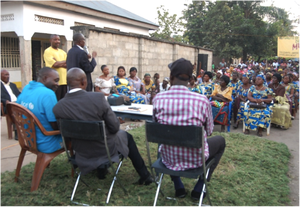
Community meeting in Kananga, DRC, where security officials and civilian leaders converse directly with local community leaders. Source: DAI Europe (with permission)
The UK’s Department for International Development (DFID) has experimented with alternative supply-and-demand models of public sector reform, and is applying these to the Congolese National Police (PNC). According to this strategy, supply-side ‘train and equip’ assistance targets weak service areas, including the prevention of and response to sexual and gender-based violence (SGBV). This is complemented by efforts to mobilize popular demand for more responsive policing at the community level.
A particular understanding of the partner institution, the PNC, informed this theory of change. This included the hypothesis that payment of regular salaries would not end extortion and rent-seeking (’tracasseries’) by the PNC, given the scale of these rackets and the enormous sums they generate. With no compelling alternative on offer, and as long as ‘reform’ is understood to involve replacing tracasseries with ‘protecting and serving’, change will elude would-be reformers. Given that such arrangements will not change in the forseeable future, the more nuanced strategy accommodates the reality of low, irregular salaries and uniformed extortion for the foreseeable future, and seeks behavior change through increased public-police interaction. Faster paced improvements in human security and responsive policing began emerging on the demand side of the pilot sites, including Bukavu and Quartier Panzi in particular.
Launched in Bukavu, Matadi and Kananga in 2009, the Security Sector Accountability and Police Reform Programme (SSAPR) is distinct for coupling its community policing approach with regular neighborhood meetings (forums du quartier) where locally appointed representatives voice their security concerns, identify emerging threats and suspects. It is common for community policing programs to seek a more responsive, service-oriented local police, but SSAPR is distinguished by its effort to cultivate citizen networks at the most local level to identify and articulate their fears, threats and suspicions forward to the actors most able to respond. Police officers, urban administrators, local community and neighborhood leaders then meet regularly in informal, local security councils to discuss proposals for containing a threat or resolving a violent dispute, as equipment and manpower are often lacking. Initiated entirely informally, these experiments in public relations gradually began to change expectations, reinforce collaboration and gain momentum.
Concurrently, the National Parliament submitted a motion to formalize the Conseils Locaux pour la Sécurité de Proximité(or CLSP, finally passed in late 2013), which recognizes the right of civilian representatives to participate in official security discussions at the municipal level. Over three years, SSAPR legal advisers worked with national parliamentarians to build support and draft a bill. Given the long-standing animosity between politicians and civil society, this new décret was a highly significant opening. The platform has since been incorporated into other police reform efforts (such as the European Union’s EUPOL) that also understand SSR in the Congolese context as primarily a governance challenge requiring civilian involvement.
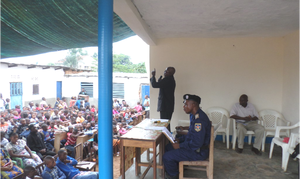
Community meeting in Kananga, DRC, where security officials and civilian leaders engage directly with local community leaders. Source: DAI Europe (with permission)
Raising security problems through the CLSP increased dialog between communities and security officials, but who would represent the civilian side? In rough urban neighborhoods like Panzi, citizens experience a host of threats, not all of them equally or in the same way. The SSAPR helped Panzi neighborhood chiefs and community leaders coordinate an informal system whereby youth, women and men would alternately represent their community concerns first to a forum de quartier, then directly on to the CLSP. This neighborhood dynamic continues today across Bukavu’s three communes.
Making Progress?
These are small steps toward a more accountable security sector and restored public trust, but has sexual assault around Panzi declined as a result? Recently the SSAPR helped a women’s NGO organize a nocturnal walk through several Bukavu neighborhoods, including Panzi, to record their own safety concerns as well as those of women and girls met along the way. In a recent meeting, NGO members insisted they would never before have visited these neighborhoods, particularly at night, but that the chance to report their findings to a receptive and interested police commisariat justified the risk.
In response, new light fixtures are planned in darkened alleys where assaults have occurred, and patrols redirected to suspicious areas noted by the NGO delegation. In another pilot city, Kananga (Kasai Occidental), assaults on women and girls who were walking long distances to fetch water, often at night, decreased dramatically after local women lobbied for regular police patrols in these areas. This, in itself, was indicative of a greater local confidence in the police as protectors.
Community police units are involved in implementing these changes, but they represent a small minority of the PNC. It is unknown if these lower rates of sexual violence are attributable to behavior change among uniformed security or if the increased patrols and better lighting are deterring other possible assailants. Retrospective studies have been conducted, but no consensus exists on the total quantitative extent of SGBV in DRC, where just one in twenty cases is thought to be reported to authorities. Nor are cases raised with the police guaranteed to be registered or pursued. Impunity persists due to a weak national justice system, as well.
Other insights emerge from this experience, particularly around ‘bottom-up’ approaches to renewed legitimacy in fragile states. In the DRC, where central government continues to stall on commitments to decentralization and provincial institutions exploit this limbo (enrichment via parallel markets; legal and financial opacity) leaving communities in the breach, these small successes show that by investing at the periphery—that most-local interface where citizens and public service providers meet in person—bridges of trust and respect can be built through participatory problem solving. Communities can show resilience and security services can prove they are responsive and effective.
Edward Rackley is a Security and Governance consultant for the World Bank, based in Washington DC. He provides periodic technical and strategic advice to the SSAPR program via DAI Europe, one of the program’s managing agents. (The views expressed in this article are not necessarily those of these institutions.)
-
Sustainable Security
 Two new reports surveying the strategic trends that are likely to shape the next few decades of global politics point very clearly to the prospect of a severely resource-constrained world. Released two days apart, both the new Chatham House report on Resource Futures and the US National Intelligence Council report on Global Trends 2030: Alternative Worlds raise a number of important questions relating to conflict and security.
According to the Chatham House report,
The spectre of resource insecurity has come back with a vengeance. The world is undergoing a period of intensified resource stress, driven in part by the scale and speed of demand growth from emerging economies and a decade of tight commodity markets. Poorly designed and short-sighted policies are also making things worse, not better. Whether or not resources are actually running out, the outlook is one of supply disruptions, volatile prices, accelerated environmental degradation and rising political tensions over resource access.
The report outlines what the authors refer to as volatility being “the new normal.” For this reason “High and fluctuating prices are spurring new waves of resource nationalism and making unilateral and bilateral responses more attractive.” This should be cause for concern, especially in relation to the ways in which the response of governments and other actors to scarcity (or at least perceptions of scarcity) can interact with existing tensions and conflicts between and within communities. As the report highlights, “In addition to efforts to reduce demand at home, governments and other actors have moved to ensure access to affordable resources, reshaping the landscape of international politics. The return to largely protectionist and beggar-thy-neighbour manoeuvres – often in reaction to short-term supply bottlenecks or perceptions of scarcities rather than actual ones – can act as fuel to the fire.”
As well as mapping the consumption and trade trends across a series of important resources, the report also discusses the impact of external variables such as population growth and climate change. These are “multiple stress factors” which “render countries vulnerable to different types of shocks such as environmental disasters, political unrest, violent conflict or economic crises – increasing both local and systemic risks. Such factors can create new tensions and flashpoints as well as exacerbating existing conflicts and divisions along ethnic and political lines.”
The report includes a section on resource conflict flashpoints (p. 114) which outlines fifteen different potential flashpoints relating to territorial/economic zone disputes in resource-rich areas, shared water resources and transboundary river systems and resource-related rebellion and insurgency. The report is also linked to an interactive website that maps some of these trends and potential flashpoints.
The day after this report was released, the US National Intelligence Council released their own on the key trends over the next twenty years that the United States will need to adapt to or try and shape in order to “think and plan for the long term so that negative futures do not occur and positive ones have a better chance of unfolding.”
Among other so-called mega trends such as urbanisation and changing demographics, the report echoes the Chatham House research by pointing to an increasingly complex situation in terms of global resources. The report argues that,
“We are not necessarily headed into a world of scarcities, but policymakers and their private sector partners will need to be proactive to avoid such a future. Many countries probably won’t have the wherewithal to avoid food and water shortages without massive help from outside. Tackling problems pertaining to one commodity won’t be possible without affecting supply and demand for the others.”
The key trend or ‘tectonic shift’ as the report calls it is that “demand for food is expected to rise at least 35 percent by 2030 while demand for water is expected to rise by 40 percent. Nearly half of the world’s population will live in areas experiencing severe water stress. Fragile states in Africa and the Middle East are most at risk of experiencing food and water shortages, but China and India are also vulnerable.”
While this may lead some towards overly pessimistic conclusions about a world defined by instability, human insecurity and geopolitical tensions, it is refreshing to see the NIC emphasising the importance of how the US can respond now. In his forward, the Council’s Chairman Christopher Kojm states that “We are at a critical juncture in human history, which could lead to widely contrasting futures. It is our contention that the future is not set in stone, but is malleable, the result of an interplay among megatrends, game-changers and, above all, human agency.” It is worth noting the deliberate use of the phrase ‘alternative worlds’ in the report.
While some degree of adaptation to these structural trends mapped out by both Chatham House and the National Intelligence Council will undoubtedly be necessary, the importance of both of these reports is that they remind us of the need for clear and far-sighted thinking on policy responses now. The worst case scenarios that these reports discuss are not inevitable and risks can be mitigated. National security policymakers will do well to study the scenarios outlined in these two impressive reports and to try and understand the drivers and ‘tipping points’ that lead to certain pathways. Both reports offer prescriptions for current decision makers (the Chatham House recommendations on ‘targeted resource dialogues’ and ‘coalitions of the committed’ are particularly worthwhile). While volatility and uncertainty might be the ‘new normal’ in global resource politics, one thing is entirely certain – inaction and ‘business-as-usual’ when facing “a critical juncture in human history” is a recipe for disaster.
Ben Zala is a Lecturer in International Politics at the University of Leicester.
Image source: Stayraw
-
Sustainable Security
‘Cultural peacekeeping’ has emerged as a new task for international peace operations. The inclusion of a cultural component in the mandates of peacekeeping interventions is a desirable move. But it is an extremely complex political-military exercise.
We are currently witnessing the most dramatic attack on cultural properties since the large-scale destruction and misappropriation of cultural heritage seen in World War II. Since summer 2014, Daesh has deliberately and systematically damaged, destroyed and looted significant portions of the exceptional cultural heritage of Mesopotamia, the ‘cradle of civilization’, from Mosul to Niniveh, from Nimrud to Khorsabad, from Hatra to Palmyra.
Reacting to Daesh’s iconoclastic fury, the UNESCO 38th General Conference of Paris, 3–18 November 2015, passed a resolution to establish – adopting an effective slogan often used by both media and diplomats – the ‘Blue Helmets for Culture’. Building on the positive experience of the ‘United Nations Multidimensional Integrated Stabilization Mission in Mali’ (MINUSMA), which was mandated to ensure the safeguarding of cultural heritage sites in collaboration with UNESCO, the resolution adopts a new strategy founded on two key elements: the inclusion of a cultural component in the mandates of peacekeeping interventions where cultural heritage is at risk; the creation of a task force of experts in the protection of cultural heritage.
As a direct contribution to the actualization of the resolution, UNESCO and the Italian Government signed an agreement on 16 February 2016 in Rome for the establishment of the first task force. Named ‘Unite4Heritage’, the task force is largely based on the Italian Carabinieri ‘Command for the Protection of Cultural Heritage’ (Comando Carabinieri Tutela Patrimonio Culturale ), which is internationally renowned as of the most competent and effective military policing force for protecting works of art and archaeological property. The Director-General of UNESCO, Irina Bokova, urged other countries to establish and make available similarly specialized units to strengthen and enforce the existing cultural heritage protection regime, expressing her confidence that ‘this Task Force, and the agreement signed in Rome with the Italian Government, will become a model for other countries’. The urgency of the issue was also recently taken up by the UN Security Council, which approved Resolution 2437 on 24 March 2017, providing for the engagement of a cultural component in UN peace-keeping missions.
While the process of implementing and defining the operational aspects of the Blue Helmets for Culture’s initiative is underway, this article provides an initial assessment of the politico-military significance of ‘cultural peacekeeping’ (CPK) as a new task for international peace operations, considering both its strengths and weaknesses, opportunities and challenges. Still lacking actual case studies, this exercise is highly theoretical, but it is solidly grounded in the literature on heritage studies, peacekeeping, terrorism and armed violence.
Opportunities and prospects
Image credit: US Army.
CPK can serve multiple and interrelated cultural, political and military objectives.
First of all, it is hoped that CPK will contribute to protecting cultural heritage from damage and destruction by helping the enforcement of the international protection regime and, in particular, giving teeth to the implementation of the 1954 ‘Convention for the Protection of Cultural Property in the Event of Armed Conflict’, which has shown many inadequacies and proven to be minimally effective and difficult to enforce as political and legal instrument.
Secondly, the integration of cultural heritage protection in the mandate of a peacekeeping mission can have a significant impact on the mission’s broader immediate and long-term objectives. On the ground, the mission’s efforts to save cultural heritage can help to ‘win the hearts and minds’ of local populations and increase their acceptance and support for the peacekeepers. CPK can also contribute to cutting off the funding generated by looting and selling artefacts, which fuels and prolongs conflicts by providing revenues for armed groups and terrorists. At the end of hostilities, it can help to ensure quicker recovery and stabilization by promoting societal and economic regeneration for a long-lasting peace.
From a broader political perspective, CPK can gather and sustain international support and mobilization for the mission. Cultural heritage is widely appreciated, respected and prized for its universal value, and its protection and preservation are deemed the collective responsibility of the entire international community. It follows that engagement in CPK has the potential to win support more easily and with less political controversy than other types of international interventions. It can be presented (and ‘marketed’) to an internal and/or external audience as an intervention for a very noble, principled and apolitical goal that unites the international community in a ‘war for civilization’ against extremism.
Finally, CPK has the merit of simplifying very complex realities and issues, which is again key in building political and public support for an international intervention and for clearly defining its objectives. While sorting out and taking sides in the complex geopolitical, religious, and ethnic Middle Eastern dynamics is a very difficult undertaking, understanding what an ancient cultural item or site is, and siding against those who want to destroy it, is rather straightforward and politically less controversial.
Challenges and risks
In theory, the proposed integration of the protection of cultural heritage and cultural diversity in peacekeeping mandates can be considered an important and welcomed novelty with multiple strengths. In practice CPK is, however, bound to incur serious challenges and risks that should not be underestimated.
At the military and operational level, it should be emphasized that cultural heritage sites often have important military and strategic value, which is one of the reasons they become deliberate targets during armed conflicts. Many cultural heritage sites are not ‘soft targets’ but represent highly valued and militarily sensitive objectives for the warring parties. If CPK is deployed as a preventative mission in precarious pre-conflict situations or in post-conflict situations even before complete stability has been achieved, those sites will require heavily armed and mandated international forces for their protection. When intervening in such a context, an international operation might find it difficult to strike a balance between military necessity and its mandate of cultural protection.
Moreover, if a mandate for cultural heritage protection can help mobilize support for international intervention, it is equally true that the moment things go wrong and the mission starts suffering casualties, public support could evaporate very rapidly, which could promptly rescind its initial backing with the argument that the protection of cultural heritage is not worth the lives of the intervening country’s ‘ boys’ and that those ‘ boys’ should immediately brought back home.
Most importantly, CPK can entail the grave risk of transforming from a ‘civilisation war’ to save the world’ s cultural heritage into a ‘clash of civilisations’. If CPK is not well planned or wrong decisions are made, a group such as Daesh could exploit the situation to its own advantage by presenting the well-intentioned protection of cultural heritage in terms of a war against Islam. Through a well-orchestrated propaganda campaign, ‘cultural peacekeepers’ could be depicted as ‘invaders’ if not ‘crusaders’ who occupy and violate the sacred soil of the Prophet. At the very least, CPK can risk the accusation of ‘mission civilisatrice’ or ‘civilizing mission’, especially if it involves Western contingents whose past history of colonial rule, imperial domination, and ‘colonial archaeology’ which will be promptly highlighted by adversaries.
Again, deployment of ‘boots on the ground’, and especially ‘Western boots’, may serve Daehs’s military strategy. It is not a coincidence that Western countries and especially the United States have to date strongly resisted sending ground troops to Syria, fearing being bogged down in another costly and extended Middle Eastern military fiasco, which is what Daesh hopes to achieve. The dilemma is that ground forces are indispensable to protecting cultural heritage ‘in situ’, be it in Syria, Iraq or Libya.
Another non-trivial problem is the inherent difficulty of maintaining civil/military relations. CPK will necessarily involve extended cooperation between military and civilian personnel, such as archaeologists, historians, and anthropologists. However, cooperation can be particularly challenging between diverse working communities with very different educational backgrounds, mindsets, training, sensibilities, work habits and customs. On the ground, cooperation between warriors, peacekeepers, archaeologists and humanitarians may turn into a very complex exercise, and their respective primary concerns may become hard to reconcile.
A risky but necessary business
In conclusion, CPK should be not be mistaken as a minor, light and inexpensive international intervention (in all senses, in economic terms and in terms of possible human losses). Although badly needed, CPK is an extremely complex and hazardous major politico-military exercise that can face serious challenges and risks of unintended consequences. Before becoming involved in any CPK mission, a sound, realistic and legally accurate assessment is needed along with planning of the mission’s objectives and the capabilities required to meet those objectives. This would avoid gaps between the mandates and the reality on the ground, which could very negatively impact the mission’s execution.
Paolo Foradori is Associate Professor of Political Science at the School of International Studies, University of Trento, Italy. He previously worked with the United Nations in Russia, Kosovo, and Afghanistan. This paper extensively draws from his recent articles: ‘Protecting cultural heritage during armed conflict: the Italian contribution to ‘cultural peacekeeping’’, Modern Italy (2017) and (with Paolo Rosa) ‘Expanding the peacekeeping agenda. The protection of cultural heritage in war-torn societies’, Global Change, Peace and Security (2017).