Category: 2016

  • Sustainable Security

    The Islamic State’s loss of the territory does not mean that has been defeated. Rather, it presents several new challenges to those trying to contain the threat of the Islamic State.

    After months of a sustained, international military campaign against the organization, the Islamic State is now in retreat, relinquishing towns, territories and populations once under its control across Iraq and Syria. At its height, the organization was estimated to control or influence a territorial space between 12,000 to 35,000 square miles, areas approximating the size of Belgium or Jordan, respectively.

    Though the crumbling of a self-proclaimed caliphate represents a victory in many ways to many different actors—the Assad Regime, the Iraqi government, the Russian government and the United States—IS’ significant loss of the territory and populations does not mean that the Islamic State has been defeated. Instead, the loss of territorial control presents several new challenges to those seeking to contain the IS threat.

    The importance of territory in conflict

    Today, as in previous civil wars, control of territory has fundamentally shaped the nature of conflict. Not only is territorial control a preliminary objective and launch pad for many rebel groups globally and historically, it also influences insurgent behavior in several significant ways. From shaping how rebels deploy violence, the targets of said violence, whether rebels provide some sorts of services or develop governing institutions, and the beneficiaries of these services, territorial control, or the lack thereof, is a profound shaper of conflict dynamics. As the Islamic State shifts from being in control of significant swathes of land and peoples, to a landless network of raiders, the organization’s behavior seems increasingly likely to change, and in some ways, has changed already.

    In a recent paper published in the Journal of Politics, my co-author, Yu-Ming Liou, and I argue that the reason for this is that territorial control in and of itself is a military resource. Beyond simply influencing the politics and people in a region or town, the control of territory means the ability to defend and hold a place from counterinsurgent attack. The absence of the state is critical for rebels. With a space for themselves, free of enemy interference, insurgents can train and move around freely. They can begin unhindered propaganda campaigns that may have local or global reach. They can initiate contacts with supportive foreigners or foreign governments abroad. They can stash equipment and materiel for later use. They can recoup and recover in relative safety after a raid or ambush. Territorial control on its own serves to boost the military strength of an insurgent organization.

    But territorial control is not simply about the acquisition of space: it frequently includes the acquisition of people, under control of the rebel group, but not a part of the insurgency. The relationship between rebels and civilians living within the territory rebels control are inherently intertwined, and as Mao famously quipped, civilians are the sea in which the insurgent fish should swim. Where territory is itself a military resource, civilians can also provide intelligence and information, medicine, technical expertise, weapons or financial aid, compliance, and importantly, recruits.

    The resources civilians offer, however, are not always so easily won. Rebels may use coercion or violence to get what they wish from civilians, generating resentment and shrinking the pool of potential recruits and resources providers. On the other hand, insurgents can incentivize cooperation by limiting violence and predation of civilians, as well as providing goods or services, quasi-state institutions, education, health care, security and justice. When rebels control territory and civilians, they move from being roving bandits to stationary bandits, incentivized to provide some form of governance.

    Thus, when rebels capture territory and control civilians, it generally affects their behavior in two key ways: rebel predation of civilians, and rebel governance to civilians. Strong rebels and rebels that control territory are less likely to rely on indiscriminate violence. They also tend to avoid terrorism. Similarly, given that most rebels want to eventually rule over the civilians they control as a legitimate sovereign, many insurgent groups are more likely to provide social services and develop governing institutions once they capture territory and populations. In fact, according to an original dataset on rebel education and health care provision, about one-third of all insurgencies provide some form of governance.

    Among rebel groups that control territory, however, this figure almost doubles. Though not all rebel groups want to rule over all civilians living in the territory they capture (for instance, IS engaged in mass killing and genocide against the Yazidis, and allegedly offered Christians a chance to pay taxes or flee), for those civilians who rebels view as being future citizens of the state its creating or leading, the foundations of governance are frequently established in the roots of war. As an example, those who lived within IS territory claimed they were living in a “golden era,” better than the governance that had preceded the Islamic State’s control. These services ranged from running utilities and hospitals, to building schools and developing a curriculum that comports with the Islamic State’s ideological precepts.

    The Islamic State and territory
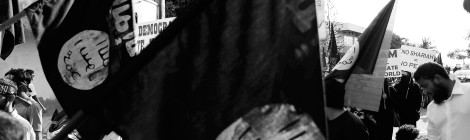
    Image credit: Dying Regime/Flickr.

    Over the past several months, the Islamic State has consistently lost territory across both Iraq and Syria. Facing incursions from the Iraqi military as well as the Syrian government and its allies, the Islamic State’s grasp on space and domination over people has diminished. As a result of this change, several IS behaviors may also begin to shift, and the lack of territory does not correspond to a lack of threat.

    The governance IS provides will likely dissipate. It is challenging to provide governance without some form of territorial control, and with the Islamic State on the run from military forces bearing down, IS will increasingly face challenges to providing services within the remaining spaces it controls. Though the lack of services for civilians may not seem particularly consequential, clean water and electricity are essential for healthful and hygienic living and the practice of more advanced medical treatment, like surgeries.

    The rise of the Islamic State and its initial popularity was also tied to the lack of sufficient goods and services—a lack of governance by the Iraqi government. Without the Islamic State’s organization and provision of goods, people’s needs might not only go underserved, triggering a humanitarian crisis, but the governance vacuum could be filled by equally ruthless and dangerous actors, and terrorism expert Bruce Hoffman has suggested that a blow to the Islamic State could be a boon to Al-Qaeda operatives in the region. Foreign governments and domestic actors ought to be acutely aware of making the day-to-day living of civilians as normal as possible, as quickly as possible.

    Second, civilians may increasingly find themselves as the targets of violence, rather than state military or security forces. The underground, clandestine nature frequently associated with a lack of territorial control makes IS movements harder and harder to track, and has been linked to terrorist violence. As an example, the Islamic State, which does not territorial control in Europe, typically relies on attacks on civilian targets by affiliates as a means of attack there. Just last week, the Islamic State killed over a dozen people in Barcelona by using a car to mow down a busy street of pedestrians (a style of attack replicated by white supremacist terrorists in the United States).

    On the other hand, in Syria and Iraq, the Islamic State has been able to rely on conventional or guerrilla tactics to achieve its goals. Consequently, the lack of territorial control and potential increase in the use of terrorism by the Islamic State, civilians may increasingly find themselves in the crossfire of IS attacks. Already, Though the Islamic State endeavors to survive and endure, and can do so by moving its operations online and underground despite territorial losses, it nevertheless keeps the image of the caliphate alive by repurposing videos and media that “depict the ­Islamist state it sought to establish as an idyllic realm destined to be restored.”

    The Islamic State might also create or be given some form of Just like controlling territory in the country a rebel group seeks to one day rule, a sanctuary or foreign base is also a safe space that confers military benefits to the insurgency. However, when rebels have foreign sanctuary, they are removed from the civilians they might some day hope to govern, and incentives to moderate their behavior declines. Ultimately, then, when rebels control territory separated from those they wish to govern, it has all the benefits of acquiring territory, without any of the costs (or benefits) of also acquiring civilians. In our paper, we find that when civilians have access to a sanctuary in a foreign territory, they are more likely to engage in violence against civilians, killing over twice as many civilians than the average rebel group.

    Conclusion

    In sum, as IS transitions from controlling territory to a more clandestine network, civilians’ lives and livelihoods remain in the crosshairs. Weak rebel organizations and rebel organizations that lack territorial control are more likely to engage in terrorism and indiscriminate violence.

    Civilians could lose access to critical goods and infrastructure services, thereby putting them at risk for a humanitarian crisis. Unbound by territorial space, IS could prioritize deadly terrorist attacks outside the realm of Syria and Iraq, focusing instead on Europe and North America, in addition to the Middle East and North Africa. Military forces may have wrested the Islamic State from its self-proclaimed caliphate, but the battle may be far from over.

    Megan A. Stewart, Ph.D., is an Assistant Professor of Transnational and International Security at American University’s School of International Service. Her research lies at the nexus of two distinct areas: civil war processes and state formation. Megan is currently completing her book manuscript, Governing for Revolution, which explains variation in rebel governance and incorporates both quantitative and qualitative methods, including the creation and analysis of an original dataset, elite interviews held in Lebanon, and archival research and fieldwork conducted in East Timor, Australia and the United Kingdom. In 2016, her paper “Civil War as State-Building” received honorable mention for the Best Paper Award by APSA Conflict Processes Section and is forthcoming at International Organization. Her research has been published at Conflict Management and Peace Science and the Journal of Politics, and has also been featured in the Washington Post, Political Violence at a Glance, and the Project on Middle East Political Science (POMEPS).
  • Sustainable Security

    by Isabelle Geuskens, Executive Director of Women Peacemakers Program

    Almost 15 years after the first resolution to address women, peace and security, the agenda’s implementation is increasingly subverted by the militarised security paradigm. Implementing UNSCR 1325 has been interpreted as being about fitting women into the current peace and security paradigm and system; rather than about assessing and redefining peace and security through a gender lens. As a result, the opportunity to create a new recipe for peace and security, based on taking women’s perspectives into account, is being lost.

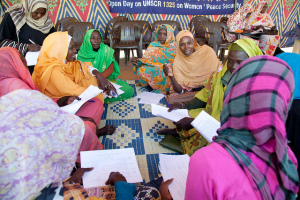
    North Darfur Committee on Women session on the UN Security Council Resolution 1325 on women, peace and security in Dar El Salaam, Darfur Source: UNAMID (Flickr)

    North Darfur Committee on Women session on the UN Security Council Resolution 1325 on women, peace and security in Dar El Salaam, Darfur, 2011 Source: UNAMID (Flickr)

    Next year we will be celebrating the 15th anniversary of United Nations Security Council Resolution (UNSCR) 1325, the first resolution of seven addressing Women, Peace & Security. In 2000, UNSCR provided the world with a groundbreaking message – providing an important recognition of the crucial role that women have to play in processes of conflict prevention, resolution and peacebuilding, as well as the specific impact of war on women’s and girls’ lives.

    The years following its adoption have borne witness to an increase in the amount of interest in the Resolution, as well as in the number of activities dedicated to “1325”, both at civil society and governmental level. However, almost 15 years into actual implementation of UNSCR 1325, we are still facing many challenges. Women’s participation in peace negotiations and peace agreements has remained low. Though some progress has been made in the adoption of UNSCR 1325 National Action Plans (NAPs) and in terms of legal and judicial reforms in some countries; implementation of these policies is often not enforced. Conflict related sexual violence as a deliberate weapon of war still occurs on a large scale and with impunity

    Peace and security from a holistic gender perspective

    Analyzing and addressing these challenges requires us to go back to the bigger picture. Over the years, the women’s peace movement has observed a growing, and worrying, trend. To a large extent, implementing UNSCR 1325 seems to be interpreted as being about fitting women into the current peace and security paradigm and system; rather than about assessing and redefining peace and security through a gender lens. In other words, “Just Add Women and Stir” has become the maxim as the way to move forward, instead of coming up with a new recipe for peace and security altogether, based on taking women’s perspectives into account.

    Such a new recipe would not only impact the lives of women, it would also provide important alternatives for men. The dominant peace and security paradigm is heavily militarized, normalizing the use of armed force and violence as a means to address conflict. This process of militarization incorporates specific gender dynamics, among others pushing men to engage in armed and violent action to solve conflict. Redefining this peace & security paradigm from a holistic gender perspective not only brings in women’s perspectives of what makes up real human security, it also addresses the normalization of violence in patriarchal society and prioritizes conflict prevention as well as nonviolent conflict resolution.

    Militarization of Women, Peace & Security

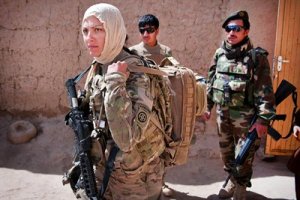
    Member of a female engagement team, Ghazni province, Afghanistan. Source: US Department of Defense

    Member of a US Marine Female Engagement Team, Ghazni province, Afghanistan. Source: US Department of Defense

    UNSCR 1325 is increasingly being used as a tool to support women’s recruitment into militarized institutions and environments. Though some actors in the women’s movement view the increase of women’s participation in the armed forces as a sign of women’s empowerment and emancipation, others see it as a sign of the increased militarization of society. It is not the question whether women are capable of taking up arms and engaging in military action; for many of us, the discussion is about whether the militarization of women’s lives is beneficial for women and society in general.

    Often, the call to increase women’s participation in militarized institutions is backed up by essentialist arguments. One of the arguments given is that “adding women” will somehow challenge its hyper-masculine culture and contribute to both a more humane and a more women-friendly environment. The assumption at work here is that women are naturally less violent than men, and hence might have a soothing effect on the inside and the outside. However, using violence against the enemy is part and parcel of every militarist system. Some of the women combatants WPP has spoken to over the years – whether active within state armies or guerrilla movements – indicated that in order to be taken seriously as a woman fighter, they often presented an even tougher front towards the enemy. They made it clear: a woman in the armed forces is, first and foremost, a fighter. Within any military system – state or non-state – unity is key, and many women in armed forces most certainly do not want to be viewed as special category, because they are working hard to be taken seriously in their role of fighters.

    It is also often argued that women’s inclusion will benefit the military mission, as their presence provides access to previously untapped sources of intelligence: women in the community. However, referring to local women in such a manner can be dangerous, as in many situations of conflict, anyone (and in particular women’s groups, whose women’s rights activism might already challenge existing traditional notions around gender) seen interacting closely with (foreign) armed forces is at risk of being labelled a traitor or enemy agent.

    A major concern for us is that the above lines of argumentation completely instrumentalize women’s lives and experiences. The arguments also fail to challenge the – patriarchal – status quo by any means: conflict continues to be framed and solved by armed intervention, hence promoting the use of violence to overcome and dominate the enemy “other”.

    Missing an opportunity for change

    With the 15th anniversary of UNSCR 1325 around the corner, there are some big questions to be asked. Is the world becoming a safer place if UNSCR 1325 implementation merely focuses on integrating the female half of the population in upholding and promoting militarization? If the focus is narrowed to embedding women firmly within existing systems, are we not missing out on an opportunity for real change? Should UNSCR 1325 not also be about stretching the current peace and security paradigms, about addressing the gendered way that humanity frames and addresses conflict itself, and about investing in disarmament, conflict prevention, human security and alternative conflict resolution mechanisms? As UNSCR 1325 is about gender and peacebuilding, should we not also explore and address men’s gendered experiences of violence and war? Is it not time to  lay bare the connections between war and hyper-masculinity, and thereby show the importance of investing in alternative masculinities to address violent conflict at its roots?

    Many women peace activists – some of whom laid the ground work for UNSCR 1325 via the Beijing Declaration and Platform for Action and their continued mobilizing during the late 90s – have presented us with powerful feminist perspectives on peace and security that challenge current patriarchal paradigms. Their peace work is inextricably linked to calls for disarmament; investment in nonviolent conflict resolution and the prevention of policies of aggression; the need to divert excessive military expenditures to social development, and the promotion of women’s leadership in order to advance a culture of peace.

    Now is the time for their claims to be taken serious: violent intervention is not bringing about the desired impact. In their publication “Gender, Conflict and Peace” (2013), Dyan Mazurana and Keith Proctor state: “Contrary to popular belief, the academic literature increasingly argues that a strategy of non-violence is more effective than violence in achieving policy goals. According to data analyzed by Stephan and Chenoweth, between 1900 to 2006 non-violent campaigns were successful in achieving their policy goals 53 percent of the time, whereas violent campaigns only had a success rate of 26 percent.

    Nonviolence provides an important alternative to our current thinking about peace and security. Often also referred to as “people power” or “civil courage”, it recognizes that conflict is a fact of life, and can even provide an important opportunity for positive change. The challenge lies in how to frame and address conflict. Instead of the current “Power Over” security model – which is rooted in the use and legitimacy of armed violence to overcome and eliminate the opponent – nonviolence operates on the principle of “Power With”: empowering the people with the idea that peace and security ultimately has to come from the people, which implies that injustice can be successfully addressed when people organize themselves into a nonviolent collective.

    For decades now, women peace activists have presented us with feminist analysis and viable alternatives to secure peace for all, challenging the current patriarchal security and peace paradigm. Despite their efforts, their claims and peace work tend to still be largely overlooked– even after 15 years of USNCR 1325. If we truly want to engender peace, we need to broaden and diversify UNSCR 1325 implementation. For only by going back to the bigger picture and applying a holistic gender analysis to peace and security, can we become successful in securing peace and security for all.

    Isabelle Geuskens serves as Executive Director of  Women’s Peacemakers Program, a Dutch NGO that works for the nonviolent resolution of conflict, and the inclusion of women’s voice and leadership in nonviolent conflict resolution processes. From 2002-12, she acted as program Manager of WPP at the International Fellowship of Reconciliation (IFOR). Under her leadership, WPP started pioneering a program on engaging men for gender sensitive peacebuilding. Prior to taking up this position, Isabelle was active in peacebuilding initiatives in Belfast and in Srebrenica, where she worked for the Working Group Netherlands-Srebrenica. Isabelle holds a Master of Arts from the University of Maastricht.

    Featured Image: Female soldier at a shooting range during IDF training, southern Israel  Source: Wikipedia

  • Sustainable Security

    Many researchers have focused on how the institutions of the nation-state can help build peace. Though useful, this focus can often ignore how institutions older than those of the nation-state can contribute to peacebuilding processes.

    Can the introduction of “right” institutions facilitate peace in fragile states? Conflict researchers grappling with this question have mostly focused on the institutions of the nation-state. From this perspective, states can exit the conflict trap by introducing fair elections, capable national bureaucracies, independent judiciaries and constitutional protections against misrule. However, this state-centric perspective ignores the reality that national political institutions are far from the “only game in town” in many of the world’s most conflict prone states. Recent research suggests that institutions older than those of the nation-state can contribute to peace.

    African pre-colonial institutions

    ashanti_yam_ceremony_1817

    Image via Public Domain.

    A powerful example of how non-national political institutions contribute to peacemaking is found in the case of pre-colonial “customary” institutions in Africa.  As students of African history should know, post-colonial national institutions were layered on top of a pre-existing mosaic of kingdoms and state-like entitities, many of which have roots to the pre-colonial era.

    Consider the Ashanti Kingdom in Ghana. This political structure existed prior to colonialism, endured numerous conflicts with British colonizers, and was eventually recognized as a subnational political entity with special prerogatives. Today, after decolonization, several Ashanti institutions remain, such as the King, the customary court system and the council of elders. These institutions of the Ashanti Kingdom have served as an important platform for bargaining with the Ghanaian state, as well as in dispute resolution between conflicting parties in Ashantiland.  A similar pattern is found in the Buganda Kingdom in Uganda, where Buganda pre-colonial institutions have been incorporated into the constitution and serve as the main focal point for interactions between the Buganda ethnic group and the government.

    While some have pointed to customary institutions in Africa as a source of ethnic tension and conflict, this view is not correct. Recent research suggests that customary institutions play important roles as arbiters of conflict in state peripheries where central governments are weak. In a recent article in the Journal of Peace Research, I argue and demonstrate that this is an instance of a more general relationship. In Africa, where customary institutions are plentiful and many states have low capacity, strong pre-colonial institutions can serve as tools for peaceful bargaining and thus conflict reduction.

    To evaluate this claim, I collected data on the pre-colonial institutional affiliation of over 243 politically relevant ethnic groups as listed in the Ethnic Power Relations database. The data was collected from the ethnographic atlas, a collection of comparative ethnographic data on over 800 ethnic groups. Combining these data sources enabled a comparison of the degree to which contemporary ethnic groups inherited centralized pre-colonial political institutions such as kingdoms, chieftaincies and empires.

    Within this sample of ethnic groups, I investigated whether groups that were excluded from political power – which a decade of research suggests are the most conflict-prone ethnic groups – were less likely to experience armed conflict if they had inherited strong pre-colonial institutions. The results clearly show that ethnic groups who are excluded from power, but inherit pre-colonial institutions, are less likely to be involved in civil conflict in the period between 1945-2010. This is consistent with the claim that these groups can rely on their pre-colonial institutions to bargain with governments, avoiding armed conflict.

    Reasons for the success

    Why are ethnic groups with inherited political structures more adept at avoiding conflict? I argue that strong centralized customary institutions improve their capacity to engage in non-violent bargaining that avoids costly conflict. When groups have centralized customary institutions they can make their promises to respect agreements more credible by enshrining them in centralized political authorities, such as the Ashanti King (in Ghana). When agreements are guaranteed by a customary institution, such as a king or a traditional legislature, this raises the cost of violating the agreement, since reneging will have reputation costs for the customary institutions themselves, and since customary authorities can sanction violators. Furthermore, having strong centralized authority in customary institutions minimizes the risk of  “spoilers” to an agreement, i.e. factions of the given ethnic group that will not abide by the will of group leaders.

    For these reasons,  groups with decentralized customary institutions face greater constraints on their bargaining credibility since no preeminent authority can be used to guarantee that agreements will be respected. This is exemplified in the roles of centralized customary authorities in striking non-violent bargains with central governments in Africa. In Uganda, the institutions of the Buganda kingdom, such as the traditional authority of the King himself and the traditional Buganda legislature, have been relied on in deals made with the Ugandan regime. In Ghana, the Ashanti Kingdom has been pivotal in brokering with the Ghanean state, and has used its centralized customary court system to ratify land-rights acts and to adjudicate land-disputes in Ashantiland. In South Africa, Zulu authorities have used their customary institutions, such as the office of the Zulu king, to extract concessions from the South African government, regarding their role as traditional rulers in Kwazulu province.

    Conclusion

    This research on pre-colonial institutions has implications for how we approach the link between political institutions and peacebuilding in fragile states. First, it prompts the recognition that political institutions other than those related to national governments are vital to ensuring civil peace at the local level. Instead of seeing national institutions as the most vital to peace, we should see them as one category of a rich institutional mosaic. Crucially, in states where national institutions fail to penetrate the periphery, customary political institutions will be more central to building peace and good governance.  Second, it shows that traditional or “customary” institutions in Africa should not be seen as obsolete remnants of a forgotten era, but as vital parts of Africa’s institutional mosaic when it comes to building peace. Instead of inducing conflict and fueling ethnic antagonisms, these institutions play vital roles in containing conflict. Their local presence and importance to peace should be recognized by policymakers and scholars alike.

    Tore Wig is a post-doctoral fellow at the Department of Political Science at the University of Oslo.  He is currently affiliated with the project Disentangling the Economic Effects of Political Institutions (DEEPI), which seeks to study the historical (and contemporary) causal links between aspects of democratic institutions, economic growth and inequality.

  • Sustainable Security

    Following the 1998 peace agreement, Northern Ireland has been promoted as a model for peacemaking. Human rights discourse played a role as a cause and cure of the conflict.

    Since the civil rights movement of the 1960s, the Northern Irish conflict has captivated imaginations far beyond the island. Following the 1998 peace agreement, the region has been internationally promoted as a model for peace-making. Politicians from the region have shared wisdom of the Northern Ireland peace process in far-flung countries in conflict, including the Philippines, Sri Lanka, Iraq, and Afghanistan. Some of the lessons exported from Northern Ireland’s peace process are general prescriptions, such as the necessity of engaging with enemies or the need for multi-party talks to include even the smallest parties. Broader lessons promoted about Northern Ireland’s peace process are claims about the role of human rights in conflict resolution. During the peace process, a popular history emerged with rights—political, economic, and human— occupying a central role as a cause and cure of the conflict.

    Human Rights as Political Narrative

    The broad outlines of this narrative are: after partition in 1921, the new state in Northern Ireland systematically denied civil and economic rights to Catholics and maintained Protestant dominance. In the late 1960s, when peaceful civil rights demands were met with both loyalist and state violence and state reforms failed, the republican movement was forced into armed struggle. During the conflict, the British state engaged in human rights violations, further compromising the legitimacy of UK governance. In the late 1990s, republicans, unionists, and the British state settled the conflict by agreeing to new political institutions that ensured equal rights for all.

    However, human rights lessons from Northern Ireland’s peace process are not quite as tidy as this narrative suggests. My longstanding ethnographic and historical research in the region suggests caution about the comforting certainties of this causal account. In the 1960s, grassroots advocates protested that nationalists’ civil rights were systematically undermined since partition, and throughout the conflict, “first generation” rights to speech and association, or freedom from torture, were violated and remain deeply contentious. At the same time, human rights were absorbed into the conflict, and became another arena for ethnopolitical contest. In the Good Friday Agreement (GFA), an explicit commitment to human rights was envisioned for the new political arrangements. Yet as the agreement was implemented, rights politics have often been vehicles for the claims of nationalists and unionists, rather than universal human subjects.

    Ethnopolitics and Human Rights

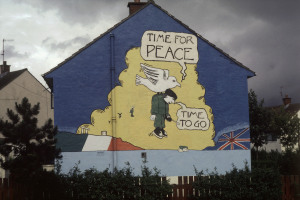
    Time_for_Peace

    “Time for Peace” mural, Whiterock Road, Belfast. Image available under the GNU Free Documentation License via Wikimedia Commons.

    Since the GFA, the tendency to argue ethnopolitical conflicts in terms of human rights has intensified, to the detriment of both wronged parties and broader understandings of human rights. A compelling example of how human rights were an incomplete solution to the conflict emerged early in the post-GFA era, in 2001, when a dispute in Ardoyne, north Belfast, resulted in shocking, violent loyalist protests at the Holy Cross Primary school (a Catholic girls’school). In June 2001, loyalists from the Glenbryn estate began picketing Holy Cross Primary School in nationalist Ardoyne, north Belfast. The school entrance was located just on the Glenbryn side of a famous “peace line.” Police in riot gear were deployed to protect small girls as they walked to school past lines of enraged adults. The dispute continued for four months, with violent conflicts during the summer break and a resumption of the pickets when the new term began in the autumn. Riots spread throughout north Belfast that autumn and winter, along with attacks on children travelling to other schools.

    Families of the distressed children eventually backed an unsuccessful challenge of police conduct under the Police (Northern Ireland) Act 2000, and under Articles 3, 8, 13, and 14 of the European Convention. That case, P.F. and E.F. v. the United Kingdom (Application no. 28326/09), was eventually ruled inadmissible by the European Court of Human Rights. Its long legal journey ended in 2010, when the European declared that, horrific as the protests were, there was no evidence of European convention breach.

    The dispute and legal proceedings very nearly derailed the new Human Rights Commission formed under the GFA.  In 2002-3, six members resigned or withdrew from the commission, citing multiple reasons related to the commission’s lack of authority and resources, its approach to drafting a Bill of Rights, and, most notably, its approach to handling the Holy Cross protests. Although the commission as a whole voted not to become involved, its casework committee committed the commission to supporting the families’ lawsuit. Individual commissioners took contradictory public positions and became increasingly divided. Meanwhile, the commission was perceived as part of an ethnopolitical conflict rather than as public advocates for either the protection of vulnerable people or fundamental rights.

    The Holy Cross protest was not resolved by human rights institutions or advocacy; some might argue that it has never been resolved. The situation revealed several problematic dimensions of treating human rights as a cure for conflict. One difficulty is that human rights laws concern the conduct of state actors. Paramilitary organizations, neighborhood associations, and transnational corporations do not sign human rights treaties.

    Human Rights in the Good Friday Agreement

    Another issue making it difficult for human rights law or advocacy to provide a resolution to conflict was how the GFA itself situates human rights principles in relation to power-sharing as a means to manage conflict. One innovation of the GFA is that it makes human rights central to the settlement, with the entirety of section 6 devoted to “Rights, Safeguards and Equality of Opportunity.” However, the GFA is more strongly oriented by political scientist Arend Lijphart’s consociational model. This model prescribes the management of conflict through power sharing among parties defined in ethnic or communal terms. Thus, the GFA situates human rights within a broader logic that privileges collective political rights. This conceptual maneuver mirrors the way political rhetoric and everyday life absorb human rights claims into regional ethnopolitics, rather than creating a transformative alternative to ethnopolitics.

    In the Holy Cross conflict, protagonists framed the dispute in terms of collective rights and alleged that these rights were being differentially allocated by the state. Families of the girls argued that the protests subjected them to inhuman and degrading treatment—violations of their human rights. Furthermore, they said, police did not use force to stop the protests because the girls were Catholic, but they would have ended any such protest by nationalists. Loyalists claimed that free assembly was an unconditional right, irrespective of sectarian content or whether violence might be a consequence.

    Unfortunately, the kinds of conflicts and challenges for human rights politics raised in the Holy Cross conflict are neither unusual nor uncommon in Northern Ireland. For example, in Donaldson v. the United Kingdom (Application no. 56975/09) the European Court of Human Rights refused to hear the complaint of a republican prisoner that his human rights were violated when the prison service did not allow him to wear a lily (a symbol of the republican struggle for a unified Ireland) outside his cell. Disputes over rights to display emblems may appear frivolous outside the region, but they are part of a broader process, in which human rights laws and institutions have been insufficient to resolve the disputes that emerge from Northern Ireland’s longstanding political conflict.

    Enduring Lessons and the Everyday Life of Rights

    In my 2014 monograph, I explore at length how rights politics have often functioned war by other means over time, rather than providing a comprehensive resolution to conflict. I conclude that advocacy such as the lesbian, gay, bisexual, and transgender (LGBT) equality movement have been more transformative in human rights terms than attempts to balance ethnopolitical rights. This cautionary point about how human rights politics have been received, reinterpreted, and transformed in the Northern Ireland context is not intended to dismiss the peace process’ significant achievements, including the profound diminution of political violence, paramilitary demobilizations, and decommissioning.

    Nevertheless, the successes of the process also require recognition that throughout the fitful implementation of the GFA, political polarization intensified, past violence and political symbols have been repeatedly contested, and riots surrounding parades and symbolic matters like flags have become dangerous and costly recurrent events, intimating, for some, a return to conflict. Violence casts a long shadow across the present peace; prosecutions and re-investigations of past murders and atrocities continue, recent killings like the murder of Kevin McQuigan last summer destabilize power-sharing institutions, and ministers continue to warn of resurgent paramilitary activity – such as a recent upsurge in bomb attacks.

    Understanding the role of human rights in everyday politics in both the past and present is necessary for making nuanced claims for human rights advocacy and law in conflict resolution. Northern Ireland’s tremendous reduction in violence must not be dismissed, but it is important to recognize that the settlement also sustains a form of ethnopolitics that is not always congruent with the goals of human rights advocacy. As the politics of the conflict continue to structure the settlement, it is fair to ask how transformative human rights politics have been. Such an approach can make us conscious of perilous conditions that constrain the present fragile peace, and highlight achievements that are durable and transferrable for the future.

    Dr. Jennifer Curtis is Honorary Fellow in Social Anthropology at the University of Edinburgh. She is the author of Human Rights As War By Other Means:  Peace Politics in Northern Ireland, published by the University of Pennsylvania Press. Her work focuses on how grassroots social movements appropriate and alter rights advocacy and law. She has conducted long-term ethnographic research in Belfast, Northern Ireland and in the United States.  She is currently completing an ethnographic monograph on race, sexuality, and civil rights in red state America, based on fieldwork in Missouri. The book explores the local and national significance of #BlackLivesMatter, movements for LGBT equality, and anti-equality movements, within the broader historical context of racialized violence, slavery, and inequality in the American South.

  • Sustainable Security

    The environment has often taken a backseat in discussions about conflict, but an increasing amount of evidence suggests that environmental and wildlife conservation could and should be very useful to post-conflict recovery work.

    The notion that the environment can play a useful role in peacebuilding has been around for a number of decades. The environmental peacebuilding theory emerged after research found that even while countries were engaged in armed conflict they were cooperating over water management. The theory was that water management could establish cooperation and lay a platform for wider peacebuilding initiatives. Peace Parks follow the same principles to use transboundary biodiversity conservation to support peacebuilding. While both are appealing projects, their failure to translate from environmental cooperation into wider scale peacebuilding processes suggest they are of only limited use for peacebuilding and post-war recovery.

    While the above processes have been of limited effectiveness, the shared geography of many areas of armed conflict and biodiversity hotspots suggests that conservation could and should be useful to post-conflict recovery.

    Guerrillas and Gorillas

    Research has found that 80% of modern armed conflicts occurred in biodiversity hotspots, and 90% within countries containing biodiversity hotspots. The use of ‘conflict timber’ and the illegal wildlife trade to finance conflict, and the presence of many armed groups in and around protected areas, creates clear links between conflict and the environment. Conflict also often leads to widespread environmental damage, and the post-conflict period can cause even more damage as short term human needs lead to ungoverned and unsustainable exploitation of the environment. This destroys key ecosystem services, opens opportunities for banditry and corruption, and increases the risk of natural disasters.

    Addressing these threats to security and protecting the environment in the aftermath of conflict is therefore vital to ensure a resilient recovery process. This creates an opportunity for conservation to support the post-conflict recovery effort by simultaneously addressing threats to security and protecting the environment to support economic development. Current approaches to do this are limited, but potential exists for much more work to be carried out. I have therefore proposed the umbrella term of ‘Ecological Development’ to create a framework of methods to actively use conservation as a tool for post-conflict recovery.

    Environmental Peacekeepers

    Virunga_National_Park_Gorilla

    Mountain Gorilla in Virunga National Park, in the Democratic Republic of the Congo. Image via Wikimedia.

    Some work has already been undertaken in this area, such as the proposal to create a ‘green helmets’ UN force, with a mandate for environmental protection. Whether funding for such a force could be obtained, and a mandate agreed upon, is doubtful; even if it was, it is unlikely to be an effective unit. Current UN peacekeeping missions have regularly failed in their roles to protect civilians, so are unlikely to be able to effectively extend their mandate to environmental protection. Peacekeepers have also been caught with illegal fauna and flora. While the UN Peacekeeping operations now have an environment department to reduce the footprint of missions and educate soldiers about the environment, their role in environmental protection is now, and will likely be for the foreseeable future, minimal.

    Using a country’s army to support conservation work has also been trialled, but with limited impact; for example, in the Democratic Republic of Congo the army became involved in poaching ivory. Both this and the proposed green helmets UN force also take a combative approach to conservation, seeking to fight poachers and armed groups in protected areas rather than addressing the underlying causes of poaching and deforestation. A different approach is required.

    Instead, I have proposed the conversion of rebel groups en masse into a ‘Yellow Berets’ force under UN, or other neutral, control; their role would be to support existing wildlife rangers to protect the environment and start to engage in ecosystem regeneration and sustainable exploitation projects. Such a scheme would form a significant contribution to post-conflict recovery in several ways: it would employ ex-combatants, reducing the risk of a relapse into conflict; it would protect critical ecosystems, species and carbon sinks vital for human populations (and arguably worth protecting in their own right); and it would support efforts to develop sustainable natural resource extraction businesses to bring in revenue and create jobs to support post-conflict recovery. Crucially, this process seeks to address security threats with dollars not bullets; engaging rebel groups as paid eco-guards rather than engaging them in battle.

    The DRC provides an example of the necessity and benefits of such a programme. Work is already underway to ensure Virunga National Park brings multiple economic benefits to surrounding populations, including the development of hydropower electricity generation. Security threats remain a major concern in the park, however, and there are too few rangers to address these threats. The ecological development method would offer financial incentives to rebel groups to join the yellow berets unit. This would simultaneously increase the number of conservation personnel and decrease the security threat, opening the way for an expansion of development projects around the park. It would also enable the restoration of forest areas – which could be financed by carbon offset schemes – and the further development of a tourist industry centred not only on gorillas but multiple other attractions in the region. Such a process would not be without challenges: securing the long-term finance required to pay wages; coping with disruptive private interests intent on perpetuating insecurity; and avoiding conflict between Congolese army soldiers and police who receive their wages intermittently or not at all.

    Nevertheless the project holds promise, even in such a difficult operating environment as the DRC. It could also be used in other parts of the world where rebel groups operate in protected areas, as a means to bring an end to conflict and deal with ex-combatants efficiently and at scale.

    Conservation for Development

    The Yellow Beret process would require a large amount of finance to pay the wages of several hundred or even thousand eco-guards that would form it. While donor finance could be mobilised for such a process – combining conservation, security, humanitarian and carbon finance – this would be difficult both to obtain initially and also, critically, to sustain over the long term. Protected areas must therefore become sites of revenue and job creation in order to finance such an initiative.

    The work being undertaken in Virunga, described earlier, is an example of this, but more is required. Projects that support the livelihoods of local communities and also bigger schemes that can generate greater revenues and create jobs on a large scale need to be trialled and refined. Examples of community projects are livestock and micro-finance schemes to provide sources of protein and finance to start small enterprises. These projects alleviate communities’ dependence on protected area natural resources by providing sustainable sources of sustenance and protein, and improving the perception of conservation.

    At the same time, larger schemes are required that seek to create products for sale into international markets; this may be ‘green gold’ projects seeking to make gold mining both sustainable and ethical; sustainable timber exploitation and processing for sale; or the creation of ‘wildlife-friendly’ businesses that could create a range of products from tea to clothing, and help to grow the certification scheme into something akin to the size of the Fairtrade and Rainforest Alliance schemes. The benefit of such schemes is two fold: firstly, they are profit making, so would not be reliant on hard-to-access donor funding; secondly, they would generate jobs and revenue around protected areas that could be taxed and support the yellow beret and other conservation initiatives.

    Traditionally, tourism has been the main, and in many cases sole, commercial method used for conservation to support development. This narrow focus on tourism leads to a lack of innovation and a dependence on an unreliable industry. Particularly in regions of armed conflict, tourism can at best play a small role in development programmes; too few people are willing to visit a dangerous area to make it a viable business model. The other methods described above are therefore necessary.

    Justifying Conservation

    Time and time again I have heard that ‘a hungry man is an angry man’. Indeed, groups of unemployed young men are particularly dangerous. To transition from conflict to a successful post-conflict recovery, peace must be more attractive than conflict; there must be good opportunities for secure, paid employment for actors in conflict. Conservation can and must play a role in providing those opportunities.

    In short, for the environment – and protected areas in particular – to play a useful role in post-conflict recovery, they must be demonstrably beneficial to people. Most crucially, they must be able to help improve security and generate revenue from conservation quickly and to a value in excess of alternative uses such as agriculture. Protected areas must therefore become sites of revenue and job creation in the post-conflict period. This will help to improve security and support post conflict economic recovery while protecting key environmental assets and species; at the same time it would lay a platform for longer term commercial investment in eco-man friendly industries once security has been assured.

    Richard Milburn is Research Co-ordinator and PhD candidate at the Marjan Centre for the Study of Conflict and Conservation, within King’s College London’s Department of War Studies. His research examines the security threats associated with biodiversity loss as well as the opportunities to utilise conservation as a core component of post-war recovery, particularly in the Democratic Republic of Congo. He is also the UK representative of the Pole Pole Foundation, a Congolese conservation charity based in Bukavu.

  • Sustainable Security

    Historically, permanent members of the UN Security Council have variously rejected the idea that it was the proper venue to address international cooperation on climate change. The notable cooperation between China and the United States to secure the Paris Agreement, however, may signal a greater openness to UNSC climate securitization, including the creation of a UNSC-enforced Climate Court.

    Paris and Binding-Voluntary Climate Obligations

    The UNFCCC was finalized at the 1992 Rio Summit amidst significant North/South contestation. The 1997 Kyoto Protocol codified this arrangement with legally binding obligations for the global North, and no clear schedule for obligations for the global South. The US Senate made it clear, however, that it would not agree to treaty obligations that exempted the emerging economies. This, coupled with the continued refusal by the developing world to accept legal obligations, produced an entrenched diplomatic gridlock.

    Initiated by the voluntary 2009 Copenhagen Accord, the 2011 Durban Platform saw agreement on the need for obligations “applicable to all,” which framed the 2015 negotiations that culminated in Paris this past December.

    UN Photo

    Image of closing ceremony of the twenty-first session of the UN Framework Convention on Climate Change, December 2015. Image by UN Photos.

    Agreed by a consensus of 196 nations at the 21st Conference of the Parties to the UNFCCC, the Paris Agreement (COP 21) provides no legally binding emissions reduction obligations. However, it did produce a hybrid agreement (with a mix of voluntary and binding obligations) that is applicable to all parties (breaking the firewall between developed and developing states) for the post-Paris climate regime.

    The architecture is remarkably simple; all states are asked to volunteer the emissions targets they are able to meet, and then agree to be bound by transparency obligations and to take stock of their commitments at regular intervals. These legal responsibilities provide a ratchet mechanism for states to increase ambition in the knowledge their competitors’ commitments will also be monitored.

    The Paris Agreement creates a solid foundation upon which to build a strong climate regime because it assumes that all states finally share an interest in participating in the reduction of global carbon emissions.

    Frustration, Securitization, and the Judicial Route to Climate Obligations

    In response to the frustration of many years of gridlock, norm entrepreneurs have argued that the security threat from climate change is sufficiently large that we should impose obligations on uncooperative polluters. The international community should, in other words, set aside traditional notions of sovereignty (not unlike the Responsibility to Protect) and impose international obligations on the domestic regulatory policies of nation states.

    With multilateral negotiations unable to allocate a suitable distribution of climate rights and responsibilities, numerous proposals have argued that we should delegate that legislative authority to international courts.

    Bolivia, for example, proposes a Climate Justice Tribunal that punishes climate criminals for their historic carbon emissions. It would strenuously enforce the “common but differentiated responsibilities” approach of the UNFCCC and the Kyoto Protocol. As such, China and the other high-emitting emerging economies would remain exempt from prosecution.

    There are a number of groups calling for the crime of Ecocide to be included in the Rome Statute of the ICC. This mechanism would seek to prosecute individual corporations, and potentially states, for environmental damage and presumably excessive carbon emissions. Jurisdiction over corporations garners support for this initiative from many in the environmental movement, but as it would apply equally to state-owned enterprises in the developing world this amendment is unlikely to be ratified by two thirds of the ICC membership. Crucially, of course, the largest carbon emitters (the United States and China) are not parties to the ICC.

    As an alternative to contentious cases, the ICJ may be called upon to provide advisory opinions at the request of the UN General Assembly. In theory, this route may offer valuable clarification of general principles of international law, but advisory opinions are not considered binding, perhaps especially on great powers.

    The geopolitical reality ignored by these proposals is that, unless states consent to be bound, the only existing international institution with the power to impose binding obligations on all states and enforce them in a credible manner is the UNSC.

    Climate Securitization and UNSC Legislation

    While unable to force states to ratify entire treaties, the UNSC is able to impose binding obligations on the global community as a response to threats to international peace and security. This ability to act as a climate legislator offers a solution to the horizontal nature of the international legal order, if the P-5 can agree to securitize climate obligations.

    Much of the gridlock of climate diplomacy has been a result of the US and China disagreeing on an equitable distribution of responsibility for addressing climate mitigation. As such, the Paris Agreement represents considerable diplomatic efforts to overcome calcified negotiating positions between these major powers.

    It is worth noting that Russia remains a UNSC wild card on climate change. Kyoto offered Russia an allocation far in excess of its post-Soviet needs and the recent Russian INDC voluntary pledge is to reduce carbon emission 30% below a 1990 baseline. A conservative assessment that they are currently at 35% below baseline suggests a weak commitment to mitigation.

    However, Russian leadership in reducing the production of oil within the G-20 may become a necessary condition for similar coordination among OPEC states. Credible coordination of global production quotas is increasingly a high priority of Russian foreign policy, as it is for the future of the climate regime.

    If the P-5 could agree on a suitable regulatory standard, obstacles to G-7 and NATO members accepting binding obligations would be greatly reduced. If the G-20 could be persuaded to voluntarily accept this proposed agreement, this would represent 76 percent of global carbon emissions and the combined market power of 85 percent of global GDP.

    Forced to respond to an unanticipated climatic disaster the interests of the P-5 could align even further to initiate an institutional response to the crisis. Although doing so may stretch its delegatory powers, to increase the legitimacy of any UNSC climate legislation, it could, and perhaps should, create a Climate Court to address non-compliance within the post-Paris climate regime.

    A UNSC-enforced Climate Court

    Created by the UNSC, a legitimate and effective Climate Court would benefit from (1) compulsory jurisdiction; (2) a specialized judiciary able to digest complex scientific evidence and supported by issue-area expert advisors; and (3) legal standing for both state and non-state actors to challenge the non-compliance of state obligations.

    • Compulsory jurisdiction is rare in international law but in theory as the cost of legal obligations grow, so do incentives to shirk responsibility. States making good faith sacrifices to comply with specific obligations will only support strong enforcement mechanisms as long they see standards enforced on everyone. The UNSC has more tools than any other international institution to credibly ensure the enforcement of international legal obligations.
    • When environmental disputes arise, a scientifically literate judiciary is better able to weigh the importance of scientific evidence among competing factors: economic, human rights, security, etc… In the same way that complex biotechnology litigation requires very specific judicial expertise, so will transboundary climate disputes.
    • Regarding standing, the potential fallout from a weaker state pursuing litigation against a great power is significant. Allowing non-state actors standing to bring cases before an international court begins to address this problem, as long as there are minimum thresholds to prevent spurious litigation. Moreover, this “access to justice” approach supports the concept of erga omnes obligations (“owed to all”). If all states have clear, specific, and actionable climate obligations, litigation needn’t be bilateral. Each state’s responsibility is owed to the international community.

    Judicial determinations of willful non-compliance would be enforced by the UNSC acting in the interests of the international community to address a collective threat to international peace and security.

    Conclusion

    Historically, mirroring the firewall between developed and developing states in the UNFCCC negotiations, there has been considerable resistance within the P-5 to using the power of the UNSC to securitize the climate regime. However, with increasing recognition of climate change as a significant human and systemic security threat multiplier, the likelihood of UNSC intervention in the enforcement of the climate regime may now be moving from impossibility to inevitability. The increased alignment within the P-5, as reflected in the Paris Agreement, may represent a clearer path to the UNSC acting as a climate legislator and creating a corresponding Climate Court.

    The Paris Agreement, in other words, may have broken the UNSC climate firewall.

    Murray Carroll is a co-founder and director of the International Court for the Environment Coalition. He has a law degree from the London School of Economics, and is a graduate student of international relations at Harvard University and international law at the University of London. Responsibility for the views expressed in this commentary rest exclusively with the author. An expanded version of this commentary is available in the latest issue of the Journal of Energy and Natural Resources Law.

  • Sustainable Security

    In the Arctic, Indigenous peoples are increasingly seeing their own survival as threatened by environmental change. In this respect, the small Inuit community of Clyde River, Nunavut in Canada represents an interesting case.

    On November 30, 2016 the Supreme Court of Canada heard a highly anticipated legal appeal on behalf of residents of the small Inuit community of Clyde River, Nunavut. The town of 1,100 – supported by interventions from groups like Greenpeace and three organizations representing Inuit people across Canada – argues that the federal government, specifically the National Energy Board (NEB), failed to adequately consult them before granting a license for a Norwegian-based business consortium to conduct seismic testing in nearby coastal waters. The license was granted in 2014 even though consultations with nearby communities exposed significant local concern over the project’s potential impacts on marine mammals such as seals, whales, and other aquatic species, which local residents rely upon for food and cultural practices. The NEB’s initial decision was upheld by a Federal Court in August 2015, but in October of that year Clyde River was granted leave to appeal to the Supreme Court, which offers the last judicial option to stop the seismic testing and protect the marine ecosystem from possible irreparable harm.

    The case of Clyde River has attracted national and international media interest because it reflects a familiar and sympathetic narrative: a small Indigenous community, with support of environmental activities and high profile celebrities, fights for its survival against a corporation abetted by a neo-colonial state committed to extracting hydrocarbon resources for sale on the global market. But the struggle over seismic testing in a tiny community located higher than 70°N latitude represents the intersection of three powerful issues within Canadian and global environmental politics: Indigenous peoples identifying non-renewable resource extraction as a fundamental threat to their survival and well-being; the growing legal and constitutional recognition of the rights of Indigenous peoples to make decisions over resource extraction and other industrial projects within their traditional territories; and emerging alliances between Indigenous communities and non-Indigenous environmental groups to stop such projects. Together, these issues form the latest chapter in the interrelated struggles for human and environmental security, self-determination for Indigenous peoples, and steps towards decarbonizing the global economy.

    Indigenous Peoples’ Insecurity and Climate Change

    iglo-arctic

    Image (cropped) by Emmanuel Milou/Flickr.

    Indigenous peoples in Canada and elsewhere have, for decades, resisted various non-renewable resource extraction projects on the grounds that these often proceed without adequate consultation with local communities or the Indigenous governments on whose lands they occur. Local environmental impacts have worsened as these projects have grown in size, but greater public awareness of the dangers of human-caused climate change have added a new dimension to these struggles. In the Arctic – where climate change is occurring twice as fast as in more southerly regions, causing a range of negative consequences for humans and other animal populations – activities enabling hydrocarbon extraction that will directly contribute to climate change have been met with particular scepticism. In recent years, dozens of Northern organizations, including some representing Indigenous peoples, have signed a Joint Statement of Indigenous Solidarity for Arctic Protection calling for a moratorium on oil drilling in the Arctic. In 2011, the Inuit Circumpolar Council, which represents Inuit in Canada, the United States, Greenland, and Russia, released the Circumpolar Inuit Declaration on Resource Development Principles. The declaration reserves the right of Inuit to benefit from resource development on their traditional territories, but stipulates that “Inuit and others – through their institutions and international instruments – have a shared responsibility to evaluate the risks and benefits of their actions through the prism of global environmental security” (s. 5.1).

    In fact, Inuit have increasingly framed their arguments around climate change and hydrocarbon extraction in explicitly security terms. Survey data indicate that large majorities of Northern Canadians consider the environment to be the most important issue for Arctic security, followed closely by maintenance of Indigenous cultures. For people who rely on traditional country foods for sustenance, and whose culture and identity are premised on reciprocal connections between humans, non-human animals, and the land itself, climate change and local environmental damage are not merely worrisome issues. They are existential threats to the survival of Inuit as Inuit: an Indigenous people defined by their unique environment and the methods of survival and subsistence they have developed over thousands of years of continuous habitation in their Arctic homeland.

    Inuit leaders have articulated the clear and present threats they currently face as a result of environmental changes. Sheila Watt-Cloutier, nominated for the Nobel Peace Prize for her work raising awareness of Arctic climate change and pursuing legal remedies on behalf of Inuit under international law, has stated in no uncertain terms that “climate change is threatening the lives, health, culture and livelihoods of the Inuit.” Terry Audla, who until 2015 was president of Inuit Tapiriit Kanatami (ITK), the national organization representing all Inuit in Canada, has written that “climate change at a rate and of an intensity that appears unprecedented, and well outside Inuit cultural memory, creates insecurities of an entirely new nature, generating concerns about the sustainability of large aspects of our inherited and acquired patterns of life … Our very sense of who and what we are as Inuit.” Mary Simon, another former president of ITK, echoes the threat of Arctic climate change: “The urgency surrounding mitigating the impact of climate change grows with the almost daily news of unprecedented developments in our Arctic environment … Arctic ice is melting three times faster than models had earlier predicted – and the earlier predictions were alarming.  The Arctic is melting, with dramatic consequences for all of us.” In articles, books, speeches, interviews, policy statements, and testimonies before Parliament, the message from Inuit leaders in Canada is clear: climate change is the gravest threat confronting Inuit and all peoples living in the Arctic and beyond, and proposed industrial activities that contribute to climate change should be viewed with the highest concern.

    New Laws and New Allies in Indigenous Environmental Struggles

    These examples of Inuit security claims are recent, but as a phenomenon they are not new: Indigenous peoples have long argued that their wellbeing was undermined by the actions of settler-colonial governments which served to perpetuated their poverty and disenfranchisement. For decades, little changed as politicians and the courts consistently declined to respect or enforce the rights of Indigenous peoples; despite Aboriginal rights being enshrined in Section 35 of the Canada’s Constitution Act 1982, environmental damage affecting nearby communities was considered a cost of doing business and a routine part of Canada’s political economy. In recent years, however, several developments in law and politics have altered the landscape, such that the rights of Indigenous peoples to be consulted about, and possibly consent to, industrial activities on their territories have been established, if not yet fully implemented. Most notable among these is the ruling in the 2014 Tsilhqot’in case, in which the Supreme Court first recognized Aboriginal title over their traditional territories, and the federal government’s 2016 decision to implement the United Nations Declaration on the Rights of Indigenous Peoples (UNDRIP), which codifies international standards for the individual and collective rights of Indigenous peoples, including the rights to land (though the Liberal government’s position on UNDRIP has wavered, with different Cabinet members expressing different views of how, or even whether, UNDRIP can be incorporated into Canadian law). As the case of Clyde River demonstrates, these developments are in the process of being interpreted by policymakers and tested before the courts to establish the new distribution of authority and governance over land use on Indigenous territories.

    The judicial empowerment of Indigenous legal claims in Canada and elsewhere has led to a recognition by many non-Indigenous environmental groups that cooperation and engagement with Indigenous peoples offers the best route to stop extractive projects which they believe will harm local environments, contribute to global climate change, or both. These partnerships have been described as “the native rights-based strategic framework”, an advocacy and campaigning strategy that links the legal and constitutional rights of Indigenous peoples with their normative claims to sovereignty and justice and the fundraising and operational resources of non-Indigenous advocacy groups. Major environmental NGOs have worked to repair relationships with Indigenous peoples that have been harmed by environmentalists’ campaigns targeting certain Indigenous cultural practices, such as Greenpeace indicating its desire to “make amends” for its past opposition to the Inuit seal hunt. Long opponents over their differing views on environmental stewardship and land use, NGOs and Indigenous peoples have increasingly made common cause through their shared view that, with respect to hydrocarbon extraction in particular, “these fights were all life and death situations, not just for local communities, but for the biosphere.”

    Conclusion

    The case of Clyde River is one example of how the threats posed by climate change, now and in the future, are front and centre in the political and legal engagements of Indigenous peoples and environmental organizations. It reflects the fact that many communities are increasingly seeing their own survival as threatened by environmental change, and thus articulate conceptions of what security means to them which highlights the human-caused environmental dangers they face. Such local and Indigenous security claims – statements of what should be protected against certain, identifiable threats – are now part of a global political context where the meaning of security is deeply contested. Longstanding security practices and discourses that privilege states and their national interests are today in direct contradiction with a complex series of security claims made by groups that have been historically and remain adversely affected by the state and its actions. Moreover, in the context of a rapidly changing global environment due to human-caused climate change, struggles to define what security means have deep implications for the future. Environmentalists and others concerned for the prospects of human survival and wellbeing on a warming planet are increasingly prepared to use all available tools at their disposal to secure a stable and sustainable future for themselves and their children. As reflected in recent and ongoing cases of Indigenous peoples and their environmentalist allies resisting the expansion of hydrocarbon extraction and infrastructure – such as the Keystone XL and Dakota Access crude oil pipelines – that struggle continues. In the case of the Arctic, it is currently focused on the small hamlet of Clyde River, and the legal battle over who gets to make decisions over how much environmental damage will be borne to facilitate resource extraction, and what powers Indigenous peoples possess under the law to defend themselves and define the conditions necessary for their own survival.

    Wilfrid Greaves, PhD, is Lecturer at the University of Toronto. His doctoral research examined how in/security and environmental change have been conceptualized by states and Indigenous peoples in the circumpolar Arctic region. An Ontario Graduate Scholar, SSHRC Doctoral Scholar and DFAIT Graduate Student Fellow, he is author of multiple peer-reviewed articles, book chapters, and working papers. He has also taught undergraduate courses in International Relations, global security, peace and conflict studies, and Canadian foreign policy at Ryerson University and the University of Toronto. A graduate of the University of Calgary and Bishop’s University, his research interests include security theory, human and environmental security, natural resource extraction and climate change, Arctic and Indigenous politics, Canadian foreign policy, and complex peacebuilding operations.

  • Sustainable Security

    Summary

    The appalling attack on concert-goers in Manchester will be the defining news event of the 2017 general election campaign. Yet polls suggest that the attack has not shifted popular opinion in the predictable direction of a “strong” incumbent government characterised by muscular counter-terrorism interventions at home and abroad. After sixteen years of “war on terror” a clear difference has emerged between the leadership of the two main parties on the consequences of this open-ended war. Whoever wins the election, the longer term opening up of space for discussion on Britain’s security narrative can only be good for British democracy and wider security.

    Introduction

    In the middle of April 2017 the British Prime Minister, Theresa May, called a general election when the Conservative Party was more than 20 points ahead of the opposition Labour Party in the opinion polls. Mrs May already had a reasonable working majority in parliament and the election was essentially called over the issue of the Brexit negotiations, the stated aim being to provide a “strong and stable” government before the full negotiations started.

    Given that the Labour Party was riven with divisions over both policy and the leadership, and with leader Jeremy Corbyn widely characterised as unelectable by the majority of the print media, the expectation was that a landslide victory was highly likely. That outcome has diminished during the course of the campaign and at the time of writing (eight days before polling), the Conservatives do seem likely to be returned to power but with a much smaller than expected majority. Even a hung parliament is now regarded by some analysts as possible if rather unlikely.

    Following the Manchester Arena attack this briefing examines the election campaign so far with particular attention to security policy issues and considers whether some of the arguments raised will have a longer-term post-election influence on the debate around security, whichever party wins on 8 June.

    Manchester and after

    Image credit: Pimlico Badger.

    On the evening of 22 May and right in the middle of the election campaign, a bomb was detonated at a popular music concert at the Manchester Arena by a British Islamist of Libyan origins, killing 22 people and injuring over a hundred. Many of the casualties were young girls because the lead performer, Ariana Grande, was particularly popular with such an audience. The attack received world-wide media coverage and was the worst of its kind within the UK since July 2005 when 52 people were killed in four bomb attacks in London on three underground trains and a bus.

    Because of the severity of the attack and the terrible consequences, nation-wide election campaigning was suspended by the main parties for three days, resuming on 26 May. On that day the Prime Minister was at a G7 Summit at Taormina in Sicily and calling for increased support for cyber security, not least in response to terrorism. On the same day Mr Corbyn made a speech in which he suggested that a UK foreign policy involving substantial military interventions across the Middle East, North Africa and South West Asia was not necessarily the right approach and might even increase the risk of attack. The speech was roundly condemned by those of a conservative persuasion, but early opinion polling suggested that Mr Corbyn’s scepticism about the outcome of the war on terror resonates with many voters or, at least, has not been the electoral impediment that conventional wisdom has long assumed.

    Whatever the result of the forthcoming election, the terrible attack in Manchester and the subsequent discussion on how to make Britain more secure will have a long-term impact on security thinking, not just because of this difficult period but more because of a very clear difference that has emerged between the leadership of the two main parties. The Conservative Party has taken a traditional line on the need to maintain strong defences, to work to destroy the main terrorist movements such as the so-called Islamic State (IS) and to increase defence spending, not least in relation to what is seen as an emerging Russian threat. With Britain part of a coalition facing major challenges from IS and from Russia, a re-elected Conservative government is presented as essential.

    This approach is generally popular and would be expected to be a vote-winner, which makes it even more interesting that the Labour Party’s manifesto has put much more emphasis on an increased commitment to peacekeeping, conflict prevention and conflict resolution. Perhaps more significant in the long term was a speech made by Jeremy Corbyn at Chatham House on 12 May. This was his main foreign policy presentation of the whole election campaign – indeed, it followed a long period of near silence from the shadow cabinet on foreign and defence issues – and was notable for taking a very different view to the political norm. His approach was summed up early in the speech:

    “Too much of our debate about defence and security is one-dimensional. You are either for or against what is presented as ‘strong defence’ regardless of what that has meant in practice. Alert citizens or political leaders who advocate other routes to security are dismissed or treated as unreliable.”

    His views on the war on terror were unequivocal:

    “This is the fourth general election in a row to be held while Britain is at war and our armed forces are in action in the Middle East and beyond. The fact is that the ‘war on terror’ which has driven these interventions has not succeeded. They have not increased our security at home – many would say just the opposite. And they have caused destabilization and devastation abroad.”

    Corbyn’s speech represented a radically different position to that of the Conservatives with their very clear approach to international issues encapsulated in that core election theme of “strong and stable”, implying a continuing of the rigorous pursuit of a military victory against IS supported by a robust commitment to a well-funded counter-terrorism system at home. Corbyn’s further speech four days after the Manchester atrocity, while roundly condemning the appalling act, did not stray from the central theme of his Chatham House speech of the urgent need to rethink the UK’s approach to IS and like-minded paramilitary groups.

    In all normal circumstances in the current UK political environment, the government of the day would expect to gain plenty of electoral support for its security posture, and the Conservative government, especially, would expect increased support in the aftermath of the Manchester attack. That may well be the case as the last week or so of the election campaign plays out, but what happens in the longer term may prove to be much more significant.

    Mr Corbyn, essentially, has adopted a very different approach to international security and whether it will open up space for longer-term political discussion may not be dependent on the election result. This is no place to predict outcomes and there are, broadly, three possibilities – Labour gets a disastrous result in line with polls at the start of the campaign and Mr Corbyn stands down; the Conservatives win narrowly in which case he will almost certainly stay; or there is a hung parliament in which case he may succeed in forming a minority administration with a second election in the autumn the outcome.

    In all three cases, including the first, what the Chatham House speech may have done is to open up the debate on UK security in a manner which more truly reflects the unease that many people feel about the approach in recent years to responding to IS, al-Qaida and the like. It is the opening up of space that is significant here, combined with what is clearly the current prospect of very long drawn-out wars from Libya through to Afghanistan.

    Equally in all three electoral outcomes, but particularly the third, a serious reconsideration of the UK’s security narrative would probably receive backing from the other parties of the left and centre. The Greens have a particular interest in conflict resolution. The SNP, though strongly protective of Scottish military units and industries, is overt about combating IS by “more than military means”. The Lib Dems seem torn between counter-terrorism, liberal interventionism and conflict prevention narratives, albeit committed to multilateralism and human rights. There may therefore be something of a consensus across a significant part of the political spectrum that sees itself in different ways as the “progressive” wing of UK politics.

    If IS and like-minded groups were on the verge of a final defeat with no prospect of their being succeeded by other movements, then the current government approach would be largely accepted. Further debate would be unlikely and other approaches to security “dismissed or treated as unreliable” as Mr Corbyn put it.

    There are, though, plenty of indications that IS and the rest are not ceasing to pose a threat to the Levant or the West, the Manchester attack being just one grim example. In Iraq, Mosul has not yet fallen after eight months of intense fighting in spite of the Iraqi government expecting the operation to be finished within three months. In the process, the Iraqi Army’s elite Special Forces have taken severe casualties calling into question the ability of the government to maintain control once Mosul does fall. Elsewhere in central and northern Iraq, the government relies on some very dubious, often sectarian militia allies. In Egypt President Sisi faces a growing IS-linked insurgency, and the Libyan link with the Manchester bomb is a reminder of the parlous state of that country. There remain serious security concerns in at least a dozen countries, not least Afghanistan, Nigeria, Somalia, Yemen, Bangladesh, Thailand, the Philippines and Indonesia. Western coalition states involved in the fight against IS all fear internal attacks.

    Conclusion

    Thus, after more than fifteen years of the war on terror, failed or failing states in Iraq, Afghanistan, Syria, Libya, Yemen and Somalia, close to a million people killed and over eight million people displaced, the argument for some serious rethinking on Western approaches to security is hardly difficult to make.

    This is where Jeremy Corbyn’s Chatham House speech is so significant since it breaks away from a near-universal Western state consensus and may be much more in tune with what many millions of people may be thinking. Whatever the outcome of the general election next week, space has been opened up for much wider debate. Independent organisations such as Oxford Research Group that take a critical but constructive approach to security will have a particular responsibility to aid the quality of that debate.

    Paul Rogers is Global Security Consultant to Oxford Research Group and Professor of Peace Studies at the University of Bradford. His ‘Monthly Global Security Briefings’ are available from our website. His new book Irregular War: ISIS and the New Threats from the Margins will be published by I B Tauris in June 2016. These briefings are circulated free of charge for non-profit use, but please consider making a donation to ORG, if you are able to do so.

  • Sustainable Security

    This interview was conducted by the Remote Control project. 

    Sascha Dov Bachmann, Assessor Jur, LLM (Stel) LLD (UJ), is an Associate Professor in International Law (Bournemouth University, UK), Extraordinary Associate Professor in War Studies (Swedish Defence University, Sweden) and Guest Speaker at NATO School. Outside academics, he served in various capacities as Lieutenant Colonel (German Army Reserve) taking part in peacekeeping missions in operational and advisory capacities. Sascha acted as NATO’s Rule of Law Subject Matter Expert (SME) in NATO’s Hybrid Threat Experiment of 2011 and in related workshops at NATO and national level. He would like to thank Brigadier (Rtd) Anthony Paphiti, former ALS officer, for his insightful comments and discussions.

    In this interview, Dr. Bachmann discusses hybrid warfare, its use in Ukraine and Crimea by Russia, and whether NATO is adequately prepared to formulate effective responses to this method of warfare.


    Q. What is ‘hybrid warfare’?

    Hybrid warfare as a warfare concept is not new among those practising the art of war. However, contemporary events lead us to argue that today’s hybrid warfare “has the potential to transform the strategic calculations of potential belligerents [because it has become] increasingly sophisticated and deadly”.

    Hybrid war is a concept that has emerged shortly after the end of the Cold War and sums up the complexities of modern warfare, which go beyond conventional military tactics, often involving cyberwarfare, propaganda and a fluid, non-state adversary.

    The concept of hybrid warfare has been discussed by (mostly US) military writers since the beginning of the 21st century and its recognition as a theory in formal military doctrinal thinking is still not settled. Hybrid warfare may use elements from four existing methods and categories of full spectrum warfare, namely:

    • conventional warfare;
    • irregular warfare (such as terrorism and counter-insurgency);
    • related asymmetric warfare (unconventional warfare such partisan warfare);
    • and compound warfare (where irregular forces are used simultaneously against an opponent while being employed by state actors to augment their otherwise conventional warfare approach).

    Hybrid warfare builds on existing doctrinal elements and adds the following: evolving war-fighting capacities in the fifth dimension such as “cyber-warfare”; and activities in the so- called information sphere.

    Q. Who were the first actors to utilize hybrid warfare and why?

    According to Hoffman’s seminal work “Conflict in the 21st Century: The Rise of Hybrid Wars”, it was Hezbollah in its 2006 war with the IDF. Here, a non-state actor (NSA) did utilise war fighting capabilities normally not used by non-state actors such as blending conventional warfighting on the ground and activities in the information sphere. Other examples are Islamic State/Daesh which show a blend of capabilities which blur the line of traditional warfighting: such as the use of suicide bombers, improvised explosive devices, and the use of ‘ground troops’ in a conventional manoeuvre context augmented by strong propaganda/information sphere activities.

    Why: because these capabilities are available. Hezbollah (and IS) had and has a substantial potential of rockets/military hardware and is aptly using the possibilities available through social media in the information sphere unknown before. Both non-state actors are also utilising the opportunities of informing public opinion in the West thanks to a growing Muslim population in the West who have cultural and lingual access/connection to these conflicts/the nature of the conflict.

    Q. Is hybrid warfare something that states have used?

    Russia has used hybrid warfare.

    How:

    In a Keynote speech at the opening of the NATO Transformation Seminar on 25 March 2015, NATO Secretary General Jens Stoltenberg remarked:

    “Russia has used proxy soldiers, unmarked Special Forces, intimidation and propaganda, all to lay a thick fog of confusion; to obscure its true purpose in Ukraine; and to attempt deniability.  So NATO must be ready to deal with every aspect of this new reality from wherever it comes. And that means we must look closely at how we prepare for; deter; and if necessary defend against hybrid warfare.”

    Michael Kofman and Matthew Rojansky described Russia’s 2010 Military Doctrine of modern warfare:

    “…… as entailing “the integrated  utilization of military force and forces and resources of a non-military character,” and, “the prior implementation of measures of information warfare in order to achieve political objectives without the utilization of military force and, subsequently, in the interest of shaping a favourable response from the world community to the utilization of military force.”

    The employment of hybrid methods has been evident from Russia’s activities in Crimea and the Donbas region of Ukraine, with its deployment of “little green men”, namely, soldiers wearing unmarked uniforms that make direct state attribution difficult. According to Mark Galeotti, Professor of Global Affairs at New York University’s Center for Global Affairs:

    “The conflict in Ukraine has demonstrated that Moscow, in a bid to square its regional ambitions with its sharply limited resources, has assiduously and effectively developed a new style of ‘guerrilla geopolitics’ which leverages its capacity for misdirection, bluff, intelligence operations, and targeted violence to maximise its opportunities.”

    While there may be limitations to the way in which these methods were used in Ukraine, the use of non-attributable military personnel provides expert assistance to an enemy and, even if not directly engaged in hostile acts, provides advice and assistance to those who carry out such acts. Nevertheless, the seriousness of the threat posed by such forces should not be under-estimated. General Breedlove, currently Commander, US EUCOM and the Supreme Allied Commander Europe (SACEUR), is reported as saying,

    “if Russia does what it did in Crimea to a NATO state, it would be considered an act of war against the alliance.”

    In Ukraine, Russia employed a hybrid strategy by combining irregular warfare and cyber warfare to achieve its strategic objectives. Reuben F Johnson, writing in IHS Jane’s Defence Weekly, on 26 February 2015, considered that “Russia’s hybrid war in Ukraine ‘is working’.” They had combined a substantial ground force of 14,400 Russian troops supported by tanks and armoured fighting vehicles, backing up the 29,300 illegally armed formations of separatists in eastern Ukraine.

    Q. Does hybrid warfare hold military advantages for states over conventional warfare?

    Russia is winning the hybrid war in Ukraine: it has successfully annexed Crimea, and effectively turned Ukraine into a state on the brink of wider failure. In the process, Russia has successfully divided Western countries on how to respond to this act of aggression. Russia also successfully reactivated its Cold War disinformation mechanisms, successfully blurring reality and fiction for global observers. Russia has uncovered the West’s inability to find a common policy to respond to the unfolding events in Ukraine.

    Q. How does hybrid warfare relate to international law? Is this way of waging war covered in current international legal paradigms?

    Generally speaking, hybrid warfare does not change the international legal paradigms such as Article 2(4), 51 UN Charter and in the context of NATO, Article V of the NATO Treaty. Whether any form of hybrid attack, alone or cumulatively, amounts to a use of force and, if so, reaches the threshold of an “armed attack” to justify a military response under Article 51 – and what form that response would take – are very difficult questions to answer. They are situation/fact specific. Moreover, attribution may be problematic. In addition, hybrid warfare – with its possible elements of cyber, terrorism, asymmetric warfare etc. – might not reach the threshold of such an attack and hence allow affected states to ‘deny’ the existence of such warfare in order to continue with their diplomatic relations, trade  etc with the ‘aggressor’ state. Such behaviour might undermine existing alliances and weaken international comity.

    Q. How prepared, or perhaps unprepared, are NATO for formulating effective responses to hybrid warfare?

    NATO is in my opinion well prepared to formulate effective responses given its substantial work undertaken in the context of hybrid threats. NATO recognized as early as 2010 hybrid threats were a new security risk and designed a new NATO Bi-Strategic Command Capstone Concept, describing hybrid threats as emanating from an adversary who combines both conventional and unconventional – military methods to achieve its goals.

    In the two years following 2010, NATO drew up a specific threat catalogue, which identifies security-specific risks beyond conventional warfare threats: nuclear proliferation, terrorism, cybercrime and cyber-war, organized crime and its role in drugs, arms and human trafficking, migration, ethnic and religious conflicts, population conflicts due to resource scarcity and globalization.

    NATO recognized that these may amount to a concrete threat to the alliance or that it could be authorized by the United Nations, because of their capacity, to intervene. Recognizing this, NATO worked on a related global approach (Comprehensive Approach) in order to counter these risks. This approach envisaged involving state and non-state actors in a comprehensive defence strategy that combines political, diplomatic, economic, military technical and scientific initiatives. Despite intensive work on this approach as part of a “Countering Hybrid Threats” experiment in 2011, the NATO project work in 2012 had to stop due to lack of support from their members. (From our submission to the UK DC)

    Given this existing framework/ capstone on how to respond to hybrid threats and the inter-related nature of hybrid threats and warfare, I would like to argue with some confidence that NATO has the capability to formulate an effective doctrinal approach, notwithstanding the initial discontinuation of the work on the hybrid threat concept.

    Q. Do you think that hybrid warfare will be the main method of waging war in the future and how do you see the use of this form of warfare evolving?

    Hybrid warfare with its various forms such as cyber-attacks, the use and abuse of the information sphere, the use of a holistic mix of conventional and irregular warfare, the exploitation of country specific vulnerabilities, law fare etc, is here to stay due to its obvious benefits to the using power/state/actor: deniability and the possibility of staying under the threshold of an armed attack which would in a likeliness trigger a military/kinetic response. I am convinced that the elements of hybrid warfare will evolve further and will eventually be used by state and non-state actors alike. Whether the overall term “hybrid warfare” for such multi-modal forms of warfare/threats is to stay we will see. Hybrid war’s impact on international law and comity is significant and it will question some of our established doctrines/concepts.

  • Sustainable Security

    Scarred in recent years by questionable involvements in the likes of Afghanistan and Iraq – and by the casualties they wrought – risk-averse Western governments have begun to look to others to do the shedding of blood in their ‘wars of choice’. The risky boots-on-the-ground role that was once the proud preserve of NATO armies anxious to showcase their abilities is now politically unpalatable. Proxies appear to be the answer. Biddable local allies who are of a mind to work in collaboration with Western militaries are very much in demand: the former supply the troops, the latter the training and the technological support – if not, indeed, the weapons as well. A symbiosis based on the principle that my-enemy’s-enemy-is-my-friend is the goal. This simple formula, though, is one that is not always bound to produce positive results. Proxies should always carry a health warning; they tend not to be as biddable as hoped.

    Take the Kurds. They are an ethnic group inhabiting a region – Iraq and Syria – where suitable proxies for Western powers are very much in demand for use against Islamic State (IS). The Kurds appear to be ideal candidates as proxy fighters: they are numerous; of a warrior-caste; are politically acceptable to Western audiences, and have a natural enemy in IS. As a militant group intent on territorial expansion, IS threatens Kurdish communities. The case for synergy is thus obvious: Western militaries and the Kurds can work together for mutual benefit. Not quite so obvious, however, are the various reasons why the relationship between Kurd and Western militaries is one that has the ready capacity to go awry. The chief driver of any breakdown is that Kurdish proxies can and will have their own priorities that clash with those of their sponsors.

    Image of Peshmerga replacing the ISIS flag with  the Kurdish flag by Kurdishstruggle via Flickr.

    The first point to note here is that the Kurds are a people divided. A fractiousness has historically long been evident between the various clans, tribes and families that make up this nation. These differences may have now mellowed but they have never completely dissipated. And then there are the differences created by linguistic schisms – Sorani and Kurmanji – and sectarianism – Sunni and Shia. Differences also developed due to the politics of whichever state the Kurds found themselves in after the demise of the Ottoman Empire. The Kurds within Syria developed under the tutelage firstly of French colonial rulers and then under a succession of socialist governments in Damascus. Both influences – or rather impositions – shaped a Kurdish community that was very much secular in make-up. It was the same in Turkey; Kemalist policies pushed secularism. In contrast, however, in Iraq, the laissez-faire approach of British colonial masters and then the inability of Iraqi governments to penetrate and shape attitudes in its northern Kurdish region left in place a largely tribal-based, conservative structure that is still today strong on religious (Sunni) influences.

    Today, the Kurdish area of northern Iraq, known as the Kurdish Regional Government (KRG), is riven by a split between a Western region dominated by the party of President Masoud Barzani – the Kurdish Democratic Party (KDP) – and an eastern region where the party of former Iraqi president, Jalal Talabani – the Patriotic Union of Kurdistan (PUK) – holds sway. The KDP, dominated by the Barzani tribe and with strong links north to its political patron, Turkey, maintains the strings of power in the KRG. It is based in the ‘capital’ of Erbil. The PUK, more left-of-centre, modernist and leaning towards Iran, holds sway around Suleimaniyeh. These two parties, indeed, and using their peshmerga forces, fought a civil war in the 1990s. And while there is currently what might be seen as a national KRG peshmerga force, these two parties still maintain their own peshmerga units and there is thus always the possibility that tensions may lead to some renewed clashes. Moreover, with future independence in mind, one eye is constantly being kept on the need to prepare for a possible future conflict with the Iraqi army and its associated Shia militia. Here is one particular problem for the Kurds of Iraq – who is the real enemy? Is it IS; is it fellow Kurds, or is it Baghdad? This then also becomes a problem for any power that seeks to use these Iraqi Kurds as proxies against IS – as the United States and others do. Can they be made to keep their eyes focused on IS and not elsewhere? And will the training and weapons they might be supplied with be directed at IS, or could they be used against other US proxies – such as other groups of Kurds and/or the Iraqi army?

    In Iraq, for instance, any future push on IS-held Mosul will, the US military hopes, involve the KRG’s peshmerga forces supported by US artillery and air power. Washington does not want the Shia-dominated Iraqi army to be seizing, on its own, the Sunni city of Mosul. Re-occupation of the city should be leavened, ideally from the US viewpoint, by the employment of Sunni Kurds. As things stand, however, there is a reluctance on the part of Erbil to push forward. The KRG has now, to a large degree, stabilised its own ‘borders’ (including the internal one within Iraq), which they see forming the basis of a future independent Kurdistan. Assaulting the Arab city of Mosul will doubtless involve a major loss of life and of treasure (in a cash-strapped KRG) that will produce little in the way of obvious gain for the Kurds while there is a bigger prize in mind.

    Then there are the Kurds in Turkey. The Kurdistan Workers’ Party (Kurdish: Partiya Karkerên Kurdistanê‎, PKK) is a left-wing Kurdish militant group that has long been fighting for more autonomy for the Kurdish-majority region of south-east Turkey. Ankara looks upon the PKK, not unnaturally, as a terrorist group. Recently, during the IS-generated chaos in northern Iraq, battle-hardened PKK units moved across the area and have proved to be some of the best fighters against IS; certainly better than the peshmerga. So here, logically, should be the ultimate proxy of choice for the US inside Iraq – the PKK. The idea, though, that US forces should assist the PKK in any way would bring paroxysms of protest from Turkey – a NATO ally. The KDP government in Erbil (with its own allies in Ankara in mind) is itself ardently agitating to prevent the PKK from setting up any zones within Iraq that it will come to control politically (such as around Sinjar). The PUK, on the other hand, has long supported the PKK, mostly because of the commonality of their left-wing politics.

    There are also the Kurds in northern Syria to consider. There are dozens of bickering Kurdish political parties jockeying for control there. The only force there that is armed, though, is the militia – the People’s Protection Units (Kurdish: Yekîneyên Parastina Gel, YPG) – of the main party, the Democratic Union Party (Kurdish: Partiya Yekîtiya Demokrat‎, PYD). The PYD – again, avowedly secular and actively left-wing – was formed mainly from PKK members who had fled from Turkey in the 1990s. The PYD is thus looked upon by Turkey as just an offshoot of the PKK and is, therefore, also a ‘terrorist’ group. But again, its YPG militia have proved very effective – certainly more effective than US-allied Arab groups in Syria – at confronting and besting IS. The YPG have also shown a penchant for actually taking the fight to IS by moving into Arab-majority areas of Syria (something the peshmerga in Iraq are reluctant to do). Here is another proxy that seems ideal. But how is the US to support the YPG effectively without incurring the wrath of Ankara? Moreover, there will probably come a time soon when Turkey will try and seize Kurdish areas of northern Syria in order to eliminate what it sees as the PYD’s terrorist threat. The PYD’s main enemy would then be Turkey, and not IS. What would the US do then?

    And then there is the cross-border relationship between the Iraqi and Syrian Kurds. It would seem natural for the Kurds in Iraq to support their ‘compatriots’ in Syria. Beyond natural kinship would also be the fact that both are fighting IS. But the KDP in the KRG, having allied itself with Turkey and being more tribal and religiously conservative, wants no truck with the ‘communist’ PYD. Indeed, it has even tried to prevent any assistance reaching the PYD across the Euphrates. To this end, a large trench system has been built by KDP peshmerga to act as a physical barrier designed to prevent any help from the PUK – who do support the PYD (mostly, again, for ideological reasons) – being sent across the border into Syria. Thus the US military is providing assistance to two armed Kurdish groups – the YPG and the KDP’s peshmerga – who are highly likely to one day become engaged in combat with one another.

    Thus when Western military organisations look to the Kurds to provide suitable proxies against IS, problems abound. The notion of a symbiosis created by a common enemy is tempered by the fact that the Kurds, of whatever ilk, tend to have more than just one enemy. This is not a good basis for the role of reliable proxy. But apart from the Kurds, who else is there?


    Rod Thornton is a Senior Lecturer at King’s College London based in Qatar. He spent nine years in the British Army before moving into academia. His research interests focus on terrorism, low-intensity warfare and new forms of warfare – particularly, as a Russian-speaker, on Russian hybrid warfare.  He has lived in the Middle East for four years, including one year at the University of Hewler in Erbil, Kurdish region of Iraq. He is the author of many articles and a book, Asymmetric Warfare: Threat and Response in the 21st Century (Polity Press 2007).