Category: 02

  • Sustainable Security

    After four years of peace negotiations, the 52-year-long civil war between the Colombian government and the left wing guerrilla FARC-EP recently came to an end. What will happen now to the thousands of combatants who are laying down their arms and what are the challenges to their reintegration? Could a gender aware reintegration programme hold the key to long-term peace?

    On November 30, 2016 the Colombian government formally ratified a revised Peace Agreement after a national plebiscite rejected the original peace accord. The agreement ended the longest armed conflict in the western hemisphere and in Latina America.

    The FARC-EP (Fuerzas Armadas Revolucionarias de Colombia – Ejército del Pueblo) started the demobilisation process in January 2017. The combatants are currently gathered in 23 transitory areas (zonas veredales transitorias de normalización) and 7 camps that will be in force for 180 days. The government is expecting around 6.300 combatants to reach the areas. In relation to children associated with the armed group, the High Commissioner said that the delivery´s protocols will be activated upon FARC´s arrival in the zones: as FARC combatants enter the zones they will be delivering the minors and UNICEF will receive them.

    The FARC´s demobilisation and disarmament is supported by the United Nations Special Mission in Colombia. The mission has the mandate to monitor and verify the disarmament, and be part of the tripartite mechanism that will control and verify the definitive bilateral ceasefire and cessation of hostilities.

    Once the FARC´s members are settled in the transitory areas, the first step will be for arms and weapons to be laid down and registered. Unstable armaments will be destroyed on site and the UN Mission will remove all the weapons from the camp after 180 days.

    After the demobilisation and disarmament, the former combatants will also go through a reintegration process that, at present, is based on the current legal framework implemented by the Colombian Agency for Reintegration (Agencia Colombian para la Reintegración: ACR). The Colombian government agency ACR is the institution in charge of the reintegration process. The ACR was created on 3 November 2011 as a new state agency ascribed to the Administrative Department of the Presidency of the Republic.

    Overview of the Colombian reintegration process

    The reintegration of former combatants is a formidable challenge for Colombia. In addition to the FARC´s members that will soon reintegrate, data from the ACR shows that there are currently 15.043 persons taking part in the governmental reintegration process and a further 15.478 former combatants have completed the reintegration programme since the ACR´s creation. Among the persons currently going through the reintegration programme, 47% are former paramilitaries, 42% are former FARC´s combatants who demobilized before the peace agreement and most of the remaining former combatants were enrolled with the guerrilla ELN (Ejercito de Liberacion Nacional).

    Additionally, if the on-going negotiation between the ELN and the Colombian government succeeds there will be another collective demobilization of about 2.500 combatants. This figure includes both men and women but not children. Although it is impossible to know with certainty how many children and adolescents are currently linked to the armed groups or have been demobilised in the last few decades, between 1999 and 2013 the Colombian Family Welfare Institute (ICBF) assisted 5,417 children and adolescents who were separated from illegal armed groups (28 percent of them are girls and 72 percent boys).

    The ACR takes into account national and international guidelines on DDR, such as the United Nations Integrated Standards for Disarmament, Demobilization and Reintegration (IDDRS). The main components of the reintegration process are social and economic assistance (such as payments for basic living expenses), psychosocial care, vocational training, and access to the national health system. The reintegration model includes eight dimensions: personal, productive, family, habitability, health, educational, civic and security.

    Challenges to the reintegration process

    Revolutionary Armed Forces of Colombia (FARC) guerrillas guard the location of talks between Manuel Marulanda, Marxist rebel chief of the FARC, and Colombian President Andres Pastrana in Los Pozos, Caqueta, 750 km (466 miles) south of Bogota, 09 February 2001. The two began 09 February a second day of talks that could relaunch the fragile peace process in the violence-torn South American country. AFP PHOTO/Luis ACOSTA

    Image credit: Silvia Andrea Moreno/Flickr.

    The reintegration of former combatants is a key factor in the stabilisation of countries that are transitioning from conflict to peace. Unsuccessful reintegration could lead to the creation of new armed groups, the expansion of criminal activities and the recurrence of violence. In transitional and violent settings “unemployed, demobilized young men, socialized to violence and brutality during war, are more likely than others to form gangs, particularly in urban areas, and pose a constant threat to the security of women and children” (De Watteville, 2002: ix). As it has been acknowledged by the international agencies working in reintegration, creating alternative livelihoods and jobs opportunities is exceptionally difficult in post-conflict or conflict settings. The high number of former combatants to reintegrate into the civilian life poses an arduous challenge for the second most economically unequal country in Latin America, with an estimated unemployment rate of 8.3 and one of the highest and most inequitable concentrations of land ownership in the world.

    Colombia has already experienced the consequences of an incomplete reintegration process. After the demobilization of the paramilitary group United Self-Defense Forces of Colombia (Spanish: Autodefensas Unidas de Colombia: AUC) in 2005 and 2006, new armed groups emerged. Those groups are referred to as Las Bandas emergentes en Colombia o bandas criminales emergentes (BACRIM), meaning emerging criminal gangs, by the Colombian government but it has shown similar continuity with the previous AUC structure and often some mid-level paramilitary commanders have joined this new groups.

    There is a risk that many demobilized combatants will receive recruitment offers or will be threatened into joining the new organizations and narcotraffic groups, as has happened in the past. A recent Wall Steet Journal article reported that the Brazilian gang Primer Comando is recruiting FARC´s members in order to extend its drug network and routes. Since one of the main factors that can jeopardize the reintegration of former combatants is the enormous Colombian drugs trafficking market, the government launched a comprehensive strategy against illegal crops with the goal to substitute and clean about 50,000 hectares of illicit crops in 2017.

    One of the main challenges for former combatants is to find a sustainable and decent employment. Most of the ex-combatants have an extremely limited education level and it will be very challenging for them to succeed in the increasingly competitive job market. Many of them joined the armed groups as teenagers and did not complete a formal school education. The governmental reintegration programme developed learning programs for adults and it offers education opportunities. However, adults’ education has many challenges and not all former combatants succeed in completing the studies. Among those who took part in the reintegration programme, 21.875 passed the primary level of elementary school, 8.064 passed the second grade of elementary education, 14.967 graduated from the high school and 2.763 attended further education. Most of the jobs that are accessible with a low education level are paid the national minimum wage, which in 2017 is about 240 euro (737,717 Colombian pesos). Without doubt, the drugs cartels and the armed groups offer payments that are much higher than those of the regular job market for unschooled persons.

    Additionally, the former combatants have to overcome the trauma generated by the war. It has been estimated that in Colombia 90% of the people who enter the reintegration process have some kind of psychosocial affectation.There are also gender specific risks and challenges effecting the reintegration phase. Demobilised women may face stigma and discrimination. In Colombia, where gender roles and patriarchal models are very strong, female combatants that have transgressed traditional gender norms – by joining the armed groups – face difficulties in their personal lives and for many of them returning to their families is not an option. It has been reported that 87% of individually demobilised women choose to leave in anonymous urban environments like Bogotá and Medellín, instead of their native towns.

    The gender dimension of reintegration programmes

    The importance of a gender mainstreaming approach during the reintegration processes is widely recognized today and many manuals and guidelines have been designed to reflect this (United Nations 2014, UN Women 2012). Also, the literature emerging in the conflict resolution field examining masculinities and transitional justice shows the importance of addressing militarized and hegemonic identities as a key step toward peace (see Specht 2013; Enloe 2008; Cockburn 2010). However, the demobilization and reintegration of ex-combatants frequently overlooks the relationship between masculinities and the construction of peace (see Flisi 2016). Still there is limited knowledge on how to deconstruct wartime masculinities and too few attempts to promote non-violent ideals of manhood.

    In Colombia different initiatives are emerging that focus on the gender dimensions of the transition to the civilian life, with a special focus on family relationship, positive masculinities and gender roles. In this sense, the Colombian ACR´s reintegration programme has elaborated a gender strategy. The strategy promotes non-violent gender relations, both in the reintegration process and in the families. This is done through the implementation of psychosocial activities that include a gender and new masculinities perspective. To this extent, competencies such as non-violent conflict resolution and assertive relationships are encouraged by cultivating the ability to identify and generate constructive relationships. The focus is on effective communication, tolerance, empathy, emotional assertiveness and the demilitarization of masculinities and femininities.

    Many of the challenges of a reintegration programme are related to the community, family and domestic spheres. The anthropologist Kimberly Theidon, who researched the reintegration of former combatants in Colombia, highlights the risk of an increase and “domestication” of violence. Similarly, researchers showed an increase in sexual violence against women and girls as well as other forms of violence after the reintegration of paramilitaries (see Caicedo Delgado 2007; Londoño & Ramírez 2007). Tackling gender based violence is an important component of a holistic and integral reintegration programme. A successful gender strategy is not limited to a focus on womens’ needs and should also consider the gender dynamics and the relationship within the family and the community. A transformative gender reintegration programme should include activities that are able to tackle gender stereotypes such as initiatives to promote the role of men as care givers, equal redistribution of the childcare responsibilities and womens’ economic and political empowerment, among many others examples. Since the end of 2011 the ACR designed and implemented a special focus on tackling interfamily violence that is composed of 24 activities aimed to address both men and women. But the effectiveness of those activities is not known and further research is needed to identify the impact in the long term.

    Conclusions

    In Colombia fighting narcotraffic and criminal armed groups should be at the forefront of the government strategies to ensure a successful reintegration. However, there other many other aspects of the reintegration that are equally important and should not be overlooked such as technical and professional education, employment generation, psychosocial caring, family and community support, domestic violence and gender specific needs. There is important evidence of the Colombian Government´s efforts to incorporate a gender approach into the reintegration programme. Colombia could provide valuable examples in elaborating strategies to tackle violence against women and deconstructing militarized masculinities as part of the reintegration process but further evidence on this needs to be collected.

    Isabella Flisi is an international development worker and researcher with almost 10 years of experience working on human rights in Colombia and in Latin America. She has worked with different international organizations: Peace Brigades International, Christian Aid, War Child Holland, FAO and KIT-Royal Tropical Institute. She is currently a Ph.D. candidate at the Ulster University Transitional Justice Institute, where she is researching child soldiers´ reintegration and reparations programs from a gender perspective. Flisi has both a master’s degree in international cooperation and a B.A. in anthropology from the University of Bologna, Italy. Her expertise covers conflict transformation, peace-building, DDR, gender-based violence and human rights with a strong focus on women and child rights. She has published the article The reintegration of former combatants in Colombia: addressing violent masculinities in a fragile context in Gender & Development. She wrote about the reparations for victims of sexual violence in Colombia in PassBlue.
  • Sustainable Security

    With skills and expertise in fighting insurgencies and drug trafficking networks, Colombia’s armed forces are increasingly being sought for engagement in similar security challenges in West Africa. But increasing Colombian engagement gives rise to a number of important questions – not least of which is the goal and expected outcomes of replicating militarised approaches to the war on drugs that have already failed in Latin America.

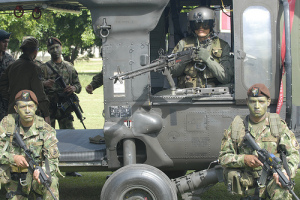
    Colombian National Army Soldiers. Source: US Department of Defense (Flickr)

    Colombian National Army Soldiers. Source: US Department of Defense (Flickr)

    Colombia has become an exporter of defence cooperation, including operational support, training and capacity building in national security and the fight against insurgencies, drug trafficking networks and terrorism. The skills and expertise of their security forces are in demand and, with strong US support and funding, and through intense diplomatic activism (the ‘Diplomacy for Security’ initiative), the country is building a wide array of bilateral and multilateral agreements for these activities. West African countries suffering from drug trafficking related problems are among the recipients of this support. Although extensive information on these ties and specific programmes is not publicly available, this involvement is evident and therefore raises a number of questions.

    Colombian Engagement in West Africa

    Between 2005 and mid-2013, Colombia trained 17,352 military staff from approximately 47 countries in various areas of assistance. In 2009, officials from Guinea Bissau, Cape Verde, Gambia, Ghana, Togo and Senegal attended training on operations and intelligence-gathering in Colombia under the auspices of the European Union and the UN Office on Drugs and Crime. The head of the Colombian police then announced that he would send ten anti-narcotics police to Africa, to be based in Sierra Leone.

    Colombian and African officials met again in March 2012 in Bogotá at a seminar on transnational organised crime. The same year, the US State Department announced that both countries were providing direct operational support and indirect capacity building efforts to countries throughout the hemisphere and West Africa. And police from 10 African countries, including Cameroon, Guinea Bissau, Senegal and Sierra Leone attended in January 2013 a Colombian National Police-hosted port and airport security seminar.

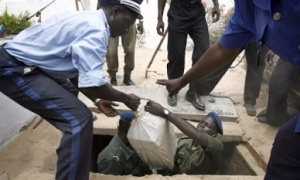
    Police officers remove bags of drugs found in the Senegalese town of Nianing, 50 miles south of Dakar. Source: africablogs.wordpress.com

    Police officers remove bags of drugs found in the Senegalese town of Nianing. Source: africablogs.wordpress.com

    Colombian involvement in West Africa (and Africa more generally) should not come as a surprise. West Africa is increasingly affected by the illegal narcotics trade and associated problems on governance and security. In this trend there are pull and push factors. It has become a transit hub and intermediate point for drugs making their routes from South America to European and other markets,  at a time when border –particularly maritime – security has improved in some European countries, making it more difficult for drugs to reach their territories using the traditional direct routes. The West African coastline is situated at the shortest travel distance from some Latin American departure points, and networks shifted to it while looking for new routes. From West Africa, drugs can continue to Europe or elsewhere by sea or by diverse land routes. Some countries with problems of territorial and border control, corruption and weak governance have been particularly vulnerable to this shift in international narcotics routes. One case in point is Guinea Bissau, where “the combination of a corrupt and centralized leadership and an inadequate and underfunded justice system in a country riven by upheaval and abject poverty” are among the driving factors.

    US Reliance on Colombian forces – Advantageous for Both Sides

    Colombian Defense Minister Gabriel Silva, U.S. Defense Secretary Robert M. Gates, center right, and U.S. Ambassador to Colombia William R. Brownfield talk to one another at the Presidential Palace before meetiing with President Alvaro Uribe in Bogota, April 15, 2010.

    Colombian and U.S. Defense Ministers and  Ambassador  William R. Brownfield meet in Bogota, 2010. Source: Wikimedia

    The reliance of the US on Colombia to export security policies makes sense for both countries. For the former, it is a way to maintain indirect military support and training programmes at a lower cost and through a reliable partner. “It is cheaper for us to have Colombia do the training than us do it ourselves,” Ambassador William Brownfield (Assistant Secretary for the Bureau of International Narcotics and Law Enforcement Affairs) told Congress, later adding that “it’s a dividend that we get for investing over $9 billion in support for Plan Colombia.” The SOUTHCOM Posture Statement 2014 describes Colombia as a clear example of a sizeable return on relatively modest investment and sustained engagement.

    For their part, the Colombian security forces face uncertainty about the future. They have undergone an important growth in personnel (up to 450,000 now) and operational capacities, parallel to increases of a defence budget that reached $12 billion in 2012. Their air power and deployment capacities have become more sophisticated; and the Police now have highly vetted units trained in intelligence-gathering on drug trafficking organizations. A significant part of those advancements can be attributed to US support through Plan Colombia. But this is an untenable situation provided that a peace deal with the FARC has been reached and in the event of a post-conflict scenario. Not surprisingly, they are in search of new missions within and outside Colombia.

    US Focus on West Africa… From Narrative to Policies

    Africa is for the US “the new frontier in terms of counterterrorism and counternarcotics issues,” according to Jeffrey P. Breeden, the chief of the DEA Europe, Asia and Africa section. The US narrative on this region is one of intertwined and convergent threats and actors, where illicit trafficking feeds the crime-terror continuum and criminal insurgencies become players in illicit markets, using the profits to finance terror campaigns. A member of the State Department remarked that “If we do not act decisively, the region will remain an exporter of terror and a provider of safe havens where terrorists from other conflicts all over the world find refuge, illicit trafficking will continue to expand, (…) and drugs and illicit enterprise will corrode the rule of law and the gains of globalization.”

    There is a boom of academic and policy literature about the ‘continuum’ and other modalities of confluence among terrorism, illicit traffic networks and armed conflict. But the relations between these actors are complex, multifaceted and non-linear. Oversimplification of this complexity,  reducing the problem to a ‘merger’ of different types of groups makes an ideal argument to gain media attention and push for kinetic policies and strong military involvement. For the US, any link to terrorism or crime-terror nexus makes it easier to gain political support for engagement. But this ‘merger’ is hardly supported by operational evidence, with cross-overs between terrorist groups and drugs cartels, for example, remaining more like opportunistic agreements and less as structural and permanent. This argument also leaves aside other root causes of crises such as lack of governance, corruption, underdevelopment and marginalisation.

    The reason for abundant use of this narrative may be hidden in plain sight. According to the criminal code, US agencies are authorised to pursue and prosecute drug offences abroad provided that a link to terrorism is established, even if there is no connection with US consumption markets. This is the case for West Africa.

    In 2011, Ambassador Brownfield led a delegation of senior U.S. officials to West Africa to begin formulating a strategic approach to undermine transnational criminal networks and  reduce their ability to operate. The response is the West Africa Cooperative Security Initiative (WACSI). US counter narcotics assistance for West Africa soared from $7.5 million in 2009 to $50 million each of the past to years, according to the State Department. The budget and operational constraints limiting direct US engagement in West Africa’s drugs and organised crime problems include AFRICOM, an agency that relies on around 2,000 personnel to manage coordination of defence programmes for 38 African countries, plus around 5,000 soldiers deployed at any time. The response to scarce resources increasingly takes the form of reliance on special operations teams and cooperation with close allies, with Colombia playing a prominent role.

    Colombia in West Africa: More Questions Than Answers

    The strategic partnership between both countries is expressed in several instruments, notably the bilateral High-Level Strategic Security Dialogue (HLSSD), periodic meetings of the Security Cooperation Coordinating Group (SCCG) and the US-Colombia Action Plan on Regional Security Cooperation. These instruments are used to formalise security cooperation activities and assistance programs to partner nations affected by transnational crime, including West Africa.

    There is no doubt that the shift in trafficking routes is affecting security in some West African countries. Again, Guinea Bissau is among the most obvious cases, due to the ties among senior government, military officials and criminal groups that have played into upheaval and instability. Northern Mali has experienced drug related violence among armed groups involved in different degrees in the drug trade. Beyond these, the connection between drugs and overt violence is less evident, but a focus exclusively on drugs and violence ignored the important connections of the drug trade and criminal networks with political and business elites. These less studied but structural relationships have potentially grave destabilising effects.

    A Colombian cooperation undertaken by the Police (not the military), focusing on capacity building to strengthen national capacities in law enforcement, and improved intelligence and information–sharing mechanisms, could make sense. International cooperation is certainly needed to address this truly transnational problem. But due to the lack of information available, it is not clear what kind of responsibilities different parts of the Colombian security forces (Police, military, intelligence) are currently assuming.

    Therefore, the involvement in West Africa raises a number of important questions. The security forces, with US support, have managed well in counter-insurgency but the overall impact of Plan Colombia and associated policies on the illegal drug economy remains doubtful. What kind of capacity building and operational support can the Colombian forces provide in countries at peace, provided that their expertise has been acquired in armed conflict? What insurgencies might be fought in West Africa?

    What is the goal and the expected outcomes of replicating ‘drug war’ policies and approaches already failed in Latin America, such as militarisation of the fight against drugs? In particular, one of the unintended consequences of this approach is the ‘balloon effect’, through which crop cultivation, routes and transit points shift to new places as the old ones become more controlled. Indeed, this is already an important factor in current West African problems. In terms of fight against corruption and involvement of powerful figures in the drug economy, the results have been mixed in Colombia (considering both national and regional levels).

    Last but not least, all the relative Colombian successes have come at the untenable cost of grave human rights violations. The security forces, particularly the military, remain very active in trying to avoid accountability for past misbehaviour and crimes. In one of the latest scandals in civil military relations, sections of Colombian military intelligence have been found to have spied on delegations of the recent peace process, including spying on the President’s representatives. What kind of human rights and democracy messages are being sent through this US backed Colombian defence activism?

    International Law enforcement cooperation can be asset in dealing with criminal networks like those involved in drug trafficking, particularly where corruption and involvement of state officials is a factor. But approaches that confuse different non-state actors, their roles and potential levels of threat and attempt to provide a one-size-fits-all response, generate more risk than certainty with regards to potential outcomes and consequences. Militarised approaches to the drug war and public security have been extensively tried in Latin America with limited impact on the drug trade, while worsening the situation of violence. In the Colombian case, the results have been remarkable in counter-insurgency, but the country is still one of the main sources of cocaine for international markets, and there have been widespread violations of human rights.

    These approaches are being increasingly questioned in Latin America and continue to lose support even among high Government representatives and Presidents. Replicating them without further evaluation and careful reflection about what has worked  – and what has not – is not a promising approach. Instead, approaches to drugs and organised crime in West Africa must be based on lessons learned, to avoid the repetition of past ineffective policies and their harmful effects.

    Mabel González Bustelo is a journalist, researcher and international consultant specialized in international peace and security, with a focus on non-State actors in world politics, organized violence, conflict and peacebuilding. You can follow her at her blog The Making of War and Peace, her webpage, and Twitter (@MabelBustelo).

    Feature image: Colombian Marines, 2009. Source: Wikimedia

  • Sustainable Security

    Throughout the Muslim world, Islamic Feminism is taking shape. It presents alternative discourses on gender and Islam and aims to advance women’s rights within larger issues of social justice and minority rights.

    Throughout the Muslim world a counter discourse to western, mostly secular, feminism and Islamic fundamentalism is taking shape in the form of Islamic Feminism. While this is not a new phenomenon, having started primarily in Egypt in the 1950s, Islamic Feminism is increasingly gaining ground. The North African kingdom of Morocco and Malaysia form the bookends of this discourse that proposes to embed the advancement of women’s rights within larger issues of social justice and minority rights. It explores new readings of sacred scriptures that challenge historic patriarchy within Muslim tradition. At the forefront of this approach is Musawah (Equality in Arabic), an international network of scholars, activists, and lawyers. Musawah grew out of the groups Sisters in Islam and Karama (Dignity), both of which promote understandings of Islam that foster justice, equality, freedom, and dignity, especially for women. Founded in 2009 in Malaysia, Musawah’s headquarters moved to Morocco in 2015.

    The Moroccan King and Women’s Rights

    Islam is one of the pillars of Moroccan identity, and King Mohamed VI is a strong advocate of an “open, moderate Islam” based on the Maliki School of Islamic jurisprudence and Sunni Sufism. Since 2013, the Moroccan government has actively sought to train imam students from Tunisia and Libya as well as several West African countries, thus exporting Morocco’s Islam as a counterpoint to more radical or fundamentalist versions. In his dual capacity as Head of State and Commander of the Faithful (amir al mu’minin), the king is in the unique position of shaping religious discourse concerning women without resorting to authoritarian state-imposed feminism, as was the case in pre-revolution Tunisia. There, the government under dictator Zine El Abindine Ben Ali repressed religious discourse on women’s rights, a course that was reversed when, in the first free and democratic post-uprising elections in 2011, the religiously based Ennahda party was elected to government, allowing for a religiously inspired discourse on gender equality.

    Meanwhile in Morocco, under the auspices of the Moroccan King, a Center of Feminine Studies in Islam within the Rabita mohammadia des Oulémas (Royal Council of Religious Scholars) was established. Asma Lambrabet, a medical doctor and vocal proponent of Islamic Feminism, was the appointed director of this Center.

    Islam as a dynamic religion

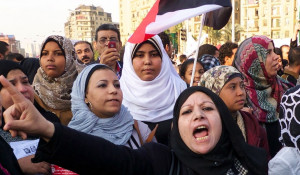
    6444263899_3382108d6b_b

    Image by Iokha via Flickr.

    Islamic feminism is based on the idea that Islam is a dynamic religion, the eternal message of which needs to be adapted to changing historical circumstances. This interpretive process, called ijtihad (independent reasoning of the sources of Islamic law) involves the sacred texts of the Qur’an, sunnah (sayings and doings of the Prophet) and hadith (saying attributed to the Prophet). Islamic feminist ideas challenge predominant androcentric, absolutist theological concepts of authority. In so doing, women are appropriating religious authority, historically a domain controlled by men.

    The Moroccan Asma Lamrabet’s and U.S. scholar Amina Wadud’s writings enjoy wide popularity, especially among young Muslims who want to find answers to the question what it means to be a Muslim in the modern world. Faced with increasingly conservative and radical interpretations of sacred texts, these two scholars offer a religious perspective on modern identity formation that is not primarily western or secular. They exemplify how Muslim women can appropriate sacred texts, a fundamental strategy of their empowerment and personal development.

    Who holds religious authority?

    Lamrabet and Wadud address head-on an age-old question: Who has the authority to interpret the sacred texts? Each scholar in her own way is appropriating authority over textual analysis and, in doing so, is creating a new voice, a new way of approaching gender and women’s rights within an Islamic context. Together, their work exists within the larger context of challenges to conventional religious authorities in contemporary Muslim societies. Just as the role of the traditional ulama (Islamic scholars) has been challenged by the rise of alternative sources of religious authority – such as Internet fatwas and satellite TV imams – that claim equal legitimacy, Islamic feminists demand this right for themselves. If men with limited scholarly theological training can exert influence—uncontested by conservative scholars—why would alternative interpretations by women not fit into this colorful landscape of religious authorities?

    One of the earliest and most important pioneers of Muslim feminist scholarship is Morocco’s Fatema Mernissi (1945-2015). She was among the first to turn to the Qur’an to advance a reformist interpretation of the sacred texts with a view to supporting gender equality. In addition, Mernissi placed women’s rights within a larger context of social and economic justice. Today, Mernissi is Morocco’s most widely translated and internationally read author. Ironically, it was only after her death a year ago that she became widely known in her home country and finally gained publicly acknowledgement for her contributions.

    Islamic feminist hermeneutics considers the Qur’an as a historical text, revealed at a particular time and place. Over time, then, certain interpretations need to be reconsidered or refuted in accordance with the principles and egalitarian spirit of the texts. As Mernissi has repeatedly argued, sacred texts have been used as a political weapon to uphold laws that treat women as legal minors. This action is possible because traditional Islamic theological scholarship lacks fundamental historic contextualization, fails to acknowledge that knowledge production always occurs within a given historical context, and downplays the possibility of human fallibility in any hermeneutics. Recognizing such limitations is an important element of Islamic Feminist thought. Inasmuch as Mernissi critiqued the gender inegalitarian reality, she also was critical of promoting women’s rights without simultaneously advocating for social and economic justice.

    Pioneers of Islamic Feminism

    Thus, Mernissi, Lamrabet, and Wadud represent important alternative voices in scholarly discourses on gender and Islam. There certainly are other, important proponents of Islamic feminism. Margot Badran has written about Islamic Feminism for more than a decade, mostly focusing on Egypt. One of the founders of Musawah, the Malaysan Zainah Anwar, Iranian born scholar Ziba Mir-Hosseini and South African Farid Esack have also emerged as important advocates and scholars in re-interpreting concepts that traditionally have undergirded male superiority such as quiwamah (male authority), wialya (guardianship), mixed marriages and one of the cornerstones of inequality: inheritance laws.

    Thus, Islamic Feminism aims to liberate Muslim women from archaic and limited roles with negative social and economic consequences. Islamic Feminism argues for pluralistic interpretations of sacred scriptures, as a means by which global feminists can establish a dialogue based on the deconstruction of traditional knowledge that is masculine and patriarchal. It allows the reconciliation of Islam and modernity and goes beyond the false dichotomies of Muslim and secular, modernist and traditionalist, East and West.

    Dr Doris H. Gray directs the Hillary Clinton Center for Women’s Empowerment at Al Akhawayn University in Ifrane, Morocco where she is also Assoc. Professor of Gender Studies. She is the author of “Beyond Feminism and Islamism – Gender and Equality in North Africa” (I.B. Tauris 2102, second revised edition 2014) and “Muslim Women on the Move – Women of Moroccan and French Origin speak out (Rowman and Littlefield, 2008) and editor of “Gender, Law and Social Change in North Africa” (Cambridge University Press, 2017)

  • Sustainable Security

    In June,  a judicial review into the legality of UK arms sales to Saudi Arabia was announced. This will be the first time that UK arms export policy has been put under the spotlight and scrutinised in this way. Campaign Against Arms Trade discuss this historic decision.

    On 30th June there was a heavy silence in the moments before High Court Judge Justice Gilbart announced that he was granting a judicial review into the legality of UK arms sales to Saudi Arabia. A quiet relief fell over those of us in the public gallery. Decorum ensured that the response was muted, but the decision was historic. This will be the first time that UK arms export policy has been put under the spotlight and scrutinised in this way. It is an unprecedented step that is likely to focus on not just the extent of UK arms sales to Saudi, but also the scale of collusion and government support that goes with it.

    Our claim calls on the government to suspend all extant licences and stop issuing further arms export licences to Saudi Arabia for use in Yemen while the court holds a full review into whether the weapons sales are compatible with UK and EU legislation. The UK’s arms export policy will thus now undergo a full three-day investigation in front of two judges, which must take place before February 1st 2017.

    Fuelling the flames in Yemen

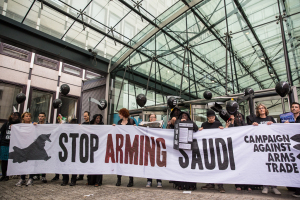
    London, UK. 11th July, 2016. Human rights campaigners protest against arms sales to Saudi Arabia outside the Defence and Security Organisation (DSO), the Government department responsible for arms export promotions.

    London, UK. 11th July, 2016. Human rights campaigners protest against arms sales to Saudi Arabia outside the Defence and Security Organisation building. Image by CAAT via Flickr.

    UK arms exports have been central to the ongoing Saudi-led bombardment of Yemen. As we write this, UK-licensed Eurofighter jets may well be over Yemeni airspace, guided by UK-trained military personnel and dropping UK-made bombs from the skies. It would be hard to overstate the humanitarian crisis that has been unleashed, with the UN having ranked the humanitarian situation in the war-torn country as a “Level 3” emergency – the highest possible emergency ranking. The bombing campaign has lasted over 15 months following a Saudi Arabian-led intervention into Yemen’s civil war. Saudi forces are acting alongside Yemen’s government against forces led by the former president, Ali Abdullah Saleh, and the Houthis, a northern Shia militia. There is no question that atrocities have been committed on all sides, although the UN has accused Saudi forces of killing twice as many civilians as all other forces.

    More than 2.5 million people have been displaced, and vital infrastructure, including schools, hospitals and cultural heritages sites have been destroyed. Of those who remain in Yemen, millions have been left without access to clean water or electricity, and 80% of the population has been left in need of aid. Even the Home Office has acknowledged the scale of the destruction, concluding that to allow people to return to Yemen could be a breach of their human rights.

    The need for legal accountability

    The destruction hasn’t only been immoral, it has also been illegal. A UN panel of experts, the European Parliament and many of the most respected humanitarian NGOs in the world, including Human Rights Watch and Amnesty International, have accused Saudi forces of serious breaches of international humanitarian law (IHL).

    The UN report “documented 119 sorties relating to violations of international humanitarian law” and reported “starvation being used as a war tactic.” More recently, Human Rights Watch has linked UK arms to specific attacks on businesses and civilian targets. The reports have been thorough and in-depth and their evidence has been compelling, but they have fallen on deaf ears in Whitehall.

    Arms exports control regulations are very clear: a licence should not be granted in the circumstances where there is a “clear risk” that it “might” be used to violate IHL. In spite of this, the UK has licensed over £3.3 billion worth of arms sales to Saudi Arabia since the bombing began, including fighter jets, bombs and missiles.

    There can be little, if any, control over how and when these arms will be used. A recent report from Amnesty International found that cluster bombs sold decades ago by the UK are being used in Yemen, a terrible reminder that the shelf life of arms is very often longer than the two year licence under which they are sold.

    Moreover, even if such control was possible, there is no reason to believe it would be applied. This is because if arms were found to be used in a way that violated the terms of their sale agreement this would result in licences being cancelled—which could affect the profitability of exports.

    Burying the truth

    In the last hours of the last day of the most recent session of parliament, the government performed a major U-turn by publishing written corrections that reveal, contrary to earlier claims, that there has been no oversight of how arms are being used. At best it represented staggering incompetence on the part of government ministers— at worst it was a cynically timed admission of how they had previously distorted the truth.

    Either way, it underpins the point that the Saudi government hasn’t just bought arms and military support, it has also bought silence, compliance and a seal of political approval. That’s why, only nine months ago, we saw the despicable, but ultimately unsurprising, revelations that UK diplomats had lobbied and campaigned behind the scenes for Saudi Arabia to Chair the UN Human Rights Council.

    So who benefits from the current situation? Certainly not the Yemeni people living under bombs, or the Saudi people being persecuted and oppressed. One obvious beneficiary is the arms companies. BAE Systems, for example, enjoys the full support of the UK government in its arms sales to Saudi. Earlier this year, BAE Chairman Roger Carr told Channel 4 News that he sees Saudi Arabia as “a very important customer with which we have a very strong relationship.” This point is alluded to in the last BAE annual report. The ‘principal risks’ section of the report identifies the commercial risk that state buyers may consider cutting their military budgets, before suggesting this will be mitigated in part because “in Saudi Arabia regional tensions continue to dictate that defence remains a high priority.”

    BAE and the UK’s special relationship

    For decades now, UK governments of all political colours have worked hand in glove with the arms companies and Saudi authorities, continuing to sell arms and provide political support while turning a blind eye to the grotesque human rights abuses that are being carried out every single day.

    Regardless of who has been in charge, the Saudi Royal Family’s influence and interests have been core to Whitehall’s approach to arms sales and the Middle East. Over recent years we have seen Tony Blair intervening to stop a corruption investigation into arms exports to Saudi, David Cameron flying out to Riyadh to meet with Royalty, and the outlandish and humiliating spectacle of Prince Charles sword dancing to secure sales for BAE Systems.

    The government’s inability to uphold its responsibility in regards to human rights and domestic law is evidence of just how far it is willing to go to maintain this toxic relationship. Despite the legal action, there has been no change to the government’s policy. Only two weeks after the judicial review was ordered, Saudi military representatives were in the UK for the Farnborough Airshow where they were shopping for weapons.

    Stop arming Saudi Arabia

    At a time when the UK should be using its close relationship with Saudi to apply pressure and push for meaningful peace negotiations and vital reform, it is instead carrying on with business as usual. The government’s refusal to act responsibly underlines the enormous power of the arms trade lobby and the pernicious nature of the UK-Saudi relationship, a relationship that fuels instability and repression and corrupts our political system.

    Whatever the outcome of the review, the campaign will go on. As long as terrible crimes are being committed with UK weapons and with our government’s support, we will continue. The UK’s shameful relationship with Saudi Arabia and the terrible examples above show just how far (and how low) the machinery of government will go to protect the Saudi Royal Family’s interests.

    The UK-Saudi alliance has boosted the Saudi regime while lining the pockets of arms company executives, but it has had devastating consequences for the people of Saudi Arabia and Yemen. For the sake of those people, the UK government must finally stop arming and empowering the brutal Saudi monarchy.


    Andrew Smith and Vyara Gylsen are writing on behalf of Campaign Against Arms Trade (CAAT). Andrew Smith is Head of Media for Campaign Against Arms Trade. Vyara Gylsen is an anti arms-trade campaigner that volunteers and works with Campaign Against Arms Trade. You can follow CAAT on Twitter at
    @CAATuk.

  • Sustainable Security

    Brexit has called into question Britain’s relationship with Northern Ireland. Whilst the possibility of sporadic inter-communal violence in Northern Ireland is small, the Brexit vote has certainly placed a strain upon the hard-won stability of British-Irish relations.

    Introduction

    Whilst the full implications of so-called ‘Brexit’ for the future of the United Kingdom (UK)’s relationship (if any) with the European Union (EU) remain profoundly uncertain, it is also the case that the UK-wide vote to Leave has exacerbated the already existing sense of fluidity regarding the future constitutional relationships between the constituent parts of the multi-national UK state. Of course, the majority votes to Remain in Scotland and Northern Ireland do not, of themselves, create a new constitutional arrangement, but if the new Conservative administration of Theresa May were to decide to push on with a UK-wide ‘hard Brexit’, perhaps involving leaving the single market in a bid to establish control over the free movement of persons, then it is difficult to see how the stability of the UK’s constitutional status quo could be guaranteed. As Brendan O’Leary has argued, ‘those who insist that a 52-48 vote is good enough to take the entire UK out of the EU would trigger a serious legitimacy crisis.’  A key lesson that needs to be understood by Westminster in the coming months or years of negotiation (with Brussels and the EU member states, particularly the Republic of Ireland, but also within the divided UK) is that, as O’Leary puts it, multi-national states are not usually ‘destroyed by secessionists alone’ (Ibid.). It is the ‘unilateral adjustment of the terms of the union by the centre’ that can provoke such an outcome. This may be an unintended consequence of such unilateralism, even if some at the centre profess the view (as David Cameron did after the Scottish referendum on independence in 2014) that the multi-national union is ‘precious beyond words’.

    Great Britain and Northern Ireland: A ‘Place Apart’

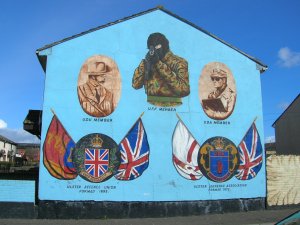
    unionist mural

    Image by Miss Copenhagen via Flickr

    It is unsurprising that during the campaign neither the public nor the political class in Great Britain (GB) appeared to give much serious consideration to the effect of a Brexit vote upon three crucial interlocking relationships: the fragile state of communal relations within Northern Ireland in the post-Good Friday Agreement (GFA) era; the North-South relationships on the island of Ireland, and the questions Brexit was likely to raise concerning the 300-mile land border; the wider UK relationship with its closest neighbour. This ‘reflexive forgetfulness’ of the GB public with regard to the unloved province of Northern Ireland may have been unsurprising, but it was lamentable, and possibly destabilising, nonetheless. If there was engagement with the potential repercussions of a Leave vote on the internal, already fragile, relations between the constituent parts of the UK, the focus tended to be on Scotland, rather than Northern Ireland. This neglect, by no means benign, reflects a deep-rooted sense that Northern Ireland is, in Dervla Murphy’s phrase, a ‘place apart’.  In the short and medium-term the ‘peace process’ has not been jeopardised directly, and there is no immediate prospect of a return to widespread violent confrontation between Irish nationalists and British unionists in Northern Ireland. Aside from a number of weak and fragmented ‘dissident’ republican groups, there is no appetite for the resumption of an armed campaign among ‘mainstream’ republicans. There is always a possibility of sporadic inter-communal violence in Northern Ireland, but this looks remote at present. Nevertheless the Brexit vote has certainly placed a strain upon the hard-won stability of these relationships since 1998.

    The Republic of Ireland and ‘Brexit’

    For the Dublin government of Fine Gael (supported by several independent TDs), there was a fear that the critically important trading relationships with the UK would be damaged, and that any imposition of a ‘hard’ border (involving customs posts and possibly restrictions upon free movement) would further complicate and hamper economic activity. Allied to this hard-nosed economic concern, Dublin was also anxious that Northern Ireland’s fragile community relations and the institutional balance reflected in the GFA could be under threat, as ‘the border’ and potential constitutional change were placed, once again, on the agenda. Related to this anxiety was, perhaps, the unspoken fear of Taoiseach Enda Kenny that Dublin’s sense of being an equal partner with the UK in the lengthy years of the peace process might be compromised. The harmonious co-operation between the Dublin and London governments, built up over several decades stretching back to the Anglo-Irish Agreement of 1985, might begin to unravel, if London took the Brexit vote as a green light to marginalise the concerns of the Irish. Those concerns were three-fold: maintaining the open border between the Republic and Northern Ireland; keeping the ‘common travel area’ between Ireland and the UK (first agreed in the aftermath of partition in 1922); and, safeguarding the trading relationships (worth approximately £1 billion a week). As Pat Leahy argued in the Irish Times, ‘underpinning all these was the need above all else to protect the peace process.’

    Kenny was keen to confirm that this bilateralism, and the ‘special relationship’ between the two states would survive Brexit, and his meeting with Theresa May in late July assuaged these doubts somewhat. But, as with that other fabled ‘special relationship’ between London and Washington, this one is also fundamentally asymmetrical, intrinsically of more significance for one side than the other. When it comes to tackling the enormous fallout from the Brexit decision, neither the relationship with Dublin, nor indeed the impact upon Northern Ireland, are at the top of London’s to-do list. It may even be the case that these issues are closer to the bottom of that list. Having said this, the new Prime Minister’s willingness to meet with Kenny, and her declaration in Belfast that ‘no-one wants to return to the borders of the past’ have calmed these fears to at least some extent.

    However, hard choices remain to be made, and there is no guarantee that May’s government will be able to square the circle between impatient Conservative back-benchers and pragmatists in Whitehall who are concerned about softening the impact of the decision, both economically and diplomatically. The former group, buoyed by the momentum of victory, believe that Brexit should be swift, complete and irrevocable; they are watching hawkishly for any signs of back-tracking. This is the context in which Enda Kenny made a speech at the MacGill summer school in Co. Donegal, which speculated on the prospect, at some time in the indeterminate future (perhaps ‘10, 15 or 20 years from now’), that Northern Ireland might vote to join with the Republic. Of course, this was ‘controversial’, but almost certainly was designed to ensure that others, in the UK and Europe, take seriously the concerns of the Dublin administration. More parochially, Kenny perhaps felt that he needed to respond to the pressure being applied by opposition parties Fianna Fáil and Sinn Féin (SF).

    Sinn Féin and ‘Brexit’

    Having campaigned for a Remain vote, on the basis of its ‘critical engagement’ position with respect to the EU, SF’s first response to the referendum result was to demand a border poll in Northern Ireland, as provided for in the GFA, if there is a realistic prospect of a majority vote in favour of constitutional change. Gerry Adams, SF President, claimed that the result meant that the ‘British government had forfeited the claim to represent the North at an EU level. Its policy has been rejected by the people.’ When this demand was predictably dismissed by the outgoing Secretary of State for Northern Ireland, Theresa Villiers, SF quietly moved on, instead focusing its attention on a mooted ‘national forum’ (modelled on the New Ireland Forum of the early 1980s and the Forum for Peace and Reconciliation of the early years of the peace process) to discuss how ‘the vote of the clear majority of citizens in the North who want to remain in the EU can be respected and defended.’ Although this proposal was effectively adopted by the Dublin government, it was also immediately rejected by Arlene Foster, the Democratic Unionist First Minister of Northern Ireland. Nevertheless, SF senses that Brexit could present republicans with a real opportunity to break out of the sterile impasse that had threatened its ‘project of transformation’ in Northern Ireland. SF has always characterised the GFA as ‘transitional’ and the peace process as ‘dynamic’, reflecting the party’s teleological belief that the ‘natural’ end-point of the process will be a united Ireland. It remains to be seen whether or not Brexit helps to make this vision any more realistic, but for the moment it has certainly breathed new life into the notion that the ‘border’ continues to be a key issue for the peoples of the island.

    Since June 23rd, there have been emollient words and symbolic gestures from Theresa May, but sooner or later some difficult and potentially painful choices will have to be taken. In a joint letter on August 10th to Theresa May, Arlene Foster and Martin McGuinness, the First and Deputy First Minister of the Northern Ireland Executive, argued that the UK government should take into full account four issues of particular significance for Northern Ireland: the border should not become an impediment to the movement of goods, people and services; both private and public sectors need to retain access to unskilled as well as skilled labour; the energy requirements of Northern Ireland should not be affected; the potential loss of EU funds (over 3.5 billion Euros during 2014-2020) needs to be addressed.  The Dublin government, and the parties in Northern Ireland, will be hoping to have a genuine input into this decision-making, but it looks highly improbable that all the political forces in play will, or can, be satisfied simultaneously. Despite the constructive initial discussions, the Foster/McGuinness letter recognises that ‘it cannot be guaranteed that outcomes that suit our common interests are ultimately deliverable.’ Will the centre hold, and if so, how?

    Stephen Hopkins is Lecturer in Politics in the Department of Politics and International Relations at the University of Leicester, UK. His book, The Politics of Memoir and the Northern Ireland Conflict, was published in 2013 by Liverpool University Press.

  • Sustainable Security

    Since the attacks of 9/11, the banner of national security has led to intense monitoring of the politics of Muslim and Arab Americans. Young people from these communities have come of age in a time when the question of political engagement is both urgent and fraught.

    Since the events of September 11, 2001, Muslim and Middle Eastern communities have increasingly been viewed through the prism of national security, and young Muslim, South Asian, and Arab Americans in particular have become objects of heightened scrutiny and surveillance. The U.S.-led global War on Terror has defined Muslim youth as objects of the counterterrorism regime, based on the presumption that young people are a cohort that is vulnerable to “radicalization” by Islamist movements and so they are increasingly in the crosshairs of intelligence agencies. The racialization of Muslims and Middle Easterners as terrorists is not new, however; there is a long history of constructing the Muslim and Arab as the “enemy” of the U.S. state, given its strategic interests in the Middle East during the Cold War and its enduring alliance with Israel. Post-9/11 repression also extends the imperial state’s policies of surveilling and containing radicals or leftist “subversives,” especially during wartime and the Cold War.

    The 9/11 generation

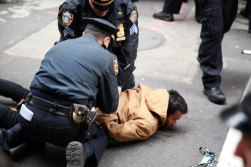
    occupr-arrest

    Image via Coco Curranski/Flickr.

    My new book, The 9/11 Generation: Youth,  Rights, and Solidarity in the War on Terror, is an ethnographic study of the forms that politics takes for South Asian, Arab, and Afghan American college-age youth in Silicon Valley who have come of age in the post-9/11 era. It examines the range of political critiques and identifications among South Asian, Arab, and Afghan American youth and explores the new, cross-racial alliances forged through civil rights and antiwar activism in northern California. The identities of these youth have been shaped by the racial and religious profiling of Muslim and Arab Americans under the PATRIOT Act, which has continued under the Obama administration, with Islamophobic and anti-Arab discourse persisting in the U.S. mainstream media. The politics of Muslim Americans, more than that of any other religious group, are viewed as necessary to surveil and contain. This constitutes the “new order of War on Terror” under the Obama regime, which relies on mass surveillance, clandestine cooperation between law enforcement and intelligence agencies, and programs that police political and social lives ( see Deepa Kumar 2012). Repression in the domestic War on Terror often remains invisible, however, for it is conducted through covert means, such as the use of undercover FBI informants, infiltration, and entrapment.

    Youth politics is a central target of the counterterrorism regime as the religious and political “radicalization” of youth variously defined as Muslim, Middle Eastern, Arab, Afghan, or South Asian has come to represent a threat to Western, secular, liberal democracy and to U.S. military and economic interventions. The framework of securitization defines Muslims as always a potential threat to U.S. homeland security and views this generational cohort as bedeviled by disaffection, cultural and political alienation, and psychological and social maladjustment. Muslim and Arab American youth, in particular, are viewed as susceptible to indoctrination and recruitment by Islamist movements, that is, as ripe for becoming enemies of the state. Muslim youth are also perceived as being vulnerable to “self-radicalization,” as in the case of the Chechen youth charged with the Boston marathon bombings in 2013. This is also a gendered form of surveillance as young Muslim males have been the major focus of counterterrorism programs, but young Muslim women are also, increasingly, objects of surveillance, especially in the wake of incidents such as the San Bernardino shootings.

    The focus on “homegrown terrorism” was ratcheted up after the July 7, 2005 bombings by British Muslims in London and occurred in tandem with shifts in U.S. wars and counterterrorism operations in Afghanistan, Pakistan, and Yemen. In 2007, Senator Joe Lieberman, Chairman of the Senate Committee on Homeland Security, held a series of hearings on the “homegrown threat of violent Islamic extremist terrorism,” focusing almost exclusively on Arab and Muslim Americans and dwelling on the role of the Internet in fostering Islamic “extremism”; in 2011, hearings on radicalization were also held by Congressman Peter King ( see American-Arab Anti-Discrimination Committee 2008, 39). Yet strikingly, the very real threat posed by white supremacist organizations and right-wing paramilitary movements is not at the center of debates about “homegrown” extremist violence, despite events such as the Oklahoma City bombings of 1995.

    Racial, religious and political profiling

    The homeland war on terror has increasingly focused on monitoring and prosecuting ideological and religious beliefs of Muslim and Arab Americans, not just terrorist activities, so this is a form of political, not just racial and religious, profiling. This strategy of pre-emptive prosecution and preemptive surveillance mirrors the doctrine of “pre-emptive war.” One problem with ideological profiling and the criminalization of beliefs is that political dissent is increasingly fragile and risky, especially for Muslim and Arab American youth. Despite this repression, youth in the 9/11 generation have mobilized in response to the War on Terror and the experience of collective profiling has, inevitably, politicized Muslim, South Asian, and Arab Americans. It has propelled new, cross-racial coalitions based on shared experiences of Islamophobia and racism. New cross-ethnic categories have emerged, such as AMSA (Arab, Muslim, and South Asian) and MESA (Middle Eastern and South Asian), as Muslim and Arab Americans became engaged in or led civil rights campaigns and antiwar organizing. For example, the Council on American-Islamic Relations (CAIR), the Islamic Network Group, the Muslim Public Affairs Council, and the American Arab Anti-Discrimination Committee have all led national civil rights efforts, in addition to numerous grassroots groups and coalitions, for example, the Arab Resource and Organizing Committee  (AROC) and the Asian Law Caucus in the San Francisco area, in which youth have been involved. Progressive-left campaigns against the wars in Iraq and Afghanistan and drone wars in Pakistan have also involved Muslim and Arab American activists and connected Muslim and Middle Eastern communities to overseas homelands, U.S. war zones in Iraq and Afghanistan, and the U.S-backed occupation in Palestine.

    There has also been a major push to engage in interfaith coalitions, focused on Muslim-Jewish-Christian dialogue and outreach, on the one hand, and in transnational solidarity activism, on the other. Campaigns have linked communities with shared experiences of police violence and surveillance, for example, during the Black Lives Matter movement and the Ferguson 2 Gaza campaign. So the racial profiling by the state has provoked new forms of racialization and affiliation on the ground, even if some of these are not entirely new but recreate earlier forms of cross-racial and international solidarity.

    The surveillance state

    The surveillance and counter-radicalization regime that has emerged in the U.S., as well as in the UK and Europe, is increasingly preoccupied with Muslim youth cultures and with cultural codes that presumably signify “radical dissent” and “youth alienation” (see Kundnani 2014). Obama’s domestic War on Terror drew on counter-radicalization practices in Britain in a transnational circuit of ideas and policies that focused on surveilling and entrapping Muslim American youth, through programs such as Countering Violent Extremism. While the emergence of ISIS/ISIL may have somewhat reconfigured this, it has long been the case that vocal critics of Israel were associated with “terrorist” movements and subject to surveillance. It is important to note, as Arun Kundnani has observed, that the template for the War on Terror was manufactured in the 1980s to demonize those resisting U.S. hegemony and U.S. allies in the Middle East, particularly Israel.

    In the current moment, as my research demonstrates, Palestine solidarity activism is a fraught terrain where youth have to contend with surveillance, censorship, including on college campuses, as well as harassment, allegations of anti-Semitism, smear campaigns, and blacklisting by right-wing organizations such as David Horowitz’ Freedom Center and Canary Mission. At the same time, this encounter with the exceptional lockdown on open discussion of Palestine-Israel leads to a process of what I call “Palestinianization,” that is, a process of politicization and racialization that is endemic to U.S. national culture given unconditional U.S. support for Israel and the power of the Israel lobby. Palestine solidarity is also a unifying hub for Muslim, South Asian, and Arab American youth and activism.

    I consider surveillance a technology of disciplining and managing racialized populations within neoliberal capitalism. The culture of surveillance highlights the tension that emerges between the police state’s repression and exceptionalist notions of U.S. democracy and “freedom” in the War on Terror. This tension is deeply felt by those who experience the brunt of policing and the curtailment of freedom in their daily lives. Nearly all the young people I spoke to as part of my research talked about the climate of permanent surveillance and the chilling effect it had on understandings of what it meant to be “political” and also “social.” Arab, South Asian, and Afghan American youth have to self-consciously regulate, or re-narrate, their social and political lives, including on social media. Given the state engages in warrantless wiretapping, monitors private emails and Facebook, and infiltrates mosques and activist groups with undercover informants, it is not just not those who are involved with formal political organizations who have reason to be anxious and self-conscious about their identities and sociality.

    In 2012, the stunning investigation by Associated Press of the NYPD’s surveillance program revealed that “mosque crawlers” and undercover informants, called “rakers,” (generally Muslim or Arab themselves), had been deployed to ferret out suspicious Muslim and Arab Americans, including students and youth, “monitoring daily life in bookstores, bars, cafes, and nightclubs” in “suspect neighborhoods”; this was part of a “human mapping program” in cooperation with the CIA and drawing on Israeli surveillance techniques, with a reach extending beyond New York state (Associated Press 2012, 5). The NYPD also infiltrated the Occupy Wall Street movement and Palestine solidarity rallies. The revelation of this infamous “demographics unit” sparked the first mainstream discussion of surveillance since 9/11, which increased with the revelations by WikiLeaks and Edward Snowden’s expose in 2013 of mass surveillance by the NSA and CIA. Some youth at campuses that had been surveilled by the NYPD used social media, including Twitter, and subversive humor to challenge this secret program; the Yale MSA created a Facebook page, “Call the NYPD,” with photos of Muslim college students holding signs declaring, “I am a . . . Blonde, Call the NYPD” (cited in Khabeer and Alhassen 2013, 308).

    Surveillance effects

    The social and cultural registers through which surveillance becomes a part of daily life are what I describe as surveillance effects, through which surveillance becomes normalized, even as it is resisted. Surveillance effects shape political culture and also ideas of selfhood. Many youth are aware that they are the exemplary objects of surveillance, because they fit a racial, religious, political or national profile. Law enforcement agencies, such as the New York City Police Department, have used behavioral models of “radicalization” based on profiles of youth subcultures, including markers such as clothing, religiosity, and activism (see American-Arab Anti-Discrimination Committee 2008, 39). This surveillance of everyday life has inevitably alienated many Muslim Americans even further while creating more distrust and divisions within targeted communities.

    In a surveillance state, many engage in self-regulation and self-censorship because they believe that they must sacrifice their freedoms for the sake of defending the nation, and that “national security” is, indeed, their own security. Some Muslim Americans engage in self-surveillance or the surveillance of others, hoping to avoid profiling or prove they are patriotic, “good” Muslim citizens. Yet my research also uncovered “surveillance stories” about life in the everyday of surveillance that demonstrate that the surveillance regime also provokes the opposite effect, producing challenges to intelligence-gathering and tactics of counter-surveillance that enable survival. Youth who negotiate these tensions expose the contradictions that animate life in the post-9/11 security state, and the fragility as well as the radical possibility of living life as the “enemy within.”

    The culture wars

    Surveillance is key to the post-9/11 culture wars, focused on Islam, gender, race, and nationalism. In my book, I argue these culture wars are also racial wars and class wars as they rest on racial and class struggles and fissures in U.S. society. These culture wars have evolved since the Cold War and in the  “new Cold War,” as well as the many hot wars waged by the U.S. from Iraq and Afghanistan to Pakistan and Yemen. Trump’s presidential campaign and election has inflamed the culture wars, and brought renewed attention to the already existing fault lines of race, class, and religion with the nation. As Americans debate the horrifying possibilities of a “Muslim registration,” some may not be aware that this actually already occurred in the U.S. with the Special Registration targeting Muslim immigrant men after 9/11 and that mass surveillance was intensified under the Obama administration. The generation that came of age since 9/11, especially those from communities targeted in the War on Terror and from immigrant communities, were already aware of the “white rage” and extremism that existed within the U.S. and that has now provoked shock and horror among those critical of Trump’s racism, Islamophobia, xenophobia, and misogyny. There is much to be learned from the stories of the 9/11 generation.

    Sunaina Maira is Professor of Asian American Studies, and is affiliated with the Middle East/South Asia Studies program and with the Cultural Studies Graduate Group. Her research and teaching focus on Asian American youth culture and the politics of cultural production as well as political mobilization and transnational movements challenging militarization, imperialism, and settler colonialism. She is the author of Desis in the House: Indian American Youth Culture in New York City and Missing: Youth, Citizenship, and Empire After 9/11. She co-edited Contours of the Heart: South Asians Map North America, which won the American Book Award in 1997, and Youthscapes: The Popular, the National, and the Global. Maira’s recent publications include a book based on ethnographic research, Jil [Generation] Oslo: Palestinian Hip Hop, Youth Culture, and the Youth Movement (Tadween), and a volume co-edited with Piya Chatterjee, The Imperial University: Academic Repression and Scholarly Dissent (University of Minnesota Press). Her new book project is a study of South Asian, Arab, and Afghan American youth and political movements focused on civil and human rights and issues of sovereignty and surveillance in the War on Terror. Maira launched a new section on West Asian American Studies in the Association for Asian American Studies and coedited a special issue of the Journal of Asian American Studies on Asian/Arab American studies intersections. She has been involved with various civil and human rights campaigns and antiwar groups in the Bay Area and nationally.

  • Sustainable Security

    In January 2016, the government of Honduras and the Organization of American States (OAS) formalized the creation of a new international organ to help fight corruption in this country. The Mission of Support Against Corruption and Impunity in Honduras (MACCIH, in the Spanish acronym) is a welcome step. However, it is very early to estimate whether it will be able to make a positive contribution to solving the daunting challenges facing justice and security in this country.

    Honduras experiences what can be called a “perfect storm” of interrelated problems: violence perpetrated by diverse actors (gangs, drug traffickers); human rights abuses, in the context of a steady militarization of public security; impunity; corruption at the highest institutional levels, and widespread poverty and inequality. For years, it has been the most violent country in the world, with an average rate of 90 homicides per 100,000 people according to estimates by the UN Office on Drugs and Crime and the World Bank, which is significantly higher than the international average intentional homicide rate of 6.2 per 100,000 people.

    Gangs, Drugs, and Corruption

    Honduras, like El Salvador and Guatemala, has a serious problem with gangs. These are territorial groups involved in extortion and other crimes, exerting social control and who are connected to other criminal actors. The prevailing narrative from politicians and the media puts the blame of violence on the gangs, whose members are highly stigmatized as a result. Different governments have adopted iron-first and militarized approaches to deal with them. Casa Alianza, a charity that works and campaigns for the rehabilitation and the defence of street children, has documented that even children become victims of extrajudicial executions, carried out by death squads sometimes linked to the security forces. In January 2016, Casa Alianza denounced a monthly average rate of 81 children victims of extrajudicial executions.

    makarinfotos

    Image of Mara Salvatrucha gang member by markarinafotos.

    However, the figures of homicides attributable to gangs are highly disputed, and national and international actors diverge in their interpretations about the share of responsibilities for violence. This is a strategic corridor for drug trafficking, and the local markets are growing. According to the OAS, around 70% of homicides are perpetrated by drug cartels involved in wars for the control of routes, sometimes using gang members and youth as sicarios (a Spanish term for hit men). By January 2014, estimates were that 87% of the drug planes heading from South America to North America passed through this country. Transnational groups, especially from Mexico, have established bases here. Then, there are local groups and transportistas (carriers), contracted by the cartels and connected to Honduran political and economic elites, including land owners and mayors.

    In 2012, when the news about the gang truce in El Salvador spread throughout Central America, the Honduran gangs explored the possibility of starting a similar process. In May 2013, they delivered their first public statements from jail, announcing that they would stop violence in exchange for a series of demands. This was the first public event of a process accompanied by the Bishop of San Pedro Sula, Rómulo Emiliani, and the Secretary of Multidimensional Security of the OAS, Adam Blackwell.

    Dialogue never advanced for many different reasons, including the decentralized nature of the Honduran gangs (that makes it difficult to enforce discipline among the ranks), the lack of political maturity of their leadership, and the weak legitimacy of a government that had emerged from the 2009 coup d’état,. But Bishop Emiliani had warned, from the beginning, that even a successful truce could never emulate the sudden drop of homicides of El Salvador, where the daily rate plummeted from 14 to 5. n Honduras, he warned, the range of actors involved in violence for different purposes is extensive, and the balances of power among them very distinct from those of the neighbour country.

    It is worth remembering that in the 80s, amidst the wars that ravaged Central America, the Honduran territory was used for drug and arms trafficking with the aim of supporting the US allies in these wars, among them the Contras, who fought against the Sandinista government in Nicaragua. The illicit networks and connections created have survived well after these conflicts ended, including in sectors of the elite and security forces. Interpeace states that this is the country with more denounces of complicity between police members and illegal actors for the commission of crimes.

    Militarization as a Response

    President Juan Orlando Hernández, who took office in 2014, has followed others by trying to respond to these threats with an iron first strategy of crime suppression. But he has elevated the militarization of law enforcement to new levels. The military is now in charge of most aspects of public security.

    The most prominent example is the creation of the Military Police of Public Order (PMOP), which currently has around 3,000 soldiers deployed throughout the country. A special law has been approved to prevent the Attorney General’s Office from investigating and prosecuting their potential abuses. It is the National Council on Defence and Security, under the control of the Armed Forces, who appoints judges and prosecutors for that role. The resources for the PMOP are collected through a security tax and allocated through a classified and ultra-secret budget.

    Another emerging actor is FUSINA (Fuerza de Seguridad Interinstitucional), a task force composed of representatives of different security units. Led by the military, and with no formal status as an agency, FUSINA manages various bodies and organs, such as an anti-extortion unit that controls phone intercepts. Added to this is the US-backed Special Comprehensive Government Security Response Unit (TIGRES), a SWAT-style militarized police force.

    Militarization takes place in the streets and also in the top-down institutional structures, with more military in charge of security positions, including the Security Ministry that has power over the armed forces and the police. The military also controls the penitentiary system, with soldiers guarding prisons. The trend is worrying in itself and for the lack of transparency and accountability implied. Civil society groups have denounced a trend that might be bringing the country back to the ‘80s, when the military had extended powers and human rights abuses were rampant, and reversing the efforts to advance civilian power during the 90s.

    On the other hand, the national police experienced only limited reform in the past and are often accused of corruption and complicity in crime. Recently there have been limited purges of corrupt officers, but the situation could get even worse as they receive less equipment, salaries, and benefits than the PMOP. The priority given to the military threatens the feasibility and viability of a much-needed profound transformation of the police forces.

    There have been some successes in the fight against drug trafficking, such as the dismantlement of the leadership of the crime organization Los Valle while Los Cachiros surrendered to US authorities. The head of operations of the Sinaloa Federation, who operated from San Pedro Sula, has also been captured. But efforts to cut the links of powerful elite sectors with narco-trafficking and crime have been far less evident despite the US efforts in this matter. The US Treasury Department has included some of them in their “kingpin list”, including the Rosenthal family, one of the most influential in the country. Jaime Rosenthal, former vice-president and head of an economic conglomerate, has been asked for extradition on charges of money laundering.

    Corruption Shocking the Country

    In 2015, a corruption scandal shook the country. Members of the President-related Liberal Party diverted more than 335 million dollars from the Institute of Social Security, at least in part to fund the party’s electoral campaign. Citizens protested for months in the streets of Tegucigalpa, the nation’s capital, and other cities against corruption, impunity, and human rights abuses. They claimed for the President resignation and asked for international support to fight corruption, through an initiative similar to the International Commission to Combat Impunity in Guatemala (CICIG), which has achieved significant results including the case against President Otto Pérez Molina on corruption charges.

    The Mission Against Corruption and Impunity in Honduras (MACCIH), tasked with “the prevention and fight against corruption and impunity in the country”, is now a reality and could be accompanied by a permanent UN human rights monitoring mission in Honduras. The MACCIH shares some similarities with the CICIG. Both are hybrid agencies, international and domestic, but composed by international civil officers accountable to international organs (the UN, and the OAS). Both are tasked with the fight against corruption and impunity with the hope of bringing justice where the national counterparts cannot for different reasons (pressures, corruption, lack of resources).

    The MACCIH is expected to include independent judges and prosecutors to supervise and support their national counterparts, promote a review of the effectiveness of the public security system, create a civil society observatory to evaluate progress and a role for the Justice Studies Centre of the Americas in proposing legislation reform. But their powers will be more limited than those of the CICIG, which can initiate and conduct criminal proceedings against anyone without approval of the national authorities.

    The MACCIH can promote transparency and reforms, but much will depend on the political will to follow and implement (instead of resisting) its recommendations and proposals. National and international voices have questioned whether it will have enough power to fight effectively institutional corruption. Honduran elites will probably resist any effort directed at reform and accountability. In April 2015, the investigator that uncovered the ISS corruption scandal received death threats and had to flee the country. And the former head of the National Commission for the Fight Against Drug Trafficking, Alfredo Landaverde, was shot dead days after condemning the links between police and organized crime.

    With all those factors in mind, it becomes clear that repressive iron first policies and militarization cannot substitute the fight against illicit networks, corruption and impunity, nor the effort towards institution building, particularly in the rule of law and justice. They have been popular in electoral terms and have received substantial international backing, but are incapable of supressing crime connected to gangs or drug trafficking, and fail to guarantee human security. Furthermore, they do nothing to address corruption at all levels of the state and cut the links between elites and different forms of organized crime. Ivan Briscoe, of the Clingendael Institute, summarized the dynamic as follows: “Informal relationships, money and fear have initiated a vicious cycle of emergency responses, militarization and corruption that only virtuous policies with public backing can replace”. Of course, that will be a long-term endeavor.

    Mabel González Bustelo is a Fellow of the Global South Unit for Mediation (BRICS Policy Centre, Brazil) and author of Mediation with non-conventional armed groups? Experiences from Latin America.

  • Sustainable Security

    One of the leading sources of refugees in Europe is the impoverished east African nation of Eritrea. What role has the international community played in this crisis?

    Eritrea’s relationship with the international community (IC) has always been complicated. Eritreans see the IC’s history with their nation as one fraught with violation, neglect and, perhaps above all else, multiple betrayals. The first betrayal is seen to have taken place during the 1940s decolonisation process when Eritrea, against the wish of its people, was tied with Ethiopia in a UN enacted federal arrangement. The second betrayal occurred when the UN, who sponsored the federal arrangement, looked the other way when the Emperor of Ethiopia annexed Eritrea in violation of the arrangement. This was followed by another betrayal when the IC kept silent during the thirty years Eritrean War for Independence. Yet another betrayal occurred when the guarantors and witnesses of the Eritrea-Ethiopia Boundary Commission abdicated their responsibility to ensure its implementation. The recent imposition of sanctions by the IC on Eritrea added to this feeling of betrayal. All these events have certainly generated a psychology of victimhood among Eritreans and a belief that that the IC have sacrificed the interests of its people for geostrategic interests and politics. The IC’s response to Eritrea’s refuge crisis represents the latest chapter in this history of betrayal.

    This article argues that both the actions taken and those not taken by the IC contributed to the refugee/migration crisis in Eritrea. The actions taken included imposing sanctions and a concerted effort to isolate the country, while actions not taken include failure to implement a binding and final verdict of the International Court of Arbitration.

    Causes of the Exodus from Eritrea

    In recent years, the world has witnessed an unprecedented flow of people from Eritrea. The exodus, which has picked up momentum is the outcome of several factors that have been accumulating over the years. Relative to its population size, Eritrea has produced the largest flow of refugees/migrants in the world. What is driving people to leave the country in such large numbers? There are multiple causes of the exodus.

    • The no-war no-peace situation
    • The implementation of indefinite national service
    • A harsh political environment
    • Major economic difficulties such as mass unemployment
    • A lack of future opportunities and prospects for the country’s youth
    • The imposition of sanctions
    • A blanket asylum provision by host countries

    The rejection of the International Court of Arbitration verdict on the border issue by Ethiopia generated a no-war no-peace situation. The peace agreement was supposed to lead to peaceful coexistence between the Eritrea and Ethiopia. This no-war no-peace situation created constant tensions, a fear of an outbreak of war, and occasional engagement between the armies of the two countries along their common border. This means Eritrea has had to put itself in a constant state of high alert. It also compelled the Eritrean governement to extend its national service indefinitely. The majority of capable labour forces in the country are therefore tied to the national service system. Consequently, the economy suffered immensely because of a lack of a sufficient labour force. The youth who are in the national service have to pay a high price. They do not get proper salary; and they are not able to pursue a normal social and working life which could include education, building and supporting family, accumulating wealth, etc.

    The political environment has also hardened considerably. The country has been under an undeclared state of emergency since 2000. Gradually, the political climate became more authoritarian and less plural: political opposition was not tolerated; deviant views and political differences were perceived as dangers to national unity, stability and survival. Therefore, dissidence was harshly dealt with. Many ended up in prison accused of betraying or endangering the security of the nation. The economy, which was slowly recovering from the thirty years of independence war, suffered immensely from the two-year border war (1998-2000) between Eritrea and Ethiopia and the no-peace no-war situation. A major part of state budget now goes to military expenses and staggering unemployment overshadows the nation. What was primarily a subsistence economy spiralled down due to a shortage of an able workforce.

    The UNSC imposed sanctions further exacerbated the economic difficulties because they discouraged external investment and other bilateral relations with the wider world, particularly the West. The international community’s policy is geared towards isolation in order to force the Eritrean government to change its policy; however it achieved the opposite effect. Eritrea has been described as “hell on earth” and this was used to justify the blanket asylum provided by European governments. This open asylum policy further attracted a greater number of asylum and refugee seekers, even children who are not affected by the national service appeared at the doors of European countries claiming that they were fleeing from national service.

    Abdication of Responsibility

    The international community, represented by the UN, AU, EU and USA, assumed the responsibility of implementating of the of the EEBC’s verdict which it helped broker. The two-year war between Eritrea and Ethiopia was ended through the signing of the Algiers Agreement in December 2000. The UN AU, EU and USA put down their signatures as witnesses to and guarantors of the agreement. The main provisions of the agreement were:

    (i) The establishment of the Eritrea-Ethiopia Border Commission (EEBC). The EEBC consisting of eminent international judges was mandated to demarcate and delineate the border between the two countries. The EEBC was instructed, “The Commission shall not have the power to make decisions ex aequo et bono” (Article 4(2), Algiers Agreement 2000).

    (ii) That the verdict be final and binding. With regards to guaranteeing the implementation, the Cessation of Hostility Agreement of June 2000 notes, “The OAU and the United Nations commit themselves to guarantee the respect for this commitment of the two Parties until the determination of the common border on the basis of pertinent colonial treaties and applicable international laws” (Article 14).

    This guarantee shall be comprised of measures to be taken by the international community should one or both of the parties violate this commitment, including appropriate measures to be taken under Chapter VII of the United Nations Charter by the UN Security Council (Article 14 (a).

    The EEBC, per its mandate, issued its verdict on 13 April 2002 where it was stipulated to be implemented within a year, but to date it is still awaiting acceptance by Ethiopia. The verdict awarded the flashpoint of the conflict, the village of Badme, to Eritrea. Upon realising the decision, Ethiopia rejected it, calling it illegal, irresponsible and unjust. When the EEBC concluded its work in 2007 and announced that the border was virtually demarcated and the issue closed, the Prime Minister of Ethiopia called it legal nonsense and requested a renegotiation. The witnesses and guarantors, instead of honouring their solemn commitment and invoking Chapter II of the United Nation Charter, opted for appeasement. Indeed, US officials actively and systematically engaged in devising ways of renegotiating the verdict, particularly, Jandyi Frazer, George Bush’s Assistant Secretary of African Affairs, and Suzan Rice, Obama’s ambassador to the UN, who both played an important role in undermining the EEBC verdict.

    Eritrea is of the opinion that the border is delineated and demarcated, and therefore feels that Ethiopia should vacate from the Eritrean territories it illegally occupies. The juxtaposing Ethiopian stance is that the border issue can only be settled through bilateral dialogue, a position that declares the EEBC verdict null and void. Ethiopia has violated UNSC resolutions ordering it to implement the verdict without any consequence. This is because the USA tacitly sides with Ethiopia. Following the footsteps of the USA, the UN, AU and EU remain silent on the issue allowing the festering stalemate to continue with all the consequences effecting the people of the two countries and the region as a whole.

    The International Community’s Double Standards

    N0027571 Life in Eritrea, North Africa, refugee ca

    Image credit: Wellcome Images/Flickr.

    After signing the agreement of cessation of hostility in Algiers, in December 2000, the parties directed their attention to conducting proxy wars. Both governments were actively involved in support of opposition to each other’s government in the hope of weakening or even deposing. In addition, they intervened in neighbouring countries. Somalia became the obvious victim of the proxy war between Ethiopia and Eritrea. While Eritrea ended up supporting Union of Islamic Court (UIC), Ethiopia sided with warlords and the Transitional Federal Government (TFG). Finally, Ethiopia invaded Somalia in December 2006 and vanquished the UIC. This contributed to the emergence of al-Shabaab , a radical Islamic extremist group operating in Southern Somalia.

    Proxy war has become a rule rather than exception in the Horn of Africa. What has also become a rule is the international community (IC), mostly driven by geostrategic interest of the big powers, punishing and rewarding regional actors participating in wars highly selectively. Many scholars have purported that the Ethiopia-Eritrea conflict is the epicentre of conflicts in the Horn of Africa. This means settling the Ethiopia-Eritrea conflict would go a a long way in helping the larger endeavour to settle all the intricate conflicts in the region. In this respect, it will be in the interests, as well as part of the moral, political and legal obligation, of the IC to address the conflict. There is an obligation the IC to be even-handed, objective, neutral and balanced in treating its members. The reality is, however, that the IC practices double standards and its dealing with Ethiopia and Eritrea is a vivid testimony to this double standard.

    Eritrea was accused of supporting al-Shabaab and destabilising the region. But most of the evidence for Eritrea’s involvement ironically originates from Ethiopia. For the last five years, the Somalia-Eritrea Monitoring Group (SEMG), established to check that the sanctions are not violated, has not found any evidence that Eritrea is supporting al-Shabaab, yet the sanctions have not been lifted. As stated, Eritrea supports Ethiopian opposition groups as Ethiopia supports Eritrean opposition groups. Eritrea supported UIC when Ethiopia invaded Somalia. Ethiopia frequently attacks targets inside Eritrea; it openly threatens to depose the Eritrean government, which is against international law. Eritrea violates human rights as does Ethiopia. However, it is only Eritrea that is under UNSC sanctions and being subjected to isolation from the international community. Ethiopia is considered an indispensable ally of the US global war on terror, therefore it is excused of whatever misdeeds. This is a double standard that damages the credibility and integrity of IC, particularly the UN.

    Conclusion

    The no-war no-peace situation created a serious sense of insecurity, tension and instability in Eritrea. This in turn necessitated the implementation of indefinite national service in order to not only to defend the country from Ethiopian invasion, but also to ensure the economic and social survival of the nation. Tying the able-bodied Eritreans to national service deprives the economy of vital labour force. This curtails development. The conflict with Ethiopia triggered a chain of causal factors affecting the refugee crisis: constant fear of war, indefinite national service, economic stagnation, political hardship, and hopelessness compelling people to flee the country. It is understandable that few would wish to live under such circumstances.

    If the international community had honored its responsibility and upheld the implementation of the International Court of Arbitration per its commitment in 2002, the chain of causal factors producing the exodus might have been avoided. By now the relationship between the two countries could have been pacified. It would also meant that the actual international pressure on the Eritrean government would have also been effective, morally defensive and legitimate as opposed to hypocritical. The failure of the international community to put pressure on Ethiopia to implement and uphold the final and binding border verdict affects not only Eritrea, but also the region as a whole and, as the recent development demonstrate, Ethiopia. For Eritreans the current behaviour of the IC is déjà vu, and brings back the ghost they have been trying exoricse for the last seventy years.

    Redie Bereketeab is Senior Researcher and Associate Professor at the Nordic Africa Institute.

  • Sustainable Security

    This article was originally published on openSecurity’s monthly Sustainable Security column on 18 May 2015. Every month, a rotating network of experts from Oxford Research Group’s Sustainable Security programme explore pertinent issues of global and regional insecurity.

    The truce declared in 2012 may have been imperfect and controversial but positive lessons must be learned amid the country’s current crisis of violence.

    Violence is escalating again in El Salvador. March 2015 was the most violent month in over a decade, and the government is preparing army and police battalions to fight the gangs. These trends mark the definitive end of a process which started in 2012 with a truce between the two main gangs—MS-13 and Barrio 18—and evolved into a more complex and multidimensional approach to reducing violence, with a degree of international support.

    The process was complicated, imperfect and subject to public controversy but it stands as one of the most significant examples worldwide of an effort to reduce violence through negotiation with criminal groups. With an annual homicide rate of 60 murders per 100,000 inhabitants, El Salvador is one of the most violent countries in the world. It is also a notable example of the trend towards non-conventional, hybrid and criminal violence.

    faces_of_those_disappeared_during_civil_war_el_salvador

    On a march organised by the FMLN, people carry pictures of the faces of those disappeared during El Salvador’s civil war. Source: Flickr | Laura

    A peace agreement reached in 1992 put an end to civil war and initiated a peacebuilding process, which saw rebels of the leftist Farabundo Martí National Liberation Front (FMLN) make a successful transition to civilian and political life. The FMLN finally won the presidency by a tiny margin in 2009, and by an even smaller sliver in 2014, overturning 20 years of rule by the right-wing Nationalist Republican Alliance (ARENA).

    Meanwhile, a complex set of factors triggered a transformation of violence, which became criminal and perpetrated by illegal armed groups, most notably the gangs (maras). A profound crisis of public security has since shaken the country, as well as neighbours Honduras and Guatemala. Successive governments have responded with ‘iron-fist’ approaches focused on crime suppression and militarisation of security. These policies, although of limited effectiveness, have helped to cement the electoral support of a population angered and traumatised by decades of violence.

    Surprise news

    In March 2012 the country was taken by surprise by news of a truce between Barrio 18 and MS-13, facilitated by two mediators (a former insurgent and government advisor, and a Catholic bishop) and tacitly supported by the government of the FMLN president, Mauricio Funes. Imprisoned gang leaders were transferred from a maximum-security prison to other jails in exchange for a reduction in violence. The gangs agreed to end forced recruitment of children and young people, respect schools and buses as zones of peace and reduce attacks on the security forces.

    In the succeeding months, the gangs surrendered limited amounts of weapons and the government acted to address shortcomings in the overcrowded prison system, such as softening visitor searches and removing the army from the task. For the first time since the war, the International Committee of the Red Cross (ICRC) was invited to contribute and in October 2012 it established a special mission to monitor human rights in prison. The drop in homicides was immediate—from 14 per day to five.

    canadian_oas_visit_to quezaltepeque_prison_el_salvador

    Organization of American States (OAS) visit to a prison in Quezaltepeque, 2012. Source: Flickr | Arena Ortega

    The gangs’ leaderships and the mediators were discussing a list of issues to be included in an enlarged process with a wider pacification agenda. Their Proposal for a Framework Agreement for the Recovery of Social Peace in El Salvador included reform of the prison system, a public-private body with gang participation to oversee rehabilitation and reinsertion, derogation of the anti-gang law and removal of the army from public-security duties. Notably absent was any demand for amnesty or reduction of prison sentences. The proposals included suspension of all acts of violence, voluntary surrender to security forces, decommissioning of weapons and explosives, and an end to forced disappearances.

    As more details emerged, however, public opinion about the truce became increasingly polarised. The main opposition came from conservative sectors, parts of the legal establishment and law enforcement, and the media. Contributing to scepticism were unabated extortion and other violent crimes, such as ‘disappearances’—allied to concern about the potential empowerment and legitimisation of criminal structures and a widely-held perception that violence was being rewarded.

    But a second school of thought saw the truce as a way to reduce violence and reintegrate gang members. This vision was shared by segments of civil society and the Organization of American States, which became an observer and guarantor of the process. A formal agreement with the government resulted in the creation of a Technical Committee for the Co-ordination of the Process of Violence Reduction in El Salvador.

    Nevertheless, the government remained equivocal. Funes and other members refused to admit any participation and delivered contradictory statements, which fed distrust and confusion. But the sustained impact on violence and better understanding of the process gradually legitimised it and allowed the government to acknowledge involvement.

    The government’s ambivalence can be contextualised. This was the first FMLN administration and conservatives controlled the National Assembly. The United States prohibits negotiations between a government and a criminal organisation and in November 2012 it so labelled the MS-13. The US is El Salvador’s main trading partner and co-operation in trade and security has resulted in US support and military and police aid from programmes such as the Central America Regional Security Initiative. In what has been described as the performance of “a trapeze artist”, the FMLN has thus tried to develop progressive policies while not antagonising the US, foreign capital and the Salvadoran establishment (in control of the media).

    Transfer of gang leaders

    The truce was supported by the minister of justice and public security, David Munguía, a retired general and former minister of defence. Although his appointment in 2011 (and the removal of FMLN members from those positions) was largely interpreted as a move towards remilitarisation, he surprised his critics by encouraging the first steps of the truce—authorising the transfer of gang leaders to other jails. According to the analyst of Salvadoran politics Paolo Lubers, he and other generals took the initiative after improved intelligence co-ordination convinced them that most violence was gang-driven.

    Opposition came, however, from the Office of the Prosecutor and, later, sections of the police. They alleged that the truce was an opportunity for the gangs to reorganise, and that the drop in homicides was driving other crimes such as ‘disappearances’ and extortion. Some of this was a legacy of the peace accords, which disbanded the old security forces, established the National Civil Police (PNC) and reined in the armed forces.

    The PNC comprised civilians, demobilised guerrilla fighters and vetted members of the prior security forces—whose most authoritarian members, however, were able to secure the most prominent positions in the new service, particularly during the two decades of ARENA governments. The police force is thus politicised and plagued by poor performance, corruption and authoritarian practices. Meanwhile, the Office of the Attorney-General (as with Supreme Court judges) is marked by political appointments by the Legislative Assembly, which have benefited ARENA hitherto.

    More complex

    In 2013, the process entered a more complex second phase, centred on the creation of violence-free municipalities. These ‘peace zones’ were based on agreement among local authorities, gangs and facilitators, with groups committing to cease violence and crime in exchange for a reduction in police operations and raids and reinsertion programmes. The first four municipalities, presented in January 2013, were soon extended to 11, with a combined population of more than 1m (out of 6m in all in El Salvador) and support from the OAS and the European Commission.

    Mayors from both main parties, the FMLN and ARENA, participated in the initiative. Again, an ambivalent government promised, but then failed to deliver, grants and loans for prevention and rehabilitation. In Ilopango, the first peace zone, reduced violence presented an opportunity for the creation of a bakery and a chicken farm to generate employment, and the local government set up education centres and sports fields in marginalised neighbourhoods. But the mayor complained that the municipality had not received any of the $9 million promised by the government. Other cities were also left to their own devices.

    In May 2013, the process suffered a major blow: the Constitutional Court nullified the appointment of Munguía as minister of justice and public security and forced Funes to restructure the security cabinet. The new minister, Ricardo Perdomo, proved a sharp critic of the truce. Amidst a polarised debate leading up to the February 2014 presidential election, his hard-line discourse and the restrictions placed on the mediation mechanisms weakened the process. The downward trend in murder rates began to reverse, amid a turf war between two factions of Barrio 18.

    Support discontinued

    At the beginning of 2015, the new president, the former rebel Salvador Sánchez Ceren, said he would discontinue support for the truce. Leaders of the gangs were returned to the maximum security prison of Zacatecoluca.

    In March 2015 481 homicides were reported by the PNC (16 per day), a 52% increase on a year earlier. There were six massacres and on average 4.5 persons ‘disappeared’ each day.

    A recent report however suggests that the truce has had a lasting effect on the geographical distribution of violence. Murder figures remain lower than average in regions where the truce was strong and coalitions of local actors (such as mayors, churches and NGOs) took advantage of the opportunity to promote new policies. The trend is even more striking in the ‘peace zones’: in seven the drop in murders has been sustained in spite of the setbacks.

    But in other areas violence is soaring and tough positions are gaining a foothold. Sánchez Ceren has announced the creation of three battalions, with more than 1,200 troops, to fight crime in areas most affected by violence. And the rightist business association ANEP has hired the former New York mayor Rudolph Giuliani as an adviser.

    Particular problems

    This truce can be counted among so-called second-generation security promotion activities, which depart from conventional top-down approaches and are forged on “formal and informal cooperation with existing (including customary) sub-national institutions”. But making peace with criminal (as against political) actors poses particular problems.

    As James Cockayne put it, these cases are fraught with moral and political hazards, and there are critical questions. What is the desired end-state of negotiation? Is it a reduction of violence, a reduction of all criminal activities or dissolution of the illegal actor? The response to these questions will largely determine the contours of any negotiation in El Salvador and elsewhere.

    Despite its flaws and shortcomings, the experience can however provide invaluable lessons. Apart from a drastic reduction in homicides, it contributed to a recognition of the social contours of the gang phenomenon and opened discussions at national and international levels about prevention, reintegration and rehabilitation.

    The truce also demonstrated that a vast proportion of the violence afflicting the country was due to inter-gang confrontation. It revealed gang leaderships with a capacity for command-and-control and a sophisticated understanding of their role in society. Their ability to articulate demands surprised many, and to some extent changed conventional thinking.

    But exploitation of public security in electoral politics tends to favour hard-line approaches. As criticism and polarisation grew to politically untenable levels, the government adopted contradictory statements and policies and later distanced itself from the process. An overall lack of planning and co-ordination hampered effectiveness—not least because the civil-society actors with more experience in working with gangs and communities were not involved.

    Fear that the gangs might use the truce to rearm and reorganise, and anger towards perceived preferential treatment, is common in countries in transition from war to peace and with schemes of disarmament, demobilisation and reintegration (DDR) of former combatants. The accumulated experience of the global peacebuilding community can provide useful insights, including the adoption of community-based approaches to reintegration. Similarly, adaptation and use of mechanisms of transitional justice can help find a balance between security, justice and reconciliation.

    The truce in El Salvador has been a lost opportunity to take advantage of reduced violence to strengthen the institutional presence in communities affected by gangs and implement comprehensive approaches to prevention, reintegration and reconciliation. Any future attempt will need stronger political commitment, a long-term strategy and engagement with civil society and public opinion. Given the scope of the problem and an estimated gang membership in the tens of thousands, socio-economic programmes and opportunities are also imperative for sustainability. But, for the time being, the horses of war are riding again.

    Mabel González Bustelo (@MabelBustelo) is a journalist, researcher and international consultant specialising in international peace and security. She is author of Narcotráfico y crimen organizado: ¿Hay alternativas? (Narco-trafficking and Organized Crime: Are There Alternatives?), Icaria, Barcelona, 2014.

    Featured image: Salvadoran police officers. Source: Flickr | Paulien Osse

  • Sustainable Security

    One year on from the French intervention in Mali, Saharan jihadist groups continue to threaten not only Mali but Algeria, Libya, Niger, Nigeria and Tunisia. Will French and US plans to expand their military presence in the Sahel combat, contain or exacerbate the threat from militants displaced from Mali?

    Fragmentation, Displacement and Reconsolidation:  The AQIM Threat in 2014

    French General Pillet, Chief of Staff of the MINUSMA Kidal, during the visit of the Joint Security Committee in charge of the observance of the cease-fire between the Malian army and armed groups from the north. Source: MINUSMA (Flickr)

    French General Pillet, Chief of Staff of MINUSMA, Kidal, during the visit of the Joint Security Committee in charge of the observance of the cease-fire between the Malian army and armed groups from the north. Source: MINUSMA (Flickr)

    Last January, the French military, supported by African troops and 10 non-African air forces, intervened militarily in Mali at the request of its transitional government. Over the following four weeks they recaptured all of the towns in the northern half of Mali. This vast desert region had been seized by Islamist and separatist militia in March-April 2012 and declared independent as the ‘State of Azawad’, the Tuareg name for their homeland in northeast Mali. Since then, French troops have continued to conduct security operations across northern Mali to locate and ‘neutralise’ militants associated with Al-Qaida in the Islamic Maghreb (AQIM), a jihadist group of Algerian origin, and its West African splinter groups. Reduced numbers of French forces now support Malian and African forces within the United Nations Multidimensional Integrated Stabilization Mission in Mali (MINUSMA).                                                                                                                                                                                                                                                                                                                                                                                                                                                                                                                                                                                                                                                                                             However, the final quarter of 2013 saw an increase in violence in northern Mali, including terrorist attacks, violent protests and inter-communal violence. Moreover, the French advance into northern Mali displaced rather than destroyed AQIM and its two local allies, the Movement for Unity and Jihad in West Africa (MUJAO) and Ansar Dine, a Tuareg Islamist group. Their impact has been particularly felt in Niger and Libya and may also have bolstered jihadist groups operating in northern Nigeria, Tunisia and Egypt’s Sinai. The lawless desert of southwest Libya is believed to be the new stronghold of AQIM.

    A new group, al-Murabitun, combining MUJAO and the most active elements of AQIM’s Saharan front, now appears to pose more of a threat to western and West African interests than AQIM. This is because its strategic direction is towards the weak states of West Africa, including Niger, Mali and Mauritania, where critical infrastructure and individuals are more difficult to protect. It is also better connected to the kidnapping and trafficking enterprises that fund Saharan militancy, and more deadly. During 2013, its militants were behind frequent raids on Gao (northern Mali’s main town), on a prison, garrison and French-owned mine in Niger, and on the Algerian gas plant at In-Amenas. These audacious operations attest to its range, training, discipline and cosmopolitan membership. If it finds common purpose with the larger jihadist groups in northern Niger, as some analysts suggest, it could represent a severe threat to stability in the already shaky regional power.

    French Repositioning in the Sahel

    In recognition of the expansion of jihadist groups, France announced a major repositioning of its forces in Africa in January. The new French military posture will refocus from large coastal bases, designed to train, transport and supply African Union and regional rapid reaction forces, to smaller forward deployments in the Sahel and Sahara. 3,000 French troops will now be based indefinitely in Mali, Niger and Chad.

    U.S. soldiers and French commandos marine conduct a reconnaissance patrol during a joint-combined exercise in Djibouti. Source: Wikipedia

    U.S. soldiers and French commandos marine conduct a reconnaissance patrol during a joint-combined exercise in Djibouti. Source: Wikipedia

    The new posture is heavily influenced by US ‘War on Terror’ strategy in Africa, Yemen and south-west Asia, relying heavily on Special Forces, air strike capacities and unmanned aerial vehicles (UAVs). French and US forces (including contractors) already share facilities in Djibouti, Niger, Burkina Faso and Mauritania, and there is a small US liaison detachment with the French Combined Air Operations Centre in Chad. The French repositioning is explicit about confronting Islamist terrorist groups and the threat to regional security posed by the security vacuum in southern Libya. While the repositioning focuses on Mali, Niger and Chad, supplied via a coastal base in Côte d’Ivoire, it will actually include deployments to over a dozen small bases and elite detachments in the Sahel and Sahara, covering at least seven countries. In some cases it will mean French Special Forces reoccupying desert forts long abandoned by the Foreign Legion.

    There will also be greater use of aerial reconnaissance and targeting. French Navy patrol aircraft already criss-cross the Sahara and two MQ-9 Reaper UAVs arrived with French forces at Niamey airport in December after the US fast-tracked French acquisition of and training on these ‘hunter-killer’ drones. These double the effective range of the Harfang target-acquisition UAVs formerly used by the French in the Sahel, bringing all of Mali, Niger, almost all of the rest of West Africa and much of Algeria, Chad and southwest Libya into range.

    France also makes greater use of combat aircraft in the Sahel-Sahara, deploying fighter aircraft from its long-term base in N’Djamena, Chad to Bamako and Niamey airports. This brings northern Mali into range. Since October, French fighter-reconnaissance aircraft have deployed to Faya-Largeau in northern Chad, which brings southern Libya well within range. French Special Forces and armed helicopters have also operated from Burkina Faso, Niger and Mauritania in pursuit of AQIM.

    US and China Extend Their Presence

    French and US Reapers now operate from the same facility at Niamey airport, set up by the US in February 2013. While US UAVs in Niger are unarmed, it is unclear if French Reapers will be used for strike missions. US armed UAV bases in Djibouti, Ethiopia and Seychelles currently bring all of the Horn of Africa, East Africa and most of Arabia within range. US private military contractors have also flown unarmed, unmarked light aircraft on surveillance flights all across the Sahel belt since at least 2007. Using covert hubs in Burkina Faso and Uganda and smaller airfields in Mauritania, Niger and South Sudan, they have sought AQIM and the Ugandan Lord’s Resistance Army (LRA).

    Since 2011, US Special Forces have established small bases in the Central African Republic (CAR), South Sudan and the Democratic Republic of Congo (DRC) to assist Ugandan forces seeking the LRA there. They also provide training to several African militaries countering the LRA. As with programmes in Mauritania, Mali, Niger and Chad, these programmes have focused on creating elite counter-terrorism units. Unfortunately, all of these countries plus the CAR and South Sudan have experienced coups d’état or major army mutinies since this assistance began.

    In order to combat Boko Haram, a Nigerian Special Operations Command was announced on 14 January with the US military providing advice, training and equipment. Massive attacks by Boko Haram since December suggest that the Nigerian army’s use of indiscriminate force in the northeast has not weakened the insurgency. Rather, the state of emergency is likely to have strengthened the recruitment base of Boko Haram since May.

    China and Japan are also increasingly active in the Sahel. Chinese parastatals are the dominant actors in the oil industries of Sudan/South Sudan, Chad/Cameroon and Niger. They also mine uranium in Niger, and China is the primary buyer of iron ore from Mauritania’s vast desert complexes. So far, China is the only non-African state to deploy more than a few dozen troops with MINUSMA.  Japan, which saw ten of its nationals killed in the January 2013 militant attack on Algeria’s In-Amenas gas plant, has pledged $1 billion to stabilise the Sahel, including training of counter-terrorism units.

    Compromised Alliances

    This expansion of deployments and offensive operations relies on the status of forces agreements between western powers and’ friendly’ states such as Algeria. France, for example, depends on an air corridor across the Algerian Sahara. Securing such access puts host governments in a position of greater power. The highly authoritarian regime in Algiers – the world’s fifth or sixth largest arms importer – no longer faces western pressure to improve its dismal human rights record. Indeed, it has received friendly visits from the leaders of France and the UK and the US Secretary of State since late 2012. Mauritania’s military-based government faced little criticism over its unfair elections in November.

    Chad, Uganda and Ethiopia may be the biggest regional beneficiaries of the militarisation of the Sahel. Each has been governed for a quarter-century by a former armed movement. They face little censure of their authoritarian and undemocratic internal policies and have become more assertive as regional military powers. Ethiopia has forces in Somalia while Uganda now has combat troops in operation (by agreement) in Somalia (under AU command), South Sudan, the DRC and the CAR.

    Boosted by expanding oil revenues, French alliance and the demise of Libya’s Gaddafi regime, Chad has greatly expanded its military reach into Mali, Niger and the CAR, where its troops and citizens now face a violent backlash. It is also a Security Council member for the next two years and will be expected to help guide decisions on UN peacekeeping operations in Mali, South Sudan and potentially the CAR and Libya.

    Burkina Faso, long relied on by Paris to negotiate with armed groups in francophone West Africa, is also facing unaccustomed turbulence in 2014 as its president seeks to permit himself an additional term of office. Algeria, which is wary of France’s military deployments on its southern border, is set to take over from Burkina the mediation of talks between Mali’s government and secular Tuareg and Arab rebels.

    Foundations in Sand

    In some respects, the eviction of AQIM and its allies from northern Mali has made the wider Sahara a less safe place, without obviously impeding the capacity of jihadist groups to threaten Europe. In 2014, southwest Libya and parts of Niger are not necessarily less safe havens than northern Mali was in 2012. The insurgency has moved closer to the Mediterranean and closer to critical European energy infrastructure in Algeria, Libya, Tunisia and Niger (uranium). Unlike heterodox Mali, controlling Libya’s chaotic state is likely to be of interest to Arab Salafist groups, including AQIM.

    As elsewhere, the western military approach to countering Islamist insurgency in the Sahel rests on very unsteady foundations. This applies to the political legitimacy of allied regimes, the stability and security of locations hosting French and US bases, the traumatic historical legacy of France as the former colonial power, and the potential for counter-insurgency tactics to provoke wider alienation and radicalisation. However asymmetric its military technology, reinforcing a new line of castles in the Saharan sand may be as futile a gesture in France’s long retreat from empire as the UK’s last stand in Afghanistan.

    Richard Reeve is the Director of the Sustainable Security Programme at Oxford Research Group. He has researched African peace and security issues since 2000, including work with ECOWAS and the AU. Richard’s most recent security briefing ‘Security in the Sahel (Part II): Militarisation of the Sahel is available here.

  • Sustainable Security

    The United Nations Mission in Liberia (UNMIL) has significantly decreased its presence in the country in 2016. The departure of much of the peacekeeping force has left the country with several security issues that it is struggling to resolve during its transition. 

    2016, an important year for Liberia, a country that has seen a steady consolidation of peace since 2003. 2016 is the year when the United Nations Mission in Liberia (UNMIL) formally left, barring a minuscule presence. This is also a time when Liberia’s security sector would be left without a big brother stationed to ward off any potential threats to security. This transition to national responsibility for security will test some key assumptions about security sector reform (SSR). First, what is the effectiveness of SSR as a policy of international development? Second, what is the utility of SSR as a tool for external influence?

    Liberia’s political and economic transition

    unmil

    Image by UN Photo via Flickr.

    UNMIL’s exit comes at a time of anticipated political contest in the upcoming elections of 2017. Given the potential for politically motivated armed mobilization of security actors in a system that is rooted in patronage and loyalty to the ruling party and elites, one could expect some election centric violence. As a run up to this uncertainty, in 2014, the ruling Unity Party fared poorly in the Senate elections, receiving only 10 % of votes. Large scale corruption, deep-rooted cronyism, and mishandling of the 2014-2015 Ebola outbreak that claimed nearly 5000 lives have turned voters against the ruling regime. It is also a time when critics of the political elite and its policies are increasingly being targeted and threatened. Arrests and politically motivated killings have created an uneasy atmosphere of fear and suspicion.

    Given this context, the prospect of a post-Ellen Sirleaf Liberia is unsettling because of the limited leadership options and a potential polarisation of domestic politics. The opposition remains divided with few serious contenders. Prince Johnson, from Nimba County, a warlord who led the Independent National Patriotic Front of Liberia (INPFL) group, and Benoni Urey, a close business associate of Charles Taylor, present less than ideal choices. Other more positive options include George Weah, a renowned international soccer star turned politician. He was recently appointed a Peace Ambassador by the President and is also the chairman of the National Reconciliation Committee. He is widely popular with the youth, who make up an overwhelming majority of the voting bloc. He might be a candidate to watch out for.

    On the economic front, Liberia has long standing problems with chronic poverty, high prevalence of informal or vulnerable forms of work and poor physical infrastructure. The Liberian economy’s decade-long dependence on international aid and primary commodity exports has presented weak growth indicators. A weak currency, high inflation and a null growth in 2015, according to the IMF, are worrying statistics. According to estimates, the prices of rubber and iron, two main export commodities have fallen more than 80 % since their peak in 2011. Widespread work layoffs, labour unrest and government instigated austerity measures due to lower revenues and drop in international donor funding have created a less than ideal economic environment for reform.

    What about security?

    A post-UNMIL security environment presents some gaps that have still to be plugged despite every effort to undertake a responsible draw-down in Liberia. The core issues of transparency, accountability, efficiency, respect for human rights, and civilian oversight will be tested in an environment where the different security agencies continue to struggle for lack of sufficient trained staff and resources.

    The Armed Forces of Liberia has witnessed a high attrition rate, and its 2000 strong force remains a token army that is for the most part confined to the barracks. In August 2014, an army scuffle with civilians in West Point, resulted in civilian injuries and some reported deaths that enhance lack of trust towards the national army.

    The Liberian National Police, and different immigration, border and intelligence agencies that had been the target of SSR efforts led by UNMIL and donors, remains poorly resourced. A mere 5000 strong force to secure a 4.4 million strong population results in low levels of police presence outside the capital region.

    Despite efforts to decentralize the security apparatus through Justice and Security Hubs, across the country, the slow response of LNP to local problems such as the mining riots in 2014, present evidence that gaps remain. There have also been allegations of police corruption in recent investigations by Human Rights Watch.

    In reality the transition from a regime centered security sector to a people-centered one is far from complete. It is likely that the security apparatus will be used by the government to intimidate opposition politicians and instigate localized violence as this has been the legacy of the past.

    Finally, an ‘unintegrated’ ex-combatant element lingers in the background of externally supported statebuilding. The UNDPled disarmament, demobilization, reintegration and rehabilitation (DDRR) programme in Liberia (2004-2009), did not absorb fighters from the different non-state groups involved in the civil war into the new security sector.

    Considerable civilian infiltration in the DDR programme, also meant that ex-combatant continues to live and work within their wartime social networks. Efforts by UNMIL to break command and control chains had limited impact due to neo-patrimonial nature of Liberian society and politics.

    Reflections on the SSR

    There has been much criticism of the SSR in Liberia. It is accused of causing:

    • high levels of dependency on UNMIL and international donors,
    • a mismatch between international policy and local practice;
    • encouraging European models of security provision in a context of low reliance on formal institutions; and
    • creating self-help forms of security in a context of low public trust/reliance on the national security and justice institutions remain.

    Core problems with physical infrastructure, weak capacity of the human resources, corruption and elite control make the prospect of delivering ‘people centered security’ challenging.  The security transition plan of the UNMIL requires nearly 38 million USD to complete the process of handover to national agencies. So far the national government has disbursed only 10 million USD, towards this effort.

    Earlier mistakes committed by international advisers on SSR, such as requiring all police officers to re-apply to be vetted for their eligibility as LNP officers has left lingering gaps. As a result, senior officers became patrol officers even though they had many years of experience.

    Such a demotion brought serious moral problems to the police. Other policy decisions such as retiring senior officers, and those found ineligible on human rights or qualifications related criteria has created dissatisfied pockets within the security sector.

    Citizen security currently remains a low priority as security efforts are geared towards replacing UNMIL duties in the area of VIP protection, aerial surveillance for border patrol and management, maritime and prison security, and bomb disposal.

    National adaptation

    Given this reality of a less than complete reform process, it will be worthwhile to observe how national models of adaptation fare compared to international or UNMIL led models such as the Justice and Security Hub (JSH) structure.

    This model of decentralisation, attempts to build five ‘hubs’ or centres where formal security and justice providers will be stationed in key provincial locations.

    To date only the Gbarnga hub is operational; while the government has committed US$1 million over 2014–16, in addition to the funds provided by the Peacebuilding Fund, to support the construction of the Harper and Zwedru hubs.

    This model of decentralization and access remains difficult to operationalize because of constraints related to finance, infrastructure and capacity (human and material). Further, the JSH concept did not address the issue of civilian oversight of security and justice institutions or the issue of legitimacy.

    In reality, most Liberians continue to trust and turn to local informal security and justice providers. National level adaptation includes setting up of the County Security Councils (CSC) structure. It is part of national peacebuilding efforts to ensure decentralization and access. The CSCs incorporate the paramount, clan and town chiefs, providing much-needed civilian input into security policy making at the sub-national level.

    President Sirleaf, the current elected Chair of the Economic Community Of West African State (ECOWAS), has also attempted to beef up the role of the Peace and Security Council apparatus to boost regional security linkages with Côte d’Ivoire, which shares borders with LIberia and has witnessed illicit cross-border farming in the Western front.

    In sum, Liberia will need to continue capacity building in a post-UNMIL environment. President Sirleaf’s efforts to gain technical assistance from Israel to train Liberian security forces is one example of this strategy. As such the true test of adaptation will come in the post 2017 election period when a remaining UN presence of nearly 2000 military and civilian staff will finally exit.

    In essence the effectiveness of SSR as policy tool remains questionable. Do the peace dividends returned from an enormous time-bound and often poorly targeted investment of resources and technical capacity building create a capable security apparatus? The answer in the case of Liberia remains far from positive.

    Sukanya Podder is a Senior Lecturer in the Defence Studies Department, King’s College, London.

  • Sustainable Security

    Remote Warfare series intro – read other articles in the series.

    RC_long_logo_small_4web

    This article is part of the Remote Control Warfare series, a collaboration with Remote Control, a project of the Network for Social Change hosted by Oxford Research Group.

    Editor’s note:
    Remote Warfare and the War on Drugs mini-series: This series of articles explores how remote warfare is being used in the war on drugs. To date, much of the debate on remote warfare has focused on its use in the war on terror. However, the use of drones, private military and security companies (PMSCs), special forces and mass surveillance are all emerging trends found in the US’s other long standing war, the War on Drugs. The articles in this series seek to explore these methods in more depth, looking at what impact and long term consequences they may have on the theatre in which they’re being used.

    US drug policy has become increasingly privatised in recent years as the US government contracts private military and security companies (PMSCs) to provide intelligence, logistical support and training to state security forces in drug-producing and –transit states. As the cases of Colombia and Mexico illustrate, this privatisation strategy is having a damaging impact on these already fragile environments.

    Since the mid-1970s, the US government has invested billions of dollars in anti-drug assistance programmes. The main objective is to reduce the flow of Latin American-sourced illicit drugs to the US. At the beginning of this so-called War on Drugs, the US treated the fight against drugs as a police problem, providing equipment and supplies to civilian law enforcement for counter-narcotic efforts. Since the 1980s, however, US drug policy has been militarised and, more recently, privatised: the US government provides military-grade equipment and training to police forces and contracts private military and security companies (PMSCs) to provide intelligence, logistical support, and training to state security forces in drug-producing and -transit states, such as Colombia and Mexico.

    The privatisation of the War on Drugs has had a significant impact in countries where it is waged, adding further complexity to these already complicated environments. As states often fail to properly control PMSCs’ activities, this tends to increase the risk of human rights violations and impunity in contexts where the application of the rule of law is already uneven. The use of PMSCs in the War on Drugs often weakens the rule of law and so is counterproductive. The cases of Colombia, where the use of PMSCs takes place largely under the guise of Plan Colombia, and Mexico, where PMSCs have been used since the implementation of the Merida Initiative, illustrate these issues well.

    Colombia: Human rights violations and impunity

    Colombia is experiencing an armed conflict where the Colombian government fights against several armed groups, such as Fuerzas Armadas Revolucionarias de Colombia—Ejército del Pueblo (FARC, Revolutionary Armed Forces of Colombia) and Ejército de Liberación Nacional (ELN, National Liberation Army) that are well-organized and heavily linked with drug trafficking. Since the 1960s, the US has collaborated militarily with Colombia in the fight against those armed groups, as well as drug traffickers. In 2000, Colombia and the US agreed on a new plan of cooperation called Plan Colombia: Plan for Peace, Prosperity, and the Strengthening of the State (usually referred to as Plan Colombia).

    street art

    Image of Mexican Drug War-themed street art. Picture entitled: The Mexican Dead by Suslan Soosay via Flickr

    Although Colombia and the US had long cooperated in fighting drug trafficking, Plan Colombia represented a shift. Since its implementation, the US State and Defense Departments have contracted PMSCs to carry out activities related to US military and police aid to Colombia. For example, the 2007 Reports to Congress On Certain Counternarcotics Activities in Colombia–partly reproduced here–mention that Telford Aviation provided logistical support for reconnaissance airplanes and ITT and ARINC were responsible for operating radar stations. Furthermore, in 2006, Chenega Federal Systems was in charge of maintaining an intelligence database, and Oakley Networks was responsible for Internet surveillance. Other sources reported that Military Professional Resources Incorporated (MPRI) helped restructure the Colombian armed forces to aid their fight against drugs; Northrop Grumman, under its contract, flew over the Colombian jungle with aircraft equipped with infrared cameras in order to track illegal activities related to drugs or guerrilla movements; and DynCorp has been in charge of the fumigation of coca plants since 2000.

    The concern about human rights violations by PMSCs is particularly acute in Colombia because all US personnel, including PMSC employees, working in Colombia through Plan Colombia have been granted immunity from Colombian jurisdiction by bilateral treaty with the US.

    The lack of control and supervision has been observed on many occasions, including by US authorities. A report on contracting oversight by the United States Senate Committee on Homeland Security and Governmental Affairs concluded that the “State Department, which has awarded over $1 billion in counternarcotics contracts in Latin America to one company, DynCorp, has conducted sporadic oversight of that company.”

    There have been numerous allegations of human rights violations at the hands of PMSCs operating under Plan Colombia, but, so far, none of these violations have been brought to justice. For example, in 2004, a pornographic movie went public that included US contractors from the Colombian base Tolemaida sexually abusing minors. No investigation took place and no one was ever punished. DynCorp’s activities, particularly the fumigation of coca plants, have also caused concern. In 2008, Ecuador filed suit against Colombia at the International Court of Justice, arguing “Colombia has violated its obligations under international law by causing or allowing the deposit on the territory of Ecuador of toxic herbicides that have caused damage to human health, property and the environment.” In August 2013, the governments of Colombia and Ecuador announced an agreement ending the dispute, with Colombia paying reparations for the damage caused.

    Mexico: Increasing violence and a lack of state control

    The drug-related violence in Mexico that has captured so many headlines in recent years is not new to the country. Although drug traffickers have operated in Mexico for more than half a century, serious violence related to drug activity started around the 1990s, when the drug market became more lucrative and the centralized power of the Mexican government started to slip. Mexico is now a major supplier of all kind of illegal drugs—heroin, methamphetamine, marijuana, and cocaine—to the US drug market: the drug market between US and Mexico is estimated by US government reports as ranging between US $18 and 39 billion in profits annually.

    In 2007, following President Calderón’s lead to crack down on the drug cartels, the US and Mexico cemented a plan to cooperate in fighting drug trafficking and increasing security in the region. This plan, called the Merida Initiative: Expanding the US/Mexico Partnership (hereinafter the Merida Initiative), established full cooperation between the two countries, with the US providing an anti-crime and counter-drug assistance package to Mexico that included training and equipping Mexican forces. The provision of Merida Initiative assistance to Mexico has included contracting PMSCs to train local forces.

    As in Colombia, the human rights situation in Mexico is complicated. Militarizing the War on Drugs in Mexico has been severely criticized due to the resulting human rights abuses. For instance, Human Rights Watch (HRW) reported in 2011 “credible evidence of torture in more than 170 cases across the five states surveyed” and documented “39 ‘disappearances’ where evidence strongly suggests the participation of security forces.” HRW concluded that “rather than strengthening public security in Mexico, Calderón’s [and now Peña Nieto’s] ‘war’, has exacerbated a climate of violence, lawlessness, and fear in many parts of the country.”

    In this scenario, the activities of PMSCs, which are hired by the US, raise additional concerns about the respect of human rights. In fact, contractors have been accused of training Mexican police in torture techniques. As is the case in Colombia, the use of PMSCs by the US government to perform security tasks in another country tends to adversely affect human rights, when the purpose should be the contrary.

    A worrying (and growing) strategy

    The privatization of the “war on drugs” is one more element endangering human rights in an already complex environment. Privatization is often resorted to as a strategy when the use of public resources is seen as risky. Indeed, in both Colombia and Mexico, public forces have been involved in massive human rights violations. Given their past history of human rights violations in Colombia and Mexico, the unrestrained use of PMSCs is not the best strategy for improving security and upholding the rule of law. Unfortunately, the trend of privatizing the War on Drugs is not diminishing: following the Plan Colombia and Merida Initiative, the US government implemented the Central American Regional Security Initiative (CARSI) to fight against drugs in Central America, and PMSCs are a key actor in its execution.

    Antoine Perret is visiting research fellow at Columbia Law School. He holds an LLM and a PhD in Law from the European University Institute (Florence), an MA in International Affairs from the Universidad Externado de Colombia (Bogotá) in collaboration with Sciences Po (Paris) and Columbia University (New York), and a Licence in International Relations from the Graduate Institute of International and Development Studies (Geneva). He was a lecturer and researcher at Universidad Externado de Colombia (Bogotá) and research fellow at the Center for Latin American and Latino Studies at American University (Washington, DC). Through his work on PMSCs he has collaborated with the Geneva Center for Democratic Control of Armed Forces (DCAF), the UN Working Group on Mercenaries, and the UN Regional Centre for Peace, Disarmament and Development (UNLIREC).

  • Sustainable Security

    RC_long_logo_small_4webThis article is part of the Remote Control Warfare series, a collaboration with Remote Control, a project of the Network for Social Change hosted by Oxford Research Group.

    The use of security forces to protect merchant vessels from piracy has led to a rise in ‘floating armouries’: vessels that are used for weapons storage, often moored in international waters. This growing trend raises a number of concerns over security, oversight and transparency. 

    From 2005 onwards, cargo ships traversing the seas off the coast of Somalia into the Gulf of Aden have become targets of maritime piracy.  One of the responses has been to station armed guards on the ships, or on support vessels travelling with the ships to protect them. On commercial ships these guards have generally been provided by Private Maritime Security Companies (PMSCs) with weapons owned by the PMSCs themselves or leased from governments or other PMSCs in the region.

    PMSCs need to have storage for the weapons when not in use. One option is to store them in land-based armouries, the other is to store them in ‘floating armouries’. A new report by the Omega Research Foundation commissioned by the Remote Control project examines the issue of floating armouries and offers recommendations for how they could be regulated.

    What are floating armouries and why are they used?

    Floating armouries are ships that store weapons, ammunition and other equipment such as night vision goggles and body armour for use by PMSCs engaged in vessel protection. They also provide other logistics support including accommodation, food and medical supplies storage. They are typically commercially owned vessels, and are often anchored in international waters. These vessels are not purpose built, but ships that have been converted and retrofitted.

    Due to the tightening of state regulation over the use of land based armouries, restrictions on weapons in some territorial waters, as well as the fees levied at PMSCs to move weapons through ports, PMSCs have increasingly turned towards floating armouries.

    What are the issues?

    Whilst PMSCs have dramatically reduced piracy off the coast of Somalia, the Omega Research Foundation’s report sheds light on an underexplored issue: the lack of regulation, oversight and security of floating armouries. It is not known how many floating armouries there are in operation – due to the lack of information on these vessels it is hard to verify their numbers. In 2012 a UN report detailed 18 floating armouries; other reports put the number at between 12 and 20 (See an industry newsletter and a Guardian article quoting the EU Naval Force). In September 2014 the UK Government published a list of floating armouries that UK PMSCs were licensed to use, stipulating 31 armouries. As this number only represents floating armouries licensed for use by UK companies, there may well be other armouries in operation.

    In 2012 the UN Monitoring Group on Somalia and Eritrea highlighted concerns over the safety and security of floating armouries, citing the lack of national and international regulations. The Group stated:

    This new and highly profitable business for PMSCs is uncontrolled and almost entirely unregulated, posing additional legal and security challenges for all parties involved.

    Two years on there is still no international regulation and only limited national regulation. As the floating armouries are often moored in international waters, they operate in a ‘legal grey area’ with, in some cases, the only regulation coming from the states that register the vessels (the flag states). There are at least 3 states (Djibouti, Mongolia, and St Kitts and Grenadine) that give explicit approval for vessels to operate as floating armouries. Other states do have some regulation regarding the carrying of weapons on board ships but it mainly relates to PMSCs rather than floating armouries specifically.

    Some of the vessels operating as floating armouries are flagged to countries that are on the Paris MoU or Tokyo MoU ‘black lists’. These black lists are derived from the Port State Control authority’s inspection of ships for compliance with international conventions and international law. Port State Control publishes an annual list evaluating the performance of flag states and assigning each a white, grey or black classification. The Omega Research Foundation has raised concerns that some floating armouries are flagged to states where there are serious concerns over the regulation of ships that fly under their flags.

    There are also concerns over the construction and physical security standards of the floating armouries. None of the vessels currently used as floating armouries have been purpose built for that function. Existing vessels have been adapted, which means they may not have acceptable storage facilities for arms and ammunition. As a minimum, floating armouries should have an armoury contained within the structure of the ship and should have a secure entrance. Arms and ammunition should be stored separately, and should be kept in a weatherproof, ventilated and shelved environment.

    What are the solutions?

    Whilst states can introduce legislation to regulate floating armouries operating within their jurisdiction, the most effective regulation needs to be at an international level. The International Maritime Organisation (IMO) as well as international trade bodies, such as the Security Association for the Maritime Industry (SAMI), should review current regulation and implement the necessary changes.

    As a first step there should be an international in-depth study into the number of floating armouries currently in operation and the establishment of a central registry that contains information on the vessels used as floating armouries and the companies that operate them. The IMO or another international body should also review any existing national regulations and examples of best practice. Subsequent work should focus on establishing an international regulatory framework for floating armouries and an effective monitoring and compliance mechanism.

    The Omega Research Foundation (@Omega_RF) is an independent UK-based research organisation dedicated to providing rigorous, objective, evidence-based research on the manufacture, trade in, and use of, military, security and police (MSP) technologies. Their report, ‘Floating Armouries: Implications and Risks’ is available here.

    The Remote Control project is a project of the Network for Social Change hosted by Oxford Research Group that looks at the current developments in military technology and the re-thinking of military approaches to future threats.

    Featured image: Offshore tug, the same kind of vessel used for floating armouries. Source: Flickr | Luc Van Braekel

  • Sustainable Security

    The environment has often taken a backseat in discussions about conflict, but an increasing amount of evidence suggests that environmental and wildlife conservation could and should be very useful to post-conflict recovery work.

    The notion that the environment can play a useful role in peacebuilding has been around for a number of decades. The environmental peacebuilding theory emerged after research found that even while countries were engaged in armed conflict they were cooperating over water management. The theory was that water management could establish cooperation and lay a platform for wider peacebuilding initiatives. Peace Parks follow the same principles to use transboundary biodiversity conservation to support peacebuilding. While both are appealing projects, their failure to translate from environmental cooperation into wider scale peacebuilding processes suggest they are of only limited use for peacebuilding and post-war recovery.

    While the above processes have been of limited effectiveness, the shared geography of many areas of armed conflict and biodiversity hotspots suggests that conservation could and should be useful to post-conflict recovery.

    Guerrillas and Gorillas

    Research has found that 80% of modern armed conflicts occurred in biodiversity hotspots, and 90% within countries containing biodiversity hotspots. The use of ‘conflict timber’ and the illegal wildlife trade to finance conflict, and the presence of many armed groups in and around protected areas, creates clear links between conflict and the environment. Conflict also often leads to widespread environmental damage, and the post-conflict period can cause even more damage as short term human needs lead to ungoverned and unsustainable exploitation of the environment. This destroys key ecosystem services, opens opportunities for banditry and corruption, and increases the risk of natural disasters.

    Addressing these threats to security and protecting the environment in the aftermath of conflict is therefore vital to ensure a resilient recovery process. This creates an opportunity for conservation to support the post-conflict recovery effort by simultaneously addressing threats to security and protecting the environment to support economic development. Current approaches to do this are limited, but potential exists for much more work to be carried out. I have therefore proposed the umbrella term of ‘Ecological Development’ to create a framework of methods to actively use conservation as a tool for post-conflict recovery.

    Environmental Peacekeepers

    Virunga_National_Park_Gorilla

    Mountain Gorilla in Virunga National Park, in the Democratic Republic of the Congo. Image via Wikimedia.

    Some work has already been undertaken in this area, such as the proposal to create a ‘green helmets’ UN force, with a mandate for environmental protection. Whether funding for such a force could be obtained, and a mandate agreed upon, is doubtful; even if it was, it is unlikely to be an effective unit. Current UN peacekeeping missions have regularly failed in their roles to protect civilians, so are unlikely to be able to effectively extend their mandate to environmental protection. Peacekeepers have also been caught with illegal fauna and flora. While the UN Peacekeeping operations now have an environment department to reduce the footprint of missions and educate soldiers about the environment, their role in environmental protection is now, and will likely be for the foreseeable future, minimal.

    Using a country’s army to support conservation work has also been trialled, but with limited impact; for example, in the Democratic Republic of Congo the army became involved in poaching ivory. Both this and the proposed green helmets UN force also take a combative approach to conservation, seeking to fight poachers and armed groups in protected areas rather than addressing the underlying causes of poaching and deforestation. A different approach is required.

    Instead, I have proposed the conversion of rebel groups en masse into a ‘Yellow Berets’ force under UN, or other neutral, control; their role would be to support existing wildlife rangers to protect the environment and start to engage in ecosystem regeneration and sustainable exploitation projects. Such a scheme would form a significant contribution to post-conflict recovery in several ways: it would employ ex-combatants, reducing the risk of a relapse into conflict; it would protect critical ecosystems, species and carbon sinks vital for human populations (and arguably worth protecting in their own right); and it would support efforts to develop sustainable natural resource extraction businesses to bring in revenue and create jobs to support post-conflict recovery. Crucially, this process seeks to address security threats with dollars not bullets; engaging rebel groups as paid eco-guards rather than engaging them in battle.

    The DRC provides an example of the necessity and benefits of such a programme. Work is already underway to ensure Virunga National Park brings multiple economic benefits to surrounding populations, including the development of hydropower electricity generation. Security threats remain a major concern in the park, however, and there are too few rangers to address these threats. The ecological development method would offer financial incentives to rebel groups to join the yellow berets unit. This would simultaneously increase the number of conservation personnel and decrease the security threat, opening the way for an expansion of development projects around the park. It would also enable the restoration of forest areas – which could be financed by carbon offset schemes – and the further development of a tourist industry centred not only on gorillas but multiple other attractions in the region. Such a process would not be without challenges: securing the long-term finance required to pay wages; coping with disruptive private interests intent on perpetuating insecurity; and avoiding conflict between Congolese army soldiers and police who receive their wages intermittently or not at all.

    Nevertheless the project holds promise, even in such a difficult operating environment as the DRC. It could also be used in other parts of the world where rebel groups operate in protected areas, as a means to bring an end to conflict and deal with ex-combatants efficiently and at scale.

    Conservation for Development

    The Yellow Beret process would require a large amount of finance to pay the wages of several hundred or even thousand eco-guards that would form it. While donor finance could be mobilised for such a process – combining conservation, security, humanitarian and carbon finance – this would be difficult both to obtain initially and also, critically, to sustain over the long term. Protected areas must therefore become sites of revenue and job creation in order to finance such an initiative.

    The work being undertaken in Virunga, described earlier, is an example of this, but more is required. Projects that support the livelihoods of local communities and also bigger schemes that can generate greater revenues and create jobs on a large scale need to be trialled and refined. Examples of community projects are livestock and micro-finance schemes to provide sources of protein and finance to start small enterprises. These projects alleviate communities’ dependence on protected area natural resources by providing sustainable sources of sustenance and protein, and improving the perception of conservation.

    At the same time, larger schemes are required that seek to create products for sale into international markets; this may be ‘green gold’ projects seeking to make gold mining both sustainable and ethical; sustainable timber exploitation and processing for sale; or the creation of ‘wildlife-friendly’ businesses that could create a range of products from tea to clothing, and help to grow the certification scheme into something akin to the size of the Fairtrade and Rainforest Alliance schemes. The benefit of such schemes is two fold: firstly, they are profit making, so would not be reliant on hard-to-access donor funding; secondly, they would generate jobs and revenue around protected areas that could be taxed and support the yellow beret and other conservation initiatives.

    Traditionally, tourism has been the main, and in many cases sole, commercial method used for conservation to support development. This narrow focus on tourism leads to a lack of innovation and a dependence on an unreliable industry. Particularly in regions of armed conflict, tourism can at best play a small role in development programmes; too few people are willing to visit a dangerous area to make it a viable business model. The other methods described above are therefore necessary.

    Justifying Conservation

    Time and time again I have heard that ‘a hungry man is an angry man’. Indeed, groups of unemployed young men are particularly dangerous. To transition from conflict to a successful post-conflict recovery, peace must be more attractive than conflict; there must be good opportunities for secure, paid employment for actors in conflict. Conservation can and must play a role in providing those opportunities.

    In short, for the environment – and protected areas in particular – to play a useful role in post-conflict recovery, they must be demonstrably beneficial to people. Most crucially, they must be able to help improve security and generate revenue from conservation quickly and to a value in excess of alternative uses such as agriculture. Protected areas must therefore become sites of revenue and job creation in the post-conflict period. This will help to improve security and support post conflict economic recovery while protecting key environmental assets and species; at the same time it would lay a platform for longer term commercial investment in eco-man friendly industries once security has been assured.

    Richard Milburn is Research Co-ordinator and PhD candidate at the Marjan Centre for the Study of Conflict and Conservation, within King’s College London’s Department of War Studies. His research examines the security threats associated with biodiversity loss as well as the opportunities to utilise conservation as a core component of post-war recovery, particularly in the Democratic Republic of Congo. He is also the UK representative of the Pole Pole Foundation, a Congolese conservation charity based in Bukavu.

  • Sustainable Security

    Historically, permanent members of the UN Security Council have variously rejected the idea that it was the proper venue to address international cooperation on climate change. The notable cooperation between China and the United States to secure the Paris Agreement, however, may signal a greater openness to UNSC climate securitization, including the creation of a UNSC-enforced Climate Court.

    Paris and Binding-Voluntary Climate Obligations

    The UNFCCC was finalized at the 1992 Rio Summit amidst significant North/South contestation. The 1997 Kyoto Protocol codified this arrangement with legally binding obligations for the global North, and no clear schedule for obligations for the global South. The US Senate made it clear, however, that it would not agree to treaty obligations that exempted the emerging economies. This, coupled with the continued refusal by the developing world to accept legal obligations, produced an entrenched diplomatic gridlock.

    Initiated by the voluntary 2009 Copenhagen Accord, the 2011 Durban Platform saw agreement on the need for obligations “applicable to all,” which framed the 2015 negotiations that culminated in Paris this past December.

    UN Photo

    Image of closing ceremony of the twenty-first session of the UN Framework Convention on Climate Change, December 2015. Image by UN Photos.

    Agreed by a consensus of 196 nations at the 21st Conference of the Parties to the UNFCCC, the Paris Agreement (COP 21) provides no legally binding emissions reduction obligations. However, it did produce a hybrid agreement (with a mix of voluntary and binding obligations) that is applicable to all parties (breaking the firewall between developed and developing states) for the post-Paris climate regime.

    The architecture is remarkably simple; all states are asked to volunteer the emissions targets they are able to meet, and then agree to be bound by transparency obligations and to take stock of their commitments at regular intervals. These legal responsibilities provide a ratchet mechanism for states to increase ambition in the knowledge their competitors’ commitments will also be monitored.

    The Paris Agreement creates a solid foundation upon which to build a strong climate regime because it assumes that all states finally share an interest in participating in the reduction of global carbon emissions.

    Frustration, Securitization, and the Judicial Route to Climate Obligations

    In response to the frustration of many years of gridlock, norm entrepreneurs have argued that the security threat from climate change is sufficiently large that we should impose obligations on uncooperative polluters. The international community should, in other words, set aside traditional notions of sovereignty (not unlike the Responsibility to Protect) and impose international obligations on the domestic regulatory policies of nation states.

    With multilateral negotiations unable to allocate a suitable distribution of climate rights and responsibilities, numerous proposals have argued that we should delegate that legislative authority to international courts.

    Bolivia, for example, proposes a Climate Justice Tribunal that punishes climate criminals for their historic carbon emissions. It would strenuously enforce the “common but differentiated responsibilities” approach of the UNFCCC and the Kyoto Protocol. As such, China and the other high-emitting emerging economies would remain exempt from prosecution.

    There are a number of groups calling for the crime of Ecocide to be included in the Rome Statute of the ICC. This mechanism would seek to prosecute individual corporations, and potentially states, for environmental damage and presumably excessive carbon emissions. Jurisdiction over corporations garners support for this initiative from many in the environmental movement, but as it would apply equally to state-owned enterprises in the developing world this amendment is unlikely to be ratified by two thirds of the ICC membership. Crucially, of course, the largest carbon emitters (the United States and China) are not parties to the ICC.

    As an alternative to contentious cases, the ICJ may be called upon to provide advisory opinions at the request of the UN General Assembly. In theory, this route may offer valuable clarification of general principles of international law, but advisory opinions are not considered binding, perhaps especially on great powers.

    The geopolitical reality ignored by these proposals is that, unless states consent to be bound, the only existing international institution with the power to impose binding obligations on all states and enforce them in a credible manner is the UNSC.

    Climate Securitization and UNSC Legislation

    While unable to force states to ratify entire treaties, the UNSC is able to impose binding obligations on the global community as a response to threats to international peace and security. This ability to act as a climate legislator offers a solution to the horizontal nature of the international legal order, if the P-5 can agree to securitize climate obligations.

    Much of the gridlock of climate diplomacy has been a result of the US and China disagreeing on an equitable distribution of responsibility for addressing climate mitigation. As such, the Paris Agreement represents considerable diplomatic efforts to overcome calcified negotiating positions between these major powers.

    It is worth noting that Russia remains a UNSC wild card on climate change. Kyoto offered Russia an allocation far in excess of its post-Soviet needs and the recent Russian INDC voluntary pledge is to reduce carbon emission 30% below a 1990 baseline. A conservative assessment that they are currently at 35% below baseline suggests a weak commitment to mitigation.

    However, Russian leadership in reducing the production of oil within the G-20 may become a necessary condition for similar coordination among OPEC states. Credible coordination of global production quotas is increasingly a high priority of Russian foreign policy, as it is for the future of the climate regime.

    If the P-5 could agree on a suitable regulatory standard, obstacles to G-7 and NATO members accepting binding obligations would be greatly reduced. If the G-20 could be persuaded to voluntarily accept this proposed agreement, this would represent 76 percent of global carbon emissions and the combined market power of 85 percent of global GDP.

    Forced to respond to an unanticipated climatic disaster the interests of the P-5 could align even further to initiate an institutional response to the crisis. Although doing so may stretch its delegatory powers, to increase the legitimacy of any UNSC climate legislation, it could, and perhaps should, create a Climate Court to address non-compliance within the post-Paris climate regime.

    A UNSC-enforced Climate Court

    Created by the UNSC, a legitimate and effective Climate Court would benefit from (1) compulsory jurisdiction; (2) a specialized judiciary able to digest complex scientific evidence and supported by issue-area expert advisors; and (3) legal standing for both state and non-state actors to challenge the non-compliance of state obligations.

    • Compulsory jurisdiction is rare in international law but in theory as the cost of legal obligations grow, so do incentives to shirk responsibility. States making good faith sacrifices to comply with specific obligations will only support strong enforcement mechanisms as long they see standards enforced on everyone. The UNSC has more tools than any other international institution to credibly ensure the enforcement of international legal obligations.
    • When environmental disputes arise, a scientifically literate judiciary is better able to weigh the importance of scientific evidence among competing factors: economic, human rights, security, etc… In the same way that complex biotechnology litigation requires very specific judicial expertise, so will transboundary climate disputes.
    • Regarding standing, the potential fallout from a weaker state pursuing litigation against a great power is significant. Allowing non-state actors standing to bring cases before an international court begins to address this problem, as long as there are minimum thresholds to prevent spurious litigation. Moreover, this “access to justice” approach supports the concept of erga omnes obligations (“owed to all”). If all states have clear, specific, and actionable climate obligations, litigation needn’t be bilateral. Each state’s responsibility is owed to the international community.

    Judicial determinations of willful non-compliance would be enforced by the UNSC acting in the interests of the international community to address a collective threat to international peace and security.

    Conclusion

    Historically, mirroring the firewall between developed and developing states in the UNFCCC negotiations, there has been considerable resistance within the P-5 to using the power of the UNSC to securitize the climate regime. However, with increasing recognition of climate change as a significant human and systemic security threat multiplier, the likelihood of UNSC intervention in the enforcement of the climate regime may now be moving from impossibility to inevitability. The increased alignment within the P-5, as reflected in the Paris Agreement, may represent a clearer path to the UNSC acting as a climate legislator and creating a corresponding Climate Court.

    The Paris Agreement, in other words, may have broken the UNSC climate firewall.

    Murray Carroll is a co-founder and director of the International Court for the Environment Coalition. He has a law degree from the London School of Economics, and is a graduate student of international relations at Harvard University and international law at the University of London. Responsibility for the views expressed in this commentary rest exclusively with the author. An expanded version of this commentary is available in the latest issue of the Journal of Energy and Natural Resources Law.

  • Sustainable Security

    Scarred in recent years by questionable involvements in the likes of Afghanistan and Iraq – and by the casualties they wrought – risk-averse Western governments have begun to look to others to do the shedding of blood in their ‘wars of choice’. The risky boots-on-the-ground role that was once the proud preserve of NATO armies anxious to showcase their abilities is now politically unpalatable. Proxies appear to be the answer. Biddable local allies who are of a mind to work in collaboration with Western militaries are very much in demand: the former supply the troops, the latter the training and the technological support – if not, indeed, the weapons as well. A symbiosis based on the principle that my-enemy’s-enemy-is-my-friend is the goal. This simple formula, though, is one that is not always bound to produce positive results. Proxies should always carry a health warning; they tend not to be as biddable as hoped.

    Take the Kurds. They are an ethnic group inhabiting a region – Iraq and Syria – where suitable proxies for Western powers are very much in demand for use against Islamic State (IS). The Kurds appear to be ideal candidates as proxy fighters: they are numerous; of a warrior-caste; are politically acceptable to Western audiences, and have a natural enemy in IS. As a militant group intent on territorial expansion, IS threatens Kurdish communities. The case for synergy is thus obvious: Western militaries and the Kurds can work together for mutual benefit. Not quite so obvious, however, are the various reasons why the relationship between Kurd and Western militaries is one that has the ready capacity to go awry. The chief driver of any breakdown is that Kurdish proxies can and will have their own priorities that clash with those of their sponsors.

    Image of Peshmerga replacing the ISIS flag with  the Kurdish flag by Kurdishstruggle via Flickr.

    The first point to note here is that the Kurds are a people divided. A fractiousness has historically long been evident between the various clans, tribes and families that make up this nation. These differences may have now mellowed but they have never completely dissipated. And then there are the differences created by linguistic schisms – Sorani and Kurmanji – and sectarianism – Sunni and Shia. Differences also developed due to the politics of whichever state the Kurds found themselves in after the demise of the Ottoman Empire. The Kurds within Syria developed under the tutelage firstly of French colonial rulers and then under a succession of socialist governments in Damascus. Both influences – or rather impositions – shaped a Kurdish community that was very much secular in make-up. It was the same in Turkey; Kemalist policies pushed secularism. In contrast, however, in Iraq, the laissez-faire approach of British colonial masters and then the inability of Iraqi governments to penetrate and shape attitudes in its northern Kurdish region left in place a largely tribal-based, conservative structure that is still today strong on religious (Sunni) influences.

    Today, the Kurdish area of northern Iraq, known as the Kurdish Regional Government (KRG), is riven by a split between a Western region dominated by the party of President Masoud Barzani – the Kurdish Democratic Party (KDP) – and an eastern region where the party of former Iraqi president, Jalal Talabani – the Patriotic Union of Kurdistan (PUK) – holds sway. The KDP, dominated by the Barzani tribe and with strong links north to its political patron, Turkey, maintains the strings of power in the KRG. It is based in the ‘capital’ of Erbil. The PUK, more left-of-centre, modernist and leaning towards Iran, holds sway around Suleimaniyeh. These two parties, indeed, and using their peshmerga forces, fought a civil war in the 1990s. And while there is currently what might be seen as a national KRG peshmerga force, these two parties still maintain their own peshmerga units and there is thus always the possibility that tensions may lead to some renewed clashes. Moreover, with future independence in mind, one eye is constantly being kept on the need to prepare for a possible future conflict with the Iraqi army and its associated Shia militia. Here is one particular problem for the Kurds of Iraq – who is the real enemy? Is it IS; is it fellow Kurds, or is it Baghdad? This then also becomes a problem for any power that seeks to use these Iraqi Kurds as proxies against IS – as the United States and others do. Can they be made to keep their eyes focused on IS and not elsewhere? And will the training and weapons they might be supplied with be directed at IS, or could they be used against other US proxies – such as other groups of Kurds and/or the Iraqi army?

    In Iraq, for instance, any future push on IS-held Mosul will, the US military hopes, involve the KRG’s peshmerga forces supported by US artillery and air power. Washington does not want the Shia-dominated Iraqi army to be seizing, on its own, the Sunni city of Mosul. Re-occupation of the city should be leavened, ideally from the US viewpoint, by the employment of Sunni Kurds. As things stand, however, there is a reluctance on the part of Erbil to push forward. The KRG has now, to a large degree, stabilised its own ‘borders’ (including the internal one within Iraq), which they see forming the basis of a future independent Kurdistan. Assaulting the Arab city of Mosul will doubtless involve a major loss of life and of treasure (in a cash-strapped KRG) that will produce little in the way of obvious gain for the Kurds while there is a bigger prize in mind.

    Then there are the Kurds in Turkey. The Kurdistan Workers’ Party (Kurdish: Partiya Karkerên Kurdistanê‎, PKK) is a left-wing Kurdish militant group that has long been fighting for more autonomy for the Kurdish-majority region of south-east Turkey. Ankara looks upon the PKK, not unnaturally, as a terrorist group. Recently, during the IS-generated chaos in northern Iraq, battle-hardened PKK units moved across the area and have proved to be some of the best fighters against IS; certainly better than the peshmerga. So here, logically, should be the ultimate proxy of choice for the US inside Iraq – the PKK. The idea, though, that US forces should assist the PKK in any way would bring paroxysms of protest from Turkey – a NATO ally. The KDP government in Erbil (with its own allies in Ankara in mind) is itself ardently agitating to prevent the PKK from setting up any zones within Iraq that it will come to control politically (such as around Sinjar). The PUK, on the other hand, has long supported the PKK, mostly because of the commonality of their left-wing politics.

    There are also the Kurds in northern Syria to consider. There are dozens of bickering Kurdish political parties jockeying for control there. The only force there that is armed, though, is the militia – the People’s Protection Units (Kurdish: Yekîneyên Parastina Gel, YPG) – of the main party, the Democratic Union Party (Kurdish: Partiya Yekîtiya Demokrat‎, PYD). The PYD – again, avowedly secular and actively left-wing – was formed mainly from PKK members who had fled from Turkey in the 1990s. The PYD is thus looked upon by Turkey as just an offshoot of the PKK and is, therefore, also a ‘terrorist’ group. But again, its YPG militia have proved very effective – certainly more effective than US-allied Arab groups in Syria – at confronting and besting IS. The YPG have also shown a penchant for actually taking the fight to IS by moving into Arab-majority areas of Syria (something the peshmerga in Iraq are reluctant to do). Here is another proxy that seems ideal. But how is the US to support the YPG effectively without incurring the wrath of Ankara? Moreover, there will probably come a time soon when Turkey will try and seize Kurdish areas of northern Syria in order to eliminate what it sees as the PYD’s terrorist threat. The PYD’s main enemy would then be Turkey, and not IS. What would the US do then?

    And then there is the cross-border relationship between the Iraqi and Syrian Kurds. It would seem natural for the Kurds in Iraq to support their ‘compatriots’ in Syria. Beyond natural kinship would also be the fact that both are fighting IS. But the KDP in the KRG, having allied itself with Turkey and being more tribal and religiously conservative, wants no truck with the ‘communist’ PYD. Indeed, it has even tried to prevent any assistance reaching the PYD across the Euphrates. To this end, a large trench system has been built by KDP peshmerga to act as a physical barrier designed to prevent any help from the PUK – who do support the PYD (mostly, again, for ideological reasons) – being sent across the border into Syria. Thus the US military is providing assistance to two armed Kurdish groups – the YPG and the KDP’s peshmerga – who are highly likely to one day become engaged in combat with one another.

    Thus when Western military organisations look to the Kurds to provide suitable proxies against IS, problems abound. The notion of a symbiosis created by a common enemy is tempered by the fact that the Kurds, of whatever ilk, tend to have more than just one enemy. This is not a good basis for the role of reliable proxy. But apart from the Kurds, who else is there?


    Rod Thornton is a Senior Lecturer at King’s College London based in Qatar. He spent nine years in the British Army before moving into academia. His research interests focus on terrorism, low-intensity warfare and new forms of warfare – particularly, as a Russian-speaker, on Russian hybrid warfare.  He has lived in the Middle East for four years, including one year at the University of Hewler in Erbil, Kurdish region of Iraq. He is the author of many articles and a book, Asymmetric Warfare: Threat and Response in the 21st Century (Polity Press 2007).

  • Sustainable Security

    A crowd of demonstrators participating in a protest against the ongoing use of weapons by rebel militias inside Tripoli and accompanying atmosphere of lawlessness wave banners demanding disarmament and the creation of a national army. The newly-formed Libyan government is struggling to assert itself over the disparate power actors who emerged over the past year.

    A crowd of demonstrators participating in a protest against the ongoing use of weapons by rebel militias inside Tripoli and accompanying atmosphere of lawlessness wave banners demanding disarmament and the creation of a national army. The newly-formed Libyan government is struggling to assert itself over the disparate power actors who emerged over the past year.

    As the price of oil goes down, the pace of freedom goes up… As the price of oil goes up, the pace of freedom goes down…” So says New York Times columnist Thomas Friedman, who argues that the first law of ‘petropolitics’ is that the price of oil and the pace of freedom are inversely correlated in countries “totally dependent on oil” for economic growth. Friedman’s attempt to link economic oil dependency and political freedom is an interesting one, which could go some way towards explaining why many of the world’s top oil-exporting countries are governed by heavy-handed authoritarian regimes. However, the correlation between recent oil price spikes and anti-authoritarian action – particularly in the Arab Spring – challenges Friedman’s assessment.

    Rather than being driven by drops in oil revenues for authoritarian regimes, popular unrest and armed resistance  in countries such as Libya may in fact be correlated with the price of oil remaining high. Inward pressure caused by oil price spikes on petroleum-fuelled supply chains for basic commodities can exacerbate already harsh living conditions, galvanising rebel factions to form a unified anti-authoritarian front against a regime that can no longer ensure price stability for essential goods. This seems true of the 2011 uprising in Egypt (the world’s largest wheat importer), as bread prices rose drastically following the doubling of global wheat prices between June 2010 and February 2011. The impact of high oil prices on the production, shipping and distribution of staple commodities such as corn and wheat – both of which saw severe price escalations of near 40% in 2008 – can lead to social unrest and, in the case of Egypt, the toppling of an authoritarian regime.

    High oil prices mean freedom on the rise?

    Since December 2010, when mass protests began gathering steam in Tunisia, oil prices have remained consistently high, hovering at $82 per barrel. Is it a coincidence that in September 2011, when rebels overtook the coastal town of Bani Walid, one of Colonel Gaddafi’s last strongholds, oil was just above $82 per barrel and the FAO food price index had reached a ten-year high? While oil revenues may be a temporary source of political stability for some authoritarian regimes, the pressure of increasing price volatility on supply chains, due to scarcity in supply, can convert to instability downstream as oil prices have a compounding impact on food prices. Indeed, in December 2010 just a week before the self-immolation of Tunisian food vendor Mohamed Bouazizi, New England Complex Systems Institute a Cambridge-based organisation comprised of faculty from Harvard, MIT and Brandeis, warned the US government that global food prices were about to cross a socially dangerous threshold. If anti-authoritarian action is any indication of freedom ‘on the rise’ then high oil prices in oil-dependent states are at least one major factor.

    Of those countries mentioned in the International Energy Agency’s 2011 list of top oil exporters, ten out of fifteen are classed by Freedom House as ‘Not Free’. Freedom House, ‘an independent watchdog organisation dedicated to the expansion of freedom around the world’, base their rankings on two broad categories: political rights and civil liberties. The former they define by a country’s electoral process, degree of political pluralism and level of participation/ functioning of government; the latter by degree of freedom of expression and belief, associational and organisational rights, rule of law, and personal autonomy and individual rights. The irony, according to Friedman, is that Western dependence on oil imports from countries which are ‘Not Free’ has channelled revenues to authoritarian regimes that oppose freedom. This paradox undermines Western credibility as champions of democracy. In a post-9/11 world, where militant extremists reportedly seek safe harbour in oil-exporting states like Saudi Arabia, the consequences of Western oil dependency undermine the West’s long-term security goals. But, when it comes to Friedman’s equation for ‘petropolitics’, the reverse may actually be true. Recent events such as the Arab Spring demonstrate that as the price of oil rises, impacting staple commodity prices, so too does the need for change – change that is blocked by Western dependence on remaining regimes.

    Bottom-of-the-barrel security

    Western countries reliant on fossil fuel imports from nations ruled by authoritarian regimes are suffering from a crisis of legitimacy – a crisis which could render us more insecure in the long term. In Algeria, where the Arab Spring has not resulted in full on revolution, violent extremists recently made their presence felt at the ‘In Amenas’ gas plant, brutally murdering 37 expatriate workers. The plant, which is jointly operated by BP, Norway’s Statoil and Algerian state oil and gas company Sonatrach, is a major supply source for Western markets. Algeria is responsible for roughly 12.2 billion barrels of crude oil reserves. 85% of Algeria’s oil exports are destined for European and North American markets. Under the leadership of Abdelaziz Bouteflika, whose five year executive terms are renewable indefinitely, Algeria certainly does not rate highly on the list of Freedom House ‘Freedom Ratings’. Military and intelligence services strictly monitor and interfere with open elections. But the Arab Spring may not ever reach Algeria precisely because of the stability brought to the country by a Western-funded heavy-handed regime, which goes to great lengths to protect the general population from militant Islamist extremists and pro-democracy activists alike. Saudi Arabia and UAE are governed by similarly oppressive regimes; regimes which subvert democracy in favour of ‘stability’. Both supply oil and gas to the West. Both benefit from revenues gained through Western dependence in spite of their heavy-handedness.

    Interests versus values

    The Arab Spring has been full of unfortunate surprises linking former and current administrations to corrupt leaders. Photos of a smiling Tony Blair, getting up close and personal with much maligned Colonel Gaddafi, were a hit in the mainstream press as well as online following the collapse of his regime. Not long before that, the Bush Family’s close ties to the Saudi royal family did little to lend credence to their Middle East pro-democracy campaigns in the early 90s and 2000s.

    Germany is in a similarly awkward position as the the largest energy consumer in Europe, with oil making up 38% of Europe’s overall consumption in 2011. Germany is Russian state-controlled energy giant Gazprom’s biggest European customer with 34% of total sales volume of Russian ‘blue fuel’ destined for German markets last year. There was therefore more than a hint of hypocrisy in Angela Merkel’s recent remarks during a visit by Vladimir Putin to a trade fair in Hanover that Russia ‘needs more NGOs’. The statement was made in regards to a Russian law passed last year requiring all NGOs that receive overseas funding to register as  ‘foreign agents’. Topless Ukrainian activists from the pro women’s rights group ‘Femen’ made their presence felt at the trade fair, drawing attention to  Russia’s crackdown on civil society groups and independent media organisations. Russia’s authoritarianism is a key element of the Putin government, but the issue arguably receives little mainstream coverage in the West compared to the Middle East.

    Germany and, by extension, Europe’s de facto dependence on Gazprom to meet their energy needs provides yet another example of why Western countries need to seek develop a more sustainable energy security strategy. It is difficult to legitimately champion broad concerns about upholding civil protections, when some of your largest business partners engage in the shadowy practice of denying basic freedoms to their own citizens.

    Renewable energy… and freedom?

    In light of the above we can welcome new approaches to energy security, which are aimed at reducing dependence on fossil fuel imports from authoritarian states. The Obama Administration’s ‘All of the Above’ energy strategy, as well as the pragmatism which the European Union, led by Germany, has shown in pushing forward a low carbon agenda are both steps in the right direction. Obama has pledged to double American energy efficiency by 2030, setting aside $2 billion over 10 years to support research into ‘a range of cost-effective technologies’, including electric vehicles, domestically-sourced biofuels, fuel cells, and domestically-produced natural gas. The plan also includes scope for reducing oil imports, while boosting renewable electricity generation from wind, solar and geothermal sources. Although Obama’s plan is far from low carbon, it shows promise. By comparison the UK Government, which at one time pledged to be the ‘greenest government ever’, has attempted to push forward its nationwide low carbon transition through the establishment of a Green Investment Bank. However, fairly recent public squabbles in the UK between Ed Davey, Secretary of State for Energy and Climate Change and Chancellor George Osborne the UK’s finance minister, have called that agenda into question.

    Friedman’s claim of an inverse correlation between high oil prices and authoritarianism is flawed. But his point about ‘petropolitics’ is still crucial to security, not only because he tries to link oil price fluctuations to authoritarian politics, but also because he highlights how Western dependence on foreign oil provides significant revenue streams on which remaining authoritarian governments can rely. It is also important to point out that as the global price of oil becomes more volatile due to price instability (see: ‘peaky behaviour’) the economic stability of authoritarian regimes that have consolidated their power bases around fossil fuels will almost certainly erode. Moreover, as the impact of oil prices continue to destabilise staple commodity prices, authoritarian regimes will almost certainly come under increasing pressure from their own populations to step down. Western countries that have formed dubious partnerships with these regimes in order to meet their energy security needs will risk further embarrassment when these regimes are toppled by the inevitable anti-authoritarian movements. Western leaders might then stand by and wait to pick a winner – a dubious strategy at best – in order to ensure that supply shipments are not further destabilised. But is this sustainable?

    Renewable energy is not the most obvious factor for bolstering the strength of nations. But it is fast becoming clear that Western dependency on fossil fuel imports from countries governed by heavy-handed regimes cannot go on. The International Energy Agency has recently announced that power generation from renewable sources worldwide will exceed that from gas and be twice that from nuclear by 2016. That’s a positive sign. As for oil, we will have to wait and see. But if the restoration of Western legitimacy as champions of the “free world” is a top priority for Western leaders, then more support for domestic renewable energy growth is essential.

    Phillip Bruner is Founder of the Green Investment Forum and a guest lecturer in global political economy at the University of Edinburgh

    Image source: United Nations Photo

  • Sustainable Security

    RC_long_logo_small_4webThis article is part of the Remote Control Warfare series, a collaboration with Remote Control, a project of the Network for Social Change hosted by Oxford Research Group.


    Editor’s note: Remote Warfare and the War on Drugs mini-series: This series of articles explores how remote warfare is being used in the war on drugs. To date, much of the debate on remote warfare has focused on its use in the war on terror. However, the use of drones, private military and security companies (PMSCs), special forces and mass surveillance are all emerging trends found in the US’s other long standing war, the War on Drugs. The articles in this series seek to explore these methods in more depth, looking at what impact and long term consequences they may have on the theatre in which they’re being used. Read other articles in the series.

    In Latin America drones are being used as part of the War on Drugs as both regional governments and the US are using surveillance drones to monitor drug trafficking and find smuggling routes.. However, as drones are increasingly being used by drug cartels themselves to transport drugs between countries, could Latin America find itself at the forefront of emerging drone countermeasures?

    In many Latin American countries, militaries operate as internal security forces because they combat drug traffickers and insurgencies. As a result, regional security agencies are constantly looking for new technologies to support security operations. Indeed, Peruvian Admiral José Cueto Aservi described purchasing drones in 2013 as necessary due to the “asymmetric war” being launched by narco-movement Shining Path that “takes advantage of the complex geography to attack” and thus “all methods” – including “technology” – are needed to defeat them.

    Today, drones are regarded as potential “game changers” by regional security forces, believed to be invaluable “eyes in the sky” that will aid surveillance operations. Hence, it is no surprise that several Latin American countries have acquired them, whilst many others are producing them. At the same time, US drones are carrying out their own operations in Latin America as part of the global War on Drugs and drug cartels themselves have started using drones to smuggle drugs across international borders. As the use of drones looks set to increase, what is the likelihood of armed drones being used in this theatre and what implications could the non-state use of drones have on the region?

    Drones in Latin America

    Crahed Drone

    Crashed drone on Mexican border. Image by Secretaría de Seguridad Pública Tijuana.

    There are currently at least 14 Latin American and Caribbean countries which have used or purchased drones. No Latin American state possesses large numbers of drones in the manner of the US military, rather, regional governments mostly operate just two or three drones of any type. Israel is the largest provider of drone technology to Latin America, having sold some $500 million worth to the region between 2005 and 2012.  Latin American states have also started developing their own drones with Colombia being the first South American nation to have home-built a drone, the Iris, in 2015.

    Unarmed drones carry out Intelligence, Surveillance and Reconnaissance (ISR) roles for a range of different operations in Latin America. Due to the region’s complex topography (a case in point is the Amazon, where drug traffickers from Brazil, Colombia, Bolivia and Peru operate) drones require special features like infrared cameras and have been useful for monitoring vast uninhabited spaces in the region. In Brazil, for example, drones have been used for agricultural reasons, including monitoring the Amazon rainforest. In Belize and Costa Rica too, drones have been used for conservation purposes. In Peru, a municipality police force in Lima,deployed three drones to patrol the Peruvian capital during the last Christmas season to help security officers locate emergency areas if necessary and in Mexico, drones have been used to patrol and secure sensitive areas like the facilities of the state oil company PEMEX.

    Drones and the War on Drugs

    Drones have also been used as part of the War on Drugs in Latin America. In Mexico, National Defense Secretariat, the Federal Police, the Procuradoría General de la República (the Attorney General’s office), as well as the Army and Air Force fly drones to gather intelligence to combat organized crime, mainly drug trafficking. In Brazil, Colombia, Panama and Trinidad and Tobago too, drones are used to monitor drug trafficking and find drug smuggling routes.

    Drones are also being used by non-state actors, in the form of drug cartels, to smuggle drugs between countries. In January 2015, a drone crashed in a supermarket parking lot in Tijuana, Mexico –carrying three kilograms of crystal meth and in August 2015, two Mexican citizens were convicted of utilizing a UAV to fly 13 kilograms of heroin from Baja California, Mexico, into California.This led US authorities to deem drones an “emerging trend” employed by transnational criminal organizations to smuggle narcotics into the US.

    In its long running War on Drugs, the US has also been using its own drones in Latin America. A New York Times article reported that, in 2011, in an effort to step up its involvement in Mexico’s drug war, the Obama administration begun sending its drones deep into Mexican territory to gather intelligence to help locate major traffickers. Furthermore, an official US briefing from 2011 – obtained via the Freedom of Information Act – revealed that the US Air Force is working to make its RQ-4 Global Hawk high altitude long endurance drones available to its allies in Latin America and the Caribbean in order to help “find drugs fields and helping plan offensives against rebel groups”.

    US Customs and Border Protection operates 10 MQ-1 Predator drones, including two based in Cape Canaveral, Florida, that patrol a wide swatches of the Caribbean through the Bahamas and down to south of Puerto Rico as part of the drugs fight, and, in 2013, it was reported that the US Navy was testing a new type of drone that can be hand-launched from a ship’s deck to help detect, track and videotape drug smugglers in action across the Caribbean Sea.

    US drones have also been used for other purposes in the region. US Customs and Border Protection have been flying surveillance drones for nearly a decade, launching them from bases in Texas, Florida, North Dakota and Arizona to detect illegal border-crossing. This activity has been called into question recently as a 2015 report from the Department of Homeland Security’s inspector general found drones to be ineffective in conducting surveillance along the border.

    Towards drone countermeasures?

    As for the future, we can expect drones to continue to be utilized in Latin America, as there has been an increase in the purchasing and development of drones across the region in the last few years. US companies Boeing and Aerovironment, for example, have both declared their intention to increase drone sales to Latin America, with countries like Colombia, Chile, Mexico and Peru interested in purchasing from them and the Swedish firm Unmanned System Groups (USG), showcased its F-330 drone to the Uruguayan armed forces in late 2014.

    More countries in the region are also looking to develop their own drones. Following the building of Colombia’s first drone in 2015, a COHA report found that Peru, Ecuador, Argentina and Brazil are all in the process of developing their own drones. There have also been talks of developing a South American drone, which would be manufactured by the Union of South American Nations (UNASUR, which has as members all twelve South American states).

    With regards to armed drones in the region, a number of states have indicated their desire for them. Peru and Colombia in particular could seek to acquire armed drones as internal security conditions worsen. However, this is unlikely to happen any time soon as countries that possess armed drones, such as the US and Israel, are unlikely to sell them to Latin America in the near future. Hence Latin American militaries would have to look to other potential suppliers, like China or Russia, or construct them themselves. Here, financial barriers, along with limited technological know-how capabilities, even amongst countries that already produce drones, would make this unlikely.

    Even if armed drones are unlikely to be used in the region any time soon, there is a potential for Latin America to become a testing ground for drone technology in other ways. As drones are being increasingly utilized by drug traffickers in the region to transport drugs between countries in ever more sophisticated ways, it is likely that this will lead to regional efforts to develop increasingly advanced drone-detection and interdiction technologies to defend against this threat. At present a number of companies internationally are developing this technology, used to detect, block and destroy drones. This includes the development of early warning systems that can identify and detect drones and signal jamming technology to block drone control frequencies. As well as this, technology is also being advanced to destroy detected drones. This includes both laser and kinetic defence systems, the later using missiles, rockets and bullets capable of shooting drones down. Companies are also looking into nonlethal projectile weapons that fire blunt force rounds, such as bean bags or rubber bullets, or small portable net guns that can ensnare drones. As Latin America finds itself battling against the hostile use of drones by drug cartels it could find itself at the forefront of these emerging drone countermeasures.

    Alejandro Sanchez is a regular contributor for IHS Jane’s Defense Weekly, the Center for International Maritime Security, Blouin News and Living in Peru. He focuses on geopolitics, military and cyber security issues in the Western Hemisphere. His analyses have appeared in numerous refereed journals including Small Wars and Insurgencies, Defence Studies, the Journal of Slavic Military Studies, European Security, Studies in Conflict and Terrorism and Perspectivas. Follow him on Twitter:  @W_Alex_Sanchez

  • Sustainable Security


    NPT Double Standards 4President John F. Kennedy once said:

    “You cannot negotiate with people who say what’s mine is mine and what’s yours is negotiable.”

    However a small group of states (including the state of which Kennedy was President) have done just this in relation to the possession of nuclear weapons for decades. Five of them (China, France, Russia, the United Kingdom and the United States) have held the position of being the privileged few allowed to possess nuclear weapons under the terms of the 1968 Treaty on the Non-Proliferation of Nuclear Weapons (NPT)  while all others agree to forego developing the ‘ultimate weapon’ in return for access to civilian nuclear technology. Three others have refused to sign the treaty (India, Israel and Pakistan) and instead developed their own nuclear weapons (overtly in the cases of India and Pakistan after 1998 and covertly in the case of Israel from the late 1960s) happy to free-ride on the lack of global proliferation ensured by the treaty. To paraphrase Kennedy, the decision of these eight states (nine if you include North Korea from 2003 onwards) to inflict mass destruction on an adversary is theirs, but everyone else’s decision to acquire the same capability can be negotiated away.

    What is perhaps most extraordinary about the NPT ‘grand bargain’, as it is often called (although given that the five nuclear weapon states have exactly the same access to civil nuclear technology as the rest of the signatories, ‘bargain’ here really is a polite term for ‘scam’), is that it has remained largely intact for so long. For something built on such a seemingly unsustainable basis as an institutionalised double standard (particularly one that relates to the ultimate survival of nation states), the fact that its indefinite extension was negotiated in 1995 and that the treaty is still with us defies most conventional wisdoms about the ‘dog-eat-dog’ nature of self-help politics in an anarchical international system. Yes, the treaty may have been abused by some states and used as a cover to develop covert weapons programmes (Iraq, Libya, North Korea and possibly Iran) and one state has even withdrawn from the treaty under Article X (North Korea in 2003), but these are four cases in a treaty that boasts 189 signatories.

    Challenging sustainable security

    In many ways the success of the treaty regime provides one of the most robust challenges to the whole concept of sustainable security. Why bother addressing the root causes and underlying drivers of nuclear proliferation if you can effectively stem the flow of nukes by maintaining a treaty which promotes a ‘norm’ of non-proliferation as good international behaviour, and allows you to deflect charges of hypocrisy as long as you make encouraging noises about ‘eventual’ nuclear disarmament at some unspecified point in the future?

    However, like a building with rotten foundations, it may be that what has appeared to be a relatively sustainable global non-proliferation regime is far less stable than many believe it to be. Recently, Egyptian negotiators walked out of the UN talks that are held in the lead-up to each five yearly review conference of the NPT. This dramatic move from Egypt was a public expression of the long-held private frustrations of its diplomats who, after being effectively promised serious negotiations towards a Middle East Weapons of Mass Destruction Free Zone (WMDFZ), in return for their support for the indefinite extension of the Treaty in 1995 (and re-affirmed explicitly at the review conference in 2010), face the continued postponement of such talks. The problem is, Israel has no interest at all in such a zone – why would it? A combination of the NPT and Western action against would-be proliferators such as Iraq, Libya and Iran have meant that the construction of a WMDFZ in the Middle East would mean that Israel would either have to join and give up its position as the only state in the region with nuclear weapons, or be the one state in the region that refuses to join. Either way, it would also mean attracting global attention to its nuclear weapons arsenal, something Israel has managed to successfully avoid of late in all the focus on the weaponisation concerns over Iran’s civil programme.

    Calling it like it is

    Before leaving the NPT preparatory talks, Egypt’s Ambassador Hisham Badr explicitly referred to the resolution passed in 1995 that called for negotiations on a Middle Eastern WMDFZ, and called out those that thought they could get away with Egypt sticking to its side of the bargain and getting little in return. His comments challenged the idea that the double standard could be maintained indefinitely when he stated clearly that “we cannot wait forever for this resolution to be implemented.”

    Perhaps the most worrying signs here are the responses to Egypt’s move. Israeli diplomats have effectively said that with the security situation in Syria, in Egypt itself and elsewhere in the region, a WMDFZ is the least of its concerns. The United States has referred to the episode as “theatrics” and in the meantime has pushed on with negotiating a nuclear trade pact with Saudi Arabia. These trade deal talks are taking place at a time when experts are tracking an increase in the acquisition of strategic ballistic and cruise missiles by the Kingdom. The other nuclear weapons states have been conspicuously quiet throughout.

    So rather than seeing this as a sign of the potential unravelling of an unsustainable regime based on a double standard, those who have most to gain from the NPT arrangement (both inside and outside the regime), are betting on this being just another ‘NPT in crisis’ – a moment they assume will pass. Whether this storm will blow over (like a mushroom cloud over the Pacific Ocean…no, sorry that bad pun is stopping right there!) is now THE big question for those concerned about nuclear threats. If the regime falls apart and 189 states are no longer happy to give up nuclear weapons, the simple days of dealing with Iranian and North Korean nuclear ‘crises’ will be looked back upon with great fondness.

    Time for regime change?

    While the NPT regime story is one of a continuing death foretold, it is difficult to see how the all-important 2015 review conference can outrun the double standard that sits at the heart of the regime without all signatories applying some degree of what could be called a ‘sustainable security’ approach. As Egypt’s actions make clear, anything less than a regime specifically geared towards addressing the reasons why some states seek nuclear weapons  – including regional insecurity, conventional weapons imbalances and the prestige attached to nuclear arsenals by their possessors – is a regime existing on borrowed time.

    Ben Zala is a Lecturer in International Politics at the University of Leicester.

    Image source: Wikimedia

  • Sustainable Security

    One year on from the French intervention in Mali, Saharan jihadist groups continue to threaten not only Mali but Algeria, Libya, Niger, Nigeria and Tunisia. Will French and US plans to expand their military presence in the Sahel combat, contain or exacerbate the threat from militants displaced from Mali?

    Fragmentation, Displacement and Reconsolidation:  The AQIM Threat in 2014

    French General Pillet, Chief of Staff of the MINUSMA Kidal, during the visit of the Joint Security Committee in charge of the observance of the cease-fire between the Malian army and armed groups from the north. Source: MINUSMA (Flickr)

    French General Pillet, Chief of Staff of MINUSMA, Kidal, during the visit of the Joint Security Committee in charge of the observance of the cease-fire between the Malian army and armed groups from the north. Source: MINUSMA (Flickr)

    Last January, the French military, supported by African troops and 10 non-African air forces, intervened militarily in Mali at the request of its transitional government. Over the following four weeks they recaptured all of the towns in the northern half of Mali. This vast desert region had been seized by Islamist and separatist militia in March-April 2012 and declared independent as the ‘State of Azawad’, the Tuareg name for their homeland in northeast Mali. Since then, French troops have continued to conduct security operations across northern Mali to locate and ‘neutralise’ militants associated with Al-Qaida in the Islamic Maghreb (AQIM), a jihadist group of Algerian origin, and its West African splinter groups. Reduced numbers of French forces now support Malian and African forces within the United Nations Multidimensional Integrated Stabilization Mission in Mali (MINUSMA).                                                                                                                                                                                                                                                                                                                                                                                                                                                                                                                                                                                                                                                                                             However, the final quarter of 2013 saw an increase in violence in northern Mali, including terrorist attacks, violent protests and inter-communal violence. Moreover, the French advance into northern Mali displaced rather than destroyed AQIM and its two local allies, the Movement for Unity and Jihad in West Africa (MUJAO) and Ansar Dine, a Tuareg Islamist group. Their impact has been particularly felt in Niger and Libya and may also have bolstered jihadist groups operating in northern Nigeria, Tunisia and Egypt’s Sinai. The lawless desert of southwest Libya is believed to be the new stronghold of AQIM.

    A new group, al-Murabitun, combining MUJAO and the most active elements of AQIM’s Saharan front, now appears to pose more of a threat to western and West African interests than AQIM. This is because its strategic direction is towards the weak states of West Africa, including Niger, Mali and Mauritania, where critical infrastructure and individuals are more difficult to protect. It is also better connected to the kidnapping and trafficking enterprises that fund Saharan militancy, and more deadly. During 2013, its militants were behind frequent raids on Gao (northern Mali’s main town), on a prison, garrison and French-owned mine in Niger, and on the Algerian gas plant at In-Amenas. These audacious operations attest to its range, training, discipline and cosmopolitan membership. If it finds common purpose with the larger jihadist groups in northern Niger, as some analysts suggest, it could represent a severe threat to stability in the already shaky regional power.

    French Repositioning in the Sahel

    In recognition of the expansion of jihadist groups, France announced a major repositioning of its forces in Africa in January. The new French military posture will refocus from large coastal bases, designed to train, transport and supply African Union and regional rapid reaction forces, to smaller forward deployments in the Sahel and Sahara. 3,000 French troops will now be based indefinitely in Mali, Niger and Chad.

    U.S. soldiers and French commandos marine conduct a reconnaissance patrol during a joint-combined exercise in Djibouti. Source: Wikipedia

    U.S. soldiers and French commandos marine conduct a reconnaissance patrol during a joint-combined exercise in Djibouti. Source: Wikipedia

    The new posture is heavily influenced by US ‘War on Terror’ strategy in Africa, Yemen and south-west Asia, relying heavily on Special Forces, air strike capacities and unmanned aerial vehicles (UAVs). French and US forces (including contractors) already share facilities in Djibouti, Niger, Burkina Faso and Mauritania, and there is a small US liaison detachment with the French Combined Air Operations Centre in Chad. The French repositioning is explicit about confronting Islamist terrorist groups and the threat to regional security posed by the security vacuum in southern Libya. While the repositioning focuses on Mali, Niger and Chad, supplied via a coastal base in Côte d’Ivoire, it will actually include deployments to over a dozen small bases and elite detachments in the Sahel and Sahara, covering at least seven countries. In some cases it will mean French Special Forces reoccupying desert forts long abandoned by the Foreign Legion.

    There will also be greater use of aerial reconnaissance and targeting. French Navy patrol aircraft already criss-cross the Sahara and two MQ-9 Reaper UAVs arrived with French forces at Niamey airport in December after the US fast-tracked French acquisition of and training on these ‘hunter-killer’ drones. These double the effective range of the Harfang target-acquisition UAVs formerly used by the French in the Sahel, bringing all of Mali, Niger, almost all of the rest of West Africa and much of Algeria, Chad and southwest Libya into range.

    France also makes greater use of combat aircraft in the Sahel-Sahara, deploying fighter aircraft from its long-term base in N’Djamena, Chad to Bamako and Niamey airports. This brings northern Mali into range. Since October, French fighter-reconnaissance aircraft have deployed to Faya-Largeau in northern Chad, which brings southern Libya well within range. French Special Forces and armed helicopters have also operated from Burkina Faso, Niger and Mauritania in pursuit of AQIM.

    US and China Extend Their Presence

    French and US Reapers now operate from the same facility at Niamey airport, set up by the US in February 2013. While US UAVs in Niger are unarmed, it is unclear if French Reapers will be used for strike missions. US armed UAV bases in Djibouti, Ethiopia and Seychelles currently bring all of the Horn of Africa, East Africa and most of Arabia within range. US private military contractors have also flown unarmed, unmarked light aircraft on surveillance flights all across the Sahel belt since at least 2007. Using covert hubs in Burkina Faso and Uganda and smaller airfields in Mauritania, Niger and South Sudan, they have sought AQIM and the Ugandan Lord’s Resistance Army (LRA).

    Since 2011, US Special Forces have established small bases in the Central African Republic (CAR), South Sudan and the Democratic Republic of Congo (DRC) to assist Ugandan forces seeking the LRA there. They also provide training to several African militaries countering the LRA. As with programmes in Mauritania, Mali, Niger and Chad, these programmes have focused on creating elite counter-terrorism units. Unfortunately, all of these countries plus the CAR and South Sudan have experienced coups d’état or major army mutinies since this assistance began.

    In order to combat Boko Haram, a Nigerian Special Operations Command was announced on 14 January with the US military providing advice, training and equipment. Massive attacks by Boko Haram since December suggest that the Nigerian army’s use of indiscriminate force in the northeast has not weakened the insurgency. Rather, the state of emergency is likely to have strengthened the recruitment base of Boko Haram since May.

    China and Japan are also increasingly active in the Sahel. Chinese parastatals are the dominant actors in the oil industries of Sudan/South Sudan, Chad/Cameroon and Niger. They also mine uranium in Niger, and China is the primary buyer of iron ore from Mauritania’s vast desert complexes. So far, China is the only non-African state to deploy more than a few dozen troops with MINUSMA.  Japan, which saw ten of its nationals killed in the January 2013 militant attack on Algeria’s In-Amenas gas plant, has pledged $1 billion to stabilise the Sahel, including training of counter-terrorism units.

    Compromised Alliances

    This expansion of deployments and offensive operations relies on the status of forces agreements between western powers and’ friendly’ states such as Algeria. France, for example, depends on an air corridor across the Algerian Sahara. Securing such access puts host governments in a position of greater power. The highly authoritarian regime in Algiers – the world’s fifth or sixth largest arms importer – no longer faces western pressure to improve its dismal human rights record. Indeed, it has received friendly visits from the leaders of France and the UK and the US Secretary of State since late 2012. Mauritania’s military-based government faced little criticism over its unfair elections in November.

    Chad, Uganda and Ethiopia may be the biggest regional beneficiaries of the militarisation of the Sahel. Each has been governed for a quarter-century by a former armed movement. They face little censure of their authoritarian and undemocratic internal policies and have become more assertive as regional military powers. Ethiopia has forces in Somalia while Uganda now has combat troops in operation (by agreement) in Somalia (under AU command), South Sudan, the DRC and the CAR.

    Boosted by expanding oil revenues, French alliance and the demise of Libya’s Gaddafi regime, Chad has greatly expanded its military reach into Mali, Niger and the CAR, where its troops and citizens now face a violent backlash. It is also a Security Council member for the next two years and will be expected to help guide decisions on UN peacekeeping operations in Mali, South Sudan and potentially the CAR and Libya.

    Burkina Faso, long relied on by Paris to negotiate with armed groups in francophone West Africa, is also facing unaccustomed turbulence in 2014 as its president seeks to permit himself an additional term of office. Algeria, which is wary of France’s military deployments on its southern border, is set to take over from Burkina the mediation of talks between Mali’s government and secular Tuareg and Arab rebels.

    Foundations in Sand

    In some respects, the eviction of AQIM and its allies from northern Mali has made the wider Sahara a less safe place, without obviously impeding the capacity of jihadist groups to threaten Europe. In 2014, southwest Libya and parts of Niger are not necessarily less safe havens than northern Mali was in 2012. The insurgency has moved closer to the Mediterranean and closer to critical European energy infrastructure in Algeria, Libya, Tunisia and Niger (uranium). Unlike heterodox Mali, controlling Libya’s chaotic state is likely to be of interest to Arab Salafist groups, including AQIM.

    As elsewhere, the western military approach to countering Islamist insurgency in the Sahel rests on very unsteady foundations. This applies to the political legitimacy of allied regimes, the stability and security of locations hosting French and US bases, the traumatic historical legacy of France as the former colonial power, and the potential for counter-insurgency tactics to provoke wider alienation and radicalisation. However asymmetric its military technology, reinforcing a new line of castles in the Saharan sand may be as futile a gesture in France’s long retreat from empire as the UK’s last stand in Afghanistan.

    Richard Reeve is the Director of the Sustainable Security Programme at Oxford Research Group. He has researched African peace and security issues since 2000, including work with ECOWAS and the AU. Richard’s most recent security briefing ‘Security in the Sahel (Part II): Militarisation of the Sahel is available here.

  • Sustainable Security

    Tackling South African water insecurity will require addressing the technical deficiencies, governance gaps and social inequality that are currently having a dangerous and environmentally devastating impact. The links between environmental health and socio-political stability are clear in South Africa, where there has been an exponential increase in violent protests over poor or privatized service delivery, social marginalization, and unequal access to water. South Africa must act  to solidify the links between resilient societies and resilient ecosystems.

    Rural water pump near Ulundi, South Africa. Source: Trevor Samson / World Bank (via Flickr)

    Rural water pump near Ulundi, South Africa. Source: Trevor Samson / World Bank (via Flickr)

    Last month, the Intergovernmental Panel on Climate Change (IPCC) unveiled the third and final Working Groupreport from its from its landmark Fifth Assessment. This, together with the Second Working Group Report released on 31 March, 2014, is required reading for those wishing to examine the societal impacts of climate change and the potential pathways for twenty-first century resilience. For the first time, the IPCC included a chapter on human security. This is a significant achievement that should increase understanding of the increased threat and impacts on individual livelihoods that climate change is bringing, particularly in the developing world. It is clear that the connections between environmental security and human security run deep, but it is less clear just how societies can build resilience and whether the political will exists to pursue it.

    Adding to the complexity is the fact that these challenges manifest themselves uniquely across the world. Due to factors of geography, history, politics, and social development, each region and country experiences climate change in a distinctive way. For Africa, the picture is predictably bleak. The region as a whole has contributed the least to greenhouse gas emissions, faces some of the worst consequences of climate change, and has the weakest capacity to cope with the impacts.

    The country of South Africa provides a fascinating example of how difficult building ecological resilience can be. Already the 30th driest country in the world, it is expected to experience further drying trends, and an increase in extreme weather events, including cycles of extreme drought and sudden excessive rains. In relative terms, the country has in fact been a significant contributor to global climate change due to its energy-intensive economy. As such, the country has a global responsibility to engage fully with the IPCC reports and begin developing robust responses to environmental insecurity. However, doing so presents major challenges for a country that remains a “dual economy” with one of the highest rates of income inequality (and inequality of opportunity) in the world.

    This is all the more troubling given the country’s progressive stance on environmental issues. In fact, environmental security has been, and will remain, a vital component of the evolving South African identity following the end of apartheid in 1994. The issue of environmental security in South Africa is one that has for years resonated across diverse sections of the population. There are strong cultures of conservation and environmentalism running throughout the country. However, the “Rainbow Nation” continues to suffer from sustained environmental degradation in ways that alter the natural landscape, destroy necessary biodiversity, and hinder social development.

    Promises to Keep: water legislation and service delivery

    Take for instance the issue of water security. South Africa has long been seen as a world leader in progressive water policy, particularly given its need to address unequal water policies of the Apartheid era. Its Constitution and its National Water Act explicitly declares the human right to water, guaranteeing a minimum allocation of 6000 litres of free, clean water a month for every South African. Nelson Mandela championed the cause, claiming that access to water is “central in the social, economic and political affairs of the country, [African] continent and the world. It should be a lead sector of cooperation for world development.” The guiding vision for South African water policy is eloquently summed up by the former slogan for the Department of Water Affairs and Forestry: “some, for all, forever.” The progressive language of water rights enshrined in the country’s legal frameworks is a point of pride amongst South African citizens, but also a flashpoint around which grievances often converge.

    Unused farm stall on the road between Clanwilliam and Citrusdal. Source: John Hogg/World Bank (via Flickr)

    Unused farm stall on the road between Clanwilliam and Citrusdal. Source: John Hogg/World Bank (via Flickr)

    However, while the Constitution and the National Water Act overturned the discriminatory water policies of the Apartheid era, they remain vague and non-committal on the delivery of their lofty promises. Given all the competing priorities and demands for investment, the country has neglected to invest the necessary resources to create, maintain and upgrade its water infrastructure and to adequately promote water conservation in the face of increased demands on the precious resource.

    In addition, the continued failure of sustainable agricultural practices and the promotion of economic growth in a business-as-usual and water-intensive manner have severely degraded South Africa’s water resources. All told, 48% of South Africa’s wetlands are critically endangered. Another telling example comes from the province of KwaZulu-Natal, where the pursuit of economic development and social advancement has led to a rapid rate of environmental transformation. The rate of loss of unprotected natural areas is approximately 1% per annum, meaning that if it continues at this rate they (and all of the attendant services they provide) will be lost by 2050. Pushing back against these trends requires significant efforts on the part of many different actors. This will be, of course, a very difficult task.

    Beyond technical deficiencies and economic tradeoffs, there remains a governance gap within the country that exacerbates the problems. The management of its water is largely disjointed and erratic. The various levels of government and the disparate non-state actors involved in water conservation and distribution are often arranged in Unsurprisingly, this leads to the multiplication of environmental stresses because stakeholders often lack technical knowledge, fail to adapt best environmental practices, contribute to spoiling common-pool resources, and contribute to social alienation from the natural world. This impedes economic development and hardens social cleavages between the rich, whose water flows freely and cheaply, and the poor, who suffer the debilitating effects brought upon by a lack of access to adequate water supplies. Thus, what is often lost in the discussion are the ways in which healthy ecosystems deliver valuable services to people. In essence, we are surrounded by ecological infrastructure.

    The social component of South African water security combines with technical deficiencies and governance gaps to create a dangerous and environmentally devastating impact. This reflects the connections between environmental health with socio-political stability. Unfortunately, for South Africa, the picture is troubling. Non-violent resistance has been a common tactic, but even more concerning has been the recent exponential increase in violent protests over poor service delivery, privatization of service delivery, social marginalization, and the persistent inequality in access to water. One of the ways that could assist the country avoid further civil strife is to significantly increase sustainable environmental management and adjust its governance priorities to deliver upon the laudatory promises of its environmental legislation.

    The Resilience of South Africa

    On May 7th, 2014, South Africans will head to the polls for national elections. This will be the fourth election since the fall of Apartheid, and the first for the “born frees” – the generation of young South Africans born and raised in a democratic South Africa. Most opinion polls indicate that the ruling African National Congress (ANC) party will be re-elected by a sizeable margin, though its support has dropped significantly in recent years. This is due in part to widening perceptions that the ANC has grown entrenched in its own privilege, reflected by ongoing corruption scandals and ineffective economic policies.

    As South Africa moves further away from the legacy of Apartheid, it must confront continued social alienation, the pervasive effects of deep inequality, and the monumental challenge of building ecological resilience and sustainability. As service delivery protests increase, it is clear how the social cleavages of modern-day South Africa often manifest themselves around issues of water, sanitation, the environment, and human dignity.

    The latest IPCC reports are remarkable achievements for a number of reasons. Not least, they clearly acknowledge the continued connections between human and environmental security. In this sense they reflect the growing awareness that to build resilient societies means to invest in resilient ecosystems, and vice versa. For South Africa, in possession of arguably the most progressive water legislation in the world, this requires actively investing in the ecological systems that builds and sustains human dignity. This will require the country to reconcile its rhetoric with its practice. A tall order to be sure, but one that is absolutely crucial for the country to fulfill the promise of its recent past.

    Cameron Harrington is a Post-Doctoral Fellow in the Global Risk Governance Programme at the University of Cape Town. His work is based upon research supported by the National Research Foundation of South Africa. Any opinion, findings and conclusions or recommendations expressed in this material are those of the author(s) and therefore the NRF does not accept any liability in regard thereto.


  • Sustainable Security

    This article was originally published on openSecurity’s monthly Sustainable Security column on 26th February 2014. Every month, a rotating network of experts from Oxford Research Group’s Sustainable Security programme explore pertinent issues of global and regional insecurity.

    Prime Minister David Cameron visits British troops in South Afghanistan, 10 June 2010. Source: No. 10 (Flickr)

    Prime Minister David Cameron visits British troops in South Afghanistan, 10 June 2010. Source: No. 10 (Flickr)

    The 100th anniversary of the start of the First World War has kick-started a period of national self-reflection for the British public and political establishment. The timing seems almost scripted: as the country prepares to look back at the tragic events of 100 years ago, so we prepare for the first incidence of peace in a century. Following final pull-out from Afghanistan later this year, the UK should cease to be engaged in combat operations anywhere in the world for the first time since 1914.

    This “strategic pause”, as Ministry of Defence (MoD) insiders are calling it, comes on the heels of last summer’s controversial parliamentary vote against possible military intervention in Syria. Public and Parliament alike seem wearied by the diminishing returns of a “fight first, fix later” strategic approach. With national elections and scheduled reviews of defence and security strategies fast approaching, this national mood for reflection is an opportunity to reframe British thinking on national and international security – and get it right in 2015.

    Limits of military action

    The threats facing the UK today are a world away from those that instigated the First World War. A century on, a distinct lack of interstate war, the rise of global networks of terrorists and organised criminals, and the inability of many fragile states to respond to such challenges characterise an increasingly complex security landscape. There is also growing recognition of the role of a number of “non-traditional” drivers of global insecurity which act to multiply other threats. As with the localised devastation seen in the UK this winter, climate change is exacerbating economic, social and resource stresses. Thanks to the communications revolution, the world’s marginalised majority is suddenly and drastically aware of its inequality. Such risks highlight the increasing implausibility of military force being effective in tackling insecurity. What use are armies and navies in reducing the gap between elites and a disenfranchised underclass that is both local and global?  How can air forces address the myriad impacts of concentrated greenhouse gases in the atmosphere?

    As much as the global security landscape has changed, there remains an exceptional continuity in the British response to insecurity: a dogged, increasingly ineffective – and recently highly counter-productive – militarised approach. Given that, like World War I, the operation to dislodge the Taliban was originally intended to be “over by Christmas” in 2001, the war in Afghanistan is a case in point. The war has lasted 13 years, resulting in the deaths of 447 British troops, serious injury of thousands more, and costing the UK over £37bn, according to recent estimates from former Helmand adviser Frank Ledwidge.

    Moreover, Ledwidge estimates that British troops in Helmand province have killed at least 500 non-combatants and the Costs of War project estimates that at least 16,725 Afghan civilians have been killed directly by the war’s violence, not including indirect deaths from reduced access to health care, malnutrition and lack of clean drinking water that have been exacerbated in the country’s war zones. For all these costs, military action has done little to decrease Taliban influence or stabilise Afghanistan. A recent review by CNA on behalf of the Pentagon’s policy directorate predicts a sharp post-withdrawal resurgence of Taliban influence and would require far more Afghan troops and police capacity than planned for.

    Learning something from the Afghanistan and Iraq debacles, the UK has shifted towards a more streamlined version of the same interventionist thinking. This “no boots on the ground” approach, such as we saw in Libya (2011), also comes with unforeseen consequences. While NATO operations in Libya were deemed successful within the narrow definitions of the UN mandate, limited intervention there sowed the seeds of further intervention in Mali as weapons and fighters spread south, prompting the declaration of commitment by the prime minister, David Cameron, to the next “generational struggle” against Islamist terrorism.

    A similar rhetoric of limited intervention was noticeable last summer during debates on possible military action in Syria, when the prime minister assured the British public that intended air strikes would be strictly “punitive”. Again, considerations of the potential ineffectiveness and future blowback of military action – on the people of Syria as well as the UK – took a back seat to the political visibility of military action as British agency.

    Room to reflect?

    There is a clear need for more nuanced approaches to tackle insecurity in the coming decades. The struggle against violent extremism, for example, requires approaches which seek to address the conditions that allow such ideologies and instability to thrive. However, the overarching message from British leaders is that we can expect more of the same. Earlier this month, the UK Government confirmed the upcoming purchase of fourteen F-35B Joint Strike Fighter jets, with a price tag of £2.5bn, in addition to new aircraft carriers costing at least £6.2bn. Neither system will be operational before 2019, almost a decade after the last British carriers were retired. Similarly, plans to renew the Trident nuclear deterrent with a like-for-like system will cost at least £25bn, with whole-life costs of replacement exceeding £100bn.

    Decision is due in 2016. Such heavy budgetary weighting in defence spending towards nuclear deterrence and offensive force projection limit the country’s ability to assess strategic balance and diminish the opportunity to develop a wider range of security management options for the UK on the international stage. Investing over half a billion pounds on armed Reaper drones by 2015 predisposes the UK to this form of military action while the jury is still out on its legitimacy, ethics, legality and long term impact. The possibilities for constructive debate on alternatives to the current offensive defence approach are constrained by such massive forward commitments to next generation equipment that prioritises force projection.

    There is also uncertainty over the review of the National Security Strategy (NSS), which defines the threat environment that UK defence and security policy responds to through the Strategic Defence and Security Review (SDSR). Both documents are scheduled to be reviewed and updated following the May 2015 general election. While thinking on changes to the next SDSR is already underway, National Security Adviser Sir Kim Darroch indicated to the House of Commons on 11 September “no precise timetable” for the next NSS. On 30 January, Cameron told the parliamentary Joint Committee on the National Security Strategy that the NSS review process – led by his Cabinet Office – was “now beginning” but implied that the SDSR was further advanced.

    The 2010 NSS made a number of important observations about the changing nature of British security challenges – including climate change and the importance of conflict prevention – but these failed to translate into actionable policy prescriptions in the SDSR. This was in part the result of poor timing; while the SDSR should be a subsidiary document informed by the NSS, the documents were released a day apart in October 2010 after a rushed four month process.

    If the UK is to engage in meaningful debate on approaching complex security challenges and subsequently turn that debate into relevant policy options, it must avoid the mistiming of 2010 and be open to dialogue with UK civil society and foreign partners on the nature of threats and opportunities. With uncertainty over the timing and scope of the NSS review it is difficult to see what room exists for UK to develop policies that genuinely reflect changes in international security.

    Getting it right ahead of 2015

    If British approaches are to respond effectively to changing security threats, the scheduled 2015 SDSR process will need to rebalance priorities, with a shift towards conflict prevention and provision of early and non-combat security support in fragile states. Progressive thinking in the current NSS and initiatives, such as the 2011 Building Stability Overseas Strategy, must now translate into a change of priorities in British security, including spending, decisions on deterrence and intervention.

    The coinciding anniversary of the First World War and final withdrawal from Afghanistan may well provide a much overdue period of reflection on past lessons and future approaches to British security and defence. But if the UK is to learn the lessons of the past century – that unparalleled military interventionism cannot yield long term national nor global security – it must make 2014 a year of genuine consideration of the threats it faces in the next years. In turn, committing to an open process of reflection will allow the decisions of 2015-16 to positively contribute to sustainable peace and security for years to come.

    Zoë Pelter is the Research Officer of Oxford Research Group’s (ORG) Sustainable Security programme. She works on a number of projects across the programme, including ‘Rethinking UK Defence and Security Policies’ and ‘Sustainable Security and the Global South’. Zoë  co-authored ORG’s recent submission to the House of Commons Defence Select Committee inquiry ‘Towards the Next Defence and Security Review’.

  • Sustainable Security

    RC_long_logo_small_4webThis article is part of the Remote Control Warfare series, a collaboration with Remote Control, a project of the Network for Social Change hosted by Oxford Research Group.

    Editor’s note: Remote Warfare and the War on Drugs mini-series: This series of articles explores how remote warfare is being used in the war on drugs. To date, much of the debate on remote warfare has focused on its use in the war on terror. However, the use of drones, private military and security companies (PMSCs), special forces and mass surveillance are all emerging trends found in the US’s other long standing war, the War on Drugs. The articles in this series seek to explore these methods in more depth, looking at what impact and long term consequences they may have on the theatre in which they’re being used. Read other articles in the series.

    Ever advancing remote warfare technology is being increasingly used by law enforcement agencies to counter drug trafficking. In response, drug cartels are also adopting new technology to smuggle and distribute drugs. However, the technological superiority of law enforcement-military actors is also causing criminal and militant groups to adapt by employing the very opposite tactic, by resorting to highly primitive technology and methods. In turn, society is doing the same thing, adopting its own back-to-the-past response to drug trafficking and crime.

    The history of drug trafficking and crime more broadly is a history of adaptation on the part of criminal groups in response to advances in methods and technology on the part of law enforcement agencies, and vice versa. Sometimes, technology trumps crime: The spread of anti-theft devices in cars radically reduced car theft. The adoption of citadels (essentially saferooms) aboard ships, combined with intense naval patrolling, radically reduced the incidence of piracy off Somalia. Often, however, certainly in the case of many transactional crimes such as drug trafficking, law enforcement efforts have tended to weed out the least competent traffickers, and to leave behind the toughest, meanest, leanest, and most adaptable organized crime groups.

    Increasingly, organized crime actors have adopted advanced technologies, such as semi-submersible and fully-submersible vehicles to carry drugs and other contraband, and cybercrime and virtual currencies for money-laundering. Adaptations in the technology of smuggling by criminal groups in turn lead to further evolution and improvement of methods by law enforcement agencies. However, the use of ever fancier-technology is only a part of the story. The future lies as much behind as ahead (to paraphrase J.P. Wodehouse), with the asymmetric use of primitive technologies and methods by criminal groups to counter the advanced technologies used by law enforcement.

    The Seduction of SIGINT and HVT

    The improvements in signal intelligence (SIGINT) (information gained by the collection and analysis of the electronic signals and communications of a given target) and big-data mining (the extracting of useful information from large datasets or streams of data) over the past two decades have dramatically increased tactical intelligence flows to law enforcement agencies and military actors, creating a more transparent anti-crime, anti-terrorism, and counterinsurgency battlefield than before. The bonanza of communications intercepts of targeted criminals and militants that SIGINT has come to provide over the past decades in Colombia, Mexico, Iraq, Pakistan, Afghanistan, and other parts of the world has also strongly privileged high-value targeting (HVT) and decapitation policies-i.e., principally targeting the presumed leaders of criminal and militant organizations.

    JJprogects

    Artwork of drone warfare by JJprojegts.

    The proliferation of SIGINT and advances in big-data trawling, combined with some highly visible successes of HVT, has come with significant downsides. Although high-value targeting has been effective, this has only occurred under certain circumstances. In many contexts, such as in Mexico, HVT has been counterproductive, fragmenting criminal groups without reducing their proclivity to violence; in fact, exacerbating violence in the market. Other interdiction (the targeting of opponent’s organizational structures or disrupting their logistical chains) patterns and postures, such as middle-level targeting and focused-deterrence, would be more effective policy choices.

    A large part of the problem is that the allure of signal intelligence has led to the discounting of other key intelligence techniques, including developing a strategic understanding of criminal groups’ decision-making in order to anticipate the responses of targeted nonstate actors to law enforcement actions (here Mexico provides a disturbing example). It also requires the cultivation of human intelligence assets (sorely lacking in Somalia, for example) and obtaining a broad and comprehensive understanding of the motivations and interests of local populations that interact with criminal and insurgent groups (notably deficient in Iraq, Afghanistan, and Pakistan). Finally, establishing good relationships with local populations to advance anti-crime and counterinsurgency policies is essential. In Colombia, for example, drug eradication policy antagonized local populations from national government and strengthened the bonds between them and rebel groups.

    In other words, the tactical tool, technology – in the form of signal intelligence and big-data mining – has trumped strategic analysis. Instead, strategic intelligence analysis needs to be brought back, to drive interdiction targeting patterns, instead of letting the seduction of signal data drive intelligence, analysis and targeting action. Indeed, the political effects, as well as the anticipated responses by criminal and militant groups, and any other outcomes of targeting patterns, need to be incorporated into the strategic analysis. Questions to be assessed need to include: Can interdiction hope to incapacitate – arrest and kill – all of the enemy or should it seek to shape the enemy? What kind of criminals and militants, such as how fractured or unified, how radicalized or restrained in their ambitions, and how closely aligned with local populations against the state, does interdiction want to produce?

    Dogs Fights or Drone Fights: Remote Lethal Action by Criminals

    Criminal groups have used technology not merely to foil law enforcement actions, but also to fight each other and dominate the criminal markets and control local populations. In response to the so-called Pacification (UPP) policy in Rio de Janeiro through which the Rio government has sought to wrestle control over slums from violent criminal gangs, the Comando Vermelho (one of such gangs), for example, claimed to deploy remote-sensor cameras in the Complexo do Alemão slum to identify police collaborators, defined as those who went into newly-established police stations. Whether this specific threat was credible or not, the UPP police units have struggled to establish a good working relationship with the locals in Alemão.

    The new radical remote-warfare development on the horizon is for criminal groups to start using drones and other remote platforms not merely to smuggle and distribute contraband, as they are starting to do already, but to deliver lethal action against their enemies – whether government officials, law enforcement forces, or rival crime groups.

    Eventually, both law enforcement and rival groups will develop defenses against such remote lethal action, perhaps also employing remote platforms (drones to attack the drones). Even so, the proliferation of lethal remote warfare capabilities among criminal groups will undermine deterrence, including deterrence among criminal groups themselves over the division of the criminal market and its turfs. This is because remotely delivered hits will complicate the attribution problem – i.e., who authorized the lethal action — and hence the certainty of sufficiently painful retaliation against the source and thus a stable equilibrium.

    More than before, criminal groups will be tempted to instigate wars over the criminal market with the hope that they will emerge as the most powerful criminal actors and able to exercise even greater power over the criminal market – the way the Sinaloa Cartel has attempted to do in Mexico even without the use of fancy technology. Stabilizing a highly violent and contested – dysfunctional – criminal market will become all the more difficult the more remote lethal platforms have proliferated among criminal groups.

    Back to the Past: The Ewoks of Crime and Anti-Crime

    In addition to adopting ever-advancing technologies, criminal and militant groups also adapt to the technological superiority of law enforcement-military actors by the very opposite tactic — resorting asymmetrically to highly primitive deception and smuggling measures. Thus, both militant and criminal groups have adapted to signal intelligence not just by using better encryption, but also by not using cell phones and electronic communications at all, relying instead on personal couriers, for example, or by flooding the e-waves with a lot of white noise. Similarly, in addition to loading drugs on drones, airplanes, and submersibles, drug trafficking groups are going back to very old-methods such as smuggling by boats (including through the Gulf of Mexico), by human couriers, or through tunnels.

    Conversely, society sometimes adapts to the presence of criminal groups and intense, particularly highly violent criminality by adopting its own back-to-the-past response – i.e., by standing up militias (which in a developed state should have been supplanted by state law enforcement forces). The rise of anti-crime militias in Mexico, in places such as Michoacán and Guerrero, provides a rich example of such populist responses and the profound collapse of official law enforcement. The inability of law enforcement there to stop violent criminality – and in fact, the inadvertent exacerbation of violence by criminal groups as a result of HVT – and the distrust of citizens toward highly corrupt law enforcement agencies and state administrations led to the emergence of citizens’ anti-crime militias. The militias originally sought to fight extortion, robberies, theft, kidnapping, and homicides by criminal groups and provide public safety to communities. Rapidly, however, most of the militias resorted to the very same criminal behavior they purported to fight – including extortion, kidnapping, robberies, and homicides. The militias were also appropriated by criminal groups themselves: the criminal groups stood up their own militias claiming to fight crime, where in fact, they were merely fighting the rival criminals. Just as when external or internal military forces resort to using extralegal militias, citizens’ militias fundamentally weaken the rule of law and the authority and legitimacy of the state. They may be the ewoks’ response to the crime empire, but they represent a dangerous and slippery slope to greater breakdown of order.

    In short, technology, including remote warfare, and innovations in smuggling and enforcement methods are malleable and can be appropriated by both criminal and militant groups as well as law enforcement actors. Often, however, such adoption and adaptation produces outcomes that neither criminal groups nor law enforcement actors have anticipated and can fully control. Technology cannot fix defecting anti-crime and anti-drug policies, such as preoccupation with drug seizures , or absent rule of law and culture of lawfulness. Advances in technology do not obviate the need to strengthen bonds between citizens and the state and to create law enforcement and socio-economic conditions which allow citizens to internalize laws. Nonetheless, crime and some illegal economies will always persist and law enforcements and criminals will compete with each other in adopting improving technologies and finding measures to counter them, including most primitive but effective ones. The criminal landscape and military battlefields will thus increasingly resemble the Star Wars moon of Endor: drone and remote platforms battling it out with sticks, stones, and ropes.

    Dr. Vanda Felbab-Brown is a senior fellow in Foreign Policy at the Brookings Institution and co-director of the Brookings projects on Improving Global Drug Policy: Comparative Perspectives and UNGASS 2016 and Reconstituting Local Orders. Dr. Felbab-Brown is an expert on illicit economies and organized crime and international and internal conflicts and their management, including counterinsurgency and statebuilding. Her research focuses particularly on South Asia, Burma, the Andean region, Mexico, and Somalia, and she has conducted fieldwork in some of the most dangerous parts of the world. Dr. Felbab-Brown has an extensive publication list of books, policy reports, academic articles, and opinion pieces, including Poached: Combating Wildlife Trafficking, with Lessons from the War on Drugs (forthcoming 2016); Narco Noir: Mexico’s Cartels, Cops, and Corruption (forthcoming 2016); Aspiration and Ambivalence: Strategies and Realities of Counterinsurgency and State-building in Afghanistan (2013); and Shooting Up: Counterinsurgency and the War on Drugs (2010). Dr. Felbab-Brown is a frequent consultant for national, multilateral, and non-governmental organizations and a frequent commentator in U.S. and international media. She also regularly provides expert testimony to the US Congress. Prior to joining the Brookings Institution, Dr. Felbab-Brown was an Assistant Professor at the Georgetown University School for Foreign Service. She received her PhD in political science from MIT and her BA from Harvard University.

  • Sustainable Security

    The vast majority of civil wars occur in a small number of countries. What causes conflicts to geographically cluster in this way?

    Studies of intrastate armed conflicts show that the majority of civil wars cluster in a small number of states. According to the widely-used Uppsala Conflict Data Program’s Armed Conflict Database, 30 states experienced more than 60 percent of all new armed conflict onsets between 1946 and 2013. In this period, Burma, Ethiopia, India, Indonesia, and Sudan alone account for about 30% of the world’s new ethnic conflicts.

    The conflict trap

    Conflict researchers and development economists such as Paul Collier attribute the clustering of internal war to state failure and conflict traps: weak states cannot deter rebellion. Civil war, in turn, impoverishes individuals, destroys institutions, and plants feelings of revenge. All of these factors increase the risk of conflict recurrence.

    Yet neither India and Burma nor Ethiopia and Indonesia qualify as failed states. Moreover, their political regimes cannot explain the frequency of rebellion either. Burma and Sudan have been repressive autocracies for most of the period but India has been democratic for the vast majority of its existence. Existing explanations, then, do not fully account for why armed conflict clusters in these countries.

    Civil war diffusion within states

    In a recent study in International Studies Quarterly, my co-author Jesse Hammond and I highlight an alternative explanation for the concentration of so many conflicts in these multi-ethnic states. We explore the diffusion of ethnic civil wars within one country. Unlike earlier research on the diffusion of armed conflict across international borders, we study how government’s decision to fight one rebel group can trigger additional rebellions by rebels from other ethnic groups.

    To separate diffusion from recurrence dynamics, we move from country-level to ethnic-group-level analysis. Our study includes all states between 1946 and 2009 that (1) experienced at least one civil war and (2) contain at least three distinct ethnic groups – two in conflict, and one potential challenger. This selection leaves us with 49 states, 415 ethnic groups, and 127 ethnic armed conflicts.

    On the basis of this data, we model the yearly probability of a new ethnic conflict breaking out. According to our theory of diffusion, the location of ongoing conflicts as well as the duration and number of armed challengers are the main factors that affect the probability of new conflicts. Nearby conflicts should increase the motivation for additional rebellions; longer conflicts and more rebels should increase the opportunity for fighting.

    To construct those measures of motivation and opportunity, we combined data on the geographic location of ethnic groups’ settlement areas from the Geographic Research of War – Unified Platform at ETH Zurich with data on conflict zones from the Peace Research Institute Oslo. Whereas the left panel in Figure 1 shows the settlement areas of ethnic groups in Chad, the right panel shows the extent of an active armed conflict between 1999 and 2002. For these years, we compute the distance between peaceful ethnic group and the conflicts zones and note whether some groups are directly affected by fighting. We repeat this for all ethnic groups in all states in our sample.

    Figure 1. Examples of ethnic groups’ settlement patterns (left) and conflict zones (right) in Chad


    Equipped with these measures our study argues that there are four pathways of conflict diffusion within states– two that affect the motivation of potential challengers, and two more that increase their opportunity to rebel.

    How armed conflict increases the motivation for additional rebellions

    On the motivation side, ongoing fighting may harm members of nearby but previously neutral ethnic groups. Even if fighting does not directly affect other ethnic groups, increased state repression that results from fear of additional uprisings might. In turn, members of previously peaceful ethnic groups become aggrieved about state violence and decide to take up arms to defend themselves. India’s repressive policy in its Northeastern states may have had exactly this effect.

    Our second motivational mechanism states that an ongoing civil war encourages already disaffected groups to take up rebellion as a strategy. Witnessing nearby groups’ rebellions provides a blueprint on how to potentially overcome political and economic inequalities such as exclusion from state power.

    On its own, political discrimination does not frequently trigger rebellion; disadvantaged groups exist for long periods of time without mobilizing. However, seeing nearby groups with similar political disadvantages rise up against repressive political regimes can provide the spark for additional rebellions.

    Patterns of armed uprising against the Burmese and Indonesian states soon after decolonization exemplify these patterns at the domestic level. Although it goes beyond the scope of our study, we argue that similar mechanisms operate at the international level.  Although the states in North Africa and the Middle East have been among the most repressive and ethnically discriminatory regimes in the world for decades, Arab citizens only rose up their rulers in 2011 after witnessing the Tunisian revolution.

    How armed conflict increases the opportunity for additional rebellions

    unimad-darfur

    Image credit: UNAMID/Flickr.

    Turning to our opportunity mechanisms, we argue that ongoing internal armed conflicts can provide important signals about the government’s repressive capacity. If the government is strong, it will crush any rebellion quickly. If it fails to quickly and decisively defeat one rebel organization, other ethnic groups may perceive the government as weak and rebel to gain concessions from the state.

    While the 2003 rebellion in Sudan’s Darfur region has various causes, our opportunity logic offers a good explanation for its timing. For two decades, the Sudanese government was unable to decisively defeat the Sudan People’s Liberation Army and its various offshoots. As the southern rebellion endured, aggrieved groups in the Darfur region realized that Khartoum might be vulnerable to extending concessions to them when facing additional violence.

    A similar dynamic is at play when the government fights multiple challengers at the same time. The economic and military costs of armed conflict drain governments’ resources. This makes it possible for additional ethnic challengers that were too weak to confront the government alone to join the fray. The increasing number of ethnic challengers in Burma exemplifies this last pathway to domestic conflict diffusion.

    Conclusion

    To summarize, governments that violently confront rebel groups rather than negotiate enter a slippery slope that may lead to even more civil wars. Armed conflicts with one ethnic rebel group have inspired members of other ethnic groups to rebel in Northeast India, Burma, Indonesia, Sudan, or the Democratic Republic of Congo.

    Why then do governments fight rebels rather than accommodate them? One answer may be that government leaders prefer monopolizing power rather than sharing it to extract more resources from the state or to reduce the risk of coups. Where the cost of conflict is not borne by elites but by citizens, such a strategy may pay off.

    Other research shows that giving in to rebel demands makes governments appear weak and potentially triggers additional challenges. Future research will have to uncover the exact conditions under which governments prefer one risk over the other.

    Our study adds to our understanding of countries caught in conflict traps. We believe that our study’s findings are particularly relevant for counterinsurgency and peacekeeping strategies. In addition to ending one civil war and keeping it peaceful, governments and international institutions need to contain armed conflicts in space. Otherwise, they are very likely to infect other ethnic groups in the same country.

    Nils-Christian Bormann is lecturer and Humanities and Social Science Fellow in the Politics Department at the University of Exeter.

    Jesse Hammond is assistant professor in the Department of Defense Analysis at the Naval Postgraduate School in Monterey, California.

  • Sustainable Security

    Sustainable security and peacebuilding remain elusive in northern Uganda. But gender-relational peacebuilding offers a potential avenue to strengthen post-conflict peacebuilding efforts.

    Sustainable peacebuilding in post-conflict northern Uganda is intricately interwoven into the fabric of regional security. Intrastate conflicts in South Sudan and the Democratic Republic of the Congo, as well as the multidirectional refugee and rebel army flows across borders contribute to destabilizing regional peacebuilding and security efforts. When taking these regional concerns and ongoing internal problems into consideration, it becomes clear that sustainable security and peacebuilding remain elusive in northern Uganda. One avenue to strengthen current post-conflict peacebuilding efforts is to appropriately gender interventions. Implementing appropriately gendered interventions will need to adequately address ongoing gendered violence that has become central to both regional and internal conflicts.

    The Conflict in Uganda

    During active conflict between the Government of Uganda (GoU) and Lord’s Resistance Army (1987-2006), approximately 1.8 million northern Ugandans were internally displaced, many of them into poorly maintained internal displacement (IDP) camps. The conflict, displacement, and subsequent return processes have been deeply gendered. During the conflict, young girls and boys were abducted by the Lord’s Resistance Army (LRA); many were forced to fight, carry LRA cargo long distances, and were subjected to sexual violence. Abductions ended in northern Uganda when the LRA was pushed out of the country, but the LRA continues to be a threat to regional security and peacebuilding. Abductions continue in the Central African Republic and Democratic Republic of the Congo, and the LRA’s regional presence is but one more complex component of ongoing conflicts in South Sudan, the CAR, and the DRC.

    Beyond LRA abductions, women were often subjected to sexual violence both as abductees and while living in IDP camps. During encampment, women, treated as heads of household, were given aid to distribute among their family members; this essentially cut men out of their traditional roles as the breadwinner. The gendered allocation of resources challenged cultural norms – a phenomenon which many rural residents blame as one reason for increasing domestic violence during and after conflict. Many men and women lost access to education and economic productivity during encampment, creating employment crises post-conflict. Simultaneously, people were displaced from their land holdings, devastating their economic livelihoods; this is compounded by the rampant killing and stealing of cattle, a source of economic and social wealth. Thus, displacement decimated men’s ability to be economically productive and their sources of wealth and authority, necessary social capital for rites such as marriage, were all stripped away. Unemployment continues to be a pervasive problem as people lost access to their land and do not have the educational attainment necessary for wage employment.

    Despite the far-reaching gendered dynamics of conflict and the post-conflict return process on economic production, political standing, and kin relations, peacebuilding efforts in the region concentrate on physical forms of violence, such as rape.

    Research conducted in 2013 shows that many rural residents cited economic violence, such as access to land and resources, equitable employment, and social services, as a pervasive and unaddressed concern. When combined with ongoing dissatisfaction with the current government, the result is a suite of peacebuilding approaches that may fail to generate sustainable peace in northern Uganda, with wider implications for regional security.

    Redefining “Gendered” Approaches to Peacebuilding

    widows-program-1

    Women from ‘The Widows’ Programme’ making crafts at the Twezimbe Development Centre, Mbikko, Uganda. Photo by Lisa Byrne via Flickr.

    “Gendered” peacebuilding approaches in past years became synonymous with women and conflict-related sexual violence, such as rape and defilement. Such ostensibly gender-sensitive approaches are inherently problematic; they ignore the experiences of men, the diverse experiences of women, and make women’s narratives valuable only insofar as they narrate conflict-related sexual violence. Resolutions, such as UNSCR 1820 and 1325, have made strides towards recognizing the impact of war on women; however, their operationalized emphasis on physical gendered violence continue to reflect this myopic perspective. Resolutions supporting gendered peacebuilding have historically failed to meaningfully include all genders, stereotype or homogenize the experiences of people in conflict, and may reflect non-local cultural values and understandings.

    Sexual violence is a serious concern during and after conflict, especially where it is a wartime tactic, there is little support for survivors of violence, and where local sociocultural norms and communities have broken down. However, homogenizing women as singularly vulnerable, passive, and the subject of violence obscures the diverse experiences of both women and men during and after conflict. These homogenous characterizations are paralleled by only addressing gendered violence among men as conflict is either an assault on or a reflection of masculinity. Both of these perspectives are imbued with often uncritical assumptions that fail to see genders as relational and embedded within complex social, political, and economic contexts.

    Thus, scholars developed a gender-relational approach to analyzing conflict and implementing peacebuilding frameworks. Gender-relational approaches stand in contrast to prior perspectives that rely on gender binaries and homogenous categories. Instead, gender-relational scholars examine gender as an intersectional category that is intimately bound up in social, political, and economic contexts before, during, and after conflict. Utilizing a gender-relational perspective allows researchers and peacebuilders to identify the most vulnerable in society, allowing precisely-targeted interventions and more effective implementation. Gendered peacebuilding in this way shifts the focus from women’s sexuality and sexual experiences and men’s masculinity, to identifying and targeting the contextually specific needs of the most vulnerable in post-conflict societies.

    Appropriately Gendering Peacebuilding to Promote Sustainable Peace

    Gendering peacebuilding in post-conflict northern Uganda must go beyond the censure of physical SGBV, such as rape, to take into account the complex experiences, relationships, and sociopolitical and socioeconomic needs prior to, during, and after conflict. In this local and regional context, gendering peacebuilding appropriately takes into account the various experiences of men and women as they are embedded within ancestral communities pre-conflict, during displacement and in the IDP camps, and post-conflict return process, and as they are affected by age, education, ability, and other intersectional categories.

    Engaging a gender-relational framework for peacebuilding in northern Uganda can illuminate a number of discrepancies between local needs and concerns and ongoing peacebuilding efforts. While traditional political systems, which predominately support and were led by men, degraded, the loss of property and cattle – traditionally for economic productivity, social status, and marriage and kinship – have negatively impacted all genders. Although the degradation of sociopolitical systems and loss of agricultural and pastoral productivity have disempowered men, it has simultaneously empowered women. Women have broken traditional gender roles by entering public workspaces and shouldering normatively male responsibilities. However, these shifts along with pervasive poverty have also contributed to domestic violence and local pushback against the implementation of international human rights standards.

    For example, although conflict-related sexual violence was, and remains, an entrenched concern in northern Uganda and the region more generally, many rural northern Ugandans are deeply concerned about economic forms of gendered violence. Both men and women cite land wrangling or grabbling – the forceful taking of land – as pervasive concerns that inhibit access to economic livelihoods, spiritual fulfillment, political authority, and kin networks. According to one resident in Nwoya District, before the war [SGBV] was there. During, it escalated and after has been added on because of land wrangles.” Although land is often wrangled by neighbors or even relatives, many rural residents fear land grabs from South Sudanese and other foreigners who are reportedly buying up large tracts of land for farming. Widows in particular cite the lack of support for them as they make claims with the legal, local political, or religious authorities to have their case heard and get their land back. Widowhood in rural northern Uganda is precarious – normally women rely on their husband for land ownership (not mandated by law) and when he passes away depend on the community to uphold their right to continue living and producing on the land. However, the unique challenges of the post-conflict region, including ongoing security concerns and a lack of arable land more generally, means that there is less support from elders, the legal system, and religious leaders for widows with land wrangling complaints. This example of widows demonstrates the power of gender-relational approaches to post-conflict peacebuilding.

    Land wrangling disproportionately affects women, widows, and the elderly, and remains a serious security and peace concern for residents throughout the northern reaches of Uganda. These ongoing conflicts are embedded within a nation-state that has consistent human rights violations and political uncertainty, and a region that is beset by internal and regional conflicts. Utilizing such data-driven approaches, we can better develop, implement, and target peacebuilding efforts towards those groups and the leaders that are in positions to help widows resolve such conflicts. As these conflicts are also intricately bound up in ongoing gendered divisions and reconfigurations, appropriately gendering peacebuilding has the potential to open avenues to contribute to regional conflicts and security concerns. Several organizations in the northern Uganda region have been conducting this difficult work, including the Refugee Law Project, Centre for Reparations and Rehabilitation, and the Women’s Advocacy Network. Each of these organizations were generated and are propelled forward by northern Ugandans and each reflects the myriad needs facing residents in the post-conflict period, such as economic violence and insecurity, education, social inequality, and lack of social services. By addressing these points as part of a gendered peacebuilding program, practitioners can grapple with pervasive concerns, such as land conflict, that affect both women and men; thus, they may also begin to unravel some of the regional security concerns tied to inter- and intrastate conflict.

    Amanda J. Reinke specializes in conflict resolution amid displacement. She received her PhD from the University of Tennessee’s Department of Anthropology and Disasters, Displacement, and Human Rights Program. Financial support provided by the W.K. McClure Scholarship and the Minority Health International Research Training Program (MHIRT) at Christian Brothers University (Grant Number T37MD001378; National Institute on Health and Health Disparities). Amanda can be contacted at or @LegalAnthro.

  • Sustainable Security

    The types of mediation techniques used by an international organization (IO) to settle an international crisis are crucial.  The North Atlantic Treaty Organization’s (NATO) mediation during the Cod Wars represents an interesting case.

    The Cod Wars were a series of disputes between Britain and Iceland lasting from the 1950s to the 1970s over fishing rights in Icelandic waters. The two states were part of NATO and this was the first time two NATO member states had come close to armed war. During the crisis, NATO adopted a combination of both formal and informal mediation techniques, which proved to be instrumental in resolving the Cod Wars conflict. This episode carries important lessons regarding the role of mediation in international relations and conflict.

    War, mediation and international organisations

    War primarily occurs when states perceive that the likely calculated benefits of combat outweigh the expected costs. In turn, scholars and practitioners have paid extensive attention to identifying the mechanisms that alleviate a crisis. The Democratic Peace, institutionalism, trade agreements and economic cooperation are some of the mechanisms that foster peace, because they tend to improve states’ relations by creating interdependence give incentives to cooperate rather than fight.

    Also, ties that states create between themselves or through third-party actors help in crisis alleviation because of the strong network structure that is thereby created. This is where the role of international organizations (IOs) comes into play. States can lower their military tensions in favor of expectations of future gains, based on the cooperation with their co- members in the same IO. If a crisis escalates between co-members of the same IO, the latter seeks to assist its members and restore peace and thus, the IO is turning to a mediator.

    A member state usually agrees to abide by the rules of the IO. For instance, members in NATO should commit to the following article:

    “The Parties will contribute toward the further development of peaceful and friendly international relations by strengthening their free institutions, by bringing about a better understanding of the principles upon which these institutions are founded, and by promoting conditions of stability and well-being. They will seek to eliminate conflict in their international economic policies and will encourage economic collaboration between any or all of them.”

    (North Atlantic Treaty; official texts; 1949)

    A mediator that enters a conflict aims to become part of the conflict by manipulating the actors’ behavior and, thus, the choices of the opposing parties.

    We do not know what would have happened if NATO had not mediated the Cod Wars. Nonetheless, we learned lessons from NATO’s approach in the Cod Wars that could potentially be used in other instances.

    The Cod Wars

    scylla-odinn

    Image credit: Issac Newton/Wikimedia.

    The UK and Iceland share waters over the Atlantic Ocean in the north. Both the UK and Iceland became charter members of NATO in 1949, with the reservation that they would never take part in offensive action against another NATO nation. Note, though, that the UK and Iceland have had interactions over fishery rights starting even before the 17th century. The Cod Wars comprised of a protracted series of conflicts between Iceland and the UK that began in 1945. The conflict was initially triggered by Iceland’s one-sided extension of its territorial waters.

    There was variation in NATO’s responses towards the crises.  For instance, NATO did not intervene in the first crisis of the Cod Wars (1952-1956). NATO only intervened in later instances, but with different techniques. That is, NATO employed a series of formal and informal mediation techniques over the course of the Cod Wars. A “formal technique” is any official action taken by the mediator that is visible to the public, for instance, all the actors involved in the conflict are aware of that action. Transparency can help the mediator increase their leverage in the conflict and help credibility. An “informal technique” is any action by the mediator that is not visible to the public and to one or both of the disputants. Formal and informal mediation techniques clearly have different advantages.

    Public (formal) actions can pose threats to the disputants’ reputations to convince them to stop fighting. On the other hand, informal techniques can improve parties’ mutual understanding and improve their relationship. This usually occurs when the mediator provides a neutral, low-key, safe, and non-judgmental environment. Informal mediation can also give parties opportunities to have earliest talks before reaching an agreement. But while formal mediation by an IO has more leverage and salience, it can also be restraining because it is limited by the organization’s rules, norms, and regulations. And while informal mediation is more flexible, it lacks credibility and thus leverage, as “power through the public” is not used in informal mediation. Mingling both techniques would then seem to be the most successful strategy.

    The Cod Wars comprised of four distinct crises, with mostly low tensions on both sides. NATO obliges its co-signers to resolve any mutual conflict peacefully. If the parties are not able to resolve the issue bilaterally, NATO intervenes. Different techniques generated different outcomes to a crisis: either recurrence or non-recurrence of the crisis. A failure to sufficiently address the issues arising from the belligerents’ incompatible goals at the post-conflict stage can ultimately lead to a recommencement of conflict. This happened in the case of the Cod Wars in the first three crises. The first pre-conflict incidents occurred between 1945 and 1948 when Iceland gained the control of its territorial waters. The situation then escalated to clash in the 1950s and became a higher-level crisis in 1952, without NATO intervention. In 1952, the crisis was initially “resolved” and the post-conflict period commenced in 1954. The second crisis began in 1955 and was resolved in 1961, following NATO’s use of formal and informal mediation techniques, with peace lasting for almost eleven years. When tensions exploded again in the early 1970s, NATO used informal mediation to resolve the crisis, but peace was short-lived and conflict recurred beginning in 1975. On this occasion, NATO intervened using both formal and informal mediation. The final crisis ended in 1976, and peace has endured.

    A combination of formal and information mediation techniques proved effective for the Cod Wars settlement. When NATO employed formal and informal mediation techniques in a combined manner, it was able to help the parties achieve the most durable resolution. Formal and informal techniques enabled NATO to be flexible (informal) and build trust among the parties but still use the legitimacy (formal) of its organization to gain leverage in the bargaining process.

    Conclusion

    NATO’s mediation efforts in the first three crises can be seen as failures because the peace that followed each intervention was of short duration. Of course, mediation success is not only determined by the mediator’s strategy, but also by the disputants’ desire to end the crisis. In the case of the Cod Wars, the UK faced risks to its international reputation. Iceland arguably had more leverage because of the strategic significance of its military base and because of the Soviet Union’s interest in developing an alliance with the country. Iceland triggered each crisis of the Cod Wars and eventually achieved all its claims. Nonetheless, in the final crisis, it was Iceland — economically troubled and politically volatile — that requested NATO’s intervention.

    Mediation strategies previously employed are to be considered as lessons for future instances, not only to not repeat the same mistakes but also learn from previous success. Take, for example, the Beagle Conflict of 1978 between Argentina and Chile with the Vatican as the eventual mediator. Although the Cod Wars is another isolated conflict that pertains to specific circumstances and features, one could consider relevant generalizations that apply to other/future instances, mostly regarding the mediation strategies used. It is indeed the case that co-members of IOs do not experience frequent conflicts. That said, strategies followed by NATO in the Cod Wars can be employed by individual mediators, countries that act as third party interveners, or other IOs regardless of the shared ties among the countries. Third party interveners who benefit from leverage and resources should have the flexibility to address the issue at stake under different mediation strategies which will depend on the interests, the positions, and the needs of the belligerents.

    Zorzeta Bakaki is a Lecturer in the Government Department at the University of Essex. She studied Political Science and Public Administration at the Law School of the University of Athens. She received a Master of Science in International Relations from the University of Essex.  Zeta also obtained her PhD from the University of Essex. Her research interests are international relations, the quantitative and qualitative analysis of conflict management and resolution, international cooperation and environmental politics.

  • Sustainable Security


    Arctic InsecurityGenerally, the Arctic has elicited only minor attention outside the countries whose borders or territories fall within the loosely-defined region. But that is changing rapidly. As Kuupik Kleist, the former Prime Minister of Greenland, put it,

     “The Arctic used to be the last frontier. Now it seems we are at the center of the world.”

    While rapidly deteriorating environmental security in the region poses a grave threat to many regions of the world, the focus on militarized control of the area masks the very real need to mitigate further damage to the climate and increase our adaptive capacities to the inevitable climatic changes that will come in the 21st century.

    Realpolitik or Environmental Security?

    Indeed, much has been made lately about the ongoing and profound changes that are reshaping the Arctic region. There is no shortage of reports that detail the ways that climate change is forcing the region’s physical, social, and political environments into flux. Arctic sea ice is melting at an increasingly rapid rate, with the very real possibility that sometime between 2020-2050, the Arctic will soon experience its first (and undoubtedly not its last) sea ice-free summer. The effects of warming temperatures are likely to be dramatic: it will degrade habitats for vulnerable species, including polar bears and seals, and will accelerate and compound the effects of climate change, like volatile weather patterns and rising sea levels. A recent article in the journal Nature concluded that the long-term economic costs from a warming Arctic could reach $60 trillion, almost equal to the entire economic value of the world economy in 2012.

    But in the face of these worrying trends, discussion has instead focused on the economic opportunities offered by the ‘opening up’ of the Arctic, including the creation of new shipping routes and increasing the accessibility of fossil fuel reserves. The area north of the Arctic Circle is said to contain about 30% of the world’s undiscovered gas and 13% of the world’s undiscovered oil. The Governance of newly opened shipping lanes like the Northwest Passage will remain a contentious political question. While the region has thus far suffered from general neglect and inattention, it is unrealistic to expect that to continue in the future.

    Indeed, it is already becoming clear that the Arctic is the site of ongoing militarization. Recent security maneuvers have increased state control over the farthest reaches of state territory. In 2007, Russia planted its flag underneath the North Pole and resumed strategic bomber patrols over the area, echoing  its Cold War past. Canada’s official Arctic Foreign Policy proclaims “the first and most important pillar towards recognizing the potential of Canada’s Arctic is the exercise of our sovereignty over the far north.” Border disputes in the Arctic have led to strained relations for decades between Canada and Denmark as well as between Russia and Norway. Both cases have been peacefully resolved in the last few years. Yet, sovereignty and security have both been used to justify the proliferation of military ice-breakers, patrol ships, the creation of new deep water ports, and the deployment of military personnel including the Northern Rangers in Canada and the Danish Arctic command (which are both relatively small in terms of active personnel). Joint military operations conducted by Arctic countries (excluding Russia) such as Operation Cold Response and Operation Nanook have also contributed to the militarization of the Arctic.

    It is worthwhile then to examine how sustainable forms of security are useful in the Artic context. What is needed principally is an increased awareness of the integrated connections between the natural environment and security. Large-scale changes to the natural environment are security threats.  Whether through an increase in extreme weather events causing enormous health and economic costs; rising sea levels leading to coastal flooding and climate-induced migration; or desertification, which devastates crop production, the effects of environmental change are severe. The task then in the Arctic is to combat the tendency to view environmental degradation as an opportunity for national gain, which will do little to counter-act the severe global effects. Such conventional, strategic responses inevitably lead only to further suspicion, distrust, and discord. The Arctic is one of the clearest manifestations of this tendency.

    The Arctic will be without question a region of high strategic importance in the 21st century. Unfortunately, countries are likely to view the Arctic with an eye to using the region to bolster domestic support for increased militarization, surveillance, and sovereign control over vast, distant, territorial ‘frontiers’.  All told, Arctic security remains wedded to traditional, state-centric military threats despite the fact that the threat of outright conflict is as remote as the farthest reaches of the Arctic region itself. These approaches may be predictable, but they will contribute little to alleviating the complex, interrelated, and underlying drivers of insecurity in the Arctic region.

    Demilitarizing the Arctic

    So is the goal then to “demilitarize” the Arctic? Would the diverse sets of international issues arising from changes in the Arctic be better positioned in political terms, away from the exceptional demands that military thinking requires? Perhaps strengthening political institutions like the Arctic Council can alleviate the Arctic “rush” and ensure a lawful forum for state and indigenous negotiations in the Arctic. Formed in 1996, the Arctic Council has been the primary diplomatic forum used to facilitate cooperation, discussion, and negotiation. It was formed by eight Arctic countries (Canada, Denmark [Greenland], Finland, Iceland, Norway, Russia, Sweden, and the United States) and includes six Arctic indigenous organizations and other Arctic inhabitants. Recently, the Council accepted six new non-Arctic states as non-voting Observer states, joining six others already granted observer status. The new inclusions, China, India, Italy, Japan, Singapore, and South Korea, may appear at first glance to be curious admissions. Certainly they represent important economic and military powers but most exist far from region itself. However, after initial reticence from members like Canada, the Council accepted their inclusion on the basis of strengthening the Council’s legitimacy by undercutting any emerging alternative organizations, like the Arctic Circle Forum from usurping its authority.

    We should celebrate the decision by Council members to include new observer states: it allows these states to increase their awareness of Arctic issues and vulnerabilities, it opens up new avenues for cooperation and confidence-building measures, and it rightly spreads the responsibility for protecting the Arctic across the world. But while the Arctic Council remains an enduring and hopeful sign for managing political relations, the Council alone should not be expected to transform the underlying logic that continuously renders environmental security in strategic terms, obscuring the practices which have led to Arctic insecurity in the 21st century.

    The driver of Arctic insecurity is not simply the continued militarization or the politicization of the region by its encircling states. The reality is much more complex and multifaceted. In effect, by continuously focusing on security in these strategic terms, we can’t see the forest for the trees. The Arctic “great game” is not simply a metaphor we might use to romanticize geopolitical maneuvers; it is an expression of the profound material environmental shifts that are occurring rapidly and are a result of anthropogenic drivers related to modern carbon-based societies. The continual free-fall in terms of Arctic ice levels and the fact that the region has been warming twice as fast as lower latitudes is likely to have far more important, long-lastingand damaging global effects than a hypothetical, always-over-the-horizon conflict between states competing to protect their localized interests. That is a popular story that obscures the much more difficult and insidious problems related to diagnosing and combatting climate change.

    The fact that most states view the opening up of new Arctic sea lanes as a means to exploit vast and newly accessible energy sources reflects long-dominant understandings of both security and the environment. If our understanding of both Arctic security and the Arctic environment continues to be reduced to the international scramble for untapped resources and for newly opened “shipping lanes” (or melted sea ice, if you will), it is unlikely that the hugely alarming and damaging environmental effects of climate change will ever be truly overcome.

    It is essential then that environmental security in the Arctic is recast away from traditional and dominant security practices of resource development, national sovereignty promotion, and increased surveillance. While these practices will remain in the future, we still should encourage a much more profound rethink that places greater value not simply on increasing cooperative intergrovernmental forums (though these are important), but on greater collaboration with indigenous populations, on studying the global environmental interconnections between the Arctic and other regions, and on aggressively combatting climate change. Adaptation to the inevitable changes occurring in the region will of course require coordination and strategic planning, and the potential for conflict will be ever-present. But an overreliance on familiar narratives of climate change-induced conflict obscures the much more complex drivers of Arctic insecurity, namely our destructive relationship with the environment and its connection to conventional, strategic security logic.

    Cameron Harrington is an Adjunct Professor of Political Science at King’s University College and Brescia University College, at Western University (Canada), where he teaches in the areas of environmental politics and international relations. His Ph.D thesis, (pending completion September 2013) builds a framework to combat water insecurity in the 21st century by focusing on the ethics of security.

    Cameron tweets via @camharrington and can be reached at [email protected] 

    Image source: lafrancevi (HMCS CORNER BROOK on arctic patrol during Operation Nanook)

  • Sustainable Security

    This post is taken from Paul Rogers’ Monthly Global Security Briefings and was originally posted by Oxford Research Group on 31 March, 2014.

    The Russian annexation of Crimea may be in direct contravention of international agreements but is popular in Russia and almost certain to hold. Given tensions within Ukrainian society and its weak transitional government, there remains some risk of further intervention in eastern Ukraine and possibly the Trans-Dniester break-away region of Moldova. Even if there is no further escalation in the crisis, the deterioration in EU/Russian and US/Russian relations is of great concern, not least in relation to two aspects of Middle East security – the Syrian civil war and the Iran nuclear negotiations.

    President Vladimir Putin’s recent actions have been generally popular in Russia where recent political developments in Kiev have been seen as a serious encroachment by the EU into a crucial Russian sphere of influence and a massive setback to Putin’s idea of creating a counter-weight Eurasian Union. Putin’s muscular approach to restoring Russia to its historic greatness, readily seen in the huge expenditure on the recent Winter Olympics as well as the Eurasian Union vision to reconnect former Soviet republics, is well received by many Russians.

    Whether there is further intervention depends very much on the weak government in Kiev’s capacity to limit civil disorder that might be fomented by ultra-nationalists, including around the 25 May presidential election. This will not be easy since it would be in Russia’s interest to be able to respond to just such disorder and it may well seek to encourage local militias in southern and eastern Ukraine. Understanding the perceptions of the Kremlin (and wider Russian society) towards both the rest of Europe and Ukrainian nationalism is critical in understanding how Moscow may act in the coming months.

    The Question of Perceptions

    A key issue in the crisis is the question of perceptions.  At the height of the Cold War, there were very few western analysts and politicians who were able to visualise the world from the Kremlin’s perspective. The so-called “Red Team” studies in NATO defence ministries were primarily concerned with how the Soviet Union might fight a war, not with its wider world view.  There was, for example, little understanding of the enduring impact of the Great Patriotic War on Soviet/Russian attitudes towards Germany and elements, including Ukrainian, Romanian/Moldovan and Baltic nationalists, which cooperated with its invasion of the USSR.

    While Russia sees itself as a once-great superpower that justifiably seeks to re-establish that status, there remains a deep resentment stemming from the experience of the 1990s.  The embrace of “turbo-capitalism”, the near collapse of the economy and, above all, the disdain with which Russia was treated by the West are all still deeply embedded in the political outlook, and it is this which does much to make the “tilt” of Ukraine towards the EU so unacceptable.

    The western perception of Russia, though, is also significant. Anyone over the age of forty, which includes almost the entire western political class, has deep memories of the Cold War era in which the Soviet Union was seen as the head of a hugely powerful bloc that had overwhelming military superiority in Europe, only counter-balanced by NATO’s nuclear forces.  The vision of massed tank armies deployed right into Eastern Europe was deep-seated but it also assumed that there was strength in depth within the Soviet heartland – Russia. Even now, Russia as the successor state of the Soviet Union is seen to retain some of those elements of power, but this is not supported either by its current economic strength or its conventional military capabilities.

    Russia: a Paper Bear?

    Although Russia has enjoyed reasonable economic growth over the past decade this has been from a very low base and does not bring Russia anywhere near the economic power of the United States, China, Japan or even Germany. Russian GDP is less than a seventh of that of the US, a quarter of that of China and much less than half of that of Japan. In spite of its (declining) population being more than double the size of the UK or France, its GDP matches neither country and is not even two-thirds that of Germany.

    Furthermore, much of Russia’s wealth is concentrated in and around Moscow and St Petersburg and is largely in the hands of a small elite. Most of Russia has benefited little from the growth of recent years, but control of the media by the state and its power over political processes limits the extent of the recognition of these divisions and of opposition to Putin.

    While Russia is still a substantial nuclear power, its conventional armed forces are singularly weak, as was shown by the considerable difficulties in mounting air operations against Georgia in August 2008. There is substantial spending now devoted to rebuilding Russia’s conventional armed forces but this is still at an early stage. To put it bluntly, Russia’s impressive array of forces used in Crimea and massed close to Ukraine hide a deep-seated conventional weakness in an economy which is heavily resource-dependent.

    In the short term, Putin can maintain control of Crimea and may increase Russian influence in the rest of Ukraine, but its recent actions actually militate against the development of the Eurasian Community. Furthermore, Western European states will now be far more cautious in their economic dealings with Russia and will work progressively to limit their dependence on Russian gas and oil. In the long term, the recent popular actions in Crimea are likely to damage Russia, and it is most likely that any further western sanctions will be represented by Putin as further proof of the need for Russia to be strong and independent.

    Context Implications for Syria and Iran

    Syria: The war in Syria continues to be bedevilled by the double proxy element, with regime support from Iran and Russia countered by rebel support from Saudi Arabia and the West.

    Western policy is in disarray:

    • Secular elements in the rebellion are weak and disunited, offering limited opposition to the regime.
    • Radical Islamist paramilitaries are offering much stronger resistance to the regime but are not themselves united even if some elements now control substantial territory.
    • The regime is firmly ensconced even if it is presiding over a terribly damaged country.

    Western policy seems now concentrated on providing support for the disunited rebels, especially south of Damascus, while ensuring that advanced weapons do not get into the hands of jihadist elements concentrated in the north and east. This may be so difficult that it is essentially impossible, meaning that the extent of the support will be limited. The Syrian War thus has no prospect of ending unless the major proxy players, the US and Russia, are prepared to work together. The Ukraine crisis makes this far less likely than even a month ago, when the Geneva II peace talks adjourned without progress.

    On present trends the war will continue. The main regime tactic is to use its considerable firepower advantage (in terms of artillery, rockets and air-dropped barrel bombs) to so damage rebel areas that they lose control of territory. Since the regime does not have the reliable ground forces available to hold such territory the policy is one of denial, but the human and economic costs are immense. As the regime continues with this approach, it becomes more likely that Gulf States such as Qatar and Saudi Arabia will resist US pressure and return to their policy of backing a wider range of Islamist rebels.

    Iran: The negotiations on the nuclear issue between the US and Iran are continuing, albeit at a low level, but have so far survived considerable opposition from within Iran and the US. They may be influenced by the domestic economic problems that the Rouhani government is currently experiencing and his honeymoon period is essentially over.

    US/Russian relations are less relevant here but will come to the fore if the negotiations do make progress because this may give Rouhani more room to improve relations with Saudi Arabia. Any improvement in the Saudi/Iranian relationship should be encouraged by any means possible – it is one of the few areas in the region with potential. However, if there is progress and this can serve to diminish the differences over Syria, then Russia’s influence over the Assad regime will become more significant.

    Conclusion

    The crisis that has erupted in Ukraine is an occasion for just the kind of analysis that was so missing in the Cold War period. Russian behaviour over Ukraine – and Crimea in particular – may be entirely unacceptable in the west but, given the nature of the Putin regime and its recognition of deep-seated and enduring Russian sensibilities over the loss of empire twenty years ago, it is entirely understandable. In spite of the problems it causes, there is a real need for caution, not least because Putin may prefer a continuing crisis in order to bolster domestic support. If the Ukraine crisis escalates further, the impact for European security is likely to be substantial but the limiting of prospects for any kind of progress in Syria will be an even greater human disaster.

    European policy-makers can help to mitigate the negative impacts of the crisis in three ways:

    • Urging caution on the part of NATO in response to the Ukraine crisis;
    • Encouraging in-depth analysis by European states of current Russian attitudes;
    • Endeavouring to support improvements in Iranian-Saudi relations in order to bypass the likely new deadlock in US-Russian relations over Iran and Syria.

    None is easy – all are necessary.

    Paul Rogers is Global Security Consultant to Oxford Research Group, for which he writes monthly security briefings.  He is Professor of Peace Studies at the University of Bradford and author of numerous books including ‘Beyond Terror’. Paul writes a weekly column for openDemocracy  and tweets regularly at @ProfPRogers.

    Featured image:Protester wearing Ukraine state flag colors facing the massive fire set by protesters to prevent internal forces from crossing the barricade line  Source: Wikimedia

  • Sustainable Security

    Donald Trump has recently been critising his democratic allies, but he has been eager to revive the special relationship with the UK. Likewise, Theresa May has pledged to “renew the special relationship for this new age”. What are the drivers behind this development?

    Donald Trump has a thing for rebuking America’s democratic allies and their leaders—his latest target being Australia’s Prime Minister, Malcolm Turnbull. The UK appears to be an exception to this trend. In his first interview with the British press as president-elect, Trump explained that the UK has a “special place” in his half-Scottish heart and pledged to support a post-Brexit UK-US trade deal. Reportedly a big fan of Winston Churchill—and of Boris Johnson’s Churchill Factor—he also asked the UK government to loan him a Churchill bust that his Republican predecessor George W. Bush kept in the Oval Office.

    This got some people in the UK excited—and not just Trump’s old friends like Nigel Farage. Indeed, shortly after Trump’s inauguration, Downing Street announced that Prime Minister Theresa May would be the first world leader to visit America’s new president. On January 23, four days ahead of May’s visit, Sean Spicer, the White House press secretary, confirmed that two leaders would talk trade (of course he called May “the British head of state”) and that the US has “always had that special relationship with Britain.” He then added, with a peculiar giggle: “We can always be closer.”

    Looking at the visual images the media coverage left behind in isolation, you might think that May’s visit was a roaring success—the beginning of a beautiful Conservative-Republican friendship à la Margaret Thatcher and Ronald Reagan. Image one depicts the two leaders shaking hands against the background of Trump’s main Oval Office redecorations—the Churchill bust and the portrait of Andrew Jackson. Image two shows Trump and May holding hands while walking from the Oval Office to the press conference. Image three: a well-attended, convivial press conference.

    These images now depict a day that will live in infamy in the history of British foreign policy. A day after May left Washington—that is, on the Holocaust Remembrance Day—Trump’s “Muslim ban” came into force, causing worldwide shock and pain. Now even her supporters had to wonder: How did we ever think we could we do business with this misogynistic, racist man? And why was the prime minister prevaricating instead out outright condemning Trump’s policy?

    The standard answer is cold realpolitik. Scheduled to formally take the country outside the EU’s single market in 2019, the UK government is desperately searching for new trade deals. The U.S. market is the primary target—this was implicit in May’s Lancaster House speech (“We will continue to be reliable partners, willing allies and close friends”) and explicit in her speech at the Republican Party conference in Philadelphia (“I am delighted that the new Administration has made a trade agreement between our countries one of its earliest priorities”). Viewed from this perspective, hugging Trump close, while doing so in an extremely unedifying manner, is in Britain’s best interest—it is certainly in the best of interest of some Britons, as George Monbiot pointed out in his latest weekend column for The Guardian.

    Most Conservatives and probably at least a third of the British voters are in quiet support of staying the course. On the same day Trump’s press secretary giggled about the need for an ever closer special relationship. William Hague, former British foreign secretary and no supporter of Brexit, penned in The Daily Telegraph that the special relationship was Britain’s only “indispensable alliance.” Subsequent events did little to make him change his mind. To Hague, rather than retaliating against Trump’s policies—which is a minority demand anyway—the UK government should host the American president this summer as planned. As for the image of the queen being “within grabbing distance of America’s helmsman,” Britons would do well to recall that she has dealt with thugs before, wrote Hague on January 31.

    theresa-may-donald-trump-900

    Image (modified) by UK Home Office and Gage Skidmore.

    Bannon’s rules

    The special relationship has always been asymmetric, with the Americans acting as rule-makers and the British as rule-takers. That said, the rules have never before been made by Stephen Bannon, the American president’s “chief strategist.” Having likened himself to revolutionaries such as Lenin and Thomas Cromwell (and also figures like Darth Vader and Satan)  Bannon appears to be bent on remaking international order by moving the US away from “multilateralism”, “liberalism” and “democracy” and towards America First-styled “sovereignty” and “traditional values.” In practice, this means that the US is now openly hostile to the UN, WTO, NATO, the Five Eyes, to say nothing of the fragile global governance regimes on climate, human rights and arms control—while simultaneously being “open-minded” about Putin’s Russia and Europe’s far right.

    Related, Bannon, former executive chairman of Breitbart News, an information hub for conspiracy theorists, ultra-conservatives, authoritarians, fascists, white supremacist and other “alt-right” aficionados, seems to think of international relations are fundamentally inter-racial relations. American politics and American foreign policy textbooks cannot shed light on this particular America. A combination of Samuel Huntington, Carl Schmidt and Jared Taylor’s White Identity might.

    In every generation for the past seventy years there were those who saw the special relationship as a Faustian bargain for Britain. Their arguments usually never made it into the mainstream, however. As of last week, this has changed—compare the aforementioned Monbiot or Paul Mason in The Guardian to Gideon Rachman in The Financial Times, for example.

    As thousands of Londoners surrounded the US embassy this past Saturday under the banner “Make America Think Again,” it is worth asking where May’s Trump policy might take Britain. Among several memorable statements the prime minister made in her Philadelphia speech, one that received no media scrutiny was the claim that the UK and the US together “defined the modern world.” Not a diplomatic thing to say, but not necessarily wrong either. The British Empire, in its many forms and iterations, transformed the globe by making Britain and “Neo-Britains” rich, and those on the outside poor. Britain also never challenged the rise of the U.S. the way it challenged other imperial rivals—before the democratic peace came the Anglo-Saxon peace. And once the US moved to establish the so-called liberal international order after World War II, a special role was reserved for Britain. “Whenever we want to subvert any place, we find the British own an island within an easy reach,” said one American spook in 1952. The statement has aged well—it helps explain British foreign policy after Suez, after East-of-Suez, after the end of the Cold War and after 9/11. It may well be valid in the Trump era as well, albeit this time the island in question is likely to be Britain itself—Oceania’s “Airstrip One,” as depicted by Orwell in 1984.

    Srdjan Vucetic is Associate Professor at the Graduate School of Public and International Affairs. His research interests involve American and Canadian foreign and defence policy and international security. Prior to joining the GSPIA, Srdjan was the Randall Dillard Research Fellow in International Studies at Pembroke College, University of Cambridge.

  • Sustainable Security

    For various reasons, South Sudan faces serious problems of food insecurity. What are the possible solutions to this issue? 

    South Sudan faces serious problems of food insecurity due to low per capita levels of domestic food production, periodic droughts, widespread poverty, political unrest, and, since late 2013, renewed armed conflict between the central government and rebel forces led by former vice-President Riek Machar.  Moreover, large fiscal deficits and expansionary monetary policy have led to high rates of inflation, balance of payments deficits and a sharp depreciation of the South Sudanese pound. This in turn has resulted in an economic crisis that has further worsened household welfare. In this context, enhancing food security (physical, social and economic access to sufficient, safe and nutritious food for all people at all times) will require a multi-faceted set of public and private investments, sound policies and targeted interventions for especially vulnerable households.

    South Sudan’s Food Insecurity                   

    Much of South Sudan receives little rainfall and only 5 percent of the arable land is currently cultivated. Nonetheless, the country has significant potential for increased cereal production, especially in the southern regions with the highest annual rainfall. Sorghum and maize account for most of the country’s domestically produced cereal, but there is little marketable surplus due to small farm size, low productivity and weak market incentives for sales.  Accurate data on crop area and production for South Sudan are scarce, and there is considerable uncertainty in the estimates, particularly since the renewal of armed conflict. According to annual FAO/WFP supply estimates, food production increased rapidly in recent years, from 660 thousand tons in 2009/10 to nearly 900 thousand tons in 2014/15, an average growth rate of 9.6 percent per year, due mainly to expansion of area harvested by 5.5 percent per year.

    Figure 1—South Sudan Cereal Production, 2009/10 – 2014/15

    sudan-figure-1

    Source: Based on FAO/WFP data.

    Alternative estimates of production derived from the household consumption data (2009 NBHS) suggest cereal production was 21 percent higher than the 2008/90 FAO/WFP estimate. Estimates of trade flows derived from the 2009 National Baseline Household Survey consumption figures, suggest that imports were a major source of supply just prior to Independence, reaching perhaps 700 thousand tons in that year.

    Independence and the nearly complete disruption of trade with northern Sudan resulted in a major shift in the composition of cereal imports between 2009 and 2013, however. In 2009, cereal imports (mainly sorghum) totaled about 700 thousand tons, mostly from northern Sudan. By 2013, cereal imports had risen to nearly one million tons, with sorghum imports following from about 450 thousand tons to 320 thousand tons, while maize imports rose to 580 thousand tons, with imports of rice and wheat each totaling about 200 thousand tons.

    Table 1—South Sudan Estimated Cereal Production, Consumption and Imports (‘000 tons), 2009 and 2013

    Source: Adapted from Table 2 in Dorosh et al., 2016.

    Perhaps not surprisingly given the large private sector import flows, maize and sorghum prices in South Sudan are closely linked with prices in northern Uganda.

    Figure 2—South Sudan: Domestic and Import Parity Prices of Maize, 2008-15

    Notes: The exchange rate of the South Sudanese Pound (SSP) to the US Dollar in January, 2015 was 2.95. Source: Adapted from Figure 3 (Dorosh et al., 2016).

    Notes: The exchange rate of the South Sudanese Pound (SSP) to the US Dollar in January, 2015 was 2.95.
    Source: Adapted from Figure 3 (Dorosh et al., 2016).

    Consumption of maize was nearly to that of sorghum (75.1 and 78.7 kgs/capita per year, respectively), as per capita maize consumption rose by 113 percent, while per capita sorghum consumption fell by 33 percent. Rice and wheat consumption also increased sharply, from 3.2 and 2.3 kgs/capita per year, respectively, in 2009 to 21.4 and 16.8 kgs/capita per year in 2013 – a 574 percent increase in per capita rice consumption and a 647 percent increase in per capita wheat consumption. The 2009 NHBS data, still the only source for detailed information on consumption patterns in South Sudan, show significant variation in consumption patterns across households. Throughout South Sudan, sorghum and maize are generally the major cereals consumed. Sorghum is the predominant cereal in rural areas, particularly in the north, while in Juba, maize and wheat are more widely consumed.

    Figure 3—South Sudan Average Monthly Kilogram Cereal Consumption Per Person

    south-sudan-figure-3

    Source: Calculated using data from South Sudan National Baseline Household Survey, 2009.

    Livestock are also a major source of income and food consumption in South Sudan, as well as a store of wealth, but the data on livestock are even more uncertain than the cereal data. Nationally, there were an estimated 11.74 million cattle in 2009, an average of 1.34 animals per person. Ownership is higher in the northern regions than in the south (1.58 and 0.88 animals per person, respectively). In 2013, approximately 45 percent of the population lived in households that consumed dairy products; consumption per capita in the northern regions is twice that of the south.

    Looking ahead

    oxfam-south-sudan

    Image credit: Oxfam International.

    In the medium term, increasing production of both crops and livestock is essential for food security in South Sudan, not only to reduce reliance on imports, but also to raise incomes of farmers. Rapid expansion of agricultural extension services, provision of improved seeds and increased fertilizer availability have led to large increases in agricultural production in neighboring Ethiopia, and have the potential to do likewise in South Sudan. Complementary investments in rural roads and other road infrastructure are also required, along with funds for maintenance.

    In the short term, though, food aid and targeted relief programs are badly needed to reduce the high levels of malnutrition in for the country as currently 31 percent of children under five are stunted and 23 percent are wasted. A national food security reserve system that ultimately would be supplied by domestic procurement of cereals was also proposed before the recent unrest, but such a system may take years to develop.

    In addition, maintaining incentives for the private sector import trade is essential to boost availability of cereals and minimize large spikes in prices. This would require a return to macro-economic stability in terms of both domestic inflation and exchange rates, as well as availability of foreign exchange. Keeping border controls and tariffs on cereal imports to a minimum could also help minimize transactions costs. Finally, none of these policies and investments will be effective in substantially improving food security without an end to armed conflict. Food security is possible for the people of South Sudan, but only with a restoration of peace, major new investments and sound government policies.

    Paul A. Dorosh is the Division Director of IFPRI’s Development Strategy and Governance Division. His previous positions include IFPRI Senior Research Fellow and Program Leader of the Ethiopia Strategy Support Program in Addis Ababa (2008-2010), Senior Economist at the World Bank (2003-2008), senior research fellow with IFPRI in Dhaka, Bangladesh (1997-2001) and Associate Professor at Cornell University (1994-97). He holds a Ph.D. in Applied Economics from the Food Research Institute, Stanford University and a B.A. in Applied Mathematics from Harvard University, and has published research on agricultural markets, food policy, international trade, economy-wide modeling and the rural-urban transformation.