Category: 20

  • Sustainable Security

    With skills and expertise in fighting insurgencies and drug trafficking networks, Colombia’s armed forces are increasingly being sought for engagement in similar security challenges in West Africa. But increasing Colombian engagement gives rise to a number of important questions – not least of which is the goal and expected outcomes of replicating militarised approaches to the war on drugs that have already failed in Latin America.
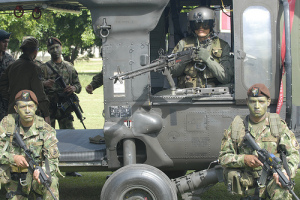
    Colombian National Army Soldiers. Source: US Department of Defense (Flickr)

    Colombian National Army Soldiers. Source: US Department of Defense (Flickr)

    Colombia has become an exporter of defence cooperation, including operational support, training and capacity building in national security and the fight against insurgencies, drug trafficking networks and terrorism. The skills and expertise of their security forces are in demand and, with strong US support and funding, and through intense diplomatic activism (the ‘Diplomacy for Security’ initiative), the country is building a wide array of bilateral and multilateral agreements for these activities. West African countries suffering from drug trafficking related problems are among the recipients of this support. Although extensive information on these ties and specific programmes is not publicly available, this involvement is evident and therefore raises a number of questions.

    Colombian Engagement in West Africa

    Between 2005 and mid-2013, Colombia trained 17,352 military staff from approximately 47 countries in various areas of assistance. In 2009, officials from Guinea Bissau, Cape Verde, Gambia, Ghana, Togo and Senegal attended training on operations and intelligence-gathering in Colombia under the auspices of the European Union and the UN Office on Drugs and Crime. The head of the Colombian police then announced that he would send ten anti-narcotics police to Africa, to be based in Sierra Leone.

    Colombian and African officials met again in March 2012 in Bogotá at a seminar on transnational organised crime. The same year, the US State Department announced that both countries were providing direct operational support and indirect capacity building efforts to countries throughout the hemisphere and West Africa. And police from 10 African countries, including Cameroon, Guinea Bissau, Senegal and Sierra Leone attended in January 2013 a Colombian National Police-hosted port and airport security seminar.
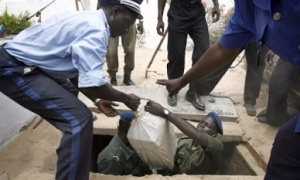
    Police officers remove bags of drugs found in the Senegalese town of Nianing, 50 miles south of Dakar. Source: africablogs.wordpress.com

    Police officers remove bags of drugs found in the Senegalese town of Nianing. Source: africablogs.wordpress.com

    Colombian involvement in West Africa (and Africa more generally) should not come as a surprise. West Africa is increasingly affected by the illegal narcotics trade and associated problems on governance and security. In this trend there are pull and push factors. It has become a transit hub and intermediate point for drugs making their routes from South America to European and other markets,  at a time when border –particularly maritime – security has improved in some European countries, making it more difficult for drugs to reach their territories using the traditional direct routes. The West African coastline is situated at the shortest travel distance from some Latin American departure points, and networks shifted to it while looking for new routes. From West Africa, drugs can continue to Europe or elsewhere by sea or by diverse land routes. Some countries with problems of territorial and border control, corruption and weak governance have been particularly vulnerable to this shift in international narcotics routes. One case in point is Guinea Bissau, where “the combination of a corrupt and centralized leadership and an inadequate and underfunded justice system in a country riven by upheaval and abject poverty” are among the driving factors.

    US Reliance on Colombian forces – Advantageous for Both Sides
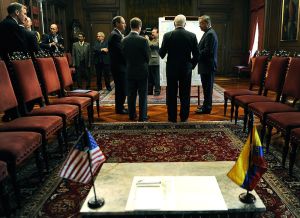
    Colombian Defense Minister Gabriel Silva, U.S. Defense Secretary Robert M. Gates, center right, and U.S. Ambassador to Colombia William R. Brownfield talk to one another at the Presidential Palace before meetiing with President Alvaro Uribe in Bogota, April 15, 2010.

    Colombian and U.S. Defense Ministers and  Ambassador  William R. Brownfield meet in Bogota, 2010. Source: Wikimedia

    The reliance of the US on Colombia to export security policies makes sense for both countries. For the former, it is a way to maintain indirect military support and training programmes at a lower cost and through a reliable partner. “It is cheaper for us to have Colombia do the training than us do it ourselves,” Ambassador William Brownfield (Assistant Secretary for the Bureau of International Narcotics and Law Enforcement Affairs) told Congress, later adding that “it’s a dividend that we get for investing over $9 billion in support for Plan Colombia.” The SOUTHCOM Posture Statement 2014 describes Colombia as a clear example of a sizeable return on relatively modest investment and sustained engagement.

    For their part, the Colombian security forces face uncertainty about the future. They have undergone an important growth in personnel (up to 450,000 now) and operational capacities, parallel to increases of a defence budget that reached $12 billion in 2012. Their air power and deployment capacities have become more sophisticated; and the Police now have highly vetted units trained in intelligence-gathering on drug trafficking organizations. A significant part of those advancements can be attributed to US support through Plan Colombia. But this is an untenable situation provided that a peace deal with the FARC has been reached and in the event of a post-conflict scenario. Not surprisingly, they are in search of new missions within and outside Colombia.

    US Focus on West Africa… From Narrative to Policies

    Africa is for the US “the new frontier in terms of counterterrorism and counternarcotics issues,” according to Jeffrey P. Breeden, the chief of the DEA Europe, Asia and Africa section. The US narrative on this region is one of intertwined and convergent threats and actors, where illicit trafficking feeds the crime-terror continuum and criminal insurgencies become players in illicit markets, using the profits to finance terror campaigns. A member of the State Department remarked that “If we do not act decisively, the region will remain an exporter of terror and a provider of safe havens where terrorists from other conflicts all over the world find refuge, illicit trafficking will continue to expand, (…) and drugs and illicit enterprise will corrode the rule of law and the gains of globalization.”

    There is a boom of academic and policy literature about the ‘continuum’ and other modalities of confluence among terrorism, illicit traffic networks and armed conflict. But the relations between these actors are complex, multifaceted and non-linear. Oversimplification of this complexity,  reducing the problem to a ‘merger’ of different types of groups makes an ideal argument to gain media attention and push for kinetic policies and strong military involvement. For the US, any link to terrorism or crime-terror nexus makes it easier to gain political support for engagement. But this ‘merger’ is hardly supported by operational evidence, with cross-overs between terrorist groups and drugs cartels, for example, remaining more like opportunistic agreements and less as structural and permanent. This argument also leaves aside other root causes of crises such as lack of governance, corruption, underdevelopment and marginalisation.

    The reason for abundant use of this narrative may be hidden in plain sight. According to the criminal code, US agencies are authorised to pursue and prosecute drug offences abroad provided that a link to terrorism is established, even if there is no connection with US consumption markets. This is the case for West Africa.

    In 2011, Ambassador Brownfield led a delegation of senior U.S. officials to West Africa to begin formulating a strategic approach to undermine transnational criminal networks and  reduce their ability to operate. The response is the West Africa Cooperative Security Initiative (WACSI). US counter narcotics assistance for West Africa soared from $7.5 million in 2009 to $50 million each of the past to years, according to the State Department. The budget and operational constraints limiting direct US engagement in West Africa’s drugs and organised crime problems include AFRICOM, an agency that relies on around 2,000 personnel to manage coordination of defence programmes for 38 African countries, plus around 5,000 soldiers deployed at any time. The response to scarce resources increasingly takes the form of reliance on special operations teams and cooperation with close allies, with Colombia playing a prominent role.

    Colombia in West Africa: More Questions Than Answers

    The strategic partnership between both countries is expressed in several instruments, notably the bilateral High-Level Strategic Security Dialogue (HLSSD), periodic meetings of the Security Cooperation Coordinating Group (SCCG) and the US-Colombia Action Plan on Regional Security Cooperation. These instruments are used to formalise security cooperation activities and assistance programs to partner nations affected by transnational crime, including West Africa.

    There is no doubt that the shift in trafficking routes is affecting security in some West African countries. Again, Guinea Bissau is among the most obvious cases, due to the ties among senior government, military officials and criminal groups that have played into upheaval and instability. Northern Mali has experienced drug related violence among armed groups involved in different degrees in the drug trade. Beyond these, the connection between drugs and overt violence is less evident, but a focus exclusively on drugs and violence ignored the important connections of the drug trade and criminal networks with political and business elites. These less studied but structural relationships have potentially grave destabilising effects.

    A Colombian cooperation undertaken by the Police (not the military), focusing on capacity building to strengthen national capacities in law enforcement, and improved intelligence and information–sharing mechanisms, could make sense. International cooperation is certainly needed to address this truly transnational problem. But due to the lack of information available, it is not clear what kind of responsibilities different parts of the Colombian security forces (Police, military, intelligence) are currently assuming.

    Therefore, the involvement in West Africa raises a number of important questions. The security forces, with US support, have managed well in counter-insurgency but the overall impact of Plan Colombia and associated policies on the illegal drug economy remains doubtful. What kind of capacity building and operational support can the Colombian forces provide in countries at peace, provided that their expertise has been acquired in armed conflict? What insurgencies might be fought in West Africa?

    What is the goal and the expected outcomes of replicating ‘drug war’ policies and approaches already failed in Latin America, such as militarisation of the fight against drugs? In particular, one of the unintended consequences of this approach is the ‘balloon effect’, through which crop cultivation, routes and transit points shift to new places as the old ones become more controlled. Indeed, this is already an important factor in current West African problems. In terms of fight against corruption and involvement of powerful figures in the drug economy, the results have been mixed in Colombia (considering both national and regional levels).

    Last but not least, all the relative Colombian successes have come at the untenable cost of grave human rights violations. The security forces, particularly the military, remain very active in trying to avoid accountability for past misbehaviour and crimes. In one of the latest scandals in civil military relations, sections of Colombian military intelligence have been found to have spied on delegations of the recent peace process, including spying on the President’s representatives. What kind of human rights and democracy messages are being sent through this US backed Colombian defence activism?

    International Law enforcement cooperation can be asset in dealing with criminal networks like those involved in drug trafficking, particularly where corruption and involvement of state officials is a factor. But approaches that confuse different non-state actors, their roles and potential levels of threat and attempt to provide a one-size-fits-all response, generate more risk than certainty with regards to potential outcomes and consequences. Militarised approaches to the drug war and public security have been extensively tried in Latin America with limited impact on the drug trade, while worsening the situation of violence. In the Colombian case, the results have been remarkable in counter-insurgency, but the country is still one of the main sources of cocaine for international markets, and there have been widespread violations of human rights.

    These approaches are being increasingly questioned in Latin America and continue to lose support even among high Government representatives and Presidents. Replicating them without further evaluation and careful reflection about what has worked  – and what has not – is not a promising approach. Instead, approaches to drugs and organised crime in West Africa must be based on lessons learned, to avoid the repetition of past ineffective policies and their harmful effects.

    Mabel González Bustelo is a journalist, researcher and international consultant specialized in international peace and security, with a focus on non-State actors in world politics, organized violence, conflict and peacebuilding. You can follow her at her blog The Making of War and Peace, her webpage, and Twitter (@MabelBustelo).

    Feature image: Colombian Marines, 2009. Source: Wikimedia
  • Sustainable Security

    Throughout the Muslim world, Islamic Feminism is taking shape. It presents alternative discourses on gender and Islam and aims to advance women’s rights within larger issues of social justice and minority rights.

    Throughout the Muslim world a counter discourse to western, mostly secular, feminism and Islamic fundamentalism is taking shape in the form of Islamic Feminism. While this is not a new phenomenon, having started primarily in Egypt in the 1950s, Islamic Feminism is increasingly gaining ground. The North African kingdom of Morocco and Malaysia form the bookends of this discourse that proposes to embed the advancement of women’s rights within larger issues of social justice and minority rights. It explores new readings of sacred scriptures that challenge historic patriarchy within Muslim tradition. At the forefront of this approach is Musawah (Equality in Arabic), an international network of scholars, activists, and lawyers. Musawah grew out of the groups Sisters in Islam and Karama (Dignity), both of which promote understandings of Islam that foster justice, equality, freedom, and dignity, especially for women. Founded in 2009 in Malaysia, Musawah’s headquarters moved to Morocco in 2015.

    The Moroccan King and Women’s Rights

    Islam is one of the pillars of Moroccan identity, and King Mohamed VI is a strong advocate of an “open, moderate Islam” based on the Maliki School of Islamic jurisprudence and Sunni Sufism. Since 2013, the Moroccan government has actively sought to train imam students from Tunisia and Libya as well as several West African countries, thus exporting Morocco’s Islam as a counterpoint to more radical or fundamentalist versions. In his dual capacity as Head of State and Commander of the Faithful (amir al mu’minin), the king is in the unique position of shaping religious discourse concerning women without resorting to authoritarian state-imposed feminism, as was the case in pre-revolution Tunisia. There, the government under dictator Zine El Abindine Ben Ali repressed religious discourse on women’s rights, a course that was reversed when, in the first free and democratic post-uprising elections in 2011, the religiously based Ennahda party was elected to government, allowing for a religiously inspired discourse on gender equality.

    Meanwhile in Morocco, under the auspices of the Moroccan King, a Center of Feminine Studies in Islam within the Rabita mohammadia des Oulémas (Royal Council of Religious Scholars) was established. Asma Lambrabet, a medical doctor and vocal proponent of Islamic Feminism, was the appointed director of this Center.

    Islam as a dynamic religion

    6444263899_3382108d6b_b

    Image by Iokha via Flickr.

    Islamic feminism is based on the idea that Islam is a dynamic religion, the eternal message of which needs to be adapted to changing historical circumstances. This interpretive process, called ijtihad (independent reasoning of the sources of Islamic law) involves the sacred texts of the Qur’an, sunnah (sayings and doings of the Prophet) and hadith (saying attributed to the Prophet). Islamic feminist ideas challenge predominant androcentric, absolutist theological concepts of authority. In so doing, women are appropriating religious authority, historically a domain controlled by men.

    The Moroccan Asma Lamrabet’s and U.S. scholar Amina Wadud’s writings enjoy wide popularity, especially among young Muslims who want to find answers to the question what it means to be a Muslim in the modern world. Faced with increasingly conservative and radical interpretations of sacred texts, these two scholars offer a religious perspective on modern identity formation that is not primarily western or secular. They exemplify how Muslim women can appropriate sacred texts, a fundamental strategy of their empowerment and personal development.

    Who holds religious authority?

    Lamrabet and Wadud address head-on an age-old question: Who has the authority to interpret the sacred texts? Each scholar in her own way is appropriating authority over textual analysis and, in doing so, is creating a new voice, a new way of approaching gender and women’s rights within an Islamic context. Together, their work exists within the larger context of challenges to conventional religious authorities in contemporary Muslim societies. Just as the role of the traditional ulama (Islamic scholars) has been challenged by the rise of alternative sources of religious authority – such as Internet fatwas and satellite TV imams – that claim equal legitimacy, Islamic feminists demand this right for themselves. If men with limited scholarly theological training can exert influence—uncontested by conservative scholars—why would alternative interpretations by women not fit into this colorful landscape of religious authorities?

    One of the earliest and most important pioneers of Muslim feminist scholarship is Morocco’s Fatema Mernissi (1945-2015). She was among the first to turn to the Qur’an to advance a reformist interpretation of the sacred texts with a view to supporting gender equality. In addition, Mernissi placed women’s rights within a larger context of social and economic justice. Today, Mernissi is Morocco’s most widely translated and internationally read author. Ironically, it was only after her death a year ago that she became widely known in her home country and finally gained publicly acknowledgement for her contributions.

    Islamic feminist hermeneutics considers the Qur’an as a historical text, revealed at a particular time and place. Over time, then, certain interpretations need to be reconsidered or refuted in accordance with the principles and egalitarian spirit of the texts. As Mernissi has repeatedly argued, sacred texts have been used as a political weapon to uphold laws that treat women as legal minors. This action is possible because traditional Islamic theological scholarship lacks fundamental historic contextualization, fails to acknowledge that knowledge production always occurs within a given historical context, and downplays the possibility of human fallibility in any hermeneutics. Recognizing such limitations is an important element of Islamic Feminist thought. Inasmuch as Mernissi critiqued the gender inegalitarian reality, she also was critical of promoting women’s rights without simultaneously advocating for social and economic justice.

    Pioneers of Islamic Feminism

    Thus, Mernissi, Lamrabet, and Wadud represent important alternative voices in scholarly discourses on gender and Islam. There certainly are other, important proponents of Islamic feminism. Margot Badran has written about Islamic Feminism for more than a decade, mostly focusing on Egypt. One of the founders of Musawah, the Malaysan Zainah Anwar, Iranian born scholar Ziba Mir-Hosseini and South African Farid Esack have also emerged as important advocates and scholars in re-interpreting concepts that traditionally have undergirded male superiority such as quiwamah (male authority), wialya (guardianship), mixed marriages and one of the cornerstones of inequality: inheritance laws.

    Thus, Islamic Feminism aims to liberate Muslim women from archaic and limited roles with negative social and economic consequences. Islamic Feminism argues for pluralistic interpretations of sacred scriptures, as a means by which global feminists can establish a dialogue based on the deconstruction of traditional knowledge that is masculine and patriarchal. It allows the reconciliation of Islam and modernity and goes beyond the false dichotomies of Muslim and secular, modernist and traditionalist, East and West.

    Dr Doris H. Gray directs the Hillary Clinton Center for Women’s Empowerment at Al Akhawayn University in Ifrane, Morocco where she is also Assoc. Professor of Gender Studies. She is the author of “Beyond Feminism and Islamism – Gender and Equality in North Africa” (I.B. Tauris 2102, second revised edition 2014) and “Muslim Women on the Move – Women of Moroccan and French Origin speak out (Rowman and Littlefield, 2008) and editor of “Gender, Law and Social Change in North Africa” (Cambridge University Press, 2017)

  • Sustainable Security

    This article was originally published on openSecurity’s monthly Sustainable Security column on 18 May 2015. Every month, a rotating network of experts from Oxford Research Group’s Sustainable Security programme explore pertinent issues of global and regional insecurity.

    The truce declared in 2012 may have been imperfect and controversial but positive lessons must be learned amid the country’s current crisis of violence.

    Violence is escalating again in El Salvador. March 2015 was the most violent month in over a decade, and the government is preparing army and police battalions to fight the gangs. These trends mark the definitive end of a process which started in 2012 with a truce between the two main gangs—MS-13 and Barrio 18—and evolved into a more complex and multidimensional approach to reducing violence, with a degree of international support.

    The process was complicated, imperfect and subject to public controversy but it stands as one of the most significant examples worldwide of an effort to reduce violence through negotiation with criminal groups. With an annual homicide rate of 60 murders per 100,000 inhabitants, El Salvador is one of the most violent countries in the world. It is also a notable example of the trend towards non-conventional, hybrid and criminal violence.

    faces_of_those_disappeared_during_civil_war_el_salvador

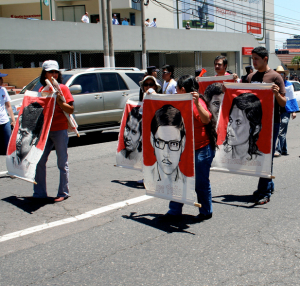
    On a march organised by the FMLN, people carry pictures of the faces of those disappeared during El Salvador’s civil war. Source: Flickr | Laura

    A peace agreement reached in 1992 put an end to civil war and initiated a peacebuilding process, which saw rebels of the leftist Farabundo Martí National Liberation Front (FMLN) make a successful transition to civilian and political life. The FMLN finally won the presidency by a tiny margin in 2009, and by an even smaller sliver in 2014, overturning 20 years of rule by the right-wing Nationalist Republican Alliance (ARENA).

    Meanwhile, a complex set of factors triggered a transformation of violence, which became criminal and perpetrated by illegal armed groups, most notably the gangs (maras). A profound crisis of public security has since shaken the country, as well as neighbours Honduras and Guatemala. Successive governments have responded with ‘iron-fist’ approaches focused on crime suppression and militarisation of security. These policies, although of limited effectiveness, have helped to cement the electoral support of a population angered and traumatised by decades of violence.

    Surprise news

    In March 2012 the country was taken by surprise by news of a truce between Barrio 18 and MS-13, facilitated by two mediators (a former insurgent and government advisor, and a Catholic bishop) and tacitly supported by the government of the FMLN president, Mauricio Funes. Imprisoned gang leaders were transferred from a maximum-security prison to other jails in exchange for a reduction in violence. The gangs agreed to end forced recruitment of children and young people, respect schools and buses as zones of peace and reduce attacks on the security forces.

    In the succeeding months, the gangs surrendered limited amounts of weapons and the government acted to address shortcomings in the overcrowded prison system, such as softening visitor searches and removing the army from the task. For the first time since the war, the International Committee of the Red Cross (ICRC) was invited to contribute and in October 2012 it established a special mission to monitor human rights in prison. The drop in homicides was immediate—from 14 per day to five.

    canadian_oas_visit_to quezaltepeque_prison_el_salvador

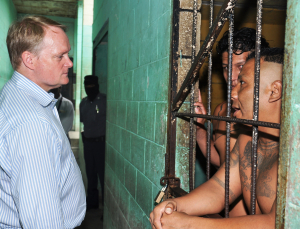
    Organization of American States (OAS) visit to a prison in Quezaltepeque, 2012. Source: Flickr | Arena Ortega

    The gangs’ leaderships and the mediators were discussing a list of issues to be included in an enlarged process with a wider pacification agenda. Their Proposal for a Framework Agreement for the Recovery of Social Peace in El Salvador included reform of the prison system, a public-private body with gang participation to oversee rehabilitation and reinsertion, derogation of the anti-gang law and removal of the army from public-security duties. Notably absent was any demand for amnesty or reduction of prison sentences. The proposals included suspension of all acts of violence, voluntary surrender to security forces, decommissioning of weapons and explosives, and an end to forced disappearances.

    As more details emerged, however, public opinion about the truce became increasingly polarised. The main opposition came from conservative sectors, parts of the legal establishment and law enforcement, and the media. Contributing to scepticism were unabated extortion and other violent crimes, such as ‘disappearances’—allied to concern about the potential empowerment and legitimisation of criminal structures and a widely-held perception that violence was being rewarded.

    But a second school of thought saw the truce as a way to reduce violence and reintegrate gang members. This vision was shared by segments of civil society and the Organization of American States, which became an observer and guarantor of the process. A formal agreement with the government resulted in the creation of a Technical Committee for the Co-ordination of the Process of Violence Reduction in El Salvador.

    Nevertheless, the government remained equivocal. Funes and other members refused to admit any participation and delivered contradictory statements, which fed distrust and confusion. But the sustained impact on violence and better understanding of the process gradually legitimised it and allowed the government to acknowledge involvement.

    The government’s ambivalence can be contextualised. This was the first FMLN administration and conservatives controlled the National Assembly. The United States prohibits negotiations between a government and a criminal organisation and in November 2012 it so labelled the MS-13. The US is El Salvador’s main trading partner and co-operation in trade and security has resulted in US support and military and police aid from programmes such as the Central America Regional Security Initiative. In what has been described as the performance of “a trapeze artist”, the FMLN has thus tried to develop progressive policies while not antagonising the US, foreign capital and the Salvadoran establishment (in control of the media).

    Transfer of gang leaders

    The truce was supported by the minister of justice and public security, David Munguía, a retired general and former minister of defence. Although his appointment in 2011 (and the removal of FMLN members from those positions) was largely interpreted as a move towards remilitarisation, he surprised his critics by encouraging the first steps of the truce—authorising the transfer of gang leaders to other jails. According to the analyst of Salvadoran politics Paolo Lubers, he and other generals took the initiative after improved intelligence co-ordination convinced them that most violence was gang-driven.

    Opposition came, however, from the Office of the Prosecutor and, later, sections of the police. They alleged that the truce was an opportunity for the gangs to reorganise, and that the drop in homicides was driving other crimes such as ‘disappearances’ and extortion. Some of this was a legacy of the peace accords, which disbanded the old security forces, established the National Civil Police (PNC) and reined in the armed forces.

    The PNC comprised civilians, demobilised guerrilla fighters and vetted members of the prior security forces—whose most authoritarian members, however, were able to secure the most prominent positions in the new service, particularly during the two decades of ARENA governments. The police force is thus politicised and plagued by poor performance, corruption and authoritarian practices. Meanwhile, the Office of the Attorney-General (as with Supreme Court judges) is marked by political appointments by the Legislative Assembly, which have benefited ARENA hitherto.

    More complex

    In 2013, the process entered a more complex second phase, centred on the creation of violence-free municipalities. These ‘peace zones’ were based on agreement among local authorities, gangs and facilitators, with groups committing to cease violence and crime in exchange for a reduction in police operations and raids and reinsertion programmes. The first four municipalities, presented in January 2013, were soon extended to 11, with a combined population of more than 1m (out of 6m in all in El Salvador) and support from the OAS and the European Commission.

    Mayors from both main parties, the FMLN and ARENA, participated in the initiative. Again, an ambivalent government promised, but then failed to deliver, grants and loans for prevention and rehabilitation. In Ilopango, the first peace zone, reduced violence presented an opportunity for the creation of a bakery and a chicken farm to generate employment, and the local government set up education centres and sports fields in marginalised neighbourhoods. But the mayor complained that the municipality had not received any of the $9 million promised by the government. Other cities were also left to their own devices.

    In May 2013, the process suffered a major blow: the Constitutional Court nullified the appointment of Munguía as minister of justice and public security and forced Funes to restructure the security cabinet. The new minister, Ricardo Perdomo, proved a sharp critic of the truce. Amidst a polarised debate leading up to the February 2014 presidential election, his hard-line discourse and the restrictions placed on the mediation mechanisms weakened the process. The downward trend in murder rates began to reverse, amid a turf war between two factions of Barrio 18.

    Support discontinued

    At the beginning of 2015, the new president, the former rebel Salvador Sánchez Ceren, said he would discontinue support for the truce. Leaders of the gangs were returned to the maximum security prison of Zacatecoluca.

    In March 2015 481 homicides were reported by the PNC (16 per day), a 52% increase on a year earlier. There were six massacres and on average 4.5 persons ‘disappeared’ each day.

    A recent report however suggests that the truce has had a lasting effect on the geographical distribution of violence. Murder figures remain lower than average in regions where the truce was strong and coalitions of local actors (such as mayors, churches and NGOs) took advantage of the opportunity to promote new policies. The trend is even more striking in the ‘peace zones’: in seven the drop in murders has been sustained in spite of the setbacks.

    But in other areas violence is soaring and tough positions are gaining a foothold. Sánchez Ceren has announced the creation of three battalions, with more than 1,200 troops, to fight crime in areas most affected by violence. And the rightist business association ANEP has hired the former New York mayor Rudolph Giuliani as an adviser.

    Particular problems

    This truce can be counted among so-called second-generation security promotion activities, which depart from conventional top-down approaches and are forged on “formal and informal cooperation with existing (including customary) sub-national institutions”. But making peace with criminal (as against political) actors poses particular problems.

    As James Cockayne put it, these cases are fraught with moral and political hazards, and there are critical questions. What is the desired end-state of negotiation? Is it a reduction of violence, a reduction of all criminal activities or dissolution of the illegal actor? The response to these questions will largely determine the contours of any negotiation in El Salvador and elsewhere.

    Despite its flaws and shortcomings, the experience can however provide invaluable lessons. Apart from a drastic reduction in homicides, it contributed to a recognition of the social contours of the gang phenomenon and opened discussions at national and international levels about prevention, reintegration and rehabilitation.

    The truce also demonstrated that a vast proportion of the violence afflicting the country was due to inter-gang confrontation. It revealed gang leaderships with a capacity for command-and-control and a sophisticated understanding of their role in society. Their ability to articulate demands surprised many, and to some extent changed conventional thinking.

    But exploitation of public security in electoral politics tends to favour hard-line approaches. As criticism and polarisation grew to politically untenable levels, the government adopted contradictory statements and policies and later distanced itself from the process. An overall lack of planning and co-ordination hampered effectiveness—not least because the civil-society actors with more experience in working with gangs and communities were not involved.

    Fear that the gangs might use the truce to rearm and reorganise, and anger towards perceived preferential treatment, is common in countries in transition from war to peace and with schemes of disarmament, demobilisation and reintegration (DDR) of former combatants. The accumulated experience of the global peacebuilding community can provide useful insights, including the adoption of community-based approaches to reintegration. Similarly, adaptation and use of mechanisms of transitional justice can help find a balance between security, justice and reconciliation.

    The truce in El Salvador has been a lost opportunity to take advantage of reduced violence to strengthen the institutional presence in communities affected by gangs and implement comprehensive approaches to prevention, reintegration and reconciliation. Any future attempt will need stronger political commitment, a long-term strategy and engagement with civil society and public opinion. Given the scope of the problem and an estimated gang membership in the tens of thousands, socio-economic programmes and opportunities are also imperative for sustainability. But, for the time being, the horses of war are riding again.

    Mabel González Bustelo (@MabelBustelo) is a journalist, researcher and international consultant specialising in international peace and security. She is author of Narcotráfico y crimen organizado: ¿Hay alternativas? (Narco-trafficking and Organized Crime: Are There Alternatives?), Icaria, Barcelona, 2014.

    Featured image: Salvadoran police officers. Source: Flickr | Paulien Osse

  • Sustainable Security

    The environment has often taken a backseat in discussions about conflict, but an increasing amount of evidence suggests that environmental and wildlife conservation could and should be very useful to post-conflict recovery work.

    The notion that the environment can play a useful role in peacebuilding has been around for a number of decades. The environmental peacebuilding theory emerged after research found that even while countries were engaged in armed conflict they were cooperating over water management. The theory was that water management could establish cooperation and lay a platform for wider peacebuilding initiatives. Peace Parks follow the same principles to use transboundary biodiversity conservation to support peacebuilding. While both are appealing projects, their failure to translate from environmental cooperation into wider scale peacebuilding processes suggest they are of only limited use for peacebuilding and post-war recovery.

    While the above processes have been of limited effectiveness, the shared geography of many areas of armed conflict and biodiversity hotspots suggests that conservation could and should be useful to post-conflict recovery.

    Guerrillas and Gorillas

    Research has found that 80% of modern armed conflicts occurred in biodiversity hotspots, and 90% within countries containing biodiversity hotspots. The use of ‘conflict timber’ and the illegal wildlife trade to finance conflict, and the presence of many armed groups in and around protected areas, creates clear links between conflict and the environment. Conflict also often leads to widespread environmental damage, and the post-conflict period can cause even more damage as short term human needs lead to ungoverned and unsustainable exploitation of the environment. This destroys key ecosystem services, opens opportunities for banditry and corruption, and increases the risk of natural disasters.

    Addressing these threats to security and protecting the environment in the aftermath of conflict is therefore vital to ensure a resilient recovery process. This creates an opportunity for conservation to support the post-conflict recovery effort by simultaneously addressing threats to security and protecting the environment to support economic development. Current approaches to do this are limited, but potential exists for much more work to be carried out. I have therefore proposed the umbrella term of ‘Ecological Development’ to create a framework of methods to actively use conservation as a tool for post-conflict recovery.

    Environmental Peacekeepers

    Virunga_National_Park_Gorilla

    Mountain Gorilla in Virunga National Park, in the Democratic Republic of the Congo. Image via Wikimedia.

    Some work has already been undertaken in this area, such as the proposal to create a ‘green helmets’ UN force, with a mandate for environmental protection. Whether funding for such a force could be obtained, and a mandate agreed upon, is doubtful; even if it was, it is unlikely to be an effective unit. Current UN peacekeeping missions have regularly failed in their roles to protect civilians, so are unlikely to be able to effectively extend their mandate to environmental protection. Peacekeepers have also been caught with illegal fauna and flora. While the UN Peacekeeping operations now have an environment department to reduce the footprint of missions and educate soldiers about the environment, their role in environmental protection is now, and will likely be for the foreseeable future, minimal.

    Using a country’s army to support conservation work has also been trialled, but with limited impact; for example, in the Democratic Republic of Congo the army became involved in poaching ivory. Both this and the proposed green helmets UN force also take a combative approach to conservation, seeking to fight poachers and armed groups in protected areas rather than addressing the underlying causes of poaching and deforestation. A different approach is required.

    Instead, I have proposed the conversion of rebel groups en masse into a ‘Yellow Berets’ force under UN, or other neutral, control; their role would be to support existing wildlife rangers to protect the environment and start to engage in ecosystem regeneration and sustainable exploitation projects. Such a scheme would form a significant contribution to post-conflict recovery in several ways: it would employ ex-combatants, reducing the risk of a relapse into conflict; it would protect critical ecosystems, species and carbon sinks vital for human populations (and arguably worth protecting in their own right); and it would support efforts to develop sustainable natural resource extraction businesses to bring in revenue and create jobs to support post-conflict recovery. Crucially, this process seeks to address security threats with dollars not bullets; engaging rebel groups as paid eco-guards rather than engaging them in battle.

    The DRC provides an example of the necessity and benefits of such a programme. Work is already underway to ensure Virunga National Park brings multiple economic benefits to surrounding populations, including the development of hydropower electricity generation. Security threats remain a major concern in the park, however, and there are too few rangers to address these threats. The ecological development method would offer financial incentives to rebel groups to join the yellow berets unit. This would simultaneously increase the number of conservation personnel and decrease the security threat, opening the way for an expansion of development projects around the park. It would also enable the restoration of forest areas – which could be financed by carbon offset schemes – and the further development of a tourist industry centred not only on gorillas but multiple other attractions in the region. Such a process would not be without challenges: securing the long-term finance required to pay wages; coping with disruptive private interests intent on perpetuating insecurity; and avoiding conflict between Congolese army soldiers and police who receive their wages intermittently or not at all.

    Nevertheless the project holds promise, even in such a difficult operating environment as the DRC. It could also be used in other parts of the world where rebel groups operate in protected areas, as a means to bring an end to conflict and deal with ex-combatants efficiently and at scale.

    Conservation for Development

    The Yellow Beret process would require a large amount of finance to pay the wages of several hundred or even thousand eco-guards that would form it. While donor finance could be mobilised for such a process – combining conservation, security, humanitarian and carbon finance – this would be difficult both to obtain initially and also, critically, to sustain over the long term. Protected areas must therefore become sites of revenue and job creation in order to finance such an initiative.

    The work being undertaken in Virunga, described earlier, is an example of this, but more is required. Projects that support the livelihoods of local communities and also bigger schemes that can generate greater revenues and create jobs on a large scale need to be trialled and refined. Examples of community projects are livestock and micro-finance schemes to provide sources of protein and finance to start small enterprises. These projects alleviate communities’ dependence on protected area natural resources by providing sustainable sources of sustenance and protein, and improving the perception of conservation.

    At the same time, larger schemes are required that seek to create products for sale into international markets; this may be ‘green gold’ projects seeking to make gold mining both sustainable and ethical; sustainable timber exploitation and processing for sale; or the creation of ‘wildlife-friendly’ businesses that could create a range of products from tea to clothing, and help to grow the certification scheme into something akin to the size of the Fairtrade and Rainforest Alliance schemes. The benefit of such schemes is two fold: firstly, they are profit making, so would not be reliant on hard-to-access donor funding; secondly, they would generate jobs and revenue around protected areas that could be taxed and support the yellow beret and other conservation initiatives.

    Traditionally, tourism has been the main, and in many cases sole, commercial method used for conservation to support development. This narrow focus on tourism leads to a lack of innovation and a dependence on an unreliable industry. Particularly in regions of armed conflict, tourism can at best play a small role in development programmes; too few people are willing to visit a dangerous area to make it a viable business model. The other methods described above are therefore necessary.

    Justifying Conservation

    Time and time again I have heard that ‘a hungry man is an angry man’. Indeed, groups of unemployed young men are particularly dangerous. To transition from conflict to a successful post-conflict recovery, peace must be more attractive than conflict; there must be good opportunities for secure, paid employment for actors in conflict. Conservation can and must play a role in providing those opportunities.

    In short, for the environment – and protected areas in particular – to play a useful role in post-conflict recovery, they must be demonstrably beneficial to people. Most crucially, they must be able to help improve security and generate revenue from conservation quickly and to a value in excess of alternative uses such as agriculture. Protected areas must therefore become sites of revenue and job creation in the post-conflict period. This will help to improve security and support post conflict economic recovery while protecting key environmental assets and species; at the same time it would lay a platform for longer term commercial investment in eco-man friendly industries once security has been assured.

    Richard Milburn is Research Co-ordinator and PhD candidate at the Marjan Centre for the Study of Conflict and Conservation, within King’s College London’s Department of War Studies. His research examines the security threats associated with biodiversity loss as well as the opportunities to utilise conservation as a core component of post-war recovery, particularly in the Democratic Republic of Congo. He is also the UK representative of the Pole Pole Foundation, a Congolese conservation charity based in Bukavu.

  • Sustainable Security

    Scarred in recent years by questionable involvements in the likes of Afghanistan and Iraq – and by the casualties they wrought – risk-averse Western governments have begun to look to others to do the shedding of blood in their ‘wars of choice’. The risky boots-on-the-ground role that was once the proud preserve of NATO armies anxious to showcase their abilities is now politically unpalatable. Proxies appear to be the answer. Biddable local allies who are of a mind to work in collaboration with Western militaries are very much in demand: the former supply the troops, the latter the training and the technological support – if not, indeed, the weapons as well. A symbiosis based on the principle that my-enemy’s-enemy-is-my-friend is the goal. This simple formula, though, is one that is not always bound to produce positive results. Proxies should always carry a health warning; they tend not to be as biddable as hoped.

    Take the Kurds. They are an ethnic group inhabiting a region – Iraq and Syria – where suitable proxies for Western powers are very much in demand for use against Islamic State (IS). The Kurds appear to be ideal candidates as proxy fighters: they are numerous; of a warrior-caste; are politically acceptable to Western audiences, and have a natural enemy in IS. As a militant group intent on territorial expansion, IS threatens Kurdish communities. The case for synergy is thus obvious: Western militaries and the Kurds can work together for mutual benefit. Not quite so obvious, however, are the various reasons why the relationship between Kurd and Western militaries is one that has the ready capacity to go awry. The chief driver of any breakdown is that Kurdish proxies can and will have their own priorities that clash with those of their sponsors.

    Image of Peshmerga replacing the ISIS flag with  the Kurdish flag by Kurdishstruggle via Flickr.

    The first point to note here is that the Kurds are a people divided. A fractiousness has historically long been evident between the various clans, tribes and families that make up this nation. These differences may have now mellowed but they have never completely dissipated. And then there are the differences created by linguistic schisms – Sorani and Kurmanji – and sectarianism – Sunni and Shia. Differences also developed due to the politics of whichever state the Kurds found themselves in after the demise of the Ottoman Empire. The Kurds within Syria developed under the tutelage firstly of French colonial rulers and then under a succession of socialist governments in Damascus. Both influences – or rather impositions – shaped a Kurdish community that was very much secular in make-up. It was the same in Turkey; Kemalist policies pushed secularism. In contrast, however, in Iraq, the laissez-faire approach of British colonial masters and then the inability of Iraqi governments to penetrate and shape attitudes in its northern Kurdish region left in place a largely tribal-based, conservative structure that is still today strong on religious (Sunni) influences.

    Today, the Kurdish area of northern Iraq, known as the Kurdish Regional Government (KRG), is riven by a split between a Western region dominated by the party of President Masoud Barzani – the Kurdish Democratic Party (KDP) – and an eastern region where the party of former Iraqi president, Jalal Talabani – the Patriotic Union of Kurdistan (PUK) – holds sway. The KDP, dominated by the Barzani tribe and with strong links north to its political patron, Turkey, maintains the strings of power in the KRG. It is based in the ‘capital’ of Erbil. The PUK, more left-of-centre, modernist and leaning towards Iran, holds sway around Suleimaniyeh. These two parties, indeed, and using their peshmerga forces, fought a civil war in the 1990s. And while there is currently what might be seen as a national KRG peshmerga force, these two parties still maintain their own peshmerga units and there is thus always the possibility that tensions may lead to some renewed clashes. Moreover, with future independence in mind, one eye is constantly being kept on the need to prepare for a possible future conflict with the Iraqi army and its associated Shia militia. Here is one particular problem for the Kurds of Iraq – who is the real enemy? Is it IS; is it fellow Kurds, or is it Baghdad? This then also becomes a problem for any power that seeks to use these Iraqi Kurds as proxies against IS – as the United States and others do. Can they be made to keep their eyes focused on IS and not elsewhere? And will the training and weapons they might be supplied with be directed at IS, or could they be used against other US proxies – such as other groups of Kurds and/or the Iraqi army?

    In Iraq, for instance, any future push on IS-held Mosul will, the US military hopes, involve the KRG’s peshmerga forces supported by US artillery and air power. Washington does not want the Shia-dominated Iraqi army to be seizing, on its own, the Sunni city of Mosul. Re-occupation of the city should be leavened, ideally from the US viewpoint, by the employment of Sunni Kurds. As things stand, however, there is a reluctance on the part of Erbil to push forward. The KRG has now, to a large degree, stabilised its own ‘borders’ (including the internal one within Iraq), which they see forming the basis of a future independent Kurdistan. Assaulting the Arab city of Mosul will doubtless involve a major loss of life and of treasure (in a cash-strapped KRG) that will produce little in the way of obvious gain for the Kurds while there is a bigger prize in mind.

    Then there are the Kurds in Turkey. The Kurdistan Workers’ Party (Kurdish: Partiya Karkerên Kurdistanê‎, PKK) is a left-wing Kurdish militant group that has long been fighting for more autonomy for the Kurdish-majority region of south-east Turkey. Ankara looks upon the PKK, not unnaturally, as a terrorist group. Recently, during the IS-generated chaos in northern Iraq, battle-hardened PKK units moved across the area and have proved to be some of the best fighters against IS; certainly better than the peshmerga. So here, logically, should be the ultimate proxy of choice for the US inside Iraq – the PKK. The idea, though, that US forces should assist the PKK in any way would bring paroxysms of protest from Turkey – a NATO ally. The KDP government in Erbil (with its own allies in Ankara in mind) is itself ardently agitating to prevent the PKK from setting up any zones within Iraq that it will come to control politically (such as around Sinjar). The PUK, on the other hand, has long supported the PKK, mostly because of the commonality of their left-wing politics.

    There are also the Kurds in northern Syria to consider. There are dozens of bickering Kurdish political parties jockeying for control there. The only force there that is armed, though, is the militia – the People’s Protection Units (Kurdish: Yekîneyên Parastina Gel, YPG) – of the main party, the Democratic Union Party (Kurdish: Partiya Yekîtiya Demokrat‎, PYD). The PYD – again, avowedly secular and actively left-wing – was formed mainly from PKK members who had fled from Turkey in the 1990s. The PYD is thus looked upon by Turkey as just an offshoot of the PKK and is, therefore, also a ‘terrorist’ group. But again, its YPG militia have proved very effective – certainly more effective than US-allied Arab groups in Syria – at confronting and besting IS. The YPG have also shown a penchant for actually taking the fight to IS by moving into Arab-majority areas of Syria (something the peshmerga in Iraq are reluctant to do). Here is another proxy that seems ideal. But how is the US to support the YPG effectively without incurring the wrath of Ankara? Moreover, there will probably come a time soon when Turkey will try and seize Kurdish areas of northern Syria in order to eliminate what it sees as the PYD’s terrorist threat. The PYD’s main enemy would then be Turkey, and not IS. What would the US do then?

    And then there is the cross-border relationship between the Iraqi and Syrian Kurds. It would seem natural for the Kurds in Iraq to support their ‘compatriots’ in Syria. Beyond natural kinship would also be the fact that both are fighting IS. But the KDP in the KRG, having allied itself with Turkey and being more tribal and religiously conservative, wants no truck with the ‘communist’ PYD. Indeed, it has even tried to prevent any assistance reaching the PYD across the Euphrates. To this end, a large trench system has been built by KDP peshmerga to act as a physical barrier designed to prevent any help from the PUK – who do support the PYD (mostly, again, for ideological reasons) – being sent across the border into Syria. Thus the US military is providing assistance to two armed Kurdish groups – the YPG and the KDP’s peshmerga – who are highly likely to one day become engaged in combat with one another.

    Thus when Western military organisations look to the Kurds to provide suitable proxies against IS, problems abound. The notion of a symbiosis created by a common enemy is tempered by the fact that the Kurds, of whatever ilk, tend to have more than just one enemy. This is not a good basis for the role of reliable proxy. But apart from the Kurds, who else is there?


    Rod Thornton is a Senior Lecturer at King’s College London based in Qatar. He spent nine years in the British Army before moving into academia. His research interests focus on terrorism, low-intensity warfare and new forms of warfare – particularly, as a Russian-speaker, on Russian hybrid warfare.  He has lived in the Middle East for four years, including one year at the University of Hewler in Erbil, Kurdish region of Iraq. He is the author of many articles and a book, Asymmetric Warfare: Threat and Response in the 21st Century (Polity Press 2007).

  • Sustainable Security

    For various reasons, South Sudan faces serious problems of food insecurity. What are the possible solutions to this issue? 

    South Sudan faces serious problems of food insecurity due to low per capita levels of domestic food production, periodic droughts, widespread poverty, political unrest, and, since late 2013, renewed armed conflict between the central government and rebel forces led by former vice-President Riek Machar.  Moreover, large fiscal deficits and expansionary monetary policy have led to high rates of inflation, balance of payments deficits and a sharp depreciation of the South Sudanese pound. This in turn has resulted in an economic crisis that has further worsened household welfare. In this context, enhancing food security (physical, social and economic access to sufficient, safe and nutritious food for all people at all times) will require a multi-faceted set of public and private investments, sound policies and targeted interventions for especially vulnerable households.

    South Sudan’s Food Insecurity                   

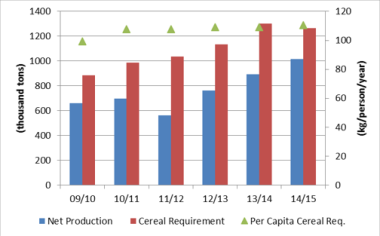
    Much of South Sudan receives little rainfall and only 5 percent of the arable land is currently cultivated. Nonetheless, the country has significant potential for increased cereal production, especially in the southern regions with the highest annual rainfall. Sorghum and maize account for most of the country’s domestically produced cereal, but there is little marketable surplus due to small farm size, low productivity and weak market incentives for sales.  Accurate data on crop area and production for South Sudan are scarce, and there is considerable uncertainty in the estimates, particularly since the renewal of armed conflict. According to annual FAO/WFP supply estimates, food production increased rapidly in recent years, from 660 thousand tons in 2009/10 to nearly 900 thousand tons in 2014/15, an average growth rate of 9.6 percent per year, due mainly to expansion of area harvested by 5.5 percent per year.

    Figure 1—South Sudan Cereal Production, 2009/10 – 2014/15

    sudan-figure-1

    Source: Based on FAO/WFP data.

    Alternative estimates of production derived from the household consumption data (2009 NBHS) suggest cereal production was 21 percent higher than the 2008/90 FAO/WFP estimate. Estimates of trade flows derived from the 2009 National Baseline Household Survey consumption figures, suggest that imports were a major source of supply just prior to Independence, reaching perhaps 700 thousand tons in that year.

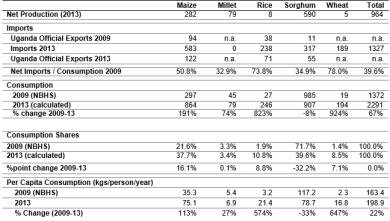
    Independence and the nearly complete disruption of trade with northern Sudan resulted in a major shift in the composition of cereal imports between 2009 and 2013, however. In 2009, cereal imports (mainly sorghum) totaled about 700 thousand tons, mostly from northern Sudan. By 2013, cereal imports had risen to nearly one million tons, with sorghum imports following from about 450 thousand tons to 320 thousand tons, while maize imports rose to 580 thousand tons, with imports of rice and wheat each totaling about 200 thousand tons.

    Table 1—South Sudan Estimated Cereal Production, Consumption and Imports (‘000 tons), 2009 and 2013

    Source: Adapted from Table 2 in Dorosh et al., 2016.

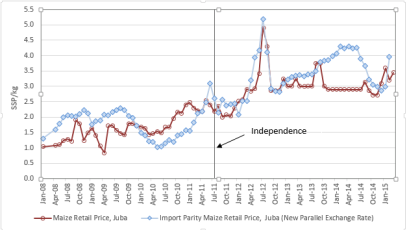
    Perhaps not surprisingly given the large private sector import flows, maize and sorghum prices in South Sudan are closely linked with prices in northern Uganda.

    Figure 2—South Sudan: Domestic and Import Parity Prices of Maize, 2008-15

    Notes: The exchange rate of the South Sudanese Pound (SSP) to the US Dollar in January, 2015 was 2.95. Source: Adapted from Figure 3 (Dorosh et al., 2016).

    Notes: The exchange rate of the South Sudanese Pound (SSP) to the US Dollar in January, 2015 was 2.95.
    Source: Adapted from Figure 3 (Dorosh et al., 2016).

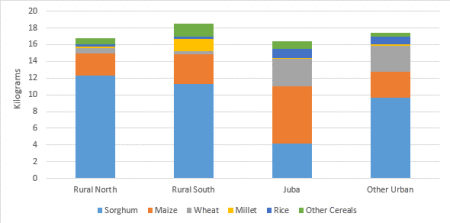
    Consumption of maize was nearly to that of sorghum (75.1 and 78.7 kgs/capita per year, respectively), as per capita maize consumption rose by 113 percent, while per capita sorghum consumption fell by 33 percent. Rice and wheat consumption also increased sharply, from 3.2 and 2.3 kgs/capita per year, respectively, in 2009 to 21.4 and 16.8 kgs/capita per year in 2013 – a 574 percent increase in per capita rice consumption and a 647 percent increase in per capita wheat consumption. The 2009 NHBS data, still the only source for detailed information on consumption patterns in South Sudan, show significant variation in consumption patterns across households. Throughout South Sudan, sorghum and maize are generally the major cereals consumed. Sorghum is the predominant cereal in rural areas, particularly in the north, while in Juba, maize and wheat are more widely consumed.

    Figure 3—South Sudan Average Monthly Kilogram Cereal Consumption Per Person

    south-sudan-figure-3

    Source: Calculated using data from South Sudan National Baseline Household Survey, 2009.

    Livestock are also a major source of income and food consumption in South Sudan, as well as a store of wealth, but the data on livestock are even more uncertain than the cereal data. Nationally, there were an estimated 11.74 million cattle in 2009, an average of 1.34 animals per person. Ownership is higher in the northern regions than in the south (1.58 and 0.88 animals per person, respectively). In 2013, approximately 45 percent of the population lived in households that consumed dairy products; consumption per capita in the northern regions is twice that of the south.

    Looking ahead

    oxfam-south-sudan

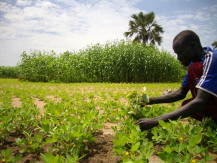
    Image credit: Oxfam International.

    In the medium term, increasing production of both crops and livestock is essential for food security in South Sudan, not only to reduce reliance on imports, but also to raise incomes of farmers. Rapid expansion of agricultural extension services, provision of improved seeds and increased fertilizer availability have led to large increases in agricultural production in neighboring Ethiopia, and have the potential to do likewise in South Sudan. Complementary investments in rural roads and other road infrastructure are also required, along with funds for maintenance.

    In the short term, though, food aid and targeted relief programs are badly needed to reduce the high levels of malnutrition in for the country as currently 31 percent of children under five are stunted and 23 percent are wasted. A national food security reserve system that ultimately would be supplied by domestic procurement of cereals was also proposed before the recent unrest, but such a system may take years to develop.

    In addition, maintaining incentives for the private sector import trade is essential to boost availability of cereals and minimize large spikes in prices. This would require a return to macro-economic stability in terms of both domestic inflation and exchange rates, as well as availability of foreign exchange. Keeping border controls and tariffs on cereal imports to a minimum could also help minimize transactions costs. Finally, none of these policies and investments will be effective in substantially improving food security without an end to armed conflict. Food security is possible for the people of South Sudan, but only with a restoration of peace, major new investments and sound government policies.

    Paul A. Dorosh is the Division Director of IFPRI’s Development Strategy and Governance Division. His previous positions include IFPRI Senior Research Fellow and Program Leader of the Ethiopia Strategy Support Program in Addis Ababa (2008-2010), Senior Economist at the World Bank (2003-2008), senior research fellow with IFPRI in Dhaka, Bangladesh (1997-2001) and Associate Professor at Cornell University (1994-97). He holds a Ph.D. in Applied Economics from the Food Research Institute, Stanford University and a B.A. in Applied Mathematics from Harvard University, and has published research on agricultural markets, food policy, international trade, economy-wide modeling and the rural-urban transformation.