Blog

  • Marginalisation of the majority world

    Marginalisation of the majority world

    A complex interplay of discrimination, global poverty, inequality and deepening socio-economic divisions, together make for key elements of global insecurity. While overall global wealth has increased, the benefits of this economic growth have not been equally shared. The rich-poor divide is actually growing, with a very heavy concentration of growth in relatively few parts of the world, and poverty getting much worse in many other regions. The ‘majority world’ of Asia, Africa and Latin America feel the strongest effects of marginalisation as a result of global elites, concentrated in North America and Europe, striving to maintain political, cultural, economic and military global dominance.

    Global Security after the War on Terror

    Paul Rogers | Oxford Research Group | November 2009

    Issues:Climate change, Global militarisation, Marginalisation

    This paper examines the context of the decision to go to war after 9/11 and the anticipated results. It goes on to analyse the actual  consequences and seeks to explain why they have been so radically different to original expectations by the United States and its closest coalition partners such as the UK. The paper then updates the analysis of the major global challenges that Oxford Research Group has previously discussed and the need for a new paradigm focused on sustainable security. It concludes by assessing how the experience of the eight years that have followed the 9/11 atrocities might make a change of paradigm more likely.

    Read more »

    Multiple Futures Project – Navigating Towards 2030

    Issues:Competition over resources, Global militarisation, Marginalisation

    In March 2008, the Supreme Allied Commander Transformation called for NATO to consider “that different views of future worlds will strengthen our endeavor to develop a more rigorous and holistic appreciation for future security challenges and implications for the Alliance.”

    The result, a Multiple Futures Project (MFP), acknowledges that in a rapidly changing global security environment, the landscape we know may be very different in 2030. It puts forward four plausible worlds upon which structured dialogue on  risks and vulnerabilities can occur: Dark Side of Exclusivity, Deceptive Stability, Clash of Modernites, and New Power Politics.

    Read more »

    India’s 21st-century war

    Paul Rogers | Open Democracy | November 2009

    Issues:Climate change, Global militarisation, Marginalisation

    Tagss:India, Maoists, Naxalite insurgency

    In an age of climate change and deepening inequality, the spreading Naxalite insurgency in India – not al-Qaida – may show the world its future.

    This article was originally posted on openDemocracy.

    Read more »

    Gorbachev – Twenty years after the fall of Berlin wall the world is no fairer

    Mikhail Gorbachev | The Guardian | November 2009

    Issue:Marginalisation

    Twenty years have passed since the fall of the Berlin wall, one of the shameful symbols of the cold war and the dangerous division of the world into opposing blocks and spheres of influence. Today we can revisit the events of those times and take stock of them in a less emotional and more rational way.

    Original article published in the Guardian and based on an address delivered to the World Political Forum conference, ‘Twenty Years After: The World(s) Beyond the Wall’ held in Italy, 9-10 October 2009.  

    Read more »

    The heart of India is under attack

    Arundhati Roy | guardian.co.uk | October 2009

    Issues:Climate change, Competition over resources, Marginalisation

    Odd, isn’t it, that even after the Mumbai attacks of 26/11, the government was prepared to talk with Pakistan? It’s prepared to talk to China. But when it comes to waging war against the poor, it’s playing hard

    This article was originally posted in the guardian.co.uk’s comment is free section.

    Picture: Dongria Kondh’s Sacred Mountain in Orissa (angryindian.blogspot.com)

    Read more »

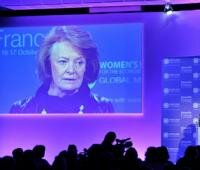
    Women debate a new way forward for the World’s financial system

    Ruth Sunderland | The Observer | October 2009

    Issue:Marginalisation

    Many in the west are blind to the fact that poverty and social injustice create a breeding ground for conflict. “An Iraqi youth recently said to me that if he and his family were hungry and he couldn’t get a job, he would go to fight with whoever will pay him”.

    Read more »

  • Global militarisation

    Global militarisation

    The current priority of the dominant security actors is maintaining international security through the vigorous use of military force combined with the development of both nuclear and conventional weapons systems. Post-Cold War nuclear developments involve the modernisation and proliferation of nuclear systems, with an increasing risk of limited nuclear-weapons use in warfare – breaking a threshold that has held for sixty years and seriously undermining multilateral attempts at disarmament. These dangerous trends will be exacerbated by developments in national missile defence, chemical and biological weapons and a race towards the weaponisation of space.

    Kenya and Somalia: Landscape of Tension

    Daniel Branch | openDemocracy | October 2011

    Issue:Global militarisation

    A fractious mix of violence and politics is unsettling the relationship between east African neighbours and putting more pressure on Somalis living in Kenya writes Daniel Branch for openDemocracy. The Somali militia group known as al-Shabaab is often viewed as the source of the problem. But the roots of the turmoil go deep in Kenya’s own history.

    Image source: Internews Network.

    Read more »

    A War Gone Badly Wrong – The War on Terror Ten Years On

    Paul Rogers | Oxford Research Group | September 2011

    Issues:Global militarisation, Marginalisation

    The atrocities in New York and Washington on 11 September 2001 led to protracted wars in Afghanistan and Iraq. Ten years after the attacks, this briefing assesses the consequences of the response from the United States and its coalition partners. It questions whether the response was either appropriate or wise and whether the results so far have been counterproductive and may indicate the need for a changed security paradigm.

    Such a fundamental rethink of the way western governments respond to insecurity must go beyond the current approach in which intelligence, counterinsurgency and counter-terrorism are all beginning to merge into a seamless web of a single security posture. Such a posture is likely to be no more successful than the policies adopted in 2001.

    Photo credit: Brian Boyd

    Read more »

    UK Trident renewal

    The Acronym Institute | The Acronym Institute | August 2011

    Issue:Global militarisation

    In the UK, the Conservative-Liberal Democrat coalition government continues to pursue the renewal of Britain’s Trident nuclear weapon system amidst criticism of the opacity of the procurement process and concerns over the substantial and increasing costs of the project. Adding fuel to public anger over widespread government cuts, the Defence Secretary Liam Fox’s long overdue announcement in May 2011 that the Initial Gate for the project had been approved was accompanied by the revelation that when inflation is taken into account the price tag for just the new submarines (excluding missiles, warheads and running costs) is likely to be £25 billion, as opposed to the £11-14 billion announced in 2006. With the defence budget already curtailed by the October 2010 Comprehensive Spending Review (CSR) and under strain on account of a projected deficit of £36 billion over the next 10 years, these latest figures have prompted further concerns that Trident is being replaced at the expense of conventional military capabilities.

    Article source: The Acronym Institute

    Image source: UK Parliament

    Read more »

    Warfare and Limits: A Losing Battle?

    Richard Falk | Al Jazeera | August 2011

    Issue:Global militarisation

    Nationalism, the dehumanisation of killing, and the frustration of asymmetrical war erode traditional limits on warfare writes Richard Falk for Al Jazeera.

    Image source: Lebatihem.  

    Read more »

    Middle East WMD-Free Zone Support from the CTBT

    CTBTO Preparatory Commission | CTBTO Preparatory Commission | July 2011

    Issue:Global militarisation

    Most of the States whose support would be required to establish a Middle East zone free of nuclear weapons and all other weapons of mass destruction have already signed the Comprehensive Nuclear-Test-Ban Treaty (CTBT), Tibor Tóth, Executive Secretary of the CTBTO told a seminar in Brussels, 7 July.

    The creation of such a zone would rest on “a tripod,” its legs consisting of a ban on nuclear weapons, no misuse of fissile material and no nuclear testing, said Tóth. The CTBT would meet the last requirement.

    And the “good news,” he told the seminar, organized by the European Union, is the almost complete endorsement in the region of the Treaty, which is approaching nearly complete global assent and becoming a universal norm.

    Article source: CTBTO Preparatory Commission

    Image source: United Nations Photo

    Read more »

    Indonesia’s Military and Climate

    Eddie Walsh | The Diplomat Blogs | July 2011

    Issues:Climate change, Global militarisation

    With more than 17,000 islands and 80,000 kilometres of coastline, Indonesia is extremely vulnerable to climate change. Analysts believe that rising temperatures will almost certainly have a negative impact on human security in Indonesia, which in turn will increase the probability of domestic instability and introduce new regional security concerns. With this in mind, it’s important that Indonesia’s armed forces take a range of measures to prioritize environmental security, including procuring new equipment, strengthening bilateral and multilateral relations, and undertaking training for new roles and missions.

    Article source: The Diplomat Blogs

    Image source: Studio Titus

    Read more »

  • Sustainable Security

    The Costs of Security Sector Reform: Questions of Affordability and Purpose

    In considering security sector reform, questions of affordability have often been subordinated to questions of effectiveness and expediency. A recent series of reviews of security expenditures by the World Bank and other actors in Liberia, Mali, Niger and Somalia has highlighted several emerging issues around the (re)construction of security institutions in fragile and conflict-affected states.

    Read Article →

    The United States, Niger & Jamaica: Food (In)Security & Violence in a Globalised World

    due to a complex range of interconnected issues from climate change to misguided economic policies, political failure and social marginalisation, over 2 billion people across the world live in constant food insecurity. Anna Alissa hitzemann takes a sustainable security approach to look at the importance of “physical and economic access to basic food” by exploring the links between food insecurity and violence.

    Read Article →

  • Global militarisation

    Global militarisation

    The current priority of the dominant security actors is maintaining international security through the vigorous use of military force combined with the development of both nuclear and conventional weapons systems. Post-Cold War nuclear developments involve the modernisation and proliferation of nuclear systems, with an increasing risk of limited nuclear-weapons use in warfare – breaking a threshold that has held for sixty years and seriously undermining multilateral attempts at disarmament. These dangerous trends will be exacerbated by developments in national missile defence, chemical and biological weapons and a race towards the weaponisation of space.

    Military Aviation and the Environment: Why the Military should care

    Ian Shields | Exclusively written for sustainablesecurity.org | September 2010

    Issues:Climate change, Competition over resources, Global militarisation

    Ian Shields writes exclusively for sustainablesecurity.org:

    “The impact of the civil airline industry on the environment is well documented, but what is less well considered is the impact of the military sector. This article will identify three key areas where military aviation has a major impact on the environment, and suggest mitigation policies for each: hydro-carbon use, ground contamination and noise.”

    About the author: Ian Shields is a retired, senior Air Force Officer and now a respected commentator on Defence and security matters, particularly with relation to Air and Space Power. He holds an MA from KCL, and MPhil from Cambridge and is presently undertaking a PhD in International Studies, also at Cambridge. He can be contacted via his web-site, www.ian-shields.co.uk

    Image source: chanelcoco872

    Read more »

    So what’s wrong with the MDGs?

    Dan Smith | http://dansmithsblog.com/ | September 2010

    Issues:Climate change, Competition over resources, Global militarisation

    This week’s UN summit will call for a big renewed effort to achieve the Millennium Development Goals. But there are reasons for starting to think a bit further ahead. A new report from International Alert asks us to get ‘beyond the MDGs”.

    At a launch meeting a couple of weeks back in London, the moderator – the BBC’s Bridget Kendall – asked the report’s lead author, Phil Vernon, “You clearly seem to have a problem with the MDGs – what’s that about?

    Article source: Dan Smith’s blog 

    Image source: Meanest Indian

    Read more »

    A Spoon Full of Sugar Makes the Medicine Go Down? An analysis of the Obama administration’s ‘new’ National Space Policy

    Jo-Anne Gilbert, Griffith Asia Institute, Griffith University, Brisbane, Australia. | Exclusively written for sustainablesecurity.org | September 2010

    Issue:Global militarisation

    On 28 June 2010, US President Barack Obama released a new, and much anticipated National Space Policy (NSP) document.  In contrast to the bellicose and unilateral tone of George W. Bush’s 2006 policy, the 2010 document is replete with references to ‘international cooperation’ and ‘responsibility.’

    When taken with Obama’s campaign promise to pursue a “world-wide ban” on space weapons, and overtures to the Conference on Disarmament that the US is prepared to negotiate international arms control agreements regarding space, those opposed to the weaponisation of space might have some cause for optimism that the US has stepped back from setting a dangerous precedent.

    But while the change in White House policy is welcome, especially in relation to a greater emphasis on debris mitigation, to assume that space weapons are no longer on the US agenda because of the NSP may be a mistake, and claims that the Bush policy has been reversed are overstated.  The NSP remains paradoxical and ambiguous in places, and the policy outcomes remain tied to other conditional political factors such as Ballistic Missile Defense (BMD) and nuclear policies, technology developments, and the US political landscape.

    Image Source: NASA Goddard Photo and Video

    Read more »

    Youth Breaking Cycles of Marginalisation, Resource Competition and Violence in Yemen

    Issues:Competition over resources, Global militarisation, Marginalisation

    Last month in Yemen, 40 young men and women, all under the age of 30, came together to form the country’s first cross-tribal youth council to address violence and marginalisation. Disputes over land claims and competition for resources and government services often lead to violence and cycles of revenge killings that can extend over a decade, hindering the work of government and international development agencies, and isolating citizens from the state.

    Image source: NDI.

    Read more »

    New Report Warns Against Attacking Iran

    Paul Rogers | Oxford Research Group | July 2010

    Issue:Global militarisation

    The potential for an Israeli military strike on Iran over its nuclear programme has grown sharply, but its consequences would be devastating and would lead to a long war, warns a new report from the Oxford Research Group.


    Image source: Rennett Stowe

    Read more »

  • Marginalisation of the majority world

    Marginalisation of the majority world

    A complex interplay of discrimination, global poverty, inequality and deepening socio-economic divisions, together make for key elements of global insecurity. While overall global wealth has increased, the benefits of this economic growth have not been equally shared. The rich-poor divide is actually growing, with a very heavy concentration of growth in relatively few parts of the world, and poverty getting much worse in many other regions. The ‘majority world’ of Asia, Africa and Latin America feel the strongest effects of marginalisation as a result of global elites, concentrated in North America and Europe, striving to maintain political, cultural, economic and military global dominance.

    A New Road for Preventative Action

    East West Institute | East West Institute | June 2011

    Issues:Climate change, Competition over resources, Global militarisation, Marginalisation

    A gap continues to exist between the international community’s rhetoric about conflict prevention and its responsibility to protect people from severe human rights violations. The record of human misery caused by violent conflict is testimony to the chronic  lack of political will to respond collectively to newand emerging threats to peace. The ineffectiveness of many global efforts at preventive diplomacy is evidence that traditional diplomatic approaches,  including the use of force, simply may not work.

    Article source: East West Institute

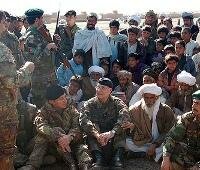
    Image source: AfghanistanMatters

    Read more »

    Drones Don’t Allow Hit and Run

    Prof Susan Breau | Oxford Research Group | June 2011

    Issues:Global militarisation, Marginalisation

    If You Use Drones You Must Confirm and Report Who They Killed, Says Legal Team.

    International lawyers have identified an existing but previously unacknowledged requirement in law for those who use or authorise the use of drone strikes to record and announce who has been killed and injured in each attack.

    A new report, ‘Drone Attacks, International Law, and the Recording of Civilian Casualties of Armed Conflict’, is published on 23 June 2011 by London-based think tank Oxford Research Group.

    Article source: Oxford Research Group

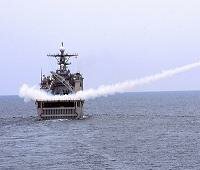
    Image source: Official U.S. Navy Imagery

    Read more »

    The economies of violence

    The Economist | The Economist | June 2011

    Issue:Marginalisation

    Are countries poor because they are violent or violent because they are poor?

    Yesterday it was Afghanistan and Congo. Today it is Côte d’Ivoire and Libya. Violence, it seems, is always with us, like poverty. And that might seem all there is to be said: violence is bad, it is worse in poor countries and it makes them poorer.

    But this year’s World Development Report, the flagship publication of the World Bank, suggests there is a lot more to say. Violence, the authors argue, is not just one cause of poverty among many: it is becoming the primary cause. Countries that are prey to violence are often trapped in it. Those that are not are escaping poverty. This has profound implications both for poor countries trying to pull themselves together and for rich ones trying to help.

    Article source: The Economist

    Image source: B.R.Q.

    Read more »

    Paul Rogers on Development, Climate Change, Conflict and Migration

    Action Aid | youtube | June 2011

    Issues:Climate change, Competition over resources, Marginalisation

    Paul Rogers, Professor of Peace Studies at Bradford University, and Oxford Research Group’s Global Security Consultant, talks to Action Aid about the issues that will dominate international security and world development over the coming decades.

    Source: youtube

    Read more »

    South Sudan: Enhancing Grassroots Peacebuilding

    Hope Chichaya | Insight on Conflict | June 2011

    Issues:Competition over resources, Marginalisation

    South Sudan’s referendum has come and gone. What lies ahead post-independence in terms of peace, development and security is however still to be determined. The 15 years of war left over one million people dead and more than three million displaced. Negotiations led to the Comprehensive Peace Agreement (CPA) in 2005, which included provision for a referendum on independence for the Southerners.  The referendum was held in January, with overwhelming support for succession. But serious challenges face South Sudan as it prepares for independence on 9 July 2011.

    Article source: Insight on Conflict

    Image source: United Nations Photo

    Read more »

    Security Studies and the Marginalisation of Women and Gender Structures

    James Chisem | e-International Relations | May 2011

    Issue:Marginalisation

    In her seminal 1987 text, Bananas, Beaches and Bases, Cynthia Enloe directs the reader’s attention to the realm of international politics and asks the question “where are the women?”. One might reasonably be expected to answer – they are everywhere. From the political economy, in which women comprise 80% of the global factory workforce and unpaid female domestic labour is estimated to contribute up to 35% of global GDP, to modern warfare, a theatre wherein the majority of victims are women gender is centrally implicated in the machinations of the international system.

    Article source: e-International Relations

    Image source: jrseles

    Read more »

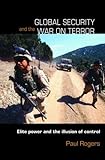
  • Global Security and the War on Terror: Elite Power and the Illusion of Control

    Global Security and the War on Terror: Elite Power and the Illusion of Control

    Issues:Climate change, Competition over resources, Global militarisation, Marginalisation

    Tag:book

    Image of Global Security and the War on Terror: Elite Power and the Illusion of Control (Contemporary Security Studies)

    • Purchase from Amazon:
    • Global Security and the War on Terror: Elite Power and the Illusion of Control (Contemporary Security Studies)
    • Author: Paul Rogers
    • Publisher: Routledge ()
    • Binding: Paperback, pages
    • Price: £22.99

  • Sustainable Security

    Colombia and Mexico: The Wrong Lessons from the War on Drugs

    As activists around the world participate in a Global Day of Action against criminalisation of drug use, evidence from the multi-billion dollar War on Drugs in Colombia suggests that militarized suppression of production and supply has displaced millions of people as well as the problem, not least to Mexico. The wrong lessons are being exported to Central America and beyond, but a groundswell of expert and popular opinion internationally is calling for alternative approaches to regulating the use and trade in drugs.

    Read Article →

    The United States, Niger & Jamaica: Food (In)Security & Violence in a Globalised World

    due to a complex range of interconnected issues from climate change to misguided economic policies, political failure and social marginalisation, over 2 billion people across the world live in constant food insecurity. Anna Alissa hitzemann takes a sustainable security approach to look at the importance of “physical and economic access to basic food” by exploring the links between food insecurity and violence.

    Read Article →

    Causes of Conflict: A Strategic Perspective on US–Sino Relations in the Caribbean

    Author and former High Commissioner of Trinidad and Tobago to the Court of St. James, Serena Joseph-Harris writes that China’s increasing regional profile in the Caribbean highlights the challenges now posed to American exceptionalism as Beijing defines its own course in the region. This article focuses on the potential within the Caribbean Basin for the burgeoning proceeds presently derived from increases in the legitimate investment, trade, and commerce emanating from Beijing and Washington to become entwined with illicitly derived funds generated from transnational crime activities, specifically the trafficking of drugs.

    Read Article →

    Mano Dura: Gang Suppression in El Salvador

    Widespread social exclusion makes El Salvador fertile ground for gang proliferation and, over time, gang members have resorted to greater levels of violence and drug activity. Yet, government approaches have proved spectacularly ineffective: the homicide rate escalated, and gangs have adapted to the climate of repression by toughening their entry requirements, adopting a more conventional look, and using heavier weaponry. Sonja Wolf argues for approaches which focus on prevention and rehabilitation and looks at why such approaches have been continually sidelined.

    Read Article →

  • Sustainable Security


    Demonstration condemning the ongoing use of weapons by rebel militias inside Tripoli.“As the price of oil goes down, the pace of freedom goes up… As the price of oil goes up, the pace of freedom goes down…” So says New York Times columnist Thomas Friedman, who argues that the first law of ‘petropolitics’ is that the price of oil and the pace of freedom are inversely correlated in countries “totally dependent on oil” for economic growth. Friedman’s attempt to link economic oil dependency and political freedom is an interesting one, which could go some way towards explaining why many of the world’s top oil-exporting countries are governed by heavy-handed authoritarian regimes. However, the correlation between recent oil price spikes and anti-authoritarian action – particularly in the Arab Spring – challenges Friedman’s assessment.

    Rather than being driven by drops in oil revenues for authoritarian regimes, popular unrest and armed resistance  in countries such as Libya may in fact be correlated with the price of oil remaining high. Inward pressure caused by oil price spikes on petroleum-fuelled supply chains for basic commodities can exacerbate already harsh living conditions, galvanising rebel factions to form a unified anti-authoritarian front against a regime that can no longer ensure price stability for essential goods. This seems true of the 2011 uprising in Egypt (the world’s largest wheat importer), as bread prices rose drastically following the doubling of global wheat prices between June 2010 and February 2011. The impact of high oil prices on the production, shipping and distribution of staple commodities such as corn and wheat – both of which saw severe price escalations of near 40% in 2008 – can lead to social unrest and, in the case of Egypt, the toppling of an authoritarian regime.

    High oil prices mean freedom on the rise?

    Since December 2010, when mass protests began gathering steam in Tunisia, oil prices have remained consistently high, hovering at $82 per barrel. Is it a coincidence that in September 2011, when rebels overtook the coastal town of Bani Walid, one of Colonel Gaddafi’s last strongholds, oil was just above $82 per barrel and the FAO food price index had reached a ten-year high? While oil revenues may be a temporary source of political stability for some authoritarian regimes, the pressure of increasing price volatility on supply chains, due to scarcity in supply, can convert to instability downstream as oil prices have a compounding impact on food prices. Indeed, in December 2010 just a week before the self-immolation of Tunisian food vendor Mohamed Bouazizi, New England Complex Systems Institute a Cambridge-based organisation comprised of faculty from Harvard, MIT and Brandeis, warned the US government that global food prices were about to cross a socially dangerous threshold. If anti-authoritarian action is any indication of freedom ‘on the rise’ then high oil prices in oil-dependent states are at least one major factor.

    Of those countries mentioned in the International Energy Agency’s 2011 list of top oil exporters, ten out of fifteen are classed by Freedom House as ‘Not Free’. Freedom House, ‘an independent watchdog organisation dedicated to the expansion of freedom around the world’, base their rankings on two broad categories: political rights and civil liberties. The former they define by a country’s electoral process, degree of political pluralism and level of participation/ functioning of government; the latter by degree of freedom of expression and belief, associational and organisational rights, rule of law, and personal autonomy and individual rights. The irony, according to Friedman, is that Western dependence on oil imports from countries which are ‘Not Free’ has channelled revenues to authoritarian regimes that oppose freedom. This paradox undermines Western credibility as champions of democracy. In a post-9/11 world, where militant extremists reportedly seek safe harbour in oil-exporting states like Saudi Arabia, the consequences of Western oil dependency undermine the West’s long-term security goals. But, when it comes to Friedman’s equation for ‘petropolitics’, the reverse may actually be true. Recent events such as the Arab Spring demonstrate that as the price of oil rises, impacting staple commodity prices, so too does the need for change – change that is blocked by Western dependence on remaining regimes.

    Bottom-of-the-barrel security

    Western countries reliant on fossil fuel imports from nations ruled by authoritarian regimes are suffering from a crisis of legitimacy – a crisis which could render us more insecure in the long term. In Algeria, where the Arab Spring has not resulted in full on revolution, violent extremists recently made their presence felt at the ‘In Amenas’ gas plant, brutally murdering 37 expatriate workers. The plant, which is jointly operated by BP, Norway’s Statoil and Algerian state oil and gas company Sonatrach, is a major supply source for Western markets. Algeria is responsible for roughly 12.2 billion barrels of crude oil reserves. 85% of Algeria’s oil exports are destined for European and North American markets. Under the leadership of Abdelaziz Bouteflika, whose five year executive terms are renewable indefinitely, Algeria certainly does not rate highly on the list of Freedom House ‘Freedom Ratings’. Military and intelligence services strictly monitor and interfere with open elections. But the Arab Spring may not ever reach Algeria precisely because of the stability brought to the country by a Western-funded heavy-handed regime, which goes to great lengths to protect the general population from militant Islamist extremists and pro-democracy activists alike. Saudi Arabia and UAE are governed by similarly oppressive regimes; regimes which subvert democracy in favour of ‘stability’. Both supply oil and gas to the West. Both benefit from revenues gained through Western dependence in spite of their heavy-handedness.

    Interests versus values

    The Arab Spring has been full of unfortunate surprises linking former and current administrations to corrupt leaders. Photos of a smiling Tony Blair, getting up close and personal with much maligned Colonel Gaddafi, were a hit in the mainstream press as well as online following the collapse of his regime. Not long before that, the Bush Family’s close ties to the Saudi royal family did little to lend credence to their Middle East pro-democracy campaigns in the early 90s and 2000s.

    Germany is in a similarly awkward position as the the largest energy consumer in Europe, with oil making up 38% of Europe’s overall consumption in 2011. Germany is Russian state-controlled energy giant Gazprom’s biggest European customer with 34% of total sales volume of Russian ‘blue fuel’ destined for German markets last year. There was therefore more than a hint of hypocrisy in Angela Merkel’s recent remarks during a visit by Vladimir Putin to a trade fair in Hanover that Russia ‘needs more NGOs’. The statement was made in regards to a Russian law passed last year requiring all NGOs that receive overseas funding to register as  ‘foreign agents’. Topless Ukrainian activists from the pro women’s rights group ‘Femen’ made their presence felt at the trade fair, drawing attention to  Russia’s crackdown on civil society groups and independent media organisations. Russia’s authoritarianism is a key element of the Putin government, but the issue arguably receives little mainstream coverage in the West compared to the Middle East.

    Germany and, by extension, Europe’s de facto dependence on Gazprom to meet their energy needs provides yet another example of why Western countries need to seek develop a more sustainable energy security strategy. It is difficult to legitimately champion broad concerns about upholding civil protections, when some of your largest business partners engage in the shadowy practice of denying basic freedoms to their own citizens.

    Renewable energy… and freedom?

    In light of the above we can welcome new approaches to energy security, which are aimed at reducing dependence on fossil fuel imports from authoritarian states. The Obama Administration’s ‘All of the Above’ energy strategy, as well as the pragmatism which the European Union, led by Germany, has shown in pushing forward a low carbon agenda are both steps in the right direction. Obama has pledged to double American energy efficiency by 2030, setting aside $2 billion over 10 years to support research into ‘a range of cost-effective technologies’, including electric vehicles, domestically-sourced biofuels, fuel cells, and domestically-produced natural gas. The plan also includes scope for reducing oil imports, while boosting renewable electricity generation from wind, solar and geothermal sources. Although Obama’s plan is far from low carbon, it shows promise. By comparison the UK Government, which at one time pledged to be the ‘greenest government ever’, has attempted to push forward its nationwide low carbon transition through the establishment of a Green Investment Bank. However, fairly recent public squabbles in the UK between Ed Davey, Secretary of State for Energy and Climate Change and Chancellor George Osborne the UK’s finance minister, have called that agenda into question.

    Friedman’s claim of an inverse correlation between high oil prices and authoritarianism is flawed. But his point about ‘petropolitics’ is still crucial to security, not only because he tries to link oil price fluctuations to authoritarian politics, but also because he highlights how Western dependence on foreign oil provides significant revenue streams on which remaining authoritarian governments can rely. It is also important to point out that as the global price of oil becomes more volatile due to price instability (see: ‘peaky behaviour’) the economic stability of authoritarian regimes that have consolidated their power bases around fossil fuels will almost certainly erode. Moreover, as the impact of oil prices continue to destabilise staple commodity prices, authoritarian regimes will almost certainly come under increasing pressure from their own populations to step down. Western countries that have formed dubious partnerships with these regimes in order to meet their energy security needs will risk further embarrassment when these regimes are toppled by the inevitable anti-authoritarian movements. Western leaders might then stand by and wait to pick a winner – a dubious strategy at best – in order to ensure that supply shipments are not further destabilised. But is this sustainable?

    Renewable energy is not the most obvious factor for bolstering the strength of nations. But it is fast becoming clear that Western dependency on fossil fuel imports from countries governed by heavy-handed regimes cannot go on. The International Energy Agency has recently announced that power generation from renewable sources worldwide will exceed that from gas and be twice that from nuclear by 2016. That’s a positive sign. As for oil, we will have to wait and see. But if the restoration of Western legitimacy as champions of the “free world” is a top priority for Western leaders, then more support for domestic renewable energy growth is essential.

    Phillip Bruner is Founder of the Green Investment Forum and a guest lecturer in global political economy at the University of Edinburgh

    Image source: United Nations Photo
  • Sustainable Finance & Energy Security

    Sustainable Finance & Energy Security

    Phillip Bruner | | November 2012

    Issue:Competition over resources

    The link between volatility in financial markets and volatility in energy prices is poorly understood. Nevertheless, it is possible to understand certain aspects of the relationship between the two. First, we know that as cheap and easy access to conventional fossil fuel supplies diminishes due to rapidly rising demand in the majority world, the process of extracting resources from remaining reserves (or ‘provinces’) is prone to what the Industry Taskforce on Peak Oil and Energy Security has called ‘peaky behaviour’. The so-called peaky behaviour of lesser-known provinces is erratic and naturally less predictable than the usual behaviour of known provinces. This matters a lot in the case of oil extraction, as price stability in oil markets is predicated on understanding and making informed guesses about the rate at which oil can be brought to market.
    As access to predictable supply declines and new sources are sought offshore in the deep seas, among Arctic ice or onshore in untapped kerogen rock, the ability of retailers and speculators to understand the oil market is hindered by an added layer of uncertainty. Experimenting with new methods of extracting oil lacks a historical track record, which normally provides a more stable framework for making sound decisions about supply and demand management – decisions which oil companies, traders and regulators are usually adept at making. Industry professionals must now cope with attempts to acquire a more nuanced understanding of the impact which erratic rates of extraction can have on oil markets. They must also cope indirectly with volatility in consumer demand for oil-based products.

    Financing an oil shock?

    Volatility in financial markets, due to unsustainable lending practices and the rise in use of exotic trading instruments, affects consumer demand for everyday products, particularly in oil-importing nations such as the United States and Britain. Because oil is the lifeblood of the modern industrial economy on which all businesses in the supply chain depend, when oil prices increase, so too do the prices of mainstay consumer goods. In the West, we are dependent on our thriving oil-driven economies, where the transport of goods and services are very closely linked to oil prices. So when global oil prices rise or fall, foreign and domestic businesses transfer the added costs downstream to consumers who feel the impact. Or, in cases where the added expense cannot be borne by consumers, businesses may either attempt to reduce wages or absorb the price shocks internally, which can lead to downsizing and layoffs. When the prices of consumer goods increase, we also use more of our income to pay for oil-derived products, and as a result our spending on other goods and services declines. This means that demand for many types of non-essential goods and services drops, including holiday travel, dining out, new cars, computers and more expensive homes. These impacts have a compound effect on prospects for a speedy economic recovery, making it more difficult for growth to be restored post-crisis and threatening longer-term stability.

    Betting on volatility
    It may be a coincidence that at the height of the most recent stock market crash in July 2008, oil prices skyrocketed to $147 dollars per barrel. However, it wouldn’t seem so on the basis of an article in the Guardian published one month earlier, in which billionaire hedge fund manager George Soros , predicted that the price of oil had become a bubble that could trigger a stock market crash. On 3 June, Soros informed the US Senate commerce committee that oil had been ‘pushed to its $135 a barrel mark’ – at that time a record high – by a ‘new wave of speculators’. Soros claimed that the doubling in the price of oil from 2006-08 was partly due to investment institutions, such as pension funds, channelling money into indexes that link to the cost of crude. Soros proceeded to warn the committee that, “there could be very serious consequences for global stock markets if the institutions suddenly began betting on a fall in the oil price.” Finally, he compared the speculative pressures being forced by institutional investors on oil prices in 2008 with the stock market crash of 1987, which was partly caused by a sudden rush of money into portfolio insurance – which institutions used to hedge themselves against a fall in share prices. According to Soros, institutional investors have been engaged in propping up one side of the market so as to give them sufficient weight to unbalance it if so decided. “If the trend were reversed and the institutions as a group headed for the exit as they did in 1987 there would be a crash”, he said.

    A more recent example of energy market manipulation on a regional scale is that of Barclays’ involvement in manipulating California power markets. The U.S. Federal Energy Regulatory Commission has recently proposed a total $470 million fine on Barclays for its actions – the largest ever by the agency – revealed partly on the basis of communications by four traders at Barclays’ West Coast power desk. The trading activity allegedly took place over two years from late 2006, in which the team exchanged messages explaining how they would ‘crap on’ prices in one market in order to profit in another. The traders stand accused of having wilfully manipulated energy prices, i.e. ‘driving up or down physical power prices to make money with their financial swap positions’. Their actions, if proven true, may have resulted in losses for other traders amounting to $139 million, netting Barclays gains upwards of $34.9 million.

    Unsustainable finance and the threat to energy security?
    The critical importance of predictable access to reliable energy supplies to meet electricity and fuel demand have been well documented in previous articles published by SustainableSecurity.org contributors. Economic recession, while potentially offsetting oil demand, could stand to make diminishing supplies last longer, buying time for other alternative clean energy sources to comprise a wider portion of overall generation. But economic recession also has another more subtle impact on energy production – it rattles investor confidence in innovative technologies that might otherwise stand to make oil-dependent economies more energy secure. Currently, a hot debate is raging in the UK and US on the future of conventional oil and gas, as well as nuclear energy, in curbing global demand for fossil fuels. This added uncertainty deters renewable energy investments while forecasts for economic recovery remain dismal. General volatility in financial markets, fuelled by irresponsible lending and trading practices, has an effect on oil prices as well, which further stifles economic growth. While the complexity of global markets demands wider investigation into the causes and effects of finance in relation to oil prices, evidence of market manipulation is unsettling. A sustainable and secure future, where a wider energy mix has been developed to meet rising demand, will no doubt require a more sustainable financial system which can service the real needs of citizens.

    Phillip Bruner is Founder of the Green Investment Forum and a guest lecturer in global political economy at the University of Edinburgh
     

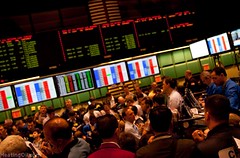
    Image source: Heatingoil

    Comments

    Post new comment


  • Al-Qaeda: The True Story of Radical Islam

    Al-Qaeda: The True Story of Radical Islam

    Issues:Global militarisation, Marginalisation

    Tag:book

    Image of Al-Qaeda: The True Story of Radical Islam

    • Purchase from Amazon:
    • Al-Qaeda: The True Story of Radical Islam
    • Author: Jason Burke
    • Publisher: Penguin ()
    • Binding: Paperback, pages
    • Price: £8.99