Blog

  • The Politics of Coltan: An Interview With Michael Nest

    Carefully Managing Water Resources to Build Sustainable Peace

    Carefully planned interventions in the water sector can be an integral part to all stages of a successful post-conflict process, from the end of conflict, through recovery and rebuilding, to […]

    Read Article →

    In Deep Water: China tests its neighbours’ patience

    Control of water, including navigation rights, resource extraction and the exploitation of shared watercourses is at the heart of today’s geopolitical tensions in Asia. China’s recent actions in the South China Sea and Himalayas have given rise to further—and at times violent—conflict over the region’s natural resources. So will water insecurity lead to greater partnership in Asia? Or will it lead to a revival of China’s traditional sense of regional dominance and undercut efforts to build a rules-based approach to growing resource conflicts?

    Read Article →

  • Pegida in Austrian Politics: Invisible, But There

    The failure of Pegida to play a direct role in Austrian politics is due to the dominant role that the Freedom Party, with their anti-immigration and Islamophobic discourse, already plays in the Austrian parliament.

    After several rounds to elect the President of Austria, the Austrian electorate recently voted for a president from the Greens with a slight majority of approximately 53% of the votes. The polarized election campaign between a candidate of the right-wing populist Freedom Party of Austria  (FPÖ), Norbert Hofer, and a candidate of the conservative-leftist Greens, Alexander Van der Bellen, was followed by the international press with intense scrutiny. When Van der Bellen, who was backed by the leftist camp and parts of the centrist-right Christian democrats, became president it was largely viewed as a halt to the ongoing success of Europe’s far-right.

    However, the FPÖ was leading in the polls for more than a year as the strongest party-elect, leaving both parties of the coalition, who had ruled the country for 10 years in different coalitions, behind. So in spite of the election defeat, Hofer’s FPÖ remains a formidable force in Austrian politics and gaining 46.7% of the vote represents the party‘s best national election result to date. The strong role of the FPÖ in Austrian parliament since 1999 — which initially had led to a coalition from 2000-2005/7 — was also one of the many reasons, why Pegida, an anti-Islam, far-right political movement originating in Germany, seemed to have not been able to mobilize on Austria’s streets. This is nothing new for Austria’s far right and extreme right.

    Why does Pegida remain marginalised?

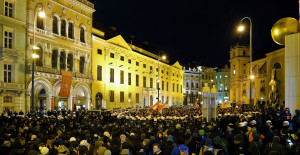
    Image credit: Bwag/Wikimedia.

    Firstly, there is the dominant role the FPÖ already plays in the Austrian parliament. With the help of this central position in national parliament, the FPÖ’s dominance on anti-immigration and Islamophobia issues in the public discourse is uncontested. This is also reflected in policy-making by the ruling parties that attempt to beat the right-wing populist FPÖ by coopting its policy claims. Another reason for the failure of Pegida to mobilize on Austria’s streets was the relative scarcity of individuals capable of mass mobilization outside the spectrum of political parties.

    Similar to Germany, the leadership of Pegida in Austria initially came from the hooligan scene. Although there were some contacts between FPÖ chapters and Pegida and even high-ranking FPÖ politicians participated in the few Pegida marches that only mobilized a few hundred protesters at most, Pegida was not fully supported by the party. The chairman of the FPÖ, Heinz-Christian Strache, even argued publicly: “We are the real Pegida”. Hence, there was no need for a new right-wing movement, goes the logic of the FPÖ. At the same time, Strache embraced the policy claims of Pegida, while clearly stating that these policies had been part of the FPÖ’s program for a long time.

    The FPÖ has been leading in these issues since the 1990s and this has had a lasting effect on the rest of the political parties, especially those in power. The Social Democratic Party as well as the People’s Party, which have both been in power since 2007, have introduced more restrictive policies in the field of immigration, integration, and Islam. And this has shown its effects. For years, the People’s Party has managed to become the first in the polls again, after previously being left behind. A former member of the right-wing populist and leading thinker of the far-right camp, MEP Andres Mölzer, commented on the recent politics of the coalition: “It is very interesting that the Social Democrats and the People’s Party do politics they would have condemned as being racist in the past”. In fact, the current integration law under consideration would introduce a ban of the full-face veil in the public sphere. In addition, the government clarified that it would forbid the wearing of the hijab for Muslim women in the police force, and those working as attorneys in courtrooms.

    Part of a broader trend?

    One could legitimately now ask questions about what the 2016 election, where a far-right presidential candidate was prevented from gaining power, really means for Austrian politics. Considering Trump’s election in the US, an especially pertinent question to ask is if there is some potential for a situation to emerge where those in positions of political power introduce policies in Austria similar to those advocated by Trump in the US. Trump’s racism openly challenges the very foundations of democracy, and yet, as is the case with Pegida in Germany, it managed to mobilize hundreds of thousands of people to protest against this far-right movement. Similarly, Hillary Clinton may have rescued some good politics like Obama’s healthcare, but her presidency would rarely have woken up the people to face the existing problems of racism in the USA. Trump is not a new phenomenon, but rather an outcome of a movement that started long before his rise to power. This is the same in Europe and maybe the risk of having the far right in power will wake people up and force them to reflect upon the normative foundations of their democratic societies.

    Meanwhile, political scientists can observe how formerly fringe positions of right-wing populist parties have become more and more mainstream. In fact, many of the restrictions on immigration, the securitization of Islam, and the cut in social welfare programs have become mainstream politics enacted by so called centrist left- and right parties in power. With this discursive success of right-wing populist politics, one could even argue that their politics can already be seen in many social policies in Western democracies.

    Farid Hafez  Fulbright–Botstiber Visiting Professor for Austrian-American Studies at the University of California, Berkeley. He is a researcher and lecturer at the University of Salzburg, Department of Political Science. Hafez is the founding editor of the Islamophobia Studies Yearbook (www.jahrbuch-islamophobie.de) and since 2015 co-editor of the European Islamophobia Report (www.islamophobiaeurope.com).

  • Sustainable Security in the Arctic

    In 2008, media outlets declared that a new Cold War was unfolding in the Arctic. This story was centred on a small, titanium Russian flag, fixed to the seabed below the North Pole.

    Planted in 2007 by a modest team of explorers and scientists, the flag triggered angry responses from Western politicians and media commentators, with the most vociferous coming from the then Canadian Foreign Minister, Peter MacKay, who declared: ‘This isn’t the 15th Century…You can’t go around the world and just plant flags and say “We’re claiming this territory”’.

    Nearly a decade later, this story remains emblematic of the geopolitical intrigue that refuses to go away in the Arctic, which continues to be stoked by uncertainties over sovereignty, ownership and access in the region.

    Carving up the Arctic, Carefully

    The Arctic Ocean, like every ocean, is governed by the UN Convention on the Law of the Sea’s (UNCLOS) provisions. The US has not ratified this treaty, but considers its provisions relevant as customary international law of the sea.

    Under UNCLOS, the Arctic Ocean littoral states are entitled to Exclusive Economic Zones (EEZ) stretching up to 200 nautical miles (nm) from their Arctic coastlines. Article 234 allows littoral states to develop and administer special regulations dealing with human activities in ice-covered waters. Russia and Canada use this to regulate shipping activity in their Arctic waters through environmental protection measures.

    UNCLOS also entitles a coastal state to extend the outer limit of its sovereign rights over the continental shelf (the seabed and subsoil of submarine areas–including, any oil and gas resources contained) beyond 200nm, if it can prove the shelf is a natural prolongation of the coastal states’ land mass. This has led Denmark and Russia to submit evidence (with Canada expected to follow this year) to the UN to support claims reaching all the way to the North Pole. Norway settled its continental shelf limits in 2009.

    As their claims overlap, the UN Commission on the Limits of the Continental Shelf (CLCS) is responsible for reviewing the evidence and issuing a final recommendation on where the borders should be drawn according to Articles 76 and 77. However, the CLSC has no legal authority or personality meaning it will be up to Canada, Denmark and Russia to reach an international agreement which will settle their claims. Any remaining space will be considered part of ‘the Area’ (see below), and falls under the purview of the International Seabed Authority.

    Although the decision on ‘who owns the North Pole’ will ultimately be determined by an agreement between Canada, Denmark and Russia,wherein lies a latent potential for conflict, the five Arctic littoral states’ public commitment to use UNCLOS as the basis for settling any sovereignty disputes is an important step towards ‘sustainable security’. It will take three to five years just for the CLCS to review the latest evidence submitted by Russia on 9 February 2016.The CLCS is already overwhelmed by the number of applications received globally. Since the prospects for oil and gas development further from shore are still highly uncertain, and claims to the North Pole are primarily symbolic, the CLCS arguably has time on its side.

    As long as the Arctic states maintain their trust in the process, UNCLOS should be able to prevent any ‘race’ to carve up the Arctic seabed, which could lead to tension between the littoral states.

    High Seas and the Area: Accommodating New Interests

    Where UNCLOS reaches its limits is in the parts of the Central Arctic Ocean (CAO), we will be dealing with High Seas,parts of the water column beyond the EEZs of coastal states,and ‘the Area’– seabed areas which cannot be claimed by any state (see map). Theoretically, anyone can fish and mine in these parts of the Arctic, but such activity is likely to be limited for the time being by the continued prevalence of thick sea-ice covering the surface of the ocean (and other environmental factors).

    In another step towards ‘sustainable security’, the five Arctic coastal states have initiated a process to create a governance framework to manage future fishing activity in the CAO.

    In July 2015, the littoral states signed a ‘Declaration’ preventing unregulated high seas fishing in the CAO, and promising to only authorise their own fleets to conduct commercial fishing in the CAO if it was in accordance with recognised international standards.

    The littoral states’ problem is that they do not have the authority to dictate the terms under which the rest of the international community can access CAO high seas fisheries. China’s, Japan’s, Korea’s, Iceland’s, and the EU’s finishing fleets are entitled under international law to fish in the CAO.

    Consequently, the littoral states took another preventative step by calling a second meeting in December 2015, where negotiations for fisheries agreement for the CAO’s high seas was opened up to these other parties. Other nations such as Taiwan are expected to join future deliberations, eventually ensuring buy-in for a governance framework from all nations with an interest in future Arctic fisheries.

    Again, this is a long-term process, providing another example of how governance structures developed now can prevent certain unwanted futures from becoming present, including, for exampletension and conflict over fisheries and continental shelves.

    Navigating Arctic Waters

    Can similar preventative steps be taken to ensure that disputes do not flare up over the problem of maritime activity in the Arctic? There are two issues to address. Firstly, the status of two ‘international straits’ in the Arctic: the North West Passage and the Northern Sea Route. Secondly, the regulating of ice-covered waters in littoral state EEZs as addressed by Article 234 of UNCLOS.
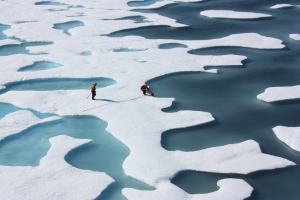
    Science team in the Arctic Sea. Image by NASA Goddard Space Flight Center.

    Science team in the Arctic. Image by NASA Goddard Space Flight Center.

    Canada and Russia do not consider the North West Passage (passing through the Canadian archipelago) and the Northern Sea Route (across northern Russia) to be ‘international straits’. Consequently, foreign vessels have no right of ‘transit passage’ through these waters–a right that entitles foreign ships to pass through without coastal state permission, and foreign submarines may remain submerged. Both countries claim that their sovereignty over nearby islands effectively means these waters should be considered ‘internal waters’, requiring foreign vessels to seek permission before entering.

    The US and the EU contest Canada and Russia’s claims, not least because of concerns about setting a legal precedent that could be applied to more important southerly shipping routes.

    There seems to be little ambition to settle the disagreement, because Arctic transit shipping is still a niche activity. Several uncertainties remain about whether large-scale transit shipping will ever become commercially viable, not least because of the competition posed by more southerly trade routes and the general unpredictability of seasonal sea-ice retreat that makes seasonal passages possible without expensive icebreaker escorts.

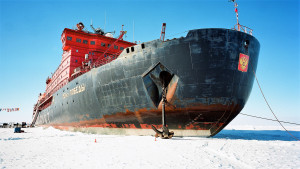
    The problem with the current stance is that Russia is actively investing in icebreakers, port infrastructure, marine services, search and rescue facilities and constabulary forces with the ambition of turning NSR into a viable shipping route. The more Russia builds up infrastructure around the route and offers to accommodate shipping on Russian terms, the greater the historical precedent it will set that the NSR is part of Russian-controlled waters. This feeds Western fears about Russian militarization of the Arctic building a security dilemma.

    While US and EU lawyers might question the validity of such a precedent, the de facto claim will remain and Russia will likely continue resisting attempts to change the status quo. It might therefore be worthwhile considering preventative steps sooner rather than later to resolve the NSR and the NWP’s legal status, before marine activity in the Arctic increases further and positions become more deeply entrenched.

    The issue is complicated by the second issue referred to above–the regulating of ice-covered waters by Arctic littoral states, notably Canada and Russia. As already noted, under Article 234 of UNCLOS, Arctic littoral states are entitled to regulate marine activities in ice-covered waters within their EEZs. Both the NSR and the NWP fall within these provisions, allowing Canada and Russia to regulate marine activity beyond their territorial waters regardless of whether they have the status of ‘international straits’ (see, for example, Canada’s Arctic Waters Pollution Prevent Act).

    So what happens when these waters are no longer ice-covered for a large part of the year? Article 234 indicates that ice-cover must be present for most of the year (i.e. 6 months and one day), while other points of contest exist in determining exactly what is meant by ‘severe climatic conditions’ and ‘exceptional hazards to navigation’ and who would decide whether such conditions prevailed (littoral states, non-littoral states, international organisations?).

    This remains a longer-term issue, but if as most scientists predict the amount of sea-ice cover each year continues to spiral downwards, the issue of whether littoral states can regulate in Arctic waters beyond 12 nm could become a significant point of tension with those seeking to benefit from new opportunities for regional marine activity. Currently, unlike in the cases of fisheries and continental shelves, few preventative steps are being taken to resolve this outstanding issue, despite its potential to cause future confrontation in Arctic waters. The situation is exacerbated by the deterioration of relations between Russia and the West over the Ukraine and Syria crises, likely making dialogue difficult.

    Prospects for Sustainable Security

    On the issues of resource competition and militarisation sustainable security’s prospects, in the Arctic for the most part look good. Since the end of the Cold War, international cooperation on various scientific and environmental protection initiatives have provided the basis for constructive engagement between the Arctic states and other interested actors (such as the UK) on many issues.

    Bilateral and multilateral arrangements have provided a governance structure that all Arctic states, and other interested actors, have indicated provides a firm basis for resolving inter-state disputes peacefully in accordance with international law, especially concerning fisheries and the delineation of the continental shelf. However,access to the NWP and NSR could lead to future contention. Potential flashpoints remain over how regional marine activity should be governed in EEZs where the sea-ice is in fast retreat, especially if Russia and Canada refuse to accept that Article 234 might lose purchase in the future.

    Whether preventative action is politically possible on this issue remains to be seen, but the sooner a constructive dialogue begins between Russia, Canada and potential users of the NWP and NSR, the more likely it will be to find a sustainable solution. Speculatively, an Arctic agreement on shipping activity negotiated under the Arctic Council’s auspices (but accommodating interested non-Arctic states as seen in the fisheries discussions) to complement the International Maritime Organisation’s Polar Code (due 2017) could be one way of consolidating international understanding that these waterways are to some extent shared spaces requiring the international community’s shared stewardship.

    An important dimension of sustainable security not discussed in this state-centric article is that of human security–especially of indigenous peoples and other local communities that live and work in the Arctic. The decline of traditional cultures, environmental pollution and other threats to human health and well-being are prevalent in nearly all of the Arctic states, and there has been a long history of marginalisation of Arctic residents. However, all of the Arctic states have readily admitted the need to address the challenges facing Arctic indigenous peoples and other local communities, and the Arctic Council is somewhat unique to the extent that it invites representatives of indigenous people’s organisations to sit at the table with government ministers.

    The sustainable security outlook is also weaker with regards to climate change. Huge uncertainty remains over how soon we are likely to see an ice-free Arctic in the summertime. The temperature spikes witnessed in January and February this year suggest this event horizon might be closer than we think. The impacts of climate change pose a particular risk to human security in the Arctic, threatening food, housing, infrastructure and livelihoods. It remains to be seen whether these communities will be able to adapt to the drastic changes that are being observed.

    Duncan Depledge is a Teaching Fellow in the Department of Politics and International Relations at Royal Holloway, University of London, and director of the secretariat to the UK All-Party Parliamentary Group for Polar Regions. He received his PhD from Royal Holloway for his research investigating contemporary developments in U.K. policy toward the Arctic.


  • Manchester, the General Election and Britain’s Security Narrative

    Summary

    The appalling attack on concert-goers in Manchester will be the defining news event of the 2017 general election campaign. Yet polls suggest that the attack has not shifted popular opinion in the predictable direction of a “strong” incumbent government characterised by muscular counter-terrorism interventions at home and abroad. After sixteen years of “war on terror” a clear difference has emerged between the leadership of the two main parties on the consequences of this open-ended war. Whoever wins the election, the longer term opening up of space for discussion on Britain’s security narrative can only be good for British democracy and wider security.

    Introduction

    In the middle of April 2017 the British Prime Minister, Theresa May, called a general election when the Conservative Party was more than 20 points ahead of the opposition Labour Party in the opinion polls. Mrs May already had a reasonable working majority in parliament and the election was essentially called over the issue of the Brexit negotiations, the stated aim being to provide a “strong and stable” government before the full negotiations started.

    Given that the Labour Party was riven with divisions over both policy and the leadership, and with leader Jeremy Corbyn widely characterised as unelectable by the majority of the print media, the expectation was that a landslide victory was highly likely. That outcome has diminished during the course of the campaign and at the time of writing (eight days before polling), the Conservatives do seem likely to be returned to power but with a much smaller than expected majority. Even a hung parliament is now regarded by some analysts as possible if rather unlikely.

    Following the Manchester Arena attack this briefing examines the election campaign so far with particular attention to security policy issues and considers whether some of the arguments raised will have a longer-term post-election influence on the debate around security, whichever party wins on 8 June.

    Manchester and after

    Image credit: Pimlico Badger.

    On the evening of 22 May and right in the middle of the election campaign, a bomb was detonated at a popular music concert at the Manchester Arena by a British Islamist of Libyan origins, killing 22 people and injuring over a hundred. Many of the casualties were young girls because the lead performer, Ariana Grande, was particularly popular with such an audience. The attack received world-wide media coverage and was the worst of its kind within the UK since July 2005 when 52 people were killed in four bomb attacks in London on three underground trains and a bus.

    Because of the severity of the attack and the terrible consequences, nation-wide election campaigning was suspended by the main parties for three days, resuming on 26 May. On that day the Prime Minister was at a G7 Summit at Taormina in Sicily and calling for increased support for cyber security, not least in response to terrorism. On the same day Mr Corbyn made a speech in which he suggested that a UK foreign policy involving substantial military interventions across the Middle East, North Africa and South West Asia was not necessarily the right approach and might even increase the risk of attack. The speech was roundly condemned by those of a conservative persuasion, but early opinion polling suggested that Mr Corbyn’s scepticism about the outcome of the war on terror resonates with many voters or, at least, has not been the electoral impediment that conventional wisdom has long assumed.

    Whatever the result of the forthcoming election, the terrible attack in Manchester and the subsequent discussion on how to make Britain more secure will have a long-term impact on security thinking, not just because of this difficult period but more because of a very clear difference that has emerged between the leadership of the two main parties. The Conservative Party has taken a traditional line on the need to maintain strong defences, to work to destroy the main terrorist movements such as the so-called Islamic State (IS) and to increase defence spending, not least in relation to what is seen as an emerging Russian threat. With Britain part of a coalition facing major challenges from IS and from Russia, a re-elected Conservative government is presented as essential.

    This approach is generally popular and would be expected to be a vote-winner, which makes it even more interesting that the Labour Party’s manifesto has put much more emphasis on an increased commitment to peacekeeping, conflict prevention and conflict resolution. Perhaps more significant in the long term was a speech made by Jeremy Corbyn at Chatham House on 12 May. This was his main foreign policy presentation of the whole election campaign – indeed, it followed a long period of near silence from the shadow cabinet on foreign and defence issues – and was notable for taking a very different view to the political norm. His approach was summed up early in the speech:

    “Too much of our debate about defence and security is one-dimensional. You are either for or against what is presented as ‘strong defence’ regardless of what that has meant in practice. Alert citizens or political leaders who advocate other routes to security are dismissed or treated as unreliable.”

    His views on the war on terror were unequivocal:

    “This is the fourth general election in a row to be held while Britain is at war and our armed forces are in action in the Middle East and beyond. The fact is that the ‘war on terror’ which has driven these interventions has not succeeded. They have not increased our security at home – many would say just the opposite. And they have caused destabilization and devastation abroad.”

    Corbyn’s speech represented a radically different position to that of the Conservatives with their very clear approach to international issues encapsulated in that core election theme of “strong and stable”, implying a continuing of the rigorous pursuit of a military victory against IS supported by a robust commitment to a well-funded counter-terrorism system at home. Corbyn’s further speech four days after the Manchester atrocity, while roundly condemning the appalling act, did not stray from the central theme of his Chatham House speech of the urgent need to rethink the UK’s approach to IS and like-minded paramilitary groups.

    In all normal circumstances in the current UK political environment, the government of the day would expect to gain plenty of electoral support for its security posture, and the Conservative government, especially, would expect increased support in the aftermath of the Manchester attack. That may well be the case as the last week or so of the election campaign plays out, but what happens in the longer term may prove to be much more significant.

    Mr Corbyn, essentially, has adopted a very different approach to international security and whether it will open up space for longer-term political discussion may not be dependent on the election result. This is no place to predict outcomes and there are, broadly, three possibilities – Labour gets a disastrous result in line with polls at the start of the campaign and Mr Corbyn stands down; the Conservatives win narrowly in which case he will almost certainly stay; or there is a hung parliament in which case he may succeed in forming a minority administration with a second election in the autumn the outcome.

    In all three cases, including the first, what the Chatham House speech may have done is to open up the debate on UK security in a manner which more truly reflects the unease that many people feel about the approach in recent years to responding to IS, al-Qaida and the like. It is the opening up of space that is significant here, combined with what is clearly the current prospect of very long drawn-out wars from Libya through to Afghanistan.

    Equally in all three electoral outcomes, but particularly the third, a serious reconsideration of the UK’s security narrative would probably receive backing from the other parties of the left and centre. The Greens have a particular interest in conflict resolution. The SNP, though strongly protective of Scottish military units and industries, is overt about combating IS by “more than military means”. The Lib Dems seem torn between counter-terrorism, liberal interventionism and conflict prevention narratives, albeit committed to multilateralism and human rights. There may therefore be something of a consensus across a significant part of the political spectrum that sees itself in different ways as the “progressive” wing of UK politics.

    If IS and like-minded groups were on the verge of a final defeat with no prospect of their being succeeded by other movements, then the current government approach would be largely accepted. Further debate would be unlikely and other approaches to security “dismissed or treated as unreliable” as Mr Corbyn put it.

    There are, though, plenty of indications that IS and the rest are not ceasing to pose a threat to the Levant or the West, the Manchester attack being just one grim example. In Iraq, Mosul has not yet fallen after eight months of intense fighting in spite of the Iraqi government expecting the operation to be finished within three months. In the process, the Iraqi Army’s elite Special Forces have taken severe casualties calling into question the ability of the government to maintain control once Mosul does fall. Elsewhere in central and northern Iraq, the government relies on some very dubious, often sectarian militia allies. In Egypt President Sisi faces a growing IS-linked insurgency, and the Libyan link with the Manchester bomb is a reminder of the parlous state of that country. There remain serious security concerns in at least a dozen countries, not least Afghanistan, Nigeria, Somalia, Yemen, Bangladesh, Thailand, the Philippines and Indonesia. Western coalition states involved in the fight against IS all fear internal attacks.

    Conclusion

    Thus, after more than fifteen years of the war on terror, failed or failing states in Iraq, Afghanistan, Syria, Libya, Yemen and Somalia, close to a million people killed and over eight million people displaced, the argument for some serious rethinking on Western approaches to security is hardly difficult to make.

    This is where Jeremy Corbyn’s Chatham House speech is so significant since it breaks away from a near-universal Western state consensus and may be much more in tune with what many millions of people may be thinking. Whatever the outcome of the general election next week, space has been opened up for much wider debate. Independent organisations such as Oxford Research Group that take a critical but constructive approach to security will have a particular responsibility to aid the quality of that debate.

    Paul Rogers is Global Security Consultant to Oxford Research Group and Professor of Peace Studies at the University of Bradford. His ‘Monthly Global Security Briefings’ are available from our website. His new book Irregular War: ISIS and the New Threats from the Margins will be published by I B Tauris in June 2016. These briefings are circulated free of charge for non-profit use, but please consider making a donation to ORG, if you are able to do so.

  • Religion, Civil War and Peace

    Author’s note: In this article, I use the terms “war” and “civil war” interchangeably. They refer to a contested armed incompatibility involving a government and a non-state actor that generates at least 25 battle-related fatalities annually. Whereas ethnic civil wars refer to those armed conflicts that include ethnic challengers that are at odds with the identity of a state, seek to redefine or divide the state itself, or strive for major changes in their relationship with the state ( see Sambanis 2001).

    Under what conditions can religion play a constructive role in peacebuilding and what are the obstacles to this process?

    Religion, war, and peace are among the “thickest” and multifaceted concepts. Thus, tackling the relationship between them is a daunting task and calls for a greater scrutiny.

    A great deal of existing scholarship on civil war, particularly those statistically examining the effects of various social, economic, and political factors on war dynamics, almost exclusively refer to the term “peace” in the negative sense, i.e., the absence of violence. This “narrow” approach to peace is in part driven by its simplicity that allows for large-n cross-national comparison. While useful in reaching generalizable findings, such an approach could potentially mask the underlying causes of war, preventing us from addressing the root causes of conflict eruption.

    Here I refer to peace in the positive sense, or the absence of “structural violence” that calls for going beyond the mere absence of physical violence and points toward “social justice” (see Galtung 1969). This positive or “quality peace,” in the words of Peter Wallensteen, requires the creation of postwar conditions that not only prevent countries from relapsing back into another episode of violence but also allows for security and dignity for the members of the war-torn society.

    How does religion help or hinder the creation of such circumstances? Under what conditions can religion as a powerful, potent force help reinforce and strengthen peace? What are the obstacles to religion playing such a constructive role in peacebuilding?

    A complicated relationship

    Photo credit (edited): murdelta/Flickr. 

    A number of scholars have identified religion to be the cause of deadlier, longer, and more intractable civil wars (see Svensson 2007; Fox, James, and Li 2009; Basedau et al. 2011). Yet others have drawn attention to “the seeds of tolerance, justice, compassion, and peace” in religious traditions and argued that religion can help bring about peace and democracy (Johansen 1997, 53; see also Appleby 2000; Driessen 2010).  Religion, as Philpott states, “devastates not only New York skyscrapers but also authoritarian regimes; it constructs not only bellicose communal identities but also democratic civil society.” Thus, this group of scholars concludes that religion can also be used in conflict resolution and peacebuilding processes (see Abu-Nimer 2001; Alger 2002).

    These contradictory findings stem from a number of sources. First and foremost, the literature on the relationship between war, peace, and religion often conceptualizes and measures these concepts from different points of view. In addition to the narrow conceptualization of peace noted above, the question of what entails a civil war and how it should be operationalized has caused much controversy. While scholars often agree on what a civil war is, the casualty threshold used to mark the onset of a civil war, ranging from 25 to 1,000 annual battle-related deaths, has resulted in a number of civil war datasets on which most of empirical findings are based, and that are not always comparable.

    Second, the peacebuilding capacity of religion is applied to cases that are not necessarily analogous. For example, as Nichols argues, religious actors played a positive role in bringing about peace in the conflict between the Sandinistas and East Coast Indians of Nicaragua in the late 1980s through helping to develop a common language of conciliation and infusing Christian values into the negotiating process. Appleby, drawing on the case of Northern Ireland, maintains that religious leaders can gradually “saturate” the society by transforming the conflict environment and issues, condemn violence, and thus foster cross-communal cooperation. However, Appleby warns that such an outcome requires special situations characterized by a strong civil society and democratic tradition as well as assistance from the international community. Partly because of the lack of agreement on the casualty threshold noted above, current literature on civil war often treats the case of the Sandinistas vs. East Coast Indians within the broader conflict between Nicaragua under the Sandinistas and Contras, making it a somewhat “marginal” case. Whereas, the Northern Ireland conflict, as Appleby aptly warns, is characterized by some unique characteristics that are that are rarely present in many war-torn countries.

    Third, existing literature is still in the process of identifying the complex and complicated causal mechanisms between religion and peacebuilding. This is in part due to the ambivalent, contextual nature of religion. Religion and politics are connected in complicated ways that make it nearly impossible to disentangle one from another. A religious tradition as Armstrong summarizes is “never a single, unchanging essence that impels people to act in a uniform way.” Instead, religions and religious interpretations “are susceptible to different readings in different contexts and become entangled in or influenced by newer sociopolitical context”. In the context of civil war, religion often becomes a part of the political arsenal to sustain the fight. As religion turns into another instrument of legitimation and mobilization in the hands of political actors it loses its power as a peacemaker.

    Finally, and relatedly, the politicization of religion is most prevalent in ethnic civil wars in which fighters are lined up along identity lines and rebels are by and large secessionist in goals or desires. Therefore, the effect of religion on conflict processes in a case like Chechnya where Muslim Chechens fought destructive civil wars against Russia dominated by Orthodox Christians needs to be distinguished from the role religion plays in ethnic conflicts that involve groups hailing from the same faith, as in the case of Kurds vs. Turkey. While civil war between groups hailing from different faiths can contribute to identity formation in such a way that fuels the violence, war between co-religionists does not necessarily help foster peace. Instead, religion as the common denominator is often subsumed to ethnic, national identities and interests. The war realities often constrain, if not shape, religion, rendering religion an ineffective peacemaker (Gurses 2015).

    Religion and ethnic civil war

    Nicolas Rost and I have shown that due mainly to this “politicization of religion,” the hypothesized peacemaker role of religion does not hold against a global sample of ethnic civil wars. War and country characteristics, rather than shared religion, are better predictors of peace duration after ethnic civil wars. While the peace duration in our study refers to the absence of violence, in further support of studies that have pointed to discriminatory state policies as the culprit behind ethnic civil war onset and recurrence (Cederman, Wimmer, and Min 2010; Gurses and Rost 2013), we found that the level of discrimination faced by members of ethnic groups that rebelled against their government after the end of the war is the most robust predictor of peace duration. Thus, state policies that address the demands of aggrieved minorities and re-adjust their relationship with the state that could make them a part of the system are more likely to help build sustainable peace. Resorting to a shared religion to help reconcile warring groups without addressing the root causes of conflict is more rhetoric than reality.

    Observations 

    • There is a need to clarify the terms in order to delineate the religion-peacebuilding nexus. The terms war, religion, and peace are multidimensional and hence defy reaching a consensus on the exact nature of religion’s relationship with peacebuilding. Avoiding law-like, general explanations is more likely to be fruitful. Just as religion’s role in identity formation varies, so does the role it plays in conflict onset, duration, outcome, as well as building peace in postwar environments.
    • The role religion plays in peacebuilding should be qualified. Religion in conflicts fought over government, also known as ideological civil wars, could take on a dramatically different role than in conflicts involving competing identities which are often secessionist in nature. While it is much easier for religious actors to mediate between warring groups that share the same ethnicity, speak the same language, and believe in the same “God,” their role is likely to be diminished, tarnished by political considerations in situations where protagonists use religion to either distinguish themselves as a group from one another (e.g., Palestinians vs. Israel) or religion as a common denominator ceases to be a marker that separates members of warring groups (e.g., Acehnese vs. Indonesia, 1976-2005; Kurds vs. Turkey, 1984-Ongoing). Thus sharing the same faith in the context of such ethnic civil wars often results in relegating religion to a secondary role as the war dynamics help bring ethnic identities front and center.
    • Sustainable peace requires addressing structural causes of violence. Merely stressing shared faith as a solution to conflict without undertaking reforms that can re-adjust the warring groups’ relationship with the state is not likely to be effective.

    Conclusion

    Religion is a potent force and can serve as a peacemaker. Its role, however, is contingent upon characteristics of the civil war and the nation in question. It is worthwhile to note that “ethnic conflict remains one of the prevailing challenges to international security in our time” and “conflicts that in some way involve an ethnic dimension can be found across each of the world’s continents”. Furthermore, as Fox notes, of 268 politically active ethnic minorities worldwide for the 1990-1995 period, 163 (61%) are not religiously distinct from the dominant group. Gurses and Rost, building on datasets drawn from two different sources, find that in about half of the ethnic civil wars that started and ended between 1950 and 2006 ethnic rebels shared the same religion as the governing ethnic group. Thus, it is essential to differentiate such cases in which religion is likely to be politicized and used as an instrument of legitimation and mobilization than those cases involving groups hailing from the same ethnicity, culture, and faith.

    Still, religion can serve as a peacemaker by injecting “meaning” and repair social ties that were destroyed during the war. Ideally a change of mind should coincide with a change of heart in order to reach positive or “quality” peace. However, given the discriminatory state policies toward ethno-national minorities that account for armed conflict, concrete measures, a change of mind, should precede a change of heart to build and sustain the peace in the aftermath of seemingly intractable ethnic civil wars. Sustainable peace is a dignified peace. Religion can help bring about sustainable peace only after ethnic minorities’ relations with the state are re-adjusted to a degree that minority groups feel secure and certain of their future.

    Mehmet Gurses is an associate professor of Political Science at Florida Atlantic University. He received his B.A. degree in political science and international relations from Marmara University in Istanbul, Turkey, and his doctorate from University of North Texas. His research interests include democracy and democratization, ethnic and religious conflict, post-civil war peace building, post-civil war democratization, Kurdish politics, and the emergence and evolution of the Islamist parties in the Middle East. His publications have appeared in International Interactions, Social Science Quarterly, Civil Wars, Defense and Peace Economics, Democratization, Party Politics, International Journal of Human Rights, Nationalism and Ethnic Politics, Conflict Management and Peace Science, and Political Research Quarterly.

  • Libyan Lessons: Bring back the Responsibility to Rebuild

    The 2011 Libyan intervention and the anarchy which ensued has highlighted an aspect of the responsibility to protect principle that has, to date, been overshadowed by the debates on the use of force; the responsibility to rebuild.

    While the carnage in Syria has dominated policy agendas and newspaper headlines in the recent years, the aftermath of the 2011 Libyan intervention elicited much deserved attention following Obama’s candid review of his foreign policy legacy and, more recently, the UK Foreign Select Committee report on the government’s handling of the intervention. Obama openly accused David Cameron of having become ‘distracted’ over Libya and failing to follow through the military intervention. A similar accusation was levelled against Downing Street by the Foreign Select Committee report on Libya published in August that berated Cameron for having failed to develop a coherent plan for post-intervention Libya. This was evident in the fact that the UK government spending on reconstruction was less than half of its spending on the intervention, the report points out. The report argues further that the intervening governments, with particular focus on Britain and France as the leaders of the intervention, had a distinct responsibility to help to reconstruct the Libyan state. The failure to de-arm and de-mobilise fighters after the ousting of Gaddafi and the subsequent violence rendered the construction of political and economic institutions an impossible task.  Indeed, Libya today has made little headway to becoming a stable state; fighting between militant factions and the emergence of ISIS have left many wondering whether civilians are better off today than they were under the Gaddafi regime.

    The intervention to protect civilians in Libya was hailed by some as an example of successful realisation of the ‘responsibility to protect’ principle that sets out the joint responsibility of states and the international community to protect civilians from so-called atrocity crimes (crimes against humanity, war crimes, genocide and ethnic cleansing). Where governments fail to do so, the international community has the responsibility to assume the duty to protect. The emergence of the principle in the late 1990s and early 2000s stirred much debate. While some rejected it as a thinly-veiled attempt by Western states to legitimize use of force for political purposes, others lauded the principle as a first step in finding consensus on the contentious issue of conducting humanitarian interventions. Libya, as is well-known now, provided few answers to those seeking clarification on issues pertaining to civilian protection and responsibility to protect.

    As I have argued elsewhere, the Libyan intervention has highlighted an aspect of the responsibility to protect principle that has to date been overshadowed by the debates on the use of force; responsibility to rebuild. The responsibility to protect principle was first formulated by the Canadian government-sponsored International Commission on Intervention and State Sovereignty (ICISS). The Commission famously argued in its 2001 report that state sovereignty was no longer an irrevocable right but a responsibility to protect populations from mass atrocities such as genocide and ethnic cleansing. In its initial formulation, responsibility to protect entailed three interlinked duties; to prevent, react and rebuild. While prevention of mass atrocities was the starting point for any government endorsing the principle, rebuilding societies in the aftermath of military interventions was seen to logically follow the ‘reactive’ pillar of the principle.  The rebuilding pillar was seen to consist of providing security in post-intervention states, promoting reconciliation between former enemies and promoting economic development. These measures, it was argued, are crucial for stability and self-sustaining peace in societies targeted by protection interventions.  One of the key aims of the principle was, in other words, to ensure that the need for protection intervention would not arise again as the capacity of domestic authorities to realise their protection responsibility would be augmented through rebuilding assistance.

    This sequential conception of the principle was short-lived, however. While many Western governments were reluctant to commit to costly and often long-drawn out rebuilding missions, some in the Global South saw the notion of responsibility to rebuild as a throwback to imperialist foreign interference. In the light of these and other concerns, the R2P was refashioned along more statist lines; the rebuilding component was dropped from the framework and the responsibilities of states to protect their citizens were emphasised at the expense of the international community’s obligation to protect. This was evident in the 2005 UN World Summit Outcome Document where governments, for the first time, endorsed the R2P principle. This recalibration of the R2P was outlined in detail in the UN Secretary General’s report on the responsibility to protect in 2009. It proposed a three-pronged understanding of the principle, centred on the states’ responsibility to protect their citizens, the international commitment to capacity-building assistance and, finally, the international community’s responsibility to protect. The rebuilding component was, again, notable in its absence; the principle was largely understood in terms of the preventative responsibility of governments. Although preventative and rebuilding measures overlap to a certain extent, lack of attention to specific rebuilding tasks, such as the provision of post-intervention security, was striking in the UN Secretary General’s 2009 report and in those thereafter.

    The Future of the Responsibility to Rebuild

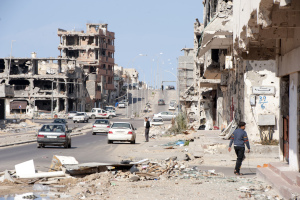
    libya-sirte

    Image by ECHO/DDG/Flickr.

    The Libyan experience indicates that this change in the focus of the responsibility to protect has not been a matter of mere semantics. Although Libyans, eager to take charge of their own affairs after the fall of the Gaddafi regime, rejected plans for UN peacekeepers, they requested capacity-building assistance. Some assistance was provided by the intervening governments – for example the UK government’s Security, Justice and Defence Programme – but on the whole the immediate aftermath of the intervention was marked by the policy of disengagement as Libya observers have argued. The UN reconstruction strategy and donor government policies were premised on the emphasis of domestic ownership, coupled with references to the wealth of the Libyan state that could be utilised for the reconstruction process. It was not until emergence of the ISIS threat in the region that the Libyan authorities’ appeals for assistance gained attention in the Western capitals.

    While it is of course impossible to state with certainty the effects that an alternative course of action (continued engagement in the rebuilding of Libya in the immediate aftermath of the intervention) could have had, it is not hard to see how the rebuilding measures outlined by the ICISS in its 2001 report may have helped to stabilise Libya.  In the absence of the permission to dispatch peacekeepers, more extensive assistance to the Libyan authorities in providing day to day security after the intervention would have not gone amiss. Perhaps more importantly, concentrating international efforts and resources to supporting inter-communal reconciliation would have been vital, given that the precarious security situation in the country following the fall of the Gaddafi regime has been caused by the lack of political solution on how, and by whom, the country should be governed.

    The instability and violence that has plagued Libya since the 2011 intervention suggest that if the aim of protection interventions is to generate self-sustaining peace rather than just carry out regime change operations, re-incorporating the rebuilding pillar into the current responsibility to protect framework is crucial. Doing so would not necessarily mean overhauling the entire principle: many of the measures regarded as ‘pillar II’ responsibilities provide the basis for incorporating rebuilding tasks into the framework. Pillar II, the commitment by the international community to assist the capacity and resilience-building in conflict-affected societies, refers to a range of measures such as fostering dialogue between communities and indigenous conflict resolution skills. Adding measures that address the short-term issues faced by societies in the wake of military interventions would strengthen the pillar and the framework as a whole.  This would inevitably mean increased costs and commitment on behalf of those undertaking protection interventions, something that is likely to be deeply unpopular in the context of the lengthy engagements in Iraq and Afghanistan as well as the increasing pressure on public spending. The alternative, however, as the refugee flows from Libya and the rise of ISIS in the country have shown, may mean having to face even more troublesome questions in the long run.

    Outi Keranen is Teaching Fellow in International Relations at the Department of Political Science, University College London. Her research interests are in post-conflict statebuilding and the responsibility to protect. Her monograph ‘The Contentious Politics of Statebuilding’ (Routledge) is coming out in May 2017. In addition to post-conflict statebuilding, Outi has researched and written on identity-building, symbolic politics and the responsibility to rebuild.

  • Russia’s Dual Policy Towards China in the Arctic

    Authors note: This short contribution is an updated assessment built on a previous article with free access until end of June 2017, among those chosen by Taylor & Francis to commemorate 25 years since the fall of the Soviet Union: http://explore.tandfonline.com/page/pgas/soviet-union-collapse-25-years-on-post-soviet. Tom Røseth, ‘Russia’s China Policy in the Arctic’, Strategic Analysis, 38.6 (2014), 841–59.

    Russia’s policy towards China in the Arctic is pragmatic and opportunistic, and increased collaboration between the two states is expected.

    Russia is destined to be the most significant player in the Arctic. It has the longest Arctic coastline, vast resources and the prospects of a new trade route. China has recently become a key actor in the Arctic. It has displayed an interest in the resources of several Arctic states, an ambition to utilise the Northern Sea Route (NSR), a strong research agenda on climate change in the region and has a permanent observer status in the Arctic Council. How does Russia welcome Chinese interest, and what kind of Russo-Chinese Arctic relationship should other states prepare for?

    Russia has a dual policy towards China in the Arctic. On one hand, Russia’ Arctic focus contains strong security concerns and a sensitivity to issues of sovereignty, which hamper opportunities with China. On the other hand, Moscow seeks to attract Chinese investments integrated in a strategy to promote the region commercially. In short, international euphoria seen 2007-2012 connected to the Arctic as an energy resource base and effective transit route between Asia and Europe has toned down, seeing little Chinese investments and activity. From a long term perspective, Chinese involvement in Russia’s Arctic is expected to raise, depending on continued retracting ice conditions, oil prices, increase infrastructure development and improve Beijing’s developing relationship with Moscow.

    Russia views its own position in the Arctic as privileged. In the Arctic, it has both a “treasure chamber” in the region’s vast resources, and its strong national security interests are protected by the Northern Fleet. Moscow demonstrated, through its Arctic strategies of 2008 and 2013, that developing its Arctic policy is a national priority, with a focus being placed on resource development, ensuring security and stability, developing the NSR and sustainable development. Through Russia’s geopolitical positioning and active Arctic policies, Asian countries such as China depend on the benevolence of Russia if they seek a role in Arctic affairs. China’s growing interest and Russia’s main role in the Arctic makes it paramount to study their relationship in the region, which, by and large, reflects improved general bilateral relations. Scholars tend to inflate Chinese activities and interests in the Arctic by aggregating positive cases over time. However, Chinese interests and expectations in the Arctic actually peaked under the accession process to the Arctic Council around 2010-2013, and then fell as Chinese actors obtained in depth knowledge of climate challenges, sovereignty issues and the lack of infrastructure, combined with hard-hitting external factors in place since 2014, such as low oil prices and Western sanctions over Ukraine. There are three cases which can be raised to illuminate why Russia’s policies towards China show greater potential for cooperation than conflict between the two powers in the Arctic.

    The grounds for Sino-Russian cooperation

    Image credit: Christopher Michel/Flickr.

    First, Chinese scholars and governmental actors had high expectations on shipping along the NSR, which became more realistic around 2013. Chinese commercial actors on shipping have never really embraced the NSR, and performed only test cases of utilizing the route. Currently, the route is important for Russian national shipments, and has the potential to bring resources out of the area both to the East and West. But as a proper transit route its prospects are still limited. Russian Arctic scholars have voiced disappointment on the low level of Chinese infrastructure investments along the route. China might wish for more unrestricted usage without Russian tariffs and special conditions with strict legislation including the exclusive economic zone, but both Beijing and Moscow have common aims in developing and commercialising the route. Russia sees China as a potential partner for making the route more feasible, as long as Beijing does not challenge Russia’s national interests in controlling and regulating the NSR. At the same time, Russia’s renewed focus on military presence in ensuring its sovereignty and security along the NSR indicates a defensive approach moving beyond commercial preparations, and conveys a strong message that it will balance other states’ security interests in the region.

    Second, in its quest to join the Arctic Council as a permanent observer, Beijing overstated the council’s role. While the council is the main forum for arctic affairs – it is not a decision-making body. After being accepted, Beijing seemed bewildered over what to do next and how to make use of this new-won position, treading carefully to see where it could play a constructive role that coincided with its interests. Under the US-chairmanship, China is well integrated into the council’s workgroups. Russia was reluctant to accept China and other applicants that do not border the Arctic as it may challenge Moscow’s position and make the council ineffective. Moscow changed its stance at the Kiruna meeting in 2013, as Canada suddenly changed to a positive position and Russia could not take the cost of standing alone in opposition to Beijing’s accession. Beijing had reassured Moscow over time that its intentions were not to go against Russia’s interest in the Arctic, made formal as the applicants were bound to adhere to the Arctic regime. Russia and China have since cooperated well in the council, and Russia seeks a constructive relationship in the forum, as long as China confines itself to its limited role as an observer and does not challenge Russian interests. The Russia-West conflict over Ukraine brings implications for intergovernmental cooperation although most states have tried to keep business as usual. China joined in a period where some participating states engaged in strong rhetoric over Ukraine, followed by limited cooperation avoiding sensitive issues in the council.

    Third, on Arctic energy, Chinese participation in the Russian Arctic was initially promising, but is now basically limited to the LNG-project at Yamal. The Chinese National Petroleum Company bought 20 percent from Novatek in 2013, with China’s Silk Road Fund acquiring another 9.9 percent in 2015. Other agreed projects between Russian and Chinese energy companies, especially offshore, have been put on hold awaiting a third western partner or higher oil prices. China has capital, but Western companies are main contenders for participating in offshore projects in the Russian Arctic due to their competencies. With the West’s sanctions, deep-water technology is unattainable. Also, Chinese financing is more complicated, as these often were channelled through western institutions. Arctic energy contrasts at the state-to-state level, where Russo-Chinese energy cooperation has turned strategic with large agreements on the delivery of oil and gas to China. Russia’s limited energy cooperation with China in the Arctic is due to more external factors than reluctance towards working with Chinese companies, as Moscow ideally would seek increased Asian investments, to balance Western influence and secure wider marked access and diversity.

    Conclusion

    By allowing China into the Arctic, Moscow signals a willingness to re-evaluate previous positions as it wants to benefit from greater bilateral issues. This change opens up the potential for increased Chinese activity, investments and co-operation in the Arctic. In moving towards a strategic Sino-Russian relationship, more co-operation and Chinese activity is to be expected in the Russian Arctic, as long as China is a proponent of commercial opportunities and does not challenge perceived Russian national interests in the Arctic. Sino-Russian co-operation in the Arctic through shipping, energy projects and investments in infrastructure will incrementally lead Beijing to seek more influence in Arctic matters as it is more affected by it. China’s economic rise might eventually give Beijing leverage over Russia on Arctic matters, as Moscow would become more dependent on Chinese capital and activity to make the region develop. Generally, Russia is initiating a constructive stance on Chinese economic interests in the Arctic, but takes great care in promoting its security interests. Russia’s approach towards China is first and foremost pragmatic, as no special treatment is given to Chinese actors in the Russian Arctic. Russia needs assistance to develop its Arctic and an eastward diversification is opportune both for political support on international issues and economic opportunities. There is therefore a duality in Russia’s China policy in the Arctic, between restrictions connected to security concerns and openness due to commercial interests, which Moscow needs to sort out before embarking a proper strategic relationship with China in the Arctic.

    Tom Røseth is an Assistant Professor at the Defence Command and Staff College, Norwegian Defence University College. His main research areas are Russo-Chinese relations, Arctic security policies, intelligence studies and Russian foreign policy.

  • Unarmed Civilian Peacekeeping

    Unarmed civilian peacekeeping represents both a practical and compassionate response to suffering and violence and challenges the conventional view that peacekeeping can only be effective through military measures.


    What is unarmed civilian peacekeeping?

    Unarmed civilian peacekeeping, also referred to as unarmed civilian protection (UCP), fields trained civilians using unarmed and other nonviolent methods to; protect other civilians from violence, deter armed actors, support local efforts to build peace, and maintain human rights. It challenges the assumption that peacekeeping and civilian protection requires the military and the use of weapons. Over the past 35 years, across the world, unarmed civilian peacekeepers have saved lives and enabled communities to stay at home rather than be displaced, made peace and human rights work more possible, involved more people and taken place in a wider area. UCP includes living with, and in, communities affected by violence, which supports the re-establishment of relationships and communication across divided communities. UCP is a visible, well known and often international presence which deters threats of violence and engages with armed actors about the protection of civilians.

    The term UCP describes a set of activities that civilians undertake including (but not limited to) accompaniment, presence, rumor control, community security meetings, securing safe passage and monitoring (see Schweitzer 2010).

    Why is it important?

    UCP is important because millions of people need protection from violence and human rights abuses across the world, and UCP provides an effective, less costly, way of protecting them. One core element of effectiveness is building good relationships, and Furnari has shown that relationships are considered a critical tool by all peacekeepers.

    UCP challenges the assumption that peacekeeping must be carried out by military actors and is reliant on the use of force by demonstrating, in many contexts and over 35 years, that violence can be prevented and deterred by using nonviolence. We know that this work challenges a widespread assumption that violence will only yield to violence because it demonstrates that violence and threats of violence can be tackled by unarmed trained civilians. This doesn’t mean that UCP will work everywhere. As with all peacekeeping, it works because the armed actors acknowledge the presence of the peacekeepers and, to a certain extent, care about the impact of their actions. Military peacekeeping faces the same challenge.

    UCP is separate to other actors because it does not bring humanitarian aid nor conflict resolution solutions. By maintaining the focus on violence, asking for help from unarmed civilian peacekeepers isn’t related to getting housing or aid, but it is about focusing on security, safety and the creation of mechanisms which will prevent children being abducted, will prevent retaliation attacks by controlling rumors, will ensure community leaders talk to each other to send out a message of peace, or because they request accompaniment to report human rights abuses.” (Schweitzer and Julian 2015)

    How does UCP work?

    nonviolent

    Image by Nonviolent Peaceforce/Flickr.

    UCP is possible when the team members are very visible (a constant presence and observing is known to affect the way armed actors behave) and are known by, and know, everyone involved in the violence and conflict including civil society, businesses, armed actors, peace groups, mothers, youth groups, government, etc. The tools of an unarmed peacekeeper are being well known and their role being understood clearly, a phone so they are able to contact people should anything happen and be easily contacted, a camera to record events, a safe space people can visit, and resourcefulness to keep finding ways to prevent violence. Unarmed peacekeepers live and work with the people they are protecting (not in military barracks) which means they learn about existing community mechanisms and makes them accessible and able to provide a safe space in which new committees, training or meetings can take place.

    There are three main theories explaining how UCP works.

    • Firstly, the unarmed accompaniment by, and presence of, international peace teams deters armed actors from carrying out threats of violence. It is well known that observing armed actors deters them from carrying out violence and it has been used to protect human rights defenders in Colombia by Peace Brigades International (PBI) for 30 years, and none of the human rights defenders receiving protection have been killed, and they have been able to expand their work and support many more in understanding their human rights.
    • The second approach is proactive presence where the unarmed civilians actively seek out the armed actors, and engage with them about their activities and the way they can reduce harm to civilians. This might involve dialogue, training on human rights, being able to contact commanders when early warning signs indicate violence is imminent. It has been used by Nonviolent Peaceforce in Mindanao and South Sudan.
    • The final approach is relationship building. This is identified by Ellen Furnari as an approach that all peacekeepers (armed and unarmed) believe underpins the success of peacekeeping. By building stronger relationships between stakeholders it creates the web that can rebuild trust and peace communities.

    All of these are used together and in every place where UCP is used around the world it is always context specific. It is adapted and developed by the people who work on the ground.

    How do we know it works?

    Over 35 years there have been team reports, evaluations, research and stories which show that the work and protective presence of unarmed, trained civilians have saved people’s lives and prevented violence. For example in Mindanao the Nonviolent Peaceforce international protection team were a part of the official ceasefire monitoring process and have, in part, been credited with the success of the ceasefire lasting because the local community were very involved, good relationships were established and because the unarmed peacekeepers live in the affected communities, they are able to respond very quickly to violations and investigate incidents. In Guatemala, PBI created space for human rights defenders to work more widely with people because they could travel to remote areas. Accompaniment deters the violence but the work is led by the local people.

    In South Sudan IDP’s have been protected in their camps through the patrolling and interpositioning of unarmed civilian peacekeepers, including unarmed peacekeepers refusing to stand aside when threatened with a gun and saving women and children inside a tent. Women who we’re being raped by soldiers were protected by accompanying the women as they collected water and the commanders of the soldiers were engaged.

    In Sri Lanka in 2008 in Valaichennai violence was prevented from spreading when networks and re-established relationships meant that opposing groups refused to allow the other to be bombed in an emerging dispute. The Nonviolent Peaceforce UCP team had been Valaichennai for 5 years and built up relationships with a group of traders representing different conflict groups. In previous years, when violence flared up in a nearby town it had spread to Valaichennai. In previous events one group of traders shut their shops when they were warned about attacks on the others, meaning attacks on the other side didn’t harm them. This time the traders agreed that if they were warned to shut their shops, all of them would remain open instead, and this action, combined with the presence of unarmed civilian peacekeepers on the street, the UCP team were able to ensure that rumours were controlled and leaders of the armed groups were kept informed about the action which stopped the violence spreading and threats issues to people and livelihoods.

    The growth of UCP in policy and practice

    As well as the local impact on individuals and communities UCP has been discussed in high level political and policy arenas. The High level panel report on Peace Operations includes the recognition that unarmed strategies must be considered. The UN Women Global report specifically includes the benefits of UCP, and the sub-committee on civil crisis management of the German Parliament held an expert hearing on UCP in 2016. UCP is now taught at UNITAR and at universities in the UK, Canada and the USA.

    As the International Community (in its broadest sense) seek innovative solutions to address the ways in which conflict and violence are entwined with global challenges of poverty and climate change, UCP is creating an alternative paradigm for the ways in which we engage with armed actors and understand the cycle of violence, outside of the military. UCP has steadily grown over the past decades and there is now a research agenda and growing interest in policy, so it’s use is expected to increase. For example the newly established international UCP Research Network links established and new researchers in this field and have their next face to face meeting in June 2017.

    UCP is a form of peacekeeping which causes us to question our assumption that peacekeeping is a military activity. If we are serious about preventing violence and protection of civilians we need to have a range of tools available to us. UCP shows that armed actors are susceptible to the presence of trained unarmed civilians and will change their behaviour, that communities understand what protection is required and that we do not need the military and weapons in order to ‘keep the peace’. UCP offers an approach which challenges the increasing focus on the need for ‘robust’ peacekeeping and shows that we do have alternatives.

    Further reading and information

    Wielding Nonviolence (2016) by Ellen Furnari (Editor). This book is collected research on case studies of South Sudan, Israel-Palestine, Colombia and Mindanao.

    Organisations practicising UCP

    There is a continuum of organisations, from an unarmed military, governmental organisation (OSCE) and civil society. The core innovation and development of UCP has taken place in civil society and here are nine main organisations whose work fits the two principles of nonviolence.This list is not exhaustive and does not include national and local projects. The full extent of UCP practice is not yet known, but anecdotal information indicates many communities create self-protection mechanisms.

    Peace Brigades International

    Nonviolent Peaceforce

    Meta Peace Team

    Witness for Peace

    EAPPI

    Operation Dove

    Fellowship of Reconciliation

    Swedish FoR

    Christian Peacemakers team

    Guatemala Accompaniment Project

    Dr Rachel Julian has been working on UCP for 15 years with Nonviolent Peaceforce, as researcher, facilitator on the course by UNITAR and has presented on UCP internationally. She is Senior Lecturer in Peace Studies at Leeds Beckett University.

  • Privatising the War on Drugs: PMSCs in Colombia and Mexico

    Privatising the War on Drugs: PMSCs in Colombia and Mexico

    US drug policy has become increasingly privatised in recent years as the US government contracts private military and security companies (PMSCs) to provide intelligence, logistical support and training to state security forces in drug-producing and –transit states. As the cases of Colombia and Mexico illustrate, this privatisation strategy is having a damaging impact on these already fragile environments.

    Read Article →

  • Greener Cities: what we can do

    Green cities smallA recent article on this website entitled The United States, Niger & Jamaica: Food (In)security & Violence in a Globalised World explored some of the possible links between climate change, food insecurity and violence. Many current articles in the media warn of growing food insecurity as global warming and climate change have devastating effects on crops, livestock and even fisheries. A piece in yesterday’s Guardian states that if extreme weather becomes the norm (which it has) then “starvation awaits”.

    Although it is important to recognise that climate change is real and that it is a threat to global security, we should seriously start to focus on what we can do to affect change. Integral to a sustainable security approach is to tackle and address the long-term, root causes of insecurity and conflict. This can easily seem like a daunting task, especially when it concerns “big issues” such as climate change. There are however many things that can be done: some on a policy level, and others on a community level.

    A recent report by the UN Food and Agricultural Organisation (FAO) draws the attention of policymakers to “urban and peri-urban horticulture, and how it can help to grow greener cities in Africa” because “production of fruit and vegetables in and around urban areas has a clear comparative advantage over rural and other sources in supplying urban residents with fresh, nutritious – but highly perishable – produce all year round. It generates local employment, reduces food transport costs and pollution, creates urban green belts, and recycles urban waste as a productive resource.”

    The FAO report says that by the end of this decade, 80% of the world’s fastest growing cities will be African and as more and more people are moving from rural to urban areas in search of a better life, African cities are finding it hard to cope: “more than half of all [African city] residents live in overcrowded slums; up to 200 million survive on less than US$2 a day; poor urban children are as likely to be chronically malnourished as poor rural children”. The report, which draws its conclusions and recommendations from 31 country case studies, suggests that across the Africa continent 40% of residents in cities already have home gardens and “most of these urban farmers are able to meet their nutrition needs and still produce enough to sell in markets”. The commercial production of fruit and vegetables provides livelihoods for thousands of urban Africans and food for millions more. But unfortunately market gardening has grown with little official recognition, regulation or support.

    One way to address food insecurity is definitely to help those most affected by price volatility of food become less dependent on the free market. Formally and institutionally encouraging people to grow some of their own food seems like a great idea, not only for African cities, but for people around the world. London has many community gardens to “support and advocate for food producing gardens and their role in individual and urban food security”.

    Anna Alissa Hitzemann is a Peacework with Quaker Peace and Social Worker, currently placed with the Sustainable Security Programme at Oxford Research Group.

    Image source: Gates Foundation