Blog

  • US Military

    US Military

    A new security paradigm: the military climate link

    Paul Rogers | openDemocracy | August 2009

    Issue:Climate change

    Tags:US Military

    SustainableSecurity.org Associate Editor Professor Paul Rogers’s latest article for openDemocracy highlights the fact that many leading military analysts in the United States are increasingly alert to the link between security and climate change. If, at the same time, these analysts could expand their view of whose security is at risk, the policy consequences could be immense.  Read more »

  • Sustainable Security

    Geneva II: Prospects for a Negotiated Peace in Syria

    The recent announcement that the so-called Geneva II conference would finally convene on 22 January 2014 is overdue but good news. What are the chances of it bringing peace? With an interim deal signed on Iran’s nuclear programme, Richard Reeve discusses what chance the great powers, Middle Eastern diplomats and the mediators of Geneva have as they turn their attention to ending the war in Syria.

    Read Article →

  • Climate change

    Climate change

    Climate change is high on both domestic and international political agendas as countries face up to the huge environmental challenges the world now faces. Whilst this attention is welcome, less energy is being focused on the inevitable impact climate change will have on security issues. The well-documented physical effects of climate change will have knock-on socio-economic impacts, such as loss of infrastructure, resource scarcity and the mass displacement of peoples. These in turn could produce serious security consequences that will present new challenges to governments trying to maintain stability.

    Climate Funding: Creating a Climate for Conflict? Insights from Nepal

    Janani Vivekananda | Exclusively written for sustainablesecurity.org | October 2010

    Issue:Climate change

    Exclusively written for sustainablesecurity.org

    During a recent field trip to mid-monsoon Nepal, stories of floods affecting vulnerable communities across the country dominated the  daily headlines. At the same time, international donors are pouring in funds in an attempt to help the vulnerable cope with the  impacts of climate change we are already feeling. Last week, the Adaptation Fund, a fund set up by the UN to help poor countries  cope with the impact of climate change, became operational. But are these funds helping – or are they contributing to the problem?


    About the author: Janani Vivekananda is a senior advisor on climate change and security at international peacebuilding organisation International Alert.

    Image Source: TheDreamSky

    Read more »

    Weather as a Weapon: The troubling history of geoengineering so far.

    James Rodger Fleming | www.slate.com | September 2010

    Issues:Climate change, Global militarisation

    Taken from the article:

    Global climate engineering is untested and untestable, and dangerous beyond belief. The famous mathematician and computer pioneer John von Neumann warned against it in 1955. Responding to U.S. fantasies about weaponizing the weather and Soviet proposals to modify the Arctic and rehydrate Siberia, he expressed concern over “rather fantastic effects” on a scale difficult to imagine and impossible to predict. Tinkering with the Earth’s heat budget or the atmosphere’s general circulation, he claimed, “will merge each nation’s affairs with those of every other more thoroughly than the threat of a nuclear or any other war may already have done.” In his opinion, attempts at weather and climate control could disrupt natural and social relations and produce forms of warfare as yet unimagined. It could alter the entire globe and shatter the existing political order.

    Article Source: Slate

    Image Source: Klearchos Kapoutsis

    Read more »

    Military Aviation and the Environment: Why the Military should care

    Ian Shields | Exclusively written for sustainablesecurity.org | September 2010

    Issues:Climate change, Competition over resources, Global militarisation

    Ian Shields writes exclusively for sustainablesecurity.org:

    “The impact of the civil airline industry on the environment is well documented, but what is less well considered is the impact of the military sector. This article will identify three key areas where military aviation has a major impact on the environment, and suggest mitigation policies for each: hydro-carbon use, ground contamination and noise.”

    About the author: Ian Shields is a retired, senior Air Force Officer and now a respected commentator on Defence and security matters, particularly with relation to Air and Space Power. He holds an MA from KCL, and MPhil from Cambridge and is presently undertaking a PhD in International Studies, also at Cambridge. He can be contacted via his web-site, www.ian-shields.co.uk

    Image source: chanelcoco872

    Read more »

    The Great Transition

    Issues:Climate change, Competition over resources, Marginalisation

    Humanity appears caught in a trap with no way out. ‘Business as usual’ is no longer an option. However, halting and reversing our consumption of more and more ‘stuff’ appears likely to trigger a massive depression with serious unemployment and poverty. This is certainly true if all we do is ‘apply the brakes’ without fundamentally redesigning the whole economic system.

    Attach PDF: 

    So what’s wrong with the MDGs?

    Dan Smith | http://dansmithsblog.com/ | September 2010

    Issues:Climate change, Competition over resources, Global militarisation

    This week’s UN summit will call for a big renewed effort to achieve the Millennium Development Goals. But there are reasons for starting to think a bit further ahead. A new report from International Alert asks us to get ‘beyond the MDGs”.

    At a launch meeting a couple of weeks back in London, the moderator – the BBC’s Bridget Kendall – asked the report’s lead author, Phil Vernon, “You clearly seem to have a problem with the MDGs – what’s that about?

    Article source: Dan Smith’s blog 

    Image source: Meanest Indian

    Read more »

  • Israeli know-how helping to combat hunger in Africa

    Israeli know-how helping to combat hunger in Africa

    Danielle Nierenberg & Janeen Madan | WorldWatch Institute | December 2010

    Issues:Climate change, Competition over resources

    Israel has been a leader in developing innovative drip-irrigation systems that reduce the amount of water needed for farming.

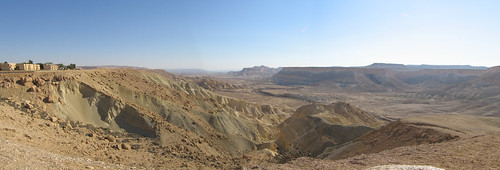
    Most of Israel is arid, with the Negev Desert spanning 60 percent of the country. Desertification, water scarcity and soil erosion makes it increasingly difficult to farm, endangering the livelihoods of those who depend on agriculture for both food and income.

    But Israel is not alone in facing these challenges – dry lands cover 47% of the Earth’s surface. With 60% of the world’s food insecure people living in dry areas, desertification and poverty go hand in hand, particularly in sub-Saharan Africa.

    But the simplest techniques can go a long way in strengthening food security, increasing incomes and improving the livelihoods of millions of people.

    Israel has been a leader in developing innovative drip-irrigation systems that reduce the amount of water needed for farming. Today, these innovations are empowering farmers in the dry Sahel region across sub-Saharan Africa to combat problems of water scarcity.

    One such example is the Family Drip Irrigation System (FDIS), developed by the International Program for Arid Land Crops at Ben-Gurion University of the Negev, in partnership with Israeli irrigation company Netafim (owned by three kibbutzim – Hatzerim, Magal and Yiftah – and two private equity funds – Markstone Capital and Tenne).

    FDIS is a simple irrigation technology, which is combined with gravity-powered low water pressure. The Foreign Ministry is partnering with local government agencies and NGOs to introduce FDIS in countries across Africa to deliver the advantages of drip-irrigation to small farmers at low costs.

    Dov Pasternak, a professor from Ben-Gurion University, and director of the International Center for Research in the Semi-Arid Tropics, developed the Africa Market Garden concept, which provides farmers with the tools to improve their livelihoods.

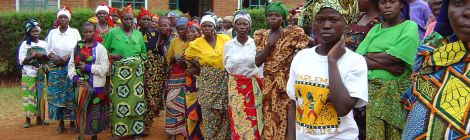
    In Niger, women in Tanka village are using low-pressure drip-irrigation systems to grow okra, tomatoes, eggplant and other vegetables. The women work together in a cooperative, meeting monthly to decide how the garden should be run. They manage their own plots, but share skills, tools and water with one another. By selling their vegetables at nearby markets, these women have tripled their incomes, enabling their families to eat better and their children to attend school.

    Based on the Africa Market Garden concept, MASHAV, the Foreign Ministry’s Center for International Cooperation, has developed Techno-Agriculture Innovation for Poverty Alleviation, or TIPA, a simple, innovative technique, which it is introducing in semi-arid regions in countries, such as South Africa and Senegal. The TIPA concept consists of a cooperative of approximately 100 farmers, based in a five hectare area, where farmers manage their own plots installed with the FDIS.

    In South Africa, the Israeli Embassy has worked with Ikamba Labantu, a local NGO, to introduce TIPA in the Eastern Cape, one of the country’s poorest provinces. This system enables farmers, who were otherwise at the mercy of the region’s erratic rainfall, to plant crops four times a year, leading to a 400% increase in output. And in Senegal, the embassy is collaborating with World Vision and Green Senegal, two NGOs that have worked with Senegalese Water Services to introduce TIPA in communities in the area of Bembay and Thies.

    Israeli institutions are leading the way by showing that sharing expertise and replicating innovative strategies can be a powerful tool in helping to sustain livelihoods of small farmers in dry areas.

    In addition to international partnerships, cooperation at the farmer level also gives power to small farmers by allowing access to a larger group and a stronger voice. There are numerous innovative projects being developing by research institutions, universities, NGOs and farmers groups worldwide that are helping to guarantee stable incomes, and alleviate hunger and poverty.

    As the overuse of scarce resources continues and pressures brought about by climate change intensify, we must ensure that successful innovations are replicated and scaled-up. These simple, yet innovative techniques give small farmers the skills and tools to improve their livelihoods, and can have a significant impact on alleviating hunger and poverty.

    Danielle Nierenberg is co-director of the Worldwatch Institute’s Nourishing the Planet project. Janeen Madan is a food and agriculture research intern with Nourishing the Planet. (www.NourishingthePlanet.org)


    Article Source: WorldWatch Institute

    Image Source: GregTheBusker

    Comments

    Post new comment


  • Sustainable Security

    Drones continue to play important roles in conflicts around the world. In Africa, drones have been tested for civilian projects, but they have been largely absent from miltary operations. But will this always be the case?

    With the enormous role drones have started playing in conflict areas around the world, it would not be unreasonable to think that, by now, African skies would be buzzing with them. There are many drones being tested for civilian projects in Africa, but for military purposes they are largely absent. Rather than being drones developed in Africa, these eyes in the skies can be traced back to French or American origin, with the occasional imported Chinese drone buzzing by. Why is this? Time for a short assessment on the state of drones in Africa and the challenges that lie ahead for local development and use of military drones.

    Doing Good

    Large parts of Africa are signified by vast distances and large swaths of difficult terrain combined with a lack of infrastructure. No wonder, then, that drones, with their ability to glide in a straight line over the jungles, hills, rivers and deserts for hours on end, have been considered part of a solution to many of Africa’s problems.

    And they have solved some problems. Drones keep an eye out above herds of elephants and rhino’s in order to stop poaching, they help farmers tend their crops, and they deliver blood and medicine to remote hospitals. Even Facebook is using drones to bring internet to dark spots in Sub-Saharan Africa. So what about military purposes?

    Security in Numbers

    Africa’s security problems are heavily influenced by the aforementioned geographic factors. Securing remote villages is an incredibly difficult task. International crime organizations, guerilla movements, and terrorist groups can all cross the long porous borders that many African countries have, only to disappear in enormous areas of seemingly impassable terrain. For security too, the surveillance capabilities of drones can be very beneficial to African states. This idea is supported by UN peacekeeping chief Hervé Ladsous, who expanded the use of drones to peacekeeping missions throughout Africa after testing them above the rainforests of the Democratic Republic of Congo.

    But aside from the UN, a few African states have taken control of their own drone deployment. Using the US Department of Defense categories, which separates drones according to their performance and capabilities, we can summarize the state of drones in Africa as follows:

    • Not one country on the African continent uses drones that have medium altitude, long distance capability, such as the Reaper or Predator drone.
    • Currently, 14 of 54 African states have used so called ‘Tactical’ drones, meaning drones that have low altitude and low endurance. These are mostly used for intelligence, surveillance and reconnaissance, such as the Scan Eagle.
    • Algeria, Tunisia, Egypt, Ethiopia and South Africa have claimed that they are now developing their own drones. South Africa is the only African country with a significant history of developing and deploying them.
    • Egypt, Nigeria and South Africa now have drones with lethal capability, while more states seek to acquire them. Egypt and Nigeria bought these from China, South Africa developed an armed version of its Seeker 400 line.

    For security, then, the use of drones is expanding too, but overall, drone acquisitions remain relatively limited. It might be tempting to explain this lack of wide-spread drone use by pointing to the idea of a cash strapped African government, but the real reason lies with the way in which the money is being spent.

    African Ways
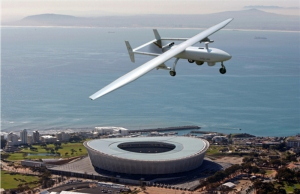
    a_seeker_400_drone-_manufactur

    Image by Times Asi/Wikimedia.

    Military budgets throughout Africa have been expanded significantly in the past eleven years, only to be interrupted by low oil prices. According to SIPRI, Chad and Uganda recently invested in Russian MiG fighter jets, Ethiopia purchased 200 Ukrainian T-72 tanks, and Somalia and Nigeria invested in tanks, planes, armored vehicles and fighter jets. Interestingly enough, investments in military drone systems are largely absent, even though these systems are providing a growing tactical advantage for modern armed forces. Armed drones have seen a particular use in intrastate conflict as their loitering and intelligence capabilities enable forces to effectively monitor areas for insurgents. This choice for conventional weapons can be explained in part by the different solutions African governments have for conflicts, compared to the West.

    According to Prof. Ralph Rotte of the Aachen University, conventional weapons are favored over drones because they are better suited to the ways African governments fight civil wars. Western warfare is usually done by destroying the enemy while winning the ‘hearts and minds’ of the local population. This occurs less often in African civil wars, where military forces focus on outmaneuvering and disrupting each other in order to sap morale and willpower, only to incorporate the exhausted enemy in a system of patronage. This kind of low-intensity fighting does not require the destruction of troops or long-loitering surveillance capability through highly advanced technology. Hence, drones have taken a backseat in military spending in favor of small arms and conventional weaponry.

    Even in the few cases where African countries have tried to employ drones, a lack of maintenance, and limited institutional capability for intelligence sharing have grounded the few drones they had. This restricts the capability African states have in terms of tracking and identifying the locations of terrorist organizations such as Boko Haram, AQIM, ISIS and Al-Shabaab, which subsequently impacts the fight against these terror groups.

    No wonder, then, that Western states have stepped in the counter-insurgency vacuum with their own drones. France now operates drones from Chad, Nigeria and Mali, and the United States (US) flies them from 14 locations throughout Africa, while in the process of constructing a drone base with a 100$ million dollar price-tag in Niger. But the Western drone-monopoly will likely not be a permanent fixture of Africa.

    Drone Troubles

    Despite the shamble state of African drones, it is only a matter of time before they do become widespread and used effectively by African governments. As mentioned previously, five African nations are already developing their own. Several others, such as Algeria, are looking to acquire armed drones from China.

    Interest in using drones in Africa is growing, and the US has recently adopted a joint-statement together with 40 other countries on drone-exports, which will smooth the export of drone-technology. Even if Washington demands high regard for human rights from the countries that seek to acquire armed drones, Beijing won’t. Proliferation, then, either via import or local development, is bound to continue.

    That drones still have a future in Africa is exemplified by Nigeria as well, which, after having its Israeli drones grounded by corruption, and its Chinese drone crashing while carrying missiles, finally committed a successful drone-strike on Boko Haram.

    With the advent of African drones, the flaws of drones will also become a risk to security in Africa. The US has set dangerous precedents with its seemingly unlimited, obscure extra-judicial executions. In fact, UN Special Rapporteur Christof Heyns has warned that US drone strikes are undoing 50 years of international law. African states might be tempted to follow Washington’s lead, sending drones to neighboring states to stop those groups that abuse porous borders, without risking the lives of their own military forces. In turn, this cross-border activity might exacerbate conflict between states. Sounds farfetched? Just a few weeks ago India attacked terrorists in Pakistan-occupied Kashmir, with the help of a drone. This surgical strike worsened the already poor relationship between the two countries.

    Though current advanced strike-capable drones are reliant on a complex technological infrastructure, including satellites, and thus limit the number of States able to use them, other developments in the defense industry are focused on making smaller tactical drones capable for either armed use, or use them as loitering munitions that turn into kamikaze drones. These types of drones are more accessible for States that do not rely on high-tech networks to deploy them.

    It’s also not difficult to imagine what armed drones can do in the hands of oppressive governments. If Barack Obama can take out people without due process, there is no reason why the likes of Omar al-Bashir or Robert Mugabe cannot do the same to their political opponents under the guise of “security”.

    Then there is the question of whether drone-strikes can bring long-term security. New evidence suggests that more innocent civilians are being killed by drone strikes, and that communities are getting traumatized en masse. This might actually lead to an increase in militancy and terrorist activity, and thus only exacerbate the problem. African governments will have to be able to avoid the trap of drones as an ‘easy solution’, in order for drones to become a positive addition to stability and security.

    Drone Danger Ahead

    Drone development and imports are set to rise across Africa. With time, and through cooperation with the West and China, African military forces might develop the necessary technical know-how, organization and doctrine to deploy drones effectively. Because of the drone’s unique features, they might contribute greatly to security and stability across Africa.

    But there is also an incredible risk of escalating conflict if drones are used wrongly. The low threshold for use of force that armed drones bring, combined with the cross-border nature of criminal and terrorist organizations in Africa, can pit countries against each other if drones are used recklessly in each other’s territory. Drones might also appeal to African states that seek to eliminate rebels or dissidents, without full realization that drone strikes can actually worsen a conflict both internally and with neighboring states.

    The current use of drone strikes by the West sets the precedent for future abuse by African governments. The recent Joint Declaration on use and export of armed drones contains too many caveats, and the only African countries to sign it were Nigeria, Malawi, South Africa and the Seychelles. China was not a signatory to this declaration, even though it is the largest exporter of armed drones to Africa. Therefore, it’s imperative that the West becomes transparent about its use of drones, and that it (re-)establishes judicial norms and boundaries through which states can hold each other accountable. Stronger export control regimes, that include China, will be essential too. This will be necessary to prevent drone-chaos that we might otherwise see unfold in Africa in the near-future.

    Foeke Postma works for PAX, a Dutch peace organization, focusing on the subject of drones and the proliferation thereof. He holds a MSc degree in Conflict Analysis & Conflict Resolution from George Mason University, and a MA degree in Conflict Analysis & Mediterranean Security from the University of Malta.
  • Sustainable Security

    This post is based on Paul Rogers’ Monthly Global Security Briefings for Oxford Research Group and was originally posted  on 31 July, 2014. At the time of writing (31 July), Israeli Operation Protective Edge had exceeded the previous major operation, Cast Lead of 2008-9. Both operations have involved intensive use of air strikes combined with major ground incursions. The current war is already longer than the 2008-9 war, with no end in sight. Indeed, by the end of July, positions were hardening and prospects for anything longer than brief further humanitarian pause seemed remote. This briefing provides some context for the conflict together with a preliminary analysis of possible consequences.

    The War So Far

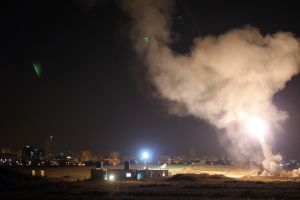
    Iron Dome in Operation Protective Edge Source: Wikipedia

    Iron Dome in Operation Protective Edge Source: Wikipedia

    The current war started on 8 July with intensive Israeli air and artillery assaults on Hamas paramilitary targets, intended primarily to destroy or greatly limit the Hamas ability to fire unguided rockets over much of Israel. In spite of the level of force used, the rocket fire continued, amidst growing concern within the Israeli Defence Forces (IDF) that paramilitaries had constructed many more infiltration tunnels than had been realised. A ground assault followed the initial air assault, with this being intended to destroy rocket launch facilities and stores and also interdict tunnels. As a consequence of this assault, the IDF suffered many casualties, including the deaths of 13 men from the elite Golani Brigade in a single day (20 July). Even after 10 days of conflict, with intensive IDF operations against the infiltration tunnels, Hamas paramilitaries managed to get under the border and in a brief attack killed five young IDF sergeants on a leadership training course. One Hamas paramilitary was killed but others appear to have returned to Gaza. Over the course of the war so far, Israeli forces have struck at over 3,700 targets in Gaza while more than 2,700 rockets have been launched by Hamas and other groups from Gaza towards Israel. The death toll among Palestinians exceeds 1,350 and is rising markedly each day. At least 6,000 people have been injured. Israel has lost 56 soldiers and three civilians, and more than 400 soldiers have been wounded. On 31 July, the 24th day of the war, Israel announced the calling up of a further 16,000 reservists, to bring the total call-up to 86,000. There has been considerable controversy over the numbers of civilian casualties in Gaza, especially the hitting of schools, hospitals and a market. UN figures indicate that at least 70% of those killed are civilians, and nongovernmental international support for Hamas has increased substantially. Public opinion in Israel remains very strongly in favour of continuing the war as a means of stopping the rockets and destroying the infiltration tunnels.

    Support for the Adversaries

    Hamas: In the past three years, Hamas has lost much of its international support from governments in the region, even though Gaza has existed in what amounts to an open prison controlled by Israel. The Egyptian government of President Sisi is strongly opposed to the Muslim Brotherhood and regards Hamas as a part of this wider movement. The consequent near-total closure of the common border with Gaza and the control of access tunnels has had a marked economic effect on Gaza, exacerbating its siege status. Furthermore, Hamas’s support for Islamist paramilitaries in Syria has lost it the support of the Assad regime in Syria and, to an extent, of the Iranian government. The recent rapprochement between Hamas and Fatah survives, if currently strained, but causes the Israeli government considerable concern. In spite of all the limitations, Hamas’s paramilitary wing has been able to assemble many thousands of rockets and mortar rounds and has also built a network of robust infiltration tunnels that has greatly exceeded Israel’s pre-war estimates. Hamas as a movement retains considerable support in Gaza, with even the impact of the Israeli air and ground assaults having little effect. Israel: Israel retains a measure of support of many western governments but there are growing concerns at the civilian losses in Gaza. The IDF and the defence industry as a whole have very close connections with their US counterparts. The key missile defence system, Iron Dome, is essentially a US-Israeli joint production, including current plans to set up a new production line in the US. Israel is also able to use US munitions stored in Israel. The US is in a position to put very heavy pressure on Israel but is deeply reluctant to do this at present, mainly because of domestic support for Israel. This support remains high but is declining

    Cast Lead and Protective Edge

    Both the 2008-09 and 2014 Israeli operations have had similar aims – to so damage Hamas that it is massively restricted as a threat to Israeli security. A comparison of the operations so far is indicative. Cast Lead lasted 23 days and ended with a ceasefire brokered largely by Egypt. During that period, Hamas and other groups launched 750 rockets and mortars, all relatively short-range. Israelis lost 13 lives, four of them to friendly fire. Israel killed 1,440 people in Gaza, claiming that half were militants, though Hamas denied this. Since the 2008-09 operation, Israel has deployed the Iron Dome system, and this has intercepted the great majority of approximately 2,700 rockets and mortars fired during Protective Edge.  Hamas has, though, hugely increased its capabilities over the past six years, in spite of its recent political isolation, and has exacted a much higher toll on IDF soldiers during the current ground assault than in 2008-09: 56 so far compared with 13 before. In this sense, the aim of Cast Lead – to substantially degrade Hamas’s crude offensive systems – was a singular failure. Even with the Iron Dome system, vulnerabilities have been demonstrated by the closure of Ben Gurion Airport to several international carriers for several days last week, following a rocket which penetrated the missile shield and landed within a mile of what is Israel’s gateway airport. The loss of so many Israeli soldiers may still seem small compared with the huge losses in Gaza, but the IDF is held in very high regard in Israel.  Indeed, support for the war has likely increased because of these losses and the partial closure of the airport. These appear to have combined to convince many Israelis that, though Hamas is weak and hugely restricted in its location, it represents such a threat to Israel that a protracted war is, if need be, fully justified. The phrase “impregnable in its insecurity” has sometimes been applied to Israel and it is useful in understanding the outlook of a very powerful country that still feels vulnerable.

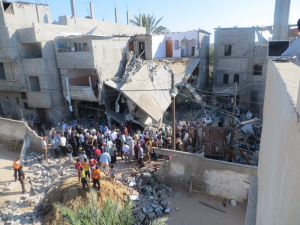
    The home of the Kware' family, bombed by IDF forces. 8 civilians, including 6 minors, were killed. Gaza, 8 July, 2014. Source: B’Tselem

    The home of the Kware’ family, bombed by IDF forces. 8 civilians, including 6 minors, were killed. Gaza, 8 July, 2014. Source: B’Tselem

    What Now?

    At the time of writing (31 July) it is possible that another humanitarian pause might be agreed and might lead to something more substantial. Assuming that this does now happen, the indications are that the IDF will continue its operations to destroy rockets and tunnels, and Hamas paramilitaries will resist. Given the IDF casualties to date, a pattern is likely to emerge in which urban counter-paramilitary operations will prove both difficult and costly, and the IDF will rely much more on its huge firepower advantage. This is very much what happened with US and coalition forces in Iraq from 2003, and even more so with the Israeli siege of West Beirut in 1982 when at least 10,000 people were killed, the great majority of them civilians. It is already evident that targeting has moved on to the more general Hamas infrastructure, but the very nature of the densely populated Gaza Strip means that the infrastructure for the whole community is also hugely affected. Given the existing impoverishment of the area, the human consequences will be severe, as UN staff have been pointing out repeatedly.

    Consequences

    In all of its operations against Hamas – Cast Lead in 2008-09, the more limited air assault in 2012, and the current war – Israel has sought to severely damage Hamas’s paramilitary capabilities, and decrease its domestic support. In the first two conflicts that objective was not achieved, and it is unlikely that Israel’s current operation will succeed this time around. In spite of Hamas’s greater international isolation, its paramilitaries have this time had a substantial impact on the IDF, and the movement retains domestic support. Moreover, international public opinion has moved heavily against Israel. One of the major changes in comparing the current war with the two previous wars is that the use of social media has hugely expanded, resulting in graphic images being distributed across the region and beyond in near-real time. One effect of this, in turn, is that the more conventional western media reporting is itself becoming more graphic. In spite of a very efficient Israeli information operation, this change is working against Israel’s interests. It also means that Islamist propagandists across the Middle East and beyond are easily able to present the war as a further example of “Zionist aggression”. Indeed, they will also relentlessly point to close US-Israel links, further developing their long-term image of a “Crusader-Zionist war on Islam”, in spite of Secretary of State Kerry’s undoubted personal commitment to achieving a ceasefire. The long-term consequences of this are difficult to read, but could give a boost to radicalisation well beyond Israel and the occupied territories. That alone is an added reason why a ceasefire at the earliest opportunity is not only desirable but essential.

  • Women debate a new way forward for the World’s financial system

    Women debate a new way forward for the World’s financial system

    Ruth Sunderland | The Observer | October 2009

    Issue:Marginalisation

    Many in the west are blind to the fact that poverty and social injustice create a breeding ground for conflict. “An Iraqi youth recently said to me that if he and his family were hungry and he couldn’t get a job, he would go to fight with whoever will pay him. Wars are not only about armies and bombs, but about economic instability.”  This is the view of Zaib Salbi, founder of Women for Women International.  She is one of more than 1000 female activists, business leaders and politicains attending the Fifth International Women’s Forum for the Economy and Society in Deaville October 17/18 2009.

    Read the full article here.

    Comments

    Post new comment


  • Sustainable Security

    Security Sector Roles in Sexual and Gender-based Violence

    Democratic Republic of Congo’s sexual violence epidemic is not only a weapon of ongoing violent conflict but an expression of entrenched systemic problems. Indeed, sexual and gender-based violence (SGBV) is most commonly perpetrated by the security services in place to protect civilians. In Quartier Panzi in South Kivu province, innovative processes of security sector reform and strengthened police-civilian channels of communication may be providing an opportunity for change, argues World Bank adviser Edward Rackley.

    Read Article →

    The Costs of Security Sector Reform: Questions of Affordability and Purpose

    In considering security sector reform, questions of affordability have often been subordinated to questions of effectiveness and expediency. A recent series of reviews of security expenditures by the World Bank and other actors in Liberia, Mali, Niger and Somalia has highlighted several emerging issues around the (re)construction of security institutions in fragile and conflict-affected states.

    Read Article →

    Countering Militarised Public Security in Latin America: Lessons from Nicaragua

    Facing a myriad of public security challenges that have provoked some of the highest indices of crime and violence in the world, authorities in Central America have followed a variety of different responses, ranging from repressive and reactive policies to grass roots prevention. Of these approaches, the Nicaraguan National Police’s Proactive Community Policing model stands out due to the results it has achieved. In the second of our two-part discussion, ‘Countering Militarisation of Public Security in Latin America’, Matt Budd explores the lessons that Latin American countries can extract from Nicaragua’s unique approach to public security.

    Read Article →

  • Sustainable Security

    This article was originally published on openSecurity’s monthly Sustainable Security column on 29 May, 2014. Every month, a rotating network of experts from Oxford Research Group’s Sustainable Security programme explores pertinent issues of global and regional insecurity.

    First Lady Michelle Obama holding a sign with the hashtag

    First Lady Michelle Obama holding a sign with the hashtag “#bringbackourgirls” in support of the 2014 Chibok kidnapping. Posted to the FLOTUS Twitter account on May 7, 2014. Source: Wikipedia

    The abduction of over 200 school girls from Chibok has radically changed not only the popular profile of the Boko Haram insurgency but also the narrative of the war in northeast Nigeria. This was probably not intended by the insurgents or the ham-fisted Nigerian government, neither of which seemed to recognise this apparent gear-shift in the insurgency. After this fumble, it was civil society, through the #BringBackOurGirls social media campaign that picked up and ran with the call for action. Now that the US and its allies have channelled this urge to “do something now” into security assistance, caution is due in monitoring how and why the energy from this new burst of liberal interventionism will be channelled.

    Responding to Chibok

    Boko Haram has a long and undiscriminating record of terrorist violence. My analysis of data compiled by Nigeria Watch suggests that about 9,000 Nigerians (including combatants) have died in related violence since 2009, most of them since the federal government declared a localised state of emergency a year ago. That rate has been rising fast; 1,043 were recorded killed in March 2014 alone. Nevertheless, the 14 April Chibok mass abduction and Boko Haram leader Abubakar Shekau’s subsequent threat to forcibly marry pre-teen girls to his supporters or sell them into slavery were extraordinary, crossing multiple red lines around protection of civilians, girls’ right to education and sexual violence.

    The #BringBackOurGirls campaign has tapped into a social movement last and best exploited through the Stop Kony 2012 viral video campaign. That campaign influenced the African Union to establish its Regional Cooperation Initiative for the Elimination of the Lord’s Resistance Army (LRA) in April 2012 and was a major driver of post-facto public support for the Obama administration’s October 2011 commitment of US special forces to Uganda and central Africa to hunt LRA leader Joseph Kony. Those troops remain in four countries and haverecently been reinforced. Kony has not been caught but the LRA menace to children, women and other civilians has been contained and reduced.

    The state-level response to Chibok has been belated but even stronger. Since 7 May, the US, UK, France, China and Israel have all sent teams to Nigeria to help search for and rescue the abducted girls, and France has hosted a summit of Nigeria, its four neighbours and the US, UK and EU. In fact, all these states already played a role in training, equipping or supporting Nigerian forces against Boko Haram. However, they were reluctant about going public with a counter-insurgency campaign previously linked to the increasingly unpopular and divisive ‘war on terror’, the toxic human rights reputation of the Nigerian security forces, and an entirely reasonable confusion over the political nature and linkages of the ostensibly Islamist rebellion.

    Response and replication

    Whether this foreign assistance is useful in the search for the missing girls is both highly questionable and a moot point. The US certainly has formidable aerial, satellite and signals reconnaissance technology to employ but it is struggling to coordinate with Nigeria, and unwilling to share raw data with the Nigerian security agencies. Other countries’ contributions probably only replicate Nigerian and US capabilities, and risk over-complicating the search.

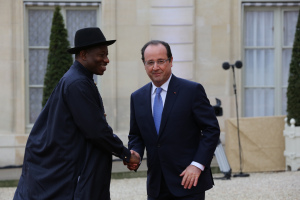
    French President Francois Hollande greets Nigerian President Goodluck Jonathan. Source: France Diplomatie (Flickr)

    French President Francois Hollande greets Nigerian President Goodluck Jonathan. Source: France Diplomatie (Flickr)

    The French summit on 17 May was a classic case of replicating initiatives in order to bolster perceptions of French concern, consultation and action. Nigeria, which desperately wants to revel in its new status as Africa’s economic superpower, was humiliated that Paris – Abuja’s great rival for influence in West Africa – assumed its regional leadership role. The summit outcome commitments to bolster security cooperation in the Lake Chad basin replicated those that Nigeria and its neighbours had already made. Those sanctioning Boko Haram replicated UN-led measures.

    The Elysée Summit was more useful in redirecting attention to the gendered aspects of Boko Haram’s campaign of violence, issues of particular importance to the EU and the UK, whose Global Summit to End Sexual Violence in Conflictconvenes on 10 June. Both sides of the conflict have made tactical use of abducting and (separately) raping women and children linked to the other side as a means of exerting pressure or retaliation. Nigerian security forces and their civilian allies increasingly harass local women suspected of working for the militants. Boko Haram is accused of abducting girls and women to marry to its young, poor male combatants. Shekau has put his view on video record that girls above puberty should not be educated. This may be the most convincing explanation for the Chibok kidnapping: women as an economic and sexual resource.

    Intervention narratives

    The goal of securing the safe release of the abducted girls – and the security of their peers – must be paramount at this time. But, if the foreign assistance being pledged and provided makes little impact on this task, we must ask whether there are other goals motivating western governments to cooperate with Nigerian forces. Clearly, the political urge to assuage activists by responding with action is one of these, although we should not doubt that the Obama or Cameron families share the revulsion of other families around the world united behind #BringBackOurGirls.

    The social media shaming of the Nigerian and foreign governments’ inactivity and inability to resolve the crisis has propelled foreign military forces across the rubicon. US, and perhaps British, French, Canadian, Israeli and other states’, special forces and reconnaissance aircraft and drones may stay on in Nigeria well beyond the current abduction crisis; this should not be surprising.

    French forces are currently consolidating their redeployment from coastal Africa to a string of remote bases in Mali, Burkina Faso, Niger and Chad. Their main base in N’djamena is just 40 km from Boko Haram’s stronghold in northeast Nigeria. US special and private military forces operate covertly in most countries of the Sahel-Sahara belt. Until this month, Nigeria appeared to be the exception.

    The quiet reinforcement of these several thousand French and US troops across the western Sahel since 2012 – linking up to similar strings of mostly US bases in the eastern Sahel and Horn –is justified through the on-going international campaign against al-Qaida. US African Command openly uses the Operation Enduring Freedom tag for its operations in the Horn and Trans-Sahara. In Mali, Niger and Mauritania, French forces have joined battle against the al-Qaida in the Islamic Maghreb (AQIM), an Algerian-origin group with regional aspirations. Yet Boko Haram is rather different. While it professes a common Salafism, it is not an al-Qaida affiliate and appears uninterested in controlling territory or attacking state assets outside of Nigeria.

    This matters in the Nigerian context for two reasons. The first is in the way that the humanitarian impulse of #BringBackOurGirls – which diplomats can recognise as Protection of Civilians, Responsibility to Protect, or Ending Sexual Violence – shades into the realities of the war on terror. I would count four or five distinct narratives used to justify foreign military interventions in the last 15-20 years:

    1. Liberal interventionism – following the ostensibly humanitarian urge to protect civilians and uphold human rights, notably in Kosovo and Sierra Leone.
    2. The War on Drugs – an old idea reinvigorated with Plan Colombia in 1999.
    3. The War on Terror – the idea that homeland security begins abroad, notably in Afghanistan, but lately in Yemen, Somalia, Pakistan, Mali and elsewhere.
    4. Proliferation of WMDs – actively in Iraq, and as a threat to Iran, Syria and others.
    5. Protection of civilians – controversial used to pursue regime change in Libya, less so in pursuit of Kony thereafter.
    U.S. President George W. Bush and British Prime Minister Tony Blair at the White House, July 2003. Source: White House (via Wikipedia)

    George W. Bush and Tony Blair at the White House, July 2003. Blair’s enthusiasm for foreign military intervention changed in tone after the 9/11 attacks on the US. Source: White House (via Wikipedia)

    Clearly, there are overlaps; the Bush administration’s Axis of Evil concept linked state sponsors of terrorism and WMD. ‘Narco-terrorism’ links the wars on drugs and terrorism. Whatever their muddy political and religious ideologies, Kony and Shekau do lead terrorist movements. With the failed war on terror increasingly unpopular among a cynical and war-weary populace, the post-2011 shift back to humanitarian criteria completes the circle back to liberal interventionism.

    While applauding the global public’s shift from retribution to humanitarianism, we should be wary of politicians’ and generals’ intent in getting involved in northern Nigeria. The signs are that future ‘humanitarian’ interventions will be fought with the tactics of the war on terror, minus its rhetoric. Perhaps we should call these ‘Protection from Terror’ operations?

    Self-fulfilling prophecy

    If this shift in narrative represents the new Anglo-American take on intervention, the second reason for concern about the international fallout from Chibok is the Nigerian and French imperative to rebrand Boko Haram as part of al-Qaida. Nigeria’s successful addition of Boko Haram to the UN Security Council’s Al-Qaida Sanctions Committee list on 22 May was a step in this direction. For Abuja, this may help to isolate Boko Haram and justify the disastrous escalation of the war since France pushed AQIM and its allies out of Mali in early 2013. For France, it creates a common bond and removes a potentially powerful voice of dissent in the AU and regional organisations about its own military presence in the Sahel.

    Yet al-Qaida, for all its strategic interest in Nigeria’s 90 million Muslims, has shown little interest in Boko Haram and its use of indiscriminate violence against mostly Muslim civilians. Boko Haram has, in rhetoric and action, showed limited interest in a wider struggle beyond Islamicising Nigeria. It almost certainly has links to AQIM and splinter groups in Mali and Niger but these are not obviously strong. Al-Qaida and Boko Haram are not natural bedfellows, but post-Chibok dynamics, including US and Israeli military in northern Nigeria, are pushing them together, potentially consolidating a regional insurgency that is as much anti-western as anti-Nigerian.

    Richard Reeve is the Director of Oxford Research Group’s Sustainable Security programme. He has researched African peace and security issues since 2000, including work with ECOWAS and the AU. His most recent security briefing ‘The Internationalisation of Nigeria’s Boko Haram Campaign’ is available here. 

  • Sustainable Security

    This content is password protected. To view it please enter your password below: