Blog

  • Sustainable Security in the Arctic

  • The Iran Interim Deal: Responses, Potential Impacts, and Moving Forward

    The Iran Interim Deal: Responses, Potential Impacts, and Moving Forward

    Implementation of the interim deal with Iran, which freezes the country’s nuclear enrichment in exchange for limited sanctions relief, began in January. As a result, we are witnessing a substantial shift in diplomatic relations between Iran and its regional neighbours – some positive, some not. This deal marks a significant step for the international non-proliferation regime, but will it achieve the trust and confidence-building goals intended? As the US and Iran face increasing domestic pushback on the terms of the agreement, questions remain on the interim deal’s impact on relations in the region and abroad, and the effect these relations may have on the prospects of coming to a full comprehensive follow-up agreement between Iran and the P5+1 countries.

    Read Article →

    Sustainable Security and the Challenges of 2014

    2014 is a time for looking backwards and forwards. While the dynamics of the war on terror are still very much in play, the withdrawal from Afghanistan and the re-escalation of violence in Iraq and Libya present an opportune context for sincere reflections on the disastrous consequences of war without borders. Such inquiry needs to look forward too, to the implications of the current administration’s ‘war-lite’ and the unstoppable proliferation of remote control technologies.

    Read Article →

    What next for Iran? Foreign Policy after a Nuclear Agreement

    If Iran and the P5+1 succeed in negotiating a robust agreement on the nuclear issue, then Iran will be less preoccupied with rebalancing its relationship with antagonistic western powers and its role in the Middle East and the wider region has scope for developing in many new directions. This briefing looks ahead to a post-agreement environment and assesses where Iran might chose to concentrate its resources. A key question is whether it will work to build better links with the US and selected European states or whether it will be more interested in the BRIC and other states, not least Turkey. Its choice will be influenced strongly by domestic politics and the urgent need for a more stable region.

    Read Article →

  • A top-down approach to sustainable security: the Arms Trade Treaty

    A top-down approach to sustainable security: the Arms Trade Treaty

    2012 has been hailed as a potential landmark year in the push for greater regulation of the global trade in conventional arms. After more than a decade of advocacy to this end, negotiations took place throughout July towards the world’s first Arms Trade Treaty (ATT), which is intended to establish the highest possible common international standards for the transfer of conventional weapons. However, although significant progress was made during the month of intense negotiations, the ATT is not yet open for signature. In this article, Zoë Pelter explores what role a potential treaty – if reopened for further negotiation – could play in a move towards sustainable security.

    Read Article →

  • Nitrogen: a driver of global food insecurity?

  • Countering Militarised Public Security in Latin America: Lessons from Nicaragua

    In our two-part discussion ‘Countering Militarised Public Security in Latin America’,  Sarah Kinosian and Matt Budd explore the roots of the increasing trend towards militarisation of  public security across Central and South America and ask what lessons can be learnt from alternative methods. Part 1 is available here.

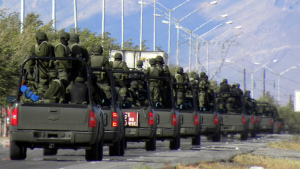
    Armed forces being transported in Mexico, where they are being used to fight the 'war on drugs'. Source: The Daily Gumboot

    Armed forces being transported in Mexico, where they are being used to fight the ‘war on drugs’.
    Source: The Daily Gumboot

    Over the past decade there has been a sharp and sustained increase in crime and violence across Central America. Fuelled by a rise in organised crime, the growth and expansion of domestic gangs, poor socioeconomic conditions and State institutions lacking in terms of their capacity and territorial coverage, crime and violence have rocketed. Homicide rates, taken as the main measure of insecurity in public debates in the region, have soared. In the Northern Triangle, where socioeconomic conditions and institutional capabilities are generally worse, a figure of 85.5 per 100,000 inhabitants makes Honduras the most dangerous country in the world, whilst figures of 34.3 and 41.5 for Guatemala and El Salvador place them within the upper echelons.

    In response to public and media pressure, there has been a notable tendency to resort to militarised responses focused on reactionary and repressive policies that seek immediate short-term results. This is particularly true of the Northern Triangle countries, which have an established history of involving the military in public security tasks. In El Salvador, following the ‘New Dawn’ campaign (Campaña Nuevo Amanecer), initiated in 2009 to reinforce security in response to the high incidence of crime, 39% of the Armed Forces are currently involved in public security tasks. This involves, for example, their collaboration in patrols to increase security in border areas and unofficial border crossings, the provision of perimeter security in penitentiary centres, and task forces that carry out patrols, apprehensions and joint operations with the national police. In Guatemala, the assistance, collaboration and coordination of the Armed Forces in public security has been further institutionalised through the Protocol for Inter-institutional Action, which regulates these activities. This approach is perhaps best epitomised, however, by the case of Honduras. Characterising a lack of political will to fully engage in the long and difficult task of reforming and developing existing police institutions, Honduras has placed its military at the centre of public security, and, with the recent creation of the Military Police of Public Order, located within the Ministry of Defence, a permanent policing role has effectively been handed to the institution. As such, prevention and reconciliation often take a back seat behind reactive and militarised approaches.

    A better way?
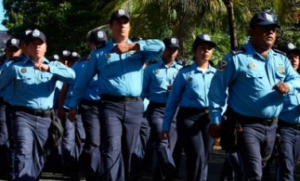
    Nicaragua National Police

    Nicaragua National Police
    Source: Insight crime

    While Nicaragua does not depart from this pattern of engaging the Armed Forces in public security tasks[1], the government has simultaneously invested in the long term development of a policing model that stands out due to its grass roots focus on prevention, and for the results it has achieved as a consequence (in 2010, in Panama, it was pronounced as the best in the region by a panel of public security experts). Closely linked to the Sandinista Revolution out of which it grew, Nicaragua’s community policing model has developed through a process of continual reform in the light of the identification of good police practice. As such, what began as a routine focus on community relations has since developed into a model characterised by broad and deep relations between the community and the police. These permeate not only the actions of individual police officers, but also guide the structure, organisation, deployment and entire philosophy of the institution. This is combined with a proactive focus on attention, which involves the continual identification of social factors driving crime and insecurity combined with the constant evaluation of police competencies to respond to them. By monitoring the relationship between security phenomena and police competences in an anticipated rather than reactive fashion, it allows for a concerted analysis, and response to, the conditions and circumstances that are driving crime and insecurity.

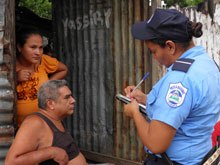
    The decentralised approach of the Nicaraguan National Police (PNN) is one of the keys to its success. It places emphasis on the local drivers and manifestations of both local and national security challenges. It does this by establishing broad and permanent channels of communication with the community, both through participation in community assemblies and maintaining direct links with local residents. One such example is the use of heads of sectors specialised in public security. They are police that are located in a particular territorial area, and their functions include cultivating close community ties through activities such as frequent door-to-door visits to speak to local residents.

    Similarly, the Social Prevention of Crime Committees, which are made up of 40,000 members, and the Cabinets of Citizen Power, which number 143 across the country, also provide a direct link with the community. Amongst their functions, they organise assemblies, work with local public and private institutions to find solutions to security problems, and collaborate on working plans to prevent crime.  These fluid links with the community allow the police to cultivate a close and trusting relationship with them, gain an understanding of the security perceptions of local residents and actors, and extract useful information regarding crimes, particularly regarding drugs, robberies and violence between groups of youths. Community policing therefore provides police with a specialised knowledge of the local situation and the drivers of insecurity.

    Tackling social drivers of crime
    http://www.policia.gob.ni/prensa_nota4.html

    On patrol in the community
    Source: Policía Nacional de Nicaragua

    The prevention of crime requires targeting the social conditions that cause it and instead, cultivating conditions which reduce it. In order to achieve this, the PNN has created specialist bodies that focus on two major causes of insecurity: youth violence and intra-family or sexual violence (20% of crimes).

    Specialised Police Stations for Women and Children were created as specialist units for prevention and attention to victims of intra-family, psychological or sexual violence. To combat these problems, attention is focused on the particular drivers of these forms of violence: the economic and social vulnerability of women and children, the attitudes of males in the community, and the lack of comprehensive victim support, which contributes to an unwillingness to denounce such crimes. Work is therefore carried out in a 3 stage response:

    1)      Transformation of the local environment, using education and training in detection and response to increase awareness of the problems and how to report them;

    2)      comprehensive victim support, through a leading role in coordinating with NGOs, health centres, shelters for victims, state institutions etc,  in the provision of health, psychological and legal support, in addition to the investigation and prosecution of crimes;

    3)      and empowerment of women and children through vocational training and education.

    By combining an understanding of local conditions driving insecurity with an integral response to them, the Police are better placed not only to respond to manifestations of intra-family violence, but to also reduce occurrences through preventive measures.

    The Directorate of Youth Affairs uses the same logic in its attention to at-risk youth, those with established links to gangs, or those who have previously been incarcerated. Through a highly personal and humanistic approach, it seeks to change the attitudes and values of these young people, increase their bonds with the local community, and create opportunities for them to reintegrate into society. Recipients begin by making a commitment to change and handing over any weapons they possess, with social and psychological support applied within the family environment to deal with personal issues, such as low self-esteem or personal identity. Training and education programmes are provided through private and public scholarships, as well as through the National Police’s Centre of Youth Training and Development, through which they gain skills to assist them in finding employment, and that contribute to the development of their community. Recipients also engage in community leisure and social activities and are assisted in finding work as part of their social reintegration. As a result, the number of gangs recorded in Managua has decreased from over 200 to approximately 20, according to the PNN, with a total of 42 gangs registered across the country in February 2012, and reductions in gang-related crime have been registered in neighbourhoods such as Bello Amanecer. By engaging in prevention programmes that focus on those conditions that drive youth into gangs and violence, and by coordinating these programmes within the family and community environment, the PNN has developed a model that seeks to reduce crime and insecurity in a sustainable and long term manner.

    Lessons to guide police reform in Latin America

    Whilst the contextual origins of the model and the particularities unique to each country would make attempts to duplicate the model in the region futile, the Nicaraguan model provides a number of clear lessons that can be extracted. At the foundation of each of these lessons is the community-police relationship, which has come to permeate throughout the institution and its programmes. It acts as a tool to both gain an understanding of the underlying drivers of insecurity and to provide a comprehensive response to them, through a combination of preventive strategies and comprehensive victim attention programmes. While the efficacy of involving special military units to target particular security challenges should not be negated, the benefits of a police force with strong community roots and a community policing philosophy are clear. For lasting gains to be made, these lessons, together with those to be extracted from other successful experiences in the region, should underpin reform processes.

    Matt Budd is a security analyst at RESDAL (Red de Seguridad y Defensa de America Latina – Latin American Security and Defense Network) in Buenos Aires, where he focuses on public security issues in Central America. Matt holds an honours degree in International Relations from the London School of Economics. Matt has most recently been working on RESDAL’s  Public Security Index, which provides information on public security challenges and institutional responses to them in Central America.


    [1] The Armed Forces of Nicaragua engage in a range of public security tasks, including rural security, border security, protection of the coffee harvest, and tasks against organised crime and drug trafficking.

    Featured Image:  Policeman consulting with a member of the local community in Managua, Nicaragua. Source:  John Holman, YouTube

  • Weavers of Peace: The Higaonon Tribe in the Philippines

    The Higaonon, an indigenous tribe in Northern Mindanao in the southern Philippines, have preserved an ancient system of conflict resolution which has enabled them to be a truly peaceful community. However, there is a need to ensure that this knowledge is not lost in the future.

    The Higaonon described as “people of living mountains” and “people of the wilderness” are one of the lumads (indigenous peoples) in the mountainous areas of Northern Mindanao in southern Philippines, who have resisted assimilation or acculturation, with their traditional systems, practices, beliefs remaining relatively intact (Tri-people Consortium for Peace, Progress and Development in Mindanao, 1998).

    They have continuously lived as an organized community on communally bounded and defined territory, and have, under claims of ownership since time immemorial, possessed customs, traditions and other distinctive cultural traits. They are one of the indigenous people (IPs) recognized as the true natives of the islands, who at one time occupied and controlled a substantial portion of Mindanao and Sulu archipelago (Tri-people Consortium for Peace, Progress and Development in Mindanao, 1998).

    Mercado (1998) has argued that unlike the early IPs who embraced Christianity, the lumads have retained their original primal religion because they refused to accept either Islam or Christianity at the early times of colonization. Though a Christian sect penetrated the  communities in Bukidnon in 2007 and baptized at least 50 members from a tribe in Kagahuman area, these members still practice their original religion while at the same time joining weekly worship with their Christian group.
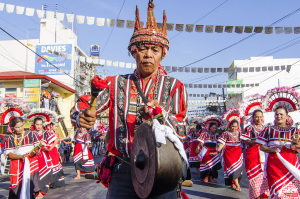
    Higaonon at Kaamulan Festiva 2016. Image credit: Costantin Agustin.

    One of the indigenous practices that the Higaonons have retained up to this day is their system of conflict resolution, locally called paghusay (meaning “to settle”). With its tribal council composed of a Supreme Datu (chieftain), 11 delegates, 3 baes (women delegates), and 25 alimaong (tribal police), they resolve all kinds of conflicts as long as they take place within their jurisdiction. Cases that reach the tribal authorities for possible resolution include thievery, fighting, murder, misunderstandings, adultery, land conflicts, contempt against rituals and conflicts involving rebels.

    The ability of the Higaonon to effectively solve internal conflicts has led to them being described as a genuinely peace loving community and the “weavers of peace“.

    Cases of Higaonon Tribal Conflicts: Adultery and Land Disputes
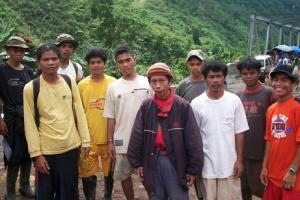
    The Alimaongs of the tribe (tribal soldiers). Image credit: Primitivo III Ragandang.

    Adultery and land disputes are the most prevalent form of conflict in the tribe and are often the root causes of other conflicts. For instance, misunderstanding, fighting, and even murder are sometimes due to adultery and disputes concerning the land.

    Concerning adultery, the tribal chieftain has said that the practice is considered a serious crime in the tribe because the Higaonons believe that it actually brings bad luck. During a wedding, the datu (the one performing religious duty as the Babaylan of the tribe), inculcates in the couple’s minds the sanctity of marriage, which would become impure when a wife or a husband practices adultery (personal communication, May 24, 2008).

    Though pagduway (or having two wives) is allowed in the tribe, the consent of the original wife is required; otherwise, the husband could not engage in duway (have two wives). A man intending to have two wives must see to it that he can afford to provide the basic needs of his wives and their children. However, the respondents revealed that there was no such case when a wife allowed her husband to have two wives; there were reported cases of adultery instead. These cases of adultery led to lido or war between families. This was due to the fact that the Higaonons are by nature protective of their family.

    Thus, in cases like this, the wrongdoers disrespect their own families and the family of the betrayed partner. The Higaonons believe that in due time, the spirits of their ancestors would punish them, thus “magabaan” (cursed). As an old Filipino remarked, “kay ang gaba muduol dili magsaba” [bad karma comes without warning]. Gaba is quite similar to the doctrine of karma in Hinduism and in Buddhism. It is also similar to the biblical doctrine of reaping what one sows and is considered a form of immanent justice (Mercado, 1993).

    As to conflicts involving lands, the Higaonons consider the soil not just their material property. It is actually regarded as their life and part of their legacy from their ancestors. They inhibited over 150 hectares of lands in Bukidnon Province with the boundaries marked by either a tree alone or by just a butig (big stone). Even if the original occupant of the land is not occupying or tilling the territory, the land can no longer be owned by anybody else.

    Today, the Higaonons do not have land titles. Fortunately, the chieftain commented that the Impahanong Amosig Higaonon Tribal Community Organization (IAHTCO) through the National Commission on Indigenous Peoples-10 (NCIP-10) is actually working towards the grant of Certificate of Ancestral Domain Title (CADT) for the Higaonons. Chapter 2, Section 3 (c) of the IPRA Law of 1997 referred CADT to a title formally recognizing the rights, possession and ownership of IPs over their ancestral domain.  The lack of clear boundary usually led to conflicts between the Higaonons in the tribe who own adjacent land. It is really a source of conflict when somebody extends his boundary.

    The Higaonon’s System of Conflict Resolution
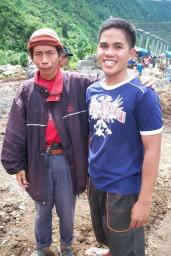
    A tribal chieftan. Image credit: Primitivo III Ragandang.

    The Higaonon tribal council inherited the procedures of resolving conflicts from their ancestors who bestowed it through stories alone. Through stories, the procedures were transferred from generation to generation. Even up to the present, they do not have any written documents about their system of resolving conflicts, yet they are assured that their tradition and culture will continue. According to one member of the tribal council, “even my four-year-old son knows what are to continue in the tribe. We told them stories of our tradition before bedtime and in the morning too. They also witness the rituals in the tribe.”

    The process of conflict resolution starts with the submission of the case to a member of the tribal council who is delegated in a particular area. A complaint may be lodged in the house of the datu or wherever the complainant meets him. Moreover, lodging a complaint can be done anytime of the week. Wherever disputes arise, especially concerning a single or a particular group of individuals only, the council waits until someone refers the case to them for possible resolution. However, in cases where the general population is involved, the council acts right away. It is a traditional practice which actually best describes the principle of motu proprio (by one’s own motion or initiative).

    Cases like rebels threatening the people and destroying their properties, or a drunkard inflicting hazard on the community requires no prior submission to the tribal council. Once a complainant has referred a case, it is considered filed. As a general requirement, a ritual must be performed at all times prior to the hearing of the case being filed. A conflict resolution session is considered legitimate only when there is a ritual. In the ritual, one or two live chickens are offered to appeal the Halangdong Magbabaya (God) and the spirits of their ancestors to arrive a good resolution of the dispute.  Therefore, the absence of a ritual in conflict resolution processes invalidates all the agreements or decisions made in that session.

    The referral of the case in the Higaonon tribe of Kagahuman is hierarchical in nature. Thus, no case is brought to the Supreme Datu prior to its hearing in the lower body. All cases must be brought first to a member of the tribal council who is delegated in a particular area. If the case is not resolved, that is, the complainant is not satisfied with the decision and therefore appeals to the higher body, the case is then forwarded to the Vice Supreme Datu.

    At this level, this higher body explores all possible alternatives in order to resolve the dispute. If the decision has been rendered and both parties are satisfied, the case is closed; otherwise, the case is brought to the highest judicial body of the tribe, the Supreme Datu. The latter will then schedule the time and place of the hearing. Once the Supreme Datu has rendered his decision, it is considered final. In case a party fails to come to the hearing scheduled, a summons is served through the assistance of the alimaong (tribal police).

    Locally known as sala, the Higaonon justice system of punishment generally varies depending on the nature, motive and incidence of the crime. Through the years, the form and nature of sala in the tribe have undergone a number of amendments already. Among others, the abolition of death penalty was agreed upon by the tribal chieftains of the eight (8) talugans (villages) during a tagulambong datu (chieftains summit) in 1969 through the initiative of Datu Indangag of Impahanong. Also, the respondents recalled that pigs were never used as payment before, until the time when the people learned to raise pigs. Penalties include payments in the form of animals, tibod, money, non- inheritance of ancestral domain and banishment from the tribe. Tibod is a special kind of jar made from clay and is believed to be plated with gold in the internal portion (Sagayna, 2007).
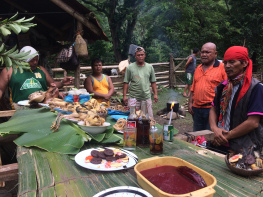
    A chieftain performing a prayer. Image credit: Primitivo III Ragandang.

    It can be inferred that the penalties imposed in the Higaonon tribe of Kiabo is restorative in nature since “the application of punitive sanctions such as death penalty would,” according to the Chieftain “make the situation worse.” This traditional system is recognized as providing a win-win situation to all parties involved. It is a condition which would best describe the theoretical point of Stewart (1990) that in the early stage of struggle, one possible outcome is the accommodated agreement between parties which may lead to both parties being satisfied. Moreover, the abolition of the death penalty in 1969 is an indication that the Higaonons cherish the value of a person’s life.

    After the ritual is performed, the hearing procedure begins. It can be inferred further that the tribal council plays a very crucial role in maintaining the peace and order of the tribe. Also, the hierarchical nature of conflict resolution can also lead to a more egalitarian practice since a case can be forwarded whenever a party is not satisfied with the decision of only one judicial entity. Also, the credence for a Divine Intervention is seen to be an important preliminary habit in a resolution process – both in the Higaonon tribal council and in the barangay as manifested in the opening ritual and prayer, respectively.

    The ritual and the whole paghusay system is so effective because the Higaonons have high regard for the spirits and it is part of their belief system. Also, in day-to-day activities – planting, harvesting, child delivery, making a house, and paghusay – they must start with a ritual for the spirits in order for the spirits to help them and bring them success in their endeavors.

    The Future of the  Higaonon’s system

    There are some serious issues with the conflict resolution system which need to be addressed. Firstly, it is desirable for a functional tribal hall within the Higaonon tribe of Kagahuman to be built. Establishing a tribal hall for conflict resolution is very necessary for two reasons: first, there is a fixed place for settling disputes; second, it actually develops the sense of justice, peace, and belongingness among the Higaonons in the tribe.

    Another important issue that needs to be addressed is gender. The female representation in the tribal council, though accounting for only 20% of the populace, is a good sign of gender-awareness and development in the tribe. However, the role of women in the resolution process is actually very limited. They must therefore have a higher role so their voices can be heard.

    Moreover, based on the observation that the tribe does not document every case being resolved, it is highly recommended that the tribal council should have a record in every paghusay. These records will contain the date, time, venue, present persons during the hearing, and also agreements or decisions made. More importantly, a secretary must be appointed to perform the recording tasks. Also, a written document on the resolution processes and penalties imposed is necessary to have clear and detailed presentation of their traditional methods of settling disputes. Penalties must be presented in a very detailed manner, especially on murder cases wherein self-defense does not warrant any penalty.

    Perhaps the most immediate concern, though, is the need to ensure that this knowledge of conflict resolution is not lost and becomes sustainable. Due to forces of modernization in the Philippines, it is very likely that not codifying this indigenous system of conflict resolution among the Higaonons will lead to extinction of this useful system. This is not impossible as the pattern of migration (especially among the younger Higaonons) is increasing, where the young leave the tribe and head towards the cities for the quest of greener pastures and opportunities. Unfortunately, maintaining the minutes of paghusay proceedings is a challenge for the tribe for two reasons.

    Firstly, the Higaonons are not used to writing. There are literate tribal members, but they are no longer staying in the tribe — they either work in the city or are busy with their own business. Secondly, they are not equipped with the basics of writing minutes of case hearings. It is in this light that the intervention of the local government and other civil society organizations is crucial in empowering the Higaonons, especially the young who are left in the tribe.

    It is important that they are taught the basics of making paghusay proceedings, codifying them for future purposes, and being able to share it with other communities who might find their system as effective for replication. Young Higaonons must preserve and continue to practice their lumad tradition and culture. To make this happen, they must put into practice the teachings and activities that are conferred to them by the older tribal members.

    The Higaonons of Bukidnon province in the Philippines are teaching us the lessons that upholding community security, respecting all members of a community and adhering to the traditions of cultural heritage are crucial to building a peace in the community.

    Some References and Suggested Additional Readings

     Abu- Nimer, M. (1999). Dialogue, conflict resolution, and change: Arab- Jewish encounter in Israel. Albany: State University of New York Press.

    Barcenas, T. B. (1985). Maranao traditional system: structure and roles. Mindanao Journal, XI: 1- 4, 113- 158.

    Indigenous Peoples Rights Act, Philippine Republic Act 8371 § Section 15.

    Mercado, L. N. (1993). Elements of Filipino philosophy. Tacloban City: Divine Word University Publications.

    Pailig Development Foundation, Inc. (2007). Rido: A traditional conflict in modern times. Iligan City: PDIF.

    Rodil, B. R. (1994). The minoritization of indigenous communities of Mindanao and the Sulu archipelago. Davao City: AFRIM.

    Starr, H. (1992). Why don’t democracies fight one another: Evaluating the theory-findings feedback loop. Jerusalem Journal of International Relations, 14 (1), 41-59.

    Stewart, J. (ed.). (1990). Bridges not walls. (5th ed.). New York City:   McGraw- Hill, Inc.

    Tri-People Consortium for Peace, Progress and Development of Mindanao (1998). Defending the land: Lumad and Moro peoples’ struggle for ancestral domain in Mindanao. Manila: TRICOM 

    Valmores, C. (2008). The Higaunon people of Northern Mindanao. Retrieved from: http://www.philippines.hvu.nl/higaunon1.htm

    Primitivo Cabanes Ragandang III is Philippine Director of Move This World, Inc and a PhD candidate in Sustainable Development Studies at Mindanao State University-Iligan Institute of Technology.


     

  • Colombia and Mexico: The Wrong Lessons from the War on Drugs

    Colombia and Mexico: The Wrong Lessons from the War on Drugs

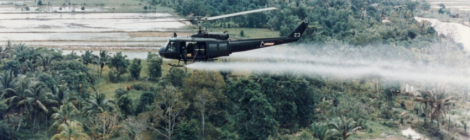
    As activists around the world participate in a Global Day of Action against criminalisation of drug use, evidence from the multi-billion dollar War on Drugs in Colombia suggests that militarized suppression of production and supply has displaced millions of people as well as the problem, not least to Mexico. The wrong lessons are being exported to Central America and beyond, but a groundswell of expert and popular opinion internationally is calling for alternative approaches to regulating the use and trade in drugs.

    Read Article →

    Militarised Public Security in Latin America: Mexico Gambles on Vigilante Security

    A new alliance between the Mexican security forces and citizen ‘self-defence’ groups in Michoacán state has brought some short term success in the fight against the Knights Templar cartel. But what will be the long-term consequences of legitimizing heavily armed vigilante groups in Mexico?

    Read Article →

  • Carefully Managing Water Resources to Build Sustainable Peace

    Carefully Managing Water Resources to Build Sustainable Peace

    Carefully planned interventions in the water sector can be an integral part to all stages of a successful post-conflict process, from the end of conflict, through recovery and rebuilding, to […]

    Read Article →

    In Deep Water: China tests its neighbours’ patience

    Control of water, including navigation rights, resource extraction and the exploitation of shared watercourses is at the heart of today’s geopolitical tensions in Asia. China’s recent actions in the South China Sea and Himalayas have given rise to further—and at times violent—conflict over the region’s natural resources. So will water insecurity lead to greater partnership in Asia? Or will it lead to a revival of China’s traditional sense of regional dominance and undercut efforts to build a rules-based approach to growing resource conflicts?

    Read Article →

    Water Security in South Africa: The need to build social and ecological resilience

    Tackling South African water insecurity will require addressing the technical deficiencies, governance gaps and social inequality that are currently having a dangerous and environmentally devastating impact. The links between environmental health and socio-political stability are clear in South Africa, where there has been an exponential increase in violent protests over poor or privatized service delivery, social marginalization, and unequal access to water. South Africa must act to solidify the links between resilient societies and resilient ecosystems.

    Read Article →

    Bay of Bengal: a hotspot for climate insecurity

    The Bay of Bengal is uniquely vulnerable to a changing climate because of a combination of rising sea levels, changing weather patterns, and uncertain transboundary river flows. These problems combine with already existing social problems like religious strife, poverty, political uncertainty, high population density, and rapid urbanization to create a very dangerous cocktail of already security threats. Andrew Holland argues that foresight about its impacts can help the region’s leaders work together to solve a problem that knows no boundaries.

    Read Article →

  • Environment, Energy, Economy: a threefold challenge to sustainable security

    Environment, Energy, Economy: a threefold challenge to sustainable security

    Whether it’s the economy, energy or the environment which you value most, when it comes to security, each holds equal weight. If security can be defined in terms of what is or isn’t sustainable, then it must evolve to incorporate additional elements that transcend more traditional views on geopolitics.

    Read Article →

  • Unarmed Civilian Peacekeeping