Blog

  • Holding Libya Together: Security Challenges after Qadhafi
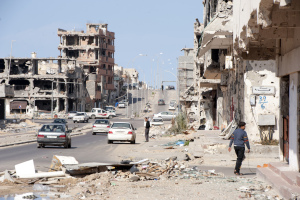
    Holding Libya Together: Security Challenges after Qadhafi

    Middle East/North Africa Report N°115 | Crisis Group | December 2011

    Issue:Global militarisation

    The structure of Libyan society under the Qadhafi regime, as well as during its demise and aftermath, was and remains peculiarly fragmented. The former dictator deliberately kept state institutions weak (in particular the army) in order to prevent the formation of an organised opposition and to create a cult of leadership centred on himself and his family. The consequence for the nature of the uprising was that rebel forces were fragmented, their control over the country was acquired piecemeal, and the internationally recognised National Transitional Council has had tenuous legitimacy outside its base in Benghazi and the east.


    Now that the regime has fallen, the process of rebuilding should be underway; but Libya has many autonomous, disconnected and heavily armed militias, all of whom have independent claims on their country’s liberation as well as the fire power to back those claims. The following Crisis Group Report examines the tricky path that the authorities must navigate in order to successfully disarm, demobilise and reintegrate into society Libya’s rebel fighters, without plunging the country back into violence. Many of the young men who took up arms and joined the rebellion found in it a dignity long denied them by lack of economic and employment opportunities. So while the number of weapons in circulation must be dramatically reduced, the status that they bestow needs to be met by other means.


    Executive Summary and Recommendations

    As the recent upsurge of violence dramatically illustrates, the militias that were decisive in ousting Qadhafi’s regime are becoming a significant problem now that it is gone. Their number is a mystery: 100 according to some; three times that others say. Over 125,000 Libyans are said to be armed. The groups do not see themselves as serving a central authority; they have separate procedures to register members and weapons, arrest and detain suspects; they repeatedly have clashed. Rebuilding Libya requires addressing their fate, yet haste would be as perilous as apathy. The uprising was highly decentralised; although they recognise it, the local military and civilian councils are sceptical of the National Transitional Council (NTC), the largely self-appointed body leading the transition. They feel they need weapons to defend their interests and address their security fears.

    A top-down disarmament and demobilisation effort by an executive lacking legitimacy would backfire. For now the NTC should work with local authorities and militias – and encourage them to work with each other – to agree on operational standards and pave the way for restructured police, military and civilian institutions. Qadhafi centralised power without building a central state. His successors must do the reverse.

    A dual legacy burdens Libya’s new authorities. The first was bequeathed by Qadhafi in the form of a regime centred on himself and his family; that played neighbourhoods and groups against one another; failed to develop genuine national institutions; and deliberately kept the national army weak to prevent the emergence of would-be challengers. The second legacy stems from the way in which he was toppled: through the piecemeal and variegated liberation of different parts of the country. A large number of local forces and militias volunteered to take part in this fight. After Qadhafi’s fall, all could legitimately claim to have sacrificed blood and treasure for the cause, and all could consider themselves national liberators.

    To much of the world, the NTC was the face of the uprising. It was formed early, spoke with authority and swiftly achieved broad international recognition. On the ground, the picture was different. The NTC was headquartered in the eastern city of Benghazi, a traditional base of anti-regime activity that provided army defectors a relatively secure area of operations, particularly after NATO’s involvement. The eastern rebellion was built around a strong kernel of experienced opposition and commanders who found friendly territory in which to defect at relatively low cost and personal risk. But it could only encourage western cities and towns to rise up, not adequately support them. At key times, army components that defected, stuck on the eastern frontlines, by and large became passive observers of what occurred in the rest of the country. In the eyes of many, the rebel army looked increasingly like an eastern, not a truly national force. As for the NTC, focused on obtaining vital international support, it never fully led the uprising, nor could it establish a substantial physical presence in much of the rest of the country.

    In the west, rebels formed militias and military brigades that were essentially autonomous, self-armed and self-trained, benefiting in most instances from limited NTC and foreign government support. Some had a military background, but most were civilians – accountants, lawyers, students or labourers. When and where they prevailed, they assumed security and civilian responsibility under the authority of local military councils. As a result, most of the militias are geographically rooted, identified with specific neighbourhoods, towns and cities – such as Zintan and Misrata – rather than joined by ideology, tribal membership or ethnicity; they seldom possess a clear political agenda beyond securing their area.

    The situation in Tripoli was different and uniquely dangerous. There, victory over Qadhafi forces reflected the combined efforts of local residents and various militias from across the country. The outcome was a series of parallel, at times uncoordinated chains of command. The presence of multiple militias has led to armed clashes as they overlap and compete for power.

    The NTC’s desire to bring the militias under central control is wholly understandable; to build a stable Libya, it also is necessary. But obstacles are great. By now, they have developed vested interests they will be loath to relinquish. They also have become increasingly entrenched. Militias mimic the organisation of a regular military and enjoy parallel chains of command; they have separate weapons and vehicle registration procedures; supply identification cards; conduct investigations; issue warrants; arrest and detain suspects; and conduct security operations, sometimes at substantial cost to communities subject to discrimination and collective punishment.

    They also have advantages that the NTC and the National Army lack, notably superior local knowledge and connections, relatively strong leaderships and revolutionary legitimacy. In contrast, the NTC has had to struggle with internal divisions, a credibility deficit and questions surrounding its effectiveness. It has had to deal with ministries still in the process of reorganisation and whose employees – most of them former regime holdovers – have yet to cast off the ingrained habit of referring any decision to the ministerial level.

    But the heart of the matter is political. The security landscape’s fragmentation – and militias’ unwillingness to give up arms – reflects distrust and uncertainty regarding who has the legitimacy to lead during the transition. While the NTC and reconstituted National Army can point out they were among the first to rebel or defect and were crucial in obtaining international support, others see things differently. Some considered them too eastern-dominated and blamed them for playing a marginal role in liberating the west. Civilians who took up arms and who had been powerless or persecuted under Qadhafi resent ex-senior officials who defected from the army and members of the regime’s elite who shifted allegiances and now purport to rule. Although they are represented on the council, many Islamists consider the NTC overly secular and out of touch with ordinary Libyans. Above all else, militias – notably those in Tripoli, Zintan and Misrata – have their own narrative to justify their legitimacy: that they spearheaded the revolution in the west, did the most to free the capital or suffered most from Qadhafi’s repression.

    Formation of a new cabinet was supposed to curb militia-on-militia violence as well as defiance of the National Army; it has done nothing of the kind. Instead, violence in the capital if anything has escalated, with armed clashes occurring almost nightly. Regional suspicion of the central authority remains high as does disagreement over which of the many new revolutionary groups and personalities ought to be entrusted with power.

    The problem posed by militias is intimately related to deeper, longer-term structural issues: Qadhafi’s neglect of the army along with other institutions; regional friction and societal divisions (between regions, between Islamist-leaning and secularist-leaning camps, as well as between representatives of the old and new orders); the uprising’s geographically uneven and uncoordinated development; the surplus of weapons and deficit in trust; the absence of a strong, fully representative and effective executive authority; and widespread feeling among many armed fighters that the existing national army lacks both relevance and legitimacy.

    Until a more legitimate governing body is formed – which likely means until elections are held – and until more credible national institutions are developed, notably in the areas of defence, policing and vital service delivery, Libyans are likely to be suspicious of the political process, while insisting on both retaining their weapons and preserving the current structure of irregular armed brigades. To try to force a different outcome would be to play with fire, and with poor odds.

    But that does not mean nothing can be done. Some of the most worrying features of the security patchwork should be addressed cooperatively between the NTC and local military as well as civilian councils. At the top of the list should be developing and enforcing clear standards to prevent abuses of detainees or discrimination against entire communities, the uncontrolled possession, display or use especially of heavy weapons and inter-militia clashes. The NTC also should begin working on longer-term steps to demobilise the militias and reintegrate their fighters in coordination with local actors. This will require restructuring the police and military, but also providing economic opportunities for former fighters – vocational training, jobs as well as basic social services – which in turn will require meeting minimum expectations of good government. Even as it takes a relatively hands-off approach, the international community has much to offer in this respect – and Libyans appear eager for such help.

    Ultimately, successfully dealing with the proliferation of militias will entail a delicate balancing act: central authorities must take action, but not at the expense of local counterparts; disarmament and demobilisation should proceed deliberately, but neither too quickly nor too abruptly; and international players should weigh the need not to overly interfere in Libya’s affairs against the obligation not to become overly complacent about its promising but still fragile future.

    RECOMMENDATIONS

    To the Transitional National Council (NTC):

    1.  Strengthen the legitimacy of central authorities by ensuring greater transparency in decision-making and in identifying and selecting Council representatives and members of the executive.

    2.  Ensure all decisions relating to disarmament, demobilisation and reintegration (DDR) are taken in close consultation with local military councils and militias, by appointing a credible personality to liaise and coordinate with such local bodies.

    3.  Enhance opportunity for involvement by community and religious leaders in sponsoring and supporting DDR initiatives.

    4.  Back local DDR initiatives financially in cooperation with local councils, including weapons registration, improvement of detention facilities and support for young fighters.

    To the Revolutionary Brigades, Local Military Councils and Local Civilian Councils: 


    5.  Seek to reintegrate armed rebels, notably the youngest among them, inter alia by identifying and registering those who wish to pursue careers in the police and military; offering alternative civilian employment; and sponsoring civic improvement initiatives with city funds.

    6.  Disclose all sources of funding.

    7.  Agree on and enforce codes of conduct and mechanisms for dispute resolution, especially where several militias operate in the same area.

    To the NTC, Revolutionary Brigades, Local Military Councils and Local Civilian Councils:

    8.  Agree on and enforce a common set of rules and behaviour for all armed fighters; implement a single procedure for weapons registrations; and ban the display of heavy weapons in town centres and the bearing of arms at checkpoints and key installations.

    9.  Transfer as quickly as possible responsibility for detainees to central authority and, in the meantime, ensure respect for rule of law and international standards in arrest and detention procedures; release persons whose detention is not consistent with such practices; and bring to justice, speedily and in accordance with international law, those accused of criminal acts.

    10.  Agree on a process for NTC inspection of arms depots, detention centres, border posts, checkpoints and other militia-controlled facilities.

    11.  Implement initial steps toward DDR by:

        a) focusing at first on heavy weapons;

        b) through a joint effort by the government and local councils, providing support for young fighters in particular;

        c) establishing an NTC-funded mandatory training program covering rules of engagement and discipline for militia members who wish to pursue careers in the military or policing; and

        d) providing vocational training for militia fighters as well as necessary financial incentives.

    12.  Establish and implement criteria for appointment to senior posts within the defence ministry and army on an inclusive basis.

    13.  Create at both the central and local levels a non-par­ti­san, inclusive committee to review and refer candidates for recruitment into the police and national army.

    14.  Institute an appeals procedure for rejected candidates.

    To the UN Support Mission in Libya and other International Stakeholders, including Arab countries, the European Union and the U.S.:

    15.  Offer the NTC assistance in, inter alia:

        a) undertaking quick assessments of security, DDR, and related needs;

        b) police training, including possibly establishment of a gendarmerie function;

        c) security force professionalisation, including specifically on human rights and civilian oversight; and

        d) border control.

    Tripoli/Brussels


    Article Source: Crisis Group. To read the full Report, click here

    Image Source: United Nations

    Comments

    Post new comment


  • Sustainable Security

    Sustainable Finance and Energy Security

    General volatility in financial markets – fuelled by irresponsible lending and trading practices, as well as evidence of market manipulation – have had an effect on oil prices. Although the specific effects of the finance sector on oil prices requires further investigation, we can already understand that a sustainable and secure future will require the development of a wider energy mix to meet rising demand. To this end, more sustainable financial systems must be developed to service the real needs of citizens

    Read Article →

    National security and the paradox of sustainable energy systems

    The transition away from a centralised global economy built around conventional energy sources to a decentralised global economy mostly fuelled by renewable resources is one we must make for the sake of our children’s futures and that of our planet. Writing for sustainablesecurity.org, Phillip Bruner asks if national security is at present, deeply concerned with preserving access to conventional energy, then how would national security for a decentralised renewable energy Internet be managed? Who would manage it? And what role, if any, could the public play in helping to alleviate some of the burdens of 21st century threat mitigation?

    Read Article →

    Environment, Energy, Economy: a threefold challenge to sustainable security

    Whether it’s the economy, energy or the environment which you value most, when it comes to security, each holds equal weight. If security can be defined in terms of what is or isn’t sustainable, then it must evolve to incorporate additional elements that transcend more traditional views on geopolitics.

    Read Article →

  • Sustainable Security

    The 2011 Libyan intervention and the anarchy which ensued has highlighted an aspect of the responsibility to protect principle that has, to date, been overshadowed by the debates on the use of force; the responsibility to rebuild.

    While the carnage in Syria has dominated policy agendas and newspaper headlines in the recent years, the aftermath of the 2011 Libyan intervention elicited much deserved attention following Obama’s candid review of his foreign policy legacy and, more recently, the UK Foreign Select Committee report on the government’s handling of the intervention. Obama openly accused David Cameron of having become ‘distracted’ over Libya and failing to follow through the military intervention. A similar accusation was levelled against Downing Street by the Foreign Select Committee report on Libya published in August that berated Cameron for having failed to develop a coherent plan for post-intervention Libya. This was evident in the fact that the UK government spending on reconstruction was less than half of its spending on the intervention, the report points out. The report argues further that the intervening governments, with particular focus on Britain and France as the leaders of the intervention, had a distinct responsibility to help to reconstruct the Libyan state. The failure to de-arm and de-mobilise fighters after the ousting of Gaddafi and the subsequent violence rendered the construction of political and economic institutions an impossible task.  Indeed, Libya today has made little headway to becoming a stable state; fighting between militant factions and the emergence of ISIS have left many wondering whether civilians are better off today than they were under the Gaddafi regime.

    The intervention to protect civilians in Libya was hailed by some as an example of successful realisation of the ‘responsibility to protect’ principle that sets out the joint responsibility of states and the international community to protect civilians from so-called atrocity crimes (crimes against humanity, war crimes, genocide and ethnic cleansing). Where governments fail to do so, the international community has the responsibility to assume the duty to protect. The emergence of the principle in the late 1990s and early 2000s stirred much debate. While some rejected it as a thinly-veiled attempt by Western states to legitimize use of force for political purposes, others lauded the principle as a first step in finding consensus on the contentious issue of conducting humanitarian interventions. Libya, as is well-known now, provided few answers to those seeking clarification on issues pertaining to civilian protection and responsibility to protect.

    As I have argued elsewhere, the Libyan intervention has highlighted an aspect of the responsibility to protect principle that has to date been overshadowed by the debates on the use of force; responsibility to rebuild. The responsibility to protect principle was first formulated by the Canadian government-sponsored International Commission on Intervention and State Sovereignty (ICISS). The Commission famously argued in its 2001 report that state sovereignty was no longer an irrevocable right but a responsibility to protect populations from mass atrocities such as genocide and ethnic cleansing. In its initial formulation, responsibility to protect entailed three interlinked duties; to prevent, react and rebuild. While prevention of mass atrocities was the starting point for any government endorsing the principle, rebuilding societies in the aftermath of military interventions was seen to logically follow the ‘reactive’ pillar of the principle.  The rebuilding pillar was seen to consist of providing security in post-intervention states, promoting reconciliation between former enemies and promoting economic development. These measures, it was argued, are crucial for stability and self-sustaining peace in societies targeted by protection interventions.  One of the key aims of the principle was, in other words, to ensure that the need for protection intervention would not arise again as the capacity of domestic authorities to realise their protection responsibility would be augmented through rebuilding assistance.

    This sequential conception of the principle was short-lived, however. While many Western governments were reluctant to commit to costly and often long-drawn out rebuilding missions, some in the Global South saw the notion of responsibility to rebuild as a throwback to imperialist foreign interference. In the light of these and other concerns, the R2P was refashioned along more statist lines; the rebuilding component was dropped from the framework and the responsibilities of states to protect their citizens were emphasised at the expense of the international community’s obligation to protect. This was evident in the 2005 UN World Summit Outcome Document where governments, for the first time, endorsed the R2P principle. This recalibration of the R2P was outlined in detail in the UN Secretary General’s report on the responsibility to protect in 2009. It proposed a three-pronged understanding of the principle, centred on the states’ responsibility to protect their citizens, the international commitment to capacity-building assistance and, finally, the international community’s responsibility to protect. The rebuilding component was, again, notable in its absence; the principle was largely understood in terms of the preventative responsibility of governments. Although preventative and rebuilding measures overlap to a certain extent, lack of attention to specific rebuilding tasks, such as the provision of post-intervention security, was striking in the UN Secretary General’s 2009 report and in those thereafter.

    The Future of the Responsibility to Rebuild

    libya-sirte

    Image by ECHO/DDG/Flickr.

    The Libyan experience indicates that this change in the focus of the responsibility to protect has not been a matter of mere semantics. Although Libyans, eager to take charge of their own affairs after the fall of the Gaddafi regime, rejected plans for UN peacekeepers, they requested capacity-building assistance. Some assistance was provided by the intervening governments – for example the UK government’s Security, Justice and Defence Programme – but on the whole the immediate aftermath of the intervention was marked by the policy of disengagement as Libya observers have argued. The UN reconstruction strategy and donor government policies were premised on the emphasis of domestic ownership, coupled with references to the wealth of the Libyan state that could be utilised for the reconstruction process. It was not until emergence of the ISIS threat in the region that the Libyan authorities’ appeals for assistance gained attention in the Western capitals.

    While it is of course impossible to state with certainty the effects that an alternative course of action (continued engagement in the rebuilding of Libya in the immediate aftermath of the intervention) could have had, it is not hard to see how the rebuilding measures outlined by the ICISS in its 2001 report may have helped to stabilise Libya.  In the absence of the permission to dispatch peacekeepers, more extensive assistance to the Libyan authorities in providing day to day security after the intervention would have not gone amiss. Perhaps more importantly, concentrating international efforts and resources to supporting inter-communal reconciliation would have been vital, given that the precarious security situation in the country following the fall of the Gaddafi regime has been caused by the lack of political solution on how, and by whom, the country should be governed.

    The instability and violence that has plagued Libya since the 2011 intervention suggest that if the aim of protection interventions is to generate self-sustaining peace rather than just carry out regime change operations, re-incorporating the rebuilding pillar into the current responsibility to protect framework is crucial. Doing so would not necessarily mean overhauling the entire principle: many of the measures regarded as ‘pillar II’ responsibilities provide the basis for incorporating rebuilding tasks into the framework. Pillar II, the commitment by the international community to assist the capacity and resilience-building in conflict-affected societies, refers to a range of measures such as fostering dialogue between communities and indigenous conflict resolution skills. Adding measures that address the short-term issues faced by societies in the wake of military interventions would strengthen the pillar and the framework as a whole.  This would inevitably mean increased costs and commitment on behalf of those undertaking protection interventions, something that is likely to be deeply unpopular in the context of the lengthy engagements in Iraq and Afghanistan as well as the increasing pressure on public spending. The alternative, however, as the refugee flows from Libya and the rise of ISIS in the country have shown, may mean having to face even more troublesome questions in the long run.

    Outi Keranen is Teaching Fellow in International Relations at the Department of Political Science, University College London. Her research interests are in post-conflict statebuilding and the responsibility to protect. Her monograph ‘The Contentious Politics of Statebuilding’ (Routledge) is coming out in May 2017. In addition to post-conflict statebuilding, Outi has researched and written on identity-building, symbolic politics and the responsibility to rebuild.

  • Israel

    Israel

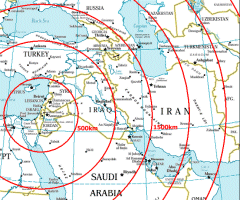
    Israel’s shadow over Iran

    Paul Rogers | open democracy | January 2010

    Issue:Global militarisation

    Tagss:Iran, Israel

    Excerpt: Most of the international attention on Iran in the second half of 2009 focused on the political turmoil following the presidential election of 12 June. The discussion of Iran’s nuclear capabilities and plans receded from the foreground, though it continued behind the scenes among all the states and international agencies involved. The signs are that, whatever the outcome of the domestic confrontation between the Mahmoud Ahmadinejad regime and the opposition, the coming months will see a sharpening of tension over the nuclear issue. This raises the question of whether there will be a military assault on Iran’s nuclear facilities – most likely by Israel, since there is little likelihood that the Barack Obama administration would countenance direct United States military action against Iran – in an attempt to stop the country from acquiring a nuclear weapon.
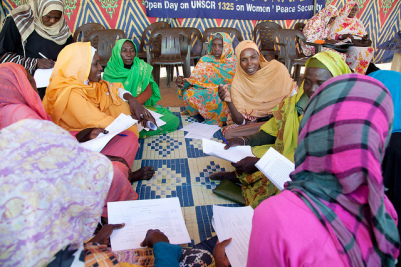
    Image: Globalsecurity.org

    Read more »

  • Sustainable Security

    In an important year for the Women, Peace and Security agenda, women’s civil society organising is increasingly being impacted by global and national counter-terrorism regimes.

    2015 is a key year for women peace activists around the world. United Nations Security Council members will convene a high-level review in October 2015 to assess progress at the global, regional and national levels in implementing Security Council Resolution (UNSCR) 1325, renew commitments, and address obstacles and constraints.

    Women, Peace and Security conference

    North Darfur Committee on Women session on the UNSCR 1325 in Dar El Salaam, Darfur, 2011 Source: Flickr | UNAMID

    Fifteen years since UNSCR 1325 was passed, there are still a lot of challenges to overcome. However, women peacemakers and activists are as resilient as ever. They continue to push the Women, Peace and Security agenda’s important message forward, in environments that can be risky, unsupportive, or outright hostile.

    However, this resilience is closely tied to the existence of a vibrant civil society space. It is therefore important to assess new challenges to the building of peace and women’s rights posed by counter-terrorism measures.  This assessment must overcome the hesitancy that many peacemakers feel about discussing their experiences openly, fearing damage to their reputation as well as other repercussions.

    To this end, in early 2015 the Women Peacemakers Program (WPP), together with Human Security Collective (HSC) contacted a selection of partners in ten countries to gain insight into the multiple ways the counter-terrorism agenda is affecting their work for peace and women’s rights.  This article is based on the perspectives of the respondents from a range of countries worldwide, who were guaranteed anonymity.

    Global framework

    Post 9/11 counter-terrorism measures have impacted on civil society’s operational and political space in several ways. Legislation, although enacted at the national level, is enacted within, and responsive to, a global framework of measures. Terrorist listing regimes and partner vetting systems may hinder peace work in a variety of complex ways.

    One of the most significant areas for peace organizations is the framework that governs the prevention of terrorism financing through the non-profit sector. The Financial Action Task Force (FATF), a highly influential global consortium established in 1989 by the G7, has developed specific recommendations for non-profit organizations (Recommendation 8 – Best Practices: Combating the Abuse of Non-Profit Organisations) in its Anti Money Laundering/Countering Financing of Terrorism standard. This standard assumes that non-profits are vulnerable to abuse for terrorism financing. To date, over 180 countries have endorsed the standard and as such are subject to a peer evaluation by the FATF every 6 to 7 years. Receiving a low FATF rating immediately influences a country’s international financial standing.

    In recent years, a number of countries have started to use the FATF standard, and specifically Recommendation 8, as a pretext to clamp down on civil society space. Although countries often deny that it is the case, evidence is growing that upcoming FATF evaluations can have a preemptive chilling effect on civil society space. This is a direct result of governments’ desire to show the FATF that they are capable of preventing terrorist financing abuse through their non-profit sectors. In addition, some states are starting to pass more restrictive non-profit laws after an FATF evaluation – as if the evaluation itself serves to legitimize the drafting of such laws.

    Shrinking space

    The WPP research indicates that as a result of these mechanisms, a growing number of women activists around the world are experiencing growing pressures on their capacity to undertake peace and human rights activism, including restrictive NGO legislation, suffocating financial regulations, intimidating surveillance practices and exhaustive reporting requirements.

    Many women peace activists engage in civil society work that is critical and political. They often operate in high-risk settings, where they face repercussions because of the very nature of their activist work, which challenges established notions and bastions of patriarchal power. Several respondents reported that their governments are trying to control, limit, or stop critical civil society work through the development and passing of new NGO legislation. This new legislation is impacting on their space to operate, for example by putting restrictions on receiving funding support. As one activist from the Middle East and North Africa (MENA) region shared:

    The Rights and Liberties Committee at the Constitution Drafting Assembly has released their suggestion for the Constitution… namely that local civil society should be banned from receiving any foreign government funds.

    A women’s organisation based in South Asia observed a difference between the difficulties experienced by various organisations:

    There is enough funding for service delivery organizations and those who follow right wing politicians. However, there is no funding for the rights-based organizations, or for those that work towards alternatives.

    Some respondents described nationwide campaigns of invasive NGO inspections undertaken by national governments, using harassment tactics such as personal intimidation and threatening activists with the closing down of their organizations. One respondent reported:

    When I received a grant from one (domestic) Foundation, I was getting calls from the intelligence bureau and had to supply them with three-years of audited statements, a list of Governing Board Members and staff members. […] They visited my home three times, to ask me questions.

    Some women’s groups also faced demanding reporting requirements because of government regulations:

    In some locations, all civil society organizations have to submit a copy of their annual report to the police, armed forces, and intelligence offices of the state.

    Better safe than sorry?

    Aside from the general worsening atmosphere for political or rights-based peace work in many contexts, the FATF standard has also had a great impact on the financial service industry, particularly on banks. Banks can be sanctioned when not abiding by the FATF standard, which may include the withdrawal of their banking license, freezing of assets, or hefty fines.

    There is a growing body of evidence that shows that banks’ risk averse behavior has resulted in the withdrawal of bank services to civil society active in conflict areas. As a result of this “better safe than sorry” attitude of the banks, a growing number of civil society organizations are experiencing great difficulties in making or receiving money transfers. Over the years, many donors have become cautious  with grants. Some donors are avoiding partners in high risk, terrorist prone areas, and a number of others are tightening their own due diligence.

    Women’s peace organizations more easily fall prey to these restrictions. This is partly because women’s organizations usually operate on small budgets, which means they often do not have the leverage to negotiate a solution with their banks, which big donor organizations and charities are often still able to do. Several respondents mentioned facing challenges with their banks, ranging from delays in receiving their funds to banks requesting additional project information before releasing the funds. Some activists reported that certain banks would no longer release foreign funds to their organizations or had refused to provide their organization with a bank account. One activist reported that another organization in her network had had its account closed by the bank. A respondent from the MENA region shared:

    Sometimes we are facing difficulties during the money transfer process, it takes a long time for us to receive the funds, and some correspondent banks reject the amount. Recently a new system has been introduced: there is a limit on the amount we can withdraw on a weekly basis from the bank. This means we cannot pay all our organizational expenses on time, such as staff salary, rent, activity expenses… Everyone is calling us for their money, and we have to promise them that we will pay them next week… Sometimes we are taking loans from other people just to cover our expenses.

    In addition, several reported that direct access to funding is getting more difficult. This is partly due to donors increasingly prefering to channel funds via large organizations capable of producing grant proposals according to their demanding guidelines, as well as able to absorb rigorous reporting and auditing requirements. An organization based in Europe reported significantly increased pressures on human resources regarding donor reporting. Staff found themselves working overtime to meet the requirements of this related additional bureacracy, and on some occasions had to seek external advice.

    Cumulative effect

    Increasingly, these complex and time-consuming requirements are clashing with the reality on the ground: that many women’s organizations are operating on very modest budgets with a combination of limited paid staff capacity and/or volunteer efforts, in a demanding environment that is at best challenging and at worst highly insecure and hostile.

    As such, counter-terrorism measures – whether subtly or bluntly – are having an impact on a number of levels that, in combination, restrict civil society space. As one respondent, whose organization had been severely impacted, summarized:

    We face an increase in expenditure (because we want to avoid targeting, we now travel in groups, which is more costly); increased surveillance of our movement and programs (officials are asking for reports and bank advices, including that of our personal bank accounts); postponing or cancelling of some of our programs or keeping low profile for some time; mental unrest of our members; impact on the reputation of our organization as our work was projected as “anti-national”, which has affected the outreach of our member organizations. Also, a few partner organizations have left the network fearing repercussions by the government.

    The cumulative effect of the range of pressures is that the enabling space for women’s civil society work is shrinking and therefore progressive and pioneering work for inclusive development, peace and women’s rights becomes frustrated. The implications for broader security concerns are worrying. When alternative civil society voices and constructive seeds of change are not provided with the soil to take root, threats to the daily security of people and communities are given free reign. As such, opportunities for actors looking to exploit these vulnerabilities increase.

    It is important for civil society to come together to exchange experiences as well as document and monitor the impact counter-terrorism measures are having on their peace and human rights work, in order to engage in collective advocacy. It is equally important for the Women, Peace and Security community to engage with the different counter-terrorism measures and stakeholders. Conversely, it is crucial to raise awareness about the importance of safeguarding critical civil society space worldwide so that women’s voices and actions for peace and human rights can continue to change the world for the better.

    Isabelle Geuskens serves as Executive Director of the Women’s Peacemakers Program (WPP), a Dutch NGO that works for the nonviolent resolution of conflict, and the inclusion of women’s voice and leadership in nonviolent conflict resolution processes. In early 2015 the WPP, together with Human Security Collective (HSC), contacted a selection of partners in the field, to gain insight into the multiple ways the counter-terrorism agenda is affecting their work for peace and women’s rights. The findings are summarised in WPP’s Policy Brief: Counterterrorism Measures and their Effects on the Implementation of the Women, Peace and Security Agenda.

    Featured Image: Women’s group in Badakhshan, Afghanistan. Source: Flickr | Canada in Afghanistan

  • Sustainable Security

    Wounded civilians arrive at a hospital during the ongoing Syrian civil war. Source: Wikimedia

    Wounded civilians arrive at a hospital during the ongoing Syrian civil war. Source: Wikimedia

    Recent events in the Syrian civil war have proved the greatest test of the norm against the use of chemical weapons since the Chemical Weapons Convention (CWC), the clearest and most comprehensive expression of that norm, opened for signature in 1993. At its core, this was a test of the willingness of countries to uphold the norm, in this case in the face of a flagrant violation causing the deaths of nearly 1,500 people. While the international community may have stumbled upon a satisfactory conclusion – one that reaffirms  the special category of chemical arms – the global response said a great deal about current attitudes to the use of military force as a means of humanitarian intervention.

    The Ghouta incident

    Despite a number of alleged incidents of chemical weapons use in Syria in the early months of 2013 – the use of which was reportedly first confirmed by British scientists in April from soil samples smuggled out of the country – it was August before their apparent use touched mass consciousness around the world.

    The catalyst for global outrage, and near-intervention with military means by western powers, was an attack in the early hours of 21 August in the Ghouta district of eastern Damascus. Chemical weapons, it seemed, had been deployed in Ghouta on a scale far greater than witnessed in any of the handful of previous alleged attacks. Video footage showing evidently sick and distressed adults and children, as well as dozens of bodies, began to rapidly circulate around the world—with Médecins Sans Frontières, the medical aid charity, reporting shortly after the attack that three hospitals supported by it in Damascus had treated around 3,600 patients displaying so-called neurotoxic symptoms. Of these, it said, 355 had died.

    On 30 August, the United States issued a press release in which it claimed that 1,429 people—including at least 426 children, it said—had ultimately died in the attack on Ghouta. As for the who and the what of the incident, the US asserted that on the basis of both open-source information and covertly-acquired intelligence, it assessed ‘with high confidence’ that the attack had been carried out by the Syrian government, and that a nerve agent had been used.

    UN chemical weapons experts wearing gas masks carry samples from one of the sites of an alleged chemical weapons attack in the Ain Tarma neighbourhood of Damascus. Source:

    UN chemical weapons experts wearing gas masks carry samples from one of the sites of an alleged chemical weapons attack in the Ain Tarma neighbourhood of Damascus. Source: Tetovasot

    Following access to three sites in the Ghouta neighbourhood, inspectors operating under the auspices of the United Nations Secretary-General subsequently confirmed that the fast-acting nerve agent sarin had been used there on a ‘relatively large scale’. Their report, released in mid-September, stated that biological samples taken from survivors showed ‘definitive evidence of exposure’ to sarin—evidence, they said, that was consistent with clinical assessments of survivors’ symptoms. Lab analysis of environmental samples taken in Ghouta was reported to have also confirmed the presence of sarin or its by-products.

    While UN verification of chemical weapons-use in Ghouta provided important independent confirmation of what had taken place there (if not who was responsible, which it was not part of the inspectors’ mandate to ascertain), for most onlookers it came as little surprise. Videos, photos and survivor accounts were enough to leave most with few doubts that a toxic weapon of some kind had been used on a mass scale in Ghouta—a dark new low for a conflict already characterised by widespread savagery and the almost total disregard for the lives and welfare of non-combatants.

    Less expected, however, was the decision by the Syrian government, in the days immediately preceding the release of the inspectors’ report, to give up its chemical weapons arsenal in an immediate, verifiable fashion and to join the CWC – a plan proposed by Russia, a key ally of the Assad regime, and an agreement to it by Syria that saw the prospect of US-led airstrikes averted.

    In truth, it is unclear how likely airstrikes would have been had Syria not agreed to give up its chemical weapons. A parliamentary vote in the UK, held in late August, saw a government motion for intervention defeated, ruling Britain out of any involvement In the US, early September saw President Obama step back from the seemingly-imminent launch of airstrikes that would have most clearly of all upheld the ‘red line ’ he himself had set in 2012 regarding any use of chemical weapons in Syria. Instead, President Obama announced that he would first seek approval for the use of force from Congress – a vote that was ultimately overtaken by events and never held, but one that was by no means sure to end in favour of military intervention. Indeed, the vote looked likely to go against.

    To intervene, or not?

    If Syria’s decision to join the CWC and rid itself of chemical weapons stands as one unlikely positive outcome of the Ghouta incident, it is a positive that distracts little from the more troubling features of the attack and the global response to it. For one, the use of chemical weapons on the scale witnessed in Ghouta laid bare the lack of limits that seems to have become a feature of this war.

    Moreover, the reluctance of most Western powers – and publics – to move beyond rhetorical outrage, in the face of the massacre of nearly 1,500 Syrian citizens with a weapon of mass destruction, threatened to erode the sense of chemical weapons’ unique evilness in a fashion not seen at any other time in the recent past.

    All of which says more about the current Western appetite for military intervention, in the Middle East particularly, than it does about their attitude to the use of chemical weapons in warfare. That President Obama had placed chemical weapons use on the other side of the red line of acceptable conduct in warfare—the crossing of which may, the implication was, trigger more forceful intervention—is evidence of that.

    A year on from his proclamation of the red line, however, the situation on the ground had evolved dramatically. Arguably the ripest time for intervention in the conflict has long passed, with al-Qaeda-affiliated and other radical Islamist groups increasingly entrenched within a rebellion that has no clear leadership nor common vision. For western powers, all choices may now be bad ones; though of course that does little to help the millions of refugees and internally displaced Syrians that the conflict continues to produce.

    Slow progress in verifying destruction

    Against a backdrop of ongoing violence, personnel from the Organisation for the Prohibition of Chemical Weapons, the implementing body for the CWC, have been working in Syria since last autumn verifying Assad’s chemical arsenal and overseeing its removal from the country. Progress, though, has so far not been encouraging. An end-of-year deadline for the removal of Syria’s most dangerous chemical stockpile was missed over difficulties in implementation, largely due to the ongoing fighting, and more recently concerns have been raised that Syria is not doing enough to ensure the smooth implementation of the ‘framework’ agreement under which the elimination operation is proceeding. Russia has sought to quieten concerns, announcing in the past few days that a large shipment of chemical weapons would leave Syria this month.

    Pressure on Syria, as war continues

    That world powers are continuing to lean on Syria to ensure implementation of the framework, however, is evidence that the use of chemical weapons is taken seriously at the highest level, and that the issue remains high on the priority list of foreign policymakers in world capitals. What it says to the rest of the world is that the use of chemical weapons will incur consequences, but that leads to a host of questions over what level of use would generate a response (the Ghouta incident was the largest, but almost certainly not the first use of chemical weapons in the war there), as well as how to prove the use of these weapons in circumstances where use has been alleged—and, by extension, what level of doubt is acceptable.

    Meanwhile, in Syria, as the war continues, so the country becomes ever more a kind of ‘new Somalia rotting in the heart of the Levant’, as The Economist so vividly put it last year. Long-awaited peace talks recently concluded in Switzerland achieved nothing of substance, beyond agreement to resume on 10 February. That we may have seen the last use of chemical weapons as Syria tears itself apart is a silver lining of sorts, but a silver lining around a cloud of particularly heavy darkness.

    This article was written in a personal capacity. The views expressed are the author’s own and do not necessarily reflect the views of VERTIC.

    David Cliff works as a researcher at the Verification Research, Training and Information Centre (VERTIC) in London. There, his work focuses on research into the verification, implementation and compliance aspects of nuclear and chemical arms control and disarmament treaties. He holds a BA in Geography and an MA in International Affairs, both from the University of Exeter in the UK.


  • National security and the paradox of sustainable energy systems

    National security and the paradox of sustainable energy systems

    Phillip Bruner | Exclusively written for sustainablesecurity.org | August 2012

    Issue:Competition over resources

    Unlike economic policy, national security is rarely influenced by popular decisions taken in the public domain. While citizen-led movements in Western democracies may help to encourage or discourage a particular military intervention or diplomatic alliance, the actual coordination of efforts to mitigate major security threats rests with top tier generals, qualified analysts and skilled specialists. The public may elect leaders who will, by popular mandate, appoint experts to govern domestic and/or foreign intelligence organisations. But the actual responsibility over national security lies far beyond the public sphere, situated centrally, in the upper echelons of government. Centralised management of national security decision-making reflects the realities of a global system whereby rogue nations issue warnings by testing ‘low-intensity’ nuclear weapons, extremists pledge to murder innocent civilians en masse, cyber attackers plot to expose state secrets and organised criminals smuggle large volumes of deadly weapons into the hands of drug czars and tribal warlords. It is a system bedevilled by deadly, chaotic forces. Only experienced individuals at the highest levels of government are qualified to deal with these deadly forces and to take calculated measures designed to protect the innocent. However, even with the best and brightest at the helm, ‘success’ is not always guaranteed. Threat multipliers in the form of climate destabilisation and volatility in financial markets are further complicating matters so that the challenges of understanding and mitigating security threats in the 21st century are perhaps more daunting than they have ever been in modern history. 
    At the start of a century characterised by constrained resources, rapid population rises and the collapse of oppressive regimes – some home to high-yielding oil provinces – the need to gain access to sensitive information and the capability to process and manage sensitive information flows is of paramount importance for decision-makers whose job it is to maximise the safety of citizens. So too, is the availability of predictable fossil fuel supplies and the capacity to manage conventional supply chains, essential for ensuring the smooth functioning of day-to-day telecommunications and transportation systems. At least, for now and irrespective of whether or not they are aware of it, citizens in Western economies demand acute regularity in the functioning of electrical grids and cost effective fuel supplies for manufacturing, importing and delivering basic goods. Affordable energy keeps commerce afloat and allows for a minimal standard of living without which, most people and especially people with investment capital, would either relocate or protest. Ideally, in societies organised on the basis of industrial capitalism (which nearly all are), telecommunications and transport systems will not merely function predictably, but will prosper and grow. Attracting foreign investment and foreign companies from abroad depends on creating a stable environment for businesses to operate. 

    Steady access to affordable energy supplies also enables advanced economies to thrive by facilitating an environment in which livelihoods are not stifled by a lack of lighting, heating, refrigeration, medical equipment, clean water and sanitation. These fundamental energy and infrastructure services, once they become readily available and cost competitive, create the conditions from which innovations and new products like the Internet and renewables technologies can emerge. It could therefore be argued, that like a seed to a tree, green shoots stem from brown roots. Is it any wonder why most countries are moving rapidly ahead with business as usual? Without growth, trade and industry stagnate, inflation can rise, so too can food prices and when that happens – as we’ve witnessed in the Arab Spring – populations can revolt. Industrial growth, in a global capitalist system that is overwhelmingly dependent on oil and gas, must continue or the global economy will collapse. Alternatively, an energy transition, where fossil fuels are gradually phased out or replaced by renewable sources may be on the horizon. But whether or not a global energy system fuelled by renewables will yield economic growth on par with that of the 20th century will largely depend on the prudence of heads of state and industry in managing the transition. Meanwhile, global carbon emissions have risen by even more than previously thought, according to new a recent article published by the Guardian.

    Jeremy Rifkin, senior adviser to many European heads of state, including the European Commission has put forth a vision for a ‘Third Industrial Revolution (TIR)’ which aims to integrate smart communications technologies with distributed, renewable energy resources into an ‘energy Internet’. This energy Internet, according to Rifkin, constitutes an essential paradigm shift, which will spell an end to the old embedded top-down hierarchies of centralised governance, which the Second Industrial Revolution produced. The old top-down method of organising fossil-fuelled energy and telecommunications networks will be replaced by a new way of laterally organising renewable-fuelled energy and transnational information communication networks. The TIR has gained popular support throughout Europe at various governance scales, legitimising Rifkin’s recommendations for a complete overhaul of existing infrastructure and services delivery systems. This overhaul consists of 5 pillars: 

    • Shifting to Renewable Energy
    • Converting Buildings into Power Plants 
    • Hydrogen and Other Energy Storage Technology
    • Smart Grid Technology
    • Plug in, Electric, Hybrid, and Fuel Cell based Transportation 

    Rifkin’s optimism is a refreshing break from many of the dire forecasts we’re accustomed to hearing. His solutions-oriented approach, is aligned closely with those of some of the world’s leading industrialists as evidenced by their involvement in the TIR Global CEO Business Roundtable – a committee of TIR supporters who gather informally to discuss how to strategically implement Rifkin’s vision. At the same time, there is a missing element to Rifkin’s thesis. If national security is deeply concerned with ensuring a steady stream of access to conventional energy sources and requires a high degree of central control over sensitive information in order to mitigate 21st century threats, then Rifkin’s TIR vision, which advocates a decentralised, renewable ‘energy Internet’ leaves open the question of security as it relates to the realities of a fossil fuel industry-dependent global economy. What’s more, there is evidence that while the TIR vision has widespread support amongst heads of state and industry, governments everywhere are going to great lengths to secure access to diminishing fossil fuel reserves. A recent post by SustainableSecurity.org, ‘The Security Implications of the Current Resource Scramble,’ draws attention to the work of Michael Klare, which provides several cases in point. Klare is Defense Correspondent for The Nation magazine and has published, among other works, a book titled The Race for What’s Left, in which he outlines in great detail the efforts of the world’s most powerful nation-states, pursuing access to increasingly scarce, yet fundamental resources. This work lies in stark contrast to Rifkin’s bestseller, The Third Industrial Revolution, which paints a much rosier picture. Klare’s analysis presents us with a possible future in which governments continue to work closely with industry to protect their populations from fundamental supply shortfalls for many of the good reasons outlined above.

    The transition away from a centralised global economy built around conventional energy sources to a decentralised global economy mostly fuelled by renewable resources is one we must make for the sake of our children’s futures and that of our planet. Rifkin has outlined a game plan for smoothing the transition in a way and on a scale which powerful government decision-makers and industry leaders can support. But there needs to be another parallel conversation on what the TIR vision means for the future of national security. If, as Rifkin argues, the historical development of telecommunications, infrastructure and energy systems are interwoven, then a move to make one sustainable overhaul in one of these sectors must be reflected in both the other two sectors. Rifkin’s plan acknowledges this fact, but leaves open the question of security. If national security is at present, deeply concerned with preserving access to conventional energy, then how would national security for a decentralised renewable energy Internet be managed? Who would manage it? And what role, if any, could the public play in helping to alleviate some of the burdens of 21st century threat mitigation? 

    Phillip Bruner is Founder of the Green Investment Forum and a guest lecturer in global political economy at the University of Edinburgh


    Image source: Truthout


    Comments

    Post new comment


  • The United States, Niger & Jamaica: Food (In)Security & Violence in a Globalised World

    The United States, Niger & Jamaica: Food (In)Security & Violence in a Globalised World

    Anna Alissa Hitzemann | | September 2012

    Issues:Climate change, Competition over resources, Marginalisation

    The United Nations Development Programme (UNDP) defines food security as “all people at all times having both physical and economic access to the basic food they need”. However, due to a complex range of interconnected issues from climate change to misguided economic policies, political failure and social marginalisation, over 2 billion people across the world live in constant food Insecurity. It is important to take a sustainable security approach to look at the importance of “physical and economic access to basic food” by exploring the links between food insecurity and violence.

    A recent article published by the journal Conflict, Security & Development examines food riots as representations of insecurity and looks at the relationship between contentious politics and human security.

    Thomas O’Brien, author of the article, argues “the upheaval caused by a food riot can lead to lasting instability and violence as social and political structures are challenged”. Global rises in basic food prices triggered demonstrations and often violent protests in “over 30 countries across Africa, Asia, Latin America and the Middle East in 2007-08”. The article puts recent food riots and the current global food crisis in historical perspective. Food riots are about more than “just access to food”.  They represent dissatisfaction with political structures and perceived injustices.

    It is important to note that “the extreme nature of the rise in food price in the absence of much evidence of food shortages, left a sense of something unnatural about the way food markets were working”. Although poverty, weak states, ineffective civil society and lack of political freedom all contribute to food insecurity and the possibility of violent food riots, we cannot ignore to challenge underlying transnational and global power structures: “146 protests in 39 countries over the 1976-92 period were linked to the imposition of International Monetary Fund and World Bank structural adjustment policies.” Food security is fundamental to human security and needs to be approached by addressing underlying causes and drivers. A sustainable response to food insecurity would take global cooperation, justice and equity as key requirements.

    An often mentioned driver of food insecurity is climate change. Climate change already has a great impact on global security concerns and the physical, social and economic effects will undoubtedly only be exacerbated in the near future. Increasingly high temperatures and little or inconsistent rainfall have devastating effects on crop yields in places such as India, Africa’s Sahel region and the mid-western United States.

    The catastrophic food crisis in Niger in 2005 for example was largely attributed to the effects of climate change and competition over limited resources. Years of too little and too inconsistent rainfall have meant devastating droughts and diminishing harvests in this Sahel country of west Africa which has the highest birth rate in the world. Increasingly advanced desertification due to climate change means competition and potentially violent conflict, over limited resources such as water and arable land, intensifies.

    In the 2005 food crisis however, although thousands of children died of malnourishment, Niger had produced enough food to feed its population. The real issue was a food shortage in neighbouring Nigeria. Nigeria has an economy based primarily on oil exports with a significantly weakened agricultural sector. Instead of Niger feeding its own population, much of the harvest was sold to wealthier Nigeria at prices much higher than anyone in Niger could have afforded. This is a good example of why free market economy and trade liberalisation do not necessarily benefit all parties involved. Writing about the great famines of the last century, Nobel laureate Amartya Sen noted “a drought is natural but famine is man-made”. What this tells us is that although the challenges we face by climate change are serious threats, there is much that can be done to ensure more food security through political and economic policies.

    Farmers in Niger are struggling. But so are farmers in Jamaica. In contrast to Niger, Jamaica has a wealth of fruit, vegetables, fish and an abundance of fertile land. About one fifth of this island’s population is employed in the agricultural sector. Still, farmers are struggling to survive because they cannot compete with the much lower prices of subsidised agricultural imports from the USA. As cheap foreign products flood the market, Jamaican prices are driven down which makes local food production by and large unprofitable. As they rely more on foreign food imports, Jamaicans will be increasingly vulnerable to price volatility on the global marketplace. With the average Jamaican spending about half of household income on food, such vulnerability to price changes is a real danger to food security.

    Importing less foreign food products is a difficult matter for Jamaica because of the strict trade liberalisation policies imposed on the country through its debt relief agreements. One could also argue that if it is cheaper for Jamaica to import food than to produce its own, why should it still encourage its local agricultural sector? When a country is dependent on food imports, it cannot assure food security for its population.

    So far US imports have been much cheaper than local Jamaican produce. 2012 however has seen the “worst US drought in 50 years” according to last month’s Aljazeera article entitled Food riots predicted over US crop failure. “Grain prices have skyrocketed and concerns abound the resulting higher food prices will hit the world’s poor the hardest- sparking violent demonstration” says the newspaper. Corn is a primary staple in Sub-Saharan Africa, Central and South America, and prices have already gone up 60 per cent since June because “the United States accounts for 39 per cent of global trade in corn and stockpiles are now down 48 per cent” due to the drought.

    Price fluctuations on the global food market do not affect all people in the same way as “people in wealthy industrialised countries spend between 10 to 20 per cent of their income on food. Those in the developing world pay up to 80 per cent. According to Oxfam, a one per cent jump in the price of food results in 16 million more people crashing into poverty.”

    A sustainable approach to food security would address underlying forces such as climate change, economic and political policies and social marginalisation.

    Paul Rogers, expert on global conflict and consultant to the Oxford Research Group on global security, was recently featured on the BBC Radio 4 programme Costing the Earth. When asked whether free markets can help feed us, he replied:

    “It will contribute in some way, but I think it is fairly minimal. There are far more important things to consider. Look at it this way: Back in the world food crisis in the early 1970s, which was the worst for about 80 years, there were about 450 million people malnourished.  Now the figure is closer to 800 million. Now, that malnourishment and lack of food is not generally because there isn’t enough food to go around. Even at the height of that crisis there was still half the normal reserve. It is because people cannot afford to get the food or to buy the food. […]  If you are looking at the situation of poor people across the majority world, there has to be some way in which we can actually improve the production of food in and around those areas to provide greater resilience in the face of what is coming because beyond all of this is the whole issue of climate change. I think we will have a wakeup call this year in terms of what might come.” 

     
    The Conflict, Security and Development article Food riots as representations of insecurity is available for paid download here
     
    The AlJazeera article Food riots predicted over US crop failure is available here
     
    The Pulitzer Center for Crisis Reporting project Agriculture and Jamaica’s rural poor is available here
     
    Paul Rogers’ Monthly Global Security Briefings can be read and subscribed to here
     
     
    Image source: Dioversity International

    Comments

    The 2005 Food Frises in Niger has been – as usually a very. Implementier one: the shortage in Nigeria was due to a change in agriculture policy in Nigeria. Plus, when the big grain traders in Niger AND Nigeria realised the forthcoming shortage they bought as much as possible and stocked as much as possible and them just waited the prices to clim knowing that the crises would bring in UN and NGOs to buy at any price their stocks. This made the prices even clim further.
    Andrea Hitzemann
    24.09.2012

    Post new comment


  • Sustainable Security

    Hybrid warfare has become a popular term in academic, military and policy circles. But what does the term actually mean and how is this approach to warfare harnessed by state and non-state actors in practice?

    The term hybrid warfare (HW) came into prominence in 2014, when Russia annexed the Crimea, part of the Ukraine, proceeded to support autonomist Russian-speakers in the Ukraine, and crushed some Ukrainian regular battalions in border clashes. Barely six months later, hundreds of miles to the southeast, a revitalized non-state actor, the Islamic State of Iraq and Syria (ISIS) trounced the Iraqi Army in a ‘blitzkrieg’ that unraveled four Iraqi army divisions in the most humiliating defeat of an army since the Six Day War of June 1967. ISIS forces seized Iraq’s second largest city, Mosul located in the north, and proclaimed their caliphate there on June 29, 2014. These events were seen by many to be hybrid warfare in practice.

    Since 2014 there has been an explosion of op-eds, policy statements, policy papers and academic papers on the concept of hybrid war. Despite this plethora of literature, there is still a serious need to establish a better definition of HW, to describe its characteristics, assess the term’s relevance, and address the distinction between hybrid warfare as it is practiced by states and by non-state actors. This article addresses such issues.

    What is hybrid warfare?

    Image credit: Vitaly V. Kuzmin/Wikimedia.

    Despite gaining prominence since 2014, HW has been used to describe changes in the character of warfare since around 2005. The term was used to describe Hezbollah’s strategy in the 2006 Lebanon War. But some observers and strategic analysts have even argued that its contemporary origins lie in the Balkan War and the unraveling of Yugoslavia. Others have argued that elements of hybridity have occurred in many wars since the rise of ‘civilized’ warfare. In other words, there is nothing ‘new under the sun,’ except yet another term to describe the familiar.

    Defining HW has also been a matter of debate. While there are not as many definitions of HW as there are gainfully employed strategic thinkers (although at times it feels like it), it would be safe to say that there are as many definitions of the term and concept as there are countries worried by it or seeking to practice it. But even this is contestable too because a number of countries deny that what they actually practice hybrid warfare. Indeed, for Moscow ‘gibridnaya voina’ is what others (Western powers) have done to Russia. The definition I offer here derives largely from the various iterations of it by Frank Hoffman and others and from a variety of doctrinal manuals from the United States of America and those of other countries.  The term hybrid means something heterogeneous, multi-shaped or multi-varied. With respect to warfare, what does this mean? HW occurs when an actor practicing it against an opponent brings into play a ‘cocktail’ of conventional military capabilities, political warfare, terrorism, subversion, guerrilla warfare, organized crime, and, in contemporary times, cyber warfare. It may also include violations of international laws of war by the practitioner of hybrid warfare.

    However, haven’t nations in the past used a ‘cocktail’ of measures against their opponents? Is it not true that Russia, which stands accused of using HW, is successor to a nation, the Union of Soviet Socialist Republics, which used all kinds of measures and ‘skullduggery’ to advance its interests even times of peace? Hoffman argued that even though wars in the past, even the recent past, could also include both regular and irregular elements, these occurred in different places, were not coordinated, and often occurred in sequence or one after the other. In contemporary HW, all the above-listed elements are orchestrated to act in coordinated, coherent and often simultaneous ways. Hence, for the person or persons watching from outside as well as for the enemy, this ‘cocktail’ of measures – some designed to kill and others not to do so but just as deadly to morale and cohesion of the target — may become blurred into a unified force acting in a single and comprehensive battle-space. Thus, the practitioner of hybrid warfare achieves a synergistic effect against which the target is rendered hors de combat in lieu of a shooting war, before a shooting war starts, and during an actual war.

    When the term first appeared to describe what a certain number analysts like Hoffman saw as emerging trends some of their colleagues literally sighed because they wondered – politely and often not so politely — whether the term added anything new to describe wars other than the purely conventional or symmetric force on force clashes between like armies. Others wondered whether the term added much to the existing plethora of terms that describe wars other than purely conventional: irregular, guerrilla, low-intensity, fourth generation, asymmetric, new wars, forever war, etc. I argue that each term has a purpose and most should have a specified life-span before gracefully disappearing into the shadows instead of lingering on like an unwanted guest. Each term brings out certain aspects of indirect war associated with particular technologies, operational art, tactics, environment and cultural context. The same holds true for HW; if it still in existence a decade from now, then strategists are a dull lot indeed. Indeed, HW is not a prediction of what future warfare is going to be like. In this context, we need to avoid the ‘reification’ of HW.

    HW is also ‘transcultural.’ There are ways of warfare to be sure, but HW is not just Eurasian – Russian – or Oriental. This would be strategic ethnocentrism to borrow a recognized term from international relations scholar, Ken Booth. Russia is, indeed, right in arguing that the West, which sees itself as the target of HW, as being as much perpetrators of the genre as they are the victims. Russia perceives the West, rightly or wrongly, as making a ‘big issue’ of it in the last half decade because of the events in Ukraine where Moscow believes it has successfully blocked Western-inspired or even led HW against Russia’s resurgence. Ultimately, HW is a useful term because it draws out/highlights certain characteristics of contemporary warfare by states and non-state actors.

    HW is not replacing inter-state conventional warfare. The dominance of inter-state conventional warfare between roughly 1645 and 1945 has always been buffeted by forms of warfare that have been given various names throughout this three hundred year history. Many of these forms have actually been nothing more than appendages to conventional warfare; and HW is but one of the latest terms to describe certain characteristics of the contemporary conflict environment.

    Ultimately, though, HW is a useful term because it draws out/highlights certain characteristics of contemporary warfare by states and non-state actors.

    State and non-state hybrid war

    There are clear-cut differences between state and non-state hybrid warfare characteristics. Indeed, even the definition for state hybrid warfare might not fit what non-state actors do in terms of hybrid warfare. Russia is not the only state that has developed hybrid warfare capabilities; Iran, North Korea and China come to mind. Even here, we can see wide disparities in military power between these states that are alleged to be at the forefront of hybrid warfare developments. Similarly, IS was not the first to develop non-state hybrid warfare capabilities (nor will it be the last). In fact, when several American theorists, of whom the indefatigable former United States Marine Corps officer, Frank Hoffman, was in the lead in developing the concept, the focus was on groups like Hamas and Hezbollah.

    The output on hybrid warfare in 2014 and thereafter was almost overwhelmingly focused on the alleged hybrid warfare capabilities of these two distinctly different entities. This was, in fact, a huge problem: Russia on the one hand, and Islamic State are certainly not similar entities. Without meaning to state the obvious, one is a large and powerful legitimate state with a military establishment that has come out of the doldrums of the 1990s. Historically, the Russian military has engaged in some very innovative thinking, about which only a few Western experts are cognizant. For example, in the 18th century the great soldier, Frederick the Great of Prussia, was derisive of Russian military prowess. The Russians quickly disabused him of this derision when the Russian army trounced him in a major battle. In the 1920s and 1930s, Soviet officers formulated some very innovative military ideas, which those interested in current Russian military theorizing are revisiting. A considerable amount of literature has appeared in the West to address the matter of Russian hybrid warfare over the course of the past three years. This has elicited some humor and denials on the part of the Russians. Russian commentators argue that Russia, does not wage hybrid warfare, and that it is actually the West that is waging war against Russia. Russia is responding and developing its own approach to contemporary warfare, which Russians refer to as ‘New Generation.’

    For a state like Russia, hybrid warfare entails the composition of different elements of ways to wage war used simultaneously and in a coordinated manner to achieve one’s goals. If the measures work without leading to an extended or large-scale war or indeed lead to the achievement of the goals at stake below the threshold of the legal definition of war with the victim or the victim’s allies all the better as far as the state practitioner of hybrid war is concerned. Though the debate about evidence for Russia seeing contemporary warfare as being hybrid is still ongoing, for the sake of argument Russia’s hybrid capabilities as exhibited in the Ukraine and Crimea can be described as a ‘cocktail’ of measures that were used to achieve one’s goals in lieu of going to full-scale war, in shaping the theater of operations to one’s advantage, and as a force multiplier if need be in an actual exchange of violence with an enemy.

    HW is different for IS and entities like it. The literature on IS is now huge and almost unmanageable. Most of it, however, concentrates on its personalities, ideology and organizational structure. Very little deals with the military ideas or strategy of this entity, which is surprising because there remains the puzzle of explaining its military rise during the first Iraqi insurgency (2003-2011), its demise, which proved to be temporary, and then its rapid re-emergence from 2012 to 2015. Between 2016 and early 2017, it suffered enormous losses and has lost Mosul. However, the consensus is that the collapse of the caliphate in Iraq (and soon in Syria) will not be the end of that entity. How do we explain its military trajectory? Some analysts have argued that this is hybrid threat or hybrid entity. Unfortunately, the analysis of IS as a hybrid warfare has mainly been descriptive rather than analytical in that most of the literature narrates the trajectory of IS’ war fighting over the years without conceptualization or context. The underdevelopment of the literature on the hybrid threat posed by most dangerous current non-state actor then raises the question of how can we distinguish between the hybrid warfare capabilities of a state actor and that of a non-state actor.

    HW for a non-state actor also involves building a ‘cocktail’ of hybrid capabilities. Among these capabilities are political warfare techniques for propaganda against enemies, recruitment of supporters and shaping the ‘human terrain’ on the ground in the conflict zone in their favor. However, while states have the resources to develop robust hybrid capabilities only a few non-state actors in the contemporary conflict environment have been able to develop and maintain effective revolutionary political warfare infrastructures. These include the FARC in Colombia, the LTTE in Sri Lanka, Hezbollah in Lebanon, and of, course, Islamic State in Iraq and Syria. These groups have also incorporated terrorism to target civilians and to intimidate and terrify opponents or even force them to overreact. The practice of terrorism has, of course, been a subject of controversy even among its practitioners, some of whom have even distinguished between discriminate, which targets specific individuals or categories of people, and indiscriminate terrorism, which targets people collectively or whole communities. Indeed, indiscriminate terrorism became a source of contention even within the global constellation of violent jihadist groups such as al-Qaeda and Islamic State during the course of the war in Iraq between 2003 and 2011. These entities also develop robust guerrilla hit and run tactics for attacking small-scale enemy units. Finally, this limited set of non-state actors have moved up the spectrum of warfare to develop impressive semi-conventional forces, which have been able to conduct both offensive and defensive operations against seemingly more formidable conventional forces.

    Conclusion

    For an advanced and well-developed non-state actor hybrid warfare is part and parcel of their arsenal of war whereas for states it can be used in lieu of outright war. For a super-empowered non-state actor, hybrid warfare is scalar manner, defined as having ways of war – terrorism, guerrilla tactics, and semi-conventional war coupled with the requisite capabilities for each – necessary to go up and down the spectrum of conflict in accordance with environmental factors, enemy faced, operational art and tactics needed at a particular time.  When a non-state actor like IS first emerges, it is invariably weak, lacking in resources, personnel, and territory to control. This leads them down the path of using the most primitive and illegitimate form of political violence, namely terrorism. As such an entity develops it moves ‘up the chain’ of violence, as it were, to guerrilla warfare, which is more ‘advanced.’ As it acquires territory, which is both a sanctuary and a base, this enables it to develop semi-conventional ways of war. This has almost Hegelian march up the ladder of progress was, indeed, the trajectory of people’s revolutionary war as espoused by Mao Zedong and Vo Nguyen Giap in China and Vietnam respectively. So what is the difference?

    The key difference with hybrid warfare by contemporary non-state actors, like IS or the Liberation Tigers of Tamil Eelam, and state actors is that the progression towards a higher form of warfare is not one way; the lesser forms are not discarded. Indeed, they remain integral to the entity so that they can slide up and down the spectrum of violence when needed or when necessary. IS has its territory and Mosul, it will now revert to guerrilla warfare and terrorism. The ‘happy days’ of having a quasi-conventional military and a ‘state,’ are over, at least for now.

    The future is likely to witness the further evolution of HW; it will be developed both by states, including powerful and weak ones, as well as non-state actors. If HW is really nothing more than the effective, efficient, and often simultaneous use of a set of measures, military and non-military to achieve one’s goals before or during a war and if the use of these measures ultimately ensures that the lines between peace and war are blurred to the point of irrelevance, then we will see states scrambling to deal with this situation by devised offensive and defensive measures.

    Ahmed S. Hashim is Associate Professor in the Military Studies Programme at the Institute of Defence and Strategic Studies, RSIS, and specialises in Strategic Studies. He received his B.A. in Politics and International Studies from the University of Warwick, Great Britain and his M.Sc and Ph.D from the Massachusetts Institute of Technology (MIT). He has worked extensively in the fields of Strategy and Policy dealing in particular with irregular war and counter-terrorism for the past 20 years prior to taking up his current position at RSIS in 2011 where he teaches courses on insurgency and counterinsurgency, terrorism, and defense policies at RSIS and SAFTI Military Institute (SAFTI MI).

  • Sustainable Security

    Author’s note: For further analysis on this topic, see the following publications: Kai Michael Kenkel and Cristina Stefan, “Brazil and the ‘responsibility while protecting’ initiative: norms and the timing of diplomatic support”. Global Governance, Vol 22, No. 1 (2016); pp. 41-78; and Kai Michael Kenkel and Felippe De Rosa). “Localization and Subsidiarity in Brazil’s Engagement with the Responsibility to Protect.” Global Responsibility to Protect. Vol. 7, No. 3/4 (2015); pp. 325-349.

    Since Libya, the Responsibility to Protect (R2P) has been a hotly debated concept. Previously a nation exhibiting strict non-interventionist principles, Brazil has recently contributed to the R2P debate with its Responsibility while Protecting initiative.

    Introduction

    Inspired by what it saw as the excesses of NATO’s intervention in Libya and their potentially disastrous effects on the credibility of the “Responsibility to Protect” (R2P) norm, in November 2011 Brazil launched the corollary concept of a “Responsibility while Protecting” (RwP) at the United Nations. While essentially reiterating its endorsement of key principles of R2P, Brazil admonished R2P implementing states to avoid discrediting the norm by exercising restraint while operationalizing R2P. Brazil, itself at that time a rising power seeking more global influence—and particularly participation in shaping the rules of the international system—saw the divisions created by the Libyan intervention as an opportunity to act as a norm entrepreneur. Meant to bridge the gap between R2P supporters in the North and sceptics in the South, RwP was initially criticized by both. Over time, however, certain R2P supporters began to see the concept’s value as a means of reviving R2P after Libya and as a means of attaining crucial Global South buy-in. By this time, however, Brazil—lacking experience in the role of norm entrepreneur—had backed away from its initiative. Though the specific initiative has not been taken forward, RwP has had a clear effect in structuring the contours of subsequent R2P debates at the UN.

    Rising Brazil: between beliefs and expectations     

    UN brazil

    Image by Ben Tavener via Flickr.

    Under the Lula da Silva administration, Brazil began to actively seek a larger profile in international politics, ostensibly with a view to a permanent, veto-endowed seat on an eventually reformed UN Security Council. This presented the country with a conundrum: in UN praxis, particularly among established powers, there is a clear connection between global relevance, military capacity, and the willingness to use force remedially, beyond self-interest, to help those in need—as foreseen by R2P as implemented by the UN. Brazil’s historical normative commitments, however, are rooted in a combination of a highly traditional regional security culture—which equates sovereignty exclusively with non-intervention—and a healthy postcolonial scepticism of multilateral initiatives born in the North. Arguably, the most strongly held of these commitments is a profound aversion to the use of force. Faced with a choice between staying true to its original traditions and fulfilling the expectations placed on global players—as exemplified for example in R2P’s acceptance of the use of force in defence of human life—Brazil launched RwP as an attempt to reconcile these factors, remain active on the international stage, and render R2P both more relevant and less prone to misuse.

    The Libya effect

    NATO’s 2011 Libyan intervention created a trust deficit between its leaders and the BRICS countries, who had been excluded as non-permanent UNSC members from the elaboration process for its enabling Resolution 1973. These states emerged from the experience highly doubtful of Western motives, and they took as a lesson from the Libya intervention that the use of force could have an opposite effect from that intended, effectively distancing a crisis situation from a lasting solution.

    Beyond the immediate concerns related to the intervention’s mandate, the debate over the Libyan case took on contours that resonated with the larger tension between the established powers and emerging players such as the other BRICS countries and Brazil. Substantial divergences remain over R2P’s implementation and particularly its third pillar, which can be used to authorize military force. R2P’s shift in emphasis between understandings of sovereignty has become symbolic of some emerging powers’ resistance to the normative dominance of established powers, making the principle a key rallying point in the ideational skirmishes resulting from a changing global distribution of power. This expands the debate over the RwP initiative beyond its immediate link to the Libyan case and links it firmly to broader issues of global governance. The R2P debate has become a not only a key element of some emerging powers’ challenge to the established distribution of power, but a key locus for increased targeted consultation and cooperation in mounting that challenge. In addition, the intervention debates have become an important stage for emerging powers constructively to give normative content to their challenge to the established order, allowing them to move beyond what some have termed an obstructionist stance.

    The “Responsibility while Protecting” concept

    The RwP concept was launched on 9 November 2011 and floated explicitly as a touchstone for further debate within the United Nations. This targeting would become important later on, as it meant that in characterizing R2P and mobilizing its history, the note limited itself to the concept’s course within the United Nations system, referring for example to its inclusion in paragraphs 138-139 of the World Summit Outcome Document but not to the principle’s original formulation by the International Commission on Intervention and State Sovereignty (ICISS). As such the RwP note was intended less as a normative innovation than as an attempt to shape the norm in terms acceptable to the Global South.

    The primary contribution of the note was its establishment of a set of guidelines to orient the Security Council in contemplating an R2P-based intervention. These guidelines focused on two main topics: limiting the use of force, and the strict chronological sequencing of R2P’s three pillars. The RwP note posits that force should only be used as a last resort (an item already included in the 2011 ICISS Report that launched R2P), and subject to a limited and well-defined mandate implemented under conditions of complete accountability in the field. Brazilian diplomats attempted to appropriate the “do no harm” principle, known from the Hippocratic oath, even arguing that one death from an intervention is too many. These reservations were read correctly by many Western states as a reaction to the perceived excesses of NATO’s foray into Libya, and an attempt to put strict limits on the level and type of force authorizeable under R2P.

    The document’s real element of innovation, and the eventual centre of the debate it created, is its call for the strict political and chronological sequencing of R2P’s three pillars. This was viewed by Western states as too limiting, both in the field, and of the flexible diplomatic responses required of the Council in dealing with a crisis. The threat of force, it was argued, is often subjacent in making diplomatic initiatives work, and taking this option off the table could tie the international community’s hands. Indeed, the note’s Brazilian authors later replaced strict chronological sequencing with the toned-down notion of “prudential sequencing”.

    The reception of RwP

    Initially received coolly by both Western and Southern states, the RwP note nonetheless played a crucial part in both moving R2P forward normatively and in stimulating the inclusion of Southern states into the intervention debate. Despite initial strong criticism, the initiative did shape how established and rising powers interacted in the ensuing UN debates on R2P and intervention more broadly. There are four main criticisms:

    1. that the concept bears little value added, merely repeating provisions already present in the 2001 ICISS Report;
    2. that the initiative was a Trojan horse, designed to limit Western powers’ autonomy and to prevent the further institutionalization of R2P;
    3. specific elements regarding feasibility of RwP’s concrete suggestions, such as sequencing, proactive monitoring, and further limitations on the use of force;
    4. the contention that RwP’s confuses jus ad bellum (R2P’s main focus) and jus in bello (rules for conduct once war has broken out);

    Despite these criticisms and Brazil’s abandonment of its role as a norm entrepreneur, the RwP note has continued to structure global diplomatic debates on intervention, with a focus on reigning in Western action through stricter guidelines in the wake of R2P’s crisis of legitimacy after Libya. It has done so in three main areas:  advancing the importance of some form of relational sequencing of R2P’s pillars; increased restrictions on the use of force; and more proactive monitoring by the Security Council of the following of guidelines by ongoing missions.

    Brazil’s role as a norm entrepreneur on intervention issues remains tied to the RwP concept. The initiative was withdrawn after it did not elicit the desired level of support, and by the time its potential had been realized, internal changes in Brazil and its Foreign Ministry had made continued advocacy politically unviable. Despite attempts to revive a strong role for Brazil in the R2P conversation through efforts in the General Assembly in 2015-2016, crippling fiscal austerity and the paralyzing political crisis which began in April 2016 have temporarily but severely limited Brazil’s ability to proactively advance normative initiatives. Nevertheless, the desire remains to fulfill the country’s natural function as a bridge-builder between North and South on intervention issues, and Brazil is sure not to remain absent for long from the ranks of those crafting R2P’s future contours.

    Kai Michael Kenkel is Associate Professor in the Institute of International Relations at the Pontifical Catholic University of Rio de Janeiro and Associate Researcher at the German Institute of Global and Area Studies. He has published extensively on R2P, with a focus on Brazilian policy, including three edited volumes and articles in Global Governance, Global Responsibility to Protect and  International Peacekeeping.