Blog

  • Increasing Competition Over the Indus
    Increasing Competition Over the Indus

    David Michel | Stimson Center | August 2011

    Issue:Competition over resources

    Water managers in the Indus Basin will have to overcome a host of overlapping socio-economic, environmental, and policy pressures as they strive to fulfill their society’s future water needs. The Indus sustains some 200 million people and nourishes the breadbaskets of both India and Pakistan, countries where the agricultural sector provides almost a fifth of national GDP and employs roughly half the labor force. But demands on the river have risen to the point that it no longer reaches the sea year round. Nearly 90 percent of the Indus’s resources are already allocated to supply the subcontinent’s growing populations and expanding economies, with little to no capacity to spare.

    Even as they increasingly exploit the Indus, India and Pakistan also are draining their underground aquifers. Water tables have plummeted throughout the region as overdrafts exceed rates of recharge. Satellite data indicate the Indus Basin lost 10 billion cubic meters of groundwater annually between 2002 and 2008, a yearly depletion equivalent to half the available water storage in all the reservoirs of Pakistan.[1]

    Consequently, numerous studies foresee increasing water scarcity there. The consulting firm McKinsey and the International Finance Corporation project supply deficits will top 50 percent on the Indian side of the Indus Basin by 2030. The situation is equally alarming across the border. The World Bank figures Pakistan already has hit the limit of its available resources, yet will require 30 percent more water by 2025 to meet rising agricultural, domestic, and industrial needs.

    Climate change will exert additional, chronic pressures on freshwater supplies in the region. The Indus headwaters rise in the Himalayan range where snow and glacial melt contribute some 45-60 percent of the river’s annual flow. In recent decades, glaciers worldwide have retreated as global average temperatures have warmed. Initially, greater glacier melting will boost river runoff, increasing the danger of seasonal flooding. As de-glaciation continues, however, melt water flows will subsequently wane, diminishing downstream supplies. According to one study, receding glaciers could pare water supply in the upper Indus more than eight percent by 2065. Reverberating through irrigation demands and crop yields, this drop could ultimately reduce the number of people that basin resources could feed by 23 to 30 million.[2]

    Left unaddressed, such strains could sow increasing competition over dwindling water supplies, potentially fueling destabilizing international tensions. Water has been a consistent flash point between India and Pakistan since their partition. The international boundary that set the two nations apart also set them at odds over water. As the downstream neighbor, Pakistan feared Indian withdrawals or diversions could deprive it of its water supply, throttling its agriculture and undermining its food security. Up-river, India worried that according all flows to Pakistan would curtail possibilities for developing the Indus for its own benefit.

    Since 1960, the river has been governed by the Indus Waters Treaty (IWT). The IWT physically divided the Indus, allocating use of the three western tributaries that feed the main river entirely to Pakistan and the three eastern tributaries to India, while also controlling the type and features of projects that India can establish on its portion of the Indus. The IWT has stood through three wars and countless clashes. But the accord has no provisions for how the parties should respond to variations in water flow that climate change could engender. Nor does it address water pollution, though deteriorating quality cuts into available quantities as sources become too degraded for many uses. And while consumers across the basin rely on groundwater to supplement or substitute for surface water, there is no agreement for sharing supply or even sharing data on shared groundwater resources. Finally, though the Indus in fact begins in China and receives 10 percent of its discharge from Afghanistan’s Kabul River, the ITW includes neither of these other two riparians.

    Indeed, the IWT may now hinder India and Pakistan’s abilities to face emerging realities. Both countries, for instance, lack adequate water storage capacity – a serious vulnerability as climate change threatens to disrupt future water availability. Both also suffer significant power shortages. New dam construction could potentially furnish them with reservoirs to buffer prospective shortfalls, flood control against the projected rise in extreme monsoon events, and hydropower to reduce their carbon emissions. Developing such projects, though, would heighten the need for enhanced cooperation as the ends of irrigation, electricity generation, flood protection, and ecosystem maintenance do not necessarily coincide. Multiple works on the same river cannot be effectively managed in isolation; the operations of those upstream also affect those downstream. But the IWT restricts the types of dams, and caps the amount of storage India can install on its tributaries, thereby limiting the type and amount of benefits – flood protection, hydropower – that more coordinated management of the river could offer.

    In the wake of continuing controversies, voices in both countries have suggested revisiting the IWT terms – or even scrapping the accord and starting over. Ultimately, some mutually agreed alterations to the IWT might improve the scope for effective international cooperation and integrated resource management across the basin. Presently, though, moves to renegotiate the IWT would almost certainly prove more contentious than current confidence levels between the parties could bear. Before seeking to revise or reconstruct the accord, India and Pakistan could make better use of collaborative mechanisms it already offers. Article VII requires the countries to share hydrological data, but neither India nor Pakistan publish information on the Indus’s flows, making it that much more difficult for public interest groups, academic analysts, local stakeholders, or even decision-makers in other policy departments in either country to constructively participate or contribute to policy formation. Similarly, Article VII expressly envisages the two states could undertake cooperative engineering works, a possibility they have never pursued.

    Under the IWT, “East is East and West is West.” Contra the poem of Rudyard Kipling, however, the ‘twain must meet if they are to effectively manage their shared water resources.


    [1] V.M. Tiwari, J. Wahr, and S. Swenson, “Dwindling groundwater resources in northern India, from satellite gravity observations,” Geophysical Research Letters 36, L18401 (2009).

    [2] Walter W. Immerzeel, Ludovicus P.H. van Beek, and Marc P.F. Bierkens, “Climate Change Will Affect the Asian Water Towers,” Science 328, no.5984 (2010).


    This article originally appeared on Stimson Center’s website. 

    Comments

    Post new comment


  • The UK and the NPT: Rhetoric, Simulations and Reality

    The UK and the NPT: Rhetoric, Simulations and Reality

    Tim Street | ICAN-UK | May 2010

    Issue:Global militarisation

    The importance of distinguishing between nuclear weapon state’s rhetoric- and the reality of what they’ve actually accomplished- has been a recurring theme for disarmament activists at the Nuclear Non-Proliferation Treaty Review Conference (NPT), held at the United Nations in New York during May. There are long-standing benchmarks by which we may assess progress towards disarmament and the goal of a nuclear weapons free world. These benchmarks allow us to clearly assess what the UK has brought to the negotiating table- and what it continues to withhold, in defiance of international law, public opinion (the majority of whom wish to see Trident scrapped) and the many states calling for nuclear abolition now.[i]


    For example, at the NPT conference, civil society activists and several non-nuclear weapon states have repeatedly emphasised that nuclear weapons states are, under Article VI of the NPT, legally obliged to:


    ‘pursue negotiations in good faith on effective measures relating to cessation of the nuclear arms race at an early date and to nuclear disarmament, and on a Treaty on general and complete disarmament under strict and effective international control’.[ii]


    As unanimously affirmed by the International Court of Justice in its 1996 advisory opinion on the illegality of nuclear weapons, this means that NPT members must not only ‘pursue’ negotiations for disarmament- they must achieve that goal.[iii] Thus, by its continued deployment of nuclear weapons, Britain has, for decades, failed to comply with its NPT obligations. Furthermore, by planning to renew the Trident nuclear weapons system and breathe new life into the arms race, the government would not only waste tens of billions of pounds, but defy international law.[iv] The UK is acutely conscious of such perceived failings and has recently tried to fend off growing demands for disarmament by presenting itself as a paragon of nuclear virtue.


    For example, UK Ambassador for Arms Control and Disarmament John Duncan’s statement at the NPT cited ‘UK progress towards the “13 practical steps for the systematic and progressive efforts to implement Article VI”’.[v] As Rebecca Johnson observed, such recitations (similar in style to those of China, France, Russia and the US) are simply inadequate as they refer to ‘reductions and closures of nuclear facilities undertaken in response to the end of the cold war twenty years ago’.[vi] It is also important to recognise, as Ireland did in an open committee meeting, that ‘reductions in nuclear weapons…do not necessarily equate to a commitment to the complete elimination of nuclear weapons’. Thus, whilst nuclear weapons reductions are welcome, they ‘may be undertaken for a wide variety of reasons’, including ‘financial considerations, safety and security, preventing weapons from falling into the hands of terrorists, environmental reasons and so on’.[vii]


    The UK has also made much of the joint research project it has undertaken with Norway, to verify the dismantlement of nuclear weapons.[viii] Such simulations to achieve best practice are laudable and help prepare the UK for the strong verification and trust-building measures that will be necessitated by a global nuclear weapons abolition treaty. But they remain simulations, whereas the threat to international security posed by Trident- and its replacement- are all too real. Such concerns were reflected by Norway itself, when it argued, on Day 9 of the NPT, that states parties must ‘establish a new international nuclear agenda with an action plan for nuclear disarmament with clear benchmarks and deadlines holding us all accountable’.[ix]


    The realisation of nuclear weapons state’s commitments under the NPT to disarm and lift the nuclear shadow could indeed be achieved through a legally-binding, verifiable and time-bound treaty which will- irreversibly- abolish nuclear weapons. With this in mind, in addition to strong support from UN Secretary General Ban Ki-Moon, the nations supporting a Nuclear Weapons Convention have increasingly made themselves known at the 2010 NPT. They include, in no particular order- and to name but a few- Indonesia, Switzerland, Brazil, Chile, Mexico, Austria, New Zealand, Senegal, Iran, Yemen, Egypt, Costa Rica, Lebanon, Colombia and Malaysia. The reason why these countries and civil society groups from around the world back a Nuclear Weapons Convention is because they realise the need to, as Mexican Ambassador Claude Heller puts it, ‘prohibit these weapons with a timeframe that provides certainty to the international community’.[x]


    Certainty is, indeed, a rare commodity in international affairs. If agreements are to succeed, trust and confidence must be built, in order to construct relationships based on mutual interests and collective security. Multilateral mechanisms such as the treaties outlawing anti-personnel landmines, cluster munitions, biological weapons and chemical weapons should thus be held up as the truly ‘special’ relationships between states. Such successful examples of states legislating for security in a combined effort to make the world a safer place for all, requires us to ask- why should it not also be possible to negotiate a treaty banning nuclear weapons, the most destructive weapons ever invented?


    One answer is that many among the powerful elites who control nuclear arsenals feel threatened by the prospect of having to kick their nuclear weapon addiction. President Obama can say he wants a world free of nuclear weapons, and agree nuclear arms reductions with Russia, but what lessons will Iran, North Korea and other weaker states draw from his recent call for $80 billion to upgrade the US’s nuclear arms complex (described as the largest funding request since the Cold War) and the planned investment, over the next decade, of ‘well over $100 billion in nuclear delivery systems’?[xi] As Paul Rogers has noted, such a ‘fearful embrace of intense security measures’ is undertaken ‘in pursuit of the illusion of control’.[xii] An illusion also because nuclear weapons create insecurity and steal resources from spending on health, education and green energy.


    The addiction will therefore remain until the nuclear weapons states realise they must relinquish their drive for global power and control. The alternative is stark. If the majority of the 184 non-nuclear weapon states at the NPT, who want the review conference to agree to a legally-binding timeframe for disarmament, do not see sufficient progress, the current window of opportunity for nuclear abolition may not only close, but a new era of nuclear proliferation and terror may be opened.


    Tim Street is UK Co-ordinator of the International Campaign to Abolish Nuclear Weapons.


    For more information:

    www.icanw.org.uk


    Notes:
     
    [i]    Julian Glover, ‘Voters want Britain to scrap all nuclear weapons, ICM poll shows’, The Guardian, http://www.guardian.co.uk/politics/2009/jul/13/icm-poll-nuclear-weapons
     
    [ii]    ‘Treaty on the non-proliferation of nuclear weapons’, Federation of American Scientists, http://www.fas.org/nuke/control/npt/text/npt2.htm
     
    [iii]    ‘Legality of the threat or use of nuclear weapons’, The Lawyers Committee on Nuclear Policy, http://www.lcnp.org/wcourt/opinion.htm
     
    [iv]    Greenpeace UK, ‘Trident replacement may be illegal under international law’, http://www.greenpeace.org.uk/blog/peace/trident-replacement-may-be-illegal
     
    [v]    ‘UK statement to the 2010 Non-Proliferation Treaty Review Conference’, UK FCO, http://www.fco.gov.uk/en/news/latest-news/?view=News&id=22266131
     
    [vi]    Rebecca Johnson, ‘NPT conference: half time glass half full’, Open Democracy, http://www.opendemocracy.net/5050/npt-conference-half-time-glass-half-full
     
    [vii]    The Acronym Institute, ‘Day 9 at NPT’, http://acronyminstitute.wordpress.com/
     
    [viii]    John Duncan, ‘Arms Control Blog’, UK FCO, http://blogs.fco.gov.uk/roller/duncan/
     
    [ix]    Tim Wright, ‘If students can do it, why not the diplomats?’, International Physicians for the Prevention of Nuclear War, http://peaceandhealthblog.com/2010/05/12/if-students-can-do-it-why-not-the-diplomats/
     
    [x]    The Acronym Institute, ‘Day 9 at NPT’, http://acronyminstitute.wordpress.com/
     
    [xi]    Phil Stewart, ‘Obama wants $80 billion to upgrade nuclear arms complex’, Reuters, http://www.reuters.com/article/idUSTRE64C5KP20100513 and ‘The New START Treaty- Maintaining a Strong Nuclear Deterrent’, White House, http://www.whitehouse.gov/sites/default/files/New%20START%20section%201251%20fact%20sheet.pdf
     
    [xii]    Paul Rogers, ‘A world on the margin’, Open Democracy, http://www.opendemocracy.net/paul-rogers/world-on-margin

    Comments

    Post new comment


  • Kony 2012 and the Militarisation of Uganda

    Kony 2012 and the Militarisation of Uganda

    Adam Branch | AlJazeera | March 2012

    Issue:Global militarisation

    Amongst the online flurry of activity and debate over the Invisible Children video campaign to make the Ugandan war criminal Joseph Kony ‘famous’ in 2012, Al Jazeera have published an interesting op-ed piece on the dangers of the Kony 2012 campaign adding to the growing militarisation of Uganda.

    It is written by Adam Branch who is a senior research fellow at the Makerere Institute of Social Research, Uganda, and an Assistant Professor of Political Science at San Diego State University. Branch argues that the campaign is “not about Uganda, but about America. Uganda is largely just the stage for a debate over the meaning of political activism in the US today.” While this may be true, in itself it is not necessarily a reason be concerned about the effect of the viral video and associated campaign. In principle, positive change can still come about from a social movement regardless of its aims and deep motives (however unlikely this is). The problem that Branch identifies with Kony 2012 is that it is “being used by those in the US government who seek to militarise Africa, to send more and more weapons and military aid, and to bolster the power of states who are US allies.” He argues that “The hunt for Joseph Kony is the perfect excuse for this strategy – how often does the US government find millions of young Americans pleading that they intervene militarily in a place rich in oil and other resources? The US government would be pursuing this militarisation with or without Invisible Children – Kony 2012 just makes it a little easier.”

    While all the other issues that have been raised about the campaign (eg. its lack of effect ‘on the ground’ in addressing the reasons and drivers of conflict in Uganda, the hypocrisy of a US citizen-led campaign to bring someone to justice at the International Criminal Court when the US itself still refuses to ratify the Rome Statute etc.) are no doubt important, perhaps it is the issue of militarisation that is least understood but most dangerous over the long-term.

    The article suggests a number of ways that people can more effectively engage on this issue so that “in our desire to ameliorate suffering, we must not be complicit in making it worse.”


    The full article is available here

    Image source: debobhappy


    Comments

    Post new comment


  • Global militarisation

    Global militarisation

    The current priority of the dominant security actors is maintaining international security through the vigorous use of military force combined with the development of both nuclear and conventional weapons systems. Post-Cold War nuclear developments involve the modernisation and proliferation of nuclear systems, with an increasing risk of limited nuclear-weapons use in warfare – breaking a threshold that has held for sixty years and seriously undermining multilateral attempts at disarmament. These dangerous trends will be exacerbated by developments in national missile defence, chemical and biological weapons and a race towards the weaponisation of space.

    Losing Control: Global Security in the Twenty-first Century

    Issues:Climate change, Competition over resources, Global militarisation, Marginalisation

    Tag:book

    Image of Losing Control: Global Security in the Twenty-first Century

    • Purchase from Amazon:
    • Losing Control: Global Security in the Twenty-first Century
    • Author: Paul Rogers
    • Publisher: Pluto Press ()
    • Binding: Paperback, pages
    • Price: £15.99

    Global Security and the War on Terror: Elite Power and the Illusion of Control

    Issues:Climate change, Competition over resources, Global militarisation, Marginalisation

    Tag:book

    Image of Global Security and the War on Terror: Elite Power and the Illusion of Control (Contemporary Security Studies)

    • Purchase from Amazon:
    • Global Security and the War on Terror: Elite Power and the Illusion of Control (Contemporary Security Studies)
    • Author: Paul Rogers
    • Publisher: Routledge ()
    • Binding: Paperback, pages
    • Price: £22.99

    Beyond Terror: The Truth About the Real Threats to Our World

    Chris Abbott, Paul Rogers and John Sloboda | Rider | April 2007

    Issues:Climate change, Competition over resources, Global militarisation, Marginalisation

    Tag:book

    Many leading military analysts in the United States are increasingly alert to the link between security and climate change. Is international terrorism really the single greatest threat to world security? Read more »

    Middle East Nuclear-Weapon-Free-Zone: Problems and Prospects

    Aryaman Bhatnagar | Indian Pugwash Society | March 2009

    Issue:Global militarisation

    Living in an era plagued by a nuclear threat and arms race, wherein nations continue to nurse the ambition of producing nuclear weapons or acquiring the means to do, nuclear disarmament is possibly the most vital issue in the field of global security.
      
    There has been a global realization that nuclear disarmament is an important first step towards achieving general and complete disarmament at a later stage. A number of important steps have been taken towards achieving this end. However given the current international environment, the global non-proliferation regime faces challenges on the Korean peninsula and in the Middle East and when progress towards nuclear disarmament appears to have stalled, some believe that traditional instruments of non-proliferation policies have lost their relevance.

    Article source: Indian Pugwash Society

    Image source: BlatantNews

    Read more »

    Tigers and Dragons: Sustainable Security in Asia and Australasia

    Chris Abbott and Sophie Marsden | Oxford Research Group | November 2008

    Issues:Climate change, Global militarisation

    Tag:report

    Asia is a region in transition, and transition creates uncertainty. The political, economic and societal landscape is shifting, with major new powers emerging and smaller states attempting to protect their interests in this changing dynamic. At the same time, climate change and the other long-term emerging threats to security will require regional responses and thus a degree of regional unity. Read more »

  • Sustainable Security


    BZ smallTwo new reports surveying the strategic trends that are likely to shape the next few decades of global politics point very clearly to the prospect of a severely resource-constrained world. Released two days apart, both the new Chatham House report on Resource Futures and the US National Intelligence Council report on Global Trends 2030: Alternative Worlds raise a number of important questions relating to conflict and security.

    According to the Chatham House report,

    The spectre of resource insecurity has come back with a vengeance. The world is undergoing a period of intensified resource stress, driven in part by the scale and speed of demand growth from emerging economies and a decade of tight commodity markets. Poorly designed and short-sighted policies are also making things worse, not better. Whether or not resources are actually running out, the outlook is one of supply disruptions, volatile prices, accelerated environmental degradation and rising political tensions over resource access.

    The report outlines what the authors refer to as volatility being “the new normal.” For this reason “High and fluctuating prices are spurring new waves of resource nationalism and making unilateral and bilateral responses more attractive.” This should be cause for concern, especially in relation to the ways in which the response of governments and other actors to scarcity (or at least perceptions of scarcity) can interact with existing tensions and conflicts between and within communities. As the report highlights, “In addition to efforts to reduce demand at home, governments and other actors have moved to ensure access to affordable resources, reshaping the landscape of international politics. The return to largely protectionist and beggar-thy-neighbour manoeuvres – often in reaction to short-term supply bottlenecks or perceptions of scarcities rather than actual ones – can act as fuel to the fire.”

    As well as mapping the consumption and trade trends across a series of important resources, the report also discusses the impact of external variables such as population growth and climate change. These are “multiple stress factors” which “render countries vulnerable to different types of shocks such as environmental disasters, political unrest, violent conflict or economic crises – increasing both local and systemic risks. Such factors can create new tensions and flashpoints as well as exacerbating existing conflicts and divisions along ethnic and political lines.”

    The report includes a section on resource conflict flashpoints (p. 114) which outlines fifteen different potential flashpoints relating to territorial/economic zone disputes in resource-rich areas, shared water resources and transboundary river systems and resource-related rebellion and insurgency. The report is also linked to an interactive website that maps some of these trends and potential flashpoints.

    The day after this report was released, the US National Intelligence Council released their own on the key trends over the next twenty years that the United States will need to adapt to or try and shape in order to “think and plan for the long term so that negative futures do not occur and positive ones have a better chance of unfolding.”

    Among other so-called mega trends such as urbanisation and changing demographics, the report echoes the Chatham House research by pointing to an increasingly complex situation in terms of global resources. The report argues that,

    “We are not necessarily headed into a world of scarcities, but policymakers and their private sector partners will need to be proactive to avoid such a future. Many countries probably won’t have the wherewithal to avoid food and water shortages without massive help from outside. Tackling problems pertaining to one commodity won’t be possible without affecting supply and demand for the others.”

    The key trend or ‘tectonic shift’ as the report calls it is that “demand for food is expected to rise at least 35 percent by 2030 while demand for water is expected to rise by 40 percent. Nearly half of the world’s population will live in areas experiencing severe water stress. Fragile states in Africa and the Middle East are most at risk of experiencing food and water shortages, but China and India are also vulnerable.”

    While this may lead some towards overly pessimistic conclusions about a world defined by instability, human insecurity and geopolitical tensions, it is refreshing to see the NIC emphasising the importance of how the US can respond now. In his forward, the Council’s Chairman Christopher Kojm states that “We are at a critical juncture in human history, which could lead to widely contrasting futures. It is our contention that the future is not set in stone, but is malleable, the result of an interplay among megatrends, game-changers and, above all, human agency.” It is worth noting the deliberate use of the phrase ‘alternative worlds’ in the report.

    While some degree of adaptation to these structural trends mapped out by both Chatham House and the National Intelligence Council will undoubtedly be necessary, the importance of both of these reports is that they remind us of the need for clear and far-sighted thinking on policy responses now. The worst case scenarios that these reports discuss are not inevitable and risks can be mitigated. National security policymakers will do well to study the scenarios outlined in these two impressive reports and to try and understand the drivers and ‘tipping points’ that lead to certain pathways. Both reports offer prescriptions for current decision makers (the Chatham House recommendations on ‘targeted resource dialogues’ and ‘coalitions of the committed’ are particularly worthwhile). While volatility and uncertainty might be the ‘new normal’ in global resource politics, one thing is entirely certain – inaction and ‘business-as-usual’ when facing “a critical juncture in human history” is a recipe for disaster.

    Ben Zala is a Lecturer in International Politics at the University of Leicester.

    Image source: Stayraw

  • Sustainable Security

  • Sustainable Security

    Author’s Note: This contribution is a shorter version of the article “Assessment of Transboundary River Basins for Potential Hydro-political Tensions” by De Stefano et al. 2017.

    The impacts of new dams and diversions are felt across borders, and the development of new water infrastructure can increase political tensions in transboundary river basins. International water treaties and river basin organizations serve as a framework to potentially deescalate hydro-political tensions across borders.

    The availability of freshwater in the right quantity and quality at the right times for dependent systems is required for human security, environmental security, and economic growth. As populations and economies have grown, water has become scarcer and more variable in certain locations, leading to concerns over how water may lead to conflict. Though violent conflicts over water occur more often at the local level, disputes over water are also possible at the international level, particularly as impacts of water use spill across international borders.

    Dams and other water infrastructure help manage water variability—providing water in times of drought and dampening the effects of floods. With these benefits come ecological impacts as large-scale water infrastructure effects the hydrologic function of the basin in which they are built. This includes altering the timing and/or magnitude of flows, altering aquatic migratory patterns, and preventing sediments from moving downstream. Thus, the construction of large-scale water infrastructure such as dams and water diversions can become significant sources of tension between countries sharing a river basin.

    The significance of new dams and water diversions is increasing across the world as many countries have begun construction on large infrastructure projects in internationally shared river basins. This is evident in places such as the Nile Basin, where the Ethiopian government’s construction of the Grand Ethiopian Renaissance Dam has been occurring without an agreement with downstream Egypt, and the news of its construction has been met with violent protests and strong rhetoric from Egyptian politicians. Water diversions are not the only factor potentially creating tension between countries over shared waters. Other factors including high population growth, urbanization, increasing water pollution, over-abstraction of groundwater, climate change and water-related disasters can contribute to tensions.

    Building institutional capacity (treaties and river basin organizations) is a crucial factor in decreasing the likelihood of conflict over shared waters – particularly if the agreements contain mechanisms that reduce uncertainty and increase flexibility in water management. Past research suggests that a basin will be more resilient to conflict if a basin has international mechanisms able to manage effects of rapid or extreme physical or institutional change. However, the mere presence of institutions does not necessarily indicate that a basin is resilient, nor does it indicate that water-related conflict will be absent.

    Countries can exploit treaties since they are not easily enforceable. Treaties can also be structured in a way that exploits (or worsens) already-existing inequities between countries. Treaties can not only solidify power imbalances, but can also lock out public participation or even become a source of conflict themselves. This can lead to a lack of participating by some countries.

    Previous studies in analyzing potential future conflict in river basins at a global scale have identified basins at future risk through predictive and forecasting methods, treaty analysis, and climate change. Our recent study aims to contribute to those types of analyses through examining multiple issues – stressors on political relationships due to the development of dams and water diversions, how treaties/river basin organizations can mitigate these stresses, and external socio-environmental factors that could exacerbate these tensions in the near future. We integrate these multi-faceted data to map the risk of potential tensions regarding water and politics in transboundary basins across the globe.

    Findings

    We found several basins to be vulnerable to tensions over water, particularly in Southeast Asia, South Asia, Central America, the northern part of the South American continent, the southern Balkans as well as different parts of Africa (Table 1). New dams and diversions is ongoing or planned in at least 57 basins worldwide. The new dams are highly concentrated in very few geographic areas, including regions in Nepal, Brazil, and India. Most international river basins were found to have a moderate risk of tensions over water (see Figure 1). Twenty-two basins were classified as having a very high risk, and 14 basins were classified as having a high risk of tensions. Many basins of higher risk are concentrated in Sub-Saharan Africa and in Central and Southeast Asia. These basins at higher risk are experiencing a combination of factors lending them vulnerable to conflict, including high rates of dam development, limited, weak, or nonexistent treaty coverage, high water variability, and low gross national income per capita.

    Concluding remarks

    The indicator-based analysis (Figure 1) uses a combination of environmental, political, and economic metrics, including high or increased climate-driven water variability, presence of armed conflicts, and low gross national income per capita, to identify vulnerability and resilience to tensions brought forth by water resources development in international watersheds at a global scale. The development of new dams and water diversions is very unevenly distributed.

    Certain basins will be much more impacted than others. Most of the new water infrastructure is in upstream portions of river basins, with many dams being built in emerging or developing economies that require increased hydropower and water regulation to sustain their economic development. Many of these areas still lack well-developed instruments and institutions that would contribute towards transboundary cooperation.

    The ability to understand when (and where) these variables combine to potentially create conflict is critical to managing and transforming future conflict in transboundary basins. Understanding where conflict might occur can contribute towards guiding policy interventions, focusing capacity-building efforts where needed, and actualizing worldwide initiatives of integrated water resources management. This includes achieving the United Nations’ Sustainable Development Goal Target 6.5 (“By 2030, implement integrated water resources management at all levels, including through transboundary cooperation as appropriate.”).

    Jacob D. Petersen-Perlman is a Research Analyst at the University of Arizona Water Resources Research Center. His research areas of interest include transboundary water conflict and cooperation, water security, and water governance.

    Lucia De Stefano is Deputy Director of the Water Observatory of the Botín Foundation and Associate Professor at Complutense University of Madrid (Spain). Her main fields of interest are multilevel water planning, drought management, groundwater governance, transboundary waters, and the assessment of good governance attributes from different disciplinary perspectives.

    Eric Sproles is a hydrologist at the Centro de Estudios Avanzados en Zonas Áridas in La Serena, Chile and a Courtesy faculty member at Oregon State University. His research areas of interest include climate change impacts on hydrology, particularly on mountain snowpack and streamflow, and remote sensing of terrestrial water storage.

    Aaron T. Wolf is a professor of geography in the College of Earth, Ocean, and Atmospheric Sciences at Oregon State University and directs the Program in Water Conflict Management and Transformation, through which he has offered workshops, facilitations, and mediation in basins throughout the world. His research focuses on issues relating transboundary water resources to political conflict and cooperation.

  • Security Studies and the Marginalisation of Women and Gender Structures

    Security Studies and the Marginalisation of Women and Gender Structures

    James Chisem | e-International Relations | May 2011

    Issue:Marginalisation

    In her seminal 1987 text, Bananas, Beaches and Bases, Cynthia Enloe directs the reader’s attention to the realm of international politics and asks the question “where are the women?”. One might reasonably be expected to answer – they are everywhere. From the political economy, in which women comprise 80% of the global factory workforce and unpaid female domestic labour is estimated to contribute up to 35% of global

    GDP, to modern warfare, a theatre wherein the majority of victims are women, gender is centrally implicated in the machinations of the international system. The emergence of critical theory and the encroachment of feminist scholarship into the mainstream International Relations (IR) discourse, along with the ratification of resolution 1325 by the United Nations Security Council in 2000, have gone some way toward highlighting the position of women within the international security framework. And yet, the theoretical perspectives which dominate security studies, specifically realism and neo-realism, have been accused of approaching the study of IR “through a male eye and apprehended by a male sensibility”, neglecting the gender variable. Indeed, out of five thousand articles in the top five security journals, fewer than forty addressed gender issues as an independent theme.

    It is the opinion of the author that traditional approaches to security have underestimated, or ignored the role played by gender in international relations. As a result, the existence of gender based hierarchies has been obscured, marginalising the unique security concerns of women.

    The narrative will be divided into two constituent parts. Firstly, it will examine the gendered dimensions of states and the state system relating this to the exclusion of women from the domestic and international security discourse. Section two will look at the way in which this impacts on women’s experience of security and insecurity, with reference in particular to violence and conflict.

    Read the full article here.

    Image source: jrseles

    Comments

    Post new comment


  • Sustainable Security

    Mexico has quickly become a major site of transmigration from Central America to the United States, as people move in search of employment opportunities or escape from social violence. This rise in migrant flows from Mexico’s southern border overlaps with problems of control of contraband, organised crime, and the trafficking of drugs and arms. However, the government’s militarised approach to the phenomenon means that the use of force and human rights violations go unresolved and military approaches to preserving public order go unchecked. As long as migration remains a security issue, instead of a developmental and human rights matter, it will not be tackled appropriately. Instead, the government must start to view the matter through a citizen, not national, security lens.

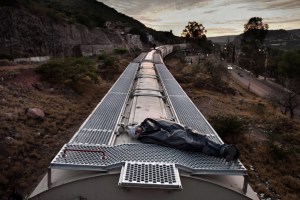
    Celaya - Mexico On the freight train that drive along the south states of Mexico towards north regions, every years thousands of central -american illegal migrants, travel on the wagon roofs. risking so their life for reach the United States border. Source: The Borderland Chronicles

    Celaya – Mexico: On the freight trains that drive along the southern states of Mexico towards northern regions, every year thousands of central -american illegal migrants travel on the roofs of moving trains. Source: The Borderland Chronicles

    Mexico has rapidly developed into a major country of origin, destination, return and transit for migrants. The situation of undocumented transmigrants, most of them Central Americans headed for the United States in search of dignified job opportunities or fleeing social violence back home, has lately attracted particular attention. With limited resources and no permit to enter Mexico, they are required to cross the country clandestinely and vulnerable to abuse by criminal groups and corrupt state agents. The National Commission of Human Rights and civil society groups have for years been documenting the violence, exploitation and humiliations facing transmigrants, including robberies, sexual violence, torture, homicides, and especially kidnappings and extortion.

     Human rights on shaky grounds

    Coatzacoalcos, Veracruz, Mexico, 2011 A family from Honduras rest in a church in the outskirts of the city of Coatzacoalcos as they wait for the next train to pass by. Source: The Borderland Chronicles

    A family from Honduras rest in a church in the outskirts of the city of Coatzacoalcos, Mexico, as they wait for the next train to pass by. Source: The Borderland Chronicles

    One of the milestones for human rights in Mexico was set with the 2011 constitutional reform that granted constitutional status to all human rights enshrined in the international treaties to which Mexico is party. For migrants, however, the panorama has not brightened much. The massacre of 72 migrants that had occurred in San Fernando, in the northern state of Tamaulipas, in August 2010, provided the impetus for the adoption of a new Migration Law. Published in May 2011, it entered only tardily into force with the publication of its Regulations in September 2012.

    Initially, the legislation was hailed as an advance for migrant rights. Unlike the previously applicable General Population Law, it establishes that irregular entry into Mexico is not a crime. But its structural flaw is that while it demands the authorities respect the rights of all migrants, irrespective of their legal status, it also deems migration an issue of national security. The latter, according to the National Security Law, is to be understood as the actions designed to maintain the integrity, stability, and permanence of the Mexican state. In other words, the Migration Law maintains a criminalising approach towards undocumented migrants and effectively paves the way for racial and ethnic profiling in migration checks; corruption; and migrant detention as an instrument for the preservation of public order.

    Mexico’s migration policy, designed by the Secretariat of the Interior (SEGOB), has direct bearing on migration management, carried out by the National Migration Institute (INM). The latter has adhered to the perspective of national security since its 2005 designation as a national security agency. In practice this has meant that INM agents receive training in human rights as well as in national security and subjects related to interrogation and the use of force; abuse and humiliate undocumented migrants during control operations; and administer migrant detention centres that are prison-like installations with very limited access for civil society groups and journalists interested in documenting the human rights situation in these facilities.

    If anything, this stance has hardened with the current Commissioner, former police and intelligence official Ardelio Vargas, who was appointed in January 2013 and has vouched to implement the migration policy from a national security lens. For the authorities it is necessary to apply this perspective, because migration flows have diversified over time and now comprise not only persons seeking better job opportunities, but also individuals who smuggle migrants or collaborate with criminal gangs. Managing migration from a national security standpoint, therefore, allows Mexico to shield both its borders and honest migrants against unsavoury elements.

    Edging closer to national security?

    The 2012 presidential victory of Enrique Peña Nieto marked the return to power of the Institutional Revolutionary Party (PRI) that had ruled Mexico between 1929 and 2000 and left an indelible mark on state-society relations. Alarmingly, the current administration appears determined to defend the nexus between migration and national security. For the authorities this approach is warranted, because migration flows are unfolding in the context of organised crime, which found in undocumented migration a new criminal niche once the Felipe Calderón administration (2006-2012) had declared its war on drug trafficking. The fight against organised crime, however, has blended with migration control such that the social phenomenon of migration is now considered and tackled as a security threat, not as a human rights issue.

    The rhetorical intent to do so, at least, is expressed in the sectorial plans, planning instruments that contain the objectives and strategies that seek to strengthen government actions and respond to the needs and policies outlined in the National Development Plan, itself the blueprint that governs  the programme and budget formulation of the entire Federal Public Administration. The sectorial plans that are of particular interest for this discussion are those of the SEGOB and the Secretariat of National Defense (SEDENA).

    The SEGOB document adopts a multidimensional approach to national security that is meant to identify external and internal dynamics that might come to constitute risks and threats to the integrity and stability of the Mexican state. These dynamics are of a social, environmental, economic, political, technological, and demographic nature and include examples such as organised-crime-related violence, terrorism, migration, the trafficking of arms, persons and drugs, and the proliferation of weapons of mass destruction.

    For the SEGOB, the need to respond effectively to migration to and from Mexico requires the government to foster inter-institutional cooperation through a comprehensive migration policy (set out in the forthcoming Special Migration Programme 2014-2018), one that is able to take into account the multiple dimensions of migration, to leverage its development potential, and to minimise its costs. As the phrasing suggests, the country is prepared to welcome skilled migrants, but will deter undocumented ones. The plan acknowledges that Mexico faces the difficult task of balancing national sovereignty with migrant rights, yet it has little more to say on the subject than reiterating the need to transform the INM. The latter, it is worth pointing out, has been an oft-stated yet never accomplished ambition.

    The second text affirms that the SEDENA has an essential role to play in preserving internal security and strengthening democratic institutions. In view of the unprecedented insecurity associated with organised crime, which also found a criminal niche in migrant kidnappings, the Armed Forces responded to the civilian authorities’ call for assistance by maintaining nationwide deployments, particularly the country’s most sensitive areas.

    Of particular relevance is the plan’s commitment to boosting border security, given the vulnerability that arises especially at the southern border with multidimensional problems such as the control of contraband and migrant flows, organised crime, and the trafficking of drugs and arms. These dynamics, the SEDENA believes, require it to maintain a permanent of some 30,000 troops and to cooperate with the Armed Forces of Belize and Guatemala as well as with the Federal Police and the Attorney General’s Office in the country’s crucial zones. The SEDENA document, more than its SEGOB equivalent, suggests that far from making greater strides towards respecting migrant rights, Mexico will perpetuate the circle of exclusion, violence, and corruption. Rather than moving towards a human rights perspective, Mexico chooses to embrace wealthier, skilled migrants while closing its doors to poorer, untrained ones.

    The United States, Mexico, and Central America are partnering to promote border security, but these efforts not only fail to impede migration flows, but also expose migrants to greater danger and –given the ineffective fight against corruption–to continued abuse by state agents who know they can prey on migrants with impunity. At the same time, the creation of a militarised security corridor stretching from the Central American isthmus up to the United States can also be deployed to suppress social dissent against the expansion of infrastructure projects that primarily serve the interests of transnational enterprises or against mining projects that have a devastating impact on the environment and local communities’ access to water.

    Towards a citizen security framework

    In order for its migration policy and management to be more effective and humane, Mexico will need to undertake a host of changes, starting with the professionalisation, transparency, and accountability of the INM. However, irrespective of the extent to which this may be achieved, the treatment of migrants is unlikely to change as long as migration is linked to national security and Mexico acts as a filter for undocumented migration to the United States. Instead, the latter will need to be understood as a development and human rights issue. Above all, it will need to be approached from the perspective not of national security, but of citizen security.

    According to the Inter-American Commission on Human Rights, citizen security is the “social situation in which all persons are free to enjoy their fundamental rights and public institutions have sufficient capacity…to guarantee the exercise of those rights and respond effectively when they are violated.” This definition leaves no doubt that the central objective must be to protect the person, rather than the state. The application of a citizen security approach to migration would require the Mexican state not only to avoid military participation in internal security and migration control, but also to take seriously the professionalisation of the INM (including adequate recruitment and training, the creation of a human rights culture, decent remuneration, and an effective sanctions system) and to establish oversight mechanisms that will foster transparency and accountability.

    As long as the Mexican government remains unprepared to pursue a different migration policy, citizens will need to play a greater role in pressuring it to do so. Civil society groups have a relevant role to play in sensitising the population and creating the political will to prioritise the human rights and development aspects of migration over security.

    Sonja Wolf is a researcher at the Institute for Security and Democracy (INSYDE), Mexico City. She has acted as project coordinator and principal investigator of INSYDE’s Assessment Study of Mexico’s National Migration Institute (INM), the first comprehensive study to examine the INM’s institutional and migration management and the ways in which it facilitates corruption and migrant abuse.

    Featured image: Migrants traveling on the roof of a freight train near Ixtepec, Oaxaca. Source: CIP Americas

  • A top-down approach to sustainable security: The Arms Trade Treaty

    A top-down approach to sustainable security: The Arms Trade Treaty

    Zoë Pelter | | November 2012

    Issue:Global militarisation

    2012 was hailed as a potential landmark year in the push for greater regulation of the global trade in conventional arms. After more than a decade of advocacy to this end, negotiations took place throughout July towards the world’s first Arms Trade Treaty (ATT), which is intended to establish the highest possible common international standards for the transfer of conventional weapons.  However, although significant progress was made during the month of intense negotiations, the ATT is not yet open for signature. The future of possible work towards a treaty now lies with the First Committee of the UN General Assembly, as discussions continue about the possibility of a second round of negotiations. As the Committee’s session nears an end, this article explores what role a potential treaty – if reopened for further negotiation – could play in a move towards sustainable security.

    The scale of the arms trade is significant; it’s impact, devastating in many parts of the world. From 2006-10, the top five arms exporting countries – the United States, Russia, Germany, the United Kingdom and France – delivered nearly 92 million major conventional weapons* . The recipients of arms transfers include countries such as Sudan, Yemen, Egypt and Libya, where the use of government stockpiles against civilians over the past two years has been particularly abhorrent. However, even as the volume of international transfers continues to increase – by 24 per cent from 2002-2006 to 2007-2011 – there is still no overarching global regulation of the trade. Instead, there exists only a patchwork of national laws and regional agreements that fail to impose any consistent international standard of trade.

    This lack of comprehensive global standards to regulate transfers of conventional arms – which range from battle tanks, combat aircraft and missile launchers to small arms and light weapons – has allowed a flow of weapons to actors who use them in contravention of international humanitarian and human rights law, including terrorist groups and human rights abusers. This in turn prolongs conflict, undermining stabilisation and development efforts. Indeed, as 30 high-profile Oxfam and Amnesty International supporters stated in a letter to UN Secretary General Ban Ki-Moon in at the start of the July’s negotiation conference:

    “Every year an average of two bullets for every person on this planet is produced. With so few global rules governing the arms trade, no one really knows where all those bullets will end up – or whose lives they will tear apart. Under the current system, there are less global controls on the sales of ammunition and guns than on bananas and bottled water. It’s a ridiculous situation. The deadly and poorly regulated trade in arms leads to serious human rights abuses, armed violence, conflict, poverty and organized crime around the world. The lack of clear binding principles governing decisions on international arms transfers combined with patchy, diverse and poorly implemented national regulations are inadequate to deal with the increasingly globalised nature of the arms trade. As a result, irresponsible users are allowed to violate international humanitarian and human rights law.”

    If negotiated, the ATT would establish much needed internationally agreed norms of responsible state behaviour with regards to arms transfers; with criteria that aims to prevent the transfer of weapons to the aforementioned irresponsible actors.

    What would this mean in practice? An ATT would act to ensure that arms-exporting states have an obligation to conduct comprehensive risk assessments in line with international humanitarian and human rights law before approving international transfers of arms. In so doing, an ATT would provide a crucial delineation of the circumstances under which transfers should not be allowed.

    This has important implications. For example, following a government review of arms exports to the Middle East and North Africa in 2011, the United Kingdom revoked 158 licenses because the exports were found to violate two main criteria for the UK’s Consolidated Criteria for arms exports: respect of human rights and fundamental freedoms, and risk that the exported weapons might be used for internal repression. The impact of certain earlier UK export decisions had become clear in Bahrain in February 2011, when a British-supplied arsenal of crowd control weapons – including stun guns, shotguns, crowd control ammunition and canisters of teargas – was reportedly used by security forces in a brutal crackdown against popular protests**. Although some licenses were revoked, the UK has a further 600 extant licenses to countries such as Syria, Bahrain and Yemen, where rights abuses are notoriously continuing. The aim of the ATT is to ensure that exporting countries consider the dangers to civilians and human rights while deciding whether or not to transfer arms and to prevent transfers where abuse is likely. An ATT is therefore hoped to help stem the flow of arms to actors – state and non-state – who use violent action to undermine rule of law and the international humanitarian laws that seek to protect civilians and sustain security.

    The consequences of irresponsible arms transfers reverberate further than governmental misuse. For example, the 2008 Final Report of the UN Panel of Experts on Sudan stated that arms originating from the stockpiles of Sudan, Chad and Libya had been used in attacks by the Justice and Equality Movement (JEM) forces in Sudan, a militia group included in the UN Security Council arms embargo on Sudan (Darfur region) from 2005 onwards. In the case of JEM attacks on the city of Omdurman in 2008, chain-of ownership tracing by the Panel identified numerous weapons manufactured in Spain, Belgium and Bulgaria, which had originally been legitimately shipped to Libya . Although many of the weapons were formerly exported to Libya in the early 1980s, the report stood as a clear sign of the danger of legitimately transferred arms leaking into the illicit market from irresponsible end-users. By assessing the responsibility of end-users before transferring arms, the ATT might go some way towards encouraging states to stem the flow of weapons to illicit markets from the back-doors of irresponsible end-users. In turn, it is hoped that it will work against the militarisation of societies that threatens the stability of the majority of civilians. 

    Treaty negotiations keenly acknowledged the disproportionate impact of small arms and light weapons (SALW) on civilian populations during and after violent conflict and accordingly, SALW are covered in the scope of the treaty. As noted by the UN office for Disarmament Affairs (UNODA) ‘small arms are cheap, light, and easy to handle, transport and conceal. A build-up of small arms alone may not create the conflicts in which they are used, but their excessive accumulation and wide availability aggravates the tension. The violence becomes more lethal and lasts longer, and a sense of insecurity grows, which in turn lead to a greater demand for weapons…They are the weapons of choice in civil wars and for terrorism, organized crime and gang warfare.’  Including these weapons type in the treaty’s scope – and therefore extending beyond the UN Register of Conventional Arms – will increase the number of disarmament tools available to tackle the prolific spread of these weapons and their devastating impact and threat to sustained security during and following armed conflict.

    Each of these aims seeks to counter a pattern of increasing spread of arms and trend towards militarisation which, far from protecting societies, drives insecurity around the world. This is true for states – with the aforementioned trend towards increased spending for conventional arms and annual increases in world military expenditure from 1998-2010 – but also for civilian society. Around the world, millions of people face the direct and indirect consequences of increased militarisation on a daily basis, whether living under the constant threat of weapons held by local gangs or criminals, or direct trauma, injury or fatality as a result of use of weapons in conflict or terrorist action. In the face of these situations, both where the state abuses civil rights or where the state is unable to protect communities from armed non-state groups, communities often choose to seek further weapons as a means of protection, and so cycles of increased militarisation and violence continue to threaten the stability of societies. By stemming a downwards flow of weapons, and making assessments about the likelihood of irresponsible or abusive use of transferred arms, a treaty of this nature may serve to prevent violent conflict and/or help to make conflict less deadly.

    The current draft text does much towards these goals, by including provisions related to record keeping, international assistance and implementation, as well as creating a Secretariat to help signatory states implement the treaty, especially those who may lack the bureaucratic capacity to do so right away. More importantly, it clearly outlines the obligations that signatories would have to conduct comprehensive risks assessments in line with IHL and IHRL before approving transfers and effectively underlines the circumstances in which transfers should not be made.

    However, there are still a number of issues with the draft treaty, which at present leaves loopholes in regulation that would allow for on-going abuses as a result of arms transfers if it is used as a base for further negotiations. As outlined efficiently in Control Arms’ recent briefing ‘Finishing the Job: delivering a bullet-proof ATT’ , at present the draft treaty text falls short in a number of ways. Necessary improvements to the draft include: addressing the exclusion of ammunition from the scope of the treaty; the lack of a provision that requires state reports on transfers to be publically available; lack of provisions for states to consider risks that transferred arms may be diverted or used for corruption, against development or in gender-based violence; and current ambiguity about controls when dealing with states not party to the treaty. It will also be vital for key exporting nations such as the United States to be on board with the treaty for it to be effective. If negotiations are re-opened, negotiators must once again carefully navigate the need to sharpen the treaty scope and criteria with a need to have the participation from a majority of states.

    There is clearly quite some way to go before the treaty could come into force and be implemented effectively. The ATT clearly cannot act as a panacea for conflict-affected countries, nor will it hinder inter-state arms trade or domestic controls. However, if successfully negotiated and implemented, it could be an effective filter to curb the worst of irresponsible and illicit arms trading. The ATT may currently seem abstracted from the real impact of the arms trade, but in the end, as stated by the Control Arms Campaign, ‘the ATT will be judged according to its success in preventing transfers that risk contributing to or facilitating human suffering’. As UK Ambassador Jo Adamson said at the opening of the First Committee session, with the ATT ‘we have a real live example of where we can make a real difference in the real world to real people.’


    *(data on conventional weapons exports and military expenditure derived from SIPRI Yearbook 2012: http://www.sipri.org/yearbook/2012/06)
    **All information in this paragraph can be found in the UK Parliament Committees on Arms Export Controls report ‘Scrutiny of Arms Exports (2012)’  http://www.publications.parliament.uk/pa/cm201213/cmselect/cmquad/419/41902.htm 

     Image source: Oxfam


    Comments

    Post new comment