Hot and Cold Wars
Issue:Climate change
http://www1.american.edu/ted/ICE/index.html
Delicious
Digg
StumbleUpon
Reddit
Posted on 28/01/11
Issue:Climate change
http://www1.american.edu/ted/ICE/index.html
Delicious
Digg
StumbleUpon
RedditPosted on 28/01/11
Issue:Marginalisation
The International Peace & Security Institute (IPSI), in collaboration with The Johns Hopkins University School of Advanced International Studies (SAIS) Conflict Management Program, hosted a high-level panel discussion and networking reception on Wednesday, August 17. The event, “Why Here, Not There? Investigating emerging nonviolent movements,” examined the dynamics that enable nonviolent movements to occur in some regions and not others at specific moments in time. The event was broadcast live nationwide and on the internet by C-SPAN.
Watch the video here: IPSI
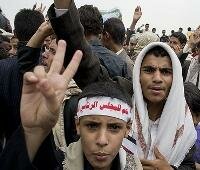
Image source: Al Jazeera English
Delicious
Digg
StumbleUpon
RedditPosted on 23/08/11
(This piece was originally published by Channel 4 News on January 22, 2013 and is the first of two parts by Anna Alissa Hitzemann and Ben Zala)
Britain is on standby and the US is already transporting French troops into Mali. But a new paper says the west is “betting on the wrong horse” by intervening in the region.
Now well over a decade after the beginning of the so-called war on terror, yet again, another western nation is leading a military intervention against Islamist paramilitaries based in a largely ungoverned region of a state in the Global South, write Anna Alissa Hitzemann and Ben Zala for the Oxford Research Group.
The hostage situation in Algeria that developed late last week is just the latest in a series of western hostage takings in recent years, demonstrating the increasing radicalisation of elements in the region.
The French-led intervention in Mali is only one of many in a growing list of attempts to control outbreaks of political violence and terrorism with military means.
As the intervention gathers pace, it is worth reflecting on the lessons from similar operations over the past decade or so. From the US-led interventions in Afghanistan and Iraq to the attempts to control Islamist-inspired political violence in Yemen, Nigeria and Somalia and separatist rebellions in Burma, Indonesia and elsewhere, the resort to military force has singularly failed to achieve the aims set for it.
Common to all of these examples is the reluctance to match military operations against rebel groups and insurgents with serious, long-term efforts to address the factors that underlie the feelings of resentment and marginalisation that drive such conflicts.
As the commentary and analysis of events in Mali follow the fortunes of the military battles of France and its other western and African allies, it is worthwhile examining the political, socio-economic and cultural divisions which have sparked the uprising in the north of Mali.
The factors that led to the current Malian crisis are complex but can largely be attributed to unintended consequences of the war against Gaddafi. It is clear that the 2011 crisis in Libya, followed by foreign intervention and Nato’s military involvement, and the consequent fall of Gaddafi‘s regime, had a crucial role to play.
After losing the war in Libya, hundreds of Malian mercenaries (many of whom had been recruited among former Tuareg rebels) who had been an integral part of Gaddafi’s army, returned home. They brought with them an arsenal of weapons and ammunition as well as experience.
These soldiers who returned to Mali from Libya played a key role in the formation of the largely Tuareg-led secular MNLA (Azawad National Liberation Movement), which in a matter of months, took over several key towns in the north of Mali, declaring an independent Azawad state.
The situation in the north of Mali led to widespread frustration within the military over the government’s incompetence or unwillingness to deal with the issue and reclaim their territory. Ultimately, it led to the April 2012 military coup by Amadou Sanogo against Mali’s elected government and president Amadou Toumanie Touré.
Interestingly enough, Sanogo himself had received extensive training by the United States as part of the $600m (£380m) spent by the US government in efforts to train military of the region to combat Islamic militancy.
The actions of the separatist MNLA group and the consequent military coup and inability of the Malian government and military forces to control the situation led to a violent conflict in Mali’s north which includes four main groups: the secular MNLA and the religiously motivated AQMI (Al-Qaeda of the Islamic Maghreb), Ansar Dine and MUJAO (Movement for Unity and Jihad in West Africa).
AQIM, the group most closely linked to the international terrorist network Al-Qaeda, has been present in Mali for several years now, has taken several European hostages over the last few years and is said to be made up of mostly Algerians and Mauritanians with much financial support from abroad.
The formation of the Tuareg-led MNLA movement and its desire for an independent Azawad state has in fact deep roots and a history going back to the first Tuareg rebellion of 1963. Tuaregs led significant armed struggle and resistant movements against colonisation by the French and later the central Malian government.
Long-term sustainable security and stability for Mali will not be possible without seriously addressing the long-standing and deep-seated grievances that stem from the marginalisation of the northern territories and their peoples.
The political, socio-economic, educational and cultural marginalisation of the north cannot be ignored. With the effects of climate change, increasing desertification and the government’s reluctance to implement meaningful development programmes, Tuareg and other nomadic communities see no viable future and feel abandoned by the Malian state.
Grievances also stem from past brutal repressions of Tuareg movements, as well as the state’s failure to adhere to the Algerian brokered peace agreements between Tuareg rebels and the government.
Even after the Tuareg rebellions of the early to mid 1990s, the Malian government still remained unwilling or unable to implement the education programmes and development projects which were promised and are necessary to alleviate poverty and a deep sense of disenfranchisement.
The political, socio-economic, educational and cultural marginalisation of the North cannot be ignored.
It would have been wise to negotiate and come to an agreement with the MNLA at the early stages of the current crisis. Both Burkina Faso and Algeria pushed for a diplomatic solution to this crisis instead of military intervention.
Burkina Faso’s president, Blaise Compaore, West Africa’s mediator on the Malian crisis, had organised talks between MNLA, Ansar Dine and the Malian government in Ouagadougou in December. A ceasefire was agreed and all parties approved to adhere to further peaceful negotiations.
The talks which had been planned to continue this January have now been interrupted due to the French military intervention in Mali.
The chance of finding a solution to combating Islamic extremism in northern Mali would be significantly better if the Malian and French military sought a way of collaborating with the Tuaregs. This is a challenging task but a task that is unavoidable over the long-term.
It is the resentment towards the central government over the marginalisation of the northern territories and its population that in part has helped Islamists gain strength.
Dr Ben Zala is Ben Zala is a Lecturer in International Politics at the University of Leicester.
Anna Alissa Hitzemann is a Peaceworker with Quaker Peace and Social Witness. She currently works with Oxford Research Group as a Project Officer for the Sustainable Security Programme, with a focus on our ‘Marginalisation of the Majority World’ project.
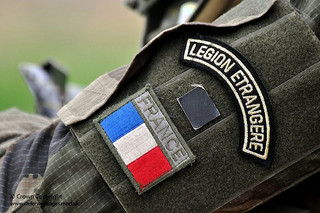
Image source: Defence Images
Issues:Climate change, Competition over resources
Thousands of negotiators, activists and lobbyists have descended on Copenhagen for two weeks to attempt to seal a global deal on climate change. Issues on the negotiating table include how much wealthy polluters like the US put towards financing measures to help people in poorer countries cope with the impacts they are already experiencing, and how the rich states will share their low carbon technology with poor states so that the unindustrialised world can still develop without relying on fossil fuels.
But as the negotiations unfold, one very real issue unlikely to be given much discussion space is the heightened risk of violent conflict. Factors linking climate change and the potential for conflict include a number of powerful threats to human security, such as water scarcity, land degradation, decreased food production. The risk will be greatest in poor, badly governed countries, many of which have a history of armed conflict. International Alert’s report ‘A Climate of Conflict’ estimates that just under three billion people live in 46 conflict-affected countries, where climate change could create a high risk of violent conflict, and a further in two billion people living in an additional 56 countries face a high risk of instability as a result of climate change.
Attention to the security implications of climate change is slowly increasing among politicians and strategists in the developed world, yet climate change negotiators are largely silent on the matter. Specialists in climate change are not generally well informed about it and, although development specialists universally agree that the poorest will be worst hit by climate change, they have not resolved how to deal with the issue of fragile states in climate negotiations.
It is essential to address this issue, but necessary to do so carefully. The potential conflict implications are among the most compelling arguments for rich states to take action against climate change. But there are three notes of warning.
First, there is the risk of over-stating the conflict dimension in an attempt to persuade a sceptical, even disaffected or merely ill-informed public to support cuts in carbon emissions. Fuelling fears that climate change will generate threats like terrorism and mass immigration* will lead to oversimplified and inaccurate perceptions of the security angle. In the political debate, exaggerated positions will inevitably be vulnerable.
Secondly, securitising the issue runs the risk of a damaging response that overlooks cost-effective and sustainable options in favour of high cost and probably ineffective military ones. The point here is that policy responses must be based on a thorough understanding of not only the reality of the conflict risk but also of how it is shaped. Effects of climate change such as more frequent natural disasters, long-term water shortages and food insecurity could combine with other factors and lead to violent conflict. The reason why this can happen lies in the context of poverty, weak governance, political marginalisation and corruption. These factors limit the capacity to adapt to climate change and simultaneously drive conflict. Policy responses need to look not only at the immediate risk of violence, for example by reforming the security sector, and not only at the specific environmental impacts, for example by taking steps to reduce the risk of disaster, but also at the broader context of failures of governance.
Thirdly, climate negotiators have not paid attention to fragile states and conflict risks. Most negotiators are climate and legal experts whose remits do not extend beyond the talks. They have neither incentive nor expertise for taking account of the complex web of that links climate, conflict, governance and development.
Nonetheless, to be effective, the global agreement must make it possible to address these linkages. This means taking the discussion beyond the question of how to raise climate funds for adaptation and mitigation, into thinking about how to spend and what governance and institutional changes are needed so spending can be effective.
Policies for adaptation have to respond to the political and social realities in which they are intended, or they will not work. Climate change impacts are linked to conflict, development, government, human rights, trade and the world economy. The problems are interlinked and so the responses must be interlinked.
International Alert’s latest report ‘Climate Change, Conflict and Fragility’ recommends that adaptation strategies should be more conflict-sensitive. Water management in water stressed countries for example should be decided by understanding the systems of power and equity. This must involve the poorest and most marginalised, and avoid pitting groups against each other.
Likewise, peace-building needed to be climate-proofed by paying attention to the availability of resources for livelihoods such as agriculture – which could be under pressure because of climate change – for returning ex-combatants or people displaced by conflict. For example, in Liberia, which is in the process of recovery from war, many ex-combatants are returning to villages hoping to make a living from agriculture. But climate scientists predict that crop yields in parts of West Africa could halve by 2020. The prospect arises of returned fighters becoming resentful unemployed farmers, and thus potential recruits, with their combat experience, in a new conflict.
The efforts of rich countries to shift to a low-carbon economy must be peace-friendly and supportive of development. We don’t want a repeat of the hasty actions in 2007/8 that saw the diversion of food crops and land use to biofuel production playing a role in pushing food prices up, causing conflict in over 30 countries.
Getting the negotiators in Copenhagen to understand these interlinkages will mean there’s a good chance that responses to climate change could yield a double dividend: increasing resilience to climate change and to violent conflict. Failure to take account of the linkages though could result in the millions or billions of dollars of new funding actually becoming part of the problem.
*For example, see the US public education campaign on climate change, September 2009 http://www.secureamericanfuture.org/
Janani Vivekananda is Senior Climate Policy Adviser on climate change and security at International Alert, the London-based peacebuilding organisation. She co-authored Alert’s latest report Climate Change, Conflict and Fragility, and A Climate of Conflict: The links between climate change, peace and war, published by International Alert in 2007.
Delicious
Digg
StumbleUpon
RedditPosted on 14/12/09
Introduction
The acknowledgement of gender issues through the Women, Peace and Security (WPS) agenda marked a watershed moment for women’s rights. Despite this, the Responsibility to Protect (R2P) framework remains gender-blind. I argue that R2P and the WPS agenda share overlapping commitments and mutually beneficial and reinforcing protection mandates. Through three intersecting commitments – prevention and early warning systems, gender protection in peacekeeping, and women’s participation in post-conflict reconstruction – careful alignment between R2P and the WPS agenda could overcome this silence and move towards achieving more sustainable security.
The Responsibility to Protect and Women Peace and Security
Systematic human rights atrocities perpetrated against individuals based on their ethnicity, gender, and race have framed contemporary political discourses. With the international community’s inability to collectively respond to prevent mass atrocities and other severe humanitarian emergencies, former United Nations (UN) Secretary-General Kofi Annan spearheaded the challenge to create a norm permitting states to intervene in another sovereign state in the event of ‘gross and systematic violations of human rights that affect every precept of our common humanity’. Spurred on by failures of the international community to prevent genocides in Rwanda (1994) and Srebrenica (1995), the International Commission on Intervention and State Sovereignty (ICISS) was established in September 2000 to address how and when the international community should act to prevent genocide, war crimes, ethnic cleansing and crimes against humanity. The report entitled “The Responsibility to Protect” (R2P) was released in December 2001. The unanimous adoption of R2P at the World Summit in 2005 established its prominence as a normative framework within the international community. The use of R2P as rhetorical backdrop to the Libyan intervention in 2011 via UNSC Resolutions 1970 and 1973 and the inaction in responding to the crisis in Syria demonstrates the prevalence of R2P in international discourse. Furthermore, R2P is interwoven with existing international principles, obligations, and peacebuilding initiatives. UN Secretary-General Ban Ki Moon asserts that R2P rests upon three interrelated, central pillars – responsibilities of the state to protect its population from mass atrocities; international capacity building to ensure states meet their protection responsibilities and prevent mass atrocities; and collective and timely responses through diplomatic, humanitarian and political means with coercive military action as a last resort.
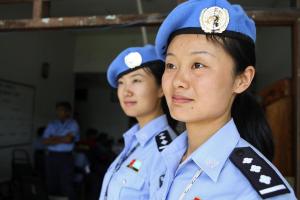
Female United Nations police officers of the United Nations Mission in Timor-Leste (UNMIT). Image by UN photo via Flickr.
The Women, Peace and Security (WPS) agenda gained traction on the international peace and security platform following the adoption of UN Security Council Resolution 1325 in October 2000. The WPS agenda is the most comprehensive articulation of women’s rights and gender issues in international peace and security. It establishes a nexus between conflict prevention and women’s rights, highlighting the relationship between gender inequality and conflict. Resulting from the Fourth World Conference on Women in 1995 in Beijing, and the pivotal Beijing Platform for Action which named ‘Women and Armed Conflict’ as one of twelve areas of critical concern, the NGO Working Group on Women, Peace and Security was formed to advocate a UNSC Resolution focused on women’s unique contribution and experiences of conflict. Through lobbying and advocacy, the NGO Working Group played a vital role in drafting the resolution and through UN Resolution 1325 successfully complicated the popular narratives that stereotyped women as either victims or inclusive peacebuilders. UN Resolution 1325 directs policymakers to consider all of women’s experiences in conflict and links women’s rights to international peace and security. The adoption of an additional seven resolutions builds upon 1325 and make up the WPS agenda. It rests upon a four-pillar mandate; prevention of violence and derogation of rights; protection from violence; participation in peacebuilding and post-conflict reconstruction; and relief and recovery. Laura Shepherd and Jacqui True broaden ‘relief and recovery’, to include identifying the structural social, political and economic conditions required for sustainable and lasting peace. Specifically the WPS agenda addresses sexual and gender-based violence (SGBV) in conflict, measures to ensure women’s participation in decision-making processes and post-conflict programs, gender mainstreaming in UN activities and peacekeeping operations, and gender-sensitive prevention frameworks. The WPS agenda provides basis for international engagement with gender issues. With R2P, the WPS shares a commitment to improve human security and revealing and preventing women’s human rights abuses through international engagement. Disappointingly, despite both frameworks emerging sharing similar underpinnings, R2P and its community continue to fail to address gender issues encompassed within the WPS agenda.
R2P did not embrace the central messages of Resolution 1325 nor were points of synergies explored where there was a lack of dialogue and acknowledgement towards gender issues. From the outset, gender was excluded from the original formulation of R2P with only one of the 12 commissioners being a woman and only seven of 2000 sources consulted including gender. Women within the original R2P document were framed in terms of vulnerable populations in need of protection. ‘Women’ were mentioned three times only in reference to ‘rape and sexual violence’, which was mentioned seven times, where SGBV falls under crimes against humanity, war crimes and ethnic cleansing. No reference was made of women being active participants and agents in conflict prevention, protection and post-conflict reconstruction. This is despite the transformative possibilities of including aspects of the WPS agenda. R2P disregards WPS as a paradigm for conflict prevention and its centrality to peace and security. Here, as discussed below, three common intersecting commitments could overcome this disconnect.
Intersecting Commitments
The inclusion of gender issues into existing early-warning frameworks and systems may illuminate potential and/or existing R2P situations. Studying macro- and micro-level changes to women’s lives reveals the escalation of violence and derogation of individual rights in hyper-masculinised and militarised societies. Gender-sensitive indicators include average levels of female education, impunity towards SGBV, increased kidnappings, sex work, female heads of households and domestic violence. Moreover, gender-sensitive indicators are not synonymous with women-sensitive indicators, but can monitor aggression and militarisation within a society, such as the persecution of men that do not take up arms. UN Women implemented several context-specific programs that have resulted in a comprehensive how-to guide of 85 gender-sensitive indicators that provide a holistic early warning system. Furthermore, through empirical analysis Sara Davies and Jacqui True found strong connections between systemic gender inequality and discrimination and the use of SGBV in conflict and non-conflict settings.
Despite the benefits of including gender-sensitive indicators, gaps in women’s participation in early-warning initiatives have not been overcome. The UN Office of the Special Adviser on the Prevention of Genocide and the Responsibility to Protect have not addressed the role of gender inequality or gendered violence in early warning systems. A recent framework of analysis on the prevention of R2P crimes continues to situate women in the narrative of ‘vulnerable population’ with children and the elderly, and in regards to sexual violence and reproductive rights. This is despite, as Davies and True argue, systemic and structural gender inequality is a potential early warning factor for preventing mass SGBV.
Since gender inequality increases the likelihood of R2P crimes any strategy of prevention must address gender norms that oppress and marginalise women. Gender-sensitive indicators highlight structural political, economic and social inequalities that maintain gender inequality in a given society that impacts post-conflict reconstruction and conflict protection.
The protection pillar of WPS stresses the full involvement and participation of women in the maintenance and promotion of international peace and security. This includes gender mainstreaming in all peacekeeping missions and the addition of gender units and advisers. Providing an official female presence in conflict areas, refugee and Internally Displaced Persons (IDPs) camps is essential to improve access and support for local women to communicate in an official capacity. Women can approach each other more easily in female-only settings where women may be prohibited to talk to male strangers. Moreover, SGBV is more likely to be reported between women. However, as of February 2016, only 3.34 per cent of military and 9 per cent of police were female. Although there is at least one female in every peacekeeping force, the number varies from 1 woman out of 17 deployed in the UN mission in Afghanistan to 799 women out of 17,453 deployed in the UN-African Union Mission in Darfur. Of 105,315 deployed peacekeepers, women only comprise 4.05 per cent. Although numbers have improved since the adoption of UN Resolution 1325, increases have been marginal and reflect the low number of women included in UN peace building efforts.
Furthermore, implementation of gender-sensitive protection needs to move beyond the ‘add women and stir’ policy. Rather, WPS knowledge needs to be utilised in peacekeeping operations and wider UN peacebuilding efforts. For instance, the assumption that men are heads of households and therefore assistance being distributed to mainly men does not reflect post-conflict realities. Women are often widowed during and after conflict and adopt non-traditional roles such as heads of households. Since post-conflict programs and assistance does not recognise this, women are forced to take drastic measures to support their family and may take part in exploitive aspects of peacekeeping economies, like the sex industry. The misconception could be countered through gender units, gender-awareness training on more than an ad hoc basis and extensive comprehension of WPS.
The post-conflict phase is complex with many overlaps where the WPS agenda would assist states and the international community in post-conflict responsibilities. However, here I will focus on women’s participation in peace processes. Women’s involvement in peace processes is mentioned in every resolution of the WPS agenda. Evidence suggests that the inclusion of women at the peace table as witnesses, signatories, negotiators and mediators makes it 35 per cent more likely a peace agreement will last. Nevertheless, women’s quality participation in official capacities remains insufficient. Women and gender provisions have slowly started to be incorporated into peace agreements with a textual increase since the passing of Resolution 1325.
However, by essentialising women as mothers, caregivers and victims, women are excluded from peace negotiations where, ironically, the cessation of hostilities is reliant on those who took up arms. I am not arguing that women are better peacemakers, but that their participation is vital to ensure that their experiences of conflict are acknowledged. Around the world, women lobby for participation to ensure their needs and security concerns are addressed. In Somalia, the Sixth Clan was formed in response to the five traditional Somali clans failure to include women in negotiating teams. Asha Hagi Elmi became the representative of the Sixth Clan in 2000 and in peace talks in 2002, becoming the first female signatory to a peace agreement in 2004. Peace processes must include women as more than lip service to inclusivity.
Conflict transition provides a chance to create a more equal society by transforming the gendered relationships and identities that contributed to the production of violence. Women’s participation is essential to represent half the population during peace negotiations, to ensure explicit inclusion of women’s rights and gender provisions, and could have major implications for women’s social, political and economic status, and involvement in wider post-conflict initiatives. It is imperative that women are involved during that critical post-conflict transition to be enabled to affect positive changes.
Conclusion
Despite these areas of common engagement, R2P remains silent towards analysis and discourse surrounding the WPS platform. Both frameworks emerged at similar times and share central tenets of prevention, participation and protection, however women’s involvement in R2P has been grossly deficient. I have briefly demonstrated here, and examine in depth elsewhere, three areas of common engagement between R2P and the WPS agenda. I identify three common intersecting commitments – prevention and early warning frameworks, protection and gender-sensitive peacekeeping, and women’s participation in peace processes. Implementing gender-sensitive policies, legislations and programs will highlight the different lived experiences of men and women and the insecurities that arise during conflict and post-conflict reconstruction. R2P has much to gain from the WPS agenda and vice versa, where alliance with R2P and its community could aid the WPS agenda in addressing major gaps in its implementation. Alignment, both practical and normative, could provide an inclusive and holistic protection platform and encourage sustainable peace.
Sarah Hewitt is a PhD candidate at Monash University, Australia with the Monash Gender, Peace and Security Centre. Her article, ‘Overcoming the Gender gap: The Possibilities of Alignment between the Responsibility to Protect and the Women, Peace and Security Agenda’, was recently published in the Global Responsibility to Protect Journal. Sarah has also posted on Protection Gateway.
In this talk for the Food Systems Academy, Paul Rogers puts the challenges of transforming food systems in a global, human security context. He argues that food is at the centre of the third great transition humankind has to go through.
Running order:
Part 1. Why 1945?: 0 – 2 minutes 45 seconds
Part 2. Proxy wars to the end of the cold war: 2 min 45 sec – 5 min 42 sec
Part 3. The big issues: 5 min 42 sec – 20 min 45 sec
Part 4. The third great transition: 20 min 45 sec – 28 min 49 sec
Part 5 – Looking ahead: 28 min 49 sec – end
Paul Rogers is professor in the department of peace studies at Bradford University and Global Security Consultant at Oxford Research Group. He is the author of numerous books including Why We’re Losing the War on Terror (Polity, 2007), and Losing Control: Global Security in the 21st Century (Pluto Press, 3rd edition, 2010). He is on twitter at: @ProfPRogers
The Food Systems Academy is an open educational resource aiming to transform our food systems. This video can also be viewed on their website.
Featured Image: U.S. Army Huey helicopter spraying Agent Orange over Vietnamese agricultural land (Originally from U.S. Army Operations in Vietnam R.W. Trewyn, Ph.D. , (11) Huey Defoliation National Archives: 111-CC-59948, originally found in Box 1 Folder 9 of Admiral Elmo R. Zumwalt, Jr. Collection: Agent Orange Subject Files. – Item Number: VA042084; via Wikipedia)
Issue:Global militarisation
Living in an era plagued by a nuclear threat and arms race, wherein nations continue to nurse the ambition of producing nuclear weapons or acquiring the means to do, nuclear disarmament is possibly the most vital issue in the field of global security.
There has been a global realization that nuclear disarmament is an important first step towards achieving general and complete disarmament at a later stage. A number of important steps have been taken towards achieving this end. However given the current international environment, the global non-proliferation regime faces challenges on the Korean peninsula and in the Middle East and when progress towards nuclear disarmament appears to have stalled, some believe that traditional instruments of non-proliferation policies have lost their relevance.
In the light of the above, Nuclear-Weapon-Free-Zones (NWFZ) seem to be one of the most promising disarmament mechanisms. They have been recognized by the international community as a “step by step” approach in the process of arms control and disarmament . They are regarded as an effective non-proliferation tool as they fence off one entire region from nuclear weapons. In doing so, they rectify a ‘loophole’ in the NPT which allows the deployment in non-nuclear weapon states of nuclear weapons controlled by the nuclear weapon states . In this sense, NWFZ stop one form of horizontal proliferation.
The rationale behind setting up NWFZ is the direct correlation between denuclearization and peace. All states seek nuclear weapons for their deterrent potential, often pursuing them because they fear that that their neighbours are developing such weapons. In the light of such concerns, many a time, countries refuse to sign global disarmament treaties; if the neighbour that concerns you the most has not joined, what do you gain by joining? The NWFZ play a significant role in acting as a possible solution for fixing such problems. This agreement, generally in the form of an international treaty prohibits the deployment, use, production, transfer and possession of nuclear weapons within a specified geographical region by all countries within that region. In addition to this, the treaty prohibits nuclear weapon states from deploying weapons in these areas and permits the IAEA to conduct regular inspections of the region’s nuclear activity. Such treaties act as restraining forces on countries of that region preventing them from building or acquiring a nuclear arsenal by removing the danger of other countries doing the same.
The idea of NWFZ was conceived with a view to prevent the emergence of new nuclear weapon states. As early as 1958, the Polish government, which feared the nuclearization of West Germany and wanted to prevent the deployment of Soviet nuclear weapons on its territory, put forward a proposal called the ‘Rapacki Plan’ for a NWFZ in Central Europe. In the political climate of the 1950s, the plan had no chance of becoming an international agreement. Nonetheless, several of its elements were later adopted as guidelines for the establishment of NWFZ and several such zones came up in different parts of the world in the subsequent years.
The first of such zones was established in Latin America in 1967 through the Treaty of Tlatelolco. All 33 Latin American and Caribbean countries are parties to this treaty (however, all countries became parties to this treaty over a period of 30 years), which bars nuclear material from the area except for peaceful purposes. Since then the regions adopting NWFZs have been expanding. Following the Treaty of Tlatelolco, a similar treaty was adopted for the South Pacific region in 1985 known as the Treaty of Rarotonga. This zone includes Australia, the Cook Islands, Fiji, Kiribati, Nauru, New Zealand, Papua New Guinea, the Solomon Islands, Tonga, Tuvalu, Vanuatu and Western Samoa and prohibits the use of nuclear energy even for peaceful purposes. The treaty of Bangkok was signed next in 1995, whereby a NWFZ was established in Southeast Asia covering the seven members of the ASEAN, Cambodia, Myanmar and Laos .
The Pelindaba Treaty was concluded in 1996 creating a NWFZ in Africa but has not yet come into force as it has not been ratified by the required number of states. Austria and Mongolia announced their non-nuclear posture in 1999 and 2000 respectively making them single state zones, while the fifth NWFZ was created in Central Asia covering the five former Soviet Central Asian republics- Uzbekistan, Tajikistan, Turkmenistan, Kazakhstan and Kyrgyzstan- in September 2006.
Certain uninhabited areas of the globe have also been formally denuclearised. They include the Antarctica under the 1959 Antarctic Treaty; Outer Space, the moon and other celestial bodies under the 1967 Outer Space treaty and the 1979 Moon agreement; and the seabed, the ocean floor and subsoil thereof under the 1971 Seabed Treaty .
Some experts have questioned the relevance and benefits of NWFZs. They believe that the role of NWFZs has been grossly exaggerated. However, NWFZs are only the means towards an ultimate aim; they are not the sole method to eliminate nuclear weapons. Moreover, experts claim that only the “easy” areas have been included within NWFZs, while areas such as Europe, North America, Northeast Asia, South Asia and the Middle East, which either include an existing Nuclear Weapon State (NWS) or border with them have not been included into NWFZs. Even in the so-called ‘easy’ areas, NWFZs have not been fully implemented, the case being Africa, where the treaty has still not come into force. Despite these limitations, the role of NWFZs towards disarmament and a general peace building process can not be minimised.
The objective of this paper is to trace the development of the idea of a NWFZ in the Middle East and to analyse the factors and elements which have stood in the path of the creation of such a zone despite the fact that enthusiasm and initiatives for a NWFZ have come from both sides- Israel and the Arab world.
Delicious
Digg
StumbleUpon
RedditPosted on 9/03/09
Issue:Competition over resources
‘By 2050, the global population is expected to peak at 9 billion. In an environment already constrained and changed by human activities, we can expect greater scarcity of three resources vital to the maintenance of both the economic order as it now stands, and the preservation of human life in general: energy, water and food. At current population levels, demand for some key resources is already unsustainable. As the number of people on the planet – and the number of people living “affluent” lifestyles – increases, and the effects of climate change are factored in, greater competition over resources is highly probable – affecting individuals, communities and states.’
This paper is the first in a series of four papers written as part of the Sustainable Security and the Global South project, one each covering four likely drivers of insecurity over coming decades: competition over resources, climate change, marginalisaiton of the majority world and global militarisation.
Each paper is the result of long-term collaboration between ORG and partners across the ‘Global South’. This collaborative network – made up of activists, analysts and academics from a range of think tanks, civil society organisation and research institutes – have recommended background reading, provided expert review and written illuminating case studies commission for each paper.
See the full article here.
Image source: Maks Karochkin
Delicious
Digg
StumbleUpon
RedditPosted on 3/10/11
Comments
Post new comment