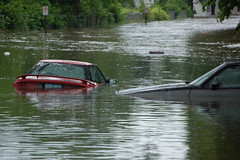
 The publication of the Strategic Defence and Security Review and the Coalition’s first National Security Strategy provided ample opportunity for the government to deliberate on the strategic implications of climate change for the UK. Yet while claims that we continue to live in a post-Cold War ‘age of uncertainty’ lay at the heart of both documents, on closer reading there is very little to suggest that uncertainty about climate change was a concern for those who conducted the review.
Article source: RUSI
Image source: U.S. Geological Survey
 In a piece for the International Movement for a Just World, William Rees maps out a vision for what he calls ‘Survival 2100.’ The goal of such a strategy would be “to engineer the creation of a dynamic, more equitable steady-state economy that can satisfy at least the basic needs of the entire human family within the means of nature.” The alternative, Rees argues is to “succumb to more primitive emotions and survival instincts abetted by cognitive dissonance, collective denial, and global political inertia.”
/4E18EED3C0131B39C125763800602C95/%24file/monitoring-disaster-displacement-2009-sthmb.jpg)
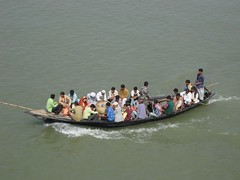 This case study explores the potential impact of climate change on security and conflict in Bangladesh. As international researchers have started to make the link between climate change, insecurity and conflict, they have raised concerns that Bangladesh’s extreme vulnerability to the environmental effects of climate change may create conditions that put it at risk of greater insecurity and possible conflict.
 Good news does not sell newspapers. Nor, it seems, does the idea of respect for human dignity. In West Asia, where the majority of people have known little other than outright war or simmering conflict, it should come as little surprise that people have lost their faith in the possibility of real peace. Real peace can be a frightening prospect; it means burying the hatchet and beating swords into the proverbial ploughshares. No easy task when we are all burdened by historical and psychological baggage.
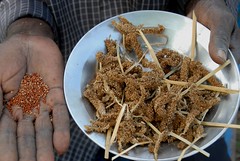 The United Nations Development Programme (UNDP) defines food security as “all people at all times having both physical and economic access to the basic food they need”. However, due to a complex range of interconnected issues from climate change to misguided economic policies, political failure and social marginalisation, over 2 billion people across the world live in constant food Insecurity. It is important to take a sustainable security approach to look at the importance of “physical and economic access to basic food” by exploring the links between food insecurity and violence.
 ‘The sheer scale and chaotic construction of the favelas, which became home to hundreds of thousands of migrants, made them the ideal milieu for drug gangs to hide from the police and set up initially paternalistic, de-facto governments, albeit without any concrete political aims.’

 This case study explores the potential impact of climate change on security and conflict in Bangladesh. As international researchers have started to make the link between climate change, insecurity and conflict, they have raised concerns that Bangladesh’s extreme vulnerability to the environmental effects of climate change may create conditions that put it at risk of greater insecurity and possible conflict.

 From the Center for American Progress:

 As the long running tensions over the Senkaku/Diaoyu islands in the East China Sea appear to be coming to a head, the time for thinking through the alternatives to the militarisation of this conflict seems to be well and truly upon us. The conflict raises interesting issues about sovereignty claims based on offshore territories, particularly as we face a climate-constrained future as well as the increasing importance of competition over scarce resources. The latter is fast becoming one of the most important global trends if one thinks about the potential ‘drivers’ of conflict and even war.
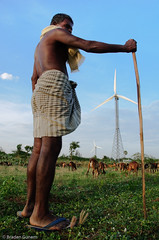 nd incentives for increasing the use of renewable energy in the developing world. WRI’s Davida Wood and Lutz Weischer discuss the key lessons learned at the workshop and their work on helping developing countries make the transition to renewable energy.
 By Oxford Research Group’s Sustainable Security Programme Manager Ben Zala


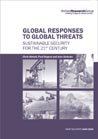 This major report was the result of an 18-month long research project examining the various threats to global security, and sustainable responses to those threats.
 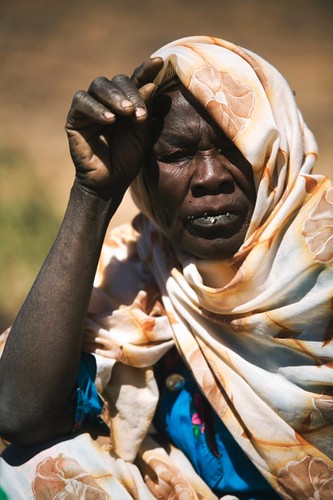 The Human Security Report Project has published a new book exploring the links between climate change and conflicts over natural resources across Africa.
 In the Lowy Institute’s latest Strategic Snapshot, International Security Program Associate Ashley Townshend explores the strategic dynamics between China and India in the Indian Ocean.
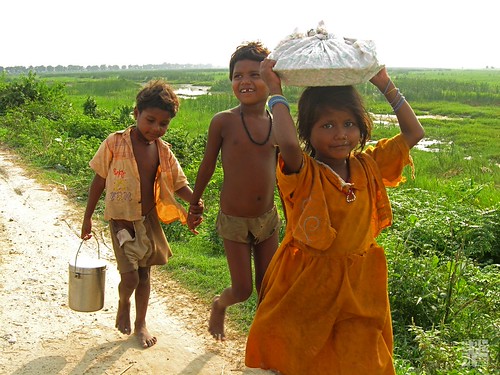


 This major report was the result of an 18-month long research project examining the various threats to global security, and sustainable responses to those threats.