Blog

  • Sustainable Security

    Author’s Note: This article is expanded from a piece originally published on Defence Report on August 3rd.

    Russia’s recent bombing of a Syrian base used by UK and US Special Forces exposes the flaws in the UK’s blanket “no comment” approach. The differences in the US and UK responses to the incident reveal that this policy is neither desirable nor standard practice amongst the UK’s allies.

    The Wall Street Journal (WSJ) has recently revealed that, in June, a Russian aircraft targeted a garrison in Southeastern Syria which was used by American and British Special Forces in their fight against ISIS. The attack missed 20 British Special Forces by just 24 hours and killed four US-backed rebels.

    US and UK reactions to the strike

    Much of the subsequent discussion has been on the specifics of the attack and its implications for future intelligence sharing with Russia; however, few have considered massive difference in the US and UK response. Given that the two allies shared use of the base, one may expect both countries to have shared a sense of outrage at the attack. However, their responses have been hugely different.

    The US has very publicly criticised the actions of Russia. After a similar attack in July, “US military and intelligence officials” gave a number of details about the two strikes and argued that it was part of a continued attempt by Russia to pressure the Obama administration into agreeing closer cooperation over the skies of Syria. Many officials, albeit anonymously, also shared their concerns over implications of the strike for the pending intelligence sharing agreements between the two countries. After the attack, Secretary of State John Kerry went to Moscow in a “hastily organized and very secretive” meeting to try to avoid similar incidents from happening again.

    In stark contrast, the UK has remained silent. In response, the Ministry of Defence (MOD) simply stated: “We do not comment on Special Forces”. In fact, even as this WSJ article marks the second article in two months documenting the presence of UK Special Forces in Syria the UK Government remains silent and refuses to acknowledge they are operating in the country.

    The UK’s “no comment” policy

    The MOD’s “long-held policy” of not commenting on Special Forces is well established. This most recent revelation adds to a long list of other incidents where, against mounting evidence, the UK has continued to avoid acknowledging their presence. For example, in March this year, when a story emerged that a British Special Forces Operative had fired on and destroyed an ISIS suicide truck, the response was: “The Ministry of Defence does not comment on Special Forces.” Similarly, in June 2016, when it was reported that British Special Forces are on the front line in Syria in the fight against ISIS, the MOD responded that: “It is our longstanding policy that we don’t comment on Special Forces operation”.

    Given the changing nature of these conflicts this approach may no longer be feasible. Special Forces are increasingly sent on long-term deployments to coordinate local forces and take part in combat in conflict zones, rather than the traditional “sharply in, sharply out” approach. For example, reports from Iraq, Libya and Syria indicate that Special Forces are now being used to train, advise and fight alongside local forces. Not only does this mean the presence of Special Forces is more likely to be exposed but it means that the justification of a blanket “no comment” approach – to avoid compromising the mission – are no longer as applicable.

    The approaches of the UK’s allies
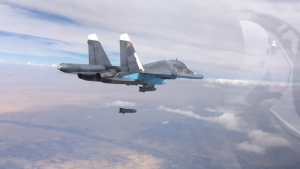
    Soukhoï_frappant_une_position_ennemie_en_Syrie

    Image of Russian aircraft via Flickr.

    Moreover, as the US’s public criticisms of Russia reveal, this blanket “no comment” approach is also not standard practice. A recent report by Dr Jon Moran found that a number of the UK’s allies are far more accountable for their use of Special Forces. In the US, for instance, the deployment of Special Forces from the CIA now requires the notice of “the eight leaders of the relevant intelligence committees in Congress” and “JSOC is accountable via the JSOC commander to the Chiefs of Staff and the Secretary of State for Defense or the President”. There is also greater accountability in Australia which, rather than investing the authority to commit forces to military action in one man, shares responsibility among the Cabinet and the National Security committee through a need for “consensus decision-making”. Similarly, in Canada, the decision is taken at the highest political and military levels but Special Forces are accountable to the head of the Canadian Special Operations Forces Command, who in turn is accountable to the Minister of Defence and Prime Minister. Unfortunately, the UK’s no comment policy led Moran to argue that, amongst these allies, “[t]he British government is the most tightlipped of all”.

    Remote Control’s recent work also documents a number of instances that the US, Canada and Australia have discussed the deployment of Special Forces. For example in 2015 a US spokesperson announced the deployment of US Special Forces in Syria. He reported the number (50) and their purpose (to strengthen anti-ISIS forces) and defended the decision against accusations of mission creep. Similarly, in November 2015, the then-Australian Prime Minister Tony Abbott announced the deployment of 200 Australian Special Forces “to advise and assist local security forces” in Iraq. The same month, Canadian Prime Minister Justin Trudeau announced the deployment of 69 Canadian Special Forces to undertake a training mission, again, in Iraq. While none of the countries gave a lot of detail, they acknowledged the presence – and number – of Special Forces, defined their mission and allowed some room for discussion and debate around their deployment.

    The need for change

    The UK’s current policy is not only embarrassing when stories such as this surface but could have negative implications for the quality of UK intervention abroad. First, better accountability and transparency around Special Forces would mean they are used because they are the best solution rather than the easiest solution to a problem. In 2013, a leaked UK Ministry of Defence document argued that one way to continue conducting military operations despite the risk-averse nature of the British public was “investing in greater numbers of [special forces]” – indicating that the danger of the UK prioritising easy above best is real. Second, it is crucial for the success of any security strategy that its effectiveness can be assessed and adjustments made on the basis of that assessment.

    The reaction of US scholars, policy makers and journalists in the wake of the recent Russian strike is a case in point. The US’s decision to announce the deployment and the purpose of Special Forces in Syria from the outset, and decision to announce this most recent strike, give these groups a chance to debate its implications for relations with Russia, the US’s operations in Syria more generally and assess whether the US’s stated goals are being met. In contrast, the UK lacks such a debate because most scholars, journalists and policymakers do not know the extent of UK involvement in the country and have not been informed of the mission’s stated purpose. Without the level of discussion possible in countries such as the US, the UK lacks the same sounding board and its policies may suffer as a result.

    Russia’s recent strike points to the flaws in the UK’s continued “no comment” policy. When Special Forces rarely stay secret in a country, and fewer of the UK’s allies take the same blanket “no comment” approach, we should be asking why the UK continues to.

    Abigail Watson is Research Officer at Remote Control Project. Abigail holds an MA (with Distinction) in Contemporary European Studies, with a trans-Atlantic track, from the University of Bath and a BA in Politics from the University of York. Abigail writes on issues such as the new challenges to international humanitarian law and Britain’s foreign, security and defence policy.
  • Sustainable Security

    Mexico’s Conflicting Migration Policy Goals: National Security and Human Rights

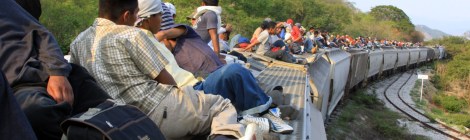
    Mexico has rapidly become a major site of transmigration from Central America to the United States, as people move in search of employment opportunities or escape from social violence. This rise in migrant flows from Mexico’s southern border overlaps with problems of control of contraband, organised crime, and the trafficking of drugs and arms. However, the government’s militarised approach to the phenomenon means that the use of force and human rights violations go unresolved and military approaches to preserving public order go unchecked. As long as migration remains a security issue, instead of a developmental and human rights matter, it will not be tackled appropriately. Instead, the government must start to view the matter through a citizen, not national, security lens.

    Read Article →

  • Security Net: Nuclear Risk Reduction in Southern Asia

    Security Net: Nuclear Risk Reduction in Southern Asia

    Lydia Walker and Annie Siris Coomb | Institute of Peace and Conflict Studies | June 2011

    Issue:Global militarisation

     “Security Net” is a scenario for a future Nuclear Risk Reduction Regime in Southern Asia.  It  explores what such a regime might look like, how it might come into existence, what are its central challenges, and what might be its ramifications for nuclear proliferation and non-proliferation policy in Southern Asia today.

    This study examines the idea of a “Southern Asia” itself and considers the differences between the relationship  of  regional identity  formation  to  nuclear  non-proliferation in Southern Asia in comparison  to  Southeast  Asia  and  Latin America.  It then considers what sort of internal drivers,  wild  cards,  or outside forces could create  incentives for regional cooperation on Nuclear RiskReduction in Southern Asia the future.  

    The full article can be accessed here.

    Image source:  jmuhles

    Comments

    Post new comment


  • Sustainable Security

    El Salvador ArticleEl Salvador’s gang history dates back to the 1960s. At the time, numerous neighbourhood-based groups provided marginalised urban youths with the means to hang out, party, take drugs, and fight their rivals. These gangs constituted a nuisance for the affected residents but did not represent a public security threat. The situation drastically changed when the Central American civil wars ended and the United States stepped up its deportations of offending non-citizens, including members of Mara Salvatrucha (or MS-13) and Calle Dieciocho (18th Street). Both gangs had been formed in Los Angeles’ immigrant barrios, a haven for Central American refugees some of whose children responded to difficult circumstances by joining existing gangs (such as the Dieciocho) or forming their own group (Mara Salvatrucha). Tired of the stresses of gang life, many deportees arrived in their country of origin hoping to make a fresh start. Faced with poor reinsertion opportunities, however, they continued with what they knew best. Their comparatively nice dress, money, and tales of gang exploits held a fascination that local adolescents found hard to resist. Soon the imported gangs absorbed their smaller counterparts and continued to grow, since widespread social exclusion made El Salvador fertile ground for gang proliferation. Over time gang members resorted to greater levels of violence and drug activity, but the country long lacked a full-fledged gang policy.


    In 2003 – eight months before the 2004 presidential elections – President Francisco Flores of the conservative ARENA party launched Plan Mano Dura (“Strong Hand”), ostensibly to dismantle the gangs and curb the number of homicides, most of which had been attributed to these groups. Backed by considerable media publicity, the measure entailed not only area sweeps and joint police-military patrols, but was also accompanied by a temporary anti-gang law that permitted the arrest of suspected gang members on the basis of their physical appearance alone. Both the nature and the timing of the initiative suggested that it had been designed to improve the ruling party’s electoral position rather than to ensure effective gang control. Plan Mano Dura enjoyed huge support among a population that had become weary of permanent insecurity, but human rights defenders, judges, and opposition politicians criticised it for its abuses and neglect of prevention and rehabilitation. The measure helped ARENA win the elections, but the incoming administration of Antonio Saca responded to the earlier criticism by incorporating prevention and rehabilitation into his Plan Super Mano Dura. These alternative approaches, however, were a largely rhetorical concession since suppression remained the dominant strategy. Contrary to the official discourse of success, Mano Dura was spectacularly ineffective: the homicide rate escalated, and the gangs adapted to the climate of repression by toughening their entry requirements, adopting a more conventional look, and using heavier weaponry. More importantly, confinement in special prisons allowed gang members to strengthen group cohesion and structure. Moreover, the large-scale incarceration of gang members fuelled the need for more resources for both the inmates and their families and resulted in an upsurge in extortions, particularly in the transport sector.

    By June 2009, when the government of ex-journalist Mauricio Funes and the FMLN (the former guerrilla army) came into power, the gang problem had become intractable. MS-13 and Dieciocho clicas (subgroups) sprawled hundreds of marginal urban communities, their members committed a variety of crimes – ranging from threats, robbery, injuries, auto theft, and the illegal carrying of firearms to drug sales, extortions, rapes, kidnappings, and homicides – and their violence had become increasingly diffuse and brutal. The Funes government announced a comprehensive crime policy comprising social prevention, law enforcement, rehabilitation, victim support, and institutional and legal reforms. The strategy, however, is underfunded (state coffers had been plundered by previous administrations), and gangs are being tackled through the overall crime policy rather than a specific gang programme. The police – now under a new command – has stopped conducting mass raids in gang-affected zones and begun to strengthen its investigative capacity. These are promising steps, but events on the ground soon pushed policy in another direction. Public demands for a quick reduction of homicides and media coverage alleging government incompetence led President Funes in November 2009 to deploy the army. Military participation in public security tasks is no recent development. At present, however, the army has been given broader powers, permitting it to conduct patrols, perform searches, and arrest criminals caught red-handed as well as to maintain perimeter security at the prisons. In what appears to be a face-saving gesture, the Funes administration adopted a gang strategy that exhibits ominous parallels with the earlier Mano Dura policies. Meanwhile, prevention and rehabilitation have once again taken the backseat.

    Sonja Wolf is a Researcher at the Instituto para la Seguridad y la Democracia in Mexico City, where she conducts research on security and migration issues in Mexico and Central America.

    Image source: VCK xD

  • Sustainable Security

    In Africa, former child soldiers are often stigmatized and considered impure by the people they once lived among. But religious rituals, in the form of spiritual purification, can help reintegrate former fighters back into communities.

    Author’s note: The statements cited in the text are a combination of the author’s own experiences as a former child soldier and his investigative research works with former child combatants, ECOMOG Soldiers, refugees, military officers, religious and tribal leaders in Northern Nigeria, Sierra Leone, Liberia, South Sudan, Mali and Côte d’Ivoire. All respondents, including children currently serving prison term in Giwa Barrack and those in 5th Battalion Operational Ground Headquarters, Gubio Northeast Maiduguri, Nigeria; gave consent for the interviews and publication. Most children in Northern Nigeria pleaded that we tell the world what has happened to them; however, the information they have provided will be published in an upcoming publication.

    Introduction

    The involvement of children in armed conflict has raised more questions than answers regarding the future of Africa. Child soldiering is strictly prohibited in international law, yet over 500,000 children in conflict hotspots are exposed to the worst forms of cruelty on the face of the earth. Governments and international bodies have discussed remedial policies, but have largely failed to formulate effective reintegration initiatives to tackle this serious problem. Part of this failure lies with inability of Western approaches to child soldiering, and more generally African conflict resolution, to address the local and religious settings of the people. This is a problem because whilst the highly religious nature of African societies can stigmatize former child soldiers, it can also provide a means to reintegrate them back into societies.

    This article discusses a study conducted by the Charles Wratto Foundation in rural Liberia using local solutions to address local challenges. Among other experiments, indigenous religious purification rites were performed for the acceptance and reintegration of former child soldiers while tribal leaders and youth were trained to discuss tolerance and lead peace-building activities within their respective communities.

    Mental health and child soldiers

    Despite the wealth, security and comfort of stable societies, studies show that, on average, an estimated one million people commit suicide every year worldwide. The reasons for these suicides include, but are not limited to, an inability to deal with extreme emotional pain, divorce, physical and mental violence, low self-esteem and substance abuse. According to the United States Department of Veterans Affairs, an estimated 22 deaths through suicide take place among US service men and women every day. In comparison, regardless being poorly trained or equipped for battle and conscripted to fight in guerrilla armies where they are subjected to serious mental and physical mistreatments, the development of a high suicide rate, if any, is yet to be seen among former child soldiers, particularly in Africa. Indeed, the harsh realities of war, has bestowed on these children the will to survive beyond our imagination.

    Although researchers in the field of mental health eagerly and critically examine the behaviours of those formerly associated with child soldiers, it should be noted here that suicidal ideation, which is a thought, and suicide, meaning the action of taking one’s own life, are distinct and entirely different. Despite the evidence, the idea that a child soldier is scarred with mental disability and in no position to function as a normal human being has come to influence our thoughts, communities and, most importantly, our political and educational philosophies. Regrettably, it is based on this discourse that the youth and children associated with armed groups in post war Africa, are, for the most part, marginalized and excluded from national priorities including sustainable reintegration strategies.

    The relevance of the indigenous approach

    Demobilised child socldiers in Democratic Republic of the Congo. Image credit: L.Rose/Wikimedia.

    Contrary to the imaginative views of non-Africans, the wars on the African continent are not restricted to the uses of small weapons, drugs or alcohol alone; instead, they involve also deep-rooted and extreme tribal rituals practices that demand human or animal sacrifices believed to protect a warrior against an enemy in battle. Against this backdrop, there is no doubt that, from the point of view of a warlord, ritualistic oblations are strategies designed to strike fear and horror into the hearts and minds of their much larger and better-equipped enemy. However, once the gun beat ceases and peace treaties are signed, reintegration becomes a major challenge as the rural communities to which most of these children are returned to, hold religious purification in the highest esteem.

    The returning soldiers are considered unholy, and, as such, required to undertake spiritual cleansing in order to sanctify themselves from the evils of war and appease the spirits of dead victims. These ceremonies are significant and symbolic as they acknowledged the vile practices that have occurred, and thus, serve as a deterrent to future reoccurrences. As is the case, refusal to perform these religious appeasements would be seen to contaminate the entire clan and lead them into misfortune. But there is more to the ritual than this. There is also a fundamental and unshakeable credence that the avenging spirits of those killed during the war, but were denied their place in the ancestral world due to the lack of a proper burial, possess the ability to harm their killers and community members. In this sense, it should be noted here that such impending danger, which includes, but not limited to, the reappearance of a victim’s ghost to his/her killer cannot be prevented or resolved by Western treatments as they are seen to hold no place in the spiritual realm. Undertaking these ritual rites does not necessary mean a child is mentally unstable, but above all else, it is a precondition for readmission into society.

    The indigenous methodology applied

    The traditional purification rites performed for the youth and children with military backgrounds were aimed at dealing with their wartime experiences as well as rebuilding their morality for the re-admission into society. Hence, the rituals performed varied depending on the extent of the child’s involvement in the war. While some rituals addressed those who participated in the war but did not kill, others were focused on murderers.

    During these ceremonies, the former soldiers were isolated from their communities and taken to shrines and secret locations of spiritual significance, where they were given sacred herbal medicine to drink. There, the healers spoke to ancestral spirits who were believed to be unhappy and pleaded forgiveness on behalf of the youth and the community through incantations. Furthermore, they were taken to streams for sanctified baths and were told not to look back upon emerging from the river. Doing so was considered a way of reopening the door to the evil war spirits and inviting them to harm the person. Their clothes and other objects from the war were burnt or washed away in a river to symbolize an end to a life of violence and the beginning of a new peaceful life.

    In addition, the healers pleaded with the spirits of the dead, asking them to forgive the community and the perpetrators which included protecting them from harm and illness. During the Liberian civil war, brutality grew to its worst when every rebel group attempted to instilled terror and wanted be viewed as the most dreaded fighting force in the country. Children lacking military experience were ordered to eat the hearts of their captured enemies if they desired to be invisible to bullets. However, given the scarcity of finding an enemy’s heart, the definition of an “enemy” was redefined from anyone opposing you in battle to those outside your ethnicity. Needless to say, this led to the deaths of many innocent people falsely accused of being “enemies.” Informed of these experiences and aware that the bleeding spirits of those innocent souls will hunt their killers, the healers performed separate ceremonies to appease the dead upon request by each perpetrator.

    Conclusion

    There is nothing wrong with Western approaches to conflict resolution in themselves. Nevertheless, the concepts and contexts under which they are employed to address conflicts in Africa undermine the social and religious settings of the people. Consequently, scarce and precious resources are wasted and achieving the overall objective of sustainable peace in a timely fashion becomes a major challenge. It is a known fact that Africans are extremely religious with each tribe having its own religious structure established on a set of beliefs that is impossible to separate from daily life. That being said, they have welcomed new ideas and foreign assistance.

    However, foreigners could be exploited if they ignored the traditional structures or the systematic realties of the communities they find themselves in. For instance, the assumption by most donors and international organisations that children formerly associated with armed groups are mentally ill and need the help of Western psychiatrists isn’t just a delusion, which deepens the wounds of fragile communities, but more than this, it provides a platform for children, who were never recruited to fight as soldiers, to exploit humanitarian organisations due to a pre-meditated notion of the situation. NGOs will be told what they want to hear by those with no military background in an effort to claim the benefits of a child soldier. After all, they are all victims of war. Lets not forget, Western veterans were born and raised in much more stable societies while the children in armed conflict were born and raised in dreadful environments which they considered normal.

    Here, they mastered the art of survival when serving not only as combat soldiers, but as leaders and strategic decision makers who have developed a high sense of intelligence and a reservoir of knowledge that can be put to constructive use during peace time. For this group of children, reintegration programs organized by representatives of foreign donors are perceived as dangerous and unnecessary given that these programs differentiates them as evil monsters, which doesn’t just ruin the possibility of future career opportunities, but also exposes them to retributions and increases family shame.

    While a few find it challenging to adjust in society, the vast majority, including female fighters, concealed their true identities and reintegrated into society without the help of internal or external bodies. For the girls who wish to have a family, this remains a personal and well-kept secret as associating themselves with armed groups could destroy the chances of having a future husband. In addition, both girls and boys, some of whom may have financial means or a place to stay, do so with the knowledge of being perfectly fine and thus, see no reason to attract stigmatization and societal imagination by seeking medical or psychological assistance.

    Children endure harsh realities during their time in combat, but regardless of the brutality involved, these experiences do not lead all child soldiers into psychological crises. Naturally, we would imagine post-traumatic disorders occuring given that we are so distracted and disconnected from these realities due to the very nature of our lifestyle. As a result, the inability to live without certain preferences limit our vision to either recognize nor connect with those possessing outstanding survival qualities and resilience.

    Charles Wratto is a former child soldier and a Ph.D. candidate whose research focuses on Child Soldiering, Youth Peace-Building and Indigenous Dispute Resolution Mechanisms on Sub Saharan Africa. He is currently a lecturer assistant and an associate researcher at the Babes-Bolyai University’s Conflict Studies Centre, in Romania. As a former child soldier, and now a peace activist, Charles has experience working with youth and children in armed conflicts, victims of war as well as community and religious leaders on issues relating to youth participation in post-conflict reconstructions. He has given public lectures at several universities and organizations across three continents and spoken at numerous conferences on the use of children in war and its impact on our society. He is also the founder of the Charles Wratto Foundation, a non-profit organization dedicated to rescuing and helping war affected youth and children. In January 2014, “Think Outside the Box,” a Romanian New Agency, named Charles one of the four heroes of the year.

  • Sustainable Security

    From Surveillance to Smuggling: Drones in the War on Drugs

    In Latin America drones are being used as part of the War on Drugs as both regional governments and the US are using surveillance drones to monitor drug trafficking and find smuggling routes.. However, as drones are increasingly being used by drug cartels themselves to transport drugs between countries, could Latin America find itself at the forefront of emerging drone countermeasures?

    Read Article →

    Privatising the War on Drugs: PMSCs in Colombia and Mexico

    US drug policy has become increasingly privatised in recent years as the US government contracts private military and security companies (PMSCs) to provide intelligence, logistical support and training to state security forces in drug-producing and –transit states. As the cases of Colombia and Mexico illustrate, this privatisation strategy is having a damaging impact on these already fragile environments.

    Read Article →

    Colombia and Mexico: The Wrong Lessons from the War on Drugs

    As activists around the world participate in a Global Day of Action against criminalisation of drug use, evidence from the multi-billion dollar War on Drugs in Colombia suggests that militarized suppression of production and supply has displaced millions of people as well as the problem, not least to Mexico. The wrong lessons are being exported to Central America and beyond, but a groundswell of expert and popular opinion internationally is calling for alternative approaches to regulating the use and trade in drugs.

    Read Article →

    Mexico’s Conflicting Migration Policy Goals: National Security and Human Rights

    Mexico has rapidly become a major site of transmigration from Central America to the United States, as people move in search of employment opportunities or escape from social violence. This rise in migrant flows from Mexico’s southern border overlaps with problems of control of contraband, organised crime, and the trafficking of drugs and arms. However, the government’s militarised approach to the phenomenon means that the use of force and human rights violations go unresolved and military approaches to preserving public order go unchecked. As long as migration remains a security issue, instead of a developmental and human rights matter, it will not be tackled appropriately. Instead, the government must start to view the matter through a citizen, not national, security lens.

    Read Article →

  • Climate change

    Climate change

    Climate change is high on both domestic and international political agendas as countries face up to the huge environmental challenges the world now faces. Whilst this attention is welcome, less energy is being focused on the inevitable impact climate change will have on security issues. The well-documented physical effects of climate change will have knock-on socio-economic impacts, such as loss of infrastructure, resource scarcity and the mass displacement of peoples. These in turn could produce serious security consequences that will present new challenges to governments trying to maintain stability.

    Selling Nature to Save Nature, and Ourselves

    Stephen Leahy | Terraviva | July 2011

    Issues:Climate change, Competition over resources, Marginalisation

    Avoiding the coming catastrophic nexus of climate change, food, water and energy shortages, along with worsening poverty, requires a global technological overhaul involving investments of 1.9 trillion dollars each year for the next 40 years, said experts from the U.N. Department of Economic and Social Affairs (UN-DESA) in Geneva Tuesday.

    “The need for a technological revolution is both a development and existential imperative for civilisation,” said Rob Vos, lead author of a new report, “The Great Green Technological Transformation”. 

    Article source: Terraviva

    Image source: Paul Keller

    Read more »

    A New Road for Preventative Action

    East West Institute | East West Institute | June 2011

    Issues:Climate change, Competition over resources, Global militarisation, Marginalisation

    A gap continues to exist between the international community’s rhetoric about conflict prevention and its responsibility to protect people from severe human rights violations. The record of human misery caused by violent conflict is testimony to the chronic  lack of political will to respond collectively to newand emerging threats to peace. The ineffectiveness of many global efforts at preventive diplomacy is evidence that traditional diplomatic approaches,  including the use of force, simply may not work.

    Article source: East West Institute

    Image source: AfghanistanMatters

    Read more »

    Global Climate Change Vulnerability and the Risk of Conflict

    Uppsala University | Center for Sustainable Development | June 2011

    Issue:Climate change

    In a study from the Center for Sustainable Development at Uppsala University in Sweden titled “Climate Change and the Risk of Violent Conflicts in Southern Africa,” authors Ashok Swain, Ranjula Bali Swain, Anders Themnér, and Florian Krampe examine the potential for climate change and variability to act as a “threat multiplier” in the Zambezi River Basin. The report argues that “socio-economic and political problems are disproportionately multiplied by climate change/variability.” A reliance on agriculture, poor governance, weak institutions, polarized social identities, and economic challenges in the region are issues that may combine with climate change to increase the potential for conflict. Specifically, the report concludes that the Matableleland-North Province in Zimbabwe and Zambezia Province in Mozambique are the areas in the region most likely to experience climate-induced conflicts in the near future.

    Article source: The New Security Beat

    Image source: The City Project

    Read more »

    Finding the Right Paddle: Navigating Climate Change Adaptation and Mitigation Strategies

    The New Security Beat | The New Security Beat | June 2011

    Issue:Climate change

     After decades on the periphery, climate change has made its way onto the national security stage. Yet, while the worlds of science, policy, and defense are awakening to the threats of rising sea levels, stronger storms, and record temperatures, debate continues over the means and extent of adaptation and mitigation programs. In a world of possibilities, how to decide which paddle to use to navigate uncertain waters?

    A report from E3G titled, Degrees of Risk: Defining a Risk Management Framework for Climate Security, contends that a more rigorous risk management approach is needed to deal with the security implications of climate change, and cues should be taken from the risk management approach of the national security community. Risk management, while not a “panacea” for divisive climate change politics, “provides a way to frame these debates around a careful consideration of all the available information.”

    The report calls for a three-tier, “ABC” framework for international planning:

    1) Aim to stay below 2°C (3.6°F) of warming
    2) Build and budget assuming 3-4°C (5.4-7.2°F) of warming
    3) Contingency plan for 5-7°C (9-12.6°F) of warming

    Article source: The New Security Beat

    Image source: Pondspider

    Read more »

    Paul Rogers on Development, Climate Change, Conflict and Migration

    Action Aid | youtube | June 2011

    Issues:Climate change, Competition over resources, Marginalisation

    Paul Rogers, Professor of Peace Studies at Bradford University, and Oxford Research Group’s Global Security Consultant, talks to Action Aid about the issues that will dominate international security and world development over the coming decades.

    Source: youtube

    Read more »

    Climate Change, Nuclear Risks and Nuclear Disarmament: From Security Threats to Sustainable Peace

    Jurgen Scheffran | World future Council | June 2011

    Issues:Climate change, Global militarisation

    This study brings to light the multidimensional interplay between climate change, nuclear risks and nuclear disarmament, and its critical implications for the strategic security environment. In addition, it explores prospects and openings to tackle these key challenges, stressing the role played by institutions to “strengthen common ecological and human security, build and reinforce conflict-resolution mechanisms and low-carbon energy alternatives, and create sustainable lifecycles that respect the capabilities of the living world.”

    Read the full report here.

    Image source: GreenDominee

    Read more »

  • Sustainable Security


    Arctic InsecurityGenerally, the Arctic has elicited only minor attention outside the countries whose borders or territories fall within the loosely-defined region. But that is changing rapidly. As Kuupik Kleist, the former Prime Minister of Greenland, put it,

     “The Arctic used to be the last frontier. Now it seems we are at the center of the world.”

    While rapidly deteriorating environmental security in the region poses a grave threat to many regions of the world, the focus on militarized control of the area masks the very real need to mitigate further damage to the climate and increase our adaptive capacities to the inevitable climatic changes that will come in the 21st century.

    Realpolitik or Environmental Security?

    Indeed, much has been made lately about the ongoing and profound changes that are reshaping the Arctic region. There is no shortage of reports that detail the ways that climate change is forcing the region’s physical, social, and political environments into flux. Arctic sea ice is melting at an increasingly rapid rate, with the very real possibility that sometime between 2020-2050, the Arctic will soon experience its first (and undoubtedly not its last) sea ice-free summer. The effects of warming temperatures are likely to be dramatic: it will degrade habitats for vulnerable species, including polar bears and seals, and will accelerate and compound the effects of climate change, like volatile weather patterns and rising sea levels. A recent article in the journal Nature concluded that the long-term economic costs from a warming Arctic could reach $60 trillion, almost equal to the entire economic value of the world economy in 2012.

    But in the face of these worrying trends, discussion has instead focused on the economic opportunities offered by the ‘opening up’ of the Arctic, including the creation of new shipping routes and increasing the accessibility of fossil fuel reserves. The area north of the Arctic Circle is said to contain about 30% of the world’s undiscovered gas and 13% of the world’s undiscovered oil. The Governance of newly opened shipping lanes like the Northwest Passage will remain a contentious political question. While the region has thus far suffered from general neglect and inattention, it is unrealistic to expect that to continue in the future.

    Indeed, it is already becoming clear that the Arctic is the site of ongoing militarization. Recent security maneuvers have increased state control over the farthest reaches of state territory. In 2007, Russia planted its flag underneath the North Pole and resumed strategic bomber patrols over the area, echoing  its Cold War past. Canada’s official Arctic Foreign Policy proclaims “the first and most important pillar towards recognizing the potential of Canada’s Arctic is the exercise of our sovereignty over the far north.” Border disputes in the Arctic have led to strained relations for decades between Canada and Denmark as well as between Russia and Norway. Both cases have been peacefully resolved in the last few years. Yet, sovereignty and security have both been used to justify the proliferation of military ice-breakers, patrol ships, the creation of new deep water ports, and the deployment of military personnel including the Northern Rangers in Canada and the Danish Arctic command (which are both relatively small in terms of active personnel). Joint military operations conducted by Arctic countries (excluding Russia) such as Operation Cold Response and Operation Nanook have also contributed to the militarization of the Arctic.

    It is worthwhile then to examine how sustainable forms of security are useful in the Artic context. What is needed principally is an increased awareness of the integrated connections between the natural environment and security. Large-scale changes to the natural environment are security threats.  Whether through an increase in extreme weather events causing enormous health and economic costs; rising sea levels leading to coastal flooding and climate-induced migration; or desertification, which devastates crop production, the effects of environmental change are severe. The task then in the Arctic is to combat the tendency to view environmental degradation as an opportunity for national gain, which will do little to counter-act the severe global effects. Such conventional, strategic responses inevitably lead only to further suspicion, distrust, and discord. The Arctic is one of the clearest manifestations of this tendency.

    The Arctic will be without question a region of high strategic importance in the 21st century. Unfortunately, countries are likely to view the Arctic with an eye to using the region to bolster domestic support for increased militarization, surveillance, and sovereign control over vast, distant, territorial ‘frontiers’.  All told, Arctic security remains wedded to traditional, state-centric military threats despite the fact that the threat of outright conflict is as remote as the farthest reaches of the Arctic region itself. These approaches may be predictable, but they will contribute little to alleviating the complex, interrelated, and underlying drivers of insecurity in the Arctic region.

    Demilitarizing the Arctic

    So is the goal then to “demilitarize” the Arctic? Would the diverse sets of international issues arising from changes in the Arctic be better positioned in political terms, away from the exceptional demands that military thinking requires? Perhaps strengthening political institutions like the Arctic Council can alleviate the Arctic “rush” and ensure a lawful forum for state and indigenous negotiations in the Arctic. Formed in 1996, the Arctic Council has been the primary diplomatic forum used to facilitate cooperation, discussion, and negotiation. It was formed by eight Arctic countries (Canada, Denmark [Greenland], Finland, Iceland, Norway, Russia, Sweden, and the United States) and includes six Arctic indigenous organizations and other Arctic inhabitants. Recently, the Council accepted six new non-Arctic states as non-voting Observer states, joining six others already granted observer status. The new inclusions, China, India, Italy, Japan, Singapore, and South Korea, may appear at first glance to be curious admissions. Certainly they represent important economic and military powers but most exist far from region itself. However, after initial reticence from members like Canada, the Council accepted their inclusion on the basis of strengthening the Council’s legitimacy by undercutting any emerging alternative organizations, like the Arctic Circle Forum from usurping its authority.

    We should celebrate the decision by Council members to include new observer states: it allows these states to increase their awareness of Arctic issues and vulnerabilities, it opens up new avenues for cooperation and confidence-building measures, and it rightly spreads the responsibility for protecting the Arctic across the world. But while the Arctic Council remains an enduring and hopeful sign for managing political relations, the Council alone should not be expected to transform the underlying logic that continuously renders environmental security in strategic terms, obscuring the practices which have led to Arctic insecurity in the 21st century.

    The driver of Arctic insecurity is not simply the continued militarization or the politicization of the region by its encircling states. The reality is much more complex and multifaceted. In effect, by continuously focusing on security in these strategic terms, we can’t see the forest for the trees. The Arctic “great game” is not simply a metaphor we might use to romanticize geopolitical maneuvers; it is an expression of the profound material environmental shifts that are occurring rapidly and are a result of anthropogenic drivers related to modern carbon-based societies. The continual free-fall in terms of Arctic ice levels and the fact that the region has been warming twice as fast as lower latitudes is likely to have far more important, long-lastingand damaging global effects than a hypothetical, always-over-the-horizon conflict between states competing to protect their localized interests. That is a popular story that obscures the much more difficult and insidious problems related to diagnosing and combatting climate change.

    The fact that most states view the opening up of new Arctic sea lanes as a means to exploit vast and newly accessible energy sources reflects long-dominant understandings of both security and the environment. If our understanding of both Arctic security and the Arctic environment continues to be reduced to the international scramble for untapped resources and for newly opened “shipping lanes” (or melted sea ice, if you will), it is unlikely that the hugely alarming and damaging environmental effects of climate change will ever be truly overcome.

    It is essential then that environmental security in the Arctic is recast away from traditional and dominant security practices of resource development, national sovereignty promotion, and increased surveillance. While these practices will remain in the future, we still should encourage a much more profound rethink that places greater value not simply on increasing cooperative intergrovernmental forums (though these are important), but on greater collaboration with indigenous populations, on studying the global environmental interconnections between the Arctic and other regions, and on aggressively combatting climate change. Adaptation to the inevitable changes occurring in the region will of course require coordination and strategic planning, and the potential for conflict will be ever-present. But an overreliance on familiar narratives of climate change-induced conflict obscures the much more complex drivers of Arctic insecurity, namely our destructive relationship with the environment and its connection to conventional, strategic security logic.

    Cameron Harrington is an Adjunct Professor of Political Science at King’s University College and Brescia University College, at Western University (Canada), where he teaches in the areas of environmental politics and international relations. His Ph.D thesis, (pending completion September 2013) builds a framework to combat water insecurity in the 21st century by focusing on the ethics of security.

    Cameron tweets via @camharrington and can be reached at [email protected] 

    Image source: lafrancevi (HMCS CORNER BROOK on arctic patrol during Operation Nanook)

  • Sustainable Security

    Many have argued that civil wars are more likely to occur along religious divisions. But evidence indicates that intrastate conflict is actually more likely within linguistic dyads than among religious ones.

    In the 1990s Samuel Huntington argued that conflict across civilizational or religious lines would replace the ideological divisions that had defined political struggles during the Cold War period. Opining that Islam has ‘bloody borders’, he believed that conflicts would be particularly prevalent between ‘Muslims’ and ‘non-Muslims’. This led Huntington to further suggest that a future clash between ‘Islamic civilization’ and the West might occur.

    Since September 11th 2001 and the subsequent proclamation of the “War on Terror,” Huntington’s thesis has gained widespread attention among political leaders and citizens around the world. In 2014, for example, Tony Blair asserted that “religious difference will fuel this century’s battles.” During the 2016 US presidential campaign, President-elect Donald Trump seemingly subscribed to Huntington’s ideas when calling for “a total and complete shutdown of Muslims” entering the country to prevent violent attacks on US citizens.

    Whereas many social scientists would agree that ideological conflict between communism and capitalism, both between and within states, has declined since the end of the Cold War, no agreement exists about what, if anything, replaced ideology. Most scholars who study internal conflict or civil war would not distinguish between linguistic, religious, and racial markers but rather classify these categories as part of the larger concept of ethnicity. Yet some conflict researchers follow Huntington and identify religious differences as particularly conflict-prone. In doing so, important alternatives such as ethno-nationalist mobilization based on linguistic identities often receive too little attention.

    Are internal conflicts mostly about religion or language?

    azaz_syria

    Image by Christiaan Triebert/Flickr.

    In a study that is forthcoming in the Journal of Conflict Resolution, I and my co-authors Lars-Erik Cederman (ETH Zürich) and Manuel Vogt (Princeton University) conduct such a comparison. We analyse the probability of internal armed conflict between linguistically and religiously distinctive groups between 1946 and 2009.

    Contrary to Huntington’s thesis, linguistic differences show a strong and robust relationship with the outbreak of intrastate conflicts. In fact, we find that linguistic divisions are more conflict-prone than religious differences.

    These findings continue to hold when we focus only on the years since 1990 – the period to which Huntington’s thesis should be the most relevant. Our results further suggest that in no world region are religious differences more likely to be associated with internal armed conflict than linguistic divisions. We find the strongest support for a greater conflict-proneness of language compared to religion in Eastern Europe and Asia.

    Even in the Middle East, we find a slightly higher, if uncertain, probability of armed conflict across linguistic than religious lines. The Middle Eastern finding at least in part results from multiple Kurdish rebellions in Turkey, Iraq, and more recently Syria as well as smaller uprisings of linguistic minorities in Iran.

    When focusing only on conflicts that involve Muslim groups, we do not find substantial differences to other world religions. Although the majority of all armed internal conflicts today take place within Muslim-majority states, the majority of Muslim groups do not engage in violent rebellion. Our analyses also reject the thesis that Muslim groups disproportionately engage in conflict with non-Muslim groups.

    Why Linguistic Differences?

    Instead linguistic differences continue to be more frequently related to armed uprisings within states. While the brutal civil war in Syria captured headlines over the past years in many Western countries, destructive conflicts across linguistic lines haunt South Sudan, Burma, and Turkey.

    Of course, linguistic differences are more widespread than religious divisions. In other words, ethnic groups in any given country are more likely to be divided by language than by religion. Notwithstanding these differences in frequency, our results indicate that linguistic divisions are disproportionately more often related to armed conflict than religious distinctions.

    In our forthcoming article, we argue that it is the power of nationalism that makes linguistic divisions more conflict-prone than religious ones. Language gained political relevance in the late 18th century when the French Revolution transferred political authority from absolutist rulers to the people. About the same time that political power became vested in European peoples, the industrial revolution created incentives to further homogenize European nation-states. Mass schooling and mass newspapers laid the basis for imagined national communities.

    These developments provided both motive and opportunity for violent conflict across linguistic boundaries. Where members of ethnic groups are barred from having their children taught in their native language or experience linguistic discrimination in the job market and their interaction with the state, some of them will voluntarily assimilate into the dominant culture, but others develop grievances and may even refuse assimilation.

    The elites of such discriminated groups can voice these grievances through publications in their own language and use it to express nationalist aspirations and demands. When the host state is unable or unwilling to address these demands, violent conflict becomes more likely. These dynamics are illustrated by Sri Lanka’s decades-long civil war between Singhalese and Tamils, and recurrent Kurdish rebellions in Turkey.

    Given the link between industrial advancement and language-based nationalism it is unsurprising that we find higher rates of linguistic conflict in the relatively highly developed regions of Eastern Europe and Asia rather than in Sub-Saharan Africa. Central and Eastern Europe may even be considered as the cradle of linguistically-based nationalism.

    The multi-ethnic Austro-Hungarian and Ottoman empires did not fulfil the modern creed of “one people, one state,” and violently disintegrated during World War I. The Soviet Union and Yugoslavia followed suit in the early 1990s. To this day, Turkey has not come to terms with its Kurdish minority, and once more experiences internal conflict.

    Yet the idea of nationalism did not remain contained to Europe. A highly flexible concept, it informed the national liberation struggles of former colonial subjects against the European colonial powers. The lines of division here were usually race and language rather than religion. For decades, the Israeli-Palestinian conflict was a conflict between Hebrew-speakers of European origin and Arab speakers, who had lived in Palestine for centuries. Only in the past two decades has it taken on more religious undertones.

    Policy Solutions?

    Linguistic and religious differences will remain with us for the foreseeable future. However, very few of these fault lines can be expected to erupt in violent conflict. Whether linguistic differences transform into seemingly incompatible nationalist projects, or whether religious divisions into ostensibly intractable positions, depends on how political leaders from different groups interact with one another.

    Frequently armed rebellion emerges in politically highly exclusive and discriminatory contexts. Where political leaders with specific linguistic or religious backgrounds are barred from decision-making that affects their groups, conflict is more likely to break out than in states where they have some influence in government circles. Exclusion along ethnic lines creates clear insiders and outsiders, fosters grievances among the excluded, and suggests that there is “no other way out” but violent resistance. Zimbabwe, both under Smith and Mugabe, Iraq under Saddam Hussein, and Burma to the present day are examples of ethnically exclusionary regimes. Each of these states also experienced violent rebellion by excluded groups.

    In another joint study published in “Peace and Conflict 2016”, we show that excluding political elites with different linguistic or religious backgrounds from governmental power is pervasive in the Middle East and North Africa. So is political discrimination that denies the Palestinians in Gaza citizenship rights, keeps the Shia from voting in Qatar, or persecutes Kurds for political reasons in Turkey.

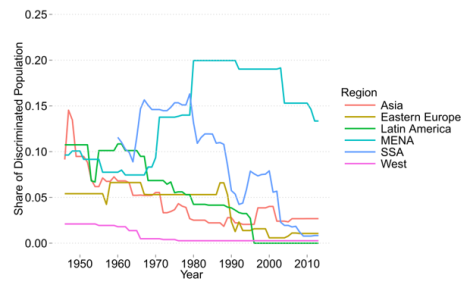
    ethnic-conflict-graph

    Figure 1 displays the average population share that experiences discrimination for different world regions and years. The data derives from the Ethnic Power Relations (EPR) dataset available at https://growup.ethz.ch/pfe.

    Figure 1 reveals that ethnic discrimination remains staggeringly high in the Middle East although the region has experienced some improvements over the past twenty years. That religious differences in the Middle East erupt into violent conflict may be less of a surprise once this context is taken into account.

    Our research thus suggests that avoiding ethnic exclusion and discrimination through power-sharing in multi-ethnic governmental coalitions will reduce the likelihood of armed conflict across both linguistic and religious lines. Elite accommodation in power-sharing coalitions has contributed to greater stability in such diverse places as Bosnia, Nigeria, Burundi, and Malaysia regardless of the type of ethnic differences. Although no panacea, power-sharing is associated with a substantial decrease in the likelihood of internal armed conflicts compared to exclusive environments.

    While there has been a trend towards ethnic accommodation since the end of the Cold War, we do not know enough about its origin. Future research needs to investigate the causes of accommodation in greater detail and pay particular attention to appropriate solutions for violent conflict across linguistic lines relative to religious differences.


    Nils-Christian Bormann is lecturer and Humanities and Social Science Fellow in the Politics Department at the University of Exeter.

    Manuel Vogt is a visiting postdoctoral research associate at Princeton University and senior researcher at ETH Zürich.

    Lars-Erik Cederman is Professor of International Conflict Research at ETH Zürich and the author of Inequality, Grievances, and Civil War (Cambridge University Press, 2013).

  • Sustainable Security