Blog

  • “Chronic Violence”: toward a new approach to 21st-century violence

    The Norwegian Peacebuilding Resource Centre (NOREF) recently published a Policy brief by Tani Marilena Adams, proposing and outlining the concept of “chronic violence” to “characterise the crisis of escalating social violence that currently affects about one-quarter of the world’s population”.

    Basing her analysis largely on Latin America, Adams approaches “chronic violence” from a sustainable security standpoint, arguing that violence itself should not be seen as the disease to be controlled, and the problem to be solved, but rather as a symptom of many complex underlying issues that need to be addressed. The policy brief proposes “a conceptual framework that contemplates both the multiple forces that reproduce chronic violence and their complex and perverse consequences in order to contribute to a new approach to this problem that addresses critical challenges that continue to elude or confound many stakeholders.”

    Six propositions about “chronic violence” are put forth encouraging an inclusive, sustainable and long-term approach to security by combining social, economic and political concerns. Rapidly increasing social inequality is highlighted as one underlying driver of “chronic violence”. Exacerbated through globalisation and access to mass media, the majority of the world population perceives itself as “second class citizens”, marginalised and excluded from political processes and economic opportunities. 

    Weak and corrupt states and state institutions are also seen as a major driver of “chronic violence”. When the state is (or is perceived to be) incapable or unwilling to protect its citizens, non-state and illegal actors will step in, which in turn “undermines the possibility of unified state governance”. This argument was recently echoed in a piece written exclusively for this website by Elizabeth Wilke. Although the argument for strong and effective states is convincing, the idea that a state’s legitimacy is so closely linked to its monopoly of violence can be dangerous and needs very careful consideration in order to avoid militarising state responses to social unrest. 

    Perhaps one of the most important ideas to take away from this policy brief is that “chronic violence” as a social condition is not likely to be reversed in the near future and that policymakers and stakeholders need to address the underlying drivers of violence in the long term in order to build sustainable security.

    The full article on the NOREF website is available here.

    Image source: Shehan Peruma

  • Sustainable Security

    ‘Cultural peacekeeping’ has emerged as a new task for international peace operations. The inclusion of a cultural component in the mandates of peacekeeping interventions is a desirable move. But it is an extremely complex political-military exercise. 

    We are currently witnessing the most dramatic attack on cultural properties since the large-scale destruction and misappropriation of cultural heritage seen in World War II. Since summer 2014, Daesh has deliberately and systematically damaged, destroyed and looted significant portions of the exceptional cultural heritage of Mesopotamia, the ‘cradle of civilization’, from Mosul to Niniveh, from Nimrud to Khorsabad, from Hatra to Palmyra.

    Reacting to Daesh’s iconoclastic fury, the UNESCO 38th General Conference of Paris, 3–18 November 2015, passed a resolution to establish – adopting an effective slogan often used by both media and diplomats – the ‘Blue Helmets for Culture’. Building on the positive experience of the ‘United Nations Multidimensional Integrated Stabilization Mission in Mali’ (MINUSMA), which was mandated to ensure the safeguarding of cultural heritage sites in collaboration with UNESCO, the resolution adopts a new strategy founded on two key elements: the inclusion of a cultural component in the mandates of peacekeeping interventions where cultural heritage is at risk; the creation of a task force of experts in the protection of cultural heritage.

    As a direct contribution to the actualization of the resolution, UNESCO and the Italian Government signed an agreement on 16 February 2016 in Rome for the establishment of the first task force. Named ‘Unite4Heritage’, the task force is largely based on the Italian Carabinieri ‘Command for the Protection of Cultural Heritage’ (Comando Carabinieri Tutela Patrimonio Culturale ), which is internationally renowned as of the most competent and effective military policing force for protecting works of art and archaeological property. The Director-General of UNESCO, Irina Bokova, urged other countries to establish and make available similarly specialized units to strengthen and enforce the existing cultural heritage protection regime, expressing her confidence that ‘this Task Force, and the agreement signed in Rome with the Italian Government, will become a model for other countries’. The urgency of the issue was also recently taken up by the UN Security Council, which approved Resolution 2437 on 24 March 2017, providing for the engagement of a cultural component in UN peace-keeping missions.

    While the process of implementing and defining the operational aspects of the Blue Helmets for Culture’s initiative is underway, this article provides an initial assessment of the politico-military significance of ‘cultural peacekeeping’ (CPK) as a new task for international peace operations, considering both its strengths and weaknesses, opportunities and challenges. Still lacking actual case studies, this exercise is highly theoretical, but it is solidly grounded in the literature on heritage studies, peacekeeping, terrorism and armed violence.

    Opportunities and prospects
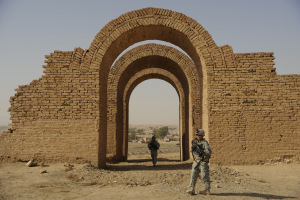
    Image credit: US Army.

    CPK can serve multiple and interrelated cultural, political and military objectives.

    First of all, it is hoped that CPK will contribute to protecting cultural heritage from damage and destruction by helping the enforcement of the international protection regime and, in particular, giving teeth to the implementation of the 1954 ‘Convention for the Protection of Cultural Property in the Event of Armed Conflict’, which has shown many inadequacies and proven to be minimally effective and difficult to enforce as political and legal instrument.

    Secondly, the integration of cultural heritage protection in the mandate of a peacekeeping mission can have a significant impact on the mission’s broader immediate and long-term objectives. On the ground, the mission’s efforts to save cultural heritage can help to ‘win the hearts and minds’ of local populations and increase their acceptance and support for the peacekeepers. CPK can also contribute to cutting off the funding generated by looting and selling artefacts, which fuels and prolongs conflicts by providing revenues for armed groups and terrorists. At the end of hostilities, it can help to ensure quicker recovery and stabilization by promoting societal and economic regeneration for a long-lasting peace.

    From a broader political perspective, CPK can gather and sustain international support and mobilization for the mission. Cultural heritage is widely appreciated, respected and prized for its universal value, and its protection and preservation are deemed the collective responsibility of the entire international community. It follows that engagement in CPK has the potential to win support more easily and with less political controversy than other types of international interventions. It can be presented (and ‘marketed’) to an internal and/or external audience as an intervention for a very noble, principled and apolitical goal that unites the international community in a ‘war for civilization’ against extremism.

    Finally, CPK has the merit of simplifying very complex realities and issues, which is again key in building political and public support for an international intervention and for clearly defining its objectives. While sorting out and taking sides in the complex geopolitical, religious, and ethnic Middle Eastern dynamics is a very difficult undertaking, understanding what an ancient cultural item or site is, and siding against those who want to destroy it, is rather straightforward and politically less controversial.

    Challenges and risks

    In theory, the proposed integration of the protection of cultural heritage and cultural diversity in peacekeeping mandates can be considered an important and welcomed novelty with multiple strengths. In practice CPK is, however, bound to incur serious challenges and risks that should not be underestimated.

    At the military and operational level, it should be emphasized that cultural heritage sites often have important military and strategic value, which is one of the reasons they become deliberate targets during armed conflicts. Many cultural heritage sites are not ‘soft targets’ but represent highly valued and militarily sensitive objectives for the warring parties. If CPK is deployed as a preventative mission in precarious pre-conflict situations or in post-conflict situations even before complete stability has been achieved, those sites will require heavily armed and mandated international forces for their protection. When intervening in such a context, an international operation might find it difficult to strike a balance between military necessity and its mandate of cultural protection.

    Moreover, if a mandate for cultural heritage protection can help mobilize support for international intervention, it is equally true that the moment things go wrong and the mission starts suffering casualties, public support could evaporate very rapidly, which could promptly rescind its initial backing with the argument that the protection of cultural heritage is not worth the lives of the intervening country’s ‘ boys’ and that those ‘ boys’ should immediately brought back home.

    Most importantly, CPK can entail the grave risk of transforming from a ‘civilisation war’  to save the world’ s cultural heritage into a ‘clash of civilisations’. If CPK is not well planned or wrong decisions are made, a group such as Daesh could exploit the situation to its own advantage by presenting the well-intentioned protection of cultural heritage in terms of a war against Islam. Through a well-orchestrated propaganda campaign, ‘cultural peacekeepers’ could be depicted as ‘invaders’ if not ‘crusaders’ who occupy and violate the sacred soil of the Prophet. At the very least, CPK can risk the accusation of ‘mission civilisatrice’ or ‘civilizing mission’, especially if it involves Western contingents whose past history of colonial rule, imperial domination, and ‘colonial archaeology’ which will be promptly highlighted by adversaries.

    Again, deployment of ‘boots on the ground’, and especially ‘Western boots’, may serve Daehs’s military strategy. It is not a coincidence that Western countries and especially the United States have to date strongly resisted sending ground troops to Syria, fearing being bogged down in another costly and extended Middle Eastern military fiasco, which is what Daesh hopes to achieve. The dilemma is that ground forces are indispensable to protecting cultural heritage ‘in situ’, be it in Syria, Iraq or Libya.

    Another non-trivial problem is the inherent difficulty of maintaining civil/military relations. CPK will necessarily involve extended cooperation between military and civilian personnel, such as archaeologists, historians, and anthropologists. However, cooperation can be particularly challenging between diverse working communities with very different educational backgrounds, mindsets, training, sensibilities, work habits and customs. On the ground, cooperation between warriors, peacekeepers, archaeologists and humanitarians may turn into a very complex exercise, and their respective primary concerns may become hard to reconcile.

    A risky but necessary business

    In conclusion, CPK should be not be mistaken as a minor, light and inexpensive international intervention (in all senses, in economic terms and in terms of possible human losses). Although badly needed, CPK is an extremely complex and hazardous major politico-military exercise that can face serious challenges and risks of unintended consequences. Before becoming involved in any CPK mission, a sound, realistic and legally accurate assessment is needed along with planning of the mission’s objectives and the capabilities required to meet those objectives. This would avoid gaps between the mandates and the reality on the ground, which could very negatively impact the mission’s execution.

    Paolo Foradori is Associate Professor of Political Science at the School of International Studies, University of Trento, Italy. He previously worked with the United Nations in Russia, Kosovo, and Afghanistan. This paper extensively draws from his recent articles: ‘Protecting cultural heritage during armed conflict: the Italian contribution to ‘cultural peacekeeping’’, Modern Italy (2017) and (with Paolo Rosa) ‘Expanding the peacekeeping agenda. The protection of cultural heritage in war-torn societies’, Global Change, Peace and Security (2017).
  • Al Qaeda

    Excerpt: The United States may be on the verge of involvement in yet another counterinsurgency war which, as in Iraq and Afghanistan, may make a bad situation even worse. The attempted Christmas Day bombing of a Northwest Airlines flight by a Nigerian apparently planned in Yemen, the alleged ties between the perpetrator of the Ft. Hood massacre to a radical Yemeni cleric, and an ongoing U.S.-backed Yemeni military offensive against al-Qaeda have all focused U.S. attention on that country.

    Read more »

  • Kenyan Somali Islamist Radicalisation

    The following briefing from Crisis Group illustrates the Islamist radicalisation of ethnic Somalis in Kenya, and the causes behind the trend. Decades of economic marginalisation of the Somali-dominated North Eastern Province border region has combined with government and public suspicion of ethnic Somalis to produce an unpleasant climate where either Somali loyalty is questioned, or Somalis are accused of ‘taking over’ when they move into the cities or succeed in business and politics. On the other hand, this has been compounded by the shift of East African Muslims in general away from Sufism and towards the conservative strand of Wahhabi Islam that posits the Muslim umma against the secular state, thereby enabling Somalia-based Al-Shabaab to capitalise on grievances in Kenya and encourage oppositional and even irredentist tendencies. The response of the government has overwhelmingly been one of force.

    Particular forms of marginalisation have exacerbated the grievances resulting from economic underdevelopment and government violence. Until recently, poor Muslim children were often excluded from mainstream education, restricting their options to Wahhabi-dominated madrasas which promoted the radicalisation of disaffected young Muslims. The Muslim establishment itself is also frequently dismissed as elitist and tied to the government (regardless of who happens to be in power at the time). This includes the Supreme Council of Kenya Muslims (SUPKEM) which, despite its closeness to the regime, has failed to modify the heavy-handed state responses to Muslim radicalisation.

    Crisis Group recommends that the Kenyan government cease to view the issue of radicalisation purely through an anti-terrorist lens and recognise the difference between ‘radicalisation’ and ‘extremism’. It is not necessarily a given that the former lead to the latter; and by addressing the issues of marginalisation of Somalis in particular and Muslims in general, Kenya can impede the growth of Al-Shabaab style militancy within its own borders.


    Overview, 25 January 2012

    Somalia’s growing Islamist radicalism is spilling over into Kenya. The militant Al-Shabaab movement has built a cross-border presence and a clandestine support network among Muslim populations in the north east and Nairobi and on the coast, and is trying to radicalise and recruit youth from these communities, often capitalising on long-standing grievances against the central state. This problem could grow more severe with the October 2011 decision by the Kenyan government to intervene directly in Somalia. Radicalisation is a grave threat to Kenya’s security and stability. Formulating and executing sound counter-radicalisation and de-radicalisation policies before it is too late must be a priority. It would be a profound mistake, however, to view the challenge solely through a counter-terrorism lens.

    Kenya’s North Eastern Province emerged as a distinct administrative entity dominated by ethnic Somalis after independence. It is, by most accounts, the worst victim of unequal development. A history of insurgency, misrule and repression, chronic poverty, massive youth unemployment, high population growth, insecurity, poor infrastructure and lack of basic services, have combined to produce some of the country’s bleakest socio-economic and political conditions.

    Two decades of conflict in neighbouring Somalia have also had a largely negative effect on the province and Kenyan Somalis. The long and porous border is impossible to police effectively. Small arms flow across unchecked, creating a cycle of demand that fuels armed criminality and encourages clans to rearm. Somali clan-identity politics, animosities and jingoism frequently spill over into the province, poisoning its politics, undermining cohesion and triggering bloody clashes. The massive stream of refugees into overflowing camps creates an additional strain on locals and the country. Many are now also moving to major urban centres, competing with other Kenyans for jobs and business opportunities triggering a strong official and public backlash against Somalis, both from Somalia and Kenya.

    At the same time, ethnic Somalis have become a politically significant minority. Reflecting their growing clout, Somali professionals are increasingly appointed to impor­tant government positions. The coalition government has created a ministry to spearhead development in the region. A modest affirmative action policy is opening opportunities in higher education and state employment. To most Somalis this is improvement, if halting, over past neglect. But the deployment of troops to Somalia may jeopardise much of this modest progress. Al-Shabaab or sympathisers have launched small but deadly attacks against government and civilian targets in the province; there is credible fear a larger terror attack may be tried elsewhere to undermine Kenyan resolve and trigger a security crackdown that could drive more Somalis, and perhaps other Muslims, into the movement’s arms. Accordingly, the government should:

        * recognise that a blanket or draconian crackdown on Kenyan Somalis, or Kenyan Muslims in general, would radicalise more individuals and add to the threat of domestic terrorism. The security forces have increased ethnic profiling but otherwise appear relatively restrained – especially given past behaviour; still, counter-terrorism operations need to be carefully implemented and monitored, also by neutral observers;

        * develop effective, long-term counter-radicalisation and de-radicalisation strategies. A link exists between radicalisation and terrorism, but counter-terrorism tactics aimed only at stopping Al-Shabaab and other militant groups should not become the only official response. Counter-radicalisation – reducing the appeal of radicalism – and de-radicalisation – persuading people who are already in radical organisations to leave them – are long-term processes that require tact and patience.

        * allocate, along with donors, additional state and development resources to North Eastern Province and elsewhere to rectify decades of neglect and end some of the social problems that drive radicalisation;

        * study madrasas, perhaps through a local university, to learn which are most radical and influential, both to better understand the problem of their radicalisation and to moderate extremist teachings; create a Muslim Advisory Council of respected leaders, open to hardliners, but representing all Kenyan Muslims, that is responsive to the community’s concerns and aspirations, able to articulate its message to those in power and competent in formulating the reform measures needed to improve its well-being; and

        *develop a process, with community input, for selection of a Grand Mufti: Kenya, unlike many African countries, has no supreme Muslim spiritual leader whose primary function is to provide spiritual guidance, and when necessary, make binding pronouncements on vexed issues by issuing edicts (fatwa). It would be difficult, of course, to find a unifying figure, given the sectarian and regional tensions, but it should be feasible.

    Because of the policy immediacy relating to Kenya’s intervention in Somalia, this briefing focuses on Kenyan Somali radicalisation. The growth of Islamic extremism among Kenyan and Tanzanian Muslims on the coast will be the subject of a future study. The recommendations, nonetheless, apply to all of Kenya.

    Nairobi/Brussels, 25 January 2012


    To view the original Overview and download the full report, click here

    Image Source: tik_tok

  • Sustainable Security

    Myanmar: peaceful transition to democracy or storm clouds on the horizon?

    Analysing a recent report by International Crisis Group, Anna Alissa Hitzemann argues that in order for the transition from authoritarian rule to democracy to be stable, and for peace and security to be sustainable, the government of Myanmar will have to face and resolve major challenges such as idespread militarization and the political and social marginalization (past and present) of ethnic and religious groups.

    Read Article →

    No Sustainable Peace and Security Without Women

    There will be no sustainable security if we do not equally value the needs, experiences and input of men and women. A new report published by the Institute of Development Studies (IDS), funded by ActionAid and Womankind Worldwide, examines the role women play in local community peacebuilding in Afghanistan, Liberia, Nepal, Pakistan and Sierra Leone. The report states “despite the increased international attention to women’s participation in peacebuilding, the achievements and challenges facing women building peace at the local level have been largely overlooked”.

    Read Article →

    The United States, Niger & Jamaica: Food (In)Security & Violence in a Globalised World

    due to a complex range of interconnected issues from climate change to misguided economic policies, political failure and social marginalisation, over 2 billion people across the world live in constant food insecurity. Anna Alissa hitzemann takes a sustainable security approach to look at the importance of “physical and economic access to basic food” by exploring the links between food insecurity and violence.

    Read Article →

    “Chronic Violence”: toward a new approach to 21st-century violence

    The Norwegian Peacebuilding Resource Centre (NOREF) recently published a Policy brief by Tani Marilena Adams, proposing and outlining the concept of “chronic violence” to “characterise the crisis of escalating social violence that currently affects about one-quarter of the world’s population”. The report approaches “chronic violence” from a sustainable security standpoint, arguing that violence itself should not be seen as the disease to be controlled, but rather as a symptom of many complex underlying issues that need to be addressed.

    Read Article →

  • “Mali: Why Western Intervention is destined to fail” – Sustainable security on Channel 4 News

    (This piece was originally published by Channel 4 News on Tuesday 22 January 2013 and is the first of two parts)

    Britain is on standby and the US is already transporting French troops into Mali. But a new paper says the west is “betting on the wrong horse” by intervening in the region.


    Now well over a decade after the beginning of the so-called war on terror, yet again, another western nation is leading a military intervention against Islamist paramilitaries based in a largely ungoverned region of a state in the Global South, write Anna Alissa Hitzemann and Ben Zala for the Oxford Research Group.

    The hostage situation in Algeria that developed late last week is just the latest in a series of western hostage takings in recent years, demonstrating the increasing radicalisation of elements in the region.

    The French-led intervention in Mali is only one of many in a growing list of attempts to control outbreaks of political violence and terrorism with military means.

    As the intervention gathers pace, it is worth reflecting on the lessons from similar operations over the past decade or so. From the US-led interventions in Afghanistan and Iraq to the attempts to control Islamist-inspired political violence in Yemen, Nigeria and Somalia and separatist rebellions in Burma, Indonesia and elsewhere, the resort to military force has singularly failed to achieve the aims set for it.

    Common to all of these examples is the reluctance to match military operations against rebel groups and insurgents with serious, long-term efforts to address the factors that underlie the feelings of resentment and marginalisation that drive such conflicts.

    As the commentary and analysis of events in Mali follow the fortunes of the military battles of France and its other western and African allies, it is worthwhile examining the political, socio-economic and cultural divisions which have sparked the uprising in the north of Mali.

    Background to the northern uprising

    The factors that led to the current Malian crisis are complex but can largely be attributed to unintended consequences of the war against Gaddafi. It is clear that the 2011 crisis in Libya, followed by foreign intervention and Nato’s military involvement, and the consequent fall of Gaddafi’s regime, had a crucial role to play.

    After losing the war in Libya, hundreds of Malian mercenaries (many of whom had been recruited among former Tuareg rebels) who had been an integral part of Gaddafi’s army, returned home. They brought with them an arsenal of weapons and ammunition as well as experience.

    These soldiers who returned to Mali from Libya played a key role in the formation of the largely Tuareg-led secular MNLA (Azawad National Liberation Movement), which in a matter of months, took over several key towns in the north of Mali, declaring an independent Azawad state.

    The situation in the north of Mali led to widespread frustration within the military over the government’s incompetence or unwillingness to deal with the issue and reclaim their territory. Ultimately, it led to the April 2012 military coup by Amadou Sanogo against Mali’s elected government and president Amadou Toumanie Touré.

    Interestingly enough, Sanogo himself had received extensive training by the United States as part of the $600m (£380m) spent by the US government in efforts to train military of the region to combat Islamic militancy.

    The actions of the separatist MNLA group and the consequent military coup and inability of the Malian government and military forces to control the situation led to a violent conflict in Mali’s north which includes four main groups: the secular MNLA and the religiously motivated AQMI (Al-Qaeda of the Islamic Maghreb), Ansar Dine and MUJAO (Movement for Unity and Jihad in West Africa).

    AQIM, the group most closely linked to the international terrorist network Al-Qaeda, has been present in Mali for several years now, has taken several European hostages over the last few years and is said to be made up of mostly Algerians and Mauritanians with much financial support from abroad.

    Tuareg rebellion and the paths not taken

    The formation of the Tuareg-led MNLA movement and its desire for an independent Azawad state has in fact deep roots and a history going back to the first Tuareg rebellion of 1963. Tuaregs led significant armed struggle and resistant movements against colonisation by the French and later the central Malian government.

    Long-term sustainable security and stability for Mali will not be possible without seriously addressing the long-standing and deep-seated grievances that stem from the marginalisation of the northern territories and their peoples.

    The political, socio-economic, educational and cultural marginalisation of the north cannot be ignored. With the effects of climate change, increasing desertification and the government’s reluctance to implement meaningful development programmes, Tuareg and other nomadic communities see no viable future and feel abandoned by the Malian state.

    Grievances also stem from past brutal repressions of Tuareg movements, as well as the state’s failure to adhere to the Algerian brokered peace agreements between Tuareg rebels and the government. Even after the Tuareg rebellions of the early to mid 1990s, the Malian government still remained unwilling or unable to implement the education programmes and development projects which were promised and are necessary to alleviate poverty and a deep sense of disenfranchisement.

    It would have been wise to negotiate and come to an agreement with the MNLA at the early stages of the current crisis. Both Burkina Faso and Algeria pushed for a diplomatic solution to this crisis instead of military intervention.

    Burkina Faso’s president, Blaise Compaore, West Africa’s mediator on the Malian crisis, had organised talks between MNLA, Ansar Dine and the Malian government in Ouagadougou in December. A ceasefire was agreed and all parties approved to adhere to further peaceful negotiations. T

    he talks which had been planned to continue this January have now been interrupted due to the French military intervention in Mali. The chance of finding a solution to combating Islamic extremism in northern Mali would be significantly better if the Malian and French military sought a way of collaborating with the Tuaregs.

    This is a challenging task but a task that is unavoidable over the long-term. It is the resentment towards the central government over the marginalisation of the northern territories and its population that in part has helped Islamists gain strength.

    By Anna Alissa Hitzemann and Ben Zala, Oxford Research Group. Channel 4 News publishes part two of the report tomorrow

    Image source: Defence Images

  • Sustainable Security

    The central premise of sustainable security is that we cannot successfully control all the consequences of insecurity, but must work to resolve the causes. In other words, ‘fighting the symptoms’ will not work, we must instead ‘cure the disease’.

    Current approaches to national and international security are based on the premise that insecurity can be controlled through military force or balance of power politics and containment. The most obvious recent example of this approach has been the so-called ‘war on terror’, which essentially aims to ‘keep the lid’ on terrorism and insecurity, without actually addressing the root causes.  Such approaches to security are deeply flawed and are distracting the world’s politicians from developing realistic and sustainable solutions to the new threats facing the world in the 21st century.

    An alternative approach is needed: that of ‘sustainable security’. The central premise of sustainable security is that we cannot successfully control all the consequences of insecurity, but must work to resolve the causes. In other words, ‘fighting the symptoms’ will not work, we must instead ‘cure the disease’. Such a framework must be based on an integrated analysis of security threats and a preventative approach to responses.

    Sustainable security focuses on the interconnected, long-term drivers of insecurity, including:

    • Climate change: Loss of infrastructure, resource scarcity and the mass displacement of peoples, leading to civil unrest, inter-communal violence and international instability.
    • Competition over resources: Competition for increasingly scarce resources – including food, water and energy – especially in already unstable parts of the world.
    • Marginalisation of the majority world: Increasing socio-economic divisions and the political, economic and cultural marginalisation of the vast majority of the world’s population.
    • Global militarisation: The increased use of military force as a security measure and the further spread of military technologies (including chemical, biological, radiological and nuclear weapons).

    There are many other factors that can threaten the security of humans around the world (such as radicalisation , rapid increases in the global population and the shortcomings of current forms of global governance ), but these four drivers reflect the deep complexity of modern insecurity.  The world has never been so interconnected and yet so socio-economically divided, with such apparent environmental limits. And never before have traditional approaches to warfare and use of force proved so counter-productive.

    Sustainable security makes a distinction between these trends and other security threats, which might instead be considered symptoms of the underlying causes and tend to be more localised and immediate (for example terrorism or organised crime). It promotes a comprehensive, systemic approach that takes into account the interaction of different trends which are too often analysed in isolation. It also places particular attention on how the current behaviour of international actors and western governments is contributing to, rather than reducing, insecurity.

    The world has never been so interconnected and yet so socio-economically divided, with such apparent environmental limits. And never before have traditional approaches to warfare and use of force proved so counter-productive.

    Sustainable security goes beyond analysis of threats to the development of a framework for new security policies. It takes global justice and equity as the key requirements of any sustainable response, together with progress towards reform of the global systems of trade, aid and debt relief; a rapid move away from carbon-based economies; bold, visible and substantial steps towards nuclear disarmament (and the control of biological and chemical weapons); and a shift in defence spending to focus on the non-military elements of security. This takes into account the underlying structural problems in national and international systems, and the institutional changes that are needed to develop and implement effective solutions.

    By aiming to cooperatively resolve the root causes of threats using the most effective means available, sustainable security is inherently preventative in that it addresses the likely causes of conflict and instability well before the ill-effects are felt.

    The sustainable security framework is being developed and promoted by Oxford Research Group. For more information on the work of the Sustainable Security programme, click here.

  • Sustainable Security

    Biodiversity conservation is becoming increasingly militarised. Conservationists are learning from the strategies of contemporary warfare, and this is highly problematic for both wildlife and global security.

    Biodiversity conservation and security are becoming increasingly integrated. The recent rises in poaching, especially of high profile charismatic species such as elephants, rhinos and tigers has led to the development of more militarised approaches towards conservation. Rather than producing the claimed win-win-win outcome for wildlife, security and people, it is producing a triple fail. While we are more accustomed to debates around climate change and water wars as the main security risks related to the environment, biodiversity conservation is also increasingly being identified as a critical contributor to national and global security, and biodiversity losses constitute a critical security threat. This is especially the case in current debates about poaching and wildlife trafficking. Conservationists, it seems, are learning from the strategies of contemporary warfare.  This is highly problematic for wildlife and global security.

    Does wildlife trafficking produce threat finance or not?

    Achim Steiner, UN Under-Secretary General and Executive Director of UNEP, recently stated ‘the scale and role of wildlife and forest crime in threat finance calls for much wider policy attention’. The argument that wildlife trafficking constitutes a significant source of ‘threat finance’ takes two forms: first, as a lucrative business for organised crime networks in Europe and Asia, and second as a source of finance for militias and terrorist networks, particularly Al Shabaab, Lord’s Resistance Army and Janjaweed. Yet, a recent report from UNEP and INTERPOL on environmental crime questions the accuracy of the links between ivory and Al Shabaab. The report points out that ivory may be a source of income for some militia groups including Janjaweed and Lord’s Resistance Army; however it also notes that claims Al Shabaab was trafficking 30.6 tonnes of ivory per annum (representing 3600 elephants per year) through southern Somalia are ‘highly unreliable’ and that the main sources of income for Al Shabaab remain charcoal trading and ex-pat finance. In spite of this, the argument persists that there is a link between the illegal wildlife trade and global security.

    Although the value of the global illegal trade in wildlife is difficult to determine due to its clandestine nature, it has been estimated at around US$7.8–$10 billion.  It ranks as the third biggest global illicit activity (after trafficking drugs and weapons). Transnational environmental crimes are often not taken seriously within the broader policy and enforcement community, and so they are perceived as a low-risk and high-reward activity for organised crime networks. However, this is changing, and environmental crimes are rapidly gaining greater attention, and the increasing sophistication of wildlife trafficking networks is a reflection of their link with other serious offences, including theft, fraud, corruption, drugs and human trafficking, counterfeiting, firearms smuggling, and money laundering.

    Major donors are also taking this issue seriously, and funding has been made available for anti-poaching and anti-trafficking initiatives. In 2013 the Clinton Global Initiative announced a commitment to raise US$80 million to combat trafficking and poaching as a security threat in Africa. Private philanthropic foundations have also become involved, as indicated by the US$25 million donation to South Africa from the Howard G. Buffett Foundation to support rhino protection efforts in Kruger National Park. The rise in poaching has also intersected with US security concerns, prompting President Obama to issue Executive Order 13648 on Combating Wildlife Trafficking in July 2013, and in 2014 USAID allocated more than US$55 million for activities to combat wildlife trafficking, up from US$13 million in 2012. These concerns have emerged as a major policy initiative of the UK government, beginning in May 2013 when Prince Charles convened a high level meeting to ‘kick start’ a government response to the rise in elephant and rhino poaching – followed in 2014 by the London Declaration on the Illegal Wildlife Trade, and the development of a DfID/DEFRA £13 million ‘Illegal Wildlife Trade Challenge Fund’.

    Why is conservation being militarised?

    Enough Project Ivory

    Elephant ivory seized from poachers in Garamba. Image by Enough Project via Flickr.

    Conservation practice is being increasingly militarised as a result of this new interest in the security implications of poaching and trafficking. Militarisation can be briefly defined as the extension of military approaches, equipment and techniques to wildlife protection, as well as the deployment of armed forces in conservation activity. Countries with elephant, rhino and tiger populations also regularly invoke the argument that wildlife constitutes an emblematic natural resource, which is central to national heritage. For example, on World Ranger Day in 2015 South African Minister of Environmental Affairs Edna Molewa paid tribute to park rangers by stating that they were protecting rhinos as a key part of the country’s natural heritage. Such appeals to natural or national heritage are also frequently overlain with the argument that states have a moral obligation to protect wildlife. The interesting question is: why is there an increased interest in countering wildlife poaching and trafficking with more militarised responses?

    War on Terror

    First, the integration of security and biodiversity conservation has been extended by the development of a global context centred on security concerns, and this is most obvious in the US-led War on Terror. For states (especially parks and wildlife departments), conservation NGOs, and private conservation organisations, the ability to claim that their activities will contribute to national and global security has provided an important opportunity to justify their continued existence, and to leverage additional funding from donors, governments and private sector. The development of a global context in which security is a leading concern has opened new opportunities to leverage significant resources for conservation. During the 1990s, NGOs in the humanitarian relief sector were increasingly engaged in a competitive market to secure funding and contracts with donors. This dynamic was mirrored in the conservation sector, as detailed by Mac Chapin’s high profile piece for WorldWatch on how the ‘big three’ conservation NGOs of WWF, Conservation International and The Nature Conservancy, had managed to secure the majority of available funding. Competition between NGOs and the dominance of the big three partly explains why conservation NGOs have been so keen to promote the idea that conservation is critical to security. The assumption is that by rendering conservation a security issue, it will allow them to tap in to the greater resources available for security and anti-terrorism initiatives.

    Technological Innovations

    Second, recent innovations in military technology, especially for surveillance purposes, have also driven a demand to find new markets to expand its use (and profitability). This includes the use of drone technology to monitor wildlife populations in areas hit by poaching. The drones can also collect important information on human activity in the area – which is especially welcome in regions where there are concerns about the activity of rebel groups and militias that threaten state (or even international) security. The growing intersections between the two are evident in the development of a new range of surveillance networks which draw together government agencies, international intelligence agencies, wildlife conservation NGOs and private sector risk analysis companies. Such surveillance techniques are used to gather data on individuals and networks suspected of engaging in illegal hunting and trafficking of wildlife products; these use the same techniques associated with counter-insurgency operations, including the extraction of mobile communications data, development of informant networks and use of covert surveillance.

    The rise of private security

    Third, the rise in privatised forms of security in the post-Cold War era is also reflected in biodiversity conservation: private security companies provide training for anti-poaching operations as well as direct enforcement. This can be placed in the context of the growing use of private military companies in international interventions, including Afghanistan and Iraq. This is especially significant because it heralds a new era in conservation, in which national governments permit direct contracts between conservation NGOs and private security companies, with an authorisation to use deadly force under certain circumstances. A good example is the ways WWF has turned to the private sector to deliver security operations in protected areas that they manage on behalf of states. In Dzangha-Sanga National park in Central African Republic, funding from WWF-Netherlands, WWF-US and WWF-International is used to pay for anti-poaching operations and training under the auspices of Maisha Consulting. The company describes itself as a provider of environmental security via special investigations, training and operations in complex security situations. Numerous conservation NGOs have to grapple with complex security situations, especially if they seek to continue their projects and support when conflicts break out, or when militias move into the same area, and PMCs are regarded useful allies.

    The triple fail

    The rise of these approaches is deeply problematic for two reasons: they produce responses that are not effective for countering terrorism and insecurity, and equally they do not help us tackle poaching effectively. Instead they act as counterproductive distractions. The militarisation of anti-poaching including the growth of surveillance techniques and ‘intelligence-led’ approaches, fails to address the dynamics that drive poaching. These include a powerful mix of demand from wealthy communities around the world, poverty, inequality and the lack of opportunities in poorer source countries, the collusion of officials, organised crime networks and private transport companies. Simply focusing on military-style protection of wildlife from poaching is not effective: it can produce short term protection, but ultimately undermines wildlife conservation because it pits local communities against wildlife, reducing support for wildlife amongst people who live with it: the very people conservation ultimately relies on.

    Rosaleen Duffy is professor of the political ecology of development at SOAS, University of London. In September 2016 she joins the Politics Department in the University of Sheffield and will begin a major research project ‘BIOSEC: Biodiversity and Security: understanding environmental crime, illegal wildlife trade and threat finance’, (EURO 1.8 million funded by an ERC Advanced Investigator Award).

  • Al-Qaeda: The True Story of Radical Islam

    Image of Al-Qaeda: The True Story of Radical Islam

    • Purchase from Amazon:
    • Al-Qaeda: The True Story of Radical Islam
    • Author: Jason Burke
    • Publisher: Penguin ()
    • Binding: Paperback, pages
    • Price: £8.99

  • Sustainable Security

    Women have been leading contributors to ISIS’s strength and capabilities. Female operatives have held influential positions in the group’s proto-state which have been crucial to the advancement of the group’s cause.

    The self-proclaimed caliphate, the Islamic State of Iraq and Syria (ISIS), poses the greatest terrorist threat to the international community today. ISIS’s goal is relatively simple – establish a global caliphate. However, the group’s state-building ambitions have faced recent setbacks due to counter-terrorism successes – the group’s territorial claims in Syria and Iraq and foreign recruitment has declined substantially. Faced with the loss of its caliphate, ISIS has become more reliant on local populations to maintain its stronghold. As a result, many Syrian and Iraqi citizens are left vulnerable to ISIS’s terror tactics, especially women and children.

    ISIS’ treatment of women has placed the organization among the world’s worst perpetrators of gender-based violence. Their brutal tactics include: imprisonment, torture, sexual abuse, and the execution of thousands of Syrian and Iraqi women. Such barbaric treatment is not reserved for non-Muslims; fellow Muslim women are abducted and exposed to horrendous sexual atrocities.   Many women become sex slaves and are sold in markets for a little as $13 USD. Despite their inhumanity towards so many women, ISIS successfully recruits a substantial number of marginalized Syrian and Iraqi females to the caliphate. In fact, ISIS depends on its population of local female to obtain their state-building ambitions.

    Incrementally, Syrian and Iraqi women have attained influential roles in the caliphate despite the inhumane treatment of women in the caliphate. ISIS utilizes the local women residents and their cultural expertise to advance its cause. Their responsibilities include caring for ISIS soldiers as wives, birthing the next generation of jihad fighters, and maintaining order within ISIS’S network of women. Despite their work, international media outlets and counter-terrorism reports have primarily focused on the participation of Western women in ISIS, thereby undermining the role of Syrian and Iraqi women.  To gain better insight on Syrian and Iraqi women’s role in ISIS, delving into the underlying motivations of these women can enable experts to assess and comprehend ISIS’s seduction and lure.

    Motivations of Local Women to Support ISIS

    Image credit: David Dennis Photos

    Women are motivated to support terrorist organizations for multiple reasons. It is important to realize that every woman is motivated for a different, or combination of, reasons. Therefore, it is challenging to determine the exact motivation of any one individual. ISIS’s three year long terror campaign has spread fear and demonstrated its power to control the community. During an ISIS raid on Syrian and Iraqi towns, many households were permanently destroyed – the group harassed, tortured, and murdered individuals that were not compliant. Often, male family members are killed, leaving females to be easily targeted by ISIS. Many women joined the group in order to stay alive.

    The absence of an effective government has allowed ISIS to exploit the local resources and infrastructures. As a result, ISIS is able to operate a quasi-state — developing an Islamic court, a functioning military, and a law enforcement force. Leveraging this advantage, the group controls the local public facilities and services including banks, transportation systems, post offices, grocery markets, etc. ISIS’s ability to rule the land make joining the organization a viable solution for the deprived. Many women turn to support the caliphate for access to basic necessities, such as food, water, and shelter.

    The Roles of Local Women in ISIS

    A) Domestic Roles

    According to ISIS’s Manifesto for Women, a woman’s highest achievement is being a dedicated wife, mother, and nurturer. Her primary functions are to take care of her husband and birth the next generation of jihadists that will continue ISIS’s legacy. Women are expected to remain in the house, hidden and veiled, while they undertake chores such as providing daily meals, cleaning uniforms, and keeping a spotless house. Girls are expected to submit to marriage by sixteen or seventeen years old while they are youthful, pure, and attractive. In the caliphate, younger women are quickly married off to ISIS operatives. However, in true ISIS fashion, the group continues misuse outdated Quranic scriptures to its advantage by legalizing the marriage of nine-year-old girls by glorifying the life of Prophet Mohammed and his young wife. Young girls that are be subjected to this perverted act are locals under ISIS’s rule.

    B) State Building Roles

    While ISIS is notorious for its hardline position on marriage and motherhood, the group’s state-building ambitions permit certain women to undertake jobs outside of the home. Unprecedented in its scopes, ISIS is critical in explaining the importance of recruiting career professionals to help the group attain its objective of creating a jihadi proto-state. In fact, in 2014, an audio recording of ISIS leader Abu Bakr al-Baghdadi surfaced, urging scientists, preachers, judges, doctors, engineers, and scholars to join the caliphate.  Currently, ISIS controls the public and private facilities, which provides them with access to unlimited resources, including existing employees. ISIS’s need for skilled professionals is not limited to men; both genders are responsible for fulfilling their “civil duties”. Nonetheless, regardless of a male’s prior occupation, the majority are placed in ISIS’s military, leaving women to handle the daily activities. Subsequently, there is a larger presence of women undertaking instrumental roles; there are growing numbers of female nurses, educators, and administrators from the area.

    C) Operational roles

    Women of ISIS are also able to participate in offensive combat operations and defensive military activities. In 2014, ISIS created Al Khansaa — an all-female brigade that predominately consisted of Syrian and Iraqi women. The female unit was reportedly formed to enforce ISIS’s strict conception of Islamic morality. ISIS has imposed a dress code requiring all women to wear two gowns to conceal their body shape, black hand gloves, and dark layers of two face veils year-round. No makeup is allowed. To enforce the rules, the brigade patrols towns with AK-47s to ensure that women are compliant. However, the force responsibilities have drastically expanded, which demonstrates how influential women are in the terrorist group. The women perform a variation of activities, including recruiting, intelligence gathering, and overseeing prisoners. ISIS depends on the brigade to lure women; spy on the community and bring in individuals that voice unfavourable sentiment about the organization; and monitor detention camps detention camps where thousands of kidnapped Yazidi Christian and foreign hostages are imprisoned.

    To date, one of the most influential women of ISIS has been a Syrian national, Umm Sayyaf. Before capture by the U.S. military, Sayyaf was a principal advisor to the caliphate leadership on all critical matters relating to women. Her elevated rank highlights how heavily the insurgency has come to rely on certain women to retain soldiers and run day-to-day operations. In her later interrogations by U.S. military personnel, she revealed information regarding the inner-workings of the network including recruitment, intelligence, and sex slavery. Umm Sayyaf also disclosed that the ISIS leader of ISIS, Abu Bakr al-Baghdadi, appointed her to supervise the American hostage Kayla Mueller.

    Conclusion

    Although international news has reported that ISIS has recently faced some setbacks in their territorial claims and foreign recruitment, anticipating the immanent demise of ISIS is a stretch. The group will be maintained for years to come, as a result of its sophisticated network of Syrian and Iraqi women. The participation of local women exponentially raises the threat due to an increasing number of operatives, a unique tactical advantage, and additional technical expertise. Despite their impact, counter-terrorism studies tend to ignore the involvement of Syrian and Iraqi women and in doing so exclusively focus on the participation of foreign recruits. This omission leads to incomplete counterterrorism objectives and possible unbearable consequences.

    ISIS has successfully recognized that empowered women are the foundation of a resilient and stable community. Female operatives will continue to participate at all levels, and the international community must not ignore such contributions. Failure to implement significant changes could lead to the regrowth of ISIS territorial claims and capabilities. By understanding the motivations of, and the roles held by, local women in ISIS this article can help initiatives to counter the group.

    Amanda N. Spencer currently works in the counter-terrorism and anti-financial crime division at Deutsche Bank Securities.  She holds a master’s degree in global affairs from New York University and is passionate about contributing to the world of counter-terrorism. Her research explores the multifaceted roles of women in violent extremism. Her most recent research study on the women of ISIS is available at the Journal of Strategic Security: “The Hidden Face of Terrorism: An Analysis of Women in the Islamic State.”